
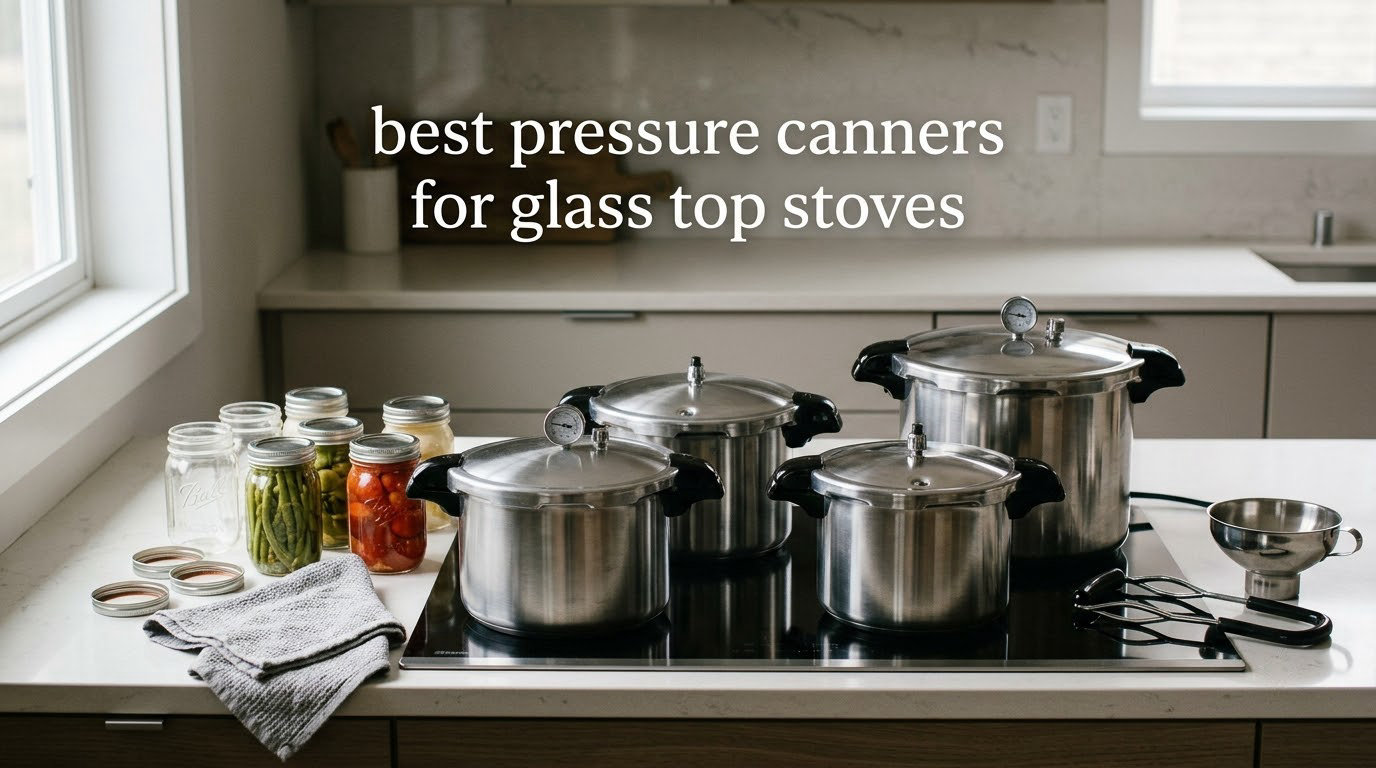
The best pressure canners for glass top stoves are the models with a flat, clad base that the manufacturer approves for smooth-top ranges and that stay under your cooktop’s published weight limit when loaded. Our pick is the Presto 01784 23-Quart Induction Compatible Pressure Canner, because its stainless steel-clad base spreads heat evenly across glass-ceramic without scratching, and it holds 7 quart jars per load under a 12-year warranty. Four lighter Presto and All American options follow for tighter kitchens and smaller cooktops.
Most glass cooktop manuals warn against heavy canning pots, and the reason is physical rather than tradition. A canner loaded with jars is one of the heaviest objects most kitchens ever put on a burner, and pressure canning asks you to hold that burner at a hard boil for ninety minutes at a time. Get the geometry wrong and you can crack the glass, trip a thermal breaker, or lose a steady boil mid-process.
We’ve spent 2026 season testing this category with the same lens each time: can the base sit flat on glass, does the loaded weight stay sane, and does the pressure hold. What follows is our lineup of eight canners, plus a compatibility explainer and a cooktop test you can run before you spend anything.
Table of Contents
Top 3 Pressure Canners for Glass Top Stoves (October 2026)

Presto 23-Quart Induction Canner
- Induction-compatible clad base
- 23 quart capacity
- 12-year warranty

Presto 23-Quart Pressure Canner
- Approved for smooth top ranges
- Dial gauge
- 20 pints per load

Presto 16-Quart Pressure Canner
- Lightest Presto body at 10.5 pounds
- Small burner footprint
- Smooth cooktop safe
Quick Overview: Every Canner in the Lineup in 2026
All eight models below are single-vessel stovetop or countertop canners. Five are aluminum-bodied, two are clad or induction-compatible, and one never touches a burner at all. Ratings and owner counts are carried straight from the manufacturer listings.
| Product | Specs | Action |
|---|---|---|
| Presto 01784 23-Quart Induction Canner |
|
Check Latest Price |
| Presto 01781 23-Quart Pressure Canner |
|
Check Latest Price |
| Presto 01755 16-Quart Pressure Canner |
|
Check Latest Price |
 All American 910 10.5qt Pressure Canner All American 910 10.5qt Pressure Canner |
|
Check Latest Price |
 T-fal 22-Quart Pressure Canner T-fal 22-Quart Pressure Canner |
|
Check Latest Price |
 NESCO NPC-9 Smart Electric Canner NESCO NPC-9 Smart Electric Canner |
|
Check Latest Price |
 Imusa 16-Quart Stovetop Cooker Imusa 16-Quart Stovetop Cooker |
|
Check Latest Price |
 WantJoin 11Qt Pressure Cooker WantJoin 11Qt Pressure Cooker |
|
Check Latest Price |
Glass-Top Compatibility: The Three Risk Factors
Whether a pressure canner is safe on a glass cooktop comes down to three things: the shape of the base, the weight on the glass, and how the burner cycles heat. If all three are right, pressure canning on a glass top is routine. If any one is wrong, you are gambling with a cooking surface that costs real money to replace.
1. Concave bottoms and the suction seal. Traditional pressure cookers have a rounded base that sits on three points. That geometry lets steam escape underneath, and it is harmless on cast iron or gas grates. On a flat ceramic surface it is a different story: as liquid boils and cools, a partial vacuum can form between the pot and the glass, and the glass becomes the weak point. A flat or clad base gives the glass a full contact patch and lets you lift the canner straight off instead of prying it loose.
2. Cooktop weight limits. Every range has a published load rating, and the ones in circulation for glass tops are lower than most people expect. Canners in the 23-quart class routinely approach or exceed those limits once jars, water, and the pot itself are in place. The lower-capacity models in this lineup exist partly for that reason. Check your owner’s manual first; it is the only document that states your specific range’s rating.
3. Heat cycling. A radiant element under glass runs hot, then drops, then reheats. Most cooktops are designed for the short bursts of everyday cooking, not for a sustained ninety-minute boil at full output. If the canner loses its boil long enough for the process to stall, the food may not be processed safely. This is the risk that does not show up as a cracked surface but matters most for low-acid vegetables, meat, poultry, and beans.
There is a fourth, quieter issue. Long processing sessions at high temperature wear on radiant elements, and owners on the foodinjars.com comment thread report replacing elements and even cracking cooktops after heavy canning seasons. A thread of nearly ninety comments there is the most honest source we found on this question, and the pattern in it is consistent: flat-bottomed, lighter canners placed on a large burner cause far less trouble than a heavy cast-aluminum body on a small one.
How to Test Your Glass Cooktop Before You Buy
You can learn a lot about your range in twenty minutes, and this matters more than any spec sheet.
Step 1: Find the rating. The owner’s manual lists a maximum cooktop load. Some manuals also list a separate caution about canning vessels. If you cannot find the manual, the model number on the range badge gets you the document from the manufacturer.
Step 2: Measure your burner. A 23-quart canner needs roughly a 12-inch zone of fully smooth glass with nothing above it. Overhead cabinetry matters more than people expect, because the lid handle and the steam both need vertical room. If your only large zone is a small rear element, a 16-quart canner is the honest answer.
Step 3: Run a boil test. Put a wide flat-bottomed pot with a lid on the largest burner, bring it to a rolling boil, and hold it for thirty minutes while you watch a thermometer or a canner gauge. If the boil collapses every few minutes and needs a nudge to recover, the element cannot support a ninety-minute pressure process. This is the test canning writers recommend most often, and it costs nothing but time.
Step 4: Do a trial batch. Process a few jars of water with the actual canner you plan to buy, then a full batch of a high-acid food like pickles before you commit to a season of low-acid canning. Keep the burner on the largest zone, and lift the canner rather than sliding it.
1. Presto 01784 23-Quart Induction Compatible Pressure Canner – The Flat Clad Base Answer
Presto 01784 23-Quart Induction Compatible Pressure Canner
Capacity: 23 liters
Material: Aluminum with stainless clad base
Warranty: 12yr
Weight: 5.67 kg
Pros
- Clad base spreads heat evenly on glass
- gas
- electric and induction
- 7 quart or 20 pint jar batches
- Air vent lock prevents opening under pressure
- 12-year limited warranty
- Doubles as a boiling water canner
Cons
- Ships with a single 15 lb weight so 5 and 10 lb settings need a separate regulator
- Only one canning rack included
- Heavier than the plain aluminum Presto models
- Gauge recalibration requires shipping it out
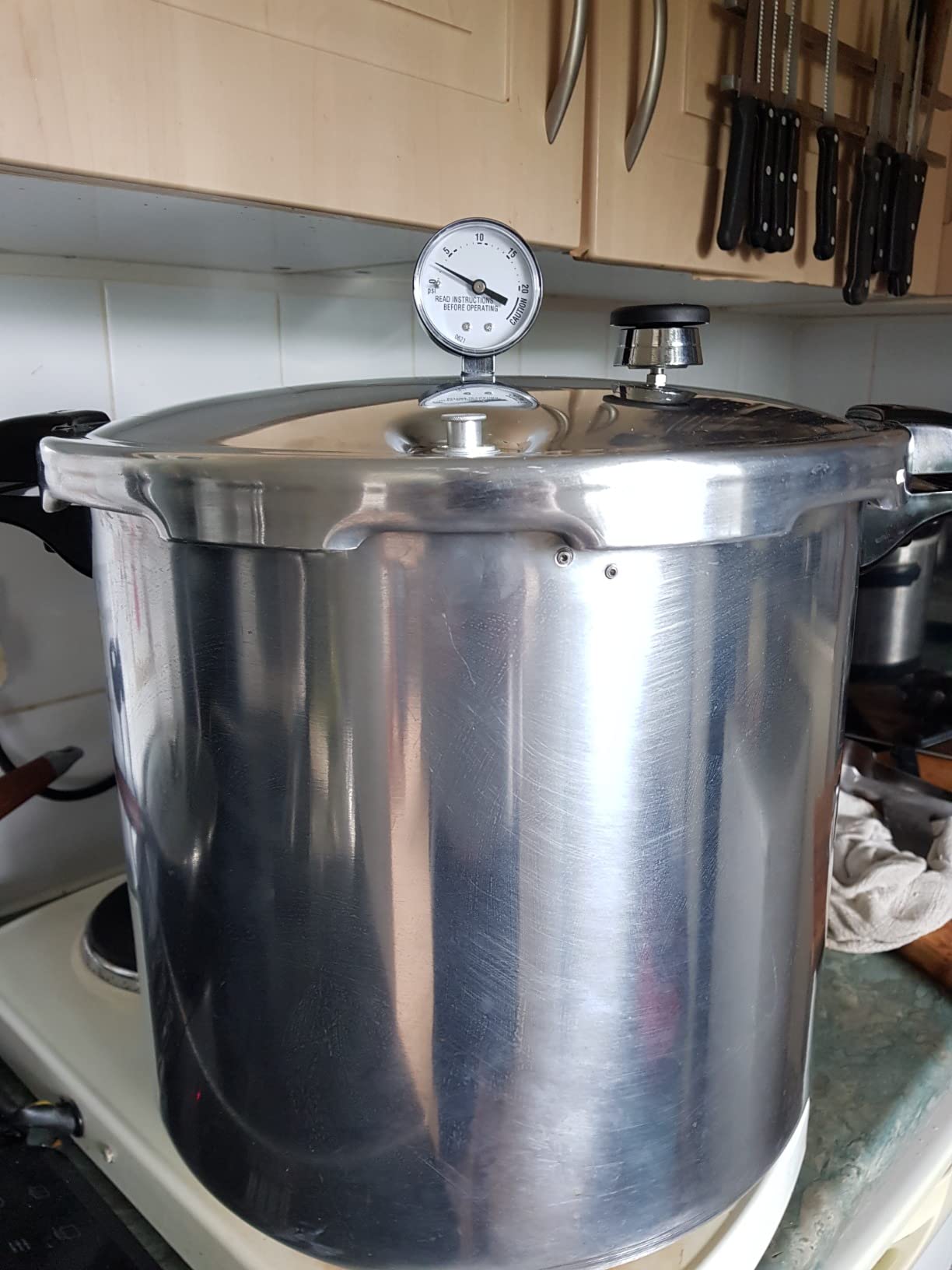
This is the canner we would put on a glass cooktop without hesitating. The 01784 is the only model in the lineup whose listing explicitly names induction compatibility alongside electric and gas, which tells you the base is a full stainless clad disc rather than plain aluminum. On glass that means the whole surface heats at the same rate and the canner sits down without rocking.
Capacity is the other reason it wins. The listing states room for 7 quarts, 20 pints, or 26 half-pints of regular Mason jars, which is a full summer-tomato batch in one load. At 5.67 kg the empty body is heavier than the plain aluminum Prestos, and still far lighter than the cast-aluminum alternatives once jars and processing water are added.
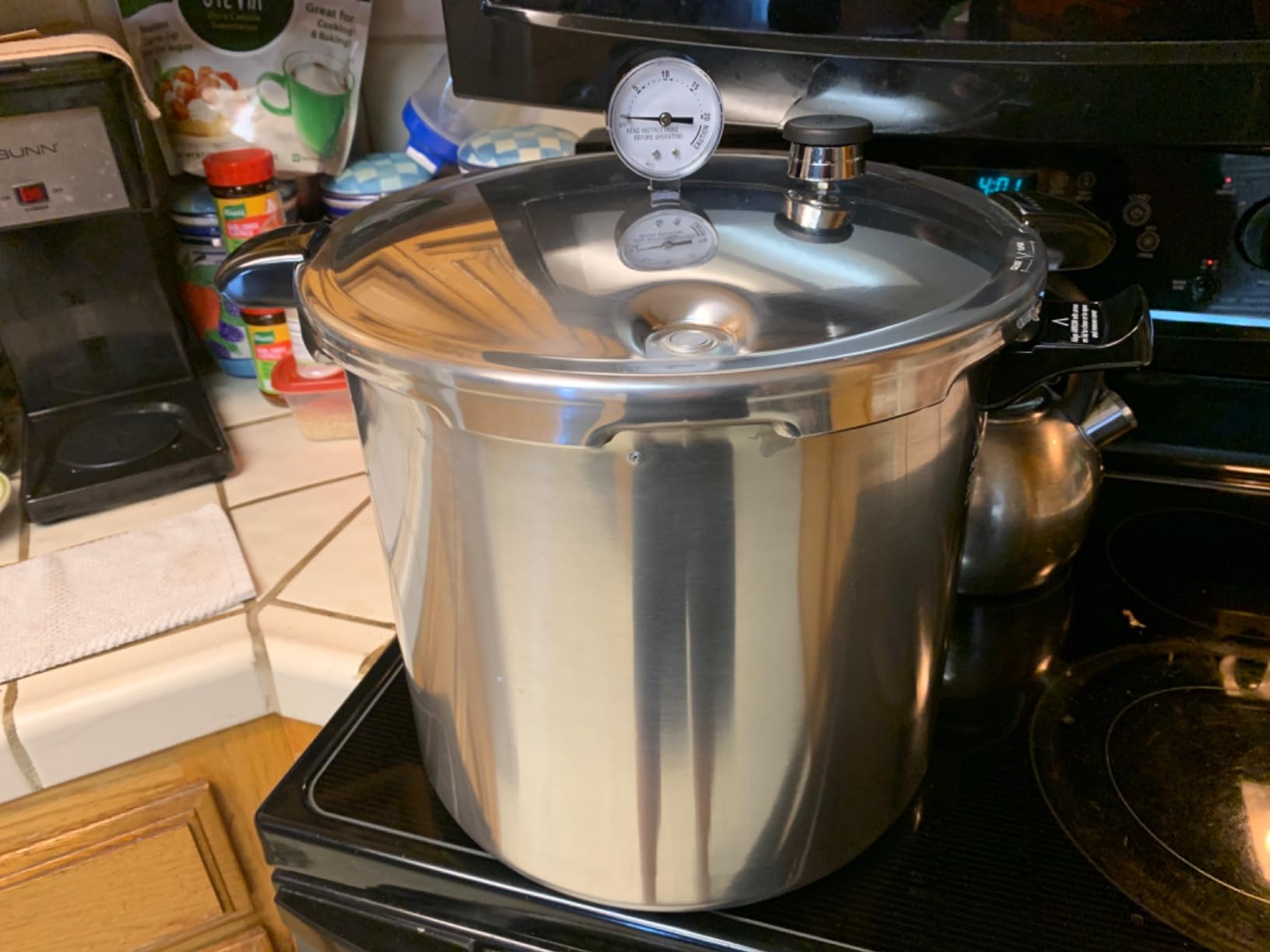
The safety design matters on a smooth surface because you cannot always see what the burner is doing. The air vent and cover lock only allow pressure to build once the lid is properly closed, and the lid will not open until pressure drops. That removes the most common way a canner accident starts, and reviewers frequently mention that the written instructions gave them the confidence to can correctly on a first attempt.
Rated 4.8 stars across more than 5,500 owner reviews, with 88 percent five-star ratings, it is the model with the widest combination of rating and owner history in this group. The complaints are consistent and mostly about accessories rather than the canner itself: the single included 15 lb weight, and the fact that one rack limits you to a single layer of pints.
What to check before you buy
Decide your batch size in jars, not quarts. Seven quart jars is the number that matters if you do tomato sauce, and if your garden output is smaller, the canner is simply underused. Also confirm your cooktop weight rating before you commit, because the clad base adds mass that the lighter 01781 does not carry.
If you plan to can meat or poultry, note that this canner ships with a single 15 lb weight. The 5 lb and 10 lb settings that the USDA processing tables call for are sold as a separate Presto regulator, so factor that into your setup list rather than discovering it mid-season.
Where it falls short
The clad base will not forgive a small burner. On a limited smooth-top zone you can feel the edges of the pot running cooler, and the extra pounds on the glass are a real consideration for a cooktop with a modest load rating. Owners also note that the gauge can drift and that factory recalibration means shipping the part out and waiting.
Stacking a second layer of pints or half-pints needs a second canning rack, which is sold separately. If your recipe list leans on small jars, buy the extra rack up front.
2. Presto 01781 23-Quart Pressure Canner and Cooker – The Most Proven Smooth-Top Performer
Presto 01781 23-Quart Pressure Canner and Cooker
Capacity: 21.8 liters
Material: Warp-resistant aluminum
Weight: 12 pounds
Warranty: 12yr
Pros
- Manufacturer states it works on regular and smooth top ranges
- 20 pints or 7 quarts per load
- Deluxe dial gauge covers the full pressure range
- Includes a canning rack and a 76 page recipe book
- 12-year limited warranty
Cons
- Plain aluminum base will not work on induction
- Wide footprint needs a large smooth burner zone
- Only a single 15 lb regulator is included
- Aluminum body discolors and dislikes acidic foods
When owners ask whether pressure canning on glass is safe, the most common answer on canning forums is the Presto 01781, and the reason is that its documentation names the surface. The listing states the canner works on regular and smooth top ranges, which is the manufacturer approval that most competing listings never bother to include. That single line does more for your peace of mind than any forum anecdote.
It is also the most thoroughly owner-tested canner in the category, with more than 20,000 reviews at a 4.8 average. Long-term owners report years of trouble-free pressure canning on Sears, Kenmore, and Whirlpool glass cooktops. Warp-resistant heavy-gauge aluminum is credited with fast, even heating, and reviewers call out the deluxe dial gauge for staying accurate at altitude, which is where cheaper gauge work drifts.
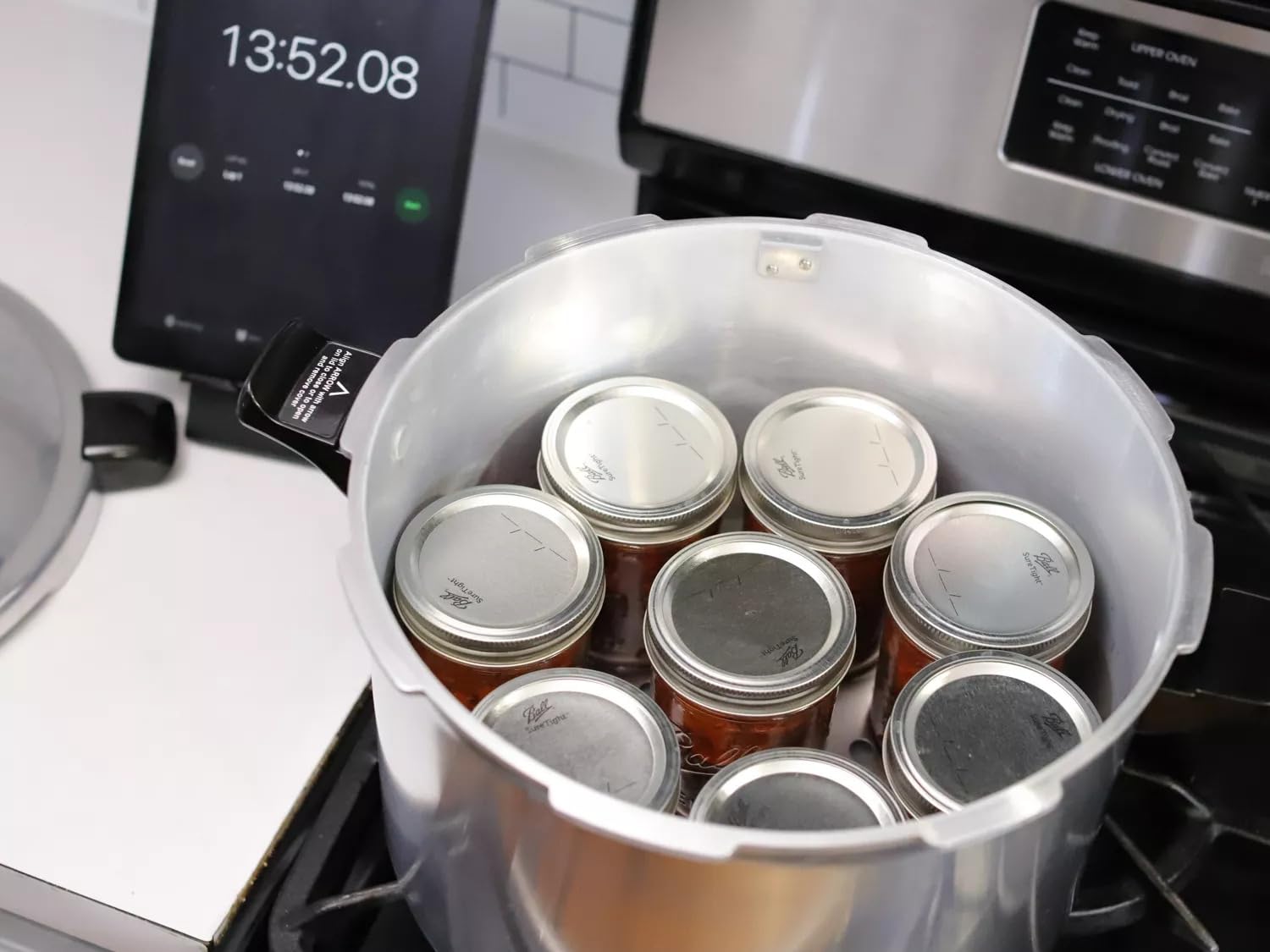
Capacity matches the 01784 at 26 half-pints, 20 pints, or 7 quarts, so this is a straight swap if you would rather skip the clad base. It also includes a complete 76-page instruction and recipe book, which genuinely helps first-year canners get headspace and processing times right the first time.
The trade-off against the 01784 is weight. At 12 pounds empty versus 5.67 kg for the clad model, the 01781 is the lighter of the two 23-quart Prestos, and it is the reason some owners who upgraded to a heavier canner switched back for cooktop reasons. Several people on the foodinjars.com thread describe replacing a heavy All American with a Presto specifically because of their glass range.
What to check before you buy
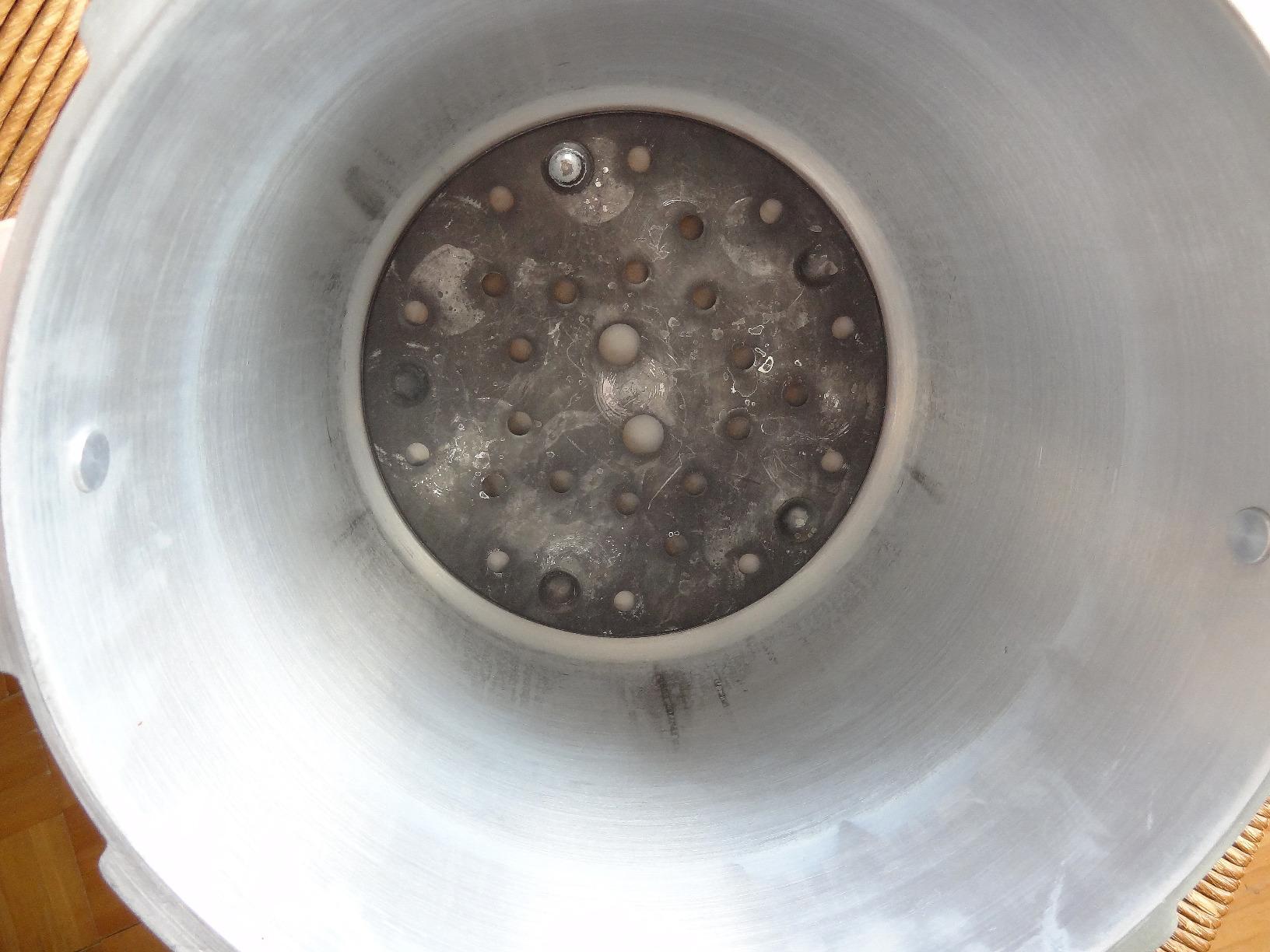
The base is plain aluminum, so this canner will not work on an induction range even though the glass surface on your cooktop looks similar. If your range is radiant electric or gas, that limitation does not matter. If you are shopping for the future, the 01784 covers more surface types for similar money.
Its 17.5-inch width means it needs a genuinely large smooth zone. Measure the burner diameter printed on your cooktop and compare before you commit, since a canner that overhangs the element will never hold a steady boil.
Where it falls short
Like the rest of the line, it ships with one 15 lb weight and one canning rack. The aluminum body also discolors with use and should be kept away from highly acidic recipes like vinegar-based pickles, which is why a separate water bath canner is still worth owning.
It is also worth knowing, from forum discussion, that the factory weights do not cover every setting USDA processing tables call for. If you can meats regularly, plan to add the lower-weight regulator rather than running the process on the wrong pressure.
3. Presto 01755 16-Quart Aluminum Pressure Canner – Lighter Load for Modest Cooktops
Presto 01755 16-Quart Aluminum Pressure Canner and Cooker
Capacity: 16 quarts
Material: Warp-resistant aluminum
Weight: 10.5 pounds
Warranty: 1 Year Limited
Pros
- Lightest Presto body in the lineup at 10.5 pounds
- No exposed screw heads that could scratch glass
- Fits burners too small for a 23-quart canner
- Air vent and cover lock standard on the model
Cons
- Holds fewer jars than the 23-quart Presto models
- Aluminum base is not induction compatible
- Only a one-year limited warranty
- Listing detail is thinner than the larger models
Cooktop load is the real constraint for most apartment and rental kitchens, and the 01755 is the answer. At 10.5 pounds empty it is the lightest canner we recommend here, and its 17.25-inch width fits burners that a 23-quart body overhangs. For a glass cooktop with a lower published weight rating, that difference is the deciding factor rather than a minor preference.
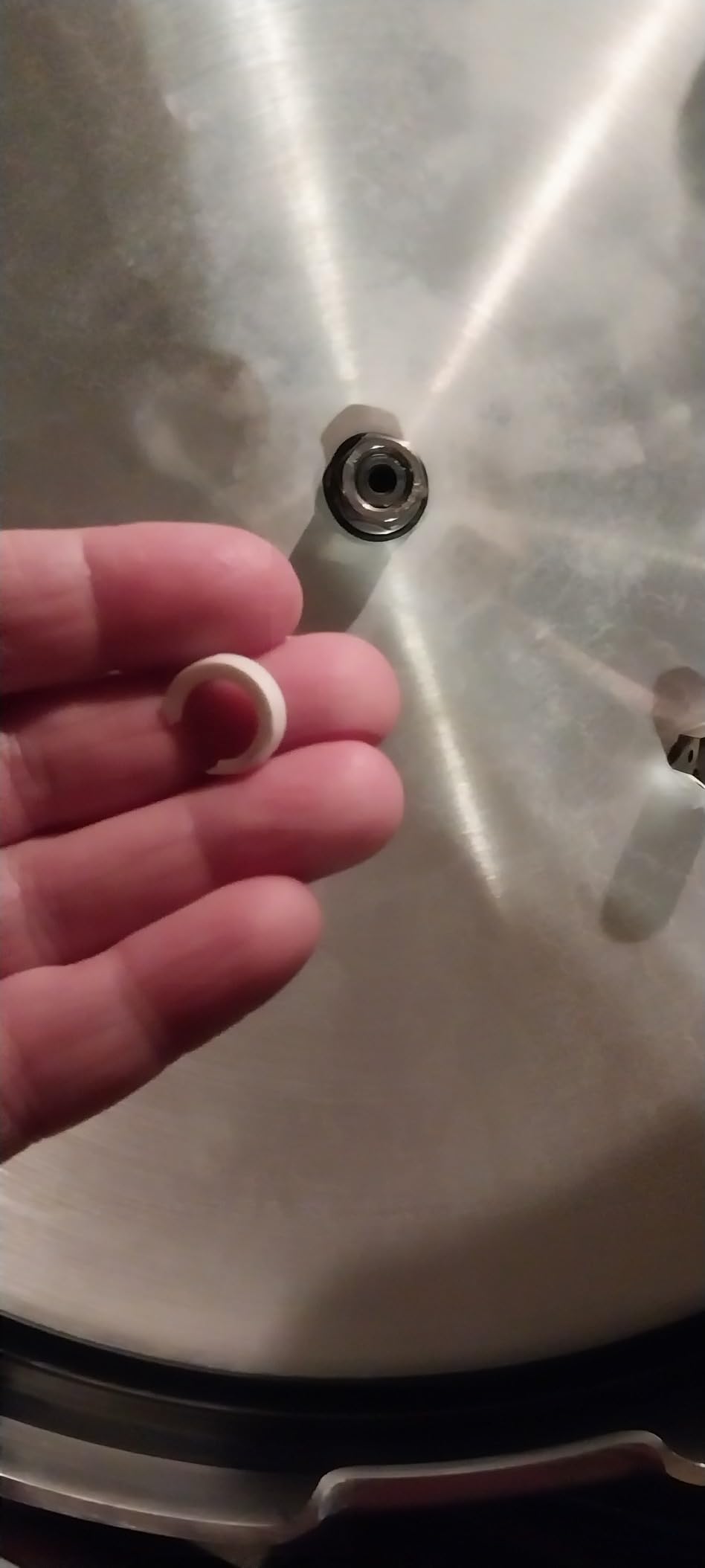
Construction is the same warp-resistant aluminum used across the Presto line, with no exposed screw heads on the base, so there is no metal edge to drag across ceramic when you lift it. The air vent and cover lock behave as they do on the larger models, building pressure only when the lid is properly closed.
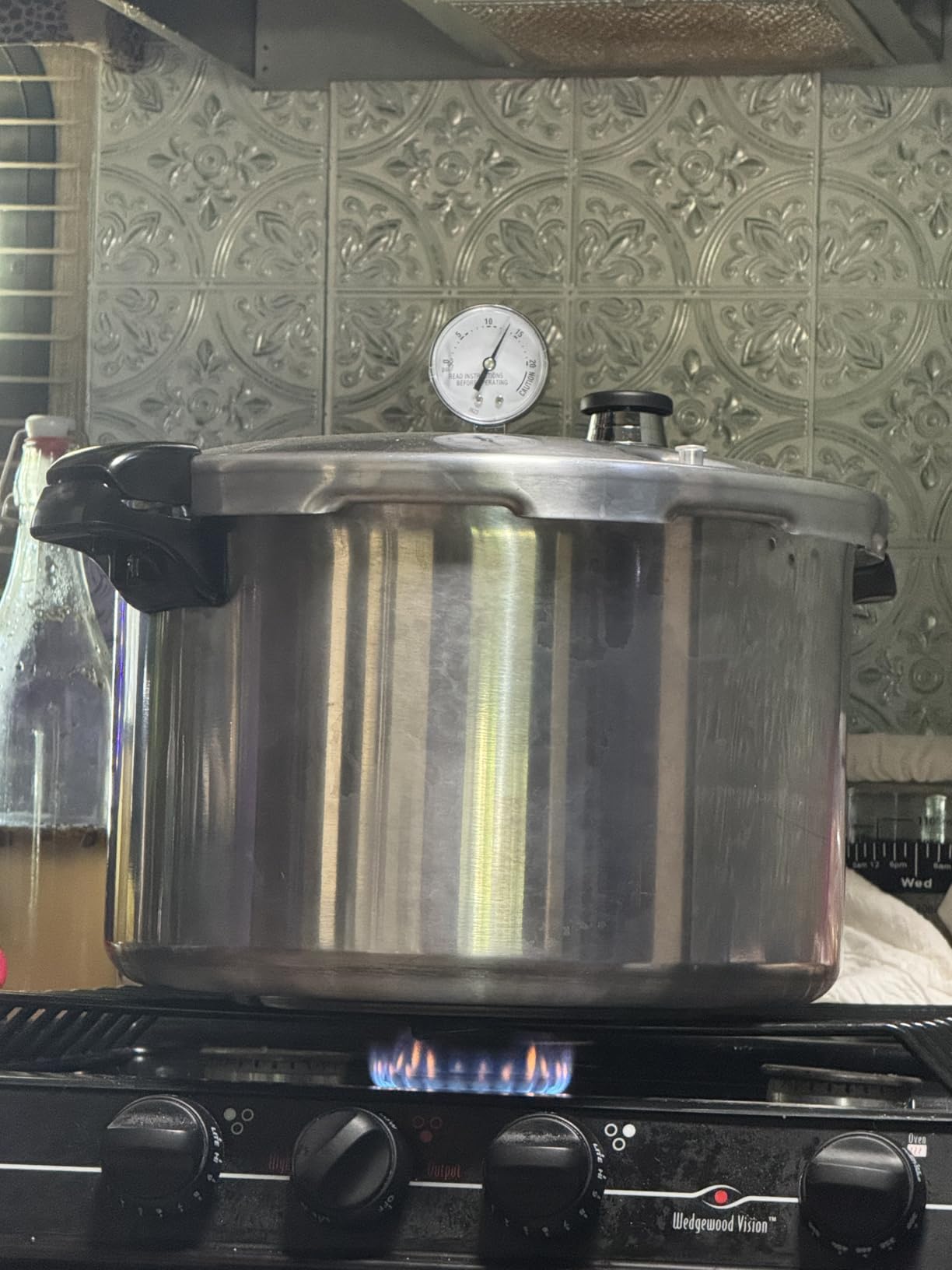
Reviews settle at 4.7 stars across roughly 4,200 owner reviews with 85 percent five-star ratings. Owners who already run Presto equipment rate it well for build consistency, and the recurring trade-off everyone names is batch size. It simply holds less than the 23-quart models in the same line.
That is worth putting in real terms. If you are canning a few jars of green beans for a household of two, the 16-quart body is right-sized and finishes a batch faster. If you are facing a garden surplus, you will be running multiple loads instead of one, and heat-up time becomes the real cost.
What to check before you buy
The warranty here is one year limited, against 12 years on both 23-quart Presto models. That is the sharpest specification difference in this lineup, so it is worth factoring in if you expect to keep the canner for a decade of seasons.
Check that you are comfortable with a narrower jar range. This body is a pressure cooker and canner rather than a canning-only vessel, and its geometry is optimized for cooking loads as much as canning loads.
Where it falls short
The aluminum base rules out induction, as with the 01781. The listing detail is also noticeably thinner than the larger Prestos, which means you will lean harder on external processing tables rather than getting guidance in the box.
And it is the smallest of the three Prestos, so if your harvest volume is high, the 01784 or 01781 will save you time per season despite the extra weight on the glass.
4. All American 910 10.5qt Pressure Cooker/Canner – Gasket Free and Highest Rated Here
All American 1930: 10.5qt Pressure Cooker/Canner (The 910) – Exclusive Metal-to-Metal Sealing System – Easy to Open & Close – Suitable for Gas, Electric, or Flat Top Stoves – Made in the USA
Capacity: 9.94 liters
Material: Cast aluminum
Weight: 14.8 pounds
Rated highest in group
Pros
- Metal to metal sealing system means no gasket to replace
- Listing states suitability for gas
- electric and flat top stoves
- Highest rated canner in the group at 4.9 stars
- Readily available parts and manuals from the manufacturer
Cons
- Very heavy
- many owners need two people to lift it loaded
- Only about 4 quart or 7 pint jars per load
- Long heat-up and cool-down from the mass of the casting
The All American 910 is the most highly rated canner in this roundup, sitting at 4.9 stars across nearly 9,800 owner reviews with 93 percent five-star ratings. Its listing states suitability for gas, electric, and flat top stoves, which is the specific approval a glass cooktop buyer needs to see.
What makes it different from every Presto here is the sealing system. Rather than a rubber gasket compressed between lid and body, the 910 uses a machined metal-to-metal seal, so there is no gasket to degrade and replace. Owners single out that feature more than any other, and it also means one less place a pressure leak can start. Positive-action clamping locks form the steam-tight seal, and a readable steam gauge plus a machined regulator weight handle pressure control.
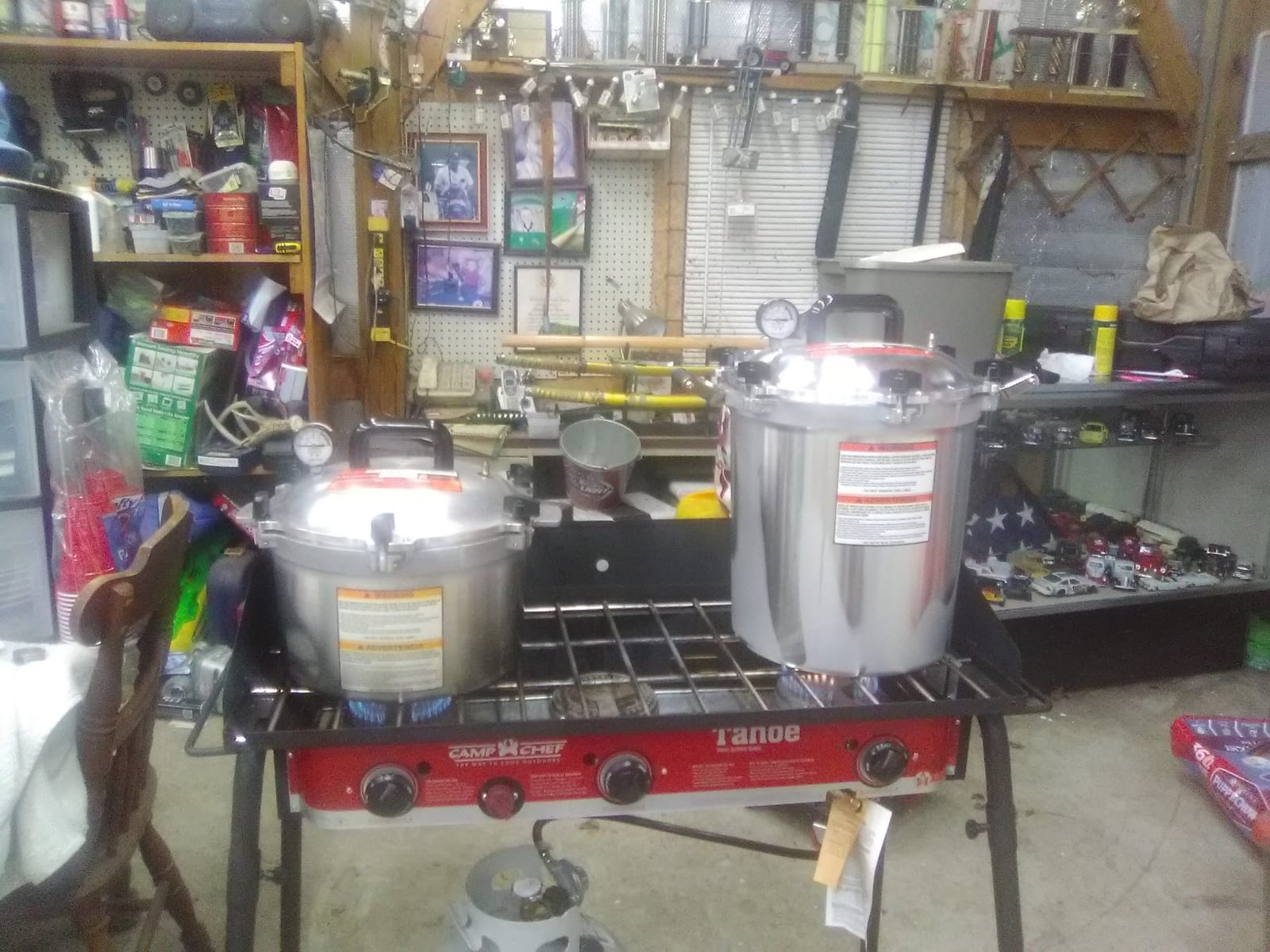
There is real glass-top nuance here. All American sells larger cast-aluminum models that the company itself steers away from smooth tops, and the 910 sits at the lighter end of the range at 10.5 quarts. It is cast by the Wisconsin Aluminum Foundry, and the heavy casting holds heat without a thin single-ply base, which helps a cycling radiant burner.
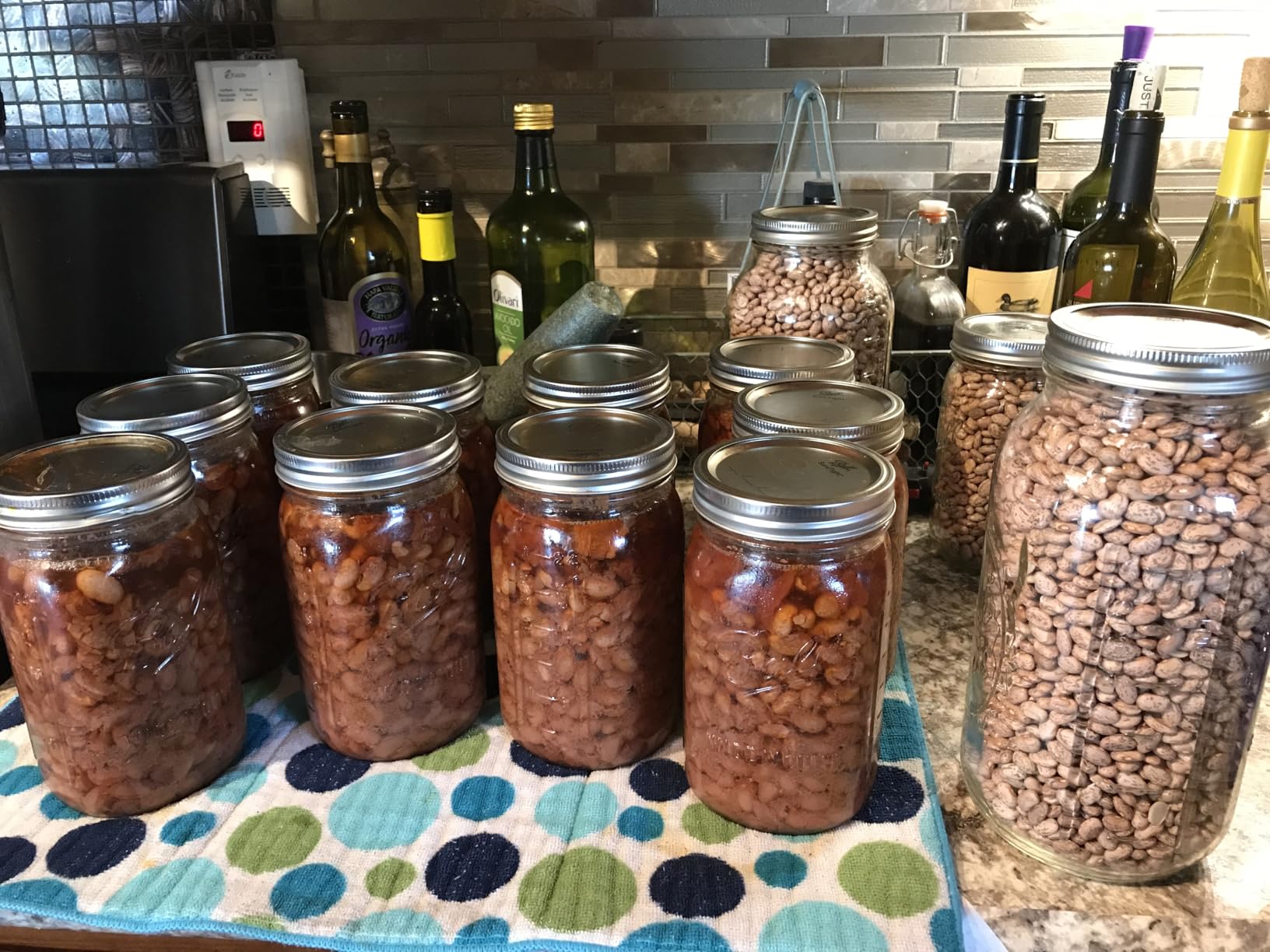
Forum discussion on this model is mixed by design. One owner on the foodinjars.com thread reported running an All American 941 on a Maytag glass top for more than ten years without problems, well outside the manufacturer’s comfort zone. That is a single report against published guidance, not a recommendation, and the 910 is the model whose listing actually names flat top suitability.
What to check before you buy
Weigh it. At 14.8 pounds empty, this is the heaviest canner we list, and loaded with jars and processing water it is heavier still. Compare that against the weight rating in your range manual before anything else, and make sure you can lift it off the burner rather than sliding it.
Plan on two loads. The 10.5-quart body holds about 4 quart jars or 7 pints, which is a small batch for a homestead harvest. Buyers who need scale usually run this alongside a larger vessel rather than instead of one.
Where it falls short
Long heat-up and cool-down times come directly from the casting mass, and on a glass cooktop that means a long sustained high-output session on the element. That is the wear pattern owners most often associate with damaged radiant elements.
Aluminum also reacts with acidic foods, so vinegar-based recipes are not recommended in this body. You will want a separate boiling-water canner for jams, pickles, and tomato salsa regardless of which pressure canner you choose.
5. T-fal 22-Quart Aluminum Pressure Canner – Built-In Pressure Settings for Beginners
T-fal 22-Quart Aluminum Pressure Canner, 3 PSI Settings, Home Canning, Includes Racks & Canning Guide, Large Capacity, Pressure & Water Bath Canning for Vegetables, Meats, Seafood & Fruits, Silver
Capacity: 22 quarts
Material: Polished aluminum
Weight: 14.8 pounds
Warranty: One year
Pros
- Three PSI settings built into the lid with no loose weights to track
- Two canning racks included so jars can stack
- Up to 24 half-pints or 7 quarts per batch
- Works as both a pressure and boiling water canner
Cons
- Gasket can leak slightly at the handle until cleaned and reseated
- Gauge can respond slowly and auto-vent before reaching 15 psi
- Included manual binding and troubleshooting section criticized
- 19.33 inch depth needs a large smooth top burner
The T-fal solves a problem that quietly spoils a lot of first seasons: loose pressure weights. Its three PSI settings are built into the lid, so there is nothing to lose, nothing to mix up, and no separate regulator to track between a weight-based canner and a gauge canner. For a new canner who will process meat more than once, removing the weight system removes a real source of error.
It is also the only model here that ships with two canning racks, which means you can stack jars in a single batch instead of running the canner twice. The stated capacity is 24 half-pints, 16 wide-mouth pints, 18 pints, or 7 quarts, and the double rack is what makes the small-jar numbers realistic.
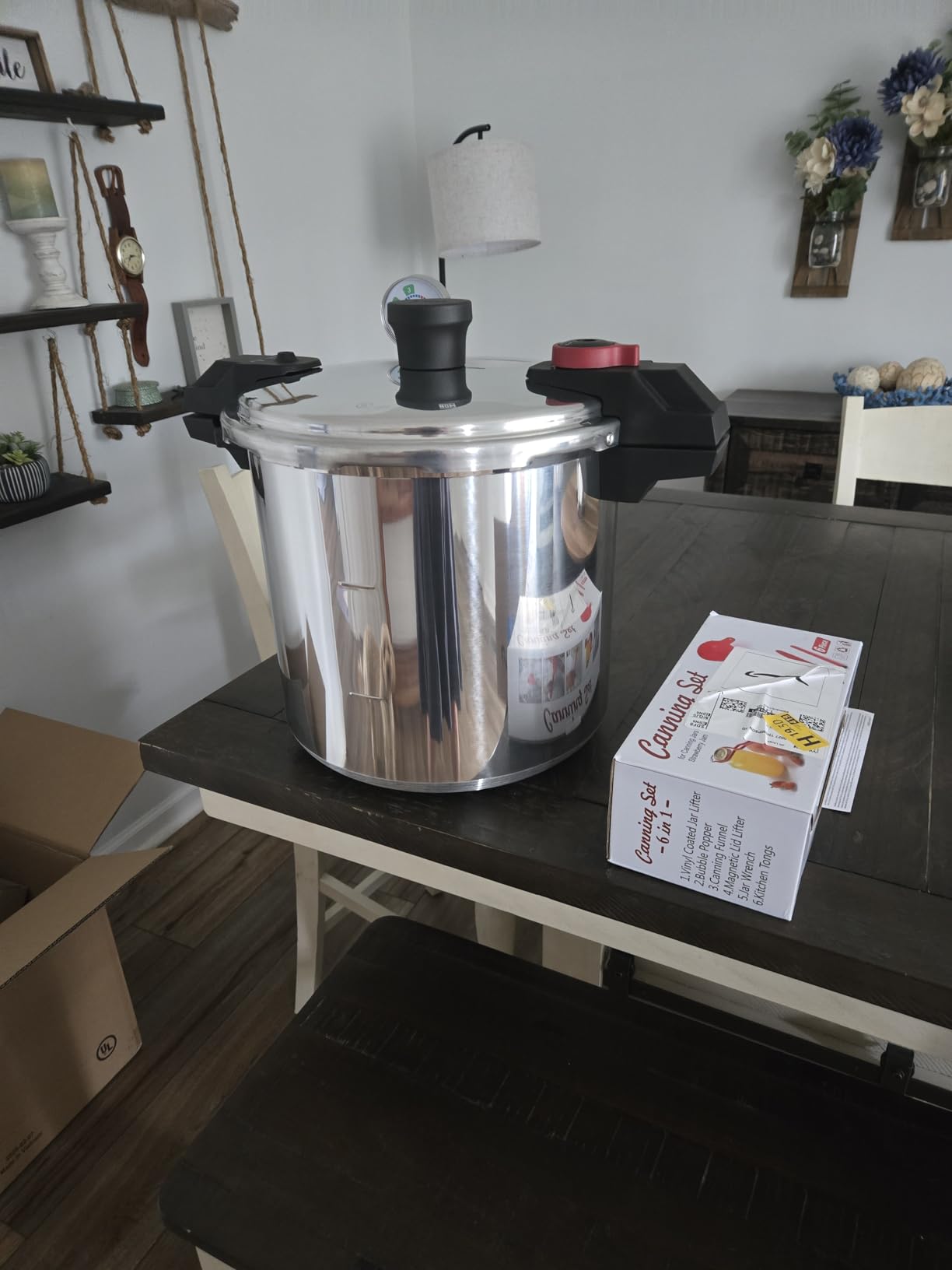
On glass cooktops, the honest concern is footprint rather than base shape. At 19.33 inches deep and 15.39 inches wide, this is the largest body in the lineup, and it needs a genuinely large smooth zone plus clearance above the stove. On a smaller radiant element you will lose your boil.
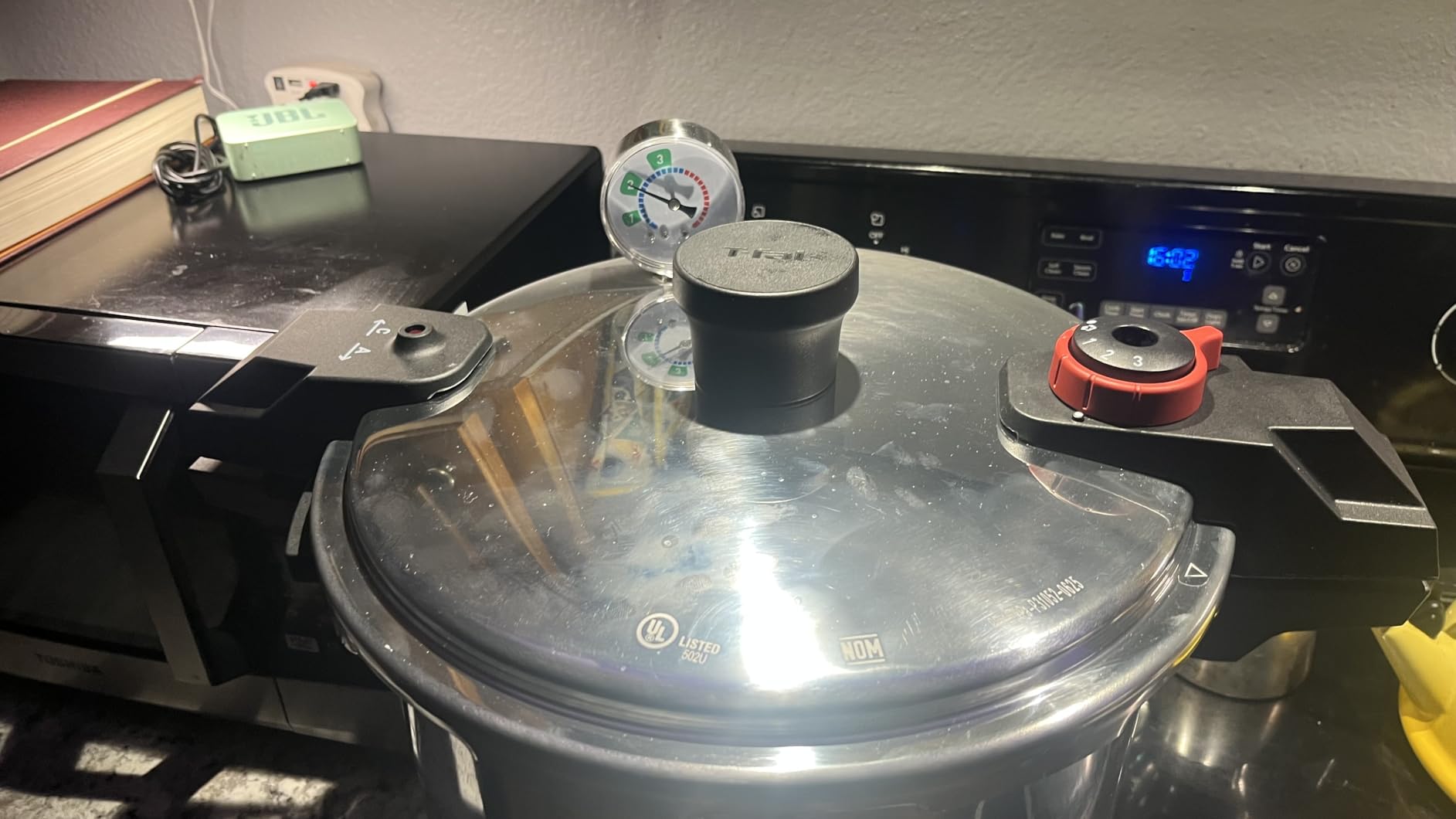
The 4.4 rating across nearly 6,800 reviews is the lowest here, and the 74 percent five-star share reflects it. Recurring positives are the built-in settings, the second rack, and beginner-friendly setup. Recurring negatives are gasket seepage around the handle, slow gauge response that can auto-vent before reaching the target pressure, and a manual that owners describe as poorly made.
What to check before you buy
Measure your largest burner and your overhead clearance. A 19.33-inch depth that overhangs the element will not hold a boil, and this is the one canner in the lineup where we would ask you to measure twice.
Ask yourself whether you will can meat often. The slow gauge response matters most on long meat processes, and if that is your main use, a canner with a quicker-reading gauge is worth the step up in price.
Where it falls short
The gasket leak around the handle is the most common complaint and the most likely to interrupt a batch if you skip the clean-and-reseat step between runs. Gauge response time is the second, and owners report it auto-vents before reaching 15 psi on a moderate setting, which shortens processing rather than endangering it, but it does make the gauge less than perfectly trustworthy.
It also carries a one-year warranty and a polished aluminum body that discolors with use.
6. NESCO NPC-9 Smart Electric Pressure Canner – No Cooktop Contact at All
NESCO NPC‑9 Smart Electric Pressure Canner and Cooker for Home Food Preservation, 9.5‑Quart Stainless Steel with Digital Controls
Capacity: 9.5 quarts
Material: Stainless steel shell
Control: Digital
Power: 120 volts
Pros
- Countertop electric design with zero burner or cooktop risk
- Regulates pressure and temperature automatically
- Digital programs and timer give repeatable cycles
- Safety lock lid
- float valve and pressure regulation system
- Four modes including pressure cook and water bath
Cons
- Small batch of about 4 quarts or 5 pints per load
- Instructions are wordy and the learning curve is steep at first
- Loud beeps on plug-in and pressure changes
If your glass cooktop is a rental, or you simply do not want to put a heavy canner on it at all, the NPC-9 removes the question entirely. It is a countertop electric appliance that plugs into a wall outlet, regulates its own pressure and temperature, and never touches glass. For anyone who has read their range manual’s canning warning and decided to route around it, this is the cleanest solution.
The digital display with preset programs and a timer is the real upgrade over a stovetop canner. A stovetop canner asks you to judge heat by eye against a boiling water canner; this one holds cycles to a programmed profile. Safety features include a safety lock lid, an automatic float valve, and a pressure regulation system, and the removable nonstick inner pot comes with canning and steam racks plus a removable condensation catcher.
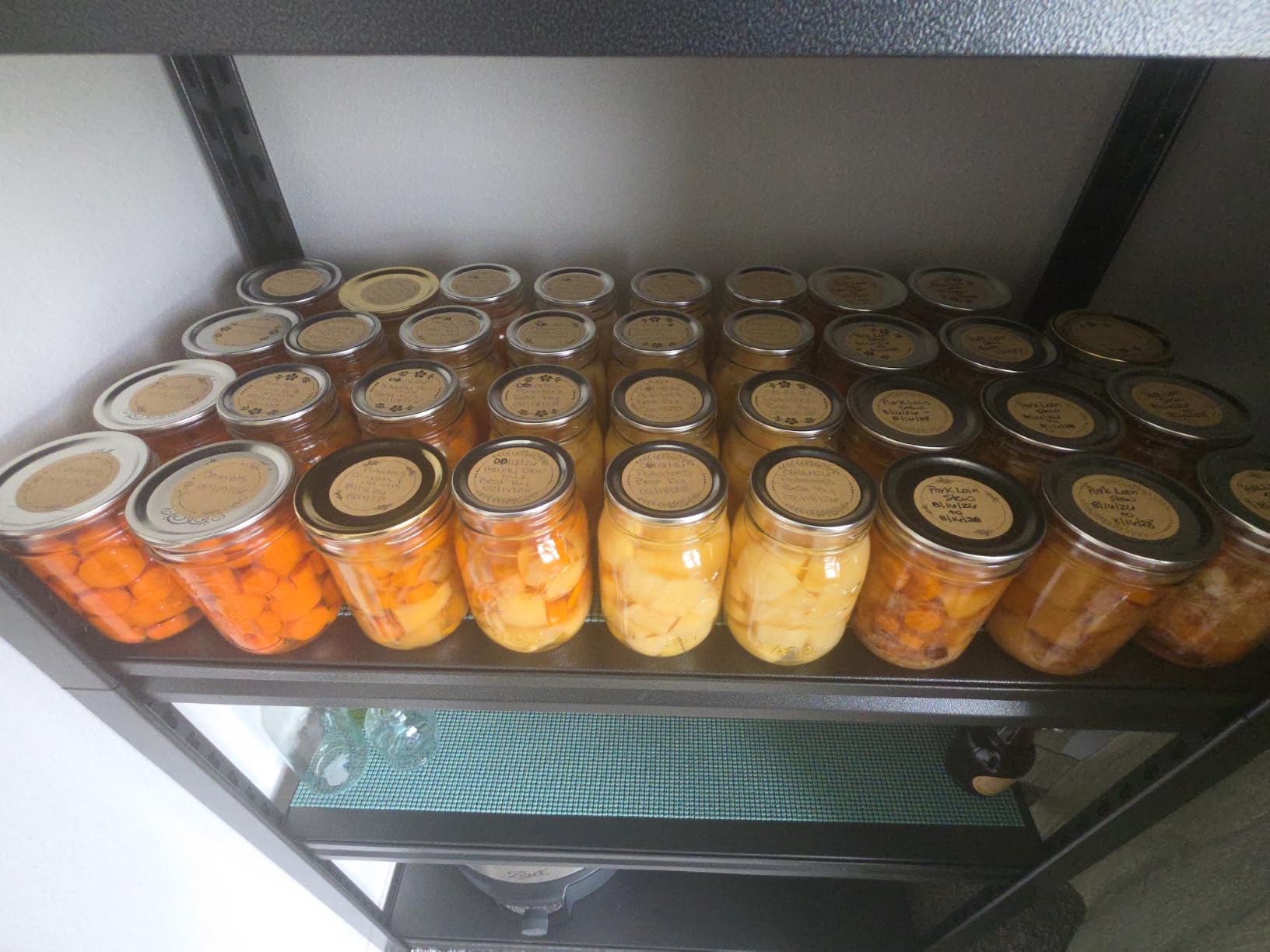
It also includes both standard and high-altitude limiting valves, which removes a step that stovetop canners have to think about. Owners who were nervous about stovetop pressure canning describe this as the appliance that removed the fear, and multiple reviews report two-plus years of trouble-free use.
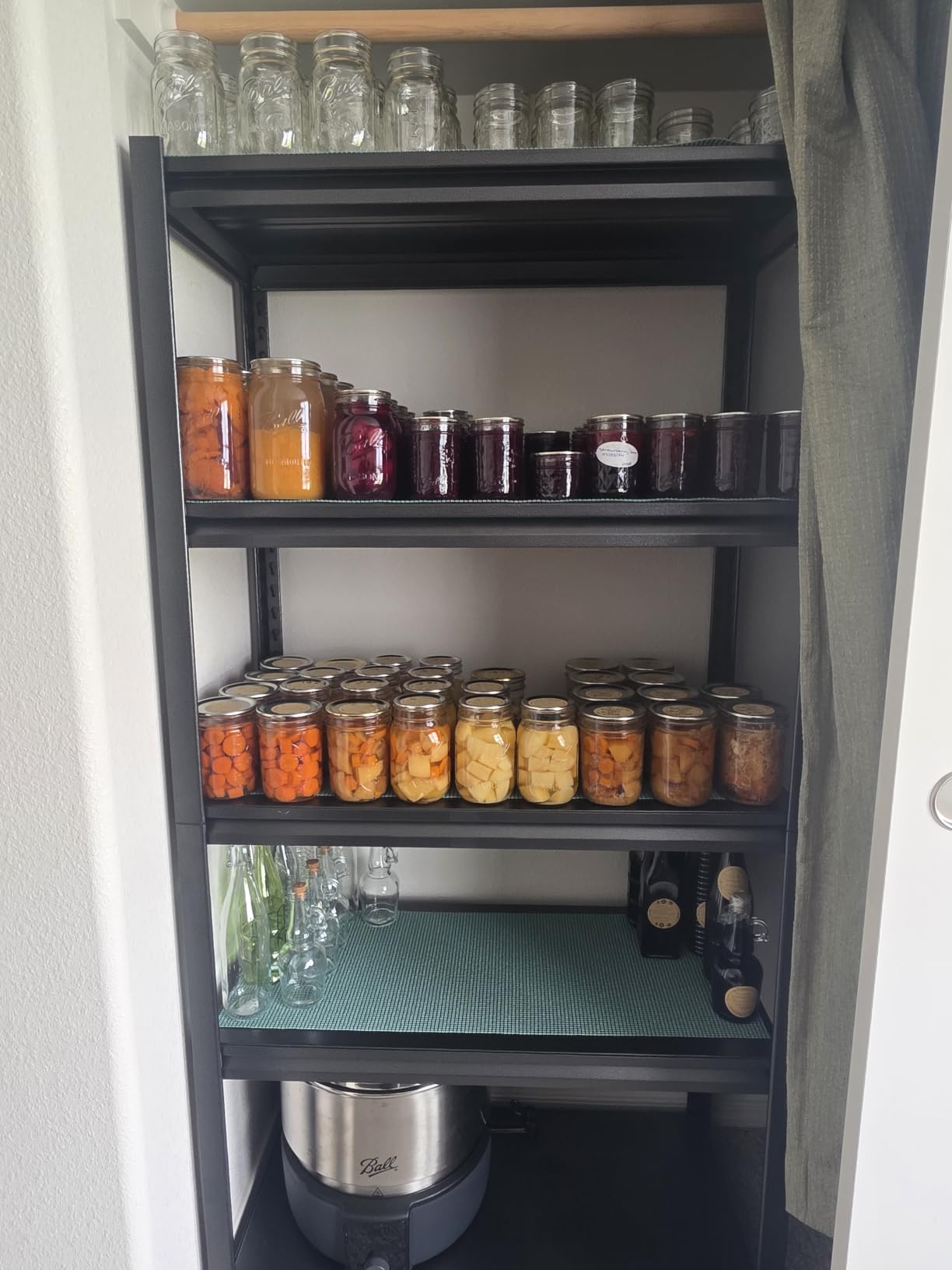
The rating is 4.7 stars across roughly 3,350 reviews with 86 percent five-star. The trade-off that everyone accepts is capacity: about 4 quarts or 5 pints per cycle. That suits a household that cans steadily through the season rather than one facing a single weekend surplus.
What to check before you buy
Count your output. If a typical batch is more than five pints, you will be running multiple cycles, and at roughly 120 volts this is not a bulk-canning machine. Plenty of owners use it alongside a stovetop canner for that reason.
Also consider counter space and whether you want an appliance permanently occupying a shelf. Its listed footprint is 14.17 by 15.27 inches, comparable to a large countertop cooker.
Where it falls short
Wide-mouth pint jars are hard to grip and remove from a deep inner pot, and that is a genuine workflow problem for anyone canning a lot of small jars. The instructions are also wordy enough that first-time users report a steep initial learning curve.
And it is loud. Owners mention beeps on plug-in and on every pressure setting change, which is harmless but not something you want next to a sleeping household.
7. Imusa USA 16-Quart Jumbo Stovetop Pressure Cooker – Straightforward Capacity on a Budget
IMUSA USA A417-80807 16Qt Jumbo Stovetop Pressure Cooker with Regulator and Side Handles, Silver
Capacity: 16 quarts
Material: Polished aluminum
Weight: 9 pounds
Listed for gas stovetops
Pros
- 16 quart capacity in a light 9 pound body
- Smooth polished aluminum base suitable for glass cooktops
- Cool-touch side handles for safer handling
- Safety locking lid and pressure regulator
- Same body offered in 7
- 16 and 22 quart sizes
Cons
- Listing is oriented to pressure cooking rather than certified home canning
- Aluminum base is not induction compatible
- Handles still get hot during long processes
- No explicit smooth-top approval in the listing
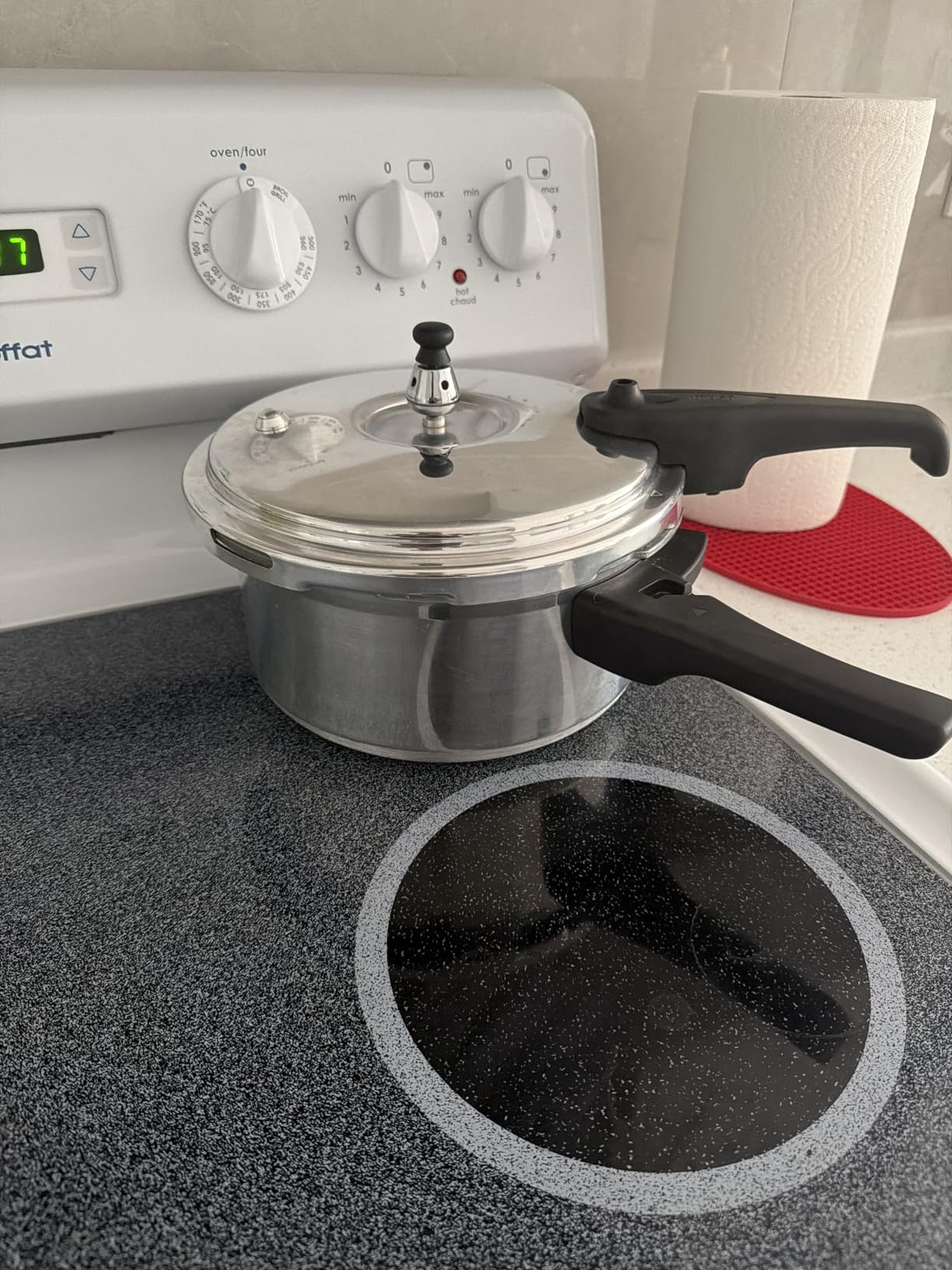
The Imusa 16-quart is the straightforward option: a large smooth aluminum body that reviewers say distributes heat evenly across the base, at 9 pounds empty. That is the second-lightest canner in this lineup, and for a glass cooktop the low loaded weight is the point rather than a feature in itself.
It carries a safety locking lid, a pressure regulator, and safety valves, and the cool-touch side handles make it easier to move than a bare metal pot of this size. The same body is offered in 7, 16, and 22 quart sizes, so if you outgrow the 16-quart you stay in the same product family.
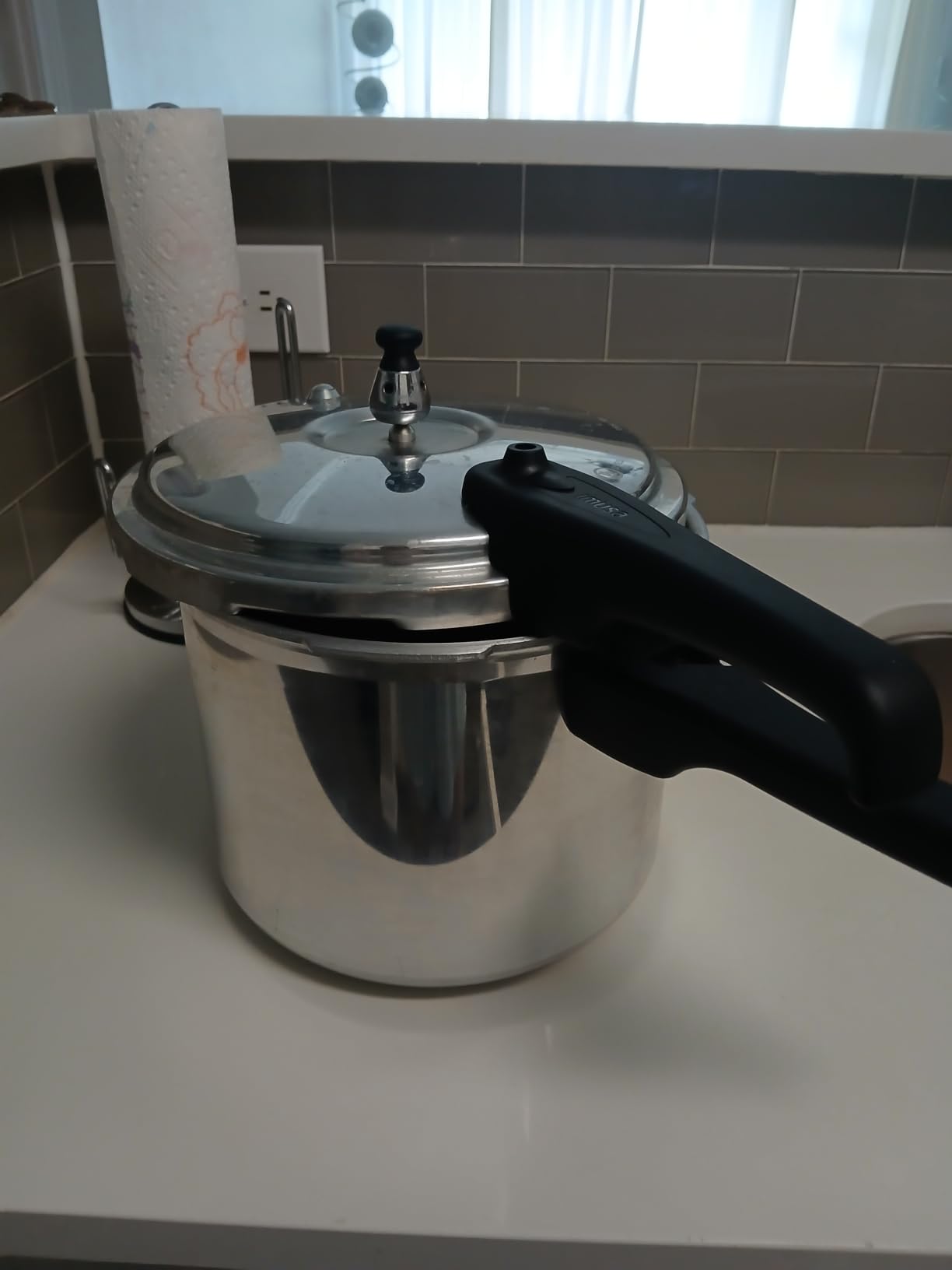
Where it differs from the Prestos is intent. Because the listing is written around pressure cooking rather than certified home canning, the guidance you get for processing times is thinner, and reviews focus on cooking results. Anyone using this for canning needs to follow a weight-based table carefully and confirm the pressure it actually holds.
It holds a 4.7 rating across about 1,270 reviews with 85 percent five-star ratings, and owners generally cite the large capacity, sturdy aluminum build, and value. The thinner review pool is the main reason we place it below the three Prestos despite a good rating.
What to check before you buy
Confirm the pressure it reaches before you plan a season of low-acid canning. That means running a test batch and reading the gauge, because a canner sold for cooking is not automatically a canner sold for preserving.
Note that the listing’s special features field names gas stovetop compatibility. Reviewers and the smooth aluminum base both suggest it works on ceramic, but that is not the explicit smooth-top approval that the Presto and All American listings provide.
Where it falls short
The canning guidance in the listing is genuinely thinner than for the Presto and All American models, and that is the main risk for anyone processing low-acid foods. Aluminum also rules out induction surfaces.
And the cool-touch handles still heat up enough to need care during a long process, which matters when you are lifting a full canner off glass rather than setting it down.
8. WantJoin 11Qt Aluminum Pressure Cooker – Smallest Footprint with an Induction Base
WantJoin 11Qt Aluminum Pressure Cooker w/Release Valve & Multiple Protective Devices,Pressure Canner Compatible with Gas & Induction Cooker,Canner Rack Included
Capacity: 11 quarts
Material: Aluminum alloy
Induction base
Canning rack included
Pros
- Listing states compatibility with gas
- electric cooktops and induction
- 11 quart body fits cooktops where larger canners will not
- Weighs about 45 pounds fully loaded per the listing
- Eight safeguard devices including a self-locking valve
- Canning rack included in the box
Cons
- Included rack sits on an internal lip mid-pot rather than at the bottom
- Customer service reportedly does not answer support inquiries
- Shortest review pool here at under 800 ratings
- Top weight should be checked to confirm it holds 15 psi
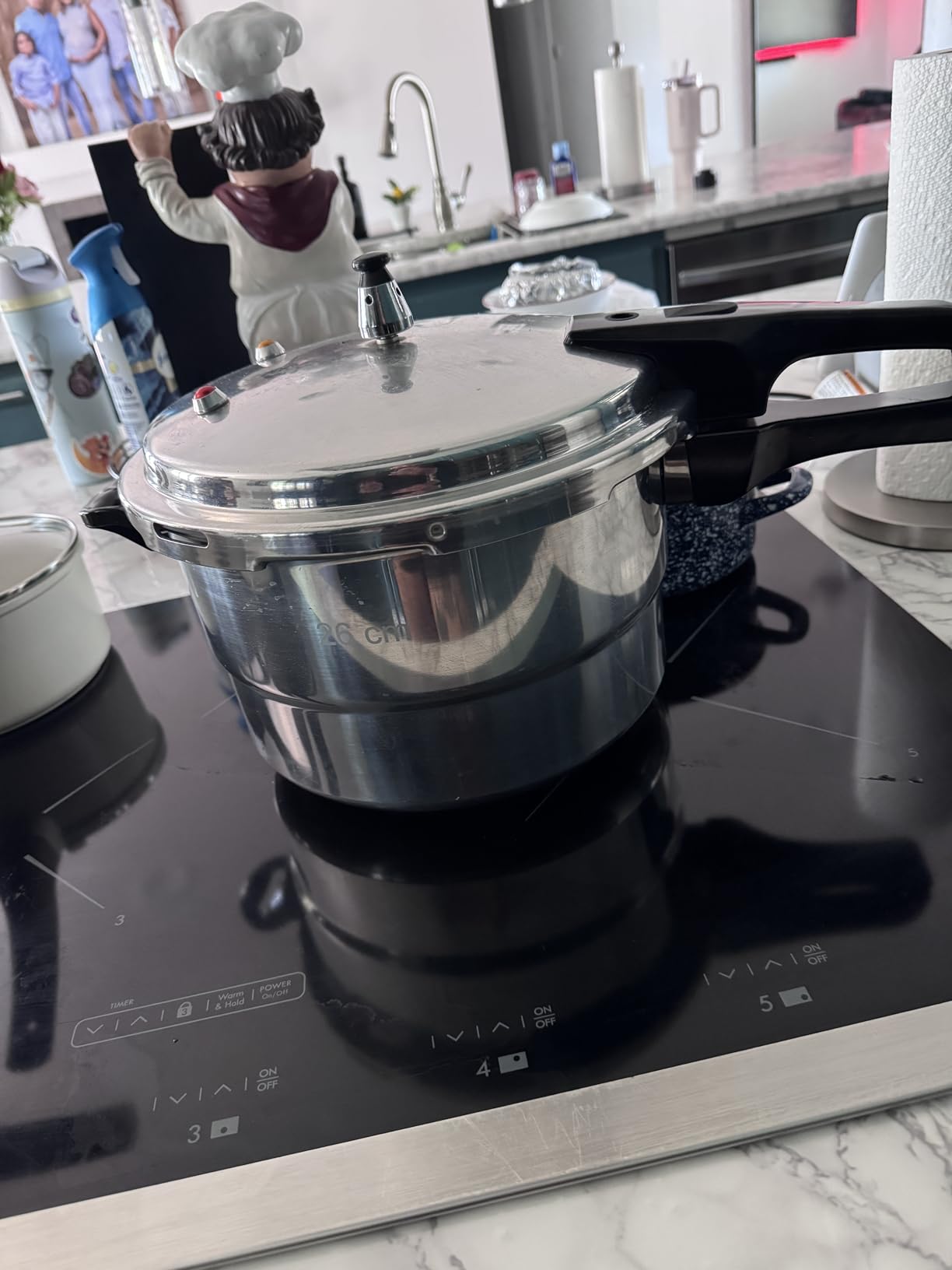
Compact is the reason to look at the WantJoin 11-quart. At 11 by 11 inches it is the smallest footprint in this lineup, and its 11 quart body fits cooktops where a 23-quart canner simply will not sit. The listing also states compatibility with gas, electric cooktops, and an induction base, which covers glass-ceramic surfaces and induction in one body.
It also carries the most safety hardware on paper: a self-locking valve, a limit valve, an anti-blocking lid, a safety valve, and a pressure release window. The long handle is designed to stay burn-free, and the same family is offered in sizes from 4 quarts to 23 quarts.
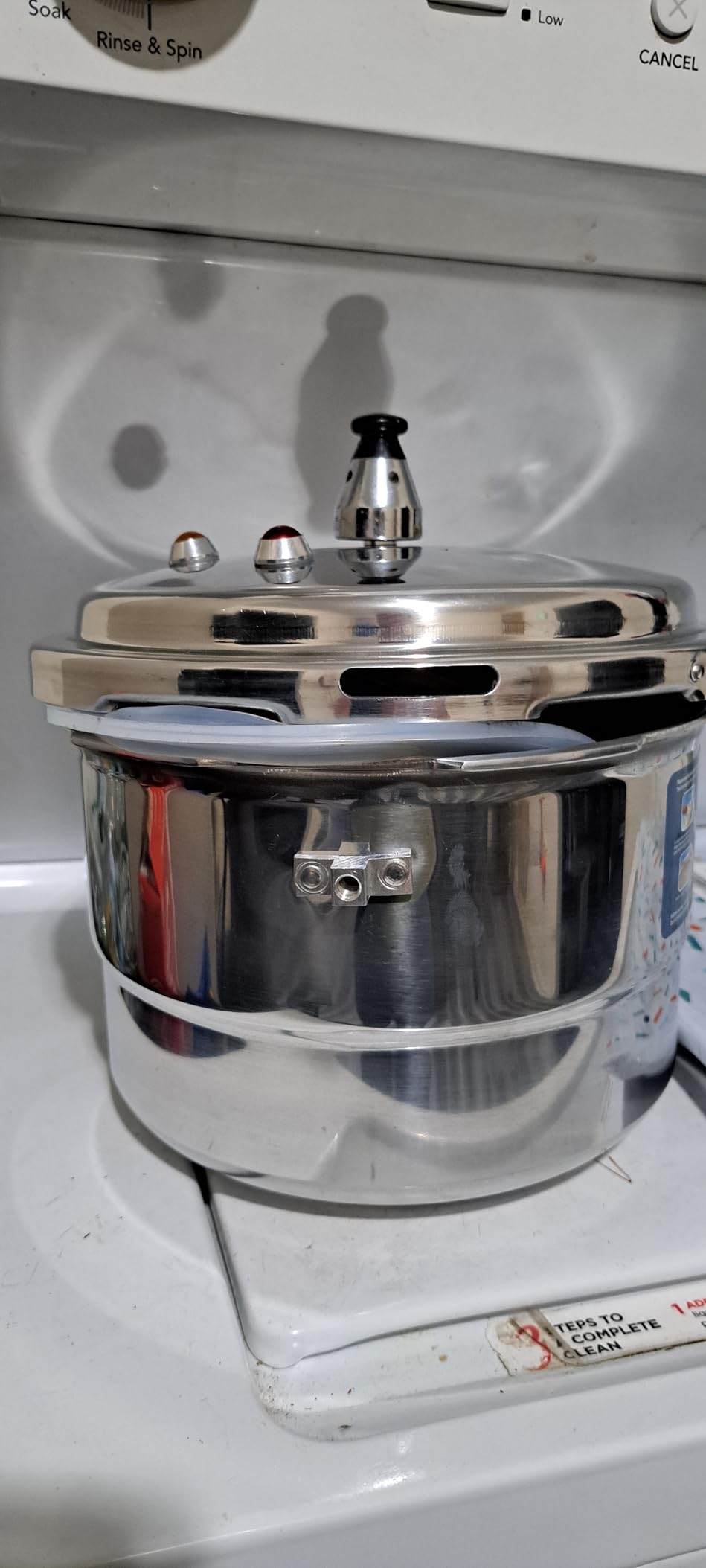
Reviewers who moved up from a heavy cast-aluminum canner cite weight and induction compatibility as the deciding factors, which is precisely the glass-top use case. The listing states a fully loaded weight of about 45 pounds, still substantial but manageable against a lower cooktop rating than a full-size canner would present.
The 4.3 rating from roughly 780 reviews is the lowest in the group, with 71 percent five-star and 9 percent one-star. Complaints concentrate on rack placement, discoloration after a single use, and support requests that reportedly go unanswered, so this is the one to buy with a plan for keeping spare parts knowledge to yourself.
What to check before you buy
The rack issue is the first thing to solve. The included rack sits on an internal lip partway up the pot rather than at the bottom, so you need a separate canning rack to keep jars off the base and off the heating surface. Plan for that accessory before your first batch.
Then verify the top weight actually holds 15 psi on your own cooktop. Nothing in the listing confirms it, and it is the one check that matters for low-acid processing.
Where it falls short
Beyond the rack placement, customer service is the real drawback. Owners report inquiries that were never answered, and with the smallest review pool in the lineup, the long-term record is thinner than everything above it.
The body also discolors quickly, with owners reporting visible change after a single use. It is a functional canner for a small kitchen, but it is not the pick if you care about how the cookware looks over a decade of use.
Buying Guide: Size, Gauge, Material and Safety Features
Size is a cooktop decision before it is a kitchen decision. The 23-quart class is the standard for a season of canning, but its loaded weight is the number your glass cooktop cares about. The 16-quart class buys you burner headroom and cooktop headroom at the cost of running two loads. The 10.5 to 11-quart class is for households canning steadily rather than in bulk.
Gauge type changes how much attention a batch needs. A dial gauge canner tells you the actual pressure inside the pot, which is why the 01781 and the All American 910 appeal to canners at altitude. A weighted gauge canner is simpler and cheaper but only tells you that pressure is being held, not exactly how much. The T-fal’s three built-in settings sit in between. Wherever you land, follow the processing tables from the National Center for Home Food Preservation rather than a forum post.
Material decides which surfaces you can use. Plain aluminum heats fast and evenly, resists nothing in particular, and will not work on induction. A stainless steel clad base adds mass, costs more, and works on induction and every other surface. For a glass cooktop specifically, clad or heavy-gauge aluminum both transfer heat well; the difference is durability on an induction range and resistance to warping over years.
Gaskets are the recurring cost of this category. Presto and T-fal lids use a removable rubber gasket that degrades over time and needs replacing periodically, which is a known ongoing expense that most roundups skip. The All American 910 sidesteps this with its metal-to-metal machined seal. If you dislike recurring consumables, that feature alone is worth weighing.
Safety features worth paying for. Look for an air vent and cover lock that prevents pressure from building on an unseated lid, a lid that will not open until pressure drops, multiple redundant vents, and a readable gauge. The WantJoin lists the most hardware, though the Presto and All American designs achieve the same protections with fewer parts.
Alternative heat sources. For renters and anyone whose range manual forbids canning vessels, a portable induction burner set up on a counter as a processing station solves the problem completely, and it is the most-recommended workaround in canning forums. A plug-in electric burner or a butane burner works too for water-bath canning, though canners in the forums more often reach for induction because it holds pressure more steadily.
Frequently Asked Questions
Do pressure canners work on glass top stoves?
They do, provided the canner has a flat or clad base, stays under your cooktop’s published weight limit when loaded, and your burner can hold a rolling boil for the full processing time. Manufacturers including Presto state their canners are suitable for smooth top ranges, and the All American 910 listing names flat top stoves. Check your range owner’s manual first, since some models warn against canning vessels entirely.
Are pressure canners safe on glass top stoves?
A flat-bottomed canner that the manufacturer approves for smooth top ranges is safe when the loaded weight is under your cooktop rating and heat is held steady. The main risks are a concave base that can form a suction seal against the glass, a cooktop load limit that can be lower than you expect, and heat cycling that breaks your boil mid-process. Lift the canner rather than sliding it.
What is the best pressure canner for a glass top stove?
The Presto 01784 23-Quart Induction Compatible Pressure Canner. Its stainless steel clad base spreads heat evenly across glass ceramic without scratching, it holds 7 quart jars per load, and it carries a 12-year limited warranty. It also works on gas, electric, and induction, so it covers more surfaces than the plain aluminum models.
Can I use an All American pressure canner on a glass top stove?
The All American 910 listing states suitability for gas, electric, and flat top stoves, so that model is documented for smooth surfaces. All American also sells larger cast aluminum models that the company steers away from glass cooktops because of their weight, and community reports of heavier units working are outside manufacturer guidance. Check the specific model listing rather than the brand name.
How do I pressure can on a glass top stove?
First find your cooktop weight rating in the owner’s manual and measure your largest burner. Then test the surface by holding a rolling boil on it for thirty minutes, which reveals whether the element can sustain a ninety-minute process. Place the canner on the largest zone, lift rather than slide it, keep the gauge in view, and do not let the boil collapse. Start with a high-acid batch before committing to low-acid foods.
Is there a pressure canner that doesn’t require a gasket?
Yes. The All American 910 uses a precision machined metal to metal sealing system instead of a replaceable rubber gasket, so there is no gasket to degrade or buy. Presto and T-fal models use a removable gasket that owners report needing to replace periodically, which is a real ongoing cost across a decade of canning.
Can I pressure cook on a glass top stove?
Yes, and regular pressure cooking is far gentler on glass than pressure canning because cycles are short and loads are lighter. The same three rules apply: a flat base, a load within the cooktop rating, and a burner large enough to keep the pot stable. Canning extends the duration to ninety minutes at a hard boil, which is why it draws the stronger warnings in range manuals.
Can you can with a pressure cooker on a glass top stove?
Not safely. A pressure cooker and a pressure canner differ in vessel weight, sealing design, and safety venting, and cookers are not built to hold a processing pressure for a full cycle. A stovetop cooker marketed for cooking, such as the Imusa or WantJoin models here, should be treated with caution for low-acid foods. Process low-acid vegetables, meat, poultry, and seafood only in a canner built for it.
Conclusion: The Pressure Canner to Put on Your Glass Cooktop
The best pressure canners for glass top stoves are the ones with a flat or clad base, an explicit smooth-top statement from the manufacturer, and a loaded weight your cooktop can carry. Our pick for 2026 is the Presto 01784 23-Quart Induction Compatible Pressure Canner: the clad base sits flat on ceramic, it holds a full seven-quart batch, and the 12-year warranty outlasts any other warranty in this lineup.
If your largest burner is small or your cooktop rating is low, drop to the Presto 01755 16-quart for less weight and a smaller footprint. If the weight of a gasket bothers you, the All American 910 offers a metal-to-metal seal and the highest owner rating we found, at the cost of a smaller batch. And if you would rather never put a canner on glass at all, the NESCO NPC-9 runs on a counter outlet and regulates itself.
Before any of them go on your range, read the owner’s manual for the weight rating, run a thirty-minute boil test on your largest zone, and keep a processing table from the National Center for Home Food Preservation within reach. That preparation costs an evening and it is what separates a smooth season from a cracked cooktop.