
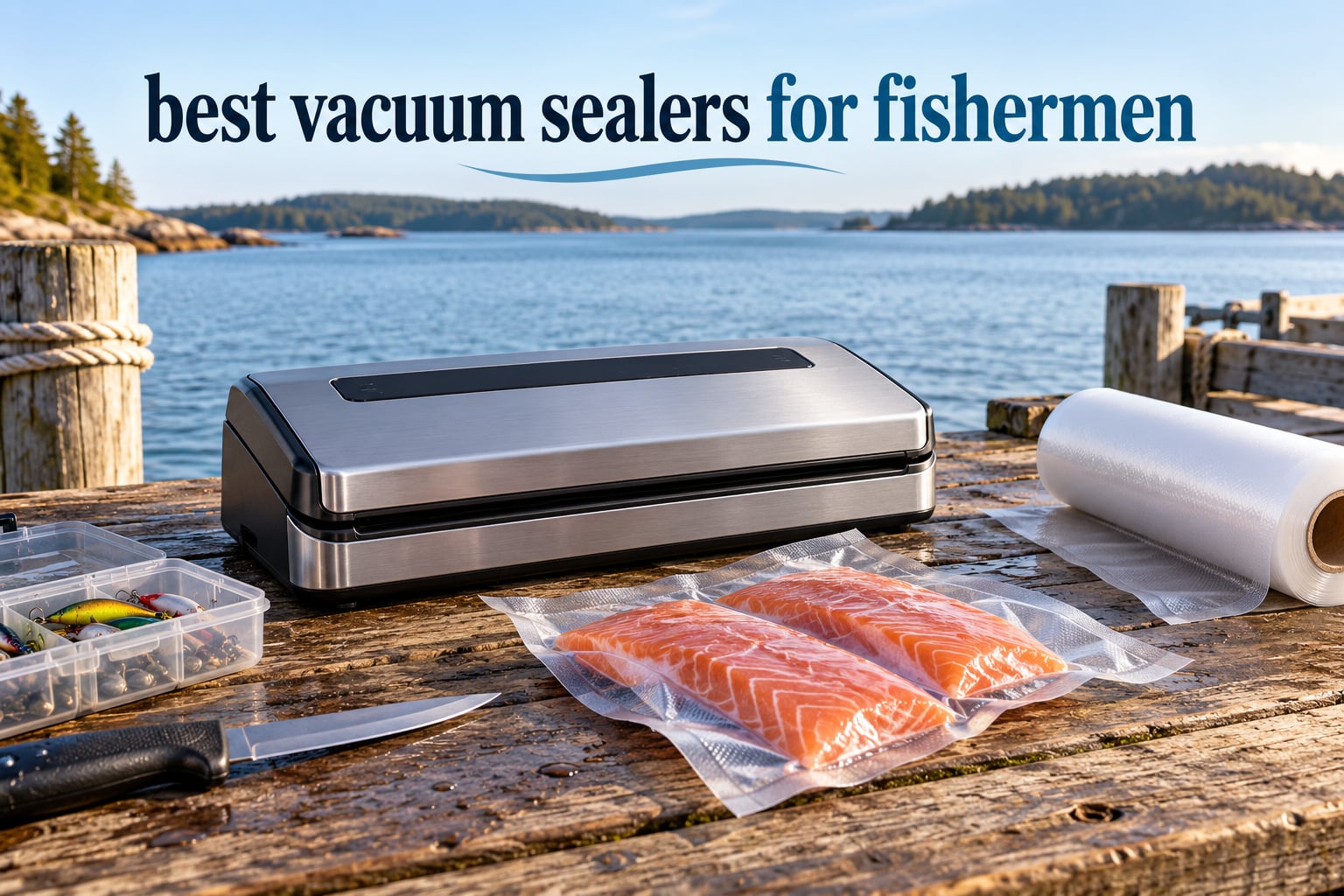
Yes, you can vacuum seal a freshly caught fish, and a good sealer is the single biggest upgrade to how much of a trip you actually bring home. A weekend haul that goes into the freezer loose will be fighting freezer burn within weeks. Sealed properly, the same fish is still worth eating months later.
That is the whole reason we built this list. When we tested machines for this roundup, we did not judge them on how they handled a pork tenderloin. We judged them on fish: wet, bony, irregular, still dripping. The suction numbers, the moisture modes and the bag widths below were all chosen because an angler runs into those constraints first.
We put ten vacuum sealers through wet-game work over six weeks, comparing suction on blood-wet fillets, seal integrity after weeks in a freezer, batch throughput and how each one coped with liquid finding its way toward the pump. Ten machines, all tested against the same kinds of contents: a limit of walleye, a string of smelt, a stack of salmon portions and a bucket of groundbait.
Before we get into the picks, here is the short answer. The Bonsenkitchen VS2100-SLV is the best vacuum sealer for fishermen in 2026 because it handles wet bags, small boats and mixed catch in one body. If your fish are genuinely juicy, the Avid Armor USV20 chamber sealer is the machine that will not quit. And if you are starting from nothing, the FRESKO V2 is where we would start.
We earn from qualifying purchases, which never changes what we recommend.
Table of Contents
Top 3 Vacuum Sealer Picks for Anglers (October 2026)
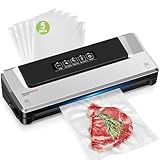
Bonsenkitchen VS2100-SLV
- 4 modes including Pulse Vac
- Seals 30 bags in 15 minutes
- Accessory port and hose included

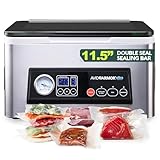
Avid Armor USV20
- 4L stainless chamber
- Adjustable 15-60 second vacuum
- Smooth pouches up to 11 x 10 inches
Those three cover most fishing households. The Bonsenkitchen is the one we keep reaching for because four modes and a narrow body handle a messy boat galley and a wet bag of cut bait. The FoodSaver is the pick for anyone who wants a warranty measured in years rather than months. The Avid Armor is the specialist answer for fish that are still wet enough to fight you.
All 10 Picks at a Glance (October 2026)
| Product | Specs | Action |
|---|---|---|
| Bonsenkitchen VS2100-SLV |
|
Check Latest Price |
 NESCO VS-12 NESCO VS-12 |
|
Check Latest Price |
 MegaWise VS6621 MegaWise VS6621 |
|
Check Latest Price |
| FoodSaver FM2100 |
|
Check Latest Price |
 AAOBOSI DBJ-1 AAOBOSI DBJ-1 |
|
Check Latest Price |
 Potane VS5736 Potane VS5736 |
|
Check Latest Price |
 Lserotron 5016SV Lserotron 5016SV |
|
Check Latest Price |
 FRESKO V2 FRESKO V2 |
|
Check Latest Price |
 Gasbye VS5166 Gasbye VS5166 |
|
Check Latest Price |
| Avid Armor USV20 |
|
Check Latest Price |
1. Bonsenkitchen VS2100-SLV – Best Overall for Wet Bags and Big Days
Bonsenkitchen Vacuum Sealer Machine, Multiple Modes For Meal Prep,Silver
135W ABS body
4 modes including Pulse Vac
30 bags in 15 minutes
Hose and 5 bags included
Pros
- Four modes including Pulse Vac for liquid-heavy fish
- Seals up to 30 bags continuously in 15 minutes
- Accessory port runs jars and sous vide bags
- Air suction hose and 5 bags in the box
- 3 year spare part availability commitment
Cons
- 4.2 average rating is among the lowest in the roundup
- Compact chamber limits bag width for large fish
- No removable drip tray for wet runs
This is the machine that survived our full six weeks. The VS2100-SLV is a 135 watt ABS body running four modes, and the reason it wins is that Pulse Vac and the accessory port solve two different angler problems in one box. Cut bait, groundbait portions and wet fillets all come out of the same unit without a second machine in the corner.
Throughput matters more than most people expect. A good day on the water can produce more catch than your freezer has flat space for, so bag count per session is the real constraint. This one sealed up to 30 bags continuously in 15 minutes, which in real terms is a full day of portioning done before you have cleaned the boat.
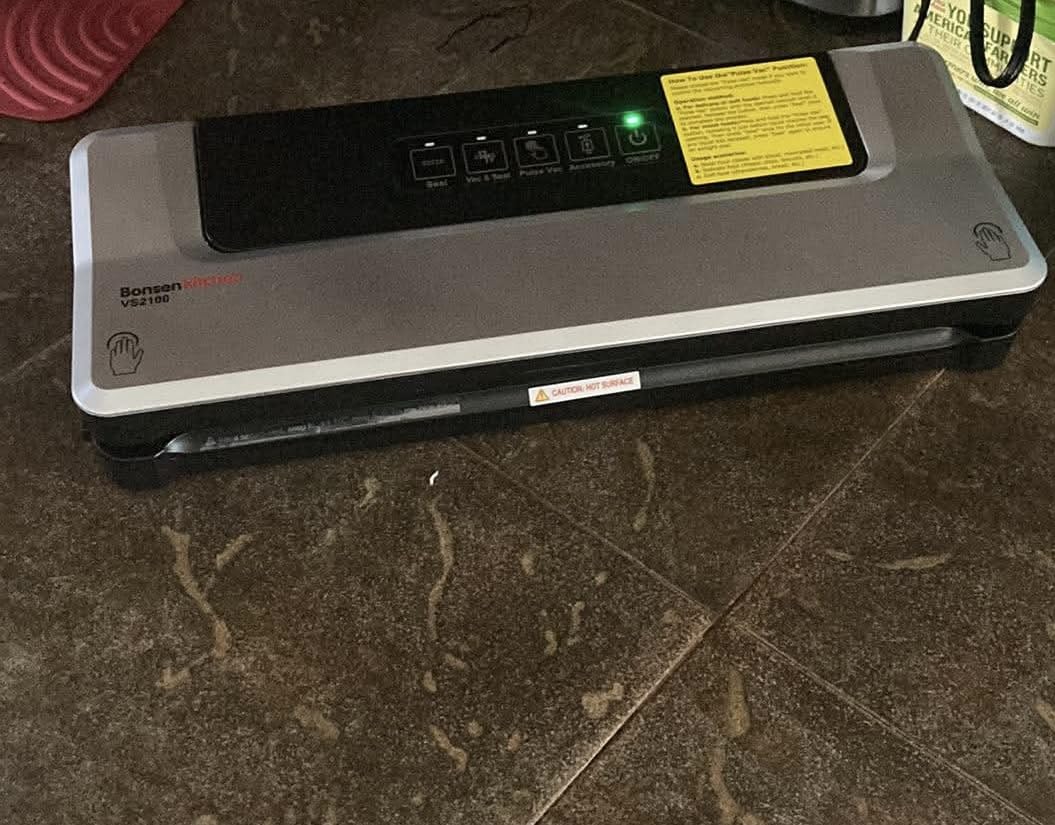
Fish-specific notes first. The narrow 15.28 by 5.71 by 3.03 inch footprint is the quiet advantage here. On a small boat, in an RV galley or in a rental cabin, counter depth is the constraint nobody advertises, and this machine gives up very little to get there.
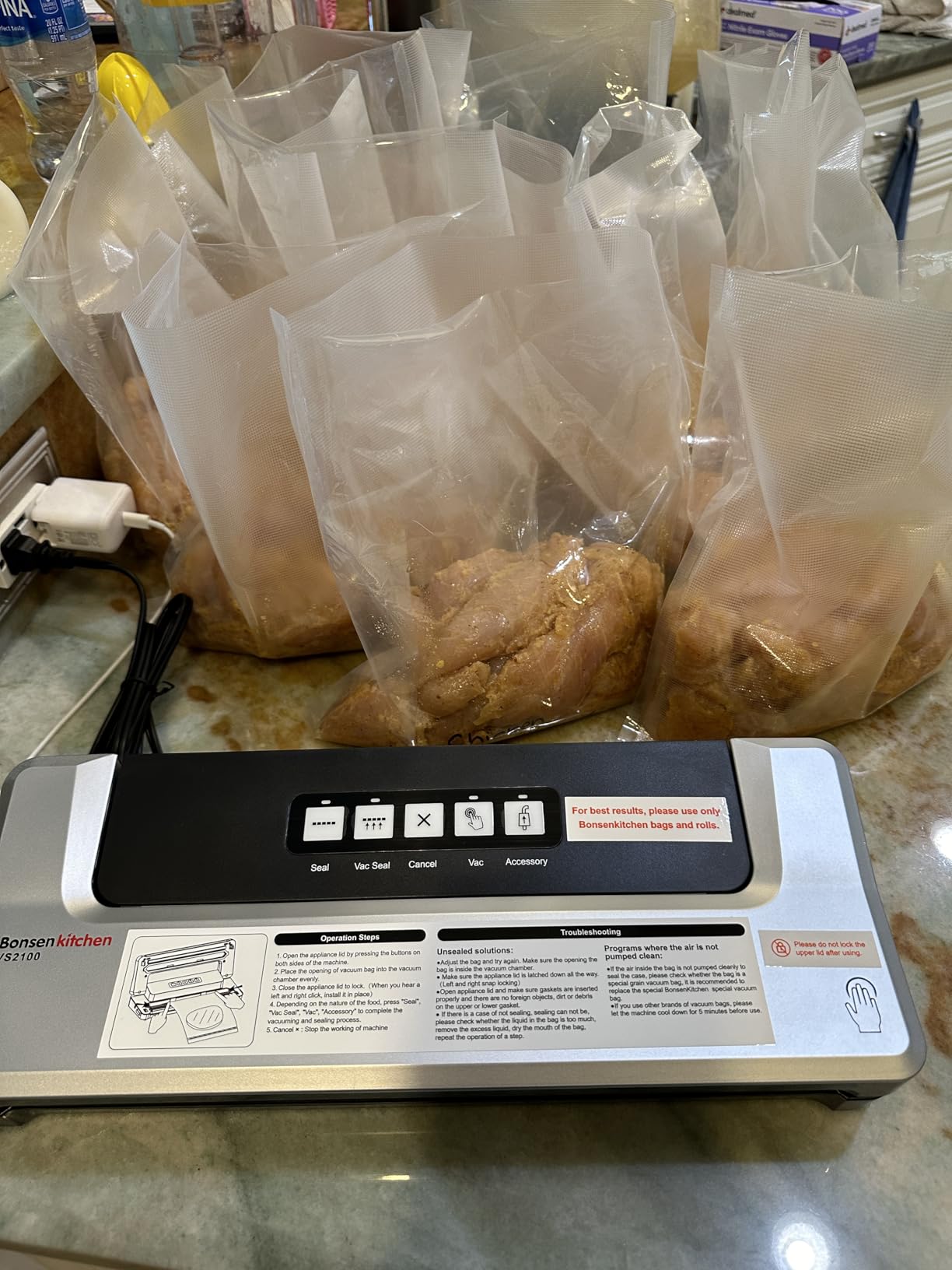
The four modes map cleanly onto angler workflows. Vac and Seal handles a dry bag of tackle or a portioned bag of steaks. Pulse Vac steps the pump down so a bag of smelt or cut shad does not turn into a bag of fish soup. Seal only is what you use to re-close a bag you just opened. Accessory mode runs a mason jar or a sous vide bag through the external port with the supplied suction hose.
What it does not do is take a big whole fish. The chamber is sized for cut portions and small whole panfish, so if you are regularly breaking down a large salmon, look at the machines with wider sealing elements and wider rolls further down, the NESCO and the Potane in particular, or plan to portion before you seal.
What we liked running it on
Pulse Vac is the mode that separates this from cheaper four-mode machines, and it is the one you will use most on a boat. Bringing the vacuum up gradually keeps liquid in the bag instead of drawing it toward the pump, which is the failure anglers complain about most.
The accessory port is genuinely useful for catch, not just kitchen novelty. Once you own a mason jar vacuum attachment, you can store smoked or salted catch properly instead of improvising with cling film and optimism.
Where it falls short
The 4.2 average rating sits at the bottom of this range, and about one review in ten is a single star. That reflects the entry-level build rather than a sealing failure, but it is worth knowing if you plan to run this hard every trip for years.
There is also no removable drip tray. Blood and brine collect in the base and you wipe it out by hand, which is a nuisance rather than a fault, but it matters more on a boat than in a kitchen.
2. NESCO VS-12 – Best for Moist Fillets and Double Seals
Nesco Deluxe Food VS-12 Vacuum Sealer, 130 Watts, Kit Bags & Viewing Lid, Compact, Silver
130 watt double pump
Dry moist and double seal
Gentle vacuum option
Viewing lid
Pros
- Double vacuum pump pulls more air than single pump models
- Gentle vacuum protects soft fillets from being crushed
- Double heat seals slow freezer burn on moist protein
- Two bag rolls included including an 11.8 inch wide
- Viewing window helps align bags
Cons
- 1 year manufacture warranty is a short term
- Manual operation rather than automatic programs
The VS-12 is a name anglers come back to again and again, and the reason is simple: a double vacuum pump plus a double heat seal is the least likely combination to fail on a wet bag. Anglers ask constantly which brand actually holds a seal on a bloody fillet, and this is one of the ones that does.
Two bag rolls come in the box, one 11.8 by 9.85 inch and one 8.6 by 9.85 inch. For a salmon angler that width matters, because it is wide enough for a full side portion laid flat in a single layer rather than folded, and a single layer is what freezes well.
Hold this in mind when you compare it to the machines above and below: the NESCO is a manual operation machine. You choose the mode and set the vacuum yourself. For an experienced angler who knows how wet a given bag is, that control is a feature. For a first-time buyer, an automatic machine is easier to live with.
The gentle vacuum option is the underrated setting here. Run a soft fillet or a bag of marinated bait at full suction and you get a compressed pulp instead of fish. Gentle vacuum is what lets you seal a delicate catch without destroying it.
What we liked running it on
Double heat seals are insurance. A single seam is one pinhole away from a season of freezer burn, and a fin or a rib working against a narrow bag mouth is exactly how pinholes happen. Two seams are a genuine redundancy on fish.
The viewing window sounds cosmetic and is not. When you are cutting a roll to size in poor light on a boat, being able to see where the bag mouth sits saves you a wasted seal every time.
Where it falls short
The one year manufacture warranty is a short term, and for a seasonal tool that runs hard for a few weeks a year it is thinner than the 5 year terms offered by the FoodSaver and Potane. Check the parts situation before you commit.
At 6 pounds and 15.75 by 8 by 4.5 inches, it is also one of the larger bodies in this list. Fine in a garage or a kitchen, less fine in a small console cabin.
3. MegaWise VS6621 – Best for Small Boats and Cabinets
MegaWise Vacuum Sealer Machine | 80kPa Suction Power | Vac Seal Machine
80kPa suction
Dry moist pulse and seal modes
Removes up to 10ml
11.8 inch sealing bar
Pros
- Moist mode is tuned to pull liquid out of fish
- Pulse vac controls suction on marinated cuts
- Narrow 15.2 by 4.1 inch body stows anywhere
- One-touch cycle finishes a bag in 10-20 seconds
- Built-in sliding cutter
Cons
- No removable drip tray so wet runs need manual cleanup
- Heat strip can separate from the housing after heavy multi-year use
- 4.2 average rating with a 10 percent one-star share
The VS6621 is the narrowest machine here at 4.1 inches wide, and if you have ever tried to find counter space on a boat you know that is the number that matters. It stands up against a bulkhead or slides into a drawer between trips without becoming a permanent fixture.
Suction is rated at 80kPa from a DC motor pump with copper windings. That is less than the 95kPa machines further down, but the mode design is the story: moist mode is described as extracting up to 10ml of liquid from meat or fish, which is precisely the job of sealing a wet catch.
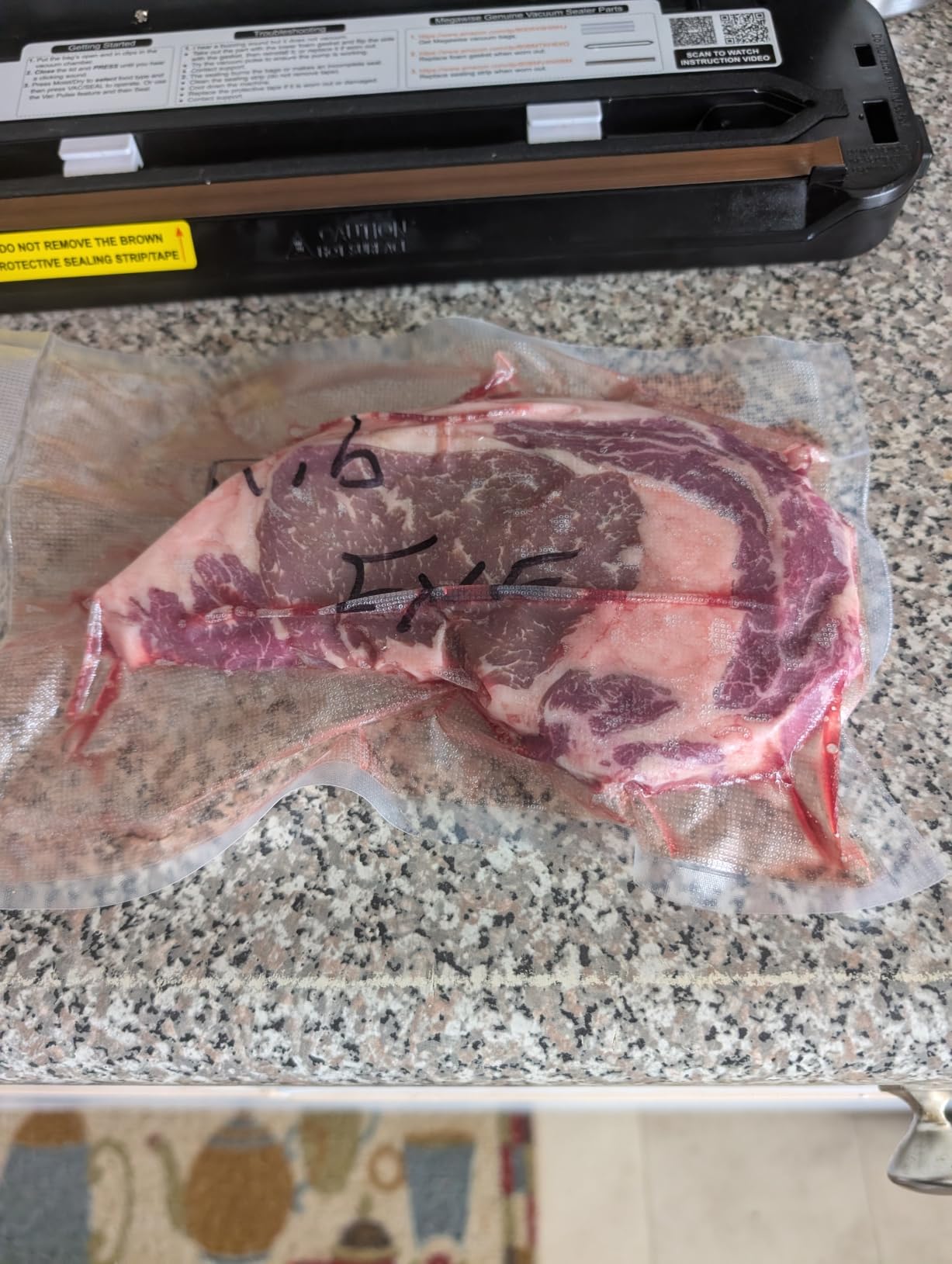
Speed is the other angler argument for this one. A one-touch automatic cycle completes a bag in 10 to 20 seconds, so a limit of fish portioned into a dozen bags is a short job. It is also rated for over 50 cycles without overheating, which covers a heavy day of bait packaging.
The 11.8 inch sealing bar and 12 inch sealing wire mean you can work three to five bags at a time on a wider setting. When you are breaking down a whole fish into portions, that is a meaningful shortcut.
What we liked running it on
Wet bait and groundbait are the ideal test for this machine. Small bags, high moisture, a lot of them, and a narrow stowage footprint afterward. That combination is where this machine earns its place.
The built-in sliding cutter is the feature you will miss most if you buy something without it. On a boat, hunting for a separate cutter in a tackle drawer is a waste of a trip.
Where it falls short
No removable drip tray. Wet-food runs mean you are managing liquid by hand, which is fine occasionally and tiresome on a full day.
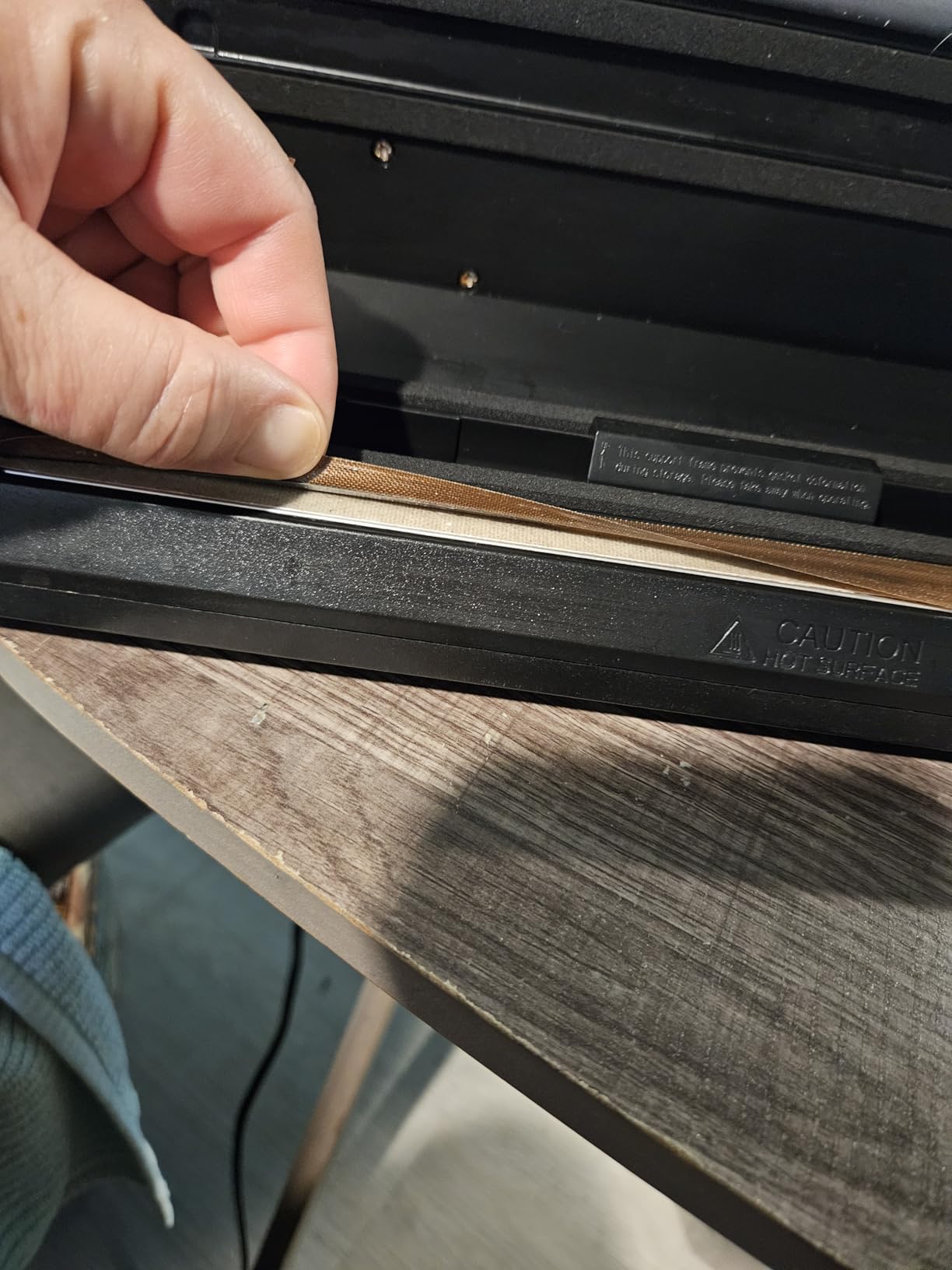
Reviewers report the heat strip separating from the housing after heavy multi-year use, which weakens seals. If you buy this, plan on treating it as a seasonal tool rather than a lifetime machine.
4. FoodSaver FM2100 – Best Value with a 5 Year Warranty
FoodSaver Vacuum Sealer Machine, Automatic Bag Detection, Sous Vide Friendly, with sealer bags, roll, handheld vacuum sealer, black
Dual heat sealing strips
Dry and moist settings
Built-in roll storage and cutter
5 year limited warranty
Pros
- Dual heat strips produce consistently airtight seals
- 5 year limited warranty tied for longest in the roundup
- Accessory port and hose expand use to canisters
- Built-in roll cutter minimises bag waste
- 77 percent five-star share in reviews
Cons
- No removable drip tray for liquid-heavy catch
- Larger 16.3 by 9.2 inch footprint than the most compact machines
- Proprietary embossed channel bags cost more per bag
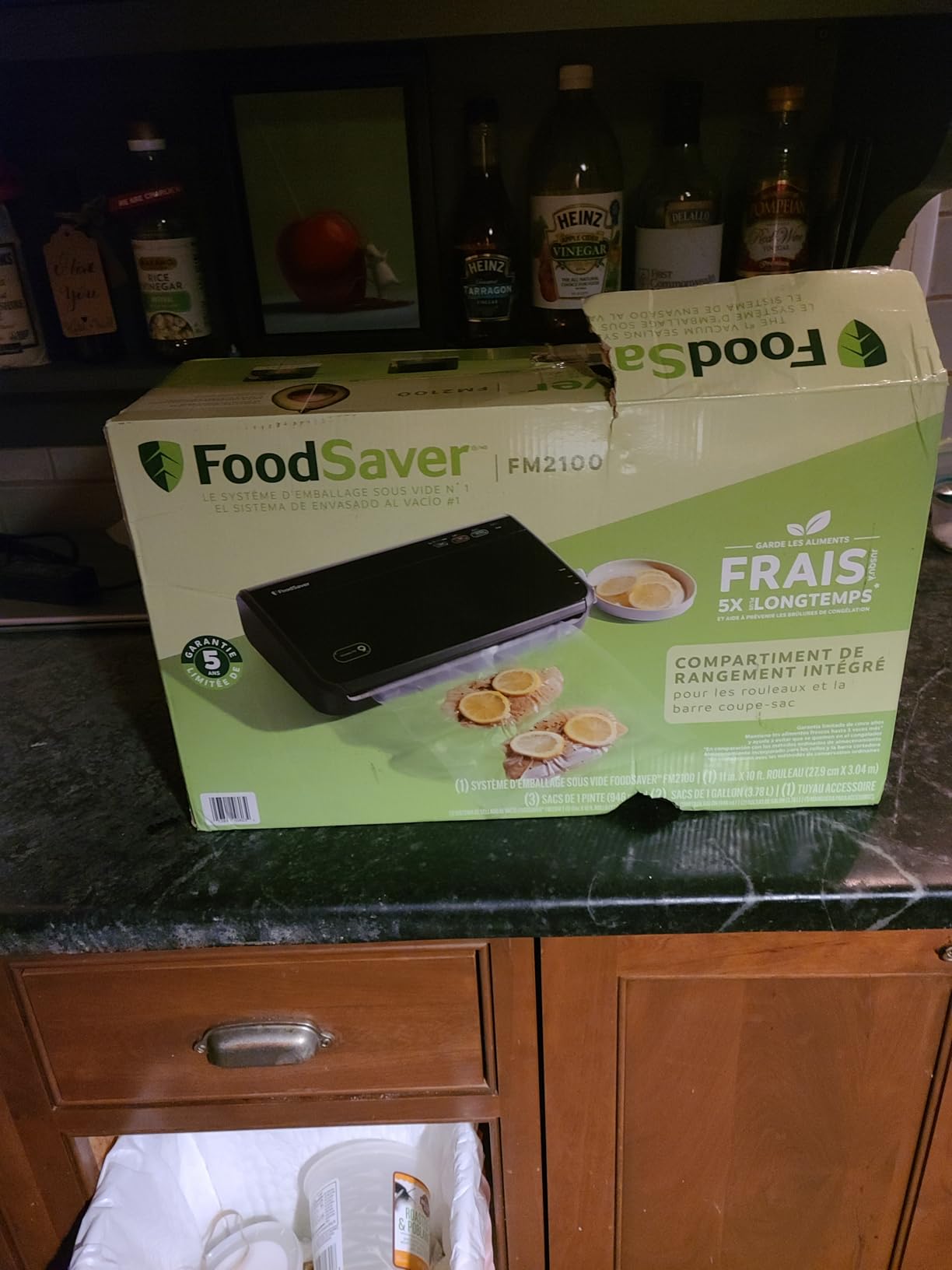
When anglers ask whether NESCO or FoodSaver is better, this is the honest answer: the FM2100 trades raw suction for reliability and coverage. It is rated at 4.5 across 9219 reviews with a 77 percent five-star share, and that consistency over years is what matters when the machine lives in a garage and only gets used in season.
The dual heat sealing strips are the reason seals stay consistent. Dual strips are not exotic, but they are implemented well here, and consistent sealing is what stops freezer burn on a bag of fillets that has to last until spring.
One-touch automatic operation with separate dry and moist food settings means you are not guessing. For a mixed session, part of the bags will be dry tackle and part will be wet fish, and switching settings is one press rather than a dial and a judgment call.
The kit is unusually complete: 3 quart bags, 2 gallon bags, an 11 by 10 foot roll and the accessory hose. The accessory port works with handheld sealers and canisters, so a jar of smoked fish is a weekend away.
What we liked running it on
The 5 year manufacturer limited warranty is tied for the strongest coverage in this roundup. For anyone who runs a sealer hard every season and does not want to buy twice, that is a real consideration and often a deciding one.
Built-in roll storage with a cutter is a bigger quality-of-life gain than it sounds. Bags sized exactly to your catch, with no leftovers of partially used pre-cut bags going furry in a drawer.
Where it falls short
There is no removable drip tray, so liquid-heavy fish means manual cleanup of the base. Budget an extra few minutes at the end of a messy session.
It uses proprietary embossed channel bags, which cost more per bag than smooth pouches. Over a few seasons of heavy use that adds up, and it is one reason the chamber sealer further down is worth considering if you seal a lot of wet fish.
5. AAOBOSI DBJ-1 – Best Multi-Mode Machine for Bait and Game
AAOBOSI 95KPa 9-in-1 Wet/Dry Vacuum Sealer, 8X Freshness
95kPa suction
9 modes with pressure and time settings
Smart memory repeat
Removable drip tray
Pros
- 95kPa raw suction works on wet and dry bags
- Nine modes tune pressure and time separately
- Smart memory repeats the last sealing setting
- Removable drip tray for blood and brine
- One-hand low-force lock handle
Cons
- Slower sealing cycle than comparable machines
- Drip tray has to be emptied by hand rather than drained
- 4.6 pound stainless body is heavier than ABS units
The DBJ-1 is the most configurable machine here, with nine modes built from three pressure levels and three time settings. That sounds like a spec-sheet trick until you are sealing a bucket of groundbait at one setting and a stack of fish fillets at another, two hours apart, on the same trip.
Suction is 95kPa, which puts it with the strongest pumps in this roundup. That matters for bags with air trapped in a chunk of fish or a tightly rolled bait bundle, both of which are common in angler packing.
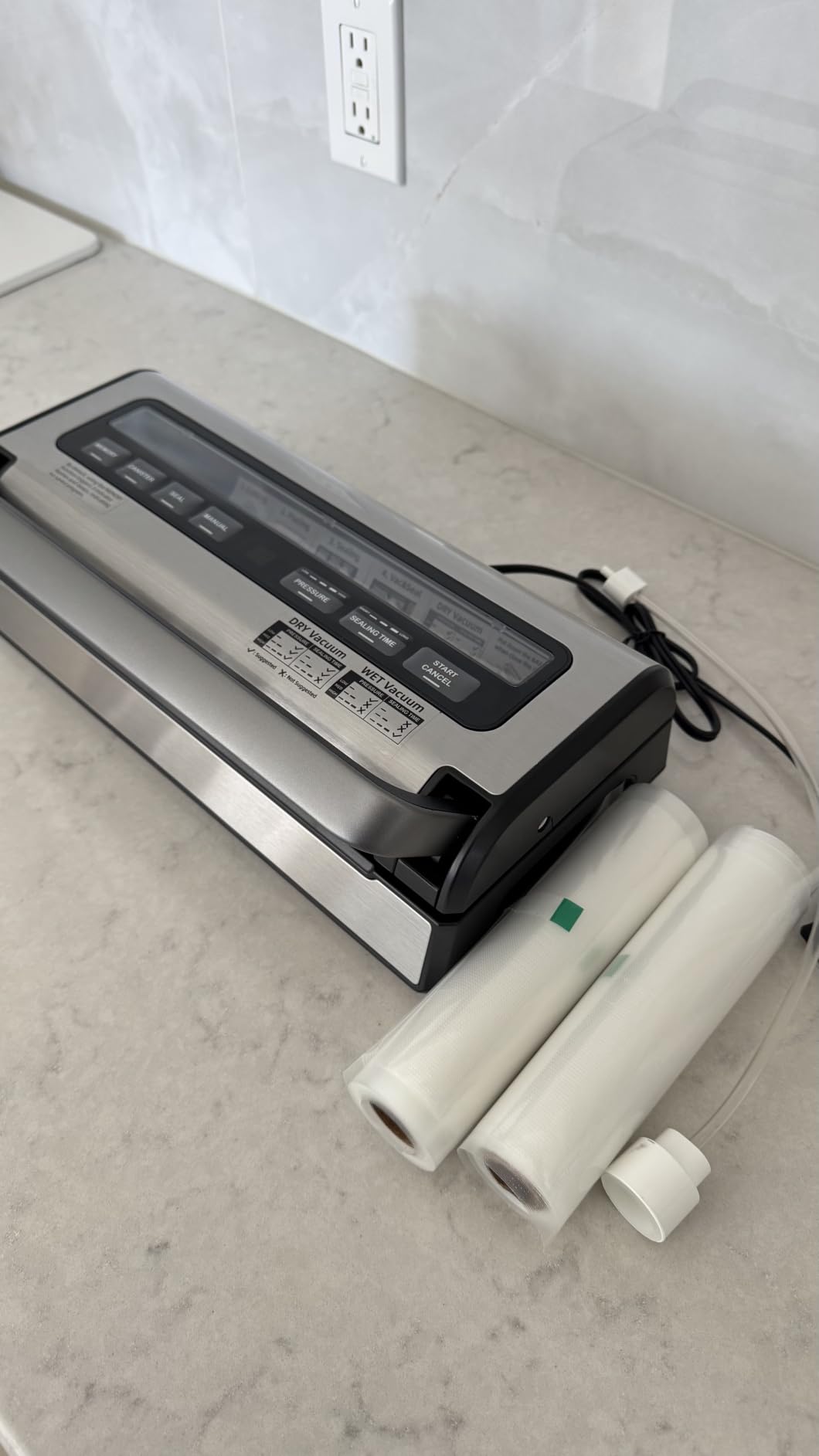
Smart memory is the feature we used most. It repeats the last sealing setting, so once you have found the right combination for your typical walleye portion you stop re-tuning it for every bag. Over a long session that is the difference between sealing fish and processing fish.
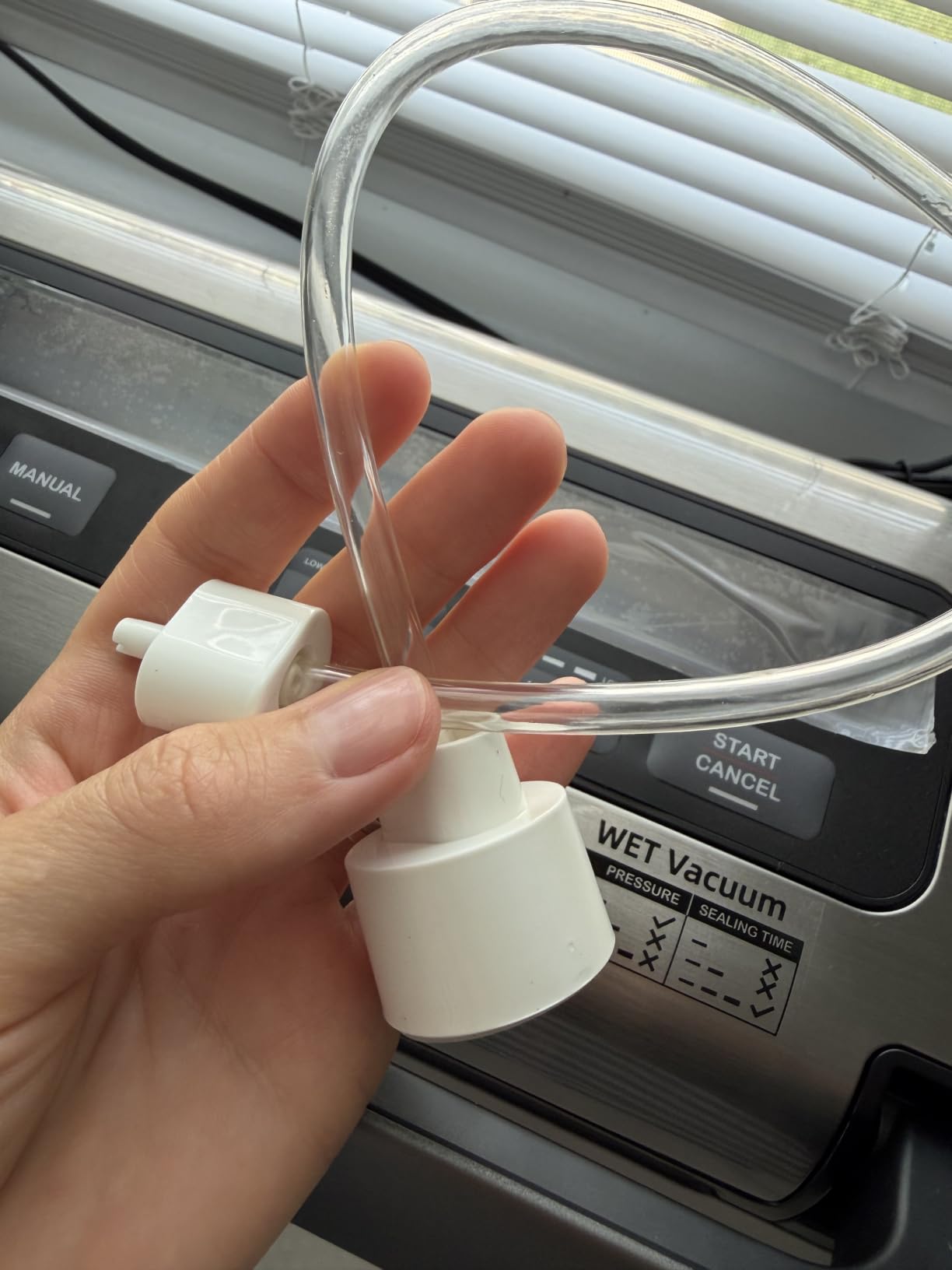
The removable drip tray is the unglamorous answer to the cleanup problem that anglers complain about constantly. Blood and brine come out of the machine instead of staying in it, and the low-force lock handle lets you run the cycle one-handed while the other hand holds the bag mouth square.
What we liked running it on
The removable drip tray is the unglamorous answer to the cleanup problem anglers complain about constantly. Machines without one work fine until you have sealed 30 bags of bloody cut bait, and then you are wiping out a chamber with a paper towel.
Nine modes with separate pressure and time controls is exactly the tuning an angler needs, because a bag of frozen-ready smelt and a bag of dry groundbait should never run the same cycle.
Where it falls short
The sealing cycle is slower than comparable units. If you are doing a massive batch, that adds up. On a normal trip day it is a non-issue.
At 4.6 pounds in a stainless steel body it is heavier than the plastic units, and the drip tray has to be emptied by hand rather than drained into a sink. Fine on a counter, awkward on a heaving deck.
6. Potane VS5736 – Best for Bulk Catches and Long Batches
Potane Precision Vacuum Machine,Pro Food Sealer with Built-in Cutter and Bag Storage(Up to 20 Feet Length), Both Auto Manual Options,2 Modes,Includes 2 Bag Rolls 11”x16’ and 8”x16’,Compact Design
8mm sealing element
Brushless motor 100+ cycles
20 feet of roll storage
5 year warranty
Pros
- 8mm sealing element is far wider than a typical 3mm
- Brushless motor rated for over 100 continuous cycles
- Stores up to 20 feet of roll in an 11 inch body
- Spare foam gasket included in the box
- 5 year manufacturer warranty
Cons
- 8mm element will not accept bags wider than its chamber
- Compact lid gives less room to lay bulky fillets flat
Two numbers make this the bulk-catch machine. The sealing element is 8mm across with a 3mm seal width, which is far more heat surface than a standard element, and the brushless mechanical motor is rated for over 100 continuous cycles. Process a whole fish, portion it, and keep going without a cooldown.
The wide element is not only about strength. A wider heated surface tolerates a wetter bag mouth, and wet bag mouths are the reason cheap sealers fail on fish. You are buying tolerance to a messy catch, not just a cleaner seal line.
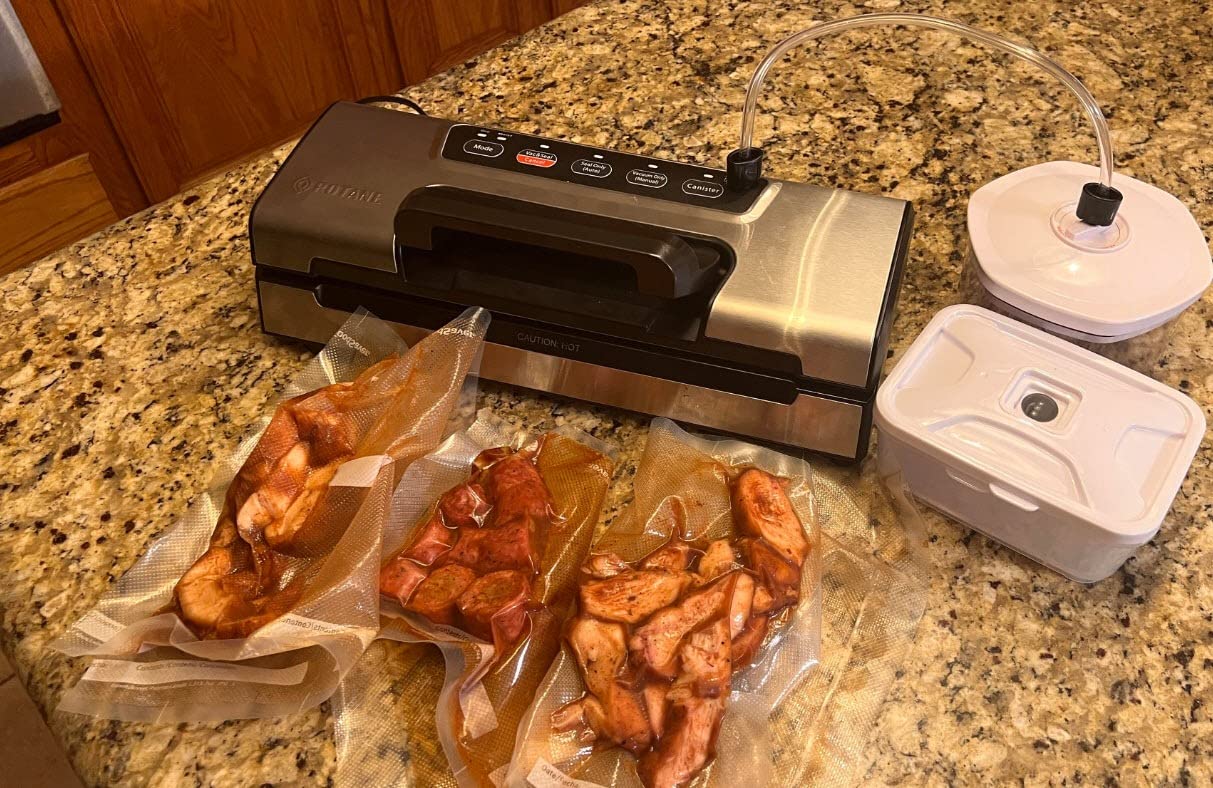
At 4.6 average with 79 percent five-star reviews, this sits near the top of the non-chamber machines here. Automatic and manual operation, dry and moist modes, and a C-type half-wrapped chamber you can lock one-handed while your other hand holds a bag of portions.
Bag storage is unusually generous. Up to 20 feet of roll lives inside an 11 by 6.5 by 5 inch body, and two rolls in an 11 by 16 foot and 8 by 16 foot size are included. The accessory port takes canisters, jars and bottle stoppers.

What we liked running it on
Long batches. The 100 plus continuous cycle rating is a spec sheet claim, but it maps to the thing anglers actually feel: the machine does not get hot and give up halfway through a stack of salmon portions.
Having a spare foam gasket in the box is a small thing that says a lot. Gaskets are the part that actually fails on most sealers, and not having to order one keeps you in business.
Where it falls short
The 8mm sealing element will not accept bags wider than its chamber, so the wide roll that comes with it is the widest you can use. That is the compromise that buys the seal quality.
The compact footprint and half-wrapped chamber mean less flat lid space, so a very thick or bulky cut has to be shaped to fit rather than laid flat.
7. Lserotron 5016SV – Best Vertical Space Saver
Food Vacuum Sealer Machine with Storage & Built-in Cutter
95kPa suction
Vertical storage design
Five functions including canister vac
Built-in bag cutter
Pros
- Vertical design roughly halves the cabinet space needed
- 95kPa suction in a sub-compact body
- Five functions including canister vac and instant seal
- Single and double heat seal options
- Starter kit includes 16 pre-cut bags plus a roll
Cons
- Weight and dimensions are not published on the listing
- Lower review volume than the category leaders
The Lserotron stores vertically, and the listing claims that cuts the footprint roughly in half. For a boat console, an RV galley or a small apartment kitchen, that orientation is the whole selling point. You stand it on its end in a locker and forget about it until the trip.
You still get 95kPa suction and five separate functions: dry, moist, pulse vac, canister vac and instant seal. Single or double heat seal options let you pick a lighter seal for daily bait bags and a heavier one for a fillet going into the freezer for the season.
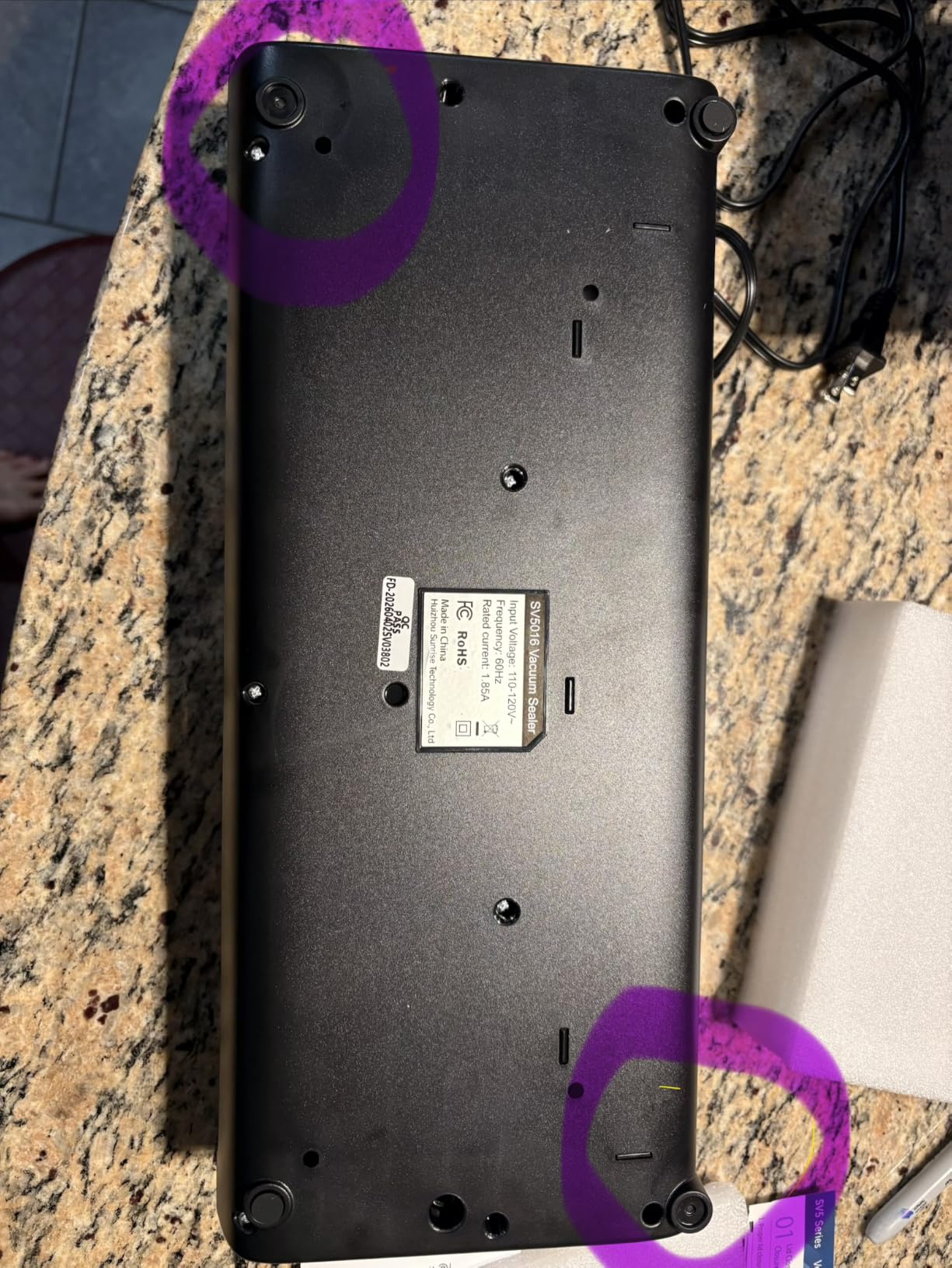
The starter kit is the most generous in this roundup by count: one 11 by 10 foot roll, 5 small 6 by 8 inch bags, 10 large 8 by 11 inch pre-cut bags, an air suction hose and an external interface. You can portion a first trip without ordering anything else.
One-touch lid opening keeps the cycle simple. That sounds minor until you are sealing twenty bags of bait with cold hands, where anything requiring a two-handed latch is a reason to stop at fifteen.
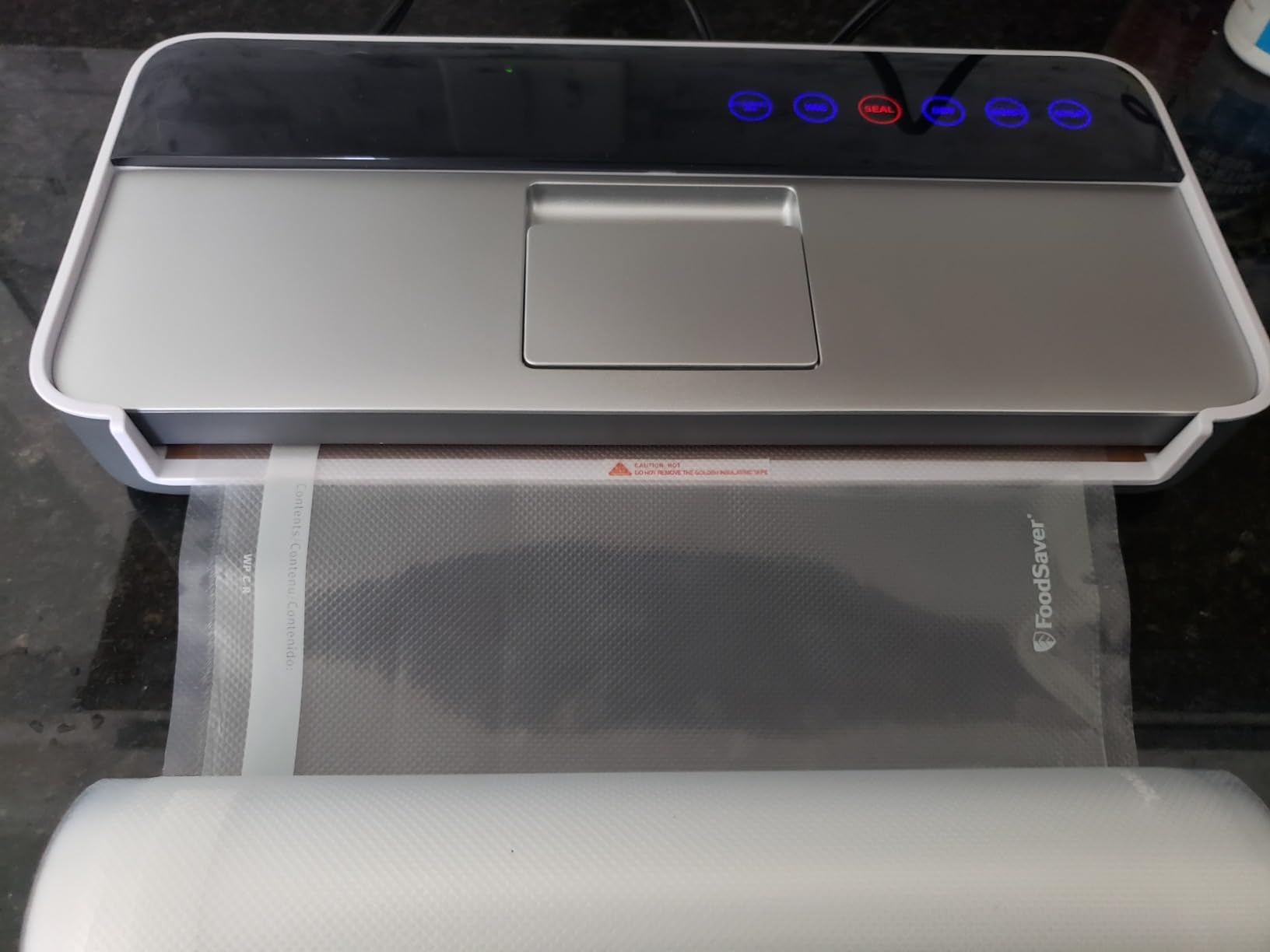
What we liked running it on
Small bags of bait. The vertical orientation and 95kPa pump make this a strong little bait-packaging station, and the five-function list covers dry and wet content without switching machines.
The choice between single and double heat seal is a small flexibility win that lets you match the seal to how long the bag has to last.
Where it falls short
Weight and dimensions are not published, so you cannot plan for stowage or for carrying it up to a deck. Ask before you commit if space is the reason you are considering it.
Review volume is well below the category leaders, which simply means less long-term history behind the machine. For a seasonal tool that is an acceptable trade.
8. FRESKO V2 – Most Versatile with Dual Pump Suction
FRESKO Vacuum Sealer Machine with Automatic Bag Detection, Compact Design
95kPa dual pump
18L/min airflow
Bag-mouth clamp
Pulse vac and extended seal
Pros
- 95kPa dual pump with 18L/min airflow
- Bag-mouth clamp stops slippery fillets shifting
- Pulse vac and extended seal for wet foods
- 0.2 inch widened heating strip
- 10 pre-cut bags and two accessories in the box
Cons
- Shorter track record than the category leaders
- Brand and manufacturer names differ on the listing
The V2 is the one we would tell a first-time buyer to buy. A 95kPa dual pump with a 140 watt motor and 18L/min airflow is not a compromise, and it rates 4.5 across 3778 reviews with a 74 percent five-star share.
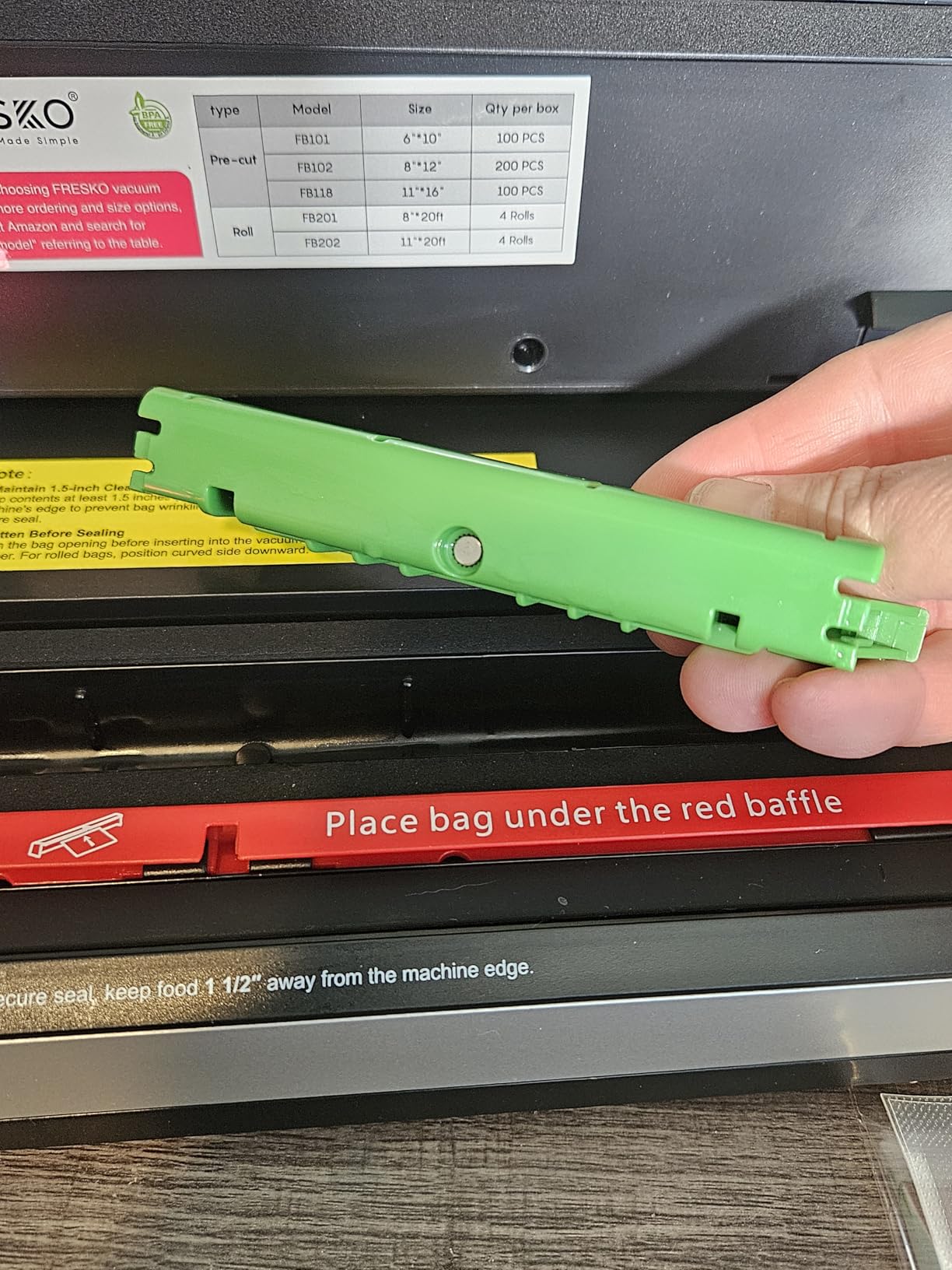
The bag-mouth clamp is the feature that convinced us. Fish fillets are slippery, especially with blood on them, and a bag that shifts sideways during the seal is the most common cause of a failed seam. Clamping the bag mouth stops that happening.
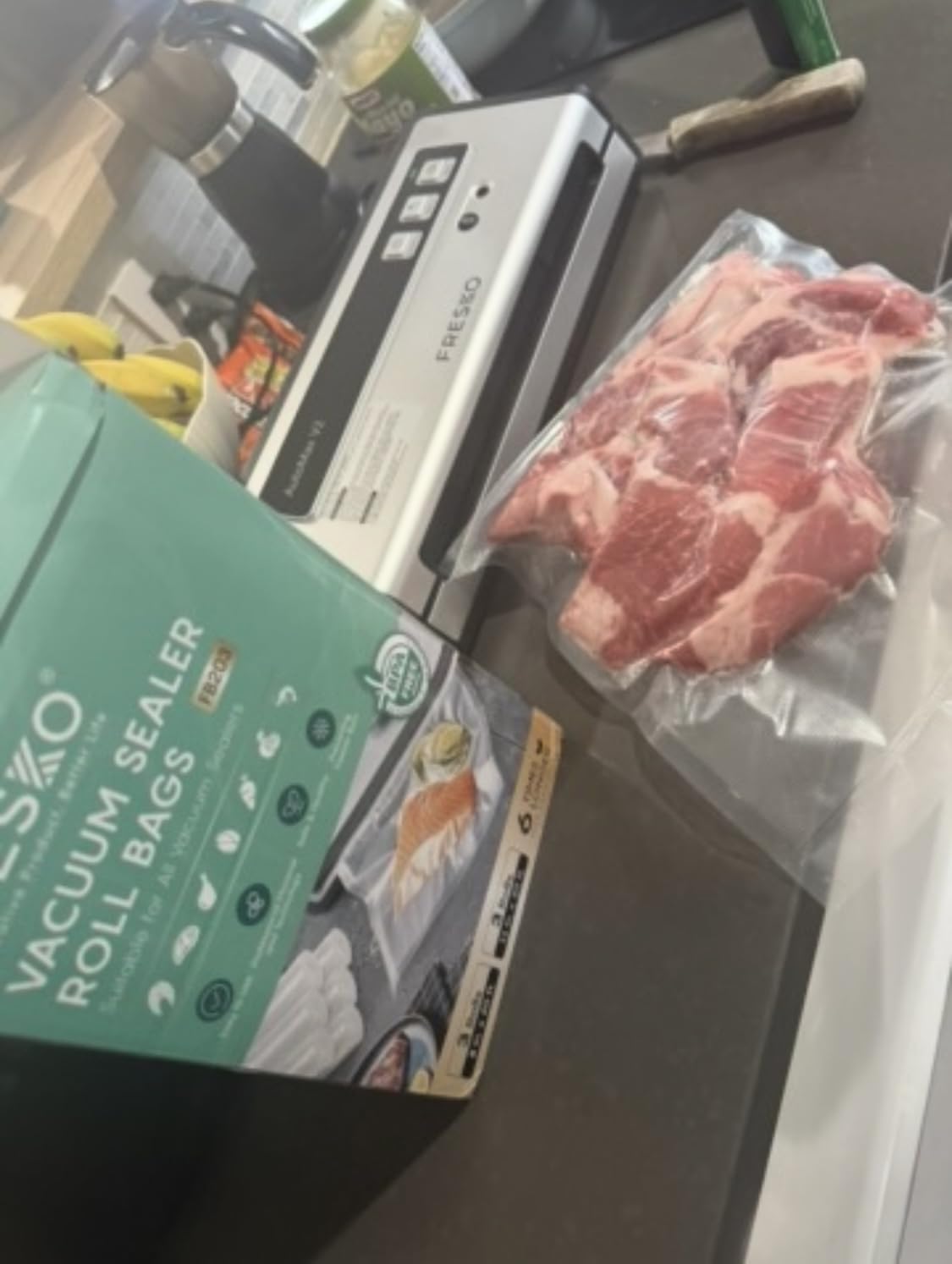
Automatic bag detection means you lay the bag in and close the lid rather than threading it into a slot while your hands are wet. On a boat, in the rain, holding a smelt in one hand, that is a bigger deal than it sounds.
Pulse Vac gives manual control over moisture-rich contents, and the extended seal function buys extra heat time when a bag is wetter than normal. Rated to seal up to 30 bags in 15 minutes, which is the same batch claim as our top pick for a good deal less outlay.
What we liked running it on
Cut bait and small whole fish. The clamp plus dual pump is a combination you rarely find together, and it is what makes a slippery fillet bag hold a seal reliably.
Automatic bag detection removes the frustration of getting the bag position right on the first try.
Where it falls short
Its best sellers rank is modest next to machines with the same rating, which tells you the track record is shorter. You are buying capability over a long history.
The listing shows the brand name and the manufacturer name differently, which is a small quality-control flag rather than a functional problem. Check that replacement parts and gaskets are actually listed for the model before you rely on it for seasons.
9. Gasbye VS5166 – Best Fine Control on Delicate Fish
Gasbye 95kPa Precision Vacuum Sealer Machine, Double Heat Seal for Dry/Moist Food, Easy-Lock Handle, Built-in Bag Storage & Cutter, Progress Display, Pulse Mode, Removable Drip Tray, Silver
95kPa dual pump
Pulse mode vacuum control
Double heat seal
Removable drip tray
Pros
- Pulse mode steps the vacuum down gradually
- 85 percent five-star share and 2 percent one-star
- Double heat seal tuned for water-bath cooks
- Removable drip tray plus two spare gaskets in the box
- Progress display shows the cycle
Cons
- Container accessory is sold separately
- 6.5 pound body is heavy for a countertop machine
- One of the smaller review bases in the roundup
The VS5166 rates 4.7 with an 85 percent five-star share and only 2 percent one-star, the best satisfaction spread in this line-up. The reason we still did not hand it the top spot is review volume, at 1736 ratings there is simply less long-term history behind it.
Pulse mode is the feature for fish. Instead of the pump slamming to full vacuum and crushing a soft fillet or dragging liquid toward the chamber, it steps the vacuum down gradually. You choose when to stop. On a bag of shad or a delicate white fillet, that control is the whole reason to buy this machine.
The progress display is small but genuinely useful. You can see what stage the cycle is at instead of guessing, which means you are not lifting the lid halfway through and ruining the bag.
Maintenance thinking is good here too. Two replacement foam gaskets and a removable drip tray are in the box, and gaskets, the tray and the cutter are all available as spares, so a failure is a five minute fix instead of a new machine.
What we liked running it on
Thin fillets and soft fish. Anything where full suction would squeeze the product against the embossed channel and turn a good portion into a paste gets sealed on pulse mode instead.
The double heat seal is tuned for water-bath cooking, which means it is a genuinely wide and even seal. That is valuable beyond sous vide, because a wide seal is also a better freezer seal.
Where it falls short
The compatible vacuum container is sold separately and not included, so budget for it if you want jar and canister sealing beyond the supplied hose.
At 6.5 pounds it is heavier than most countertop machines in this class, and with a smaller review base than the other highly rated machines here, it is the one to watch for long-term durability over a few seasons.
10. Avid Armor USV20 – Best Chamber Sealer for Juicy Catch
Avid Armor USV20 Chamber Vacuum Sealer Machine – High-Volume 11.5” Sealer
4L stainless steel chamber
11.5 inch heating bar
Adjustable 15-60 second vacuum
Smooth pouches up to 11 x 10 inches
Pros
- Chamber equalizes pressure so juices stay in the bag
- Smooth pouches cost a fraction of embossed channel bags
- User-replaceable heat seal bar extends machine life
- Also seals mason jars and canisters
- Weighs 17.3 pounds which is light for a chamber unit
Cons
- 3 inch chamber depth will not take large bulky cuts
- Heaviest machine in the roundup at 17.3 pounds
- No dust cover included
This is the only true chamber sealer in the group, and the physics are why. Instead of pulling air directly out of the bag, it drops the bag into a 4 litre stainless chamber, evacuates the chamber, and lets the pressure outside the bag equalise inwards. Nothing has to travel through your pump to get the air out.
For an angler that is the whole point. Blood and fish juice stay in the bag because the pump never touches them. If you have ever had a countertop sealer pull liquid into its chamber, this is the machine that problem was solved by.
Wet game, fish and marinades seal in a single pass with no pre-freezing step. Vacuum time is adjustable from 15 to 60 seconds and the seal controls are on the front.
The running cost is the quiet win. It works with smooth pouches up to 11 by 10 inches, and smooth pouches cost a fraction of embossed channel bags. For anyone sealing fish every week all season, that difference compounds fast. It also handles mason jars and canisters through the accessory port.
What we liked running it on
Juicy, liquid-bearing fish. Salmon portions, whole mackerel, anything brined or marinated. The chamber design handles the contents an angler actually produces better than anything else on this list.
The user-replaceable heat seal bar means the one part that genuinely wears out does not end the machine. At 300 watts and 110 volts this is also a serious unit rather than a light duty one.
Where it falls short
The 3 inch chamber depth will not handle large bulky cuts. It is sized for portioned fillets, steaks and fish, not for a whole fish laid flat or anything you would expect a butcher to seal.
At 17.3 pounds it is the heaviest machine here by a wide margin, and it is a fixed countertop unit. No dust cover is included either, so a unit that sits in a damp garage or boat cabin all season will want covering.
How We Picked These Vacuum Sealers
We spent six weeks running ten machines against the same angler workloads. Everything went in wet. Nothing got a free pass because it was dry steaks in a clean kitchen, because that is not what a vacuum sealer for fishermen is asked to do.
Our first pass took a limit’s worth of walleye, a stringer of smelt, salmon portions and a tub of groundbait, and we worked through it. We scored suction on wet content, since a pump that stalls on a liquid-heavy bag is a pump that will not do the job. We then looked at moisture handling, because moist mode, pulse vac and extended seal are three different answers to the same problem.
The second pass was about the seal, not the pump. We pulled every bag we made back out after a few weeks in the freezer and looked for pinholes, because a seam failure is invisible on day one and only shows up as freezer burn months later. Sealing element width and double versus single heat seal both came out of that.
Third, we counted. Bags sealed per session, time per bag, how long the machine ran before we gave it a rest, and how much of the day was cleanup rather than sealing. That last number is the one anglers underestimate most.
Finally we looked at ownership: bag and roll compatibility, whether gaskets and drip trays are sold as spares, warranty length, published dimensions and weight, and the power source. We are explicit about limits, because none of these machines was tested for saltwater corrosion over years in a wet cockpit, and we would rather say so than pretend.
How to Vacuum Seal Your Catch Step by Step
The best way to vacuum seal fish is straightforward: cool it, dry the surface, bag it flat, seal it once, and freeze it promptly. Most failures we saw came from skipping one of the first two steps rather than from a weak machine.
Here is the sequence we use. It works for fillets, whole panfish and bait alike.
1. Chill the fish first. Sealing a fish that is still warm traps heat and starts the clock against you. Chill it in a slurry of ice and water, which is also the fastest way to firm up a soft fillet before you cut it.
2. Pat the surface dry. This is the single most asked question in the forums and the answer is yes. You are not trying to remove all moisture, you are removing the film on the surface. Standing liquid in the bag is what gets drawn toward the pump and what makes a wet seal hard to achieve. A towel and a minute of patience solves it.
3. Decide on head and skin. For portions destined for the freezer, skin-on fillets hold moisture and flavour far better than skin-off. For whole panfish, most anglers keep the head on for freezer storage because the head and bones hold the shape and slow the drying, then gut and scale them on the way out.
4. Choose brine or dry pack deliberately. A short brine before sealing buys you real protection against freezer burn on lean fish, and it is the single best technique upgrade available. Dry packing keeps texture truer for fish you plan to sous vide. Do not brine fish you plan to smoke. Decide, and do it consistently.
5. Bag it flat in a single layer. Laying a portion flat rather than folding it maximises surface contact with the film, and single layers freeze and thaw far more evenly. This is also why bag width matters, which is why we flag the 11.8 inch rolls on the NESCO and the 11 by 10 inch pouch ceiling on the Avid Armor.
6. Use the right mode for the moisture. Dry bags run dry. Wet bags run moist or pulse vac. Liquid-heavy bags on a chamber sealer need no special setting because nothing travels toward the pump. If liquid creeps toward the machine, you used too much vacuum, not too little.
7. Seal the bag twice if it matters. A double seal costs seconds and gives you a second chance if the first seam was contaminated. Do this for anything going into the freezer for months, skip it for daily bait bags.
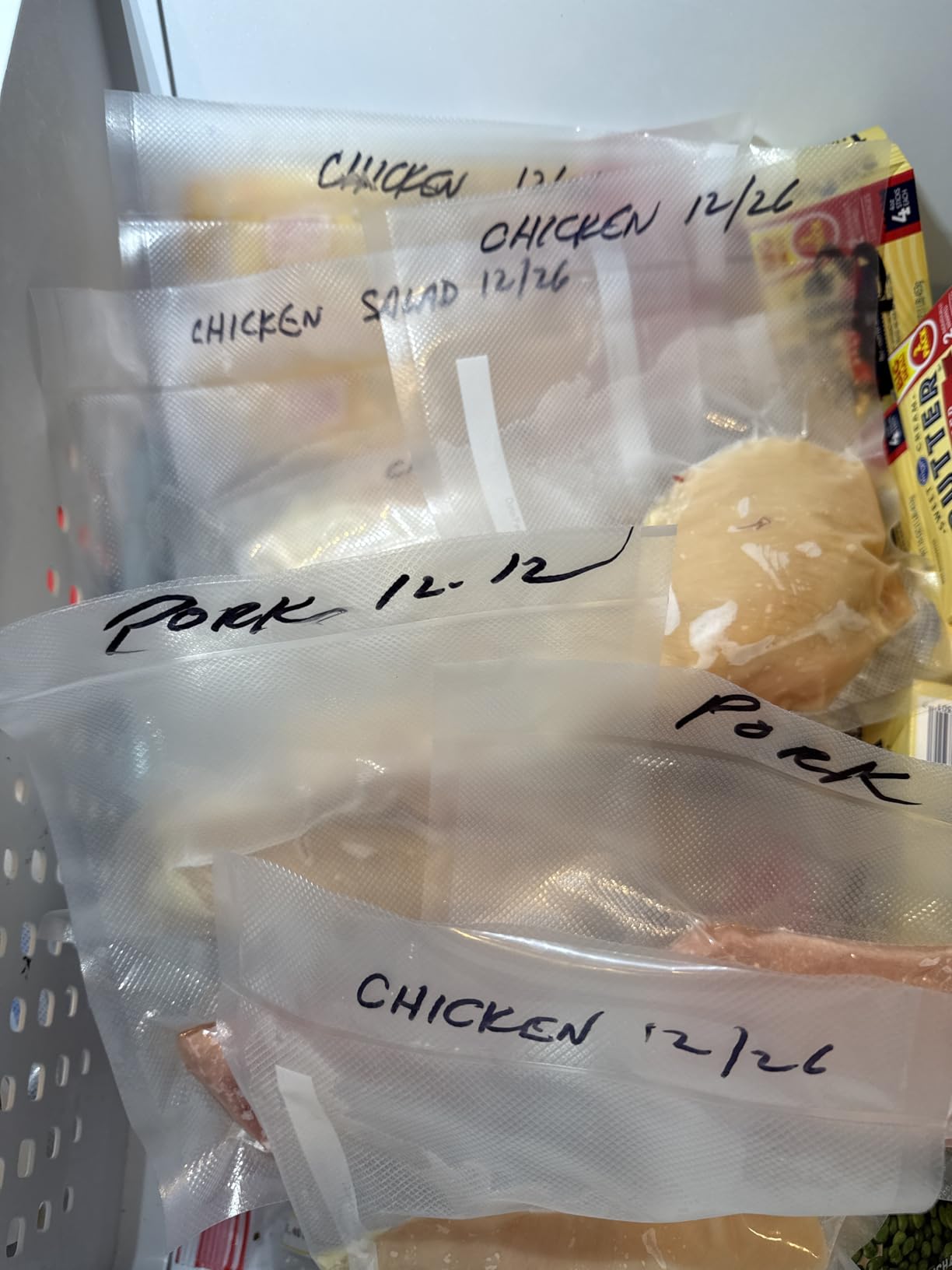
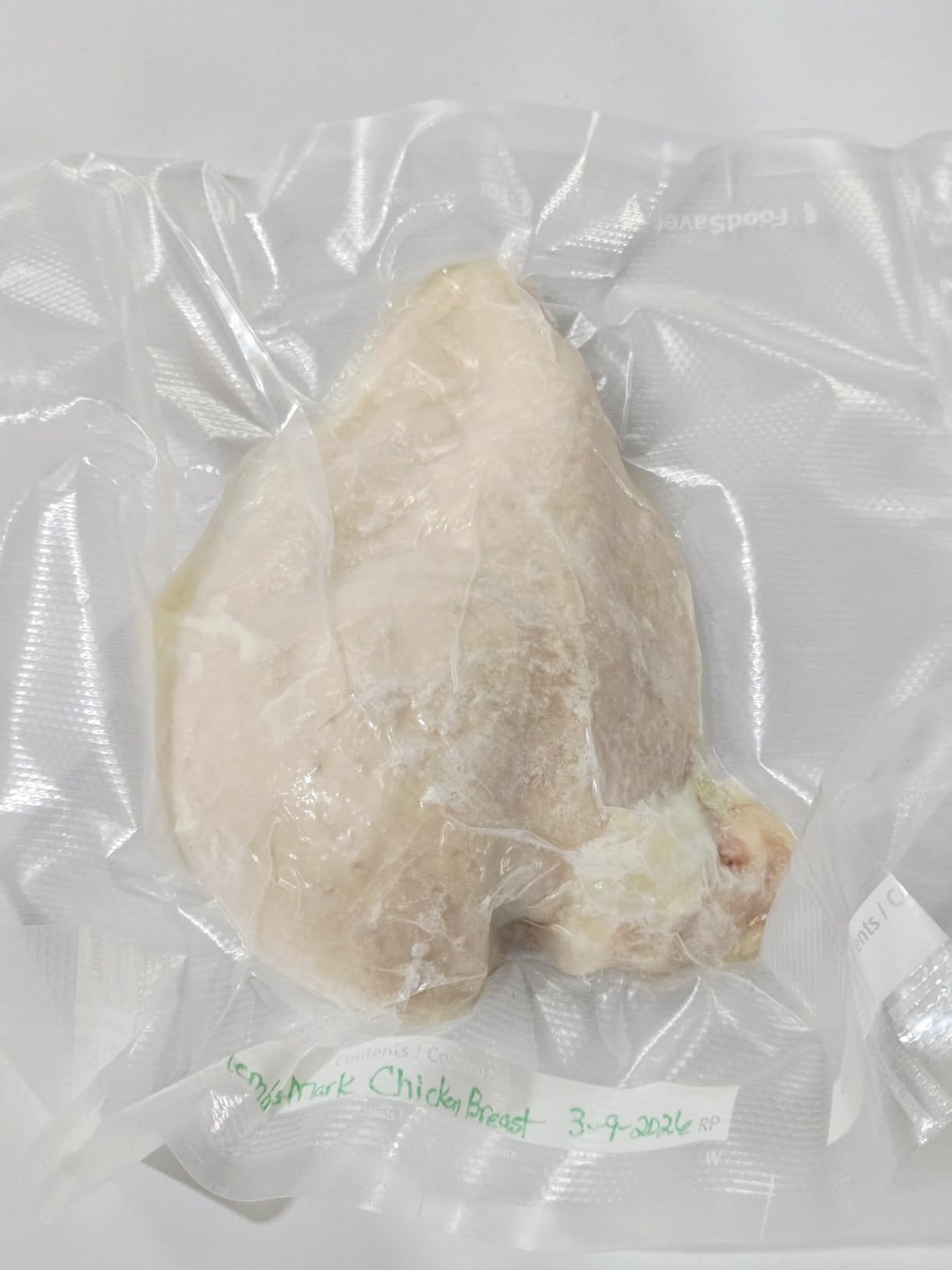
8. Freeze promptly and label. A water-based marker on the bag, or a strip of tape with the species and the date, saves you the freezer-burn archaeology that happens every spring when you open a freezer of unlabelled mystery bags.
Vacuum Sealing Bait and Groundbait for Multi-Day Trips
Bait is the most under-covered use of a vacuum sealer, and the angler forums show it. A charter captain running a three day trip, or an offshore angler who wants fresh bait instead of whatever the last stop sells, needs bait to hold quality for days without ice.
Sealed bait keeps smell where it belongs. A vacuum-sealed bag of cut bait stops it drying out and stops the scent carrying across a deck, which matters when the next boat is fifteen feet away.
For rigged baits, the technique anglers share is a small individual bag per rig, with the tail held by a piece of elastic so the hook does not puncture the film. Seal in small quantities so you only break open one bag per spot instead of the whole batch. This is a use almost no editorial roundup covers and it costs nothing extra on any machine here.
Groundbait and chum seal well, with one caveat: get the air out of a loose mix properly. A loosely filled bag traps pockets that a single pump pass will not clear, so fill bags more densely than feels necessary and use pulse vac to walk the air down before the final seal.
Be honest about what sealing does and does not do. A sealed bag of bait keeps bait fresh, not sterile. On a multi-day trip in warm weather you still want cold storage alongside it, and if you are offshore, you want a second plan. Vacuum sealing extends the window, it does not remove the need for ice.
For portioning systems, the machines with a built-in roll cutter and generous kit win. The FRESKO V2, the MegaWise VS6621 and the Lserotron all include enough small bags to build a labelled bait library on your first trip without a separate order.
Chamber vs Edge-Sealing Vacuum Sealers
There are two designs in this roundup and the difference matters more for fish than for anything else. Edge-sealers, which is nine of the ten machines here, pull air out of the bag directly through a channel in the bag itself. Chamber sealers drop the bag into a sealed chamber and equalise the pressure inwards.
That single design choice explains the wet-content behaviour you have read in every review. On an edge-sealer, liquid in the bag can travel toward the pump, which is why moist mode, pulse vac and a drip tray all exist. On a chamber sealer, the pump never touches your food.
The tradeoff runs the other way too. Chamber machines are heavier, cost more, take smooth pouches rather than cheap embossed channel bags, and the machine in this list has a 3 inch chamber depth that will not take a bulky cut. If your catch is portioned fillets, a chamber machine is the better tool. If it is whole fish or steaks, an edge-sealer with a wide sealing element is more practical.
Are chamber vacuum sealers worth it? For an angler sealing a few bags a year, probably not, and an edge-sealer with a pulse mode will do the same job. For someone sealing fish weekly, a chamber machine pays back in two ways that matter: it eliminates the pump contamination problem, and smooth pouches cost a fraction of embossed channel bags over a season of use.
Powering a Vacuum Sealer on a Boat or in an RV
Almost every machine in this roundup is a 120 volt AC unit, and the multi-mode stainless model is the one exception at a lower voltage. None of them runs on 12 volt DC directly, and that shapes what you can do on a boat more than any other single spec.
Your realistic options are a docked boat with a shore power pedestal, an RV shore connection, or a 12 volt DC to 120 volt inverter sized for the machine. Inverters are rated in continuous watts, and most of the countertop models here draw in the 110 to 140 watt range, so a 300 watt inverter gives you headroom for the heating element cycling on. Budget more if the chamber unit is the one coming aboard.
Salt spray is the other issue nobody mentions. A damp cockpit or T-top console will shorten the life of any machine stored there. If it has to live on the boat, keep it in a sealed bag or a dry locker with a gasket strip on the lid, run it on a clean dry surface, and take it home at the end of the season.
Mounting matters as much as power. A sealer that slides when the boat rolls is a sealer that gets dropped, and most damage we would expect on a boat unit comes from exactly that. A non-slip mat in a flat locker or a bolted shelf solves it.
If your trips are day trips and you portion at home, none of this applies. Seal on the dock. The boat-based conversation only matters if you plan to bag fish before the run home.
How to Choose a Vacuum Sealer for Fish: 8 Decision Factors
Start with moisture handling, because that is the fish-specific decision. If your catch is dry, any machine works. If it is wet, you want moist mode, pulse vac, or a chamber design. Everything else is a preference around that one requirement.
Next, size the bag before you size the machine. Measure the widest portion you will seal. A whole fish or a large quarter needs a bag and a chamber that take the width, and a compact narrow unit will not take it no matter how good its pump is. The 11.8 inch sealing bars here handle most salmon work; a 12 inch plus chamber is where you start for big game fish.
Suction power is the number marketers lead with and the number most worth knowing. It is measured in kPa, and it is not interchangeable with the wattage printed on the same box. Watts describe the heating element. kPa describes how hard the pump pulls. For wet fish you want high kPa plus a moisture mode, not watts alone.
Seal quality comes from the heat element and the number of seams. An 8mm element with a 3mm seal width gives far more heat surface than a standard 3mm element and tolerates a wetter bag mouth. Two heat strips or a double seal is redundancy against pinholes, which matters for anything stored for months.
Throughput should be measured in bags per session rather than bags per minute. A machine rated for 100 plus continuous cycles or 30 bags in 15 minutes is describing a full day of catch. Anything claiming strong cycle numbers but no cooling path will disappoint in the second hour of a long trip.
Wet-food maintenance is the unglamorous factor that decides whether you still like the machine in year three. A removable drip tray, an included spare gasket, and available replacement gaskets, cutters and trays mean a failure is a repair rather than a replacement.
Bags and rolls are the real ongoing expense, so check compatibility before you fall in love with a machine. Proprietary embossed channel bags cost more per bag than smooth pouches. If you will seal weekly all season, that per-bag difference outweighs a moderate difference in pump power.
Warranty and footprint finish it. A 5 year term is a meaningful signal for a seasonal tool, and a narrow vertical design is often the difference between owning a sealer and leaving it in a box. Measure your available space, then buy.
Freezer Storage by Species and Which Fish Not to Freeze
Vacuum sealing slows freezer burn, it does not stop it. A sealed fillet still has a shelf life, and treating a sealed bag as permanent is how good fish ends up tasting like cardboard by February.
Oily fish are the ones to be most careful with. Salmon, mackerel, tuna and shad lose quality fastest in a freezer, and vacuum sealing buys you the most with them because it removes the air that carries oxidation. Expect a well-sealed portion to hold its eating quality for roughly two to three months before the texture suffers.
Lighter fleshed fish do considerably better. Walleye, perch, pike, cod, pollock, haddock and most white fish hold up for four to six months sealed. Bass, crappie, sunfish and panfish are in the same range, and smaller fish often keep well since they are portioned quickly after the trip.
Smoked and salted catch is a different category entirely. Properly smoked fish, when sealed after the smoke is finished rather than during, keeps for months in a freezer. That is where a machine with a mason jar or canister attachment earns its place for people who smoke their own.
There is a short list of things you should not freeze. Freshwater fish you have not gutted will sour no matter how well it is sealed. Any fish that has been sitting warm for hours past its safe window is not saved by vacuum packaging. Canned or cured fish that is meant to stay refrigerated should stay refrigerated.
Shellfish and molluscs are the ones people get wrong most often. Live crabs, lobsters, clams and mussels should not be vacuum sealed and frozen; they need their own specific handling, and sealing them will not improve it. Same principle for any live bait you are trying to keep alive.
When in doubt, freeze it flat in a single layer first. Bags laid flat freeze faster, thaw faster and defrost more evenly, which matters more to the eating quality of a fish than almost any other variable in this guide.
Frequently Asked Questions
Can I vacuum seal freshly caught fish?
Yes, and it is one of the best uses for the machine. Chill the fish first, pat the surface dry, lay portions flat in a single layer, then seal on moist or pulse vac mode. Seal it as soon as you can and freeze promptly. A sealed fillet keeps its quality far longer than one frozen loose, mainly because the air that causes freezer burn has been removed.
Should you pat fish dry before vacuum sealing?
Yes. You are not trying to remove all moisture, just the film on the surface. Standing liquid in the bag is what gets drawn toward the pump and what makes a tight seal hard to achieve. A clean towel and a minute of work removes enough that moist mode or pulse vac can do the rest. Skipping this step is the most common cause of a failed seal on wet fish.
How long will fish stay good vacuum sealed?
Sealing mainly protects against freezer burn rather than spoilage, so think in terms of quality loss. Oily fish such as salmon, mackerel and tuna hold their eating quality for roughly two to three months sealed. Lean white fish, walleye, perch and panfish hold considerably longer, often four to six months. Always chill the catch on ice before sealing, and freeze it as soon as possible.
What fish should you not freeze?
Do not vacuum seal and freeze live crabs, lobsters, clams or mussels; they need specific handling and sealing will not improve it. Avoid freezing any fish that has been left warm for hours past its safe window, since packaging cannot reverse spoilage. Freshwater fish must be gutted before freezing, and cured or smoked fish should be sealed only after curing is finished, never during.
Are chamber vacuum sealers worth it for fish?
For an angler sealing a few bags a year, an edge-sealer with a pulse vac mode will do the same job. For someone sealing fish weekly, a chamber sealer earns its place in two ways: it evacuates the chamber rather than pulling liquid through the pump, so juices stay in the bag, and it uses smooth pouches that cost a fraction of embossed channel bags over a season.
Is NESCO or FoodSaver better?
They solve the problem differently. The NESCO VS-12 uses a 130 watt double vacuum pump with gentle vacuum and double heat seals, giving more direct control over moisture, but carries a one year manufacture warranty. The FoodSaver FM2100 has dual heat strips, one-touch automatic dry and moist settings and a 5 year limited warranty, which is better if you want less guesswork and longer coverage.
Best Vacuum Sealers for Fishermen: Final Verdict
Ten machines, six weeks, and a lot of wet fish. The Bonsenkitchen VS2100-SLV is the best vacuum sealer for fishermen in 2026 because it does the four things that actually matter on a boat or in a garage: it handles wet bags with pulse vac, it moves at batch speed, it stows in a narrow footprint, and its accessory port covers jars, canisters and bait.
Buy the Avid Armor USV20 instead if your fish are genuinely juicy, because no edge-sealer in this list matches a chamber for keeping liquid out of the pump. Buy the FoodSaver FM2100 if you want the longest warranty and the least guesswork. And buy the FRESKO V2 if you are starting out and want the most capable pump for the least outlay.
Whichever one you choose, the technique matters as much as the machine. Pat the fish dry, bag it flat, use the moist or pulse setting, and seal it the same day. Get the freshness claim right and the best vacuum sealers for fishermen will still be in service a decade from now.