
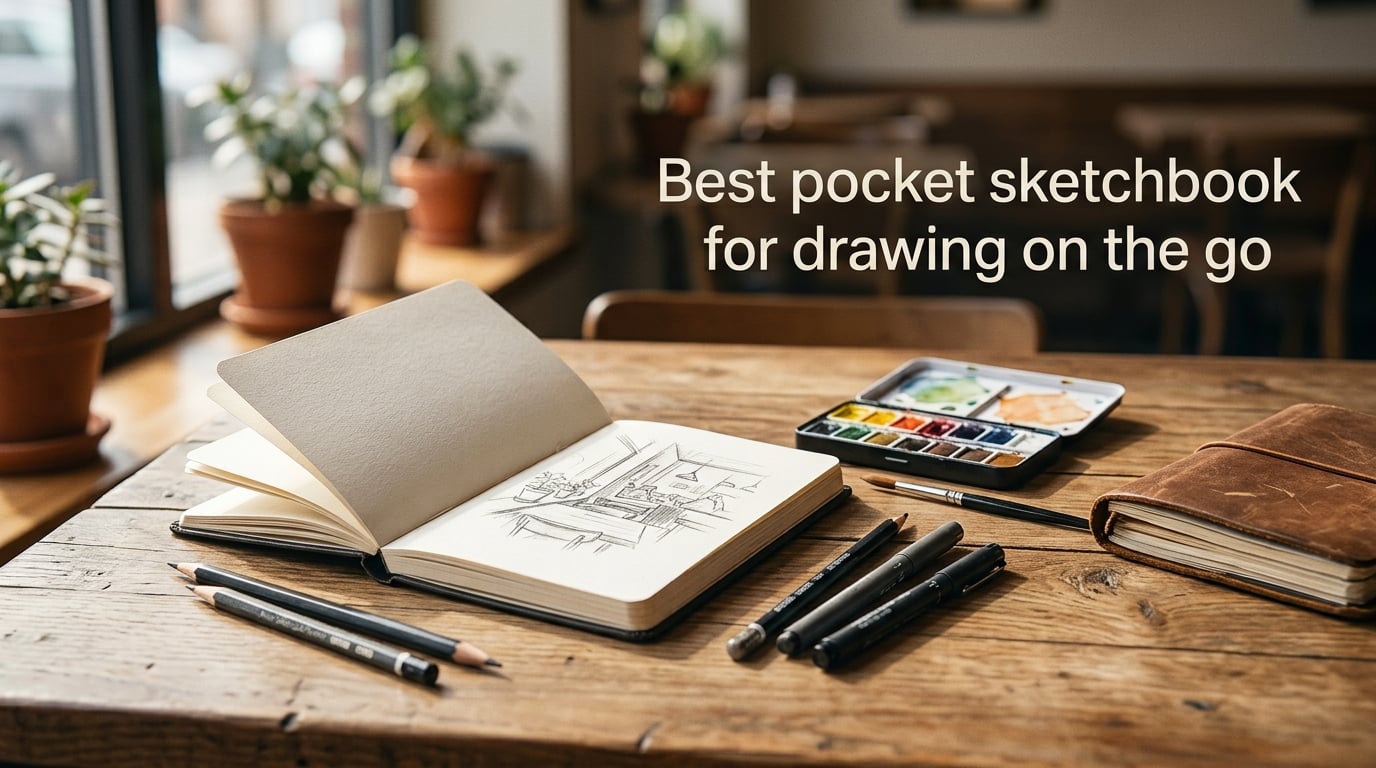
A pocket sketchbook for drawing on the go is a compact, durable sketchbook – typically A6 (4.1×5.8 inches) or 3.5×5.5 inches – designed to fit in a jacket pocket, jeans pocket, or small bag so you can sketch anytime inspiration strikes. If you are an urban sketcher, a commuter who doodles, or a traveler who wants to capture scenes without carrying a full studio setup, this guide covers the best pocket sketchbooks available and exactly what to look when buying one.
Table of Contents
What Makes a Great Pocket Sketchbook?
A pocket sketchbook is not just any small notebook. The defining feature is true portability – it needs to fit in a real pocket or slip into a small everyday carry bag without adding noticeable weight or bulk.
Most pocket sketchbooks fall into three size categories: A6 (4.1×5.8 inches), 3.5×5.5 inches (roughly a field-notes format), and 4×6 inches. The A6 and 3.5×5.5 formats are the sweet spots for true pocket use. A5 (5.8×8.3 inches) is sometimes marketed as “small” but typically will not fit in a jeans or jacket pocket.
The best pocket sketchbooks balance portability with paper quality. A sketchbook that fits in your pocket but has paper that bleeds through with every pen stroke is not worth carrying. You want at least 120 gsm paper for dry media and 160 gsm or higher if you plan to use watercolor or markers.
How to Choose the Right Pocket Sketchbook
Before picking a specific sketchbook, understanding the key specs will help you match one to your drawing style and preferred media.
Paper Weight (GSM)
GSM stands for grams per square meter and measures how thick and heavy the paper is. For pocket sketchbooks used only with pencil, fineliner, or dry media, 120-160 gsm works well. If you plan to use watercolor, gouache, or heavy marker work, look for 200 gsm or above to avoid bleed-through and warping.
In US markets, you will sometimes see weight listed in pounds (lb) instead. As a rough guide: 70-90 lb is light (dry media only), 98-118 lb is medium (light washes), and 130 lb and up is heavy (full watercolor).
Paper Texture
Paper texture – often called “tooth” – affects how media grips the surface. Cold-pressed paper has a textured surface that grabs pigment and is ideal for watercolor and pencil work. Hot press paper is smooth and works better for ink, pen work, and fine detail drawing. Most pocket sketchbooks use a medium-tooth cartridge paper that handles both pencil and ink reasonably well.
Binding Type
Sewn binding (also called stitch-bound) lets a sketchbook lay flat when open, which is important for drawing across the spread. Spiral binding also lays flat but the wire can catch on bag fabric and snag pages. Stapled binding is the cheapest option but does not lay flat and pages can loosen with heavy use. For everyday carry, sewn binding is the most durable and practical choice.
Cover Type
Hardcovers protect your drawings better and provide a firm surface to draw on when you do not have a table. Softcovers are thinner and lighter but offer less protection – they can bend and crease in a pocket over time. The tradeoff comes down to how much abuse your sketchbook will take in your bag.
Closure and Extras
An elastic closure band keeps the sketchbook shut in your pocket and prevents pages from bending. A ribbon bookmark helps you find your current page quickly. A back pocket (common in Moleskine-style books) stores loose papers, tickets, or reference sketches. These small details make a real difference in daily use.
Top Pocket Sketchbooks for Drawing on the Go
After testing and researching pocket sketchbooks across price points and media types, here are the standout options for different needs.
Pentalic Pocket Traveler
The Pentalic Pocket Traveler measures 6×8 inches – slightly larger than true A6 but still portable. It features 160 gsm acid-free paper, an elastic closure, a ribbon bookmark, and a back pocket. The sewn binding lays flat easily. It handles pencil, ink, and light watercolor washes well without significant bleed-through. This is a popular recommendation among urban sketchers who want a reliable all-rounder.
Moleskine Art Plus Pocket
The Moleskine Art Plus Pocket is a classic choice with 165 gsm (111 lb) paper in a 3.5×5.5 inch hardcover format. It includes an elastic closure, ribbon bookmark, and back pocket. The paper handles pencil, ink, and marker well, though heavy watercolor can cause slight warping. The sewn binding and durable cover make it a strong everyday carry option. One drawback is that acrylics and heavy wet media do not perform well on its surface.
Stillman and Birn Zeta Pocket
The Stillman and Birn Zeta comes in a 3.5×5.5 inch pocket size with extra-heavy 270 gsm paper – the thickest in this list. It is designed for mixed media including watercolor, gouache, and ink. The smooth hot-press surface is excellent for pen work and detailed drawing. It is a premium option with a higher price point, but the paper quality is unmatched for wet media in a pocket format.
Talens Art Creation Sketchbook
The Talens Art Creation sketchbook is frequently called the best value option for mixed-media pocket sketching. It offers good paper quality at an affordable price, handles pencil, ink, and light washes well, and is widely available in art stores. It is often recommended as the “best bang for your buck” pick by online sketching communities.
Field Notes Expedition
Field Notes are 3.5×5.5 inch pocket notebooks that are extremely affordable and widely available. The Expedition edition features waterproof synthetic pages. Standard Field Notes have thinner pages (around 70 gsm) that work well for pencil and ballpoint pen but bleed significantly with fountain pens and markers. They are best as a quick-sketch and note-taking option rather than a serious drawing sketchbook.
Leuchtturm1917 A6 Sketchbook
Leuchtturm1917 offers A6 sketchbooks with 150 gsm paper, a hardcover, and their signature numbered pages with a table of contents. The paper handles fountain pen, fineliner, and pencil well. It lays flat, includes a ribbon bookmark and back pocket, and has an elastic closure. The build quality is excellent and the slightly textured paper is pleasant for pen work.
Canson Art Book Pocket
The Canson Art Book Pocket features 180 gsm paper in a compact format that opens 180 degrees flat. It is a budget-friendly option popular with beginners and intermediate artists. Paired with a Uni Pin Fine Line pen, it creates a compact EDC sketching kit that fits in a jacket pocket. The paper handles ink and pencil well but can struggle with heavy watercolor washes.
Best Pen and Pencil Pairings
Choosing the right pen or pencil for your pocket sketchbook makes a significant difference in your drawing experience. Here are tested pairings that work well together.
Fineliners and Ink Pens
For most pocket sketchbooks with 120-160 gsm paper, fineliners like the Sakura Pigma Micron or Uni Pin Fine Line are excellent choices. They dry quickly, do not smear, and create consistent lines. The Uni Pin Fine Line Chisel 3.0 is particularly popular as an EDC pen paired with Canson or Moleskine pocket books. Fountain pens work on most 150 gsm and above paper but can bleed on thinner stock.
Graphite and Colored Pencils
A standard HB or 2B graphite pencil works on virtually any pocket sketchbook paper. For colored pencils, Prismacolor or Faber-Castell Polychromos perform well on the medium-tooth paper found in most pocket books. These dry media options are the safest choice if you are unsure about your sketchbook paper quality.
Watercolor Brushes and Brush Pens
Pocket watercolor brushes like the Pentel Aquash or Kuretake water brush let you add color washes on the go. For best results, use them on sketchbooks with 200 gsm or above paper – the Stillman and Birn Zeta (270 gsm) and Talens Art Creation (200 gsm) handle watercolor best in the pocket category.
EDC Kit Pairing Suggestions
A solid everyday carry sketching kit is a pocket sketchbook plus 2-3 pens. Try a Moleskine Art Plus Pocket with a Sakura Micron 05, a Uni Pin Fine Line, and a Mars Lumograph pencil. Or pair a Canson Art Book Pocket with a Uni Pin Fine Line Chisel 3.0 for a minimalist two-item setup that fits in one jacket pocket.
Pocket Sketchbook vs Sketch Pad: What Is the Difference?
A sketchbook is bound (sewn, spiral, or stapled) with a cover, making it portable and self-contained. A sketch pad is a stack of loose or glue-bound sheets, typically larger and intended for studio use. The key distinction is portability: sketchbooks are designed to be carried, while sketch pads are designed to sit on a desk or easel.
Choose a pocket sketchbook when you want to draw during commutes, travel, or daily errands. Choose a sketch pad when you are working at a desk or in a studio and need larger paper or tear-off sheets. Many artists keep both – a full-size sketch pad at home and a pocket sketchbook in their bag for spontaneous drawing.
Tips for Keeping a Pocket Sketchbook in Your EDC
The whole point of a pocket sketchbook is having it with you at all times. These practical tips help you actually use it daily.
Bag Placement and Protection
Keep your sketchbook in an inside jacket pocket, a dedicated pen bag slot, or a small pouch in your backpack. Avoid tossing it loose in a bag where it can get bent or wet. If your sketchbook does not have an elastic closure, a rubber band or hair tie works as a quick substitute.
Dealing with Warped Pages
Pages can warp from humidity or watercolor use. To flatten them, close the sketchbook and place a heavy book on top overnight. For ongoing protection, store your sketchbook in a zip-lock bag when you know you will be in wet or humid conditions.
Building a Daily Sketching Habit
Start with a simple goal: one quick sketch per day, even if it is just a 2-minute doodle of your coffee cup. The pocket format makes this easier because you always have it with you. Many urban sketchers recommend keeping your sketchbook visible – on your desk, in your pocket – so you reach for it instinctively rather than having to remember to bring it.
Frequently Asked Questions
What size is a pocket sketchbook?
A true pocket sketchbook is typically A6 (4.1×5.8 inches) or 3.5×5.5 inches. These sizes fit in a jacket pocket or small bag. Anything larger than A5 (5.8×8.3 inches) is generally too big to qualify as pocket-sized.
What GSM is best for a pocket sketchbook?
For pencil and ink only, 120-160 gsm is sufficient. For watercolor and wet media, look for 200 gsm or above. The Stillman and Birn Zeta at 270 gsm is the thickest pocket option and handles full watercolor washes without bleeding.
Are pocket sketchbooks good for beginners?
Yes, pocket sketchbooks are excellent for beginners because they lower the pressure of drawing. A small page feels less intimidating than a large blank canvas, and the portability encourages daily practice, which is the fastest way to improve.
Which pocket sketchbook is best for watercolor?
The Stillman and Birn Zeta Pocket (270 gsm, hot-press) is the best pocket sketchbook for watercolor because of its extra-heavy paper. The Talens Art Creation is a more affordable alternative that handles light washes well.
What is the best multimedia sketchbook?
For mixed media in a pocket format, the Stillman and Birn Zeta handles watercolor, ink, pencil, and gouache. The Talens Art Creation is the best value option for multimedia use. Both accept wet and dry media without significant bleed-through.
Conclusion
Choosing the best pocket sketchbook for drawing on the go comes down to matching your media and drawing style to the right paper weight, binding, and size. For all-around performance, the Pentalic Pocket Traveler and Moleskine Art Plus are proven everyday carry options. For watercolor and wet media, the Stillman and Birn Zeta offers unmatched paper quality at a pocket size. And if you are just starting out, the Talens Art Creation delivers excellent value without sacrificing paper quality. Pick one, keep it in your pocket, and draw something every day – that is the only way to build the habit.