
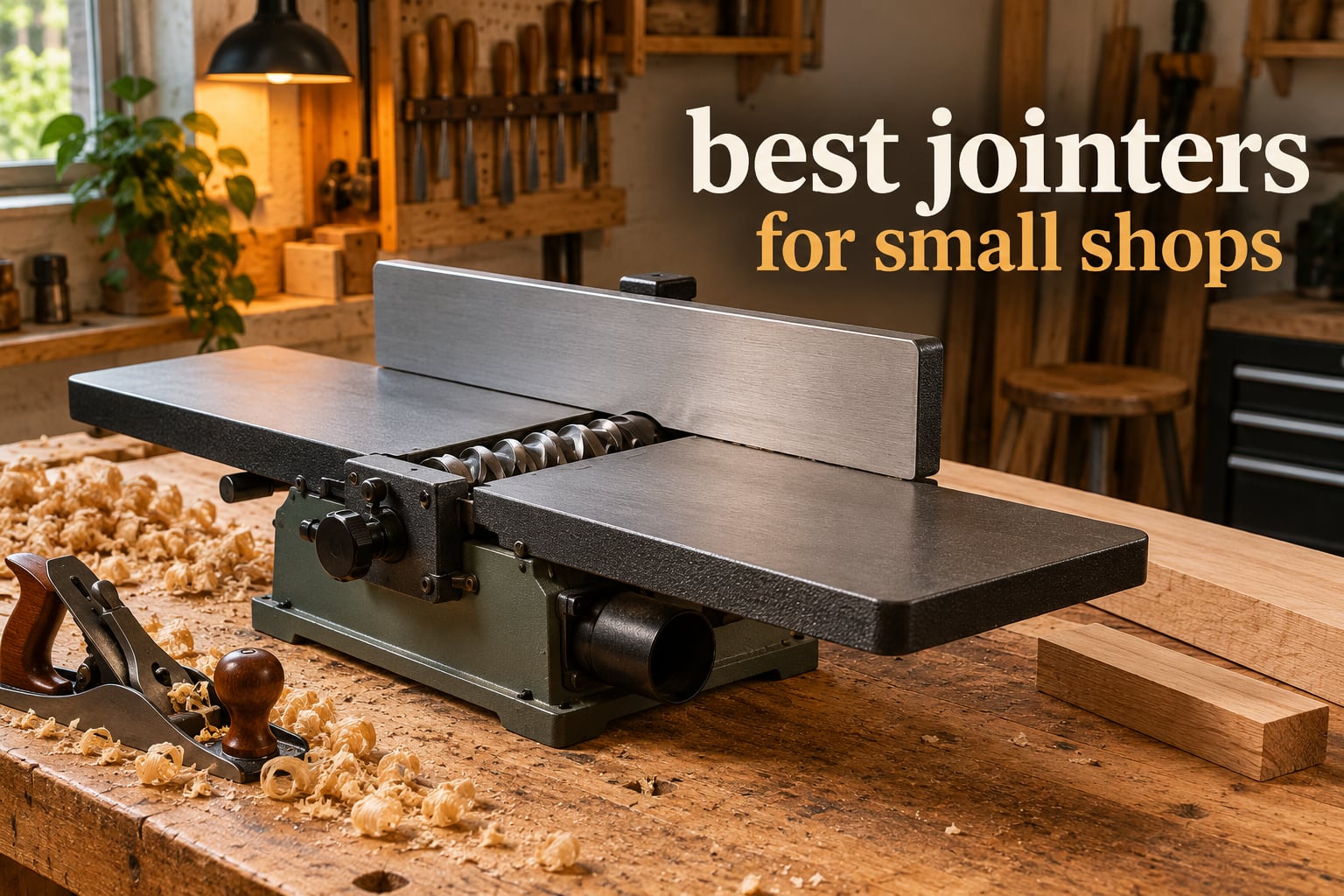
Two boards, a bottle of glue, and a clamp list a mile long, and the finished panel still has a wavy seam running down the middle. That is a jointing problem, not a glue problem. A jointer establishes the first flat face and the first true 90 degree edge on a board, and everything you build afterwards inherits those two references. Skip it and a thickness planer just faithfully copies the cup and the crook already in the stock.
Small shops have a specific set of problems. Floor models take up a wall you do not have, 230V circuits are not always easy to run, and most of us joint boards that are not quite as long as the marketing photos suggest. So the real question behind the best jointers for small shops is not which machine is the most capable, it is which one gives you a square edge and a flat face inside the space, power, and patience you actually have.
We put eight benchtop jointers side by side for this guide, from a 21 pound entry machine to an 82.8 pound cast iron 8 inch model. The short version: the WEN JT630H is the one we would put in a garage shop first, because the 12 blade spiral head cleans up tear-out-prone maple and the whole thing stores on a shelf when the day is done. Everything else in the list solves a narrower version of that problem, and each of the eight reviews below explains exactly which one.
All ratings and review counts here are the current figures listed with each machine, and every spec comes from the manufacturer’s own data. We have written each review around what you will actually notice in a small shop, including the setup time, the noise, and the board length that makes the machine stop being fun.
Table of Contents
Top 3 Picks for Small Shops in 2026

WEN JT630H 6-Inch Spiral…
- 12 staggered HSS spiral blades
- 30-by-6-inch table
- 0 to 1/8 inch per pass

Wahuda 50160CC Cast Iron…
- 4-sided carbide spiral head
- Cast iron tables
- Quiet 12000 RPM cutting

WEN JT833H 8-Inch Jointer
- 8 inch cutting width
- Table extends to 51 inches
- 16 staggered HSS blades
All 8 Jointers Side by Side (October 2026)
| Product | Specs | Action |
|---|---|---|
| WEN JT630H 6-Inch Spiral Benchtop Jointer |
|
Check Latest Price |
 CRAFTSMAN CMEW020 Variable Speed Benchtop Jointer CRAFTSMAN CMEW020 Variable Speed Benchtop Jointer |
|
Check Latest Price |
| Wahuda 50160CC 6-Inch Cast Iron Jointer |
|
Check Latest Price |
| WEN JT833H 8-Inch Spiral Jointer |
|
Check Latest Price |
| WEN JT3062 6-Inch 2-Blade Benchtop Jointer |
|
Check Latest Price |
 Cutech 40180HI 8-Inch Cast Iron Jointer Cutech 40180HI 8-Inch Cast Iron Jointer |
|
Check Latest Price |
 Cutech 40160HB 6-Inch Teflon-Coated Jointer Cutech 40160HB 6-Inch Teflon-Coated Jointer |
|
Check Latest Price |
 WOODSTARTER BJ12K 6-Inch Compact Jointer WOODSTARTER BJ12K 6-Inch Compact Jointer |
|
Check Latest Price |
1. WEN JT630H – Best All-Round 6-Inch Benchtop Jointer
WEN JT630H 10-Amp 6-Inch Spiral Benchtop Jointer
6 inch cutting width
12 staggered HSS spiral blades
30 by 6 inch table
0 to 1/8 inch per pass
Pros
- Clean finishes on tear-out-prone maple
- About two hours of setup to level and square
- Compact enough to store on a shelf
- Push blocks and depth scale included
- Motor handles light to medium passes
Cons
- Fence can drift out of square after locking down
- Aluminum tables show wear marks from rough lumber
- Light duty for boards over 4 feet
The JT630H is the machine we keep coming back to because it solves the widest range of small shop problems without asking you to give up anything important. The cutterhead runs 12 staggered HSS blades in a spiral arrangement, and that layout is the reason it does not tear out maple the way a two-knife head does. The kerf stays consistent, which means the second pass follows the first one instead of wandering.
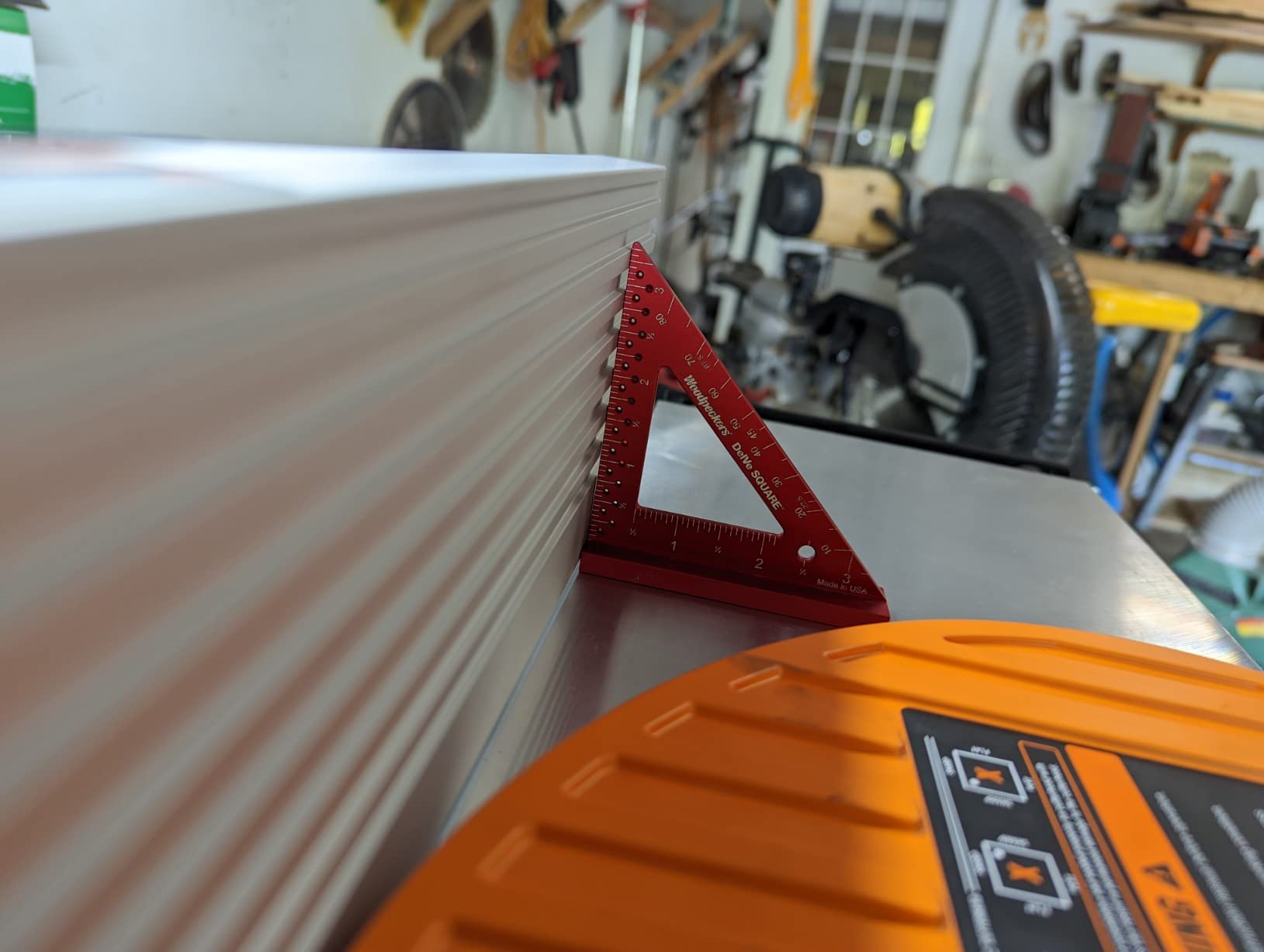
Setup is the part owners mention most, and it is genuinely two hours of work. The tables are aluminum rather than cast iron, and they arrive close but not perfect. Once the infeed and outfeed are coplanar and the fence is squared to the table, the machine produces a surface you would be happy to glue against. That is the deal: the adjustment is yours, and the result afterwards is good.
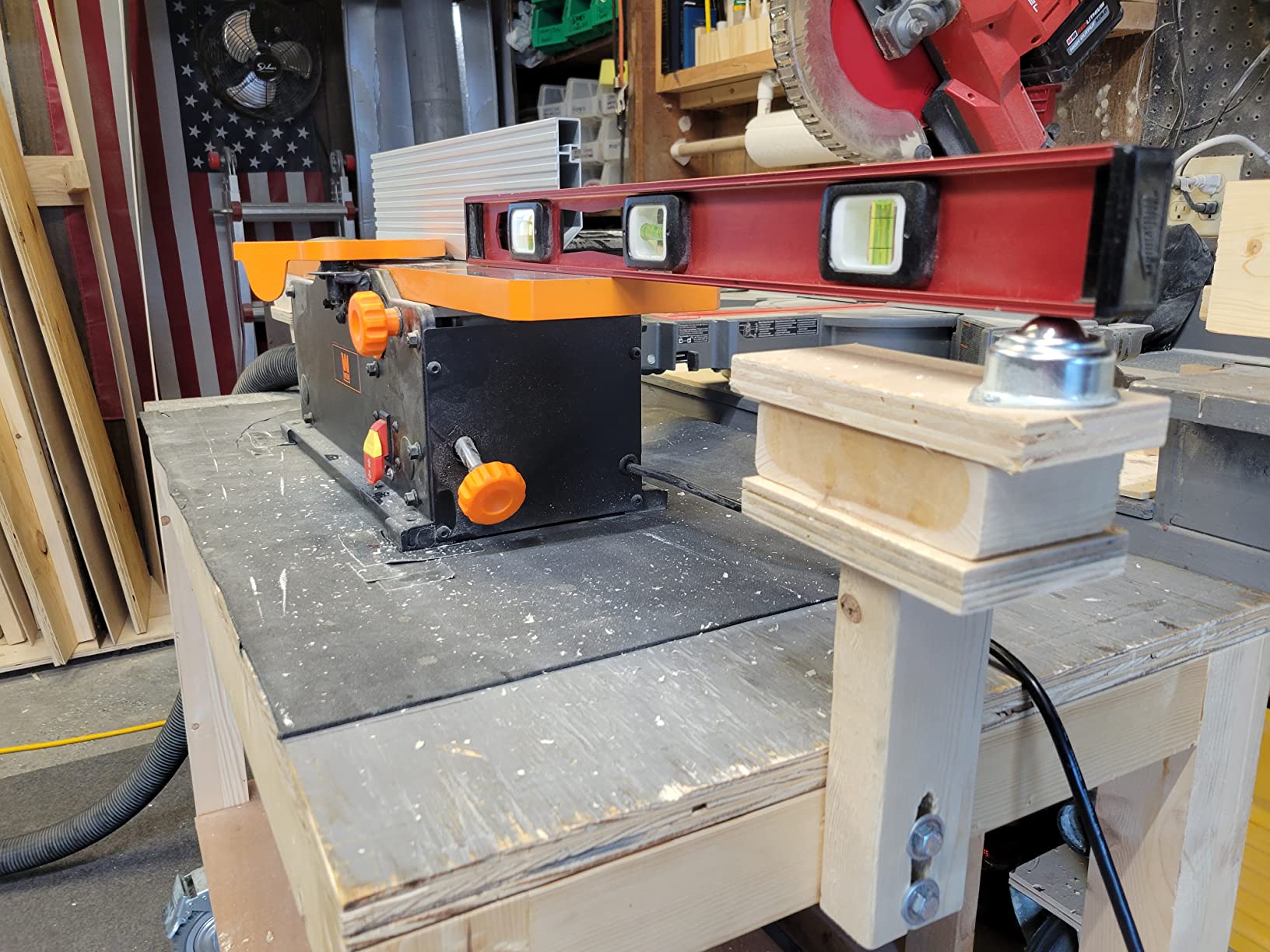
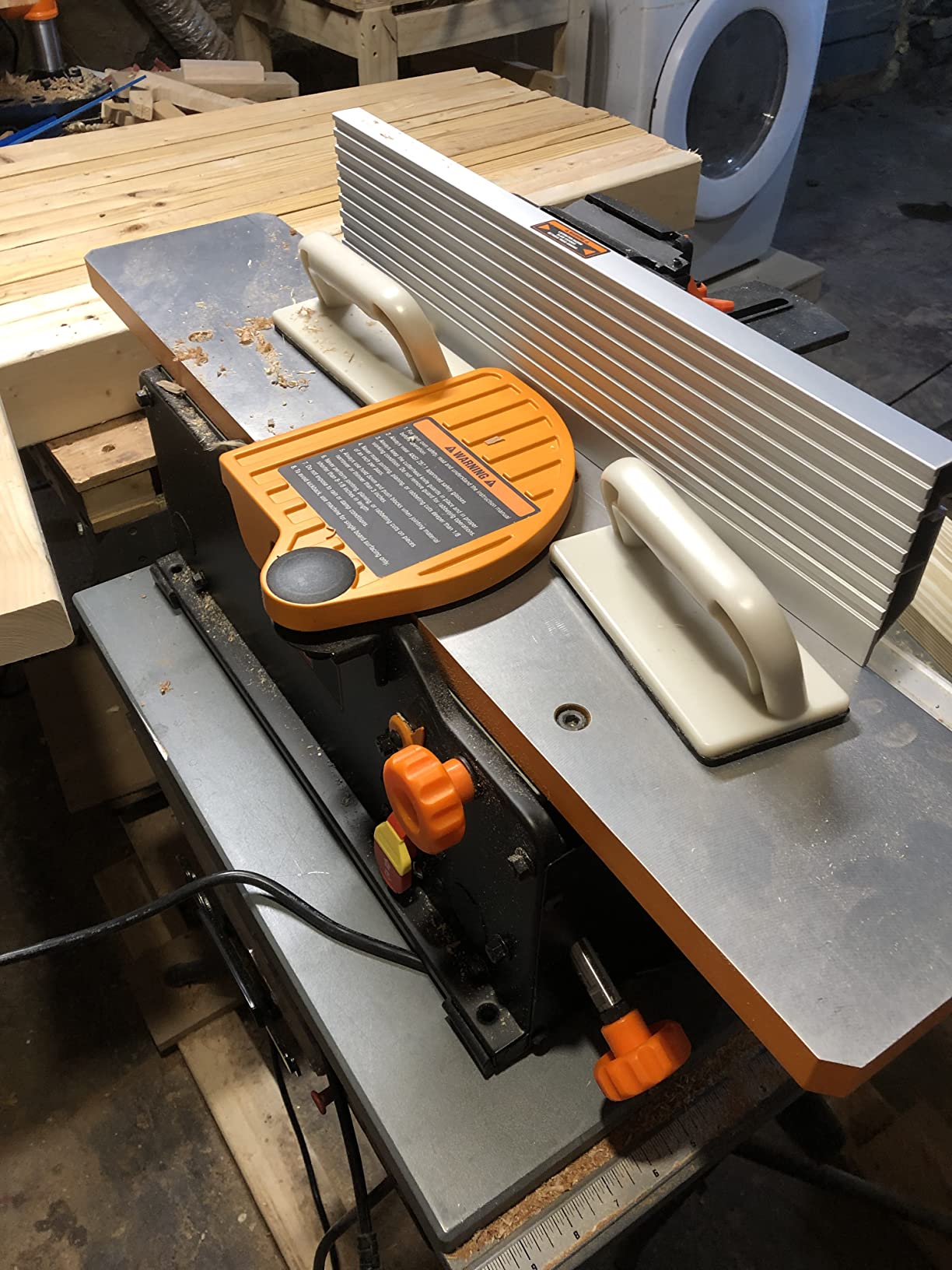
The numbers are honest for the class. Cutting width is 6 inches, the table measures 30 by 6 inches, and each pass removes up to 1/8 inch. Weight is 36.8 pounds, which is heavy enough to stay put during a cut and light enough to lift onto a shelf with one hand. The 19-3/4 by 4-1/4 inch fence tilts to 45 degrees if you want a chamfer, and the onboard depth-of-cut scale means you are not counting fence turns by feel.
Two push blocks come in the box, and that is not a nice-to-have. On narrow stock especially, a board that is only a few inches wide is a finger hazard, and the blocks keep your hands on the far side of the cutterhead. Reviewers repeatedly say the motor pulls light to medium passes without balking, which covers the pine, poplar, and cherry work that fills most garage shops.
Why the 6-Inch Spiral Head Earns the Top Spot
The deciding factor is what the machine does on the day you actually use it. Maple, purpleheart, cherry, and mahogany are tear-out magnets, and a spiral head with 12 staggered blades is a direct route to a clean surface on all of them. You get that finish without owning a compressor, and without the periodic blade leveling that a two-knife head demands.
It also handles both jobs well. Face jointing a rough-sawn edge board is where the 1/8 inch per pass capacity earns its keep, and edge jointing a glue-up panel is where the 30 inch table keeps you from fighting for support. A 36.8 pound machine that does both, quietly enough to work next to a bench, is simply the most complete answer in a small shop.
Where the JT630H Falls Short
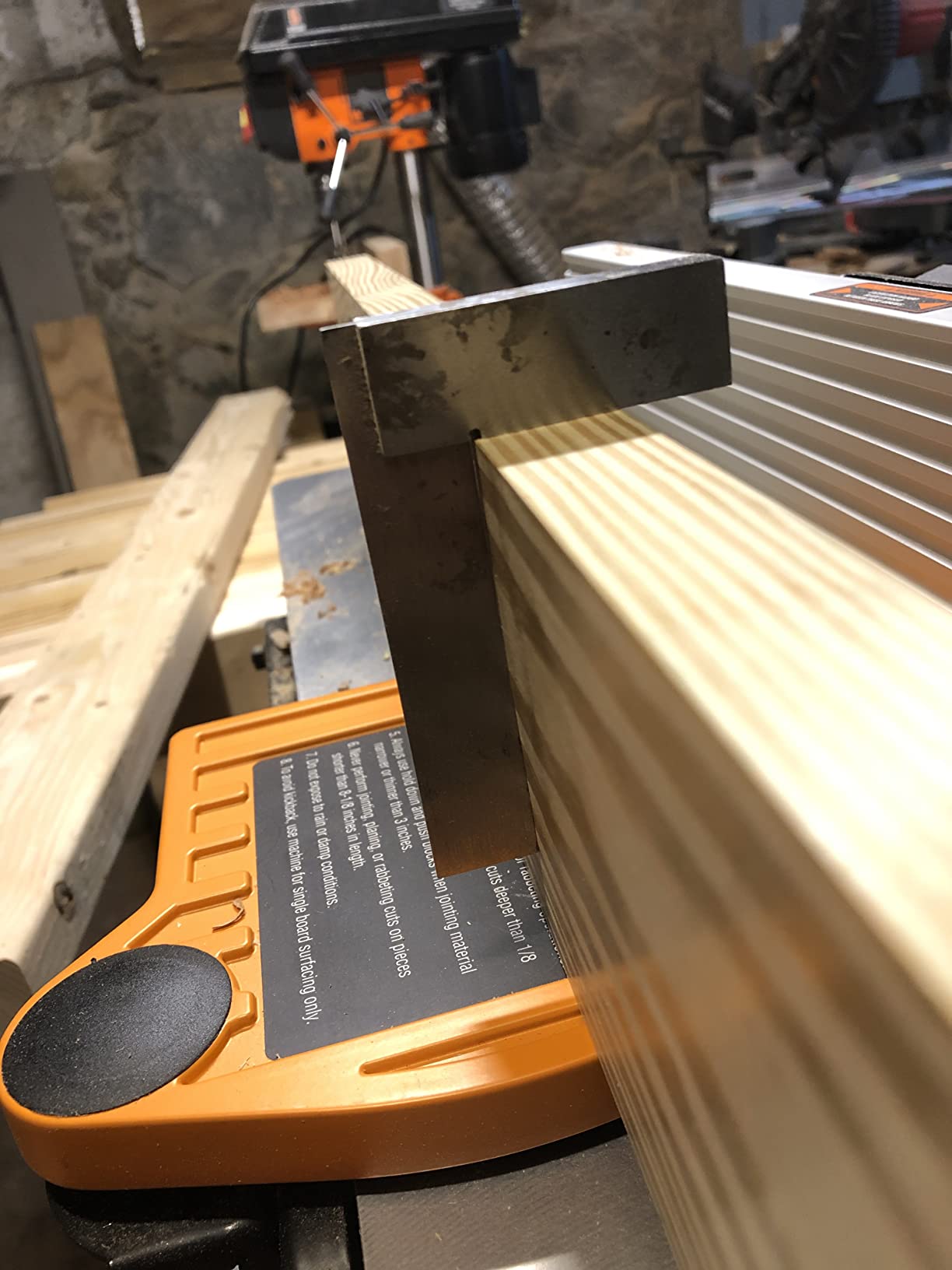
The fence is the weak point. Owners report that it needs work to square and can drift out of position after the lock handle is tightened down, which means a quarterly check with a square and a straightedge is part of owning this machine. Budget for that, and it stops being a complaint. Ignore it, and your glue-up panels will show it.
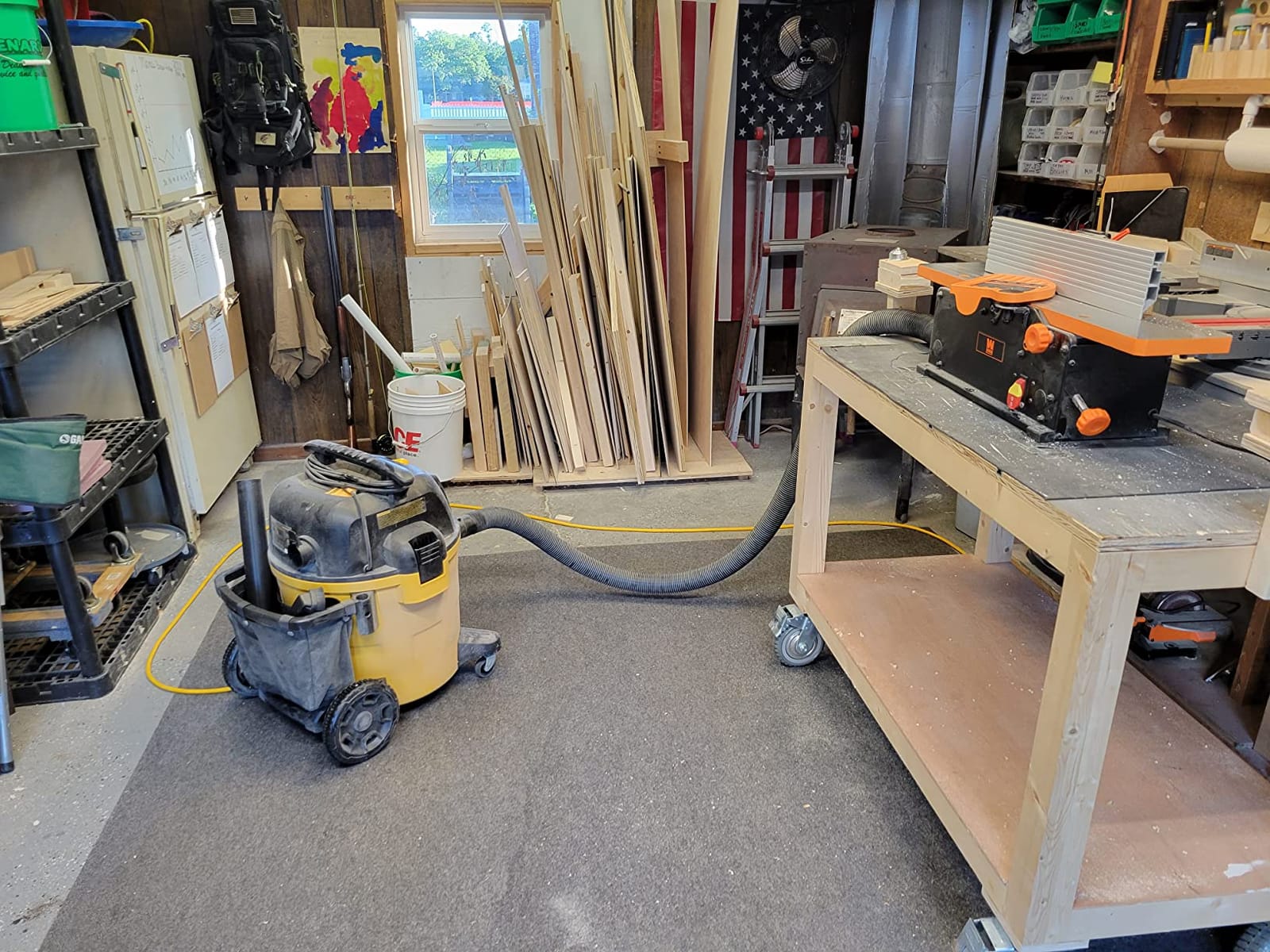
The aluminum tables are the other tradeoff. They machine flat and do not flex under a normal pass, but they pick up marks from rough lumber, and a chewed table surface is a board that rocks on the outfeed. The 2-1/2 inch dust port also does not match every shop vac hose without an adapter. Boards longer than about 4 feet are the practical ceiling here.
2. CRAFTSMAN CMEW020 – Best for Small Batch Projects
CRAFTSMAN Benchtop Jointer, Up to 22,000 cuts per Minute, 10 Amp, Corded (CMEW020)
4-1/4 inch cutting width
6000 to 11000 RPM
10 amp motor
Center mounted fence
Pros
- Variable speed matches the material
- Two-knife head is easy to level and swap
- Light enough to carry around the shop
- Good dust pickup with a shop vac
- Quiet for a two-knife machine
Cons
- Narrowest capacity in the roundup at 4-1/4 inch
- Short tables limit workable board length
- Blade guard can contact the knives under pressure
The CMEW020 is built for a different job than the rest of this list. It is a small batch machine, and if your projects are cutting boards, trays, small boxes, and drawer parts, the narrow 4-1/4 inch cutting width stops being a limitation and starts being irrelevant. Owners use it exactly that way and report results they are happy with.
The feature that sets it apart is the variable speed control, ranging from 6,000 to 11,000 RPM. You can slow the head down for a figured maple panel and run it faster on poplar without changing anything else. Owners also like the two-knife cutterhead with its jackscrew leveling arrangement, because a two-knife machine is simple to sharpen, level, and put back together when something does go wrong.
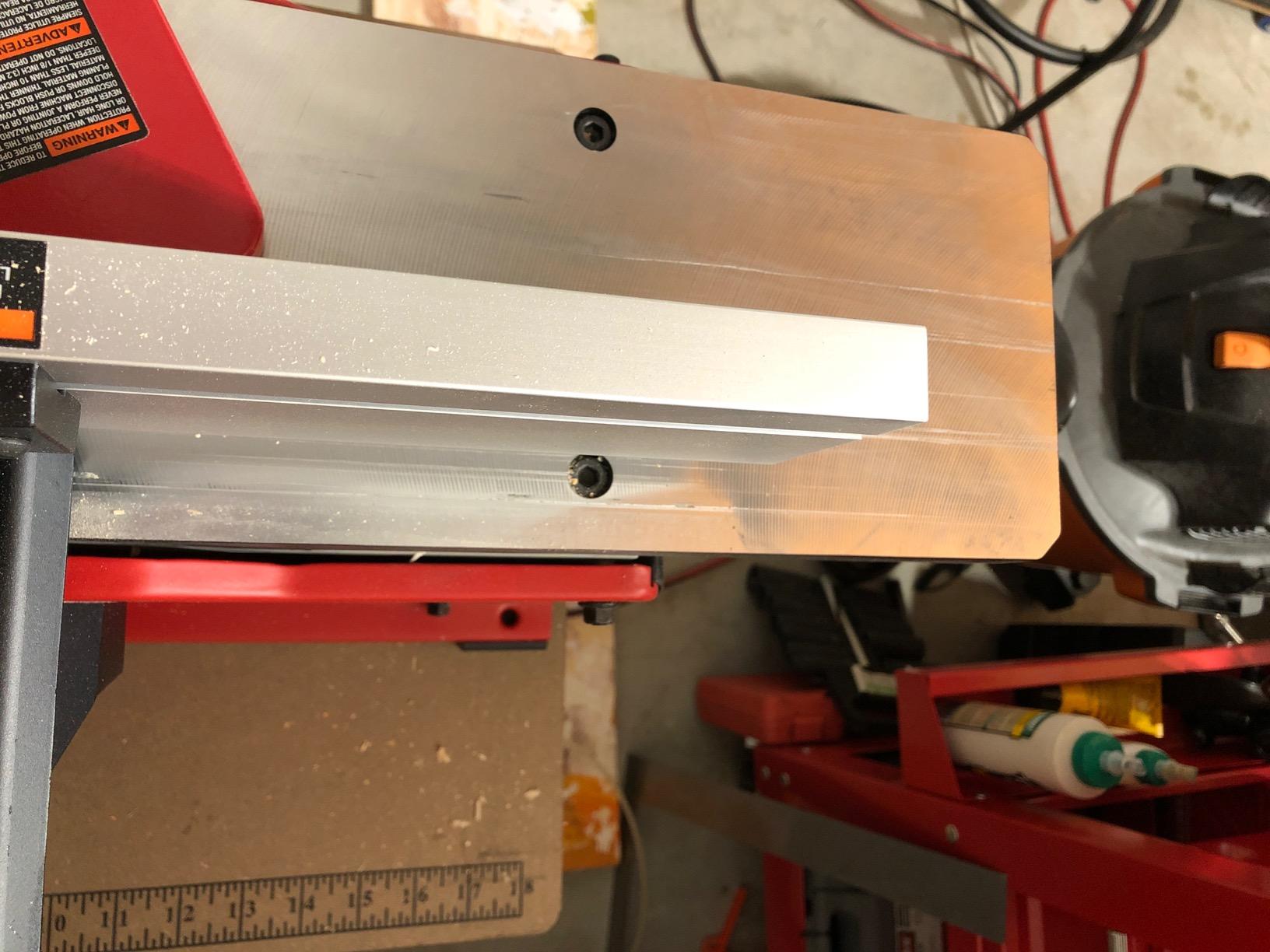
For a small shop, the light weight matters as much as any spec. This is the machine you can pull down off a shelf, set on the bench, joint the parts for a jewelry box, and put away before dinner. The center-mounted 4-1/4 inch fence supports the work through the cut, which is what you want on narrow stock where any wobble shows up as a torn edge.
Dust collection is another quiet strength. Paired with a shop vac or a small cyclone, the chips clear out well, and because the machine is narrow, a 4 inch hose is not fighting a huge throat. Reviewers also note low vibration, which matters if you are working in a garage attached to a house.
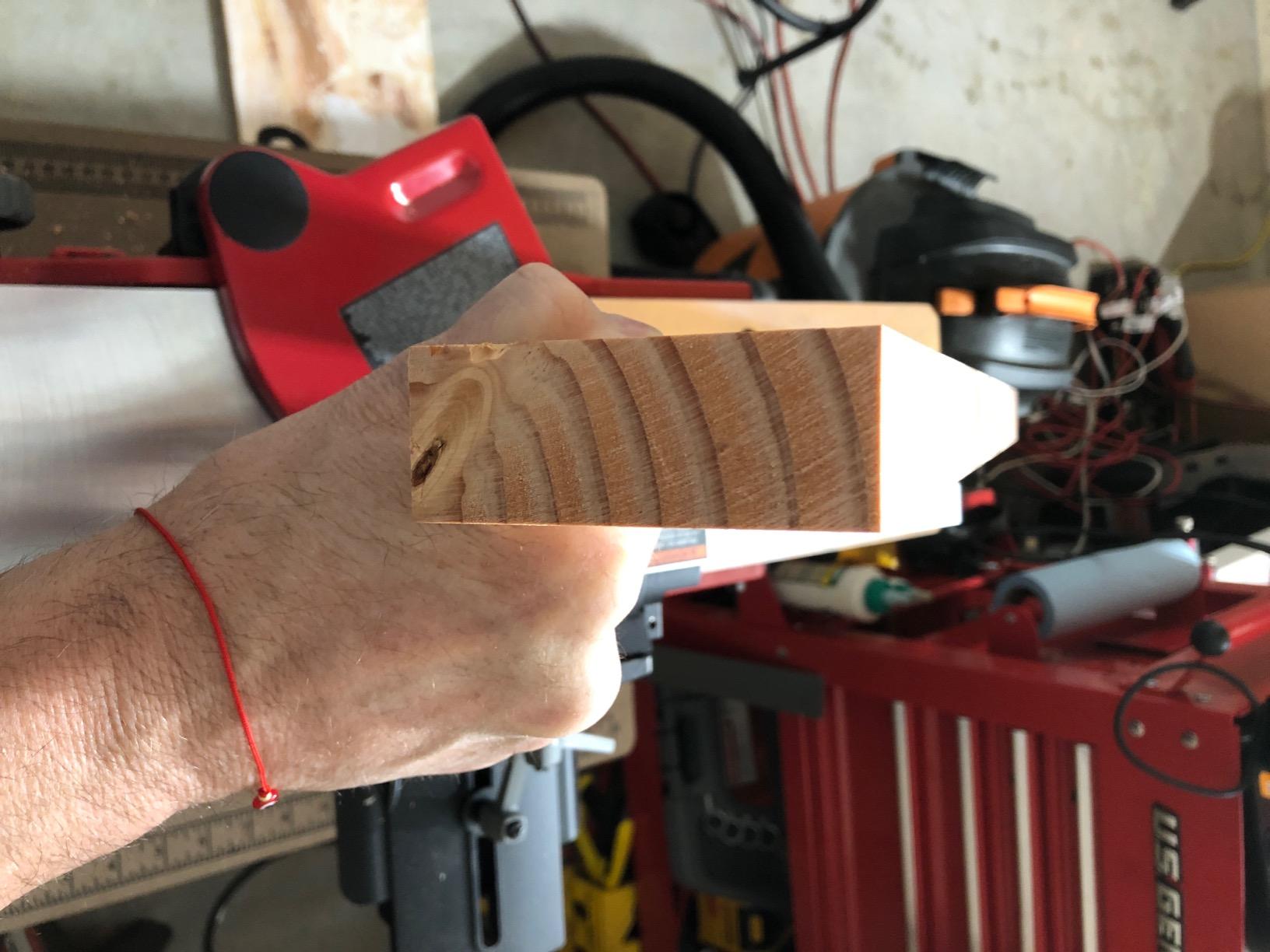
Who This Machine Suits
Pick this one if your lumber arrives already S4S and your work is small. Flattening a warped board is the machine’s strength, and the variable speed gives you a real tool for a soft maple cutting board, where a fixed-speed head would tear the fibers. It is also the easiest machine in the roundup to store, which matters more in a small shop than a spec sheet admits.
Beginners often start here for good reason. The setup is straightforward, the knives are ordinary HSS blades you can sharpen on a routine schedule, and there is no spiral head to index or carbide to replace. If you are building a shop one machine at a time and your projects are under 8 inches wide, this is a defensible first purchase.
Where the CMEW020 Falls Short
The 4-1/4 inch width is the hard limit. It is the narrowest in this roundup, and it cannot joint a 6 inch panel no matter how careful you are. The short infeed and outfeed tables also cap comfortable work at roughly 4 to 5 feet, so a full length glued panel is not happening on this machine.
Two smaller issues are worth knowing. The blade guard can contact the knives under slight downward pressure during a cut, which is a common complaint on two-knife designs. A handful of long-term owners also report motor failure after extended use, so if you buy it, keep it on a dedicated circuit and do not treat it as a production machine.
3. Wahuda 50160CC – Quiet Cast Iron Cutting
Wahuda Tools Jointer – 6-inch Benchtop Wood Jointer, Spiral Cutterhead Portable Jointer w/Cast Iron Tables & 4-Sided Carbide Tips & 10amp motor, Woodworking Tools for All Wood Types (50160CC-WHD)
4-sided carbide inserts
Cast iron tables
120V motor at fixed 12000 RPM
Pros
- Cast iron tables hold flat on longer pieces
- 16 four-sided carbide cutters for a no-snipe finish
- Noticeably quiet for a benchtop machine
- Cutterhead needs no leveling
- Fast and responsive parts support
Cons
- Tables arrive out of coplanarity and need slow leveling
- One table screw adjustment can undo the others
- Aluminum fence surface needs frequent waxing
The 50160CC is the one we would choose if noise is the thing you cannot get away with. It has 16 four-sided carbide inserts in a spiral cutterhead running at a fixed 12,000 RPM on a 120V motor, and the combination is markedly quieter than the two-knife machines in this roundup. If you work in an attached garage, that difference is not a luxury, it is the feature.
Cast iron infeed and outfeed tables are the other reason to look here. They weigh 56.2 pounds total, they hold flat, and they stay stable on a longer piece of stock than aluminum tables do. The fence tilts from 90 to 135 degrees, and because the inserts are four-sided, you rotate a dull one and keep cutting instead of stopping to change a blade.
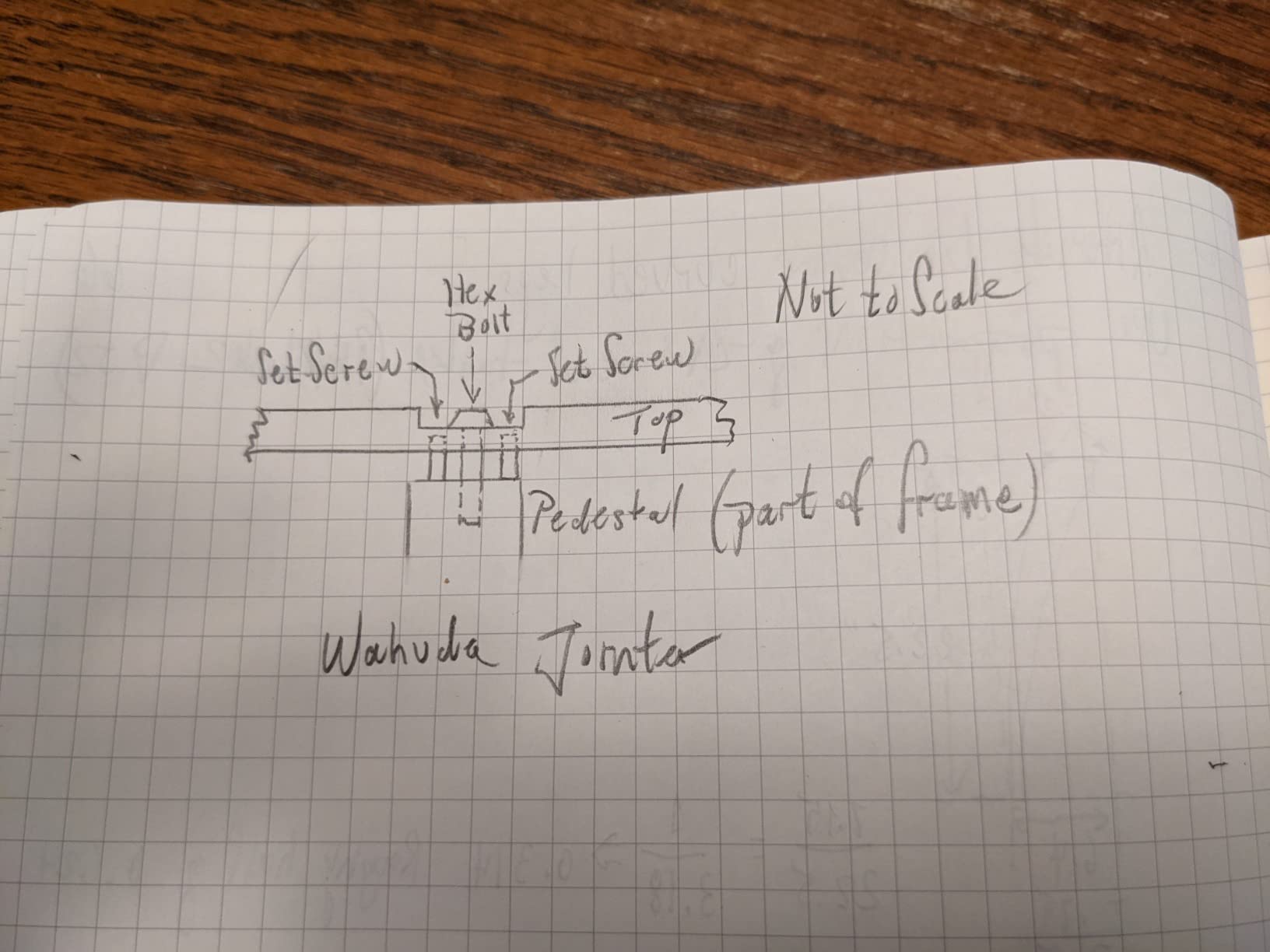
Cut quality is the headline. Owners report a no-snipe finish on hard maple, walnut, cherry, and bloodwood, which is a list that includes some of the most tear-out-prone wood you can buy. The head does not bog down, and because carbide inserts do not need periodic leveling, the machine stays ready between projects instead of waiting for you to set knives again.
Customer support is repeatedly singled out. Owners who received a unit with a defective cutter or a flaw in the infeed bed adjustment screw report that parts or replacements arrived quickly, and that is a real difference when you are one machine deep in a shop with no local dealer.
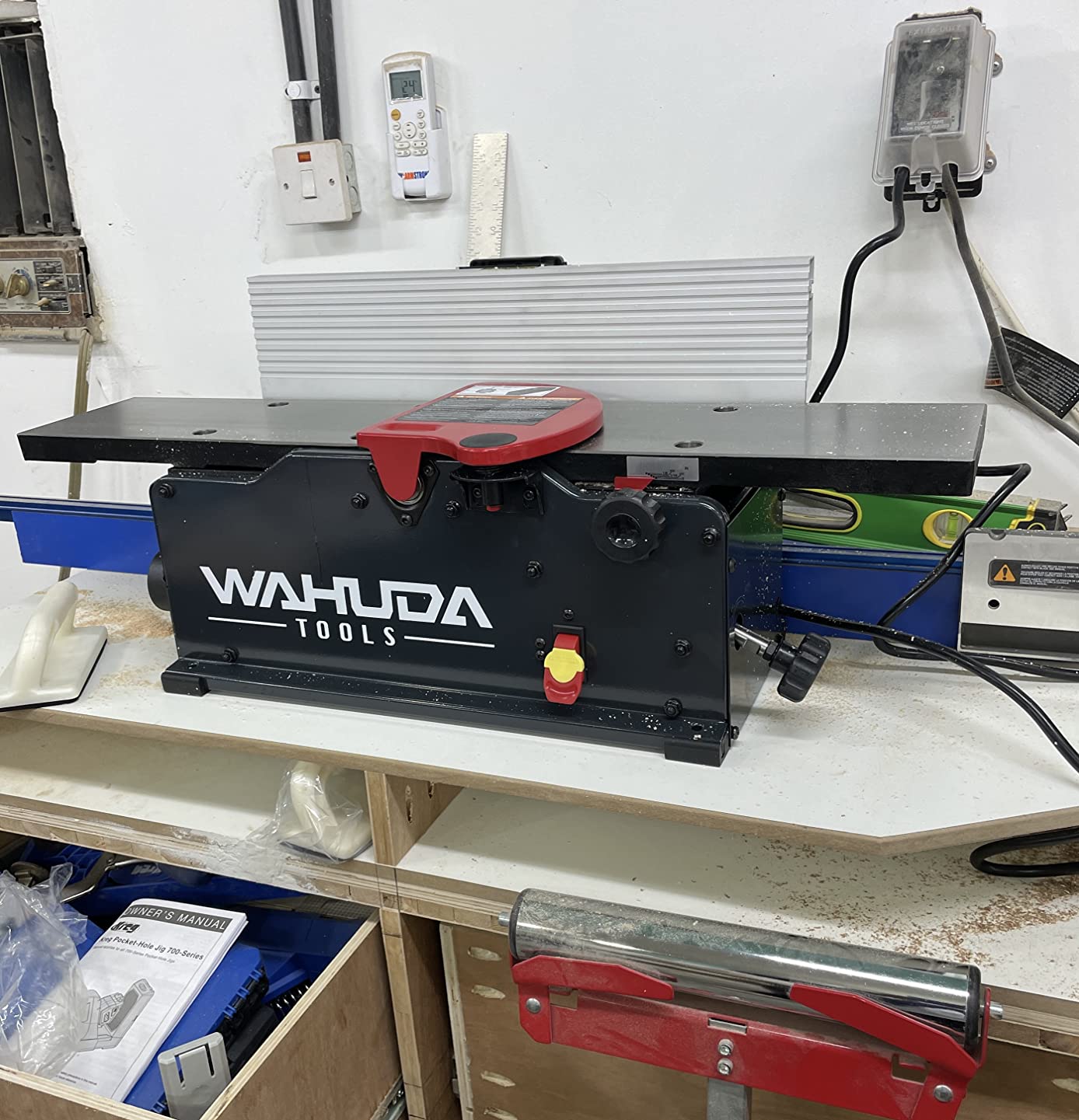
Why Cast Iron Tables Change the Result
A cast iron table is heavy, and on a jointer, heavy is a feature. Aluminum tables flex and ring under a heavy workpiece, and a board that moves during a pass leaves you with a surface that is flat in one spot and cupped in another. The cast iron tables here just sit there, which means the board is supported across its whole width for the entire cut.
It also changes how you work. With 6 inch of capacity and a stable table, a full edge joint on a glue-up panel is a single relaxed pass instead of a fight. For furniture work, that is the difference between jointing a panel and dreading it. Note that the 6 inch version does not include the table extension rods, so longer boards are still a support problem.
Where the 50160CC Falls Short
Setup is the honest drawback. The cast iron tables typically arrive out of coplanarity, and leveling them is a slow, iterative job that can take a couple of hours. Because the tables are linked, turning one adjustment screw can knock the others out, so you work in small increments with a straightedge until the whole surface is flat. Owners who budgeted that time are very happy; owners who rushed are not.
Two smaller friction points: the fence adjustment uses hard plastic handles that can strip if you over-torque them, and the aluminum fence surface finish is rough enough that owners wax it regularly to reduce friction on the workpiece. At 56.2 pounds it is also one of the heavier machines here, which is a fair trade for cast iron but not ideal if you plan to move it constantly.
4. WEN JT833H – Best 8-Inch Jointer for Longer Boards
WEN JT833H 10-Amp 8-Inch Spiral Benchtop Jointer with Extendable Table
8 inch cutting width
Table extends to 51 inches
16 staggered HSS blades
Pros
- Widest capacity on a compact footprint
- Support arms extend to 51 inches for longer stock
- Two dust port sizes fit more collectors
- Fence bevels to 45 degrees
- Push blocks and depth scale included
Cons
- Heavier and bulkier than the 6 inch benchtop models
- Fence and table leveling still need attention out of the box
- Costs more than 6 inch spiral machines of a similar class
The JT833H answers the most common complaint about benchtop jointers, which is that you cannot joint the board you bought. The table measures 33 by 8 inches and the support arms extend up to 51 inches, so a 4 foot panel is a supported, comfortable pass rather than a cantilevered wobble. For anyone building tabletops or full width glue-up panels, that is the feature that justifies the extra size.
The cutterhead runs 16 staggered HSS spiral blades, four more than the 6 inch JT630H, spread across the wider cutting width. Each pass still removes up to 1/8 inch, and the finish across the full 8 inches is the same ultra fine result the smaller machine gives. The fence is the familiar 19-3/4 by 4-1/4 inch unit that bevels to 45 degrees.
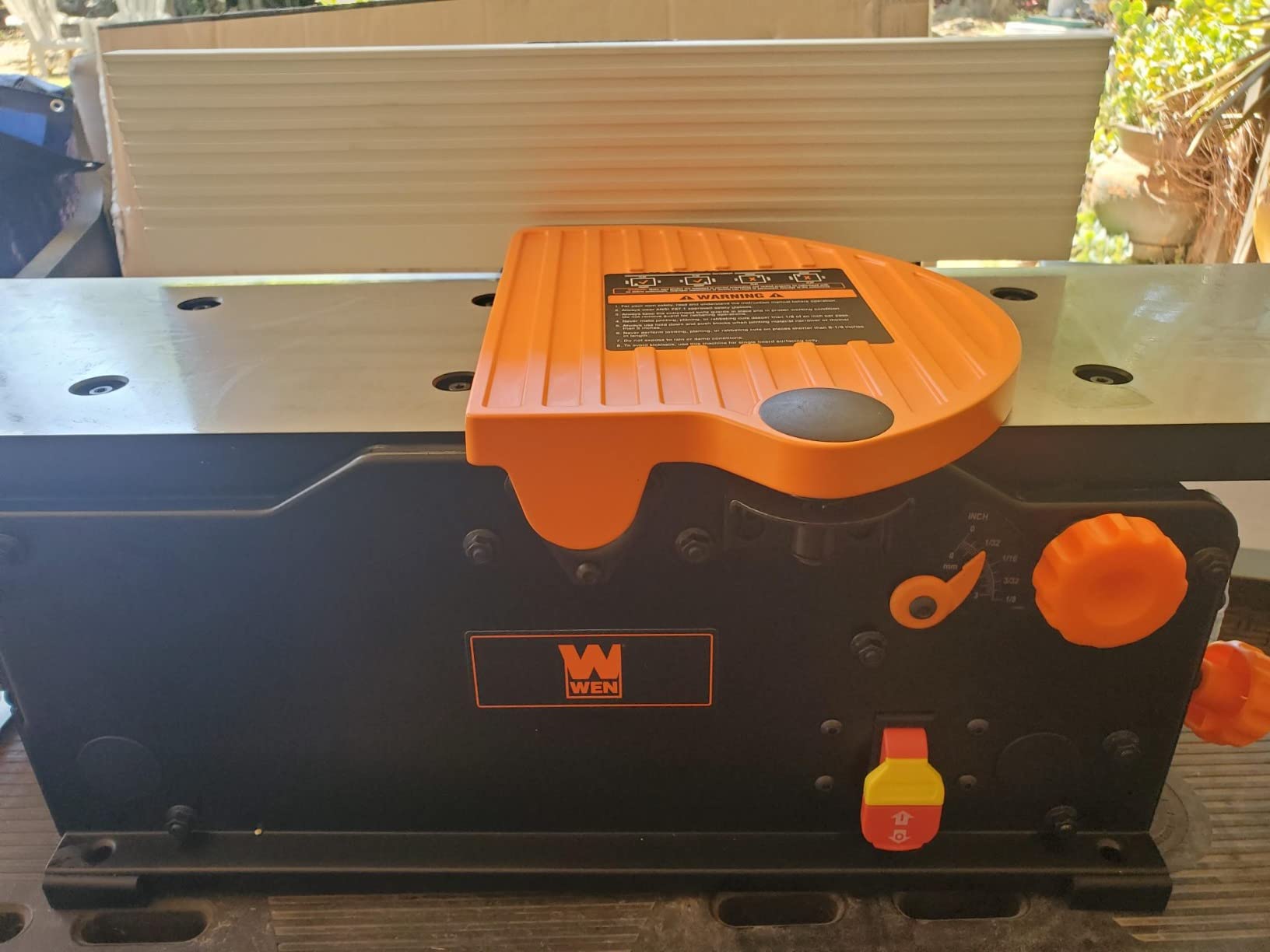
Dust collection gets a small upgrade here. You get both a 2-1/2 inch and a 4 inch port, so you can match the machine to whatever collector you already own without hunting for an adapter. The onboard depth-of-cut scale and two push blocks are included, same as the 6 inch model, and the depth scale is the thing that makes light passes repeatable when you are learning how much the machine can take.
Reviews focus on the same tradeoff: the wider capacity and the extendable table are clearly worth it, and the machine is simply a bigger object in a small room. If your shop is tight, measure the footprint before you commit, because an 8 inch machine with extended arms is not going to slide under the same bench as a 6 inch one.
When 8 Inches and 51 Inches of Support Matter
Width is the obvious reason, and it comes down to what you are building. A 6 inch jointer cannot joint a 7 inch table top edge, so you either rip the panel down and glue it in two pieces, or you buy a bigger machine. The JT833H removes that workaround entirely, and for a furniture maker the difference in glue-up quality is immediate because you are gluing a single full width board.
The extendable support arms are the quieter advantage. Most short-bed benchtop jointers become awkward past about 4 feet, and owners of shorter machines end up adding roller stands. Here the arms carry the load out to 51 inches, so a 4 foot board sits on metal the whole way through the cut. That is a stability problem solved, not a feature you will notice only on paper.
Where the JT833H Falls Short
Fence squareness and table leveling are the same out of the box tasks as on the rest of the class. Reviewers are clear that this machine is not exempt, so plan the same setup session you would plan for any benchtop jointer. If you skip it, the wider capacity will not save you from a joint that is out by a fraction.
The other consideration is price class. This machine costs meaningfully more than a 6 inch spiral option of similar specification, and in a small shop that difference only pays back if you genuinely work with wide stock. Buy it for the 8 inches and the 51 inch support, not for the blade count. If your projects stay under 6 inches wide, the JT630H gives you a spiral head for less and takes up less room.
5. WEN JT3062 – Best Two-Blade Jointer for the Money
WEN JT3062 10-Amp 6-Inch 2-Blade Benchtop Jointer, Black
22000 cuts per minute
30-by-6-3/16-inch table
0 to 1/8 inch depth
Onboard depth scale
Pros
- Cuts hard and softwood cleanly with no tear-out
- Quiet low hum instead of a whine
- Heavy and stable during cuts
- Arrives close to level needing only minor squaring
- Two-year warranty with readily available blades
Cons
- Two-blade head gives a coarser finish than a spiral head
- Knobs and handles are plastic
- Blades need periodic leveling and sharpening
The JT3062 has the highest average rating in this roundup at 4.7 stars across 220 reviews, and the reason is straightforward: it feels heavier and more stable than it should at this level. Owners describe a machine that does not shift during a cut, arrives close to level, and handles both rough and finished hardwood without the motor bogging down. For a first jointer in a garage, that combination is genuinely hard to beat.
The 10 amp motor puts out up to 22,000 cuts per minute and takes up to 1/8 inch per pass, so it is not a slow machine. The table measures 30 by 6-3/16 inches, the fence is the same 19-3/4 by 4-1/4 inch design that bevels to 45 degrees, and the onboard depth scale makes measured passes easy to repeat instead of approximate.
Noise is worth a closer look because it cuts against expectations. This is a two-blade machine, and two-knife heads are usually the loud ones, but owners describe a low hum rather than a high whine, and they cut end grain cleanly without tear-out. A two-year warranty is included, and replacement blades are easy to source, which matters more than it sounds if you have no local woodshop supply house.
What you give up is finish quality on figured wood. Two HSS knives make a wider kerf than 12 staggered blades, so the second pass is less likely to follow the first perfectly. On flat-sawn maple with sharp blades, it is fine. On curly figure, you will see the difference against a spiral head cut.
What 22,000 Cuts per Minute Feels Like
High cut density shortens the chip length, and short chips eject better than long ribbons. That is why a fast two-knife head can clear a full width pass in hardwood without the load spike you get from a slower head taking a deeper bite. In practice it means one pass gets you close and a second light pass finishes, which is exactly how a jointer is supposed to be used.
The depth-of-cut scale is the part you will use every single time, and it is the reason this machine is easy to learn on. You set a number, the fence moves to match, and the result is repeatable. Combined with a machine that arrives close to level, that is a short path from unpacking box to producing a good glue-up panel.
Where the JT3062 Falls Short
Blades need periodic leveling and sharpening, and unlike a spiral cutterhead there is no way to rotate an insert and keep going. That is a real maintenance rhythm: check the knives, level them against the head, and resharpen on a schedule. Plenty of owners are entirely happy with that, but if you would rather set inserts once and forget about them, choose a spiral head machine.
Smaller issues add up. The knobs and handles are plastic, which is normal at this level but is a fair reason to check that a handle has not stripped before you start a long pass. Table length puts comfortable work at roughly 4 to 6 feet, and the 2-1/2 inch dust port may need an adapter depending on your collector.
6. Cutech 40180HI – 8-Inch Cast Iron Jointer With a Long Fence
Cutech 40180HI 8-Inch Spiral Cutterhead Benchtop Jointer with Cast Iron Tables, 16 TC Inserts, Extra Long 24″ Aluminum Fence, Additional 7-3/8″ Fence Brackets, and a 10-amp Motor
Eight inch cutting width
Six rows of staggered carbide inserts
24 inch aluminum fence
82.8 pounds
Pros
- Cast iron tables arrived coplanar for one reviewer
- 24 inch fence with brackets simplifies a square setup
- Carbide spiral head cuts pine
- oak and maple smoothly
- Heavy enough not to move during a cut
Cons
- Loud under no load from a 12000 RPM universal motor
- Fence alignment mechanism described as crude
- 82.8 pounds and a 34 inch footprint for a small shop
The 40180HI is the most substantial benchtop machine in this list, at 82.8 pounds and 34 by 19.75 by 13.25 inches. That mass is not an accident. It is cast iron tables and a steel frame, and it means the machine does not move, ring, or creep during a pass, which is the condition under which you get a genuinely flat face.
The cutterhead uses six rows of staggered tungsten carbide inserts, and the two-sided design keeps the cutting edges aligned to the spiral for a cleaner cut than four-sided inserts. Owners report smooth cuts through pine, rough-sawn oak, and maple, and a damaged insert is fixed with a single screw and a rotation, which is the whole reason to buy a carbide head in the first place.
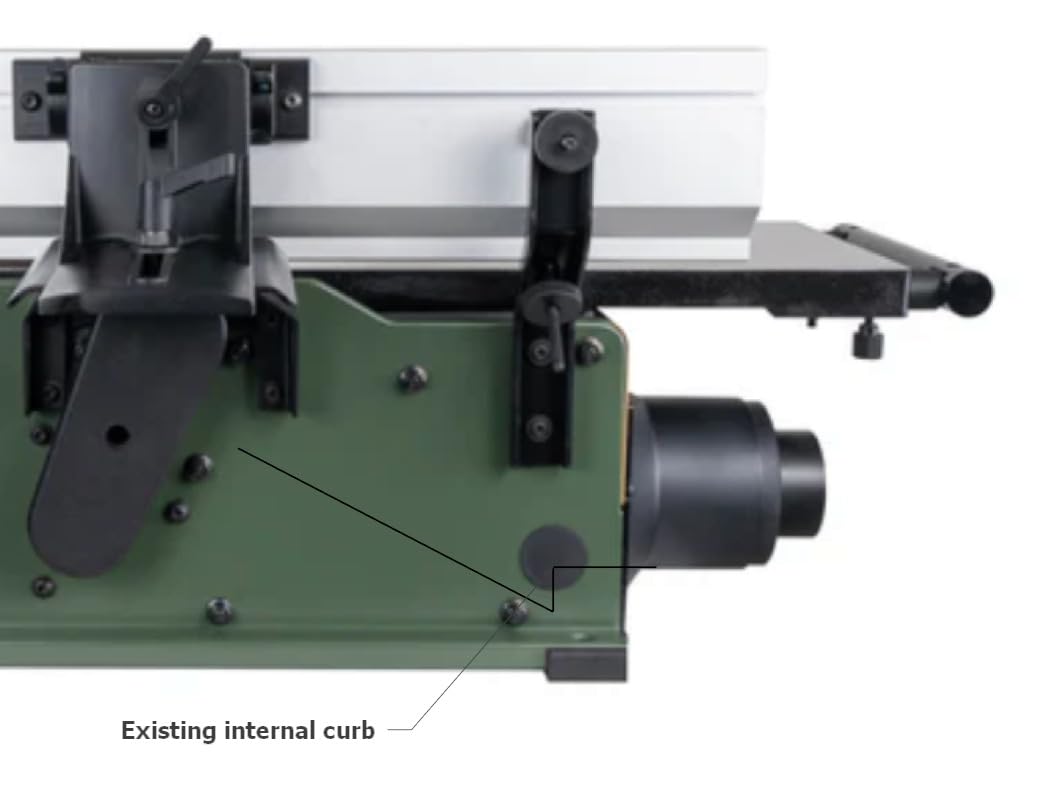
The 24 inch fence is unusual at this size and comes with dedicated fence enhancement brackets that stabilize both ends. For a jointer, the fence is the part that determines whether your edge is truly 90 degrees, and a long fence with supported ends is the design that most reliably holds that angle. Quick stops at 90 and 135 degrees let you set bevel work quickly, and an additional guide post gives you elevation control for parallel tables at any depth.
One reviewer received cast iron tables that arrived coplanar and factory greased, needing no adjustment at all. That is the best case scenario for this machine, and it is worth knowing it happens, because when it does not, you are looking at the same leveling task as the rest of the cast iron machines here.
Who This Machine Suits
This one is for the person who has already outgrown a 6 inch machine and would rather not install a 230V circuit. It gives you 8 inches of capacity, a cast iron bed, and a carbide spiral head, all on 120V, and it will not walk across the floor while you work. If your projects are wide panels, tabletops, and large glue-ups, the extra mass and the 24 inch fence earn their keep.
It also suits anyone who plans to keep a machine for years. There is no blade to sharpen and no insert to index, so the maintenance rhythm is a vacuum and an occasional insert check. The 1200 watt motor and low amp draw of the staggered carbide rows mean the machine works within a normal household circuit, which is a genuine constraint in a garage shop.
Where the 40180HI Falls Short
Noise is the main complaint, and it is specific. The 12,000 RPM universal motor produces a high pitched whine under no load, which some long-form reviewers consider significantly louder than induction motor machines in the same class. If you work early, late, or in an attached shop, that is a factor you should test before you commit.
Size is the other one. At 82.8 pounds and a 34 inch footprint, this is not really a benchtop machine in spirit, and long-form reviewers describe the fence alignment mechanism as relatively crude compared with the rest of the build. It also arrives protected by polystyrene foam rather than cardboard, so plan where the packaging goes before the machine arrives.
7. Cutech 40160HB – Best Table Surface for Rough Lumber
Cutech 40160HB 6-Inch Spiral Cutterhead Benchtop Jointer with teflon-Coated Aluminum Tables, 12 TC Inserts, 19-5/8” Aluminum Fence, and a 10-amp Motor (Rifle Green, 6 inch)
6 inch cutting width
6H Teflon coated aluminum tables
Two-sided carbide inserts
Pros
- Teflon coating resists the scratching bare aluminum gets
- Two-sided carbide inserts cut smoothly at low amp draw
- Depth of cut pointer makes passes repeatable
- Fence quick stops at 90 and 135 degrees
- Highest average rating in the roundup
Cons
- Smallest meaningful review base with 59 reviews
- Aluminum tables less rigid than cast iron on heavy work
- Aluminum fence is lighter and less stiff than a cast iron option
The 40160HB carries the highest average rating in this roundup at 4.8 stars, and the reason buyers give is the table surface. The infeed and outfeed tables are aluminum with a 6H Teflon coating, and that coating is what separates this machine from every other bare aluminum benchtop in the list. Rough-sawn lumber is abrasive, and a coated surface shrugs off what would otherwise become permanent wear marks.
The cutterhead is the other half of the appeal. Six rows of staggered inserts sit in perfect alignment to the spiral, and the two-sided design holds a cleaner cutting angle than four-sided tips. Owners report smooth passes with low amp draw, and the machine weighs 44.2 pounds, which is enough mass to stay put without being a lifting problem in a small shop.
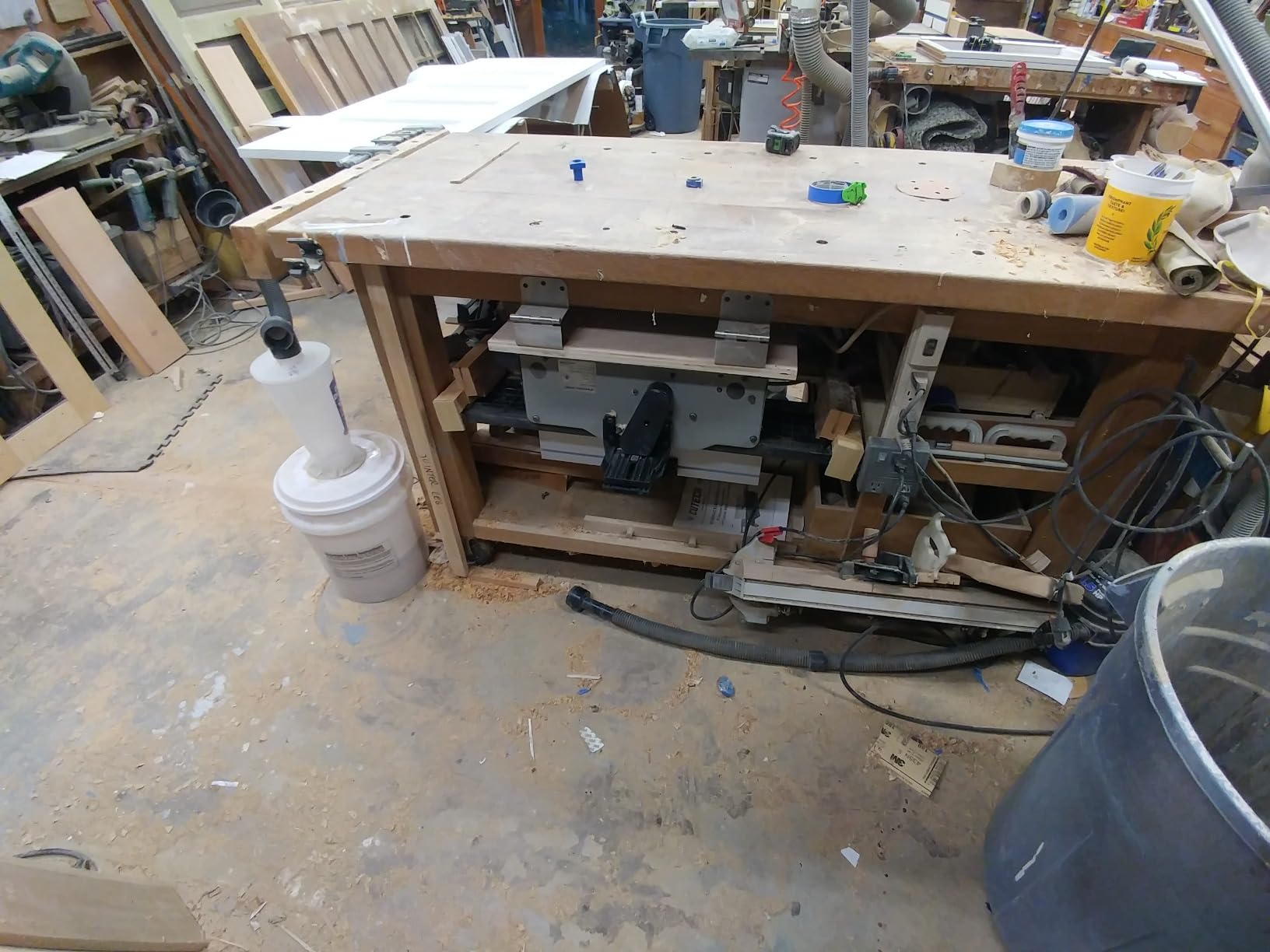
The depth of cut pointer is a small detail that makes a real difference when you are learning. A clear scale and pointer means you can dial in a light pass and repeat it exactly, instead of adjusting by feel and then wondering why the second board came out thinner than the first. The 19-5/8 inch aluminum fence has quick stops at 90 and 135 degrees, which covers flat work and bevels without readjusting from scratch.
Owners also point out the practical side. This is a current-generation design, so it carries the newest table treatment, and the review base at 59 is the smallest of the eight we looked at. That is a trade you make knowingly: you get a current design and a better table surface, with less long-term history behind it.
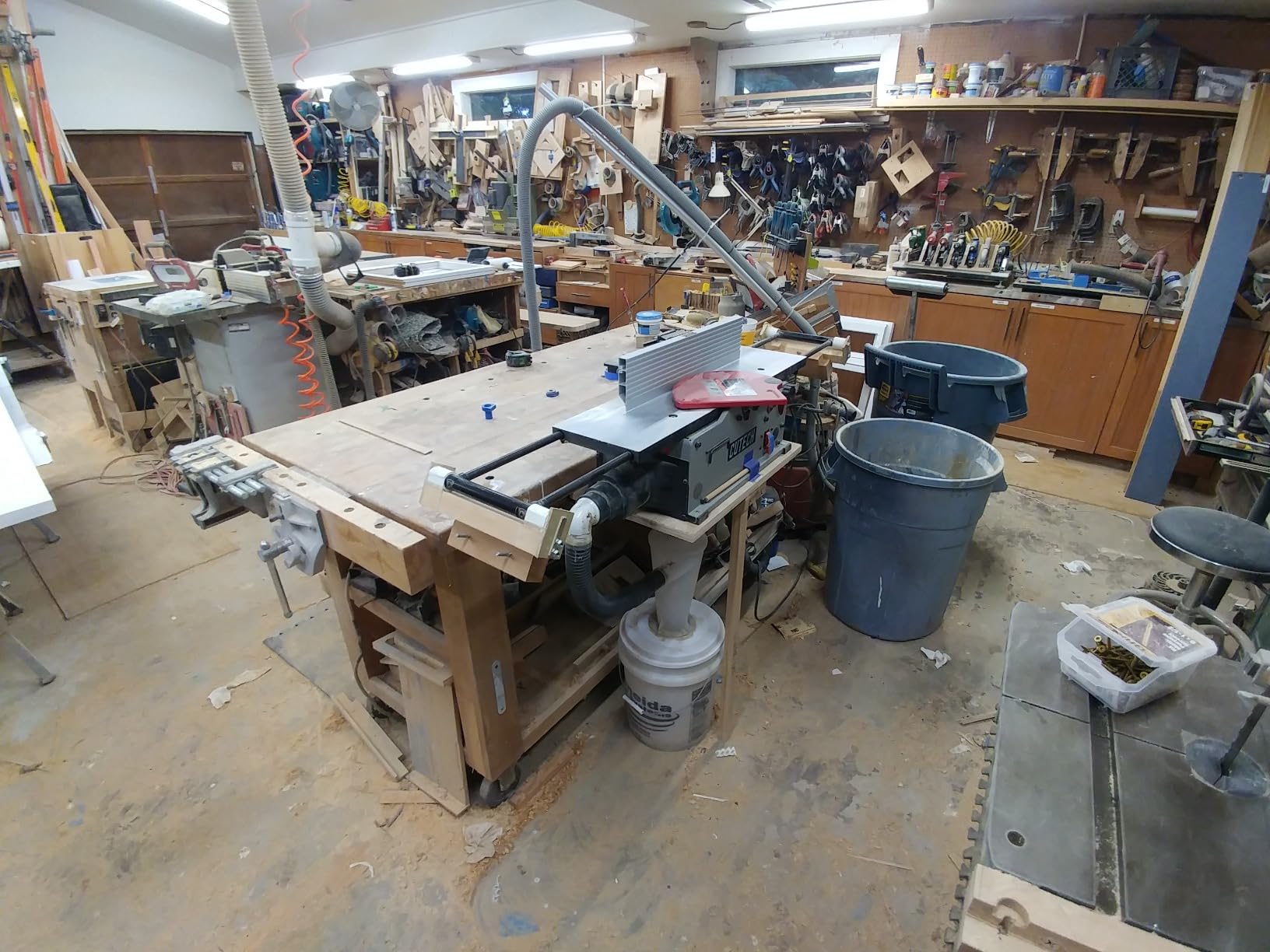
Why the Teflon Coating Helps
Bare aluminum tables dent and scratch in ways that change how a board sits. Once a pass has left a groove, a wide board can rock slightly on the outfeed, and rocking produces a joint that is flat at the edges and not in the middle. A hard coating slows that process down considerably, which means the machine still feeds well after months of rough lumber rather than degrading the way an uncoated table does.
It also changes the feel of the pass. A smoother table surface means less friction between the workpiece and the castings, and for a hand-fed operation where you are controlling depth with a feed board, that difference is noticeable. Combined with the quick stop fence, this is a machine that rewards slow, careful work with a clean result.
Where the 40160HB Falls Short
The honest answer is the review count. At 59 reviews, this is the least proven machine in the roundup long term, and nobody can tell you how the fence and the depth scale hold up after three years. That is a normal risk with a newer model, and it is worth weighing against the option of a machine with hundreds of reviews behind it.
Aluminum is still aluminum. The tables are less rigid than cast iron on heavy work, and the aluminum fence is lighter and less stiff than a cast iron fence option, so it moves a little more on a long edge joint. If you are jointing thick hardwood slabs all day, look at the cast iron machines instead.
8. WOODSTARTER BJ12K – Budget Pick for the Tightest Shop
WOODSTARTER 6-Inch Benchtop Jointer with 15 Amp Motor, 12000 RPM Cutting Speed, Adjustable Fence 90–135°, Up to 1/8″ Depth, HSS Blades, Table Jointer To for Woodworking DIY
6 inch cutting width
15 amp motor at 12000 RPM
21 pounds total
22.9 inch footprint
Pros
- Lightest machine in the roundup at about 21 pounds
- Smallest footprint for a tight shop
- Lowest cost entry into jointing
- Adjustable fence tilts 90 to 135 degrees
- Includes an installation guide aimed at beginners
Cons
- Smallest review base at 21 reviews
- HSS blades need sharpening and leveling rather than swap inserts
- Nylon listed in the materials suggests lighter-gauge construction
- Only a 1-year manufacturer warranty
The BJ12K exists for a very specific shop: one where floor space is the binding constraint. At 21 pounds with a 22.91 by 12.99 by 11.54 inch footprint, it is the smallest jointer in this roundup by a wide margin, and it is the one you can pull down, use, and put away in a minute. If a 30 inch table would never fit your bench, this one might.
The specification is more capable than the weight suggests. A 15 amp motor runs at up to 12,000 RPM, the cutting width is 6 inches, and depth adjusts up to 1/8 inch per pass. The fence tilts from 90 to 135 degrees, which covers both square edge work and a chamfer in one machine, and dual HSS knives handle the cutting.
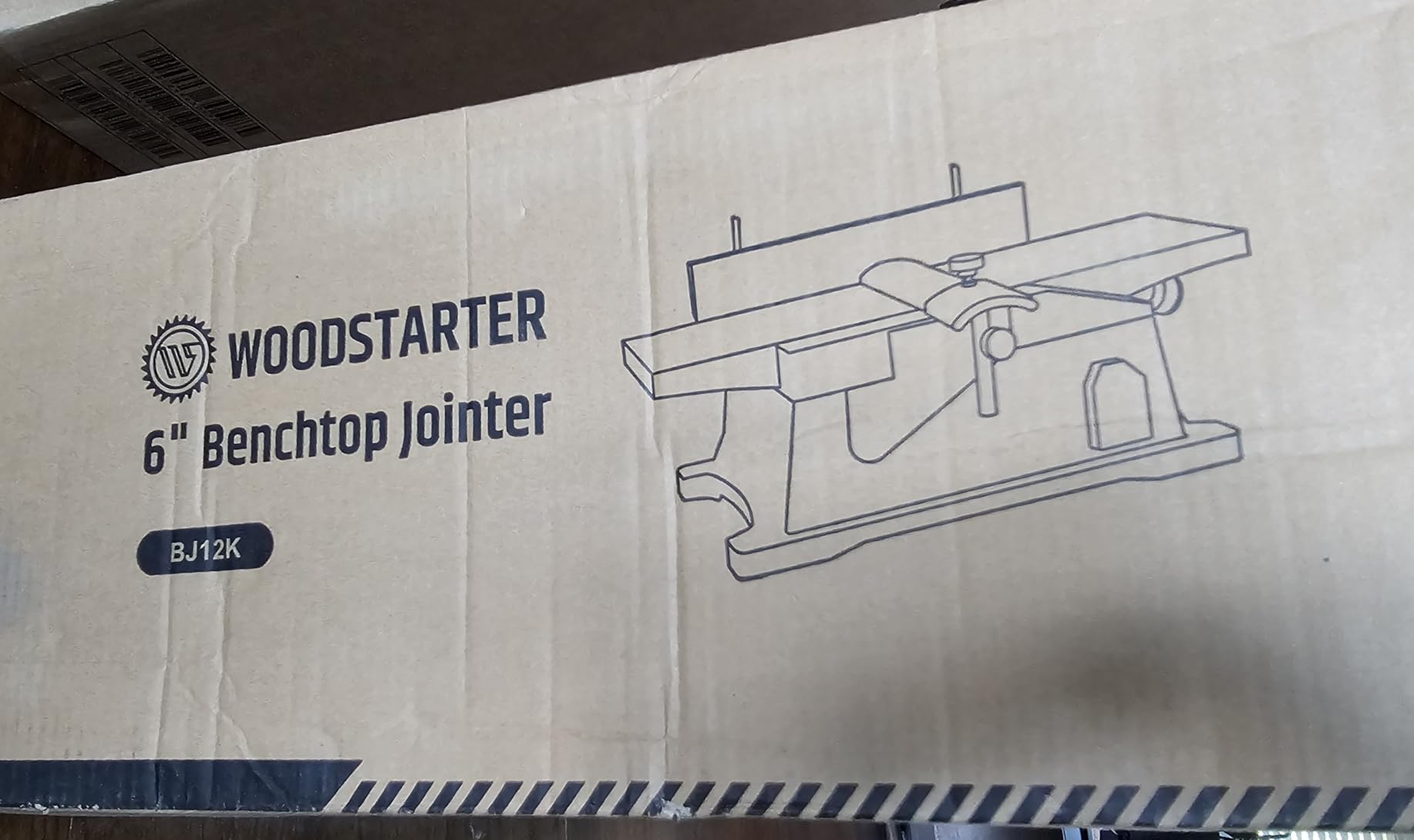
For a beginner, the included installation guide is a genuine feature. The setup on a jointer is the part that stops people, and having the adjustment procedure in the box is one less reason to put the machine back in the carton. The light weight also means you can work on the floor or on a temporary surface, which opens up projects in shops with no permanent machine station.
Where it is most at home is edge jointing small panels, drawer parts, and shop furniture. Those are the jobs a 6 inch width handles comfortably, and the compact size means you can do them in the corner you actually have. Reviewers consistently frame it as a space and cost solution rather than a capacity one, and that framing is accurate.
Who This Machine Suits
Beginners on a tight budget, and shops where the machine has to be stowed between sessions. It is the least expensive way into jointing in this roundup, and at 6 inches of capacity it is not a toy width. If your work is small panels, small boxes, and edge jointing, the capacity ceiling is above what you will actually hit.
It also suits anyone who wants to learn the setup before committing to a heavier machine. The 1/8 inch depth of cut, the tilting fence, and the HSS knives are all the same fundamentals you would learn on a larger jointer, and the skill transfers directly to whatever you buy next.
Where the BJ12K Falls Short
The review base is the first thing to know. At 21 reviews it has the smallest sample in the roundup, so long term durability is largely untested. The 1-year manufacturer warranty is also the shortest listed, and for a machine with moving parts that is a shorter commitment than the rest of this list offers.
Construction is the second. Nylon appears in the material list alongside aluminum and metal, which suggests lighter gauge parts than the other machines here. HSS blades need sharpening and leveling rather than swap-in inserts, so there is a recurring maintenance task, and the lighter build means less resistance to vibration on heavy cuts.
How to Choose a Jointer for a Small Shop
Start with width, because it is the decision you cannot undo. A 6 inch jointer handles most furniture work, panels, and glue-ups, and every machine under 8 inches in this roundup except the two 8 inch models will not joint a wider board without a workaround. An 8 inch jointer covers tabletops and wide panels directly. Measure the widest board you expect to joint this year, add an inch, and let that set your ceiling.
Next, cutterhead type. Straight knives are cheapest to buy and need regular leveling and sharpening. A spiral cutterhead with HSS blades, like the WEN machines here, gives a cleaner cut with far less setup. A spiral cutterhead with carbide inserts, like the Wahuda and the two Cutech machines, needs no sharpening and no leveling at all, at the cost of more money up front and inserts to replace eventually.
Table material and length matter more than most spec sheets admit. Cast iron holds flat and stays stable on long pieces, and it does not mark the way aluminum does. Aluminum is lighter, cheaper, and easier to move, and it machines very well, but bare aluminum shows wear from rough lumber. Bed length is the other half: a 30 inch table with arms that extend to 51 inches handles far more than a fixed 30 inch table.
The fence decides your accuracy more than the motor does. Look for one that is long, supported at both ends, and has stops at 90 and 135 degrees. A fence that is 4-1/4 inches and center mounted, like the CRAFTSMAN, is adequate for narrow work. A 24 inch fence with dedicated brackets, like the Cutech 40180HI, holds angle much better on a long edge joint.
Dust collection is where small shops usually underinvest. A machine with a 2-1/2 inch port is fine if you own a hose that fits, and a machine with both 2-1/2 and 4 inch ports, like the WEN JT833H, saves you an adapter and a trip to the hardware store. Plan for a shop vac or a small cyclone, because a jointer makes a surprising amount of fine dust.
On power, all eight of these machines run on 120V, which is one of the reasons benchtop jointers suit small shops. If you ever move up to a 230V jointer-planer combo, the jointer versus planer question comes up immediately. A jointer flattens a face and squares an edge. A planer makes a board a consistent thickness. Neither substitutes for the other, because a planer cannot remove a twist or a cup, it just reproduces it at an even thickness.
Finally, think about storage and noise, because those are the two small shop realities that end up deciding purchases. Benchtop jointers between 36 and 45 pounds can go on a shelf or roll under a bench. The 82.8 pound cast iron machines need a permanent home. For noise, spiral cutterheads with more blades cut quieter than two-knife machines, and machines with a universal motor whine at no load compared with induction motor designs.
Setting Up a New Benchtop Jointer
Almost every complaint in this roundup traces back to one thing: tables that are not coplanar out of the box. On a jointer, coplanar means the top of the outfeed table and the top of the infeed table are at exactly the same height, so a board passes over the cutterhead without a hump. On a cast iron machine, expect to spend a couple of hours here, working in small increments, because the tables are linked and one adjustment can undo another.
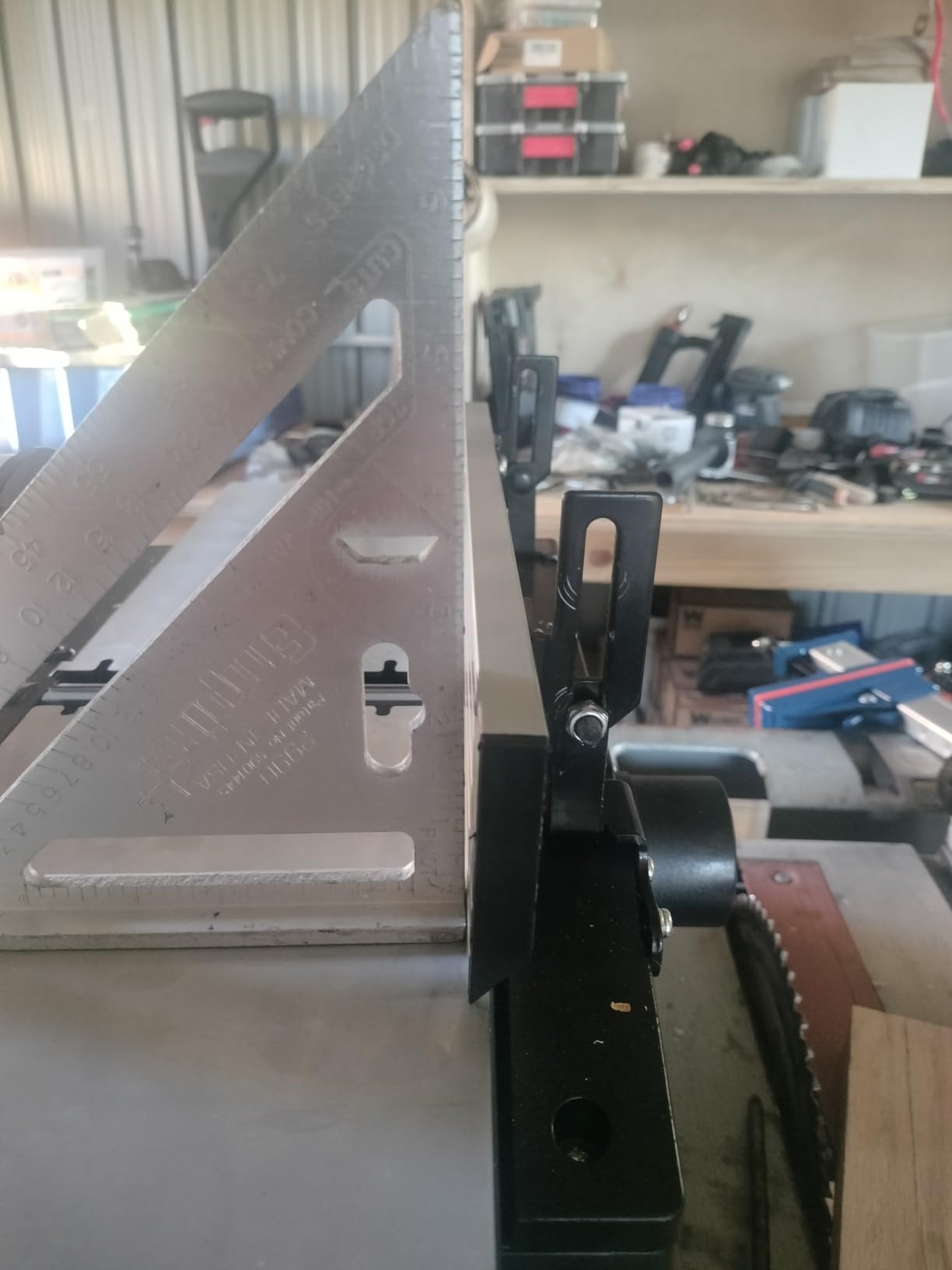
Set the machine on a flat, solid surface at working height before you touch anything. A jointer that rocks or hangs over a bench edge will never hold a cut. Then level the tables with a machinist square or a straightedge across the tables at the front and the back, working the adjustment screws until a straightedge sits flush across the whole pass. Check the fence for square at the same time.
Set the depth of cut using the onboard scale, and start with a light pass. Reviewers repeatedly recommend light passes with the guard in place, using the push blocks that come with most of these machines, and taking a second light pass rather than one aggressive one. A spiral head can usually take a full 1/8 inch, but feeding slowly lets the cutterhead do its job instead of the motor.
Once it is set, run a scrap board through at zero depth and check for a dip or a high spot across the width. If the whole surface is being touched, your tables are coplanar. If only one end or one edge is being cut, go back to the table adjustments. This one check separates a jointer that works from one that frustrates you, and doing it before the first real project is worth the ten minutes.
Frequently Asked Questions
What is the best budget jointer for a small shop?
The best budget option here is the WEN JT3062, a two-blade 6 inch benchtop jointer rated 4.7 stars across 220 reviews. It has the highest average rating in the roundup, arrives close to level, cuts hard and soft wood without tear-out, and includes a two-year warranty. The WEN JT630H is the better value if you plan to cut tear-out-prone woods, because its 12 blade spiral head produces a cleaner surface without needing sharpening or leveling.
What are the best table top jointers for small woodworking shops?
The best benchtop jointers for small shops in this roundup are the WEN JT630H, the Wahuda 50160CC, and the Cutech 40180HI. The WEN JT630H is the most complete all-rounder with a 12 blade HSS spiral head and a 30 by 6 inch table. The Wahuda 50160CC has cast iron tables and 16 four-sided carbide inserts for the quietest cutting. The Cutech 40180HI gives you 8 inches of capacity, a 24 inch fence, and cast iron tables on 120V power.
What is the best 8-inch jointer for small shops?
The WEN JT833H is the best 8 inch jointer for a small shop in this roundup. Its table measures 33 by 8 inches and the support arms extend up to 51 inches, so a 4 foot board stays supported for the whole pass. The 16 blade spiral cutterhead gives a fine finish across the full width, and it offers both 2-1/2 and 4 inch dust ports. The tradeoff is a larger and heavier footprint than a 6 inch machine. The Cutech 40180HI is the alternative if you want cast iron tables and a 24 inch fence instead of extendable arms.
What is the best jointer for a beginner?
The WEN JT630H is the best jointer for a beginner because the setup job is the main hurdle and a 12 blade spiral head does not need knives leveled or sharpened. Two hours of table and fence adjustment is the price of admission for any benchtop jointer, and this one gives you a clean, tear-out-free surface afterward. The WEN JT3062 is easier still, since it arrives close to level and needs only minor squaring, and it carries the highest average rating in the roundup at 4.7 stars.
Is a 6 inch jointer enough for furniture making?
For most furniture work in a small shop, a 6 inch jointer is enough. A 6 inch machine handles table tops up to 6 inches wide, shelves, cabinet parts, drawer components, and glue-up panels comfortably, and it is the width every 6 inch model in this roundup handles well. An 8 inch machine becomes worth it when you build panels wider than 6 inches or want to avoid ripping a wide board into two pieces before gluing. Many furniture makers start at 6 inches and move up later.
Do I need a jointer if I already have a planer?
A jointer and a planer do different jobs. A jointer establishes the first flat face and the first true 90 degree edge. A planer makes a board a consistent thickness by copying whatever surface it is fed. If you feed warped stock to a planer, it faithfully reproduces the warp at an even thickness. Without a jointer first, there is no flat reference for a fence to work against, so you cannot get a reliable straight edge or a flat panel face.
Are benchtop jointers worth it in a small shop?
Yes, and the main reason is space. A benchtop jointer between 36 and 82 pounds can sit on a bench or a shelf between projects, where a floor model would occupy a wall permanently. The tradeoff is bed length, since most benchtop tables are around 30 inches and cap comfortable work at roughly 4 to 6 feet of board. The two 8 inch models in this roundup solve that with support arms extending to 51 inches.
What is the quietest jointer in this roundup?
The Wahuda 50160CC is the quietest machine here, with 16 four-sided carbide inserts running at a fixed 12,000 RPM on a 120V motor. Owners consistently describe it as very quiet compared with two-knife benchtop jointers. The Cutech 40180HI is the loudest by comparison, because its 12,000 RPM universal motor produces a high pitched whine under no load. Two-blade machines like the WEN JT3062 fall in between, with owners reporting a low hum rather than a whine.
Final Verdict: Which Jointer Fits Your Shop
After working through all eight, the WEN JT630H is still the one we would buy first for a small shop in 2026. The 12 blade HSS spiral head handles tear-out-prone wood, two hours of setup buys you a machine that stays put, and 36.8 pounds means it goes back on the shelf when the garage needs the space.
Buy the Wahuda 50160CC instead if quiet cutting and cast iron tables matter more to you than setup time. Buy the WEN JT833H if you work with boards longer than 4 feet or wider than 6 inches. Whatever you choose, budget the first afternoon for leveling and squaring, because every benchtop jointer in this roundup needs it and the ones that get it are the ones you keep using.