
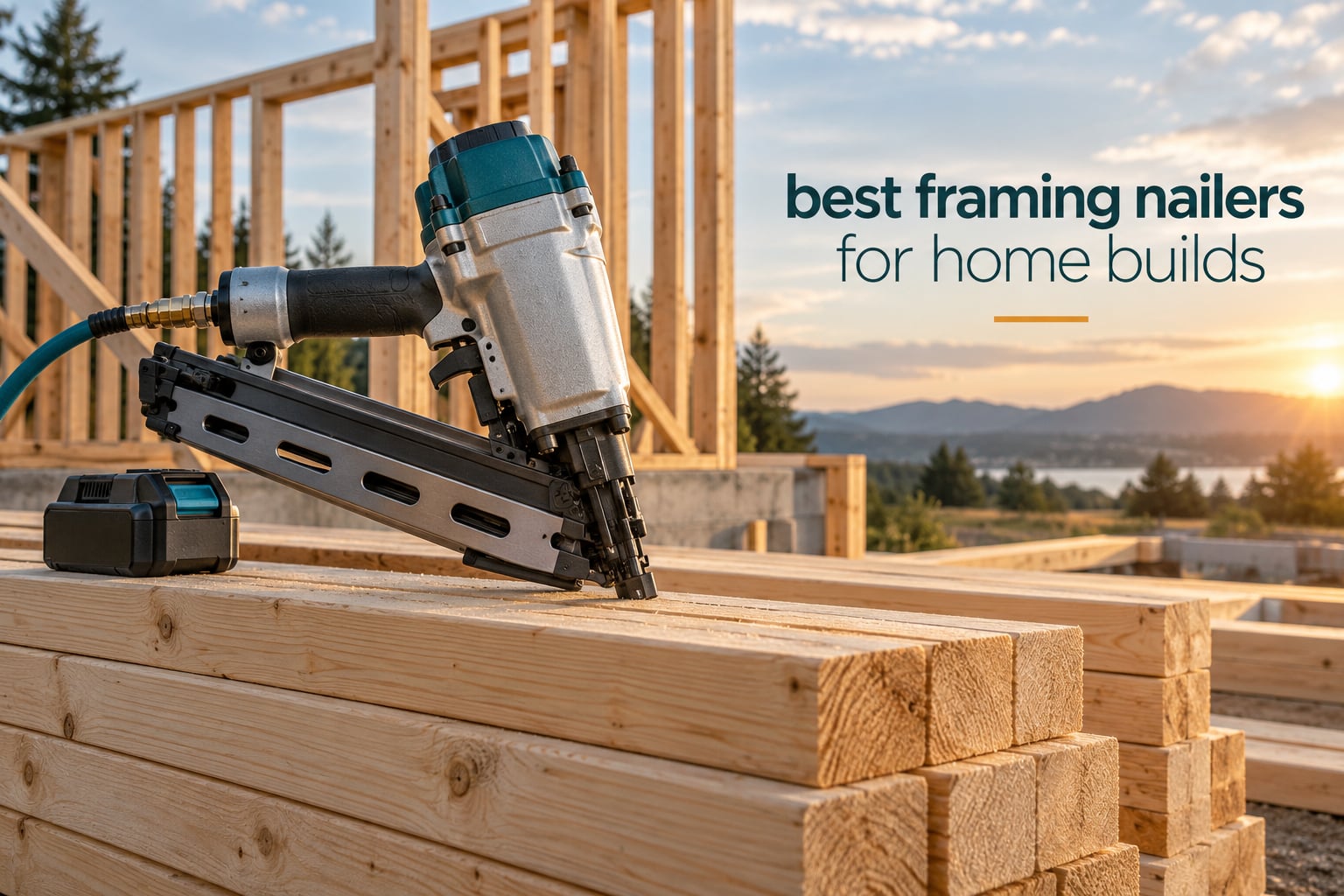
Most people searching for the best framing nailers for home builds end up sorting through lists padded with brad nailers, finish nailers and air compressors. None of that belongs here. Every pick below is a real 21 degree framing nailer that shoots 2 inch to 3-1/2 inch full round head nails, because that is the gun you actually hold when you raise a wall, nail subfloor or stick sheathing to a roof.
A framing nailer is a heavy-duty tool built to drive structural nails into lumber at 2×4 stud spacing. A brad nailer handles thin trim and small brackets. A finish nailer sets nails nearly flush in cabinetry and baseboard. If your project involves studs, joists, headers or roof decking, you need the first one.
Short answer for most home builders: the NuMax SFR2190 is the best framing nailer overall, because it covers the full nail range, weighs 8.6 pounds, holds a 4.6 star average across more than 7,000 reviews, and every feature a home build needs comes in one tool. The Metabo HPT NR90AES1 wins if overhead work is your bottleneck, and the BOSTITCH F21PL wins if you will hang joist hangers as well as frame.
Who this guide is written for matters, because the right answer changes with the job. A weekend DIYer building a shed wants a tool with no compressor to haul. An owner-builder framing an addition wants depth control that holds when they switch from 2x4s to engineered lumber. A framing crew wants output and durability measured in tens of thousands of nails. I scored all ten picks on the same six criteria so the tradeoffs are visible rather than implied.
Table of Contents
Top 3 Framing Nailer Picks for Home Builds (October 2026)

NuMax SFR2190 21 Degree Framing Nailer
- 2 inch to 3-1/2 inch full round head nails
- Tool-free depth adjustment
- Dual mode trigger
- 8.6 lb

Metabo HPT NR90AES1 21 Degree Nailer
- Lightest body at 7.5 lb
- Sequential or contact actuation
- Tool-less depth adjustment
- 5 year warranty

Bostitch F21PL Framing Nailer
- Two nosepieces for connector nails
- Full round head nails
- Adjustable rafter hook
- 8.15 lb
Best Framing Nailers for Home Builds in 2026: Quick Overview
All ten nailers below are 21 degree pneumatic or cordless framing nailers, which is the angle that works for essentially every residential structure you are allowed to build. More on why 21 degrees in the buying guide below.
| Product | Specs | Action |
|---|---|---|
| NuMax SFR2190 Pneumatic 21 Degree 3-1/2 Inch Framing Nailer |
|
Check Latest Price |
| Metabo HPT NR90AES1 21 Degree Framing Nailer |
|
Check Latest Price |
| BOSTITCH F21PL Pneumatic Framing Nailer |
|
Check Latest Price |
 Metabo HPT NR83A5 21 Degree Framing Nailer Metabo HPT NR83A5 21 Degree Framing Nailer |
|
Check Latest Price |
 Makita AN924 21 Degree Full Round Head Framing Nailer Makita AN924 21 Degree Full Round Head Framing Nailer |
|
Check Latest Price |
 Freeman PFR2190 21 Degree Framing Nailer with Case Freeman PFR2190 21 Degree Framing Nailer with Case |
|
Check Latest Price |
 Metabo HPT NR1890DRS 18V Cordless Framing Nailer Kit Metabo HPT NR1890DRS 18V Cordless Framing Nailer Kit |
|
Check Latest Price |
 Pneu-Tools SN2283H 21 Degree Framing Nailer Pneu-Tools SN2283H 21 Degree Framing Nailer |
|
Check Latest Price |
 3PLUS H2190SP 21 Degree Full Round Head Framing Nailer 3PLUS H2190SP 21 Degree Full Round Head Framing Nailer |
|
Check Latest Price |
 CRAFTSMAN V20 Cordless 21 Degree Framing Nailer CRAFTSMAN V20 Cordless 21 Degree Framing Nailer |
|
Check Latest Price |
How We Picked These Framing Nailers
Every nailer here was scored on the same six criteria, and I weighted them the way a residential build actually stresses a tool. Nail compatibility and code compliance come first, because a gun that cannot legally hold the nails your jurisdiction requires is the wrong tool no matter what you paid.
Driving power and consistency across the full 2 inch to 3-1/2 inch range, particularly in dense or engineered lumber.
Nail compatibility and code fit for 21 degree full round head framing nails.
Ergonomics, judged on bare tool weight, balance and how the tool feels on overhead lifts.
Reliability, weighted heavily toward long-term owner reports and jam behavior rather than first impressions.
Value, including what else you have to buy to make the tool usable.
Warranty and support, from one year on paper to lifetime coverage on the tool.
I read every customer review set for all ten products and cross-checked the recurring themes against framing forum discussion. The pattern was consistent: depth adjustment ease and jam behavior decide more purchases than raw power does. Three separate forums have long-running owner threads pointing at ease of depth adjustment as the single most repeated praised feature, and that pushed weight in the scoring.
One note on honesty. Where a listed spec conflicts with a manufacturer’s own bullet points, as it does on the Makita’s weight, I flag it in the review instead of picking the flattering number. Cordless models were not scored on speed, since a battery-driven cycle has a built-in delay that no internal design removes.
1. NuMax SFR2190 Pneumatic 21 Degree Framing Nailer
NuMax SFR2190 Pneumatic 21 Degree 3-1/2″ Framing Nailer
Nails: 21 degree full round head 2-3-1/2 inch
Power: pneumatic
Weight: 8.6 lb
Warranty: 1 year limited
Pros
- Full 2 inch to 3-1/2 inch nail range with tool-free depth wheel
- Dual mode trigger for sequential or bump firing
- No-mar tip and 360 degree adjustable exhaust
- Highest review count in this group at 7386
Cons
- Anti-dry-fire leaves nails in the magazine at reload
- Requires a compressor and air hose setup
- One year warranty is the shortest here
This is the framing nailer I put at the top of the list for home builds, and the reason is boring in the best way: it does the core job without making you think. It drives 21 degree plastic collated full round head nails from 2 inch to 3-1/2 inch long and 0.113 inch to 0.131 inch thick, which covers essentially every residential nail you will pull from a box.
Depth control is the part that matters most on a real build, and the tool-free adjustment wheel handles it without a wrench. Reviewers repeatedly describe it as easy to move from countersunk framing nails to flush-driven subfloor nails without hunting for the setting they used an hour ago. On a garage frame where you alternate between sheathing and studs, that saves real time.
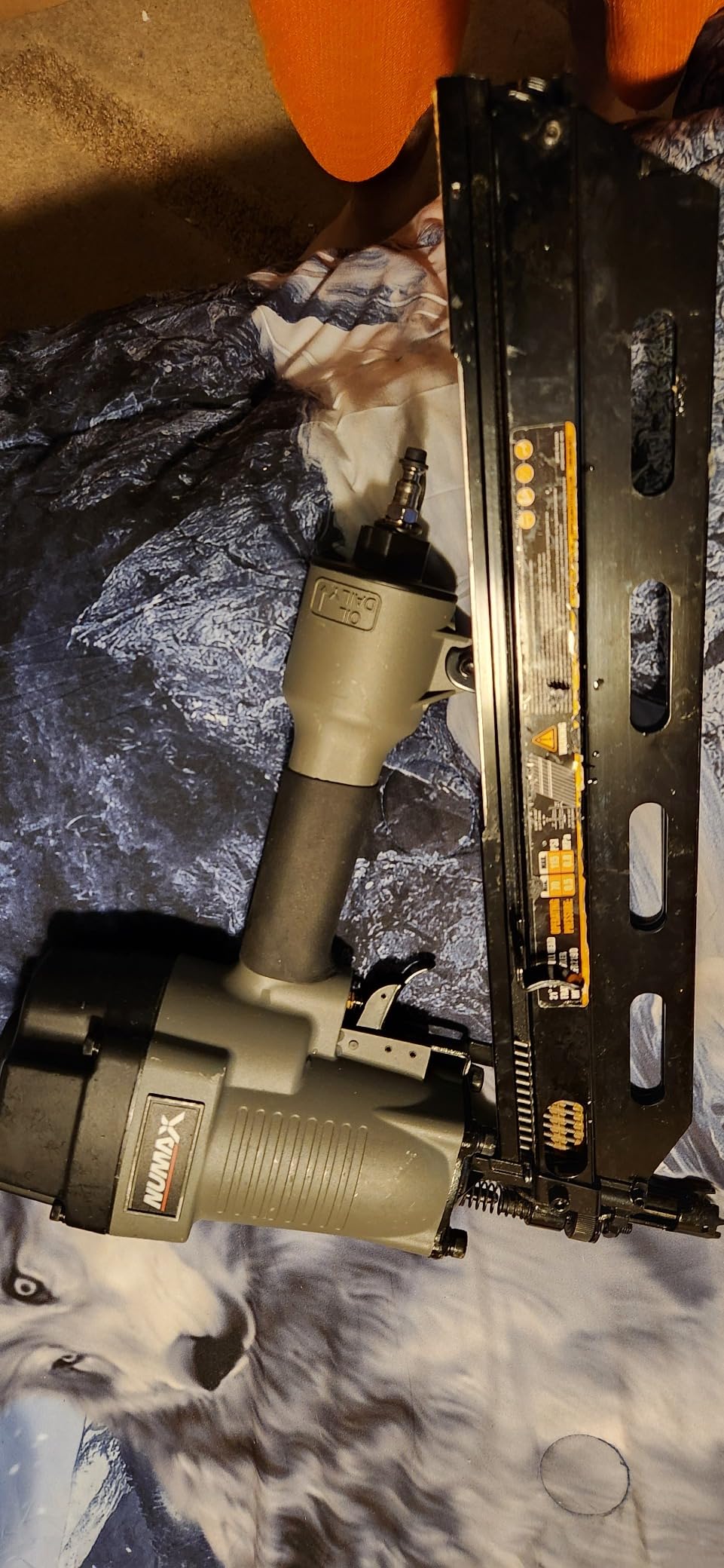
The one piece hardened steel drive blade is the reason owners report thousands of nails without drama, and the 8.6 pound weight sits in the middle of the pack, light enough for a ceiling lift without being a feather. The comfort grip and adjustable exhaust both show up in owner reviews as things they noticed on day one of a long framing day.
What I like most is the dual mode trigger. Sequential for setting studs precisely, bump for blowing through a stack of blocking at speed, switched without taking the tool off the lumber. That flexibility is exactly what an owner-builder moving between framing and sheathing needs.
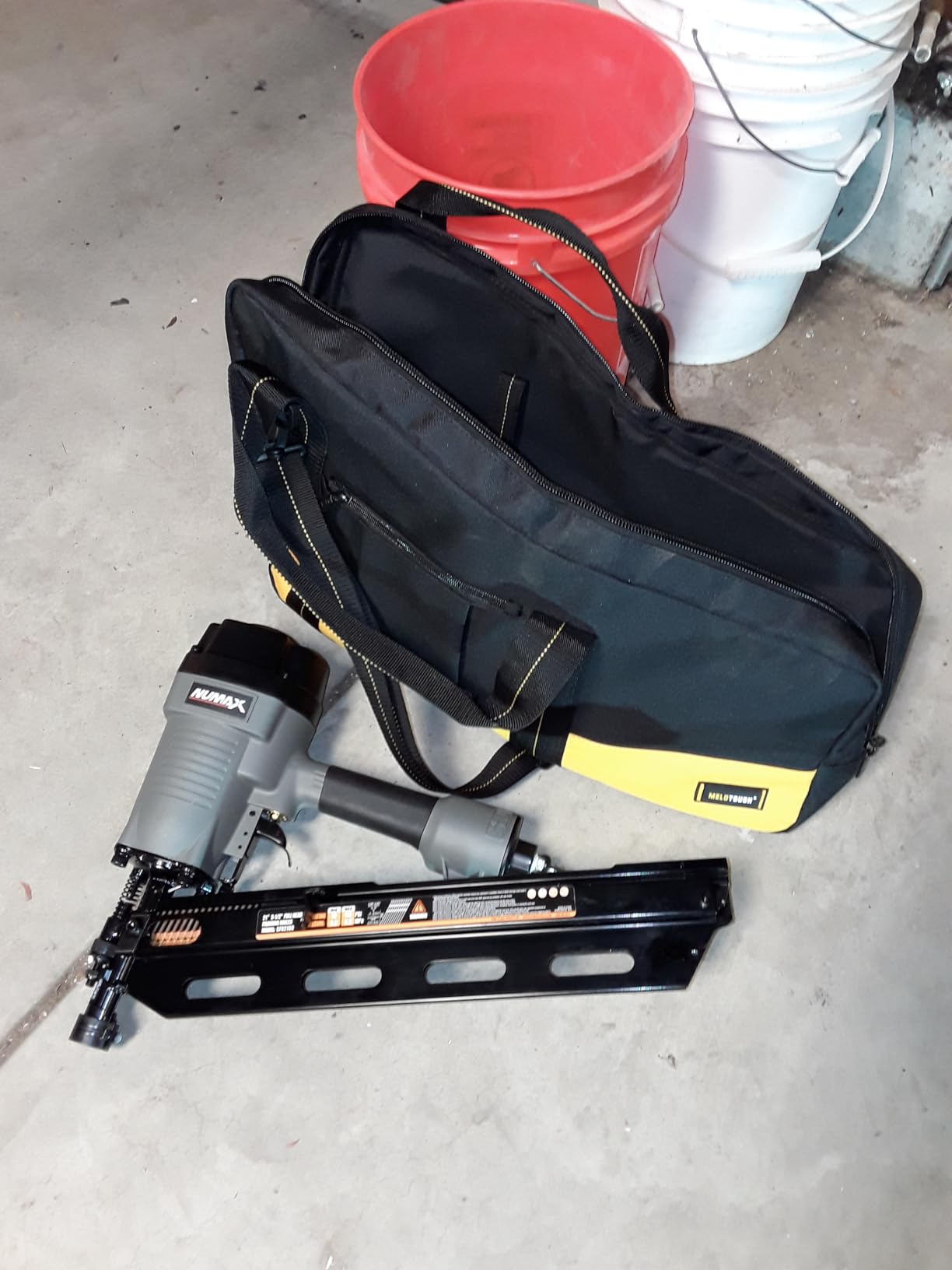
What it is like to own after a season of framing
Owners log long service on this tool and describe consistent nail seating across framing, subfloor and roof decking work. The complaints cluster around one behavior: the anti-dry-fire mechanism stops the gun with several nails still in the strip, and adding a fresh strip behind those leftovers can cause a jam. Clearing the strip fully before reloading avoids it.
Budget for the compressor side. This is a pneumatic tool, so you need a tank, a hose and fittings before the first shot. If you already own a compressor, that is a non-issue. If you do not, the cordless route below saves the whole shopping trip.
Where it falls short
The one year limited warranty is the shortest in this comparison, and it does not extend to the consumable wear parts the way some longer-warrantied models do. On a tool you might keep for a decade, that is worth factoring in if you are deciding between this and a longer-warrantied model at similar capability.
There is no case, oil or quick-connect fitting in the box either. Budget for a small pneumatic setup kit before the first framing session.
2. Metabo HPT NR90AES1 21 Degree Framing Nailer
Metabo HPT Framing Nailer, 21° Plastic Collated 2-3.5in, NR90AES1
Nails: 21 degree plastic collated 2-3-1/2 inch
Power: pneumatic
Weight: 7.5 lb
Pros
- Lightest body in this group at 7.5 lb
- Highest average rating at 4.7 stars
- Sequential or contact actuation on a switch
- Tool-less depth adjustment
Cons
- No rafter hook included
- No-mar tip not included so visible paneling can dimple
- One isolated report of a unit that would not fire
At 7.5 pounds this is the lightest framing nailer in the group, and on any build with a ceiling in it, that single number decides the day. Overhead nailing punishes heavy tools faster than anything else in framing, and reviewers call out how this one stays manageable through a full ceiling of 2×6 joists.
It still has everything a home build needs. Selective actuation switches between sequential and contact nailing with a flip, tool-less depth adjustment covers countersink or flush drive, and it accepts 2 inch to 3-1/2 inch plastic collated framing nails. Nothing about the feature list forces a compromise to save the weight.
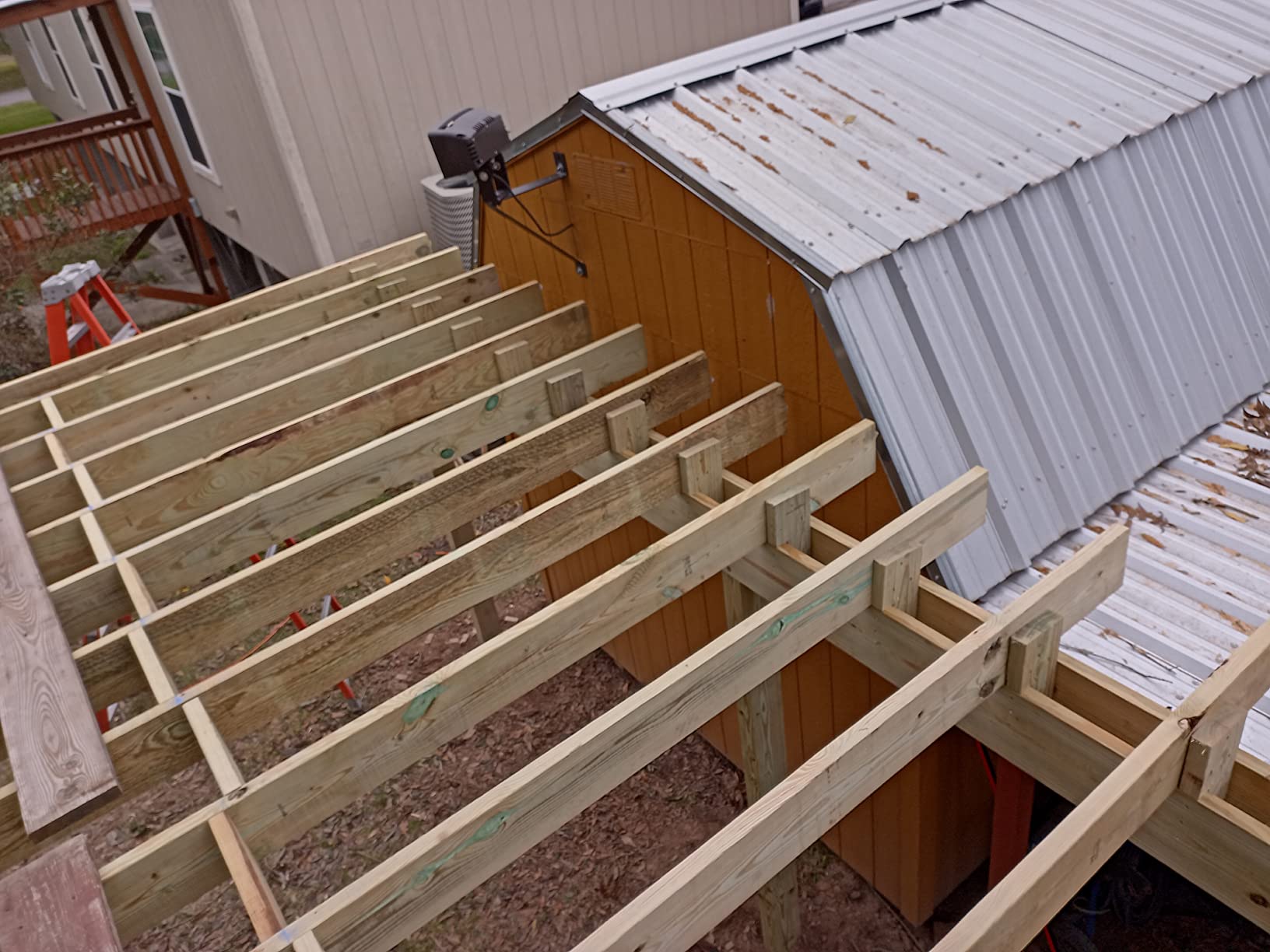
The 4.7 star average is the highest in this comparison, and it comes with a long history of jam-free reports. Multiple owners log 2,000 to 5,000 nails without a single failure, which is the kind of track record that matters if you are framing an addition over several weekends rather than a shed in one afternoon.
Forum users repeatedly single out this brand’s cordless and pneumatic nailer lineup as underrated for the money, and this model is the reason that reputation holds up in person. It is also the shortest, least deep-bodied tool here, which helps in tight wall layouts where a long cylinder fights the studs.
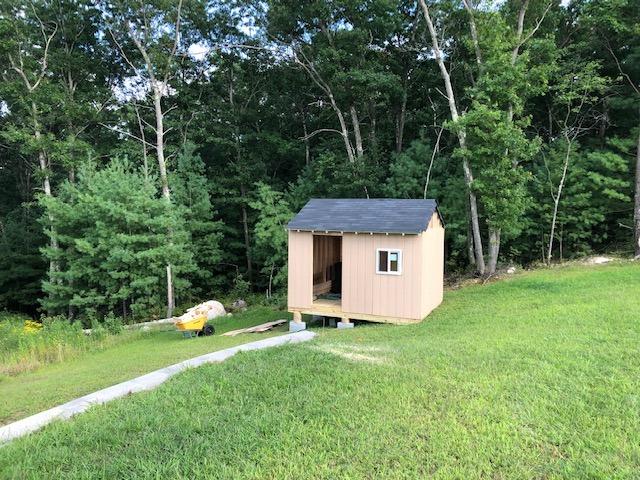
Good fit for second-story and ceiling framing
If your build involves sticking a subfloor from below, hanging ceiling joists, or any work where you are holding the tool above shoulder height for more than a few minutes, the weight difference between 7.5 and 8.6 pounds adds up fast. This is the lightest option we cover and reviewers notice it immediately.
It is also the right pick for a small shop or a homeowner with a shoulder that already complains. The balance is described as well distributed rather than nose heavy, which is the part that decides whether overhead work stays comfortable past the first hour.
What you give up for the weight
No rafter hook comes in the box, and on a roof or ladder job that is a real inconvenience. Owners solve it with an inexpensive aftermarket hook, but plan for that extra part before the first day on a ladder.
There is also no no-mar tip included, so the nose can dimple visible finish paneling if you shoot the wrong side. On hidden framing that never matters. On a finished wall or a visible soffit, it does.
3. BOSTITCH F21PL Pneumatic Framing Nailer
BOSTITCH Framing Nailer, Round Head, 1-1/2-Inch to 3-1/2-Inch, Pneumatic (F21PL)
Nails: full round head and 1-1/2 to 2-1/2 inch connector nails
Power: pneumatic
Weight: 8.15 lb
Magnesium body
Pros
- Two quick change nosepieces for framing or connector nails
- Shoots full round head nails many codes require
- Adjustable rafter hook
- Push button depth guide
Cons
- Can jam when a fresh strip is added over remaining nails
- No case oil or air fitting in the box
- Unmarked depth notches lose your setting
This is the only pick in the group that doubles as a metal connector nailer, and that is the reason to own it. Two quick change nosepieces convert the tool between framing work and driving hardened 1-1/2 inch and 2-1/2 inch connector nails for joist hangers. If your build has an engineered floor system or a beam layout, that covers a job the other nailers cannot touch.
It fires plastic collated full round head nails, which is the head style many local building codes require for structural connections. That is not a minor specification. If your jurisdiction requires full round heads, a clipped-head gun is simply not legal for that work, and this one is.
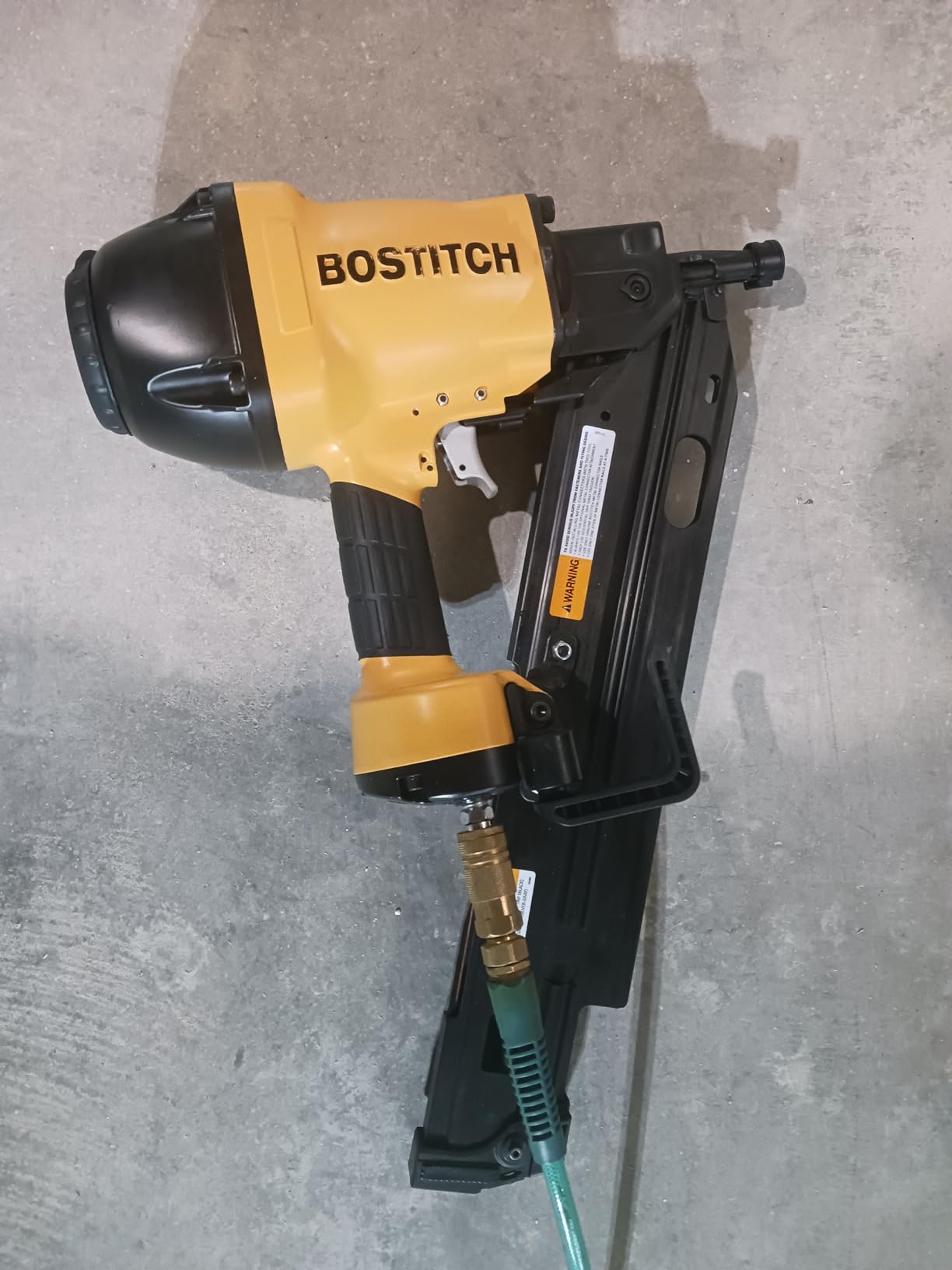
The magnesium body keeps the weight at 8.15 pounds while holding up under abuse, and owners report cycling thousands of nails and multiple boxes without major failure. A tool with this kind of long-term owner history has been put to work on residential sites for years, which is the strongest reliability signal available short of using it yourself.
The push button depth guide and the adjustable rafter hook are both genuinely useful rather than decorative. The hook is one of the few factory-installed ones in this comparison on a tool this light, and on a roof build that saves you from setting the nailer on shingles.
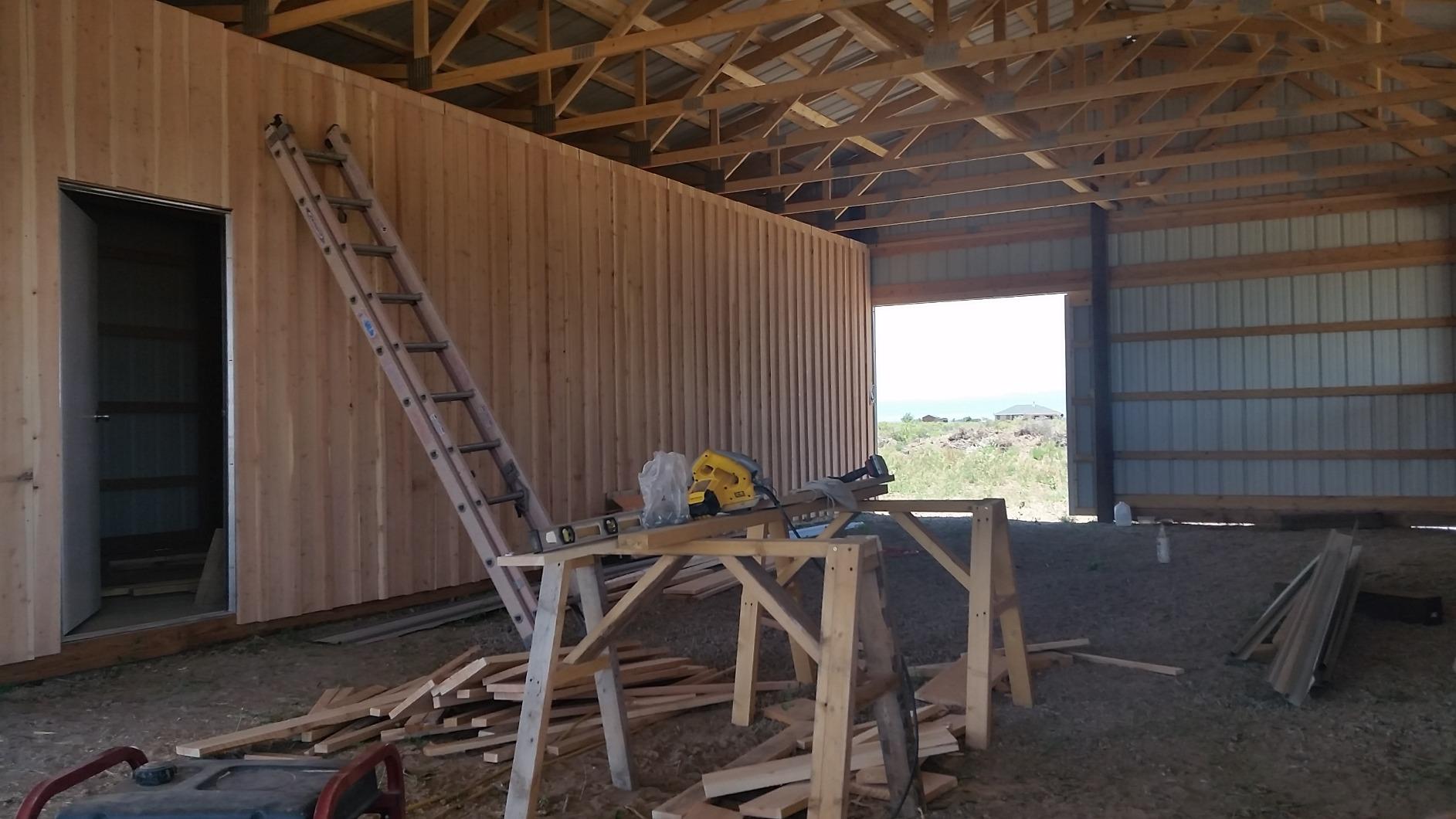
Where this one earns its keep on a home build
Joist hangers appear in nearly every floor framed house and in most decks, and driving them with a hammer is miserable. The positive placement nosepiece that comes with the connector side is the feature that separates this from a generic framing nailer, because it holds the nail exactly where the manufacturer specifies.
For a garage with a ridge beam, or an addition with a beam that meets posts, this is the pick. It also handles the framing work without compromise, so there is no second tool purchase.
Where owners report friction
The recurring complaint is jamming when a new nail strip is pushed onto a few nails left in the magazine. Run the strip down before you reload and the problem largely disappears. Owners also note the depth notches are unmarked, so a setting is easy to lose when you swap nosepieces, and that the bare tool ships without a case, oil or quick-connect fitting.
The longer framing nails and the connector nails are also harder to find at big box stores, so order them with the tool rather than assuming a walk-in trip will work.
4. Metabo HPT NR83A5 Pneumatic 21 Degree Framing Nailer
Metabo HPT Framing Nailer, Pneumatic Selectable Trigger, 21°, NR83A5
Nails: 21 degree plastic collated
Power: pneumatic
Weight: 8.8 lb
Warranty: 5 year
Pros
- Cylinder valve drive gives fast
- powerful driving
- Click-detent depth wheel has tactile feedback
- Selectable trigger switch in the handle
- Two-piece magazine and open nose clear jams fast
Cons
- Heavier than the NR90AES1 in the same lineup
- Plastic collation debris needs periodic compressor blow-outs
This is the same platform as the lighter model above with more muscle behind it, and the difference shows up on roof decking. The cylinder valve drive mechanism gives quick response and rapid, powerful driving, and framing professionals describe it sinking 3 inch nails cleanly through sheathing without hesitation.
Roof decking punishes a weak nailer. You are driving through plywood or OSB into rafters, often while leaning over a slope, and a tool that hesitates is a tool that gets put down. This one is built for that, and the 5 year warranty backs the claim.
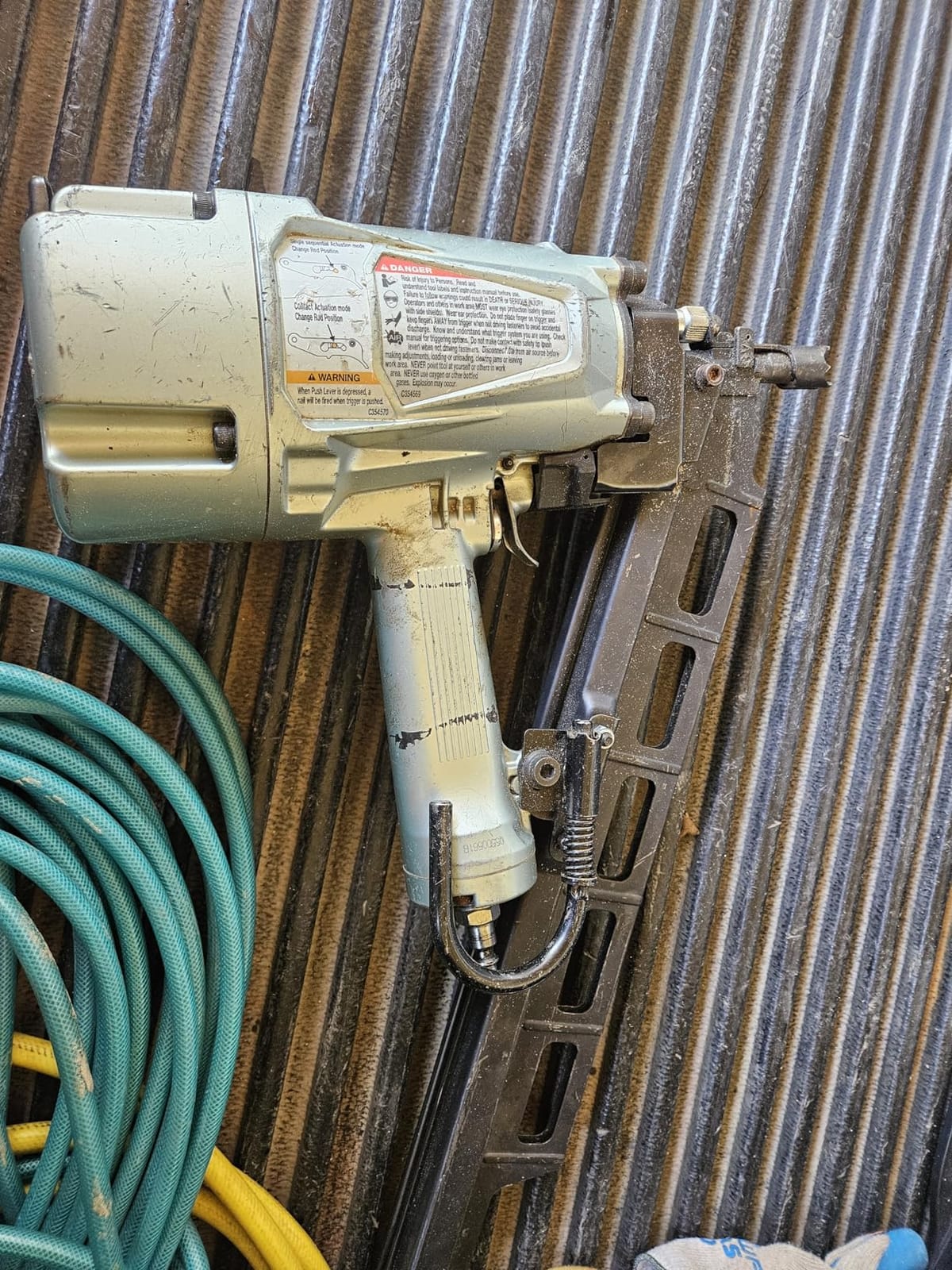
The depth adjustment wheel clicks into detented positions, which sounds minor until you are changing depth on engineered lumber and then back again. Reviewers single out that tactile feedback as the reason their depth setting stays repeatable across a whole day, which is exactly the consistency problem that ruins a sheathing job.
Two quality details matter more than they sound. The two-piece magazine is built for durability and replacement ease, and the open nose design means a jam is far easier to clear than on a closed-nose tool.
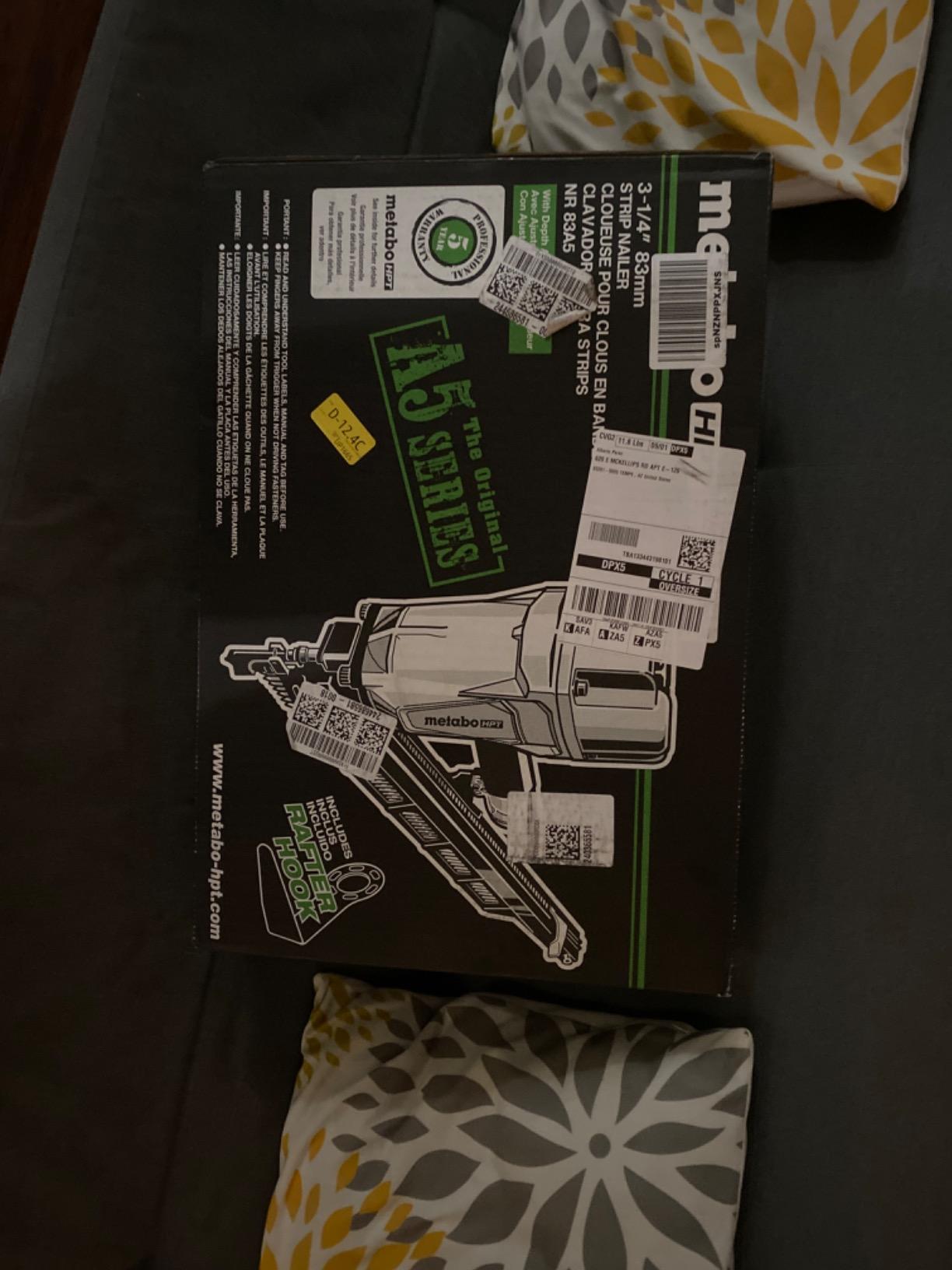
For sheathing, roof decking and dense material
Choose this over the lighter model when your heaviest material is roof decking, subfloor over an existing deck, or engineered lumber of any kind. The drive force is the reason, and reviewers consistently report it handling the deepest nails in their range without a second shot.
The selectable trigger sits in the handle, so you switch between contact and single sequential without looking away from your work. On a long sheathing run that is worth more than it sounds, since contact mode is what makes a fast run possible.
The tradeoff you accept for the power
At 8.8 pounds it is heavier than the 7.5 pound model in the same lineup, and that gap is most noticeable on overhead work. If your build is a single story with a lot of ceiling, the lighter tool may serve you better.
There is also a maintenance angle worth planning for. Plastic collated nails gum the mechanism faster in sustained use, and reviewers note it needs periodic compressor blow-outs to stay clean. Budget a few minutes of clearing between major phases of a framing day.
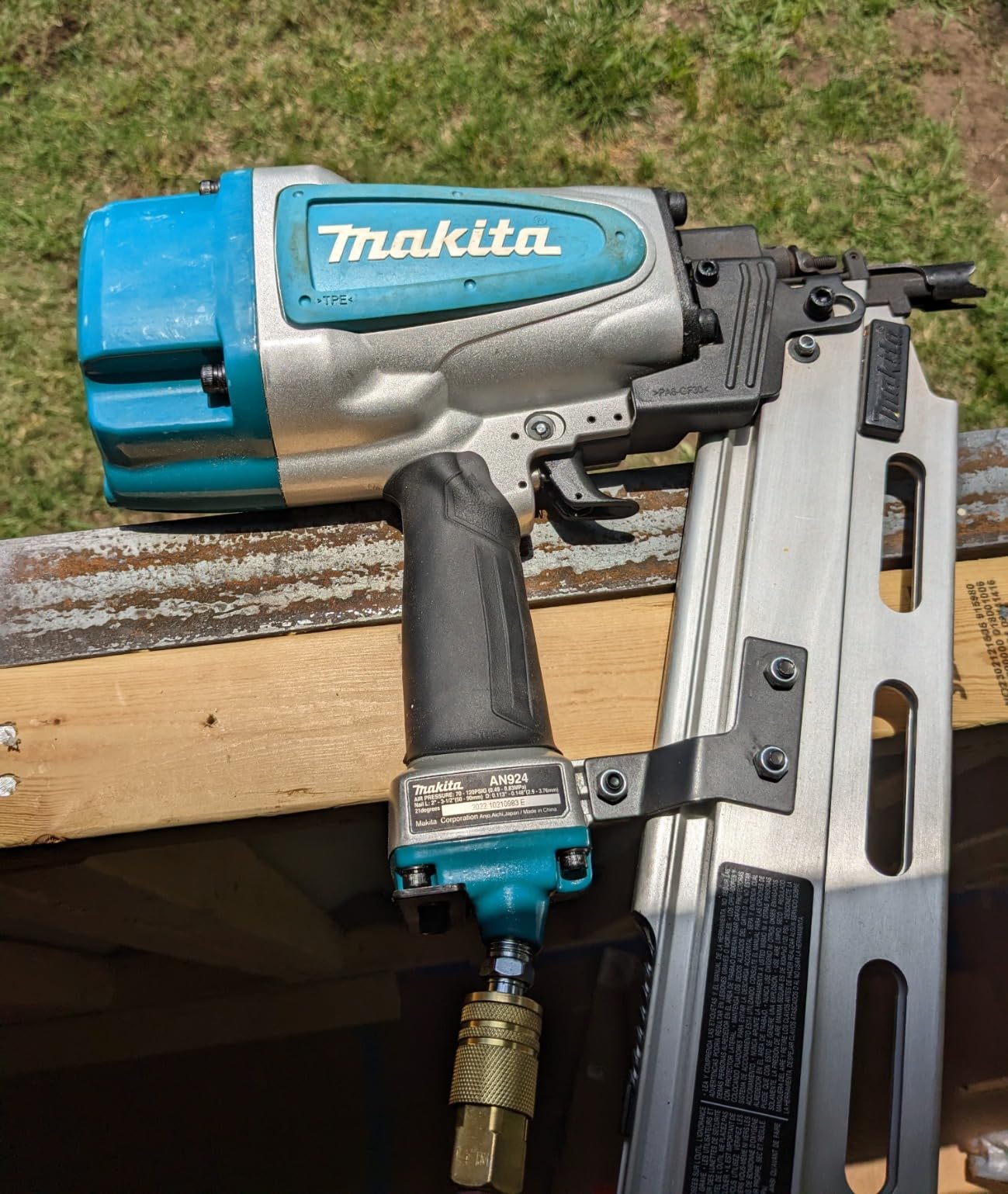
5. Makita AN924 21 Degree Full Round Head Framing Nailer
Makita AN924 21º Full Round Head 3-1/2″ Framing Nailer
Nails: 21 degree full round head 2-3-1/2 inch up to .148
Power: pneumatic
Listed weight: 11.8 lb
Pros
- Large air chamber drives full 3-1/2 inch nails consistently
- Solid top-loading aluminum magazine for longevity
- Ships with air fitting hex wrench oil and safety glasses
Cons
- Listed weight is the heaviest in this group
- Fixed 21 degree magazine with no actuation switch listed
The Makita’s argument is power and accessories. The large capacity air chamber is what allows it to drive full 3-1/2 inch nails at .148 inch diameter, which is the deepest and thickest framing nail any pick here is specified for, and the accessory bundle includes the air fitting, hex wrench, oil and safety glasses you would otherwise buy separately.
It carries a steady 4.5 star average across close to a thousand reviews. Owners who buy it tend to buy it for one reason: it drives the big nails without complaint, including into old lumber and material that has seen weather.
The top-loading aluminum magazine is built for longevity, and top-loading means you load it while standing upright rather than turning the tool on its back. On a full framing day that is a small ergonomic win repeated a few hundred times.
Worth flagging one data conflict honestly. The listed item weight is 11.8 pounds, which makes it the heaviest figure in this comparison, while the product bullets describe the tool as lighter and more maneuverable. We are using the listed figure, so treat the overhead feel as untested by us.
Who should look here first
Reach for this one when your nail schedule calls for the full 3-1/2 inch at heavier gauge. Roof trusses, engineered rim joists and deck ledger work are where the extra air chamber earns its keep, and it comes with everything you need to run it on day one.
It is also a safe pick for a builder who wants a familiar brand name behind the warranty. Makita support and parts availability are among the easier ones to deal with in this category.
Where the weight argument bites
At 11.8 pounds listed, this is the heaviest tool in the group, and nobody buying a framing nailer plans to frame a house. If your project is a deck ledger and some blocking, the extra power is worth carrying. If it is a full ceiling of joists, you will feel the difference by hour three.
It is also a 21 degree tool with a fixed magazine angle and no listed actuation switch, so you are not choosing between sequential and bump. If fast repetitive driving is your main mode, look at a model with selectable actuation instead.
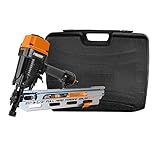
6. Freeman PFR2190 Pneumatic 21 Degree Framing Nailer with Case
Freeman Pneumatic 21° 3-1/2″ Framing Nailer | PFR2190
Nails: 21 degree full round head 2-3-1/2 inch
Power: pneumatic
Weight: 8.5 lb
Warranty: 7 year
Pros
- Blow molded case included at this level
- 7 year warranty is the longest pneumatic warranty here
- Anodized aluminum magazine and cylinder
- Tool-free depth adjust and 360 degree exhaust
Cons
- No rafter hook
- Awkward multi-step trigger change
- Anti-dry-fire leaves nails that can jam on reload
Two things make this the value pick: a 7 year limited warranty, which is the longest pneumatic warranty in this comparison, and a blow molded case in the box. The case sounds like a small thing until you are carrying a nailer, hose and fittings to a garage at 7 in the morning.
Underneath, the hardware is competitive. A one piece hardened steel drive blade, an anodized aluminum magazine and cylinder, tool-free depth adjustment, dual mode trigger and 360 degree adjustable exhaust. It covers 21 degree plastic collated full round head nails from 2 inch to 3-1/2 inch.

DIYers and remodelers regularly call this the best value in the class, and several owners have bought a second unit years later. Owners report consistent flush driving over many thousands of nails, which is the part that separates a budget nailer from an expensive mistake on the second project.
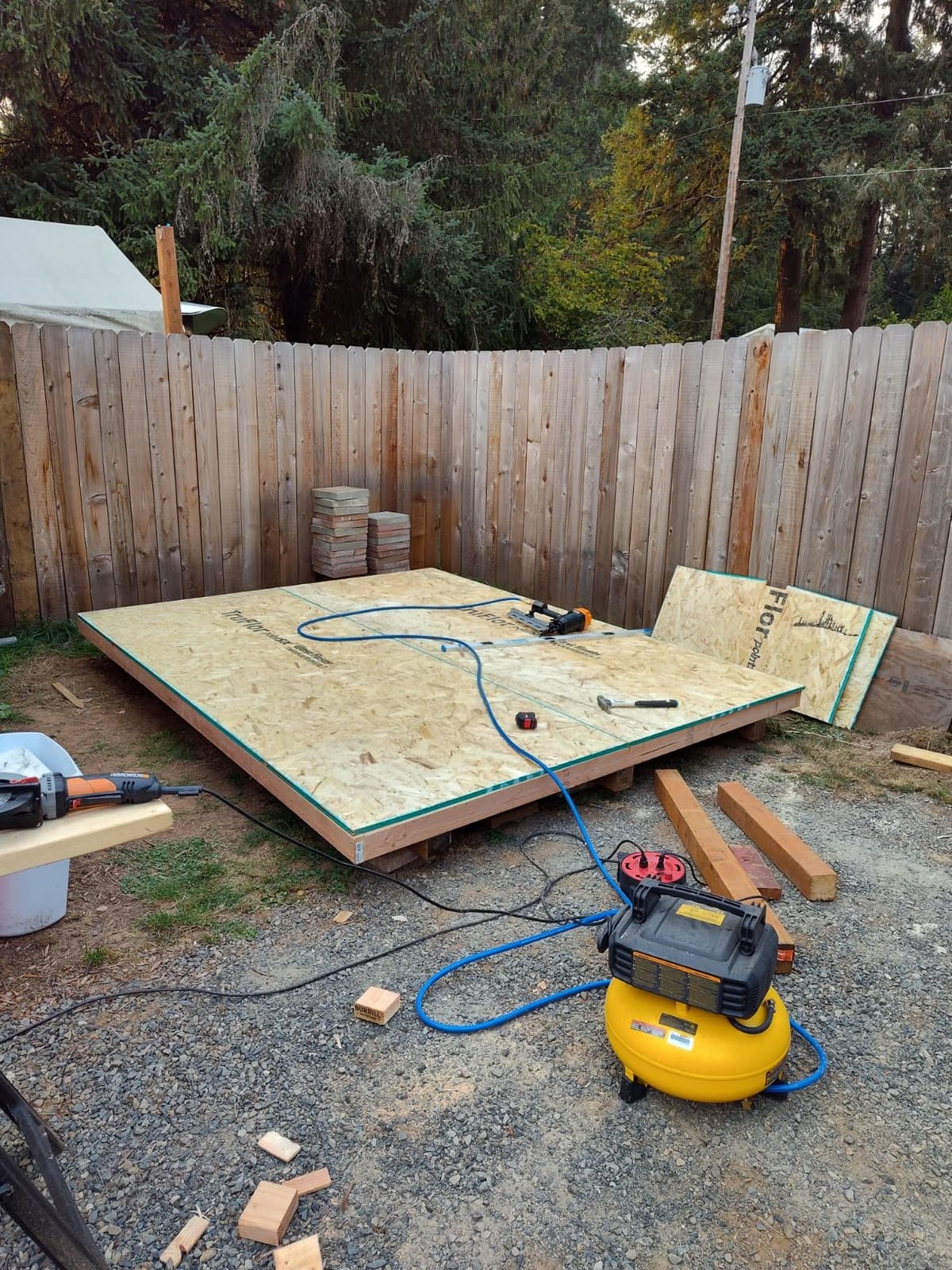
One practical note from the reviews. Many of the negative feedback traces back to owners feeding it wire-collated nails or running an undersized compressor, neither of which is a tool defect. Match it to plastic collated full round head nails and give it proper air pressure.
Good for a first serious build
If you are framing a garage or an addition and want one tool that survives a decade, the warranty length is the standout. A 7 year limited warranty is a long tail of coverage on a tool that fires thousands of cycles a season, and it is the reason this model outlasts cheaper rivals in owner reports.
The removable no-mar safety tip is a detail worth knowing. It comes fitted for protecting work surfaces, and it removes for aggressive teeth and precision toe nailing, so you get both behaviors from one part.
The rough edges
There is no rafter hook, and at 8.5 pounds the tool is bulky to hang from a belt or a ladder. On a roof or a tall ladder, that combination gets old fast. Reviewers also call the switch between sequential and bump a multi-step change rather than a flip.
Like several tools here, the anti-dry-fire mechanism leaves a few nails in the magazine at reload, which can jam if a new strip is added behind them. Empty the magazine before loading and it never comes up.
7. Metabo HPT NR1890DRS 18V Cordless Framing Nailer Kit
Metabo HPT Cordless Framing Nailer Kit, 18V, Brushless Motor, 2″ Up To 3-1/2″ Framing Nails, Compact 3.0 Ah Lithium Ion Battery, Lifetime Tool Warranty (NR1890DRS)
Nails: 21 degree round head 2-3-1/2 inch
Power: 18V cordless brushless
Weight: 10.1 lb
Warranty: lifetime on tool
Pros
- No compressor hose or gas cartridge required
- Brushless motor with lifetime tool warranty
- Air spring drive system feels close to pneumatic
- Kit includes battery charger bag and glasses
Cons
- Lowest average rating here at 4.4 stars
- Heavier overhead than a 7.5 lb pneumatic
- Runtime is shorter than a full day of framing
This is the pick if you want no compressor in your life. There is no tank, no hose and no gas cartridge, which means you can frame a detached shop, a fence run or a punch-out repair in a finished building without dragging equipment through the doorway. That single convenience is why cordless nailers keep taking share from pneumatics.
The air spring drive system is what keeps it competitive with air. Owners credit it with a feel close to a pneumatic tool, and the drive power gets described as punchy enough for 3-1/2 inch nails in dense material. It accepts round head 21 degree plastic strip collated nails from 2 inch to 3-1/2 inch.
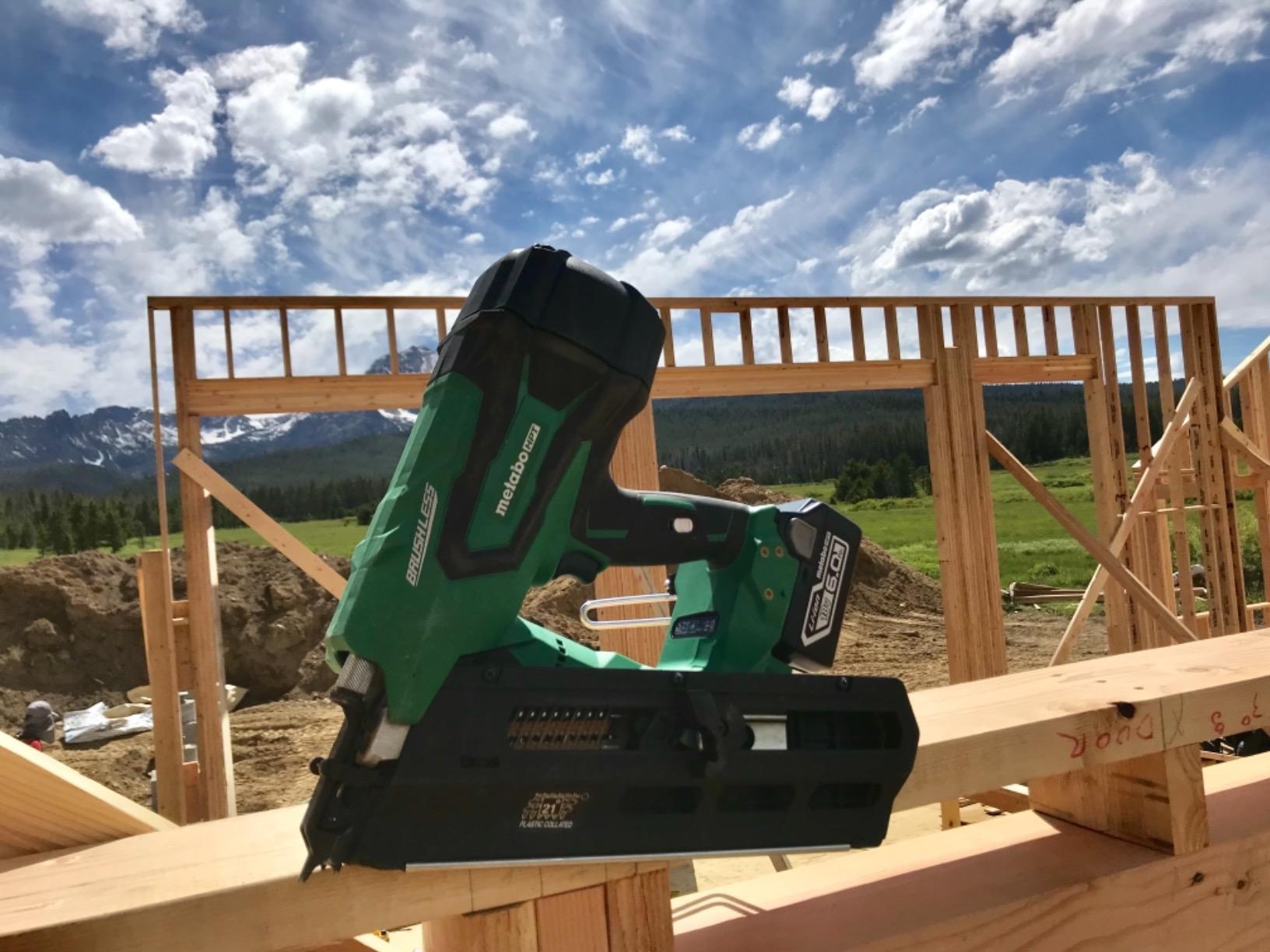
There is no ramp-up delay between shots, which is the one thing that used to give cordless nailers away. The brushless motor adds longer run time and less maintenance, and the tool carries a lifetime warranty with separate coverage on the battery, which is the strongest coverage combination in this comparison.
The kit is complete. You get the nailer, a compact 3.0 Ah lithium ion battery, a fast charger, a contractor bag and safety glasses, so the tool is usable out of the box without a second purchase.
Best when access or power is the problem
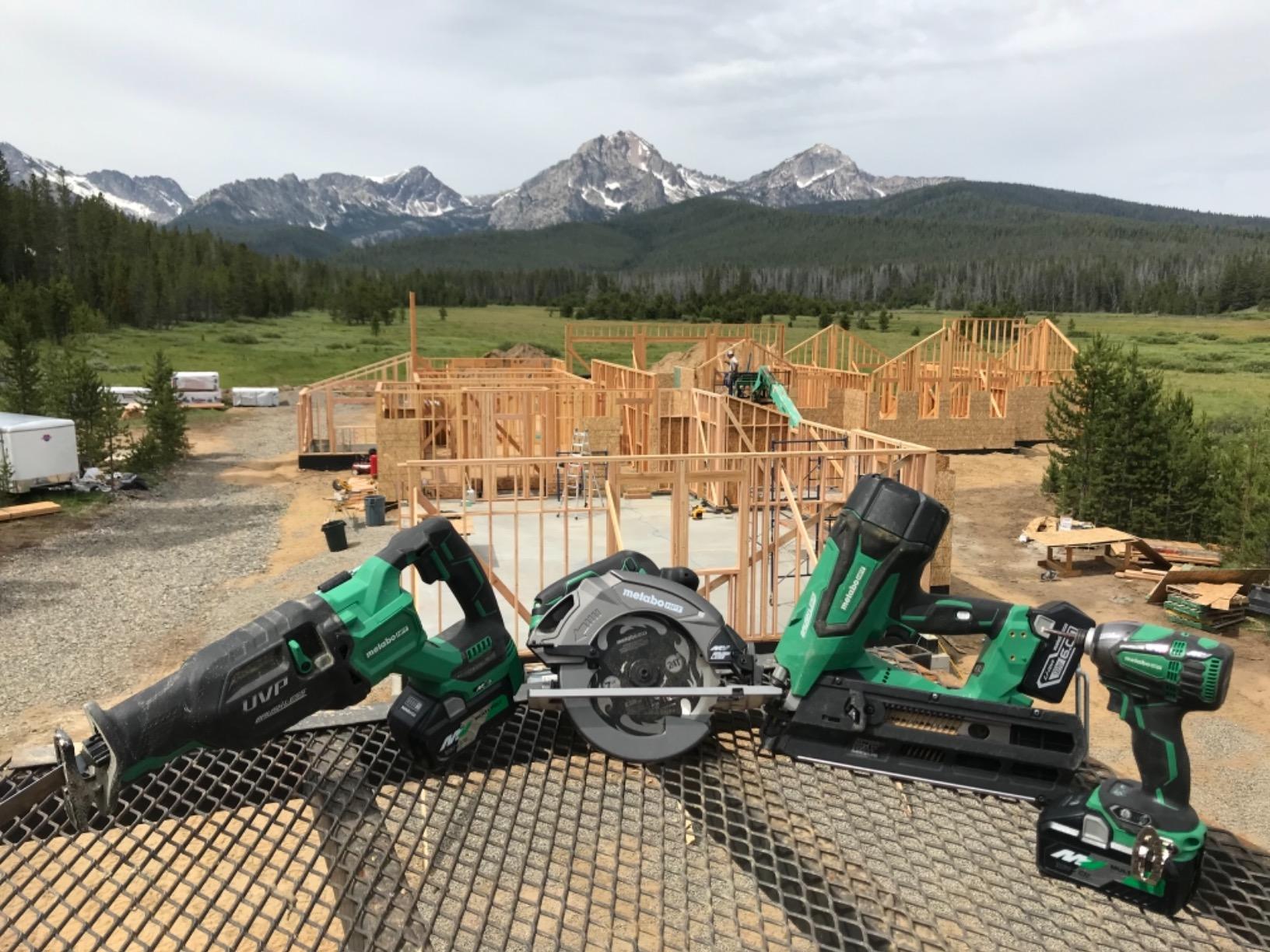
Remote sites, punch-out work in occupied buildings, attic access and renovation work in a finished house are where this tool earns its price. No hose snagging on a ladder, no compressor cycling in a confined space, and no extension cord to route.
Runtime is the practical limit. A compact 3.0 Ah battery is sized for a work session rather than a full framing day, so a house frame means a battery swap partway through. If you own other 18V tools, a second battery changes the math quickly.
Where it falls behind the pneumatics
At 10.1 pounds it is noticeably heavier to hold overhead than a 7.5 pound pneumatic nailer, and the most common reservation in reviews is exactly that balance. On a ceiling-heavy build the pneumatic tools win.
It also carries the lowest average rating in this group at 4.4 stars. That is still a solid score, but it is a reminder that the cordless trade is a real one: no compressor, less power and more weight than the air tools.
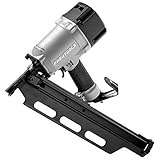
8. Pneu-Tools SN2283H 21 Degree Framing Nailer
PneuTools SN2283H 21 Degree Framing Nailer with Rafter Hook
Nails: 21 degree full round head plastic collated
Power: pneumatic
Weight: 10.53 lb
Rafter hook included
Pros
- Simple low profile single mode trigger is easy to learn
- One piece safety mechanism and hardened end cap
- Uses standard 21 degree full round head nails
- Rafter hook included
Cons
- Single mode only with no sequential or bump switch
- At 10.53 lb it is among the heavier bodies here
This is the one to buy if framing is new to you. The single mode, low profile trigger has nothing to configure and nothing to understand, and novices pick it up quickly. Most of the confusion first-time builders hit is a mis-set actuation switch, and this tool removes that failure point entirely.
It runs on economical full round head 21 degree plastic collated nails, which are the easiest framing nails to find at any building supply house. That matters for a first build, because you will be making supply runs more than a veteran would.
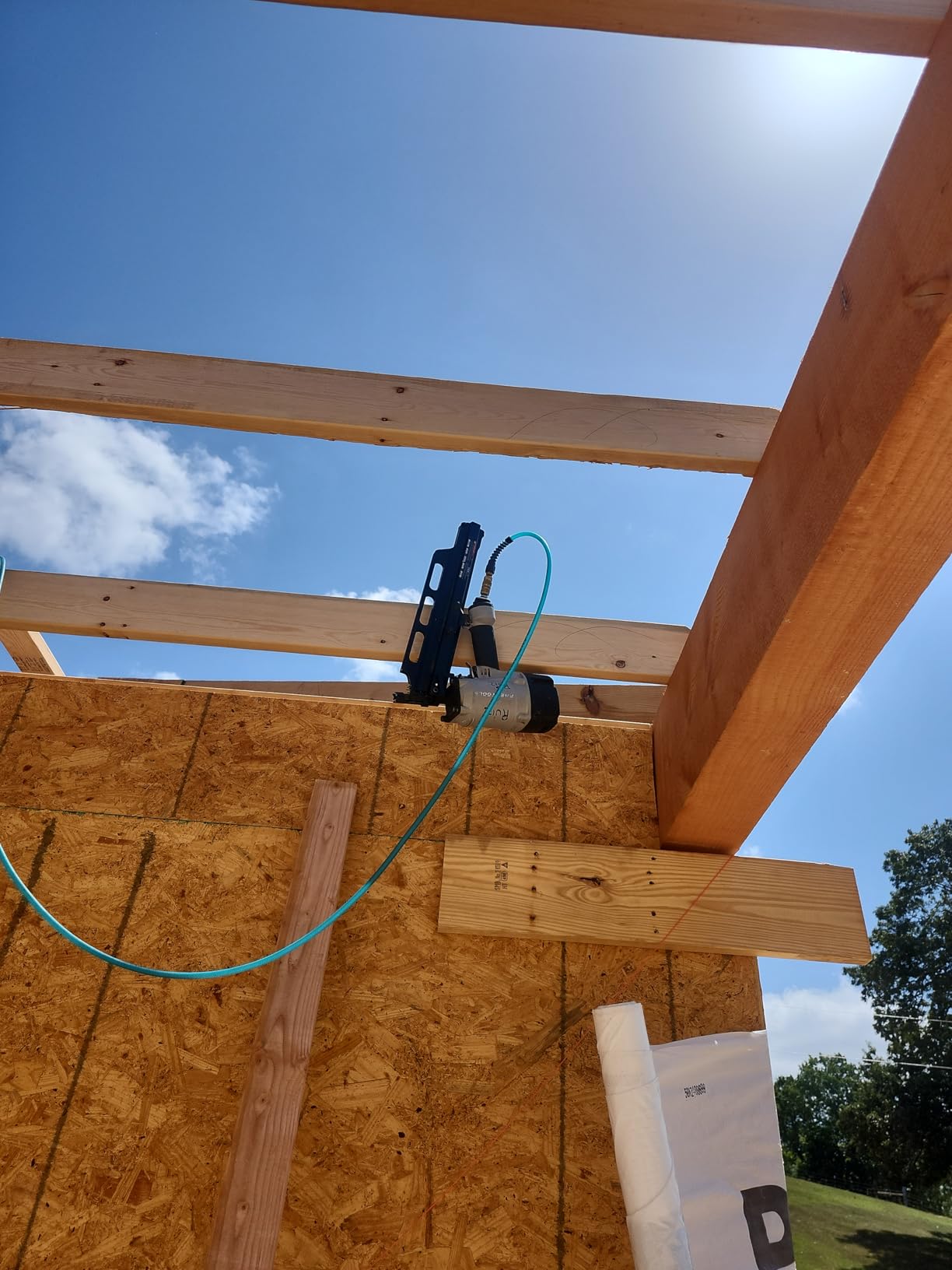
The build quality is the surprise. A one piece safety mechanism optimized for speed and durability, plus a hardened end cap, is the kind of construction that shows up as years of service rather than an uneventful first season. At a 4.6 star average, that consistency is well documented.
The rafter hook is included, which is a genuine advantage over several lighter tools in this list. Hanging the nailer on a rafter or a ladder rather than balancing it on a roof surface is the difference between a safe afternoon and an awkward one.
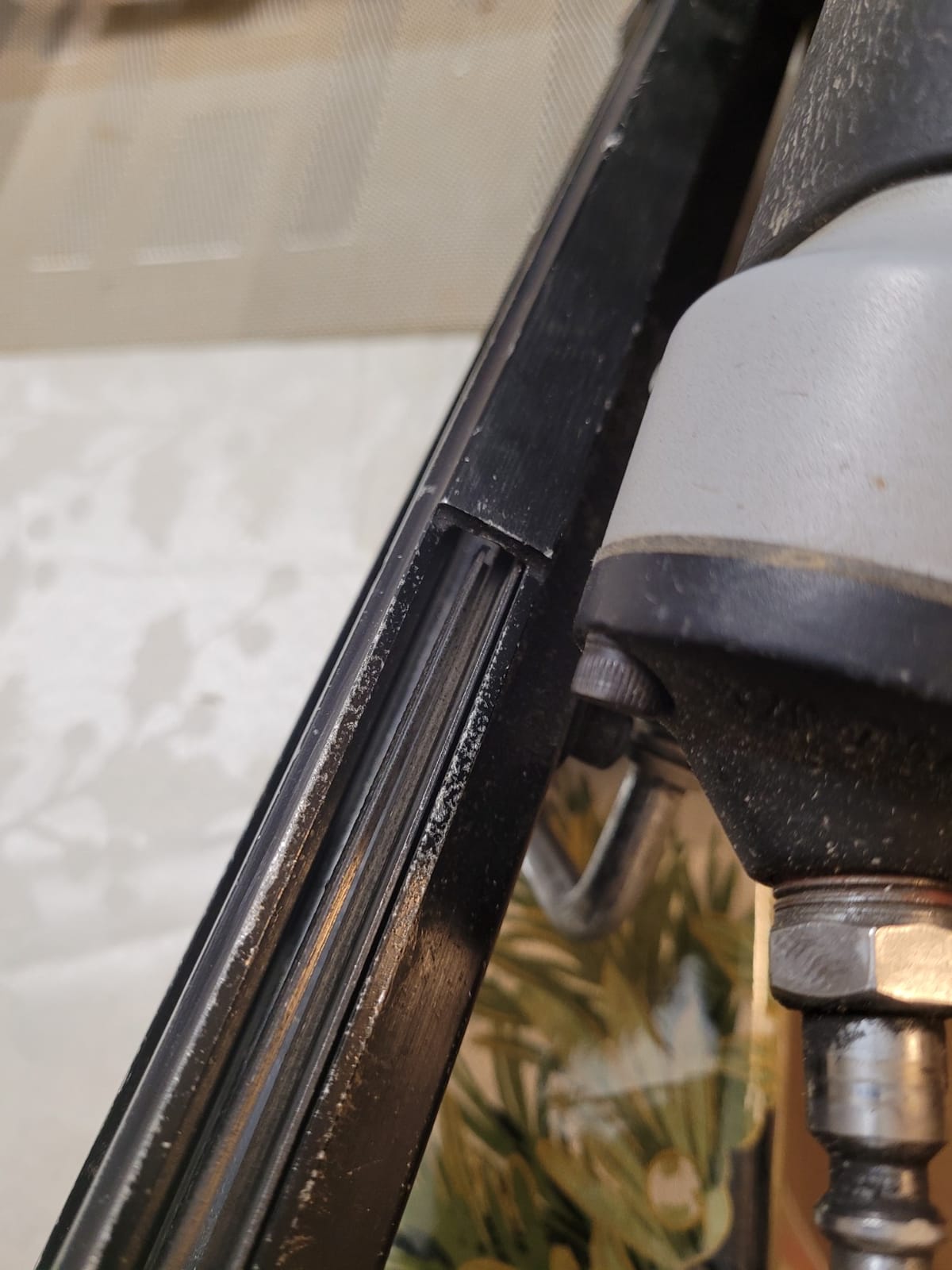
When simplicity is the right call
For a first shed, a first deck frame, or anyone who has borrowed other people’s tools and struggled with them, a single mode trigger is a feature. You set depth, you pull, you move. The work gets done without a learning curve.
It is also a good match for someone who nails carefully and sequentially anyway. If you are setting studs one at a time and want control over every shot, a single mode tool does that without any compromise.
What you trade for that simplicity
No selectable actuation means no bump fire. On a long sheathing run where you would normally contact-fire a whole sheet, you are driving every nail individually. That is slower, and on a large build it adds up.
At 10.53 pounds it sits toward the heavy end of this group. If you will be working overhead, a lighter tool serves you better.
9. 3PLUS H2190SP 21 Degree Full Round Head Framing Nailer
3PLUS H2190SP 21 Degree Full Round Head Framing Nailer
Nails: 21 degree full round head 2-3-1/2 inch
Power: pneumatic
Weight: 10.69 lb
Dry-fire lockout
Pros
- Selective actuation between sequential and bump fire
- 360 degree exhaust cover rotates to clear the work area
- No-mar tip protects the working surface
Cons
- Heavy at 10.69 lb for an entry level tool
- Dry-fire lockout refuses to fire until the strip is nearly full
- Occasional sparking reported at the nose
The feature list here is the argument. A budget nailer that still includes tool-free depth adjustment, a 360 degree rotating exhaust cover, a no-mar tip and a selective actuation switch is unusual. Most tools at this level give you one of those, not all four.
It uses 21 degree full round head plastic collated framing nails from 2 inch to 3-1/2 inch, so the code-compliant nail question is settled. Owners report completing sheds and framing jobs with it without trouble, which is exactly the range of work a first-time home builder is taking on.
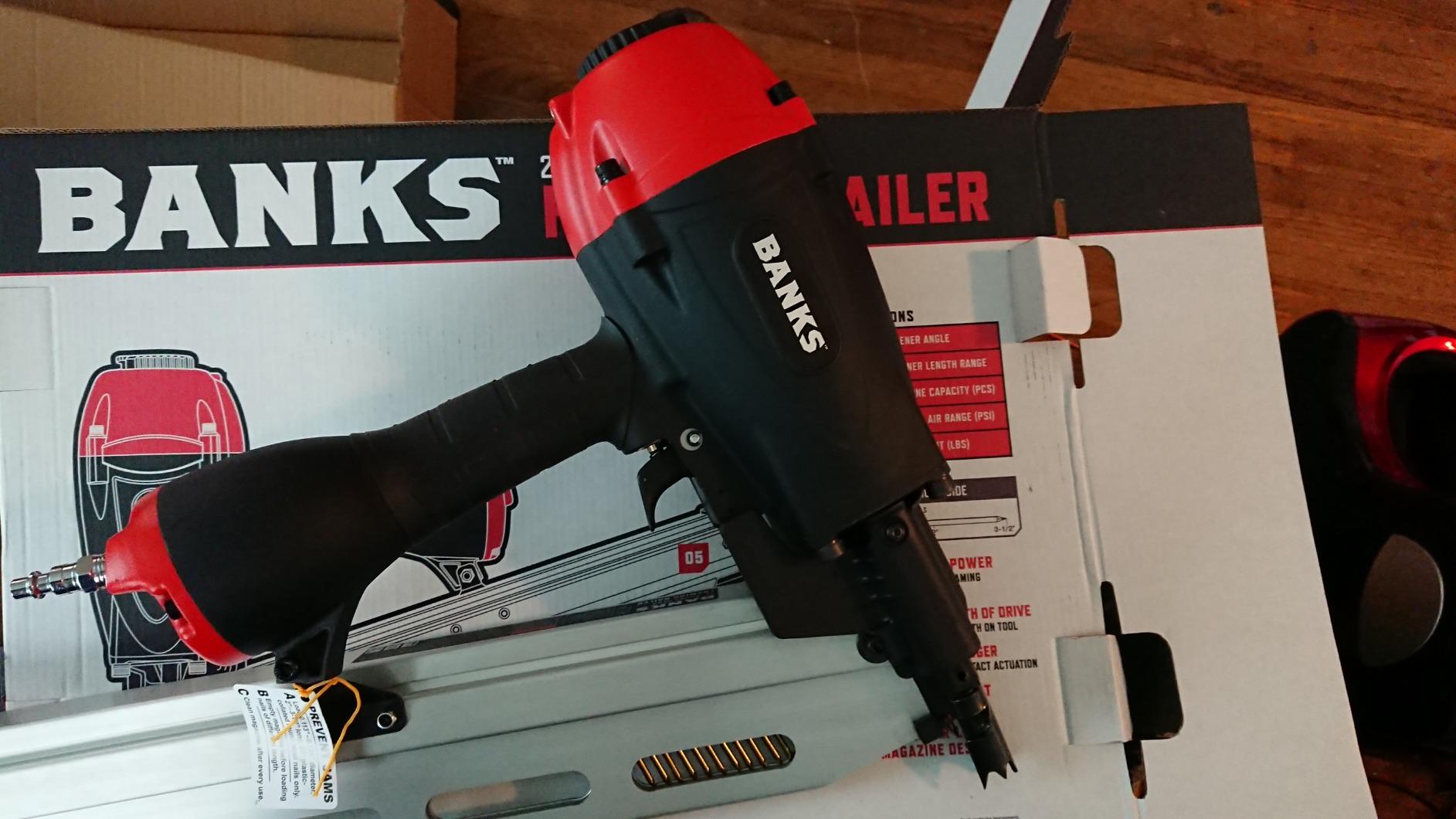
The hardened claw tip is a real feature rather than filler. It reduces nose wear and minimizes slippage when toe nailing, and toe nailing is half of framing. A tip that grips is the difference between a clean hole and a split stud edge.
The dry-fire lockout extends tool life by preventing empty fires, which is genuine protection for a mechanism that fires thousands of times a season. It also needs an explanation the first time you use it, which is where most of the confusion comes from.
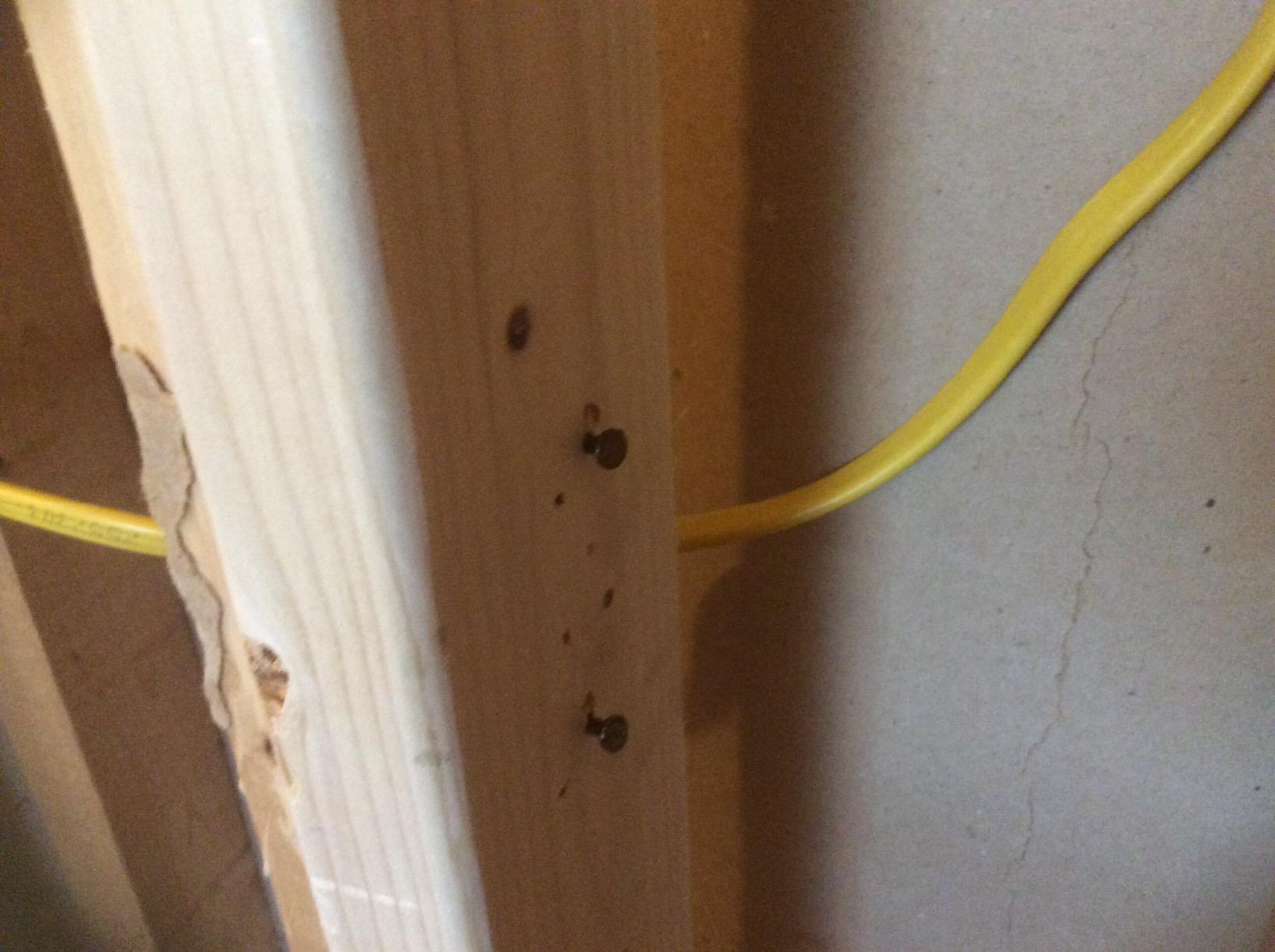
Good for a shed, a small addition or a first deck
Buyers call this great value and report it working as specified on sheds and home framing. If your project is measured in weekends rather than months, the tool earns its place on cost and it does not ask you to learn much.
Selective actuation is the feature most likely to matter to you over time. When the framing gets easy and you want to move faster through blocking, the switch is there without buying a different tool.
Where the entry level shows
At 10.69 pounds it is heavy for a budget gun, and that is the most common complaint. Combined with a tool that also lacks a rafter hook, overhead work is not its strength. Plan around ceiling work or budget extra time for it.
A small number of owners report inconsistent 3-1/2 inch driving across a wide compressor pressure range, and some report occasional sparking at the nose. That is a minority of reviews but worth knowing if deep nails in dense material are central to your build.
10. CRAFTSMAN V20 Cordless 21 Degree Framing Nailer
CRAFTSMAN V20 Cordless Framing Nailer, Nail Gun, 21 Degree, up to 3-1/4 inch Nails, Bare Tool Only (CMCN621PLB)
Nails: 21 degree round head up to 3-1/4 inch
Power: 20V cordless brushless
Weight: 10.75 lb
Pros
- No compressor hose or gas cartridge needed
- Brushless motor drives up to 3-1/4 inch into laminated veneer lumber
- Shares the V20 battery platform with CRAFTSMAN lawn and garden tools
- Tool-free depth adjustment and rafter hook included
Cons
- Bare tool only
- battery and charger sold separately
- Heavier than most pneumatic 21 degree nailers
- Some jam and multi-fire reports on harder material
If you already own CRAFTSMAN V20 batteries for your mower or weed eater, this is the most sensible way into cordless framing. The platform is shared, so one battery and charger covers the lawn tools and the nailer, and owners rate it highly for exactly that reason.
The brushless motor drives up to 3-1/4 inch round head nails, and owners report it handling old lumber and laminated veneer lumber easily. For renovation work where you are nailing into a mix of fresh and weathered material, that consistency is what you are buying.
The rafter hook is included, which several lighter pneumatic tools in this comparison do not offer, and the tool-free depth adjustment handles placement changes without tools.
There is a hard limit worth planning around. It is listed as a bare tool, with the battery and charger sold separately, so budget for a pack and a charger unless you already have V20 packs.
Best when you already own the battery platform
Renovation and punch-out work is the sweet spot. No hose to route through a finished house, no compressor noise near occupied rooms, and enough power for the mixed lumber you will find when you open up an old wall.
It is a fair pick for a shed frame on a lawn far from an outlet, and for anyone who would rather not maintain a compressor. If you are starting from zero tools, read the bare tool cost before deciding.
Where the numbers limit it
At 3-1/4 inch it is the shortest maximum nail length in this comparison, so it is not the tool for a 3-1/2 inch schedule. If your framing plan calls for the deepest nails, choose a tool specified for them.
Weight is the other limit. At 10.75 pounds it is heavier than most pneumatic 21 degree nailers here, and owners describe it as a little weak for overhead shooting. A scattering of jam and multi-fire reports on harder material is also worth factoring in.
How to Choose a Framing Nailer for Your Build
Nail angle: why 21 degrees covers almost everything
A 21 degree nailer holds nails at a slight offset, which is the angle most residential building codes specify for structural connections. A 20 degree nailer is the same idea with almost no offset, and 30 degree nailers hold nails at a steep slant for trim and light work. For wall framing, subfloor, sheathing and roof decking on a home build, 21 degrees is the right default and every pick in this guide fires it.
A 30 degree nailer is the one to understand, because it is a common point of confusion. It exists for accessibility in tight spaces, not for structural framing. A 30 degree gun cannot legally hold the nails most jurisdictions require for structural connections, so buying one as a primary framing tool creates a problem you cannot fix later.
Stick versus coil matters at the same time. Stick nailers hold individual nails in a straight strip, which is more common and easier to find at any building supply house. Coil nailers hold nails wound on a plastic coil, which is faster to load and common on treated lumber and truss work. For a home build, stick collation is the correct answer, and that is what all ten picks here use.
Full round head versus clipped head and the code
Full round head nails have a complete circular head and satisfy the most common residential structural requirements. Clipped head nails leave a smaller dimple and cost less per box, but many jurisdictions restrict or prohibit them for structural connections. Every pick in this guide fires 21 degree full round head nails, so you are covered by default.
Check your local building department before you start, because requirements vary and the rule that applies to your permit is the one that counts. Getting this wrong means replacing work that a building inspector rejects, which is the most expensive framing mistake a homeowner can make.
Do you need a compressor at all?
No, not if you buy a cordless nailer. Battery-driven models replace the air hose with a brushless motor and battery that compresses the drive spring, delivering enough force to sink a 3-1/2 inch nail into dense or engineered lumber without a compressor. The tradeoff is weight and runtime, both of which we covered in the cordless reviews.
A gas-driven nailer sits in a third category that we did not include here. It runs on a battery plus a fuel cartridge, which means two consumable streams to manage. Buyers report the cartridge cost as an ongoing annoyance, and we left those tools out of this roundup for that reason.
Matching a pneumatic nailer to your compressor
A framing nailer needs roughly 70 to 90 PSI and about 4 CFM to cycle reliably. Small pancake compressors commonly fall short on airflow, which produces the incomplete and inconsistent driving that owners of budget tools often report. Check the CFM figure, not just the PSI, because depth problems almost always trace back to airflow.
If you are buying a nailer for occasional shed work, the cordless route removes this entire decision. If you are framing all season, a properly sized compressor is a purchase you will use for a decade.
Weight and overhead framing
Weight matters more than most buyers expect because framing is overhead work. Across the picks here, tool weight ranges from 7.5 pounds on the Metabo HPT NR90AES1 to a listed 11.8 pounds on the Makita AN924. If you are sticking a ceiling, that spread is the difference between a comfortable afternoon and a sore shoulder.
Balance matters as much as the number. A well-distributed tool feels lighter than its listed weight, and reviewers repeatedly describe the lighter pneumatic models as well balanced rather than merely light.
Magazine, actuation and safety
Selectable actuation lets you switch between sequential firing, one nail per pull, and contact or bump firing, which drives as fast as you can pull. Sequential is right for setting studs precisely. Contact is right for sheathing runs. Tools without a switch force one or the other, and that is worth checking before you buy.
A dry-fire lockout is the safety feature that matters most on any framing nailer. It prevents firing an empty gun, which protects the internal mechanism and stops a tool from becoming a projectile launcher when it is empty. Every pick here has some form of it.
On jobsite safety, wear hearing protection and eye protection, keep both hands clear of the nail path, and never shoot a nailer while it is pointed at another person. Frame a wall flat on the deck first, then raise it, rather than trying to nail a stud in place.
Battery platform and cost of ownership
If you are choosing a cordless nailer, the battery platform is the decision that actually matters. Buying into a platform means sharing batteries across your tools, and buyers regularly point out that a second pack is a real cost. Owning a nailer from a brand whose batteries you do not have is the expensive mistake.
Check what other tools you own before you commit. If your batteries are already 18V or 20V in a given platform, a nailer on that platform costs you one battery and one charger less. If you own nothing from any of these brands, compare the total: nailer, two batteries and a charger, not the nailer alone.
Frequently Asked Questions
What is considered the best framing nailer?
For most home builds the best framing nailer is a 21 degree pneumatic tool that drives 2 inch to 3-1/2 inch full round head nails, because that combination satisfies typical residential structural code and covers every wall, floor, subfloor and roof decking application. Among the picks here, the NuMax SFR2190 leads on nail range, depth control and owner volume, while the Metabo HPT NR90AES1 leads on weight for overhead work.
Should I buy a 30 or 21 degree framing nailer?
Buy a 21 degree framing nailer for structural work. A 30 degree nailer holds nails at a steep slant and exists for trim and tight-access work, and it cannot fire the nails most residential building codes require for structural connections. Choose 21 degrees for wall framing, subfloor, sheathing and roof decking, and reserve 30 degrees for finish trim work.
Which is better, a 20 degree or 30 degree framing nailer?
Neither beats 21 degrees for framing. A 20 degree nailer fires nails with almost no offset, close to code-required placement, while a 30 degree nailer fires them at a steep slant that many jurisdictions do not accept for structural connections. A 21 degree tool is the standard residential choice and is what all ten picks in this guide use.
What is the best nail gun for DIY projects?
For a weekend DIYer building a shed or deck, a cordless 21 degree nailer is the best fit because it needs no compressor, hose or gas cartridge. The Metabo HPT NR1890DRS kit comes with a battery, charger and bag. If you already own a compressor, the NuMax SFR2190 covers the full nail range at a lighter weight and needs no additional accessory purchase.
Do I need an air compressor for a framing nailer?
Only if you buy a pneumatic nailer. Cordless framing nailers run off a battery and brushless motor and drive nails with no compressor at all. A pneumatic framing nailer needs about 70 to 90 PSI and roughly 4 CFM, and small pancake compressors often fall short on airflow, which causes incomplete and inconsistent driving.
Who makes the best cordless framing nailer?
Among the cordless options covered here, the Metabo HPT NR1890DRS is the strongest, with an air spring drive system, a brushless motor, a lifetime tool warranty and a kit that includes a battery, fast charger and bag. The CRAFTSMAN V20 CMCN621PLB is a strong alternative if you already own V20 batteries, but it is a bare tool and tops out at 3-1/4 inch nails.
Is Metabo HPT better than the big-name brands for framing nailers?
For value, yes. The Metabo HPT NR90AES1 holds the highest average rating in this comparison at 4.7 stars across more than 2,400 reviews and weighs 7.5 pounds, making it the lightest body here. The brand is the former Hitachi Power Tools lineup, and carpenters regularly describe the nailer range as underrated for the money.
What nails do I need for framing a wall?
A residential stud wall typically uses 2-1/2 inch framing nails at the stud and plate connections, with longer nails where the plan calls for it. You also need 1-1/2 inch nails for sheathing and blocking, and a 21 degree full round head collated nailer covers all of them. Check your local code and your fastening schedule before ordering.
Final Verdict: Which Framing Nailer to Buy
Start with the NuMax SFR2190 if you want one tool to frame an entire home build. It covers the full 2 inch to 3-1/2 inch nail range, its tool-free depth wheel holds settings across materials, and more than 7,000 reviews at 4.6 stars is the deepest owner history in this comparison. It is the best framing nailer for home builds because it covers every common job without a learning curve.
Change the pick based on one constraint. Overhead work pushes you to the Metabo HPT NR90AES1 at 7.5 pounds. Joist hangers and connector nails push you to the BOSTITCH F21PL. Long-term durability pushes you to the Freeman PFR2190 with its 7 year warranty and included case. No compressor in the house pushes you to the Metabo HPT NR1890DRS cordless kit, and an existing CRAFTSMAN V20 battery platform pushes you to the CMCN621PLB.
Whichever you choose, buy 21 degree full round head nails from a supply house you can drive back to, confirm the head style against your local code before you frame, and match your compressor to roughly 4 CFM rather than judging it on tank size. That is the whole decision. Everything else in this guide is detail on those three points.