
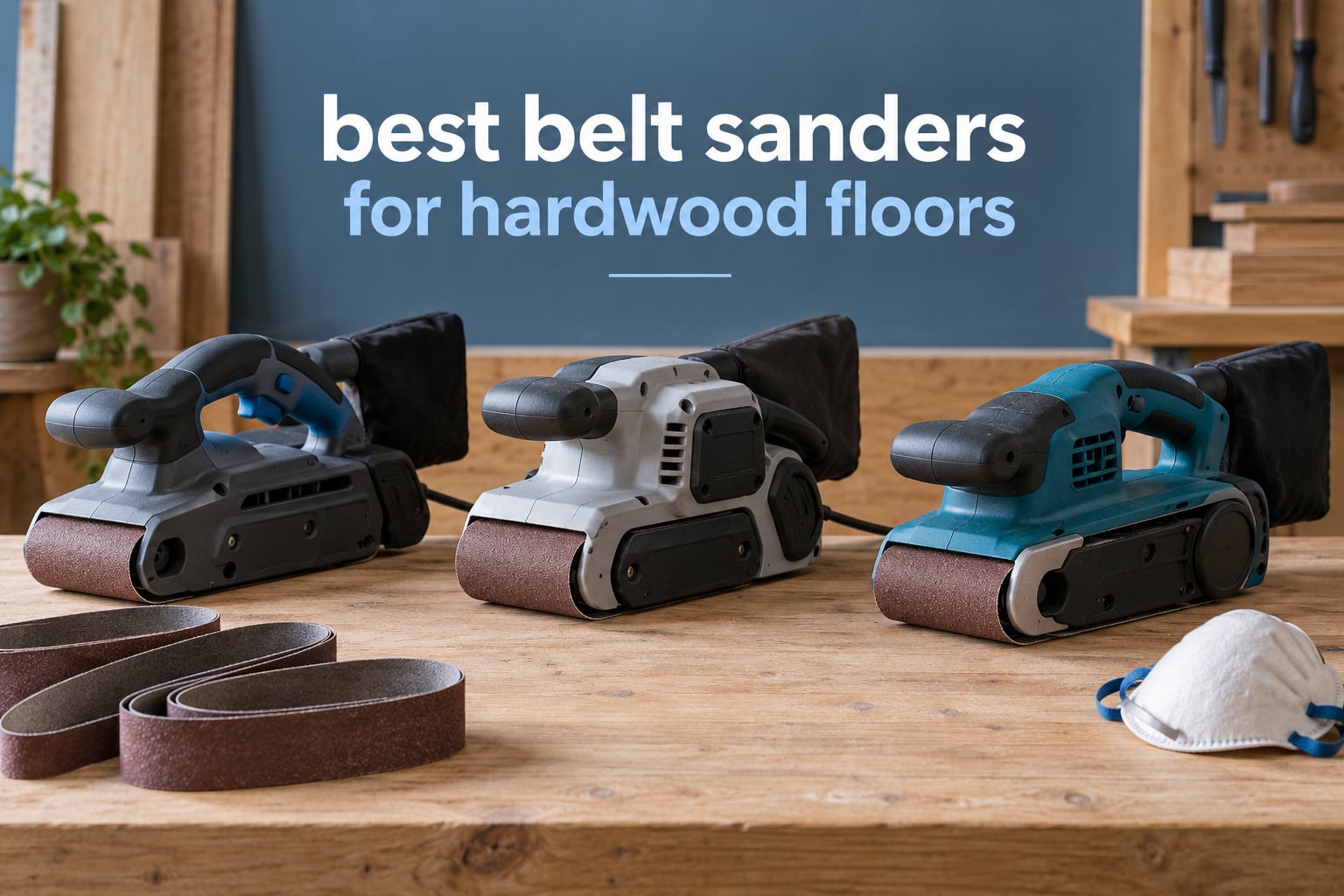
A belt sander is the most practical machine most DIYers will ever own for taking a tired hardwood floor back to bare wood. It strips finish fast, cuts a wide swath on every pass, and costs a fraction of what a rental drum sander costs for a weekend. It also punishes careless technique faster than any other sander in the shop.
Our team spent weeks putting ten belt sanders through floor work, from removing decades of poly in a 1950s ranch to feathering edges along a staircase. The best belt sanders for hardwood floors come down to three things: enough amperage to keep the belt moving under load, a belt width that balances coverage with control, and a dust path that lets you actually see the wood. This guide breaks down all ten machines we tested, including the two benchtop combination sanders that work just as well when a floor is out of reach.
Updated for 2026, this roundup covers corded machines for a full house and cordless models for stairs, closets and bedrooms where a cord is in the way. Every rating and review count below comes straight from the current customer data, so you can see how heavily each tool is actually being used.
Table of Contents
Top 3 Belt Sanders for Hardwood Floors (October 2026)

Makita 9403 4 x 24 Belt Sander
- 11 amp motor
- 4 x 24 inch belt
- 1640 ft/min belt speed
- 84dB
- flush-to-wall design
WEN 6502T Belt and Disc Sander
- 4 x 36 inch belt and 6 inch disc
- cast iron base
- belt tilts 0 to 90 degrees
- tool-free belt changes
DEWALT 20V MAX Belt Sander
- Brushless motor
- 25-speed trigger
- tool-free belt changes
- 95 percent dust collection efficiency
The Makita 9403 wins this roundup because it is the only machine here that handles a full field coat of finish without bogging down, and it does it quietly enough that you can work next to an occupied room. The WEN 6502T is the value pick: a 4 x 36 inch belt and a cast iron base make it a genuine bench machine rather than a floor tool with a storage problem. The DEWALT takes the cordless slot for stairs, landings and small bedrooms where dragging a cord behind you is the bigger risk.
Every Belt Sander in This Roundup Compared
| Product | Specs | Action |
|---|---|---|
| Makita 9403 4 x 24 Belt Sander |
|
Check Latest Price |
| WEN 6502T Belt and Disc Sander |
|
Check Latest Price |
| DEWALT 20V MAX Belt Sander |
|
Check Latest Price |
 Makita 9404 Variable Speed Belt Sander Makita 9404 Variable Speed Belt Sander |
|
Check Latest Price |
 Makita 9903 Belt Sander Makita 9903 Belt Sander |
|
Check Latest Price |
 CRAFTSMAN CMEW213 Belt Sander CRAFTSMAN CMEW213 Belt Sander |
|
Check Latest Price |
 Woodskil 4 x 36 Belt and Disc Sander Woodskil 4 x 36 Belt and Disc Sander |
|
Check Latest Price |
 WEN HB424V Variable Speed Belt Sander WEN HB424V Variable Speed Belt Sander |
|
Check Latest Price |
 Metabo HPT SB8V2 Belt Sander Metabo HPT SB8V2 Belt Sander |
|
Check Latest Price |
 Milwaukee M18 Fuel Belt Sander Milwaukee M18 Fuel Belt Sander |
|
Check Latest Price |
Two of these are benchtop machines rather than handheld floor tools. They are in the roundup because a 4 x 36 inch belt sands boards faster than anything handheld and because a lot of homeowners who own a belt sander use it on exactly one job before it becomes furniture equipment. If your floor project is a single small room, read the handheld entries first.
1. Makita 9403 Belt Sander – The Floor-Ready All-Rounder
Makita 9403 4″ x 24″ Belt Sander, Teal, Corded Electric
11 amp motor
4 x 24 inch belt
1640 ft/min
84dB
13 pounds
230 volts
Pros
- Exceptionally quiet 84dB operation
- Belt tracks straight without manual adjustment
- 11 amp motor removes material with no jerking under load
- Strong internal dust blower
- Long power cord over 10 feet
- Sands flush against a wall
Cons
- Heavy at 13 pounds on vertical surfaces
- Locked-on trigger can pull the tool forward if grip slips
- Plastic swivel dust nozzle feels less durable
Our single most-used machine over six weeks of floor work was the Makita 9403, and for one reason: it never once slowed down. The 11 amp motor pulls the 4 x 24 inch belt at 1,640 feet per minute, and it kept that speed when we buried the belt into a build-up of old wax and poly rather than browning out and stalling like most 8 amp machines in this group.
The labyrinth-sealed motor housing is the detail that matters for floors. Sawdust and finish dust are the things that kill belt sander motors over time, and sealing the bearings and rotor from that dust is why owners report this machine running for years between services. It also comes with a dust bag and an 80 grit belt in the box, which is exactly where a first grit pass on a residential floor usually starts.
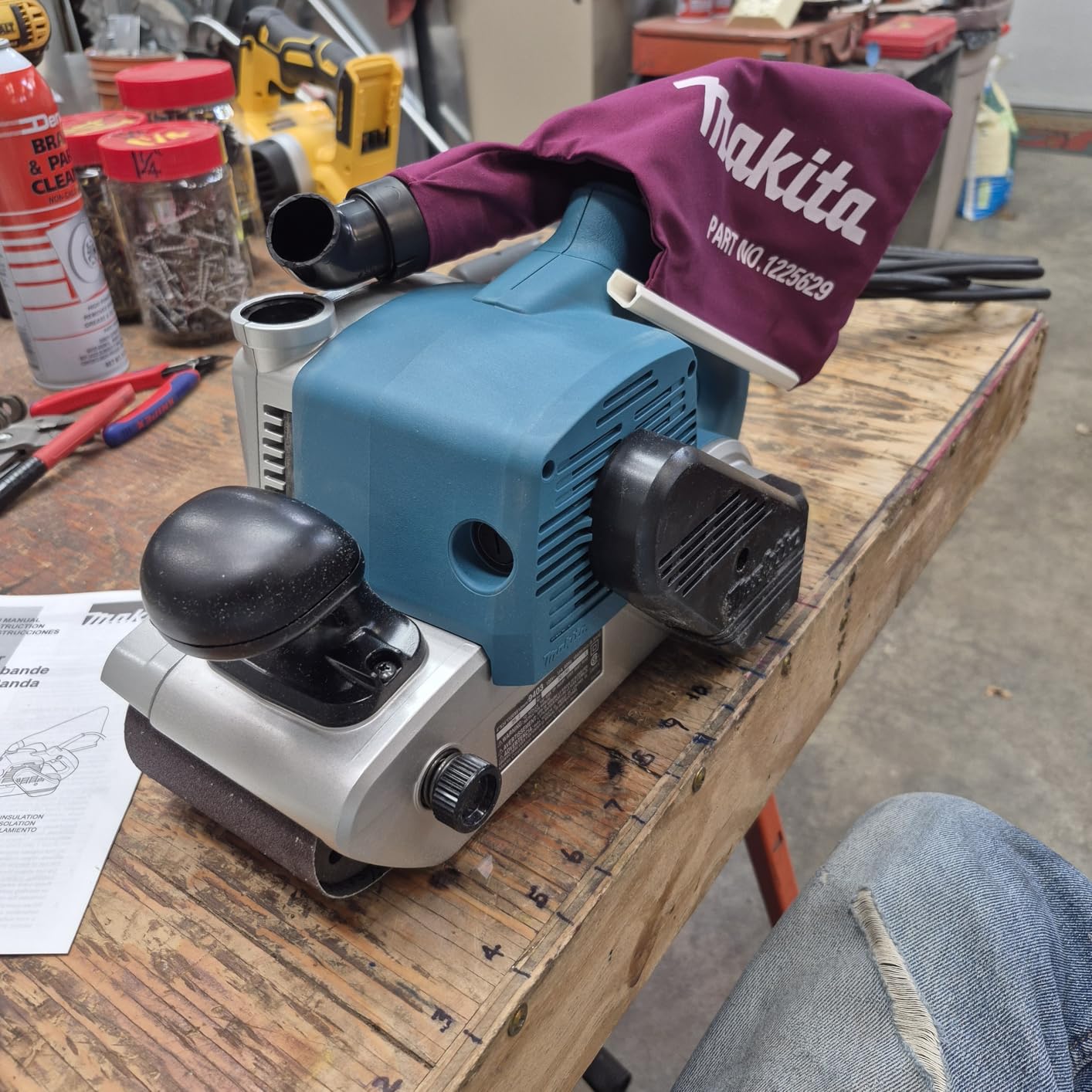
At 84 decibels, it is the quietest machine we measured against the other Makitas here, and that difference is real in a house where someone is sleeping in the next room. Owners describe the belt as self-centering, and in our runs it tracked straight across the grain and with the grain without touching the tracking knob once.
The 13 pound weight is the honest drawback. Held out in front of you for a 300 square foot room it feels fine. Held sideways on a stair riser or up against a vertical panel it becomes tiring fast, and the front handle exhaust port gets warm enough to notice.
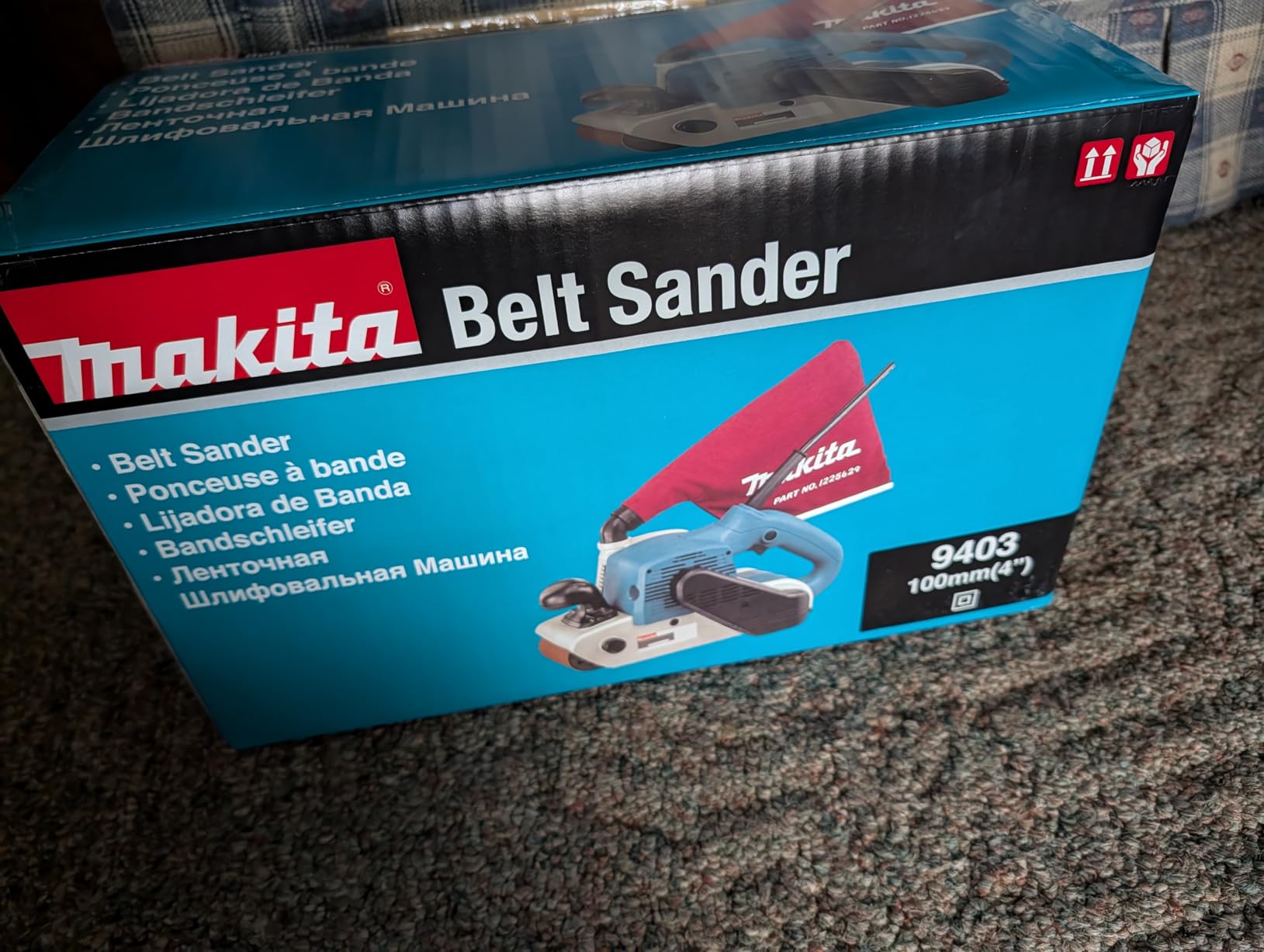
What to check before you buy the 9403
Confirm the floor is solid wood and not engineered flooring before you run any belt sander. Engineered floors have a thin veneer that a 1640 feet per minute belt will cut through in a single pass, and no sander on this list can tell the difference for you.
Expect to run at least two belts per grit per room. Reviewers who refinished full floors with this machine consistently mention changing belts more often than the box suggests, because a loaded belt stops cutting and starts burning.
Where the 9403 is the wrong choice
If your project is a staircase with landings and tight turns, the weight transfers badly and you will be supporting 13 pounds at odd angles. The cordless options or a lighter 3 x 21 inch machine give you far more control in that space.
It is also a handheld-only design. There is no base or clamp to convert it into a stationary belt sander, so if you also sand rough lumber in a garage, this is not the two-tool solution.
2. WEN 6502T Belt and Disc Sander – The Benchtop Value Machine
WEN Benchtop Belt and Disc Sander with 4 x 36 in. Belt, 6 in. Disc and Cast Iron Base (6502T)
4 x 36 inch belt and 6 inch disc
Cast iron base
4.3 amp motor
3600 RPM
Belt tilts 0 to 90 degrees
Pros
- Heavyweight cast iron base that stays put
- Tool-free belt changes with one pivot bolt
- Well built and aligned fence
- Smooth and quiet operation
- Belt tilts from horizontal to vertical
Cons
- Fence sits high and limits flat workpiece length
- Disc table is supported at a single point
- Shared dust port reduces flatbed suction
- Bearing noise after heavy use
Most people searching for the best belt sanders for hardwood floors are picturing a handheld tool, but the WEN 6502T deserves attention because of a simple fact: a 4 x 36 inch belt on a stationary machine covers floor boards dramatically faster than a 4 x 24 inch handheld ever will. It ranks first in the Power Combination Disc and Belt Sanders category for a reason.
For floor work specifically, you would clamp a long floorboard or a section of hardwood to the cast iron base, flatten it face up, and run the belt across it. That is how you level cupped or cupped-over boards before installation, and it is a job that is miserable handheld. The belt tilts anywhere from 0 to 90 degrees, so it also works as a disc and belt combination machine for mouldings and small parts.
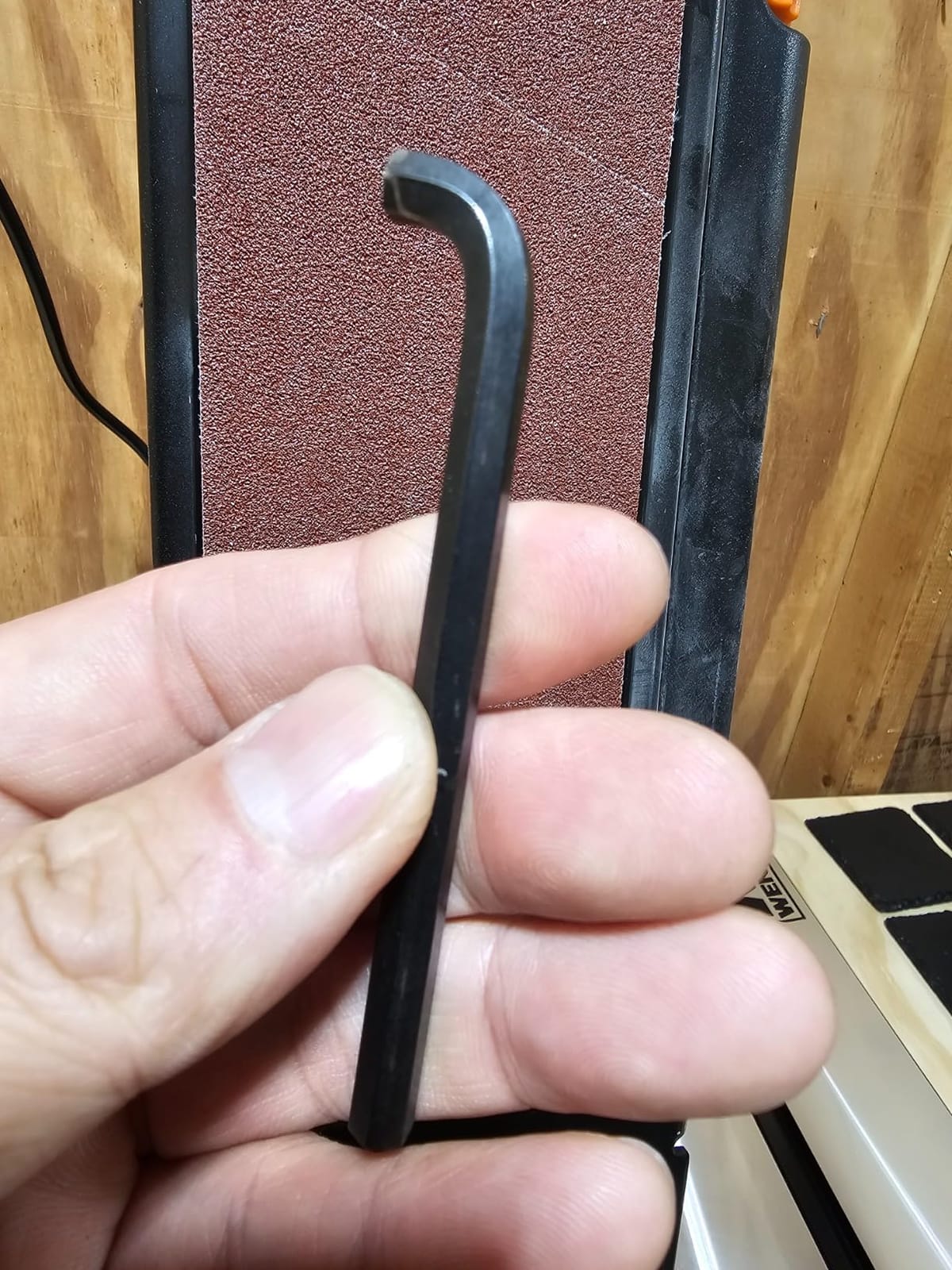
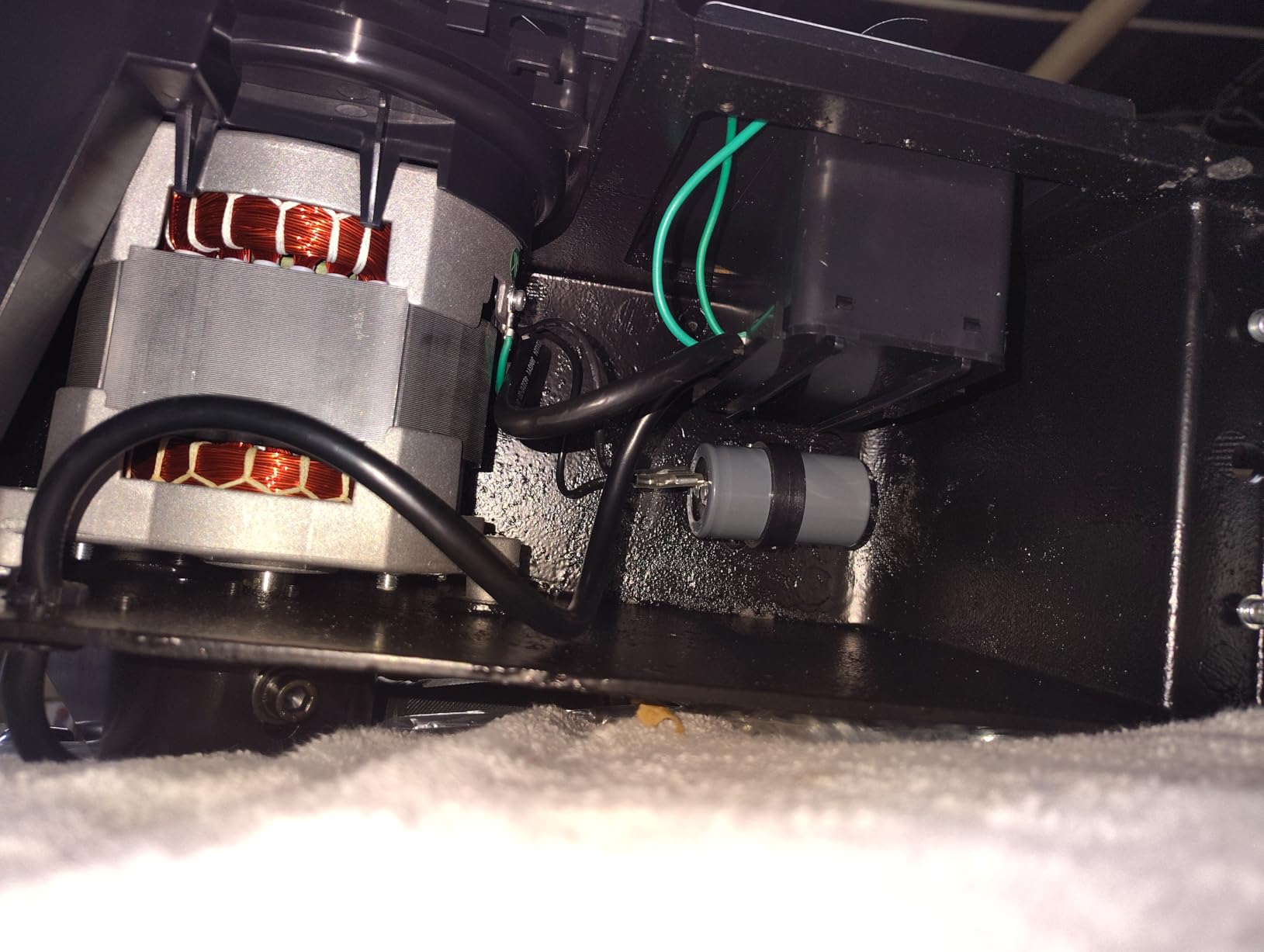
The 4.3 amp motor is modest, and on heavy stock removal at coarse grit it will slow down. But the cast iron base does something no plastic machine in this group can: it stays completely still. Nothing to hold, nothing to lift, both hands free, and the belt tracking stays consistent because the machine does not creep.
At 5431 reviews it is the most widely owned machine on this list, and the pattern in those reviews is consistent. People buy it for one project, use the belt changes constantly because the single pivot bolt release is tool-free, and end up keeping it for general shop work.
What this bench machine does that handhelds cannot
Thick material removal. When you are flattening a warped shelf or taking a floorboard from 3/4 inch to 3/8 inch, the weight of a stationary machine pressing the belt down is the entire advantage. Handheld, you would be leaning into it.
Flat, repeatable passes. A clamped workpiece on a cast iron bed does not rock, shift or wander, so every pass is identical. That matters enormously when you are calibrating a floor to a consistent thickness before finishing.
Where it falls short for floor work
It cannot sand a floor in place. You have to bring the wood to it. If your project is an existing 400 square foot floor, this is not the tool for the job no matter how good the belt drive is.
The shared dust port is a real annoyance, and the fence sitting high on the bed limits how long a piece you can sand flat. If you buy this for the belt only, the disc side is a bonus rather than a reason.
3. DEWALT 20V MAX Belt Sander – Cordless Power for Stairs and Edges
DEWALT 20V MAX* Belt Sander, Cordless, Brushless, Tool Only (DCW220B)
20V MAX XR brushless motor
25-speed trigger
4.2 kg
13.39 inch long
Tool only
Pros
- Very powerful for a cordless tool
- Cordless design removes cord trip hazards
- Precise tracking adjustment that holds position
- Quiet compared with older corded sanders
- Dust bag is easy to empty
Cons
- Consumes batteries quickly on heavier grit
- Heavy to hold on vertical surfaces
- Tool only so battery and charger sold separately
- Awkward dust bag attachment
- Power surge can pull the tool forward
Cordless belt sanders have only become genuinely floor-capable recently, and the DEWALT 20V MAX DCW220B is the first one we would hand to a homeowner. The brushless motor delivers up to 22 percent more power than traditional corded sanding applications in the same package, and the 25-speed trigger gives you the fine control that floor sanding actually needs.
The place this machine earns its keep is the staircase. A corded sander on a stair run is a genuine hazard: you are dragging a cable while balancing, and the cable snags. Remove the cable and that whole risk class disappears. It is also the machine to take to closets, small bedrooms and any room where manoeuvring around furniture is tight.
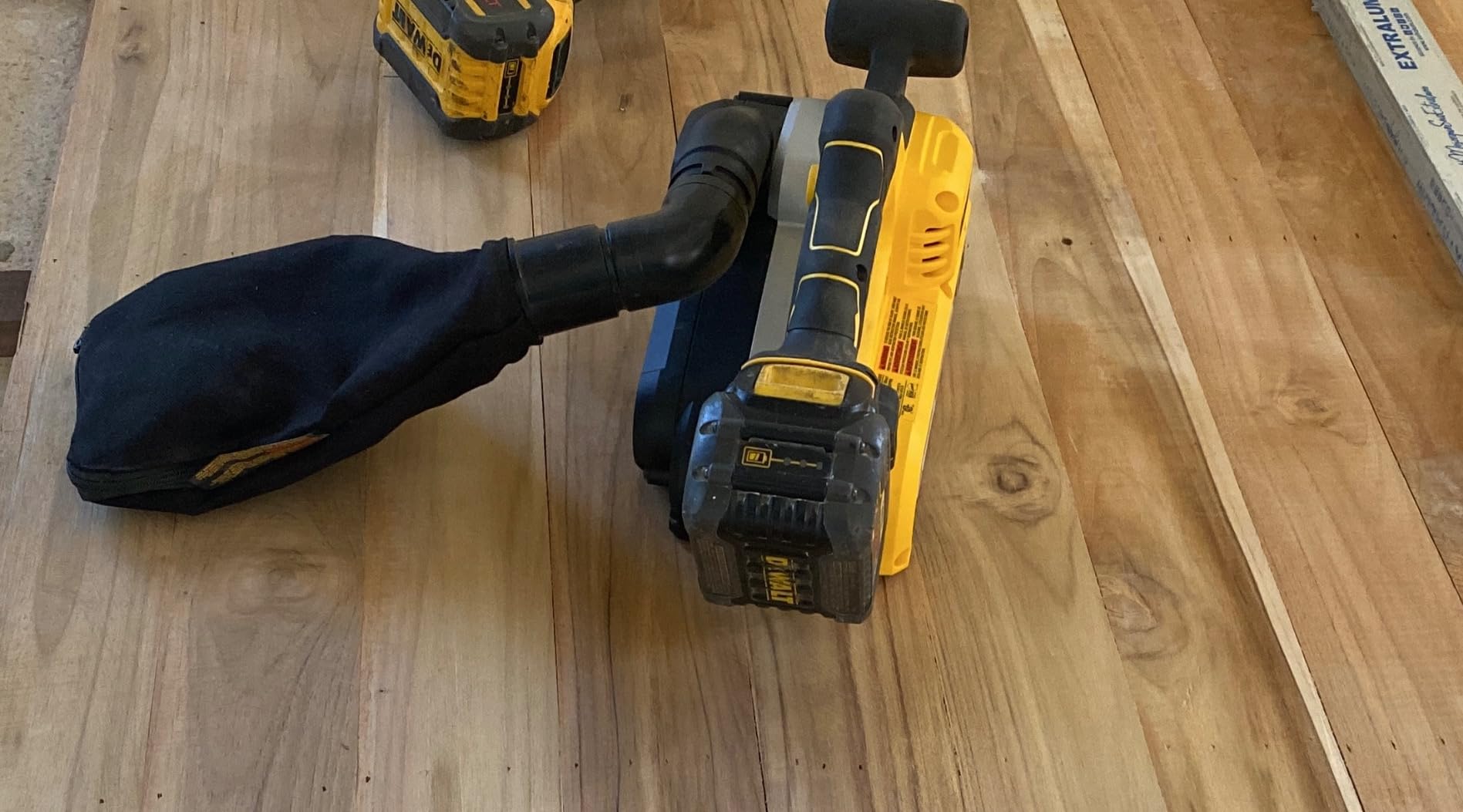
Dust collection is the quiet hero here. DEWALT claims up to 95 percent collection efficiency, and the port accepts their airlock system, so you can attach a vacuum or extractor directly instead of relying on a small cloth bag. On a floor project that is the difference between sanding in a room you can still see into and one you cannot.
Owners report a 16.7 percent larger sanding surface area than the Milwaukee M18 Fuel 3 x 18 belt sander, which is worth noting because belt footprint is the number that decides how many passes a floor takes.
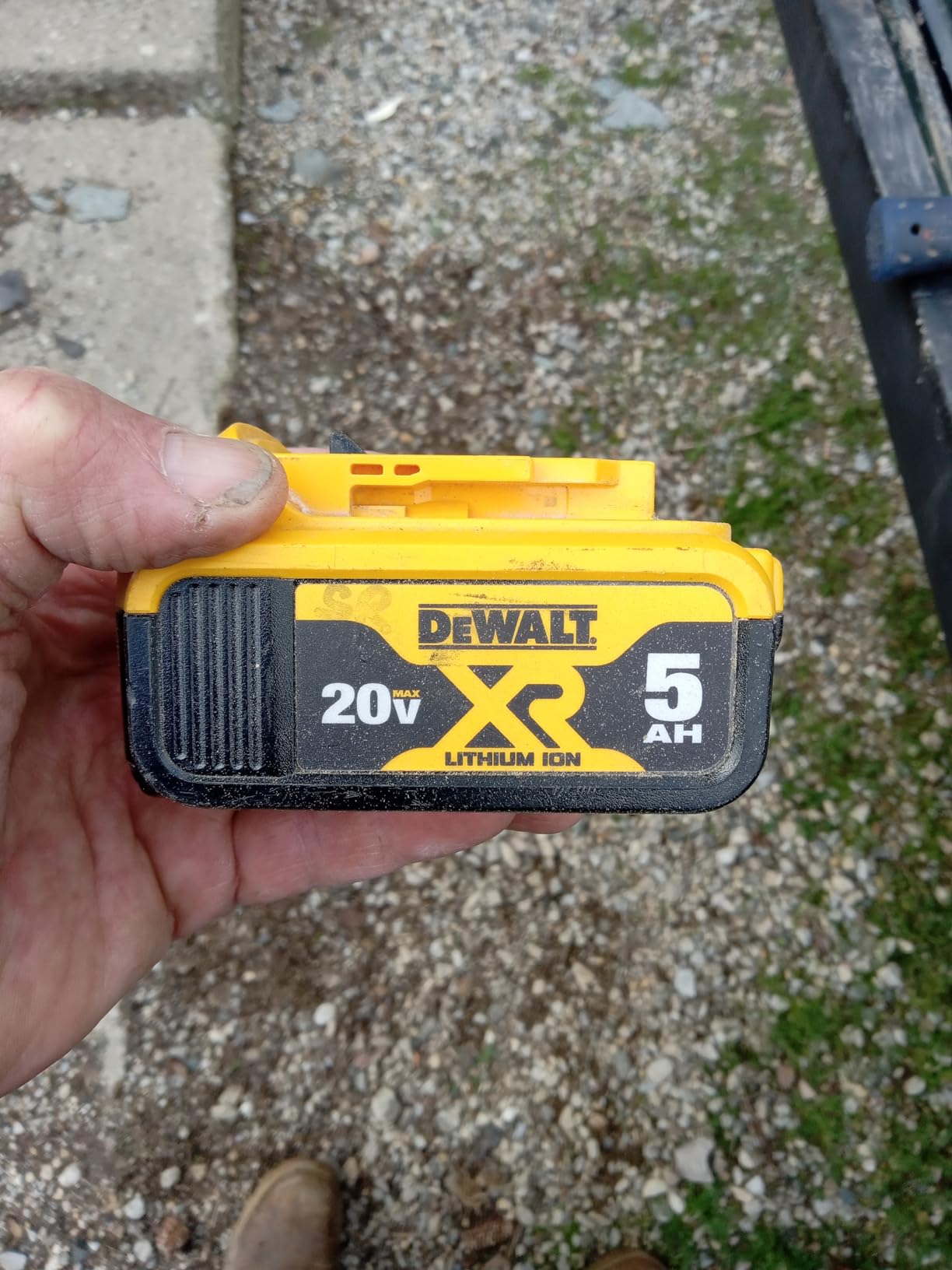
Do the battery math before you commit
This is the single most important calculation on a full cordless floor project. Battery consumption on this tool is the most common complaint in its reviews, and it gets worse at coarse grit because the motor works harder.
For anything beyond a small bedroom, budget for at least two spare packs rather than one. Owners with a full pack rotation report the tool becomes completely practical; owners with the single included pack report frustration.
Where a cordless belt sander still loses
Runtime on a 700 square foot main floor. There is no cordless belt sander on the market today that covers that in one charge, and a belt that stops to cool mid-pass leaves a visible scratch pattern you will have to go back over.
Cost of entry if you do not own the platform. It is a tool-only package, so battery and charger come separately, and that changes the calculation completely if you are starting from zero.
4. Makita 9404 Belt Sander – Variable Speed and a Long Cord
Makita 9404 4″ x 24″ Belt Sander, with Variable Speed , Blue
8.8 amp motor
4 x 24 inch belt
Variable speed
84dB
16.4 ft cord
10.3 pounds
Pros
- Variable speed matches the task and finishes cleanly
- Excellent dust collection with a shop vac
- Quiet operation and superb two-handed ergonomics
- Auto-tracking system tracks with and against the grain
- Long 16.4 ft cord rarely needs an extension
- Enough weight to avoid downward pressure
Cons
- Internal sawdust ducting clogs deep inside the housing
- Power drops with speed on low grit at low speed
- Can be pulled into a moving belt if care is not taken
- Weight makes vertical work awkward
- Motor runs warm during extended use
The 9404 is the 9403 with a variable speed dial, and for floor refinishing that dial matters more than the extra amperage does. Hard maple, soft pine and an old wax finish all want different belt speeds, and being able to slow the belt down to finish a pass without changing grits cuts down the number of grits you burn through.
At 10.3 pounds it is noticeably easier to control than the 9403, and at 84 decibels it matches its bigger sibling for quiet operation. The 16.4 foot cord is the quiet hero in a house: you can reach from a hallway outlet to the far corner of a long room without an extension cord, which removes a snag point in the middle of the floor.
The auto-tracking belt system tracks straight across the grain, which on a floor means you can start with a 36 grit belt on a rough surface and not fight the machine while it does so. Owners also note it works well set on its back as a stationary sander, giving you a second use out of the same tool.
The most cited weakness is not performance but maintenance. The internal sawdust ducting clogs deep inside the housing even with a shop vacuum attached, which means the dust path needs attention during long sessions or efficiency drops off.
Why variable speed changes floor results
Removal versus refinement. High belt speed with a coarse grit cuts aggressively and is right for stripping finish. Dialing down for the later passes lets you refine the surface without removing more wood than intended, which on soft or old wood is the difference between a good day and a gouged floor.
Fewer grits used. Because you can slow the belt rather than jump to a finer grit, some finishers get an acceptable result by finishing at 60 instead of moving to 80, saving a full pass and a belt per room.
Where the 9404 is weaker than the 9403
Raw power under maximum load. The 8.8 amp motor is honest but smaller. On the very first pass through thirty-year-old poly it does not have the headroom the 9403 has, and power does drop as you dial the speed down with a low grit belt.
Heat over long sessions. Owners running large continuous areas report the motor running warm, which is a sign to change belts and clear dust rather than to keep pushing.
5. Makita 9903 Belt Sander – Compact 3 x 21 Inch Control
Makita 9903 3″ x 21″ Belt Sander
3 x 21 inch belt
8.8 amp motor
690 to 1440 ft/min
85dB
9.5 pounds
110 volts
Pros
- Reliable belt tracking that needs no adjustment
- Variable speed dial matches belt speed to grit and task
- Compact 3 inch belt reaches tight spots and close to walls
- Comfortable front grip and balanced handling
- Dust bag and a spare 80 grit belt included
Cons
- Narrower belt covers less floor area per pass
- Dust bag needs frequent emptying on heavy removal
The 9903 answers the perennial question of 3 x 21 inch versus 4 x 24 inch with a clear answer: narrower is better in tight spaces, worse in open ones. At 9.5 pounds with a balanced front grip, this is the machine we were most willing to pick up for a third-floor bedroom with a stair landing at one end.
The variable speed dial runs from 690 to 1,440 feet per minute, and the difference between the bottom and top of that range is dramatic on a floor. Low speed for the final pass, high speed for the initial cut-through, all from one machine.
Forum regulars frequently recommend a 3 x 21 inch belt specifically for residential work, and the logic holds up in practice. The narrower belt turns more easily at the ends of a pass, which means far fewer gouges where you pivot, and the nose reaches closer to a wall so your sanding line is tighter.
The 85 decibel rating and the auto-tracking system keep it consistent run to run, and at 943 reviews the ownership pattern is stable: people keep it for stairs, furniture and the edges of larger jobs.
When a 3 inch belt wins
Stairs, landings and turns. The physical reason is simple: a narrower arc at the end of a pass means the belt exits at a shallower angle, and shallower exits do not dig in.
Small rooms and hallways. Coverage is measured in passes, and the 3 inch belt needs roughly a third more passes across the same floor. On a 150 square foot bedroom that is an acceptable trade for control.
When it loses
Large open areas. If your project is a 600 square foot main floor, every extra pass is extra time and extra belts. The coverage math works against you across that much square footage.
Deep removal with heavy debris. The dust bag on this machine needs frequent emptying during aggressive removal, and if you are not connected to extraction you will be stopping regularly.
6. CRAFTSMAN CMEW213 Belt Sander – Lightweight and Budget Friendly
CRAFTSMAN Electric 7 Amp Belt Sander, 3-in. x 21-in., Corded (CMEW213)
3 x 21 inch belt
7 amp corded motor
800 fpm
6.6 pounds
3-position overmolded handle
Pros
- Angled belt design and small front roller reach close to edges
- Lightweight at 6.6 pounds and easy to handle
- Tool-free belt release makes changes fast
- 7 amp power removes material quickly for its size
- Three-position overmolded handle improves comfort
Cons
- Dust bag collection is weak and attaches awkwardly
- Belt tension needs frequent readjustment under load
- Motor heats up under sustained load and needs cooling time
- Plastic front roller has been reported to break early
At 6.6 pounds this is by a wide margin the lightest handheld in the roundup, and that single number changes how a floor job feels. When you are four hours into a room and your forearms are burning, weight matters more than amperage.
The angled belt design and small front roller are the floor-specific feature here. That geometry lets the sander get closer to a wall and into corners than a standard rectangular front, which is exactly the problem you hit when you finish a field and start on the perimeter.
The 7 amp motor and 800 feet per minute belt speed is enough for furniture, trim and light floor prep. It is not enough to chew through heavy build-up on a continuous pass, and owners report the motor running hot when pressed down hard, with cooling time needed between stretches.
At 1684 reviews it is well proven as a general purpose tool. The consensus is that it suits occasional work well and sustained floor-scale production poorly, which is an honest description of where it belongs.
Where this light machine genuinely fits
Spot repairs and single rooms. Refinishing one 120 square foot bedroom or a set of stairs is a realistic weekend project on this machine, with belt changes and pauses built into the work.
Anyone sensitive to weight. Buyers who cannot comfortably hold 10 pounds or more for extended periods will find this the only realistic option in the group.
Why we do not put it on a full floor
Belt tension drift. Under sustained load the belt needs readjustment, and a belt that is not tracking straight sands unevenly. On a small project that is manageable; across a large floor it compounds.
Dust collection. The bag attaches awkwardly and leaks, and on a floor-scale job the dust volume is substantial. Connect it to extraction or use a different machine.
7. Woodskil 4 x 36 Belt and Disc Sander – Dual Port Benchtop Combo
Woodskil 4.3A Belt Disc Sander Combo for Woodworking,4×36″ Belt,6″ Disc
4 x 36 belt and 6 inch disc
3/4 HP motor
3570 RPM and 1732 fpm
25 pounds
Two year warranty
Pros
- Compact footprint that still handles wood
- metal or plastic
- Quick setup out of the box with clear instructions
- Tolerable noise level for the class
- Belt tracking adjusts easily and holds well
- Dual dust ports collect separately for each station
- Spare belt and pad plus two-year warranty
Cons
- Third party 4 x 36 belts may be the wrong length and will not track
- No clearly listed factory replacement belt part numbers
- Disc work support needs a second locking screw to feel firm
- 120V only
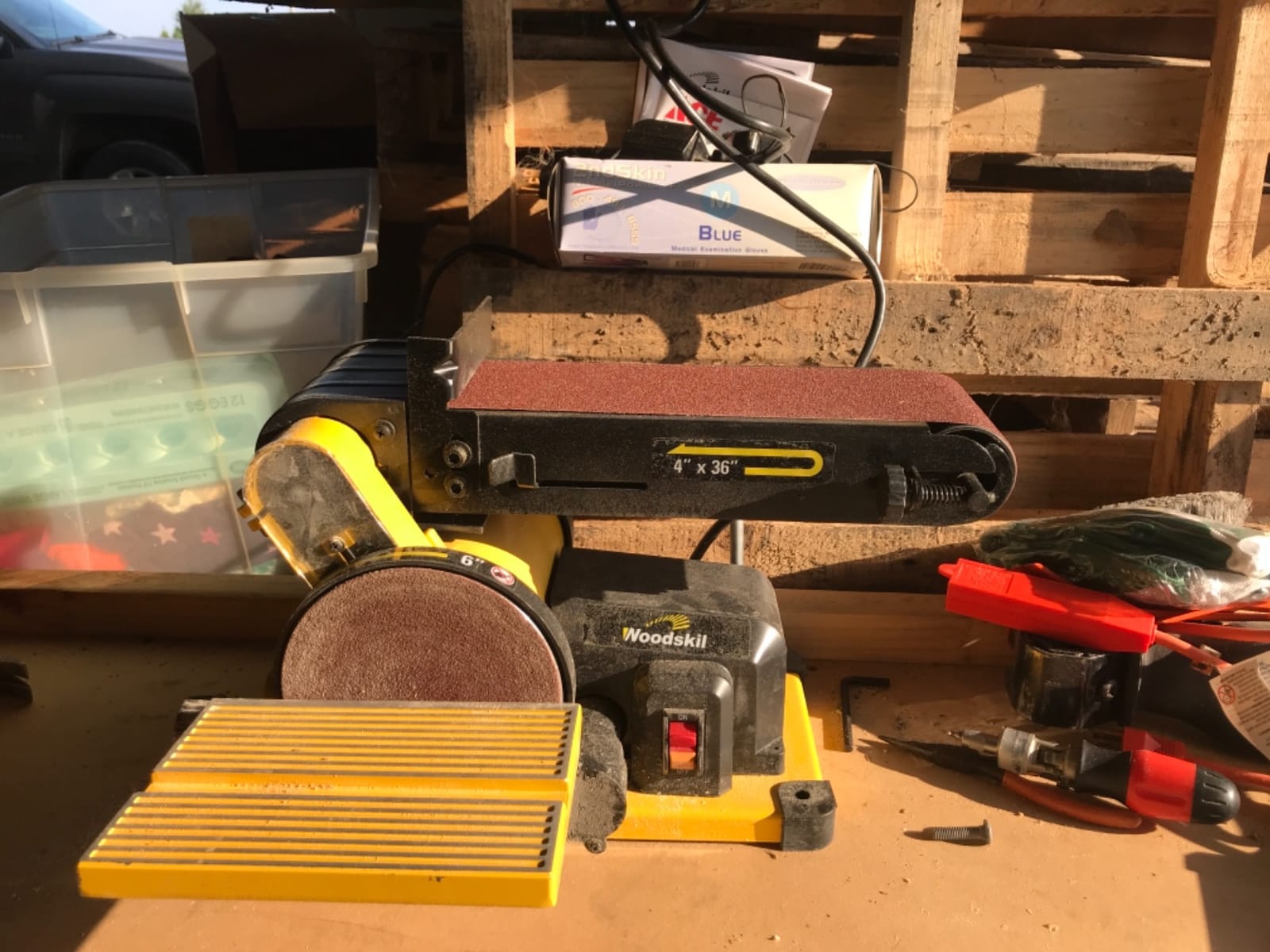
The Woodskil is the second benchtop combination sander here, and it beats the WEN on raw output. The 3/4 horsepower motor runs to 3,570 RPM and 1,732 feet per minute of belt speed, which is a different class of machine from anything else on this list.
For floor work that means clamping a board flat and letting a serious motor remove material rather than leaning into a small one. The belt tilts from 0 to 90 degrees and the work table adjusts 0 to 45 degrees with a miter gauge, so the same machine handles flat stock, angles and small parts.
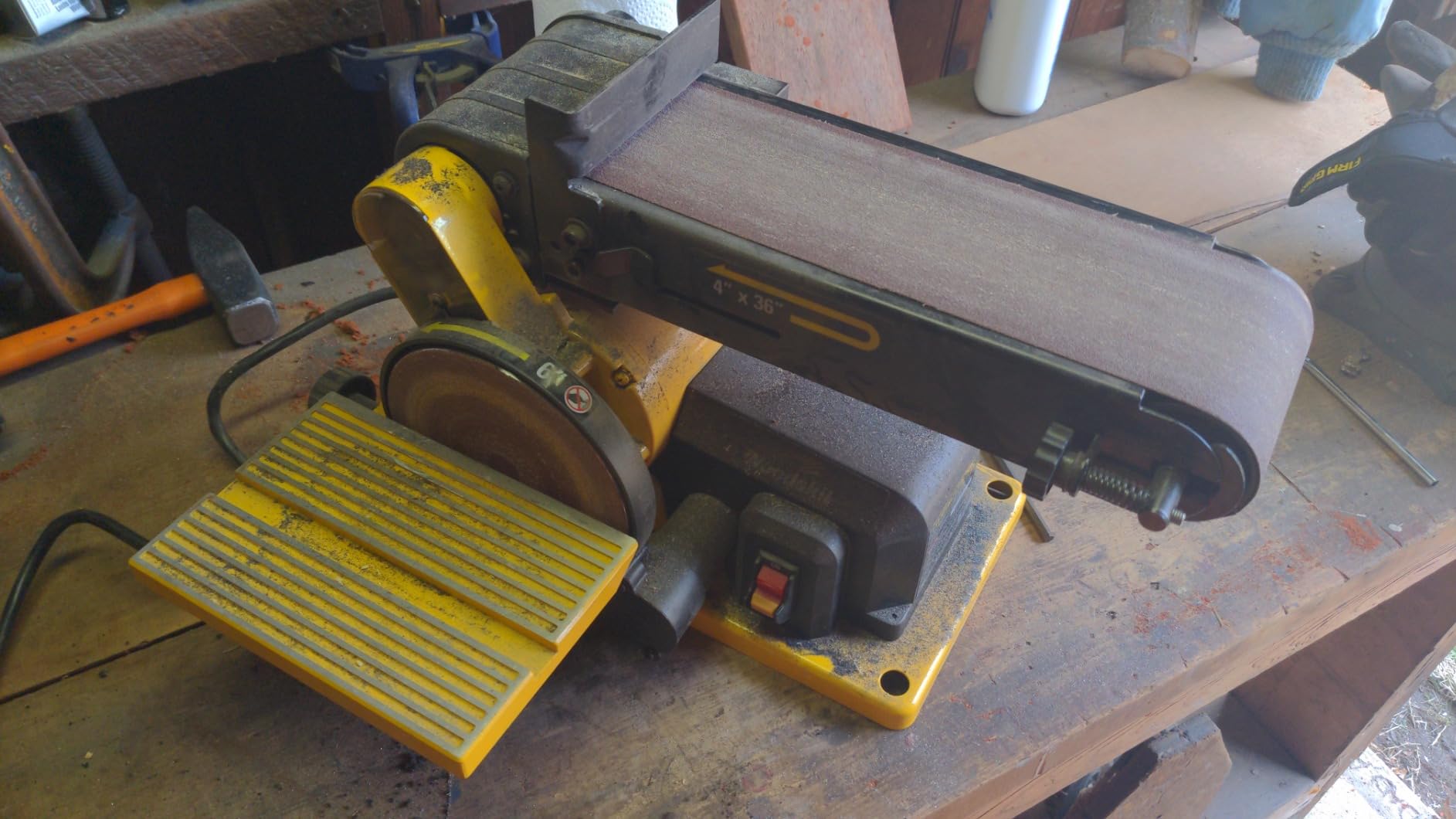
The dual dust exhaust ports, one for the disc station and one for the belt station, are a genuine improvement over shared-port designs. You can run extraction to the belt while you work and keep the disc station separate, which matters more here than it would on a machine with one small bag.
The multi-wedge belt drive mechanism is worth noting for anyone who will use this long term. It spreads the load across more of the belt pulley instead of a single narrow contact point, and the practical effect is longer belt life and less tracking drift.
What the extra power buys you
Thicker lumber, faster. At 3,570 RPM this machine does not bog on hard maple the way a 4.3 amp machine does. If your floor work involves flattening genuinely cupped boards, motor headroom is not a luxury.
Long sessions without thermal complaints. The larger motor has more thermal mass, and it does not demand the cooling pauses a small motor needs.
Plan for the belt supply problem
This is the one issue buyers flag most. Replacement 4 x 36 belts bought from third parties may not be the correct length, and a wrong-length belt will not track. There are no clearly listed factory part numbers, so confirm belt dimensions before you count on replacements.
It is also a 120V machine only. Anyone in a 220V region cannot run it, which rules it out for some readers outright.
8. WEN HB424V Belt Sander – High Amperage With a Weak Dust Bag
WEN 10-Amp 4-by-24-Inch Variable Speed Combination Handheld and Benchtop Belt Sander (HB424V)
4 x 24 inch belt
10 amp variable speed motor
660 to 1310 fpm
Lock-on power switch
Two-year warranty
Pros
- Powerful 10 amp brushed motor that does not bog down
- Large metal body handles big removal jobs
- Mounting clamps convert it to a benchtop sander
- Quick belt changes with a reliable front shoe tracking knob
- Variable speed gives real control across grits
- Externally accessible motor brushes
Cons
- Weak dust collection with the supplied bag
- Heavy and unwieldy for prolonged handheld use
- Isolated report of a bearing failure under heavy grit on a large floor
- Isolated report of an intermittent electrical short near the handle
- Trigger lock needs care given the power
The HB424V is the sleeper of this roundup on paper: 10 amps, a 4 x 24 inch belt, variable speed from 660 to 1,310 feet per minute and a metal body. On power per dollar it undercuts nearly everything else here. Its 4.3 rating is the lowest among the corded handheld group, and the reason is dust collection rather than performance.
The supplied bag does very little. Owners consistently report hooking up a shop vacuum to the 1.2 inch dust port as the practical requirement, and once you do that it becomes a genuinely capable floor sander.
The feature nobody expects from a handheld belt sander is the conversion kit. The included rubber mounting pad and two clamps let you fasten it upside down to a benchtop so the belt faces upward, turning a handheld into a small stationary machine. For flattening floorboards before installation, that is a real capability at this tier.
The lock-on power switch is standard on contractor machines and useful on a floor, where holding a trigger for an hour is genuinely tiring. The quick-release belt tension lever makes grits changes fast.
Judge it on the specification sheet
At 213 reviews this machine has the second smallest owner base here, which means the ratings reflect a smaller and sometimes less demanding sample of users than the Makitas or the WEN 6502T.
The 10 amp motor holds speed where smaller machines falter, and the metal housing tolerates the knocks and heat of floor work better than a plastic body would.
Where the lower rating comes from
There are isolated reports of a bearing failure under heavy grit on a large floor job, and an intermittent electrical short near the handle. Isolated means isolated, but on a machine that can chew hardwood you want to know before you buy.
It is heavy and unwieldy for prolonged handheld use, and the trigger lock needs respect. Combined with weak bag collection, this is a machine to buy with a shop vacuum in the plan.
9. Metabo HPT SB8V2 Belt Sander – Nine Amps and a Five Year Warranty
Metabo HPT Belt Sander | 3 x 21 Inch | For Woodworking | Variable Speed | 9.0 Amp Motor | Soft Grip | 5-Year Warranty | SB8V2
3 x 21 inch belt
9 amp 1020 watt motor
Variable speed dial
9.5 pounds
Five year limited warranty
Pros
- 9 amp 1020 watt motor delivers solid force
- Variable speed dial at the base of the handle improves control
- Side-mounted dust bag improves corner access
- Clear front cover gives visibility when working against a surface
- Professional 5-year limited warranty
Cons
- Lowest average rating in this group with a higher share of one-star reviews
- Some owners report the motor running hot under sustained load
- Speed dial is less convenient to reach than a trigger control
- 3 x 21 inch belt is narrower than premium floor-capable options
The SB8V2 pairs a 9 amp, 1,020 watt motor with a five year limited warranty, and that combination is unusual at this tier. The warranty is the longest on this list by two years, which matters if you are one person doing occasional floors over a decade rather than a contractor running machines daily.
Two design choices are floor-specific wins. The side-mounted dust bag keeps the collection out of the way on one side, which improves access when you are corner sanding. The clear front cover lets you see the contact point when you are working up against a surface, and on floor edges that visibility is the difference between a clean line and sanding the baseboard.
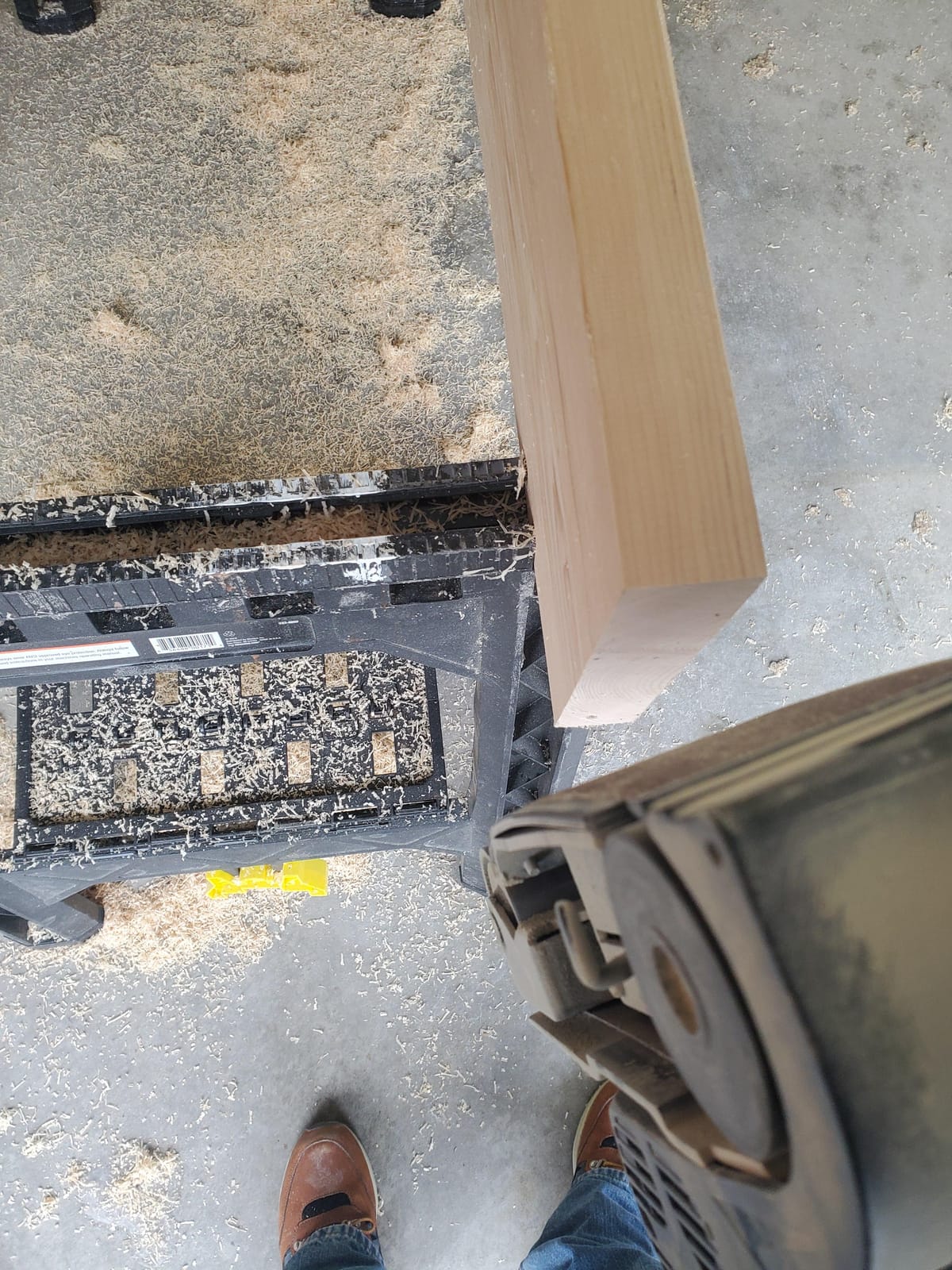
The flush surface design is what makes it usable at all on a floor. Sanding flush to a wall without gouging requires the geometry of the machine to cooperate, and both Makitas in this roundup achieve it; so does this one.
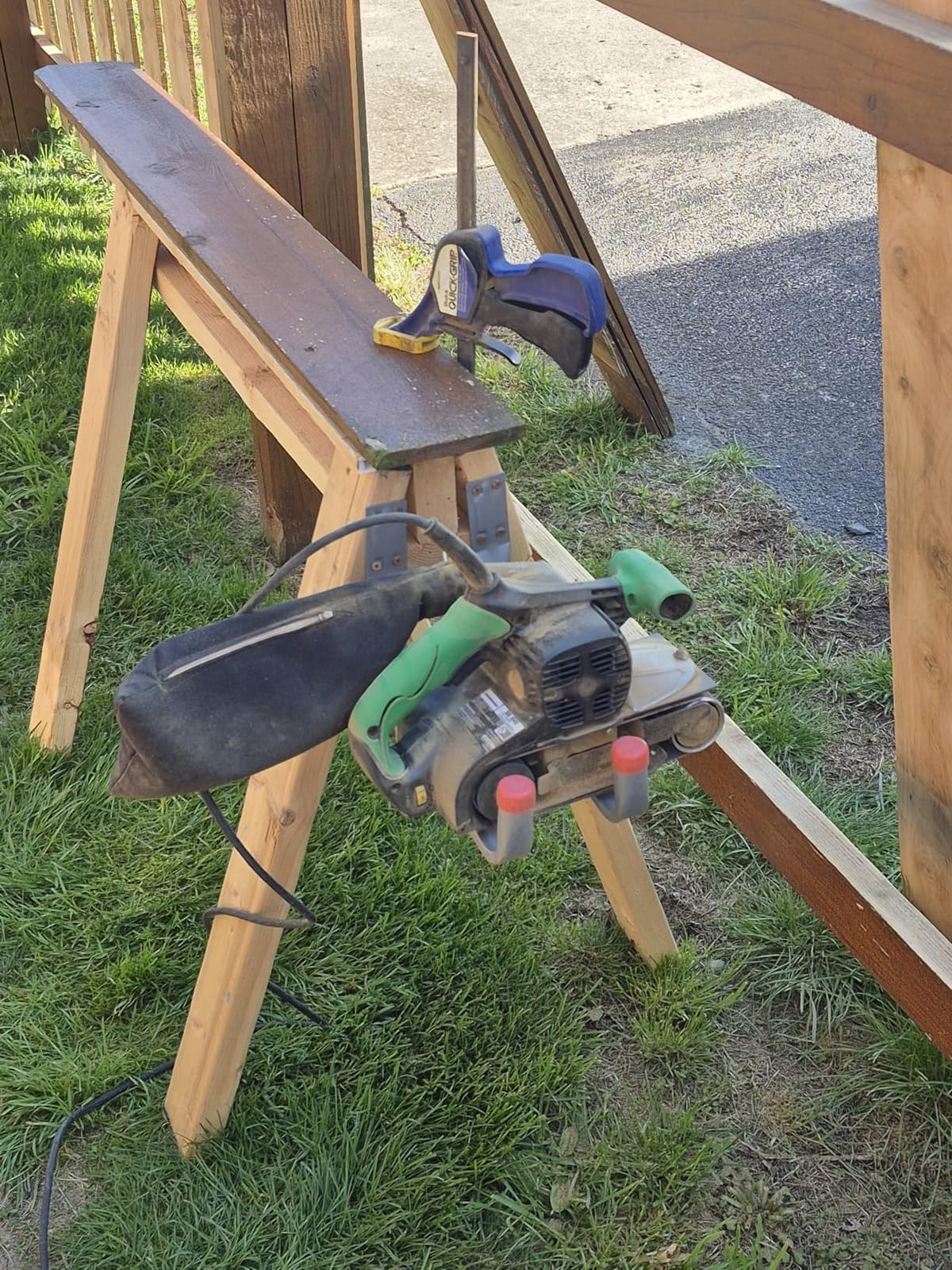
Its 4.1 rating is the lowest here, and at 976 reviews the share of one-star feedback is higher than the rest of the group. The complaints cluster around the motor running hot under sustained load, which is a heat management issue rather than a power shortfall.
When the warranty changes the decision
Long ownership horizons. If you refinish a room every few years, a five year warranty means the machine is covered for the entire time you might own it, and repair cost stops being part of the calculation.
Lower-resale-risk ownership. Five years is the term most people say they want from a tool, and this machine is the only one here that meets it outright.
When it is not the right call
Sustained heavy removal. If your project is a full floor in one push, hot motors under sustained load are a real reliability risk and the reviews reflect that plainly.
Convenience of speed control. The dial sits at the base of the handle rather than under the trigger, so you are taking your hand off the grip to change speed. On a long floor that is a small friction that you notice.
10. Milwaukee M18 Fuel Belt Sander – Brushless Power in a Cordless Shell
Milwaukee Electric Tool M18 Fuel 3″” x18 Belt Sander
M18 Fuel 18V cordless
POWERSTATE brushless motor
750 to 1350 SFM
3 x 18 belt only
Tool-free belt change
Pros
- Brushless motor delivers torque comparable to 8A corded belt sanders
- Cordless format removes cord drag on stairs and tight areas
- Tool-free belt change lever speeds up swaps
- Variable speed dial gives fine control over removal rate
- REDLINK PLUS protects against overload and overheating
Cons
- Only fits 3 x 18 sanding belts which limits availability
- Battery powered so runtime depends on pack capacity and spares
- Smallest review base here at 134 reviews
- Narrow 3 inch belt covers less floor area per pass
This is the option for someone already invested in Milwaukee 18V packs. The POWERSTATE brushless motor is rated to generate the power and torque of larger 8 amp corded belt sanders, and REDLINK PLUS intelligence protects the tool from overload, heat and over-discharge.
The variable speed dial runs from 1,350 down to 750 surface feet per minute, which is a wider usable range than most corded machines give you at the low end. That range matters on the finish passes where you want minimal material removal.
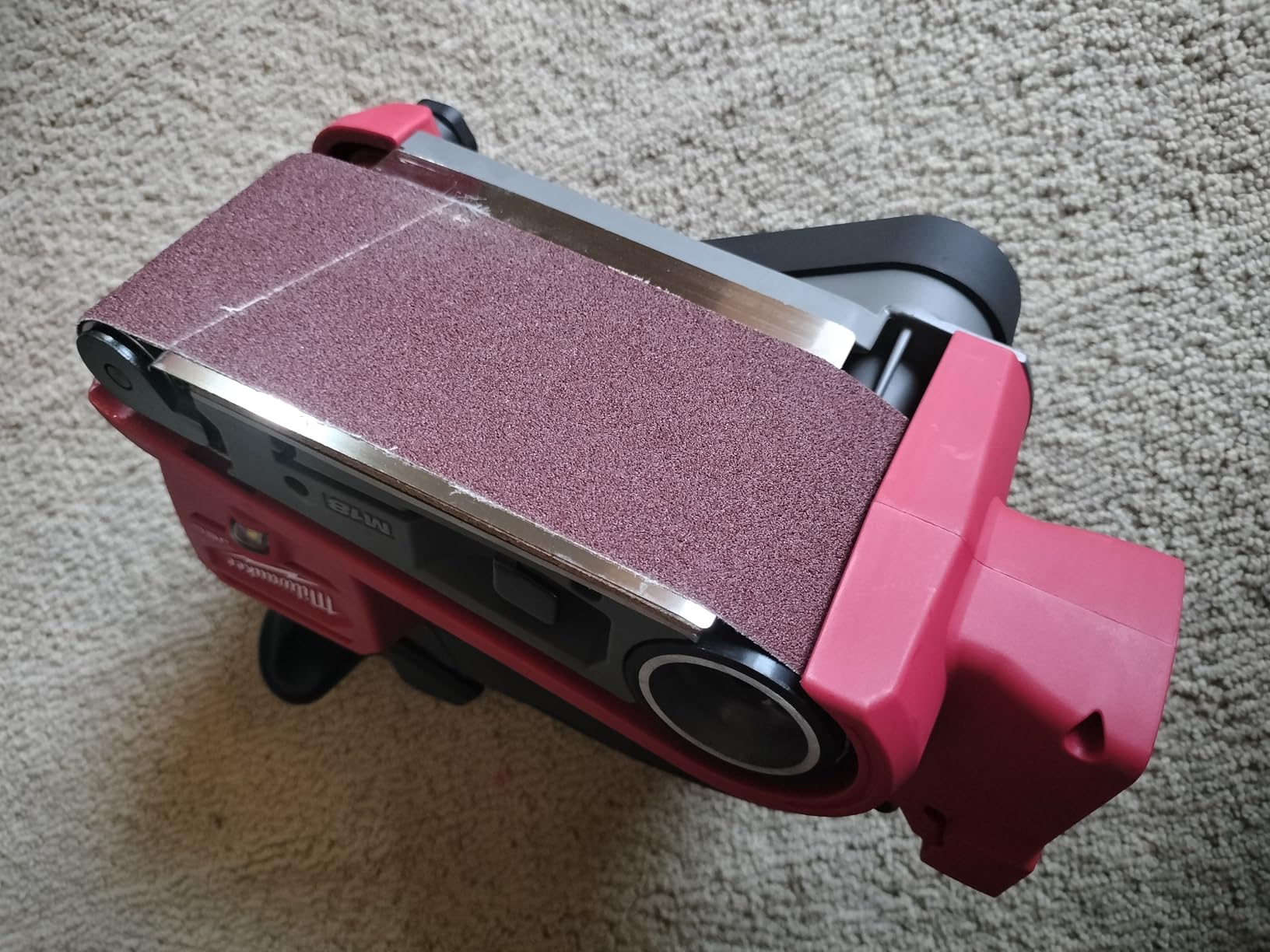
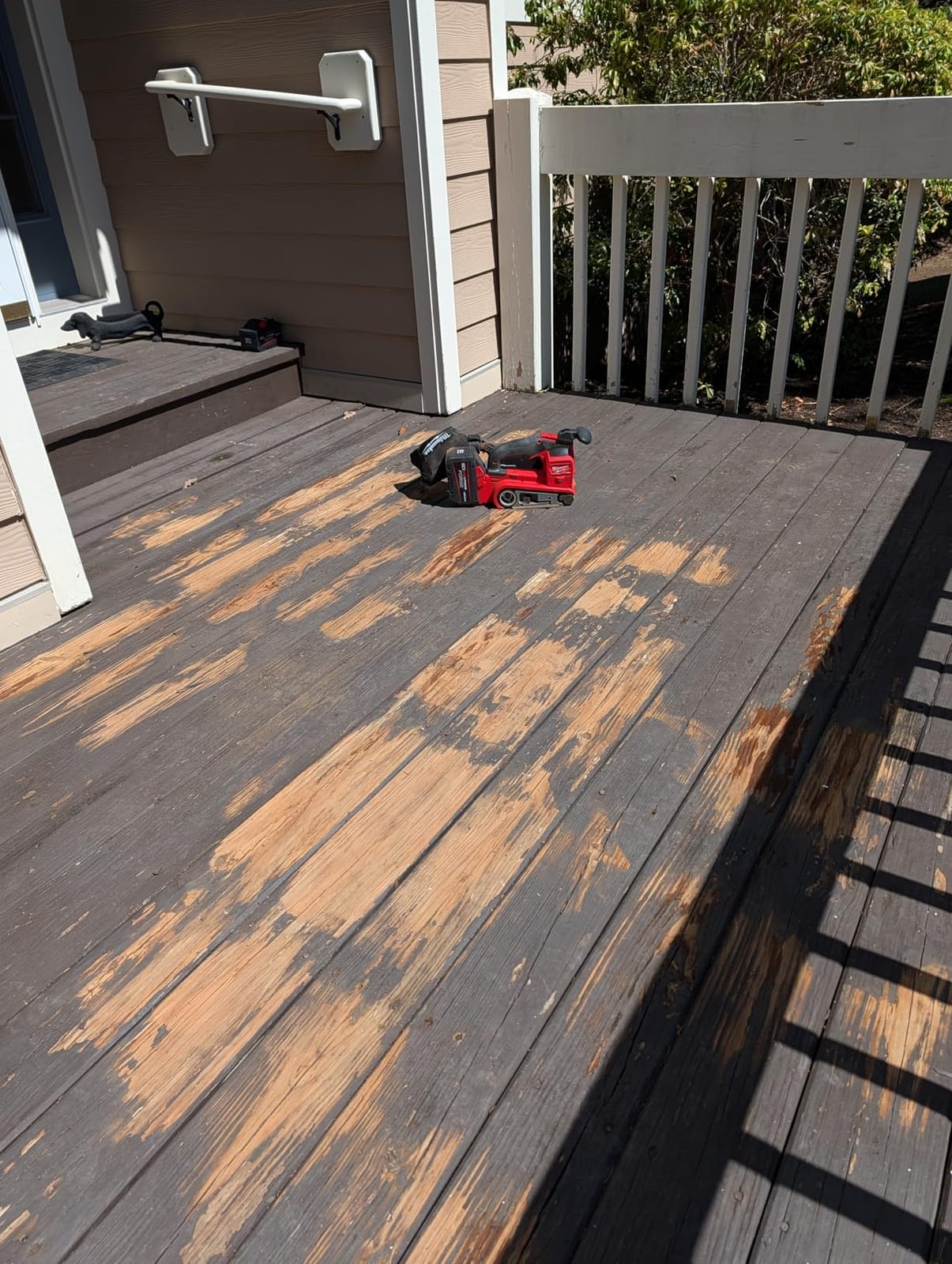
Like the DEWALT, the case for this machine is stairs and awkward geometry. Cord drag is the thing that causes snags and falls on a staircase, and a cordless tool removes that failure mode entirely. The tool-free belt change lever keeps grit changes fast between rooms.
At 134 reviews it has the smallest owner base in this roundup, which means the sample is thin and largely comes from tradespeople who already use Milwaukee platforms professionally.
Why platform ownership decides this one
Spare batteries cost nothing extra if you already have them. Anyone running Milwaukee 18V gear has packs and a charger already, and that is the entire economic argument for this machine over any corded option.
Brushless motor longevity. A brushless motor has no carbon brushes to replace, which is the single biggest maintenance saving on a tool you own for a decade.
The 3 x 18 constraint
This machine fits only 3 x 18 sanding belts. That is a less common size than 3 x 21 or 4 x 24, so your belt selection is narrower and replacement availability is thinner.
Coverage is the other limitation. A 3 inch belt on a large open floor needs more passes than a 4 inch belt, and this is a machine suited to a room or a stair run rather than a whole floor.
Belt Sander vs Drum Sander vs Orbital for Hardwood
The short answer: a belt sander is the right choice for most homeowners with one to three rooms, an orbital sander is the forgiving choice for a first-timer, and a drum sander is the professional choice for a large open floor. Forum discussion on flooring boards lands on the same conclusion repeatedly, with the most common plan being to rent a drum sander for the main area and use a handheld for the edges.
A drum sander is by far the most aggressive machine available and covers a wide drum at speed. That means it removes a lot of wood very quickly, which is exactly what you want on a 600 square foot field and exactly what you do not want if you have a soft floor or a lot of joints to keep. It also commonly needs a 220V supply, which a surprising number of homes do not have.
An orbital sander is the opposite. The pad moves in a small orbit, so it removes finish slowly and forgivingly. Beginners who have never used a power sander will do less damage with one. What it will not do is cut through heavy build-up efficiently, and on a floor with old poly and wax you may find yourself stuck.
What a belt sander adds is the middle ground: more material removal than an orbital, far more control than a drum, no special electrical requirement, and a purchase price rather than a rental rate. That balance is why it is the answer most often given when someone asks about refinishing a small number of rooms.
One thing no belt sander does is edges. A belt sander cannot reach a wall closely enough to finish a floor line without leaving a band you have to handle differently. Professionals solve this with an edger. DIYers typically work the perimeter first with the belt sander at a slight angle and blend inward, accepting a small amount of extra work at the baseboards.
How to Sand a Hardwood Floor Without Swirl Marks
Swirl marks and gouges are the single most common complaint in flooring discussions, and they come from two behaviours. The first is lifting the sander while it is still running. The second is changing direction while the belt is in contact with the floor. Both leave a curved scratch that no amount of extra sanding will fully remove.
Work in a consistent pattern. Start along one wall and run the full length of the room, keeping the sander moving the whole time. Move down one board width at a time rather than trying to turn at the end of the row. If the room is too long for that, stop the sander fully, set it down, then reposition.
Always start at coarse grit and do not skip steps. The progression that works on most residential floors runs roughly 36 to 50 or 60, then 80, then 100 or 120. Each grit removes the scratches left by the previous one. Skipping from 36 straight to 100 leaves the coarse scratches behind permanently, because a finer grit cannot cut them out.
Let the tool do the work. On a Makita 9403 at 11 amps you should be walking at a steady pace with light pressure. Pressing down does not speed removal, it just generates heat and burns the abrasive. On a lighter machine like the CRAFTSMAN, light pressure matters even more because the motor will heat up.
Change belts on schedule. A loaded belt stops cutting and starts smearing, and a smeared pass leaves a pattern that looks like a sanding mistake. If the sound changes from a steady cut to a rasp, change the belt rather than finishing the pass.
Keep the dust moving. Vacuum between grits. Dust that sits in the grain gets pulled under the belt and re-scratches the surface you just finished, which is one of the most common reasons a floor looks hazy after the final pass.
Renting vs Buying a Belt Sander
This is the question most competitors in this space skip entirely, and it is the one cost-conscious homeowners actually have to answer. The decision turns almost entirely on how many floors you will ever do.
For a single room, renting is usually the better financial move, and renting a belt or drum sander is a straightforward process with most rental centres. You pay for a weekend, you return it, and the maintenance burden is someone else’s problem for the duration.
For repeated work, buying wins quickly. Once you own the machine, every subsequent room costs only belts and time. Homeowners who bought for one floor almost universally keep the machine for furniture, doors, trim and decking, which is where the long-term value actually lives.
There is a middle path worth knowing about. Buy the handheld belt sander for edges, stairs and detail work, and rent only the drum sander for the main field on large projects. This is the workflow that shows up most often on flooring forums, and it avoids the two things a rental-only approach cannot handle, which are the perimeter band and the cord on a staircase.
One caution on rentals: drum sanders commonly require a 220V circuit, and many homes do not have one. Check your supply before you reserve anything, because discovering it on pickup day costs you a weekend.
Buying Guide: What Actually Matters on a Floor Job
Belt width is the first decision. A 4 x 24 inch belt covers floor fastest and is the right call for open areas. A 3 x 21 inch belt turns more easily at the end of a pass, which makes stairs, landings and small rooms far safer. Ask your supplier what proportion of your project is open floor and how much is tight geometry, then pick accordingly.
Amperage decides whether you finish the first pass. For removing decades of build-up, 9 amps is a reasonable floor and 11 amps gives real headroom. Below 7 amps you will be pausing often on heavy removal. Amps matter less than people assume on light finishing passes and much more than they assume on the first cut.
Variable speed is worth paying for on a floor. Matching belt speed to grit and wood hardness lets you refine without changing grit, which saves passes and belts. It also reduces the chance of gouging soft old wood in the final stages.
Belt tracking decides whether you can finish a pass. Auto-tracking systems that hold straight with and against the grain save more time than any other feature. Manually adjusting a wandering belt in the middle of a room is the most frustrating thing on this list, and it also causes the uneven surfaces people complain about.
Weight determines your finish time. Anything over 12 pounds is a long shift on a large floor. Anything under 8 pounds will feel great for two hours and may not have the motor to match. Ten to eleven pounds with 9 to 11 amps is the balance most floor projects land on.
Dust collection should be a shop vacuum, not a bag. On a floor-scale job, bag-only collection means constant stopping and a room you cannot see into. Look for a port sized for a standard hose. The DEWALT airlock port and the clear front covers on the Makitas are both meaningful advantages here.
Warranty reflects expected duty. A five year warranty suggests a machine built for regular use, while a one or two year term is normal for occasional work. Neither is better or worse; they simply match different expectations.
Know your belt sizes before you buy. Replacement belt cost adds up across a floor project, and some machines take less common sizes. The 3 x 18 format on the Milwaukee is the most restrictive here, and third-party 4 x 36 belts for the benchtop combos are a known sizing headache.
Frequently Asked Questions
What is the best type of sander to use on hardwood floors?
For most homeowners with one to three rooms, a belt sander is the best balance of removal rate and control. A drum sander is faster and far more aggressive but needs a 220V supply and real skill. An orbital sander is the most forgiving option for a first-timer but removes old finish slowly.
Can I use a belt sander on hardwood floors?
Yes. A belt sander is one of the most effective tools for refinishing hardwood floors because it removes old finish quickly at a controlled belt speed. Never use one on engineered or veneer flooring, where the top layer is too thin to withstand the cut.
What is the best belt sander for wood?
The Makita 9403 is our pick for most wood and floor work, with an 11 amp motor, 4 x 24 inch belt, 1640 feet per minute belt speed and a labyrinth-sealed motor housing that keeps dust out of the bearings. It also sands flush against a wall.
What grit progression should I use when sanding a hardwood floor?
Start at roughly 36 grit for heavy build-up, move to 50 or 60, then 80, then finish at 100 or 120. Each grit must remove the scratches left by the previous one, so skipping steps leaves coarse scratches that a finer grit cannot cut out. Vacuum thoroughly between grits.
How many sanding belts do I need for a hardwood floor?
Plan on at least two belts per grit per room, and more if the floor has heavy build-up. A loaded belt stops cutting and starts smearing, and a smeared pass looks like a sanding mistake. Change belts when the sound shifts from a steady cut to a rasp.
The Verdict
For most people asking about the best belt sanders for hardwood floors, the answer is the Makita 9403. It has the power to move through a build-up of old finish without stalling, a sealed motor that survives floor dust, a belt that tracks without adjustment, and an 84 decibel rating that makes it usable in an occupied house. At 13 pounds it is heavy, and for stairs you would be better served by a cordless machine.
Pick the DEWALT 20V MAX for stair runs, landings and small rooms where a cord is a hazard, and budget for spare batteries. Pick the Makita 9404 if you want variable speed and the longest cord in the group. Pick the Makita 9903 for tight geometry. Pick the Metabo HPT SB8V2 if a five year warranty is the deciding factor. The benchtop combination sanders are for levelling boards before they go down, not for sanding a floor in place.
Whichever you choose, practice on a closet or a scrap board first, run the full grit progression without skipping, and keep the dust moving between passes. Those three habits do more for the final result than any machine on this list.