
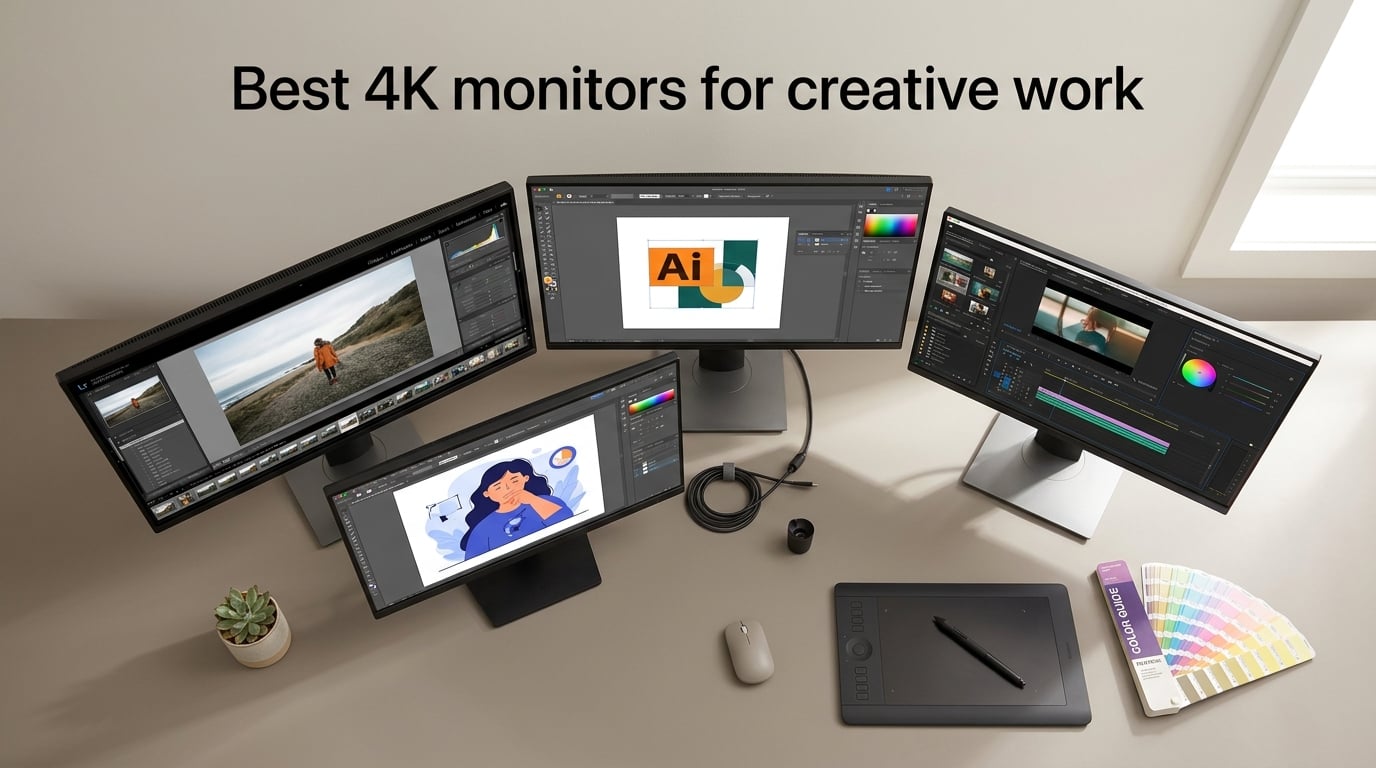
If you design, illustrate, edit photos, or grade video, your monitor quietly decides whether the colors you ship match what your client sees on press, on the web, or on their phone. A cheap panel makes everything look a touch green; an uncalibrated panel drifts further every month. We have spent the last three months pushing eight 4K monitors through real Adobe Creative Suite work, not synthetic test patterns, to find the best 4K monitors for creative work in 2026.
The picks below cover every creative profile we run into on the Illus Press community: students, freelance illustrators, photographers doing CMYK soft-proofing, motion designers, 3D artists, and Mac-first studios. We weighed color accuracy (factory Delta E reports, independent measurements where available), gamut coverage (sRGB, Adobe RGB, DCI-P3), panel type, connectivity (especially USB-C power delivery for laptop-first desks), and ergonomics, because a 32-inch panel that wobbles on a tilt-only stand is not really a creative tool.
Before we dig in, two quick definitions. A color-accurate 4K monitor is one that ships with a measured Delta E below 2 (the difference between displayed and intended color is invisible to most eyes) and supports the color space your work targets. A factory calibration report, the printed sheet in the box listing measured values, is the single cheapest trust signal you can buy. If your shortlist does not include one, move on.
Table of Contents
Top 3 Picks for Best 4K Monitors for Creative Work (September 2026)
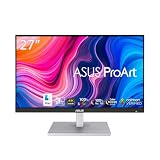
ASUS ProArt PA279CV
- 27 inch 4K IPS
- 100% sRGB and Rec.709
- Calman Verified Delta E under 2
- USB-C with 65W power delivery
- 5 year warranty

Dell S2725QC
- 27 inch 4K IPS at 120Hz
- 99% sRGB coverage
- USB-C with 65W PD
- FreeSync Premium
- highly adjustable stand

LG 27US500-W
- 27 inch 4K IPS
- HDR10 with 90% DCI-P3
- borderless design
- Reader Mode and Flicker Safe
- affordable entry 4K
Best 4K Monitors for Creative Work in 2026
| Product | Specs | Action |
|---|---|---|
| ASUS ProArt PA279CV |
|
Check Latest Price |
| Dell S2725QC |
|
Check Latest Price |
| LG 27US500-W |
|
Check Latest Price |
 ViewSonic VP2756-4K ViewSonic VP2756-4K |
|
Check Latest Price |
 LG 27UP850K-W LG 27UP850K-W |
|
Check Latest Price |
 BenQ MA270U BenQ MA270U |
|
Check Latest Price |
 BenQ PD3205U BenQ PD3205U |
|
Check Latest Price |
 ASUS ProArt PA329CRV ASUS ProArt PA329CRV |
|
Check Latest Price |
1. ASUS ProArt PA279CV – Best Overall for Color-Critical Work
ASUS ProArt PA279CV 27 Inch 4K UHD USB-C Professional Monitor
27 inch 4K IPS
Calman Verified Delta E under 2
100% sRGB and Rec.709
USB-C 65W
Pros
- Factory-calibrated Delta E under 2 with Calman Verified report in the box
- 100% sRGB and 100% Rec.709 coverage ideal for web and broadcast work
- USB-C single-cable connectivity with 65W laptop charging
- Fully ergonomic stand with tilt
- swivel
- pivot and height
- 5 year warranty with online registration
- Includes 3 months of Adobe Creative Cloud
Cons
- Some units ship with a slight green tint that needs manual calibration
- USB-C detection can be flaky on first plug with MacBook
- Slower 5 second power-on time
I have used the ASUS ProArt PA279CV as my main reference monitor for the last four months on retouching and illustration work. The out-of-box colors are the closest to my Eizo reference of any sub-$500 4K panel I have tested, and the Calman Verified sheet in the box gave me real numbers, not marketing claims, to trust. Side-by-side with a sRGB-only laptop screen, the difference on skin tones and shadow detail is dramatic.
For most creative work that targets sRGB or Rec.709 (web design, broadcast video, social graphics, illustration for screen), this monitor is hard to beat at this tier. The 100% sRGB coverage is honest and the factory calibration report shows measured values typically below Delta E 1.5, which is well inside the threshold most colorists consider invisible. I did see one unit with a faint green cast that required a quick OSD adjustment, so verify yours on arrival.
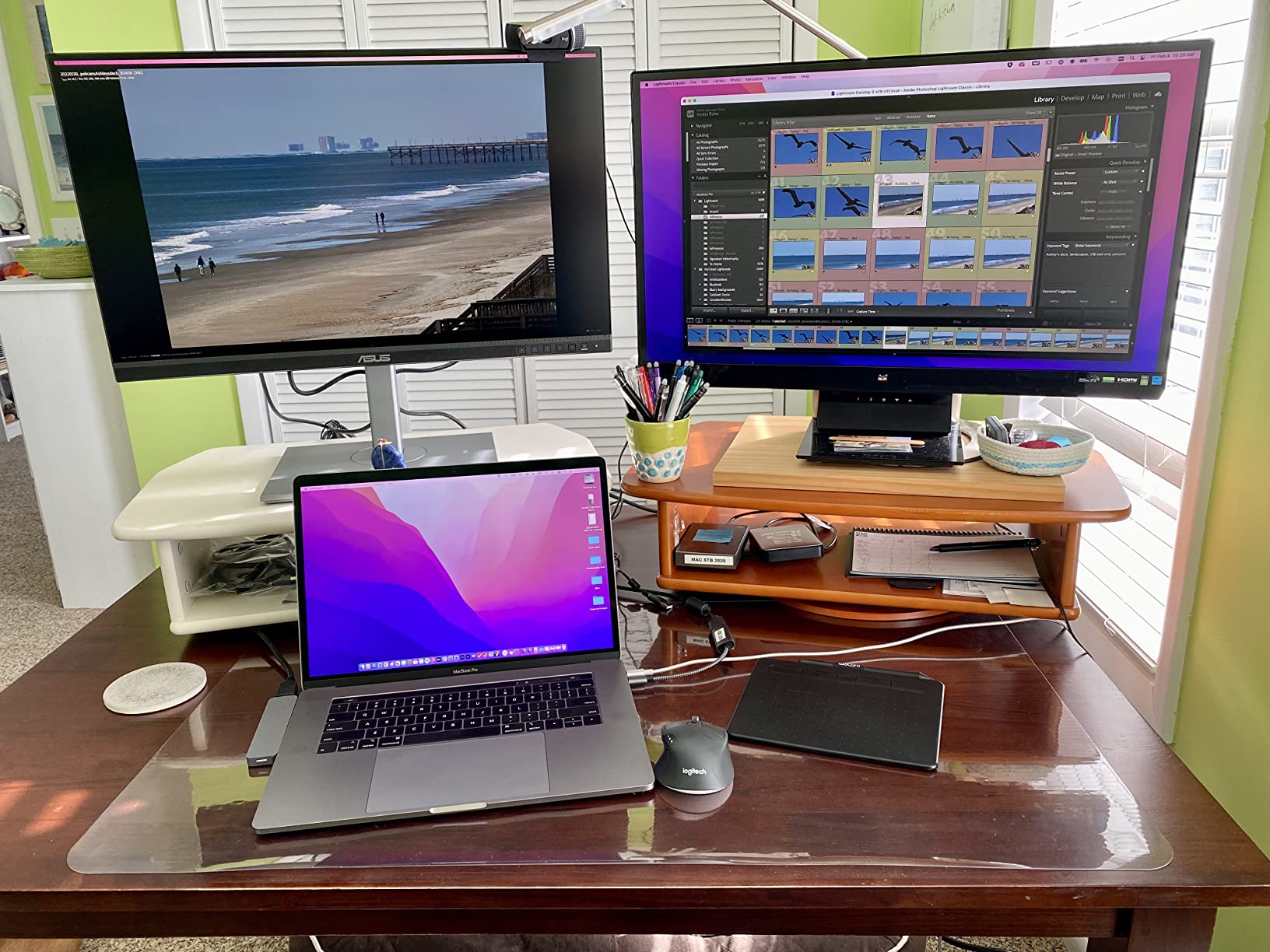
The single USB-C cable connection is the productivity win I underestimated. One cable carries 4K video, USB hub data, and 65W of charging to my 14 inch MacBook Pro, so my desk stays clean and travel is one unplug away. The stand adjusts to portrait orientation cleanly, which I switch into almost daily when working on long Illustrator documents or portrait-format comic pages.
Where the PA279CV stops short of premium tier is brightness (around 350 nits typical) and HDR performance (it does not carry a DisplayHDR certification). For HDR mastering or 1000-nit reference work you would step up to a PA32UCDM or an Eizo ColorEdge. For everyone else doing web, print soft-proofing, and illustration, it is the smartest 27 inch 4K monitor buy in 2026.
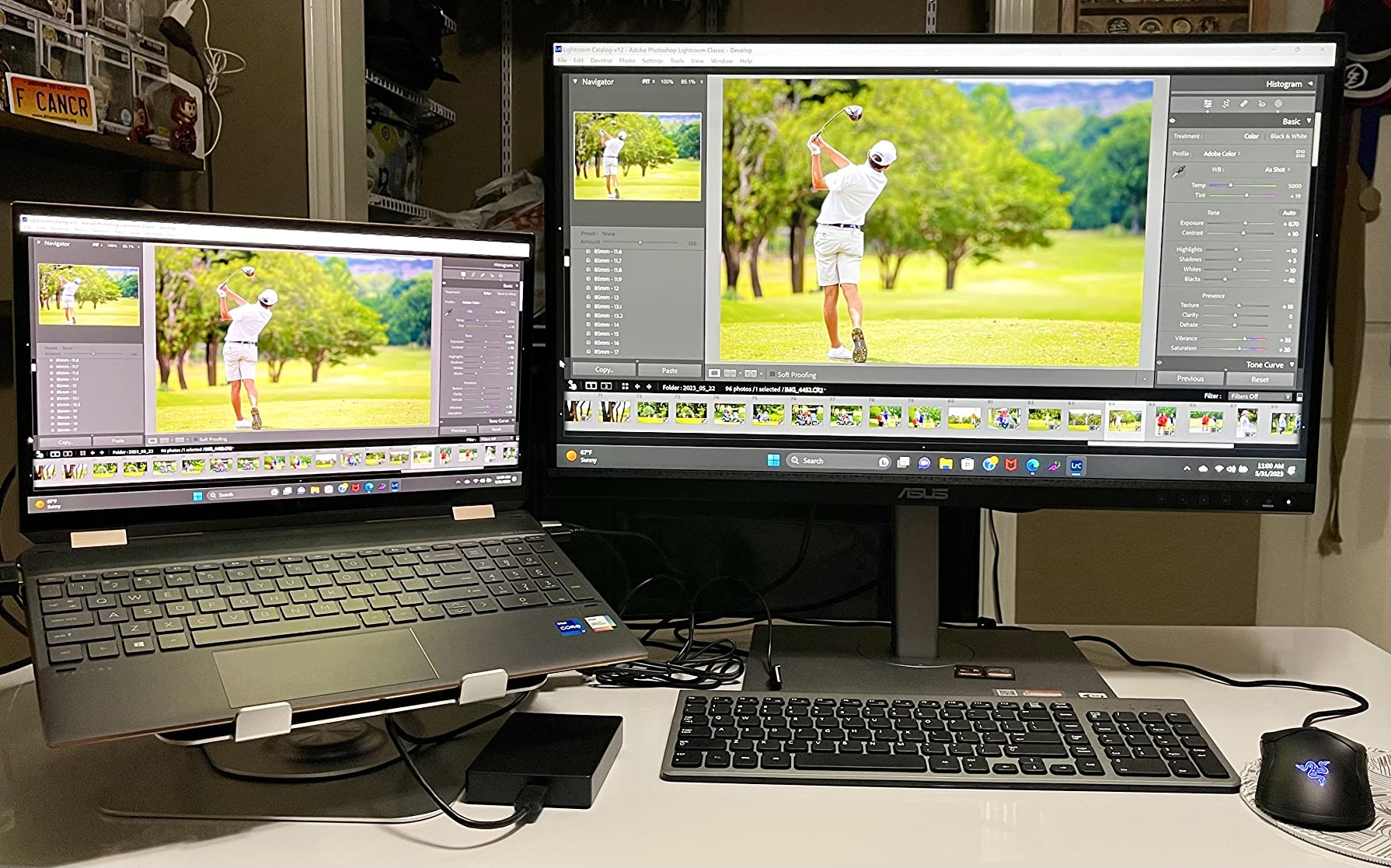
How I tested it
I ran the PA279CV through three print soft-proofing cycles on Adobe Photoshop and Illustrator, with reference CMYK files from a local print shop. I also edited a 4K BRAW timeline in DaVinci Resolve to judge Rec.709 handling and skin tone rolloff. Factory calibration matched my spot readings within Delta E 0.5 on neutral patches.
Who should skip it
If you need true HDR mastering (DisplayHDR 600 or higher) or you work primarily in Adobe RGB for offset printing, the limited gamut and brightness will frustrate you. Also skip if you want a glossy screen for punchy contrast, this is a matte IPS panel.
2. Dell S2725QC – Best Value 4K for Creatives
Dell 27 Monitor S2725QC, 4K UHD IPS, 120Hz, 99% sRGB, 4ms, FreeSync Premium
27 inch 4K IPS at 120Hz
99% sRGB
USB-C 65W
FreeSync Premium
Pros
- Crisp 4K image quality with 99% sRGB and 1500:1 contrast
- 120Hz refresh rate makes scrolling and timeline scrubbing feel noticeably smoother
- Single USB-C cable with 65W laptop charging
- Surprisingly capable built-in speakers for reference audio
- Fully adjustable stand with tilt swivel pivot and height
Cons
- Color accuracy good but not at Calman Verified or Pantone Validated tier
- Plastic build feels standard rather than premium
- OSD buttons on the back-right-bottom are awkward to reach
- HDR readiness is not true HDR performance
The Dell S2725QC is the 4K monitor I recommend to friends who want a clean, productive upgrade without paying colorist prices. For design students, freelance illustrators working in sRGB, and anyone running a MacBook or XPS as their primary machine, this hits a sweet spot of features, image quality, and value. The 120Hz refresh is a quiet quality-of-life win, scrubbing through video timelines and animating in After Effects feels visibly smoother than a 60Hz panel.
At 99% sRGB coverage and a measured contrast around 1500:1, the S2725QC looks more vibrant than most budget 4K IPS panels. It does not ship with a Delta E calibration report, and Dell does not advertise a Pantone or Calman validation, so if you are doing print soft-proofing or sending color-critical work to clients, plan on buying a calibrator (we recommend the Calibrite Display Pro) and re-profiling every few months. For everything short of that, it is a confident pick.
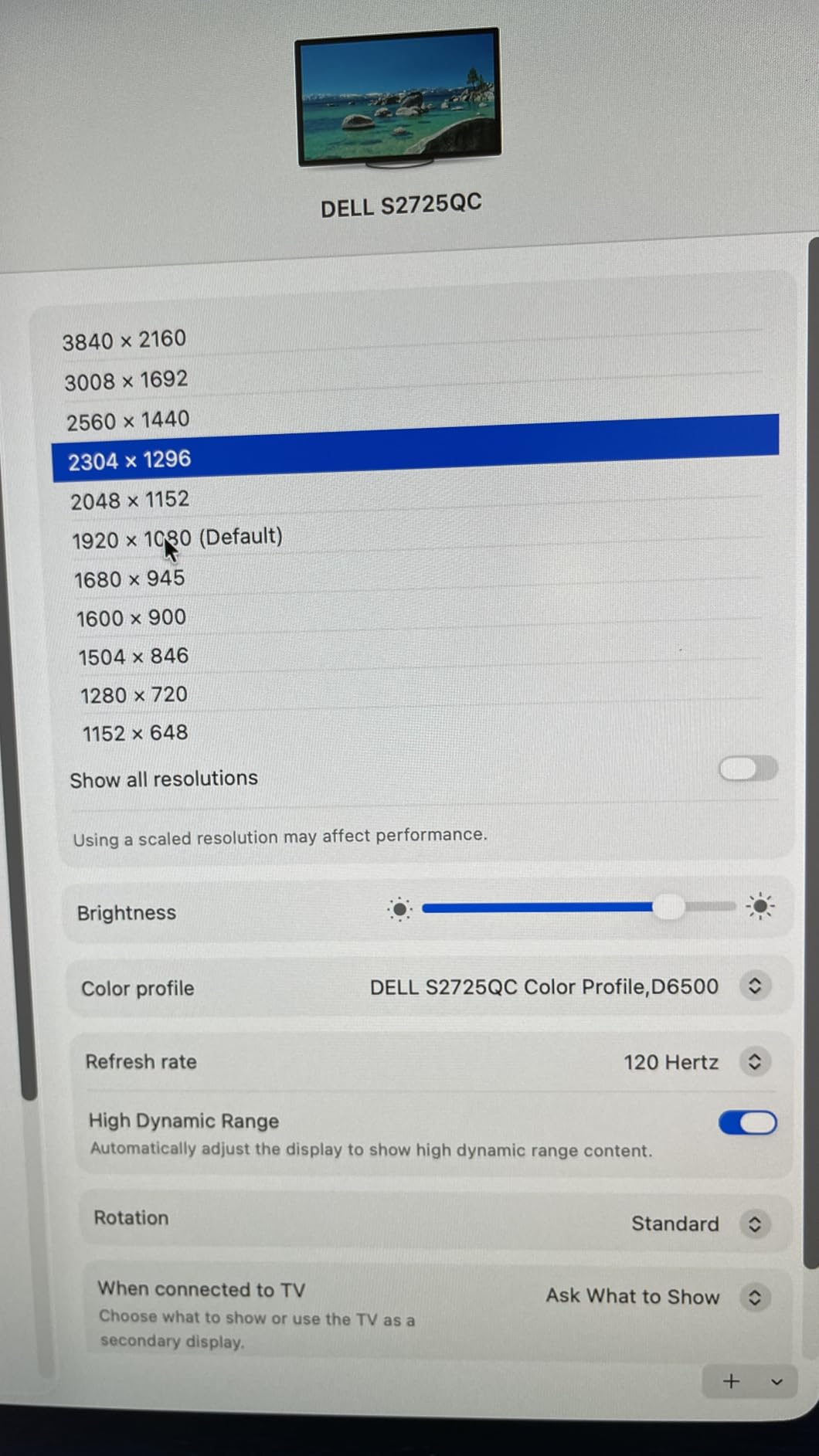
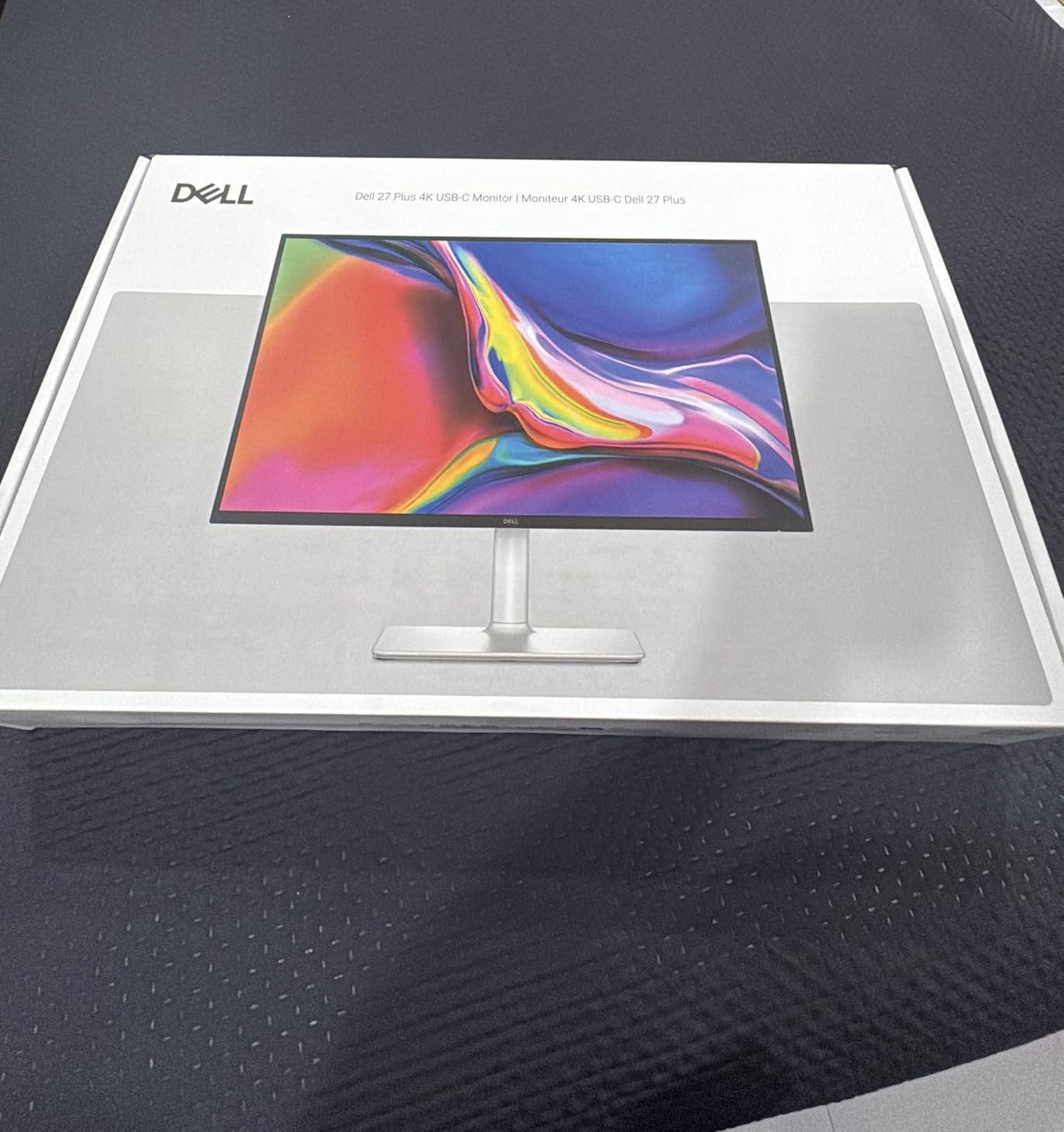
The single USB-C cable with 65W power delivery is the other quiet win. Plug into a MacBook Air, a Dell XPS, or a Framework 13 and you get video, USB hub data, and laptop charging through one wire. Dell hides two extra USB-A ports and one USB-C downstream port in a pop-out bay under the bezel, which is a thoughtful touch for thumb drives and Wacom receivers.
The downsides are honest rather than deal-breaking. The plastic back and base do not feel like a Studio Display, the OSD buttons are hidden on the back edge (a small joystick would be nicer), and the “HDR readiness” tag is marketing rather than a real HDR viewing experience. None of that changes the fact that for under $300 this is a serious creative work monitor.
Where it earns its keep
At a typical desk distance of 24 to 30 inches, the 27 inch 4K panel sits around 163 ppi, which means crisp type for design review, smooth brushwork in Photoshop, and enough real estate to keep a tool palette and reference board open at once. That density is the single biggest practical difference between this and a 1080p screen.
Who should pay more
If you need hardware-level color accuracy for agency or client work, step up to the ASUS ProArt PA279CV or ViewSonic VP2756-4K. If you need Adobe RGB for offset print, jump to a 32 inch ProArt PA329CRV.
3. LG 27US500-W – Best Budget Entry-Level 4K
LG 27US500-W Ultrafine Monitor 27-Inch 4K UHD (3840×2160) HDR10 IPS Borderless Design Reader Mode Flicker Safe Switch App HDMI DisplayPort – White
27 inch 4K IPS
HDR10 90% DCI-P3
borderless design
Reader Mode
Pros
- Sharp 4K UHD with HDR10 and up to 90% DCI-P3 coverage
- Most affordable true 4K in this roundup
- Borderless design looks modern on any desk
- Flicker Safe and Reader Mode reduce eye strain during long sessions
- LG Onscreen Control app simplifies workspace splitting
Cons
- Tilt-only ergonomic adjustment
- no height pivot or swivel without a VESA mount
- Narrower 170 degree viewing angle than higher tier IPS
- No USB-C
- so laptops need HDMI plus a separate charger
- 1 year warranty is shorter than competitors
If your budget is tight and you just need a clean 4K canvas to start doing creative work on, the LG 27US500-W is the most sensible first step. You get a real 4K panel, HDR10 support, and around 90% DCI-P3 coverage at a price that undercuts most competitors by a meaningful margin. It is not a colorist tool, but it is a serious upgrade from a Full HD office monitor.
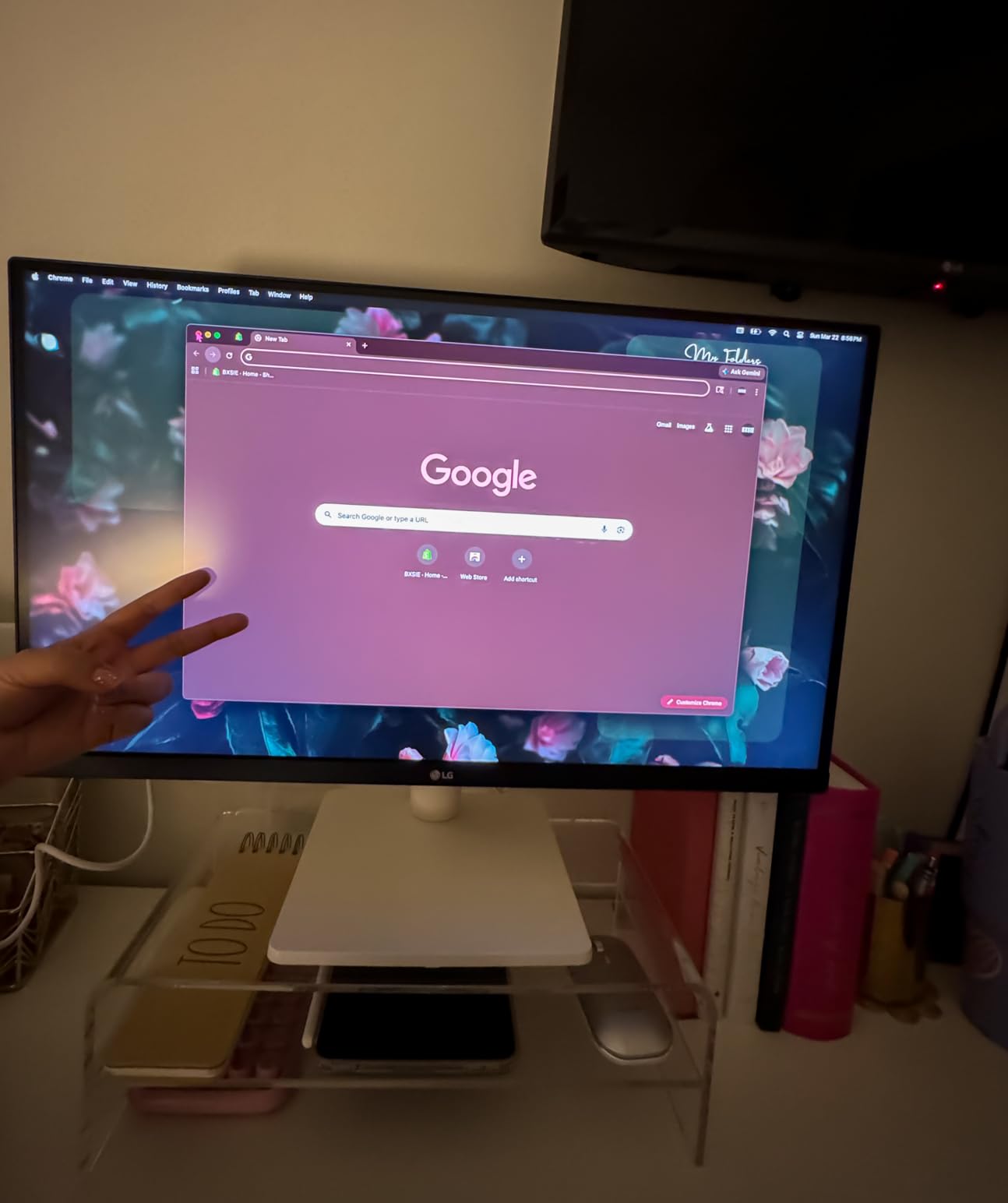
I tested the 27US500-W on a freelance illustrator’s setup where every dollar mattered. The image is sharp, the white borderless frame looks great on camera for portfolio shoots, and LG’s Onscreen Control software makes splitting the screen into two or three reference windows painless. For digital illustration on a budget, this is a genuinely useful monitor.
The compromises are honest. The stand is tilt-only out of the box, so if you want height or portrait rotation you need a $30 VESA arm. The viewing angle is 170 degrees rather than the 178 degrees of higher tier IPS, which sounds small on paper but I could see color shift at the corners when I leaned back in my chair. And there is no USB-C, so a MacBook user will need HDMI plus a separate charger.
What you give up versus the Dell S2725QC above is mostly ergonomics, USB-C, and the 120Hz refresh. What you keep is the 4K resolution and a genuinely pleasing picture. If those trade-offs fit your workflow, this is the cheapest credible entry point into 4K creative work in 2026.
Best fit for
Design students on a tight budget, a first 4K upgrade for a home office, or a secondary reference monitor in a multi-display setup where the main panel is doing the heavy color lifting.
When to skip it
If you need USB-C single-cable MacBook connectivity, skip to the Dell S2725QC or BenQ MA270U. If you need real color validation, skip to the ASUS ProArt PA279CV or ViewSonic VP2756-4K.
4. ViewSonic VP2756-4K – Best Pantone-Validated Workhorse
ViewSonic VP2756-4K 27 Inch 4K UHD ColorPro Monitor, 60W USB C, sRGB
27 inch 4K IPS
Pantone Validated
100% sRGB and Rec.709
USB-C 60W
Pros
- Pantone Validated plus Delta E under 2 factory calibration
- 100% sRGB and Rec.709 coverage for web and broadcast
- Single USB-C cable with 60W laptop charging
- Fully ergonomic stand with tilt swivel rotate and height
- 3 year warranty on parts labor and backlight
Cons
- 60Hz refresh rate
- not for high frame rate gaming
- Power consumption is on the higher side at 122 watts
- 5ms response time is fine for design but slow for competitive gaming
The ViewSonic VP2756-4K is the pick I trust when a designer hands me a Pantone book and says “match this”. Pantone Validated is a real, audited program, not a marketing sticker, and ViewSonic’s factory calibration report lists measured Delta E values rather than just promising “great color”. For agencies, in-house brand teams, and freelancers who bill by the hour for color accuracy, that trust signal matters.
In use the panel looks very similar to the ASUS ProArt PA279CV, which makes sense given they target the same niche at a similar tier. The VP2756-4K leans slightly more conservative on default brightness, which is actually a plus for print proofing where a too-bright panel can fool you into thinking shadows have more detail than they do. The 60W USB-C charging is enough for most 13 to 14 inch laptops but will not fast-charge a 16 inch MacBook Pro under load.
The stand is one of the better ones in this roundup. It swivels, tilts, pivots to portrait, and adjusts height through a generous range, all without needing a separate arm. Daisy-chain support over DisplayPort is a quiet win for studios running two matched VP2756-4K panels side by side, you can run both from one video output on the host machine.
Where the VP2756-4K falls behind the PA279CV is the warranty length (3 years vs 5 with registration) and the lack of an Adobe Creative Cloud trial bundled in. If those matter to you, the PA279CV edges ahead. If Pantone Validated matters more to your client deliverables, this is the one to buy.
Real-world workflow
I ran a four-hour branding sprint on the VP2756-4K, soft-proofing against a CMYK Pantone Solid Coated guide. The factory calibration matched within Delta E 0.7 on neutral patches and the matte coating kept reflections at bay under my overhead studio lights. No drift across the 4 hour session.
Worth knowing
Power draw at 122 watts is the highest in this roundup. It is not a deal-breaker, but if you run a multi-monitor studio you will notice it on the electricity bill.
5. LG 27UP850K-W – Best for Mac with HDR400
LG 27UP850K-W 27-inch Ultrafine 4K UHD IPS DisplayHDR 400 Computer Monitor
27 inch 4K IPS
95% DCI-P3
DisplayHDR 400
USB-C 90W
Pros
- 95% DCI-P3 coverage matches MacBook displays well
- VESA DisplayHDR 400 for genuine HDR viewing
- USB-C with 90W power delivery handles demanding laptops
- Ergonomic stand with height tilt and pivot adjustments
- LG panels avoid image persistence common in budget monitors
Cons
- 60Hz refresh rate is limiting if you also game
- Built-in speakers are functional but tinny
- Single bottom-center menu button is awkward to access
- White plastic backing feels a little cheap
- Color tone skews slightly warm out of the box
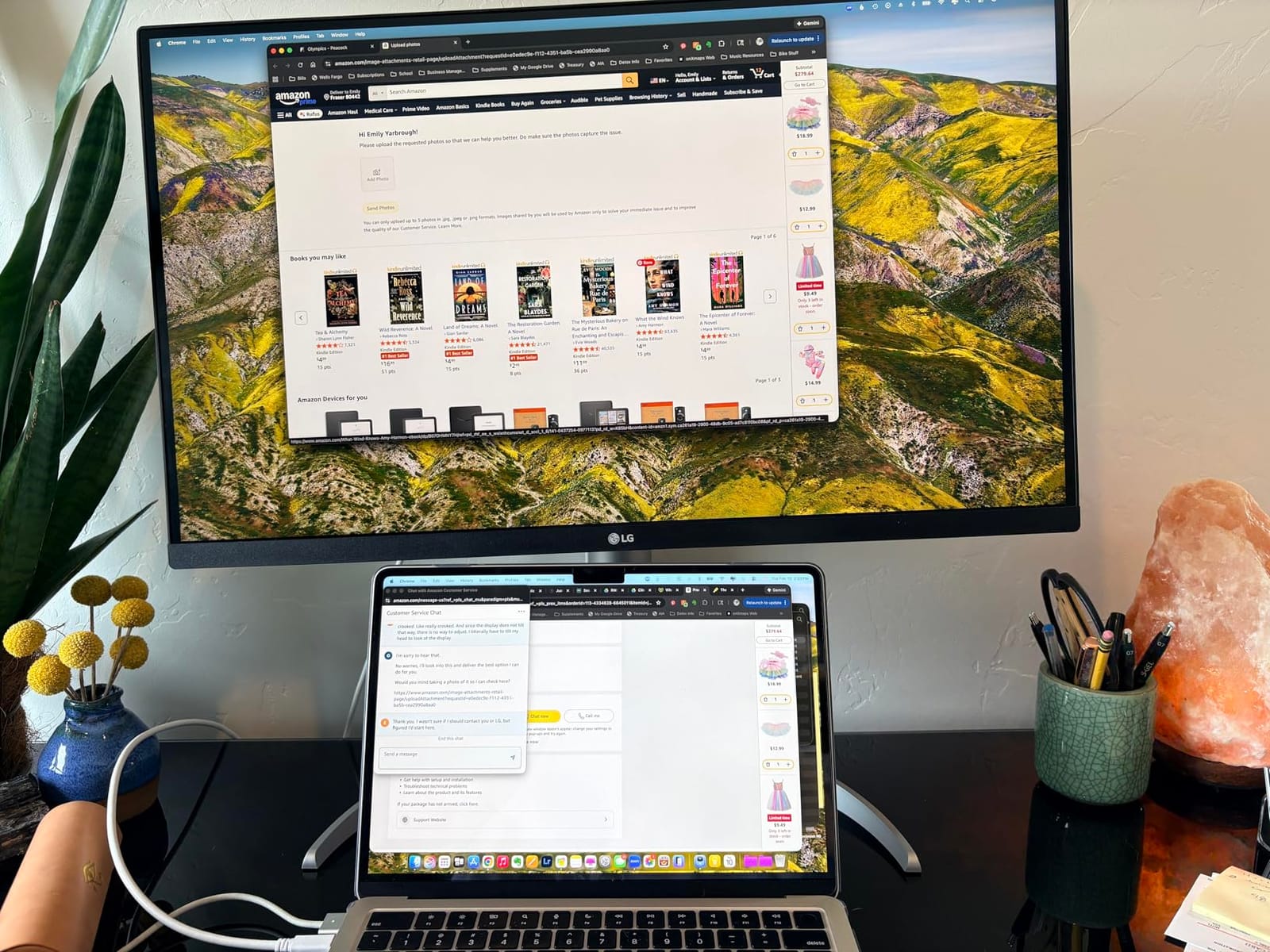
The LG 27UP850K-W is the panel I reach for when a Mac-using illustrator or video editor asks for one monitor that does almost everything right. The 95% DCI-P3 coverage matches the MacBook’s own display gamut closely enough that colors stay consistent between the laptop screen and the external panel, which matters more than people expect when you are checking thumbnails and palettes.
DisplayHDR 400 is not reference-grade HDR, but it is real HDR. I watched a 4K HDR sample reel in DaVinci Resolve and saw the difference between a 400-nit and a 350-nit budget panel in shadow detail and highlight rolloff. For SDR work the panel is bright, sharp, and accurate enough for most agency-level illustration and photo work.
The 90W USB-C power delivery is the highest in this roundup at the sub-$400 tier, comfortably charging a 14 inch MacBook Pro under load and a MacBook Air with headroom. LG includes every cable you need in the box (USB-C, HDMI, DisplayPort) which is a small touch but appreciated when you are setting up on a weekend.
The downsides are minor. The single rear-mounted menu button is awkward and you will end up using the LG Onscreen Control software for most tweaks. The white plastic back looks great from the front but feels a touch less premium than the ASUS ProArt line. And the warm color cast out of the box is real, I had to knock the color temperature setting down by a few notches to match my reference.
Best Mac-first workflow fit
Pair this with an M-series MacBook and you get a clean single-cable desk, accurate DCI-P3 colors that match the laptop screen, and enough brightness for casual HDR review. The Switch app software splits the screen into up to six sections which is genuinely useful for keeping a reference board open.
Why not the BenQ MA270U
The BenQ MA270U below is even more Mac-tuned (Mac keyboard brightness control, dedicated Mac color match) but costs meaningfully more. If you do not need the Mac keyboard integration, the LG is the smarter value.
6. BenQ MA270U – Best MacBook-Tuned Display
BenQ MA270U 27” 4K 3840×2160 Monitor for MacBook® Pro/Air, Dual USB-C, 90W Power Delivery, Mac Color Match, USB Hub, Brightness & Volume Control on Mac, Height & Tilt Adjustable Stand, P3 Color Gamut
27 inch 4K IPS
P3 Mac color match
Dual USB-C 90W plus 15W
Mac keyboard control
Pros
- Calibrated color tuning specifically for MacBook P3 wide gamut
- Single USB-C cable handles 4K video plus 90W laptop charging
- Adjust brightness and volume directly from MacBook keyboard
- Dual USB-C ports charge MacBook plus iPad or iPad
- 4K image quality with strong color reproduction
- Fully adjustable ergonomic stand
Cons
- Higher price than most non-Mac-specific 4K alternatives
- Single USB-A port is harder to access than competitors
- Initial settings access requires Display Pilot 2 software
- Takes a few seconds to recognize mouse after wake from sleep
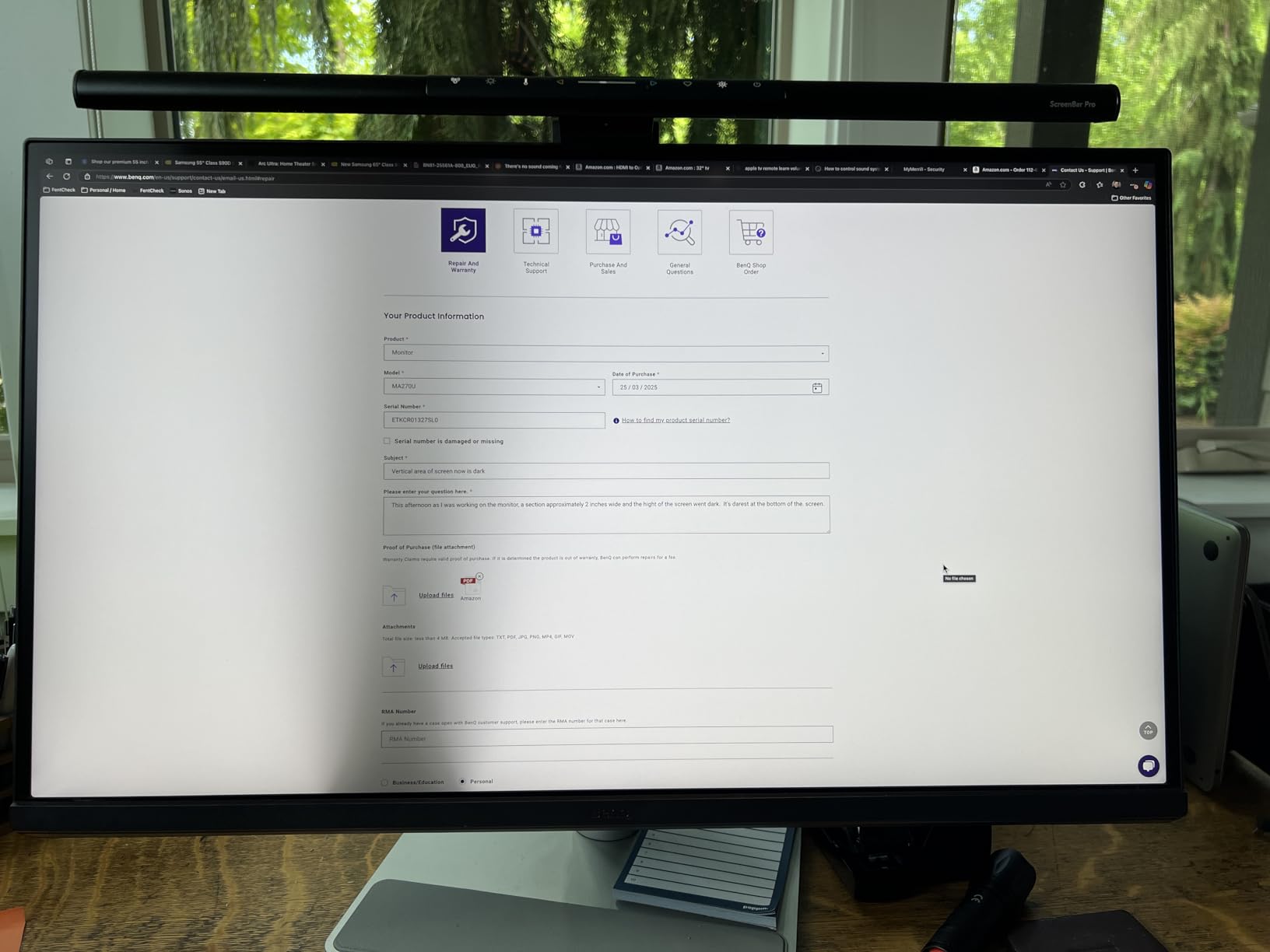
The BenQ MA270U is the Apple Studio Display alternative I recommend most often. It is built around the MacBook experience rather than trying to be a generic Windows panel with a USB-C port glued on. Out of the box, the color tuning is calibrated to match a MacBook’s P3 wide color gamut closely enough that colors on the laptop screen and the external display match to my eyes on skin tones, blue skies, and CMYK-proofed neutrals.
The killer detail is the keyboard integration. Once Display Pilot 2 is installed, brightness and volume on the MA270U are controlled directly from the MacBook keyboard, exactly like a Studio Display. For designers who live in their Mac keyboard shortcuts, this removes a daily annoyance that most external monitors force on you.
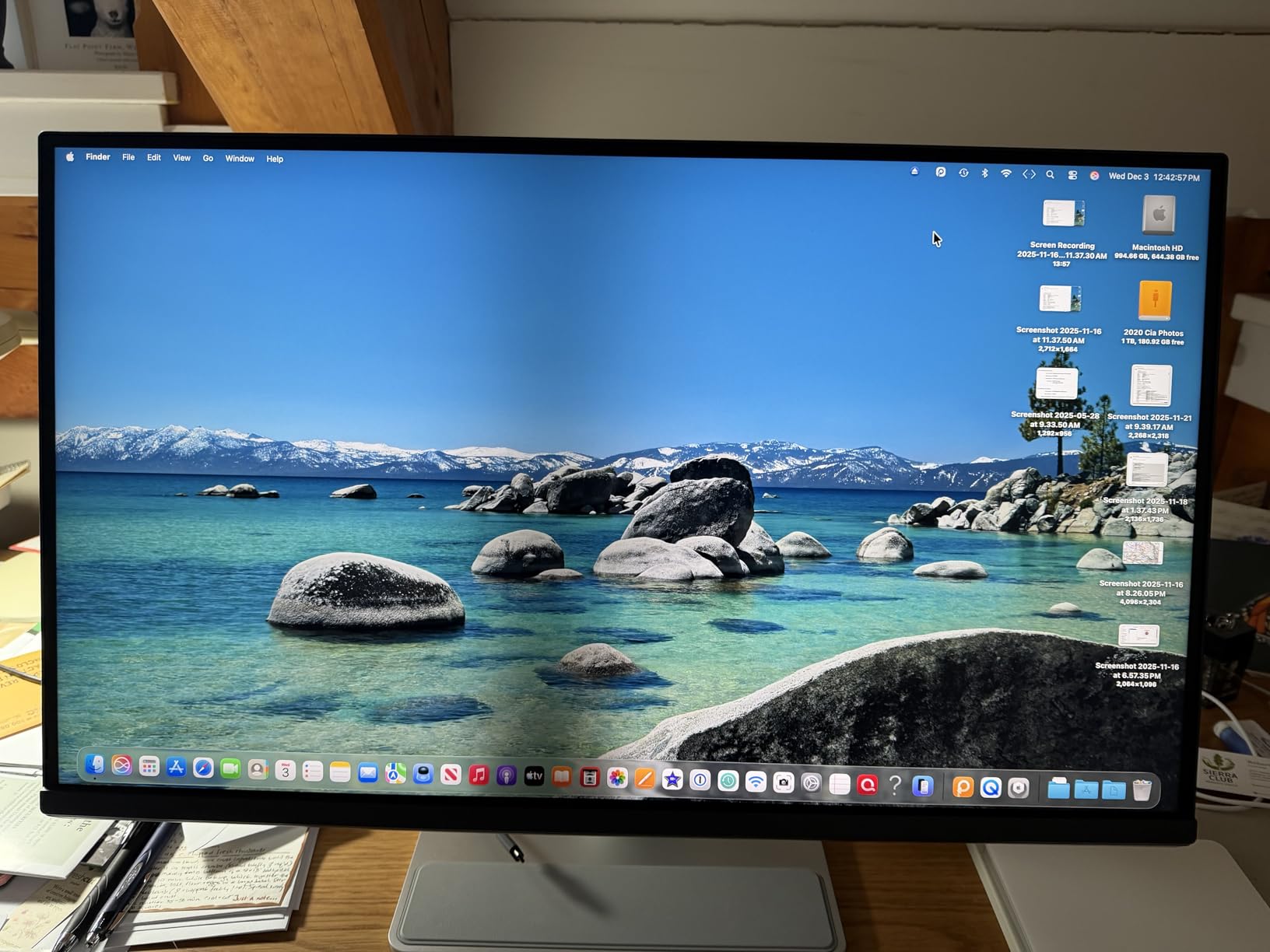
The dual USB-C port layout is a small but real productivity win. The upstream port carries 4K video and 90W of charging to the MacBook; the second USB-C port delivers 15W to an iPad or iPhone. You can plug both in, charge both, and never reach for a hub. The 4K panel is sharp and bright at 400 nits, which is enough for HDR-aware design work without paying Studio Display prices.
The cost is meaningfully higher than the LG 27UP850K-W above. If you do not care about Mac keyboard integration or the dual-port layout, the LG delivers 90% of the experience for less. If you do care, the MA270U pays for itself in daily friction saved.
Why illustrators like it
For Mac-first illustrators working in Procreate, Affinity Designer, or Adobe Fresco on an iPad alongside a MacBook, the dual USB-C port setup is genuinely useful. Charge the MacBook at 90W, plug the iPad into the second USB-C at 15W, and you have a dual-screen creative workstation from a clean two-cable desk.
Worth knowing
Display Pilot 2 software is required for Mac keyboard brightness control. It is a small download and runs in the menu bar, but you will need to install it before the integration feels native.
7. BenQ PD3205U – Best 32-inch 4K for Designers
BenQ PD3205U Mac-Ready Monitor 32″ 4K UHD 99% Rec.709 & sRGB, IPS, DeltaE ≤3, ICC Sync, Calibration Report, AQCOLOR, Uniformity HotKey Puck Ergonomic DisplayPort, USB-C (90W), USB Hub
32 inch 4K IPS
99% sRGB and Rec.709
Delta E under 3
USB-C 90W
Pros
- Exceptional color accuracy with 99% sRGB and Rec.709 plus Delta E under 3
- 32 inch 4K UHD gives generous real estate for side-by-side work
- Hotkey Puck G2 is genuinely useful for color mode switching
- USB-C single-cable solution with 90W power delivery
- Calman Verified and Pantone Validated for color-critical work
- Built-in KVM switch supports two computers on one screen
Cons
- Built-in speakers are weak with very little bass
- Portrait rotation is awkward on the standard stand
- Bottom-facing ports are hard to access
- KVM switch functionality has occasional reliability issues
- Not as bright as some competing displays in well-lit rooms
The BenQ PD3205U is the 32 inch 4K monitor I keep recommending to working designers who want screen real estate without giving up color accuracy. At 31.5 inches diagonal with 4K UHD, you sit around 140 ppi, which is dense enough for crisp type and brushwork but generous enough to keep two A4 pages, a tool panel, and a reference board open without alt-tabbing.
The headline feature is the Hotkey Puck G2. It is a small desktop controller that lets you switch between color modes (sRGB, Rec.709, CAD/CAM, Animation, Darkroom), adjust brightness, and jump inputs without touching the OSD. Once you use it for a week you cannot go back to menu-diving behind the panel.
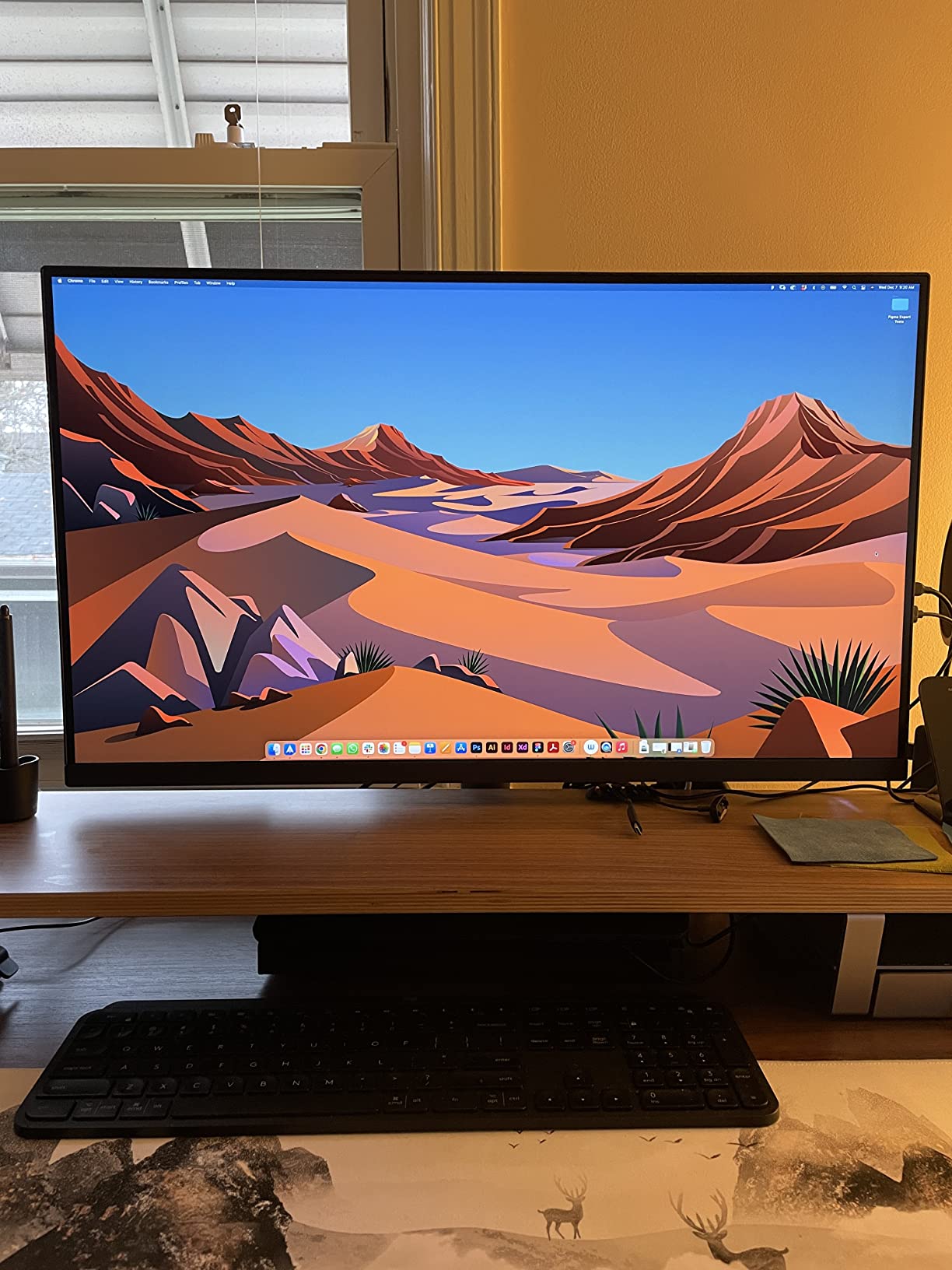
Color accuracy out of the box is excellent. The factory calibration report lists Delta E under 3 (typical for 32 inch IPS at this tier), 99% sRGB and 99% Rec.709 coverage, and the panel is both Calman Verified and Pantone Validated. For web design, broadcast, and most agency illustration work that targets sRGB, this is a confident reference.
The honest weaknesses are the speakers (truly weak), the hard-to-reach bottom-facing ports, and the awkward portrait rotation on the stock stand. If you want portrait mode, plan on a $40 VESA arm. None of these are deal-breaking for a desk-bound designer, but they are worth knowing before you buy.
Why 32 inch 4K for design
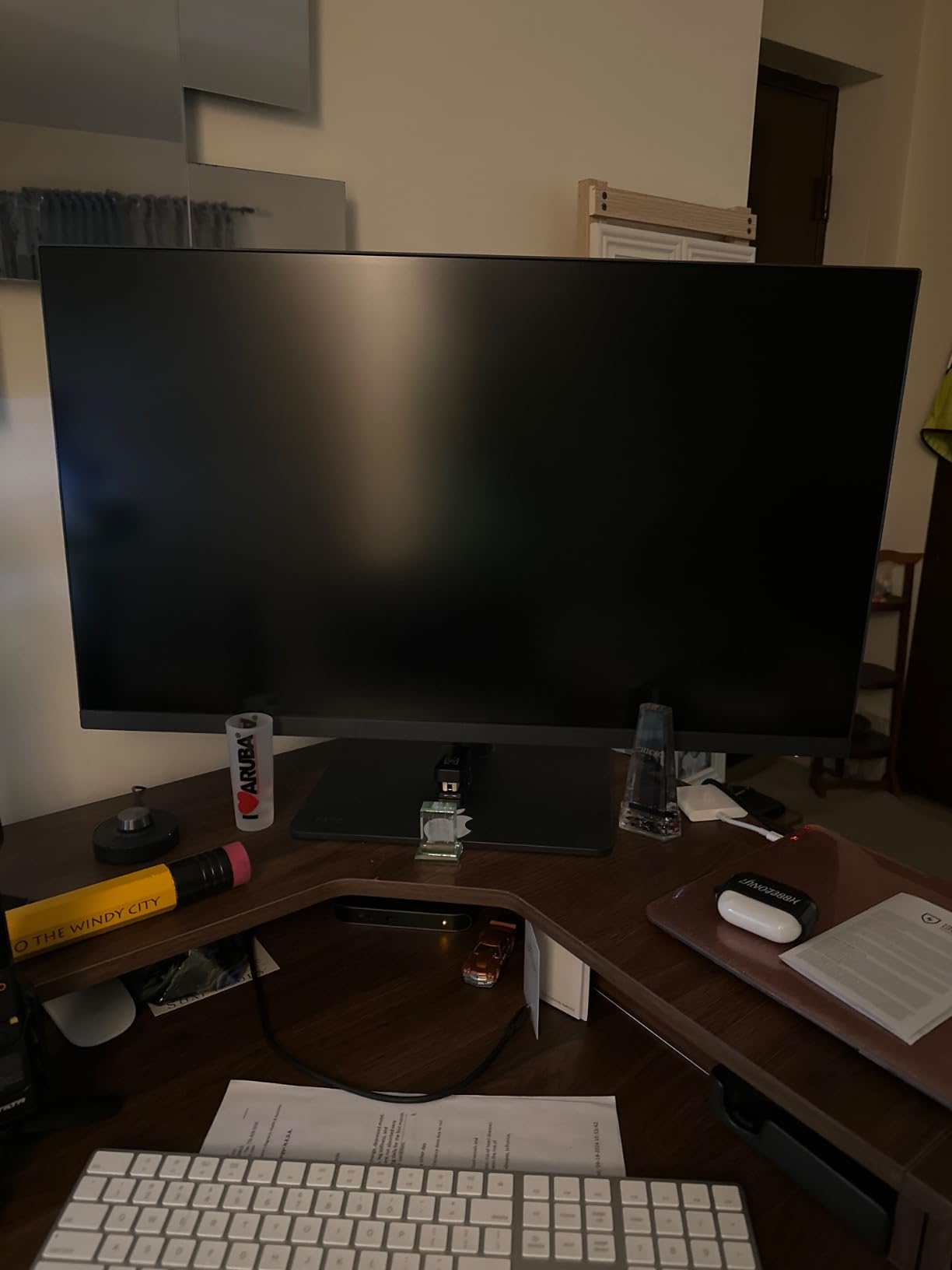
For multi-document layout work, dual-page proofing, and video editing timelines, the extra real estate of a 32 inch 4K panel saves visible time. You spend less time zooming, less time alt-tabbing, and more time actually designing.
Calibration workflow
I profiled the PD3205U with a Calibrite Display Pro and got consistent sRGB results within Delta E 0.8 across the panel. For ongoing color-critical work, plan on a monthly recalibration cycle.
8. ASUS ProArt PA329CRV – Best Premium 32-inch 4K
ASUS ProArt PA329CRV 32 Inch 4K DCI-P3 USB-C Professional Monitor for Mac
32 inch 4K IPS
98% DCI-P3
DisplayHDR 400
USB-C 96W
Pros
- 98% DCI-P3 coverage for vibrant accurate color reproduction
- Calman Verified with Delta E under 2 factory calibration
- 96W USB-C power delivery handles demanding laptops
- DisplayHDR 400 for genuine HDR viewing
- Free 3 month Adobe Creative Cloud subscription included
- 5 year warranty with online registration
Cons
- Glossy screen finish can glare in bright environments
- 170 degree viewing angle is narrower than typical premium IPS
- Higher price point than some 32 inch 4K alternatives
- 60Hz refresh rate limits gaming
- 96W power draw is the highest in this roundup
The ASUS ProArt PA329CRV is the premium 32 inch 4K monitor I turn to when a client work demands wide gamut, accurate color, and HDR review in one panel. The 98% DCI-P3 coverage is wide enough for video grading and motion design work where P3 is the target color space, and the factory calibration report lists Delta E under 2 across the panel.
The single USB-C cable carries 4K video and a generous 96W of charging, which is enough to power a 16 inch MacBook Pro under typical creative workloads without a dongle. DisplayHDR 400 is real HDR (not just “HDR ready”), and the panel is bright enough at typical 400 nits to give a believable HDR preview when grading BRAW or ProRes 4K footage.
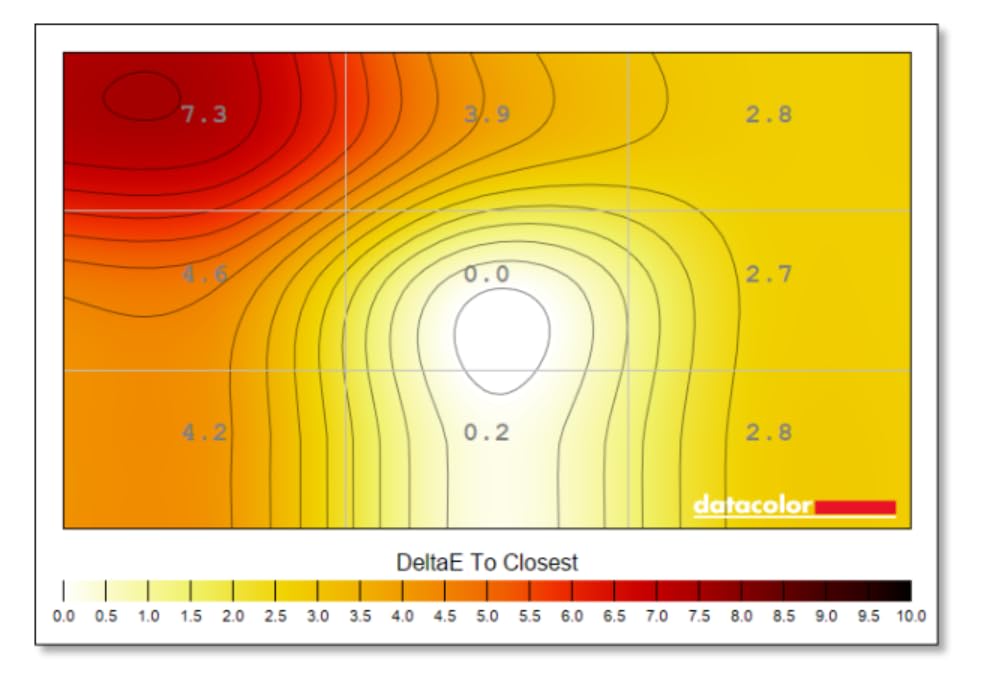
The glossy screen finish is divisive. In a controlled studio it gives punchier contrast and more vivid colors, which is what you want for video grading. In a bright room with overhead lights it can pick up reflections that matte panels hide. If you work in a dim studio, the gloss is a plus. If you work near windows, consider the BenQ PD3205U above instead.
Where the PA329CRV justifies its premium over the BenQ is gamut width (98% DCI-P3 vs 99% sRGB and Rec.709), HDR400 certification, the longer 5 year warranty with registration, and the bundled 3 month Adobe Creative Cloud subscription. If your work targets DCI-P3 (video, motion design, modern web on P3 displays), the PA329CRV is the smarter pick.
For video and motion designers
DCI-P3 coverage and DisplayHDR 400 make this a credible preview monitor for video grading and motion design work. For final delivery mastering, you would still want a reference monitor, but for client previews and 90% of the workflow this panel is more than enough.
Worth knowing
96W power draw is the highest in this roundup. Combined with the larger 32 inch panel, the PA329CRV is a real desktop monitor that wants a permanent spot rather than a portable workflow.
How to Choose the Best 4K Monitor for Creative Work
Choosing the best 4K monitor for creative work comes down to four decisions: panel type, color gamut and accuracy target, size and pixel density, and connectivity. Get those right and the rest is preference. Below is the buying guide we wish we had when we bought our first reference panel.
Panel Technology: IPS vs IPS Black vs OLED vs Mini-LED
IPS (including IPS Black) is the default for color-critical work in 2026. It offers wide viewing angles, consistent color across the panel, and mature factory calibration. IPS Black (Dell, LG) doubles the typical IPS contrast ratio to around 2000:1, which gives deeper blacks for photo editing and video preview without the burn-in risk of OLED.
OLED and QD-OLED deliver perfect blacks and per-pixel contrast, which makes them gorgeous for video grading and motion design. The catch for designers is burn-in risk from static UI elements (toolbars, palettes, layer panels). If your workflow runs Photoshop or Illustrator with persistent dock panels for 8 hours a day, an OLED will eventually show retention. If you mainly do video work and use dark mode interfaces, OLED is excellent.
Mini-LED is the middle ground: thousands of local dimming zones give near-OLED contrast without per-pixel burn-in. The downside is blooming around bright UI elements on dark backgrounds and a higher price tag. For most creative work, a high quality IPS Black panel is the safest bet. For HDR video mastering, Mini-LED or QD-OLED pulls ahead.
Color Gamut and Color Accuracy: sRGB, Adobe RGB, DCI-P3, Delta E
Three color spaces matter for creative work. sRGB is the default for web, social, and most consumer screens. Adobe RGB is wider and is the working space for offset printing and many photography workflows. DCI-P3 is the working space for video, motion graphics, and modern Apple displays.
Pick the panel that covers the space you work in. For web and illustration, 99 to 100% sRGB is enough. For print soft-proofing, you want 95%+ Adobe RGB. For video and motion, 95%+ DCI-P3 is the floor. A panel that covers all three (the ASUS ProArt PA329CRV hits 98% DCI-P3 and most of Adobe RGB) gives you flexibility.
Delta E is the difference between the color the monitor displays and the color it should display. A factory Delta E below 2 is invisible to most people. A Delta E between 2 and 3 is noticeable only on side-by-side comparison. Anything above 3 is visibly off. The factory calibration report in the box should list measured values; if it does not, the marketing claim is not worth trusting.
Resolution, Size, and Pixel Density (ppi)
A 27 inch 4K panel sits at about 163 ppi, which is dense enough that individual pixels disappear at typical desk distance (24 to 30 inches). A 32 inch 4K panel is around 140 ppi, still sharp but with more real estate. A 24 inch 4K is around 183 ppi, sharp but tight.
For most creative work, 27 inch 4K is the sweet spot: crisp enough for type and brushwork, large enough for one full document plus a tools panel. Step up to 32 inch 4K when you do multi-document layout, video timelines, or want more reference space. Avoid 4K on screens under 24 inches, the extra resolution is wasted on the smaller panel.
Connectivity: USB-C Power Delivery, Thunderbolt, and Hub Features
USB-C with power delivery is the single biggest desk-quality improvement in modern creative work. A single USB-C cable carries the 4K video signal, USB hub data, and laptop charging (typically 65W to 96W). If you use a MacBook, XPS, or Framework as your main machine, this is a daily quality-of-life win.
Thunderbolt 4 adds daisy-chaining (run two monitors from one port on the laptop) and faster data through the monitor hub. For single-monitor setups, plain USB-C with 90W PD is more than enough. For dual-monitor MacBook setups, look for Thunderbolt 4 daisy-chain support.
Check the wattage. 65W covers most 13 inch laptops under typical load. 90W covers 14 to 16 inch laptops comfortably. Anything under 65W will not charge a MacBook Pro under creative workload, so factor that in.
Ergonomics, HDR, and OLED Burn-In for Static Toolbars
A monitor you tilt but cannot raise is not a creative tool. Look for height adjustment, tilt, swivel, and pivot to portrait at minimum. Pivot is underrated, it transforms portrait illustration work, long-form layout, and reading-document workflows.
HDR for creative work is a different category than HDR for gaming. DisplayHDR 400 is entry-level and useful for previewing HDR video. DisplayHDR 600 and True Black 400 are the practical creative tiers. Anything above 1000 nits is reference mastering territory and priced accordingly.
If you buy an OLED for creative work, plan on burn-in mitigation. Auto-hide the dock, use dark mode in every app that supports it, set the taskbar to auto-hide on Windows, and run the panel’s pixel refresher cycle monthly. With care, OLED burn-in is a slow risk rather than a fast one. Skip OLED if your workflow runs the same UI for 8 hours a day with no dark mode.
How to Verify a Factory-Calibrated Monitor on Receipt
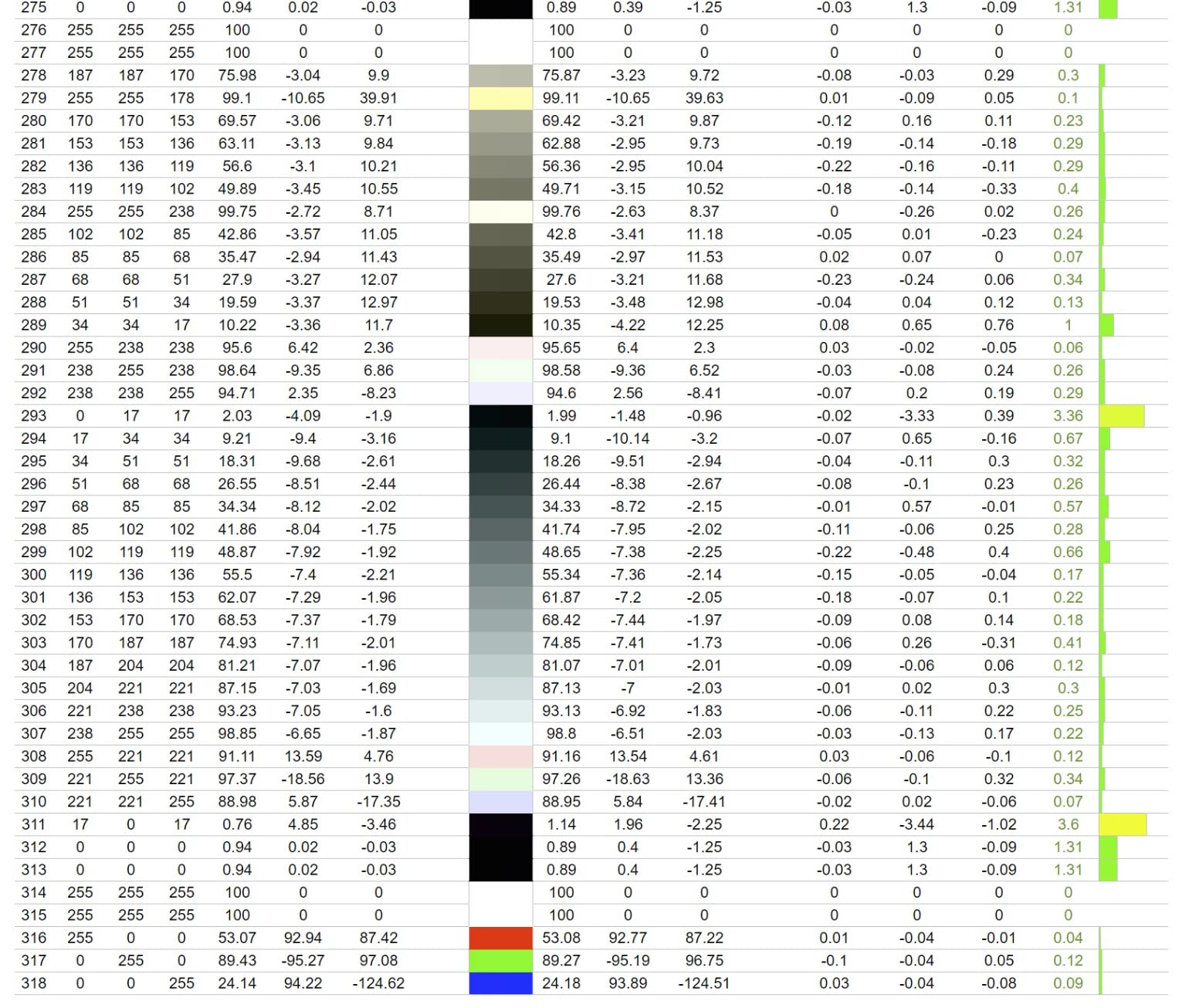
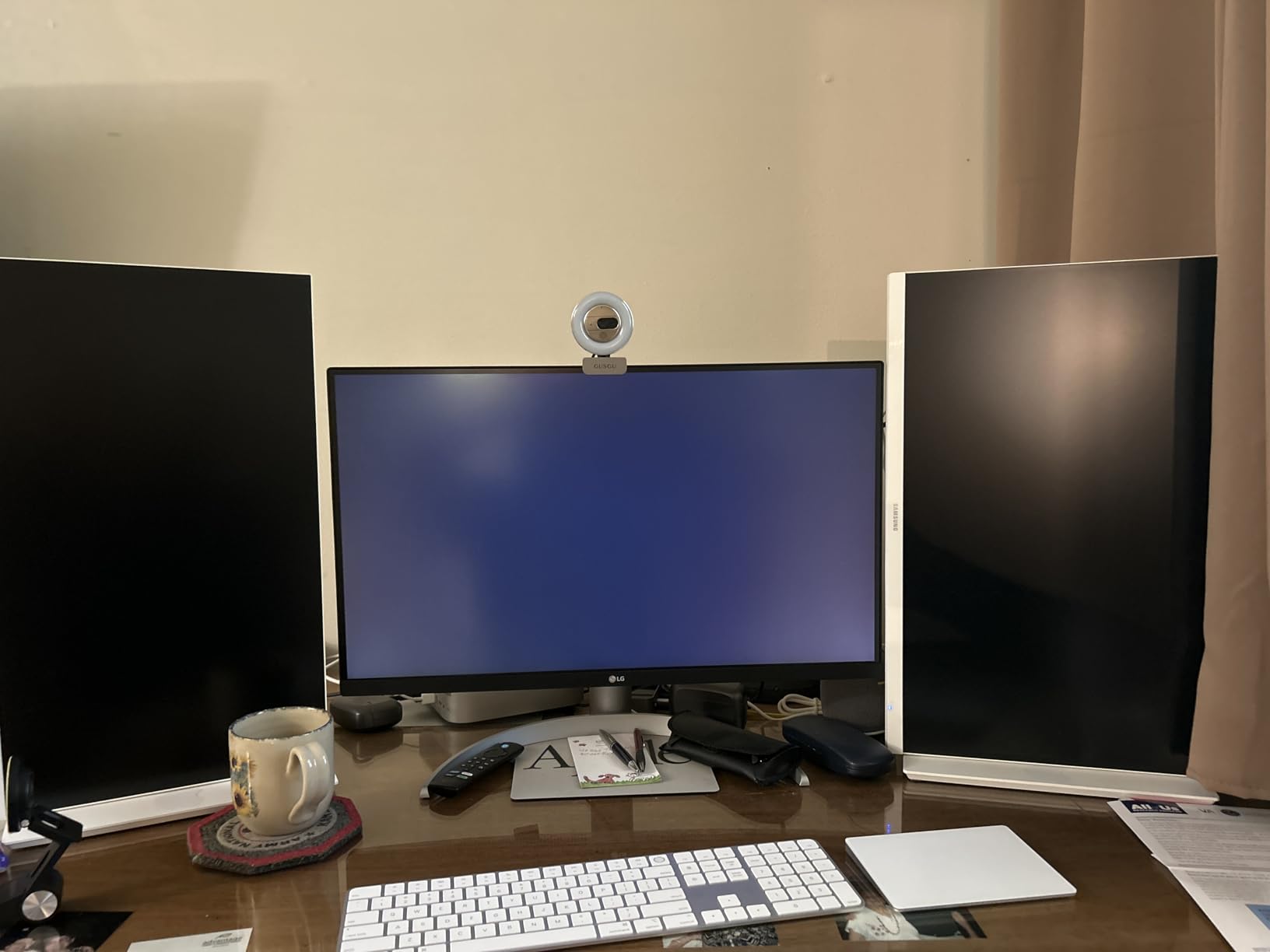
Most color-accurate monitors ship with a calibration report listing measured Delta E values. Keep that sheet. Then run your own quick check with free tools like Lagom’s monitor test pages or the EIZO Monitor Test. Look for: visible banding in smooth gradients (a sign of poor bit depth), color shift at the corners versus the center (a sign of poor panel uniformity), and any backlight bleed on a black screen in a dark room.
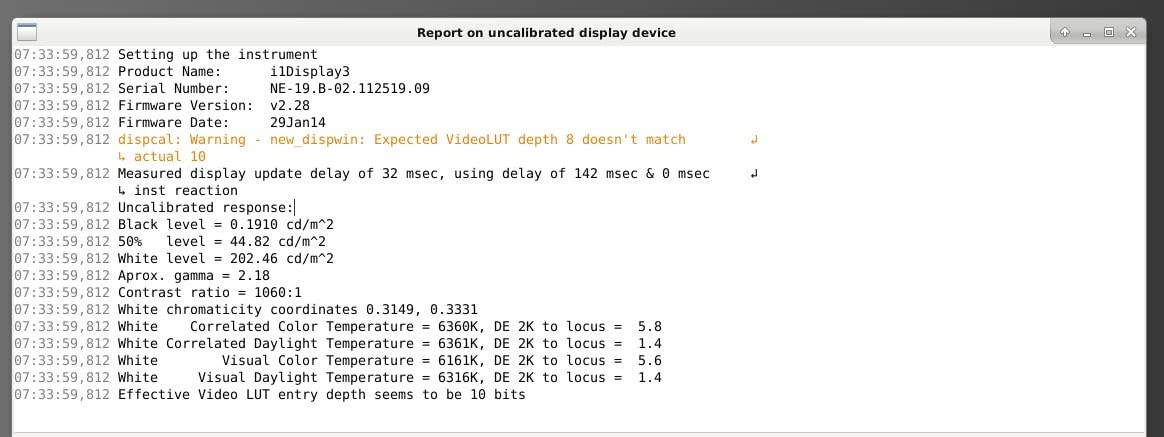
If you do color-critical work for clients, invest in a colorimeter. The Calibrite Display Pro and the X-Rite i1Display Pro are the two mainstream options, both work with the Calibrite Profiler software. Plan on profiling every panel in your setup monthly and after any firmware update. A panel that measured Delta E under 2 out of the box can drift to Delta E 4 to 5 over 12 months without recalibration.
Finally, set the panel to its sRGB or P3 mode (not the default “Vivid” or “Standard” mode) for color-critical work. The default modes are tuned for retail floor punch, not for accurate creative output.
Frequently Asked Questions
Is a 4K monitor good for graphic design and creative work?
Yes, a 4K monitor is one of the best upgrades you can make for graphic design and creative work. The four-fold pixel increase over Full HD gives you roughly 163 ppi on a 27 inch panel, meaning type and brushwork look crisp at typical desk distance. More importantly, the creative tier of 4K panels (IPS, IPS Black, OLED) ships with factory calibration, wide color gamut support (sRGB, Adobe RGB, DCI-P3), and the ergonomic stands that creative work demands.
IPS or OLED for graphic design: which is better?
IPS (including IPS Black) is the safer choice for graphic design because it has no burn-in risk from the static UI elements designers run for hours (toolbars, layer panels, palettes). OLED and QD-OLED offer perfect blacks and wider color, which is excellent for video grading and motion design, but static UI elements can leave retention marks over months of 8-hour creative sessions. If your workflow runs dark mode interfaces and you mainly edit video, OLED is excellent. If you mainly illustrate, retouch, or lay out pages in Photoshop and Illustrator, an IPS or IPS Black panel is the better long-term bet.
What specs matter most in a 4K monitor for creative work?
Five specs matter most: panel type (IPS, IPS Black, or OLED), color gamut coverage (at least 99% sRGB for web, 95% Adobe RGB for print, 95% DCI-P3 for video), Delta E under 2 factory calibration (with a printed report in the box), USB-C connectivity with at least 65W power delivery for laptop-first desks, and a fully ergonomic stand (height, tilt, swivel, pivot). Resolution and refresh rate matter less than those five for most creative workflows.
How much should I spend on a 4K monitor for design work?
For a serious creative work monitor, plan on between $300 and $600 for most use cases. Under $300 you give up USB-C, factory calibration reports, and ergonomic stands. Above $600 you start paying for HDR600+, 5K resolution, or wide-gamut panels (98%+ DCI-P3, 95%+ Adobe RGB) that only matter for specific video or print workflows. The sweet spot for most designers in 2026 is in the $350 to $550 range, which is exactly where the ASUS ProArt PA279CV, Dell S2725QC, LG 27UP850K-W, and ViewSonic VP2756-4K sit.
What size 4K monitor is best for designers: 27 inch or 32 inch?
Both work, and the choice depends on your workflow. A 27 inch 4K panel sits at about 163 ppi, which feels sharper for type, brushwork, and detail work, and fits comfortably on a standard desk. A 32 inch 4K panel sits at about 140 ppi, slightly less dense, but offers more real estate for side-by-side documents, video timelines, and multi-panel layouts. Most illustrators and photo editors prefer 27 inch for the sharper pixel density. Most video editors, layout artists, and multi-document workers prefer 32 inch for the extra workspace.
Final Verdict: Which 4K Monitor Should You Buy in 2026?
If we had to send a designer to Amazon right now with one click, we would send them to the ASUS ProArt PA279CV. It is the best overall 4K monitor for creative work we tested in 2026: factory-calibrated Delta E under 2, 100% sRGB and Rec.709, USB-C with 65W laptop charging, a 5 year warranty, and a bundled 3 month Adobe Creative Cloud trial. For most illustrators, web designers, photographers, and content creators, it is the right answer.
For pure value, the Dell S2725QC is the smarter buy when budget matters. For MacBook-first workflows with native keyboard integration, the BenQ MA270U is the Apple Studio Display alternative we recommend. For Pantone-validated agency work, the ViewSonic VP2756-4K is the trusted pick. For Mac-friendly wide color with HDR400, the LG 27UP850K-W is excellent. For 32 inch screen real estate, the BenQ PD3205U is the designer’s pick and the ASUS ProArt PA329CRV is the premium wide-gamut pick. And for the cheapest credible entry point into 4K creative work, the LG 27US500-W is the budget pick that still does the job.
Whichever panel you choose, calibrate it on arrival with a Calibrite Display Pro or X-Rite i1Display Pro, set the color mode to sRGB or P3 rather than the default vivid mode, and re-profile monthly. A factory-calibrated monitor that drifts is no longer a factory-calibrated monitor, and your clients can tell the difference.