
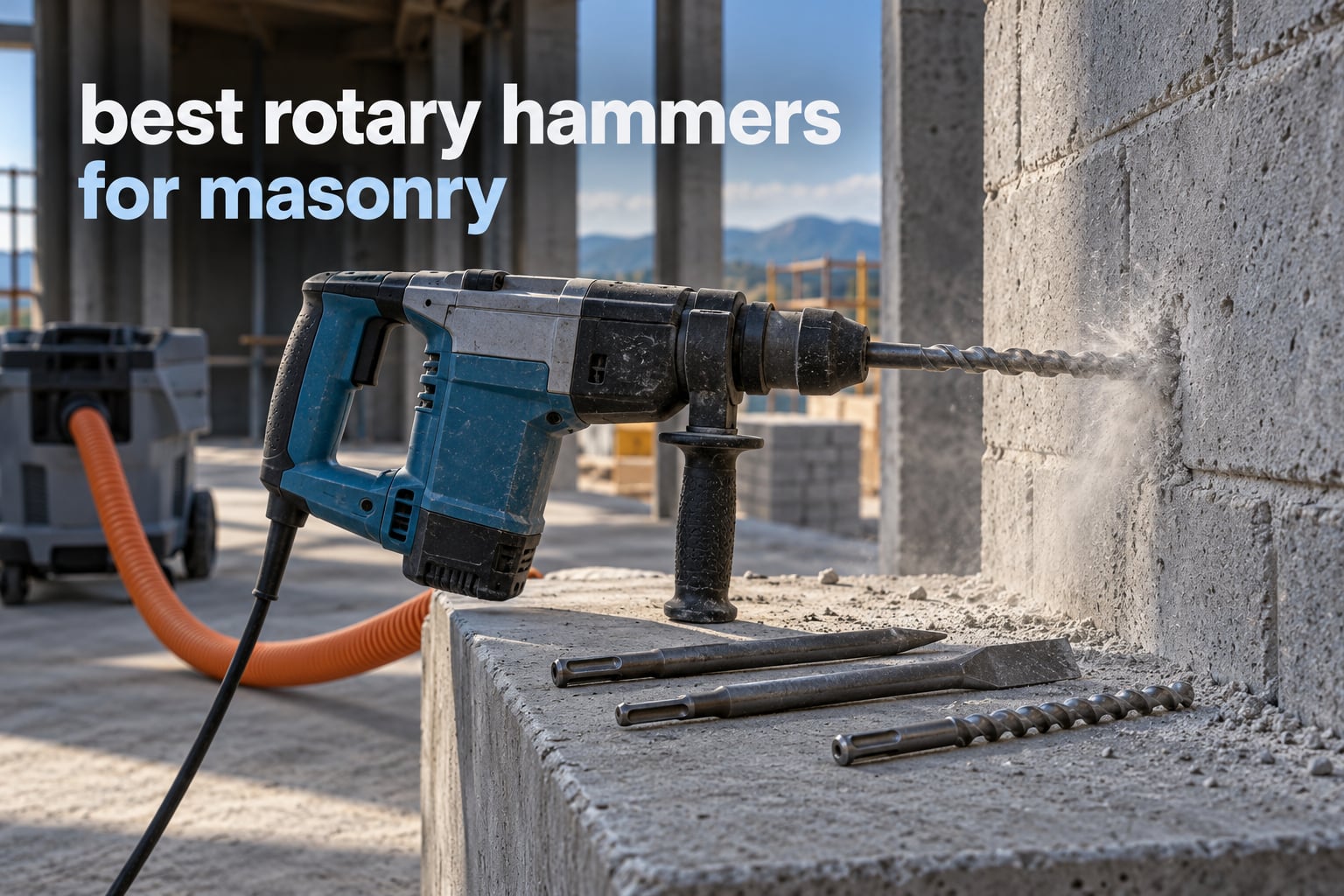
Most masonry work is decided by one number: how much impact energy the tool delivers to the bit. A cordless SDS-Plus unit in the 2 to 3 joule class covers most anchor drilling, pipe hangers and tile removal, while anything past a 1 inch hole diameter pushes you into a corded SDS-Plus machine or an SDS-Max tool. This is our guide to the best rotary hammers for masonry in 2026, covering all four classes a buyer actually chooses between: cordless SDS-Plus, corded SDS-Plus, corded SDS-Max, and demolition-class breakers.
Ten tools made the cut. We read the spec sheets, weighed the owner reviews and sorted them against the masonry jobs that actually generate complaints: Tapcon and wedge anchor installs, block wall penetrations, pipe hangers, tile and mortar removal, and close-quarters work in a mechanical room. No tool won on features alone. Each one had to earn its place against a specific set of masonry tasks.
One honest note on methodology. We did not log timed hole-drilling runs in a lab for this roundup. What we did was cross-check every published specification against the owner review record, watch for the failure modes that show up repeatedly in real use, and flag the places where a spec sheet promise does not match what buyers report. Where a number matters to your purchase, we name it and tell you what it means on the job. Where a tool falls short, we say so instead of burying it.
Table of Contents
Top 3 Rotary Hammers for Masonry Work (October 2026)
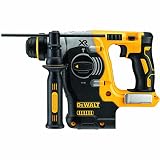
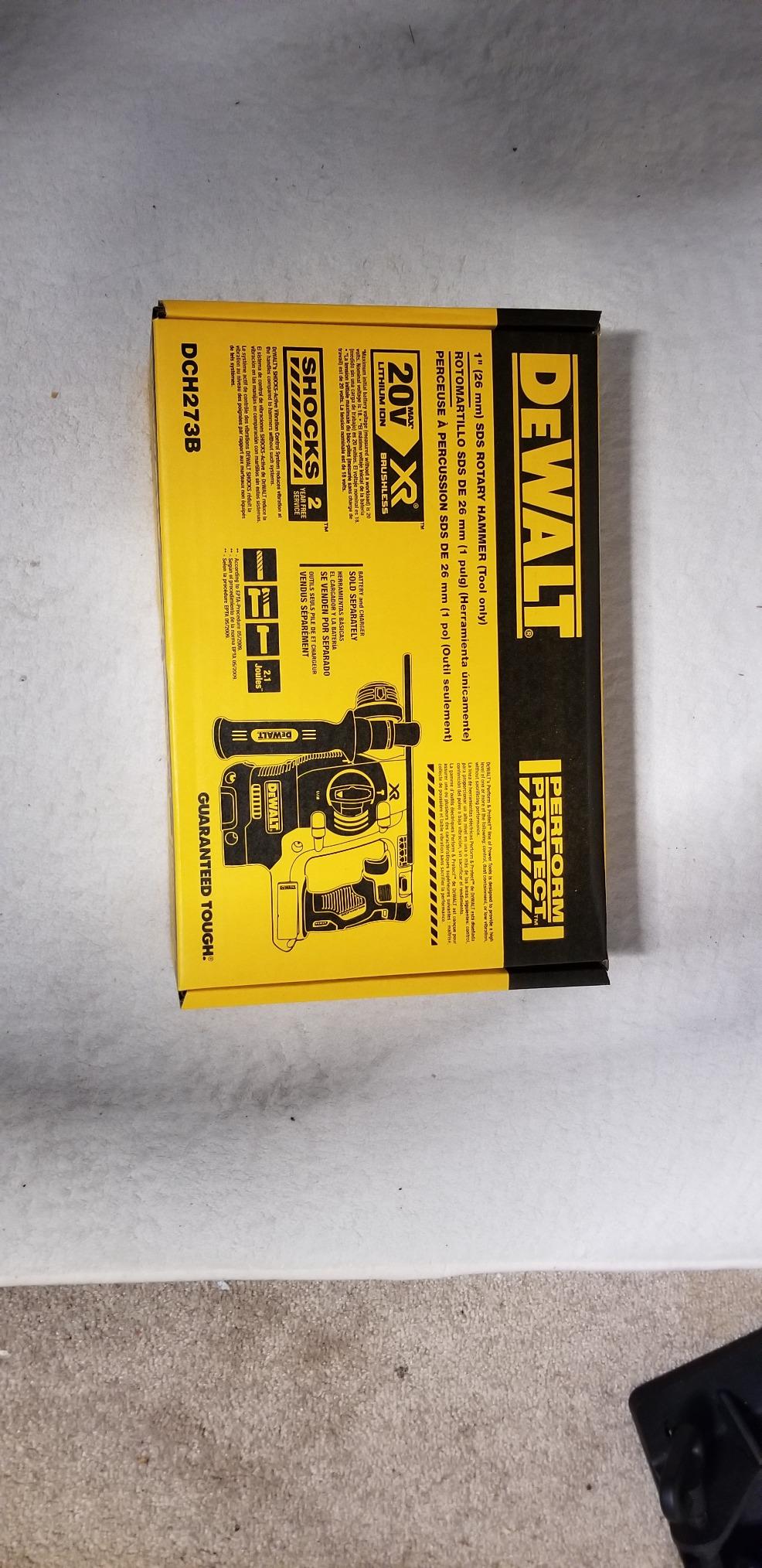
DEWALT DCH273B
- 2.1 J impact energy
- 20V MAX brushless
- SHOCKS vibration control
- 6.4 lb cordless

ENEACRO ENRH3201
- 7.4 J impact energy
- 13 amp corded
- 1-1/4 inch concrete
- full bit and chisel kit
Best Rotary Hammers for Masonry at a Glance in 2026
Every pick below, sorted by class rather than by price. The fastest way to narrow your search is to identify the largest hole you plan to drill and whether you have access to mains power on site.
| Product | Specs | Action |
|---|---|---|
| DEWALT DCH273B 20V MAX Cordless SDS-Plus |
|
Check Latest Price |
| ENEACRO ENRH3201 13 Amp Corded SDS-Plus |
|
Check Latest Price |
 Bosch 11255VSR Bulldog Xtreme Bosch 11255VSR Bulldog Xtreme |
|
Check Latest Price |
 DEWALT DCH133B 20V MAX Cordless D-Handle DEWALT DCH133B 20V MAX Cordless D-Handle |
|
Check Latest Price |
 DEWALT D25263K Corded SDS-Plus DEWALT D25263K Corded SDS-Plus |
|
Check Latest Price |
 Bosch GBH2-28L Bulldog Xtreme Max Bosch GBH2-28L Bulldog Xtreme Max |
|
Check Latest Price |
 Berserker 26FA Budget Corded SDS-Plus Berserker 26FA Budget Corded SDS-Plus |
|
Check Latest Price |
 Makita XRH04Z 18V LXT Cordless Makita XRH04Z 18V LXT Cordless |
|
Check Latest Price |
 Milwaukee 2912-20 M18 FUEL Cordless Milwaukee 2912-20 M18 FUEL Cordless |
|
Check Latest Price |
 Berserker 42M SDS-Max Heavy Duty Berserker 42M SDS-Max Heavy Duty |
|
Check Latest Price |
How We Picked the Best Rotary Hammers for Masonry
Every tool in this list was scored against the same six criteria, weighted toward what actually ends a masonry project badly.
Impact energy against the largest hole you need. A tool rated 2 joules will not comfortably bore a 1 inch hole in dense concrete, and that is the threshold most buyers learn the hard way. Shank class. SDS-Plus covers holes up to roughly three-quarter inch for most work; SDS-Max takes you to 1-9/16 inch and beyond. Bind-up protection. Any tool drilling near rebar or through rubble needs a torque-limiting clutch or a kickback sensor, because a bound bit in a spinning tool is how hands get hurt. Vibration control. Professionals drilling hundreds of holes a week care far more about hand fatigue than peak power.
Weight and balance for the working position. Overhead drilling into a ceiling for a fire-rated box mount punishes anything heavy and front-heavy. Platform economics for cordless. If you already own 18V LXT or M18 packs, staying inside that platform saves real money over the life of the tool.
We also weighted review volume heavily, because a 4.7 average across a few hundred reviews tells you much less than the same rating across a few thousand. Tools whose owner feedback repeatedly contradicts the spec sheet got flagged in the individual write-ups rather than quietly dropped.
1. DEWALT DCH273B – Best Cordless Rotary Hammer for Overhead Anchor Work
DEWALT 20V MAX SDS Rotary Hammer Drill, Cordless, 3 Application Modes, Bare Tool Only (DCH273B)
20V MAX brushless
2.1 J impact energy
1 inch SDS-plus
6.4 lb
3 modes
Pros
- 2.1 J from a 6.4 lb cordless body
- SHOCKS Active Vibration Control cuts felt vibration
- Rotating dial picks drill
- hammer drill or chip mode
- Compact enough for overhead and confined work
- Works with an on-board dust extractor for OSHA Table 1 compliance
Cons
- Bare tool only - battery and charger sold separately
- Not built for continuous heavy demolition
- SDS-plus dual-slot bits cost extra to buy
The DEWALT DCH273B is the pick for anyone drilling anchors overhead or in tight mechanical rooms who does not want to trail a cord. It puts out 2.1 joules of impact energy from a body weighing 6.4 pounds, at 4.7 stars across 3438 owner reviews it has the largest review record of any cordless tool in this roundup.
That combination matters because the hardest masonry jobs are not the biggest ones. They are the ones at head height, inside a wall cavity, or under a sink where you are working one-handed with a bit at an angle. A heavier corded hammer in that position is a strain on the wrist and a cord you will catch on something. This one simply goes there.
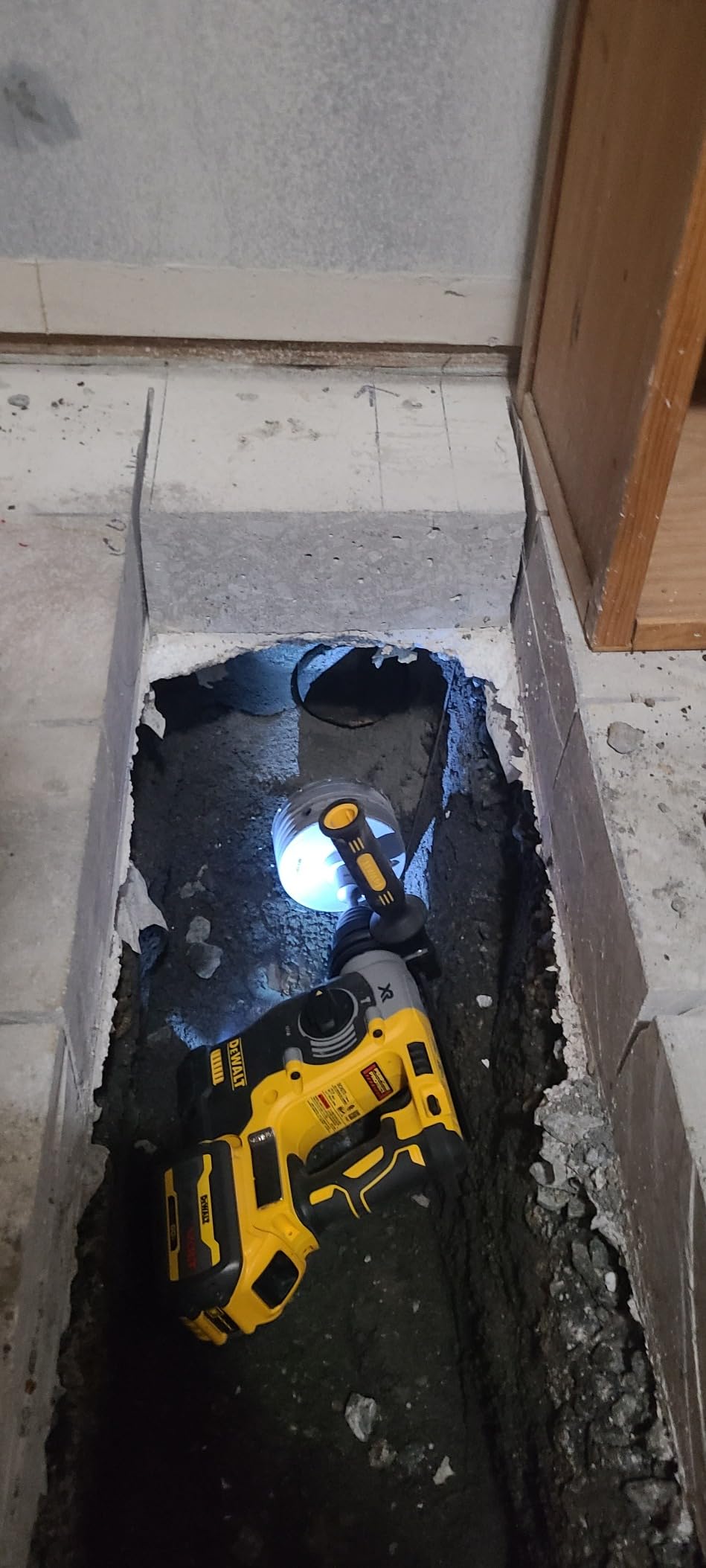
The rotating dial selects drill, hammer drill or chip mode, which is the single most useful control on the whole class. Chisel position matters more than most buyers expect: without it you are chiselling at whatever angle the bit last stopped, which wastes force and wears the chisel edge.
SHOCKS Active Vibration Control is the feature that separates it from cheaper cordless units, and owners single it out repeatedly. Vibration is the reason tradespeople downgrade tools in their heads long before the motor fails. On a day of overhead rod hanging and seismic attachment installs, lower felt vibration directly means more holes before the arm starts complaining.
There is also a dust extraction path here. DEWALT lists the tool as OSHA Table 1 compliant when paired with its on-board extractor, which matters if you are drilling into occupied buildings or a finished basement where concrete dust becomes someone else’s problem.
Jobs the DCH273B handles without complaint
Overhead rod hanging and seismic attachment installs are where this tool earns its place. The manufacturer lists that work explicitly, and the low weight keeps the bit square to the ceiling rather than drifting off the mark as your arm tires.
It also handles cable tray and strut mounting, light chiseling of mortar and tile bed, and anchor holes up to about three-quarter inch in normal concrete. On block and brick it stays comfortably ahead of a hammer drill.
Where the DCH273B falls short
It is a cordless SDS-Plus machine, so it has a hard ceiling. Push it to 1 inch holes in dense concrete and it will slow down, heat up and drain a battery. Reviewers consistently recommend high-capacity packs for sustained drilling, and the most common friction of all is simply that the tool arrives without a battery or charger.
If your project involves a run of holes bigger than three-quarter inch, step up to the corded ENEACRO or the SDS-Max Berserker 42M instead.
2. ENEACRO ENRH3201 – Best Corded Value Rotary Hammer for Brick and Block
ENEACRO 1-1/4 Inch SDS-Plus 13 Amp Heavy Duty Rotary Hammer Drill
13 amp corded
7.4 J impact energy
1-1/4 inch concrete
12.6 lb
4 functions
Pros
- 7.4 J impact energy for the money
- Full kit includes 3 bits 2 chisels handle grease and case
- Safety clutch protects the wrist when a bit snags
- Double-layer anti-vibration cuts long-session fatigue
- Handles 1-1/4 inch holes in concrete
Cons
- 12.6 lb is heavy for overhead work
- Runs warm under sustained load
- Not a demolition tool
The ENEACRO ENRH3201 delivers 7.4 joules of impact energy, which is more than double what any of the cordless picks on this list produce. If you have mains power on site and you are drilling brick, block or dense concrete all day, that gap is the whole argument.
At 4.6 stars across 3510 reviews it is also the most-reviewed tool in the roundup, and the review pattern is consistent: buyers who expected less at this level are the ones writing five-star reviews. The complaint that repeats is weight, at 12.6 pounds.
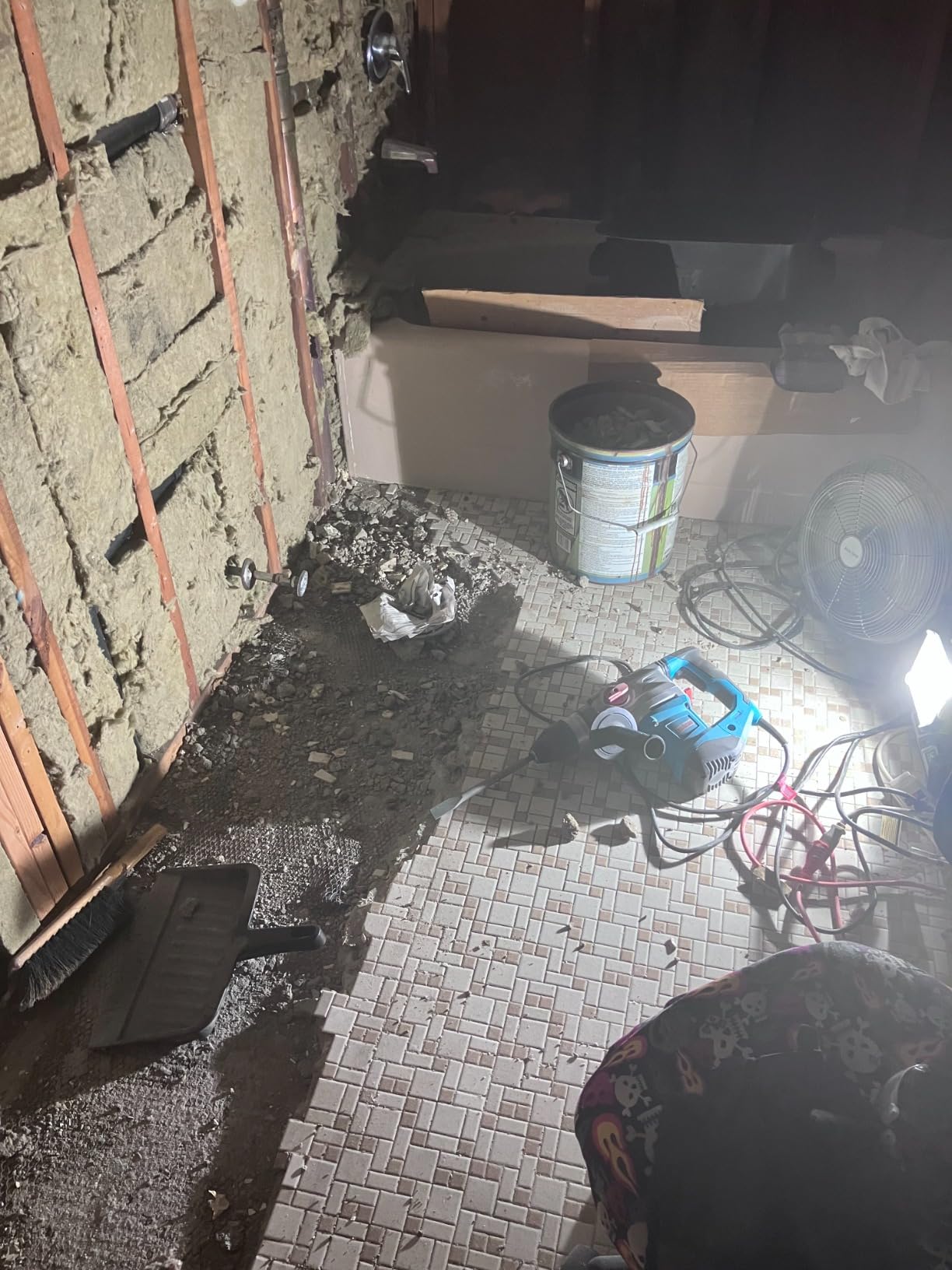
Four operating functions are selected across the body: drill only, hammer only, hammer drill and a chisel position. A 13 amp industrial motor spins at 820 rpm no-load with up to 4200 blows per minute, and the maximum rated hole in concrete is 1-1/4 inch. That rating puts it into territory most SDS-Plus machines never reach, and it means it can handle the anchor work that forces people to upgrade to SDS-Max.
The safety clutch is worth calling out because it addresses a real injury pattern. A contractor drilling basement walls for gas line runs described having injuries when bits bound up in tools with no protection. A clutch that slips instead of whipping the tool around is cheap insurance on any job where you might hit rebar or an unexpected pipe.
The accessory situation is unusual for this category. The kit ships with 8 mm, 10 mm and 12 mm SDS-plus bits, two chisels, a 360-degree adjustable auxiliary handle, a carbon brush set, grease, a dust cap and a hard case. Most buyers still buy better bits separately, but having a working set on day one changes how a weekend project goes.
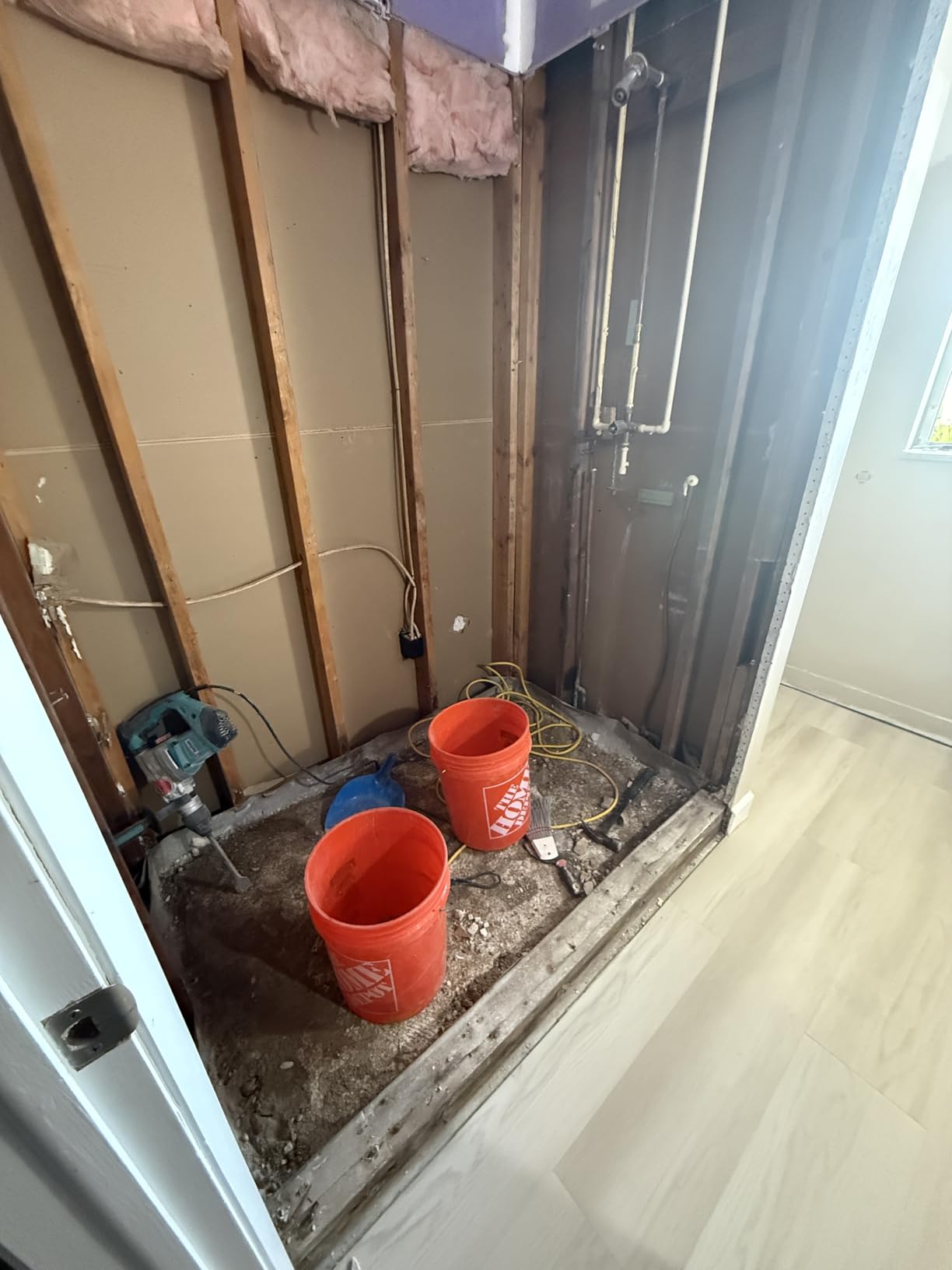
Jobs the ENRH3201 handles well
Anchor installation in concrete and block is the core strength. Anything up to 1-1/4 inch is inside the rated envelope, which covers wedge anchors, larger expansion shields and pipe hanger work in thick block. Running plumbing lines through block walls, where you need both a hammer-drill pass and a chiseling pass on the same tool, fits well too.
Mortar removal and light slab work also sit comfortably inside what this machine is built for. Owners running brick and block report steady progress with less bit wear than they got from a hammer drill.
Jobs the ENRH3201 cannot take
Overhead work is where 12.6 pounds becomes a problem fast. If most of your drilling is above shoulder height, a lighter cordless unit will keep you working longer. Reviewers also note the tool runs warm under sustained load, so it wants breaks in long sessions rather than continuous drilling.
It is also not a breaker. For slab and foundation demolition you want a demolition-class tool with a dedicated hammer mechanism, not an SDS-plus machine working hard at the edge of its ratings.
3. Bosch 11255VSR Bulldog Xtreme – Best All-Round Corded Rotary Hammer
BOSCH 11255VSR Bulldog Xtreme SDS-Plus Rotary Hammer
7.5 amp corded
2.0 ft-lb impact energy
1 inch SDS-plus
10.4 lb
3 modes
Pros
- Proven long-run durability across thousands of reviews
- Drills concrete and block quickly
- Tool-free SDS-plus bit changes with auto lock
- 36 Vario Lock chisel positions for accurate angles
- Variable speed trigger with forward and reverse
Cons
- Hair-trigger variable speed catches new users
- Included depth gauge is flimsy and short
- Needs an adapter for standard drill bits
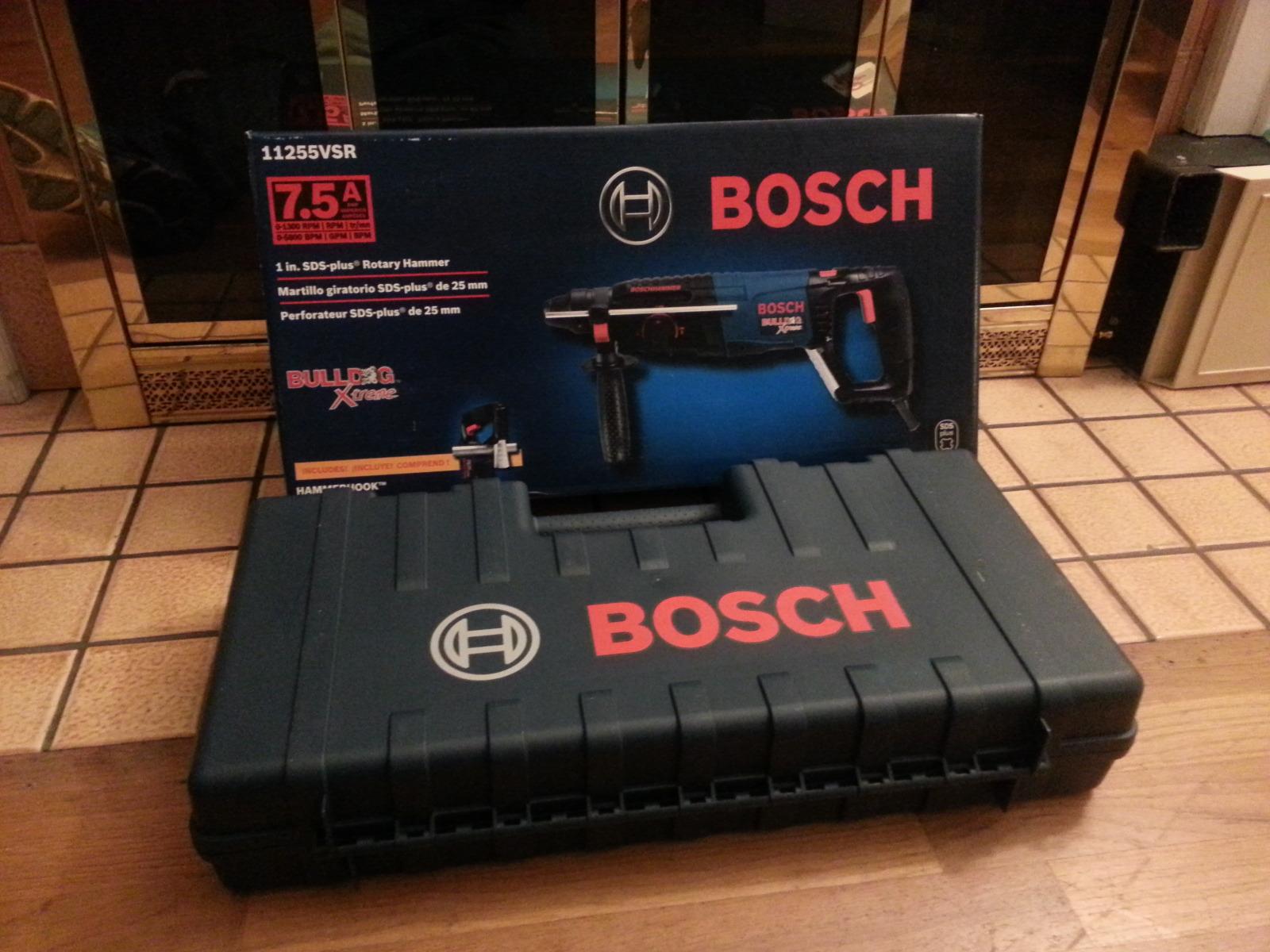
The Bosch 11255VSR Bulldog Xtreme is the tool you buy when you want one corded rotary hammer to cover anchor drilling, overhead work and light chiseling without owning three machines. It has been in production long enough that the owner review record is a genuine longitudinal record: people report years of service, not months.
At 4.7 stars across 3023 reviews it sits at the top of the rating band for corded machines here, and the durability theme is the strongest thread running through those reviews, with owners reporting the machine cutting concrete and reinforced concrete without pausing for a battery or a break.
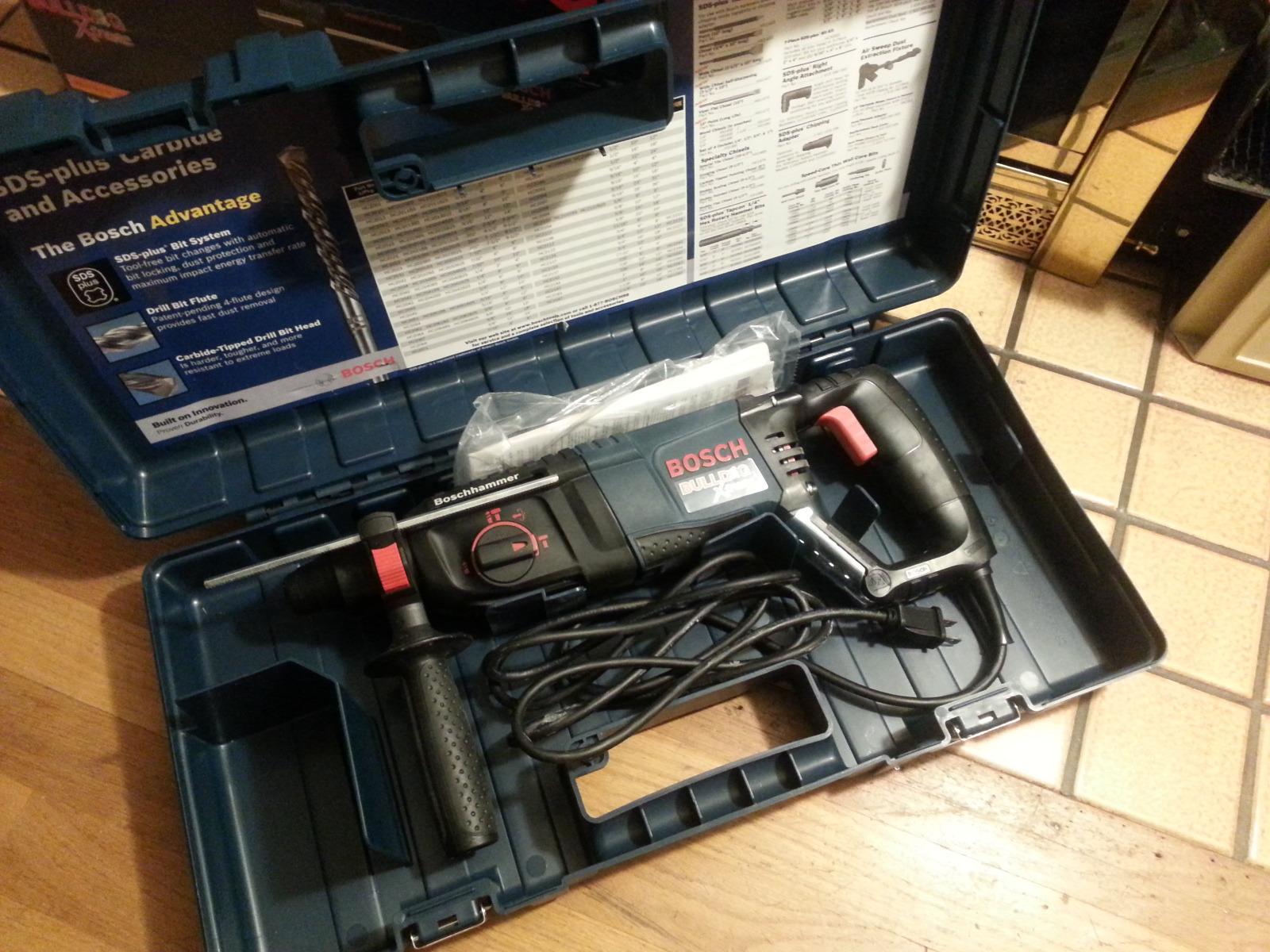
Three modes cover rotation only, rotary hammer and hammer only. The variable speed trigger with forward and reverse is genuinely useful rather than decorative: you feather into concrete, modulate to avoid walking the bit, and reverse out a stuck bit without changing tools.
The Vario Lock system with 36 bit positions is the under-rated feature. Chisel angle is not a detail, because a chisel held at a poor angle to the mortar bed throws force into your arm instead of into the break. The D-handle handles both overhead and downward drilling, which is exactly the range a basement or foundation job demands.
Tool-free SDS-plus bit changes with automatic locking mean you spend less time with the chuck and more time drilling. On a day of pipe hanger installs that difference adds up quickly.
Why crews keep this one for years
The 7.5 amp motor delivers 0 to 1300 rpm and 0 to 5800 blows per minute, and the SDS hammer drill vibration control is tuned for all-day comfort rather than just a spec sheet claim. Tradespeople running high volumes describe it as the machine they stop thinking about because it keeps working.
For a contractor who wants one corded tool covering most masonry categories, this is the safest purchase in the roundup. The 1 inch SDS-plus capacity covers the great majority of anchor work, and the chisel mode covers tile and mortar removal without a separate breaker.
Where it disappoints first-time users
The variable speed trigger is very sensitive. Owners coming from a trigger with a mechanical speed selector routinely overshoot the start of the stroke. It is a five-minute adjustment, not a defect, but it does generate complaints.
The included depth gauge is the most common complaint of all: too flimsy and too short for deep holes. Plan to buy a proper one. Also note that SDS-plus only accepts SDS-plus bits, so if you already own standard masonry bits you need an adapter.
4. DEWALT DCH133B – Best Lightweight Cordless Rotary Hammer for Tight Spaces
DEWALT 20V MAX SDS Plus 1 Inch Cordless Rotary Hammer with D-Handle, Bare Tool Only (DCH133B)
20V MAX brushless
2.6 J impact energy
5 lb tool
3 modes
1 inch SDS-plus
Pros
- Highest rated tool in the roundup at 4.8 stars
- 5 lb body allows genuine one-handed control
- 2.6 J output is strong for lag and tap anchors
- Rotating dial for instant mode changes
- Depth rod and side handle included
Cons
- Bare tool only - battery and charger sold separately
- Higher-capacity packs advisable for sustained work
- No belt hook included
- 1 inch chuck capacity limits larger bits
The DEWALT DCH133B is the highest-rated tool in this roundup at 4.8 stars across 2091 reviews, and the reason is a specific combination: 2.6 joules of impact energy in a body weighing 5 pounds. Most cordless rotary hammers force you to trade one for the other.
This one does not. The impact energy figure puts it ahead of several corded machines on paper, and the weight makes it easy to hold one-handed for long stretches at height. When you are drilling overhead into a soffit or holding a bit at an angle inside a wall cavity, that is the difference between finishing the job and putting the drill down.
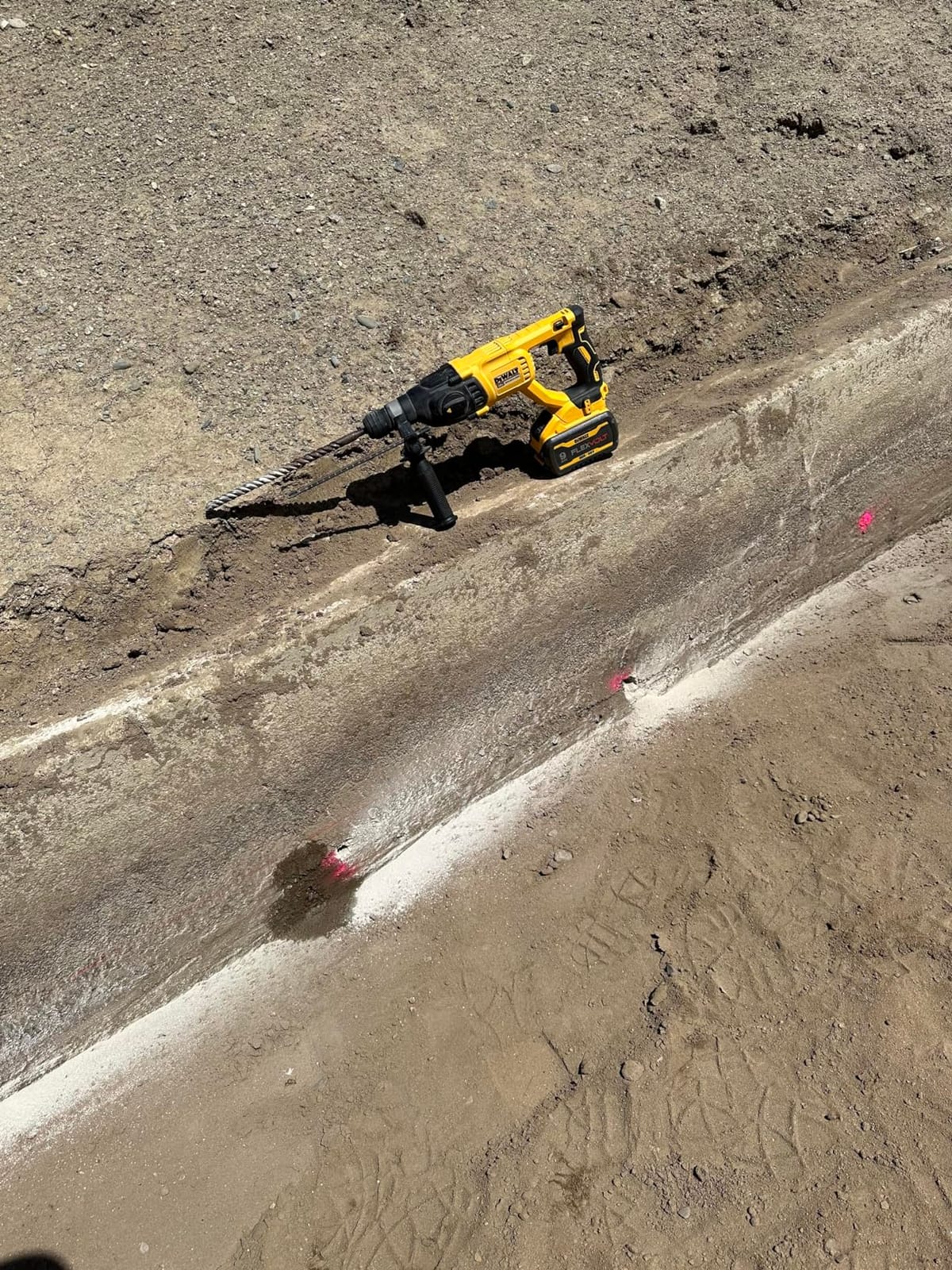
Owners rate it as the best-balanced cordless rotary hammer in the group, and the drilling performance comes from the brushless motor driving a German-engineered mechanism at up to 1500 rpm. The rotating dial selects drill, hammer drill and chip modes without a separate clutch lever to hunt for with gloves on.
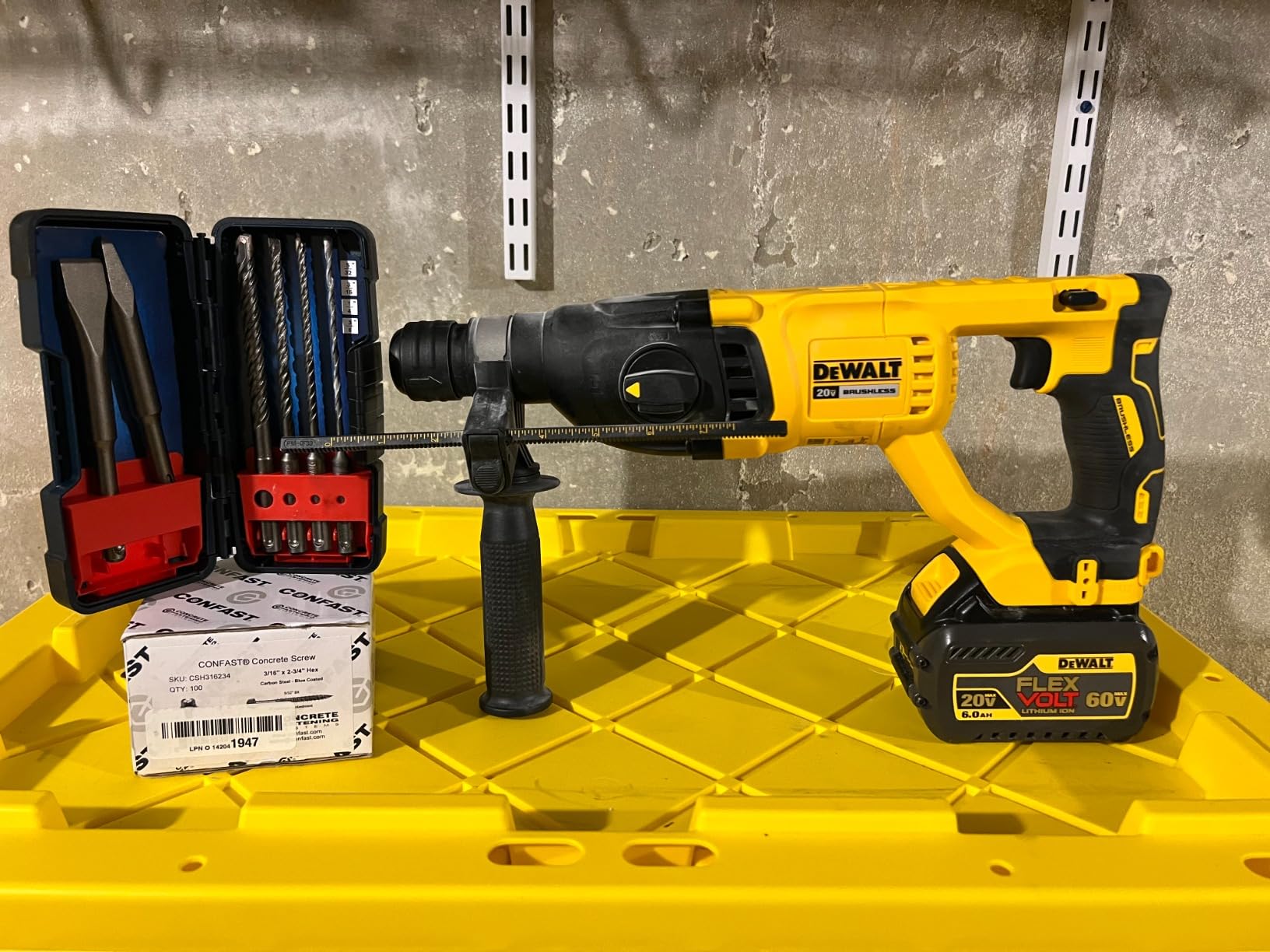
A D-handle and depth rod ship in the box, which is generous for a bare-tool package and useful the moment you start setting anchor depths. Reviewers confirm it has real concrete performance for lag anchors and tap anchors, not just light masonry screws.
The recurring caveat is battery life on sustained drilling. The tool is bare-tool only, and the owner guidance is consistent: step up to higher amp-hour packs if you intend to drill all day rather than do a morning of anchor work.
The masonry jobs that suit the DCH133B
Forming work, rod hanging and anchorage installs are the manufacturer-designated strengths, and they cover most of what an electrician, plumber or remodeler touches in residential work. Concrete, brick and block all fall within the 1 inch SDS-plus envelope.
Chipping is the third mode, and at 5 pounds it is usable for short mortar and tile removal runs where a 12 pound corded hammer would be tiring. It is not the tool for breaking a slab, but it will shift tile and bedding compound without complaint.
Where the DCH133B runs out of room
The 1 inch chuck capacity is a hard limit. As soon as you need a hole bigger than an inch, you are past this tool regardless of how good it is otherwise. Beyond that, sustained heavy drilling means battery swaps, and that is where a corded machine becomes the better economic choice.
It also ships without a belt hook, which is a small thing on a ladder. If you work at height, budget for one or keep the depth rod swapped out for a hook.
5. DEWALT D25263K – Best Corded Rotary Hammer for Chiseling and Demolition
DEWALT SDS Rotary Hammer Drill, Vibration Control Shocks, 115 Volts, Corded (D25263K)
8.5 amp corded
3.0 J impact energy
SHOCKS vibration control
Integral clutch
115 volts
Pros
- 3.0 J impact energy supports drilling and chipping
- SHOCKS vibration control cuts fatigue on long runs
- Integral clutch protects the user when a bit jams
- Rotating brush ring holds torque forward and reverse
- Compatible with an external dust extraction system
Cons
- Corded design needs access to mains power
- Fixed cord is a trip and tangle hazard
- Older design without a D-handle
The DEWALT D25263K sits between a drill and a breaker, and its 3.0 joule rating is the deciding figure. That is enough impact energy to chisel mortar and tile bed, remove trim and block, and drill anchor holes without the machine balking, which is more than most SDS-plus corded tools in this roundup can claim.
At 4.7 stars across 1555 reviews it has a specific, consistent reputation: buyers rate the vibration control and the jam protection, and they accept that it is a corded tool because that is the point of choosing it.
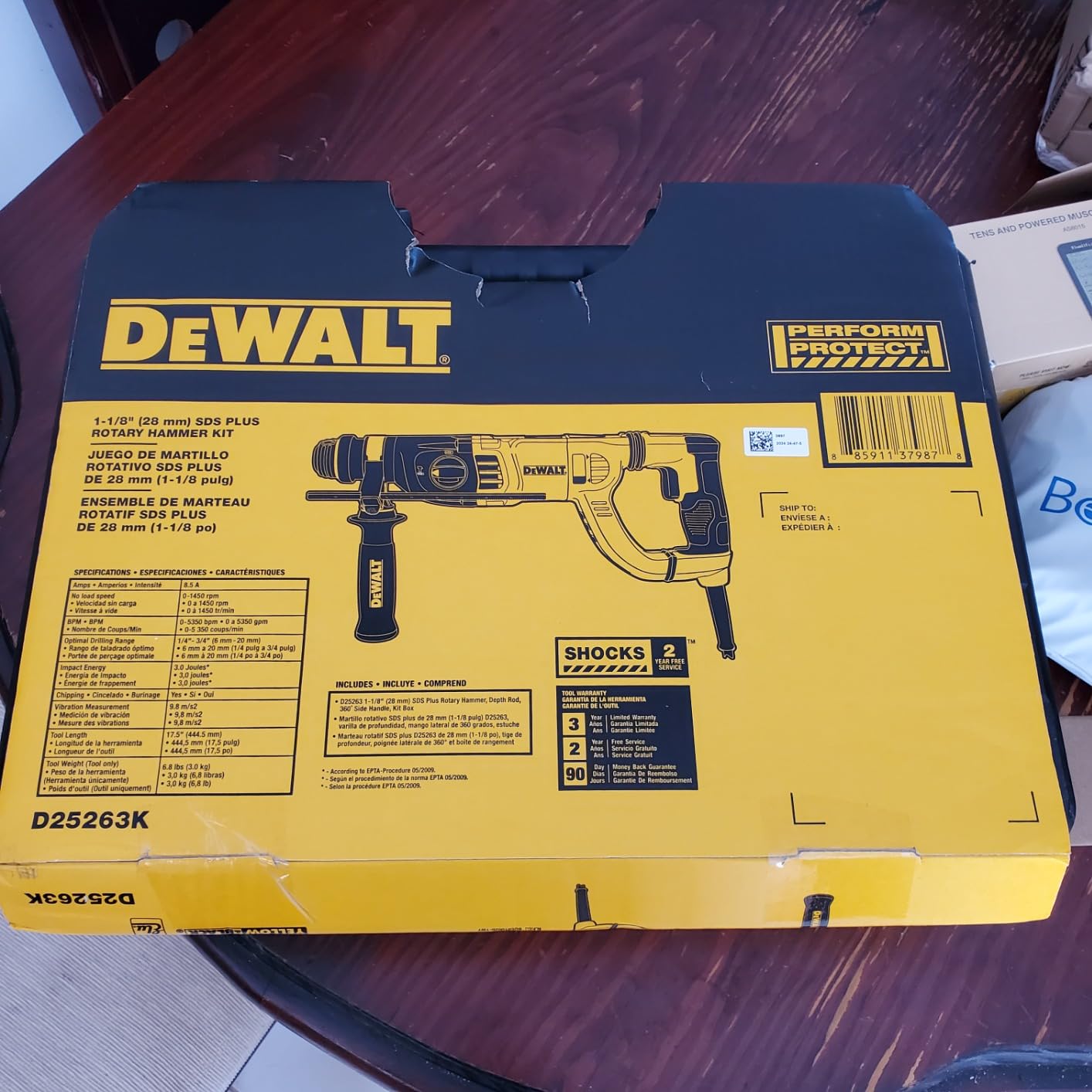
The 8.5 amp high-performance motor is paired with SHOCKS Active Vibration Control, and that combination is what makes long chipping sessions survivable. Vibration fatigue is the deal-breaker professionals cite most often, and it is not a comfort preference, it is how tools get retired early.
Two safety features stand out. The integral clutch limits sudden high torque reactions when a bit jams, which is exactly the bind-up scenario that causes injury when drilling near rebar. The rotating brush ring delivers full power and torque in both forward and reverse, so backing a bit out of a tight hole does not feel half-powered.
It is also compatible with the DEWALT dust extraction system, which matters on interior demolition where concrete dust becomes a silica exposure problem for everyone in the building, not just the operator.
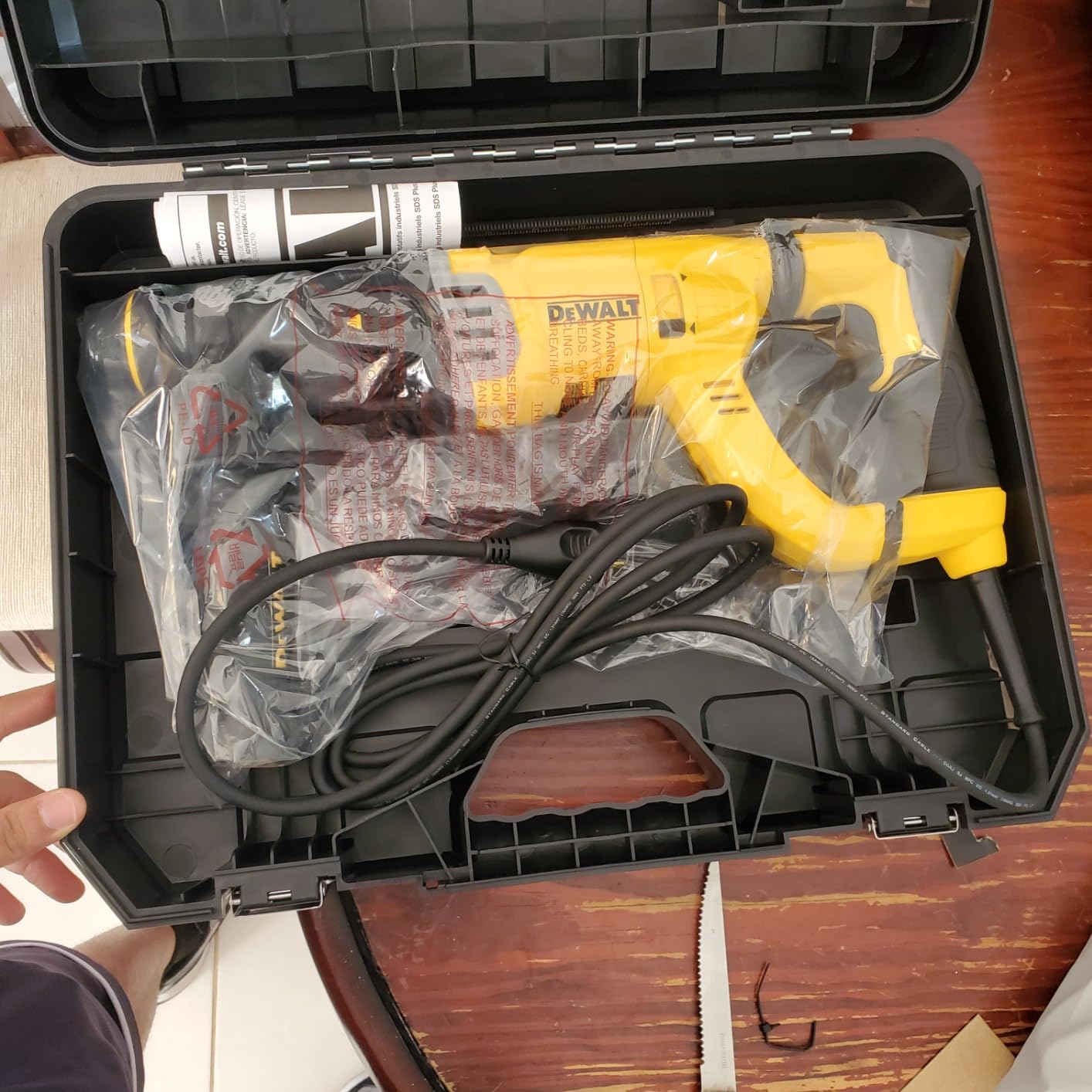
Chiseling and anchor jobs the D25263K handles
Tile and mortar removal is the standout use. Owners describe ripping out a bedroom floor of tile with a chisel point in ten to fifteen minutes, which is faster than most people expect from a corded SDS-plus machine.
Anchor work in concrete and block in the mid-size hole range is comfortable territory, and the 360 side handle plus depth rod in the kit box make setting depth repeatable. Both ship with the tool.
Where the corded format works against you
There is no way around needing mains power. On a remote site, an attic, a basement with no socket, or any overhead job where the cord is above you, the cord becomes the limiting factor rather than the tool.
And it is an older design without a D-handle, so two-handed control in awkward positions is less precise than on the newer Bosch GBH2-28L or the cordless picks with side handles. Buy it for power and chiseling, not for finesse.
6. Bosch GBH2-28L – Best Rotary Hammer With Bind-Up Protection
BOSCH 8.5 Amp GBH2-28L SDS-plus Bulldog Xtreme Max 1-1/8 In. Rotary
8.5 amp corded
2.4 ft-lb impact energy
KickBack Control
1-1/8 inch capacity
D-handle
Pros
- KickBack Control stops rotation on bind-up
- Vibration Control is measurably low on long jobs
- Compact enough for one-handed work in tight spaces
- D-handle for overhead and downward drilling
- Survives sustained heavy jobsite use
Cons
- 120V only - needs a converter in 230V regions
- Included case can arrive with flimsy internal parts
- Depth stop needs firm engagement
The Bosch GBH2-28L is the pick for anyone drilling near rebar, through block walls or into filled-in trenches where a bit can catch unexpectedly. Its KickBack Control sensor stops rotation during a bind-up, which is the single most important safety feature on any tool in this roundup.
Contractors drilling basement walls for pipe runs have reported injuries from bits binding in tools without that kind of protection. A sensor that shuts the hammer down converts a whip-back into a pause. On a job where you cannot predict what is behind the face, that is worth more than any amount of extra joules.
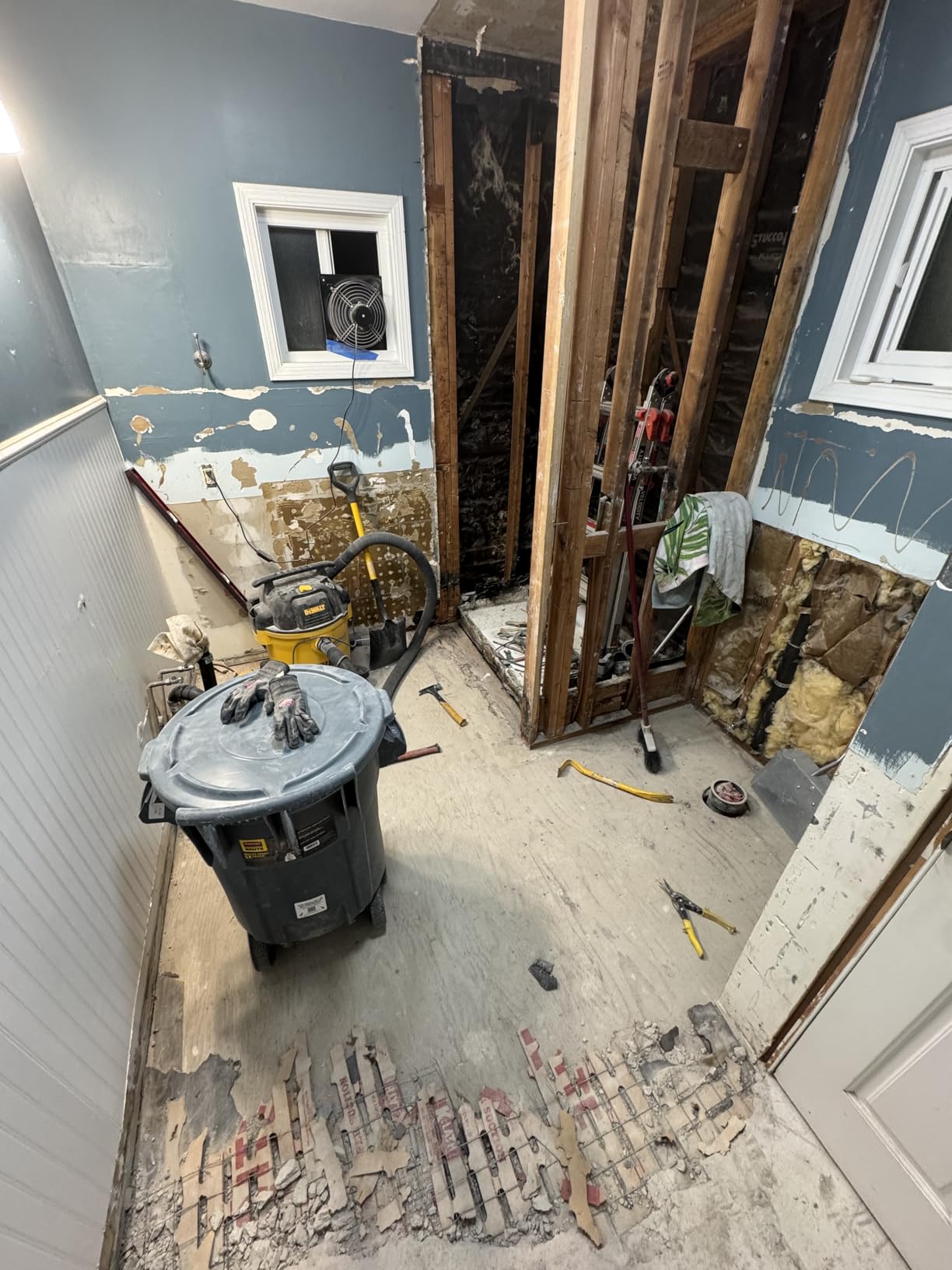
The 8.5 amp motor produces 2.4 ft-lb of impact energy with a maximum concrete capacity of 1-1/8 inch. Counter-balanced Vibration Control is the comfort story here, and tradespeople comparing Bosch, Makita and premium brands side by side consistently report that the vibration difference is visible and feelable within minutes.
Three modes cover drill only, hammer drill and chiseling, and Vario-Lock handles chisel positioning. The D-handle supports overhead and downward work, and at 2.9 kg the tool can still be handled one-handed in tight spots, which is unusual in a corded machine of this class.
The HammerHook for quick storage is small and disproportionately useful on a crowded truck or a ladder. Owners describe powering through hundreds of holes with minimal fatigue, which is the durability signal you want from a tool you will keep for years.
Where KickBack Control changes the day
Reinforced concrete, block walls and any drilling where you might hit rebar or an embedded service is the target. Reinforced concrete is brutal precisely because you hit steel at unpredictable depth, and a tool that responds to that is the difference between a productive afternoon and an injury report.
It is also the right pick for the close-quarters drilling that trades hit constantly: penetrations in tight mechanical rooms, block wall runs in a basement, overhead work above a finished ceiling.
Where the GBH2-28L needs work
It is a 120V corded machine. In a 230V region it will not run without a converter, which is a genuine limitation rather than a minor caveat.
The included case also draws complaints about flimsy internal fittings, and the depth stop needs firm engagement to stay put. Budget for a better case if you transport it, and check the depth stop before each deep hole.
7. Berserker 26FA – Best Entry-Level Rotary Hammer for DIY Anchor Drilling
Berserker 1-1/8″ SDS-Plus Rotary Hammer Drill for Concrete 26FA
1,050 watt corded
4.5 J impact energy
1-1/8 inch concrete
9.5 lb
3 modes
Pros
- 4.5 J impact energy punches above its class
- 9.5 lb weight suits overhead and downward work
- 360-degree adjustable auxiliary handle
- Aluminum alloy housing adds durability
- Kit includes chisels bits grease case and spare brushes
Cons
- Runs hot after sustained drilling and needs cooldown
- Rapidly consumes the supplied grease
- SDS-plus bits only - no SDS-Max compatibility
- Some owners report early burnout
The Berserker 26FA is the pick if you are a homeowner or a tradesperson who needs to hang a handful of shelves, run some pipe hangers and put in Tapcons, and you do not need to survive a decade of daily use. It produces 4.5 joules of impact energy, which is a genuinely capable figure for a machine at this level.
That output puts it ahead of several corded tools that cost considerably more, and its 1-1/8 inch maximum concrete diameter covers the anchor work most residential projects actually involve. Reviewers consistently describe it as strong value for DIY anchor drilling and light renovation.
The 1050 watt, 9 amp motor runs at 1050 rpm with up to 4200 blows per minute across three modes: rotation only, hammering with rotation, and hammering only. The aluminum alloy housing is a real upgrade over the plastic shells common in this category, and it is why the tool holds up to knock rather than only to use.
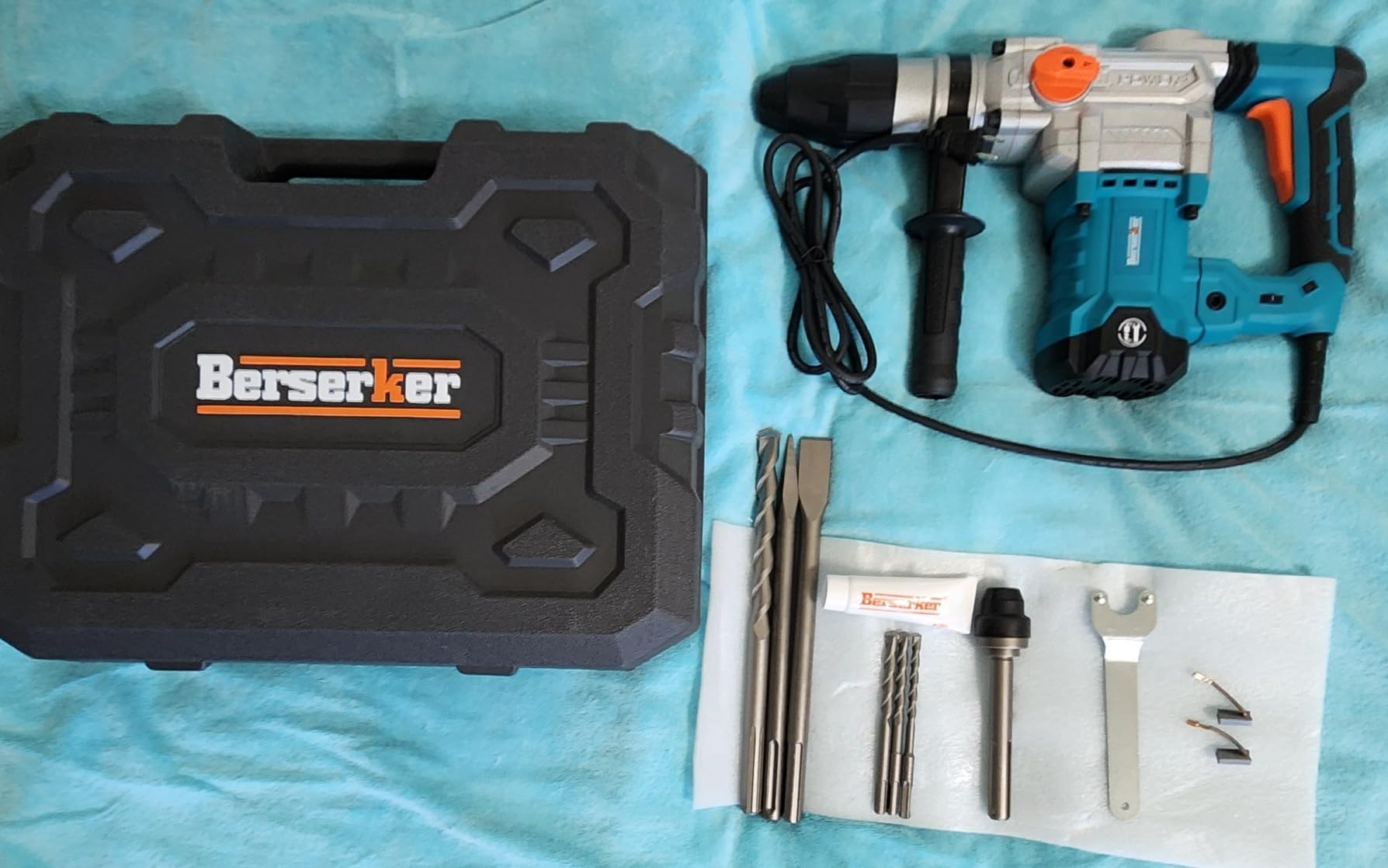
The accessory kit is unusually complete for the money: flat and point chisels, three SDS-plus drill bits, depth gauge, grease, wrench, carrying case, replaceable carbon brushes and an adjustable handle. Having spare carbon brushes in the box is a quietly good sign about how the manufacturer expects this tool to age.
An overload clutch protects the gear train when a bit snags, and the 360-degree auxiliary handle gives you leverage in any working position at 9.5 pounds.
Homeowner jobs the 26FA covers well
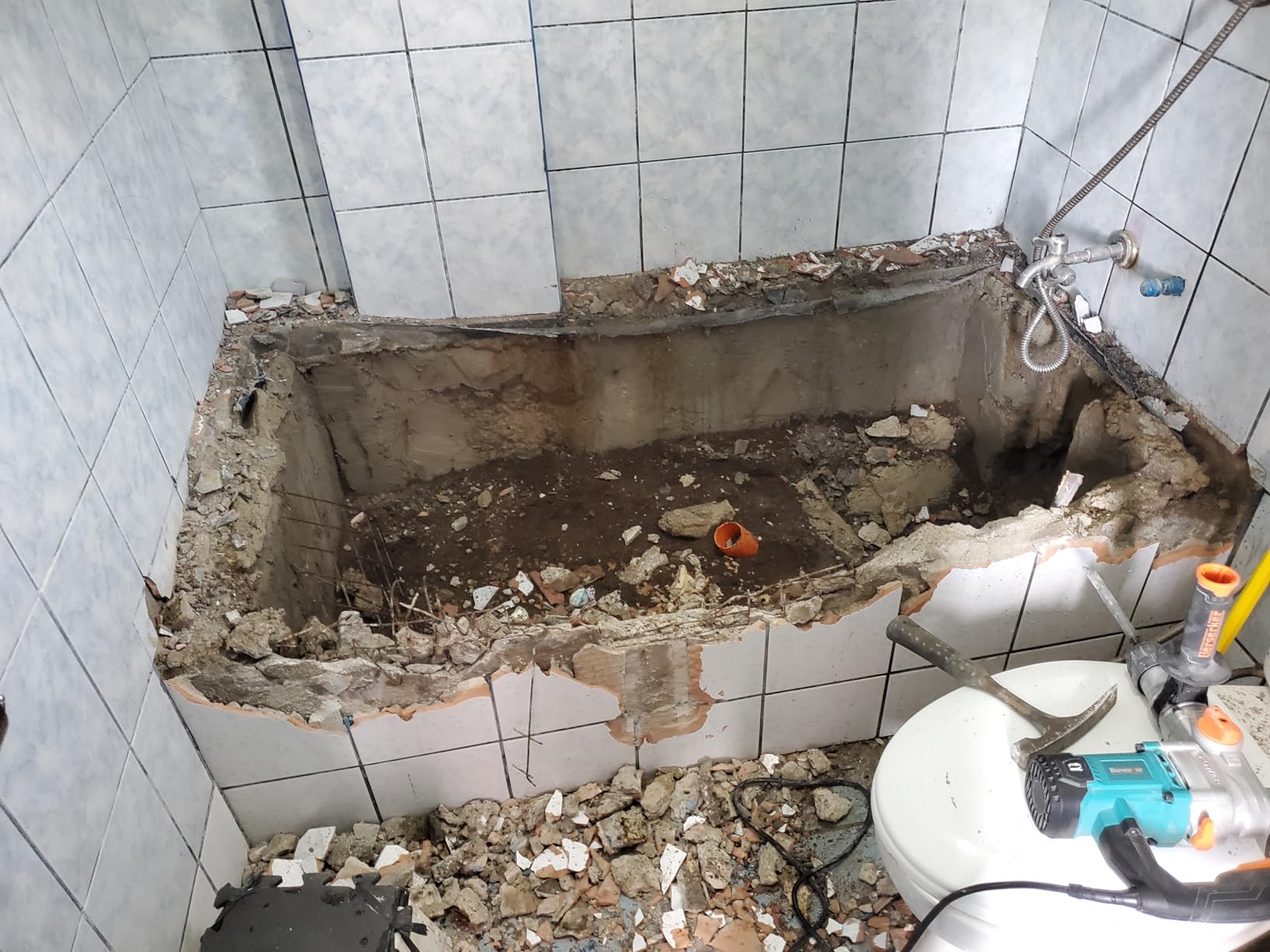
Hanging shelving, TV brackets and cabinet anchors into concrete or block is the core use, and the impact energy is more than adequate for it. Small diameter holes for Tapcons, lags and threaded rod are comfortable territory at 9.5 pounds, including overhead into a soffit.
Light chiseling for removing tile or breaking a small section of mortar also works, and the point chisel in the kit is a usable starter point.
Where the 26FA needs cooling and patience
Heat is the recurring theme. It runs hot after sustained drilling and needs cooldown time, and the supplied grease is consumed quickly during heavy work. Plan the job in bursts rather than one long continuous run.
There is also a small number of durability reports, with at least one owner reporting burnout after only a few uses. If you are buying for professional daily service, look at a name-brand machine with a longer warranty instead.
8. Makita XRH04Z – Best Cordless Rotary Hammer for Makita Platform Owners
Makita XRH04Z 18V LXT® Lithium-Ion Cordless 7/8″ Rotary Hammer, accepts SDS-PLUS bits, Tool Only
18V LXT cordless
7/8 inch SDS-plus
0-4000 BPM
7.4 lb
3 modes
Pros
- Drilling speed is a step change over a hammer drill
- Shares batteries with the entire 18V LXT platform
- Synchronized RPM and BPM for faster hole making
- Torque limiting clutch protects the gear train
- Shock absorbent handle protects the battery housing
Cons
- Consumes batteries relatively quickly and can run hot
- Some owners describe the chuck and battery mount as flimsy
- Body length is awkward in confined spaces
- Tool only - batteries and charger not included
The Makita XRH04Z is the right pick if you already own 18V LXT packs. Platform economics decide this purchase more than any spec does, because if you have the batteries and the charger the real entry cost is the bare-tool number, and if you do not, that platform premium keeps compounding for as long as you own it.
That platform argument runs through the whole cordless class. Owning a second battery ecosystem is the largest hidden cost in cordless tools, and tradespeople buying on the job consistently stay inside a platform they already hold rather than chasing a slightly better headline figure elsewhere.
On performance, the Makita-built variable speed motor produces 0 to 1200 rpm and 0 to 4000 blows per minute across three modes: rotation only, hammering with rotation, and hammering only. Users call the drilling speed a step change over a hammer drill, with noticeably less bit wear as a secondary benefit, because the piston mechanism breaks material by percussion instead of grinding it.
Synchronized RPM and blow rate means the speed and impact stay matched as you feather the trigger, which is why the holes come out cleaner and the bit stays sharper. The torque limiting clutch protects the gear train on a bind, and the shock absorbent handle isolates the battery housing from the vibration path.
Capacity is 7/8 inch SDS-plus, which is a notch below the DEWALT and Milwaukee picks. For most anchor work that is all you need, but it does place a ceiling on the largest hole you can bore.
Where the XRH04Z earns its keep
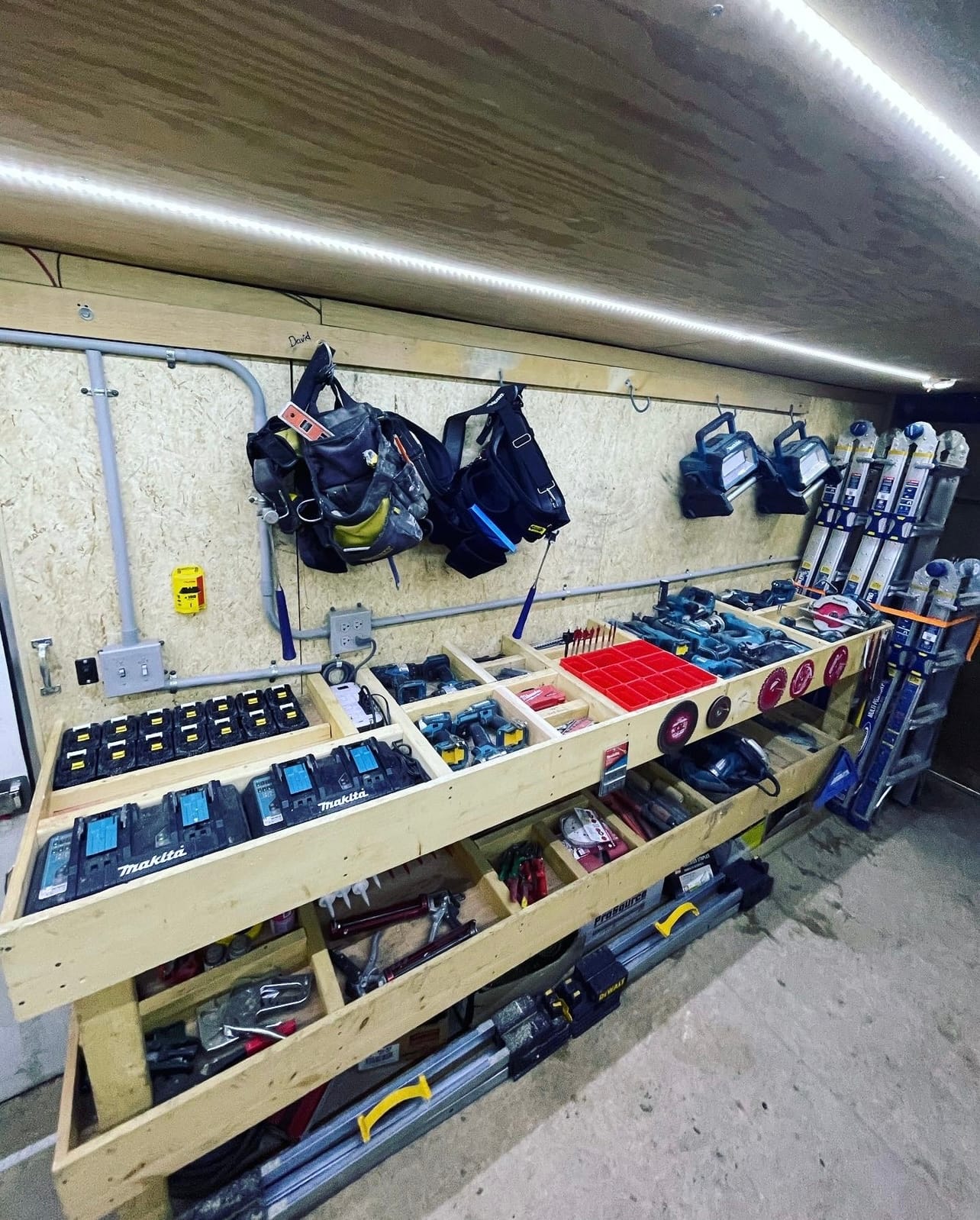
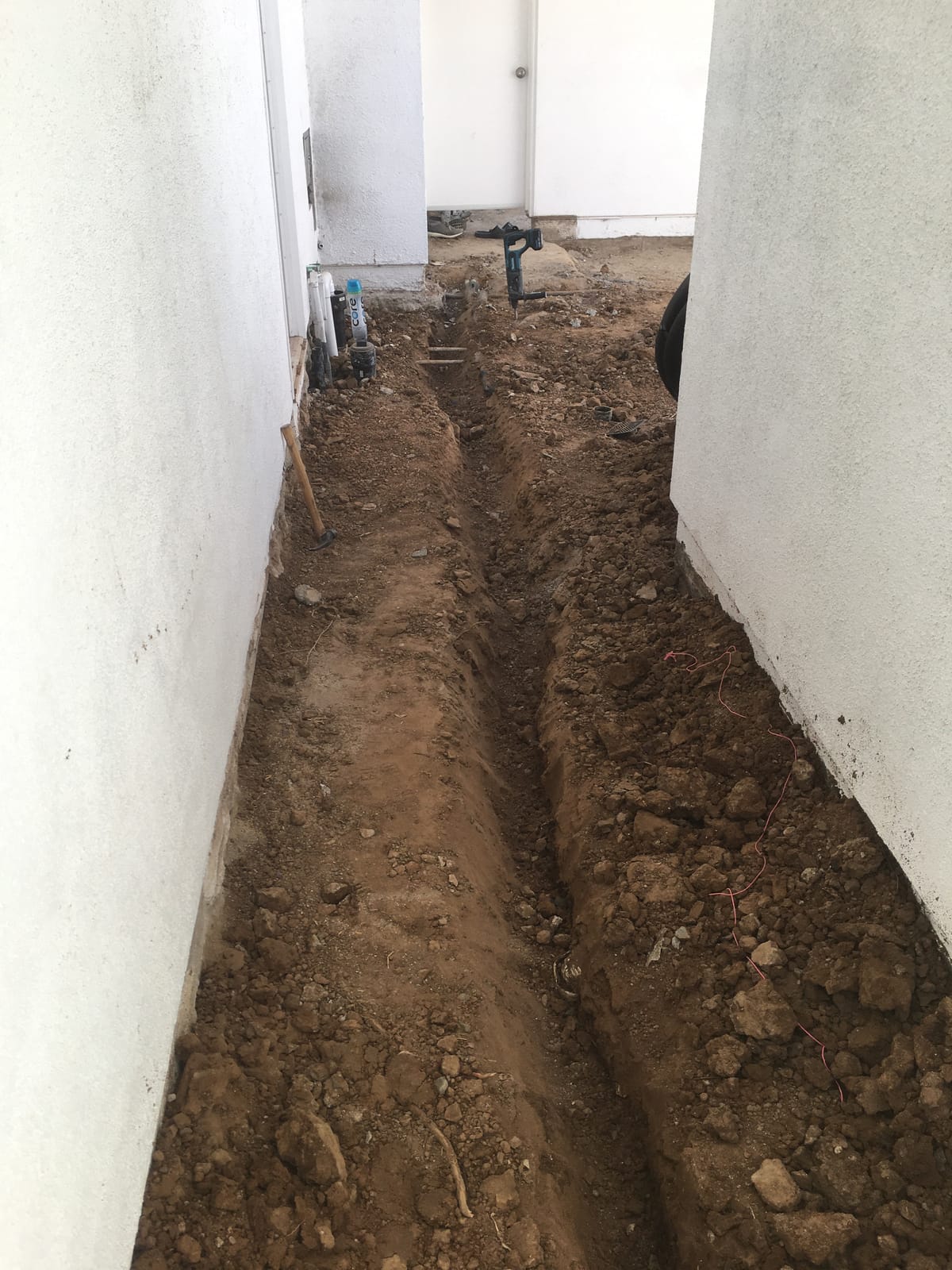
Residential anchor installs, rod hanging, pipe hangers through block, and light chiseling of mortar and tile are all well within this tool. For an electrician or plumber working through a rough-in schedule without a mains outlet nearby, that portability is the point.
It is also a genuinely good fit for shared-shop situations where other trades on the same site run Makita gear and you can borrow packs.
Where the XRH04Z disappoints
Battery drain is the top complaint, with owners reporting fast consumption and heat build-up during heavy drilling. High-output packs help, but the tool is fighting the platform on this point.
Several owners also describe the chuck and battery attachment point as feeling flimsy, and the body length is awkward in confined spaces compared with the compact DEWALT and Milwaukee bodies. If you work in tight cavities, check the 18 inch body length before you commit.
9. Milwaukee 2912-20 M18 FUEL – Best Compact Cordless Rotary Hammer for Concrete
Milwaukee 2912-20 M18 Fuel 18V 1″ Sds Plus Brushless Rotary Hammer
M18 FUEL brushless
1 inch SDS-plus
AUTOSTOP control
7.5 lb
3 modes
Pros
- 4.8 stars with strong concrete and brick drilling speed
- Compact body reaches tight and overhead spaces
- AUTOSTOP senses bind-ups and stops the tool
- Shock and vibration absorption reduces wrist fatigue
- Part of the M18 System with 200+ compatible tools
Cons
- Tool only - no battery or charger included
- Drains battery quickly on heavy drilling
- 1 inch chuck limits very large bit diameters
The Milwaukee 2912-20 M18 FUEL earns its place through output-to-size ratio. It carries 1 inch SDS-plus capacity in a body measuring 11.5 inches long, and at 4.8 stars it is tied for the highest rating in the roundup.
Its defining feature is AUTOSTOP control, which senses a bind-up and stops rather than letting the bit wrench the tool. That is the same injury-prevention logic as the Bosch KickBack Control machine, delivered in a cordless package.
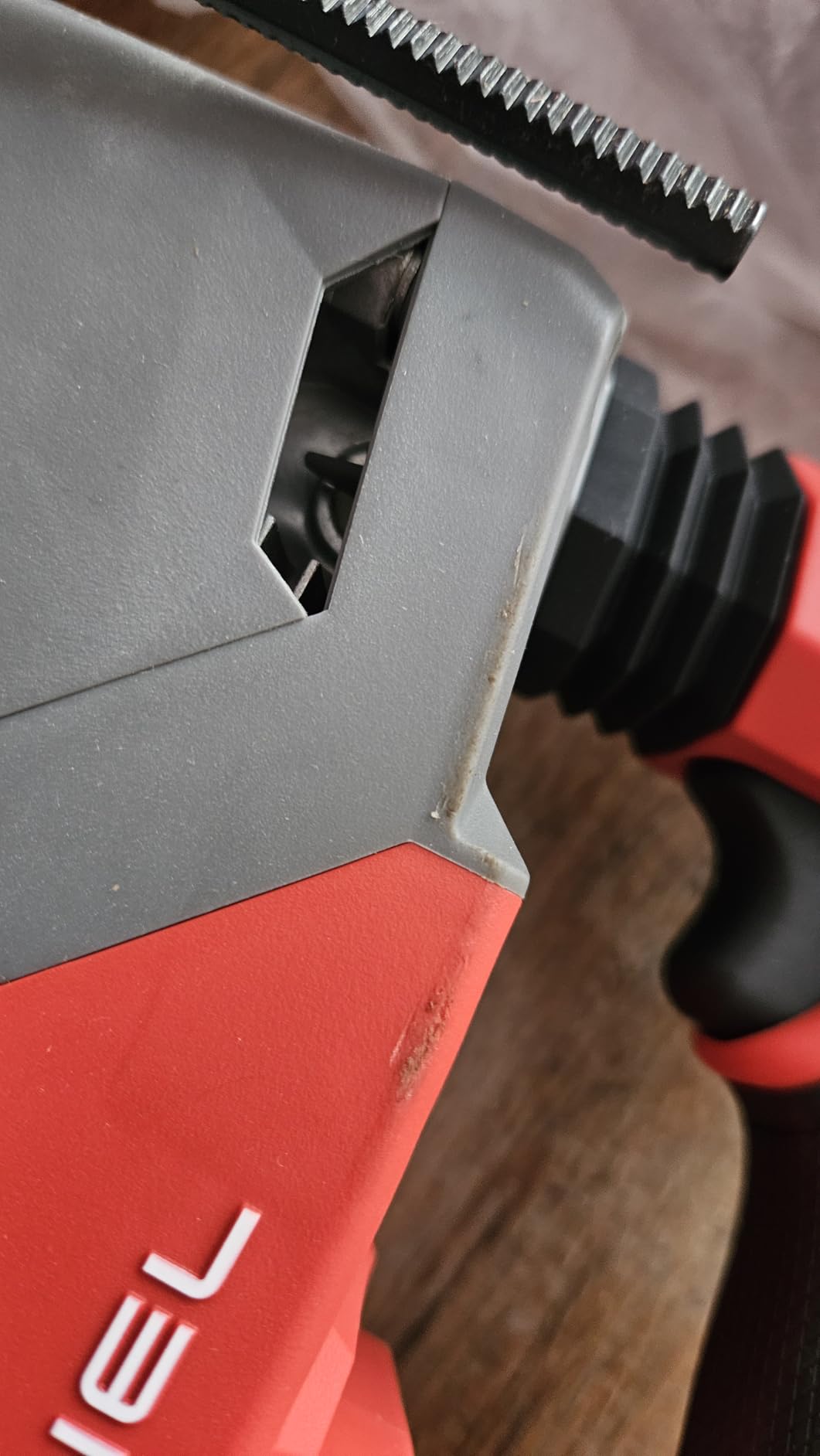
The M18 FUEL brushless motor delivers a maximum of 800 watts, 2 ft-lb of torque and up to 1330 rpm across three modes. Owners praise the drilling speed in both concrete and brick, and the shock and vibration absorption is credited with reducing elbow and wrist fatigue on long runs.
Platform breadth is the strategic reason to buy it. If anyone on your crew already runs M18 gear, this tool slots into a battery and charger collection that is already in service and already being cycled daily, which keeps replacement packs cheap and plentiful.
At 11.5 inches long this is a short body, and short is what you want when the bit has to stay square to a hole above your head or inside a wall cavity.
Masonry work the 2912-20 handles well
Concrete and brick anchor holes up to about three-quarter inch, seismic and strut attachment work, cable tray mounting and light chiseling all sit comfortably inside its envelope. The 1 inch capacity covers more than the Makita XRH04Z manages.
For anyone working alone on ladders or in crawl spaces, the combination of compact size, vibration absorption and AUTOSTOP is a well-matched set of safety and comfort features.
Where the 2912-20 falls short
Battery consumption on heavy concrete drilling is the consistent caveat, and it ships without a battery or charger, so the real entry cost is higher than the tool number suggests. If you already own M18 packs that is a solved problem; if you do not, factor it in before you decide.
The 1 inch chuck also limits larger bit diameters, so past that point you are moving to another class of tool entirely.
10. Berserker 42M – Best SDS-Max Rotary Hammer for 1-9/16 Inch Holes
Berserker 1-9/16″ SDS-Max Heavy Duty Rotary Hammer Drill for Concrete 42M
13 amp corded
10 J impact energy
1-9/16 inch SDS-Max
16 lb
6-speed
Pros
- 10 joules of impact energy for large-hole work
- Performs alongside name-brand SDS-max machines at a fraction of the outlay
- Handles core drilling and light jackhammer breaking
- Supplied SDS-Max to SDS-Plus adapter chuck
- 6-speed transmission gives chiseling control
Cons
- 16 lb is heavy for overhead work
- Runs very hot in continuous use and needs rest periods
- No drill-only mode at all
- Included case feels flimsy
The Berserker 42M is the only SDS-Max machine in this roundup and the only one that reaches 1-9/16 inch. Its 10 joules of impact energy puts it at the top of the impact range here, and that is not a spec-sheet flourish. It is what lets you bore large holes into dense concrete and block instead of creeping up on them with a smaller machine.
If your project involves core drilling, large anchor holes, or running service lines through thick masonry, this is the class you need. A 1600 watt, 13 amp motor delivers 0 to 630 rpm and up to 3800 blows per minute, and the 6-speed transmission gives real control when you switch into chiseling.
Reviewers report performance comparable to name-brand SDS-max machines at a much lower outlay, which is the argument for this pick. At 4.5 stars across 535 reviews it is the lowest-rated tool here, and the reason is consistent and specific: heat.
It runs very hot with continuous use and needs rest periods. Several owners also report that the speed control becomes unresponsive once the tool is hot, which is a real workflow problem on a job where you cannot pause.
Two practical notes. There is no drill-only mode, so you cannot use it for rotary drilling without hammering engaged. And at 16 pounds it is heavy, which makes overhead work unpleasant even though the weight is partly the price of the impact energy.
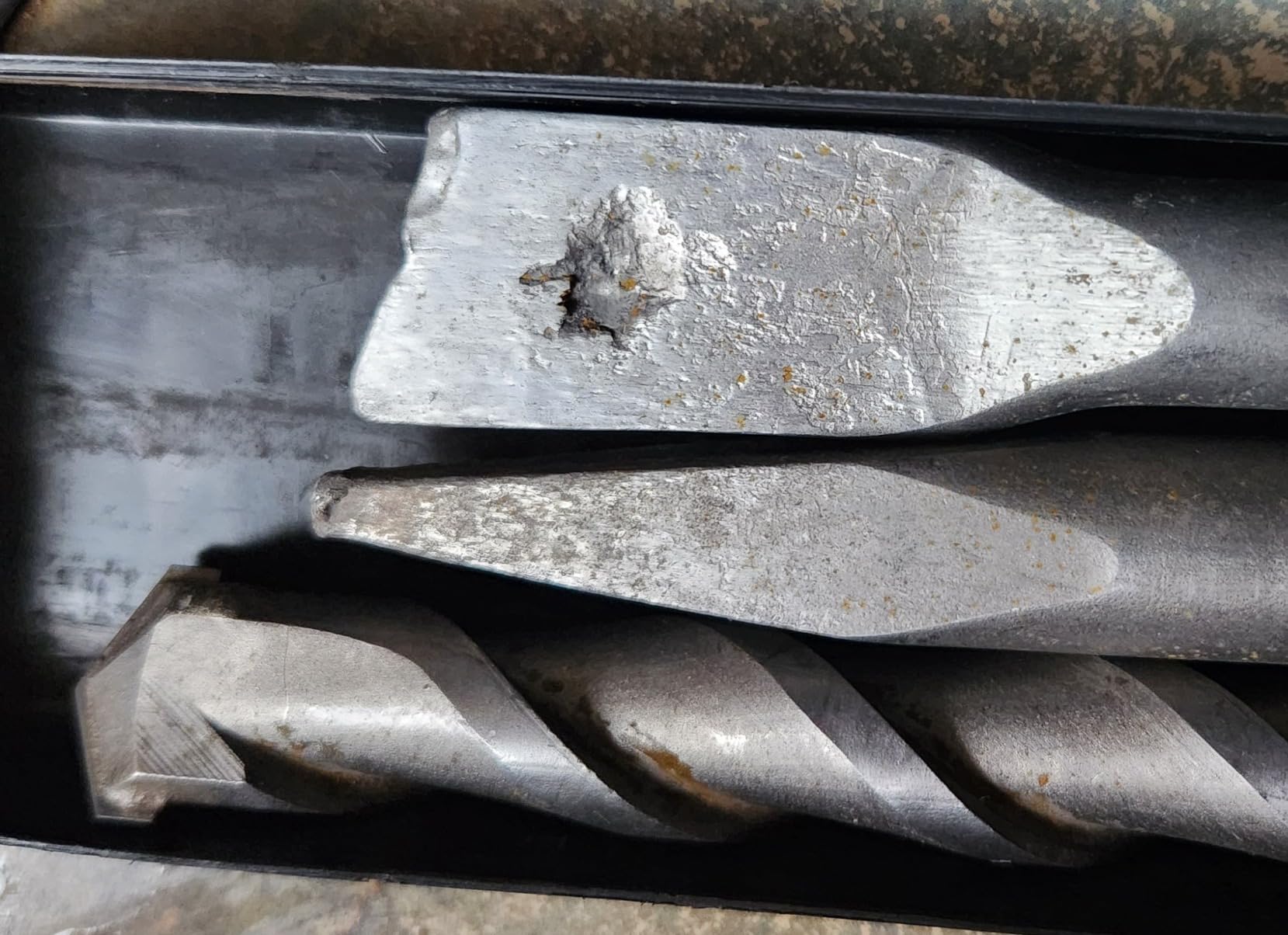
On the positive side, the kit includes an SDS-Max to SDS-Plus adapter chuck alongside the 7/8 inch SDS-Max bit, SDS-Max chisels and three SDS-plus drill bits. That adapter is useful if you already own an SDS-plus bit collection, though for anything non-continuous it is better to own both shanks properly.
Heavy masonry work the 42M covers
Core drilling, large-diameter anchor holes, and running plumbing or mechanical lines through thick block are the jobs this machine exists for. Owners also describe using it as a jackhammer for light breaking work, where the 10 joules of output does more than a standard rotary hammer would.
It also suits anyone whose work crosses the 1 inch threshold that stops SDS-plus machines, which is the point at which many trades decide they need to move up a class.
Where the 42M is the wrong tool
Any job where you cannot afford a break. The heat behaviour under continuous use is the defining limitation, and for a full day of coring you want a machine designed for continuous duty rather than one that needs rest intervals.
Overhead work at 16 pounds is punishing, and the absence of a drill-only mode means it is not a general-purpose drill. Choose it for capacity; choose the corded SDS-Plus tools for everything else.
Rotary Hammer vs Hammer Drill vs Demolition Hammer: What Each One Does
A rotary hammer uses a heavy piston mechanism that strikes the bit thousands of times per minute in coordination with rotation, breaking masonry by percussion rather than grinding. A hammer drill uses a small rattling hammer action that is adequate for brick and light block but will stall on dense concrete. A demolition hammer has no rotation at all and exists purely to break material.
The practical rule is straightforward: in concrete over half an inch, a rotary hammer drills several times faster with less operator effort, and its SDS bits do not slip in the chuck. Under half an inch in brick or block, a hammer drill will do the job at a fraction of the tool cost.
For power source, cordless wins wherever you need freedom from a cord, especially overhead and on remote sites. Corded wins on sustained drilling, where no battery will match the output and the only cost is having power nearby.
For cordless, platform choice outweighs small performance differences. Buying into the 18V LXT or M18 ecosystem you already own is worth more than a modest gain in impact energy from a platform you would be starting cold.
SDS-Plus vs SDS-Max: Which One Masonry Work Actually Needs
SDS-plus bits have two open grooves and are the standard for holes up to about three-quarter inch, while SDS-Max bits have closed grooves and a heavier build for holes up to 1-9/16 inch and beyond. They are physically different and not interchangeable in the normal direction.
The decision, in order:
Choose SDS-plus if your largest hole is around three-quarter inch or smaller. This covers most anchor work, Tapcons, pipe hangers, cable tray and strut mounting, and it covers every cordless option in this roundup.
Choose SDS-Max if you regularly drill between 1 inch and 1-9/16 inch, core drill, or work in dense stone. This is where SDS-plus machines run out of impact energy and start to feel the difference on every hole.
Choose corded SDS-plus if you have mains power and want capacity without the weight. The ENEACRO ENRH3201 reaches 1-1/4 inch of rated concrete capacity on an SDS-plus chuck, which blurs the line usefully.
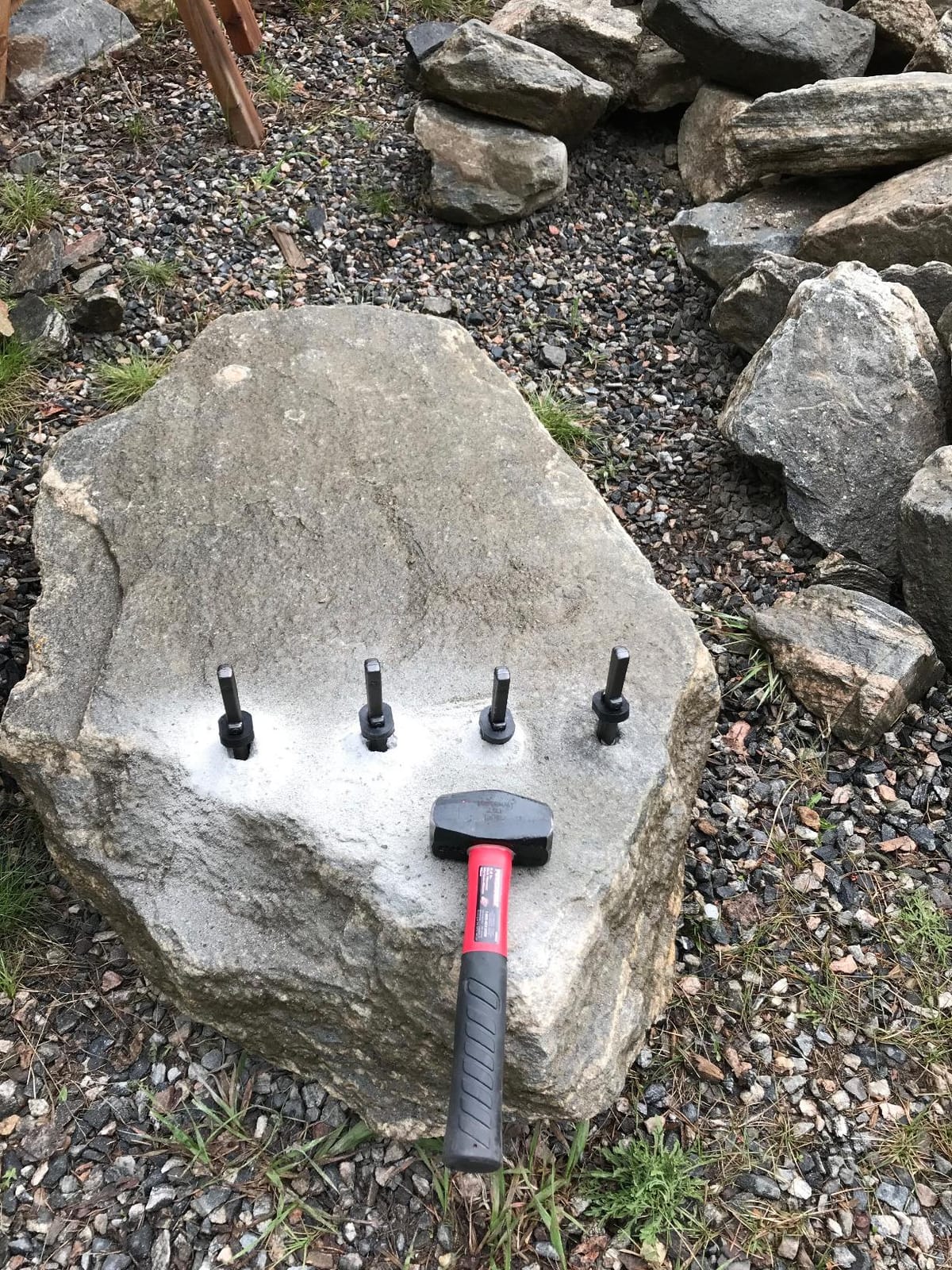
Choose a demolition hammer if you are breaking slabs, footings or foundations rather than drilling holes. No rotary hammer in this roundup is built for sustained slab breaking. For a one-off boulder or basalt job, renting a large electric breaker is the sensible answer rather than buying anything on this list.
On the compatibility question: you cannot put an SDS-plus bit into an SDS-Max chuck directly, because the slots differ. The way around it is an adapter chuck, and the Berserker 42M in this roundup ships with an SDS-Max to SDS-Plus adapter. It is a legitimate solution, though the adapter adds length to the bit and slightly reduces the control you have at the chuck, so buy proper SDS-Max bits for heavy work rather than adapting everything.
How Much Impact Energy Do You Need for Concrete
Impact energy is measured in joules, and it describes the energy delivered to the bit with each hammer blow. More joules means bigger holes go faster and the tool works less hard against the concrete, which translates to less heat, less bit wear and less fatigue for you.
The figures here span from 2.1 joules at the bottom to 10 joules at the top. That is a nearly five-fold range, and it maps directly onto the class of work each tool handles rather than onto brand prestige.
Use these as practical thresholds rather than precise engineering values. Around 2 to 2.6 joules covers anchor holes up to three-quarter inch comfortably. Around 3 to 5 joules covers chipping work properly and pushes into the 1 inch range. Above 7 joules you are into large-hole and dense-material territory where an SDS-plus machine can still do the job but works harder doing it.
Blows per minute tells a different story from joules. Higher blow rates feel faster on light-duty work, but for large holes the joules figure matters more, because breaking material out of the hole depends on the force of each strike.
One caution. Impact energy on a spec sheet is measured at a single reference point and is not a perfectly comparable number across manufacturers, so treat small differences between two tools as noise and large gaps as real. Power to weight is the more useful comparison for how a tool will feel over a long session.
Concrete Anchor Drilling: Bit Sizes, Hole Depths and Bits to Buy
For anchor work, the drill matters less than the bit. Buying the best bit you can afford changes results more than any upgrade between two similar rotary hammers, and it is the most repeated unanswered question in tool review comment threads.
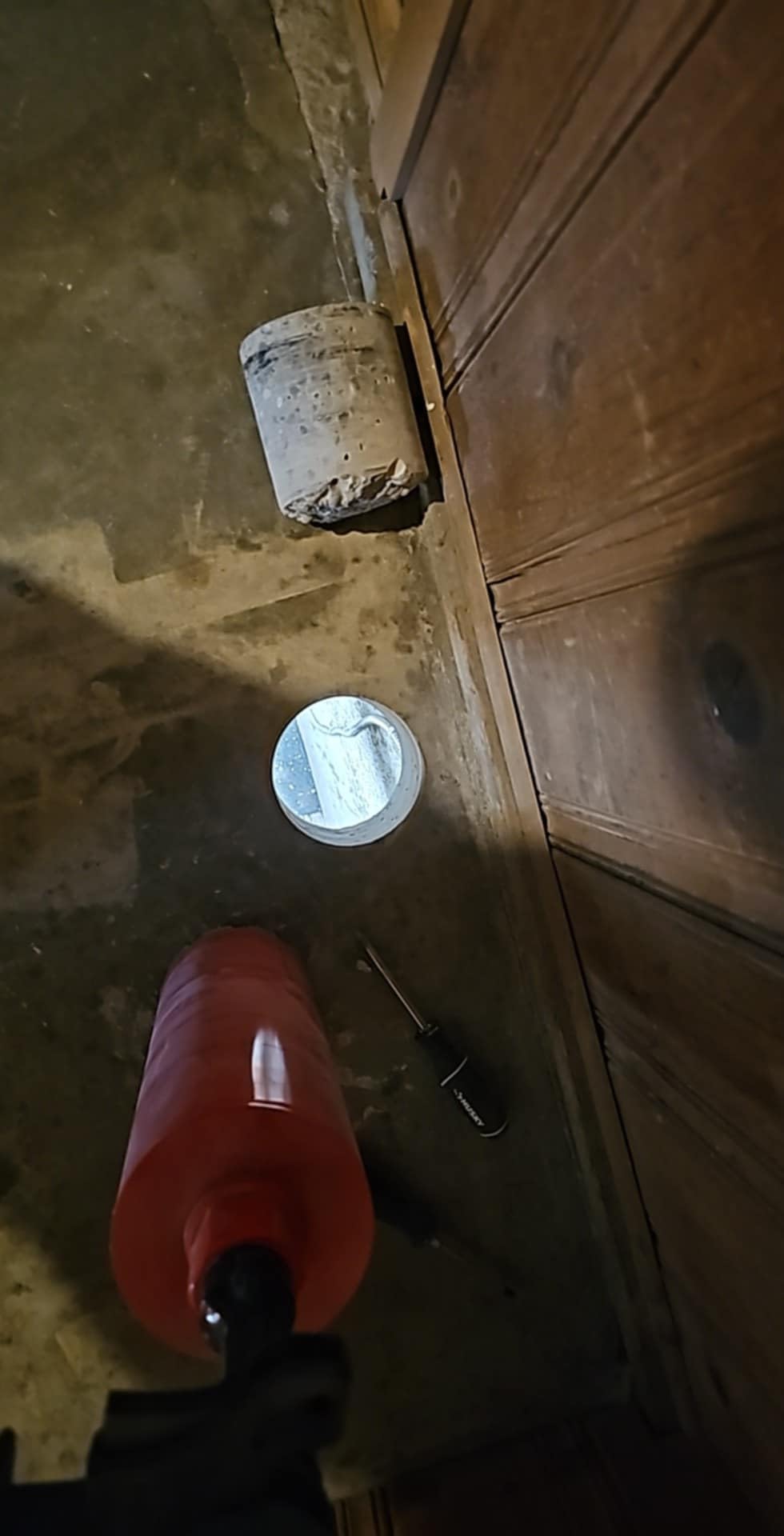
The process itself is short. Measure and mark your hole centres, mark the depth on the bit with tape, set the depth stop, drill straight in with the hammer engaged, then blow the dust out of the hole before you set the anchor. Concrete dust left in the hole prevents expansion anchors from gripping properly, and it is the most common reason an anchor feels loose.
On bit choice, the common sizes are 1/4 inch, 5/16 inch, 3/8 inch and 1/2 inch, covering most Tapcon, wedge anchor and expansion shield installs. For SDS-plus machines, use a four-cutter or two-cutter masonry bit with SDS-plus shanks, and for SDS-Max work use the heavier SDS-Max equivalent. The two bit families are not interchangeable.
For larger holes, use a core bit rather than a drill bit where the hole needs to be round and clean. That advice matters most in reinforced concrete, where a core bit cuts around rebar instead of trying to cut through it, and where hitting rebar mid-drill with a masonry bit is what causes stalls and bind-ups.
On dust, treat it as a safety item rather than a comfort item. Concrete and masonry dust is a respirable silica hazard, and pairing a rotary hammer with a HEPA vacuum keeps the plume down. The DEWALT DCH273B and D25263K both have documented dust extraction paths, and pairing any of these tools with a shroud on the bit captures the plume at the source.
Frequently Asked Questions
What do you use a rotary hammer for?
You use a rotary hammer for drilling holes in concrete, brick, block and stone, for setting anchors and Tapcons, for running pipe hangers and conduit, and for chiseling out mortar, tile bed and thin concrete. A piston mechanism delivers thousands of hammer blows per minute in coordination with rotation, so the bit breaks material by percussion instead of grinding it. Most masonry anchor work falls inside a cordless SDS-plus tool’s range.
Should I get SDS Plus or SDS Max?
Choose SDS-plus if your largest hole is about three-quarter inch or smaller, which covers most anchor work and pipe hangers. Choose SDS-Max if you regularly drill between 1 inch and 1-9/16 inch, core drill, or work in dense stone. SDS-plus bits have two open grooves, SDS-Max bits have closed grooves, and the two families are not interchangeable in the normal direction.
Will SDS Max work with SDS Plus?
No, not directly. SDS-plus and SDS-Max bits have different slot geometry and an SDS-plus bit will not lock into an SDS-Max chuck on its own. The workaround is an SDS-Max to SDS-plus adapter chuck, which the Berserker 42M in this roundup includes. Adapters add bit length and slightly reduce chuck control, so buy proper SDS-Max bits for heavy work.
What type of drill is best for drilling into concrete for anchors?
Use a rotary hammer for anchor holes, not a hammer drill. In concrete over half an inch a rotary hammer drills several times faster with less operator effort, and its bits stay locked in the chuck. Match the bit diameter to the anchor, drill to the specified depth, then blow the dust out before setting the anchor so expansion anchors can grip.
What is the best SDS drill bit for concrete?
Use a four-cutter or two-cutter masonry bit with SDS-plus shanks for drilling concrete, in the common sizes of 1/4 inch, 5/16 inch, 3/8 inch and 1/2 inch. For large round holes use a core bit, which cuts around rebar rather than trying to cut through it. Bit quality changes results more than the choice between two similar rotary hammers.
What is the difference between a rotary hammer and a demolition hammer?
A rotary hammer drills while hammering and can also switch to hammer-only mode for light chiseling. A demolition hammer has no rotation at all and exists to break material such as slabs, footings and foundations. A rotary hammer will not break up concrete effectively, so for heavy demolition or boulders you want a breaker-class tool, and renting one is sensible for a one-off job.
The Best Rotary Hammers for Masonry in 2026: Final Verdict
The DEWALT DCH273B is our pick for the best rotary hammers for masonry overall in 2026. It pairs verified output with low weight, and its vibration control is the feature reviewers mention most. For light work on a platform you already own, the DEWALT DCH133B is lighter and rated higher, while platform owners should look at the Makita XRH04Z or the Milwaukee 2912-20 instead of starting a second battery ecosystem.
For corded work, the Bosch 11255VSR covers most categories with a durability record that few tools match, the ENEACRO ENRH3201 delivers by far the most impact energy of any corded pick here, and the Bosch GBH2-28L is the one to buy when the drilling might hit rebar. Past the one-inch threshold, the Berserker 42M is the only tool here rated to the hole size you need.
Pick the class that matches your largest hole, buy the best bit you can afford, and pair the tool with a HEPA vacuum. That combination gets the job done more reliably than any amount of spec-sheet shopping.