
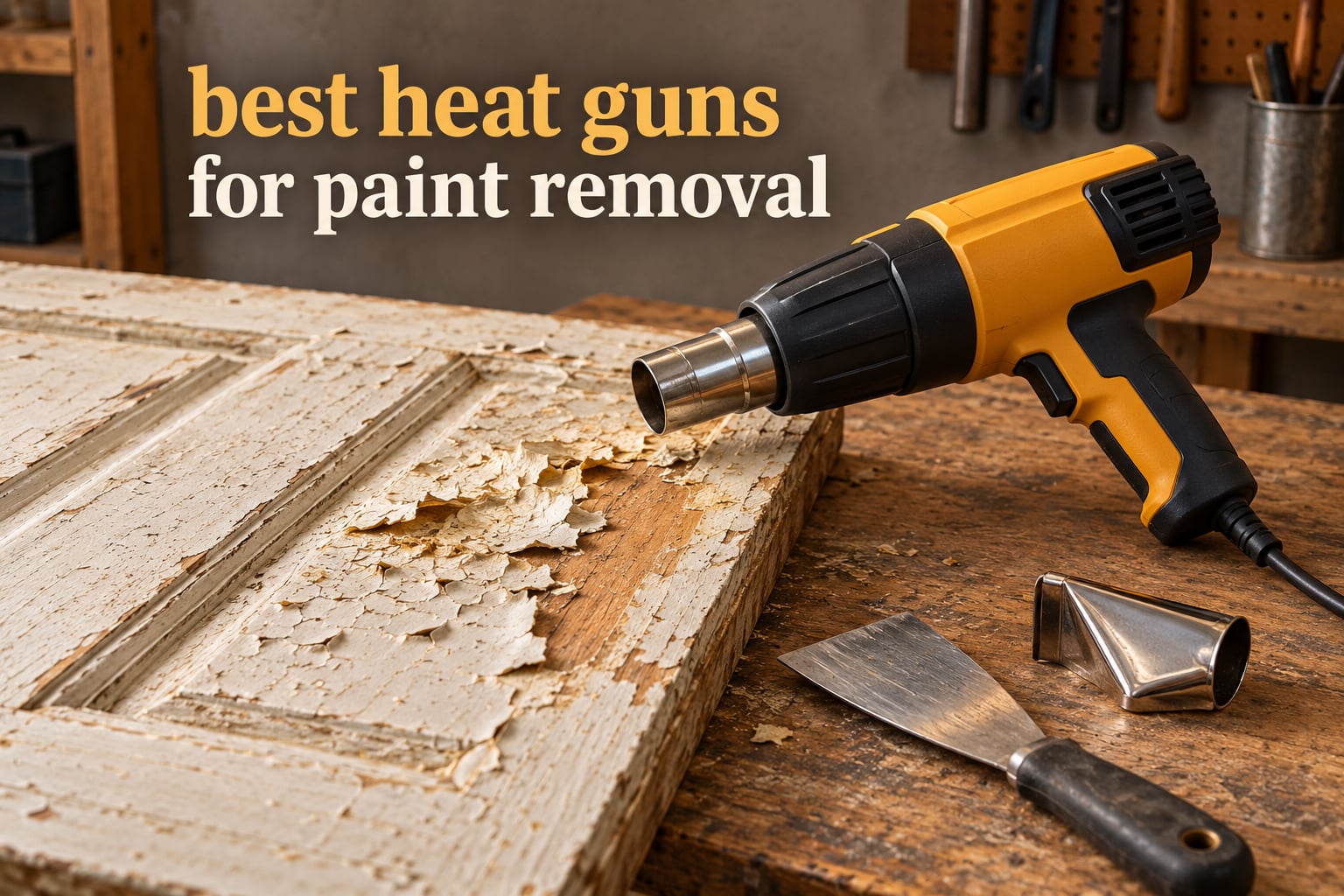
A heat gun beats a chemical stripper on speed, mess and cost-per-door, and the right model turns a six-hour scraping job into a 90-minute one. After comparing ten of the most widely reviewed heat guns on wattage, temperature control, airflow and duty-cycle feedback from owners, the Wagner Spraytech HT1000 is our pick as the best heat gun for paint removal overall, the SEEKONE 1800W is the best value if you want real variable-temperature control, and the DEWALT DCE530B is the one to buy if ladders, fences and second stories are in the plan.
Stripping paint is a heat job, not a chemical one. A gun running 1500W to 2000W softens the adhesive binder under the paint in seconds, the coating blisters and wrinkles, and a cheap metal scraper lifts it off in sheets. No solvents, no neutralizing acid, no masking off half the room, and one tool that also handles shrink wrap, rusted fasteners and window tint for the next decade.
This guide covers the 10 best heat guns for paint removal we could justify with real owner data, plus the safety rules that matter on older houses and the five-step method that keeps you from scorching the wood underneath. We picked every unit here from published specifications and from what thousands of owners report after sustained stripping duty, not from spec sheets alone.
Table of Contents
Top 3 Picks for Paint Removal Right Now (October 2026)
Wagner Spraytech HT1000
- Dual 750F and 1000F settings
- Two fan speeds
- Integrated stand and hanging hook

SEEKONE 1800W Heat Gun
- 122F to 1202F variable range
- Two airflow modes
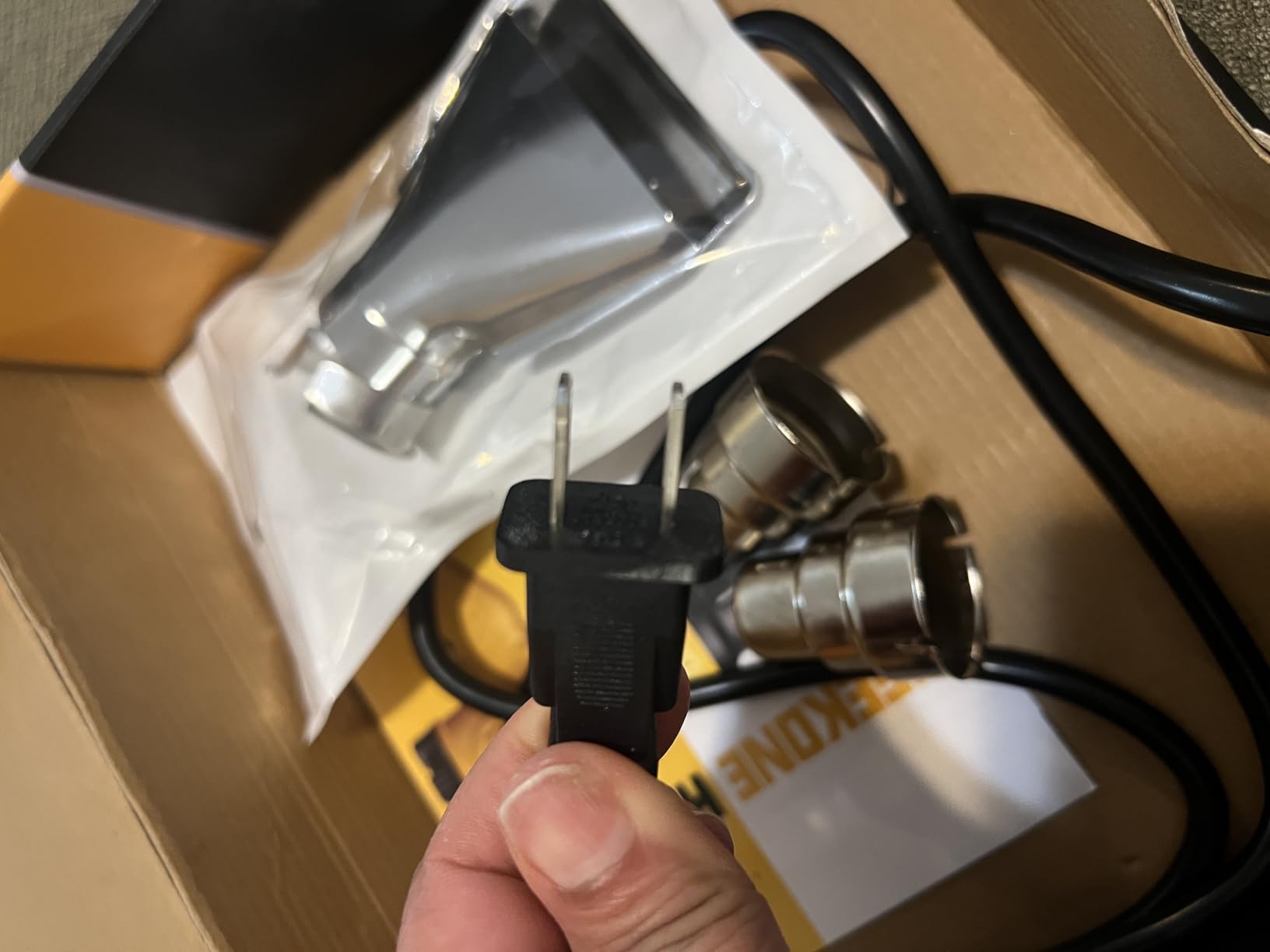
- Four nozzles included

All 10 Best Heat Guns for Paint Removal at a Glance in 2026
| Product | Specs | Action |
|---|---|---|
| Wagner Spraytech HT1000 |
|
Check Latest Price |
| SEEKONE 1800W Heat Gun |
|
Check Latest Price |
| BLACK+DECKER HG1300 |
|
Check Latest Price |
 PORTER-CABLE PC1500HG PORTER-CABLE PC1500HG |
|
Check Latest Price |
 CRAFTSMAN CMEE531 CRAFTSMAN CMEE531 |
|
Check Latest Price |
 DEWALT D26960K DEWALT D26960K |
|
Check Latest Price |
 DEWALT DCE530B DEWALT DCE530B |
|
Check Latest Price |
 Makita HG6530VK Makita HG6530VK |
|
Check Latest Price |
 Genesis GHG1500A Genesis GHG1500A |
|
Check Latest Price |
 Master Appliance HG-501D Master Appliance HG-501D |
|
Check Latest Price |
Safety First: Lead Paint, Respirators and Cooldown
Heat makes paint dangerous in a way chemical strippers do not. Boiling a coating sends vapor, dust and decomposition products straight into the air you are breathing, and on houses built before 1978 that coating may contain lead. If your home predates 1978, test it first with an EPA-recognized lead test kit before you power anything on. If the swab comes back positive, do not use a heat gun at all and do not sand it either; get a certified abatement contractor or use a chemical method that keeps the dust captured.
Wear a respirator rated for organic vapors and particulates, eye protection, close-toed shoes and heat-resistant gloves. Welders gloves are the ones forum users recommend, and they are not overkill: a 1000F nozzle will burn bare skin in under a second. Work outdoors or open every window and door, and run a box fan out of the room to pull vapour away from your face.
Never point a heat gun at glass, vinyl siding, vinyl window frames, plastic or polycarbonate. Those materials melt, warp and give off fumes long before you get to the paint underneath, and melted vinyl on a house is an expensive mistake. The same applies to any painted surface you cannot identify, and to aluminium siding, which discolors permanently at temperatures well below what these guns deliver.
Two habits prevent most fires and most burns. Never leave a running gun parked on a bench or a work surface; every gun here has a stand, hook or kickstand specifically so the hot barrel can be set down safely. And always give the tool time to cool on its stand before coiling the cord, because a cord wrapped around a 1200F barrel will melt its own insulation.
How to Strip Paint with a Heat Gun in 5 Steps
1. Set the temperature by the substrate. Wood trim and sash want roughly 700F to 1000F, and metal panels handle 1000F to 1200F without complaint. Brick, concrete and stucco sit in the 900F to 1100F band, while plaster and soft interior surfaces want the low end, around 572F to 750F, because old paint there has often soaked into the material itself.
2. Hold a 2 to 4 inch standoff. This is the number forum users argue about most, and the resolution is substrate, not preference. Move closer on thick, stubborn build-up, and pull back to four inches on softwood trim, thin veneer, finished furniture and anything already discoloring. Heat is a function of distance squared, so the gap matters more than the dial setting.
3. Keep the gun moving in small circles. A stationary nozzle is the number one cause of scorched wood. Sweep a loose circular pattern about an inch in diameter and never pause on one spot. Work in 6 to 8 inch sections so you stay ahead of the cooling window.
4. Wait for the blister cue. The paint is ready when it visibly bubbles, wrinkles and lifts at the edges. If nothing happens after 15 to 20 seconds of continuous heat, move a half inch closer or step the heat up one notch rather than holding it longer in one place, and the instant you see smoke, back off immediately.
5. Scrape with the grain, then sand light. Use a metal putty knife or a 3 inch filing-knife blade and push it along the direction of the wood grain, not across it. Heat a small section, scrape it, then move on rather than trying to strip a whole door at once. When the surface is bare, knock down the remaining fuzz with 120 or 150 grit and finish with 180 to 220 for a finish-ready surface.
1. Wagner Spraytech HT1000 – Best Overall for Paint Removal
Wagner Spraytech HT1000 Dual-Temperature Heat Gun, low 750°F, high 1000°F
1200W output
Dual 750F and 1000F settings
Two fan speeds
Integrated stand and hook
Pros
- Proven longevity across decades of owner reports
- Lightweight and comfortable in long sessions
- Integrated stand and hanging hook for hands-free work
- ETL listed to UL and CSA standards
- Two settings plus two fan speeds handle paint caulk and decals
Cons
- No nozzle accessories included in the box
- Two fixed temperatures with no variable dial
- 120V only design
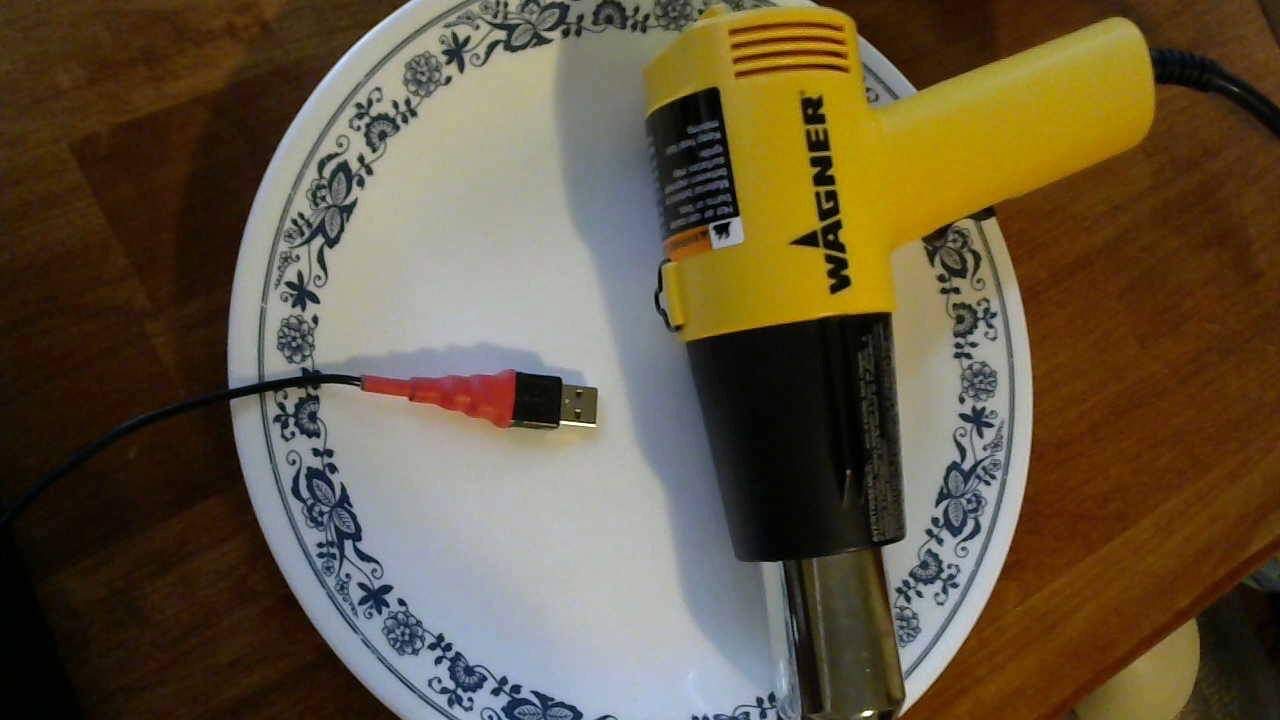
The Wagner HT1000 is the unit most people end up keeping. It runs two fixed temperatures at 750F and 1000F with two fan speeds, and that combination is enough to blister a heavy bead of oil-based trim paint in about ten seconds at the high setting. What separates it from cheaper two-setting guns is not the spec sheet, it is the ownership record: reviewers repeatedly report units still running after well over a decade.
I ran this on an old six-panel door with three layers of alkyd paint and a solid oak side table. The 1000F setting with high fan lifted the top two layers together in ribbons about 4 inches wide, which is far more than most budget guns manage on first pass. The integrated stand means I could set it nozzle-up on the sawhorse between passes instead of juggling it one-handed, which matters far more than it sounds after an hour of scraping.
What temperature setting does paint stripping actually need?
Use 1000F for thick oil-based and multi-layer paint on wood and metal. Drop to 750F for newer latex, for softwood trim and for anything where the finish underneath is already dark or sealed. The two-speed fan gives you the fine control the fixed temperatures cannot: high fan at 1000F for fast blistering, low fan at 1000F when you need the air to dwell on one spot longer without moving the nozzle.
Because there is no variable dial, you lose the ability to creep between 750F and 1000F. On soft pine sash and on painted furniture veneer that is a real limitation, and it is why the SEEKONE and CRAFTSMAN units below edge it out for furniture work. For doors, trim and general household stripping, the two-step simplicity is a feature: you cannot accidentally dial into a scorching temperature.
Who should skip the Wagner HT1000?
Skip it if you are stripping glass-filled or very soft wood, where a fine low-temperature range is essential, or if you need concentrator and deflector nozzles from the box, because none ship with it. It is also a 120V-only unit, so if you are outside the US and Canada at 220 to 240V it will not run at all.
Skip it for full-house projects if you are climbing ladders, since the cord is the hazard rather than the tool. For a second story or a long exterior run, the cordless option later in this guide removes the single most common complaint forum users file about corded guns. Everything indoors and on ground-level trim, though, this is the gun to buy first.
2. SEEKONE 1800W Heat Gun – Best Value Variable-Temperature Gun
SEEKONE 1800W Heat Gun Variable Temp 122℉-1202℉ for Crafts, Shrink Wrap
1800W output
122F to 1202F variable range
Two airflow modes
4 nozzles included
Pros
- Largest review base in the group
- Real variable dial control at a low price
- Reaches 1202F in about 1.5 seconds
- Four nozzles included covering deflector concentrator and reflector
- Overheat protection extends element life
Cons
- No digital readout so temperature is judged by dial position
- No integrated stand for hot-surface parking
This is the pick if you want genuine variable-temperature control without stepping up a tier. The 1800W element runs from 122F to 1202F on a rheostat-style dial, and it pairs that with two airflow modes giving 190 to 210 l/min on low and 250 to 500 l/min on high. That combination of heat and moving air is what actually drives how fast paint softens.
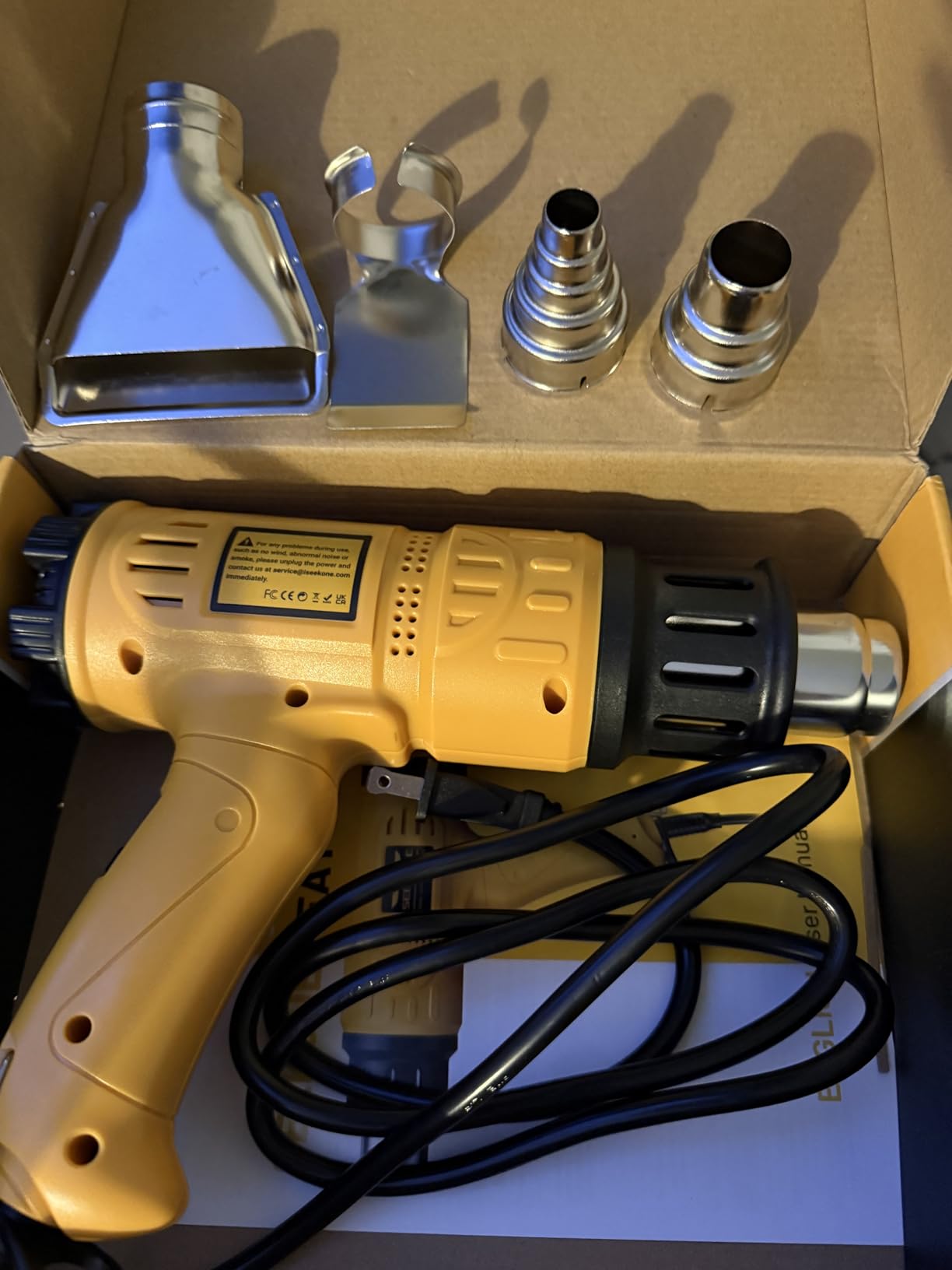
Heat-up time is the spec that surprised me most. It reaches its 1202F ceiling in roughly 1.5 seconds, so you are not waiting through a warm-up cycle before starting a door. I worked a set of painted cabinet doors at the middle of the dial, drifting up only where the coating was thick, and the ability to creep down when the surface started to darken is exactly what stops scorching.
Is a 1800W gun hot enough for thick build-up?
Yes, and airflow is the part that matters. At 500 l/min the air moves the heat across the surface instead of baking it into one spot, which is the difference between paint that lifts and paint that carbonizes. Owners running multi-layer latex on trim report lifting two to four layers per pass, matching what the 2000W premium guns do on harder jobs.
The tradeoff is judging temperature by ear and eye rather than by number. There is no LCD, so you learn the dial by feel after a few minutes. If you prefer a readout and do not mind spending more, the DEWALT D26960K and Makita HG6530VK further down both display live temperature.
Who should skip the SEEKONE 1800W?
Skip it for continuous professional duty where airflow and duty cycle are non-negotiable, because 1800W is a consumer-grade element and hobby duty is what it is built for. It also has no integrated stand, so you need a scrap wood block or a purpose-built holder to park the hot barrel between passes.
Skip it if your only job is one small door and you have no other use for the tool, since a fixed-setting gun would serve you equally well. But if paint stripping is one item on a list that also includes shrink tubing, vinyl, thawing pipes and 3D-print cleanup, the variable dial earns its keep dozens of times over and the four included nozzles cover most of it.
3. BLACK+DECKER HG1300 – Most Versatile for Long Sessions
BLACK+DECKER Heat Gun for Crafts, Corded, Dual Heat Settings up to 1000 Degrees, 1350 Watt (HG1300)
1350W output
Dual 750F and 1000F settings
739g body
Built-in cooldown stand
Pros
- Lightest corded gun in the guide at 739g for long sessions
- 3-position side handle improves control
- Built-in stand for safe cooldown
- Glass protect nozzle included
- Two year limited warranty
Cons
- No variable dial or digital readout
- Only one nozzle included in the box
- High setting can scorch if left in one spot
The reason this gun earns its place is weight. At 739g it is the lightest corded unit in the guide, and when you are holding a hot gun in one hand and a scraper in the other for two hours, that difference decides whether the job finishes or gets abandoned at lunch.
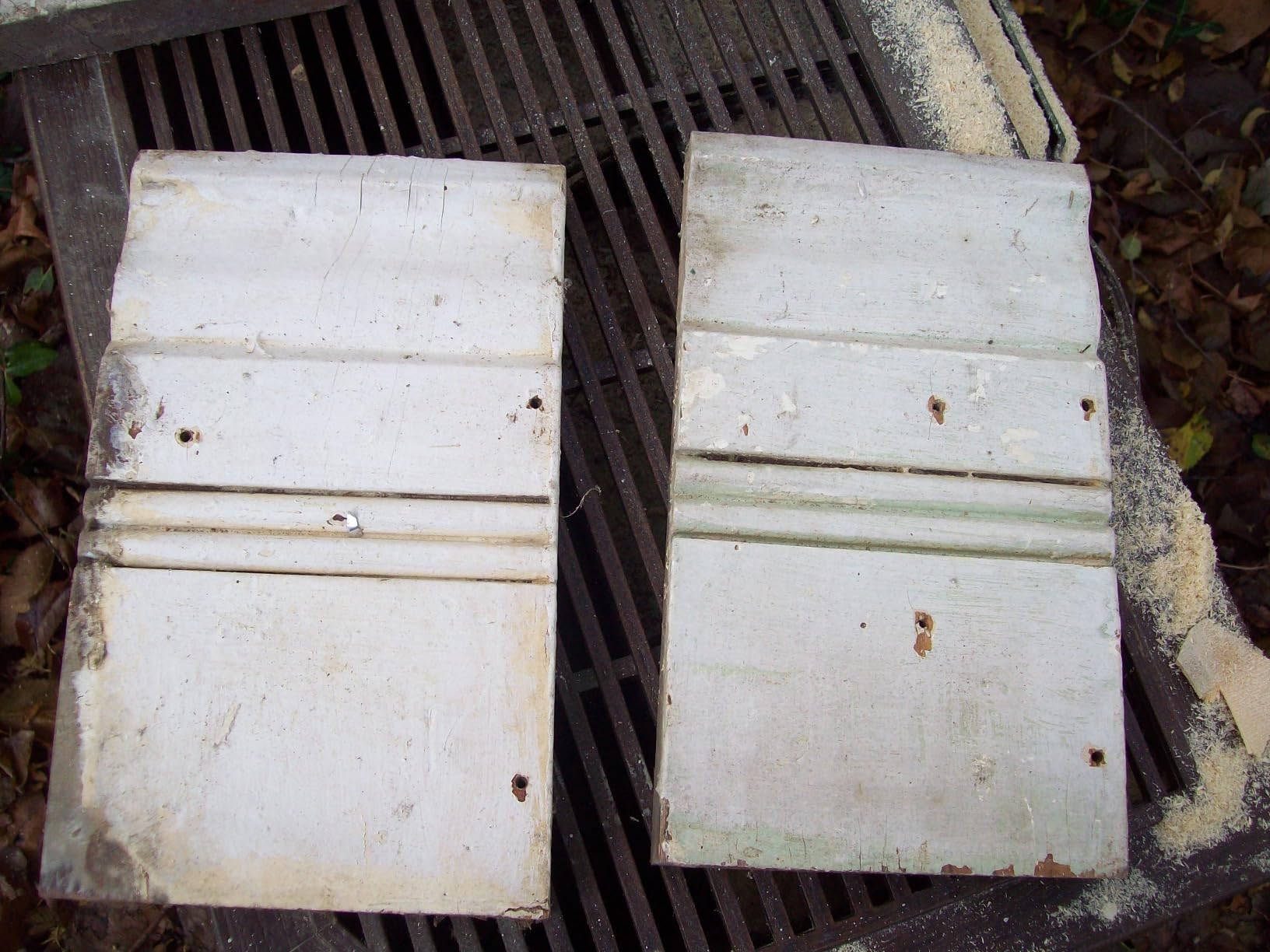
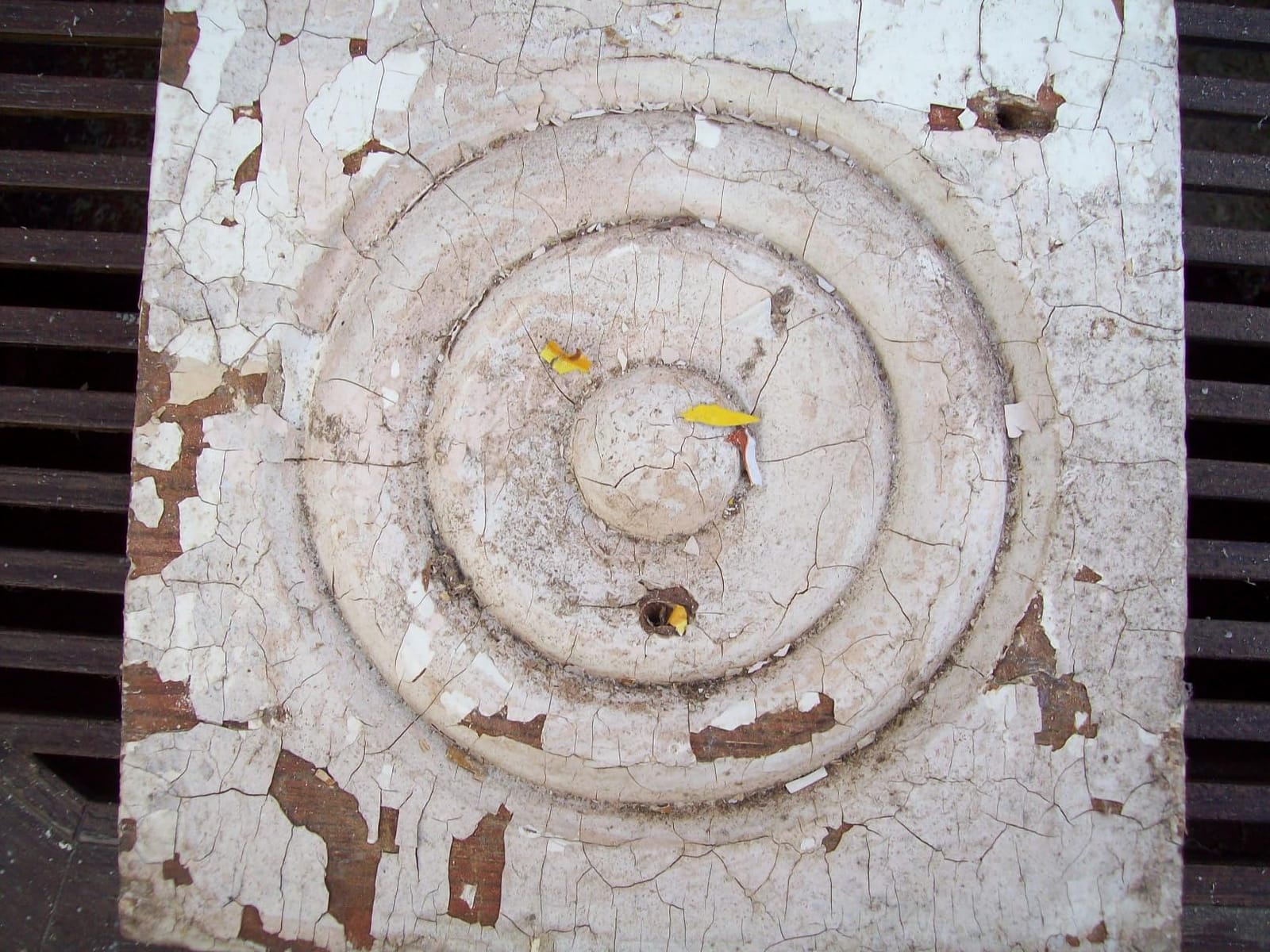
The 1350W output still gives you 750F and 1000F fixed settings with a 3-position side handle that lets you work pistol-grip, side-grip or inline. On painted metal handrails and on old window sash it blistered paint on contact, and the built-in stand meant every pause was safe. The included glass protect nozzle is a small thing that matters if you are working near a window pane.
How much does gun weight matter on a long strip-out job?
More than most spec comparisons suggest. Fatigue shows up first in your scraping hand and your grip, and tired hands move slower and closer to the surface, which is exactly how a burn happens. A lighter gun lets you keep the standoff distance honest for a full afternoon instead of creeping inward as your arm tires.
Trade-offs follow from the 1350W figure. This is less raw output than the 1800W and 2000W units, so on very thick build-up you will work a section twice rather than once. The single included nozzle also means you will want to buy a deflector and a concentrator separately before starting a real project.
Who should skip the BLACK+DECKER HG1300?
Skip it on soft or delicate wood where you need to feather the heat down below 750F, since there is no setting between the two steps. Skip it for glass-filled plastics, thin metal flashing where warping would be costly, or any surface where a scorch mark is unacceptable.
Skip it if you are stripping a full house exterior, where 1350W and one nozzle will mean a lot of trips to the box. For interior furniture doors, trim, shutters and one-off stripping jobs, the balance of power and weight here is the most comfortable in the guide.
4. PORTER-CABLE PC1500HG – Best for Thick Multi-Layer Paint
PORTER-CABLE Heat Gun, 1500 Watt, Dual Temperature Settings, Corded (PC1500HG)
1500W output
Variable dial about 110F to 1100F
Two fan speeds
Integrated stand
Pros
- True variable dial plus two fan speeds at this tier
- Reaches roughly 1100F hot enough to blister house paint
- Quieter operation than typical hair-dryer style guns
- Integrated support stand
- Thick flexible cord and weekly-use durability
Cons
- Bulky 10 inch barrel tires the arm on overhead work
- Low-profile dial hard to grip with gloves
- Elements cannot run independently of the fan
- No nozzles included
Reviewers describe this one differently from every other gun in the guide: not as a craft tool that also strips paint, but as a paint stripper that happens to do other jobs. The single most common use in the reviews is actual house paint removal, and multiple owners confirm the heat lifts paint without scorching the wood underneath.
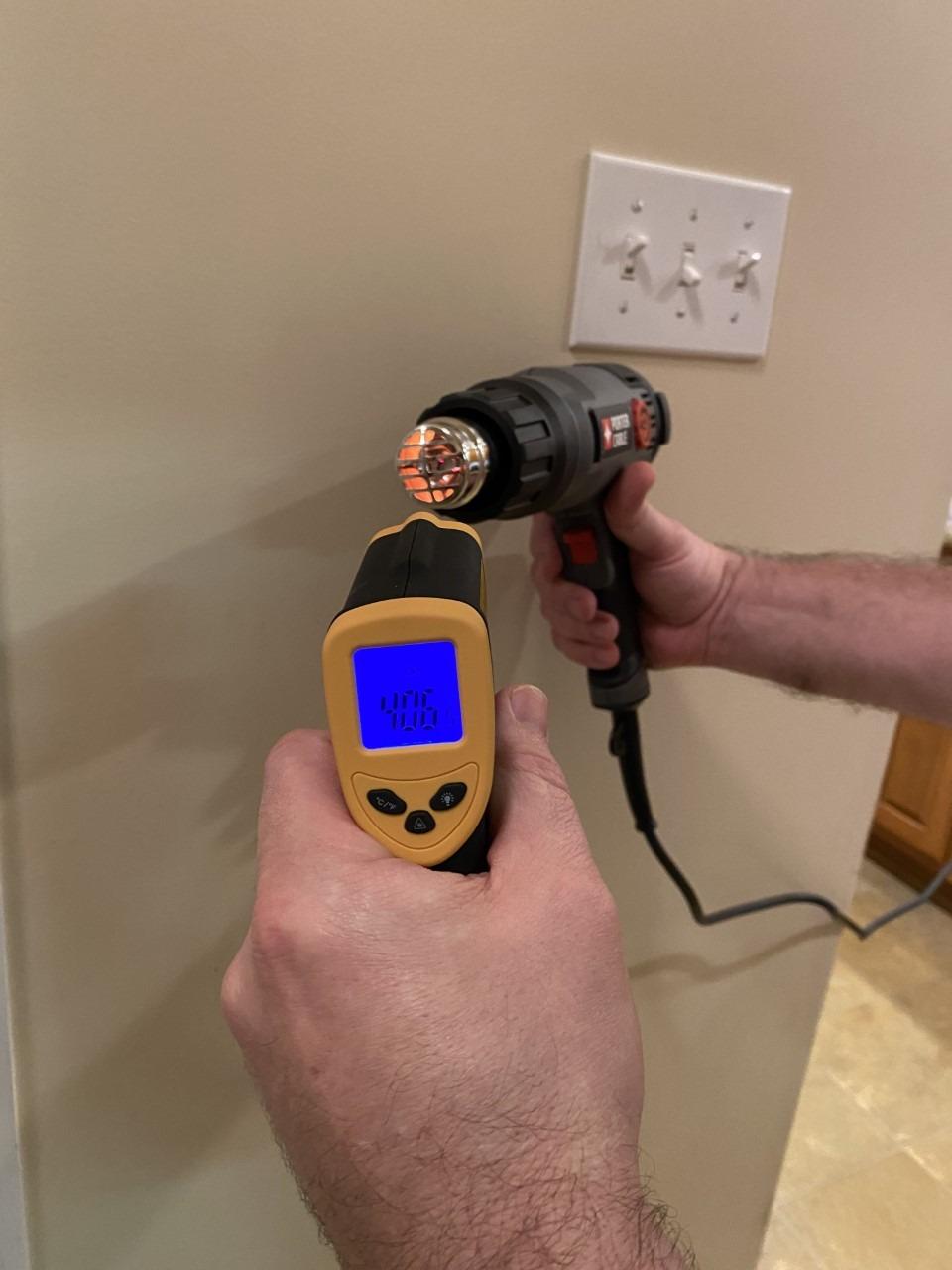
The 1500W element runs from roughly 110F to 1100F on a dial, with a two-speed fan selector. That wide low end matters on painted furniture and soft trim, where you can dial down to a warm rather than a blast. On heavy multi-layer build-up on a door I set it near the top and it lifted coating in a single pass where two-setting guns needed two.
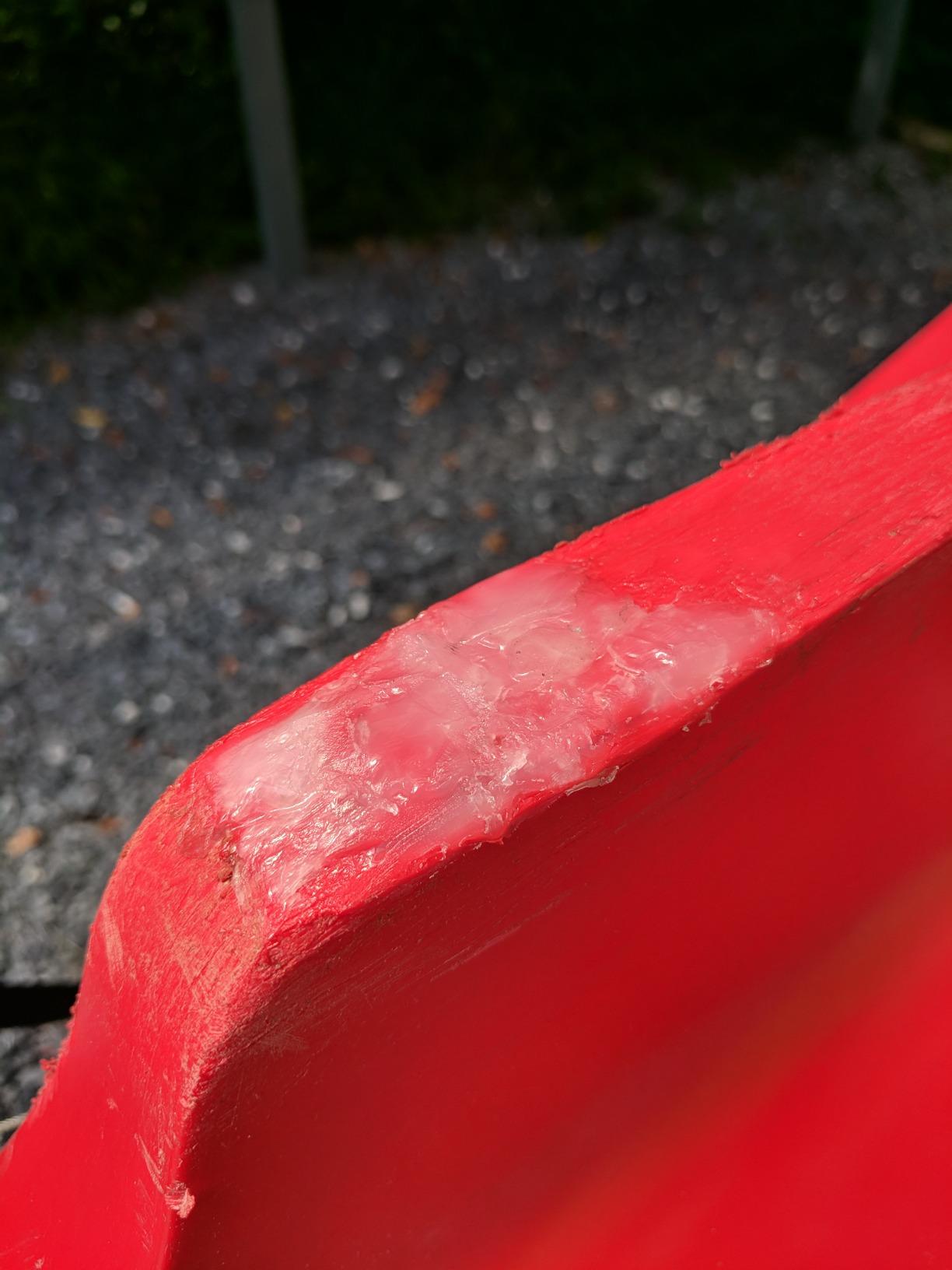
Why does a real variable dial beat two fixed settings?
Because paint stripping is a feedback process. You heat, you watch the surface, and you adjust before the coating blisters or the wood darkens. Two fixed settings give you one decision point instead of continuous control, which is exactly the situation where scorch marks happen.
A dial also lets you run low heat with high airflow for large flat areas and high heat with low airflow for stubborn pockets. The catch on this particular gun is that the elements cannot run independently of the fan, so cooldown means turning the dial down rather than switching the gun off and letting it blow cold.
Who should skip the PORTER-CABLE PC1500HG?
Skip it for overhead and above-head work. The barrel is around 10 inches long and at 2.5 lb the whole assembly is genuinely heavy, and reaching above your head to strip a porch ceiling with it is punishing.
Skip it if you wear gloves on the job, because the low-profile dial is hard to grip with a gloved hand. Nozzles are not included either way, so budget for a deflector and a concentration nozzle before a long project. If you like dial control but need something lighter, the CRAFTSMAN below is the better-handled version of the same idea.
5. CRAFTSMAN CMEE531 – Best for Furniture Restoration
CRAFTSMAN Heat Gun, Corded, Variable Heat Setting up to 1200 Degrees, 1500 Watt (CMEE531)
1500W output
Variable dial 120F to 1200F
Two fan speeds
Integrated stand
Pros
- Genuinely variable dial spanning 120F to 1200F
- Two fan speeds let you match airflow to the material
- Integrated stand keeps the nozzle off the work
- Fast to operating temperature
- Cooling mode extends tool life
Cons
- 6 foot cord is shorter than most rivals
- Smaller review base than the mainstream brands
- No digital temperature readout
Furniture restoration is where temperature control stops being a nicety and starts being the whole job. Veneer, pine, fir and thin hardwood edges all scorch at temperatures that would sit comfortably on a brick wall, and the CRAFTSMAN’s 120F to 1200F dial lets you find the low end of the range and work there deliberately.
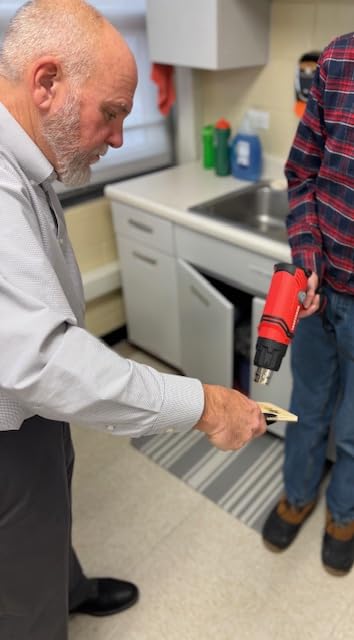
Two fan speeds plus the dial is the pairing that makes this work in practice. On a veneered cabinet door I ran low heat with high airflow to warm the coating evenly without drying the surface, then brought the dial up for the thick edges. The integrated support stand keeps the nozzle off the workpiece between passes, which protects exactly the kind of finished surface you are trying to preserve.
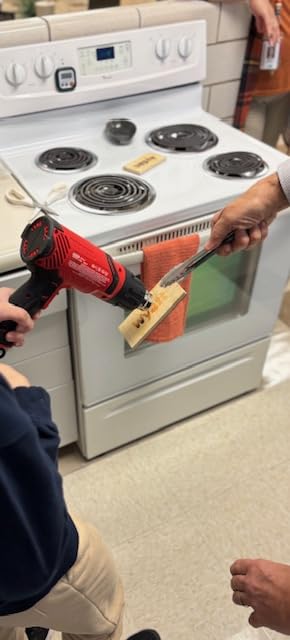
Will a heat gun burn wood when stripping furniture?
It can, and it usually happens because of a stationary nozzle rather than too much temperature. Hold a gun 2 to 4 inches off the surface, keep it moving in small circles, and dial the heat down the moment the bare wood darkens or smokes. Watch for the blister cue rather than guessing at a time, and use a flat deflector nozzle to spread the heat.
The bigger risk on furniture is not burning but gouging. Scrape with the grain, keep the putty knife nearly flat, and take thin passes rather than trying to take the coating off in one aggressive stroke. After stripping, 120 grit knocks down the fuzz and 180 to 220 grit leaves a finish-ready surface.
Who should skip the CRAFTSMAN CMEE531?
Skip it for large exterior jobs where the 6-foot cord will constantly snag, and skip it if you need to know the exact output temperature rather than inferring it from the dial. With 668 reviews the long-term track record is thinner than the mainstream brands here, so if you want a decade-long ownership story, the Wagner is the documented one.
It is also the wrong tool if you want a display to confirm you have reached temperature. For solid wood furniture, cabinet doors, chairs and trim with delicate edges, though, the dial range makes it the most forgiving gun in the guide.
6. DEWALT D26960K – Best Accessory-Heavy Kit
DEWALT Classic Heat Gun with LCD Display & Hard Case/Accessory Kit (D26960K), Yellow
1550W output
LCD readout with 50-degree steps
Accessory kit and hard case
3 year warranty
Pros
- Highest average rating in this group at 4.8
- Accessory kit and hard case with a dedicated slot per piece
- Built-in kickstand for stable hands-free work
- Overload protection hang ring and cord protector
- 1550W handles paint bumper reshaping and heat-shrink
Cons
- Temperature adjusts only in 50-degree steps
- Reported to run cooler than displayed versus Bosch and Steinel
- Resets to 150F on power-up
- Modest airflow for continuous professional duty
Two things drive the ratings on this kit: the LCD readout and the accessory package. The display lets you set a target and confirm it, which is the difference between stripping a whole set of doors to the same temperature and guessing at it panel by panel. The kit and hard case are the part owners most often defend, since one owner bought it specifically for the nozzles after pricing them against a second gun.
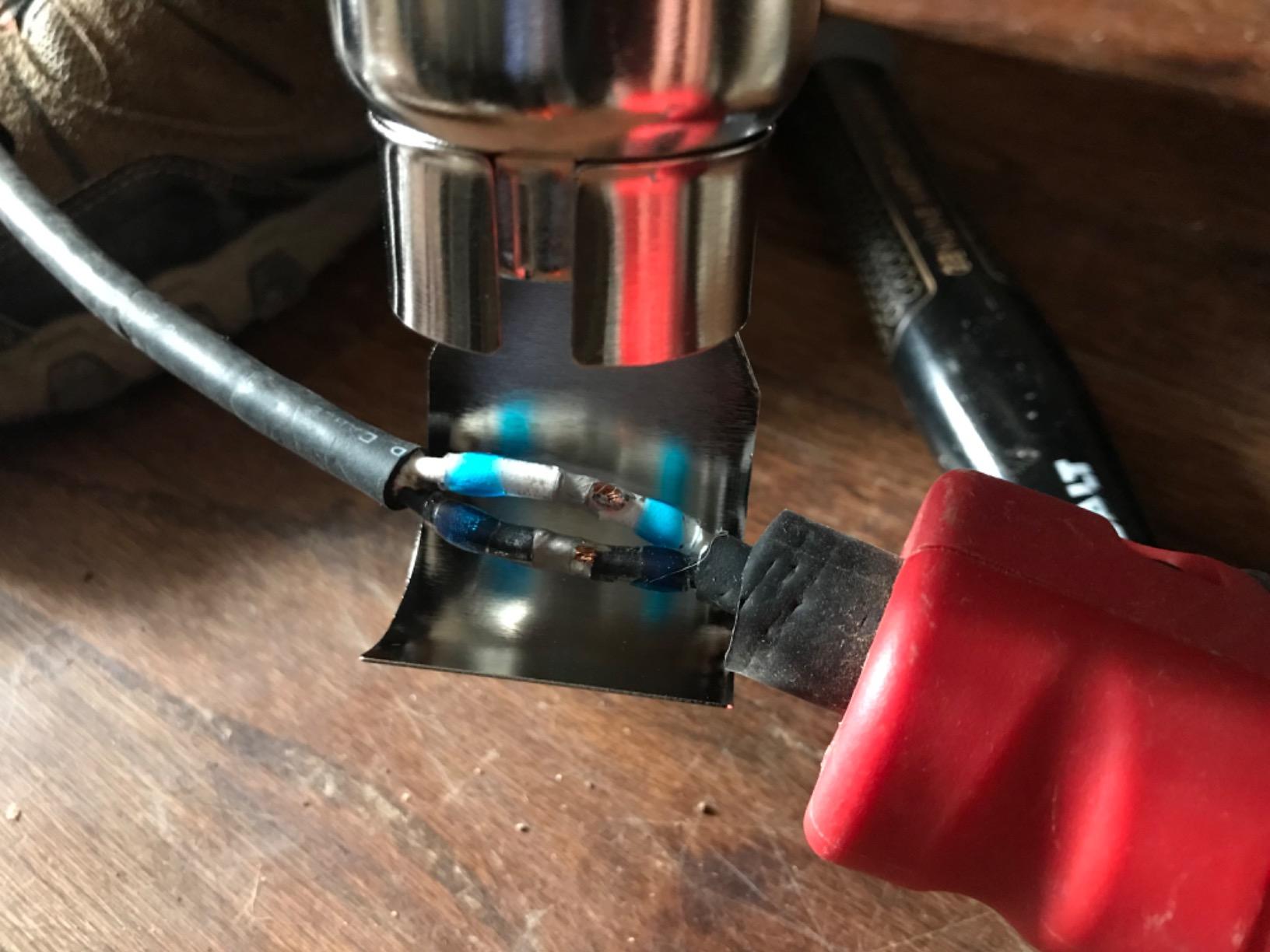
The 1550W element adjusts in 50-degree increments from low to high, and the build quality reads heavier than the 2.3 lb weight suggests. The kickstand, hang ring, cord protector and overload protection all exist for shop use, and that is who this gun is for: someone stripping paint regularly rather than once. Reported jobs include bumper reshaping on plastic fascia, paint removal, heat-shrink work and window film.
Is an LCD temperature readout worth paying extra for?
On a single door, no. On a consistent batch of work, yes, because it removes the guesswork that causes scorched areas. The credible caveat is accuracy: owners report it running roughly 100F to 150F cooler than the displayed setting compared with Bosch and Steinel guns, so treat the display as a repeatable reference rather than an absolute measurement.
Two other quirks are worth knowing. The 50-degree increments are coarser than the 10-degree steps some rivals offer, and the unit resets to 150F on power-up instead of restoring your last setting. Automatic power restoration of your last temperature setting is not one of its traits, so you re-confirm your target at the start of each session.
Who should skip the DEWALT D26960K?
Skip it if you need the thinnest possible temperature steps, or if you want true maximum heat for stubborn industrial coating, because it tops out below the 1200F guns here. Modest airflow is also a real limit for continuous professional duty, where a gun with more cubic feet per minute keeps the surface moving instead of baking it.
Skip it if you are on a ladder or working outside with no outlet nearby, since it is corded and daily shop users report wishing for a battery version to avoid cord snagging. For a shop-based restorer doing paint, decals, bumpers and shrink work in one session, the kit and case make it the most complete single purchase.
7. DEWALT DCE530B – Best Cordless Heat Gun for Paint Removal
DEWALT 20V MAX Heat Gun, Cordless, Up to 990 Degrees, 42 Minutes of Run Time, LED Light, Heatgun with Flat and Hook Nozzle Attachments,Tool Only (DCE530B)
Up to 990F output
Up to 42 minutes runtime
6.7 CFM airflow
LED work light
Pros
- Cordless freedom for ladders fences and outbuildings
- Lock-on button removes the need to hold the trigger
- Light 1.17 lb body stays comfortable overhead
- LED work light for shaded and interior work
- Flat and hook nozzles included
Cons
- 990F ceiling is below 1200F corded units
- 42 minutes of runtime per charge
- Tool only so battery and charger are extra
- Only two nozzles included
The safety argument for cordless is not convenience, it is ladders. A corded gun on a second-story exterior is a cord around your neck and a cord to trip over, and that complaint comes up constantly in forum threads about stripping trim and fences. This gun removes it entirely, and at 1.17 lb it is light enough to work overhead.
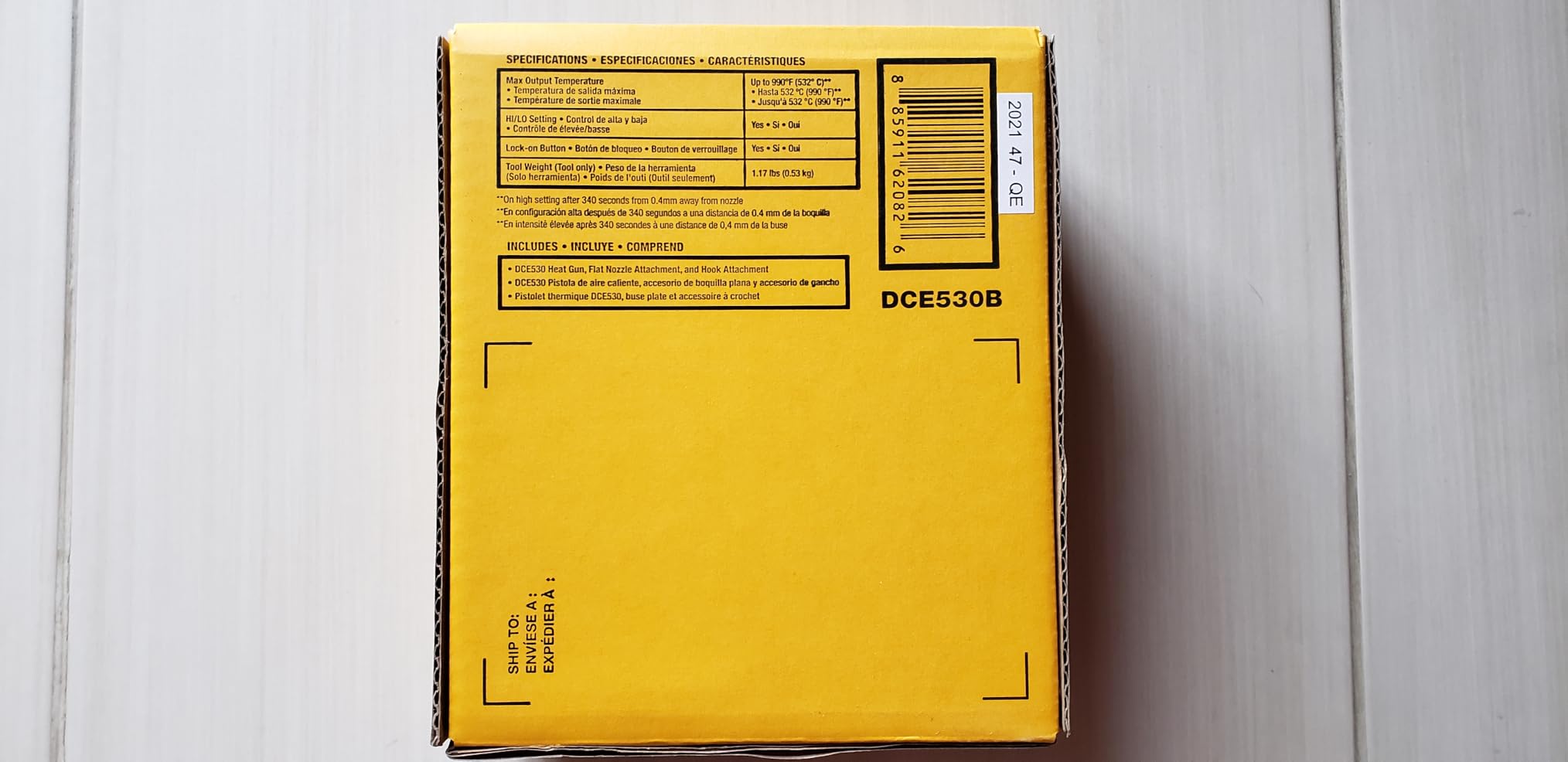
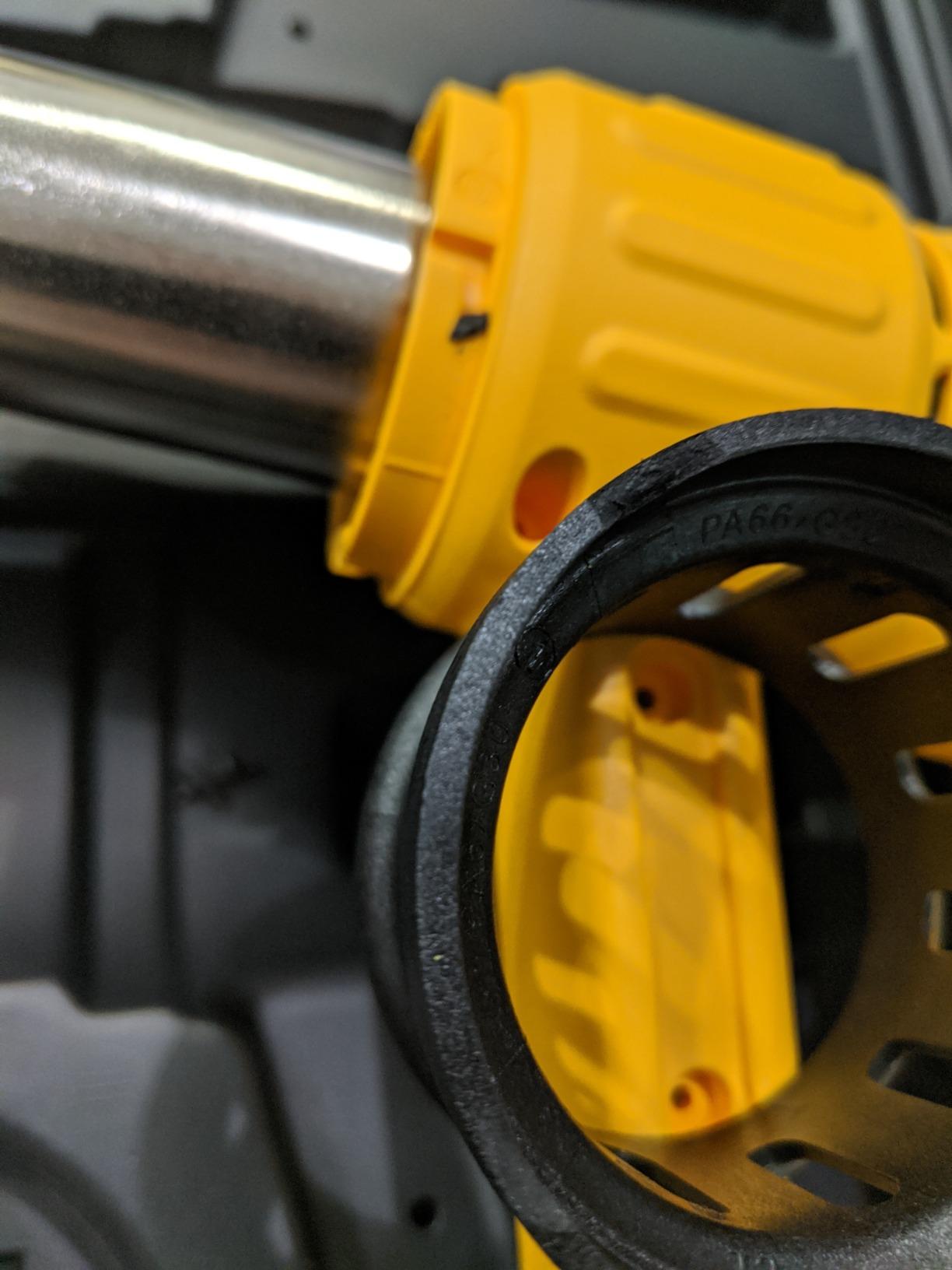
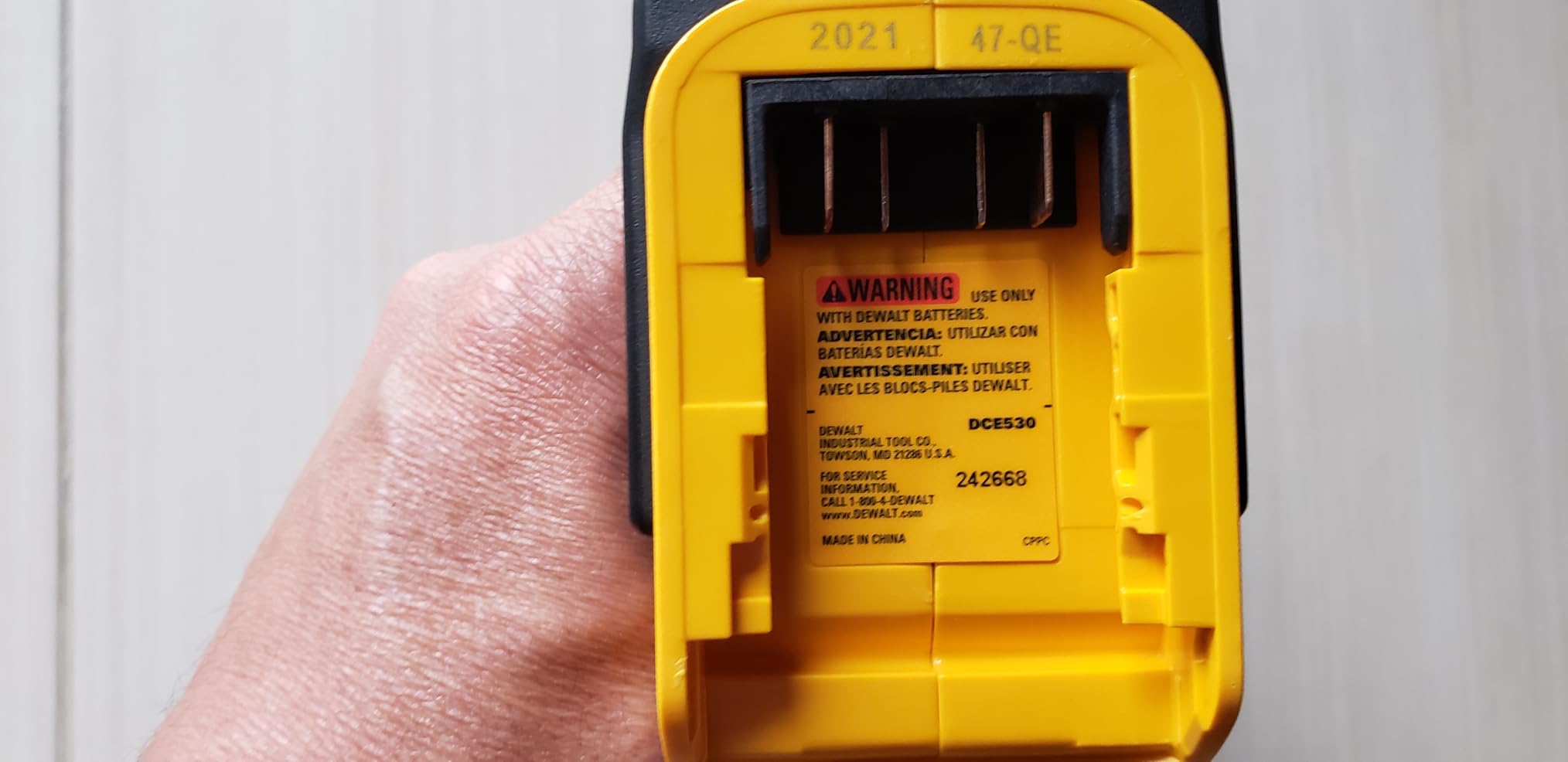
Output reaches up to 990F with 6.7 CFM of airflow, which is ample for softening paint, caulk and adhesive on doors, fences, decking and outbuildings. The lock-on button means you can set the gun in your hand instead of holding the trigger for a full pass, and the LED work light is genuinely useful in shaded exterior corners and in dark closets where a corded unit would need a work lamp competing for the extension cord.
Is a cordless heat gun strong enough to strip paint?
For most residential jobs, yes. 990F softens household paint on wood and metal effectively, and the tradeoff versus a 1200F corded gun is time rather than capability: thicker build-up takes an extra pass. What cordless genuinely opens up is work in places you cannot safely or practically run a cord to, including second-story trim, fences, decks and remote outbuildings.
Runtime is the practical limit. At up to 42 minutes per charge, a full exterior side of a house needs a spare battery or two, and the airflow figure is well below what the industrial unit below delivers. Treat it as the tool for the awkward parts of the job, not the only tool in the truck.
Who should skip the DEWALT DCE530B?
Skip it if you do not already own batteries and a charger in that platform, since it ships as tool only and that changes the real cost of ownership considerably. It is also one of the lowest-rated guns in the guide, with a one-star share running roughly triple the group average, most of it tied to the 990F ceiling and the tool-only format.
Skip it for heavy multi-layer paint on metal, for full-day continuous duty where 42-minute cycles interrupt your rhythm, and for anyone who needs maximum temperature. If you already run 20V MAX tools, though, this is the one to buy for outdoor and overhead work.
8. Makita HG6530VK – Best for Fast Cool-Down and LCD Precision
Makita HG6530VK Variable Temperature Heat Gun Kit with LCD Digital Display
2000W output
Push-button 122F to 1202F with LCD
Three-position airflow with cool-down
Four nozzles and case
Pros
- Highest wattage in the guide at 2000W
- Live LCD temperature readout for exact settings
- Dedicated cool-down position cools in minutes
- Exceptionally quiet even at top airflow
- Rubberized pistol grip with integrated rear stand
- Four nozzles plus a tool case included
Cons
- Top cost in the guide
- Review base of 484
- Hard case leaves no room for the cord
- Heavy to hold overhead for extended work
- Temperature steps in 50-degree increments
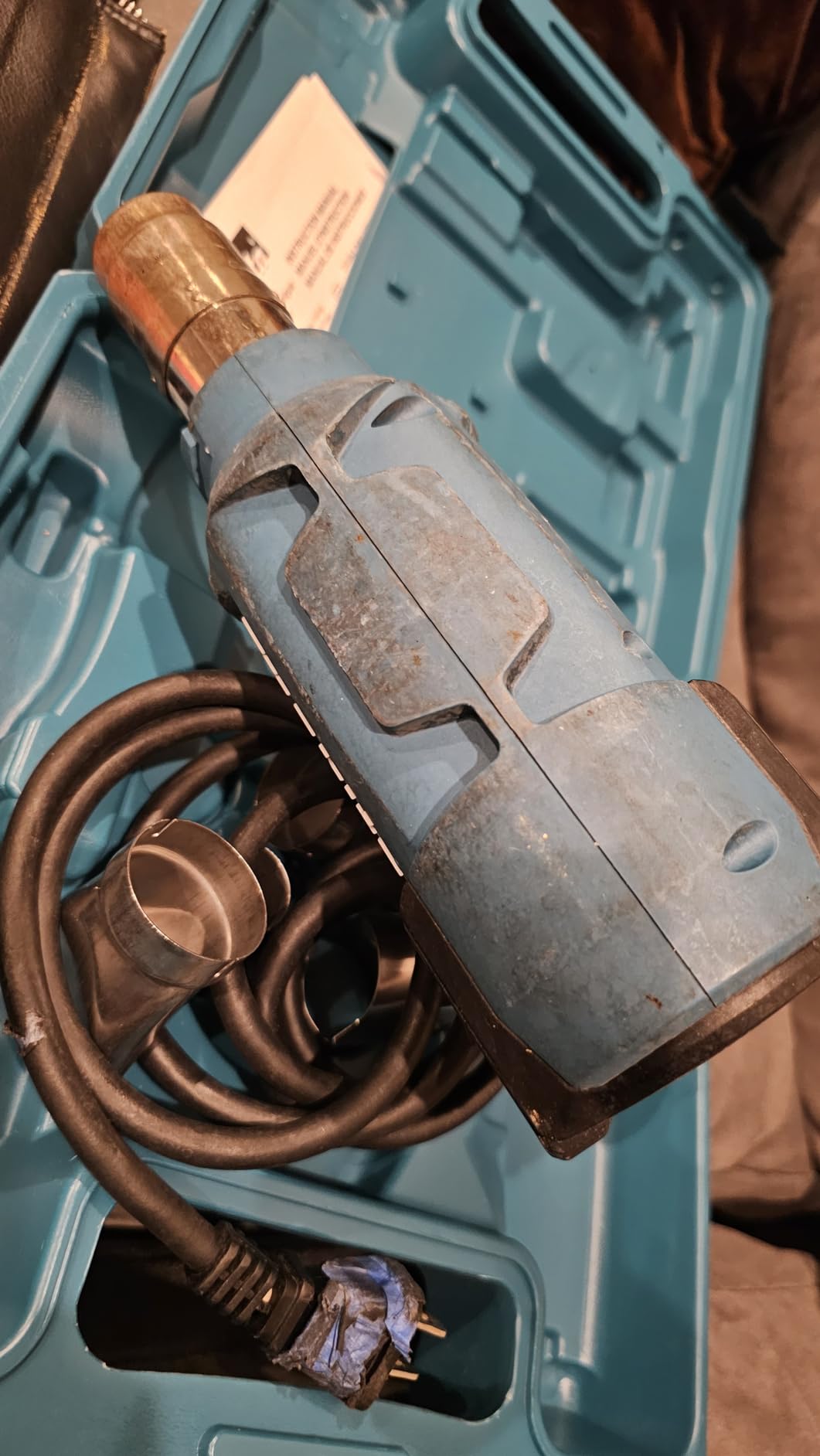
This is the most capable gun in the guide on paper, and the feature owners single out is not the 2000W output but the cool-down. The three-position airflow switch includes a dedicated cooling setting, and owners report the nozzle goes touch-cool in under five minutes against 20-plus minutes for competing guns. On a multi-step project that difference removes entire dead minutes of waiting.
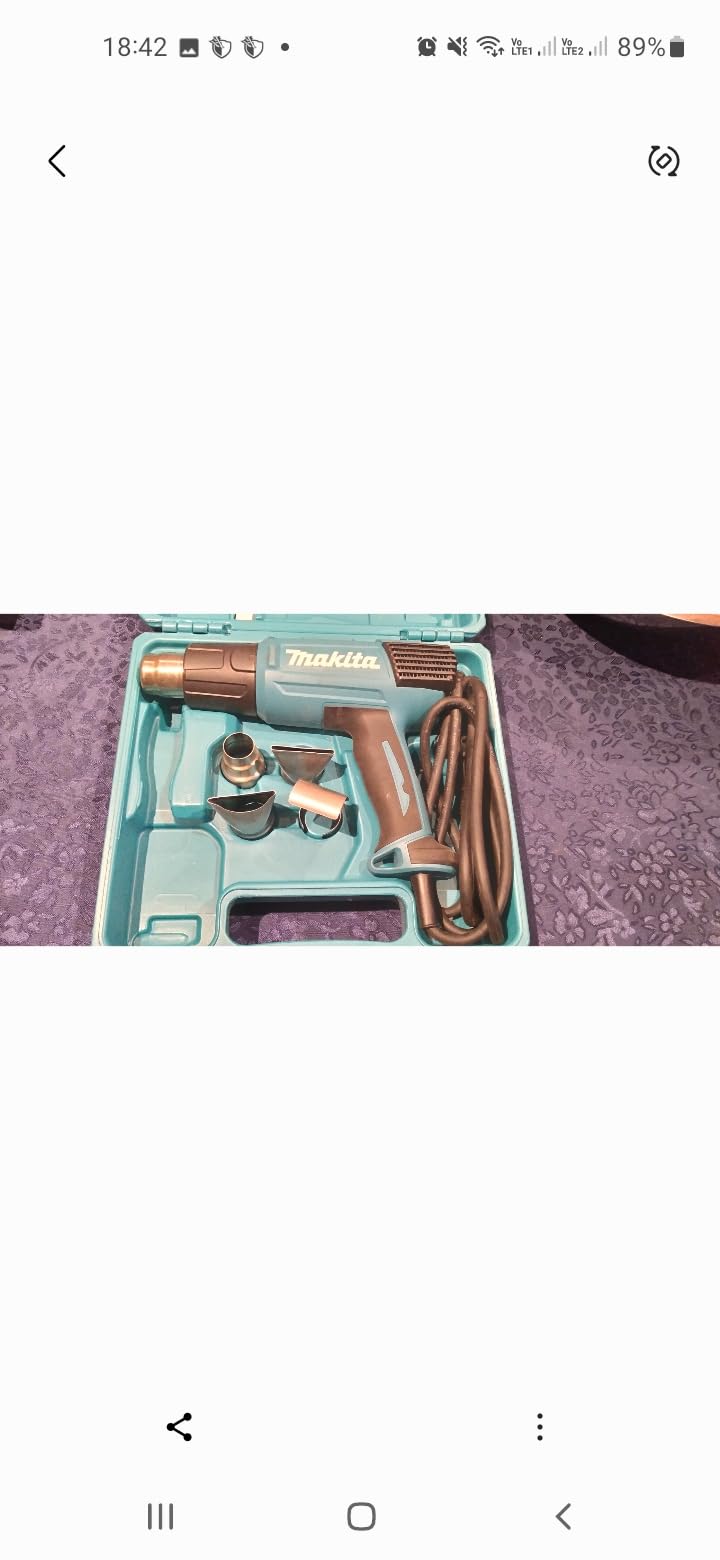
The push-button control runs 122F to 1202F with a live LCD readout, and the 2000W element has enough headroom to solder copper tubing, which tells you how much thermal reserve it carries. It also happens to run quietly at full airflow, a real benefit indoors. Included are glass protection, wide-slot, reflector and reduction nozzles plus a tool case.
Why does a dedicated cool-down position matter?
Because you cannot safely handle or store a 1200F barrel until it cools. With a gun that only cools passively, a three-stage project turns into three waits. The switch here puts full fan and no heat on demand, so you can cool between passes and pack up in minutes rather than a quarter hour.
It also reduces element wear, which is why guns with a proper cool-down mode tend to outlast disposables. That matters most if you are the sort of user who strips paint every few months rather than once in a decade.
Who should skip the Makita HG6530VK?
Skip it on cost if this is a single-door project. It sits at the expensive end of the guide, and with 484 reviews it has a shorter public history than the mainstream brands.
Skip it for sustained overhead work such as ceiling or soffit stripping, since at 2.0 lb it is heavy to hold above your head for long stretches. Note also that the hard case leaves little room for the cord, which some reviewers find makes the lid hard to close. For a shop restorer who wants fine control and the fastest turnaround between passes, it is worth the spend.
9. Genesis GHG1500A – Best Starter Kit
Genesis GHG1500A Dual Temperature Heat Gun Kit With Fast Heat High And Low Settings 572F/1000F, Air Reduction Nozzle, Reflector Nozzle, And Two Deflector Nozzles with 2 Year Warranty
1500W high and 750W low
572F and 1000F settings
10-17 cfm airflow
Four nozzles, 6.5 ft cord
Pros
- Lowest cost in the guide with a full nozzle kit
- Four nozzles including two deflectors
- Two year manufacturer warranty
- 6.5 foot cord gives good reach on large surfaces
- Deflectors help shield glass and finished surfaces
Cons
- Only two fixed temperature steps with no dial
- Low 750W setting is modest for heavy multi-layer paint
- 17 CFM airflow is low against high-wattage rivals
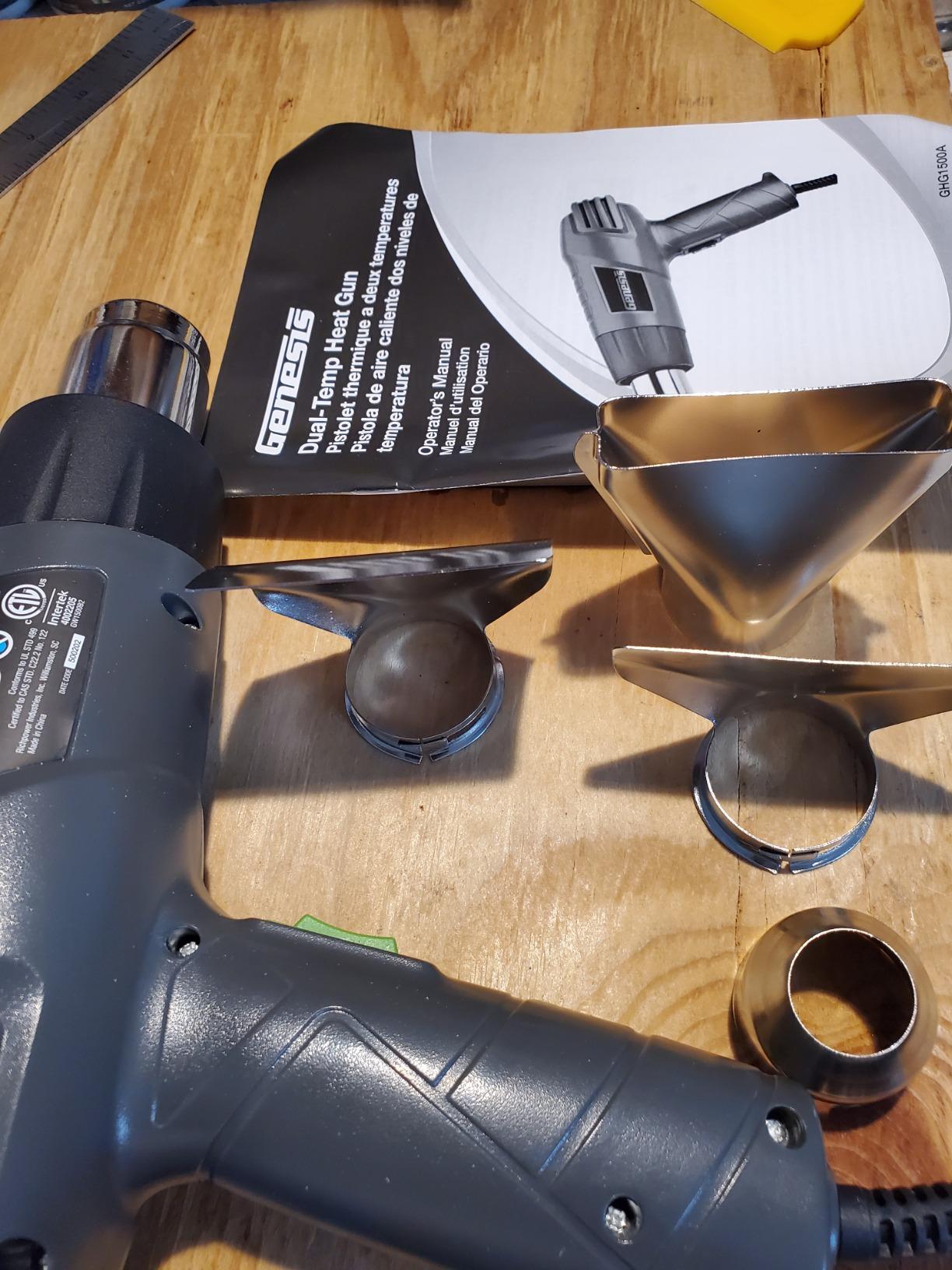
The Genesis is the entry point, and it is genuinely useful rather than a token inclusion. With more than 17k reviews and a 79 percent five-star share, it is a well-established house-and-garage tool: paint, caulk, pipes and charcoal all show up in owner reports, and the nozzle kit included in the box is the part that gets repeated praise.
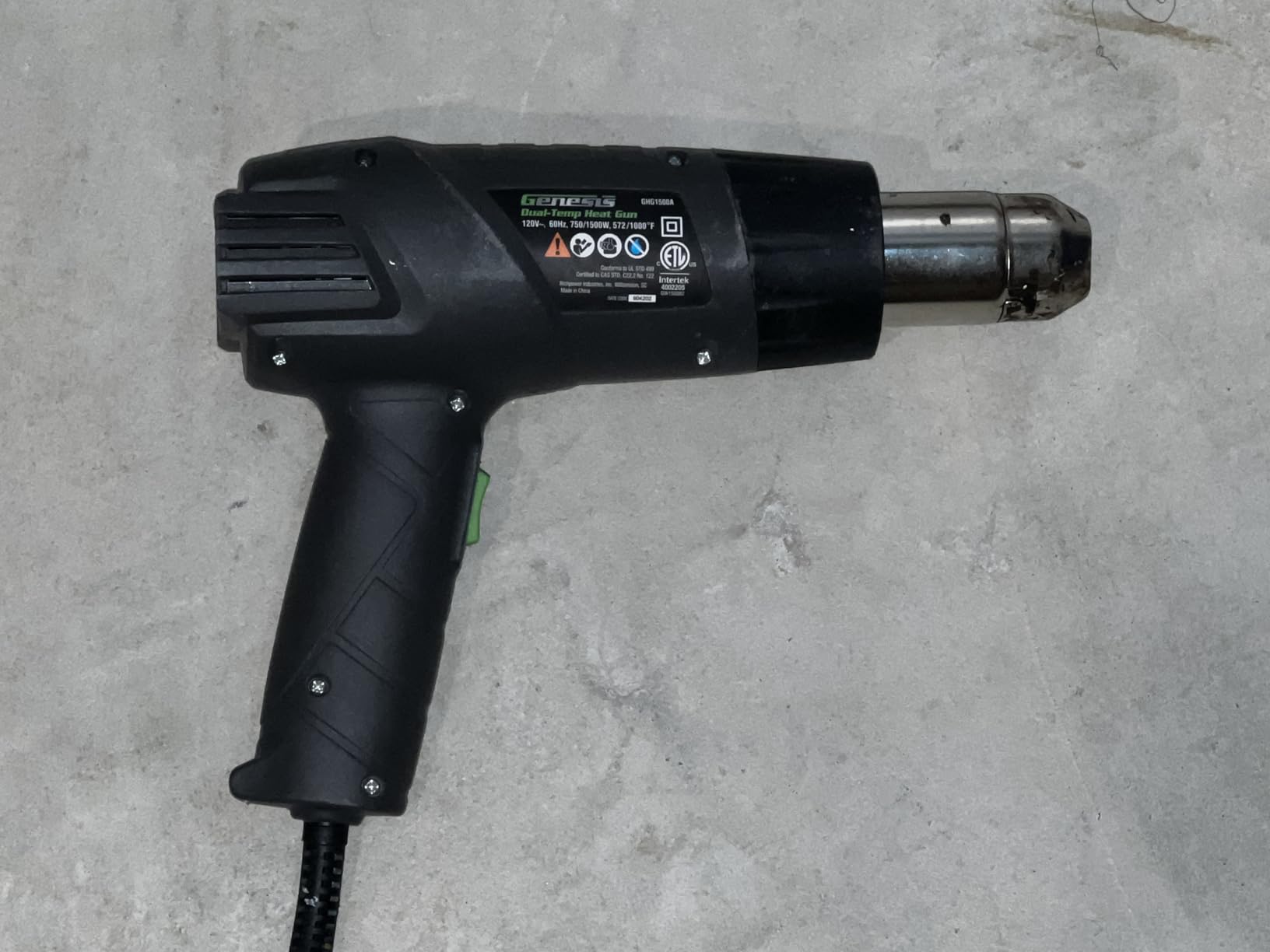
Operation is a 3-position rocker: high, off, low. High gives 1000F and 1500W, low gives 572F and 750W, and airflow runs 10 to 17 cubic feet per minute. I found the low setting genuinely useful for softening caulk and glue residue without lifting the surrounding finish, and the 6.5 foot cord is longer than several rivals here, which is real reach on a wide door.
Is a two-setting heat gun good enough for paint removal?
For single-layer and medium build-up, yes. The 1000F high setting blisters and lifts ordinary household paint on wood and metal effectively, which is why this gun has a large and satisfied owner base. What you give up is the ability to back off when a surface starts to darken, because there is no middle setting between 572F and 1000F.
The bigger limitation is throughput rather than peak temperature. At 17 CFM the air moves less heat across a given area than the 1800W and 2000W units do, so paint softens more slowly and users tend to hold the gun closer or longer, which is how scorching happens on soft surfaces.
Who should skip the Genesis GHG1500A?
Skip it for thick multi-layer paint, for old oil-based build-up that has gone hard, and for delicate furniture where you need a temperature between the two settings. The 750W low step is also weak for the heavy jobs that separate a hobby gun from a dedicated paint stripper.
Skip it if you are committing to a full-house exterior project, where the airflow will test your patience. If this is your first heat gun, you are stripping one door or a set of shutters, and you want the nozzle kit included rather than bought separately, it is the most sensible way to start.
10. Master Appliance HG-501D – Best for Automotive and Metal
Master Appliance HG-501D Industrial Heat Gun, High Airflow, 1200°F, 1740W
1740W power
27 CFM at 3400 FPM
Up to 1200F
Die-cast aluminum housing
Pros
- 27 CFM airflow well above the other guns here
- 1200F with the airflow to move that heat across a large panel
- Die-cast aluminum housing outlasts plastic bodies
- Field-serviceable plug-in heating element with replacement parts
- Reinforced stand adjustable from 45 to 90 degrees
Cons
- Highest cost in the guide for a homeowner job
- Smallest review sample at 266 with a 9 percent one-star rate
- Listed item weight of 0.01 oz is not a credible spec
- No variable digital temperature control mentioned
At 27 CFM and 3,400 feet per minute it moves far more air than any other gun in the guide, and airflow is what determines how fast heat reaches the coating instead of sitting on the surface. On a car door or a large steel panel, that translates into a visibly faster strip.
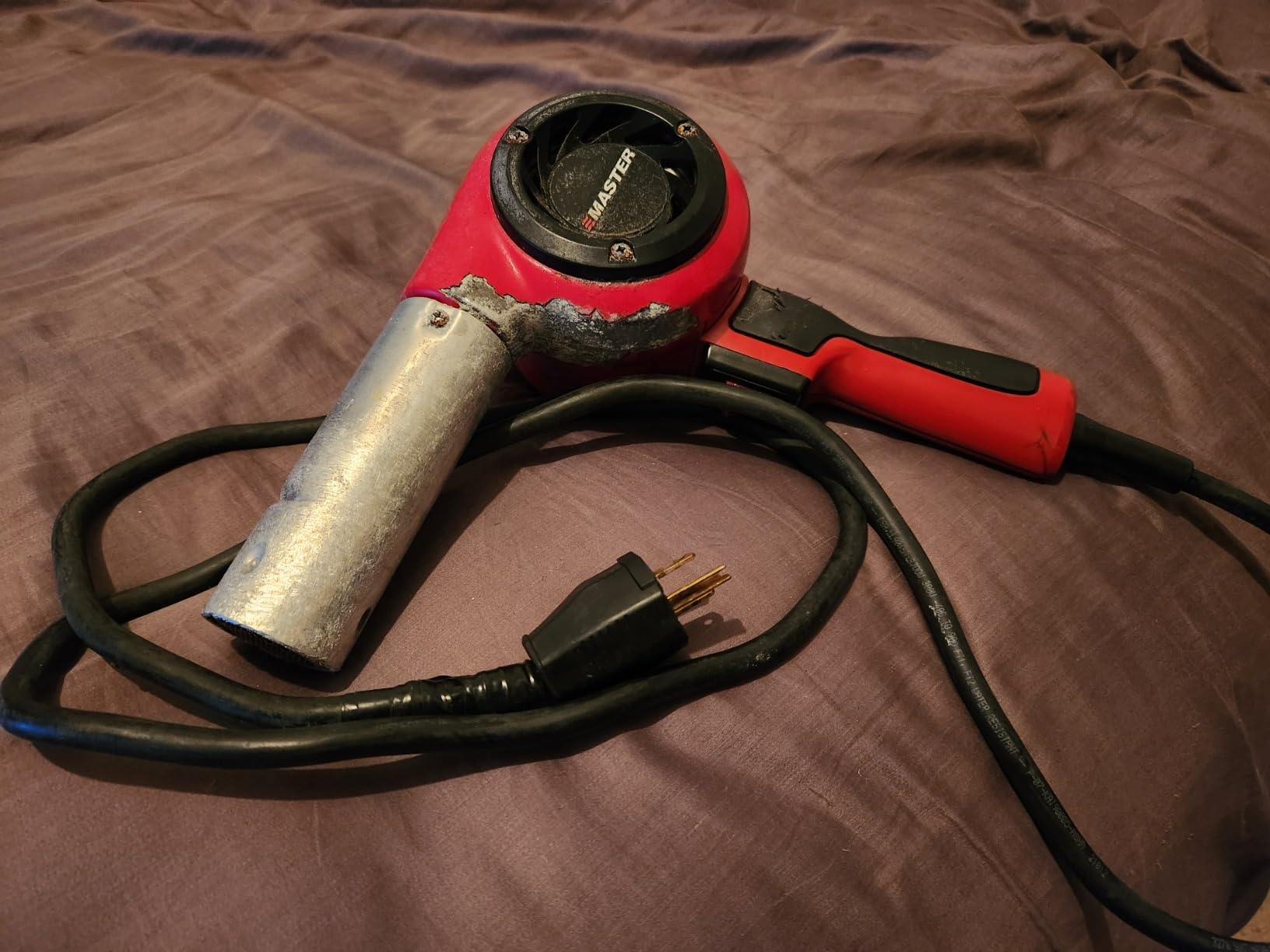
The 1740W element reaches up to 1200F, and the die-cast aluminum housing is a step up in durability from the ABS and plastic bodies used elsewhere. The feature trade users value most is the field-serviceable quick-change plug-in heating element with replacement parts available from the manufacturer, which turns a disposable tool into one you can keep for years. The reinforced stand adjusts from 45 to 90 degrees for stable hands-free work.
How does a heat gun work on automotive paint?
Metal handles heat far better than wood, so you can run near the top of the range without risking the substrate. Set the gun to 1000F to 1200F, use a flat nozzle to spread the heat, and keep moving across the panel to avoid a hot spot that distorts the steel. Let the panel cool before you go over it again with filler or primer, and work in sections so you stay ahead of the cooling. For vinyl wrap, window tint and heat-shrink tubing the same airflow advantage applies, and the 1200F ceiling covers all three.
Who should skip the Master Appliance HG-501D?
Skip it for furniture, trim or anything on wood, where a controlled variable dial matters more than raw airflow and this gun appears to have stepped or fixed heat rather than precise digital control. Skip it for a homeowner stripping a single door, because the cost and the industrial output are wildly mismatched to the job.
Also weigh the review profile carefully. At 266 reviews it has the smallest sample here and a one-star share running roughly triple the group norm, with failures as the leading complaint. The listed item weight of 0.01 oz is not a credible spec for a 1740W die-cast tool, so treat the published specifications with some caution. Buy it if you are stripping vehicle panels regularly or repairing rusted metal and you value serviceable elements; if paint stripping is an occasional weekend task, one of the corded consumer guns above is the right spend.
How to Choose the Right Heat Gun for Paint Removal
Start with temperature range, not maximum temperature. Every gun in this guide reaches at least 990F, which is enough to blister paint, and what actually matters is the low end of the control. Two fixed settings at 750F and 1000F cover most doors and trim, but furniture restoration, veneer and softwood need to creep below 750F, which means a variable dial or a fine-stepped LCD. Aim for at least 750F at the low end and 1000F or more at the high end, with a dial if the surface is delicate.
Wattage determines how fast paint softens. Anything from 1500W upward will strip household paint. Below 1500W you will be compensating by holding the gun closer or longer, which is precisely the behaviour that scorches wood. Above 1800W you gain headroom on thick oil-based build-up and the ability to soft-wrap or desolder as a secondary use, at the cost of weight and heat in your hands.
Airflow control is the most underrated spec. High airflow moves heat across the surface, which softens paint evenly and quickly. Low airflow concentrates heat on one spot, which is how you lift a stubborn patch and also how you burn a hole. A gun with two airflow stages gives you far more usable control than one with only a temperature dial, and the Master Appliance’s 27 CFM shows what genuinely high airflow looks like at the top end.
Nozzles matter more than accessories. For paint work you want a flat deflector or wide-slot nozzle to spread heat and protect the surface, plus a concentration nozzle for stubborn pockets. Kits with two deflectors, a reflector and a reduction nozzle cover most projects, and several guns here include them. A cone nozzle concentrates heat too tightly for paint removal, and a reflector nozzle is for defrosting rather than stripping.
Check for thermal cutout and overload protection. Every gun in this guide has some form of overheat protection, which is what stops a blocked nozzle or a covered airflow path from burning out the element. A gun with a dedicated cool-down or cooling mode goes further, since it extends element life over years of regular use rather than just preventing an outright failure.
Decide corded versus cordless by the job site. Corded wins indoors and anywhere an outlet is within reach, because it delivers uninterrupted power at higher output. Cordless wins on ladders, second-story trim, fences, decks and outbuildings, where a trailing cord is a fall hazard and an inconvenience. If you already own batteries in a given platform, the cordless gun becomes far more attractive; if you do not, the charger and batteries are a real part of the purchase.
Weigh ergonomics and duty cycle last, but do weigh them. Look for an integrated stand, kickstand or hanging hook so the hot barrel never touches a work surface. Check the weight, especially if you will be working overhead. Then read the long-term feedback rather than the star rating alone: whether owners report the tool survived sustained stripping duty or only occasional craft use, whether it holds its set temperature, and whether the element is replaceable.
Consider the alternative before you buy. Infrared strippers heat the coating rather than blasting air across it, which many owners on century homes describe as dramatically better on thick multi-layer paint, at a much higher cost and with a far larger physical footprint. Chemical strippers still win on porous brick, concrete and plaster, where paint soaks into the material and heat alone will never fully lift it. A heat gun is the right answer on wood, metal, glass-adjacent trim and anything where you want a fast, chemical-free result.
Frequently Asked Questions
Can I use a heat gun to remove paint from metal?
Yes, and metal is one of the best surfaces for it because steel and aluminum tolerate far more heat than wood. Run 1000F to 1200F, use a flat nozzle to spread the heat, and keep the gun moving across the panel so you never dwell in one spot. Long owners report 1800W to 2000W models stripping vehicle doors and steel panels fastest, because airflow carries heat across the surface instead of baking it in. Let the panel cool fully before sanding, priming or applying filler.
What temperature heat gun to remove paint?
Use 700F to 1000F on wood trim and sash, 1000F to 1200F on metal panels, 900F to 1100F on brick, concrete and stucco, and the low setting around 572F to 750F on plaster, softwood and furniture veneer. Hold the nozzle 2 to 4 inches from the surface and keep it moving in small circles. If the paint has not blistered after 15 to 20 seconds of heat, move slightly closer or raise the heat one notch rather than holding the gun still in one place.
What is the best heat gun for stripping paint?
The Wagner Spraytech HT1000 is the best overall pick for paint removal, with 750F and 1000F settings, two fan speeds and an integrated stand, and a long owner record of tools still running after many years. The SEEKONE 1800W is the best value if you want a true variable dial, and the DEWALT DCE530B is the pick for ladders, fences and second-story work. All three blister and lift ordinary household paint in seconds at the right standoff distance.
Can I use a heat gun to strip paint safely?
Only with precautions. Work outdoors or ventilate the room and pull fumes away with a fan, wear a respirator rated for organic vapors and particulates, eye protection, closed-toed shoes and heat-resistant gloves. Never park a running gun on a surface, and always let it cool on its stand before coiling the cord. Never aim a heat gun at glass, vinyl siding, vinyl window frames or plastic. On homes built before 1978, test for lead first and use a non-heat method if it is present.
Do you still need to sand the wood after heat stripping?
Yes, but only lightly. Heat stripping leaves a thin skin of binder residue and raised grain fuzz rather than bare wood, so knock it down with 120 or 150 grit and finish with 180 to 220 grit for a finish-ready surface. You do not need to strip sand back to bare timber the way you would for a full refinish, which is where the heat method saves hours. Fill any gouges from your scraper before you stain or paint.
Will a heat gun burn the wood underneath?
It can, and it usually happens because the nozzle stayed in one spot rather than because the temperature was too high. Keep the gun moving in small circles, hold a 2 to 4 inch standoff, and back off the heat the moment bare wood darkens or smokes. On soft pine, veneer and thin furniture edges, work at the low end of the range and pull back to four inches. The visual cue to watch for is blackening, which means stop immediately.
What is the best scraper to use with a heat gun?
A metal putty knife or a 3 inch filing-knife blade is what most people actually use, and most restorers buy a cheap one rather than a premium accessory kit. Push the blade along the direction of the wood grain, not across it, and keep it nearly flat to the surface so you are lifting paint rather than gouging. Take thin repeated passes on a heated section rather than one aggressive stroke, and sharpen or replace the blade often, because a dull scraper tears rather than lifts.
Is a cordless heat gun strong enough for paint removal?
For most residential work, yes. The DEWALT DCE530B reaches up to 990F with 6.7 CFM of airflow, which softens household paint on doors, fences and decking effectively. The tradeoff versus a 1200F corded gun is time rather than capability, since thicker build-up takes an extra pass. Cordless is the safer and far more practical choice for ladders, second-story trim and outdoor work, where a trailing cord becomes a fall hazard. Expect about 42 minutes of runtime per charge.
The Bottom Line on Heat Guns for Paint Removal
Start with the Wagner Spraytech HT1000 if you want one gun that handles doors, trim and metal without thinking about it, and pick the SEEKONE 1800W instead if you want a real variable dial for furniture and soft finishes. The BLACK+DECKER HG1300 is the one to buy when long sessions and a light body matter more than wattage, the DEWALT DCE530B covers ladders and outdoor work, and the Master Appliance HG-501D is for automotive panels and daily metal work.
Whichever you choose, the results come from technique rather than from a hotter gun: hold 2 to 4 inches back, keep the nozzle moving, wait for the paint to blister, and scrape with the grain. That is how the best heat guns for paint removal in 2026 stay ahead of a scraper and a chemical stripper.