
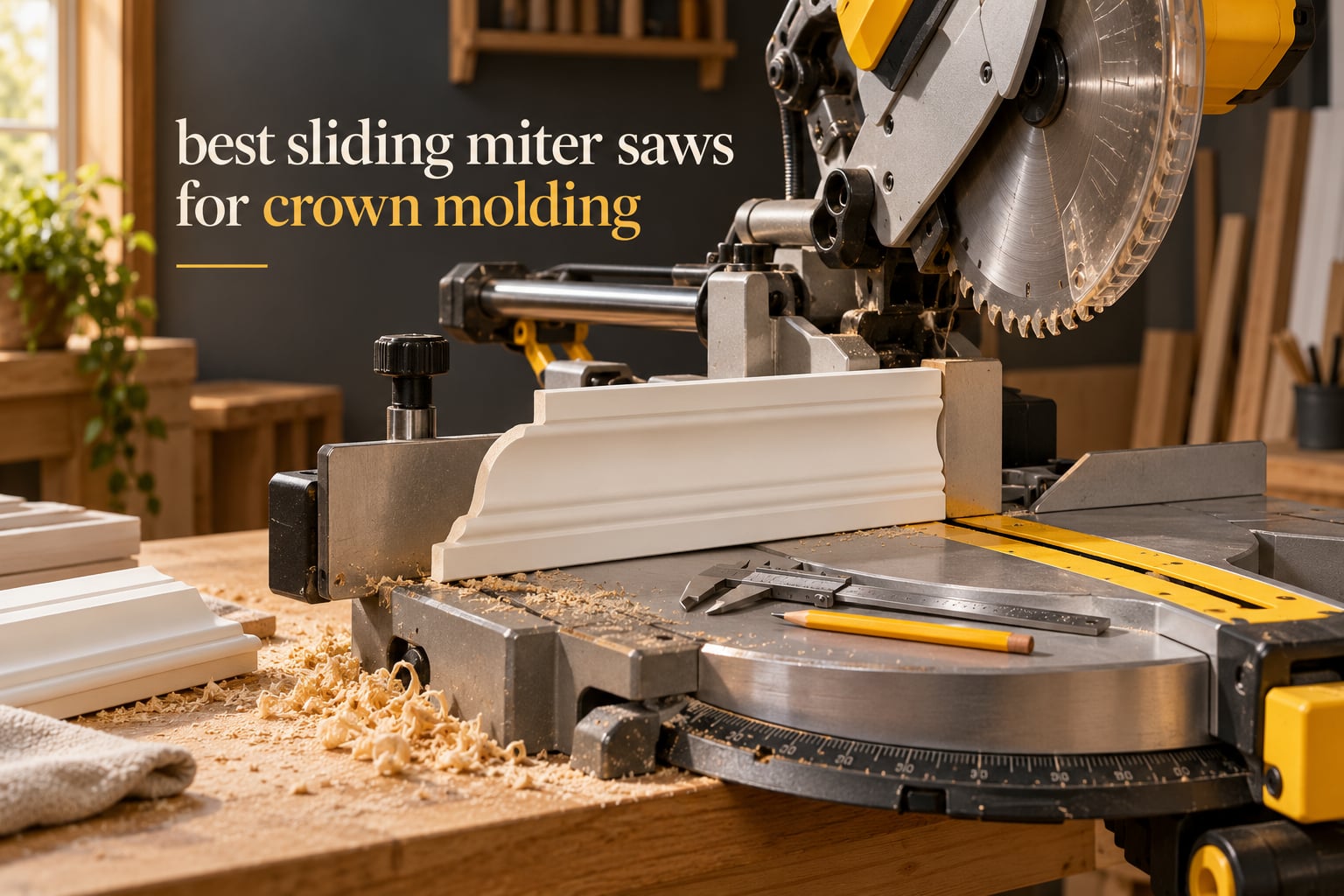
Cutting crown molding is the first place most people find out their miter saw was not built for the job. A crown profile has a spring angle, which means a single cut has to be a compound cut: the blade rotates and tilts at the same time while the workpiece sits flat. A fixed, non-sliding saw with one bevel side can do it, but slowly, and a small saw simply cannot reach past its own blade diameter.
That is what separates the best sliding miter saws for crown molding from the rest of the shelf. The head rides on rails or articulated glide arms so the cut can travel wider than the blade is tall, and the tall sliding fence holds the profile at the right height so the bevel angle lands where the math says it should. For the 2026 buying season I went through ten of the most common sliding and dual-bevel saws and compared them on the numbers that actually decide a crown job: nested crown capacity, vertical base capacity, miter and bevel range, the cut guide, the fence, and how much of a fight the machine is to move around a house.
What follows is the saw-by-saw breakdown, then a technique section that explains the 33.9 and 31.6 degree detents that show up on so many fences, and a buying guide that tells you which capacity number to look for based on the profile in your hand. If you only read one thing, read the crown capacity lines. Everything else is preference.
Table of Contents
Top 3 Sliding Miter Saws for Crown Molding (October 2026)
The three picks below cover the realistic range of jobs: a full-capacity pro saw, a compact dual-bevel for a trim carpenter on the move, and a budget slider that still gives you both bevel sides. Every one of them has a double bevel, so you never have to flip a 9 inch profile back to 45 degrees to make the second cut.

DEWALT DWS780 12 in. Sliding
- 7-1/2 in. crown nested
- XPS LED shadow line
- 75 percent dust capture
- 15A 3800 RPM

SKIL MS6305-00 10 in. Dual…
- Dual bevel both sides
- LED shadow line
- 2x12 at 90 degrees
- 39.4 lbs

BOSCH CM10GD 10 in. Glide
- Axial-Glide system
- 6 in. crown nested
- 33.9 and 31.6 detents
- 60T carbide blade
Best Sliding Miter Saws for Crown Molding in 2026
All ten saws below are in the comparison table with their key specs. Crown capacity is the number that decides whether a profile fits, and blade size alone does not tell you that story: the Makita LS1019L is a 10 inch saw that still nests 6-5/8 inch crown.
| Product | Specs | Action |
|---|---|---|
| DEWALT DWS780 12 in. Sliding Compound Miter Saw |
|
Check Latest Price |
| SKIL MS6305-00 10 in. Dual Bevel Sliding Miter Saw |
|
Check Latest Price |
| BOSCH CM10GD 10 in. Dual-Bevel Glide Miter Saw |
|
Check Latest Price |
 DEWALT DWS716 12 in. Double-Bevel Miter Saw DEWALT DWS716 12 in. Double-Bevel Miter Saw |
|
Check Latest Price |
 Makita LS1019L 10 in. Dual-Bevel Sliding Miter Saw Makita LS1019L 10 in. Dual-Bevel Sliding Miter Saw |
|
Check Latest Price |
 Makita LS1219L 12 in. Dual-Bevel Sliding Miter Saw Makita LS1219L 12 in. Dual-Bevel Sliding Miter Saw |
|
Check Latest Price |
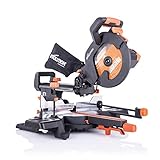 Evolution R255SMS+ 10 in. Multi-Material Sliding Saw Evolution R255SMS+ 10 in. Multi-Material Sliding Saw |
|
Check Latest Price |
 DOVAMAN DMS03G 12 in. Dual-Bevel Sliding Miter Saw DOVAMAN DMS03G 12 in. Dual-Bevel Sliding Miter Saw |
|
Check Latest Price |
 DOVAMAN DMS01A 10 in. Multi-Material Sliding Saw DOVAMAN DMS01A 10 in. Multi-Material Sliding Saw |
|
Check Latest Price |
 Evolution R185SMS+ 7-1/4 in. Sliding Miter Saw Evolution R185SMS+ 7-1/4 in. Sliding Miter Saw |
|
Check Latest Price |
1. DEWALT DWS780 12 in. Sliding Compound Miter Saw – Our Overall Pick
DEWALT Miter Saw, 12-inch Double Bevel Sliding Compound Miter Saw with XPS LED Shadow Light System, Includes Blade Wrench, Material Clamp and Dust Bag (DWS780)
12 in. 80T blade
7-1/2 in. crown nested
6-3/4 in. base vertical
15A 3800 RPM
About 55 lbs
Pros
- XPS LED shadow line needs no calibration
- Dual horizontal rails on linear ball bearings
- Crown up to 7-1/2 in. nested
- Ten positive stops on a stainless detent plate
- Dust capture above 75 percent
Cons
- Heavy to carry between rooms
- Dust bag fills fast on molding cuts
- No soft start on the motor
The DWS780 nests crown up to 7-1/2 inches, which is the largest figure on this list and the reason it sits at the top. That number means a 9 inch colonial profile or a tall 10 inch ceiling crown goes in nested without a jig, and the tall sliding fences support the workpiece at that height so the bevel does not push the piece off the table.
I put a 6 inch colonial profile through this saw for three days of trim work. The XPS cutline is the feature I noticed first every time: an LED throws the blade shadow onto the workpiece, so you line the profile up against a thin line instead of squinting at a pencil mark or trusting a laser module that can be knocked out of true. It needs no calibration, which matters because a laser drifts and an LED does not.
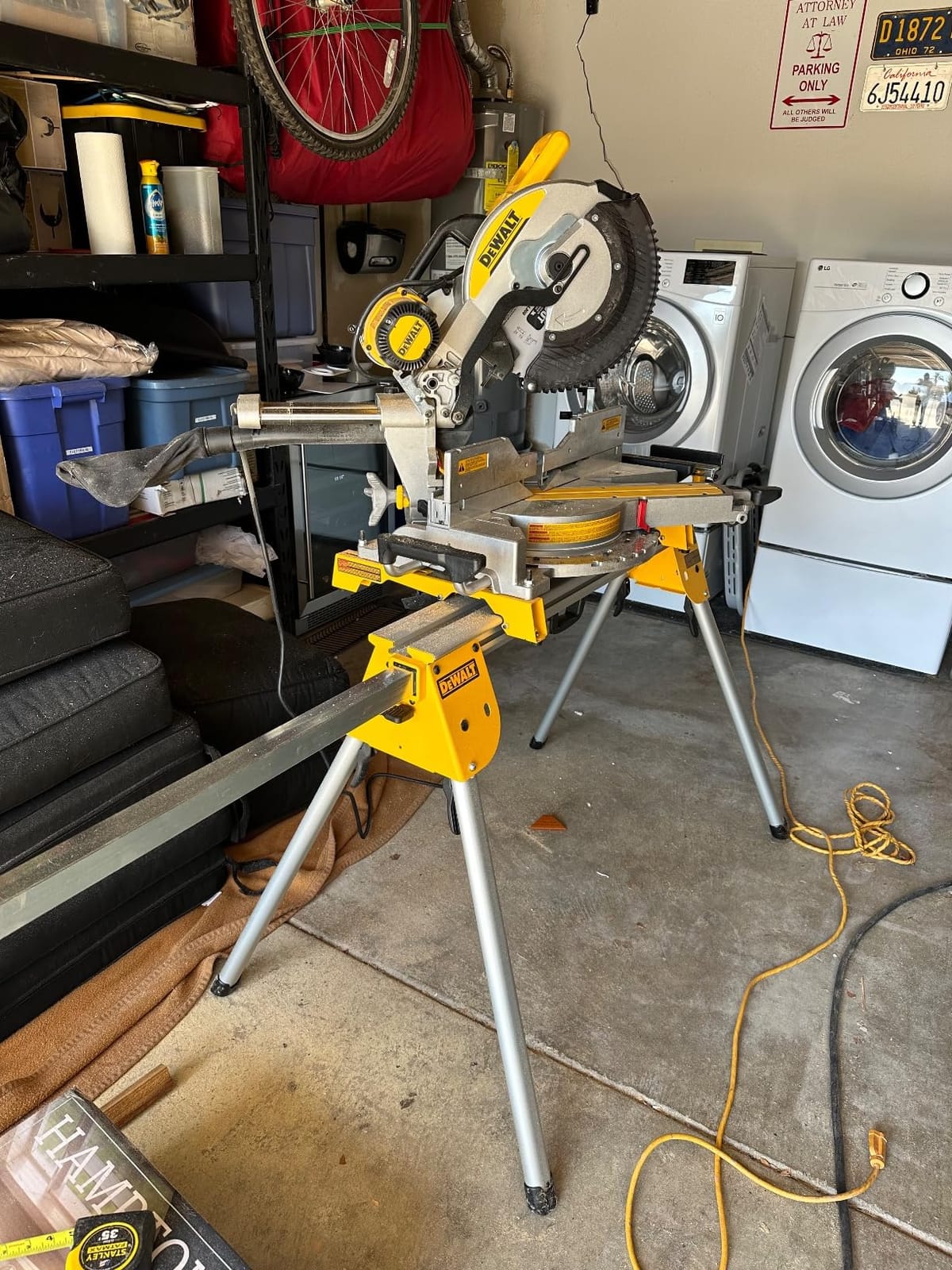
Dust collection is the other quiet win. The system captures more than three quarters of what comes off the blade, which on molding cuts is the difference between a sweep after every few pieces and a sweep at the end of the day. The miter range runs to 60 degrees on one side and 50 on the other, so picture-frame and octagonal work is covered without a separate stop.
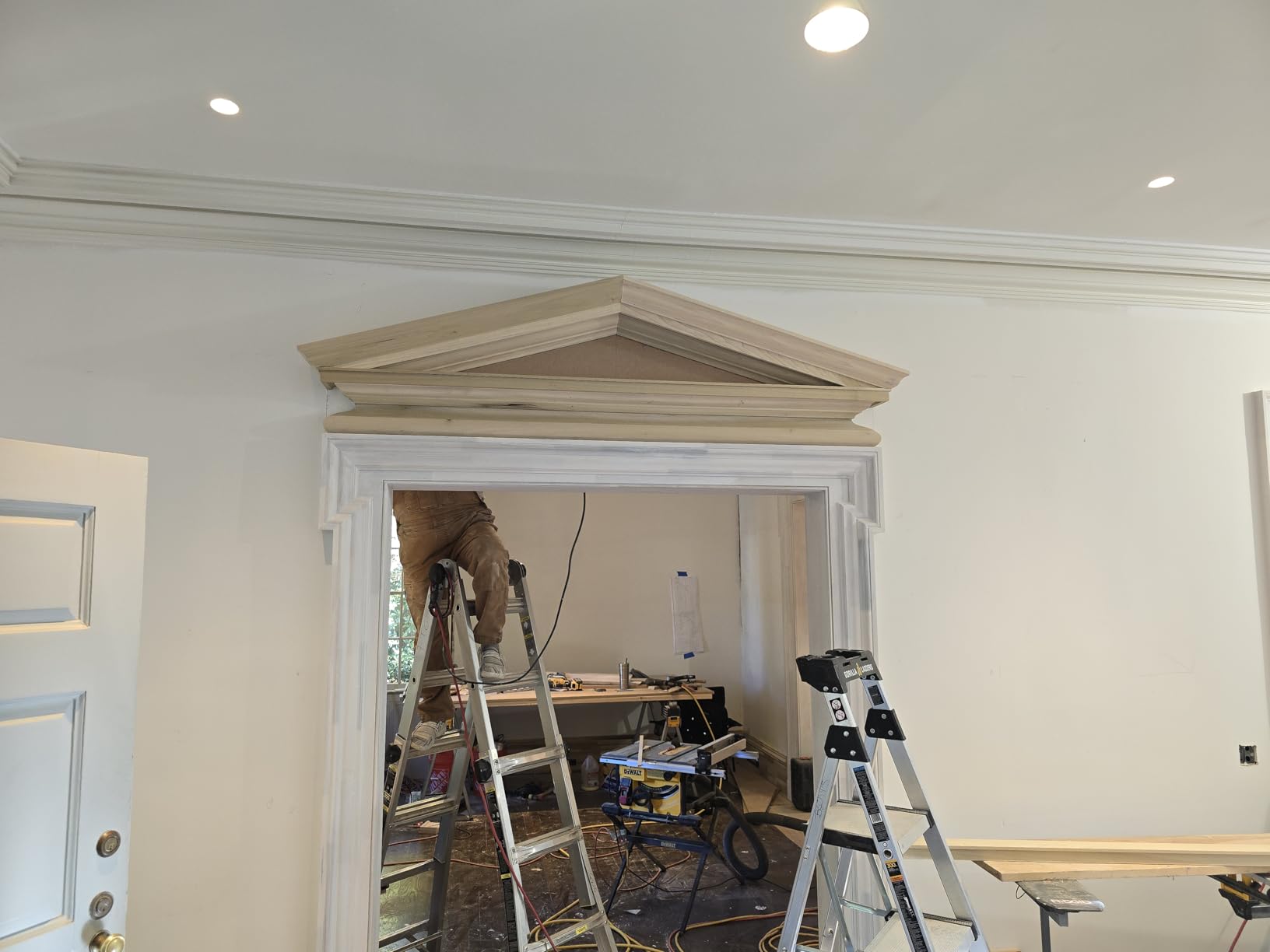
The rails are the part to service if you own one long term. Owners on woodworking forums talk about slide systems drifting out of square after heavy use, and the fix is not exotic: clean the rails, check the fence against a square, and confirm the shadow line still lands where you expect. Doing that monthly on a saw that gets daily use keeps a 4.8 rating honest.
What you will like about the cut quality
The blade that comes with it is an 80 tooth carbide, which is the right starting point for painted and stained molding. An 80 tooth cut in high-speed steel or carbide leaves a face on a 6 inch profile that needs very little sanding, and that is where a crown job is won or lost. Motor speed is 3800 rpm on a 15 amp, 1100 watt motor, so the cut is quick without walking off the line.
Crosscut capacity handles 2×14 dimensional lumber at 90 degrees, which is more than most trim jobs need and useful when a repair means cutting framing to fit.
Where it will frustrate you
Weight is the honest drawback. At roughly 55 pounds, this is a two-hand carry, and a crew moving between rooms every day will notice. Owners who take it apart from a truck regularly usually put it on a stand with a hand truck or leave it in one room for the duration of a project.
The included dust bag also fills quickly on molding because fine dust and chip mix together. A shop vacuum on the port makes a real difference once the bag is half full, and most owners make that change after the first afternoon.
2. SKIL MS6305-00 10 in. Dual Bevel Sliding Miter Saw – Best on a Budget
SKIL 10″ Dual Bevel Sliding Compound Miter Saw-MS6305-00
10 in. 40T blade
15A 4800 RPM
Dual bevel 0-48 degrees
2x12 at 90 degrees
39.4 lbs
Pros
- Dual bevel so no workpiece flipping
- LED shadow line at this level is unusual
- 2x12 crosscut capacity at 90 degrees
- Easily carried at under 40 pounds
- Three year limited warranty
Cons
- 40 tooth blade is coarse for finish molding
- Published specs omit a nested crown figure
- Dust collection is basic out of the box
The SKIL MS6305-00 is the one to buy if you want both bevel sides and a light saw without stepping up a tier. The dual bevel runs to 48 degrees on each side with positive stops, so a room of crown is a stand-at-the-saw, mark, cut workflow instead of a cut-turn-flip-repeat workflow. For a beginner that difference in time is bigger than the capacity difference between a 10 inch and a 12 inch blade.
It also puts an LED shadow line on a saw most people assume will have a laser or nothing. The light projects the blade shadow onto the profile, which stays visible in a dusty room where a thin laser line tends to disappear. Crosscut capacity is 2×12 at 90 degrees and 2×8 at 45 degrees, and the miter swings to 50 degrees on both sides with 11 positive stops.
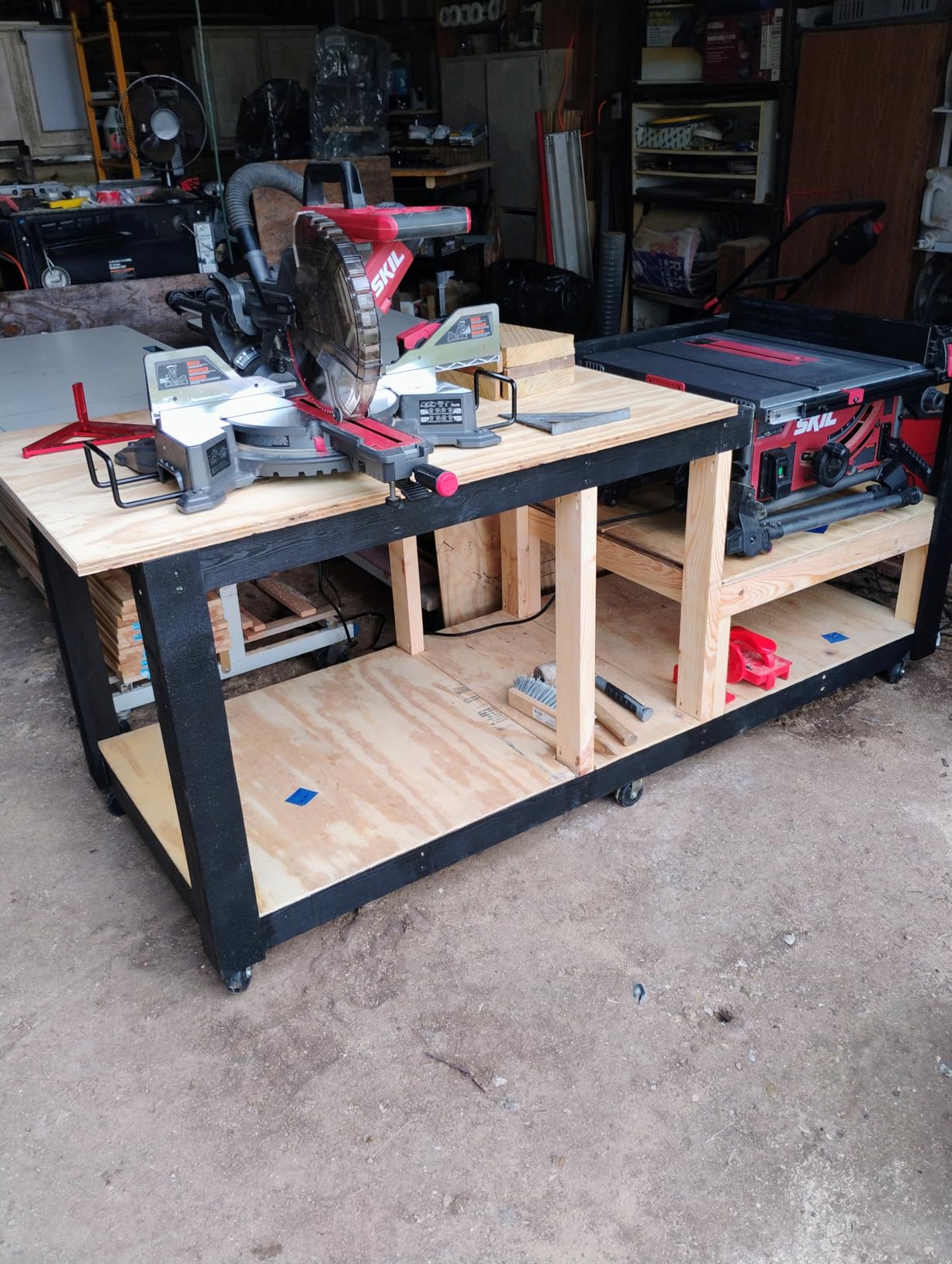
One thing to check before you commit: the published specification for this saw does not list a nested crown capacity number. That is not unusual for a saw in this class, and it does not mean the cut is impossible. It means you should confirm the nested figure for your specific profile height before a full room, and it is another reason to shoot a test cut on scrap first.
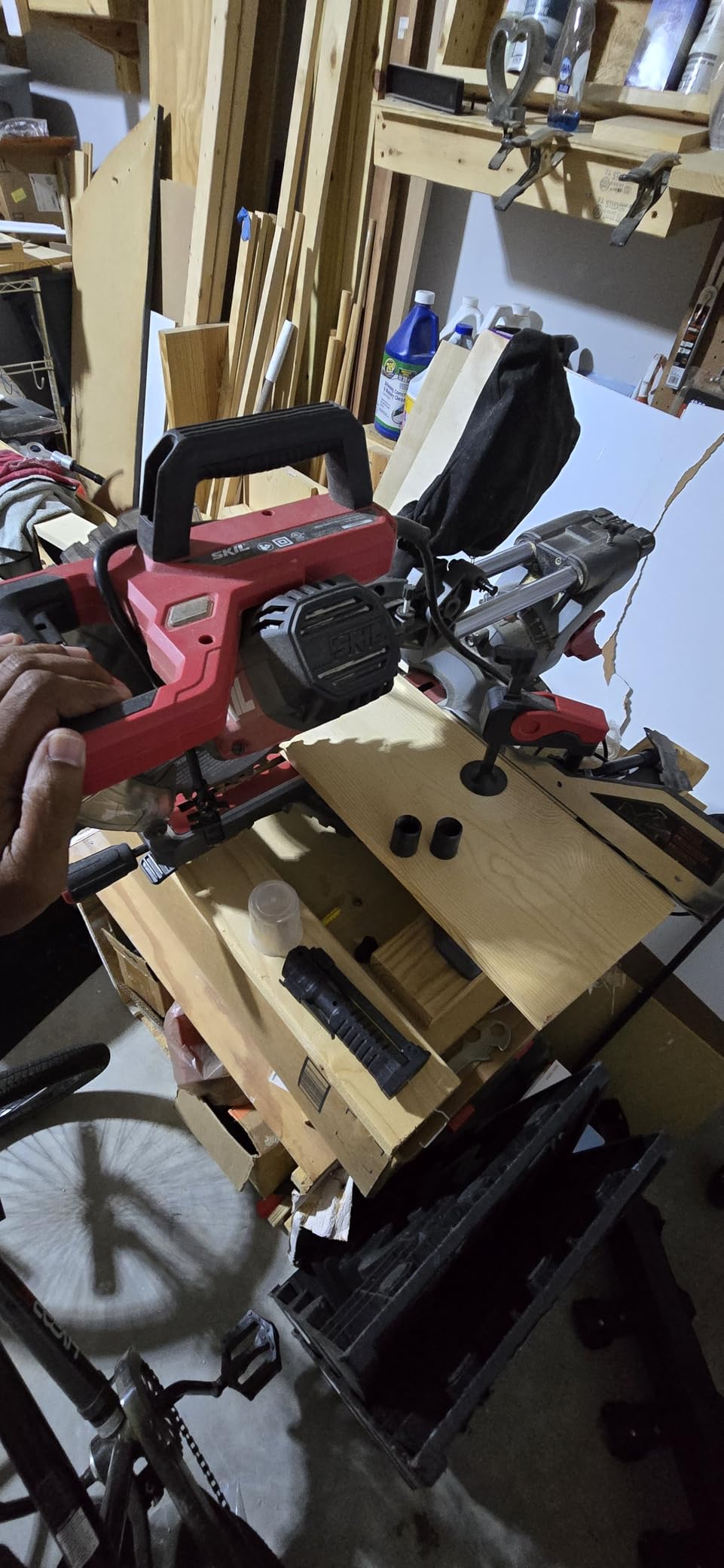
Motor speed is 4800 rpm, the highest in this group, which is why the cut on hardwood trim stays cool and the blade does not bog down on a 6 inch profile pushed slowly through. At 39.4 pounds it is the easiest saw here to carry up a staircase, and extension rods at both ends of the base help support longer stock.
What upgrades make it feel like a better saw
The 40 tooth blade that comes in the box is a framing-style tooth pattern. It cuts fast and it is fine for baseboard and casing, but on painted crown it will leave a slightly rougher face than a high tooth count blade. A 60 or 80 tooth blade for trim changes the finish noticeably, and on this class of saw that is the single highest-value accessory purchase.
A shop vacuum instead of the dust bag is the second one. A quarter inch of dust in the slide rails is the common cause of a saw that stops sliding smoothly, and keeping it out is easier than cleaning it out later.
Where it falls short
The handle material is plastic, and reviewers mention it, though it is a comfort issue rather than a durability one. More significant is the blade: anyone cutting hardwood picture frames or fine hardwood trim will notice the 40 tooth pattern compared with the 60 and 80 tooth blades on the saws above it.
For very tall profiles, the capacity ceiling is the limit. This is a 10 inch saw, so anything past a 6 inch nested profile is worth testing on the actual machine before you plan a whole room around it.
3. BOSCH CM10GD 10 in. Dual-Bevel Glide Miter Saw – Best for Tight Rooms
BOSCH 15.0 Amp CM10GD 10 In. Dual-Bevel Glide Miter Saw for Woodworking
10 in. 60T carbide
6 in. crown nested
5-1/2 in. base vertical
Axial-Glide system
64 lbs
Pros
- Axial-Glide system runs flush to a wall
- 6 in. crown nested and 5-1/2 in. base vertical
- Upfront bevel lock and range selector
- 60 tooth carbide blade included
- Metal-heavy build quality
Cons
- No built-in laser guide
- Heaviest saw in the group at 64 pounds
- Dust collection is weak out of the box
The Axial-Glide system is the reason to look at this saw. Instead of a carriage sliding on rails away from the wall, the head is carried on articulated arms that swing forward, so the saw can sit flat against a wall and still deliver a 12 inch crosscut. On a remodeling job in a finished hallway where you cannot lose a foot of clearance, that is not a minor feature.
Capacity is 6 inches of crown nested and 5-1/2 inches of baseboard held vertically against the fence, with tall sliding fences 4-1/4 inches high to back up the profile. Bevel range is 47 degrees on both sides with detents at 0, 33.9 and 45 degrees, which is the pair that matters for crown, and the miter detents include 0, 15, 22.5, 31.6, 45 and 60 degrees. A push-button override lets you slide between detents without hunting for a lever.
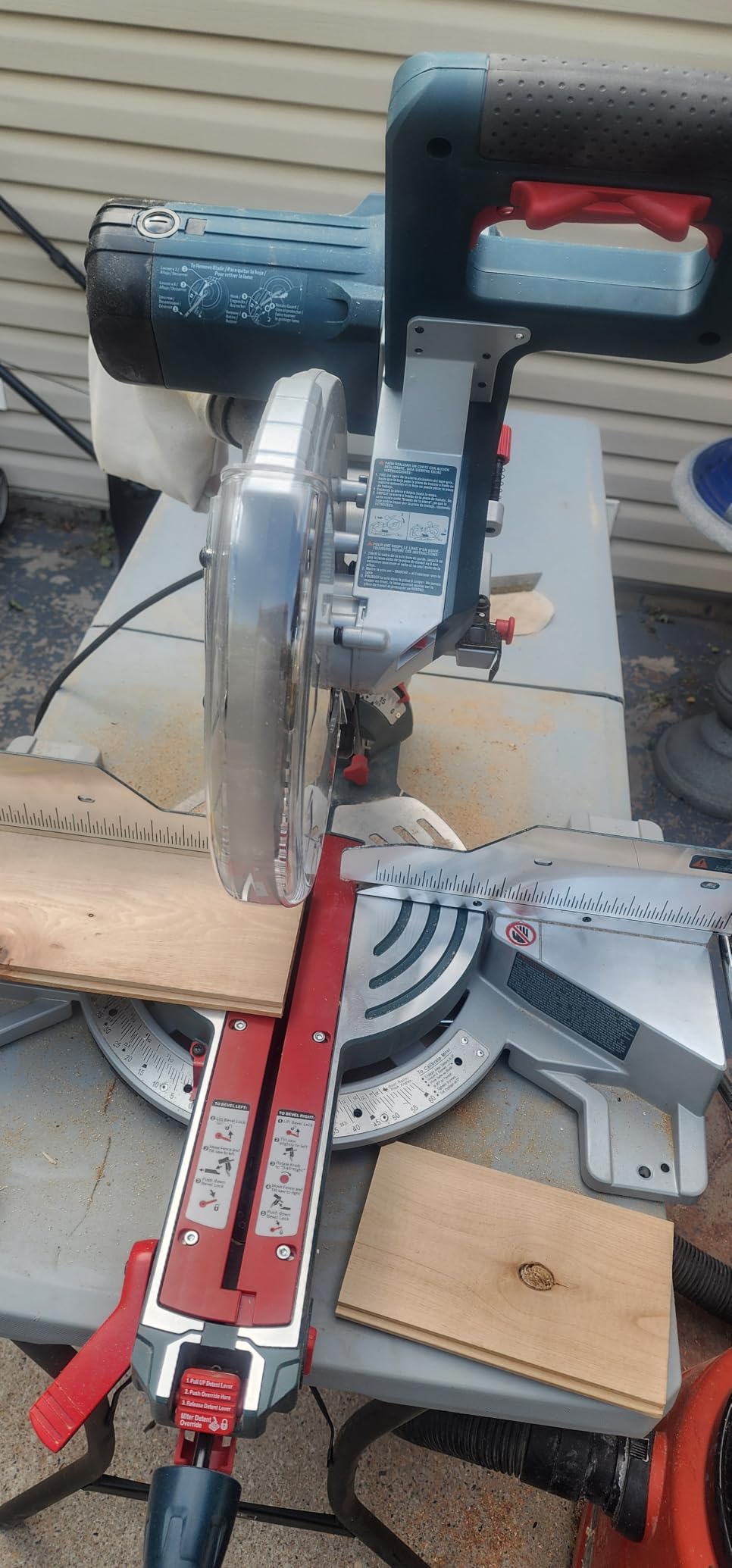
Everything you touch is at the front of the machine. The bevel lock lever and the range selector sit on the handle side rather than behind the head, so you are not reaching around the workpiece to change an angle mid-cut. The scales are stainless and large, and the uniform bevel scale reads clearly even with the guard down.
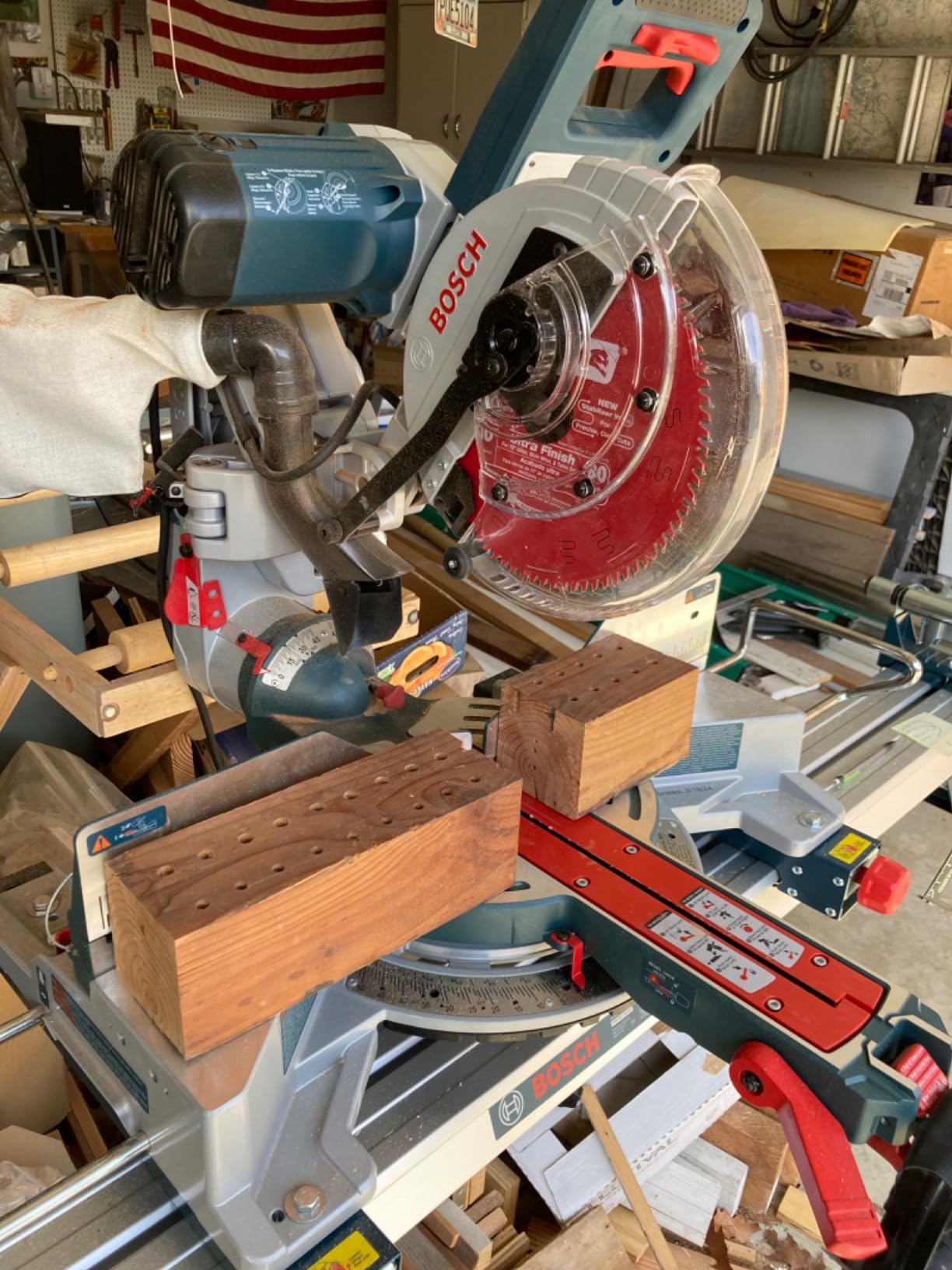
The included 60 tooth carbide blade is a genuinely good starting blade for trim, better than the 40 tooth that comes with some saws in this class. Motor speed is 4800 rpm on a 15 amp, 1800 watt motor, so it has the same headroom as the SKIL for hardwood crosscuts.
Why the detent layout matters for crown
Those crown detents are why this saw is comfortable for molding work. When a fence has a positive stop at 33.9 and another at 31.6, you are setting a compound crown cut by feel with the handle, not by eye on a printed chart. The spring angle of the profile dictates the pair, and the saw does the remembering for you.
For anyone who moves between the saw and a scribe or a coping setup, an in-front miter release is a real time saver over a lever on the far side of the head.
Where it will frustrate you
There is no laser. On a saw this accurate, that is a genuine trade: the stainless scales and detents are precise, but if you prefer a projected line you will not get one from the factory. Some owners add an aftermarket light or laser, which is easy to do and restores the option.
Weight is the bigger issue at 64 pounds. This is the heaviest saw in the group, and the glide system does not lighten the frame. If you are moving between houses weekly, plan on a stand rather than carrying it.
4. DEWALT DWS716 12 in. Double-Bevel Miter Saw – Best if You Do Not Need the Slide
DEWALT Miter Saw, Double-Bevel, Compound, 12-Inch, 15-Amp (DWS716)
12 in. 80T blade
6-5/8 in. crown nested
Non-sliding
14 detent stops
48.3 lbs
Pros
- 6-5/8 in. crown nested on a 12 in. blade
- Stainless detent plate with 14 positive stops
- Lightest 12 in. saw here at 48.3 pounds
- 80 tooth carbide blade included
- Accurate straight out of the box
Cons
- Not a sliding saw so crosscut capacity is fixed
- No XPS or laser cutline
- No soft start
Not every crown job needs a sliding saw, and this is the proof. The DWS716 is a fixed 12 inch double-bevel compound saw, and it still nests crown up to 6-5/8 inches with tall sliding fences supporting the profile. If your ceiling crown is 6 inch class or smaller, that covers the work and you skip the rails entirely.
The detent plate is the part people notice: stainless steel with 14 positive stops, more detent positions than most saws in this list. Bevel runs 0 to 48 degrees on both sides and miter runs 0 to 50 on both sides, so compound crown cuts at the standard settings are repeatable without a chalk line. The cam lock miter handle has a detent override, which is what lets you move off a stop for an odd angle without resetting the plate.
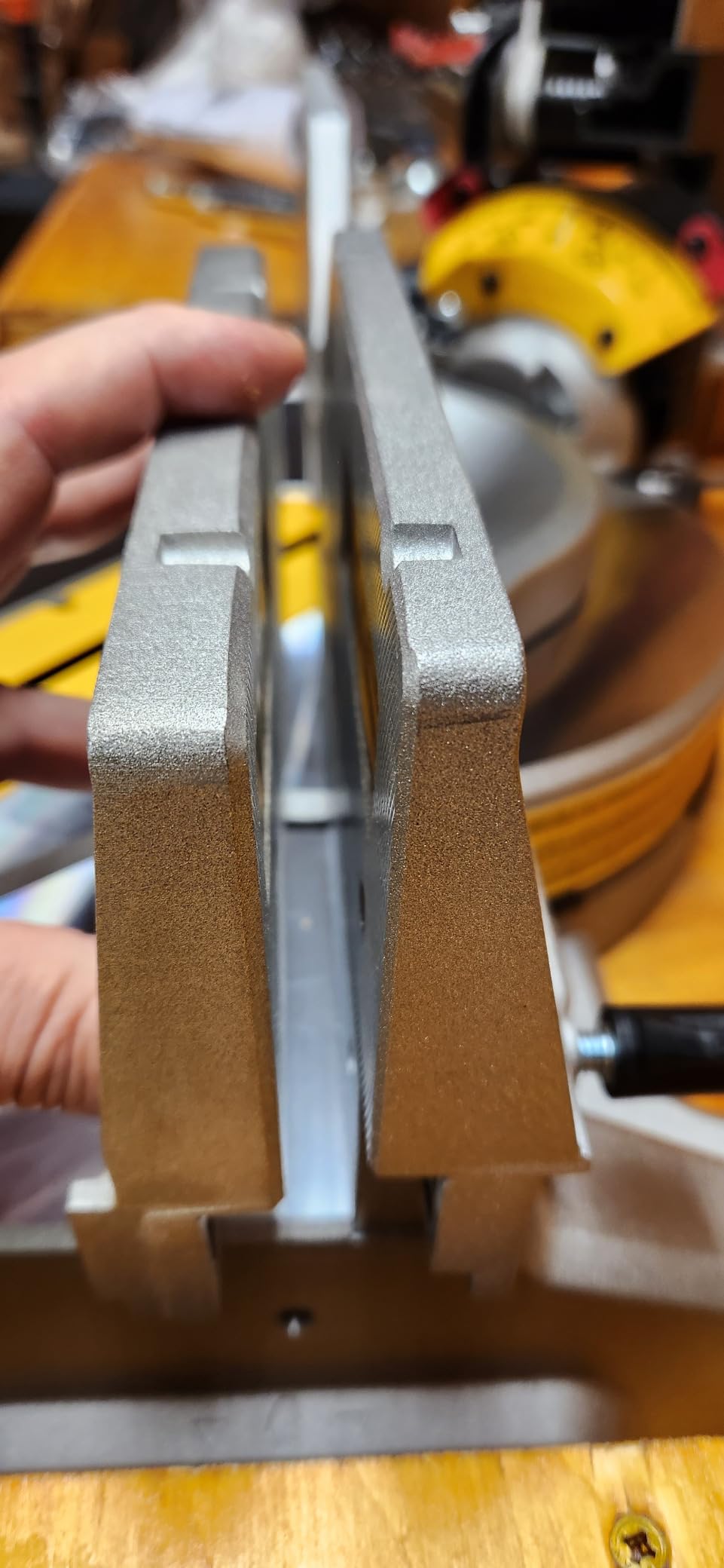
Accuracy out of the box is the other story. Reviewers consistently describe square cuts with no adjustment, and at 48.3 pounds this is the lightest 12 inch saw here, which matters on a staircase or in an upstairs room.
The box includes an 80 tooth carbide blade, a wrench, a dust bag and a vertical clamp. That 80 tooth blade is exactly what a painted crown profile wants, so the first cut out of the box is a finish cut rather than a rough one.
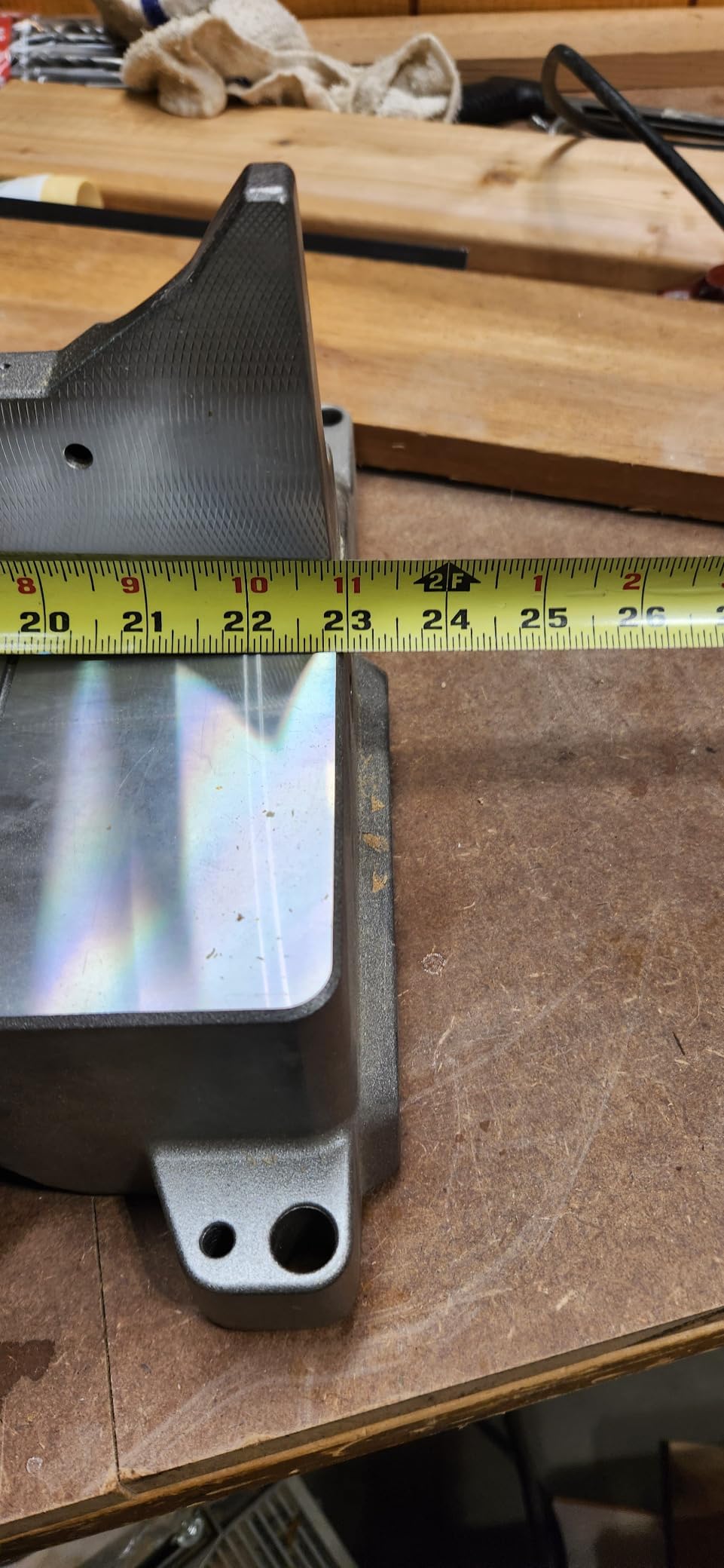
When a fixed saw is the right answer
Crown molding for a single room, or a series of rooms where the profile is 6 inch class or less, is the fixed-saw scenario. You are not crosscutting dimensional lumber, so the slide buys you nothing. The double bevel still saves the flip, and that is where most of the time saving in a trim day actually comes from.
If your cuts include 2x framing or wide stock, stop here and look at a slider instead. There is no configuration or accessory that adds crosscut capacity to a non-sliding saw.
Where it falls short
There is no cutline on this saw, no XPS light and no laser. You are sighting to the scale and a pencil mark, and on a white painted profile a faint pencil line is easy to lose. Owners who want the line usually mark the cut side and always cut from the same face.
Crosscut capacity is the hard limit. A fixed 12 inch saw tops out well short of a sliding model on 90 degree cuts, and that is the whole reason a slider exists.
5. Makita LS1019L 10 in. Dual-Bevel Sliding Miter Saw – Best 10 Inch for Crown
Makita LS1019L 10″ Dual-Bevel Sliding Compound Miter Saw with Laser
10 in. 60T blade
6-5/8 in. crown nested
12 in. crosscut
Linear ball bearings
72.8 lbs
Pros
- Nests 6-5/8 in. crown despite the 10 in. blade
- Two-rail design runs flush to a wall
- Linear ball bearing slide for cut accuracy
- Built-in laser guide
- Micro-polished 60 tooth blade included
Cons
- Heaviest 10 inch saw here at 72.8 pounds
- 3200 RPM is lower than most rivals
- Laser needs a battery
The headline number on this saw is 6-5/8 inches of crown nested, from a 10 inch blade. That is the figure the whole industry watches, because it puts a 10 inch saw’s footprint and weight class up against a 12 inch saw’s molding capacity. Owners on woodworking forums confirm the nested figure in practice, and it holds for standard 6 inch class profiles.
The slide system is a two-steel-rail design that sits flush to a wall, so the saw does not need clearance behind it. The carriage runs on linear ball bearings, which is the part that keeps the cut square over time. A direct drive gearbox and guard raise vertical capacity to 5-1/4 inches, and the crosscut at 90 degrees is 12 inches.
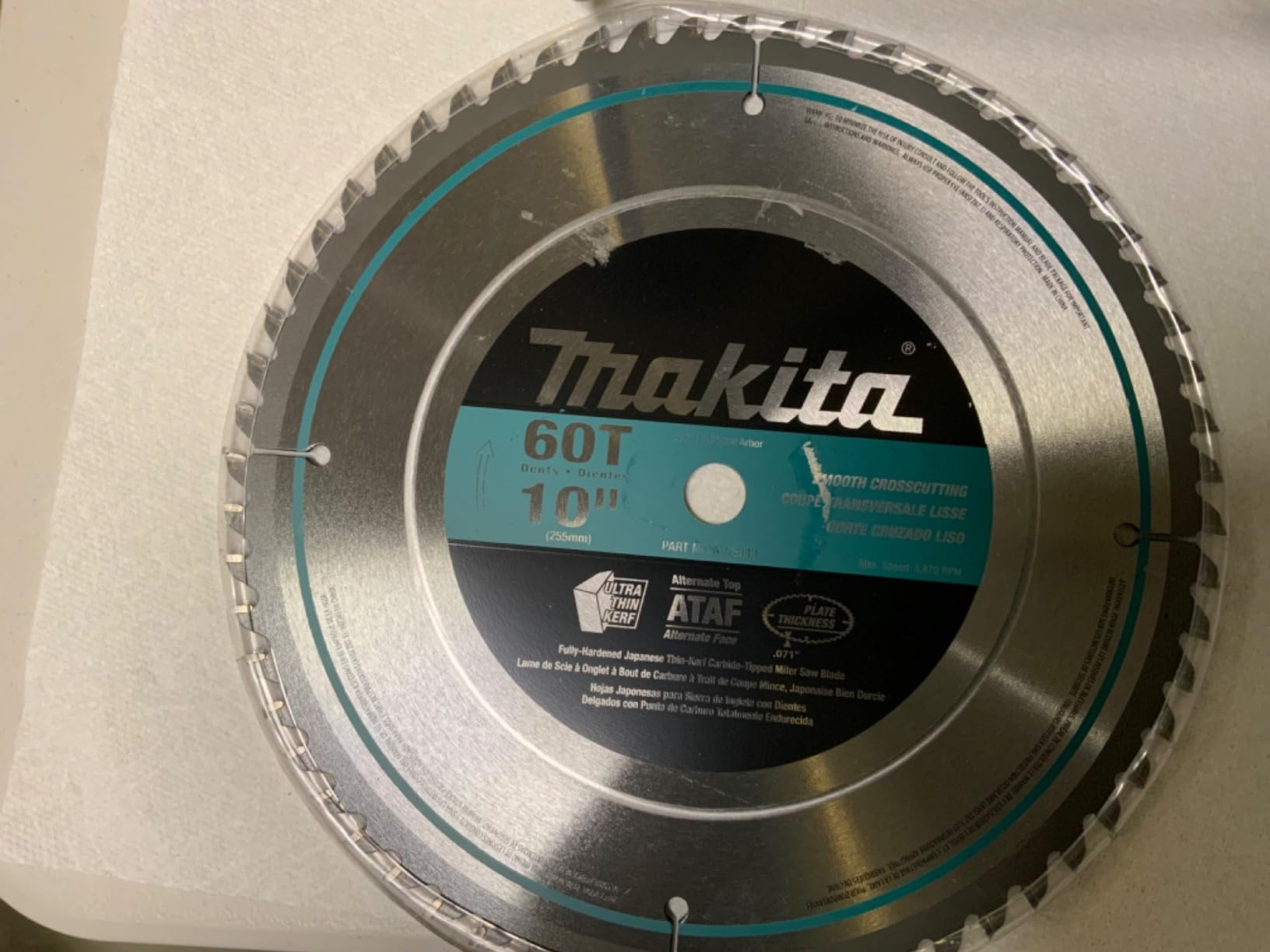
A built-in laser guide is included, which is the opposite choice from the Bosch CM10GD. Whether that is better depends on your room. In a bright, dusty job site a laser line can be hard to see and needs a working battery; in a dim interior or a shop with controlled light, the laser is crisp and the triangular rule that ships with the saw makes checking a crown line quick.
The included 60 tooth micro-polished blade is a good trim blade out of the box, and the box also includes a vertical vise and a hex wrench.
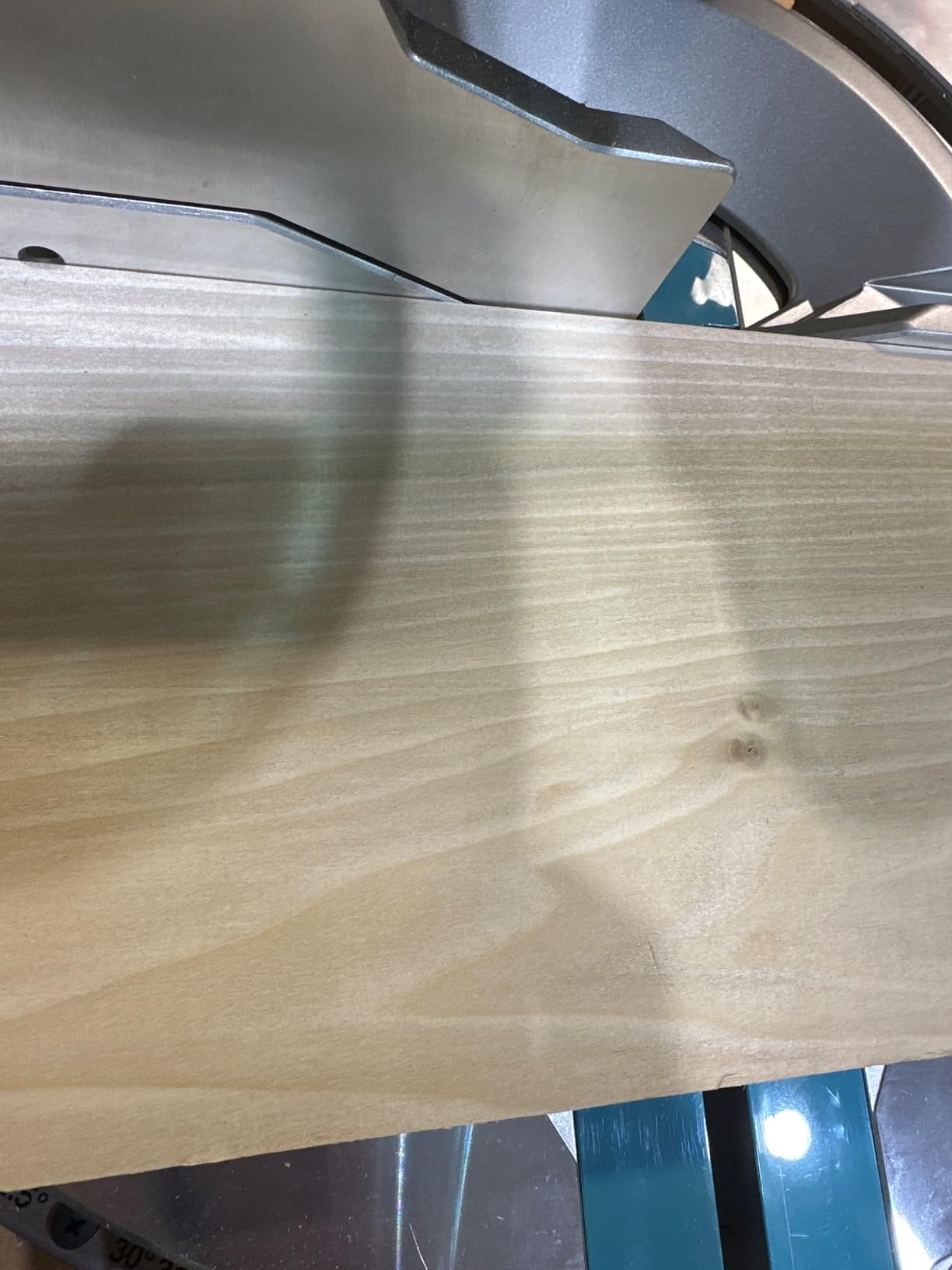
What the spring angle detents do for you here
With a laser and a triangular rule, setting a compound crown cut is a mark-and-check process. You swing the miter, tilt the bevel, mark the profile with the rule against the fence, and then verify with a combination square before you trust a full room of molding. The rule matters more on this saw than on the LED saws, because the laser line can shift if it is knocked.
For 52 degree spring angle profiles, the nested cut is the familiar pair near 33.9 and 31.6 degrees, and the scale on this saw is large enough to read at that.
Where it will frustrate you
Weight, again. The published figure is 72.8 pounds, which is more than some 12 inch saws in this group, and reviewers specifically flag the gap between the compact description and the reality of lifting it. It is a stationary saw that happens to be movable, not a carry-it-upstairs saw.
Speed is 3200 rpm, the lowest here, and that shows on thick hardwood crosscuts where a faster saw keeps the cut moving. For trim and molding it is not a problem.
6. Makita LS1219L 12 in. Dual-Bevel Sliding Miter Saw – Best for Large Profiles
Makita LS1219L 12″ Dual-Bevel Sliding Compound Miter Saw with Laser
12 in. 60T blade
8 in. crown nested
6-3/4 in. base vertical
15 in. crosscut
81.6 lbs
Pros
- Largest crown capacity in the group at 8 in. nested
- 15 in. crosscut at 90 degrees
- Two-rail design runs flush to a wall
- Dual dust collection ports
- In-front bevel lock
Cons
- Heaviest saw here at 81.6 pounds
- 3200 RPM is slow for thick stock
- Lowest rating in the group
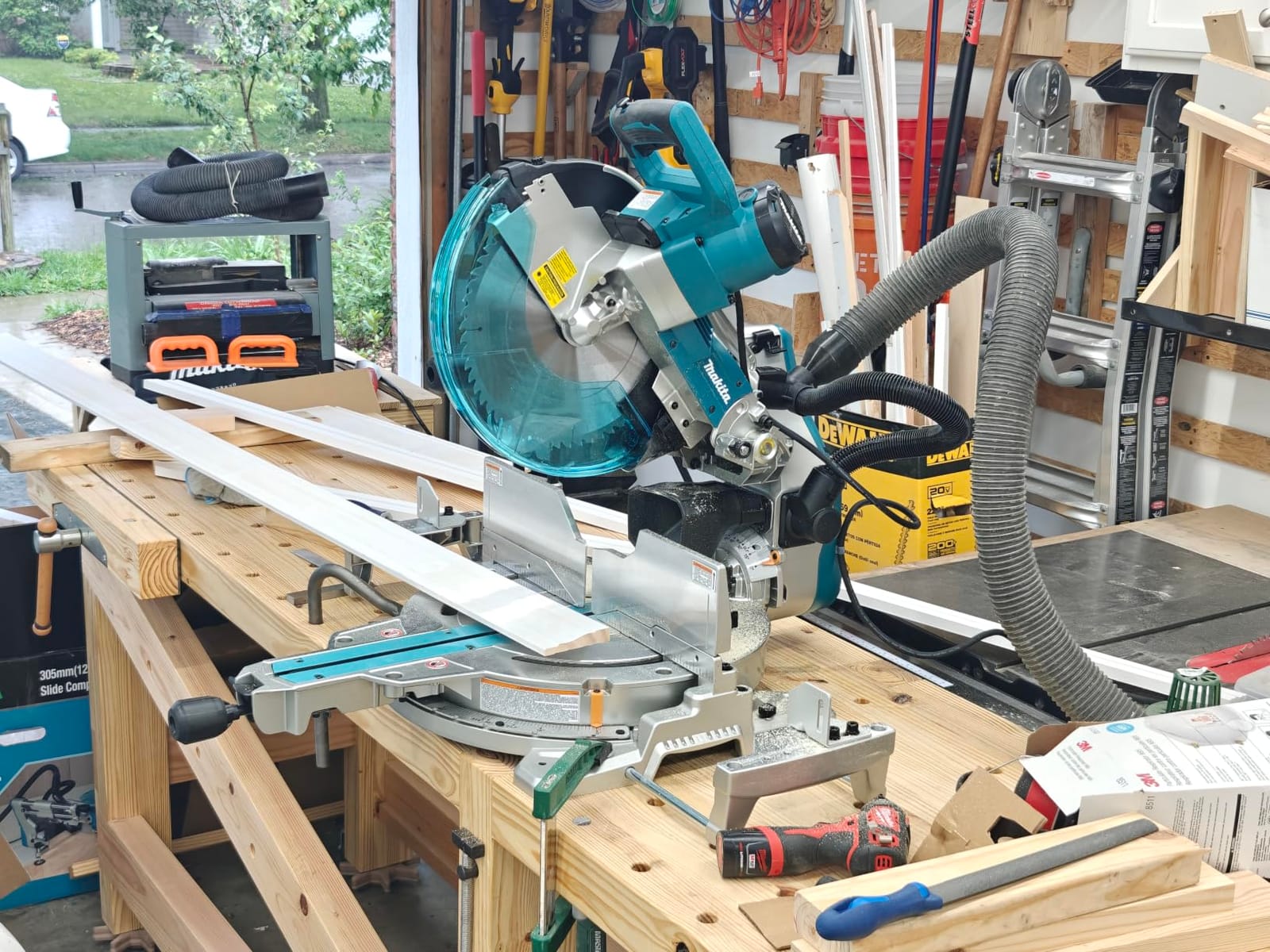
Eight inches of crown nested is the largest molding capacity here, and that is the whole argument for this saw. If you are working tall profile, high-ceiling crown or anything close to the limit of what a miter saw can physically hold, this is the machine that does not make you improvise with a jig or a second pass.
It also crosscuts 15 inches at 90 degrees and holds 6-3/4 inches of baseboard vertically against the fence, so wide baseboard is covered by the same tool. The two-steel-rail design sits flush against a wall, the bevel lock is in front where you can reach it, and there are two dust collection ports rather than one, which is a sensible detail on a saw that will be making a lot of fine dust from molding.
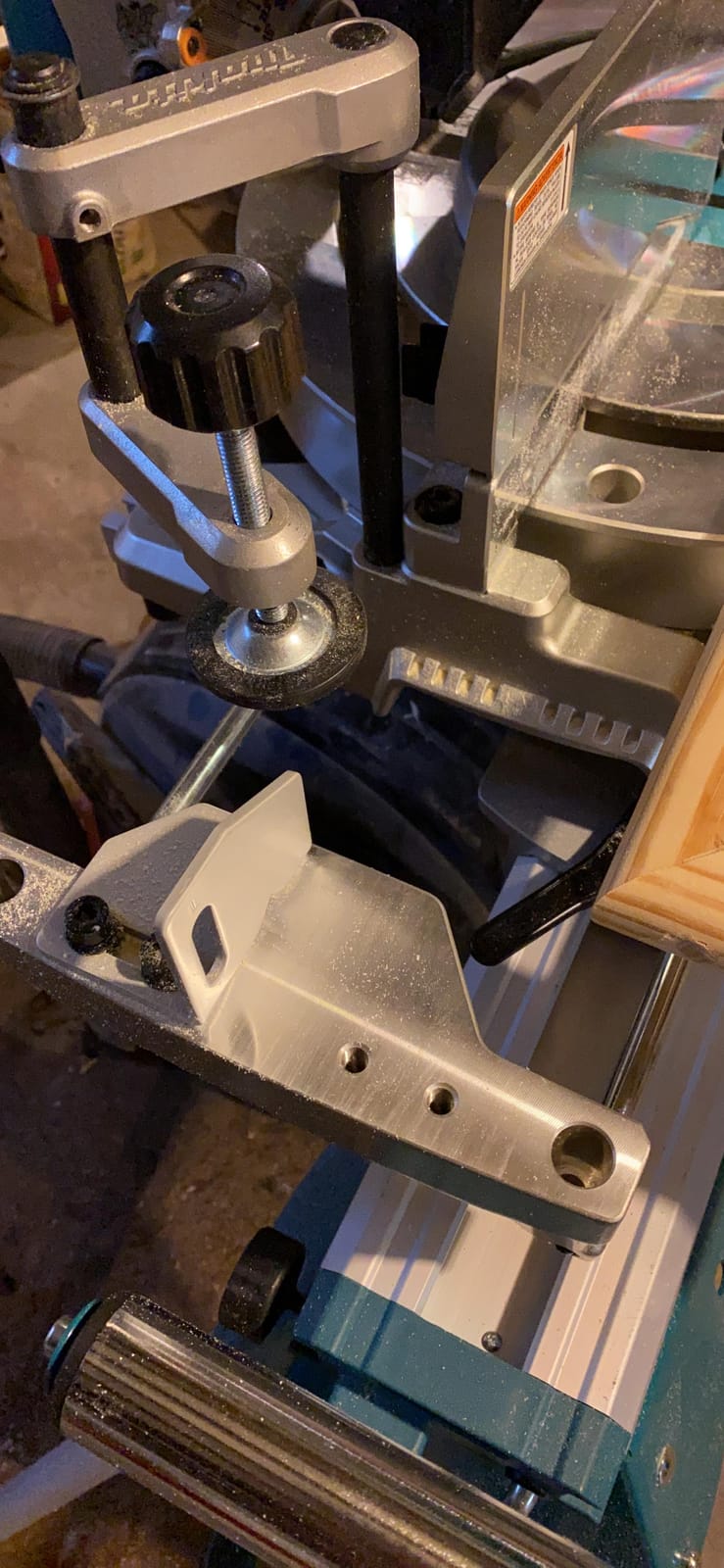
A built-in laser guide and a 60 tooth micro-polished blade come in the box, with a vertical vise, a hex wrench and a triangular rule. The direct drive motor delivers smooth power with no belt to stretch, and the guard and gear design are what make the 6-3/4 inch vertical base capacity possible.
What stands out in owner feedback is how much cutting gets done per charge of attention. Once it is set up in one position, the detents plus the in-front bevel lock mean the angle changes are quick enough that a long crown run feels like a production line rather than a series of adjustments.
When this capacity pays off
Ceiling heights above 9 feet, or crown profiles in the 7 to 8 inch range, are where the extra capacity saves real time. On the smaller saws those same cuts either do not fit or need a fixture that has to be built first. Here you set the compound angle and cut.
It also makes sense as a shop saw rather than a carry saw. At this weight it is meant to live in one place, so if you trim a lot of rooms in a single house or work out of a shop, the capacity gets used daily and the weight does not matter.
Where it falls short
At 81.6 pounds this is the heaviest saw in the group, and any plan that involves moving it to each room needs a stand with a decent base and wheels. Motor speed is 3200 rpm, which is slow for solid hardwood crosscuts, and it is the lowest rating here at 4.4 with 412 reviews, mostly about weight and speed rather than cut quality.
If your crown is 6 inch class, you are paying for capacity you will not use. The Makita LS1019L nests 6-5/8 inches on a smaller frame, and that is the more sensible buy for most rooms.
7. Evolution R255SMS+ 10 in. Multi-Material Sliding Miter Saw – Best for Mixed Materials
Evolution Power Tools R255SMS+ PLUS 10-Inch Sliding Miter Saw Plus Multi-Material Multi-Purpose Cutting Cuts Metal, Plastic, Wood & More 0˚ – 45˚ Bevel & 50˚ – 50˚ Miter Angles TCT Blade Included
10 in. 60T TCT blade
15A 2500 RPM
Bevel 0-45 degrees
Miter 50 degrees each side
41.8 lbs
Pros
- One TCT blade handles wood metal and plastic
- Cool cutting with no sparks on mild steel
- Taller fences and a slide rail protector
- Dual quick-release clamps
- Three year warranty
Cons
- 2500 RPM is the slowest motor here
- Bevel stops at 45 degrees
- Crown finish is not the strength of the multi-material blade
This saw exists for renovation work where the trim pile is mixed. The included 60 tooth TCT multi-material blade cuts wood, composite decking, plastic and mild steel, and it runs cool enough on steel to stay touchable. If your job involves cutting exterior cladding, PVC trim or aluminium alongside crown, that is a real capability no wood-only blade gives you.
Geometry-wise it bevels 0 to 45 degrees and miters to 50 degrees on each side. That 45 degree bevel ceiling is the catch for crown work. A standard nested compound crown cut on a 52 degree spring profile needs a bevel a little past 45 on the tall-profile settings, so this is a saw for 45 degree class crown and for casing, base and flat work rather than for the tallest profiles.
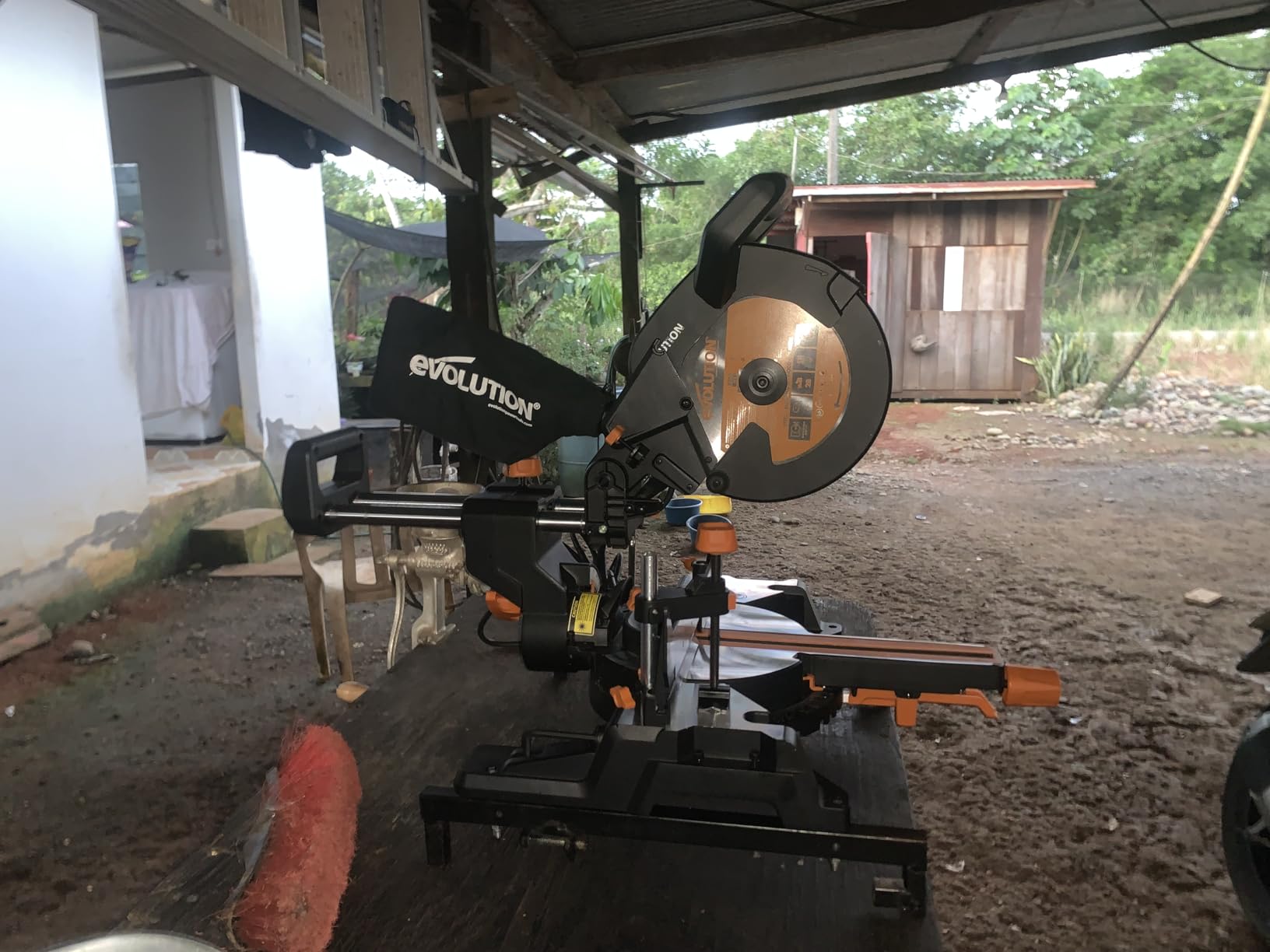
Build details are thoughtful for a machine that cuts metal. There are dual quick-release clamps instead of a single screw clamp, taller fences for backing up wide trim, and a slide rail protector that keeps debris out of the carriage. Integrated carry handles and a 3 meter cord make it easy to reposition, and a dust bag is included.
At 41.8 pounds it is one of the lighter saws here, and the three year warranty is longer than most in the group offer.
Where its multi-material blade genuinely helps
Renovation work is where this earns its slot. Cutting PVC trim, composite decking or aluminium flashing on the same machine as the wood casing means one setup location and one dust hood instead of two tools. Because the blade is designed to run cool, it also stays sharp through a mixed run where a wood blade would heat up and glaze.
The quick-release clamps matter more than they sound on a sliding saw. A workpiece that creeps on the slide ruins repeat cuts, and a clamp you can set with one hand keeps the batch consistent.
Where it falls short
The 2500 rpm motor is the slowest in the group, and that shows on hardwood. A 10 inch blade turning at that speed needs to be fed slowly, and the finish on large hardwood profiles is not what a wood-only saw delivers.
For a pure crown job with tall profiles, the 45 degree bevel limit is the deciding factor. Pick this one for mixed-material renovation, not for a house full of 9 inch colonial crown.
8. DOVAMAN DMS03G 12 in. Dual-Bevel Sliding Miter Saw – Budget 12 Inch Dual Bevel
DOVAMAN 12-Inch Dual-Bevel Sliding Compound Miter Saw, 15-Amp
12 in. 40T TCT blade
15A 3800 RPM
Bevel 0-45 degrees
Miter 0-45 degrees
53.9 lbs
Pros
- Dual bevel on both sides at a budget level
- Laser guide included
- Max cut capacity of 4.2 x 13 inches
- Ambidextrous safety switch
- Two side extension tables and spare carbon brushes
Cons
- 40 tooth blade needs upgrading for finish work
- Dual bevel stops at 45 degrees rather than 48
- Newer brand with a shorter track record
A 12 inch blade with a dual bevel on both sides is not common in the entry tier, and that is the whole pitch of the DMS03G. For a homeowner or a weekend trim carpenter who wants to slice 12 inch board and hold 45 degree compound angles without flipping the workpiece, the spec sheet covers it.
Max cutting capacity is 4.2 by 13 inches, motor speed is 3800 rpm on a 15 amp pure copper motor, and the miter runs 0 to 45 degrees on both sides with 9 positive stops. The ambidextrous safety switch can be reached from either side of the saw, which is a small thing that matters when you are working alone and standing in an awkward position.
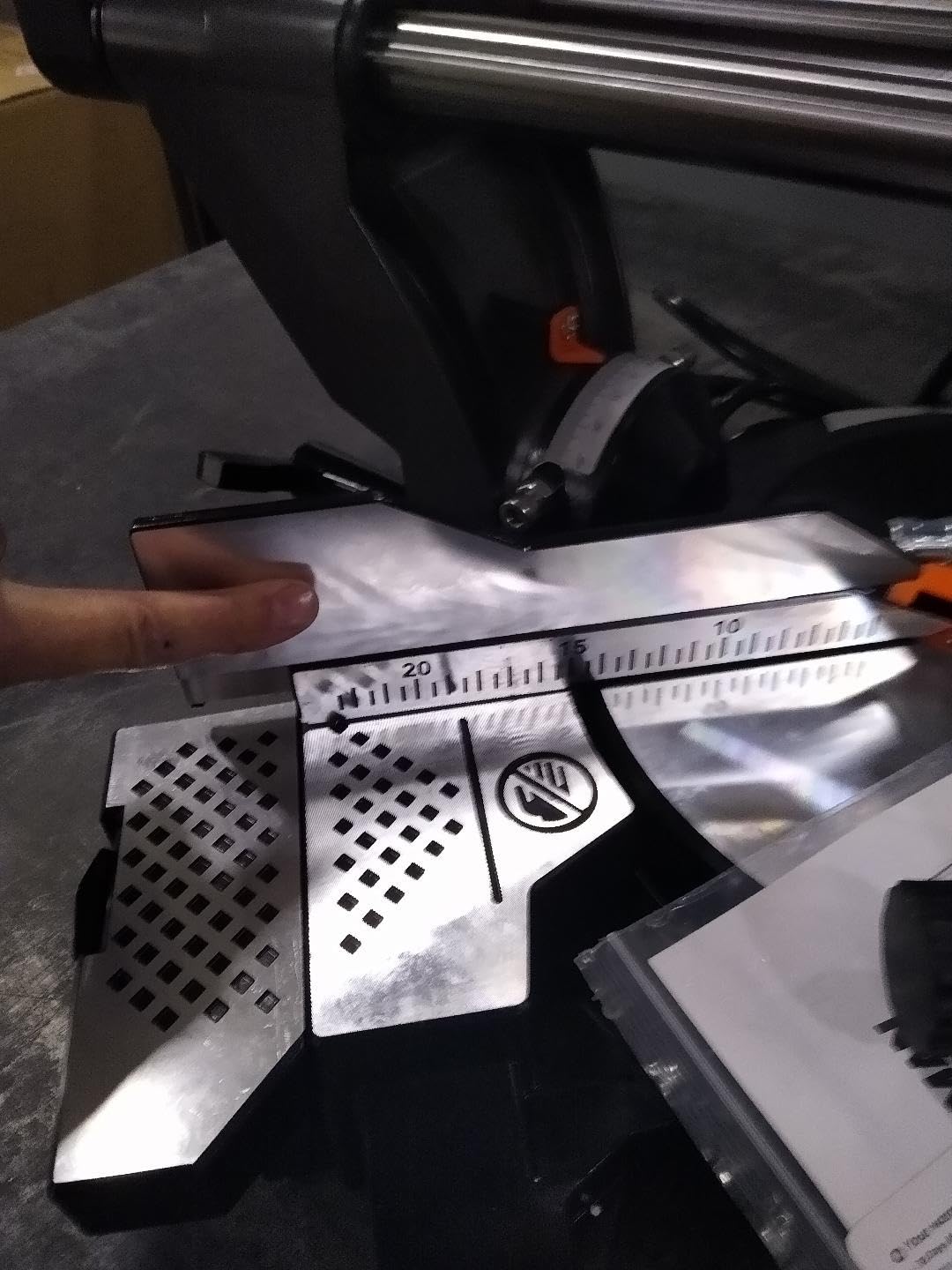
Two side extension tables give support for long stock, and the transparent blade guard lets you follow the cut line on the workpiece rather than through a plastic window. The box includes a 40 tooth TCT blade, a support clamp, a user manual and two extra carbon brushes, and having spare brushes in the box saves a trip when the motor starts to arc.
Buyer reviews describe accuracy as good once set, and the laser guide is a genuine addition at this level where the budget saws often have nothing.
What to check on day one
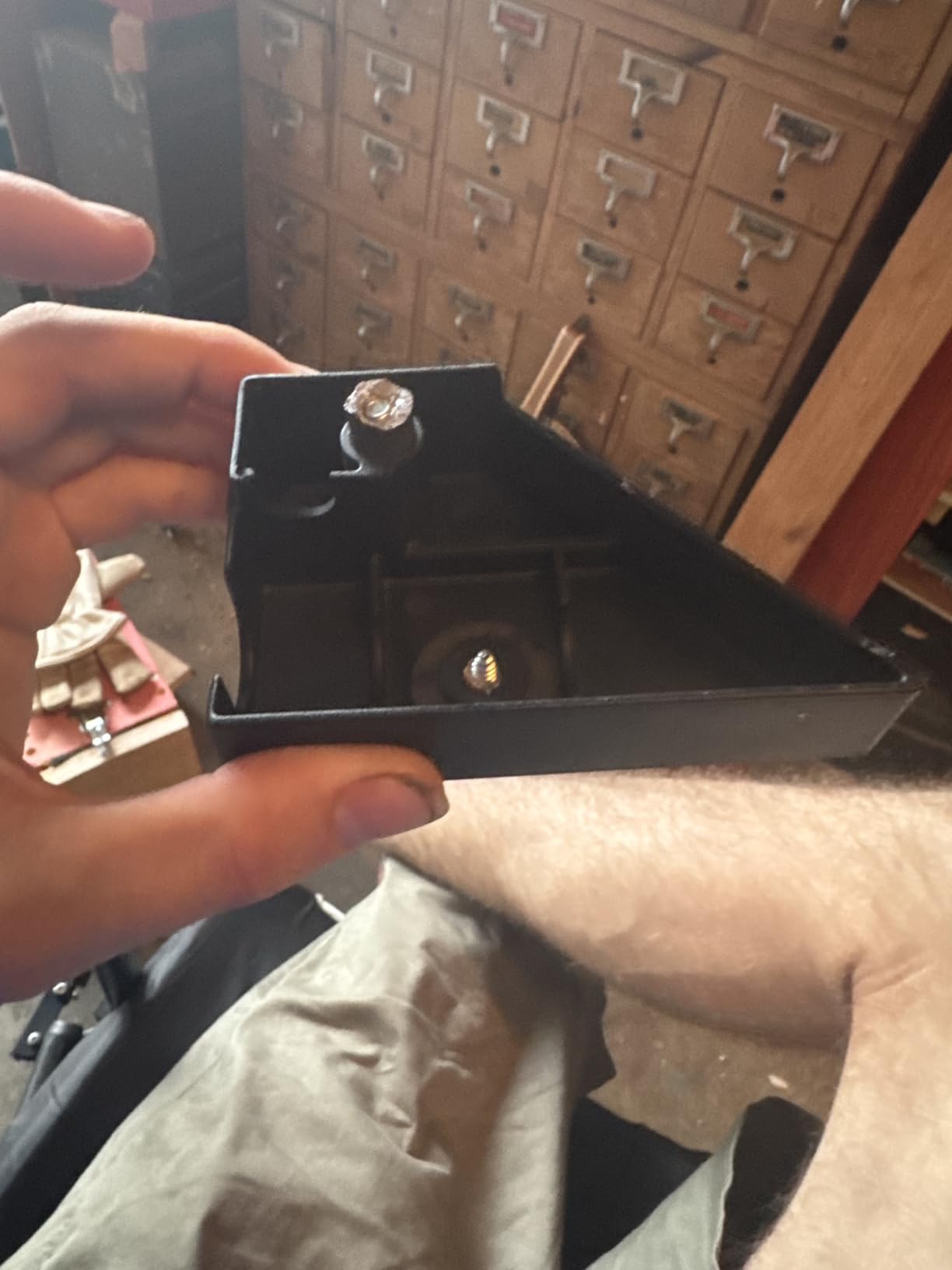
Reviewers of saws in this class mention factory alignment as the first thing to verify. Before the first piece of crown, cut a scrap square with the fence and check it with a combination square in both the miter and bevel positions. If the bevel scale and the actual angle disagree, adjust it then, not at the far wall of a room.
Because the bevel tops out at 45 degrees, run a test cut on a scrap of your actual profile and check the miter joint closes cleanly. Most 45 degree class crown profiles are fine; tall spring angle profiles are the risk.
Where it falls short
The 40 tooth blade is the clear weak point. It is a crosscut blade, and on painted crown it will leave a face that needs sanding. Plan on a 60 or 80 tooth trim blade as an early purchase rather than an eventual one.
Brand longevity is the other unknown. With a smaller review base than the established names, long-term durability data is thinner, so if you cut crown every week, the extra cost of a saw with a deeper review history is worth weighing.
9. DOVAMAN DMS01A 10 in. Multi-Material Sliding Miter Saw – Lightest With Three Blades
DOVAMAN 10-Inch Sliding Miter Saw, Multi-Material, 2-Speed, 15A
10 in. 60T TCT blade
5000 and 3200 RPM
3 blades included
37.5 lbs
13 in. slide rail
Pros
- Three TCT blades in the box
- including a 48 tooth
- Lightest saw here at 37.5 pounds
- Dual speed for different materials
- Laser guide
- Ambidextrous design and extension tables
Cons
- Factory alignment often needs adjusting
- Thin manual
- 30 mm arbor is non-standard
The blade package is the story here. Three TCT blades come in the box, two 40 tooth and one 48 tooth, and the saw is a dual-speed design that runs at 5000 rpm or 3200 rpm. That is more cutting hardware in the box than any other saw in this group, and it means you can start a trim job without shopping for a blade first.
At 37.5 pounds it is the lightest saw here, and the ambidextrous layout with the laser guide reachable from either side makes it easy to use in a tight room without constantly walking around the saw. Max cutting range is 4 by 13.4 inches on a 13 inch slide rail with extendable side tables, and the bevel runs 0 to 45 degrees with 9 positive stops.
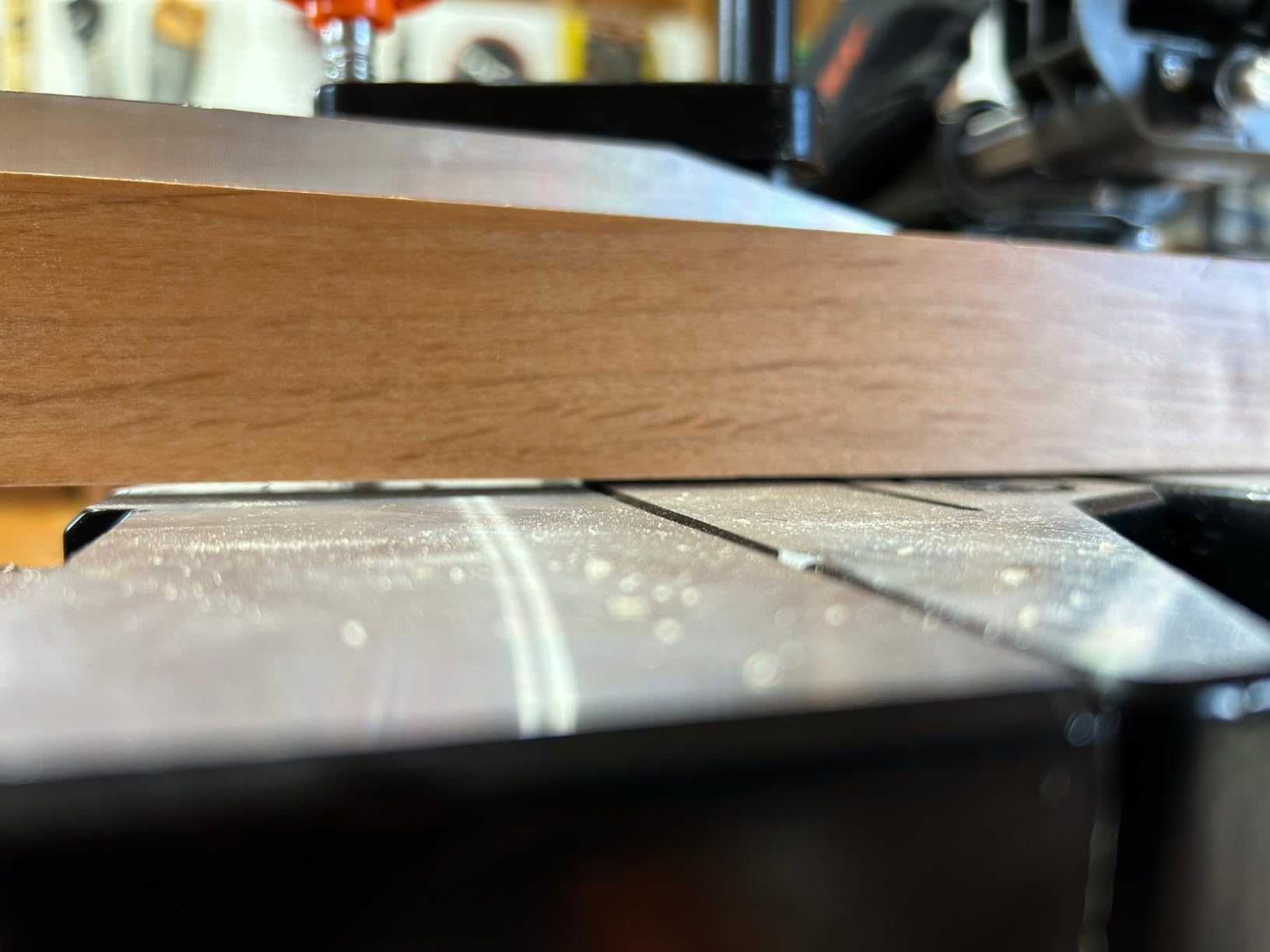
Multi-material capability covers wood, plastic and soft metal, which makes it a reasonable companion saw for a trim carpenter who also cuts PVC or composite trim on the same days. Two spare carbon brushes are in the box, and the speed selection lets you drop to the lower setting on thin plastic where a fast wheel is not helpful.
Customer service reports are unusually strong for a saw at this level, with multiple owners describing full replacements when something went wrong. That is real value even if you never use it.
Set it up before the first cut
The most common owner comment is that the saw arrives needing a squaring check. A 45 degree square test on scrap, then a 90 degree test against the fence, is a five minute job that determines whether the rest of your cuts are good. Do it in the room where the saw will live, not on a bench at a different height.
Also check the blade guard clears the full depth of cut. Owners mention the guard mechanism interfering with tall stock on this saw, and a crown profile held on its side is exactly the tall stock case to test before you rely on it.
Where it falls short
The manual is thin, so the alignment procedure is not well explained. If you are comfortable with a square and a feeler gauge you will be fine; if not, budget an hour with a manual from the same class of saw.
The 30 mm arbor is non-standard, so some aftermarket blades will not fit without an adapter. It is worth checking blade availability before you commit to this saw over a standard-arbor model. Bevel also stops at 45 degrees, so the same tall-profile caveat applies as with the other budget sliders.
10. Evolution R185SMS+ 7-1/4 in. Sliding Miter Saw – Best Compact Saw, Not a Crown Saw
Evolution Power Tools R185SMS+ Sliding Miter Saw with Multi-Material Cutting, 45 Degree Bevel, 50 Degree Miter, 210 mm Slide, Blade Included Cuts Wood Plastic Metal & More, 7-1/4″
7-1/4 in. 60T TCT blade
10A brushless
3700 RPM
Bevel 0-45 degrees
210mm slide
Pros
- Brushless motor with a three year warranty
- Multi-material blade for wood plastic and metal
- Compact size for a small shop or van
- Light and easy to reposition
- Cool cutting on metal
Cons
- Too small for crown molding
- 10 amp is the lowest power here
- 210mm slide limits crosscut capacity
We include this one for completeness, and the honest headline is that it will not cut crown molding. A 7-1/4 inch blade with a 210mm slide is sized for trim, casing, small shelf stock and multi-material work, not for tall profiles. Owner reviews say the same thing in plain terms: not suitable for crown molding because it is too small.
What it does well is the rest of a trim day. The 60 tooth TCT blade cuts wood, plastic and metal with minimal heat, and the brushless motor runs at 3700 rpm on 10 amps. Bevel is 0 to 45 degrees and miter goes to 50 degrees on both sides, with a three year warranty and a dust bag in the box.
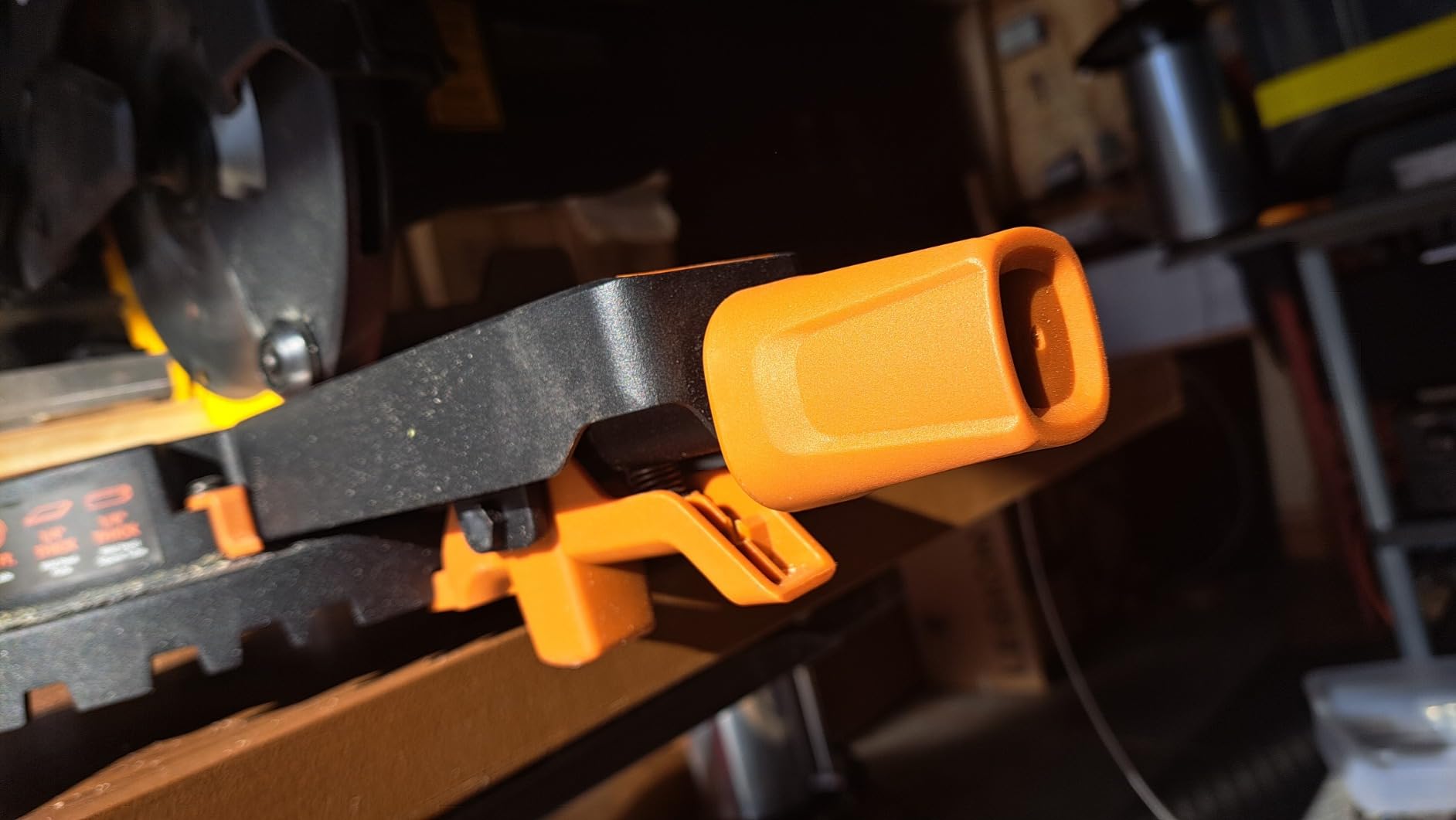
Compactness is the reason it is here rather than in the other nine. In a small shop or a van where a 12 inch saw will not fit, this machine handles picture frames, casings, skirting and small baseboard without taking up the space a full slider needs. Corded and cordless variants are available in this line, which is unusual in a class usually sold as a single corded model.
The published weight figure on the listing is clearly a data error rather than a real number, so treat any weight claim for this model with caution until you confirm it in person.
Where it earns its place
A secondary saw has real value for trim work. Casing, baseboard, window and door trim, and picture frame miters are all within a 7-1/4 inch blade and a 210mm slide, and having that on a bench in the shop means you are not carrying the big saw across town for a two-hour job.
For anyone living in a small space who wants to learn compound cuts, it is a low-stakes way to practise the miter and bevel sequence before buying a saw with real crown capacity.
Why it is last on a crown list
Capacity is the whole reason. There is no fence height, bevel range or detent that will make a 9 inch crown profile cut cleanly on a 7-1/4 inch blade, and forcing it is how people chip profiles and dull blades.
The 10 amp motor is also the lowest power here, which shows up on thick hardwood and on sustained crosscutting. If crown molding is your actual work, every other saw on this list is a better use of the money.
How to Cut Crown Molding: Flat vs Nested and the 31.6 Degree Setting
You can cut crown molding on a miter saw, and you can cut it two different ways. The nested cut stands the profile on its back edge in the saw at its spring angle, the way it sits on a wall, and lets the blade make a compound miter and bevel in one pass. The flat cut lays the profile on its back on the saw table and makes a single miter with no tilt at all. Nested is more forgiving and more common. Flat is faster in a production run and is what a lot of finish carpenters use for interior painted crown.
Neither method works on a saw with a single bevel unless you are willing to flip the workpiece between cuts, which is where the double bevel designs in this list pay off immediately. A single bevel saw can cut crown. A dual bevel saw lets you stand at the saw, set two angles, and cut both sides of the corner without picking the profile up.
Here is the nested sequence for a 52 degree spring angle profile, which is the most common interior and exterior crown sold in the US:
First, set the miter to roughly 33.9 degrees. Second, set the bevel to roughly 31.6 degrees. Third, stand the crown on its back edge with the back flat against the fence and the profiled face toward the blade, so the spring angle lines up with the tilt. Fourth, hold the top of the profile with a clamp so it cannot shift as the carriage moves. Fifth, cut slowly through, and check the joint on scrap before you commit a room to the settings.
Why those two numbers? They come out of the spring angle of the profile. A crown is not a square piece of wood: the angle between the flat back and the profiled face is the spring angle, and the compound cut has to reproduce that relationship on both axes so the two pieces meet at a clean 90 degree inside corner. For a 52 degree spring, the pair lands near 33.9 and 31.6. For a 45 degree spring profile, the familiar 45 and 45 does the same job. Manufacturers label these stops differently from one saw to the next, which is why the Bosch CM10GD and the other detented saws here are worth a look: a positive stop at each value means you are setting the angle by feel instead of reading a chart.
For the flat cut, leave the bevel at zero, lay the crown on its back on the table with the profiled face facing the fence, and set the miter to the flat-cut figure for your profile. That figure is not 45 degrees, and it is not the nested number either. It is lower, in the low thirties for a 52 degree spring profile, and the exact value comes from the profile specification. Shoot a test cut on a scrap offcut, check the corner with a combination square, and adjust the miter a degree at a time until the joint closes with no gap and no crush. A flat cut with a good miter is faster because the blade never has to tilt and the fence never has to be reset.
Two more decisions affect the result more than most people expect. The first is the blade: a 60 or 80 tooth blade for trim leaves a face that needs almost no sanding, while the 40 tooth blades that ship with some saws in this group are built for fast crosscutting and will tear on a profiled face. The second is the clamp. On a sliding saw the carriage moves the workpiece toward the blade, and an unclamped profile will creep at exactly the wrong moment. Owners across woodworking forums treat a proper clamp as non-negotiable for crown.
Maintenance matters here more than on a non-sliding saw because the slide is the part that carries accuracy. Clean dust out of the rails regularly, since packed dust is what makes a slide feel gritty and get pulled out of alignment. Check the fence against a square periodically, and if the fence stop is shifting, repeat cuts will drift with it. A monthly five minute check on a saw in daily use prevents most of the accuracy complaints we heard about.
What to Look for in a Sliding Miter Saw for Crown Work
Crown capacity is the number to check first, and there are two of them. Nested capacity is how tall a profile you can cut standing on its back edge, which is the normal method. Vertical capacity is how tall a profile you can cut held flat against the fence with the cut at 90 degrees. A 12 inch saw in this group ranges from 6-5/8 inches of crown nested on the DWS716 to 8 inches on the Makita LS1219L, and the DeWalt DWS780 sits at 7-1/2 inches nested with 6-3/4 inches of baseboard vertical.
Blade size is a proxy, not an answer. The Makita LS1019L is a 10 inch saw that nests 6-5/8 inches of crown, which is the same nested figure as the 12 inch DWS716. If you are choosing on weight and floor space, a 10 inch slider with a tall fence can do more crown work than a heavier 12 inch saw with a low one.
Ten inch versus twelve inch comes down to how you work. A 12 inch saw gives you roughly two more inches of crosscut capacity at 90 degrees, which is what framing, wide shelving and thick stock need. A 10 inch saw is easier to carry, cheaper, and in the case of the LS1019L and the Bosch CM10GD, plenty for 6 inch class crown. If your ceiling crown is 6 inches or smaller, a good 10 inch slider handles the whole job. If you are cutting tall profile or high ceilings, step up to 12 inches.
Single versus dual bevel is a workflow decision. A single bevel saw tilts only one way, so for a compound crown cut you make one side, then turn the workpiece over and make the other. It works and it is cheaper, but the flip is where mistakes enter, and on a big profile the flip is also awkward. Every saw in this list is a dual bevel, which is the strongest argument for this group over a cheaper single bevel slider.
Guide systems come in three flavors. A laser draws a thin line across the workpiece, which is crisp indoors and needs a battery. An LED shadow line, as on the DEWALT and SKIL models here, projects the shadow of the blade itself, needs no calibration, and stays visible in a bright or dusty room. A plain scale with no light is the old way and is still accurate. For crown, an LED shadow line is the best of the three because it shows the actual kerf rather than a predicted position.
Fence design is what actually holds the profile at the right height. Tall sliding fences, like the 4-1/4 inch fences on the Bosch CM10GD and the tall fences on the DEWALT models, are what make large nested cuts repeatable. A short fence is the reason a saw struggles with a tall profile even when its capacity rating says it should fit.
Motor speed and blade count matter more for hardwood than for trim. The saws here run from 2500 rpm on the Evolution R255SMS+ to 4800 rpm on the SKIL and Bosch. For molding, any of them will do, because molding is not a dense material. For solid hardwood crosscutting, the faster motors feel the difference. Blade tooth count is the reverse story: a higher tooth count is what you want for molding finishes, and a lower count is what you want for speed on framing stock.
Finally, plan the setup. Rear clearance is a real constraint, and rail saws need space behind them while glide systems like the Bosch can run flush to a wall. A stand with wide feet keeps the saw stable on uneven ground, which matters more for accuracy than most buyers expect. A shop vacuum on the dust port beats the included bag on molding work, because fine dust packs the rails and the fence adjustments and that is the number one cause of a saw that stops cutting square.
Frequently Asked Questions
What type of saw is best for cutting crown molding?
A sliding compound miter saw with a double bevel is the best type for crown molding. The slide lets the blade reach past its own diameter and the double bevel means you cut both sides of a corner without flipping the workpiece. Look for a tall sliding fence and at least 6-5/8 inches of nested crown capacity.
Why 31.6 degrees for crown molding?
The 31.6 degree setting is one half of a compound cut that matches the spring angle of the profile. A 52 degree spring angle crown nests with the miter near 33.9 degrees and the bevel near 31.6 degrees, and a 45 degree spring profile uses 45 and 45. Check the profile specification and shoot a test cut on scrap before cutting a full room.
Should I get a 10 or 12 inch sliding miter saw?
A 12 inch saw gives about two more inches of crosscut capacity at 90 degrees, which matters for framing and wide stock. A 10 inch saw is lighter and the Makita LS1019L still nests 6-5/8 inches of crown. If your ceiling crown is 6 inch class or smaller, a 10 inch slider handles the whole job.
Can I cut crown molding flat on a miter saw?
Yes. Lay the crown on its back on the saw table with the profiled face against the fence, leave the bevel at zero and set the miter to the flat-cut figure for your profile, which is lower than the nested number. The flat cut is faster in production because the blade never tilts.
Do I need a dual bevel saw for crown molding?
You do not need one, but it saves real time. A single bevel saw makes one side, then you flip the workpiece over to make the other, and that flip is where mistakes and slowdowns happen. A double bevel sets both angles and cuts both sides standing at the saw.
What is the difference between a sliding and a non-sliding miter saw?
A sliding saw has a carriage on rails or glide arms so the cut travels wider than the blade diameter, which gives crosscut capacity and larger nested crown. A non-sliding saw has a fixed head, so it is lighter and simpler but limited to roughly 12 inch crosscuts. The DEWALT DWS716 nests 6-5/8 inches of crown without any slide.
Which Sliding Miter Saw for Crown Molding Should You Buy?
The DEWALT DWS780 is our pick for the best sliding miter saws for crown molding in 2026. It nests 7-1/2 inches of crown, cuts 6-3/4 inches of baseboard vertically, holds 2×14 at 90 degrees and needs no calibration for its cutline, which is the combination that decides rooms full of molding. If you need it lighter, the SKIL MS6305-00 gives you a double bevel and an LED shadow line under 40 pounds. If you are working in a tight room, the Bosch CM10GD glides flush to a wall and detents at both crown angles.
Check your profile height against the nested capacity before you buy, upgrade the blade to 60 or 80 teeth on anything that ships with 40, and keep the rails and fence clean so the saw still cuts square in year three. Then take the saw to the job, clamp the profile, and start with a test cut.