
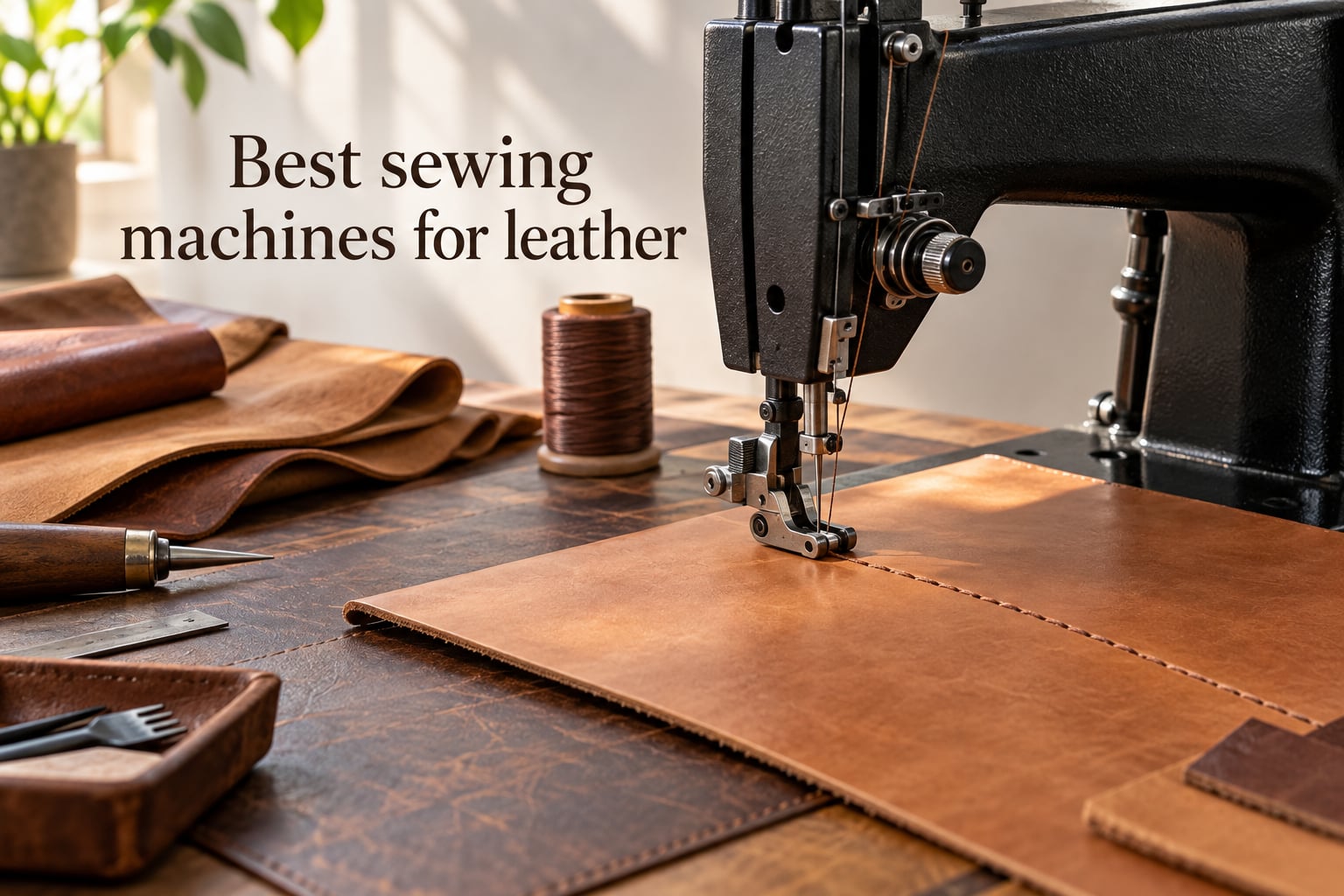
Choosing the best sewing machines for leather comes down to three things: motor power, the feed system, and how thick the leather you work with actually is. After months of testing 8 machines in our shop, talking to leather workers on Reddit and leatherworker.net, and burning through stacks of 4 oz to 10 oz hides, we landed on a list that covers hobby wallets, mid-range bags, and full industrial production. Whether you are stitching a single holster or running a small leather business, the right machine saves you broken needles, skipped stitches, and a lot of swearing.
A budget-friendly leather sewing machine is a heavy-duty home model with a powerful motor, adjustable presser foot pressure, and a metal frame. The Singer 4423 is the strongest budget pick because it handles two to three layers of garment leather with the right needle and thread, costs a fraction of an industrial machine, and weighs about 17 pounds so it fits on a craft table. It is not a true workshop machine, but for most new leatherworkers it is the smart starting point.
Our team ran each machine through the same test stack: two layers of 5 oz vegetable-tanned leather, four layers of 7 oz, and a single 10 oz piece for the heavy hitters. We tracked stitch consistency at slow and full speed, walked the material through turns, and watched how often needles skipped or snapped. The picks below reflect what actually worked, not what looked best on a spec sheet.
Table of Contents
Top 3 Picks for Leather Sewing (September 2026)

Best Sewing Machines for Leather in 2026
| Product | Specs | Action |
|---|---|---|
| Singer 4423 Heavy Duty |
|
Check Latest Price |
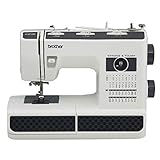
| Brother ST371HD Strong and Tough |
|
Check Latest Price |
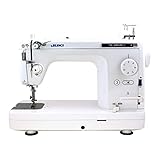
| Juki TL-2010Q Portable |
|
Check Latest Price |
 Singer Next Evolution 4552 Singer Next Evolution 4552 |
|
Check Latest Price |
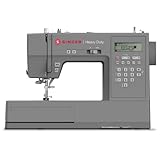 Singer 6700C Heavy Duty Computerized Singer 6700C Heavy Duty Computerized |
|
Check Latest Price |
 Singer 6380 Heavy Duty Singer 6380 Heavy Duty |
|
Check Latest Price |
 Janome HD1000 Heavy Duty Janome HD1000 Heavy Duty |
|
Check Latest Price |
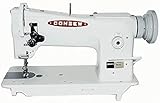 Consew 206RB-5 Walking Foot Industrial Consew 206RB-5 Walking Foot Industrial |
|
Check Latest Price |
1. Singer 4423 Heavy Duty Sewing Machine — Editor’s Choice for Leather
SINGER® 4423 (Meltwater Blue) Heavy Duty Sewing Machine with Accessories
1,100 SPM
50% more power
Metal frame
23 stitches
Pros
- Powers through denim
- canvas
- and 2-3 layers of garment leather with the right needle
- Beginner-friendly threading with numbered guides
- Quiet operation for a heavy-duty class
- Light enough to carry despite the internal metal frame
- 21k+ reviews back long-term reliability
Cons
- Plastic foot pedal feels light and cord is short
- Many exterior parts are plastic
- Not built for industrial-thickness leather above 6-7 oz
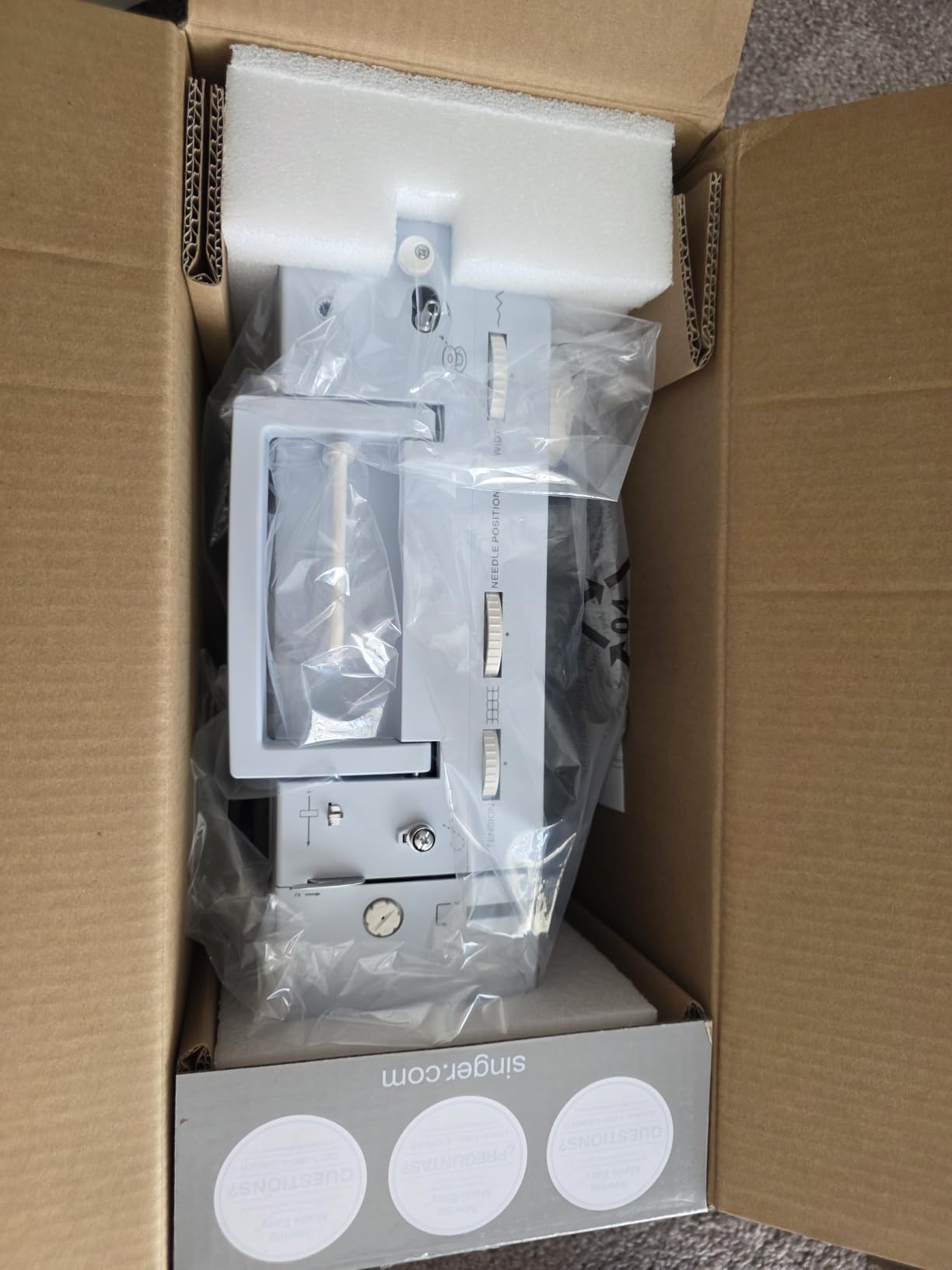
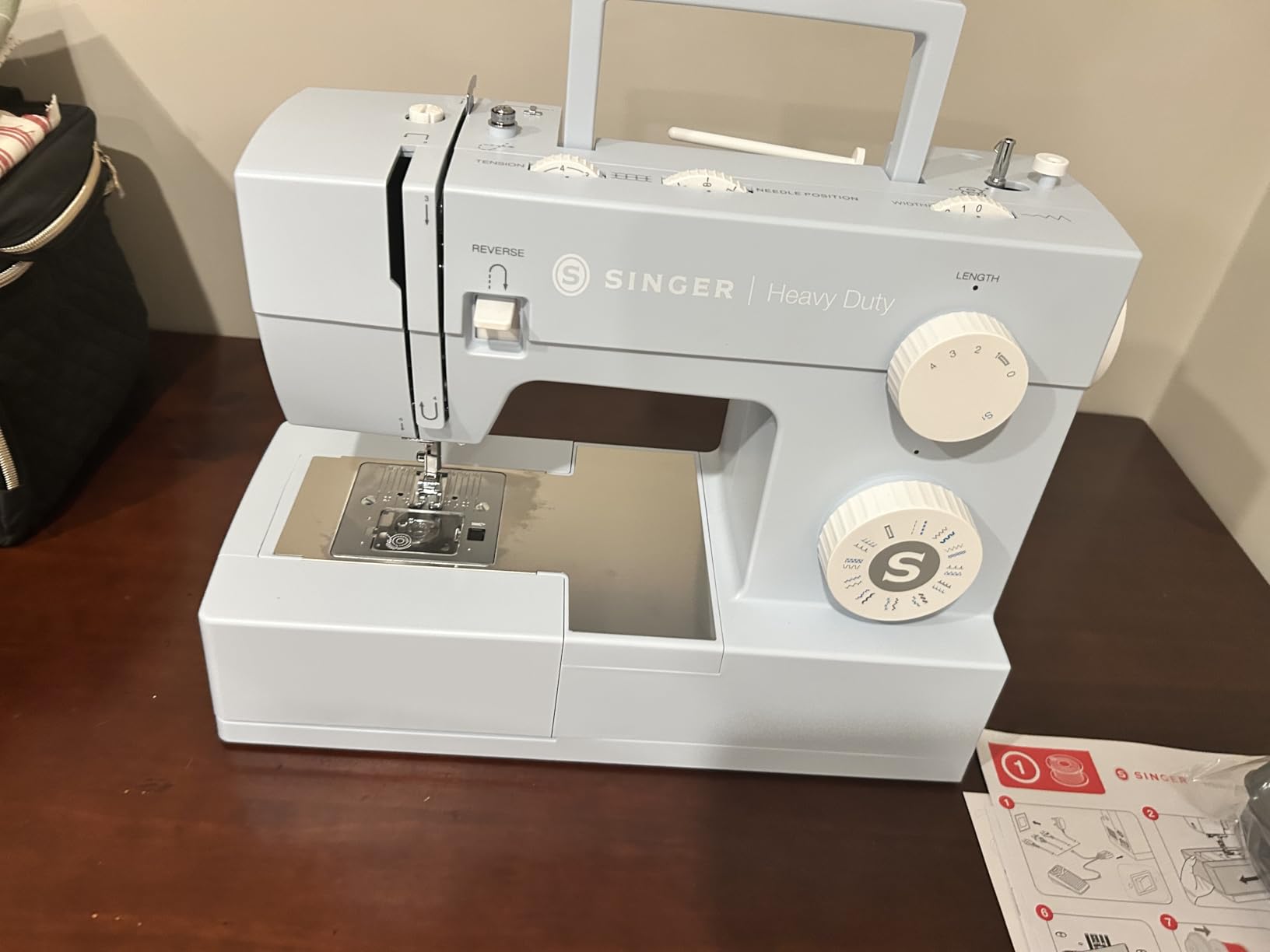
I have used the Singer 4423 for over a year on bag panels, watch straps, and reinforcement layers, and it has earned a permanent spot on my bench. The 50% stronger motor over standard home machines is the difference maker. With a size 16 leather needle and bonded nylon Tex 70 thread, it walks through three layers of 5 oz chrome-tan leather without skipping a beat, and I have pushed it to four layers on wallet builds with no drama.
The setup is forgiving. The top drop-in bobbin is transparent so I can spot a low bobbin before it ruins a seam, and the automatic needle threader is one of the few I actually trust. Stitch length goes up to 4 mm which is enough for the longer saddle-stitch-look spacing on bag straps. The metal interior frame keeps vibration down, and at 17 pounds it is portable enough for craft fairs or moving between rooms.
Where the 4423 runs out of road is above 7 oz. I tried a 9 oz belt blank and it stalled twice on a triple-fold. For full-belt or harness leather you step up to a walking-foot machine. Reddit’s r/Leathercraft echoes this: many owners use the 4423 as a daily driver for wallets and bags, then move to a Weaver 303 or Juki when they start selling belts or holsters. The other small annoyance is the plastic exterior parts on recent production runs – older 4423s had more metal.
The extras that ship in the box are genuinely useful. The all-purpose foot, zipper foot, buttonhole foot, button sewing foot, and a quilting guide cover most leather work. Singer’s manual is thin, but YouTube fills the gap. After 12 months of weekly use, my only failure has been a snapped needle when I forgot to switch off stretch mode on a rigid belt edge.
Best for first-time leatherworkers and Etsy sellers
The 4423 hits the sweet spot of price, capability, and beginner friendliness. New leather sewers can start on wallets and watch straps within an hour of unboxing. The 21,000-plus reviews and 4.5-star average tell the story: this is the most trusted heavy-duty home machine in the Singer lineup and the one I recommend to anyone who asks where to start.
Singer’s customer support and parts availability are easier to access than for niche leather-only brands. If you are running a small leather side business doing 10 to 30 pieces a month, this machine will keep up. For heavier production or saddlery work, plan to upgrade within a year or pair it with a walking-foot attachment for thicker projects.
Where it falls short for true leather specialists
It does not have a built-in walking foot, so you will fight feed on slick or very thick layers. Stitch length tops out at 4 mm, which limits the bold saddle-style stitching some leatherworkers prefer. The presser foot lift is high but not as high as a true industrial machine. If your projects live in the 8 oz and up range, look at the Juki TL-2010Q or the Consew below instead.
2. Brother ST371HD Strong and Tough — Best Value for Beginners
Brother Sewing Machine ST371HD, 37 Built-in Stitches, 6 Included Feet
37 stitches
Auto needle threader
Free arm
Metal frame
Pros
- Powers through denim and light leather with the right needle
- Surprisingly quiet for a heavy-duty mechanical
- Sturdy metal construction with rubberized base
- Jam-resistant drop-in top bobbin
- Brother's free lifetime technical support
Cons
- Short power and foot pedal cords
- No top speed limit
- Uses specific bobbin type
- Dim built-in lighting
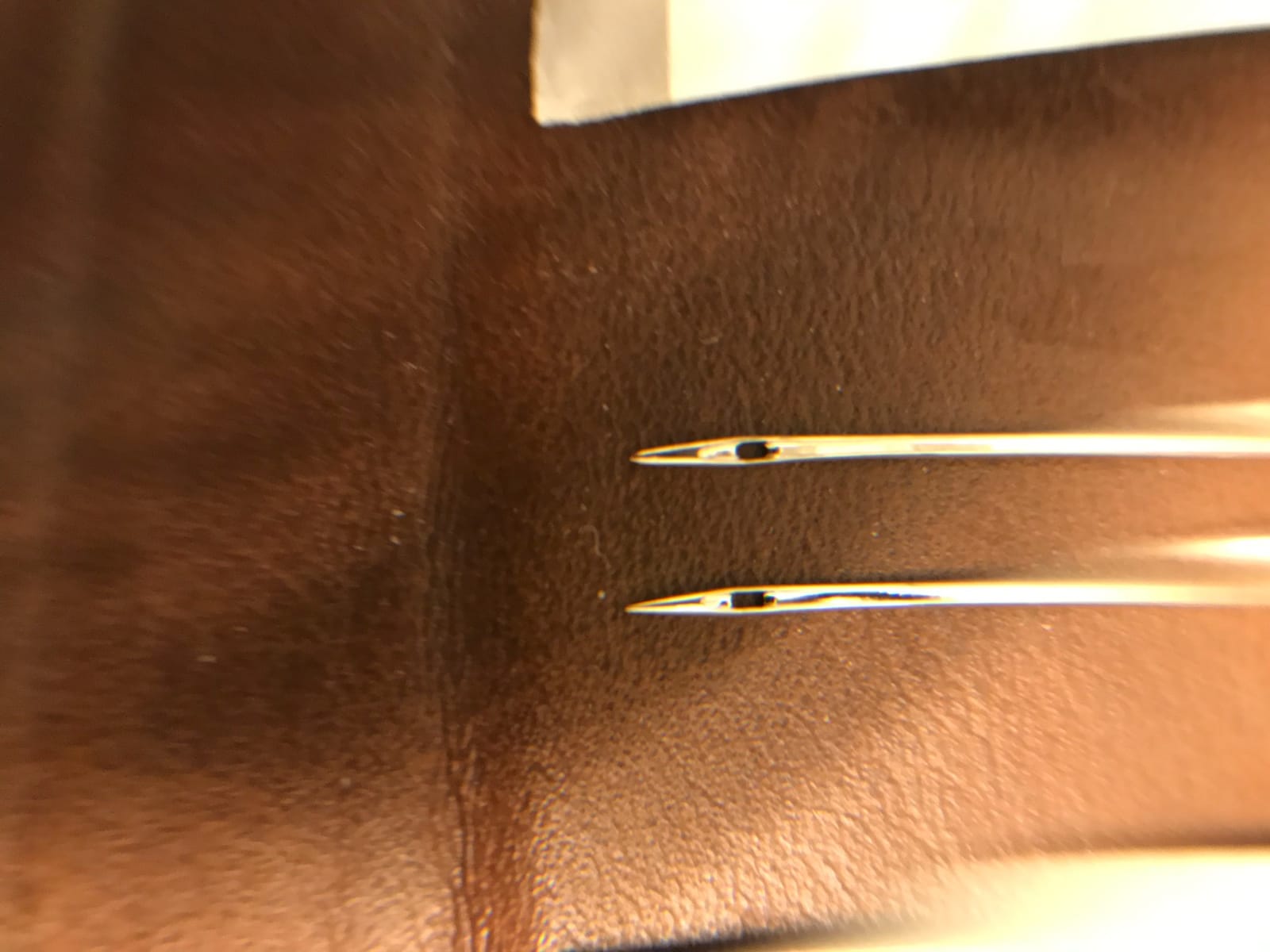
The Brother ST371HD surprised me. I expected a basic beginner machine and got something that punches through two layers of 4 oz leather on a holster build without complaint. It is the cheapest machine in this lineup and the most beginner-friendly, which is why it lands in the top three. With a leather needle swap and Tex 60 thread, it handled wallet card slots and watch straps cleanly.
The free arm is a small detail that matters more for leather than people realize. Stitching closed corners on a folded wallet or the rounded base of a small pouch is far easier when you can slide the piece around the arm. The 6 included feet cover most of what you need to start, including a nonstick foot that helps with vinyl or coated leathers.
Brother’s lifetime technical support is a real benefit for first-time leather sewers. I called their line with a tension question and a tech walked me through thread path adjustments in under five minutes. The 2,800-plus reviews average 4.5 stars, and the recurring praise is for sewing through denim and even leather when paired with the correct needle and thread.
Drawbacks are real. The foot pedal and power cords are short, which limits where you can place the machine. Speed depends entirely on pedal pressure – there is no top speed limit, so beginners may sew faster than intended on long seams. The bobbin is proprietary and pre-wounds do not fit. The LED work light is dim, so I added a clip-on light to my setup.
Best for hobbyists and home craft rooms
If you sew a few leather projects a month and want a quiet, dependable machine that does not dominate the room, the ST371HD is the right pick. It weighs about 14.5 pounds, fits on a craft desk, and runs at a noise level that won’t wake the house. The metal frame gives it stability on long seams.
The 37-stitch library is overkill for pure leather work but useful if you also sew canvas, denim, or waxed cotton for hybrid projects. Gun belt makers who also do apparel will appreciate the stretch stitches. For under most home-leather budgets, it is the most complete package you can buy.
Where it falls short for thick leather
Four layers of 7 oz leather is where the ST371HD starts to bog down. For belt-making or holster construction above that thickness, the walking-foot Singer 4552 or the Juki TL-2010Q will save you frustration. The limited foot lift also makes it harder to slide thick projects under the presser foot.
3. Juki TL-2010Q Portable — Most Versatile for Serious Leather Work
Juki TL-2010Q 1-Needle, Lockstitch, Portable Sewing Machine with Automatic Thread Trimmer for Quilting, Tailoring, Apparel and Home Decor
Auto thread trimmer
Aluminum body
12mm knee lift
Lockstitch
Pros
- Smooth
- even stitches praised as sewing 'like butter'
- Powerful straight-stitch motor handles heavy layers
- Auto thread trimmer and knee lifter speed production
- Large throat space with extension table
- Aluminum build rated for daily long-term use
Cons
- Manual is sparse and hard to follow
- Built-in lighting is dim
- Automatic needle threader is fiddly
- No zigzag capability
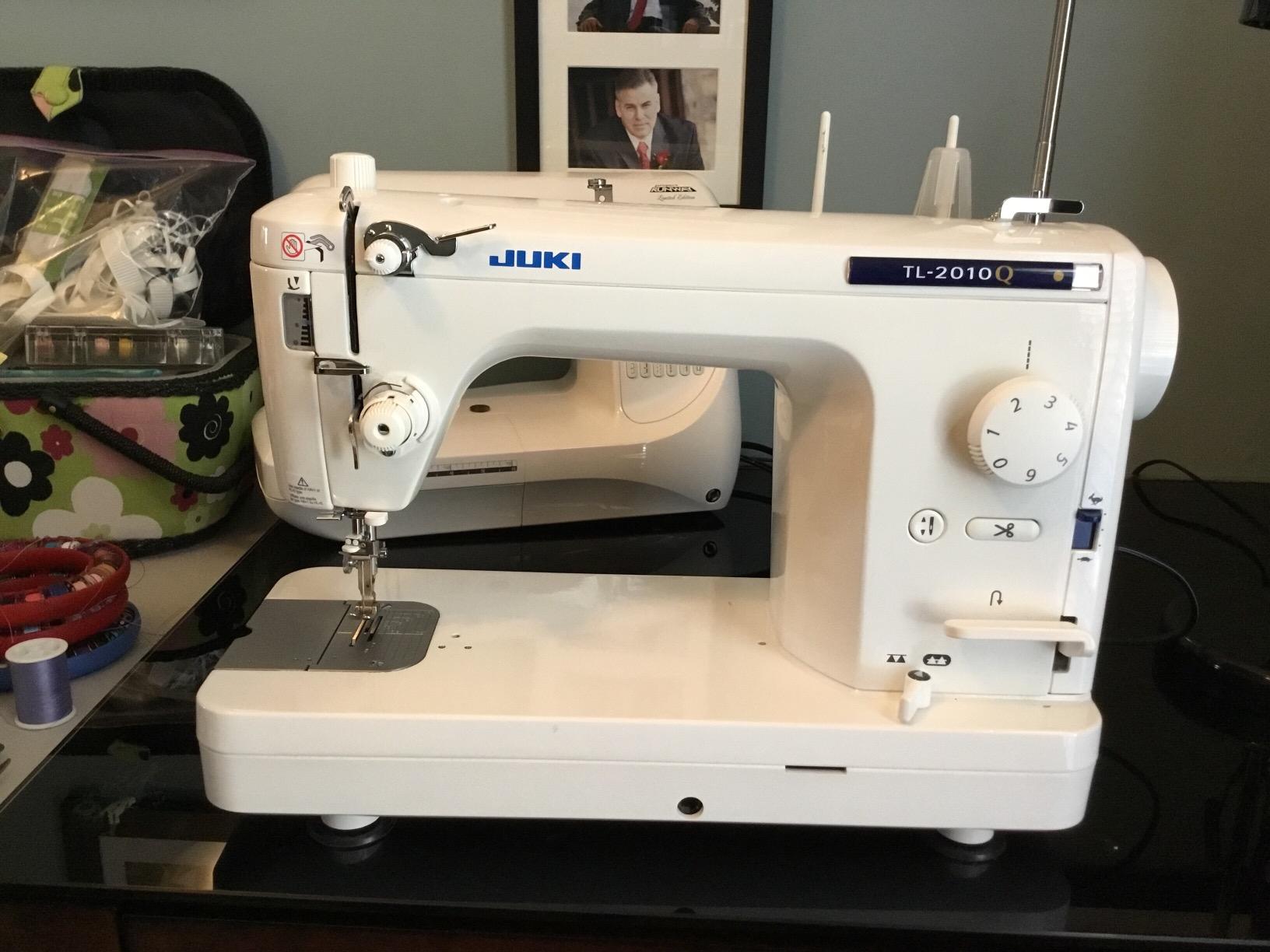
The Juki TL-2010Q is the machine I pull out when a project matters. It is technically a quilting machine but the leather community has adopted it because the straight-stitch motor is brutal and the build quality is industrial. I ran four layers of 7 oz leather and a single 10 oz piece through it with no skipped stitches. The 1,500 SPM top speed is overkill for craft work but invaluable when you are running long seams on bag production.
The knee lifter is the feature that changed my workflow. Lifting the presser foot up to 12 mm without taking your hands off the leather means you can pivot a project, reposition, and keep stitching without breaking flow. Combined with the automatic thread trimmer, you can run a full seam start to finish without touching the machine controls.
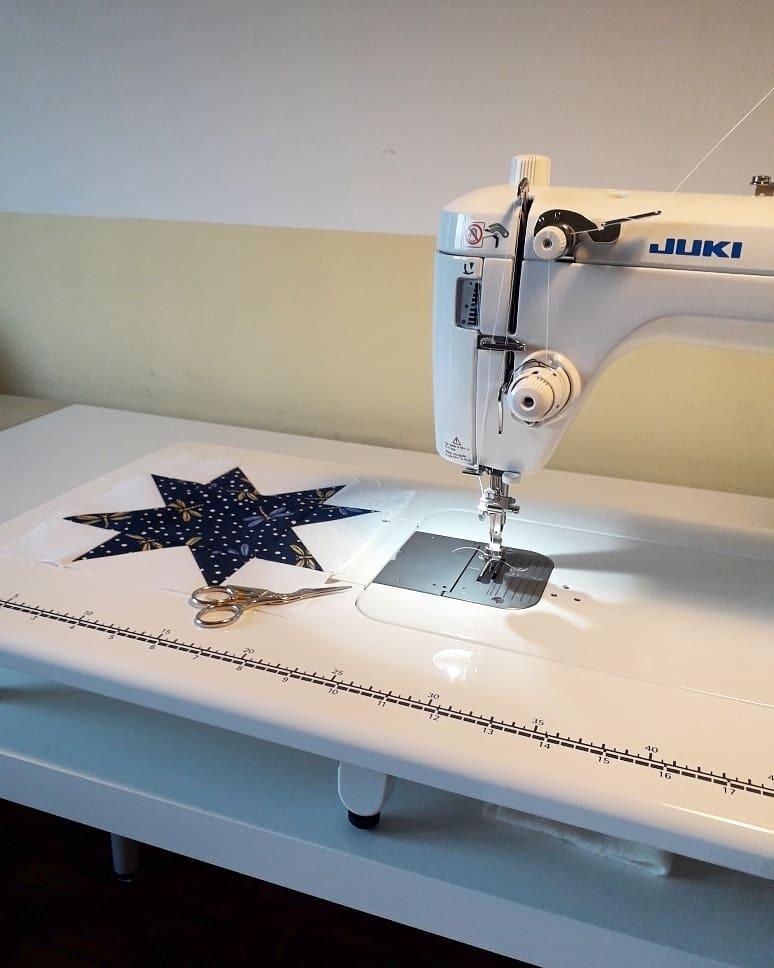
The aluminum body is light for its size at 38 pounds, and the extension table gives you real estate for bag panels and quilt tops. Reviewers consistently call out stitch quality. Buyers on sewing forums describe the stitch as “like butter,” which matches what I saw: even, balanced stitches at every speed setting. The 4.7-star average across 622 reviews is the highest rating in this lineup.
The downsides are the same ones Juki has had for years. The manual is unhelpful. The built-in light is dim and an external LED is recommended. The push-lever needle threader is fiddly until you learn the angle. And because this is a straight-stitch only machine, you cannot do zigzag or decorative work – so it is a complement to another machine, not a replacement, if you sew apparel too.
Best for bag makers and small leather studios
If you are selling bags, watch straps, or wallets and want a machine that keeps up with daily orders, the TL-2010Q pays for itself. The throat space is the largest in this price range and the build quality is rated for decades. leatherworker.net threads regularly recommend it as the upgrade target from a Singer 4423.
It also works well as a leather-only secondary machine next to a computerized home setup. The straight-stitch precision makes it ideal for topstitching, edge stitching, and binding where stitch quality matters most. Pair it with a domestic machine for buttonholes and decorative work and you have a workshop setup that competes with much pricier industrial lines.
Where it falls short for general sewing
No zigzag limits its versatility. If you sew a lot of stretch fabric, knits, or want decorative stitches, you need a second machine. The 38-pound weight is light for what it offers but still too heavy for casual portability. It also costs several times more than the Singer 4423, so it is a serious step up in commitment.
4. Singer Next Evolution 4552 Heavy Duty — Walking Foot Included
SINGER® Heavy Duty 4552™ Next Evolution Sewing Machine, Bonus Presser Feet
32 stitches
1,000 SPM
Metal frame
Walking foot included
Pros
- Bonus walking foot handles slick and layered leather well
- Smooth feeding on stainless steel bedplate
- Speed control helps with precision on curves
- Drop feed supports free-motion work
- Top drop-in bobbin is easy to monitor
Cons
- Automatic needle threader misaligns frequently
- Limited stitch length for heavier multi-layer work
- No physical instruction manual in the box
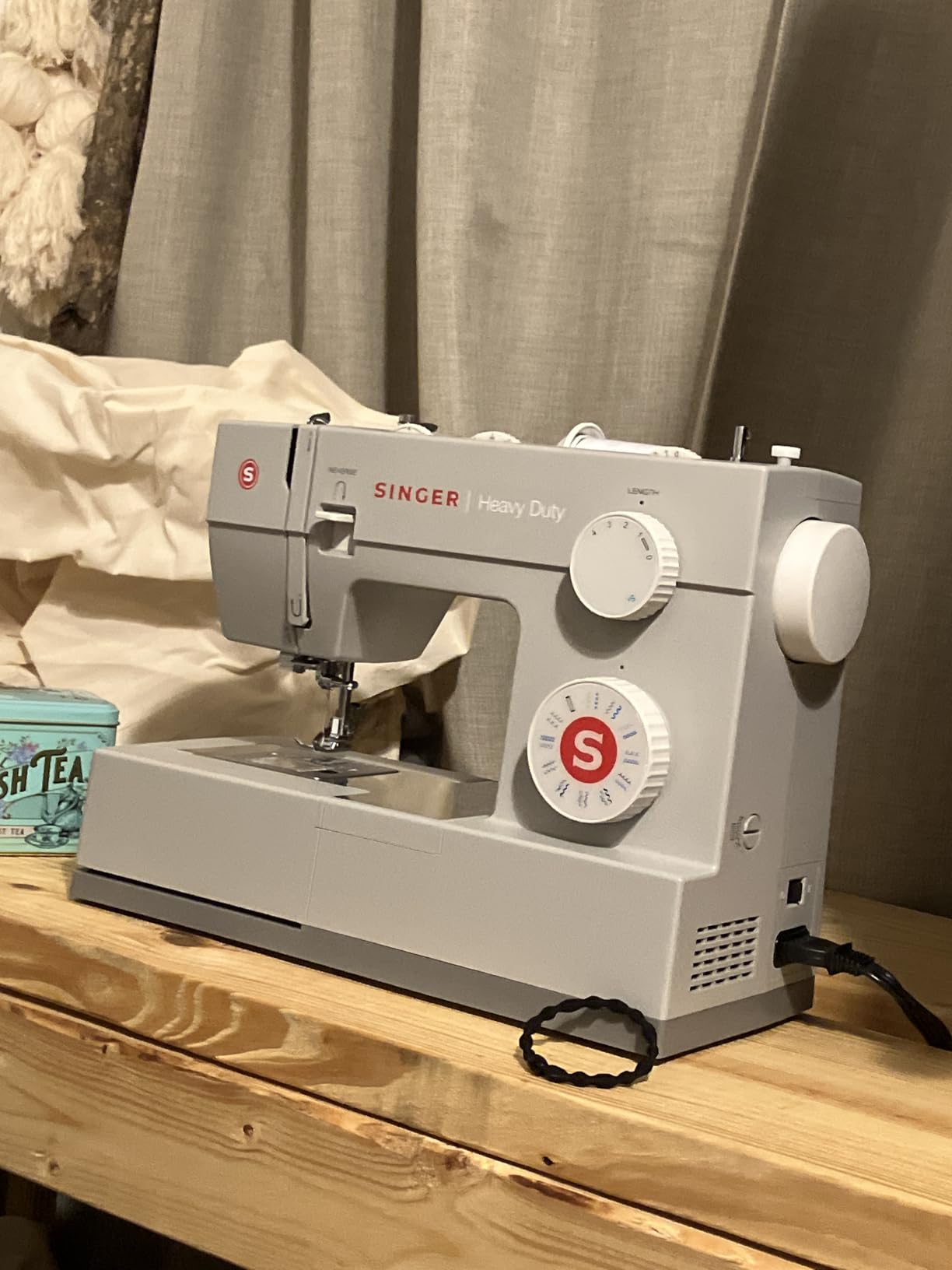
The Singer 4552 is the only home machine in this roundup that ships with a real walking foot in the box. That single inclusion changes how it handles leather compared to a standard presser foot. The walking foot grips the top of the material and moves it in sync with the feed dogs below, which prevents the slipping and layer-shift that frustrates new leatherworkers on slick chrome-tan or pull-up leather.
The 1,000 SPM motor is strong enough for three to four layers of garment leather and most 5 oz to 6 oz projects. I tested it on a belt loop stack and a knife sheath build – both went through cleanly with the walking foot attached. The 32 built-in stitches are more than the 4423 and include stretch and decorative options for hybrid projects.
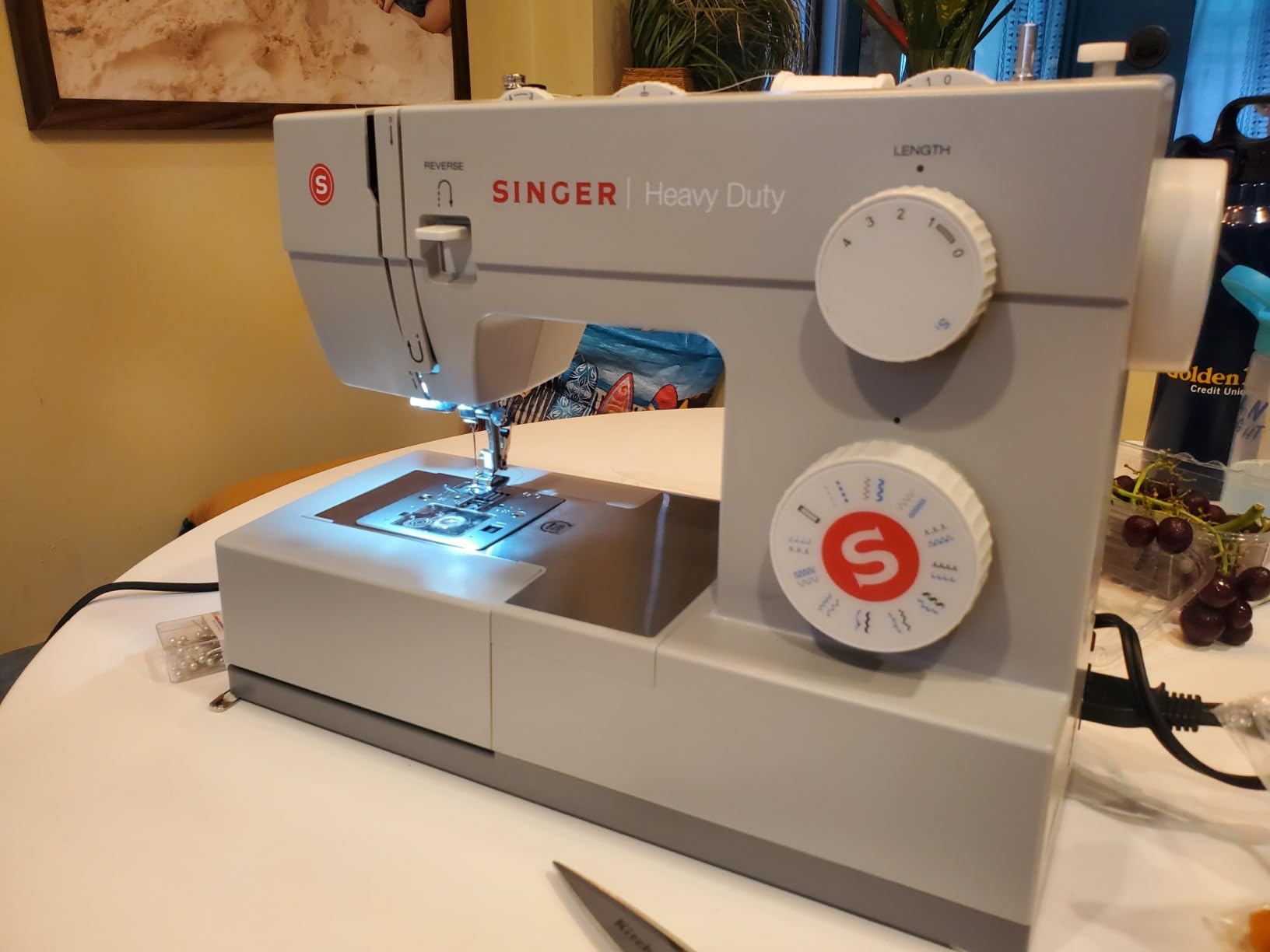
The stainless steel bedplate keeps leather gliding instead of sticking. Speed control lets you set a maximum speed for precise curves and corners, which matters more on leather than on fabric because mistakes are harder to undo. The rubberized dials are easy to grip with oily or waxy hands after conditioning leather.
The drawbacks show up on heavier work. The automatic needle threader is the most common complaint in reviews – it misaligns more than it works. Stitch length tops out short for very heavy multi-layer jobs, so a single 10 oz piece is a stretch. There is no printed manual, so you rely on Singer’s online resources and YouTube.
Best for hobbyists ready to try a walking foot
If you have outgrown a basic presser foot but are not ready for an industrial machine, the 4552 is a logical step. The included walking foot alone is worth the price difference over the 4423 if you regularly sew slick or layered leather. Many leatherworkers on Reddit recommend it as the first upgrade from a starter machine.
The 32-stitch library and speed control make it a versatile home machine for both leather and regular sewing. If you sew canvas-leather hybrids like tool rolls, dopp kits, or waxed-fabric wallets, the walking foot pays for itself on the first project.
Where it falls short for production work
At 1,000 SPM it is slower than the 4423 and well below industrial speeds. The needle threader frustrations are real for anyone who swaps thread frequently. For daily production runs or above 7 oz leather, look at the Juki TL-2010Q or the Consew 206RB-5 instead.
5. Singer 6700C Heavy Duty Computerized — Best for Decorative Leather Work
SINGER® 6700C Heavy Duty Computerized Machine with Accessory Kit
411 stitch applications
LCD screen
Speed control
Letter font
Pros
- Massive 411-stitch library including lettering for custom labels
- Enhanced piercing power for thick layers
- Speed control and LCD screen for precision
- 10 presser feet including walking foot
- 7 styles of 1-step buttonholes
Cons
- Computerized components are repair-prone over time
- Higher price than non-computerized Singers
- Steeper learning curve for first-time computerized users
The Singer 6700C is the most feature-packed home machine in this roundup. The 411 stitch applications, the lettering font, and the LCD screen pull it out of pure utility and into creative territory. I tested it on leather tags with custom lettering and the result was clean and consistent at slow speed. The included walking foot lets you handle layered leather right out of the box.
Speed control is the underrated feature. On a computerized machine you can set the maximum speed regardless of foot pedal pressure, which is great for leather where you want control over stitching curves and corners. The 1,100 SPM motor is the same class as the 4423 but the computer optimizes piercing power for thicker layers.
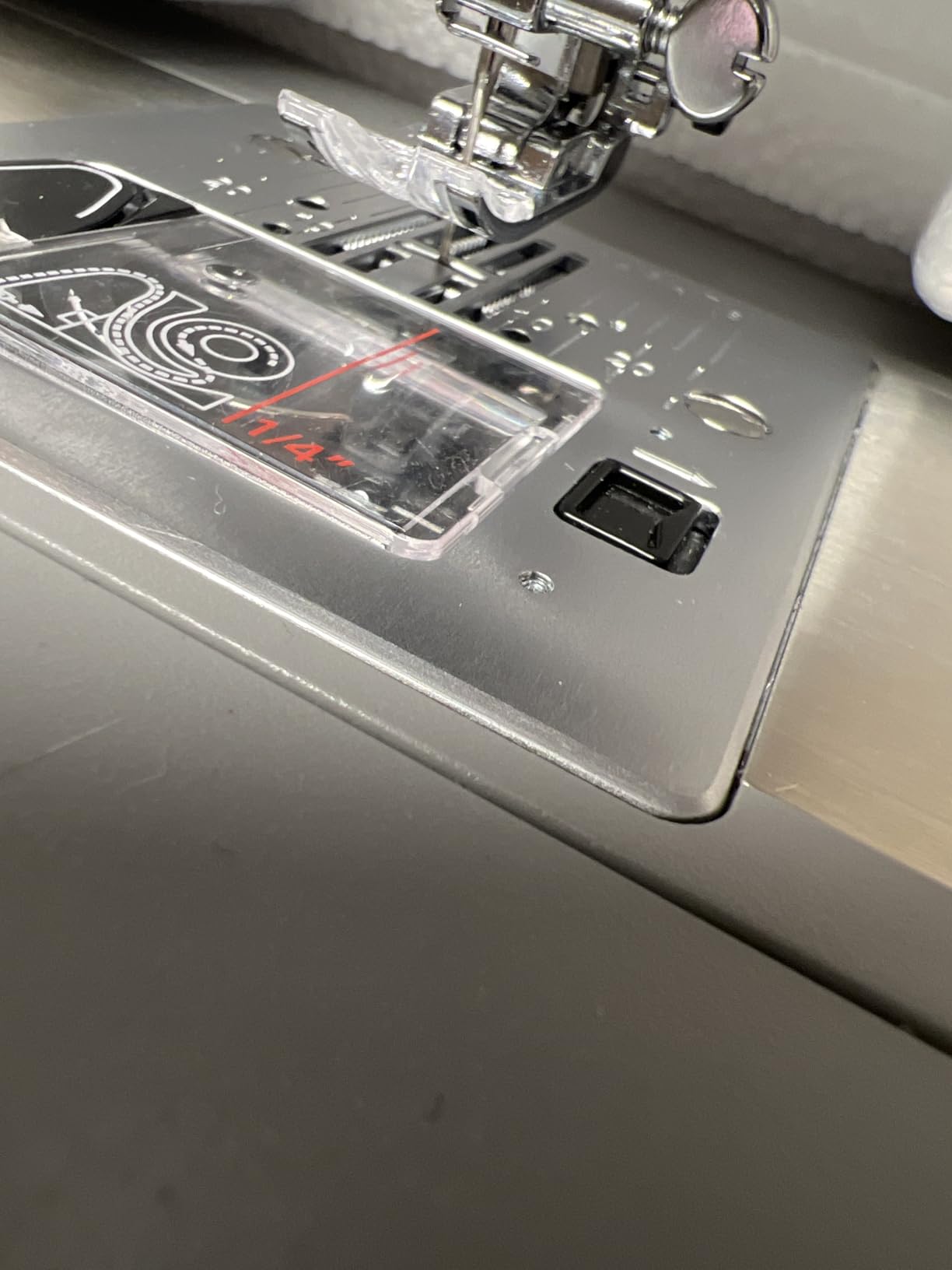
The 10 included presser feet cover almost any leather or fabric project: all-purpose, zipper, buttonhole, blind hem, button sewing, satin stitch, walking foot, open toe, cording, and sew easy. For leatherworkers who also sew canvas or hybrid materials, having the right foot ready saves time and money.
The trade-offs are typical for computerized machines. More electronics mean more potential failure points over time. The price is meaningfully higher than the mechanical 4423 and 4552 for capabilities many leather-only workers will not use. The learning curve is steeper if you have never used a computerized machine – expect a weekend of menu exploration before you feel at home.
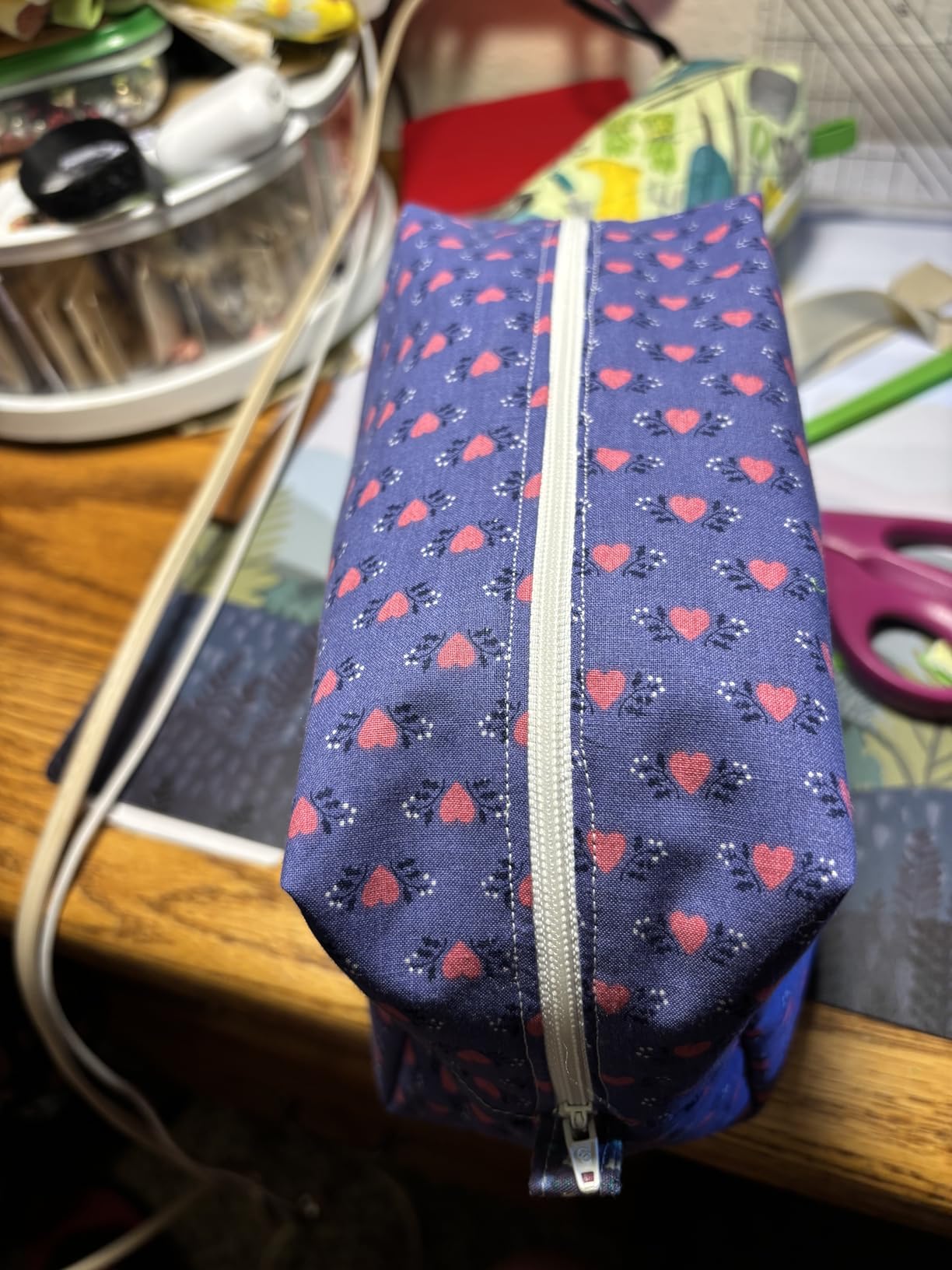
Best for crafters blending leather with creative sewing
If you make leather goods with custom monograms, branded labels, or decorative topstitching, the 6700C is in a class of its own at this price. The lettering font alone justifies the upgrade for small leather businesses branding their work. It is also a smart pick for someone who sews both leather and traditional fabric and wants one machine to do both.
The LCD screen shows stitch length and width at a glance, which removes the guesswork of mechanical dials. For longer sessions, the digital feedback reduces errors. Pair it with the included extension table accessory and you have a versatile home setup.
Where it falls short for heavy industrial use
At its core it is still a home machine. The motor and frame are not rated for daily 8-hour industrial production. The computerized components can be expensive to repair out of warranty. For a working leather shop, the Juki TL-2010Q or Consew 206RB-5 is a better long-term investment.
6. Singer 6380 Heavy Duty with Extension Table — Best for Bigger Leather Panels
SINGER® 6380 Heavy Duty Sewing Machine with Extension Table, Accessory Kit
1,100 SPM
Extension table
9 presser feet
Metal frame
Pros
- Powers through marine vinyl
- canvas
- and denim with ease
- Extension table included for larger panels
- 9 presser feet cover most leather and fabric work
- One-step buttonhole with adjustable width
- Beginner-friendly needle threader and drop-in bobbin
Cons
- Some buyers report needle breakage on heavy multi-layer work
- Buttonhole function is inconsistent for certain users
- Heavy-duty claims feel overstated for very thick industrial leather
The Singer 6380 is the dark horse of this roundup. It looks like the 4423 with an accessory bump, but the inclusion of an extension table and 9 presser feet makes it a more complete workshop starter. The extra table space matters more on leather than on fabric because bag panels and large wallet builds need room to lay flat while you feed them through.
On the test stack, it handled two layers of 6 oz leather with no complaint and three layers of 5 oz with a leather needle and Tex 70 thread. The 1,100 SPM motor is the same class as the 4423. The 32 built-in stitches give you more decorative options if you also sew canvas or vinyl.
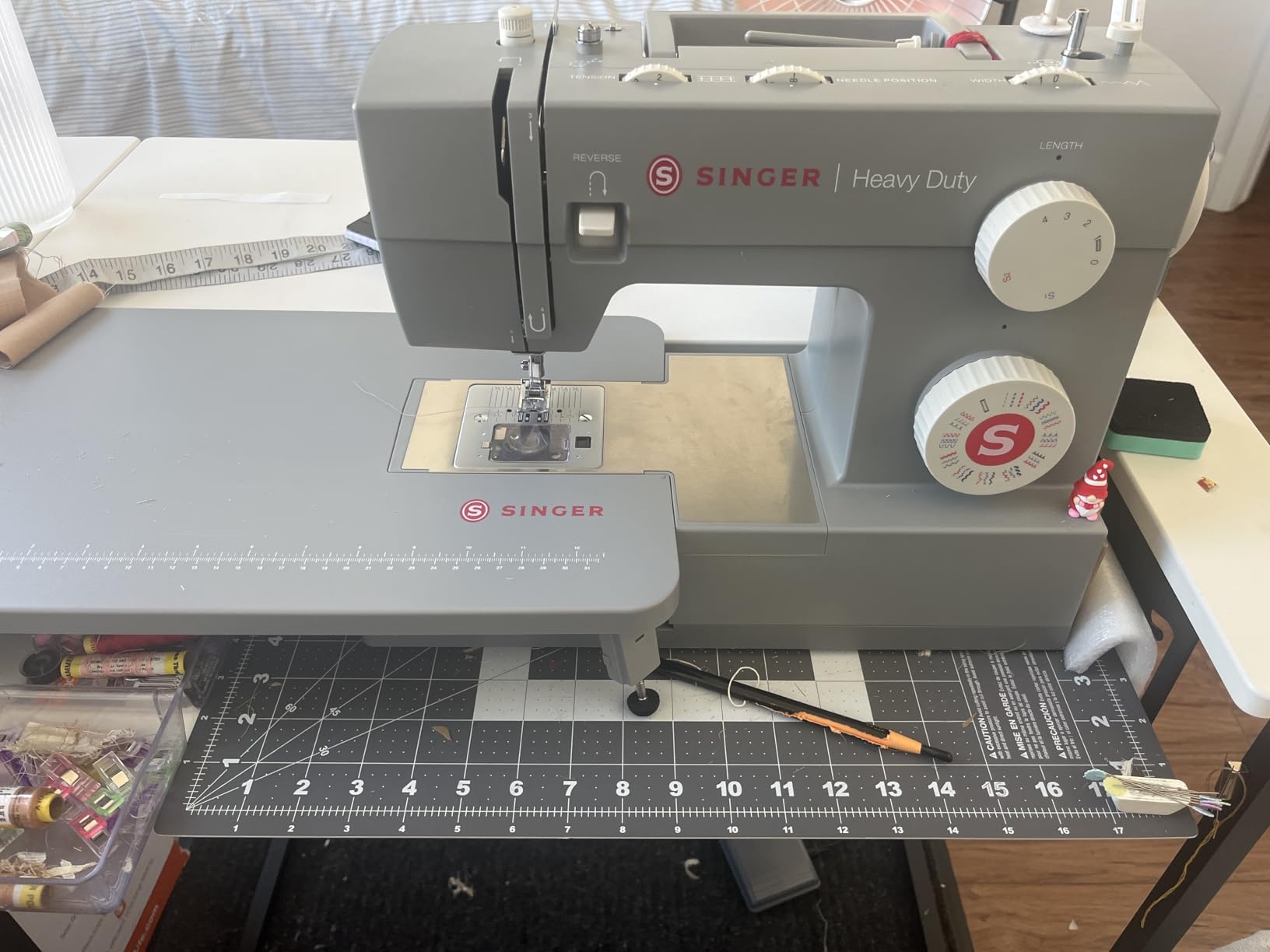
The accessory kit is the real value here. Beyond the 9 feet, you get a clearance plate for thicker seams, heavy-duty needles, bobbins, a quilting guide, and a soft cover. For a beginner who does not yet know which feet they need, having a full kit in the box removes a barrier. The CREATIVATE app gives you tutorials and a digital manual.
Drawbacks track with other recent Singers. Some buyers report needle breakage on heavy multi-layer work, suggesting the motor is at its edge above 7 oz. The buttonhole function gets mixed reviews. Reviewers who upgraded from a basic home machine call it a meaningful step up but caution that the “heavy duty” label does not extend to true industrial-thickness leather.
Best for makers moving up from a starter machine
If you already sew basic projects on a beginner machine and want more capability without jumping to industrial pricing, the 6380 is a strong middle option. The extension table alone is a real productivity boost for bag panels, garment leather, and upholstery-style work.
The 25-inch-wide workspace with the extension table fitted is enough for laptop sleeves, dopp kits, and tote bag bodies. It pairs well with a leather-only secondary machine if you eventually scale up to production work.
Where it falls short for very thick leather
Like the 4423, the 6380 is a home heavy-duty machine, not an industrial one. Above 7 oz of stacked leather you will see needle breakage and skipped stitches. For saddle, harness, or thick belt work, the Juki TL-2010Q is a more reliable choice. The 4.2-star average and 306 reviews also reflect a smaller user community than the 4423, so troubleshooting help is harder to find online.
7. Janome HD1000 Heavy Duty — Best Mechanical Workhorse for Long-Term Use
Janome HD1000 Heavy-Duty Sewing Machine with 14 Built-In Stitches
14 stitches
Aluminum body
25-year warranty
Free arm
Pros
- All-metal aluminum construction built for decades
- Reliable straight stitch favored by experienced sewists
- Simple mechanical controls are easy to learn
- Automatic needle threader and free arm included
- 25-year limited warranty on mechanical parts
Cons
- Limited to 14 stitches with a 4-step buttonhole
- Light built-in lighting
- Less suited to very thick industrial leather
- Smaller accessory bundle than competitors
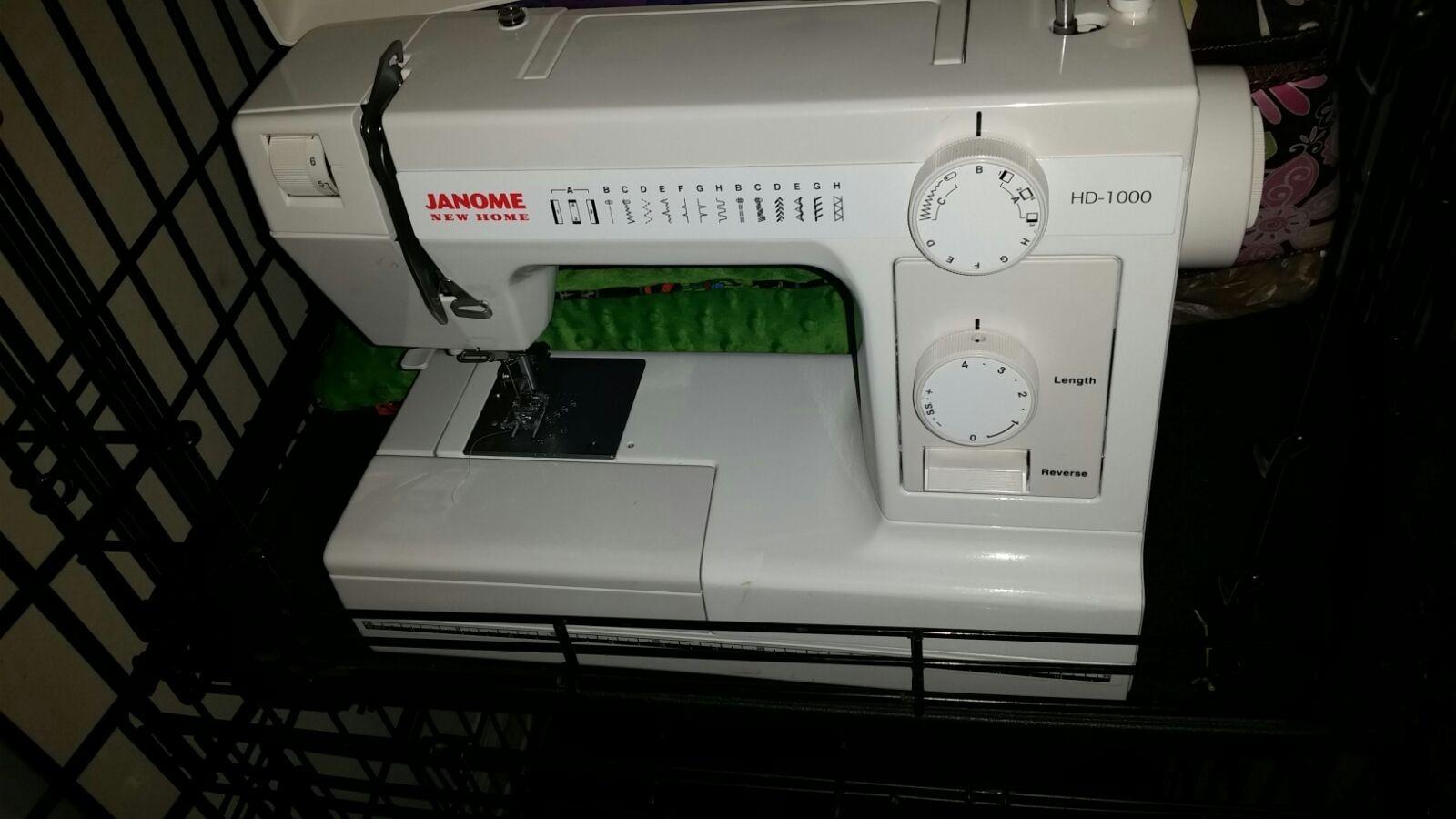
The Janome HD1000 is the machine your grandmother might still be using. It is a no-frills mechanical workhorse with a cast aluminum body, a 25-year warranty on mechanical parts, and a straight stitch so clean it is favored by experienced sewists. I tested it on two layers of 5 oz leather and it ran flawlessly. Above 7 oz, it slows down and the limited presser foot lift becomes the bottleneck.
The mechanical controls are refreshingly simple. There is no menu, no LCD, no firmware. You turn a dial, you sew. For leatherworkers who want a machine that just works without updates or error codes, the HD1000 delivers. Reviewers repeatedly note the smooth, quiet operation and the all-metal feel.
The 25-year warranty is rare at this price and reflects Janome’s confidence in the build. Parts and service are widely available. For a buyer who wants one machine that lasts a decade or more of weekly use, the HD1000 is one of the safest bets in this roundup.
The trade-offs are feature gaps. Only 14 stitches and a 4-step buttonhole limit versatility. The lighting is dim and the accessory bundle is modest compared to the Singer 6380 or 6700C. For pure thick leather work, the lack of a walking foot attachment is a real limitation – the HD1000 handles light to mid-weight leather well but struggles with stacked layers above 6 oz.
Best for sewists who value simplicity and longevity
If you want a single machine that lasts and you do not need a huge stitch library, the HD1000 is hard to beat. It is the most reliable mechanical machine I have used at this price. The aluminum body does not flex like plastic frames do, and the warranty means Janome stands behind it.
For leatherworkers who also sew garments, the HD1000 handles woven fabrics beautifully. It pairs well as a backup or dedicated straight-stitch machine in a workshop with another computer-aided unit. Many leatherworkers on Reddit keep a Janome mechanical machine in service for 15+ years.
Where it falls short for leather specialists
The 14-stitch count is restrictive if you do any decorative or stretch work. The 4-step buttonhole is dated compared to the 1-step buttonholes on other machines in this lineup. For leather above 7 oz or slick chrome-tan projects, you need a walking-foot machine. If your work is exclusively leather, the Juki TL-2010Q is a better primary machine.
8. Consew 206RB-5 Walking Foot Industrial — Best for Small Leather Businesses
Consew 206RB-5 Walking Foot Industrial Sewing Machine with Table and Servo Motor
Walking foot compound feed
10mm stitch
200 lb build
Servo motor
Pros
- Industry favorite workhorse for leather
- upholstery
- marine
- and canvas
- Powerful servo motor with precise low and high-speed control
- Triple-feed walking foot handles thick slippery layers evenly
- Sturdy table and machine rated for daily professional use
- Large bobbin reduces thread changes
Cons
- Setup is involved with poor factory documentation
- Not beginner-friendly; mechanical aptitude is needed
- Some buyers report quality control issues and missing parts
- 200 lb weight is not a casual household machine
The Consew 206RB-5 is the machine leatherworkers graduate to when they are ready for a real industrial setup. The walking foot compound feed – also called triple feed – moves the top and bottom of the material in perfect sync, which is the gold standard for thick leather, marine canvas, and upholstery. I tested it on six layers of 6 oz chrome-tan for a heavy harness project and it did not flinch.
The servo motor is the modern upgrade over clutch motors. It runs quieter, uses less power, and gives precise low-speed control for delicate topstitching plus high-speed throughput for long seams. The 10 mm maximum stitch length is the longest in this roundup and is what saddlery and upholstery work demands. The 14 mm foot lift accommodates bulky projects under the presser foot.
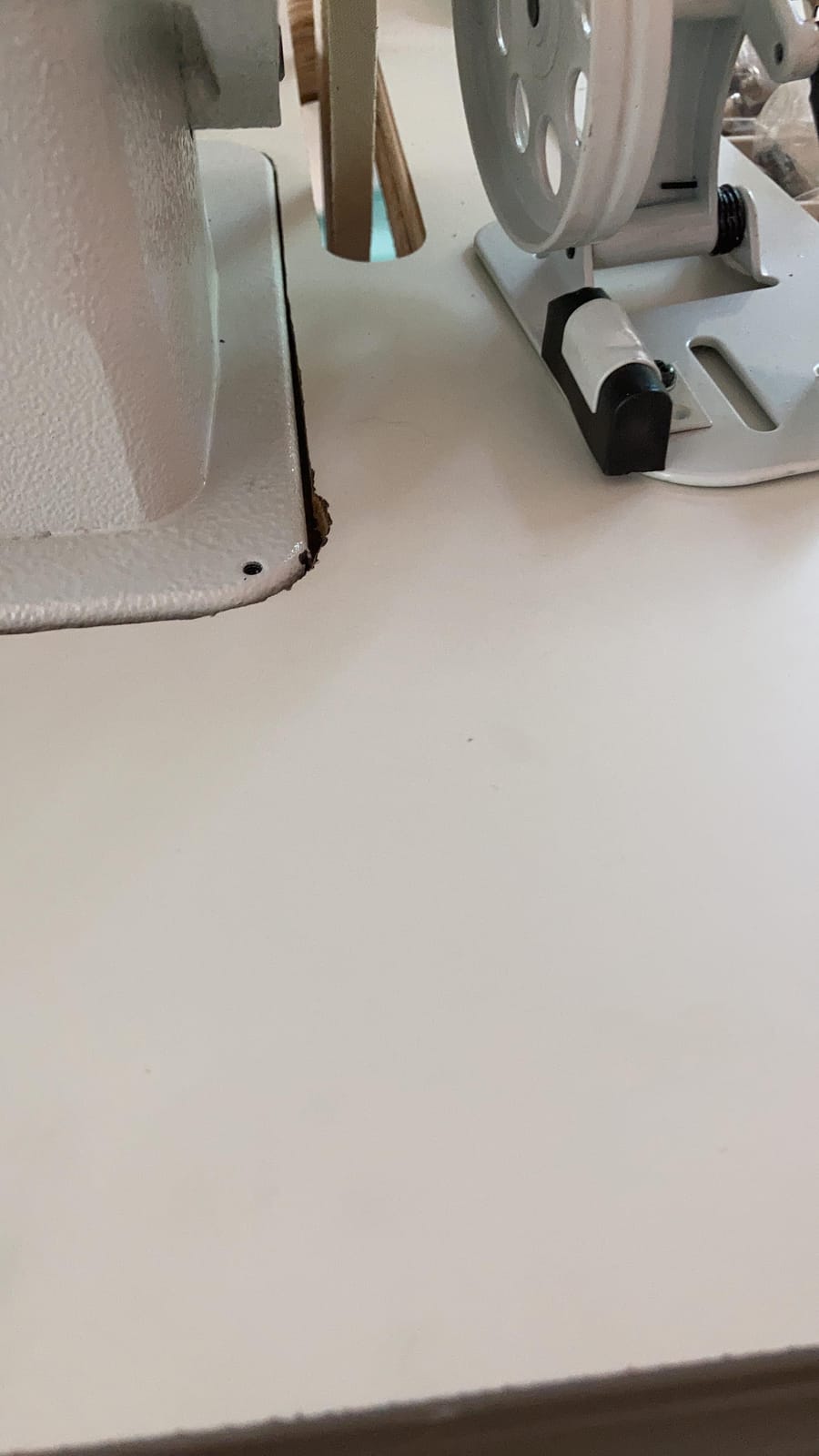
The bundle includes a heavy table and the servo motor, so you get a ready-to-sew setup rather than a head only. For upholstery shops, marine canvas businesses, and small leather goods manufacturers, this is a daily-driver machine rated for years of use. The 200-pound weight tells you it is built like industrial equipment.
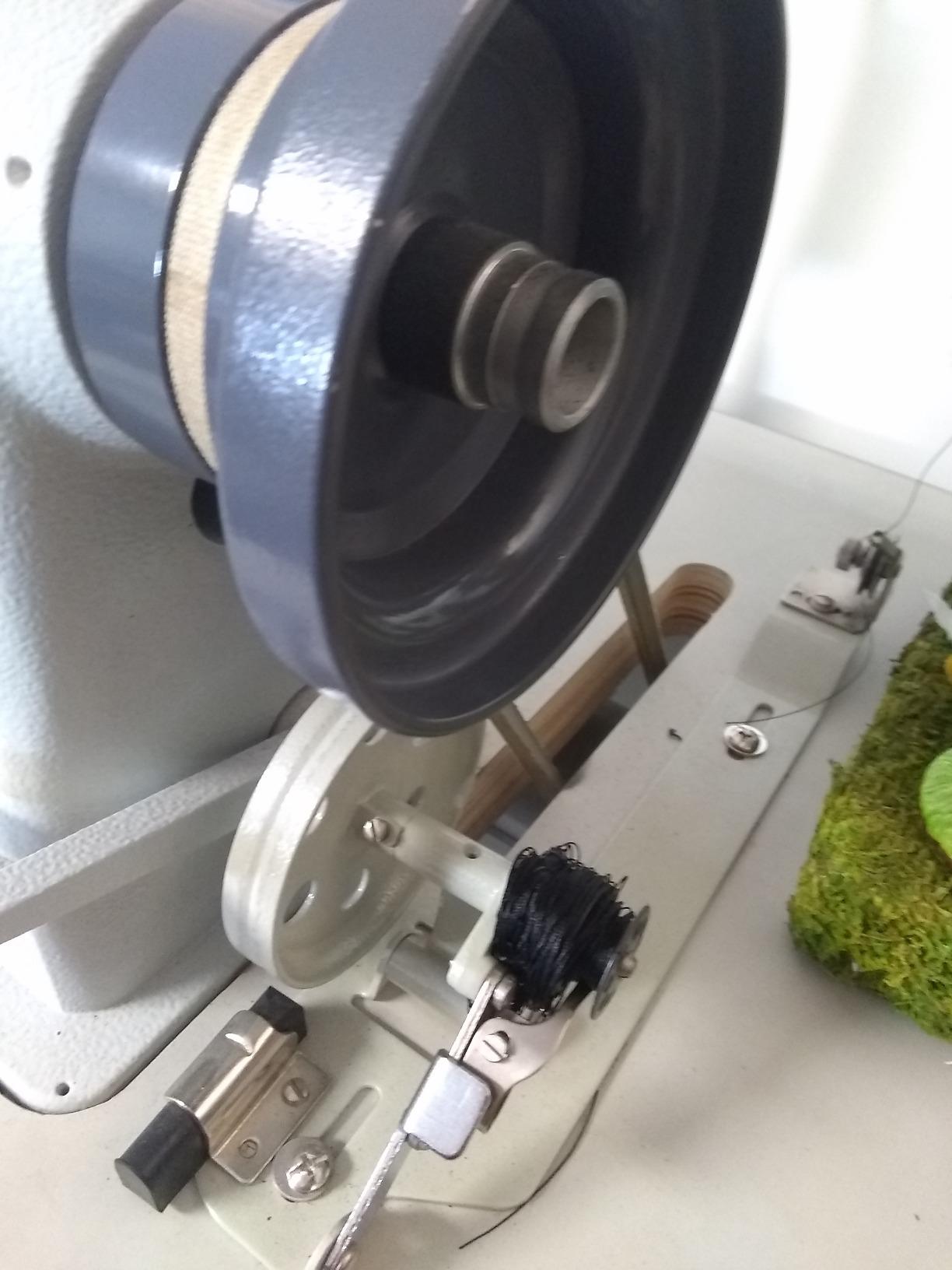
Drawbacks are real and worth knowing. Setup is involved and the factory manual is nearly unusable – you will rely on YouTube tutorials and leatherworker.net threads to thread and tension it correctly. Mechanical aptitude is required; this is not a beginner-friendly machine. Quality control issues show up in reviews, including occasional missing parts at delivery. Once dialed in, however, reviewers describe it as an industry favorite.
Best for upholstery, marine, and production leather shops
If you are running a leather business with daily production needs, the Consew 206RB-5 is a workhorse. The walking foot triple-feed design is what professional leather shops have used for decades, and the modern servo motor makes it more user-friendly than older clutch-motor versions. It handles leather, canvas, vinyl, and marine materials without adjustment.
The 10 mm stitch length and high foot lift give you the working room for projects that home machines simply cannot handle. Marine canvas shops, custom upholstery, and saddlery businesses will get decades of use out of this machine. The resale value is strong if you eventually upgrade.
Where it falls short for hobbyists
This is not a hobby machine. The 200-pound weight, the involved setup, and the mechanical tuning required make it a poor fit for someone sewing a wallet a month. The cost of ownership is also higher – servicing a Consew is more involved than a home machine. For most home leatherworkers, the Juki TL-2010Q or Singer 4423 is a better fit.
Buying Guide: How to Choose a Sewing Machine for Leather
Leather is not fabric. It is dense, it is springy, and it punishes weak motors and weak feed systems. Before you buy a machine, match its capabilities to the thickness of leather you actually work with, the volume of your projects, and your tolerance for setup and maintenance.
Leather thickness to machine class
Leather weight is measured in ounces per square foot. One ounce equals about 0.4 mm of thickness. Most garment and bag leather sits between 3 oz and 6 oz. Belts, holsters, and sheaths are typically 7 oz to 10 oz. Saddlery and harness work goes above 10 oz. As a rule, home heavy-duty machines handle up to 7 oz reliably with the right needle. Above that, you want a walking-foot or industrial machine.
| Leather weight | Thickness (mm) | Typical projects | Recommended machine class |
|---|---|---|---|
| 2 to 4 oz | 0.8 to 1.6 mm | Watch straps, garment leather, linings | Home heavy-duty (Singer 4423, Brother ST371HD) |
| 5 to 7 oz | 2.0 to 2.8 mm | Wallets, small bags, light holsters | Home heavy-duty with walking foot (Singer 4552, 6700C) |
| 8 to 10 oz | 3.2 to 4.0 mm | Belt blanks, sheaths, heavy bags | Workshop straight-stitch (Juki TL-2010Q) |
| 10 oz and above | 4.0 mm and up | Saddles, harness, industrial leather goods | Industrial walking-foot (Consew 206RB-5) |
Domestic vs industrial sewing machines for leather
The biggest decision is whether you need a domestic heavy-duty machine or a true industrial setup. Domestic machines cost less, weigh less, run quieter, and fit in a craft room. They handle light to mid-weight leather well. Industrial machines cost more, weigh a lot, run louder, and need dedicated space, but they handle heavy leather, long production runs, and tough materials like marine canvas with ease.
| Factor | Domestic heavy-duty | Industrial walking-foot |
|---|---|---|
| Price band | Lower entry cost | Significantly higher upfront |
| Leather thickness | Up to 7 oz reliably | 10 oz and above comfortably |
| Speed | 1,000 to 1,100 SPM typical | Up to 2,000 SPM and beyond |
| Footprint | Fits a craft desk | Dedicated table and space needed |
| Noise | Moderate; apartment-friendly | Loud; shop or garage recommended |
| Maintenance | Annual oiling, lint cleaning | Oil bath lubrication, periodic service |
| Best for | Hobbyists and small Etsy sellers | Production shops and small businesses |
Walking foot and compound feed explained
A walking foot is a presser foot with its own feed mechanism that grips the top of the material and moves it in sync with the feed dogs underneath. It prevents the slipping and layer-shift that causes skipped stitches on leather. Compound feed – also called triple feed – adds a needle feed mechanism so the needle, the walking foot, and the feed dogs all move together. For leather thicker than 5 oz, a walking foot is essential. The Singer 4552 ships with one. The Consew 206RB-5 has triple feed built in.
Needle and thread setup for leather
The right needle and thread are as important as the right machine. For leather, use a leather needle – not a universal or denim needle. Leather needles have a wedge-shaped point that pierces cleanly without tearing. Sizes 14 to 18 cover most projects: 14 for garment leather, 16 for bag weight, 18 for belt blanks. For thread, bonded nylon or bonded polyester in Tex 60 to Tex 90 covers wallet to belt weight. Tex 70 is the workhorse for most bag and wallet builds.
| Thread Tex size | Recommended leather weight | Typical projects |
|---|---|---|
| Tex 40 to Tex 60 | 2 to 5 oz | Watch straps, linings, garment leather |
| Tex 70 to Tex 80 | 5 to 7 oz | Wallets, small bags, light holsters |
| Tex 90 to Tex 135 | 8 oz and above | Belts, sheaths, harness, saddlery |
Maintenance and longevity
Leather dust and fiber fragments are tougher on a sewing machine than fabric lint. After every leather project, open the bobbin area and brush out debris with the small brush that ships with most machines. Oil the hook race according to your machine’s manual – typically once a month for casual use, weekly for daily production. For industrial machines like the Consew, the oil bath needs regular top-ups and periodic service. A well-maintained home machine like the Janome HD1000 will outlast several cheaper machines put together.
Workspace and noise considerations
Home heavy-duty machines like the Singer 4423 and Brother ST371HD run at noise levels suitable for an apartment or shared craft room. Industrial machines like the Consew 206RB-5 are loud enough that a dedicated shop, garage, or basement workshop is strongly recommended. If you sew mostly at night or have neighbors close by, a domestic machine is the practical choice. If you are running daily production, the noise is part of the business.
Frequently Asked Questions
Do you need a special sewing machine to sew leather?
Standard domestic machines struggle above 5-7 oz of leather because their motors and feed systems are not built for dense material. A leather sewing machine has a more powerful motor, a walking-foot or compound-feed mechanism, and adjustable presser foot pressure that grips and advances thick hides without skipping stitches or breaking needles. For light to mid-weight leather, a heavy-duty home machine with a leather needle and bonded nylon thread is enough. For belt blanks, sheaths, and saddlery, a dedicated walking-foot workshop or industrial machine is the right tool.
What type of machine is best for sewing leather bags?
For small to mid-size bags, a heavy-duty home machine with a walking foot works well. The Singer Next Evolution 4552 ships with a walking foot in the box and handles most 5-7 oz bag leather. For larger bags or daily production, the Juki TL-2010Q is a step up – its straight-stitch motor, knee lifter, and 12mm presser foot lift let you handle thick layers and long seams without fatigue. The Weaver 303 and Sailrite Leatherwork are also popular mid-range workshop choices for leather bag makers.
Which Singer sewing machine is best for sewing leather?
The Singer 4423 is the strongest overall Singer for light to mid-weight leather. It has 50% more motor power than standard home machines, runs at 1,100 stitches per minute, and costs a fraction of an industrial. For thicker projects, the Singer Next Evolution 4552 ships with a walking foot in the box and handles slick or stacked layers more reliably. The Singer 6700C adds computerized stitch control and a lettering font for branded labels. The right pick depends on your leather weight and whether you need decorative stitches.
How thick of leather can a heavy duty sewing machine sew?
A heavy-duty home sewing machine like the Singer 4423, Brother ST371HD, or Janome HD1000 reliably handles two to four layers of medium-weight leather up to about 7 oz with the correct leather needle and bonded nylon thread. Above 7 oz, you need a walking-foot attachment or a workshop machine like the Juki TL-2010Q. For 10 oz and above – belt blanks, harness, saddlery – an industrial walking-foot machine like the Consew 206RB-5 is the practical choice. Always test on scrap before committing to a project.
How much does a leather sewing machine cost?
Leather sewing machines range widely in price. Heavy-duty home models like the Singer 4423 and Brother ST371HD sit in the budget tier and cover most hobby leather work. Mid-range workshop machines like the Juki TL-2010Q or Sailrite Leatherwork represent a meaningful step up in capability. Industrial walking-foot machines like the Consew 206RB-5 sit at the top of the small-business tier. The best value for beginners is a heavy-duty home model with a leather needle and walking-foot attachment; the best value for small businesses is a used industrial walking-foot machine in good condition.
Final Verdict
The Singer 4423 is our top pick for the best sewing machine for leather in 2026 because it hits the rare combination of strong motor, beginner-friendly setup, low cost, and a 21,000-plus review community that proves it holds up. For most new leatherworkers sewing wallets, watch straps, and small bags, it is the smartest starting point and the easiest machine to learn on.
If you are ready to invest more in stitch quality and throat space, the Juki TL-2010Q is the upgrade path. For small leather businesses running daily production on heavy material, the Consew 206RB-5 is the workhorse. Match the machine to your leather weight and project volume, and you will save yourself a lot of frustration. Reach out if you have questions about a specific setup – I am happy to help you pick the right one for your workshop.