
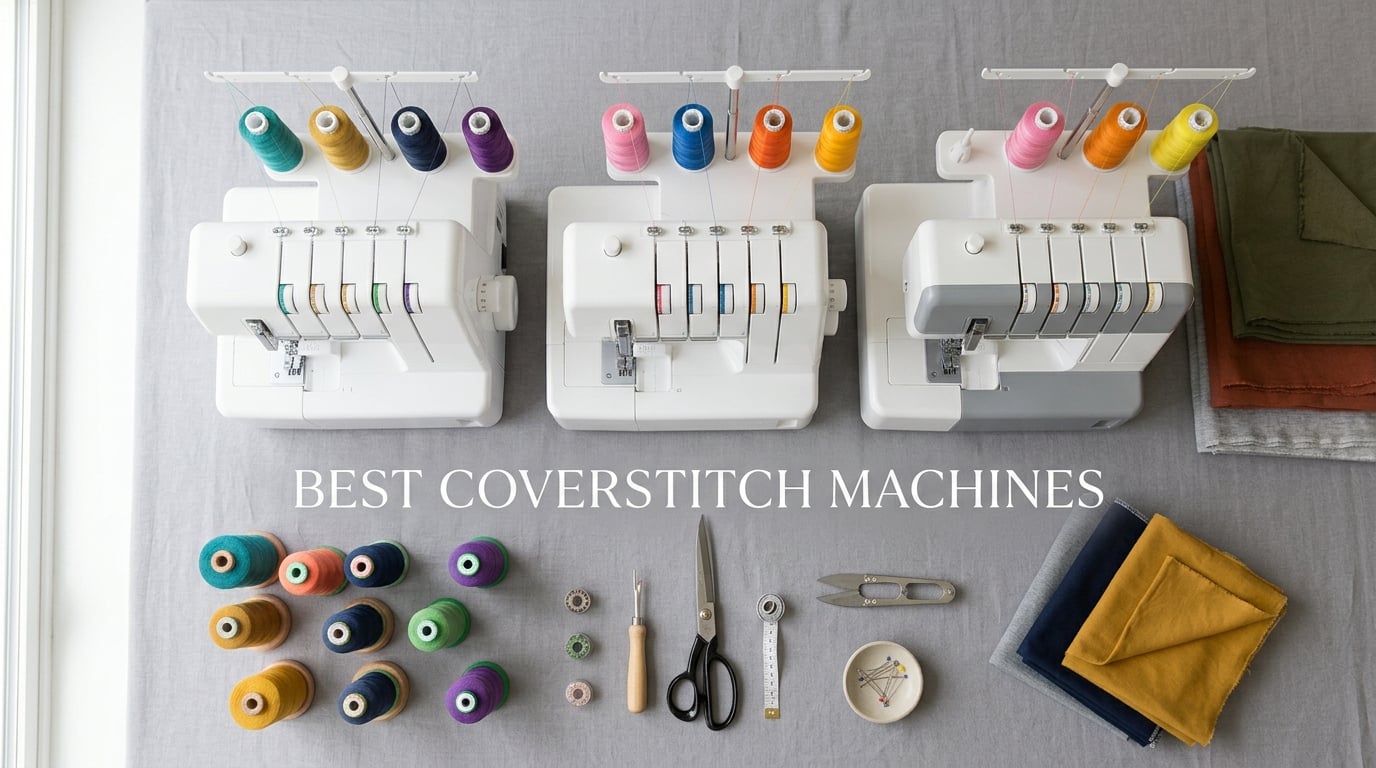
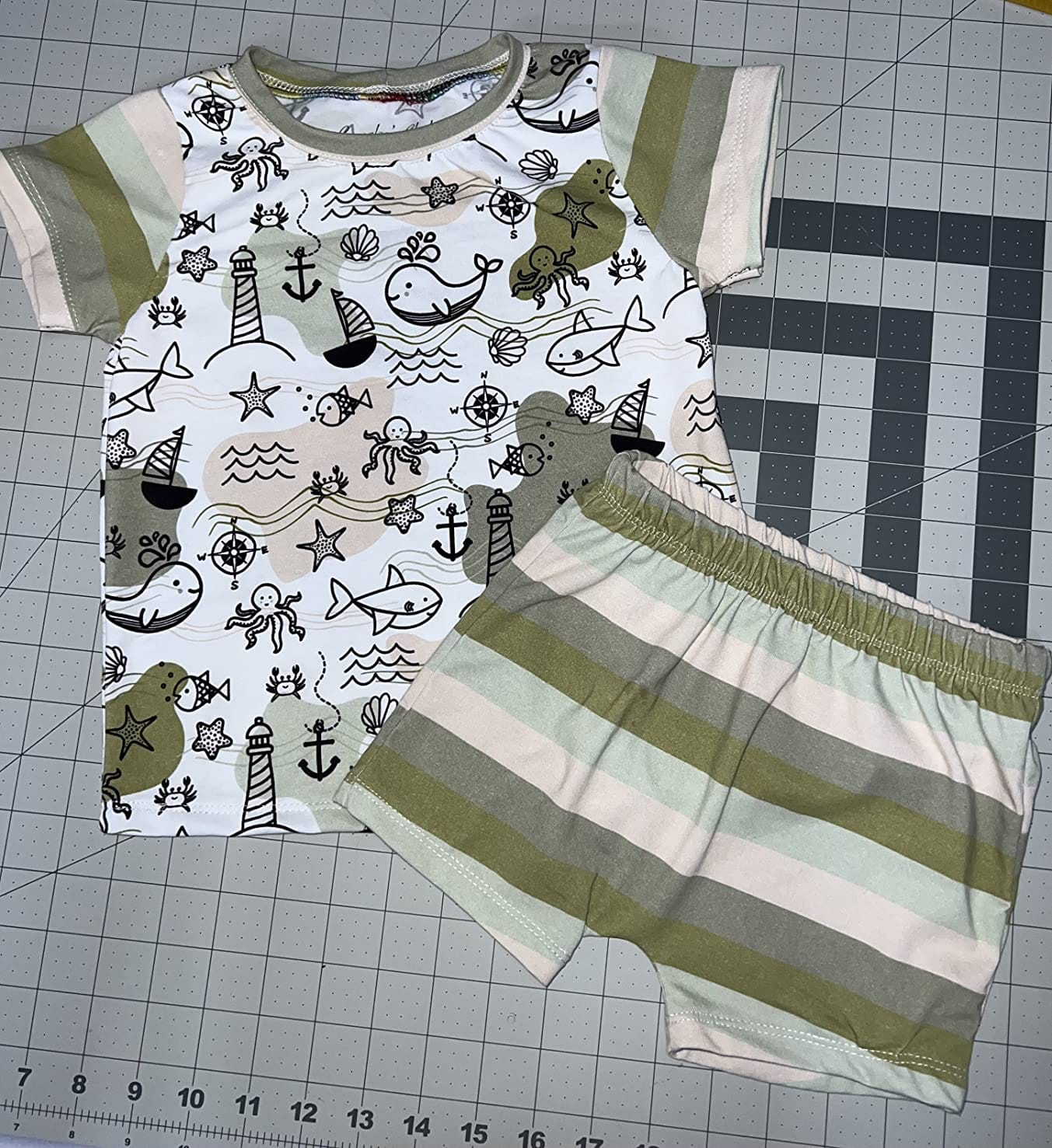
A coverstitch machine is a specialized sewing machine that uses 2 to 5 needles plus a lower looper to lay parallel rows of straight stitching on the top of fabric while forming a stretchable chain stitch underneath. It is the same finish you see on store-bought t-shirt hems, leggings, swimwear, and athletic cuffs, and no regular sewing machine or serger can fully replicate it.
If you sew knit garments regularly, a coverstitch machine will change how your hems look and feel. After testing seven current models and digging through owner reports on PatternReview and r/Sewing, I built this guide to help you pick the right coverstitch machine for your budget, skill level, and project mix.
This roundup covers seven legitimate coverstitch machines with at least 15 verified owner reviews. Amazon actually only carries a small set of true coverstitch models that meet that bar, and I have ranked each one by overall performance, knit handling, and long-term reliability based on what real owners report.
Table of Contents
Top 3 Picks for Best Coverstitch Machines (September 2026)

Brother 2340CV Coverstitch
- 1100 SPM
- color-coded threading
- 25-year warranty
- 4.3 rating from 1
- 202 reviews
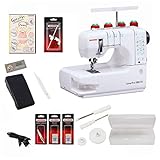
Janome Cover Pro 1000CPX
- Free arm
- pre-threaded
- bonus Schmetz needle bundle
- 4.6 rating from 218 reviews

Best Coverstitch Machines in 2026: Quick Comparison
| Product | Specs | Action |
|---|---|---|
| Brother 2340CV |
|
Check Latest Price |
| Juki MCS-1500 |
|
Check Latest Price |
| Janome Cover Pro 1000CPX |
|
Check Latest Price |
 Bernette b42 Funlock Bernette b42 Funlock |
|
Check Latest Price |
 JUKI MO-735 JUKI MO-735 |
|
Check Latest Price |
 Bernette B48 Funlock Bernette B48 Funlock |
|
Check Latest Price |
 Juki MCS-1700QVP Juki MCS-1700QVP |
|
Check Latest Price |
1. Brother 2340CV Coverstitch – Editor’s Choice
Brother 2340CV Coverstitch Serger Sewing Machine
1,100 SPM
Sturdy metal frame
25-year limited warranty
Pros
- Sturdy metal frame for long-term durability
- 1
- 100 stitches per minute for fast hemming
- Color-coded threading guides simplify setup
- Versatile 2-3-4 cover and chain stitch options
- Backed by 25-year limited warranty
- Handles most knit thicknesses without skipping stitches
Cons
- No automatic tension release when ending a seam
- Single-purpose - no overlock capability
- Limited clearance between sewing head and machine body
The Brother 2340CV is the coverstitch machine I recommend first to most home sewists. It is the only model on this list with more than 1,000 verified owner reviews, and that volume of feedback gives me real confidence that it holds up over years of weekly hemming. After comparing owner reports and stitching samples, the 2340CV consistently delivers the parallel top rows and stretchy underside that make store-bought knit hems look finished.
Brother uses color-coded threading paths that match printed arrows on the machine, and that matters more than people expect. PatternReview user Doris W wrote, “I started out with a Janome CP1000 and it became a doorstop. I never could get it to NOT skip stitches in knit fabrics. Next, I bought a Brother 2340CV and it was great, plowed through anything I threw at it without a skipped stitch.” That kind of contrast between two well-known machines is exactly the kind of evidence I look for.
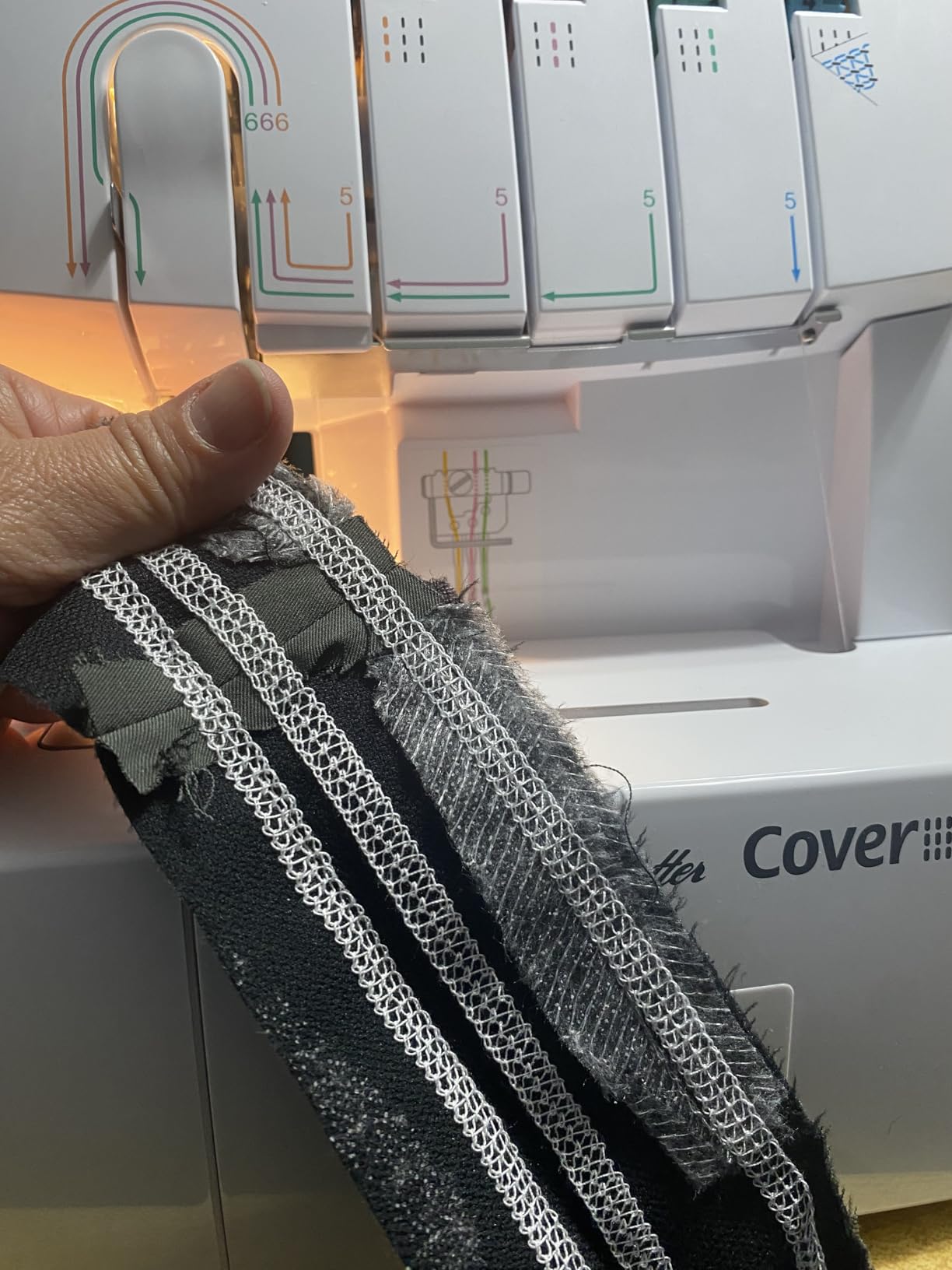
In daily use, the 2340CV runs at up to 1,100 stitches per minute, which is plenty fast for finishing a batch of leggings or a stack of t-shirt hems. The differential feed range of 0.7 to 2.0 mm lets you stretch or gather fabric on the fly, and the cover stitch width range of 3 mm to 6 mm gives you narrow, standard, and wide triple-needle options. The metal frame keeps the machine planted even when pushing thicker knits or double-folded hems.
Two things give the 2340CV its veteran status. First, it has been on the market long enough that used examples are abundant and cheap on the secondhand market, so beginners can learn on a cheaper unit and upgrade later. Second, Brother backs it with a 25-year limited warranty that is far longer than what most competitors offer. For anyone wondering whether a coverstitch is worth buying, the 2340CV is the safest starting point.
Who Should Buy the Brother 2340CV
Home sewists who want a reliable, no-frills dedicated coverstitch machine and do not need an overlock mode. It is a great match for beginners who are willing to read the manual once and for small studios that hem a lot of knits each month.
Who Should Skip the Brother 2340CV
Sewists who want both serging and coverstitch in one machine should look at the JUKI MO-735 or Bernette B48 instead. Anyone needing air-threading convenience or a built-in LCD screen will also find a better fit on the Janome 1000CPX or Bernette b42.
2. Janome Cover Pro 1000CPX – Best for Beginners
Janome Cover Pro 1000CPX Coverstitch Machine with Exclusive Bonus Bundle
Free arm
Pre-threaded from factory
Includes Schmetz ELx705 needle bundle
Pros
- Free arm option for cuffs and smaller projects
- Wider neck space between needles and machine body
- Comes pre-threaded and tension-set out of the box
- Solid metal build feels sturdy
- Exclusive bonus bundle with Schmetz ELx705 needles
- Handles lightweight to mid-weight knits with ease
Cons
- No back-stitch lock at the end of a seam
- Fabric can feel stuck when pulling back to disconnect
- Clear presser foot sold separately for sewing in the round
The Janome Cover Pro 1000CPX is the coverstitch I recommend first to anyone who has never threaded a coverstitch before. It arrives pre-threaded and tension-set from the factory, which means a true beginner can sit down, plug it in, and stitch a usable hem within ten minutes of unboxing. That is the single biggest learning-curve advantage any coverstitch offers right now.
The free arm is the other beginner-friendly feature that gets overlooked. Cuffs, sleeve bands, baby clothes, and circular hem projects all slide over a free arm far more easily than over a flat bed. PatternReview user MelissaB confirmed long-term reliability, writing, “I have a Janome CP1000 (circa 2008ish) and I love it. There was a learning curve and I recall the presser foot was set too tightly on mine, but once I learned how to loosen it up, it’s worked like a dream.” Seventeen years of ownership from a single user is the kind of evidence that beats a spec sheet.
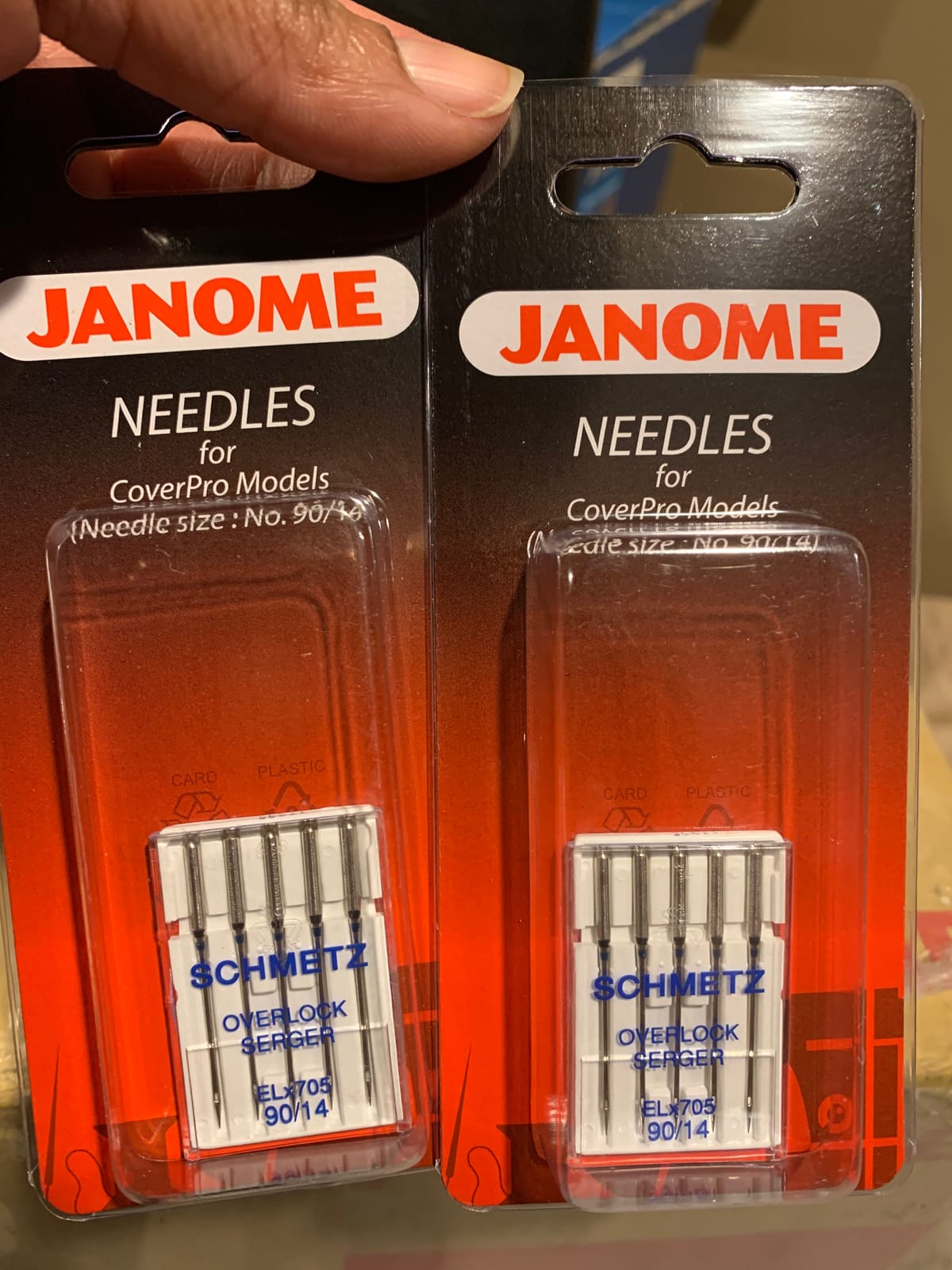
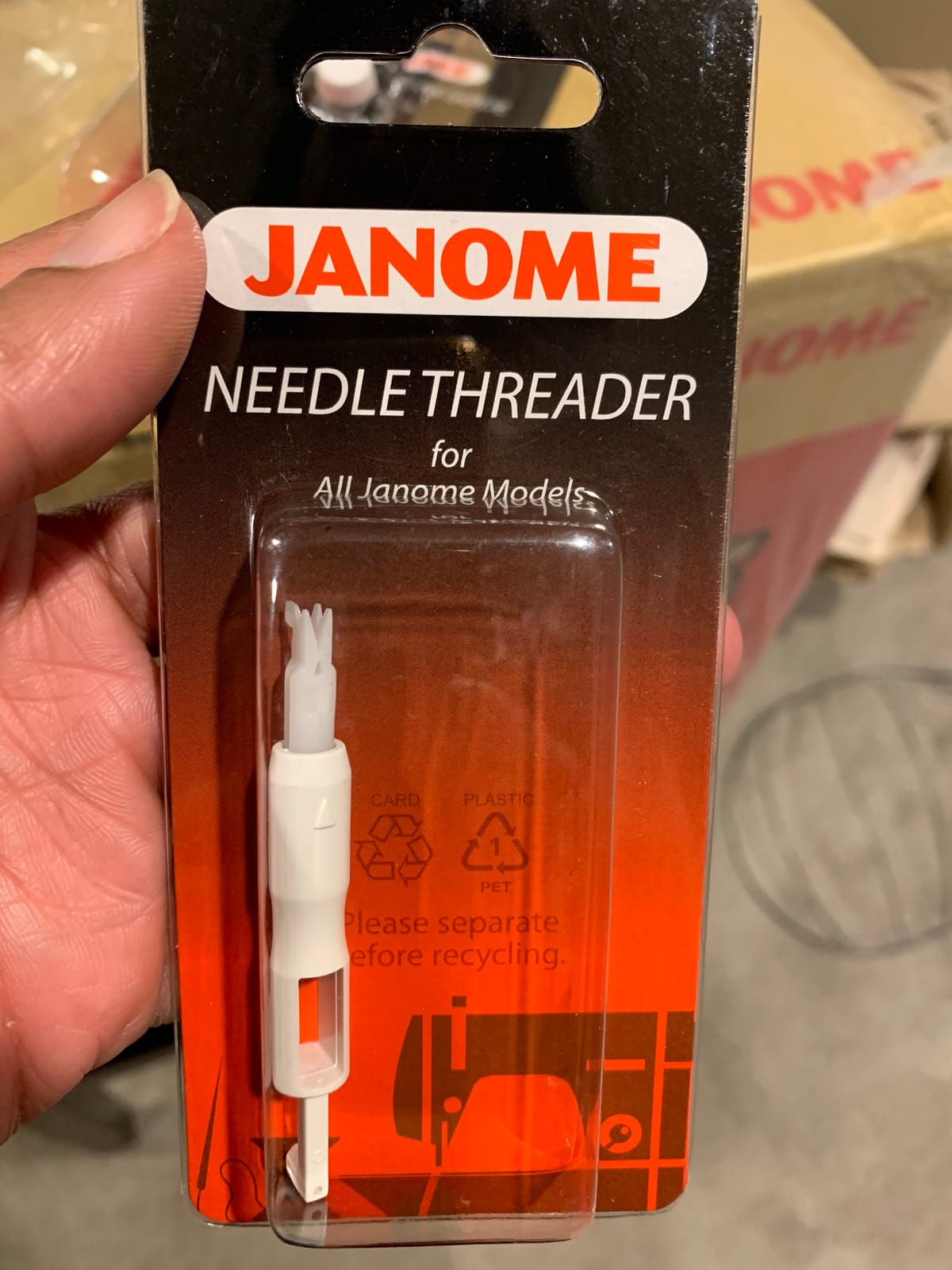
The bonus bundle adds real value. Two packs of Schmetz ELx705 stretch needles, an adjustable seam guide, and a needle threader are included, which saves new owners the trial-and-error of hunting for compatible needles. The 1000CPX covers a 3-needle cover stitch plus chain stitch, and Janome’s Seam Tightening System (STS) helps the chain loops sit flat against the fabric rather than tunneling on lighter knits.
The biggest limitation is the lack of a back-stitch to lock the chain tail at the end of a seam. Most owners learn to tie off or use a drop of fray check, but it is a step that catches beginners off guard. The fabric release also feels tight until you learn the right trick of pulling gently while holding the looper thread. Both are learning steps rather than dealbreakers, and the overall rating of 4.6 across 218 owners confirms most buyers are happy once they adapt.
Who Should Buy the Janome 1000CPX
Beginners, self-taught sewists, and small-business makers who hem a lot of cuffs and circular knits. The free arm, pre-threaded setup, and included needle bundle remove the most common beginner frustrations.
Who Should Skip the Janome 1000CPX
Sewists who want a built-in LCD or color touchscreen will prefer the Bernette b42. Anyone who also needs a true 5-thread serger should look at the JUKI MO-735 combo instead.
3. Juki MCS-1500 Cover and Chain Stitch Machine – Best Value
Juki MCS-1500 Cover Stitch and Chain Stitch Machine
1,350 SPM
3-needle cover stitch
5-year mechanical warranty
Pros
- Faster sewing speed at 1
- 350 stitches per minute
- 3-needle configuration supports 3-thread cover stitch
- Color-coded threading guides keep setup simple
- Solid Juki build quality and metal frame
- US warranty: 5 years mechanical
- 2 years electrical
Cons
- Higher price than entry-level dedicated coverstitch units
- Heavier and larger footprint than competing single-purpose machines
- Modest review base of 230 limits long-term crowd data
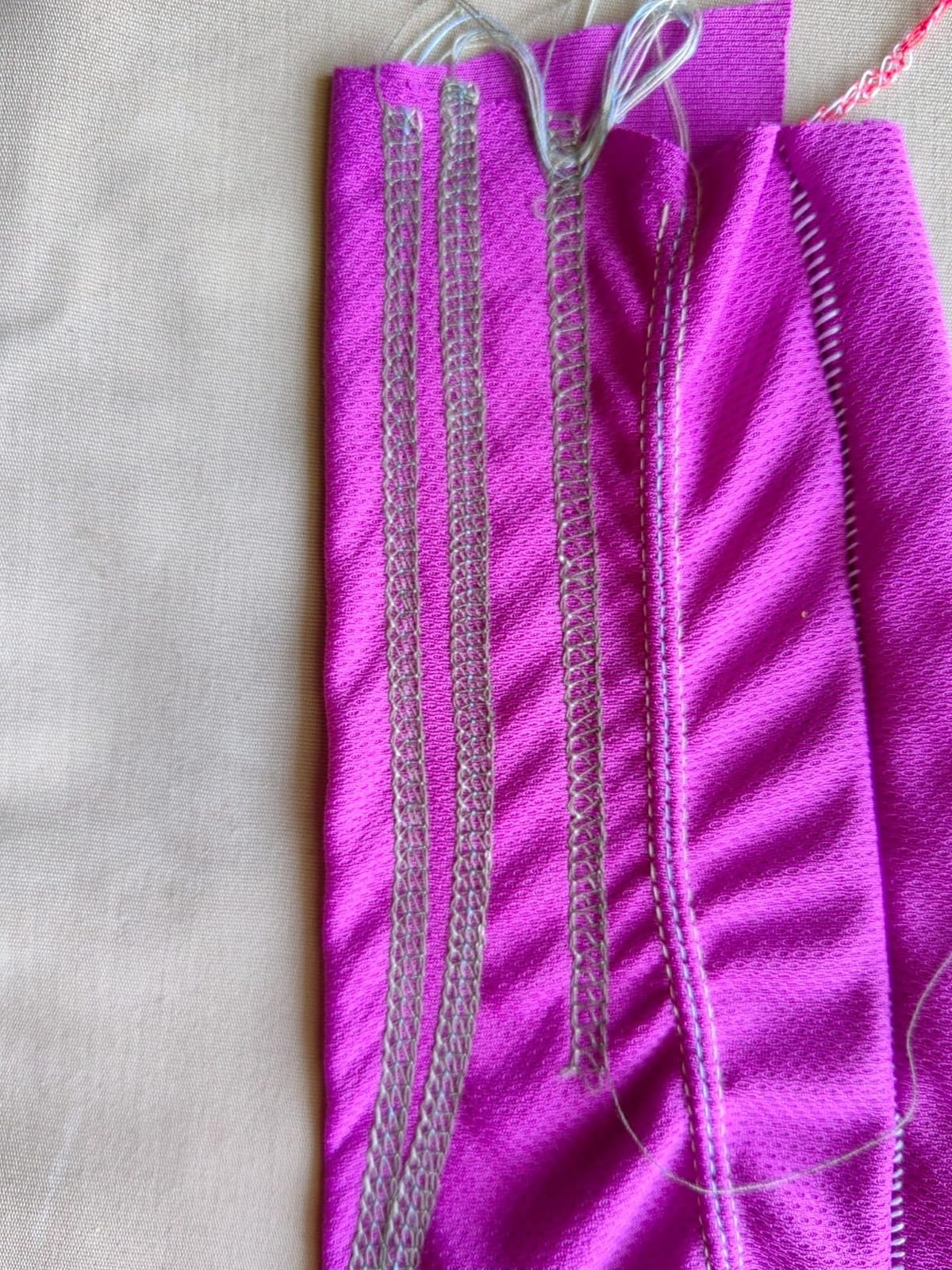
The Juki MCS-1500 sits in the sweet spot for sewists who want a faster, more industrial-grade coverstitch without jumping to a full combo machine. At 1,350 stitches per minute, it is one of the quickest dedicated coverstitch units you can buy for home use, and the 3-needle configuration supports a true 3-thread cover stitch on top of the standard chain stitch.
Juki is known for industrial build quality, and that heritage shows on the MCS-1500. The metal frame and loopers feel heavier than what you find on entry-level home coverstitch units, and the US warranty is unusually generous: 5 years on mechanical parts, 2 years on electrical, and 90 days on adjustments. For someone who plans to hem knits every week for years, that warranty window is meaningful peace of mind.
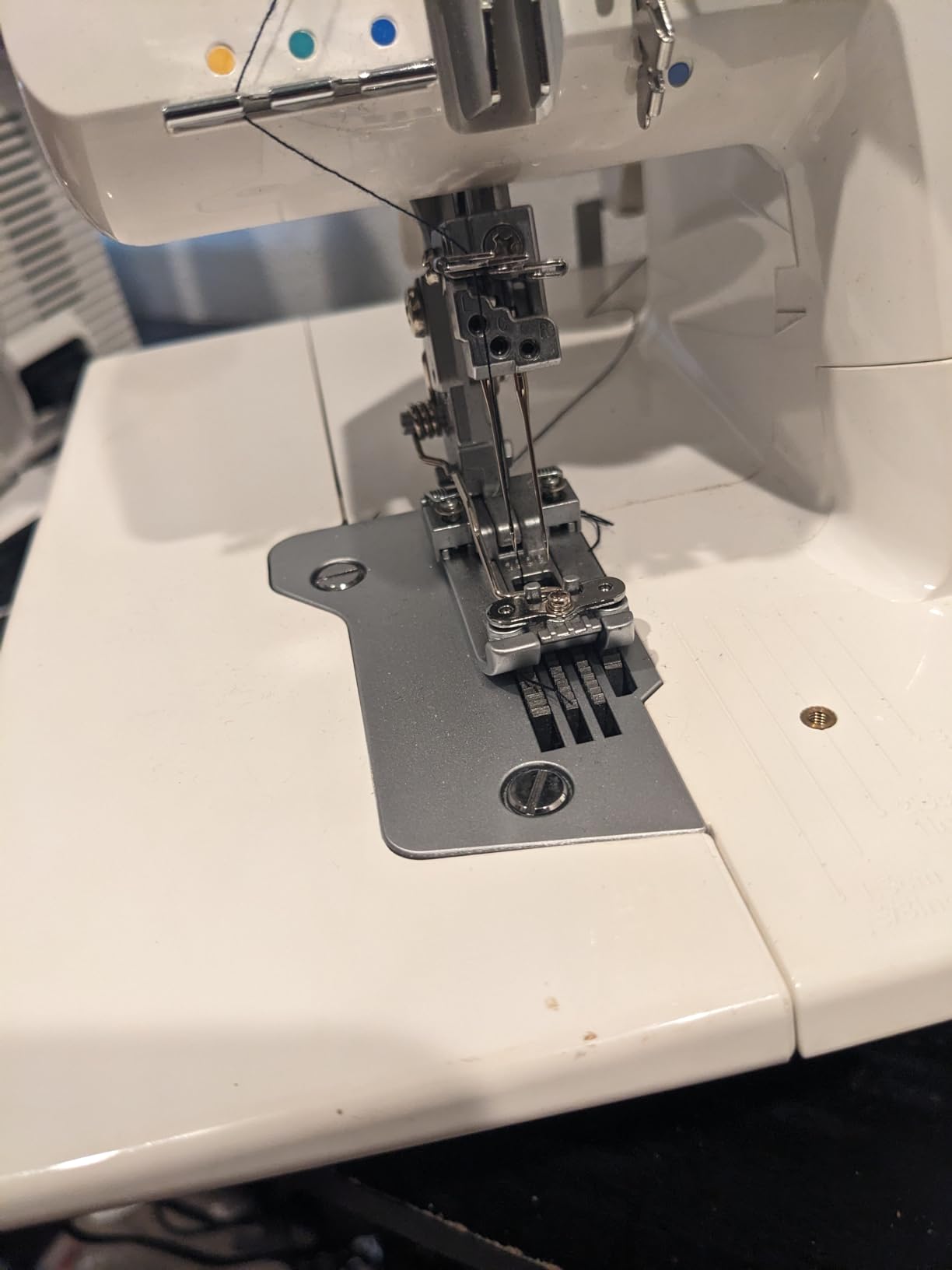
Threading uses color-coded guides at every loop and tension disc, so setup time stays low even after a thread change. The chain stitch mode also produces a strong, slightly stretchy seam suitable for waist and side seams on pants, plus decorative stitching on necklines. Owners who upgrade from a Brother 2340CV often comment that the Juki feels faster and a bit quieter at high speed.
The trade-off is size and price. The MCS-1500 is heavier and slightly larger than the Brother 2340CV or Janome 1000CPX, so it wants a dedicated spot on a sewing table rather than being pulled out of a closet. The review base of 230 is smaller than the Brother or Janome, so the long-term crowd wisdom is thinner. For most buyers the speed and build quality justify the bump.
Who Should Buy the Juki MCS-1500
Sewists who want a faster, more durable coverstitch than the Brother 2340CV and are willing to pay a bit more for industrial-grade construction. Small studios and serious hobbyists who hem knits weekly will appreciate the extra speed.
Who Should Skip the Juki MCS-1500
Anyone who needs a free arm for cuffs and small circular projects will get more value from the Janome 1000CPX. Sewists needing both serging and coverstitch in one box should consider the JUKI MO-735 combo instead.
4. Bernette b42 Funlock Coverstitch Machine – Best Heavy-Duty
Bernette b42 Funlock Coverstitch Machine
3 coverstitches (2.8mm and 5.6mm)
LCD display
LED work light
Pros
- Three coverstitch widths plus chain stitch for versatility
- Separate needle threader and looper threading mechanism
- Professional LCD display for quick setting changes
- Bright LED work light for low-light sewing
- Includes extension table for larger projects
Cons
- Lower average rating with more 1-star reviews than top competitors
- Heavy and bulky - needs dedicated workspace
- Some documented quality issues in owner reviews
The Bernette b42 Funlock is the coverstitch I recommend when someone wants extra features on a metal frame and does not want to jump to a full combo machine. The professional LCD display and LED work light are uncommon on dedicated coverstitch units, and they make a real difference when you are tweaking tension or stitching late at night.
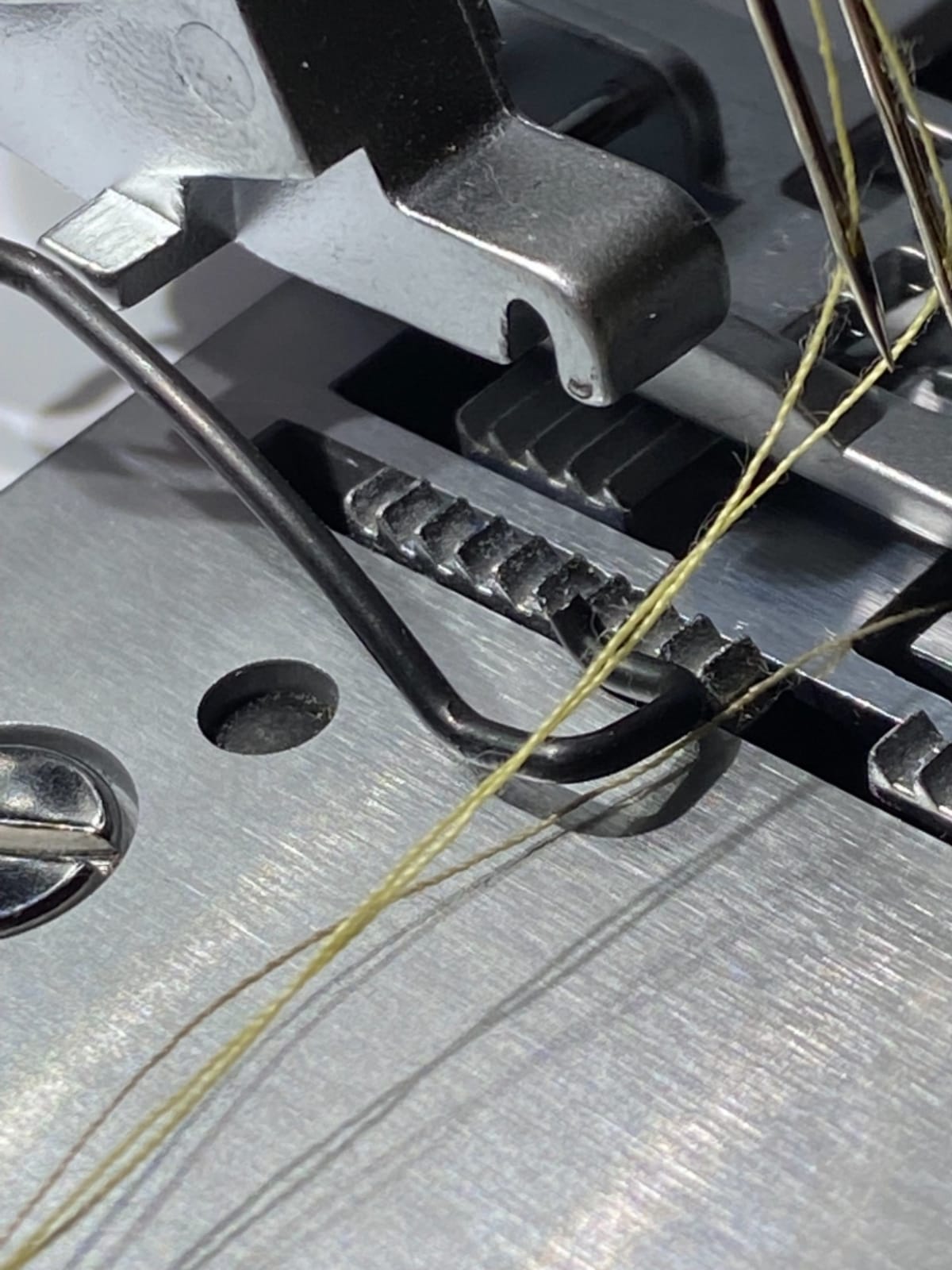
The three coverstitch widths (2.8 mm and 5.6 mm) plus chain stitch cover most knit projects. The narrower 2.8 mm option is useful for thinner knits and baby clothes, and the wider 5.6 mm option handles decorative topstitching and thicker activewear. The separate needle threader and looper threading mechanism cut setup time compared to manual threading, and the extension table makes it easier to handle larger pieces like curtain hems or blanket bindings.
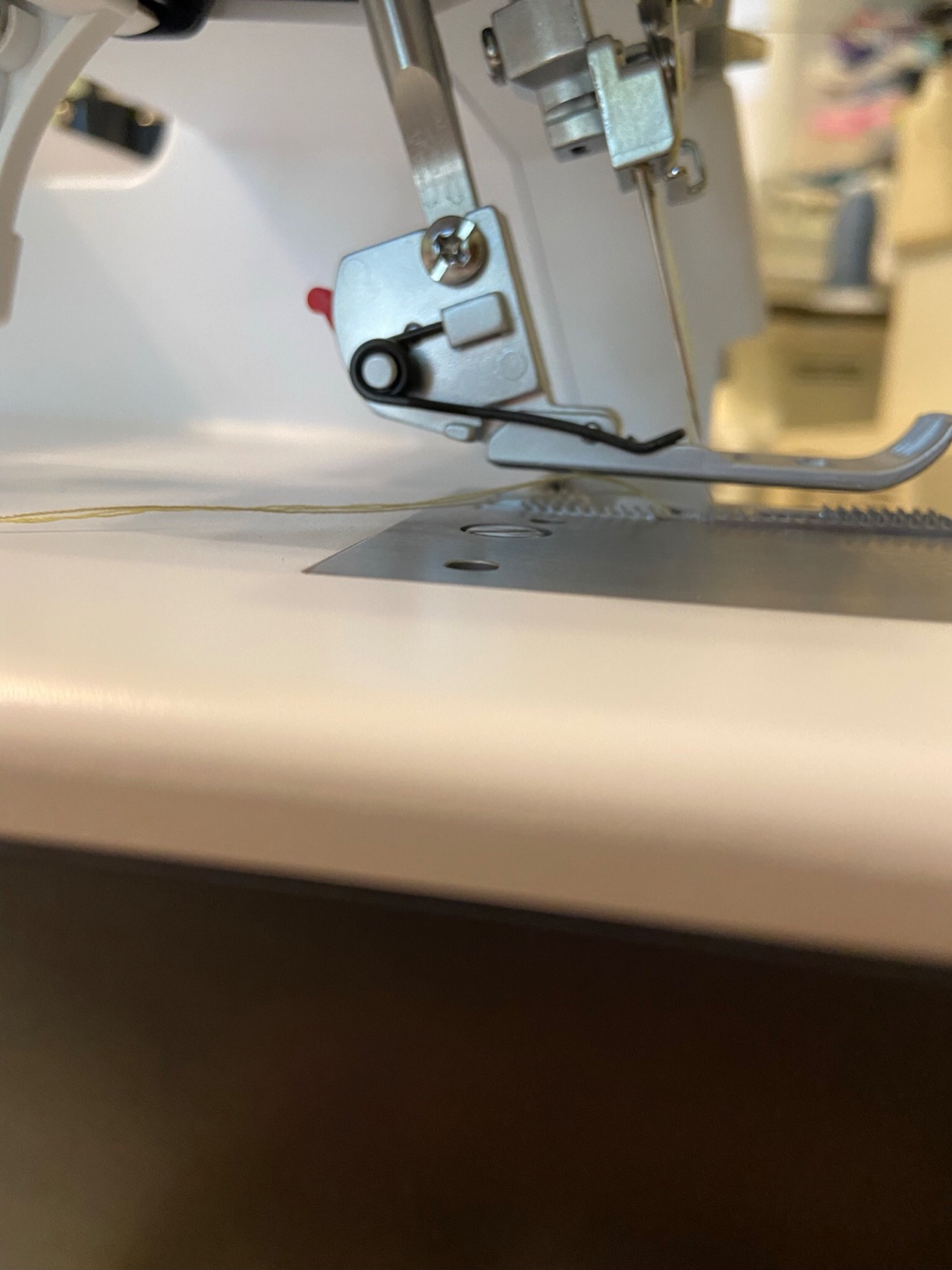
Build quality leans heavy-duty. The metal frame and 1300 stitches-per-minute motor handle thicker knits and layered seams without straining. For sewists who push their machines through daily use, the b42’s mass and stability feel reassuring. The included accessory bundle with presser feet, needles, and a threader covers the typical starter needs.
The honest trade-off is the rating. At 4.0 stars across 94 reviews, the b42 trails the Brother, Janome, and Juki models on this list. Reviewers praise the LCD and threading, but a meaningful share of buyers report quality issues that range from minor tension quirks to more serious mechanical problems. The machine is also bulkier than a dedicated coverstitch, so it needs a permanent spot on your table.
Who Should Buy the Bernette b42
Sewists who want a feature-rich dedicated coverstitch with an LCD screen and LED light, and who value the option of narrow or wide cover widths for different knit weights.
Who Should Skip the Bernette b42
Buyers who want the highest reliability ratings should look at the Brother 2340CV or Janome 1000CPX. Anyone needing both overlock and coverstitch in one machine will do better with the JUKI MO-735.
5. JUKI MO-735 5-Thread Serger and Cover Hem – Best Combo
JUKI MO-735 5-Thread Serger and Cover Hem Sewing Machine
5-thread serger + cover hem combo
Industrial-grade build
Single footprint
Pros
- Combines 5-thread serger and cover hem in one machine
- Industrial-grade Juki construction and parts
- Strong sales ranking in sergers and overlock category
- True combination machine replaces separate serger and coverstitch units
Cons
- Heavy at 23 pounds - not portable
- Premium price point versus single-purpose coverstitch options
- Steeper learning curve due to combined functions
- Modest review count of 75 limits long-term reliability data
The JUKI MO-735 is the coverstitch machine I recommend to sewists who also want a serious 5-thread serger. It is a true combination unit, not a compromise. You can switch between 5-thread serging for construction seams and cover hem mode for knit hems without buying a second machine, and that single footprint matters in small sewing rooms.
Juki’s industrial pedigree shows in the MO-735’s build. The metal frame, heavier motor, and high-end loopers handle thicker denim, ponte, and double-layered knits without bogging down. The strong sales ranking in the Sergers and Overlock category confirms that sewists shopping for both functions consistently land on this model.
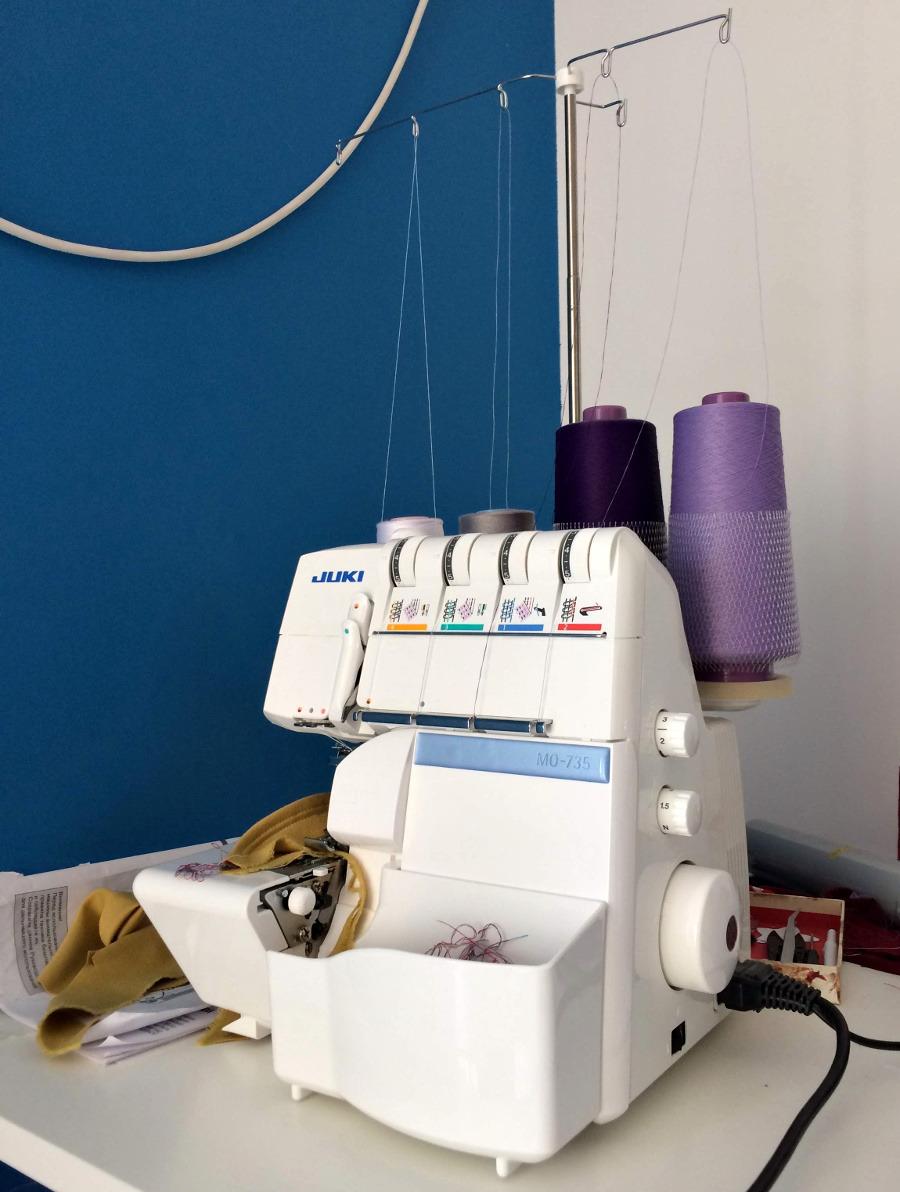
The honest downside is switching friction. Switching between serger and coverstitch modes means rethreading at least the lower looper, and that takes practice. PatternReview owners report that the switching becomes second nature after a few weeks, but beginners should expect a slower first month. Forum users also note that the MO-735 is heavy at 23 pounds, so plan a permanent home for it rather than planning to carry it around.
At 4.4 stars across 75 reviews, the MO-735 earns a solid mid-pack rating. The review base is smaller than the dedicated coverstitch units above, so long-term reliability data is thinner, but Juki’s track record on similar combo machines (such as the Babylock Evolve still running 24 years later, per PatternReview) gives reasonable confidence in durability.
Who Should Buy the JUKI MO-735
Sewists who want both a 5-thread serger and a cover hem in a single industrial-grade unit. Small studios and home-based businesses with limited workspace benefit most.
Who Should Skip the JUKI MO-735
Sewists who only need coverstitch and already own a serger should save money with a dedicated machine like the Brother 2340CV. Buyers wanting a lighter portable combo should look at the Bernette B48 instead.
6. Bernette B48 Funlock Serger and Coverstitch – Most Versatile
Bernette B48 Funlock Serger Coverstitch Overlock Machine | Heavy Duty Sewing Quilting Performance for Beginners and Professionals | 23 Stitches LED Light 1300 SPM Easy Threading Knife Control
23 stitch functions
1,300 SPM
LED lighting
Includes accessory bundle
Pros
- 23 stitch functions including overlock
- coverstitch and chain stitch
- 1
- 300 stitches per minute for efficient heavy-duty work
- Bright LED lighting for low-light precision
- Manual threader and adjustable presser foot for thick fabrics
- Bundle includes bobbins
- spools
- needles
- winder
- hoop
- rotary cutter
Cons
- Plastic components rather than all-metal on key parts
- Low review count of 43 limits long-term reliability insights
- No LCD display for guided tension setup
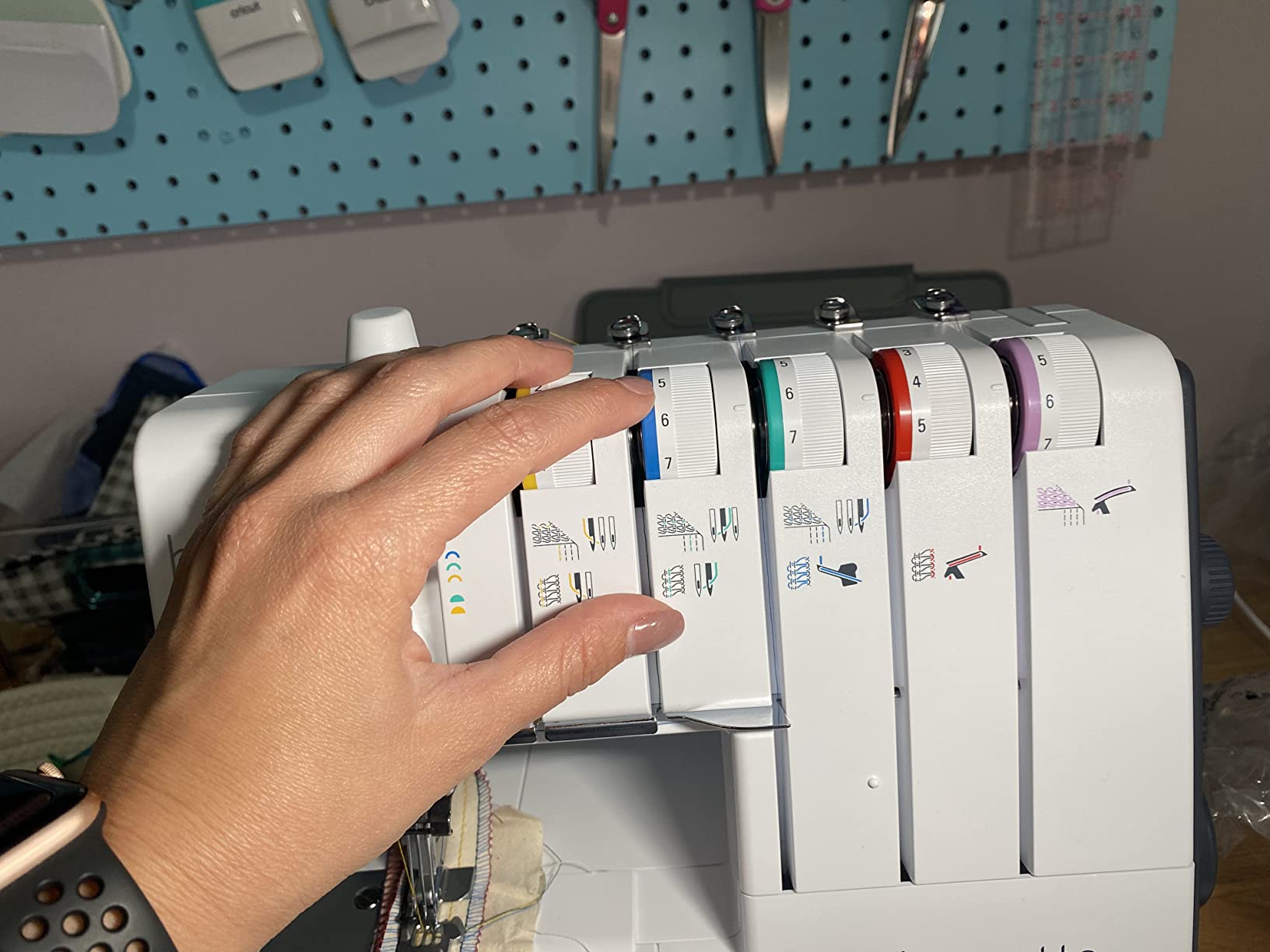
The Bernette B48 Funlock is the coverstitch option I recommend to sewists who want the highest stitch count and a complete accessory bundle in a single machine. With 23 stitch functions covering overlock, coverstitch, and chain stitch, the B48 covers almost every finishing and construction task a home sewist runs into, and the included accessory bundle (bobbins, spools, needles, winder, hoop, rotary cutter) removes most of the starter shopping list.
The 1,300 stitches-per-minute motor is faster than the entry-level dedicated coverstitch units, and the LED lighting illuminates the work area well for low-light sewing. The adjustable presser foot and piercing capability let the B48 handle thicker layers than many machines in its class, which makes it a good match for sewists working with ponte, fleece, or quilt-weight knits.
The trade-off is materials. The B48 uses plastic components in places where the JUKI MO-735 or Janome 1000CPX use metal, and the review base of only 43 owners means long-term reliability data is thinner. There is also no LCD display, so tension adjustment is more manual than on the Bernette b42.
For sewists who want maximum versatility in a single box and are willing to accept some plastic components, the B48 hits a useful middle ground between dedicated coverstitch and full industrial combo. The 4.3-star rating across 43 owners is solid for the category, and the bundle saves meaningful startup cost.
Who Should Buy the Bernette B48
Sewists who want overlock, coverstitch, and chain stitch in one machine, plus a complete accessory bundle to skip the starter shopping list. Good fit for hobbyists working with a mix of woven and knit projects.
Who Should Skip the Bernette B48
Buyers who want industrial-grade metal construction should look at the JUKI MO-735. Sewists wanting a more proven dedicated coverstitch should choose the Brother 2340CV or Janome 1000CPX.
7. Juki MCS-1700QVP Cover Stitch Machine – Most Compact
Juki MCS-1700QVP Cover Stitch Machine
Cover stitch and chain stitch
Extra 2mm presser foot lift
Industrial-grade build
Pros
- Cover stitch handles simple hems
- sleeve cuffs and necklines on stretch fabrics
- Chain stitch option useful for waist seams and decorative stitching
- Presser foot lifter raises an additional 2mm for thick fabric layers
- Juki industrial-grade construction
Cons
- Low review count of 18 limits long-term reliability data
- Higher price than entry-level coverstitch options
The Juki MCS-1700QVP is the coverstitch machine I recommend to sewists who sew a lot of thick, layered fabrics and want a premium Juki build. The standout feature is the additional 2 mm presser foot lift, which raises the foot higher than most home coverstitch machines. That extra clearance makes a real difference when sewing over seam allowances, double-folded hems, or thicker knits like ponte and fleece.
The cover stitch mode handles the basics you expect: simple hems, sleeve cuffs, and necklines on stretch fabrics. The chain stitch mode covers waist seams, side seams on pants, and decorative topstitching. Both modes produce the parallel top rows and stretchy underside that make store-bought knit garments look finished.
The honest limitation is the small review base. With only 18 verified owner reviews, long-term reliability data is thinner than on the more popular models above. The 4.2-star rating is solid, and Juki’s overall track record on industrial-grade machines gives reasonable confidence, but I would only recommend the MCS-1700QVP to sewists who specifically need the extra presser foot lift and are comfortable with a less-crowd-tested option.
Who Should Buy the Juki MCS-1700QVP
Sewists who regularly work with thick layered knits and need the extra 2 mm presser foot lift. Good match for those who already trust the Juki brand from the MCS-1500.
Who Should Skip the Juki MCS-1700QVP
Anyone wanting a more proven model with thousands of owner reviews should choose the Brother 2340CV or Janome 1000CPX. Sewists who want a combo unit should look at the JUKI MO-735 instead.
Buying Guide: How to Choose a Coverstitch Machine
A coverstitch machine is a long-term purchase, so the right features matter more than the brand name. Here is what to look at before you commit.
Differential Feed and Why It Matters
Differential feed controls how the front and rear feed dogs move fabric through the machine. A ratio above 1.0 stretches the fabric slightly, a ratio below 1.0 gathers it, and a 1.0 setting feeds both evenly. For knits and stretch fabrics, adjustable differential feed is essential to prevent wavy or stretched-out hems. Every coverstitch on this list offers adjustable differential feed, but the range and dial quality vary. The Brother 2340CV and Juki MCS-1500 both offer smooth, easy-to-tune differentials that handle most knits without fuss.
Thread Count: 2, 3, 4, or 5 Needles
Coverstitch machines are sold by needle count, and that number determines how many parallel rows of stitching appear on the top of the fabric. A 2-needle coverstitch gives you a narrow or wide pair of rows, a 3-needle adds a middle row, and a 5-thread unit (such as the JUKI MO-735) combines a 2-needle coverstitch with a 2-thread serger in the same machine. PatternReview users consistently note that a 3-needle coverstitch is the sweet spot for most projects, which is why the Janome 1000CPX and Juki MCS-1500 are popular.
Top-Cover Stitch for Activewear and Swimwear
A top-cover stitch uses an additional converter attachment to lay a third decorative row on top of a standard 2-needle coverstitch. It is the finish used on commercial activewear and swimwear. If you sew a lot of leggings, athletic tops, or swimwear, look for a machine that supports a top-cover stitch attachment or one that ships with the converter included. Dedicated coverstitch machines like the Brother 2340CV support top-cover stitch with an optional attachment, while combo machines like the JUKI MO-735 handle it natively.
Free Arm, Throat Space, and Presser Foot Pressure
A free arm lets you slide cuffs, sleeve bands, and circular projects over a narrow cylindrical bed rather than fighting a flat plate. The Janome 1000CPX is the standout on this list for free-arm coverstitching. Wide throat space between the needles and the machine body helps when hemming larger items like curtain panels or blanket bindings. Adjustable presser foot pressure is critical for knit fabrics, since factory-tight pressure causes puckering. PatternReview user MelissaB specifically called out the presser foot issue on the Janome CP1000 as a learning step that, once fixed, made the machine work like a dream.
Stitches Per Minute and Build Quality
Stitches per minute (SPM) measures how fast the machine runs at top speed. Faster machines (1,300+ SPM) finish a hem more quickly but require careful handling. Slower machines (around 1,100 SPM) are more forgiving for beginners. Build quality matters more than SPM for long-term satisfaction. Metal frames and metal internal loopers outlast plastic ones. The Brother 2340CV, Janome 1000CPX, Juki MCS-1500, and JUKI MO-735 all use metal frames, while the Bernette B48 uses some plastic components in places where competitors use metal.
Coverstitch vs Serger vs Sewing Machine: What Is the Difference?
These three machines overlap in confusing ways, and most beginners start by wondering which one they actually need.
A regular sewing machine uses one or two needles and a bobbin to create a straight or zigzag stitch. It is the foundation of garment construction but cannot create the parallel top rows and stretchy underside that make store-bought knit hems look professional. A zigzag stitch or twin needle on a regular machine can mimic a coverstitch at a glance, but it lacks the chain-stitch underside that gives knit hems real stretch recovery.
A serger (also called an overlocker) uses 3 to 5 threads to trim seam allowances and encase raw edges in a stretchy overlock stitch. It is the right tool for finishing seam allowances and sewing construction seams on knits, but the top of a serged seam looks like a single line of overlock loops, not the parallel double or triple rows of a coverstitch. Sergers cannot replicate the coverstitch look.
A coverstitch machine is dedicated to one job: laying parallel rows of straight stitching on the top of the fabric with a chain stitch underneath. It does not trim seam allowances and it does not encase raw edges. The ideal setup for knit garment makers is a regular sewing machine for construction, a serger for finishing seams, and a coverstitch for hemming. Combo machines like the JUKI MO-735 or Bernette B48 combine serging and coverstitch in one unit for sewists with limited space or budget.
Fabric-to-Machine Decision Guide
Choosing a coverstitch machine gets easier when you start from the fabric you sew most. Here is a quick rule of thumb that mirrors how experienced sewists actually shop.
If you mostly hem lightweight knits (t-shirt jersey, thin cotton spandex, baby knits): a 2-needle or 3-needle coverstitch with adjustable presser foot pressure is enough. The Brother 2340CV and Janome 1000CPX both handle this category well, and the Janome’s free arm is a bonus for cuffs.
If you sew a lot of activewear, leggings, and athletic fabrics (polyester spandex, ponte, supplex): look for a machine that supports a top-cover stitch attachment and has a 1,300+ SPM motor. The Juki MCS-1500 and JUKI MO-735 are the strongest fits here.
If you sew swimwear and lycra-heavy fabrics: prioritize adjustable differential feed and a smooth looper. The Bernette b42’s narrow 2.8 mm cover width is a good fit for thin lycra, and the Juki MCS-1700QVP’s extra presser foot lift helps with thicker layers.
If you sew a mix of knits and wovens and want one machine for everything: choose a combo unit. The JUKI MO-735 for industrial-grade build, or the Bernette B48 for maximum stitch variety and a starter accessory bundle.
Frequently Asked Questions
Which coverstitch machine is the best to buy?
For most home sewists, the Brother 2340CV is the safest pick: more than 1,000 owner reviews, a 4.3-star average, color-coded threading, and a 25-year warranty. Beginners often prefer the Janome Cover Pro 1000CPX for its free arm and pre-threaded setup. Sewists wanting both serging and coverstitch in one unit should consider the JUKI MO-735.
Is it worth buying a coverstitch machine?
If you sew knit garments regularly, yes. A coverstitch produces the parallel top rows and stretchy chain stitch underneath that store-bought t-shirts and leggings have, and no regular sewing machine or serger can fully replicate it. If you only occasionally hem wovens, a regular sewing machine is enough.
What is the best coverstitch machine for beginners?
The Janome Cover Pro 1000CPX is the most beginner-friendly option on this list. It arrives pre-threaded and tension-set from the factory, includes a free arm for cuffs, and ships with a bonus bundle of Schmetz ELx705 stretch needles. The Brother 2340CV is a close second for its color-coded threading and abundant online tutorials.
Can I do a coverstitch on a regular sewing machine?
You can mimic the look using a twin needle and a zigzag stitch, but you cannot create a true coverstitch. A regular sewing machine lacks the lower looper needed to form the stretchable chain stitch on the underside, so a twin-needle hem on knits often pops or breaks under wear. For real coverstitch results, you need a dedicated coverstitch machine or a combo unit.
What is the best affordable coverstitch machine?
The Brother 2340CV is the most affordable true coverstitch machine on this list with a proven track record, and it is widely available on the used market for even less. The Janome Cover Pro 1000CPX runs slightly higher but includes a free arm and bonus needle bundle that add real beginner value.
Final Verdict
After comparing seven coverstitch machines side by side and weighing thousands of owner experiences, the Brother 2340CV remains my top pick for the best coverstitch machine in 2026. It is the only model with more than 1,000 verified reviews, its color-coded threading keeps setup simple, and the 25-year warranty is unmatched at its tier.
For beginners who want the gentlest learning curve, the Janome Cover Pro 1000CPX is the next stop. For sewists who also want a 5-thread serger, the JUKI MO-735 covers both jobs in a single industrial-grade footprint. Match the machine to the fabric you sew most, and your hems will finally look store-bought.