
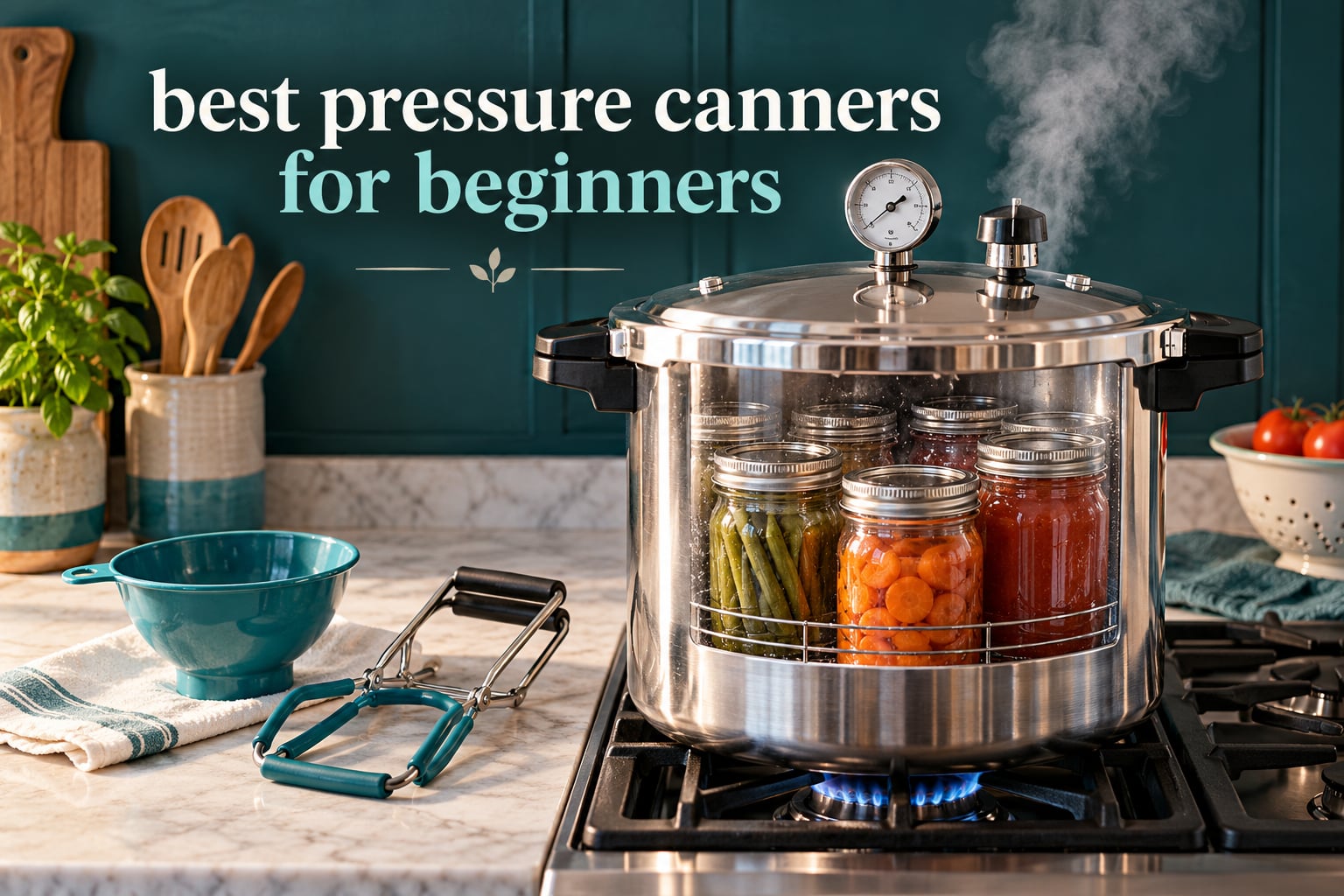
The best pressure canner for beginners is the Presto 01781 23-Quart Pressure Canner. It holds a full load of 7 quart, 20 pint, or 26 half-pint jars, works on gas, electric coil, and most smooth-top ranges, weighs 12 pounds, and carries a 12-year limited warranty. For an induction cooktop, the Presto 01784 is the swap-in alternative. Full size, dial gauge, and both regulators in the box is exactly what a first batch needs.
Most people do not start canning because the appliance looks easy. They start because the garden produced 40 pounds of green beans and the thought of leaving them to rot feels worse than the fear. That is the real objection, and it is worth naming straight up: a pressure canner is a heavy pot that you fill with steam until it reaches 240 degrees Fahrenheit, hold there for a tested time, and then let cool on its own.
It is less dramatic than that sounds. On canning forums, the most common first-batch report is that it turned out to be simpler than expected, and the most repeated community answer to “which canner should a novice buy” is a Presto, with the 16-quart singled out as the smallest size that still reads on a gauge. We compared 10 models across the stovetop, induction, and countertop electric categories to find the ones worth a first purchase in 2026.
Table of Contents
Top 3 Picks for the Best Pressure Canners for Beginners (October 2026)

Presto 01781 23-Quart
- Holds 7 quarts or 20 pints
- Dial gauge plus weighted regulator
- 12-year limited warranty
- Works on gas and coil or smooth-top
All American 10.5-Quart
- Metal-to-metal seal with no gasket
- Holds 7 pints or 4 quarts
- Cast aluminum made in the USA

Presto 01784 23-Quart
- Induction-compatible base
- Same 7 quart jar capacity
- Air vent and cover lock
- 12-year limited warranty
Two of the three picks are the same pot with a different base, which tells you something important: induction compatibility is a base swap, not a different machine. Everything else about a 23-quart Presto stays the same whether you cook on gas or on a glass cooktop.
Best Pressure Canners for Beginners at a Glance
| Product | Specs | Action |
|---|---|---|
| Presto 01781 23-Quart Pressure Canner and Cooker |
|
Check Latest Price |
| All American 1930 10.5-Quart Pressure Cooker/Canner |
|
Check Latest Price |
| Presto 01784 23-Quart Induction Compatible Pressure Canner |
|
Check Latest Price |
 T-fal 22-Quart Aluminum Pressure Canner T-fal 22-Quart Aluminum Pressure Canner |
|
Check Latest Price |
 Presto 01755 16-Quart Pressure Canner and Cooker Presto 01755 16-Quart Pressure Canner and Cooker |
|
Check Latest Price |
 NESCO NPC-9 9.5-Quart Smart Electric Pressure Canner NESCO NPC-9 9.5-Quart Smart Electric Pressure Canner |
|
Check Latest Price |
 Granite Ware 20-Quart Pressure Canner/Cooker/Steamer Granite Ware 20-Quart Pressure Canner/Cooker/Steamer |
|
Check Latest Price |
 Mirro 92116 16-Quart Pressure Cooker/Canner Mirro 92116 16-Quart Pressure Cooker/Canner |
|
Check Latest Price |
 WantJoin 23-Quart Pressure Cooker/Canner with Gauge WantJoin 23-Quart Pressure Cooker/Canner with Gauge |
|
Check Latest Price |
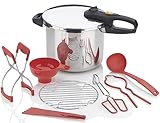 ZAVOR DUO 8-Piece Pressure Canning Set ZAVOR DUO 8-Piece Pressure Canning Set |
|
Check Latest Price |
Every canner below was checked against the same four questions: does it hold four quart jars upright, does it come with a canning rack, does it regulate pressure on its own, and will it actually fit your stove. Ratings and review counts come straight from the listing data we reviewed.
1. Presto 01781 23-Quart Pressure Canner – Best Overall Stovetop
Presto 01781 23-Quart Pressure Canner and Cooker
23 quart capacity
Holds 7 quart, 20 pint or 26 half-pint jars
12 pound aluminum body
12-year limited warranty
Pros
- Holds 7 quart jars
- the size most tested recipes assume
- Dial gauge plus weighted regulator gives two ways to confirm pressure
- Doubles as a boiling-water canner and large pressure cooker
- 12-year extended limited warranty
- Rack and 76-page recipe manual included
Cons
- Aluminum body reacts with highly acidic foods
- Not induction compatible
- Full loads take a long preheat and cooldown
This is the one I keep coming back to. It is the highest-volume reviewed canner in our group, with 88 percent of its ratings at five stars, and the size matches how most canning recipes are written. When a tested recipe says process four quart jars for 40 minutes, this pot does that with three jars of room to spare.
The dual monitoring is what makes it forgiving. A weighted regulator on top tells you the operative pressure by feel, and a deluxe dial gauge registers the full processing range underneath, which is the number that matters most once you live above 1,000 feet. Owners consistently point to having both as the reason the process felt manageable their first time.
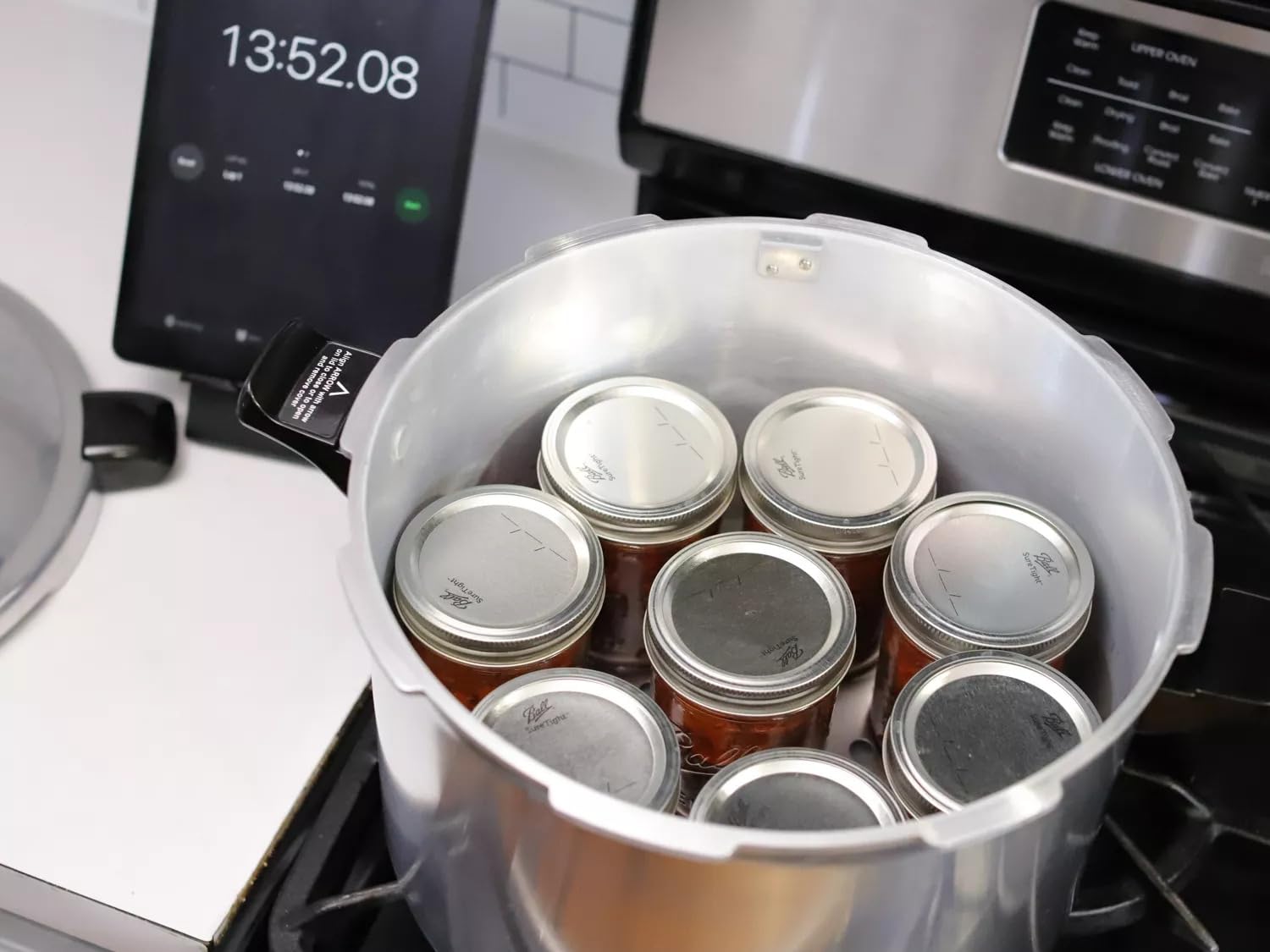
The tradeoffs are honest ones. Aluminum reacts with highly acidic foods, so a tomato-heavy batch belongs in glass or a stainless vessel instead, and the same metal rules out induction cooking entirely. The rubber gasket is a consumable part, and sourcing a replacement is something you will eventually do.
Reviewers also mention the shape of a big batch: a full 23-quart pot takes real time to come to pressure and even longer to cool naturally. The upside is that you are filling seven quart jars at once, so the clock cost is spread across far more food than a smaller pot delivers.
What you should know before you buy it
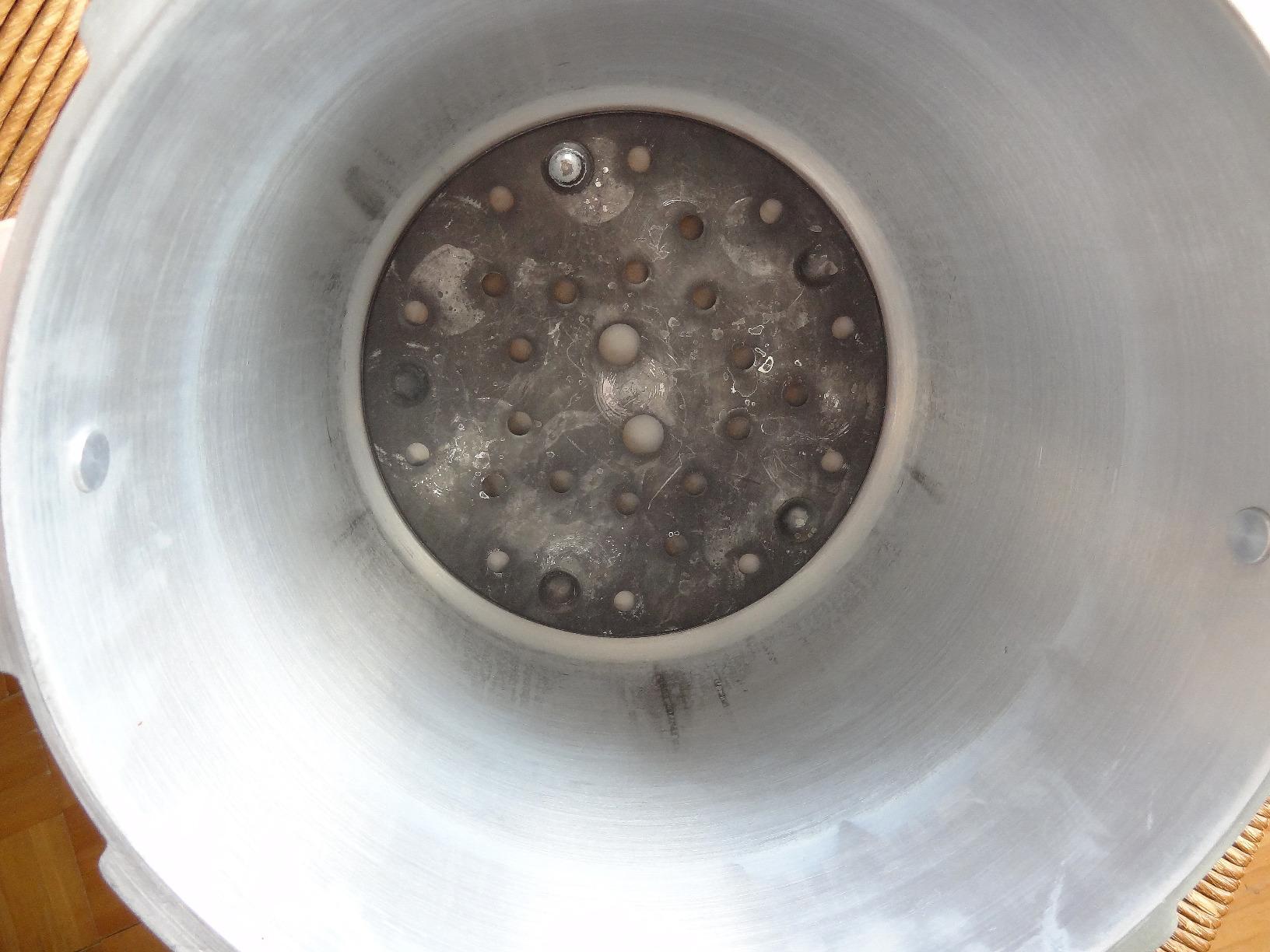
Check your burner before you commit. The body is 15.5 inches deep and 17.5 inches wide, which fits a full-size gas range and a standard coil but can overhang a small apartment burner. The listing also says smooth-top ranges work, which is the spec most beginners with a glass cooktop are looking for.
Confirm the accessories are in the box. A canning or cooking rack and a 76-page instruction and recipe book ship with the pot, and experienced canners often add a second rack so smaller jars can be stacked in two layers rather than wasting headroom.
Where it falls short
Acid-heavy recipes are the real ceiling. Soups and stocks that lean on vinegar or large volumes of tomato are not what this pot is for, and you will end up moving that work to another vessel. If most of what you want to can is pickled or tomato-based, keep looking.
Induction owners should skip this model entirely rather than trying a workaround, because an aluminum base will not register on a glass cooktop. The 01784 below is the same family with a stainless-clad base, and it is the version to buy instead.
2. All American 1930 10.5-Quart Pressure Cooker/Canner – Best Premium Pick
All American 1930: 10.5qt Pressure Cooker/Canner (The 910) – Exclusive Metal-to-Metal Sealing System – Easy to Open & Close – Suitable for Gas, Electric, or Flat Top Stoves – Made in the USA
10.5 quart capacity
Metal-to-metal seal, no gasket
Holds 7 pint or 4 quart jars
14.8 pound aluminum body
Pros
- Highest rating in the roundup at 4.9 with 93 percent five stars
- No gasket to buy
- replace or fit wrong
- Precision machined regulator weight governs pressure
- Made in the USA by Wisconsin Aluminum Foundry
- US servicing and free replacement safety labels
Cons
- Smallest jar count of the large canners at 7 pints or 4 quarts
- Very heavy to load
- so fill jars where they cook
- Aluminum body is not for vinegar or acid-heavy batches
If you want a canner that never asks you to buy a rubber part, this is it. The All American 1930 uses a precision machined metal-to-metal sealing system, so there is no gasket in the design and no gasket replacement schedule to remember. That single decision is the reason it shows up so often as a lifetime purchase.
It carries the highest rating in this group, 4.9 across nearly 10,000 ratings, and owners describe it as the benchmark other canners are measured against. The included manual doubles as a pressure-cooking and canning recipe book, and the wing-nut clamps give you a defined, even seal every time.
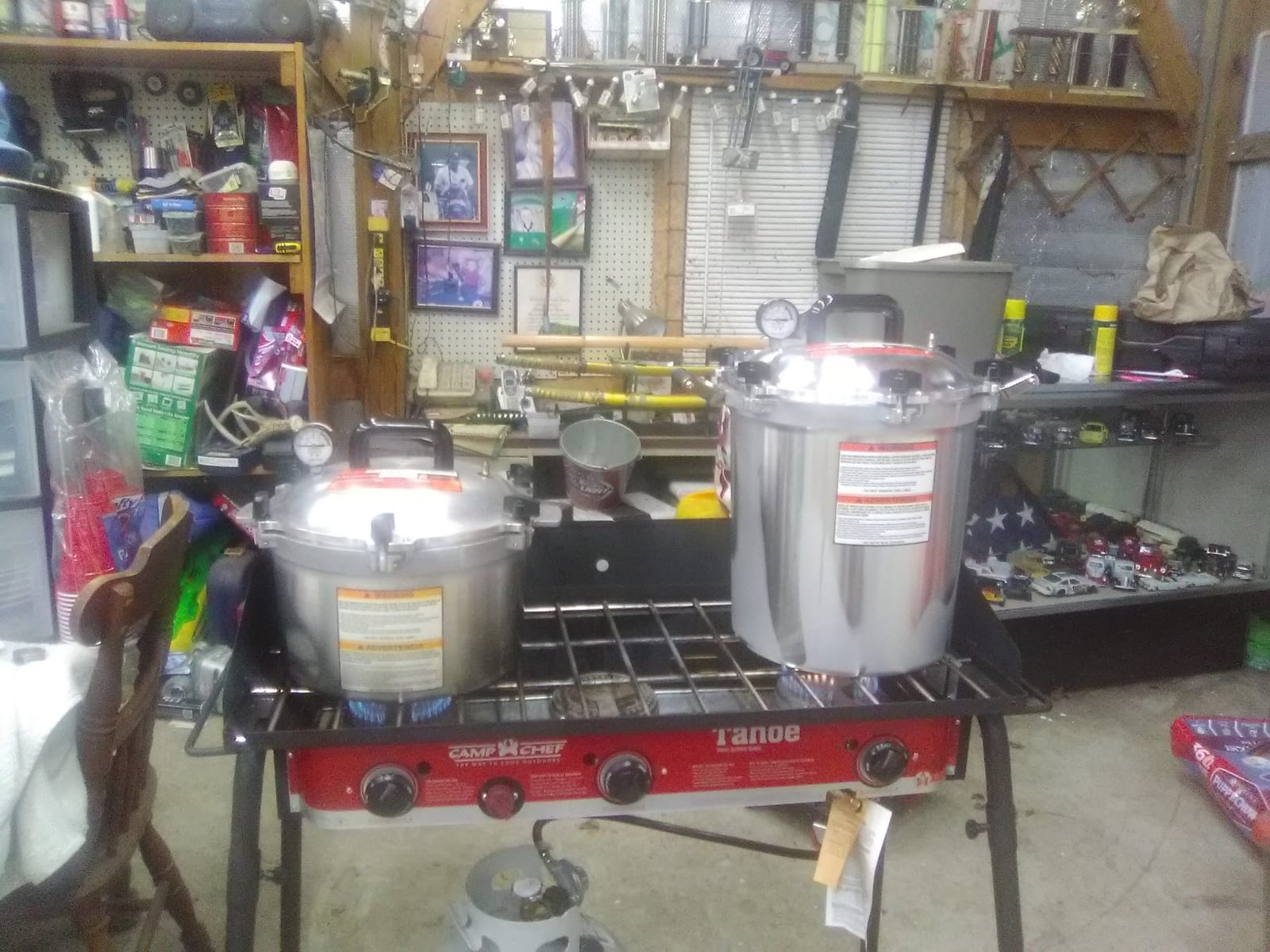
Two details trip up first-timers. The steam gauge is reference only, because the precision machined regulator weight is what actually governs pressure, and the rim wants a light coat of food-grade lubricant every few uses to keep the lid from sticking.
Owners also warn about the weight. At 14.8 pounds empty and holding seven pints or four quarts, loading it is a two-person job unless you fill the jars on the stove and can them in place. Several reviews suggest exactly that workflow.
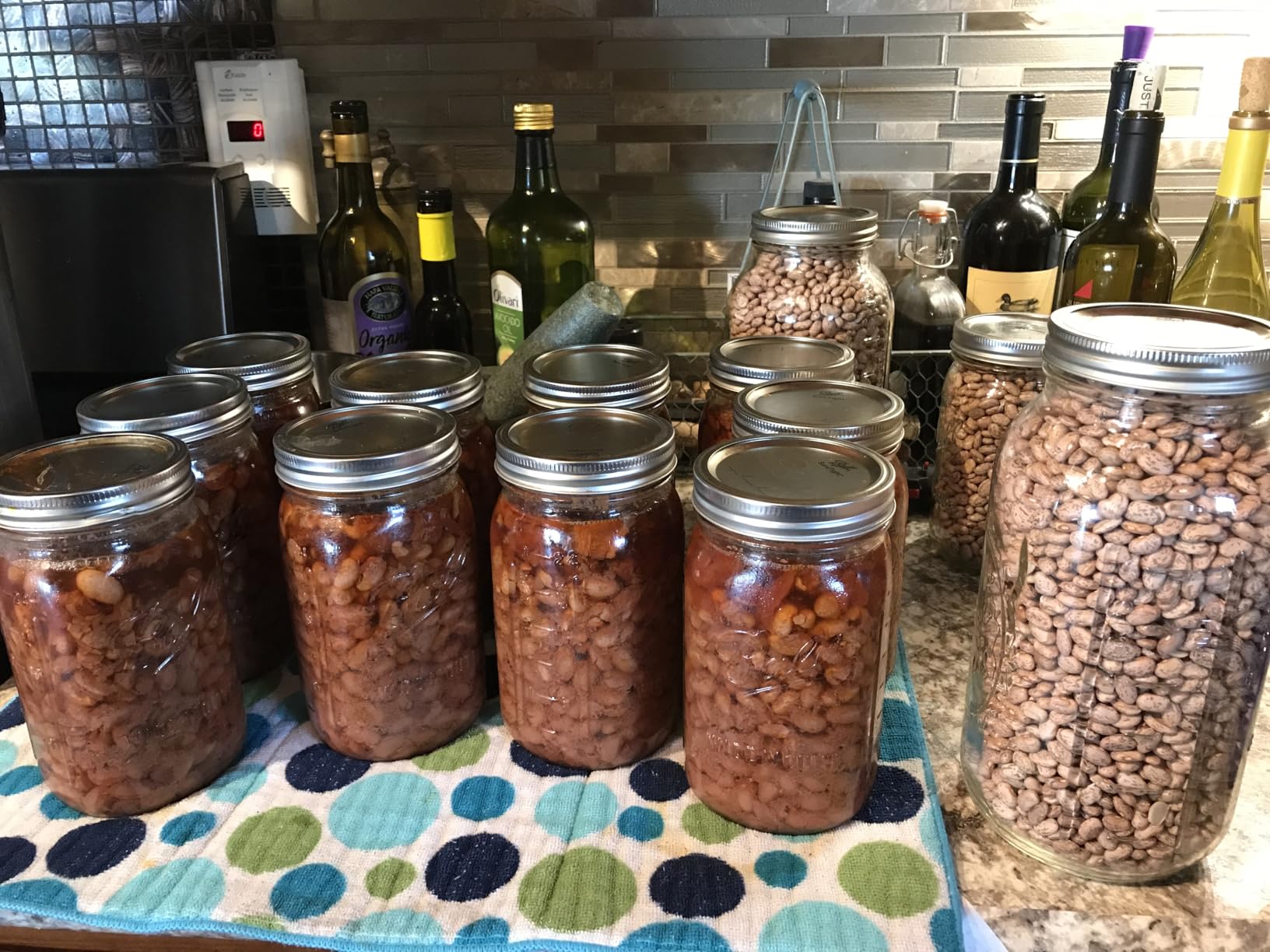
Why the no-gasket design matters
Most complaints about stovetop canners trace back to one part. A rubber gasket swells, hardens or seats badly, and you get a leak that sends you back to the manual. Eliminating that component removes an entire category of failure and an entire line item from your maintenance list.
The company supports the product with a serviceable parts program, US servicing, and free replacement safety labels, which is the kind of long-horizon support that fits a canner you buy once. Forum owners report these models being inherited rather than replaced, which is the clearest endorsement a kitchen appliance can get.
Where it falls short
Four quarts per load is small next to the 23-quart models. If you are processing a full garden harvest of beans or corn, you will run multiple cycles, and a small pot heats and cools fast in a way that does not scale well to volume.
As with every aluminum canner here, stay away from vinegar and acid-heavy recipes. The wing-nut lid also needs even tightening, so a sloppy seal is possible if you dog it down unevenly, and beginners who skip the manual are the ones who report issues.
3. Presto 01784 23-Quart Induction Compatible Pressure Canner – Best Induction-Compatible Stovetop
Presto 01784 23-Quart Induction Compatible Pressure Canner
23 quart capacity
Stainless steel-clad induction base
Holds 7 quarts or 20 pints
12-year limited warranty
Pros
- Full-size canning capacity on an induction cooktop
- Stainless-clad base heats more evenly than all-aluminum
- Air vent and cover lock add a safety layer
- Same 7 quart capacity as the 01781
- Well-written instructions for first-time canners
Cons
- Aluminum body is unsuited to highly acidic foods
- Comes with only a 15 lb regulator and one rack
- Wide heavy base needs cooktop clearance
This is the answer to the most common kitchen constraint nobody warns you about. If you cook on induction, most consumer canners simply will not heat, and this stainless-clad base is the way to keep full 23-quart capacity instead of dropping to a smaller pot.
Owners who switched from a non-induction canner treat compatibility as the decisive benefit, and many report multiple years of dependable seals. They also describe the weight jiggle as a clear, audible signal that pressure is on, which helps when you are new to watching a canner rather than reading it.
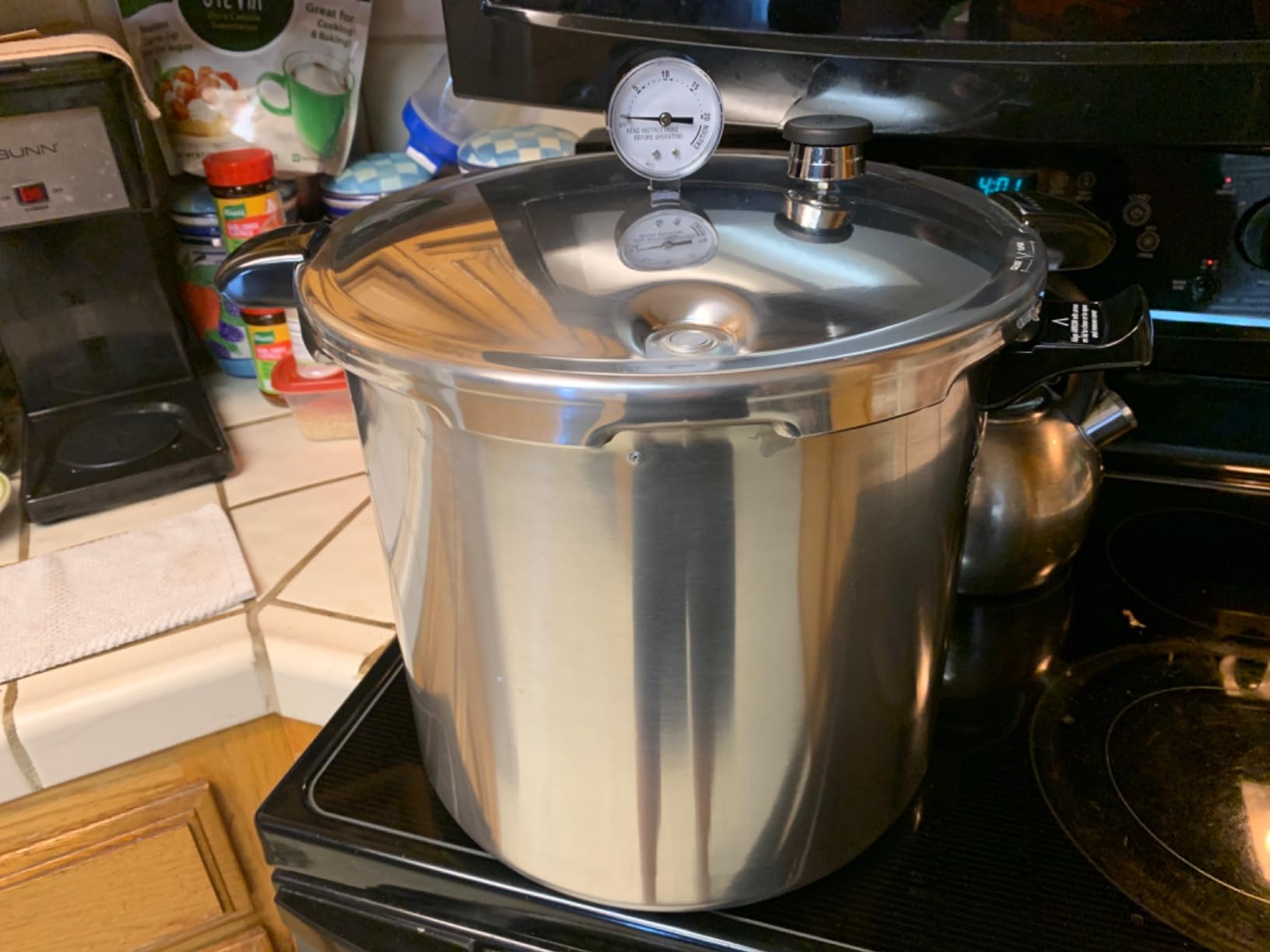
The stainless-clad layer also spreads heat more evenly than the plain aluminum version, which means fewer hot spots against the jars. At 5.67 kg it is close to the 01781 in weight, so it is still manageable full, and the arrow alignment on the lid makes the cover lock straightforward.
What arrives in the box is thinner than the jar capacity suggests. One rack and a single 15 lb regulator are included, so you will want the optional 5 and 10 lb weights for altitude work and a second rack if you plan to stack smaller jars in two layers.
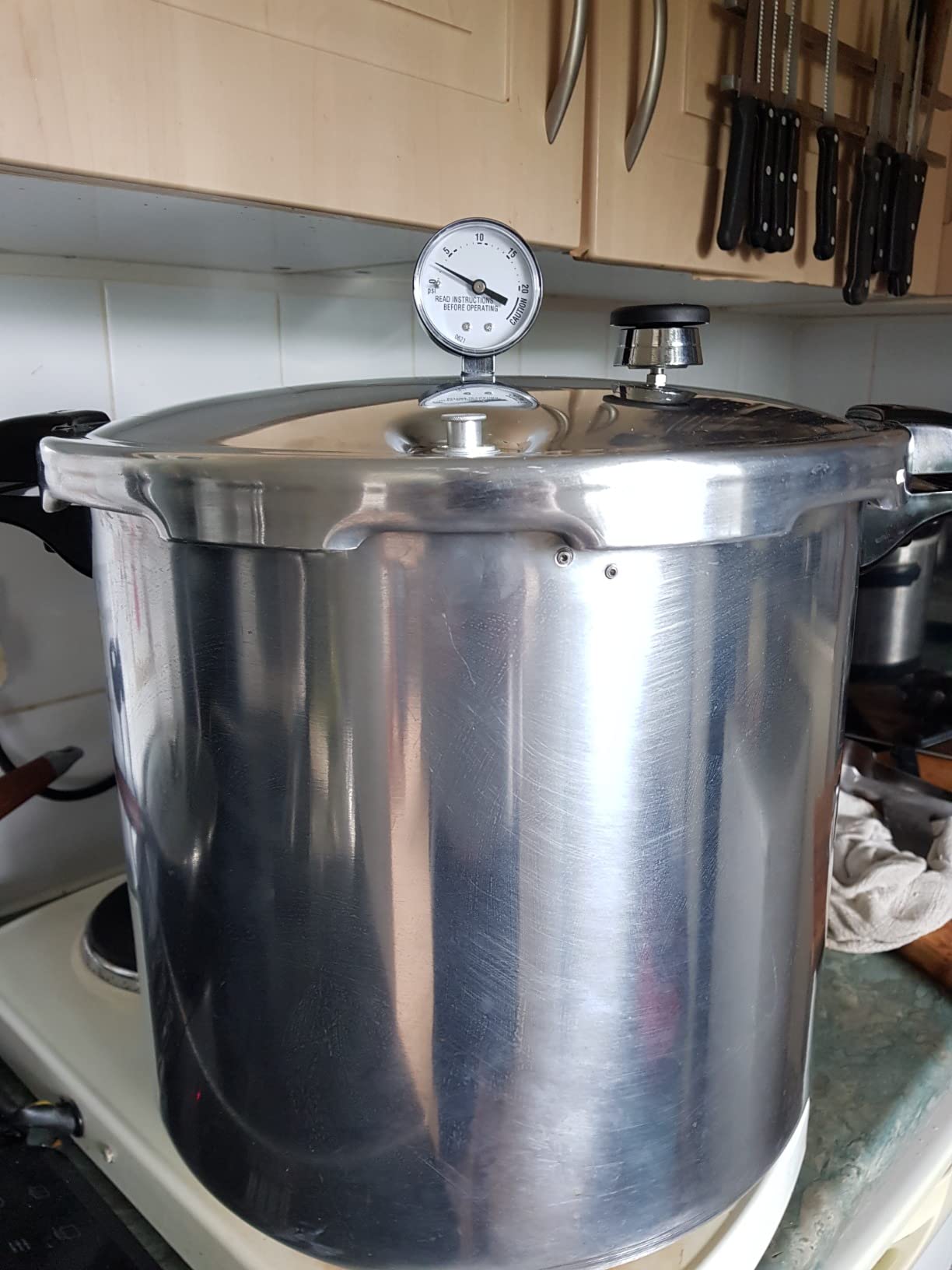
Will it actually fit your cooktop
Measure before ordering. At 13.5 inches deep and 17.5 inches wide with a heavy base, this needs a real burner, and a small portable cooktop is a stretch. The listing lists induction, gas, electric and smooth-top compatibility, so the stove type itself is rarely the problem.
The bigger practical question is clearance above the burner. A tall kitchen cabinet directly over a small range can prevent the lid from being set down safely, and that is a layout issue no product spec will solve for you.
Where it falls short
Beyond the starter accessories, the body is still aluminum, so highly acidic recipes are out for the same reason as the 01781. Owners who were previously happy with all-aluminum sometimes notice the induction base takes slightly longer to come up to a full boil.
It is also the more expensive route into the Presto family for a reason. If your stove is gas or coil, paying for the induction base buys you nothing, and the 01781 gives you the same jar capacity with a longer warranty history behind it.
4. T-fal 22-Quart Pressure Canner – Best for Big Batch Days
T-fal 22-Quart Aluminum Pressure Canner, 3 PSI Settings, Home Canning, Includes Racks & Canning Guide, Large Capacity, Pressure & Water Bath Canning for Vegetables, Meats, Seafood & Fruits, Silver
22 quart capacity
Holds up to 24 half-pint or 7 quart jars
Three PSI regulator settings
Two canning racks included
Pros
- Two canning racks included for stacking small jars
- Built-in three-setting regulator weight removes the guesswork
- Begins with the most usable jar count in the group
- Handles pressure and water-bath canning in one pot
- Beginners report it feels forgiving
Cons
- Some units arrive with a slow or uncalibrated pressure indicator
- Steam can escape at the handle if the gasket is not seated
- Aluminum body discolors and is not for acidic foods
Two racks in the box is the headline here. For a first-time canner who wants to do a small batch of jelly and a batch of beans at once, that single included accessory changes how the first season feels compared with buying a second rack later.
The built-in regulator weight offers three settings, so you are not sorting loose weights and trying to remember which one the altitude rules require. Combined with the easy-to-read gauge and a beginner-friendly steam release valve, it is the model reviewers most often call the easiest to learn.
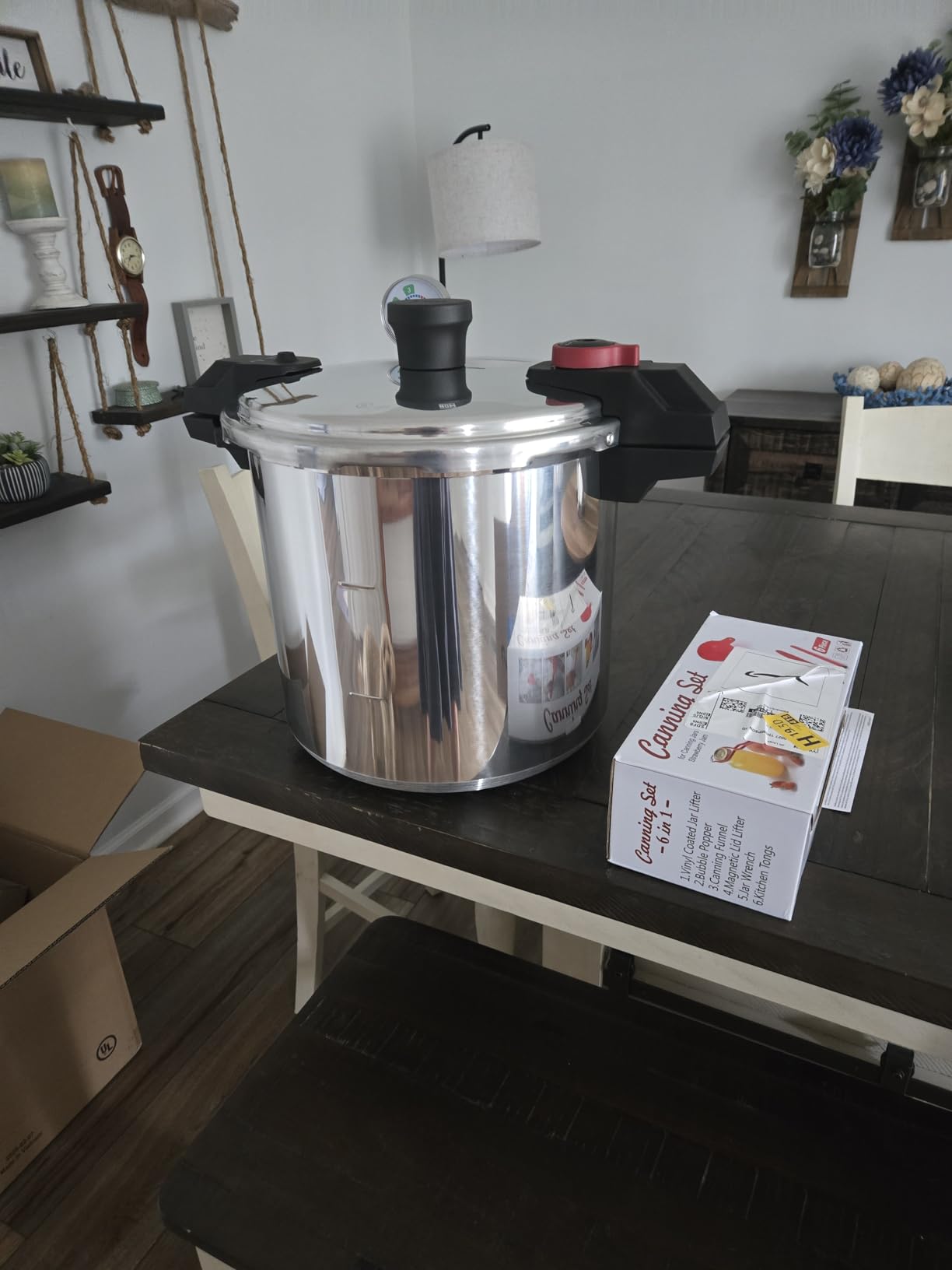
Capacity is the other strength. Up to 24 half-pints, 18 pints, or 7 quarts per batch makes it the most flexible jar count in this group, and it handles both pressure canning and water-bath canning in the same vessel.
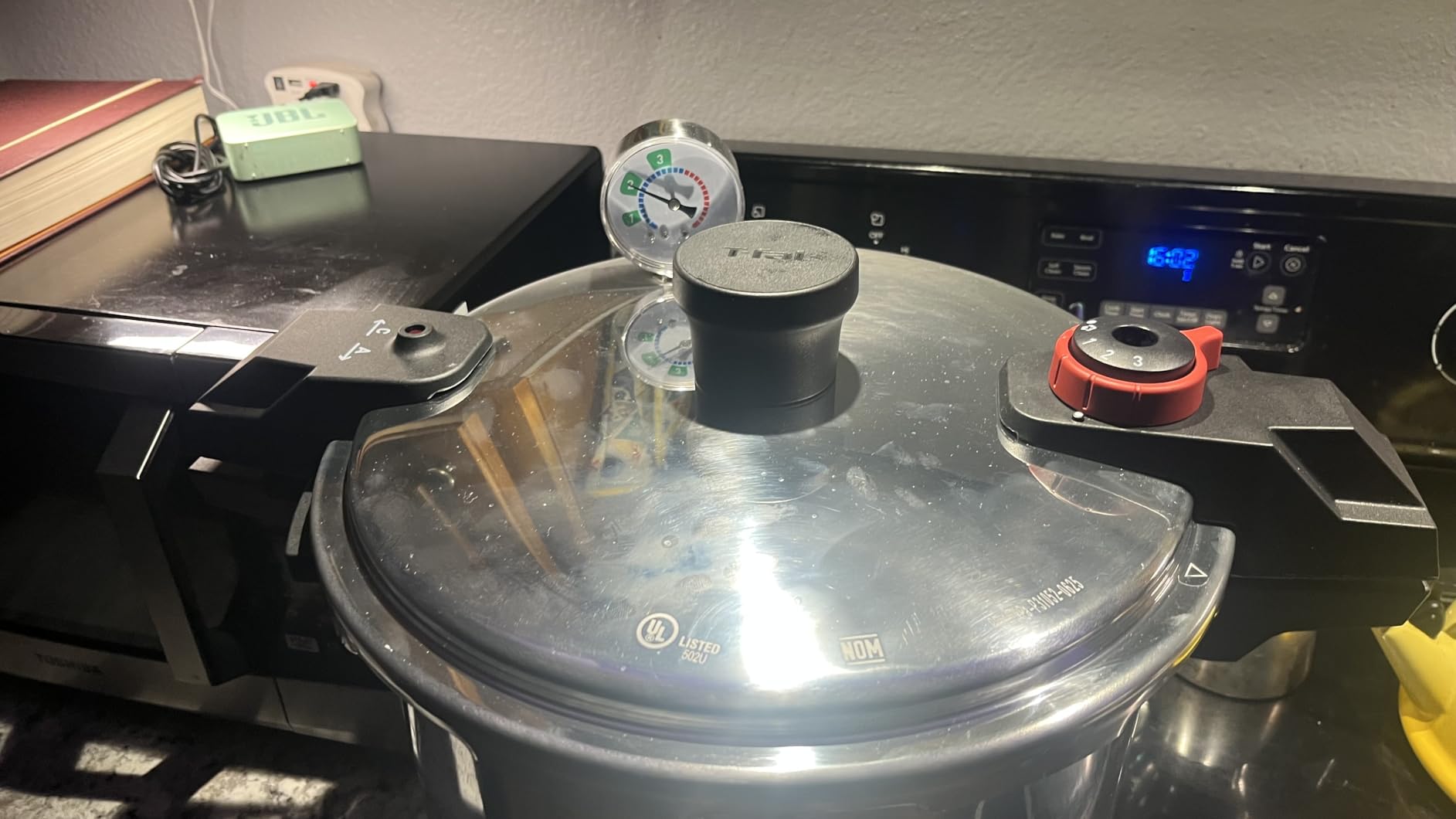
Quality control is where it gets mixed. The reviews are the most divided in our set, with 74 percent five stars sitting next to 9 percent one star, and the complaints cluster on gauge calibration, gasket seating and steam escaping around the handle.
Check the gauge on arrival
This is the one product here where we would verify the pressure indicator before your first real batch. A canner that reads low or responds slowly is the single most cited issue, and it is a safety-relevant part rather than a convenience feature.
Your county extension office can help confirm what a reading should look like, and keeping the printed manual nearby matters because a gasket that is not seated and cleaned will leak steam at the handle, which is the other repeated complaint.
Where it falls short
It is large and heavy at 16 inches tall and 14.8 pounds, and the warranty is one year, the shortest in this group. If your kitchen is compact, that footprint is a real constraint even before the weight is.
Several buyers who hit the quality issues report that a replacement resolved them, which tells you the design is sound and the variance is in production. It is also aluminum throughout, so it carries the same acid-food limitation as the rest of the aluminum models here.
5. Presto 01755 16-Quart Pressure Canner – Best for Small Kitchens
Presto 01755 16-Quart Aluminum Pressure Canner and Cooker
16 quart capacity
Weighs 10.5 pounds
Warp-resistant aluminum with cover lock
Compact 12 inch height
Pros
- Lightest full-size Presto at 10.5 pounds
- Compact footprint for apartments and small kitchens
- Same air vent and cover lock as larger models
- Large installed review base for a proven design
Cons
- Fewer jars per load than the 21.5 and 23-quart models
- Not induction compatible
- Aluminum body unsuitable for highly acidic foods
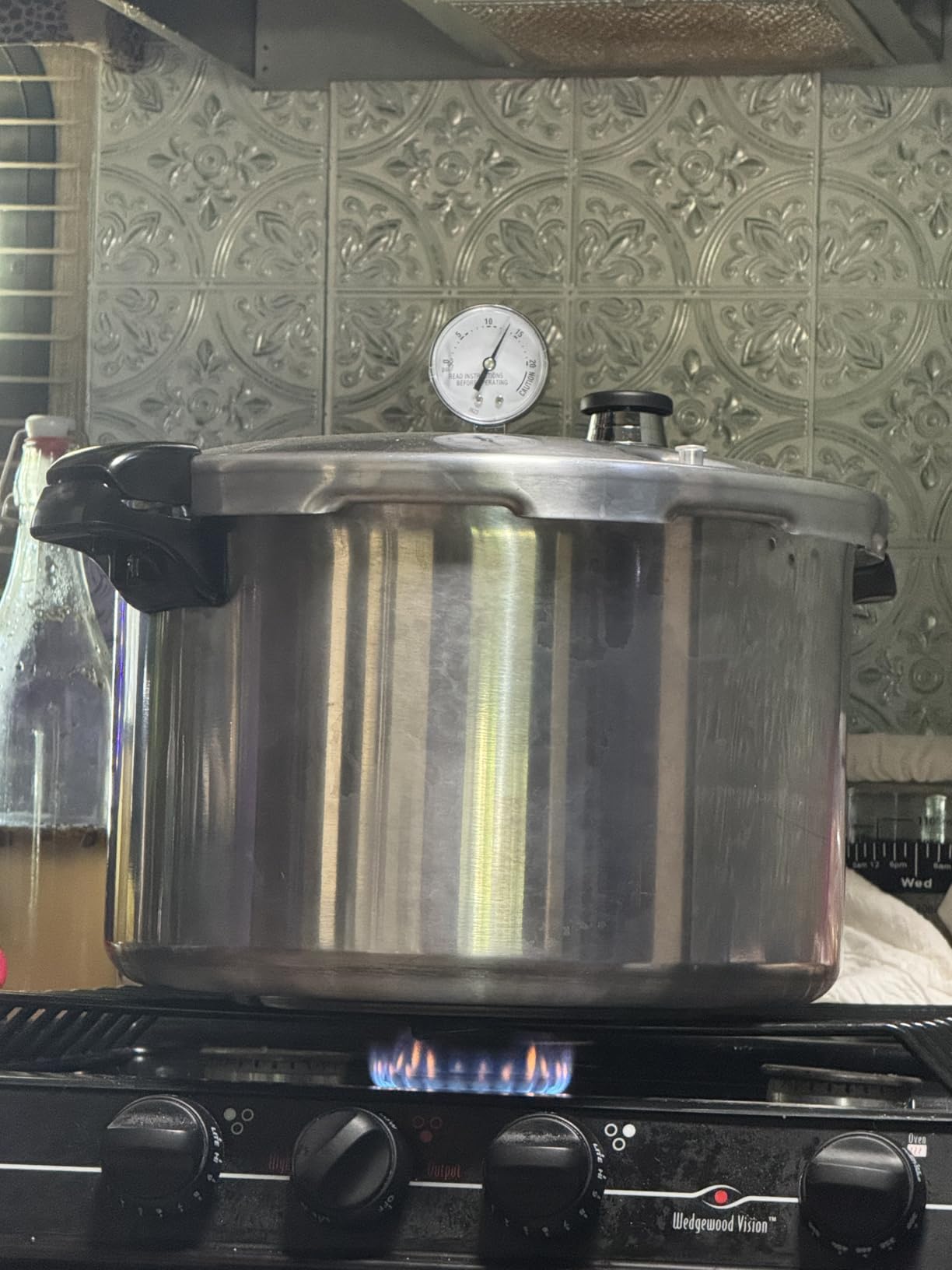
For a first-time canner, this is the size the forums actually recommend. At 10.5 pounds it is the lightest full-size Presto, and a smaller pot heats up and cools down faster, which matters when you are standing in a kitchen on a weeknight waiting for a canner to depressurize.
It keeps the air vent and cover lock that the larger Presto models use, so you are not giving up the main safety feature for the smaller footprint. Forum posters describe it as the smallest size that still gives you a gauge to read, which is the reason it wins the starter slot among people who have actually done it.
The trade is batch size. You are giving up a couple of jars per load compared with the 23-quart models, so a heavy harvest means more cycles. The upside is that a partial load is easier to manage, and a small first batch of greens is a good thing to practice on anyway.
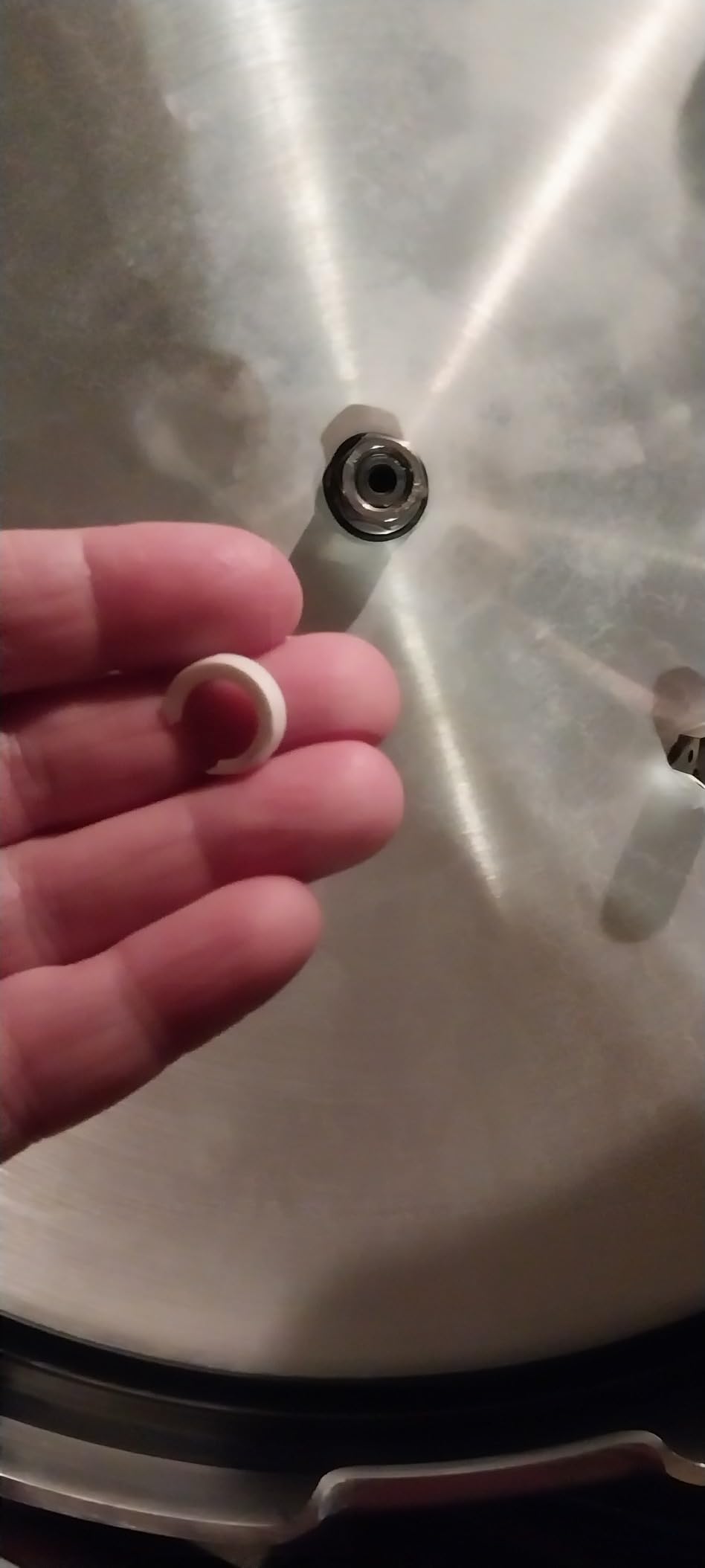
One thing to know before you buy: the manufacturer listing is sparse, with little detail on gauge type or included accessories. Buyers fill that gap from experience with the Presto formula of warp-resistant aluminum and a cover lock, so read the manual that ships with it before your first batch.
Who this size actually suits
A two or three person household, an apartment kitchen, or anyone who has been put off by the sheer bulk of a 23-quart pot. If your yearly harvest is measured in a few dozen jars rather than a few hundred, the smaller cycle time gives you a better experience than the bigger capacity does.
The upgrade path is straightforward if you outgrow it. A 23-quart Presto sits in the same product family, and forking over a longer version of something you already understand is a far easier decision than choosing your first canner correctly.
Where it falls short
The warranty is one year, against 12 years on the larger Presto canners, and that gap is worth weighing if you plan to keep the canner for decades. It is also not induction compatible, and the body is aluminum, so acidic batches are out.
The sparse listing means more of the ownership burden sits with you. If you want the gauge type, included rack and processor times spelled out before you commit, one of the better-documented models in this roundup is the safer first purchase.
6. NESCO NPC-9 9.5-Quart Smart Electric Pressure Canner – Best Countertop Electric
NESCO NPC‑9 Smart Electric Pressure Canner and Cooker for Home Food Preservation, 9.5‑Quart Stainless Steel with Digital Controls
9.5 quart stainless chamber
Digital programs with a timer
Safety lock lid and float valve
4 to 5 jars per batch
Pros
- No stovetop heat to manage
- Digital programs make cycles repeatable
- Safety lock lid and float valve reduce intimidation
- Removable nonstick inner pot simplifies cleanup
- Includes standard and high-altitude limiting valves
Cons
- Smallest batch here at about 4 quarts or 5 pints
- Wordy instructions raise the learning curve
- Wide-mouth pint jars are awkward to lift from the inner pot
This is the least intimidating way into pressure canning, and it is why electric canners keep showing up in beginner recommendations. There is no burner, no flame to manage, and no weighted regulator to read. The digital programs and timer do the same work every time you ask.
The safety lock lid and automatic float valve mean the unit will not open while it is under pressure, which removes the single scariest moment for a new canner. Owners with two to three years of use report zero failures and consistently sealed jars, and it also runs steam, slow cook and water bath modes.
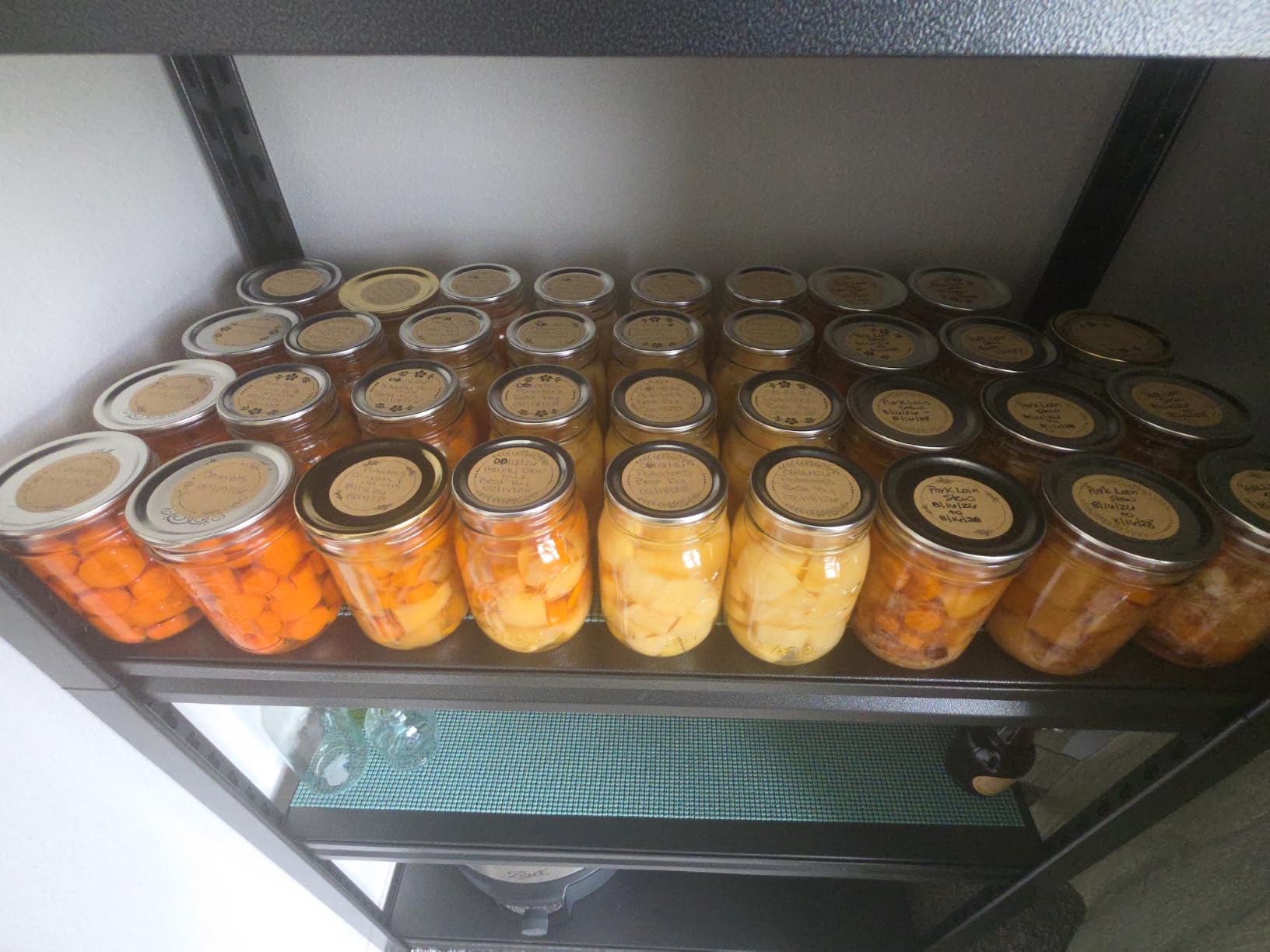
Now the honest part. The USDA has not published tested processing time tables for electric pressure canners, which means you are relying on the manufacturer’s instructions rather than an independent government schedule. Plenty of canners do it and seal correctly, but it is a real difference in how much independent evidence sits behind the process.
Capacity is the other limitation. Four to five jars per batch means a large harvest means a lot of cycles, which is why experienced canners tend to keep a small electric unit as a companion to a stovetop canner rather than as their only machine.
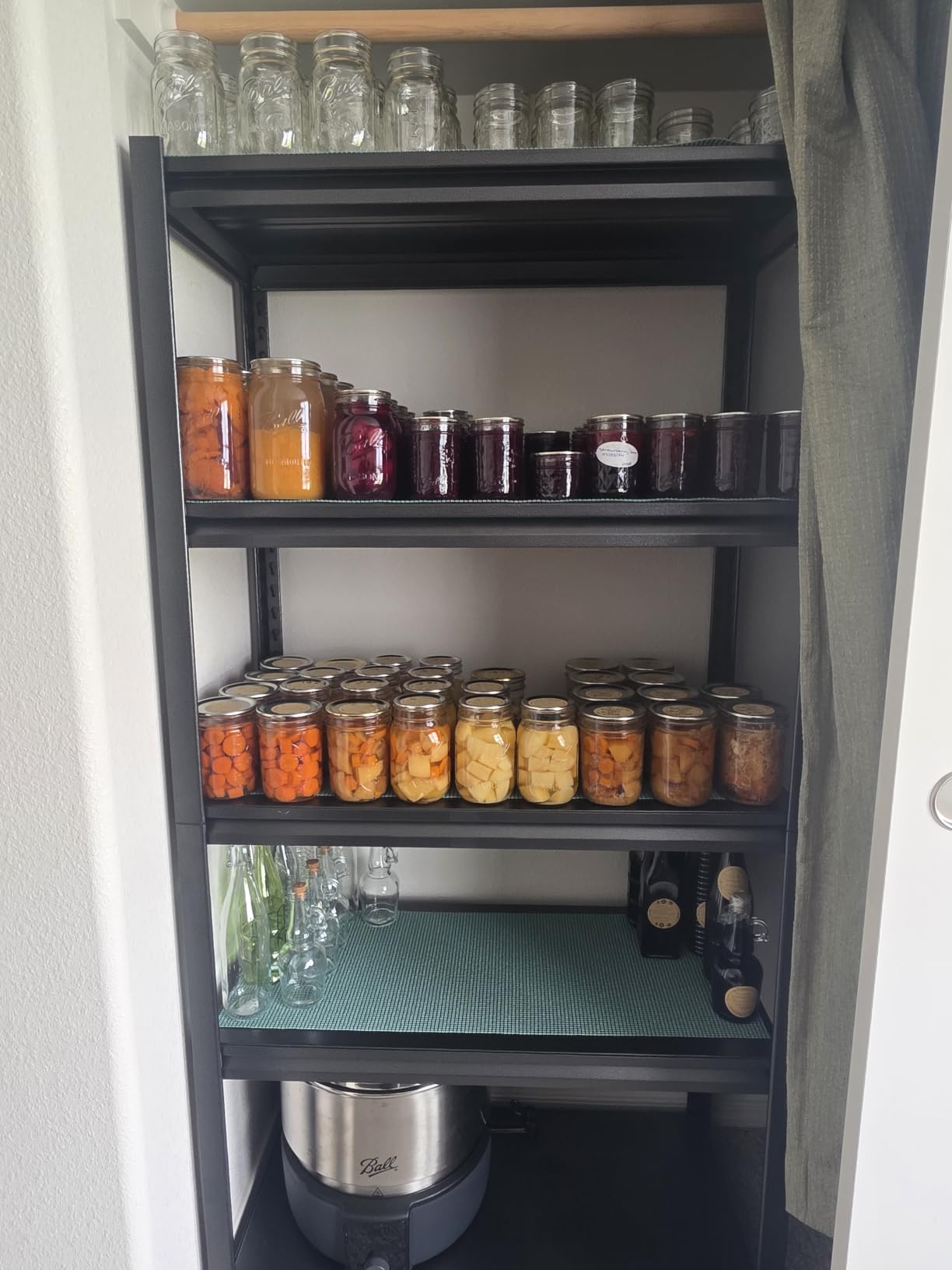
Is the electric approach safe for a beginner
It is the least physically risky option because nothing is pressurized over an open flame and the lid will not release under pressure. The distinction to understand is that physical safety and tested-recipe validation are two different questions, and only the second one is still open for electric models.
If you want independent tested processing times, the practical compromise many canners make is to follow published times in a stovetop canner and use the electric unit for smaller batches of foods where you are comfortable with the manufacturer’s guidance.
Where it falls short
Small batch size is the dealbreaker for bulk work, and it does not reach stovetop canner volumes. The wordy documentation also gives it a steeper first-week learning curve than the manual-weight approach, which is counterintuitive for an appliance sold as the easier option.
Wide-mouth pint jars are genuinely awkward to grip and lift out of the narrow inner pot, and you still have to wait for pressure to come up before you can walk away from the counter. The warranty is one year.
7. Granite Ware 20-Quart Pressure Canner/Cooker/Steamer – Best Hard-Anodized Finish
Granite Ware Pressure Canner/Cooker/Steamer, 20-Quart
20 quart capacity
Hard-anodized aluminum body
Three-piece regulator at 5, 10 and 15 psi
Weighs 10.5 pounds
Pros
- Hard-anodized surface resists rust and staining
- Three-piece regulator covers 5
- 10 and 15 psi in one system
- One pot handles canning
- pressure cooking and steaming
- Light for a 20-quart vessel at 10.5 pounds
Cons
- Smallest review base in the group
- so long-term data is thin
- Aluminum body is not appropriate for acid-heavy recipes
- Bulky 15.75 inch footprint
Hard-anodized aluminum is the finish argument here. It resists rust and staining better than plain aluminum, which matters for a vessel that spends years cycling boiling water and acidic vegetable matter. At 10.5 pounds for 20 quarts, it also undercuts most of the larger pots on weight.
The three-piece regulator is calibrated at 5, 10 and 15 psi as one system, so the altitude question resolves without hunting for a loose weight. Owners also like that the same pot works as a canner, pressure cooker and steamer, which is genuinely useful during non-canning weeks.
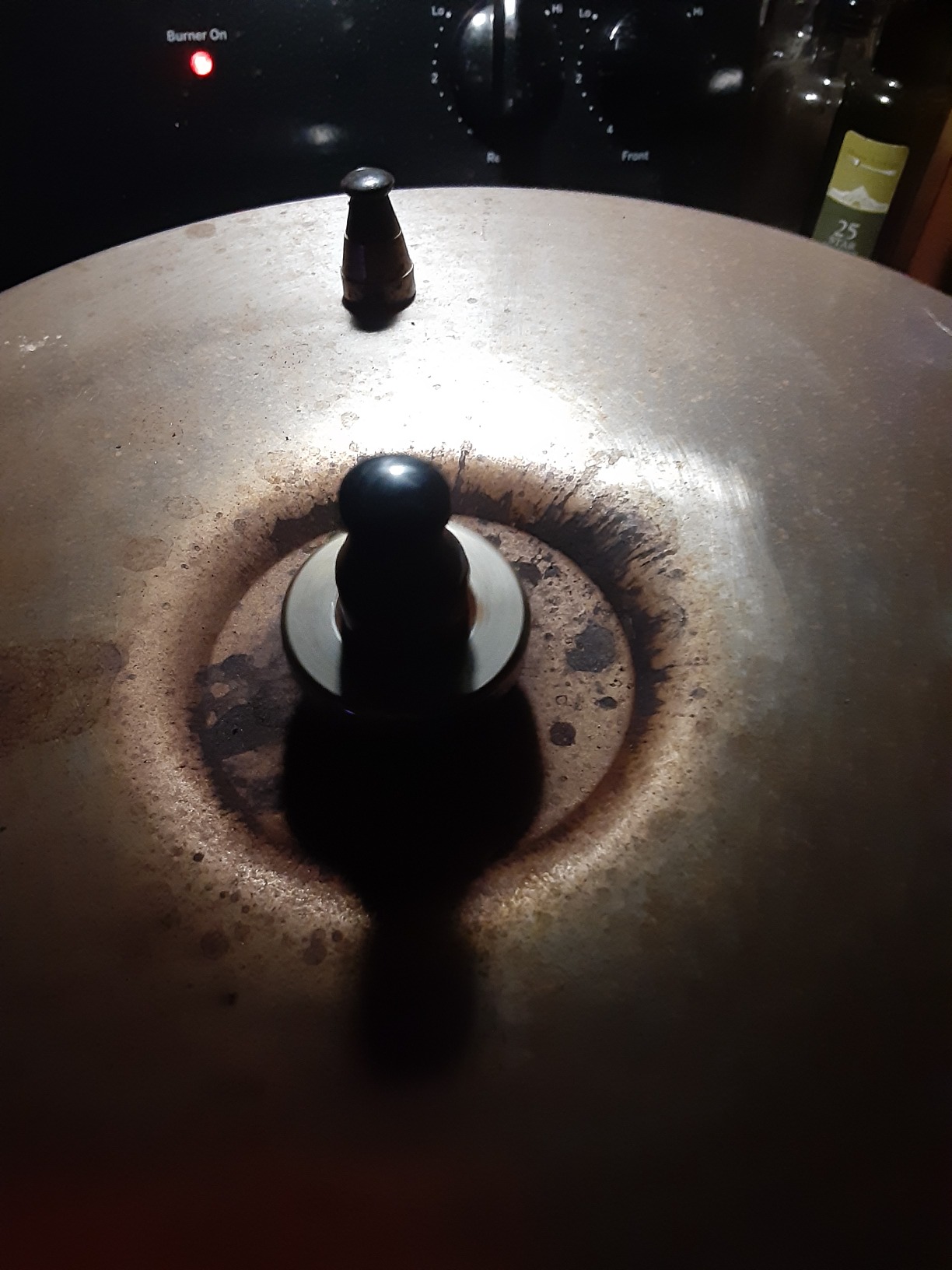
It holds 20 pint or 5 quart jars per batch, a middle ground between the compact models and the 23-quart flagships. That middle position is exactly what a small household with a steady but modest harvest tends to want.
The limitation is evidence. With roughly 800 ratings, this is the thinnest long-term record in the roundup, and experienced canners tend to gravitate toward the better-documented Presto and All American models for a first purchase.
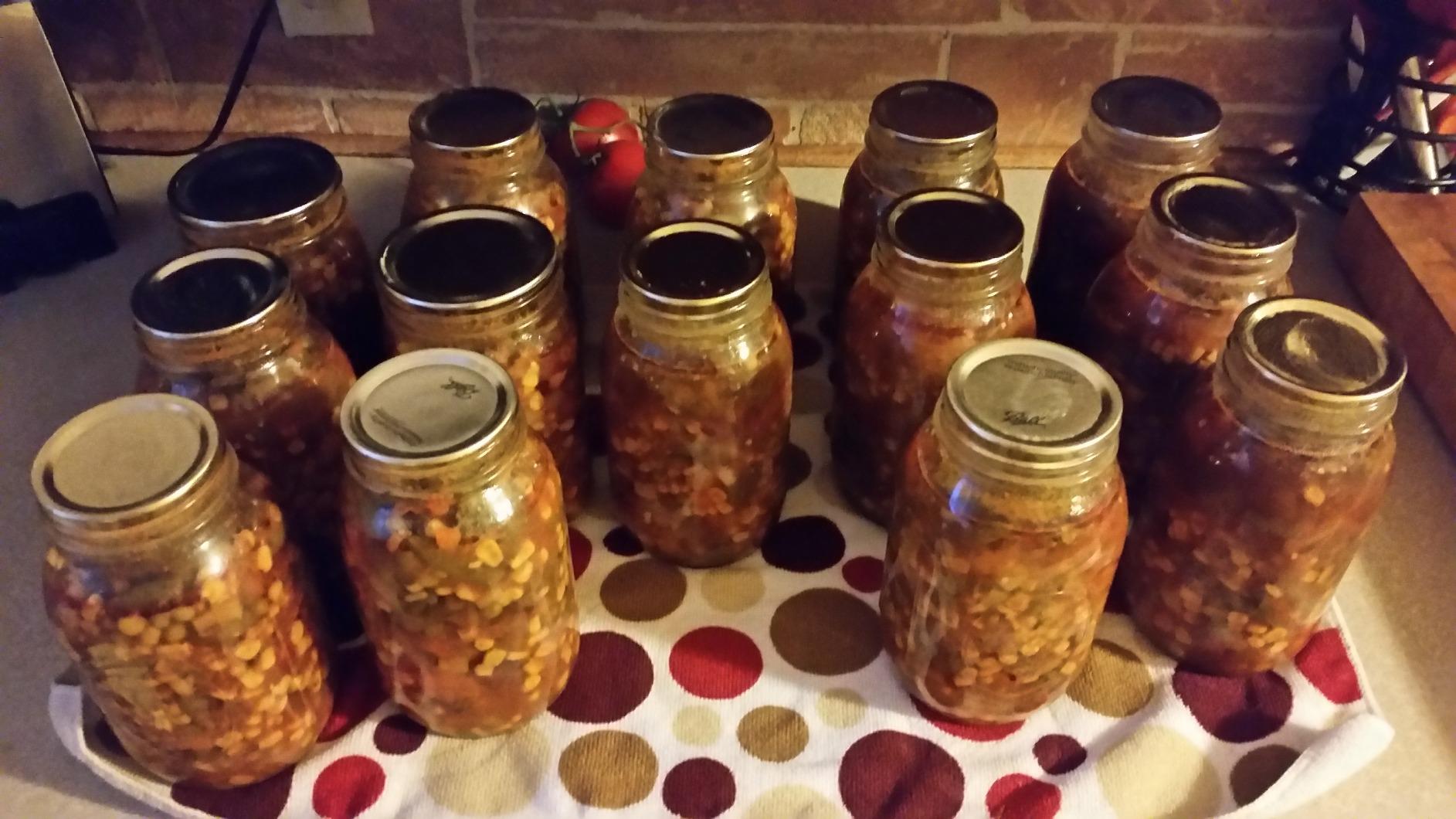
Is hard-anodized aluminum worth choosing
For a canner that will sit through a decade of processing runs, the surface treatment is the difference between a pot that still looks presentable and one that looks neglected. It does not change the cooking physics or the pressure control at all.
The honest counterpoint is that the finish is an upgrade over the base material, not a substitute for it. Acid-heavy recipes are still out, because the anodized layer is still aluminum underneath.
Where it falls short
The 15.75 inch footprint eats cooktop and sink space, which is awkward in a galley kitchen. This is also an older design with a sparser feature listing than the newer Presto models, and the mechanical knob control gives you less information about what the canner is doing than a digital display does.
If you are nervous about committing to a lightly reviewed model, the stronger review base on the Presto canners is worth more to a beginner than the finish upgrade is. Pick this one if you already know you want hard-anodized and you plan to use it for soups and vegetables rather than pickles and tomatoes.
8. Mirro 92116 16-Quart Pressure Cooker/Canner – Best Lightweight Weighted-Gauge Model
Mirro 7114000228 92116 Polished Aluminum 5 / 10 / 15-PSI Pressure Cooker / Canner Cookware, 16-Quart, Silver
16 quart capacity
Holds 16 pint or 5 quart jars
Three regulators at 5, 10 and 15 psi
Weighs 9.5 pounds
Pros
- Lightest canner in the group at 9.5 pounds
- Three interchangeable regulators for altitude flexibility
- Cool-touch side handles stay comfortable on long runs
- Two cooking racks included
- Rustproof heavy-gauge aluminum with a polished exterior
Cons
- Smaller jar count than 20-quart models
- Not ideal on glass-top stoves per owners
- Pressure weight can stain the vent area rust-brown
This is the lightest canner in the roundup, and at 9.5 pounds that changes how a canner feels in a small kitchen. Loading and unloading is the part that scares beginners most, and weight is the single biggest contributor to that fear.
It also has the widest gauge flexibility here, with three interchangeable regulators at 5, 10 and 15 psi. Reviewers who switched away from a dial-gauge canner specifically to get the weighted jiggle say the sound and feel of it is a more honest signal than watching a needle.
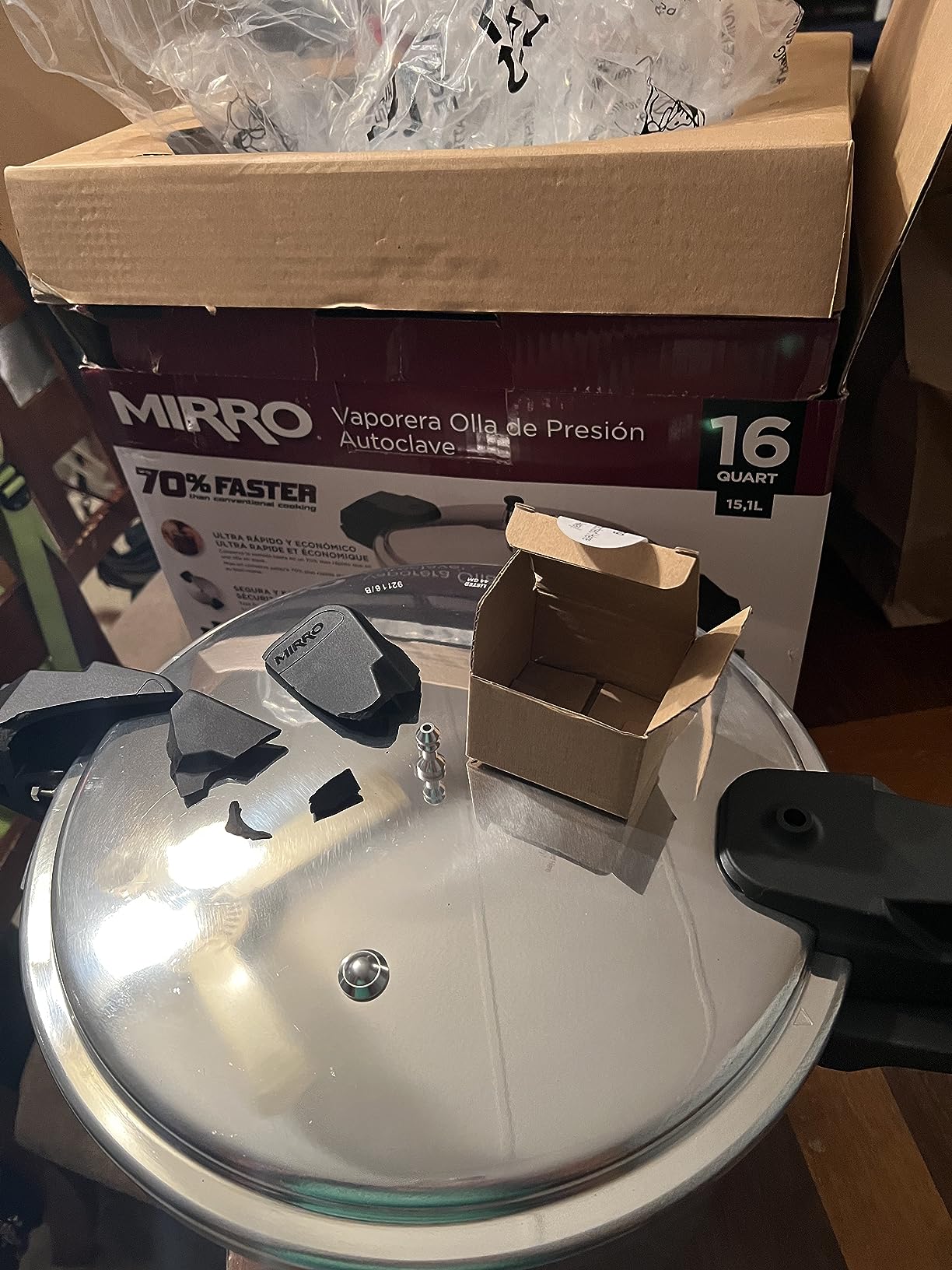
It holds 16 pint or 5 quart jars, more than the 10.5-quart premium model, and two cooking racks are included for maximizing jar space. Owners like the cool-touch side handles, which matter over a long processing run.
Two small annoyances come up repeatedly. The pressure weight can leave a rust-colored stain around the steam vent, and the regulator has to be pushed firmly onto the stem to seat properly, which is the detail beginners most often get wrong.

Why some canners prefer the weighted gauge
A weighted regulator does not drift. It either holds the vent open or it does not, so the pressure is at the value the weight is stamped for, and the jiggle is a physical confirmation rather than an interpretation of a dial. The tradeoff is that the weight is the reference point rather than a second reading.
For most beginners that is an advantage, because there is nothing to misread. You learn one signal instead of reconciling two, and three included regulators cover every altitude band.
Where it falls short
Owners specifically report it is not ideal on glass-top stoves, so glass-cooktop households should verify before committing. The 16-quart version also does not include a rack for stacking smaller jars, which limits how you use the headroom on a mixed batch.
As with the rest of the aluminum group, acidic recipes are out. The review base is on the thinner side, and Mirro is a legacy name whose current line is narrower than Presto, so the accessory ecosystem is smaller if you need a replacement part.
9. WantJoin 23-Quart Pressure Cooker/Canner – Best for Large-Batch Value
Wantjoin Aluminum Pressure Cooker 23Qt Pressure Canner, Pressure Pot with Pressure Control for Home Kitchen or Restraurant, Commercial Pressure Cooker with Gauge
23 quart capacity
Induction-compatible composite base
Six safety valves
Uncoated food-grade aluminum
Pros
- Induction and gas compatible at a 23-quart size
- Six separate safety protections including locking and limiting valves
- Uncoated food-grade aluminum resists scratching
- Large capacity without the premium-tier cost
Cons
- Lowest average rating in the group with 9 percent one-star reviews
- Sold mainly as a commercial-style cooker with thin canning guidance
- Sparse listing documentation
- 18.9 inch width needs a large burner and sink
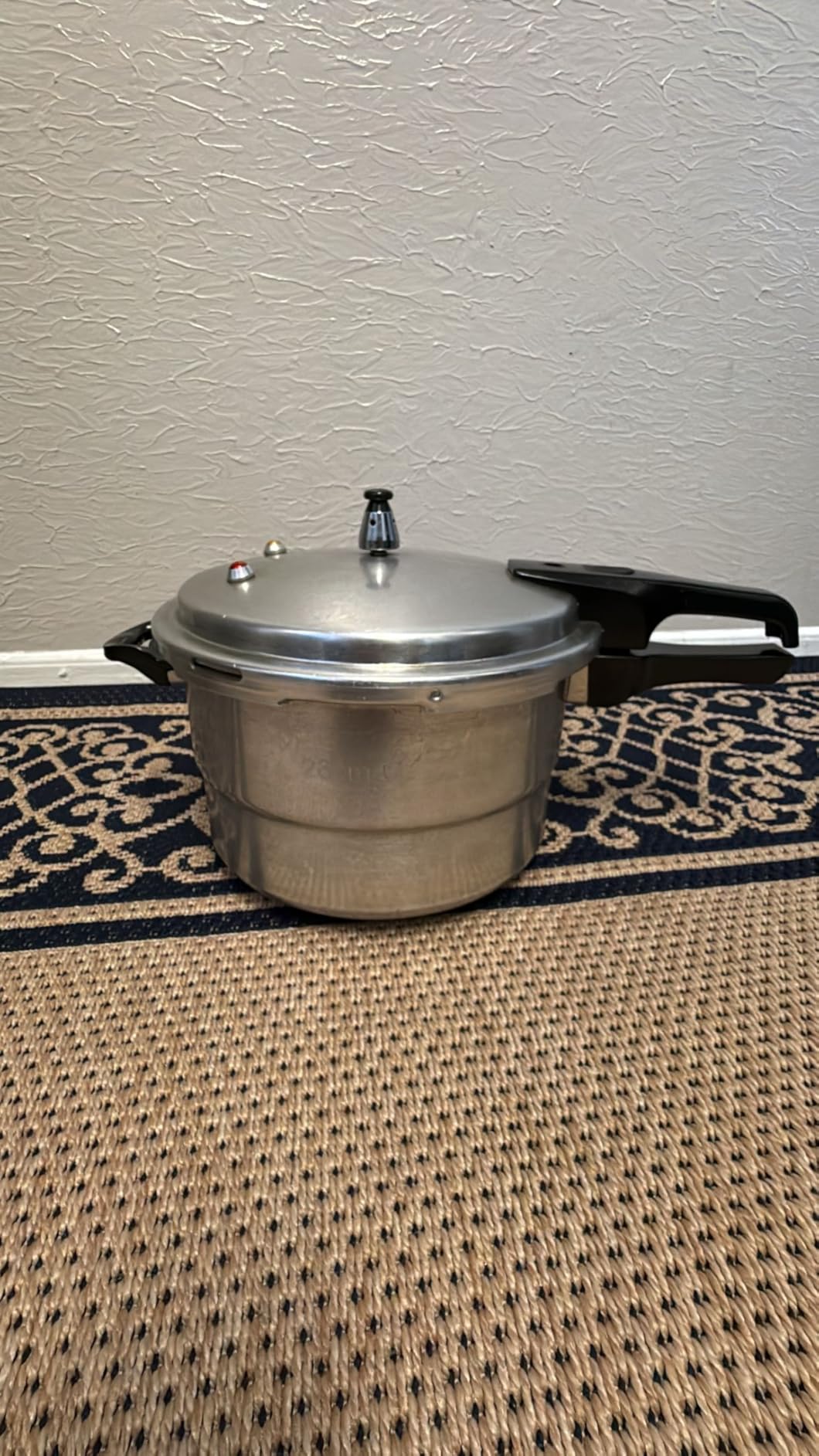
Here is where I would push back on the buying decision. This pot has the largest capacity in the roundup and an induction-compatible base at a fraction of what the Presto equivalent runs. For pressure cooking a big pot of stock, that is a real bargain.
For canning, the picture is different. It is sold primarily as a commercial-style pressure cooker that also functions as a canner, and the canning guidance that ships with it is thin compared with a purpose-built canner and its recipe manual.
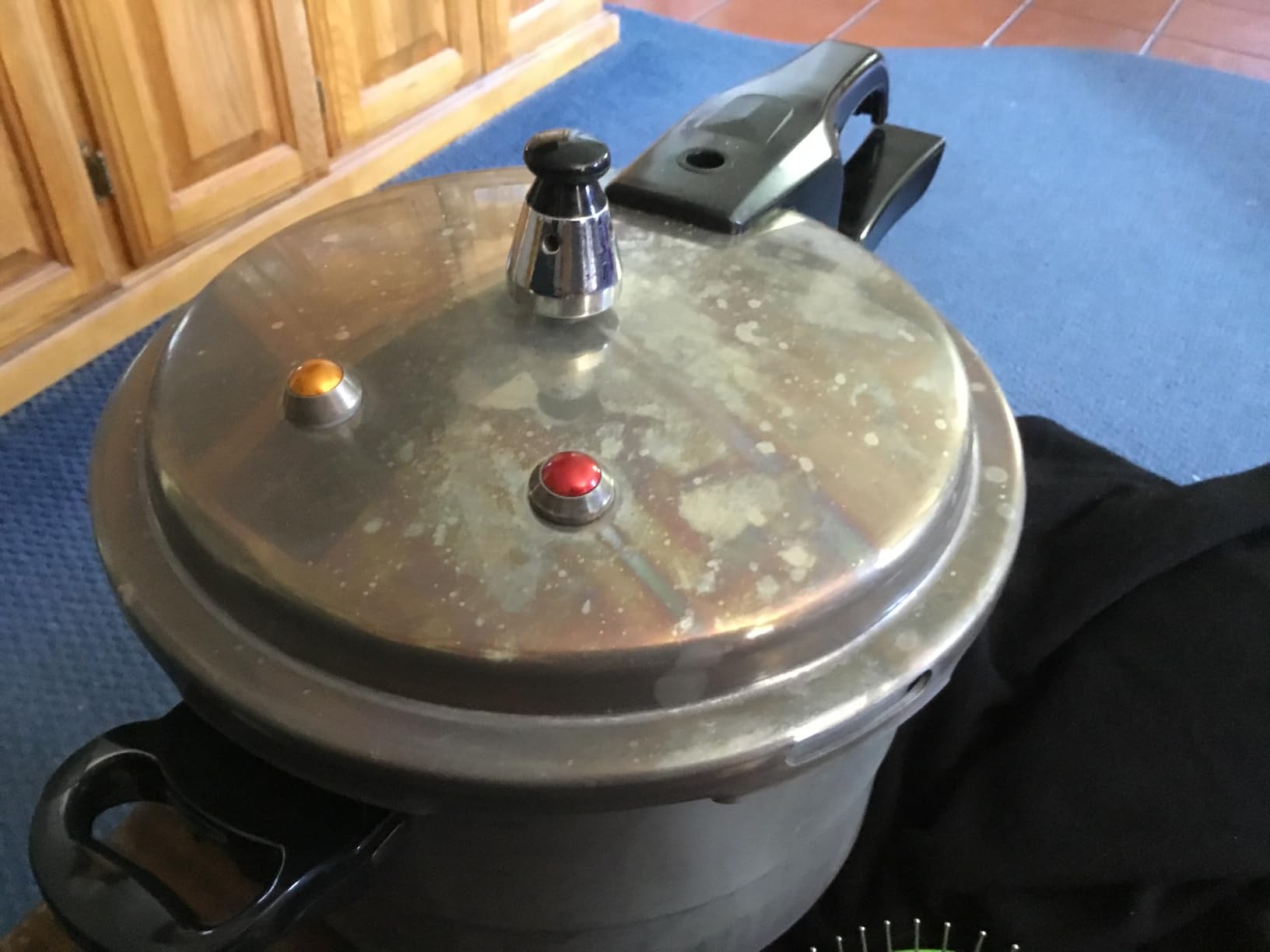
The six-protection system is more elaborate than most: automatic lock, check valve, pressure limiting valve, safety valve, alarm valve and an anti-blocking cover. That valve count does have real value, even if the documentation around it does not.
Owner sentiment is genuinely split, and the split follows the product’s identity. Fans like the size, the induction base and the valve system. Critics point to inconsistent pressure control and limited documentation, and several of them recommend an established canner for first-time home canning.
When this is the right buy
It makes sense if your primary interest is cooking and canning is secondary, or if you want one large induction-compatible pot that handles both jobs for a household that eats a lot of beans, stock and stew. The uncoated aluminum also means nothing is flaking into acidic food the way a coated pot might be.
The 23-quart size is also the widest in the brand range, so a matching smaller pot is available if you want a companion for small batches later.
Where it falls short
It carries the lowest average rating in this roundup, and the one-star share is not trivial. For a safety-regulated appliance, a 9 percent one-star rate is worth weighing against how much independent review history exists for the model.
Expect a trial run with water before you trust it with a full batch, and note the 18.9 inch width, which needs a large burner and a sink that will take it. The storage bag helps, but it does not change the countertop footprint.
10. ZAVOR DUO 8-Piece Pressure Canning Set – Best All-in-One Starter Bundle
Zavor DUO 8-pc Pressure Canning Set – Pressure Cooker 10 Quart w/Complete Pressure Cooker Canning Kit, including Wide Mouth Canning Funnel, Canning Rack & 5 other Essential Canning Tools
10 quart stainless steel pot
Fits up to four 1-quart jars
Includes 7 canning tools
Two pressure levels
Pros
- Eight-piece set includes funnel
- rack
- lifter
- tongs and more
- Stainless steel pot works on gas
- electric
- ceramic and induction
- Two pressure levels at 15 psi and 10 psi
- No gauge needed
- so no calibration to schedule
Cons
- Only four 1-quart jars per batch
- Not compatible with external pressure gauges
- Smallest review base in the roundup at 230 ratings
- 17.7 inch diameter may not fit a standard burner
This is the only pick here that solves the tools problem too. The bundle includes a jar lifter, wrench, tongs, a three-in-one bubble freer, lid lifter and headspace measurer, a wide mouth funnel, a ladle and a canning rack, so a beginner is not making a second shopping list before the first batch.
The pot itself is stainless steel and works on gas, electric, ceramic and induction, which is a wider stove range than most aluminum canners offer. Two pressure positions, 15 psi for canning and 10 psi for softer foods, are selected on the unit itself.
Owners treat it as a starter set rather than a primary canner, and they are happy with it on that basis. The accessory bundle removes both the cost and the guesswork of assembling tools individually, which is a genuine advantage for a nervous beginner.
It is also not gauge compatible, so pressure has to be judged by the weight itself. That simplifies the decision and removes the annual calibration question entirely, but it also means you have no dial as a second reference.
Who this bundle is for
Someone who wants to try canning with a small footprint, lives in a kitchen where a 23-quart pot is not happening, and would rather buy one box than assemble tools over a few months. At four 1-quart jars per load it suits jams, fruit spreads and starter batches rather than bulk vegetables.
Several owners note the listing should state the four-jar limit more clearly, and plan to add a larger canner for bulk preserving later. That is a reasonable two-stage plan rather than a compromise.
Where it falls short
Four jars per batch is the smallest capacity in the roundup, and it makes bulk work slow. The 17.7 inch diameter may not fit a standard burner, which is worth checking before you commit to a ten quart pot.
Long-term durability is genuinely unproven here, with 230 ratings behind it, and the pressure settings are fixed rather than adjustable, so it is less flexible if you move to a different altitude later. Treat it as a well-equipped small-batch companion, not a lifetime canner.
Pressure Canner vs Pressure Cooker: Do Not Buy the Wrong Thing
This is the most common expensive mistake in this category, and canning forum threads are full of people who made it. A pressure cooker is designed to cook food fast and vent pressure deliberately. A pressure canner is designed to hold precise pressure with a vent closed, and it is built to process jars.
There is a simple test you can apply in the store. A real pressure canner holds at least four quart jars upright on an included rack, at 15 psi, without venting. If the listing does not mention jar capacity and a canning rack, it is a cooker with a canning claim on it.
That is also why multi-cookers are a poor substitute. They are not validated to the same processing standards, their jar capacities are small, and their safety systems are designed to relieve pressure quickly rather than hold it steadily for a tested duration.
How to Choose a Pressure Canner for Beginners
Start with the stove, not the pot. Write down what you cook on, then work outward from there. Induction rules out most aluminum canners, glass cooktops cause trouble with a few models per owner reports, and a compact kitchen makes weight the deciding factor long before capacity does.
Dial gauge vs weighted gauge
A dial gauge reads the full pressure range, which is what tells you whether you are actually at 10 or 15 psi. A weighted regulator holds the pressure at the value stamped on it, and its jiggle is the signal. Many experienced canners prefer the weight because it cannot drift.
For a beginner, the weighted approach is easier to learn, and the Presto and Granite Ware models here cover multiple weights in one system. If you live above 1,000 feet, a dial gauge adds information, and some canners carry both.
Altitude: 10 lb vs 15 lb
Boiling water pressure drops with altitude, so a canner at sea level can lose the temperature needed to destroy botulism spores at 3,000 feet. Processing times from your tested recipe get longer as altitude rises, and above 1,000 feet you need a 15 lb weight rather than 10 lb.
Check the altitude rules for where you live before your first batch, and buy the extra weight with the canner rather than after. The NESCO electric model ships with a high-altitude limiting valve, and the Presto induction and Granite Ware models cover several pressure settings.
Capacity, racks and jar contact
Jars may sit against the side wall of a canner, but they must not touch the bottom. The canning rack exists to hold them above direct heat, and that contact is how jars crack. If a model does not include a rack, you are missing a safety component, not a convenience.
Second racks matter more than buyers expect. A single rack gives you a layer of quart jars with unused headroom above, and a second rack lets you stack pints and half-pints instead. The T-fal and Mirro both ship with two.
First-year starter kit beyond the canner
Budget for the things the canner does not include. You need canning jars, two-piece lids with new flats for every jar, a jar lifter, a funnel, a bubble remover and headspace tool, a lid lifter for screw bands, and a towel for the hot jars. Add a second rack once you know your batch size.
Plan for replacement parts too. A gasket on a gasket-sealed canner is a consumable, and a replacement dial gauge can be checked through your county extension office. The metal-to-metal canners are the only models here with nothing on that list.
What to avoid as a beginner
Do not buy a used canner without a known-good gasket or an uncalibrated dial gauge, because a bad seal or a wrong reading is a safety problem rather than an inconvenience. Avoid any canner sold without a rack, and avoid listings that never state a jar capacity.
Skip summer squash and zucchini as a first batch, and start with a well-tested low-stakes food such as green beans, where a tested process time is well established. Do not improvise processing times, and always let the canner depressurize naturally before opening the lid.
Frequently Asked Questions
Is there a pressure canner that doesn’t require a gasket?
Yes. The All American 1930 uses a precision machined metal-to-metal sealing system instead of a rubber gasket, so there is no gasket to buy, replace or fit incorrectly. The rim wants a light coat of food-grade lubricant every few uses to keep the lid from sticking. Every other canner in this roundup uses a rubber gasket that you will eventually replace.
What is the easiest canning system for beginners?
The safest answer is a stovetop canner with a weighted gauge, because you can read and feel the pressure yourself and the tested process times are published. The easiest answer is a countertop electric canner, which needs no burner and will not open under pressure, but the USDA has not published tested processing time tables for electric canners. Many beginners start electric and add a stovetop unit later.
Can I use a pressure cooker instead of a pressure canner?
No, not for shelf-stable canning. A pressure cooker vents pressure by design and is not built to hold a steady 10 or 15 psi for a tested duration. The test is simple: a real canner holds at least four quart jars upright on an included rack at 15 psi without venting. If the listing does not state a jar capacity and include a rack, it is a cooker, whatever the title says.
What are the safety guidelines for pressure canning?
Use only tested recipes from the USDA Complete Guide to Home Canning or the Ball Blue Book, follow the exact processing time for your jar size and food, and never shorten it. Use a canner with an intact gasket and an included rack, and keep jars off the bottom of the pot. Use 10 or 15 psi based on your altitude, never exceed your gauge’s rating, and let the canner depressurize naturally before opening.
Can jars touch the side of a pressure canner?
Yes. Jars may sit against the inside wall of the canner without any problem. What they must not do is touch the bottom, because the canning rack holds them above direct contact with the heat source, and that contact is how jars crack and fail to seal. If a canner is sold without a rack, that is a safety component you are missing rather than an accessory.
Do I need to calibrate my pressure canner?
A weighted regulator does not need calibrating, because it holds the pressure stamped on the weight and simply does not work otherwise. A dial gauge does need to be checked, and an annual check through your county extension office is the usual recommendation. Replacing the gauge is often simpler and cheaper than having it serviced.
The Bottom Line for First-Time Canners
If you want one answer for the best pressure canners for beginners, take the Presto 01781 23-quart. It holds the batch size tested recipes assume, gives you a dial gauge and a weighted regulator in the same pot, has the largest review history in this group, and carries the longest warranty of anything we covered.
Swap to the Presto 01784 if you cook on induction, and consider the All American 1930 if you would rather never buy a gasket again and can live with a four-quart load. Start with green beans, follow the tested processing time exactly, and let the pot cool on its own before you open it. That first batch is much simpler than it sounds in 2026.