
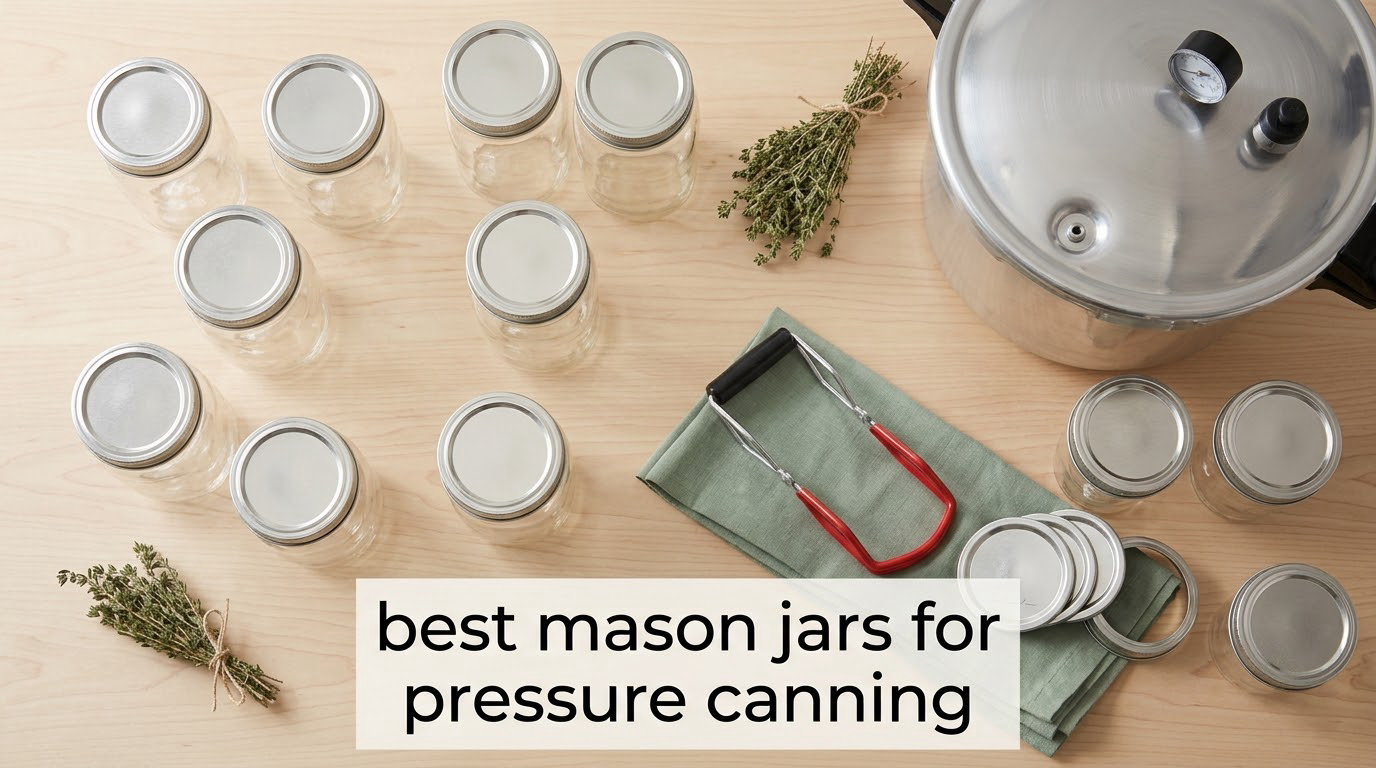
Pressure canning is the only safe way to put low-acid food on your pantry shelf, and the whole process lives or dies on the jar. A jar that cracks in a 240-degree steam bath does more than waste a batch; a jar that fails to seal puts low-acid food at risk of botulism. Choosing between the best mason jars for pressure canning is a food-safety decision before it is a kitchen-styling one.
We put ten jars through their paces, weighing the details that actually show up during a pressure-canning run: how the glass behaves under heat, whether the supplied closure holds a vacuum as the jar cools, how wide the opening is for packing solids, and whether the jar fits the rack of a common canner. We leaned on what long-term canners report about these jars after seasons of use, not just what the box promises.
Below you will find the ten jars worth putting in a pressure canner, what each one does well, and where it falls down. If you are still choosing between brands, start with the safety primer in the next section, then jump to the review that matches the food you preserve.
Table of Contents
Top 3 Pressure Canning Jars (October 2026)

Ball Wide Mouth Quart 12-Pack
- 32 oz wide mouth
- Includes canning instructions
- Reusable BPA-free glass
Ball Regular Mouth Quart…
- 32 oz regular mouth
- Lids and bands included
- Clear glass with markings

Best Mason Jars for Pressure Canning at a Glance in 2026
Every jar in this list is canning-grade glass sized for low-acid processing. The differences are in mouth width, closure style, and how the set packs into a canner load.
| Product | Specs | Action |
|---|---|---|
| Ball Wide Mouth Quart Jar 12-Pack |
|
Check Latest Price |
| Ball SureTight Wide Mouth Quart 8-Count |
|
Check Latest Price |
| Ball Regular Mouth Quart Jar 2-Pack |
|
Check Latest Price |
 SEWANTA Wide Mouth Quart Jar 4-Pack SEWANTA Wide Mouth Quart Jar 4-Pack |
|
Check Latest Price |
 YEBODA Wide Mouth Quart Jar 6-Pack YEBODA Wide Mouth Quart Jar 6-Pack |
|
Check Latest Price |
 Ieavier Wide Mouth 16 oz Jar 12-Pack Ieavier Wide Mouth 16 oz Jar 12-Pack |
|
Check Latest Price |
 Mcupper Regular Mouth Pint Jar 15-Pack Mcupper Regular Mouth Pint Jar 15-Pack |
|
Check Latest Price |
 VERONES Wide Mouth 16 oz Jar 12-Pack VERONES Wide Mouth 16 oz Jar 12-Pack |
|
Check Latest Price |
 PINIWON Regular Mouth Pint Jar 15-Pack PINIWON Regular Mouth Pint Jar 15-Pack |
|
Check Latest Price |
 Eathtek Wide Mouth 16 oz Jar 12-Pack Eathtek Wide Mouth 16 oz Jar 12-Pack |
|
Check Latest Price |
What Makes a Mason Jar Safe for Pressure Canning?
Only canning-grade glass qualifies. A jar is pressure-canning safe when it was manufactured and tested for the heat cycle, fits the mouth of your canning lids, and holds a hermetic seal while the pressure canner holds 10 to 11 psi, which pushes water to roughly 240 degrees Fahrenheit. That means a real two-piece canning lid, a screw band tightened only finger-tight, and headspace left exactly as the processing guide specifies.
Everything else is disqualifying. Grocery-store pasta sauce jars, decorative glass, and anything sold with a non-canning lid are not built for that cycle, and community canners on r/Canning note that mixing ordinary kitchen jars into a pressure load is one of the most common and most expensive mistakes new canners make.
1. Ball Wide Mouth Quart Jar 12-Pack – Best Overall
Ball Wide Mouth Clear Glass Canning Quart 32 Oz Mason Jars with Lids, 12 Pack
32 oz wide mouth
12 jars per pack
Lids and bands included
Dishwasher and microwave safe
Pros
- Reusable BPA-free glass
- Step-by-step canning instructions on the jar base
- Huge volume of owner feedback to draw on
- Wide opening suits whole produce
Cons
- Wide mouth is less handy for narrow items
- Glass needs care around thermal shock
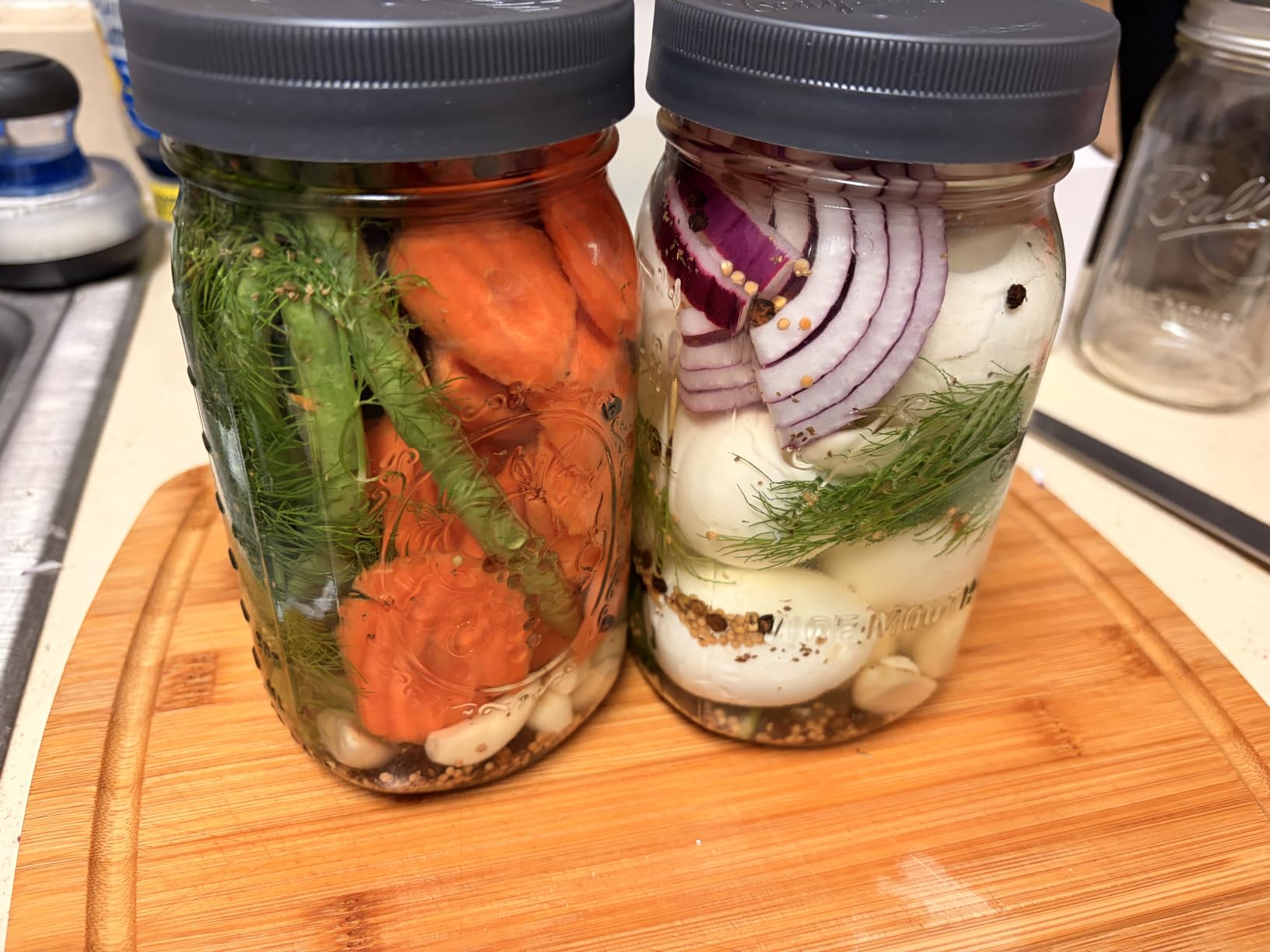
This is the set we keep coming back to. The wide opening takes a whole ear of corn, a full quart of green beans, or a chunk of bone broth without a struggle, and the glass is thick enough to survive a full pressure cycle. It carries a 4.7 rating across more than 24k reviews, which gives you an unusually large sample of people reporting how the jars behaved after real use.
What stands out for pressure work is the instruction set printed on the base of every jar. It walks a beginner through fill, headspace, band tightening, and the venting sequence, so a first batch in a weighted gauge canner is not guesswork.
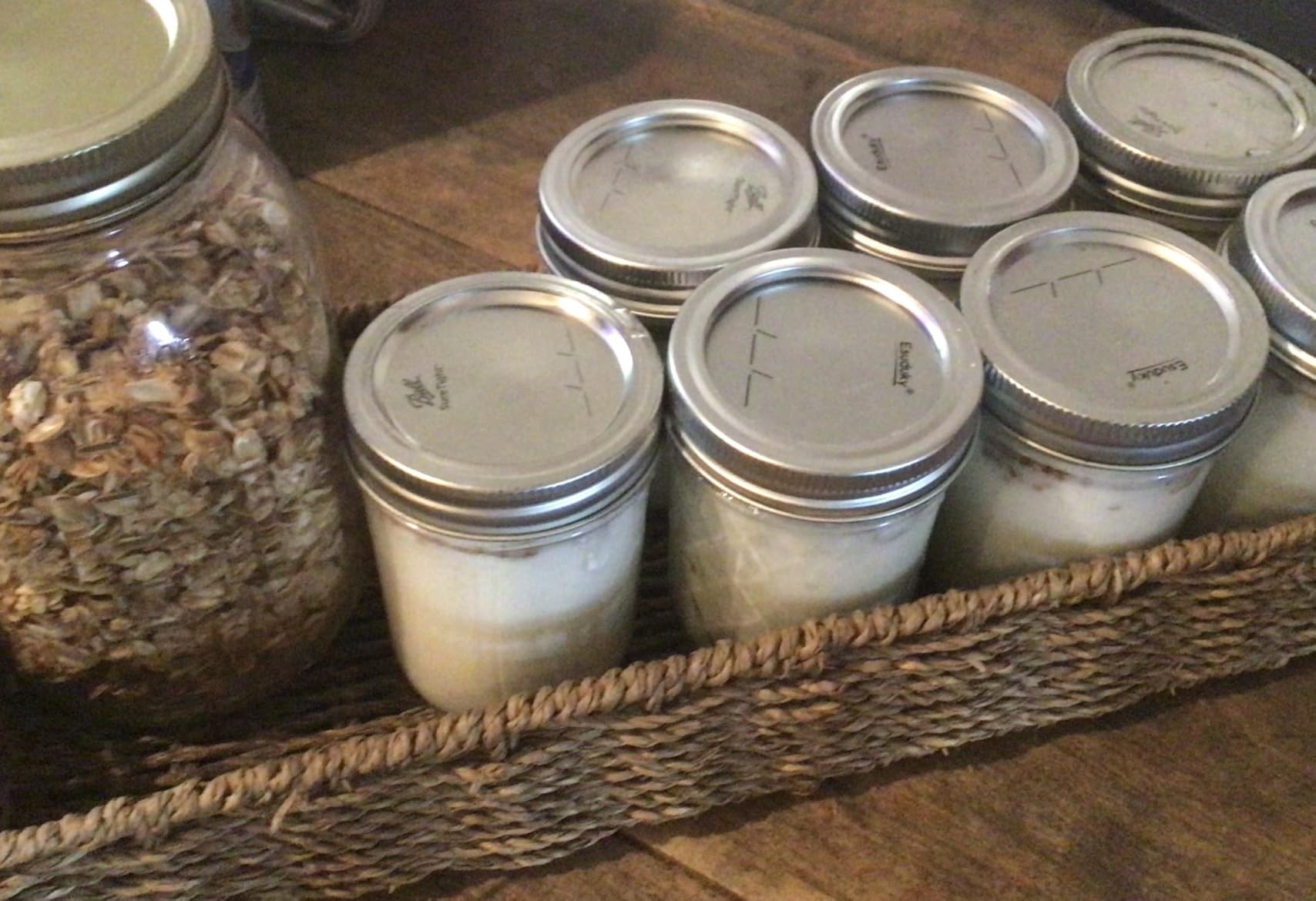
The pack size matters more than it looks. A dozen quarts is a realistic load shape for the common canners, and the square-ish profile of the body wastes less of the rack than a rounded jar of the same volume. The included lids and bands are standard, which means replacements are easy to source later.
We did find one recurring complaint worth naming: for narrow items like herb stems, whole okra, or long peppers, a regular mouth jar is genuinely easier to load. The trade is real but small, and it is a filling preference rather than a sealing one.
What to check before your first pressure batch
Run a fingernail along the shoulder and the thread area of each jar. A chip or a deep scratch there is a crack waiting to happen once the canner reaches pressure, and those jars should be pulled from the load.
Confirm your canner rack is lower than the jar height so the rack sits under the glass, and keep the lids to the side until the jars are packed. Wet glass going into a 240-degree environment is the fast route to a crack.
Where this jar disappoints
It is a wide mouth jar, so packing long thin vegetables and upright spears takes patience that a regular mouth jar does not ask of you. If your harvest is mostly greens and okra, this is the wrong shape.
The glass also needs gradual temperature transitions. Moving a sealed hot jar straight onto a cold stone counter is a common breakage story, and it has nothing to do with the jar being poorly made.
2. Ball SureTight Wide Mouth Quart Jar 8-Count – Best for Freezer Storage
Ball Glass Mason Jars, Wide Mouth, SureTight Lids, 32oz, 8-Count
32 oz wide mouth
8 jars per pack
SureTight lids and bands
Dishwasher safe
Pros
- SureTight closure holds an airtight seal
- Highest rating in this roundup at 4.8
- Freezer and refrigerator safe
- Thick glass resists cracking in the freezer
Cons
- Only one lid style included
- Some buyers cannot find this size in local stores
The reason this set scores higher than the larger Ball pack is the SureTight closure. Owners report that the band holds its grip through freezer cycles and dishwasher runs, which is exactly the complaint we heard about cheaper lids on sets that only ever saw pantry duty. It holds a 4.8 rating on roughly 2.8k reviews, matched only by the SEWANTA set in this roundup, and the reports concentrate on sealing and freezer tolerance.
For pressure canning specifically, the thick glass and airtight closure are the two properties that matter most. A cold quart coming out of the freezer, then moving into a hot bath, needs glass that resists thermal shock, and this jar is repeatedly described as doing that.
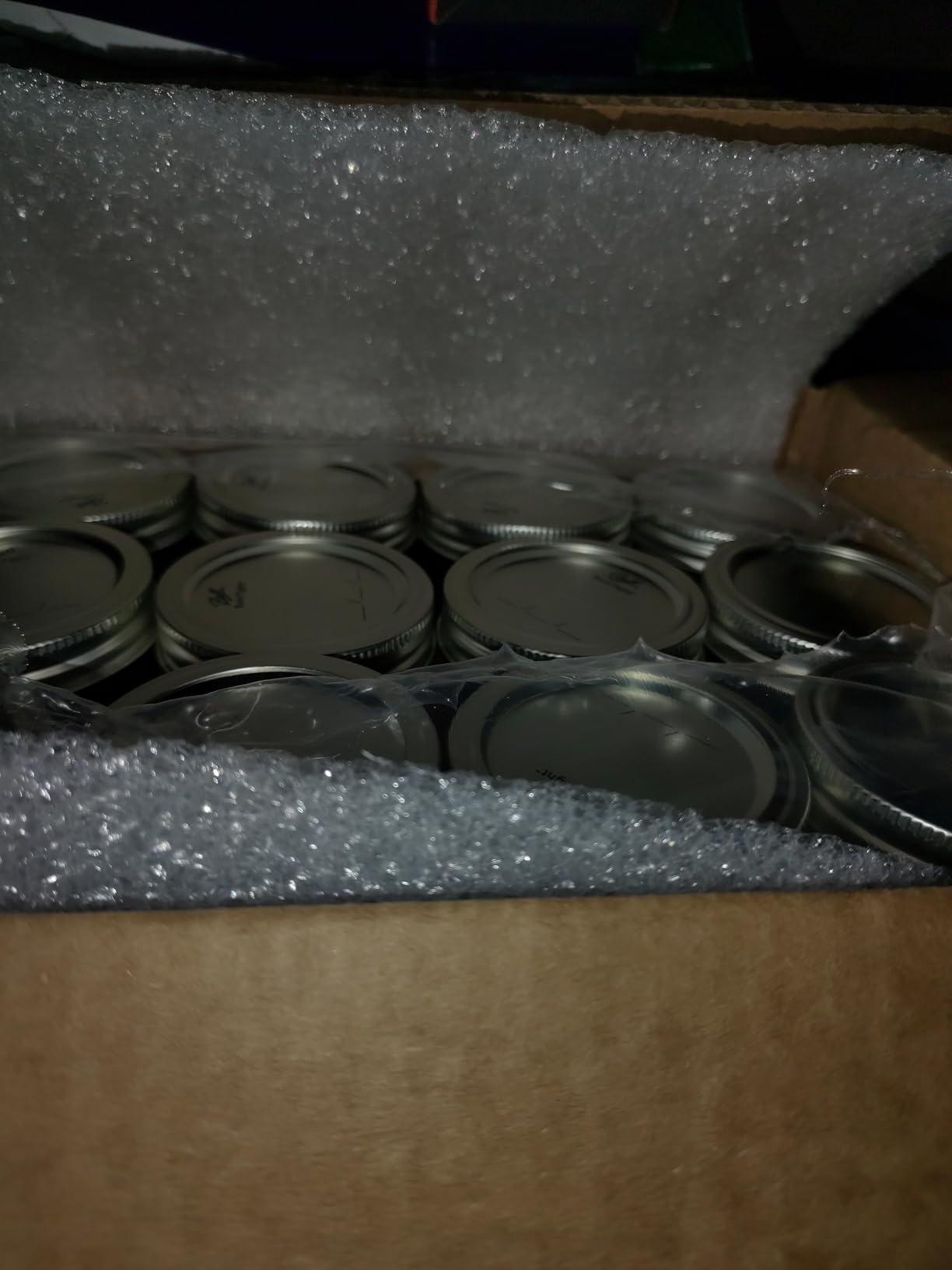
Eight quarts is a smaller box than the twelve-pack, and for some canners that is the deciding factor rather than a drawback. An eight-quart group pairs neatly with a small rack layout, and buyers say the packaging survives transit without the breakage that plagues some off-brand sets.
There is one tradeoff to plan for. The set ships with a single lid style, so if you want wide mouth bands in a different finish you will be buying those separately. Not a problem for pressure work, just a packaging note.
Why we rate this one so high
The freezer tolerance is the differentiator. Most complaints in this category come down to lids that loosen or glass that cracks after a few freeze cycles, and this set has the fewest of those reports in the reviews we read.
It also holds its airtightness for long pantry storage, which matters if you keep food for a year or more. A seal that fails on the shelf is the worst outcome because you find out weeks later.
Where this jar disappoints
Some buyers simply cannot locate this exact size in a local shop when they want a couple of replacements, so replacement planning matters here. Keep a spare pack rather than relying on finding a single jar later.
Like any wide mouth jar, it is not the best shape for upright spears or long thin vegetables. The opening is generous but the neck still shapes what you can pack.
3. Ball Regular Mouth Quart Jar 2-Pack – Best Value Starter Set
Ball Regular Mouth 32-Ounces Mason Jar with Lids and Bands, Clear,(Pack Of 2)
32 oz regular mouth
2 jars per pack
Lids and bands included
Dishwasher safe
Pros
- Classic regular mouth quart
- Lids and bands in the box
- Clear glass with measurement markings
- Strong 4.7 rating on 11k reviews
Cons
- Regular mouth is narrow for whole produce
- Sold only in small packs
This is the jar most home canners already have a shelf full of, and for good reason. The regular mouth quart is the standard vessel for soups, stocks, sauces, and beans, and the narrow opening makes packing liquids and semi-liquids far more forgiving than a wide mouth jar.
Regular mouth is also the cheaper lid format, which adds up across a season. Since every pressure batch needs fresh lids, the ongoing consumable cost matters more than many buyers expect.
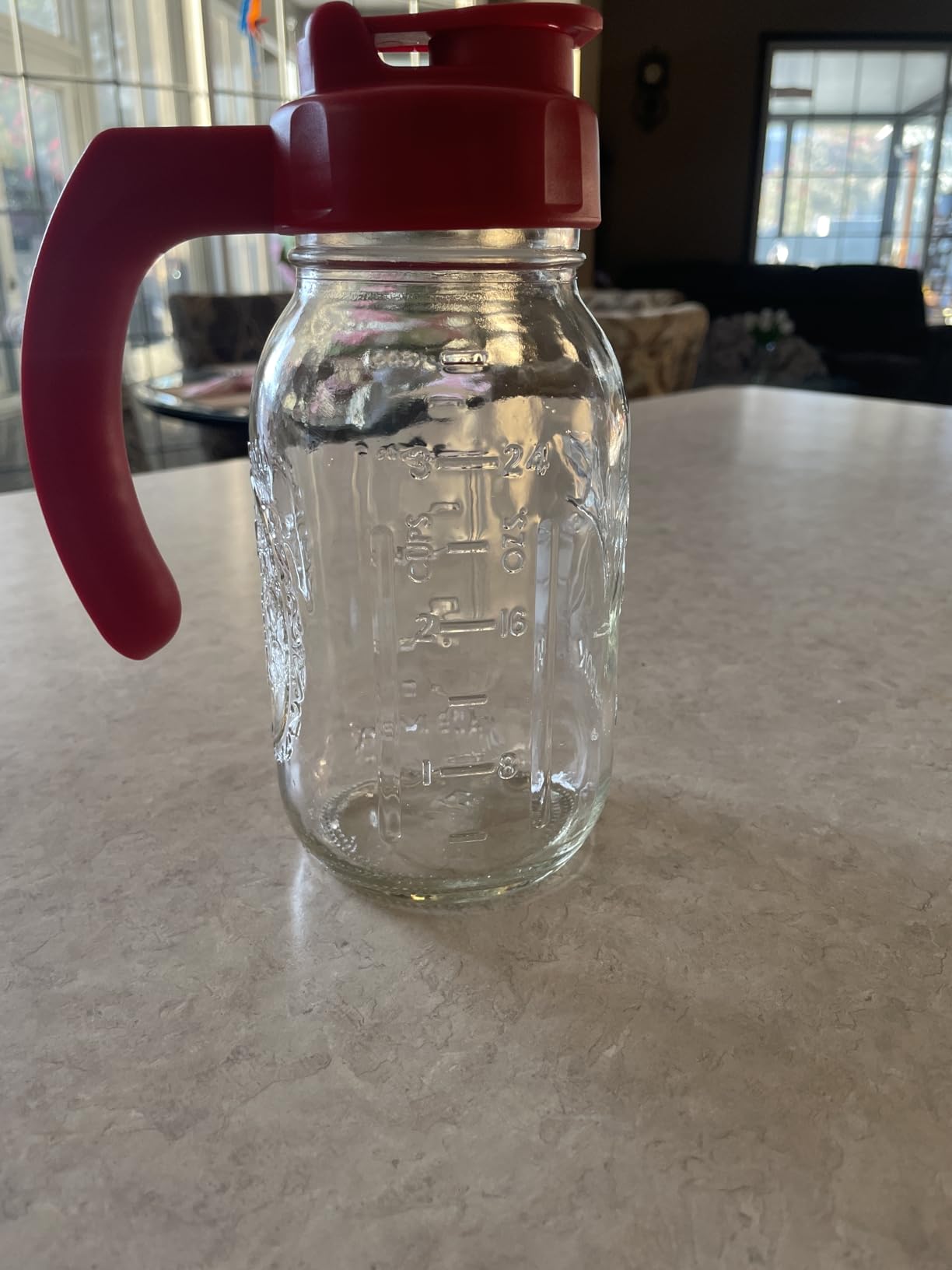
The glass holds up to daily reuse and temperature swings according to owners, and the measurement markings on the side make headspace and fill levels easier to eyeball. That is a real advantage when you are filling hot soup at the sink.
Our main reservation is the pack size. Two jars is a starter quantity, so anyone preserving a season of food will need several of these, and stacking purchases is the way around that.
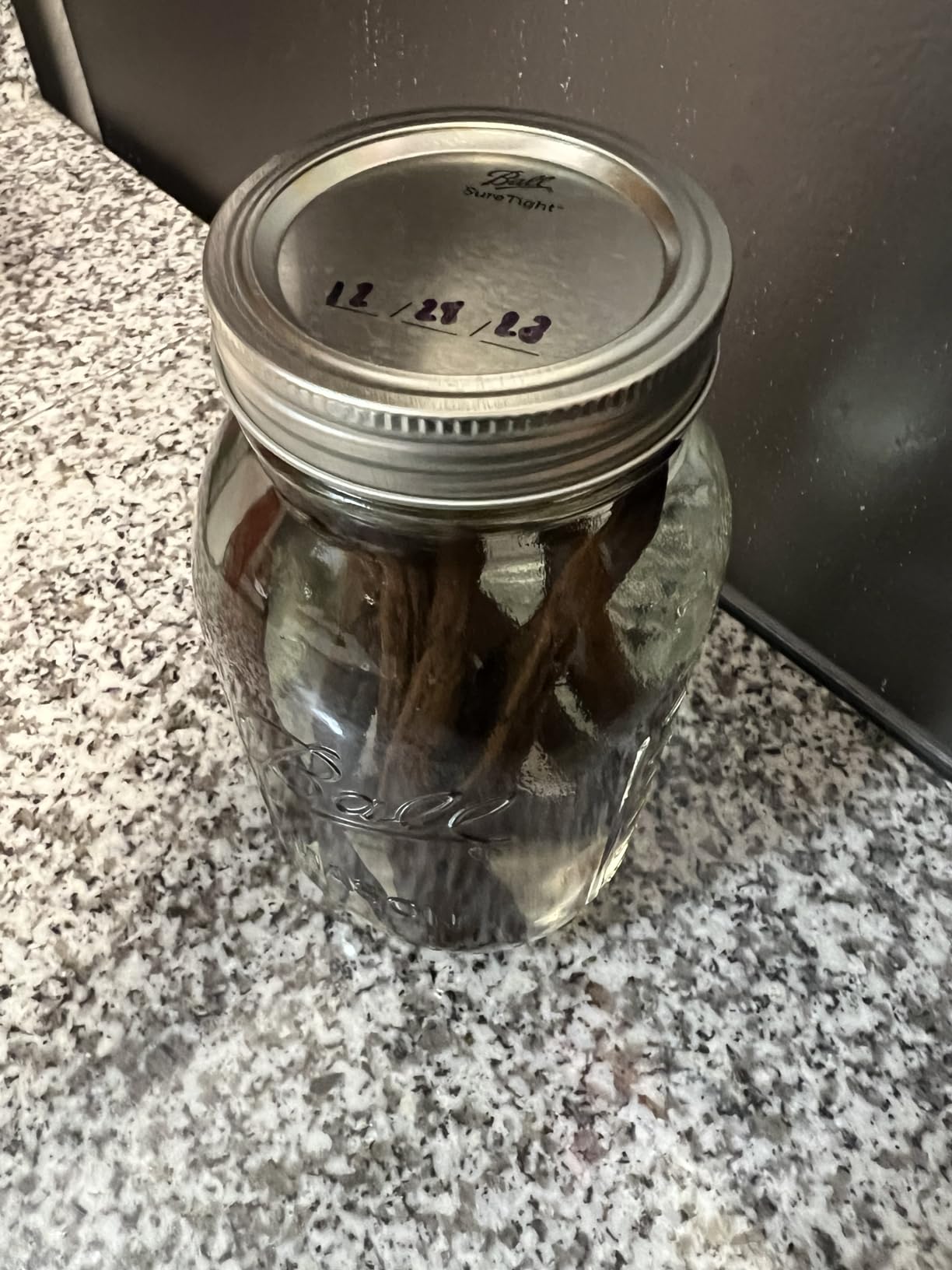
Best fit for soup and stock
For broth, stock, and bean batches, the regular mouth shape reduces the air pockets that can trap inside a wide opening. Packing with a canning funnel is easier, and the seal is not competing with a wide shoulder.
If your food is mostly liquid or semi-liquid, this jar removes the main argument for wide mouth. Liquids level themselves, and a narrower mouth simply accepts them faster.
Where this jar disappoints
Whole vegetables are the weak point. Green beans, corn, and okra that need to sit upright in the jar are noticeably harder to pack, and a wide mouth quart handles them without fuss.
Two jars per purchase is genuinely small for a serious canning household. Plan on buying in multiples, and keep the extra lids and bands in reserve.
4. SEWANTA Wide Mouth Quart Jar 4-Pack – Best for Volume Markings
SEWANTA Wide Mouth Mason Jars 32 oz [4 Pack] With Mason Jar Lids and Bands, Mason Jars 32 oz – For Canning, Fermenting, Pickling – Jar Decor – Microwave/Dishwasher Safe.
32 oz wide mouth
4 jars per pack
Heat-tempered glass
Embossed measurements
Pros
- Embossed volume markings and label line
- Heat-tempered soda-lime glass
- Airtight sealing compound in the lids
- Wide mouth simplifies filling
Cons
- Freezing capacity limited to about 12 oz per jar
- Markings only embossed on part of the jar
The reason we like this set is the embossed measurement markings. Headspace is one of the most common reasons a pressure batch fails a seal, and having the fill level and the label line molded into the glass means you are not relying on memory or a separate measuring cup at midnight.
It holds a 4.8 rating across just over 5k reviews, with owners pointing to sturdy American-made glass and dependable seals across pickling and fermenting. That feedback volume is enough to trust for routine pressure work.
![SEWANTA Wide Mouth Mason Jars 32 oz [4 Pack] With Mason Jar Lids and Bands, Mason Jars 32 oz - For Canning, Fermenting, Pickling - Jar Decor - Microwave/Dishwasher Safe. customer photo 1](https://illuspress.com/wp-content/uploads/2026/09/B097HS2Z9B_customer_1.jpg)
Heat-tempered soda-lime glass built for water bath canning, pickling, and fermenting is the stated construction, and the lids carry an airtight sealing compound. For pressure canning, the wide mouth and the tough glass are the useful parts; everything else is bonus.
It is also microwave and dishwasher safe, which means the same jar moves from processing to reheat to cleanup without a second vessel. That lifecycle value is why a lot of buyers stock them beyond canning.
![SEWANTA Wide Mouth Mason Jars 32 oz [4 Pack] With Mason Jar Lids and Bands, Mason Jars 32 oz - For Canning, Fermenting, Pickling - Jar Decor - Microwave/Dishwasher Safe. customer photo 2](https://illuspress.com/wp-content/uploads/2026/09/B097HS2Z9B_customer_2.jpg)
Best fit for measured headspace
If you have ever under-filled a jar and wondered why the seal failed, the molded markings are the fix. They turn a judgement call into a visual check, which is exactly what a 10 psi process needs.
The label line is a small thing that pays off over a season, since dating a jar at pack time is much easier than remembering what went in it later.
Where this jar disappoints
The freezer limit is the notable restriction here. Buyers put roughly 12 oz in a jar before freezing, so if you count on freezing full quarts this set is not the right vessel for that part of your food storage.
Markings cover only part of the jar, so larger measures still have to be estimated. The common measurements are there, but not the full range.
5. YEBODA Wide Mouth Quart Jar 6-Pack – Best for Jams and Sauces
YEBODA 32 oz Wide Mouth Mason Jars with Lids, Glass Canning Jars, 6 Pack
32 oz wide mouth
6 jars per pack
Lids and bands included
Airtight closure
Pros
- Wide opening is easy to fill and clean
- Clear unprinted glass looks clean
- Two-piece lid and band system
- Good for jam and meal prep
Cons
- Some buyers report lids that do not seal airtight
- Several jars in a set have cracked in the freezer
A 4.5 rating on more than 7k reviews puts this in solid value territory, and the wide opening is genuinely useful for chunky sauces, salsas, and anything you want to scoop rather than pour. The clear unprinted glass also looks better on a shelf than a jar covered in a printed pattern.
Where we would steer you differently is high-pressure meat and poultry work. The two cons that recur in reviews, lids that do not seal airtight and jars that have cracked in the freezer, both point the same direction: treat the supplied closure as a general storage lid and bring your own canning lids.
Owners do like the wide mouth for filling, scooping, pouring, and cleaning. A canning funnel seats easily, and the jar scrubs clean all the way to the base because there is barely a shoulder.
For everyday jams, pickles, and meal prep it performs well and looks the part. It is the pressure process where the lid reports are the deciding factor, and that is where the caution belongs.
Best fit for wide mouth value
If you are packing wide contents and want a clean unprinted jar at a lower tier, the wide opening plus the low shoulder is the appeal. Jams with fruit chunks and salsas with dice are the easiest fit.
Cleaning is also faster. A wide mouth reaches the bottom with a standard brush, and there is no narrow neck for food to lodge in.
Where this jar disappoints
The lid is the weak link. A minority of buyers report lids that do not hold an airtight seal, and a pressure process has no tolerance for a compromised closure. Plan to use separate canning lids.
Freezer breakage is reported on several jars in a set, and sudden temperature changes increase that risk. For low-acid pressure batches, the heat is steady, which suits the glass better than a freezer does.
6. Ieavier Wide Mouth 16 oz Jar 12-Pack – Best for Small Batches
Ieavier 12PCS Wide Mouth Mason Jars 16oz with Airtight Lids and Bands
16 oz wide mouth
12 jars per pack
Airtight flip top lid
Lead-free glass
Pros
- Wide mouth 16 oz size is hard to find elsewhere
- Thick soda-lime glass resists cracking
- Short wide shape stacks in a fridge
- Lead-free food-grade glass
Cons
- Listing details vary between variants
- Freezer durability needs careful temperature changes
The short, wide 16 oz format is the reason to look at this set at all. Most canning jars are tall, and a squat wide-mouth pint stacks neatly in a refrigerator door while a tall jar will not. Owners single that shape out as the main reason to buy.
At 4.7 stars on about 1k reviews, the sentiment is consistent: thick glass, easy cleaning to the bottom, and a lid that screws on securely and stays gripped. That is a solid report card for a pint-size jar that competes with brands most people have never tried.
For pressure canning, a 16 oz jar is the natural size for 11 psi processes on low-acid vegetables, and the wide opening removes the packing problem that a regular mouth pint creates. The glass is described as thick soda-lime that resists cracking, which is the property that matters most in a pressure cycle.
Be aware the listing details shift between variants, and the lid system here is a flip top rather than the standard two-piece canning closure. Check the variant before you build a batch around it.
Best fit for pint-size pressure processes
A wide mouth pint solves the tightest packing problem in the category. Short spears, sliced vegetables, and small whole items drop in without a funnel fighting the neck, and the headspace is easier to judge on a short jar.
The stackability pays off after processing too. Twelve jars sit in a small footprint on a pantry shelf, which matters more than it sounds in a kitchen that is already full of jars.
Where this jar disappoints
The flip top lid is not the standard two-piece canning system, so anyone committed to fresh canning lids each batch will want to confirm the fit for their canner before filling a whole load. Buyers report the lid being easy to open and close rather than canning-specific.
Freezer durability is unproven, and it needs slow temperature changes to stay intact. A 1k-review base also means less long-term evidence than the Ball sets carry.
7. Mcupper Regular Mouth Pint Jar 15-Pack – Best for Pint-Size Processing
Mcupper 16oz Regular Mouth Mason Jars, 15-Pack Pint Canning Jars
16 oz regular mouth
15 jars per pack
2.59 inch mouth
Split lids with gasket
Pros
- 2.59 inch mouth takes standard canning lids
- Silicone gasket split lids seal tightly
- Foam packaging prevents transit breakage
- Brush and labels included
Cons
- Only one lid style included
- Freezing limited to 12 oz per jar
A 2.59 inch mouth is the number that matters here, because it is the diameter that accepts standard regular mouth canning lids. That single fact turns this from a storage set into a legitimate pressure-canning vessel, and it is why this jar made our list at all.
The silver split lids with a silicone gasket are described as airtight and leakproof, and owners who pressure can with these report that the glass weight feels right and the seal holds as the jar cools. The foam-packed shipping is another quiet advantage, since breakage in transit is a leading cause of a short set.
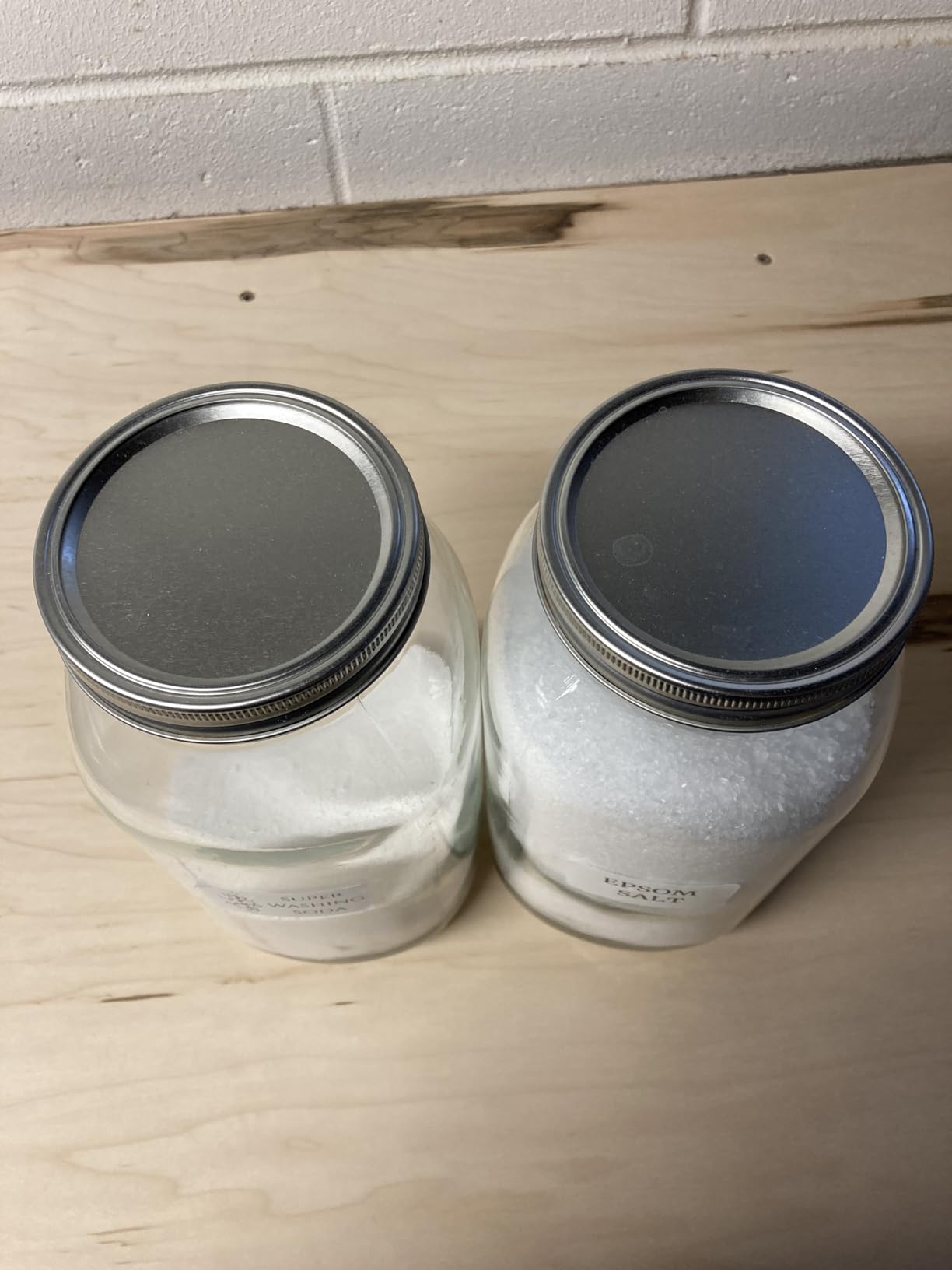
At 4.6 stars across roughly 2.1k reviews, the canner feedback is more encouraging than most off-brand sets. The 15-jar count with a sponge brush and labels is a generous box for someone starting out, and it covers a decent portion of a single canner load.
One thing to note is that the included gasket lids are the only style in the box. If you prefer standard flat canning lids with screw bands, buy those separately, and the jar will take them.
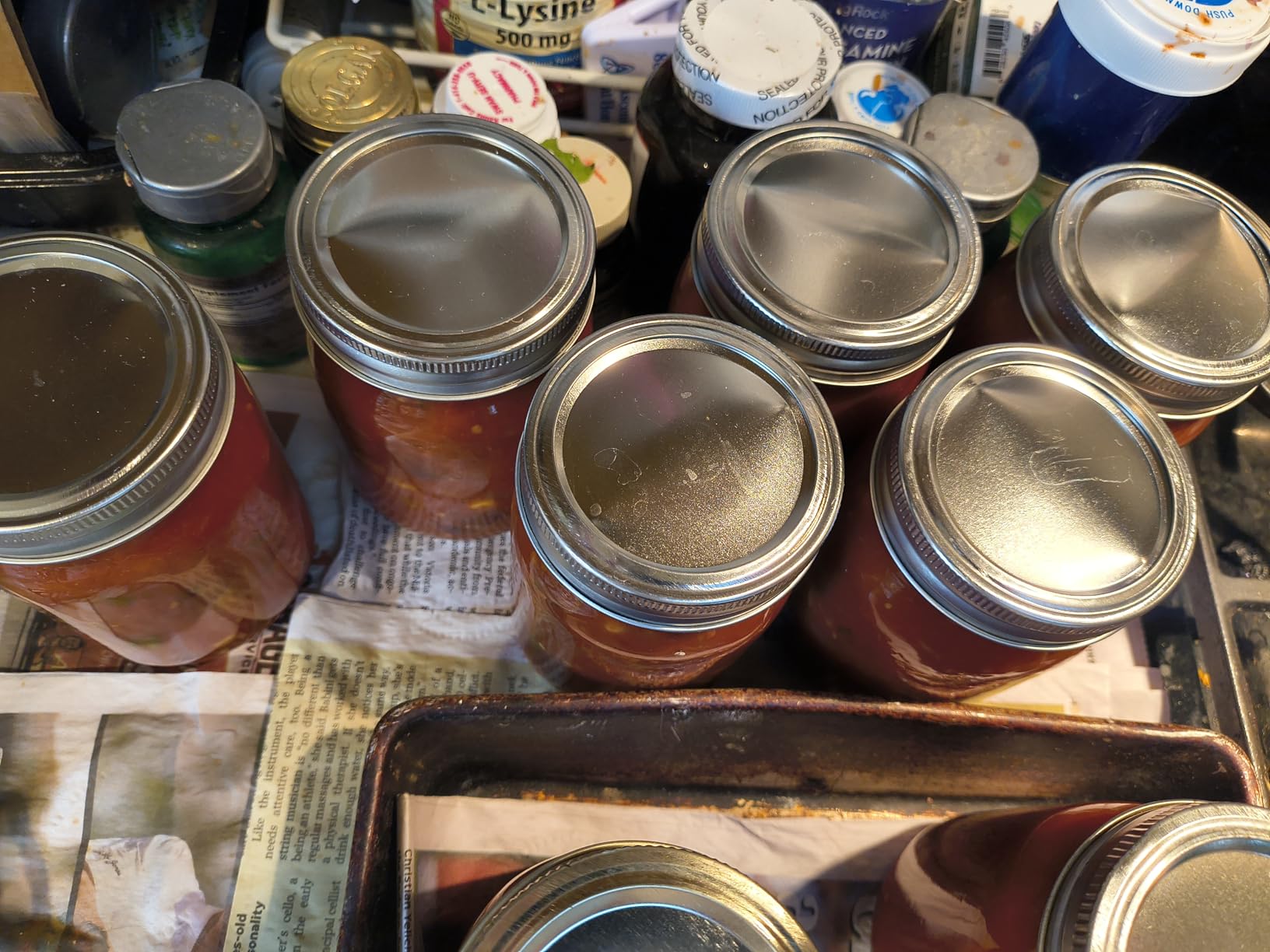
Best fit for pressure canning beginners
This is a strong first canner set. The mouth takes the lids you can already buy anywhere, the packaging protects the glass, and the extras remove small annoyances from your first season.
Pint size is also the smart starting format because a small jar means less food at risk if a seal fails, and shorter processing time is easier to stay attentive through.
Where this jar disappoints
One lid style only means extra lid options cost more later, and the same money spread across a two-piece system would buy more lids. Budget for that if you are planning multiple batches.
Freezing is limited to about 12 oz of liquid per jar, so do not plan to use these as full-quart freezer containers. For pressure canning that limit does not apply.
8. VERONES Wide Mouth 16 oz Jar 12-Pack – Best for Gifting and Pantry Storage
VERONES 12 Packs 16oz Wide Mouth Mason Jars, Mason Jars with Lids and Bands
16 oz wide mouth
12 jars per pack
Quilted glass design
Hand wash only
Pros
- Quilted wide mouth design fits standard bands
- Stackable and easy to label
- Bands screw on easily
- Good for preserves and pantry storage
Cons
- Occasional glass burrs at the jar lip
- Some sets arrive with cracked jars
The quilted wide mouth pattern is the reason this one shows up in gift and pantry lists. It takes standard wide mouth bands, stacks neatly, and looks finished enough to hand over without a label. The 16 oz size works for overnight oats, dried herbs, spices, and drinks as well as it does for preserves.
At 4.4 stars on more than 3.3k reviews, it is the lowest-rated jar in this roundup, and the reviews explain why. A recurring set of buyers reports small glass burrs at the jar lip that need sanding, along with cracked jars arriving in the box.
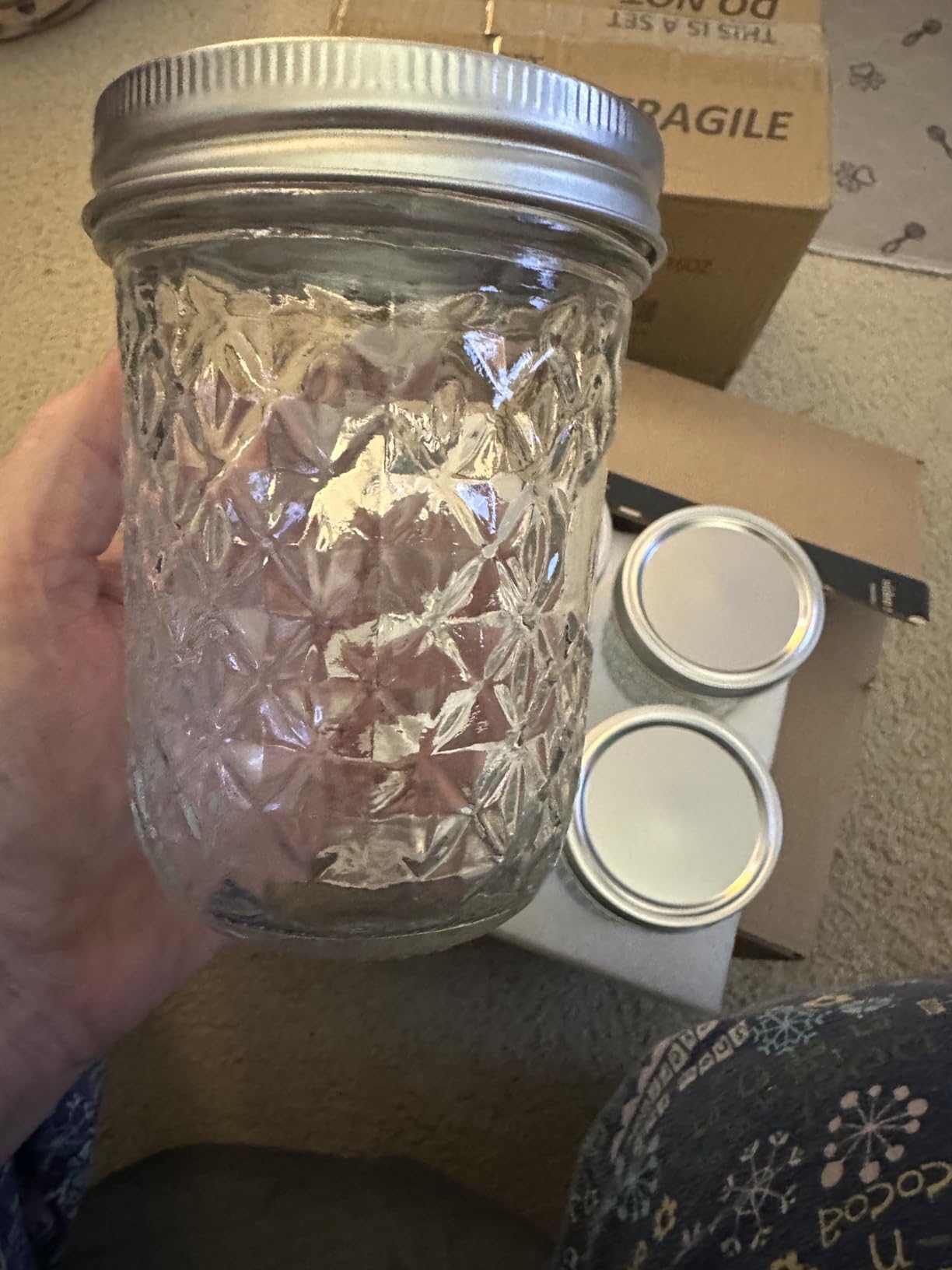
Those two complaints are related and both are deal-breakers for pressure work in my view. A burr at the lip is where the band threads and where the sealing surface sits, and a nick there is a stress riser in a 240-degree steam chamber. Inspect every jar before it goes in the rack.
Hand-wash-only care is also worth noting, since the dishwasher cycle that a wide mouth jar tolerates is one more thermal shock event layered onto a used jar.
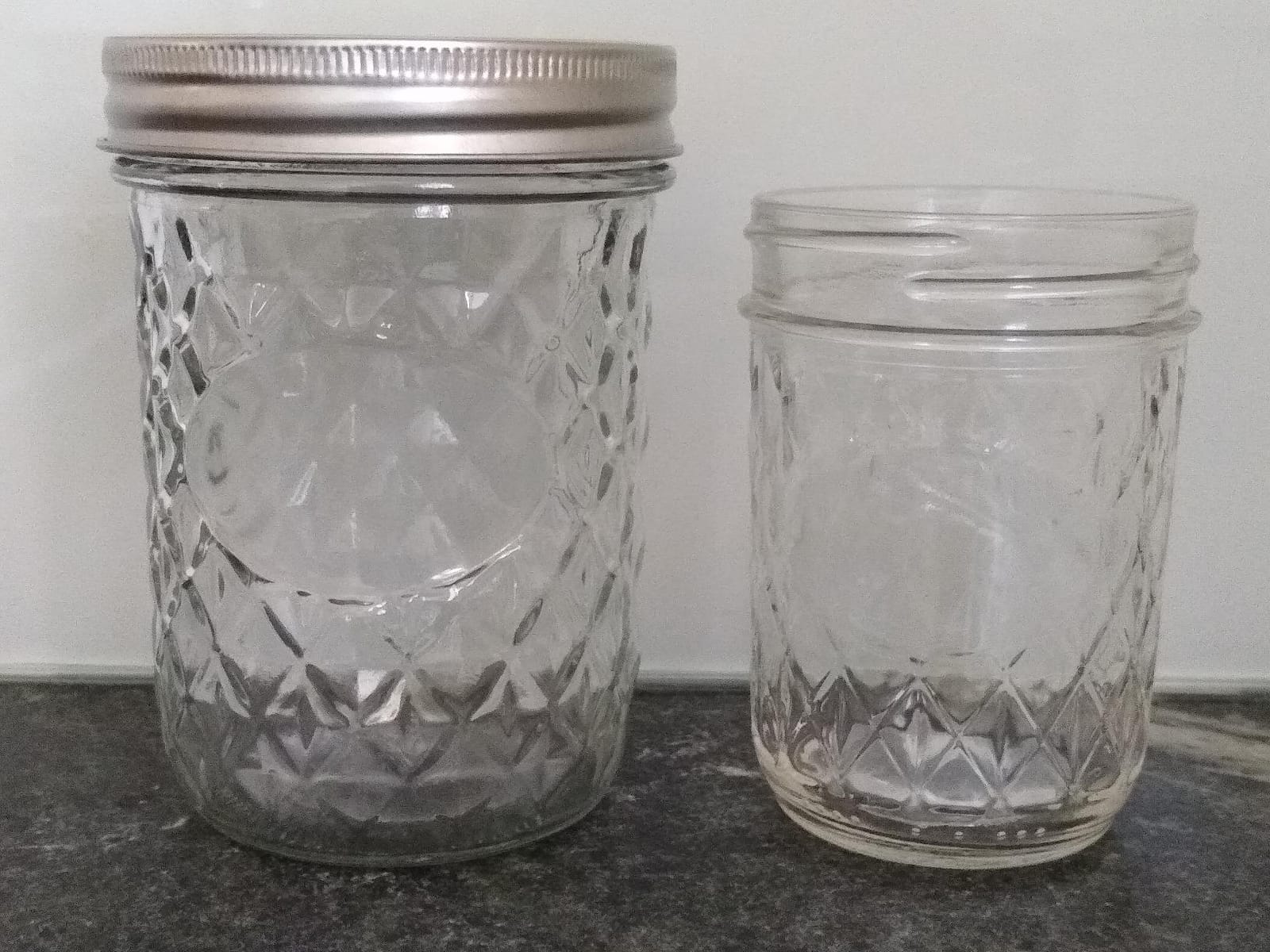
Best fit for non-pressure uses
For spices, herbs, drinks, dry goods, and gifting, the quilted wide mouth is a genuinely good pantry jar. The wide opening scoops clean and the stackable shape saves shelf depth.
If you keep jams, pickles, and relishes, where processing stays at a water bath temperature, the risks here are far smaller than under pressure.
Where this jar disappoints
Inspect the lip of every jar before use. A burred edge under a screw band is exactly where pressure finds a starting point, and this set earns the widest inspection pass in our roundup.
Some sets also arrive with cracked or broken jars, so count the contents on arrival and set a damaged jar aside for storage duty rather than processing duty.
9. PINIWON Regular Mouth Pint Jar 15-Pack – Best All-In-One Kit
PINIWON Mason Jars 16 oz with Lids and Bands, 15 Pack Pint Canning Jars
16 oz regular mouth
15 jars per pack
2.59 inch mouth
Lead-free glass
Pros
- Glass is reported sturdy under pressure heat
- 2.59 inch mouth takes standard lids
- Foam-barrier packaging stops transit damage
- Labels and cleaning brush included
Cons
- Included lids may not seal reliably
- Freezing limited to 12 oz per jar
Pressure canners who bought this set report that the glass withstands the intense heat of the process, which is the specific question you want answered. The 2.59 inch regular mouth takes standard canning lids, so you are not locked into a proprietary system.
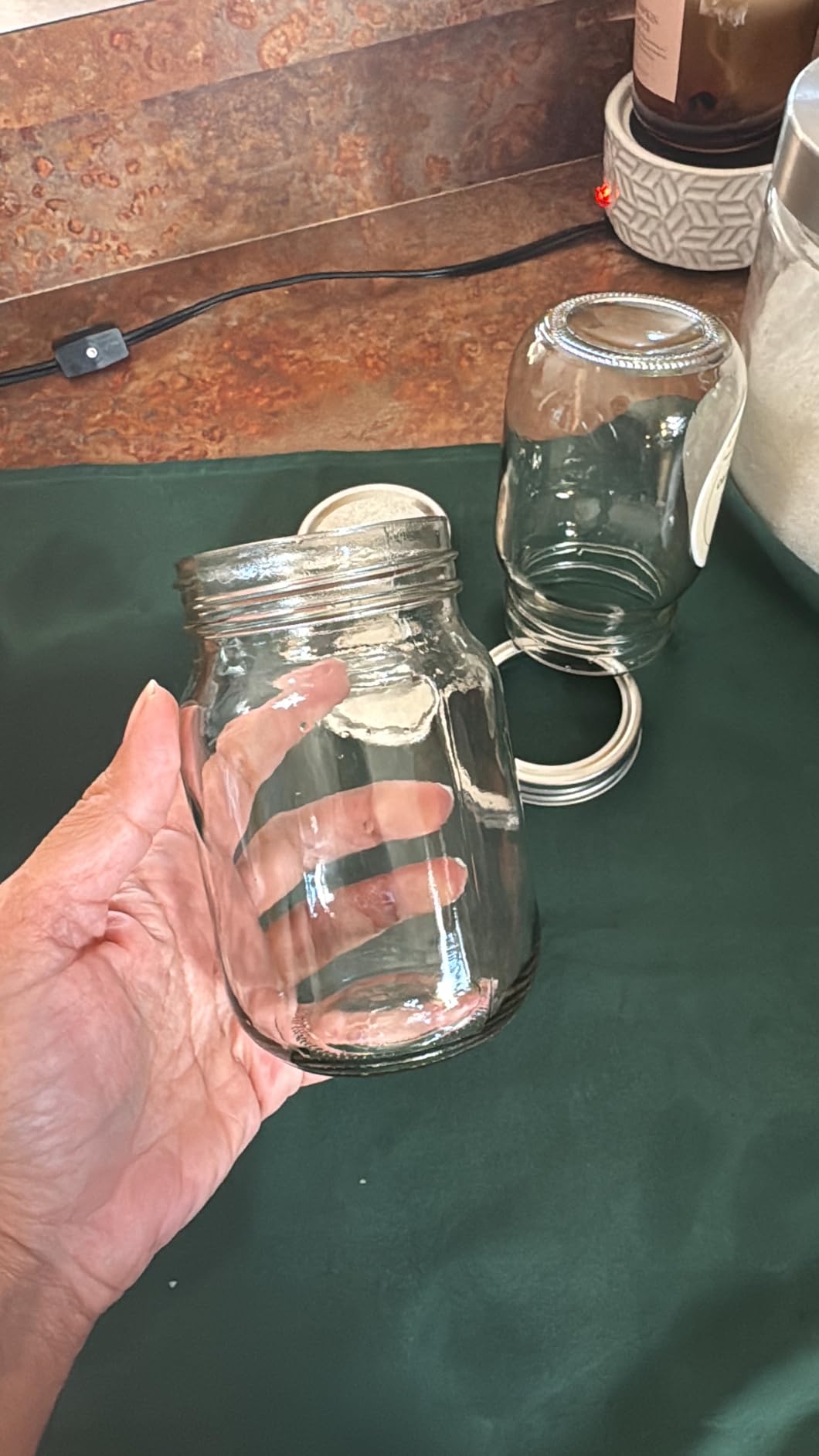
The box is unusually complete. Fifteen jars with lids, bands, 24 labels, twine, and a sponge brush covers everything a first season needs, and the foam-barrier packaging is credited in reviews with preventing breakage in transit.
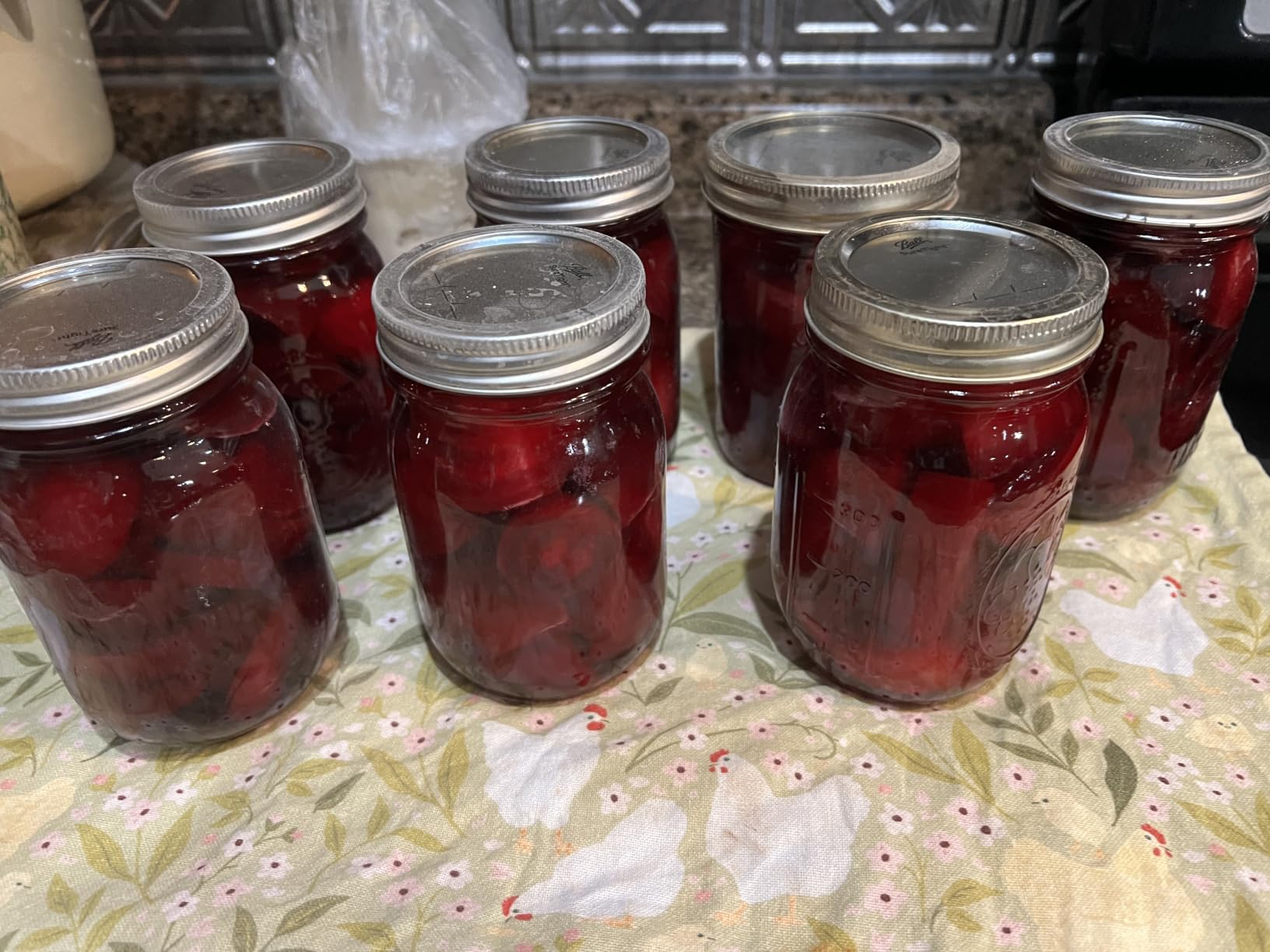
The clear complaint, and it comes up often enough to plan around, is the supplied lids. Canners report that the included lids may not seal reliably, and many of them end up replacing them with name-brand canning lids. Budget for that rather than discovering it mid-batch.
Once paired with better lids, the same reviewers say the jars seal well. That is a lid problem, not a glass problem, and it is an easy fix.
Best fit for a complete first kit
If you are starting from nothing, the accessory bundle removes the separate shopping trip. Labels, twine, and a brush are the small things you would otherwise buy one at a time after the jars arrive.
Regular mouth pints also process efficiently, since a 16 oz jar spends less time at pressure than a quart, which shortens the window where a seal is under active stress.
Where this jar disappoints
Do not trust the included lids with a low-acid pressure batch. Buy standard canning lids in bulk and treat what comes in the box as extras for water bath work or storage.
Freezing is again limited to about 12 oz per jar, and at 4.5 stars on just under a thousand reviews there is less long-term history here than with the Ball sets.
10. Eathtek Wide Mouth 16 oz Jar 12-Pack – Best for Pickling
12 Pack16oz Wide Mouth Glass Mason Jars, Canning Jars with Airtight Lids
16 oz wide mouth
12 jars per pack
Two lid types per jar
BPA-free glass
Pros
- Thick glass survives boiling-water sanitizing
- Two lid options per jar
- Tags and labels included
- Easy to scoop and clean
Cons
- Mouth is slightly smaller than standard regular mouth
- Lids are not for the dishwasher
Thick glass is the headline here. Owners report that the jars survive boiling-water sanitizing and repeated dishwasher cycles, and that is the durability profile you want from a jar that will be heat-treated more than once in its life.
The useful feature for pressure work is the pair of lid styles included per jar, one of which is a canning-style split lid. Having a genuine canning closure in the box removes the single most common failure point for a new pressure canner.
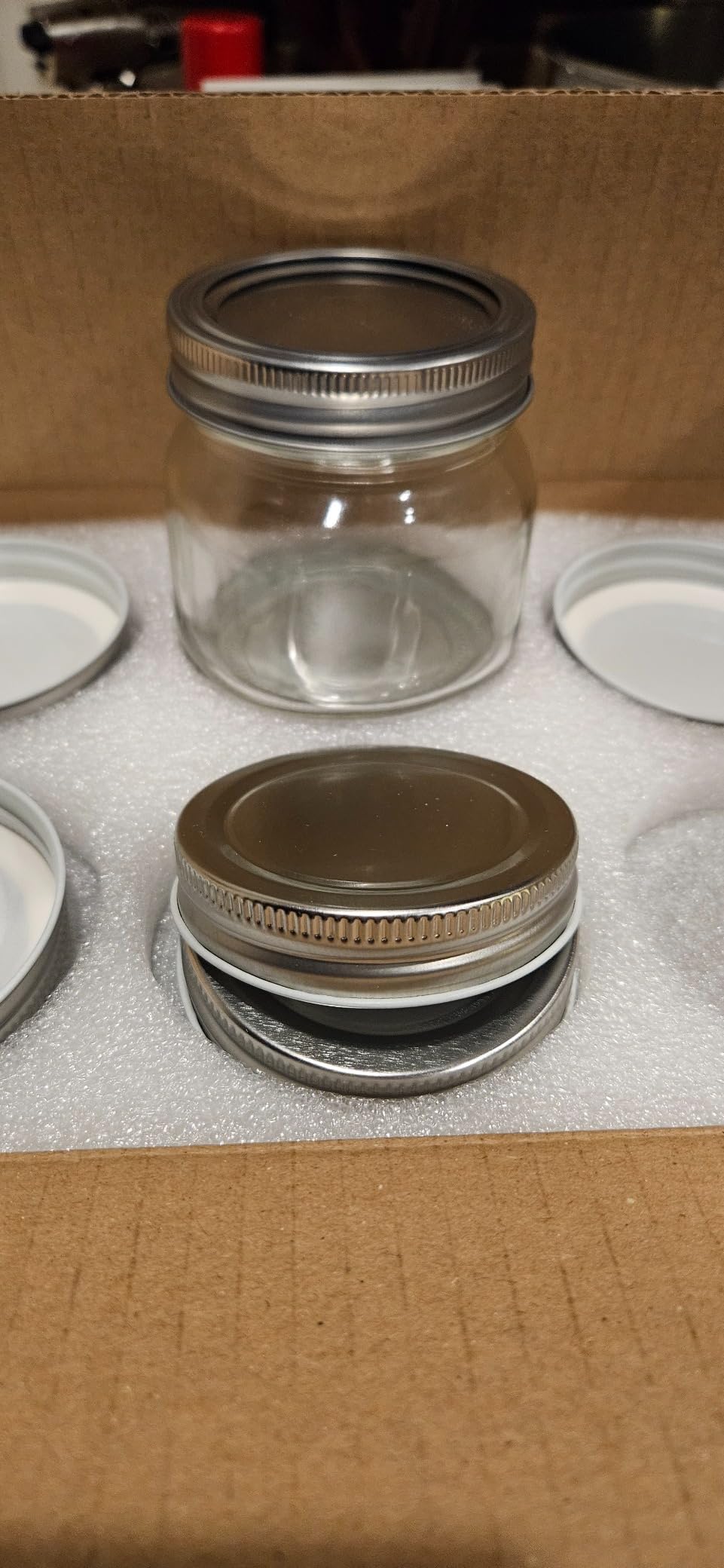
At 4.6 stars on roughly a thousand reviews, the sentiment is positive, with the recurring caveat being mouth diameter. Buyers note the opening is slightly smaller than standard regular mouth, so some regular lids may not seal reliably on it. Verify fit with your own lid supply before a full load.
For pickling and relish work the wide opening is a real advantage, since spears and cut vegetables drop in without crowding the neck.
Best fit for pickling and relish batches
Pickling is the easiest place to justify this jar. The wide mouth speeds packing, the thick glass tolerates heat, and a split canning lid is already in the box for the batches you run at a water bath temperature.
The set also includes labels, hang tags, and twine, which makes finished jars easy to date and gift straight from the batch.
Where this jar disappoints
The mouth diameter is the real caveat. If your standard regular mouth lids do not seat flat on it, the seal is unreliable, and that is a problem to test with a single jar rather than discover across a full load.
The lids are not recommended for the dishwasher, so plan to hand wash them and store them dry, since damp lids are the other common route to a failed seal.
Regular Mouth vs Wide Mouth for Pressure Canning
Both mouth styles pressure can safely. Canners on r/Canning describe the real difference as packing, not strength: a wide mouth is easier to fill with vegetables, while a regular mouth works better for pourable foods such as soups, sauces, and stocks.
The clear opening is the number worth remembering. A wide mouth jar gives roughly a 3 inch unobstructed opening, against roughly 2-3/8 inch on a regular mouth jar, measured inside the thread rather than across it. That extra inch is the difference between sliding in a spear of green bean and angling it past the neck.
Lid cost is the quieter factor. Regular mouth replacement lids run cheaper than wide mouth lids, and since you replace lids on every pressure batch, the difference compounds across a season. Squeeze bottles, bands, and canning funnels are also not interchangeable between the two formats, which is a regular source of confusion for new canners.
Canner capacity leans toward regular mouth for pints. Home canner reports put an All American 930 at 19 regular mouth pints against 16 wide mouth pints, with 14 quarts either way, and a Presto 23 quart canner holding 20 regular mouth pints or 16 wide mouth pints double-decked, with 7 quarts either way.
Pint vs Quart vs 64 oz: Which Sizes Are Pressure-Canning Safe?
Pint (16 oz) and quart (32 oz) mason jars are the standard pressure-canning vessels, and both appear in this roundup. The 64 oz jar is the exception, and it is the one most community questions keep circling.
General guidance in the canning community is that 64 oz jars are not recommended for pressure canning. The glass mass and the tall profile make them harder to process evenly, and they do not sit well in a canner rack. Treat a 64 oz jar as a storage and fermenting vessel, not a pressure vessel.
Half-pint (8 oz) jars see the same caution in miniature, and the same rule applies to any decorative or unlabelled glass. If the jar does not say it is a canning jar, do not pressure can in it.
Do You Need New Lids Every Batch?
For the standard two-piece system, yes. A canning lid is a single-use seal. The flat lid is held in place by the screw band while pressure builds, then the band comes off and the vacuum forms as the jar cools, which is what makes the closure a seal rather than a clamp. Reusing that lid on a second batch is the most common reason a jar fails to seal, and the failure is invisible until days later.
Bands are the reusable half. A screw band can go on and off indefinitely as long as it is not rusted or bent, so you are replacing lids, not complete sets. That is why jars that ship with lids and bands are worth buying even if you already own plenty of jars.
Reusable closure systems work differently. A glass lid with a rubber gasket and separate metal clips, as used by Weck and Le Parfait, has no single-use component, so the cost per seal drops to nearly nothing after the first batch. The catch is that the same systems need more clips per jar under pressure, and replacement gaskets and clips are harder to source than flat lids. A Weck set that ships with two clips generally needs three per jar during a pressure process, and buying the extra hardware up front is part of the setup.
One piece lids are a middle path with the same single-use catch as two-piece lids, so the economics work out similar. If you want the lowest ongoing cost and you canner often, a reusable system pays for itself across enough batches. If you can a few jars a year, fresh lids each time is simpler.
How Many Jars Fit in a Pressure Canner?
Capacity depends on jar shape and canner size, and it is the most searched practical number in this category. The rule of thumb is that square-sided jars pack tighter than round ones, so a jar with flat walls and straight sides buys you extra capacity per load.
From reported home use, an All American 930 holds 19 regular mouth pints or 16 wide mouth pints, and 14 quarts regardless of mouth style. A Presto 23 quart canner holds 20 regular mouth pints, or 16 wide mouth pints double-decked, and 7 quarts either mouth size.
For a smaller canner, a 7 quart canner typically manages a limited number of pints and 4 to 5 quarts depending on shape. Check the capacity chart that came with your specific canner, since the same volume holds different jar counts across models.
You can also mix pints and quarts in one load as long as the process time matches the load, and the smaller jars are not resting on the larger ones in a way that risks breakage. Put the smallest jars on the bottom layer for stability.
Pressure Canning Safety Checklist
Jar safety is a short list of rules that are easy to follow and expensive to ignore. Here is what we check before any load goes into a canner.
Use canning-grade glass only, labelled as a canning or mason jar. Avoid decorative glass, unmarked jars, and anything bought for pasta sauce or jam that came with a non-canning lid.
Use a new flat canning lid on every jar in every batch. Bands can be reused; lids cannot.
Tighten bands finger-tight only. Over-tightening blocks the steam escape path that lets a jar seal properly.
Do not let jars touch the side of the canner. This is the most-asked question in the forums and the answer is consistently no, because direct contact with the hot wall can shatter glass.
Check gauge accuracy on a dial gauge canner, and know that a weighted gauge reads at the canner top, not at the jar. A dial gauge gives a more accurate reading and is worth having for pressure work.
Keep the correct headspace for your jar and process, since headspace is a processing requirement rather than a preference.
Let the canner cool naturally, undisturbed, before opening it. A fast release after depressurizing is a thermal shock event.
After cooling, check every seal by pressing the center of each lid. Remove any jar that flexes, leaks, or does not hold a vacuum, and refrigerate it first rather than eating from it.
Jars to Avoid for Pressure Canning
Not every glass jar on a shelf belongs in a pressure canner, and the exclusions are worth stating plainly.
Avoid ordinary grocery-store jars with commercial lids, including pasta sauce and pickle jars, because the lid and the glass were never tested as a system. Avoid decorative and patterned glass marketed for kitchen use rather than canning, and avoid very thin off-brand sets with no canning markings, since breakage both in the box and in the canner is a recurring complaint in that tier.
Avoid 64 oz jars for pressure processes, as noted above. Also avoid any jar with a chip, a deep scratch, a burred lip, or a crack around the shoulder, and never force a lid that needs a tool to open.
Avoid reusing flat lids. And within our list specifically, treat the VERONES wide mouth 16 oz set with extra inspection because buyers report lip burrs, and consider replacing the supplied lids on the YEBODA and PINIWON sets before a low-acid batch.
Frequently Asked Questions
Can mason jars withstand pressure?
Canning-grade mason jars can, and that is the entire point of a pressure canner. The jar must be manufactured and tested for the heat cycle, fitted with a new two-piece canning lid, and sealed at 10 to 11 psi where water reaches roughly 240 degrees Fahrenheit. Decorative glass, unmarked jars, and jars with commercial lids are not built for that cycle and can fail.
What type of canning jar is best for pressure canning?
A canning-grade pint or quart jar, either regular mouth or wide mouth, with new two-piece canning lids. Wide mouth is easier to pack whole vegetables, and regular mouth suits soups, stocks, and sauces while costing less per replacement lid. The glass matters more than the shape, so choose a jar labelled as canning glass and inspect it for chips before every load.
Can jars touch the side of a pressure canner?
No. Jars should never touch the side wall of a pressure canner, and the guidance in community forums is consistent on this. Direct contact with the hot wall creates a thermal stress point that can shatter the glass. Leave enough space so a canning funnel or your hand passes between the jar and the canner wall on every side.
Can you mix pint and quart jars in a pressure canner?
Yes, you can mix pints and quarts in one pressure canner load, provided the process time suits the load and the smaller jars are not resting on larger ones in a way that risks breakage. Place pints on the bottom layer for stability, keep the jars off the canner wall, and follow the process time for the largest jar in the load.
Do I need new mason jar lids every batch?
Yes for the standard two-piece system. The flat lid creates the one-time seal, so it is not reused, while the screw band can be reused indefinitely as long as it is not rusted or bent. Reusable systems such as Weck or Le Parfait use a glass lid, rubber gasket, and separate clips, which have no single-use part but need extra clips per jar under pressure.
The Best Mason Jars for Pressure Canning in 2026
The best mason jars for pressure canning in 2026 come down to glass you trust, a closure that takes a vacuum, and a mouth shape that fits your food. Our pick for most canners is the Ball Wide Mouth Quart 12-Pack, backed by the deepest owner feedback in the category and a wide opening that handles whole produce without fuss.
For soup and stock, the Ball Regular Mouth Quart is the better shape and the cheaper lid format over a season. For a pint-size load with a mouth that accepts standard canning lids, the Mcupper 15-Pack does it for less than a premium brand, and the SEWANTA set earns its place for anyone who wants headspace marked on the glass.
Whatever you choose, buy canning-grade jars, use a fresh lid on every jar in every batch, keep the glass off the canner wall, and let the canner cool before you open it. That checklist does more for your seal rate than any brand name will.