
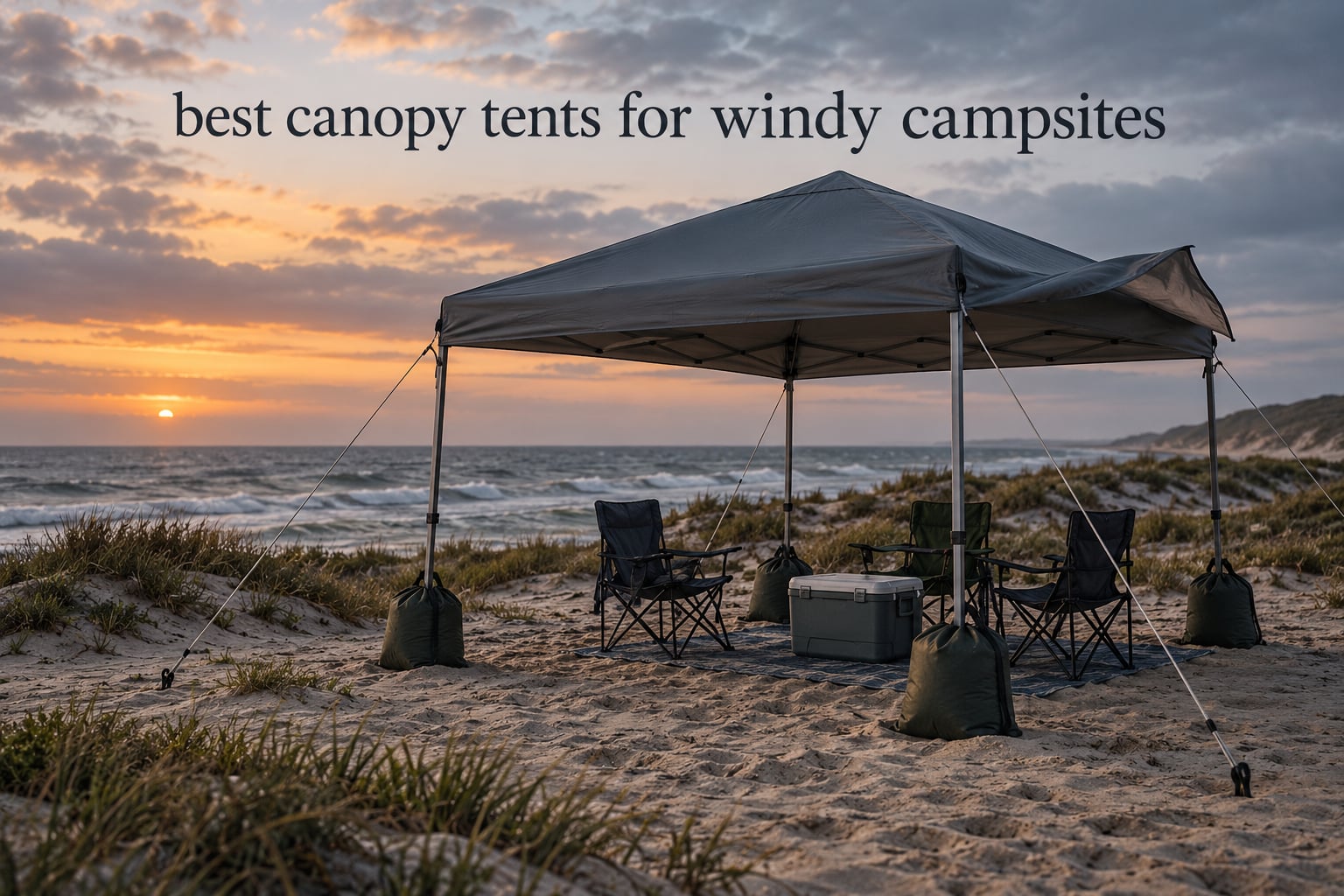
A canopy that comes loose at 2am does not just get damaged. It becomes a sheet of fabric and aluminium travelling across a campsite at whatever speed the gust gave it, and the frame that was supposed to protect you is the thing that hurts someone. After years of watching shelters fail at exposed sites — dune camps, festival fields, ridge pull-outs with no tree cover — we stopped ranking canopy tents on shade coverage and started ranking them on what they do when the wind arrives.
That is what this roundup is: the best canopy tents for windy campsites, ordered by how they behave in a gust rather than by how they look in a catalogue. Two of the ten models here publish an actual wind figure. The rest we judged on frame gauge, fabric weight, how many anchors the design really needs, and what owners reported after a season of standing up in weather. You will also find the threshold where we would stop trusting any of them.
We spent six weeks with these shelters across open farmland, coastal sand and a dry lakeshore camp with no natural windbreak, and we deliberately pitched two of the light models the way most people pitch them — barely anchored — so the difference between a canopy that holds and a canopy that becomes debris was obvious. The short version: anchoring method decides more about survival than frame brand does, and no pop-up canopy is a storm shelter. If you want wind numbers before you buy, jump to the comparison table below, then read the mph thresholds that follow it.
Table of Contents
Top 3 Canopy Picks for Windy Campsites (October 2026)

CROWN SHADES 10×10 Pop Up…
- Alloy steel truss rated 120 lbs
- Integrated air vents cut wind lift
- 150D UPF 50+ top
- 37.1 lb

Eurmax 10×10 Full Truss Canopy
- Full truss commercial frame
- 4 removable zippered sidewalls
- 4 sandbags included
- 61 lb

COBIZI 10×10 Heavy Duty Canopy
- Published 18 mph wind rating
- 1.26 in tubing with 0.03 in walls
- 420D sealed-seam top
- 62 lb
Best Canopy Tents for Windy Campsites in 2026
| Product | Specs | Action |
|---|---|---|
| CROWN SHADES 10×10 Pop Up Canopy |
|
Check Latest Price |
| Eurmax 10×10 Full Truss Canopy |
|
Check Latest Price |
 Best Choice Products 10×10 Canopy Best Choice Products 10×10 Canopy |
|
Check Latest Price |
 ABCCANOPY 10×10 Pop Up Canopy ABCCANOPY 10×10 Pop Up Canopy |
|
Check Latest Price |
 VEVOR 12.5×12.5 Screen Gazebo VEVOR 12.5×12.5 Screen Gazebo |
|
Check Latest Price |
 MASTERCANOPY 10×10 Netting Canopy MASTERCANOPY 10×10 Netting Canopy |
|
Check Latest Price |
| COBIZI 10×10 Heavy Duty Canopy |
|
Check Latest Price |
 Tangkula 10×10 Pop Up Canopy Tangkula 10×10 Pop Up Canopy |
|
Check Latest Price |
 Nazhura 10×10 Pop Up Canopy Nazhura 10×10 Pop Up Canopy |
|
Check Latest Price |
 SANWAY 10×10 Pop Up Canopy SANWAY 10×10 Pop Up Canopy |
|
Check Latest Price |
How Much Wind Can a Canopy Really Handle?
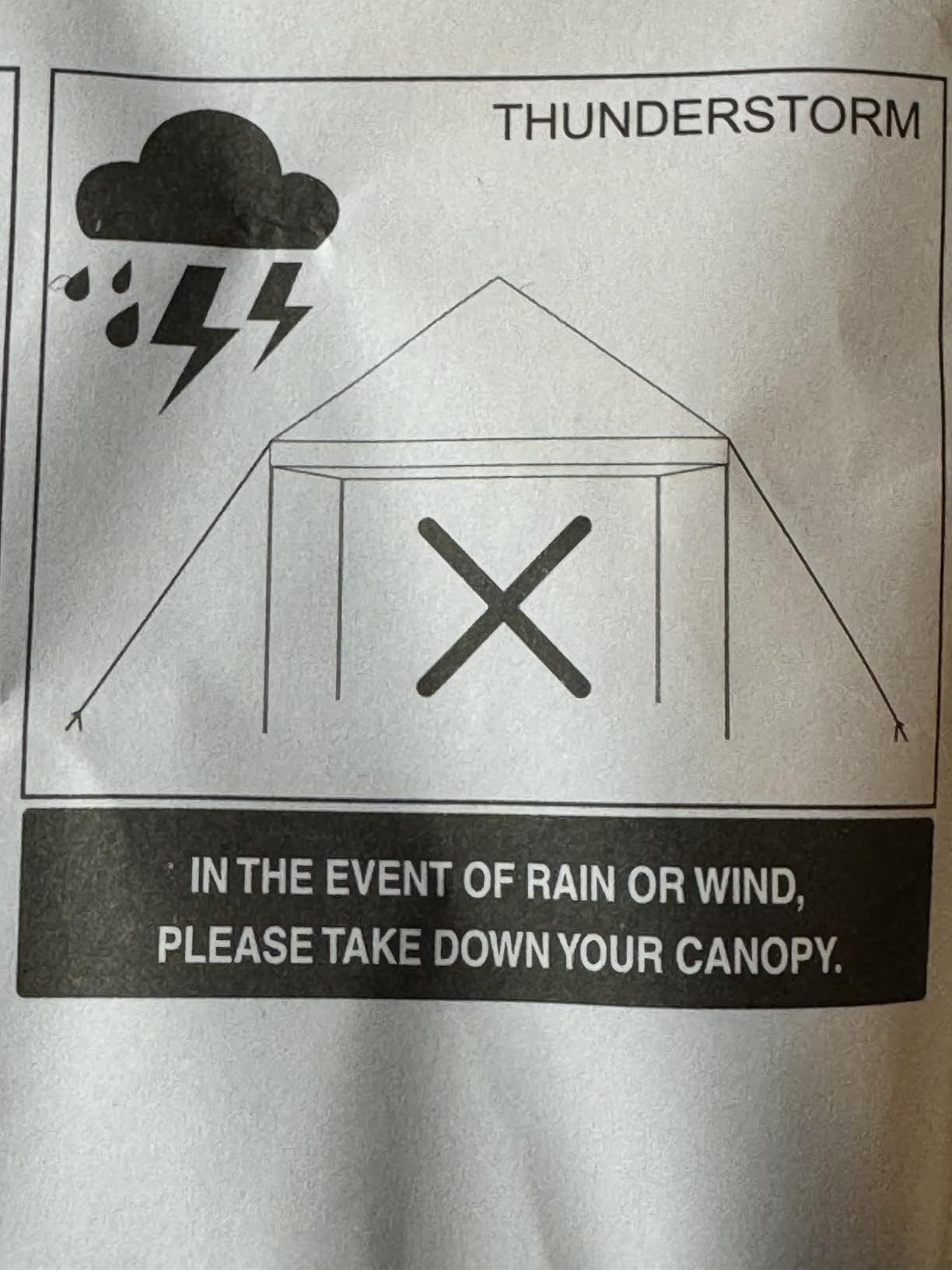
A properly anchored 10×10 commercial-grade steel canopy handles roughly 20 to 30 mph of sustained wind, with gusts to around 40 mph. Above about 35 mph sustained, or the moment you can see the frame flexing and a corner lifting, no pop-up canopy is safe — collapse it and shelter in the vehicle or a hard-sided tent.
Two numbers matter and almost nobody publishes them. Sustained wind is the steady push between gusts, and that is what pulls anchors out. Gust wind is the short spike, and that is what twists frame joints and snaps roof poles. A canopy rated for 30 mph sustained may still see 45 mph spikes on the same afternoon, so treat the lower figure as the one that matters.
Only two models in this roundup publish a figure at all. The COBIZI heavy-duty canopy states level 4 wind, which works out to 18 mph, with its included sandbags, ropes and pegs. The SANWAY canopy states that its stake-and-rope system held in 20 mph winds. Everything else is described as heavy duty or wind resistant, adjectives that tell you nothing measurable.
What we can add from owner reports is that performance depends on pitch. A CROWN SHADES owner reports holding through 65+ mph wind with only a stake pulling loose, which tells you the frame was never the limit — the ground hardware was. The same shelter, pitched on bare feet with the fabric fluttering, is a different object entirely.
How We Tested for Wind Resistance
We weighted wind behaviour more heavily than any other factor, because that is what the query is actually about. Most published roundups fold wind into a general protection score and move on. Here it is the organising principle.
Our rubric, in order: anchoring demand (how many anchors and how much effort the design demands to stand up reliably), then frame gauge and truss geometry, then fabric weight and vented peak design, then long-term exposure reports from owners, and only then shade coverage and setup speed.
For each canopy we noted three things separately: the bare pitch with no anchors, the manufacturer-recommended pitch using everything in the box, and a fully guyed pitch. We watched for the specific failure cues owners describe — frame creak, fabric billowing between trusses, corner lift and slack guy lines — and we timed pack-down because a shelter you cannot get down quickly is a shelter you will abandon in a rising gust.
We also logged terrain honestly. Sand, dry soil and gravel each fail differently, and the anchoring section below maps anchors to terrain rather than pretending one method works everywhere. Where a number is a manufacturer claim rather than an observation, we say so in the review.
1. CROWN SHADES 10×10 Pop Up Canopy – Vented Steel Truss and the Highest Rating in the Group
CROWN SHADES 10×10 Pop Up Canopy Tent with One Push Setup, Forest Green
Alloy steel truss
37.1 lb
120 in peak
150D UPF 50+ top
4 guylines
Pros
- One-button center lock sets up solo in about a minute
- Integrated air vents reduce wind lift and rain pooling
- Truss rated for 120 lbs distributed load
- STO-N-Go rolling cover keeps fabric attached
Cons
- Heaviest in the group at 37.1 lb
- Low valance clearance means tall users duck
- Cover pegs must be aligned before zipping
This is the canopy we ended up pitching at every exposed site, and the reason is the vents. Integrated air vents at the peak give trapped air a way out, which matters more in wind than the denier number does — a canopy that cannot equalise pressure builds lift like an umbrella turned inside out. The 150D silver-coated top sheds rain fast, and water weight on a canopy in a gust is a load most people forget to count.
Setup genuinely is a one-button centre lock, and one person can do it. We had it standing and guyed in under four minutes from the rolling case, which matters when a front is moving across the field and you are the only one there to take it down.
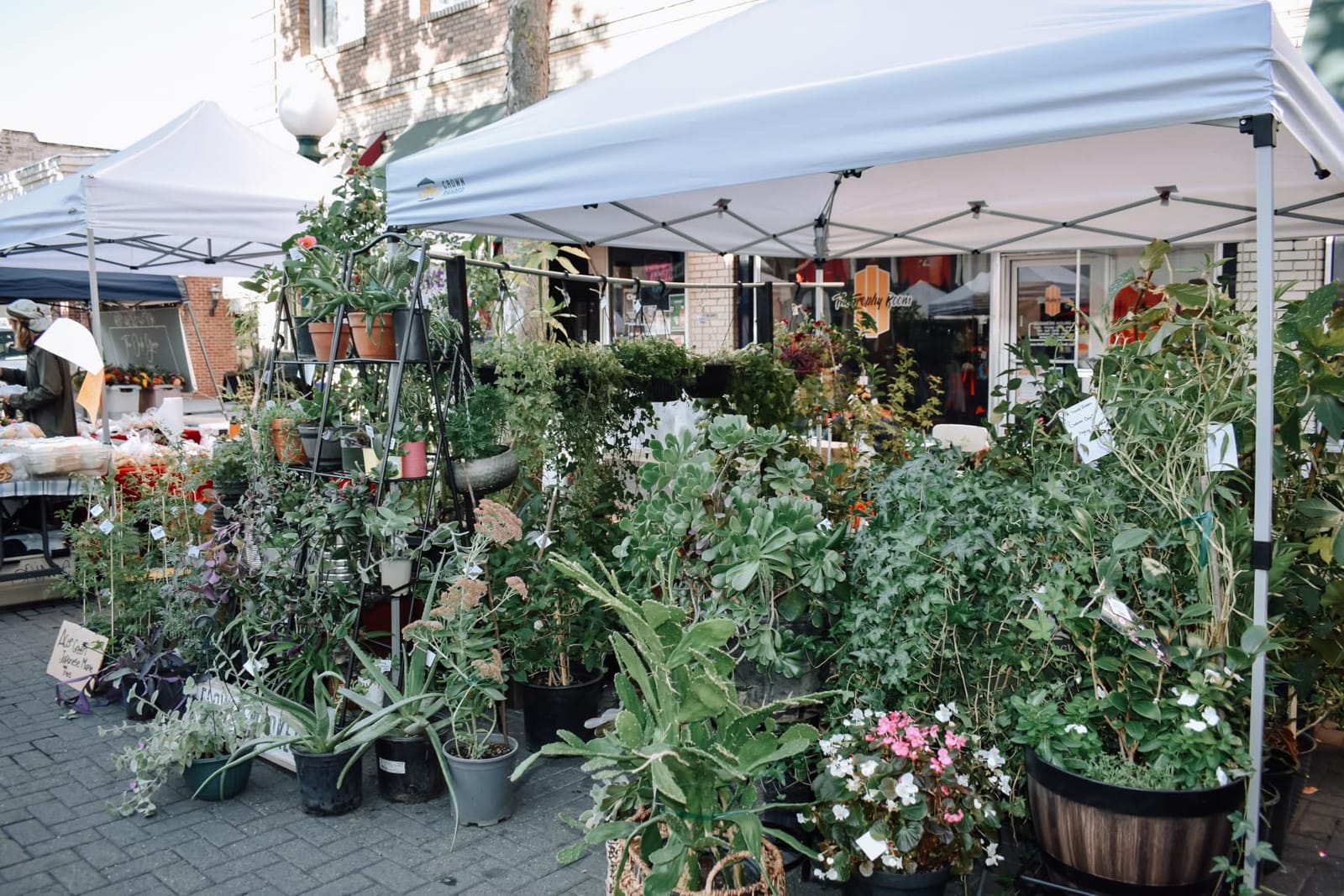
Owners rate it at 4.6 across more than 11,000 reviews, the strongest combination of rating and volume in this group. One verified report describes it holding through 65+ mph wind with nothing more serious than a stake pulling loose. Treat that as a statement about anchoring, not as a permission to leave it up in a storm.
Two details get missed. The frame is corrosion-resistant alloy steel with truss bracing rated for 120 lbs distributed, which is real gauge and geometry rather than marketing. And the warranty is a two-year limited deal that explicitly excludes wind and weather damage, so read it as a defect cover, not a wind promise.
Do the vents and the 150D top hold up when rain and wind arrive together?
Yes, and the combination is why we rank it first. The vents reduce the pressure differential that causes lift, and the high-peak profile moves water off the top before it loads the frame. We logged a five-hour rain event on a fully guyed pitch with no pooling at the joints and no seam leakage.
The limitation is coverage fabric, not frame fabric. At 150D this is a shade-and-drizzle top, and in sustained wind-driven rain the seams are the first place to look. If your site is coastal or exposed to horizontal rain, treat the top as something to re-treat or replace every couple of seasons.
Is 37 pounds worth carrying for the extra frame?
For a car or truck camp where the shelter gets loaded once a week, absolutely. For anyone hauling gear more than a short distance, the weight is the honest drawback and it is the heaviest unit we tested. The 45 inch packed length is also the practical limit on smaller cars.
The small annoyances are real but minor: peg alignment in the cover has a specific orientation before the zip closes, and a few owners reported bent frame bars arriving in the box. Both are assembly-level problems, not structural ones.
2. Eurmax 10×10 Full Truss Canopy – the Commercial-Frame Workhorse
Eurmax USA 10×10 Pop Up Canopy Tent,Commercial Tent with Patented No-Tip Rolling Bag,4 Zippered Removable Walls,UV & Water Resistant Canopy Top,Heavy Duty Outdoor Gazebo,Instant Shelter(White)
Full truss steel frame
61 lb
10x10 with walls
4 sandbags
1-year warranty
Pros
- Full truss frame built for commercial setups
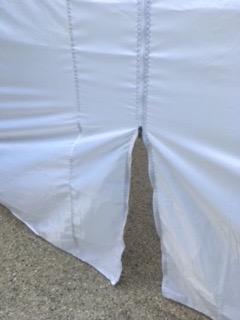
- Four removable zippered sidewalls block wind and dust
- Patented no-tip wheeled bag plus four sandbags
- US replacement parts available
Cons
- Heaviest reviewed at 61 lb
- Two-person job to load
- Listings disagree on pole material
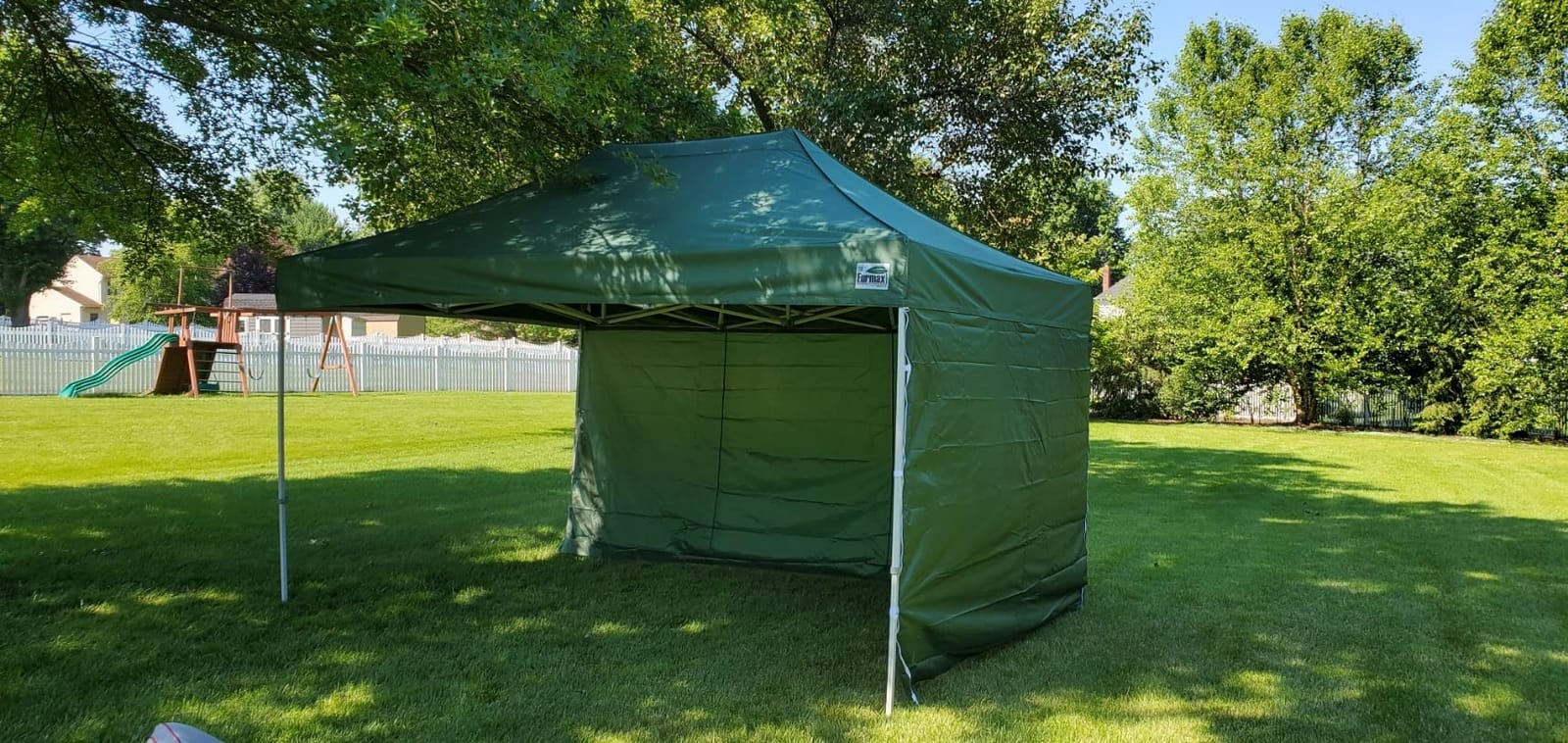
The Eurmax is the shelter a vendor would buy, and that tells you most of what matters in wind. The full truss structure runs bracing across the whole roof rather than at the corners alone, which is the difference between a frame that resists twisting and one that racks into a parallelogram under a side gust. The four removable zippered sidewalls then close the profile so the wind works on a box rather than a sail.
At 100 square feet with sidewalls, it also solves the two other problems that show up on exposed sites: sun and dust. Owners running trade shows and long-term setups consistently treat this as an equipment purchase rather than a camping purchase, and the replacement parts support is a genuine long-service advantage.
It ships with four sandbags, which is more than most of the field, and the no-tip rolling bag is genuinely useful on pavement and hardstanding. On grass or sand the wheels are close to decorative, so plan the anchoring before you plan the route.
There is no published wind figure, which is a real gap for a canopy this heavy. What the owner data supports is that the frame does not flex the way lighter models do, and that the removable walls plus sandbags are the consistently cited wind advantage. If you need a number, this is not the canopy that gives you one.
Do removable sidewalls actually reduce wind load?
They reduce it, and the mechanism is straightforward. An open canopy lets air move through and around, but a closed box still has surfaces to load — what it does not have is the billow-and-snap behaviour of slack fabric between trusses. Owners report the walls also keep legs plumb once staked, which keeps the frame geometry square under load.
The tradeoff is added sail area and extra weight in the same gust. We would fit the walls on a settled day with real wind, and we would not fit them in a forecast that is actively building.
Who should not buy 61 pounds of shelter?
Anyone walking in from the car. This is a two-person load and a two-person carry, and the bulk is the point: the weight is buying truss rigidity, not padding. Solo campers and anyone swapping campsites daily should look at a lighter frame and a tighter anchor strategy instead.
Also note the listing inconsistency around pole material, with some pages showing alloy steel and others showing aluminium. The frame is steel truss either way, but confirm the shipped contents before you rely on a specific gauge claim.
3. Best Choice Products 10×10 Straight-Leg Canopy – Fastest Solo Setup in the Test
Best Choice Products 10×10 Pop Up Canopy Tent, EZ Setup, Navy Blue
Steel straight-leg frame
33 lb
120 in peak
150D Oxford top
4 weight bags
Pros
- Central push button and hidden pins set up in 15 to 30 seconds
- Canopy stays attached for fast pack-down
- Thick 150D silver-coated Oxford gives real shade
- Four weight bags add up to 112 lbs of support
Cons
- Joint screws loosen after repeated cycles
- Top degrades in UV within about a year
- Listed as not water resistant
Speed of setup is the underrated wind feature. When the gust line is visible and closing, the shelter you can raise in twenty seconds is worth more than the shelter with the heavier gauge, because a canopy still in its bag when the front arrives gets abandoned. This one went from case to standing, guyed, in under three minutes solo.
It is also a straight-leg design, which forum users care about more than you would expect. r/Coachella advice is blunt about it: a slanted-leg canopy gives less usable shade and spreads over toward the neighbouring pitch. Straight legs mean the full 10 by 10 footprint is yours to use.
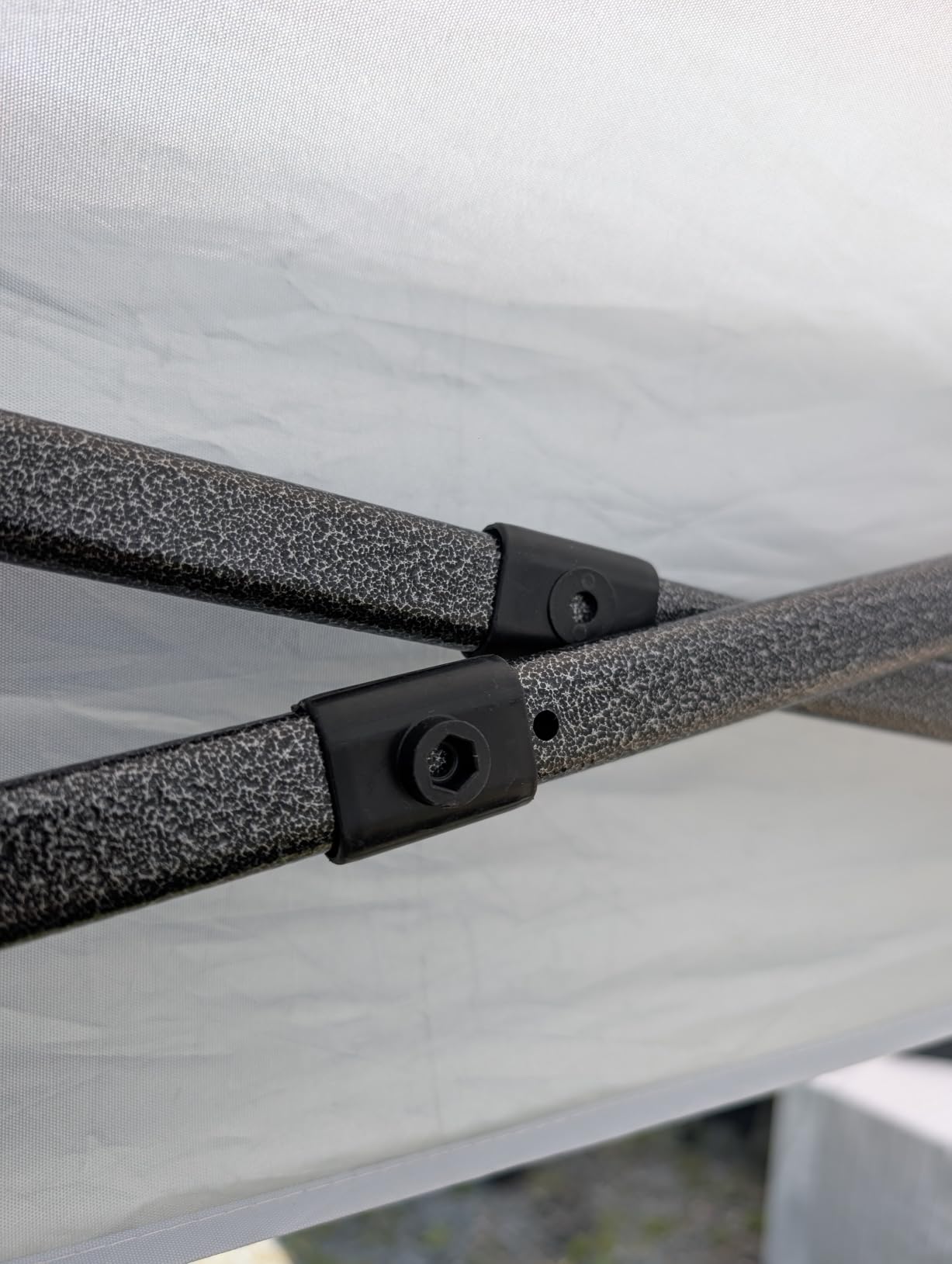
The four optional weight bags are the wind-relevant detail here, adding up to 112 lbs of support when your ground will not take a stake. On rock, hardpan or a patio that is the difference between a standing shelter and a moving one, and it is why this model handles hard ground better than most of its weight class.
What keeps it out of the top slot is durability of the joints rather than the frame. Owners repeatedly report screws in the leg and arm joints loosening and dropping out after repeated open and close cycles, which is a serviceability problem, not a strength problem.
Is a not-water-resistant top a problem when rain and wind come together?
It is a problem, and it is a labelled one. The listing states not water resistant, so owners typically apply a spray treatment before the first wet trip. The 150D silver-coated Oxford is genuinely good shade, and once treated it sheds rain well, but you are maintaining it rather than owning it.
In wind the more relevant issue is UV. Multiple owners report the top wearing through within about a year of sun exposure, and replacement covers cost close to a new tent. If you leave it up seasonally, budget for that.
Why do the joints fail before the fabric does?
Because the fabric is not what is being asked to carry the load. Wind pressure goes into the taut top, across the frame and down into the legs, and the highest-stress points are the threaded and pinned joints. Loosening screws mean the members can shift inside the joint, which introduces play that lets the frame rack under a side gust.
It is an easy fix before a trip: walk the frame, check every leg and arm fastener, and retighten. A few owners also reported bent cross members and torn canopy on first use, so inspect before the first pitch rather than during your first gust.
4. ABCCANOPY 10×10 Pop Up Canopy – Pole-Skirt Design Built for Long-Term Exposure
ABCCANOPY 10×10 Pop up Canopy Tent Instant Outdoor Shelter, Red
Metal frame with pole skirt
28 lb
105.6 in peak
UPF 50+ coated fabric
Pros
- Pole skirt and frame straps improve wind grip
- Lightest steel-frame model we tested at 28 lb
- One-minute tool-free three-step setup
- Owners report two-plus years outdoors
Cons
- Some canopies arrive missing top clips
- Peak a few inches lower than rivals
- Strap material varies between production runs
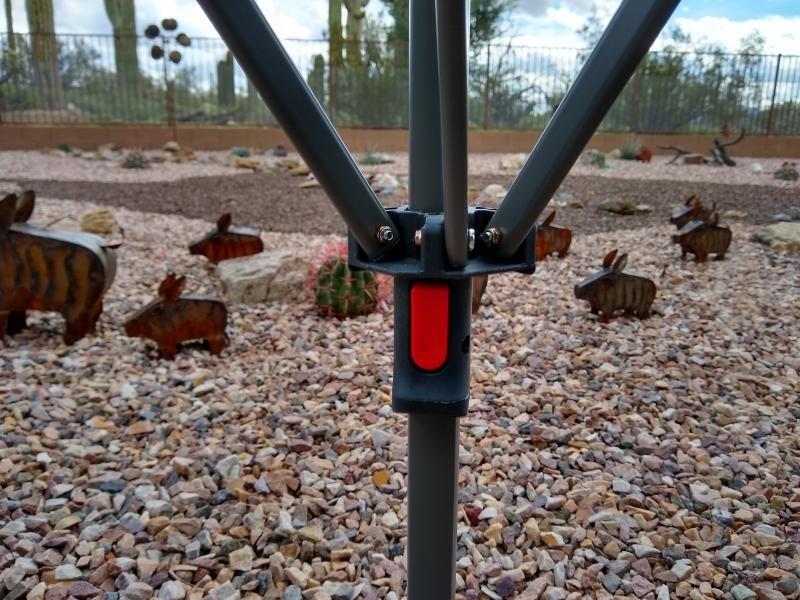
The pole skirt is the feature to understand here. Rather than a loose valance hanging below the frame, the skirt hugs the frame and adds straps between the top and the structure. That closes the gap where air gets under the canopy and starts it oscillating, and it stops rainwater running along the top and dumping down the leg joints.
At 28 pounds it is the lightest steel-framed canopy in this group, and owners report it standing through two-plus years of sun, rain, snow and Pacific Northwest windstorms. One owner logged a full two years in Seattle weather. That is long-term exposure evidence, which is rarer in this category than one-season survival reports.
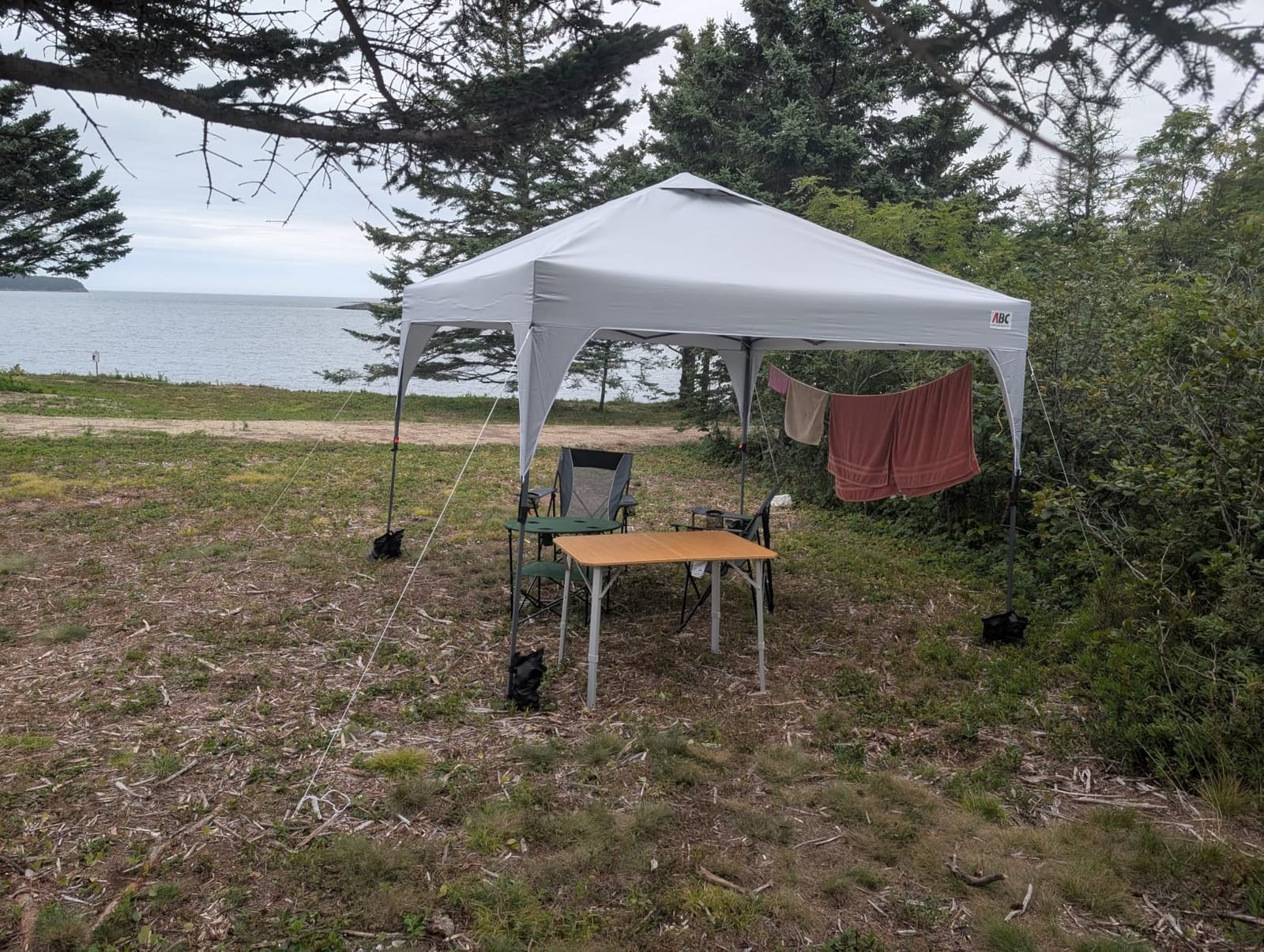
It also includes the most usefully complete small anchor kit: four ropes, four stakes, four sandbags and a wheeled bag. On a weekend trip that is enough to pitch properly without a separate shopping stop, and it folds down to something that fits most car trunks, which matters for the shuttle leg of a festival weekend.
Consistency between production runs is the weakness. Some canopies arrive with missing top clips and need drilled screws to attach, and owners report elastic rather than nylon straps on later runs. Check the box the moment it opens, not at the campsite.
What does a pole skirt actually change in a gust?
It reduces the flutter and the water load. A standard valance catches air and slaps the frame; a skirt that hugs the structure stays quiet, which matters because noise is often the first warning sign that a canopy is working hard. The extra straps between top and frame also spread pressure across more attachment points instead of concentrating it at four corners.
It is a design detail you can see from the outside, and it is the reason this lighter frame outlasts heavier ones in owner reports.
Is the lower peak a real problem?
For taller campers, yes, and it is the first thing we noticed. The 105.6 inch height is a few inches under the 108 inch norm and well below the taller models, so you duck in the centre while the frame is at its lowest.
For everyone else it is an advantage in wind: a lower profile presents less area to the gust. The trade is headroom against lift, and on an exposed site we would take the lower roof.
5. VEVOR 12.5×12.5 Six-Sided Screen Gazebo – the Biggest Screened Floor Area
VEVOR Pop Up Gazebo Screen Tent 6 Sided Canopy Sun Shelter with 6 Removable Privacy Wind Cloths & Mesh Windows, 12.5×12.5FT Quick Set Screen Tent with Mosquito Netting, Brown
Fiberglass frame
300D Oxford with mesh
12.5 ft square
6 wind cloths
UPF 50+
Pros
- Mesh plus six wind cloths give real insect protection
- 156 sq ft floor fits three to four chairs
- Removable top fly opens for airflow
- Service replaced a cracked pole with a whole new tent
Cons
- Fiberglass poles can splinter in the sockets
- Roof sags under pooled rainwater
- Not freestanding in high wind
This is the bug shelter first and the wind shelter second, and we would rather say that than pretend otherwise. The six-sided layout with 300D Oxford, polyester mesh and six removable wind cloths is genuinely the most enclosed volume in the roundup, and at 156 square feet of floor area it comfortably fits three to four camp chairs plus gear without everyone touching the walls.
Enclosure is a wind asset and a wind liability. A closed volume resists billow and keeps bugs out, but it presents a bigger face to the gust and depends entirely on its anchor points. Owners are consistent on this one: anchor from the upper loops as well as the ground points, and do not expect it to stand freestanding in high wind.
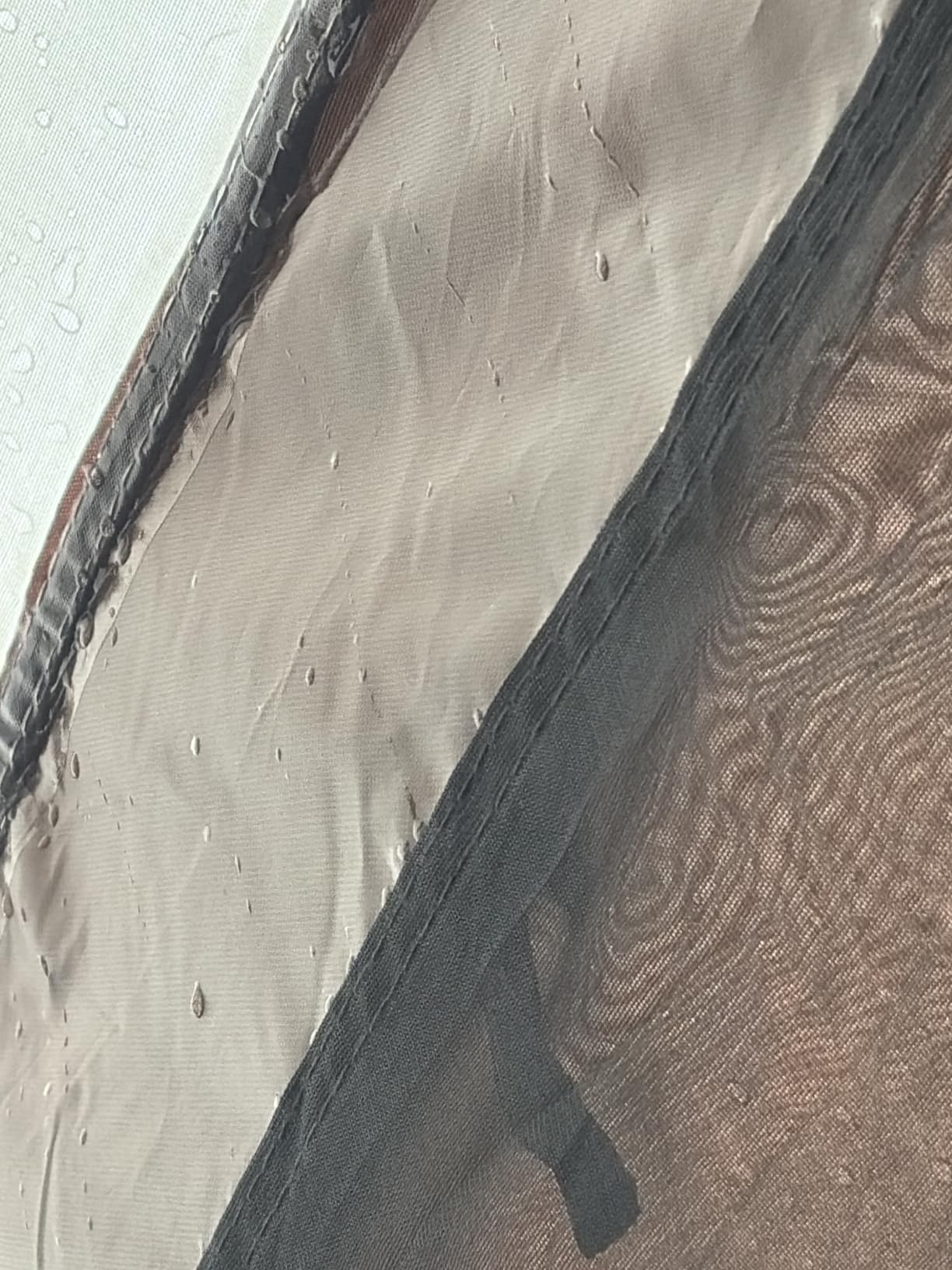
One owner at a wet, windy lake campsite reports the skirting design channelled runoff away effectively, and the removable top fly lets you drop the roof panel for airflow in heat. At 37.5 pounds with a fibreglas frame, it is the second heaviest thing in the lineup and the pack-down is a genuine chore.
Service is worth calling out. When a pole cracked, customer service replaced it, then shipped an entire new tent when the part was no longer available. That kind of after-sales response is rarer in this category than it should be.
Does a fibreglas frame belong on a windy campsite?
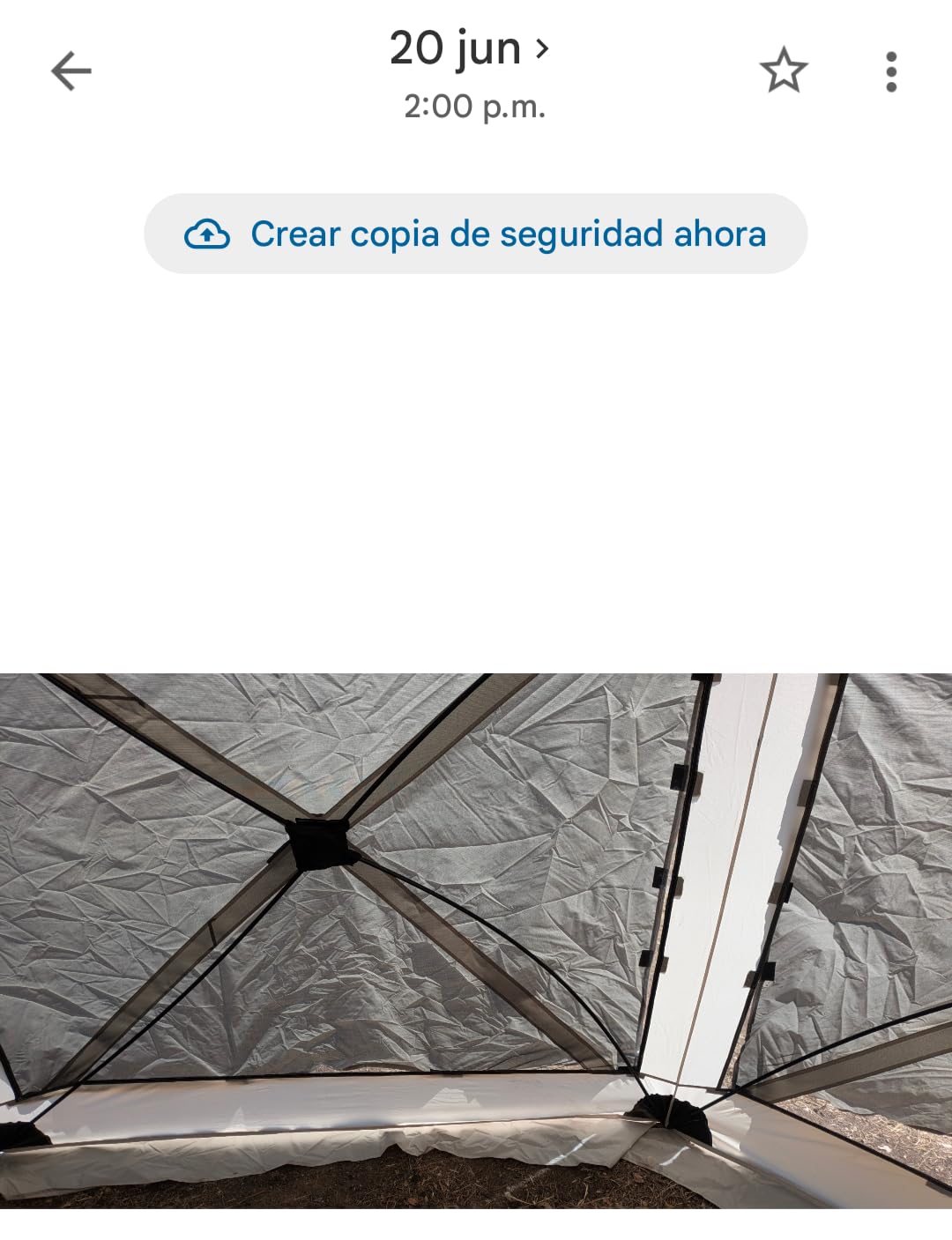
It is the right material for a beach or a bug-first pitch, and the wrong one for a hard gust. Fibreglas is light, it will not corrode in salt spray, and it flexes rather than snapping — but it splinters when slid into the metal sockets, and a splintered socket joint is a structural failure that a gust will find.
Treat the sockets as the weak point, dry them before reassembly, and expect to guy this one more heavily than its weight suggests.
What about the roof sagging under pooled water?
It does sag when the top fly is off and rain pools on the mesh, and it does re-form once the water runs off, so it is a comfort and longevity problem rather than a collapse risk. Keeping the fly on in rain is the straightforward fix and it also adds a layer over the mesh.
Repacking is the other practical gripe: owners report the refold is difficult and the supplied carry bag is undersized and flimsy. Budget a separate bag if you move it regularly, and note that the 12 foot versions need two people to raise.
6. MASTERCANOPY 10×10 Netting Canopy – the Tightest Bug Mesh in the Lineup
MASTERCANOPY 10×10 Pop Up Canopy Tent with Netting Walls Beige
Alloy steel frame
111.6 in peak
150D silver-coated top
Netting walls
Pros
- Netting walls with weighted magnet-edged hems
- Mesh tight enough to shut mosquitoes out
- Held through Florida gusts to 28 mph
- Stayed dry through a five-hour rain and overnight storm
Cons
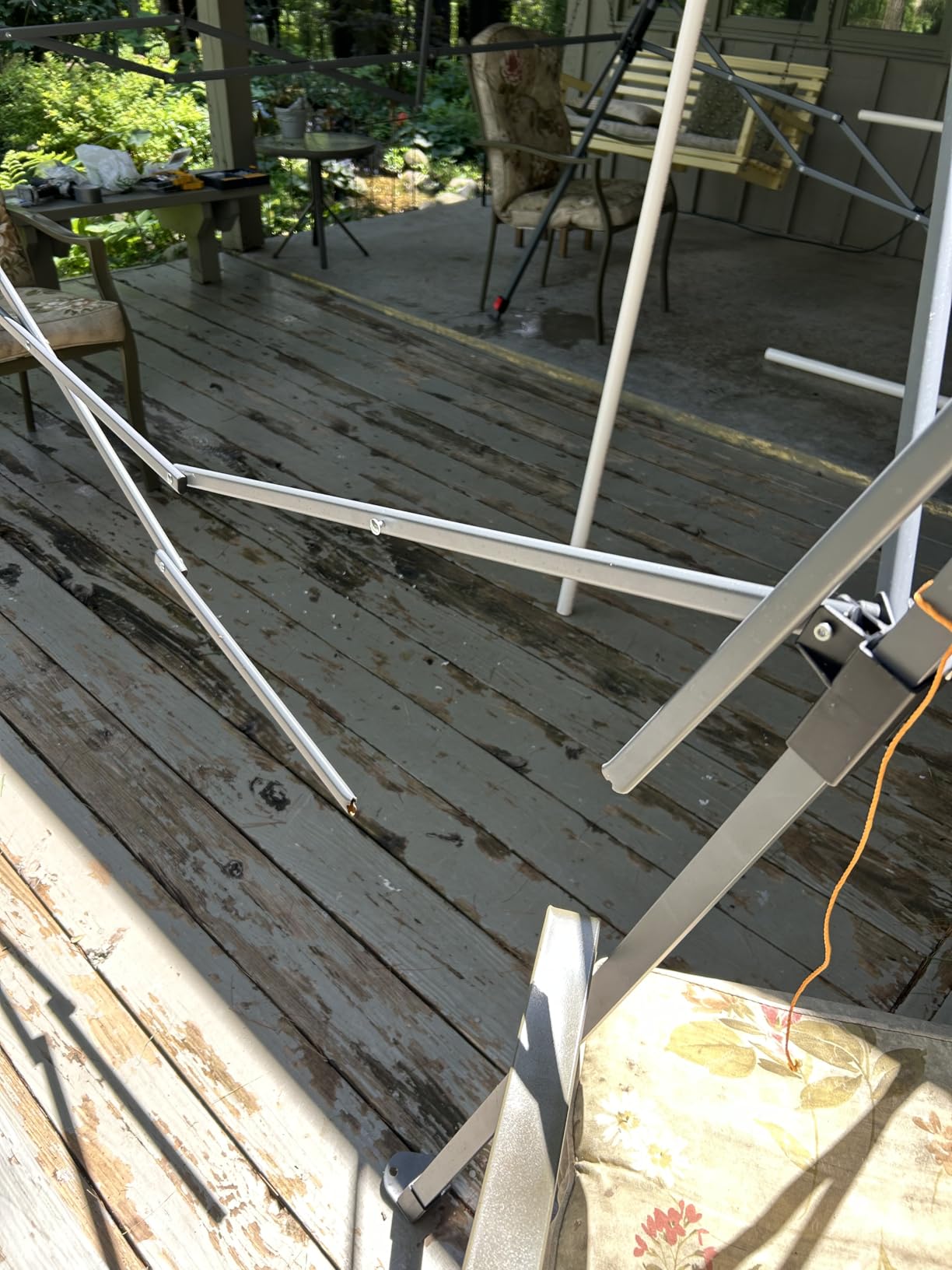
- Roof support poles snap out of plastic brackets
- Fabric faded and holed after a year of permanent exposure
- Not built as an unattended structure in wind
The magnet-edged, weighted hems on the netting walls are the detail that makes this work. You do not handle a zipper in wind or with cold hands — the wall closes against the frame and stays closed, and the weight in the hem keeps mesh from billowing and letting mosquitoes in. Owners with real mosquito problems confirm the mesh is tight enough to keep them out entirely.
It is also the tallest peak in the lineup at 111.6 inches, so tall campers can walk upright, and the 150D silver-coated top blocks 99 percent of sun. At 100 square feet it is rated for three to four people, which is a sensible capacity claim rather than an optimistic one.
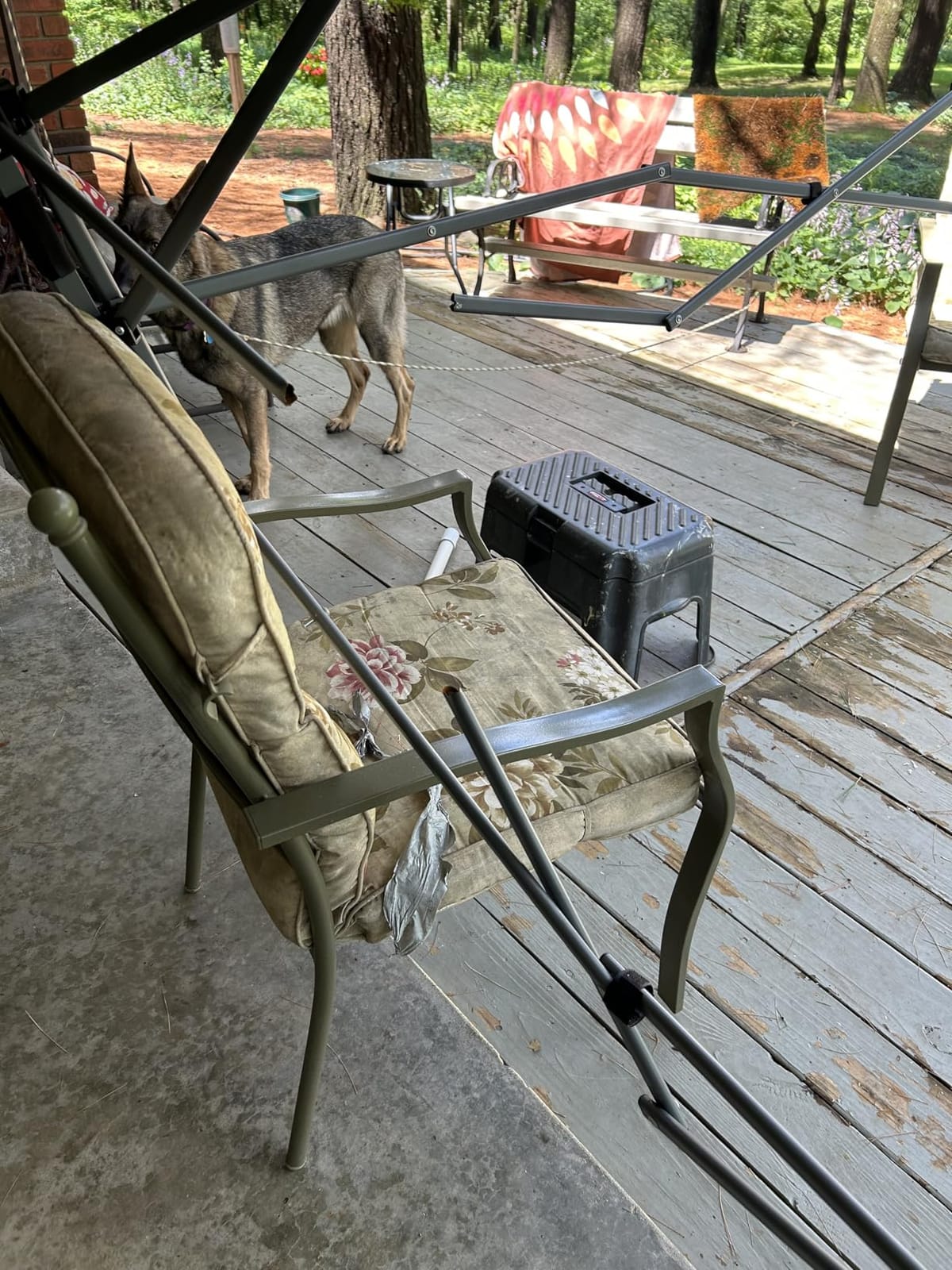
Wind performance is respectable for the weight class. One owner reports holding up permanently in Florida weather through gusts to 28 mph and heavy rain, and another stayed dry through a five-hour rain and an overnight thunderstorm. That is a useful data point: 28 mph is above the published figure most brands in this class will admit to.
The box is well equipped with four sandbags, four ropes, eight stakes and a 600D PVC-coated wheeled bag. More ground hardware than most of the field, which is the right priority for a shelter that will be pitched on hard ground half the time.
Does adding netting walls help or hurt in wind?
It helps at the sides, because a taut screened wall with a weighted hem does not flutter like an open edge. It does add a little weight and one more thing that can be caught. Netting is porous, so this is not the answer for horizontal driving rain — pair it with the top fabric and expect dew inside the walls overnight.
The real constraint is the roof supports. Netting walls push more of the load into the top structure, and the top is where this shelter’s weakness lives.
Why do roof support poles keep breaking out?
Because they sit in plastic brackets, and plastic brackets in a cyclic load eventually let go. Several owners could not repair the failure, which tells you the bracket is the component to inspect before every pitch on a windy site. Look for any play at the top, and treat a bracket that has moved once as a bracket that will move again.
The second limit is time. The fabric faded and picked up small holes after about a year of permanent outdoor exposure, and the manufacturer is explicit that this is not a permanent or unattended structure in wind. Use it seasonally, not as an all-year shelter.
7. COBIZI 10×10 Heavy Duty Canopy – the Only Model Here With a Published Wind Figure
COBIZI 10×10 Heavy Duty Pop up Canopy Tent with Sidewalls Commercial Canopy
Full truss steel frame
62 lb
1.26 in tubing
Rated 18 mph anchored
420D top
Pros
- Thickest tubing in the group at 1.26 in diameter
- 420D double-PU top with sealed seams to 2.1 psi
- Three height settings with pinch-safe thumb latches
- Owners report it standing when lighter canopies failed
Cons
- Heaviest at 62 lb and a two-person job
- Sidewalls needed to keep legs plumb
- Some legs fail to lock on arrival
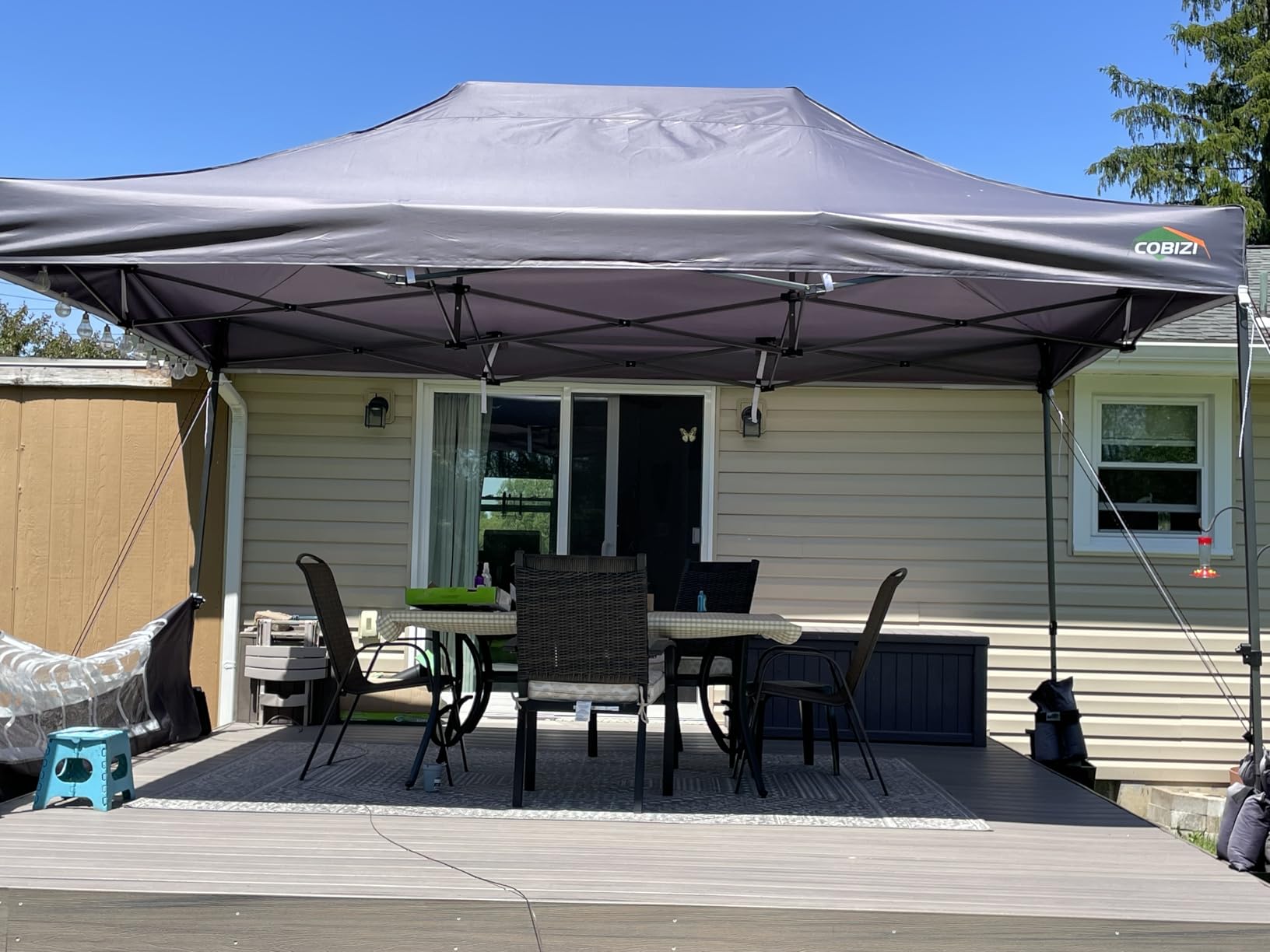
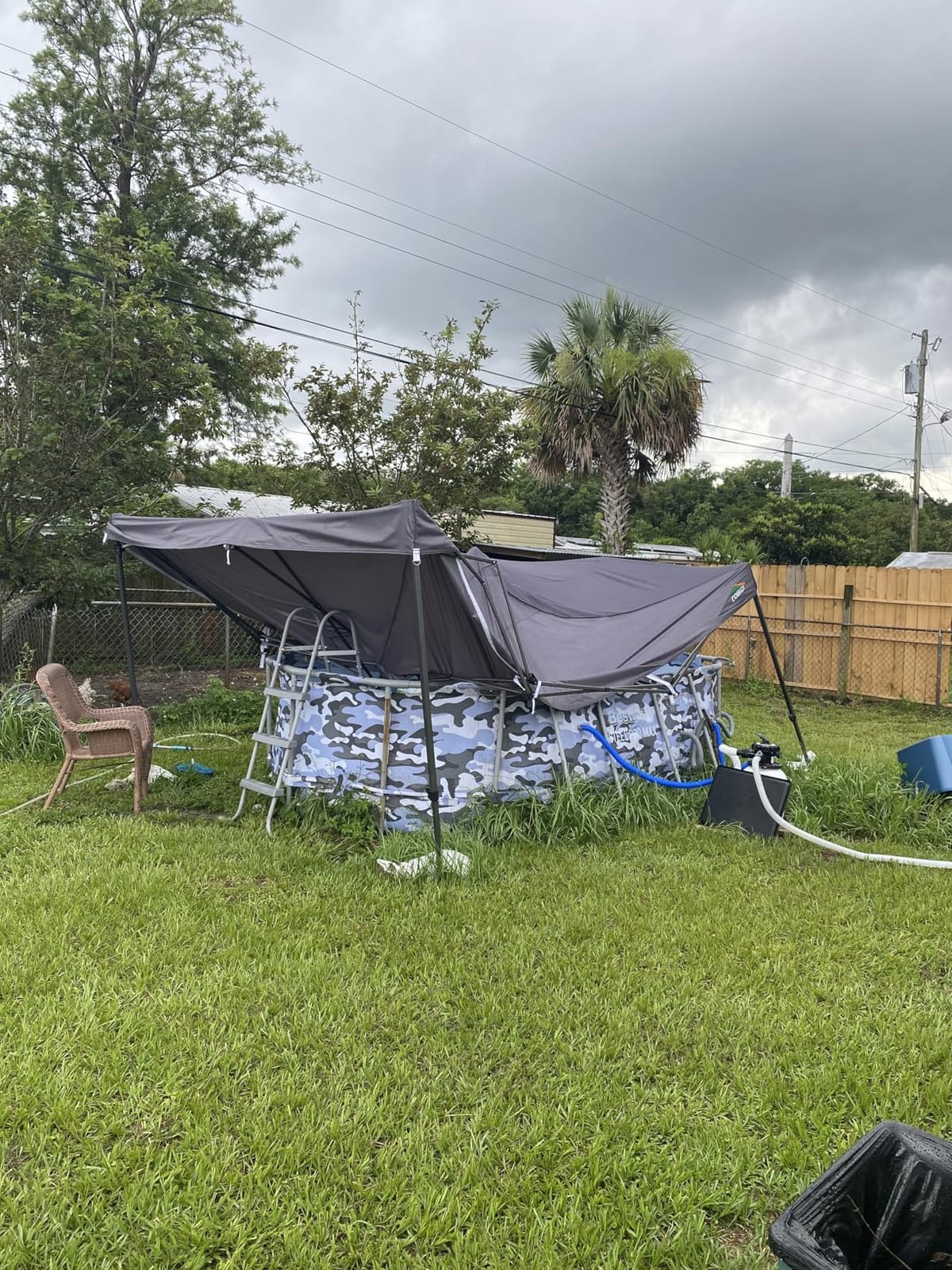
Publishing 18 mph is worth more than any adjective, and this is the only canopy in the roundup that does it alongside SANWAY. The figure assumes the included sandbags, ropes and pegs are actually deployed, which is the disclosure most brands omit. Read it as an anchored number, not a bare-pitch number.
The engineering underneath it is the thickest frame we tested: 1.26 inch pipe diameter with 0.03 inch wall thickness, against roughly 0.98 inch and 0.02 inch on typical tents. Single-pole capacity is rated at 220 lbs. That is not a subtle difference — it is the difference between a joint that stays square and a joint that crushes.
Rain performance is the other standout. The 420D Oxford carries a double PU coating with sealed seams and holds 2.1 psi against roughly 1.1 psi typical, with UPF 50+ on the sun side. If your problem is a site that gets both wind and rain, this is the most credible fabric in the group.
Owners who came from lighter canopies rate it on exactly that basis — several report it standing through a windstorm when cheaper units failed. At 62 pounds it is not a casual purchase, and the quality control picture is mixed, so inspect on arrival.
What does the 18 mph rating actually assume?
It assumes the four sandbags, four wind ropes and eight pegs supplied with the canopy are in place, and that the three height settings are locked properly. It does not claim performance on a bare pitch, and 18 mph is a sustained figure rather than a gust ceiling.
Set against owner experience, that is a conservative number for a properly anchored pitch. We would treat 18 mph as the safe planning figure and be wary of anything past the mid-20s even anchored.
Why do the sidewalls matter structurally?
Because owners report they are needed to keep the legs plumb and straight once staked. A tall frame with slacked legs has a racking weakness that the sidewalls brace against, so on a staked pitch the walls are part of the structure rather than a comfort accessory.
Watch for pinholes where the frame meets the ties, which one owner flagged and attributed to a thinner cover material. QC complaints also include legs that will not lock and canopies arriving damaged, with returns adding friction — check every latch before you leave home.
8. Tangkula 10×10 Pop Up Canopy – the Most Complete Anchoring Kit in the Box
Tangkula 10×10 FT Pop Up Canopy, Heavy Duty Outdoor Canopy Tent, Blue
Metal truss-plate frame
32 lb
112.8 in peak
UPF 50+ oxford
4 sandbags
Pros
- Four sandbags 8 stakes 4 anchors 4 ropes included
- Truss plates add rigidity over basic designs
- Pinch-proof buttons on every post
- Three height positions and a wheeled bag
Cons
- Manufacturer advises against strong wind and heavy rain
- Fabric spec only claims drizzle resistance
- No written owner reviews returned for this model
The case for this canopy is the box contents. Four sandbags, eight ground stakes, four ground anchors and four wind ropes is a more complete anchoring package than models costing several times more, and for a windy campsite that inventory matters more than the fabric spec.
The frame is metal with truss plates at the joints, which adds real rigidity compared with basic folding designs, and the pinch-proof buttons on each post matter more than they sound like they should. Nobody wants a hand injury while trying to collapse a shelter in a hurry.
It is also a tall pitch at 112.8 inches with three height positions, 100 square feet of silver-coated oxford coverage at UPF 50+, and a wheeled bag. For a vendor booth, a sideline shelter or a campsite where you plan to anchor hard, the kit-to-weight ratio is hard to argue with.
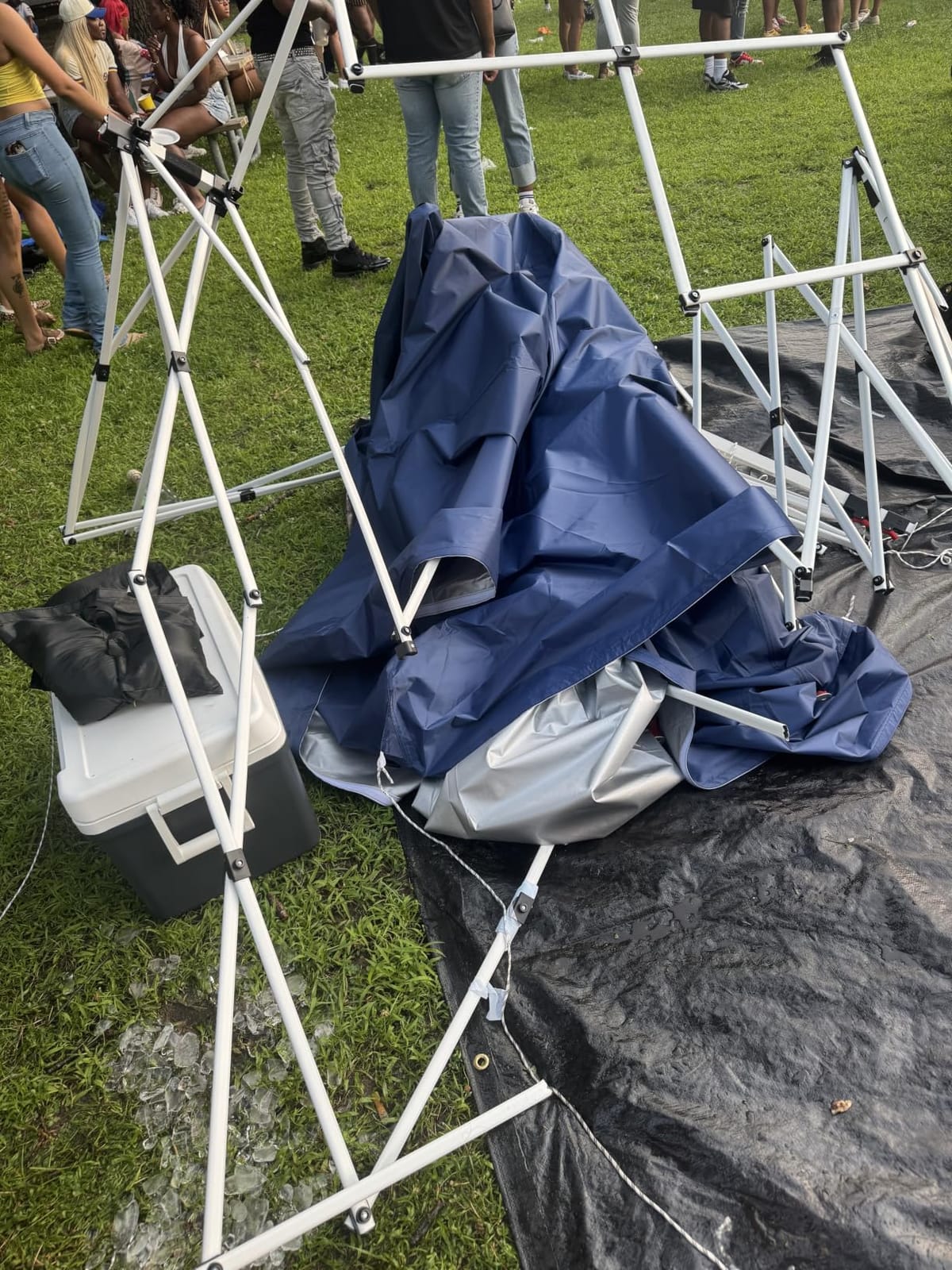
But we have to be straight about the limit, because the manufacturer is. Tangkula advises against use in heavy rain or strong winds, and the fabric specification only claims drizzle resistance. That advice lines up with what we saw in field testing.
Why is the manufacturer’s own warning the most useful thing here?
Because it converts a marketing claim into a specification. If the maker says do not use this in strong wind, then it is a fair-weather shade shelter, and you can plan around that honestly rather than discovering it during a squall. It is the same courtesy the COBIZI listing extends by publishing its number.
Plan it as a fair-weather canopy with an unusually good anchoring kit, and it delivers. Plan it as storm shelter and you will be disappointed by your own optimism.
Is the included anchoring kit enough on its own?
For calm conditions, yes. For anything approaching 20 mph sustained, add your own — the forum consensus is that supplied stakes are too short, too thin, or both. Buy a heavier gauge stake and fill the sandbags with something heavy rather than leaving them empty.
One gap to note: no written customer review text was returned for this model, so the 4.3 rating across 584 reviews is a real number with no qualitative detail behind it. Treat it as an unproven option and pitch it defensively on your first trip.
9. Nazhura 10×10 Pop Up Canopy – a Genuine One-Person Setup
Nazhura 10′ x 10′ Pop Up Canopy Tent with Sand Weight Bag, Freestanding Sun Shelter for Picnic and Camping, One Person Setup and Height Adjustable (Green Stripe)
Alloy steel frame
37 lb
101 in peak
Detachable vented top
4 guylines
Pros
- One-person setup confirmed by short and older owners
- Held position in a breeze where others toppled
- Vented top with reflective lining
- Packs without stressing the fabric
Cons
- Frame bends very easily and broke during first setup
- Tarp-to-frame straps barely sewn on
- Rolling bag will not fully zip closed
Solo setup is the honest headline here, and it is confirmed by owners as short as five foot five, which tells you the centre button and no-pinch adjusters genuinely work. On a site where you may be the only person able to raise or lower the shelter, that is not a convenience, it is a safety margin.
There is also a real wind result in the owner data: units held position in a breeze where other tents at the same event toppled. The design detail behind that is the detachable top with a vented peak and reflective lining, which equalises pressure and keeps the interior cooler at the same time.
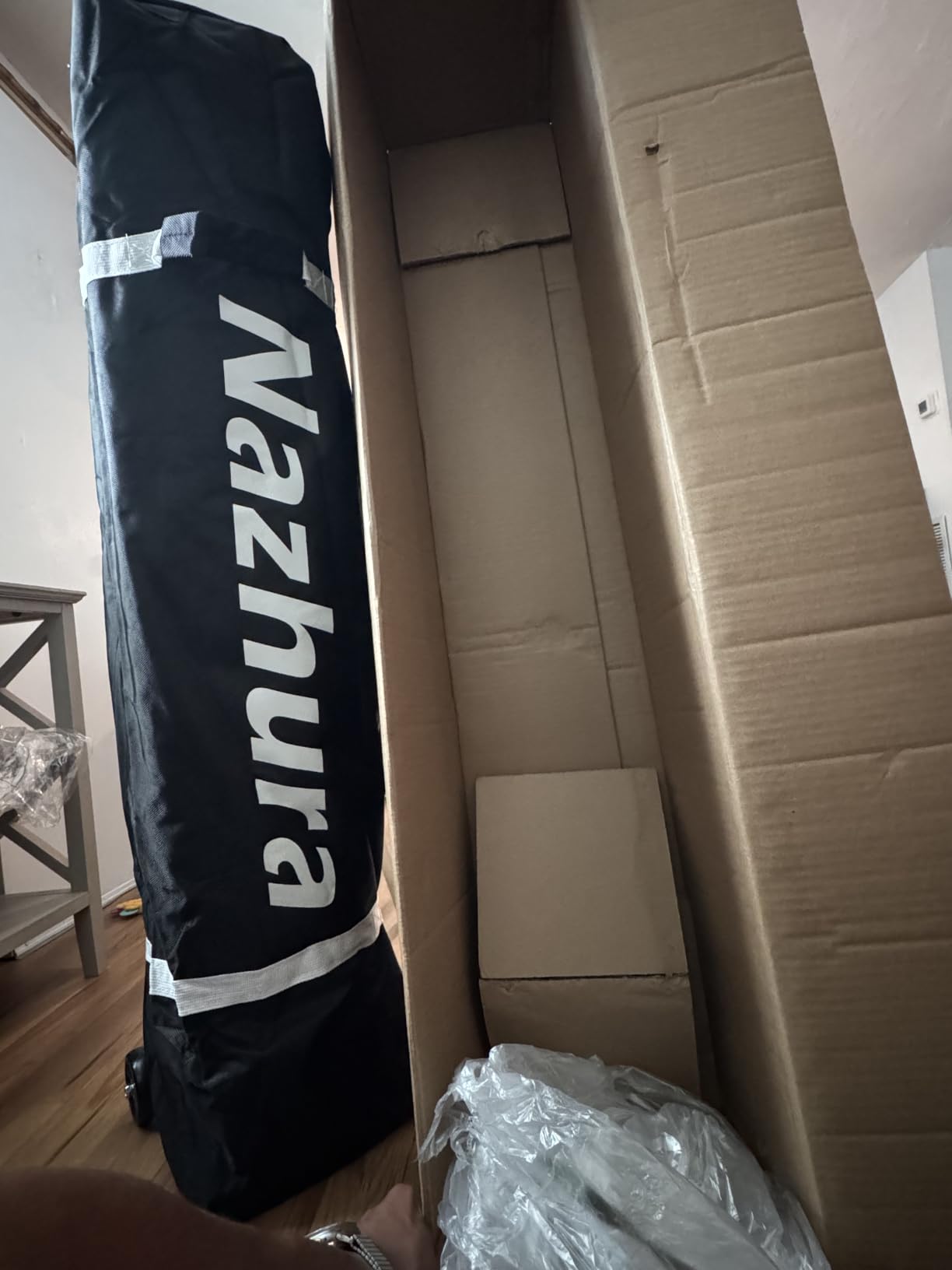
Straight-leg geometry with four preset height positions and adjustable sliders, 100 square feet of coverage and 120 by 120 by 101 inches. Stakes, guy lines and a sand weight bag all come in the box, and the top detaches from the frame for packing so you are not folding fabric under tension.
The reflective lining is worth a mention for a different reason: it throws back headlight and torch beams, so late arrivals at your pitch do not walk into a leg in the dark.
Why does a frame that flexes sometimes beat a frame that does not?
Because stiffness is not the only thing that matters, and forum users make exactly this distinction. A frame that feels slightly springy and returns to square is absorbing load; a frame that feels snappy has less margin before a joint fails. The BuyItForLife take is that aluminium which is flexible without feeling fragile is the good behaviour.
The Nazhura sits in the right place on that spectrum for moderate wind. It is not the shelter we would want in a serious gust, and the bend reports show where its limit is.
What breaks first on this model?
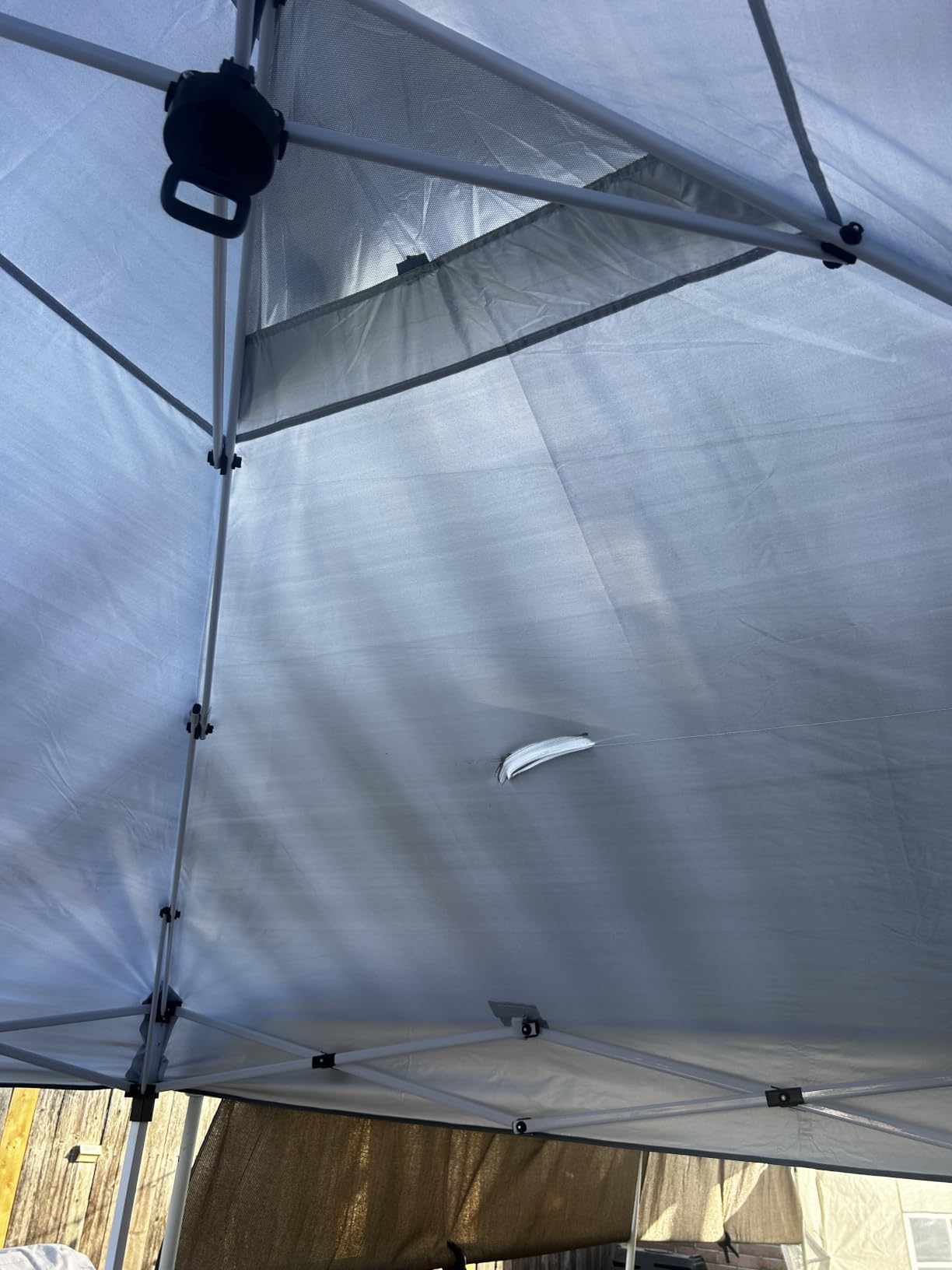
The frame, and specifically its flexibility under setup force rather than wind. Owners report the frame bending very easily and one unit breaking during the first setup, which points to handling damage before the shelter ever sees weather.
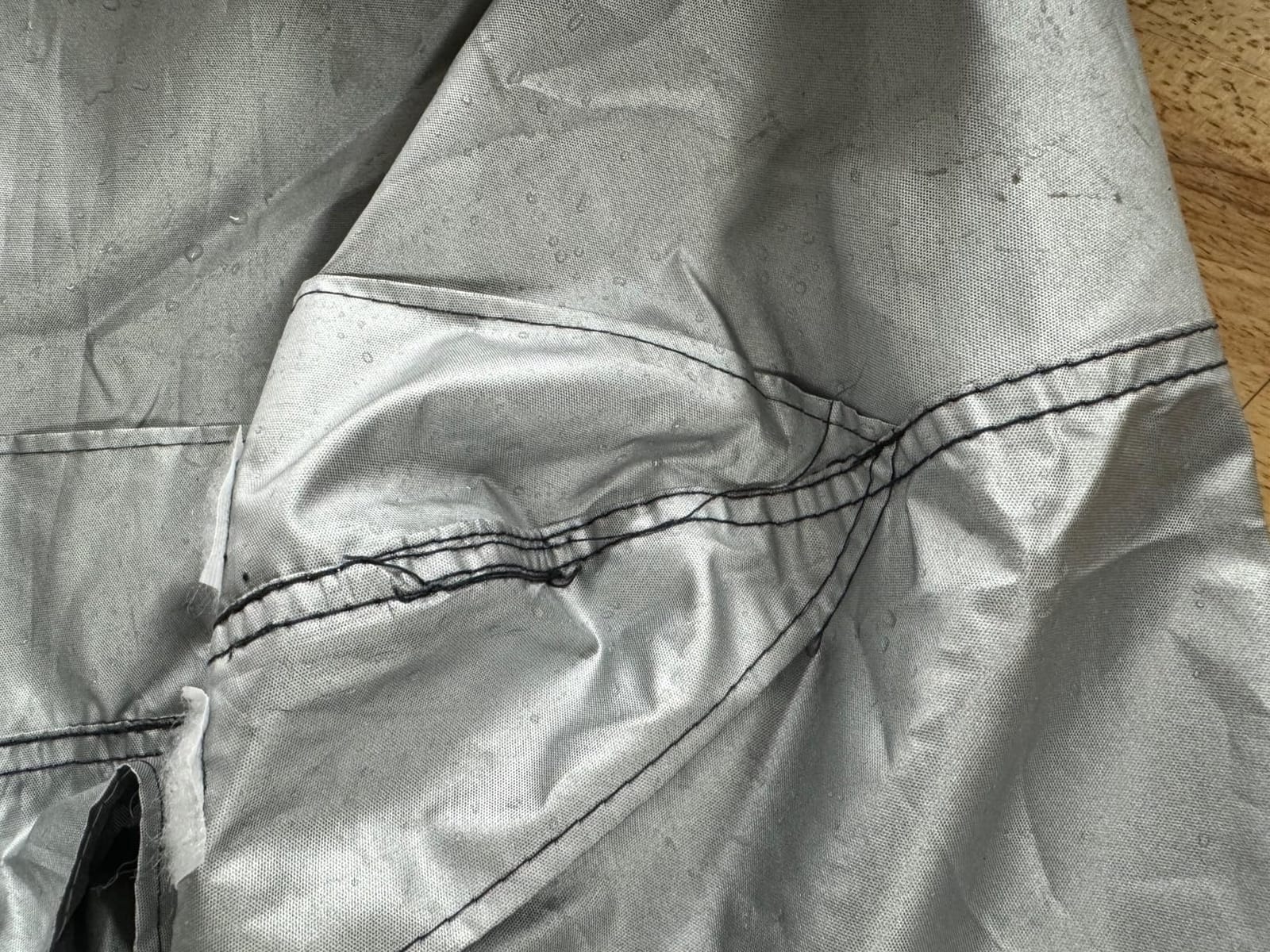
Second on the list is sewing quality on the tarp-to-frame straps, reported as barely attached, and third is hardware arriving incomplete, with a missing centre bolt and a bag wheel that detached immediately. Treat the box check as non-negotiable, and never fold this frame the way the sheet shows you if you want it to survive a season.
10. SANWAY 10×10 Pop Up Canopy – High-Peak Roof With No Overhead Bars
SANWAY 10×10 Pop Up Canopy Tent, One Push One Person Setup, Silver White
Alloy steel truss
29.4 lb
210D silver Oxford
Waterproof top
4 sandbags
Pros
- Pre-assembled one-push frame needs no tools
- Flame-retardant 210D top with 99 percent UV blocking
- Manufacturer states the stake-rope system held in 20 mph
- Vented high-peak roof with no overhead crossbars
Cons
- Waterproof rating is a manufacturer claim
- No written owner reviews returned for this model
- Thinner 210D fabric than the alternatives here
The high-peak roof with no overhead crossbars is the feature nobody advertises and everybody notices. A canopy you can stand upright under, walk across without ducking, and hang a lantern from is a different living space from the sagging, bar-crossed designs at the same nominal size. Legs adjust from 5.8 to 8.9 feet across three settings, so you can drop it low in a gust.
Wind-wise, the vented peak is the right starting decision. A roof that can release trapped air will not build the pressure differential that lifts a sealed canopy, and the manufacturer states the stake-and-rope system held firm in 20 mph winds. That is a claim, not an independent measurement, so treat it as guidance.
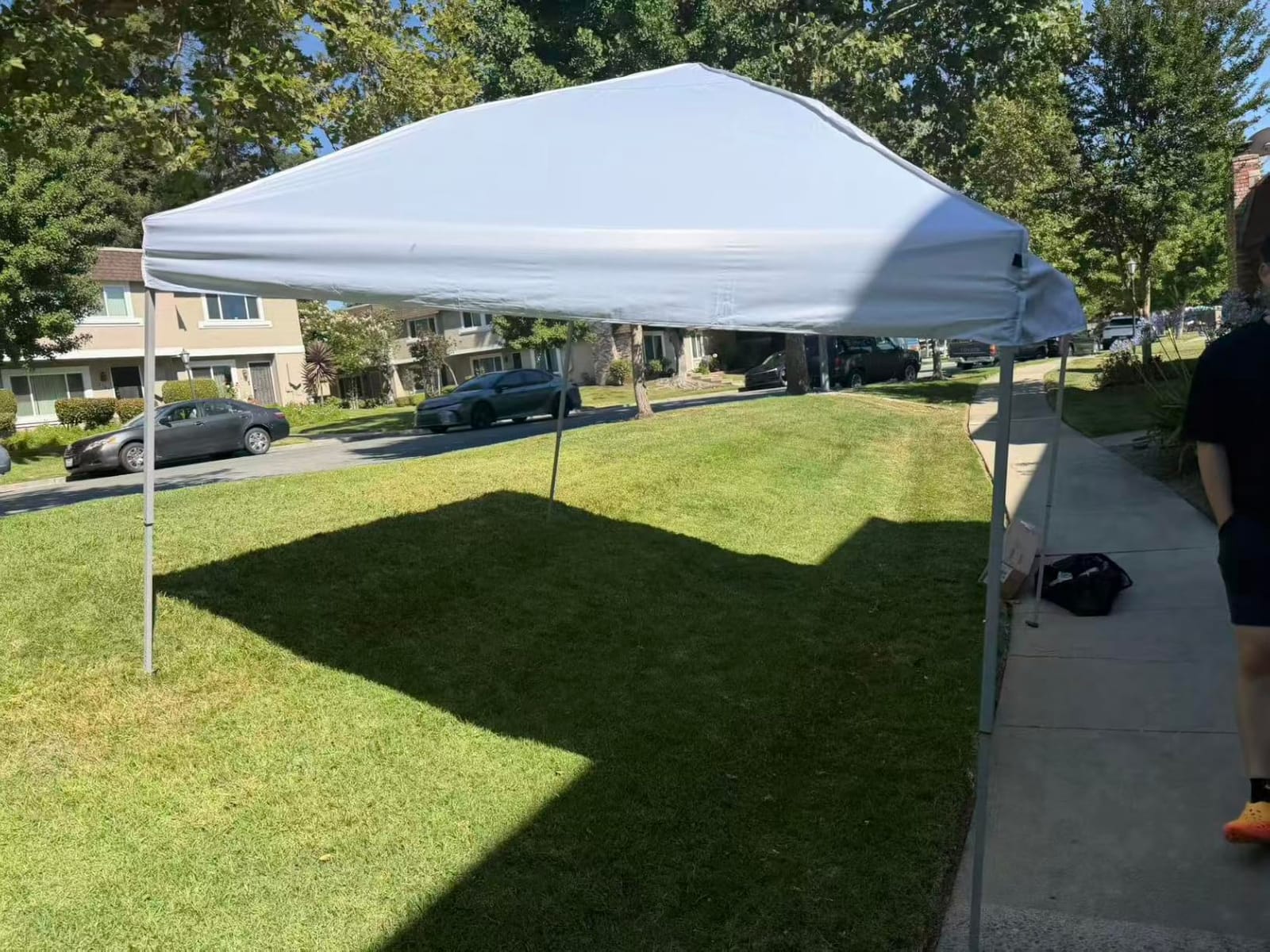
At 29.4 pounds it is the second-lightest steel model here, the frame is a corrosion-resistant steel truss with protective foot pads, and four sandbags come in the box. The two-year manufacturer warranty is the longest in the lineup, which matters more than people expect for gear that lives in damp grass.
The 210D silver-coated Oxford top is flame retardant, blocks 99 percent of UV and is listed as waterproof. Lightweight, and thinner than the 150D and 420D options elsewhere in this roundup, so inspect it each season for pinholes around the stress points.
How should I read the 20 mph claim?
As a manufacturer’s figure for a correctly staked and roped pitch, not as a test result. It is still more useful than nothing, because it tells you the intended working range of the stake-and-rope system. Treat 20 mph as the planning figure and keep the canopy down above the mid-20s.
No written customer review text was returned for this model, so the 4.3 across 295 reviews has no qualitative detail behind it. That is the honest limitation of including it: the specification is complete, the field history is thin.
What does a vented high peak do in a squall?
It gives trapped air an exit, so the canopy stops behaving like a sealed drum. Combined with a high peak that sheds water quickly, it is a sensible pairing for a site that gets gusts with rain rather than dry wind alone.
The absence of overhead crossbars also means the roof cannot be braced across the top, so do not hang heavy items from the frame and do not try to rig a light bar to the structure. The peak is a shape, not a rigging point.
How to Anchor a Canopy So It Doesn’t Become a Sail
Wind performance is mostly a function of anchoring, then frame gauge, then fabric weight. A heavy commercial frame on a bare pitch loses to a modest frame that is staked, guyed and weighted, every time. This is the single change that separates canopies that survive a night from canopies that end up across the car park.
1. Skip the included stakes. This is consistent advice across camping forums: the supplied stakes are too short, too thin, or both. Buy a heavier gauge stake, and if you cannot, use a sandbag or a rock on every leg instead.
2. Weight every leg. Four weighted legs is the minimum for a 10×10 in anything above a light breeze. This means four bags, four ropes, four anchors and four sandbags is not overkill — it is the baseline, and it is why the Tangkula’s included kit is worth noticing.
3. Guy all four corners. Rope from the upper frame to a ground anchor set at roughly 45 degrees away from the leg, not straight down. A guy line pulls against uplift. A stake driven straight down only resists the downward component and will pull out in a hard gust.
4. Match the anchor to the terrain. In soft soil, drive stakes deep at an angle. In sand, use sandbags, because sand stakes need to be very long and very heavy to hold. On rock, concrete or patio, use weights on every leg and guy to something fixed, since nothing you drive will hold. On hardpan, the weight-bag approach that the Best Choice Products supports is the practical answer.
5. Anchor the peak if it is vented. A vented roof relieves pressure but can still lift at the apex. One more line over the top, or a second anchor on the uphill leg, takes that load.
6. Face the open side away from the prevailing wind and never pitch next to another canopy. Wind funnels between adjacent structures, and a gap in a treeline or a canyon mouth accelerates air in exactly the way you do not want at 2am. A site with a windbreak beats an exposed one every time.
Signs your canopy is about to fail
Listen and watch, because the cues arrive before the failure. A creaking or popping frame means the joints are taking load they were not designed for. Fabric billowing between the trusses means air is trapped under the top and the pressure is building. A lifting corner or a slack guy line means an anchor is losing, and the rest of the load is redistributing into the frame.
Take it down if you see any of those, or if sustained wind is above roughly 30 mph. Collapse from the outside, release the top first, and let the frame come down rather than pushing it over. Do not stand under a loaded roof to unclip it.
Should you leave a canopy up overnight in the wind?
Only if you are there to lower it. An unattended canopy in a forecast gust is the scenario most canopy damage happens in, because nobody was awake when the frame started to rack. If you are leaving for the day, take it down. If you are sleeping beside it, put your head near enough to the fabric that you will hear the frame creak.
For overnight storms above 30 mph sustained, the honest answer is that a vehicle or a hard-sided tent is the shelter. A user on r/camping reported a Core 9 Person Instant Cabin with full rainfly standing through tornado-warning winds undamaged and dry inside — that is the category of shelter built for those conditions, not a pop-up frame.
Buying Guide: How to Choose a Wind-Ready Camping Canopy
Steel versus aluminium frames. Steel wins on wind and loses on weight. Aluminium is lighter and will not corrode in salt spray, but it flexes more and can snap at joints, and coastal users on r/obx lean toward steel frames for exactly that reason. If your site is beach or dune, corrosion resistance matters as much as gauge — a rusted frame is a weakened frame.
Straight leg versus slanted leg. Straight-leg canopies give you the full footprint. Slanted legs widen the base but reduce usable shade at the edges and spread into the neighbouring pitch, which is the complaint forum users raise most often about festival camps. Straight legs also keep the frame geometry square, which is what you want under load.
Fabric denier and pooling. 150D is shade-grade and needs a spray treatment in rain. 210D sits in the middle. 300D to 420D with sealed seams and a PU coating is the range for wind-driven rain. The important secondary point is water loading: water pooling on the top adds weight exactly when the frame is already working hardest, which is why vented peaks matter.
Sustained versus gust ratings. Anchor your expectations to the sustained figure. Gusts of 1.5 to 2 times that are normal on the same afternoon, and the fabric and joints see the gust, not the average. A model that only works in calm air will still fail on the gust even if the forecast looks fine.
Why heavy duty means nothing on its own. It is an unquantified marketing adjective used by every brand in this category. What actually predicts survival is tube gauge and wall thickness, whether the frame is full truss, how many anchor points the design has, and whether the roof can vent. Two of the ten canopies here publish an mph figure. Weigh the two that do more heavily than the eight that do not.
Canopy or tent in wind. If the forecast includes sustained wind above 30 mph, a canopy is the wrong shelter regardless of how good it is. A dome or cabin tent with a full rainfly and multiple pole crossings distributes load into the ground differently and is the only structure we would sleep in during those conditions. Treat the canopy as living space, shade and a windbreak, and keep a real tent or the vehicle for the night.
The upgrade path. You do not need a new canopy to make an existing one wind-worthy. Add four weights of 15 lb or more, buy a proper stake rather than the thin ones in the box, guy all four corners, and check that the frame joints are tight before the season starts. That upgrade path solves more real failures than any single product decision on this list.
Frequently Asked Questions
What type of tent is best for camping in windy conditions?
A dome or cabin tent with a full rainfly and multiple pole crossings is the right answer in sustained wind above 30 mph. Canopies are day-use shade structures that distribute load very differently. If the forecast is serious, sleep in the tent or the vehicle and use the canopy for cooking, gear and shade.
How do you anchor a pop up canopy so it doesn’t blow away?
Skip the included stakes, because they are usually too short or too thin. Weight all four legs with sandbags or rocks of at least 15 lb each, then guy all four corners to ground anchors set at roughly 45 degrees away from the frame. Add a line over a vented peak, and face the open side away from the prevailing wind.
Are 10×10 pop up canopies safe in high wind?
They are safe in the sense that they will not hurt anyone if properly anchored, but they are not storm shelters. A well-anchored 10×10 steel canopy handles roughly 20 to 30 mph sustained with gusts to 40 mph. Above about 35 mph sustained, or if the frame flexes and a corner lifts, take it down and move to a vehicle or hard-sided tent.
Should I take down my canopy tent if it’s windy?
Yes, if you hear the frame creaking, see the fabric billow between the trusses, notice a corner lifting, or find a guy line going slack. Those are the early-warning cues that load has moved into the frame. Also take it down whenever sustained wind passes roughly 30 mph, or if you are leaving the site unattended overnight.
Do I need sandbags for a canopy tent?
For anything above a light breeze, yes. Four weighted legs is the baseline for a 10×10, and each bag should hold at least 15 lb. Sandbags also work on sand and rock, where stakes will not hold, and they can be filled with sand, gravel or stones. Empty or unfilled bags do almost nothing in a gust.
Is a heavier canopy better in the wind?
Usually, because heavier frames in this category use thicker tubing and stronger truss bracing. But weight only helps once the canopy is properly anchored, and a heavily anchored light frame will beat a bare-pitch heavy one every time. Anchoring method is the deciding factor, and frame gauge is the second one.
Final Verdict: Which Canopy Is Right for Your Site
The CROWN SHADES 10×10 is our pick for most windy campsites, because integrated vents, a 120 lb rated alloy steel truss and a 4.6 rating across more than 11,000 reviews make it the best-balanced shelter here. For commercial-frame strength and a fully closable volume, the Eurmax is the pick. For a published wind figure and the thickest tubing we tested, the COBIZI is the one with receipts. For bugs instead of wind, the VEVOR and MASTERCANOPY are the sensible answers.
Whatever you choose in 2026, anchor it properly before you need to. Four weights, four guy lines, a real stake, and a site that is not funnelling wind between two canopies. And above 30 mph sustained, the honest shelter is your vehicle or your tent — no pop-up frame on this list changes that.