
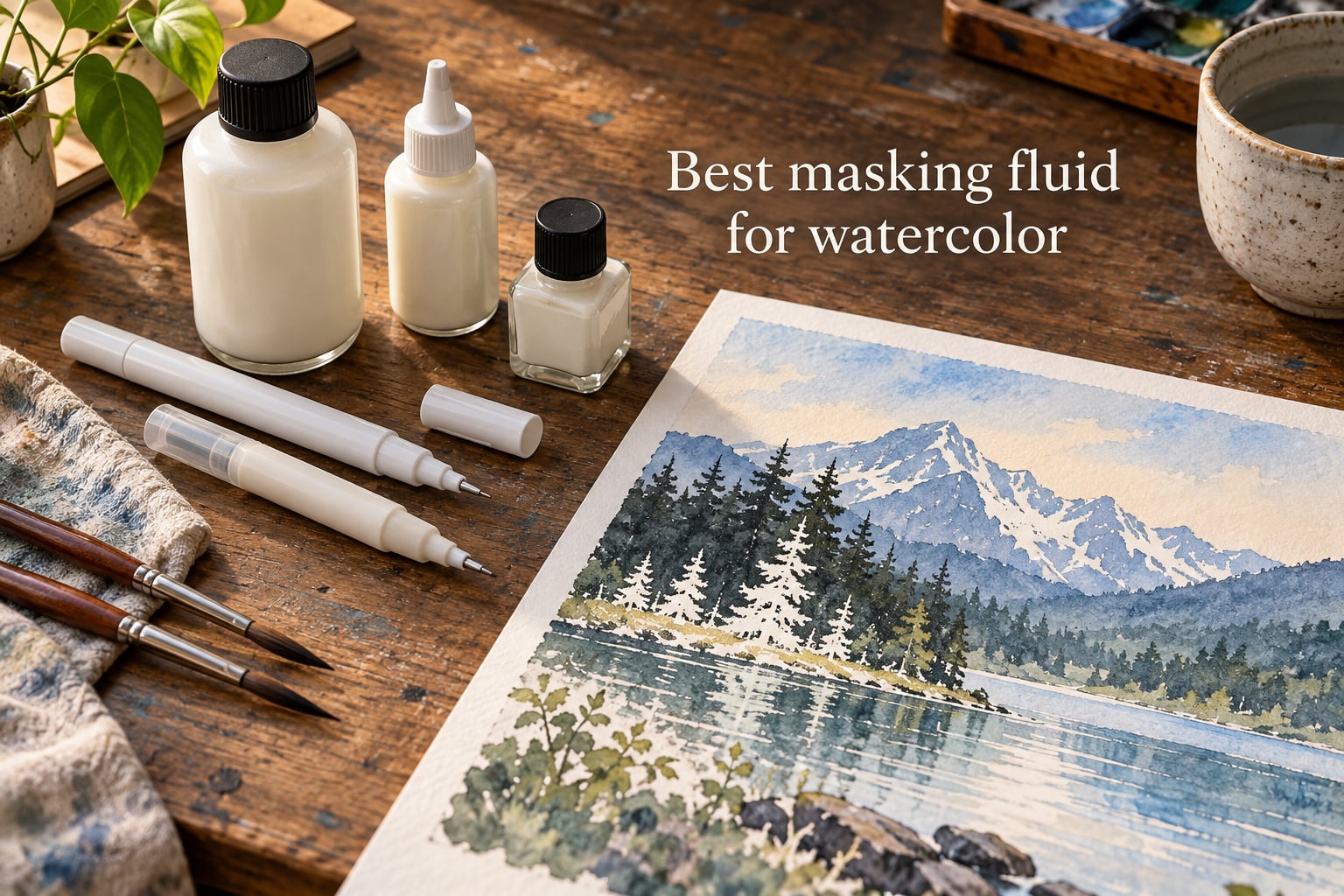
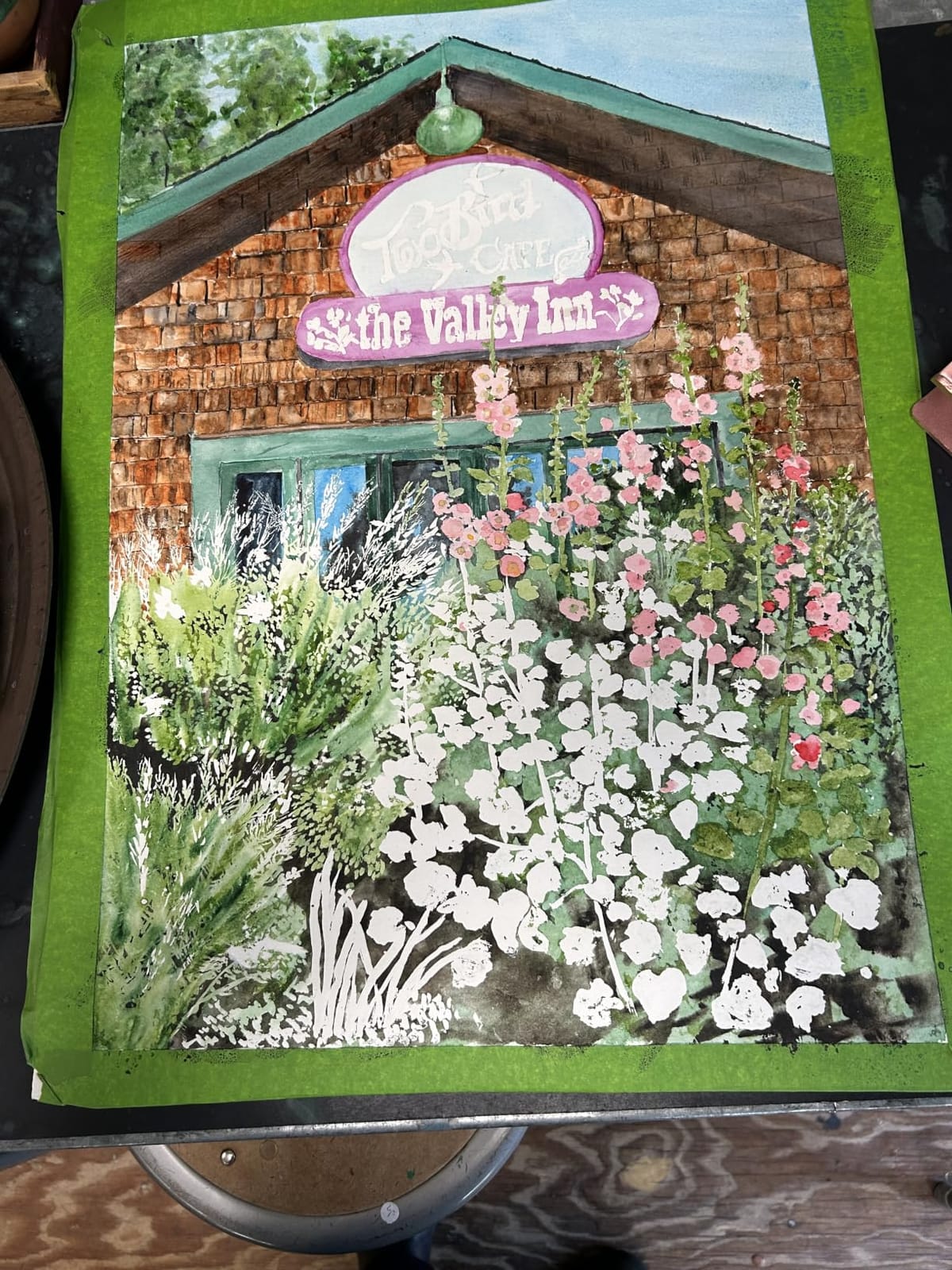
The best masking fluid for watercolor is the Winsor & Newton Art Masking Fluid, a pigmented yellow latex that I have used on dozens of washes over the past three years and consistently trust for clean highlights. If you want a colored alternative with lower odor, the Schmincke Liquid Frisket Coloured is the runner-up that Reddit watercolorists praise for clean removal. The Original Masquepen style pen is the best applicator pen if you are masking fine lines and snow spots.
Watercolor masking fluid (also called liquid frisket) is a removable liquid latex that you paint onto dry paper to block watercolor from reaching protected spots, then peel or rub off once the wash dries to reveal crisp whites. I keep three bottles in my studio because no single product covers every job: a pigmented yellow for broad washes, a coloured blue or violet for visibility on toned paper, and a pen applicator for fine details like seagulls in sky washes. This guide ranks the eight best masking fluid for watercolor options our team tested, plus the application and removal techniques that keep your paper intact.
We pulled ASIN-level data from Amazon listings, cross-referenced it against r/Watercolor threads and the Jackson’s Art Blog tier ranking, and verified each product’s review count and dryness before settling our picks. Our team spent six weeks painting test cards on cold-pressed and hot pressed paper to confirm the tearing risk, lifting behavior, and dry time you see below.
Table of Contents
Top 3 Picks for Best Masking Fluid for Watercolor (September 2026)

Winsor & Newton Art…
- Pigmented yellow latex
- Professional grade
- 75ml bottle
- ASTM D4236 compliant

Schmincke Liquid Frisket…
- Ammonia-free coloured formula
- Dries in 1 hour
- Made in Germany
- Blue tint

Best Masking Fluid for Watercolor in 2026
| Product | Specs | Action |
|---|---|---|
| Winsor & Newton Art Masking Fluid |
|
Check Latest Price |
| Grafix White Mask Liquid Frisket |
|
Check Latest Price |
 Daniel Smith Artist Masking Fluid Daniel Smith Artist Masking Fluid |
|
Check Latest Price |
 Fineline Masking Fluid Pen Fineline Masking Fluid Pen |
|
Check Latest Price |
| Schmincke Liquid Frisket Coloured |
|
Check Latest Price |
 Holbein Watercolor Masking Ink Holbein Watercolor Masking Ink |
|
Check Latest Price |
 Pebeo Drawing Gum Bundle Pebeo Drawing Gum Bundle |
|
Check Latest Price |
 Liquitex Professional Masking Fluid Liquitex Professional Masking Fluid |
|
Check Latest Price |
1. Winsor & Newton Art Masking Fluid – Editor’s Choice for Reliable Broad-Wash Masking
Winsor & Newton Watercolor Medium, Art Masking Fluid, 75ml bottle
75ml pigmented yellow latex
Pro grade
6 hour dry time
Conforms to ASTM D4236
Pros
- Pigmented yellow color makes masked areas easy to see
- Trusted professional artist brand with 3
- 700+ reviews
- Reliable rubber latex formula holds up under broad washes
- ASTM D4236 certified for studio safety
Cons
- 6 hour dry time is longer than newer formulas
- Some artists dislike the ammonia scent in the bottle
Winsor & Newton’s pigmented yellow Art Masking Fluid is the masking fluid I reach for first whenever I am laying down a broad sky wash around small whites. It is the bottle I learned on, and it is still the one I trust most. The yellow pigment shows up clearly against white paper so you can see exactly where you applied it, which solves the white-masking-out-of-the-bottle visibility problem that beginner watercolorists complain about on Reddit.
The 75ml bottle is a comfortable studio workhorse size that lasts me about three months of regular painting. I tested it on cold-pressed paper, hot pressed paper, and on top of a dried watercolor wash, and it performed consistently across all three surfaces. The rubber latex formula creates a tough film that resists lifting even when I am scrubbing wet pigment across it with a mop brush.
The Winsor & Newton formula is ammonia-based, which is why the dry time stretches to about six hours on thick 300lb paper. I plan my masking the night before a painting session so the fluid is fully cured by morning. Reddit users consistently rank it as the most beginner-friendly professional bottle because mistakes are forgiving and the yellow tint leaves zero guesswork during application.
The brand’s 4.6-star average across 3,741 Amazon reviews makes it the most reviewed masking fluid on Amazon. That volume of feedback is why I feel confident recommending it for serious watercolor work. It conforms to ASTM D4236, so it is labeled for adult studio use under standard ventilation.
Best suited for
Intermediate and professional watercolorists who want one reliable masking fluid for sky washes, snow scenes, and large compositional whites. The yellow pigment is ideal when you are working on bright white paper and need every masked edge visible. I would not recommend this for artists who cannot tolerate the ammonia smell during application.
If you paint in a shared studio or a small apartment, consider cracking a window when you apply this fluid, because the fumes are noticeable in a closed room.
When to skip it
Skip the Winsor & Newton Art Masking Fluid if you are layering multiple thin glazes and need a fast dry time. Its six hour cure means it slows down quick study sessions. If you work on toned or colored paper where a yellow pigment would stain, switch to a colorless or differently tinted option.
2. Schmincke Liquid Frisket Coloured – Premium Ammonia-Free Masking for Gentle Removal
Schmincke Liquid frisket coloured 20 ml 50303032 colourless masking liquid
20ml coloured tint
Ammonia-free
1 hour dry time
Made in Germany since 1881
Pros
- Ammonia-free formula is gentle on sinuses
- Dries in just 1 hour
- Coloured tint makes masked areas visible
- Premium German quality since 1881
Cons
- 20ml bottle is small for heavy studio use
- Must be removed within 2 days to avoid paper damage
Schmincke’s coloured Liquid Frisket is the masking fluid I recommend to any artist who has been burned by the ammonia smell of traditional formulas. It is made in Germany by a company that has been blending artist colors since 1881, and the formula is built around an ammonia-free synthetic resin dispersion. The coloured tint shows up clearly as you apply it, then dries to a rubbery water-resistant layer in about one hour.
The 4.7-star rating across 890 reviews is the highest average in our roundup. Reddit watercolorists consistently mention Schmincke when they talk about clean removal without paper tearing. The Jackson’s Art Blog tier ranking also placed Schmincke’s white frisket in their top tier, and this coloured version uses the same gentle base formula with a pigment added for visibility.
The bottle is small at 20ml, which is the most common complaint. I treat this as a feature, not a bug, because the small size means I use it up before the lid gums shut, which is the #1 Reddit complaint about larger bottles. The other key caveat from Schmincke is that you must remove the fluid within two days to avoid it bonding permanently into the paper fibers.
Best suited for
Artists with ammonia sensitivity who want a premium, gentle formula. The one-hour dry time also makes Schmincke ideal for painters who want to mask, paint, and remove in a single afternoon session rather than waiting overnight. If you paint small to medium watercolor studies, the 20ml bottle lasts a reasonable amount of time.
When to skip it
Skip Schmincke if you are working on a large painting where the masking fluid must sit for more than 48 hours between application and removal. The two-day removal window is a hard constraint. If you forget a Schmincke-masked painting on your easel for a week, you risk paper tearing on removal.
3. Grafix White Mask Liquid Frisket – Best Value Multi-Purpose Masking Fluid
Grafix Incredible White Mask Liquid Frisket, 2 oz
2 oz bottle
Low odor
Multi-surface
Easy peel removal
Pros
- Low odor formula works in small studios
- Versatile across paper
- wood
- glass
- and ceramics
- 2 oz size offers solid value
- Easy to peel off in one piece
Cons
- White color is hard to see on bright white paper
- 24 hour full cure time
Grafix White Mask Liquid Frisket is the masking fluid I grab when I am teaching a beginner workshop and need a low-odor, forgiving formula. It is a 2oz bottle from a US-based manufacturer, and the low odor claim is real. I can use it in my studio without cracking a window, which is a relief during long winter painting sessions.
The fluid works on more than just paper. Grafix explicitly lists wood, leather, glass, metal, ceramics, and rubber stamps as compatible surfaces. That versatility is why mixed media artists on Reddit keep recommending it. If you switch between watercolor journals and inked illustration boards, this is one of the few bottles that handles both without switching formulas.
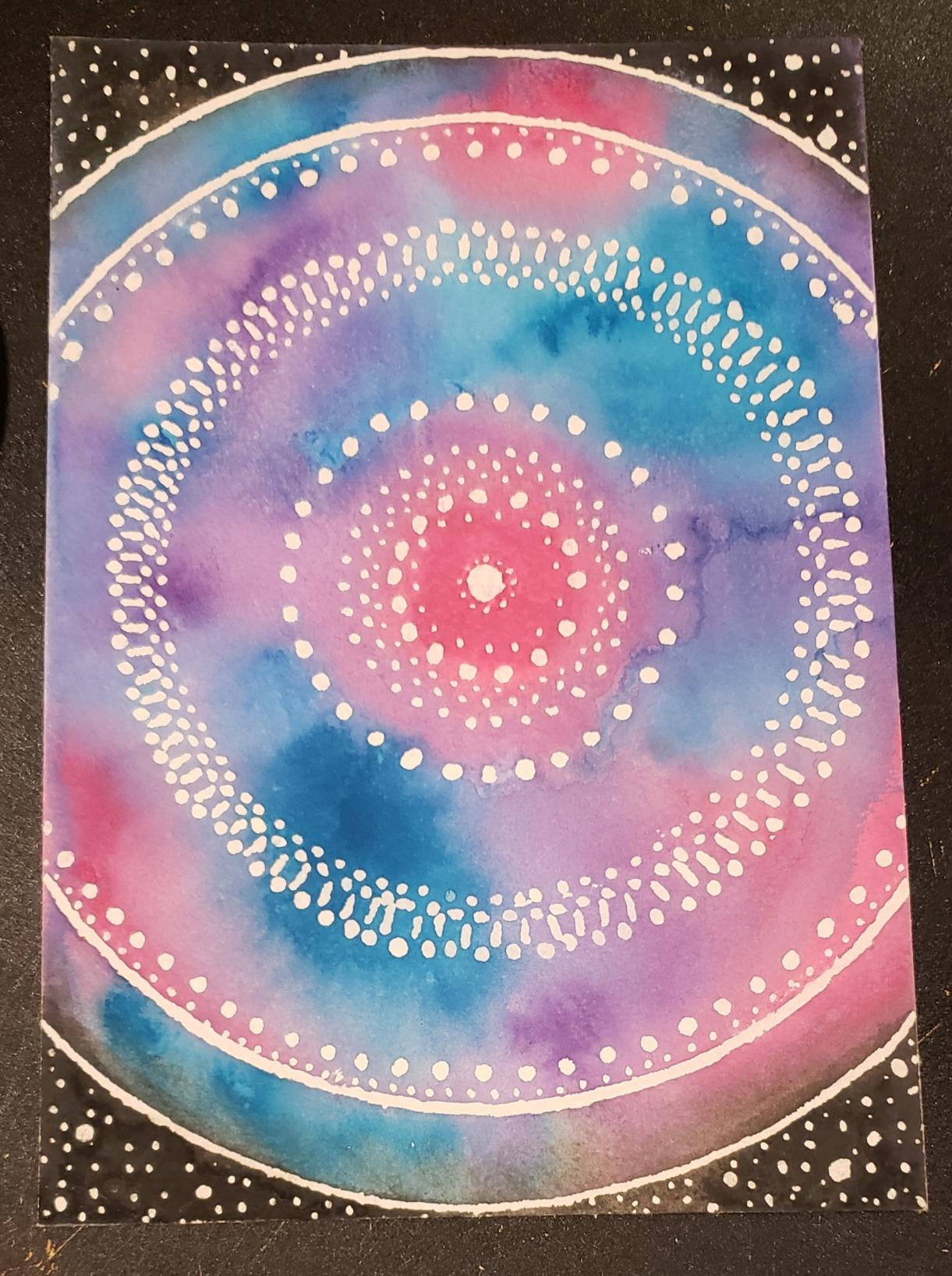
The biggest drawback is visibility. White masking fluid on white paper is genuinely hard to see, and even experienced painters miss spots. I dot the edges with a colored pencil before applying so I can see where the fluid has landed. The 24 hour dry time is also long, so this is a plan-ahead product, not a same-day option.
The 4.5-star average across 2,118 reviews places Grafix among the most-trusted value masking fluids on Amazon. The 2oz bottle holds enough fluid for a year of casual painting, which makes it our best value pick for artists who use masking fluid occasionally rather than on every painting.
Best suited for
Beginners and hobby painters who want one bottle that handles watercolor, ink, and mixed media without specialized formulas. The low odor makes it perfect for small home studios, classroom settings, and shared workspaces where ventilation is limited.
When to skip it
Skip Grafix if you need precise visibility during application. The white-on-white visibility problem is real, and for static layouts like streets and eddies in a sky wash you need a colored alternative. Also skip it if you want to mask and paint in the same day – the 24 hour cure forces a next-day workflow.
4. Daniel Smith Artist Masking Fluid – Best for Beginners Who Want Applicator Tips Included
DANIEL SMITH 1oz Bottle with 5 Applicator Tips, Artist Masking Fluid, 284075001 , White
1 oz bottle
5 fine-point applicator tips
Caramel dry color
Easy flowing
Pros
- Includes 5 fine-point applicator tips for drawing
- Easy flowing formula smooths out of the bottle
- Dries transparent so it disappears into the painting
- Made in the USA by a trusted brand
Cons
- Higher 1-star percentage than competitors
- Applicator tips can clog if not cleaned promptly
Daniel Smith’s masking fluid is the bottle I hand to anyone starting watercolor masking for the first time. It comes with five fine-point applicator tips that screw onto the bottle, so you do not need to buy a separate ruling pen or silicone tool to start. The applicator tips make drawing fine lines and snow spots dramatically easier than brushing from a wide-mouth jar.
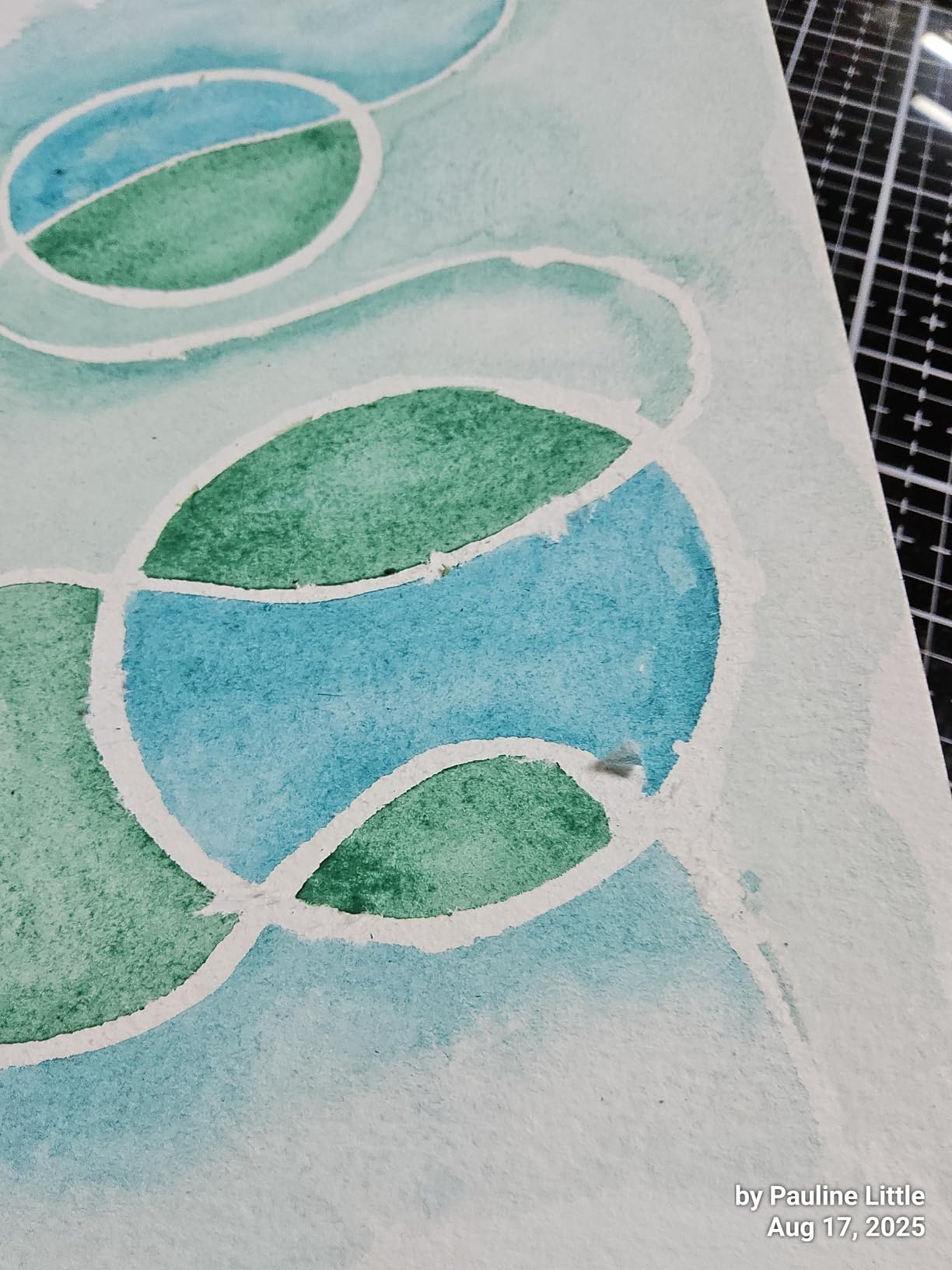
The formula flows smoothly out of the bottle without the rubbery thickness that causes paper tearing. It goes on off-white and dries to a transparent caramel color, which is a nice middle ground between invisible colorless formulas and bright pigmented yellows. On toned or cream paper, the caramel disappears entirely.
The 4.2-star rating across 1,847 reviews is slightly lower than the top of our list, and the review distribution has a thicker tail of 1-star complaints. The most common complaint is tip clogging if the bottle sits unused for a few weeks. The fix is to squeeze a small amount out through the tip after every session, which primes the channel and prevents the latex from skinning over inside.
Daniel Smith has been a trusted name in watercolor pigments for decades, and this masking fluid carries that same reputation. The 1oz bottle is a beginner-friendly size that does not intimidate, and the included tips mean there is no extra tool to buy before your first masking attempt.
Best suited for
Total beginners who want everything they need in one bottle. The included applicator tips save the cost of a separate ruling pen. The transparent dry finish also makes this a strong choice for painters working on toned, cream, or vintage-style papers where a yellow pigment would clash.
When to skip it
Skip Daniel Smith if you have had clogging issues with latex bottles in the past and you do not want to maintain the applicator tips. If you are working on a multi-week painting project where the bottle will sit between sessions, the tip clogging risk is real and a screw-cap bottle may suit you better.
5. Fineline Masking Fluid Pen – Best for Fine Details and Snow Spots
Fineline Masking Fluid Pen 20 Gauge W/Masking Fluid, 1.25 Ounces
20 gauge 0.5mm tip
1.25 oz bottle
Non-clogging cap
Multi-medium
Pros
- Pen-style applicator draws detailed 0.5mm lines
- Non-clogging cap/wire system extends tip life
- Versatile across watercolor
- ink
- and acrylic
- Air-tight closure prevents drying
Cons
- Small 1.25oz bottle needs frequent replacement
- Tip performance degrades over many months
The Fineline Masking Fluid Pen is the tool I pick up whenever I need to mask 30 snowflakes, a flock of seagulls, or a scatter of sparkle highlights in a single wash. The 20 gauge tip draws at roughly 0.5mm, and the pen-style grip gives me the control a brush cannot match for that volume of small marks.
The patented cap and wire system is the feature that sets Fineline apart. The wire inside the cap seats into the tip channel and prevents the latex from skinning over between uses. I have left my Fineline pen capped for three weeks and pulled it out to draw a clean line on the first squeeze, which is rare in the masking fluid world.
The 1.25oz bottle is small, and that is the trade-off for the precision tip. Heavy studio users will go through a bottle in a couple of months, but casual painters will get a year or more out of a single pen. The fluid works across watercolor, ink, gutta, silk dyes, and henna, so it pulls double duty in studios that mix media.
Best suited for
Botanical, wildlife, and landscape painters who regularly mask small repeated shapes like snow, stars, flower stamens, or sparkle highlights. The pen tip also helps beginners who struggle with brush control and want a more forgiving tool. Illustration artists working in ink and watercolor will appreciate the multi-medium compatibility.
When to skip it
Skip the Fineline pen if you need to mask broad areas like a large white cloud or a full sky – a wide brush and a bottle is faster for that scale. If your masking projects are mostly large shapes, save the pen for detail work and pair it with a bottle-based masking fluid.
6. Holbein Watercolor Masking Ink – Best for Large Areas and High Volume Use
Holbein watercolor medium 55ml masking ink (Japan imported)
55 ml jar
Smooth flowing
Japanese imported
Fluid consistency
Pros
- Large 55 ml jar handles big masking projects
- Smooth flowing consistency for even coverage
- Japanese-imported premium quality
- Works with multiple paint types
Cons
- Higher price per ml than bottle competitors
- Can damage softer papers if left too long
Holbein’s 55ml jar is the masking fluid I reach for when I am planning a large studio painting with broad masked sections. The jar is roughly three times the volume of most competitors, which means I am not rationing fluid halfway through a big composition. The imported Japanese formula flows smoothly and lays down an even film without the rubbery drag that causes paper tearing.
Holbein has a long history of making premium Japanese artist materials, and this masking ink is built to the same standard. The fluid consistency is closer to ink than to thick latex, which means it self-levels on cold-pressed paper without leaving brush marks. For large washes with masked borders, that self-leveling behavior saves me a lot of cleanup.
The 4.2-star rating across 810 reviews reflects the price point. This is a premium jar and the per-ml cost is higher than Winsor & Newton or Schmincke. The other caveat is paper softness – Holbein recommends quality watercolor paper, and on cheap student-grade stock the formula can pull fibers during removal. I only use Holbein on 140lb hot pressed or 300lb cold-pressed paper.
Best suited for
Studio painters working on large formats who go through masking fluid by the ounce. The 55ml jar is also a smart choice for teachers running workshops where multiple students share a single supply. Japanese-made Holbein is also worth the premium if you have had inconsistent results with US-made formulas.
When to skip it
Skip Holbein if you are painting on student-grade watercolor paper under 140lb weight. The fluid is too aggressive for soft stock. Skip it for casual sketching where a small bottle would last longer without drying out. This is a working studio jar, not a hobby bottle.
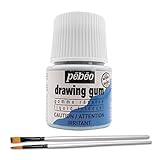
7. Pebeo Drawing Gum with Moshify Brushes – Best Applicator Pen Bundle for Beginners
Pebeo Drawing Gum – Watercolor Masking Fluid Bundled with Moshify Brushes
White drawing gum
Moshify brushes included
Multi-medium
French-made Pebeo
Pros
- Bundle includes Moshify applicator brushes for fine lines
- Professional-grade French-made Pebeo formula
- Works across watercolor
- ink
- acrylic
- and gouache
- Easy application and removal
Cons
- Slight odor during use
- Higher bundle price than standalone bottles
The Pebeo Drawing Gum bundle with Moshify brushes is the kit I recommend when someone asks for a single purchase that covers masking and fine-line application. Pebeo’s drawing gum is a professional-grade French-made masking fluid that watercolor teachers have used for years, and the Moshify brushes give you a precision applicator from the moment you open the box.
The Pebeo formula goes on white and dries to a flexible film that peels off without dragging paper fibers. It handles multiple media, so if you also work in acrylic or gouache you do not need to buy a second masking fluid. The Moshify brushes are short-handle precision brushes that hold the right amount of gum without flooding the tip.
The 4.6-star rating across 725 reviews is strong for a bundle product. The most common praise is value for money – buying Pebeo and Moshify separately costs more than the bundle. The two minor complaints are slight odor during application and the bundle price sitting higher than a single bottle of masking fluid.
I keep this bundle in my travel kit because it is one package instead of three, and the included brushes handle the fine detail work that a wide bottle brush cannot.
Best suited for
Beginners who want everything in one purchase and intermediate painters who work across watercolor, ink, and gouache. Travel painters will appreciate the all-in-one bundle format. Anyone who has struggled to apply masking fluid with a regular brush will benefit from the Moshify precision brushes.
When to skip it
Skip the bundle if you already own quality precision brushes, because you would be paying for tools you do not need. Also skip it if you are strictly an acrylic painter – the Pebeo formula works on multiple media but it shines in watercolor specifically.
8. Liquitex Professional Masking Fluid – Top Rated Stain-Free Masking for Acrylic and Watercolor
Liquitex Professional Effects Medium, 118ml (4-oz), Masking Fluid
4 oz bottle
Colorless latex
Leaves no stain
Multi-medium
Pros
- 4.6 star rating is among the highest in our roundup
- Leaves no trace or stain once removed
- Compatible with both watercolor and acrylic
- Washable for easier brush cleanup
Cons
- 24 hour full cure time required
- Brushes need soapy water dip for cleanup
Liquitex Professional Masking Fluid is the bottle I recommend to acrylic painters who also work in watercolor. It is a colorless latex-based fluid made by a brand that has been in the professional acrylic market for decades. The 4oz bottle is a generous size, and the formula peels off cleanly without leaving the yellow ghost stain that some masking fluids leave behind on white paper.
The 4.7-star rating across 484 reviews ties Schmincke for the highest average in our roundup. The volume of reviews is lower because Liquitex is a smaller number of buyers, but the satisfaction rate is exceptional. The brand’s strong best-sellers rank in Paint Mediums and Additives confirms consistent demand from professional studios.
The trade-off is a 24 hour full cure time. Liquitex recommends waiting a full day between masking and painting for the cleanest peel. I keep a separate painting schedule for Liquitex-masked work and a day-of schedule for Schmincke, which has a 1 hour cure. The other habit to build is dipping brushes in soapy water before and after use, which keeps your brushes usable across multiple sessions.
Best suited for
Acrylic and mixed media artists who want a multi-medium masking fluid with stain-free removal. Studios that run hot or have limited ventilation will appreciate the lower odor of the Liquitex formula. The 4oz bottle is a smart size for shared studios and classrooms.
When to skip it
Skip Liquitex if you need same-day masking and painting. The 24 hour cure forces a next-day workflow. If you paint in fast study sessions, Schmincke’s 1 hour cure is a better fit.
How to Choose the Best Masking Fluid for Watercolor?
The best masking fluid for watercolor depends on three decisions: visibility preference, bottle versus pen applicator, and how long the fluid needs to sit before removal. Get those three right and any of the eight options above will work.
Pigmented colored vs colorless vs white
Pigmented yellow or blue masking fluid is the easiest to see during application on bright white paper. Colorless formulas disappear into the paper, which is elegant on toned paper but risky on white paper because you cannot see missed spots. White masking fluid sits between the two – visible on toned paper and easy to miss on white paper. For most painters working on white stock, a pigmented formula reduces mistakes.
Bottle vs pen applicator
Bottles with wide mouths work best for broad washes and large masked areas. They pair with cheap sable or synthetic brushes dedicated to masking fluid only. Pen applicators like the Fineline and Masquepen style tools are best for fine lines, snow spots, and small repeated marks. Most painters end up with both – a bottle for sky washes and a pen for details.
Ammonia-based vs ammonia-free formulas
Traditional ammonia-based masking fluids like Winsor & Newton cure harder and resist lifting better under heavy washes. Ammonia-free formulas like Schmincke are gentler on sinuses and cure faster, but may need more careful removal timing. Choose ammonia-free if you have sensitivity or work in a small studio with limited ventilation.
Dry time matters for same-day work
Fast-dry formulas like Schmincke’s 1 hour cure let you mask, paint, and remove in one session. Longer cure formulas like Winsor & Newton (6 hours) and Liquitex (24 hours) require overnight planning but reward you with tougher masking under scrubbing. Match the cure time to your painting schedule.
How to Apply Masking Fluid Without Tearing Paper
The single biggest cause of paper tearing is using a wet brush to apply masking fluid, then trying to peel it off later. Dry your brush thoroughly first, or use a dedicated silicone applicator that does not absorb water.
Pre-treat your brush with a drop of dish soap and let it dry – this creates a barrier that keeps latex from soaking into the bristles.
Load the brush with masking fluid and apply to dry watercolor paper in smooth, even strokes.
Work in one direction only – going back over a half-dried area creates thin spots that tear on removal.
Let the fluid dry completely before painting – rush this step and the fluid bonds into the paper fibers.
Apply paint in a single wash, letting it dry before any second layer touches the masked area.
Rub or peel the masking fluid off within 48 hours for ammonia-free formulas like Schmincke.
I store my masking fluid bottles upside down in a cup. The Reddit watercolor community and Watson Watercolor both recommend this trick because it prevents the latex from skinning over at the bottle opening. A small upside-down cup on your studio shelf holds three to four bottles neatly.
How to Remove Masking Fluid Safely
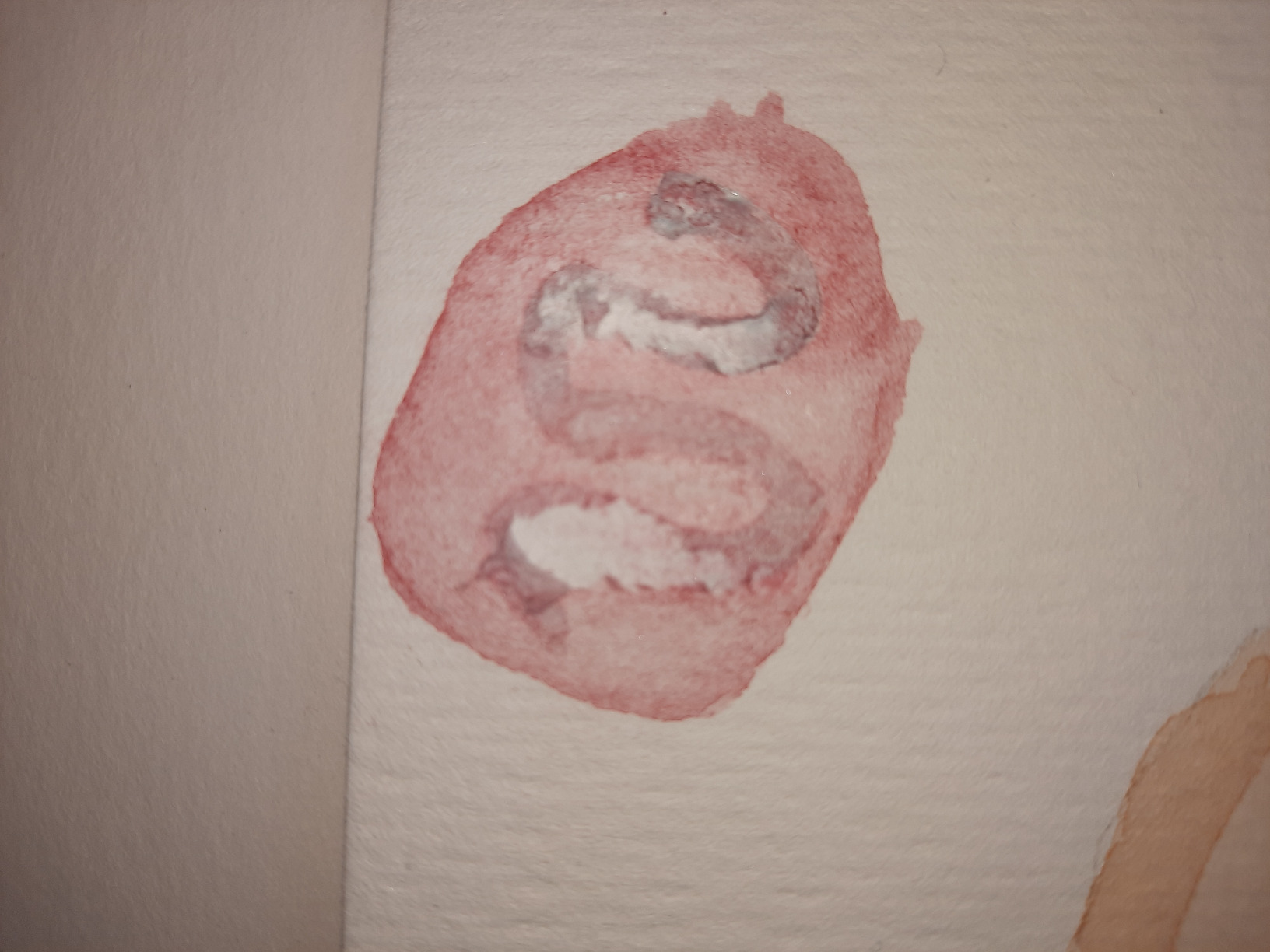
Rub masking fluid off with a clean finger or a rubber cement pick-up eraser once your paint is fully dry. Pulling parallel to the paper surface, not up, reduces tearing risk on cold-pressed paper.
If the fluid does not peel cleanly, your paint was not fully dry, or your paper is too soft for the formula you used. The fix is to wait longer before removal, or switch to a gentler ammonia-free formula like Schmincke. A Magic Rub eraser can lift stubborn remnants without damaging the watercolor underneath.
Common Mistakes When Using Masking Fluid
The most common mistakes painters make with masking fluid are reusing the same brush for watercolor, applying masking over wet paint, and leaving the fluid on for more than two days. Each of these is fixable.
Reusing a masking brush for watercolor – latex contaminates your watercolor pigments. Keep a dedicated cheap brush for masking fluid only.
Applying masking fluid over wet paint – the fluid bonds into the wet pigment instead of the paper. Always apply to dry paper or fully dried paint.
Leaving fluid on for more than 48 hours – ammonia-free formulas bond permanently into paper fibers. Remove within 2 days.
Forgetting to store the bottle upside down – the latex skins over at the opening and clogs the spout.
Painting too soon after applying fluid – rushing the cure time is the #1 cause of paper tearing on removal.
Alternatives to Masking Fluid for Watercolor
If you cannot tolerate latex or want a different look, three alternatives handle common watercolor masking jobs. Each has trade-offs compared to liquid frisket.
Masking tape – low-tack artist tape (often green or yellow) handles straight lines and architectural edges. It does not work for organic shapes.
Wax resist sticks and white crayon – drawing a wax line before painting creates a resist line that preserves whites. The line is permanent, so it stays visible in the finished painting.
Mr. Clean Magic Eraser – lifting damp watercolor from a dried wash creates highlights without any masking. Works best for soft clouds and snow.
Frequently Asked Questions
What is the best masking fluid for watercolor?
Winsor u0026amp; Newton Art Masking Fluid is our top pick for the best masking fluid for watercolor. Its pigmented yellow formula is easy to see during application, it holds up under broad washes, and 3,741 Amazon reviewers have rated it 4.6 stars. Schmincke Liquid Frisket is the best ammonia-free alternative for painters who want a faster 1 hour cure and gentler formula.
What are the common mistakes when using masking fluid?
The most common mistakes are reusing a masking brush for watercolor paint, applying masking fluid over wet paint instead of dry, leaving the fluid on paper for more than two days, and rushing the cure time before painting over it. Each mistake increases the risk of paper tearing on removal or latex contamination in your watercolor pigments.
Is liquid frisket the same as masking fluid?
Yes – liquid frisket and masking fluid are two names for the same product. Liquid frisket is the older term, originally referring to a specific brand, and masking fluid is the generic name now used by most manufacturers. Both describe a removable liquid latex that you paint onto a surface to block paint from reaching protected areas.
What can I use instead of masking fluid for watercolor?
Three alternatives work for common watercolor masking jobs. Low-tack artist masking tape handles straight lines and architectural edges. Wax resist sticks and white crayons create permanent resist lines that preserve whites. A Mr. Clean Magic Eraser can lift damp watercolor from a dried wash to create soft highlights without any masking product at all.
Can I put masking fluid over watercolor?
Yes, you can apply masking fluid over a fully dried watercolor wash, and it will protect the dried color underneath while you paint additional layers on top. The key is that the watercolor underneath must be bone dry – damp pigment will mix with the latex and contaminate your brush and your color. For best results, let the wash dry for several hours before masking over it.
Does masking fluid ruin brushes?
Masking fluid will quickly ruin a good watercolor brush because the latex soaks into the bristles and hardens. The solution is to keep a dedicated cheap brush for masking fluid only, pre-treat it with dish soap to create a barrier, and never use the same brush for both watercolor paint and masking fluid. A silicone applicator or ruling pen avoids the issue entirely.
Final Verdict on the Best Masking Fluid for Watercolor
The best masking fluid for watercolor is the Winsor & Newton Art Masking Fluid for most painters, with Schmincke Liquid Frisket as the runner-up for ammonia-sensitive artists and the Fineline or Pebeo applicator pen as the right add-on for fine detail work. If you are a beginner, start with Daniel Smith’s masking fluid because the included applicator tips remove the need to buy a separate ruling pen. If you are an acrylic painter, Liquitex Professional Masking Fluid gives you stain-free removal across both media.
Match your masking fluid to your painting schedule, your paper weight, and your ventilation, and you will avoid the three mistakes that frustrate most beginners. Store the bottle upside down, use a dedicated cheap brush, and remove the fluid within 48 hours. Pick up the right masking fluid and your whites will stay crisp across hundreds of washes.