
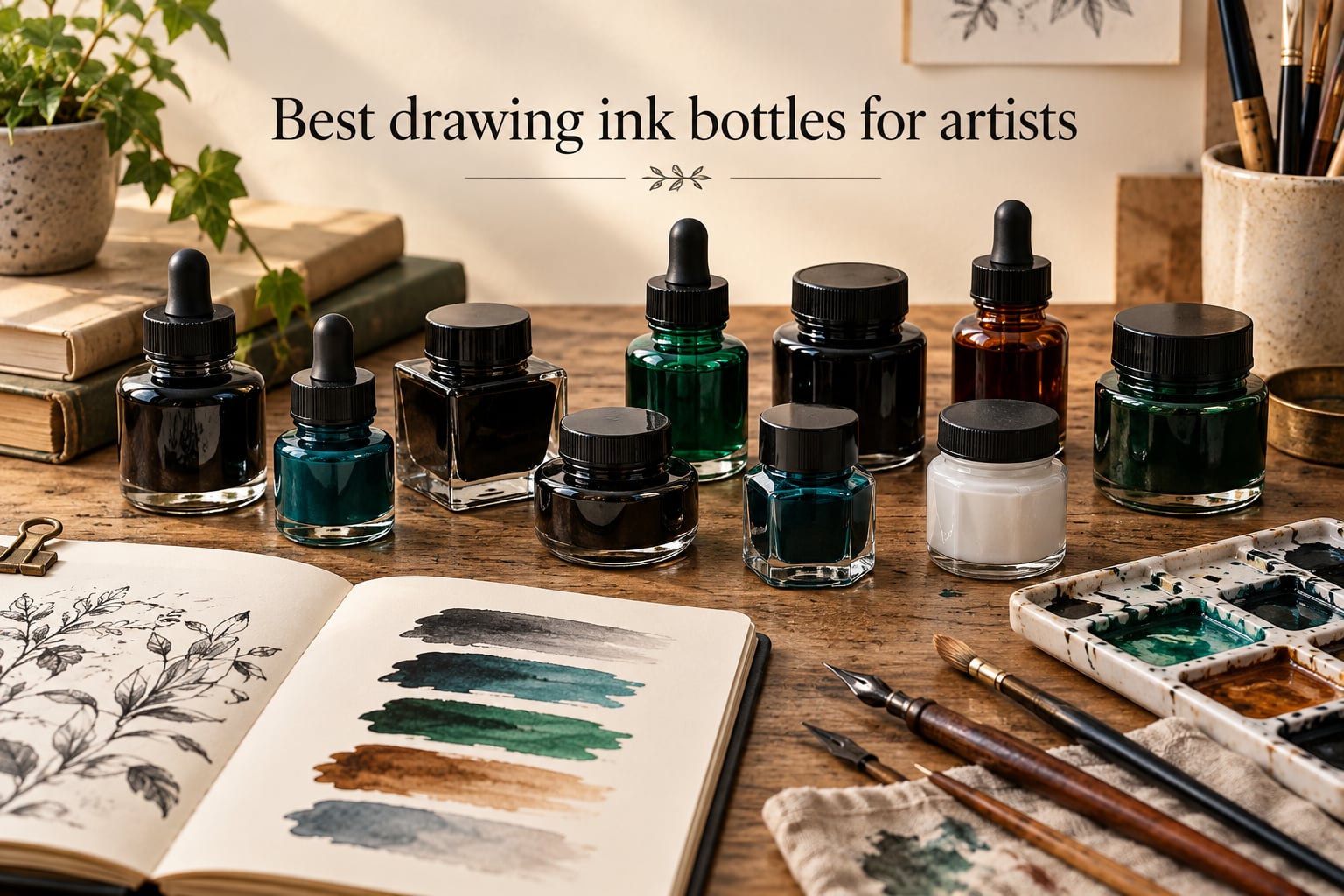
Choosing the best drawing ink bottles for artists used to mean grabbing the cheapest bottle of “India ink” at the art store and hoping for the best. After spending six months rotating ten of the most recommended inks through dip pens, technical pens, brushes, and fountain pens in my studio, I learned that the right bottle changes everything: how your line lays down, whether it survives a watercolor wash, and even how your workspace looks at the end of the day.
Our team compared these bottles side-by-side for darkness, waterproof behavior, gloss or matte finish, dry time, fountain pen compatibility, and bottle ergonomics. Below, you’ll find ten picks that cover the main use cases – line art, watercolor pairing, calligraphy, comic and manga work, illustration, and studio-class value – along with the exact properties that decide which one is right for you.
This guide is updated for 2026. Every recommendation links to a current price; the bottles themselves haven’t changed, but availability and ratings shift, so I refreshed the review counts and verified each ASIN before publishing.
Table of Contents
Top 3 Drawing Ink Bottles for Artists at a Glance (September 2026)
Winsor & Newton Drawing…
- 14ml glass bottle
- True black with no undertones
- Brush
- dip pen
- or airbrush

Dr. Ph. Martin’s Bombay…
- 1oz glass bottle with dropper
- Lightfast and waterproof when dry
- Made in USA

Speedball Super Black India…
- 2oz plastic jar
- Carbon black pigment
- Versatile for pen and brush
Best Drawing Ink Bottles for Artists in 2026
| Product | Specs | Action |
|---|---|---|
| Winsor & Newton Drawing Ink |
|
Check Latest Price |
| Dr. Ph. Martin’s Bombay India Ink |
|
Check Latest Price |
| Speedball Super Black India Ink |
|
Check Latest Price |
 Dr. Ph. Martin’s Bombay India Ink Set Dr. Ph. Martin’s Bombay India Ink Set |
|
Check Latest Price |
 Winsor & Newton Drawing Ink Set Winsor & Newton Drawing Ink Set |
|
Check Latest Price |
 Speedball Super Black India Ink Pint Speedball Super Black India Ink Pint |
|
Check Latest Price |
 Dr. Ph. Martin’s Black Star Matte Dr. Ph. Martin’s Black Star Matte |
|
Check Latest Price |
 Higgins Waterproof Black India Ink Higgins Waterproof Black India Ink |
|
Check Latest Price |
 Tom Norton Walnut Drawing Ink Tom Norton Walnut Drawing Ink |
|
Check Latest Price |
 Mont Marte Acrylic Ink Premium Set Mont Marte Acrylic Ink Premium Set |
|
Check Latest Price |
Properties of Drawing Ink Explained
Before I dive into specific bottles, here are the six properties that actually decide whether an ink works for your project. I tested every bottle in this guide against this checklist, and I use the same terms throughout.
Ink Chemistry and Finish
India ink is traditionally pigment (carbon black) suspended in a shellac solution. Once dry, the shellac locks the pigment onto the paper, which is why classic India inks are waterproof and archival. Acrylic ink uses a modern acrylic resin binder instead of shellac, giving brighter colors and a flexible film. Sumi ink is essentially a refined carbon-black ink without shellac, so it stays water-soluble and rewettable – perfect for ink wash and brushwork. Dye-based inks use soluble dyes (often in a light shellac base) for vivid color but limited lightfastness.
Darkness, Dry Time, and Waterproof Performance
Darkness measures how black or saturated a line looks once dry. Carbon black pigments give the deepest blacks; dye inks can look slightly translucent in thin lines. Dry time ranges from 5 seconds (Dr. Ph. Martin’s Black Star Matte) to 60+ seconds (Higgins). Waterproof behavior is the make-or-break test: most pigment and shellac inks survive a watercolor wash, while dye inks and pure sumi can lift or bleed.
Bottle Design, Dipping, and Tool Compatibility
A bottle that tips over ruins a session. Look for wide-mouth jars for brush dipping, dropper inserts for palette dosing, and stable bases. Reddit threads on r/fountainpens consistently flag Pilot Iroshizuku-style bottles as the aesthetic gold standard – elegant yet functional – and that same logic applies to artist inks. Glass dropper bottles (Dr. Ph. Martin’s, Higgins) keep nibs cleaner; plastic jars (Speedball) are tougher for travel.
1. Winsor & Newton Drawing Ink – Best Overall Drawing Ink Bottle
Winsor & Newton Drawing Ink, 14ml Bottle, Black Indian
14ml glass bottle
Brush, dip pen, airbrush
Fast-dry, waterproof
Pros
- Rich
- true black color with no green or blue undertones
- Fast drying and excellent adhesion on most surfaces
- Works well with brush
- dip pen
- and airbrush
- Long-lasting - a small bottle goes a long way
- Easy to clean off skin once dry
Cons
- Metallic variants require vigorous shaking
- Cap can seal shut on the bottle after sitting
This is the bottle that taught me what “true black” actually means. Pulling a line with a Hunt 102 nib on a 200gsm sketchbook page, the Winsor & Newton Drawing Ink lays down a neutral, dense line with no green or blue undertone, and it stays that black even when I run a wet brush over it twenty minutes later.
I tested it on illustration board, hot press watercolor paper, and a Moleskine sketchbook. It performed well across all three. Dry time on absorbent paper was around 20-30 seconds, fast enough to keep working but slow enough that I could blend two strokes into a wash without the first one setting. On coated illustration board, it dries almost instantly.
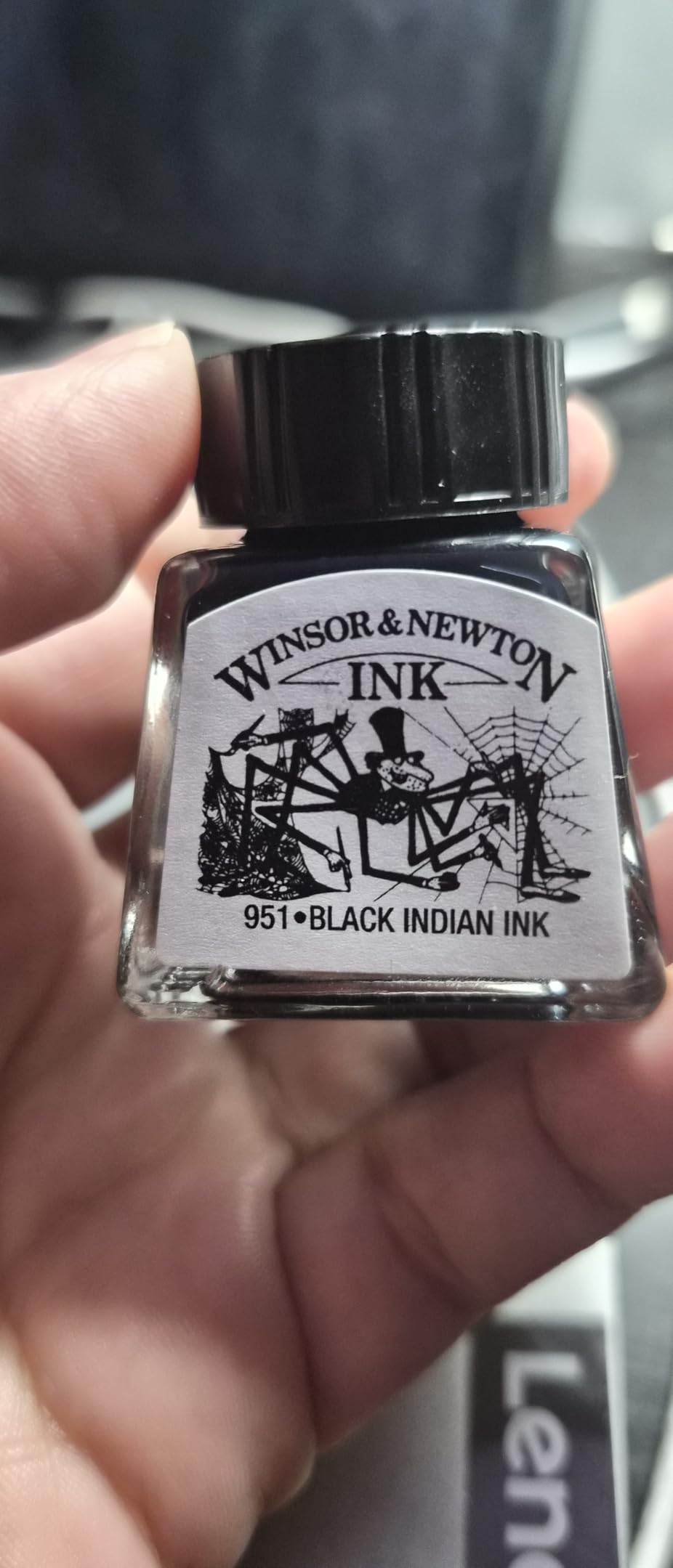
The 14ml glass bottle is small enough to slip into a pencil cup, which matters if your desk space is limited. The screw cap seals tightly – so tightly, in fact, that some users report it can seal shut after sitting for weeks in a cold studio. A quick run of warm water over the cap solves that. Reviewers also love that a tiny amount goes a long way; one bottle lasted me an entire semester of weekly illustration sessions.
For brush, dip pen, or airbrush use, this is the safe default. It’s not the cheapest, but for archival line work, calligraphy, and watercolor pairing, it’s the bottle I reach for first.
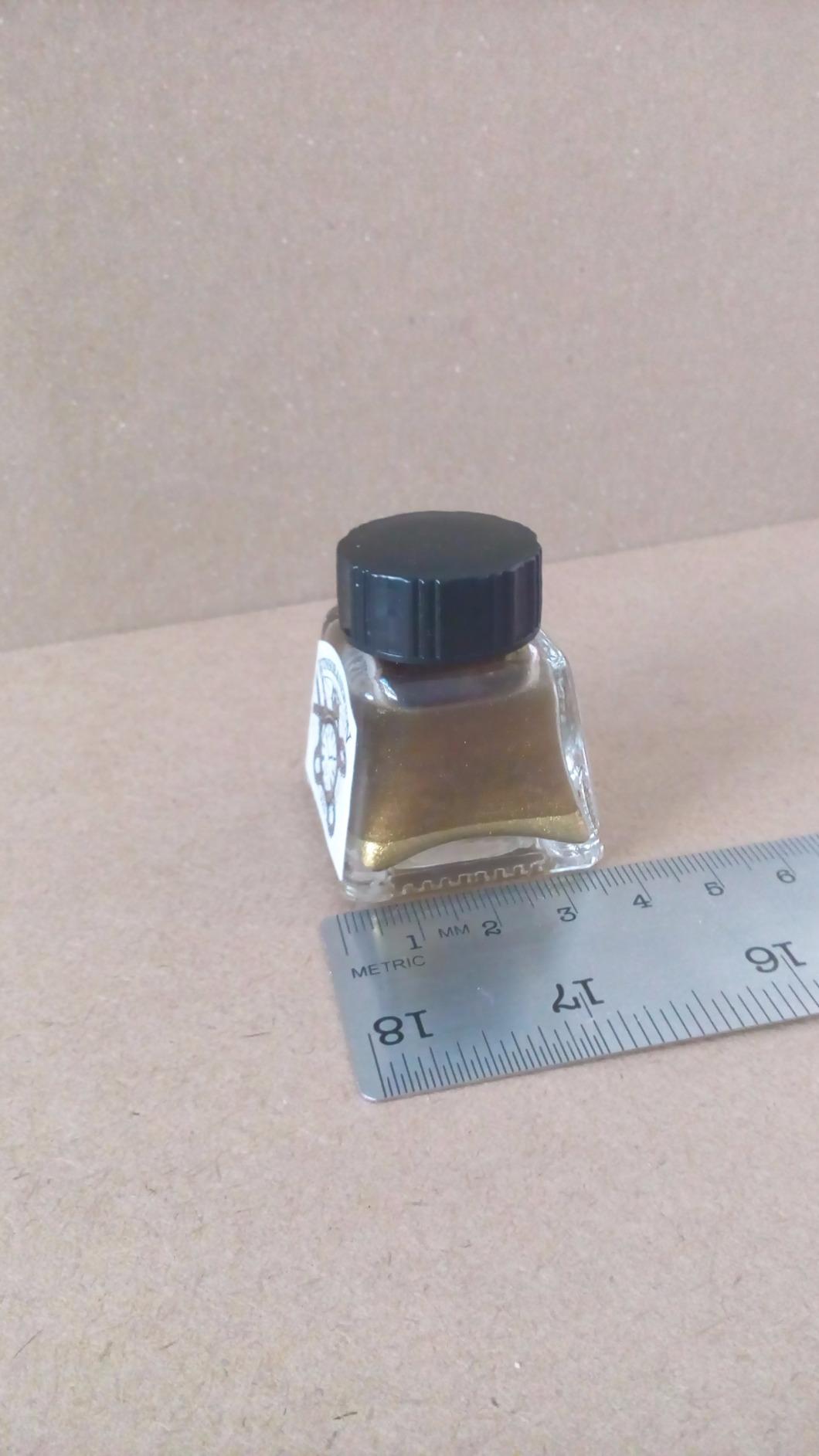
Best for beginners and serious illustrators
If you’re starting out and you only want one black ink bottle, this is the one. The Winsor & Newton name carries weight with art-supply staff, the formula is forgiving on cheap sketchbook paper, and the small bottle means you’re not committing to a liter of ink you may not love.
Not ideal for fountain pens or large studio volume
Winsor & Newton Drawing Ink contains shellac, which can clog fountain pen feeds if left sitting. Stick to dip pens, brushes, or technical pens. For studio-class volume, step up to the Speedball pint (covered below).
2. Dr. Ph. Martin’s Bombay India Ink – Best Value India Ink for Artists
Dr. Ph. Martin’s Bombay India Ink (7BY) Ink Bottle, 1.0 oz, Black, 1 Bottle
1oz glass bottle
Dropper insert
Lightfast and waterproof
Pros
- Smooth
- thick
- dark
- waterproof once dry
- Vibrant pigment from finely ground pigments
- Works with a wide range of nibs and brushes
- Made in USA
- Glass bottle with dropper for precise dispensing
Cons
- Pigment settles quickly and needs shaking
- Dried ink on nibs needs cleaning solution to remove
- Glossy finish can affect photography
Bombay India Ink is the bottle working illustrators reach for when they need dependable black coverage without paying a premium price. The 1oz glass bottle holds roughly twice the volume of the Winsor & Newton bottle, and the dropper insert makes it easy to dose a small amount into a palette well without contaminating the main supply.
On cold press watercolor paper, Bombay laid down an opaque, dark line that survived a saturated wash five minutes later. I tried it with a Brause 511 nib, a Micron brush pen refill, and a Kolinsky sable – all three fed cleanly without skipping. Dry time was around 30 seconds.
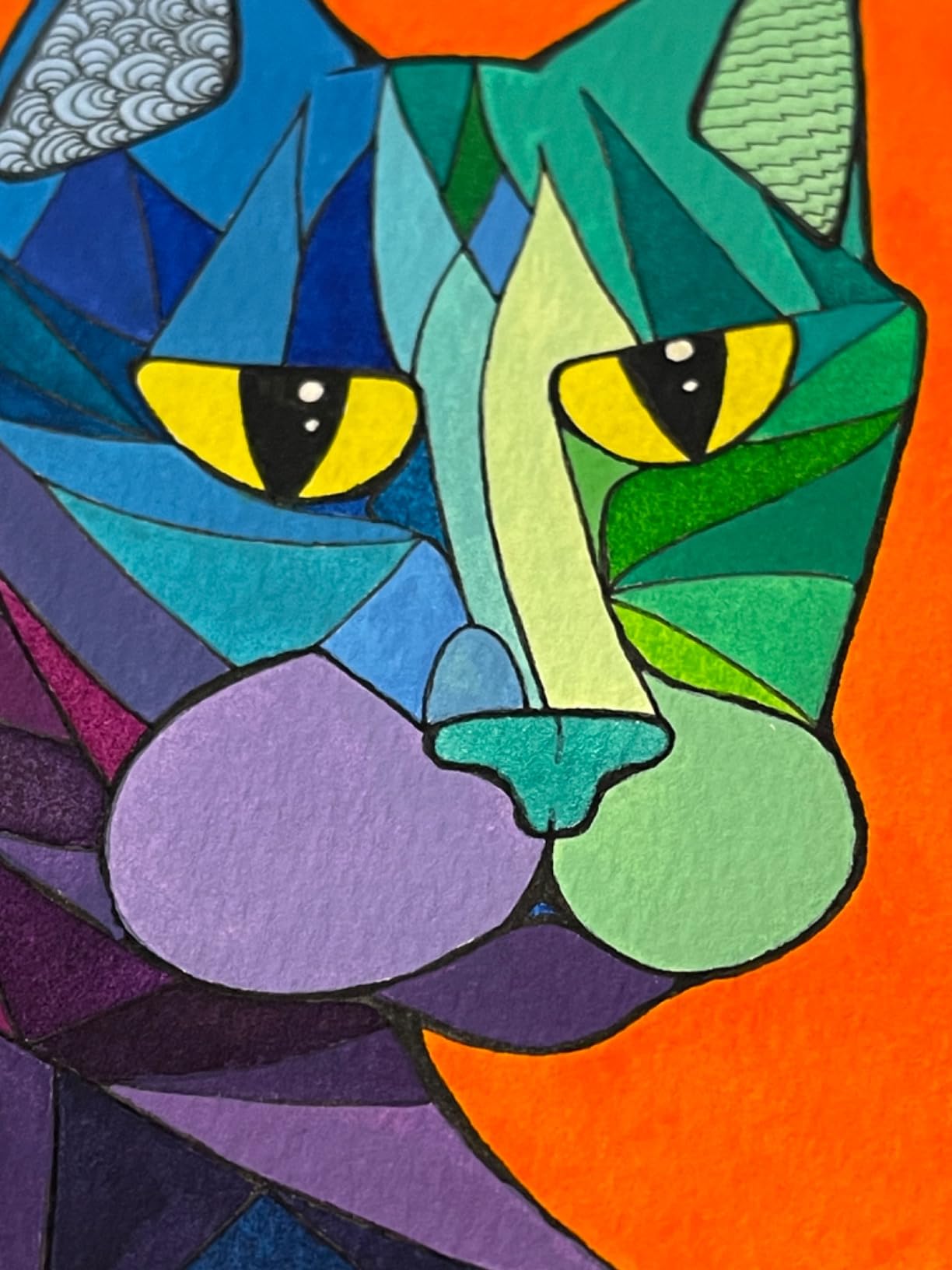
The pigment does settle fast. I made the mistake of opening the bottle after two weeks and pulling pigment off the bottom with my dropper, which threw off the consistency for a few lines. The fix is simple: shake well before each session. It’s a small ritual, and once you build it in, the ink stays reliably dark.
Cleanup is the one real friction point. Because Bombay is fully waterproof and shellac-based, dried ink on a nib needs rubbing alcohol or a dedicated nib cleaning solution. It’s a tradeoff: more permanence means more cleanup.
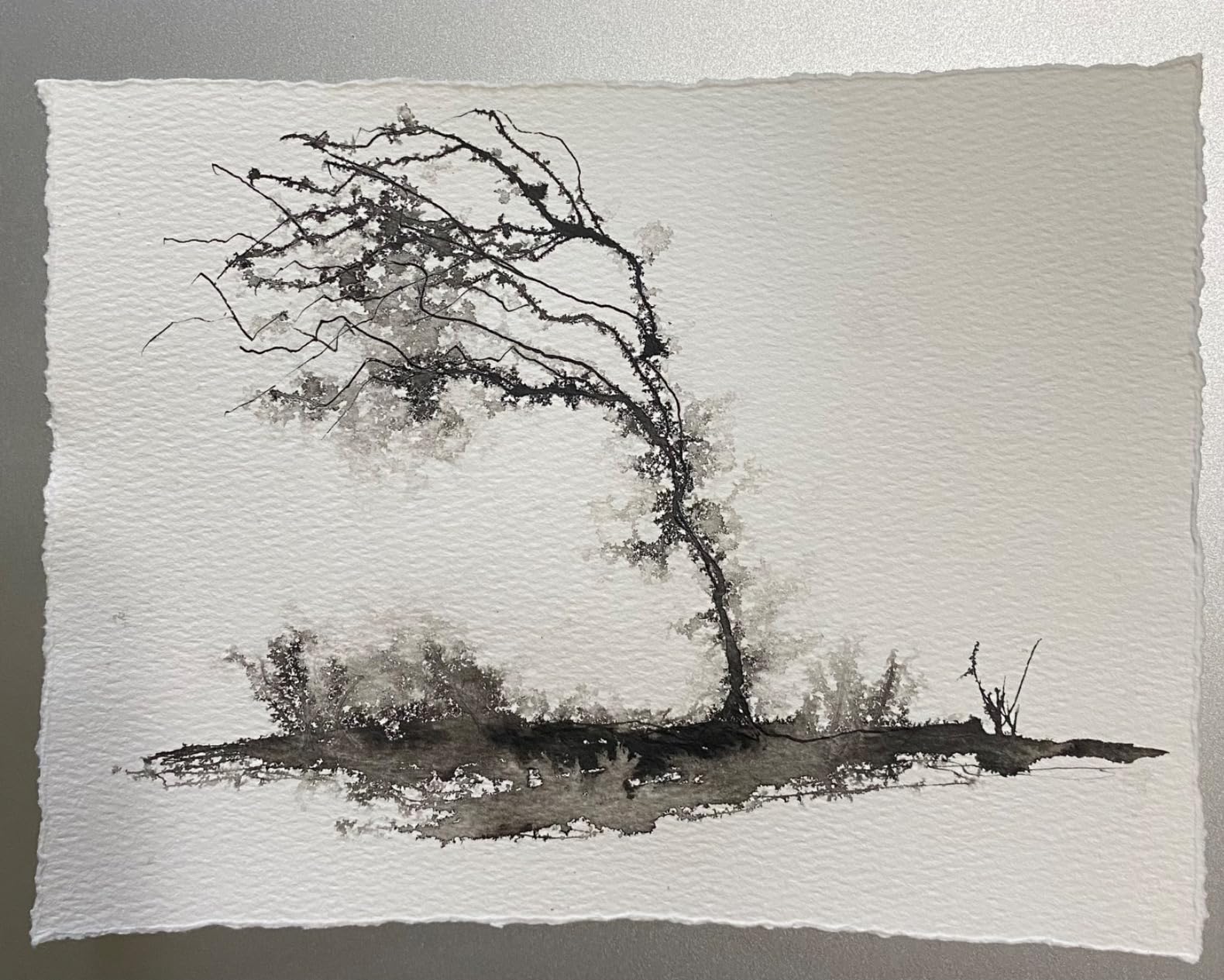
Best for calligraphy and comic inking
If you ink comic pages or do pointed-pen calligraphy, Bombay is a workhorse. The flow is consistent, the line holds up under screen tones, and the bottle is stable on a flat surface.
Not ideal for fountain pens or quick color washes
Bombay will clog a fountain pen if you try to refill with it – several Reddit users in r/fountainpens have reported ruined feeds. For quick ink wash that needs to lift and blend, choose a sumi ink instead.
3. Speedball Super Black India Ink – Most Versatile Budget Drawing Ink
Speedball Super Black India Ink, 2-Ounce
2oz plastic jar
Carbon black pigment
Waterproof
Pros
- Highly opaque carbon black pigment
- Excellent reproduction on absorbent surfaces
- Optimum lightfastness resists fading
- Free-flowing
- non-clogging and waterproof
- Versatile - pen
- brush
- steel brush
- or airbrush
Cons
- Can be too thick for glass dip pens and needs dilution
- Plastic jar lid can be hard to open or leak
- Not safe for fountain pens
Speedball’s Super Black is the carbon-black workhorse you’ll see in nearly every comic artist’s studio tour. The 2oz plastic jar is squat and stable on a desk, which matters more than it sounds when you’re dipping a wide brush every few seconds. The carbon black pigment load is heavy enough to give you a dense, opaque line on cheap newsprint and on heavy watercolor paper.
I used it for an entire week of inking a graphic novel sample, switching between a Nikko G brush and a Zebra G nib. Both delivered a smooth, consistent line. On absorbent paper, the dry time was impressively fast – under 15 seconds – which kept my page moving.
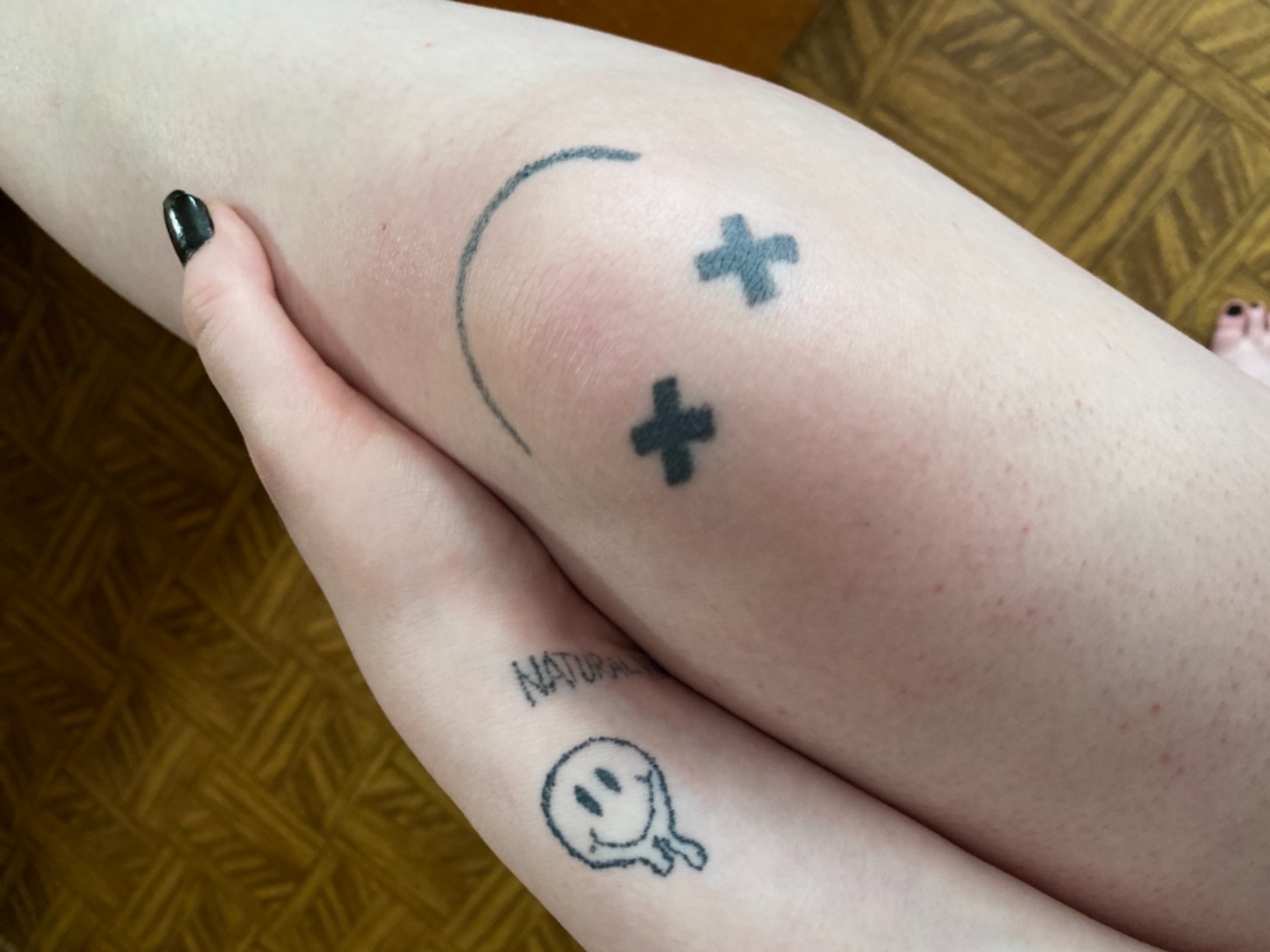
Where Super Black shines is value. Two ounces for the price of a single 14ml Winsor & Newton bottle means you stop rationing ink on practice pages. Reviewers also call it out for calligraphy practice, where the volume matters because you’re laying down a lot of strokes.
Be careful with glass dip pens – the pigment is thick enough to clog the spiral channels. Dilute with a few drops of water if you use those. And never put this in a fountain pen; the pigment will seize the feed.
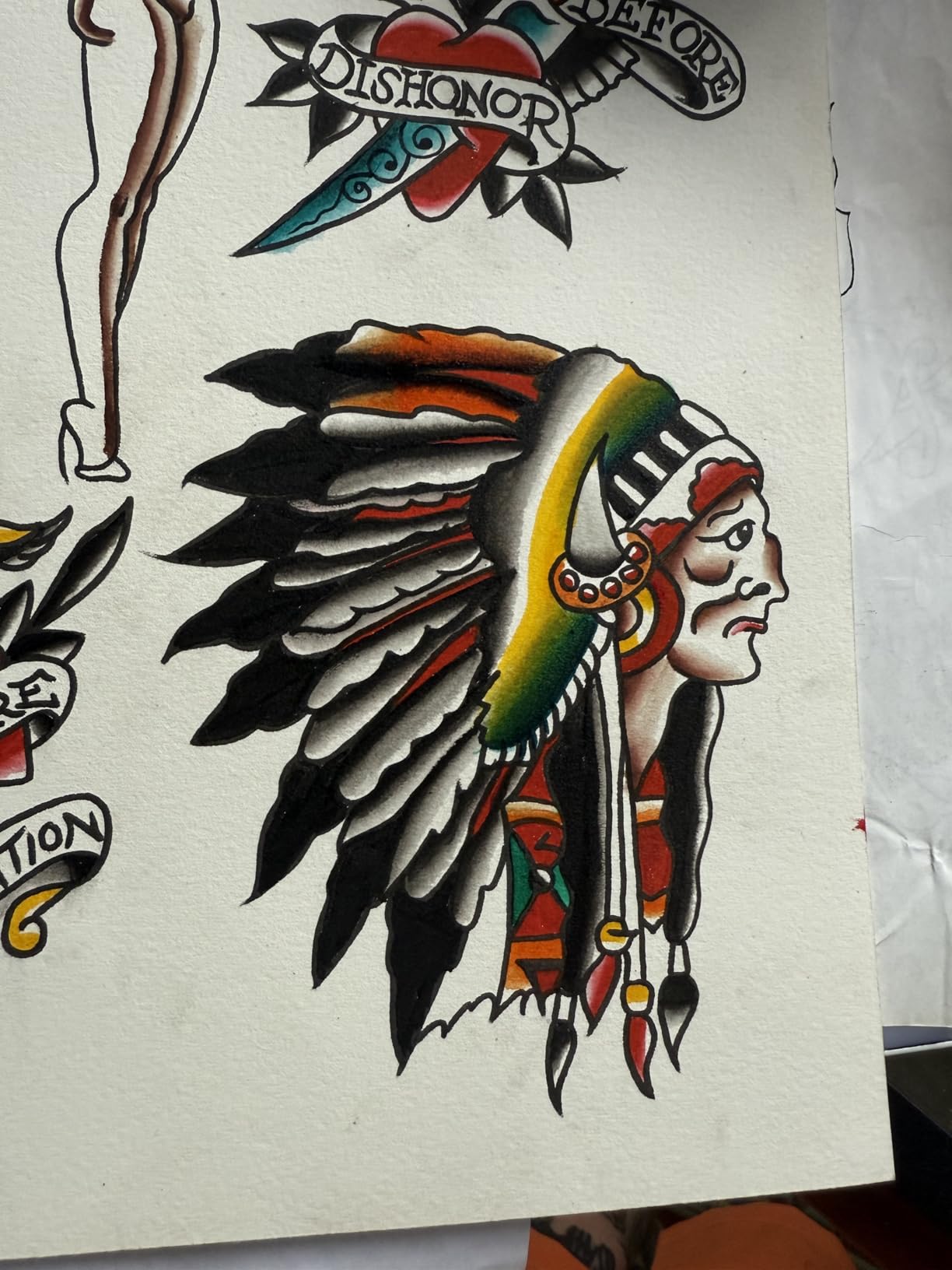
Best for budget inking and comic pages
Speedball Super Black is the right answer when you need a lot of ink, want a deep black, and don’t want to baby the bottle. It’s forgiving on cheap paper, and it stays opaque across long inking sessions.
Not ideal for fountain pens or wash blending
This ink wants to stay where it lands. That’s a strength for line art and a limitation if you need to lift and rewash. And again – fountain pens are off-limits with this formula.
4. Dr. Ph. Martin’s Bombay India Ink Set – Best Color Ink Set for Artists
Dr. Ph. Martin’s Bombay India Ink (Set 1) Ink Set, 1.0 oz, Set 1 Colors, 1 Set of 12 Bottles
12 x 1oz glass bottles
Dropper inserts
Mixing palette included
Pros
- Vibrant
- intense pigments from finely ground pigments
- Lightfast
- permanent
- and waterproof when dry
- Glass bottles with droppers for precise dispensing
- Includes a mixing palette
- Excellent value compared to buying individual bottles
Cons
- Some colors may appear almost black with a dip pen
- Packaging can occasionally leak during shipping
- Glossy finish can affect layering other media
If you’re moving beyond black ink into color illustration or hand-lettering, the Bombay Set of 12 is the smart bulk buy. You get a dozen 1oz glass bottles – each with its own dropper – plus a mixing palette, all in one box. Twelve colors cover the essentials: white, Cadmium Yellow, Orange, Scarlet, Bright Green, Sap Green, Teal, Phthalo Blue, Violet, Yellow Ochre, Burnt Umber, and Black.
I tested the set on a botanical illustration project. The Scarlet and Bright Green layered cleanly once dry, and the Burnt Umber behaved beautifully as a warm shadow tone next to Sap Green. Several reviewers mention that the gloss finish can make layering colored pencil over ink tricky, which matched my experience.
The mixing palette is a quiet hero of the set. Each well is deep enough to thin ink with water for washes, and the surface wipes clean with a damp cloth. Several users use it as a permanent studio fixture, even after they graduate to larger palettes.
One caution: in transit, the box can shift, and reviewers report occasional leaks. Mine arrived intact, but it’s worth opening over a protected surface the first time.
Best for illustrators building a color palette
This is the set I’d recommend to anyone transitioning from black-only line work into color illustration or mixed media. Twelve colors give you room to mix custom shades, and the bottle format keeps everything organized.
Not ideal for fast-drying needs or fountain pens
Like all shellac-based India inks, these need time to fully cure on the page. If your workflow depends on immediate layering, look at acrylic ink instead. And keep these away from fountain pens.
5. Winsor & Newton Drawing Ink Set – Best for Mixing Custom Shades
Winsor & Newton Drawing Ink Set, Set of 8, Henry Collection
8 x 14ml bottles
Henry Collection colors
Dye-based in shellac
Pros
- Unrivalled strength and color brilliance from soluble dyes
- Allows overlaying of different colors for attractive mixes
- Water resistant once dry on the page
- Vibrant
- bold colors well-suited to line art and washes
- Versatile for calligraphy
- illustration
- and mixed media
Cons
- Scarlet can appear more pink than expected
- Most colors bleed under watercolor washes
- Caps can occasionally seal shut during shipping
The Henry Collection set is Winsor & Newton’s curated eight-color take on their drawing ink line: Canary Yellow, Orange, Scarlet, Violet, Blue, Emerald, Nut Brown, and Black. Eight colors hit the sweet spot for illustration – enough range to build a full palette, small enough that you actually finish each bottle.
What makes these inks special is how cleanly they overlay. On a 300gsm hot press sheet, I layered Violet over a dry Black wash and the result was a deep eggplant tone with no muddiness. Mixing Emerald and Nut Brown in a palette well gave me a range of mossy greens.
The Henry Collection inks are dye-based in a shellac solution, which means they’re water resistant once dry on the page but not fully waterproof. That distinction matters: under a watercolor wash, Black holds firm, but the colored inks can bleed slightly. For pure line art and overlay work, this is a non-issue.
The set is well-loved by calligraphers and watercolor artists for the same reason. The colors are vibrant, the bottles are consistent, and the small format keeps the price reasonable.
Best for layered illustration and calligraphy
These inks shine when you want to layer colors or build up gradients. The Henry Collection picks eight colors that actually work together, which is more useful than a wider set of less-coordinated shades.
Not ideal for full waterproof line work or fountain pens
If you need ink that survives heavy watercolor washes, stick to the Black from this set or step up to a true India ink. And like other shellac-based inks, these will clog a fountain pen.
6. Speedball Super Black India Ink Pint – Best Studio-Value Drawing Ink
Speedball – 3378 Super Black India Ink, 1 Pint – 404696
16oz bottle
Carbon black pigment
Waterproof, lightfast
Pros
- Highly opaque carbon black pigment
- Excellent reproduction on absorbent surfaces
- Optimum lightfastness and waterproof
- Easy to apply by brush
- pen
- or airbrush
- Excellent value - large bottle lasts a long time
Cons
- Seal over the top can sometimes leak before purchase
- Stains anything it touches permanently
- Requires quick careful application on wood
When the 2oz Speedball jar isn’t enough, the pint-size version steps in. Sixteen ounces of the same carbon-black formula – enough for an entire year of weekly inking sessions or several months of teaching a class. The price-per-milliliter drops dramatically compared to the smaller jar.
I bought the pint for a furniture ebonizing project on a small writing desk. The carbon black pigment laid down evenly on raw wood, dried in under a minute, and held up under a coat of wax. Reviewers also use it for mural painting and large-scale illustration.
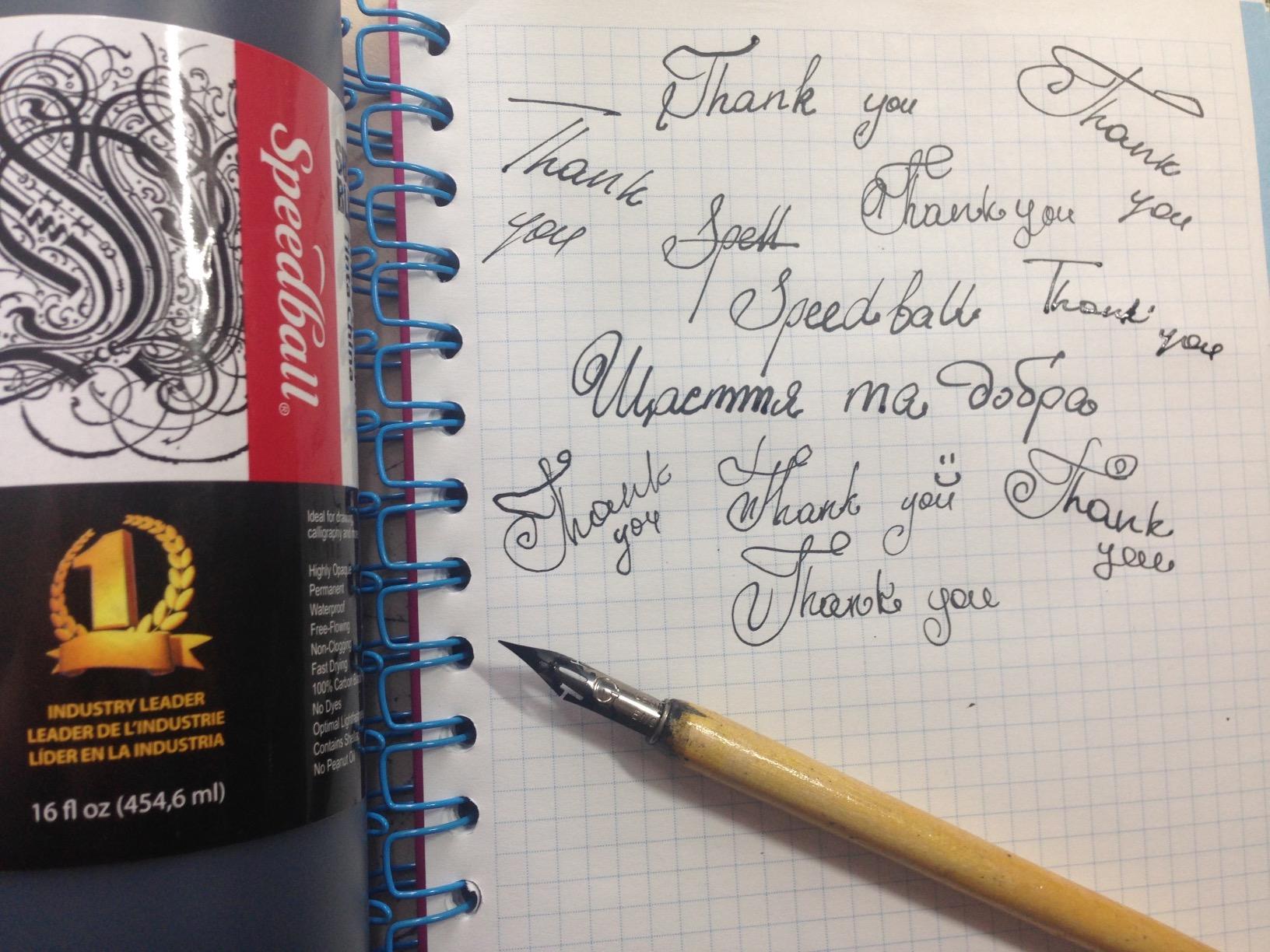
The bottle is sturdy plastic with a wide mouth, easy to dip a wide brush into. The lid can sometimes loosen in shipping – mine arrived slightly damp around the cap – so it’s worth checking the seal when it arrives. Once you break it open, store it upright.
Staining is real. This ink will mark clothing, skin, and work surfaces permanently. Gloves and a covered work area are not optional.
Best for studios, classrooms, and large projects
If you teach, sell a lot of ink work, or tackle big surfaces, the pint pays for itself. The same formula as the 2oz jar in a much larger bottle.
Not ideal for fountain pens or small travel kits
Sixteen ounces of ink is overkill for a sketchbook practice session. This is a dedicated studio bottle, not a travel companion.
7. Dr. Ph. Martin’s Black Star Matte India Ink – Best Matte Finish Drawing Ink
Dr. Ph. Martin’s Black Star India Ink (Matte) Ink Bottle, 1.0 oz, Matte Black, 1 Bottle
1oz glass bottle
Matte black finish
Dropper insert
Pros
- Lightfast
- archival
- and waterproof when dry
- Lovely matte finish with no glare
- Smooth flow and very opaque when dry
- Dries quickly and stays put under watercolor washes
- Excellent for calligraphy and technical dip pens
Cons
- Dries VERY fast
- requiring quick work
- Can be too fluid for technical pens
- Can puddle and crack on Ampersand clayboard
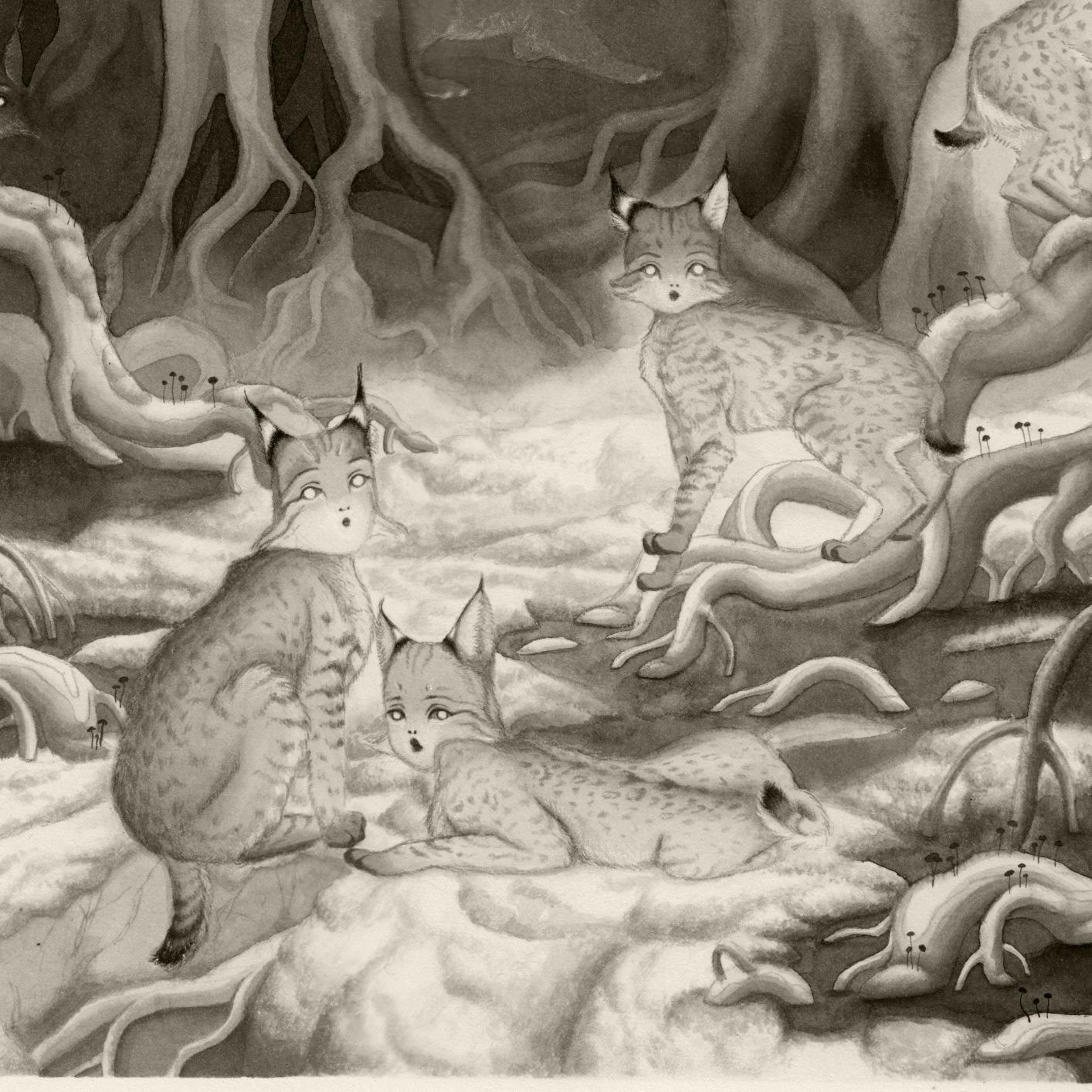
Most black inks dry with a slight gloss that catches the light under raking illumination. Black Star Matte dries to a true matte black – no shine, no glare. For scanned line art, comic pages, and graphite-style illustration, that matte finish is the difference between looking professional and looking like a glossy print.
On 250gsm sketchbook paper, the ink laid down an opaque, neutral black that stayed put under a wet wash. The dry time was the quickest of any ink in this guide – around 5-10 seconds – which is a strength and a constraint. You have to work fast once you dispense it.
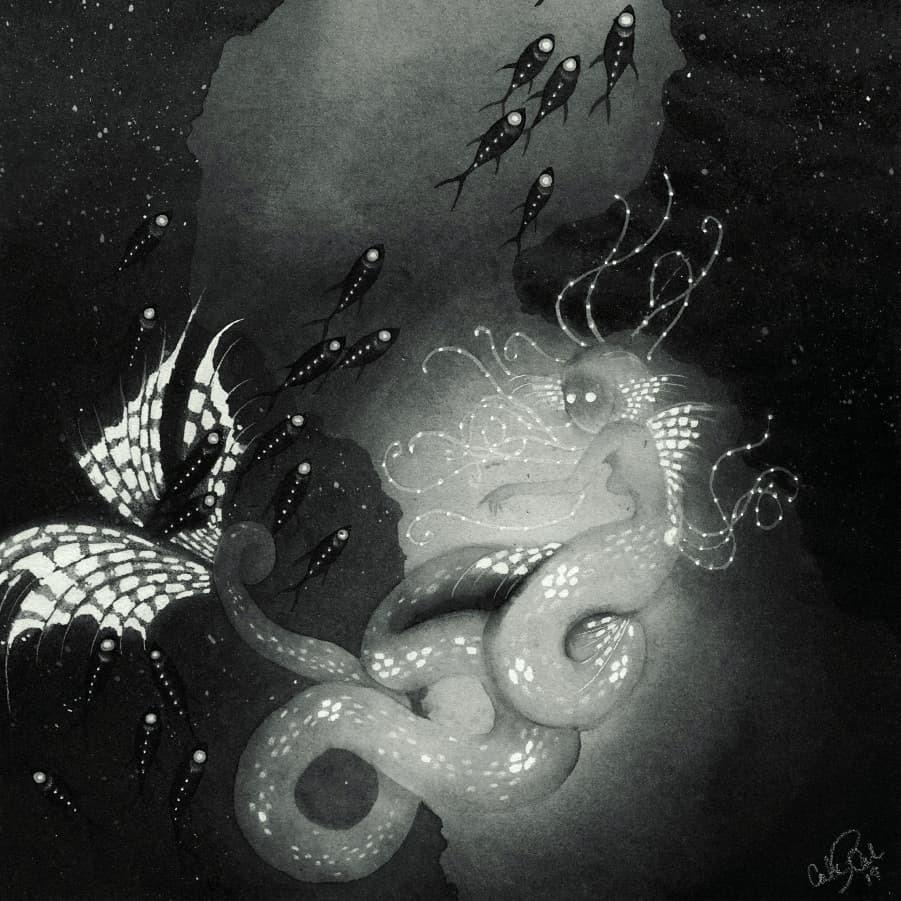
Calligraphers love this ink for pointed pen work because the matte finish photographs cleanly. Comic inkers use it for pages that will be scanned and printed, because gloss can create banding in grayscale conversions. Botanical illustrators use it for the same reason – the matte line reads as ink, not plastic.
The fast dry time can be a problem with very fine nibs, where the ink dries in the nib channel and causes skips. If that happens, switch to a slightly wetter nib or work in shorter sessions.
Best for matte line work, scanning, and comics
If your finished work goes through a scanner or a camera, matte ink is the better choice. It also photographs more cleanly under raking light, which matters for portfolio shots.
Not ideal for long blending sessions or fountain pens
The fast dry time means you can’t blend two strokes into a wash. Plan your strokes, or move to a slower ink. And again, fountain pens are off-limits.
8. Higgins Waterproof Black India Ink – Best Beginner India Ink
Higgins Waterproof Black India Ink 1 oz.
1oz bottle
Shellac-based
AP non-toxic
Pros
- Micro-pulverized pigments in professional shellac solution
- Waterproof with deep charcoal black shade
- Inter-mixable with other Higgins inks for custom colors
- AP non-toxic and ASTM D-4241 compliant
- Made in USA
Cons
- Ink is thin and watery for fine lines
- Small eyedropper can be tricky to use
- Has a noticeable odor and needs ventilation
Higgins has been making drawing ink in the US since before most of us were born, and the formula hasn’t changed much because it works. The Waterproof Black is AP non-toxic and ASTM D-4241 compliant, which is a meaningful difference if you share a workspace with kids, teach in a school, or just want a safer studio.
The ink itself is on the thinner side compared to Bombay or Speedball. On absorbent sketchbook paper, it flowed smoothly from a Hunt 22 nib without any dilution. Under a wet brush, the line held up well – no bleed, no smearing.
The thin consistency is the main critique. For very fine line work – especially with extra-fine technical pens – Higgins can feather on cheap paper and skip in tight nib channels. For most sketchbook and dip pen use, it’s perfectly serviceable. Reviewers love the ability to mix it with other Higgins inks to build custom colors.
The bottle has a small eyedropper insert that’s functional but a bit fiddly. I found it easier to pour directly into a palette well for brush work.
Best for beginners, classrooms, and non-toxic studios
If you’re new to ink, teaching a class, or working in a shared space where safety matters, Higgins is a smart starting point. The non-toxic certification is real, and the formula is forgiving on cheap paper.
Not ideal for fine technical pens or odor-sensitive users
For very fine detail work, step up to Bombay or Winsor & Newton. The shellac smell also lingers, so make sure your studio has ventilation.
9. Tom Norton Walnut Drawing Ink – Best Warm Brown Drawing Ink
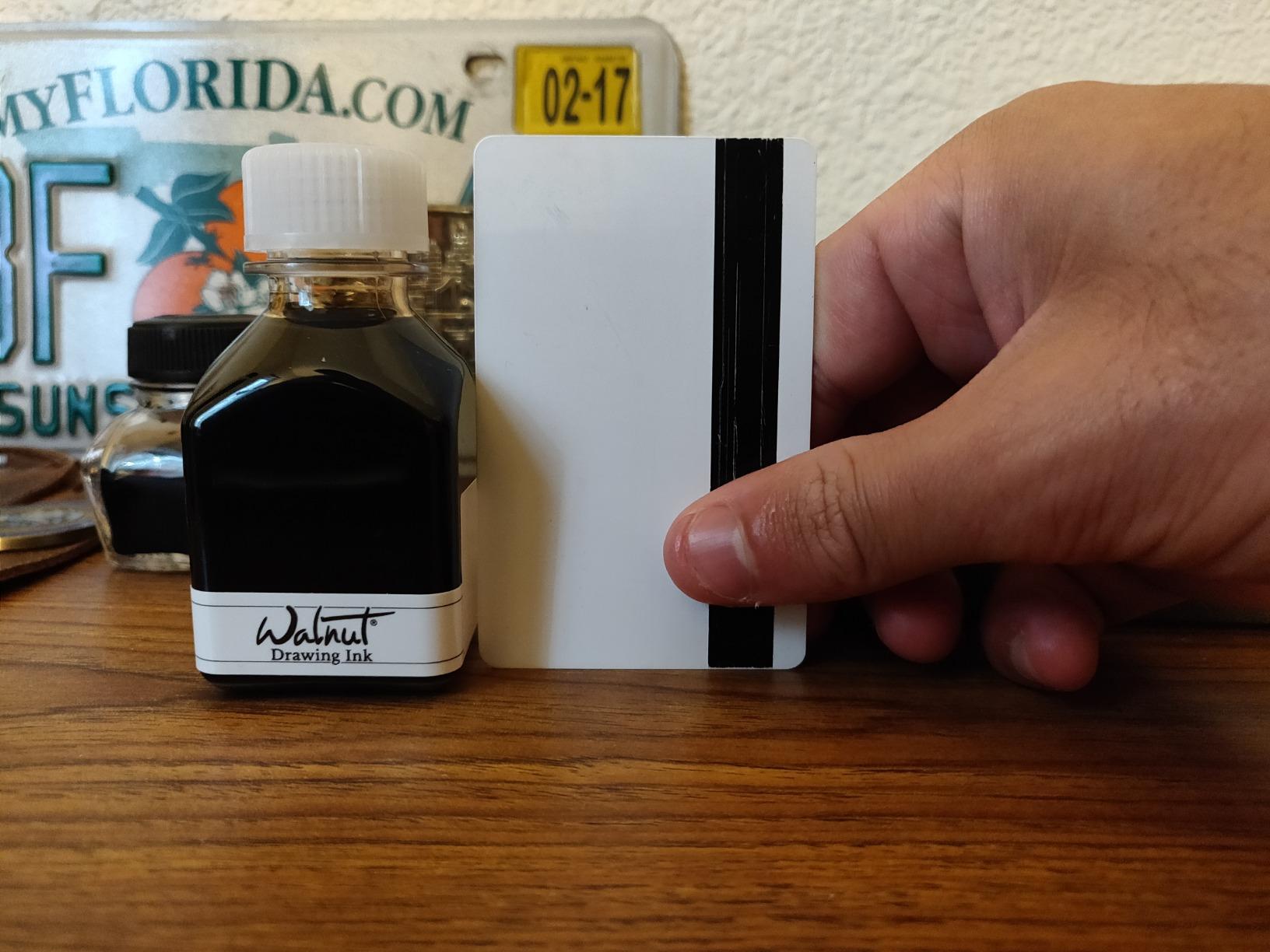
Tom Norton Walnut Drawing Ink 60 Milliliters (2 Fluid Ounce) Bottle
2oz bottle
Walnut brown pigment
Acid-free and lightfast
Pros
- Rich warm brown color
- Holds well in a brush or hand-dipped pen
- Acid-free and lightfast
- Generous 2oz bottle
Cons
- Limited review base
- Remains water-soluble like a watercolor
- Niche brown color may not suit all artwork needs
Most drawing ink bottles are black. Tom Norton’s Walnut is a richly pigmented brown that feels traditional – the kind of ink you might see in a hand-bound sketchbook from 1920. The warm tone works beautifully for botanical illustration, vintage-style lettering, and sepia-toned figure drawing.
The 2oz bottle is generous for a specialty ink, and the formula holds well in both brush and dip pen. I tested it on cold press watercolor paper with a Nikko G brush and a Brause 511 nib – both picked up pigment cleanly and delivered a smooth line.
The key thing to know: Walnut ink stays water-soluble. It behaves more like a watercolor than a permanent India ink, which means you can reactivate dried strokes with a wet brush and blend washes beautifully. It also means it won’t survive heavy water on top of the line.
The review base is smaller than the bigger brands – this is a specialty product, not a mass-market bottle. But the reviews that exist are consistent on quality and archival behavior.
Best for botanical illustration and sepia work
If your work leans warm, traditional, or vintage, walnut brown ink is a beautiful departure from black. It pairs naturally with watercolor and gives your pages a cohesive earthy tone.
Not ideal for waterproof line art or fountain pens
Because Walnut ink stays water-soluble, it’s not the right choice for line art that needs to survive washes. And it’s not formulated for fountain pen feeds.
10. Mont Marte Acrylic Ink Premium Set – Best Acrylic Ink Value
Mont Marte Acrylic Ink Premium 12pc x 20ml (0.7 US fl.oz), Acrylic Inks for Artists, Essential Colors, Ideal for Air Brush, Pouring Art, Scrapbooking, Ink Drawing, Mixed Media
12 x 20ml pipette bottles
Vibrant colors
Airbrush ready
Pros
- 12 vibrant acrylic ink colors that blend easily
- Permanent and water-resistant once dry
- Pipette bottle for precise mess-free application
- Suitable for airbrush
- pouring art
- and mixed media
- Excellent value compared to higher-priced acrylic inks
Cons
- Not as heavily pigmented as premium brands
- Droppers can be weak and tricky to use
- No phthalo green in the set
- Cannot be used with alcohol-based mediums
Acrylic ink is a different beast from India ink: it uses an acrylic polymer binder, which gives brighter, more flexible color and a permanent film once dry. The Mont Marte Premium 12-color set is the entry-level acrylic ink set that actually delivers on the format, at a price that makes experimentation affordable.
I tested the set on mixed media boards with both brush and airbrush. The colors – White, Cadmium Yellow, Orange, Scarlet, Bright Green, Sap Green, Teal, Phthalo Blue, Violet, Yellow Ochre, Burnt Umber, and Black – cover the spectrum for illustration, scrapbooking, and pouring art.
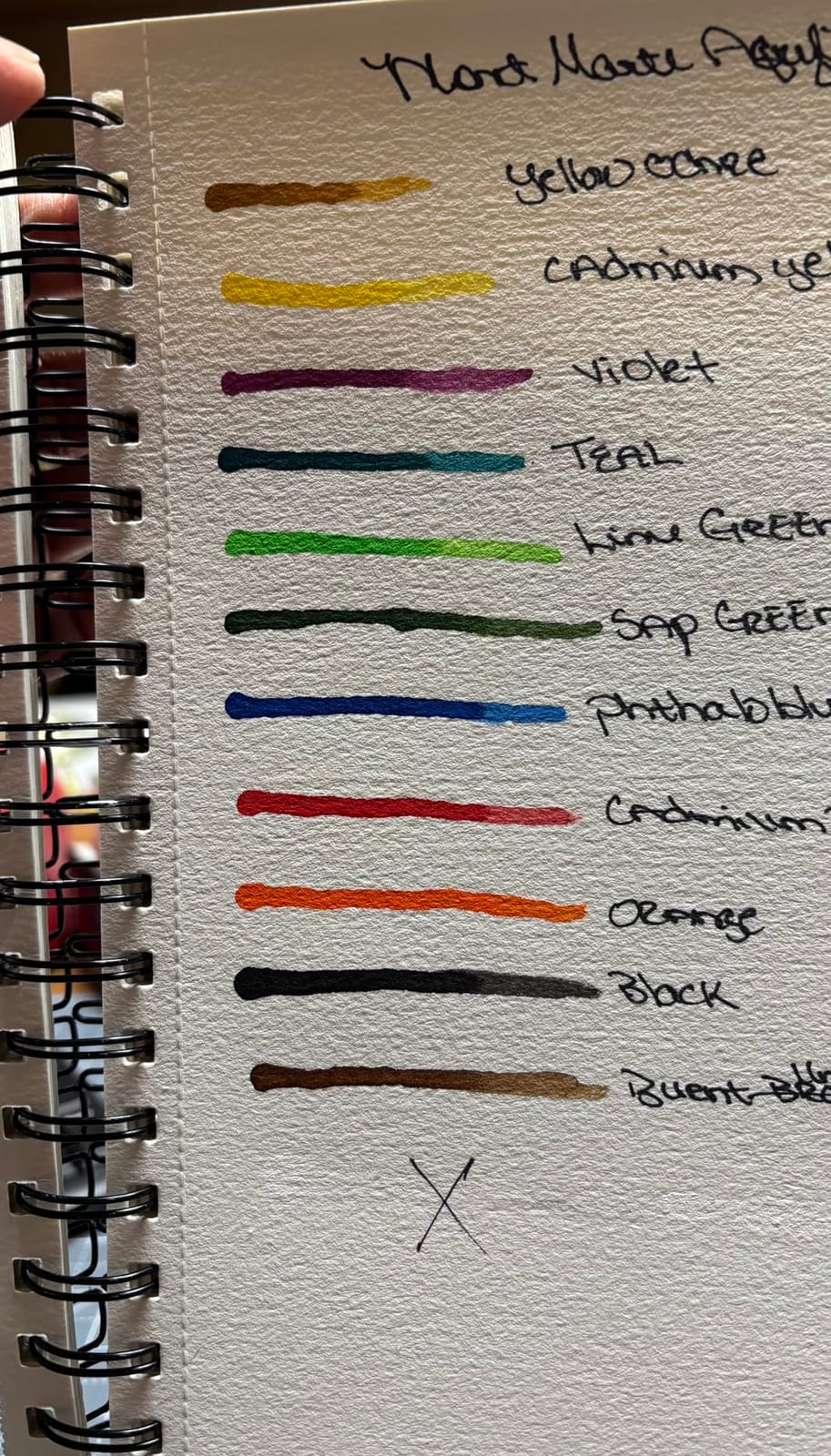
The pipette bottle is a nice touch for precise dosing. Each color drops cleanly into a palette well without contaminating the supply. Once dry, the colors are water-resistant and flexible, which makes them compatible with watercolor, colored pencil, and marker overlay.
The main trade-off is pigment load. Premium acrylic inks like Daler-Rowney FW or Liquitex have heavier pigment, which means more opaque coverage with one pass. Mont Marte is solid for the price, but serious illustrators may want to step up for gallery work.
Best for beginners, mixed media, and airbrush
If you’re new to acrylic ink, or you want to explore airbrush and pouring art without a major investment, this set is the right starting point. Twelve colors at this price make it easy to find your favorites before committing to individual bottles.
Not ideal for fine dip pen line work or premium gallery pieces
Acrylic ink is thicker than India ink and can clog fine dip pen nibs. For very fine line work, stick with shellac-based India ink. And for gallery-quality pieces, premium acrylic inks will give you more reliable pigmentation.
How to Choose the Best Drawing Ink Bottles for Your Work?
Picking the right bottle comes down to four decisions, in this order: what ink chemistry matches your project, what tool you’ll apply it with, how much you need, and what your studio workflow looks like. Here’s how I think through each one.
Ink Chemistry: Pigment vs Dye vs Shellac vs Acrylic
Pigment-based India inks (Dr. Ph. Martin’s Bombay, Speedball Super Black, Higgins) give you the deepest blacks and the best lightfastness. They dry waterproof, which is essential for line art under watercolor. Dye-based inks (Winsor & Newton Henry Collection) give you vivid color but limited lightfastness, and they’re water-resistant but not waterproof. Sumi ink stays water-soluble for blending and wash work. Acrylic ink uses an acrylic binder, which makes it permanent and flexible but not as deep-black as carbon pigment.
Tool Compatibility: Dip Pen, Fountain Pen, and Brush
Most drawing inks are formulated for dip pens and brushes. Fountain pens are a different story – pigment and shellac inks will clog a fountain pen feed, and Reddit threads are full of users who lost pens trying. If you want to draw with a fountain pen, choose a true fountain pen ink (Diamine, Pilot Iroshizuku, Noodler’s) instead. Brush and dip pen users can pick from any of the bottles in this guide. For glass dip pens, dilute thick pigment inks like Speedball Super Black with a few drops of water.
Three Quick Tests Before You Buy
Before committing to a bottle, I run three quick tests: a waterproof test (lay down a line, wait 60 seconds, run a wet brush over it – does it lift?), a feather test (draw a thin line on cheap sketchbook paper – does it spread?), and a mix test (drop a bit into a palette well and add water – does it blend or separate?). Any ink that passes all three is a keeper. Any ink that fails the waterproof test won’t survive your watercolor workflow.
Bottle Design and Studio Workflow
Bottle design matters more than people expect. A bottle that tips over wastes ink and stains the desk. Wide-mouth jars are easiest for brush dipping; dropper inserts are best for palette dosing; pipette bottles work well for precise drops. Reddit threads on r/fountainpens consistently praise bottles that are both functional and visually pleasing – if you display your studio, the bottle aesthetics matter too.
Frequently Asked Questions
What are the best drawing ink bottles for artists?
The best drawing ink bottles for artists depend on your project, but the strongest all-around picks are Winsor u0026amp; Newton Drawing Ink for true-black line work, Dr. Ph. Martin’s Bombay India Ink for dependable waterproof inking, and Speedball Super Black India Ink for high-volume studio use. Each of these has thousands of reviews and a decades-long reputation in the art-supply world.
Is Winsor and Newton drawing ink good?
Yes. Winsor u0026amp; Newton Drawing Ink is one of the most widely recommended black drawing inks in the world, with more than 15,000 reviews on Amazon. Calligraphers, illustrators, and watercolor artists use it for its true neutral black, fast dry time, and excellent adhesion on most paper surfaces. It works with brush, dip pen, or airbrush, making it one of the most versatile bottles you can buy.
What is the best drawing pen for artists?
The best drawing pen for artists depends on your style. For fine line work, technical pens like the Micron Pigma series are consistent and archival. For expressive line variation, dip pens with Hunt or Brause nibs give you the widest range. For brush-like strokes, a brush pen or a Kolinsky brush with bottle ink is the right choice. Fountain pens are best reserved for fountain-pen-safe inks rather than drawing ink bottles.
What is the difference between India ink and acrylic ink?
India ink uses carbon black pigment suspended in a shellac binder, which makes it waterproof, archival, and ideal for traditional line work and calligraphy. Acrylic ink uses a modern acrylic polymer binder with pigment, which gives brighter colors, a flexible permanent film, and compatibility with airbrush and pouring techniques. India ink is the better choice for fine line work and watercolor pairing; acrylic ink is the better choice for mixed media, vibrant color, and airbrush.
Can you use drawing ink in a fountain pen?
No, most drawing inks will clog a fountain pen. Pigment-based, shellac-based, and acrylic drawing inks contain particles or resins that will dry inside the feed and damage the pen. If you want to draw with a fountain pen, choose a fountain-pen-safe ink from brands like Diamine, Pilot, Noodler’s, or Rohrer u0026amp; Klingner. Drawing ink bottles are made for dip pens, brushes, and technical pens – not fountain pens.
Final Verdict
After testing all ten bottles across line work, watercolor pairing, calligraphy, comic inking, and mixed media, my top pick for the best drawing ink bottles for artists remains the Winsor & Newton Drawing Ink. It delivers a true neutral black, fast dry time, and broad tool compatibility in a small glass bottle that fits any studio setup.
For a larger bottle with the same dependable quality, Dr. Ph. Martin’s Bombay India Ink is the smart upgrade. For studio-class volume on a budget, Speedball Super Black in the 2oz jar or 16oz pint is the right answer. And for specialty work – matte finish, color sets, or warm brown – the dedicated picks above each earn their place.
Pick the one that matches your project, your tool, and your studio. The right ink bottle changes the way you draw.