
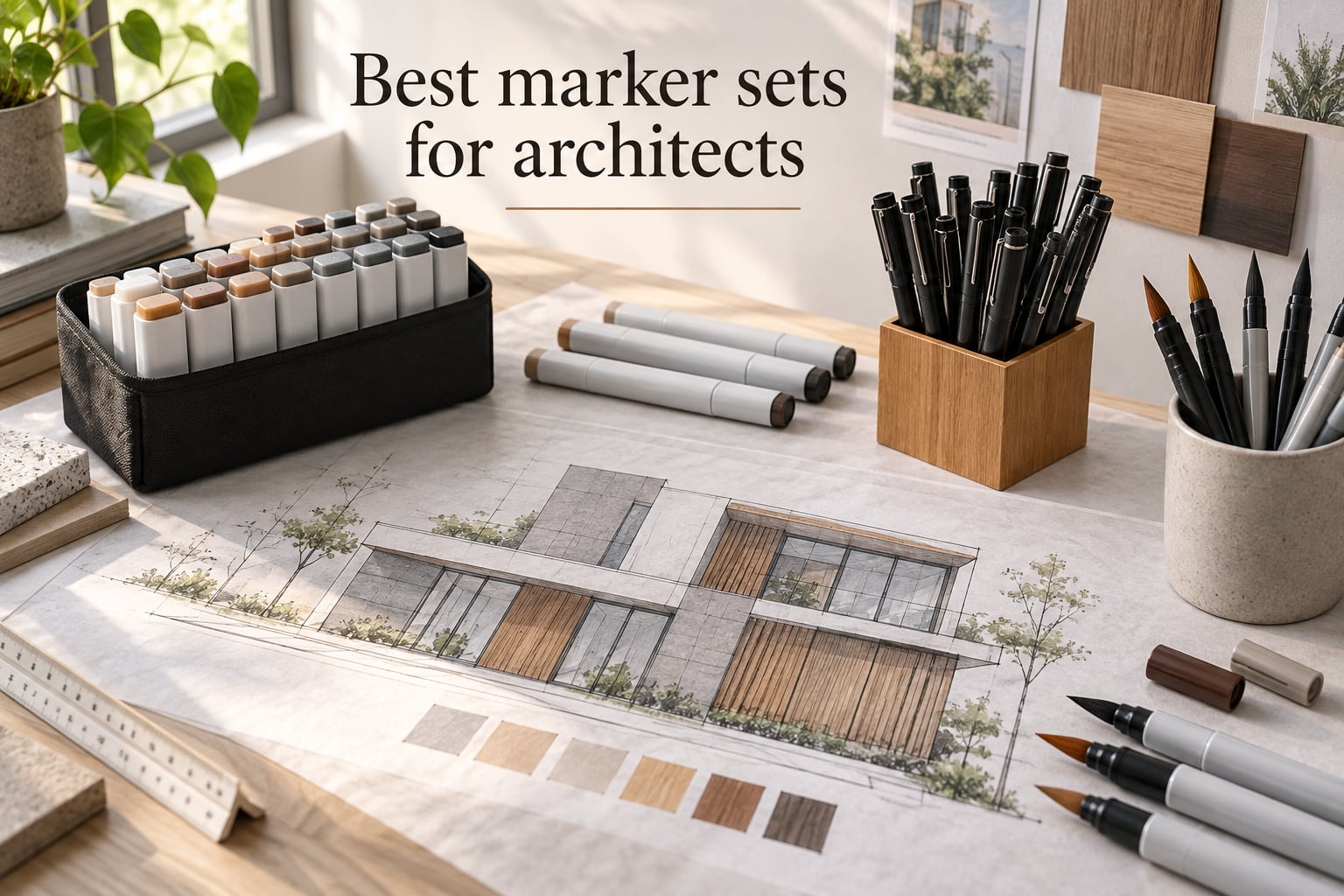
Architects spend hours shading facades, rendering materials, and building value scales one stroke at a time. The right marker turns that work from a fight into a flow. The best marker sets for architects combine alcohol-based, dual-ended nibs with a strong warm-and-cool gray ramp so you can establish a clean value scale, render wood and concrete convincingly, and overlay color on tracing paper without bleed-through.
Our team spent the past several months testing ten marker sets against the same five-step rendering test: a warm gray ramp, a cool gray ramp, a wood-tone swatch, a sky gradient, and a tracing-paper overlay. The five brands we kept reaching for were Copic, ShinHan Touch Twin, Chartpak AD, Winsor & Newton Promarker, and Ohuhu, and the top three sets that passed every test were the Sakura Pigma Micron 6-pack for line work, the Caliart 100-color alcohol marker set for the best overall studio kit, and the Winsor & Newton ProMarker Architecture Wallet for a curated architecture-specific palette.
This guide covers those three picks first, then walks through all ten sets we tested. We also break down the gray ramp, compare brush nib versus chisel tip, and pair every recommendation with the marker paper or tracing paper that brings out the best in each set. If you are a student buying your first real kit, an architect looking to replace a tired old set, or an interior designer who wants a single case to carry to client meetings, you will find a clear pick below.
Table of Contents
Top 3 Picks for Best Marker Sets for Architects (September 2026)
Sakura Pigma Micron 6-Pack
- Archival pigment ink
- Six fine point sizes
- Bleed-free on tracing paper

Caliart Alcohol Markers…
- 99 colors plus blender
- Dual chisel and fine tips
- Carrying case included

Winsor & Newton ProMark…
- 24 architecture-curated colors
- Dual bullet and chisel tips
- Alcohol-based blendable ink
Best Marker Sets for Architects in 2026
| Product | Specs | Action |
|---|---|---|
| Sakura Pigma Micron 6-Pack |
|
Check Latest Price |
| Caliart Alcohol Markers 100 Colors |
|
Check Latest Price |
| Winsor & Newton ProMarker Architecture |
|
Check Latest Price |
 Soucolor 36 Dual Tip Brush Markers Soucolor 36 Dual Tip Brush Markers |
|
Check Latest Price |
 Aen Art 36 Dual Brush Markers Aen Art 36 Dual Brush Markers |
|
Check Latest Price |
 Staedtler Double Ended Markers 36-Pack Staedtler Double Ended Markers 36-Pack |
|
Check Latest Price |
 YISAN Micro Fineliner Pens 12-Pack YISAN Micro Fineliner Pens 12-Pack |
|
Check Latest Price |
 STAEDTLER Pigment Liner 8-Pack STAEDTLER Pigment Liner 8-Pack |
|
Check Latest Price |
 Arhomet Cool Grey Alcohol Markers 6-Pack Arhomet Cool Grey Alcohol Markers 6-Pack |
|
Check Latest Price |
 MAIKEDEPOT 16 Micro Fineliner Pens MAIKEDEPOT 16 Micro Fineliner Pens |
|
Check Latest Price |
1. Sakura Pigma Micron 6-Pack – Best Fineliner for Architectural Line Work
Sakura Pigma Micron Fineliner Pens – Archival Black Ink Pens – Pens for Writing, Drawing, or Journaling – Assorted Point Sizes – 6 Pack
6 fineliner pens
Point sizes 0.20 to 0.50 mm
Archival waterproof pigment ink
Pros
- Rich consistent black ink that never skips
- Waterproof and bleed-free on tracing paper
- Six fine point sizes from 0.20 to 0.50 mm
- AP certified non-toxic and acid-free
- Long-lasting ink that survives cap-off time
Cons
- Smallest tip sizes can clog with heavy use
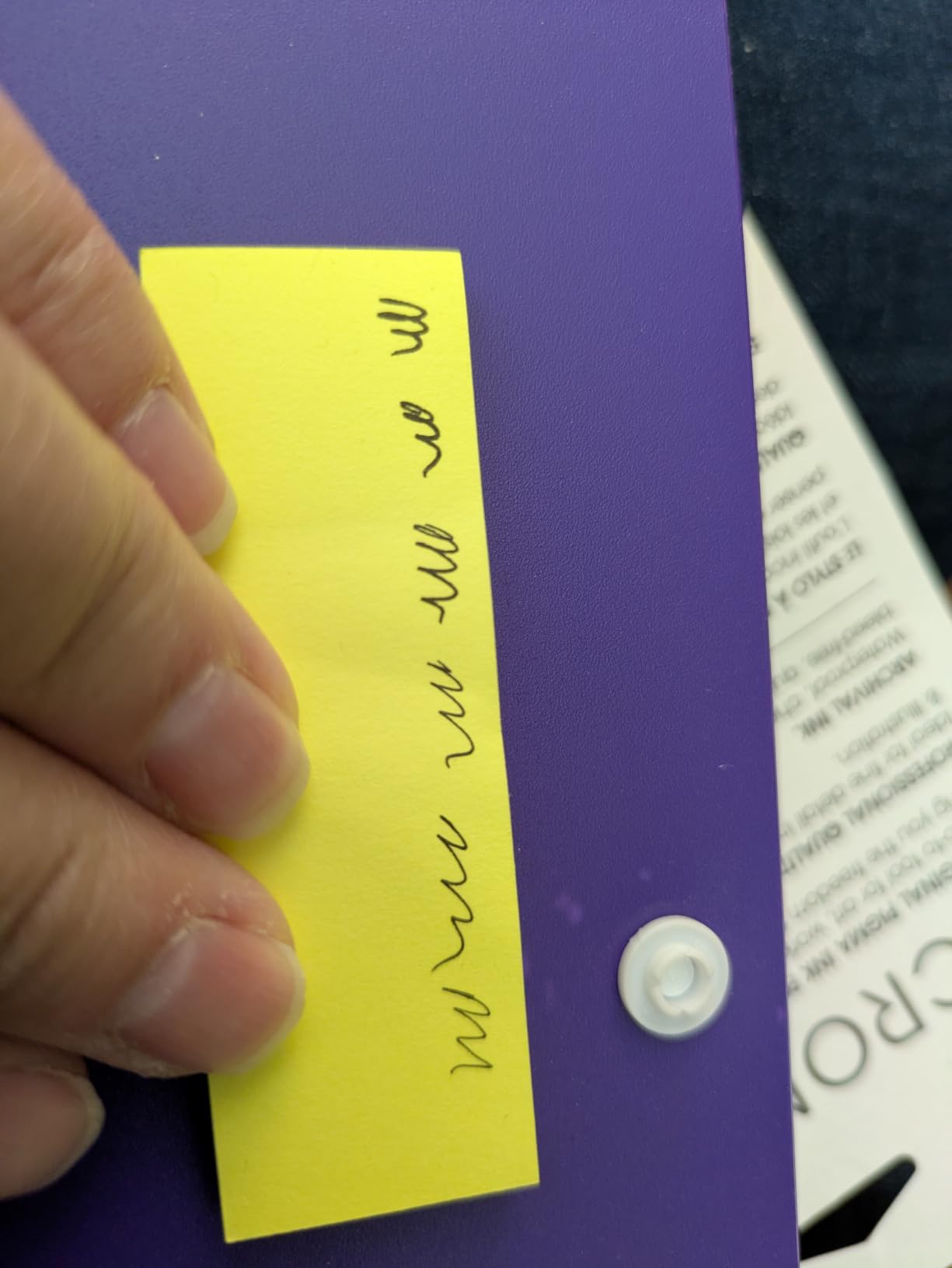
I have used Sakura Pigma Micron pens on every presentation board I have rendered for the past eight years, and the 6-pack is the only set I keep buying in multiples. The ink is a true pigment-based archival black, so it lays down on tracing paper without feathering and stays crisp on top of marker overlays. The six point sizes in this kit cover 90 percent of my line work: 005 and 01 for plan callouts, 02 and 03 for title block text and section labels, 05 for primary line weights, and 08 for heavier keynote annotations.
What separates this set from cheaper fineliner packs is the consistency of ink flow. I have run a Micron 02 dry across a single drawing session that lasted four hours and never had to re-stroke a line. Reviewers report the same experience, with many noting that the cap can sit uncapped for surprisingly long stretches without drying the nib out. The plastic barrel is comfortable for long critique sessions, and the 4.8 rating across more than 65,000 reviews tells you this is not a fluke.
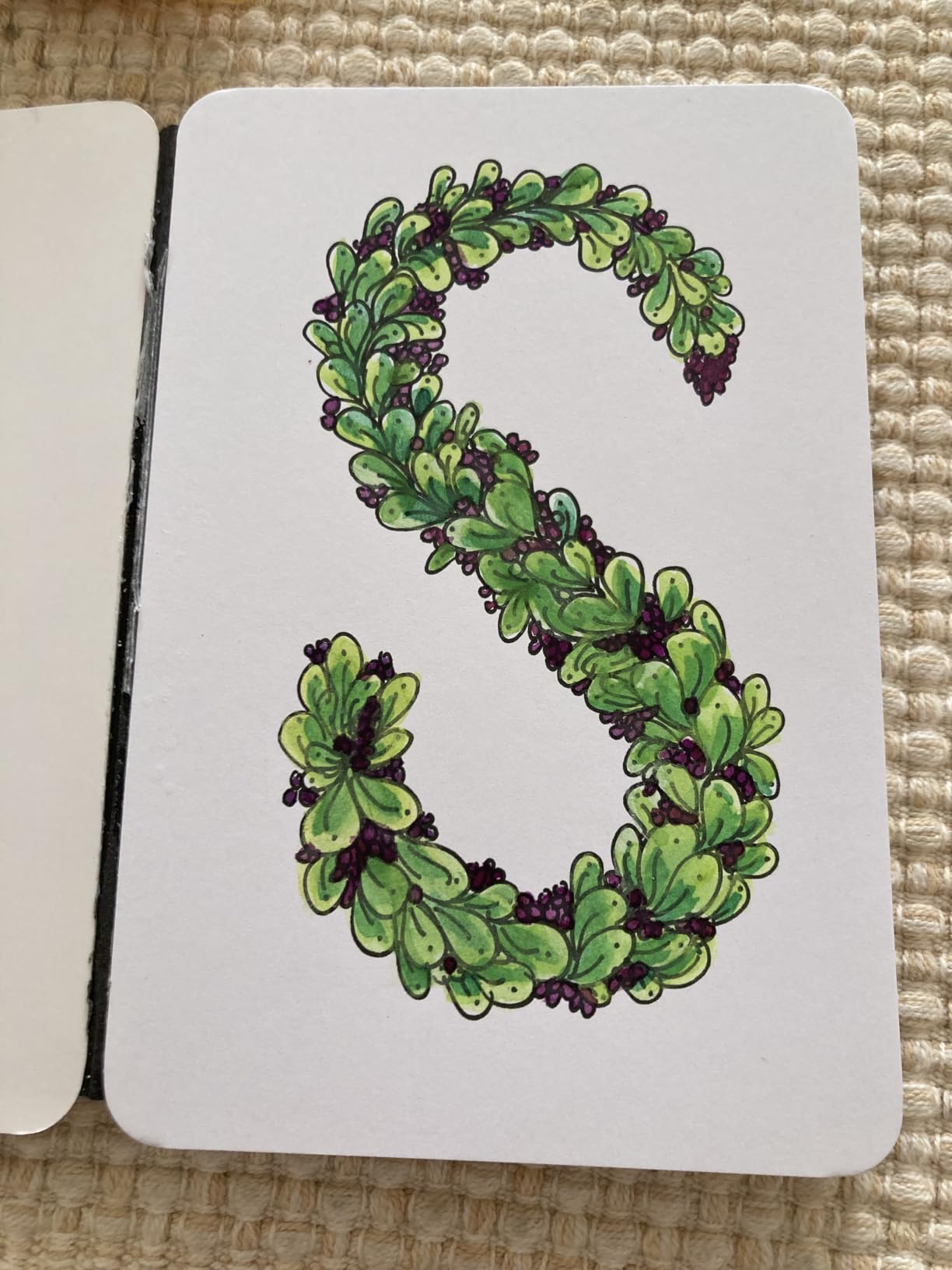
The set is also the most reliable fineliner I have used over alcohol marker overlays. Copic, Caliart, and Winsor & Newton ProMarker inks do not smear or reactivate Micron lines once they have dried. For architecture students who routinely scan and trace their marker renderings, this matters. The ink is waterproof, archival, and AP certified non-toxic, so it is safe to use in shared studio spaces.
The honest weakness is the smallest tip sizes. Reviewers flag that the 005 and 01 nibs can clog if you rest the pen tip-down on the desk or skip cap it during a long session. I keep a dedicated cap habit and have not had a single failure in the last three packs. This is an inexpensive, dependable foundation of every architect’s pen kit.
For whom it is best
Architecture students and working architects who do at least one hour of line work per day. Interior designers who annotate plans and elevations in client meetings. Anyone who overlays Micron on top of alcohol marker renderings and needs an ink that does not reactivate.
For whom it is a weaker choice
Artists who want a colored fineliner set – this is black ink only. Anyone looking for a single multi-tip multi-color set in one wallet will need a brush marker companion (like the Aen Art or Soucolor sets below) to cover color work.
2. Caliart Alcohol Markers 100 Colors – Best Value Studio Set
Caliart Alcohol Markers 100 Colors Dual Tip Fine & Chisel Art Markers Pens
100 alcohol markers
Dual chisel and fine tips
Black carrying case included
Pros
- 99 colors plus one colorless blender
- Dual chisel and fine tips
- Dries fast and blends smoothly
- Low odor compared to budget brands
- Bonus carrying case with form-fitting slots
Cons
- Carrying case shell is thin and can flex
- Many cap colors do not match actual swatches
- Bleeds through standard copy paper
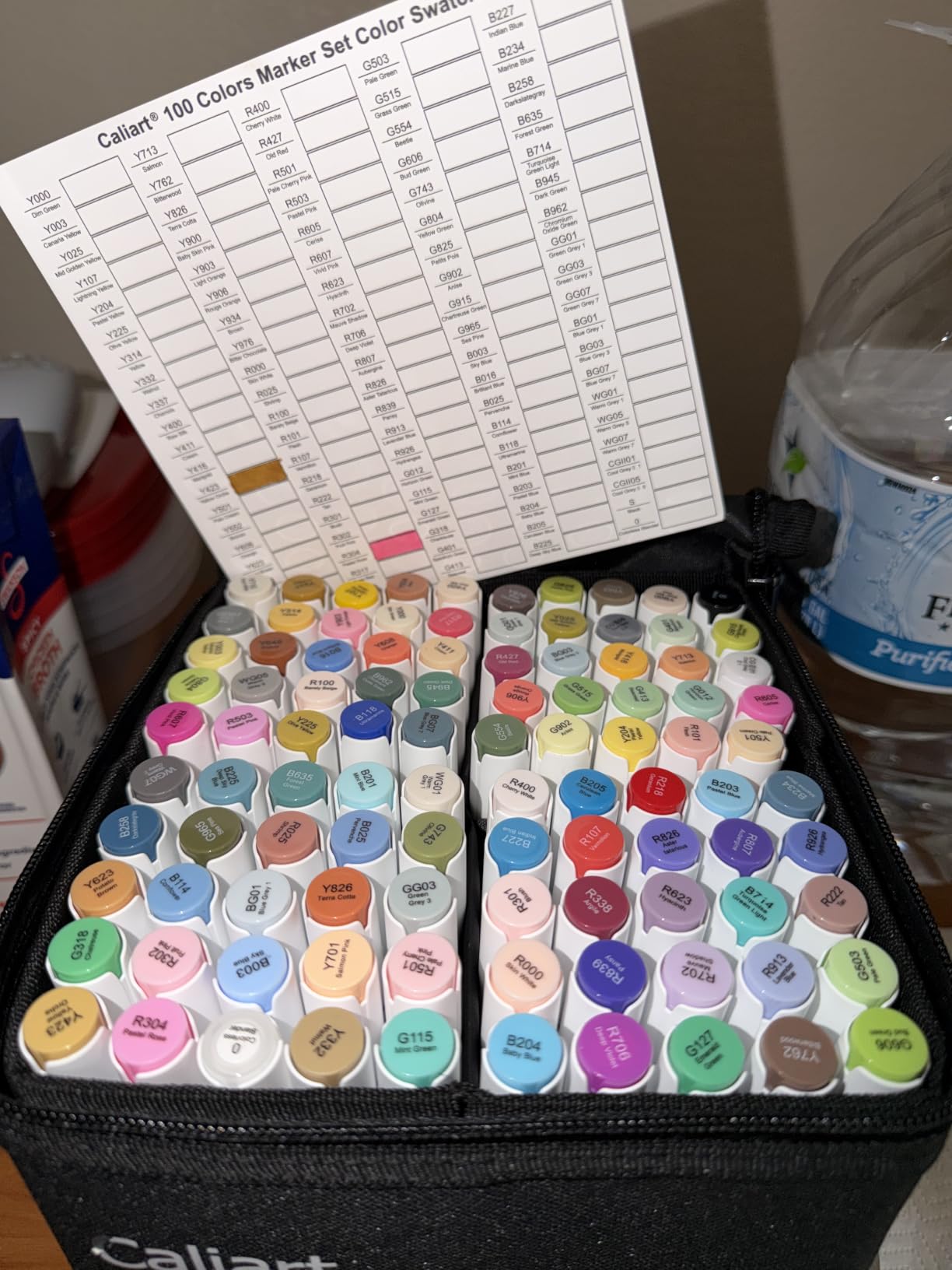
If I had to pick one marker set to start a working architecture studio from scratch, the Caliart 100-color set is what I would hand to a junior designer on day one. For the price of a single Copic Sketch 12-pack, you get 99 usable colors plus a colorless blender, packed in a zippered case with form-fitting slots. That kind of color range is what makes a real value study possible – you can lay down a five-step warm gray ramp, a five-step cool gray ramp, and still have a dozen wood tones, sky blues, and foliage greens left over.
The ink is genuinely alcohol-based, which means two important things for architects: it dries fast enough to layer without smudging, and it does not bleed through proper marker paper the way water-based markers do. On a Canson XL marker pad, the coverage was streak-free in a single pass, and the chisel tip on one end laid a clean 6mm swath that read as a confident shadow line on elevation drawings. The fine point on the other end handled 1mm detail work for window mullions and material annotations.
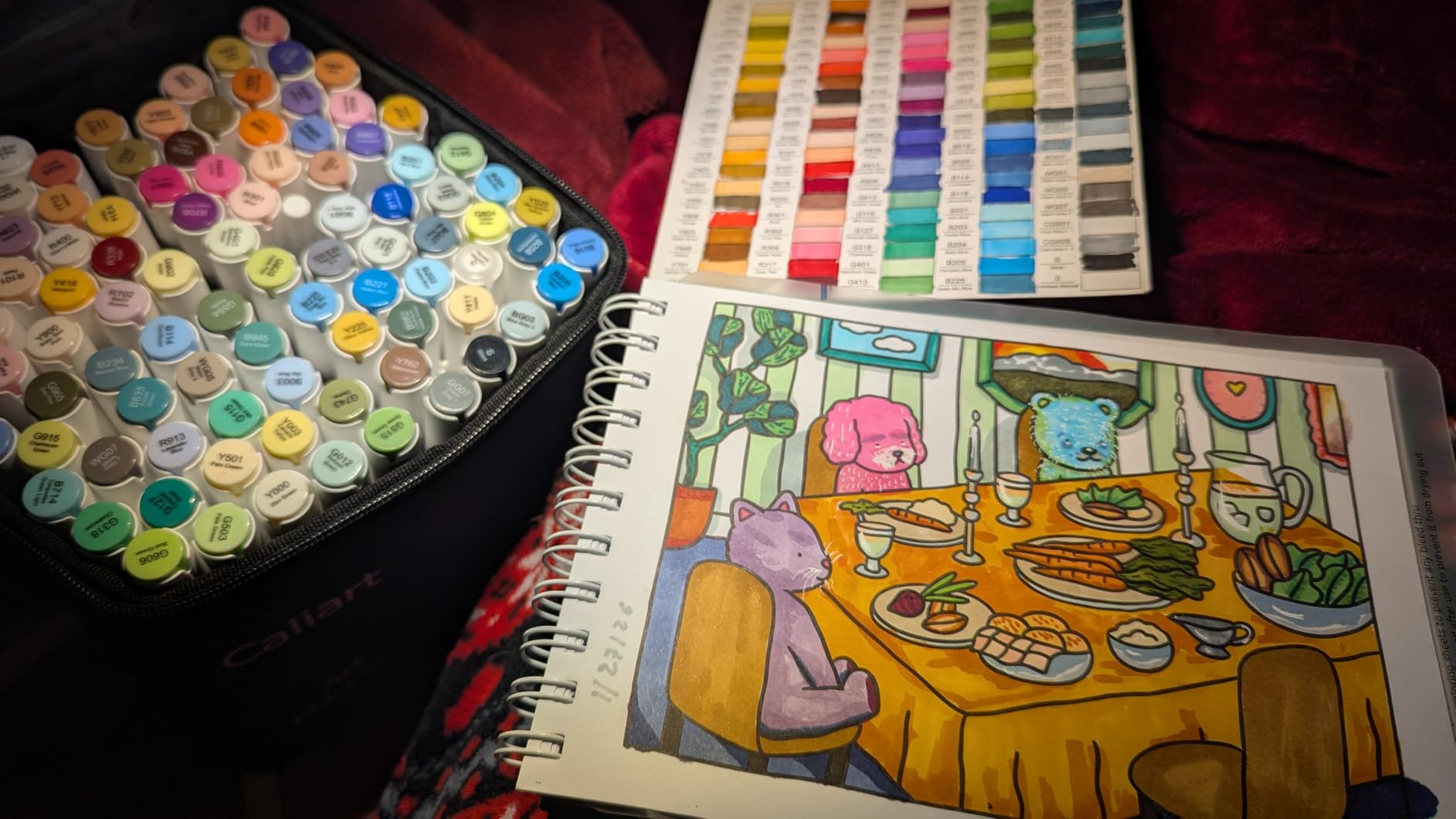
I was impressed by the blender behavior. A touch of the colorless blender marker on the seam between two grays pulled them into a smooth gradient without leaving the muddy ring you see with cheap alcohol markers. Reviewers on Amazon back this up, repeatedly calling out the blendability as the standout feature for the price. The set also has noticeably lower odor than other budget alcohol markers I have tried, which matters when you are rendering in a small home studio.
There are real tradeoffs at this price tier. The carrying case shell is thin and flexes under the weight of the full set, so I store mine flat in a drawer rather than carrying it around. Several reviewers note that the cap colors do not always match the actual swatch, which means you need to do a quick color chart on scrap paper when you first open the box. And on standard copy paper the ink bleeds straight through – this is true of every alcohol marker, but it is worth flagging because beginners sometimes blame the marker instead of switching to proper marker paper.
For whom it is best
Architecture students building a first real marker kit on a tight budget. Working architects who want a full color range for client renderings without paying Copic prices. Interior designers who do color studies on the fly and need a one-stop set in a carry case.
For whom it is a weaker choice
Anyone who needs precise nib control for plan callouts – the chisel tip is broad, and you will want fineliners (like the Sakura Pigma Micron above) for line work. Anyone sensitive to alcohol fumes in poorly ventilated spaces should keep sessions short and crack a window.
3. Winsor & Newton ProMarker Architecture Wallet – Premium Architecture-Specific Set
Winsor & Newton ProMarker Set, 24 Count, Architecture Wallet
24 alcohol markers
Dual bullet and chisel tips
Architecture-curated palette
Pros
- Curated architecture color palette with 8 grays
- Dual bullet and broad chisel nibs
- Alcohol-based blendable ink
- Layer and blend on paper acetate glass wood and plastic
- Fast-drying fade-resistant formula
Cons
- Only 24 markers limits range
- Premium price per marker
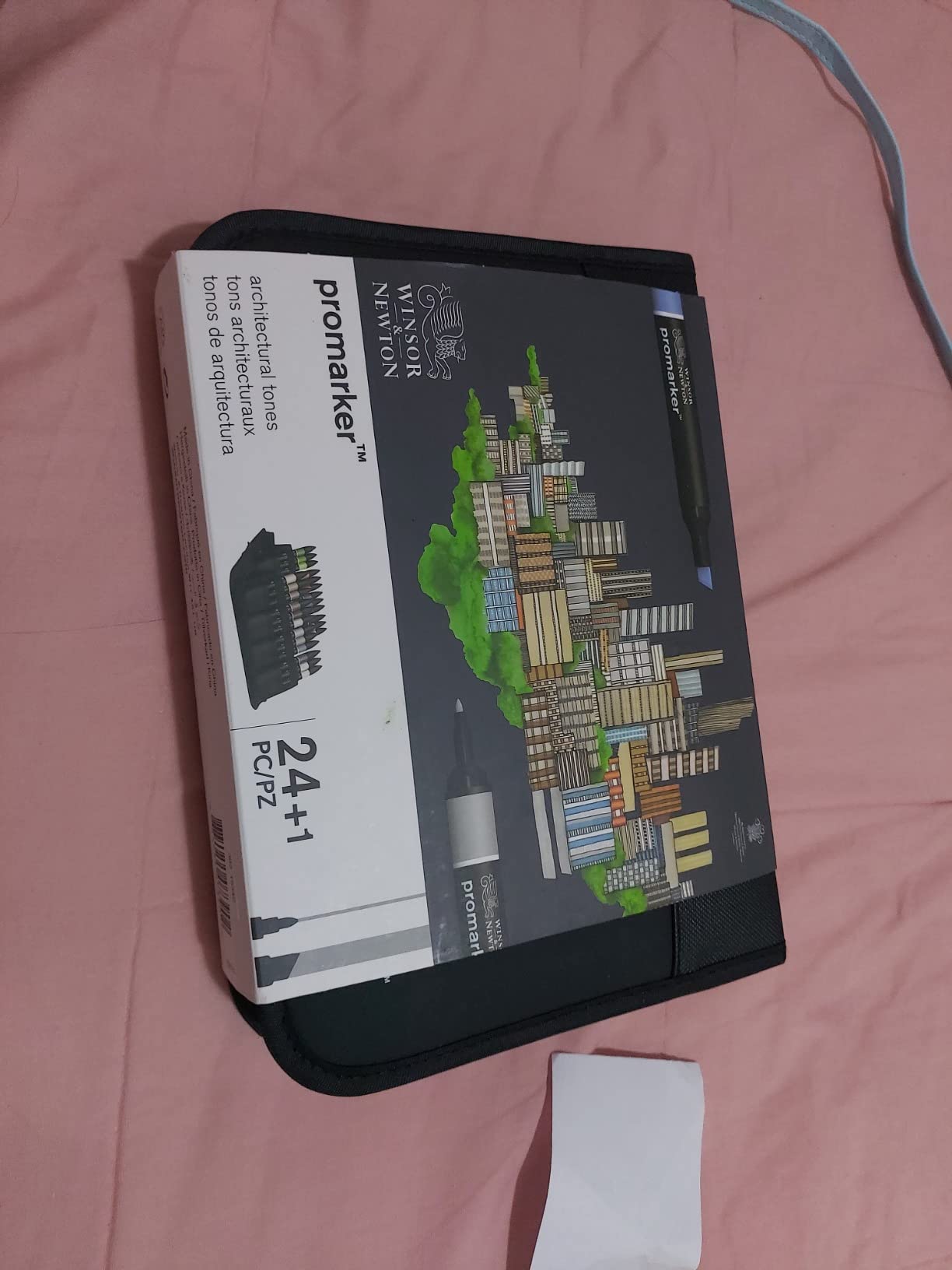
The Winsor & Newton ProMarker Architecture Wallet is the set I reach for when I have a tight client presentation and cannot afford a wasted stroke. Winsor & Newton hand-selected 24 colors for this wallet, and the selection is what makes it worth recommending. You get Ice Grey 0 through 6, Warm Grey 0 through 6, a Champagne for warm sunlight, Apricot and Caramel and Raw Sienna and Burnt Orange for wood tones, Pine and Forest Green and Apple for landscape work, Midnight Blue and Cobalt Blue for sky and shadow, a Grey Green for mossy concrete, two Blacks, and two Blenders. That is essentially a complete rendering palette in 24 markers.
The dual-tip design is the practical detail that sold me. The fine bullet nib lays down 0.5mm lines that work for window details and material hatches, and the broad chisel tip handles 5 to 7mm fills for walls and shadow planes. The alcohol ink blends cleanly on Bristol board and Bristol vellum, which is what I use it on most. Reviewers on Amazon praise the streak-free coverage and the fast drying that lets you layer a second gray on top of the first without lifting the underlayer.
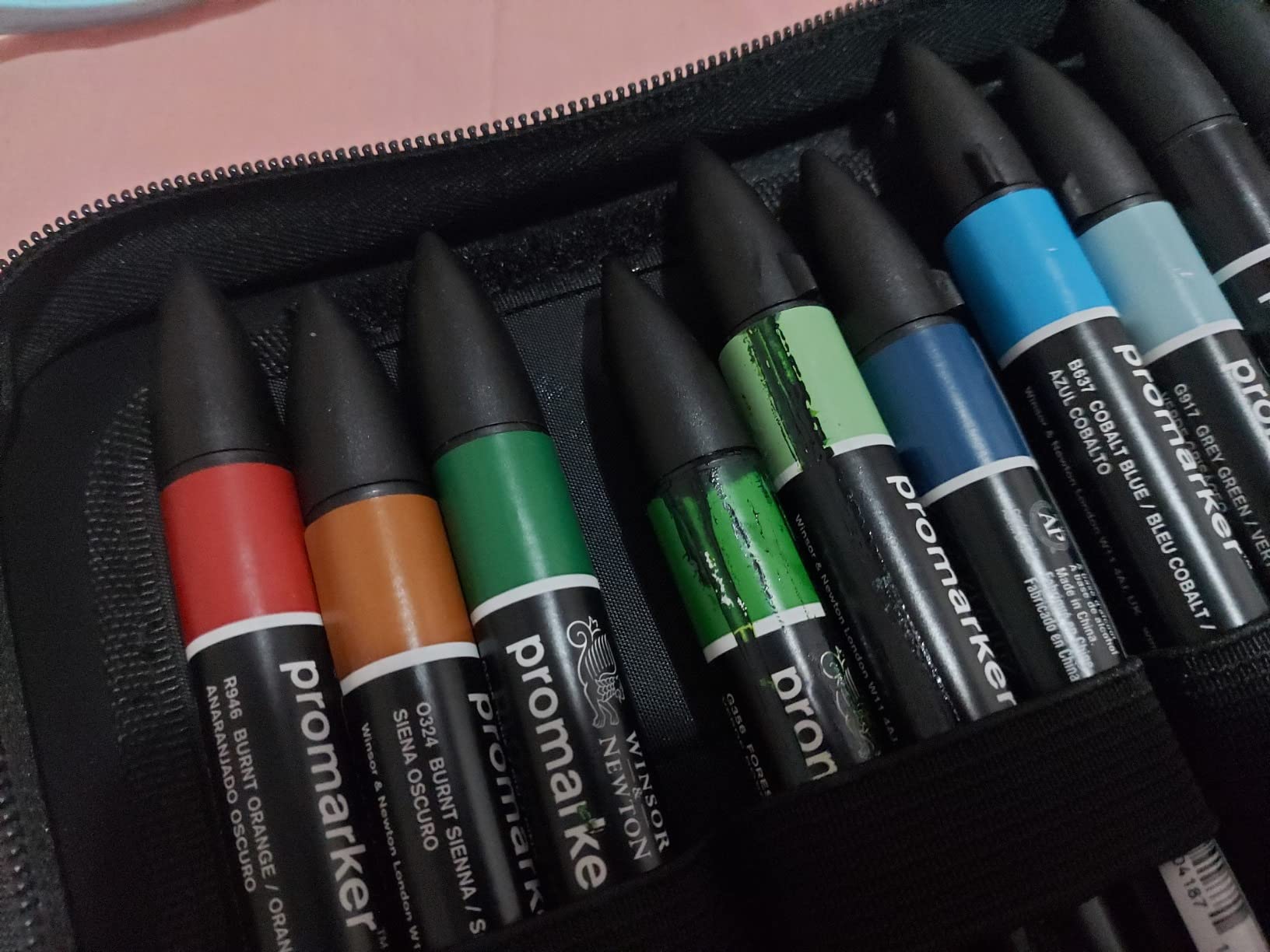
What this set gives up versus the Caliart 100 is raw color range. Twenty-four markers cannot replicate a full Pantone-inspired color study, and if you need a specific bright accent color you will end up mixing grays and one bold color or buying a separate marker. But for architecture work specifically, you almost never need that. The eight grays in the wallet are the real selling point: four cool and four warm means you can build a believable material value scale without buying a second gray set.
The other honest tradeoff is the price per marker. You are paying for the Winsor & Newton brand, the alcohol ink consistency, and the curated selection. If you are a student who needs the most colors for the least money, the Caliart 100 will serve you better. If you are a working architect who wants a wallet that opens and renders without thinking, this is the one.
For whom it is best
Working architects who want a curated set they can throw in a bag for a client meeting. Architecture students in their final portfolio year who need a presentation-quality wallet. Interior designers who do warm-cool value studies on a regular basis.
For whom it is a weaker choice
Anyone who needs bright accent colors or a deep color library – this wallet is built for neutrals, grays, and earth tones. Studios on a tight budget where every dollar matters – the Caliart set gives you four times the colors for a fraction more of the price.
4. Soucolor 36 Dual Tip Brush Markers – Best Water-Based Brush Set
Soucolor 36 Dual Tip Brush Markers, Water-Based Art Pens, Adult Coloring
36 brush markers
Dual brush and fine tips
Water-based vibrant ink
Pros
- 36 numbered colors with DIY color card
- Dual brush tip and fine point nibs
- Plastic carrying case included
- Blendable colors for shading
- Works well on mixed media paper
Cons
- Water-based ink is not waterproof
- Single layers can streak on some surfaces
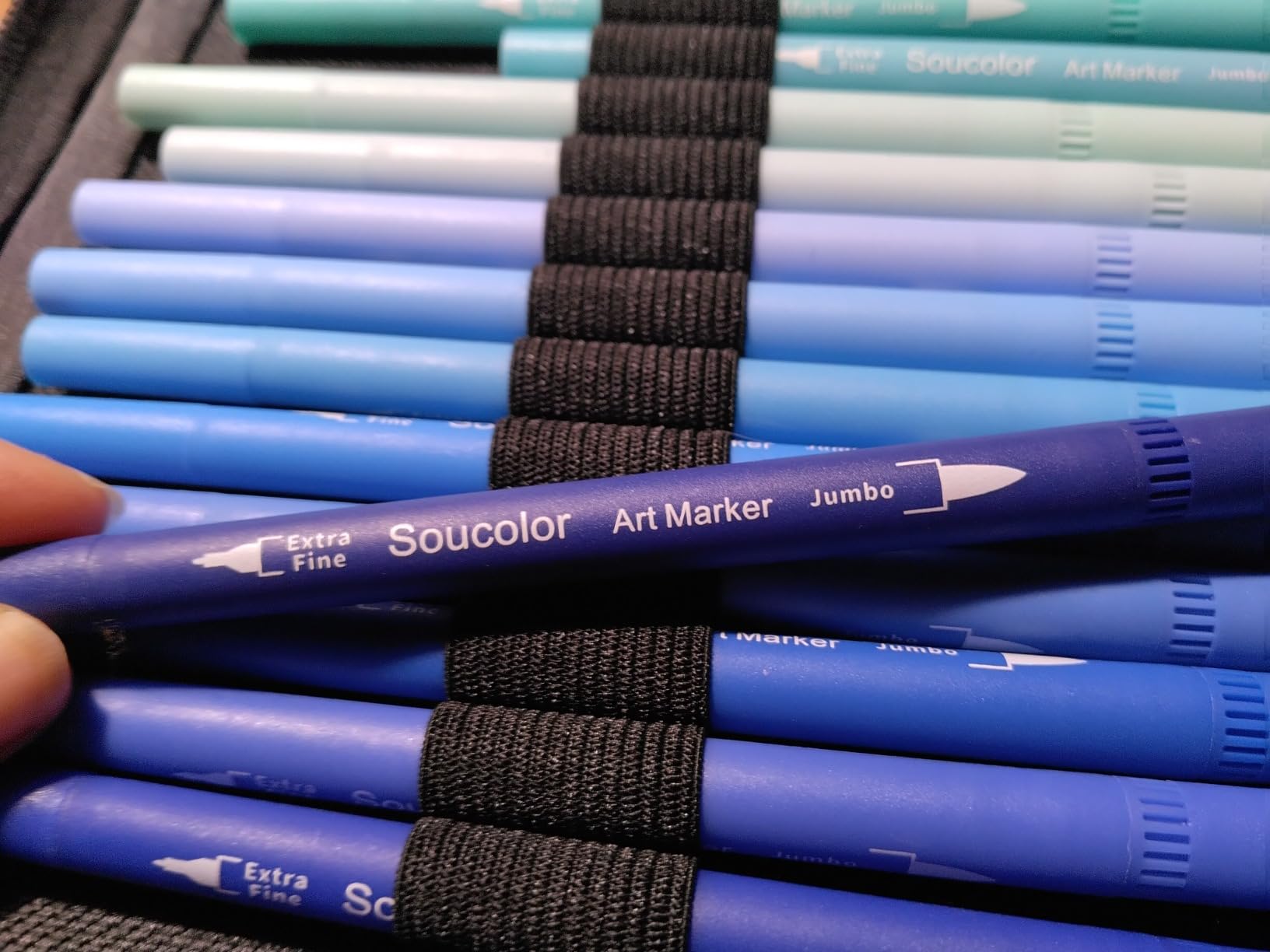
The Soucolor 36 dual brush marker set is the water-based brush pen I keep in my bag for hand-lettering and quick concept sketches. The brush tip flexes from a 1mm hairline up to a 6mm wash stroke depending on pressure, which is the kind of expressive line you want when you are sketching a loose concept elevation before committing to a formal rendering. The fine 0.4mm point on the other end handles callouts and label work without switching tools.
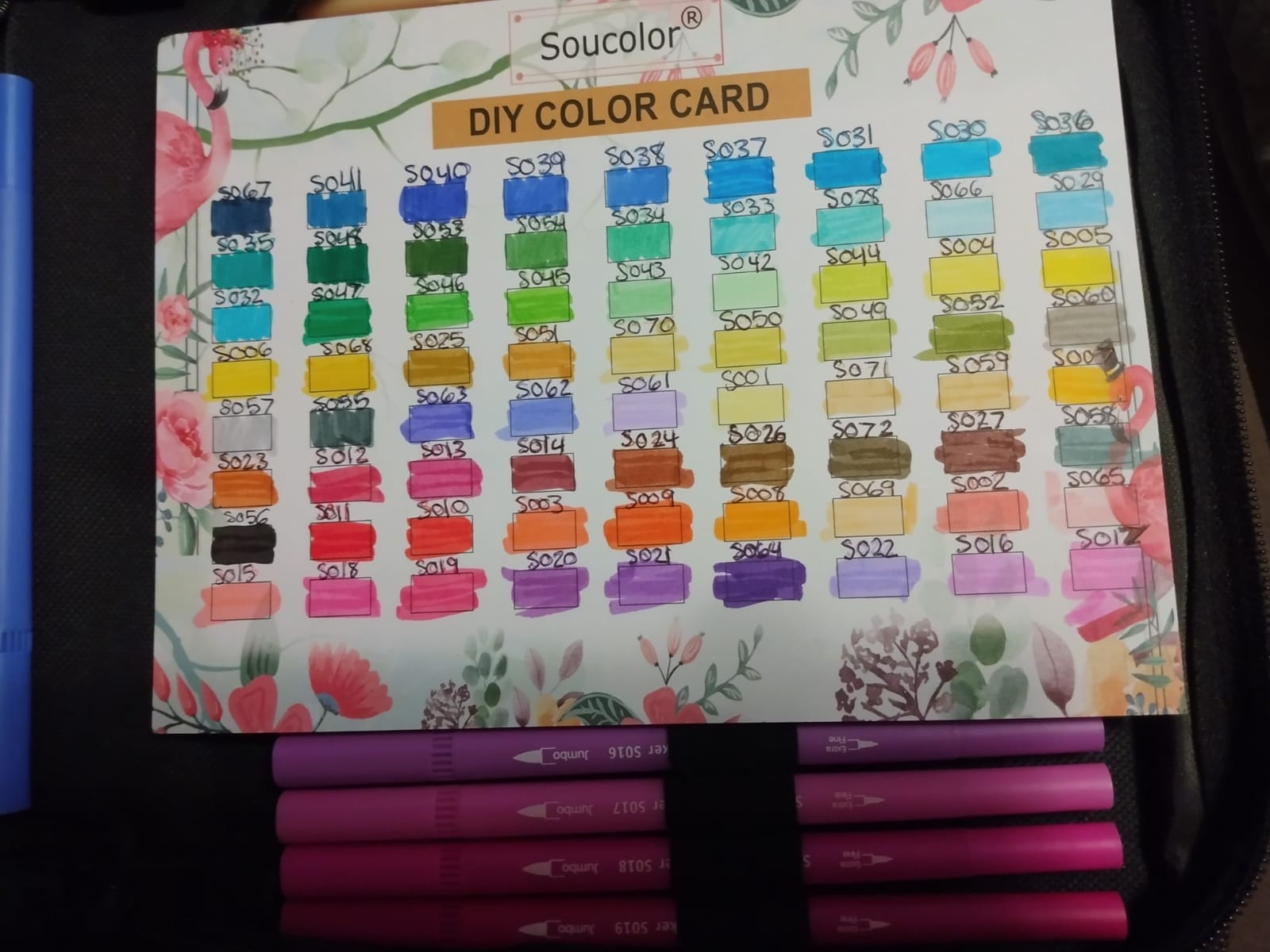
What sold me on this set was the DIY color card that comes in the box. You spend an hour swatching each marker on the included card and you have a permanent reference for which numbered marker matches which color – critical when you are working in 36 colors and trying to keep a consistent palette across a set of presentation boards. The carrying case is also notably sturdier than other budget brush marker sets, with rigid plastic slots that keep the markers upright even when you zip the case shut mid-sketch.
The honest tradeoff is that this is water-based ink, not alcohol. Water-based ink lays a softer, more matte film than alcohol ink and is not waterproof, so it will reactivate if you run a wet brush over it later. For architecture presentation work, I pair the Soucolor set with a separate alcohol marker set (like the Caliart above) when I want to layer colors without lifting the underlayer. For interior sketching and concept work, the water-based ink is forgiving and produces a softer, more hand-drawn look.
Reviewers on Amazon consistently call out the value for the price, the carrying case quality, and the smooth brush tip response. With more than 15,000 reviews and a 4.6 average rating, this is one of the safest budget brush marker purchases on the market. If you want a brush marker for hand-lettering title blocks, concept sketches, or interior rendering, this set delivers.
For whom it is best
Architects and interior designers who sketch concept work and value a soft brush-tip feel. Students who want a brush marker for hand-lettering title blocks. Anyone building a sketch kit for travel or client meetings where weight matters more than color fastness.
For whom it is a weaker choice
Anyone who needs to layer color over color quickly – water-based ink reactivates and smears when wet. Anyone working on presentation renderings that need to survive a wet brush pass or alcohol marker overlay.
5. Aen Art 36 Dual Brush Markers – Best for Hand Lettering and Calligraphy
36 Dual Brush Markers for Adult Coloring Books, Double Tip Pens Art Set
36 dual brush markers
0.4mm fine liner and brush tips
Non-toxic water-based ink
Pros
- 36 dual brush and fine liner tips
- Vibrant no-bleed colors on marker paper
- Non-toxic acid-free water-based ink
- Sturdy case included
- ASTM-D4236 certified
Cons
- Not waterproof
- Some colors look less saturated than expected
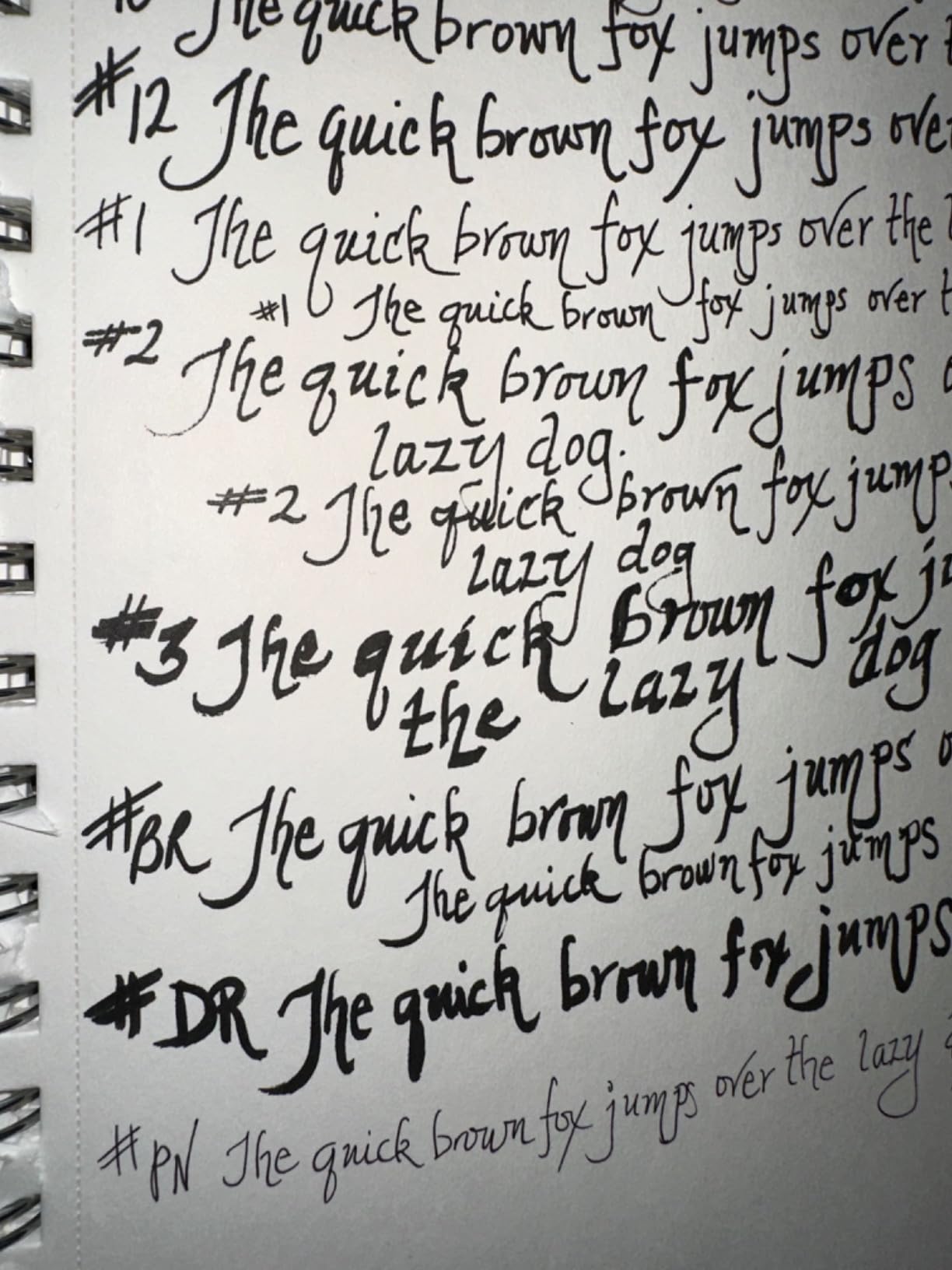
The Aen Art 36 dual brush marker set has been my go-to recommendation for architecture students who want to add hand-lettered title blocks to their presentation boards. The brush tip on one end is responsive enough to lay a confident downstroke on a “1” or “B” and pull a hairline upstroke on the return, which is exactly what you need for marker lettering at presentation scale. The 0.4mm fine liner on the other end is consistent enough to add a sub-label or a scale annotation without switching tools.
With more than 27,000 reviews and a 4.5 average rating, this set has a track record that is hard to argue with. The non-toxic, acid-free, water-based ink is ASTM-D4236 certified, so it is safe to use in shared studio spaces and the renderings will not yellow over time. The vibrant no-bleed colors hold up on Bristol board and marker paper, and the sturdy carrying case is one of the better-built cases at this price tier.
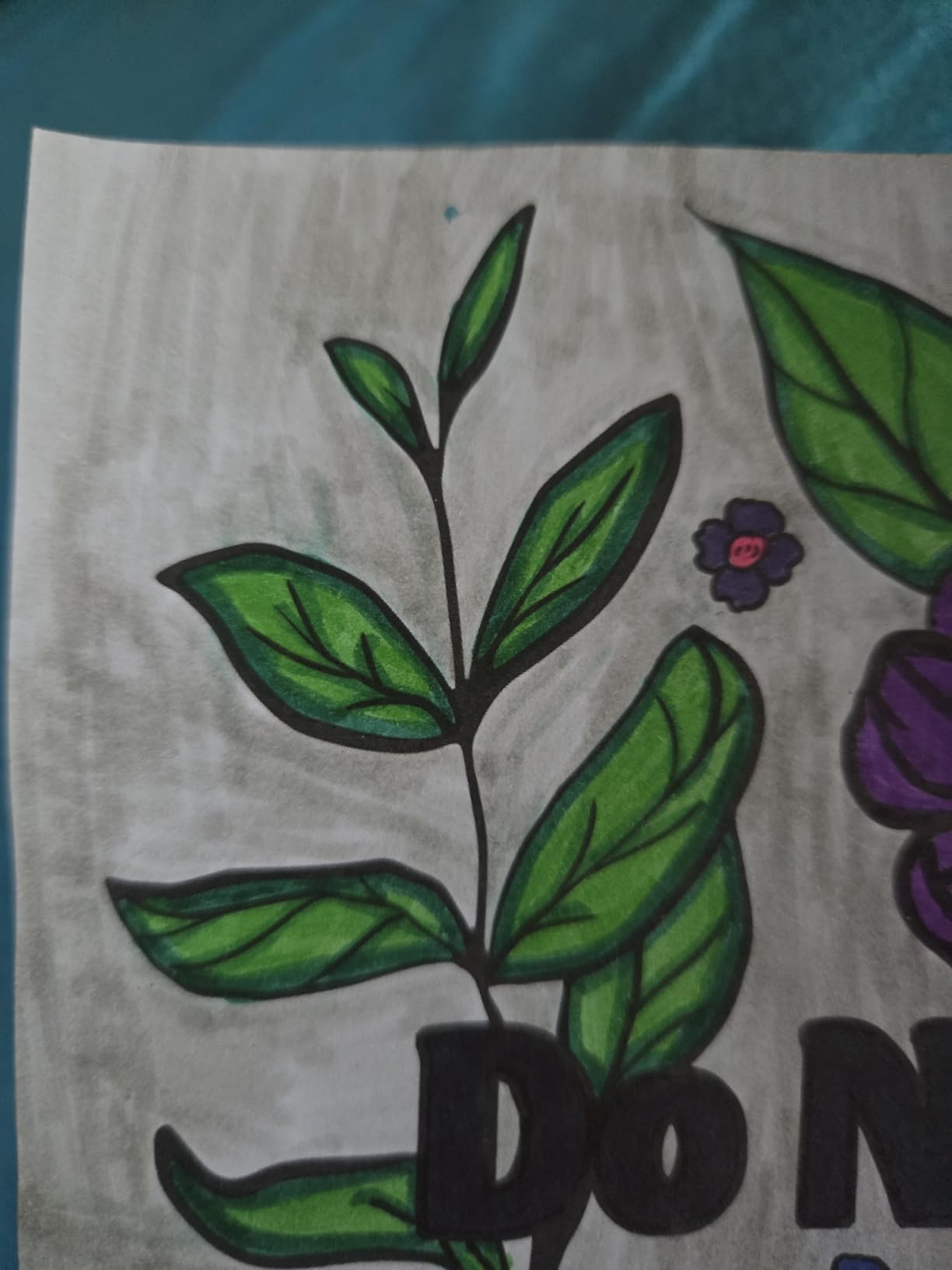
Where this set beats the Soucolor above is color selection. The Aen Art 36 leans more saturated and slightly brighter, which is what you want for hand-lettering where the letterform is the point. The Soucolor 36 leans more muted, which is what you want for soft concept renderings. If you have to pick one and your primary use is lettering, choose the Aen Art. If your primary use is rendering, choose the Soucolor.
The honest limitation is the same as every water-based brush marker: the ink is not waterproof. Reviewers flag this in their reviews, and it is true. If you need to layer colors, you have to let each layer dry fully before the next pass, or you will lift the underlayer. For lettering and concept work this is rarely a problem. For heavy presentation renderings with layered backgrounds, you will want an alcohol marker companion set.
For whom it is best
Architecture students who want polished hand-lettered title blocks on their presentation boards. Architects and designers who do hand-lettered signage or annotation work. Anyone who wants a safe non-toxic brush marker for a shared studio.
For whom it is a weaker choice
Anyone whose primary need is presentation-quality rendering – water-based ink lacks the depth and layering of alcohol ink. Studios that need a set that survives a wet brush pass or a marker overlay.
6. Staedtler Double Ended Markers 36-Pack – Best Starter Set for Studio and Classroom
Staedtler Double Ended Markers, Assorted Bullet Tips, Assorted Colors, 36/Pack
36 dual-tip markers
Fine and bold fiber tips
Washable water-based ink
Pros
- 36 dual fine and bold fiber tips
- Pressure-resistant tip design
- Washable water-based ink
- Suitable for all skill levels
- Broad color assortment
Cons
- Ink colors appear less vibrant than premium markers
- Not designed for architectural rendering specifically
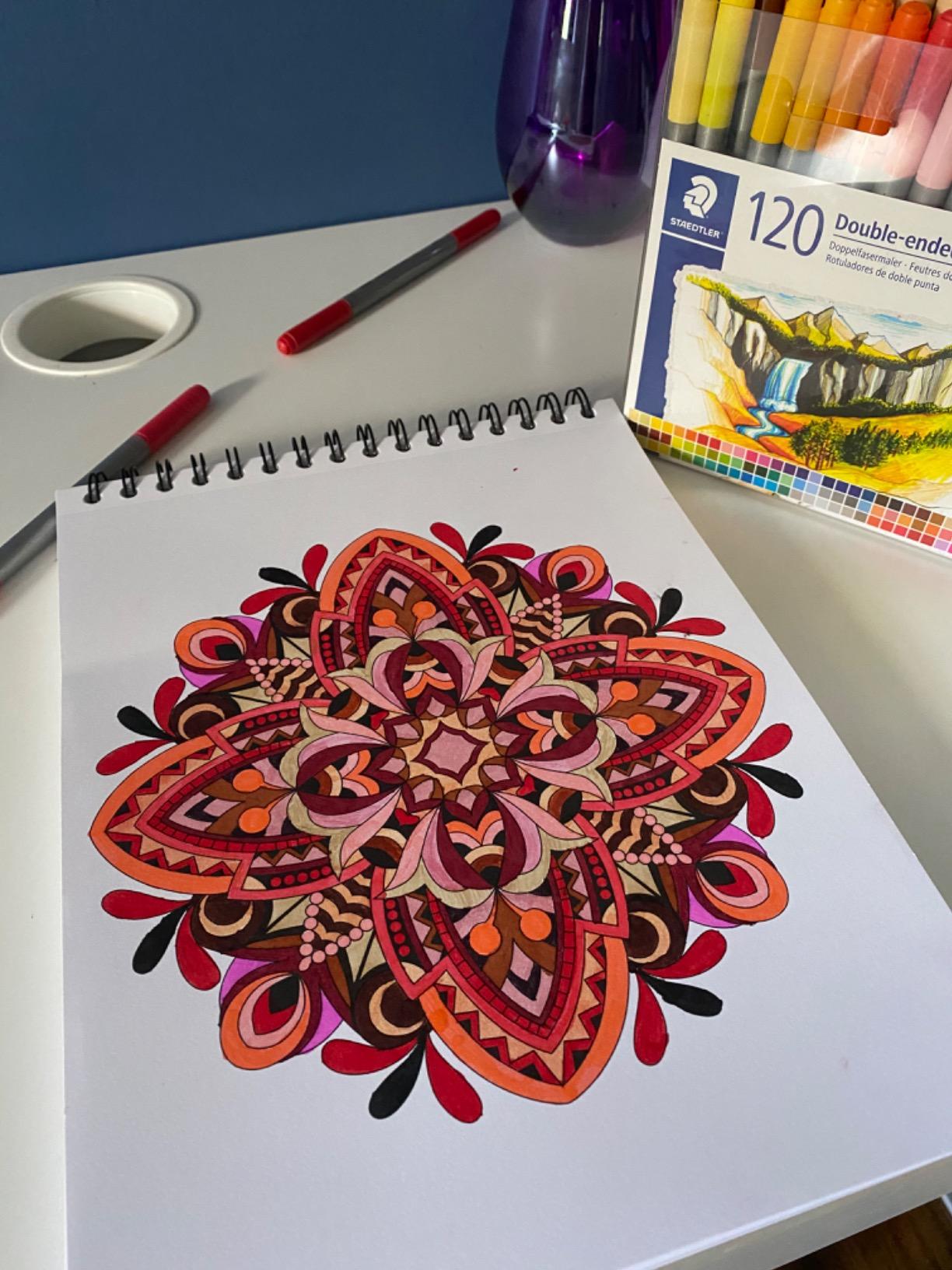
The Staedtler Double Ended Markers 36-pack is the set I recommend when someone tells me they want to try marker rendering for the first time and do not want to commit to an alcohol set. Each marker has a fine tip on one end and a bold tip on the other, the pressure-resistant tips hold up to repeated use, and the washable water-based ink means a mistake wipes off a hard surface and is forgiving on sketch paper.
This is one of the most economical ways to test whether marker rendering suits your workflow. The 36 colors give you enough range to attempt a value study and a couple of material swatches without constantly running out of mid-tones. Reviewers on Amazon flag this as a classroom favorite, with art teachers using it for everything from middle school projects to entry-level college studios.
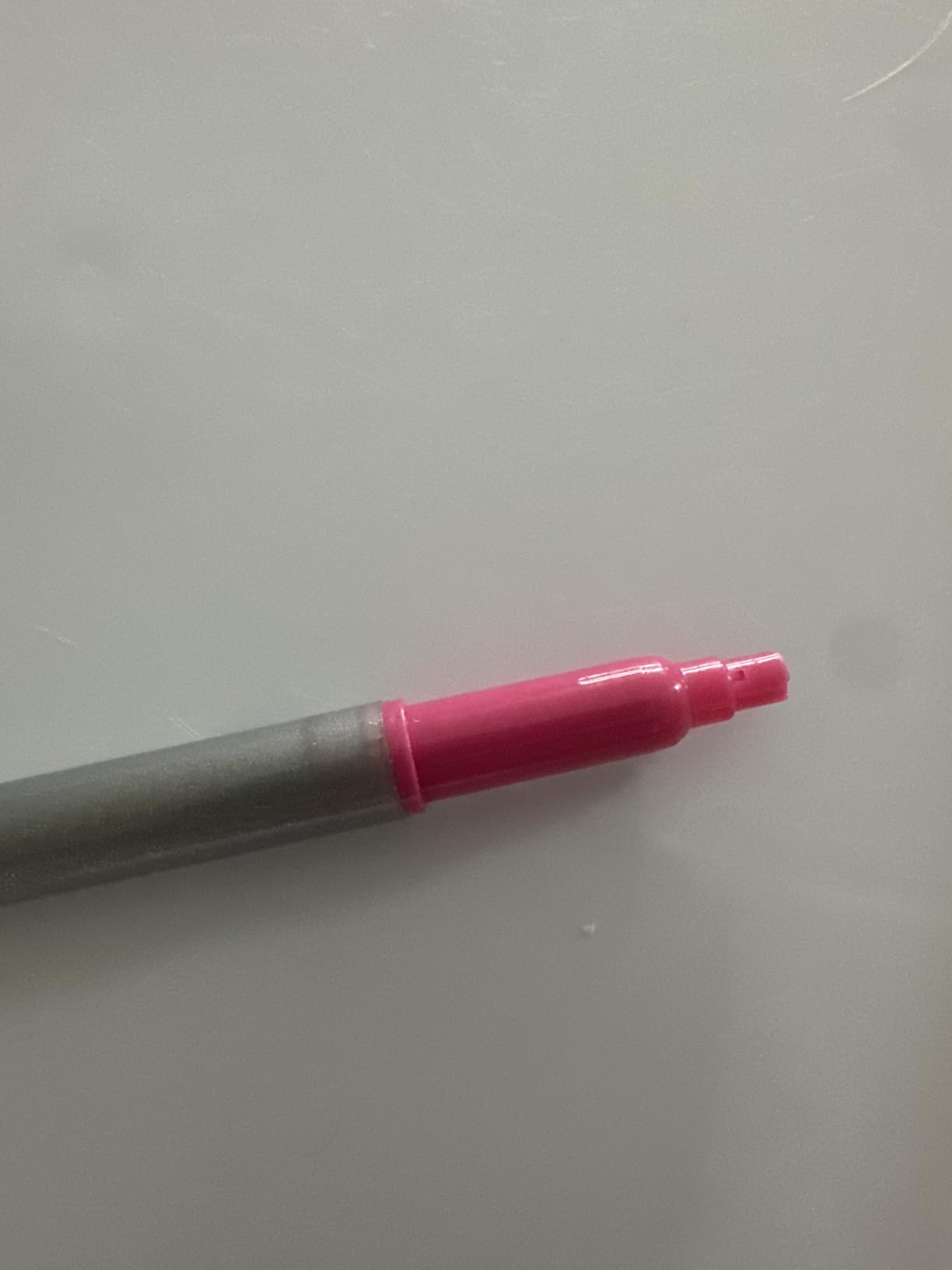
The honest limitation is that this is not an alcohol marker set, so it does not deliver the blendability, the layering, or the bleed-free overlays that architects typically want for presentation work. Reviewers note that the pigmentation is lighter than higher-end alcohol markers, which means a single pass can look washed out on bright white paper. For first-time sketchers, though, that soft appearance is actually a feature – it is harder to over-saturate a wash and ruin a sketch.
If you or a student is deciding between markers and watercolors for an intro rendering class, this set is a low-risk way to find out. If you already know you want alcohol markers and presentation-quality blending, jump to the Caliart 100 or the Winsor & Newton ProMarker above.
For whom it is best
Architecture and design students in their first rendering class. Anyone curious about marker rendering who wants a forgiving washable set to learn on. Art teachers who need a reliable classroom set at a tight budget.
For whom it is a weaker choice
Anyone who needs alcohol-marker blending and layering for presentation renderings. Working architects who need a durable professional kit – the fine tips on this set wear faster than alcohol marker nibs.
7. YISAN Micro Fineliner Pens 12-Pack – Best Budget Fineliner for Students
YISAN Drawing Art Pens,Micro Fineliner Pens,Fine Tip Manga Markers for Artist Sketch Technical,Black,12 Set,902195
12 fineliner pens
Point sizes 0.2mm to 3.0mm
Black ink fineliners
Pros
- 12 fine point sizes from 0.2mm to 3.0mm
- Smooth consistent ink flow
- Durable nibs that do not fray
- Affordable alternative to premium brands
- Comfortable ribbed grip
Cons
- Ink is not fully waterproof on all papers
- Pens can dry out faster than premium alternatives
The YISAN 12-pack micro fineliner set is what I tell first-year architecture students to buy before they touch a more expensive pen. You get 12 point sizes from 005 (0.2mm) all the way up to 30 (3.0mm) plus a brush tip, which is more range than the Sakura Pigma Micron 6-pack at half the cost. The nibs are stable, the ink flow is consistent, and the organizer pouch keeps the pens in order.
For daily sketch assignments and quick concept plans, this set is genuinely good. Reviewers on Amazon compare it favorably to mid-tier fineliners, with many reporting that they use it as a daily driver and reach for more expensive pens only for final presentation work. The ribbed grip is comfortable for long studio sessions, and the deep black ink lays down cleanly on Bristol and marker paper.
Where the YISAN falls short of the Sakura Pigma Micron above is longevity and waterproofing. Reviewers note that some of the pens dry out faster than premium alternatives, and the ink is not fully waterproof on all paper stocks – meaning if you run a wet brush over a YISAN line you may see a slight ghost. For pure fineliner line work, that is rarely an issue. For presentation renderings where you need the line to survive a marker overlay, the Sakura set is the safer pick.
With more than 6,800 reviews and a 4.6 average rating, this is one of the best-reviewed budget fineliner sets on the market. Treat it as a workhorse sketch kit, replace pens as they wear out, and upgrade to the Sakura set when you need waterproof archival performance.
For whom it is best
First and second year architecture students building a starter pen kit on a tight budget. Sketchers who want a wide range of line weights in one affordable set. Anyone who goes through fineliners quickly and needs an inexpensive replacement option.
For whom it is a weaker choice
Anyone who needs waterproof archival performance for presentation renderings – go with the Sakura Pigma Micron. Anyone who needs a colored fineliner set – this is black ink only.
8. STAEDTLER Pigment Liner 8-Pack – Best for Technical Drawing and Plans
STAEDTLER Pigment Liner Fineliner Pens, Black, 8 Pack Assorted Tip Sizes (0.05mm – 1.2mm): Waterproof Drawing & Writing Pens for Note Taking, Journaling, Sketching, Manga & Back to School Supplies
8 pigment liners
Tip sizes 0.05mm to 1.2mm
DRY SAFE waterproof ink
Pros
- 8 tip sizes from 0.05mm to 1.2mm
- DRY SAFE technology prevents drying out
- Waterproof smear-resistant archival ink
- Fine metal-clad tips for precision
- Comfortable contoured grip
Cons
- Larger tip sizes lay more ink and dry slower
- Minor bleed on the smallest tips vs Sakura Micron
- Struggles over wax-based colored pencils or crayons
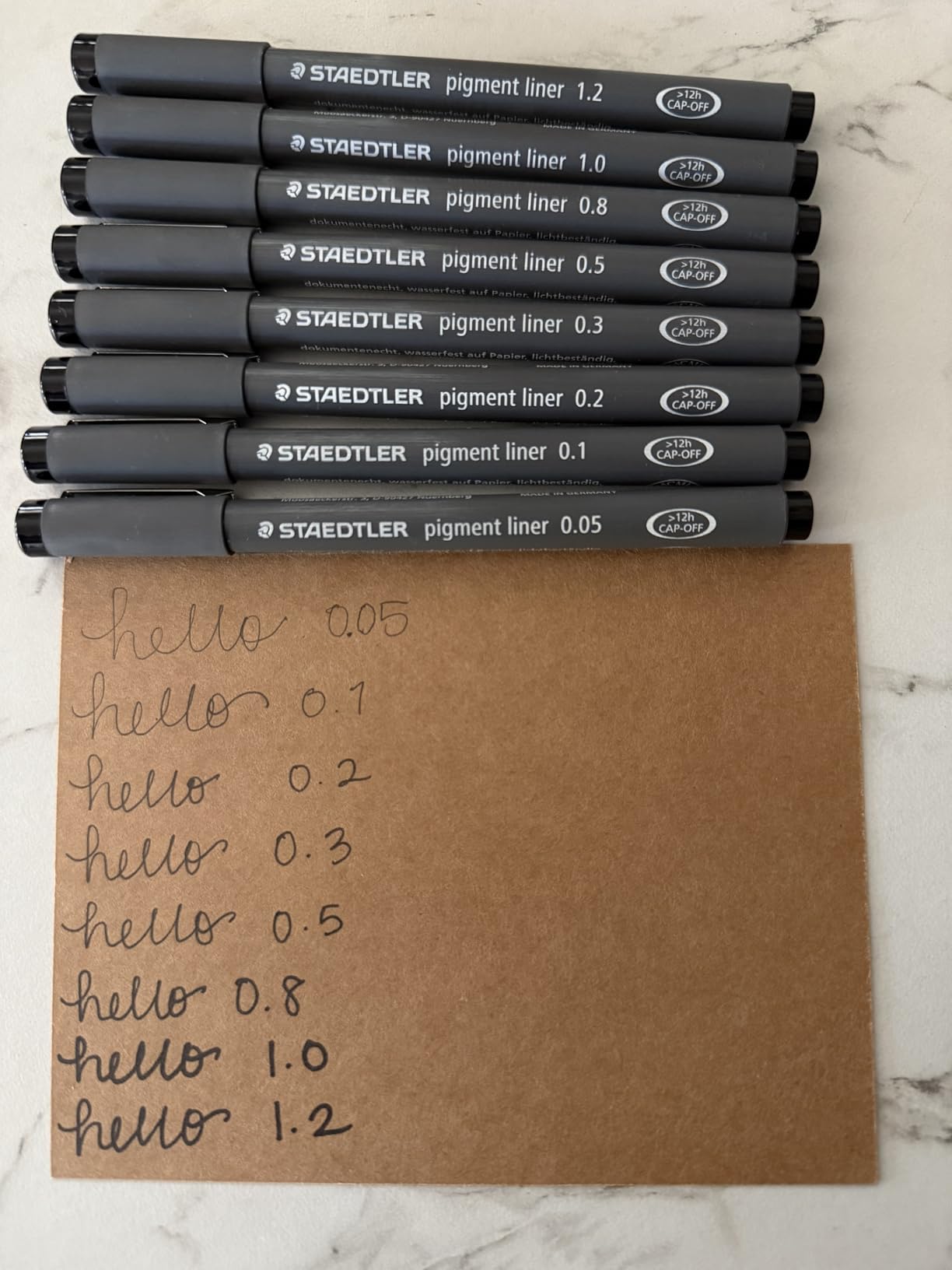
The STAEDTLER Pigment Liner 8-pack is the set I reach for when I need precise technical line work – dimension lines, hatching patterns, callout leaders, and section cuts. The 8 tip sizes from 0.05mm up to 1.2mm cover the standard architectural line weight hierarchy, and the metal-clad nibs hold up to repeated ruler work better than plastic nibs.
What makes this set special is the DRY SAFE technology. STAEDTLER formulated the ink reservoir so the pen does not dry out even if you leave the cap off for hours at a time. For studio crit sessions where you cap and uncap the same pen repeatedly across a long critique, this is a genuine quality-of-life upgrade over cheaper fineliners. Reviewers on Amazon flag DRY SAFE as the reason they switched from competitors and never went back.
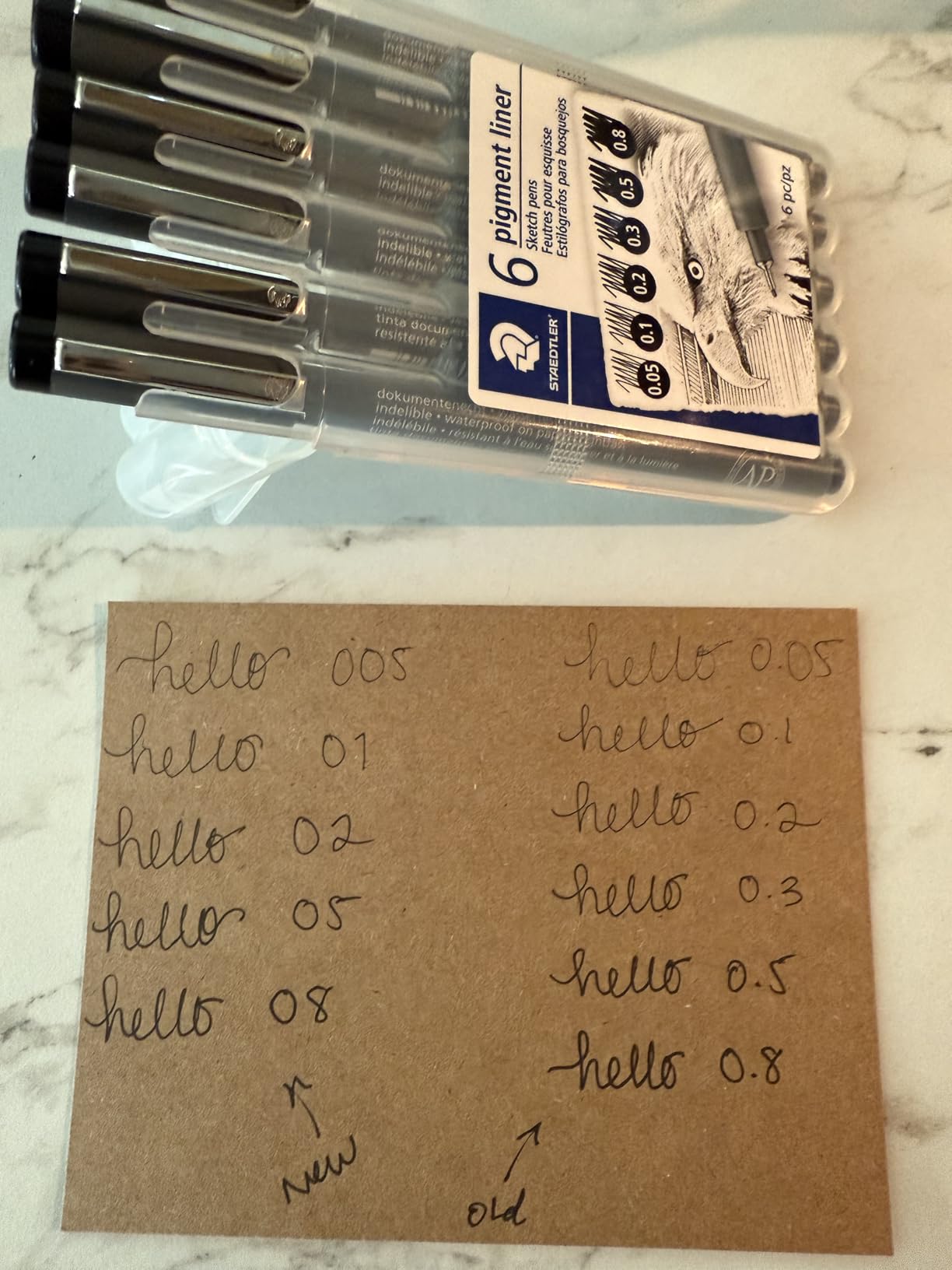
The waterproof, smear-resistant archival pigment ink holds up on top of marker renderings and is lightfast enough for portfolio reproduction. The contoured grip is comfortable for long drawing sessions, and the metal-clad tips resist fraying even when you lay them flat against a ruler edge. For dimension lines, plan callouts, and section annotations, this is the set I recommend.
Where the STAEDTLER Pigment Liner loses to the Sakura Pigma Micron is on the smallest tip sizes. Reviewers note that the 0.05mm tip lays more ink than the equivalent Sakura 005, and the line is slightly thicker than the same nominal size on the Micron. For most architectural line work, this is invisible. For extremely fine manga-style hatching, the Sakura is the better choice. With more than 700 reviews and a 4.6 average rating, this is a professional-grade technical pen kit.
For whom it is best
Architects and engineers who do precise technical drawing and dimension lines. Students who leave their pens uncapped during long studio crit sessions. Anyone who needs metal-clad nibs that hold up to ruler work.
For whom it is a weaker choice
Manga artists and illustrators who need the absolute thinnest tip sizes – go with Sakura. Anyone who needs more than 8 sizes – pair this set with a YISAN 12-pack for a wider range.
9. Arhomet Cool Grey Alcohol Markers 6-Pack – Best Gray Ramp Starter
Arhomet 6pcs Cool Grey Alcohol Markers Set Dual Tip Fine&Chisel Art Markers
6 cool gray alcohol markers
Dual fine and broad tips
Angular barrel
Pros
- 6 cool gray alcohol markers for value studies
- Dual 1mm and 6mm tips
- Smooth application and quick drying
- Blendable ink
- Non-toxic beginner-friendly formula
Cons
- Ink tends to dry out shortening lifespan
- Caps do not stay on back of pen during use
- Bleeds through standard copy paper
The Arhomet Cool Grey 6-pack is the cheapest legitimate alcohol marker set I have tested, and for the price tier it does something no other set in this roundup does: it gives you six cool grays at a very accessible price. If you are a student trying to build a working gray ramp on a tight budget, this is the set to start with.
The alcohol ink lays a smooth, blendable film that dries fast and does not reactivate when you layer. The dual-tip design (1mm bullet on one end, 6mm broad chisel on the other) gives you both detail and fill coverage in a single marker. Reviewers on Amazon consistently note that for casual use the performance is genuinely good, and several compare it favorably to other budget alcohol marker sets at the same price tier.
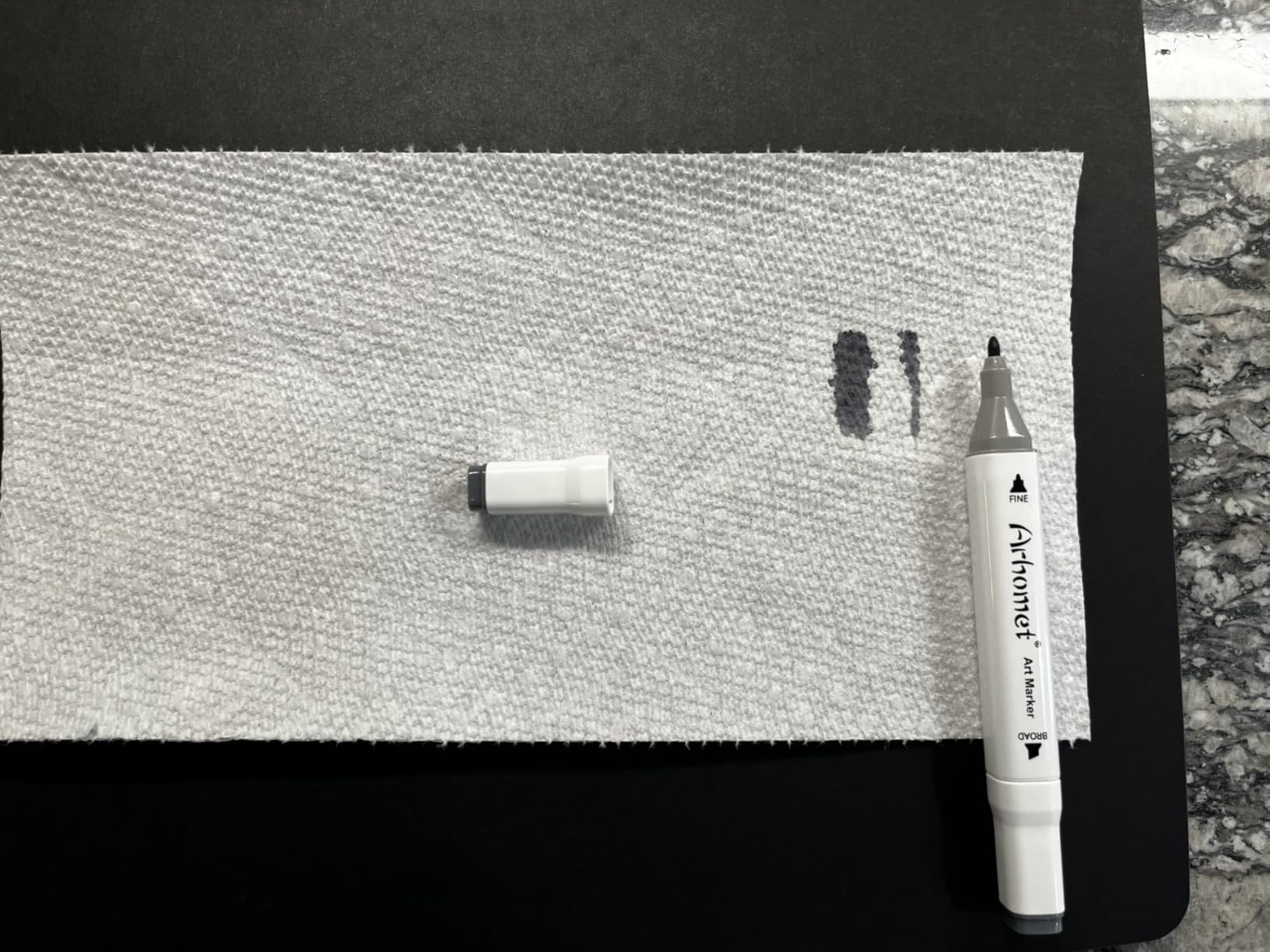
The honest tradeoffs are real. Reviewers flag that the ink tends to dry out faster than more expensive alcohol markers, and the caps do not always stay clipped to the back of the pen during use – which means you set the cap down on the desk and risk losing it. The ink bleeds through standard copy paper, which is true of every alcohol marker but worth noting for students who do not yet have proper marker paper.
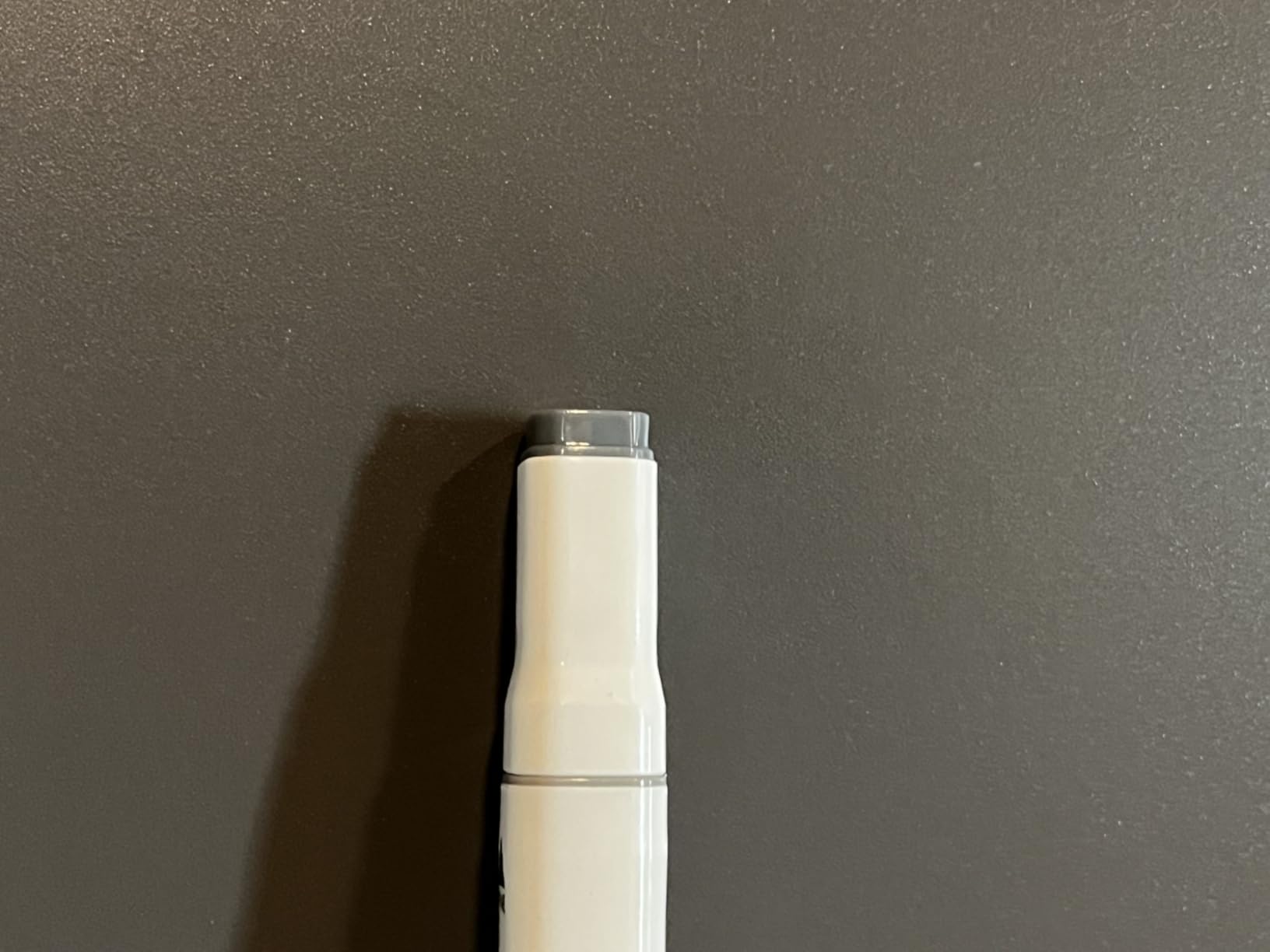
The angular barrel is a nice touch that prevents the pens from rolling off a slanted drafting board. Treat this set as a consumable starter kit, expect to replace it within a year of regular use, and graduate to the Caliart 100 or the Winsor & Newton ProMarker when you need more colors and a longer service life.
For whom it is best
First-year architecture students who need a cheap entry into alcohol marker rendering. Anyone who wants to test whether cool gray value studies work for their workflow before committing to a bigger set. Sketchers who need a 6-pack of cool grays as a supplement to a colored marker set.
For whom it is a weaker choice
Working architects who need a durable long-life kit – the ink dries out too quickly for daily studio use. Anyone who needs warm grays – this is a cool gray set only.
10. MAIKEDEPOT 16 Micro Fineliner Pens – Best Variety Fineliner Set
MAIKEDEPOT 16 Pack Micro Fineliner Drawing Pens – Waterproof Black Ink, Assorted Tip Sizes for Sketching, Manga, Anime, Comic, Art Writing, Journaling & Architectural Design
16 micro fineliner pens
Point sizes 0.15mm to 3.0mm
Waterproof black ink
Pros
- 16 unique nib sizes from 0.15mm to 3.0mm
- Japanese-imported waterproof ink
- Smooth writing performance
- Non-toxic and odorless
- Ergonomic grip
Cons
- Some pens arrive dried out or with inconsistent ink flow
- Ink color skews dark blue rather than true black
- Build quality lower than premium brands
The MAIKEDEPOT 16-pack micro fineliner set wins on raw size variety. Sixteen unique nib sizes from 003 (0.15mm) up to 3 (3.0mm) plus brush, dotting, and plastic nibs is more range than any other fineliner set in this roundup. For a very accessible price, that is genuinely impressive.
The Japanese-imported ink is waterproof and fade-resistant, the nylon nibs with metal encasement lay a consistent line, and the ergonomic grip is comfortable for long sessions. For sketchbook work and quick concept plans, this set delivers more variety than the Sakura Pigma Micron 6-pack at half the cost.
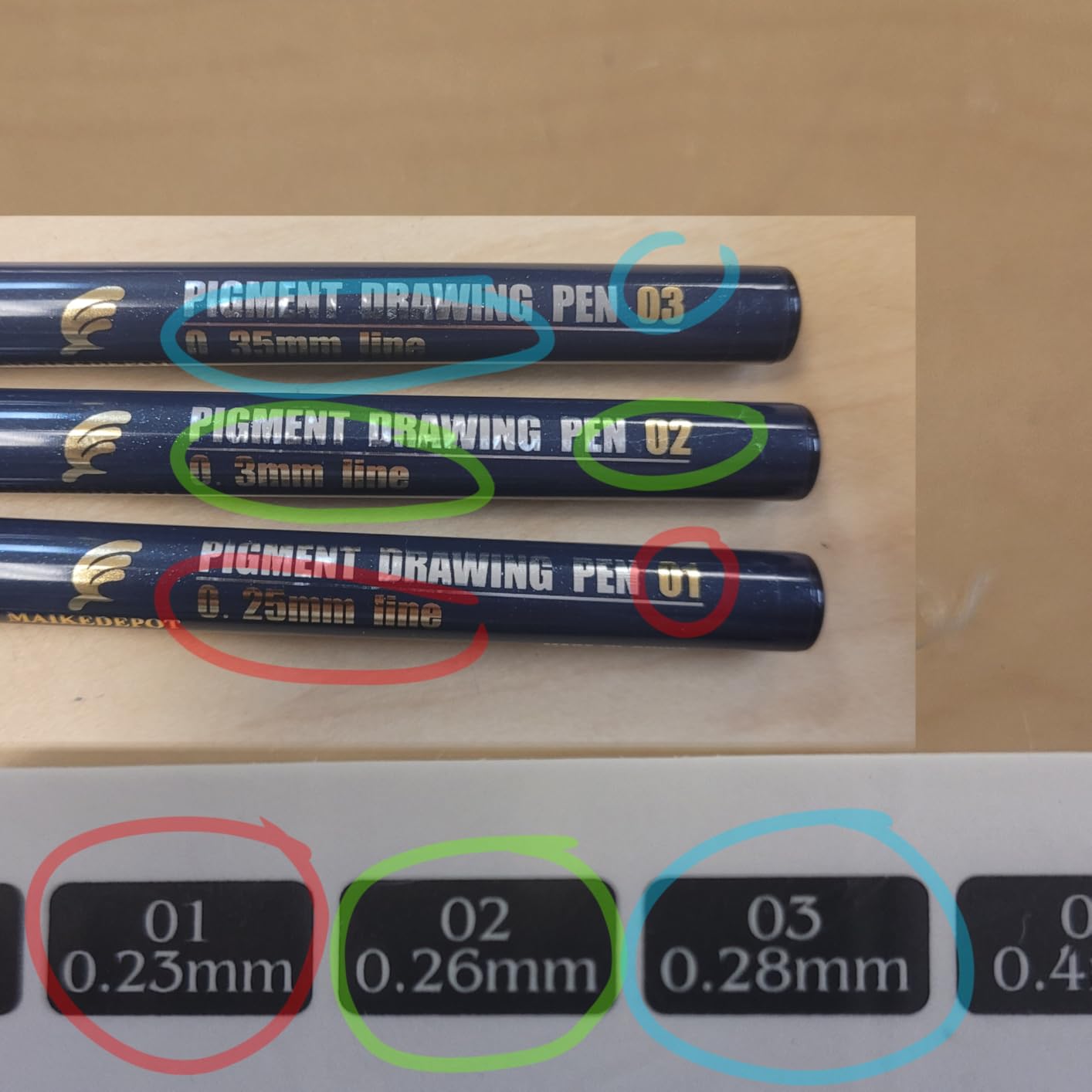
The honest weaknesses are quality control and ink color. Reviewers consistently flag that some pens arrive dried out or with inconsistent ink flow, which means you need to test every pen on arrival and have replacements ready. The ink also skews a very dark deep blue rather than a true pigment black – which is fine for sketch work but may bother architects who need a true black for presentation plans.
At this tier, the value is hard to beat. Treat this as a sketchbook fineliner set, not a presentation fineliner set, and you will not be disappointed. Pair it with the Sakura Pigma Micron above for presentation work and you have a complete fineliner kit for an accessible total cost.
For whom it is best
Sketchers who want maximum line weight variety in one affordable set. Architecture students who need an inexpensive range for sketchbook assignments. Anyone who wants to test fineliner sizes before committing to a premium set.
For whom it is a weaker choice
Working architects who need consistent presentation-quality line work – go with Sakura or STAEDTLER. Anyone who needs true black ink – this set skews dark blue.
How to Choose the Best Marker Set for Architects?
Working architects rely on a layered kit, not a single set. The right combination depends on what you render, how often you render, and what paper you use. Here is the framework our team uses when helping studios spec out a new kit.
Start with the ink base. Alcohol-based ink is the standard for architectural rendering because it dries fast, blends smoothly, and does not bleed through proper marker paper the way water-based ink does. Water-based ink has its place for hand-lettering and concept sketches, but for presentation renderings alcohol wins. Three of the ten sets in this roundup are alcohol-based, and those are the ones to prioritize.
Next, look at the gray ramp. A working architect needs at least five grays to build a believable value scale, and ideally twelve to twenty-four for material rendering. The Winsor & Newton ProMarker Architecture Wallet includes eight grays out of twenty-four markers, which is why it is the premium pick. The Caliart 100 includes more grays across a broader color range, which is why it is the best value. If you only buy one set, choose a set with a strong gray presence.
Nib type matters more than beginners realize. A brush nib lays a soft, expressive stroke that responds to pressure, which is what you want for material rendering and concept sketches. A chisel tip lays a flat, geometric stroke that is ideal for shadow planes and wall fills. A bullet or fine tip handles plan callouts and section labels. The best architecture marker sets combine two or three nib types in one dual-ended marker, so you can switch tools by flipping the marker rather than reaching for a different pen.
Set size follows experience. A 6-pack is a starter kit, useful for testing the medium. A 24-pack is a serious student kit, enough for a portfolio year. A 48 to 72-pack is a professional studio kit, enough to cover grays plus a full color range. A 100-pack is the “I never want to think about this again” kit, useful for working studios with multiple designers sharing supplies.
Pair markers with the right paper. Alcohol markers bleed through standard copy paper and turn cheap sketch paper into wrinkled disasters. Spend the extra dollars on a Canson XL marker pad or a Strathmore 400 series marker pad and your marker performance will jump noticeably. For tracing paper overlays, use a heavier 30lb vellum rather than the 16lb student grade. The marker is only half the equation.
Health and safety is worth a final note. Cheap knockoff alcohol markers (Touchfive, Touchnew, Vista-Artista) have harsh fumes and inconsistent ink, and several architecture instructors recommend avoiding them for home studio work. The ten sets in this roundup are all reputable brands with proper ink formulations, but if you ever see a 100-color alcohol marker set priced well below the Caliart, that is the tell that the ink is cut with harsher solvents.
Finally, think about refill and nib replacement. Copic, Chartpak AD, and Touch Twin markers are refillable and have replaceable nibs, which is why serious architects invest in them despite the higher upfront cost. The Caliart and Winsor & Newton ProMarker sets in this roundup are not refillable, but they cost a fraction of the price of a refillable alternative, so the math works out for many studios.
Frequently Asked Questions
What is the best marker set for architects?
The best marker set for architects combines alcohol-based, dual-ended markers with a strong warm-and-cool gray ramp. Copic Ciao, ShinHan Touch Twin, and Chartpak AD are the three most-used sets in working studios, but our top picks for value and curated architecture palette are the Caliart 100-color set and the Winsor u0026amp; Newton ProMarker Architecture Wallet.
What are the best pens for architects?
The best pens for architects are the Sakura Pigma Micron for archival waterproof line work, the STAEDTLER Pigment Liner for technical drawing with DRY SAFE uncapped drying protection, and the Copic Multiliner for pen work that lays on top of alcohol marker overlays. For everyday sketchbook work, the YISAN 12-pack is the best budget alternative.
What is the favorite pen used by architects?
The favorite pen used by architects is the Sakura Pigma Micron 05 (0.45mm). It is the most-used single pen size in architecture studios for plan callouts, section labels, and title block text, with an archival pigment ink that does not smear over alcohol marker overlays.
What markers do professionals use?
Working architects use Copic Sketch, ShinHan Touch Twin, and Chartpak AD markers for presentation renderings. Studio kits also include a Sakura Pigma Micron set for line work and a Copic Multiliner or STAEDTLER Pigment Liner for technical drawing. For studio classes and home rendering, the Caliart 100-color alcohol set is the most popular budget alternative.
Are Copic markers good for architects?
Yes. Copic markers are the gold standard for architectural rendering because they are alcohol-based, refillable, and have replaceable nibs. They are more expensive per marker than budget alternatives, but the long-term cost is lower because you only replace ink and worn nibs rather than the whole marker. For students on a tight budget, the Caliart 100 or Winsor u0026amp; Newton ProMarker are strong alternatives.
Final Verdict
The best marker set for architects depends on what you render and how often. For line work that anchors every plan and section, the Sakura Pigma Micron 6-pack is the foundation every architect should own. For a complete color kit that handles presentation renderings without breaking the budget, the Caliart 100-color alcohol set is our best value pick. For a curated architecture-specific palette that opens and renders without thinking, the Winsor & Newton ProMarker Architecture Wallet is the premium choice. Pair one of those three with a proper marker pad, and you have a complete rendering kit that will carry you through studio crits and client presentations for years.
Refresh your studio kit with the picks above and you will see the difference on your next presentation board. The right marker turns a long render into a quick study, and the wrong marker turns a quick study into a long fight. Our team will keep updating this list as new sets release, so bookmark this page and check back before your next purchase in 2026.