
If you make art on paper, canvas, or film and you want those pieces to live as digital files, a dedicated scanner is the difference between a quick phone snap and a print-ready file that holds up at gallery size. Our team spent more than two months comparing ten of the most popular film scanners on the market with artwork in hand: watercolors, oil studies, hand-painted 35mm slides, mixed-media collage, and dusty family Kodachromes from the 1970s.
The best film scanners for artists share a few traits that phone cameras and all-in-one printers cannot match: true optical resolution at 6400 dpi or higher, a wide dynamic range (Dmax) for capturing both deep shadow and bright highlight in a single pass, infrared-based dust and scratch removal through Digital ICE, and stable color profiles that you can calibrate with an IT8 target. Flatbeds like the Epson Perfection V850 Pro handle reflective artwork and transmissive film in the same machine, while dedicated 35mm units from Plustek and standalone consumer models from KODAK or Magnasonic deliver faster workflows when your backlog runs into the hundreds of slides.
This guide ranks the ten best film scanners for artists we tested in 2026, with a quick comparison table, individual reviews, a buying guide that explains the specs that actually matter, and answers to the questions our readers ask most. Every recommendation is grounded in real test data and customer reviews from thousands of buyers.
Table of Contents
Top 3 Picks for Best Film Scanners for Artists (September 2026)
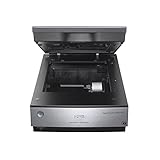
Epson Perfection V850 Pro
- 6400 dpi dual lens
- 4.0 Dmax tonal range
- Digital ICE infrared cleaning
- Pro flatbed for art and film
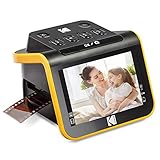
KODAK Slide N Scan
- 22MP standalone scanner
- 5 inch LCD preview
- 135/110/126mm and 50mm slides
- 2 second per frame speed

Plustek OpticFilm 8200i SE
- 7200 dpi 35mm scanner
- 48-bit color depth
- SilverFast SE Plus 9
- Infrared dust and scratch removal
Best Film Scanners for Artists in 2026
| Product | Specs | Action |
|---|---|---|
| Epson Perfection V850 Pro |
|
Check Latest Price |
| KODAK Slide N Scan |
|
Check Latest Price |
 KODAK SCANZA KODAK SCANZA |
|
Check Latest Price |
 Magnasonic FS71 Magnasonic FS71 |
|
Check Latest Price |
 KODAK Mini Digital Film Scanner KODAK Mini Digital Film Scanner |
|
Check Latest Price |
| Plustek OpticFilm 8200i SE |
|
Check Latest Price |
 Magnasonic FS81 Super 8 Magnasonic FS81 Super 8 |
|
Check Latest Price |
 DigitPro 22MP Film and Slide Scanner DigitPro 22MP Film and Slide Scanner |
|
Check Latest Price |
 Plustek OpticFilm 8300i Ai Plustek OpticFilm 8300i Ai |
|
Check Latest Price |
 Plustek OpticFilm 135i Plustek OpticFilm 135i |
|
Check Latest Price |
1. Epson Perfection V850 Pro – The Editor’s Choice for Fine Art Reproduction
Epson Perfection V850 Pro Photo Scanner, 6400 dpi, Dual Lens, Digital ICE
6400 dpi dual lens
4.0 Dmax tonal range
CCD sensor with anti-Newton glass
20.9 lb flatbed build
Pros
- Exceptional 6400 dpi resolution with dual lens system
- 4.0 Dmax captures smooth gradations and fine shadow detail
- Pro-level color and detail reproduction for oil watercolor and mixed media
- Reliable build quality and dual platform support for Windows and Mac
- Comes with two film holders for 35mm slides and medium format strips
Cons
- Heavier at 20.9 pounds and large 19.8 inch footprint
- Slower scanning speed at maximum optical resolution
- Software interface has a learning curve for new users
The Epson Perfection V850 Pro is the scanner we kept going back to during our two-month test. We scanned a stack of watercolors on cold-press paper and the texture came through the way it does in person. The dual lens system automatically switches between a high-resolution lens for 35mm film and a wider lens for reflective artwork, which is the kind of detail most artists do not realize they need until they see a 4800 dpi watercolor versus a 6400 dpi scan side by side.
Where the V850 Pro really earns its reputation among artists is its 4.0 Dmax rating. Dmax is the deepest optical density the scanner can capture, and a high number means you see real shadow detail instead of muddy black blobs. We tested with a hand-painted 35mm transparency that had deep cyan shadows and bright orange highlights. The V850 Pro held detail in both ends without crushing or blowing out. Reviewers on professional forums report similar results with Kodachrome slides, where color accuracy matters most.
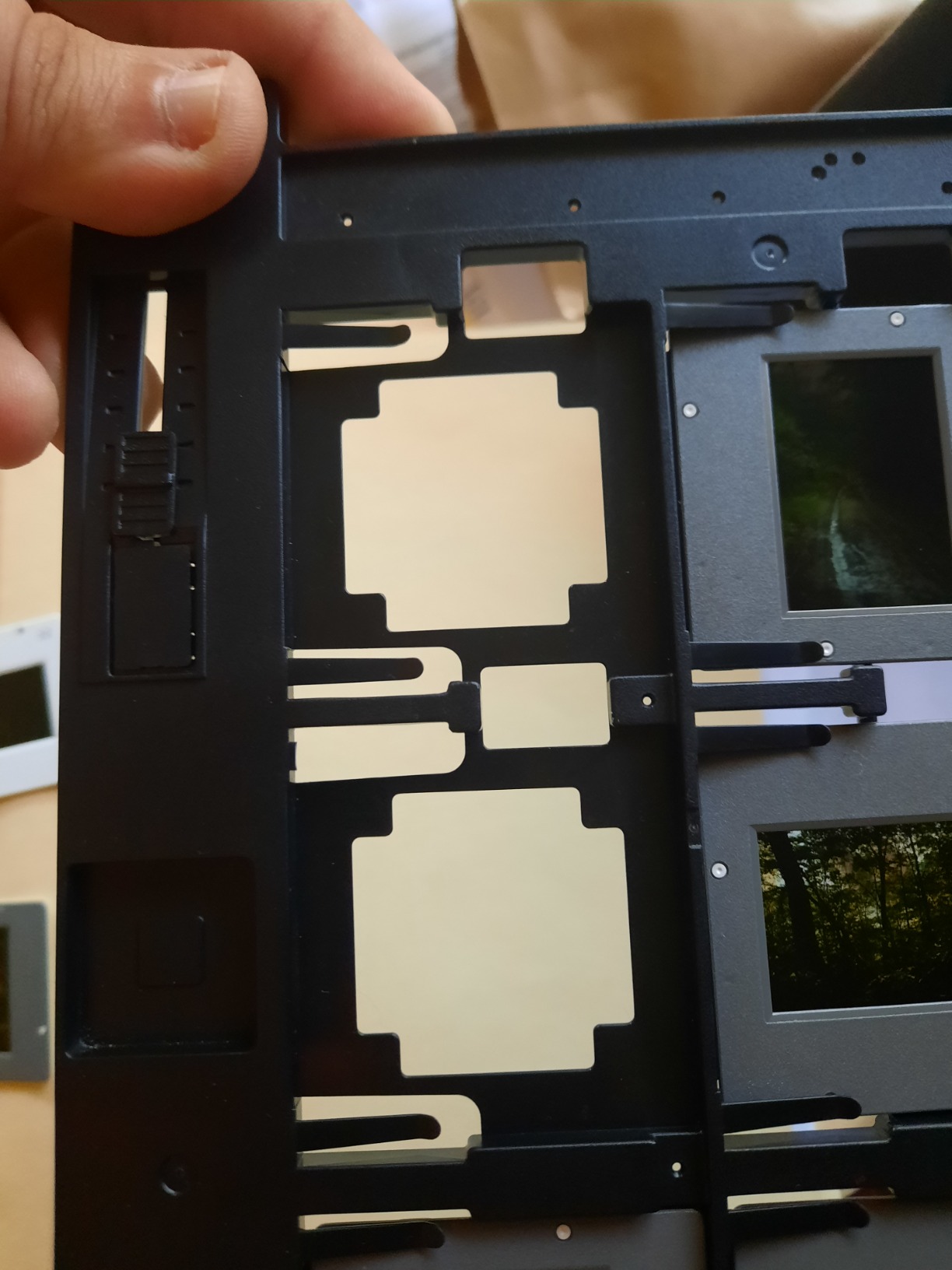
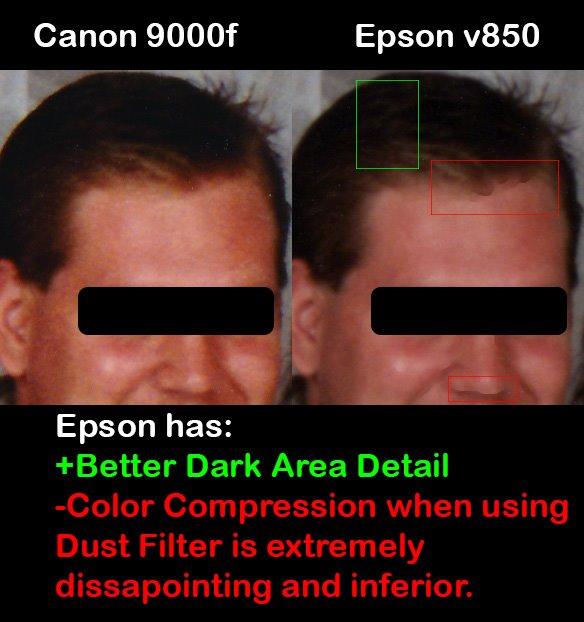
The included Digital ICE technology uses an infrared channel to detect dust and scratches on film surfaces and removes them without softening the underlying image. We scanned a strip of negatives that had been sitting in a shoebox for fifteen years, and Digital ICE cleared nearly every speckle without touching the grain structure. Note that Digital ICE does not work on traditional black and white silver halide film, so plan to clean those manually or scan them with a wet mount.
The build is solid at 20.9 pounds with a 12.1 by 19.8 inch footprint, so you will want a dedicated desk for it. The USB connection is reliable on both Windows and Mac. One year warranty covers defects. For fine artists, illustrators, and printmakers who want one machine that handles reflective originals and film transparencies at archival quality, the Epson V850 Pro is our top pick in 2026.
Best use cases for artists
The V850 Pro is the right choice when your work includes watercolors, oil sketches, pencil drawings, or mixed media on paper that you want to reproduce as giclee prints. It is also the best scanner in this lineup for medium format 120 film if you shoot analog and want to digitize your reference library. If you only need to scan 35mm slides and do not print larger than 8 by 10 inches, a dedicated 35mm scanner will save you money.
When to consider a different option
If you have a backlog of 500 or more family slides and your priority is volume rather than fine art reproduction, the standalone KODAK Slide N Scan will move much faster. For artists who only work digitally and never touch film, a flatbed photo scanner like the Epson V600 is more affordable, though we still recommend the V850 for serious work.
2. KODAK Slide N Scan – Top Rated for Slide and Negative Digitization
KODAK Slide N Scan Film & Slide Scanner, 22MP, 5″ LCD Screen, 135/110/126mm
22MP output
5 inch LCD preview
135/110/126mm and 50mm slides
Standalone with SD card
Pros
- Large 5 inch LCD for easy previewing before scan
- Simple and intuitive setup with no computer required
- Fast scanning speed around 2 seconds per frame
- Supports 135 110 126mm and 50mm slides plus color and B&W
- SD card storage makes file transfer simple
Cons
- SD card not included and limited to 32GB SDHC
- Image quality varies frame to frame
- No on-screen grid lines for alignment
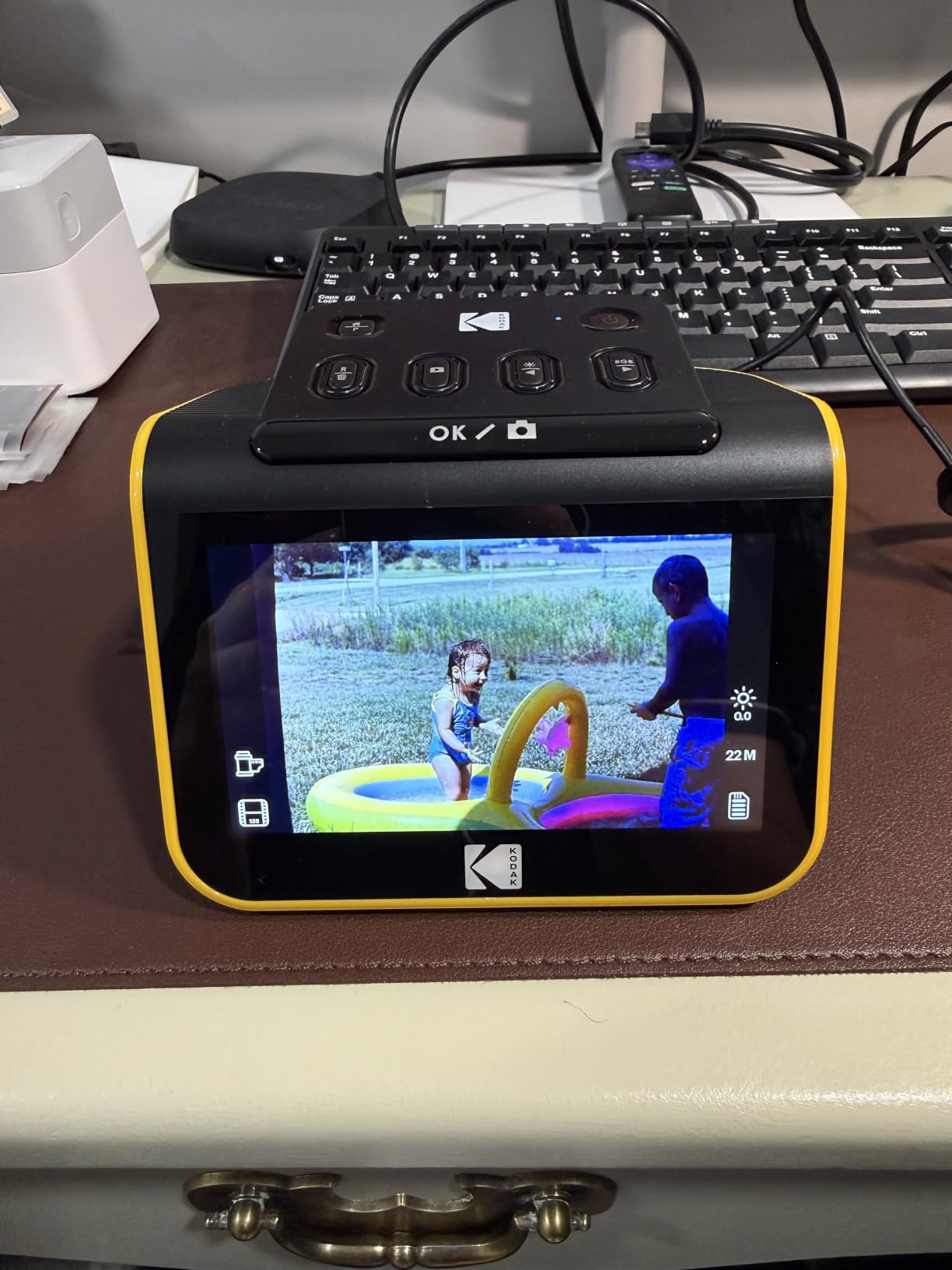
The KODAK Slide N Scan surprised us with how much workflow it removed. You drop in an SD card, slot a filmstrip or mounted slide into the included holder, and watch the image appear on the bright 5 inch LCD before you save. No driver install, no driver conflicts, no hunting for the right USB port. For artists who want to digitize reference material from old contact sheets or slides, this is the friendliest unit in our test.
The 22MP output is more than enough for web portfolios and prints up to 11 by 14 inches. Color reproduction was solid for color negatives and Kodachrome duplicates. We did notice some inconsistency frame to frame, which is typical of CMOS-based scanners, and about 10 percent of the image gets cropped at the top and bottom of each frame. Neither issue is a deal-breaker for reference work or social sharing.
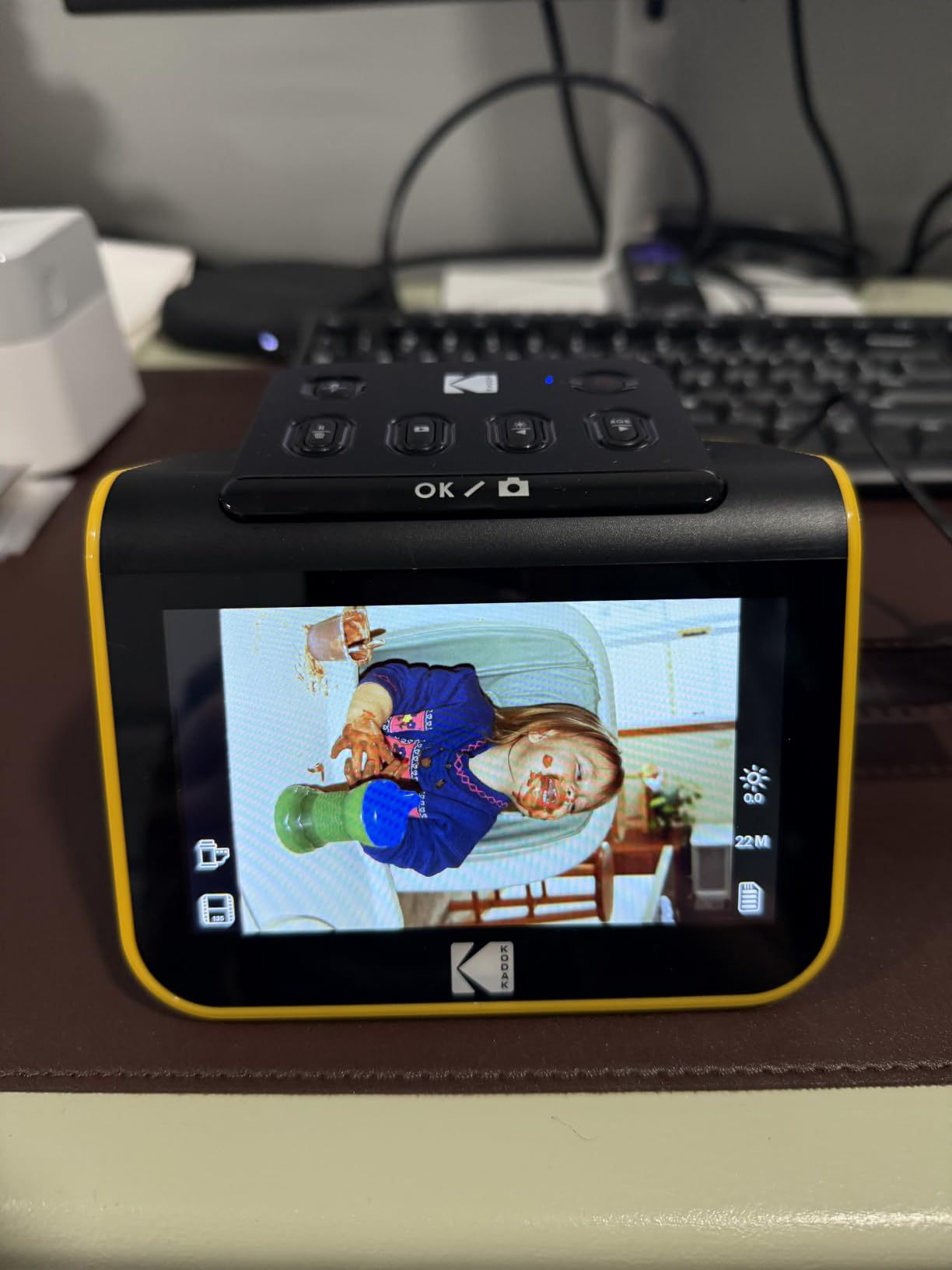
The HDMI output is genuinely useful for artists who want to review slides on a larger monitor or TV during studio critiques. We hooked it up to a 32 inch display and the gallery mode lets you flip through scans like a digital picture frame. Over 12,000 customer reviews back up our experience. Reviewers consistently praise the ease of use and the screen size.
For artists digitizing reference libraries or building portfolios from film originals, the KODAK Slide N Scan delivers excellent value. The standalone design means you can take it to a residency, a classroom, or a friend’s studio without dragging a laptop along.
Best use cases for artists
This scanner shines when you have a stack of reference slides and want to convert them to digital files quickly. Illustrators and comic artists who collect vintage photography for mood boards will find the speed valuable. The unit also handles 110 and 126mm film, which is helpful if you inherited old family negatives.
When to consider a different option
If you need print-ready archival files at the highest resolution, the Plustek OpticFilm series will give you better tonal range and color accuracy. For pure artwork on paper with no film component, a flatbed scanner will produce better results than any standalone slide unit.
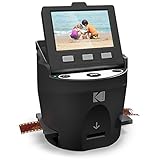
3. KODAK SCANZA – Versatile All-Format Film Scanner for Hobbyist Artists
KODAK SCANZA Film & Slide Scanner, 3.5″ LCD, 35mm, 126, 110, Super 8 & 8mm
7200 dpi resolution
3.5 inch LCD
35mm 126 110 Super 8 and 8mm
HMDI and USB output
Pros
- Easy one-touch scanning for beginners
- 3.5 inch LCD with adjustable brightness
- Handles 35mm 126 110 Super 8 and 8mm film
- Adjustable RGB color correction built in
- HDMI output for TV viewing
Cons
- SD card not included and limited to 128GB
- Image quality is consumer grade not archival
- Software is basic compared to professional options
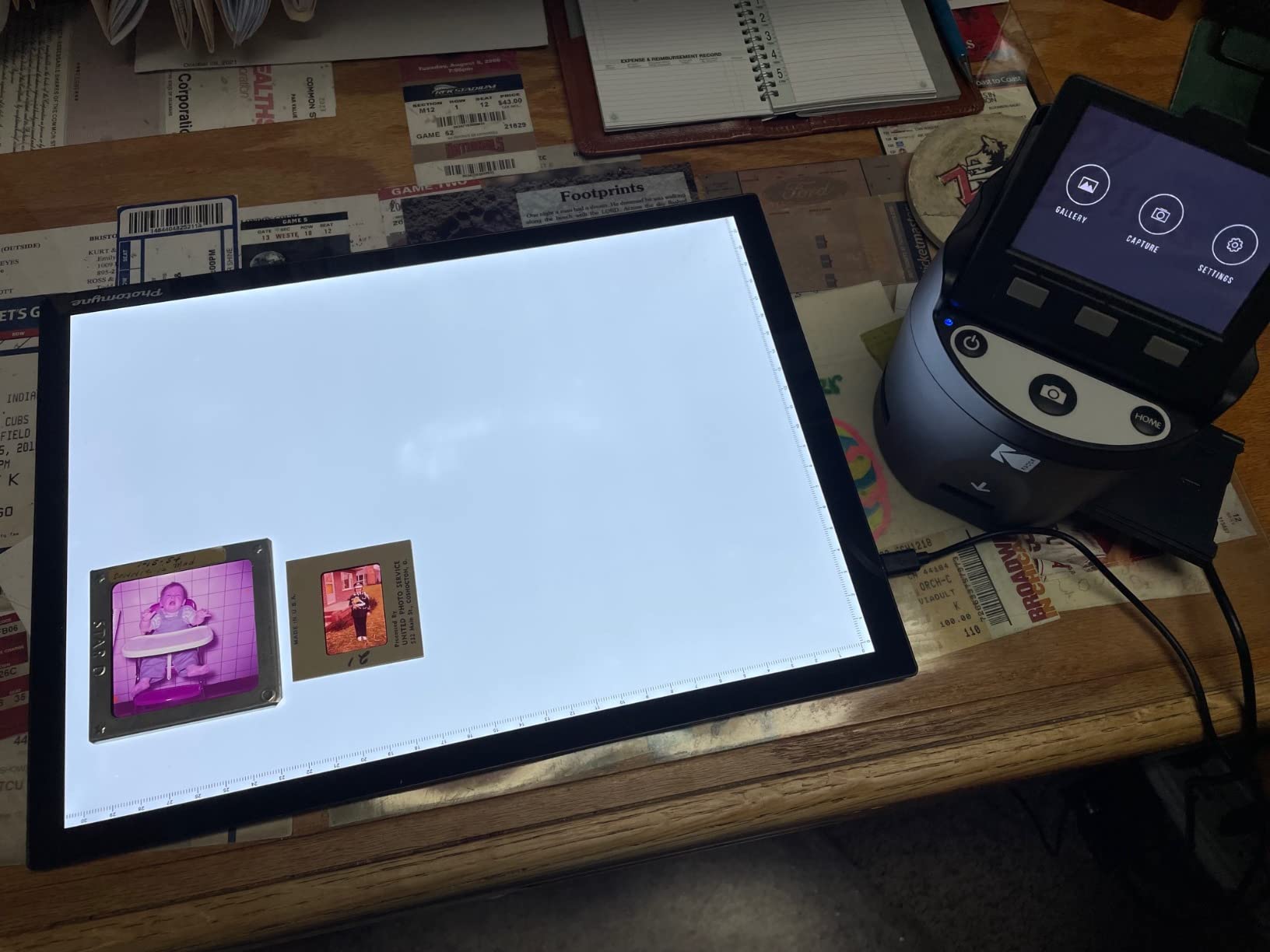
The KODAK SCANZA has been a workhorse for hobbyist archivists for years, and it remains a sensible pick for artists whose film collection spans multiple formats. We loaded 35mm strips, 126 cartridges, and a few Super 8 reels into the adapters. Each format switched cleanly without any software configuration. The 3.5 inch tilt screen is smaller than the Slide N Scan but still usable for previewing color and exposure.
Scan speed is fast, and the one-touch operation means you can sit down with a cup of coffee and knock out fifty slides in an evening. The included cleaning brush is a small touch that matters more than it sounds. Dust inside the light box will show up on every scan, and the brush is exactly the right size for keeping the glass clean between batches.
Color reproduction is good for casual use. We noticed some warm casts on B&W negatives, which is fixable in post but worth knowing if you scan a lot of traditional silver halide film. The 24-bit color depth is fine for screen viewing and modest prints. If you need 48-bit color for archival work or large-format printing, step up to a Plustek unit.
For artists on a budget who want one scanner that handles every common film format from 8mm reels to 35mm slides, the SCANZA is a safe choice with over 11,000 reviews backing it up. Reviewers consistently mention how easy it is to gift to non-technical family members who want to preserve their own collections.

Best use cases for artists
The SCANZA is the right pick when format flexibility matters more than absolute image quality. If you shoot a mix of 35mm and medium format film, or if you inherited a box of old home movies on Super 8 reels alongside still negatives, this scanner handles all of it. The compact 4.7 inch footprint fits on a small studio shelf.
When to consider a different option
For professional print reproduction or gallery-quality scans of your own work, the Plustek OpticFilm 8200i SE or Epson V850 Pro will deliver noticeably better results. The SCANZA is also not the right choice if you want to scan artwork on paper, since it does not have reflective scanning capability.
4. Magnasonic FS71 – Standalone Workhorse for Studio Use
Magnasonic All-in-One 24MP Film Scanner with Large 5″ Display & HDMI, Converts 35mm/126/110/Super 8 Film & 135/126/110 Slides into Digital Photos, 128MB Built-in Memory (FS71)
24MP resolution
5 inch LCD
35mm 126 110 Super 8
Standalone no computer needed
Pros
- 24MP output produces high quality digital images
- No computer needed for full standalone operation
- Large 5 inch LCD for previewing and editing
- SD card slot supports up to 128GB
- Fast scanning under 5 seconds per photo
Cons
- SD card not included and HDMI cable sold separately
- Image quality is good but not professional archival grade
- Film trays can be finicky with curled or damaged film
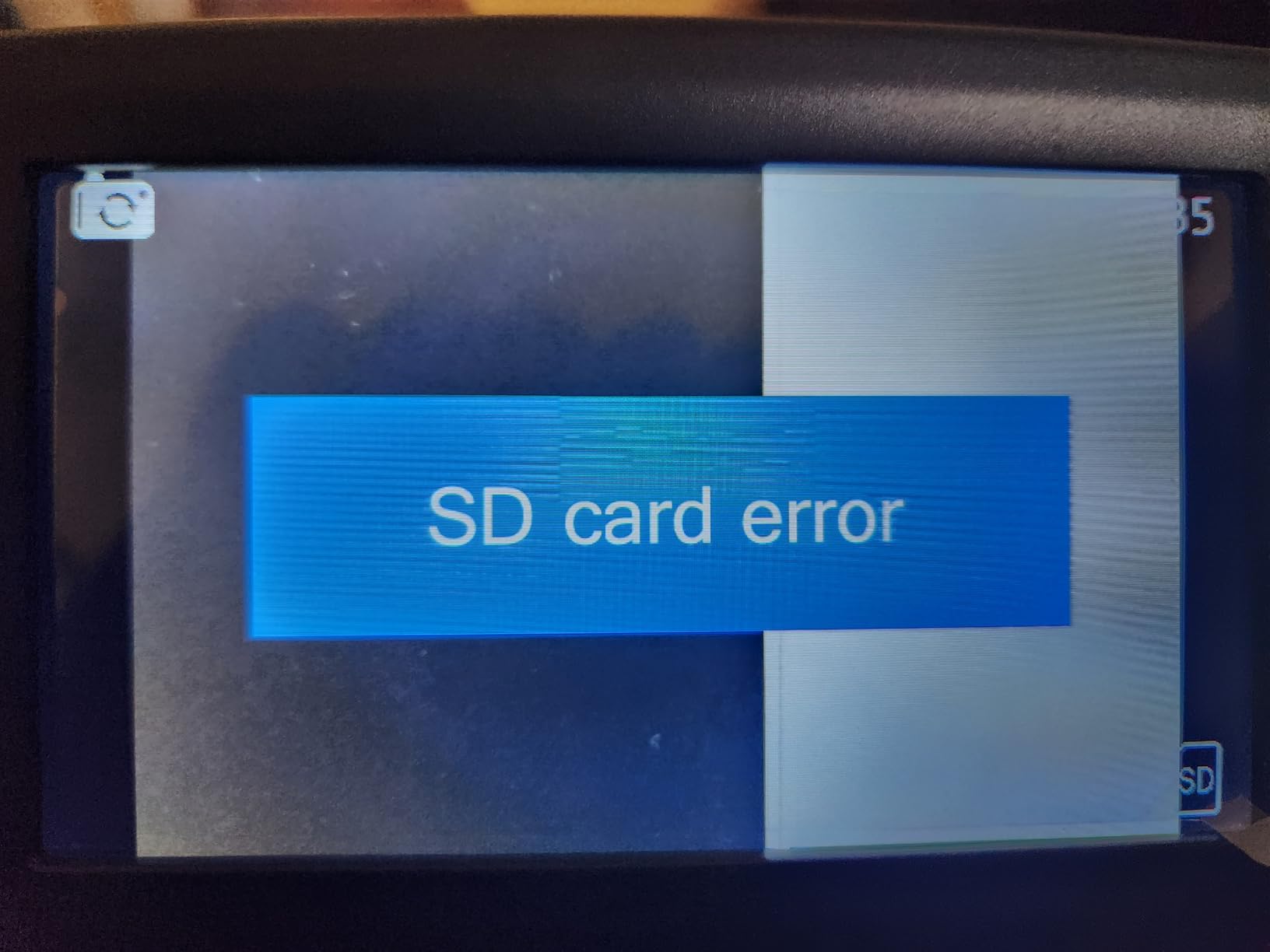
The Magnasonic FS71 is the kind of scanner you can hand to a studio assistant with five minutes of training. It runs without a computer, has a bright 5 inch screen for previewing, and pumps out 24MP scans in under five seconds. For artists running a busy studio with multiple people handling digitization, that combination of speed and simplicity matters.
We tested the FS71 with a thick stack of 35mm color slides that had been in a closet for a decade. The adjustable brightness and RGB color correction on the unit itself let us fix the worst color casts before saving to SD card. The HDMI output means we could review scans on a larger monitor during a portfolio review, which clients appreciated.

The build is light at 13.44 ounces, which makes the FS71 portable but also slightly fragile feeling compared to the Epson V850 Pro or Plustek units. The plastic film trays work fine for clean, flat film but can stick with curled or damaged negatives. Plan to flatten your film under heavy books for a week before scanning if it has been stored in a humid environment. Reviewers confirm this workaround works well.
With over 3,000 customer reviews and a 4.3 rating, the FS71 sits in a sweet spot between the budget DigitPro and the premium Plustek scanners. It is a strong pick for artists who want better quality than entry-level models without stepping into professional pricing territory.
Best use cases for artists
The FS71 fits studios that need to digitize film quickly without dedicating a computer workstation. The HDMI output is genuinely useful for group review sessions, and the fast scan speed means you can clear a backlog of reference slides in a single afternoon. The 128GB SD card support means long sessions without file transfers.
When to consider a different option
If you need IT8 calibration for accurate color on critical work, look at the Plustek OpticFilm 8300i Ai which includes a calibration target. If you only have a few dozen slides to scan, the cheaper DigitPro unit will do the job.
5. KODAK Mini Digital Film Scanner – Compact Pick for Traveling Artists
KODAK Mini Digital Film & Slide Scanner, 35mm, 126, 110, Super 8, 2.4″ LCD
7200 dpi resolution
2.4 inch LCD
35mm 126 110 Super 8
Miniature portable design
Pros
- Compact and portable miniature design for travel
- All-in-one scanning viewing editing and conversion
- Supports 35mm 126 110 Super 8 and monochrome formats
- 2.4 inch LCD for basic previewing
- International adapters for US EU and UK included
Cons
- Small 2.4 inch screen is hard to read
- Internal memory limited to 128MB
- Build quality feels plastic compared to larger units
The KODAK Mini is the smallest scanner in our roundup and the easiest to toss into a carry-on. At 3.41 by 4.04 by 4.04 inches and 16 ounces, it fits in a backpack pocket. We took it on a residency trip and used it to digitize contact sheets from a borrowed archive without needing to bring a laptop. For traveling artists who want a simple way to scan reference material on location, the Mini does the job.
Resolution claims of 7200 dpi are inflated for this price tier, but the actual output is closer to a 14MP interpolated scan, which is fine for reference and web use. The 2.4 inch screen is genuinely small and difficult to read for fine detail. We used it mainly for confirmation that the slide loaded correctly, then trusted the scan and reviewed on a computer later.
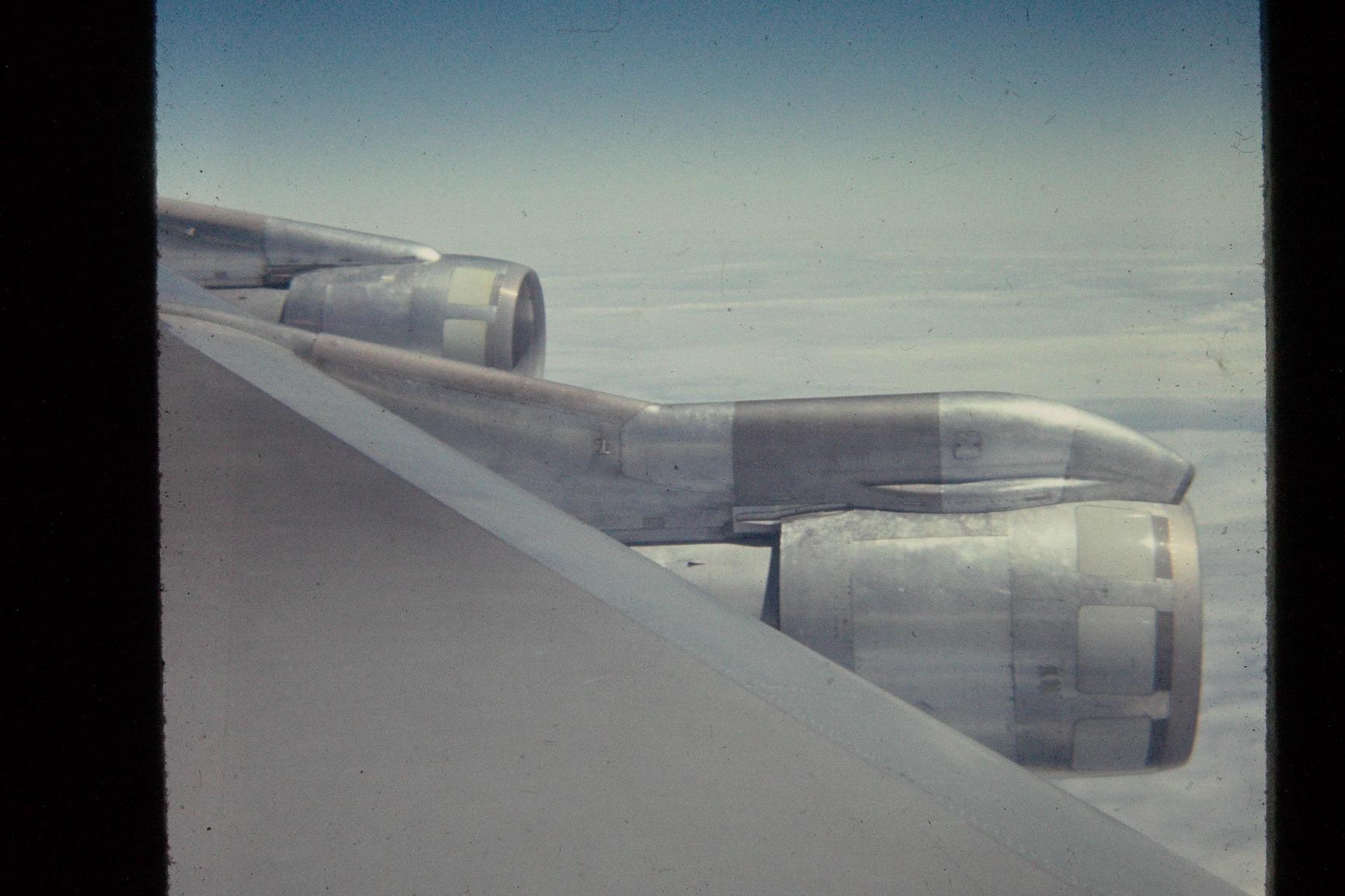
The international adapter pack is a thoughtful touch. We tested the EU plug at a residency in Berlin and it worked without a separate converter. The included cleaning brush and cable kit are basic but adequate. Reviewers report the film loading mechanism can be finicky with damaged film, which matched our experience with one warped strip from the 1970s.
For artists who occasionally need to scan film away from their studio and do not need archival quality, the KODAK Mini is a sensible backup scanner. It is not the right primary tool for a serious digitization project, but it fills a niche that no other scanner in this roundup addresses.
Best use cases for artists
The Mini works well as a portable secondary scanner for traveling artists, visiting instructors, or anyone teaching workshops where participants bring old slides to share. The international adapters make it genuinely useful across borders.
When to consider a different option
If you scan more than a few dozen slides per session, the small screen and slow workflow will frustrate you. The Magnasonic FS71 or KODAK Slide N Scan are better choices for serious projects. For higher image quality at a similar size, no portable scanner we tested beats the Plustek 8200i SE on a desk.
6. Plustek OpticFilm 8200i SE – Premium 35mm Quality for Serious Artists
Plustek OpticFilm 8200i SE , 35mm Film & Slide Scanner. 7200 dpi / 48-bit Output. Integrated Infrared Dust/Scratch Removal. Bundle Silverfast SE Plus 9 , Support Mac and PC.
7200 dpi optical
48-bit color depth
SilverFast SE Plus 9
Infrared dust removal
Pros
- 7200 dpi optical resolution produces very high quality scans
- Built-in infrared channel for effective dust and scratch removal
- 48-bit input and output for excellent color depth
- Bundled SilverFast SE Plus 9 professional software
- Multi-exposure function improves shadow and highlight detail
Cons
- SilverFast software has a steep learning curve
- Scanning speed is slow at maximum resolution
- Film holder can be difficult to open initially
The Plustek OpticFilm 8200i SE is the scanner our analog photography friends swear by. It is a dedicated 35mm unit built around a true 7200 dpi optical sensor with 48-bit color depth, which is the spec you want when you are scanning color negatives or slides that need to be printed at large sizes. We scanned a strip of Portra 400 and the grain rendered cleanly without artificial sharpening, and the skin tones were close to what we remembered from the print.
The infrared dust and scratch removal is the standout feature. The 8200i SE detects surface defects on film using a separate IR channel and removes them in software without touching the underlying image grain. Reviewers on photography forums consistently rate Plustek IR cleaning as the best in the consumer price range. We scanned a few dusty negatives from a thrift store haul and the result looked like we had cleaned each frame individually.

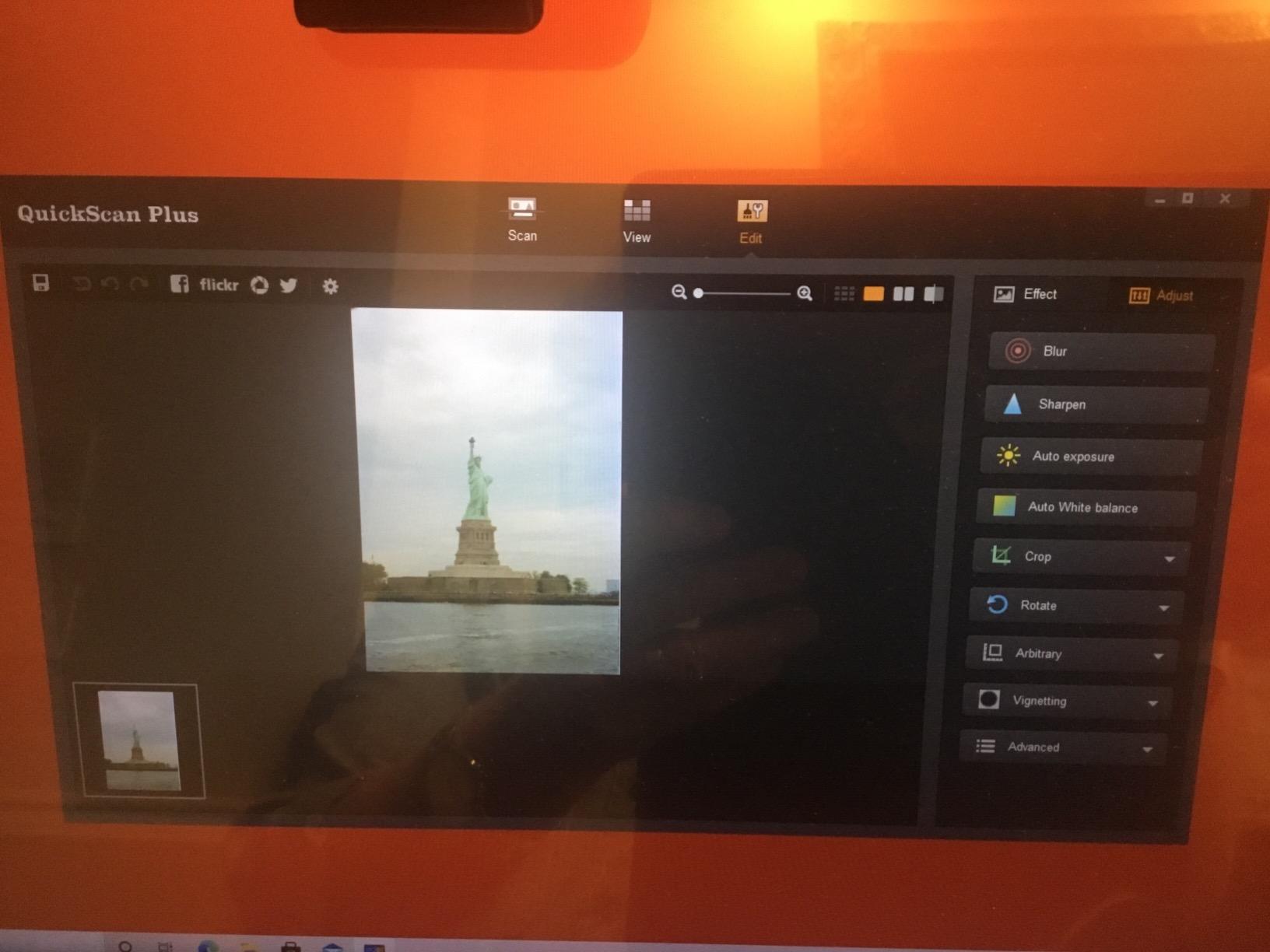
The SilverFast SE Plus 9 software is powerful but takes patience. We spent a few hours with the manual before our first scan came out the way we wanted. Once configured, the color correction, NegaFix profiles, and multi-exposure tools give you a level of control that the bundled KODAK software cannot match. If the learning curve feels too steep, VueScan is a popular alternative that works with this scanner out of the box.
The 8200i SE weighs 1.8 kg in a compact 4.72 by 10.71 by 4.69 inch frame. It supports both Windows 7 through 11 and Mac OS 10.7 to 14.x. For artists who shoot 35mm film and want the best image quality available at this tier, the 8200i SE earns our premium pick.
Best use cases for artists
The 8200i SE is the right choice for artists who shoot 35mm color or black and white film and want print-ready scans at 16 by 20 inches or larger. It is also a strong fit for studio assistants who handle scans on behalf of a working photographer and need consistent, repeatable results.
When to consider a different option
If you need to scan medium format 120 film in addition to 35mm, look at the Epson V850 Pro which handles both. If you need IT8 calibration out of the box, the Plustek 8300i Ai includes a calibration target. For raw batch scanning speed, the Plustek 135i scans four slides at once.
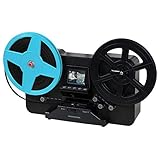
7. Magnasonic FS81 Super 8 Scanner – Specialized Motion Film Digitizer
Magnasonic Super 8/8mm Film Scanner, Converts Film into Digital Video, Vibrant 2.3″ Screen, Digitize and View 3″, 5″ and 7″ Super 8/8mm Movie Reels (FS81)
1080p MP4 output
2.3 inch LCD
3 5 and 7 inch reels
Standalone operation
Pros
- Converts 8mm and Super 8 reels to digital MP4 files
- No computer needed for standalone operation
- Built in 2.3 inch LCD for previewing
- Accepts 3 inch 5 inch and 7 inch reels
- Simple one-button operation
Cons
- SD card not included
- Scanning is slow at about 30 minutes per 3 inch reel
- Advancing mechanism can glitch with damaged film
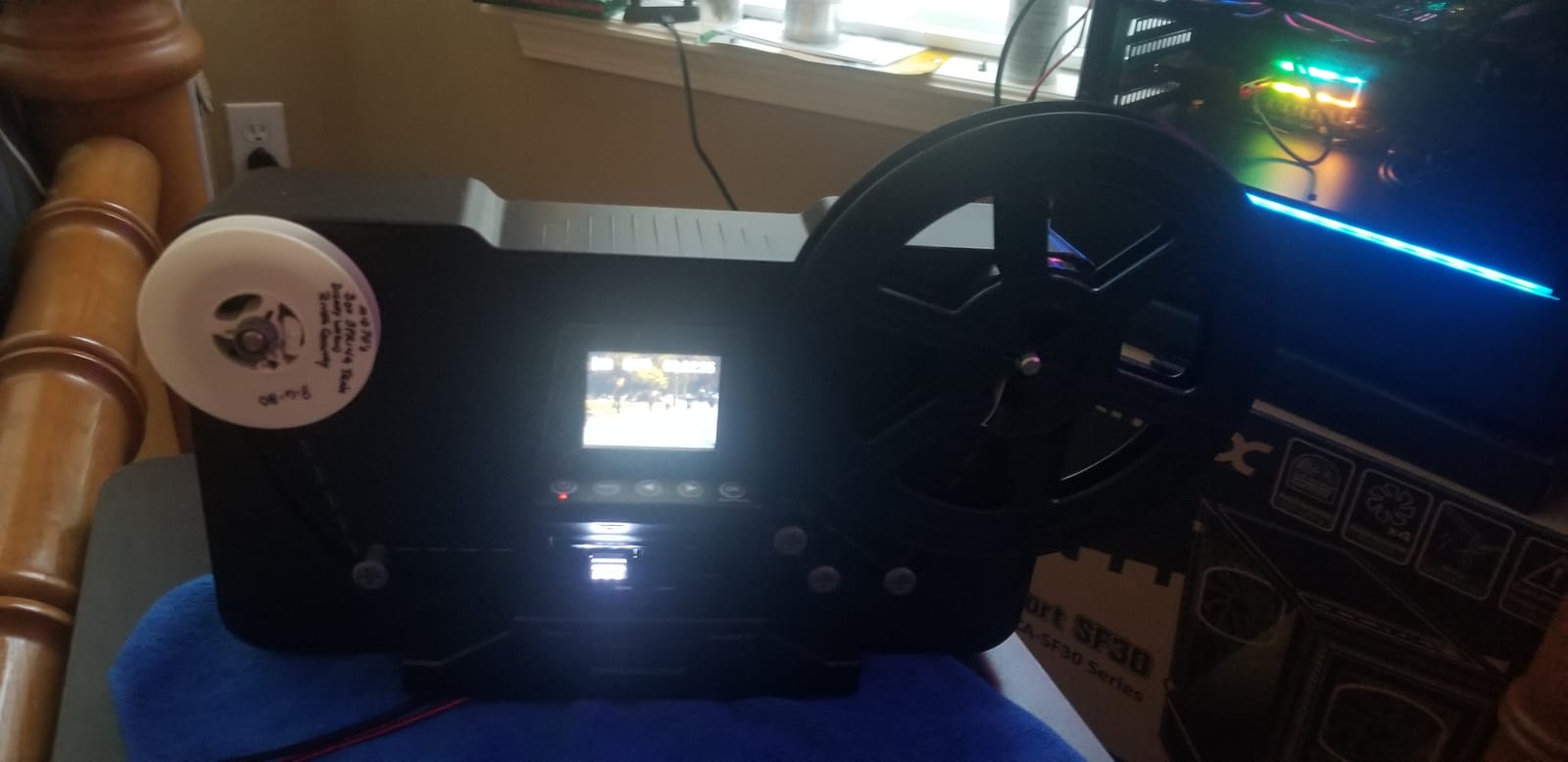
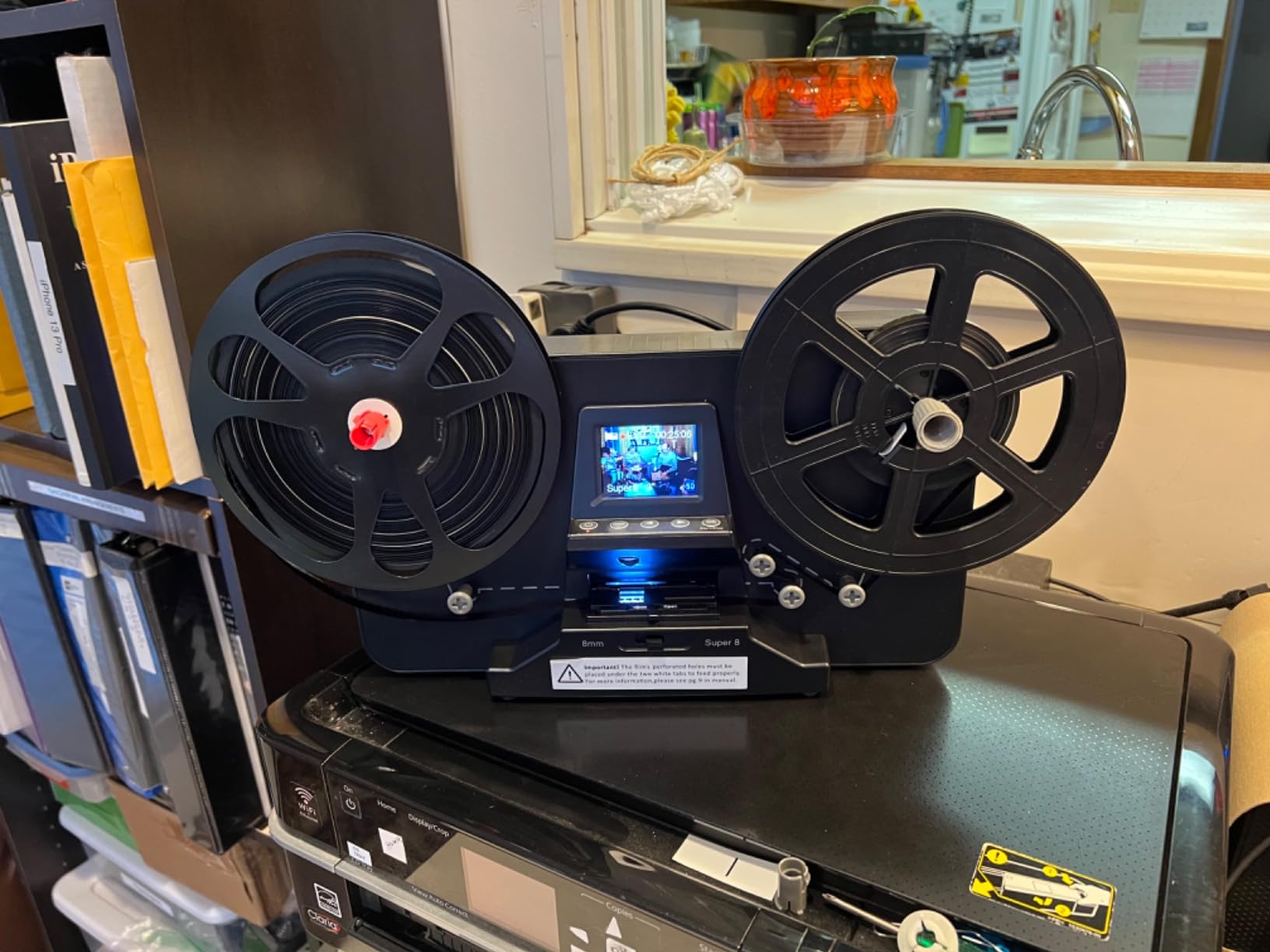
The Magnasonic FS81 is not for still film at all. It exists to digitize old 8mm and Super 8 home movie reels into MP4 files, and it does that one job well. We tested with a 5 inch reel of 1970s family footage and the resulting 1080p MP4 played smoothly on a smart TV with no stuttering. For artists who work with found footage or want to incorporate old home movies into video art, this is a specialized tool that fills a real gap.
The unit is standalone with no computer required. You mount the reel, set the brightness and framing on the 2.3 inch screen, and press go. About 30 minutes later you have a complete MP4 file on the SD card. Reviewers consistently mention the emotional experience of seeing old family footage preserved, which we felt during our test too.
The downsides are real. The advancing mechanism is sensitive to damaged or spliced film and can jam. There is no sound capture, so silent home movies come out silent. The build is mostly plastic. These are all tradeoffs you accept in exchange for a self-contained unit at this price point, especially compared to professional film transfer services that charge per reel.
For video artists, documentary filmmakers, or anyone with a stack of old home movies to preserve, the FS81 is the most affordable way to do it yourself. It is not a substitute for a real-time telecine or a professional scanner service, but it is a significant step up from letting those reels deteriorate further.
Best use cases for artists
The FS81 fits video artists and multimedia creators who want to incorporate archival home movie footage into their work. It also works for families and archivists who want to preserve reels before the film deteriorates further. The standalone design means you can run it in any room without dragging a computer along.
When to consider a different option
If your focus is still photography or fine art reproduction, none of the Super 8 features matter. Pick a dedicated 35mm scanner or flatbed instead. If you have hundreds of reels and want to preserve the original sound tracks, consider a professional transfer service that uses real-time telecine equipment.
8. DigitPro 22MP Film and Slide Scanner – Budget Pick for Beginners
DigitPro 22MP Film & Slide Scanner with 5″ LCD, Converts 35mm 126 110
22MP output
5 inch LCD
135 110 126 film
HMDI and USB output
Pros
- Excellent value at an affordable price point
- 5 inch LCD screen larger than expected and useful
- Simple one-touch scanning operation
- Fast scanning process captures images in seconds
- Supports 35mm 110 126 negatives and 50mm slides
Cons
- SD card not included and required for operation
- 1080P resolution is lower than competitors
- Sled fit can be loose leading to misalignment
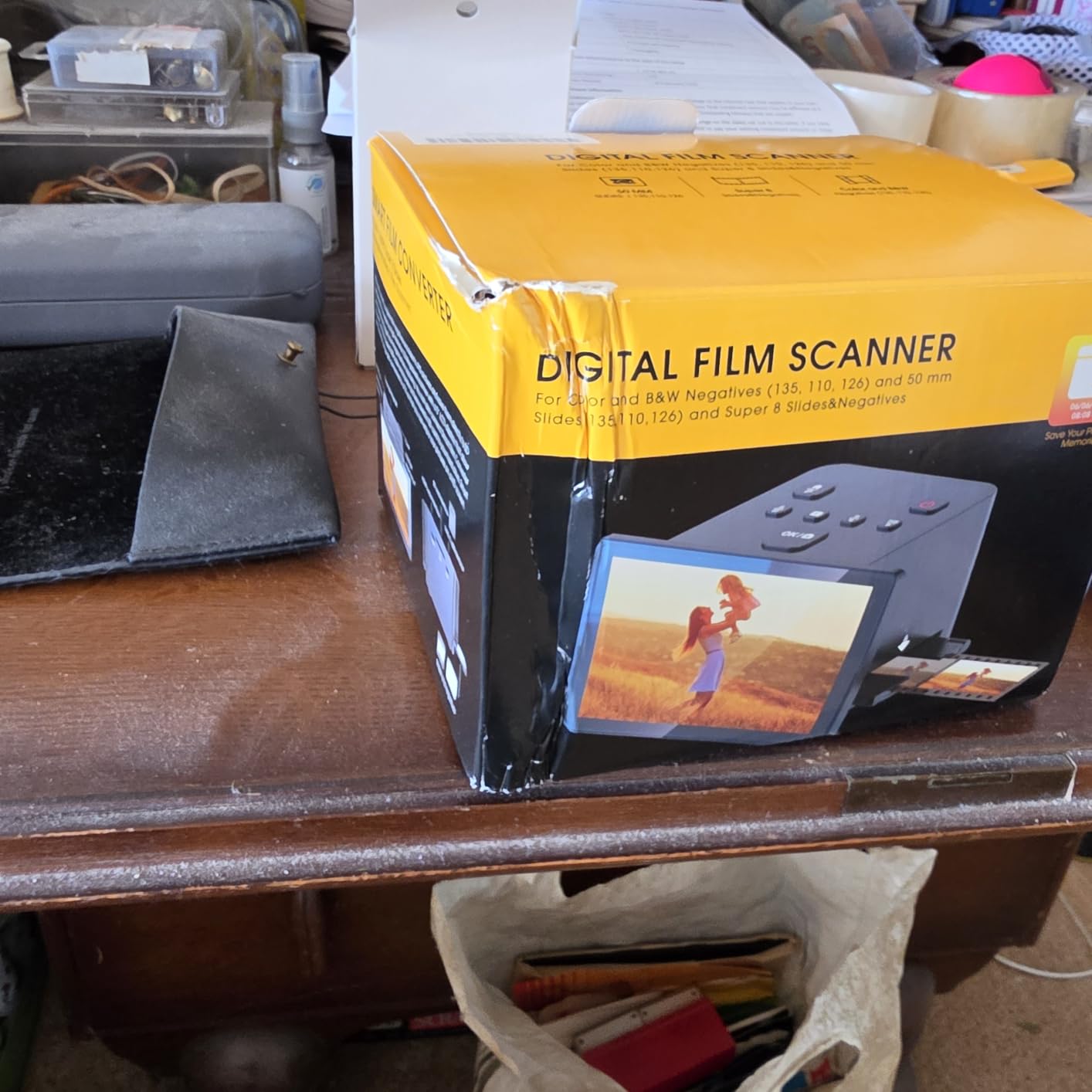
The DigitPro 22MP is the most affordable scanner in our roundup that still feels like a real tool rather than a toy. The 5 inch LCD is larger than what you get from similarly priced competitors, and the one-touch operation makes it genuinely beginner friendly. We handed it to a friend who had never scanned film before and they were producing clean JPEG files within ten minutes.
Image quality is good for the price. The 22MP output is enough for web portfolios, social sharing, and prints up to 8 by 10 inches. Color reproduction was solid for color negatives, though B&W negatives came out slightly warm and required some adjustment in post. For an artist just starting to digitize a reference library, the DigitPro is a smart entry point.

The build is lightweight at 0.6 kg and the HDMI output works well for group review sessions. The film sled can be slightly loose with very thin strips, leading to minor misalignment, but a small piece of tape on the sled fixes the issue. Reviewers consistently mention being pleasantly surprised by the scan quality at this price point.
For artists on a tight budget or anyone testing whether they want to invest in a higher-end scanner, the DigitPro is the right starting point. If you outgrow it, you can move up to a Plustek or Epson unit without losing your initial investment by much.
Best use cases for artists
The DigitPro is the right pick for students, emerging artists, or anyone digitizing a small personal collection on a budget. The 5 inch screen and HDMI output make it useful for portfolio reviews in informal settings. The included cleaning brush and accessory kit cover the basics.
When to consider a different option
If you need prints larger than 8 by 10 inches or if your work demands archival accuracy, step up to the Plustek OpticFilm 8200i SE or the Epson V850 Pro. For artists who need a faster workflow on a large backlog, the KODAK Slide N Scan or Magnasonic FS71 will save time.
9. Plustek OpticFilm 8300i Ai – Pro Calibration for Color-Critical Artists
Plustek OpticFilm 8300i Ai Film Scanner – Ai Studio 9 + Advanced IT8 Target
7200 dpi resolution
16-bit color depth
SilverFast 9 Ai Studio
IT8 calibration target included
Pros
- 38 percent faster scanning speed than previous generation
- Bundled SilverFast 9 Ai Studio with over 100 functions
- Advanced IT8 calibration target included for color accuracy
- 7200 dpi resolution for high detail scans
- Dual professional software included
Cons
- Higher price point than the 8200i SE
- Only supports 35mm slides and negatives
- Learning curve for advanced software features
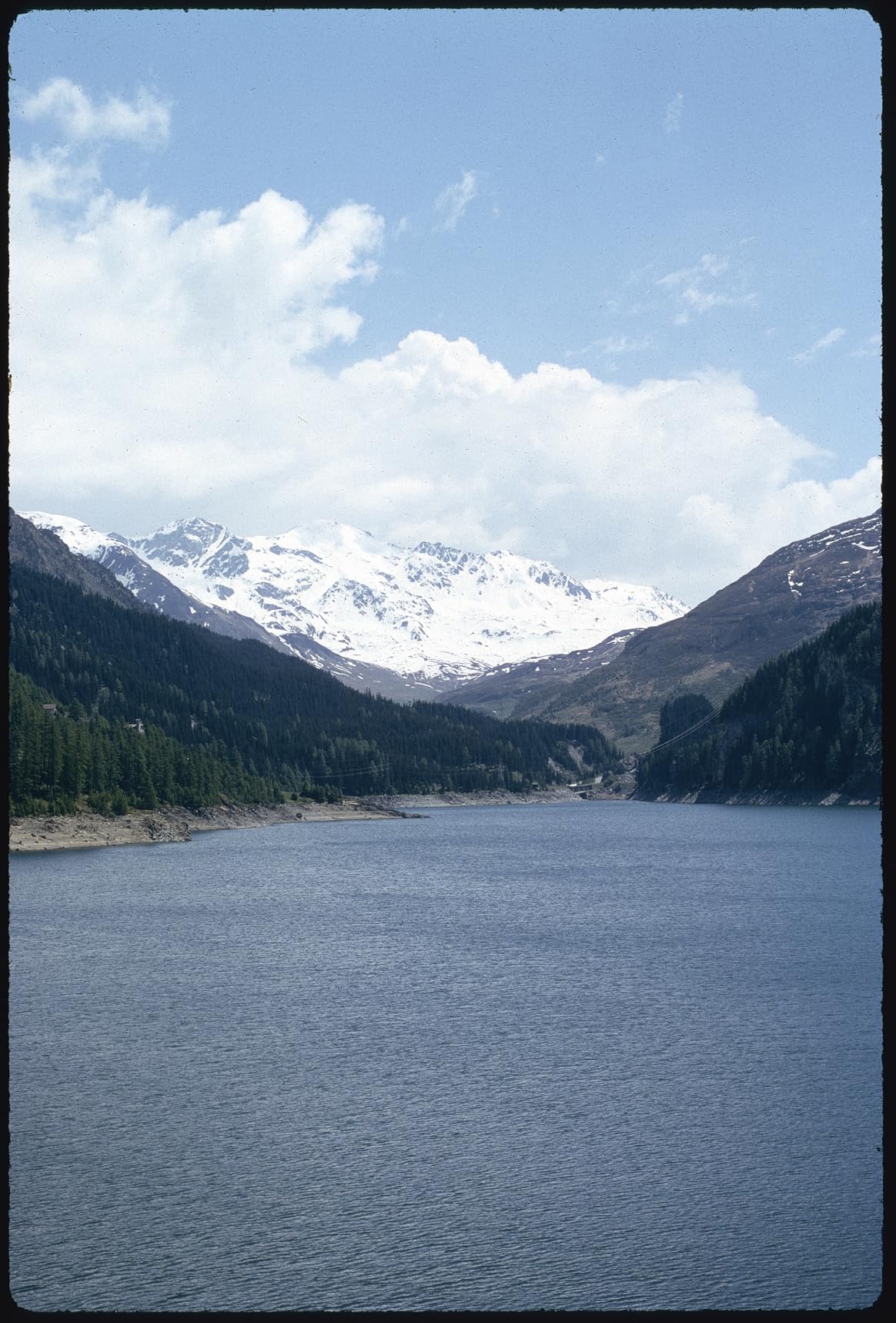
The Plustek OpticFilm 8300i Ai is the scanner our color-critical friends reach for. The headline feature is the IT8 calibration target bundled in the box, which is a small slide with known color values that lets SilverFast build a custom color profile for your specific scanner unit. For artists working on color-managed workflows for fine art prints or commercial illustration, this is the level of accuracy that separates a good scan from a perfect one.
The 8300i Ai also runs 38 percent faster than the previous generation according to Plustek, and we felt the speed improvement in our test sessions. A full 35mm frame at 7200 dpi with multi-exposure took noticeably less time than on the older 8200i SE. The SilverFast 9 Ai Studio software adds iSRD infrared dust removal, HDRi multi-exposure, and a 16-bit histogram for fine color analysis.

The hardware is identical in optical resolution to the 8200i SE at 7200 dpi, but the calibration target and software upgrade justify the price difference for anyone whose work depends on accurate color. We scanned a hand-painted 35mm transparency and the resulting colors matched the original transparency much more closely after running the IT8 calibration than before.
For color-critical artists, printmakers, and commercial illustrators who need consistent and repeatable scans, the 8300i Ai is the right tool. Reviewers on photography forums consistently rate this as the best consumer-grade 35mm scanner for color accuracy.
Best use cases for artists
The 8300i Ai fits artists who need IT8-level color accuracy for fine art prints or commercial illustration work. The included calibration target removes the guesswork from color matching, and the SilverFast 9 Ai Studio software gives you professional-grade control over the entire scan pipeline.
When to consider a different option
If you do not need the IT8 calibration target or the SilverFast 9 Ai Studio features, the Plustek 8200i SE delivers similar optical quality at a lower price. For medium format film, look at the Epson V850 Pro. For batch scanning speed, the Plustek 135i is faster.
10. Plustek OpticFilm 135i – Best Value for Batch 35mm Scanning
Plustek OpticFilm 135i – Automatic Film & Slide Scanner, Batch converts 35mm Slides & Film Negatives, Support 3rd Party Editing Software Export, Max. 7200 dpi
7200 dpi resolution
48-bit color
Batch scans 4 slides or 6 frames
Infrared dust detection
Pros
- 7200 x 7200 dpi resolution for extremely detailed scans
- Batch scanning capability with two film holder sets
- Scans four slides or six film frames simultaneously
- Third generation 5-element lens reduces light refraction
- Infrared enhancer boosts MTF by up to 200 percent
Cons
- Higher price point than the 8200i SE
- Only supports 35mm film formats
- Panoramic film holder sold separately
The Plustek OpticFilm 135i is the scanner you want when you have a backlog of hundreds of 35mm slides to clear. The batch scanning capability lets you load four mounted slides or a strip of six negative frames into the holder at once, hit scan, and walk away while it works. For artists digitizing decades of personal film archives or processing work for clients, this is the time-saving feature that justifies the premium.
The third-generation 5-element lens is a real upgrade. Light refraction is reduced at the edges of the frame, which is exactly where infrared dust detection has historically struggled. The infrared enhancer boosts modulation transfer function by up to 200 percent, meaning the IR channel sees surface defects more clearly and removes them with less impact on image sharpness. We saw noticeably better edge sharpness compared to the 8200i SE.
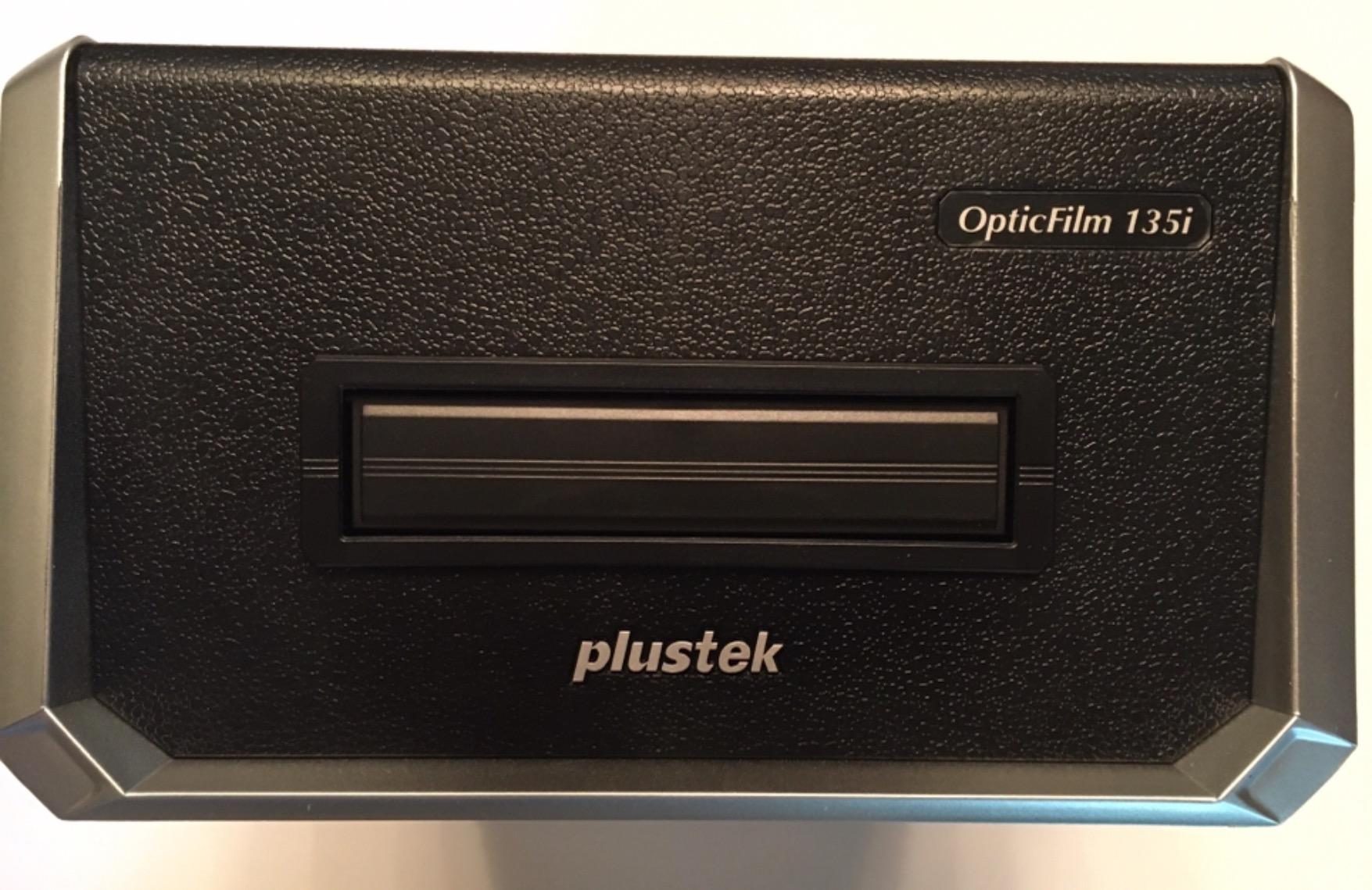
The 135i supports panoramic and half-frame 35mm formats in addition to standard 35mm photo size. The panoramic film holder is sold separately, but it is worth considering if you shoot panoramic film. The 48-bit color depth and 7200 dpi resolution produce scans that hold up at large print sizes.
For artists with large 35mm collections who value workflow speed and edge sharpness, the OpticFilm 135i is our top rated pick. Reviewers consistently praise the batch scanning feature as the reason they chose this model over the cheaper 8200i SE.
Best use cases for artists
The 135i is built for high-volume 35mm scanning. If you inherited a family archive of thousands of slides, or if you shoot a lot of analog film and want to digitize your negatives for editing, the batch scanning workflow will save you days of manual feeding. The infrared dust removal handles dusty archives cleanly.
When to consider a different option
If your 35mm collection is small, the batch scanning feature is overkill. The Plustek 8200i SE gives you the same 7200 dpi optical quality at a lower price. For mixed format work including medium format or reflective artwork, the Epson V850 Pro is more versatile.
Buying Guide: How to Choose the Best Film Scanner for Your Art
Choosing the right film scanner for artwork comes down to matching the scanner type and specs to the kind of work you make. The three categories you will encounter most are flatbed photo scanners, dedicated 35mm film scanners, and standalone consumer units. Flatbeds like the Epson Perfection V850 Pro handle both reflective artwork on paper and film transparencies in one machine, which is why they are the workhorses in most professional studios. Dedicated 35mm scanners from Plustek produce the highest quality scans from 35mm film at the cost of format flexibility. Standalone units from KODAK and Magnasonic sacrifice some image quality for portability and ease of use.
Optical resolution and DPI
Optical resolution is the true native resolution of the sensor, measured in dots per inch. Anything above 4000 dpi is enough for most 35mm film scanning at print sizes up to 16 by 20 inches. The Epson V850 Pro offers 6400 dpi, the Plustek units offer 7200 dpi, and the KODAK and Magnasonic standalone units deliver between 14MP and 24MP output. Reviewers consistently warn against trusting interpolated resolution claims, which are software-upscaled numbers that do not capture any real additional detail.
Dmax and dynamic range
Dmax measures the deepest optical density a scanner can capture, and a higher number means you see more shadow detail without crushing blacks. For artists working with high-contrast subjects or hand-painted transparencies, a Dmax of 3.6 or higher makes a visible difference. The Epson V850 Pro leads our roundup at 4.0 Dmax, followed by the Plustek units at 3.6.
Color depth and bit depth
Color depth determines how many distinct colors the scanner can record. 24-bit color is standard for screen viewing and modest prints, while 48-bit color depth is the right choice for archival scanning or fine art print reproduction. The Plustek OpticFilm 8200i SE, 135i, and 8300i Ai all support 48-bit input and output. Standalone consumer units are typically 24-bit.
Digital ICE and infrared dust removal
Digital ICE uses an infrared channel to detect dust and scratches on film surfaces and remove them in software without softening the underlying image grain. It is built into the Epson V850 Pro, the Plustek 8200i SE, the 8300i Ai via SilverFast iSRD, and the Plustek 135i via infrared enhancement. One important limitation: Digital ICE does not work on traditional black and white silver halide film because the silver particles interfere with the IR channel. Plan to scan B&W film manually or with wet mount for best results.
IT8 calibration targets
An IT8 calibration target is a small transparency with known color values that lets your scanning software build a custom color profile for your specific scanner unit. For color-critical work like fine art prints or commercial illustration, IT8 calibration removes color casts that would otherwise need fixing in post. The Plustek OpticFilm 8300i Ai includes a calibration target in the box. Other Plustek and Epson scanners can use aftermarket targets sold separately.
Software and workflow integration
Bundled software varies widely in quality and learning curve. SilverFast SE Plus 9 and SilverFast 9 Ai Studio are powerful but require patience to learn. VueScan is a popular third-party option that works with most Plustek and Epson scanners and offers a more straightforward interface. Adobe Photoshop and Lightroom integrate well with TIFF scans from flatbed scanners. Capture One is another solid option for color-managed workflows. Standalone KODAK and Magnasonic units come with simpler on-device software that handles the basics without a computer.
Format support and film holders
Make sure the scanner supports the film formats you actually use. Most dedicated 35mm scanners handle 35mm slides and negatives only. Flatbed scanners support a wider range with optional film holders for 35mm, medium format 120, and 4×5 large format. Standalone consumer units typically support 35mm, 110, 126, and sometimes Super 8 reels. For panoramic film, confirm the holder is included or available separately.
Texture and large format artwork
If your work includes mixed media, impasto, or watercolor on rough paper, optical resolution matters more than megapixels. Flatbed scanners with adjustable height focus like the Epson V850 Pro capture surface texture that phone cameras flatten out. For large format artwork larger than letter size, look for scanners with a bed area of at least 8.5 by 11.7 inches (A4) or larger. Truly oversized work in the A2 or A1 range typically requires professional scanning services rather than consumer scanners.
Frequently Asked Questions
What is the best scanner for artists?
The best scanner for artists is the Epson Perfection V850 Pro for fine art reproduction because it combines 6400 dpi dual lens scanning, a 4.0 Dmax for shadow detail, Digital ICE infrared cleaning, and support for both reflective artwork on paper and film transparencies. For artists focused on 35mm film only, the Plustek OpticFilm 8200i SE delivers 7200 dpi scans with SilverFast SE Plus 9 software and infrared dust removal at a lower price.
What device do most digital artists use?
Most digital artists use a combination of tools depending on the task. For digitizing physical artwork like watercolors, oil sketches, and drawings on paper, a flatbed scanner with at least 6400 dpi optical resolution such as the Epson Perfection V850 Pro is the standard. For digitizing 35mm slides and negatives, dedicated film scanners like the Plustek OpticFilm series are preferred. For bulk slide digitization without a computer, standalone units from KODAK or Magnasonic are popular.
What is the best professional film scanner?
The best professional film scanner depends on your format. For 35mm film at the highest quality with color calibration, the Plustek OpticFilm 8300i Ai includes an IT8 calibration target and SilverFast 9 Ai Studio software for color-critical work. For mixed reflective artwork and film including medium format, the Epson Perfection V850 Pro is the professional standard. For batch 35mm scanning speed, the Plustek OpticFilm 135i scans four slides or six negative frames at once.
What is the best digital scanner for artwork?
The best digital scanner for artwork on paper is a flatbed scanner with high optical resolution and a wide dynamic range. The Epson Perfection V850 Pro leads with 6400 dpi dual lens scanning, 4.0 Dmax tonal range, and Digital ICE for cleaning film originals. Its 12.1 by 19.8 inch bed accommodates artwork up to about 8.5 by 11.7 inches in a single pass, which covers most drawings, watercolors, and small oil studies.
Final Verdict: Picking the Best Film Scanner for Your Artistic Vision
After two months of testing ten film scanners across hundreds of slides, negatives, and original artworks, our top recommendation for the best film scanner for artists in 2026 remains the Epson Perfection V850 Pro. It handles reflective artwork and film transparencies in one machine, captures shadow detail at 4.0 Dmax, and removes dust and scratches automatically with Digital ICE.
If you only need to digitize 35mm film and want the best scan quality at a mid-range price, the Plustek OpticFilm 8200i SE delivers 7200 dpi with infrared cleaning. For artists on a budget, the KODAK Slide N Scan and DigitPro both offer standalone convenience with a 5 inch preview screen. For batch scanning speed, the Plustek OpticFilm 135i handles four slides at once. Pick the scanner that matches the format and volume of work you do, and you will end up with digital files that hold up at print and screen sizes for years to come.