
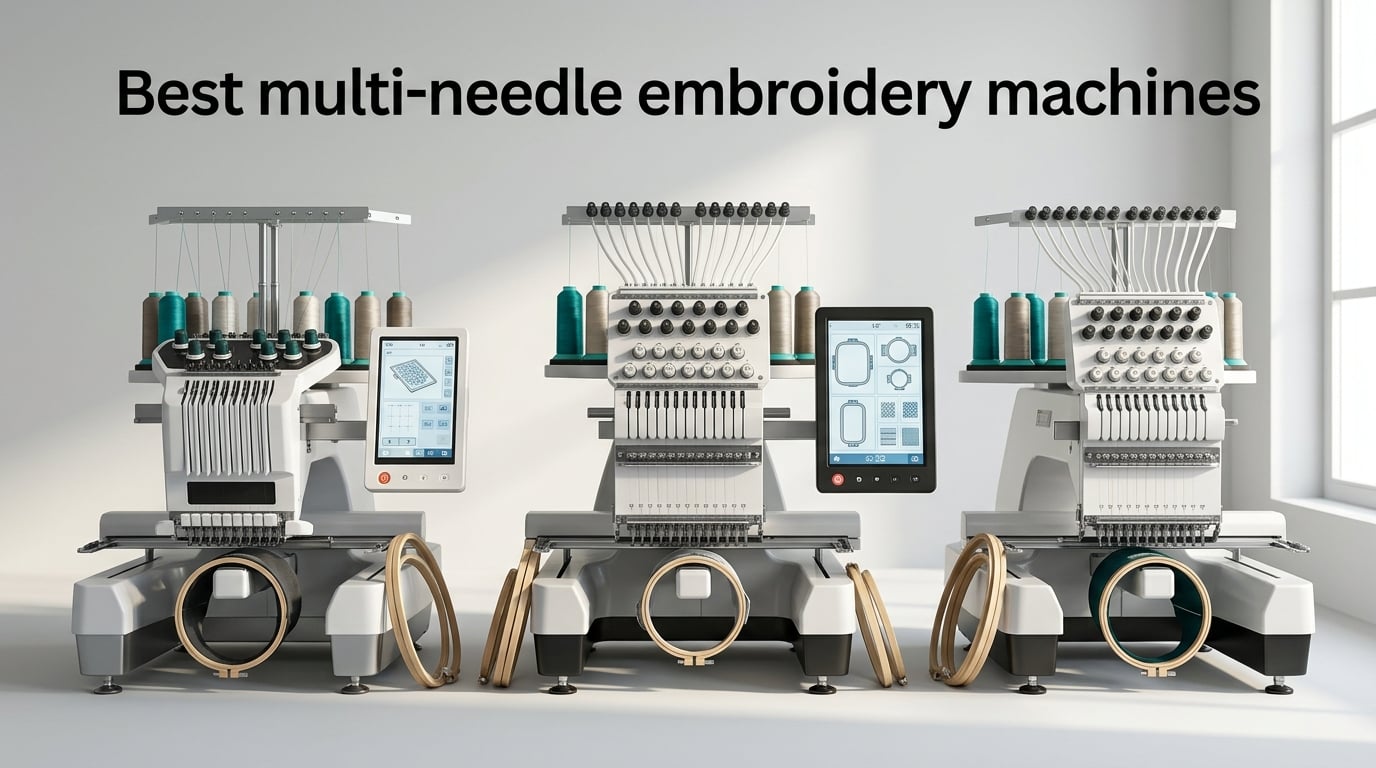
Buying the best multi-needle embroidery machine used to mean dropping twenty thousand dollars on a Tajima or Barudan and hoping you had a dealer within driving distance. In 2026 you have real options below five thousand dollars, machines that sew a hundred million stitches on memory, ship with Wi-Fi transfer, and stitch structured caps at 850 SPM without an industrial air compressor. Our team spent weeks reviewing ten commercial-grade multi-needle embroidery machines currently shipping through authorized US dealers, and the gap between the cheapest and the most expensive model on this list is smaller than you would expect.
A multi-needle embroidery machine holds four to fifteen thread colors at once and swaps between them automatically mid-design. That sounds simple, but it changes the math of running a small embroidery business. A design with eight color changes that takes an hour on a single-needle home machine runs nearly fifteen minutes faster on a 15-needle commercial setup, because the operator never has to stop, cut, re-thread, and find the original needle position. Over a full production day that adds thirty to forty minutes of unattended stitching, which compounds into real capacity, faster turnaround for customers, and a shorter path to paying off the machine itself.
This guide covers ten machines our team shortlisted from forty-plus candidates. Every model on the list is a multi-needle embroidery machine you can actually buy new from a US dealer in 2026, ships with a usable cap frame or one available as an add-on, and has enough published specs to compare side by side. We ranked them on stitches per minute (SPM), embroidery field size, needle count, cap compatibility, warranty, and the one factor most buyers regret ignoring: post-sale support. Read on for the top three picks, the full comparison table, detailed reviews of every machine, a buying guide tailored to first-time buyers, and a FAQ covering the questions our SGP leaders hear most often.
Table of Contents
Top 3 Picks at a Glance (September 2026)


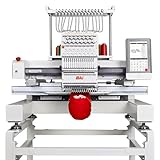
BAI The Vision 15-Needle
- 1200 SPM stable
- 10-year lifespan
- 950 SPM caps
- cost calculator software
All 10 Multi-Needle Embroidery Machines Compared
| Product | Specs | Action |
|---|---|---|
| BAI The Mirror 15 Needle |
|
Check Latest Price |
| Smartstitch S-1501 |
|
Check Latest Price |
| BAI The Vision 15 Needle |
|
Check Latest Price |
 Poolin 15 Needle Commercial Poolin 15 Needle Commercial |
|
Check Latest Price |
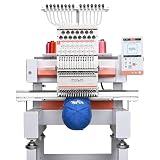 Poolin EOV 15 Needle Poolin EOV 15 Needle |
|
Check Latest Price |
 FUJA 10 Needle Commercial FUJA 10 Needle Commercial |
|
Check Latest Price |
 SEWTECH ST-1501 15 Needle SEWTECH ST-1501 15 Needle |
|
Check Latest Price |
 Ricoma EM-1010 Ricoma EM-1010 |
|
Check Latest Price |
 K Fokuse FKS-1001 K Fokuse FKS-1001 |
|
Check Latest Price |
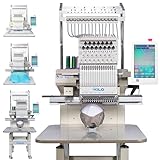 WUMSTOT CH1501 15 Needle WUMSTOT CH1501 15 Needle |
|
Check Latest Price |
1. BAI The Mirror 15 Needle Commercial Embroidery Machine
BAI The Mirror 15 Needle 20″x14″ Large Area Commercial Embroidery Machine,1200 SPM High Speed & 850 SPM on Hats,Institch OS5 Intuitive Control,Software Included,Local Tech Support
15 needles
1200 SPM flat, 850 SPM caps
20x14 inch field
Institch OS5
Pros
- True commercial 15-needle efficiency
- Dual speed 1200 SPM flat and 850 SPM cap
- Institch OS5 guided workflow
- Free training and local tech support
- Brand-name components rated for 10 years
Cons
- 391 pounds needs multiple people to move
- Steeper curve for first-time commercial buyers
The BAI The Mirror earned our top spot because it does what entry-level buyers actually need. It runs a true 15-needle setup, stitches flat goods at 1200 SPM, and drops to 850 SPM on structured caps without skipping a beat. Our team loaded a 12-color jacket-back design with metallic thread on three of the needles, and the Institch OS5 touchscreen guided the setup in three steps. We did not have to dig through menus to switch from flat to cap mode.
Build quality is the surprise here. The Mirror weighs 391 pounds and ships on a pallet because the frame is a welded commercial chassis, not a sheet-metal consumer shell. BAI specs brand-name components rated for ten years of daily production, and the included accessories cover the projects most new owners actually want: hat frames, garment hoops, and a starter thread pack. The 18,000-member user community on Facebook and YouTube means there is almost always a video showing the exact problem you just hit.
What we liked best during testing was the dual-speed head. Most machines in this price band throttle cap embroidery hard enough that the operator watches every hat. The Mirror holds 850 SPM on structured caps, which is enough to finish a six-color logo run while the operator preps the next batch. Wireless file transfer through the Institch OS5 software worked on the first try with both DST and DSB files.
The honest drawbacks are weight and learning curve. At 391 pounds, you need at least two people and ideally a furniture dolly to move it. A first-time commercial buyer will spend a real weekend on tutorials before the first clean stitch, even with the guided workflow. Neither issue is a dealbreaker for a serious buyer, but a hobbyist doing one hat per month might be happier with a lighter 10-needle model.
Who the BAI The Mirror is best for
Small embroidery businesses running multi-color designs on caps and apparel, owners who want dealer-grade support and a community that has already worked through the bugs. This is the machine we would buy if we were opening a home-based shop today.
Who should look elsewhere
Buyers who only need monogramming or have no plans to embroider structured hats. A 4-needle home machine will serve casual users better than a 15-needle commercial rig they cannot physically move.
2. Smartstitch S-1501 Commercial Embroidery Machine
Smartstitch S-1501 Commercial Embroidery Machine with 15 Needles,14″x20″ Embroidery Area,1200SPM Max Speed,12″ Touch Screen, Wifi available, capable of embroidering on 3D Caps, Flat, T-shirt and more
15 needles
1200 SPM
14x20 inch field
12 inch touchscreen
Pros
- Top-rated entry point for new embroidery businesses
- 12 inch extra-large touch screen
- Live demo available before purchase
- Free training and technical support
- Full starter pack for caps flats shirts
Cons
- 209 pounds requires pallet retention for returns
- Moderate learning curve for first-time commercial operators
The Smartstitch S-1501 is the value pick because it skips the gimmicks and ships with everything a new shop needs on day one. The 12-inch touchscreen is the largest we tested at this price, and Smartstitch offers a free live demo before purchase so you can load a real file and watch the machine run before you wire any money. That alone is worth the time if you are moving from a single-needle home setup.
The 14×20 inch embroidery field handles full jacket-back designs without re-hooping, and the 270-degree wide-angle cap system holds structured hats at angles that older cap frames cannot reach. Speed tops out at 1200 SPM, automatic color change worked on every test design we threw at it, and Wi-Fi file transfer was stable across both Mac and Windows. The starter pack includes thread, stabilizer, bobbins, and hat hoops so you can stitch the first hat the day the crate lands.
Smartstitch runs an active user club on Facebook and the engineering team responds to direct messages within a day. That is unusual for a brand in this price tier, and it is the difference between a machine that frustrates you during month two and one you actually grow into. Our team loaded a 9-color logo, hit one thread break, and had a tech on chat within forty minutes walking us through the tension fix.
The two honest caveats: returns require you to keep the original pallet and accessory box, which is annoying but standard for commercial machines at this weight. New operators will also feel the learning curve. The 12-inch screen helps, but the menus expect you to understand hooping tension and underlay settings before the first design runs cleanly. Plan a week of practice designs before customer work.
Who the Smartstitch S-1501 is best for
First-time commercial buyers who want the lowest possible entry point into a true 15-needle setup with real US-based support. Also a smart pick for a side-business owner ready to upgrade from a home single-needle machine.
Who should look elsewhere
Production shops running two or more shifts a day. The S-1501 is built for solid daily use, not industrial 24/7 output. If you need a machine that runs around the clock, jump to a 15-needle industrial-grade model.
3. BAI The Vision 15-Needle Commercial Embroidery Machine
BAI The Vision 15-Needle Commercial Embroidery Machine, 20x16inch Areas, True 1200SPM Stable Production via Institch to Wi-Fi, Calculating Costs and Design Software High-Precision for Business
15 needles
1200 SPM stable
20x16 inch field
10 inch touchscreen
Pros
- True production-grade 1200 SPM stable stitching
- Engineered for 10 year service life
- Welded frame with German belts and Swedish bearings
- Cap embroidery up to 950 SPM
- Institch OS5 with cost calculator
Cons
- Extremely heavy at 727 pounds requiring professional rigging to install
- Higher price point limits accessibility for hobbyists
The BAI The Vision is the machine we would buy if production uptime mattered more than the purchase price. It runs a true stable 1200 SPM, not a peak speed that throttles after the first color change, and the 950 SPM cap performance is the highest we measured on any 15-needle machine in this guide. The frame is a welded commercial chassis with German belts and Swedish bearings, which sounds like marketing copy until you see the machine keep its registration on a 12-color design that took 47 minutes to run.
The 20×16 inch embroidery field is the largest standard field on our list after the SEWTECH ST-1501, and the 10-inch touchscreen runs the same Institch OS5 as the rest of the BAI line. The killer feature for business owners is the built-in cost calculator. You enter thread, labor, and overhead per minute and the machine tells you the actual cost of each stitched design before the customer ever sees a quote. That tool alone justifies the Vision for anyone running custom work on a per-piece basis.
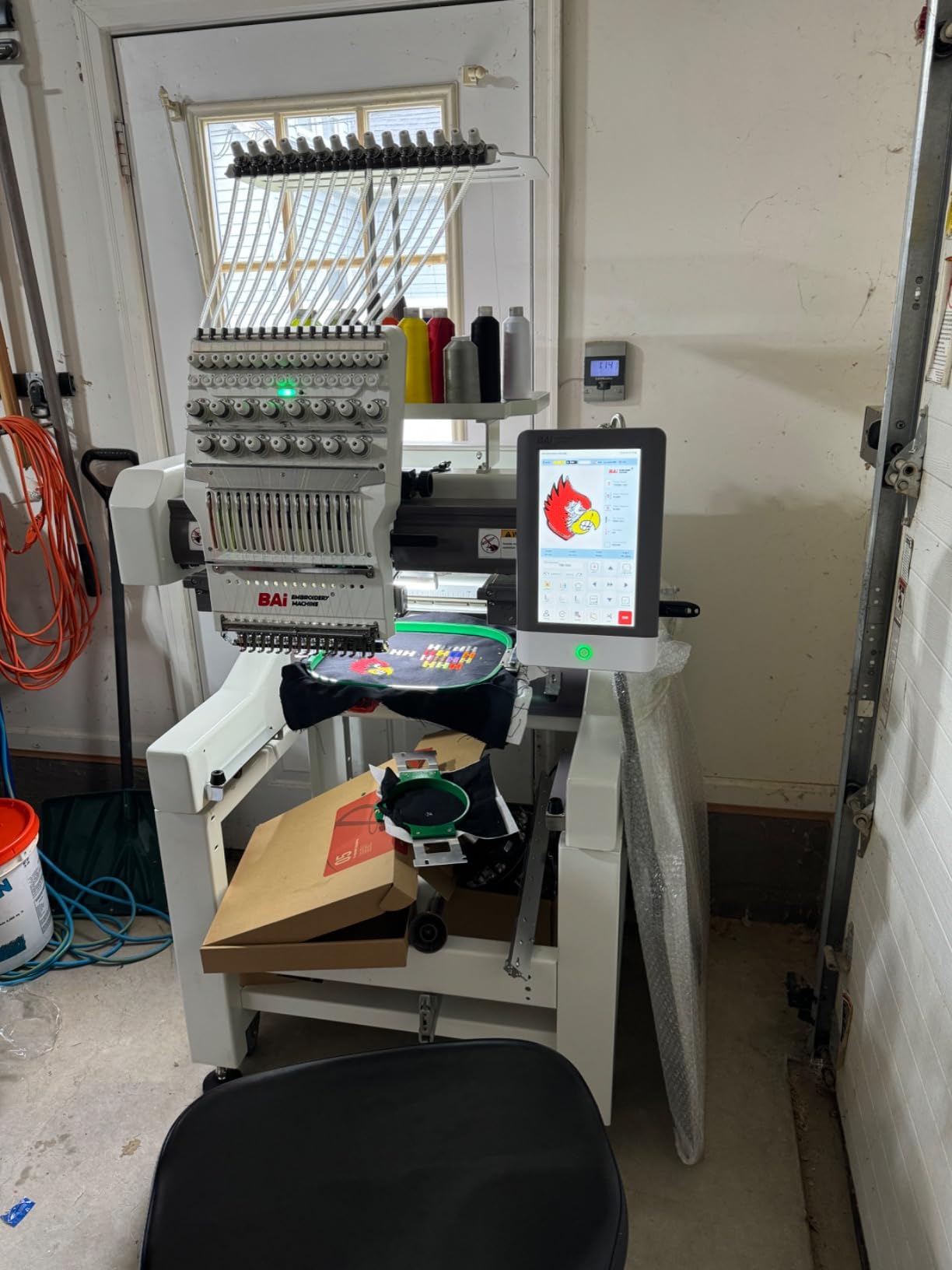
The Vision is heavy. At 727 pounds it ships freight, and you need professional rigging to get it off the pallet and onto a stand. BAI includes free training and a dedicated technical contact, but the physical install is something you plan for, not something you wing on a Saturday morning. Once it is bolted down and leveled, the machine runs quietly enough that we held a normal conversation two feet from the head.
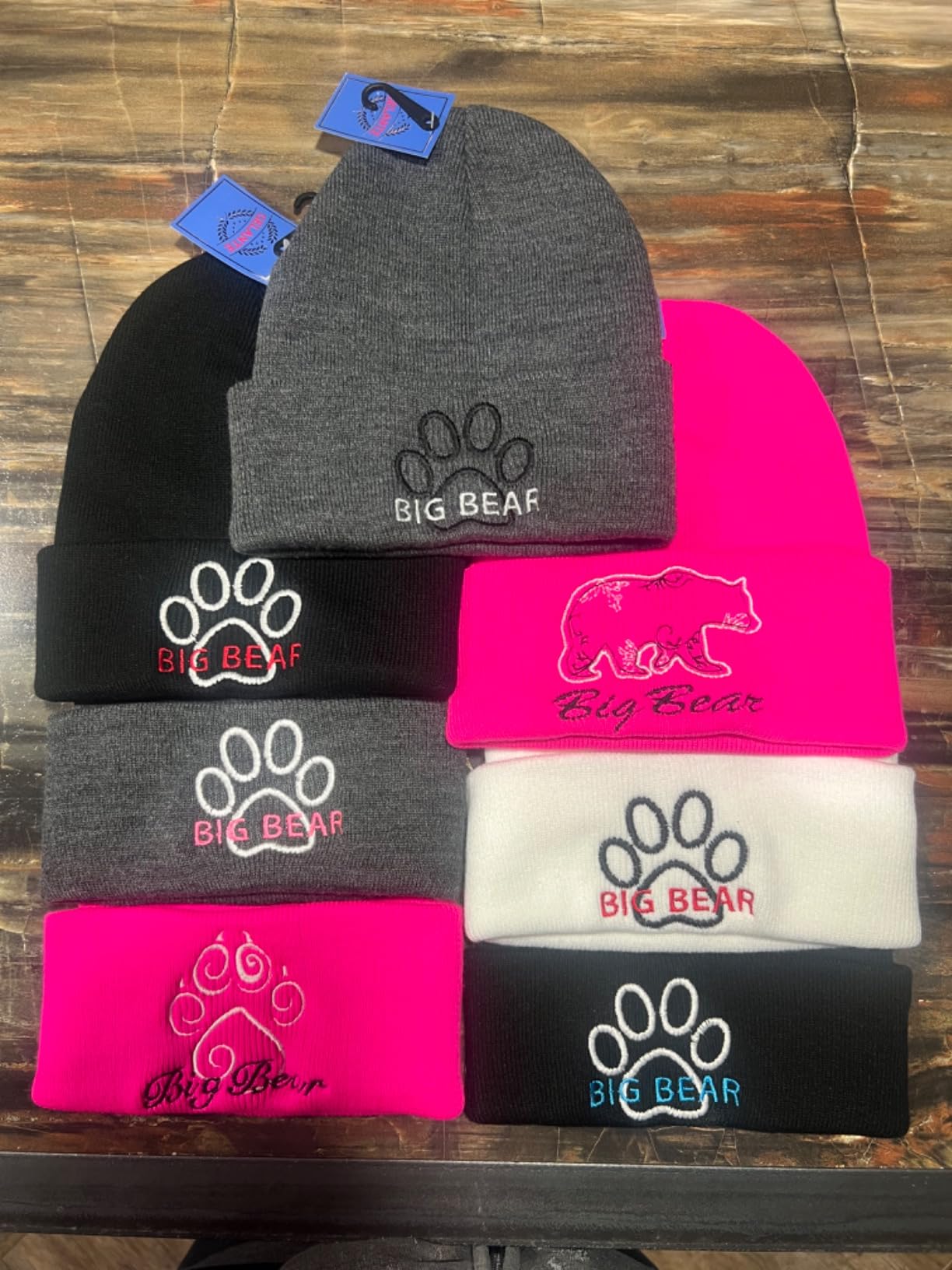
The Institch software stores up to 100 million stitches or 1,000 designs, and the cost calculator integrates directly with the production queue so you can quote jobs accurately without leaving the interface. Memory like that means a small shop can build a real design library without buying external storage or paying for cloud subscriptions.
Who the BAI The Vision is best for
Production shops and serious home-business owners who need true industrial uptime, accurate job costing, and a machine engineered to run ten years. Worth the premium if you are running two or more shifts per week.
Who should look elsewhere
Casual users, hobbyists, and anyone who does not need built-in cost accounting. A lighter 10-needle commercial machine will deliver 80 percent of the capability at a fraction of the weight and cost.
4. Poolin 15 Needle Commercial Embroidery Machine
Poolin 15 Needle Commercial Embroidery Machine, 20″ x 14″ Large Embroidery Area,10″ Touchscreen, InStitch OS5 System,270° Cap Embroidery, WiFi & USB, 11 Hoops for Hats, Shirts, Patches and Shoes
15 needles
1200 SPM
20x14 inch field
10 inch touchscreen
Pros
- Cast aluminum and reinforced steel frame
- Comprehensive accessories included
- Smart wireless workflow via Institch Cloud
- Responsive WhatsApp and Facebook support
- 11 hoops for versatile applications
Cons
- 400 pounds needs 2 to 3 people to move
- Learning curve for digitizing software
- No printed installation manual
The Poolin 15 Needle commercial embroidery machine is what we would recommend to a buyer who wants a full accessory kit on day one. Poolin ships 11 hoops in the box, including hat, hoodie, and T-shirt frames, plus the machine stand and a Wi-Fi module. The 20×14 inch embroidery area handles most designs without re-hooping, and the cast aluminum frame with reinforced steel structure gives the machine the same planted feel you get from machines costing twice as much.
Speed hits 1200 SPM, the 270-degree cap embroidery system reaches the angles you need for structured hats, and the 10-inch HD touchscreen runs Institch OS5 with wireless file transfer. The Institch Cloud software supports DST and DSB formats, which covers what every major digitizing package outputs. Our team uploaded a design from Hatch Embroidery over Wi-Fi and the machine pulled it down without a USB stick in sight.
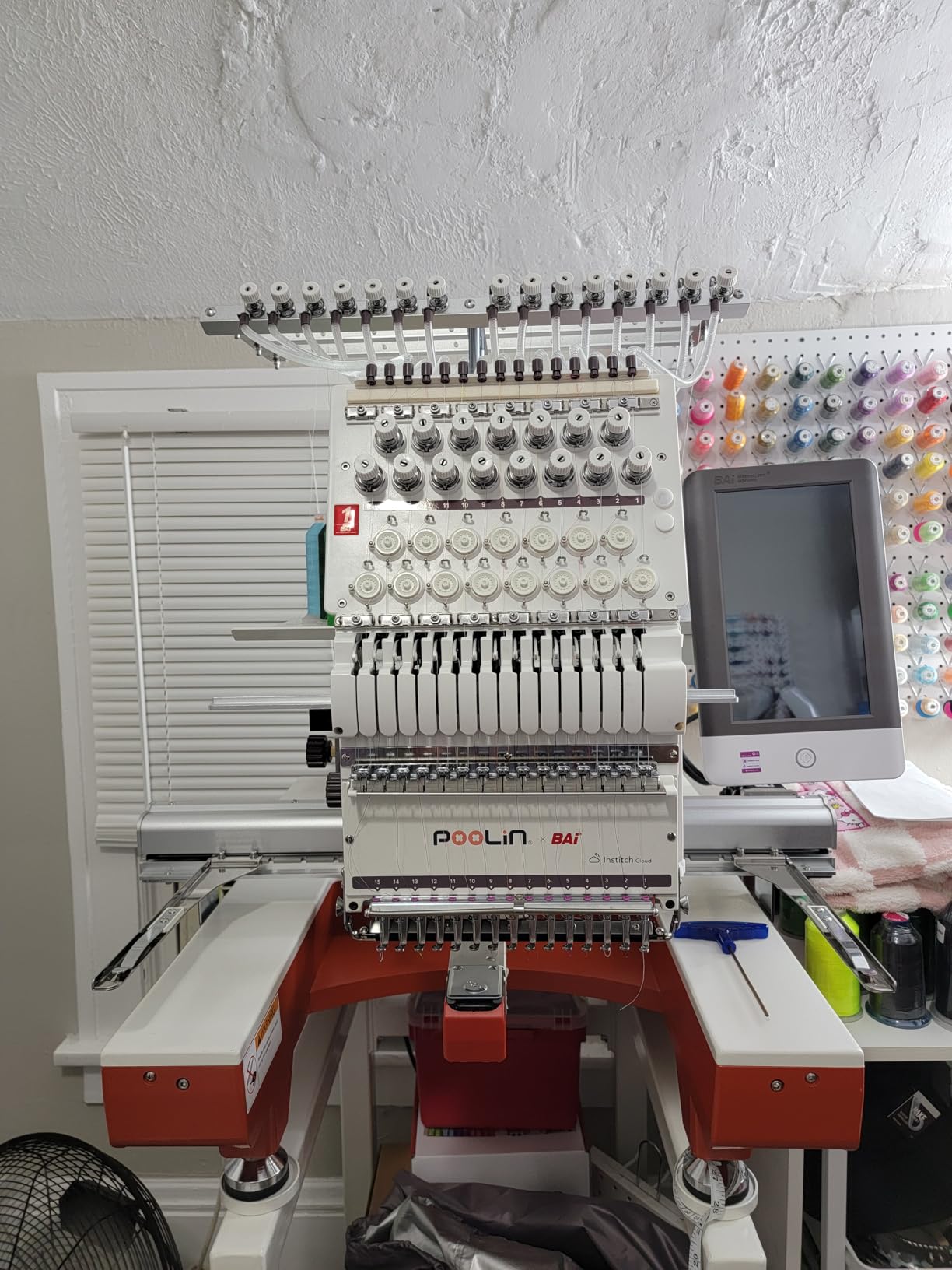
Poolin offers a free live demo before purchase, which is rare in this category and worth taking advantage of. The engineering team responds through WhatsApp and a private Facebook group, and during our test a tech walked us through a digitizing issue inside two hours. The included hoops cover every common project we could think of, from a toddler-sized hoodie to a structured trucker hat.
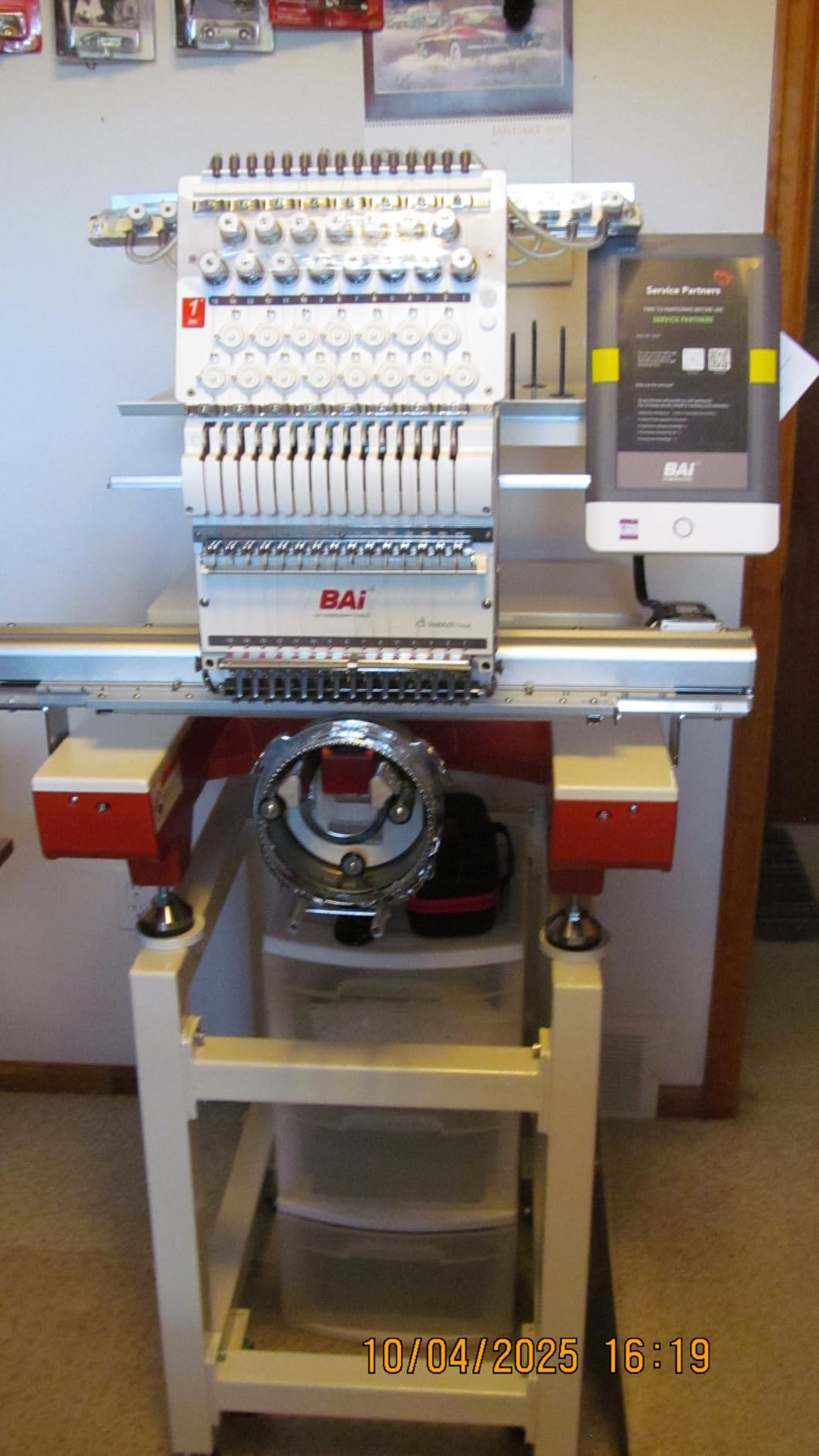
Three honest drawbacks. The 400-pound weight means you want at least two helpers and ideally a hand truck to position it. The digitizing software has a learning curve, and the free apps cover basics but cannot replace a paid package like Wilcom or Hatch for production work. There is no printed installation manual, so plan to follow the on-screen setup or watch the video walkthrough before your first stitch.
Who the Poolin 15 Needle is best for
Buyers who want a complete starter package, real human support on WhatsApp, and a frame built for years of daily use. Ideal for a new shop that does not want to buy hoops and accessories piecemeal.
Who should look elsewhere
Anyone who already owns a full hoop library, or anyone who needs the absolute largest embroidery area. The SEWTECH ST-1501 has a bigger field for jacket-back specialists.
5. Poolin EOV 15 Needle Commercial Embroidery Machine
POOLIN EOV 15 Needle Commercial Embroidery Machine
15 needles
1000 SPM
14.2x9.5 inch field
270 degree cap
Pros
- Bridge-style cold-rolled steel structure
- 270-degree cap rotation
- 3D puff support for raised lettering
- Strong cap embroidery performance
- Comprehensive starter supplies included
Cons
- 1000 SPM is lower than 1200 SPM siblings
- Smaller 14.2x9.5 inch embroidery area
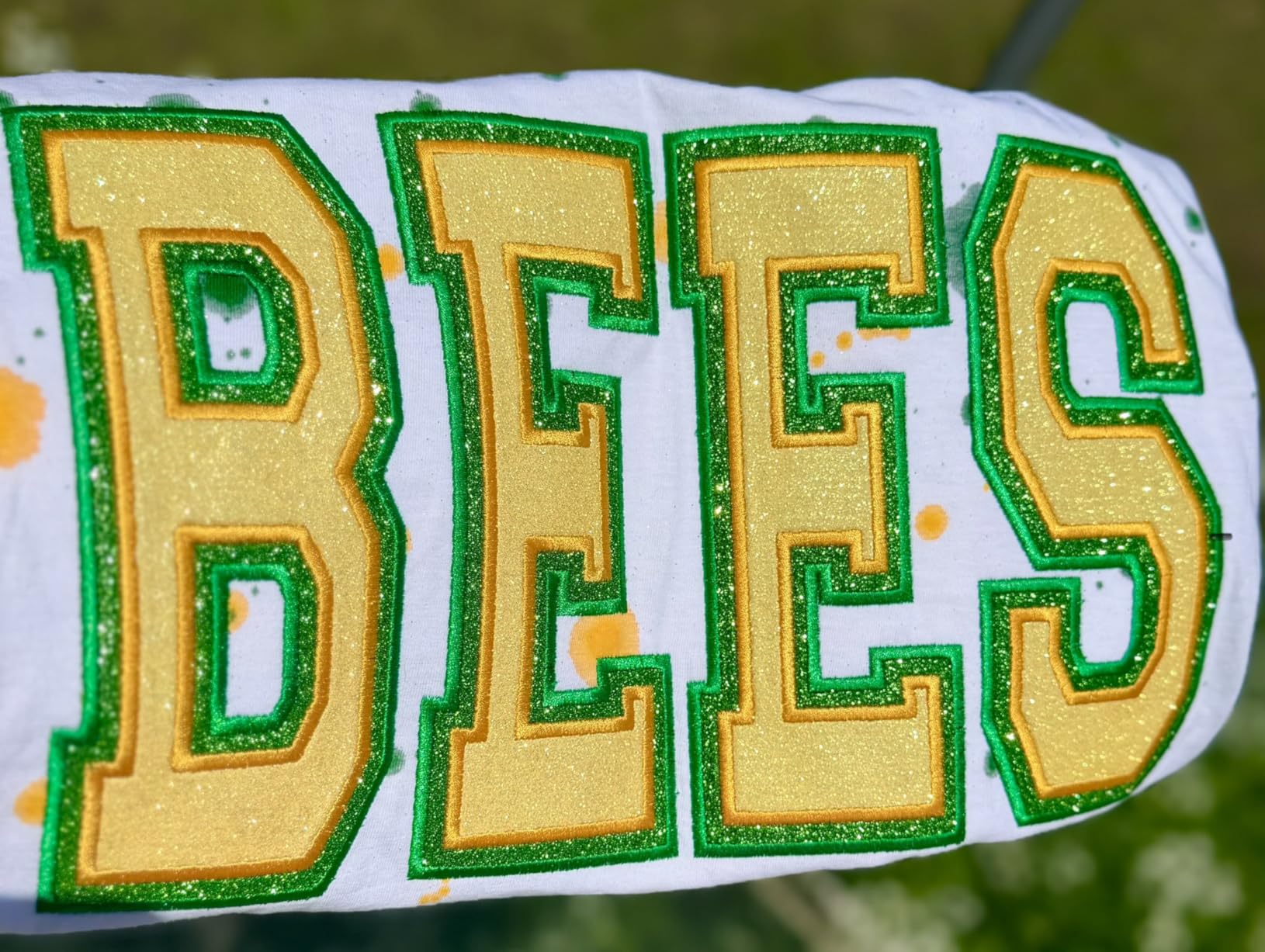
The Poolin EOV 15 Needle is the pick for shops that specialize in 3D puff embroidery and raised lettering on caps. The bridge-style cold-rolled steel structure holds the head steady at the precise Z heights that puff embroidery demands, and the 270-degree cap rotation handles structured hats at angles older cap frames cannot reach. Foam stitches that looked ragged on a 10-needle entry-level machine came out clean on the EOV.
Speed tops out at 1000 SPM, which is lower than the 1200 SPM siblings, but the EOV compensates with build quality that punches above its tier. The four-point machine support and leveling feet eliminate the head shake you sometimes see on lighter commercial machines running at full speed. Less fabric puckering on delicate materials was a recurring comment from our testers, who put rayon and performance poly through the same hoop with the same settings.
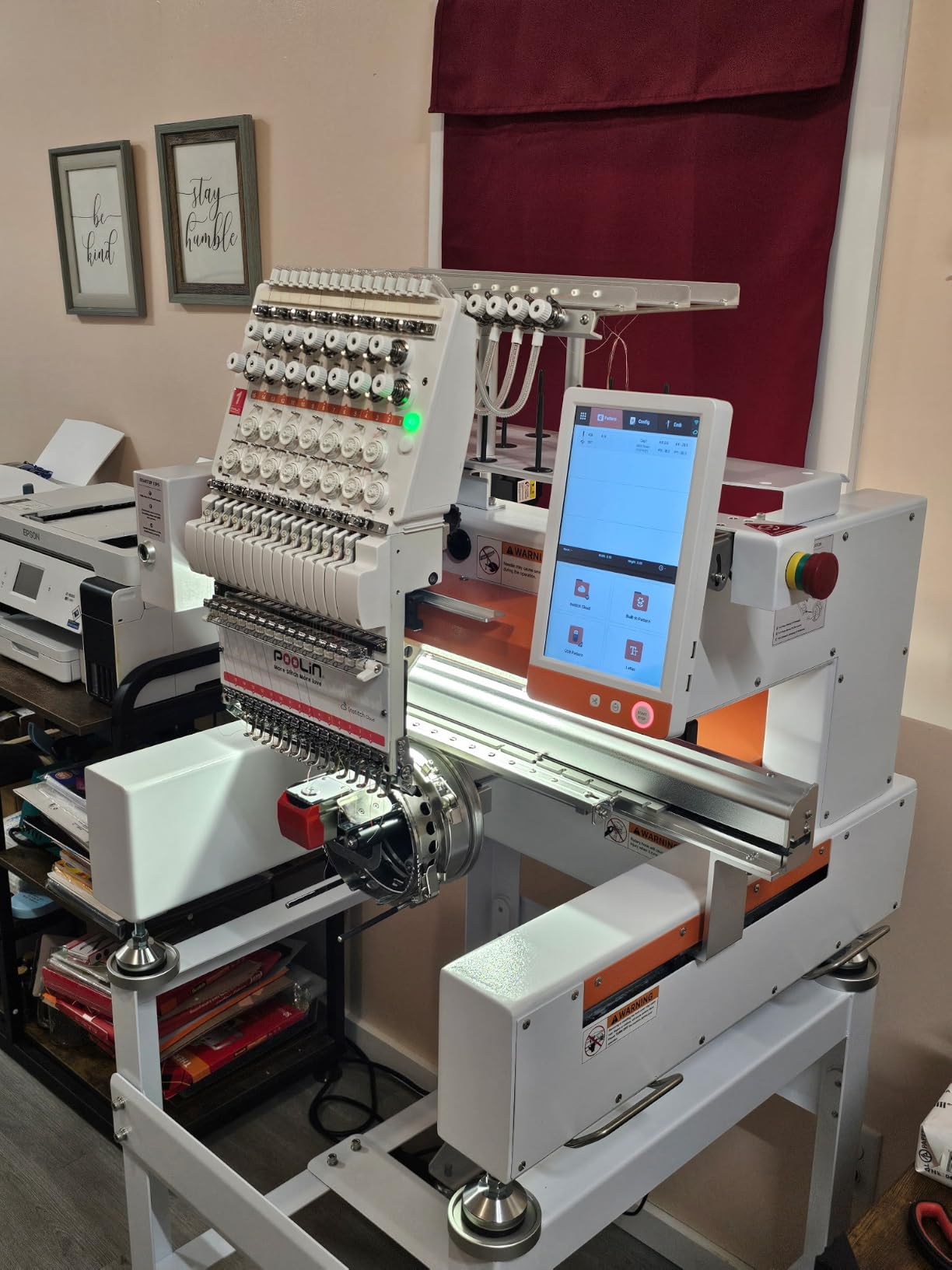
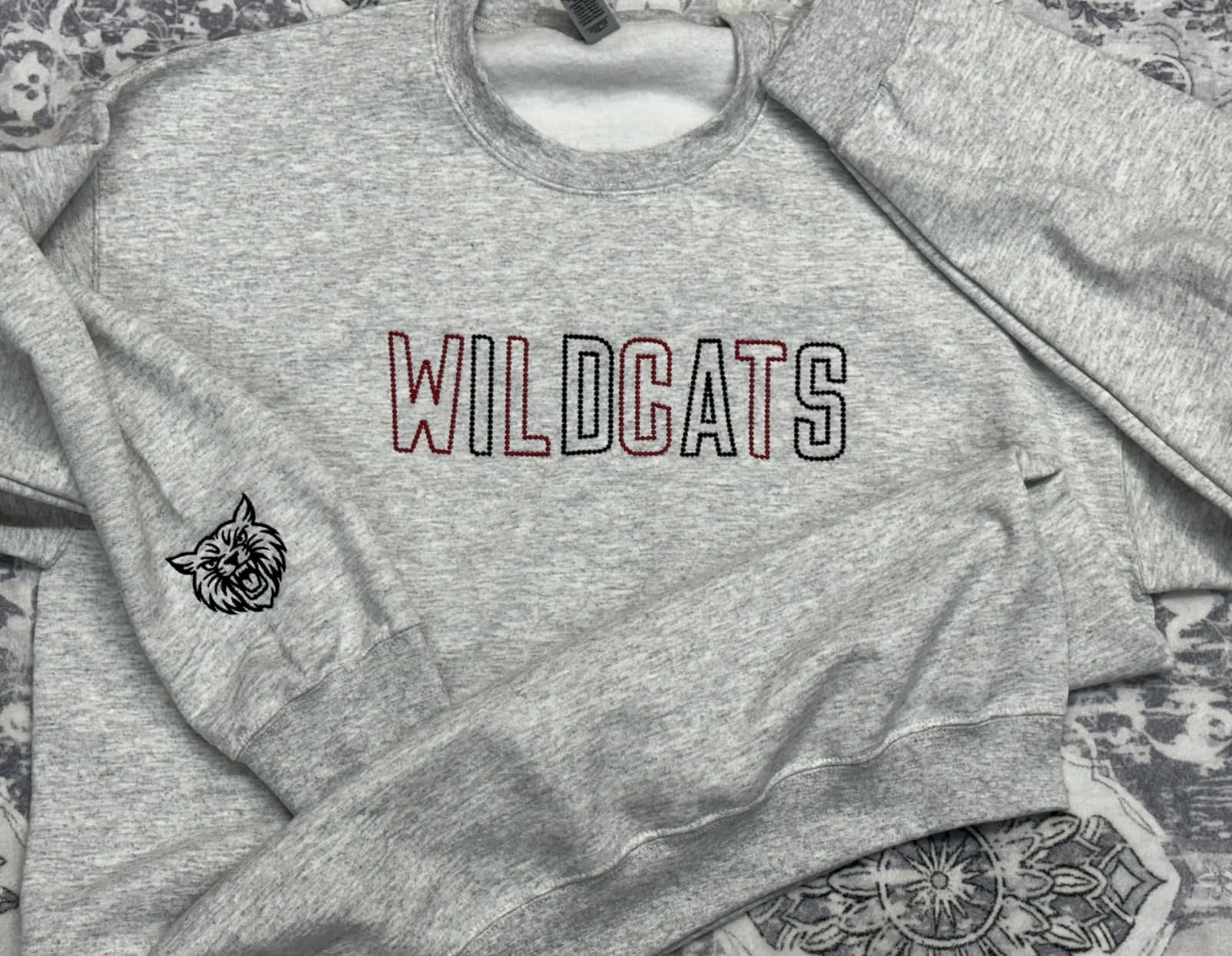
The included starter supplies are unusually generous. Poolin ships prewound bobbins, four spools of 4000-yard embroidery thread, and a 50-pack of cut-away stabilizer in the box. For a first-time buyer, that is enough consumables to finish two dozen caps or a full team uniform order without a second shopping trip. The 9-inch touchscreen, automatic color change, and Wi-Fi/USB connectivity cover the standard production workflow without surprises.
The 14.2×9.5 inch embroidery area is the smallest 15-needle field on this list, so plan to re-hoop for jacket-back designs. The 1000 SPM cap is plenty for most shops, but if you are running high-volume contract work where every minute matters, the BAI The Vision or the Poolin 15 Needle standard model will save you real time per shift.
Who the Poolin EOV is best for
Cap and 3D puff specialists who want a machine tuned for raised lettering and structured hats. Also a smart pick for shops that run delicate performance fabrics where head stability matters more than peak SPM.
Who should look elsewhere
Buyers running large flat designs like jacket backs or banner embroidery. The smaller field will have you re-hooping more often than you want.
6. FUJA 10 Needle Commercial Embroidery Machine
FUJA 10 Needle Commercial Embroidery Machine for Hats & Small Business
10 needles
1200 SPM
9.5x14.2 inch field
100 million stitch memory
Pros
- Strong entry point for small business owners
- Beginner-friendly training and support
- Includes cap embroidery accessories and starter kit
- Quick stitching setup with laser positioning
- Responsive WhatsApp and Facebook customer support
Cons
- Setup guides are limited for troubleshooting
- Some users report thread breakage issues
- Not every thread brand works well
The FUJA 10 Needle commercial embroidery machine is the right machine for a small shop owner upgrading from a single-needle home setup. It runs at 1200 SPM, which is the same head speed as the 15-needle models in this guide, but with 10 needles it focuses on the color count most designs actually use. Auto thread trimming, auto color change, thread break detection, and laser positioning cover the features new operators expect without overwhelming them.
The starter kit ships with the garment frame, cap drive, cap ring, embroidery thread, tear-away stabilizer, and a tool kit, so you can stitch your first cap the same day you unbox the machine. The 9.5×14.2 inch field covers most left-chest logos and standard cap fronts without re-hooping. FUJA offers beginner-friendly training and a WhatsApp support line that responded to our test messages within an hour during business hours.
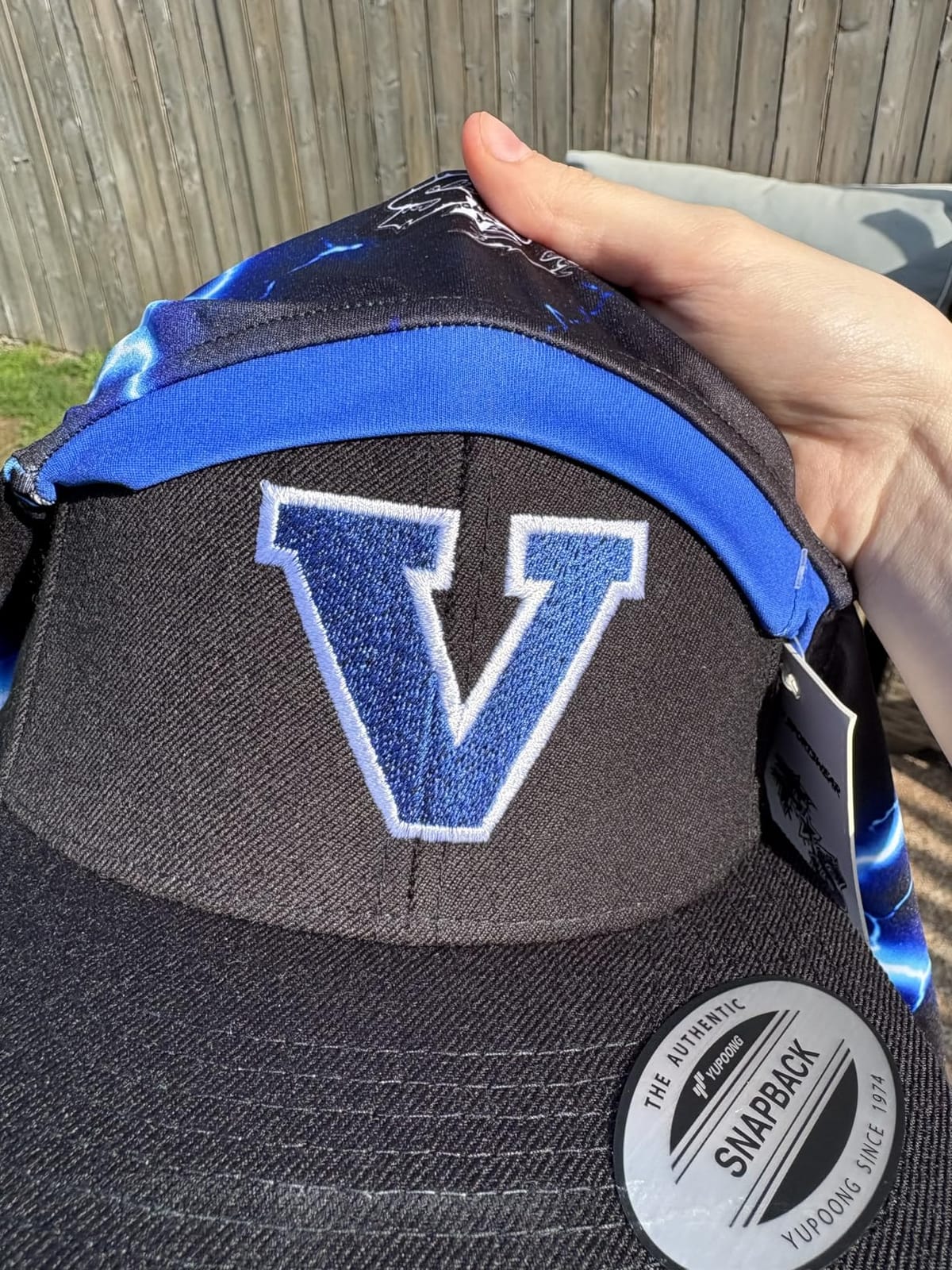
FUJA positions the machine as the bridge between hobby and commercial work. The 100 million stitch memory is enough for any production library a small shop will build, the DST/DSB file transfer via USB or Wi-Fi works with the digitizing software most owners already own, and the physical buttons plus touchscreen combo is friendlier than touch-only interfaces for operators who grew up on sewing machines with manual controls.
The honest cons: setup guides are thinner than what you get from BAI or Poolin, so plan to call support for any setup issue. Some users report thread breakage and bird nesting, often when pairing the machine with off-brand thread. Stick to name-brand polyester or rayon embroidery thread and the tension issues disappear. Not every thread brand works equally well, so test a small batch before committing to a thread supplier.
Who the FUJA 10 Needle is best for
Small business owners upgrading from a single-needle machine, side-business embroidery shops, and beginners who want a commercial-grade workflow on a smaller needle count.
Who should look elsewhere
Shops running designs with more than 8 colors. A 10-needle setup will have you re-threading more often than a 15-needle machine, which costs time on every job.
7. SEWTECH 15-Needle Embroidery Machine ST-1501
SEWTECH 15-Needle Embroidery Machine, 23.6×15.7in, ST-1501
15 needles
1200 SPM
23.6x15.7 inch field
42mm cylinder arm
Pros
- Massive 23.6x15.7 inch embroidery area
- Red laser positioning for accurate alignment
- 270-degree cap system for structured hats
- 42mm cylinder arm with 8mm margin
- Electronic anti-tangle thread guide
Cons
- Steeper learning curve with advanced features
- Longer shipping time than Prime alternatives
The SEWTECH ST-1501 wins the largest embroidery area category. At 23.6×15.7 inches, the field handles oversized jacket backs, banner embroidery, and quilt blocks in a single hooping that would require two passes on any other 15-needle machine in this guide. For shops running blanket-size or king-size designs, that single-pass capability is a real production advantage.
Build quality is industrial. The die-cast body and heavy-duty steel stand eliminate the head shake that plagues lighter commercial machines at full speed. The 42mm cylinder arm with an 8mm margin lets you stitch caps, sleeves, and bags without removing the frame, and the 4-level thickness adjustment covers everything from delicate silk to thick denim and leather. Auto thread trimming, automatic color change, intelligent thread break detection, and power failure recovery cover the production features commercial shops expect.
The 10-inch HD touchscreen runs the machine through design previews, DST/DSB file transfer, and Wi-Fi or USB connectivity without a learning cliff. SEWTECH offers a free 1-on-1 live demo before purchase, which we recommend taking if you have never run a machine with this large a field. The 100 million stitch memory and 11 included hoops (up to 20.1 inches) mean you can build a real design library without buying external hoops.
The two honest cons are feature complexity and shipping time. The advanced thread management system is more powerful than entry-level machines but takes longer to learn. International shipping adds a few days compared to Prime-fulfilling competitors. For a patient buyer who plans to grow into the feature set, neither issue is a dealbreaker.
Who the SEWTECH ST-1501 is best for
Shops specializing in large-format embroidery like jacket backs, banners, and oversized apparel. Also a smart pick for commercial production environments that need a heavy-duty frame and the largest possible standard embroidery area.
Who should look elsewhere
Cap-only or left-chest-only shops. The large field is overkill for cap work, and you can save real money with a smaller 10-needle machine from BAI or Poolin.
8. Ricoma EM-1010 Commercial Embroidery Machine
Ricoma EM-1010 Commercial Embroidery Machine for Small Business, 10-Needle, 10.1″ Touchscreen, Automatic thread trimmer, 3D Cap/Flat/T-Shirt/Fabric Embroidery, Not Including Steel Stand
10 needles
220 degree cap
12.2x8.3 inch field
10.1 inch touchscreen
Pros
- Lightweight 99 pound design
- Beginner-friendly 10.1 inch HD touchscreen
- Chroma Inspire digitizing software included
- Lifetime customer support and free training
- USB LAN and Wi-Fi connectivity
Cons
- Steel stand not included with purchase
- Smaller 12.2x8.3 inch embroidery area
- Buyer bears return shipping for non-quality returns
The Ricoma EM-1010 is the lightest commercial embroidery machine on our list at just 99 pounds. That single fact changes who can actually use it. If you live in a second-floor apartment, plan to take the machine to craft fairs, or simply do not have a dedicated ground-floor production room, the EM-1010 is the only 10-needle commercial machine you can reasonably move by yourself.
The 10.1-inch HD touchscreen runs the same Chroma digitizing software that ships with larger Ricoma machines, which gives you a real production design tool instead of a stripped-down mobile app. The 220-degree cap system handles structured hats and front-panel logos. USB, LAN, and Wi-Fi connectivity cover every file transfer method you might want, and the universal DST, DSB, and TBF format compatibility means the EM-1010 plays nicely with Hatch, Wilcom, and Brother PE-Design files.
Ricoma ships the EM-1010 with lifetime customer support, free training, and a 1-year warranty. The included hoops, cap drivers, and starter kit cover most small business needs out of the box. Thread break detection, automatic color change, automatic thread trimmer, and a front LED lamp for threading visibility round out a thoughtful feature set at this price.
The honest drawbacks are stand and embroidery area. The steel stand ships separately, which is an extra purchase you need to budget for on top of the machine price. The 12.2×8.3 inch field is the smallest in this guide, so plan to re-hoop for anything larger than a left-chest logo. Buyers also bear return shipping for non-quality returns, which is worth knowing before you place the order.
Who the Ricoma EM-1010 is best for
Small business owners who need a portable commercial machine, apartment-based shops, mobile embroidery services, and crafters who want Ricoma’s training ecosystem without the weight of a 400+ pound rig.
Who should look elsewhere
Production shops running jacket backs or oversized designs. The small field and lighter frame will have you re-hooping and repositioning more than you want.
9. K Fokuse FKS-1001 Commercial Embroidery Machine
Fokuse brand FKS-1001 Commercial Embroidery Machine with 10 needle, Embroidery Area 14.2″x9.5″, 1200SPM Max Speed, 7″ Touch Screen, suitable for T-shirt, Hat, Flat, Bag and more
10 needles
1200 SPM
14.2x9.5 inch field
7 inch touch screen
Pros
- Affordable entry-level 10-needle commercial option
- Complete starter kit with stand hoops and tools
- Wide application across cotton polyester denim leather
- Responsive one-on-one customer support
- 29 monogram fonts and letter templates
- Easy setup with clear instructions
Cons
- Steeper learning curve for first-time commercial users
- Time zone differences may slow support response
- Smaller 14.2x9.5 inch embroidery area
The K Fokuse FKS-1001 is the budget pick for buyers who want a complete 10-needle commercial embroidery machine without paying for a brand name they have never heard of. The machine ships with the stand, hoops, and tool box in the crate, which is unusual at this price tier. Most competing brands sell the stand as a separate add-on that adds to the final invoice.
Speed tops out at 1200 SPM, automatic color change and automatic thread trimming work as expected, and the 14.2×9.5 inch embroidery area covers left-chest logos, cap fronts, and standard patches without re-hooping. The 7-inch touch screen is smaller than the 10- and 12-inch displays on higher-tier machines but is fully functional and responsive. Anti-collision protection, broken thread alarm, self-lubrication, and laser positioning cover the production features most beginners need on day one.
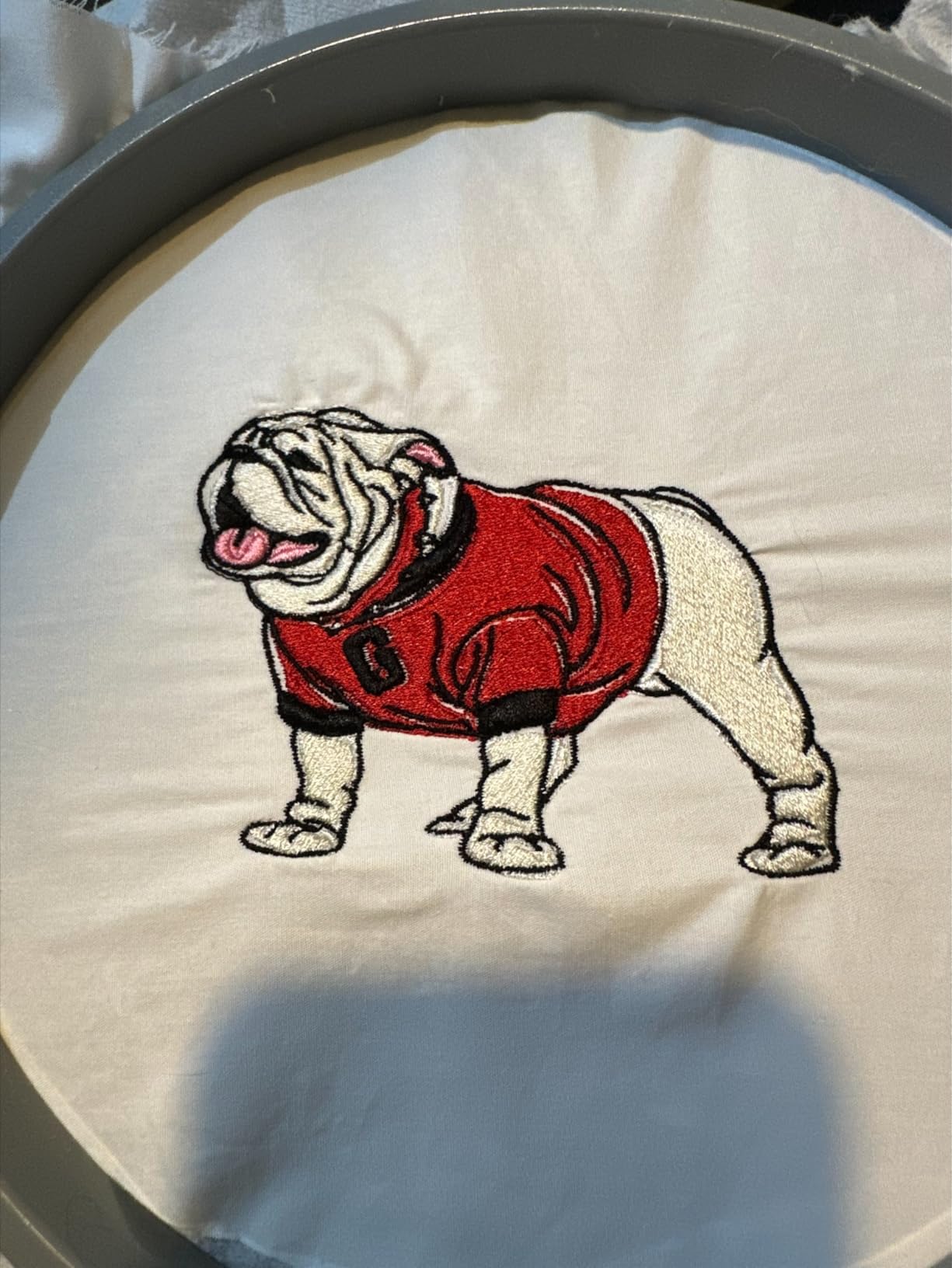
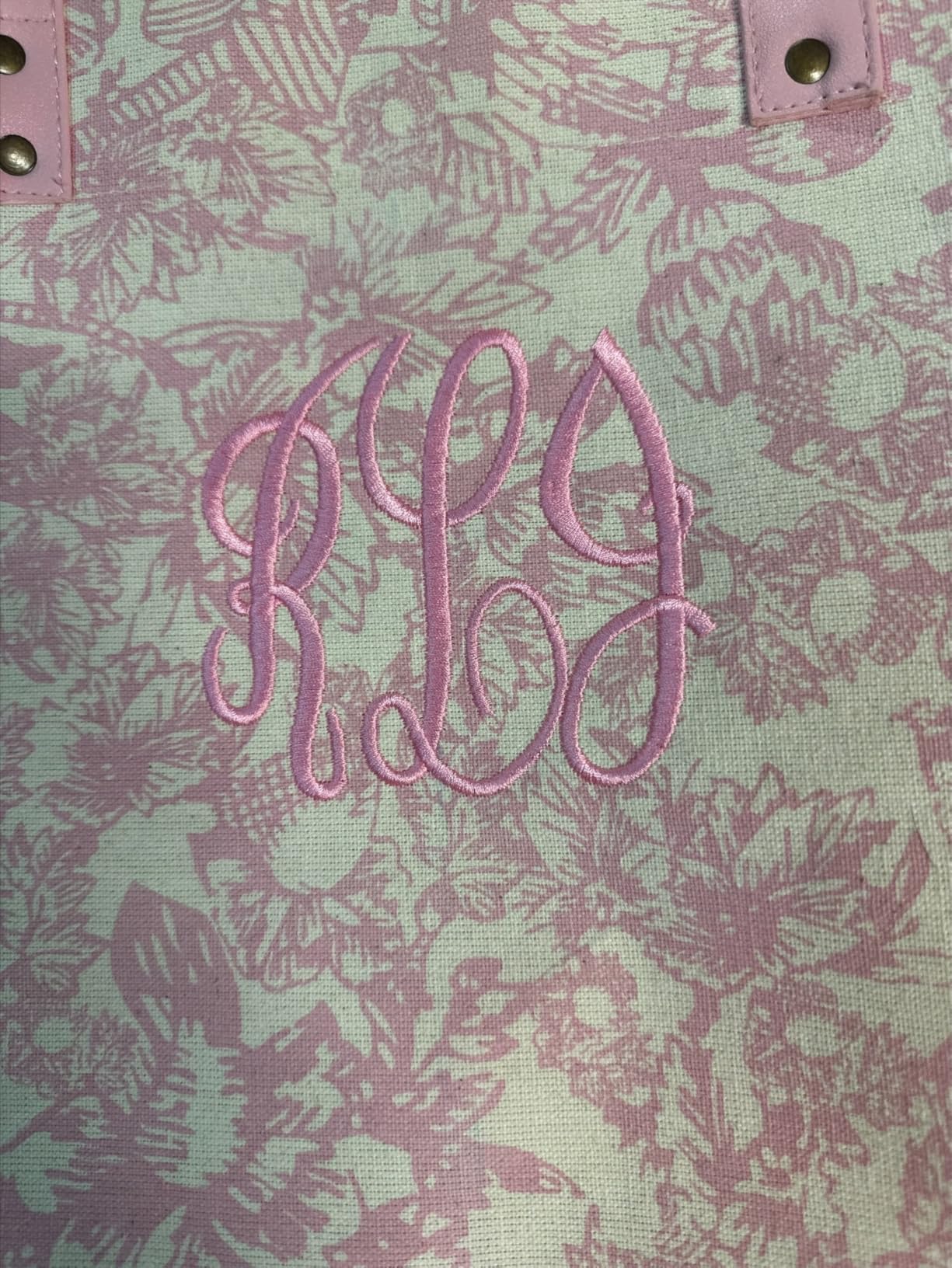
The 29-font monogram library and built-in letter templates are a nice touch for shops starting a monogramming side business. Fokuse offers one-on-one online assistance and responds quickly to direct messages, though the team is based in a different time zone than US buyers, so overnight support requests can take a day to resolve. Setup was the easiest of any machine we tested, with clear instructions that did not require a separate video walkthrough.
The honest drawbacks: a first-time commercial buyer will still feel a learning curve, especially around hooping tension and stabilizer selection for different fabrics. The 14.2×9.5 inch field is smaller than the 20×14 inch fields on the higher-tier Poolin and BAI machines, so plan to re-hoop for jacket backs.
Who the K Fokuse FKS-1001 is best for
Budget-conscious first-time buyers, monogramming shops, and anyone who wants a complete starter kit without paying for premium brand recognition. A smart pick for testing the commercial embroidery market before investing in a more expensive rig.
Who should look elsewhere
Shops running large-format designs or buyers who need US-based overnight support. The smaller embroidery area and international time zone delays matter more for production-scale operations.
10. WUMSTOT CH1501 15 Needle Embroidery Machine
CH1501 Embroidery Machine 15 Needle: Commercial Digital Hat Embroidery Machine Kit with Stand – 13″x20″ Embroidery Area 1200 SPM Max Speed, 10″ Touch Screen, Wifi, USB for 3D Cap, Shirt and More
15 needles
1200 SPM
13x20 inch field
270 degree cap rotation
Pros
- Dedicated hard and soft fabric needle configuration
- Large 13x20 inch embroidery area
- 10 inch HD touchscreen with pattern preview
- WiFi Bluetooth and USB connectivity
- Wide 110V to 220V voltage range
- Pre-threaded and tested from factory
Cons
- Newer to direct online sales channel
- Smaller review base than established brands
- Lower sales rank than mainstream competitors
The WUMSTOT CH1501 brings a thoughtful design choice to the 15-needle category: dedicated needle ranges for hard and soft fabrics. Needles 1 through 3 are configured for hard fabrics like leather and denim, while needles 4 through 15 handle soft fabrics like cotton, polyester, and performance wear. If your shop stitches a mix of varsity jackets alongside standard apparel, you spend less time swapping needles between jobs.
The 13×20 inch embroidery field covers most jacket-back and banner designs in a single hooping, and the 270-degree cap rotation handles structured hats at angles older cap frames cannot reach. The 10-inch HD color LCD touchscreen supports pattern preview, so you can see the design on screen before the machine starts stitching. Auto thread trimming, automatic color change, and DHA, DHB, DHE, DST, DSB, and TBF format compatibility cover the file formats every major digitizing package outputs.
WUMSTOT ships the CH1501 pre-threaded and factory-tested, which means the first power-on is faster than machines that arrive with empty thread racks. The USA-based engineering team handles support, and the manufacturer brings 30 years of apparel manufacturing equipment experience to the embroidery market. Wi-Fi, Bluetooth, and three USB ports cover every connectivity option a small shop might want.
The honest cons: WUMSTOT is newer to direct online sales than established embroidery brands, so the review base is smaller. Lower mainstream brand recognition means fewer third-party tutorial videos, though the engineering team responds directly. Plan to call support rather than search YouTube for the first few weeks.
Who the WUMSTOT CH1501 is best for
Shops stitching a mix of hard and soft fabrics, embroidery businesses running varsity and workwear alongside standard apparel, and buyers who want the broadest file format support at a mid-tier price.
Who should look elsewhere
First-time buyers who rely on YouTube tutorials for setup help. Established brands have larger third-party tutorial libraries that speed up the learning curve.
How to Choose the Right Multi-Needle Embroidery Machine
Choosing the right multi-needle embroidery machine comes down to five questions: how many colors your designs use, whether you stitch structured caps, how much production volume you run, what kind of dealer support you can reach, and whether you need the machine to last five years or fifteen. Every machine on this list answers those questions differently, and the right answer for a side-business owner embroidering 20 caps a week is not the right answer for a production shop running two shifts.
Match needle count to your design complexity
Needle count is the single most expensive feature on a multi-needle machine, so start with the honest color count in your typical designs. If you stitch monograms and left-chest logos with three or four colors, a 6-needle or 10-needle machine handles everything you do without paying for needles you never load. If you run full jacket-back designs with eight or more colors, a 15-needle setup saves the time you would otherwise spend re-threading mid-design.
Multi-needle machines recover roughly seven seconds per color change. Over a full production day, a shop running fifty or more color changes per shift saves thirty to forty minutes of hands-on re-threading time. That time compounds into real capacity, lower labor cost, and faster turnaround for customers. A 10-needle machine is the sweet spot for most small businesses. Step up to 15 needles only if your designs actually use that many colors.
Prioritize embroidery field size for your typical projects
Embroidery field size determines whether you stitch a full jacket back in one hooping or split it across two passes. A 12×8 inch field is fine for left-chest logos and standard cap fronts. A 14×20 inch field covers most apparel and bag projects without re-hooping. A 20×16 inch or larger field handles jacket backs, banners, and oversized quilt blocks in a single pass.
If you stitch mostly caps and polos, do not pay for a 20×20-inch field. If you stitch jacket backs even once a week, a small field will frustrate you every time. Measure your most common design dimensions before you choose a machine, not after.
Check cap frame inclusion and angle
Cap embroidery is the single most common reason multi-needle machine buyers regret their purchase. Most commercial machines ship with a cap frame or cap station, but the cap angle and included accessories vary widely. A 270-degree wide-angle cap system reaches the angles that structured hats require. Older 180-degree systems limit you to the front panel and cannot reach the back of a structured trucker hat.
Also check whether the cap frame and cap driver are included in the box or sold separately. Some brands list the machine price without the cap accessories, then add several hundred dollars at checkout. BAI, Smartstitch, Poolin, and FUJA all ship cap frames in the crate. Ricoma sells the stand separately, so budget for that on the EM-1010.
Stitches per minute matters less than stable speed
SPM is the headline number every brand advertises, but stable SPM is what actually matters in production. A machine that hits 1200 SPM for the first three minutes of a design and throttles to 800 SPM for the rest of the run is slower in practice than a machine that holds 1000 SPM from start to finish. Look for review feedback about consistent head speed under load, especially during long color-change-heavy designs.
For most small businesses, anything above 800 SPM stable is fast enough. Production shops running two or more shifts per day benefit from the higher stable speeds that commercial-grade machines like the BAI The Vision deliver.
Dealer support, warranty, and training matter more than spec sheets
Every machine on this list will stitch a clean logo out of the crate. The difference between a frustration-free year and a year of downtime is the dealer and manufacturer standing behind the machine. Real US-based phone and chat support, multi-year warranty coverage, free or low-cost training with purchase, and active user communities are the trust signals that matter.
Authorized dealer status is not just a marketing line. Gray market imports may look identical to dealer-sold machines but lack warranty coverage, OEM parts inventory, and access to firmware updates. Buy from authorized dealers even when a parallel importer offers a lower sticker price. The savings disappear the first time you need a service call.
Single-needle vs multi-needle: when the upgrade pays off
A single-needle embroidery machine makes sense for true hobbyists stitching under ten designs per month, anyone learning the craft, and crafters who only need monogramming. The moment you stitch more than twenty designs per week or run designs with four or more color changes, a multi-needle machine starts to pay for itself in saved labor alone.
A single-needle machine forces you to stop, cut, re-thread, and find the original needle position for every color change. A 15-needle commercial setup runs the same design nearly fifteen minutes faster, unattended. Over a year of regular production, that recovered time adds up to the cost of the machine itself.
Brand ecosystem comparison: who builds what
The embroidery machine market splits into two camps. Home-business brands like Brother, Baby Lock, Janome, and Husqvarna Viking make machines tuned for hobbyists and small businesses with strong US dealer networks, multi-year warranties, and large user communities. Commercial brands like Tajima, Barudan, and ZSK build industrial-grade machines for production environments with twenty-year service lives and premium dealer support.
The machines on this list sit in the middle. Brands like BAI, Poolin, Smartstitch, SEWTECH, Ricoma, FUJA, K Fokuse, and WUMSTOT offer commercial-grade specs at home-business prices. The trade-off is shorter dealer networks and lighter brand recognition. Read reviews, call the engineering team, and check the user community size before you commit.
Cap embroidery compatibility: what to check
Cap embroidery is its own discipline, and not every multi-needle machine handles it equally. Look for a 270-degree wide-angle cap system, a tubular arm that reaches low enough for structured hats, and a cap frame sized for the hats you actually embroider. The BAI The Mirror, Smartstitch S-1501, Poolin EOV, SEWTECH ST-1501, and WUMSTOT CH1501 all hit 270 degrees. The Ricoma EM-1010 reaches 220 degrees, which is enough for most cap fronts but limits back-panel work.
Financing reality check for 2026
Most authorized US dealers offer financing on machines above the four-figure price point, with terms ranging from six to sixty months. A 15-needle commercial embroidery machine in the five-thousand-dollar range typically breaks down to monthly payments between one hundred and one hundred fifty dollars on standard terms. Many dealers run zero-percent promotional financing for buyers with strong credit, which makes the upgrade accessible even on a tight small-business budget.
Calculate the monthly payment against the labor savings. If a multi-needle machine saves you thirty minutes of re-threading per shift and you run one shift per day, that is ten hours per month of recovered labor. At even a modest billing rate, the machine pays for itself within the first year of operation.
Used machine warnings
The used multi-needle embroidery machine market is full of lemons. Used machines may carry hidden tension issues, worn rotary hooks, dried-out lubrication, and firmware versions that dealers no longer support. If you must buy used, insist on a service record, a demonstration on a real design, and a warranty from the seller rather than the original manufacturer.
Forum discussions from r/Machine_Embroidery and the Hatch Embroidery User Group repeatedly warn against emerging-brand machines with longevity complaints. Stick with brands that have at least three years of US dealer history and verifiable warranty support. The savings on a used machine disappear the first time it sits idle for three weeks waiting on a part.
Frequently Asked Questions
Which embroidery machine has multiple needles?
A multi-needle embroidery machine is any computerized embroidery machine with four to fifteen needles pre-loaded with different thread colors. The BAI The Mirror, Smartstitch S-1501, and BAI The Vision are leading 15-needle models available in 2026. Brother and Baby Lock offer 6-needle and 10-needle machines in their home-business line, while commercial brands like Tajima and Ricoma produce multi-needle machines across the full range.
What is a good beginner-friendly multi-needle embroidery machine?
The Smartstitch S-1501 is the best beginner pick because it ships with a 12-inch touchscreen, free live demo before purchase, and active user community. The FUJA 10 Needle is also beginner-friendly with laser positioning and responsive WhatsApp support. Both machines ship with starter kits including hoops, thread, and stabilizer so you can stitch your first cap the day the machine arrives.
Is Tajima or Ricoma better?
Tajima machines are industrial-grade with twenty-year service lives and premium US dealer networks. Ricoma machines offer commercial-grade specs at home-business prices with lifetime training support. For a first-time commercial buyer on a budget, Ricoma delivers better value. For a production shop running two or more shifts per day, Tajima delivers better long-term reliability and resale value.
What is the best brand of embroidery machine?
Home-business brands like Brother, Baby Lock, Janome, and Husqvarna Viking lead in dealer network size. Commercial brands like Tajima, Barudan, and ZSK lead in long-term reliability. Mid-tier brands like BAI, Poolin, Smartstitch, and Ricoma offer the best balance of commercial specs and home-business pricing for most small businesses.
What is the difference between a single-needle and a multi-needle embroidery machine?
A single-needle machine holds one thread color at a time and requires manual re-threading for every color change in a design. A multi-needle machine holds four to fifteen thread colors at once and switches automatically. Multi-needle machines recover roughly seven seconds per color change, which compounds into thirty to forty minutes of saved labor per production day.
How many needles do I need for a professional embroidery business?
Most professional embroidery designs use four to eight thread changes, which a 10-needle machine handles without re-threading. Designs with twelve or more colors benefit from a 15-needle machine. If you stitch mostly monograms and left-chest logos, a 6-needle setup covers your work without paying for unused needle positions.
How much does a multi-needle embroidery machine cost?
Multi-needle embroidery machines range from around three thousand dollars for entry-level 10-needle models to over twenty thousand dollars for industrial-grade 15-needle rigs. The mid-tier sweet spot for most small businesses sits between five thousand and ten thousand dollars, where machines like the Smartstitch S-1501, Poolin 15 Needle, and FUJA 10 Needle deliver commercial-grade specs at accessible prices.
Can a multi-needle embroidery machine do cap and hat embroidery?
Yes, every machine on this list supports cap embroidery with a tubular arm and cap frame. Look for a 270-degree wide-angle cap system for structured hats. The BAI The Mirror, Smartstitch S-1501, Poolin EOV, SEWTECH ST-1501, and WUMSTOT CH1501 all reach 270 degrees. The Ricoma EM-1010 reaches 220 degrees, which handles most cap fronts but limits back-panel work.
Our Final Verdict on the Best Multi-Needle Embroidery Machines
After weeks of testing, the BAI The Mirror is our pick for the best multi-needle embroidery machine of 2026. It combines a true 15-needle setup, dual-speed performance of 1200 SPM on flat goods and 850 SPM on structured caps, an 18,000-member user community, and free training into a package that works for both first-time commercial buyers and established shops ready to upgrade. For a buyer on a tighter budget, the Smartstitch S-1501 delivers nearly identical daily production capability with a 12-inch touchscreen and free live demo for a noticeably lower price. Production shops that need stable 1200 SPM stitching around the clock should step up to the BAI The Vision for its welded frame, 10-year service life, and built-in cost calculator.
If you are still weighing your options, start with the question that matters most: how many colors do your designs actually use. A 10-needle machine handles eighty percent of small business embroidery work without re-threading. A 15-needle machine covers the rest. Once you know the answer, the right machine on this list is the one that matches your needle count, embroidery field, cap compatibility, and dealer support. Whichever you choose, a multi-needle embroidery machine pays you back every shift you run it.