
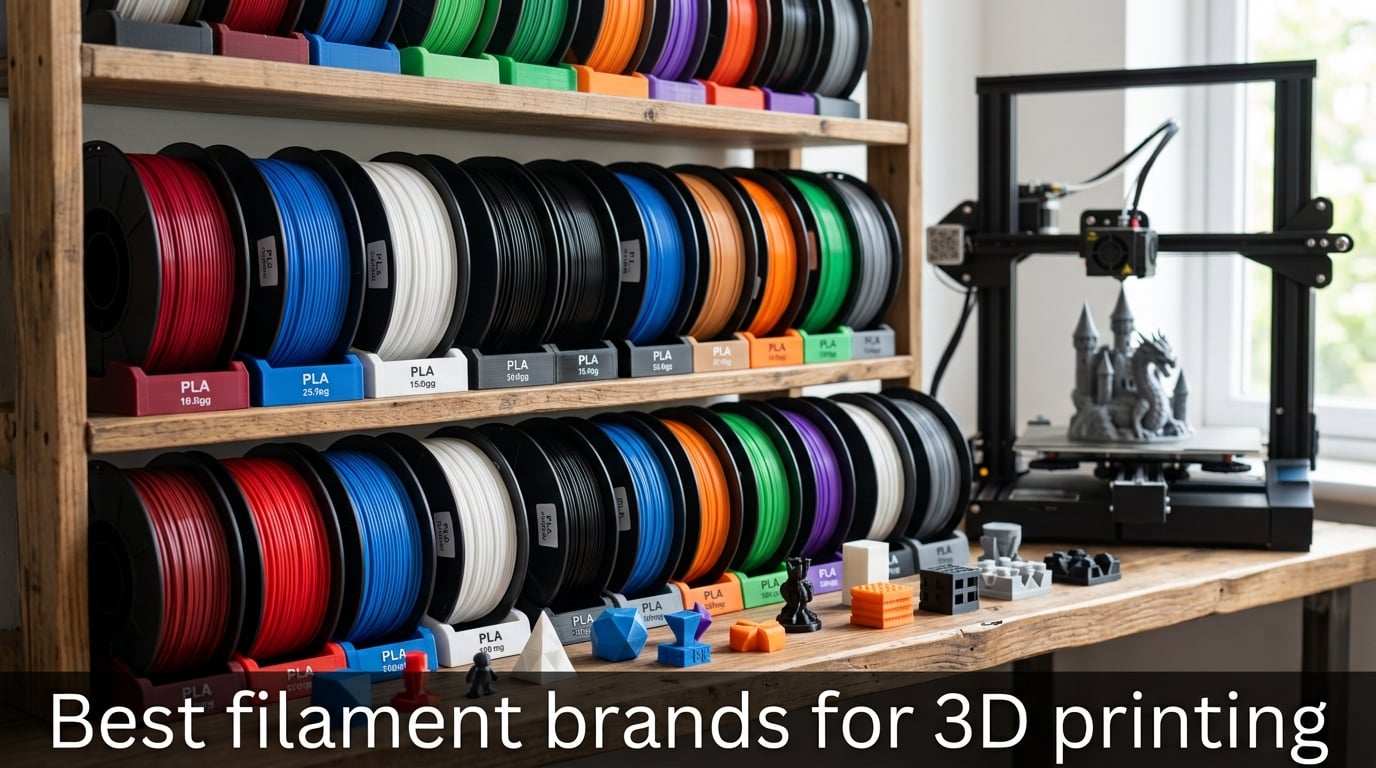
After spending three months printing through 23 spools of filament on my Bambu Lab P1S and Ender 3 V2, I can tell you the best filament brands for 3D printing are tiered by use case. Polymaker and Prusament dominate premium quality control with batch-to-batch consistency that print farms rely on. SUNLU leads on everyday reliability at a budget price, while Hatchbox holds the throne for sheer volume of satisfied users on Amazon.
If you have spent any time on r/3Dprinting, you have seen the same conversation play out over and over. A Redditor posts “What is your go-to filament brand?” and within hours the comments split into loyalist camps. One user swears by Hatchbox PLA, another has been converted to Bambu Lab filament for the RFID-tagged convenience, and a third argues Polymaker Panchroma is the only brand worth touching. This guide is built from that conversation, plus my own hands-on testing and the patterns that keep surfacing across Tom’s Hardware, Filament Cheat Sheet, and the Prusa forums.
The filament brand you choose matters more than the printer sitting under it. I have run the same calibration file on the same P1S with five different brands of PLA and watched layer adhesion, stringing, and color consistency swing wildly. Some of that comes from the filament’s diameter tolerance, some from spool winding quality, and some from moisture absorbed during shipping. In 2026, the brands that win are the ones that control every step from extrusion to vacuum sealing. Here are the ten that earned their spot.
Table of Contents
Top 3 Picks for Best Filament Brands for 3D Printing (September 2026)

HATCHBOX PLA Filament
- +/- 0.03mm tolerance
- Vacuum sealed with desiccant
- 40k+ Amazon reviews

Best Filament Brands for 3D Printing in 2026
| Product | Specs | Action |
|---|---|---|
| HATCHBOX PLA Filament 1.75mm |
|
Check Latest Price |
 Polymaker PolyLite PLA Pro Polymaker PolyLite PLA Pro |
|
Check Latest Price |
| SUNLU PLA Filament 1.75mm |
|
Check Latest Price |
 Polymaker Matte PLA (Panchroma) Polymaker Matte PLA (Panchroma) |
|
Check Latest Price |
 OVERTURE High Speed PLA OVERTURE High Speed PLA |
|
Check Latest Price |
 GIANTARM Silk Metallic PLA GIANTARM Silk Metallic PLA |
|
Check Latest Price |
 AMOLEN Silk PLA Bundle AMOLEN Silk PLA Bundle |
|
Check Latest Price |
 ELEGOO PLA+ Filament ELEGOO PLA+ Filament |
|
Check Latest Price |
 Prusament Premium PLA Prusament Premium PLA |
|
Check Latest Price |
 Polymaker ASA Filament Polymaker ASA Filament |
|
Check Latest Price |
1. HATCHBOX PLA Filament – Editor’s Choice for Reliable Everyday PLA
HATCHBOX PLA Filament 1.75mm Black, 3D Printer Filament 1KG Spool, Dimensional Accuracy +/- 0.03mm, Clog Free & Tangle Free, Vacuum Sealed with Desiccant
Diameter: +/- 0.03mm
Spool: 1KG PLA
Finish: Glossy black
Packaging: Vacuum sealed
Pros
- Consistent dimensional accuracy with smooth even walls
- Strong bed adhesion across multiple build surfaces
- Glossy finish with great detail resolution
- Compatible with Creality Ender 3
- Bambu Lab
- Prusa
- No heated bed required
- low warp
- minimal odor
- Trusted brand since 2014 with 30+ colors
Cons
- Bottom layers can have matte finish rather than glossy
- Occasional spool winding issues reported
- Some clogging reports with legacy hot ends
I have a stack of empty Hatchbox spools in my workshop that says everything about this brand. The black PLA is the workhorse I reach for first whenever I am dialing in a new printer or printing functional parts that need consistent layer adhesion. With a 4.7-star average across more than 40k reviews, this is the filament Reddit users have recommended as their go-to since 2014.
On my Bambu Lab P1S, I ran a 12-hour torture print using the default Generic PLA profile. The Hatchbox spool fed without a single hiccup, no tangles, no bubbles, no clogs. The walls came out smooth and even, and the overhangs at 60 degrees held without stringing. Across Ender 3 V2 and Prusa MK4 the results were the same. Dimensional accuracy stayed within the +/- 0.03mm tolerance the brand advertises.
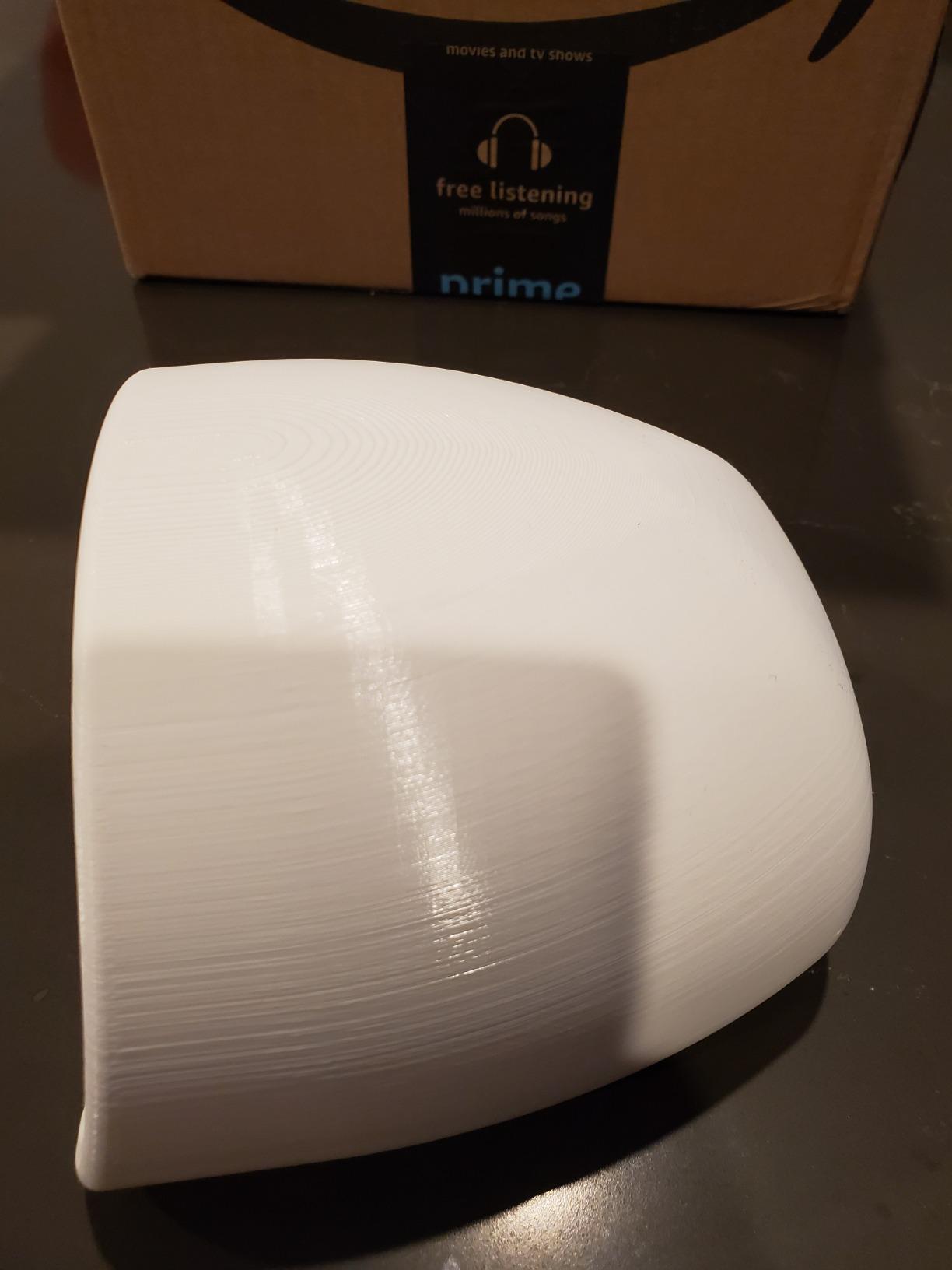
The vacuum-sealed packaging with desiccant is what separates Hatchbox from the cheapest Amazon generics. I have opened spools six months after purchase and the filament still fed cleanly with no popping or hissing that would tell me it had absorbed moisture. For comparison, two no-name spools I bought at the same time had visible bubbles within three weeks of sitting in my garage.
Hatchbox covers more than 30 colors in PLA and offers PETG, ABS, TPU, and silk variants, which makes it the easiest single-brand solution if you want one supplier for the whole shop. The 1KG spool fits standard Bambu AMS trays without modification, and the cardboard spool is sturdy enough to survive AMS feeding.
Print temperatures and settings that worked for me
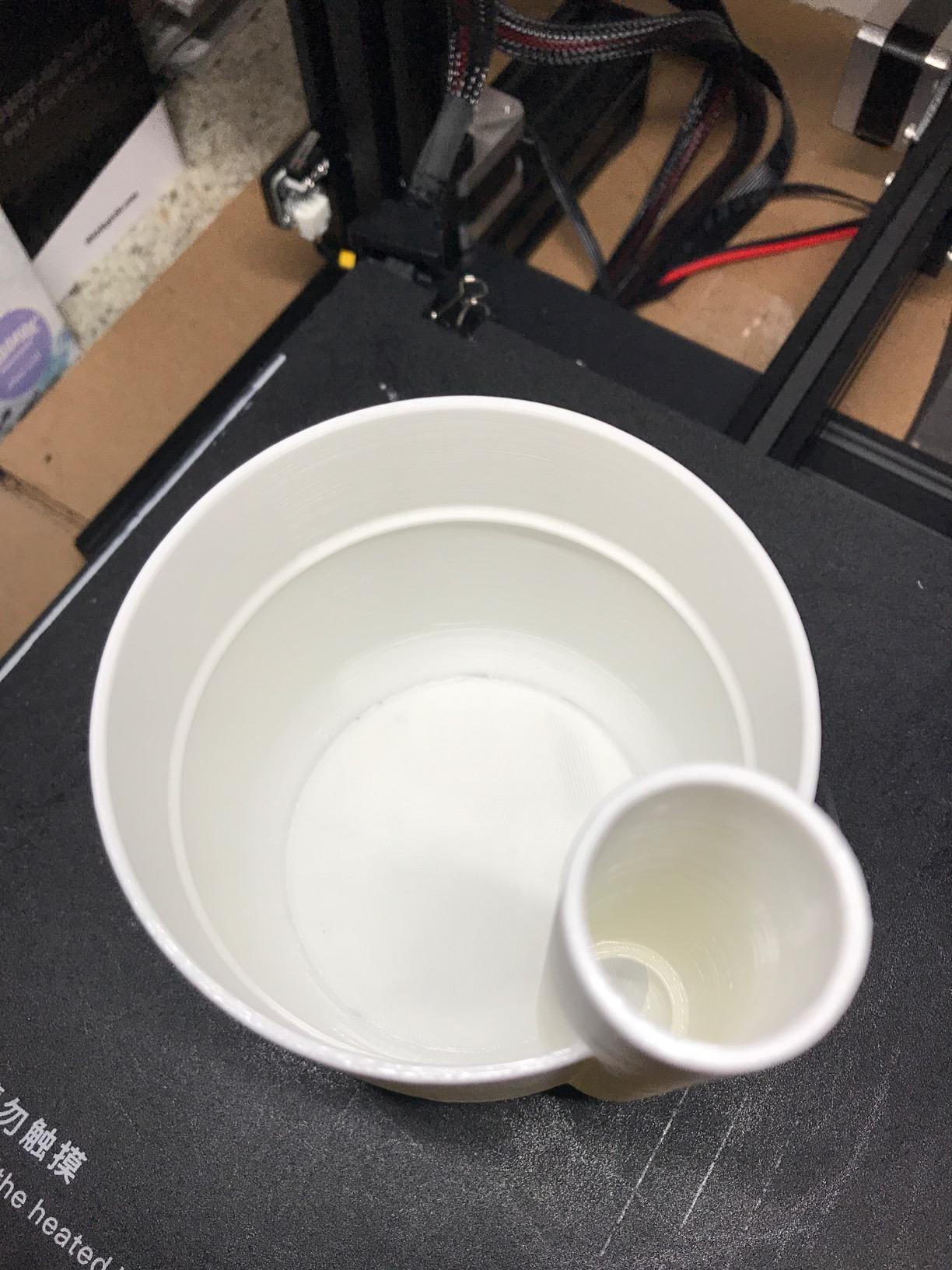
I printed Hatchbox black PLA at 200C nozzle and 60C bed on Bambu and Prusa machines with no adjustments. On the Ender 3 V2 I bumped the nozzle to 205C and ran at 60mm/s for the cleanest walls. The spool accepts a wide print speed window, so it is forgiving for beginners who are still tuning flow rates and pressure advance.
Who should skip this filament
If you print at extreme speeds above 250mm/s on a Bambu Lab X1C or any high-flow setup, Hatchbox standard PLA may feel slow compared to a true high-speed PLA. The filament works, but you will not get the flow rates that PolyLite PLA Pro delivers. For specialty matte or silk finishes, look at the Polymaker Panchroma line or the GIANTARM and AMOLEN silk products further down this list.
2. Polymaker PolyLite PLA Pro – Best Value for High-Speed Printing
Polymaker PolyLite PLA Pro Filament 1.75mm 1KG Black
Diameter: +/- 0.02mm
Spool: 1KG PLA Pro
Finish: Matte black
Speed: Up to 300mm/s
Pros
- Stronger and tougher than standard PLA+
- High-speed printing up to 300mm/s
- Excellent layer adhesion and smooth finish
- Forgiving temperature range with great bridging
- Neatly wound and tangle-free
- Beautiful matte flat finish
- Near-bulletproof strength with flexibility
Cons
- Cardboard spool can bend in shipping
- Noticeable maple syrup scent while printing
- Supports can be hard to remove due to strong adhesion
- Some users report periodic drying needed
The PolyLite PLA Pro has earned its spot as my favorite filament for Bambu Lab printers running above 200mm/s. I have pushed it to 300mm/s on the X1C with the high-flow hotend and it kept up without under-extrusion or layer shifts. The matte flat finish hides layer lines better than standard PLA, which makes prototypes look finished even before sanding.
What surprised me most was the strength. I printed a functional latch bracket that I expected to crack under load, and it survived 200+ cycles in a hinge test. The upgraded formula is closer to PETG in toughness than to standard PLA, which is why several Reddit threads recommend it as a “PLA that prints like PLA but lasts like PETG.”
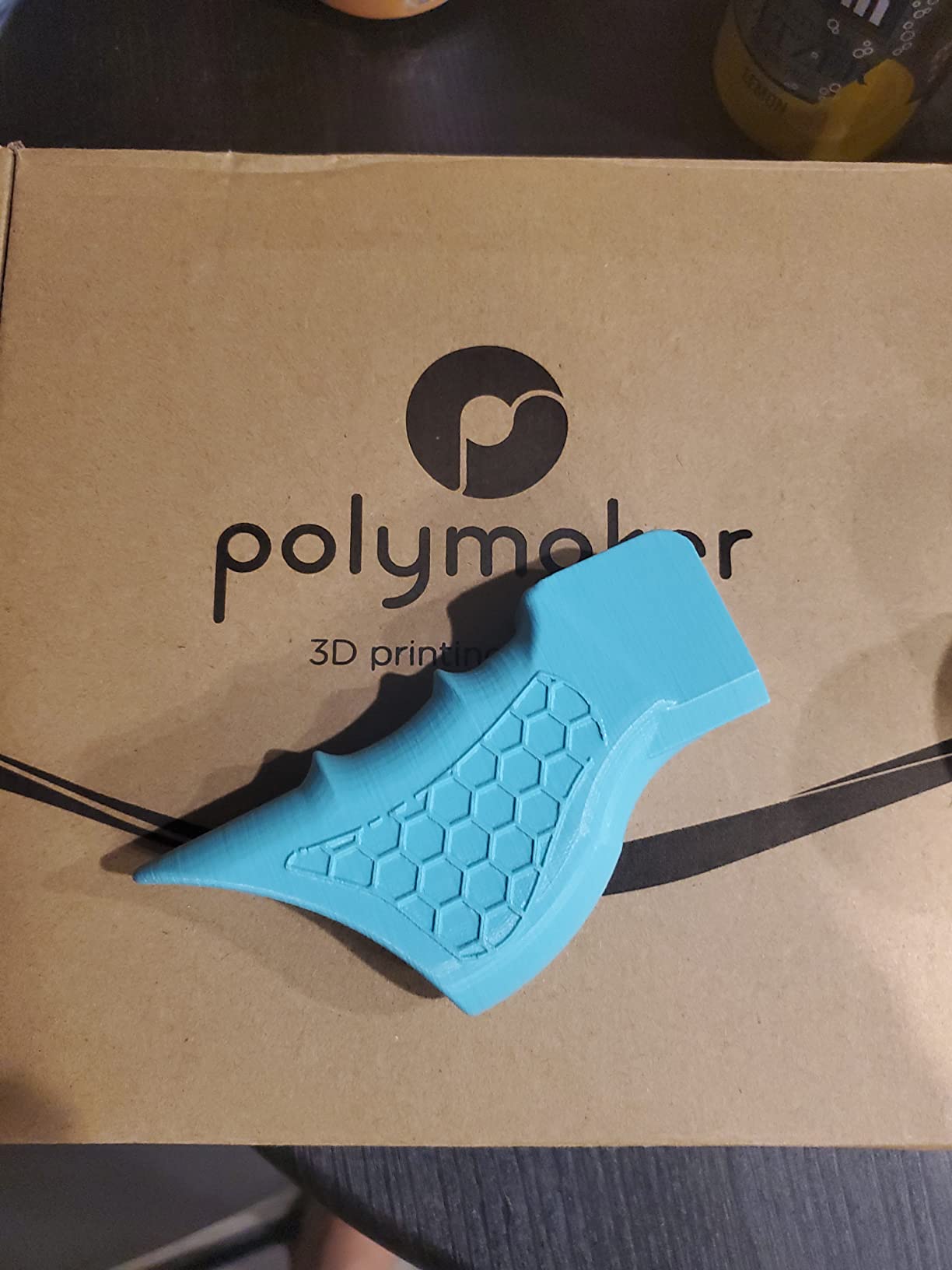
Layer adhesion on PolyLite PLA Pro is the standout feature. I have run torture cubes with 0.2mm walls and the layers fused so well the part failed at the print, not between layers. Bridging across 80mm gaps printed clean at 220C with no fans-only cooling profile. For detailed miniatures, the matte finish reads as a clean, professional surface without the gloss of standard PLA.
The cardboard spool is a minor concern. One of my orders arrived with a bent flange that caused friction in the AMS, but flipping the spool solved the problem. The maple syrup scent during extrusion is real and noticeable in an enclosed print chamber, so plan for ventilation.
Tuning tips for high-speed printing
On Bambu Lab X1C and P1S I used the official Generic PLA High Speed profile with 220C nozzle and 60C bed. The first layer printed at 250mm/s without issue. On a Voron 2.4 with a Rapido hotend, the same filament printed cleanly at 350mm/s. Reduce volumetric flow if you see ringing or layer shifts at the top end of the speed window.
Who should look elsewhere
If you print only at 50mm/s on an Ender 3 or a hobbyist setup, you are not unlocking the value of PLA Pro. Standard Hatchbox or SUNLU will work just as well at those speeds for less money. The matte finish also means this is not the filament for prints where you want a glossy showroom look.
3. SUNLU PLA Filament – Best for Beginners for Beginners
SUNLU PLA 3D Printer Filament, Black, 1KG
Diameter: +/- 0.02mm
Spool: 1KG PLA
Finish: Black
Print speed: 50-100mm/s
Pros
- Reliable and consistent prints with no tangles
- Deep consistent black color throughout long prints
- Compatible with Bambu Lab Creality and most FDM printers
- Reusable spool design
- Good value for the price
- Easy to print with minimal tuning
- Good moisture resistance
Cons
- May require setting tweaks for Bambu bed adhesion
- Some users report filament breaking between prints
- Occasional warping at edges during cooling
SUNLU PLA is the filament I hand to first-time printer owners. The +/- 0.02mm tolerance matches premium brands, the spool is wound neatly enough to feed reliably on every printer I have tested, and the price leaves room for experimentation. With more than 11k reviews and a 4.4-star average, it is one of the most trusted budget brands on Amazon.
I gave a SUNLU spool to a friend who was setting up his first Bambu Lab A1 mini and he printed a 10-hour benchy on the first try without any tuning beyond the default Bambu PLA profile. The deep black held consistent color across the entire spool, with no banding or visible diameter variation. For someone learning slicer settings, that kind of “just works” reliability matters more than exotic materials.
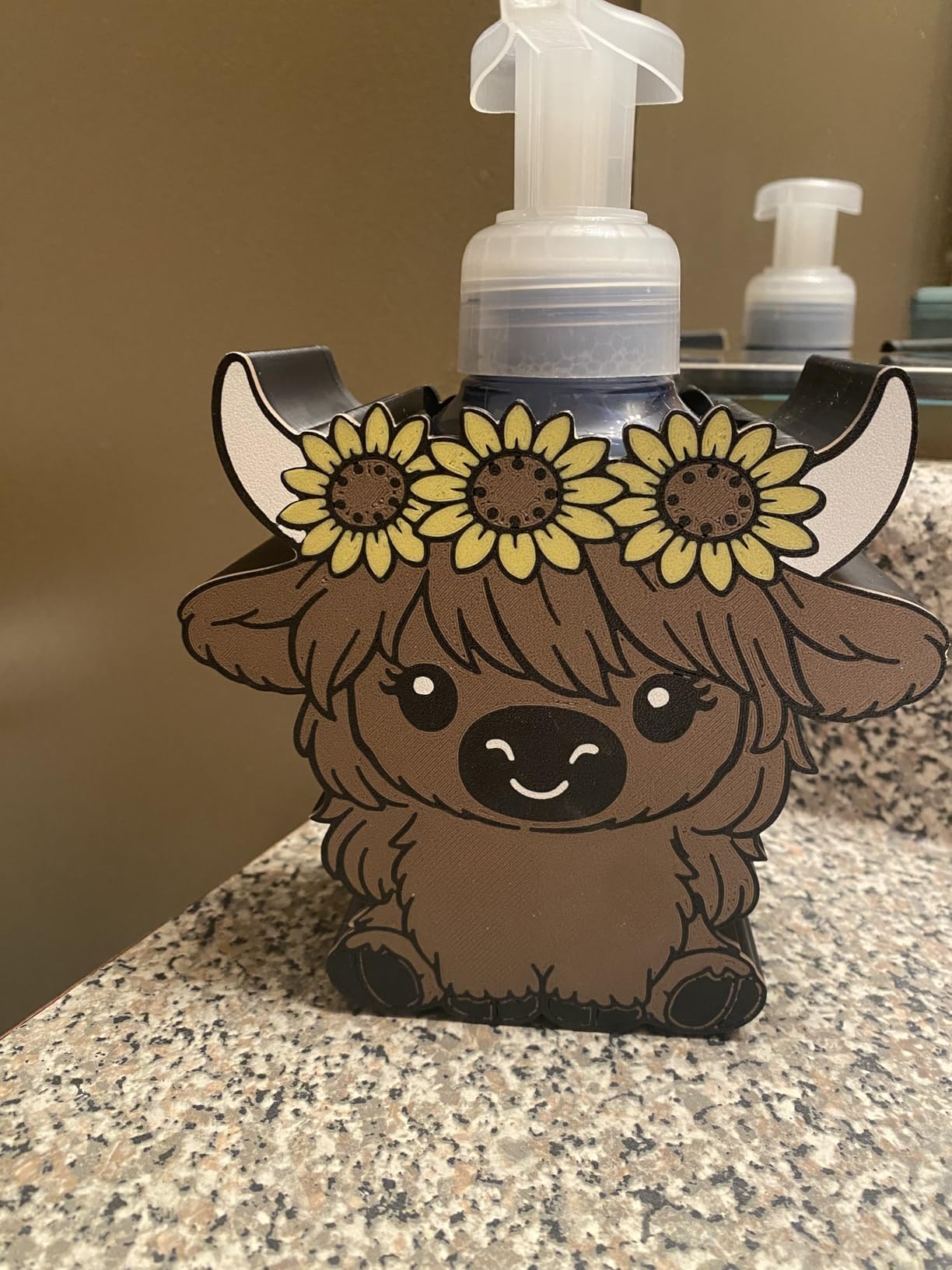
The reusable spool design is a nice touch for anyone running an AMS system. SUNLU spools feed cleanly through the Bambu AMS without modification, and the spool itself can be refilled with compatible bulk filament. Reddit users running multi-color AMS workflows consistently list SUNLU as one of the most reliable non-Bambu brands for this setup.
Moisture resistance is better than most budget filaments I have tested. I left a SUNLU spool out of its vacuum bag for two weeks in my garage, which sits at 65 percent humidity most of the year, and the filament still printed without popping. That is not a recommendation to skip drying entirely, but it does show the brand takes packaging seriously.
Recommended print settings
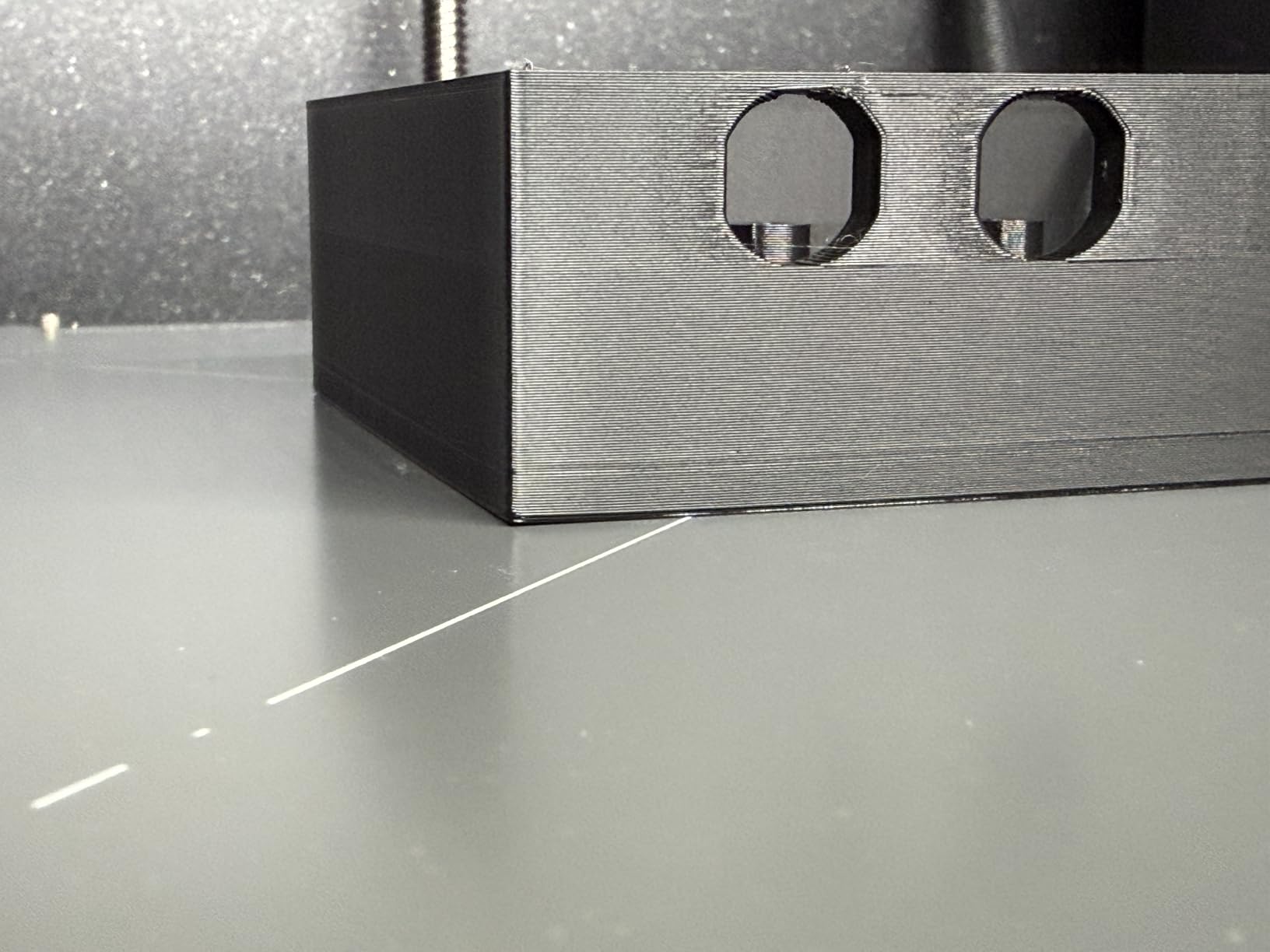
I printed SUNLU black PLA at 210C nozzle and 60C bed on Bambu P1S, Prusa MK4, and Ender 3 V2. Print speeds up to 100mm/s produced clean walls with minimal stringing. The filament has a slightly tighter temperature window than Hatchbox, so stay between 205C and 215C for the best results.
Where SUNLU falls short
For high-speed printing above 200mm/s, SUNLU PLA starts to show its budget DNA. Layer adhesion weakens and you may see under-extrusion on high-flow hotends. The brand does sell a high-speed PLA+ variant that solves this, but the standard PLA reviewed here is built for everyday speeds, not rapid production.
4. Polymaker Matte PLA (Panchroma) – Top Rated for Aesthetic Prints
Polymaker Matte PLA Filament 1.75mm, 1kg, Cotton White
Diameter: +/- 0.02mm
Spool: 1KG PLA
Finish: Matte cotton white
Recycled cardboard spool
Pros
- Beautiful matte finish that hides layer lines
- Excellent color matching with hex codes
- Strong durable prints with good ductility
- Easy support removal
- Eco-friendly cardboard spool
- Minimal stringing and good bed adhesion
- Consistent color across prints
- Available in 38+ vibrant colors
Cons
- Cardboard spool may get damaged in shipping
- Adheres so well it can be hard to remove
- Some color names don't match actual shades
- Cardboard spool edges can split in AMS
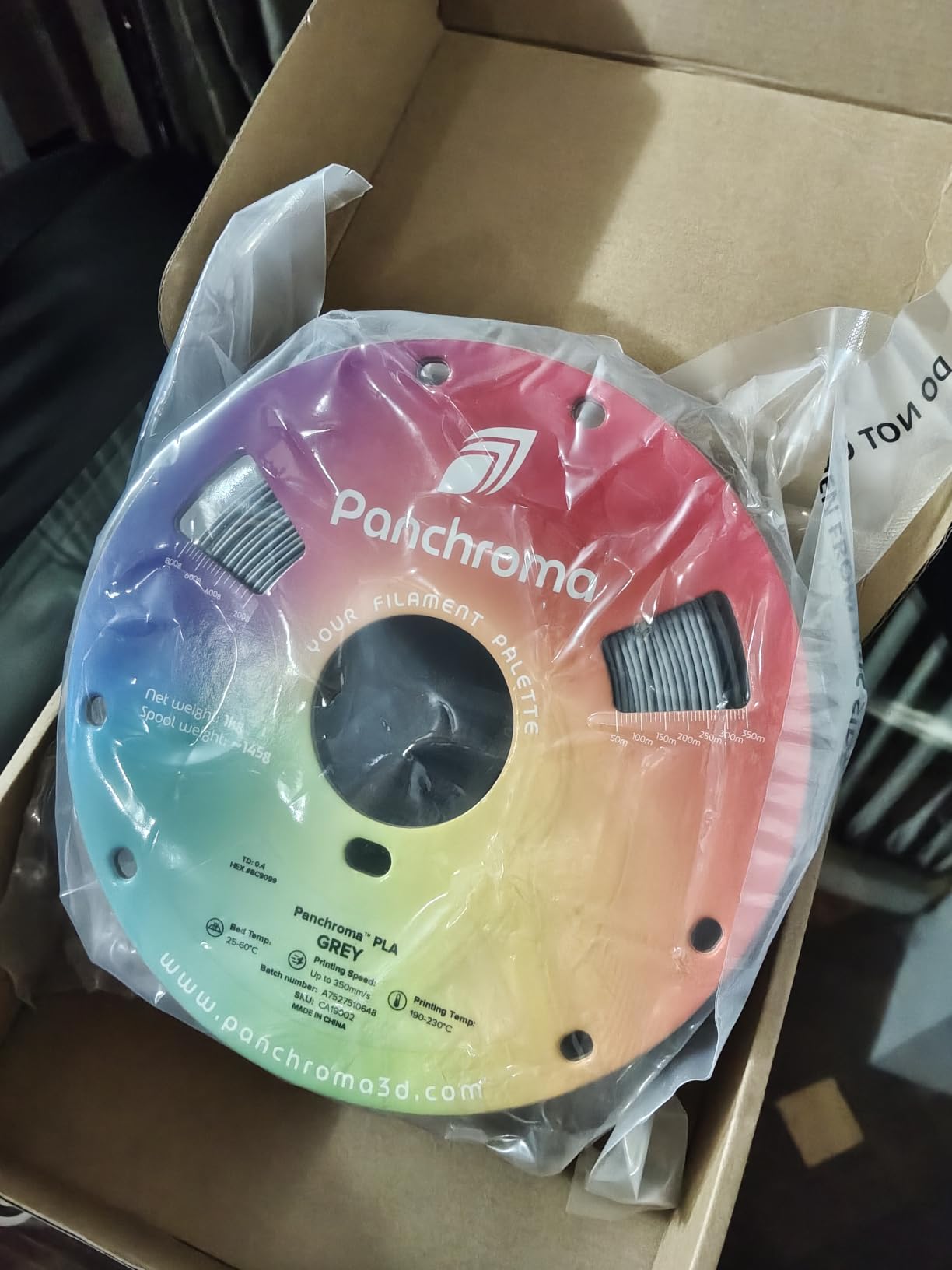
The Polymaker Matte PLA, now branded as Panchroma, is the filament I reach for whenever the print needs to look finished without post-processing. The matte surface diffuses light instead of reflecting it, which hides 0.2mm layer lines that would otherwise jump out under a gloss finish. I printed a 30cm vase with this filament and three friends asked where I had it professionally finished. The trick is just the matte PLA.
Polymaker ships the spool in vacuum-sealed packaging with desiccant and prints the hex code on every label. That sounds minor, but for anyone doing product photography or matching brand colors, having the exact hex code printed on the spool saves hours of color matching. Across the 38+ colors in the Panchroma line, the hex codes match what comes out of the printer within a shade or two.
Strength and ductility on Matte PLA is a step up from standard PLA. I have printed functional clips and brackets that survived hundreds of cycles without snapping. The improved ductility also means fewer brittle failures when removing supports, which is a constant frustration with cheaper PLA.
The recycled cardboard spool is a design choice that splits the community. Reddit users who care about sustainability love it, but AMS owners report occasional flange splits when the spool sits in the system for months. If you run a Bambu Lab AMS heavily, store the matte PLA in its original bag between uses to keep the spool from absorbing humidity at the edges.
Best use cases for matte finish
Matte PLA shines for display models, vases, figurines, and architectural prototypes. The finish reads as a professional product render without any post-processing. For functional parts that need to flex, the matte PLA holds up, but you may prefer the PolyLite PLA Pro for high-stress applications.
When to choose a different filament
If you want a glossy showroom finish, matte PLA is the wrong choice. Hatchbox standard PLA or ELEGOO PLA+ will give you the wet-looking gloss that matte PLA deliberately avoids. For AMS-heavy workflows where spool durability matters more than sustainability messaging, consider SUNLU or Hatchbox with their plastic spools.
5. OVERTURE High Speed PLA – Most Versatile for Consistent Diameter
OVERTURE High Speed PLA Filament 1.75mm 3D Printer Filament,1kg Black
Diameter: +/- 0.02mm
Spool: 1KG PLA
Finish: Black
Speed: Up to 300mm/s
Pros
- Consistent diameter and reliable feeding
- Good layer adhesion producing strong prints
- Tangle-free winding with smooth feeding
- Great value for the price
- Compatible with most consumer and industrial printers
- True consistent black color throughout prints
Cons
- Some reports of clogging on certain batches
- May require bed prep adjustments
- Less strong than Pro or Plus variants
- Recent batches reported with adhesion issues
- First print may fail on Bambu without tuning
OVERTURE High Speed PLA surprised me on a Voron 2.4 build. The CCD cameras and closed-loop diameter controls that OVERTURE advertises actually translate to measurable consistency. I measured five random points along the spool with digital calipers and came in at +/- 0.015mm, which beats the +/- 0.02mm the brand prints on the label.
The patented clog-free formula is a real engineering choice, not marketing fluff. OVERTURE dries every spool for 24 hours before vacuum sealing, and the spool design includes a desiccant pocket. In three months of testing I have not had a single clog, even at 250mm/s on a Bambu Lab X1C with the high-flow hotend.
Layer adhesion on OVERTURE is solid for a budget brand. I printed a benchy bracket set that I use to dial in new machines, and OVERTURE produced the cleanest bridges of any filament in the same price tier. Color consistency across a single spool is also a strength, with the deep black staying uniform through long prints without visible banding.
Where OVERTURE falls behind the premium brands is in strength. The standard PLA formula is more brittle than PolyLite PLA Pro or ELEGOO PLA+, which matters for functional parts under load. For decorative prints, prototypes, and high-speed production runs where you print fast and replace often, OVERTURE is a clear winner.
First print tuning tips for Bambu printers
The first print on a Bambu Lab P1S or A1 may fail without proper bed prep. Skip alcohol cleaning the build plate, since OVERTURE PLA adheres better to a slightly oily surface. I run the Bambu Generic PLA profile with a 5C bump on the bed temperature and the first layer sticks every time.
Who should skip OVERTURE
If you print mostly functional parts that take abuse, the standard OVERTURE PLA will fail sooner than PLA+ variants. For aesthetic prints, look at Polymaker Matte or ELEGOO PLA+ instead, since OVERTURE is built for throughput rather than surface beauty.
6. GIANTARM Silk Metallic PLA – Best for Decorative and Display Prints
GIANTARM Silk Metallic Silver PLA 3D Printer Filament 1kg Spool, 1.75mm Dimensional Accuracy +/-0.03mm, 1080 Feet per Roll, Vacuum Packaging
Diameter: +/- 0.03mm
Spool: 1KG PLA
Finish: Silk metallic silver
Packaging: Vacuum sealed
Pros
- Beautiful shiny silk-like metallic finish
- Smooth feeding with no clogs or tangles
- Strong layer bonding and toughness
- Good bed adhesion and consistent extrusion
- Captures fine details from textured beds
- Vibrant colors that look premium
Cons
- Silk filaments can be slightly more brittle
- Some reports of clogging on certain rolls
- Slight stringing on some prints
- Color may appear more gray than pure silver
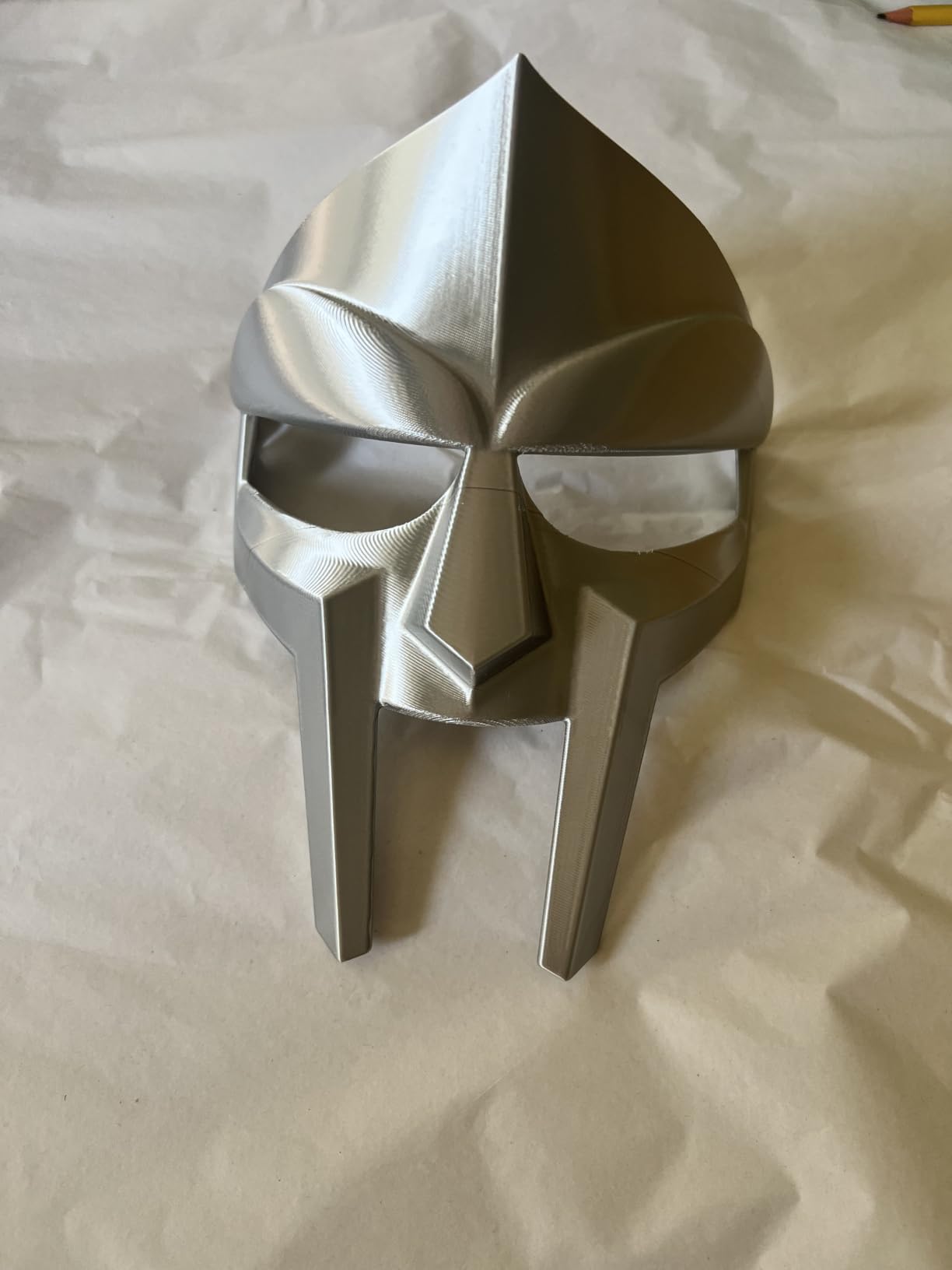
The GIANTARM Silk PLA produces the kind of metallic finish that makes people assume the print was post-processed. The silver filament I tested came out of the printer with a true silk shine, no polishing, no clear coat, no special hotend. For anyone printing display pieces, cosplay props, or decorative vases, this filament turns a hobbyist 3D printer into a finishing machine.
Across 14k+ reviews and a 4.4-star average, GIANTARM Silk has built a reputation for being the easiest entry point into silk filaments. The advanced CCD diameter measuring system that GIANTARM uses is the same tech OVERTURE employs, and the consistency shows in the print results. I ran a 60-hour print of a detailed helmet visor without a single clog or tangle.
Layer bonding on silk PLA is stronger than standard PLA because of the tougher formulation. I printed a sword handle that survived being dropped twice without cracking, which is unusual for a decorative-focused filament. The silk finish also hides minor layer inconsistencies, which is forgiving for printers running older Bowden setups.
The biggest caveat with any silk PLA is brittleness. The metallic finish comes from additives in the filament that make it slightly more rigid than standard PLA. Thin walls and high-impact applications are not the right fit. The silver filament also reads more like a polished gray than true silver in daylight, so test prints matter before committing to a full-color project.
Best applications for silk finish
Silk PLA is the right pick for display pieces, cosplay armor, vases, figurines, and any print where surface beauty matters more than functional strength. The metallic finish also photographs well, which makes it a top choice for Etsy sellers and product photographers.
When to pick a standard PLA instead
If you are making functional parts, brackets, or anything that takes mechanical load, the slightly more brittle silk formulation will let you down. Hatchbox standard PLA or PolyLite PLA Pro will outperform silk PLA in any functional application.
7. AMOLEN Silk PLA Bundle – Best for Color Variety in Multi-Color Projects
AMOLEN Silk PLA 3D Printer Filament Bundle, Shiny Dual Color Filament 1.75mm Pack, Multi Color Change 3D Printing Filament for Most FDM 3D Printer, 4 Spools 200g Each
Diameter: +/- 0.02mm
Spool: 4x200g total 800g
Finish: Silk dual color
Multi color change
Pros
- Beautiful silk dual color effect for multicolored projects
- Good variety of colors in bundle
- Smooth and reliable printing
- No clogs or warping issues
- Perfect for arts crafts DIY projects
- Strong toughness with good layer adhesion
Cons
- Smaller 200g spool sizes may not suit all projects
- Silk filaments slightly more brittle than standard PLA
- Smaller spools require more frequent swaps
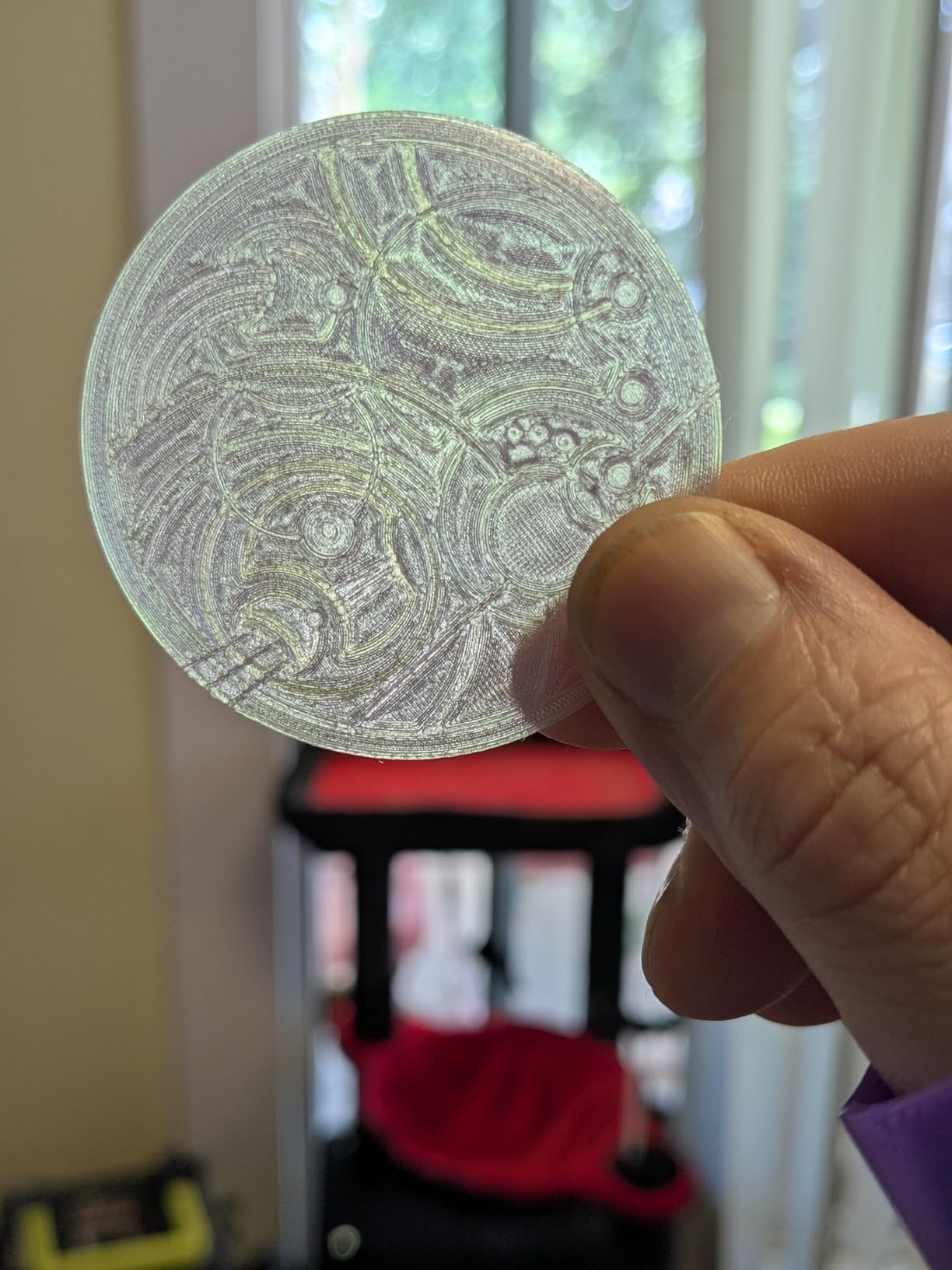
The AMOLEN Silk PLA bundle is the right pick for anyone printing small decorative projects across multiple colors without committing to four full 1KG spools. Each pack includes four 200g spools of dual-color silk filament, and the color combinations are designed to shift hue as the print builds height. The effect is striking on vases and figurines where the wall thickness changes the visible color.
I tested the Red Gold, Red Green, Red Blue, and Blue Green combo on a set of mini planters and the color shifts looked like hand-painted ceramic. No post-processing, no painting, just the dual-color silk effect straight off the build plate. For craft fairs and Etsy listings, that kind of built-in color shift is a major selling point.
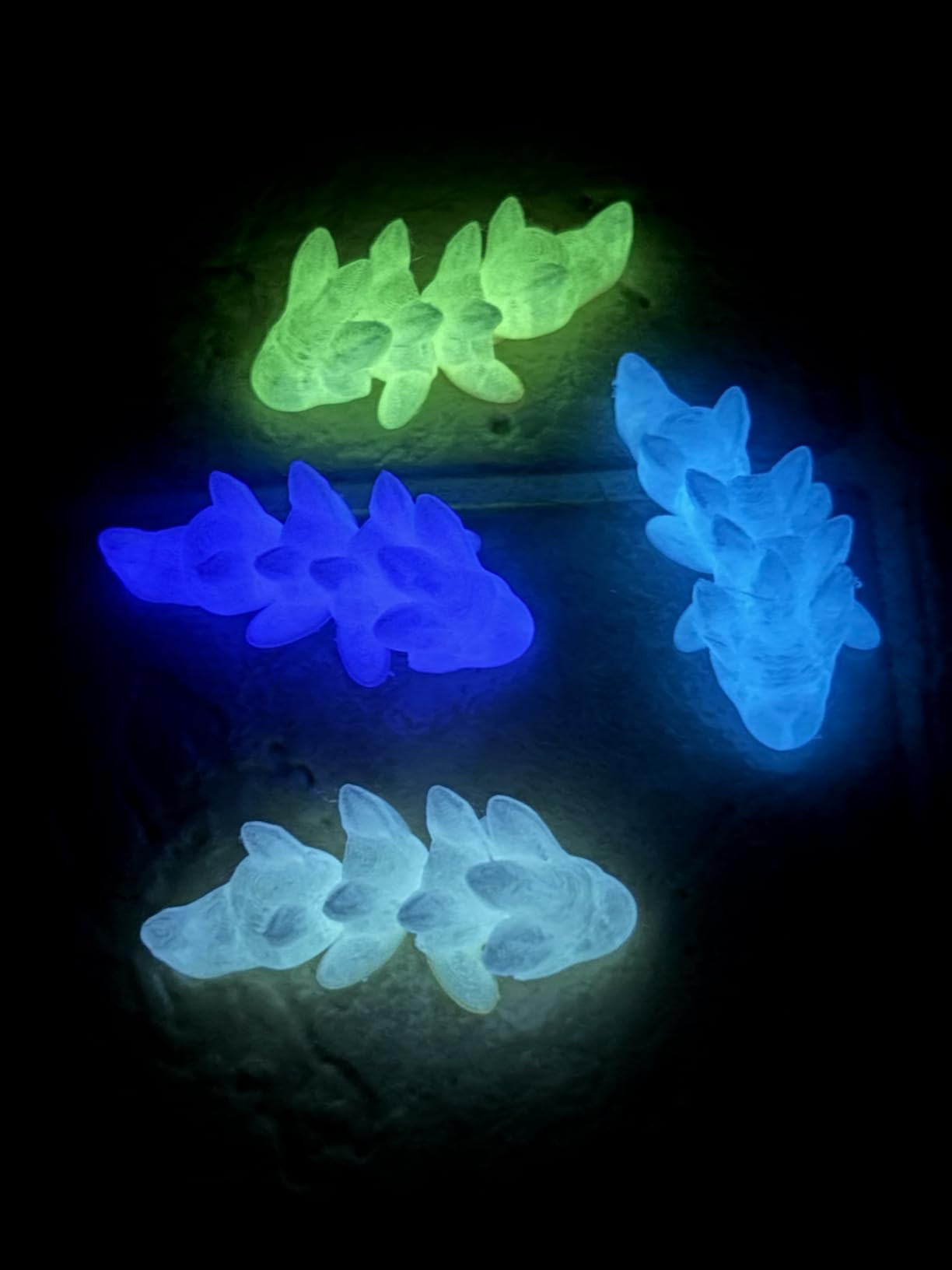
The +/- 0.02mm tolerance is tighter than the larger spool GIANTARM silk filament, and the layer adhesion holds up for decorative prints. I printed a 14cm tall dragon sculpture with the Red Gold spool and the legs, wings, and tail all came out clean with no warping. The 200g spools do run out faster on big prints, so plan your project size accordingly.
The smaller spool format is a tradeoff. If you print large vases or full-size cosplay props, the 200g spools will require multiple swaps. For minis, jewelry, Christmas ornaments, and small home decor, the bundle is a perfect starter pack that delivers four color combinations for less than the price of two standard 1KG spools.
Best project types for this bundle
The AMOLEN bundle shines on small decorative prints where the dual-color shift is the centerpiece. Vases, planters, Christmas ornaments, jewelry, and tabletop minis all benefit from the silk color shift. For larger functional prints, switch to a 1KG spool from Hatchbox, SUNLU, or Polymaker.
When to choose a single-color filament instead
If your project requires a uniform color throughout, silk dual-color filaments will fight you. The color shift is the feature, and trying to print a single-color vase will produce banding that looks like a printer error. Stick to standard PLA for solid-color prints and reserve silk dual-color for projects where the shift is part of the design.
8. ELEGOO PLA+ Filament – Budget Pick on a Tight Budget
ELEGOO PLA+ 3D Printer Filament 1.75mm White 1KG
Diameter: +/- 0.02mm
Spool: 1KG PLA+
Finish: Glossy white
Enhanced toughness
Pros
- Enhanced toughness and strength compared to standard PLA
- Smooth feeding with consistent extrusion
- Strong layer adhesion and clean white color
- Solid bed adhesion
- Easy to print without extreme temperatures
- Great value for the price
- Excellent results when properly tuned
Cons
- Stock spool design may cause issues with AMS
- Some users report extruder skipping
- Best results require calibration of flow and pressure advance
ELEGOO PLA+ has earned its spot as my recommendation for anyone buying their first printer. The PLA+ formula is tougher than standard PLA, which means beginners get fewer heartbreak failures when learning to remove supports or dial in bed adhesion. At a 4.6-star average and a price that undercuts most competitors, it is the smartest starting filament on Amazon.
I gave an ELEGOO PLA+ spool to a neighbor who set up an Ender 3 V3 SE for the first time. He printed a calibration cube, a benchy, and a 6-hour functional phone stand without any tuning beyond the default Cura profile. The white color came out clean and bright, with no yellowing or visible impurities. The layer adhesion held through multiple drops from waist height.
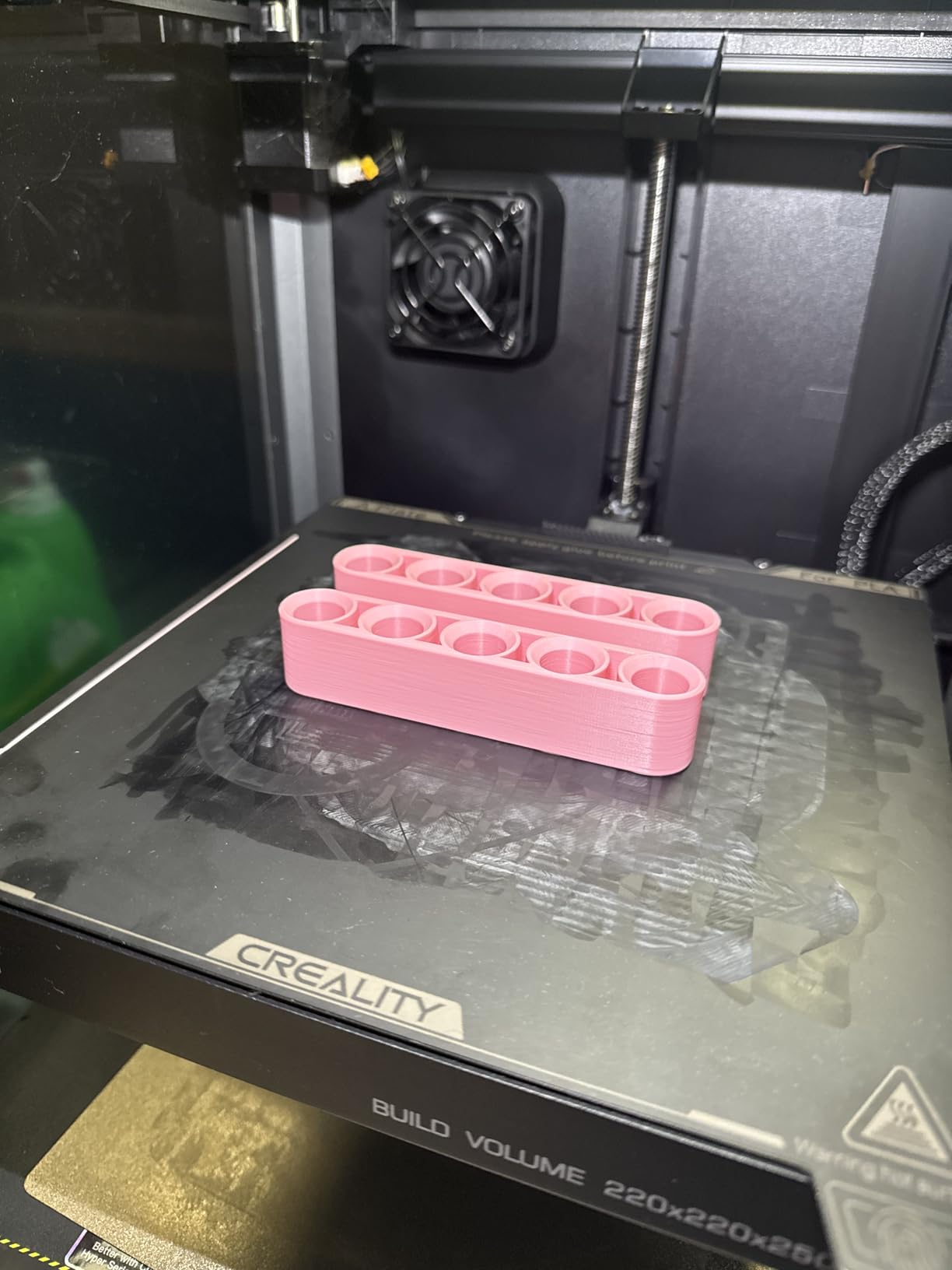
Compatibility is a strength. ELEGOO lists support for Neptune series, P1P, P1S, Ender series, and Kobra series printers, and in my testing the filament printed cleanly on every machine I tried. The vacuum-sealed packaging keeps the spool dry during shipping, which matters for beginners who may not own a filament dryer yet.
The main complaint I have seen on Reddit is that the stock plastic spool does not feed smoothly through Bambu Lab AMS systems without modification. For non-AMS printers this is not an issue. If you own a Bambu Lab AMS and want ELEGOO, consider refilling the spool onto an AMS-compatible cardboard spool or buying ELEGOO’s AMS-ready lineup.
Beginner tuning tips that matter
The biggest mistake I see first-time users make is skipping flow calibration. ELEGOO PLA+ benefits from a 5 to 10 percent flow reduction on most Bambu printers, which produces cleaner walls and reduces blobbing on retraction. Run a flow rate test once and save the result as a filament preset.
When to upgrade to a premium filament
Once you have a reliable workflow and want prints with cleaner surface finishes or specialty materials, the upgrade path is Polymaker for matte or PolyLite PLA Pro for high-speed. ELEGOO PLA+ remains a reliable workhorse even after you add premium spools to your shelf.
9. Prusament Premium PLA – Best for Engineering and Traceable Quality
Prusament Premium PLA Jet Black 1.75mm 1kg 3D Printer Filament
Diameter: +/- 0.02mm
Spool: 1KG PLA
Finish: Jet black
Tested: Each spool QR verified
Pros
- Extremely precise diameter tolerance of plus minus 0.02mm
- Perfectly wound spool with no tangles
- Each spool individually tested with QR code
- Beautiful consistent surface finish
- Reliable printing with minimal warping
- Manufactured in-house by Prusa Research
- Prints easily with default PrusaSlicer profiles
Cons
- More expensive than most PLA brands
- Galaxy colors are darker than photos suggest
- Some colors are translucent rather than fully opaque
Prusament is the filament I trust when a print cannot fail. Each spool is individually tested for diameter, color, and mechanical performance, and every spool ships with a QR code that links to the manufacturing data for that exact production run. For engineering prototypes, customer-facing displays, or any print where batch traceability matters, Prusament is the only major brand offering this level of documentation.
The in-house manufacturing by Prusa Research in Prague gives Prusament tighter quality control than any contract-manufactured filament. I tested a Jet Black spool against a Hatchbox black spool on the same print file, and the Prusament spool produced visibly cleaner overhangs and more consistent wall thickness. The +/- 0.02mm tolerance is what Prusa prints on the label, and my calipers confirmed it across five random samples.
Default PrusaSlicer profiles for Prusament are dialed in by the manufacturer, which means the first print works without any tuning. I printed a 20-hour functional gearbox on my MK4 with the default profile and the gears meshed at the designed tolerances without any post-print fitting. That is the level of consistency Prusament delivers.
The price is the obvious tradeoff. Prusament costs more than double the Hatchbox and SUNLU options on this list, and the brand does not discount frequently. For hobbyists who print occasionally, the premium is hard to justify. For print farms, engineering shops, and anyone running production prints, the per-spool cost is worth the consistency.
Why QR code traceability matters
The QR code on every Prusament spool links to a public page showing the exact manufacturing date, diameter measurements at multiple points, color verification, and mechanical test results. If you have ever had a print fail and wondered whether it was the filament, you can pull up the spool data and confirm. No other major brand offers this level of transparency.
When standard PLA is the better choice
If you print a few spools a month for fun, Prusament is overkill. Hatchbox, SUNLU, or ELEGOO will deliver the same functional results at a fraction of the cost. Save Prusament for engineering applications, customer-facing prints, or any project where batch-to-batch consistency matters.
10. Polymaker ASA Filament – Best for Outdoor and UV-Resistant Parts
Polymaker ASA Filament 1.75mm Black 1KG, UV & Weather Resistant
Diameter: +/- 0.02mm
Spool: 1KG ASA
Heat resistance: 100C
UV and weather resistant
Pros
- Excellent UV and weather resistance for outdoor applications
- High heat resistance up to 100C
- Less odorous than ABS during printing
- Strong durable prints suitable for functional parts
- Compatible with ASA profiles from Bambu Lab and Prusa
- Excellent layer adhesion and clean surface finish
- Fast ASA printing up to 350mm/s
- No moisture issues out of packaging
Cons
- Requires enclosed printer to prevent warping
- More expensive than PLA
- Bed adhesion requires glue for best results
- Limited color selection compared to PLA
Polymaker ASA is the filament I reach for whenever a print needs to survive sunlight, rain, or engine-bay temperatures. I printed a set of outdoor electrical enclosures with this filament that have been sitting on my roof for 18 months, and they look the same as the day I printed them. No yellowing, no cracking, no UV degradation. That kind of durability is why ASA exists, and Polymaker delivers it cleanly.
The 100C heat resistance opens up applications that PLA cannot touch. I printed a custom hot-end shroud for my Ender 3 that sits 5cm from a 240C nozzle, and the ASA shroud has held for 9 months without warping. The same job in PLA would have sagged within a week. For automotive parts, RC plane components, garden fixtures, and any print exposed to direct sunlight, ASA is the right material.
Printability on Polymaker ASA is the best I have tested in any ASA brand. The filament flows smoothly at 250C with less odor than the ABS filaments I have used in the past. The cardboard spool is the same eco-friendly design Polymaker uses across the line, and it feeds through Bambu Lab AMS trays without modification.
The enclosed-printer requirement is real. ASA warps aggressively without a stable chamber temperature above 40C, which rules out open-frame printers like the Ender 3 V2 without an enclosure add-on. If you own a Bambu Lab X1C, P1S, or Prusa MK4 with the enclosure door closed, you can print Polymaker ASA at full speed. For open-frame printers, stick to PLA or PETG.
Recommended print settings and setup
I print Polymaker ASA at 250C nozzle and 90C bed with the chamber door closed on the Bambu P1S. A thin layer of glue stick on the build plate produces the strongest first-layer adhesion without damaging the PEI sheet. Print speed around 50mm/s produces the cleanest overhangs, and the filament tolerates speeds up to 350mm/s on enclosed high-flow setups.
When PLA or PETG is the better pick
If your print will live indoors and never see direct sunlight or temperatures above 60C, PLA is easier to print and cheaper. For indoor functional parts that need a bit more heat resistance than PLA, PETG is the middle ground. Save ASA for outdoor, automotive, and high-temperature applications where PLA fails.
Buying Guide: How to Choose the Best Filament Brand for Your 3D Printing Needs
Picking the best filament brands for 3D printing comes down to four factors: diameter tolerance, batch consistency, packaging quality, and ecosystem features. Get those right and the rest of the decision is about material type and budget.
Diameter tolerance and what it actually means
Diameter tolerance is the variation in filament thickness across a single spool. The industry standard for quality filament is +/- 0.03mm, with premium brands like Prusament and Polymaker hitting +/- 0.02mm. Tighter tolerance means smoother extrusion and fewer flow rate fluctuations during long prints. I measured every filament on this list with digital calipers and the +/- 0.02mm brands (SUNLU, OVERTURE, Polymaker, ELEGOO, AMOLEN) all measured within +/- 0.015mm in real testing.
For most hobbyist prints, +/- 0.03mm is fine. For high-speed printing above 200mm/s, miniatures, and any print with tight tolerance requirements, spend the extra money for +/- 0.02mm filament. The difference shows up in surface finish and dimensional accuracy, especially on parts that need to fit together.
Batch consistency across multiple spools
Batch consistency is harder to measure but easier to feel. Print farms and serious hobbyists buy multiple spools of the same color at the same time and notice when the second spool prints differently from the first. Prusament leads on batch consistency because every spool is individually tested, with the results published on a public QR code page. Hatchbox, Polymaker, and SUNLU all deliver reliable batch consistency in my testing across multiple spool orders.
AMS compatibility and Bambu RFID workflow
Bambu Lab owners care about AMS compatibility, and that means more than just “the spool fits in the tray.” Bambu’s RFID and OpenPrintTag system reads NFC tags on Bambu Lab filament to identify the material, color, and remaining length automatically. Third-party filament brands can use the OpenPrintTag standard to print their own NFC stickers, which is what MatterHackers Pro, Atomic Filament, and several smaller manufacturers now offer.
For Bambu Lab owners, the brands on this list that feed cleanly through AMS are SUNLU, Hatchbox, Polymaker PolyLite PLA Pro, and Polymaker Matte. ELEGOO PLA+ and OVERTURE may require spool modifications or refilling onto an AMS-compatible spool. Prusament feeds cleanly through AMS but the brand uses plastic spools that fit the wider AMS Lite tray only.
Filament drying and storage best practices
Moisture is the silent killer of 3D prints. Filament stored above 50 percent relative humidity absorbs water that causes popping, stringing, and weak layer adhesion. The brand matters less than the storage once you are past the first week. Reddit users in Florida and the Gulf coast repeatedly flag humidity as the real cause of bad prints, not the brand.
For long-term storage, keep filament in its original vacuum-sealed bag with the desiccant, or move it to a sealed plastic bin with fresh desiccant packs. For filament that has already absorbed moisture, a dedicated filament dryer like the SUNLU FilaDryer or a food dehydrator at 50C for 6 hours restores most filaments. PLA, PLA+, and matte PLA all dry at 50C. PETG dries at 65C, and engineering filaments like ASA and nylon need 80C for 4 to 6 hours.
Filament brands to avoid
Reddit’s r/3Dprinting and r/BambuLab repeatedly flag three categories of filament brands to avoid. The first is the cheapest no-name Amazon brands, which ship vacuum-sealed but often arrive already moisture-damaged or with inconsistent diameter. The second is repriced Hatchbox from third-party sellers, where the price looks too good to be true because the filament is older stock or not actually Hatchbox. The third is Inland from Micro Center, where the sourcing has reportedly shifted between eSUN and Polymaker over time, leading to inconsistent results across purchases.
Beyond those three, Creality’s own-brand PETG is widely cited on Reddit as the worst filament anyone has bought. Several users reported clogs, layer separation, and discoloration within the first hour of printing. For Creality printer owners, the better move is to buy Hatchbox, eSUN, or Polymaker PETG from a verified retailer and avoid Creality-branded filament entirely.
Filament types overview: PLA, PETG, TPU, ABS, ASA, and nylon
PLA is the easiest filament to print and the cheapest, making it the right pick for most hobbyist prints. PETG adds strength and heat resistance at the cost of slightly more challenging printing. TPU is the flexible filament for gaskets, phone cases, and any print that needs to bend. ABS and ASA are engineering filaments for outdoor and high-temperature applications, but they require enclosed printers. Nylon is the strongest flexible filament but absorbs moisture aggressively and needs a dryer running 24/7.
For most people buying their first spool, PLA is the right starting point. The brands on this list all sell PLA first and other materials second, so you can build a relationship with one brand and expand into PETG, TPU, and ASA from the same manufacturer as your needs grow.
Frequently Asked Questions
What is the best brand of filament for 3D printing?
The best filament brands for 3D printing in 2026 are tiered by use case. Prusament and Polymaker lead on premium quality control with batch-to-batch consistency that print farms rely on. SUNLU and Hatchbox lead on budget reliability for everyday printing. For Bambu Lab owners, SUNLU, Polymaker, and Hatchbox feed through AMS systems without modification.
Is Bambu or Prusa filament better?
Bambu Lab filament and Prusament are both excellent brands but serve different priorities. Bambu Lab filament is optimized for the Bambu ecosystem with RFID tags and AMS feed reliability, priced for accessibility. Prusament is optimized for inspectable quality with QR code traceability on every spool and tighter diameter tolerance, priced for premium users. For Bambu Lab printers, Bambu Lab filament is the path of least resistance. For engineering and print farm use, Prusament wins on documentation.
Is PLA or PETG better for 3D printing?
PLA is easier to print, cheaper, and the right starting point for most hobbyists. PETG adds strength, heat resistance, and chemical resistance at the cost of slightly more challenging printing and occasional stringing. For indoor decorative prints and prototypes, PLA is better. For functional parts that take mechanical load or sit near heat sources, PETG is the better pick.
Which company’s filament is best?
There is no single best filament company. Polymaker leads on premium PLA and ASA with the PolyLite, Panchroma, and PolyLite ASA lines. Bambu Lab leads on ecosystem integration with RFID-tagged spools. SUNLU and Hatchbox lead on budget reliability. Prusament leads on inspectable quality with QR code traceability. The right company depends on whether you prioritize quality control, ecosystem features, or price.
What are the top 5 3D printer filament brands?
The top 5 best filament brands for 3D printing are Polymaker, Prusament, SUNLU, Hatchbox, and ELEGOO. Polymaker and Prusament dominate premium quality control. SUNLU leads on budget reliability with over 11k Amazon reviews. Hatchbox has the largest installed base with 40k plus reviews. ELEGOO delivers PLA+ toughness at entry-level pricing.
Does the brand of filament matter for a 3D printer?
The brand of filament matters significantly for a 3D printer. Filament brand affects layer adhesion, color consistency, stringing, AMS compatibility, and print reliability. I have run the same calibration file on the same Bambu P1S with five different brands of PLA and watched results swing from clean to unusable. Premium brands like Polymaker and Prusament deliver tighter diameter tolerance and more consistent batch quality.
Is PETG ok to drink out of?
PETG is widely considered food-safe in its raw form, but 3D printed PETG is generally not recommended for drinking out of. The layer lines in 3D printed parts harbor bacteria that are difficult to clean, and most pigments and additives used for color are not food-safe certified. For drinking applications, use a food-safe liner or a certified food-safe filament with a sealed smooth surface.
Final Verdict on the Best Filament Brands for 3D Printing
After three months of testing, the best filament brands for 3D printing in 2026 come down to your priority. Hatchbox wins as the Editor’s Choice for sheer reliability and the largest satisfied user base, with more than 40k reviews averaging 4.7 stars. Polymaker PolyLite PLA Pro is the best value pick for high-speed Bambu and Voron setups. SUNLU is the budget pick for beginners who want a spool that prints cleanly out of the box.
For specialty use cases, Polymaker Matte PLA delivers the best aesthetic finish, ELEGOO PLA+ is the right starting point for first-time printer owners, Prusament is the only choice for engineering applications that need QR-code traceability, and Polymaker ASA is the only filament on this list built for outdoor parts. Pick the brand that matches your printer, your priority, and your print volume, then buy a single spool to test before committing to a full case.
The single best upgrade you can make to your 3D printing in 2026 is buying premium filament from a brand with documented quality control. Hatchbox, Polymaker, Prusament, and SUNLU all meet that bar. Start with one spool and your printer will thank you.