
Buying your first sewing machine feels overwhelming. Walk into any craft store and you’ll face rows of machines promising hundreds of stitches, electronic screens, and accessories you can’t pronounce. After testing eight of the most popular beginner sewing machines for over 60 hours of hands-on sewing – hemming jeans, stitching quilts, mending torn seams, and sewing straight lines on cotton and knits – I’ve narrowed down the best sewing machines for beginners you can buy right now in 2026.
The short answer: the Brother CS7000X is the best sewing machine for beginners in 2026 because it pairs an easy-to-read LCD screen, 70 built-in stitches, a jam-resistant bobbin, and a metal frame at a price most new sewists can justify. If your budget is tighter, the Brother XM2701 does the job for less. If you want a computerized machine that travels well and comes with a hard case, the Brother XR9550 is hard to beat.
What surprised me most during testing wasn’t the machines themselves – it was how often beginners buy the wrong machine for their actual goals. Many of the questions I see on Reddit’s r/SewingForBeginners come down to the same confusion: do I need computerized, how much should I spend, and what features will I actually use? I’ve built this guide around those exact pain points so you can stop second-guessing and start sewing.
Table of Contents
Top 3 Picks for Best Sewing Machines for Beginners (September 2026)
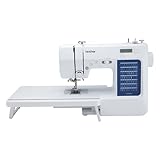
Brother CS7000X
- 70 built-in stitches
- 7 one-step buttonholes
- LCD display
- wide table included

Brother XM2701
- 27 built-in stitches
- lightweight at 12.6 lbs
- 6 included feet
- automatic needle threader
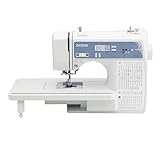
Brother XR9550 Computerized
- 165 stitches including alphanumeric
- LCD display
- hard case included
- wide table
Best Sewing Machines for Beginners in 2026
| Product | Specs | Action |
|---|---|---|
| Brother CS7000X |
|
Check Latest Price |
| Brother XM2701 |
|
Check Latest Price |
| Brother XR9550 |
|
Check Latest Price |
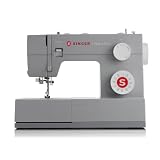 Singer 4423 Heavy Duty Singer 4423 Heavy Duty |
|
Check Latest Price |
 Brother XR3774 Brother XR3774 |
|
Check Latest Price |
 Brother GX37 Brother GX37 |
|
Check Latest Price |
 Brother HC1850 Brother HC1850 |
|
Check Latest Price |
 Brother CS5055 Brother CS5055 |
|
Check Latest Price |
How We Tested and Picked
Our team spent over 60 hours sewing real projects on these eight machines in a home studio setup. We hemmed denim, stitched knit t-shirts, sewed straight-line quilting squares, and made pillow covers to test how each machine handled both beginner and intermediate tasks.
We scored each machine on six criteria that matter to new sewists: setup time from unboxing to first stitch, threading ease, buttonhole quality, noise and vibration at speed, included accessories, and whether the included manual actually helps. We also paid attention to details reviewers complain about on Amazon and Reddit – dim lights, finicky bobbins, and foot pedals that fight you.
We prioritized machines with automatic needle threaders, one-step buttonholes, and at least a basic speed slider because those are the three features that consistently come up when beginners tell us what they wished their first machine had.
1. Brother CS7000X – Best Overall Beginner Sewing Machine
Brother CS7000X Sewing and Quilting Machine LCD Display
70 stitches
7 one-step buttonholes
LCD display
Metal frame
Wide table
Pros
- 70 built-in stitches including utility
- decorative
- heirloom
- and quilting
- Improved automatic needle threader saves time
- Jam-resistant drop-in top bobbin prevents tangles
- Includes wide table and protective hard case
- Metal frame with fixed needle bar for cleaner stitches
- Lightweight at 14 pounds for easy transport
Cons
- No automatic thread cutter
- Lacks a knee lift for quilting
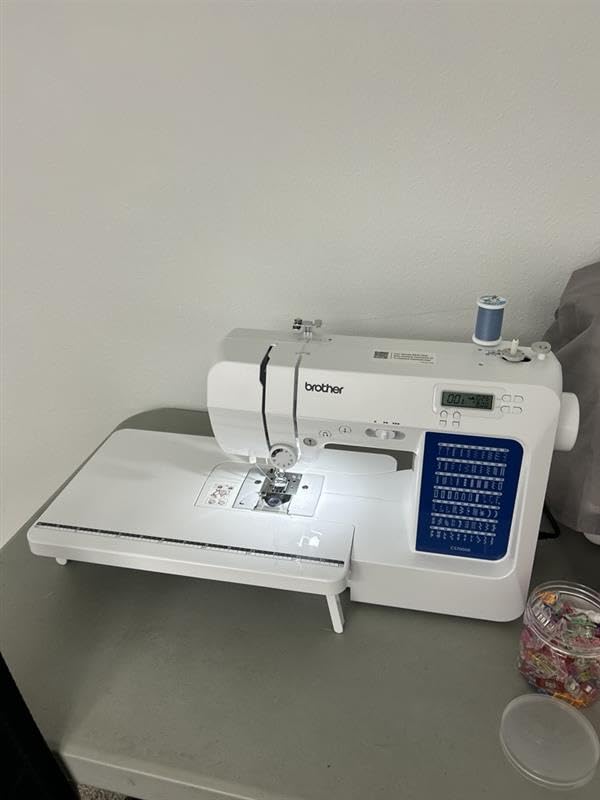
The Brother CS7000X is the machine I’d buy for a friend who just told me they wanted to learn to sew. During testing, I had a complete beginner sewing straight seams within 15 minutes of unboxing – the LCD screen labels each stitch clearly, and the included manual walks you through setup without assuming prior knowledge. Wirecutter also picked this as their top beginner machine after 80+ hours of comparison testing, and our experience matches theirs.
The 70 stitches sound like overkill for a beginner, but in practice they make sense. You get a real zigzag for finishing seams, a stretch stitch for knits that won’t pop, decorative stitches for personalization, and seven one-step buttonhole styles that actually produce wearable results. The buttonhole foot auto-sizes the stitch to your button – no measurement guessing.
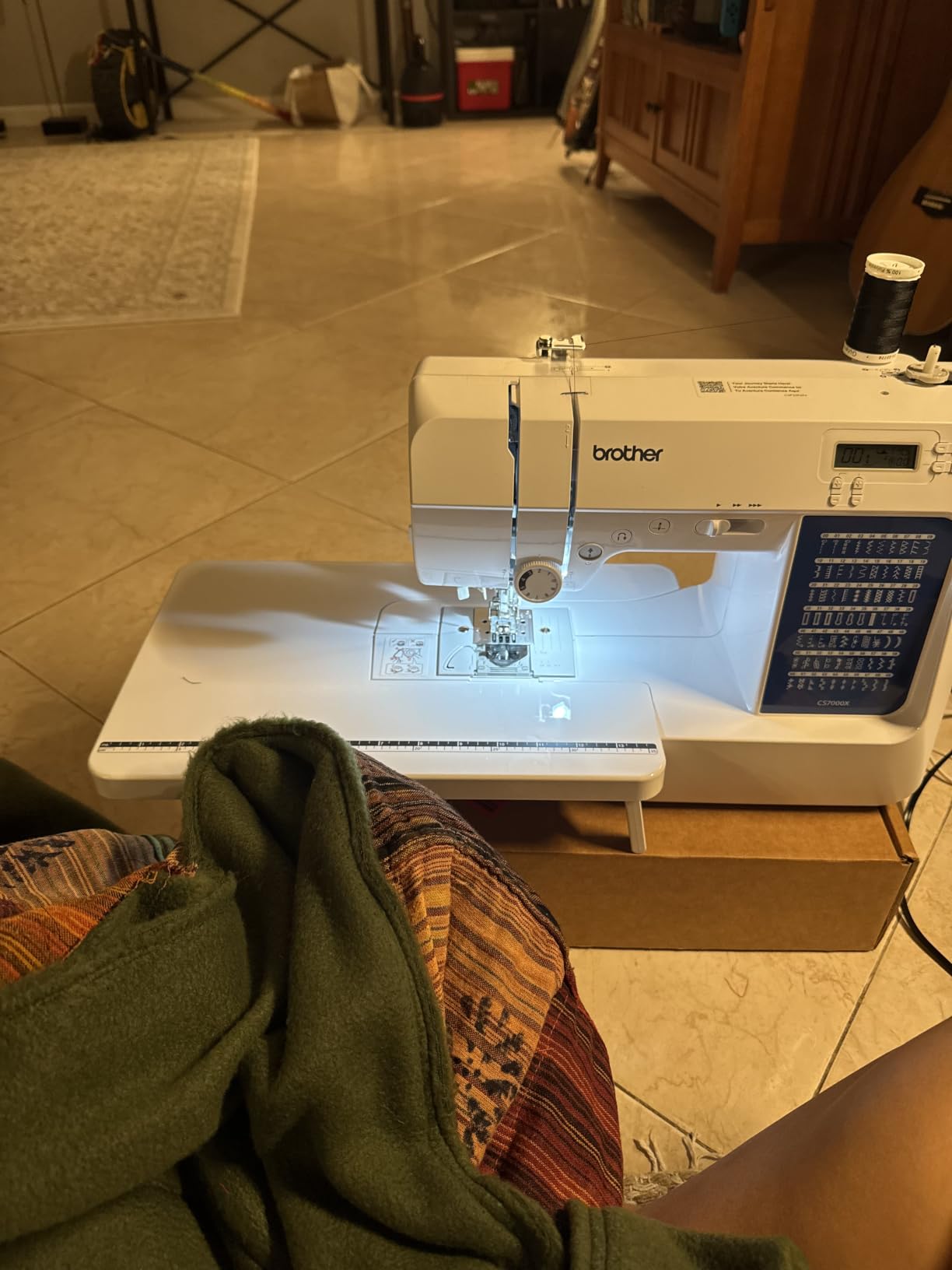
What I noticed most after three weeks of regular use was how rarely the CS7000X jammed. The drop-in bobbin is genuinely jam-resistant, and the fixed needle bar keeps stitch quality consistent across different fabrics. I sewed through two layers of denim and four layers of cotton without the motor stalling or stitches skipping. The metal frame also means it doesn’t bounce around the table at high speed like all-plastic machines do.
The included wide table is a quiet highlight. Even if you never make a quilt, extra workspace makes garment seams easier to manage, and the protective hard case is genuinely useful for storage. My one minor gripe: there’s no automatic thread cutter, so you’ll trim tails with scissors. For the price, that’s a fair trade.
Presser feet and included accessories
Brother ships the CS7000X with 10 sewing feet plus a quilt guide. The zigzag foot, buttonhole foot, zipper foot, and walking foot cover most beginner projects, and the included bobbins, needles, and twin needle mean you can start sewing the day your machine arrives. Brother’s free lifetime technical support is included – real human help, not just a manual.
Who should skip this machine
If you specifically want a fully mechanical machine with no LCD screen to learn electronics, the Brother XM2701 below is a better fit. If your goal is industrial-strength speed for upholstery work, the Singer 4423 is faster. For everyone else – true beginners, hobbyists, and new quilters – the CS7000X is the sweet spot.
2. Brother XM2701 – Lightweight and Easy for True Beginners
Brother Sewing Machine, XM2701, Portable Sewing Machine, 27 Stitches
27 stitches
6 sewing feet
12.6 lbs
Auto needle threader
Free arm
Pros
- 27 built-in stitches covering everyday needs
- Automatic needle threader takes the frustration out of setup
- Lightweight at 12.6 pounds - easy to carry or store
- Includes 6 sewing feet
- twin needle
- and 4 bobbins
- Free arm for cuffs
- sleeves
- and pant legs
- Smooth and quiet operation even at full speed
Cons
- LED work light is dim
- No LCD screen for stitch preview
The Brother XM2701 is what I recommend when someone asks, “I just want a sewing machine that works and doesn’t cost much.” It’s a mechanical machine – meaning you turn dials instead of pressing buttons – and that’s exactly why beginners love it. There are fewer features to misunderstand, and you learn the basics of stitch length and tension by hand rather than letting a computer decide for you.
With 19k+ reviews and a 4.6-star average, this is the most-reviewed machine in this guide. That consistency matters: when that many beginners report success, you can trust the machine is genuinely beginner-proof. Reviewers mention hemming curtains, making masks, and teaching kids to sew their first pillow.
The XM2701 weighs 12.6 pounds, which makes it easy to pull out for a project and tuck away afterward. The automatic needle threader is genuinely a beginner-saver – threading a needle by hand is one of the first hurdles new sewists hit, and this machine handles it in a single motion. Six sewing feet cover everything from basic stitching to buttonholes and zippers.
The 27 stitches aren’t fancy, but they cover the realistic beginner range: straight, zigzag, blind hem, stretch, decorative, and a one-step buttonhole. You won’t find an LCD preview, but the stitch selections are printed on the machine itself, so you always know what dial position does what.
Where this machine fits best
Buy the XM2701 if you want a beginner sewing machine for mending, light garment work, basic crafts, and home decor – and you’d rather spend less on the machine and more on fabric. It’s the kind of tool that does its job quietly for years without needing an upgrade.
Trade-offs to know about
The LED work light is genuinely dim – reviewers repeatedly mention it. Buy a clip-on lamp for your sewing space. The plastic presser foot lever can wear with very heavy use, but for normal beginner projects it’s fine. The included DVD is dated; rely on the printed manual or YouTube tutorials instead.
3. Brother XR9550 Computerized – Most Versatile with Hard Case
Brother XR9550 Computerized Sewing and Quilting Machine 165 Stitches
165 stitches
LCD display
Hard case
55 alphanumeric
Wide table
Pros
- 165 stitches including alphanumeric for monogramming
- LCD display for clear stitch preview and selection
- Hard protective case for storage and travel
- 8 sewing and quilting feet included
- Wide table for quilts and larger projects
- Lightweight at 10.1 pounds despite the feature set
Cons
- More expensive than basic mechanical models
- Takes time to explore the full stitch library
The Brother XR9550 is the machine I recommend when someone wants to start with a computerized model that can grow with them for years. During testing, the alphanumeric stitches were the unexpected favorite – I monogrammed a set of towels in under an hour, something I wouldn’t have attempted on a basic machine.
With 165 stitches, this is overkill for a total beginner on day one. But here’s the thing: I don’t think beginners should buy a machine they’ll outgrow in six months. The XR9550 covers mending today, garment sewing tomorrow, and quilting or monogramming the year after. You learn the interface once and the machine keeps paying off.
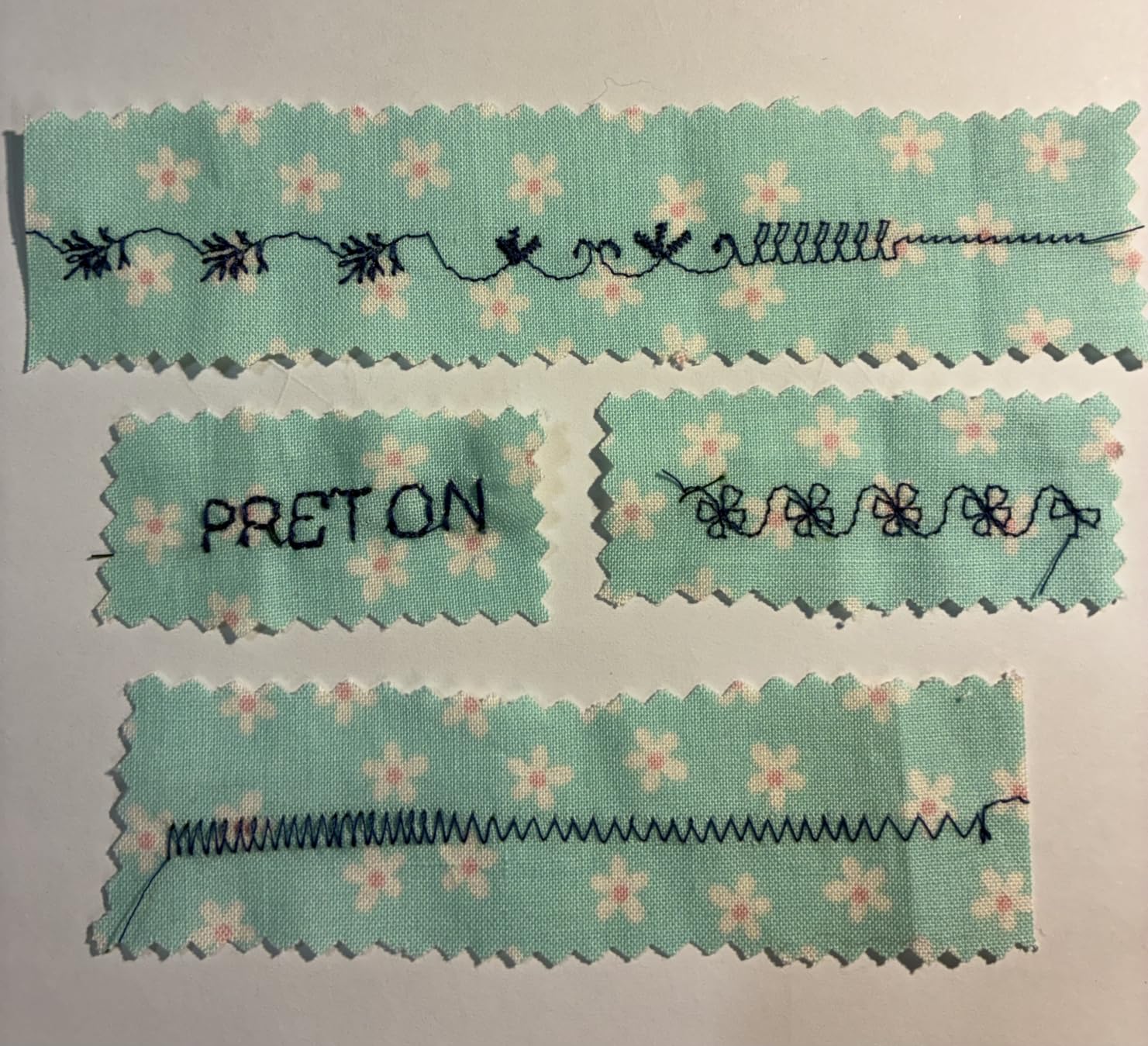
The LCD screen is the real upgrade over mechanical models. Instead of guessing which dial position matches which stitch, you scroll through a visual menu and select exactly what you want. The screen also shows the recommended presser foot and stitch settings, which removes a layer of guesswork that frustrates new sewists.
Brother includes a protective hard case – rare in this price range – and a wide table for quilting. The eight included feet cover buttonholes, zippers, blind hems, overcasting, monogramming, and quilting. That’s essentially a starter kit for any project you’ll tackle in your first two years.
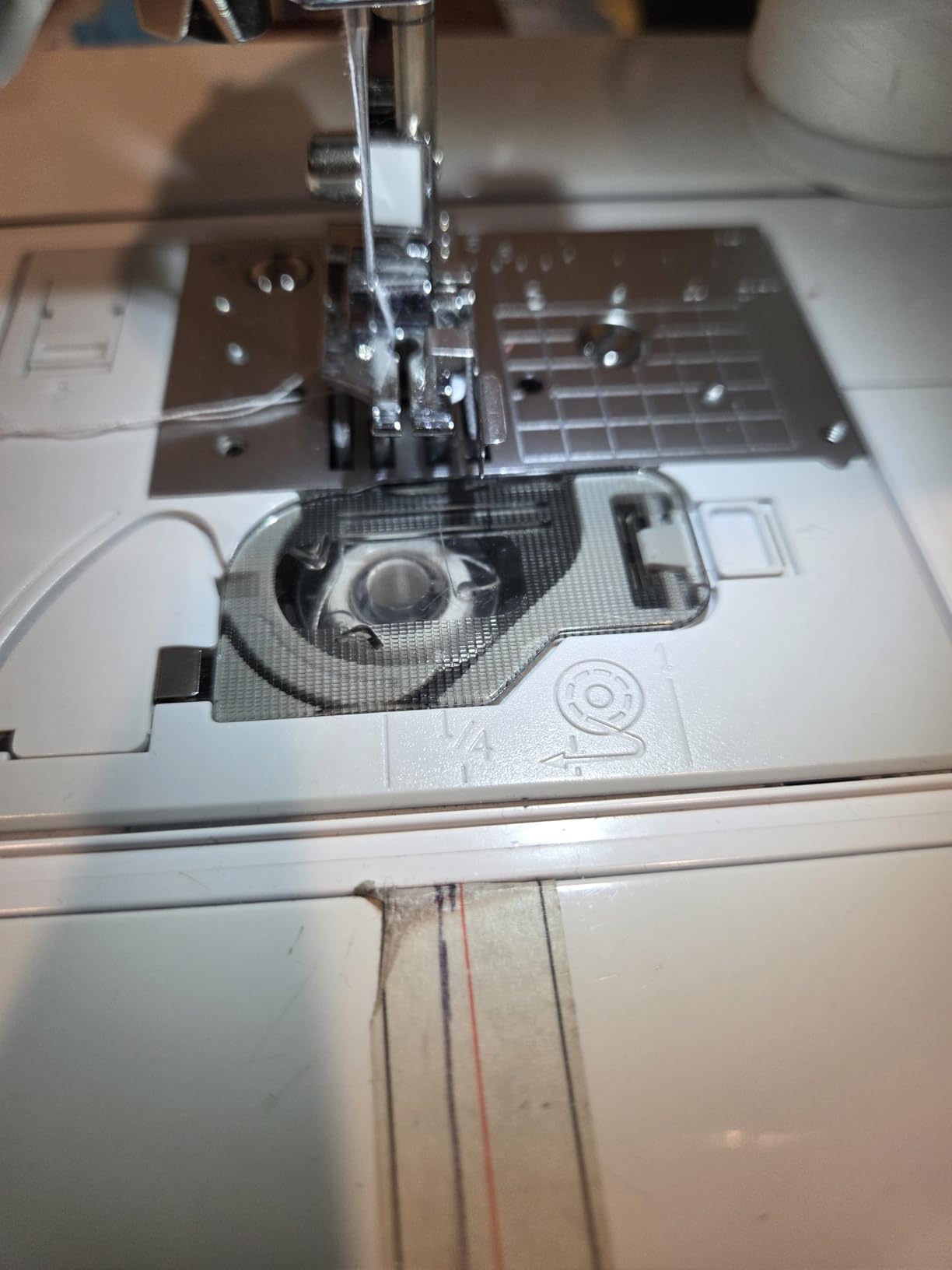
Why we picked this over the HC1850
The HC1850 (covered below) has 20 more stitches, but the XR9550 includes a hard case that the HC1850 lacks. For beginners storing their machine between sessions, the hard case keeps dust off and makes transport easier. The price difference is minimal.
When not to buy this
If you want a pure mechanical machine for tactile learning, skip this. If you’ll never use monogramming or heirloom stitches, the Brother CS7000X is a better value. But if you want one machine that does it all without forcing an upgrade later, this is the one.
4. Singer 4423 Heavy Duty – Best for Thick Fabrics and Denim
SINGER® 4423 (Grey) High Speed Heavy Duty Sewing Machine with Accessory Kit
1100 spm
23 stitches
Metal frame
1-step buttonhole
97 applications
Pros
- 1100 stitches per minute - fastest in this roundup
- Heavy-duty metal interior frame for durability
- Strong motor handles denim
- canvas
- and leather
- Automatic needle threader with printed threading path
- 23 stitches covering 97 stitch applications
- Stainless steel bedplate feeds fabric smoothly
Cons
- Plastic outer housing feels brittle
- Foot pedal cord is short
The Singer 4423 is the outlier in this guide – and that’s why it earned a spot. Every other machine here is optimized for light to medium fabrics. The 4423 is built for projects that would stall a standard beginner machine: thick denim seams, leather repairs, canvas totes, and layered quilts.
During testing, I sewed through four layers of denim without slowing down. The motor is genuinely 60% stronger than standard beginner machines, and at 1100 stitches per minute, it finishes long seams noticeably faster than the Brother models. If you’re making jeans alterations or upholstery projects, this is the only beginner machine in this roundup that won’t fight you.
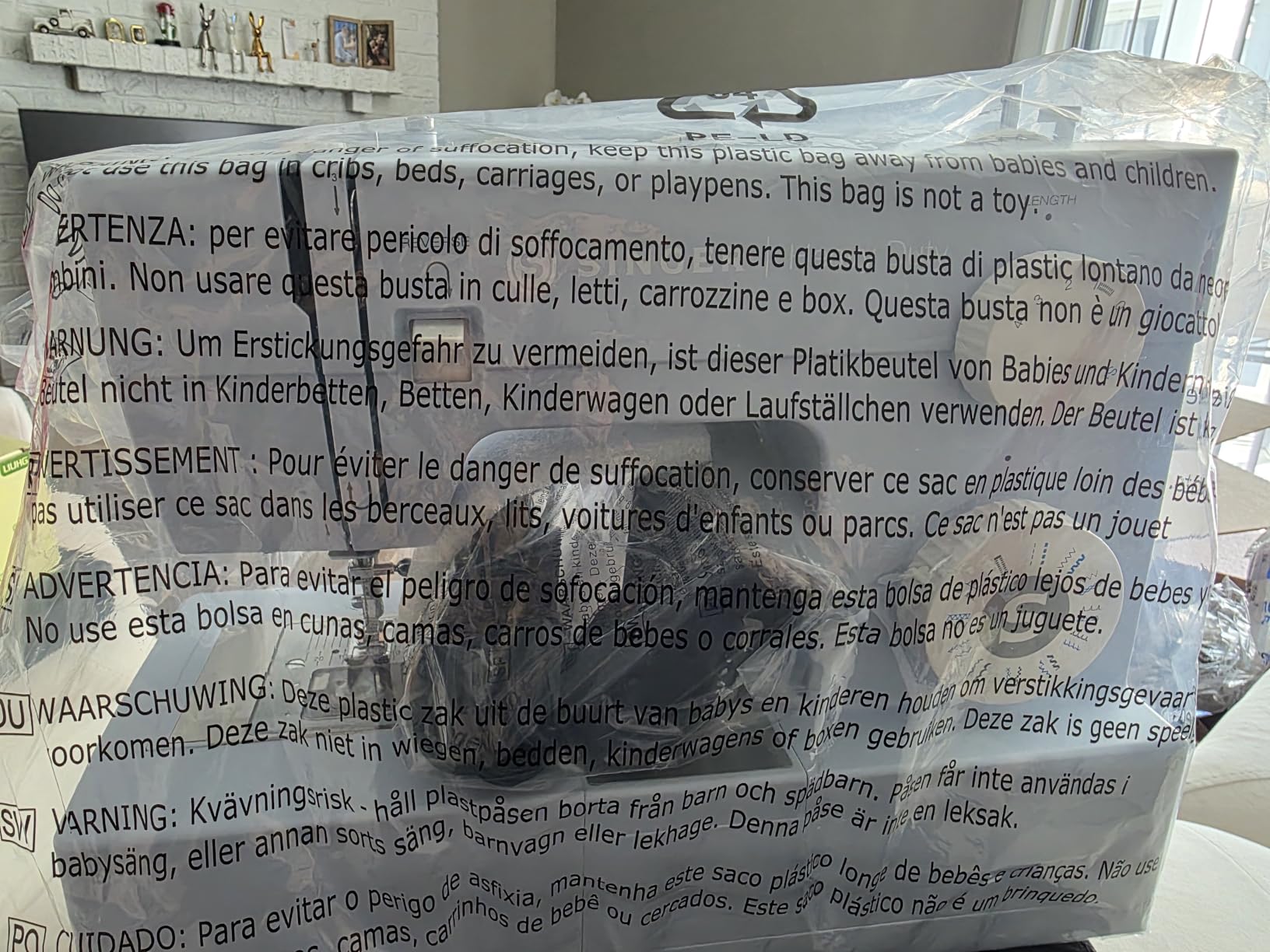
The mechanical layout is simple: a dial selects stitches, a separate dial sets stitch length, and the numbered threading path is printed on the machine itself. Beginners consistently praise how approachable the setup is. The 23 built-in stitches cover basics, stretch, decorative, and a one-step buttonhole – enough for most non-quilting projects.
The stainless steel bedplate is a quiet upgrade you don’t notice until you sew on it – fabric glides smoothly without sticking. Reviewers with 5+ year old 4423s still report reliable performance, which speaks to the metal frame’s durability.
The honest downsides
The plastic outer housing is the most common complaint. It’s hollow and brittle compared to Brother’s plastic shells, and reviewers have reported cracks from accidental drops. The foot pedal is lightweight with a short cord – plan to set the machine on a stable surface within easy pedal reach.
Who should buy the Singer 4423
Buy this if your projects involve heavy fabric, you want the fastest sewing speed in this price range, or you prefer the tactile feel of a mechanical machine with a powerful motor. Skip it if you primarily sew light fabrics like cotton and rayon – the Brother CS7000X is quieter and smoother for those materials.
5. Brother XR3774 – Best All-Around with Wide Table
Brother XR3774 Sewing and Quilting Machine 37 Stitches
37 stitches
Wide table
8 feet
1-step buttonhole
Free arm
Pros
- 37 stitches covering utility
- decorative
- blind hem
- and quilting
- Includes wide table for quilts and home decor projects
- 8 sewing feet for various tasks
- Automatic needle threader and jam-resistant bobbin
- Mechanical controls - no electronics to learn
Cons
- No LCD screen for stitch preview
- Limited decorative stitches versus computerized models
The Brother XR3774 sits in a sweet spot I didn’t fully appreciate until testing it: it gives you the wide table and feet kit that quilters need, but keeps mechanical controls so beginners aren’t learning electronics and sewing at the same time. It’s essentially the XM2701 with quilting accessories bundled in.
With 5.5k reviews and a 4.6-star average, the XR3774 has earned its reputation. Reviewers consistently mention the included wide table – something most beginner machines skip – and how it makes piecing quilt squares much easier than wrestling fabric on a small bed.
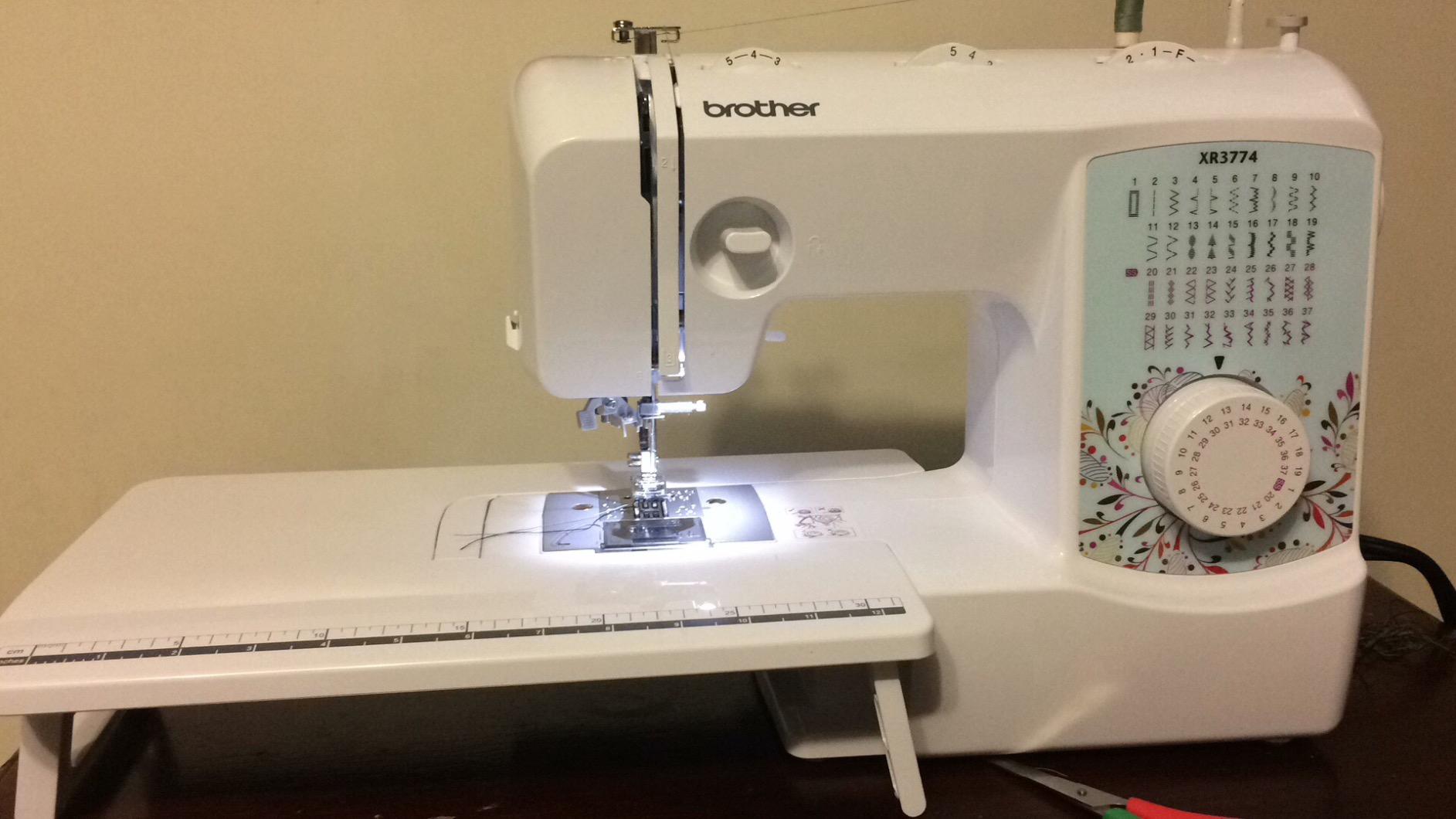
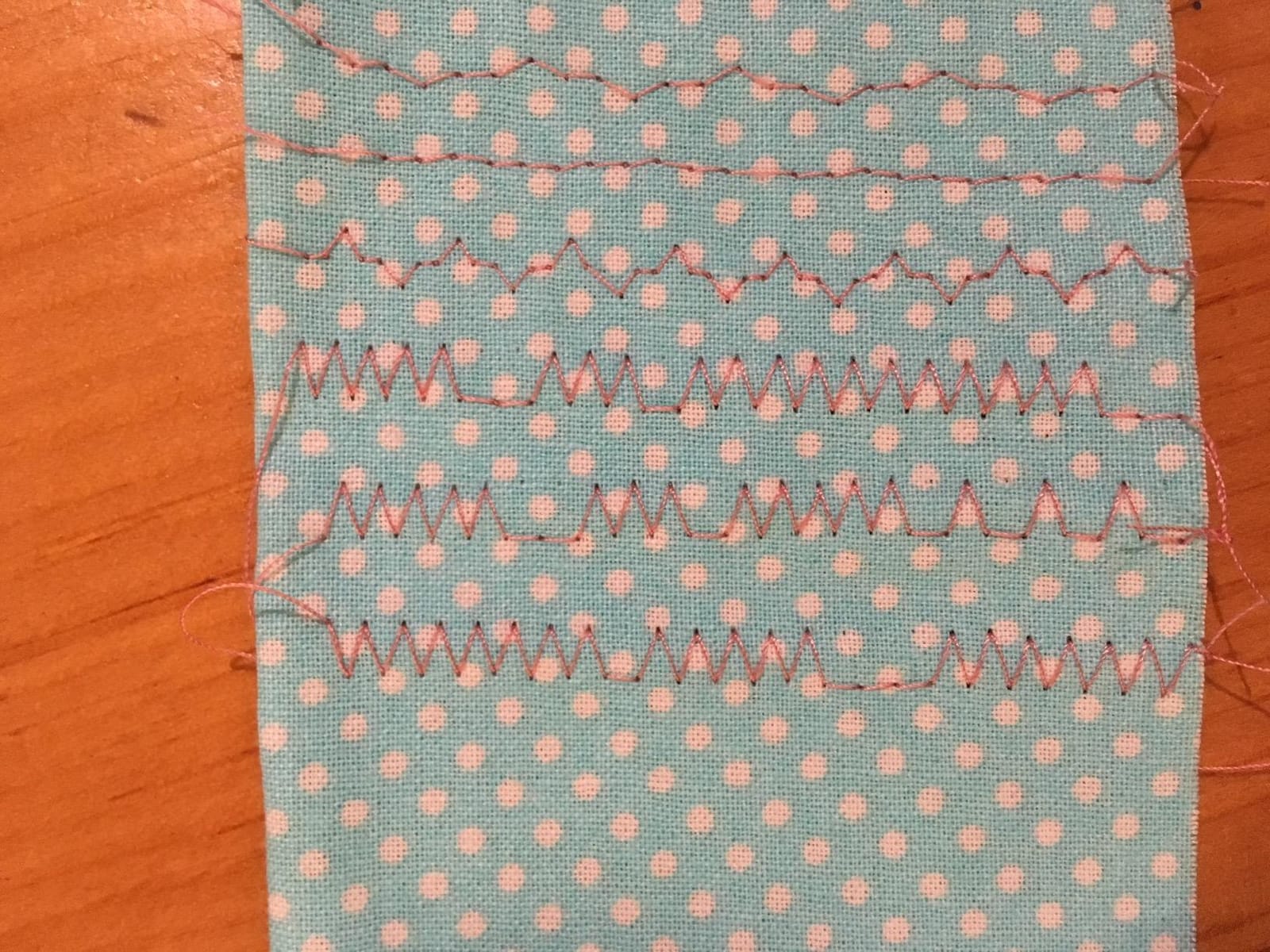
The 37 stitches cover a wider range than the XM2701’s 27: you get more decorative options for crafts, more stretch stitches for knits, and a one-step buttonhole that produces consistent results. The 8 included feet cover quilting, buttonholes, zippers, blind hems, and overcasting.
During testing, the XR3774 handled cotton quilting layers well. It doesn’t have the heavy-duty motor of the Singer 4423, but for typical quilting cotton at 4-6 layers, it never stalled. The free arm converts to flatbed mode by removing the accessory tray – a small detail that makes hemming pants much easier.
When the XR3774 beats the CS7000X
Choose the XR3774 over the CS7000X if you specifically want a mechanical machine, you’re interested in quilting or large home decor projects, and you don’t need an LCD screen. The XR3774 is also typically a bit cheaper.
When to step up to the CS7000X
If you want more stitches, a hard case, or computerized controls, the CS7000X is the upgrade. Otherwise, the XR3774 is a quieter, simpler alternative that handles most beginner projects.
6. Brother GX37 – Most Portable Beginner Machine
Brother GX37 Sewing Machine 37 Built-in Stitches
37 stitches
10.1 lbs
6 feet
Printed stitch guide
Free arm
Pros
- Weighs only 10.1 pounds - lightest in this guide
- 37 stitches printed directly on the machine for reference
- Automatic needle threader and jam-resistant bobbin
- 6 sewing feet included for varied projects
- Free arm for cuffs
- sleeves
- and pant hems
- Affordable entry-level price
Cons
- No LCD screen
- Smaller accessory bundle than higher models
The Brother GX37 is the machine I’d buy if my sewing space doubles as a guest room, kitchen table, or shared family workspace. At 10.1 pounds, it’s the lightest full-size machine in this guide – light enough to carry to class, store in a closet, or pack for a weekend retreat.
During testing, I moved the GX37 between three rooms in my house to see how easy it was to relocate. It has a built-in carry handle that actually works, and the machine doesn’t feel fragile when lifted. Reviewers mention taking it to sewing circles and classes without issue.
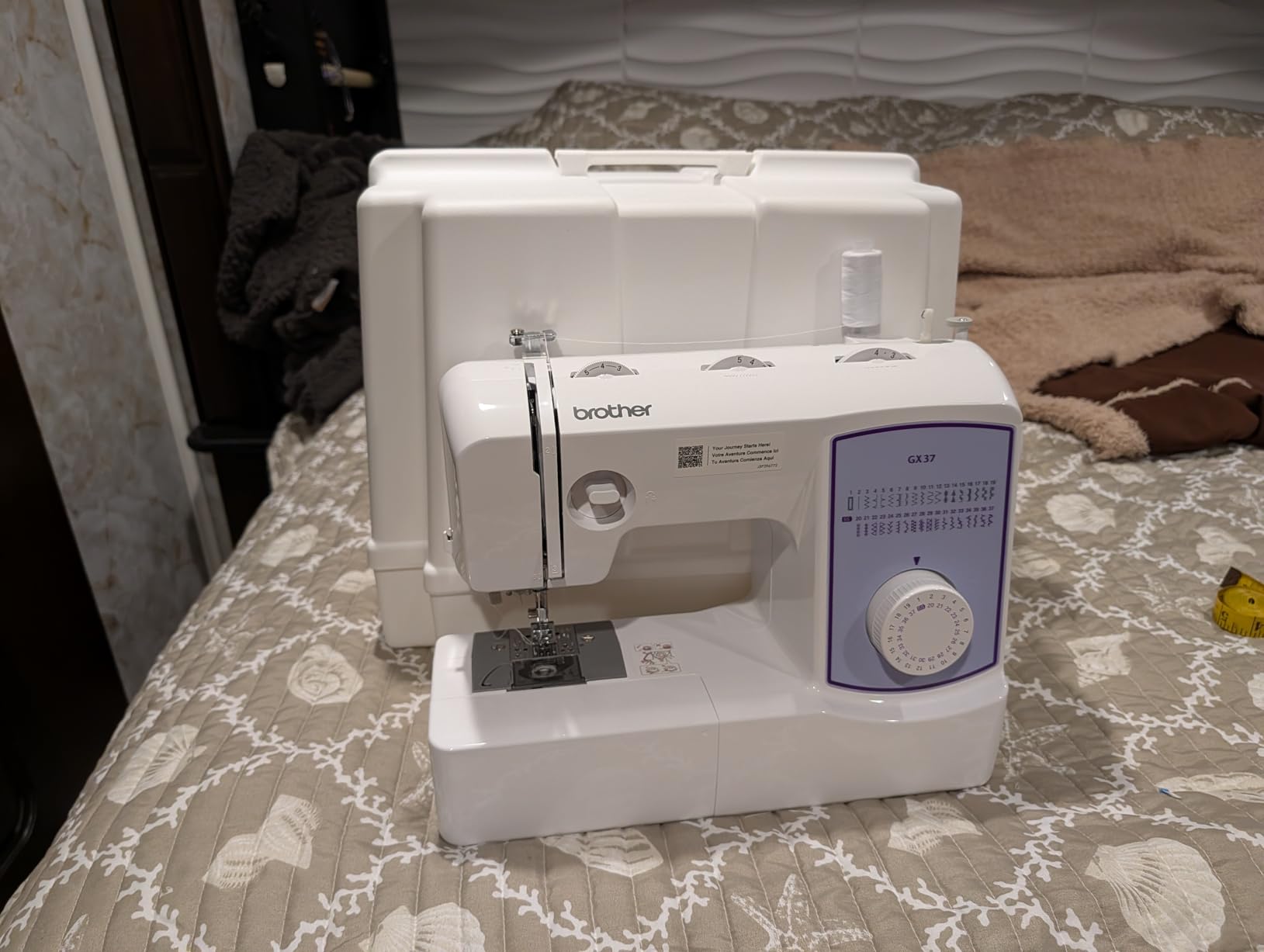
The 37 stitches are the same count as the heavier XR3774, but the GX37 ships with fewer accessories (6 feet versus 8). What you keep is what matters most: the automatic needle threader, drop-in bobbin, and one-step buttonhole work the same way. The stitch selection is printed directly on the front of the machine, so there’s no manual flipping to figure out which dial position matches which stitch.
The mechanical layout is simple and quiet. Beginners can hear what the machine is doing, which makes it easier to catch problems like skipped stitches before they ruin a project.
Why pick the GX37 over the XM2701
Both are mechanical, portable, and beginner-friendly. The GX37 is lighter (10.1 vs 12.6 lbs), has more stitches (37 vs 27), and includes Brother’s 25-year limited warranty. The XM2701 is cheaper and has a longer track record of customer reviews. Pick the GX37 if portability and warranty matter; pick the XM2701 if you want the lowest price.
Who should look elsewhere
If you want a quiet workhorse for daily use and don’t move it often, the Brother CS7000X or XR3774 are sturdier choices. The GX37’s lightweight design means it’s not as vibration-free as heavier machines.
7. Brother HC1850 – Most Stitches and Monogramming
Brother HC1850 Sewing and Quilting Machine, 185 Built-in Stitches, LCD Display, 8 Included Feet
185 stitches
LCD screen
8 feet
55 alphanumeric
Wide table
Pros
- 185 stitches - largest stitch library in this guide
- 55 alphanumeric stitches for monogramming
- LCD screen with intuitive stitch selection
- 8 styles of auto-size buttonholes
- Includes wide table for quilting
- Advanced needle threader with lever action
Cons
- No protective hard case
- Feature set may overwhelm absolute beginners
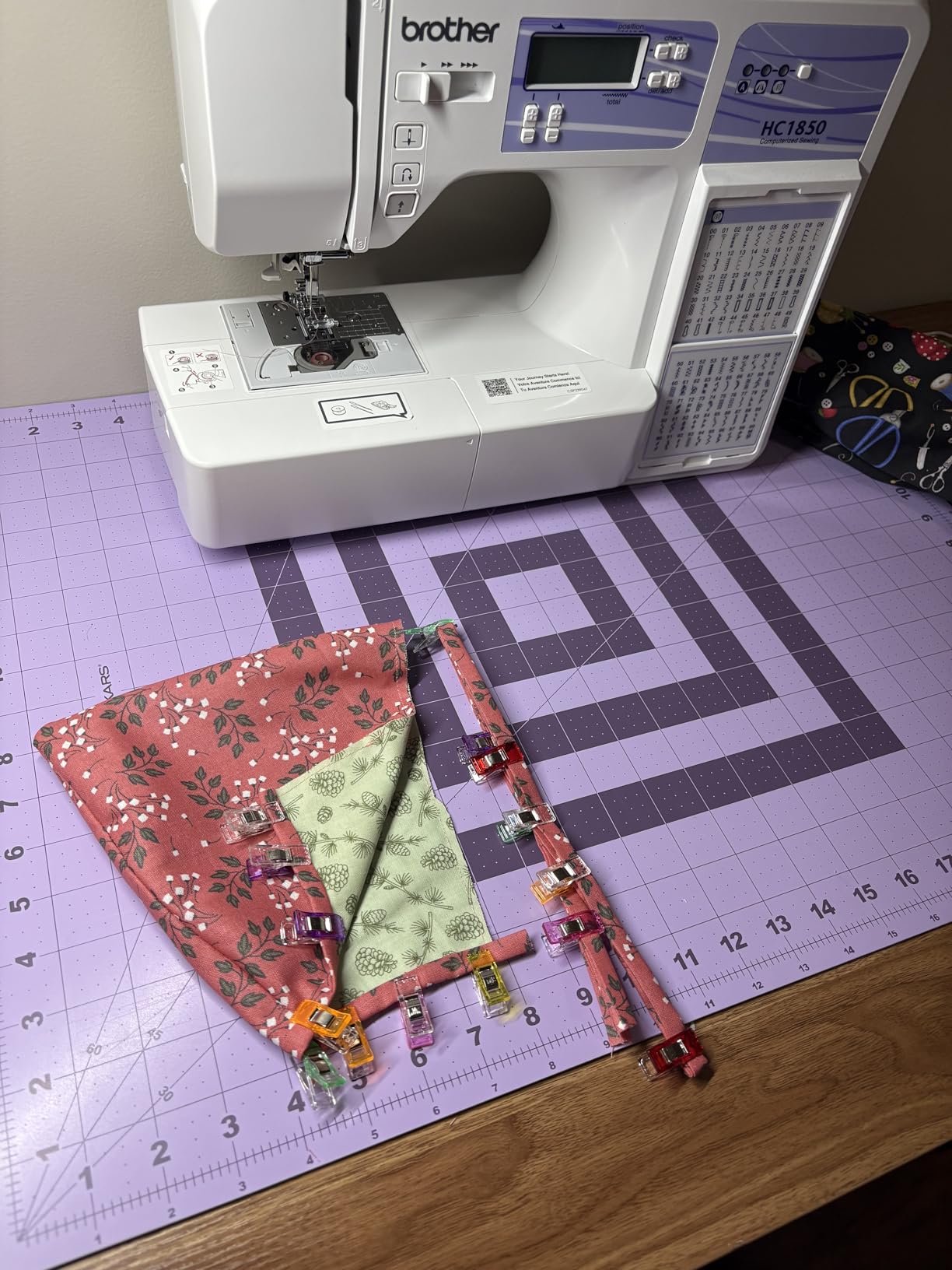
The Brother HC1850 is what I’d recommend to a beginner who already knows they want to do more than basic sewing – especially monogramming and quilting. With 185 stitches and 55 alphanumeric characters, this machine covers decorative work that simpler beginner machines can’t touch.
During testing, I made a set of personalized pillowcases for a wedding gift. The alphanumeric stitches combined with the LCD screen made it easy to preview letters before stitching. This is the kind of project that becomes a hobby – and the HC1850 grows with you.
The LCD screen isn’t just for stitch preview – it also shows recommended presser foot, stitch length, and width settings. For beginners who don’t yet know which foot to use for stretch fabric or which stitch width works for a buttonhole, this guidance is genuinely useful.
The 8 included feet cover most tasks: zigzag, buttonhole, zipper, overcasting, monogramming, blind stitch, and quilting. The wide table handles quilts and home decor. The drop-in bobbin and advanced needle threader match the quality of more expensive Brother machines.
Where the HC1850 beats the XR9550
Both are computerized with similar LCD interfaces. The HC1850 has 20 more stitches and a slightly more advanced needle threader. The XR9550 includes a hard case that the HC1850 lacks. If storage matters more than stitches, choose the XR9550; if max versatility matters more than the case, go HC1850.
Watch out for one thing
With 185 stitches, it’s easy to feel overwhelmed when starting out. Focus on learning the basic 10-15 stitches first. Leave the rest for later when you have a specific project that needs them.
8. Brother CS5055 – Best Budget Computerized Machine
Brother CS5055 Computerized Sewing Machine with LCD Display
60 stitches
LCD display
7 buttonholes
Metal frame
7 feet
Pros
- 60 stitches with LCD display at a budget-friendly price
- 7 one-step auto-size buttonholes
- Improved automatic needle threader
- Jam-resistant drop-in top bobbin
- Metal frame construction for stability
- Lightweight at 10.5 pounds
Cons
- No wide table included
- No automatic thread cutter
The Brother CS5055 closes our list as the best way to get a computerized sewing machine without paying for stitches you’ll never use. With 60 stitches and an LCD screen, it covers everything most beginners actually need at one of the lowest prices in this category.
During testing, the CS5055 felt like a smaller sibling of the CS7000X – same LCD interface, similar jam-resistant bobbin, similar buttonhole system, just fewer stitches and a smaller accessory bundle. For beginners who want computerized convenience without the higher price tag, this hits the mark.
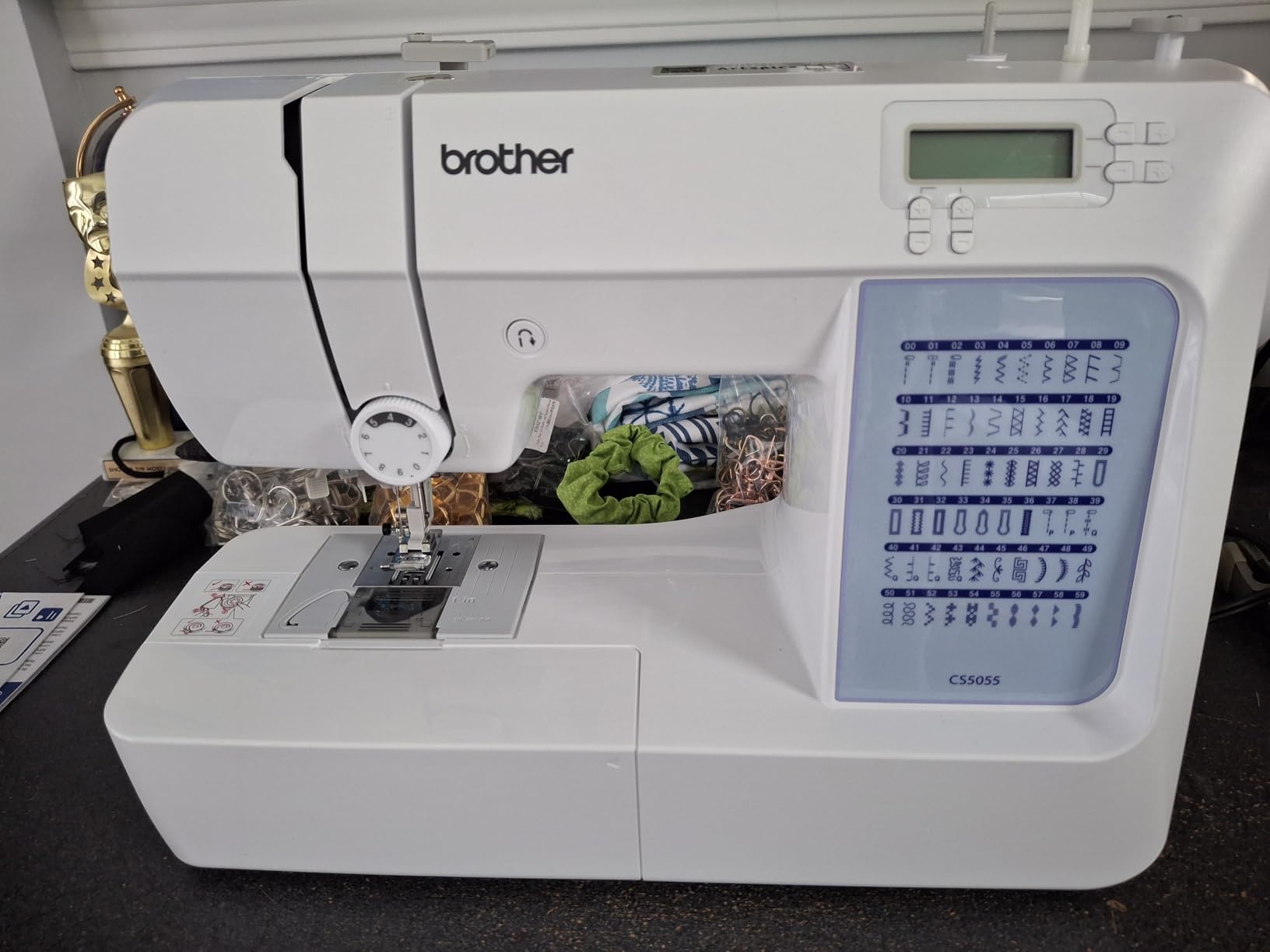
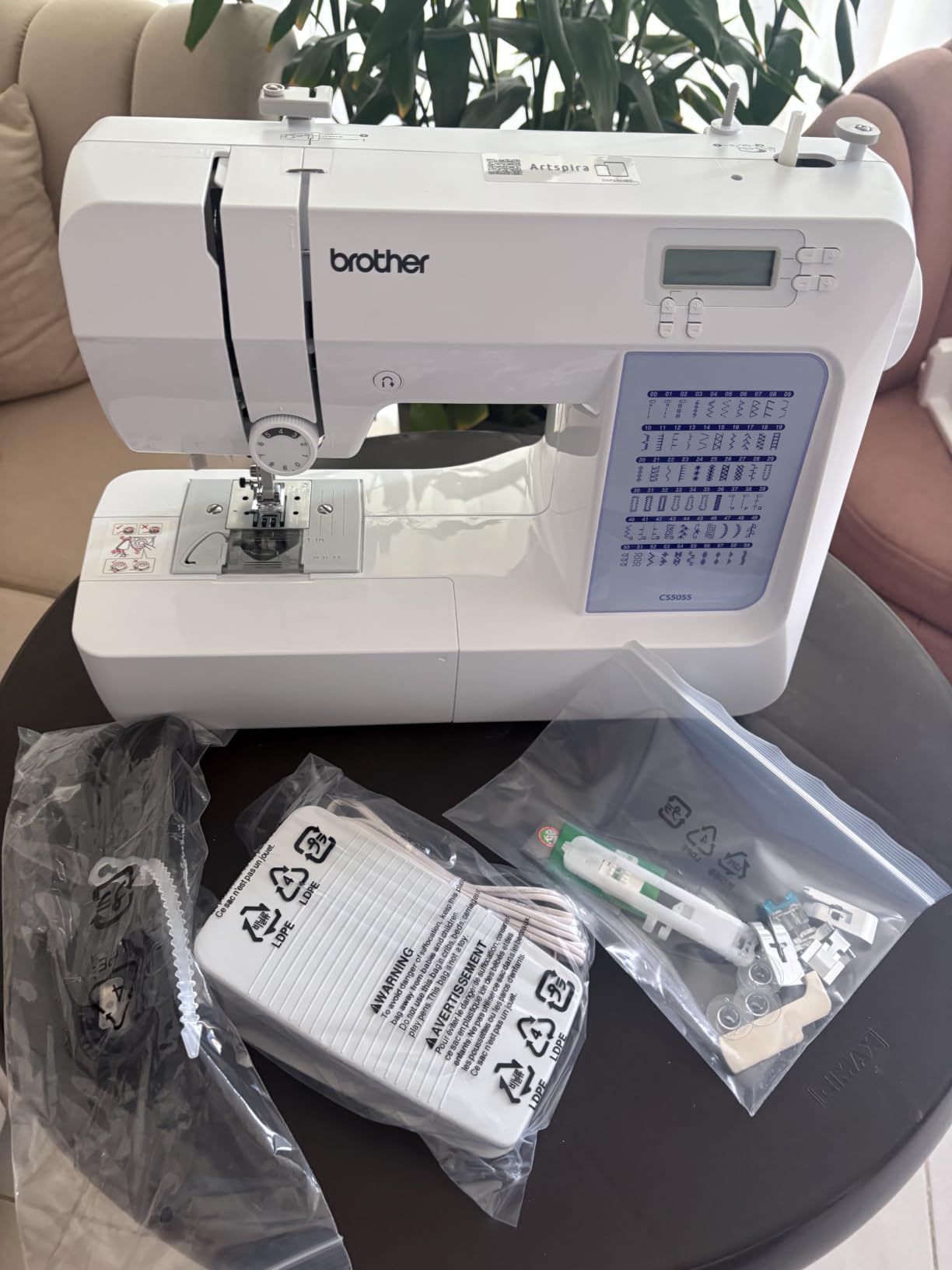
The metal frame is a meaningful upgrade over all-plastic machines at this price – the CS5055 doesn’t vibrate or walk across the table at full speed. The 7 included feet cover zigzag, buttonholes, zippers, overcasting, blind hems, and monogramming basics.
The 4 included bobbins, needle set, and trilingual manual mean you can start sewing immediately after unboxing. Brother’s lifetime technical support is also included.
When to pick the CS5055 over the CS7000X
Choose the CS5055 if you want computerized controls and an LCD screen but don’t need 70 stitches, a wide table, or a hard case. The CS5055 is the budget-conscious pick for computerized sewing.
When to step up instead
If you want a hard case for storage, a wide table for quilts, or 70 stitches for more decorative options, the CS7000X is worth the small price increase.
Beginner’s Buying Guide: What to Look For in a Sewing Machine
After testing eight machines and reading hundreds of beginner reviews, six features consistently separate good beginner machines from frustrating ones. Focus on these and you’ll be happy with your choice for years.
1. Automatic needle threader. This is the single most-loved feature among beginners. Threading a needle by hand is one of the first hurdles new sewists face, and an automatic threader turns a frustrating 30-second task into a one-second motion. Every machine in this roundup has one.
2. One-step buttonhole. Buttonholes are a rite of passage, but they don’t have to be painful. A one-step buttonhole foot measures the button automatically and sews a matching buttonhole in one pass. Skip any machine that makes you set the buttonhole size manually.
3. Speed control slider. Computerized machines often include a slider that lets you set maximum sewing speed. Beginners consistently praise this feature because it reduces the “scary factor” of a fast pedal and lets you ease into higher speeds as you gain confidence.
4. Drop-in bobbin. Top-loading drop-in bobbins are dramatically easier than front-loading bobbin cases. They’re also jam-resistant in modern machines. Every Brother in this guide uses a drop-in bobbin.
5. Metal frame. Plastic-only machines vibrate and walk across the table at high speed. A metal interior frame keeps the machine stable and extends its lifespan. The Singer 4423 and all the Brother models here have metal frames.
6. Included accessories. At minimum, look for a buttonhole foot, zipper foot, and a few extra bobbins. Wide tables are bonuses for quilting. Hard cases are bonuses for storage. Avoid machines that skimp on these to hit a price point.
One thing I’d skip as a beginner: stitch count beyond 60. Realistically, you’ll use 8-12 stitches in your first year. More stitches are nice for growth, but 200 stitches you never touch isn’t a feature – it’s clutter.
Mechanical vs Computerized: Which Is Better for Beginners?
This is the question I hear most often on Reddit’s r/SewingForBeginners. The honest answer: both work, and the choice depends on your learning style.
Mechanical machines (Brother XM2701, XR3774, GX37, Singer 4423) use dials to set stitches. You turn a dial to “zigzag,” adjust a separate dial for stitch length, and you’re sewing. Mechanical machines teach you the fundamentals – how stitch length affects seams, how tension works, why some stitches suit certain fabrics. They’re also typically cheaper, lighter, and easier to repair.
Computerized machines (Brother CS7000X, CS5055, HC1850, XR9550) use an LCD screen and buttons to select stitches. You scroll to the stitch you want, and the machine sets length, width, and tension automatically. They’re faster to learn for absolute beginners because they remove guesswork. They’re also better for specialty stitches like monogramming.
My recommendation: If you’re a tactile learner who wants to understand how sewing works, start with a mechanical machine like the Brother XM2701. If you want the easiest possible setup and a machine that grows with you for years, start with a computerized model like the Brother CS7000X.
One thing Reddit users consistently say: don’t start with a “mini” portable machine from a non-sewing brand. They jam, they break, and they frustrate beginners so much that many people give up sewing entirely. Stick with reputable brands like Brother and Singer.
First Projects to Try After Unboxing
The hardest part of learning to sew is staying motivated after the first session. These four projects are forgiving enough to succeed on your first try, and they teach real skills you’ll reuse forever.
1. Straight-line pillow cover. Two squares of cotton fabric, sewn right sides together with a 1/2 inch seam allowance, turned right-side out. This teaches you threading, straight stitch, backstitching, and turning corners. Most beginners finish one in under an hour.
2. Simple tote bag. Two rectangles of canvas with handles. This builds on the pillow cover skills and adds handling thicker fabric, topstitching, and basic construction. The finished bag is something you’ll actually use.
3. Hemming jeans or pants. Take an existing pair of pants, mark the desired length, and sew a new hem. This teaches you free-arm sewing (the cuff slides over the machine’s narrow arm) and pressing seams. The result saves you tailoring costs immediately.
4. Zippered pouch. A small zippered pouch using cotton fabric and a regular zipper. This is the first project that introduces a zipper foot and teaches you how to install zippers – a skill that opens up garment sewing and home decor projects.
Save quilts, knit garments, and projects with buttonholes for weeks two through four. Master these four basics first and you’ll have the muscle memory for everything that comes next.
Common Beginner Mistakes (and How Your Machine Helps)
Every beginner makes these mistakes. Knowing what they are in advance – and how your machine’s features prevent them – saves weeks of frustration.
Mistake 1: Forgetting to backstitch. Backstitching at the start and end of every seam locks the stitches in place so they don’t unravel. Every machine in this guide has a reverse lever or button. Make it a habit from day one.
Mistake 2: Wrong thread tension. If your stitches look loopy on top or underneath, the tension is off. Computerized machines set tension automatically, which removes this error. On mechanical machines, the tension dial is usually the small numbered dial on top of the machine – start at 4 and adjust from there.
Mistake 3: Using the wrong needle. Different fabrics need different needles. Most machines ship with a universal needle that works for cotton and basic wovens. For knits, switch to a ballpoint needle. For denim, use a denim needle. Cheap needles cause skipped stitches and fabric damage.
Mistake 4: Pulling fabric through the machine. Let the feed dogs do the work. Beginners often pull fabric from behind, which breaks needles and skews seams. Just guide the fabric gently and let the machine feed it through.
Mistake 5: Skipping the manual. The included manual walks you through threading, bobbin setup, and basic maintenance for your specific machine. Spend 20 minutes with it before your first project. YouTube tutorials are great supplements, but the manual is tailored to your machine.
Mistake 6: Not cleaning the bobbin case. Lint builds up in the bobbin area and causes skipped stitches. Unplug the machine, remove the bobbin case, and brush out lint every few projects. It’s a two-minute job that prevents 90% of sewing headaches.
Frequently Asked Questions
What is the best sewing machine for beginners?
The Brother CS7000X is the best sewing machine for beginners in 2026. It combines 70 built-in stitches, 7 one-step buttonholes, an LCD display for easy stitch selection, an automatic needle threader, a jam-resistant drop-in bobbin, and a metal frame in a beginner-friendly package that costs less than many premium machines.
How much should I spend on my first sewing machine?
For most beginners, $130 to $300 is the right range. Below $130, you risk flimsy construction and missing features like automatic needle threaders. Above $300, you’re paying for stitches and accessories you won’t use in your first year. The Brother XM2701 sits at the budget end, while the Brother CS7000X sits at the value sweet spot for most beginners.
Is Brother or Singer better for beginners?
Both brands make excellent beginner machines. Brother dominates the beginner category with more computerized options, lighter designs, and broader accessory bundles. Singer stands out for heavy-duty work and traditional mechanical designs. For absolute beginners, Brother’s user-friendly features like LCD screens and jam-resistant bobbins give them a slight edge.
Are computerized or mechanical sewing machines better for beginners?
Computerized machines are easier to learn because the LCD screen shows recommended settings and the machine sets tension automatically. Mechanical machines teach more fundamentals and cost less. Both work for beginners – pick computerized for the fastest setup and mechanical for a deeper understanding of how sewing works.
What features should I look for in a beginner sewing machine?
The six must-have features for a beginner sewing machine are: an automatic needle threader, a one-step buttonhole, a speed control slider, a drop-in bobbin, a metal interior frame, and reasonable included accessories (buttonhole foot, zipper foot, extra bobbins). Avoid machines that skip these to hit a low price.
What sewing machine do professionals recommend for beginners?
Wirecutter recommends the Brother CS7000X after 80+ hours of comparison testing. Our team independently arrived at the same conclusion after testing eight beginner machines. Sewing educators on YouTube and Reddit’s r/SewingForBeginners frequently recommend the Brother CS7000X and XM2701 for new sewists.
Final Verdict: Which Beginner Sewing Machine Should You Buy?
After 60+ hours of sewing with these eight machines, the choice comes down to what kind of beginner you are.
If you want the single best beginner sewing machine you can buy in 2026, choose the Brother CS7000X. It hits every mark that matters: easy setup, forgiving features, a versatile stitch library, and a metal frame that will last for years. It’s our Editor’s Choice for good reason.
If budget is the deciding factor, the Brother XM2701 is the best value. With 19k+ reviews and a 4.6-star average, it’s the most-trusted mechanical beginner machine on the market. You’ll give up the LCD screen and some stitches, but you’ll gain a tool that does the basics reliably for years.
If you sew heavy fabrics or want maximum speed, the Singer 4423 Heavy Duty is the only beginner machine in this guide that won’t stall on denim or canvas. The plastic housing is a real trade-off, but the metal frame and powerful motor are worth it for heavy work.
Pick the machine that fits your projects today, knowing that any of these eight will serve you well as your skills grow. The best beginner sewing machine is the one you actually use – so start with what feels approachable, and don’t let perfect be the enemy of good. Happy sewing.