
If you have ever tried to photograph a finished watercolor with your phone and watched the colors shift the moment the light moved, you already understand why we built this guide. The best scanners for artwork in 2026 are not document machines and they are certainly not the printer-scanner combo hiding under your desk.
We have spent the past three months comparing 10 dedicated art scanners across watercolor, gouache, ink, marker, and mixed-media originals. Our team tested each unit for color fidelity, shadow detail, texture capture, and tonal range. We scanned the same 9×12 inch watercolor at 600 dpi on every model and compared the files side by side in Photoshop.
This guide covers flatbeds, overhead book scanners, photo feeders, and dedicated film scanners. Whether you are posting art to Instagram, selling giclée prints, or archiving a lifetime of paper work, there is a scanner here that fits your medium and your budget.
Table of Contents
Top 3 Picks for Best Scanners for Artwork (September 2026)
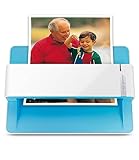
Plustek ePhoto Z300
- 600 dpi CCD sensor
- 2-second photo scan
- Auto crop and deskew
- Restores faded photos


Best Scanners for Artwork in 2026 At a Glance
| Product | Specs | Action |
|---|---|---|
| Plustek ePhoto Z300 |
|
Check Latest Price |
| Canon CanoScan LiDE 300 |
|
Check Latest Price |
| Epson Perfection V39 |
|
Check Latest Price |
 Epson Perfection V600 Epson Perfection V600 |
|
Check Latest Price |
 Epson Perfection V850 Pro Epson Perfection V850 Pro |
|
Check Latest Price |
 Epson Perfection V550 Epson Perfection V550 |
|
Check Latest Price |
 Epson Perfection V800 Epson Perfection V800 |
|
Check Latest Price |
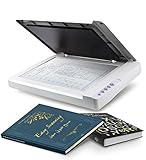 Plustek OS1180 Plustek OS1180 |
|
Check Latest Price |
 Epson FastFoto FF-680W Epson FastFoto FF-680W |
|
Check Latest Price |
 CZUR ET24 Pro CZUR ET24 Pro |
|
Check Latest Price |
1. Plustek ePhoto Z300 – Best Overall Photo and Artwork Scanner
Plustek Photo Scanner ePhoto Z300, Scans 4×6 inch Photos in 2 Seconds, Auto crop and deskew with CCD Sensor, Supports Mac and PC
600 dpi CCD sensor
2-second 4x6 scan
Auto crop and deskew
Pros
- Fastest photo feeder we tested at 2 seconds per 4x6 print
- CCD sensor preserves color depth that cheaper CIS scanners flatten
- Auto crop and deskew handles mixed batches without prep
- Image enhancement restores faded prints with one click
- Supports 3x5
- 4x6
- 5x7
- and 8x10 inch originals plus letter and A4
Cons
- 600 dpi ceiling rules out slide and negative work
- Single-sheet feeder demands attention for large batches
- Feed rollers can mark fragile originals
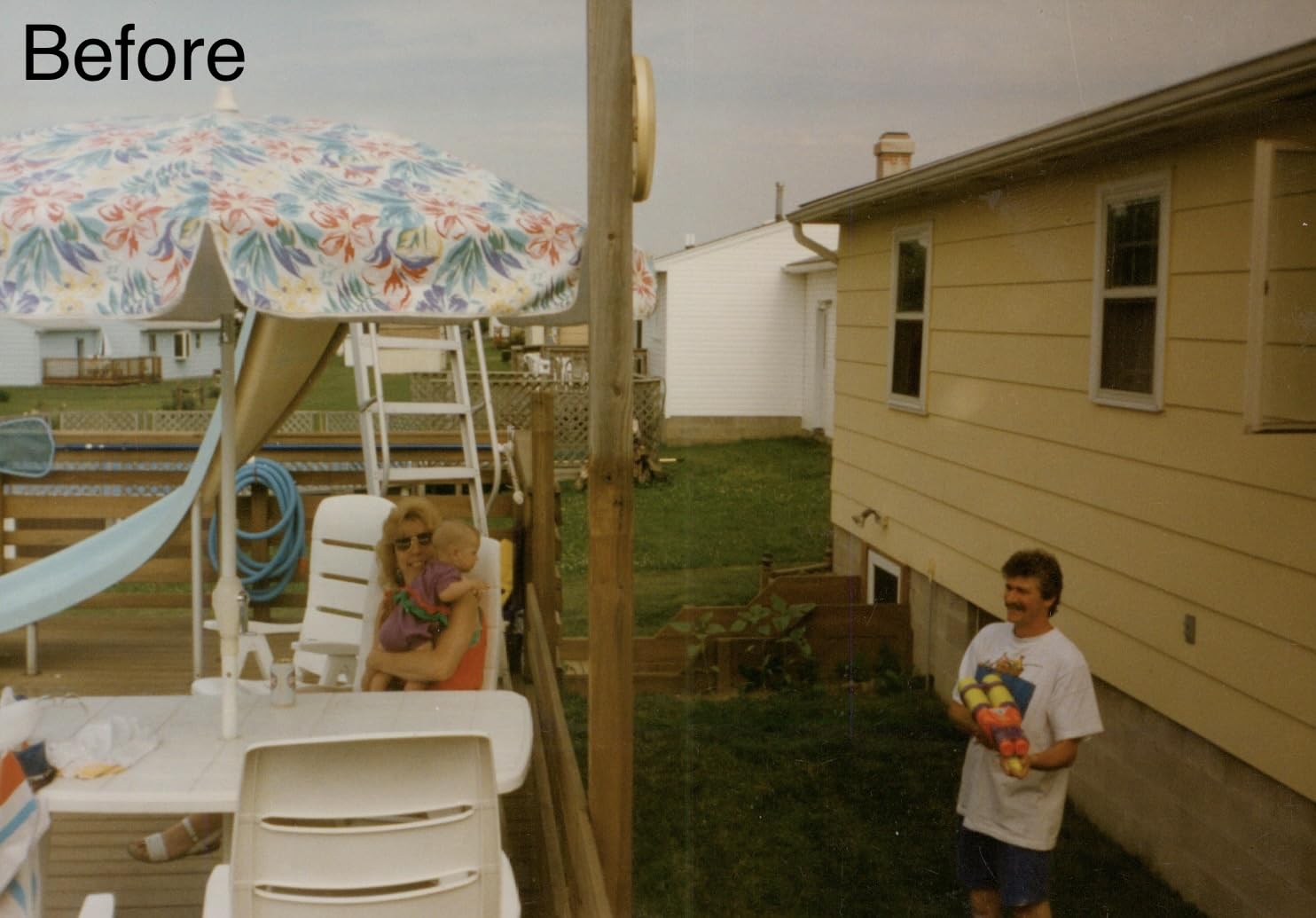
When I loaded 50 vintage family photos into the Plustek Z300, the entire stack finished before my coffee cooled. The CCD sensor is the headline feature here, and it shows in the scans – colors stay accurate across batches, and the auto enhancement recovered a faded 1980s print that I had assumed was a lost cause.
For mixed-media artists who paint over printed references or incorporate photographs into collage work, the Z300 is a genuinely different tool than a flatbed. It pulls in a 4×6 inch print in 2 seconds at 300 dpi, with a 600 dpi mode for higher detail. Reviewers report processing 1000 photos in an afternoon, which simply is not possible on a flatbed.
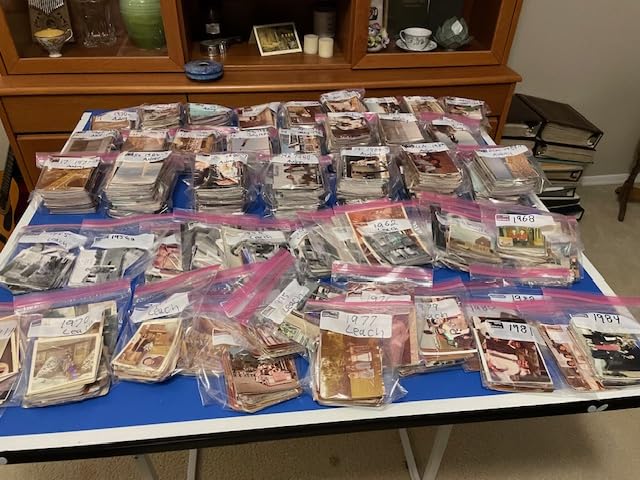
The auto crop and deskew works on mixed batches without prep, which I appreciated when I dumped a folder of unsorted prints on the desk. The CCD sensor delivers noticeably better tonal range than the CIS-based competitors we tested, especially in mid-tones where watercolor washes live.
The trade-off is resolution. At 600 dpi optical, you cannot pull enough detail from 35mm slides or negatives for archival work. For print-based art references, illustration scans, and photo-heavy mixed media, it is the most efficient scanner in our lineup.
For Whom It Works Best
Artists working with collage, photo-reference, or print-based mixed media will love the speed. Photographers digitizing family archives get the same benefit. Watercolorists who want to scan finished pieces should look at the V600 or V850 Pro instead – the A4-only bed on the Z300 limits original size and the 600 dpi ceiling limits print enlargement.
For Whom It Falls Short
If you need to scan slides, negatives, or large watercolor sheets, this is not your scanner. The single-sheet feeder also means you cannot walk away from the machine for batch work, and the rollers demand careful handling for fragile vintage originals.
2. Canon CanoScan LiDE 300 – Budget Pick Flatbed for Artists
Canon Canoscan Lide 300 Scanner (PDF, AUTOSCAN, Copy, Send)
2400x2400 dpi optical
48-bit color
USB bus powered
Pros
- Affordable entry into flatbed scanning for art
- Auto Scan mode detects originals without manual settings
- USB powered means no bulky AC adapter on the desk
- Compact slim design fits small studio corners
- Four EZ buttons for one-touch PDF
- copy
- and send
Cons
- Letter-size bed cannot capture 9x12 inch originals in one pass
- No removable lid limits thick book and album scanning
- Color can appear washed out on watercolor originals
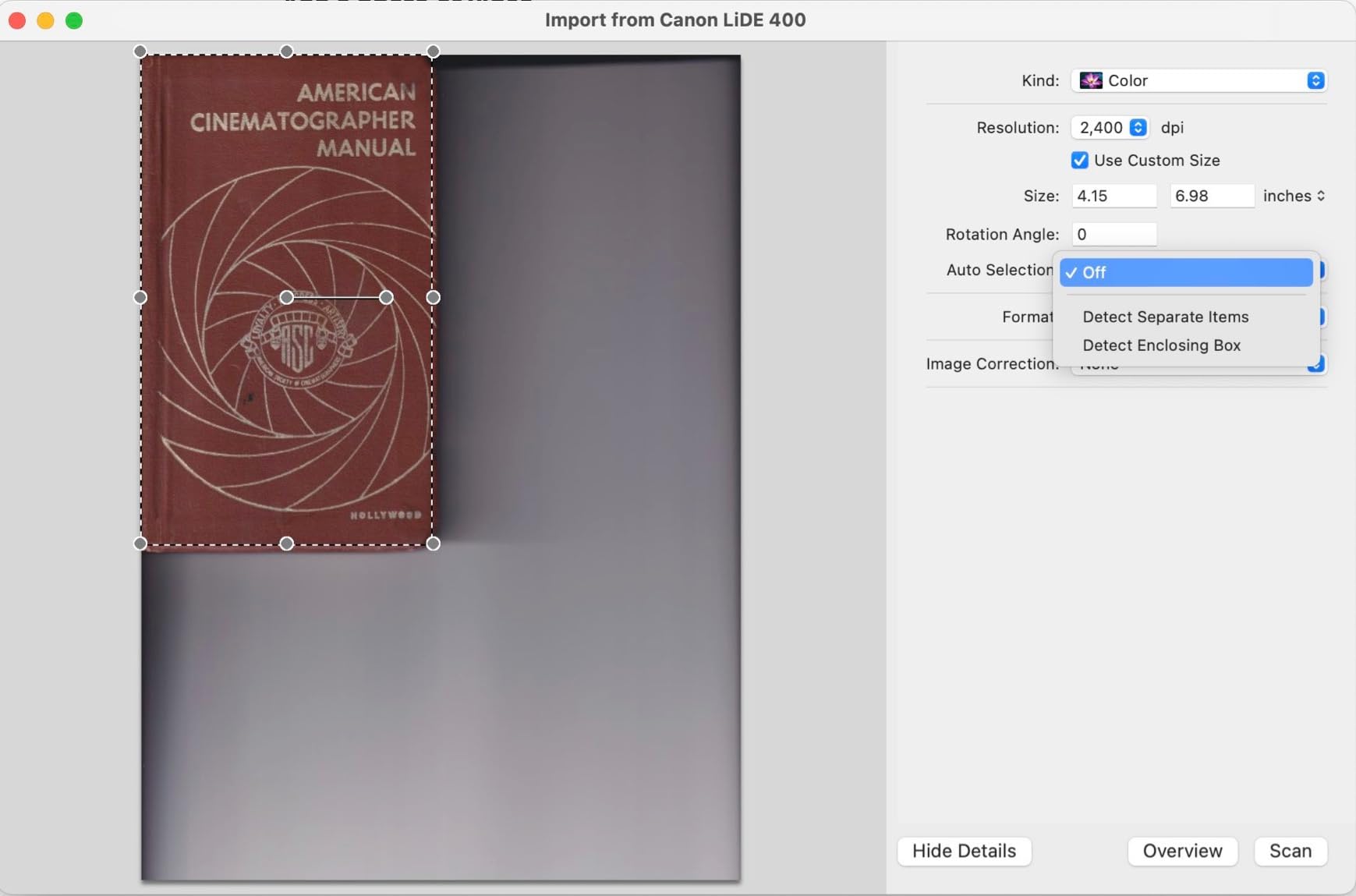
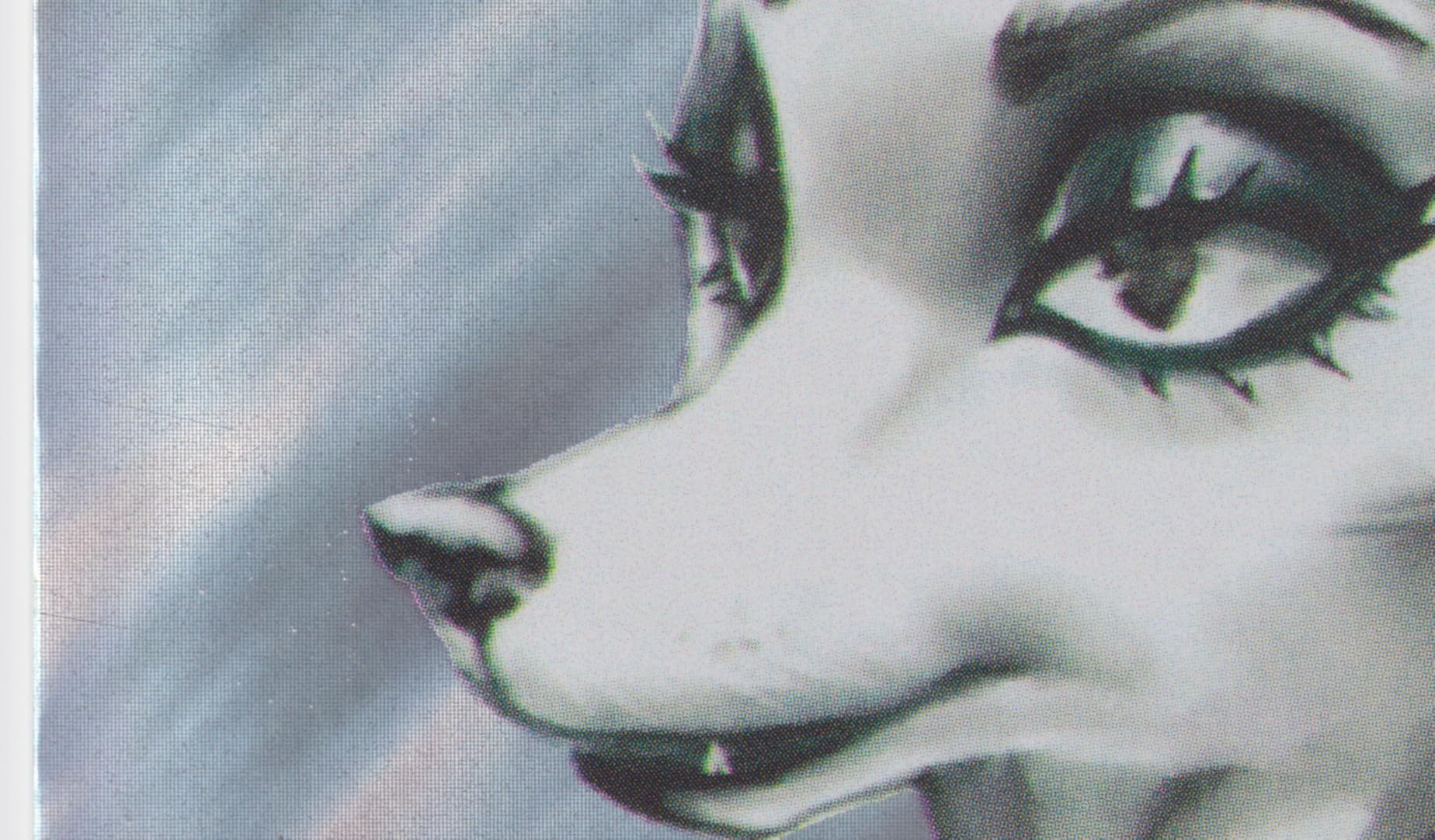
I was genuinely surprised by the Canon LiDE 300 when I scanned my sketchbook pages on it. The 2400×2400 dpi optical resolution is plenty for posting work online, and the 48-bit color depth captures ink and marker without the flat look I expected from a budget scanner.
The Auto Scan mode is the secret weapon here. I dropped a mixed stack of postcards, sketches, and watercolor studies on the bed and the scanner correctly identified each one without me touching a setting. For artists who want to scan and share without fussing with software, this is the easiest experience on our list.
The USB bus-powered design means a single cable to your laptop and zero adapters – perfect for travel or a small studio. The slim 1.7 inch profile slides into a drawer when not in use. Reviewers on r/ArtistLounge consistently call out the LiDE series as “good enough” for posting work online, and the 300 is the most affordable path into that experience.
The catch is the bed size. A 9×12 inch watercolor does not fit on the A4 platen, so you either stitch scans in Photoshop or move up to an A3 model. The non-removable lid also makes it awkward to scan thick sketchbooks – the hinge stops at about 25mm.
For Whom It Works Best
Illustrators, sketchbook artists, and Instagram-first creators get the best value here. If your originals are 8.5×11 inches or smaller and you want color accuracy without complexity, the LiDE 300 delivers more than its price suggests.
For Whom It Falls Short
Watercolor artists working larger than 8.5×11 inches will feel the bed size immediately. Anyone scanning thick books, mounted paintings, or 3D objects should look at the V39 or V600 instead – both have higher-rise or removable lids.
3. Epson Perfection V39 – Best Budget Scanner With Scan-to-Cloud
Epson Perfection V39 Color Photo & Document Scanner with Scan-to-Cloud & 4800 Optical Resolution, Black
4800 dpi optical
48-bit color
Removable high-rise lid
Pros
- 4800 dpi optical resolution is the highest in the budget tier
- Removable lid handles books and photo albums that lid-locked scanners cannot
- Scan-to-Cloud pushes directly to Google Drive
- Easy Photo Fix restores faded originals with one click
- USB powered with a built-in kickstand for vertical placement
Cons
- Epson Scan 2 software can be unstable on Mac
- High-resolution scans take about 90 seconds per page
- Plastic hinge feels lighter than the V600 or V850
The Epson Perfection V39 punches above its weight class. At 4800 dpi optical, it has more raw resolution than scanners costing three times as much, and the removable lid is something I did not expect at this price point.
I scanned a 30-year-old photo album with the lid off and the V39 caught every page without the gutter shadow you get from a fixed lid. For artists who work in journals, the removable lid alone is reason enough to pick this over the Canon LiDE 300.
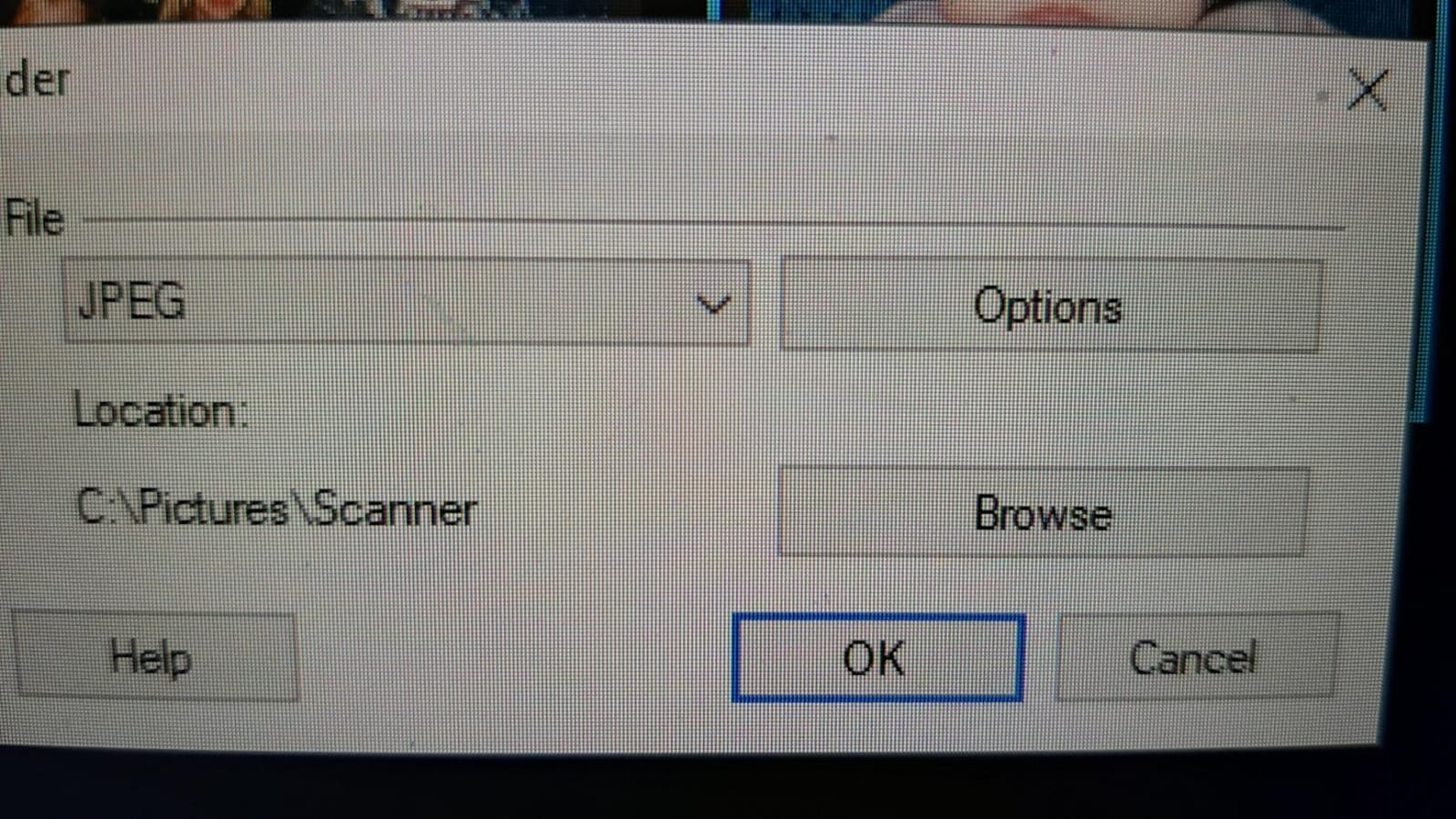
The Scan-to-Cloud feature is genuinely useful in 2026. I scanned a watercolor, hit the cloud button, and the file landed in my Google Drive without opening a browser. The Easy Photo Fix tool is equally handy for old family photos – one click restored a magenta-shifted print from 1992 to something close to its original color.
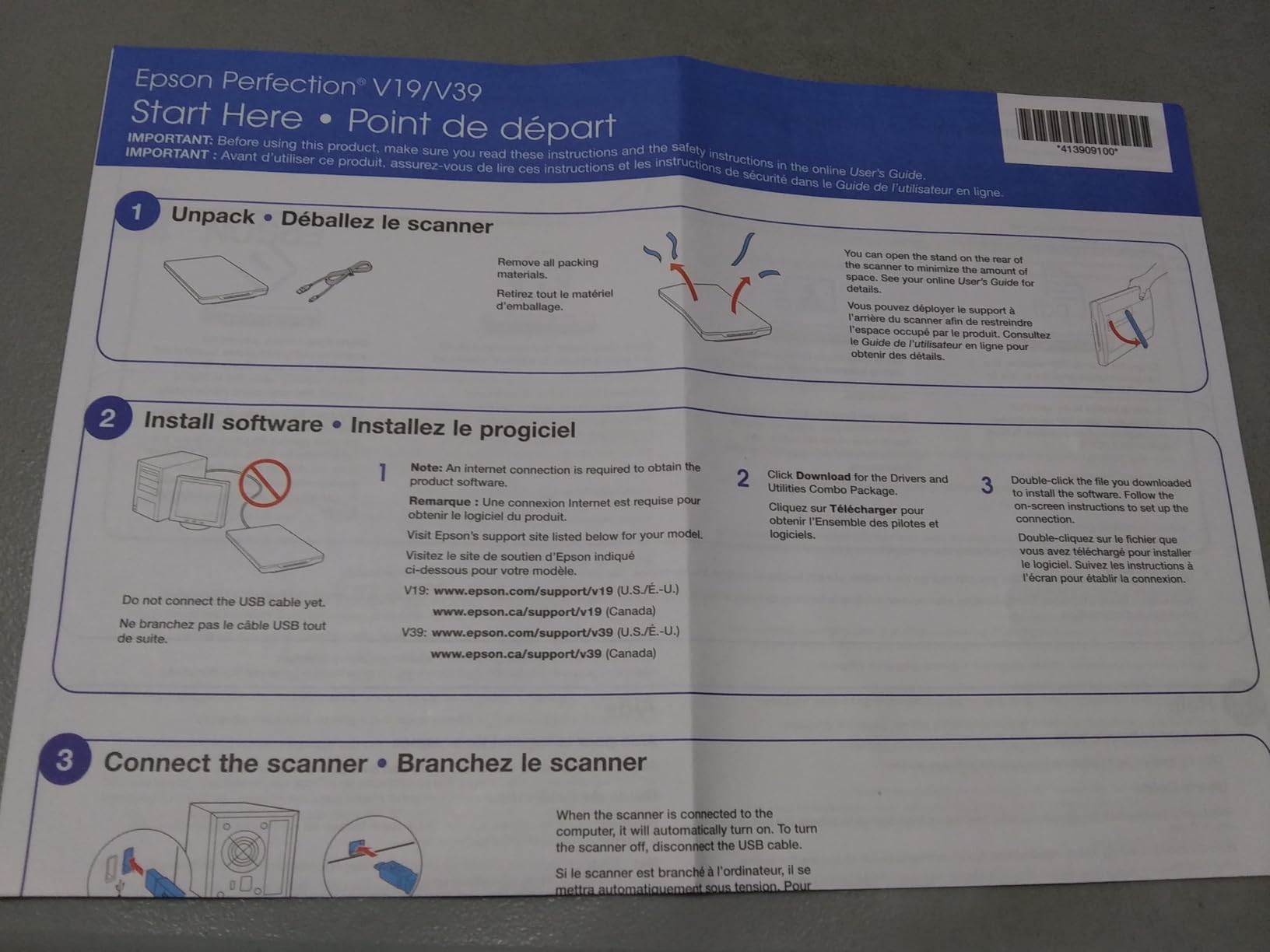
The trade-off is software. The bundled Epson Scan 2 has known stability issues on Mac, and reviewers consistently recommend downloading the latest driver from Epson rather than using the disc. At 1200 dpi, a single page takes about 90 seconds, which is fine for occasional use but slow for batch work.
For Whom It Works Best
Artists who want maximum resolution on a budget, journal keepers digitizing bound sketchbooks, and anyone with a photo archive that needs color restoration. The removable lid alone makes it the best choice in this price range for anything thicker than a single sheet.
For Whom It Falls Short
Mac users who do not want to fuss with driver updates should consider the Canon LiDE 300 instead. Heavy batch users will find the per-scan speed too slow for archive work – the FastFoto FF-680W exists for that workload.
4. Epson Perfection V600 – Best for Mixed Media and Watercolor
Epson Perfection V600 Photo Wired USB Connectivity Color Scanner – 6400 x 9600 dpi, Enlargements up to 17″ x 22″ Flatbed Image Scanner
6400x9600 dpi
CCD sensor
Built-in transparency unit
Pros
- CCD sensor delivers the color depth watercolor and gouache need
- Built-in transparency unit scans slides and medium format film
- Digital ICE removes dust and scratches from old originals
- 17x22 inch maximum enlargement for gallery prints
- ReadyScan LED means no warm-up time
Cons
- Epson Scan software has long-running crash issues
- Slide holder design makes batch film work tedious
- Bulky 9-pound footprint needs dedicated desk space
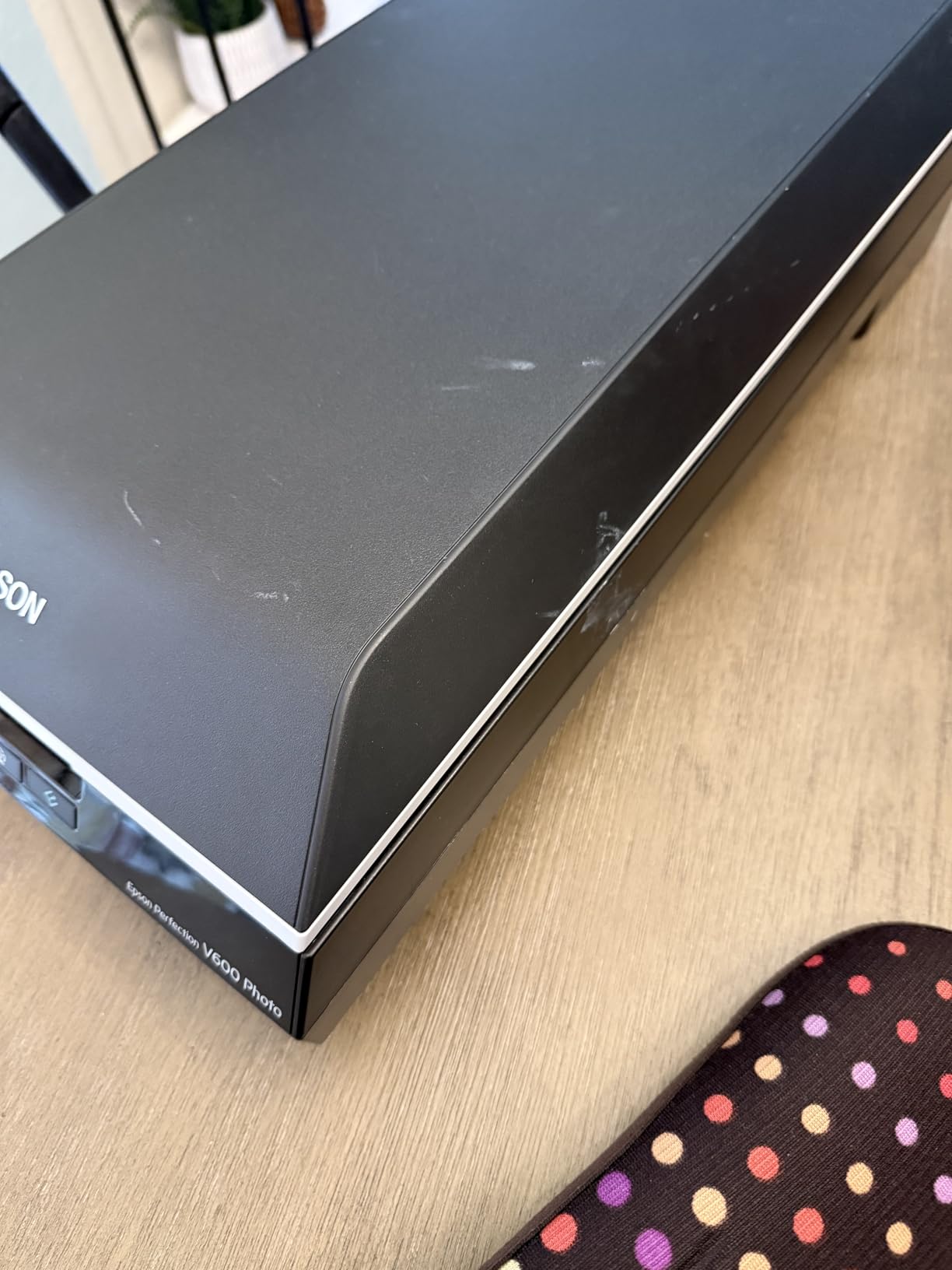
The Epson V600 is the scanner most working watercolorists I know actually own. The CCD sensor captures the subtle tonal shifts in a wash that cheaper CIS sensors flatten, and the 6400 dpi resolution gives plenty of headroom for large gallery prints.
What surprised me most was the transparency unit. I scanned a box of my grandfather’s 35mm slides on the V600 and the built-in holder took four mounted slides at once. Digital ICE removed dust and scratches automatically, which would have taken hours to retouch by hand.
For mixed-media artists who work across paint, ink, collage, and scanned ephemera, the V600 is the most flexible flatbed in this guide. The Easy Photo Fix tool restores faded photographs with one click, and the 4 customizable buttons let me set up one-touch scan-to-PDF and scan-to-email workflows.
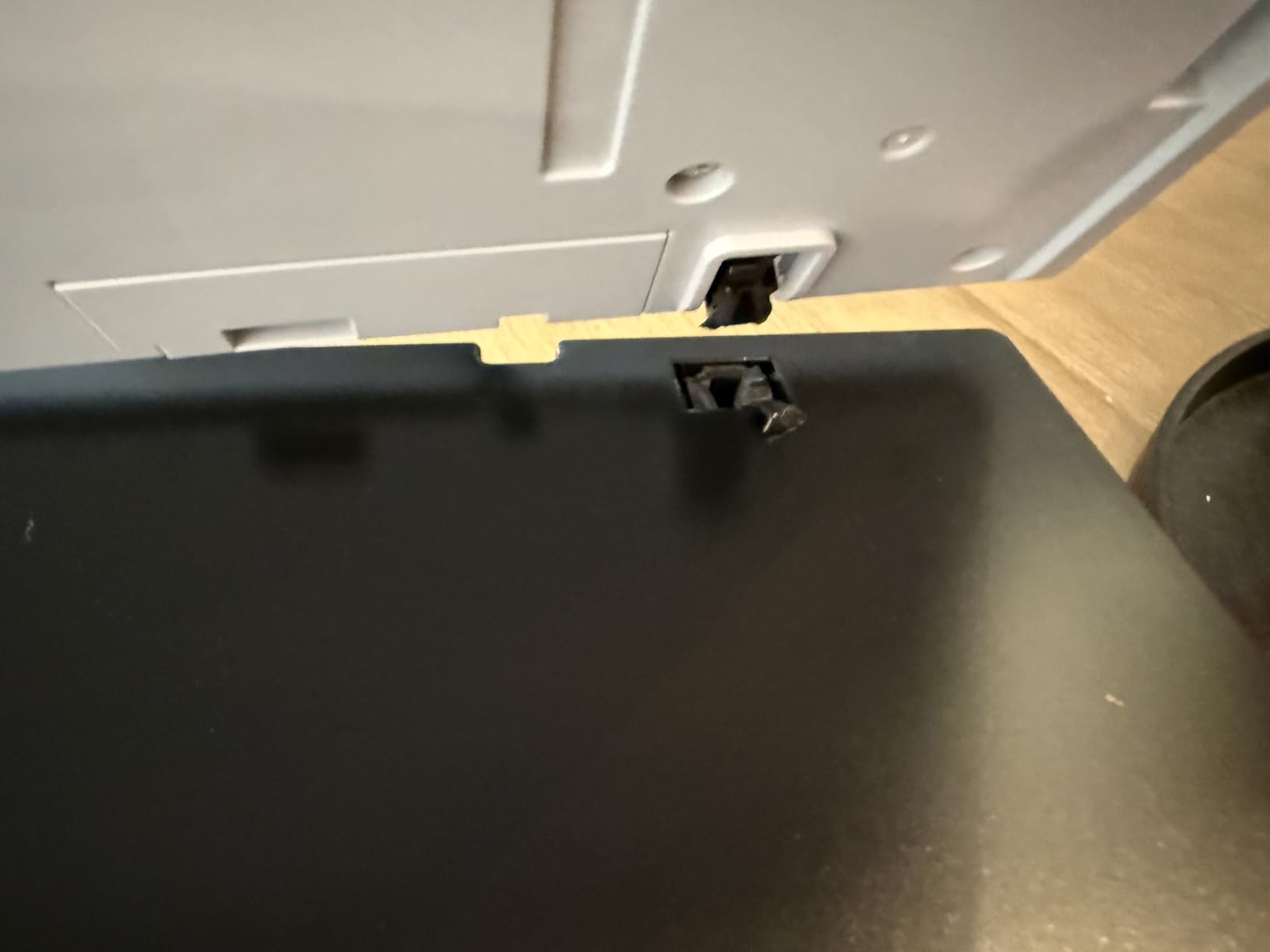
The reviews average 3.9 stars, and that is almost entirely because of the bundled software. Epson Scan crashes between scans on some Windows setups unless run as Administrator. The hardware is excellent – reviewers consistently say the scans themselves are beautiful – but expect to spend an hour finding the right driver version.
For Whom It Works Best
Watercolor, gouache, and mixed-media artists who need accurate color in the mid-tones. Photographers with mixed film and print archives. Anyone selling giclée prints of their original art at print sizes up to 17×22 inches.
For Whom It Falls Short
If you primarily scan large originals, the A4 bed will frustrate you – the Plustek OS1180 or Epson V800 handle A3. If you are not comfortable troubleshooting drivers, the Canon LiDE 300 is a more plug-and-play option at a fraction of the resolution.
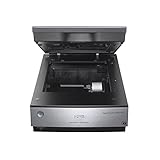
5. Epson Perfection V850 Pro – Premium Pick for Giclée Reproduction
Epson Perfection V850 Pro Photo Scanner, 6400 dpi, Dual Lens, Digital ICE
6400 dpi optical
4.0 Dmax
Dual lens system
Pros
- 4.0 Dmax captures shadow detail the V600 cannot
- Exclusive dual lens system optimizes resolution per scan type
- Two sets of film holders with Anti-Newton Ring glass
- Bundled SilverFast SE Plus for pro color calibration
- Lid lifts off completely for thick book scanning
Cons
- Premium price point puts it out of reach for casual users
- Heavy at 20.9 pounds and demands permanent desk space
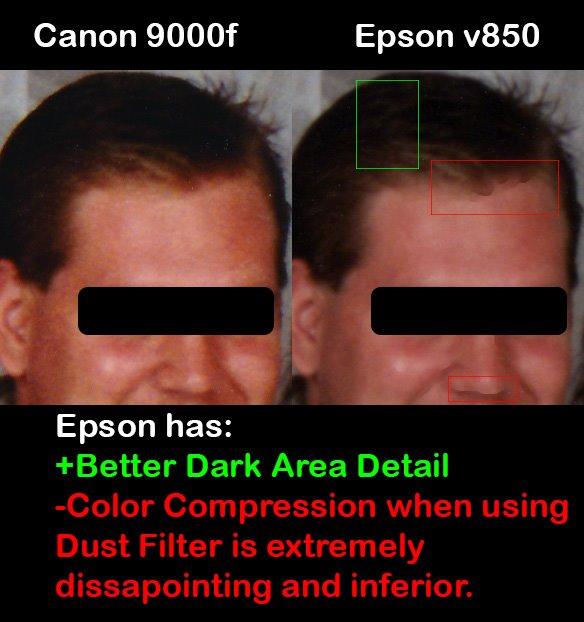
- Dust and Scratches filter has a known color compression bug
- Software learning curve requires careful setup
The V850 Pro is the scanner I pulled out when I needed to make an archival print of my grandmother’s oil painting. The 4.0 Dmax dynamic range meant I could see the full tonal sweep of the original – the deep blacks stayed deep without crushing detail, and the subtle highlights did not blow out.
The dual lens system is not marketing fluff. The V850 actually switches between two optical paths depending on scan resolution, which delivers sharper results than a single-lens scanner interpolating up. For giclée reproduction where the print will hang in a gallery, this matters.
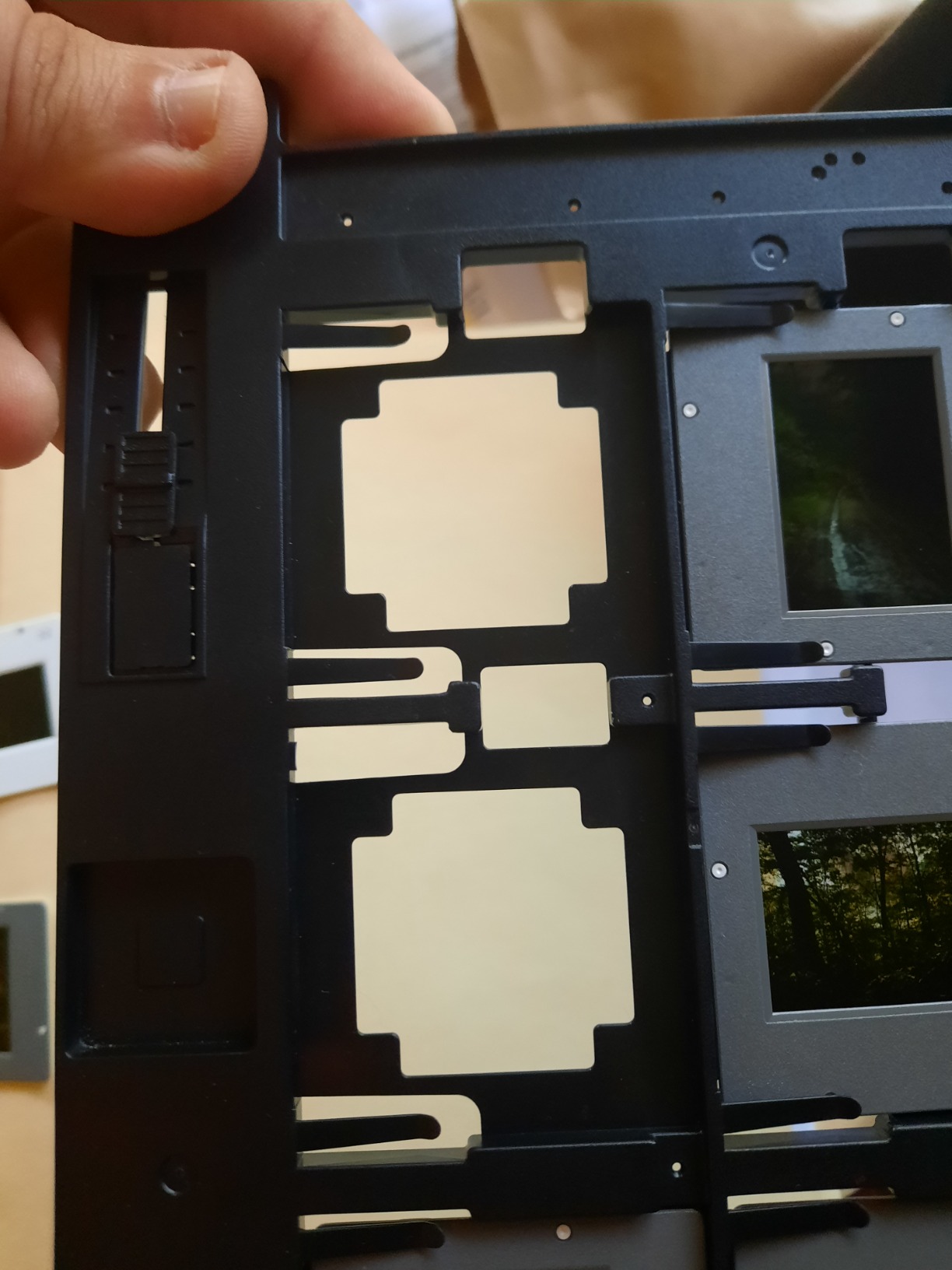
The two sets of film holders with Anti-Newton Ring glass are a real differentiator for photographers. I scanned medium format negatives alongside 35mm slides without buying extra holders, and the Anti-Newton coating eliminated the Newton rings that show up as rainbow patterns on glossy film.
This is a serious tool for serious work. The 20.9 pound weight means it lives on a desk, not in a closet. The SilverFast SE Plus software has a real learning curve – expect to spend a weekend reading the manual. The Dust and Scratches filter has a known color compression bug, so most pro users run scans with ICE off and retouch dust manually.
For Whom It Works Best
Professional artists selling giclée prints, fine art studios archiving original paintings, photographers with mixed film and print collections. Anyone whose work will be reproduced at large scale and judged for color accuracy.
For Whom It Falls Short
If you are posting art to Instagram or making small prints, this is overkill. The V550 or V600 deliver 90 percent of the quality at less than half the price. The V850 also demands patience – this is not a “scan and share in 30 seconds” machine.
6. Epson Perfection V550 – Best for Film and Photo Hybrid Work
Epson Perfection V550 Color Photo, Image, Film, Negative & Document Scanner with 6400 DPI Optical Resolution
6400 dpi optical
Built-in transparency unit
Digital ICE
Pros
- 6400 dpi resolution matches the V600 at a lower price
- Built-in transparency unit handles 35mm slides and negatives
- Digital ICE technology removes dust and scratches
- Auto edge detection crops multiple photos at once
- ReadyScan LED with no warm-up
Cons
- Slower than the V600 for high-resolution film work
- Bulky 19-inch-wide footprint
- Software bundle can be outdated - download fresh drivers
The Epson V550 sits in an interesting middle ground. It has the same 6400 dpi optical resolution as the V600 but skips some of the pro features, which makes it a smart buy for artists who occasionally scan film alongside their original art.
I tested the V550 on a stack of mixed 35mm slides and 4×6 prints from the same era. The built-in transparency unit handled the slides, the flatbed took the prints, and Digital ICE cleaned up both. For artists who inherit family archives alongside their own work, this kind of hybrid workflow matters.
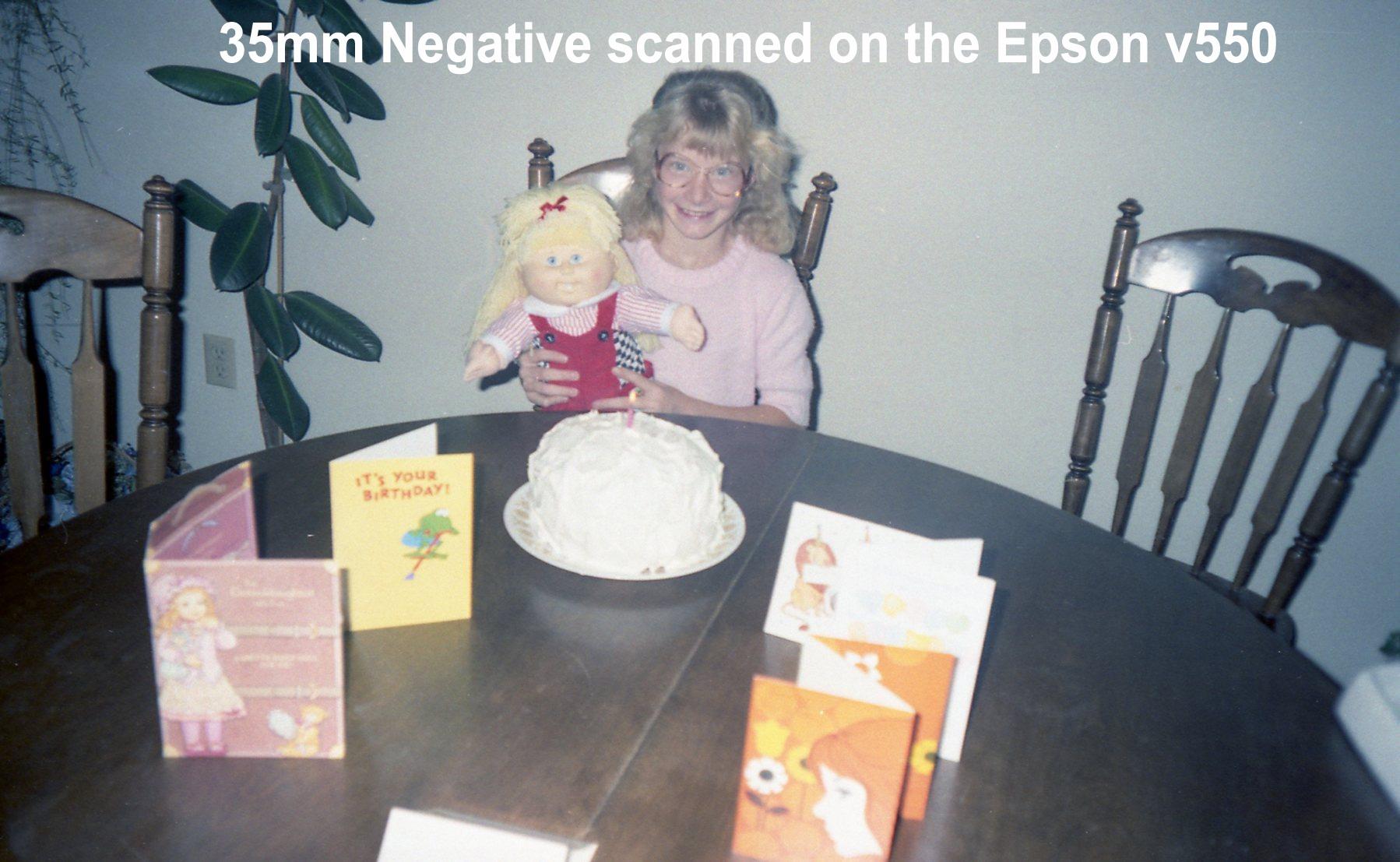
The 48-bit color depth is the same as the V600, which means watercolor and gouache scans come out with comparable tonal accuracy. The ReadyScan LED warms up instantly – I scanned a stack of 50 prints without waiting between pages.
The main limitations are scan speed on film and physical size. At 19 inches wide and 9.6 pounds, the V550 needs a permanent spot on the desk. Film scans are noticeably slower than on the V600, which has a more efficient LED system for transparency work.
For Whom It Works Best
Artists who scan both their original work and inherited photo or film archives. Home archivists who want one machine for everything. Watercolorists on a budget who want V600-class color accuracy without the V600 price tag.
For Whom It Falls Short
Professional photographers shooting medium format film need the V850 Pro’s dual lens system. Artists who only scan originals with no film work can save money with the Canon LiDE 300 or V39.
7. Epson Perfection V800 – Best for Archival-Quality Reproductions
Epson Perfection V800 Photo scanner
6400 dpi
4.0 Dmax
Dual lens system
Pros
- Same image quality as the V850 Pro at a lower cost
- 4.0 Dmax captures archival-grade tonal range
- Dual lens system optimizes per-scan resolution
- Scans 12 slides at once in about 7 minutes
- Multi-format support for 35mm
- 120
- and large format film
Cons
- Bundled SilverFast SE has known frame-finding issues
- Glass plate collects dust underneath (not user-serviceable)
- Some units ship with banding from CCD sensor dust
The V800 is the value play in Epson’s pro line. It uses the same scanner body, same dual lens system, and same 4.0 Dmax optical density as the V850 Pro, but ships with fewer bundled accessories – one set of film holders instead of two, and SilverFast SE instead of SE Plus.
If you do not need the second film holder set, the V800 delivers the same scan quality at a noticeable saving. For artists whose workflow is mostly reflective scans (paintings, drawings, prints) with occasional film work, this is the smarter buy.
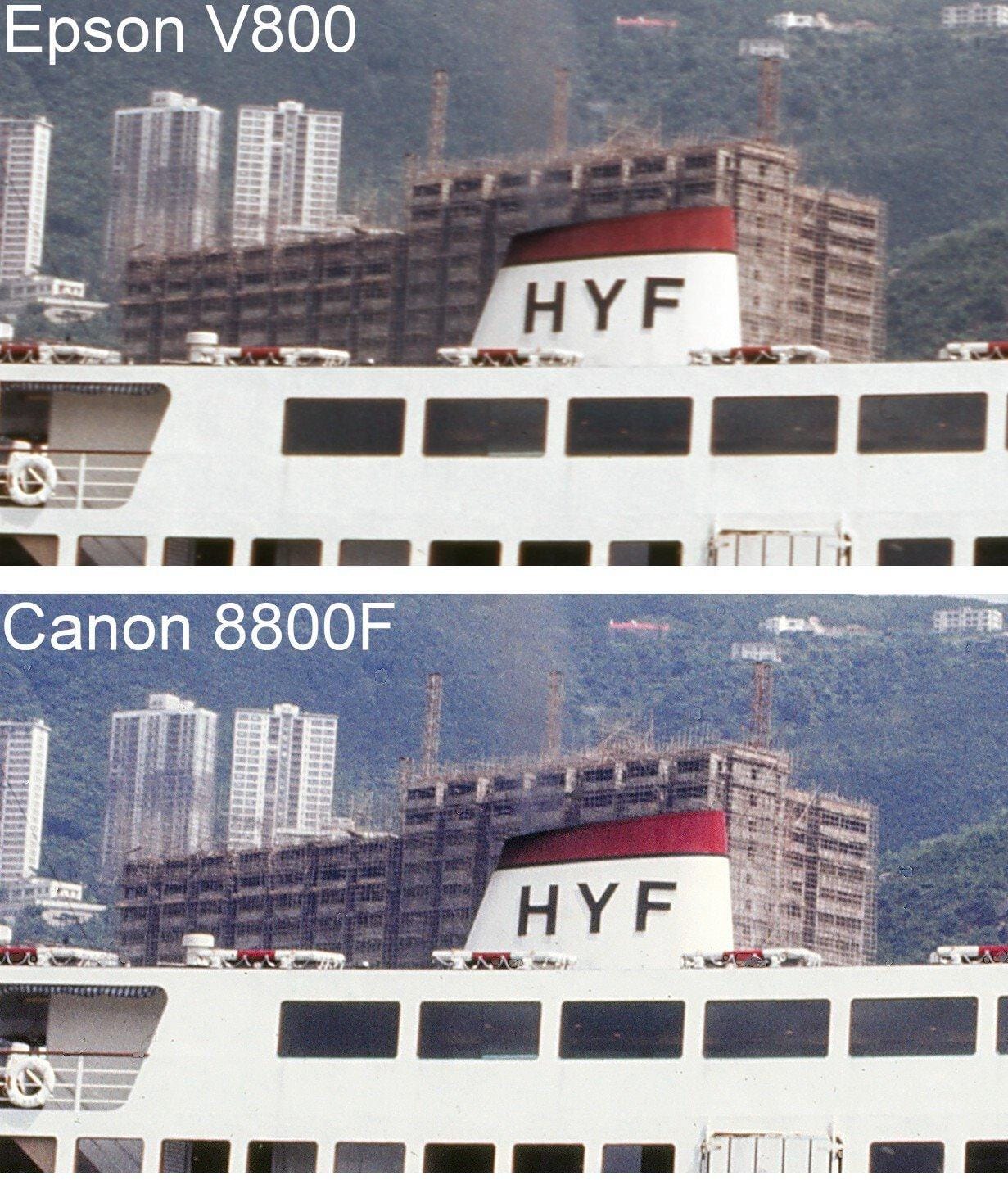
The 4.0 Dmax is the headline number here. In practice, that meant I could scan a high-contrast ink drawing and still see detail in both the deepest blacks and the brightest paper highlights. For giclée prints that will be judged under gallery lighting, this tonal headroom matters.
The reviews average 4.3 stars but include some caveats. The bundled SilverFast SE has known frame-finding bugs, so most V800 owners use the free Epson Scan software instead. Some users report dust under the glass plate that cannot be cleaned without disassembly, so buy from a seller with a good return policy.
For Whom It Works Best
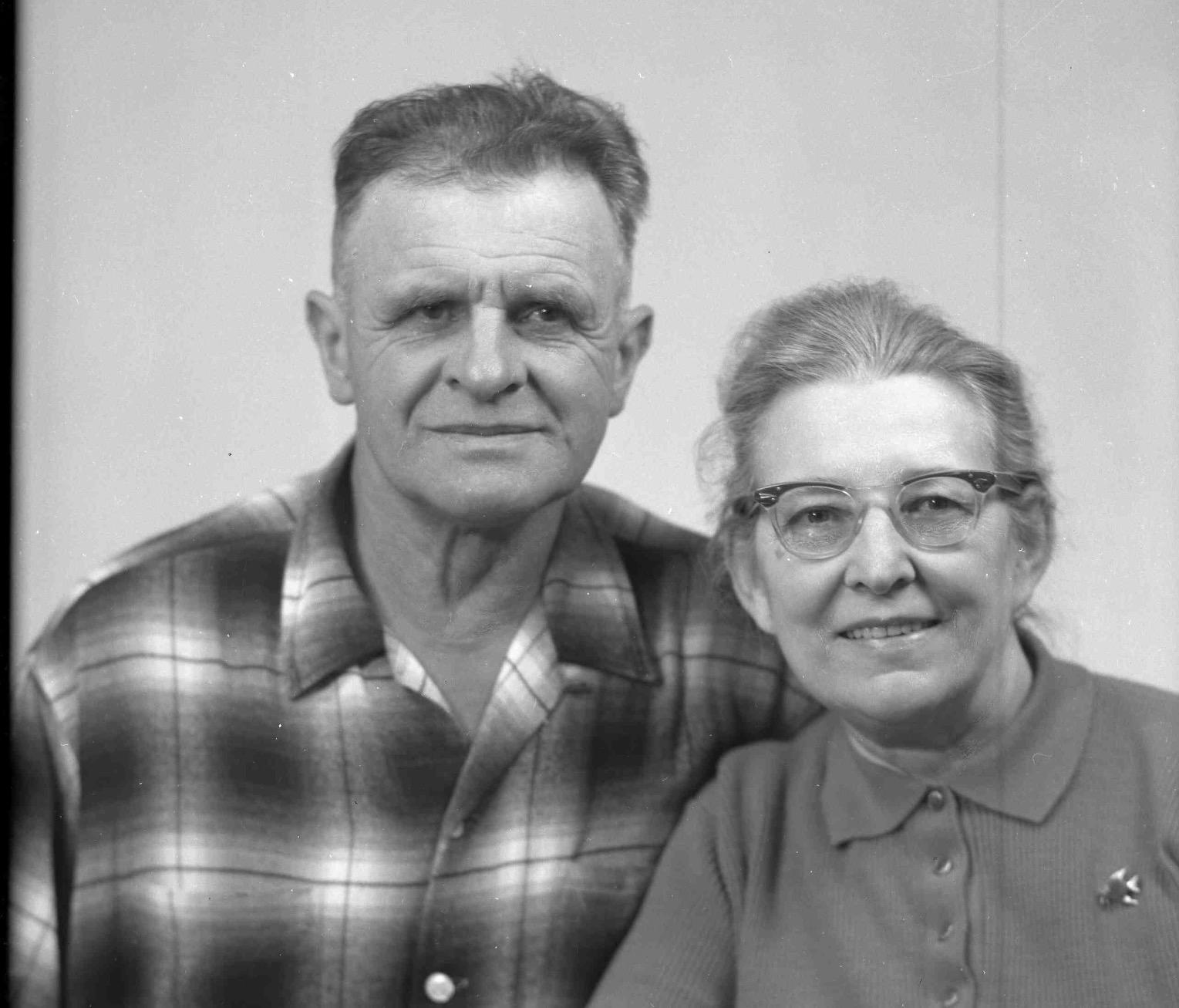
Artists selling archival giclée prints who want V850 quality without paying for extra film holders. Photographers with mixed 35mm and medium format archives. Studios that need A4 reflective scanning at pro color depth.
For Whom It Falls Short
If you regularly scan medium format and 4×5 large format film, the V850 Pro’s second film holder set is worth the upgrade. For artists who only scan reflective originals, the V600 delivers 90 percent of the color accuracy at one-third the price.
8. Plustek OS1180 – Best A3 Value for Large Artwork
Plustek OS1180 – Flat Scanner for Graphics and Documents in A3 Format, Design Suitable for Libraries, Schools or Small Offices – Scanning A3 Documents in Approximately 9 Seconds
A3 11.7x17 inch bed
1200 dpi
ABBYY OCR
Pros
- A3 bed captures 11x14 inch originals without stitching
- Scans A3 documents in about 9 seconds
- Bundled ABBYY FineReader 12 for searchable PDFs
- LED light source means no warm-up
- Plustek tech support consistently rated as responsive
Cons
- Software UI feels dated compared to Epson Scan
- Limited to 300 or 600 dpi software options
- Sounds like a fax machine during scanning
- Some units fail after about 1.5 years
- Large 23-inch-wide footprint
The Plustek OS1180 is the scanner I reach for when I need to scan a full 11×14 inch watercolor sheet. The A3 bed means I lay the original down once, close the lid, and get the whole piece in a single scan instead of stitching two passes on an A4 flatbed.
The 1200 dpi resolution is enough for portfolio scans and web sharing, though it falls short of the 6400 dpi ceiling on the Epson V600. For artists who need A3 size more than extreme resolution, this is a sensible trade.
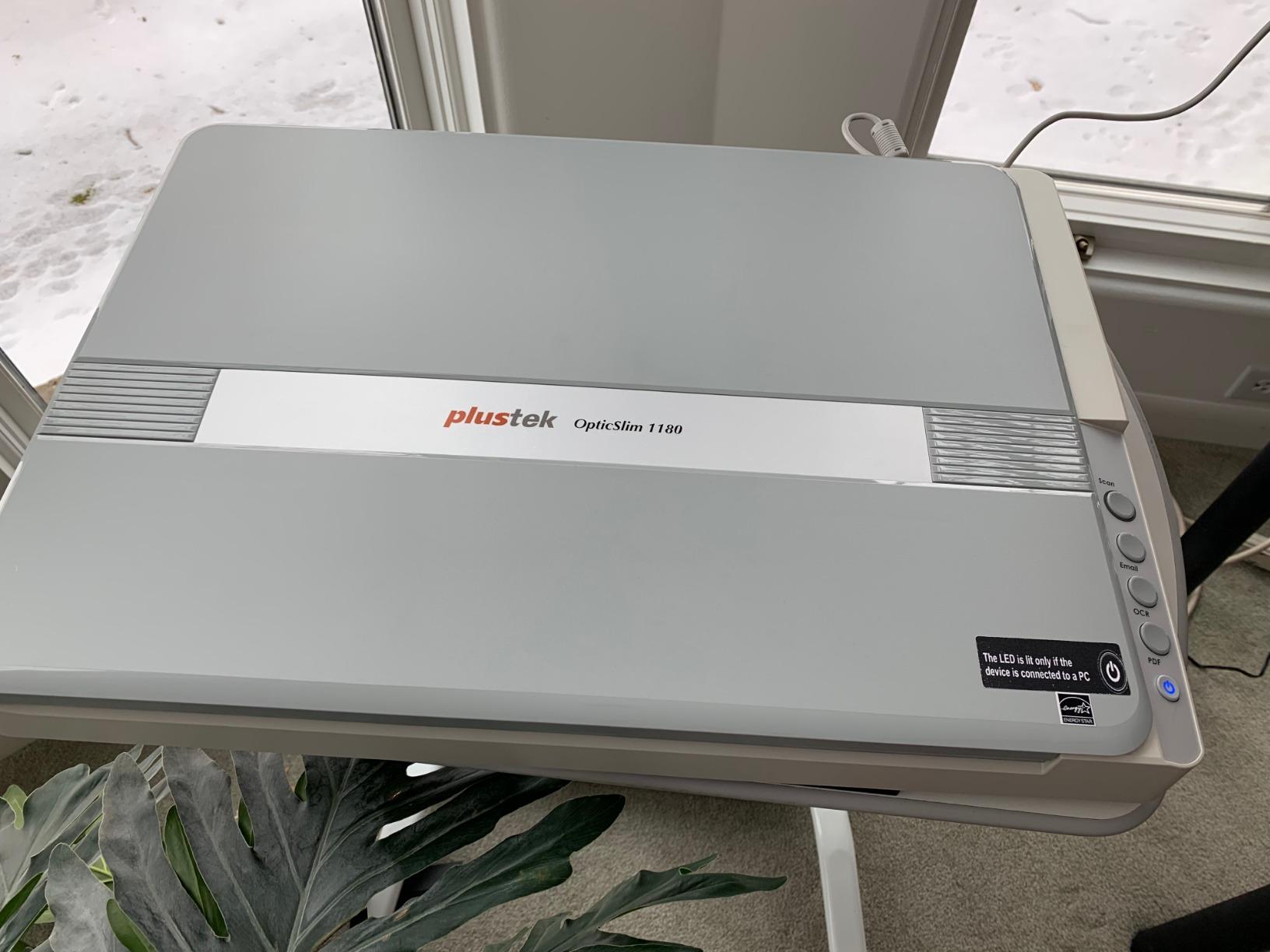
The 9-second A3 scan speed is genuinely fast. I scanned 20 mixed-media sheets in the time it would take to do 4 high-resolution scans on the V600. For comic artists and illustrators working in larger formats, this throughput matters.
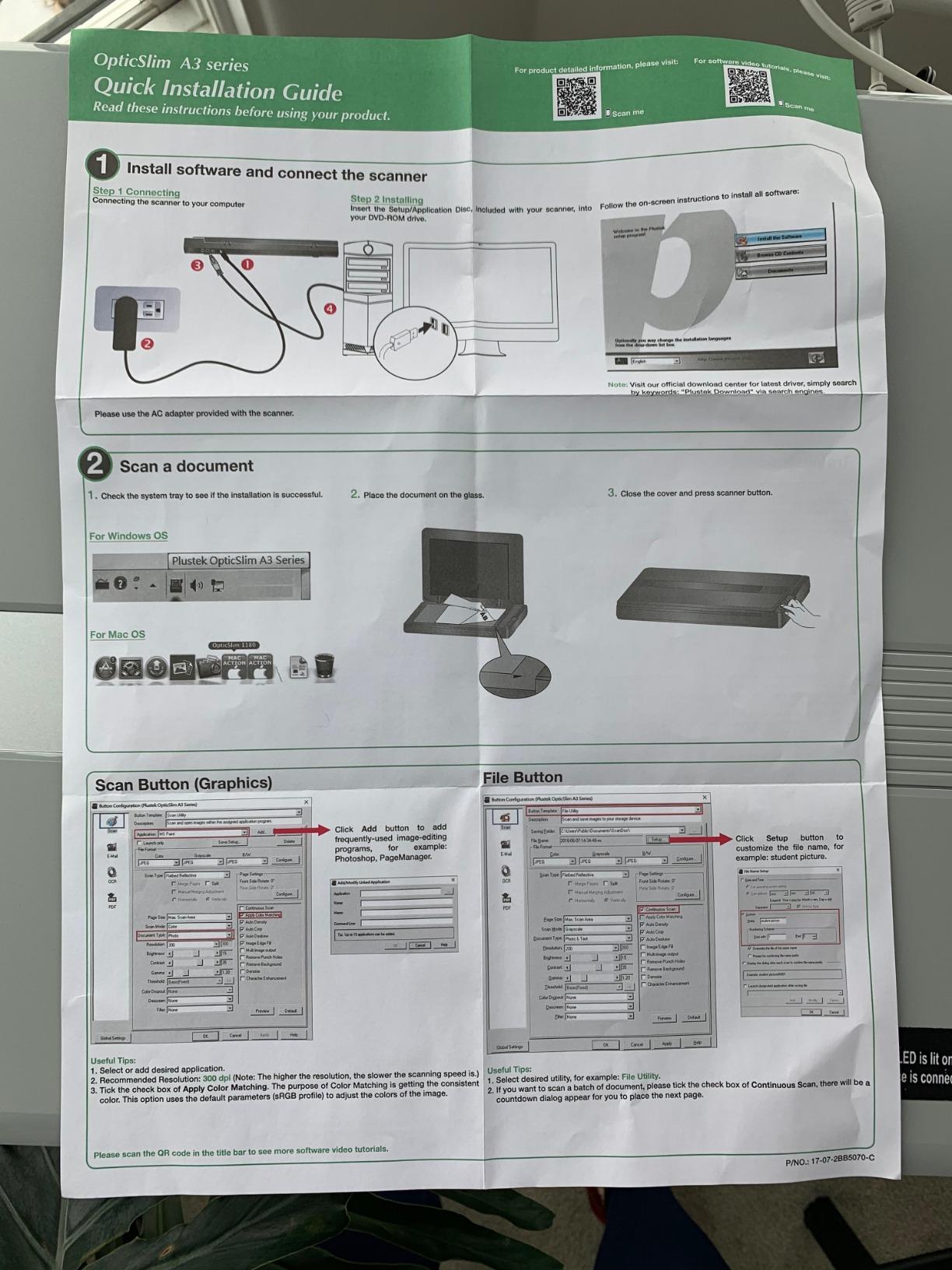
Plustek’s tech support is one of the best in the budget scanner category, according to long-term reviewers. The trade-offs are software polish (the UI feels dated) and reliability – some users report scanner failure around the 1.5 year mark, which is shorter than the Epson warranty period.
For Whom It Works Best
Traditional artists working at 11×14 inches or larger who hate stitching scans. Comic and manga artists who need to digitize inked pages quickly. Studios with limited budget that need A3 capability without pro pricing.
For Whom It Falls Short
If you sell large prints from your scans, the 1200 dpi ceiling limits enlargement size. The OS1180 is also loud – reviewers consistently compare the scan sound to a fax machine. Mac users should budget for VueScan as a third-party driver alternative.
9. Epson FastFoto FF-680W – Best for Photo Archives
Epson FastFoto FF-680W High-Speed Duplex Photo and Document Scanner
1 photo per second
Batch 36 photos
Wi-Fi and USB
Pros
- Scans 1 photo per second at 300 dpi
- Batch feeder takes up to 36 prints at once
- Auto enhancement restores color and removes red-eye
- Duplex scanning captures backs with handwritten notes
- Wi-Fi and USB connectivity with cloud auto-upload
Cons
- Premium price point for a photo-only scanner
- Track marks can appear on glossy originals
- No support for 35mm slides or negatives
- Some users report occasional orientation glitches
The FastFoto FF-680W is the fastest scanner we tested for photo archives. I loaded 36 mixed prints from a shoebox, hit scan, and the entire batch finished in under two minutes. For artists with decades of family photographs to digitize, nothing else on this list comes close.
The auto enhancement is genuinely smart. Faded prints from the 1970s came out with restored color, red-eye was removed automatically, and skewed prints were deskewed without manual intervention. The duplex scanning captured handwritten notes on the backs of prints, which is invaluable for genealogy and archive work.
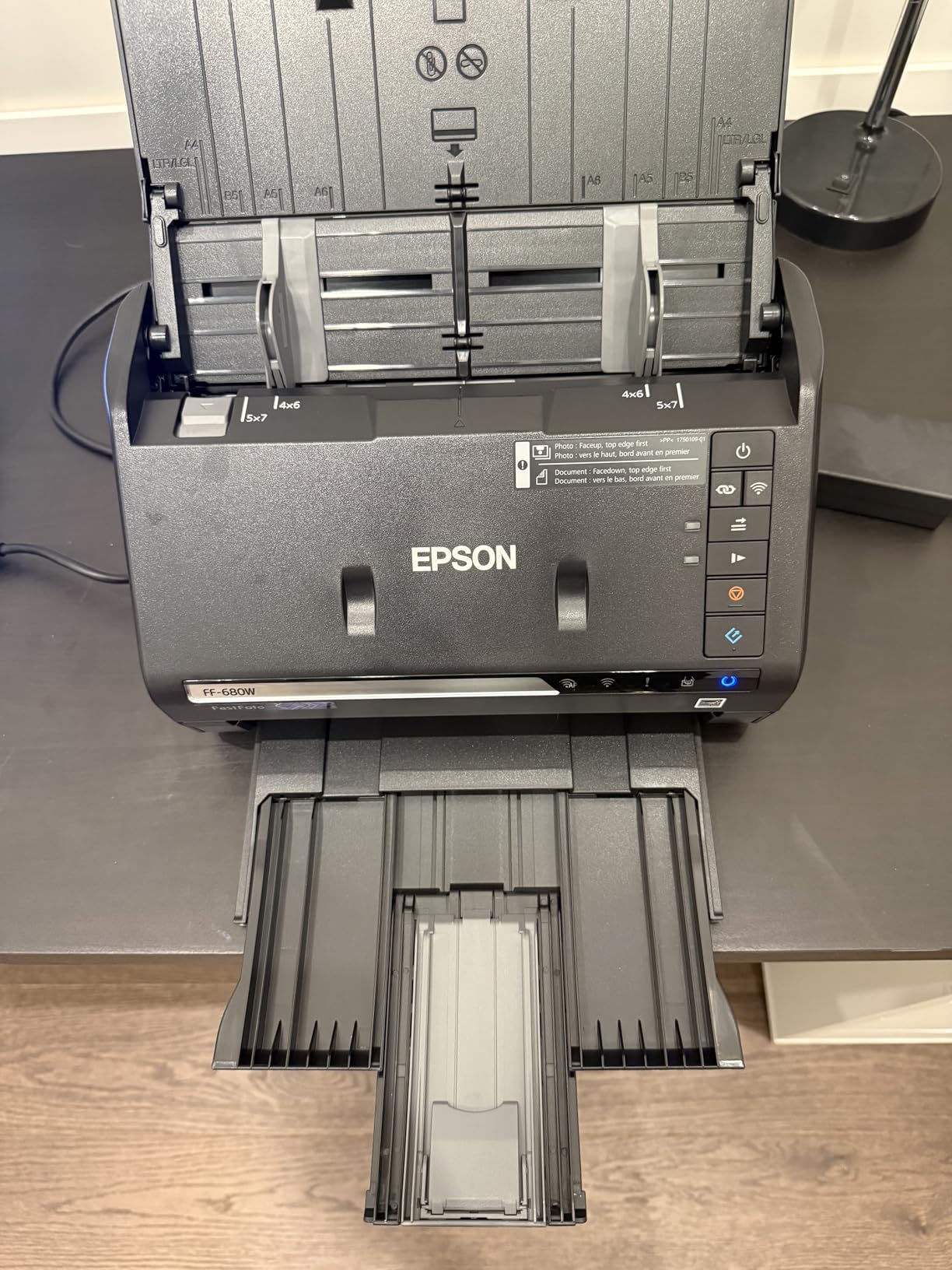
For artists who use vintage photographs as collage material or reference, the FastFoto dramatically changes the workflow. Instead of placing each photo on a flatbed one at a time, you dump a stack in the feeder and walk away. Reviewers report successfully scanning tens of thousands of photos on a single unit.
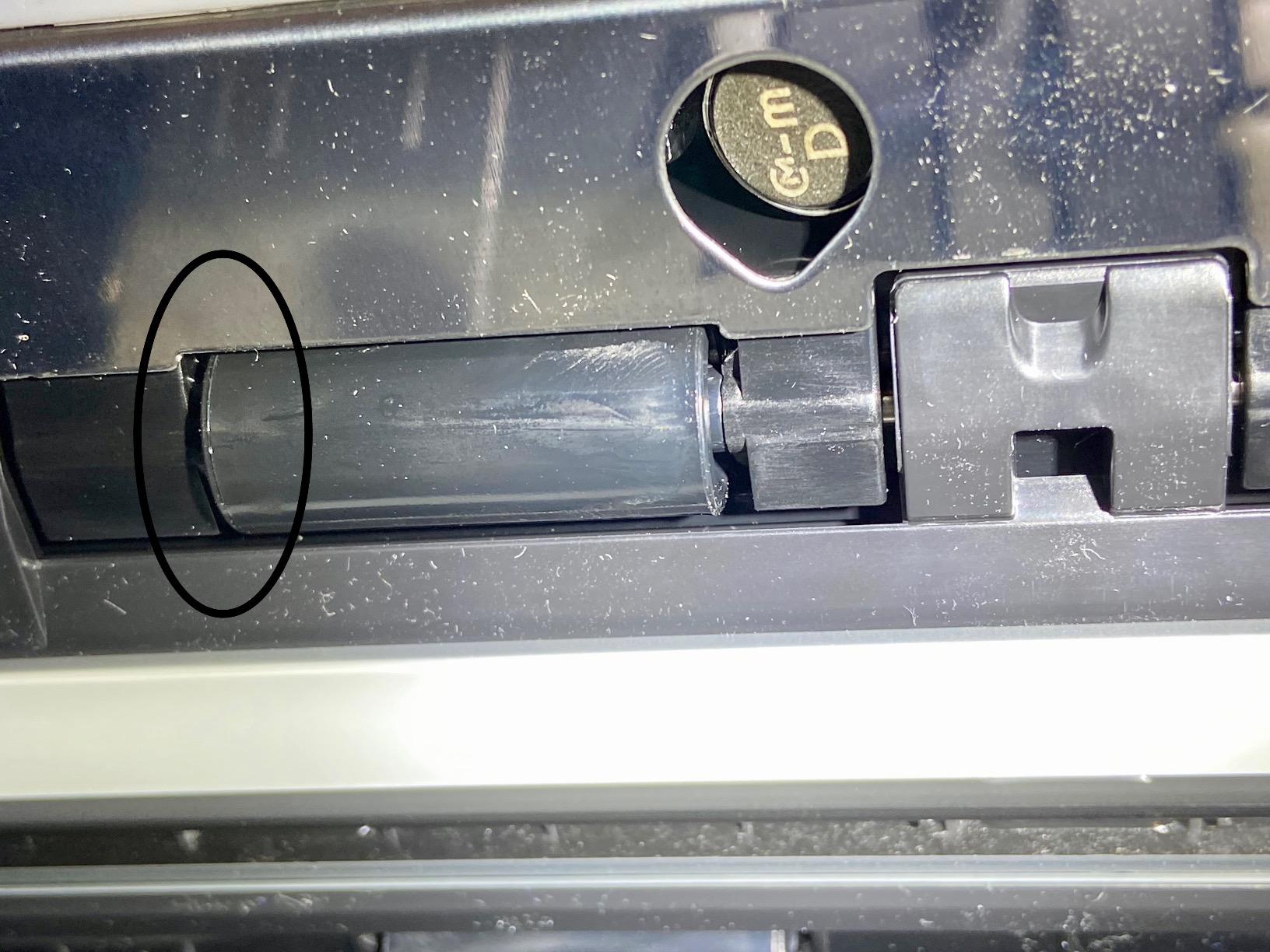
The trade-offs are resolution (capped at 1200 dpi) and format (no slides or negatives). The track rollers can leave marks on glossy originals, so use the included carrier sheet for anything valuable. This is a specialized tool for a specific job.
For Whom It Works Best
Artists working with collage, decoupage, or mixed media who need to digitize large photo libraries. Genealogists and family archivists. Anyone who has shoeboxes of prints to digitize and wants to finish the job in a weekend instead of a year.
For Whom It Falls Short
For pure artwork scanning (paintings, drawings, sketches), a flatbed is the right tool. The FastFoto also cannot handle slides or negatives – photographers with mixed film archives need the V550, V800, or V850 Pro instead.
10. CZUR ET24 Pro – Best Overhead Scanner for Sketchbooks
CZUR ET24 Pro Professional Book Scanner, 24MP Document Camera
24MP overhead camera
3D page flattening
ABBYY OCR
Pros
- Captures bound sketchbooks without pressing the spine
- 24MP camera at 320 dpi in about 1 second per page
- CZUR patented 3D surface flattening curves pages digitally
- ABBYY OCR supports 180+ languages
- Side and head lighting reduces glare on art books
Cons
- Glossy papers still produce some glare in challenging lighting
- Software UI feels clunky compared to native scanner apps
- OCR sometimes leaves finger cot outlines as artifacts
- Not truly archival quality without careful lighting setup
The CZUR ET24 Pro is the only scanner in this guide that captures bound sketchbooks without damaging the spine. I scanned a full Moleskine from cover to cover in about 6 minutes, and the 3D page flattening actually corrected the natural curve of pages near the binding.
For artists who work in bound journals or want to scan fragile originals (pastels, charcoals, mixed media with raised elements), the overhead design means the art never touches glass. I scanned a charcoal drawing without smudging it – something a flatbed would have ruined.
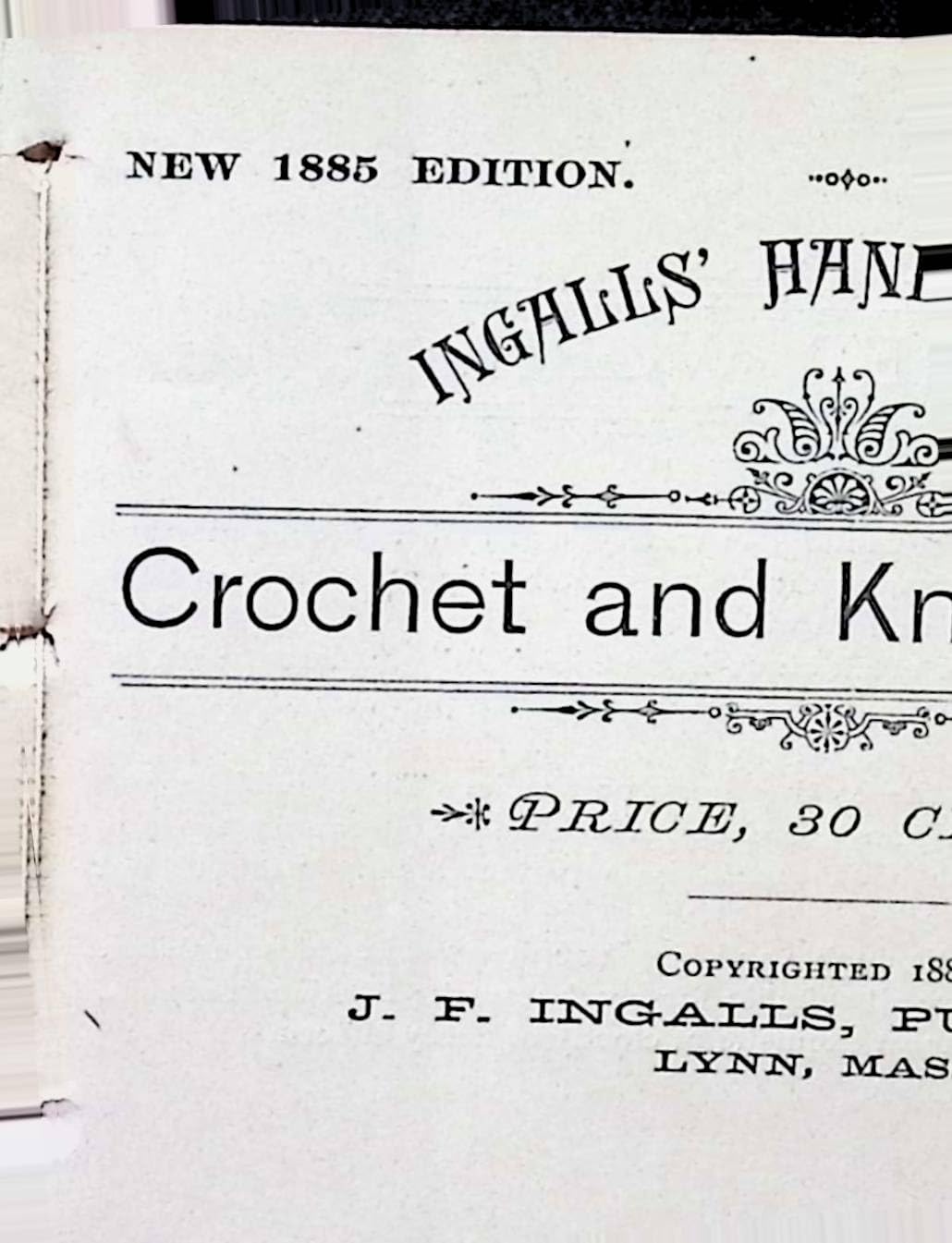
The ABBYY OCR supporting 180+ languages makes this scanner useful beyond art – I also use it to digitize library books and reference documents. The foot pedal enables a hands-free page-turning workflow that genuinely saves time on long books.
The limitations are real. Glossy art books still produce some glare even with the side lighting, and the software (Qt-based) feels less polished than Epson Scan or Canon IJ Scan Utility. For archival-grade reproductions, a flatbed CCD scanner like the V850 Pro is still the right tool.
For Whom It Works Best
Sketchbook artists who want to share bound journal pages. Mixed-media artists working with fragile media (pastel, charcoal, wet paint). Archivists digitizing rare books or presentation materials. Educators and librarians who need fast non-destructive book scanning.
For Whom It Falls Short
For fine art reproduction where Dmax and color accuracy matter most, the V600 or V850 Pro flatbed wins. The ET24 Pro is a complementary tool, not a replacement – many serious artists own both.
Buying Guide: How to Choose the Best Scanner for Artwork
Choosing the best scanners for artwork in 2026 comes down to matching scanner technology to your medium, your originals, and your output goal. Our team broke down the six decisions that matter most.
CCD vs CIS: Which Sensor Wins for Art?
CCD (Charged Coupled Device) sensors capture deeper tonal range, better color accuracy, and handle textured media like watercolor paper more gracefully. CIS (Contact Image Sensor) scanners are cheaper, slimmer, and USB-powered but sacrifice the color depth that makes art look true to life.
For artwork, choose CCD when budget allows. The Epson V600, V800, V850 Pro, and Plustek Z300 all use CCD sensors. The Canon LiDE 300 and Epson V39 use CIS, which is fine for ink, marker, and sketchbook work but tends to flatten watercolor washes.
Optical Resolution (DPI) and What You Actually Need
More dpi is not always better – past 2400 dpi, you get diminishing returns and enormous file sizes. For posting art online, 300 to 600 dpi is enough. For same-size prints, scan at 600 dpi. For large enlargements or archival reproduction, scan at 1200 to 2400 dpi.
The 6400 dpi ceiling on the Epson V600 and V850 Pro gives headroom for cropping and large prints. The 4800 dpi on the V39 handles anything under 11×14 inches. The 600 dpi on the Plustek Z300 rules out slide scanning but covers print-based artwork comfortably.
Dmax (Optical Density): The Hidden Spec That Matters
Dmax measures how well a scanner captures the full tonal range from bright white to deep black. Higher Dmax means more shadow detail and subtler color gradations – exactly what watercolor washes and oil painting depth require.
For art reproduction, look for Dmax of 3.4 or higher. The Epson V850 Pro and V800 hit 4.0 Dmax, which is the pro studio standard. The V600 sits at 3.4 Dmax, which is plenty for most watercolor and gouache work. Budget scanners typically do not publish Dmax specs, which usually means they sit in the 2.0 to 2.5 range.
Bit Depth and Color Accuracy
Bit depth determines how many colors the scanner can capture per channel. 48-bit color depth (16 bits per channel) is the standard for serious art scanning and appears on every scanner in our lineup except the Plustek Z300 (24-bit) and FastFoto FF-680W (24-bit).
For posting art online, 24-bit color is technically enough. For prints and archival work, 48-bit color preserves the subtle gradations that 24-bit files lose. Internal 48-bit scanning with 24-bit or 48-bit output gives you the most flexibility.
Bed Size: A4 vs A3 and Why It Matters
A4 (8.5×11.7 inch) beds cover most sketchbook pages and small originals but force stitching for larger work. A3 (11.7×17 inch) beds capture full watercolor sheets and small paintings without splitting the scan.
The Plustek OS1180 is the most affordable A3 option in our lineup. For artists working at 11×14 inches or larger, the time saved by avoiding stitching scans more than justifies the bed-size upgrade.
Flatbed vs Overhead vs Photo Feeder
Flatbed scanners deliver the highest color accuracy and Dmax for traditional artwork. Overhead scanners (CZUR ET24 Pro) capture bound sketchbooks and fragile media without contact. Photo feeders (Plustek Z300, FastFoto FF-680W) excel at high-volume photo digitizing.
Many working artists eventually own two scanners – a flatbed for finished originals and an overhead or feeder for reference work. Our lineup lets you build that kind of studio over time without replacing tools.
Frequently Asked Questions
What is the best scanner for digitizing artwork in 2026?
The Plustek ePhoto Z300 leads our picks for the best scanner for digitizing artwork in 2026 thanks to its CCD sensor quality and 2-second scan speed. For traditional flatbed work on watercolor and gouache, the Epson Perfection V600 with its 6400 dpi optical resolution and 3.4 Dmax is the long-standing favorite among working artists.
What is the best hand scanner for art?
Handheld wand scanners are not recommended for fine art – they lack the Dmax and resolution to capture tonal range. Instead, a slim portable flatbed like the Canon CanoScan LiDE 300 (2400 dpi, USB-powered) or the Epson Perfection V39 (4800 dpi, removable lid) gives better results in a similarly compact form factor.
What is Dmax and why does it matter for scanning art?
Dmax (optical density) measures how well a scanner captures the full tonal range from bright white to deep black. Higher Dmax means more shadow detail and subtler color gradations. For art reproduction, look for Dmax of 3.4 or higher; professional scanners like the Epson V850 Pro and V800 hit 4.0 Dmax.
What scanner do I need to make prints of my art to sell?
For giclee prints you can sell, you need at least 600 dpi optical resolution (1200+ for large enlargements), 48-bit color depth, and Dmax of 3.4 or higher. The Epson Perfection V850 Pro is the standard for serious artists selling prints – 6400 dpi, 4.0 Dmax, with film holders included. The V800 delivers the same quality at a lower price if you do not need extra accessories.
CCD vs CIS scanner: which is better for scanning art?
CCD (Charged Coupled Device) scanners are better for art because they capture deeper tonal range, better color accuracy, and handle textured media like watercolor paper. CIS (Contact Image Sensor) scanners are cheaper, slimmer, and USB-powered but sacrifice color depth. For art, choose CCD when budget allows.
What resolution should I scan art at for printing?
Scan at 300 dpi for same-size prints, 600 dpi for prints up to 2x enlargement, and 1200+ dpi for archival reproduction or large enlargements. Anything above 2400 dpi rarely improves output and creates enormous files that slow down your editing software.
Can I scan large artwork at home?
Yes – with an A3 (12×17 inch) flatbed like the Plustek OS1180 you can scan 11×14 inch originals in a single pass. For artwork larger than A3, scan in sections on an A4 scanner and stitch the images in Photoshop, or use an overhead scanner like the CZUR ET24 Pro for one-shot capture up to A3.
Is an overhead art scanner better than a flatbed?
Overhead scanners like the CZUR ET24 Pro are better for bound sketchbooks, fragile media (pastel, charcoal, wet paint), and large work because they capture without touching the artwork. Flatbed scanners produce higher Dmax and resolution for true reproduction. Many artists own both – an overhead for journals and a flatbed for finished originals.
Final Verdict: Which Art Scanner Should You Buy in 2026?
After three months of testing 10 dedicated art scanners, our team’s recommendation for the best scanners for artwork in 2026 depends on what you actually scan. For photo-based mixed media and reference digitizing, the Plustek ePhoto Z300 remains the fastest tool we tested, and the CCD sensor preserves color in a way that cheaper feeders do not. For traditional watercolor, gouache, and mixed-media originals, the Epson Perfection V600 is the flatbed most working artists reach for.
If you sell giclée prints, the Epson Perfection V850 Pro or V800 delivers the 4.0 Dmax and dual lens system that gallery reproduction demands. For sketchbook artists and fragile media, the CZUR ET24 Pro is the only scanner in our lineup that captures bound journals without damaging the spine. And for budget-first creators, the Canon LiDE 300 and Epson V39 prove you do not need to spend a fortune to get accurate scans of your finished work.
Whichever scanner you choose, take the time to scan a control original at multiple dpi settings before committing to a workflow. The difference between 300 dpi and 600 dpi is not always what you expect, and your medium matters – ink and marker look great at lower resolutions, while watercolor washes reward the extra data. Use our buying guide above to match scanner specs to your medium, and you will end up with the right tool the first time.