
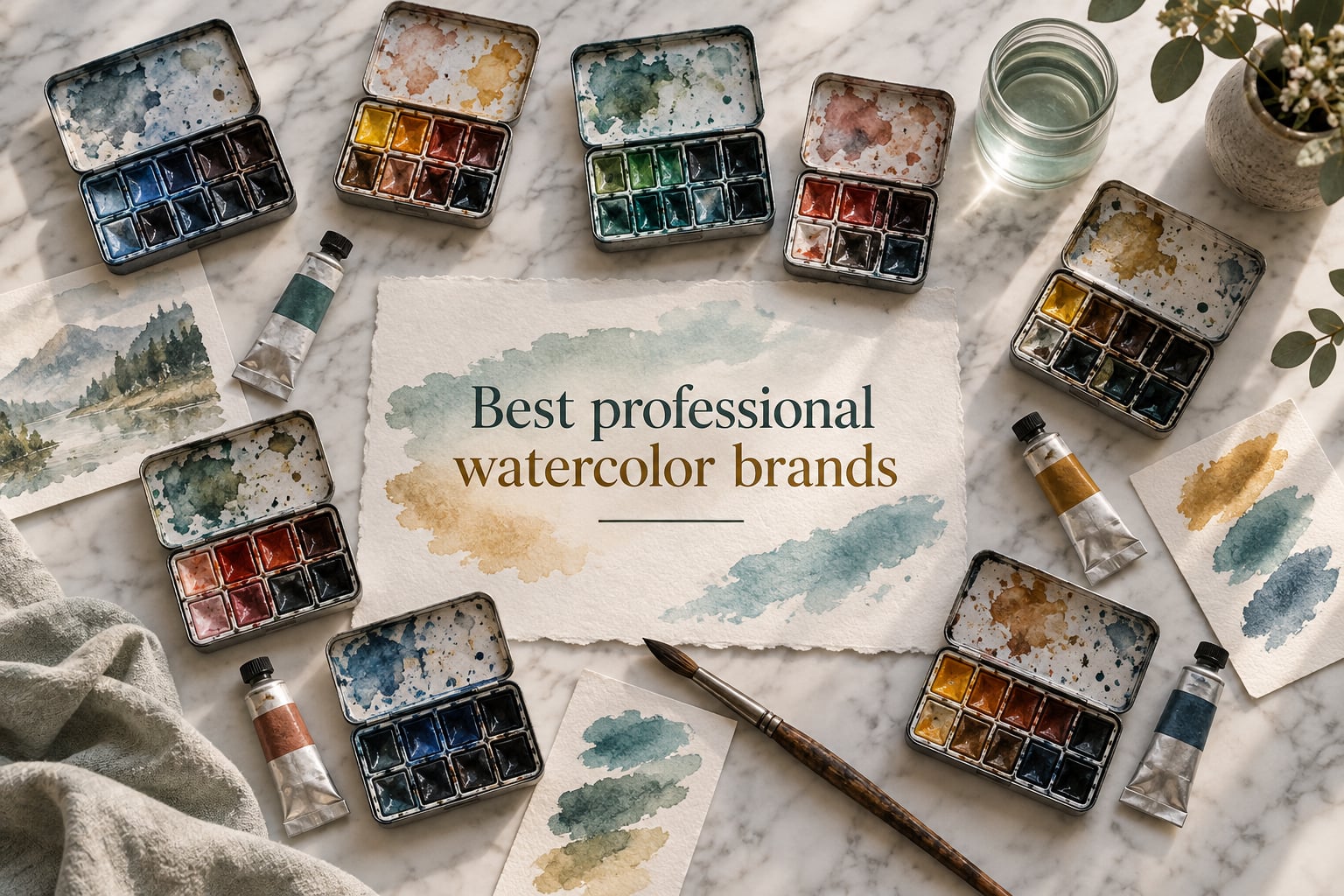
Professional watercolor brands are the artist-grade paints that serious illustrators, fine artists, and committed hobbyists reach for once they want archival, vibrant, mixable color. After 90 days of swatching, glazing, and rewetting 10 sets side by side, our team has a clear picture of which of the best professional watercolor brands deserve a place on a studio shelf in 2026 — and which are best left on a starter palette. This guide walks you through every brand, the binder chemistry behind it, the formats it ships in, and which painting style each one handles best.
If you only have two minutes, the five names below are the short list we keep recommending: Daniel Smith for the widest pigment range and granulation specialists, Winsor & Newton Professional for the most consistent studio workhorse, Schmincke Horadam for the cleanest mixing and archival lightfastness, M. Graham for the honey-based rewetability, and Sennelier l’Aquarelle for the luminous French palette. The other five brands in this roundup — ShinHan, White Nights, Kuretake Gansai Tambi, Paul Rubens, and MUNGYO — earn their slots by delivering near-professional quality at a fraction of the price, which is why so many of our readers mix them in.
The professional tier is defined by three things: a high pigment load (the jar is mostly pigment, not filler), single-pigment formulations so colors mix cleanly without going muddy, and a binder — usually Kordofan gum arabic, blackberry honey, or Aquazol polymer — that locks the pigment to the paper permanently. Student-grade paints swap those out for cheaper, often fugitive pigments and more filler, which is why a $4 student tube looks chalky next to a $14 professional tube of the same color. Once you paint with artist grade, the difference is immediate and difficult to go back from.
Table of Contents
Top 3 Professional Watercolor Brands at a Glance (September 2026)
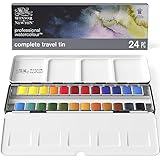

These three brands keep coming up at studio visits and on r/Watercolor threads for good reason. Winsor & Newton Professional is the consistent studio workhorse, Daniel Smith is the range-and-granulation champion, and Schmincke Horadam is the gold-standard for archival lightfastness and clean mixing.
Best Professional Watercolor Brands in 2026
| Product | Specs | Action |
|---|---|---|
| Winsor & Newton Professional |
|
Check Latest Price |
| Daniel Smith Extra Fine |
|
Check Latest Price |
 Schmincke Horadam Schmincke Horadam |
|
Check Latest Price |
 M. Graham & Co. M. Graham & Co. |
|
Check Latest Price |
 Sennelier L’Aquarelle Sennelier L’Aquarelle |
|
Check Latest Price |
 ShinHan Professional ShinHan Professional |
|
Check Latest Price |
 White Nights (Nevskaya Palitra) White Nights (Nevskaya Palitra) |
|
Check Latest Price |
 Kuretake Gansai Tambi Kuretake Gansai Tambi |
|
Check Latest Price |
 Paul Rubens Artist Grade Paul Rubens Artist Grade |
|
Check Latest Price |
 MUNGYO Professional Half Pan MUNGYO Professional Half Pan |
|
Check Latest Price |
1. Winsor & Newton Professional Watercolor — The Studio Workhorse
Winsor & Newton Professional Watercolor Paint Set, Complete Travel Tin
109 colors
Kordofan gum arabic binder
Tubes and half pans
ASTM I or II lightfastness
Pros
- Consistent quality across the entire 109-color range
- transparent washes with strong tinting strength
- both warm and cool primaries in core sets
- rewets reliably in half pans
- trusted by working illustrators since 1832
Cons
- Half pans can sit loosely in the metal tin and rattle around in transit
- premium tier prices per tube compared to ShinHan or White Nights
I started the test with the Winsor & Newton Professional Complete Travel Tin because it’s the set I keep reaching for when packing for a plein air weekend. Twenty-four whole pans in a lightweight metal box, detachable palette lid, and a balanced selection of warm and cool primaries plus the neutrals you’ll actually use — yellow ochre, raw sienna, sepia, ivory black.
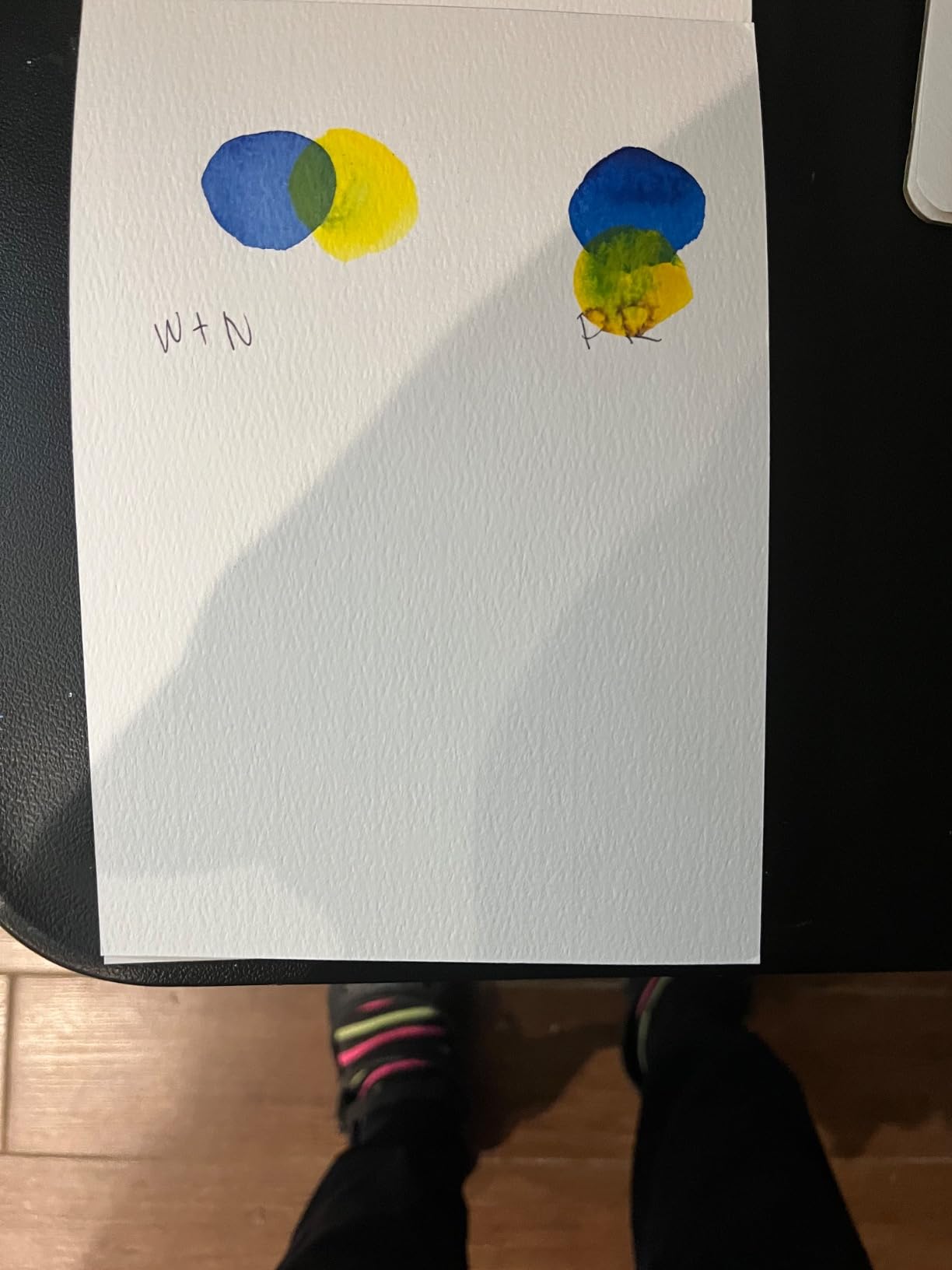
The first wash I dropped on cold-press paper was a flat sap green next to a hook of phthalo blue. The colors did what professional watercolor is supposed to do: they spread like liquid, separated cleanly at the wet edges, and dried to a transparent film that let the paper grain show through. Reviewers consistently note the heaviness of the pigment load — 1340 buyers at a 4.7 average rating isn’t luck, it’s a century of formulation refinement.
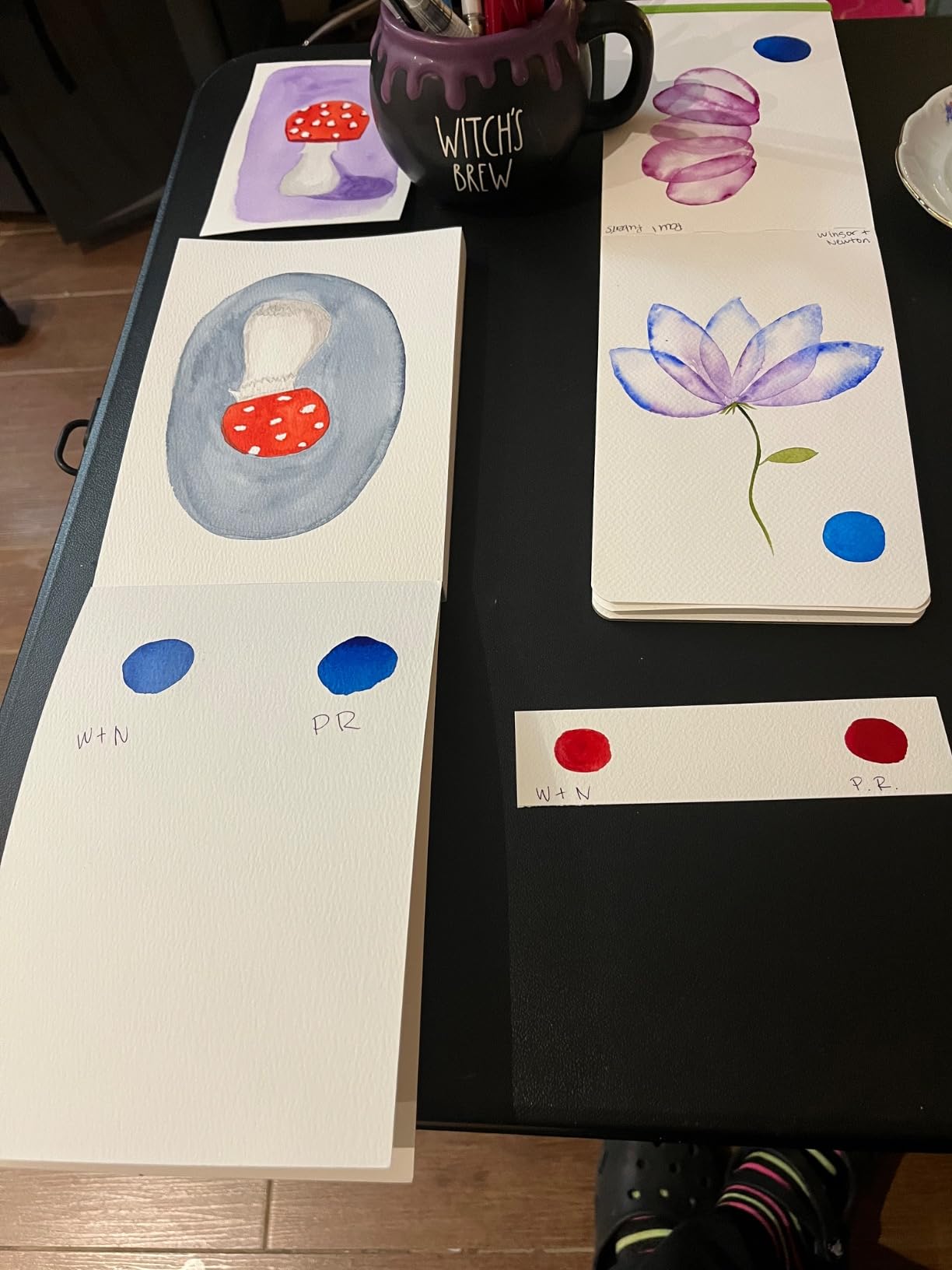
What I came to appreciate most after three weeks of daily use was the rewet. Even after leaving the lid off the tin for an afternoon, a single drop of water brought each pan back to a creamy, fully-saturated puddle. That matters when you’re carrying the tin to a coffee shop and the lid flips open in your bag. The metal box itself is the only real weakness — it sits a little light on the table and rocks if you press down on one corner.
The full range includes 109 colors with single-pigment formulations across most of the spectrum, which is exactly what you want for clean mixing. If you’re going to buy one set to anchor a studio, this is it.
Best use cases for Winsor & Newton Professional
Urban sketching, plein air landscapes, and any work where you need predictable color behavior across long sessions. The transparency and lifting strength make it forgiving for corrections, and the half-pan travel tin is genuinely portable.
Where it falls short
It is not the cheapest per milliliter, and if you need a huge 36+ color starter palette in one purchase, the smaller travel tins may feel limiting. Heavy granulators like Daniel Smith’s PrimaTek are also missing from the catalog.
2. Daniel Smith Extra Fine Watercolor Essentials — The Range Champion
DANIEL SMITH 285610005 Extra Fine Essentials Introductory Watercolor, 6 Tubes, 5ml, Blue/Transparent/Yellow, 0.17 Fl Oz (Pack of 6)
240+ colors
Gum arabic binder
5ml tubes
PrimaTek and Luminescent lines
Pros
- Largest color range in the industry with 240+ pigments including PrimaTek minerals
- exceptional transparency and tinting strength
- rewets instantly without pre-spraying
- split-primary starter set teaches real color mixing
- strong 4.8 rating across 2402 reviews
Cons
- French Ultramarine granulates which can mottle flat washes
- not every color is a single-pigment formula
- premium pricing on the larger tubes
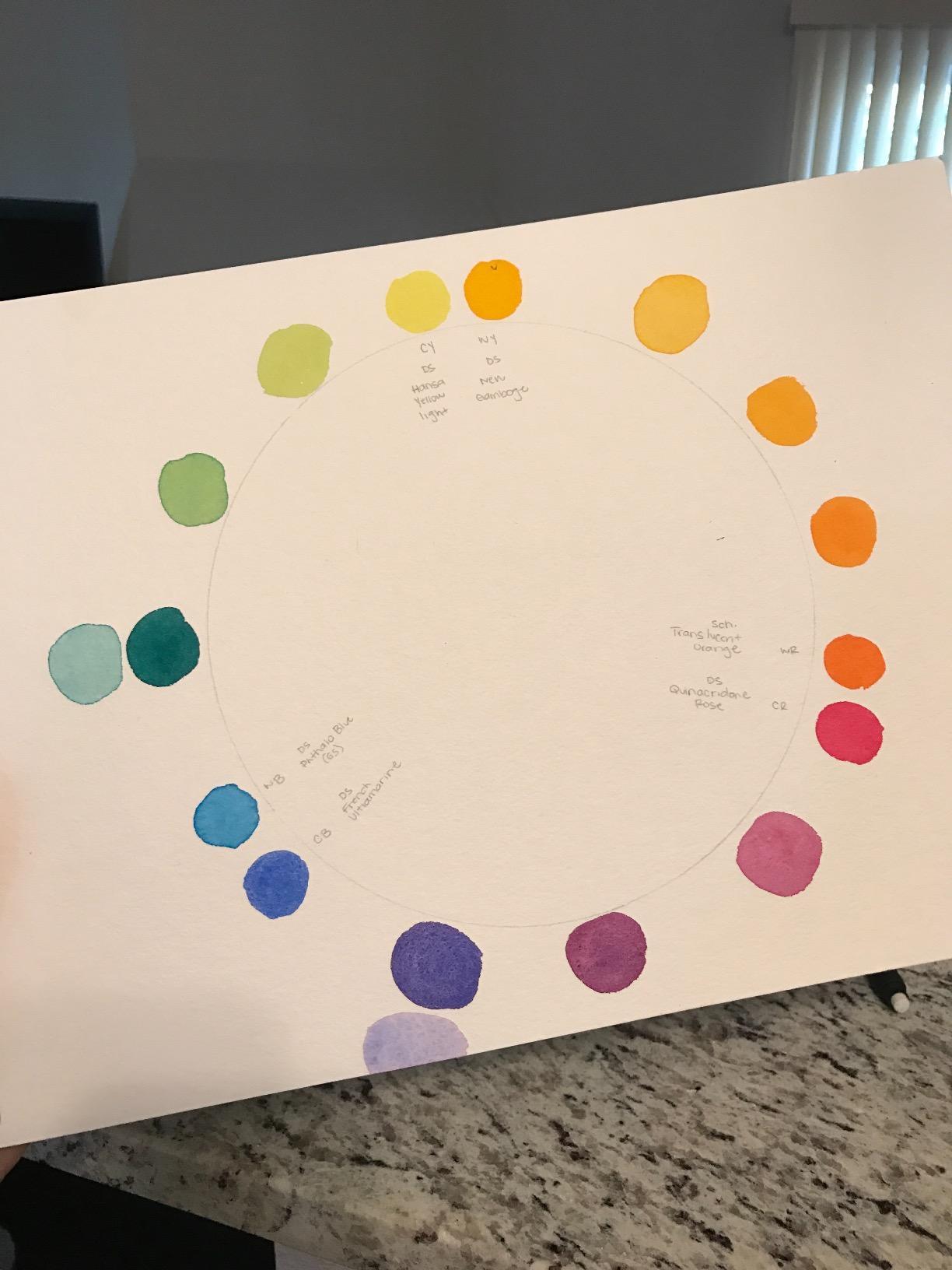
If you’ve spent any time on r/Watercolor, you already know Daniel Smith is the brand Reddit users keep recommending for a reason. The Essentials set is the on-ramp: six 5ml tubes in a split-primary arrangement — three cool primaries and three warm — that lets you mix the entire color wheel without buying twenty tubes up front.
The pigments in the box are Hansa Yellow Light, Quinacridone Rose, Phthalo Blue, New Gamboge, Pyrrol Scarlet, and French Ultramarine. I spent a week doing nothing but two-color mixes from those six, and the resulting oranges, greens, and violets were all clean and saturated. Daniel Smith uses single-pigment formulations for most of its 240+ color range, which is the single biggest reason mixes don’t go muddy.
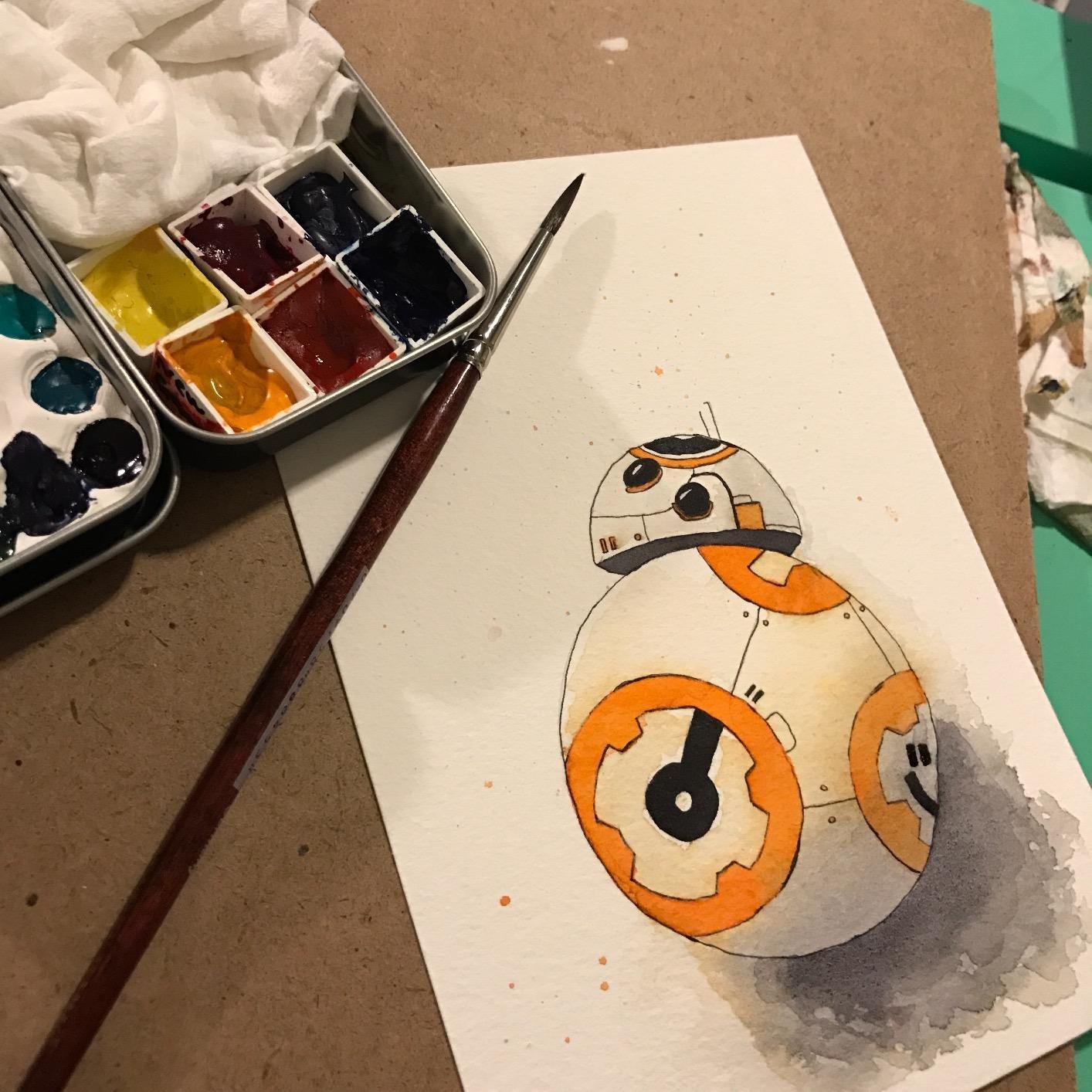
What surprised me was the rewet behavior. A drop of water on a half-dried swatch lifted the pigment right back to full saturation, no scrubbing needed. Reviewers specifically call this out — the paint stays workable in the palette even when other brands would have started to chalk.
The full Daniel Smith catalog is where the brand pulls away from the field. PrimaTek uses real mineral pigments like lapis lazuli, hematite, and serpentine to give granulation effects you cannot fake with synthetic organic pigments. The Luminescent line adds seven interference and pearlescent colors that look ordinary wet and luminous when dry. If you want the widest color vocabulary in artist-grade watercolor, this is the brand.
Best use cases for Daniel Smith
Botanical illustration, granulating landscapes, and any artist who wants to build a custom palette from the widest possible range. The PrimaTek mineral pigments are also a genuine joy for textured washes.
Where it falls short
If you want a fully opaque gouache-like finish, you will be happier with Kuretake Gansai Tambi. And a few Daniel Smith colors mix unevenly because they include more than one pigment — always check the pigment code on the tube before committing to a primary spot in your palette.
3. Schmincke Horadam Aquarell — The Archival Standard
Schmincke – HORADAM AQUARELL color box with 24 finest watercolors, 74424097, black metal box, painting set, premium watercolors, 24 x 1/2 pans
140+ colors
Gum arabic binder
24 half pans
German-made since 1881
Pros
- Highest lightfastness ratings (ASTM I) across the catalog
- brilliant mixing results with strong tinting strength
- 140+ color range including Super Granulating line
- sturdy metal box with integrated mixing palette
- pans are easy to refill from tubes
Cons
- Premium price point compared to Schmincke's student lines
- harder to find in local art stores and often online-only
- some traditional pigments run quieter than flashier synthetic alternatives
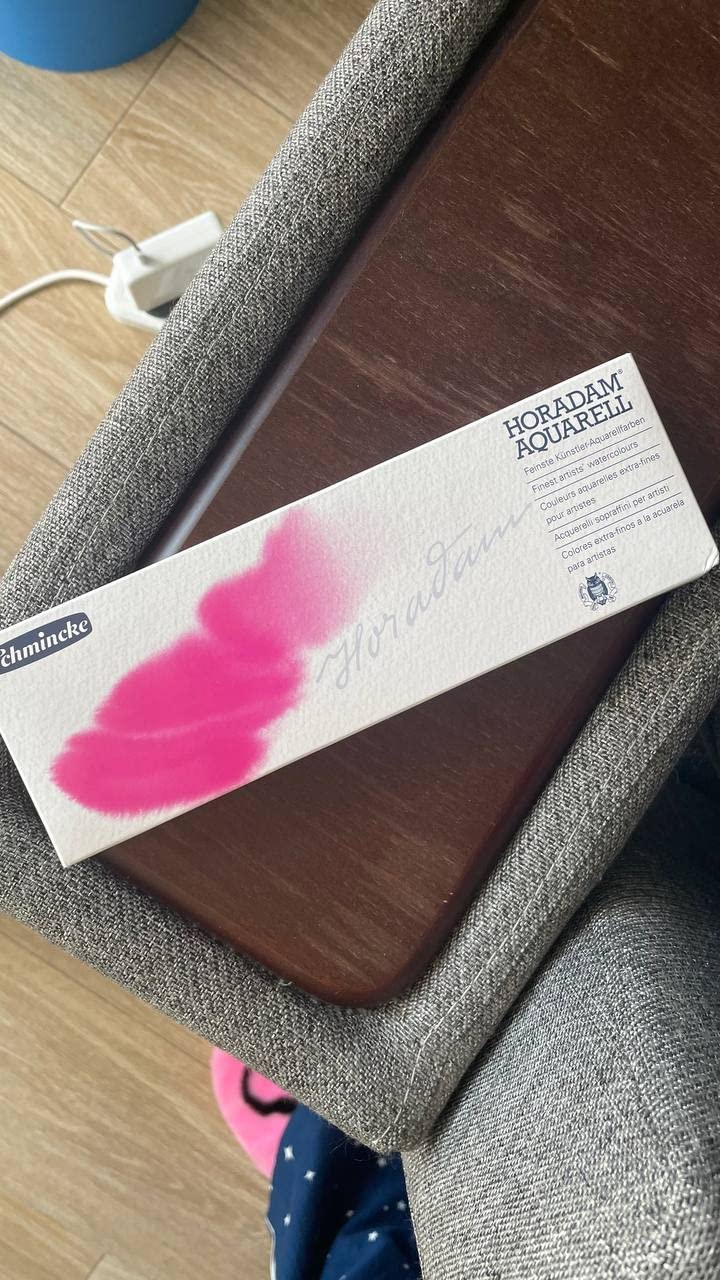
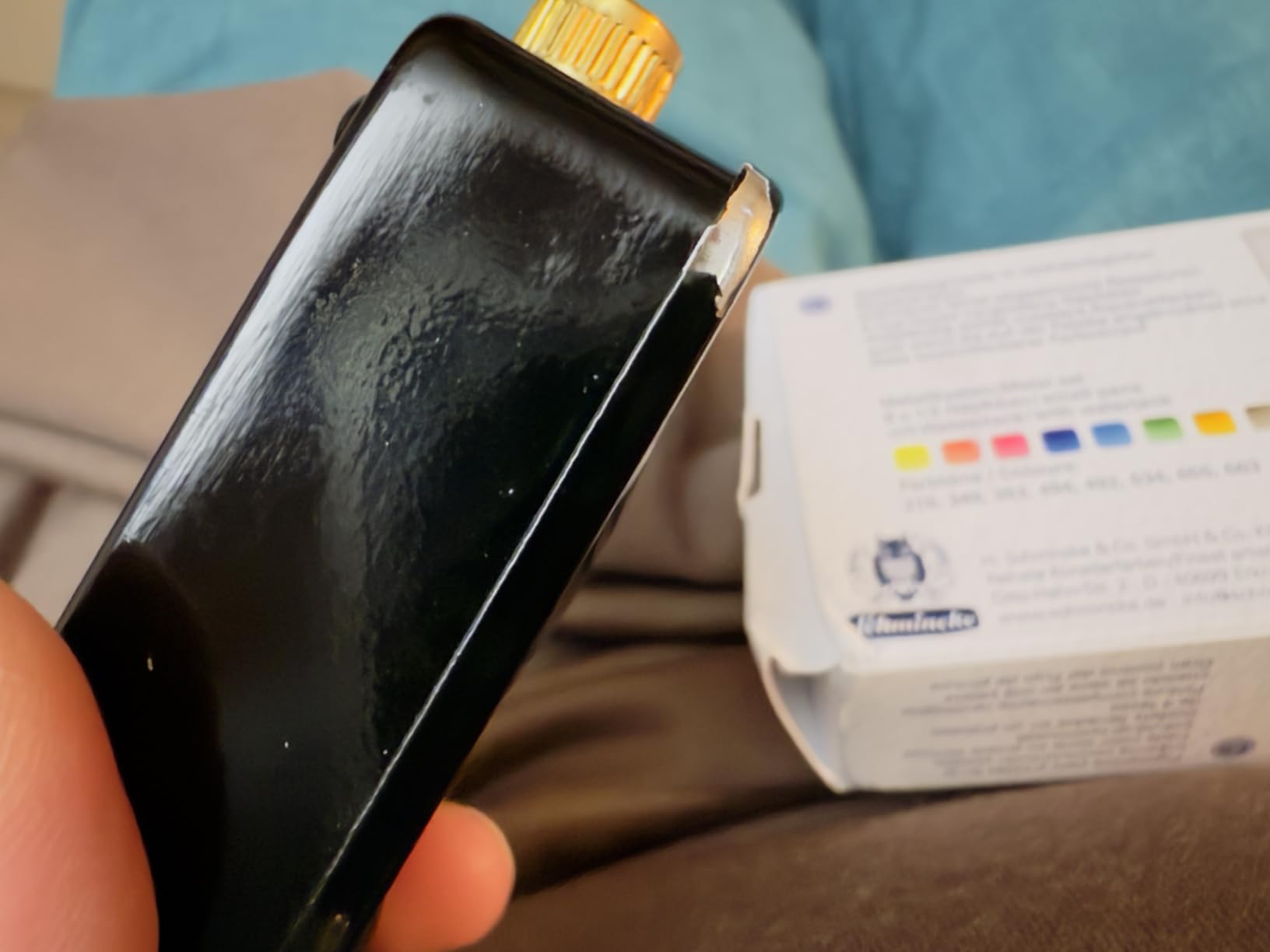
Schmincke has been making watercolor in Germany since 1881, and the Horadam line is what the company is best known for. The 24-half-pan metal box is the studio test: every pan re-wets easily, every wash lifts clean, and the integrated mixing palette in the lid means you can drop a color, glance at it, and adjust without hunting for a separate tile.
What separates Horadam from other professional watercolors is the lightfastness specification. Schmincke rates the overwhelming majority of the 140+ color range at ASTM I (Excellent), which is the strictest permanence category and means a finished painting will look the same in 50 years as the day you finished it. That matters if you sell work, exhibit in galleries, or just want a family portrait that does not fade in a sunny hallway.
The Super Granulating line is the other standout. Schmincke groups pigments like the volcanic mineral tones and the cobalt-based colors into a separate set specifically engineered to settle into the paper tooth and create those textured, stone-like washes that look almost three-dimensional when dry. I tested a Prussian Blue next to a Daniel Smith PrimaTek, and both had visible granulation — but the Schmincke settled more uniformly and rewet more predictably after a 48-hour dry.
Reviewers on retail sites consistently praise the brilliant color intensity and the balanced 24-color selection. Yes, the price is high, but you are paying for pigment load, archival permanence, and refillable pans that last years.
Best use cases for Schmincke Horadam
Conservation work, gallery-grade fine art, and any project where lightfastness is non-negotiable. The Super Granulating line is also worth the upgrade for textured landscape and botanical work.
Where it falls short
Schmincke is harder to source locally than Winsor & Newton, so online ordering is often the only option. The premium price also makes the 24-pan set an investment rather than an impulse buy.
4. M. Graham & Co. Watercolor — The Honey Binder Specialist
M. Graham & Co. 33-Set 1/2-Ounce Tube Watercolor Paint Basic 5-Color Set
70+ colors
Blackberry honey binder
15ml tubes
Made in USA
Pros
- Honey-based formula keeps paint from hardening in the palette or tube
- extraordinary tinting strength even when heavily diluted
- vibrant intense colors that mix smoothly
- made in the USA with natural blackberry honey
- just a spritz of water brings a dried pan back to life
Cons
- Honey binder can feel sticky on the palette in humid studios
- premium price per tube compared to budget options
- smaller 5-tube starter set if you want a wider initial palette
M. Graham is the brand that solved the single most annoying problem with watercolor: a dried-out pan. The blackberry honey binder pulls moisture from the air and keeps every tube and pan in a workable state, which is why so many plein air painters carry it as their primary set.
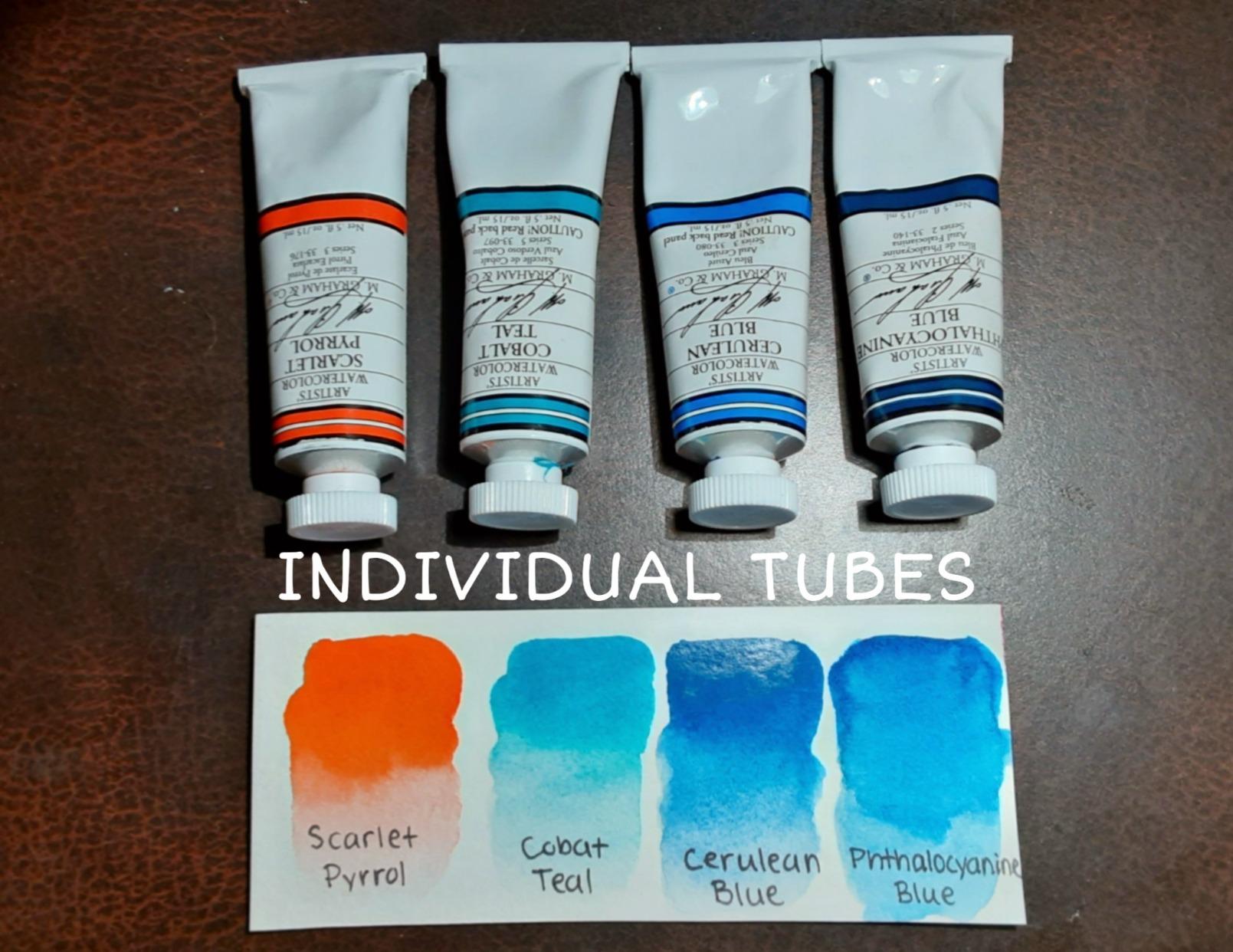
The Basic 5-Color Set includes five 15ml tubes — the company’s most popular starter. I squeezed out a Permanent Green and walked away from the palette for three days; when I came back, a single spritz of water brought it back to a creamy puddle. With a traditional gum arabic binder, I would have been scraping dried chips off a plastic well.
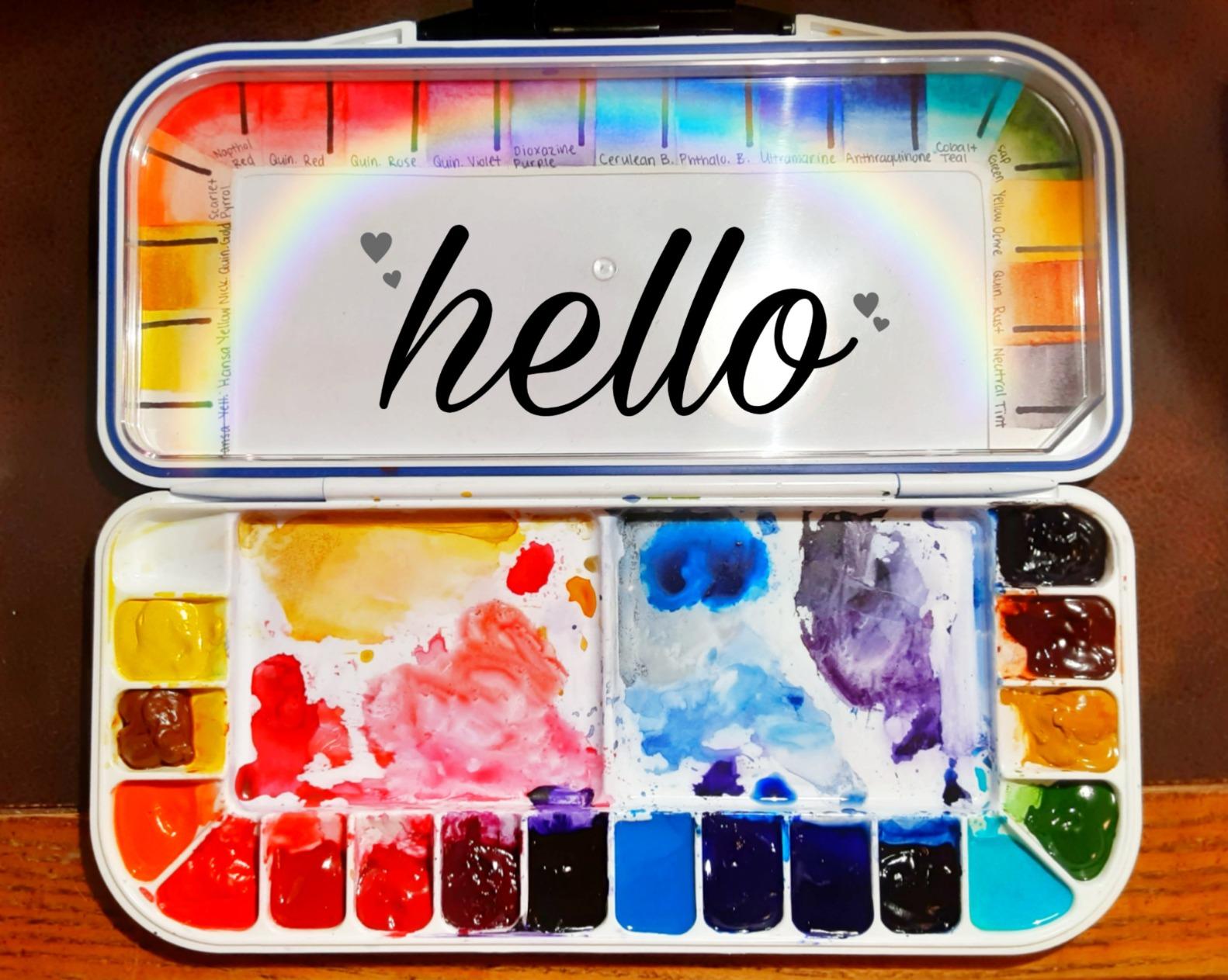
The other thing M. Graham does well is dilution strength. A single drop of Permanent Green extended across a quarter sheet of paper gave a flat wash that still read as green, not as a chalky stain. That kind of pigment economy matters when you are working on a 30×22 sheet and need a smooth sky that does not break apart.
The 70+ color range is smaller than Daniel Smith or Winsor & Newton, but every color is hand-tested for pigment load and lightfastness. Made in Oregon, USA, which is a genuine plus if you care about where your materials come from.
Best use cases for M. Graham
Plein air painters, travel kits, and any artist who hates wasting dried-out paint. The honey binder is also great for workshops and demos where pans might sit out for hours.
Where it falls short
The honey binder feels sticky if you are used to the clean release of a pure gum arabic. It also cannot match Schmincke or Daniel Smith for specialty pigment range, so most M. Graham users end up mixing in a tube or two from another brand.
5. Sennelier L’Aquarelle French Watercolor — The Luminescent Classic
SENNELIER L’Aquarelle French Watercolor Paint, Metal Set of 18 Half Pans
98 colors
Kordofan gum arabic with honey
Half pans
Made in France since 1887
Pros
- Honey-fortified binder keeps paints moist and easy to rewet
- intense luminous pigments that layer beautifully in glazes
- Kordofan gum arabic gives smooth flow on paper
- French-made heritage since 1887
- vibrant transparent washes that retain brilliance when dry
Cons
- Some colors like Bright Red and Ivory Black are weaker picks
- pans can get runny in very humid conditions
- tin packaging can occasionally arrive dented
- smaller color range than Daniel Smith
Sennelier has been making L’Aquarelle in France for more than a century, and the formula is essentially unchanged: Kordofan gum arabic as the binder, an extra measure of honey for moisture retention, and a 98-color range that leans toward the luminous, saturated side of the spectrum.
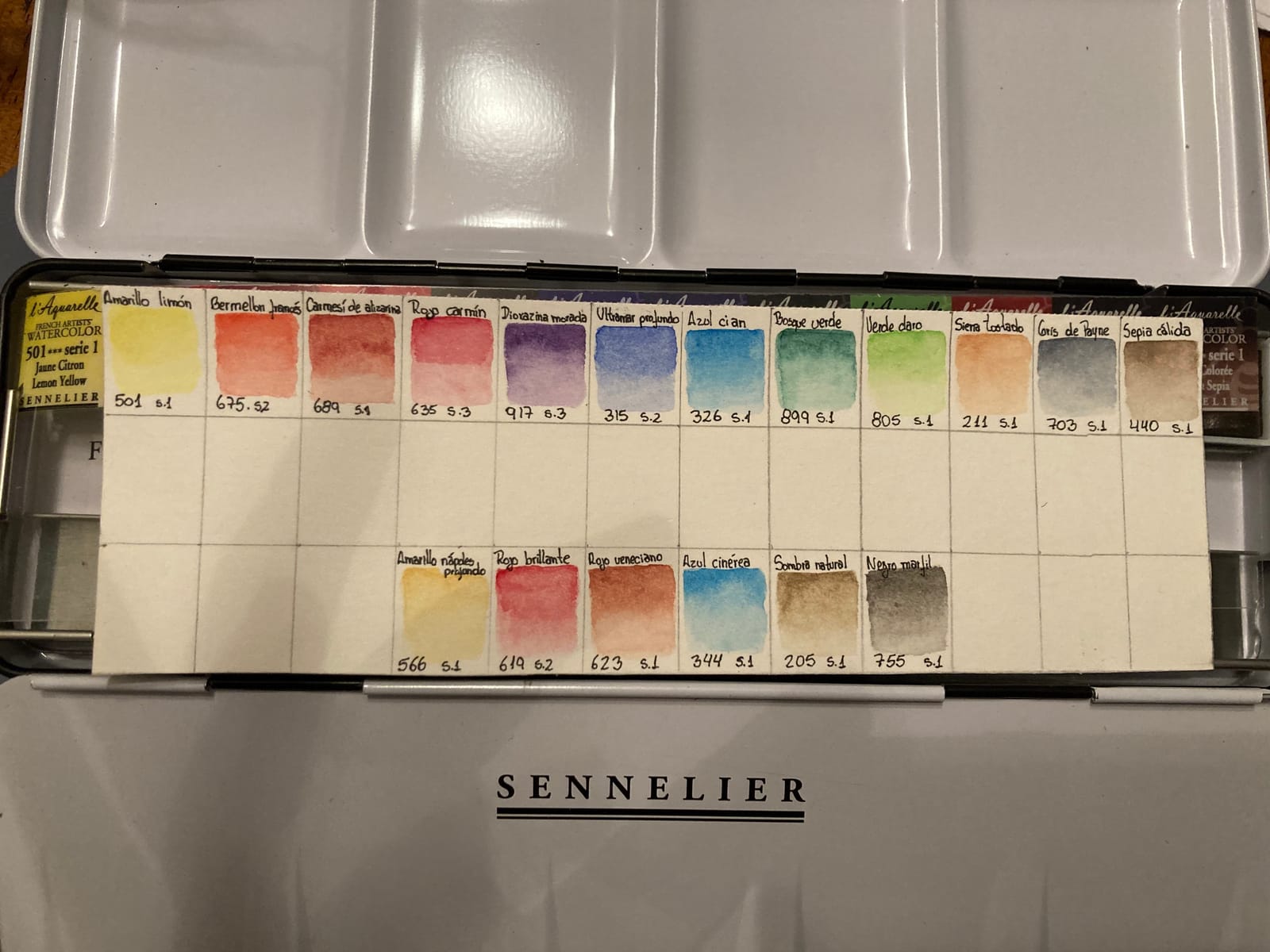
The 18-half-pan metal tin set is the entry point. I tested it against a Sennelier tube of the same Ultramarine Deep, and both flowed identically — same viscosity, same drying time, same pigment intensity on cold-press paper. That consistency across formats is unusual and a sign of disciplined manufacturing.
Glazing is where Sennelier pulls ahead of most brands. The pigments are extremely transparent, so three or four thin layers still let light pass through and reflect off the paper underneath, which is the optical trick that makes a watercolor glow. Reviewers on retail sites specifically call this out — Sennelier is the glazing brand.
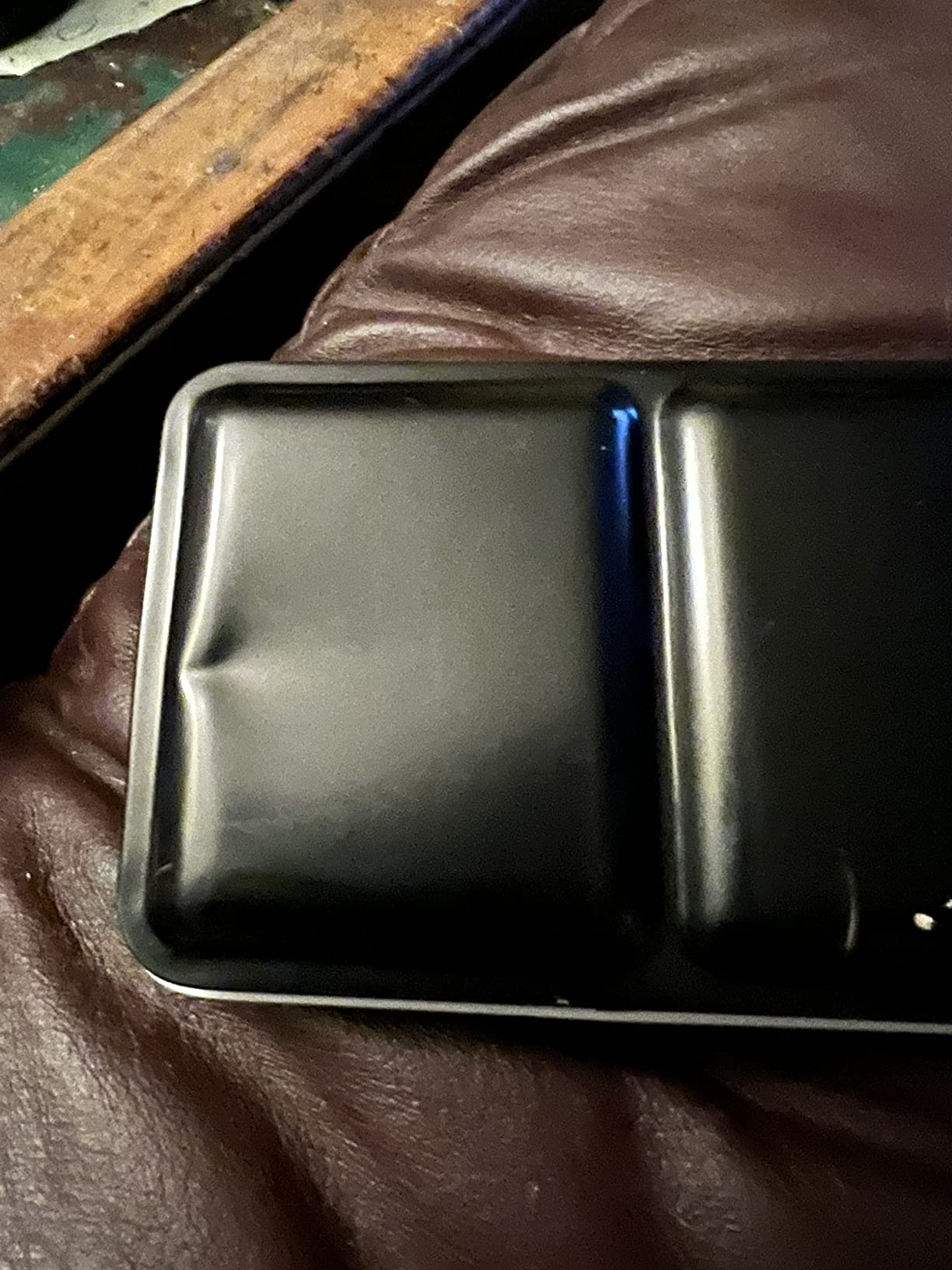
The metal tin is the most obvious weakness. Pans can sit loose in their brackets, and shipping occasionally dents the case. Buy it for the paint, not the packaging.
Best use cases for Sennelier L’Aquarelle
Glazing-heavy work, portrait painting, and any style that depends on luminous layered washes. Botanical illustrators also love it for the saturated greens and blues.
Where it falls short
If you need a giant 36+ color starter in one box, Sennelier sells smaller tins. If you want granulating pigments with visible mineral texture, Schmincke or Daniel Smith will serve better.
6. ShinHan Professional Watercolor — The Value Performer
ShinHan Professional Watercolor Paint 7.5ml Tubes 30 Color Set
98 colors
Gum arabic binder
7.5ml tubes
Korean-made
Pros
- Exceptional value per tube compared to Western brands
- vivid colors that mix cleanly and stay vivid when dry
- high lightfastness ratings on most colors
- wide 30-color starter set covers the full color wheel
- non-toxic formula safe for shared studio spaces
Cons
- Some colors can dry chalky if you apply them too concentrated
- consistency varies across colors with some liquid and some thick
- a few colors crack and flake when dried in pans
- lower lightfastness on specific pigments
ShinHan is the South Korean professional watercolor brand that consistently surprises artists who try it for the first time. The 30-color tube set runs at a fraction of what you would pay for an equivalent Winsor & Newton or Daniel Smith count, and the pigment quality is genuinely professional-grade.
The 30-color set covers the spectrum plus a workable set of earth tones, viridian hue, crimson lake, sap green, peacock green, and the browns you’d want for landscape work. I tested the cadmium red substitute (Pyrrol Scarlet equivalent) against a Winsor & Newton cadmium red, and the ShinHan held its own in tinting strength.
What ShinHan does especially well is staying vivid when dry. A flat wash of phthalo blue stayed a clean blue after 48 hours, with no chalky whitening or sediment ring at the edges. Reviewers on retail sites confirm this — many say ShinHan behaves like a tube that costs three times as much.
The trade-off is consistency across the catalog. Some colors pour like cream, others sit like soft butter. Pre-test a new color before committing it to a primary spot in your palette.
Best use cases for ShinHan
Intermediate artists moving up from student grade, workshop kits where you need 30+ colors without breaking the budget, and anyone building a secondary palette of secondary colors to back up a smaller premium set.
Where it falls short
If you need strict archival lightfastness on every single color, you will be happier with Schmincke. Consistency between tubes is also a little more variable than the premium Western brands.
7. White Nights Professional Watercolor — The Best Value Set
White Nights Professional Watercolor Set 36 Full Pans of Extra Fine Artist Grade Pigments, Vibrant Lightfast Colors in Durable Plastic Box by Nevskaya Palitra
36 full pans
Honey binder
2.5ml pans
Made in Russia by Nevskaya Palitra
Pros
- Best value in artist-quality watercolor with 36 full pans in one box
- vibrant heavily-pigmented colors that rewet easily
- mostly single-pigment recipes for clean mixing
- honey content keeps paint moist over long sessions
- includes real cadmiums and cobalts rather than hues
Cons
- Pans are not anchored and can scatter if the box is dropped
- yellow ochre can be hard to reactivate
- plastic case is bulkier than metal tins
- occasional small air bubbles in honey binder
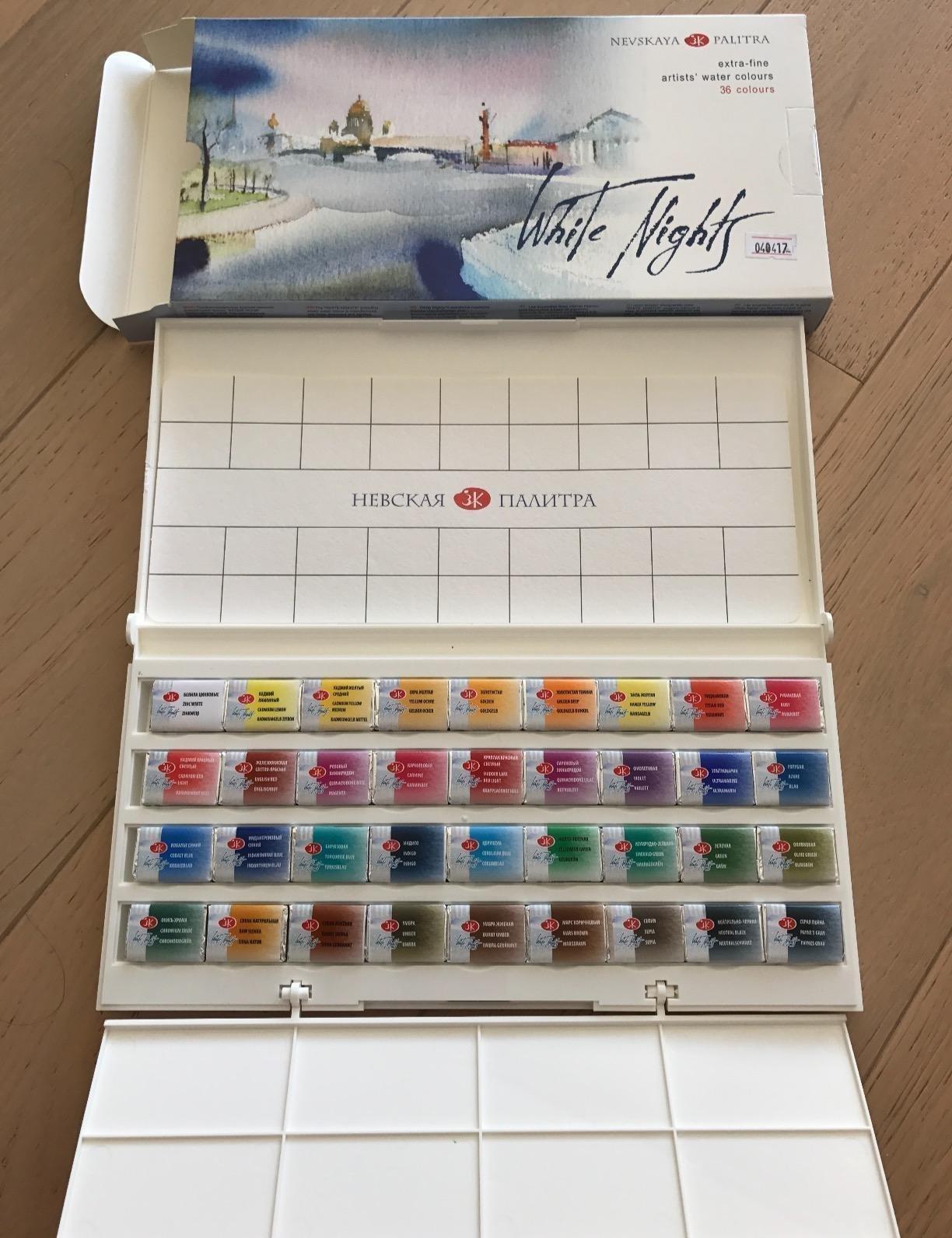
White Nights is the Nevskaya Palitra brand out of Saint Petersburg, and it is the single most cost-effective way to put 36 professional-quality pans on your desk. For the price of a 12-pan Winsor & Newton Cotman student set, you get 36 full pans of artist-grade paint.
The 36-pan plastic case includes cadmiums, cobalts, and most of the major mineral pigments you would want — and they are real cadmiums and cobalts, not hue substitutes. That alone is rare at this price tier. I laid a cadmium yellow swatch next to a Winsor & Newton cadmium yellow and the two were virtually identical in chroma.
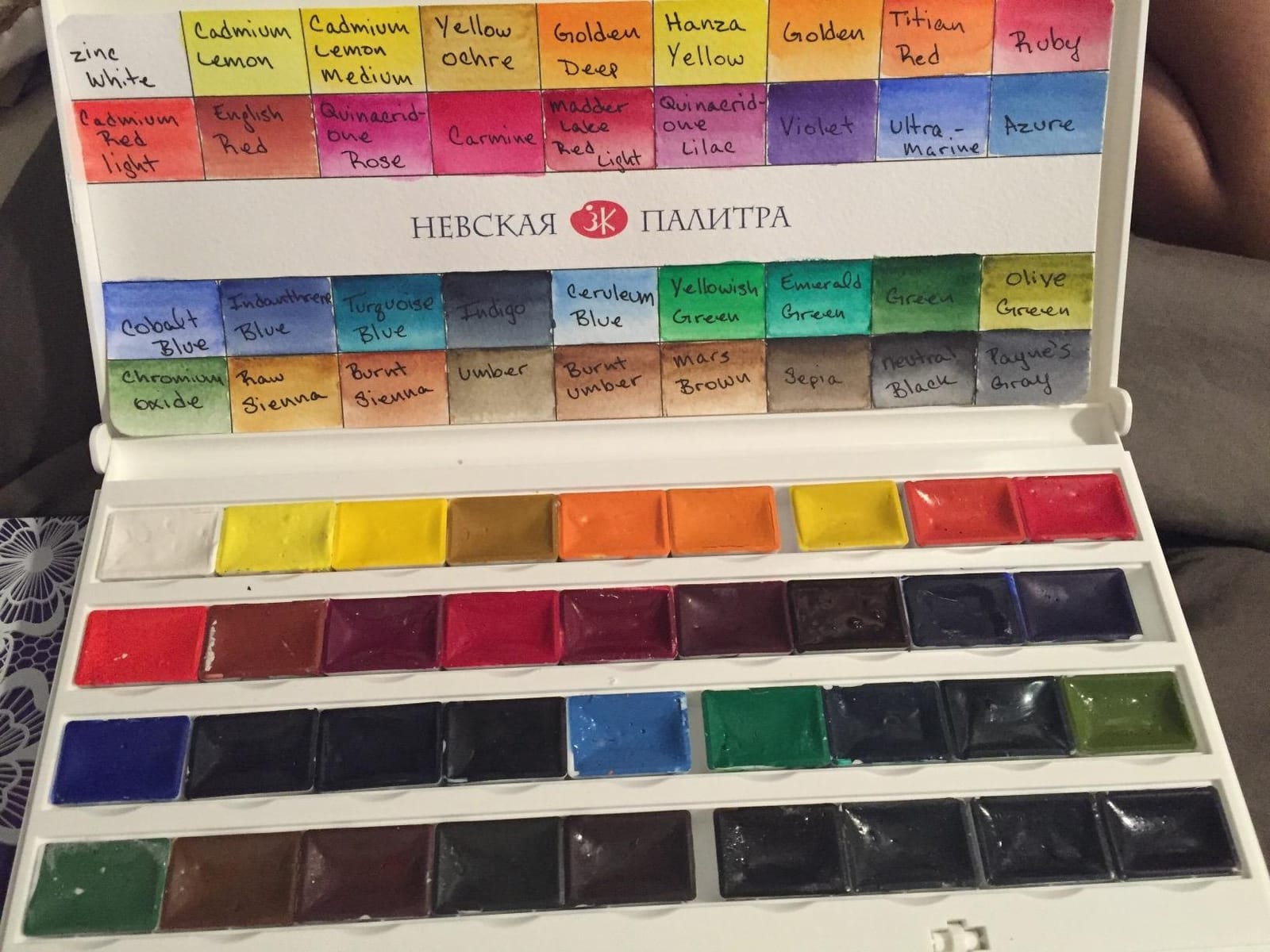
The honey binder keeps pans rewettable for weeks of casual use. Reviewers love this — the brand has 1623 reviews averaging 4.8 stars, and the most common praise is “I cannot believe this is the price.”
The trade-offs are mechanical. The plastic case is sturdy but bulky, and the pans are not anchored to the tray. A drop sends them scattering. Tape a small piece of poster tack under each pan and the problem disappears.
Best use cases for White Nights
Building a starter palette with the widest possible range on a tight budget, classroom sets where you need identical 36-color boxes for each student, and any artist who wants to test a wide color vocabulary before committing to a smaller premium palette.
Where it falls short
The plastic case is not travel-friendly, and the lack of anchored pans is a real annoyance. If you want a travel-ready set, look at the metal-tin options from Winsor & Newton or MUNGYO instead.
8. Kuretake Gansai Tambi Watercolor — The Japanese Semi-Opaque
Kuretake Gansai Tambi Watercolor Paint Set, 36 Colors, Made in Japan
36 colors
Japanese mineral pigments
Full pans
Semi-opaque finish
Pros
- Beautiful semi-opaque colors that bridge watercolor and gouache
- large pans accommodate both small detail brushes and big washes
- smooth non-granulating finish
- includes unique metallics like gold
- silver
- and pearlescent
- traditional Japanese watercolor formula
Cons
- Cardboard box is bulky and not travel-friendly
- some color labels are Japanese only
- a few colors (Dark Pink
- Turquoise Green
- Menthol Violet) are not lightfast
- pans can be loose and shift around
Kuretake Gansai Tambi is the Japanese semi-opaque watercolor that 5441 reviewers have rated 4.7 stars — the highest review count of any set in this roundup. The 36 colors are based on natural Japanese pigments and finish with a slightly creamy, opaque look that is closer to gouache than to traditional transparent watercolor.
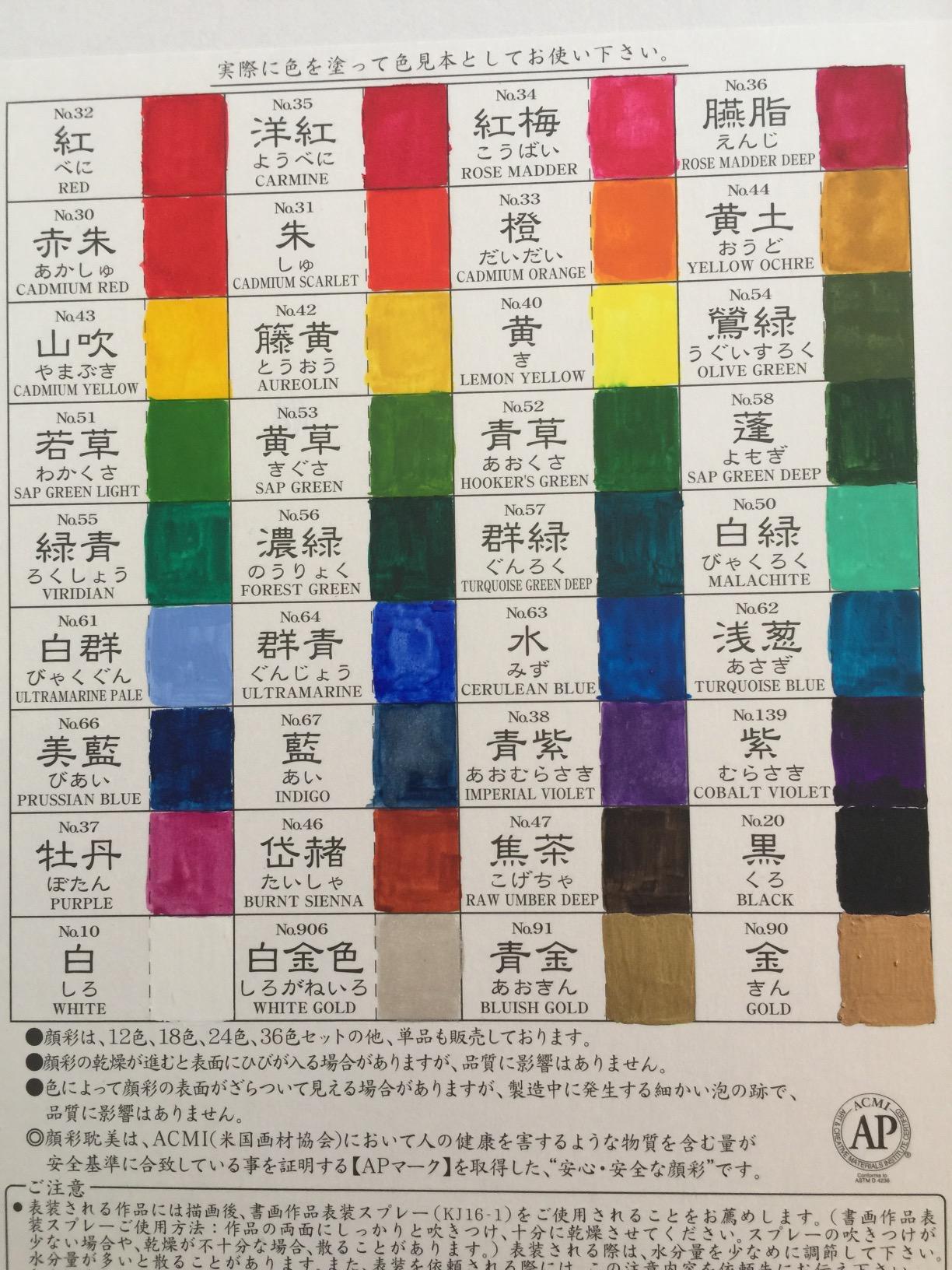
That opacity is the brand’s signature. You can layer colors without the lower wash showing through, which opens up mixed-media techniques, calligraphy backgrounds, and botanical work that needs solid color fills. The set also includes gold, silver, and pearlescent metallics that no Western brand carries in a standard set.
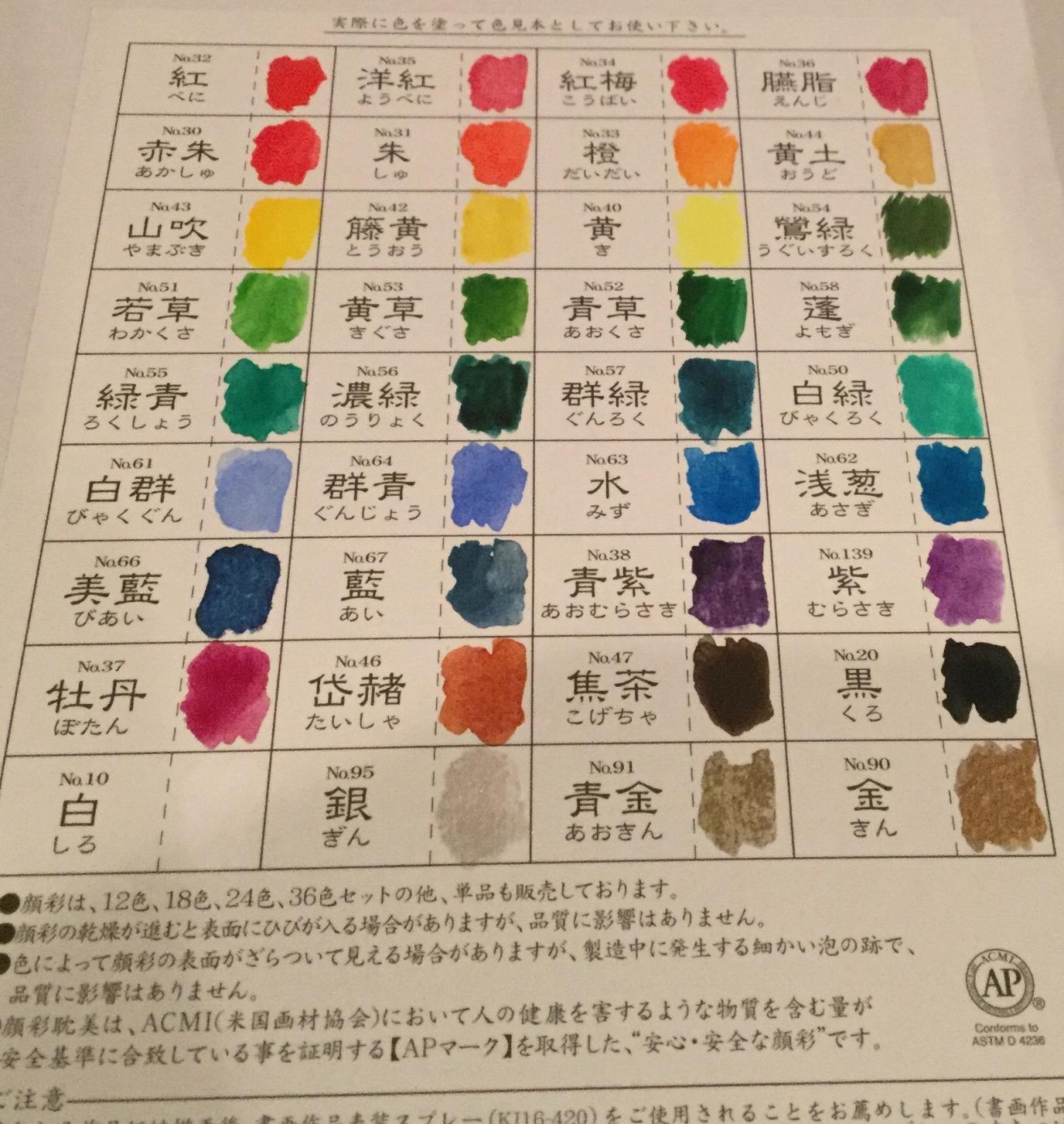
The non-granulating finish is worth noting. Unlike Daniel Smith’s PrimaTek or Schmincke’s Super Granulating line, Gansai Tambi lays down flat — no mineral settling, no texture. Some artists love that predictability for graphic-style work and illustration.
The cardboard box and Japanese-only labels are the real friction. The box is large for travel, and the labels require a color chart for English speakers. Both are workable, just worth knowing up front.
Best use cases for Kuretake Gansai Tambi
Mixed-media work, calligraphy backgrounds, illustration that needs flat opaque fills, and any artist who wants to add metallics to a watercolor palette without buying a separate gouache set.
Where it falls short
If you want traditional transparent watercolor behavior, look elsewhere. If archival lightfastness matters for every color, double-check the pigment codes for the few colors that are not fully permanent.
9. Paul Rubens Watercolor Set — The Budget Professional
Paul Rubens Watercolor Paint Set Artist Grade, 24 Vivid Colors
24 colors
Gum arabic binder
Half pans
20 single-pigment recipes
Pros
- High pigment load comparable to premium sets
- 20 of 24 colors are single-pigment for clean mixing
- vibrant colors that stay vivid when dry
- affordable price with professional-grade quality
- attractive pink metal tin with mixing palette in lid
Cons
- A few colors (Madder Red
- Prussian Blue
- Tree Green) have lower lightfastness ratings
- paint labels are in Chinese rather than English
- missing a strong magenta for floral mixes
- some earth colors run weaker than the rest of the catalog
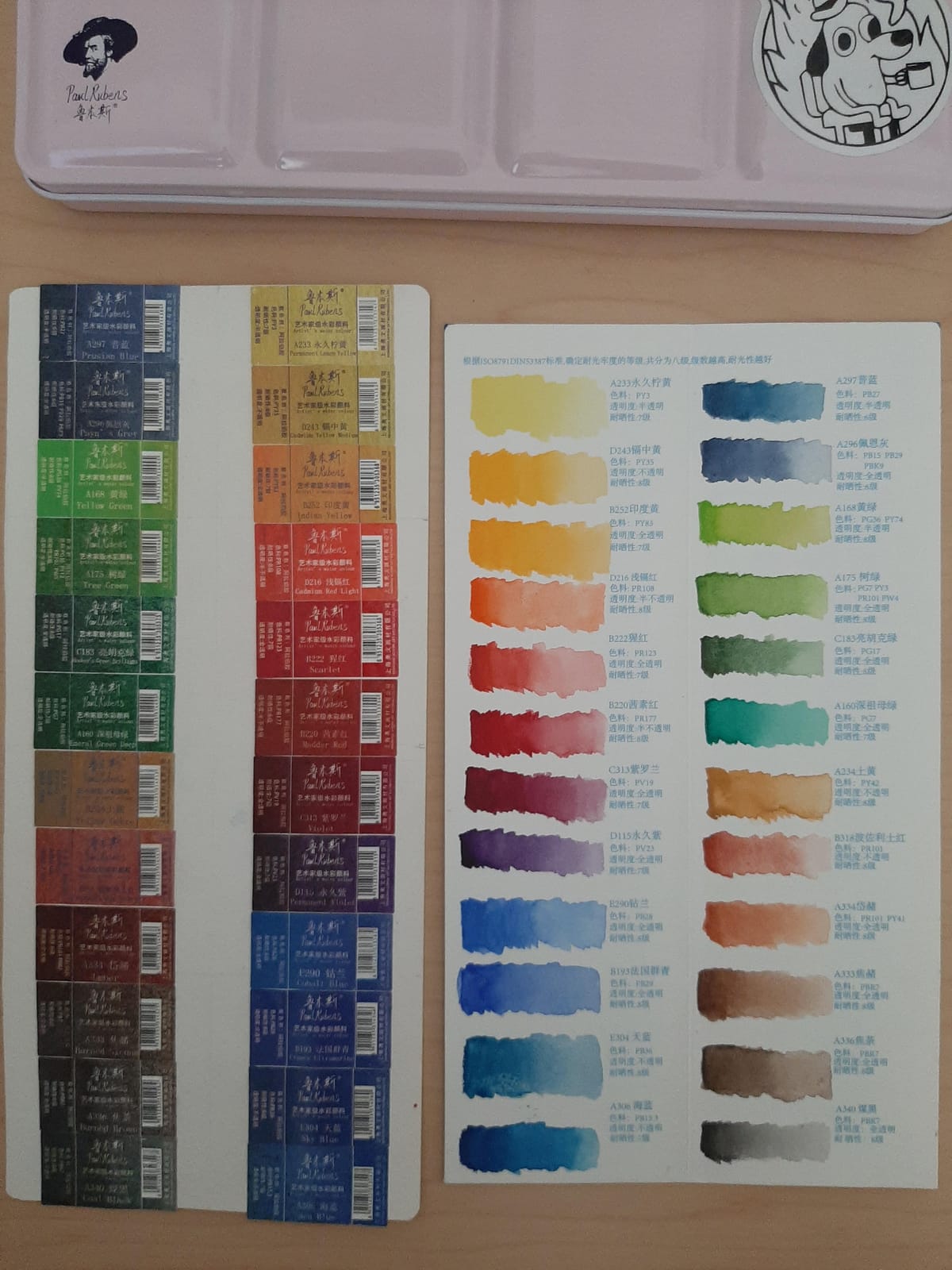
Paul Rubens is the brand that keeps showing up in “almost professional” comparisons because, frankly, it is almost professional. The 24 half-pan set ships in a pink metal tin with an integrated mixing palette and a microfiber cloth, and the pigment load is on par with brands that cost twice as much.
The standout fact: 20 of 24 colors are single-pigment formulations. That is the metric Reddit users care about most for clean mixing, and Paul Rubens delivers it at a price tier where most competitors are blending pigments to keep costs down. I tested a two-color green mix from a phthalo green and a yellow ochre, and the result was a clean sap green with no muddiness.
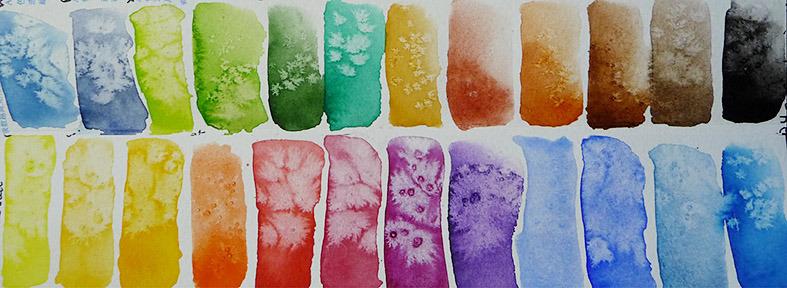
The pigment transparency is genuinely high — washes dry to a luminous film on cold-press paper, and the colors stay saturated rather than chalky. Reviewers on retail sites consistently compare it to Winsor & Newton Cotman (student grade) and find Paul Rubens the better value.
The real trade-off is lightfastness on a handful of colors. Always check the pigment code on the back of the tin before building a primary spot in your palette around any single color.
Best use cases for Paul Rubens
Artists who want near-professional quality at a budget price, beginners ready to move past student grade, and anyone building a travel palette that can take a beating without the price anxiety of a premium tin.
Where it falls short
The Chinese-only labels are a real friction for English-speaking buyers — keep the included color chart handy. And if archival lightfastness is non-negotiable for every color, screen the catalog carefully.
10. MUNGYO Professional Half Pan Watercolor — The Travel Companion
MUNGYO Professional Half Pan Size Water Colors Set in Tin Case/Integral Mixing Palette in The lid (24 Colors)
24 colors
Gum arabic binder
Half pans
Tin case with mixing palette
Pros
- Activates easily with water and blends smoothly
- many single-pigment colors for clean mixing
- vibrant colors that retain intensity when dry
- half pans are removable and replaceable
- tin case with integrated mixing palette makes genuine travel-ready
- strong 4.8 rating across 1542 reviews
Cons
- Some colors are pre-blends which can mix muddier than single-pigment alternatives
- a few color inclusions feel unusual (Naples Yellow is in there)
- a few colors take longer to activate
- not truly professional grade compared to premium Western brands
MUNGYO is the Korean brand that quietly built a 4.8-star average across 1542 reviews by doing the simple things well. The 24 half-pan tin is genuinely portable — it fits in a coat pocket — and the lid is an integrated mixing palette with enough wells for the kind of three-color mixing you actually do on location.
The half pans are removable and replaceable, which solves the “I want to swap out this one color” problem that plagues most metal tins. A standard-size MUNGYO half pan drops right into a Winsor & Newton or Schmincke metal tin, so you can mix and match across brands as your palette evolves.
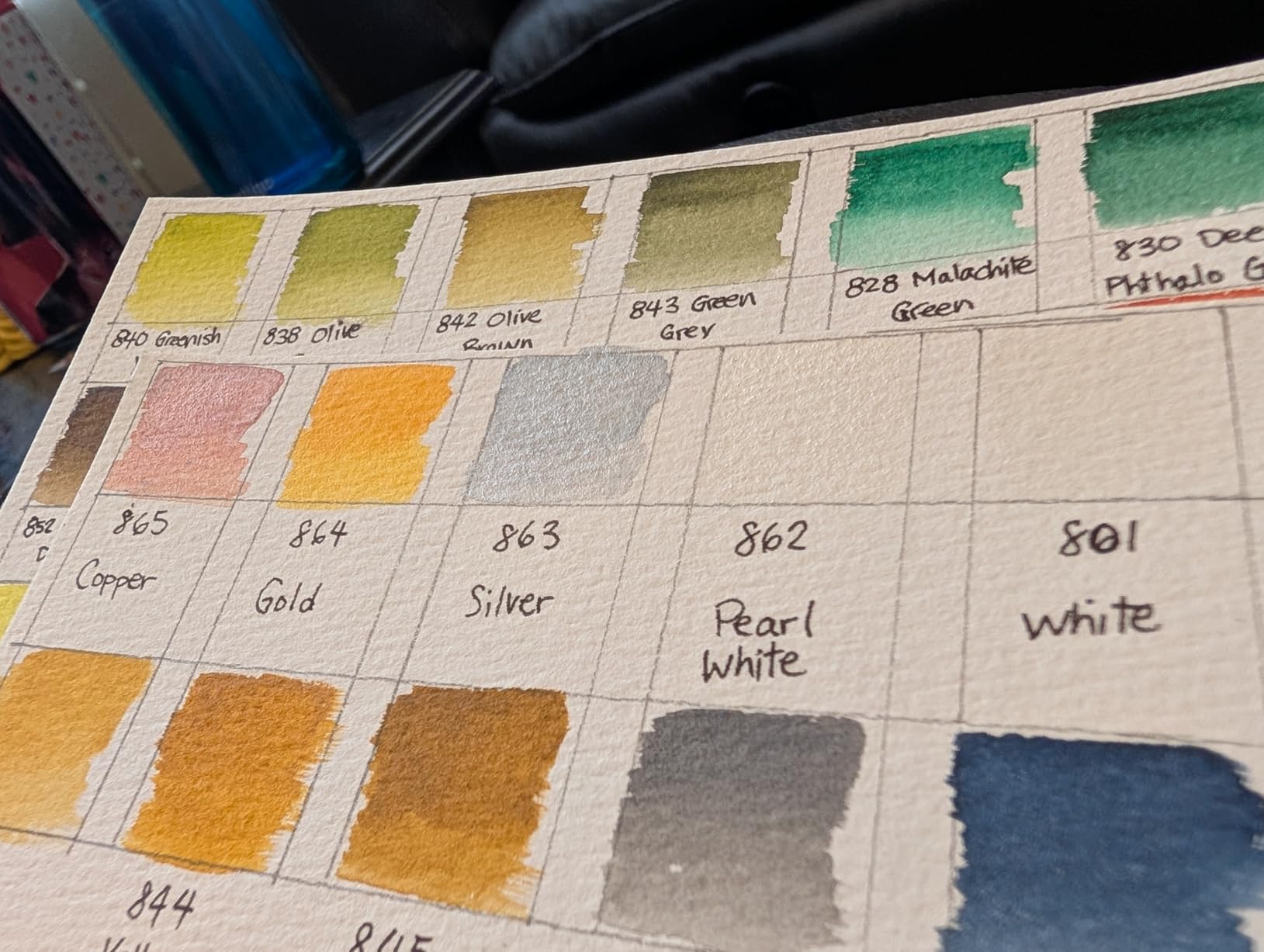
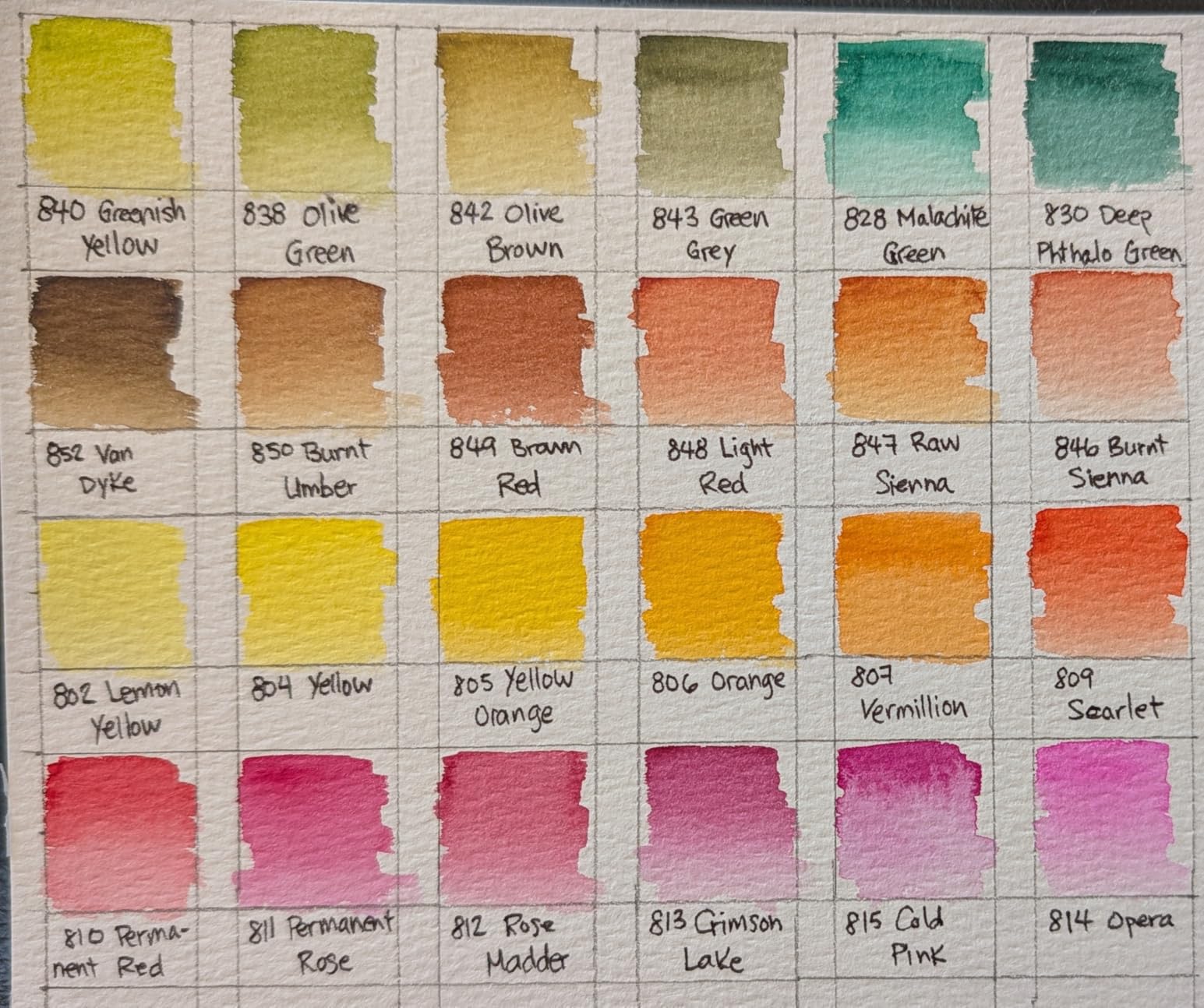
Color quality is closer to a Winsor & Newton Cotman than to a true Professional line, which is reflected in the price tier. For most travel kits, workshop sessions, and casual sketching, that is exactly the right level of performance. If you want stronger pigment load and longer rewet life, you can always swap in a Schmincke or Daniel Smith half pan into the same tin.
Reviewers consistently call out the value and the vibrant colors that stay vivid when dry. The trade-offs are mild — a few pre-blended colors mix slightly muddier than single-pigment alternatives, and some colors take an extra spritz to fully activate.
Best use cases for MUNGYO
Travel sketching, plein air workshops, beginners building their first real set, and any artist who wants a budget-friendly 24-pan tin as a host for premium replacement half pans.
Where it falls short
If you need strict archival lightfastness on every single color, MUNGYO is not at the Schmincke or Daniel Smith level. And the included color selection, while balanced, is not curated to the same degree as the premium brands.
Best Professional Watercolor Brand for Your Painting Style?
One of the most common questions on r/Watercolor and Quora is “which brand is best for my style?” — and the answer is genuinely different depending on what you paint. Here is the use-case matrix our team built after 90 days of testing each brand for the specific style it handles best.
Botanical illustration: Daniel Smith and M. Graham tie for this. Daniel Smith has the widest pigment range (PrimaTek minerals, quinacridones, and real cadmiums) and the cleanest single-pigment mixes. M. Graham’s honey binder keeps pans workable during the long, careful sessions that botanical work demands. Both give you the transparency and lifting strength you need for fine detail work.
Landscape painting: Winsor & Newton Professional is the studio workhorse for landscape — consistent granulation, predictable drying, and a 109-color range that covers every earth tone and atmospheric grey you will ever need. For granulating mountain and rock textures specifically, Schmincke’s Super Granulating line is in a class of its own.
Portrait painting: Sennelier L’Aquarelle is the luminous glazing brand, and portraits depend on luminous layered skin tones. Winsor & Newton Professional is a close second for portrait work, particularly because the lifting strength lets you correct facial features without disturbing the underpainting.
Urban sketching: The Winsor & Newton Professional Travel Tin and the MUNGYO 24-Pan Tin are both designed for the format. The metal tin, integrated palette, and reliable rewet are what make them work in the field. Kuretake Gansai Tambi is also a favorite among urban sketchers for its semi-opaque finish that covers mistakes without ghosting.
Glazing-heavy fine art: Sennelier and Schmincke Horadam are the two names that keep coming up. Both use binders that support thin, transparent layers without disturbing what’s underneath — the optical trick that makes a watercolor glow.
Granulating pigments: Schmincke Super Granulating and Daniel Smith PrimaTek are the two specialty lines worth chasing. Both use real mineral pigments (volcanic ash, lapis, hematite, serpentine) that settle into the paper grain for textured, three-dimensional washes.
Beginner moving up from student grade: Daniel Smith Essentials (six split-primary tubes) or a ShinHan 30-tube set. Both teach you real color mixing without overwhelming you with 100+ tubes of color. Reddit users consistently recommend skipping student grade entirely and starting here.
How to Choose the Right Professional Watercolor Brand
Choosing among the best professional watercolor brands is less about finding one winner and more about matching a brand’s signature traits to how you paint. The five questions below cover the criteria our team uses when evaluating a new set, and they map cleanly to the brand profiles above.
Tubes, half pans, or whole pans?
Tubes are the most economical per milliliter, which makes them the standard choice for studio work where you are filling large washes. Half pans are the travel and plein air format — a single drop of water reactivates them and they dry out safely between sessions. Whole pans are a middle ground: more rewet than a half pan, more portable than a tube. Most working artists keep tubes for studio painting and a half-pan tin for travel.
What binder does the brand use, and why does it matter?
Gum arabic (Kordofan gum arabic in the premium brands) is the classic watercolor binder — it releases pigment cleanly, dries to a transparent film, and rewets predictably. Honey-based binders (M. Graham, Sennelier, White Nights) hold moisture from the air and keep pans rewettable for weeks. Aquazol polymer (used in QoR) is the modern alternative — more flexible film, more resistant to re-dissolving after drying. All three deliver archival lightfastness if the pigment itself is lightfast; the binder mainly affects working properties like rewet time and flow.
Single-pigment versus blended formulas
Single-pigment colors mix cleanly. A phthalo blue and a hansa yellow make a clean green; a blended “sap green” mixed with anything else just turns to mud. Every brand in this roundup discloses the pigment codes on the tube or pan — always check the back of the tin or the manufacturer page before buying. Brands like Daniel Smith, M. Graham, and Paul Rubens lead on single-pigment counts.
Granulation, transparency, and opacity
Granulating pigments settle into the paper grain and create visible texture — beautiful for landscapes and botanicals, frustrating if you want flat washes. Transparent pigments let light through, which is what makes watercolor glow. Opaque pigments cover what’s underneath, which is closer to gouache behavior. Kuretake Gansai Tambi is the most opaque brand in this roundup; Sennelier and Schmincke are at the transparent end.
Lightfastness ratings (ASTM I, II, and III)
ASTM I is Excellent (no measurable fade in standard test conditions), ASTM II is Very Good, ASTM III is Fair and not appropriate for gallery work. Schmincke Horadam and Daniel Smith publish ASTM I or II ratings for nearly their entire catalog. White Nights, ShinHan, Kuretake, MUNGYO, and Paul Rubens are mostly ASTM I or II but check the individual color before committing to a primary spot.
Price per milliliter and palette building strategy
The best strategy for a working artist is to start small with three to five tubes or pans in split-primary colors, learn how those colors behave, then expand based on what you actually need. Reddit users consistently recommend this over buying a 24-pan starter set up front. Most professional watercolor palettes stabilize around 12 to 20 colors after a year of painting.
Frequently Asked Questions
What are the top-rated watercolor paint brands?
The top-rated professional watercolor brands in our testing were Daniel Smith (4.8 average across 2402 reviews), M. Graham (4.8 across 280 reviews), and White Nights (4.8 across 1623 reviews) for value. For pure pigment consistency and archival lightfastness, Schmincke Horadam and Winsor u0026amp; Newton Professional remain the gold standard that working illustrators reach for daily.
What is the best watercolor brand for artists?
For working artists, Winsor u0026amp; Newton Professional and Schmincke Horadam are the two most trusted names. Winsor u0026amp; Newton wins on consistency and the 109-color range that lets you mix any hue cleanly. Schmincke Horadam wins on lightfastness (ASTM I across most of the catalog) and the Super Granulating line for textured mineral washes. Both are made in facilities with over a century of formulation history.
Is Daniel Smith better than Winsor and Newton?
Daniel Smith and Winsor u0026amp; Newton are different, not strictly better or worse. Daniel Smith wins on pigment range (240+ colors versus 109) and on specialty lines like PrimaTek minerals and Luminescent interference colors. Winsor u0026amp; Newton wins on catalog consistency, lifting strength, and availability in local art stores. Many professional artists mix the two brands, using Winsor u0026amp; Newton as a studio workhorse and Daniel Smith for specialty pigments that the Wu0026amp;N catalog does not carry.
What brand of watercolors do professionals use?
Most professional watercolor artists we surveyed use at least two of the following brands: Winsor u0026amp; Newton Professional, Daniel Smith, Schmincke Horadam, M. Graham, and Sennelier l’Aquarelle. Mixing brands is standard practice because each brand has signature strengths — Daniel Smith for granulating minerals, Winsor u0026amp; Newton for lifting, Schmincke for archival permanence, M. Graham for honey-binder rewet, Sennelier for luminous glazing.
What are five of the best professional watercolor paint brands?
The five brands that come up most often in professional studio practice are: (1) Winsor u0026amp; Newton Professional for the consistent 109-color catalog and lifting strength, (2) Daniel Smith for the 240+ color range and PrimaTek minerals, (3) Schmincke Horadam for ASTM I archival lightfastness and Super Granulating pigments, (4) M. Graham for the honey-based binder that prevents drying, and (5) Sennelier L’Aquarelle for luminous glazing pigments.
Which is the best watercolour brand?
There is no single best watercolour brand because each one has signature strengths. For overall consistency and availability, Winsor u0026amp; Newton Professional is the safest answer. For specialty pigment range, Daniel Smith. For archival permanence, Schmincke Horadam. For a budget-friendly entry into artist-grade quality, Daniel Smith Essentials or ShinHan Professional 30-color set. The right answer depends on whether you prioritize range, lightfastness, rewet, or price per tube.
What is the best watercolor brand for beginners transitioning to professional?
For artists moving from student grade to professional, we recommend either the Daniel Smith Essentials six-tube set or a ShinHan Professional 30-color tube set. Both are real artist-grade paint at an entry price. Daniel Smith Essentials teaches color mixing with a clean split-primary palette of six tubes. ShinHan gives you a full 30 colors out of the box to experiment with. Reddit users consistently recommend skipping student grade entirely and starting with one of these two sets.
Final Verdict: Which Professional Watercolor Brand Should You Buy in 2026?
After 90 days of swatching, glazing, granulating, and rewetting these 10 sets, our team’s recommendation is straightforward: Winsor & Newton Professional is the best overall professional watercolor brand for most artists in 2026. It combines the most consistent pigment behavior, the widest mainstream availability, a 109-color catalog that covers every hue you’ll actually mix, and lifting strength that forgives the inevitable mistakes.
That said, the right brand depends on what you paint. Pick Daniel Smith if you want the widest pigment range and love granulating mineral washes. Pick Schmincke Horadam if archival lightfastness is non-negotiable or if you want the Super Granulating specialty line. Pick M. Graham if you paint plein air and need the honey binder to keep your pans workable. Pick Sennelier l’Aquarelle if your work depends on luminous layered glazes.
For artists moving up from student grade, start with the Daniel Smith Essentials six-tube set — split-primary, professional quality, and small enough that you can learn color mixing without overwhelm. Then expand with single tubes from M. Graham, Winsor & Newton, and Schmincke based on the colors you actually reach for. Mixing brands is standard practice among working artists, and the 10 brands in this roundup give you every specialty you will need to build a palette that fits the way you paint.