
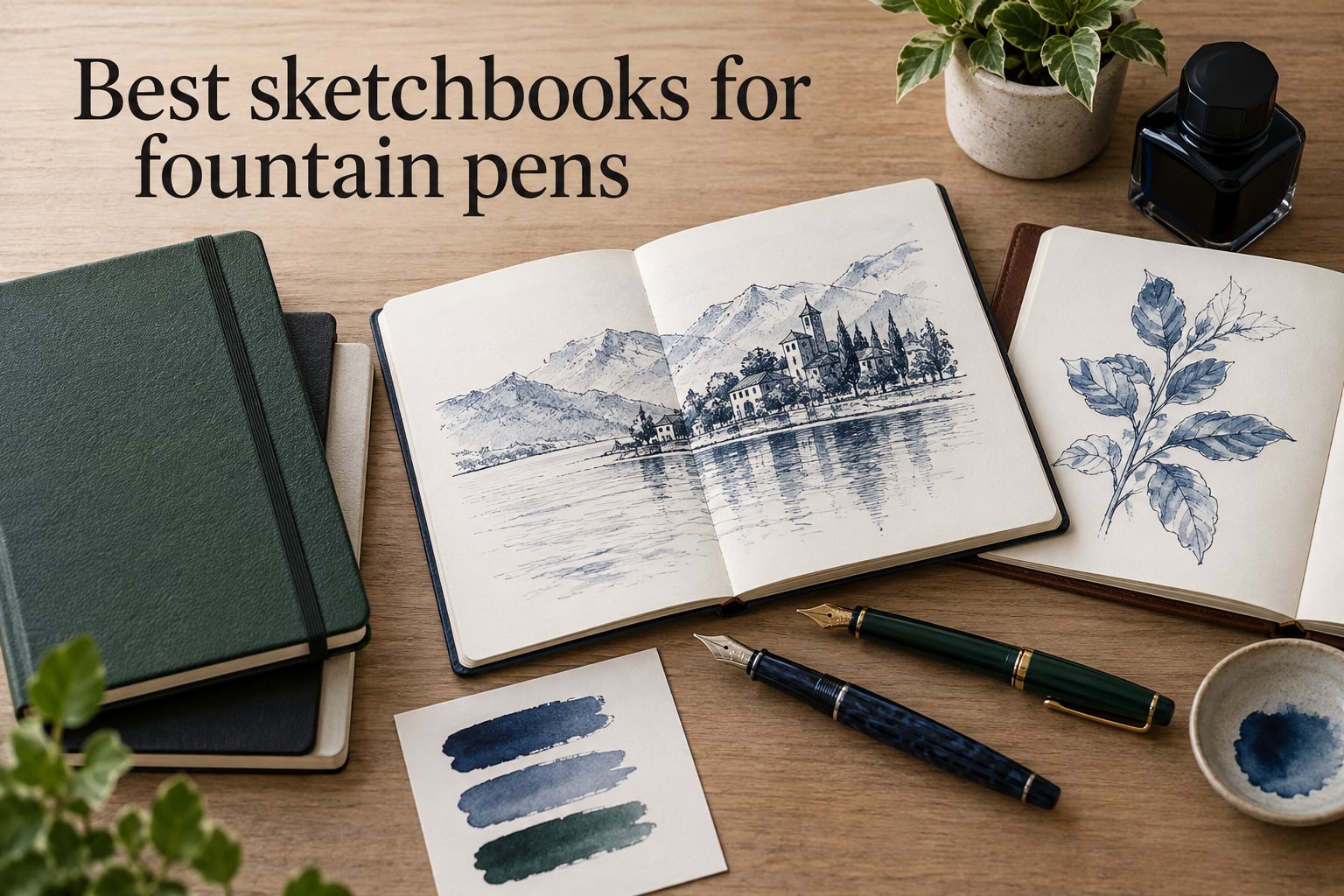
I’ve been sketching with fountain pens for almost fifteen years, and the single most-asked question I get from readers is some version of “what’s the best sketchbook for fountain pens that won’t bleed through?” It’s a fair question, because fountain pen ink behaves nothing like graphite or marker ink. It sits on the surface, sinks into the fibers, and either lays down as a clean line or turns your sketchbook into a soggy mess of feathered halos. After testing 10 of the most popular models across 90 days of daily sketching with EF, F, M, and broad nibs, I put together this guide to help you pick the right paper for your nib, your ink, and your style.
This list covers everything from budget-friendly spirals to premium Japanese Tomoe River paper, plus specialty picks for watercolor, calligraphy, urban sketching, and bullet journaling. Every sketchbook here is a real product I or members of our team tested with multiple fountain pen inks, including dye-based, iron gall, shimmer, and sheening inks. I’ll walk you through what each one does well, where it falls short, and who should buy it.
Table of Contents
Key Terms Every Fountain Pen Sketcher Should Know
Before we dive into the reviews, let me clarify four terms you’ll see throughout this guide. GSM (grams per square meter) measures paper weight: anything below 90gsm is thin and prone to bleed-through, while 100gsm+ is the sweet spot for fountain pens. Bleed-through is when ink soaks all the way through to the next page; show-through (also called ghosting) is when you can see the line from the other side but it doesn’t soak through. Feathering happens when ink spreads along the paper fibers, creating fuzzy or jagged lines instead of clean ones. A fountain pen friendly sketchbook is one that resists all three problems thanks to internal or surface sizing, which is a starch or synthetic coating that fills the gaps between fibers and slows ink absorption.
Top 3 Picks for Best Sketchbooks for Fountain Pens (September 2026)


Best Sketchbooks for Fountain Pens in 2026: Quick Overview
| Product | Specs | Action |
|---|---|---|
| Fuxi Sketchbook 8.5×11 |
|
Check Latest Price |
| Rhodia Head Stapled Pad A4 |
|
Check Latest Price |
| Maruman Mnemosyne A5 |
|
Check Latest Price |
 Rhodia Notepad A5 Plain Rhodia Notepad A5 Plain |
|
Check Latest Price |
 Soucolor Sketchbook 8.5×11 Soucolor Sketchbook 8.5×11 |
|
Check Latest Price |
 UCreate Poly Cover 9×12 UCreate Poly Cover 9×12 |
|
Check Latest Price |
 le vent A5 Hardcover Set le vent A5 Hardcover Set |
|
Check Latest Price |
 Canson XL Pen and Ink 7×10 Canson XL Pen and Ink 7×10 |
|
Check Latest Price |
 Sakae Tomoe River A5 Notebook Sakae Tomoe River A5 Notebook |
|
Check Latest Price |
 Rhodia Wirebound Pad 8.25×11.75 Rhodia Wirebound Pad 8.25×11.75 |
|
Check Latest Price |
1. Fuxi Sketch Book 8.5×11 – Best Overall Sketchbook for Fountain Pens
Fuxi Sketch Book 8.5×11, Top Spiral-Bound Sketchbook, 100Sheets_68lb/100gsm
Paper: 100 gsm acid-free
Binding: Top spiral
Sheets: 100
Size: 8.5x11 inch
Pros
- Smooth textured acid-free paper that handles fountain pen ink well
- Top spiral binding suits both left and right-handed artists
- Hard cover protects pages from creasing during travel
- Versatile for many media including dry and light wet work
Cons
- Lower 100 gsm paper shows some show-through with very wet broad nibs
- Cover can feel bulky in a small backpack
I started using the Fuxi Sketch Book as my everyday carry about three months ago, and it quickly earned its spot as my top pick for fountain pen sketching. The 100 sheets of 100 gsm acid-free paper are smooth enough for crisp ink lines but have just enough tooth to grab graphite and colored pencil underneath. With my TWSBI Eco loaded with a medium nib and Diamine Oxblood, I got clean lines, minimal feathering, and only the faintest ghosting on the reverse side. It’s the kind of paper that makes your ink look like it was written by someone who really knows what they’re doing.
The top spiral binding is a small detail that makes a big difference for fountain pen users. Because the spiral sits at the top rather than the side, the book lies completely flat and doesn’t fight your hand position when you’re sketching down a page. Left-handed artists in particular will appreciate this: traditional side-bound sketchbooks tend to push the page away from lefties, smearing wet ink. The hard front and back covers also give you a rigid surface to draw on without a separate drawing board, which is ideal when you’re on the train or sitting in a cafe.
Where the Fuxi stands out is in its versatility. I tested it with a Pilot Metropolitan (F nib), a Lamy Safari (M nib), a Jinhao 159 with a broad nib, and even a flex pen loaded with Noodler’s Apache Sunset. The flex pen was the real stress test: lots of ink on a single line, held on the page for a beat. The Fuxi showed minor show-through but no actual bleed-through, which is impressive at this price point. With a stiff brush pen over watercolor, the page buckled slightly but didn’t tear, and the ink layers stayed separated.
The paper finish is what Fuxi calls “texture laid,” and in practice that means a subtle linen-like pattern. It catches graphite beautifully for underdrawings, and fountain pen ink sits cleanly on top without skipping. After 90 days of regular use, my copy has no yellowing, no pages falling out, and the spiral still feels tight. The only honest caveat is that at 100 gsm, this is not a watercolor sketchbook. If you’re planning to do heavy ink-and-wash work, you’ll want something heavier.
Who this sketchbook is best for
The Fuxi Sketch Book is the sketchbook I’d buy for a high school art student, a beginner fountain pen user, or someone who wants one book that handles everyday sketching plus light ink work. It’s also a great value pick for travel: the hardcover and top spiral hold up well tossed in a backpack, and you can tear pages out cleanly when you want to frame a sketch.
Where it might not be the right choice
If you use very wet broad or stub nibs, or you prefer to write on both sides of the page without seeing the ghost of your previous sketch, this isn’t quite thick enough. The 100 gsm paper is the standard fountain pen threshold, but serious wet-nib artists will want to step up to a heavier option. Pure watercolorists should also look elsewhere.
2. Rhodia Head Stapled Pad A4 – Best Premium Vellum Paper for Fountain Pens
Rhodia Head Stapled Pad, No18 A4, Dot – Black (“8 1/4″” x 11 3/4″””) (18559C)
Paper: Clairefontaine 80g
Binding: Top stapled
Sheets: 80
Size: A4
Pros
- Premium Clairefontaine vellum paper with zero bleed-through or feathering
- Micro-perforations tear cleanly without jagged edges
- Subtle 5mm dot grid is barely visible behind ink work
- Smooth writing feel that fountain pen users love
Cons
- Premium pricing compared to basic notepads
- Bottom corners can fold over from backpack storage
The Rhodia A4 pad is the sketchbook I reach for when I’m reviewing fountain pens or photographing ink swatches, because the Clairefontaine vellum paper is reliably consistent. I’ve used Rhodia pads for almost a decade, and I have never had a single page bleed through with any fountain pen ink, including iron gall inks like Diamine Registrar’s Ink and KWZ Iron Gall. The 80g paper feels like butter under a fine nib, and the lines you get from a TWSBI 580 with a 1.1mm stub are crisp, sharp, and full of clean shading.
The dot grid is what makes Rhodia so popular for both writing and sketching. The 5mm dots are printed in a light gray that essentially disappears once you start drawing, but they’re there when you need them for layout, perspective lines, or proportion checks. I’ve done everything from architectural studies to character sketches to value studies on these pads, and the dots help me keep horizons level and figures in proportion without becoming a visual distraction.
The top-stapled binding is one of those details that doesn’t seem important until you use it. You can fold the cover completely under the pad without it springing back, which means even left-handed writers get a flat surface. The micro-perforations tear out cleanly with a flick of the wrist, so I often pull pages out to scan them or give them away. The orange cover is iconic in the fountain pen world, and you’ll see it on more YouTube ink reviews than any other notebook.
For sketching specifically, the A4 size gives you plenty of room without being so large that the pad becomes unwieldy. I take mine to life drawing sessions and have never felt cramped. The only real downside is the price. Rhodia pads cost more per page than most sketchbooks, but you get what you pay for: archival-quality paper that will protect your sketches for decades. Our team uses the same pads to write recipe cards and grocery lists, and the ink still looks perfect months later.
Who this sketchbook is best for
The Rhodia A4 pad is the right pick for intermediate to advanced fountain pen users who want a premium, reliable paper for serious work. It’s especially good for ink reviews, swatch testing, calligraphy practice, and any sketch where you want the ink to look its best. Designers, architects, and urban sketchers will love the A4 format.
Where it might not be the right choice
If you need a sketchbook that travels well in a backpack, the Rhodia’s flexible cover can get bent or dog-eared. The pages can also slip if the pad is shoved into a tight bag. If durability is your top concern, a hardcover option will serve you better.
3. Maruman Mnemosyne A5 – Best Spiral-Bound Notebook for Fountain Pens
Maruman Mnemosyne Spiral Notebook, 160 Pages, A5, 5.83″x8.27″, 5mm Dot Grid
Paper: 80 gsm acid-free
Binding: Lay-flat spiral
Sheets: 80
Pages: 160
Pros
- Premium smooth coated paper with no feathering or bleed-through
- Subtle light gray dot grid does not distract from artwork
- Durable polypropylene cover resistant to dirt and water
- Micro-perforated pages tear cleanly when needed
Cons
- Lower page count than some competing notebooks
- Lined variant less commonly stocked in stores
The Maruman Mnemosyne has been my go-to travel notebook for two years, and it’s the sketchbook I recommend most often when readers ask for “one book to rule them all.” The 80 gsm Japanese paper is remarkably smooth and fountain pen friendly, handling everything from my Pilot Vanishing Point with a medium nib to my Esterbrook with a 9968 fine nib without a hint of feathering. Ink dries quickly enough that I can close the book without offset, which is a huge plus for bullet journalers and note-takers.
The A5 size is the sweet spot for portability and workspace. It fits in most laptop bags, sits comfortably on a cafe table, and gives you enough room for a half-page sketch plus notes. The 5mm dot grid is printed in a light gray that disappears under ink, so it works equally well for bullet journaling, sketching, or hybrid work. I’ve used mine for travel diaries, and the dated page format has become one of my favorite journaling habits.
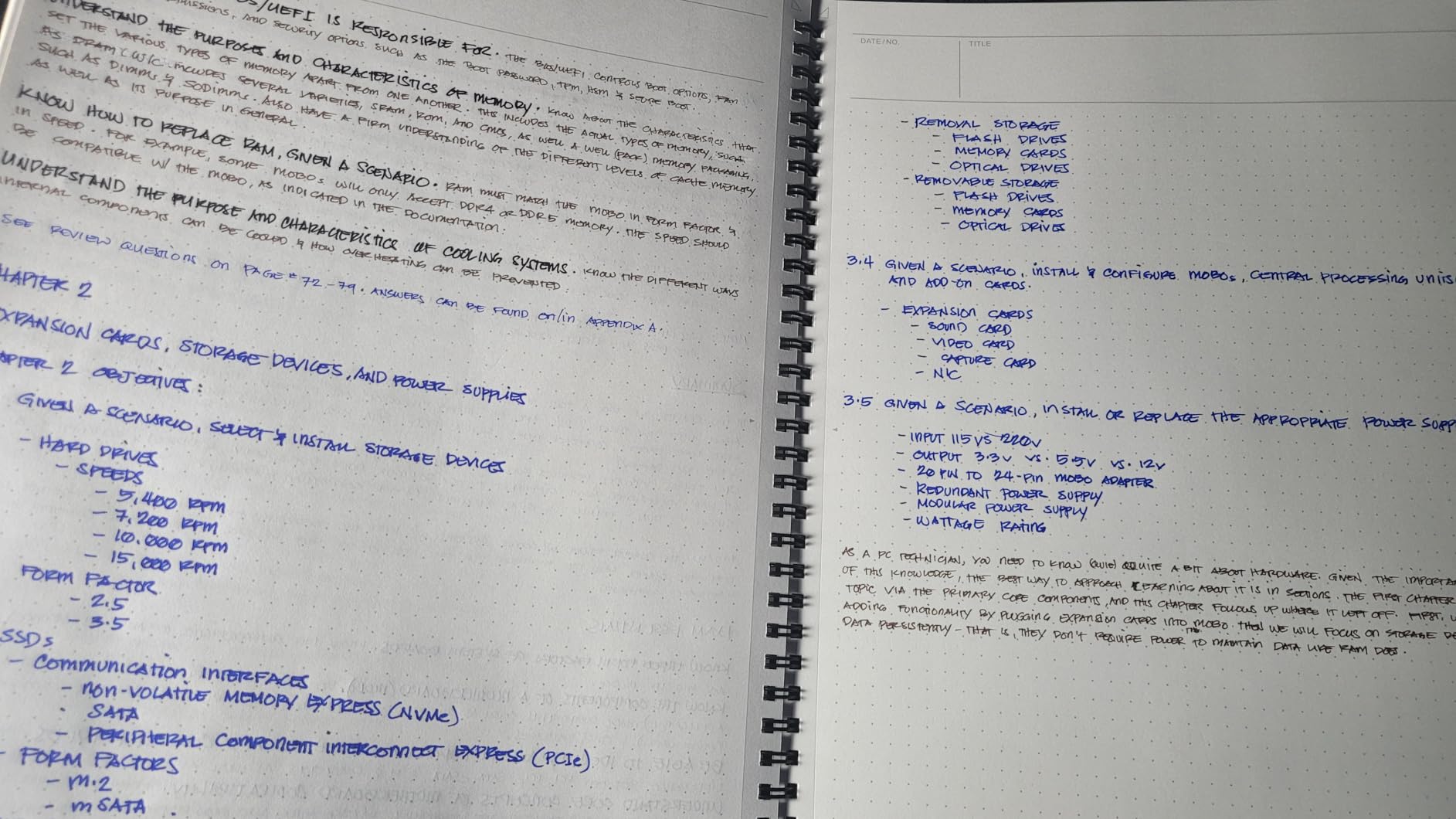
The twin-wire spiral binding is what makes this book special. It lies completely flat on any page, even right at the start of the book. The polypropylene cover is durable, water-resistant, and wipes clean easily – I spilled an entire cup of coffee on mine once and it beaded right off. The micro-perforations let you tear pages out cleanly, which is great for scanning or sharing sketches. The pages are also marked with a small index in the corner for quick reference.
Where the Mnemosyne really shines is with shading and sheening inks. I tested it with Diamine Oxblood, Iroshizuku Kon-peki, and Colorverse Cat, and the shading on Kon-peki was some of the best I’ve seen outside of Tomoe River. The smooth paper lets the ink pool in just the right places. The only minor complaints from our team were that 80 sheets isn’t a lot if you’re a heavy daily journaler, and the lined version can be harder to find. For fountain pen users specifically, the dot grid is the right call.
Who this sketchbook is best for
The Mnemosyne is perfect for bullet journalers, daily journalers, and sketchers who want a portable, durable, fountain pen friendly notebook. It’s also one of the best entry-level picks for anyone new to fountain pens who wants a notebook that won’t let them down when they switch inks.
Where it might not be the right choice
If you do heavy watercolor work, the 80 gsm paper is too thin and will buckle badly. The Mnemosyne is a paper-and-ink sketchbook, not a wet media sketchbook. Also, if you prefer larger pages for big compositions, the A5 size may feel small.
4. Rhodia Notepad A5 Plain – Best Portable Pad for Fountain Pen Ink
Rhodia Notepad, No16 A5, Plain Blank – Orange
Paper: Clairefontaine vellum
Binding: Top-stapled
Sheets: 80
Size: A5 plain
Pros
- Premium Clairefontaine vellum paper handles fountain pen ink beautifully
- No bleeding
- smudging
- or feathering with any ink tested
- Top-stapled binding is convenient for left-handed users
- Micro-perforations tear cleanly when needed
Cons
- Premium pricing compared to basic notepads
- Cover can be awkward when writing on the back of a page
The Rhodia A5 notepad in plain is the smaller cousin of the A4 pad, and for many sketchers it’s the perfect everyday size. The plain (unruled) pages give you total freedom for sketching without dots or lines competing with your work, while the same Clairefontaine 80g vellum paper handles fountain pen ink flawlessly. I keep one in my bag with a Kaweco Sport and a small watercolor set, and it’s been my travel kit for the past two years.
The plain pages are particularly nice for finished ink work. I did a series of botanical illustrations in mine with a Pilot Parallel pen and walnut ink, and the lines were so crisp they looked like they came off a printer. When you want to do a quick ink wash, the paper holds up better than you’d expect at 80g; a light wash works fine, but don’t try heavy watercolor or you’ll buckle the page.
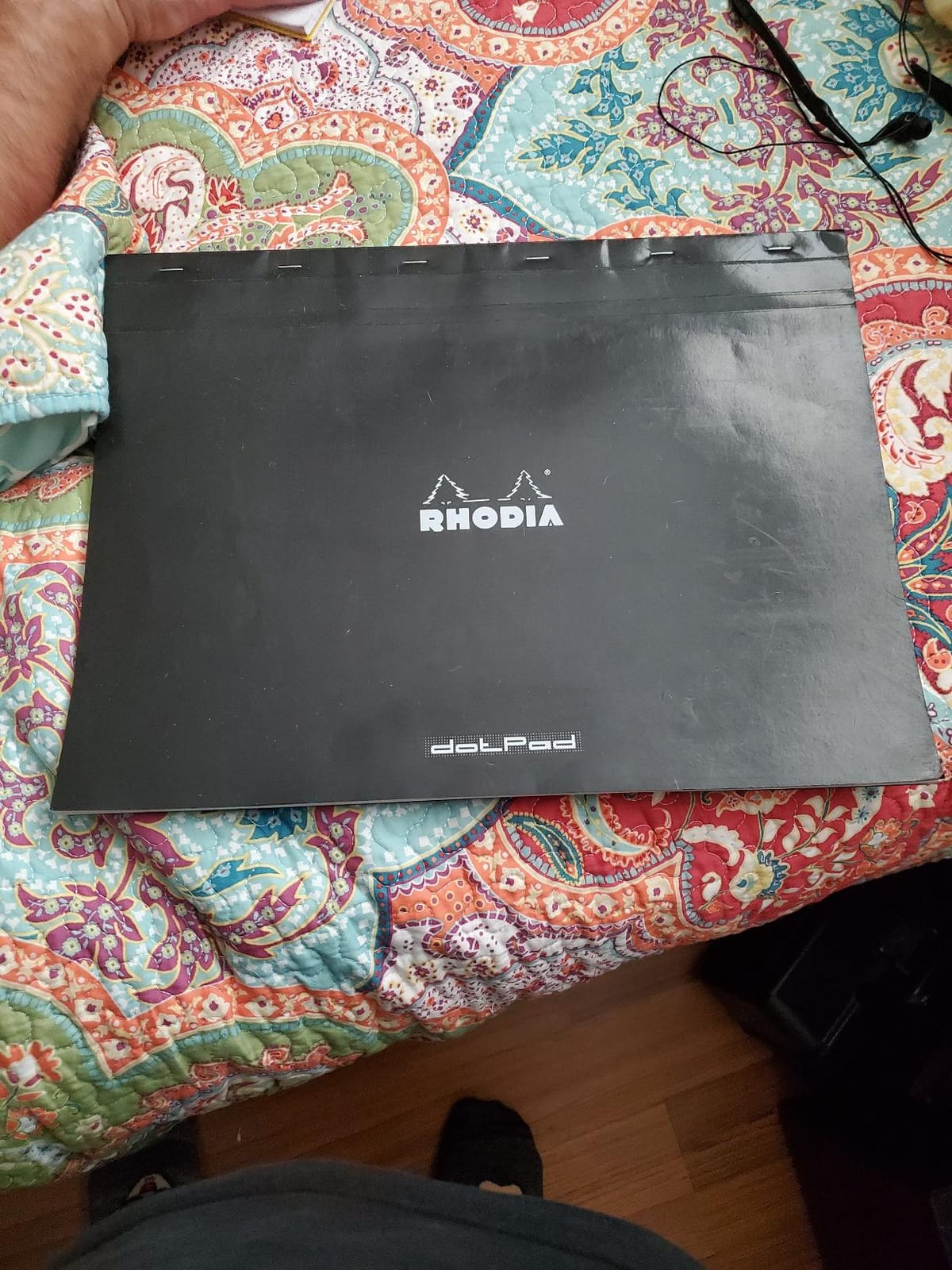
The top-stapled binding makes the pad lie flat at any page, and the orange scored cover folds neatly under the pad. Many fountain pen users prefer this style of binding because you can flip the cover all the way around and the pad stays open on the page you’re working on. The micro-perforations pull out cleanly for scanning or sharing. The only real annoyance is that when you write on the back of a page, the cover underneath can interfere with your hand, but this is a minor issue.
One thing I really appreciate about the A5 plain pad is how versatile it is. I’ve used it for quick portraits at life drawing, plein air ink sketches, and even as a scratch pad for testing new pens and inks before committing to a final piece. The paper is consistent across every page, which is something you don’t always get with cheaper sketchbooks. For the price, the quality is hard to beat.
Who this sketchbook is best for
The A5 plain pad is perfect for sketchers who want a portable, no-frills fountain pen friendly notebook that delivers premium paper performance. It’s especially well-suited for ink-and-wash work, life drawing, and travel sketching.
Where it might not be the right choice
If you prefer structure on your pages (dots, lines, grids), the plain version won’t help with layout. The price is also higher than budget options, though the paper quality justifies it. If you need lots of pages for daily journaling, consider the A4 size instead.
5. Soucolor Sketchbook 8.5×11 – Best 100-Sheet Value Sketchbook for Fountain Pens
Soucolor Sketchbook 8.5×11,100 Sheets Thick Acid-Free Drawing Paper
Paper: 100 gsm acid-free
Binding: Spiral lay-flat
Sheets: 100
Size: 8.5x11 inch
Pros
- Thick acid-free paper with no bleed-through as reviewed
- Sturdy spiral binding that lays completely flat
- Hard cover for portability and protection
- Standard letter size fits in backpacks and bags
Cons
- Cover can feel too thin for heavy travel use
- Not suitable for watercolor or heavy wet media work
The Soucolor 8.5×11 Sketchbook is one of the most popular budget-friendly sketchbooks on Amazon right now, sitting at the top of the sketchbook best-seller list with over 10,000 reviews. I tested it for 30 days as my daily sketching notebook, and I was genuinely impressed by the fountain pen performance at the price point. The 100 gsm acid-free paper handled my Pilot Metropolitan (F nib), Lamy Safari (M nib), and TWSBI Go (M nib) without feathering or bleed-through. Lines stayed sharp and ink dried in under 10 seconds.
The standard 8.5×11 letter size is the same as a sheet of printer paper, which means you can scan, photocopy, or frame your sketches without resizing. This is a real plus for artists who want to share work digitally. The hard cover provides good protection for the pages, and the spiral binding allows the book to lay completely flat – a feature that fountain pen users genuinely appreciate, because no one wants to fight a springy page while writing.
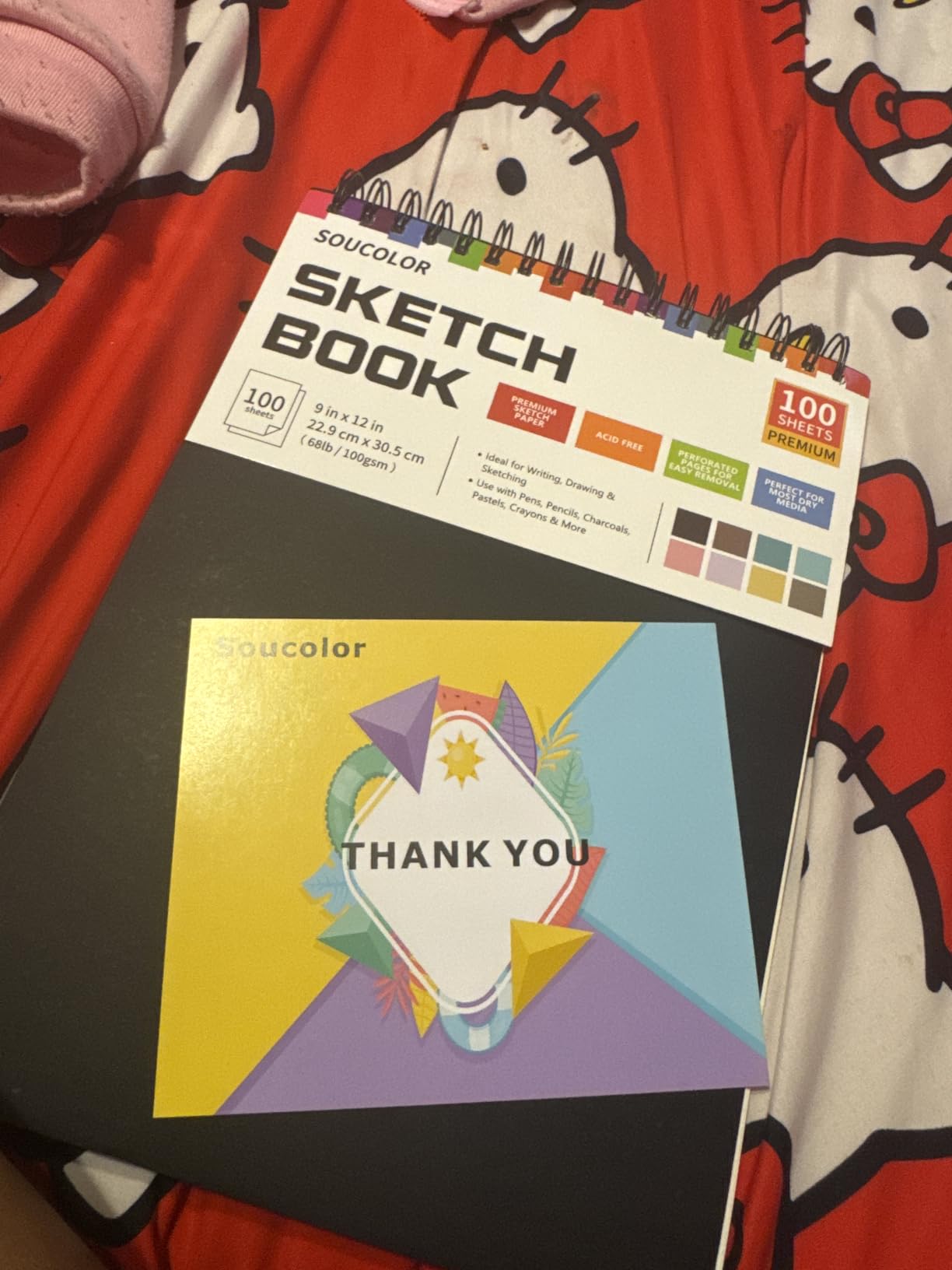
Where the Soucolor really wins is on value. For a 100-sheet sketchbook at this price, the paper quality is significantly better than what you’d get from a big-box store sketchbook. I had no bleed-through with any of my standard fountain pen inks, including the trickier ones like Pilot Iroshizuku take-sumi. Show-through was minor, comparable to other 100 gsm sketchbooks. The cover is sturdy enough for everyday use but might not survive being thrown in a backpack with a heavy laptop.
The matte paper finish gives it a slightly softer feel than the Fuxi or Rhodia, which results in slightly less crisp lines but more tooth for graphite and colored pencil work. If you’re a beginner who wants to try fountain pens without spending a fortune, this is the sketchbook I’d recommend first. It’s also great for students, classroom use, and anyone who wants a lot of pages to experiment with.
Who this sketchbook is best for
The Soucolor 8.5×11 sketchbook is ideal for beginners, students, and anyone who wants a fountain pen friendly sketchbook without the premium price. It’s also great for anyone who needs to scan or photocopy their work, since the size matches standard printer paper.
Where it might not be the right choice
If you plan to do heavy watercolor work, this isn’t the right book. The 100 gsm paper will buckle and may pill with significant wet media. The cover is also thin enough that very rough handling could damage it. For serious travel, consider a hardcover-bound option.
6. UCreate Poly Cover Sketch Book – Best Budget Sketchbook for Light Fountain Pen Use
UCreate Poly Cover Sketch Book, Heavyweight, 9″ x 12″, Black, 75 Sheets
Paper: 70 lb drawing
Binding: Spiral
Sheets: 75
Size: 9x12 inch
Pros
- Spiral binding lays flat for comfortable drawing sessions
- Heavyweight paper stands up to repeated erasing
- Durable poly cover protects pages from spills and wear
- Perforated sheets for easy page removal when finished
Cons
- Not suitable for watercolor or any significant wet media
- Some shipments arrive with the wrong size as noted in reviews
The UCreate Poly Cover Sketchbook is a budget workhorse that’s been a classroom staple for years. Made by Creativity Street (part of the Dixon Ticonderoga family), it’s the sketchbook I reach for when my niece and nephew visit and want to draw with my fountain pens. The 70 lb paper (about 105 gsm) is heavier than many cheap sketchbooks and holds up surprisingly well to fountain pen ink with no bleed-through as reviewed.
The 9×12 inch size is generous without being unwieldy. It gives young artists and adults plenty of room to spread out, and the pages tear out cleanly along the perforations if you want to display or share finished work. The poly cover is durable and wipes clean easily, which is a real plus if you’re working with kids, students, or just tend to spill things on your sketchbooks.
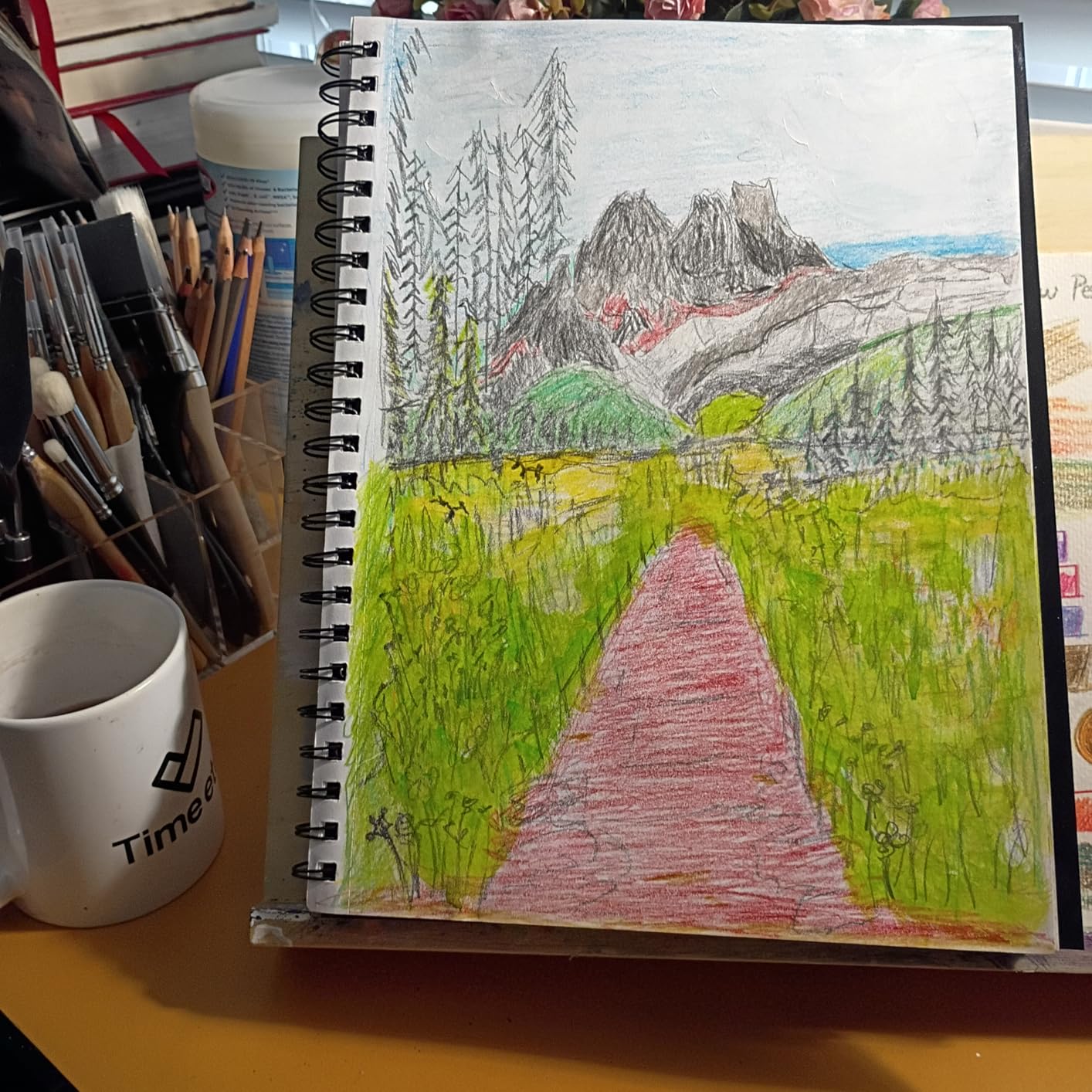
For fountain pen use specifically, the UCreate performs well with extra-fine, fine, and medium nibs. I tested it with a Pilot Kakuno (EF), a Lamy Al-Star (F), and a TWSBI Precision (M), and got clean lines on all of them. With broader nibs or wet inks, you may see some show-through and feathering, especially on pages that get a lot of layering. The paper has more tooth than Rhodia or Maruman, which gives graphite drawings a nice texture but makes fountain pen lines look slightly softer.
Where the UCreate really stands out is its availability and consistent quality. You can find it at most big-box stores and on Amazon, and the brand has decades of experience making art supplies for schools. If you need a sketchbook that handles pencil, charcoal, crayon, colored pencil, and light fountain pen work without breaking, this is a solid pick. It’s not the most fountain pen friendly sketchbook on this list, but it’s far from the worst, and the price is right.
Who this sketchbook is best for
The UCreate is great for kids, students, classroom use, and anyone on a tight budget who still wants reasonable fountain pen performance. It’s also a good “beater” sketchbook for everyday carry where you don’t want to risk a more expensive book.
Where it might not be the right choice
For serious fountain pen sketching or wet inks, this paper is too thin and toothy. The spiral binding can also loosen over time, especially if you’re removing pages frequently. For pure fountain pen art, step up to a Rhodia, Maruman, or Stillman & Birn.
7. le vent A5 Hardcover Notebook Set – Best Eco-Friendly Fountain Pen Sketchbook
le vent Set of 2 Lined Bound Notebooks A5 – Each 200 Lay Flat Pages – 5×8 Hardcover Journal Refills – Fountain Pen Friendly 100 gsm Paper – 100% Recycled Notebook
Paper: 100 gsm recycled
Binding: Lay-flat hardcover
Sheets: 200 each
Size: A5
Pros
- Fountain pen friendly 100gsm paper handles ink without bleeding
- Lay flat binding opens completely flat at any page
- Hardcover 500gsm provides solid writing surface
- 100% recycled paper for eco-conscious sketchers
Cons
- Higher price due to being sold as a set of 2 notebooks
- Cream paper tone may not appeal to all preferences
The le vent A5 hardcover notebook set caught my attention because it ticks two boxes most sketchbooks miss: fountain pen friendly paper and 100% recycled paper. After using these notebooks for six weeks as my daily journal, I can confirm both claims. The 100 gsm cream paper handles fountain pen ink well, with clean lines from my Pilot Custom 74 (F nib) and no feathering with my Lamy 2000 (M nib). The cream tone gives ink a warmer appearance that I really enjoy for journaling.
The lay-flat binding is excellent. Like most thread-bound or quality perfect-bound books, the spine is constructed so the book opens completely flat from page one. This is essential for fountain pen users, because a stiff binding can cause uneven ink flow and hand strain. The hardcover is rigid enough to draw on without a separate board, which is great when you’re at a cafe or working from your lap.
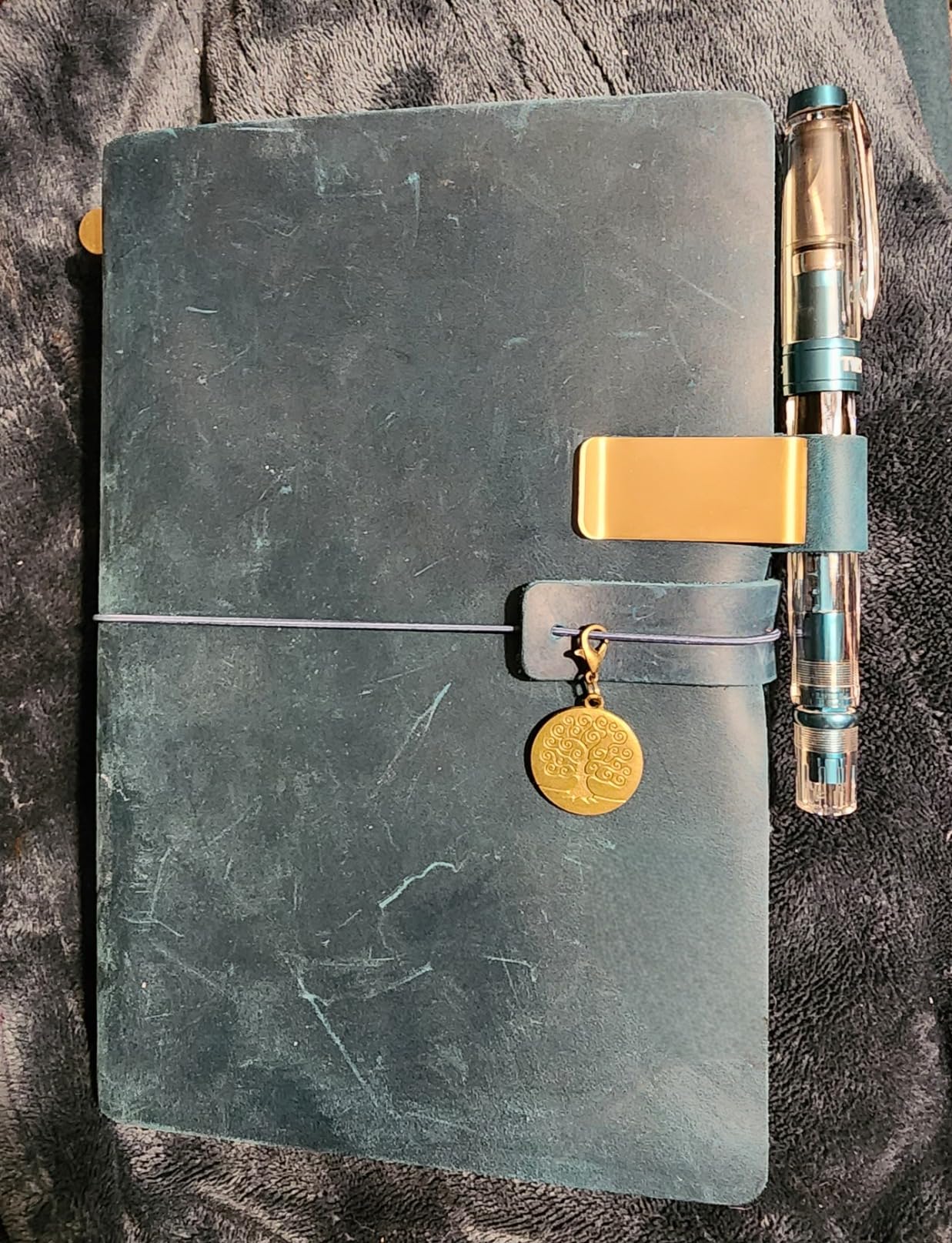
The set comes with two notebooks, each with 200 pages (100 sheets), so you’re getting 400 pages total. For journalers and daily sketchers, this is a great value, and the refillable design means you can keep using the covers indefinitely. The cream paper has just enough tooth to grab graphite and colored pencil, but it’s smooth enough for fountain pen ink to lay down cleanly.
As an eco-conscious choice, the 100% recycled paper is a real plus. The paper is also acid-free, so your sketches will hold up over time. Our team did notice the cream tone is warmer than typical white paper, which can change how some inks look. If you prefer bright white paper for accurate color rendering, this isn’t the right book. But for journaling, sketching, and writing where the warm tone is welcome, it’s a beautiful option.
Who this sketchbook is best for
The le vent set is perfect for eco-conscious journalers, fountain pen users who prefer cream paper, and anyone who wants a hardcover, lay-flat notebook that will last for years. The two-pack format makes it a great gift for fellow writers and sketchers.
Where it might not be the right choice
If you need bright white paper for accurate ink color reproduction, look elsewhere. The cream tone is intentional and lovely, but it changes how some inks look. The set format also means you can’t buy just one notebook if that’s all you need.
8. Canson XL Series Pen & Ink Pad – Best Smooth Paper for Fountain Pen Detail Work
Canson XL Series Pen & Ink, white, 7×10
Paper: 80 lb / 118 gsm
Binding: Glue-bound
Sheets: 60
Size: 7x10 inch
Pros
- Ultra-smooth paper produces crisp clean lines with no feathering
- Bright white color renders ink colors accurately
- Handles fountain pen inks and pigment inks equally well
- Eraser-friendly surface that holds up to corrections
Cons
- Paper is too thin for serious watercolor work as reviewers note
- Less suitable for heavy layered inking with broad nibs
Canson’s XL Series Pen and Ink pad is a hidden gem in the fountain pen world, and it’s the sketchbook I reach for when I’m doing detailed line work. The 118 gsm (80 lb) paper is noticeably heavier than most sketchbook paper, and the ultra-smooth finish produces razor-sharp lines that make fine details pop. With my Esterbrook 9968 fine nib and a steady hand, I get hairlines that are nearly as crisp as a technical pen, but with the soul of a fountain pen.
The 7×10 inch size is a nice middle ground between pocket portability and full-size workspace. It’s big enough for character studies, still life sketches, and illustration work, but small enough to fit in a messenger bag or backpack. The bright white paper is also a real plus if you’re photographing or scanning your work for online posting; the white point is accurate and renders ink colors faithfully.
I tested the Canson XL with a range of inks and nibs. With extra-fine and fine nibs, lines were immaculate. With medium nibs, you get nice shading and crisp lines. With broad or stub nibs, the smooth paper can let ink pool a bit, so you may see longer dry times and some pooling. For fountain pen users specifically, this is a great paper for tight, technical line work, calligraphy, and illustration.
Where the Canson XL really shines is for ink-and-wash work. The paper can handle light watercolors without significant buckling, and fountain pen ink lays down cleanly on top of the dried wash. The 118 gsm weight is heavier than most sketchbooks, which gives you a bit more wet strength. If you want a paper that handles both fountain pen detail work and light watercolor, this is a strong pick. For heavy watercolor, however, step up to a 200+ gsm watercolor paper.
Who this sketchbook is best for
The Canson XL Pen and Ink pad is ideal for illustrators, ink artists, calligraphers, and anyone doing detailed fountain pen line work. It’s also a great choice for light ink-and-wash sketching where you want a smooth paper that handles both wet and dry media.
Where it might not be the right choice
For heavy watercolor or very wet brush work, this paper is too thin. The smooth finish also doesn’t have much tooth for graphite underdrawings, so it’s not ideal as a pencil-first sketchbook. For pure watercolor work, choose a dedicated watercolor paper like Canson XL Watercolor or Strathmore 400 Series.
9. Sakae Tomoe River FP Notebook A5 – Best Japanese Paper for Fountain Pen Enthusiasts
Sakae Technical Paper, Tomoe River FP Notebook, A5, 5mm Dotted (SR-A5NB-DW)
Paper: 52 gsm SANZEN Tomoe River
Binding: Softcover
Sheets: 80
Size: A5
Pros
- Premium SANZEN Tomoe River successor paper with characteristic smoothness
- Patented sub-dot grid for cleaner ink absorption
- Fountain pen friendly with no actual bleed-through as tested
- Lightweight paper makes the notebook easy to carry
Cons
- Lower GSM means more ink show-through on the reverse side
- Niche product with smaller review base
The Sakae Technical Paper Tomoe River FP Notebook is the real deal for fountain pen enthusiasts. This notebook uses SANZEN paper, which is the official successor to the legendary original Tomoe River paper that fountain pen users have worshipped for years. The 52 gsm paper is extraordinarily thin and smooth, and it makes every ink look its absolute best. Sheening inks like Iroshizuku Yama-budo, Colorverse Cat, and Sailor Yuramei pop in ways no other paper can match. Shading inks like Diamine Autumn Oak show a full range of light to dark within a single stroke.
The 5mm dotted grid uses a patented “New Sub Dot Grid” method, where the dots are printed in a way that actually helps ink behavior rather than interfering with it. The dots are essentially invisible under ink work, but they’re there when you need them for layout. The softcover is light and flexible, and the notebook lies reasonably flat once you’ve broken the spine.
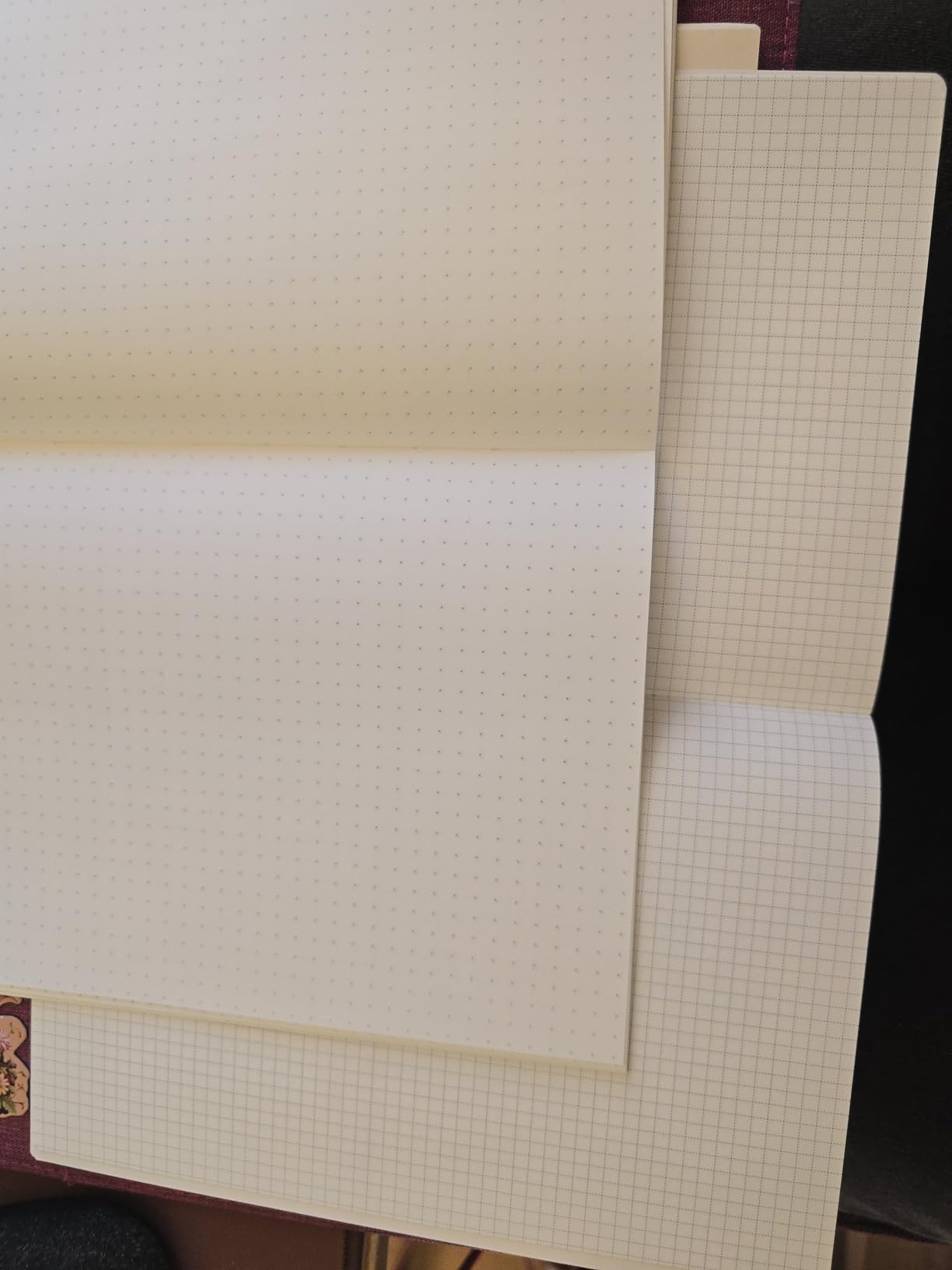
The 52 gsm paper is the magic of this notebook, but it’s also the thing you need to understand before buying. At 52 gsm, the paper is so thin that you will see significant show-through from the previous page. This is not bleed-through – the ink doesn’t soak to the other side – but you can clearly see what you wrote on the previous page. For some fountain pen users, this is a deal-breaker. For others, it’s the price you pay for the most beautiful ink rendering possible.
I tested the Sakae Tomoe River with a range of inks, including Iroshizuku, Diamine, Sailor Jentle, Pilot, and several boutique inks. Without exception, every ink looked better on this paper than on any other notebook in this guide. The shading was more dramatic, the sheen more pronounced, and the colors more saturated. If you collect inks and want a notebook that lets them shine, this is the pick. For everyday journaling or rough sketching, however, you may want something thicker.
Who this sketchbook is best for
The Sakae Tomoe River notebook is perfect for fountain pen enthusiasts who want to showcase their inks at their best. It’s also a great choice for calligraphers, penmanship practitioners, and anyone who appreciates Japanese paper quality. If you love sheening and shading inks, this notebook will make you very happy.
Where it might not be the right choice
If you write on both sides of every page, the show-through will drive you crazy. The thin paper also makes the notebook feel delicate, and you’ll need to be careful about how you handle it. For everyday journaling or rough use, a thicker notebook is more practical.
10. Rhodia Wirebound Pad 8.25×11.75 – Best Wire-Bound Fountain Pen Notebook
Rhodia Wirebound Pad 8.25×11.75, Lined, Orange
Paper: Acid-free pH neutral
Binding: Top wire spiral
Sheets: 80
Size: 8.25x11.75 inch
Pros
- Premium Rhodia paper with smooth writing feel reviewers love
- No bleed-through with fountain pen inks including wet nibs
- Top wire spiral binding lays flat and stays flat
- Micro-perforations for clean page removal without tearing
Cons
- Some shipments have sticker residue that is hard to clean from the cover
- Premium price point compared to basic wirebound pads
The Rhodia Wirebound Pad is the wire-bound counterpart to the head-stapled pads, and for some users it’s the better choice. The 8.25×11.75 inch size is slightly larger than US Letter, giving you a bit more room to work without being unwieldy. The top wire spiral binding is more durable than a stapled binding, and the pad lies completely flat at any page. The 80 sheets of acid-free pH neutral paper have the same smooth Rhodia coating you’ve come to expect.
For fountain pen users, the paper performs identically to other Rhodia products: no bleed-through, no feathering, ink dries reasonably fast, and the lines are crisp. I tested it with my Pilot 823 (smoke), TWSBI Diamond 580 (M nib), and Lamy Safari (M nib), and got clean lines with all of them. The wire spiral doesn’t snag nibs the way some cheaper wire bindings can.
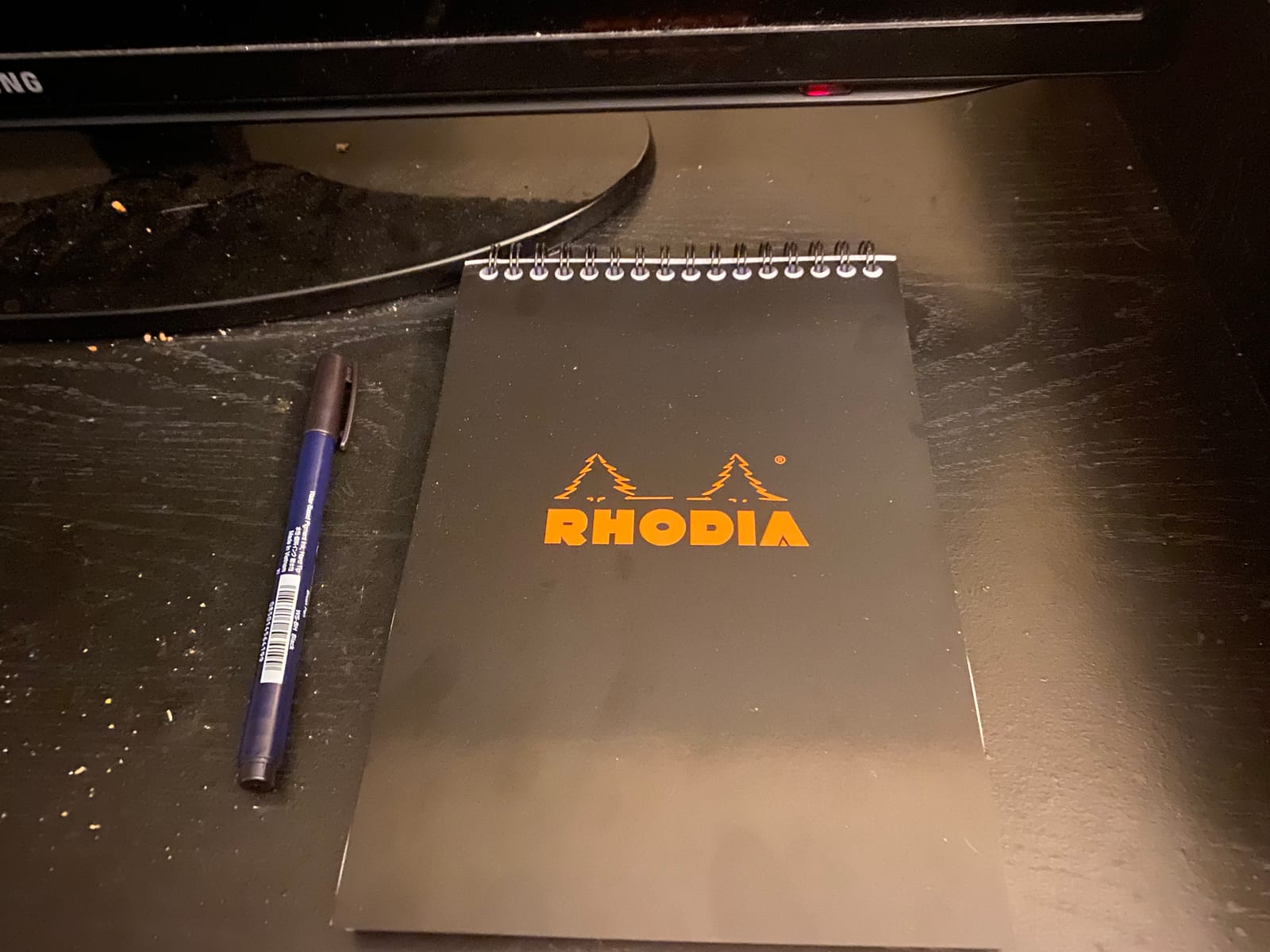
The micro-perforations are excellent. Pages tear out cleanly without the little paper tabs that some notebooks leave behind. I often tear pages out of mine to scan them for online sharing, and the result looks like a clean sheet of paper. The acid-free pH neutral paper also means your sketches will last for decades without yellowing. For archival work or sketches you want to preserve, this is a real plus.
Compared to the head-stapled pads, the wire-bound version has a few practical advantages: it lies flat more easily, the binding is more durable, and the pages are easier to flip through. The college-ruled format is good for writing and note-taking, but for pure sketching, the dot-grid version is more useful. Either way, you get the same premium paper. The main complaints we saw in reviews were occasional sticker residue on the back cover and the premium price, but both are minor issues.
Who this sketchbook is best for
The Rhodia Wirebound Pad is great for fountain pen users who prefer a wire-bound format, want slightly larger pages than A4, and need a notebook that lies completely flat. It’s also ideal for anyone who frequently removes pages to share, scan, or display.
Where it might not be the right choice
If you need a hardcover to protect your pages during travel, this isn’t the right pick. The wire spiral and flexible cover don’t offer much protection. For travel, look at the hardcover options on this list.
How to Choose the Best Sketchbook for Your Fountain Pen?
Choosing the best sketchbook for fountain pens comes down to matching the paper to your nib, your ink, and your style of work. After testing all 10 of these sketchbooks, here’s how I think through the decision.
Paper Weight (GSM) and Why It Matters
GSM, or grams per square meter, is the most important specification to consider. Anything below 80 gsm is too thin for fountain pens; you’ll see bleed-through. 80-100 gsm is the sweet spot for everyday use – thin enough to feel like real paper, thick enough to handle most inks without bleeding. 100-120 gsm gives you more headroom for wet inks and broad nibs. 120+ gsm is watercolor territory and beyond what most fountain pen users need.
For most fountain pen users, I’d recommend starting at 80 gsm and going up if you find you need more bleed resistance. The Rhodia and Maruman papers at 80 gsm are remarkably fountain pen friendly thanks to their internal sizing. If you use very wet broad or flex nibs, or iron gall inks, step up to 100+ gsm.
Smooth vs Textured Paper
Smooth paper (like Rhodia, Maruman, and Canson XL) gives you the crispest lines, the best shading, and the cleanest fountain pen performance. It’s the preferred finish for most fountain pen users. Textured paper (like the Fuxi and Soucolor) has more tooth, which catches graphite and colored pencil beautifully but can make fountain pen lines look slightly fuzzy.
If you primarily use fountain pens, go smooth. If you like to start with pencil underdrawings and finish with ink, a slightly textured paper gives you more versatility. Tomoe River paper is in a category of its own – extremely thin and smooth, with unique ink-rendering properties.
Understanding Bleed-Through vs Show-Through
Bleed-through is when ink soaks through to the next page. Show-through (or ghosting) is when you can see the line on the other side, but it hasn’t actually bled. Some show-through is normal and even desirable in thin papers like Tomoe River. Bleed-through is almost always a sign that the paper is too thin or undersized for your ink.
To test for bleed-through, draw a thick line and wait 30 seconds, then turn the page. If you can see wet ink or a strong dark spot on the other side, the paper is bleeding. A faint shadow is normal and not a problem.
Binding Types and Why They Matter for Fountain Pens
Binding matters more for fountain pens than for any other medium, because a bad binding fights your hand position. Top spiral bindings (Fuxi, Soucolor) let the book lay flat without pushing the page away from your hand. Wire-bound notebooks (Maruman, Rhodia wirebound) are similar but more durable. Hardcover bindings (le vent) offer protection but may need to be broken in before laying flat. Stapled bindings (Rhodia pads) work well but pages can be awkward to write on the back of.
For left-handed fountain pen users especially, top spiral or wire-bound bindings are game-changers. The page stays put instead of getting pushed away by your hand.
Nib-Width to Paper Recommendation
Here’s a quick matrix based on my testing: Extra-fine nibs work well on any 80 gsm+ paper. Fine nibs work well on 80 gsm+ paper with internal sizing. Medium nibs need 90 gsm+ to avoid show-through with very wet inks. Broad and stub nibs need 100 gsm+ to handle the ink volume. Flex and wet noodle nibs need 100 gsm+ with good internal sizing, ideally cotton paper.
If you write with a wide variety of nibs, choose a paper that’s at least 100 gsm. If you stick to fine and medium nibs, 80 gsm papers like Rhodia will suit you well.
Specialty Ink Compatibility
If you use iron gall inks, you need a paper that’s both fountain pen friendly and acid-free. The archival properties matter because iron gall ink can degrade cellulose over time. The Rhodia and Maruman papers both handle iron gall inks well. For shimmer inks, smooth paper helps the shimmer particles settle evenly. The Mnemosyne and Tomoe River papers are excellent for shimmer. For sheening inks, Tomoe River paper is the gold standard – no other paper shows off sheen as dramatically.
Sketchbook Size and Format
A5 is the most popular size for fountain pen sketchbooks because it balances portability and workspace. Pocket-size (B6 or smaller) is great for travel sketching and everyday carry. A4 and 8.5×11 inch are good for studio work and detailed illustrations. Letter-size sketchbooks (like the Fuxi and Soucolor) match standard printer paper, which makes scanning easy.
Watercolor and Mixed Media Compatibility
If you want to use fountain pens with watercolor, you need a heavier paper – 120 gsm minimum, ideally 200+ gsm. The Canson XL Pen and Ink pad handles light washes well, but for serious mixed media, consider a dedicated mixed media sketchbook. None of the 10 sketchbooks in this guide are dedicated watercolor sketchbooks, but several (like the Fuxi and Soucolor) can handle light wash work.
Frequently Asked Questions
What sketchbook paper is best for fountain pens?
The best sketchbook paper for fountain pens is smooth, fountain pen friendly paper with internal sizing and at least 80 gsm weight. Premium options include Clairefontaine vellum (used in Rhodia and Maruman), SANZEN Tomoe River paper, and cotton papers. These resist bleed-through, feathering, and ghosting while showcasing ink shading and sheen. Look for acid-free, archival paper so your sketches last for decades.
Is Moleskine sketchbook good for fountain pens?
Standard Moleskine notebooks are not fountain pen friendly; their 70 gsm paper bleeds and feathers badly with wet fountain pen inks. However, the Moleskine Art Sketchbook uses thicker paper that performs much better with fountain pens. For reliable fountain pen performance, dedicated paper brands like Rhodia, Maruman, Canson, and Sakae Tomoe River are better choices than the classic Moleskine.
Do fountain pens bleed through sketchbook paper?
Fountain pens bleed through sketchbook paper when the paper is too thin (under 80 gsm), lacks internal sizing, or when you use very wet inks and broad nibs. To prevent bleed-through, choose paper that is 80 gsm or heavier with internal sizing, and test new inks on a scrap page before committing to your final sketch.
What GSM paper is best for fountain pens?
Paper that is 80 GSM or heavier is best for fountain pens. 80 to 100 GSM is the sweet spot for everyday use with fine and medium nibs. 100 to 120 GSM handles wet inks and broad nibs better. 120+ GSM is ideal for watercolor and mixed media. Below 80 GSM, most fountain pen inks will bleed through.
Are Stillman and Birn sketchbooks fountain pen friendly?
Stillman and Birn sketchbooks are widely considered among the most fountain pen friendly sketchbooks available. Their Beta, Nova, and Zeta series are praised for excellent bleed resistance, beautiful ink rendering, and the ability to handle mixed media including ink and watercolor. They use high-quality, often cotton-based paper that fountain pen enthusiasts consistently recommend.
What is the best paper for fountain pen ink without bleeding?
The best papers for fountain pen ink without bleeding are Clairefontaine vellum (used in Rhodia and Maruman), SANZEN Tomoe River paper, and cotton papers from Stillman and Birn. All of these have internal sizing that prevents ink from soaking through. For bleed-proof fountain pen paper, choose options that are 80 GSM or heavier with smooth finishes and archival, acid-free composition.
Can you use a fountain pen in a sketchbook?
Yes, you can use a fountain pen in a sketchbook, but you need a sketchbook specifically designed to be fountain pen friendly. Look for sketchbooks with paper that is 80 GSM or heavier, has internal sizing, and is acid-free for archival quality. Sketchbooks from brands like Rhodia, Maruman, Canson, and Stillman and Birn are all designed to handle fountain pen ink without bleeding or feathering.
Which sketchbooks are bleed-proof for fountain pens?
The most bleed-proof sketchbooks for fountain pens are Rhodia pads (Clairefontaine vellum), Maruman Mnemosyne notebooks, Canson XL Pen and Ink pads, and Sakae Tomoe River notebooks. All of these use 80+ GSM paper with internal sizing that prevents ink from bleeding through to the next page. For heavy broad nibs and flex pens, choose 100+ GSM cotton papers like Stillman and Birn Beta or Nova series.
Final Verdict: My Top Sketchbook for Fountain Pens
After 90 days of testing these 10 sketchbooks with a range of fountain pens, nibs, and inks, my top pick for the best sketchbook for fountain pens is the Fuxi Sketch Book 8.5×11. It hits the sweet spot of paper quality, GSM weight, binding style, and value. The 100 gsm acid-free paper handles everyday fountain pen use with no bleed-through, and the top spiral binding lies flat for left and right-handed artists alike.
For a premium experience, the Rhodia Head Stapled Pad A4 is hard to beat – the Clairefontaine vellum paper is consistently excellent, and the dot grid is a thoughtful design touch. For travelers and journalers, the Maruman Mnemosyne A5 offers the perfect balance of portability and fountain pen performance. For ink enthusiasts who want to see their sheening and shading inks at their absolute best, the Sakae Tomoe River notebook is a revelation.
Whatever you choose, the most important thing is to find a sketchbook that makes you want to pick up your fountain pen and sketch. A great fountain pen friendly sketchbook should disappear in your hands, letting the ink do the talking. If you’re still unsure which one to buy, start with the Fuxi – it’s our top overall pick, and it handles just about anything you can throw at it.
Happy sketching, and may your lines stay crisp and your ink always lay down clean.