
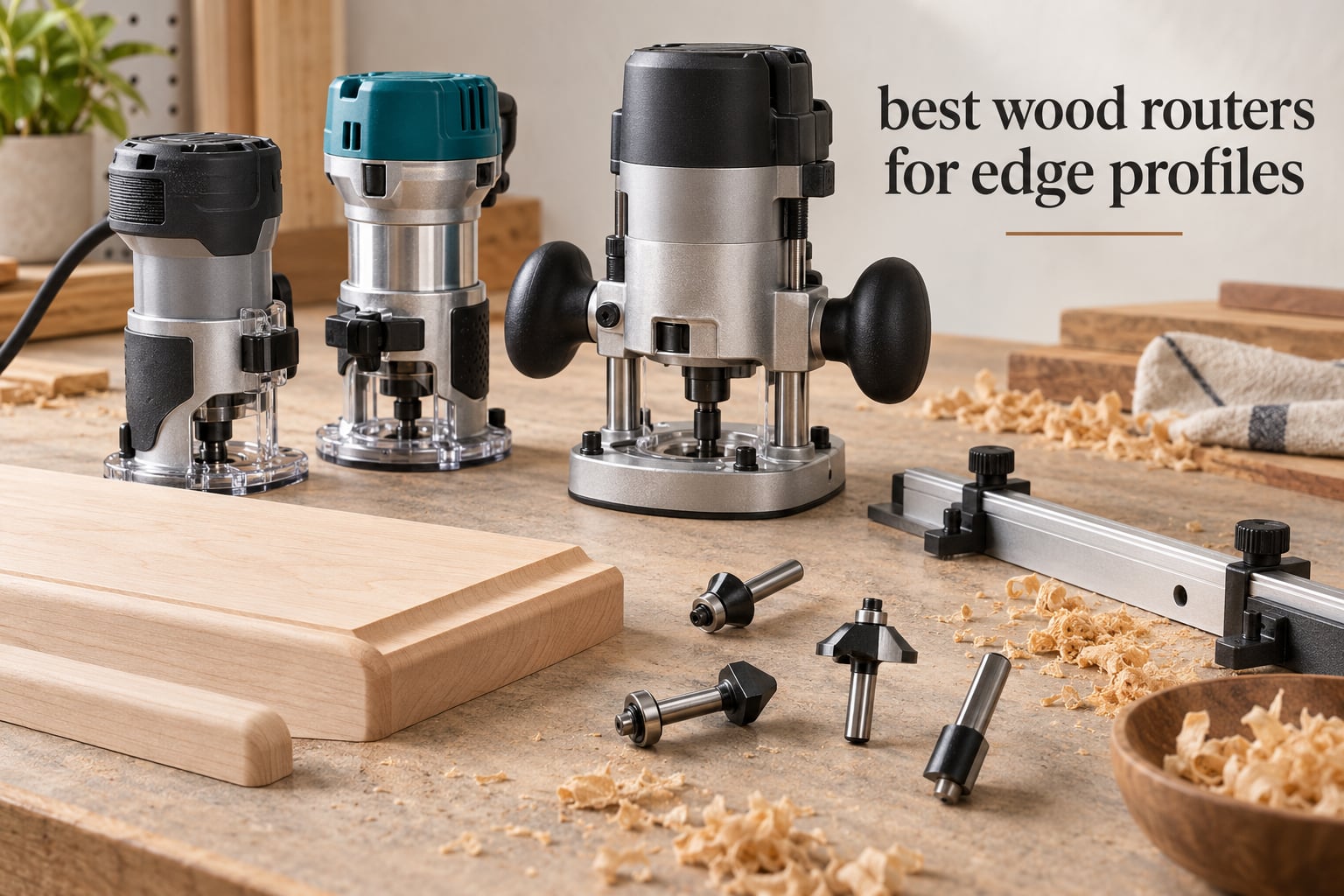
A router is the fastest way to turn a raw board edge into something you would actually put your hand on: a soft roundover, a bullnose, a cove, an ogee, a chamfer. Edge profiling is where most first-time router buyers aim their first project, and it is also where most of them learn why router choice matters.
The reason is simple. Two routers can both make a roundover and one will chatter, burn the corner, and leave a fuzzy ridge while the other walks the edge clean on the first pass. The differences come down to how the base sits on the workpiece, how heavy the tool feels at the end of a long pass, whether the motor holds speed under load, and whether the collet can hold the bit you want to use.
We compared 10 wood routers for edge profiles, spending our time on the details that decide cut quality: base geometry, collet size, speed range, balance in the hand, and how each one behaves when only part of the base is supported on the workpiece. Ten routers, all of them rated above 4.4 stars by their owners, spanning compact cordless tools, full-size fixed-base machines, and combo kits that include both bases.
One note before the list. If you have never routed before, the tool that makes edge work easiest is a fixed base router, not a plunge router. We explain why below, and the reasoning is worth two minutes of your time before you spend anything.
Table of Contents
Top 3 Wood Routers for Edge Profiles (October 2026)

DEWALT DCW600B 20V XR Cordless Router
- Cordless 20V XR brushless motor
- Variable-speed dial
- Soft start with electronic feedback
- Electronic brake
- Dual LED work lights

Bosch 1617EVSPK Combo Router
- 2.25 HP 12-amp motor
- 8000-25000 RPM dial
- Fixed and plunge bases
- Microfine depth adjustment

Milwaukee M18 Compact Router
- 1.25 hp cordless compact router
- Large sub-base for stability
- Straight edge guide included
- 4.9 lb tool weight
All 10 Wood Routers for Edge Profiles Compared in 2026
| Product | Specs | Action |
|---|---|---|
| DEWALT DCW600B 20V XR Cordless Router |
|
Check Latest Price |
| Bosch 1617EVSPK Combo Router |
|
Check Latest Price |
| Milwaukee M18 Compact Router |
|
Check Latest Price |
 AVID POWER 6.5 Amp Compact Router AVID POWER 6.5 Amp Compact Router |
|
Check Latest Price |
 Makita RT0701C Compact Router Makita RT0701C Compact Router |
|
Check Latest Price |
 Bosch PR20EVS Colt Palm Router Bosch PR20EVS Colt Palm Router |
|
Check Latest Price |
 DEWALT DW616 1-3/4 HP Fixed Base DEWALT DW616 1-3/4 HP Fixed Base |
|
Check Latest Price |
 DEWALT DW618PKB Combo Kit DEWALT DW618PKB Combo Kit |
|
Check Latest Price |
 SKIL RT1322-00 Combo Router SKIL RT1322-00 Combo Router |
|
Check Latest Price |
 RYOBI ONE+ PCL424B Cordless Router RYOBI ONE+ PCL424B Cordless Router |
|
Check Latest Price |
1. DEWALT DCW600B 20V XR Cordless Router – Best Overall for Cordless Edge Work
DEWALT 20V Max XR Cordless Router, Brushless, Tool Only (DCW600B)
20V XR brushless
Variable-speed dial
4.15 lb
10783 owner ratings
Pros
- Cordless design removes cord drag on long edge passes
- Compact and light for handheld control
- Brushless motor holds speed under load
- Electronic brake stops the bit fast
- Dual LEDs light the cut line
Cons
- Plunge base sold separately for grooves
- Base diameter can feel large for small hands
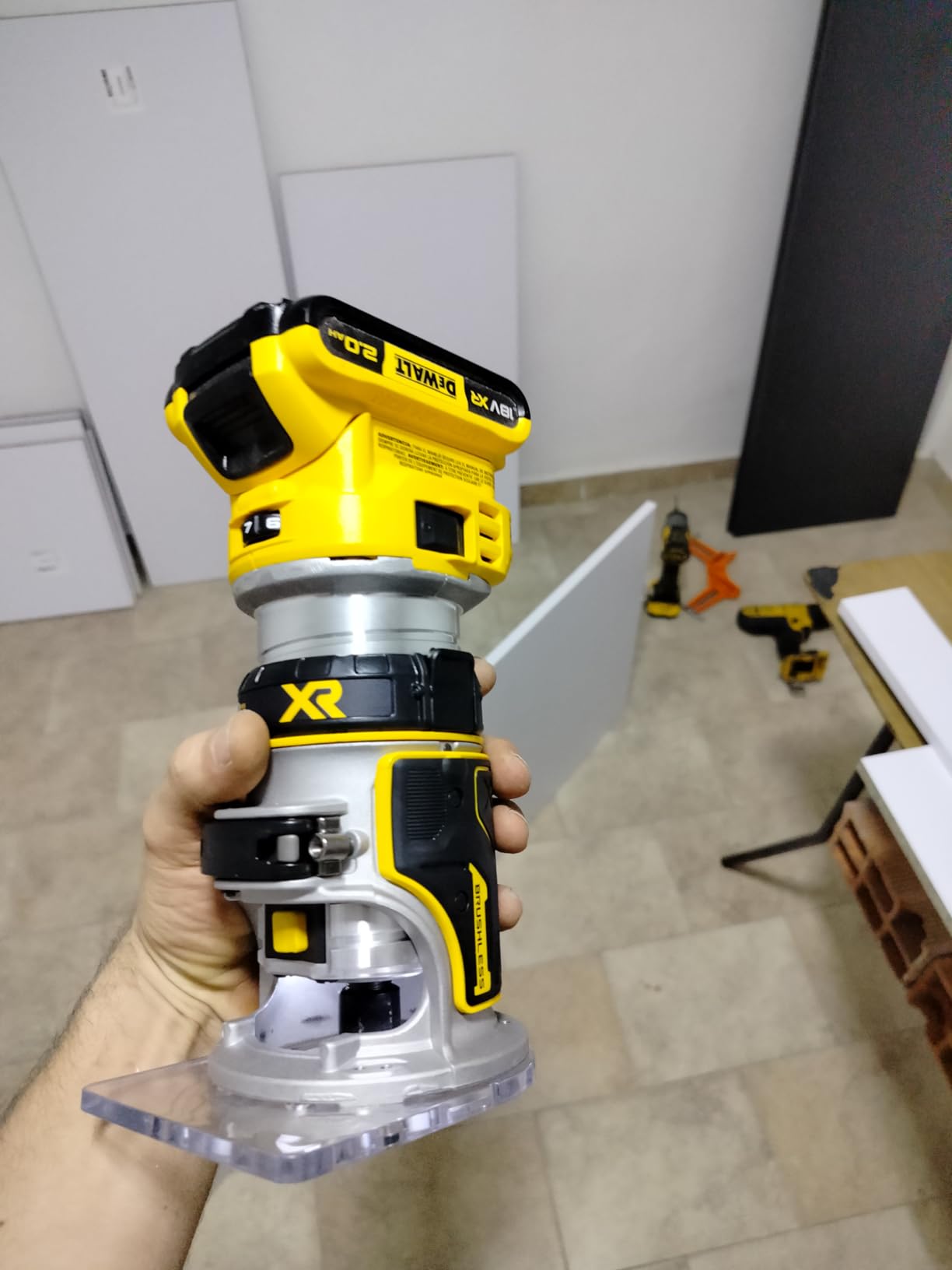
The DEWALT DCW600B is the router we kept reaching for when the workpiece was long and the cord was in the way. A 6 foot table edge is 72 inches of cut, and dragging a cord across a bench for that distance is a reliable way to twist the router off the line at the worst moment. Removing the cord removes that failure mode entirely.
It weighs 4.15 lb, which sits in the sweet spot for handheld work. Not heavy enough to tire the wrist on a set of drawer fronts, not so light that the base wanders when only a third of the sub-base is touching the workpiece. The brushless motor with soft start and full-time electronic feedback does the important part: it holds speed as the bit loads up, so the roundover comes out the same at the start of the edge and the finish.
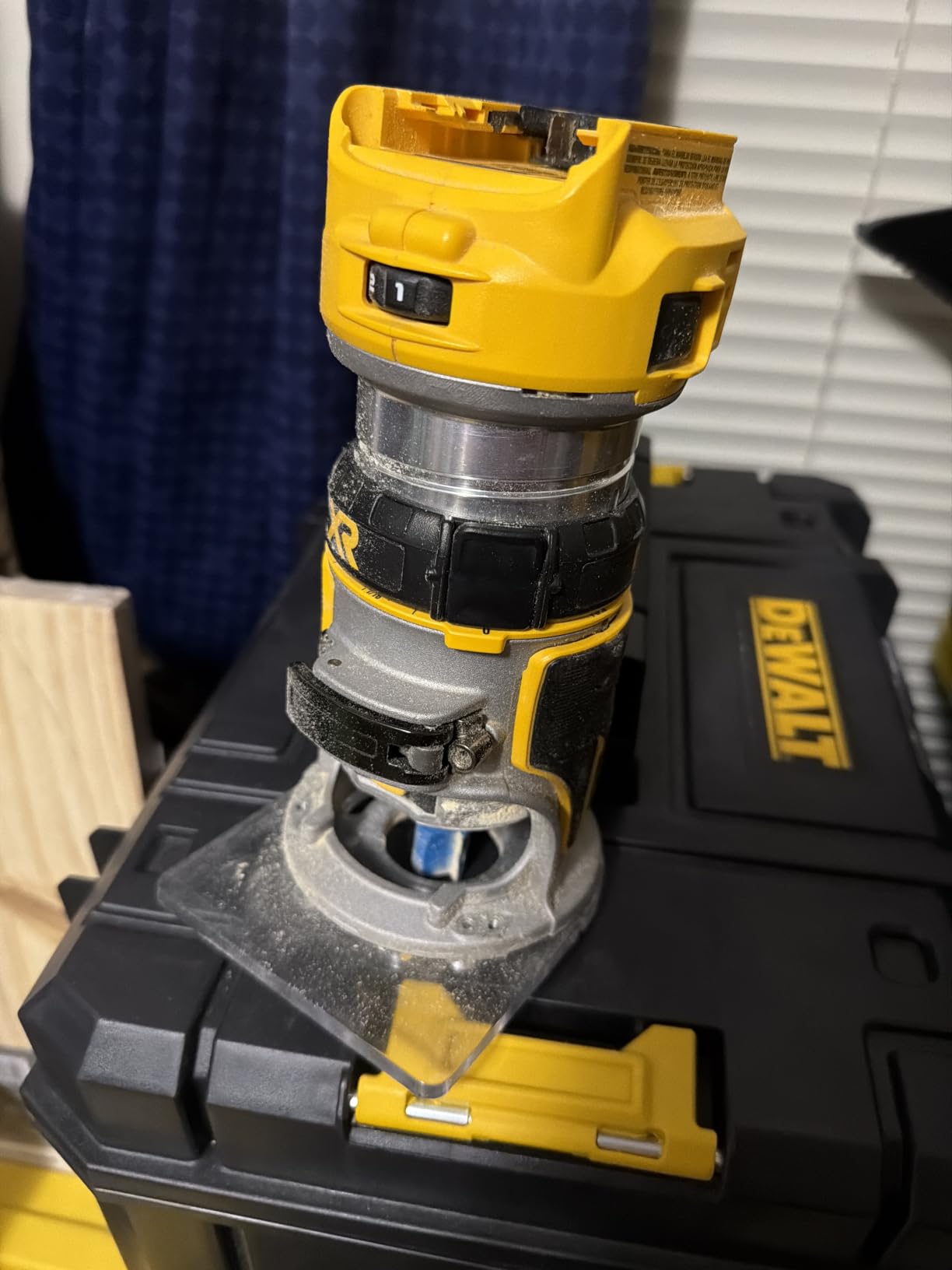
The variable-speed dial lets you drop speed for a large-diameter bit in hardwood and run fast for a small decorative flute. The depth adjustment ring makes incremental height changes fast, and the electronic brake stops the bit in a couple of seconds instead of spinning down, which matters when you are doing a batch of profiles and swapping bits.
The dual LEDs are a small detail that matters more than it sounds. The cut line on a roundover sits right where the bit meets the workpiece, and that is exactly the spot the shop shadows. Lighting it from two angles means you can see the remaining step as it narrows, which is how you know when to stop the second pass.
What to check before you commit to a cordless router
Confirm the plunge base is a separate purchase if you plan any internal work, because this is a fixed-base tool only. Owners regularly pair it with a guide and a roundover bit and are perfectly happy for edge work.
If you have small hands, hold it before buying. The base diameter is generous, which is good for stability but can crowd your grip on a smaller router.
Where this router falls short
It is not a plunge router and it is not a big-bit router. If your edge work includes a large cove or a multi-pass ogee in solid hardwood, you will eventually want more motor and a 1/2 inch collet.
The battery platform is the long-term cost of ownership. If you do not already run DEWALT 20V tools, the batteries are an extra purchase before the first cut.
2. Bosch 1617EVSPK 2.25 HP Combination Router – Best All-Round Buy
Bosch 1617EVSPK 2.25 HP Combination Plunge- and Fixed-Base Router
2.25 HP 12-amp
Fixed and plunge bases
8000-25000 RPM
18.2 lb
Pros
- Plenty of power for hardwood edge profiles
- Both bases in one purchase
- Microfine depth adjustment
- Threaded three-hole base pattern for router tables
- Rounded hardwood handles
Cons
- 18.2 lb package weight tires the hand on long passes
- Speed dial has no marked scale
If you read woodworking forums at all, you will have seen the Bosch 1617 described more than any other router in the last twenty years. It shows up constantly in r/woodworking and r/Tools threads when people ask for one router that does everything, and after spending time with this kit, the reason is not hard to see. It is boring in the best way. It starts, it cuts, and it does not surprise you.
The 2.25 HP 12-amp motor is the part that matters most for edge profiles. A large roundover or bullnose in oak or walnut puts a real load on the cutter, and a motor that sags under that load is what causes burned edges. Constant Response circuitry stabilises start-up torque and the one-piece armature shaft construction reduces vibration, which shows up as a cleaner cut line.
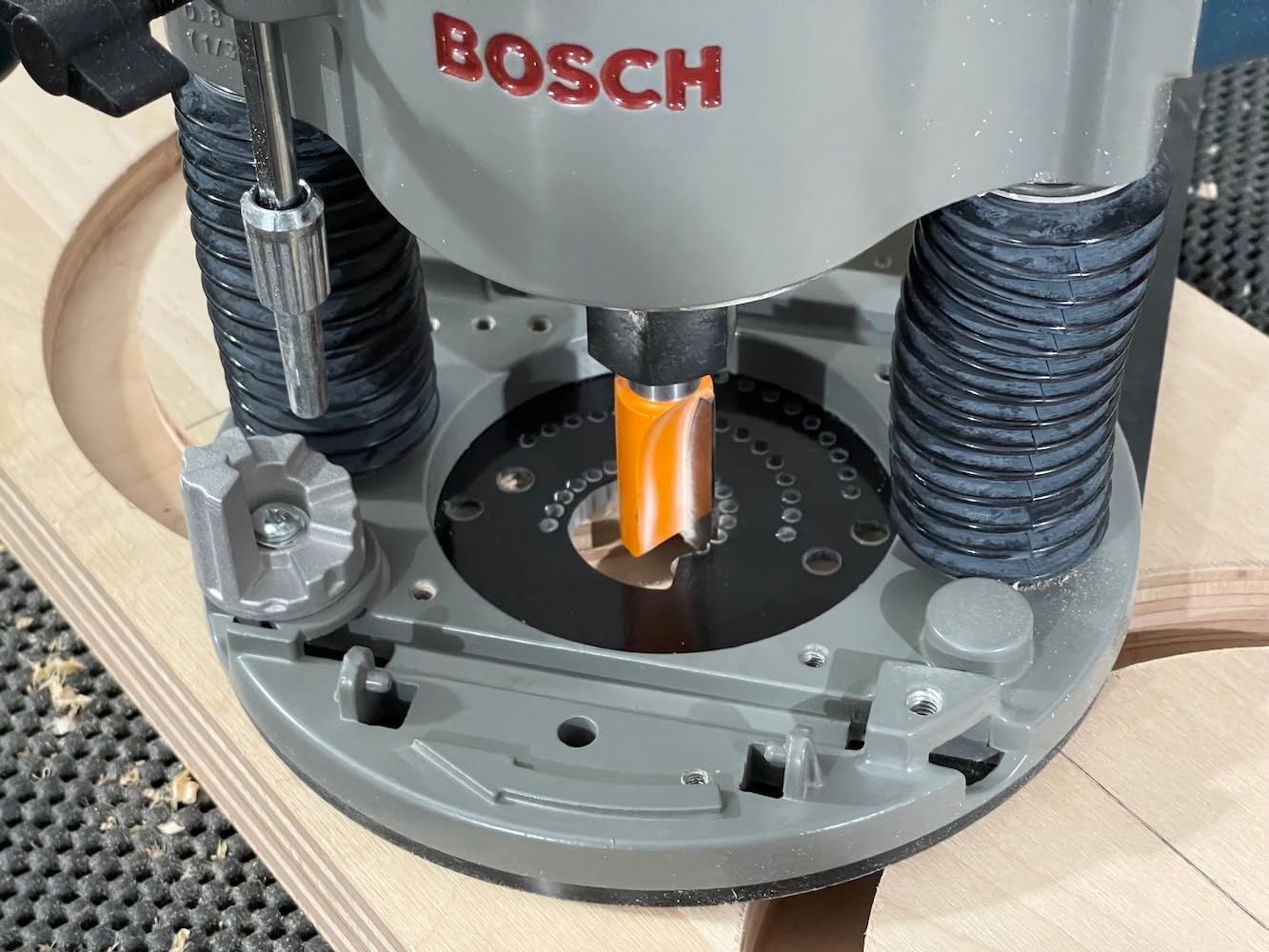
The speed dial covers 8,000 to 25,000 RPM, a wide enough range to run a large cove slowly and a small flute fast. Microfine depth adjustment lets you move the cutter in tiny increments, so you can creep up on a full-depth roundover in two passes instead of gambling on one. The 2 inch sub-base opening also makes template work easier if you move beyond edge profiles.
Both bases come in the box, along with 1/4 inch and 1/2 inch collets and a carrying case. That single fact removes the most common early regret: buying a plunge base separately later because you needed a fixed base now and a plunge later.
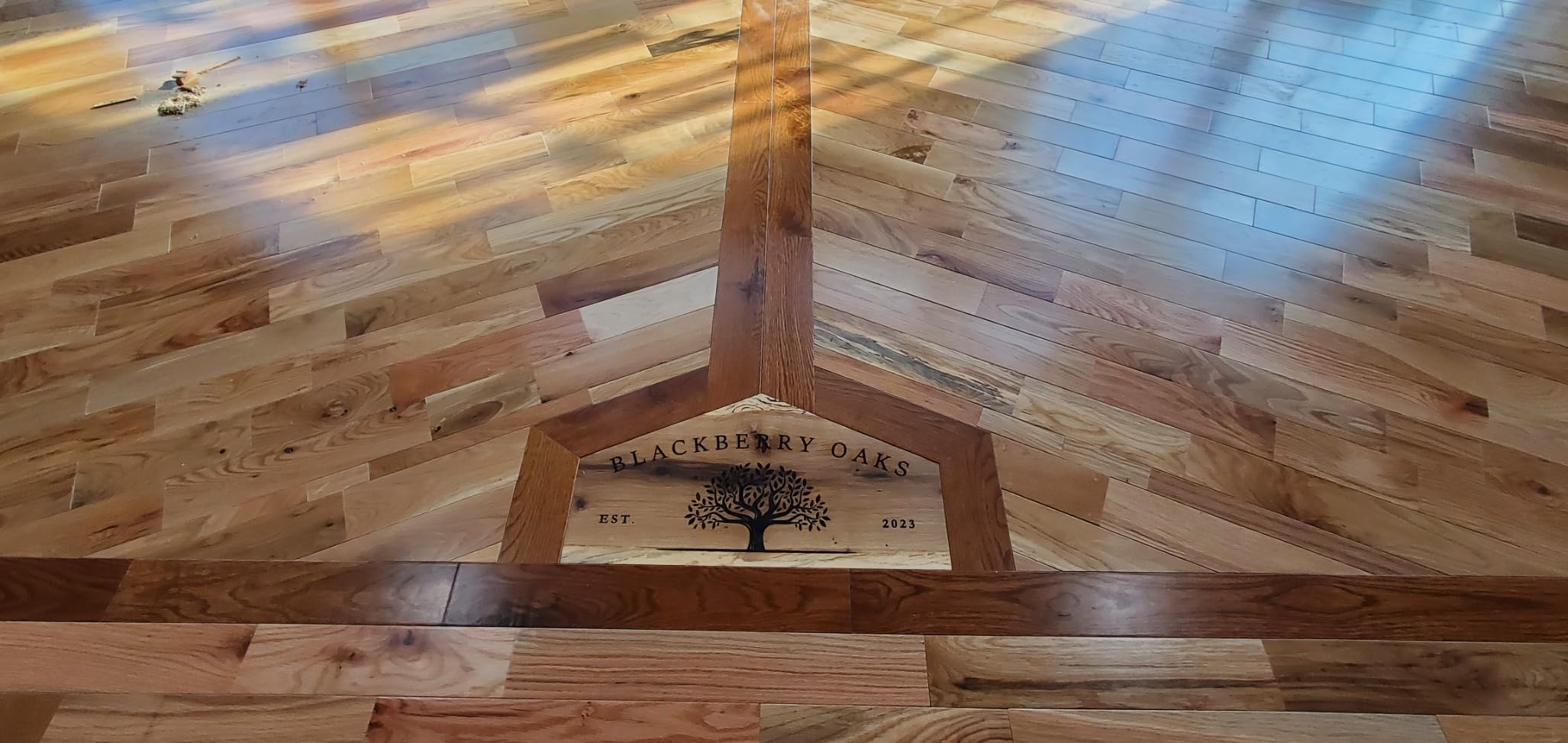
Why this one ends up in so many shops
The combination kit answers the fixed base versus plunge base question without making you choose. Take the fixed base off, set the depth once, and run the edge. Put it back on when you need a dado.
The threaded three-hole base pattern means it bolts to a router table without an adapter, and the 1/2 inch collet opens up ogee and molding work that a compact router simply cannot do.
Where this router falls short
Weight is the honest drawback. The 18.2 lb package figure reflects the kit, but the tool itself is still the heaviest handheld option here, and on a long table edge you will feel it in your forearm.
The speed dial is unmarked, so you are reading numbers rather than matching them to a material. That is a learning curve, not a defect.
3. Milwaukee M18 Compact Router – Best Balanced Cordless Router
Milwaukee Cordless Compact Router,18.0 Voltage
1.25 hp cordless
Large sub-base
Straight edge guide included
4.9 lb
Pros
- Grip fits the hand for extended rounding
- Torque holds up on hardwood rabbets
- Reaches speed quickly
- Large sub-base gives visibility
- Quiet with smooth start-up
Cons
- Wide body causes fatigue on long sessions
- Notched factory base can catch the workpiece
- Loose dust port fit out of the box
The Milwaukee M18 compact router is the one we recommend when cordless is a priority but the work is heavier than trim. It sits at 1.25 hp and 4.9 lb, and owners report cutting around 100 linear feet of 3/8 inch rabbets on roughly half a charge, which is a fair proxy for how it handles sustained edge work.
What separates it from the other compact cordless options here is the base. It is genuinely large for a trim router, and on a roundover that base footprint is the difference between a controlled pass and a wandering one. The sub-base is also clear, so you can watch the bit through it as it enters the wood.
The straight edge guide is included, which lets you run a piloted bit against a reference without buying an accessory. For edge profiling that is not essential, since most profile bits are bearing guided, but it makes the tool more useful straight out of the box.
The motor reaches speed quickly and starts smoothly, and owners frequently mention how quiet it runs. That combination helps on long sessions where a loud tool becomes tiring faster than a heavy one.
When this is the right pick
Choose it when you want cordless freedom and a base that will not tip. Rounding the edges of a stack of shelves or a batch of cabinet fronts is exactly the work it is suited to.
If you already own 18V M18 batteries, the cost of entry drops considerably and that becomes the deciding factor.
Where this router falls short
The body is noticeably wide. It fits the hand well at first, but owners doing long sessions report fatigue building in the grip.
Two factory details annoy repeat owners: the acrylic base has a notch that can catch a workpiece edge, and the dust port fit is loose until you replace or adapt the fitting.
4. AVID POWER 6.5 Amp Compact Router – Best Budget Starter
AVID POWER 6.5 Amp 1.25 HP Compact Router Tools for Woodworking, Fixed Base Wood Router with Trim Router Bits, 6 Variable Speeds, Edge Guide, Roller Guide, Dust Hood (Red, 65mm)
6.5 amp 1.25 HP
6 speeds 10000-32000 RPM
4.4 lb
Full accessory kit
Pros
- Complete accessory bundle in the box
- Six speeds from 10000 to 32000 RPM
- Rack-and-pinion depth locks accurately
- Dual LEDs for dark cabinets
- Edge guide and roller guide included
Cons
- Lower power class than full-size routers
- ABS and aluminum build feels less refined
The AVID POWER compact router is the answer to a question a lot of first-router buyers ask: what do I actually get in the box? Here it is five bits, an edge guide, a roller guide, both small collets, spare carbon brushes and a dust hood. Most routers at this level are the bare motor and base.
Six speeds from 10,000 to 32,000 RPM is a wider spread than several more expensive machines offer, and the rack-and-pinion depth adjustment locks accurately enough for profile work. The dual LEDs are aimed at the cut line, and the rubber overmold grip helps on a long shelf edge.
For edge profiles specifically, the included bits let you cut a roundover, a chamfer and a cove on your first day without a separate shopping trip. That matters more than it sounds, because the most common beginner failure is buying a large bit, putting it in a small collet, or setting the depth wrong with no reference.
Owners use it for shaping table edges, trimming shelves and cutting hinge slots, which is a fair description of light to medium duty work.
What you get for the money
The bundle is the reason to consider this one. If you are building a first router kit on a tight budget, buying bits and guides separately can cost more than the router itself.
The quick lock base system makes depth changes and base swaps fast, and the aluminum base is stable enough for a small fixed-base router.
Where this router falls short
It sits in a lower power class than the plunge and full-size routers in this list. Push a larger profile bit through dense hardwood and it will bog down.
The 4.4 rating across 4260 reviews is the lowest here, and the spread in that rating reflects owners who hit the power ceiling. The ABS and aluminum construction also feels less refined than the metal-bodied competition.
5. Makita RT0701C 1-1/4 HP Compact Router – Best for Small Decorative Edges
Makita RT0701C 1-1/4 HP Compact Router, Fixed Base
1-1/4 HP compact
10000-30000 RPM
3.9 lb
1/4 inch collet work
Pros
- Compact body handles small parts and profiles well
- Light and well balanced in the hand
- Quick cam lock depth changes
- Electronic speed control holds speed under load
- Aluminum housing
Cons
- Stock base is small and can feel tippy
- Plunge tilt and offset bases cost extra
- Speed dial can drift on long CNC runs
The Makita RT0701C is the router we reach for when the edge profile is decorative rather than structural. Small flutes, tiny roundovers on a jewelry box, a cove in the corner of a picture frame. Its 3.9 lb body and compact dimensions make it easy to hold at an angle, and angle control is what separates a neat small profile from a gouge.
The fixed base accepts industry standard template guide bushings, which opens up template routing later. Speed control runs 10,000 to 30,000 RPM, and electronic speed control holds the setting under load so small detail cuts stay consistent.
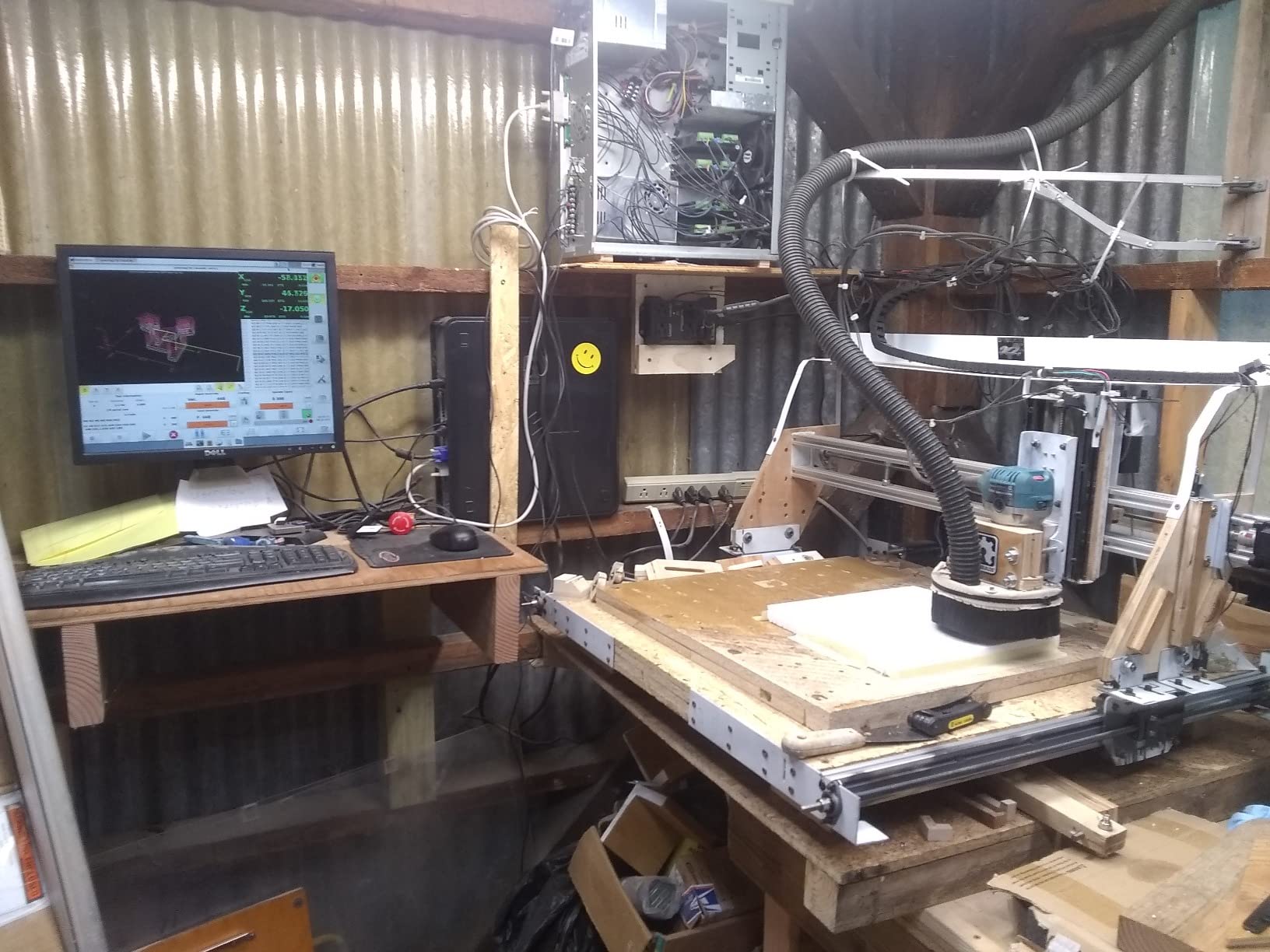
Durability is a genuine strength here. One owner reports running it through 5 to 9 hour CNC sessions in 90 to 100 degree heat without complaint. The aluminum motor housing and the smooth rack and pinion depth adjustment are built for that kind of duty.
The quick release cam lock collar makes depth changes almost instant, which is the feature you notice most when you are running four different profile bits in a row.
How we match it to profile work
Pair this router with quarter inch shank bits for anything under about half an inch of diameter. A cove, a small roundover and a flute all sit in that range and cut cleanly at the speeds this dial offers.
Because the base is small, work on a solid, flat support. The stock base can feel tippy on a large workpiece, so brace the material before you start.
Where this router falls short
It cannot run the large ogee or bullnose bits that furniture edges often call for. That is a collet limitation, not a quality problem.
Plunge, tilt and offset bases are sold separately, and owners note the cost adds up quickly. The speed dial can also loosen and drift during very long continuous runs.
6. Bosch PR20EVS Colt 1.0 HP Palm Router – Best for Palm-Grip Control
BOSCH PR20EVS Colt 1.0 HP Variable-Speed Palm Router, Quick-Clamp System
1.0 HP 5.6 amp
16000-35000 RPM
3.3 lb
Bits to 1-5/16 inch
Pros
- Comfortable one-handed palm grip
- Quick-clamp base and collet system
- Aluminum base with finger support pockets
- Angled cord exit keeps cord clear
- Straight edge guide included
Cons
- 1 hp class is modest for large profile bits in hardwood
- Speed range tops out at 35000 RPM
The Bosch PR20EVS Colt is one of the smallest routers here at 3.3 lb, and that size is the whole argument. On edge work where you are following a long board, a lighter tool means less wrist extension and a steadier line. For flush trimming, guided cuts and lighter material, it is hard to argue with.
The quick-clamp system moves the motor between bases with a single lever, and the depth adjustment has both macro and micro settings. That combination means you can set an edge profile depth, then nudge it a fraction of a millimetre without rebuilding the setup.
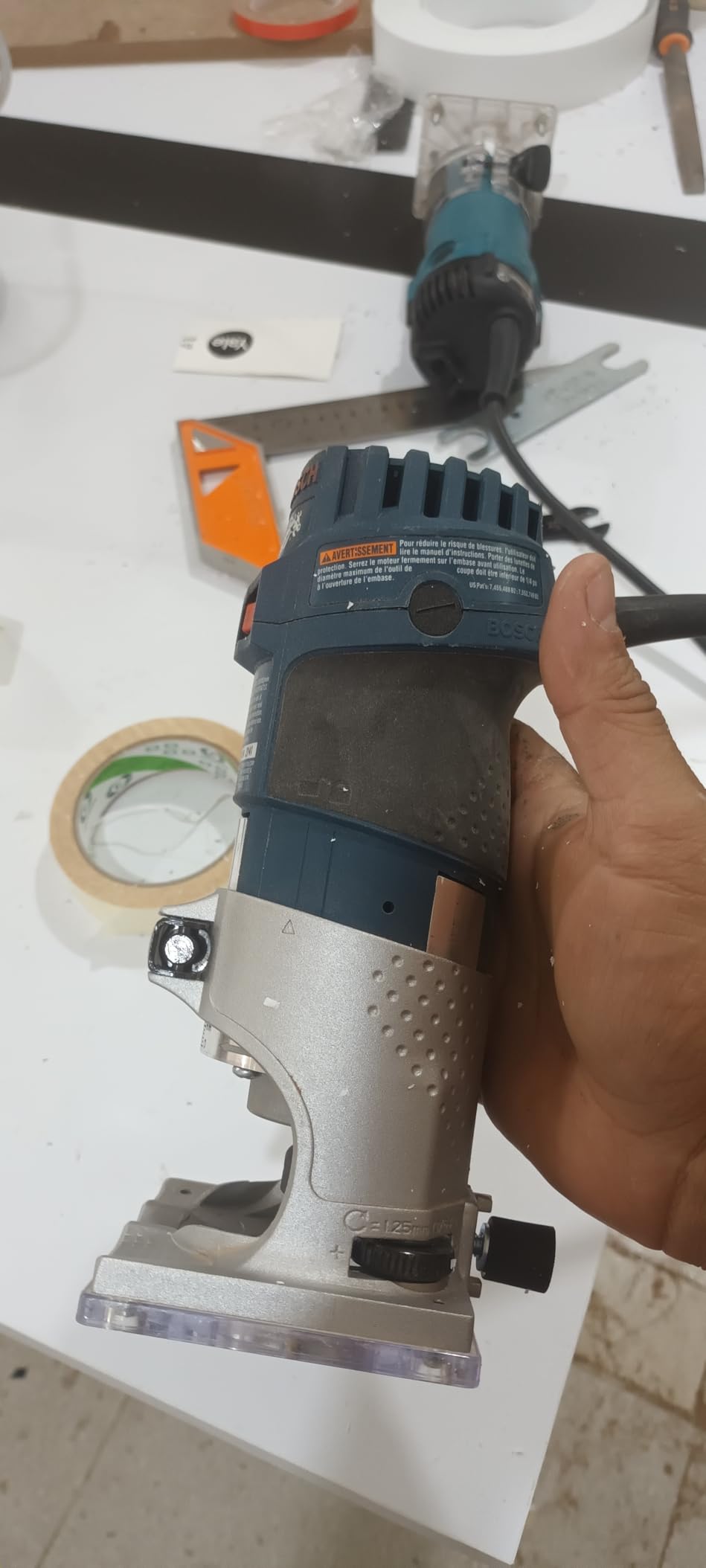
The 1.56 inch aluminum base has finger support pockets cut into it, giving you somewhere to push with your fingertips when the base is only partly on the workpiece. The angled cord exit is a small design decision that keeps the cord from dragging across the cut.
It accepts bits up to 1-5/16 inch in diameter and runs 16,000 to 35,000 RPM, so small to medium profile bits are well within range.
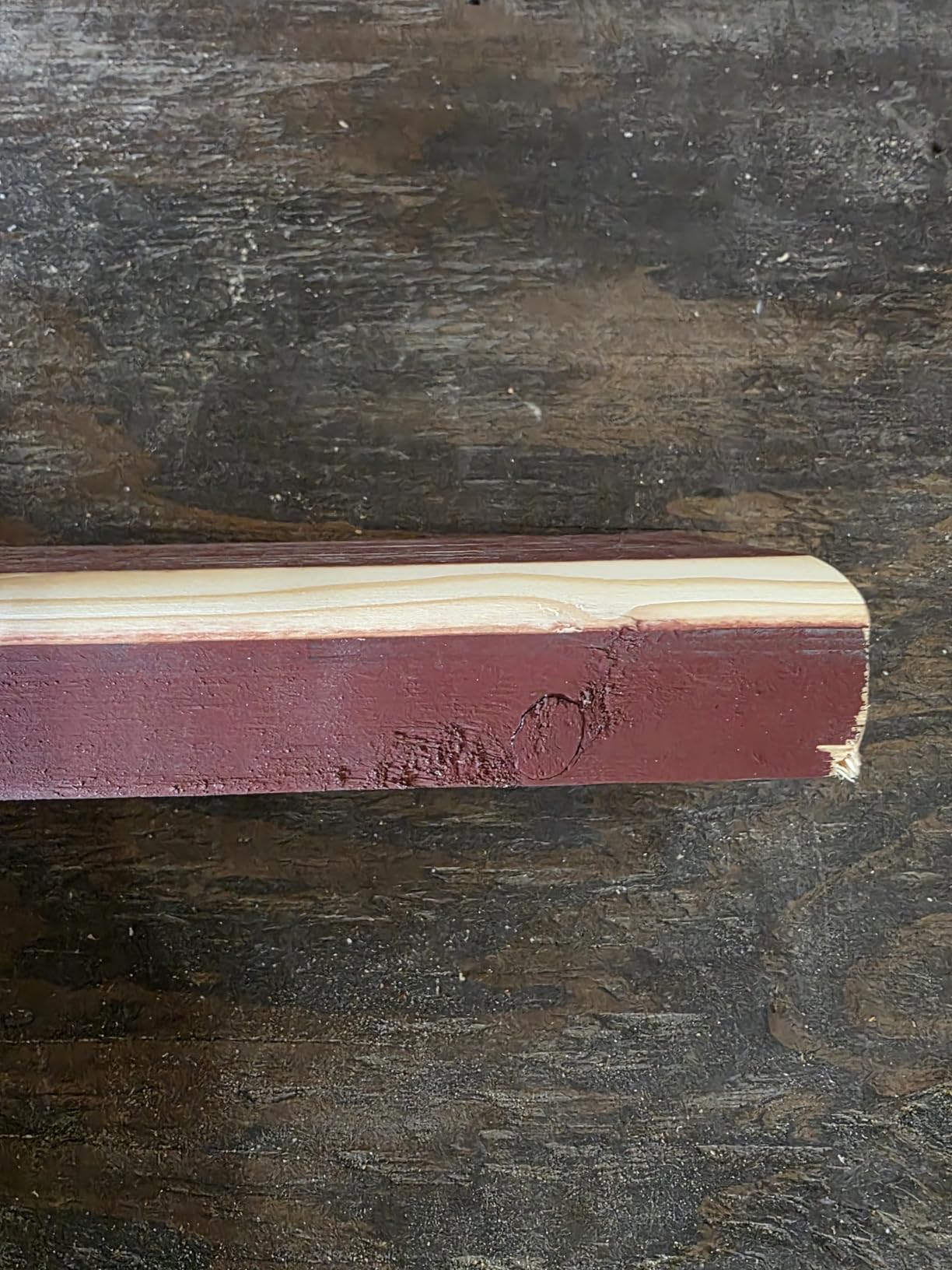
Where a palm router wins on edges
Choose it for softwood trim, painted material, veneer edging and small workpieces where the base is fully supported. The grip is genuinely one-handed, which makes it a good match for guided edge work.
The included straight edge guide runs up to 3-5/8 inch of workpiece edge, so you can produce a consistent profile along a reference without a jig.
Where this router falls short
One horsepower is modest for large profile bits in hardwood. Owners consistently report the limit showing up on bigger bits and denser wood.
The plastic body and the small base mean it is not the tool for a full-depth roundover across a thick hardwood board. That is a mid-size router job.
7. DEWALT DW616 1-3/4 HP Fixed Base Router – Best for Half-Inch Collet Work
DEWALT Router, Fixed Base, 1-3/4-HP, 11.0 Amp Motor (DW616)
1-3/4 HP 11-amp
Fixed base
1/4 and 1/2 inch collets
Sub-base gauge included
Pros
- Plenty of power for solid wood edges
- Micro-fine depth ring in 1/64 inch steps
- Tool-free steel cam lock
- Quick-release motor latches for bit changes
- Concentricity gauge included
Cons
- Single-speed motor with no RPM adjustment
- Fixed base only
The DW616 is a 1-3/4 HP fixed-base router that includes both a 1/4 inch and a 1/2 inch collet, and that is the detail that defines it. Half inch shank bits are what you need for a 3/4 inch bullnose, a wide cove or a chunky ogee, and most compact routers on the market simply cannot hold them.
The micro-fine depth adjustment ring moves in 1/64 inch increments, which is exactly the resolution you want when creeping up on a full-depth roundover. The tool-free steel cam lock holds that setting solidly, and the quick-release motor latches let you drop the motor out for a bit change without undoing the base.
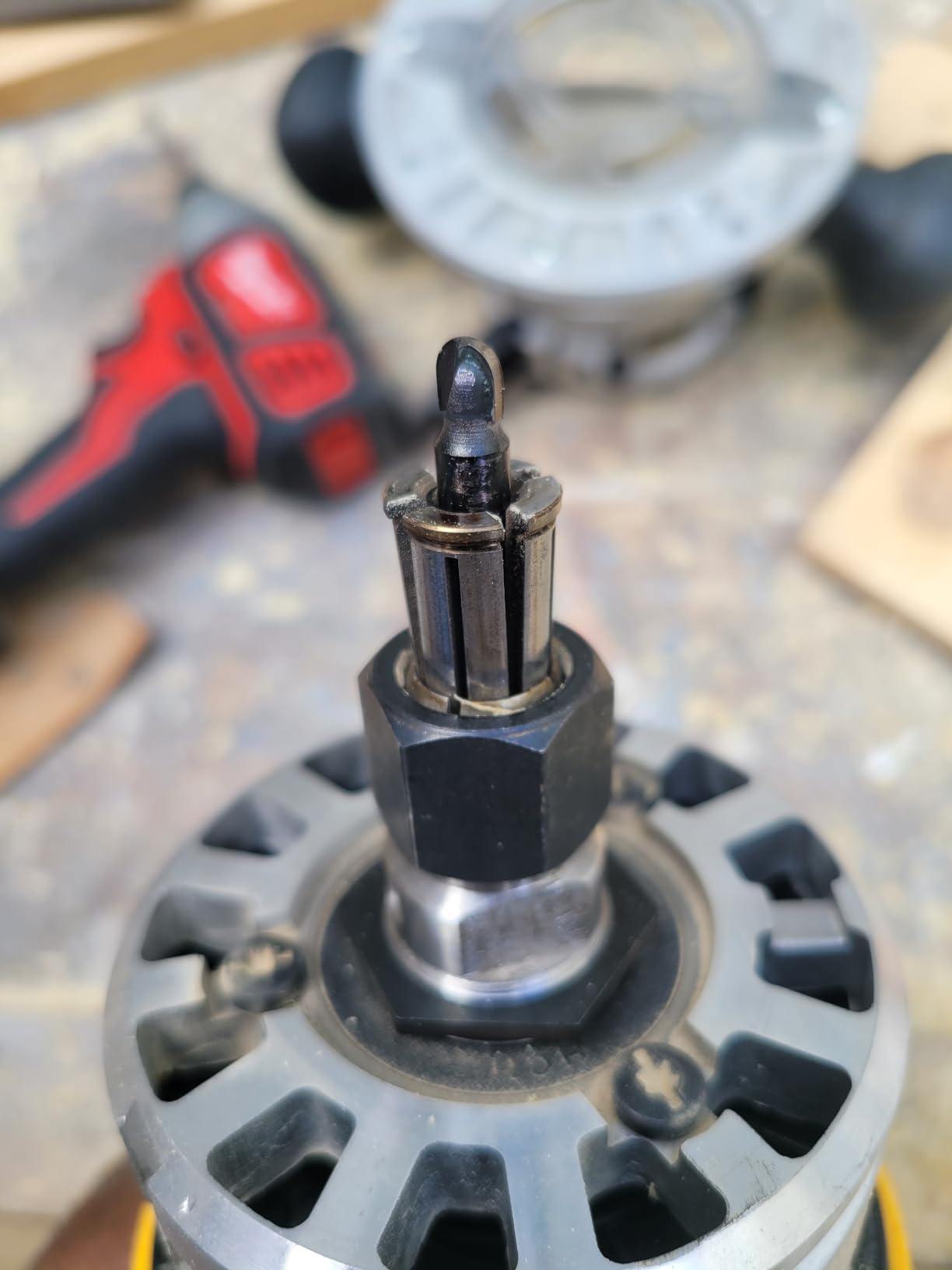
A sub-base concentricity gauge is included. That is a cheap piece of plastic and an unusually thoughtful inclusion, because it lets you confirm the bit is running true in the base before you commit to an exposed edge. Runout is one of the main causes of chatter on profiles.
Owners rate it highly for solid wood edge work and hardwood shaping, which is the case where the extra power pays off.
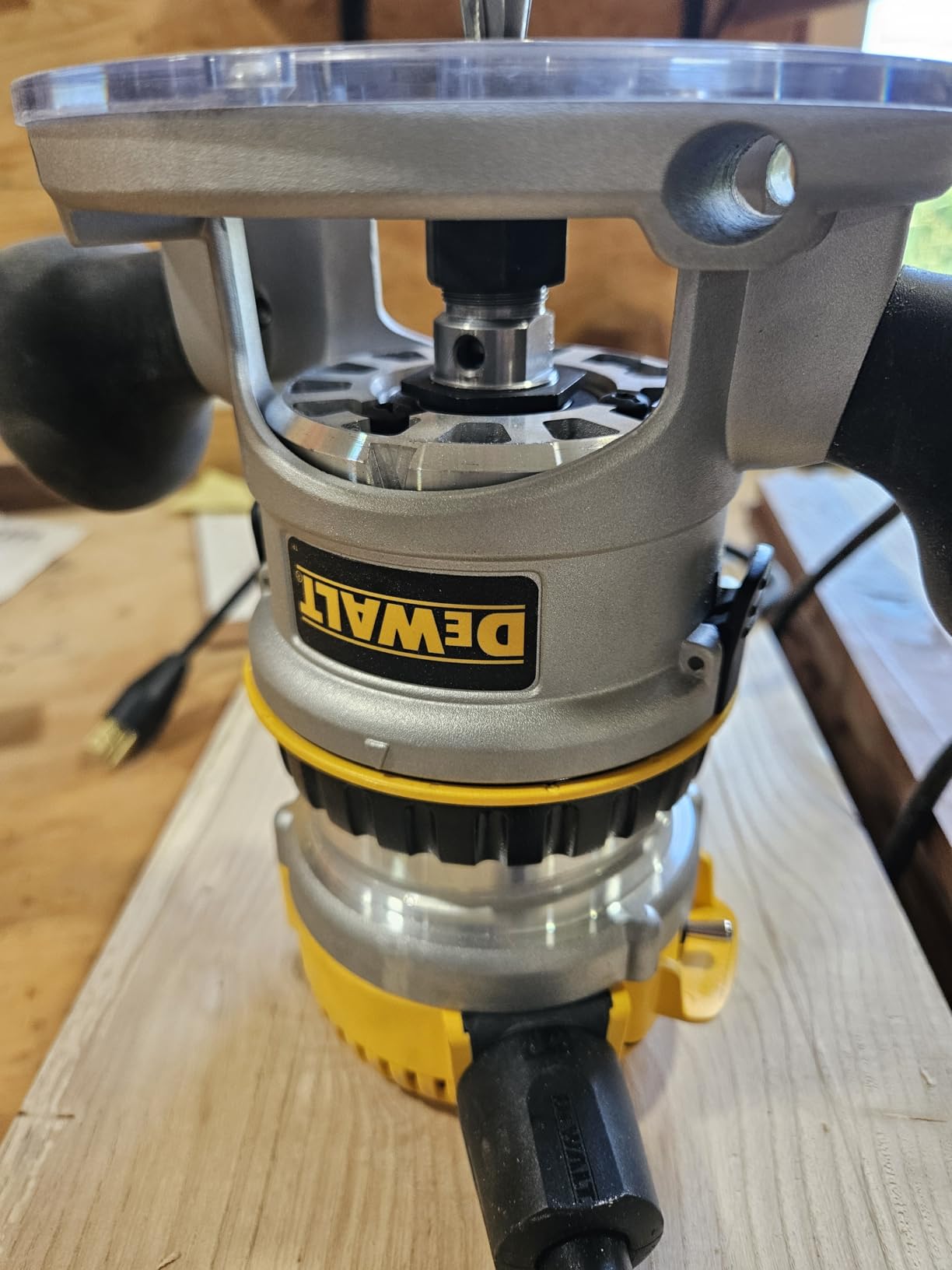
Matching this router to large profiles
Use it for the bigger end of the edge profile range. A 3/4 inch bullnose, a 1 inch cove or a classic ogee all need a 1/2 inch shank, and this is the lightest tool here that takes one.
The fixed base is a genuine advantage for edge work because nothing can move once the depth is set. Clamp the workpiece, set the depth, and run the edge.
Where this router falls short
It has a single speed with no RPM adjustment. That is a real limitation with hardwoods and large bits, since you cannot slow down for a heavy cut or speed up for a small decorative cut.
There is no plunge base option here at all, so internal grooves and joinery would need another tool.
8. DEWALT DW618PKB Combo Kit – Best for Dust-Controlled Edge Cuts
DEWALT Router, Fixed and Plunge Base Kit, Soft Start, 12-Amp, 24,000 RPM, Variable Speed Trigger, Corded (DW618PKB)
2-1/4 HP 12-amp
8000-24000 RPM
Fixed and plunge bases
Spindle lock
Pros
- Strong motor for tough hardwoods
- Both bases plus through-column dust collection
- Spindle lock allows one-wrench bit changes
- Brass bushings give a smooth plunge stroke
- Three-year warranty
Cons
- Depth adjustment can drift during use
- Heavy 10.1 lb kit
- Motor runs hot in long sessions
Dust is the least discussed problem with edge profiling, and users complain about it constantly. When the base is only partly on the workpiece, chips and dust escape in every direction no matter what port you fit. Woodworkers in forums put the realistic capture somewhere around half to two thirds. The DW618PKB does more about this than any other router in this list.
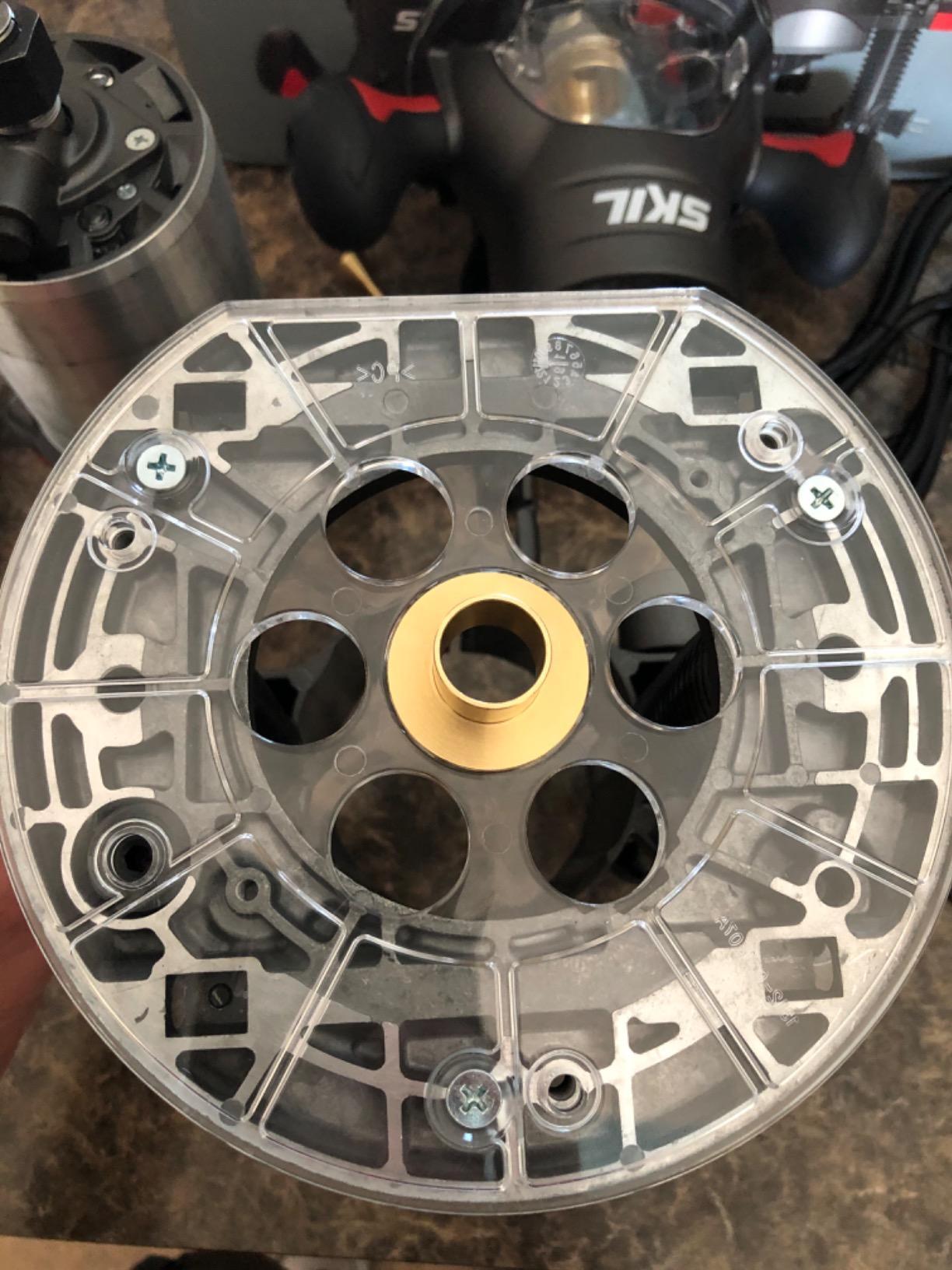
The through-the-column dust collection shroud pulls chips down through the base rather than letting them fly off the cutter, and the clear LEXAN sub-base lets you see the bit while the vacuum is running. That combination is a genuine improvement in a dusty operation.
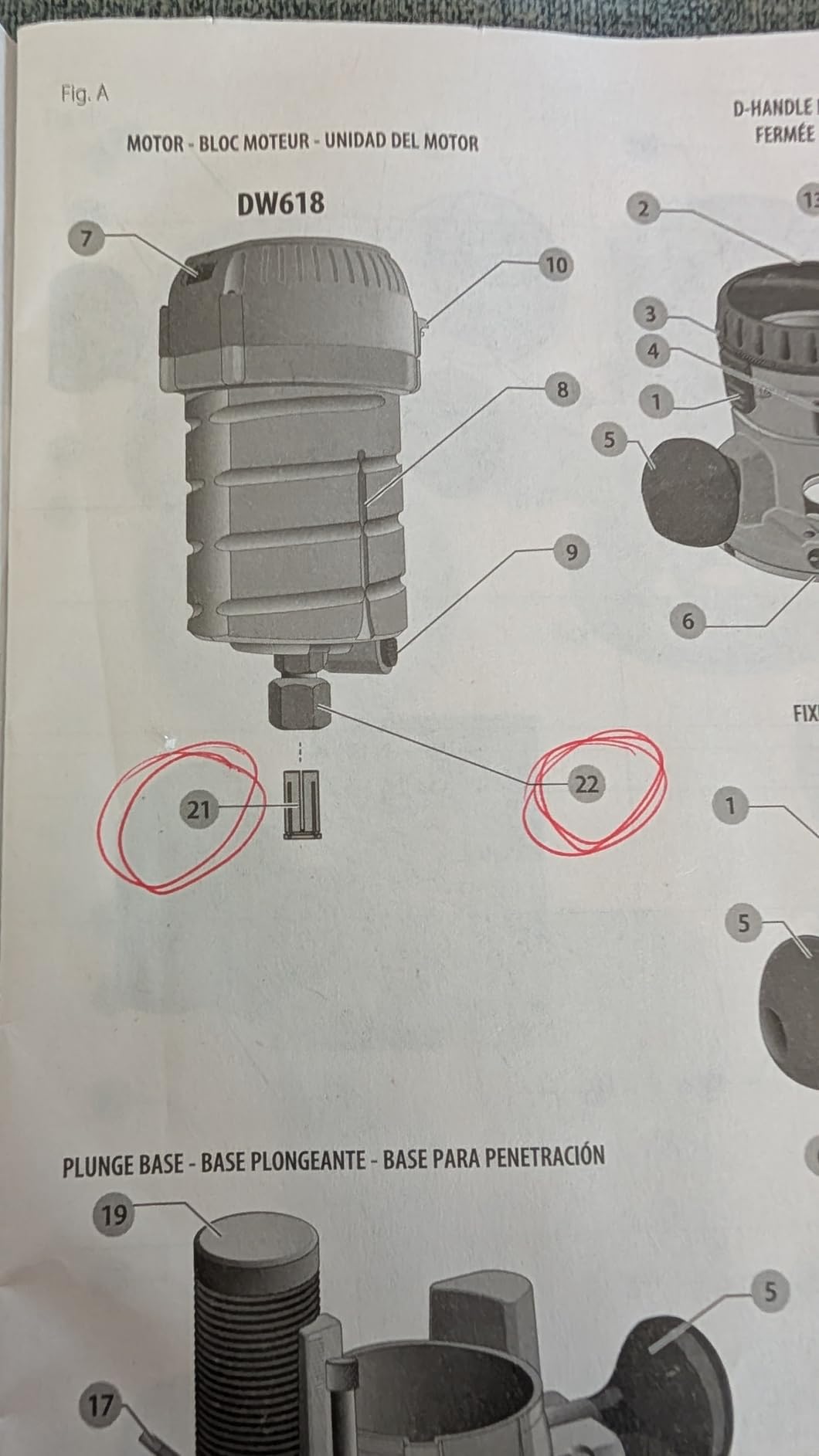
Underneath that, it is the most capable machine here. The 2-1/4 HP 12-amp motor with electronic variable speed from 8,000 to 24,000 RPM and full feedback control handles hardwood without complaint, and precision-machined brass bushings with case-hardened steel guide rods give the smoothest plunge stroke in this group.
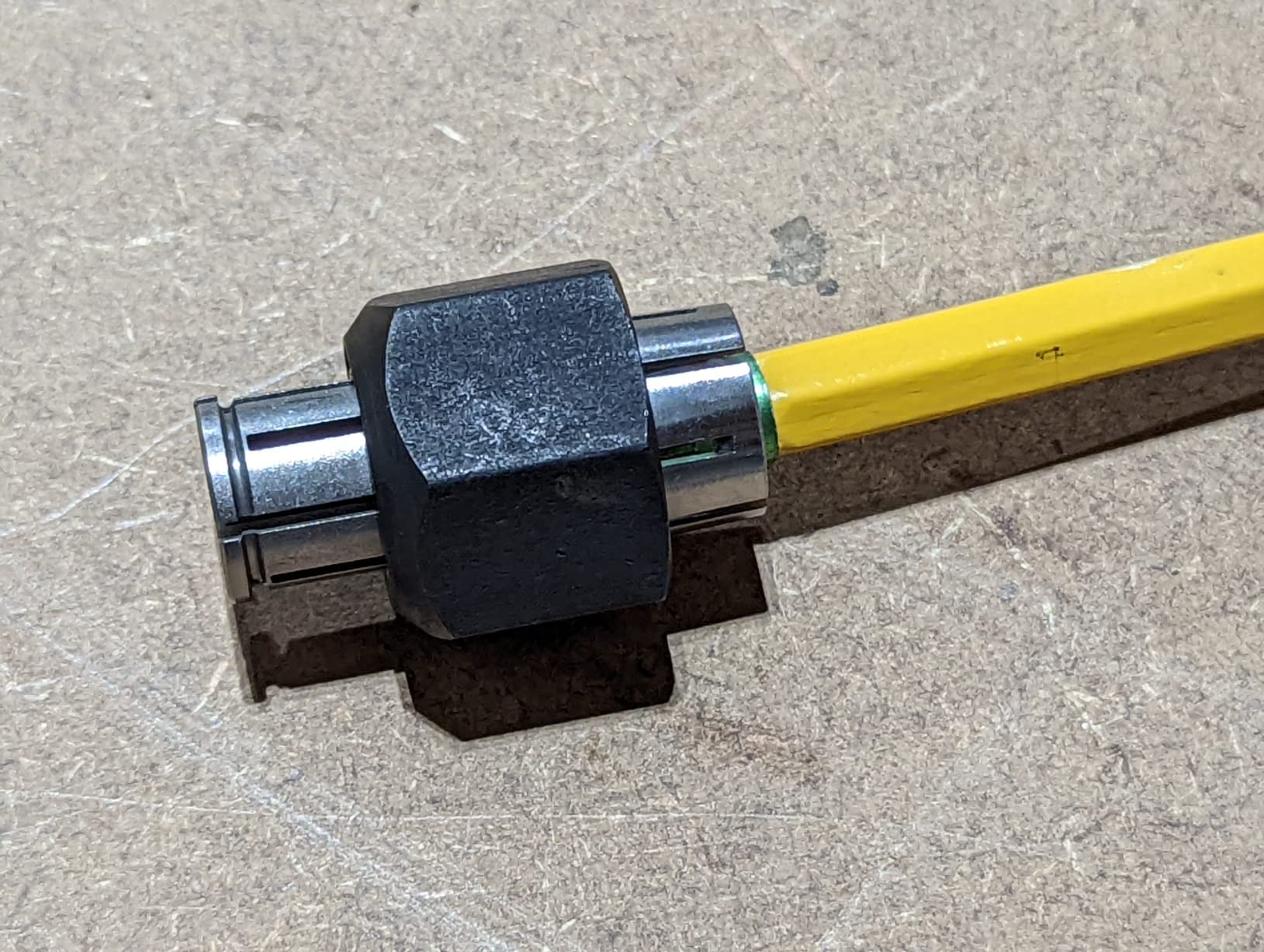
The spindle lock button allows single-wrench bit changes, which is the feature that pays off most on edge profiling. Swapping between a roundover, a bullnose and a cove is the normal rhythm of the job, and doing that with two wrenches every time is tiring.
What the dust shroud actually changes
It does not solve edge profiling dust, but it pulls more of it down and keeps the shop clearer. If you route a lot of drawer fronts and cabinet doors in sequence, the cleanup difference is obvious.
The clear sub-base also accepts standard template guide bushings, so the same setup can move from edge work into template routing.
Where this router falls short
Depth adjustment drift is the most common complaint. Owners report the setting shifting during use, which matters a lot when you are trying to repeat the same profile across several boards.
It is one of the heavier kits here at 10.1 lb, and the motor generates noticeable heat during long sessions. That is fine for production work and tiring for a single evening project.
9. SKIL RT1322-00 14 Amp Combo Router – Best for Large Decorative Profiles
SKIL 14 Amp Plunge and Fixed Base Router Combo — RT1322-00
14 amp 2.5 HP
Fixed and plunge bases
LCD speed display
Soft start
Pros
- 14 amp motor handles large profile bits
- Both bases plus guides in the box
- LCD suggests speed by bit and material
- Electronic feedback holds RPM
- Soft start improves the first pass
Cons
- Heavier than comparable combo routers at 14.3 lb
- One-year warranty is short
The SKIL RT1322-00 is the motor-heavy option in this group. A 14 amp 2.5 HP unit with both fixed and plunge bases in the box, and 1/4 inch and 1/2 inch collets included, which is the combination you want if your edge work involves the larger end of the profile range.
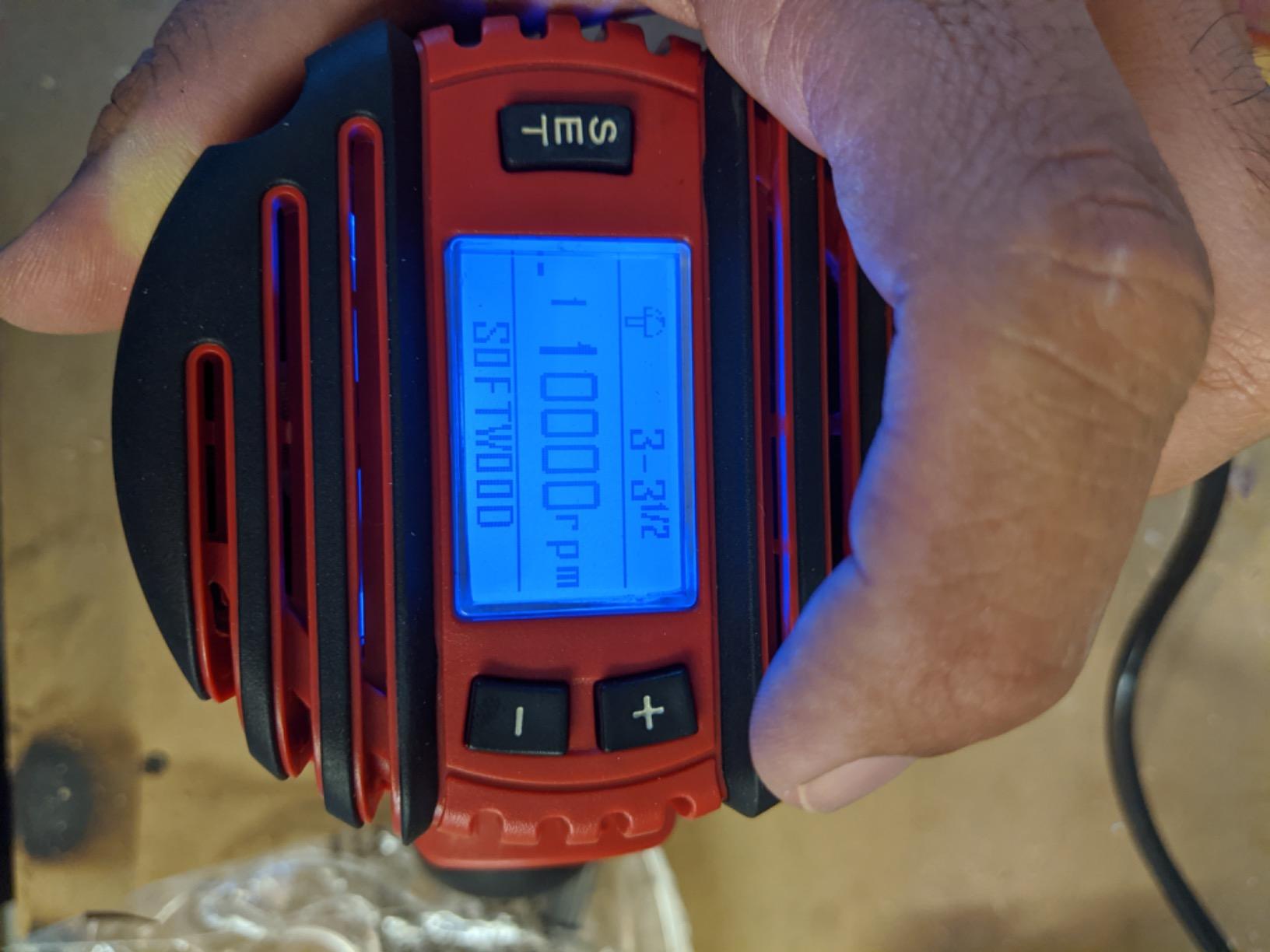
The LCD speed control display is the feature that stands out. Instead of guessing, it suggests a setting based on bit type and material, and electronic feedback holds the RPM while you cut. For someone new to matching speed to a profile, that removes the most common cause of a bad edge.
Soft start makes the initial pass much easier to control, which is exactly where a deep roundover usually goes wrong. A live tool indicator lights when the plunge base is connected, so you always know the tool is live before your hands go near the bit.
Parallel guide and dust extraction adapters are included for both bases, so the kit works out of the box rather than after a second purchase.
When the extra power is worth it
Pick this one for wide ogees, deep coves and thick hardwood edges where a 2 hp class motor starts to labour. The 2.5 HP rating gives headroom that the mid-size routers here do not.
The fixed base is the right choice for that work because the depth stays locked for the entire pass.
Where this router falls short
Weight again. At 14.3 lb this is the heaviest combo in the list, and it is noticeable on a long edge run.
The one-year warranty is shorter than some competitors offer, so the risk of a motor failure later falls on you.
10. RYOBI ONE+ PCL424B 18V Cordless Compact Router – Best for Light Duty Rounding
RYOBI ONE+ 18V Cordless Compact Fixed Base Router Tool Only (Battery Not Included) – PCL424B
18V ONE+ cordless
20000-30000 RPM
3.2 lb tool only
Clear base
Pros
- Light at 3.2 lb
- Micro dial depth adjustment is intuitive
- Clear base gives good bit visibility
- Low vibration at full speed
- Suits garage and outdoor projects
Cons
- Battery drains fast on smaller packs
- Not built for heavy duty routing
- Dust port fits only one side of the window
- Tool only
- battery sold separately
The RYOBI ONE+ PCL424B is among the lightest routers in this roundup at 3.2 lb, and for a specific kind of edge work that is the deciding factor. Small parts, thin stock, boxes, picture frames, anything where the workpiece is small enough that a big tool overhangs it.
The clear base gives a good view of the bit line, and the micro dial with quick-release lever makes depth changes easy enough to do by feel. Variable speed runs 20,000 to 30,000 RPM, which suits small profile bits well.
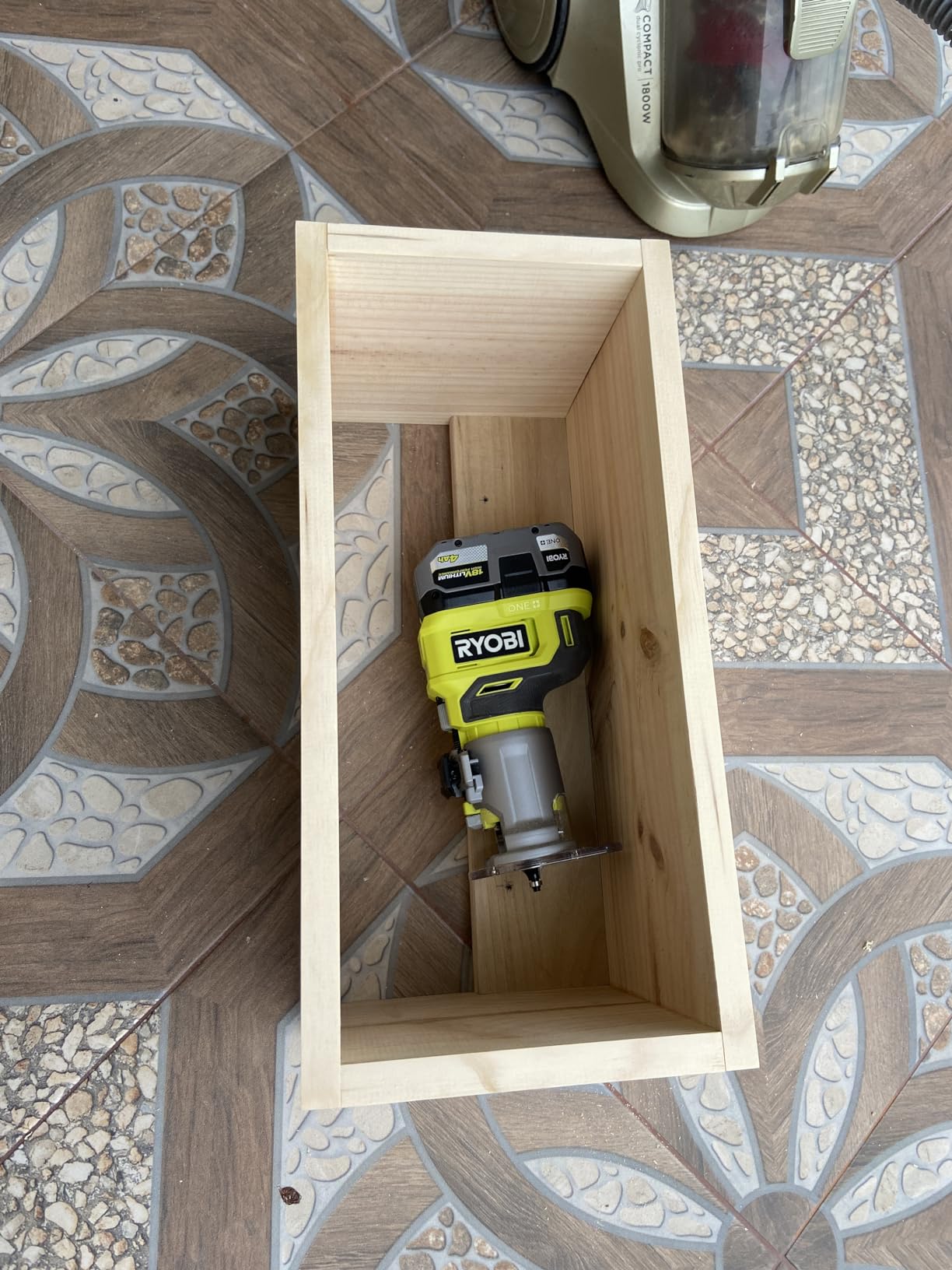
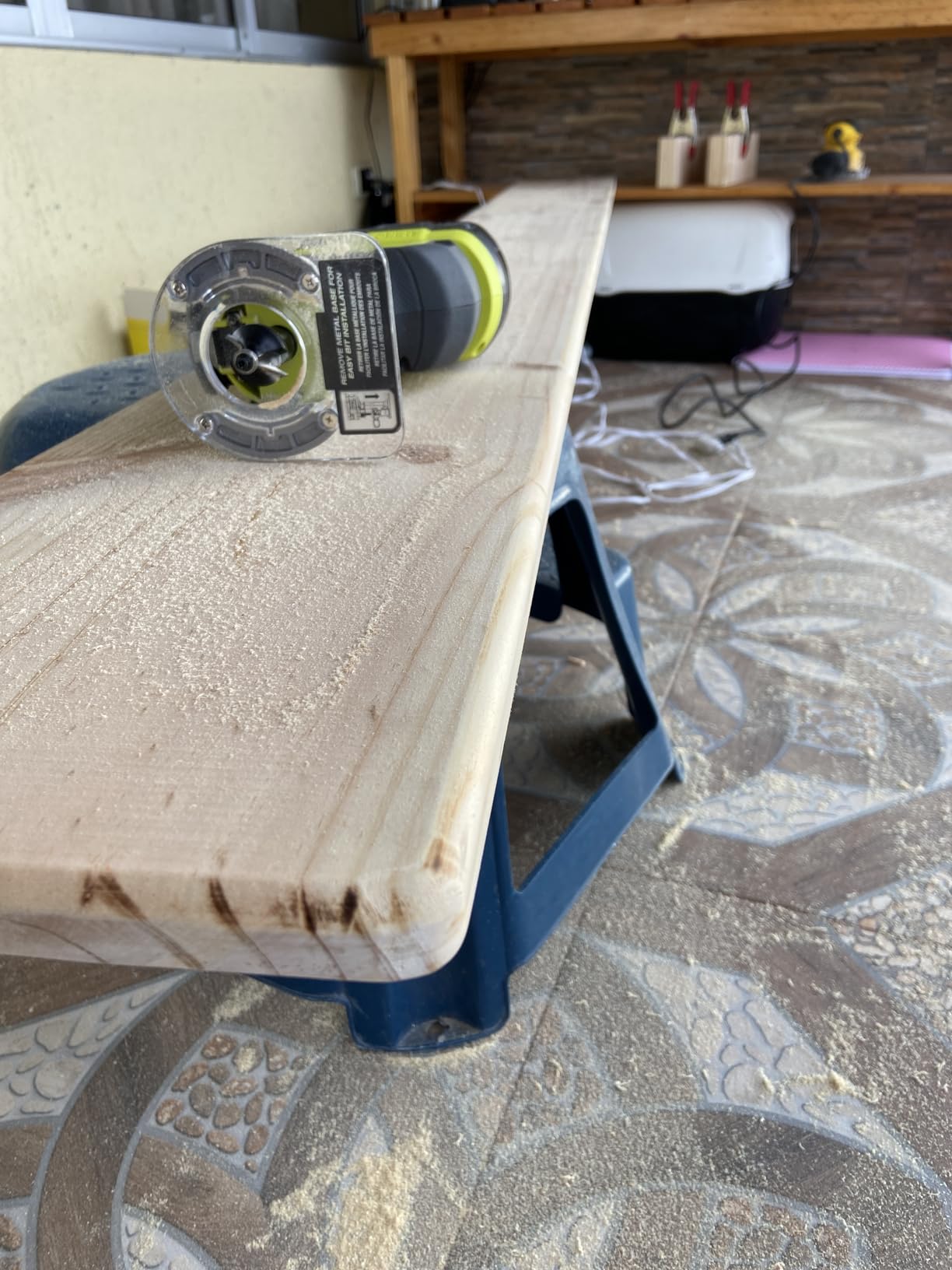
Owners use it for light to medium duty edge rounding, trimming and hinge-cut work. It runs with minimal vibration even at the top speed setting, and vibration is one of the main culprits behind a fuzzy profile edge.
Because it is cordless and platform-compatible, it moves between a garage bench and an outdoor project without a cord to manage.
What light duty really means here
Softwood, plywood and small hardwood parts in short sessions. If your edge work is one roundover on a picture frame, this handles it well and the weight helps.
The clear base and LED light are more useful than the headline power figure, because seeing the cut line is what keeps a small profile from wandering.
Where this router falls short
It is not intended for super heavy duty routing. Pushing a large bit through dense hardwood will exhaust smaller packs quickly, and owners report battery drain as the main frustration.
The light-duty tool-only purchase means a battery and charger are on you. The dust port also attaches to only one side of the base window, which limits your collection options.
Fixed Base vs Plunge Base for Edge Profiling
A fixed base router is the right tool for edge profiles, and the reason has little to do with power. With the depth set and locked, the cutter height is fixed for the entire length of the cut. On a plunge router, the same depth depends on a spring-loaded mechanism holding your weight down for the whole pass.
That is the problem. If the plunge lock releases mid-edge, the router either rises out of the cut and leaves a scallop or drops deeper and gouges the corner. On internal joinery, a mishap means a board you throw away. On an exposed edge profile on a finished piece, it means the same thing, only after more sanding.
The other reason favours fixed base is speed of work. With a fixed base you set the depth, lock it, and walk the edge. With a plunge router you manage the plunge at the same time as the cut, and on a 6 foot edge that is a long time holding pressure.
That said, plunge capability matters for the rest of your workshop. Grooves, dados, mortises and inlays all need it. Which is why three of the routers here come with both bases: you use the fixed base for edges and keep the plunge base for everything else.
Can you plunge with a fixed base router? Not in the sense of plunging the bit into the wood. You set the depth with the router off the workpiece, lower the base onto the board, and begin the cut. That is perfectly workable for edge work, which does not need a plunge.
How to Cut a Clean Roundover Without Chatter
Chatter on a roundover is the most common complaint on woodworking forums, and it almost always has one of four causes: a dull bit, too deep a cut in one pass, the wrong RPM, or a base that is not fully supported. Work through them in order.
Check the bit. A sharp carbide roundover has a clean cutting edge. A dull one rub rather than cut, deflect under load, and leave a rippled surface. Replace it before you blame the router.
Run the router at the correct speed. Match the dial to the bit diameter and material. A large diameter bit in hardwood wants the lower end of the range; a small diameter bit wants the higher end.
Take two passes, not one. Set the depth so the first pass removes around half the material. A partial-depth roundover lets the bit cut cleanly instead of being buried. Then drop the depth the rest of the way and take the second pass.
Support the base. On an outside edge, part of the base hangs in the air. That is normal, but the workpiece must be clamped so it cannot move, and the base itself must be flat and clean.
Move at a steady pace. Let the bit do the work. Rushing a profile is the fastest route to chatter and to burning the corner.
Do the same in two or three passes for a large bullnose or a wide ogee. The surface will be cleaner and your bit will last considerably longer, because a cutter taking a thin shaving deflects far less than one taking a full-width bite.
If the edge still rips out on hardwood, work from the back of the board toward the show face on the first pass. This leaves the tear-out on the side you will sand or plane away later.
Buying Guide: Choosing a Wood Router for Edge Profiles
Collet size decides which profiles you can cut
This is the single most important spec for edge work. A router with a 1/4 inch collet only holds bits with a quarter inch shank, and that limits you to cutters up to about half an inch in cutting diameter. A 1/2 inch collet opens up the larger ogees, coves and bullnoses that furniture edges are usually made of.
Look at what is in the box. The Bosch 1617EVSPK, the DEWALT DW616, the DW618PKB and the SKIL RT1322-00 all include both collets. The compact cordless options here are quarter inch only, which is fine for small decorative work and limiting for anything larger.
Match the profile to the router rather than the other way round. A 3/4 inch bullnose needs a 1/2 inch shank. A small roundover on a jewelry box fits a compact router. Decide the largest profile you want to cut and buy for that.
Horsepower for hardwood edges
Edge profiling removes a lot of material quickly in a narrow band, which loads the motor more than many people expect. Around 1 HP handles softwood trim and small profiles comfortably. Once you are in solid hardwood with a 1/2 inch shank bit, 2 HP or more is the sensible starting point.
The DW618PKB at 2-1/4 HP and the SKIL at 2.5 HP cover the heavy end. The Bosch 1617 at 2.25 HP sits in the same class and is the version most often recommended online as a single router for everything.
Variable speed is worth paying for
A single-speed motor forces one compromise setting on every material. Variable speed lets you slow down for a large cutter in hardwood to avoid burning, and speed up for a small decorative bit to reduce heat buildup in the bit.
Eight of the ten routers here offer some speed adjustment. The DEWALT DW616 is the clear exception, and its owners mention the lack of control most often. If you work in more than one wood species, put variable speed near the top of your list.
Base geometry is the edge profiling secret
When you profile an outside edge, only part of the sub-base is on the wood. A large, rigid, flat base resists the tendency to tip as you follow the edge, which is the single biggest factor in cut quality. This is why the Milwaukee compact router with its large sub-base behaves so much better on an edge than a smaller palm router.
A clear acrylic or polycarbonate base is worth having, because it lets you watch the bit enter the wood. Two LEDs aimed at the cut line are better still, and three of the routers here have them.
Some bases are shaped or notched. The Milwaukee factory base carries a notch that owners say can catch a workpiece edge, so check yours before starting a long run.
Ergonomics on a long edge
An edge profile is a long, moving operation with the tool held at roughly 90 degrees to the workpiece. Weight, balance and grip size all show up in your forearm by minute five.
The lightest options here, the RYOBI at 3.2 lb and the Bosch PR20EVS at 3.3 lb, are easiest on the hand for small work. The heaviest, the SKIL at 14.3 lb and the Bosch 1617 at 18.2 lb, need a steady grip and break up well for long cuts.
Handle shape matters more than weight in some cases. The Bosch 1617 uses rounded hardwood handles, which many woodworkers prefer for vibration damping. Wide bodies, like the Milwaukee grip, feel powerful but fatigue faster.
Dust collection reality
Expect to capture roughly half to two thirds of the debris when edge profiling. The moment the base hangs off the workpiece, chips escape ahead of the cutter and no shroud captures them all. Shop forums are blunt about this and it is worth setting expectations before your bench is covered in oak dust.
What helps: a brush or a flexible skirt on the dust port, a shop vacuum with real airflow rather than a small handheld unit, and cleaning as you go. The DW618PKB through-column shroud does more than most here, and the AVID POWER includes a dust hood in the box.
Router table or handheld
For most edge profile work, handheld wins. You control the tool, you can see the bit, and you can follow the line. A router table is better for repeated identical profiles where the fence sets the depth and you are pushing the workpiece instead of the router.
If you do buy a table, check that the collet sits proud of the sub-base. Owners complain constantly about routers where the collet is flush with the table surface, because it makes bit changes miserable.
Accessories that matter for edge work
An edge guide and a roller guide are the two that earn their place. An edge guide lets a piloted bit follow a reference for a consistent profile along a straight workpiece. A roller guide follows the edge of the material itself, which is how you carry a profile around a curve.
A sub-base concentricity gauge is cheaper and more useful than most buyers expect. Checking bit runout before an exposed edge cut takes a minute and prevents a rippled profile.
Look for a spindle lock if you change profiles often. Single-wrench bit changes are a real time saver when you are running a roundover, a bullnose and a cove across the same project.
Safety on exposed edges
Clamp the workpiece before you start. There is no such thing of holding a board steady with one hand while profiling the edge with the other.
Keep two hands on the tool and both hands clear of the bit. On an outside edge, the cutter is exposed and a loose sleeve or glove is a serious hazard.
Change bits with the tool unplugged, or on a cordless router with the battery removed. Most of the routers here include an electronic brake that stops the bit quickly, but never rely on it while the bit is still spinning.
Make one pass, step back, and look before the second. Wear eye protection. Edge profiling throws chips at head height when the base is partly unsupported.
Frequently Asked Questions
How do I round off wood edges with a router?
Set the router to a shallow depth on the first pass, roughly half the material you want to remove, then make a second pass at full depth. Clamp the workpiece first, use a sharp roundover bit matched to a quarter inch or half inch collet, and run the speed dial lower for large bits in hardwood and higher for small bits. Taking two passes instead of one is what keeps chatter off the edge.
Should I buy a plunge or fixed base router?
For edge profiles, buy a fixed base router or a combo kit and use the fixed base. The depth stays locked once set, and a plunge lock releasing mid-cut can leave a scallop or a gouge on an exposed edge. Buy plunge capability only if you also plan grooves, dados, mortises or inlay work.
Can I plunge with a fixed base router?
No. A fixed base router sets its cutting depth before the base touches the workpiece and cannot plunge into the material. That is not a problem for edge profiling, which does not require a plunge. For internal work such as grooves or mortises, you need a plunge base or a separate plunge router.
What is the best budget router for edge profiles?
The AVID POWER 6.5 amp compact router is the strongest starter option because it comes with five bits, an edge guide, a roller guide and both collets in the box. Six speeds from 10000 to 32000 RPM cover small to medium profiles. Its limitation is power, so keep it to light and medium duty work in hardwoods.
What is the maximum depth a wood router can cut?
Maximum cut depth depends on the base configuration, not just the motor. A fixed base router cuts from the surface down to whatever its depth adjustment allows. A plunge router adds that depth as plunge travel on top, typically up to about 2 inches on mid-size models. An edge profile only ever uses the fixed depth.
What is the best plunge router for fine woodworking?
The Bosch 1617EVSPK is the most common answer in woodworking forums because its fixed and plunge bases, 8000 to 25000 RPM range and half inch collet cover most workshop tasks in one purchase. The DEWALT DW618PKB is stronger, with smoother plunge bushings and through-column dust collection, at the cost of more weight.
What is the best router for woodworking according to Reddit users?
In r/woodworking and r/Tools threads, the Bosch 1617 is the most repeated recommendation when someone asks for one router that does everything, because it handles both plunge and fixed base work and takes a half inch collet. Compact options like the Makita RT0701C and DeWalt fixed base come up frequently for edge projects and lighter stock.
Conclusion
After working through all ten, the best wood routers for edge profiles split cleanly into three jobs. The DEWALT DCW600B takes the overall spot because cordless freedom, a 4.15 lb weight and a brushless motor that holds speed make long edge passes simple and repeatable.
The Bosch 1617EVSPK is the better single purchase if you want one machine for everything, with both bases, a half inch collet and 2.25 HP. The Milwaukee M18 compact router is the balanced cordless option when battery life and base stability matter more than a full plunge capability.
Whichever you pick, check three things before your first cut: the base is flat and rigid, the bit is sharp and matches the collet, and the workpiece is clamped. Those three, plus a fixed base and two passes instead of one, are what separate a clean edge profile from a rough one in 2026.