
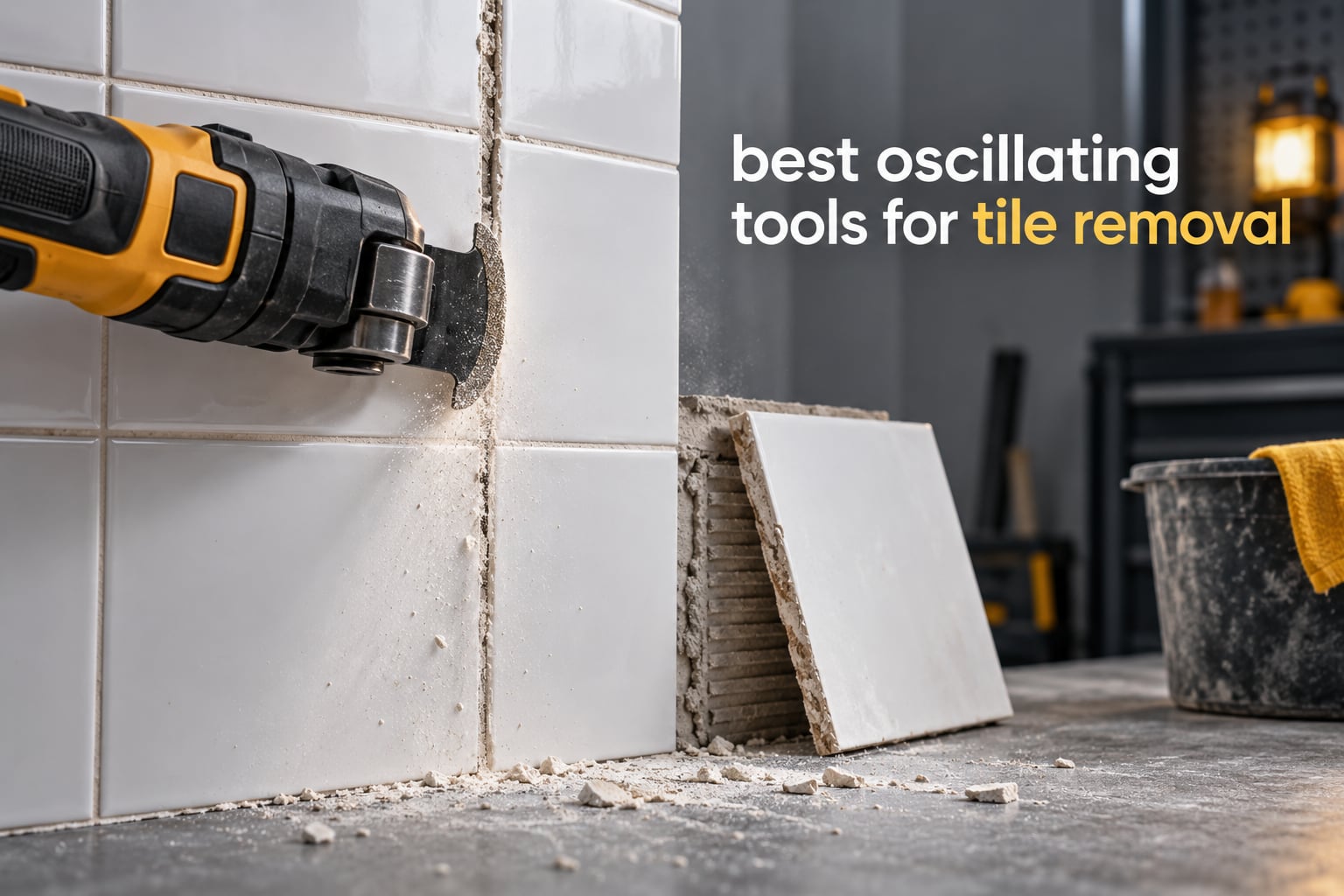
Tile comes off faster when the right oscillating tool does the cutting, and the truth is most people pick a multi-tool the way they pick a screwdriver. Grout and ceramic are hard, abrasive materials, and most of the cheap kits in circulation are built for trimming drywall and cutting nails instead. We put ten of the most popular oscillating multi-tools through the same read, specs and owner feedback so you can see which ones hold up when a carbide blade is buried in a shower wall.
The short answer to the question everybody asks first: the DEWALT DCS356B is the best oscillating tool for tile removal overall, because its three-speed brushless setup, universal accessory adapter and LED light cover almost every job you will throw at it. If you already own M18 batteries, the Milwaukee 2626-20 is the stronger long-session option, and the AVID POWER kit covers the most ground for someone starting from an empty garage.
Below that we break down every model on oscillation speed, swing angle, weight, blade interface and the accessories that actually ship in the box. We also cover blade selection by grout width, thinset removal, and the dust problem nobody mentions until their throat hurts. This is our complete 2026 guide to the best oscillating tools for tile removal, updated as new models cycle through.
Table of Contents
Top 3 Picks for Tile Removal (October 2026)

DEWALT 20V MAX XR DCS356B
- 3 speeds to 20000 OPM
- Brushless motor
- Universal accessory adapter
- LED work light

Milwaukee 2626-20 M18
- 12 speeds from 11000 to 18000 OPM
- All-metal gear case
- Onboard LED panel
- M18 battery platform
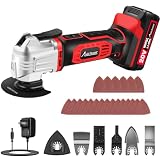
AVID POWER ACMT326
- 6 speeds from 8000 to 18000 OPM
- 2.8 degree oscillation angle
- Battery and charger included
- 28 accessories
Best Oscillating Tools for Tile Removal in 2026
The table below puts all ten tools side by side so you can match a job to a machine in seconds.
| Product | Specs | Action |
|---|---|---|
| DEWALT 20V MAX XR DCS356B |
|
Check Latest Price |
| Milwaukee 2626-20 M18 |
|
Check Latest Price |
| AVID POWER ACMT326 |
|
Check Latest Price |
 Milwaukee 2426-20 M12 Milwaukee 2426-20 M12 |
|
Check Latest Price |
 Hammerhead HAMT022 Hammerhead HAMT022 |
|
Check Latest Price |
 ENERTWIST ET-OM-500 ENERTWIST ET-OM-500 |
|
Check Latest Price |
 Ryobi ONE+ PCL430B Ryobi ONE+ PCL430B |
|
Check Latest Price |
 GALAX PRO 9525K GALAX PRO 9525K |
|
Check Latest Price |
 WORKPRO W124744AE WORKPRO W124744AE |
|
Check Latest Price |
 Milwaukee 2836-20 M18 FUEL Milwaukee 2836-20 M18 FUEL |
|
Check Latest Price |
1. DEWALT 20V MAX XR DCS356B: Best Overall Pick for Tile Removal
DEWALT 20V MAX XR Oscillating Multi-Tool Cordless, Variable Speed Brushless Motor Multitool with LED Light, Extended Runtime, Includes Two Wood Cutting Blades, Tool Only (DCS356B)
0-20,000 OPM across 3 speeds
Brushless motor
2.4 lb
Universal accessory adapter
Pros
- Three speed settings plus a dual-grip variable speed trigger
- Brushless motor rated for up to 57% more runtime than brushed designs
- Tool-free quick-change accessory system
- Universal adapter accepts most oscillating tool accessories
- LED work light for dark grout lines
Cons
- Tool only
- battery and charger sold separately
- Ships with wood cutting blades so grout and diamond blades are a separate purchase
The DCS356B is the tool we keep reaching for first on a demo job. Its three-speed selector covers 13,000, 17,000 and 20,000 OPM, which is enough range to work soft grout gently and porcelain tile aggressively without changing tools.
The dual-grip variable speed trigger is the detail most reviews praise. You feather the trigger instead of reaching for a dial, which is exactly what you want when the blade is tracking along a grout line a few millimetres from a tile edge.
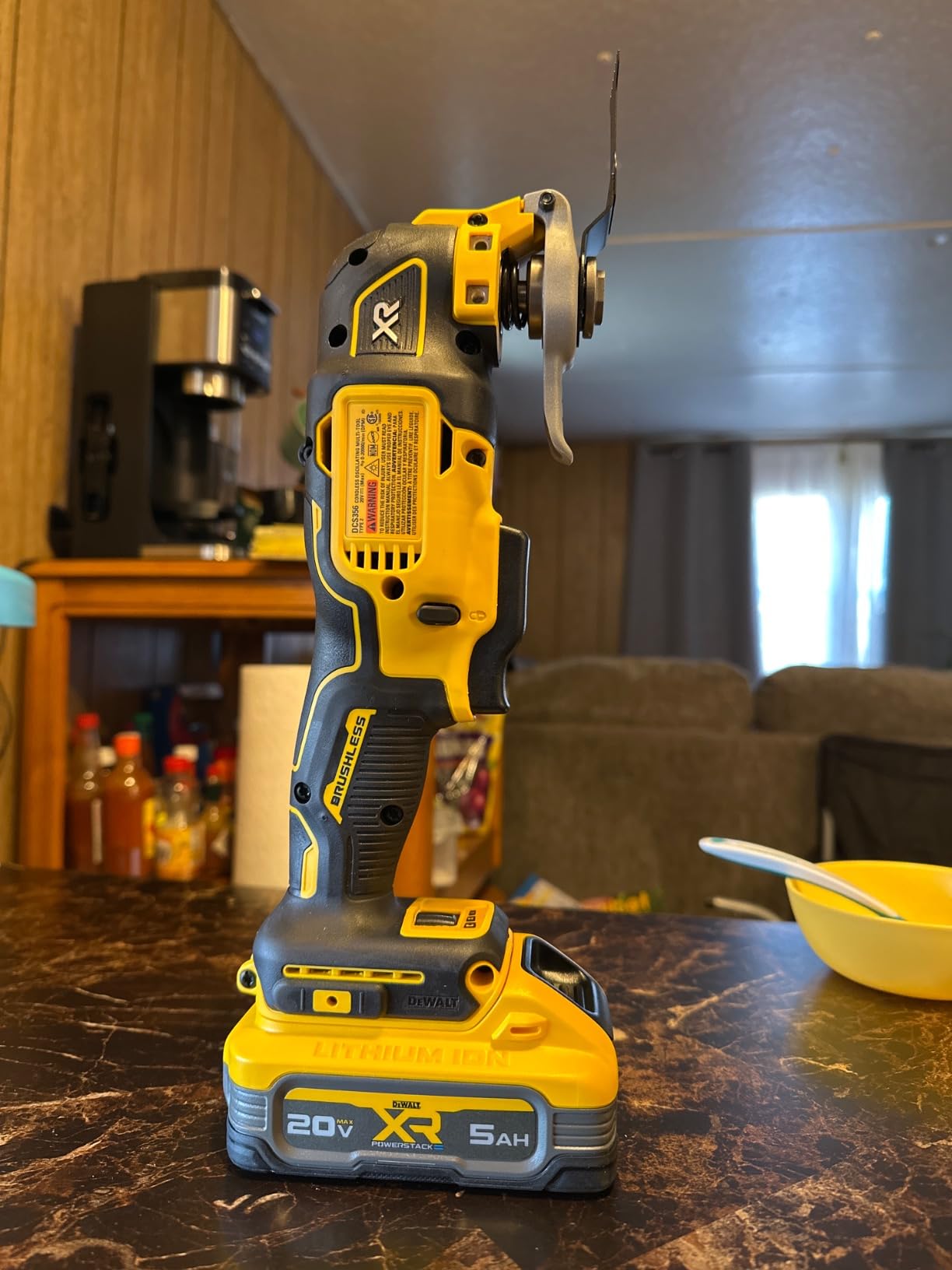
The brushless motor is the reason this tool outlasts the field. Owners report 87% five-star ratings across more than 14,000 reviews, with power-to-weight and build quality coming up most often in tile and grout work.
Weight matters more than most spec sheets admit. At 2.4 pounds this is light enough to hold overhead against a shower wall without the forearm burn that shows up an hour into a bathroom demo.
The universal accessory adapter is the underrated feature here. It accepts most oscillating tool accessory brands, so the blade ecosystem is not locked and you are not stuck buying proprietary carbide segments.
How the three speeds change grout work
Start on the lowest setting when you are cutting grout next to a tile you want to keep. The 13,000 OPM setting shears grout without walking the blade sideways into the edge of the tile.
Move up to 20,000 OPM for thinset and mortar, where you want heat and chipping action rather than a polished surface. The middle setting is the one most people leave on all day.
What you need to plan before buying
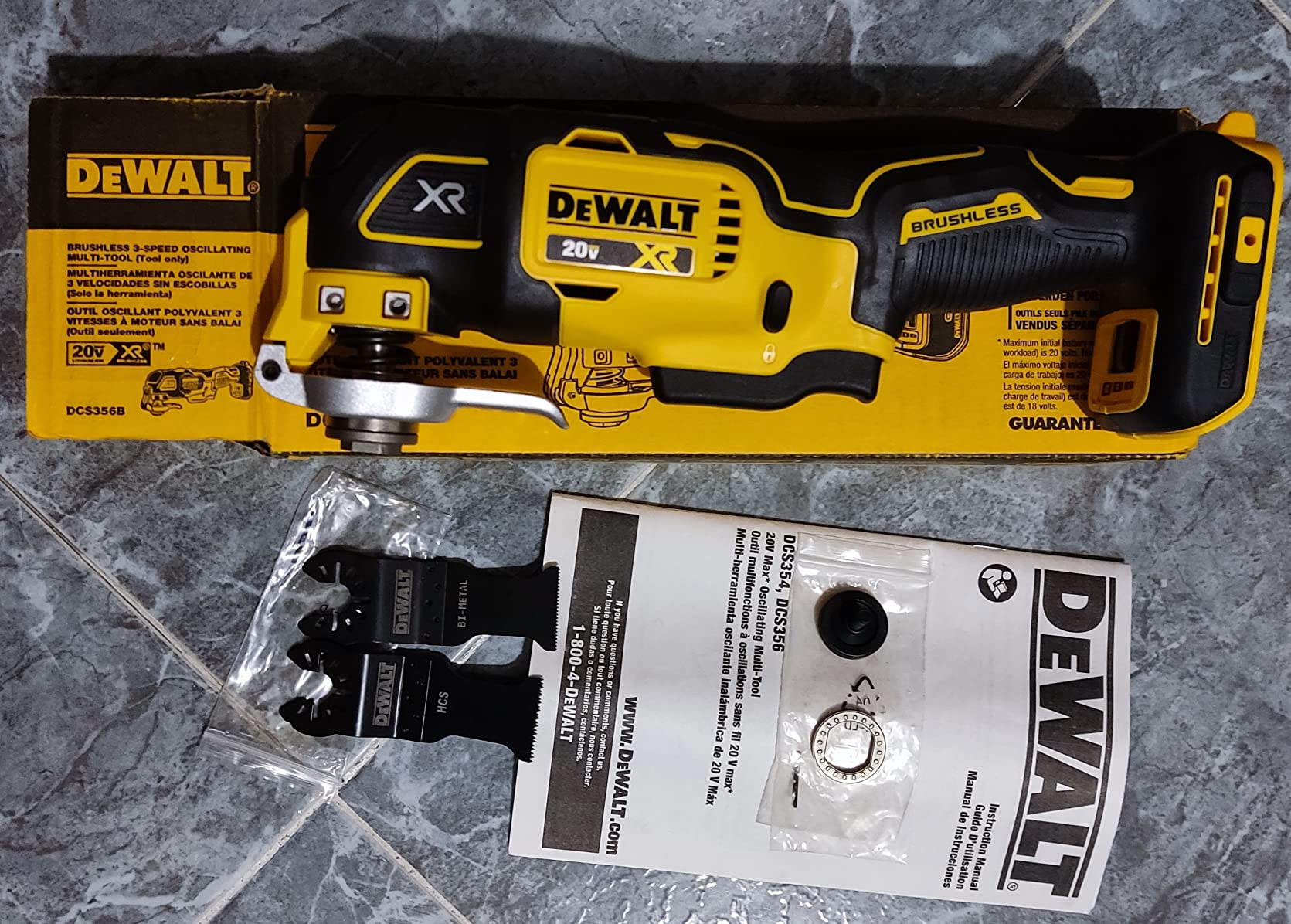
This is a bare tool. The 20V MAX battery and charger are separate purchases, and the two blades in the box are wood-cutting blades with no grit at all.
Plan on a separate diamond grit or carbide blade purchase before grout work begins. The tool is the right buy, but the accessories that make it a tile removal tool are not included.
2. Milwaukee 2626-20 M18: Best Cordless Power for Long Demo Days
Milwaukee 2626-20 M18 18V Lithium Ion Cordless 18,000 OPM Orbiting Multi Tool with Woodcutting Blades and Sanding Pad with Sheets Included (Battery Not Included, Power Tool Only)
12 speeds from 11,000 to 18,000 OPM
All-metal gear case
2.9 lb
REDLINK battery intelligence
Pros
- Twelve speed settings covering 11000 to 18000 OPM
- All-metal gear case resists job-site impacts
- Rubberized overmold grip stays secure in dusty conditions
- Onboard LED panel lights the work
- Runs on the widely deployed M18 battery platform
Cons
- Tool only
- battery and charger not included
- Ships with a wood cutting blade and sanding kit rather than grout blades
Where the DEWALT wins on breadth, the 2626-20 wins on endurance and durability. Twelve speed settings from 11,000 to 18,000 OPM give finer control than most tools in this list, and the all-metal gear case shrugs off the drops that come with demo work.
Reviewers describe it as well balanced and versatile, handling grinding, cutting, scraping and sanding on the same battery. Eighty-six percent of reviews are five-star, and the M18 platform is the reason a lot of buyers land here in the first place.
The rubberized overmold grip earns more credit than it gets. Tile demo is dusty, and a grip that holds when your hands are coated in grout powder is worth more than a feature list full of speed settings.
An onboard LED panel sits at the head of the tool, so the light falls across the blade rather than in your face. On a dark backsplash or under a cabinet that difference is immediate.
REDLINK battery cross-communication and heat management is the quiet advantage on a long day. When a pack runs hot under load, the system manages it rather than throttling you mid-grout-line.
Choosing between the two Milwaukee cordless models
The 2626-20 is the working tool. Eighteen volts gives it the headroom to cut thinset and scrape mortar without bogging down, and the 18,000 OPM ceiling is enough to move material.
Choose the smaller M12 model further down this list only when weight is your binding constraint, such as overhead work on a shower ceiling. Under load at floor level, the 18V platform is the better answer.
Battery platform and what ships with it
This is a tool-only purchase, so the M18 battery and charger are extra. The box does include a wood cutting blade, a sanding pad and assorted sanding sheets.
There is no carbide or diamond blade in the kit, which is standard across this class. Budget for one narrow and one wide grout blade before you start cutting.
3. AVID POWER ACMT326: Best All-In-One Kit for First-Time Users
AVID POWER Cordless Oscillating Tool 20V Battery Powered Oscillating Multitool with 2.8° Oscillation Angle, Variable Speed Oscillating Saw w/ 28 Pcs Accessories for Scraping/Cutting & Sanding
6 speeds from 8,000 to 18,000 OPM
2.8 degree oscillation angle
2.7 lb
Battery and charger included
Pros
- Six speed settings from 8000 to 18000 OPM
- 2.8 degree oscillation angle reaches narrow corners
- Battery and charger included in the box
- A diamond tipped segment blade ships with 27 other accessories
- Front LED lights for dark work surfaces
Cons
- Manufacturer rates it light-to-medium duty rather than heavy duty
- Small 2.0Ah battery with a 4-5 hour charge time
- Accessory quality is entry-level
The ACMT326 is the answer when you want to start a bathroom job this weekend without a shopping list. It arrives with a 20V 2.0Ah battery, a charger, a diamond tipped segment saw blade, plunge cut blades, a scraper and two sanding pads with sheets.
That included diamond blade matters more than it sounds. It is the one accessory that makes a multi-tool useful on grout, and it saves you from the trap of buying a tool plus blades separately.
Six speeds from 8,000 to 18,000 OPM give a genuinely useful range. The low end handles grout without chipping adjacent tile, and the top end has enough speed to scrape adhesive residue.
The 2.8 degree oscillation angle is narrow, and that is a deliberate trade for control. In a corner where tile meets wall, a narrow arc keeps the whole cutting edge pointed at the grout line instead of diving into the wall.
Front LED lights illuminate the work area, which helps when the blade is buried in a dark grout channel. Seventy-two percent of reviews are five-star, with the accessory count and cordless convenience doing most of the work.
Where the duty cycle limit shows up
The manufacturer recommends no more than 30 minutes of continuous operation followed by a 15 minute rest, and rates the tool for light-to-medium household duty. That is the honest limit for this model.
Plan on taking breaks during a long grout removal session rather than pushing it. A carbide blade in hot thinset will dull faster on a tool that is being run past its rating.
Battery and accessory trade-offs
The 2.0Ah battery is small, and a full charge takes four to five hours. For a two-bathroom demo you will be swapping packs or waiting on the charger more than a pro platform would allow.
Accessory quality is entry-level, so buy a proper diamond grit blade for the grout itself. Use the supplied sanding pads for detail work rather than for aggressive material removal.
4. Milwaukee 2426-20 M12: Best for Overhead Wall and Shower Tile
Milwaukee 2426-20 M12 12 Volt Redlithium Ion 20,000 OPM Variable Speed Cordless Multi Tool with Multi-Use Blade, Sanding Pad, and Multi-Grit Papers (Battery Not Included, Power Only)
12 speeds from 5,000 to 20,000 OPM
1.63 lb tool weight
10-1/4 inch length
Universal accessory adaptor
Pros
- Twelve speed settings spanning 5000 to 20000 OPM
- Lightest tool here at roughly 1.63 lb
- Multi-purpose head designed to clear grout and trim
- On-board fuel gauge reads in 25 percent increments
- Universal adaptor accepts most competing accessories
Cons
- Tool only
- M12 battery and charger sold separately
- 12V class delivers less power than 18V and 20V tools for hard tile
Weight is the whole argument for this one. At roughly 1.63 pounds it is the lightest tool we looked at, and that is the difference between finishing a shower ceiling and putting the tool down after an hour.
The 12-speed range from 5,000 to 20,000 OPM is the widest useful spread in this group, and the low end is genuinely useful. At 5,000 OPM the blade chews grout slowly enough that you can follow a line without skating.
The multi-purpose head is built to slice into tight spaces to clear grout or trim, which is exactly the geometry you need along a wall or inside a corner where a wall meets a backsplash.
Owners highlight the low weight, the universal accessory adaptor and the speed range as ideal for grout and trim work, with the separate battery purchase as the shared complaint across reviews.
An on-board fuel gauge displays remaining battery in 25% increments, so you can tell whether the pack will last through one more wall before it quits mid-line.
When a 12V platform is enough
This tool handles grout, trim, drywall cuts and light scraping without trouble. Those are the majority of hours in a typical bathroom demo, and the small pack is barely noticeable in the hand.
Hard porcelain, thick thinset and concrete are where the class limit appears. The tool will do those jobs, but the blade will heat up and wear faster than on an 18V or 20V machine.
Accessories and system fit
It includes a multi-use blade, a sanding pad and five assorted sanding sheets, and the universal adaptor means you can pick up carbide and diamond segments from other brands.
The M12 platform covers more than 25 cordless tools, and the manufacturer warranty is five years. That is the strongest warranty figure in this group alongside the M18 models.
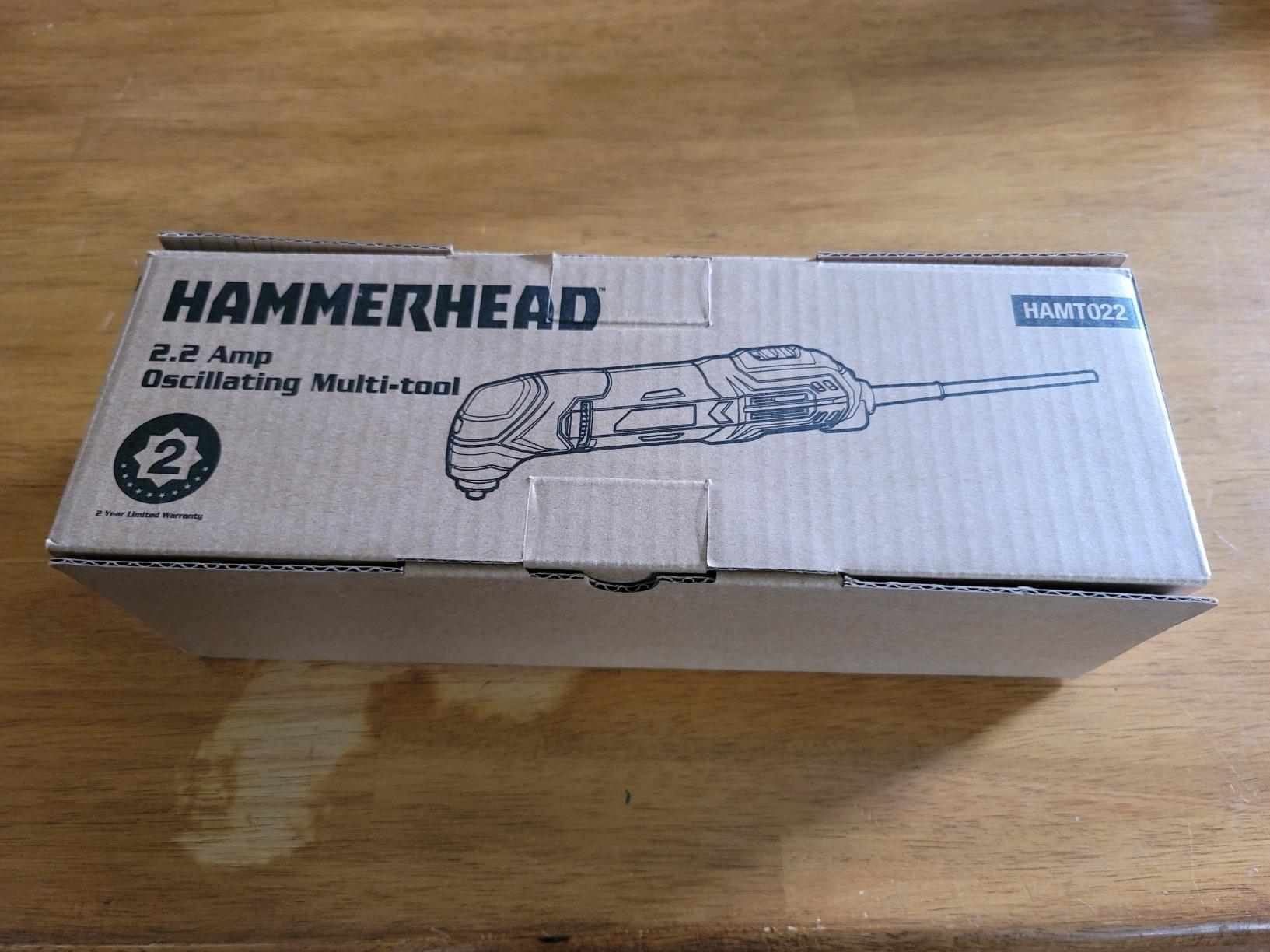
5. Hammerhead HAMT022: Best Corded Grout-Only Buy
Hammerhead 2.2-Amp Oscillating Multi-Tool with 1pc Flush Cut Blade, 1pc Semicircle Saw Blade, 1pc Sanding pad, 3pcs Sanding Paper – HAMT022
2.2 amp corded motor
Up to 20,000 OPM
3.4 lb
Variable speed dial
Pros
- Compact body and soft grip give good control in confined areas
- 20000 OPM from a 2.2 amp motor
- Universal collet accepts standard aftermarket blades
- Variable speed dial lets you back off for detail grout work
- Corded design means no battery platform to plan around
Cons
- Small accessory bundle with only two cutting blades and three sheets
- Speed control is a simple dial with no finer settings
- Two year manufacturer warranty
The Hammerhead makes a narrow argument: if you own a decent battery platform already, a corded tool removes the charging variable entirely. The 2.2 amp motor reaches 20,000 OPM, which is competitive output for a compact corded body.
Buyers highlight the compact size, handling and value, and seventy-five percent of reviews are five-star. For grout scraping in a small bathroom where a cord will reach the outlet, that is a sensible setup.
The universal collet system accepts standard oscillating tool blades from the aftermarket, so the blade choice is wide. The variable speed dial lets you back the RPM down for detail work along an edge.
An LED light covers low-light tile work, and the soft grip is comfortable enough for a kitchen backsplash job of a few hours.
At 3.4 pounds it is heavier than the cordless options here, though a corded tool never runs down mid-grout-line, which is its own kind of reliability.
Grout width and blade access
The narrow head and dial-controlled speed work well on standard 1/8 inch grout lines where you have room to place the blade squarely. Wider gaps give the blade more material to bite into.
Very narrow grout lines need a thin segmented blade and careful speed control, and the simple dial gives you less of that than a multi-setting tool. Expect a slower pass rather than a controlled one.
What the bundle is missing
You get a flush cut blade, a semicircle saw blade, a sanding pad and three sheets of sanding paper. There is no carbide or diamond blade in the box at all.
The two year warranty is the shortest we saw, which matters less if the tool stays on your bench rather than on a job site. Criticism in reviews centres on the thin bundle and coarse speed control.
6. ENERTWIST ET-OM-500: Best Wide-Angle Corded Kit
ENERTWIST 4.2 Amp Oscillating Multitool Kit with 33 PCS Accessories
4.2 amp 500W motor
5 degree oscillation angle
6 speeds from 8,000 to 16,000 OPM
2 kg
Pros
- Five degree oscillation angle for maximum cutting speed
- 4.2 amp pure copper motor with real low-end torque
- Manufacturer rates it for cutting tile
- concrete and grout
- Largest accessory bundle in this group at 33 pieces
- Tool-less quick change with universal fit
Cons
- Sanding pad hook-and-loop wears out quickly
- Universal blade fit requires a washer and only two spares are included
- Heavier than the compact corded options
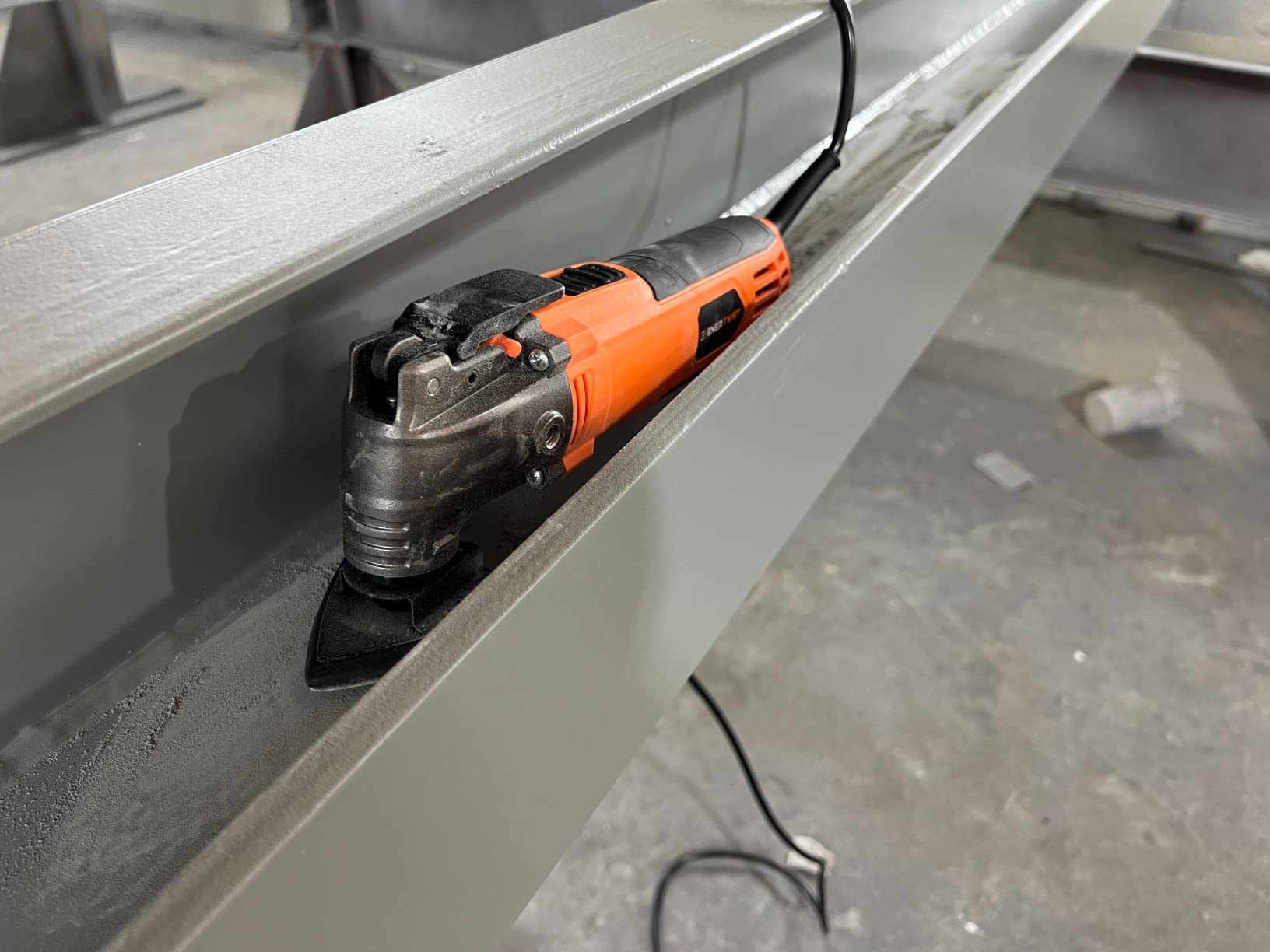
The oscillation angle is the headline number on this one. A five degree arc puts the full width of the blade into contact with the material on every stroke, and the manufacturer claims 30-40% faster cutting than same-class rivals.
That wide arc is exactly what you want on thinset and mortar beds where a narrow angle would nibble instead of gouge. It is also why this tool appears on concrete and floor stripping job lists.
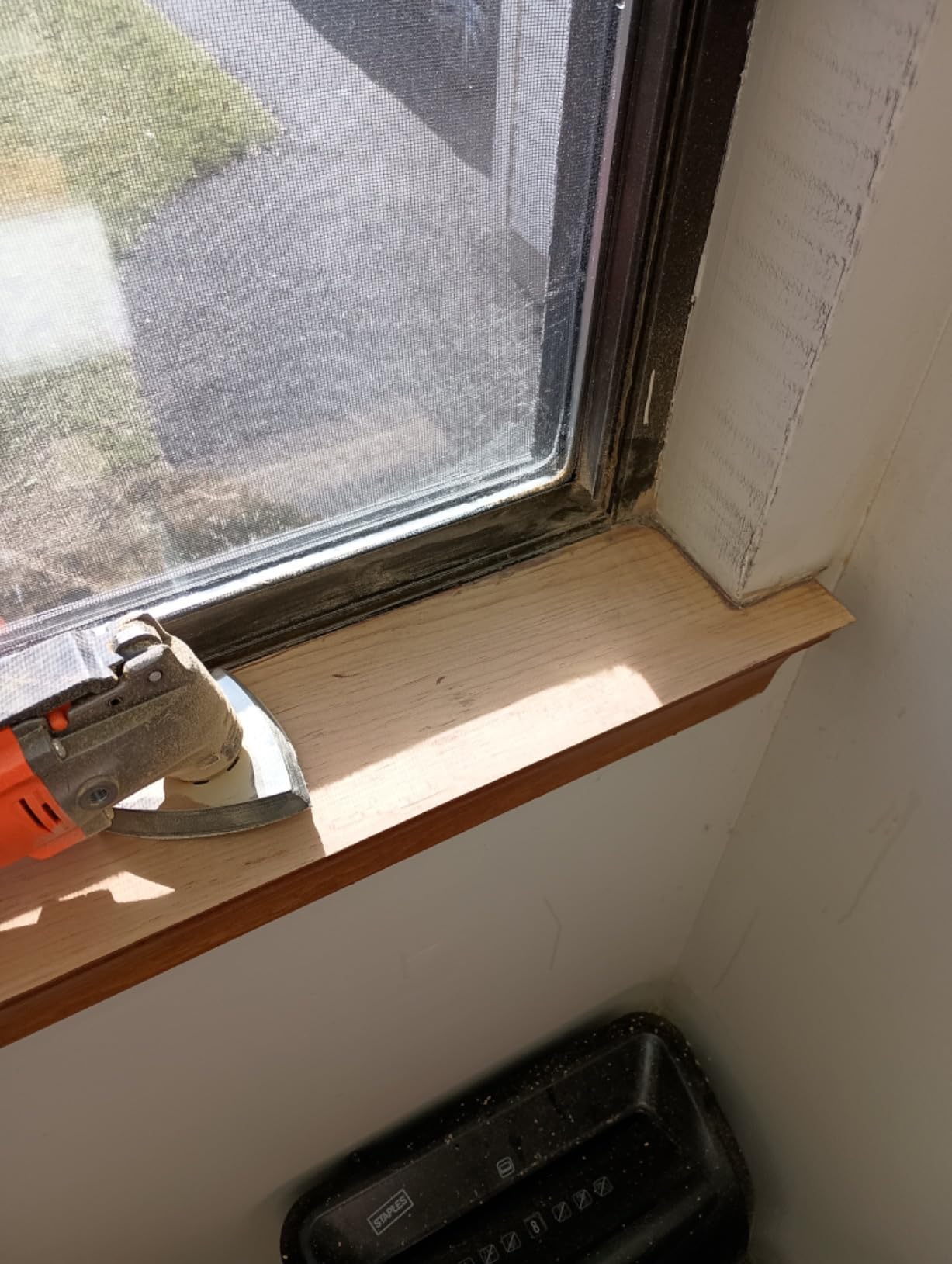
The 4.2 amp pure copper motor, rated at 500 watts, has the low-end torque that grout and tile demand. Six speed settings from 8,000 to 16,000 OPM cover the range most demo work needs.
Reviewers repeatedly single out the wide arc and cutting speed as strengths, and 70% of reviews are five-star. Owners also report it runs quieter than comparable tools without excessive vibration.
The tool-less quick change uses a universal fit across major accessory brands, so swapping between a scraper and a carbide segment does not require a hex key.
Where a five degree arc helps and hurts
On floor and thinset work the wide arc removes more material per stroke, which means fewer passes over the same spot and less blade wear overall.
Precision is the trade. Near a wall, inside a corner, or along an edge you want to keep, a wide arc will dive into the surface beside the tile. Slow the speed and keep the plunge shallow.
Bundle size and the sanding pad weak point
The 33-piece kit is the largest here, with an auxiliary handle and a nylon carrying bag included. Very few owners will use the sanding sheets more than a handful of times.
The most cited complaint is the sanding pad hook-and-loop, which wears out and lets the paper drift. Expect to replace that pad early and treat the sanding accessories as consumables rather than kit value.
7. Ryobi ONE+ PCL430B: Best Low-Vibration Cordless Option
Ryobi ONE+ 18V Cordless Oscillating Multi-Tool (Tool Only)
18V ONE+ cordless
Up to 20,000 OPM
1.9 lb
Lock-on button
Pros
- Lowest vibration in its class
- which matters over long grout sessions
- Variable speed dial up to 20000 OPM
- Shares ONE+ 18V batteries with the wider Ryobi range
- Lightweight and quiet in operation
- Lock-on button with on-board accessory storage
Cons
- No quick-release lever
- blade changes need a hex screw
- Blade retention hardware reported as a soft cast alloy
- Only a 30 day limited warranty
- Tool only
- battery and charger sold separately
Vibration is the underrated reason to like this tool. The PCL430B is described as the lowest vibration in its class, and that is the number that decides how long you can work before your hands ache.
Grout removal is repetitive, high-frequency work with the blade pressed toward a hard surface. A tool that transfers less of that energy into your wrist is worth real money over a full demo day.
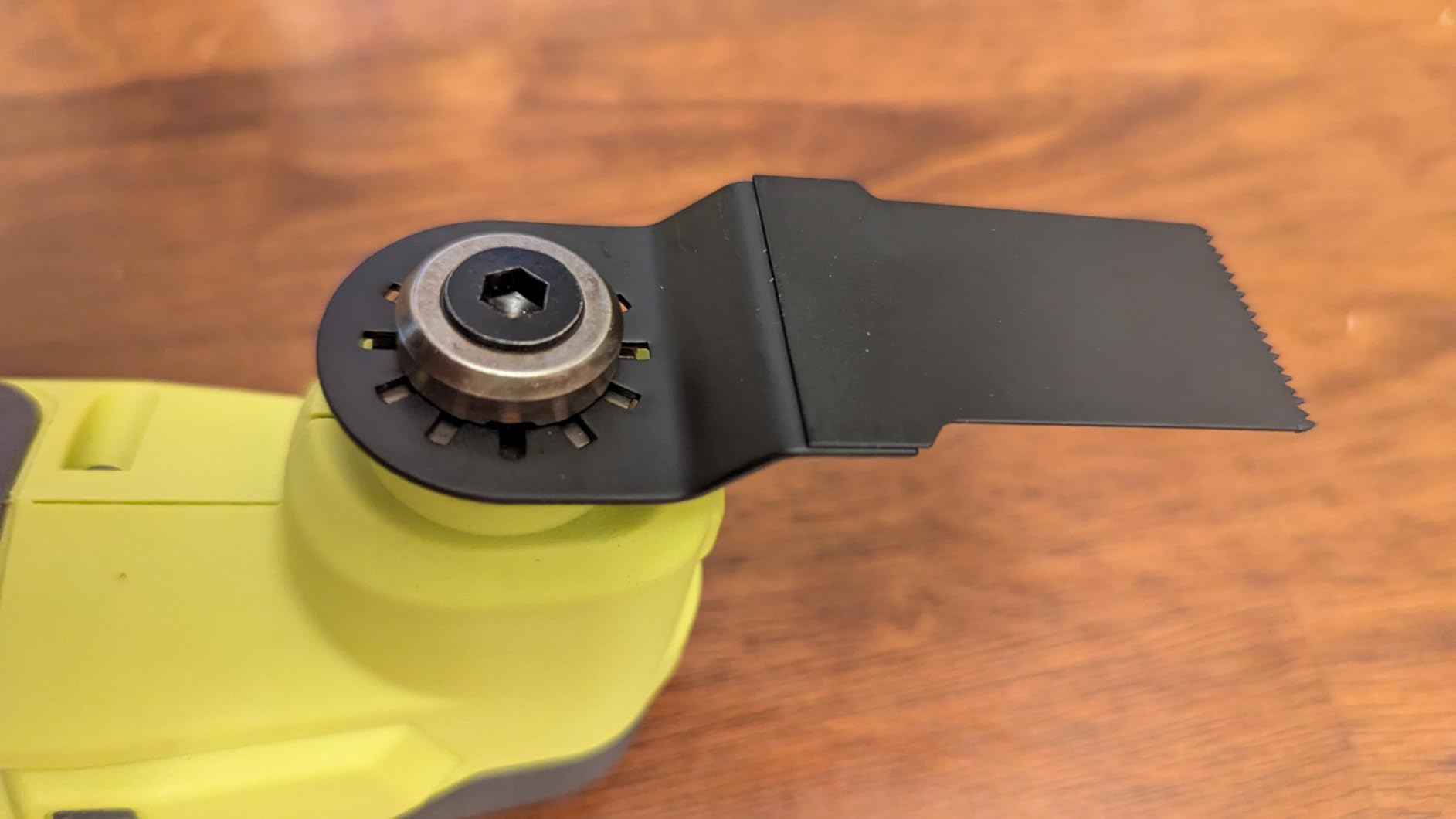
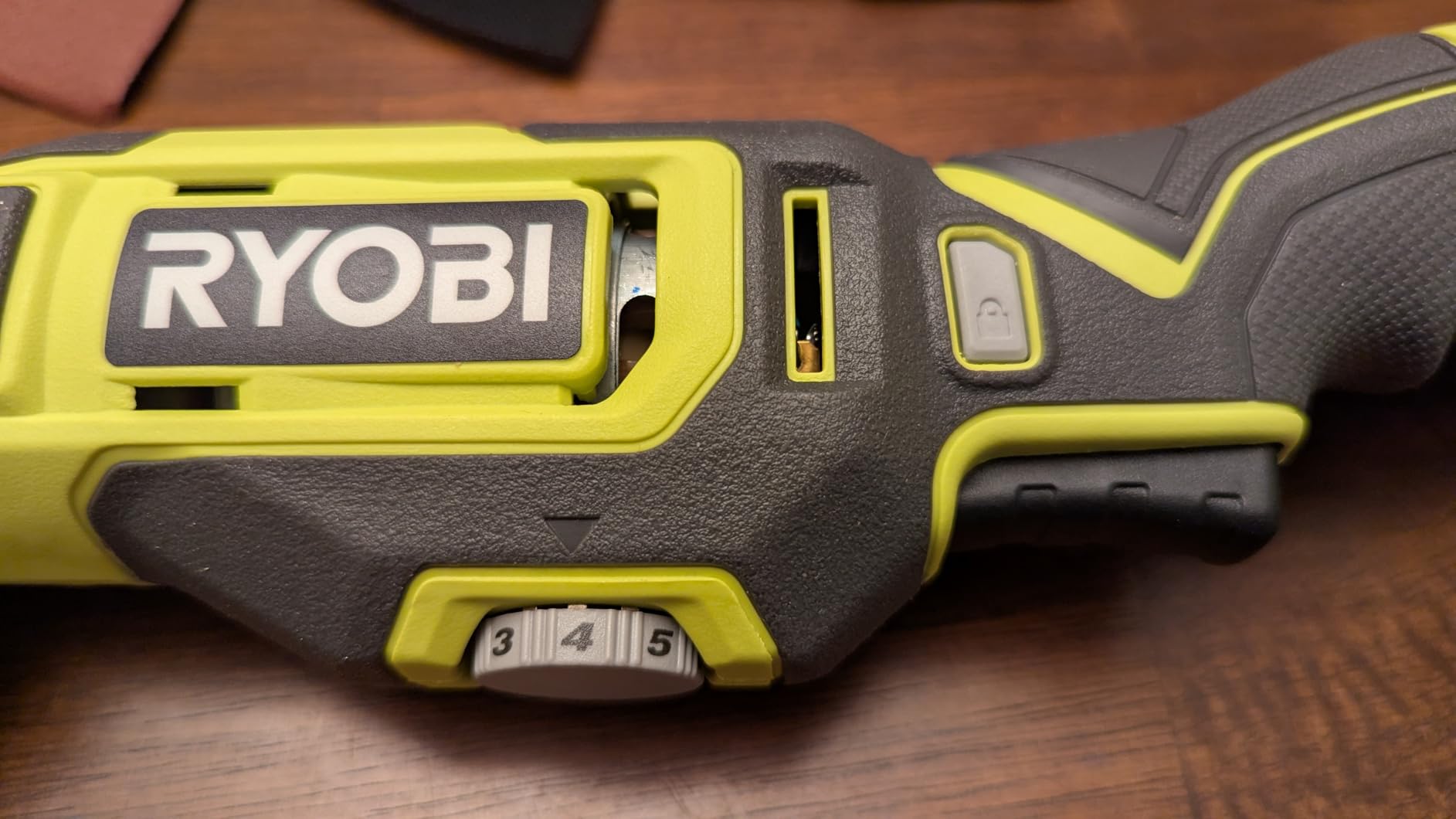
Beyond vibration handling, the tool reaches up to 20,000 OPM on a variable speed dial, cuts, sands, scrapes and grinds, and shares ONE+ 18V batteries with the rest of the Ryobi range.
That battery sharing cuts the cost of getting into the platform. One-hand battery changes and on-board accessory storage are the small conveniences that add up during a long job.
Ratings show the widest spread in this group: 75% five-star and 12% four-star, but also 8% one-star. The low end of that spread is durability rather than performance.
The blade change is the weak point
There is no quick-release lever. Blade changes require removing a hex screw, which is the single change you make most often on tile work, and the extra minute adds up.
Buyers also report the blade retention mechanism feeling like a soft cast alloy that wore out within a month for one owner, and a loose rubber vibration isolator jamming the motor for two others.
Warranty and platform commitment
The 30 day limited warranty is the shortest in this group by a wide margin. For a homeowner doing one bathroom it is workable; for someone running demos weekly it is not.
Appreciate the low vibration for long sessions, but check what the blade clamp is made of before committing it to hard thinset. Higher one-star share than the tools above it.
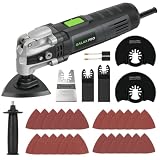
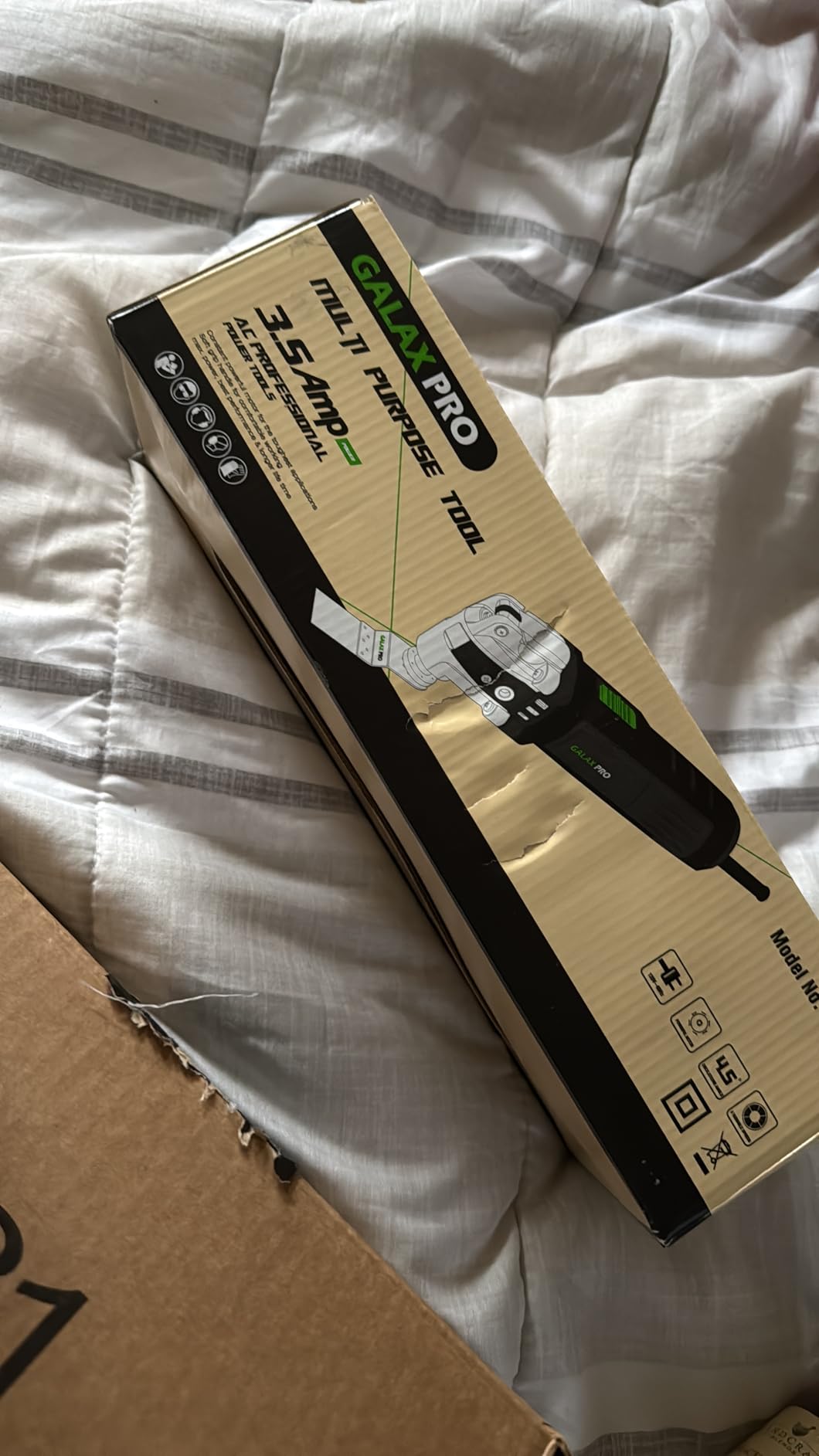
8. GALAX PRO 9525K: Best for Thinset and Adhesive Scraping
GALAX PRO Corded Oscillating Multi Tool Kit 3.5A with 30Pcs Accessories
3.5 amp corded motor
15,000 to 22,000 OPM
4.5 degree arc
4.1 lb
Pros
- Wide 4.5 degree arc maximizes blade contact for faster grout and glue removal
- High 15000 to 22000 OPM range on a variable speed dial
- Tool-free quick clamp makes blade swaps fast
- Compact body reaches awkward corners and narrow cabinets
- Owners report it does not overheat or jam
Cons
- Blade locking mechanism described as finicky
- Blades reported to wear down extremely quickly
- No trigger safety switch
- the speed dial is the on and off control
- Sandpaper holder reported to have failed on first use
Once tile is off, the real work is thinset and adhesive, and that is where this tool earns its place. The 4.5 degree oscillating arc maximizes accessory contact, which is what makes a rigid scraper bite into a mortar bed instead of skating on it.
The 15,000 to 22,000 OPM range on a variable dial sits high for scraping work. 71% of reviews are five-star and buyers call it excellent value for wood, plastic and fasteners as well as adhesive.
The quick clamp system gives tool-free accessory changes, so you can move from a carbide segment to a scraper blade in a few seconds without a wrench.
Owners report it does not overheat or jam, which matters on thinset because a loaded blade generates a lot of friction dust. At 4.1 pounds it is substantial but balanced.
The compact body reaches awkward corners and narrow cabinet runs, and the kit includes a scraper blade, plunge blades, semicircle saw blades, a triangular sanding pad and 24 sheets of sanding paper.
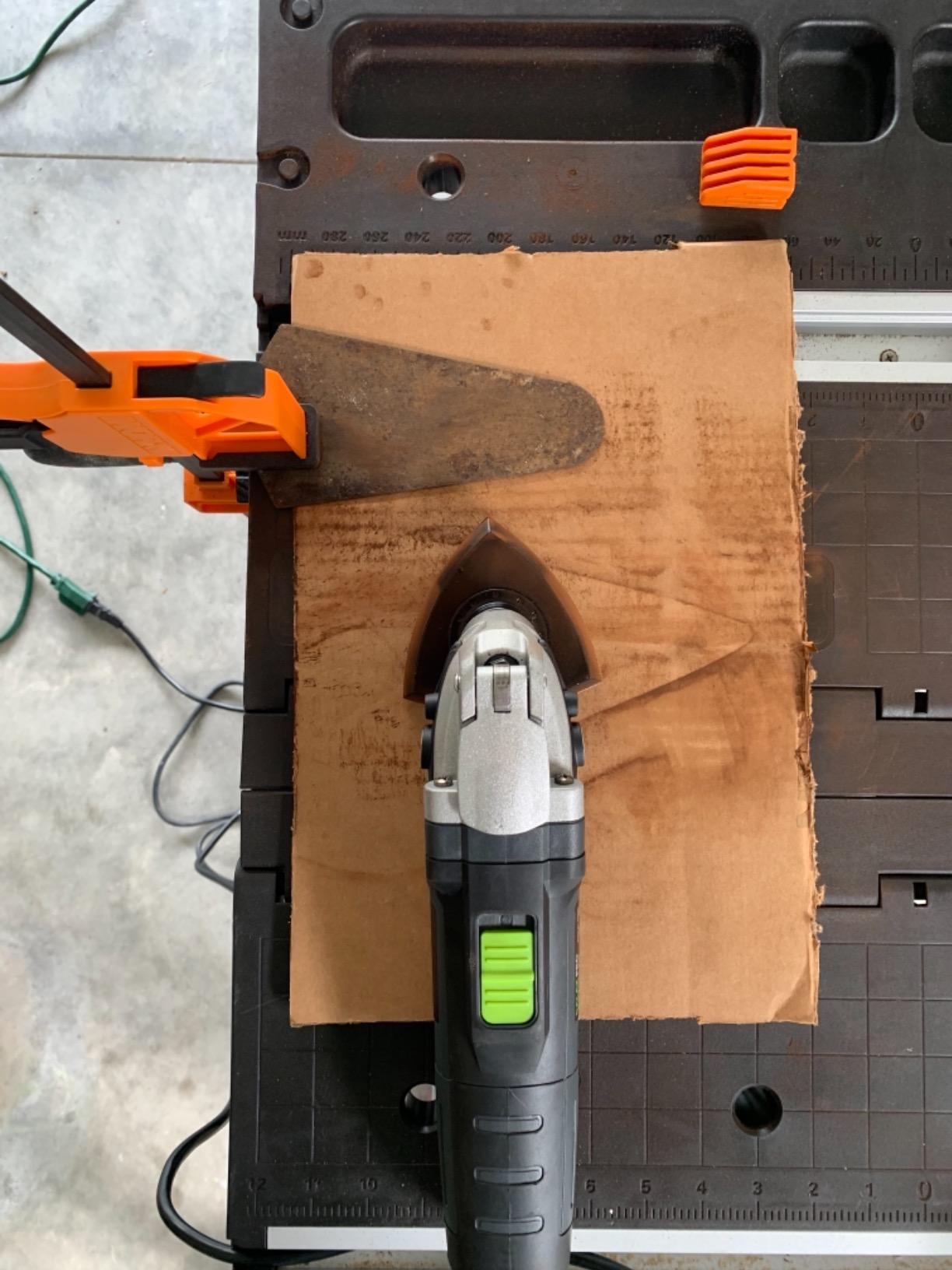
Grout and adhesive vs cutting speed
On thinset and glue residue the wide arc does the work. A broad scraper held flat against the bed removes material in passes rather than a nibbled mess.
The 22,000 OPM top end is useful on hardened residue, but this is not the tool to reach for when you need clean flush cuts on casing or trim.
Accessory durability and controls
The most common complaint is the blade locking mechanism, with owners reporting blades shaking loose even when seated. Check the clamp tension between blades on this one.
Blades also wear quickly according to several reviewers, and there is no trigger safety switch, so the speed dial is the on and off control. Treat it as a dedicated scraping tool.
9. WORKPRO W124744AE: Best High Top-End Speed Corded Tool
WORKPRO 3.0 Amp Corded Oscillating Multi-Tool Kit
3.0 amp corded
7 speeds from 15,000 to 23,000 OPM
3 degree arc
5.2 lb
Pros
- Seven speed settings topping out at 23000 OPM
- the highest maximum in this group
- Tool-less three-step blade change with no spanner needed
- Universal accessory interface fits most brands
- Carrying bag included with the kit
- Most consistent rating profile here with 81% five-star
Cons
- Heaviest kit here at 5.2 pounds
- Narrow 3 degree arc gives less material removal per stroke
- Smallest accessory bundle at 17 pieces
- Only rated for medium and low-hardness metal
The WORKPRO’s distinguishing number is 23,000 OPM, the highest top-end speed in this group. On hard grout and cured adhesive, that extra headroom means the blade keeps cutting instead of stalling and heating.
Seven speed settings is unusually granular for a corded tool at this level, and it lets you find a comfortable rhythm for scraping rather than living with one fixed speed.
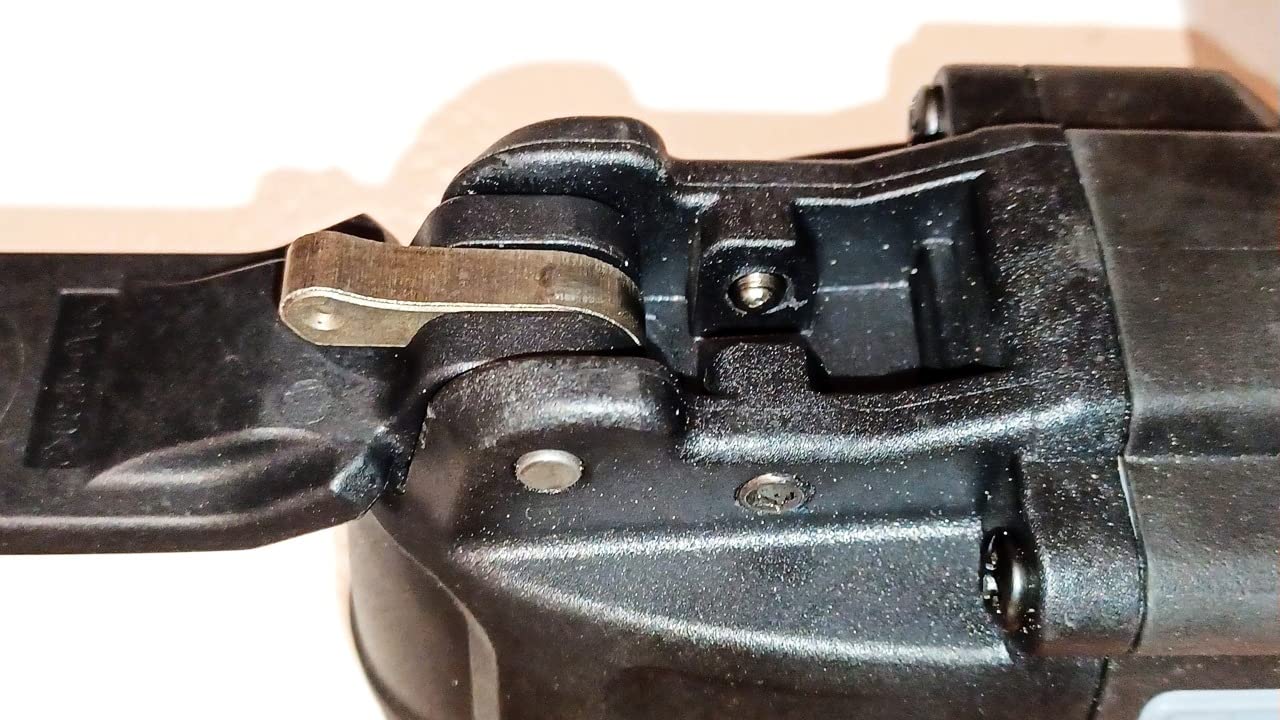
The tool-less three-step blade change uses a flip button and needs no spanner. A top-mounted on and off switch keeps it from being triggered accidentally when the tool is set down on a ladder.
Owners rate it as a capable DIY kit with fast blade changes, and 81% five-star with only 3% one-star makes it the most consistent rating profile we saw.
The universal accessory interface fits most brands, so carbide and diamond segments from other manufacturers will mount without an adapter.
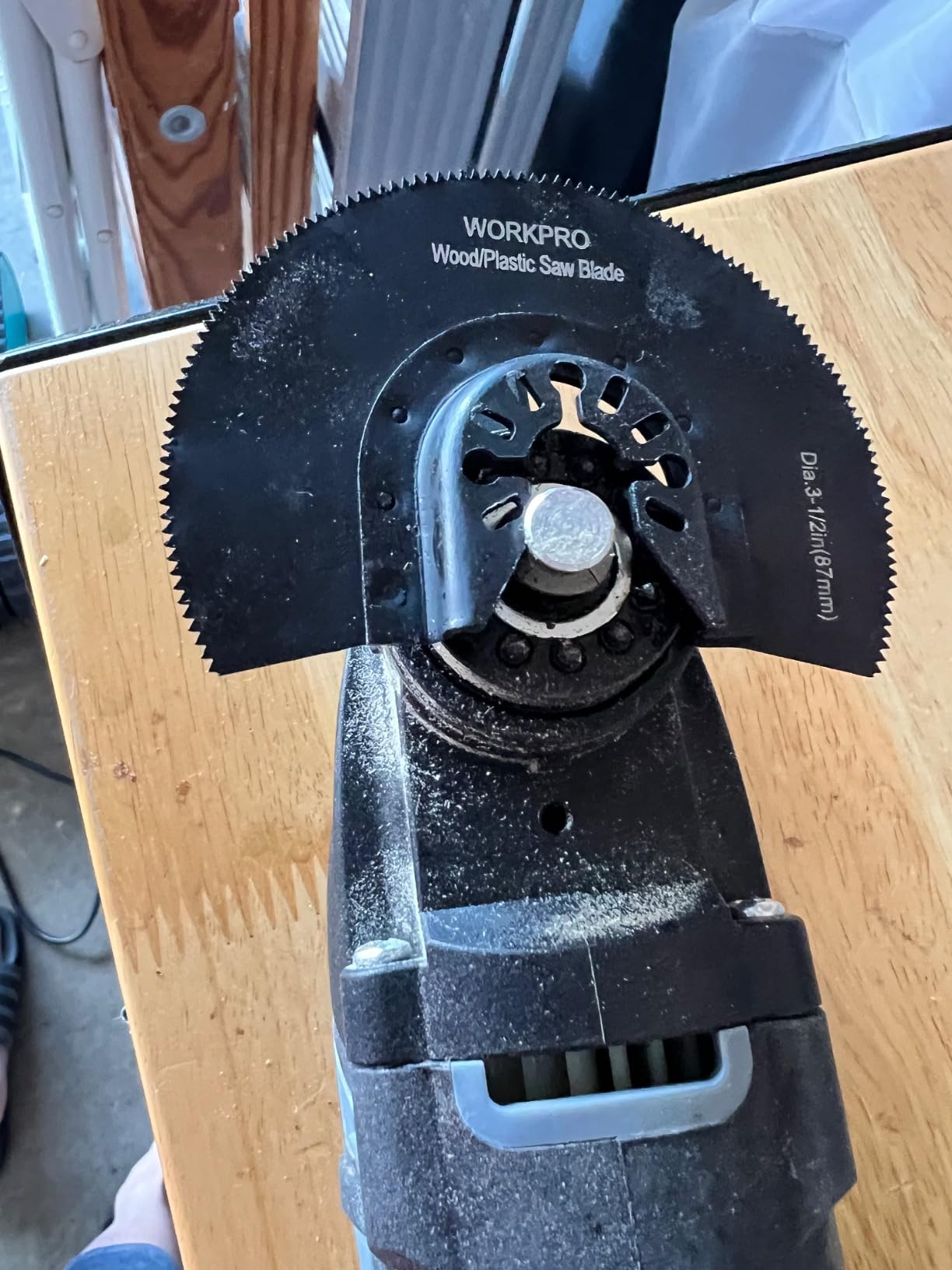
Arc angle versus top-end speed
A three degree oscillation angle is the narrowest here, and that is the compromise. Less of the blade touches the material on each stroke, so you rely on raw RPM to compensate.
For long, straight scraping passes across a large floor, that works well. For tight corners and edges you want to keep, a narrow arc is easier to control than a wide one.
Weight and bundle size
At 5.2 pounds this is the heaviest kit in the group, which is tiring for overhead grout work on a shower wall. Plan breaks and keep the arm close to your body.
The 17 piece bundle is the smallest we saw, and a carrying bag is included. It is rated for medium and low-hardness metal, wood, nails and screws rather than hardened steel.
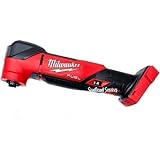
10. Milwaukee 2836-20 M18 FUEL: Best for Daily Contractor Use
Milwaukee 2836-20 M18 FUEL Brushless Lithium-Ion Cordless Oscillating Multi-Tool (Tool Only)
4.2 degree oscillation angle
Auto-Load soft start
3.1 lb
M18 FUEL brushless motor
Pros
- 4.2 degree oscillation angle delivers fast material removal on grout and tile
- Auto-Load ramps from a soft start to full speed once under load
- Vibration dampening keeps the tool comfortable over long sessions
- 180 degree span LED light for attics and tight spaces
- Tool-free blade change system and 180 degree light
Cons
- Tool only
- M18 battery and charger sold separately
- Locking screw can loosen under heavy use and let the blade slip
- Heavy at 3.1 pounds for overhead work
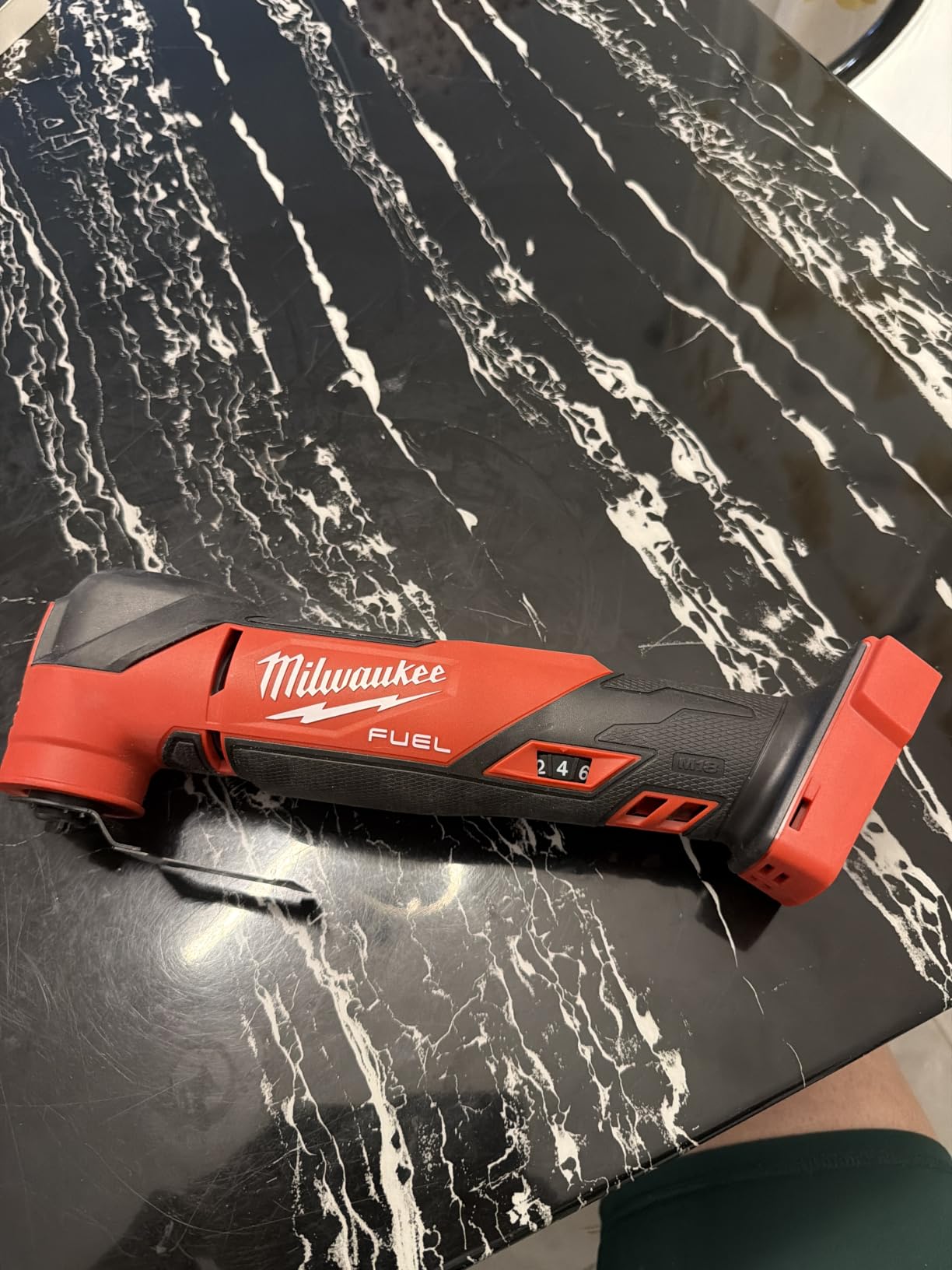
The 2836-20 is the contractor answer. Its 4.2 degree oscillation angle is the widest of the Milwaukee models here, tuned for material removal, and the M18 FUEL brushless motor runs noticeably stronger than the non-FUEL 2626.
Auto-Load is the feature to understand. The tool starts at a soft speed and ramps to full speed once it is under load, so a blade touching down does not skate across the tile or chip an edge.
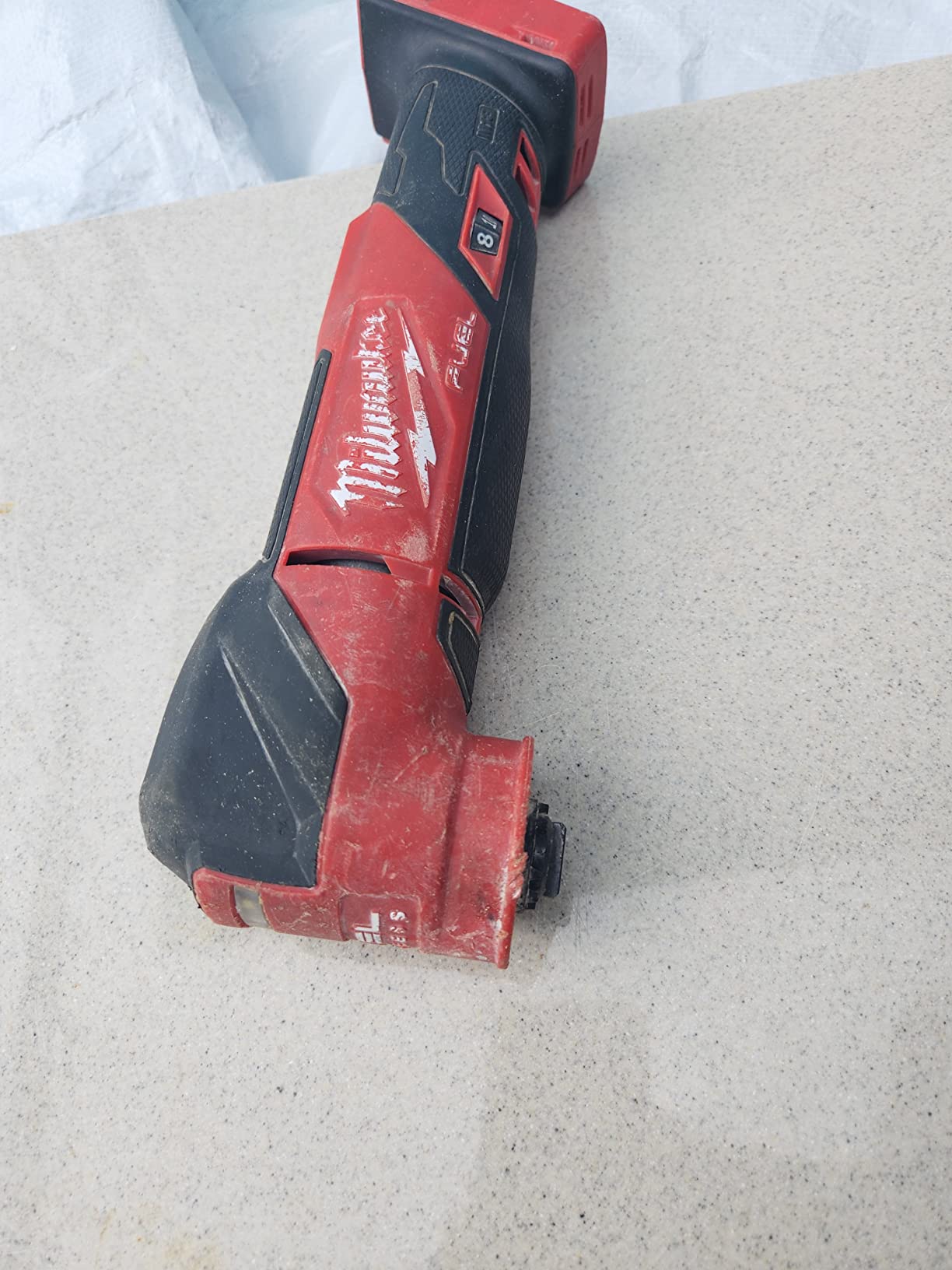
Vibration dampening technology is what makes a full day tolerable, and contractors consistently call out power, low vibration and the Auto-Load soft start as the three reasons this one holds up.
Eighty-seven percent of reviews are five-star, the strongest share in this group, and the 180 degree span LED lights up attics and tight corners where a grout line disappears.
The tool-free blade change system matters on a job where you swap attachments dozens of times, and a variable speed dial handles everything from grout to flush cuts.
When Auto-Load pays off on tile
Auto-Load solves the most common tile mistake: dropping a blade onto porcelain at full speed and taking a chip out of the edge. The soft start keeps contact controlled until load rises.
Once the blade is cutting, the ramp is invisible. You get the benefit at the moment it matters, which is the first half inch of every new cut.
Mechanical caveats on heavy work
The locking screw can loosen during heavy use and let the blade slip off if you do not check it. That is worth doing at the start of a session rather than at the end.
At 3.1 pounds it is heavy for overhead work, and the manufacturer warranty is one year. Best fit is a contractor already running M18 packs, not a first-time buyer.
How to Choose an Oscillating Tool for Tile Removal
The first question is not which brand to buy but what the tool has to do. Grout removal, tile cutting and thinset scraping reward different specs, and one machine rarely wins all three.
Oscillation speed and speed control. More oscillations per minute means faster cutting on hard material, and a low setting is what protects adjacent tile. Tools with three to twelve settings give you more useful control than a single-speed design. Look for at least 20,000 OPM if you are cutting porcelain or large format tile.
Oscillation angle. A wider arc puts more of the blade into the material on every stroke, which speeds up scraping. A narrower arc is easier to control in corners and along walls. The tools here run from a 2.8 degree angle up to 5 degrees.
Blade interface. Starlock, OPEN-LOK and universal four-hole flanges all exist, and this is the number one source of buyer frustration. A universal accessory adapter lets you use blades from other brands, which matters far more than brand loyalty once you start ordering carbide and diamond segments.
Weight and vibration. Overhead work on a shower wall punishes heavy tools quickly. Anything above about three pounds gets tiring within an hour, and vibration damping pays off across a full demo day.
Tool-free blade changes. You will change blades dozens of times on tile work. A lever or clamp system is worth real time over a hex screw, and it is a reason some tools wear out faster in the retention mechanism.
Power source. Cordless gives you freedom on floors and in demolished bathrooms. Corded gives you uninterrupted output and no charging pauses. Battery cost is a factor too, since four of the ten tools here are tool-only.
Dust control. Tile and grout dust contains crystalline silica, and serious installers connect a dust extractor where the tool allows it. Check the accessory range for a dust port before buying, and wear a proper respirator regardless.
Which Blade to Use for Grout, Tile, and Thinset
The blade decides the outcome more than the tool does. A good machine with the wrong blade will frustrate you, and a carbide segment costs a fraction of a new multi-tool.
Carbide grit segmented blades. These are the standard grout removal blades. The segmented design keeps dust and debris moving along the blade rather than packing into a solid disc, which cools the cutting edge and extends its life. Use a wide segment for standard joints and a narrow one for tight lines.
Diamond grit flush cut blades. Diamond grit lasts considerably longer than carbide on hard tile and epoxy-type material. They are the right choice for porcelain, large format tile and stubborn grout where carbide would overheat and shed quickly.
Hybrid grout and tile blades. One blade that handles grout plus thinset saves time on a full demo, because you are not stopping to reconfigure between stages.
Rigid scraper blades. These are for thinset and adhesive residue after the tile is off, not for cutting. A rigid scraper is what turns a rubble pile into a flat surface you can set new tile on.
On grout width, match the blade to the joint rather than the opposite. A blade wider than the line will contact the tile edges and chip them, which is the single most common way people ruin good tile during removal.
Grout and Tile Removal Technique, Step by Step
Start at the lowest speed that will cut, not the highest. A diamond or carbide blade set into a grout line should track on its own, and if it needs pressure to stay on line, the speed is wrong.
Keep the blade flat and shallow, around two or three millimetres of depth. The goal is to remove grout from the joint, not to cut into the mortar bed underneath, and a shallow angle protects the tile edge.
Work along a line at a time rather than attacking random spots. Once the grout on one side of a tile is clear, the tile will often release with a light tap against a rubber mallet instead of a chisel.
Expect the blade to generate more heat and dust than the marketing suggests. Pause frequently, let the blade cool, and keep a spare segment within reach, because a dull blade is what turns a controlled cut into a chipped tile.
After the tile is off, the remaining thinset is harder work than the tile removal itself. Use a rigid scraper blade held flat against the bed and let the wide-arc tools earn their place here.
Protect the work area. Lay down a dust sheeting, seal off doorways, and remember that silica dust from cutting tile and grout is a serious long-term health hazard that a paper mask will not address.
Frequently Asked Questions
What multi-tool is best for removing tile?
The DEWALT DCS356B is the strongest all-round choice, with a brushless motor, three speed settings up to 20,000 OPM and a universal accessory adapter. The Milwaukee 2626-20 takes over for long demo days on the M18 platform, and the AVID POWER ACMT326 covers the most accessories if you are starting from nothing.
Will an oscillating tool remove tiles?
Yes, an oscillating multi-tool removes ceramic and porcelain tile effectively when paired with a diamond grit or carbide grit blade. The tool clears the grout joint first, then the freed tile usually lifts with light taps. It is far more precise than an angle grinder, which chips tile edges.
What is the most effective tool for removing tile?
For a full floor or wall, an angle grinder with a diamond wheel removes tile faster, but it carries a much higher risk of chipping and gouging. For control, safety in tight spaces and keeping good tile, an oscillating multi-tool is the most effective option for most residential jobs.
What is the best multitool blade for removing tiles?
A segmented carbide grit blade is the standard choice for grout and tile removal, with a wide segment for normal joints and a narrow one for tight lines. Diamond grit lasts considerably longer on hard porcelain and epoxy-type grout, where carbide tends to overheat.
Can an oscillating multi-tool cut tile?
A multi-tool can cut ceramic and porcelain tile with a diamond grit blade, particularly for flush cuts and plunge cuts around outlets. It is not the fastest way to cut a full tile, but it is precise and low-risk on work that is already close to a wall or cabinet.
What is the best oscillating multi-tool on the market today?
The Milwaukee 2836-20 M18 FUEL is the strongest performer we found, with a 4.2 degree oscillation angle, Auto-Load soft start and vibration dampening. The DEWALT DCS356B is the better value pick, and the AVID POWER kit is the most complete for a first project.
What is the best multi-tool for removing grout?
Any tool with a segmented carbide or diamond grit blade will remove grout, and the deciding factors are speed control and vibration comfort. The Milwaukee 2426-20 M12 is the lightest for overhead work, while the ENERTWIST offers a five degree arc for faster material removal.
What multi-tool blade for tiles?
Choose a diamond grit or carbide grit segmented blade sized narrower than the grout joint, so the blade never contacts the tile edges. Add a rigid scraper blade for thinset removal afterward, and keep a spare segment on hand because grit blades wear down faster than most buyers expect.
Conclusion: The Best Oscillating Tools for Tile Removal in 2026
After working through ten of the most capable machines on the market, the DEWALT 20V MAX XR DCS356B remains the best oscillating tool for tile removal overall. Its three-speed brushless setup, universal adapter and light weight cover grout, tile, trim and thinset without a weak point.
Pick the Milwaukee 2626-20 if you already run M18 batteries and want more low-end torque. Pick the AVID POWER if you want batteries, charger and a diamond blade in one box, and the Milwaukee 2426-20 if overhead work is the priority.
Whichever you choose, buy a diamond grit segmented blade sized to your grout before the first cut. That single accessory does more for your results than any other purchase in this guide.