
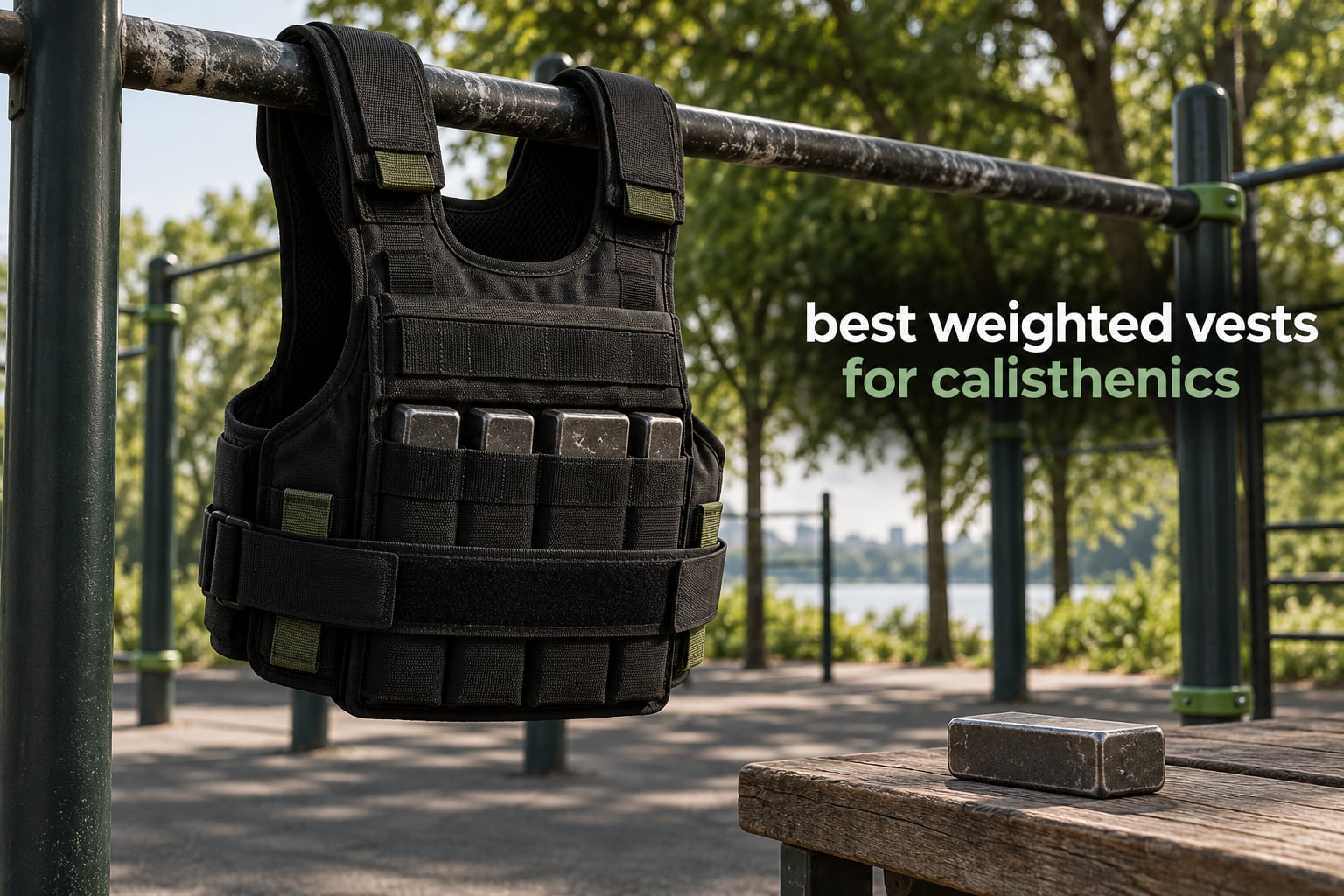
Weighted vests are one of the simplest ways to keep progressing once your bodyweight calisthenics stall. They add real load to pull-ups, push-ups, squats, lunges and walks without a barbell, a rack or a dip belt, and one vest covers every lift in your session. After spending weeks with twelve of the best weighted vests for calisthenics in 2026, the Eric Flag 40 lb adjustable vest came out ahead for most athletes, with the Gymnastics Power cropped vest taking the calisthenics-specific crown and the Wolf Tactical model leading for rucking and loaded carries.
Are weighted vests good for calisthenics? Yes, once you can already do at least five strict pull-ups or twenty clean push-ups with an empty vest. They are genuinely useful for adding progressive overload, and they train your stabilisers, but they are useless as a substitute for mastering the unweighted movement first.
This roundup covers twelve vests built around four questions we hear most often from calisthenics athletes: how heavy should the vest be, what is actually inside it, will it restrict my range of motion on the bars, and how long can I realistically wear one before my shoulders complain. Each entry below covers weight capacity, the weight type, the fit, and who the vest suits.
We also cover the part most roundups skip: how to progress, what the real downsides are, and when a dip belt is the better tool.
Table of Contents
Top 3 Weighted Vests for Calisthenics (October 2026)
Eric Flag 40 lb Adjustable…
- 16 removable 2.4 lb iron weights
- 0-40 lb range
- 1000D Oxford nylon

Gymnastics Power 35 lb Vest
- Cropped high-and-tight cut
- 2 lb steel blocks
- TPE foam padded straps

Wolf Tactical Adjustable Vest
- 14-42 lb plate configurations
- laser-cut MOLLE panels
- low-bounce waist straps
All 12 Weighted Vests at a Glance in 2026
The table below is the fastest way to narrow the field. It shows every vest in this roundup with its maximum load, what is inside it, and the training situation it fits best.
| Product | Specs | Action |
|---|---|---|
| Eric Flag 40 lb Adjustable Weighted Vest |
|
Check Latest Price |
| Gymnastics Power 35 lb Adjustable Vest |
|
Check Latest Price |
| Wolf Tactical Adjustable Weighted Vest |
|
Check Latest Price |
 RUNmax 40 lb Adjustable Weighted Vest RUNmax 40 lb Adjustable Weighted Vest |
|
Check Latest Price |
 RUNFast 40 lbs Pro Weighted Vest RUNFast 40 lbs Pro Weighted Vest |
|
Check Latest Price |
 MVRK 35 lb No-Bounce Weighted Vest MVRK 35 lb No-Bounce Weighted Vest |
|
Check Latest Price |
 BAGAIL 40 lb Adjustable Weighted Vest BAGAIL 40 lb Adjustable Weighted Vest |
|
Check Latest Price |
 Sportneer 2-18 lb Adjustable Vest Sportneer 2-18 lb Adjustable Vest |
|
Check Latest Price |
 CAP Adjustable Weighted Vest 20 lb CAP Adjustable Weighted Vest 20 lb |
|
Check Latest Price |
 Polyfit Fortify Weighted Vest Polyfit Fortify Weighted Vest |
|
Check Latest Price |
 HANZO 45 lb Adjustable Weighted Vest HANZO 45 lb Adjustable Weighted Vest |
|
Check Latest Price |
 CROSS101 20-80 lb Adjustable Vest CROSS101 20-80 lb Adjustable Vest |
|
Check Latest Price |
How We Picked: What We Looked For
We ranked these vests on the things that actually break a training session, not on looks or marketing copy. The four that decided almost every ranking were range of motion on the bars, weight type, increment size, and how the vest behaves under sweat.
Range of motion is the first filter. Any vest that sits low on the ribs or flares out at the shoulders gets in the way of a chest-to-bar pull-up, a floor push-up or a handstand. A cropped, high cut keeps the mass on the upper torso and out of the way, which is why the Gymnastics Power design took the calisthenics award.
Weight type decides durability. Solid iron and steel blocks hold their position and do not leak. Sand and fine iron ore packets conform to the body nicely but settle over repeated sessions, which quietly changes your effective load mid-set. Every vest here except the Sportneer uses discrete iron or steel blocks.
Increment size tells you how finely you can progress. A 4 lb jump is fine for a walker and useless for a weighted pull-up, where a stalled rep is the difference between a working set and a wasted one. The vests with 1 lb and 2.2 lb steps gave us the smoothest progressions.
Finally we checked torso length and closure. A vest that only adjusts at the shoulders will not sit flat on a short or long torso, and one that rides up during a run is a nuisance. Waist straps and dual-lock closures separated the good fits from the merely adequate ones.
1. Eric Flag 40 lb Adjustable Weighted Vest – Best Overall
ERIC FLAG 40 lb Weighted Vest for Men & Women – Adjustable 0-40 lb with 16 Iron Weight, Heavy-Duty for Calisthenics, Running and Walking – Compact 1000D Oxford – Weighted Vest with Removable Weights
Max load: 40 lb (adjustable 0-40)
Weights: 16 removable 2.4 lb iron blocks, 8 front and 8 back
Shell: 1000D Oxford nylon
Empty weight: 1.6 lb
Closure: buckle with adjustable strap
Pros
- Widest useful increment control with 2.4 lb iron blocks
- Even 8 front and 8 back distribution reduces shoulder strain
- Compact profile that does not restrict arm movement
- Durable 1000D Oxford shell
- Fits a wide range of body sizes
Cons
- Can leave shoulder marks on long sessions
- Upper shoulder and neck area runs slightly wide on pull-ups
- Brand name printed on the front
The Eric Flag is the one we kept reaching for. Sixteen removable iron blocks spread across eight front and eight back pockets take it from zero to 40 lb, and at 1.6 lb empty it disappears on your body in a way most 40 lb vests do not.
The 2.4 lb increments are the quiet strength here. Most competitors jump in 4 lb steps, which is fine for walking but too coarse for pull-ups where you want to grind out reps rather than stall. Reviewers consistently single that out as the reason the progression works.

Distribution is even, which matters more than it sounds. With weight split front and back the load sits close to your centre of mass, and I noticed noticeably less lower-back fatigue during weighted walking lunges than with vests that stack everything on the front.
For a calisthenics athlete this is the safest first buy. At 40 lb ceiling it outlasts most beginners, and the removable blocks mean you can move up in small steps instead of replacing the vest.

Will the 40 lb ceiling hold you?
For most lifters, yes. Weighted pull-ups for the average intermediate athlete rarely go past 45 lb before other variables need attention. Reviewers report working up from 20 lb to 35 lb over several weeks of steady progression and only then starting to look for more.
The 40 lb ceiling is where this vest becomes a compromise. If your long-term goal is heavy weighted muscle-ups, you will eventually need a belt, and no vest in this roundup changes that.
Is it comfortable on the bars?
Mostly, with one caveat. The compact profile leaves your arms and shoulders free, and the collar sits high enough not to interfere with a chin-up. The upper shoulder and neck area runs a little wide, which some reviewers notice at the top of a pull-up.
The other reported issue is cosmetic shoulder marking after very long sessions. If you are training in a vest for an hour or more, expect some pressure marks.
2. Gymnastics Power 35 lb Adjustable Vest – Best for Calisthenics
Weighted Vest Adjustable for Men & Women – Strength Training Weight Vests for Walking, Running, Fitness & Cross Training, Adjustable Weighted Vest for Men’s Workouts, Rucking, 35LB, Black
Max load: 35 lb in the listed variant,13 variants from 35 lb to 60 lb
Weights: 2 lb removable solid steel blocks
Shell: 1000D nylon
Cut: cropped, high and tight
Straps: TPE foam padded
Pros
- Cropped cut keeps mass off the lower back
- Best range of motion of any vest here
- Padded straps stay comfortable under load
- Stitching survives repeated washing
- Snug fit that does not ride or slip
Cons
- Weight pockets open at the bottom
- so a block could slide during fast movement
- Higher price tier among 1000D nylon vests
This is the vest I would hand to someone whose training is almost entirely on the bars. The cropped, high-and-tight cut is the single biggest range-of-motion advantage in this roundup, and you feel it immediately on floor push-ups and inverted work.
Keeping the load high on the torso and away from the waist means squats and sit-ups stay clean. Most vests in this roundup sit lower and drag on the hip crease, which is a real limitation for anyone doing pistol squat progressions.
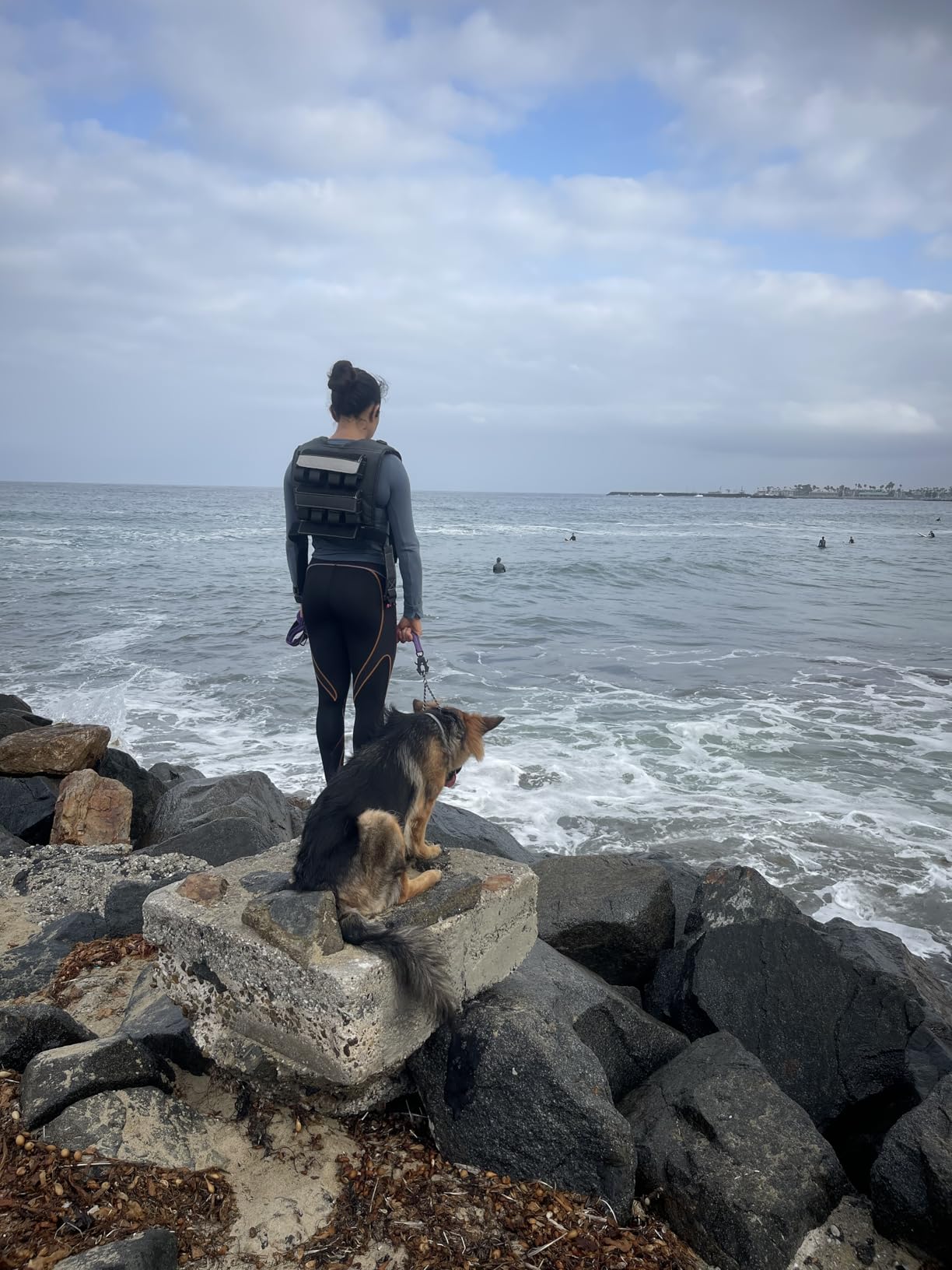
The 2 lb steel blocks give a finer step than most rivals. Combined with the padded TPE foam shoulder straps, it stays comfortable through the high-rep push-up work where a heavier vest would normally bite.
Fit was one of the better results here, including for smaller and plus-size wearers, which is not something we can say for every vest we tested.
What is the open-pocket risk?
The weight pockets are open at the bottom, so in theory a block could slide out during fast movement such as sprinting or high-impact plyometrics. One reviewer flagged it as a genuine safety concern while running.
For controlled bar work and loaded walks the risk is negligible. If your plan involves sprints or box jumps, fit a stopper or choose a closed-pocket vest.
Is the price worth it?
It sits in the higher tier for 1000D nylon vests, and reviewers are split on that. The trade is simple: you pay more for the cropped cut and foam padding, and those are exactly the features that make it the best calisthenics option here.
If your training is 80 percent bar and floor work, that cut is the part you are paying for.
3. Wolf Tactical Adjustable Weighted Vest – Best for Rucking
WOLF TACTICAL Men & Women Weighted Vest – Adjustable Tactical Design
Max load: 42 lb (14, 20, 31 or 42 lb configurations)
Weights: front and back plate pairs, sold separately
Shell: 600D nylon with laser-cut MOLLE panels
Fit: one size fits most, XS to XL
Colours: seven options
Pros
- Genuinely tactical build with laser-cut MOLLE
- Padded shoulder yoke spreads the plate load
- Low-bounce fit holds through WODs and runs
- Holds up after years of weekly rucking
- Quick weight configuration swaps
Cons
- Weight plates sold separately
- Flat metal plates compress the chest when tightened
- Load hangs on the shoulders over long rucks
- Cumbersome to pull over the head
Wolf Tactical is the pick if your weighted work is distance rather than reps. The laser-cut MOLLE panels and padded shoulder yoke are designed for load carriage, and buyers report the vest still looks new after years of weekly rucking.
It holds steady through CrossFit-style work too. The adjustable waist straps and tension bands keep the load from bouncing during sprints, which is the failure mode of most running-oriented vests.
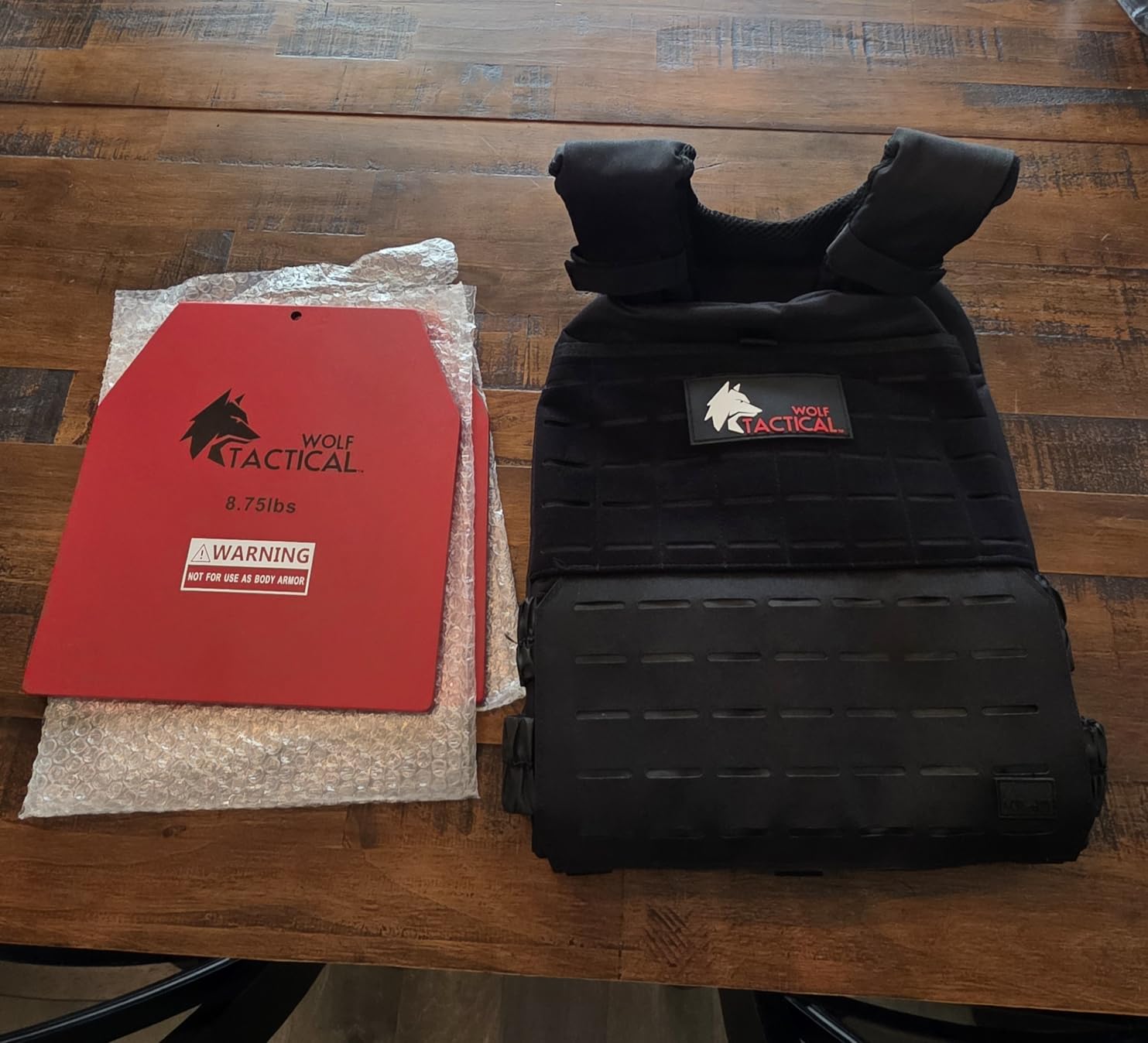
Weights are sold separately and load into front and back pairs in 14, 20, 31 or 42 lb configurations. If you already own plates this is cheap to fill, and if you do not, budget for the plates separately before you compare totals.
Seven colourways including Pink Camo and OD Green make it the easiest of the group to live in outside the gym.
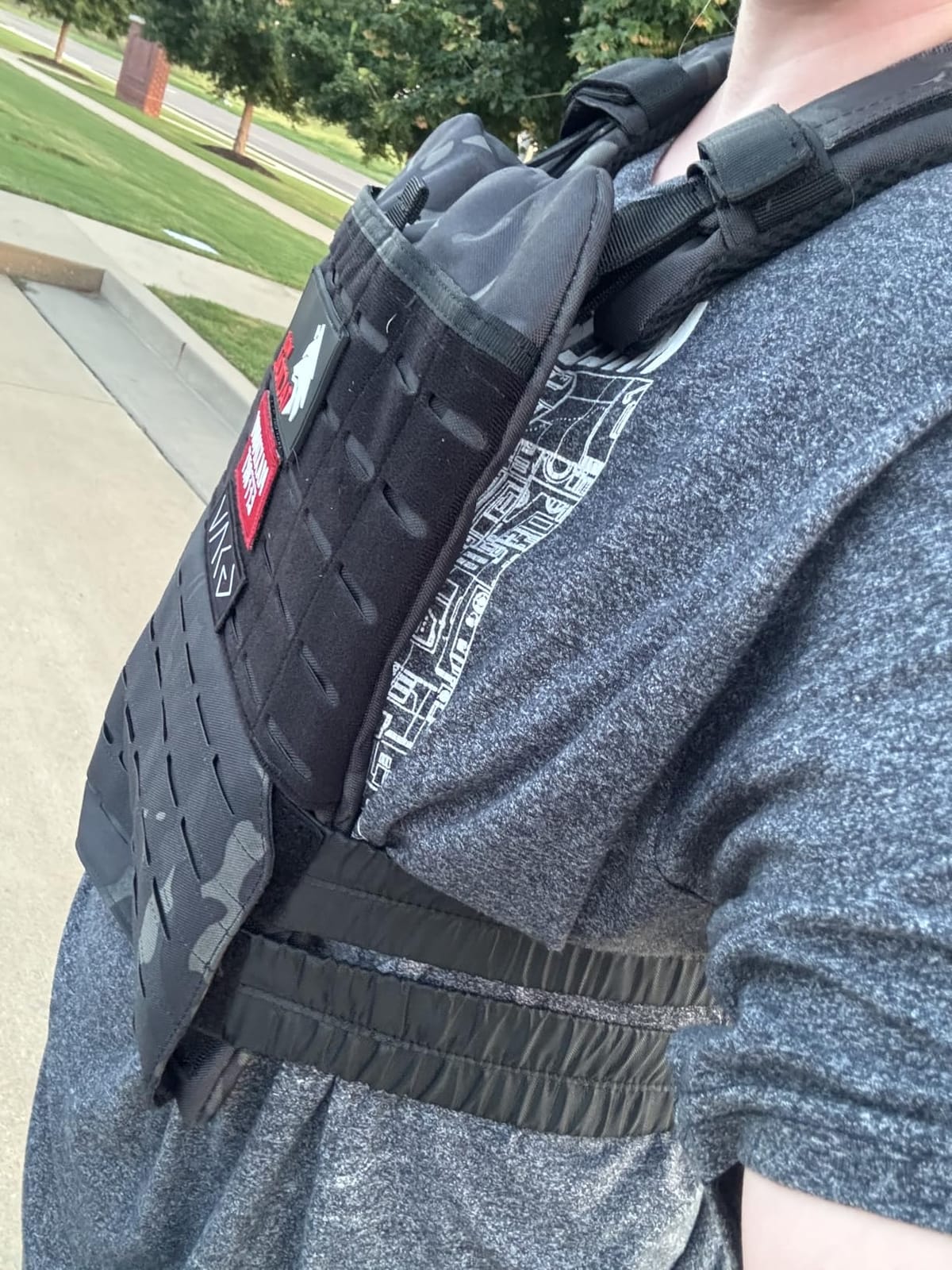
Why do rucking buyers prefer softer vests?
Several reviewers who ruck long distances actually prefer soft iron-filled vests because the flat metal plates here crush the traps and restrict breathing when the straps are pulled tight. That is a real trade and it shows up after an hour, not after ten minutes.
For pull-ups and short sessions the plates are fine. For multi-hour loaded carries, comfort matters more than the hardware aesthetic.
Is it practical for bar work?
Less so than the two vests above. The bulk at the chest and the plate-driven tension reduce your comfort at chest-to-bar, and pulling it over your head between sets is awkward.
Cross-training and conditioning work are where this vest earns its place.
4. RUNmax 40 lb Adjustable Weighted Vest – Best for Long-Term Durability
RUNmax 12lb-140lb Weighted Vest (Without Shoulder Pads, 40lb), Black
Max load: 20 lb up to 150 lb depending on variant
Fit: 28-48 inch chest with quick-release buckles
Shell: 1000D tear-resistant nylon
Pockets: Velcro closures to stop shifting
Configurations: 18 size options
Pros
- Widest capacity ladder in the roundup from 20 lb to 150 lb
- Contoured fit with breathable mesh
- Velcro pockets stop load shifting under hard effort
- Quick-release buckles for fast transitions
- Reflective strips
- Backed by a lifetime warranty
Cons
- Shoulder pads sold as a separate variant
- Contoured fit limits very large chest sizes
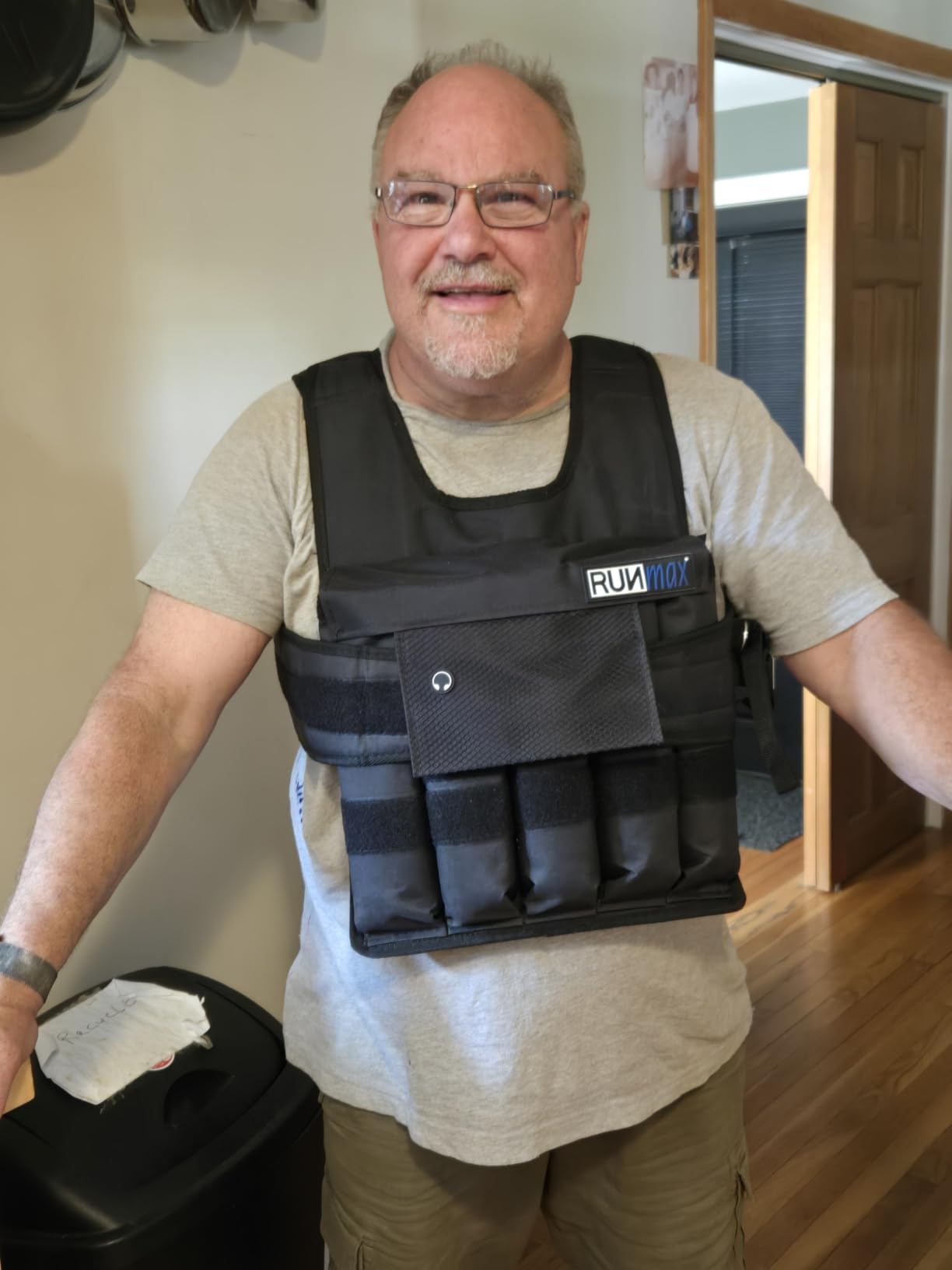
RUNmax has the strongest consensus in this roundup by review volume, and the reason is the capacity ladder. Variants run from 20 lb all the way to 150 lb, which means you can move up indefinitely without changing gear.
The Velcro-secure individual weight pockets are the detail that matters in training. Burpees, sprints and pull-ups all tend to shift loose loads, and this is one of the few designs where that does not happen.
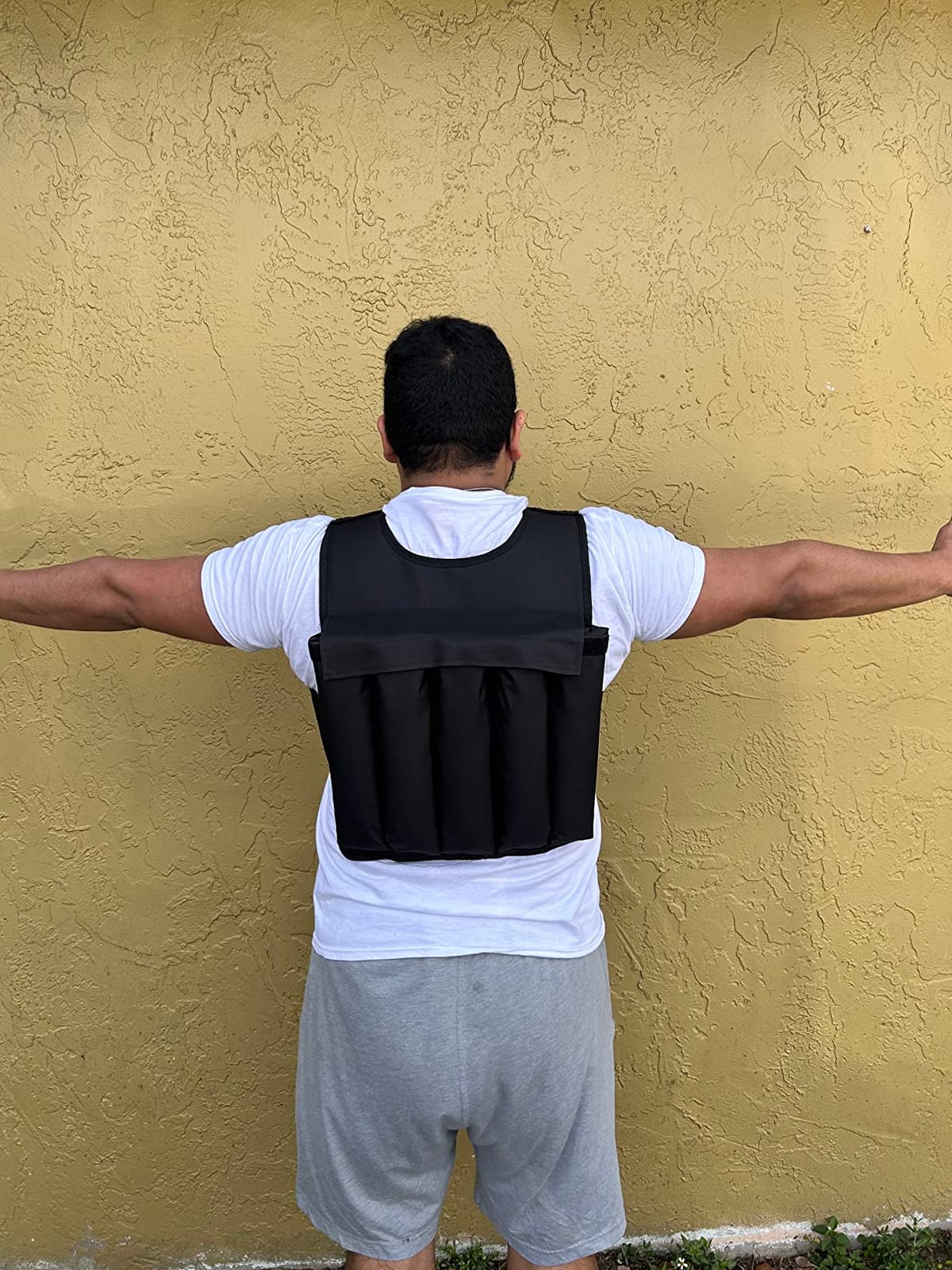
A lifetime warranty backs the build, and the 1000D tear-resistant nylon with reinforced stitching is specified for the same reason. This is the vest you buy once and stop thinking about.
Breathable mesh panels and a contoured fit keep the torso cool during long conditioning sessions, which is where lighter designs tend to cook you.
Are the shoulder pads worth ordering?
They are a separate variant rather than included, and they matter more the closer you run to the top of the range. At 40 lb or below the padded yoke does the job on its own.
If you plan to spend long sessions at 60 lb and above, choose the shoulder pad version from the start.
Will it fit you?
It fits 28-48 inch chests with quick-release buckles, which covers most people. Larger wearers report the contoured fit running limiting, so check the chest measurement against your own before ordering.
The trade-off versus the Gymnastics Power vest is mobility. This one is built to carry load, not to disappear during a handstand.
5. RUNFast 40 lbs Pro Weighted Vest – Best Value
RUNFast 40lbs Pro Weighted Vest
Max load: 40 lb, adjustable in 4 lb increments
Weights: iron construction
Design: one piece with an integrated belt
Fit: one size fits all
Extras: front pocket, key ring, bottle holder
Pros
- Strongest capacity-to-cost ratio in the roundup
- 4 lb increments make loading straightforward
- Airy design that reduces overheating
- Posture-supporting fit with low back strain
- One size fits a wide range of body types
- Integrated pocket and bottle holder
Cons
- Bulky profile traps heat in warm weather
- Shoulder seams dig into the traps at full 40 lb
- Velcro straps wear after heavy repeated use
- Limited pocket count
The RUNFast is the simplest thing that works, and at 40 lb it undercuts everything else in this roundup by a wide margin. If you want a serious load without spending serious money, this is where you start.
The airy, less confining design is the surprise. Reviewers report years of daily use with no lower-back or shoulder pain at moderate loads, and the open construction traps noticeably less heat than bulkier nylon vests.

Adjustability in 4 lb increments is straightforward, though coarse. For pull-up progressions that means waiting a rep or two at each step rather than chasing small jumps.
One size fits all covers an unusually wide body range, and the integrated belt means there is no separate waist strap to lose or misplace.
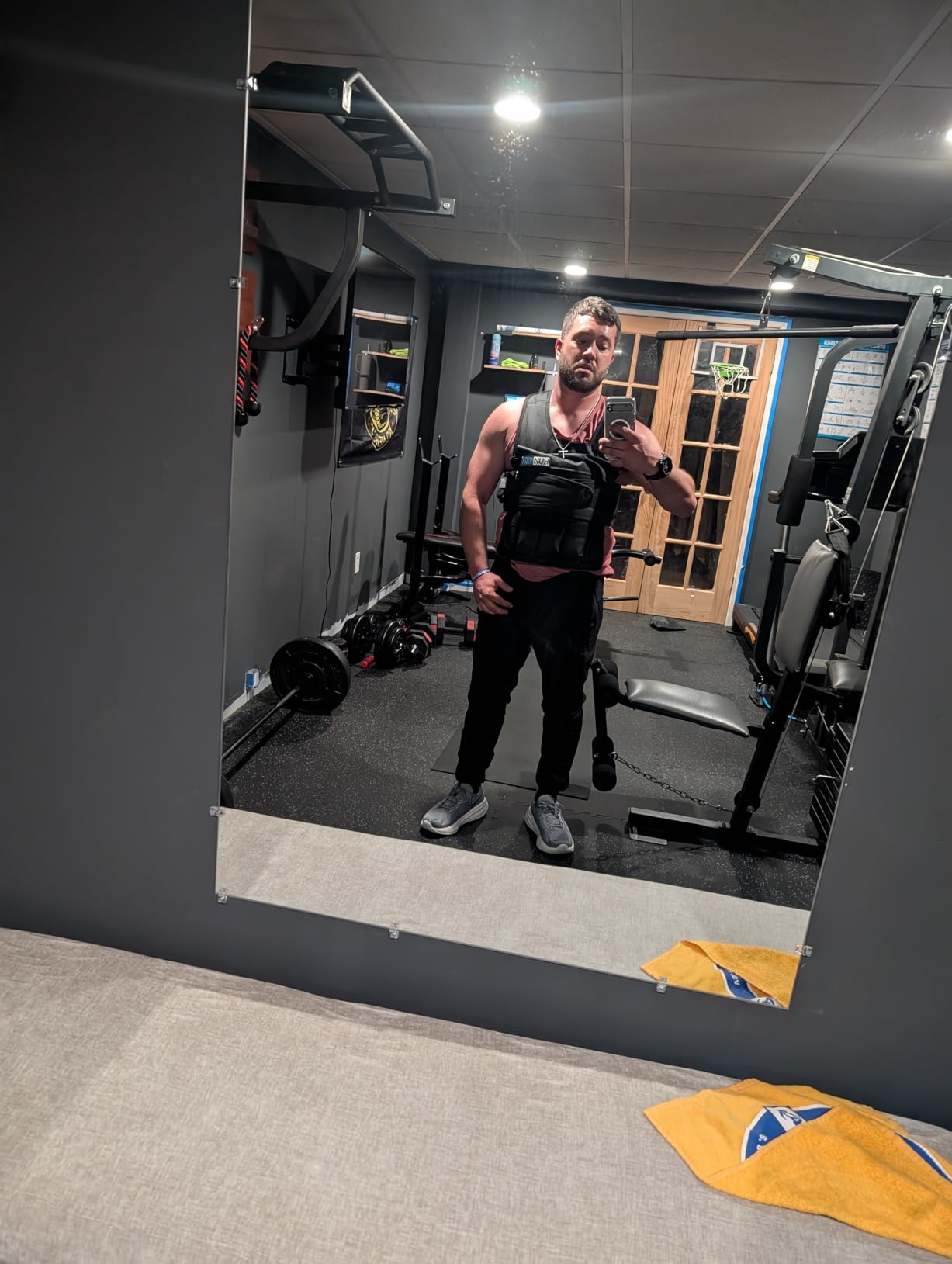
Is 4 lb too coarse for weighted pull-ups?
It is workable but not ideal. If your pull-up goal is adding reps at a given weight, 4 lb steps are fine. If you are chasing a specific submaximal effort, the Eric Flag or Gymnastics Power vests give you finer control.
Two steps of 4 lb also overshoot some athletes who only need a small jump after a stall.
What about the heat and the seams?
Two consistent complaints. The bulky profile traps heat in warm weather, which matters if you train outdoors in summer, and the shoulder seams dig into the traps at the full 40 lb on long sessions.
Many buyers solve the seam issue with aftermarket padded shoulder straps, which is a cheap fix if you already own the vest.
6. MVRK 35 lb No-Bounce Weighted Vest – Best for Heavy Loading
MVRK Weighted Vest Men 35lbs – Weighted Workout Vest With Removable Iron Weights, Heavy Duty Adjustable 0-35 lb with 16 Iron Weight For Functional Training & Calisthenics – Weight Vest for Men and Women
Max load: 35 lb in this configuration
Weights: 16 iron blocks at approx 2.18 lb, 8 front and 8 back
Variants: 15, 25, 35, 45, 65 and 100 lb
Shell: nylon with reinforced stitching
Care: hand wash with weights removed
Pros
- Compact shell carries a high load with minimal bulk
- Removable iron blocks scale the load from 0 lb
- Reinforced stitching and load-rated buckles
- Even 8 front and 8 back layout for a no-bounce fit
Cons
- Higher price point than most competitors in this range
- Basic feature set with limited storage pockets
MVRK solves the same problem as the Eric Flag from the opposite direction. Where that vest tops out at 40 lb, this one is offered in 15, 25, 35, 45, 65 and 100 lb variants, so the ceiling moves with you instead of stopping you.
The compact shell is the differentiator. It carries a high weight without adding the bulk that normally comes with it, and the 16 iron blocks at roughly 2.18 lb each give a fine step for progression.
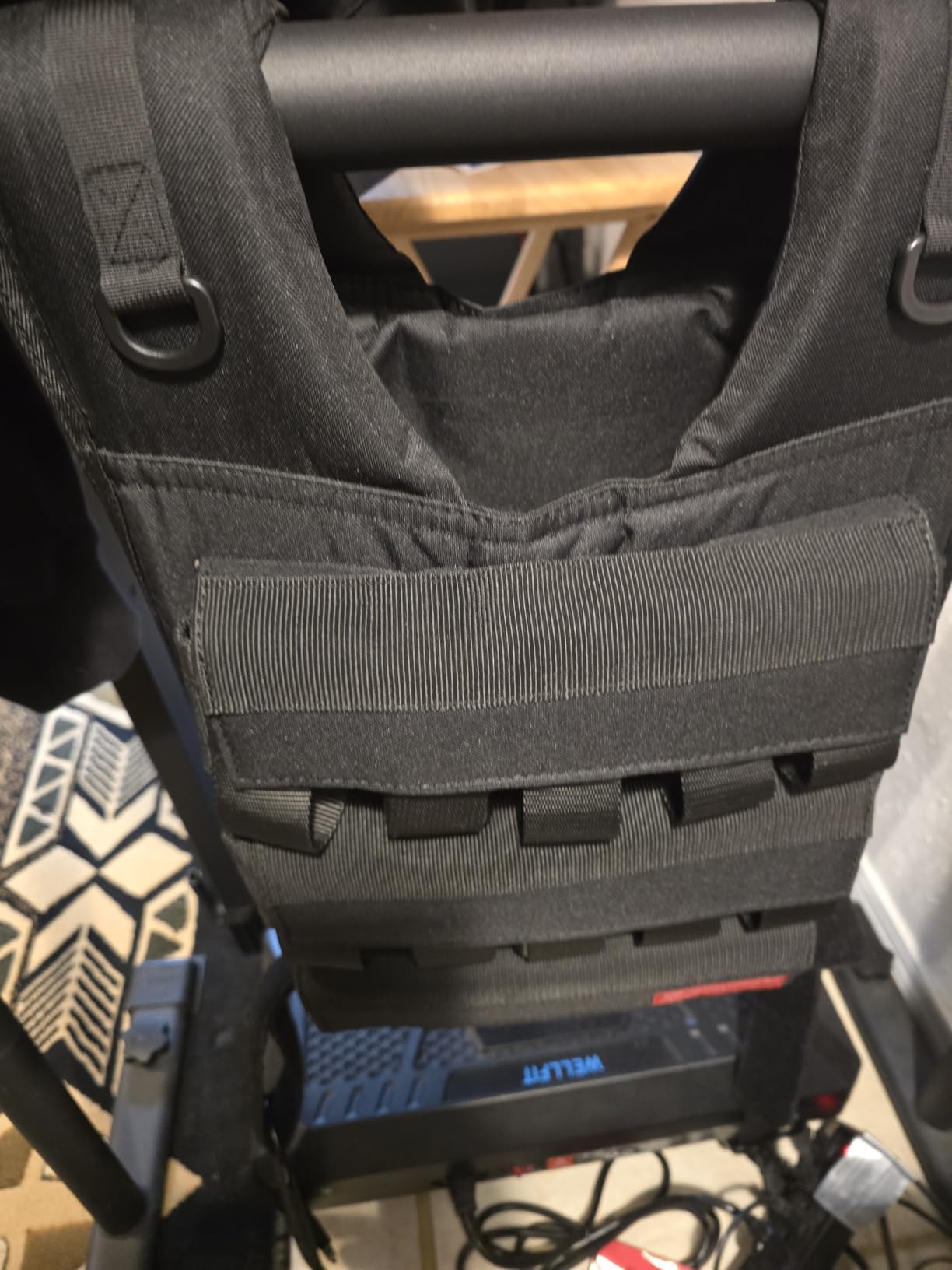
Reinforced stitching at every stress point and load-rated buckles are the details you notice only when you are near the ceiling. That is exactly the point at which cheaper vests fail.
Buyers credit the progression from 0 lb upward as the main training benefit, which is the whole argument for buying adjustable rather than fixed.
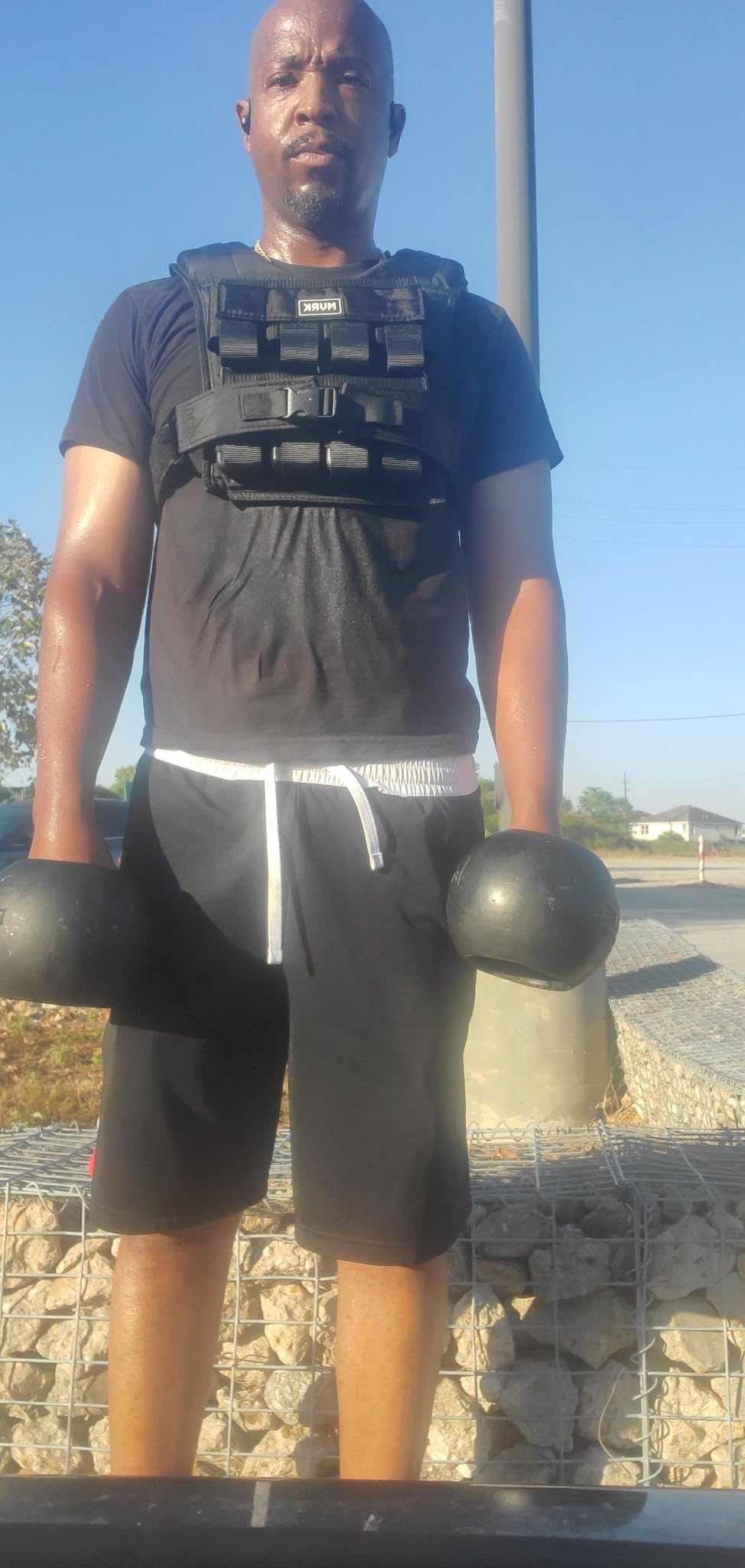
Is the price justified?
The most repeated reservation is price relative to comparable vests. You are paying for the higher variant ladder and the reinforced construction rather than for range of motion.
If you expect to load past 40 lb at any point, that ladder is what you are buying.
Does the compact design restrict movement?
No, which is unusual for a vest in this capacity class. Reviewers report no range-of-motion restriction, and the no-bounce 8 front and 8 back layout stays put through dynamic work.
The trade is a minimal pocket layout. If you carry keys, a phone or a bottle, plan for a separate solution.
7. BAGAIL 40 lb Adjustable Weighted Vest – Most Rugged
BAGAIL Weighted Vest Men, 20lbs/30lbs/40lbs Adjustable Weighted Vest for Woman with Removable Iron Weights, Women’s Weight Vest for Walking, Rucking, Running, Strength training – 40lb
Max load: 40 lb via 16 rust-resistant 2.5 lb iron blocks
Configurations: 2-20, 2-30 and 2-40 lb
Shell: 1200D Oxford nylon with reinforced stitching
Hardware: thick shoulder pads, waist belt, safety buckles
Cover: 18-month warranty
Pros
- Heaviest-duty shell fabric in this roundup
- Three capacity tiers let you buy the load you need
- Rust-resistant iron blocks resist corrosion and odor
- Waist belt and safety buckles hold the vest firmly
- Reflective strips and washable design for outdoor rucking
Cons
- Heavier shell and blocks add bulk
- Detachable logo and adjustable chest sizing add fit complexity
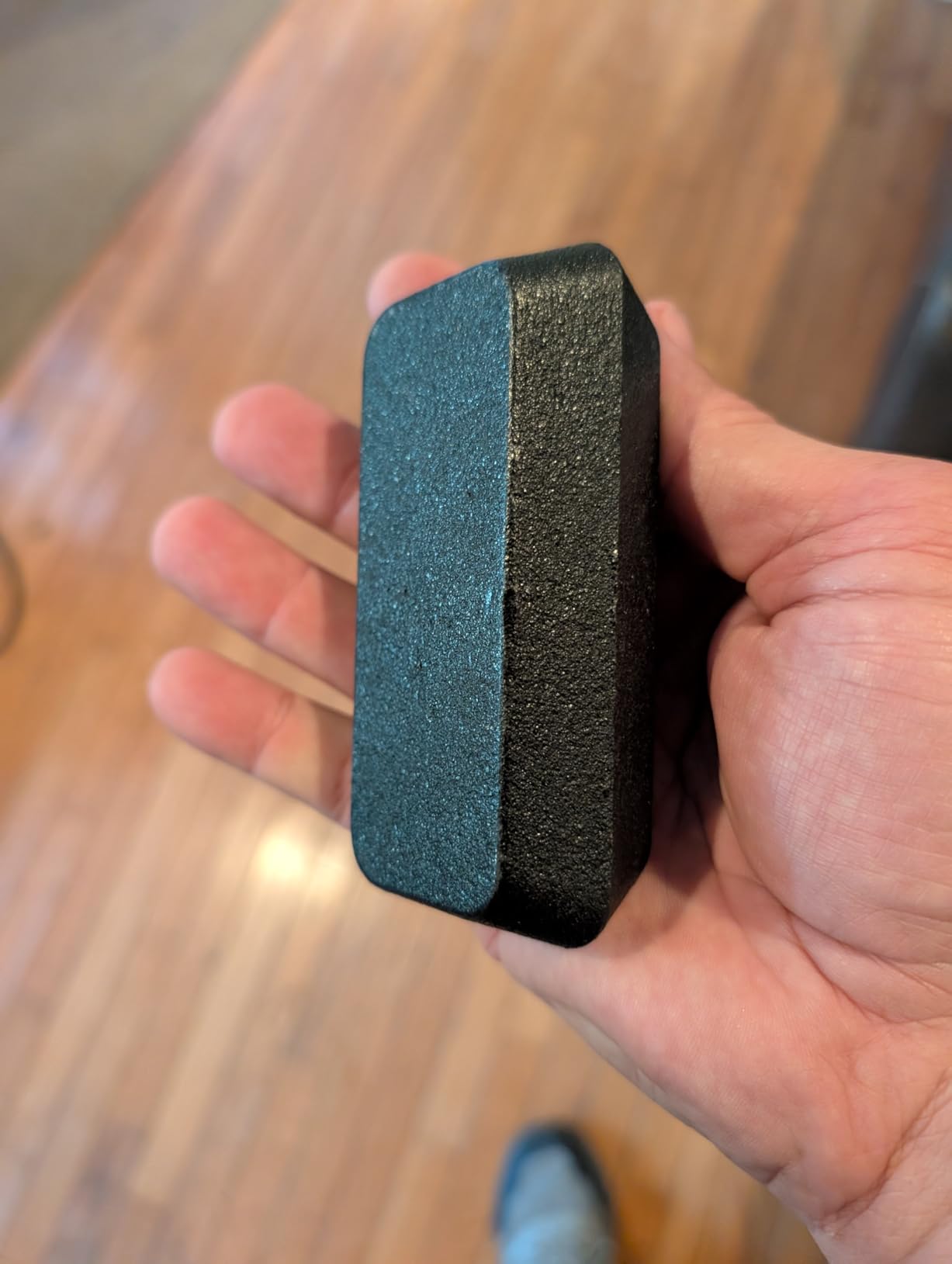
BAGAIL is built like gear you would take on a long ruck. The 1200D Oxford shell is the heaviest-duty fabric in this roundup, and the rust-resistant iron blocks are the right call for anyone training outdoors in variable weather.
Three capacity tiers mean you can buy the 20 lb version now and step up later, or take the 40 lb version and unload it down for technique work. That flexibility is genuinely useful during a deload.
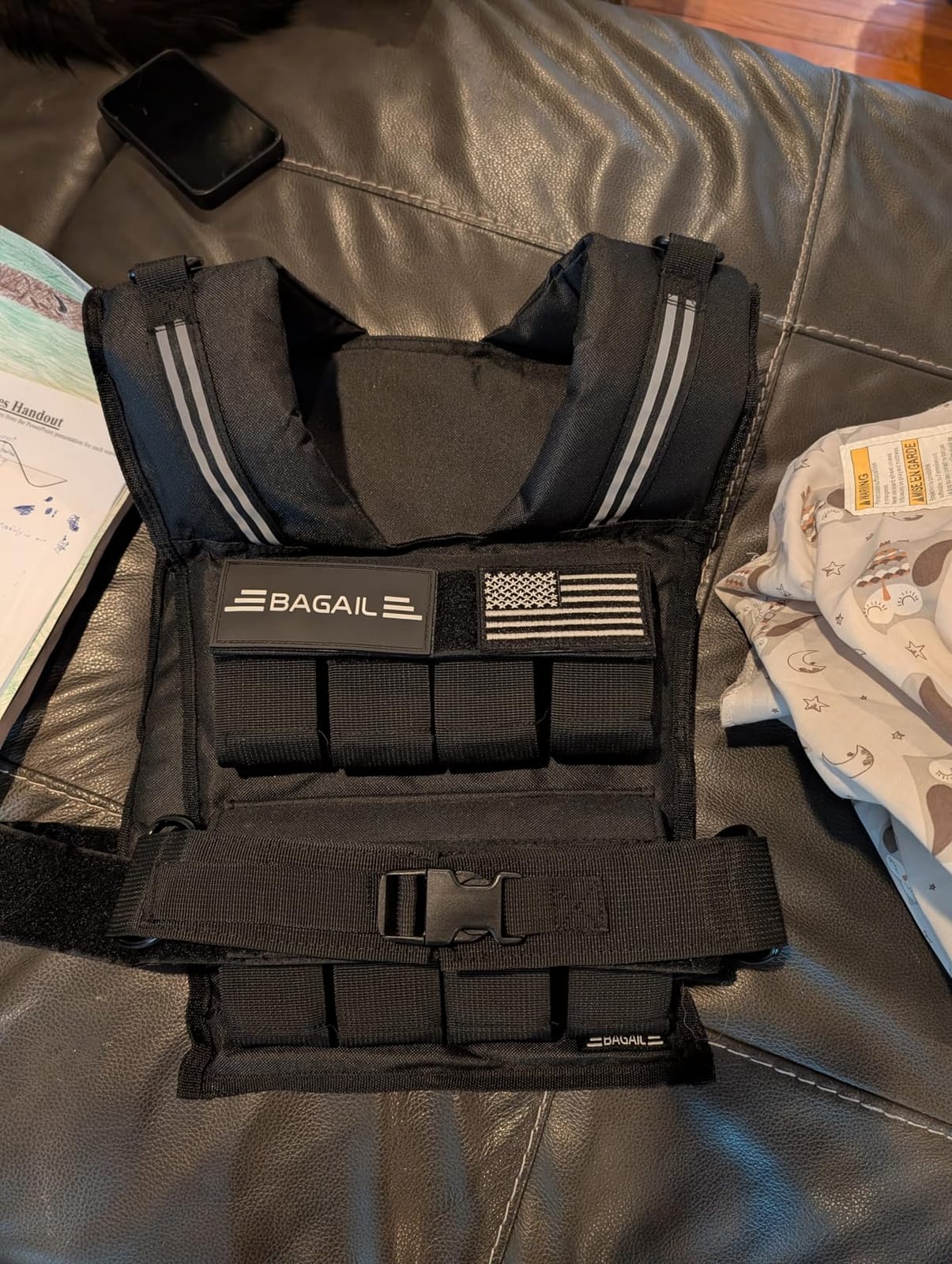
The extra-thick shoulder pads, adjustable waist belt, wide Velcro straps and safety buckles hold the vest firmly in place. Reviewers describe the fit as firm and stable, which is what you want over long distances.
Reflective strips front and back and a washable construction make it practical for outdoor work where lighter vests become uncomfortable quickly.
Is the extra bulk a problem?
Yes, relative to neoprene designs. The 1200D shell and the iron blocks together give it more volume, so it is less discreet and cooler than a soft vest.
For bar work the bulk is manageable, but the Gymnastics Power cropped cut is clearly the more mobile option.
What does the fit complexity mean in practice?
The detachable logo and adjustable chest sizing add parts to understand. It is a short learning curve and one more thing to set before each session.
The 18-month warranty is shorter than the lifetime warranty offered by the RUNmax, though longer than nothing.
8. Sportneer 2-18 lb Adjustable Vest – Best for Beginners
Sportneer Adjustable Weighted Vest Weights: 2-18 lbs Washable Weight Vest for Walking 16 In 1 Fast Adjust Rucking Vest for Women and Men Home Gym Running Jogging Strength Training Vests
Capacity: 2-18 lb in this variant, 16 combinations
Weights: 8 x 2 lb packs plus 1 x 1 lb pack, 4 front and 5 back
Cover: neoprene with reflective strips
Closure: zipper entry
Double locks at waist and shoulders
Pros
- Sixteen fine-grained load combinations
- Zipper entry is much faster than Velcro designs
- Double-lock waist and shoulder straps prevent riding up
- Neoprene is soft
- breathable and washable
- Reflective strips for low light
Cons
- 18 lb ceiling is low for advanced lifts
- Waist and shoulder straps need manual adjustment each session
The Sportneer is the best starting point in this roundup for anyone who is new to weighted training. Sixteen combinations from 2 lb to 18 lb let you add a single pound at a time, which is exactly how you should build up.
Most 40 lb class vests jump in 4 lb steps. That is too coarse when you are adding load to a movement you are still learning, and it is why so many beginners stall out on their first vest.
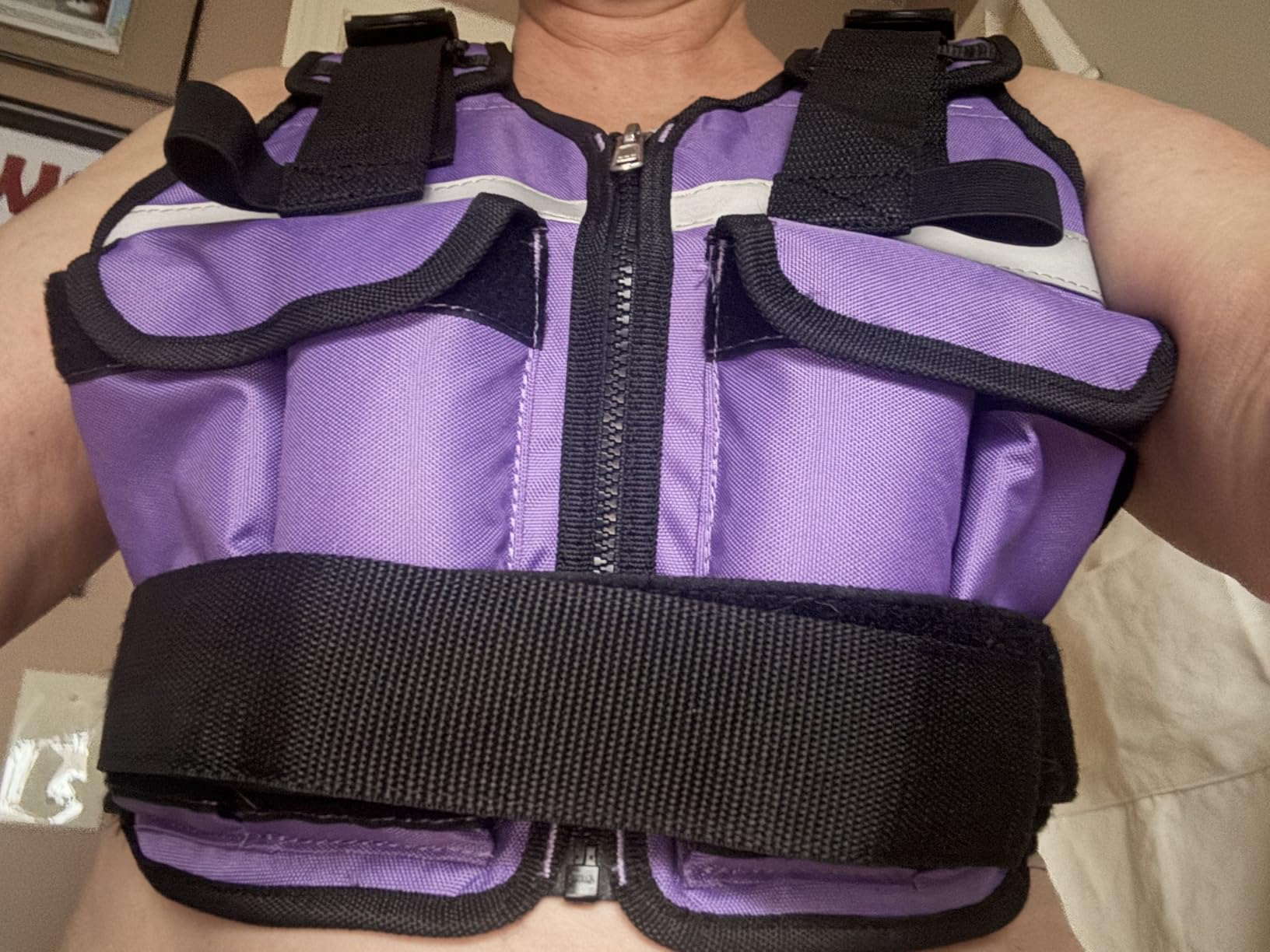
The zipper entry is a genuine practical improvement over Velcro-only designs. Getting in and out between sets takes seconds rather than a minute, and the double locks at waist and shoulders stop the vest riding up mid-set.
Neoprene construction is soft against the skin, sweat-absorbent, and all weights remove for washing.
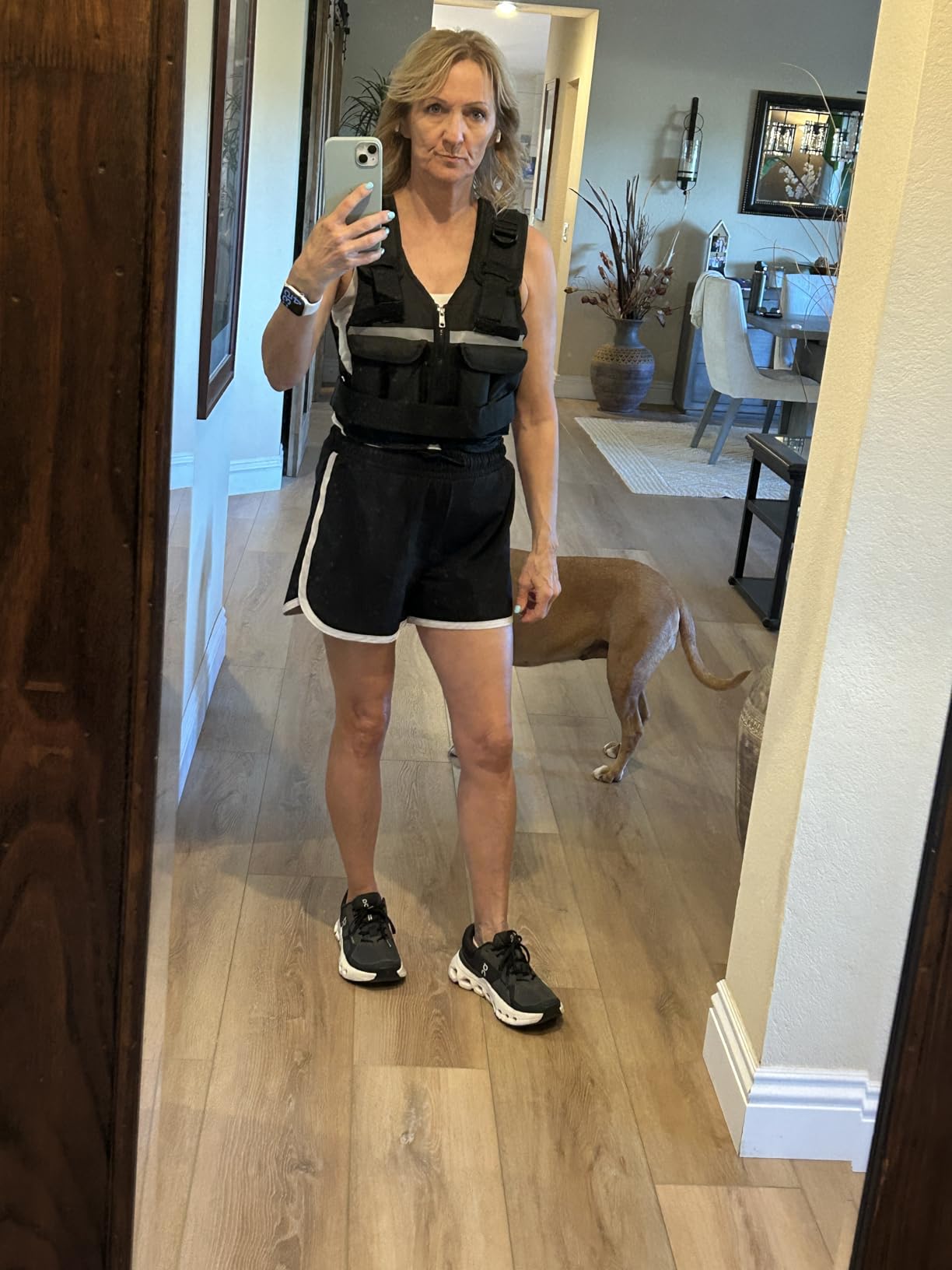
Will you outgrow the 18 lb ceiling?
Almost certainly, if you keep training. For an intermediate pull-up athlete working toward 30 lb or more, this vest becomes a warm-up tool rather than a training vest.
A 2 lb to 42 lb variant exists for heavier work, so the same design is available if you would rather buy up front.
What is the catch with the straps?
They require manual adjustment before each session rather than locking once. That is a minor inconvenience if you train in one place and a real one if you are in and out of a vest between sets.
Reflective strips help if you are walking or jogging outdoors after dark.
9. CAP Adjustable Weighted Vest 20 lb – Budget Pick
CAP Barbell (HHWV-CB020C) Adjustable Weighted Vest, 20-Pound,20 Pound, Black
Capacity: adjustable 1-20 lb in this configuration
Weights: 20 packets of 1 lb iron ore fines
Variants: 11 capacities from 20 lb to 150 lb
Fit: fully adjustable waist belt, padded shoulders
Shell: reinforced nylon and polyester with reflective stripes
Pros
- Lowest cost per unit of capacity here
- Iron ore packets conform to the body
- Adjustable waist belt and padded shoulders reduce bounce
- Reflective stripes for low light
- Best-selling rank of any vest in this category
Cons
- Lowest average rating at 4.3 with a 7 percent one-star share
- Fine packets can shift and settle over repeated sessions
- 20 lb ceiling is low for weighted pull-ups and dips
- Nylon and neoprene build feels less premium
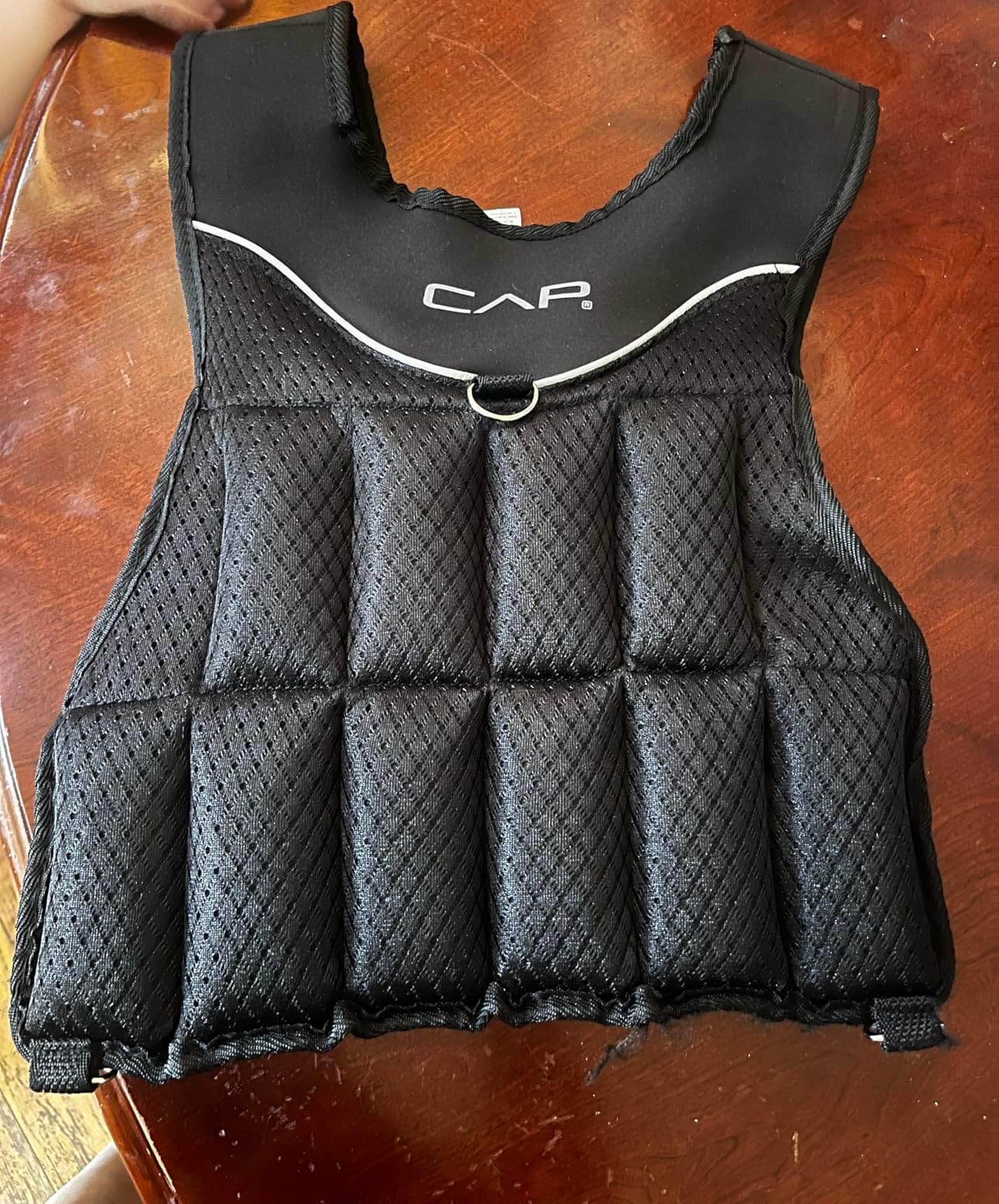
The CAP vest is the most reviewed product in this roundup by a wide margin, and it sets the budget benchmark. If you are not sure you will stick with weighted training, it is the lowest-risk way to find out.
Twenty packets of 1 lb iron ore fines adjust the load from 1 lb to 20 lb, which is a genuinely fine adjustment for the money. The fines conform to your torso rather than pressing against it as flat blocks do.
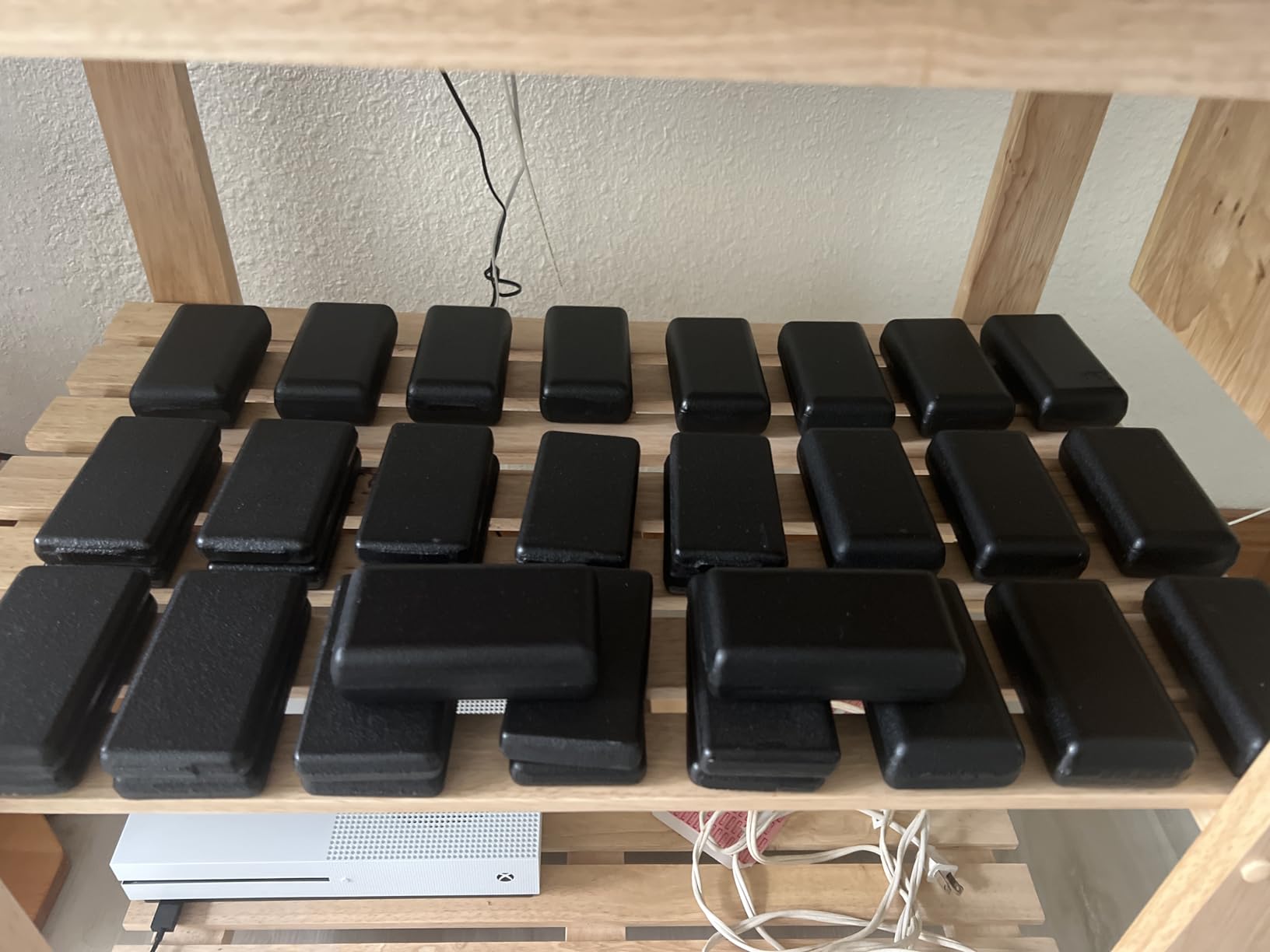
The adjustable waist belt and padded shoulders do more work here than on bulkier vests, and reviewers report a bounce-free feel for walking, running and general conditioning.
Eleven capacity variants run from 20 lb to 150 lb, so the same product line covers a lot of ground.
Why is the rating lower than the others?
The 4.3 average with a 7 percent one-star share is the lowest in this group, and the cause is predictable. Heavier-load buyers report shifting packets and shoulder pressure, while lighter-variant buyers are largely happy.
Iron ore fines settle over repeated sessions, so your effective load can drift a little from set to set. That matters more for precise weighted pull-ups than it does for a conditioning session.
Is it fine for a beginner?
Very. The 1 lb increments, the low cost and the wide variant range make it a sensible first purchase, and it doubles as a walking and running vest if calisthenics does not stick.
The nylon and neoprene build feels less premium, but at this tier that is an acceptable trade.
10. Polyfit Fortify Weighted Vest – Best Plate Carrier
Polyfit (Fortify) Weighted Vest for Strength and Endurance Training, Fitness Workouts, Running, WODs – BLACK
Type: plate carrier, two plate slots, one front and one back
Plate capacity: up to 20 lb per slot, 40 lb total
Shell: 600D nylon with reinforced stitching and mesh
Closure: waist belt with hook-and-loop
Storage: waistband and chest pockets
Pros
- Accepts standard plates you may already own
- Interior locking straps eliminate bounce during runs and rucks
- Lightweight 600D shell moves well and stays cool
- Multiple attachment loops for bottles and carabiners
- Side elastic holds the vest in place while running
Cons
- Weight plates sold separately and must be bought in addition
- Very strong Velcro makes plates hard to insert for some users
- Carrier could be slightly larger for wide lifters
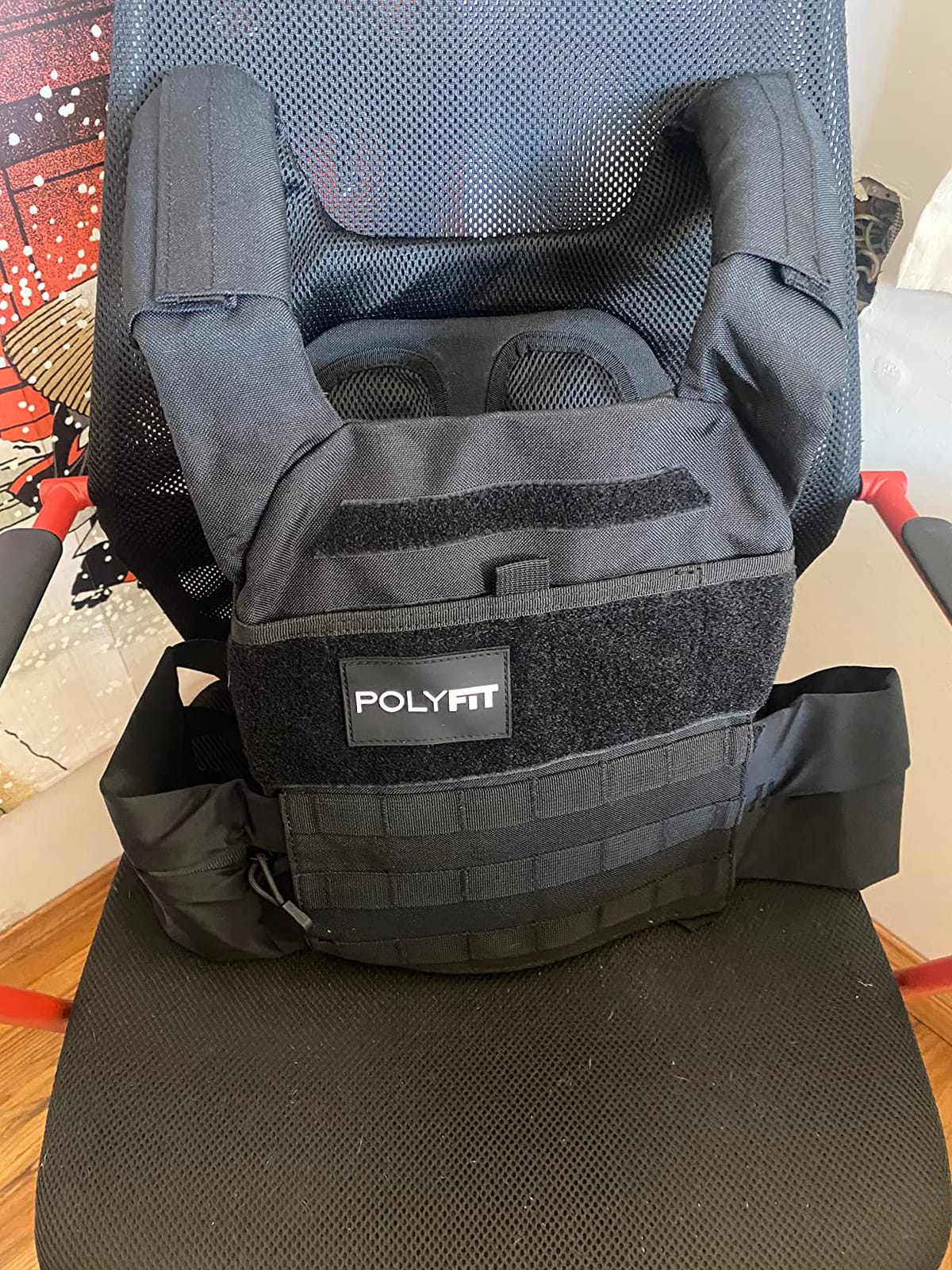
The Polyfit Fortify is the only true plate carrier here, and that changes what you can do with it. Instead of the vest’s own iron inserts it takes standard weight plates up to 13 by 11 inches, so you can load it with plates from an existing gym bag.
Interior straps lock the plates tight against the body, which is the mechanism that kills bounce. Reviewers who ruck and trail run with it report the load stays put where softer vests shift.
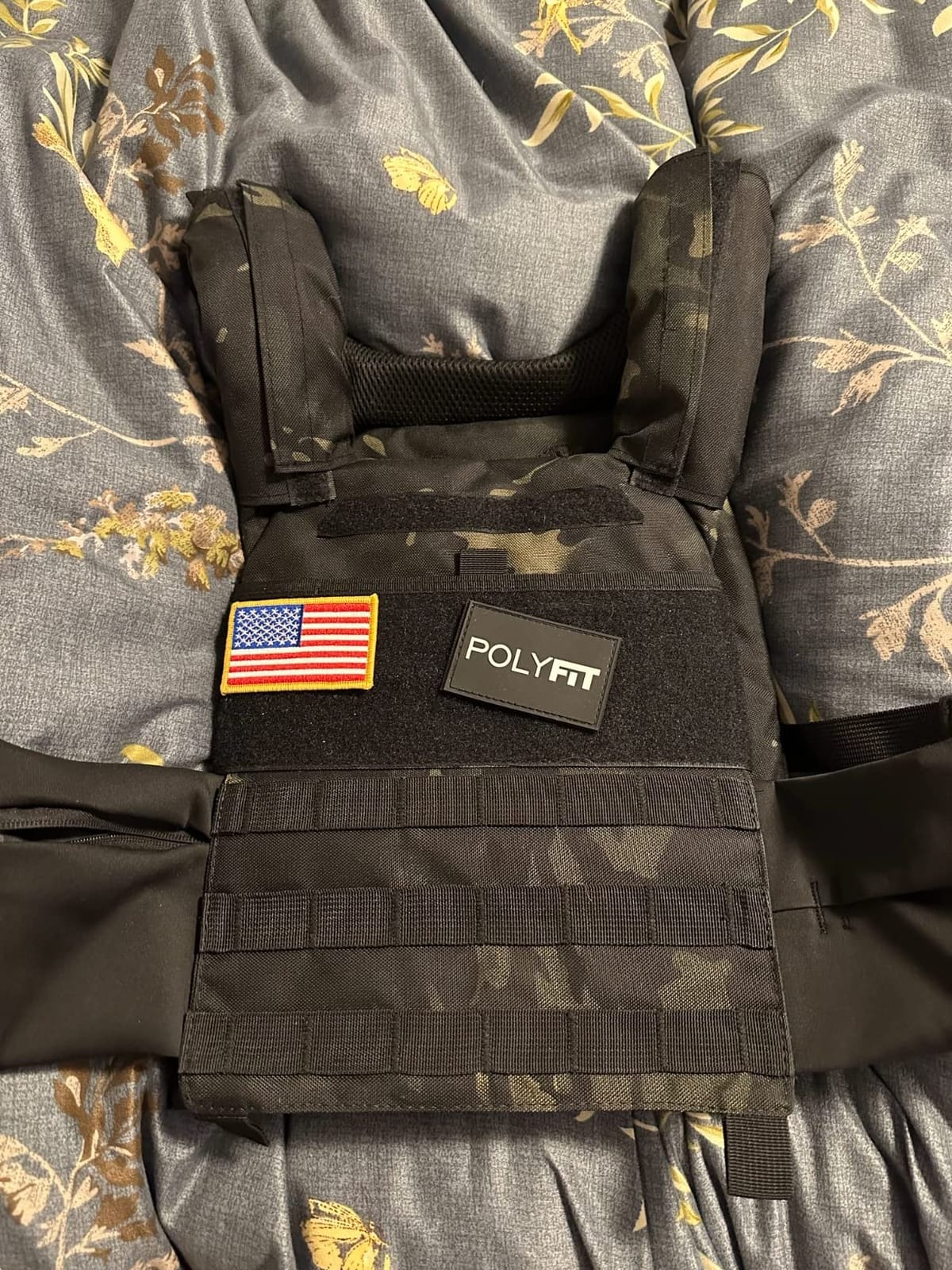
Lightweight 600D nylon with mesh keeps it cool and mobile, which makes it the most pleasant option here for long loaded walks in warm weather.
Several women note it fits smaller bodies well, and the side elastic helps hold it in place while running rather than bouncing.
What is the full cost once plates are added?
Plates are sold separately, so the purchase price of the vest is only part of the picture. If you already own plates it is inexpensive to fill. If you do not, you are buying a carrier plus a plate set, which is the main reason to weigh it against a block vest before deciding.
Because the load is plates, the increment size is whatever increments your plates come in.
Is it right for calisthenics on the bars?
Workable but not ideal. Plate carriers sit with more volume at the chest and can limit chest-to-bar clearance, so the cropped block vests are better for high-rep bar work.
For loaded walks, rucking and running it is one of the strongest options in this roundup.
11. HANZO 45 lb Adjustable Weighted Vest – Best Padded Comfort
HANZO Weighted Vest for Men – Rucking & Strength Training Vest 25lbs–65lbs, Weight Vest With Removable Iron Weights, Adjustable Heavy Duty Weighted Workout Vest for Calisthenics & Fitness Training, Rucking Vest
Max load: up to 45 lb via removable weight bricks
Variants: 25, 35 and 45 lb
Shell: 1000D Oxford nylon with heavy-duty stitching
Shoulders: double-padded
Weight: 20 kg listed
Pros
- Stable
- balanced fit that does not shift during dynamic movement
- Double-padded shoulders suit long sessions
- Weight bricks add or remove in seconds
- Full set of weight bricks included in the box
- Reinforced 1000D Oxford shell for daily training
Cons
- Brand naming on the listing differs from the HANZO title
- Fewer colour options than some competitors
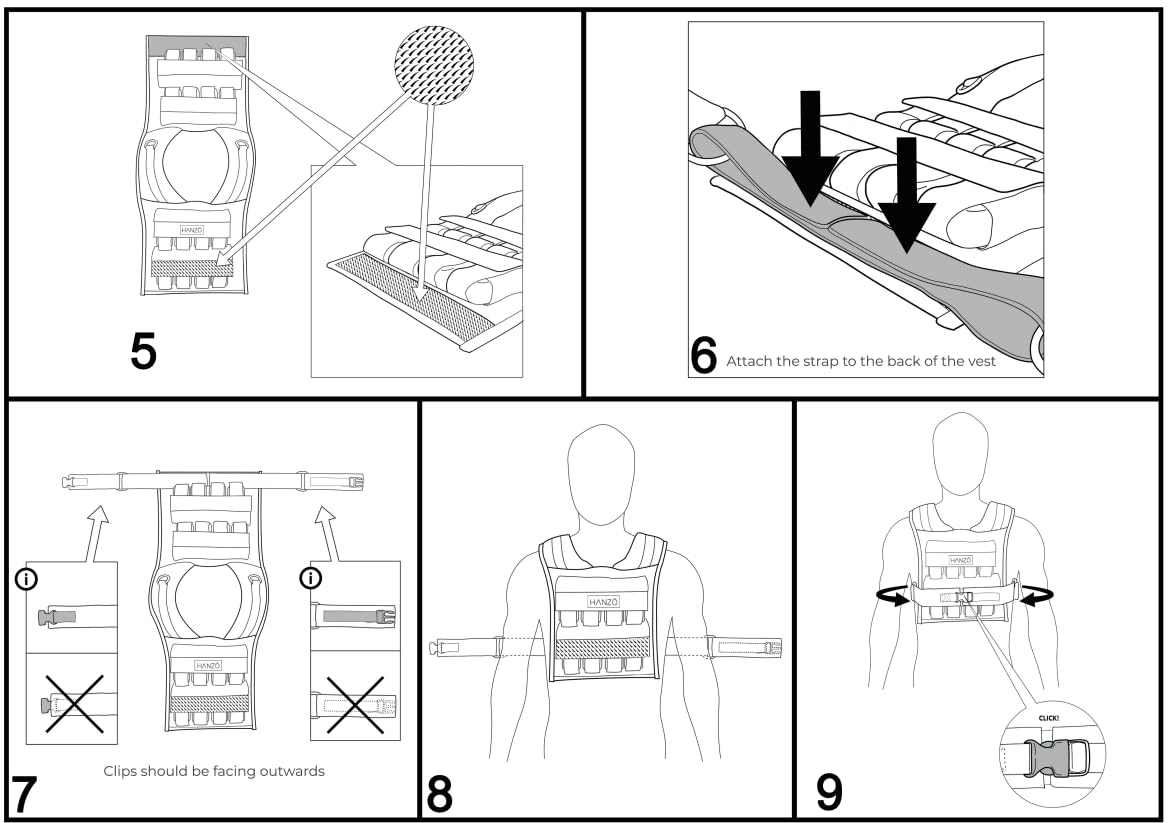
The HANZO 45 lb is the most comfortable heavy vest here. Double-padded shoulders take the sting out of long sessions, and reviewers specifically call out that the fit stays balanced through pull-ups, push-ups, dips and squats without constant readjusting.
Quick-release weight bricks change the load in seconds, which matters if you are running an EMOM circuit and moving between movements.
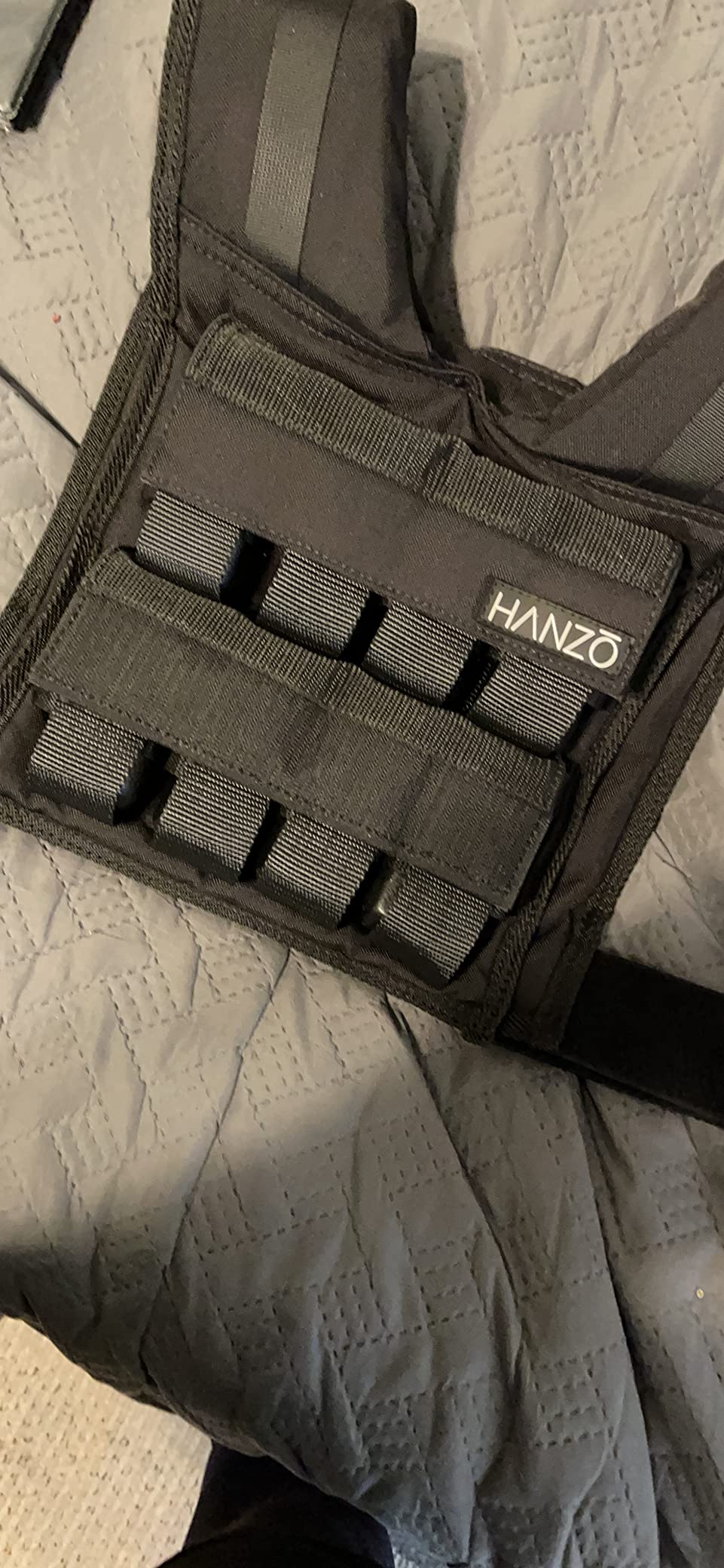
A full set of bricks arrives in the box. There is no second purchase and no hunting for spare inserts before your first session.
The reinforced 1000D Oxford shell is specified for repeated daily training, which matches how most people actually use a vest.
Is the listing a concern?
The listing brand name differs from the HANZO name used in the product title. It is a cosmetic confusion rather than a quality issue, but check that you are buying the version you think you are.
Colour choice is also narrower than several rivals offer.
Is 45 lb the right ceiling to buy for?
It is a higher ceiling than most 40 lb class vests, which means you will not outgrow it as quickly. That makes it a strong one-and-done option for intermediate athletes already pulling weighted reps.
Buy the 25 lb variant if you are still building a base and plan to move up.
12. CROSS101 20-80 lb Adjustable Vest – Widest Capacity Choice
CROSS101 Adjustable Camouflage Weighted Vest with Shoulder Pads, 60 lb,Camauflage
Configurations: nine camouflage options from 20 lb to 80 lb
Weights: included with every model, fully removable
Straps: shoulder pad variants available
Closure: hook and loop
Shell: nylon
Pros
- Weights ship included with every configuration
- All weight blocks removable for load progression
- Shoulder pad variants for heavier training
- Fixed shipping cost keeps heavier options less costly than expected
Cons
- Lowest average rating band among the heavier vests here
- Modest review volume compared with the market leaders
The CROSS101 covers the widest spread of single-model options in this roundup, with nine camouflage configurations from 20 lb to 80 lb. Every configuration ships with the weights included, which removes the most common surprise on a first order.
All blocks are removable, so you can load down for technique work even on the heaviest version.
The shoulder pad variants are worth choosing for anything above 60 lb. They spread the load across the traps, which is the pressure point that ends sessions for most people on heavy vests.
A fixed shipping cost regardless of the weight option selected is unusual and makes the heavier configurations cheaper than you would otherwise expect.
Where does it fall short?
At 4.5 it sits in the lowest rating band among the heavier vests here, and its review volume is modest next to the market leaders. Buyers who use it for walking and general training are positive; the split appears among people loading it heavily.
If your training is mostly bar work, one of the cropped vests is the safer pick.
Is it still worth considering?
Yes, for one specific case: if you know you will eventually train heavy and you would rather buy one vest with a wide choice of capacities than replace gear twice.
The included weights and the fixed shipping cost are the reasons it stays on this list.
How Heavy Should Your Weighted Vest Be?
Start at no more than 10 percent of your bodyweight, and stay there until every rep of your unweighted set is clean and consistent. For an 80 kg athlete that is about 18 lb, which lands squarely in the Sportneer range.
Once the movement is solid, move up in small steps rather than jumps. A 2 lb increase every week or two is plenty for most intermediate lifters, and 4 lb steps are fine for walking work where the load matters less than the duration.
Is a 20 lb weighted vest too heavy? Only if you have not yet built the movement. At around 10 percent of bodyweight for an average adult it is a sensible first real loading step and well inside what most athletes use comfortably.
Is a 40 lb weighted vest too much? For a 90 kg athlete it is roughly the 10 percent line and a legitimate working weight. For a 65 kg athlete it is well past it, and you would be better served by a belt for anything above that on pull-ups.
Should you get a 12 lb or 16 lb vest? Take the lighter of the two if your goal is technique work, a warm-up before heavier sets or joint conditioning. Take 16 lb if you want to feel meaningfully loaded from the first rep and your bodyweight is on the higher side.
Should I get a 12 or 16 lb weighted vest for a beginner? Beginners are better served by a fine-grained adjustable vest like the Sportneer, which lets you work at 12 lb, 14 lb and 16 lb in the same garment rather than committing to one fixed number.
How long should you wear a weighted vest for? Most of the guidance that circulates in calisthenics communities puts a practical ceiling of about 60 minutes in a single session. Beyond that, shoulder and trap pressure becomes the limiting factor well before the muscles do.
What to Look for Before You Buy a Weighted Vest
Six checks separate the vests that survive a year of training from the ones that end up in a cupboard.
1. Weight type. Solid iron and steel blocks hold position and do not leak. Sand, iron sand and fine iron ore packets conform nicely but settle over repeated sessions and slowly change your effective load. Every top pick here uses discrete metal blocks.
2. Range of motion. Try the cut against a floor push-up and a chest-to-bar pull-up before you commit. Mass sitting low on the ribs will limit both. A cropped cut like the Gymnastics Power design is the most mobile option here.
3. Increment size. Small increments let you progress without stalling. Vests with 1 lb and 2 lb steps serve weighted pull-ups well; 4 lb steps suit loaded walking better.
4. Weight distribution. Look for a balanced front and back layout rather than a front-heavy build. Even distribution keeps the load near your centre of mass and cuts lower-back fatigue.
5. Torso length and adjustability. A vest that adjusts only at the shoulders will not sit flat on a very short or very long torso. Waist straps and dual closures handle more body shapes, including shorter women’s fits.
6. Block vest or plate carrier. A block vest with iron inserts is cheaper to fill and more compact for bar work. A plate carrier is more flexible and lets you reuse existing plates, but plates cost extra and add chest bulk.
Breathability and chafing deserve a mention too. Neoprene and mesh panels run cooler than thick Oxford nylon, which matters during long sessions in warm conditions.
Weighted Vest or Dip Belt?
Use a weighted vest for loads up to roughly 40 lb, for anything involving running, walking, lunges or circuits, and for any exercise where a belt would swing into the floor or the ground.
Use a dip belt above that, particularly for weighted pull-ups, weighted dips and muscle-up progressions. Belts attach weight below you, which keeps the load off your torso entirely and leaves your range of motion untouched.
Forum consensus supports this split. Calisthenics athletes working serious weighted dips regularly report outgrowing their vests and moving to a belt, and one user in r/bodyweightfitness described using a dip belt at loads far above anything a vest holds.
The practical rule: if you have to think about whether a load is too heavy for your vest, it probably is. That is a belt problem.
The Downsides of Wearing a Weighted Vest
Weighted vests earn their place, but they carry real costs. Here are the ones worth knowing before you buy.
1. Postural changes. Added mass on the torso pulls your shoulders forward. Under heavy loading this becomes a rounded-shoulder position that some athletes carry into the rest of the day.
2. Joint stress. A vest does not reduce joint forces the way controlled load does. Loaded push-ups and dips in particular put more compression through the wrist and shoulder than a barbell movement would.
3. Limits on exercise selection. Anything that requires a deep floor position or a full overhead position becomes harder with mass on your torso. Deep pistol squats, overhead walks and low ring dips are the first to become uncomfortable.
4. Shoulder and trap pressure. This is the most common reason people stop using a vest. Straps concentrate load onto the traps, and at the top of the capacity range the pressure can end a session early.
5. Heat and chafing. A vest traps heat and rubs. Long sessions in warm weather or in a bulky Oxford shell are where chafing shows up, typically at the shoulder seams and under the arms.
6. Balance and gait changes. A heavy vest raises your centre of gravity slightly and changes your foot strike. On running and plyometric work this changes mechanics in ways that are not always favourable.
7. Dead weight between sets. The vest stays on your body whether or not you are training. Removing it between sets takes time and breaks the flow of an EMOM circuit.
The mitigations are simple. Keep sessions under about an hour, use shoulder pads or a padded base layer, progress slowly, and stop if you feel sharp pain rather than muscular fatigue.
Which Exercises to Do With a Weighted Vest
Weighted pull-ups and chin-ups are where a vest earns its keep, because the load is continuous and the stabiliser demand is high. Keep the load at or below your 10 percent guideline until reps are clean.
Weighted push-ups on parallettes or a bench are excellent. The vest adds trunk load without adding a bar to your wrists, which makes it gentler on the shoulder than a weighted barbell press.
Walking lunges, step-ups and loaded carries are the natural home for a vest. This is the use case the products are actually designed for, and it is where a bulkier tactical design makes sense.
Bodyweight circuits and running work well at moderate loads. Keep running loads lighter than your lifting loads, since the joint impact is already higher.
Approach pistol squats, deep overhead positions and any exercise that puts you close to the floor with heavy load cautiously. Range of motion goes first, and losing depth changes the exercise entirely.
Avoid loading a vest for explosive Olympic lifts or heavy jumps. Adding mass to a genuinely explosive movement changes the movement pattern rather than making it harder in a useful way.
Frequently Asked Questions
Are weighted vests good for calisthenics?
Yes, once you can already perform the movement unweighted with clean form. A weighted vest adds load to pull-ups, push-ups, squats and lunges, which keeps progressive overload going when bodyweight only has stalled. It also trains core and shoulder stabilisers, but it cannot fix a movement you have not mastered.
What is the best weighted vest for calisthenics?
The Eric Flag 40 lb adjustable vest is our best overall pick, with 16 removable 2.4 lb iron blocks and an even 8 front and 8 back layout that stays out of the way on the bars. For bar-only training the Gymnastics Power cropped vest has the best range of motion, and for rucking the Wolf Tactical plate carrier is the strongest.
Is a 20 lb weighted vest too heavy?
Not for most adults, if you have already built the movement. Twenty pounds sits near the 10 percent of bodyweight guideline for an average lifter and is a sensible first real loading step. It is too heavy if you cannot yet complete ten clean reps of the unweighted exercise.
Is a 40 pound weighted vest too much?
It depends on your bodyweight and your goal. Forty pounds is close to the 10 percent guideline for a 90 kg athlete and is a legitimate working weight for pull-ups. For a 65 kg athlete it is well past the guideline, and above that level on bar work a dip belt is the better tool.
What are the downsides of wearing weighted vests?
The main drawbacks are forward-rounded posture under load, extra joint compression compared with controlled barbell loading, reduced range of motion in deep or overhead positions, shoulder and trap pressure from the straps, heat and chafing during long sessions, and the fact that the vest stays on your body between sets. Sessions under an hour with padded shoulders limit most of these.
Should I get a 12 or 16 lb weighted vest?
Take 12 lb if the goal is technique work, warm-ups or joint conditioning. Take 16 lb if you want meaningful resistance from the first rep and your bodyweight is on the higher side. Both weights fall inside the 10 percent guideline for most adults.
What weight vest should I get for calisthenics?
Choose a vest whose ceiling sits above the load you expect to reach, not just above the load you need today. Start at no more than 10 percent of bodyweight, build the movement unweighted first, and pick an adjustable vest with small increments. Iron or steel blocks hold position better than sand or fine iron ore packets.
Conclusion
The best weighted vests for calisthenics in 2026 come down to what your training is made of. If you want one vest that handles almost everything, the Eric Flag 40 lb adjustable model is the pick, with fine 2.4 lb iron increments and even distribution that stays out of the way.
If your training is almost entirely on the bars and the floor, the Gymnastics Power cropped vest has the best range of motion of any product we tested. For rucking, loaded carries and CrossFit-style work, the Wolf Tactical plate carrier holds up best under long distances.
Whatever you choose, start at 10 percent of your bodyweight, keep sessions under about an hour, and plan on moving to a dip belt once you pass roughly 40 lb on weighted pull-ups and dips. The vest gets you there; the belt gets you further.