
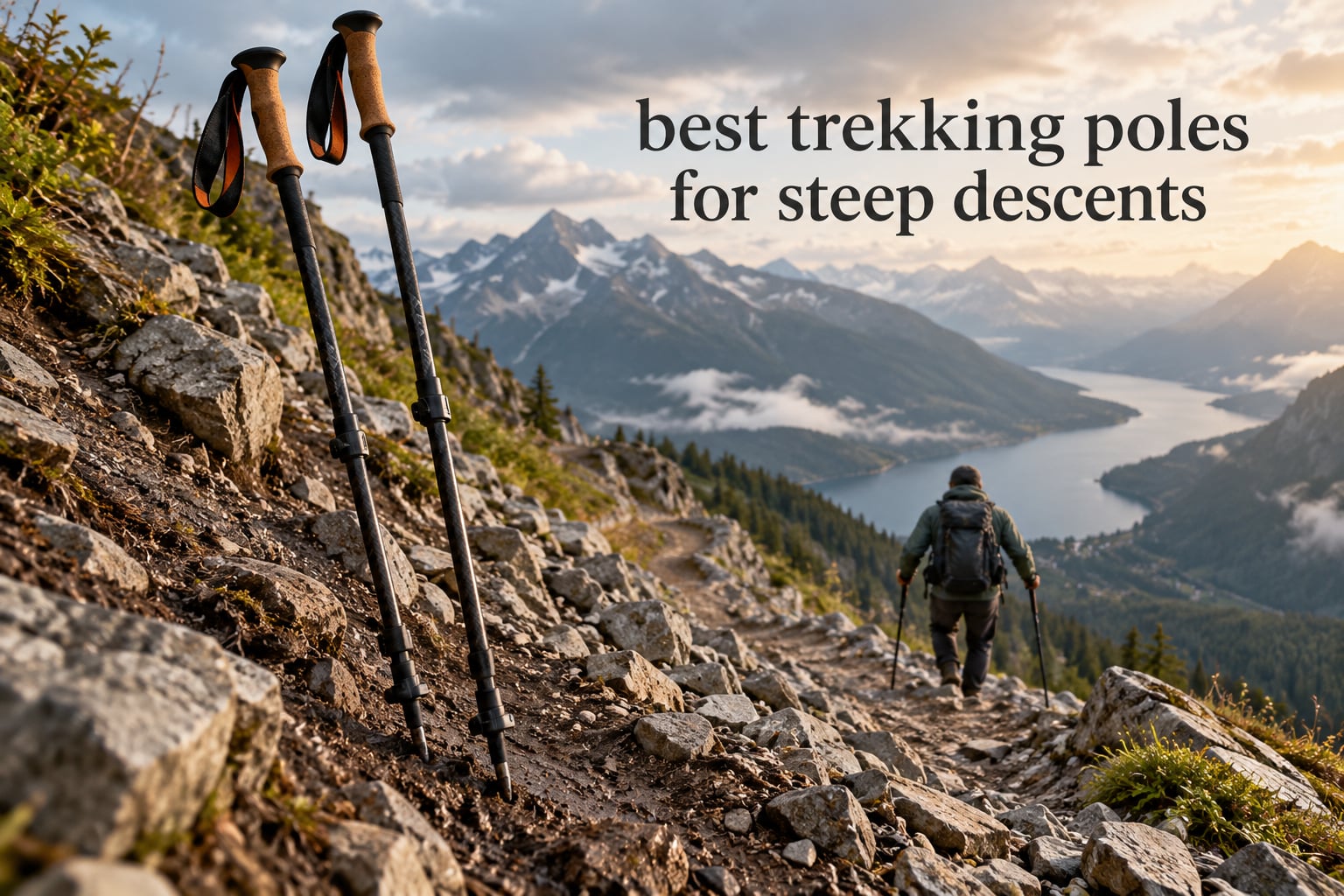
Walk into almost any trail forum and ask whether trekking poles are worth carrying on a long descent, and the answer is a clear yes. Ask which ones, and the conversation turns into lock types, grip angles and whether anti-shock springs are real benefit or placebo. The detail that never gets mentioned is the one that decides whether poles help you at all: most people set pole length for the climb, hit the top, and never touch the adjustment again for the entire way down.
That single habit is why a lot of hikers with healthy knees end a long descent with sore ones. Poles that are too short on the downhills force you to plant them out in front of you, bend your knees harder, and land each step with more force through the joint. Lengthen them by 5-10 cm and the load moves into your arms. The best trekking poles for steep descents are the ones that make that adjustment easy, hold their setting under your body weight, and stay comfortable in the hand for four hours of repeated support.
We spent this guide comparing ten poles on the attributes that actually show up on a descent: lock security under load, weight per pole, how far they extend, grip material, and what happens to the shaft when you lean on it hard. The short version is that the Foxelli carbon poles lead on lock security and weight, the Cascade Mountain Tech aluminum cork poles offer the best all-round balance, and the TheFitLife telescopic pair wins if you fly a lot and want a built-in shock spring.
Table of Contents
Top 3 Picks for Steep Descents (October 2026)

Foxelli Carbon Fiber Cork…
- 7.6 oz per pole carbon shaft
- Flip locks rated for heavy downhill load
- Cork grip with EVA choke-up grip
Cascade Mountain Tech Alumi…
- 10 oz per pole 6061 aluminum
- Cork grip plus extended EVA down grip
- Quick locks that hold under load

TheFitLife Telescopic Alumi…
- Built-in shock-absorbing spring
- Collapses to 25.6 inches
- Disassembles to 21.46 inches
How We Picked These Poles
Every pole in this list was judged on the same four things, in this order.
Lock security under load. A pole that creeps or collapses while you are leaning on it is a fall risk, not a comfort feature. We favoured external lever and flip mechanisms over internal twist locks, because twist locks depend on clean dry threads to stay tight and a descent is exactly where the threads get wet.
Weight per pole. Poles live in your hands, not your pack. A heavy pair is felt in the forearms and shoulders at the end of a long drop, and anti-shock hardware adds weight on top of the shaft.
Adjustment range and grip. You need enough length range to go from an ascent setting to a descent setting, and a grip that survives hours of load without a hot spot in your palm.
Failure mode. Aluminum shafts bend. Carbon shafts are lighter and stiffer but unforgiving of being wedged sideways between rocks. Which of those you want depends on the terrain, not on the spec sheet.
Ratings and review counts come from the product listings, and we lean on what long-term owners report about locks, tips and grips rather than on manufacturer claims. One recurring theme in owner feedback deserves to be said up front: on almost every carbon pole here, the rubber tips wear through faster than the shaft does, on abrasive rock.
All 10 Trekking Poles at a Glance in 2026
| Product | Specs | Action |
|---|---|---|
| Foxelli Carbon Fiber Cork Poles |
|
Check Latest Price |
| Cascade Mountain Tech Aluminum Cork Poles |
|
Check Latest Price |
| TheFitLife Telescopic Aluminum Poles |
|
Check Latest Price |
 Aihoye Aluminum Trekking Poles Aihoye Aluminum Trekking Poles |
|
Check Latest Price |
 TREKOLOGY Trek-Z Cork Poles TREKOLOGY Trek-Z Cork Poles |
|
Check Latest Price |
 Foxelli Aluminum Cork Poles Foxelli Aluminum Cork Poles |
|
Check Latest Price |
 TheFitLife Carbon Fiber Poles TheFitLife Carbon Fiber Poles |
|
Check Latest Price |
 Cascade Mountain Tech Carbon Fiber Poles Cascade Mountain Tech Carbon Fiber Poles |
|
Check Latest Price |
 KINGGEAR 7075 Aluminum Poles KINGGEAR 7075 Aluminum Poles |
|
Check Latest Price |
 Hiker Hunger Outfitters 3K Carbon Poles Hiker Hunger Outfitters 3K Carbon Poles |
|
Check Latest Price |
1. Foxelli Carbon Fiber Cork Poles – the Lightest Shaft With Descent-Proven Flip Locks
Foxelli Carbon Fiber Trekking Poles – Lightweight Collapsible Hiking Poles with Cork Grips, Quick Flip Locks & All-Terrain Accessories – Adjustable Height Hiking Sticks for Men & Women
Carbon fiber 7.6 oz per pole
Flip lock
24 to 54 inch
Cork and EVA grip
Pros
- Lightest shaft in the group at 7.6 oz per pole
- Flip locks hold under heavy load without collapsing
- Cork grip plus EVA foam choke-up grip for steep ground
- Padded straps reduce wrist fatigue
- Reinforced high-stress zones
Cons
- Rubber tips wear through faster than aluminum on long rocky trips
- Limited range compared with the 55 inch options
These are the poles I reach for when a descent is the main event rather than the walk between camps. At 7.6 oz per pole they are the lightest pair here, and on a long drop that lightness shows up in the forearms rather than the pack.
What actually convinced us is the flip lock. It is an external lever, so it is a cam that grips the shaft rather than an internal plug that depends on friction between clean threads. Push hard on the closed side of the lock, then push down on the pole with your full weight on flat ground before you trust it, and the setting stays where you put it.
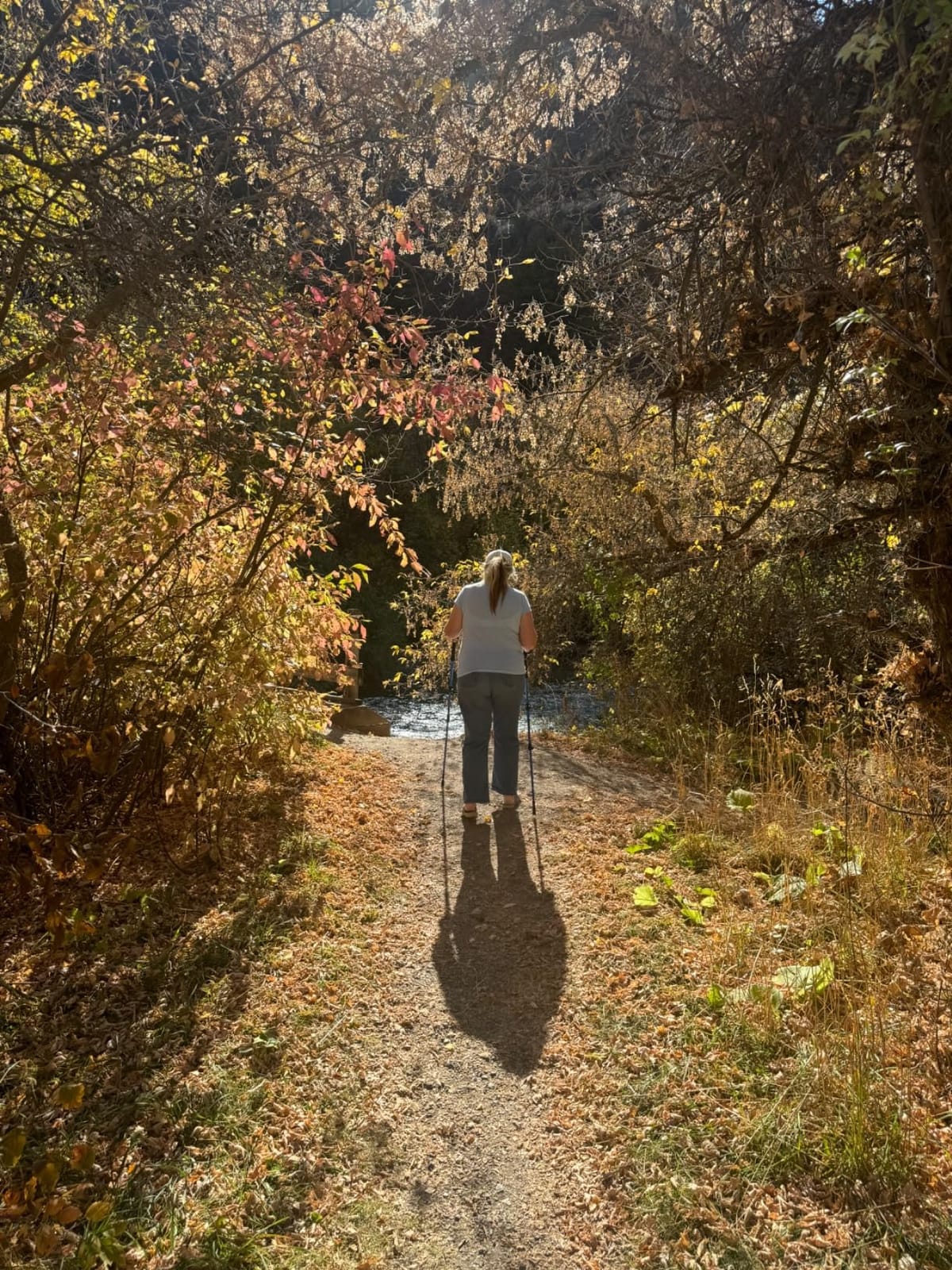
Owners repeatedly single out lock security on steep descents as the deciding feature, and the review profile backs that up: 4.7 stars with 84% five-star across more than 8,400 reviews. Hikers using them for joint pain tend to describe the same thing, that the pole absorbs enough of the step to change how the descent feels.
The grip is a natural cork top with an EVA foam choke-up section below it. That lower section is the part you slide your hand down onto when the ground tilts sharply and you want the pole shorter in your fist without touching the lock. It is also the part that saves your palm on long, sustained plunges, because you are not clamping the top grip with the same force for hours.

Adjustment runs from 24 to 54 inches, which is enough to lengthen several centimetres for a descent without pushing the sections to their limit. The shaft collapses to 24 inches or fully disassembles to 21 inches. Tips are tungsten carbide, and the mud and snow baskets are interchangeable.
Who these poles suit
They suit hikers who care about total carried weight more than they care about tip consumables, and who will be on long, steep, loaded descents. The cork-plus-EVA combination also suits anyone whose hands sweat heavily or who wears gloves in cold weather, because the foam section gives you a second hold position when your grip is wet.
Where they fall short
The consumable parts are the weak link. Reviewers report that the rubber tips wear through faster than an aluminum shaft would on long, rocky, high-mileage routes, so budget for replacement tips if you walk a lot of talus. The 54 inch maximum is also 1 inch short of the longest option here, which matters if you are tall and setting the poles long for a descent.
2. Cascade Mountain Tech Aluminum Cork Poles – the Best Balance of Grip and Reach
Cascade Mountain Tech Trekking Poles, Shaft Material: Aircraft- grade 6061 Aluminum with Adjustable Locks Expandable to 54″ (Set of 2), Cork Grip, Orange, Extended Grip Material: EVA
6061 aluminum 10 oz per pole
Quick lock
26 to 54 inch
Cork and EVA grip
Pros
- Cork grip with extended EVA down grip for extra hand placement
- Quick lock holds firmly under heavy downhill weight
- Tungsten carbide tips plus mud and snow baskets included
- Collapses to 26 inches for travel
Cons
- Noticeable shaft vibration at a fast pace when fully extended
- Some owners report a lock needing repeated retightening
- Cork and lower grip surfaces wear with extended use
If you want one pair that handles a descent without any particular weakness, this is the one. Aircraft-grade 6061 aluminum at 10 oz per pole, quick locks, a cork grip, and an extended EVA down grip that gives you a second hand position on steep ground.
The down grip is the feature that separates it from most of the aluminum poles in this roundup. On a sustained plunge, you slide down onto the foam section and the pole effectively gets shorter without you touching the lock. Owners using them on icy trails and steep rocky descents report the same pattern of results, and at 4.6 stars across more than 14,000 reviews the consistency is the highest of any aluminum pair here.
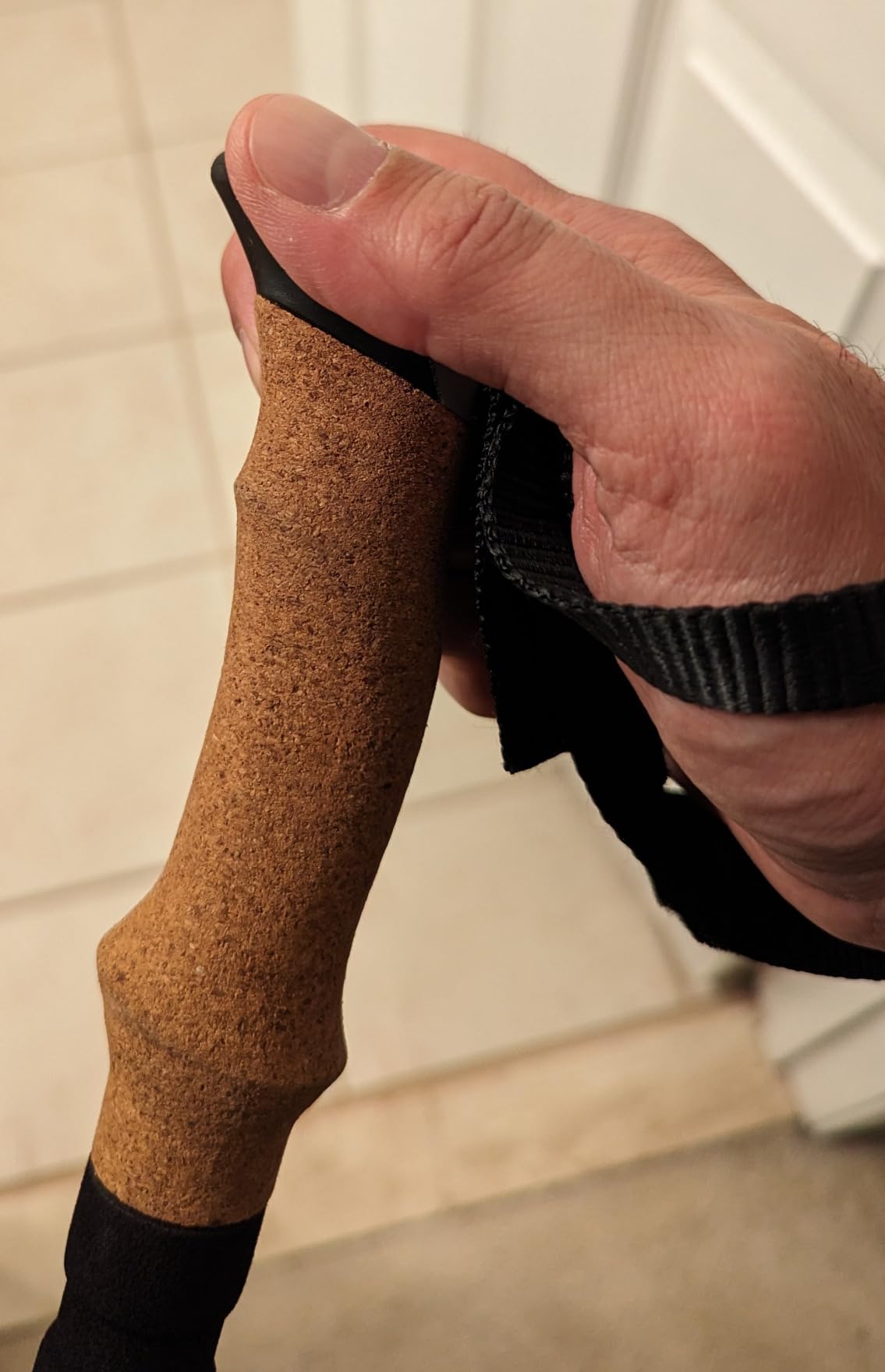
Quick locks are quicker than twist locks and easier to re-tension in the field, which is why they are the sensible default on a descent. The tradeoff is the same one every lever lock has: if the tension drifts, you tighten a small screw rather than forcing an internal plug harder and risking the tube.
Height runs from 26 to 54 inches, and the bundle includes tungsten carbide tips, rubber tips, mud baskets, snow baskets, boots and tip covers. That is the most complete consumable kit of the aluminum options, which matters if you walk mixed terrain and do not want to chase accessories.
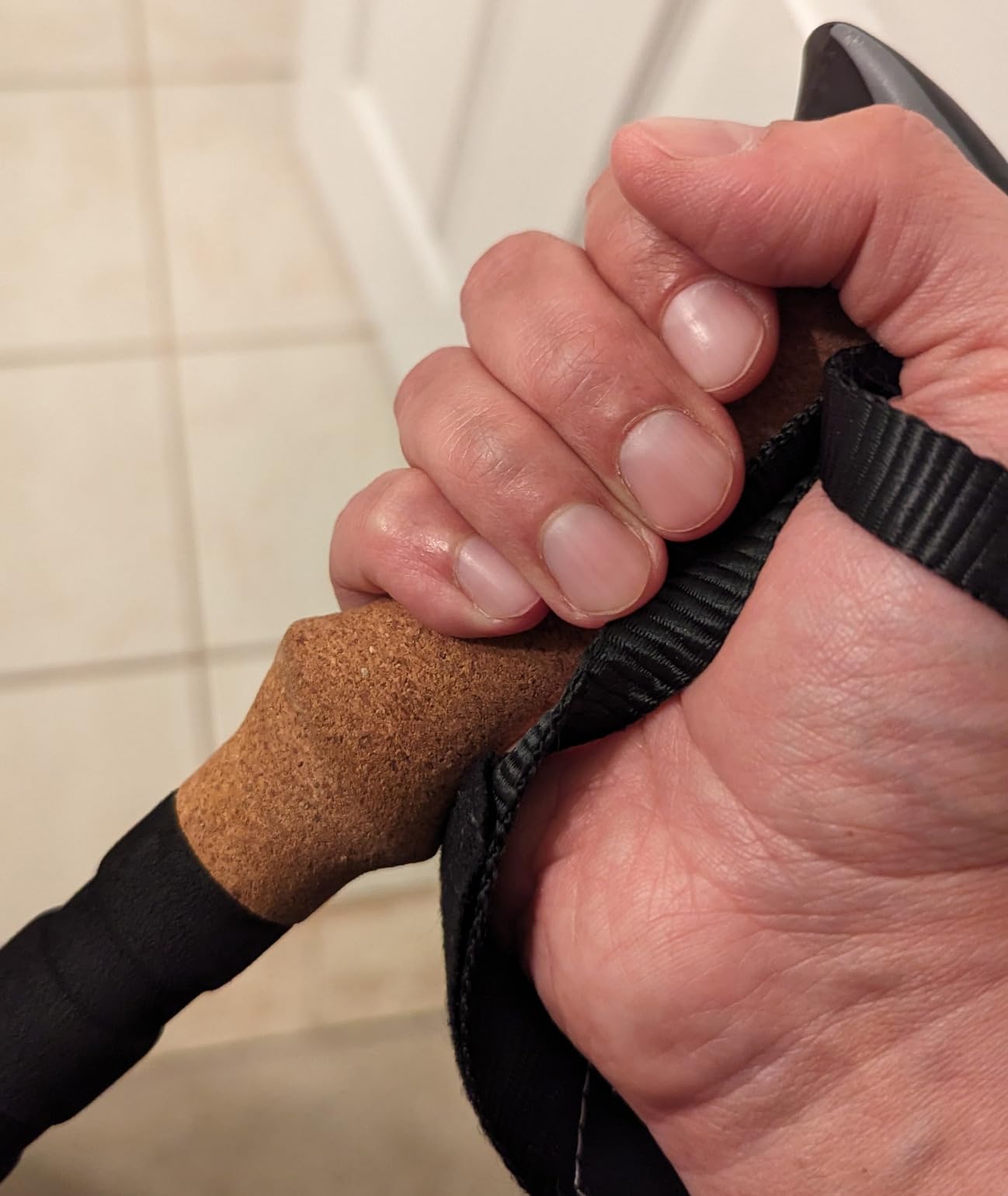
Owners describe loading these hard on descents with a full pack, and the reports of weight-bearing behaviour are the most reassuring in the group. Where the aluminum spec shows through is vibration: fully extended and moving at pace, the shafts buzz, and anyone sensitive to that will feel it through the grip.
Who these poles suit
They suit hikers who want a long, feature-rich pole that fits almost any route without overthinking the purchase. The extended down grip is especially useful for people who spend long stretches on steep off-trail descent, because it lets you vary your hand position instead of clamping one spot for hours.
Where they fall short
Vibration at pace is the honest drawback, and it is inherent to aluminum shafts rather than a defect. A small number of owners also report a lock that loosened repeatedly and needed retightening, so check the tension before you start a long descent. Cork and the lower grip surface both wear over years of daily use, and replacements are a separate purchase.
3. TheFitLife Telescopic Aluminum Poles – a Built-In Spring for Travellers
Telescopic Trekking Poles for Hiking, Anti-Shock Nordic Walking Sticks
Aluminum 9.92 oz per pole
Quick and twist lock
26 to 51.2 inch
Built-in shock spring
Pros
- Built-in shock-absorbing spring dampens trail impact
- Collapses to 25.6 inches and disassembles to 21.46 inches
- Lightweight at 9.92 oz per pole
- Full tip kit with mud and snow baskets
Cons
- Twist lock takes more fiddling than a lever lock when gloved
- Shortest maximum length among the 51 inch options
- Shorter packed length than the tri-fold option
This is the pick for anyone whose route planning involves a suitcase. It collapses to 25.6 inches and fully disassembles to 21.46 inches, so it packs into luggage in a way most trekking poles do not, and at 9.92 oz per pole it is still light on a long descent.
The distinguishing feature is the shock-absorbing spring built into the grip section. It compresses when you plant the pole and absorbs part of the vertical spike that arrives on a steep step, which is a real reduction in the jarring sensation that makes descents hard on joints. The honest version of that claim is in the next section, because the absorbed energy does not disappear.
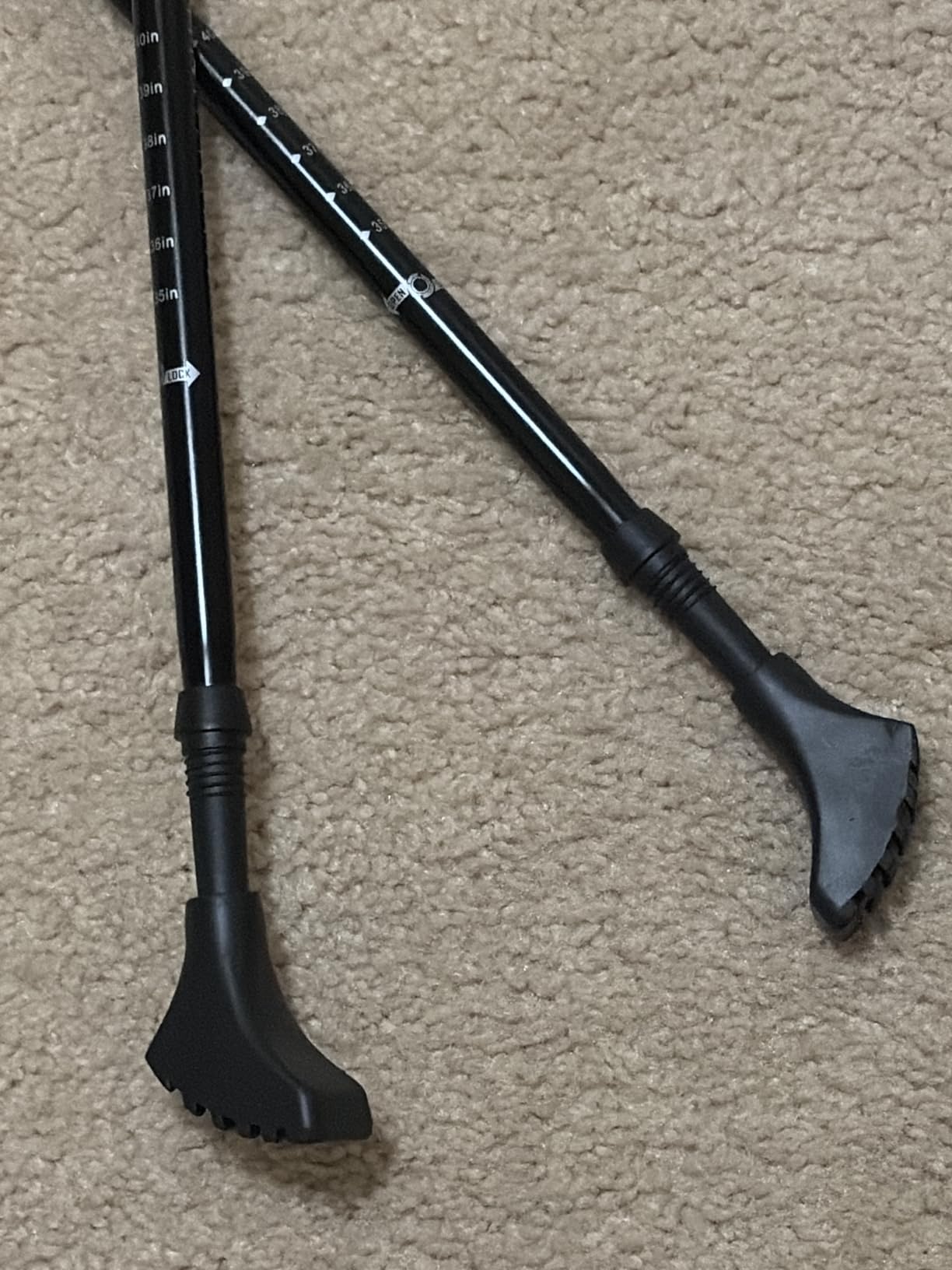
It also carries the largest review base of any pole here, more than 18,000 reviews at a 4.5 average with 74% five-star, so the long-term reports are unusually well sampled. Owners consistently point to packability, low weight and the included all-terrain tip kit as the reasons they keep buying them.
Adjustment is a quick twist lock, running from 26 to 51.2 inches. Twist locks are clean and compact because there is no external lever catching on brush or bags, and glove-friendly in the sense that you do not need a free thumb to flick anything. The catch is the one every twist lock has, described below.

The included kit is generous for the category: rubber tips, walking caps, mud baskets and snow baskets all ship in the box, so you are not ordering parts after your first muddy descent. One year of warranty coverage comes with the pair.
Who these poles suit
They suit hikers who move between trips by air or public transport, and who like a visible spring mechanism for the descent rather than relying on a stiff shaft. The short disassembled length is the real advantage, since most telescoping poles stop at 24 to 26 inches.
Where they fall short
The twist lock is the weak point. Under gloves, in the wet, or with grit on the threads, it takes more fiddling than a lever lock and it is the part most likely to need cleaning mid-trip. The 51.2 inch maximum also means these are not the poles for a very tall hiker who wants to run them long.
4. Aihoye Aluminum Trekking Poles – a Budget Pick With Anti-Shock Design
Aihoye Hiking Trekking Poles, 2 Pack Walking Hiking Sticks for Men &Women
Aluminum 10.3 oz per pole
Push button lock
25 to 52 inch
Anti-shock design
Pros
- Anti-shock design aimed at reducing hand and wrist strain on descents
- Ten replacement tips covering rubber
- boot
- snow and mud types
- Folds to 21 inches
- Free replacement policy and 1-year warranty
Cons
- Lowest average rating in the group at 4.4
- Push-button locks need care under heavy lateral load
- EVA grips wear with heavy daily use
The Aihoye pair is the one to look at if you want a genuine anti-shock design and a deep supply of replacement parts without stepping up to a carbon shaft. Aviation aluminum at 10.3 oz per pole, folding to 21 inches, with an anti-shock design aimed squarely at taking strain off the hands and wrists on long descents.
Push-button locks are the fastest of the three mechanisms to operate one-handed, which is convenient when you are moving and do not want to stop. They are also the least forgiving when the pole is under heavy sideways load on steep ground, so the tension matters more than with a lever lock.

At 4.4 stars across roughly 8,400 reviews, this is the lowest average rating in the group, with about 4% one-star. That is a meaningful gap and we would not dress it up. The pattern in the reviews is that people like the weight, the folding length and the value, and are less positive about lock durability over years and grip wear under daily use.
What you do get in the box is ten replacement tips, spanning rubber tips, boot tips, snow baskets and mud baskets. For someone who changes tips as conditions change rather than buying a new pole, that is a genuinely useful amount of spares.
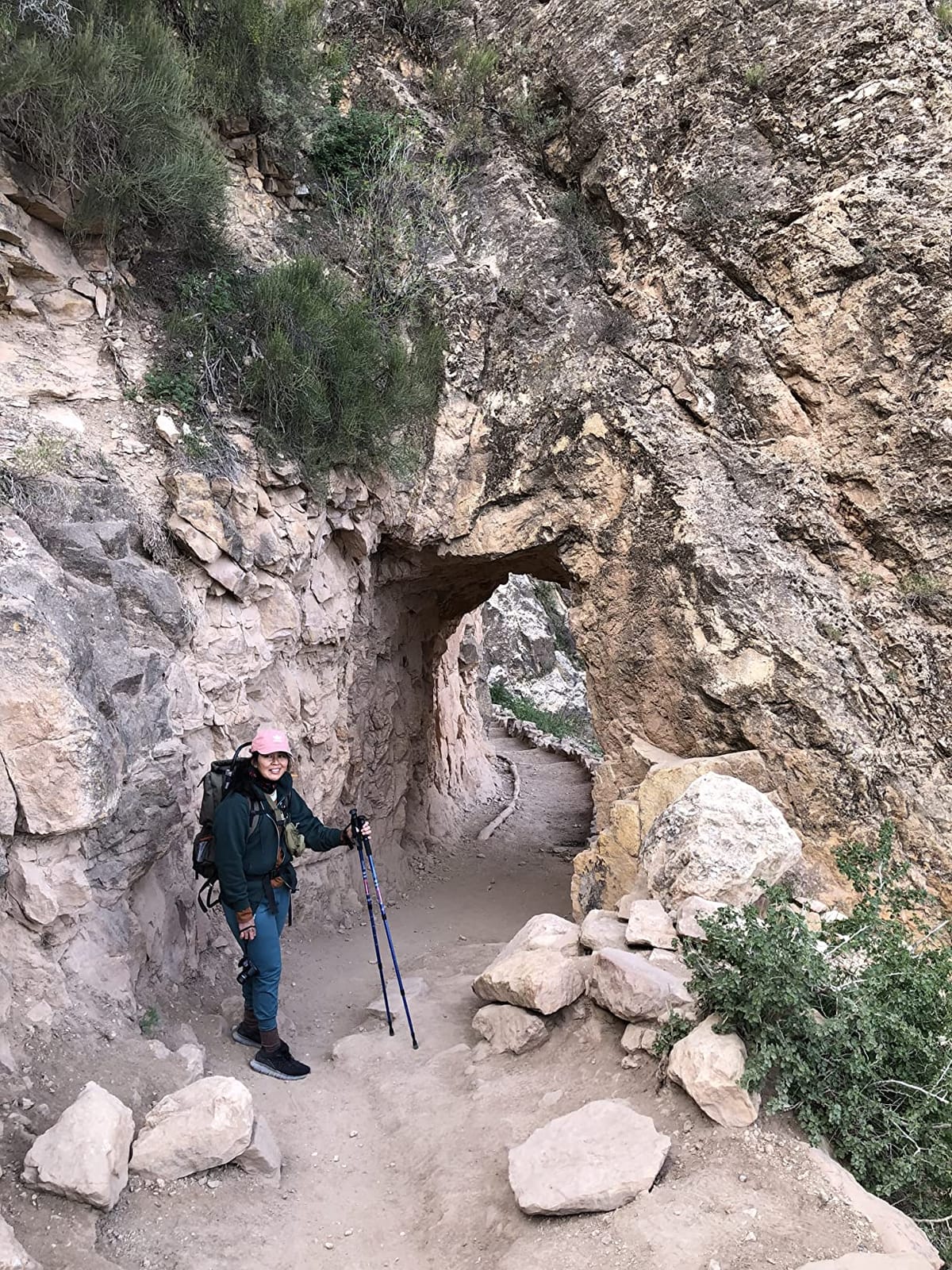
Adjustment runs from 25 to 52 inches, with an ergonomic plastic top grip, a secondary foam handle and adjustable straps. The lower foam handle gives you the choke-up position that matters on switchbacks and abrupt terrain changes.
Who these poles suit
They suit hikers who want shock absorption on a budget, who change terrain and tip types often, and who would rather replace tips than replace poles. The 21 inch folded length is also among the shortest of the telescoping designs here.
Where they fall short
The rating spread is the widest of the ten, and lock durability under lateral load is the recurring theme in the critical feedback. Check lock engagement carefully before a loaded descent. The plastic and EVA grips also wear faster than cork, which matters if you use the poles every day rather than on trips.
5. TREKOLOGY Trek-Z Cork Poles – the Only True Tri-Fold Here
Trekology Trek-Z Cork Grip Collapsible Lightweight Hiking Trekking Poles
Tri-fold aluminum 11.5 oz per pole
Flip lock
110 to 130 cm
Folds to 15 inches
Pros
- Only true tri-fold design here
- collapsing to 15 inches for carry-on travel
- Cork grip absorbs sweat with EVA foam lower grips
- Fits users from 5 foot 2 to 6 foot 5
Cons
- Heaviest pair in the group at 11.5 oz per pole
- Tri-fold hinges add failure points versus telescoping shafts
- Cork grips flex slightly by design
Everything else on this list folds to somewhere between 21 and 26 inches. The Trek-Z folds to 15 inches because the shaft genuinely tri-folds at two hinges rather than simply collapsing in half, and that is the difference between fitting into overhead luggage and not.
The trade is weight. At 11.5 oz per pole this is the heaviest pair here, and on a long descent you feel it in the forearms. The cork grip absorbs sweat well, and the EVA foam lower grips give you a second hold position on steep ground.
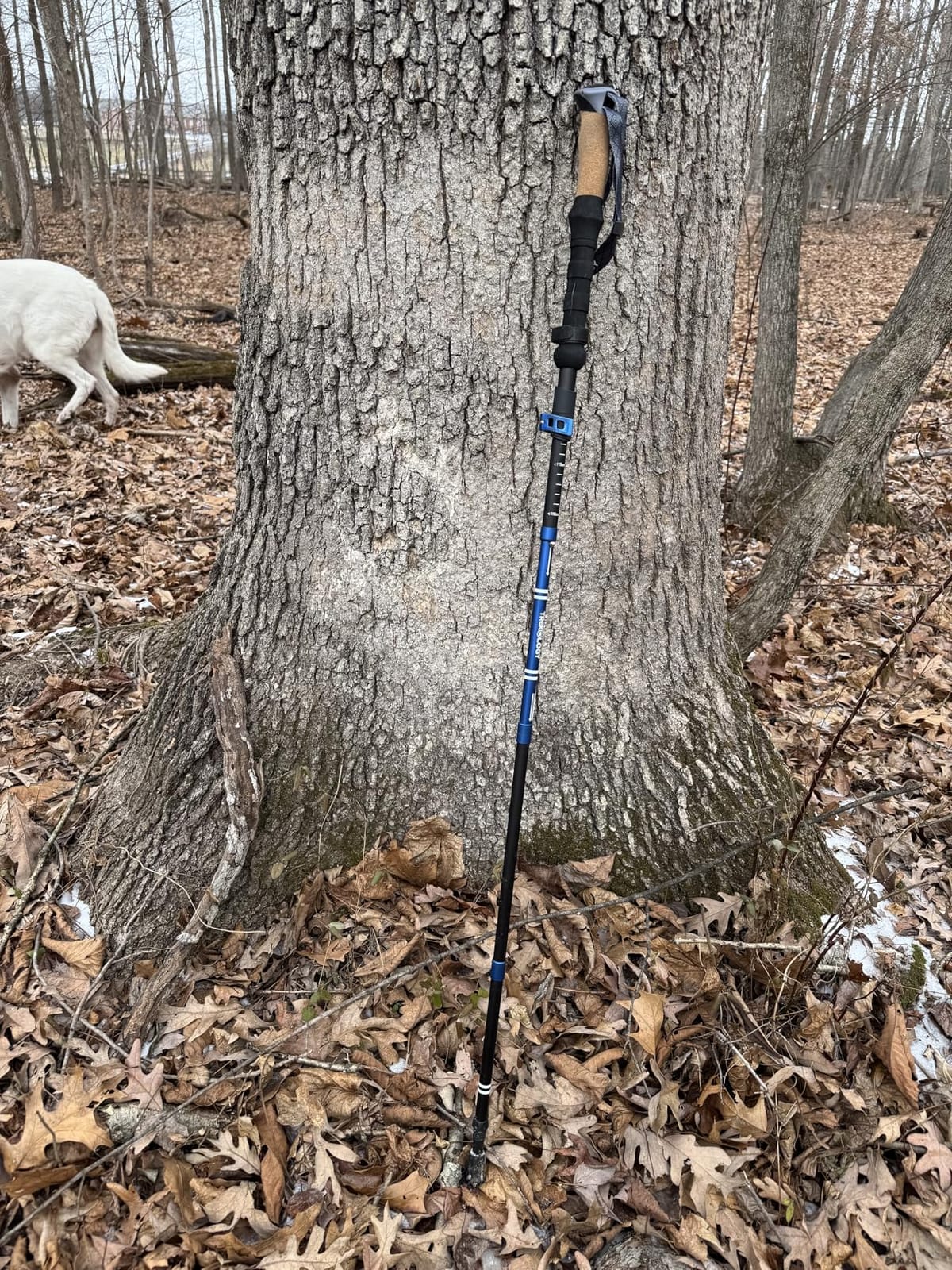
Adjustment is a metal flip lock running from 110 to 130 cm, which fits hikers from about 5 foot 2 to 6 foot 5. The metal-capped locking joints are a good detail on a folding pole, because they are the parts that take the repeated impact of being folded and unfolded.
One design note that trips people up: the cork grips have a slight rotational flex by design, and some owners initially read that as a defect. It is a deliberate anti-torque feature. What is not a design feature is the looser feel some users report from the hinge joints compared with a telescoping shaft, and the tri-fold hinges do add more potential failure points under repeated hard use.
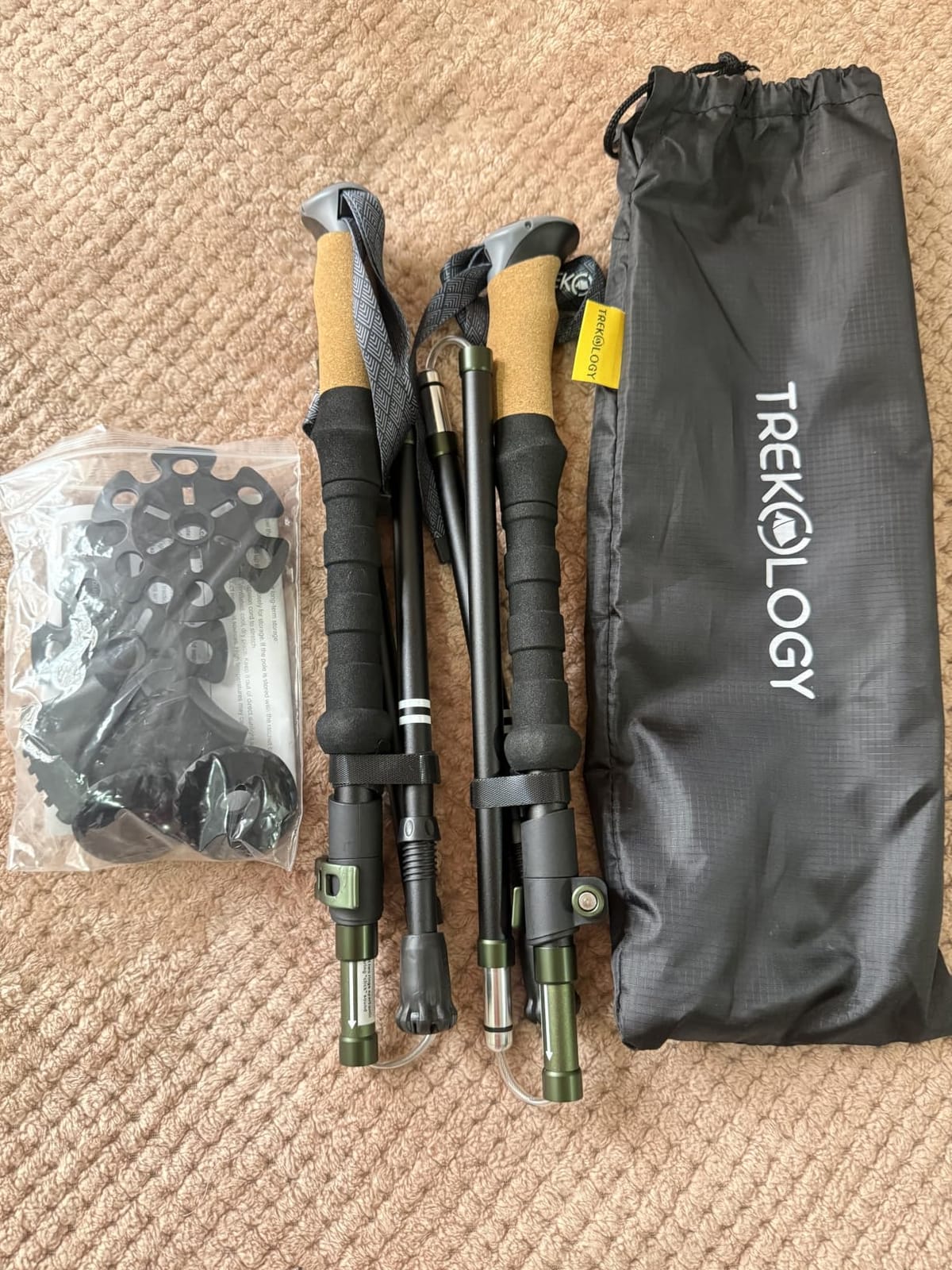
The box includes a carry bag, mud stops, snow baskets, rubber tips and rubber feet. At 4.4 stars across roughly 7,500 reviews, this is tied for the highest one-star share in the group at about 6%, most of it directed at weight and hinge feel rather than at grip or lock quality.
Who these poles suit
They suit hikers who fly regularly, carry trekking poles as cabin luggage, or need poles that fit into a small daypack. The 130 cm maximum suits a wide height range for a folding design.
Where they fall short
Weight is the main cost, and on the steepest descents it is the one you notice. The folding hinges are more joints to inspect, and if you are walking with a heavy pack over rocky ground it is worth checking them at breaks rather than assuming they are set. Budget the heaviest option in this list against your pack weight budget before buying.
6. Foxelli Aluminum Cork Poles – the Highest Rated in the Group
Foxelli Trekking Poles – Lightweight Collapsible Aircraft Grade Aluminum Hiking Poles with Cork Grips Quick Locks & All-Terrain Accessories – Pair of 2
Aluminum 9.4 oz per pole
Flip lock
24 to 54 inch
Cork and EVA sleeve
Pros
- Highest average rating in the group at 4.8 with 85% five-star
- Lightweight 9.4 oz per pole
- Flip locks hold under full body weight on steep downhills
- Cork grips stay secure in high humidity
Cons
- Basket connector is plastic and not user-replaceable
- Straps are single-direction so lengths differ side to side
On raw owner satisfaction, this is the strongest pair in the guide. It carries a 4.8 average with 85% five-star across nearly 4,900 reviews, which is the highest rating profile of the ten, and the 9.4 oz per pole weight puts it among the lightest aluminum options.
Cork is the grip material, and cork has a specific advantage on descents that foam and plastic do not: it moulds to your hand and stays secure in high humidity without a rubber coating that wears out. The soft extended EVA sleeve below it lets you choke up on switchbacks and on abrupt terrain changes, which is the single most useful grip feature on a steep descent.
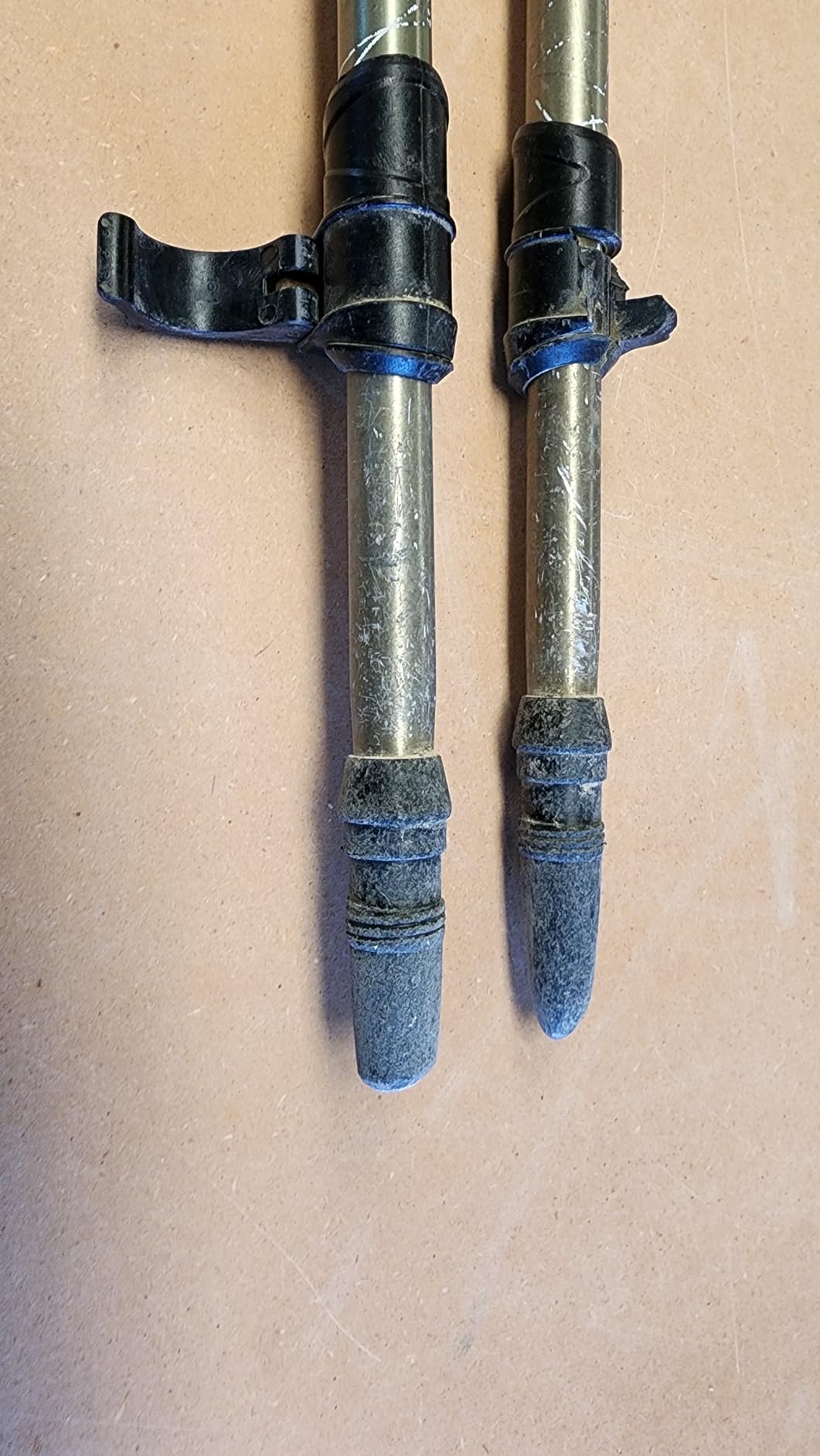
The flip locks are lever-style, with thumb-tightenable tension bolts, and owners report them holding position under full body weight on steep downhills. Adjustment runs from 24 to 54 inches, and the poles disassemble to a compact 21 inches if you need to pack them into a smaller bag.
Tips are tungsten carbide, with all-season baskets and interchangeable rubber tips included. Reviewers who have used the pair for a year of daily walking report durability holding up, and hikers with joint pain describe clear relief on descents.

The most repeated criticism is not the shaft or the lock but the basket hardware. The mud and snow basket connector is cheap plastic that can rip or jam when a pole is pushed deep into soft ground, and once it fails it is not user-replaceable. Treat the baskets as consumables rather than permanent fittings.
Who these poles suit
They suit hikers who want the most consistently well-regarded pole here, and whose hands sweat or get wet on a long descent. The cork top grip plus EVA sleeve is the best comfort combination in the group for sustained support, and the tension bolts mean you can re-tune the locks in the field.
Where they fall short
The basket connector is the weak component and it is not replaceable, so budget for new baskets rather than expecting the supplied ones to last indefinitely. The wrist straps are a single unidirectional material, which means the two strap lengths are not matched and the pole sits slightly differently in each hand. It is a small irritation that some owners notice immediately.
7. TheFitLife Carbon Fiber Poles – a Lightweight Shaft With a Printed Height Scale
TheFitLife Carbon Fiber Trekking Poles – Collapsible and Telescopic Walking Sticks with Natural Cork Handle and Extended EVA Grips, Lightweight Nordic Hiking Poles for Backpacking Camping (Blue)
Carbon fiber 0.44 lb per pole
Lever and flip lock
24 to 53 inch
Cork and EVA grips
Pros
- Printed measuring scale on the shafts for repeatable height settings
- Cork grip plus extended EVA foam sleeves for switchbacks
- Adjustable wrist straps allow hands-free carry on scrambles
- Shock-absorbent feel at 0.44 lb per pole
Cons
- Locking levers and screws are plastic and need periodic retightening
- Slim carbon shafts are less forgiving of point loading
- Rubber tips wear quickly on abrasive rock
The most useful thing on these poles is not exotic. A measuring scale is printed on the shaft, which sounds trivial until you have spent a descent adjusting poles by feel in the rain and wondering whether you have actually lengthened them.
For descent use, a scale removes the guesswork from the adjustment that matters most. Set the poles for the climb, then add a measured increment for the drop, and you know you have done it rather than hoping you have.

Weight is 0.44 lb per pole, and the carbon is shock-absorbent in feel, meaning it takes the edge off repeated impacts compared with a stiff aluminum shaft. The cork grip comes with extended EVA foam sleeves, and the adjustable wrist straps let the poles hang from your hands during a scramble where you need both palms on rock.
Owners on steep alpine descents with heavy packs, including multi-week trips carrying loads in the region of 50 lb, report the poles stayed secure and took weight well. The rating sits at 4.6 with about 78% five-star across nearly 4,900 reviews.
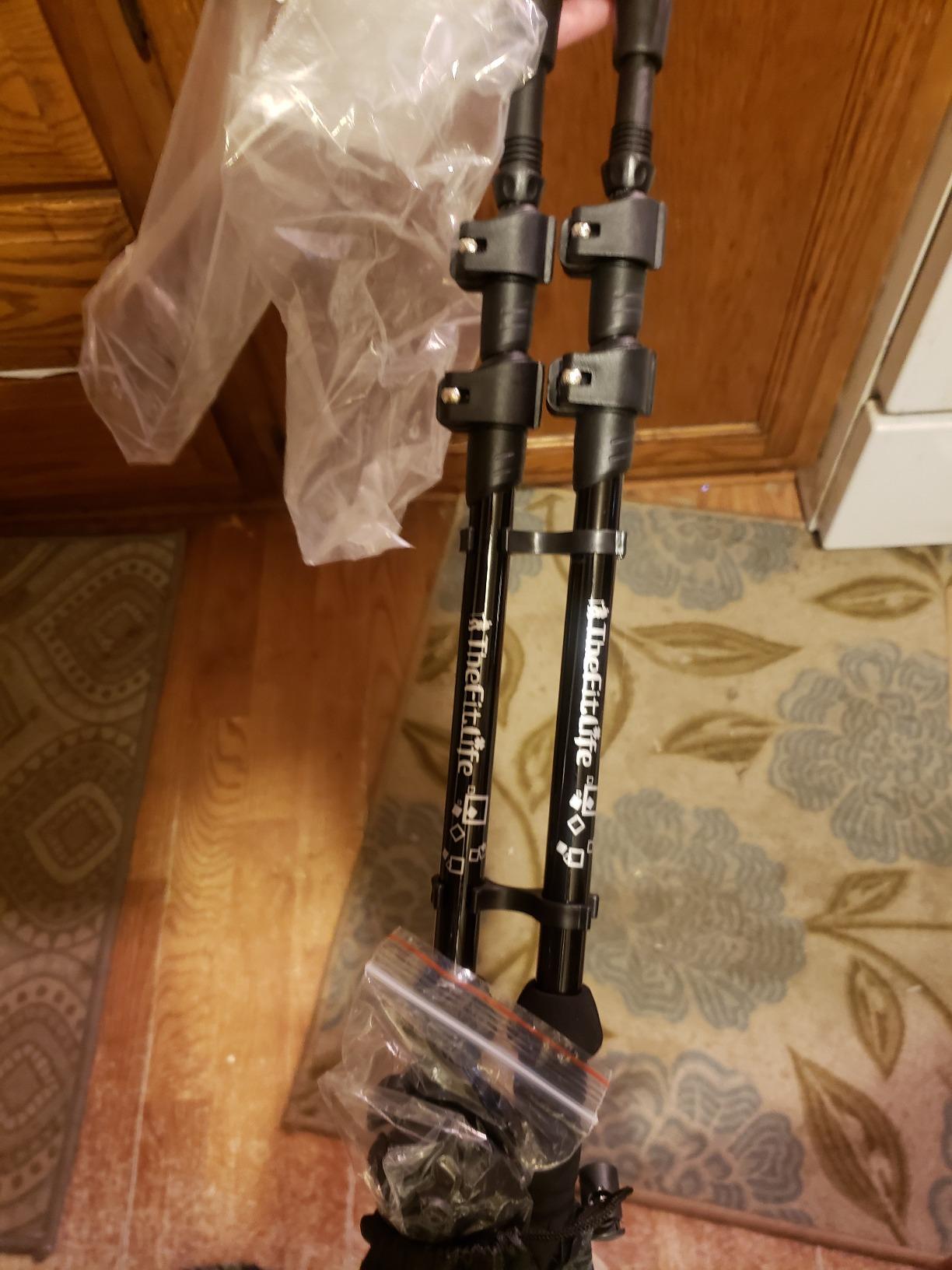
The honest weakness is the hardware. The locking levers and adjustment screws are plastic, so they need occasional retightening, and the shafts themselves are slim, which means they are less forgiving of being point-loaded against a rock. Some reviewers also describe the grip as faux cork rather than the real thing, which mostly shows up in feel over time.
Rubber tips wear through quickly on abrasive rock, with owners reporting replacement within a week or two of heavy use on that surface. The box includes a carry bag, four rubber tips, mud stops, snow baskets and walking caps, and the pair is backed by a 365-day guarantee.
Who these poles suit
They suit hikers who constantly adjust pole length and want the adjustment to be repeatable, and who carry heavy loads over long alpine descents. Anyone who switches between poles on scrambles will like the adjustable wrist straps.
Where they fall short
Plastic levers and screws are the part to inspect most often, and they are the first thing to feel loose after a season of use. Slim carbon shafts punish being wedged sideways, so keep them clear of rock faces. If you walk abrasive rock daily, factor tip replacement into the ownership cost rather than treating the tips as permanent.
8. Cascade Mountain Tech Carbon Fiber Poles – Quick Locks and a Two-Year Warranty
Cascade Mountain Tech Trekking Poles – Carbon Fiber Walking or Hiking Sticks with Quick Adjustable Locks (Set of 2), Grey
Carbon fiber 8 oz per pole
Quick lock
26 to 54 inch
Cork with down grip
Pros
- Two-year warranty with proof of purchase
- Quick locks favoured over twist locks for long-term reliability
- Cork grips absorb sweat and lower vibration on impact
- Reported to carry heavy users through steep descents
Cons
- Sections rattle slightly where the carbon sections nest
- No suspension so vibration persists on long descents
- Wrist straps are not handed and leave a permanent twist
This pair is the carbon option for people who want the lowest-maintenance lock in the group. Quick locks are consistently preferred over twist locks in long-term owner reports, largely because there is nothing internal to seize and the tension is a screw you can adjust.
Weight is 8 oz per pole, and the cork grip with an extended down grip does two jobs on a descent. Cork absorbs sweat and cuts the vibration arriving through the shaft, and the extension gives you a lower hold on slopes that tilt suddenly.
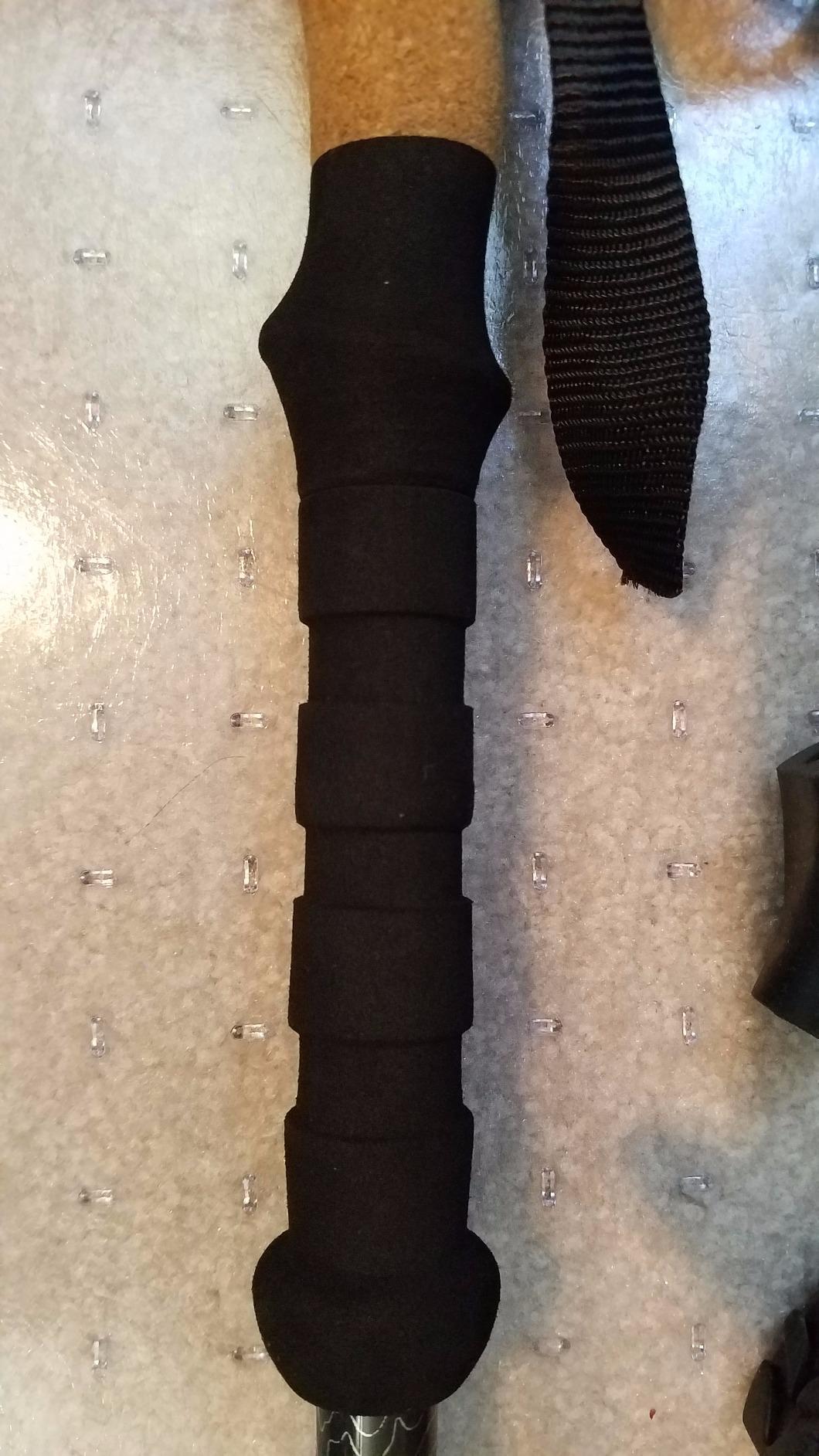
Owners with knee and joint pain describe substantial gains on descents, and there are reports of the poles carrying users around 250 lb through steep descents and creek crossings. That is a load rating claim from user reports rather than a laboratory figure, so treat it as encouraging rather than a specification.
Adjustment runs from 26 to 54 inches, and the box includes tungsten carbide tips, snow and mud baskets, rubber boot tips, a carry bag and a pole clip. The two-year warranty with proof of purchase is the longest stated coverage of the ten.
There is no suspension in the shaft, so vibration is a factor on long descents, and the sections rattle slightly where the carbon pieces nest together. That rattle is a common carbon complaint and is usually a tolerance issue rather than damage.
Two other details are worth knowing before you commit. The wrist straps are not handed, which leaves a permanent twist in the strap and a slightly different feel in each hand. And at 26 inches packed, this is the longest packed length among the carbon options, which matters for carry-on travel.
Who these poles suit
They suit hikers who want carbon weight without spring-based suspension, and who will keep the poles for years. The two-year warranty makes them a sensible choice if a long-term failure would be an annoyance, and the cork grip suits warm or sweaty conditions.
Where they fall short
There is no shock absorption in the shaft, so the harshness of repeated impacts is passed through to your hands. If your knees are the main problem, that is worth weighing. The non-handed straps and the 26 inch packed length are smaller annoyances than the vibration.
9. KINGGEAR 7075 Aluminum Poles – for Loaded Descent Days
KINGGEAR Trekking Poles 7075 Aluminum Lightweight Hiking Sticks
7075 aluminum 9.35 oz per pole
Quick flip lock
25.5 to 54 inch
Cork and EVA grips
Pros
- 7075 aviation aluminum is stronger than carbon fiber
- Quick flip locks hold position once set
- Cork grip plus EVA lower grip stays secure when wet
- Reported to hold up on long multi-day routes
Cons
- Heavier than comparable 7075 aluminum poles
- Grip knurling is rough and can chafe
- Section closures are plastic rather than metal
7075 aluminum is the material choice for loaded descents where the terrain includes rock, talus and off-trail terrain that can put a sideways load into a pole. It is stronger than carbon fiber in the way that matters here: when something bends, it bends rather than snapping.
Weight is 9.35 oz per pole, which is competitive for aluminum, and the quick flip locks are described by owners as staying where they are set. A hanger who completed the Camino de Santiago is one of many long-route reports in the reviews, at 4.6 stars with about 80% five-star across more than 3,100 reviews.
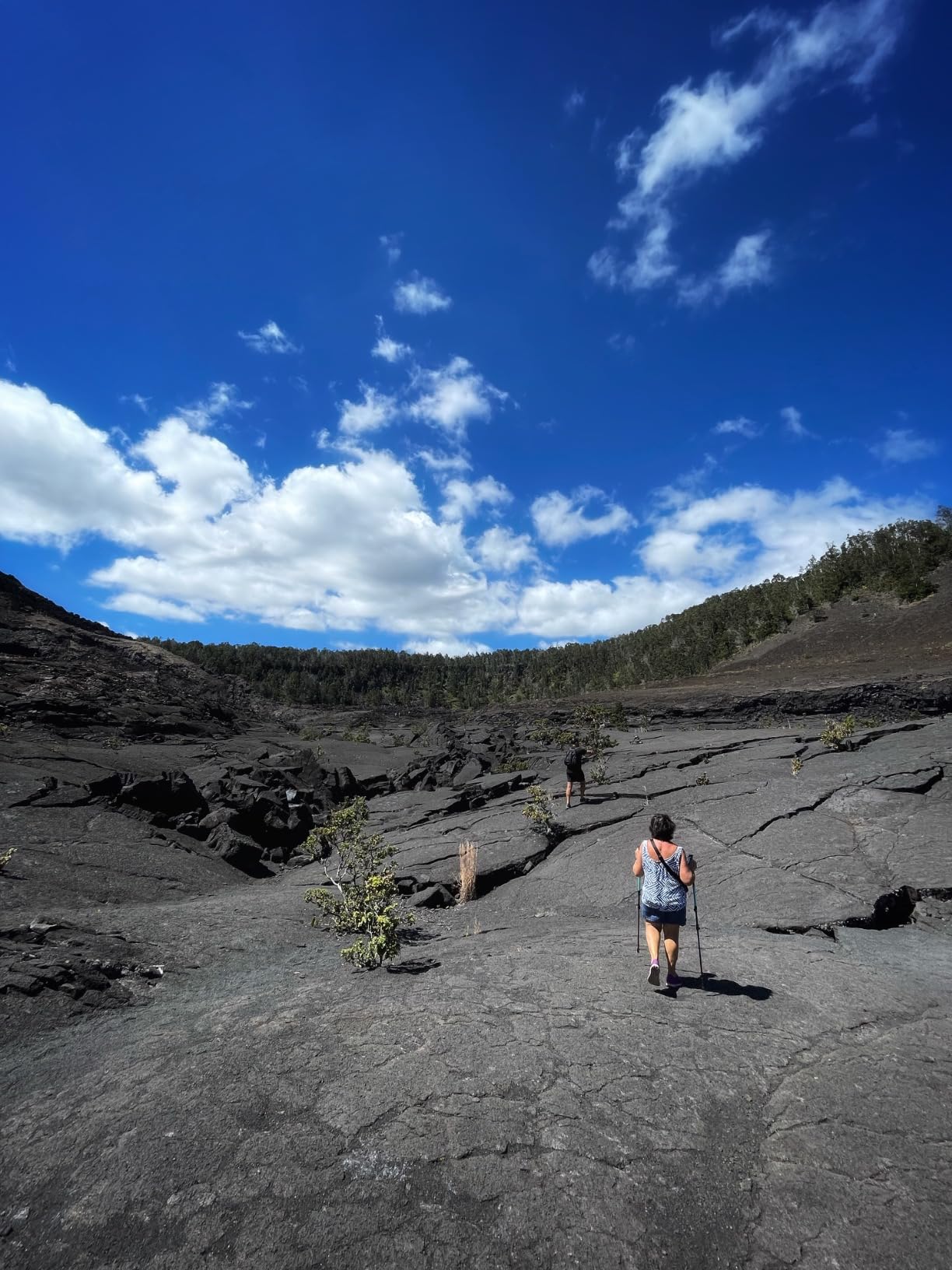
The grip is natural cork with an EVA lower grip that owners specifically report staying dry and not slipping when wet, which is one of the more common descent complaints and one this pair answers well. Padded breathable wrist straps are the other quiet win on a long drop.
Tungsten carbide tips come with snow baskets, mud baskets, rubber protective tips and Nordic walking boot tips, and the pair is backed by a lifetime guarantee. Adjustment runs from 25.5 to 54 inches.
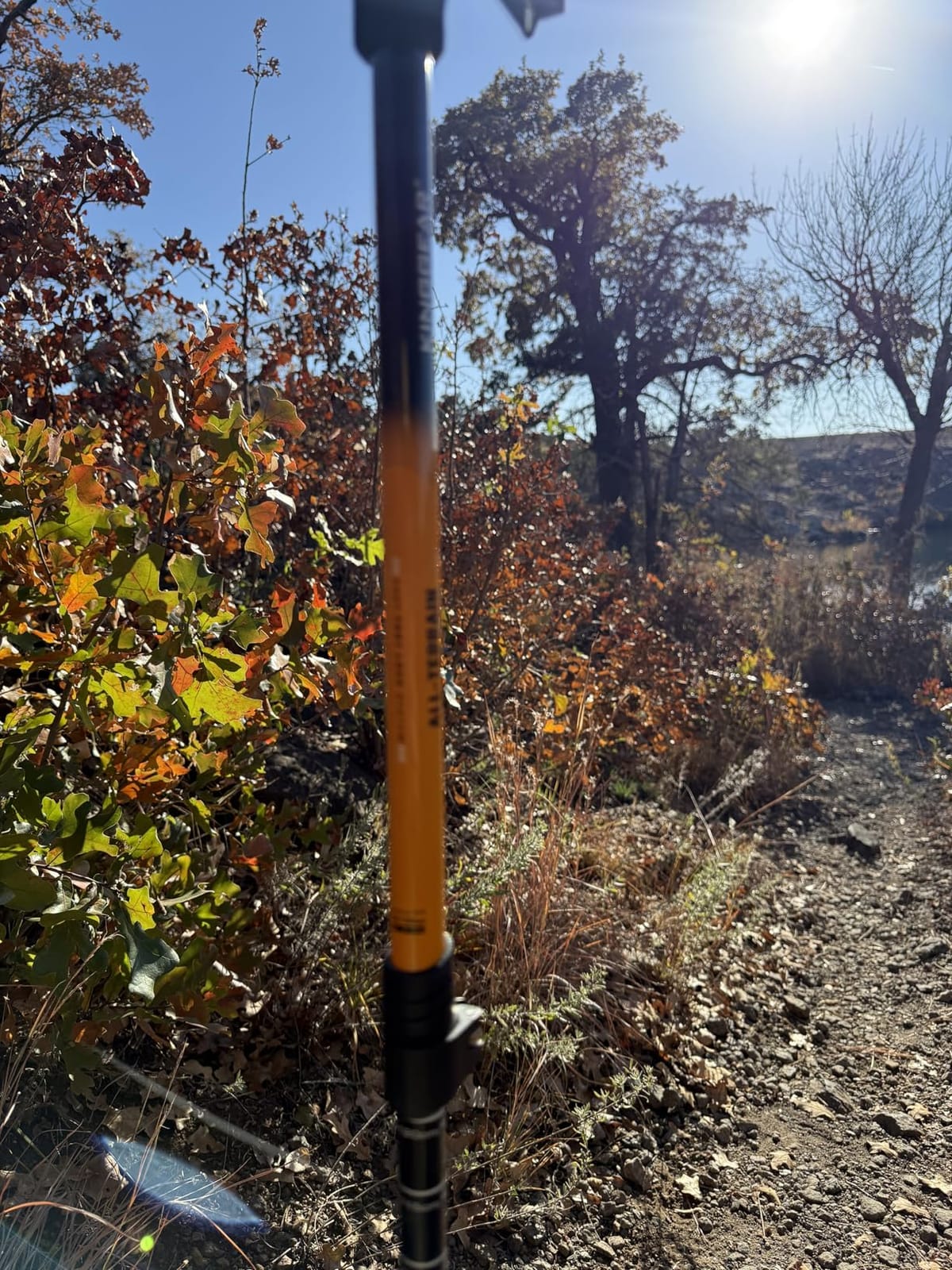
The grip knurling is the one to know about in advance. It is noticeably rough, and one owner sanded it down, so if you have sensitive palms or tend to get blisters, expect to either wear a glove layer or modify the grip. Section closures are plastic rather than metal, which is the usual weak point on an aluminum pole of this type.
At 25.5 inches collapsed, this is also one of the longer packed lengths, so it is not a carry-on-first choice. The lifetime guarantee is a meaningful offset to that for anyone buying for a decade of use.
Who these poles suit
They suit hikers with heavy packs, older hikers, and anyone walking rocky or off-trail descents where a bend is preferable to a break. Wet-weather hikers will like the grip behaviour, and anyone buying for a long time gets a lifetime guarantee behind it.
Where they fall short
Rough grip knurling is the first thing to check against your own hands, and it is the reason this is not our top pick despite the strong material. Plastic section closures are worth inspecting periodically, and the 25.5 inch packed length rules it out for anyone who needs carry-on length.
10. Hiker Hunger Outfitters 3K Carbon Poles – the Longest Reach in the Group
100% Carbon Fiber Trekking Poles by USA Brand – Ultra Strong Lightweight Collapsible Hiking Poles with Cork and EVA Foam Grips & Quick Adjustable Flip Locks
3K carbon 7.6 oz per pole
Metal flip lock
24 to 55 inch
Cork and EVA grips
Pros
- Longest adjustment range here at 24 to 55 inches
- Metal flip-lock levers instead of plastic
- 3K carbon at 7.6 oz per pole
- Neoprene padded hand straps reduce chafing
Cons
- Carbon shafts less forgiving of point loads than aluminum
- Smallest review base in the group
- Limited accessory selection in the box
The range is the headline: 24 to 55 inches, an inch more than anything else here, in 3K carbon fiber at 7.6 oz per pole. That combination is what makes it worth a look if you are tall and want to run your poles long for a descent, where a long pole meaningfully increases how much load your arms take.
The other detail that separates it is the metal flip-lock levers. Every other flip or lever lock in this roundup uses plastic hardware to some degree, and plastic levers are the component most likely to need retightening after a season. Metal levers hold their tension and are marketed by the maker as more secure than twist-lock or folding mechanisms.

The grip is a moisture-wicking cork top with a nonslip EVA foam extension for steep climbs, and the neoprene padded hand straps are the most chafe-conscious design here. On a long descent where the strap carries most of the load, padding on the strap is worth more than padding anywhere else, and most of the cheaper poles in this group use single-layer webbing.
At 4.6 stars with about 82% five-star, the rating is solid, but roughly 2,700 reviews is the smallest sample here, and there is proportionally less long-term durability feedback than for the big sellers.
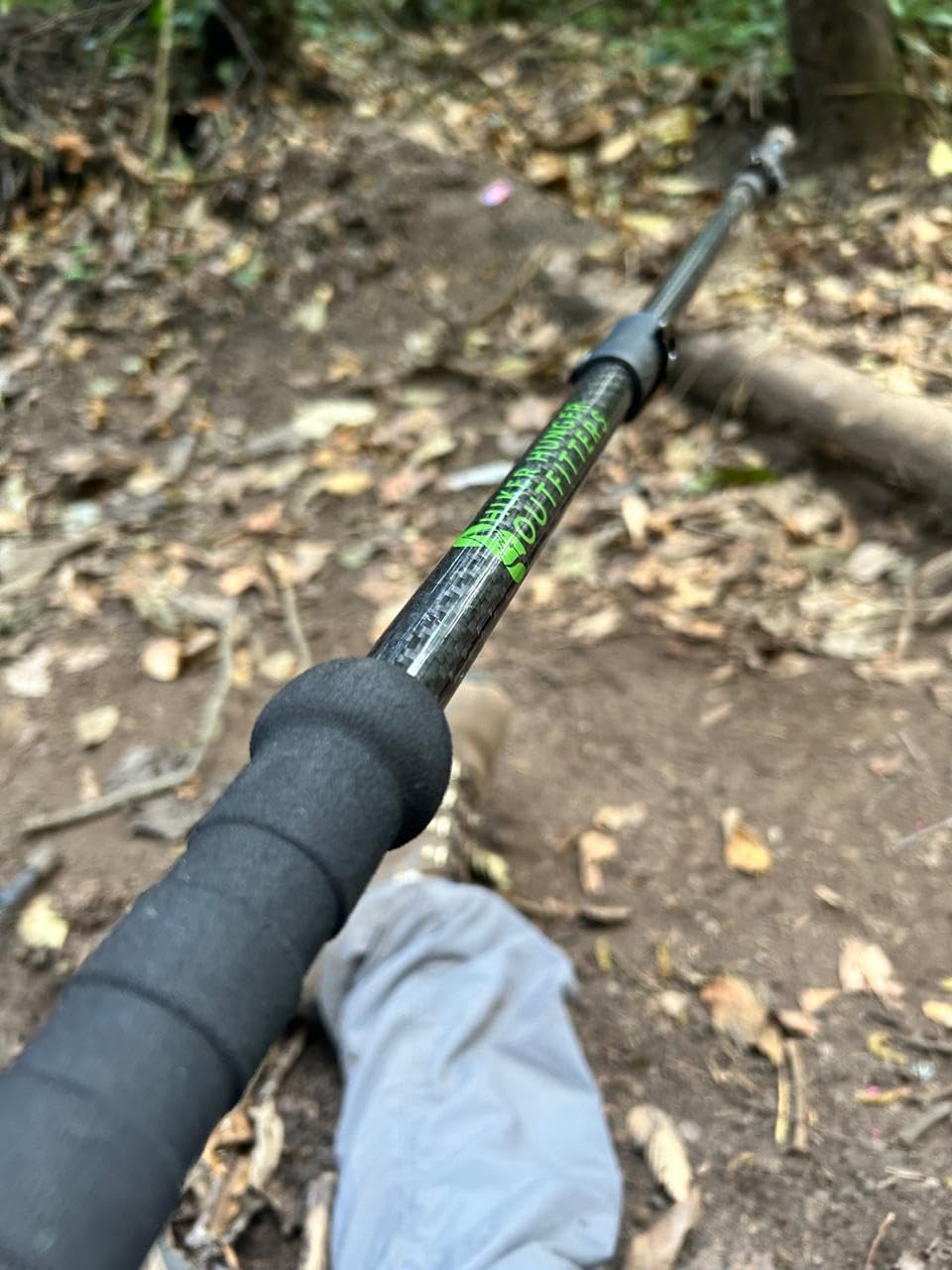
Carbon shafts are the same trade as the other carbon options: lighter and stiffer, but less forgiving of being point-loaded against rock. Accessory selection in the box is limited to mud baskets, rubber feet, rubber tips and snow baskets, so you will want to source tips separately if you walk abrasive ground.
Warranty is one year of manufacturing coverage, which is thinner than the two years on the Cascade Mountain Tech carbon pair. For a pole that is going to be leaned on hard for years, that difference is worth weighing.
Who these poles suit
They suit tall hikers who want maximum reach for descents, and anyone who wants the lightest pole with metal rather than plastic lock levers. People with chafe-prone hands will appreciate the neoprene strap padding more than any other feature here.
Where they fall short
The one-year warranty and smaller accessory bundle are the practical drawbacks. As with the other carbon options, treat the shafts as something you will not want to wedge between rocks, and expect to buy tips separately if you walk abrasive terrain daily.
How to Use Trekking Poles on a Steep Descent
Lengthen your poles by 5-10 cm for the descent, plant both poles before the downhill foot lands, keep the straps on with your hand coming up through the loop and then down onto the grip, and set your base length so your elbow sits near 90 degrees on flat ground. That single length change is where most of the knee benefit comes from.
Here is the full sequence, in the order it happens.
Set the flat baseline first. Stand on level ground, let your arms hang, then lift the pole until your elbow is roughly 90 degrees. That is your baseline length and the only number you should judge everything else against.
Shorten for the climb. Raise the uphill pole higher than the baseline and angle it into the slope. You gain reach and stability at the same time.
Lengthen for the drop. Add 5-10 cm. This moves the plant point further ahead of you and lets the pole take a share of each step rather than acting as a prop you are holding behind you.
Plant before the foot. Put both poles down ahead of you, then step. A pole planted after the foot lands is only catching you, not carrying you.
Plant in parallel on uneven ground. On rough, broken downhill terrain, two poles side by side give you a wider, more stable base than one planted diagonally.
Keep the straps on. Hand up through the loop, then down onto the grip, so the strap carries the load and your fingers are not clamping. Walking pole-free on technical descents is how people hurt wrists.
Slide down to the lower grip when the ground steepens. Most of the poles in this guide have a foam extension grip, and using it shortens the pole in your hand without touching the lock.
Check the locks before you commit your weight. Push both poles firmly down on flat ground with your full weight before the first steep pitch, and re-check them after any slip or fall.
That eighth step is not obvious and it is the one forum readers argue about most. A flick or lever lock that is slightly under-tension will creep quietly under body weight; a twist lock with grit in the threads will tighten unevenly. Both feel fine until the pitch steepens.
Locking Systems: Flick Locks vs Twist Locks vs Push-Button
Flick and lever locks hold better under load on a descent because they clamp mechanically rather than depending on thread friction. Twist locks are cleaner and lighter but will slip once grit, water or ice gets into the threads. Push-button folding joints are fast, but they add a third failure point that you have to inspect.
External lever and flick locks. An external cam or lever tightens a collar around the shaft. The force is mechanical, so it does not depend on the shaft being clean and dry, and it can be re-tensioned in the field with a coin or a small screwdriver. This is the default choice for descents, and it is what most of our picks use.
Internal twist locks. A plug inside the upper section expands against the lower tube when you twist. Very clean, no external lever to snag on brush, and light. The problem is that internal friction is the whole mechanism: grit and water inside the joint reduce it, the plug can begin to split the tube if you force it tighter, and a seized section is a genuine problem on a remote descent.
Push-button folding joints. A spring-loaded button releases the hinge so the pole folds in half or into thirds. Fastest to operate one-handed, and much the shortest packed length, because the pole is short rather than merely collapsed. The trade is that the hinge is a separate joint taking the same load as the shaft, and it needs checking like any other connection.
Rumblings in trekking and ultralight forums tend to split the same way: lever lock owners report needing occasional retightening, twist lock owners report needing cleaning and drying. Neither is wrong. The practical answer is to pick the lever lock for a descent and learn to clean the twist lock you already own.
Shock Absorption: When It Helps and When It Moves the Problem
Shock absorption genuinely reduces the peak spike that arrives at your hands and knees on a hard step, so hikers with joint pain do report a real difference rather than a placebo effect. It also moves energy instead of removing it, adds weight, and can make a pole feel vague when the terrain is uneven.
There are three approaches in this roundup. A spring in the grip or shaft compresses and returns, which is what the TheFitLife telescopic pair uses and what the Aihoye design approximates. A stiff-but-damped carbon shaft absorbs high-frequency vibration without a mechanical spring, which is how the Foxelli and TheFitLife carbon poles behave. A straight aluminum shaft does very little, transmits impact directly, and often adds a buzzing sensation at speed.
The honest downside, raised repeatedly by hikers considering anti-shock poles, is that absorbed energy has to go somewhere. On a spring pole it returns through the grip into your hands, and with a lever lock that return can feel like a kick. A pole that is soft but has no damping will oscillate on a long descent, which tires the forearms rather than resting them.
A reasonable decision sequence: buy a spring if your problem is knee or joint pain and you are walking heavy, low-quality trails. Buy a stiff carbon shaft if you want low weight and vibration control. Buy a straight aluminum shaft if you are on good trails with a modest pack and grip comfort matters more than any of the above.
Setting Pole Length for Downhill
On a descent, set your poles longer than your flat baseline by 5-10 cm. The extra length moves the plant point further in front of your body, which lets the poles carry part of the downward force instead of transferring it to the knee.
On flat ground you want an elbow angle near 90 degrees. On an ascent you want the pole planted high and angled into the slope. On a descent you want the opposite, longer and lower, so the pole is behind and under your centre of mass at the moment of contact.
The common failure is the one described on r/hiking: people set their height for the climb, crouch down the descent with the poles as a prop, and wonder why their knees hurt. The fix takes five seconds at the top of the descent, and a printed measuring scale on the shaft makes it repeatable rather than a guess.
Grips, Straps and Wrist Comfort on Long Drops
Cork grips are the best choice for a long descent because cork moulds to the hand and stays secure in high humidity. Foam and plastic grips are lighter and cheaper, but foam breaks down under heavy sweat and hard plastic is the most common cause of palm blisters on a long downhills.
The extended or down grip, the foam section below the top grip, is the most useful grip feature on a steep descent and almost nobody outside the pole brands talks about it. Sliding your hand down onto it shortens the pole in your fist without touching the lock, which is exactly what you want when the ground tilts and you cannot stop to adjust.
Wrist comfort comes down to the strap and how you thread it. Hand up through the loop, then down onto the grip, so the strap carries the load and your fingers stay relaxed. Clenching the grip hard for four hours is what causes the forearm and wrist pain that shows up the morning after a big descent. Padded or neoprene straps, on the Foxelli aluminum pair and the Hiker Hunger carbon pair, reduce the friction that causes this.
For small hands, an oversized grip is a real problem: you cannot get a closed hold around it, so you end up clamping with two fingers and the strap does all the work badly. Most of the cork grips here are of similar diameter, so if you have small hands, the short foam grips on the Aihoye pair and the Cascade aluminum pair are worth trying in person.
Carbon Fiber vs Aluminum for Steep Descent
Aluminum bends where carbon snaps. On rocky or off-trail descents, especially far from a trailhead, a bent shaft is an inconvenience and a broken one is an emergency, so aluminum is the safer material choice for loaded, technical terrain. Carbon wins on weight, and weight is what you feel in your forearms on a long descent.
The carbon poles in this guide run 7.6 to 8 oz per pole. The aluminum options run 9.35 to 11.5 oz per pole. That is roughly 4 to 8 oz per pair, which is the difference between a pole that disappears in your hands and one you notice at the end of the day.
Carbon also has a comfort advantage that is not in the spec sheet: it is stiff but has more give than aluminum, so it takes the edge off repeated impacts and does not buzz at speed. Aluminum can transmit vibration straight into the grip, which owners of the Cascade aluminum pair specifically mention.
The counter-argument is repairability and predictability. Aluminum shafts can be bent back, and a dented aluminum shaft is an obvious warning sign. A carbon shaft that has been point-loaded against a rock can look fine and fail later without warning, which is why the roundup in our head should stop you wedging a carbon pole into a crack as a lever.
Tips, Baskets and Ground Conditions
Rubber tips grip well on mud and soft ground and skate on smooth wet rock. Tungsten carbide tips, fitted to most of the poles here, cut into rock and scree and hold an edge, at the cost of a harder feel on pavement and a shorter life on abrasive stone.
Mud: fit a mud basket and a rubber tip. The basket stops the pole sinking, the tip gives you something to push against.
Scree and talus: carbide tip, no basket or a small one. Keep the pole moving rather than punching a deep hole.
Snow: snow basket plus a rubber tip. This is the combination most of the kits in this guide ship with.
Wet smooth rock: carbide tip and a light touch. Rubber is the wrong choice here.
Whatever you fit, carry spares. Tip wear, not shaft failure, is the most common consumable issue reported by owners of every carbon pole in this roundup.
The Real Downsides of Trekking Poles
Poles are not free of drawbacks, and the forums are right to ask about them.
They move load into the wrists and shoulders. You are taking knee force and converting it to upper-body work. Over a long day that trade can feel worse than the knee relief, particularly with heavy poles or a heavy pack.
They are drag on flat ground. On a long traverse you are carrying weight you do not need and lifting the poles for every step.
They catch on things. A wrist strap loop can snag on a branch, and a lever lock can pick up a glove.
They are one more thing to manage. Two more lengths, two more locks to tension, more to clean after mud.
They can give false confidence. A pole that collapses under load mid-descent is a fall risk, which is why the pre-descent check matters.
A common and sensible pattern, described on trail forums by experienced hikers, is to use poles on the descents and stow them for flat sections and any scrambling where both hands are needed. Nobody gets a benefit from carrying poles through a hands-on scramble.
Keeping Locks Alive Through Mud and Rain
Clean your locks after every wet or muddy descent. Grit inside a twist lock is the single most common cause of a seized section, and forcing a seized twist lock harder splits the expander or the tube.
For twist locks, wipe the threads, let the pole dry fully overnight, and turn it only enough to feel resistance. For lever and flick locks, check the tension screw with a coin or a small screwdriver and re-tension if the pole creeps under a hard downward push. For push-button folding joints, make sure the hinge is seated and the button pops back out fully.
Store poles with the sections slightly apart and the tips off. A pole that lives damp in a tent doorway with mud packed into the joint is a pole that will seize on the trail.
Frequently Asked Questions
How to use trekking poles when going downhill?
Lengthen your poles by 5-10 cm from your flat baseline, plant both poles ahead of you before the downhill foot lands, and keep the straps on with your hand coming up through the loop and then down onto the grip. A pole planted after the foot lands is only catching you, not carrying you.
What are the differences between twist lock and flip lock trekking poles?
Flick and lever locks clamp mechanically with an external cam, so they hold under body weight and can be re-tensioned in the field. Twist locks are lighter and cleaner with no external lever, but they depend on friction between clean dry threads, so grit, water or ice in the joint can make them slip or seize.
What are the different locking mechanisms available for trekking poles?
Three main mechanisms exist: external lever and flick locks, internal twist locks that use an expanding plug inside the tube, and push-button folding joints that release a hinge to collapse the pole. Push-button mechanisms pack shortest but add a separate joint to inspect.
Do trekking poles actually help your knees?
Yes, when they are set correctly. Research on downhill walking biomechanics, including Schwameder and colleagues published in the Journal of Sports Sciences, found that using poles reduced knee joint loading on descents by roughly 20-25 percent. Setting the poles longer for the descent matters more than which pole you own, because poles that are too short do not take load at all.
Are flick locks better than twist locks?
For steep descents, yes. A flick lock grips the shaft mechanically rather than relying on friction between clean threads, so it is more reliable in wet or gritty conditions and more forgiving when you load it unevenly. The cost is a small amount of extra weight and a lever that can snag on brush.
How long should trekking poles be?
Start with an elbow angle near 90 degrees on flat ground. On a descent, lengthen your poles by 5-10 cm from that baseline so the plant point sits further ahead of you and the poles carry part of each step rather than passing the force through your knees.
What’s better for trekking poles, aluminum or carbon fiber?
Aluminum is safer on rocky, loaded terrain far from a trailhead because it bends rather than snapping. Carbon is lighter at roughly 7.6 to 8 oz per pole against 9.35 to 11.5 oz for aluminum, and it dampens vibration better. Choose aluminum for loaded technical descents and carbon when carried weight and end-of-day forearm fatigue matter most.
What are the downsides of using trekking poles?
They transfer load from your knees into your wrists and shoulders, which can feel worse than the knee relief over a very long day. They are dead weight on flat ground, straps and levers can snag on branches, and they add two more lengths and two more locks to manage. A pole that collapses under load mid-descent is also a genuine fall risk.
What are the best trekking poles for heavy people?
Weight capacity in these listings is not a specification, so judge by construction. Aluminum shafts such as the KINGGEAR 7075 poles and the Cascade Mountain Tech aluminum pair are the safer choice for heavier hikers because they bend rather than break. The Cascade Mountain Tech aluminum pair carries reports of holding a 65 kg hiker plus a 10 kg pack on steep descents.
What are the best trekking poles for older people?
Priorities shift toward weight, grip comfort and how much force a lock needs. Cork grips such as those on the Foxelli aluminum and KINGGEAR pairs mould to the hand and stay secure when sweaty, extended EVA down grips let you change hand position without touching a lock, and thumb-tightenable tension bolts on the Foxelli aluminum pair can be re-tuned without tools.
Is there a difference between hiking poles and trekking poles?
The terms overlap heavily. Trekking poles tend to be sold for multi-day travel with longer adjustment ranges, cork grips and more accessories, while hiking poles are the same core product framed for day use. On a descent the useful differences are lock security, weight per pole and adjustment range, and those are the attributes we ranked in this guide.
Final Verdict
The best trekking poles for steep descents in 2026 are the Foxelli carbon cork poles. They are the lightest shaft in the group, their flip locks hold when you load them with your full weight on a steep pitch, and the cork plus EVA grip combination is the one that stays comfortable through four hours of repeated support.
If you want the most dependable all-round pair instead, the Cascade Mountain Tech aluminum cork poles are hard to argue with: quick locks, an extended down grip, carbide tips, and the largest review base of any aluminum option here at more than 14,000 reviews. For a heavy pack on rocky terrain, take the KINGGEAR 7075 aluminum poles, because a bent shaft is a far better outcome than a broken one. And if you fly, the TREKOLOGY Trek-Z folds to 15 inches, which nothing else in this guide manages.
Whatever you choose, lengthen the poles by 5-10 cm for the drop, keep the straps on, and push down hard on both poles before the first steep pitch. That habit is worth more than any feature on this list.