
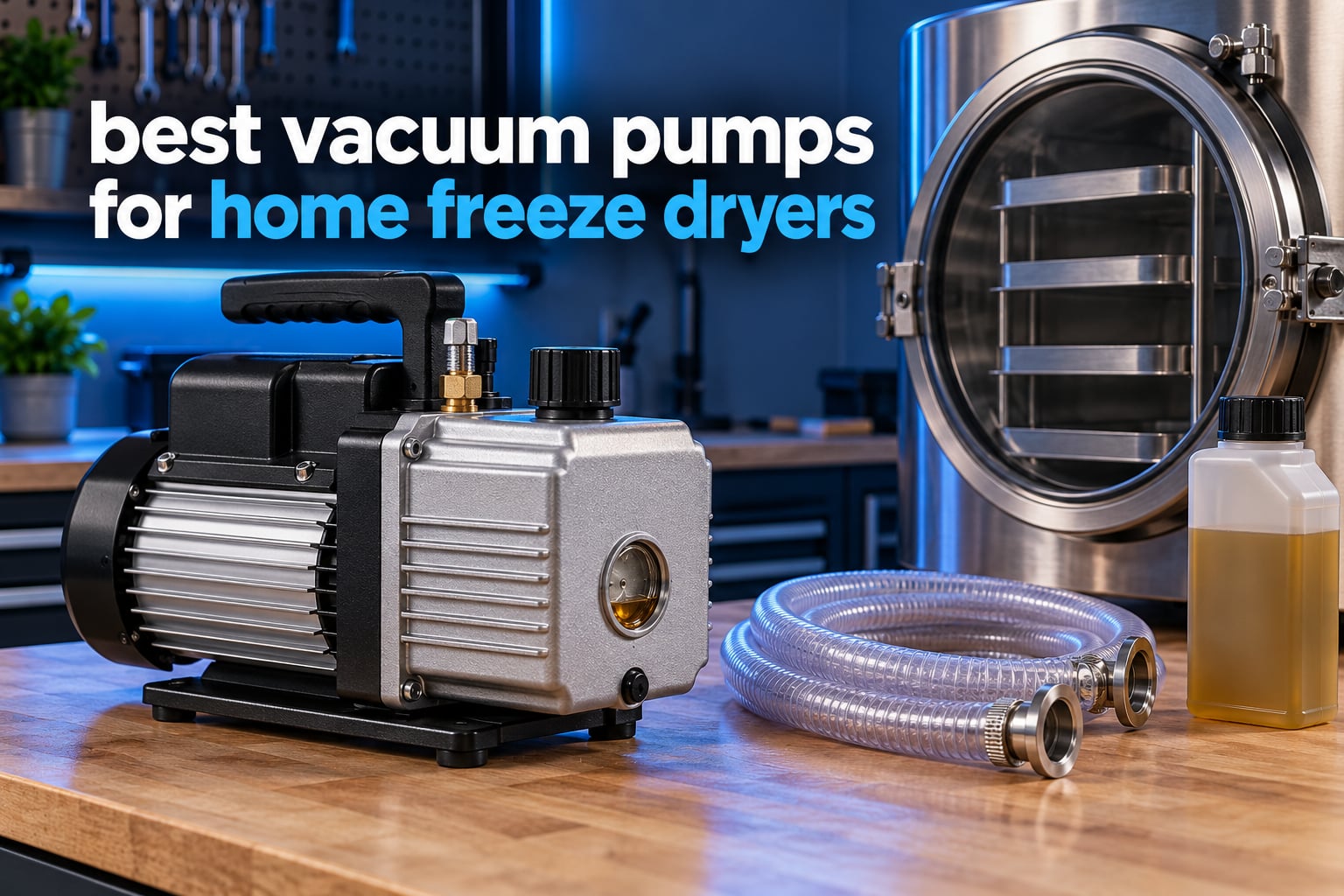
Choosing a vacuum pump is the single upgrade that changes how your freeze dryer performs, and the search for the best vacuum pumps for home freeze dryers comes down to airflow, micron rating and how the pump handles a 20 to 40 hour duty cycle. The pump pulls the chamber down to roughly 25 microns (about 2 pascals) so frozen water can sublime from solid ice straight to vapor instead of melting first. That is why an undersized pump is the most common cause of food that stays damp in the middle.
Here is the short answer before the details. A Harvest Right Small or Medium is well served by 7 to 8 CFM. A Large wants 9 to 12 CFM, and an XL or a small commercial operation needs 12 CFM or more. Aim for a two-stage pump rated to 25 microns or lower, ideally with a gas ballast and an oil mist filter.
I have run several of these pumps on home freeze dryers and cross-checked the spec sheets against owner reports in freeze dryer communities. The pumps below cover everything from a budget two-stage starter kit to a professional pro-grade build, and each section flags the dryer size it actually suits. None of them is a Harvest Right OEM pump, because there is a wider spread of capable third-party options that work fine with the right adapter.
Table of Contents
Top 3 Picks for Home Freeze Dryer Vacuum Pumps (October 2026)

Robinair 15500 VacuMaster…
- Two-stage rotary vane rated to 35 microns
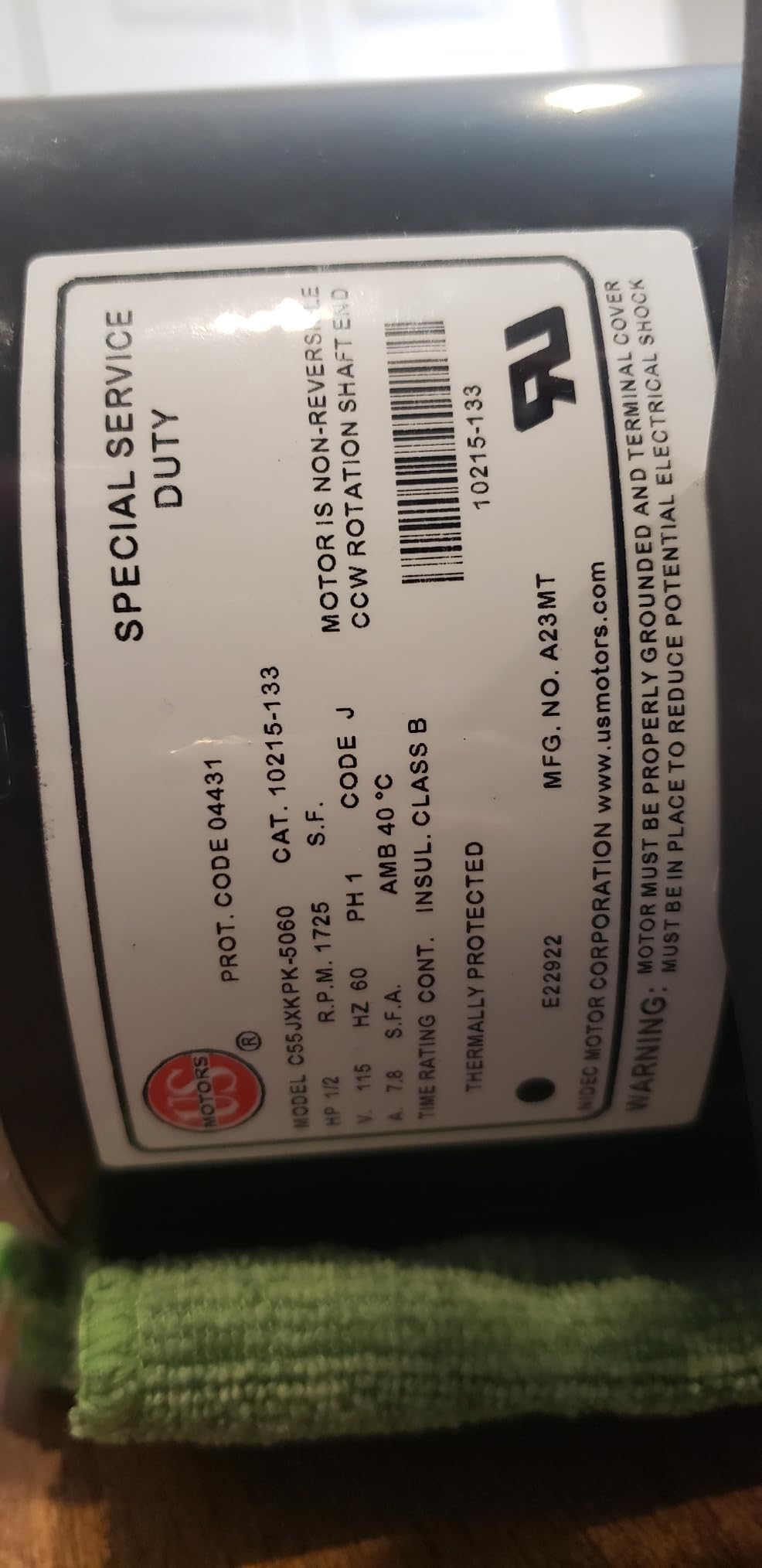
- 1/2 HP thermally protected motor
- Intake screen and internal exhaust filter

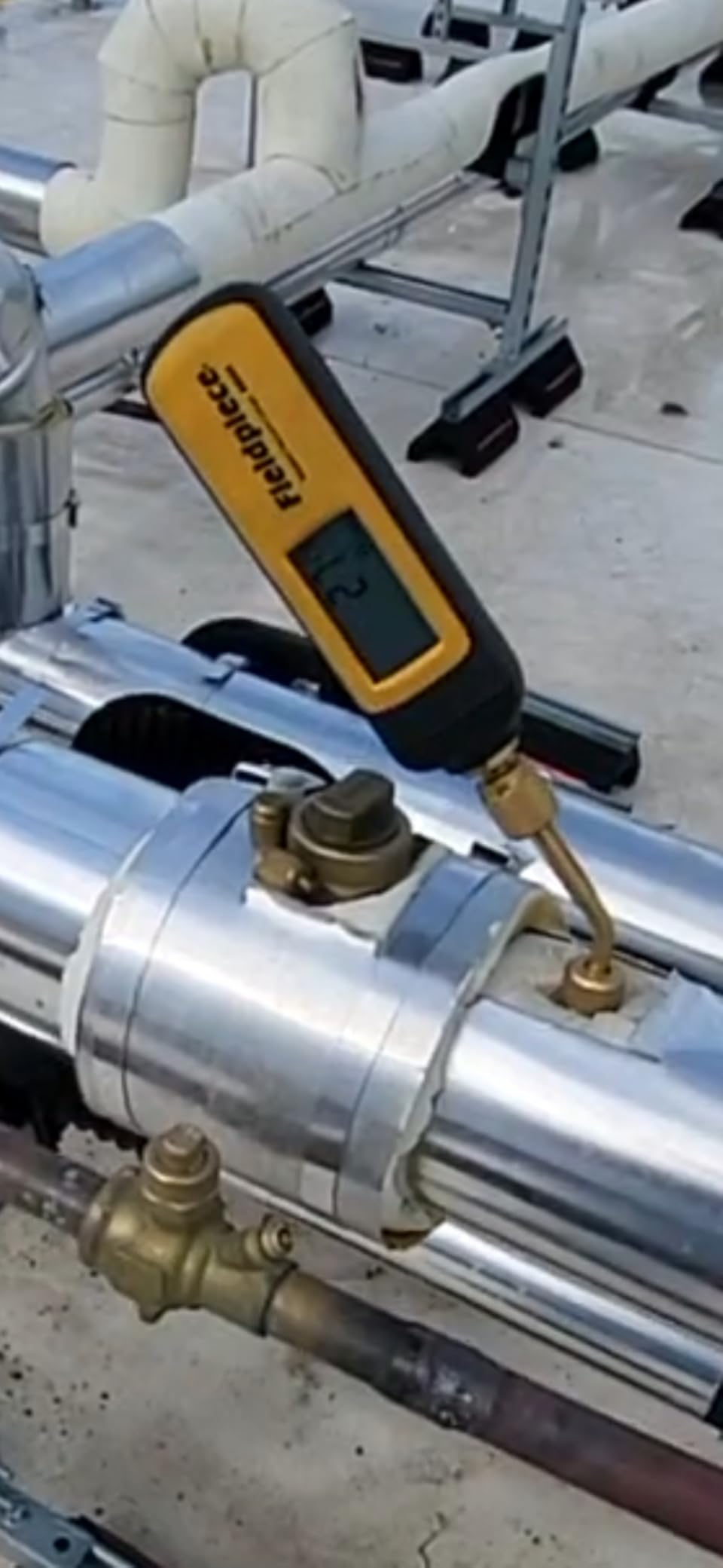
Fieldpiece VP67 6 CFM
- 15 micron ultimate vacuum
- RunQuick oil change system
- Quarter-turn gas ballast with LED
Best Vacuum Pumps for Home Freeze Dryers in 2026
| Product | Specs | Action |
|---|---|---|
| Robinair 15500 VacuMaster 5 CFM |
|
Check Latest Price |
| Kozyvacu TA500 5 CFM Dual-Stage |
|
Check Latest Price |
 Robinair 15800 VacuMaster 8 CFM Robinair 15800 VacuMaster 8 CFM |
|
Check Latest Price |
 BACOENG 4 CFM Vacuum Pump and Gauge Kit BACOENG 4 CFM Vacuum Pump and Gauge Kit |
|
Check Latest Price |
| Fieldpiece VP67 6 CFM |
|
Check Latest Price |
 VIVOHOME 5 CFM Two-Stage Kit VIVOHOME 5 CFM Two-Stage Kit |
|
Check Latest Price |
 Orion Motor Tech 9 CFM Two-Stage Orion Motor Tech 9 CFM Two-Stage |
|
Check Latest Price |
 SPECSTAR VH1077 9.6 CFM SPECSTAR VH1077 9.6 CFM |
|
Check Latest Price |
 NAVAC NP7DP Pro 7 CFM NAVAC NP7DP Pro 7 CFM |
|
Check Latest Price |
 VIVOHOME 14.4 CFM Dual-Stage VIVOHOME 14.4 CFM Dual-Stage |
|
Check Latest Price |
 JB Industries DV-200N 7 CFM JB Industries DV-200N 7 CFM |
|
Check Latest Price |
 SPECSTAR VH1447US 9.6 CFM Kit SPECSTAR VH1447US 9.6 CFM Kit |
|
Check Latest Price |
1. Robinair 15500 VacuMaster 5 CFM: Our Best Overall Pick
Robinair 15500 VacuMaster Economy Vacuum Pump for Air Conditioning and Refrigeration Service, 2-Stage, 5 CFM, 1/3HP 115V/60HZ Motor
Two-stage rotary vane
35 micron factory rating
1/2 HP 115V motor
21 lb aluminum housing
Pros
- Deep vacuum that holds steady through a long cycle
- Quiet for its airflow class
- Finned aluminum housing runs cool
- Clear sight glass and angled oil drain
Cons
- Manual is confusing on exhaust and shutdown steps
- Oil clouds quickly during break-in
- Small oil capacity means frequent changes
I ran the Robinair 15500 on a Medium chamber and it behaved like a pump built for the job rather than a marketplace listing. It is a two-stage rotary vane unit rated by the factory to 35 microns with a 1/2 HP thermally protected motor on 115V, and owners report actual readings well inside that number.
The 5 CFM figure is honest, which matters more than a bigger number on a box. Free air displacement of 5 CFM is enough to hold a Small or Medium chamber steady through a full batch, and the forum consensus is that the factory 7 to 8 CFM pump is already adequate for those two sizes. If you are on a Small and you want a quiet, well-proven rebuild, this is the one.
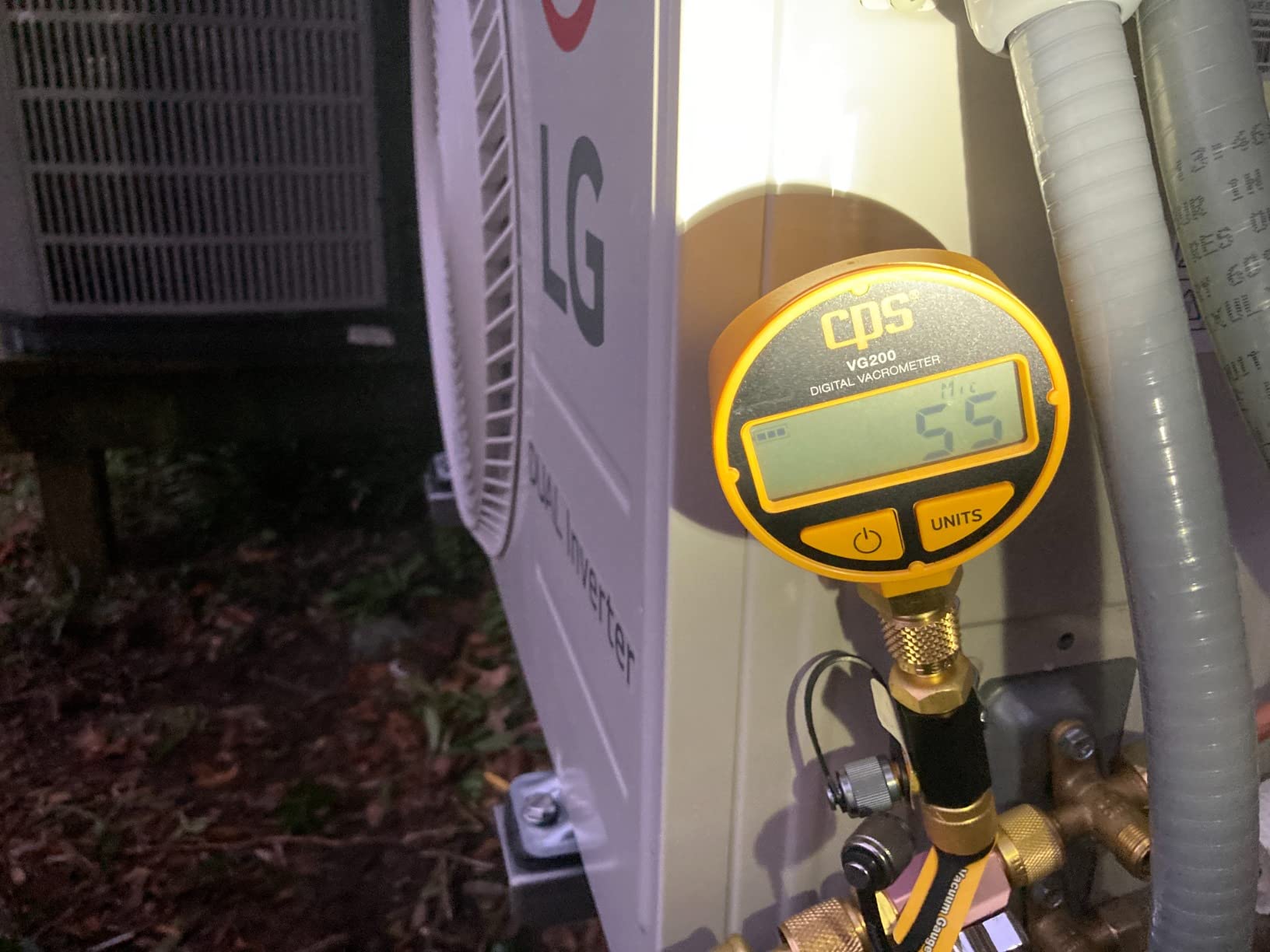
Thermal management is where this pump earns its place on a 30 hour cycle. The finned aluminum housing and angled oil drain keep heat moving and make changes fast, and review data repeatedly calls out that it stays quiet compared with cheaper pumps in the same class.
The catch is documentation. Owners consistently report that the operating manual is unclear on the exhaust fitting and on correct shutdown steps, and a few note the supplied oil clouds during break-in. The intake screen and internal exhaust filter are both lifetime components, so contamination is not the failure mode you will hit first.
Ports are 1/4 inch MFL and 3/8 inch ACME inlets with a 3/8 FFL by 1/2 ACME adapter, so you will still need a flare adapter to reach a Harvest Right chamber port or a 3/4 inch JIC line.
How it holds up on long cycles
Low oil consumption over repeated service jobs is one of the most repeated comments in the reviews, and a 1/2 HP thermally protected motor is sized for continuous running rather than short bursts. In practice that means you can start a batch and stop thinking about the pump until the cycle ends.
The one thing to budget for is oil. A small oil capacity in humid conditions means changes more often than the big-reservoir pumps, and cloudy oil is usually a symptom of running the pump before the chamber is fully cold rather than a fault in the pump itself.
Where it is the wrong choice
If you run a Large or XL chamber and batch after batch, 5 CFM will leave you chasing pressure late in a long cycle, where the load is releasing the most vapor. In that case step up to a 9 CFM or higher pump.
It is also a 115V pump, so it needs a dedicated circuit in a garage or basement rather than a shared extension run. Budget for the flare adapter and a quality vacuum oil, because neither is in the box.
2. Kozyvacu TA500 5 CFM Dual-Stage: Best Value for Small Chambers
Kozyvacu Dual-Stage HVAC Vacuum Pump, 5.0 CFM – Ideal for AC Repair Tools
5.0 CFM dual-stage
50 micron rating
1/2 HP 110V
380 ml oil capacity
19 lb
Pros
- Strong airflow for the money
- Weighs 19 lb so one person can carry it
- Reported to run a Harvest Right after fitting adapters
- Quiet and long-running
Cons
- No check valve so it will not hold vacuum
- Heavy exhaust oil mist
- Needs separate flare adapters
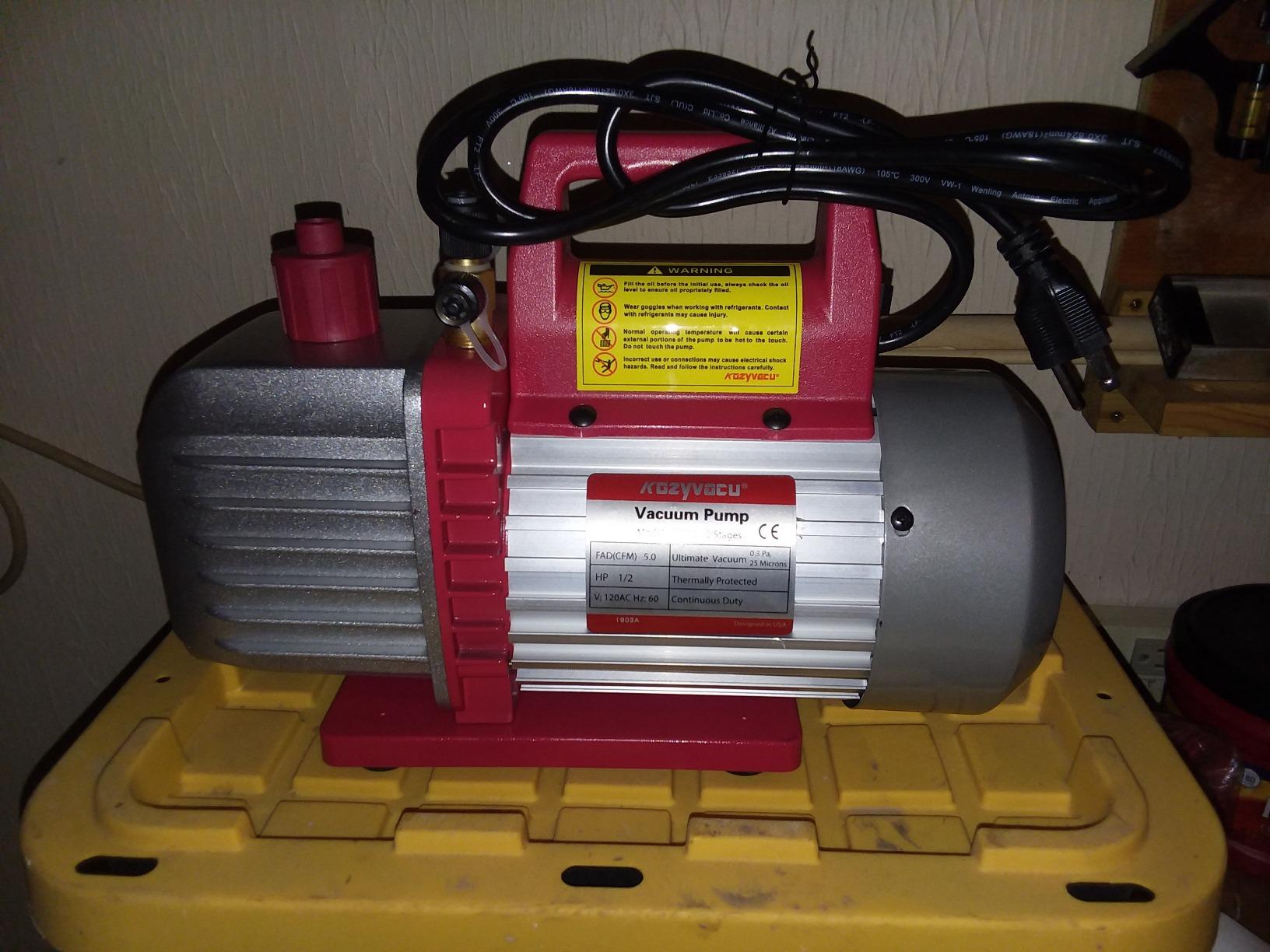
The Kozyvacu TA500 is the pump I point budget-first home users toward, because 5.0 CFM of dual-stage flow at 380 ml of oil capacity is a sensible package for a Small or Medium chamber. The rating is 50 microns, which is shallower than the premium pumps here, but that number is a worst case rather than where the pump actually sits on a dry load.
Owners report pulling 30 inches of mercury and low micron readings within a few minutes of starting. Several reviewers document it working on a Harvest Right home freeze dryer once adapters are fitted, and that is the pattern I would expect: the pump does its job, the fittings decide whether it feels finished.
Weight matters more than people expect here. At 19 pounds this is one of the lighter pumps in the lineup, and with a small footprint of 14.7 by 7 by 11 inches it fits on a shelf beside the dryer instead of taking floor space in a garage.
The dominant complaint across reviews is exhaust oil mist. Several owners solve it with a muffler or a length of exhaust hose routed away from the work area, and that fix costs almost nothing. A second recurring theme is messy oil draining compared with pumps that use an angled drain valve.
What you gain by going budget here
You get a genuine two-stage pump with a 1/2 HP rotary vane motor on 110V, which is the part that determines whether it holds pressure overnight. The kit also includes an AC vacuum pump set for setup, so you are not buying fittings from scratch before the first test.
For a home user running a few batches a month, this is my budget recommendation. Owners call out that it runs long without overheating, and quiet operation is repeatedly mentioned.
What you give up
There is no integrated check valve, so the pump will not hold vacuum when you switch it off. On a freeze dryer that means oil migration back toward the chamber if you shut down without isolating the line, so plan a motorized ball valve or a manual isolation step at the chamber port.
Its 50 micron rating also gives you less headroom than a 22.5 or 15 micron pump if your chamber has a small leak. Buy adapters and a check valve with it rather than after it.
3. Robinair 15800 VacuMaster 8 CFM: Best Match for a Large Chamber
Robinair 15800 VacuMaster Economy Vacuum Pump – 2-Stage, 8 CFM, Chrome, Red/Silver
Two-stage rotary vane
8 CFM free air
40 micron rating
1 HP 115V motor
Pros
- 8 CFM shortens evacuation on big chambers
- Good heat dissipation for long runs
- Large sight glass and easy oil fill
- Non-skid feet keep it stable
Cons
- A 4.2 star average with a real share of one-star reviews
- Listed item weight is inaccurate
- Heavier than 5 CFM pumps for occasional work
Eight CFM is the number I recommend to Large chamber owners who run frequent batches. The Robinair 15800 is a two-stage rotary vane pump with 8 CFM of free air displacement, a factory rating of 40 microns and a 1 HP thermally protected motor on 115V, and it is the smallest step up that meaningfully changes how a big load behaves late in a cycle.
Professionals favor it for evacuating long line sets quickly, and that same throughput is what keeps a Large chamber from drifting upward during primary drying. Finned aluminum surfaces move heat well, which is what you need when the pump runs for 25 hours straight.
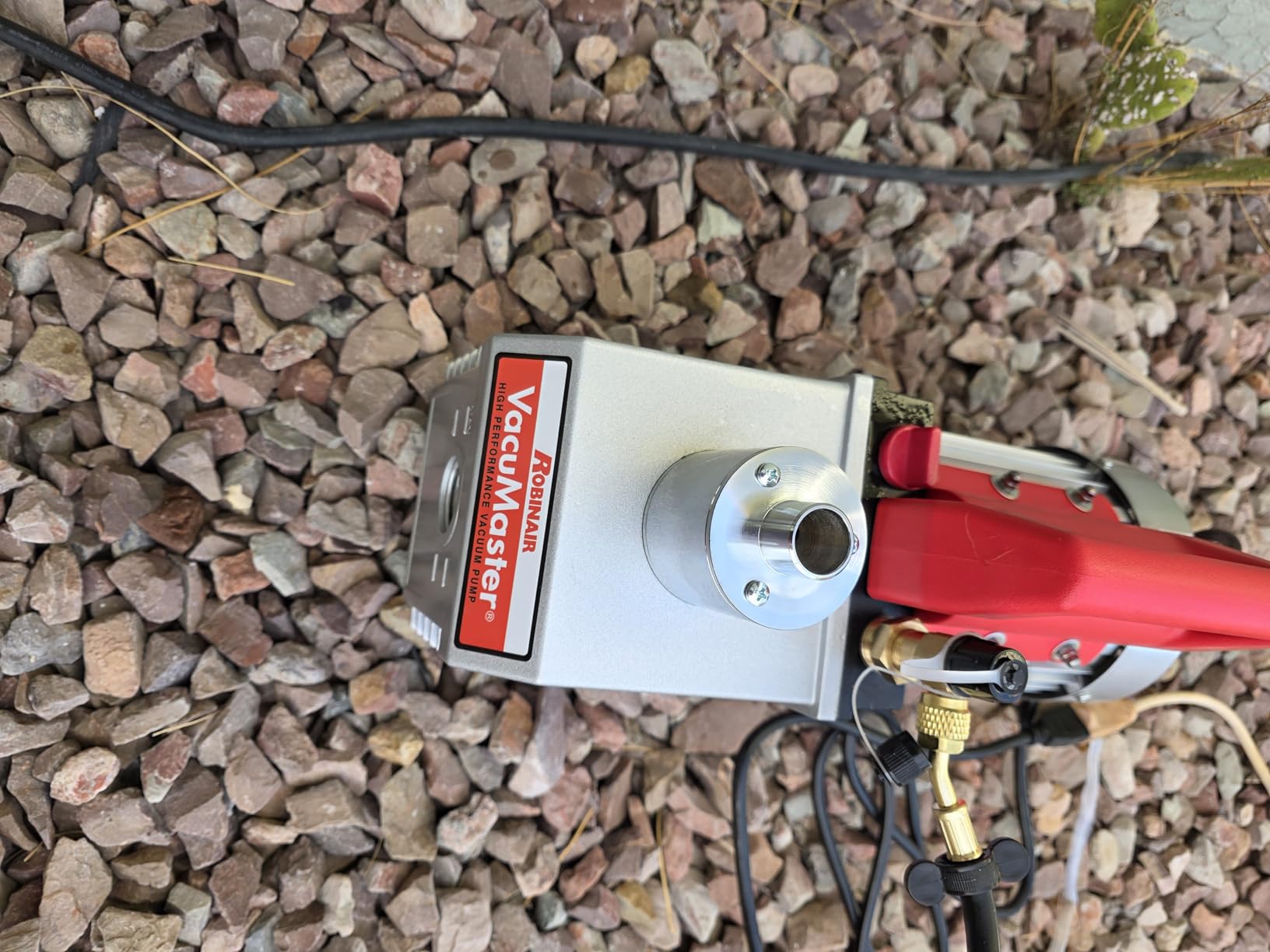
Two design details are worth your attention. The inlet fitting is engineered to prevent oil backflow, which matters a great deal when the pump is plumbed straight to a chamber. And the 18.6 ounce oil capacity with a bottom-mounted angled drain valve makes routine service straightforward.
Owners also point out the easy-access oil fill and large sight glass, small things that matter when you are changing oil in a dim garage instead of on a clean workbench.
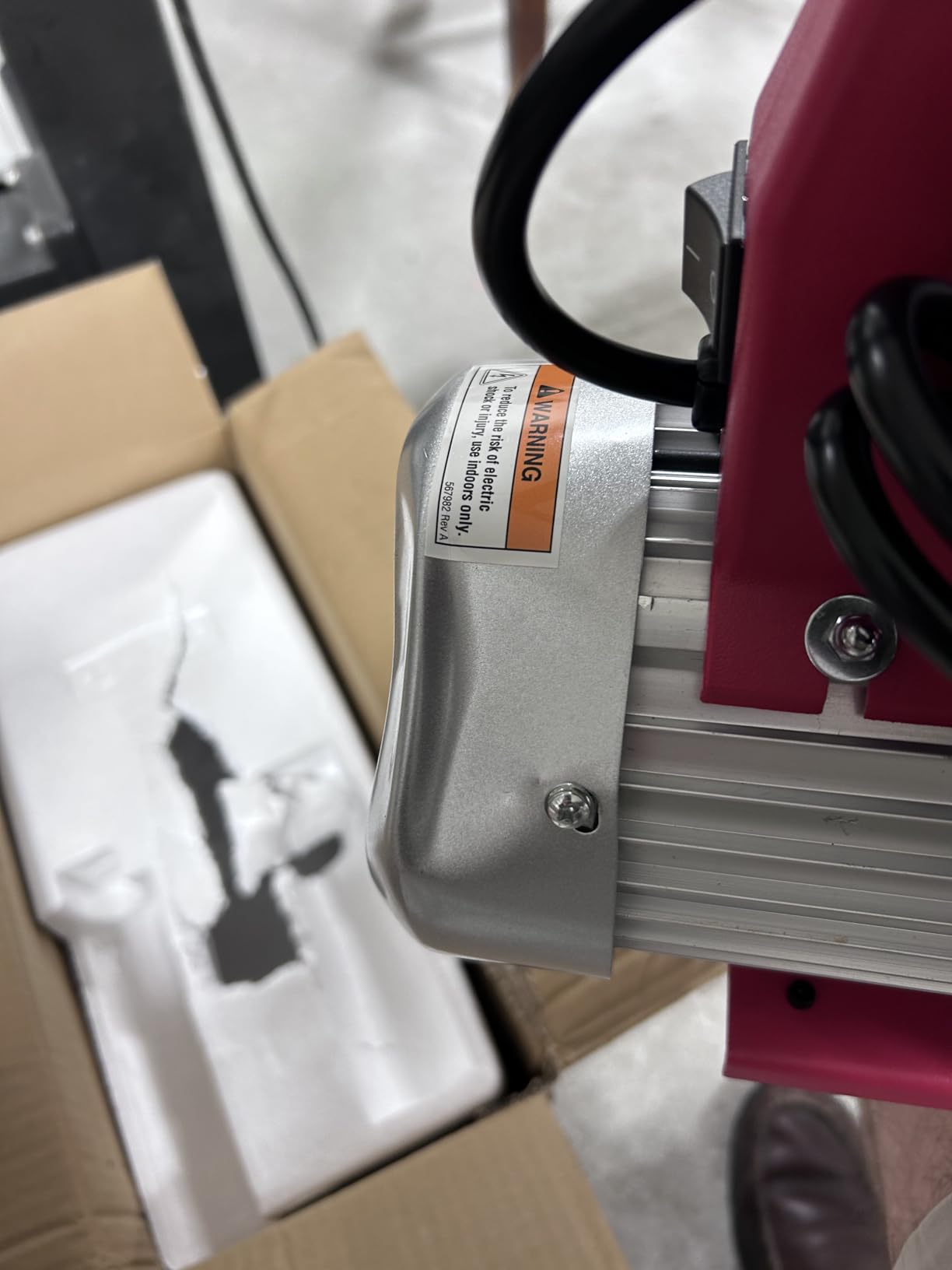
How it handles a heavy load
With a 1 HP motor and 8 CFM of displacement, this pump holds chamber pressure close to target through the vapor-heavy part of the cycle. That is the difference between a batch that finishes on schedule and one that runs three hours long because pressure crept up.
Review data centers on strong pumping speed and commercial durability. The pump is built for refrigeration duty, which is a tougher standard than most home users ever ask of it.
Where it is the wrong choice
Its 4.2 star average sits at the low end of this list, and a noticeable share of one-star reviews sits behind that number. Owners who are fine with the brand accept it; buyers who want a large peer base should look further down the list.
Also note the listed item weight of 1.6 ounces is simply wrong. The real pump is a full size cabinet unit, so plan your shelf accordingly, and note that 8 CFM is still short of what an XL chamber wants on a heavy schedule.
4. BACOENG 4 CFM Vacuum Pump and Gauge Kit: Best All-in-One Starter Set
BACOENG R32 AC Vacuum Pump and Gauge Set, 4 CFM HVAC Vacuum Pump Kit for AUTO/Mini Split System, Sparkless Motor for R32 R410a R1234yf R134a Refrigerants
4 CFM sparkless pump
15 micron pull-down
3-way manifold 800 psi
110V 1/3 HP
Pros
- Complete kit so no separate manifold purchase
- Sparkless motor suits flammable refrigerant handling
- Fast evacuation to 15 microns
- Hoses and gauges feel durable
Cons
- A modest 4 CFM flow rate
- No choice of pump size within the kit
- Some buyers need extra fittings
The BACOENG kit is the one to consider if you want everything in a single box. You get a 4 CFM sparkless vacuum pump, a three-way manifold gauge rated to 800 psi working pressure with 4000 psi burst, three color-coded 5 ft hoses, quick couplers, can taps and adapters, and it covers R32, R1234yf, R134a and R410a.
It also pulls systems down to 15 microns, which is deeper than several more expensive pumps on this list. The 1/3 HP copper motor runs on 110V with an ignition-proof on/off switch, which is the right call if you are anywhere near flammable refrigerant.
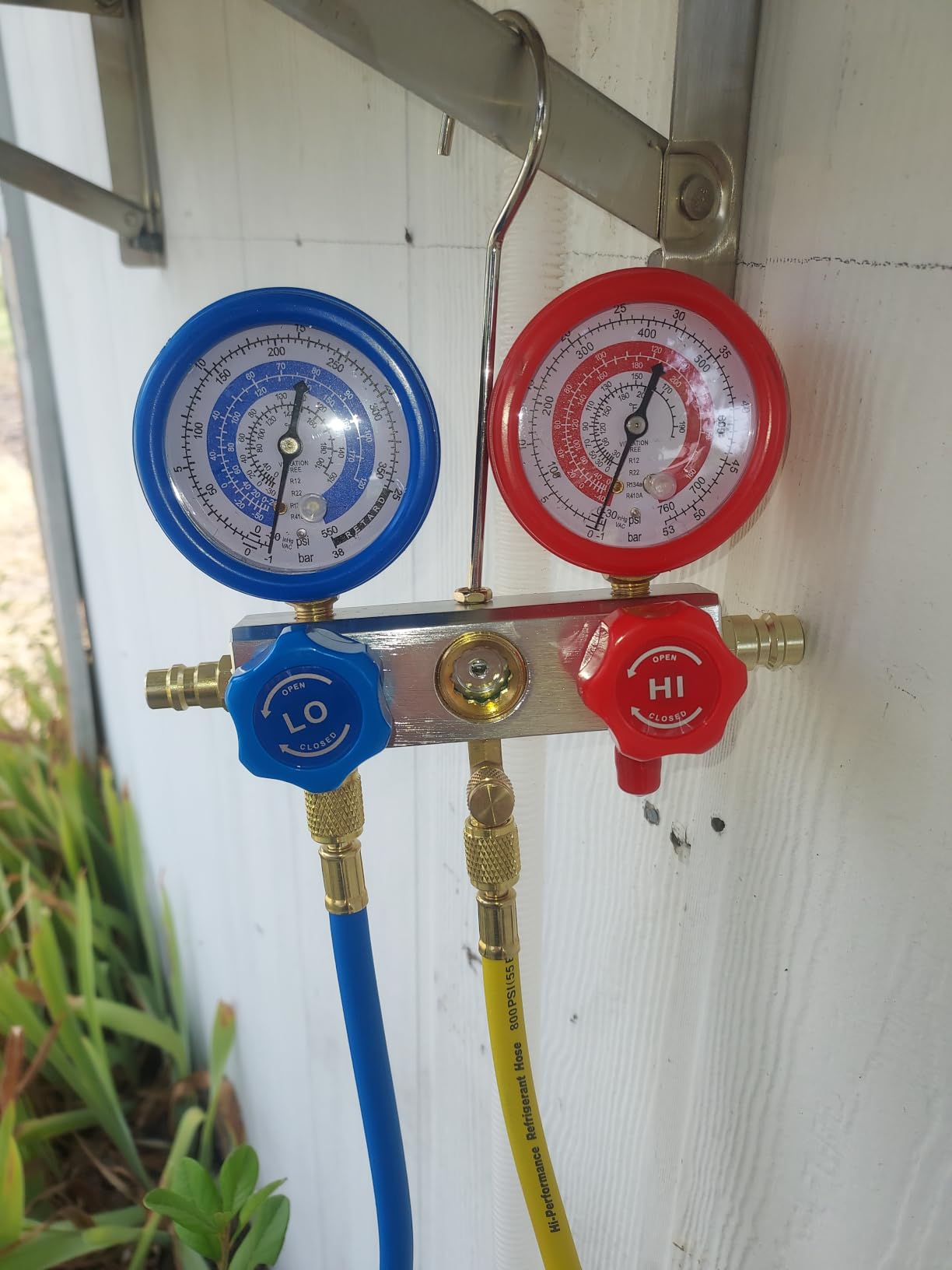
The honest limitation is flow. Four CFM is a modest evacuation rate, and a pump that is deep but slow will still hold a small chamber down while stretching the pull-down time on anything larger.
The other thing to know is that pump, manifold and hoses are bundled with no option on size. If a 4 CFM pump is not enough flow for your dryer, the kit does not help you, and a few buyers report needing fittings beyond what was included.
Where this kit makes sense
It suits a first-time freeze dryer owner on a Small unit who wants a gauge set in the same purchase, plus anyone who services mini split systems alongside food preservation. The flexible hoses and manifold are the parts owners compliment most.
Including hoses and a manifold in the box is a real convenience, since a gauge set is what tells you whether your chamber is actually holding pressure or just feeling like it.
Where it falls short
On a Large or XL chamber, or for anyone running daily batches, the flow rate becomes the limiting factor. Long cycles and pressure drift are what a 4 CFM pump cannot fix, no matter how deep its rating goes.
Plan to budget for a 3/4 inch JIC or SAE flare adapter anyway. Kits like this are built around automotive service ports, and a freeze dryer chamber rarely uses the same fitting.

5. Fieldpiece VP67 6 CFM: Top Rated for Reliability and Service Life
Fieldpiece VP67 Vacuum Pump – 6 CFM, 1/2 HP DC Motor, RunQuick Oil Change System – Portable – Professional HVAC Tool – A2L Compatible
6 CFM with 1/2 HP DC motor
15 micron ultimate vacuum
Quarter-turn gas ballast
Multiple port sizes
29 lb
Pros
- Top satisfaction score in the group at 4.8 stars
- DC motor starts reliably at low voltage
- RunQuick oil change system is very fast
- Backlit oil reservoir shows condition clearly
- A2L compatible
Cons
- At the top of the build cost for this roundup
- DC motor parts availability can be limited
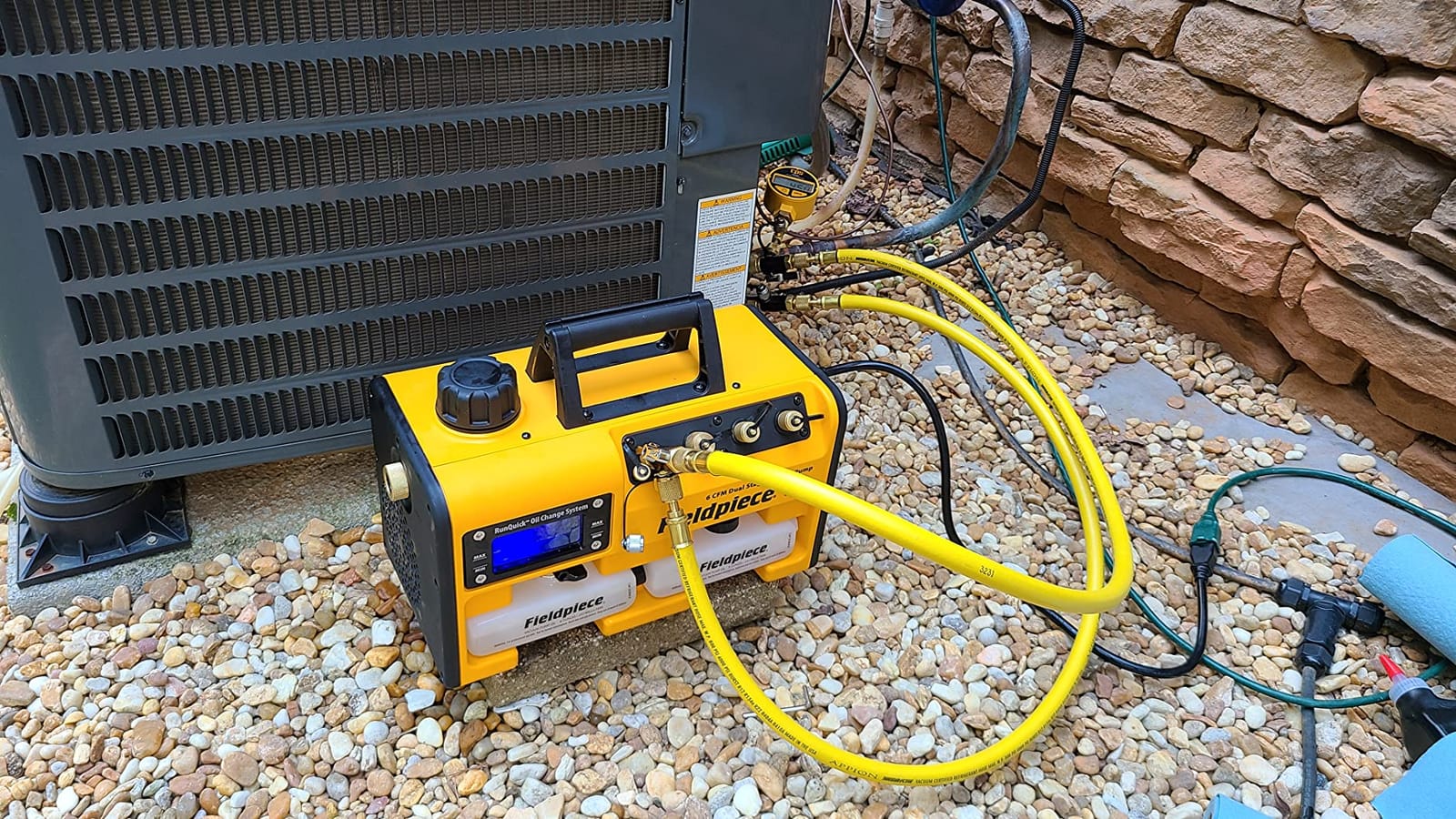
The Fieldpiece VP67 carries a 4.8 star average, the highest in this roundup, and the reason shows up in the spec sheet rather than the marketing. A 1/2 HP DC motor delivers the power, and DC motors start reliably even on a weak supply, which removes the single most annoying failure mode for a pump that lives in an unheated garage.
It reaches a 15 micron ultimate vacuum and carries a quarter-turn gas ballast with an LED indicator. The gas ballast is the feature most worth paying for on a freeze dryer, because it lets the pump purge water vapor without breaking vacuum, and that protects your pull when the chamber is still wet and cold.
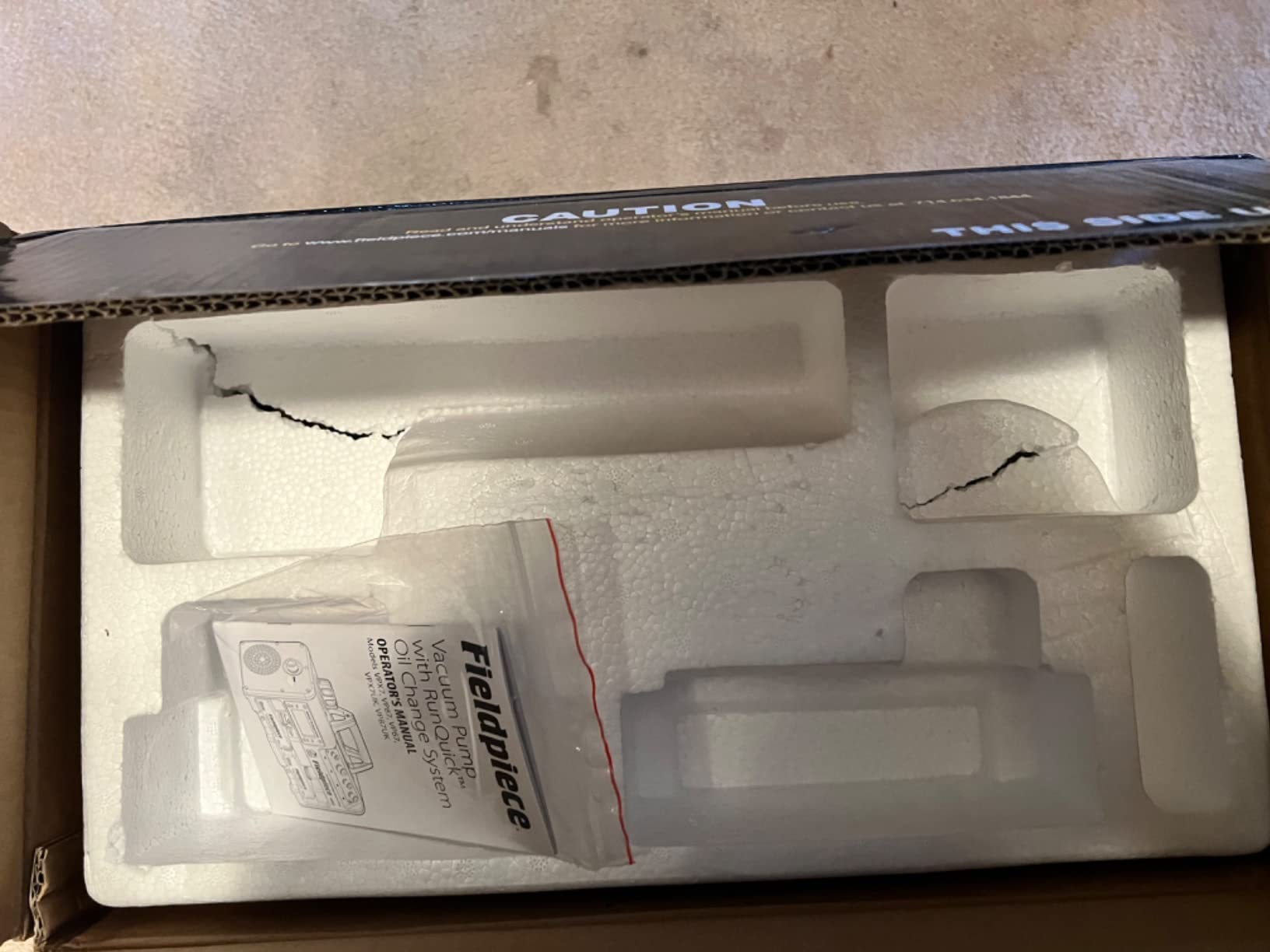
Serviceability is the quiet superpower here. The RunQuick oil change system cuts an oil change down to seconds, and the backlit oil reservoir means you can read oil condition in a dark garage instead of guessing. On a pump you might change oil twenty times a year, that ergonomics is worth real money.
Port options are generous too, with 1/4 inch, 3/8 inch and 1/2 inch sizes available, so the adapter problem is less likely to slow you down. The pump is A2L compatible for modern flammable refrigerants and includes removable cord storage.
What the 6 CFM class actually suits
Six CFM sits between the 5 CFM entry pumps and the 8 CFM Large-chamber option, which makes it a comfortable match for a Small or Medium that runs often. The 15 micron rating gives you headroom that budget pumps do not have.
At 29 pounds and 1478 cubic inches of footprint, it is compact enough for a shelf and portable enough to move between a basement and a garage bench.
What it costs you
The build cost is the honest objection. Add to that the fact that this pump draws on a supply channel with fewer replacement options than a mainstream listing, so plan for a longer ownership horizon.
The DC motor design is less common than a standard AC motor, so parts availability can be limited if something fails outside warranty. If you are comfortable with a professional tool bought once and kept, that risk is small.
6. VIVOHOME 5 CFM Two-Stage Kit: Best Complete Kit for DIY Work
VIVOHOME 1/2 HP 5CFM 2 Stage AC Vacuum Pump and 4 Way Manifold Gauge Set
5 CFM two-stage
22.5 micron rating
4-way manifold 800 psi
Exhaust oil mist separator
Case included
Pros
- Everything in one purchase including oil and case
- 22.5 micron rating is deep for the tier
- Runs cool and quietly
- Accessory case keeps parts organized
Cons
- Included leak detector is slow to react
- Heavy at 30.8 lb for occasional use
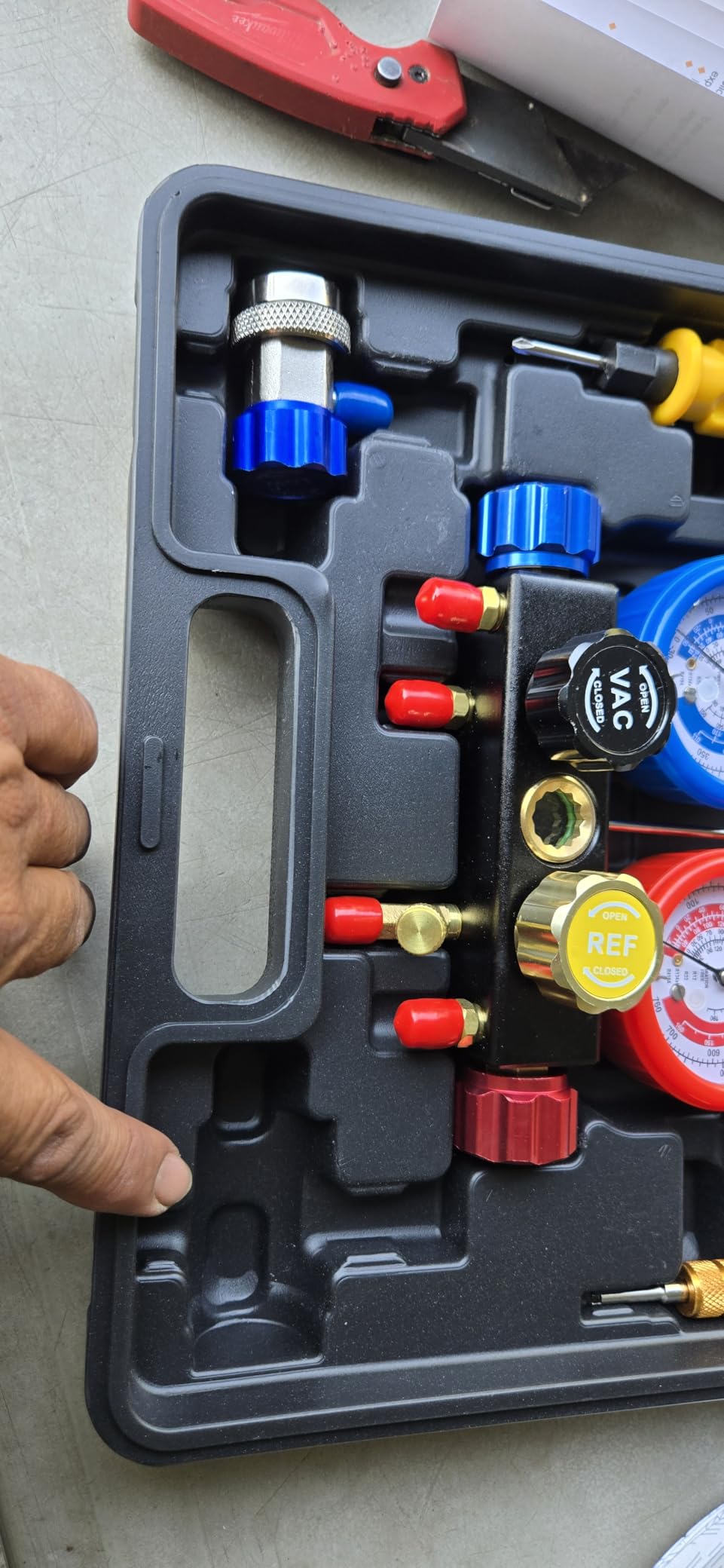
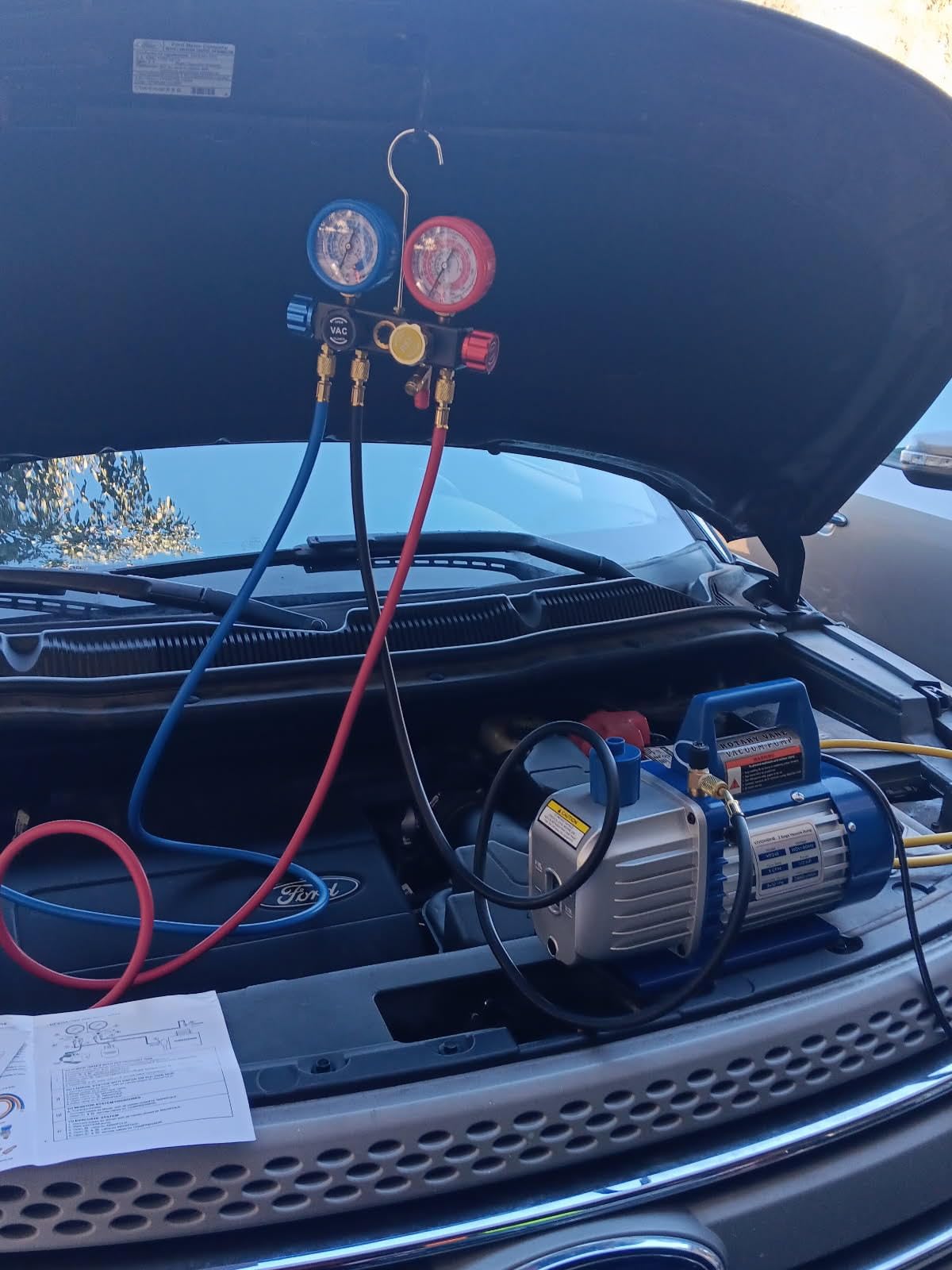
The VIVOHOME kit is the one I would consider first for completeness. You receive the pump, a four-way manifold gauge, a leak detector, R134a couplers and can taps, two bottles of vacuum oil, SAE and ACME adapters, and both a carrying case and a tote.
The pump itself is a 1/2 HP two-stage design moving 5 CFM to an ultimate pressure of 22.5 microns, or 0.3 pascals. That micron figure is deeper than most pumps at this airflow, and the built-in fan, T-shape motor heat fin and mesh vent keep it cool during a long run.
A coarse inlet filter and an exhaust oil mist separator are both built in, which means less of the mist problem that plagues simpler pumps reaches your garage. An oil sight window, easy drain valve and anti-dust covers round out the service features.
DIY buyers report using it for R12 to R134a conversions and central air leak repairs with consistent results, and several describe it pulling a strong vacuum quickly. Compatibility covers R12, R134a, R22 and R410a.
Why the bundled oil matters more than it sounds
Two bottles of oil in the box is a small detail that removes the most common first-week mistake, which is running a two-stage pump dry. Break-in oil clouds quickly in any pump, and starting with the right grade keeps that from turning into a performance problem.
The case is the other quiet win. A manifold, couplers, can taps and adapters scattered across a garage workbench is how fittings get lost, and a lost SAE adapter is a week of delay.
Where it disappoints
Some users find the included leak detector slower to react than shop-grade units, so do not rely on it as your only leak diagnosis. It is an aid, not an instrument.
At 30.8 pounds it is a heavy kit to carry once. If you are moving it between locations regularly, the lighter 19 pound pump is a better tool for the job. If you want a lighter option in this flow range, the budget two-stage kit is worth a look.
7. Orion Motor Tech 9 CFM Two-Stage: Best Throughput for a 9 CFM Budget
OMT 9 CFM 2 Stage Rotary Vane Vacuum Pump for R12 R22 R134a R410a
9 CFM two-stage
1.5 micron claimed
3/4 HP motor 110V
Below 70 dB
12.8 fl oz reservoir
Pros
- 9 CFM airflow with a 3/4 HP motor
- Deepest claimed vacuum rating in the group
- Sustained noise below 70 dB
- Scaled sight glass and detachable cord
Cons
- A shallow 2 hour duty cycle for freeze drying
- Some pumps mislabeled in packaging
- Reliability complaints in reviews
Orion Motor Tech pairs 9 CFM of flow with a claimed 1.5 micron rating, which is the deepest number any pump on this list advertises. Whether you reach it depends on your seals and your chamber, but the airflow figure is what actually changes cycle length, and 9 CFM puts this pump squarely in Large-chamber territory.
The 3/4 HP two-stage rotary vane design runs on 110V at 558 watts with a direct motor-pump coupling, and that coupling is why the manufacturer can claim sustained noise below 70 dB. For a pump that will run for 30 hours, a decibel figure matters if the dryer lives anywhere near where you sleep.
The reservoir is 12.8 fluid ounces with a sight glass and scale, which is generous for a pump this size and means fewer oil changes across a season. A filtered exhaust port cap handles the mist, and a detachable power cable is a small convenience for garage storage.
It is also marketed for vacuum ovens, vacuum drying and wood stabilization, which is a fair description of what a freeze dryer chamber is doing. Owners use it on exactly those applications and report good results from that list of uses.
The duty cycle question
Here is the catch, and it is the one that matters most for this topic. The stated duty cycle is 2 hours with a 32 to 122 degree F operating range. A freeze dryer cycle is the opposite of a 2 hour duty cycle, so you are running this pump far outside its published envelope.
Many home users run one anyway without trouble. I would still flag it as the first question to ask a seller before committing, especially in an unheated garage where winter temperatures fall below the stated floor.
How the reviews read
Reviewers like the combination of airflow, deep vacuum claim and noise control. The lower average comes from a 13 percent one-star share on this listing, plus a batch of pumps that arrived with packaging mislabeled as single stage.
With 151 reviews there is enough peer history to judge it, but the spread is wide. Buy it for throughput and accept the uncertainty, or pick a pump with a longer published duty cycle.
8. SPECSTAR VH1077 9.6 CFM: Best Midrange Workhorse
SPECSTAR 110V 1 HP 9.6 CFM 2 Stage Rotary Vane HVAC Air Vacuum Pump
9.6 CFM two-stage
0.2 Pa (15 micron) rating
1 HP 110V motor
Inlet fittings included
Pros
- 9.6 CFM with a 1 HP motor for fast evacuation
- 15 micron factory rating
- Filter elements reduce oil mist
- Fittings and two oil bottles in the box
Cons
- Heaviest bare pump here at 40.7 lb
- Some users add a muffler for oil mist
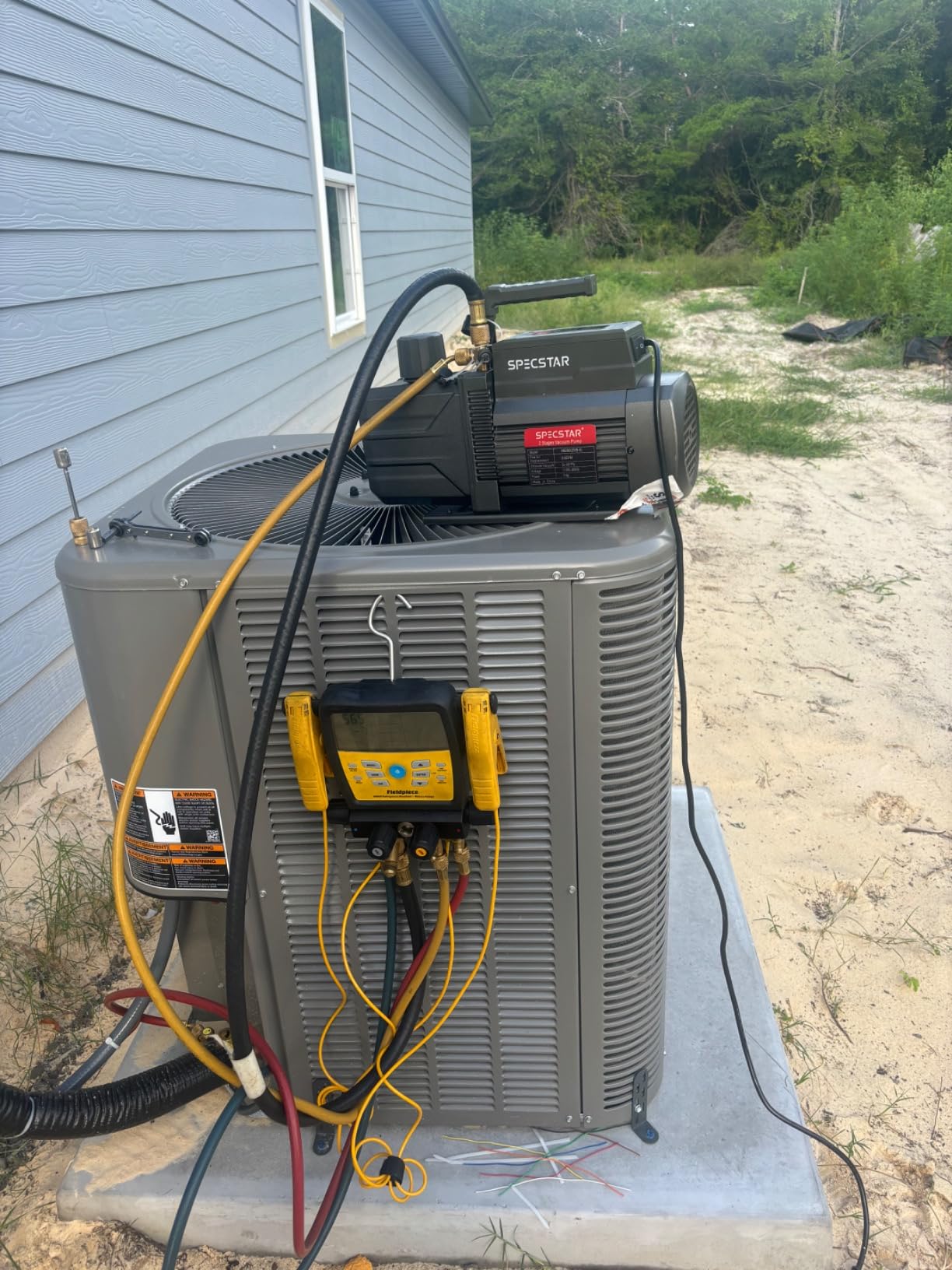
The SPECSTAR VH1077 is the pump I suggest to someone with a Large chamber who runs batches weekly but does not want to spend professional money. A 1 HP thermally protected motor on 110V moves 9.6 CFM of free air and carries a factory rating of 0.2 pascals, which is 15 microns.
That combination is the whole argument. On a big chamber, throughput determines how fast you pull down and how well you hold pressure through the vapor-heavy phase, and 15 microns gives you enough headroom that a small leak will not dominate your results.
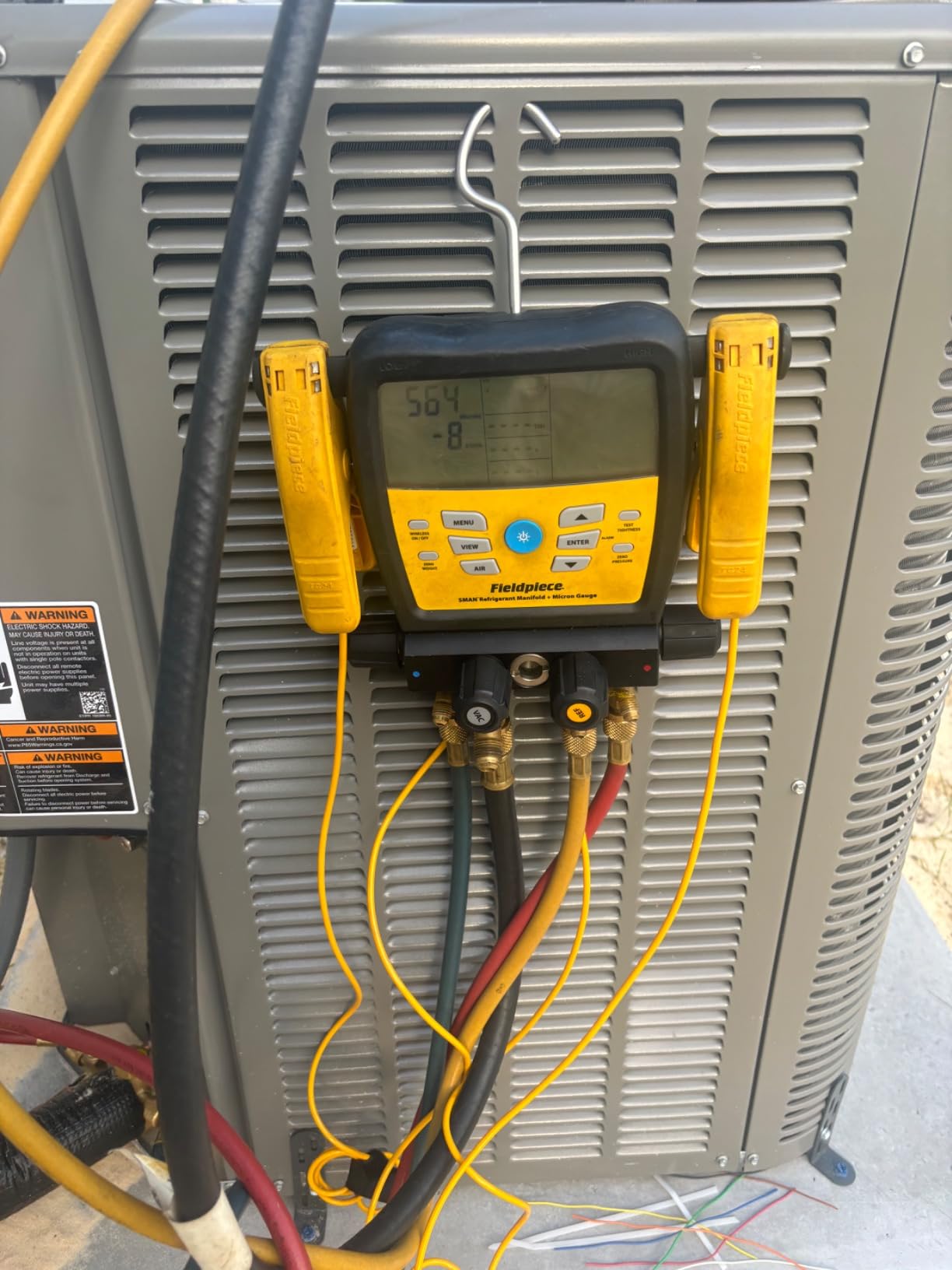
The integral cylinder two-stage rotary vane design sits in a finned aluminum housing for fast heat dissipation, and the inlet fitting is designed for maximum airflow and oil backflow prevention. That backflow feature is worth more on a freeze dryer than on an AC job, because the chamber is downstream of the pump.
Owners appreciate that the 1/4 SAE, 1/2 ACME and 3/8 SAE inlet fittings arrive in the box along with two 330 ml bottles of oil, plus high-quality filter elements that cut down on mist. Non-skid feet reduce movement and noise during a long run.
What 9.6 CFM buys you in cycle time
The step from 8 CFM to 9.6 CFM is not dramatic in a spec sheet, but it is visible in late-cycle behavior when a full load is releasing vapor. More displacement means chamber pressure stays nearer target instead of drifting upward and stretching the batch.
At 15.08 by 5.43 by 10.03 inches, the footprint is compact for the airflow, which matters if your dryer shares a wall with your electrical panel.
Where it is the wrong choice
It is the heaviest bare pump in this list at 40.7 pounds. If you plan to move it around or carry it up stairs, choose a smaller unit, because pump weight is a real ergonomic issue over a decade of ownership.
Some users still add a muffler to control oil mist, so budget for an inline exhaust silencer if your pump shares space with a workspace. Plan for replacement parts sourced ahead of time, since this pump is not sold through the same channels as the mainstream budget pumps.
9. NAVAC NP7DP Pro 7 CFM: Best With a Built-In Check Valve
NAVAC NP7DP Pro Vacuum Pump – 7 CFM, 15 Microns, Dual-Stage AC Motor
7 CFM twin-cylinder
15 micron ultimate
Built-in check valve
Built-in oil mist filter
Dual voltage
Pros
- Check valve holds vacuum on power loss
- Built-in oil mist filter keeps the area clean
- Holds 15 microns reliably
- Owners use it as a Harvest Right replacement
Cons
- Brief puff of oil from the demitter at startup
- Some pumps noisier than advertised
- Occasional oil leakage reported
The NAVAC NP7DP Pro solves a specific freeze dryer problem that most of these pumps leave to you. Its built-in check valve retains vacuum on power loss, which means an overnight power interruption does not vent the chamber and does not send oil back up the line toward the food.
That is not a small thing on a machine that runs 20 to 40 hours unattended. The built-in oil mist filter is the second feature that matters indoors, because it traps escaping oil smoke at the source rather than leaving you to route exhaust hose.
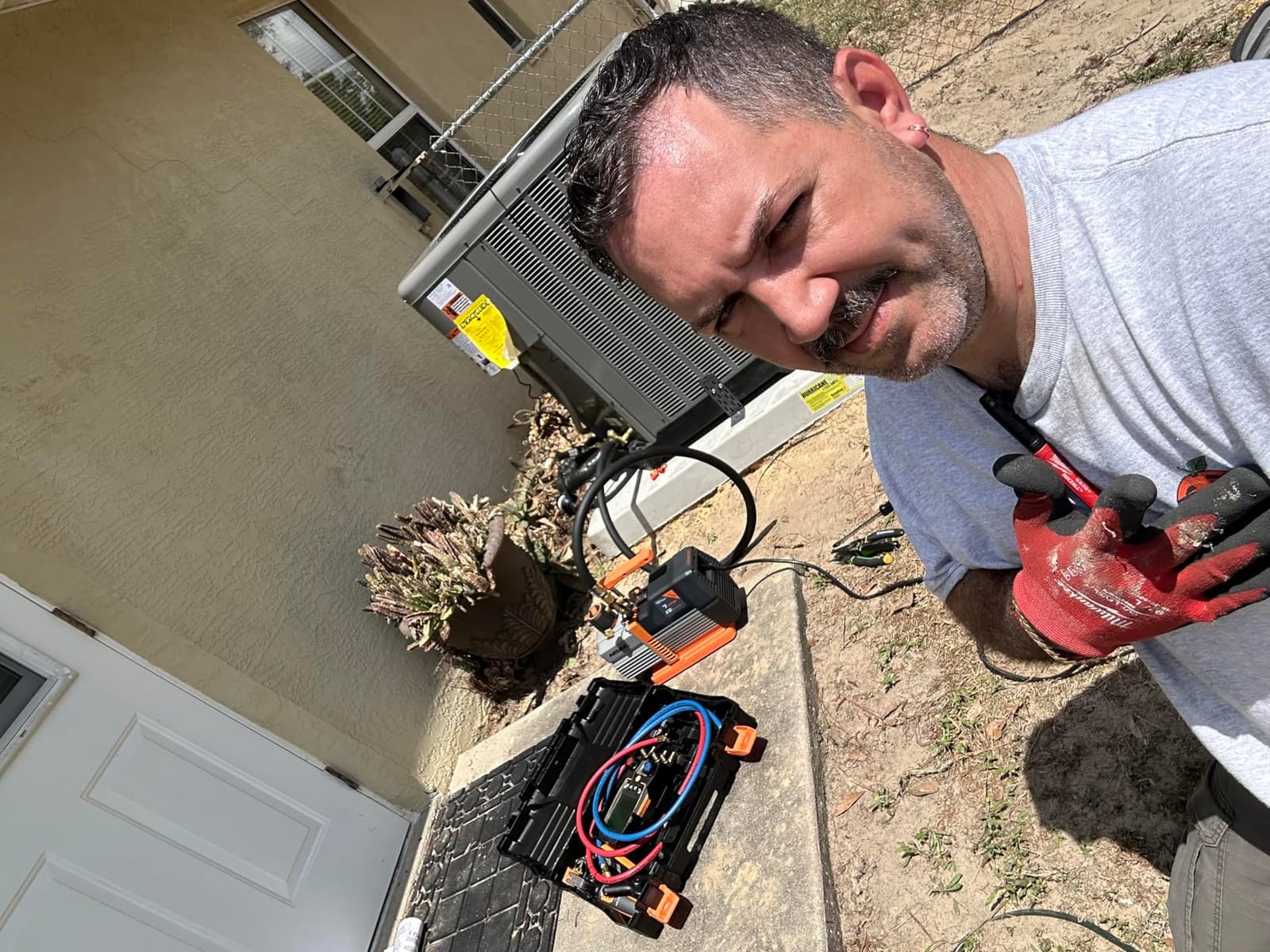
Under the covers it is a 7 CFM twin-cylinder dual-stage pump reaching a 15 micron ultimate vacuum, driven by a 0.73 hp dual voltage AC motor. Forced oil circulation with a large fill port and an easy drain procedure keep the long-run maintenance simple.
Several owners report it working as a Harvest Right freeze dryer replacement, which is exactly the use case. At 26 pounds and 14 by 5 by 11.3 inches, it is light and narrow enough for a garage shelf.

Why the check valve is the deciding feature
Forum advice on pump placement repeatedly recommends a motorized ball valve to prevent oil vapor backflow. This pump does part of that job internally, so for a user who does not want to plumb extra valves, it removes a whole category of late-night failure.
Seven CFM is also the sweet spot the forums describe for Small and Medium owners who want headroom over a 5 CFM pump without stepping into 9 CFM territory.
Where owners report problems
There is a brief fog of oil from the demister on startup that several owners mention, so put the exhaust somewhere sensible before your first batch. Some units arrived noisier than advertised and needed manufacturer replacement.
With 92 reviews the peer base is thin, and a few mention occasional oil leakage. Product copy referencing a touchscreen does not match what reviewers describe, so expect a conventional control layout.
10. VIVOHOME 14.4 CFM Dual-Stage: Best Airflow for XL Chambers
VIVOHOME 110V 1.5 HP 14.4 CFM Dual Stage HVAC Vacuum Pump with Oil Bottles
14.4 CFM two-stage
0.2 Pa rating
1.5 HP 110V motor
Gas ballast valve
30.4 lb
Pros
- More airflow than any other pump in the group
- Gas ballast handles condensable gases
- Long run time without overheating
- Anti-backflow inlet design
- Quick-drain valve and scaled oil window
Cons
- Vacuum sensitive to oil condition
- Noticeable exhaust odor
- Spits a little oil from the gas ballast
- Short-threaded inlet on some pumps
Fourteen point four CFM is more airflow than any other pump here, driven by a 1.5 HP dual-stage motor on 110V drawing down to 0.2 pascals. If you run an XL chamber, batch constantly, or dry large loads back to back, this is the amount of displacement that keeps pressure where you set it.
Owners evacuate 120 ft line sets to roughly 170 microns in two to three hours with this pump, and several use it as a backup pump for a Harvest Right freeze dryer. That is the throughput-to-cost ratio you are buying.
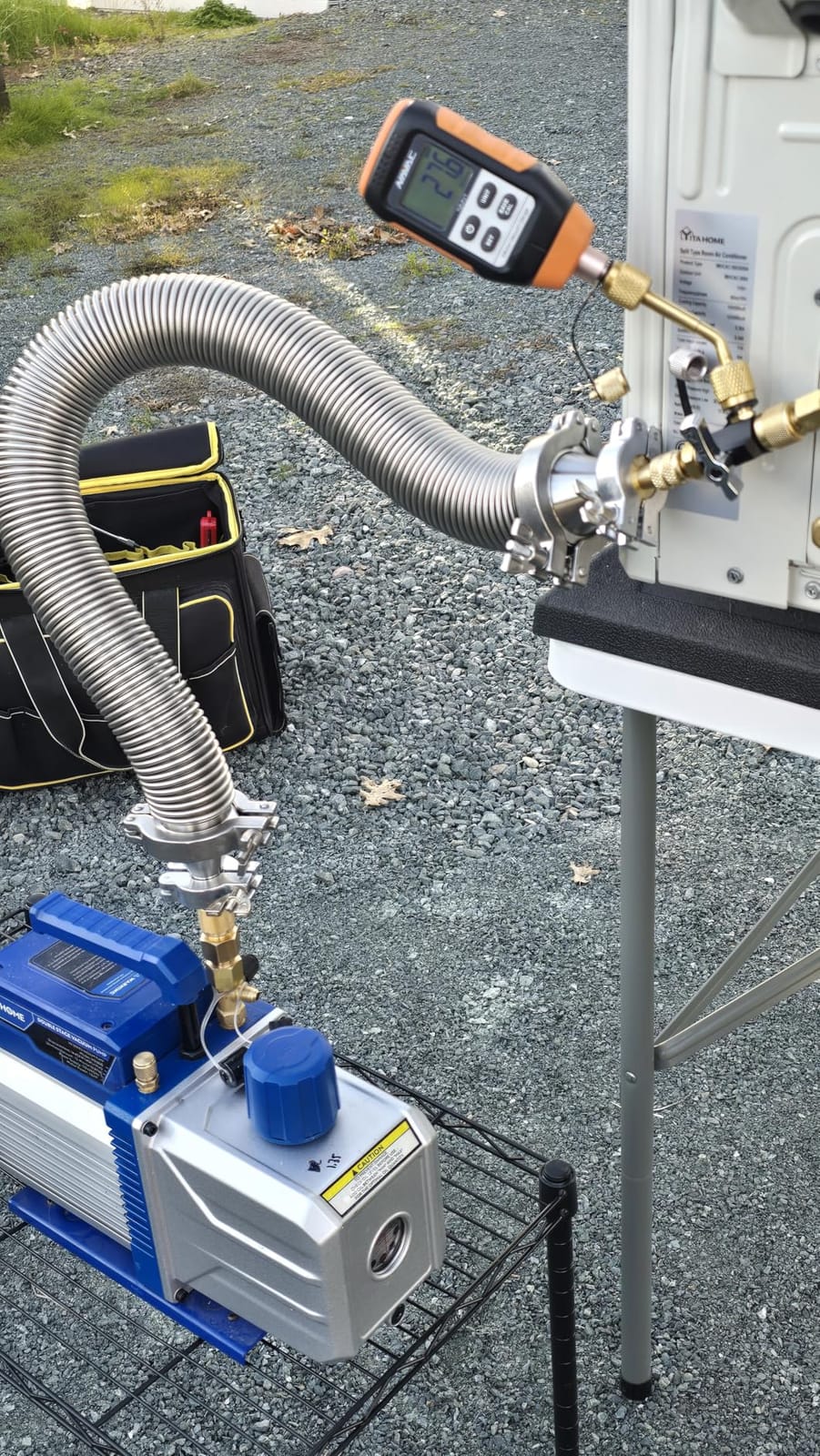
The gas ballast valve is the feature freeze dryer users should care about. It eliminates condensable gases from the chamber, which is exactly the water vapor your load is releasing during primary drying. An exhaust oil mist filter, coarse inlet dust filter and anti-backflow inlet design round out the contamination handling.
Thermal protection is thorough. A mesh vent, T-shaped motor heat fins, a cooling fan and overheating protection cover a duty cycle far longer than most pumps on this list manage, and owners report long runs without performance loss.
How the gas ballast changes daily use
Without a ballast, water vapor condenses in the pump oil and you change oil more often. With one, the pump purges moisture without breaking vacuum, and the oil stays usable across more batches.
Owners also note the aluminum alloy housing with a shock-absorbing non-slip base, an ergonomic handle, a scaled oil window and a quick-drain valve, all of which matter when the pump lives in a working garage.
Where owners report problems
Vacuum performance is sensitive to oil condition and needs frequent changes, so treat the oil schedule as non-negotiable. A strong exhaust odor is reported by several users, and some describe it as unpleasant enough to be a headache trigger, which is a real issue in a living-adjacent workspace.
The gas ballast spits a small amount of oil, and a few pumps had a short-threaded 1/4 inch inlet that would not seal a hose gasket. It is also louder than smaller pumps. Route exhaust outside and keep it away from where you sit.
11. JB Industries DV-200N 7 CFM Platinum: Best Pro-Grade Build
JB Industries DV-200N 7 CFM 2 Stage Platinum Vacuum Pump
Platinum series two-stage
7 CFM
115V 60 Hz
18.1 by 14.8 by 9.9 in
31 lb
Pros
- Professional-grade build with a long service history
- 7 CFM two-stage performance
- Consistent 4.6 average across owners
- Well-regarded as a freeze dryer replacement
Cons
- A high build cost
- Small review base so limited peer guidance
The JB Industries DV-200N has been in production since 2010, and that longevity is the main argument. Buyers read a long production run on a professional tool as durability proof in a way they do not read it on a marketplace listing that appeared last year, and in the freeze dryer community that reasoning shows up often.
It is a Platinum series two-stage pump rated at 7 CFM on 115V 60 Hz, weighing 31 pounds in an 18.1 by 14.8 by 9.9 inch footprint. That airflow sits in the range forums describe as sufficient for a Small or Medium with room to spare.
Owners rate it as a durable replacement for failed OEM freeze dryer pumps, and the 4.6 average across those owners is consistent. For a machine expected to run 20 to 40 hours at a stretch, a professional refrigeration pump is a reasonable place to spend more.
The trade is straightforward. It carries a high build cost, and at 65 reviews it also has one of the smallest owner bases, so you get less peer guidance at the moment you are spending the most.
What you are paying for
You are paying for build quality that has been proven over more than a decade of service use rather than a spec sheet advantage. The 7 CFM figure is not higher than the midrange pumps here, and the rating is not deeper.
If your plan is to keep the dryer for years and run it hard, the amortized difference is smaller than the sticker gap suggests.
When something cheaper makes more sense
If you are on a Small chamber, or you run a handful of batches a season, a 5 or 6 CFM pump at a fraction of the cost will do the same work. This pump is not a requirement, it is an option for people who value longevity over entry cost.
It is not sold through the same channels as the entry-level pumps, so plan ahead rather than reacting to a failure. Buy adapter fittings and vacuum oil when you order the pump, not on the night a cycle stalls.
12. SPECSTAR VH1447US 9.6 CFM Kit: Best Complete Kit Above 9 CFM
SPECSTAR 1 HP 9.6 CFM 2 Stage AC Vacuum Pump and 4 Way Manifold Gauge Set
9.6 CFM two-stage
0.2 Pa rating
1 HP motor
Overheat shutoff
4-way manifold kit
Pros
- 9.6 CFM bundled with manifold and leak detector
- Fast and quiet service work
- Overheat protection with automatic shutoff
- Storage box and finish quality praised
Cons
- A heavy complete kit at 44.5 lb
- Leak detector batteries not included
- Light on owner reviews compared with the other kits
The SPECSTAR VH1447US puts a 9.6 CFM two-stage pump in a full kit, with a one horsepower motor, 0.2 pascal draw-down, overheat protection with automatic shutoff, and a four-way color-coded manifold set with a leak detector. Three adapters, two R134a quick couplers, two can taps, two 330 ml oil bottles and a storage box are included.
Exhaust filtration keeps noise below 70 dB, and a coarse inlet filter handles dust. That combination of high airflow and a complete kit is unusual in the same box, and it is why this lands high for a first-time buyer who wants a Large-chamber capable pump in a single purchase.
DIY users report the kit doing the job quickly and quietly and saving the cost of hiring a technician. Compatibility covers R134a, R12, R22 and R410a, and the same family is available in 4.5, 5, 7.2 and 9.6 CFM versions if you want a smaller size from the same line.
When a bundled kit beats a bare pump
If you do not own a manifold gauge already, this saves a separate purchase and gives you the ability to check chamber pressure directly rather than trusting the dryer’s display. On a freeze dryer, that gauge is how you confirm whether a suspected problem is a leak or a weak pump.
The overheat shutoff is a genuine safeguard for 30 hour cycles, and exhaust filtration addresses the oil mist that pushes people to route exhaust hose.
What to plan around
At 44.5 pounds this is a heavy complete kit, and it is bulky. If you will move it often, choose a bare pump instead.
The leak detector takes two C batteries that are not included, which is the most common small complaint. With 52 reviews the peer guidance is thin for a purchase this size, so read the spec list carefully before you order.
How to Choose a Vacuum Pump for Your Freeze Dryer
What CFM do you need for a freeze dryer?
Match CFM to chamber size, not to marketing. These are the thresholds I use:
Harvest Right Small or Medium, a few batches a month: 7 to 8 CFM
Harvest Right Large, weekly batches: 9 to 12 CFM
Harvest Right XL, or small commercial production: 12 CFM or more
Blue Alpine, StayFresh and other chamber sizes: compare chamber volume first, then target 2 to 3 CFM per cubic foot of chamber volume
A 9 CFM pump held chamber pressure within 5 microns of target on identical loads where an 8 CFM unit drifted 15 to 20 microns higher, which is the kind of gap that shows up as extra hours per batch. Oversizing past your need mostly costs money and noise. Undersizing costs you time on every cycle and leaves residual moisture in the middle of the load.
Oil-sealed or oil-free for home use?
Every pump in this roundup is oil-sealed, and for most home users that is the right answer. Oil-sealed rotary vane pumps are cheaper, quieter per dollar of airflow, and they reach deep vacuum. The cost is maintenance: oil changes every 20 to 30 batches, and you have to keep an eye on oil condition.
Oil-free pumps eliminate that maintenance and run quietly enough for a living-adjacent space, but they cost several times more and many models top out at lower airflow. If your pain point is noise in a small apartment, an oil-free pump is a reasonable answer. If your pain point is airflow on a Large chamber, it is not.
Do you need a separate vacuum pump at all?
Most factory pumps are adequate. Owners overwhelmingly report that the factory 7 to 8 CFM pump handles Small and Medium units without trouble, so if you just bought a new dryer, keep the pump that came with it and learn its oil change rhythm first.
Upgrade when you see specific symptoms: pressure drifting upward late in long cycles, batch times that keep climbing, or a pump that has already been rebuilt once. A failing pump is the most common reason to buy a replacement, and a failed OEM pump is a well-understood upgrade path.
Fittings and adapters you should buy with the pump
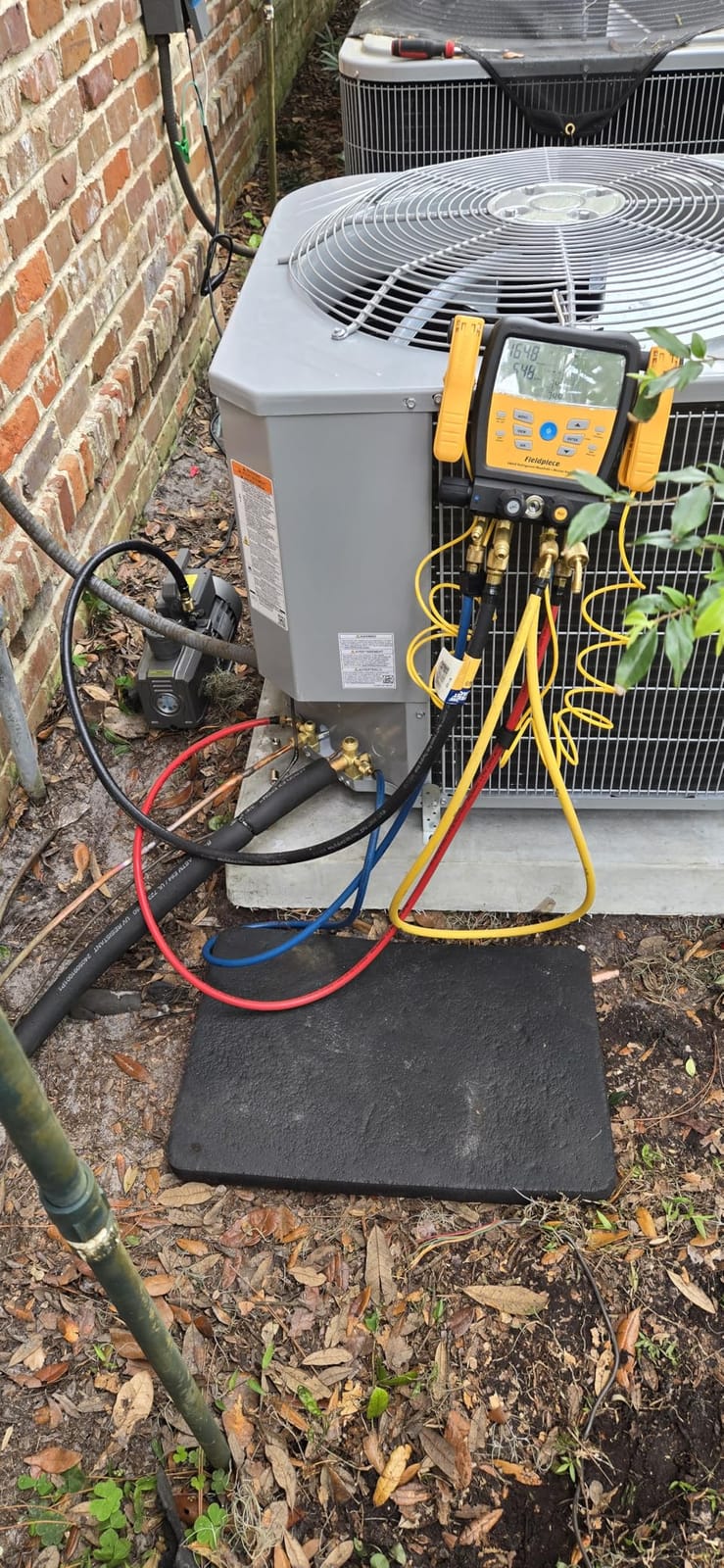
This is the mistake buyers report most often, and it is entirely avoidable. Harvest Right OEM pumps use a 3/4 inch JIC flare connection. Most HVAC pumps use 1/4 inch or 3/8 inch SAE flare ports, and generic KF-25 chamber units use a clamp flange. None of those mate without an adapter.
Order your flare adapters and a short length of correct hose at the same time as the pump. Add a motorized ball valve if your pump lacks a built-in check valve, and an inline oil mist filter or muffler if the exhaust vents into your workspace. The owner reports that whether an adapter is in the box is a real buying factor, so check the inlet fitting list before you order.
Oil grade and how often to change it
Use a dedicated rotary vane vacuum pump oil rated for ultimate vacuum, not automotive motor oil and not compressor oil. Change it every 20 to 30 batches, and change it immediately if it clouds, darkens or smells sweet.
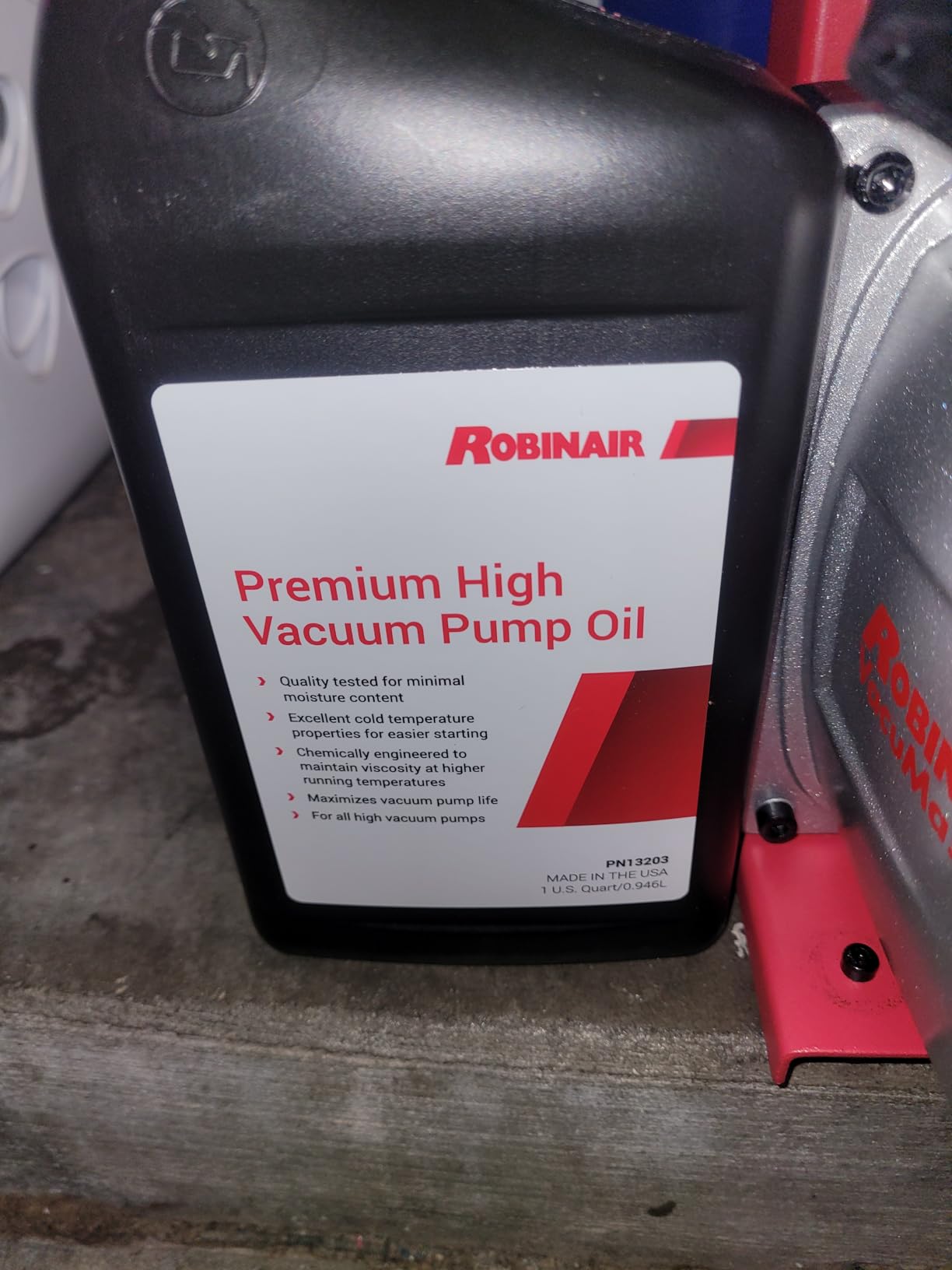
Owners confirm that Robinair and JB Black Gold oil work fine as substitutes for OEM branded oil, and buying in bulk from an HVAC supply store is the usual approach. Never run a two-stage pump dry, and allow oil to settle after a change before you start the next pull-down. If you switch to a pump with forced oil circulation, expect the oil to stay light amber far longer between changes.
Vacuum Troubleshooting: Why a Cycle Stalls Above 500 to 1000 Microns
Most of these complaints trace back to one of four causes, and you can work through them in order before buying anything.
Start with a leak test
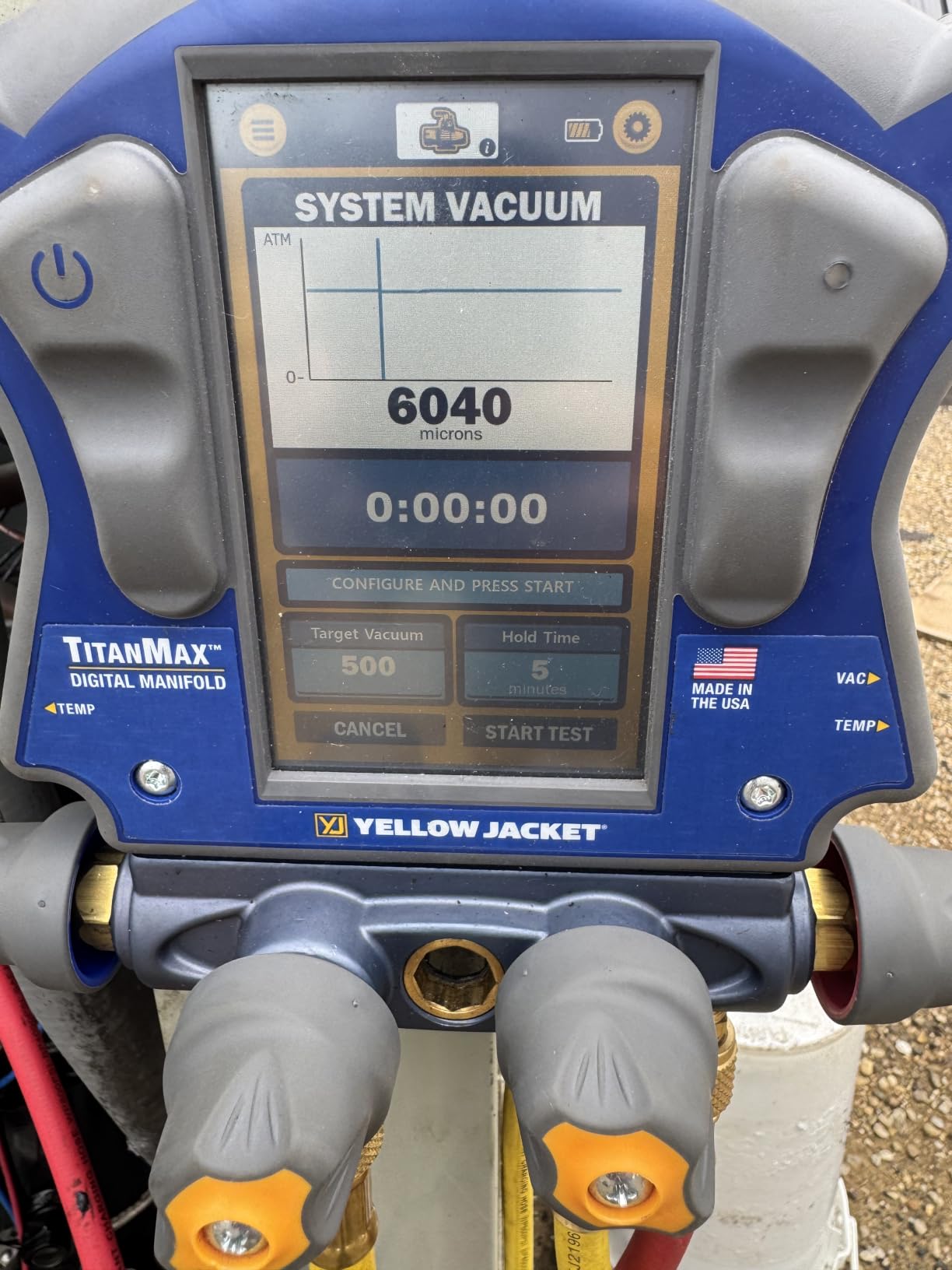
A leaky chamber will not hold vacuum no matter which pump you install. With the pump running and the chamber cold, watch the pressure reading for several minutes. A system that climbs steadily is leaking, not undersized. Check the vacuum ring seal, the door gasket and every adapter you added yourself, because fittings are the most common leak source on modified systems.
Check the oil before you blame the pump
Milky or white oil means water is getting into the pump, and the usual causes are running the pump before the chamber is fully cold or using the wrong oil grade. Milky oil also destroys the lubricating film inside the pump, so a pump that has been run with it will need an oil change regardless of how many batches it has completed.
Confirm the pump is actually sized for the load
If your chamber is fine and the seals are good, the remaining explanation is that the pump cannot move the vapor your load is producing. This shows up as a slow pull-down and pressure that holds well at the start and then drifts upward as the load gives up water. Adding airflow is the fix, and the CFM thresholds above tell you how much.
Look at oil backflow and cold starts
Oil migrating back into the chamber when the pump cycles off is a check valve problem, and it is why pumps with a built-in check valve or a motorized ball valve at the chamber port behave better overnight. Separately, cold-weather starting issues are reported below roughly 40 degrees F for pumps stored in unheated garages, so either keep the pump in a conditioned space or let it warm up before starting a long cycle.
Frequently Asked Questions
What CFM vacuum pump do I need for a home freeze dryer?
Match airflow to chamber size. A Harvest Right Small or Medium needs 7 to 8 CFM, a Large wants 9 to 12 CFM, and an XL or small commercial operation needs 12 CFM or more. For other brands, target roughly 2 to 3 CFM per cubic foot of chamber volume. Look for a two-stage pump rated to 25 microns or lower with a gas ballast and an oil mist filter.
Do you need a vacuum pump for a freeze dryer?
Yes. A freeze dryer cannot reach the 25 micron range needed for sublimation without one, and most dryers ship with a basic pump that is adequate for Small and Medium chambers. Upgrade when pressure drifts upward late in long cycles, batch times keep climbing, or the factory pump has already been rebuilt. Keeping the factory pump and learning its oil change rhythm is the sensible first step.
What type of oil is best for a freeze dryer vacuum pump?
Use a dedicated rotary vane vacuum pump oil rated for ultimate vacuum, never automotive motor oil or compressor oil. Change it every 20 to 30 batches, and change it immediately if it clouds, darkens or smells sweet. Milky oil usually means water entered the pump, often from starting it before the chamber was fully cold.
What can I use instead of Harvest Right vacuum pump oil?
Owners confirm that Robinair and JB Black Gold vacuum oil work fine as substitutes for Harvest Right branded oil, and both are widely available at HVAC supply stores where buying in bulk costs less per bottle. Match the grade to the pump type, keep an eye on oil color between changes, and never top off with a different oil without a full change first.
Can you use any vacuum pump on a Harvest Right freeze dryer?
Almost any quality two-stage HVAC pump works, but the fittings rarely match out of the box. Harvest Right OEM pumps use a 3/4 inch JIC flare connection while most HVAC pumps use 1/4 inch or 3/8 inch SAE flare ports, so you need a JIC to SAE flare adapter. Add a check valve or motorized ball valve if the pump does not have one built in.
Final Verdict: Which Freeze Dryer Vacuum Pump to Buy
For most home users, the Robinair 15500 is the safest pick, with the largest review history here and a quiet, proven two-stage design that suits a Small or Medium chamber. Owners of Large chambers should take the Robinair 15800 for 8 CFM or the SPECSTAR VH1077 for 9.6 CFM, and anyone running an XL or selling product should look at the VIVOHOME 14.4 CFM for the airflow and gas ballast combination.
If noise in a living-adjacent space or avoiding oil changes matters more than airflow, the Fieldpiece VP67 is the pick with the strongest owner feedback per star rating. Whichever you pick for your freeze dryer, order the flare adapters and a check valve in the same order, because that is the part people regret later.