
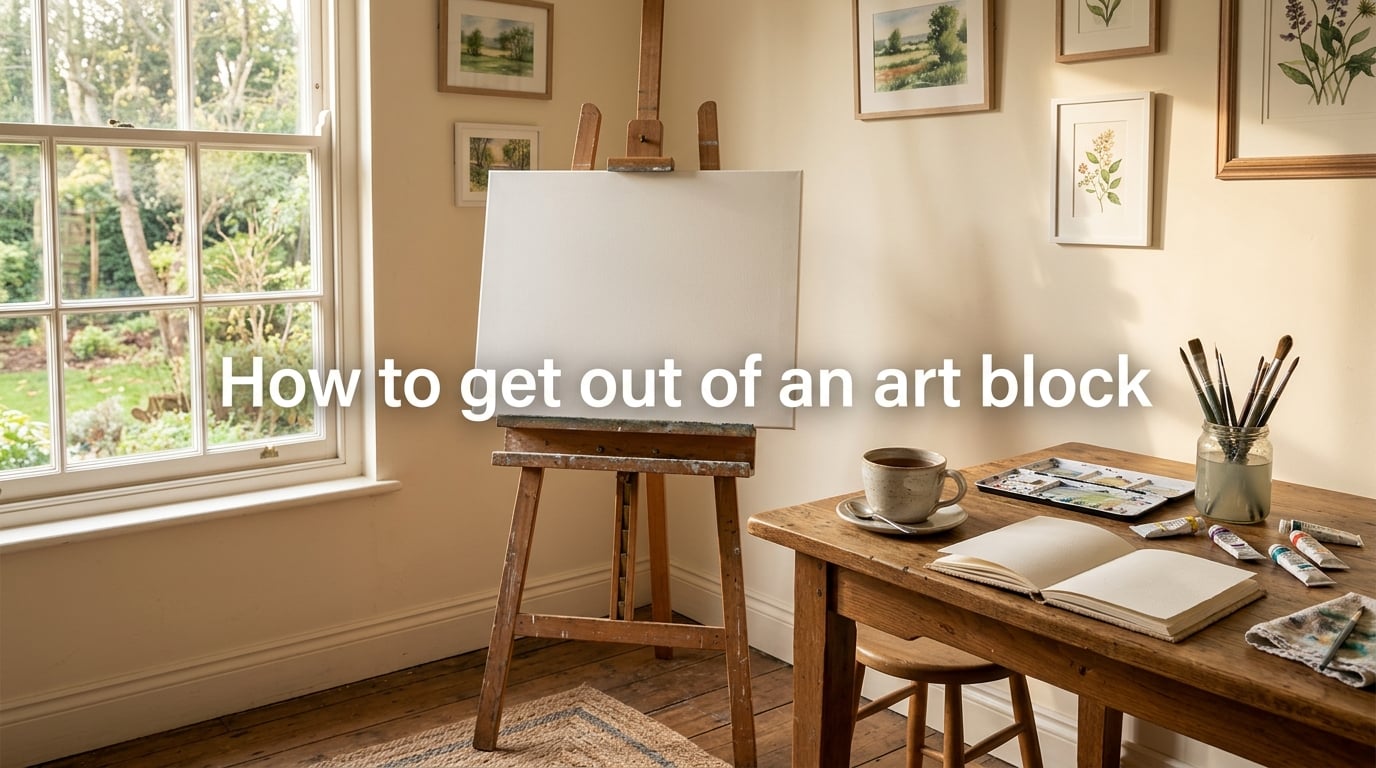
If you have ever sat in front of a blank canvas with your brushes laid out and felt nothing, you already know what an art block feels like. That heavy, frustrating quiet where the ideas just will not come. I have been there more times than I can count, both as a hobbyist and while helping other artists work through long dry spells.
Learning how to get out of an art block is less about finding one magic trick and more about building a small toolkit of practices you can turn to whenever creativity stalls. In this guide, I will walk you through what art block actually is, what causes it, how it differs from burnout, and ten concrete things you can try this week to get your hands moving again.
Table of Contents
What Is Art Block?
An art block is a period where you lose the ability or motivation to create, even when you genuinely want to. The brush is right there. The sketchbook is open. The hours are free. And still, nothing comes out.
It is more than just having a slow day. Most artists cycle through low-energy stretches all the time. An art block is different because it tends to linger. You might go days, weeks, or even months without finishing a single piece, and the gap between what you want to make and what you actually produce starts to feel personal.
Common signs of an art block include staring at a blank surface for long stretches, opening a project and closing it again, feeling dread when you think about creating, and noticing that the things you used to enjoy now feel like a chore. Some artists describe it as a wall, others as a fog. Both metaphors fit.
How long does an art block usually last? Honestly, it depends. A short block tied to a specific project might clear in a few days once you shift focus. Deeper blocks tied to burnout, life stress, or self-doubt can stretch on for months. The good news is that art block is not permanent. Almost every artist who goes through it comes out the other side, often with new skills or a clearer sense of direction.
What Causes Art Block
Art block rarely has one single cause. In my experience working with other artists, it is usually a stack of small pressures that finally tips the scale. Here are the most common culprits.
Perfectionism and Fear of Failure
Perfectionism is the number one reason artists get stuck. You sit down to draw, imagine the finished piece, and then refuse to start because the imagined version will never match what your hand can actually do. That gap between vision and skill becomes a wall.
I have watched talented artists avoid their sketchbooks for weeks because they did not want to make a bad page. The fear of producing something imperfect is so strong that the safest option feels like doing nothing.
Comparison to Other Artists
Scrolling through social media is a creativity killer when you are already fragile. You see someone posting finished paintings every day, polished process videos, flawless color studies. Your own work, in comparison, feels small and amateur.
Reddit artists in r/ArtistLounge frequently name comparison as their biggest block. The problem is not that other people are good. The problem is that constant comparison trains your brain to evaluate instead of create.
Creative Burnout
Creating on deadline, taking commissions you do not enjoy, or grinding through a series without rest will eventually drain your creative tank. Burnout feels like exhaustion first, and creative block second.
Unlike a regular art block, burnout often comes with physical symptoms too. Tired eyes, sore shoulders, a heaviness in your chest when you think about opening your studio.
Life Stress and Major Changes
Moving homes, starting a new job, losing someone close, dealing with illness. Big life events pull creative energy away from your art, sometimes for long stretches. This kind of block is not a failure of discipline. It is your body and mind telling you where your attention actually needs to go.
Loss of Passion or Direction
Sometimes the subject matter you have been working on stops exciting you. You keep painting landscapes because that is what you do, but the spark has gone. When the question of what to paint feels heavier than the act of painting itself, you are probably stuck in a direction problem rather than a skill problem.
Art Block vs Creative Burnout
These two get used interchangeably, but they are different problems and need different solutions. Understanding which one you are dealing with will save you a lot of frustration.
| Factor | Art Block | Creative Burnout |
|---|---|---|
| Main feeling | Stuck, blank, uninspired | Exhausted, drained, resentful |
| Typical duration | Days to a few weeks | Weeks to several months |
| Main cause | Perfectionism, comparison, lost direction | Overwork, deadlines, lack of rest |
| Best response | Try new approaches, play, experiment | Rest first, then slowly rebuild routines |
| Physical symptoms | Rare | Common, fatigue, eye strain, tension |
| Attitude toward art | Want to but cannot | Do not want to and feel guilty about it |
If your block lifts as soon as you change mediums or take a fun class, you were dealing with art block. If even the thought of picking up a brush makes you feel hollow and tired, you are closer to burnout and need genuine rest before any of the tips below will really work.
10 Practical Ways to Get Out of an Art Block
Here are ten things that have worked for me and for dozens of artists I have talked to. You do not have to do all of them. Pick one or two that feel doable today and start there.
1. Switch to a Different Medium
If you have been painting for weeks and feel stuck, try drawing. If you draw digitally all day, pick up a pencil and a piece of scrap paper. The shift is small but it resets your brain. You stop trying to make the same thing and start exploring again.
Many artists find that a weekend of watercolor unsticks months of digital block. The tactile feedback of wet paper, the way pigment moves, the mistakes you cannot undo, all of it pulls you back into the present moment.
2. Set a Timer for Five Minutes
Tell yourself you only have to create for five minutes. Set a phone timer and commit to staying with the work until it goes off. Most of the time, the hardest part is starting. Once you are five minutes in, you will likely keep going because the resistance has already broken.
This trick works because it removes the weight of a long session. You are not committing to a finished painting. You are committing to five minutes of presence.
3. Make the Worst Piece You Can
This sounds backwards, but it works. Deliberately try to make the ugliest, sloppiest, most amateur piece possible. Pick the wrong colors. Use the wrong brushes. Draw with your non-dominant hand.
Once you give yourself explicit permission to fail, the perfectionism that has been freezing you usually melts. Many artists find their best ideas hiding inside these play sessions.
4. Copy a Master
Copying is not cheating. It is one of the oldest learning methods in art history. Pick a painting or drawing you love and try to recreate it as closely as you can.
This exercise gets you out of decision-making mode. You are not inventing, you are observing and reproducing, and that takes the pressure off your own ideas. Along the way, you will pick up techniques you did not know you were missing.
5. Use a Random Art Prompt
Prompts are like jump cables for a dead creative battery. Pull up a list of random prompts or use a prompt generator and force yourself to draw the first one that catches your eye. Even something silly like a cat wearing armor or a teacup city.
The point is not the prompt. The point is breaking the cycle of waiting for the perfect idea. Almost any idea becomes interesting once you start working on it.
6. Limit Your Tools
Too many options can paralyze you. Instead of facing your full kit, pick three tools and only three. One brush, one color, one surface. Constraints breed creativity because they force you to solve problems.
Some of my favorite pieces came from a single brush, three colors, and a piece of scrap paper. Limitations you choose feel like freedom.
7. Watch Art Tutorials Without Pressure
Spend an hour watching artists you admire work. Do not try to follow along. Just observe. Notice how they handle mistakes, how they layer colors, how they make decisions.
Videos on YouTube from creators like Bluebiscuits and Minnie Small are great for this. You absorb techniques without the pressure of producing anything yourself, and you often walk away wanting to try something new.
8. Work on Multiple Pieces at Once
Putting all your creative energy into one piece creates unbearable pressure. If it goes wrong, you have nothing else to show for the week. Rotate between three or four pieces instead.
When one piece starts feeling hard, switch to another. Fresh eyes come back naturally when you walk away for an hour, and your overall output stays steady even on rough weeks.
9. Create a Pinterest or Mood Board
Sometimes art block is a direction problem, not a skill problem. Spend an hour collecting images that genuinely excite you. Photos, colors, textures, other artists work. Build a board that captures the feeling you want your art to have.
Do not analyze the board. Just let it sit. Within a day or two you will find yourself pulling ideas from it without thinking.
10. Be Kind to Yourself and Start Small
The single biggest mistake I see artists make during a block is to bully themselves back into productivity. They skip rest, force long sessions, and then feel worse when nothing improves.
Be kind to yourself. Make a tiny sketch. Sit in your studio with a cup of tea and just look at your supplies. Take a walk. Art block is not a personal failing. It is a signal, and signals respond better to attention than to force.
A 7-Day Art Block Recovery Plan
If you want a more structured approach, here is a simple seven-day plan you can follow this week. Adjust the activities to fit your medium and skill level.
Day 1: Acknowledge the block. No pressure to create. Spend 20 minutes looking through old sketches and notice what you used to love making.
Day 2: Switch mediums. Spend 30 minutes in a medium you rarely use. Crayons, collage, ink, whatever is on hand.
Day 3: Set a 5-minute timer and draw anything. Do not judge the result.
Day 4: Copy a master study. Pick something simple and focus on observing.
Day 5: Use a random prompt and spend 20 to 30 minutes exploring it. No expectations.
Day 6: Build a small mood board or Pinterest collection of images that excite you.
Day 7: Start one small personal piece with no goal other than enjoying the process.
By the end of the week you will not necessarily have a finished masterpiece. You will have reconnected with the act of making, which is what really matters.
When Art Block Is Something More
Most art blocks pass with rest, kindness, and small creative exercises. Sometimes, though, the block is a sign of something deeper.
Does depression cause art blocks? It can. Depression drains motivation across all areas of life, including creative ones. If your block comes with persistent sadness, sleep problems, loss of interest in things you used to enjoy, or thoughts of hopelessness, it may be tied to depression rather than a creative issue.
Anxiety can also show up as art block, especially when the anxiety is around judgment, success, or visibility. If the thought of sharing your work or posting online fills you with dread, that fear may deserve its own attention.
If you suspect your creative block is connected to your mental health, please consider talking to a therapist or counselor. Many artists find that creative blocks lift significantly once underlying mental health concerns are addressed. Reaching out is not weakness. It is one of the smartest things you can do for your art in the long run.
Frequently Asked Questions
How to survive art block?
The best way to survive art block is to lower the bar, not push harder. Set a timer for five minutes, switch to a different medium, copy a master study, or follow a random prompt. Most blocks lift once you remove the pressure to make something good and let yourself play instead. Rest, kindness, and small creative wins matter far more than long forced sessions.
What is the 70/30 rule in art?
The 70/30 rule in art suggests spending roughly 70 percent of your practice time on intentional study and learning, and 30 percent on free, unstructured play. The study portion builds skill and technique, while the play portion keeps your creativity alive and prevents the kind of rigid perfectionism that causes art block. Many artists find this balance keeps them productive without burning out.
Does depression cause art blocks?
Yes, depression can cause or worsen art blocks. Depression drains motivation, focus, and the ability to feel pleasure, all of which are needed for creative work. If your block comes with persistent sadness, sleep changes, or loss of interest in things you usually enjoy, the block may be tied to depression rather than a creative issue, and talking to a mental health professional can help.
How long does an art block usually last?
An art block usually lasts anywhere from a few days to a few weeks for most artists. Deeper blocks tied to burnout, major life stress, or depression can last several months. The good news is that art block is rarely permanent. Switching mediums, taking genuine rest, setting tiny creative goals, and addressing any underlying mental health concerns all help shorten the duration.
Final Thoughts
Learning how to get out of an art block is really about learning how to be patient with yourself when creativity goes quiet. The block is not a sign that you have lost your talent. It is a signal that something needs to shift, whether that is your medium, your mindset, your routine, or the stress you are carrying in the rest of your life.
Pick one tip from this guide and try it today. Five minutes is enough to start. Tomorrow, try another. Within a week you will likely feel the spark returning, not because you forced it, but because you gave it room to come back.
Be kind to yourself. Keep making. The art will follow.