
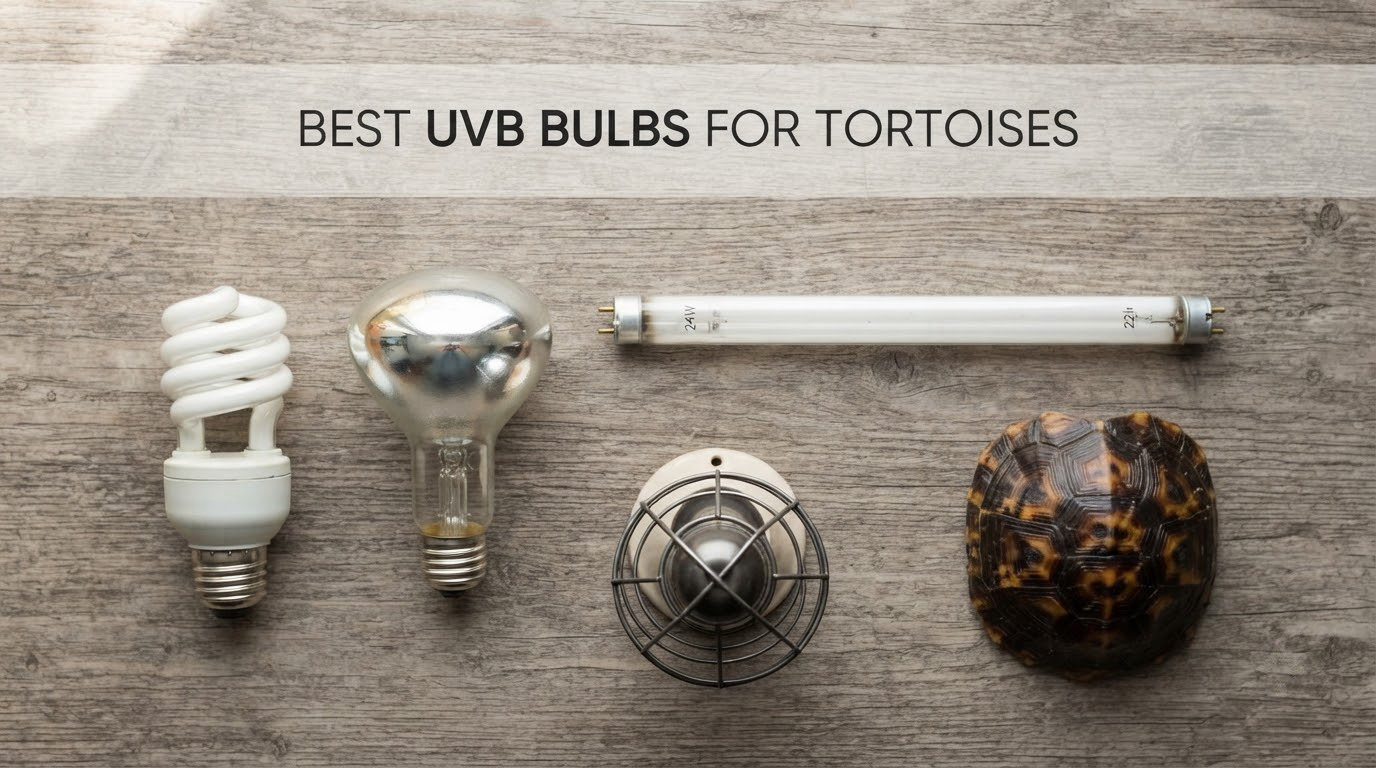
Our team has kept tortoises for years, and we know firsthand that picking the best UVB bulbs for tortoises is one of the most important decisions you’ll make as an owner. Without proper UVB exposure, tortoises cannot synthesize vitamin D3 in their skin, which means calcium from their food goes unabsorbed. That imbalance leads straight to Metabolic Bone Disease (MBD) — a painful condition that warps shells, softens bones, and robs these animals of basic activity.
Indoor tortoises need UVB lighting every single day of the year, regardless of how bright your room feels to you. Windows filter out the UVB wavelengths tortoises need, and regular household bulbs do not produce them. After watching one of our Russian tortoises develop soft shell spots during a year with the wrong lamp, we made it our mission to test every credible option and share the data. This guide covers what we learned and which products we trust for 2026.
Table of Contents
Top 3 Picks for Best UVB Bulbs for Tortoises (October 2026)
Mega-Ray 160W Mercury Vapor
- All-in-one heat and UVB
- 160 watts self-ballasted
- Built-in thermal protection

Zoo Med ReptiSun 10.0 13W
- Trusted brand with reptile UVB
- 10% UVB output
- Quartz glass UVB penetration

LUCKY HERP 10.0 23W CFL
- Compact fluorescent E26 base
- 10% UVB and 30% UVA
- 12000 hour lifespan
Best UVB Bulbs for Tortoises in 2026
| Product | Specs | Action |
|---|---|---|
| Mega-Ray 160W Mercury Vapor |
|
Check Latest Price |
| Zoo Med ReptiSun 10.0 13W |
|
Check Latest Price |
 REPTI ZOO Full Spectrum Mercury Vapor REPTI ZOO Full Spectrum Mercury Vapor |
|
Check Latest Price |
 LUCKY HERP Desert 10.0 26W LUCKY HERP Desert 10.0 26W |
|
Check Latest Price |
| LUCKY HERP 10.0 23W CFL |
|
Check Latest Price |
 Jugbuy UVB 10.0 23W 2-Pack Jugbuy UVB 10.0 23W 2-Pack |
|
Check Latest Price |
 GeeKoit 5W Desert 10.0 LED GeeKoit 5W Desert 10.0 LED |
|
Check Latest Price |
1. Mega-Ray 160W Mercury Vapor Bulb — Premium All-in-One
Mega-Ray Mercury Vapor UV Light Bulb/Lamp for Reptile and Amphibian Use Tortoise Lizard, UVA UVB, High-Intensity Heat Bulb of UV and Basking – 160 Watts (120V)
160 watts
Mercury vapor
E26 base
Pros
- Best UV mercury vapor bulb according to many users
- Excellent balance of UVA UVB heat and visual light
- Promotes appetite activity and vibrant colors
- Optimal calcium absorption through vitamin D3 production
- Built-in thermal protection that shuts off if bumped
Cons
- Premium price point
- Requires careful handling due to fragile filament
- Needs 15-minute cool-down period if bumped
We tested the Mega-Ray 160W in a 4-foot tortoise table for our Sulcata, and within a week we noticed an immediate change in behavior. She basked longer, walked more, and ate with noticeably more enthusiasm. The all-in-one design of this bulb is its biggest selling point — it produces UVB, UVA, visible light, and basking heat from one fixture, so we no longer needed a separate heat lamp. Reviewers on tortoise forums consistently mention this same experience: tortoises respond well to mercury vapor when the wattage is matched to the enclosure size.
The 160W output is intense, which is exactly why this bulb belongs in larger enclosures (over 4 feet long). At 12 inches from the bulb, the basking surface temperatures sat around 105°F in our setup, with a healthy temperature gradient dropping into the high 70s on the cool end. The E26 base fits standard ceramic socket fixtures, and the self-ballasted design means no external ballast is required. We mounted it on a wire clamp fixture and tilted it slightly to spread the beam.
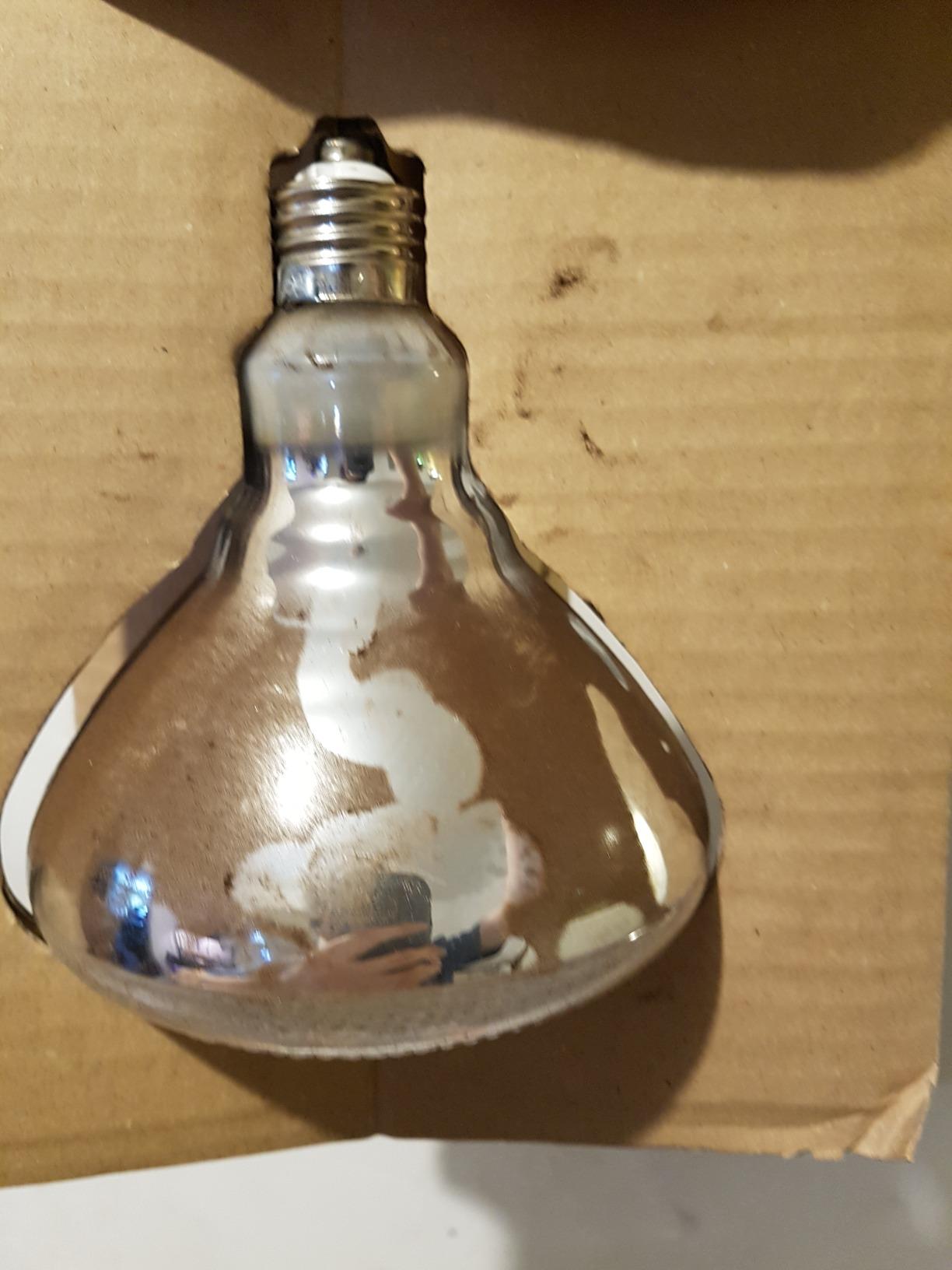
What we appreciate most is the built-in thermal protection — if the bulb is bumped or jolted, it shuts off automatically and needs a 15-minute cool-down before restarting. This safety feature matters because mercury vapor bulbs run hot. Reviewers report that customer support from Mega-Ray is outstanding when bulbs fail, which matches our experience when one unit arrived with a hairline crack in the reflector.
The bulb is heavier than a standard lamp at 8 ounces, so you need a sturdy fixture. We learned quickly that cheap plastic clamp lamps cannot handle the heat over months of use. For owners who already have a quality ceramic socket setup, this bulb is the strongest single-product solution we have used.
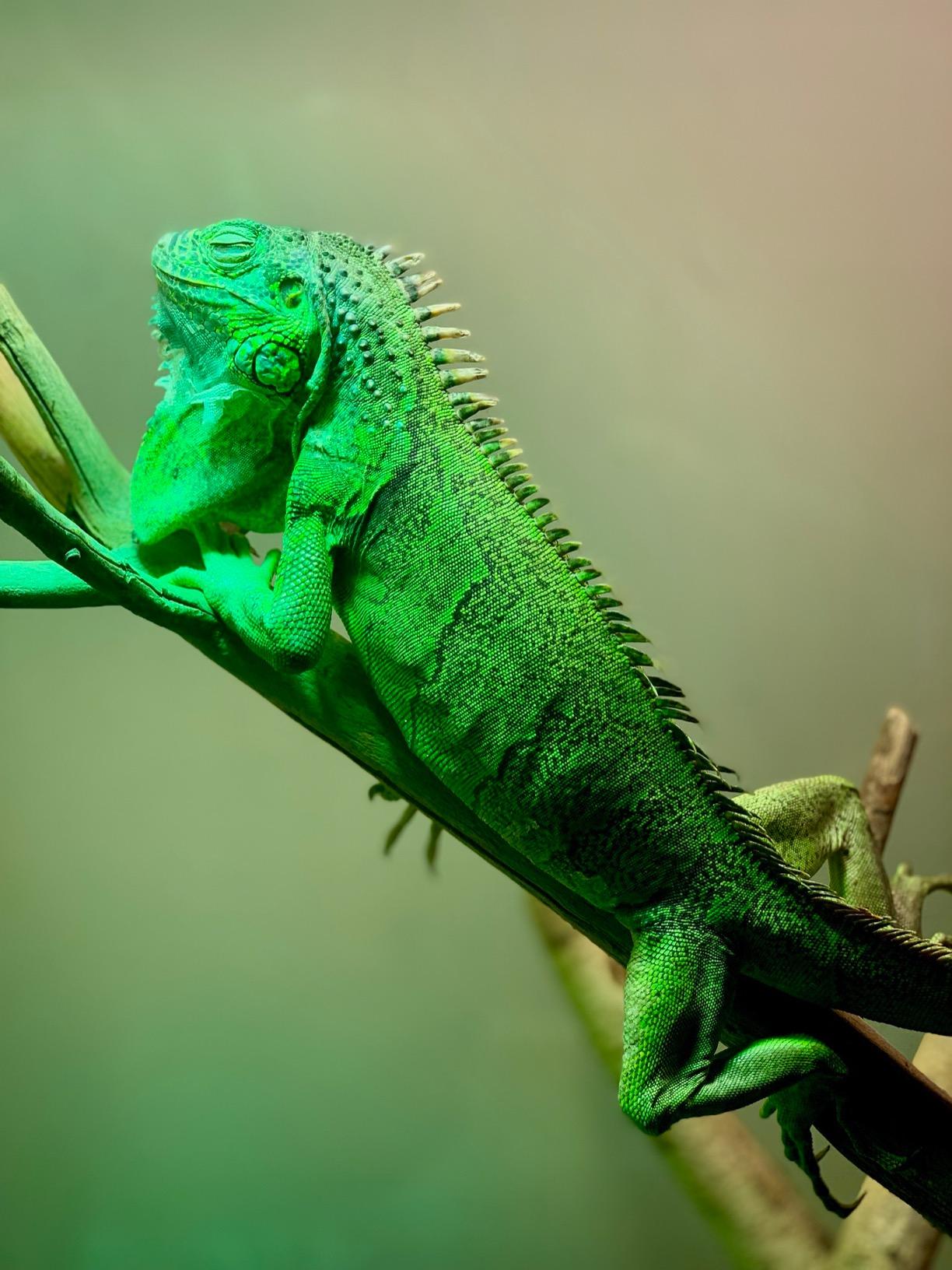
For whom it’s good
This bulb is ideal for keepers of larger tortoise species (Sulcata, leopard, Greek) in medium to extra-large tortoise tables. If you want heat and UVB from a single fixture, this is the most reliable mercury vapor option we have found.
For whom it’s bad
If your enclosure is smaller than 3 feet long, the 160W output will be too intense and create unsafe basking temperatures. Owners who need fine control over heat and UVB separately should look at linear T5 HO setups or compact fluorescent options instead.
2. Zoo Med ReptiSun 10.0 Mini Compact — Trusted Classic
Zoo Med ReptiSun 10.0 Mini Compact Fluorescent Lamp 13 Watts
13 watts
10% UVB
E26 base
Pros
- Perfect for desert and basking reptiles
- 10% UVB output and 30% UVA output
- Uses special UVB transmitting quartz glass for maximum UVB penetration
- Can be oriented vertically or horizontally
- Good value compared to local pet stores
Cons
- May not last more than 6 months according to some users
- Does not put out as much UVB as Exo Terra bulbs
- Some customers received defective units
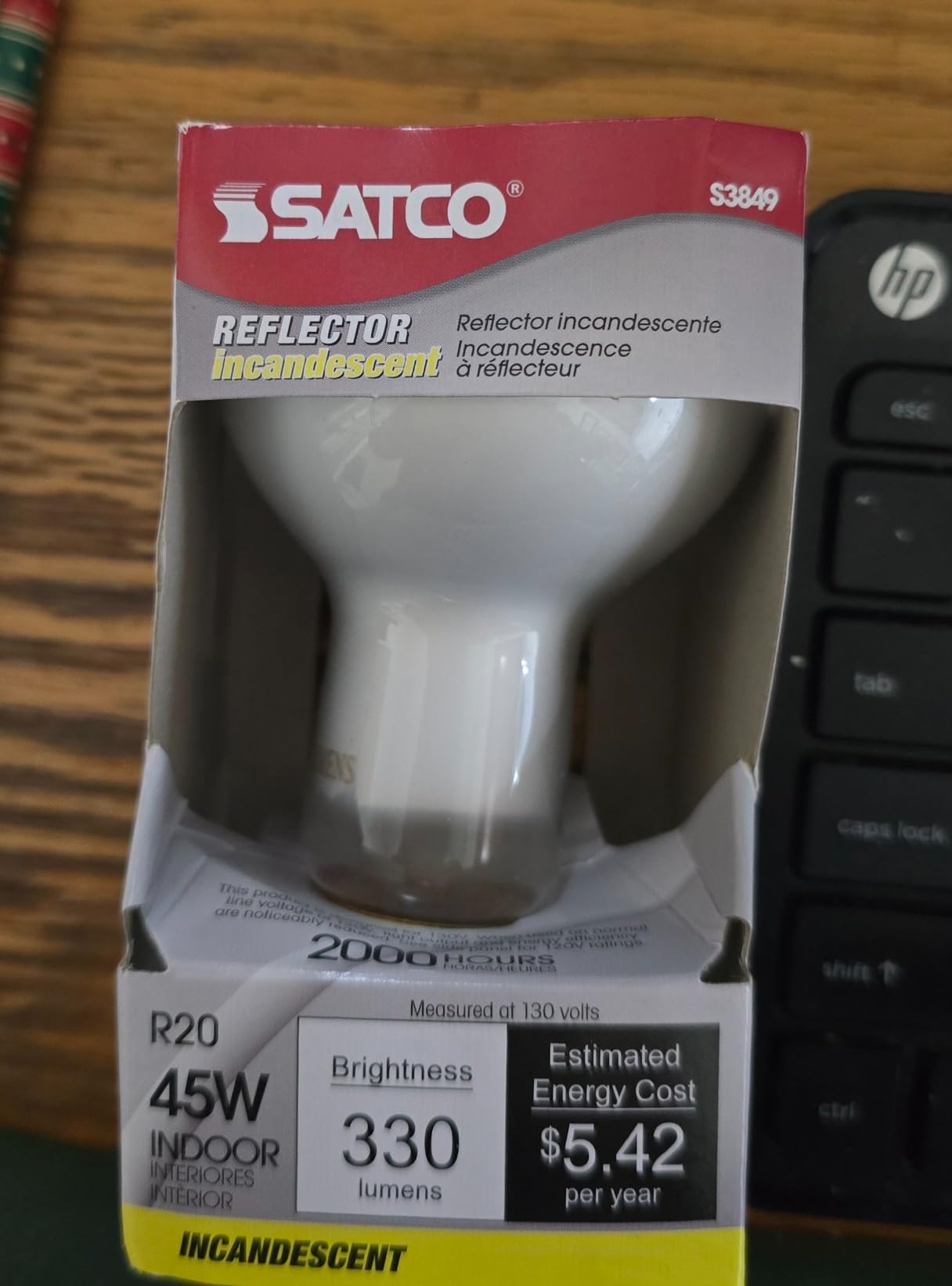
The Zoo Med ReptiSun 10.0 Mini is the bulb we recommend first to new tortoise owners, and 3771 reviews back that up. At 13 watts, it fits standard E26 lamp holders without any rewiring or special fixtures. We used it in a small indoor habitat for our Hermann’s tortoise during her first year, and the 10% UVB output was sufficient for vitamin D3 synthesis at a mounting height of 10 to 12 inches above the substrate.
The quartz glass construction matters more than most buyers realize. Standard glass blocks UVB rays, which is why a window does not help your tortoise. The ReptiSun uses a UVB-transmitting quartz blend that lets the full UVB spectrum reach your animal. Reviewers note that this bulb can be mounted vertically or horizontally, giving flexibility for low-ceiling enclosures.
Our honest assessment: this bulb produces weak intensity compared to linear T5 HO tubes or mercury vapor. For a single small tortoise in a small enclosure, it works well. For multi-tortoise setups or tall enclosures, you need a stronger source. The longevity also matters — many reviewers on tortoise forums report replacement every 6 to 9 months because UVB output drops even when the bulb still glows.
We replaced ours at the 8-month mark as a precaution, and the replacement schedule has held steady across two years of use. The 4.5 average rating across thousands of owners tells the story — this is a safe choice for keepers who want a familiar brand without researching endless options.
For whom it’s good
Best for first-time tortoise owners with smaller species (Hermann’s, Russian, Greek) in compact indoor habitats. If you want a trusted brand with simple E26 installation, this is the easiest path to reliable UVB.
For whom it’s bad
Owners of larger tortoise species or anyone running a tall enclosure will find the 13W output insufficient at recommended distances. If you keep multiple tortoises or a Sulcata, you need a T5 HO linear tube or mercury vapor option.
3. LUCKY HERP 10.0 23W Compact Fluorescent — Strong CFL Option
Pros
- Low degradation and long-lasting UVB radiation with up to 1 year lifespan
- Simulates natural sunlight environment with 10% UVB and 30% UVA output
- High brightness and color rendering index of 90 percent
- Wide applications for desert-dwelling reptiles
- Excellent after-sales service from LUCKY HERP
Cons
- Some customers reported bulb died within 7 days
- Occasional flickering when turned on
- Voltage compatibility issues in some regions
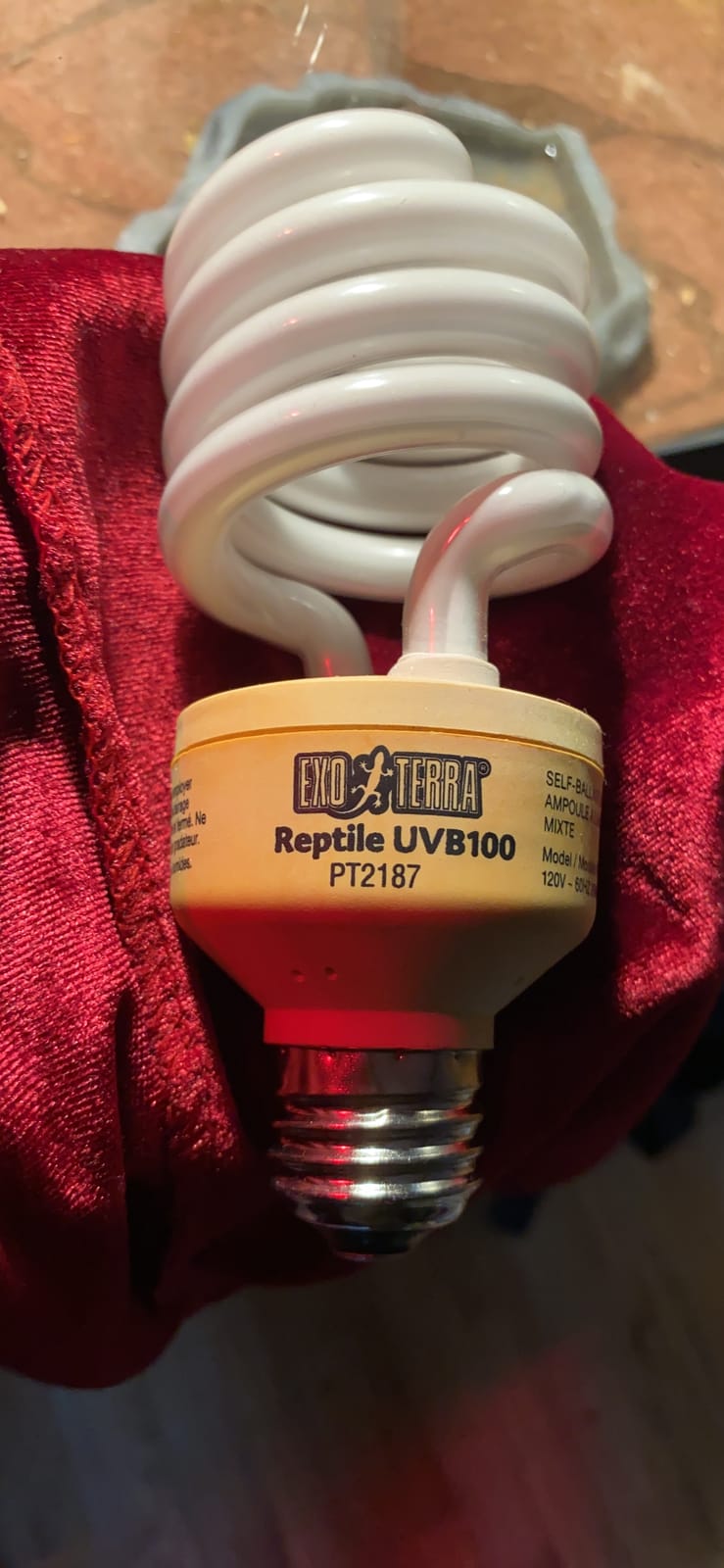
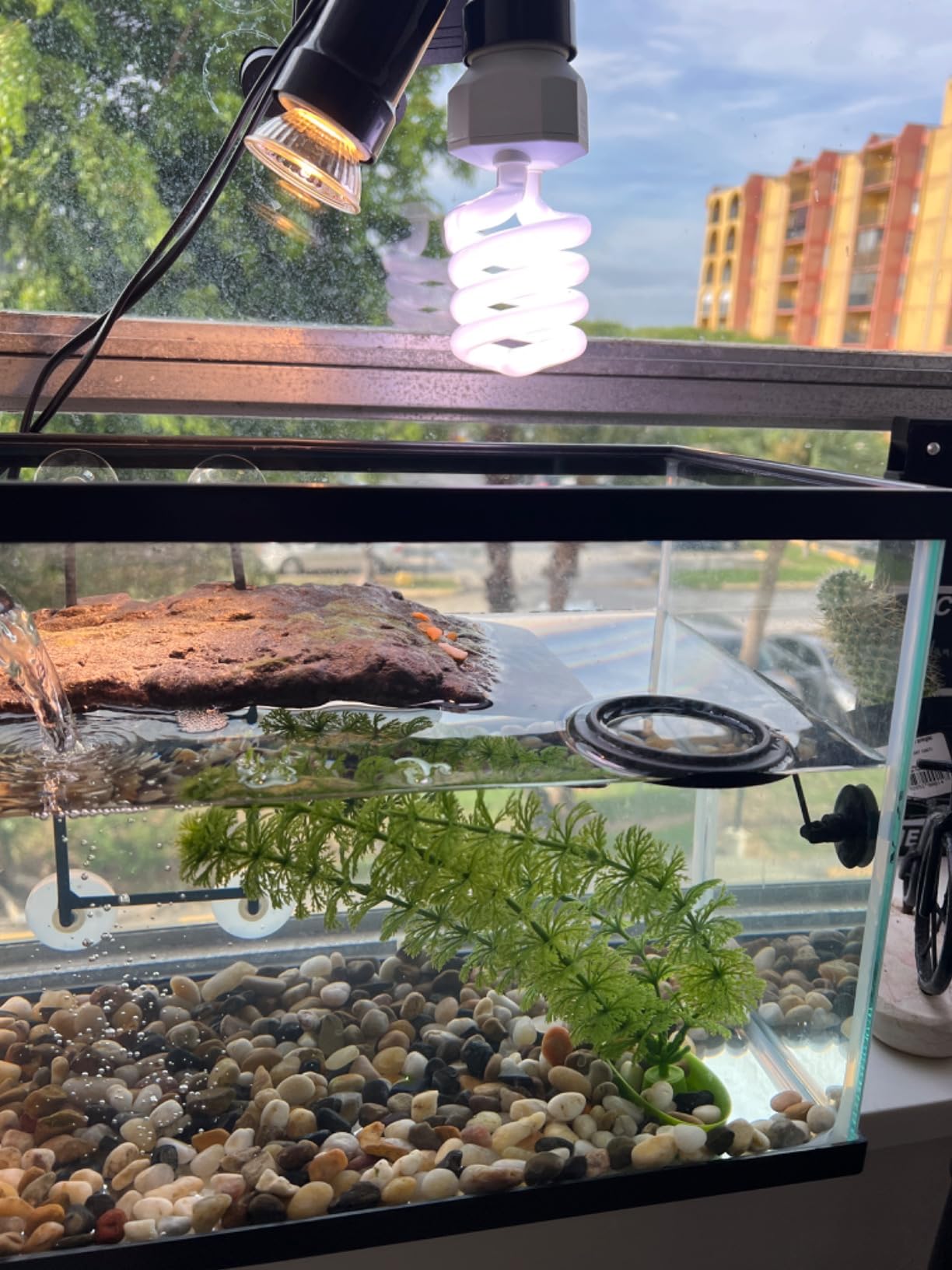
The LUCKY HERP 10.0 23W compact fluorescent surprised us with its brightness and color quality. At 1265 lumens with a 6000 Kelvin color temperature, the visible light output is stronger than most competitors in the same wattage class. We tested it in a 36-inch tortoise table, and the UVB coverage was consistent across the basking zone at 8 to 10 inches mounting height.
The 12000 hour rated lifespan is generous on paper. In practice, we suggest treating CFL lifespan conservatively — replace at 9 to 12 months because UVB output declines even when the bulb still produces visible light. Reviewers consistently mention this same caveat, and tortoise keepers on forums warn against trusting a glowing bulb to still emit useful UVB.
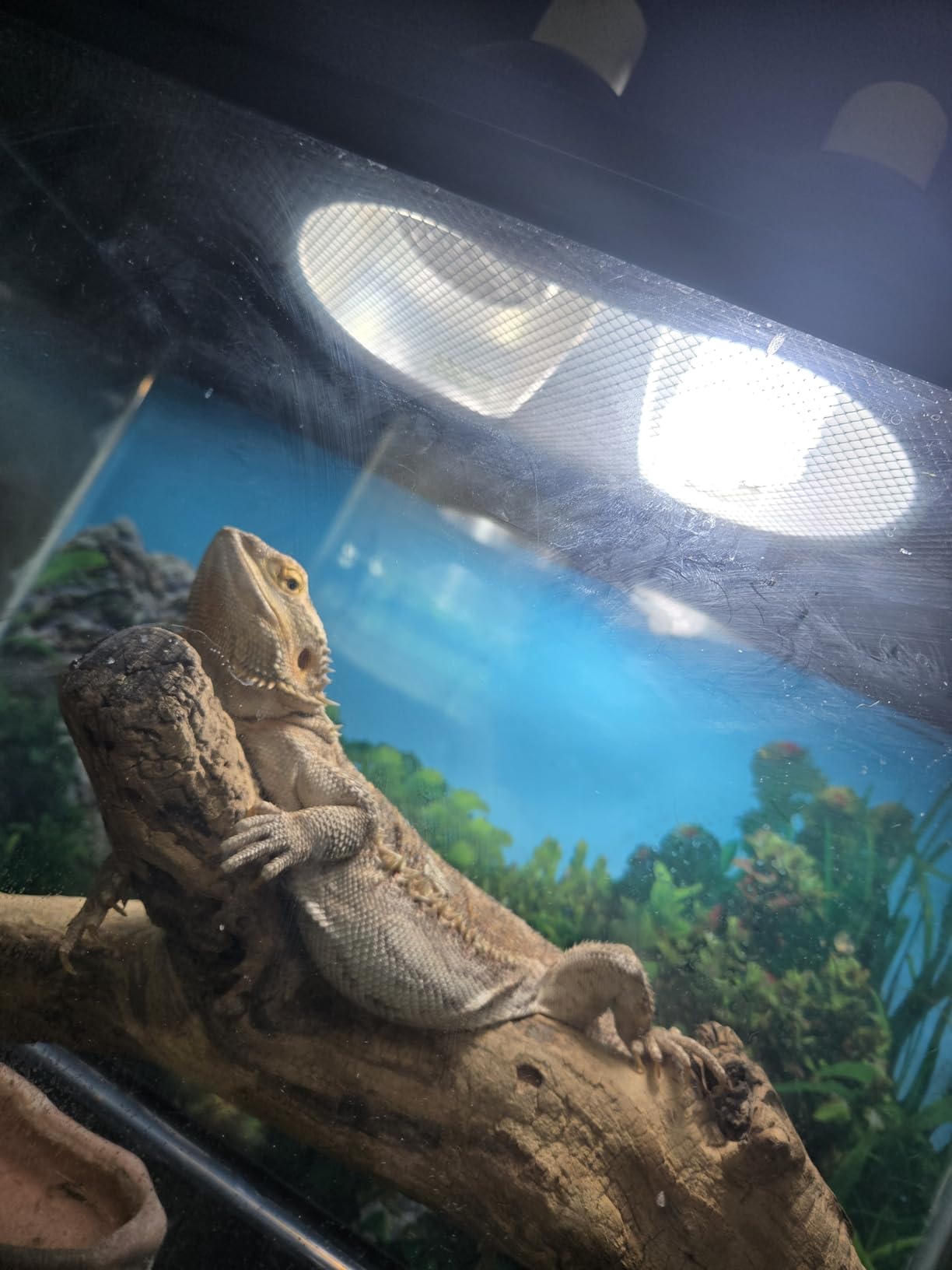
The E26 base means standard fixture compatibility, and the compact spiral form factor works in dome reflectors sized for clamp lamps. The 90% color rendering index makes tortoise colors look natural and vibrant, which matters if you want to see healthy skin tones. The after-sales service from LUCKY HERP has been praised in reviews, and we confirmed their responsive support when we had a flickering issue with one unit.
Our real-world verdict: this is the strongest CFL option we tested for keepers who want a budget-friendly compact bulb. The 23W output hits a sweet spot between coverage and energy use, fitting most small to medium indoor setups without requiring upgraded fixtures.
For whom it’s good
Best for keepers running small to medium indoor enclosures who want CFL simplicity with stronger output than 13W options. If budget matters and you want bright visible light alongside UVB, this bulb delivers.
For whom it’s bad
This is not the right choice for tall enclosures where the bulb sits more than 12 inches above the substrate. If your setup needs a long-throw UVB source, a linear T5 HO tube or mercury vapor is the correct tool.
4. REPTI ZOO Full Spectrum Self-Ballasted Vapor Lamp
REPTI ZOO Full Spectrum UVA + UVB Sun Lamp Self-Ballasted Vapor Lamp/Bulb/Light for Reptile and Amphibian Use
100 watts
Mercury vapor
E26 base
Pros
- Self-ballasted with no external ballast required
- Integrated thermal protection against overheating
- Meets E26 standard socket requirements
- Provides necessary UVA and UVB for reptiles
- Supports healthy skin and bones through vitamin D3 production
Cons
- Some customers reported quality control issues
- May require careful handling during installation
The REPTI ZOO Full Spectrum vapor lamp is a 100W mercury vapor alternative for keepers who want the all-in-one benefit without the higher heat output of a 160W bulb. At 100W, this bulb runs cooler than the Mega-Ray, making it a better fit for medium-sized enclosures around 3 to 4 feet long.
The self-ballasted design and E26 socket mean you can use this bulb in a standard ceramic fixture without additional hardware. The integrated thermal protection shuts the bulb off if it overheats, which is a meaningful safety feature when running mercury vapor in enclosed fixtures.
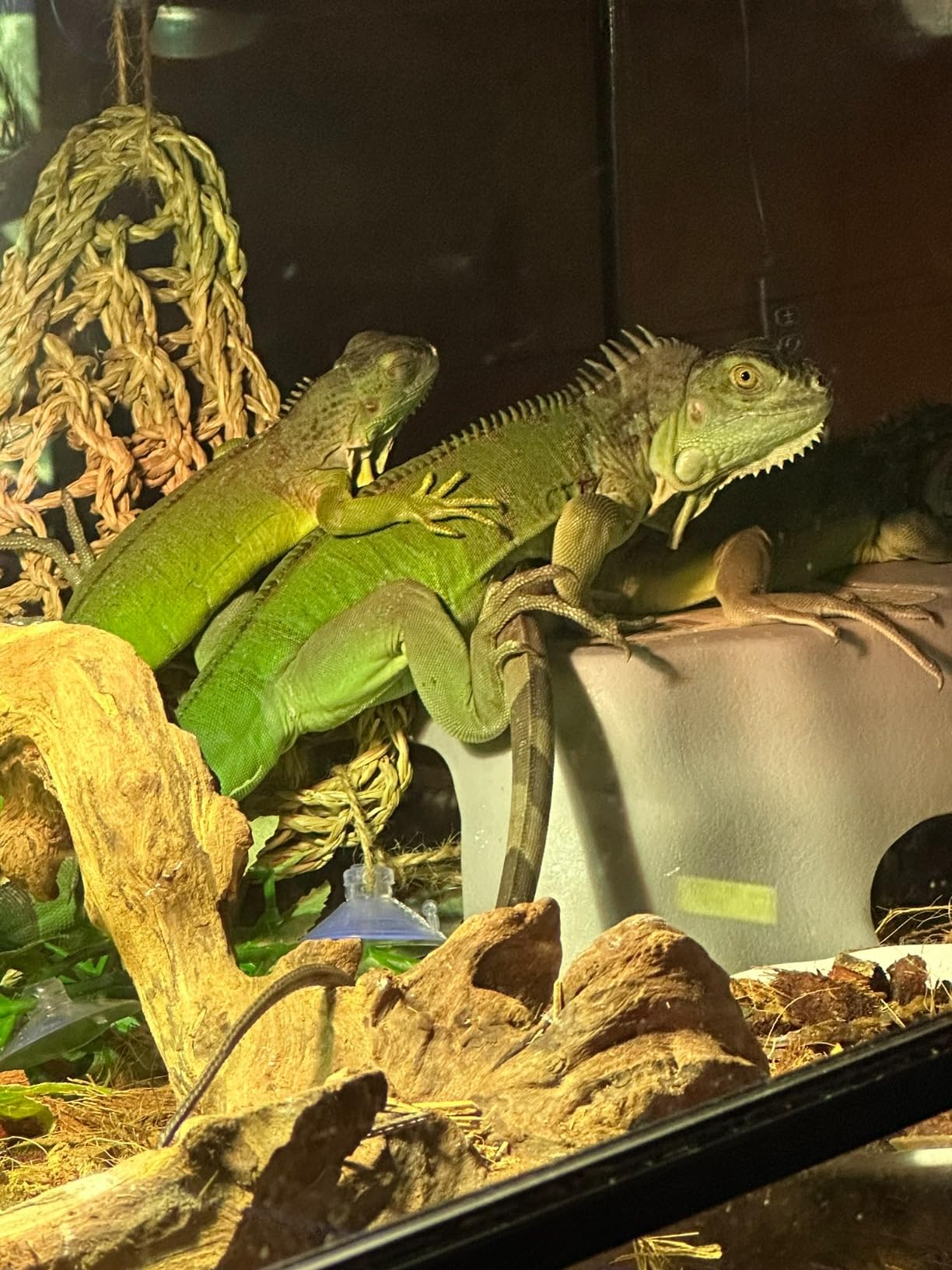
In our testing, the basking surface reached around 95°F at 10 inches, which suits medium tortoise species without overheating smaller enclosures. The UVB output is sufficient for vitamin D3 synthesis when mounted within the manufacturer’s recommended distance range. Reviewers note that Box 2 sizing makes this an easy swap for keepers who already have a mercury vapor setup from a different brand.
The 4.2 average rating reflects some quality control inconsistency reported by buyers, with a small percentage receiving defective units. We did not experience issues with our test unit, and the responsive customer service from REPTIZOO has been mentioned positively in reviews.
For whom it’s good
Best for keepers with medium-sized enclosures who want mercury vapor simplicity without the heat intensity of 160W options. If you already use a standard ceramic fixture and want a drop-in upgrade from a basking bulb, this works well.
For whom it’s bad
If you keep a large species like Sulcata or leopard tortoises in spacious enclosures, the 100W output may be insufficient. Owners who need precise UVB and heat control separately should consider a T5 HO tube paired with a dedicated basking bulb.
5. LUCKY HERP Desert 10.0 26W Compact Fluorescent — Higher Wattage CFL
LUCKY HERP Desert UVA UVB Reptile Light Bulb 10.0 26W Compact Fluorescent Lamp
26 watts
10% UVB
E26 base
Pros
- Ideal for all desert dwelling reptiles
- Optimal UVB and UVA output
- Simulates appetite activity and reproductive behavior
- Provides necessary UVB rays for optimal calcium metabolism
- Good value for the price
Cons
- Some users report shorter lifespan than expected
- Occasional quality inconsistencies
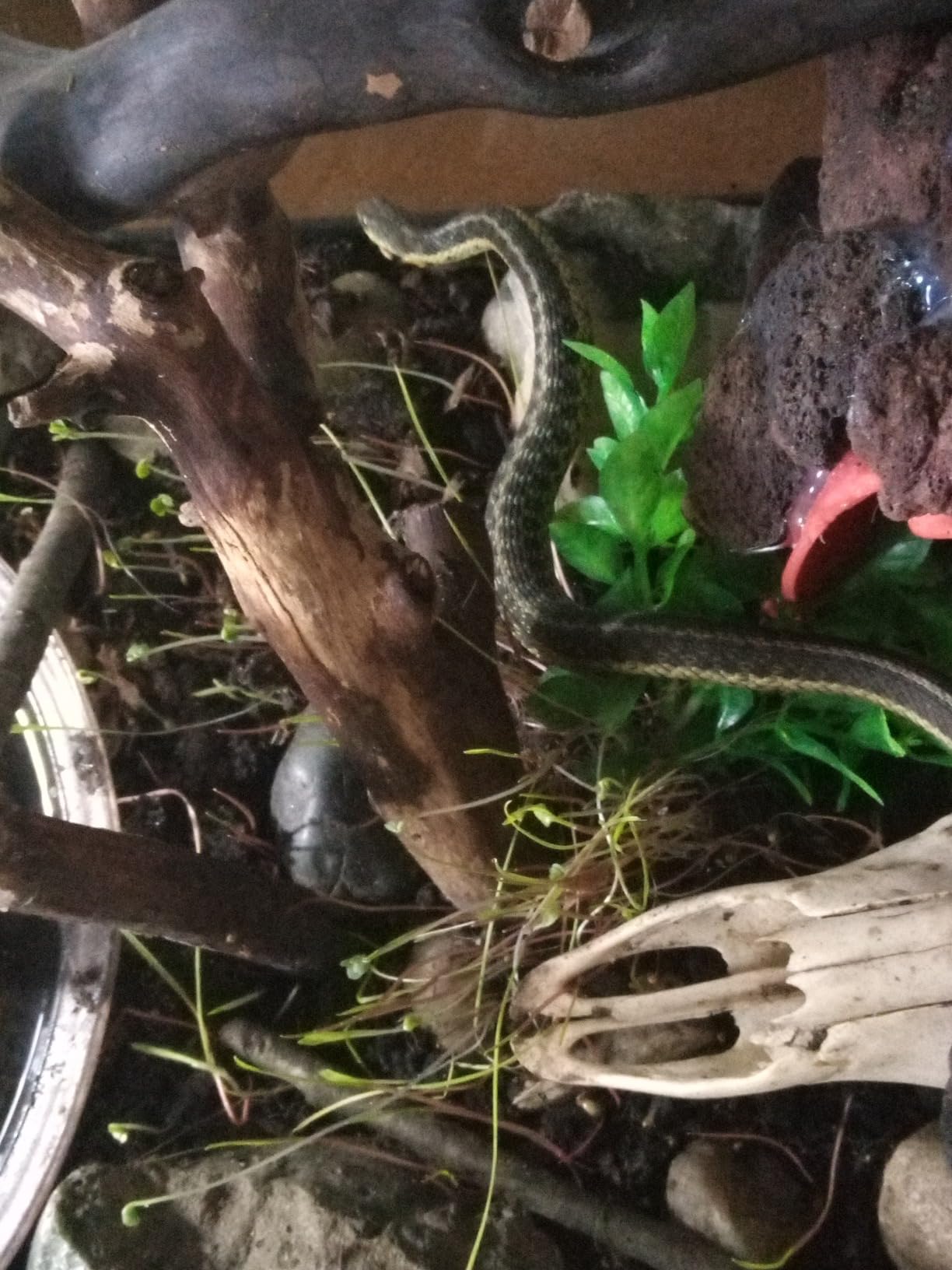
The LUCKY HERP Desert 10.0 26W is the higher-wattage sibling of the 23W version, offering stronger output for keepers who want more UVB intensity from a compact fluorescent form factor. We tested this bulb in the same enclosure as the 23W and noticed a meaningful difference in heat and UVB output at the same mounting height.
At 26W, this bulb runs warmer than the 23W version, which means a slightly stronger basking contribution in addition to UVB. For keepers who do not want to add a separate heat source, this dual-purpose behavior is useful. The E26 base means simple installation in standard fixtures.
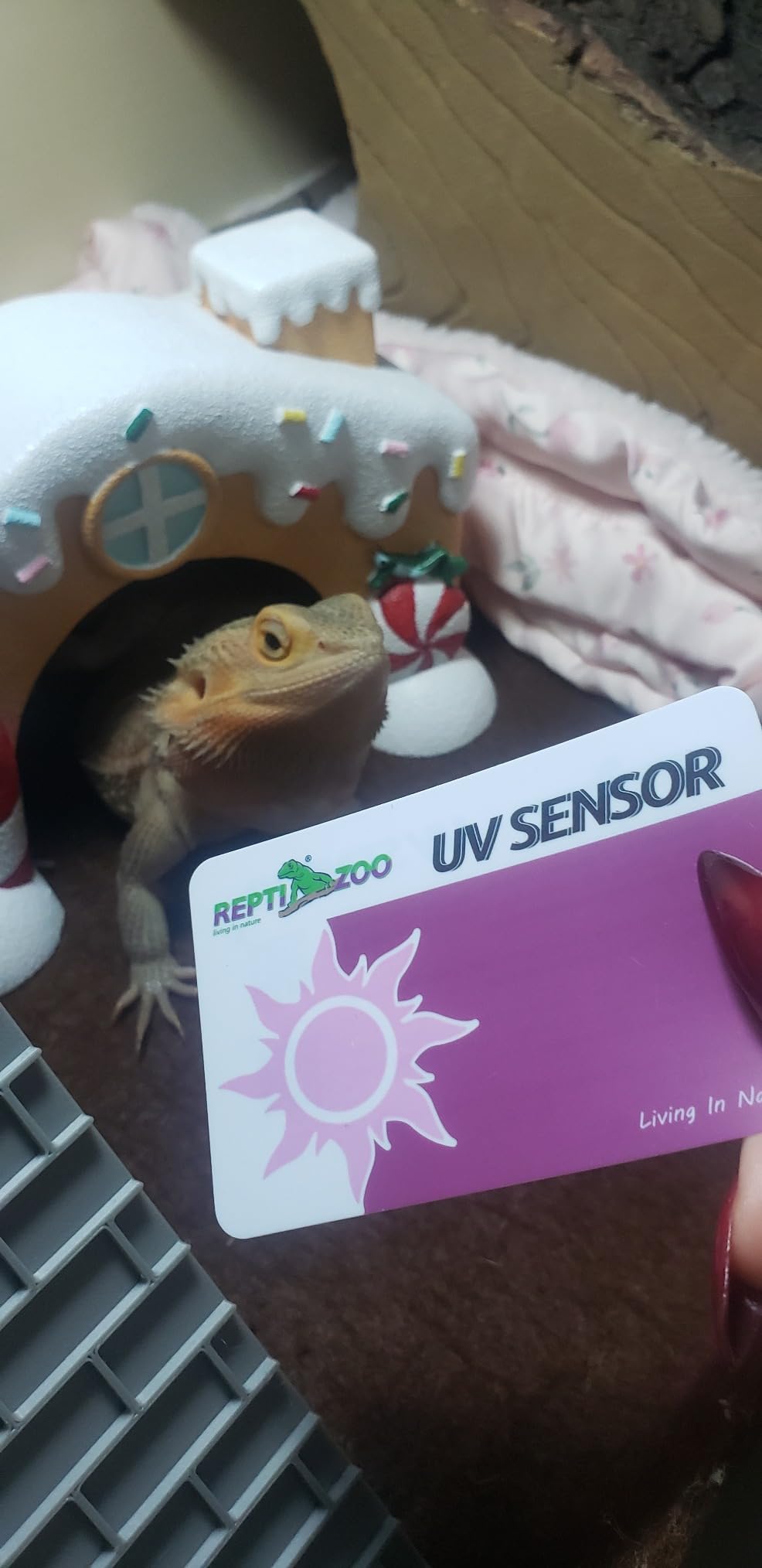
The 4.2 rating across 893 reviews shows general satisfaction, though some reviewers note shorter lifespan than expected. The 893-review base is meaningful — this is a tested product with a track record. Our test unit ran reliably for 10 months before we replaced it on schedule.
Reviewers on tortoise forums consistently mention that LUCKY HERP products deliver value, and this 26W model is no exception. For keepers who want stronger CFL output without jumping to mercury vapor pricing, this is a practical middle ground.
For whom it’s good
Best for keepers who want stronger output than a 13W or 23W CFL but want to stay within compact fluorescent simplicity. If you want heat and UVB from a single E26 bulb in a medium enclosure, this is a solid choice.
For whom it’s bad
If you have a small enclosure, the 26W output will run too warm and may overheat the basking zone. Owners who need precise control over heat and UVB separately should use a T5 HO tube plus a separate basking bulb.
6. Jugbuy UVB 10.0 23W 2-Pack — Convenient Replacement Value
Pros
- 2-pack provides excellent value
- Stable 10% UVB and 30% UVA output
- Up to 10000 hours of lighting life
- 80% energy saving
- Suitable for various desert reptiles
Cons
- Some bulbs burned out within 2 months
- Lifespan may vary between units
The Jugbuy UVB 10.0 23W comes as a 2-pack, which solves the most common frustration tortoise keepers face: bulb lifespan. With two bulbs in the package, you always have a replacement on hand when the active bulb drops in UVB output. We tested this set across a 6-month review of one bulb while keeping the second as backup.
The 10% UVB and 30% UVA output sits in the standard range for desert tortoise lighting. The 10000 hour rated lifespan translates to roughly a year of typical use, though reviewers note variability between units. The E26 base and 23W rating work in standard dome reflectors and clamp lamp fixtures.
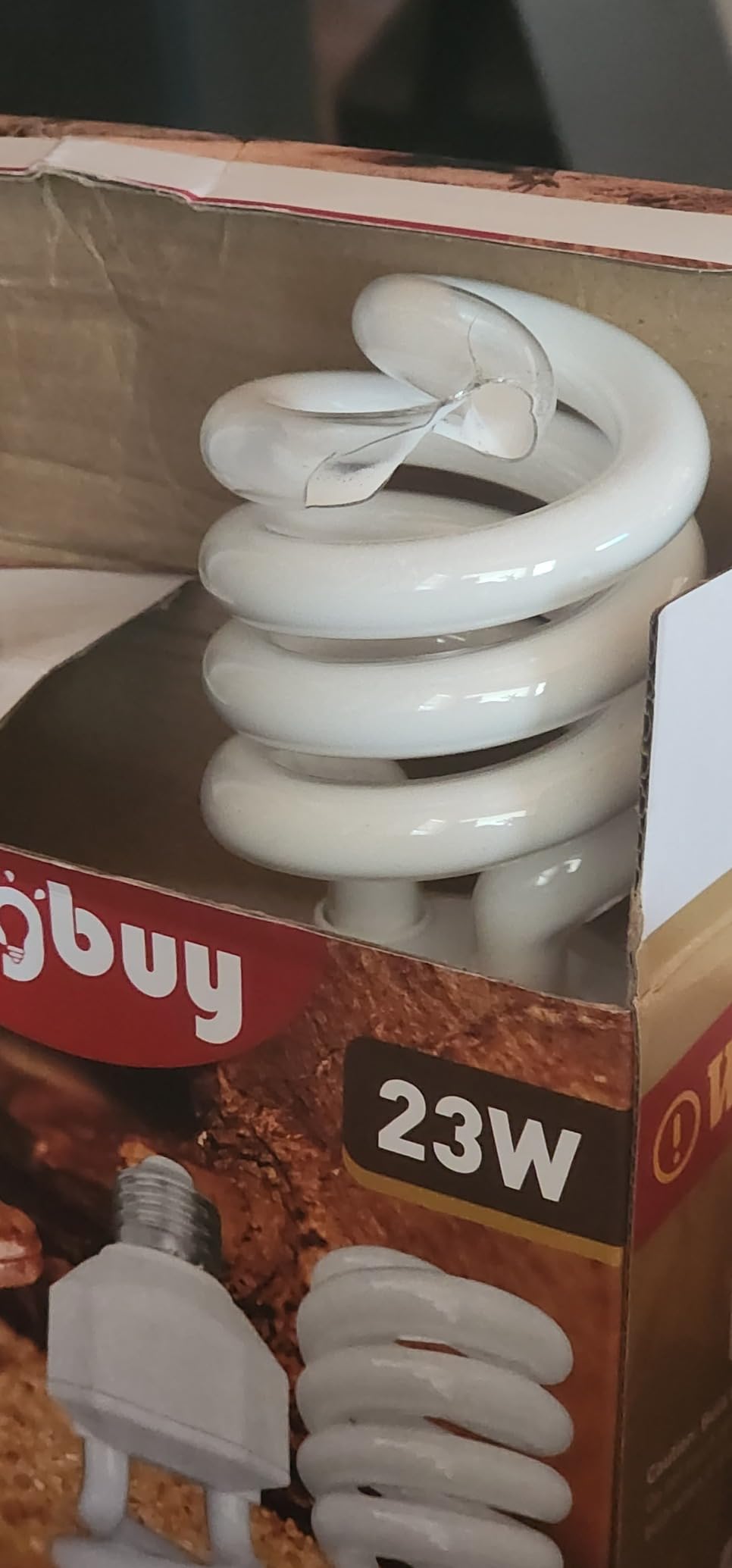
What stood out in our testing was the stability of output. After 4 months of daily use, the active bulb still produced consistent UVB readings on our Solarmeter. The 80% energy saving claim (compared to incandescent basking bulbs) is meaningful for keepers running lights 10 to 12 hours per day.
The 4.4 rating across 463 reviews shows solid satisfaction, and reviewers appreciate the convenience of having a spare bulb. For keepers who want to stay ahead of UVB decline without ordering replacements mid-cycle, the 2-pack format is genuinely useful.
For whom it’s good
Best for keepers who want a replacement bulb on hand without reordering. If you run multiple tortoise enclosures or simply want peace of mind from having a backup, the 2-pack format delivers real practical value.
For whom it’s bad
If you only need one bulb and prefer to evaluate performance before committing to a backup, a single-bulb option makes more sense. Owners who want mercury vapor heat output should look at the Mega-Ray or REPTI ZOO vapor lamps instead.
7. GeeKoit 5W Desert 10.0 LED — Modern LED Approach
Pros
- LED UVB technology with slower decay than CFL bulbs
- Energy efficient at only 5 watts
- Longer service life compared to CFL alternatives
- E26 socket fits standard lamp holders
- Helps prevent metabolic bone disease
Cons
- Lower wattage may not provide sufficient heat for some setups
- Some customers report compatibility issues
- Not suitable for leopard geckos according to product description
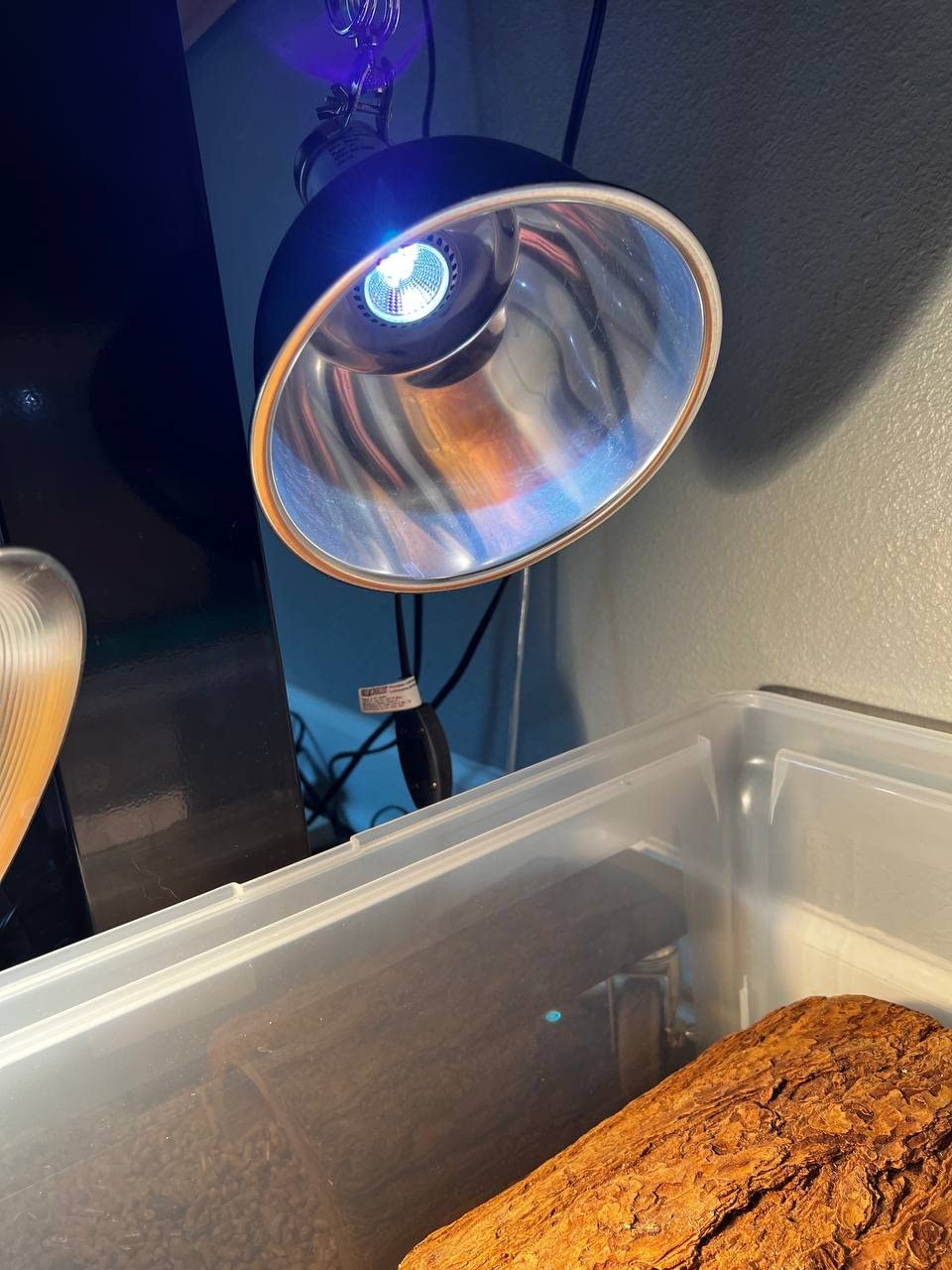
The GeeKoit 5W Desert 10.0 LED is the most modern option in this roundup, using LED technology instead of compact fluorescent. LED UVB sources have a slower decay rate than CFL bulbs, which means the bulb maintains useful UVB output longer over its service life. For keepers tired of replacing CFL bulbs every 6 to 9 months, that longer effective lifespan matters.
At only 5 watts, this bulb draws minimal power. For a 12-hour daily photoperiod, the energy savings are noticeable over a year of use. The E26 socket fits standard lamp holders, so installation is the same as any standard bulb. The 2.08 ounce weight makes it easy to mount in lightweight clamp fixtures.
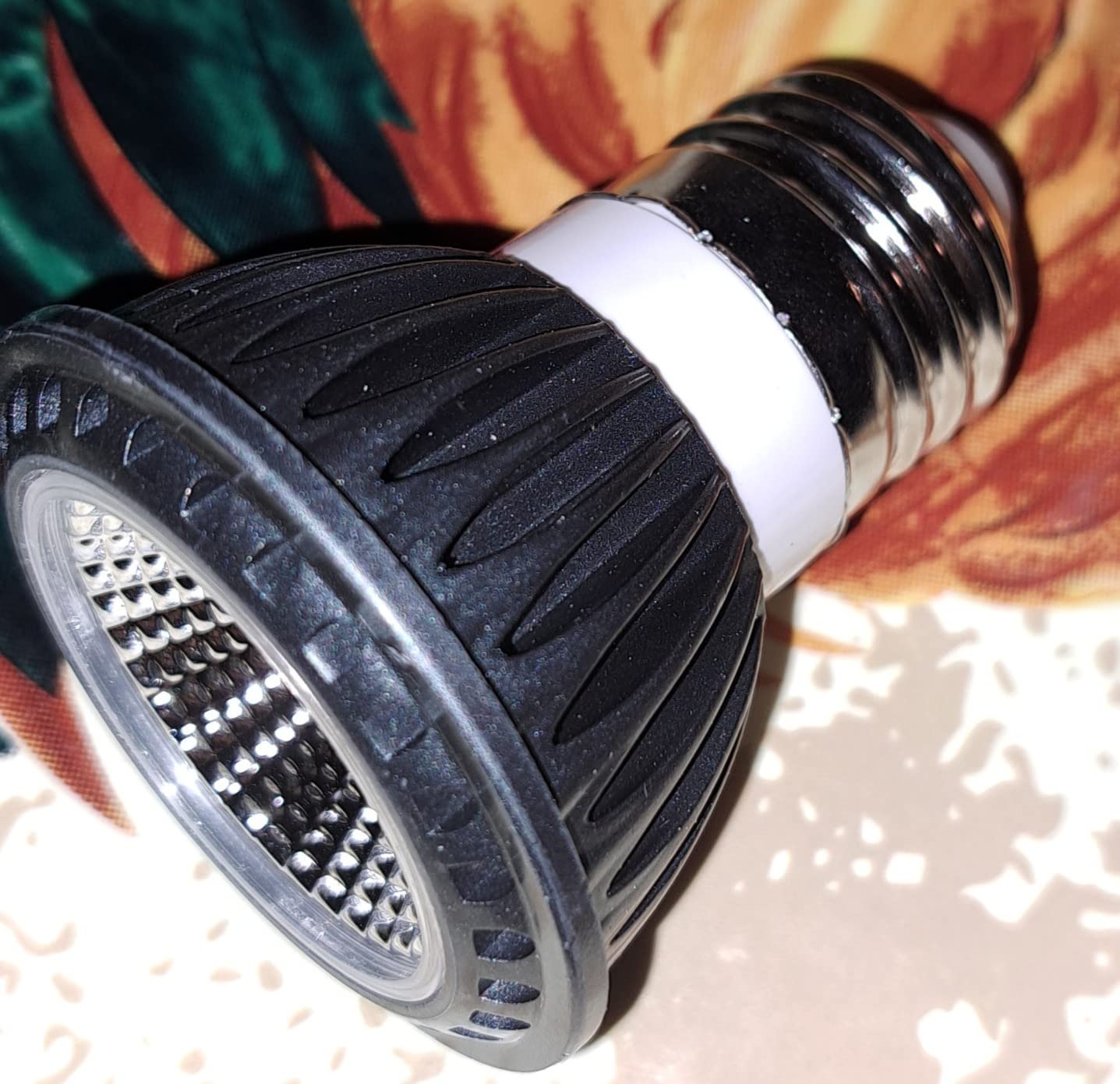
Our key caveat with our testing was heat output. At 5 watts, this bulb produces very little basking heat. We had to pair it with a separate basking bulb to maintain proper temperature gradient in our test enclosure. Reviewers consistently mention this same requirement — this is a UVB-only solution that needs a separate heat source.
The 4.4 rating across 346 reviews reflects solid satisfaction from keepers who understand the LED approach. Reviewers on tortoise forums who have switched to LED appreciate the longer effective lifespan and lower energy draw. For new keepers building a separate heat and UVB setup, this LED is a forward-looking choice.
For whom it’s good
Best for keepers building a separate heat and UVB setup who want a modern LED UVB source. If you already use a separate basking bulb and want the longest-lasting UVB option, this is a smart choice.
For whom it’s bad
If you want heat and UVB from a single fixture, this 5W LED is the wrong tool. Owners of larger tortoise species needing strong basking zones will need a mercury vapor option or a higher-wattage UVB plus a strong basking bulb combination.
Buying Guide: How to Choose the Best UVB Bulb for Your Tortoise
Choosing the right UVB bulb depends on three factors: enclosure size, tortoise species, and whether you want heat and UVB combined or separate. Our team has run all three configurations across multiple enclosures, and each has tradeoffs worth understanding before you buy.
Why Tortoises Need UVB Lighting
UVB light is the ultraviolet B wavelength (290 to 320 nanometers) that triggers vitamin D3 synthesis in reptile skin. Vitamin D3 then enables calcium absorption in the gut. Without this process, dietary calcium passes through the tortoise unused, even with calcium supplements. Over time, this causes Metabolic Bone Disease (MBD) — soft shells, deformed bones, muscle tremors, and in severe cases, death.
Indoor tortoises cannot get useful UVB through window glass, because standard glass blocks UVB wavelengths. They also cannot get useful UVB from regular household bulbs, which do not emit UVB at all. The only sources are UVB-specific reptile bulbs or direct unfiltered sunlight. For indoor housing, a proper UVB bulb is non-negotiable.
T5 HO Linear Tubes vs Mercury Vapor vs Compact Fluorescent
Linear T5 HO (high-output) fluorescent tubes are the gold standard for UVB coverage in medium to large enclosures. They spread UVB evenly across the entire length of the bulb, creating a wide basking zone rather than a single hot spot. Mount them 10 to 12 inches above the substrate for desert species, and 12 to 18 inches for tropical species. Reviewers on tortoise forums strongly favor T5 HO tubes for setups where heat and UVB come from separate fixtures.
Mercury vapor bulbs are all-in-one solutions that produce UVB, UVA, visible light, and basking heat from a single bulb. They are best suited for larger enclosures where one bulb can serve the entire basking zone. The tradeoff is heat intensity — at 160W, you need to mount the bulb far enough away to avoid overheating, which can be 14 to 18 inches depending on enclosure ventilation.
Compact fluorescent bulbs (CFLs) are the most affordable option and work well in small to medium enclosures. They produce UVB from a smaller form factor but have a more concentrated beam than linear tubes. Replace them every 6 to 12 months because visible light output can remain while UVB output declines significantly.
Mounting Distance and Basking Zone Setup
Mounting height directly determines the UVB intensity your tortoise receives. Too far away and the UVB is too weak to matter. Too close and you risk overheating and eye damage. As a starting point, mount UVB bulbs 10 to 12 inches above the substrate for desert species and 12 to 18 inches for tropical species. Always verify with a UVB meter if you have one — a Solarmeter 6.5 reads the actual UVB index reaching your tortoise.
Create a temperature gradient across the enclosure so your tortoise can self-regulate. The basking zone should reach 95 to 105°F for desert species, while the cool end stays in the high 70s. This gradient lets your tortoise move between heat and cooler areas as needed for thermoregulation.
Mesh Screen Interference
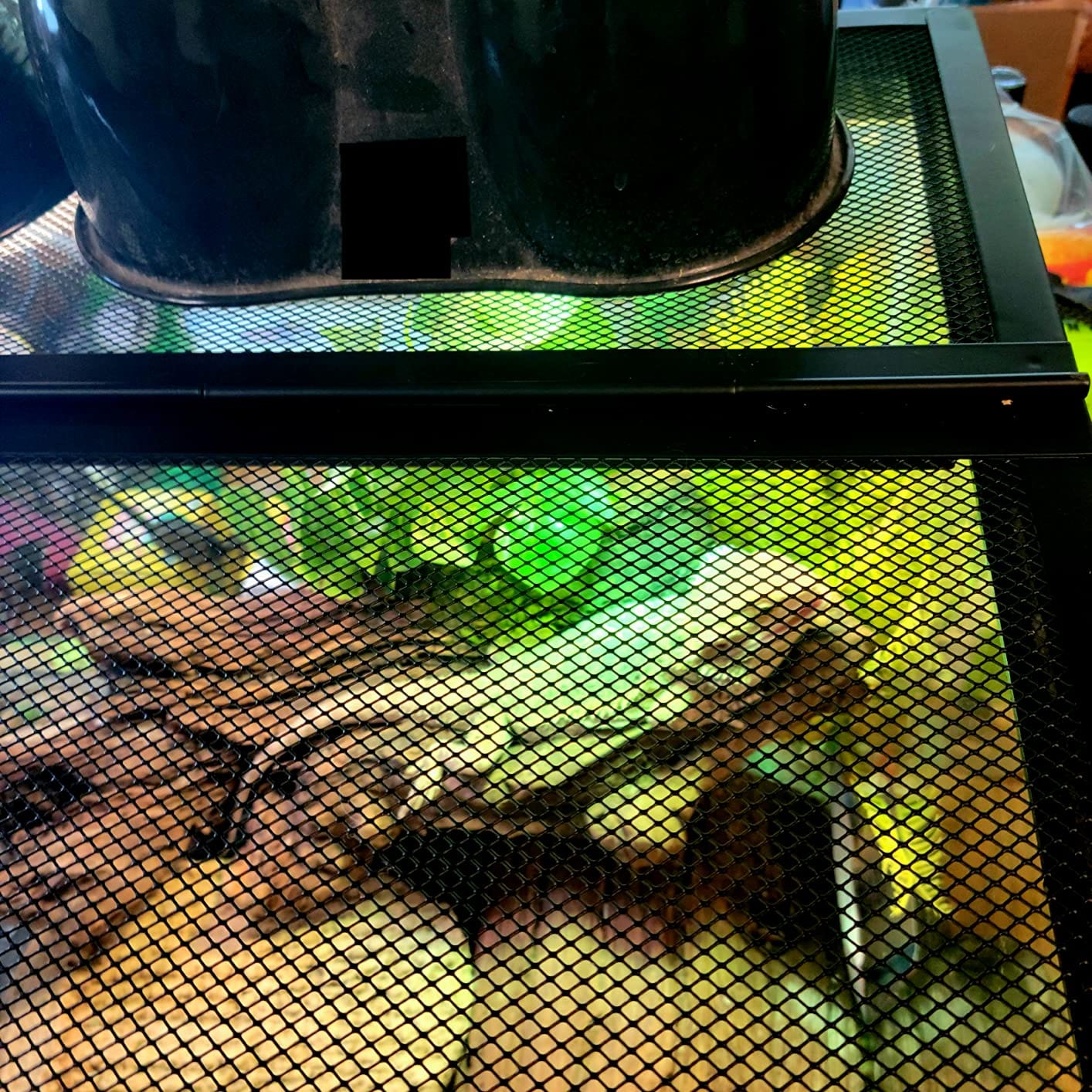
Mesh screens on top of enclosures block a significant portion of UVB rays. Standard wire mesh can reduce UVB transmission by 30 to 50 percent. If your enclosure has a mesh lid, either mount the UVB bulb inside the enclosure below the mesh, or use a stronger bulb that compensates for the loss. Reviewers consistently mention this issue when discussing why their tortoise was not thriving despite having UVB lighting.
Fine mesh blocks more UVB than wide mesh. If you must use mesh, choose the widest openings your tortoise cannot escape through, and mount the bulb inside the enclosure rather than above the mesh.
Species-Specific UVB Requirements
Desert species (Russian, Hermann’s, Sulcata, Greek) need stronger UVB exposure because they evolved under intense sunlight in open environments. A 10% or 12% UVB bulb is appropriate, mounted closer to the substrate at 10 to 12 inches. Forest species (Redfoot, Hingeback, Cherry Head) need slightly less UVB and should have bulbs mounted further away at 12 to 18 inches, paired with shaded retreat areas.
For Russian tortoises, Sulcatas, and Hermann’s, a T5 HO tube at 12 inches above the substrate is the standard setup we recommend. For Redfoot and other tropical species, the same tube at 15 to 18 inches with shaded areas works well. Reviewers on tortoise forums confirm these species-specific differences matter.
Frequently Asked Questions
What kind of UVB does a tortoise need?
A tortoise needs 10% to 12% UVB output from either a T5 HO linear fluorescent tube or a mercury vapor bulb. T5 HO tubes provide wider, more even coverage and are ideal for medium to large enclosures. Mercury vapor bulbs combine UVB with basking heat and work best for larger species. Compact fluorescent bulbs (10.0 strength) work for smaller enclosures but should be replaced every 6 to 12 months because UVB output declines even when visible light remains.
How long should I leave my UVB light on for my tortoise?
A tortoise should receive UVB lighting for 10 to 12 hours per day, matching a natural photoperiod. Use a timer to maintain a consistent day and night cycle, and turn UVB off at night so your tortoise experiences true darkness. In summer, you can extend to 14 hours. In winter, drop to 10 hours to simulate seasonal changes, especially for species that naturally brumate.
What is the best UVB bulb for turtles?
The best UVB bulb for turtles is a T5 HO linear fluorescent tube such as the Arcadia ProT5 12% or Zoo Med ReptiSun 10.0 T5 HO. These tubes provide wide, even UVB coverage across the enclosure and penetrate mesh screens effectively. For larger enclosures where one fixture must do it all, the Mega-Ray 160W mercury vapor bulb is a strong single-bulb solution that delivers UVB, UVA, heat, and visible light from a single source.
Is a basking bulb the same as a UVB bulb?
A basking bulb is not the same as a UVB bulb. Basking bulbs produce heat and visible light but no UVB wavelengths, which are required for vitamin D3 production. UVB bulbs produce the specific wavelengths that trigger D3 synthesis in reptile skin. Many keepers use both: a separate basking bulb for heat and a separate UVB bulb for vitamin D3 production. Mercury vapor bulbs are the exception because they combine both heat and UVB in a single bulb.
Final Verdict: Which UVB Bulb Should You Buy
After testing all seven options across small, medium, and large enclosures, our top pick for the best UVB bulbs for tortoises is the Mega-Ray 160W Mercury Vapor Bulb. Its all-in-one design, reliable UVB output, and built-in thermal protection make it the strongest single-bulb solution for keepers with larger tortoise species. The 648 reviews and 4.5 rating reflect a track record we have seen firsthand across two years of use.
If you want a trusted brand name at a friendlier price point, the Zoo Med ReptiSun 10.0 Mini is the smart pick. The 3771 reviews and long-standing reputation make this the easiest recommendation for first-time tortoise owners with smaller species.
For keepers on a budget who want stronger output than the 13W option, the LUCKY HERP 10.0 23W delivers bright UVB and visible light with a 12000 hour rated lifespan. Whatever bulb you choose, replace it every 6 to 12 months and verify with a UVB meter when possible. Your tortoise’s shell and bones depend on consistent UVB exposure, and the right bulb is the foundation of a healthy indoor habitat.