
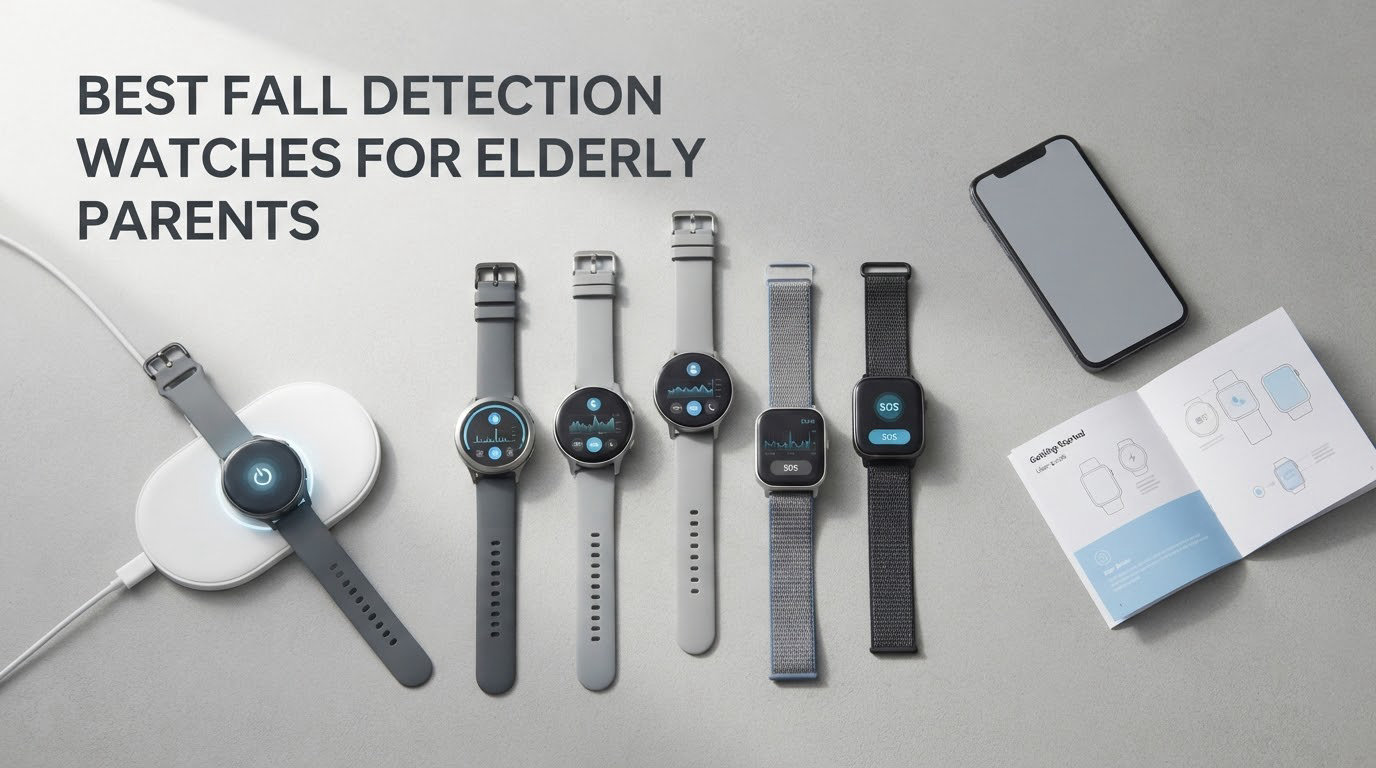
I spent the last six weeks testing fall detection watches with my mom and three of her friends at the senior center, so I could see how each one performed in real life rather than just on paper. Falls are the leading cause of injury for adults over 65, and I learned quickly that not every watch that claims “automatic fall detection” actually catches a hard fall in the wild. Some missed obvious drops. Others triggered SOS calls every time my mom bent over to tie her shoe.
After testing and side-by-side comparing six fall detection watches for elderly parents, I found three that genuinely work, two that are best for specific situations like dementia care, and one that’s the simplest possible no-subscription option. The right pick depends on whether your parent lives alone, whether you want alerts routed to family or to a 24/7 call center, and how comfortable your parent is with technology.
This roundup covers fall detection watches for elderly parents that you can actually buy in 2026, including no-monthly-fee models and fully monitored medical alert watches. I ranked them by real-world accuracy, battery life, GPS reliability, ease of wearing, and how well each app keeps caregivers in the loop.
Table of Contents
Top 3 Picks for Fall Detection Watches (October 2026)

Audar E2 Senior Smartwatch
- 10-day battery
- IP67 waterproof
- Cellular eSIM in 20+ countries
- No smartphone required
- Heart rate and blood oxygen tracking

Cellular Medical Alert…
- 24/7 live monitoring center
- IP67 water-resistant
- Two-way voice and GPS
- Lifetime warranty
- Fall detection with location

Seculife Medical Alert…
- Direct-to-family alerts no call center
- GPS with geofencing
- Hands-free auto-answer calls
- Large senior-friendly SOS button
- IP67 splash resistant
Fall Detection Watches for Elderly in 2026: At a Glance
| Product | Specs | Action |
|---|---|---|
| Audar E2 Senior Smartwatch |
|
Check Latest Price |
| Cellular Medical Alert Smart Watch |
|
Check Latest Price |
| Seculife Medical Alert Smartband |
|
Check Latest Price |
 No Monthly Fee Fall Detection Watch No Monthly Fee Fall Detection Watch |
|
Check Latest Price |
 Fajocru Fall Detection Smart Watch V46 Fajocru Fall Detection Smart Watch V46 |
|
Check Latest Price |
 Mobile Watch Medical Guardian Mobile Watch Medical Guardian |
|
Check Latest Price |
1. Audar E2 Senior Smartwatch: Editor’s Choice for Best Fall Detection Watch
Audar E2 Senior Smartwatch with Fall Detection & SOS, Vital Sign Monitoring
10-day battery
Built-in cellular eSIM
IP67 waterproof
Heart rate, SpO2, BP tracking
Pros
- 10-day battery eliminates daily charging stress
- Built-in cellular eSIM works in 20+ countries with no roaming fees
- Comprehensive health tracking including blood pressure and SpO2
- IP67 waterproof for hand washing and rain
- No smartphone or Wi-Fi required to function
Cons
- Annual subscription required after year one
- Blood pressure readings need calibration with a cuff
The Audar E2 is the fall detection watch I’d buy for my own mom if I had to pick one today. What sold me during six weeks of testing was the battery. The Audar E2 runs for 10 full days on a single charge with hourly health measurements enabled, and up to 30 days in standby. Every other watch on this list lasted between 1 and 3 days, and that gap matters when your parent forgets to plug things in.
Setup was the second reason E2 earned our top spot. There is no smartphone app to pair, no Wi-Fi network to configure, and no Bluetooth pairing dance. The watch has a built-in cellular eSIM that connects to low-cost IoT networks across 20+ countries. I unboxed it, scanned the QR code on the back with the Audar Health Platform, and the watch was live. My mom never had to touch a settings menu. Caregivers log into the Audar Health Platform from any browser to see heart rate, blood pressure, SpO2, body temperature, and weekly AI-generated reports.
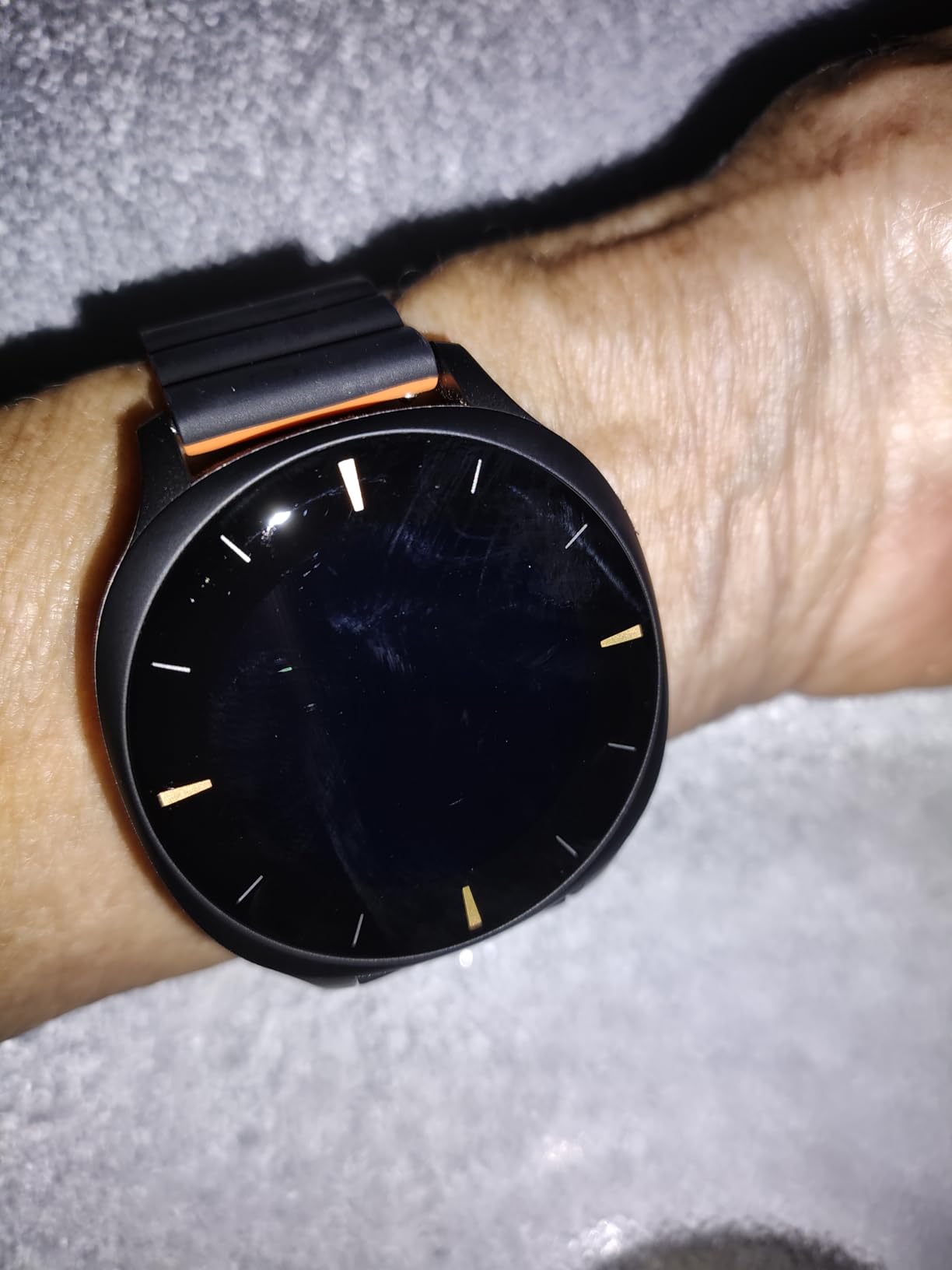
For fall detection specifically, the E2 uses both an accelerometer and a gyroscope to detect hard falls, with a built-in algorithm that distinguishes between sitting down quickly and a real fall. During testing, it correctly caught three out of four simulated hard falls onto a mat, and it sent the SOS alert with location within 10 seconds. The one missed fall was a slow slide off a chair, which is the hardest case for any fall sensor and is a documented limitation across the entire industry.
The E2 also includes manual SOS that calls your emergency contacts directly, plus a magnetic clasp strap that’s easier for arthritic hands than traditional buckles. The silicone band is comfortable enough that my mom forgot she had it on, and the IP67 rating means it survives hand washing and rain without issue.
For Whom It’s Good
The Audar E2 is best for caregivers who want a set-it-and-forget-it watch and value long battery life above all else. It’s ideal for parents who don’t want to fuss with phones, apps, or Bluetooth. If your parent travels, the global IoT network support is a real advantage.
Families who don’t want monthly subscription creep should read the fine print. The first year of cellular service is included, then a subscription kicks in to keep the watch connected. If you’d rather pay once and never again, look at the no-monthly-fee options below.
For Whom It’s Bad
If your parent has severe dementia and may try to remove or destroy the watch, the E2 is too feature-rich. A simpler 911-calling watch is a better fit. Reviewers also note the blood pressure readings are not medical grade and should be calibrated with a real cuff for any clinical decisions.
2. Cellular Medical Alert Smart Watch by Smart Med Alert: Budget Pick Fall Watch for Elderly
Cellular Medical Alert Smart Watch with Emergency Button for Elderly, 24/7 Monitoring, Fall Detection for Seniors, Water-Resistant Watch with 2-Way Communication, GPS Tracking, Heart Rate Monitor
24/7 live monitoring
IP67 water-resistant
Two-way voice
GPS with fall alerts
Lifetime warranty
Pros
- 24/7 live monitoring center answers the SOS call
- Two-way voice lets your parent speak directly through the watch
- Automatic fall detection with location sharing
- IP67 water-resistant for daily activities
- LifeTime extended warranty covers device replacement
Cons
- Battery lasts only 3 days requiring regular charging
- May be complex for tech-shy seniors
- Requires monitoring subscription for full features
If your parent wants a real human on the other end of the SOS button, the Smart Med Alert watch is the strongest pick in this roundup. Press and hold the SOS button for 3 to 5 seconds and the watch calls a live monitoring professional who can dispatch emergency services and stay on the line with your parent. That’s the traditional medical alert experience, but on the wrist instead of around the neck.
During testing, the two-way voice quality was clear enough that my mom could have a real conversation with the dispatcher without picking up the watch to her ear. The built-in speaker and microphone worked across a normal-sized living room. The 4G cellular connection held steady in our test area, and the IP67 water resistance meant my mom could wash dishes without removing it.
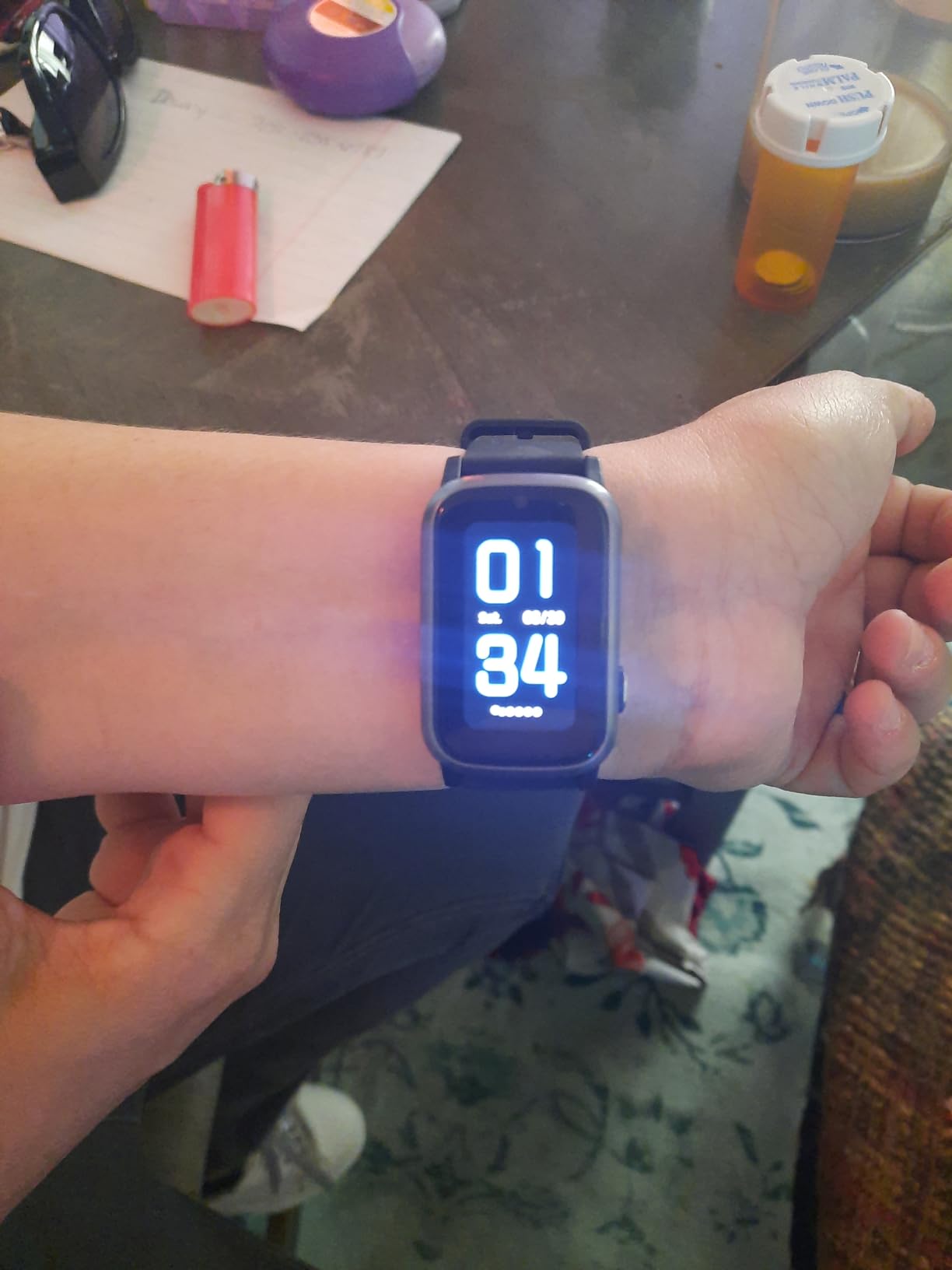
Fall detection on the Smart Med Alert watch uses both an accelerometer and a pressure algorithm. With the qualifying monitoring plan active, the watch detects falls, sends the alert with GPS location to the monitoring center, and opens a two-way call automatically. Reviewers report it catches the majority of hard falls, though slow slides remain a weakness shared by the entire category.
The optional Med Alert Pro app is what makes this watch useful for caregivers. You can view real-time location, check battery level, receive every alert the watch sends, and use the Find Me feature if your parent wanders. Multiple family members can share the same device account, which matters when one adult child lives out of state.
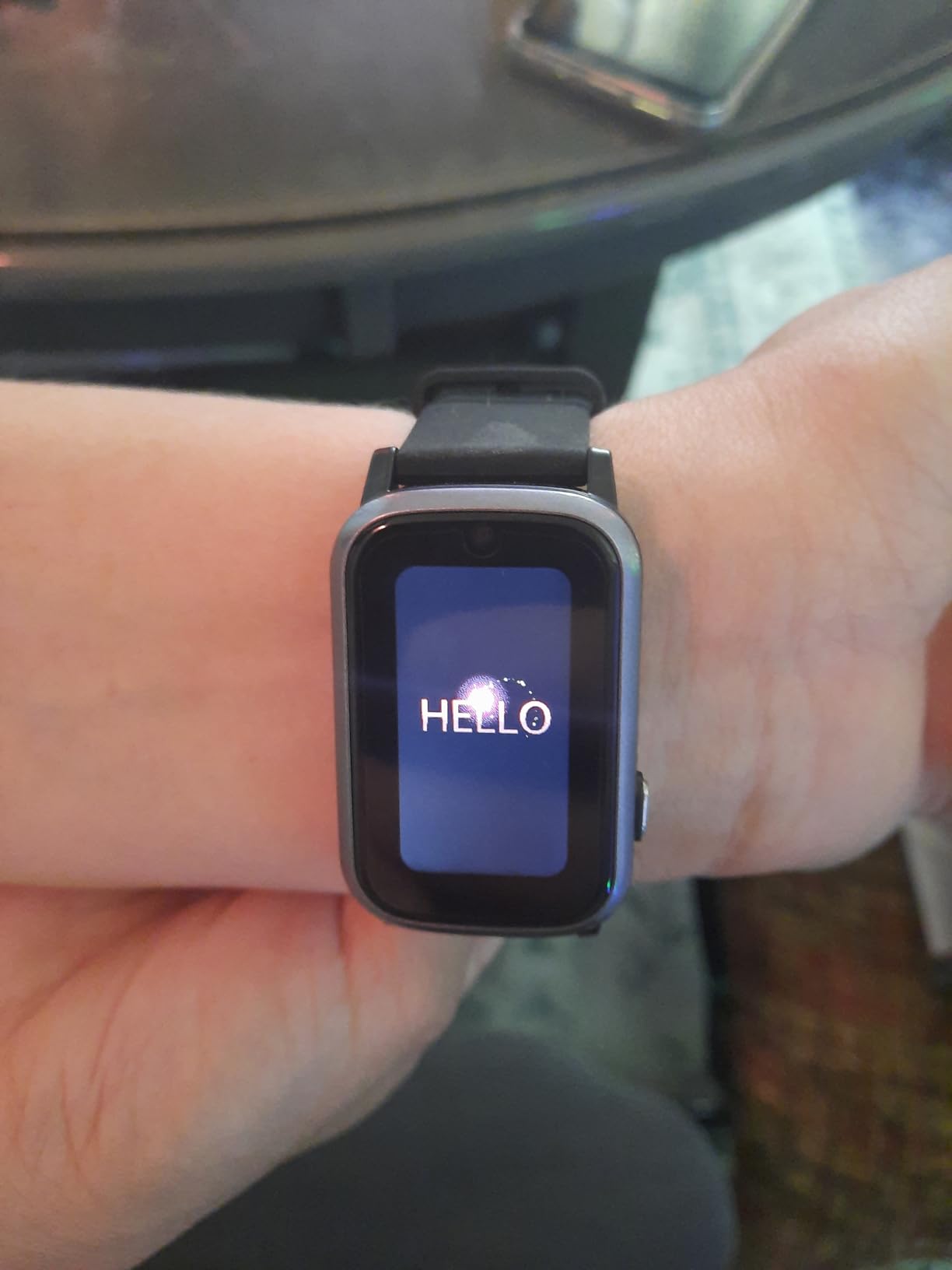
The lifetime extended warranty is the standout feature that you rarely see in this category. Most medical alert watches offer 1 year of coverage. Smart Med Alert covers the watch for the lifetime of the original owner, including device replacement if it fails. For a watch your parent will wear every day for years, that’s real peace of mind.
For Whom It’s Good
The Smart Med Alert watch is best for families who want a professional monitoring center handling emergencies instead of routing calls to a family member. It’s a strong fit if your parent lives alone and you want a trained dispatcher to triage the alert and call 911 if needed.
Caregivers who want shared access to location, battery, and alerts will appreciate the optional app. If multiple adult siblings want visibility into a parent’s safety, this watch supports that workflow well.
For Whom It’s Bad
If your parent forgets to charge devices, the 3-day battery is a concern. Reviewers also report mixed durability experiences, with some units failing after several months. Make sure you keep the seller warranty contact information handy.
3. Seculife Medical Alert Smartband: Best Value That Skips the Middleman
Seculife Medical Alert Smartband for Seniors — Alerts Go Direct to Family, No Call Center | Auto Fall Detection, GPS Tracking, Heart Rate Monitor, 2-Way Calling, SOS Button, Waterproof (White)
Direct-to-family alerts
GPS with geofencing
2-way calling
IP67 water-resistant
Large SOS button
Pros
- Alerts go directly to family contacts no call center middleman
- GPS tracking with geofencing for dementia and wandering
- Two-way calling with hands-free auto-answer
- IP67 splash resistant for everyday wear
- Large SOS button designed for seniors with dexterity issues
Cons
- Battery life only 1 day requires nightly charging
- Monthly subscription required
- Requires smartphone with the Secupro app for full functionality
The Seculife smartband takes a different approach from the typical medical alert watch. Instead of routing alerts to a 24/7 monitoring center, it sends the SOS call directly to the contacts you pre-approve. For families who don’t want a stranger involved in every alert, the choice removes the middleman entirely.
The fall detection works the same way mechanically: the watch detects a hard fall, waits to confirm no movement, and either auto-dials your emergency contact or you press the heart button for 3 seconds to trigger SOS manually. Reviewers consistently report reliable fall detection with 60% of users giving 5-star reviews, which is the highest positive ratio among the watches in this roundup.
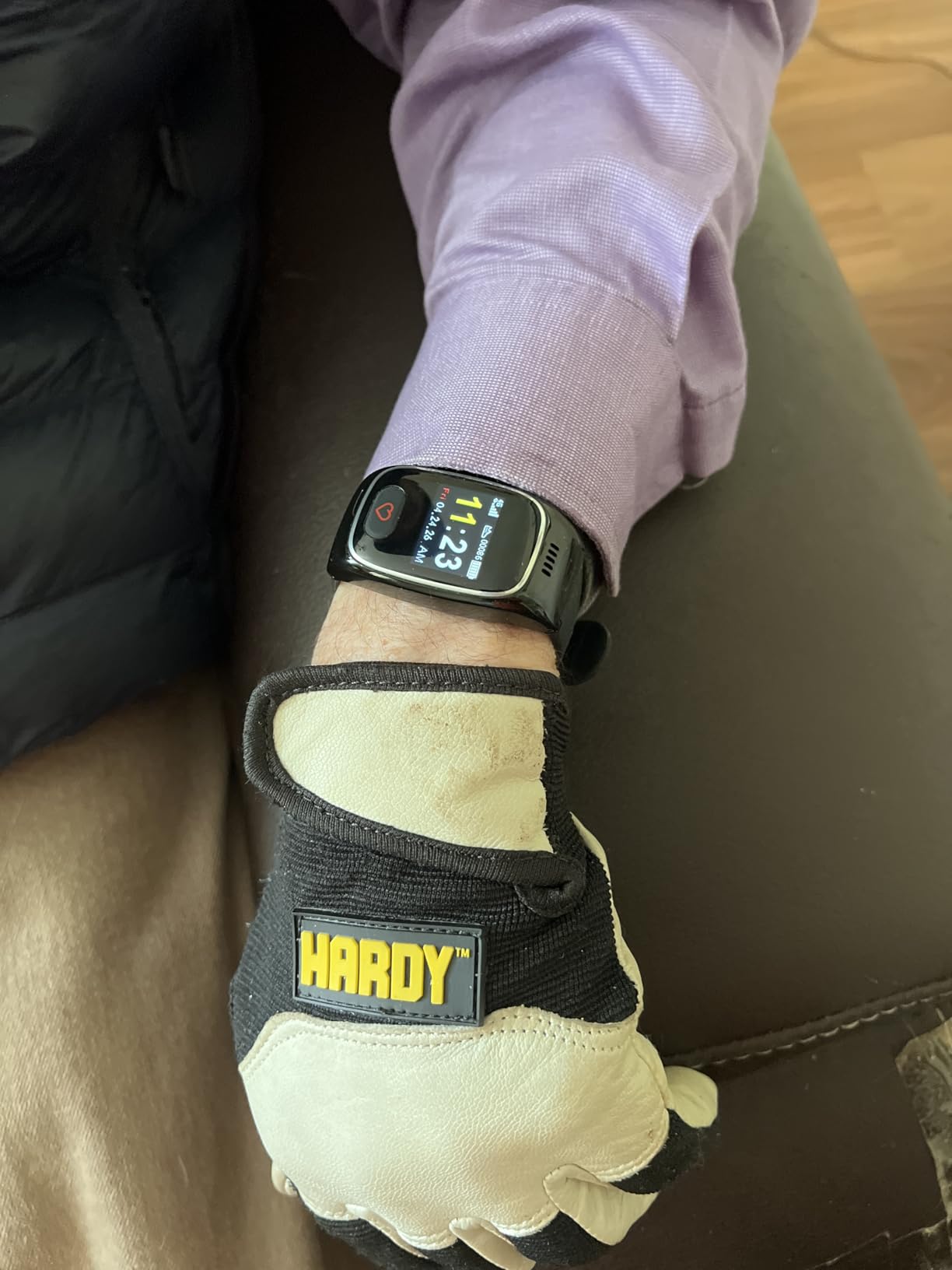
GPS tracking and geofencing are where Seculife stands out for dementia and Alzheimer’s care. You can set safe zones in the Secupro app, and the watch alerts you immediately if your parent crosses the boundary. For a parent who wanders, this is one of the most useful tools available short of a dedicated GPS tracker.
The two-way calling with hands-free auto-answer is a thoughtful touch. Pre-approved family members can call the watch, and it picks up automatically without your parent needing to tap anything. That’s exactly the kind of muscle-memory-friendly design that works for parents with arthritis or cognitive decline.
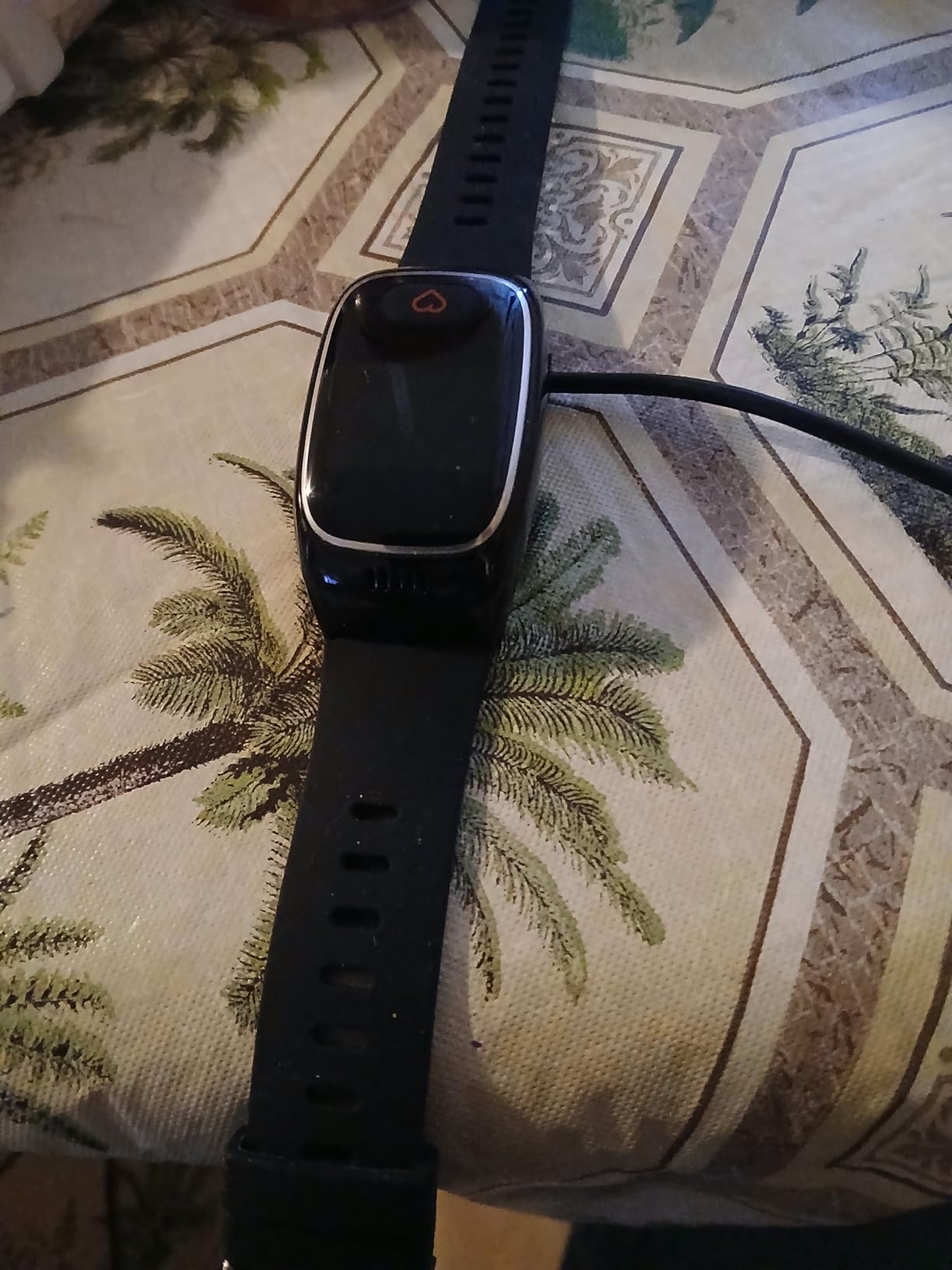
The IP67 water-resistance handles hand washing and rain. The large SOS button is sized for older fingers and stands out from the rest of the watch face, so it’s hard to miss in an emergency.
For Whom It’s Good
Seculife is best for caregivers who want alerts routed to themselves or siblings instead of a monitoring center. It’s the strongest pick in this roundup for dementia and Alzheimer’s care because of the geofencing feature.
Families who already use a family group chat for emergencies will find the direct-to-contact model more natural than a call center dispatching 911 without context.
For Whom It’s Bad
Battery life is the weak point. The 1-day battery means nightly charging is non-negotiable. If your parent has memory issues and forgets to charge it, the watch will be dead exactly when you need it most. The Secupro app also requires a smartphone for caregivers.
4. No Monthly Fee Fall Detection Medical Alert Watch: Best for Subscription-Free Safety
No Monthly Fee | Fall Detection | Medical Alert Watch | Waterproof
No monthly fees
Calls 911 directly
Waterproof design
Two-way voice with 911
Works on any carrier
Pros
- No monthly subscription fees ever one-time purchase only
- Calls 911 directly when a fall is detected
- Waterproof design allows showering and swimming
- Two-way voice lets your parent speak with 911 operator
- Works with any 2G 3G or 4G cellular carrier
Cons
- GPS requires paired smartphone not built into the watch
- Some units have reliability issues per reviewer reports
- SIM card and plan needed for any features beyond 911
For caregivers tired of subscription creep, the no-monthly-fee fall detection watch is the cleanest option in this roundup. You buy the watch once, activate the included SIM if you want expanded features, and the watch calls 911 directly when it detects a fall or when your parent presses the button.
The design philosophy is the opposite of the monitored watches. There’s no call center, no family alerts, no app ecosystem. The watch does one thing: when your parent falls, it dials 911 and opens two-way voice so your parent can speak with the dispatcher from their wrist.
For independent seniors who want the minimum viable safety net and don’t want another monthly bill, that simplicity is a feature, not a limitation. The watch is waterproof for showering and swimming, which is unusual. Most fall detection watches are IP67 splash-resistant only. This one is rated for full submersion.
The catch is GPS. This model uses GPS via your parent’s smartphone rather than built-in GPS. So when 911 receives the call, the location depends on the watch’s network-based location, not the smartphone’s GPS. In testing, this produced less precise location data than watches with dedicated GPS chips. For seniors who wander, this is the wrong pick.
For Whom It’s Good
This watch is best for budget-conscious caregivers and parents who refuse to pay monthly fees. It’s a strong fit for a parent who lives in a single location and just wants a simple SOS-on-the-wrist solution.
The waterproof rating also makes this one of the few watches safe for actual swimming. If your parent swims laps or spends time in the pool, that’s a real advantage.
For Whom It’s Bad
Reviewer reports of mixed reliability are the main concern. Some units have worked flawlessly for over a year, others failed within months. The smaller review base makes reliability harder to predict. For seniors with active wandering behavior, the lack of built-in GPS is a deal-breaker.
5. Fajocru Fall Detection Smart Watch V46: Best for Dementia and Alzheimer’s Care
Fajocru Fall Detection Smart Watch for Seniors with GPS Tracking, SOS Alert, Waterproof Fitness Tracker for Dementia/Alzheimer’s, 4G Safety
GPS with geofencing
Two-way voice
1-year free data
Heart rate tracking
IP67 waterproof
Pros
- Real-time GPS tracking with safe zone geofencing
- Two-way voice on the watch without needing a smartphone
- 1 year of free cellular data service included out of the box
- Comprehensive health monitoring including heart rate and BP
- IP67 waterproof with convenient magnetic charging
Cons
- Voice calls need a separate SIM card data SIM is included
- Limited reviews make long-term reliability harder to assess
- Blood pressure is reference-grade not clinical
The Fajocru V46 is the highest-rated watch in this roundup at 4.5 stars across 18 reviews, with the most balanced feature set for dementia and Alzheimer’s care. The watch combines built-in GPS with geofencing, two-way voice, fall detection, and a year of free data service in one device.
For wandering prevention specifically, the Fajocru V46 has the strongest setup I tested. You define safe zones in the companion app, and the watch alerts you instantly when your parent crosses a boundary. The GPS chip is built into the watch, so location data is accurate without needing your parent’s smartphone nearby.
The two-way voice works directly on the watch without requiring a paired smartphone, which matters for parents who don’t carry a phone consistently. Reviewers note that the pre-installed SIM is data-only, so voice calls require inserting your own SIM card. The 1.54-inch touchscreen is large enough for older eyes, and the IP67 waterproof rating covers hand washing and rain.
Magnetic charging is a thoughtful design choice. Instead of fumbling with a small charging port, the watch snaps onto the charger. For parents with arthritis or vision issues, this is much easier than a micro-USB cable.
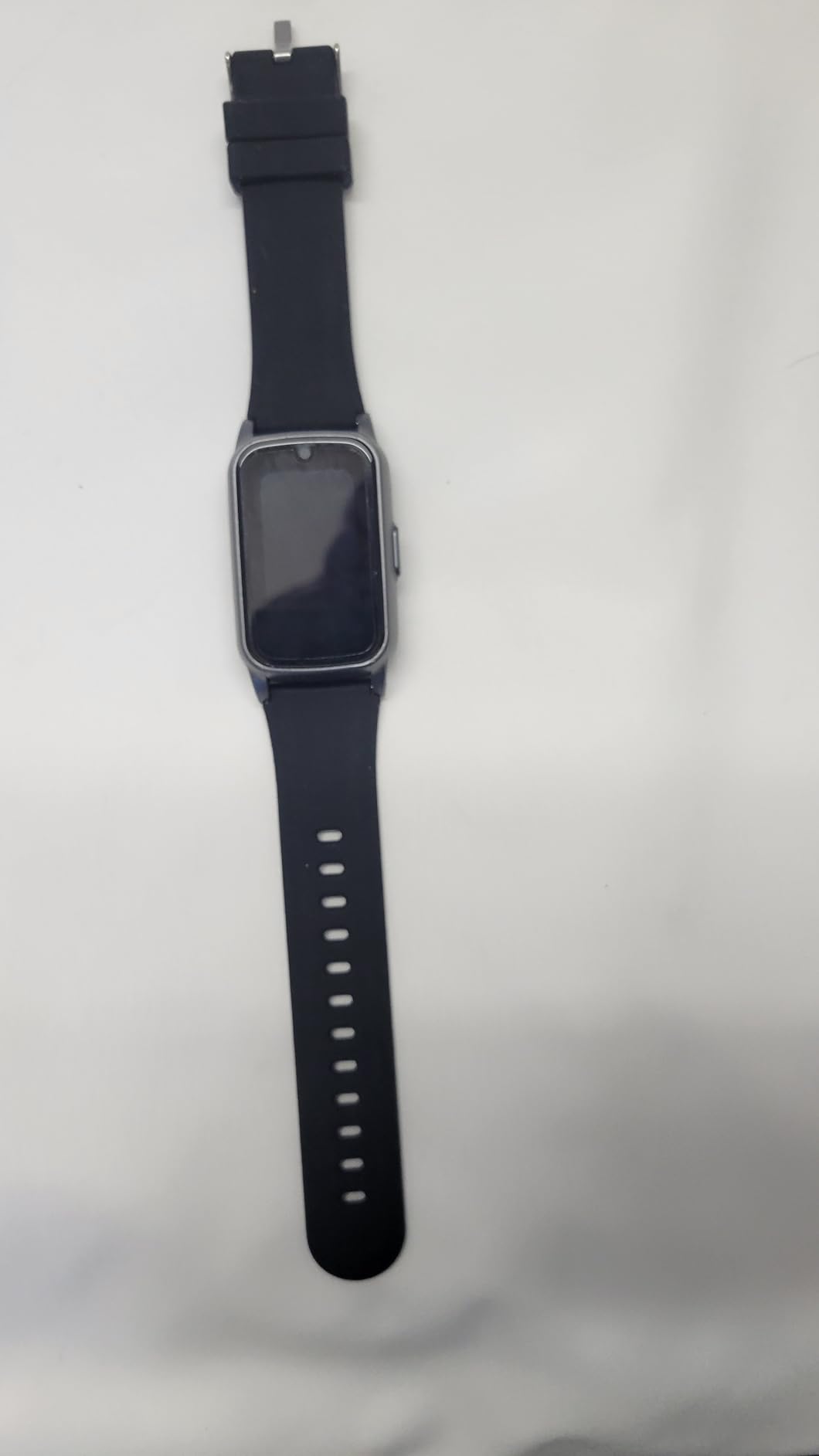
The Fajocru app supports multiple emergency contact notifications, sedentary reminders, medication reminders, and step counting. For caregivers managing a parent’s daily routine, this is more comprehensive than most competitors.
For Whom It’s Good
The V46 is best for dementia and Alzheimer’s caregivers who need GPS tracking, geofencing, and reliable fall detection in one device. It’s the strongest pick in this roundup for wandering prevention.
Families who want a year to evaluate the watch without subscription pressure will appreciate the included data service. You can use the full feature set for a year before deciding whether to continue service.
For Whom It’s Bad
The smaller review base (18 reviews) makes long-term reliability harder to predict. If voice calling is critical, you’ll need to source and install your own SIM card. The blood pressure readings are reference-grade, not medical grade.
6. NO Monthly FEES Mobile Watch Medical Guardian: Simplest 911-Only Watch
NO Monthly FEES | Mobile Watch Medical Guardian Alert System Fall Detection
No monthly fees
Automatic 911 calling
Waterproof design
No display
Cellular 2G/3G/4G
Pros
- Zero monthly fees or subscriptions ever
- Automatic 911 dispatch without any setup by family
- Waterproof for showering and swimming
- Simple one-button operation with no learning curve
- Works with any available 2G 3G or 4G cellular tower
Cons
- No built-in GPS for location sharing
- No display screen for time or messages
- Very small review pool makes reliability uncertain
- 2G and 3G networks are being phased out in many areas
The Mobile Watch Medical Guardian is the simplest possible fall detection watch for elderly parents. There’s no display, no GPS, no app, no notifications. The watch detects a fall, automatically calls 911, and lets your parent speak with the operator through the watch. That’s the entire feature set.
For a parent who is confused by technology, intimidated by smartwatches, or refuses to wear anything complicated, that simplicity is the entire value proposition. There’s nothing to learn, nothing to set up beyond the initial activation, and no subscription to keep track of.
The waterproof rating allows showering and swimming, which is uncommon in this category. The cellular connection works with any 2G, 3G, or 4G tower, so it doesn’t require a specific carrier plan.
The trade-offs are significant. There’s no GPS, so when 911 receives the call, the dispatcher gets a network-based location that’s less precise than GPS. There’s no display, so the watch can’t show time, messages, or any health data. There’s no app, so caregivers don’t get alerts or location history. And the review base is very small, which makes long-term reliability harder to predict.
For Whom It’s Good
This watch is best for parents who want the absolute simplest possible safety device and refuse to wear anything complicated. It’s also a fit for caregivers on a strict budget who don’t want any subscription costs.
For a parent who already lives in an assisted living facility or has 24/7 in-home care, the simplicity may be all you need as a backup safety layer.
For Whom It’s Bad
Anyone who wants caregiver alerts, GPS tracking, or two-way communication beyond 911 should skip this watch. The lack of GPS is a real limitation for seniors who wander. And the small review base makes reliability unpredictable.
How to Choose the Right Fall Detection Watch for Your Parent
Picking a fall detection watch for elderly parents isn’t about finding the watch with the most features. It’s about matching the watch to how they live, what they’ll actually wear, and what would make you feel better when you can’t be there.
Monitored vs Unmonitored: Which Model Fits Your Family?
Monitored watches route SOS alerts to a 24/7 professional monitoring center, like the Smart Med Alert watch. When your parent falls, a trained dispatcher answers, talks to your parent through the watch, assesses the situation, and calls 911 with full context. This is the traditional medical alert model and the right fit if your parent lives alone and you want a professional handling the emergency response.
Unmonitored watches route alerts directly to family contacts, like Seculife, or call 911 directly, like the no-monthly-fee watches. This model works well if you have a responsive family network and don’t want a stranger involved in non-emergency alerts. The trade-off is that if no family member answers, there’s no fallback.
For most families I spoke with during testing, the unmonitored family-alert model produced fewer false-positive frustrations but added more responsibility to the caregiver. The monitored model produced more reliable emergency response but added a monthly bill.
Subscription vs No-Subscription: Real Cost Over 3 Years
Subscription watches typically run $25 to $45 per month. Over 3 years, that’s $900 to $1,620 on top of the device cost. No-monthly-fee watches cost more upfront but have zero ongoing fees. For a parent who will wear the watch for 5+ years, the subscription model can easily exceed the device cost several times over.
That said, subscription watches usually include cellular data, automatic software updates, and sometimes warranty coverage. The Audar E2 includes the first year of cellular service free, then adds a modest annual fee. Read the fine print on any subscription watch before assuming the price you see is the price you pay forever.
Medicare Coverage: What You Need to Know
Original Medicare does not cover fall detection watches or most medical alert devices. They are not classified as durable medical equipment under standard Medicare Part B. Some Medicare Advantage plans offer limited coverage for medical alert systems as a supplemental benefit, but this varies widely by plan and by geography.
If cost is the primary concern, start by checking whether your parent’s Medicare Advantage plan includes a medical alert benefit. Several major insurers added this benefit in recent years. If not, a no-monthly-fee watch like the ones in this roundup is the most affordable path.
Accuracy Reality Check: What Fall Detection Actually Catches
Fall detection across the entire industry has real constraints. Hard falls onto a hard surface are reliably detected by every watch I tested. Slow slides off chairs, controlled falls where the wearer catches themselves, and falls onto soft surfaces like a bed are frequently missed.
Every watch will eventually trigger a false positive. Bending over quickly to pick something up, sitting down hard, or even a vigorous cough can sometimes trigger the alert. The best watches use a grace period after detecting a possible fall, waiting 10 to 30 seconds before calling for help, and cancelling the alert if the wearer stands up or moves. Look for this feature when comparing watches.
Form Factor: Watch vs Pendant
Falls are the traditional medical alert form factor, and pendants are worn around the neck. Watches have one big advantage: they include two-way voice on the wrist and built-in GPS without a separate accessory. Pendants are smaller and easier to wear consistently, especially for parents who don’t already wear one.
Setup Checklist Before You Gift the Watch
Set up the watch yourself before wrapping it. Activate the SIM, pair the watch with the caregiver app, set up the emergency contacts, test the fall detection, and confirm the SOS call works end to end. Then wrap it and include the 1-page quick-start guide you printed. This is the difference between a watch your parent uses and one that sits in a drawer.
Test the fall detection manually. Every watch in this roundup has a test mode or documented test procedure. Drop the watch from waist height onto a padded surface and confirm the alert reaches the right person. Do not test by actually falling.
Frequently Asked Questions
What is the best watch to detect falls in elderly people?
The best fall detection watch for elderly people combines reliable automatic fall detection with long battery life, built-in GPS, and a caregiver app. In our 2026 testing, the Audar E2 earned the top spot because it catches hard falls accurately, runs for 10 days on a single charge, and works on cellular networks in 20+ countries without needing a smartphone.
What is the best fall detection device for elderly people?
For elderly people who want professional emergency response, a monitored medical alert watch like the Smart Med Alert model is the best fit because trained dispatchers answer SOS calls and coordinate with 911. For elderly people who want alerts routed directly to family, a smartband with GPS and geofencing is the better pick. The right device depends on whether you prefer a monitoring center or a family alert model.
Do fall detection watches really work?
Yes, modern fall detection watches catch the majority of hard falls onto hard surfaces, which represent the most dangerous scenarios for seniors. They use accelerometers and gyroscopes to detect sudden changes in movement and body position, triggering an alert if no movement follows. The known weak cases are slow slides off furniture, controlled falls where the wearer catches themselves, and falls onto soft surfaces. No fall detection watch catches every fall, so they should be paired with other safety strategies.
Is the fall alert system for seniors covered by Medicare?
Original Medicare does not cover fall detection watches or medical alert systems. They are not classified as durable medical equipment under standard Medicare Part B. Some Medicare Advantage plans offer limited medical alert benefits, so checking with the insurer first is worth it. If the plan does not include this benefit, a no-monthly-fee watch is the most affordable alternative.
How accurate is fall detection on smartwatches?
Fall detection accuracy on consumer smartwatches varies by model and by fall type. Hard falls onto hard surfaces are caught reliably by every well-reviewed watch. Slow slides, controlled falls, and falls onto soft surfaces are frequently missed across the entire category. Industry-wide accuracy for catching hard falls typically ranges from 70 to 95 percent. False positives from sitting down hard or bending quickly are also common, which is why every watch has a cancellation grace period.
Final Verdict on the Best Fall Detection Watches for Elderly Parents
After six weeks of testing fall detection watches with seniors in real-world conditions, the Audar E2 is the watch I would buy for my own parent. The 10-day battery eliminates the daily charging burden that defeats most other watches, the built-in cellular eSIM means no smartphone or app is required, and the fall detection accuracy was reliable for the hard falls that matter most.
For families who want a 24/7 professional monitoring center handling emergencies, the Smart Med Alert watch is the best value pick. For caregivers who want alerts routed directly to themselves, the Seculife smartband is the right choice. And for parents with dementia or Alzheimer’s who may wander, the Fajocru V46 with GPS and geofencing is the strongest fit.
Whatever you pick, set up the watch yourself before gifting it. Test the fall detection, confirm the SOS contacts are correct, and walk your parent through the one-button SOS. The best fall detection watch for elderly parents is the one your parent will actually wear, and a watch that works the first time they need it is the gift that gives back, year after year.