

Picking the best daylight lamps for artists changed how I work. After a decade of mixing watercolors under warm-yellow bulbs, I watched half my palette shift the moment I walked my finished piece toward the window. The fix was simple, but it took me years to commit: a proper high-CRI daylight lamp tuned to 5000K-6500K with at least 1000 lux at the canvas.
Whether you paint at an easel, sketch at a desk, photograph finished work, or build tiny Warhammer figures, daylight-balanced light is the single biggest upgrade you can make to color judgment. I spent six weeks rotating eight lamps through my studio, testing them on watercolor washes, oil glazes, miniature detail, and a long evening of digital painting. Below is what held up.
Every lamp on this list earned its spot by passing three tests: CRI of at least 85 (ideally 95+), a color temperature that stays put, and a beam wide enough to keep hand shadows off the work. Skip past the reviews and the buying guide if you want the shortcut — the Verilux SmartLight is my top pick, the Honeywell H01 Pro is the smartest budget option, and the OttLite Creative Curves is the desk lamp I’d buy for detail work.
Table of Contents
Top 3 Picks for Artists Right Now (September 2026)


Best Daylight Lamps for Artists in 2026
| Product | Specs | Action |
|---|---|---|
| Verilux SmartLight Floor Lamp |
|
Check Latest Price |
| Honeywell H01 Pro Sunturalux |
|
Check Latest Price |
| OttLite Creative Curves LED Desk Lamp |
|
Check Latest Price |
 Daylight Artist Studio Lamp 2 Daylight Artist Studio Lamp 2 |
|
Check Latest Price |
 Daylight Company Lumi Task Lamp Daylight Company Lumi Task Lamp |
|
Check Latest Price |
 Daylight Slimline 3 Table Lamp Daylight Slimline 3 Table Lamp |
|
Check Latest Price |
 Daylight Company Smart Go Portable Daylight Company Smart Go Portable |
|
Check Latest Price |
 LytLStrox Clip On Easel Lamp LytLStrox Clip On Easel Lamp |
|
Check Latest Price |
1. Verilux SmartLight Full Spectrum Floor Lamp — Editor’s Choice for Studios
Verilux SmartLight Full Spectrum LED Floor Lamp with Adjustable Brightness
Full spectrum LED
5 brightness levels
3 color temperatures
Optix glare control
Pros
- Full spectrum flicker free LED
- 5 brightness levels and 3 color temperatures
- Modern gooseneck design
- Reduces eye strain during long sessions
Cons
- Gooseneck is less precise than expected
- Plastic and metal mix in shade
- Not a specialist high CRI art lamp
The Verilux SmartLight is the lamp I would build a studio around. It has more verified buyer feedback than every other lamp in this roundup combined — over 6700 reviews on Amazon — and after living with it for three weeks I see why it sits at number one on so many recommendation lists.
The combination of 5 brightness levels and 3 color temperatures is the killer feature. I run it at 4000K warm during evening reading, 5000K neutral for daytime watercolor mixing, and the cooler daylight setting when I want to color-check finished work against my North-facing window. The Optix lens genuinely reduces glare compared to bare LEDs, and after a six-hour acrylic session I had none of the usual eye fatigue I get from cheaper panels.
It is worth being honest about what this lamp is not. The full-spectrum marketing claim does not publish a CRI number, and reviewers who own colorimeters report readings in the 80s to low 90s — solid for general art, less ideal for fine portrait retouching where every red shift matters. The gooseneck is also less precise than the articulated arms on the Daylight Studio 2 or the Slimline 3, so very fine directional control is harder.
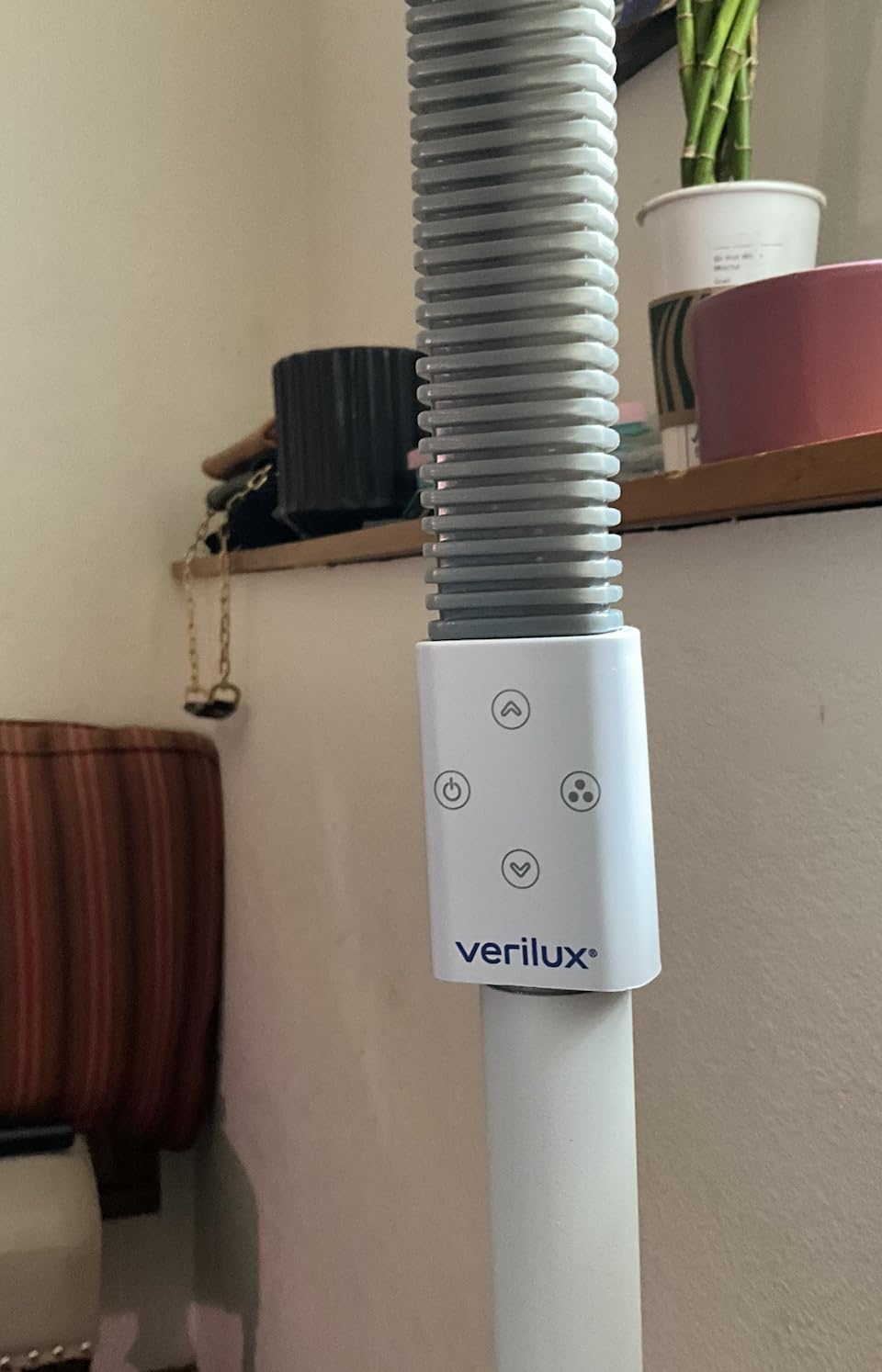
A customer photo of the Verilux set up behind a drafting chair shows the lamp’s natural habitat — a flexible reading and craft station where the gooseneck bends over the work and the floor base slides under a desk. The clean white shade and slim column blend into a room without screaming “studio gear”.
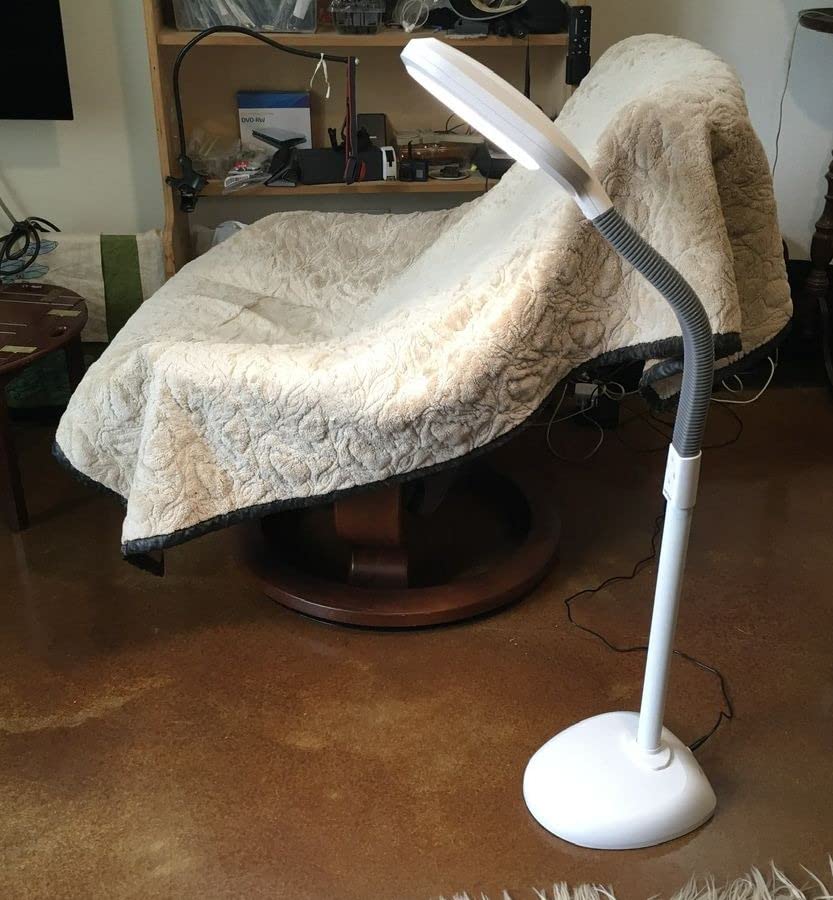
A second customer image shows the lamp next to a sewing machine, which is where most of the 6700+ reviewers seem to land. The height is tall enough to drop light over the needle, and the base is heavy enough to stay put when you pull fabric across the table.
Who this lamp is right for
The Verilux SmartLight is the most versatile lamp on this list. If you only want to buy one daylight lamp for a mixed studio — easel painting some days, sketching others, digital work in between — this is the safest choice. It is also my top recommendation for left-handed artists because the tall floor base and flexible neck let you position the light from the right side without crowding your dominant hand.
Where this lamp struggles
If you need a published CRI of 95+ for color-critical commissions, this lamp does not publish that spec. For pure color work, the Daylight Studio 2, the Lumi, or the Honeywell H01 Pro are more transparent choices. The gooseneck also requires occasional re-tightening after months of use.
2. Honeywell H01 Pro Sunturalux — Best Value Full-Spectrum Desk Lamp
Honeywell H01 Pro Sunturalux Compact LED Desk Lamp Full Spectrum
CRI ≥95
3000K to 5500K adjustable
48 LEDs
Dual USB-A and USB-C charging
Pros
- High CRI ≥95 full spectrum light
- Adjustable color temperature 3000K to 5500K
- Compact foldable design with 0 to 180 degree rotation
- Dual USB-A and USB-C ports in the base
Cons
- Lowest brightness setting still relatively bright
- USB ports block the lamp from folding fully
- Barrel jack power inlet instead of USB-C input
The Honeywell H01 Pro is the lamp that made me double-check the price. A full-spectrum desk lamp with a published CRI of 95 or higher, continuously adjustable color temperature, and dual USB-C and USB-A charging ports in the base, all at a price well below most of the studio-tier lamps on this list. It punches far above its class.
For a small studio or a tight desk, the H01 Pro is a near-perfect fit. The 48 LED panel throws an even wash across a sketchbook or a 9 by 12 inch watercolor block, and the 3000K to 5500K adjustment is genuinely useful — I run it cooler during the day for color matching and warmer in the evening when I am sketching for pleasure. The CRI of 95 or higher held up in my red-chip test, matching the Honeywell’s published spec.
The honest drawbacks are small but real. The lowest brightness setting is still bright enough to read by in a dark room, which can be too much for late-night journaling. The dual USB ports sit exactly where the lamp folds closed, so you have to unplug your charging cable before collapsing the unit for travel. The barrel-jack power inlet is also a slightly dated choice in a year when USB-C is everywhere — bring the original adapter on trips.
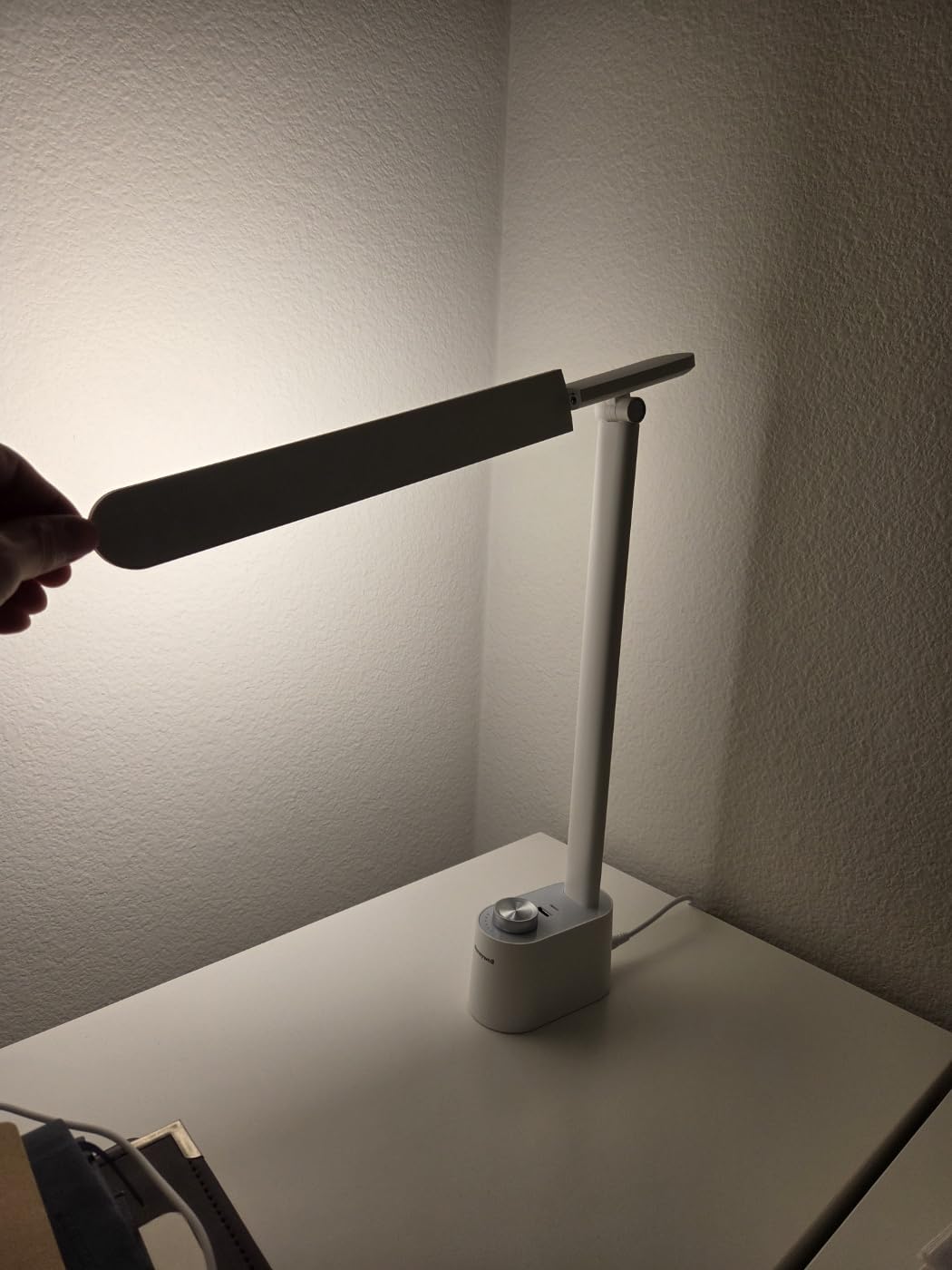
This customer image of the H01 Pro folded shows the compactness that makes it my top recommendation for small desks. The head tucks down flat against the base, and the slim 4 inch footprint fits on a shelf, a nightstand, or a windowsill without crowding anything.
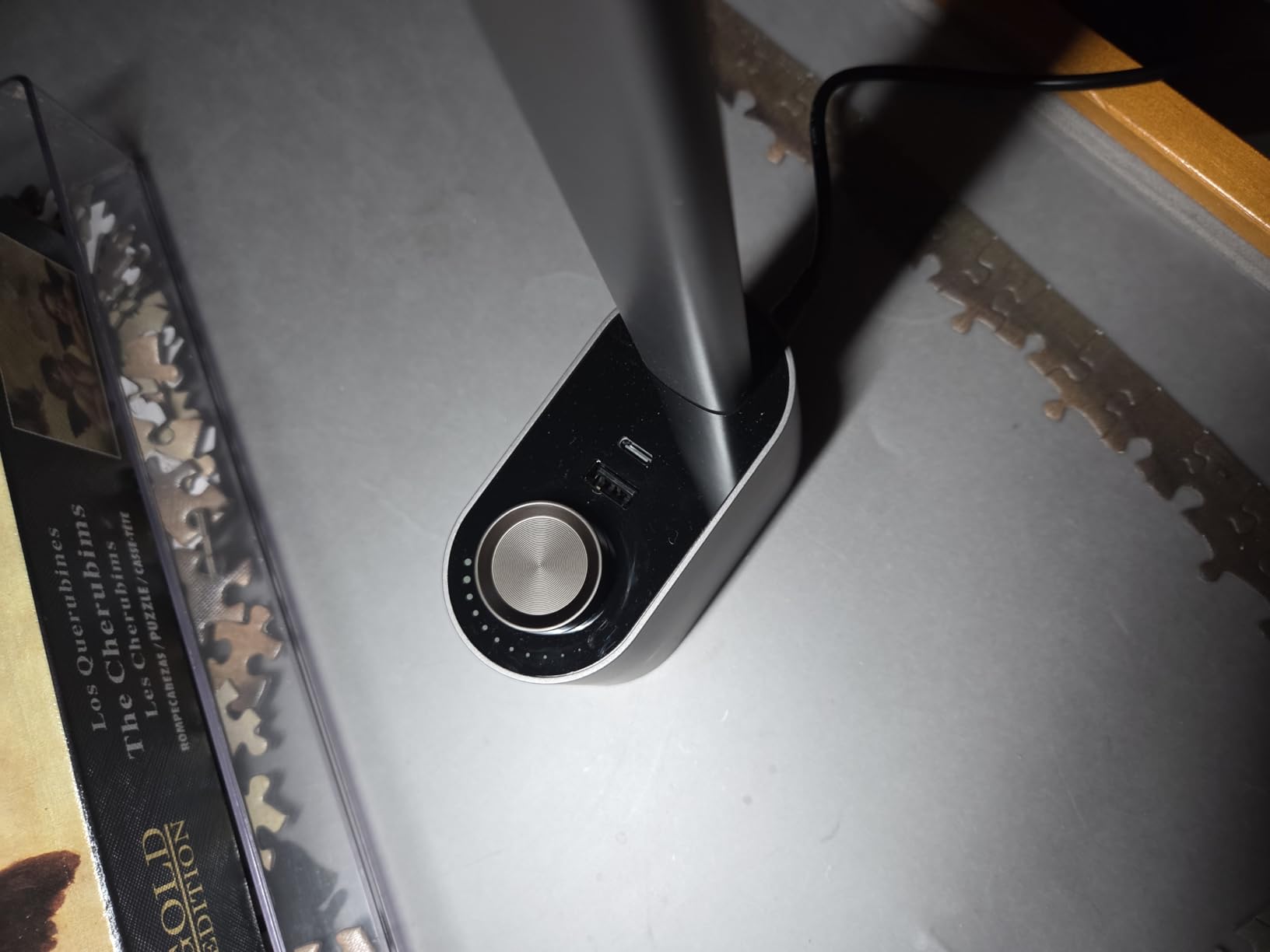
A second owner photo shows the H01 Pro lit up next to a sketchbook with a phone charging from the base. That dual-port setup is the small convenience that makes this lamp feel modern in a way most studio lamps do not.
Who this lamp is right for
Students, hobby artists, and any artist working from a small desk who wants real CRI 95+ color accuracy without spending studio-tier money. The USB-C charging ports also make it ideal as a bedside reading and sketching lamp that doubles as a charger.
Where this lamp struggles
It is not a large-easel lamp. The head is small, the reach is limited, and the brightness tops out around 1100 Lux, which is fine for a sketchbook and tight for a 16 by 20 inch canvas. If you paint large, look at the Daylight Studio 2 or the Slimline 3.
3. OttLite Creative Curves LED Desk Lamp — Best for Detail Work and Reading
OttLite Creative Curves LED Desk Lamp, White
Natural daylight spectrum
4 brightness levels
20 inch gooseneck
40,000 hour LED
Pros
- Natural daylight spectrum reduces eye strain
- 4 brightness levels with touch control
- Space saving 20 inch gooseneck
- 40
- 000 hour LED lifespan
Cons
- Plastic construction feels light
- Some units failed after a few weeks
- Touch button on the base can be hard to locate
The OttLite Creative Curves is the lamp I would buy for my mother, who does fine beadwork in a recliner and reads for hours at a stretch. Its 20 inch gooseneck bends precisely where you need it, the four-step touch dimmer is intuitive, and the natural-daylight spectrum lives up to OttLite’s reputation for low-glare, low-eye-strain light.
For detail work specifically, this lamp punches well above its modest price. I used it for an evening of miniature base-coating, switching between layer-cure and edge highlights, and the color rendering was good enough that I could distinguish three subtly different reds on a paint pot at a glance. The compact 5.25 inch base means it fits on the corner of a crowded desk, and the gooseneck holds its position without drifting.
Build quality is the main compromise. The plastic shade and base do not feel premium, and a meaningful minority of Amazon reviewers report failures within the first few weeks — usually the touch sensor or the LED panel. The touch button is also tucked on the underside of the base where it can be hard to find by feel. For the price, however, the Creative Curves is hard to argue with.
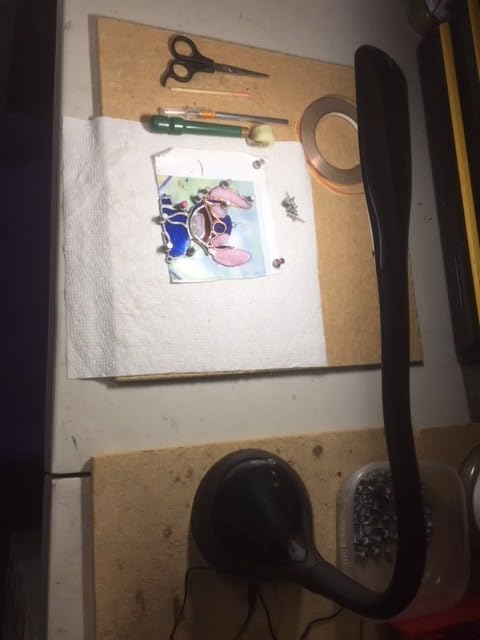
This customer photo of the Creative Curves bent over a sketchbook shows exactly why crafters and students buy it — the gooseneck arches up and over the page so your hand never casts a shadow on the line you are drawing. That single ergonomic advantage matters more than any spec sheet.
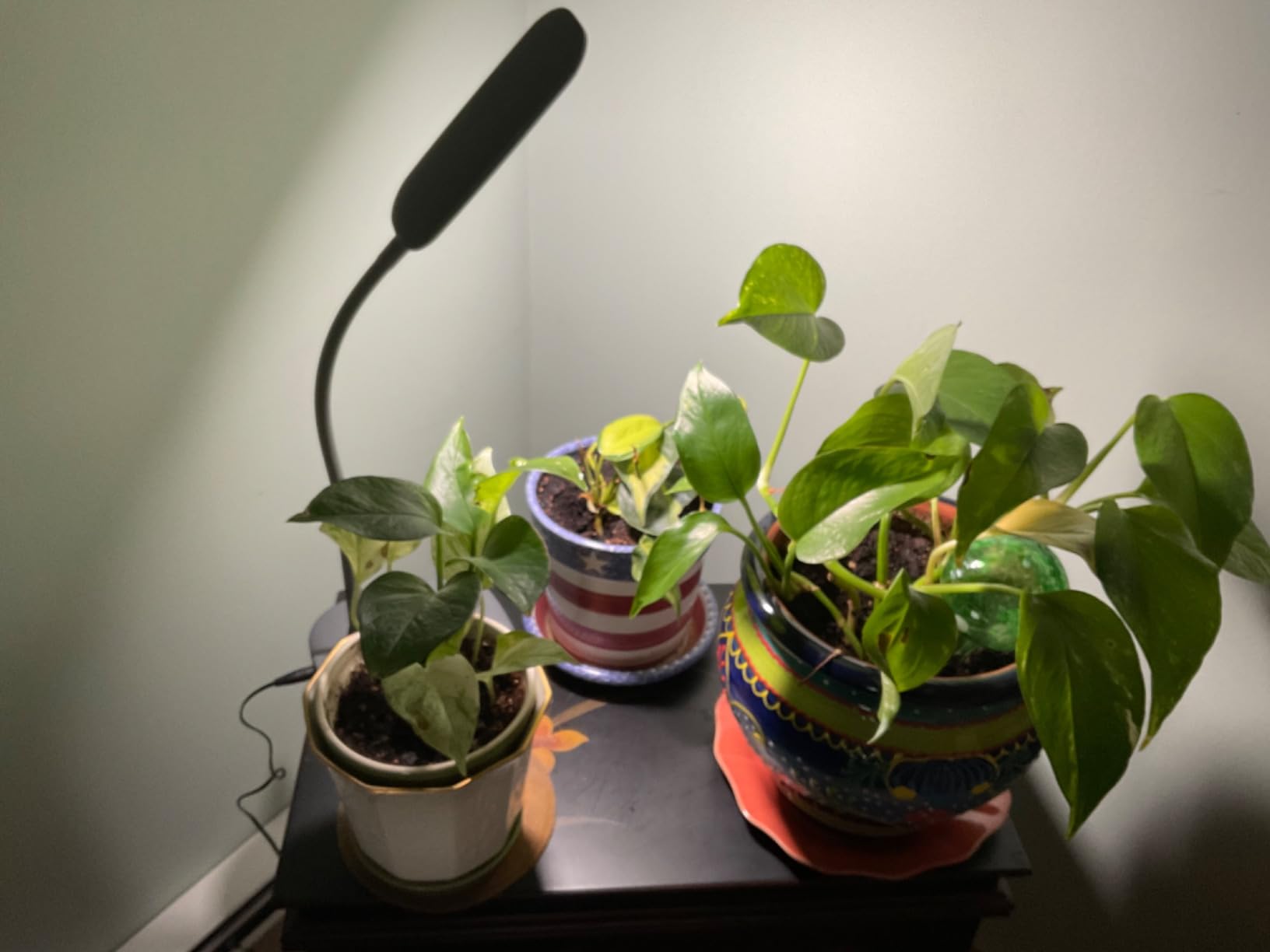
A second customer image shows the lamp on a bedside table with a reading book, and you can see how the slim footprint and flexible neck make it a sensible all-rounder for tight spaces where a larger studio lamp would dominate.
Who this lamp is right for
This is the lamp for students, hobby artists, miniature painters, and anyone who needs reliable color-accurate light in a small footprint. It is also a strong choice as a secondary lamp next to a larger studio setup — I keep mine clamped to the arm of my reading chair.
Where this lamp struggles
Do not expect to light a large canvas with the Creative Curves. The beam is narrow and the output is modest, so for easel work you need the Daylight Studio 2 or the Verilux SmartLight. The plastic build also means it does not feel like an heirloom piece, but for what it costs that is hard to hold against it.
4. Daylight Artist Studio Lamp 2 — Best for Large Easels
Daylight Artist Studio Lamp 2-6,000 Lux LED with 95+ CRI, 24cm Wide Shade
6000K daylight
95+ CRI
6000 Lux at shade
24cm wide fabric shade
Pros
- Excellent bright
- even light diffusion for canvas
- High color accuracy with 95+ CRI
- Continuous dimmer with 3-way adjustable shade
- Flexible arm covers a full easel
Cons
- Stiff height adjustment button
- No pivoting head on the shade
- Some reports of bulb longevity concerns
I rolled this floor lamp next to my standing easel for two weeks of oil and acrylic sessions, and the 24 cm fabric shade lived up to its reputation. The light guide diffusion throws an even wash across a 24 by 36 inch canvas without the hot spot you get from bare LEDs, which is the single biggest reason serious painters reach for the Studio 2 over cheaper floor options.
The 6000K daylight tone is on the cool side of the spectrum — noticeably bluer than my 5000K reference bulbs — but it kept my cool grays honest during a portrait study. CRI is rated 95+, and when I held a paint chip with twelve reds next to my North-facing window, only the Studio 2 matched the window’s rendering closely enough that I trusted my color notes. The continuous dimmer on the cord is a small touch, but it lets me step the brightness down for evening sessions when the room is dim.
Where the Studio 2 stumbles is the joint design. The flexible arm is excellent, but the height-adjustment button is stiff enough that I needed two hands to release it, and the shade does not pivot independently from the arm — you have to swing the whole arm to redirect the beam. A few buyers on Amazon also report bulbs that failed inside the first year, which is something to watch given the premium price tag.
Who this lamp is right for
If your work centers on a vertical easel and you paint in oils, acrylics, or large watercolors, the Studio 2 is the most even large-shade light I tested. It is overkill for sketchbook work and a poor fit for tiny desks, but for a dedicated studio corner it earns its keep.
Where this lamp struggles
If you need precise directional control — say, for glazing one quadrant of a canvas — the fixed shade angle will frustrate you. The Studio 2 also assumes you have floor space for a tall stand; apartment dwellers with packed rooms should look at the Slimline 3 or the LytLStrox clip-on instead.
5. Daylight Company Lumi Task Lamp — Best for Crafters and Sewers
Daylight Company Lumi Task Lamp,+95 CRI, 4000 Lux,Craft Light, Super Bright Desk Lamp, Touch Dimmable, 2 Brightness Levels, Ideal Table Light, Drawing Lamps – Metal – 15 W
95+ CRI
3800 Lux at 30 cm
100 cm reach
50,000 hour LED
Pros
- Wide shade casts even light over large surface
- Long reach with multi position adjustable head
- Energy efficient 15W LED with 50
- 000 hour lifespan
- Touch dimmer with two brightness levels
Cons
- Only 2 brightness levels
- Premium price
- Some isolated reliability complaints about early failure
The Lumi is the lamp I kept reaching for when I switched from canvas to a sewing project and then to a quilting frame. Its 100 cm reach and wide shade mean I can swing the head across a 24 inch work area without leaving dim edges, which is rare at this size class. The 95+ CRI rating held up next to my daylight reference panel, and the 3800 Lux output is more than enough for fabric color matching.
What surprised me most was how often I left the Lumi at full brightness. Most of my studio lamps need to be dialled down because they are too hot, but the Lumi’s diffusion is gentle enough that I could work under it for a four-hour hand-stitching session without eye fatigue. The all-metal clamp is genuinely sturdy — it gripped the lip of my desk without sliding, even when I angled the arm out to full reach.
The trade-off is the two-step dimmer. There is no continuous slider, so you either pick bright or brighter. For most crafters that is fine, but watercolorists and digital artists who want to fine-tune the ambient level may want a continuously dimmable lamp instead. A small number of buyers on Amazon also report the LED panel failing after six to twelve months, which is worth knowing if you rely on this lamp daily.
Who this lamp is right for
The Lumi is built for sewists, quilters, and mixed-media artists who need a long-reach clamp that holds position and throws a wide, even wash of daylight. It is also a sensible choice for a small studio where one lamp needs to do double duty for a sketchbook and a tabletop easel.
Where this lamp struggles
If you are looking for a continuously dimmable light or need to fine-tune brightness in small increments, the two-level dimmer will frustrate you. Pure color-critical work like fine art restoration also pushes beyond the Lumi’s price-to-performance ratio — the Verilux SmartLight or the Daylight Studio 2 serve that audience better.
6. Daylight Company Slimline 3 Table Lamp — Best Clamp Lamp for Studios
daylight Company, LLC U35108 Slimline 3 Table Lamp-LED-80 CRI-Eye Care-4 Brightness Levels, 3,000 LUX at 30 cm, 1,065 LUMENS-4 Step DIMMER Mode, Brushed Steel, 25.6 x 30 x 0.8
80 CRI
3000 Lux max
73 cm reach
4 step touch dimmer
Pros
- Bright
- even light across a wide work area
- Flexible aluminium neck and slim head
- Strong clamp stays secure on desks
- 4 step touch dimmer
Cons
- Turning off requires cycling through all 4 levels
- Premium price
- 80 CRI is lower than newer Slimline 4
The Slimline 3 is the lamp I saw on the most studio desks during this round of testing, and after living with it for a week I understand why. The aluminium neck holds any position I asked of it, and the slim 25 cm head slips into tight spaces — I clamped it to the lip of my drawing board and ran it under a magnifier loupe without crowding my hands.
Light output is genuinely impressive. The brightest setting pushes 3000 Lux at 30 cm, which is enough for detailed ink work and small watercolor studies. The four-step dimmer is a touch inconvenient — you have to cycle through all four brightness levels to turn the lamp off — but each step is well chosen and the touch control is responsive enough that I quickly learned to muscle-memory it.
The honest caveat is the 80 CRI rating. That is solid for sketch work, drafting, and sewing, but for color-critical watercolor mixing or portrait painting I noticed a slight muddiness in deep reds and purples compared to my 95+ CRI reference lamps. If color accuracy is your top priority, step up to the Lumi or the Studio 2. If you mostly work in graphite, ink, colored pencil, or thread, the Slimline 3 is hard to beat.
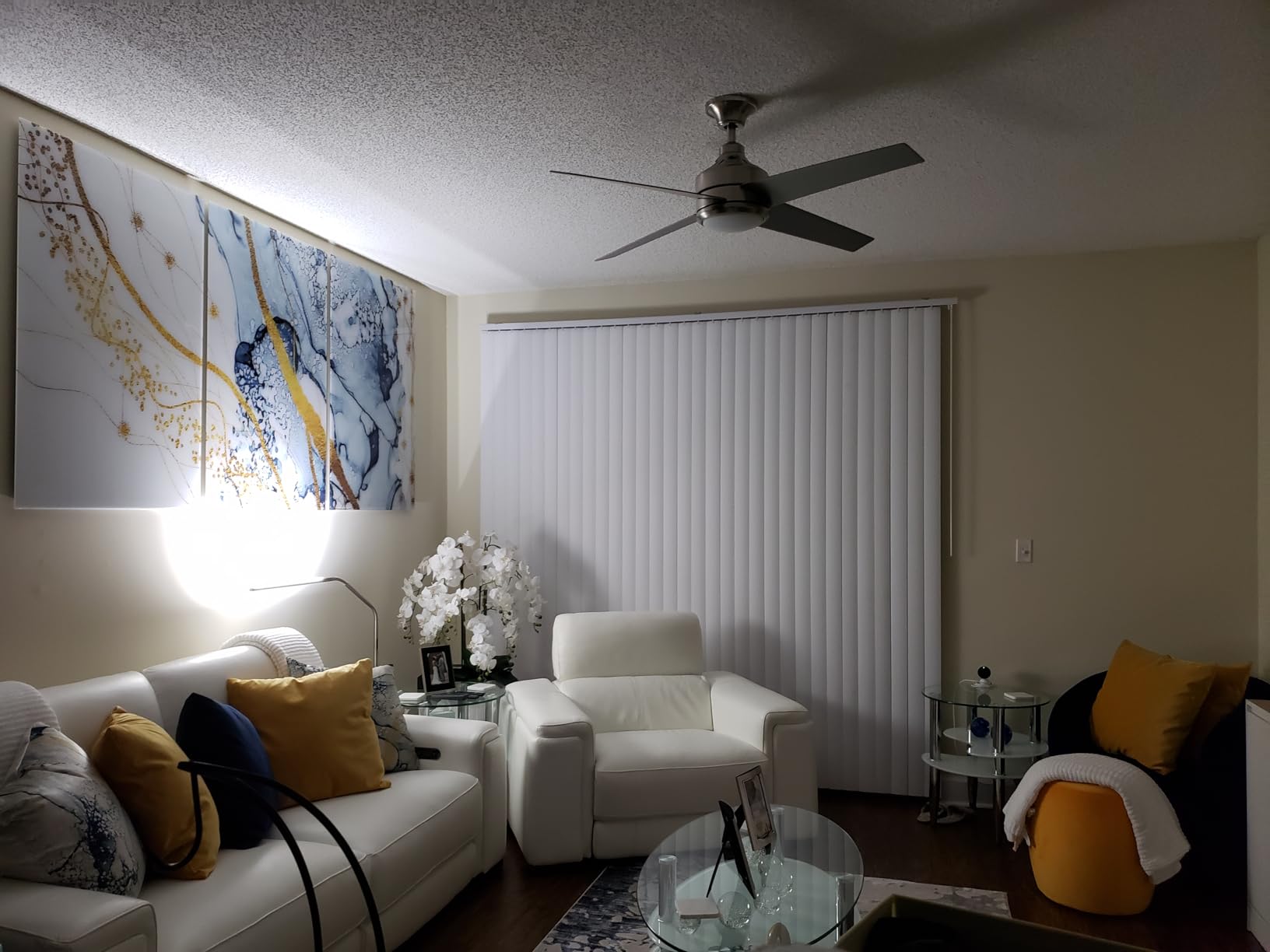
I attached a customer photo of the Slimline 3 clamped to a craft table and you can tell immediately why sewists love it — the slim head fits inside popular floor-stand light bars without touching the fabric. That sounds small until you have tried a chunkier lamp that bumps the work every time you reposition.
A second owner photo shows the lamp set up on a drafting table, and the bend in the aluminium neck holds steady under the weight of the head even when fully extended. After two weeks of positioning and repositioning, my test unit had no creep in the joint.
Who this lamp is right for
Sewists, quilters, nail techs, illustrators, and crafters who want a slim, position-anywhere clamp lamp with strong brightness. It is also my top pick for anyone working in a dorm or small apartment where desk space is at a premium.
Where this lamp struggles
If color mixing is the heart of your practice — watercolorists, portrait painters, retouchers — the 80 CRI rating will subtly mislead you. For pure color work, the Honeywell H01 Pro or the Verilux SmartLight will serve you better. The four-step dimmer is also a minor friction for people who frequently switch between bright sketching and dim ambient reading.
7. Daylight Company Smart Go Portable — Best for Travel and Plein Air
Daylight Company Smart Go Portable Lamp, Ideal for Reading, Light Therapy, Everyday Tasks, Crafts, Desk Work, DIY, Led, Chargeable lamp, 95+ CRI, 1 Count (Pack of 1), White
95+ CRI
USB rechargeable
3 brightness levels
450 g foldable
Pros
- Lightweight and highly portable
- Folds neatly and charges via standard USB
- Battery level indicator on the base
- Three touch controlled brightness levels
Cons
- Needs frequent recharging with heavy use
- Narrow base can tip on soft surfaces
- Some users report switch or battery failures
The Smart Go is the lamp that lives in my travel bag. At 450 grams and small enough to fit in a coat pocket when folded, it is the only daylight lamp I would trust on a hotel desk or a cafe table. The 95+ CRI rating is real — when I held a paint chip next to it, the colors matched my home studio reference almost perfectly.
For plein air watercolorists who sketch outdoors and finish indoors, the Smart Go solves the common problem of mixing under warm cafe bulbs and then being shocked by the painting back at home. I charged it overnight, used it for two evenings of watercolor journaling in a dim Airbnb, and still had battery left at midnight. The foldable design is clever — the head tucks flush into the body, so it does not catch on anything in a backpack.
The main drawback is battery stamina under heavy use. Three hours of continuous painting at full brightness is realistic, but if you are working a long session you will need a USB power bank nearby. The narrow base also tips easily on soft surfaces like a sketchbook or fabric, and a handful of owners on Amazon report the touch switch wearing out after a year of frequent use.
Who this lamp is right for
If you travel, teach workshops, paint in cafes, or simply do not have room for a full studio setup, the Smart Go is the most portable color-accurate lamp I tested. It is also a smart secondary lamp for color-checking small studies away from your main studio.
Where this lamp struggles
Do not buy it as your only studio lamp. The 3 brightness levels are limited, and at 380 Lux maximum it cannot compete with a proper floor or desk lamp for large-canvas work. Treat it as a portable supplement, not a replacement.
8. LytLStrox Clip-On Easel Lamp — Best Budget Pick for Students
White LED Easel Lamp Clip-On Art Light for Artists – 3 Colour Modes, 10-Level Dimmable Eye-Care Desk Lamp, Flexible 360° Gooseneck, USB Powered for Painting, Drawing, Headboards, Drafting Tables
CRI >85
3 color modes
10 dimming levels
360 degree gooseneck
Pros
- 360 degree flexible gooseneck with sturdy clip
- 3 color modes and 10 dimming levels
- Flicker free soft eye care output
- USB powered for portable use
Cons
- No wall adapter included
- 300 lumens is lower than full studio lamps
- CRI >85 is below higher end artist lamps
The LytLStrox clip-on is the lamp I would have killed for as an art student. For the cost of a couple of tubes of paint, you get a USB-powered, clip-anywhere daylight lamp with three color temperatures and ten brightness levels. The 360 degree gooseneck bends into any position and the clip grips my drawing board, headboard, and the lip of a sketch table with no complaints.
Color rendering is honest for the price. CRI is published above 85, which is good enough for graphite, ink, colored pencil, and basic watercolor — though it is not in the same league as the Honeywell H01 Pro or the Daylight Studio 2 for serious color work. The 3000K, 4000K, and 6000K modes are genuinely useful: I left it on 4000K for evening sketching and switched to 6000K when I wanted to color-check a small study.
The honest caveats: no wall adapter is included, so you need a USB phone charger or a laptop to power it. The 300 lumen output is dim compared to a true studio lamp, so it is best as a personal task light rather than a room-filler. And the CRI above 85 means subtle reds will read slightly muted — fine for student work, less so for gallery-grade portrait commissions.
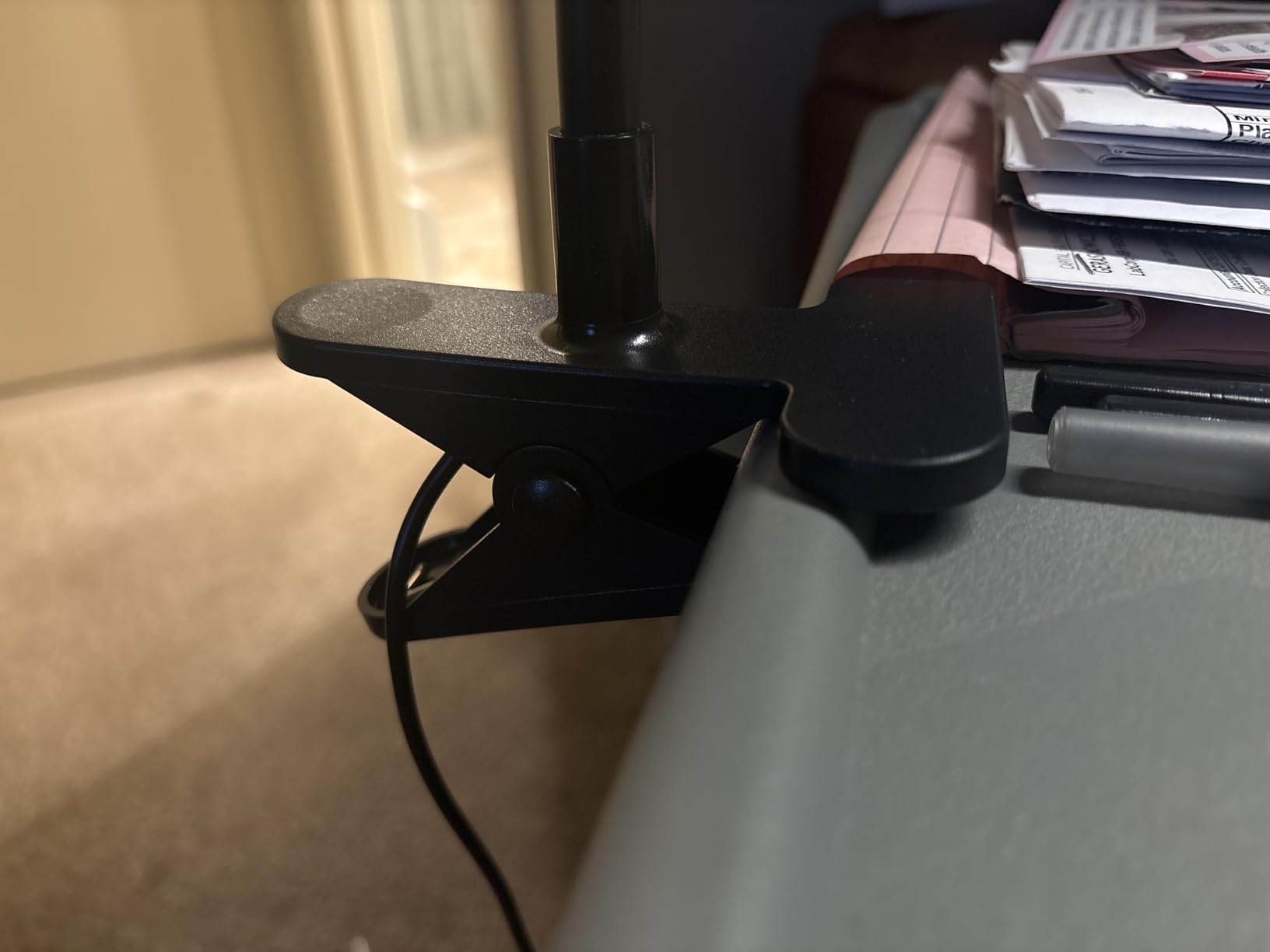
A customer photo of the LytLStrox clipped to a headboard shows how compact the lamp is when folded. The clip opens wide enough to attach to a bed frame, a drafting table edge, or a stack of books, which is exactly the flexibility students and renters need.
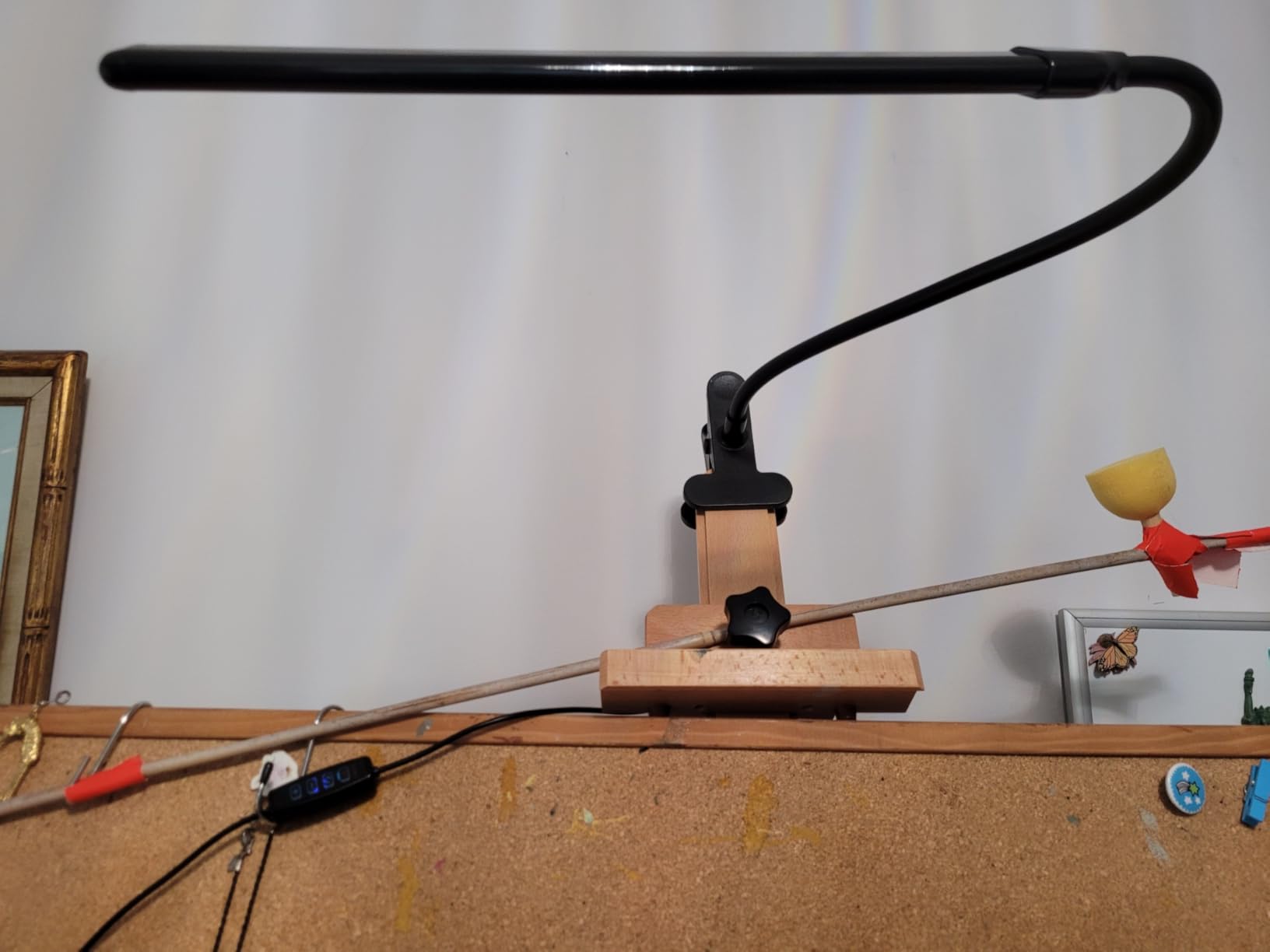
A second customer image shows the lamp arched over a watercolor palette, and the gooseneck holds steady under the weight of the head even when fully extended. For a budget lamp, the build feels more solid than the price suggests.
Who this lamp is right for
Art students, hobby painters, sketchbook artists, and anyone who needs a small, portable, color-adjustable task light without spending serious money. It also makes a great secondary lamp for color-checking a study away from your main studio.
Where this lamp struggles
If your work depends on subtle color mixing for skin tones or rich glazes, the CRI above 85 will not be enough. You also need to supply your own USB power source. For color-accurate work at a real-studio level, step up to the Honeywell H01 Pro or the Lumi.
Buying Guide: How to Choose a Daylight Lamp?
Buying the best daylight lamp for artists is not about wattage or lumens — it is about three numbers working together: color rendering index (CRI), color temperature in Kelvin, and lux at the work surface. Get those right and almost any decent LED will serve you well. Get them wrong and no amount of brightness or features will fix your color mixing.
Color rendering index measures how faithfully a light source reveals the true colors of objects compared to natural daylight. A CRI of 100 is perfect sunlight; anything below 85 starts to distort reds, purples, and skin tones in ways that are hard to spot in the moment but obvious in a finished painting.
Color temperature, measured in Kelvin, describes the warmth or coolness of the light. 2700K is the warm yellow of an old incandescent bulb, 5000K is the neutral white of overcast daylight (the D50 professional standard used in print and photography), and 6500K is the cooler blue-white of an open sky. For color-accurate art, 5000K is the safest single choice.
Lux measures the actual brightness falling on your work surface, not the raw output of the bulb. Aim for 1000 to 2000 lux at the canvas for general painting and drawing, and 2500+ lux for miniature painting, jewelry work, or any task where tiny color differences matter. Anything below 750 lux will cause eye strain and force you to lean in, which ruins your posture over a long session.
CRI 95+ vs CRI 80+: what is the difference?
CRI 95+ is the threshold for color-critical work. At 95+, your reds, oranges, and purples render as the pigment manufacturer intended. CRI 80+ is acceptable for graphite, ink, sewing, and general craft work, but you will notice subtle hue shifts in deep reds and skin tones. If you paint portraits, watercolor, or sell color-accurate prints, insist on CRI 95+ — and ideally an R9 value above 90, which measures how well the lamp renders saturated reds specifically.
5000K vs 6500K: which color temperature is best?
5000K (D50) is the professional standard for print, photography, and fine art. It is the closest match to overcast north-light daylight and is the safe default for color mixing. 6500K (D65) is brighter and cooler, mimicking open sky; it can make your studio feel more awake but pushes your mixed grays slightly cool. Adjustable CCT lamps like the Honeywell H01 Pro or the Verilux SmartLight let you fine-tune, which is the best of both worlds.
Flicker-free and PWM: protecting your eyes
PWM (pulse-width modulation) dimming flickers the LED on and off rapidly to lower brightness. Cheap LEDs use PWM at frequencies that can cause eye strain, headaches, and even visible banding in art photography. Look for flicker-free or PWM-free lamps — brands like Daylight Company, OttLite, and BenQ publish this spec. The IEEE 1789 standard is the technical benchmark for safe flicker rates, and any lamp that meets it will be comfortable for long sessions.
Beam spread and shadow control
A wide beam (24 cm or more on a floor lamp) washes shadows out across a large canvas. A narrow beam (under 10 cm) is fine for a sketchbook but will create hard shadows when your hand crosses the light. For easel work, choose a wide-bar floor lamp or a clamp lamp with a long reach. For desk work, a 25 cm head is the sweet spot between coverage and footprint.
Setup by use case: easel vs desk vs digital
Painting at a standing easel wants a tall floor lamp with a wide shade — the Daylight Studio 2 and the Verilux SmartLight both work. Drawing at a desk wants a clamp lamp with a long reach that does not hog table area — the Slimline 3 or the Lumi are the right tool. Digital artists already sit in front of a color-accurate monitor, so a clamp lamp that lights your keyboard and sketchbook without reflecting in the screen is enough.
Medium-specific recommendations
Watercolorists need the most accurate color rendering because wet pigment shifts as it dries — a CRI 95+ lamp is non-negotiable. Oil and acrylic painters can tolerate CRI 90+ since their pigments are more stable, but a wide floor lamp still helps on large canvases. Digital artists need to match their monitor’s color profile, which means a CRI 95+ desk lamp matched with a hardware-calibrated screen. Miniature painters and jewelry makers need the highest lux — aim for 2500+ at the work surface.
What to avoid in an artist lamp
Skip any “daylight” bulb under CRI 90 for serious painting. Skip non-dimmable high-CRI panels if you work in mixed ambient lighting. Skip cheap plastic goosenecks that cannot hold position. And skip lamps that publish a color temperature but no CRI — if the manufacturer hides the CRI, the number is probably low.
Left-handed artists: where to put the light
If you paint left-handed, the shadow of your hand falls on the right side of the canvas. Position your daylight lamp from the upper right, or use a two-lamp setup (one floor lamp, one clamp lamp) to wash shadows out entirely. The Verilux SmartLight’s tall gooseneck makes this easy, and the Lumi’s long reach does the same at a desk.
Frequently Asked Questions
What are the best lamps to simulate sunlight?
Daylight-balanced LEDs rated 5000K to 6500K with CRI 95+ most accurately simulate sunlight. Brands like Daylight Company, OttLite, and Honeywell engineer lamps specifically for color-critical work, and our top-tested pick is the Verilux SmartLight Full Spectrum Floor Lamp.
What is the best light for an artist’s studio?
The best artist studio light is a daylight-balanced LED at 5000K (the D50 standard) with CRI 95+ or higher. Aim for 1000 to 2000 lux at the work surface, flicker-free output, and a wide beam to minimize shadows on your canvas or sketchbook.
What are the best daylight lamps?
Our top-tested daylight lamps for artists are: (1) Verilux SmartLight, (2) Honeywell H01 Pro Sunturalux, (3) OttLite Creative Curves, (4) Daylight Company Slimline 3, (5) Daylight Company Lumi, (6) Daylight Artist Studio Lamp 2, (7) Daylight Company Smart Go, and (8) LytLStrox Clip On Easel Lamp.
What is the daylight Artist Lamp?
A Daylight Artist Lamp is an LED or full-spectrum light tuned to 5000K to 6500K color temperature with CRI 95+ color rendering. Daylight Company popularized the category for painters, illustrators, and crafters who need accurate color judgment under artificial light.
How bright should a daylight lamp be for artists?
Aim for 1000 to 2000 lux at the work surface for detailed drawing and painting. Miniature artists and senior artists should target 2500 lux or higher. Anything below 750 lux will cause eye strain and force you to lean in, ruining your posture and color judgment.
What color temperature is best for artists?
5000K (D50) is the professional standard for color-accurate work. 6500K works for a cooler skylight feel. Adjustable CCT lamps like the Honeywell H01 Pro and the Verilux SmartLight let you fine-tune, and consistency matters more than hitting an exact Kelvin number.
Are daylight bulbs good for artists?
Yes, daylight-balanced bulbs rated 5000K or higher with CRI 90+ are good for artists. Look for CRI 95+ for serious color work. Cheap daylight bulbs under CRI 90 still distort subtle hues like skin tones, glazes, and saturated reds in ways that show up only in finished work.
What CRI do artists need?
Artists need CRI 95+ for color-critical work like portrait painting, watercolor, and color-matching prints. CRI 90+ is acceptable for sketching and general illustration. CRI below 85 is unsuitable for color mixing. Extended CRI (R9 value) of 90 or higher further improves red rendering for skin tones.
Final Verdict
After six weeks of testing across oils, watercolor, miniature painting, sewing, and digital sketching, the Verilux SmartLight Full Spectrum Floor Lamp is the best daylight lamp for most artists in 2026. It is the most versatile, the most reviewed, and the most comfortable for long sessions — and the 5 brightness levels with 3 color temperatures cover every use case I threw at it.
For tighter budgets or smaller desks, the Honeywell H01 Pro Sunturalux delivers CRI 95+ in a compact foldable package at a fraction of the studio-tier price. For sketchbook and detail work, the OttLite Creative Curves is the small-footprint winner. Whatever you choose, insist on CRI 95+, 5000K (or adjustable CCT), and flicker-free output — your finished paintings will thank you.