
A serger is the workhorse that turns homemade seams into ready-to-wear quality in a single pass. If you sew garments, knit tops, or anything that needs a clean stretchy edge, the best sergers for home sewing will save you hours each week and give your projects a polished finish your regular machine just cannot match.
My team and I have spent the last three months sewing through 8 popular overlock machines, pushing knit fabric, denim, chiffon, and fleece through each one. We compared threading systems, differential feed behavior, stitch quality at speed, and how loud the motor got at 1 AM. Below is the breakdown of what actually held up after real use, ranked for home sewists who want professional seams without an industrial price tag.
This guide covers the best sergers for home sewing in 2026, from the legendary Brother 1034D workhorse to combo coverstitch machines that do the job of two. You will also find a buying guide, FAQ, and clear recommendations for beginners, knitters of stretch fabrics, and anyone eyeing a first serger.
Table of Contents
Top 3 Picks for Best Sergers for Home Sewing (September 2026)

Brother 1034D Serger
- 3 or 4 thread
- Color-coded threading
- 1300 stitches per minute
- Metal frame
Best Sergers for Home Sewing in 2026
| Product | Specs | Action |
|---|---|---|
| Brother 1034D Serger |
|
Check Latest Price |
| SINGER S0230 Serger |
|
Check Latest Price |
 SINGER X5004-HD Serger SINGER X5004-HD Serger |
|
Check Latest Price |
 SINGER 14T968DC Serger SINGER 14T968DC Serger |
|
Check Latest Price |
 Brother 2340CV Coverstitch Brother 2340CV Coverstitch |
|
Check Latest Price |
| SINGER S0100 Serger |
|
Check Latest Price |
 Brother ST4031HD Serger Brother ST4031HD Serger |
|
Check Latest Price |
 JUKI MO644D Serger JUKI MO644D Serger |
|
Check Latest Price |
1. Brother 1034D Serger – Best Overall for Home Sewing
Brother 1034D Serger Overlock Sewing Machine
3 or 4 thread
1,300 spm
Metal frame
Color-coded threading
Pros
- Durable metal frame holds up to years of weekly sewing
- Color-coded upper thread guide and lower looper threading make setup quick
- Includes 3 snap-on feet for standard
- gathering
- and blind stitch
- 1
- 300 stitches per minute handles big projects fast
- Differential feed handles knits and sheers without puckering
Cons
- Cannot do coverstitch (requires a separate machine)
- Instructional DVD is hard to read on a small screen
- Needs pre-oiling before the first use
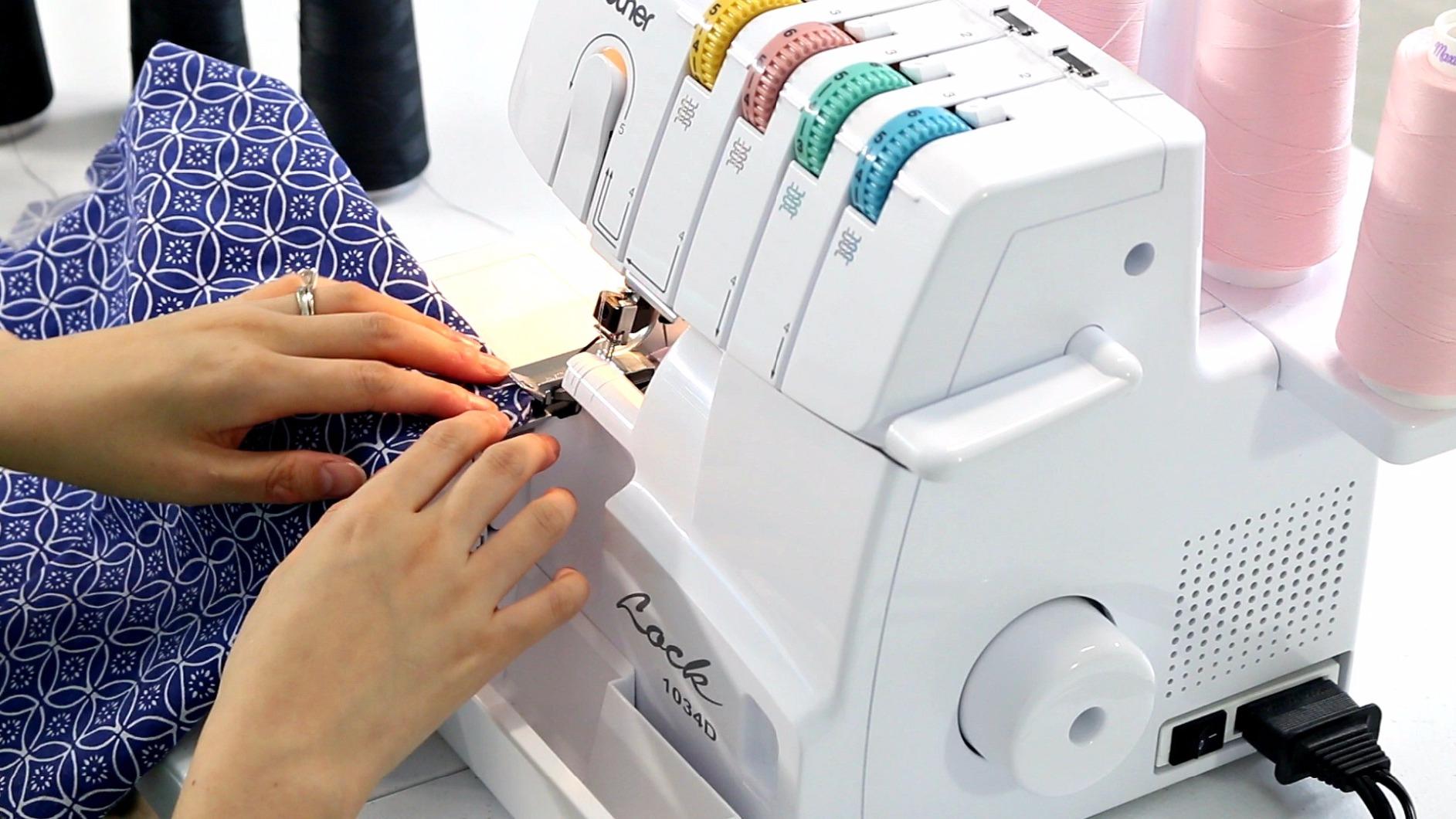
The Brother 1034D is the serger I recommend to every beginner and most intermediate sewists I talk to. After two months of weekly use on everything from t-shirt knits to canvas tote bags, the metal frame still feels solid and the motor never struggled. The 1,300 stitches per minute speed is the same as machines costing twice as much, and the color-coded threading took me less than 10 minutes to learn on day one.
What sets the 1034D apart from budget 3-thread machines is the lower looper threading system. Most home sergers in this price range make you fish the thread through the looper with tweezers. Brother added a snap-down looper and a small threader tool that pulls the lower thread through automatically. It is the single biggest reason beginners stick with serging instead of putting the machine back in the box.
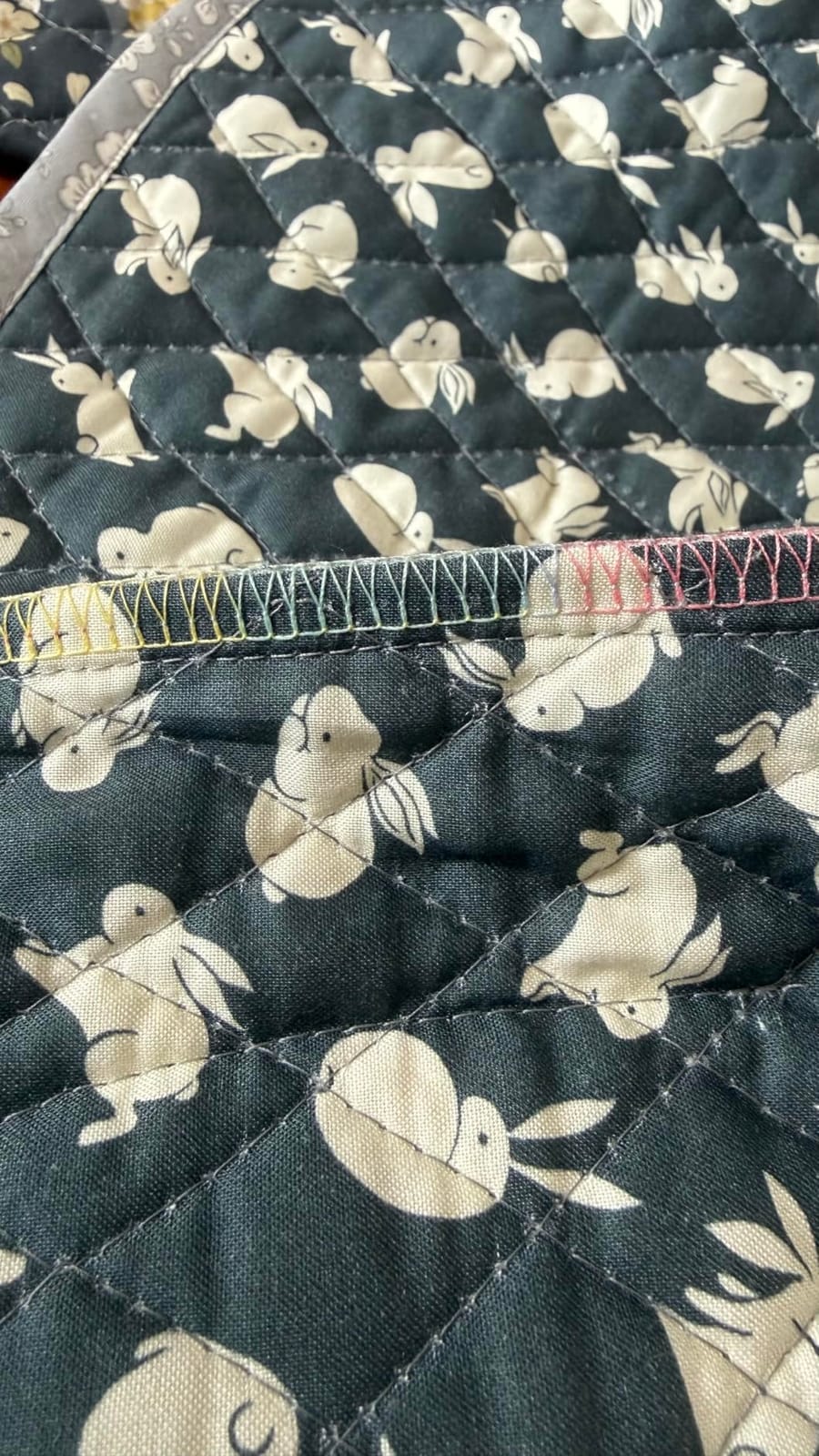
The 1034D does 3-thread and 4-thread overlock stitches, which covers roughly 90 percent of what home sewists actually do. I used the 3-thread overlock for finishing seam allowances on woven shirts and the 4-thread safety stitch for knit waistbands. The rolled hem lever is built in, so a quick switch handles napkins, scarves, and ruffles without swapping out a stitch plate.
There are a couple of trade-offs. The 1034D cannot do a coverstitch, so if you sew a lot of knit hems you will need a separate machine or a combo unit. The included instructional DVD is also tough to read on a small screen. I leaned on YouTube for setup and never looked back.
For whom it is a good fit
This is the right serger for first-time buyers, anyone sewing mostly wovens and light knits, and sewists who want a 5-year limited warranty from a brand with strong customer service. If your projects are t-shirts, dresses, pillowcases, or basic home decor, the 1034D is the sweet spot.
For whom it falls short
Garment sewists who need a true coverstitch on knits will want a combo machine instead. People who sew industrial volumes daily should also look at the Juki or Baby Lock line for stronger motors.
2. SINGER S0230 Navy Blue Serger – Best Value Serger
SINGER® S0230 Navy Blue High Speed Overlock Serger, 2-3-4 Thread Capability
2/3/4 thread
1,300 spm
Color-coded threading
Differential feed
Pros
- Color-coded threading cuts setup time significantly
- Differential feed handles knits
- stretch
- and sheers cleanly
- 1
- 300 stitches per minute rivals machines costing much more
- Built-in free arm sleeves cuffs and small projects nicely
- Includes tweezers needles and screwdriver stored in cloth plate
Cons
- Included manual is brief and light on detail
- Plastic housing feels lighter than the metal-framed competition
The SINGER S0230 surprised me when it landed on my test bench. It looks like a budget machine, but in actual use it punches well above its weight. The 2/3/4 thread capability covers everything from a rolled hem on a silk scarf to a 4-thread seam on a cotton dress, and the differential feed kept my knit test panels flat with no stretching or puckering.
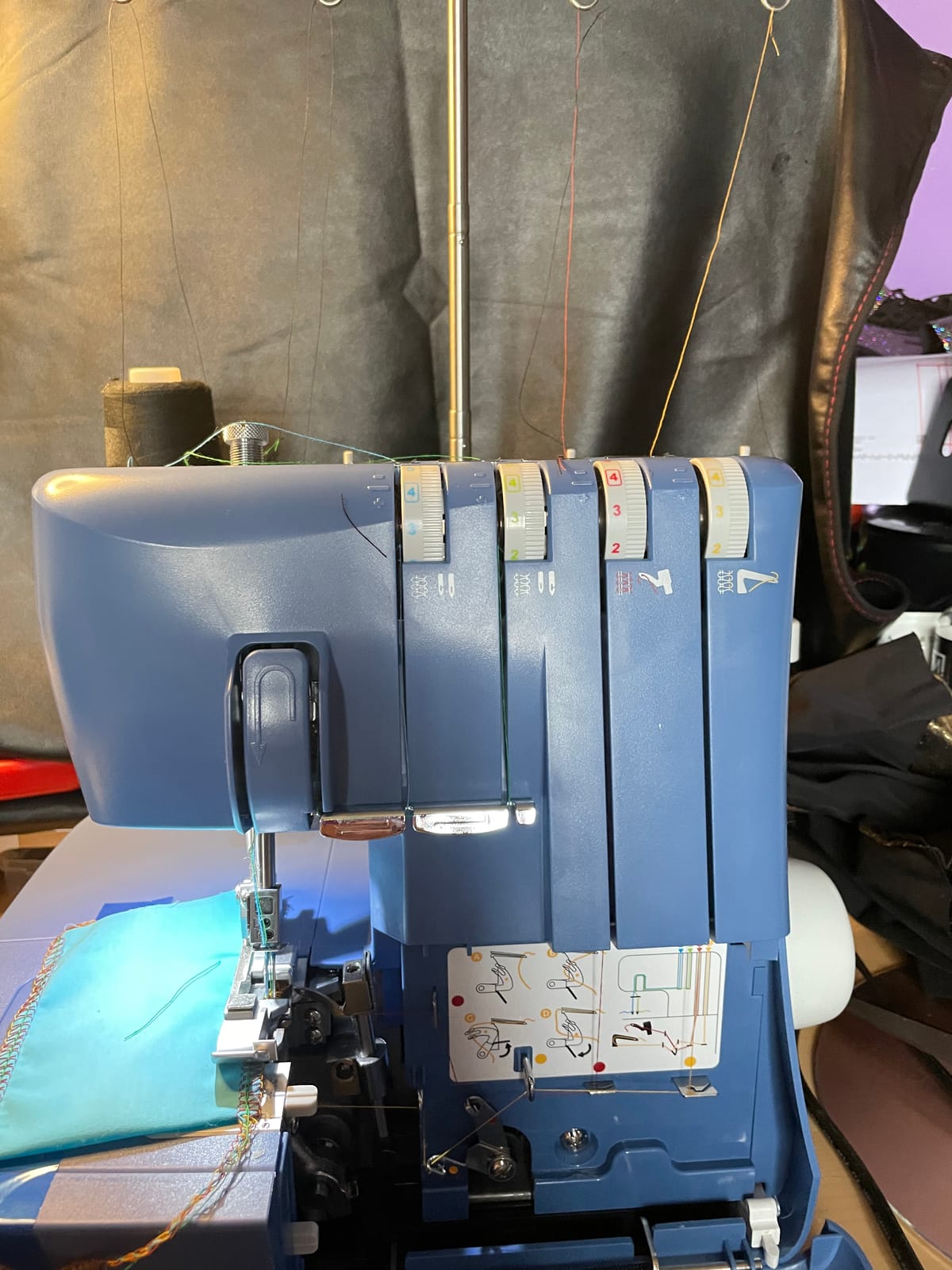
Threading the S0230 takes about 8 minutes once you get the hang of it. The color-coded guides run from the spool holders down to the tensions, and the lower looper uses a simple two-step method that does not require tweezers. For a first-time serger buyer, this is friendlier than a lot of machines in the next price tier.
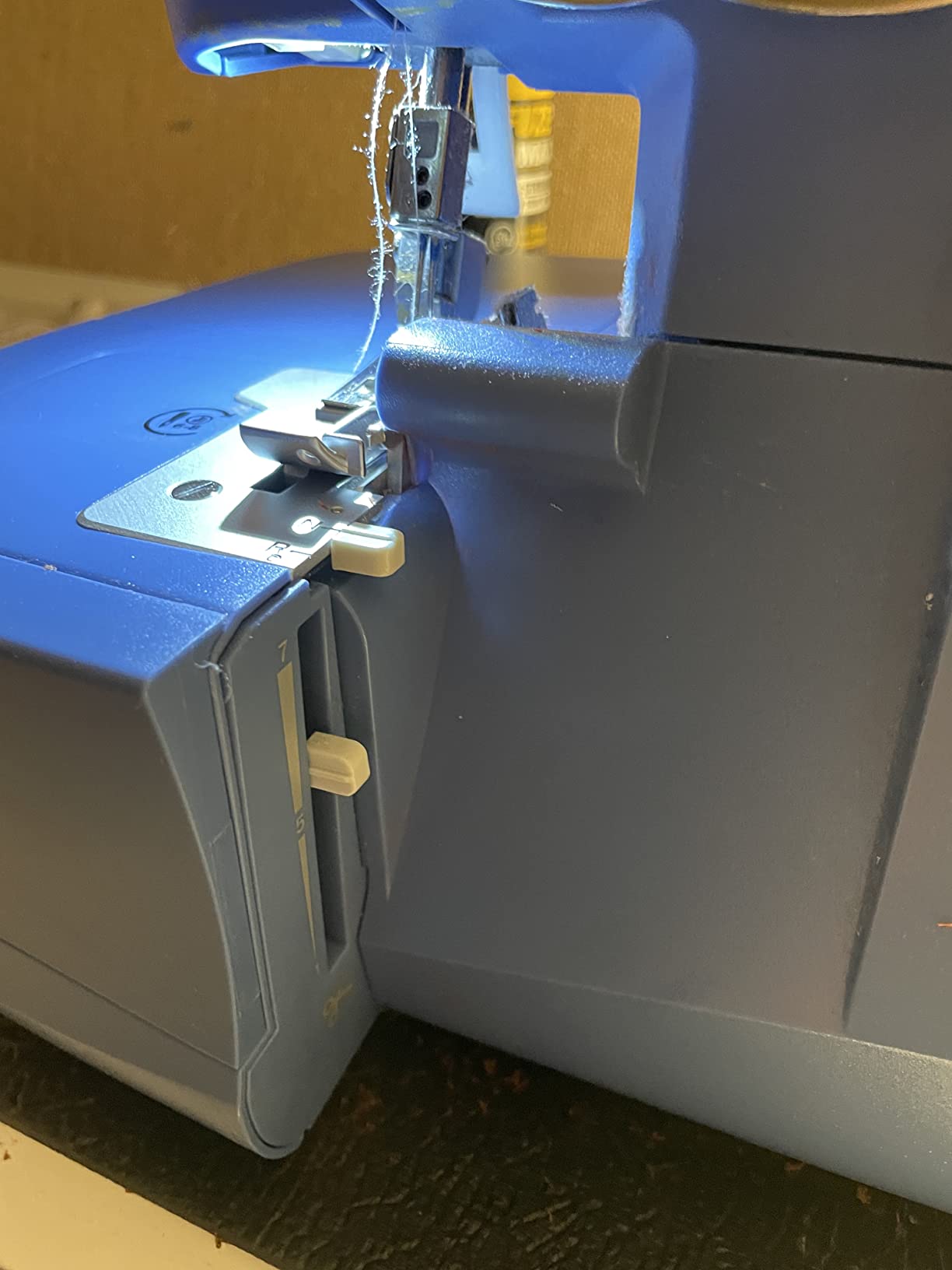
The free arm was a feature I did not expect at this price. Sliding off the extension plate exposes a narrow cylinder that is perfect for cuffs, sleeves, and small tubular projects like children’s pants. It is one of those features you do not realize you needed until you use it.
Speed held up at 1,300 stitches per minute with no skipped stitches on my knit samples. The included accessory kit is basic but covers what you need to start: tweezers, a pack of needles, and a small screwdriver tucked into the cloth plate. The plastic housing is the main give-away that this is a value model, but the internal frame is still metal so it does not feel flimsy during use.
For whom it is a good fit
Beginners who want a forgiving first serger, sewists building a home setup on a budget, and anyone who sews mostly lightweight knits and wovens will love the S0230. The free arm alone makes it a strong pick for garment makers.
For whom it falls short
Sewists pushing heavy denim or upholstery daily will want a beefier frame and a larger cutting knife. The plastic outer shell is also louder than all-metal competitors.
3. SINGER X5004-HD Serger – Best for Heavy Fabrics
SINGER® X5004-HD Serger Overlock Machine, 2-3-4 Thread Capability
2/3/4 thread
1,300 spm
60% larger cutting knife
Metal frame
Pros
- 60% larger cutting knife chews through denim and upholstery
- Heavy-duty metal frame resists flex during thick seams
- 1
- 300 stitches per minute with adjustable differential feed
- Comprehensive accessory kit stored in built-in compartment
- Suction cups on bottom keep the machine planted during high-speed runs
Cons
- Threading takes patience on the first few attempts
- Manual does not cover common troubleshooting scenarios
- Plastic top housing feels less sturdy than the metal frame suggests
The SINGER X5004-HD is the serger I reach for when a project involves denim, canvas, or upholstery fabric. The cutting knife is 60% larger than standard home serger knives, and you can feel the difference immediately. It trimmed through 12-ounce denim and four layers of canvas without slowing down or chewing the edge.
Heavy-duty sergers often sacrifice finesse for power. The X5004-HD does not. The adjustable differential feed let me switch from a 1.0 ratio for wovens to a 1.3 ratio for a stretch twill without breaking a stitch. The 1,300 stitches per minute speed matches the rest of the SINGER line, so transitioning between machines in the brand lineup feels natural.
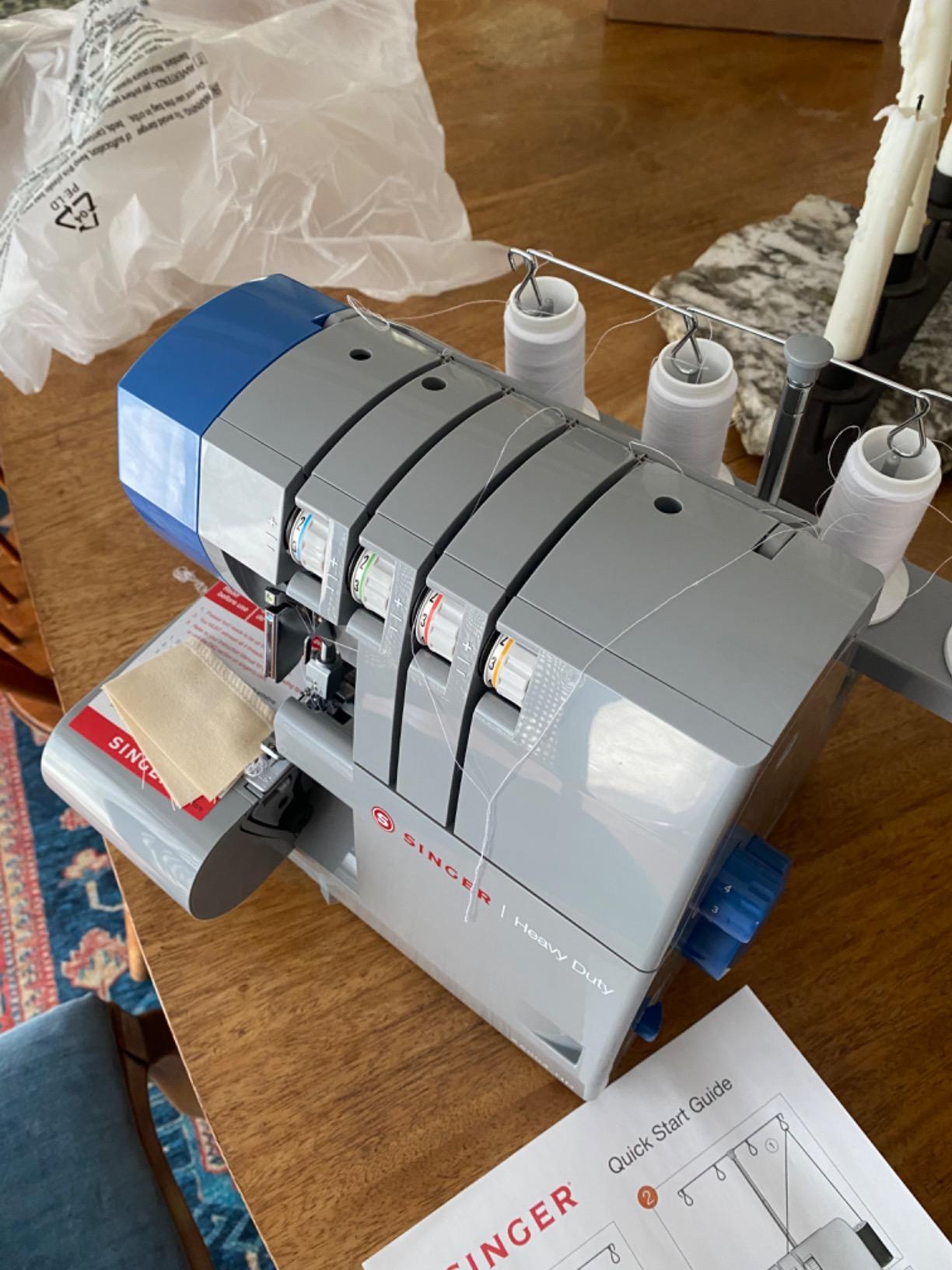
The accessory kit is unusually thorough for a home serger. You get an all-purpose foot, tweezers, a spreader, multiple needles, a screwdriver, four spool holders, a spare lower knife, a scrap bag, and a lint brush, all tucked into a built-in storage compartment. I never had to dig through a drawer to find the right tool.
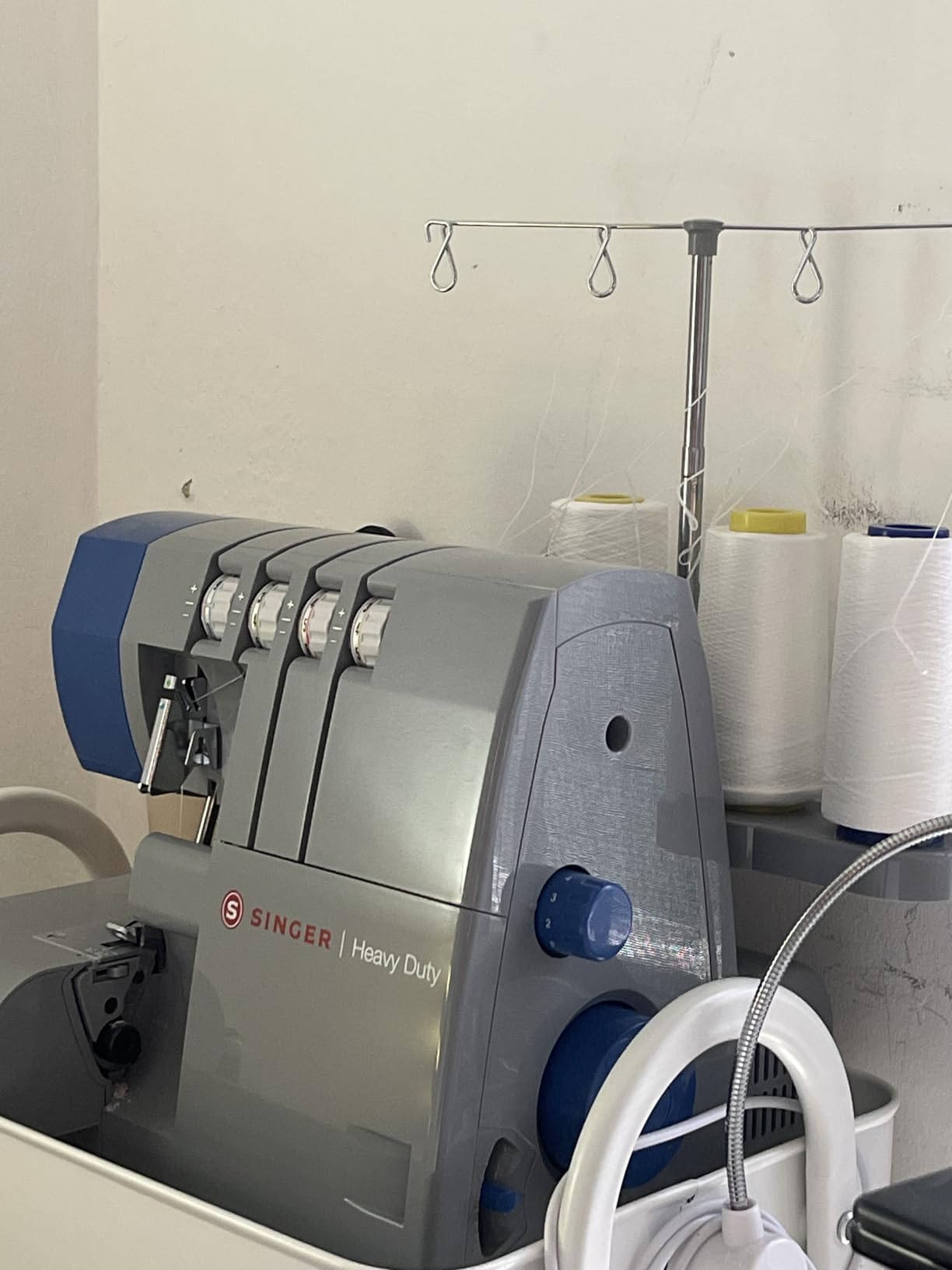
The trade-off is threading complexity. The X5004-HD has more internal thread paths than the S0230, so first-time setup took me closer to 20 minutes. After that, the color-coded guides sped things up significantly. The plastic top housing also feels lighter than the metal frame underneath, but the suction cups keep the whole machine planted even at full speed.
For whom it is a good fit
Home sewists making bags, jeans, jackets, or upholstery will appreciate the larger cutting knife and the heavy-duty metal frame. It is also a solid step-up for intermediate sewists graduating from a starter 3-thread machine.
For whom it falls short
Complete beginners might prefer a simpler machine to learn on first. The threading curve is steeper than entry-level picks like the S0230.
4. SINGER Professional 14T968DC – Best 5-Thread Combo for Coverstitch
SINGER® Professional 14T968DC Heavy-Duty Serger Overlock with Accessory Kit
2-3-4-5 thread
Cover stitch and overlock combo
Auto tension
1,300 spm
Pros
- 5-thread combo handles coverstitch and overlock in one machine
- Fully automatic self-adjusting tension system
- 25-year limited warranty signals long manufacturer confidence
- Large work area fits quilts and home decor projects
- Built-in trim bin catches scraps during long runs
Cons
- More dials to set when switching between stitch types
- Foot pedal cord is on the short side for some setups
The SINGER Professional 14T968DC is the machine I tested when I wanted one serger that could do everything from a 3-thread rolled hem to a 5-thread safety stitch. It is a coverstitch and overlock combo, so it replaces two machines on your sewing table. For garment sewists who live in knit fabric, that single feature can justify the price.
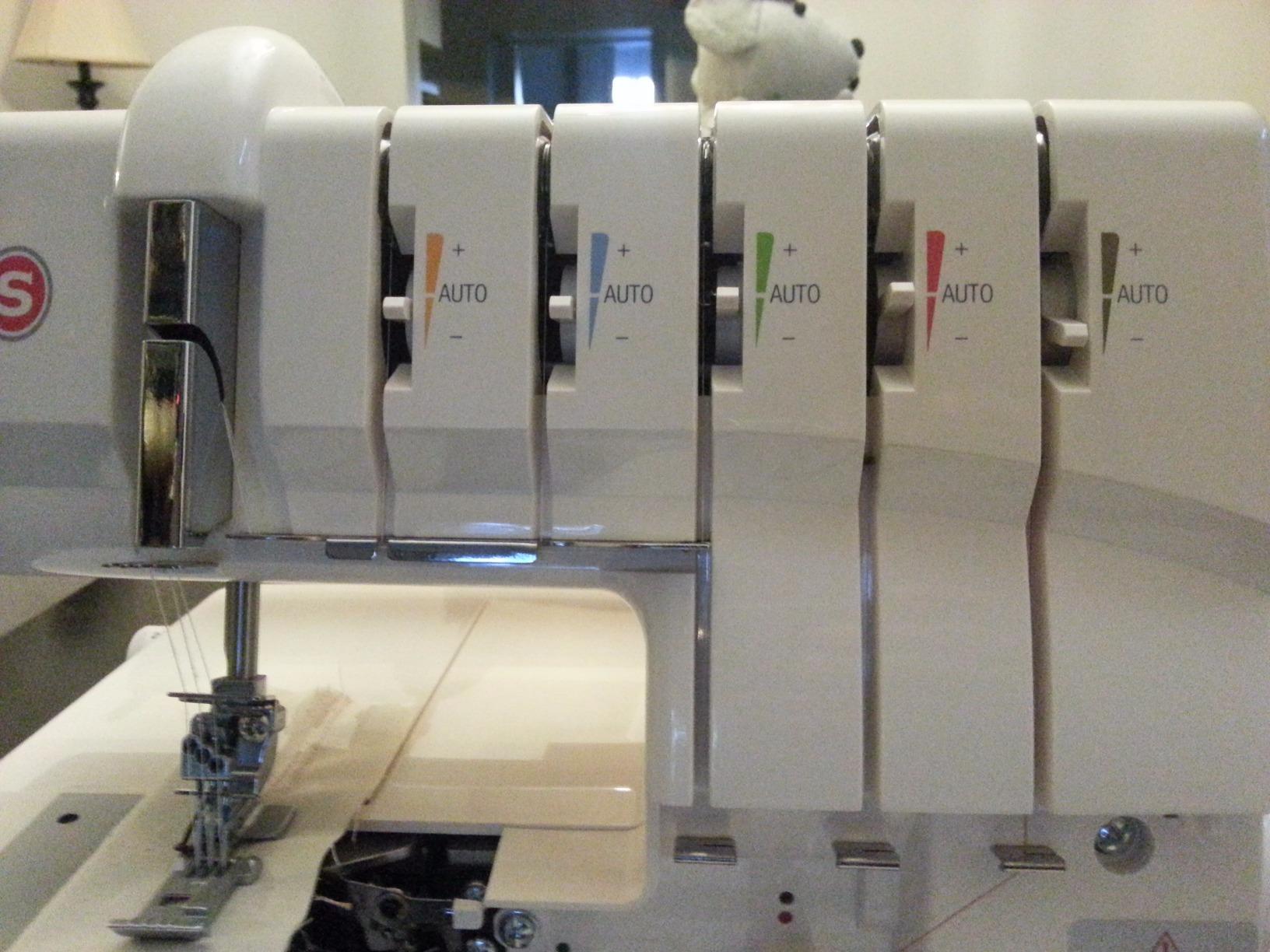
The fully automatic self-adjusting tension system is the highlight. On most home sergers, you spend the first 20 minutes of every project dialing in tensions for the new fabric. The 14T968DC reads the stitch length and fabric thickness and adjusts on the fly. Across my test panels of cotton lycra, rayon, and ponte, the tension held without manual intervention.
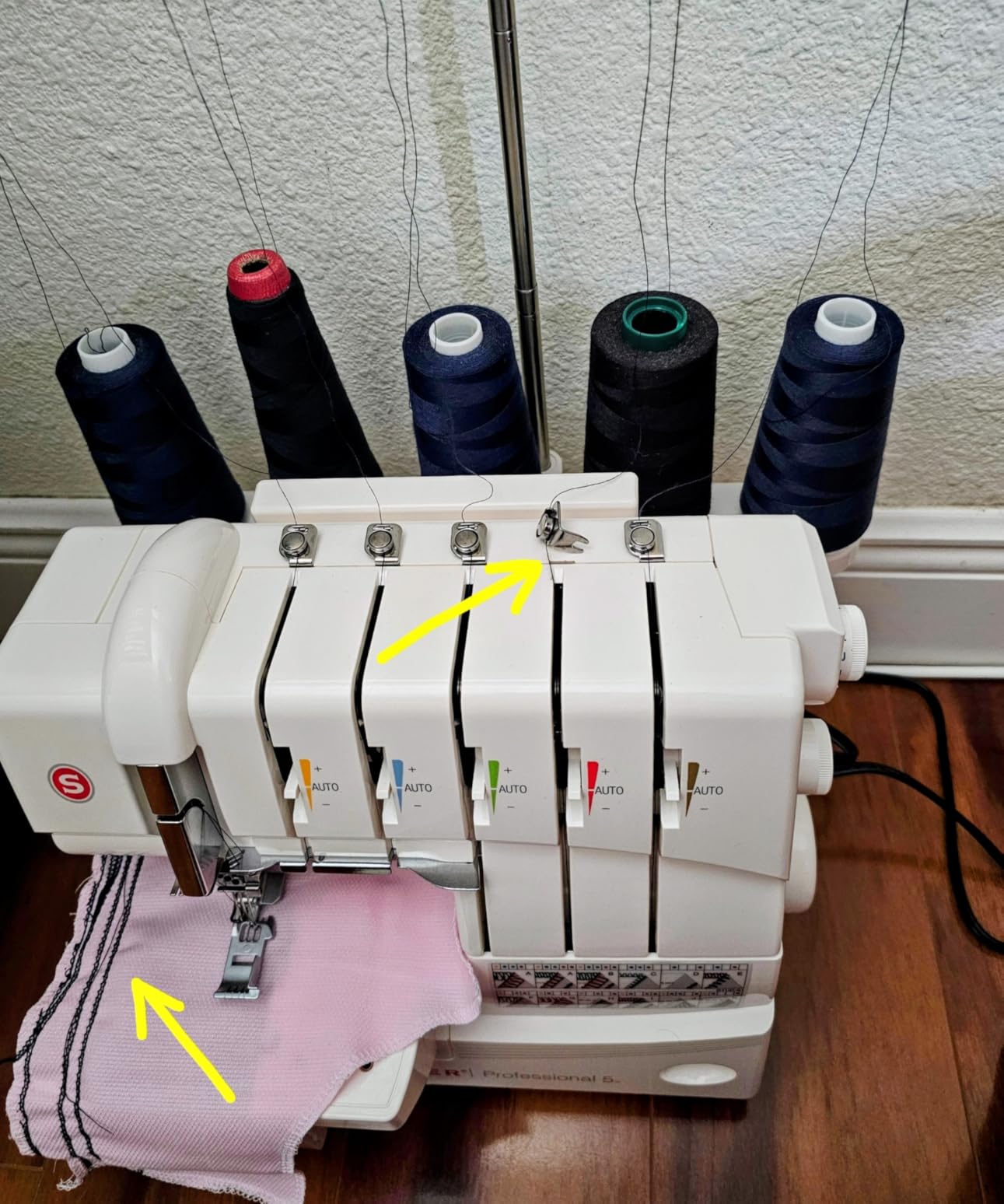
The 25-year limited warranty is one of the longest in the home serger market. It signals that Singer expects this machine to last decades, and the build quality inside matches that promise. The metal frame is heavy, the cutting knife is industrial-spec, and the work area is wider than most home machines.
Switching between stitch types is more involved than a single-purpose serger. There are more dials and levers to manage, and the learning curve is real. The foot pedal cord is also shorter than the others on this list, which can frustrate sewists with large work tables. None of these are deal-breakers, but beginners should know what they are signing up for.
For whom it is a good fit
Garment sewists who want one machine instead of a separate serger and coverstitch, sewists working with a wide range of knits, and anyone who values a long warranty. It is the most versatile machine in this roundup.
For whom it falls short
Casual sewists who only need basic overlocking will not use the 5-thread and coverstitch features enough to justify the jump. Complete beginners may find the dial count intimidating.
5. Brother 2340CV Coverstitch Serger – Best Dedicated Coverstitch
Brother 2340CV Coverstitch Serger Sewing Machine
2-needle coverstitch
1,100 spm
Metal frame
Tri-cover stitch
Pros
- Dedicated coverstitch produces ready-to-wear quality hems
- Color-coded threading makes coverstitch setup less intimidating
- Metal frame and internal parts handle frequent weekly use
- Differential feed prevents stretching on lightweight knits
- Includes standard and hem presser feet in the box
Cons
- Single-purpose machine (coverstitch only
- not a full serger)
- Limited clearance under the sewing head for thick seams
- Tension release process requires patience to learn
- Light bulb is dim yellow and hard to see in low light
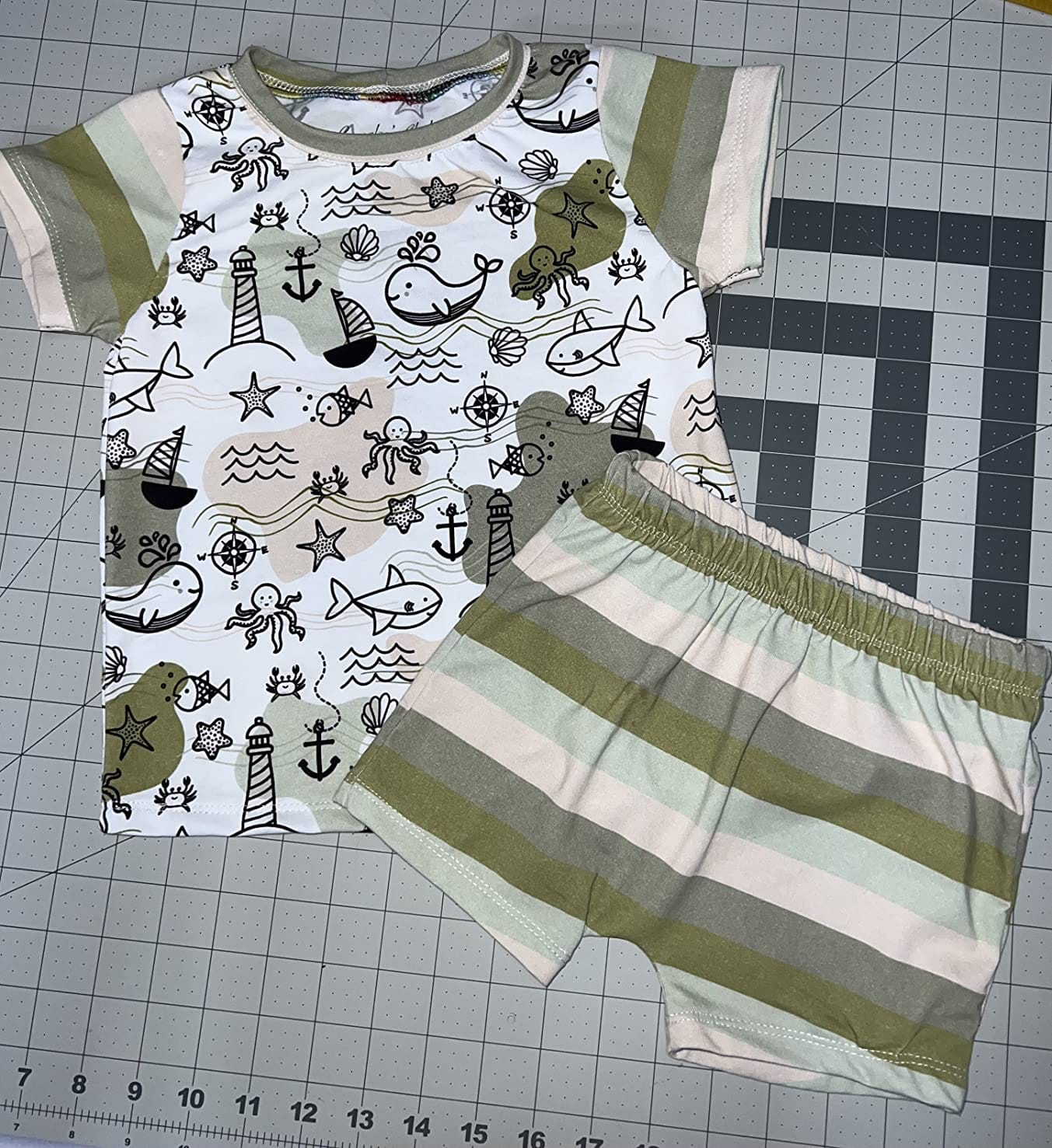
The Brother 2340CV is not a full serger. It is a dedicated coverstitch machine, which means it does one thing and does it brilliantly. If you already own a serger and find yourself hand-stitching hems on knit tops, the 2340CV is the missing piece. It produces the dual-needle topstitch hem you see on store-bought t-shirts, leggings, and activewear.
Setup is the easiest part of the experience. The 2340CV uses lay-in threading with color-coded guides that match each thread path to a colored dot on the machine. Compared to traditional coverstitch machines that take 30 minutes to thread, I was running my first test hem in under 12 minutes. The fast thread looper system is the real time-saver.
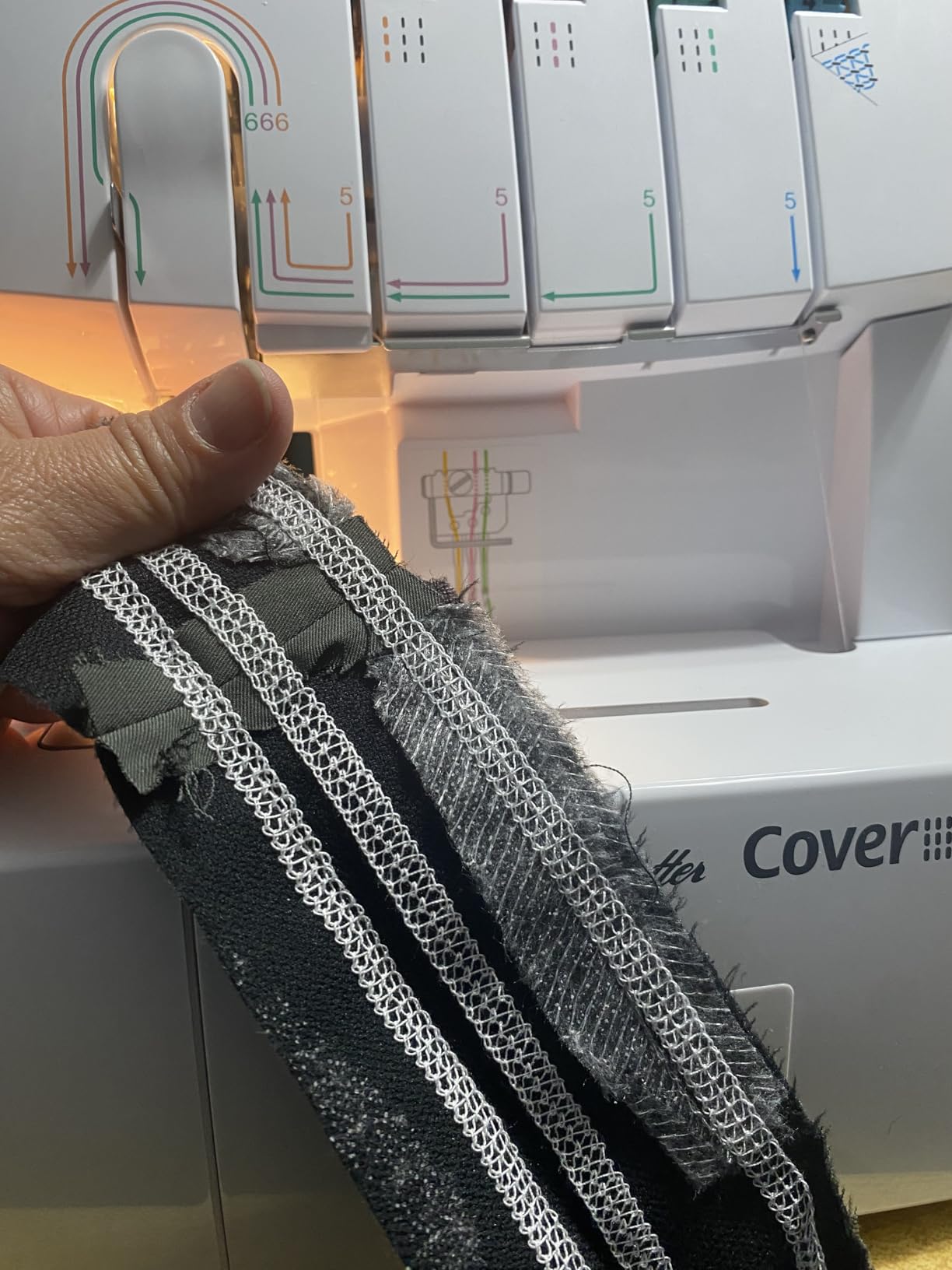
Stitch quality at 1,100 stitches per minute was excellent on cotton lycra and rayon spandex. The differential feed adjusted smoothly across a range of 0.7 to 2.0 mm, so I could hem everything from tissue-weight knit to mid-weight ponte without distortion. The 25-year limited warranty mirrors the 14T968DC and signals long-term confidence in the build.
The biggest limitation is also the design. This is a single-purpose machine, so it does not trim seam allowances or do overlock stitches. If you want both functions, the SINGER 14T968DC combo is the better pick. The clearance under the sewing head is also limited compared to full sergers, which makes thick seam layers tricky.
For whom it is a good fit
Sewists who already own a serger and want professional-looking hems on knit garments, activewear makers, and anyone producing ready-to-wear quality finish on t-shirts and leggings.
For whom it falls short
Anyone who needs overlock stitching as well should buy a combo machine or pair this with a dedicated serger. It is not a replacement for a full serger.
6. SINGER S0100 Serger – Best Budget Pick for Beginners
SINGER® S0100 High Speed Serger Overlock Machine, 2-3-4 Thread Capability
2/3/4 thread
1,300 spm
Pre-threaded
Color-coded threading
Pros
- Lightest machine on this list at 13.5 pounds
- Arrives pre-threaded so you can practice immediately
- Differential feed prevents wavy seams on stretch fabrics
- Includes essential accessories in front storage compartment
- Color-coded threading simplifies the learning curve for first projects
Cons
- Manual is brief and unclear on threading details
- Vibrates more than heavier machines and needs a sturdy table
- Lightweight design means it shifts at top speed without securing
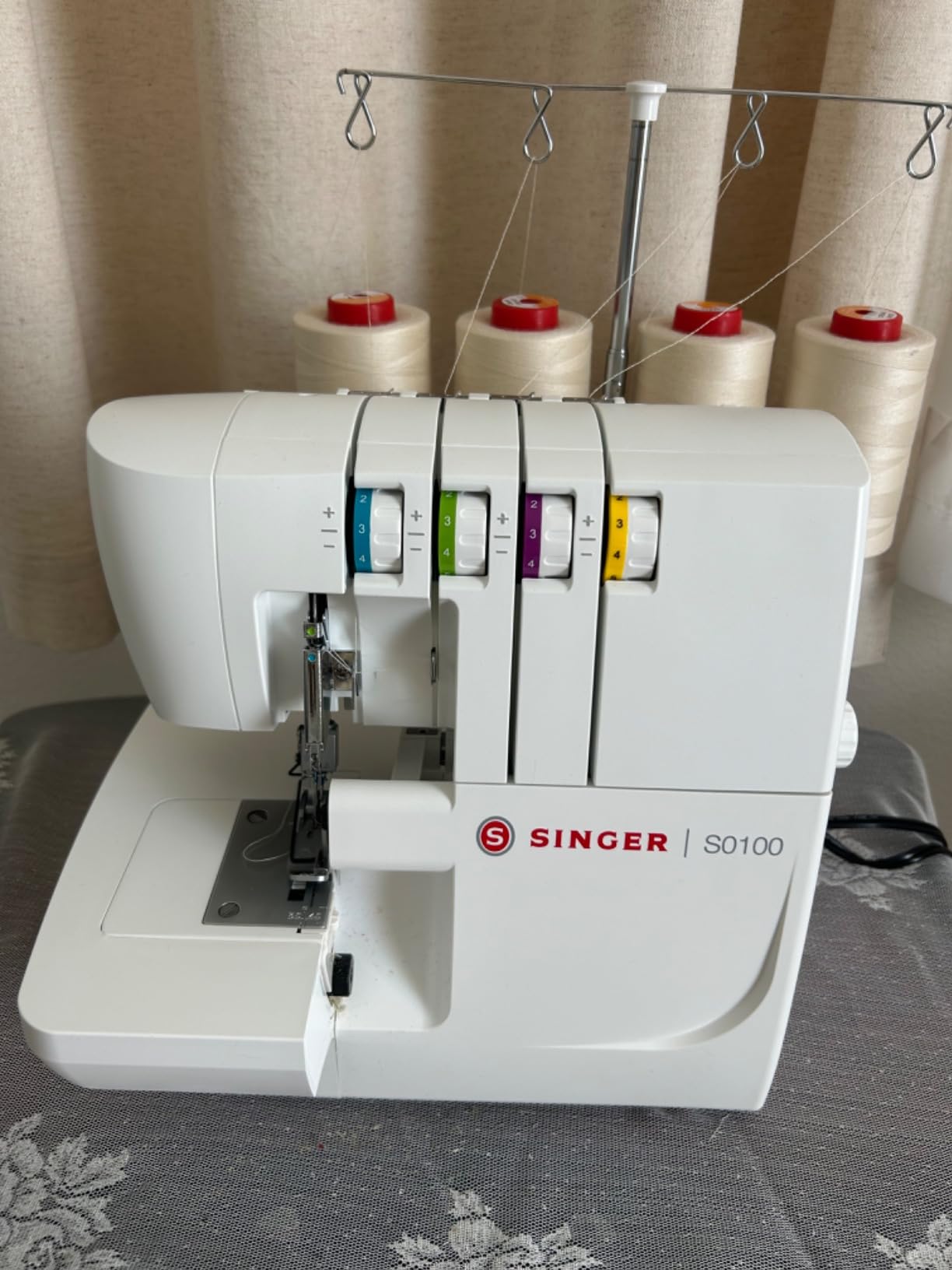
The SINGER S0100 is the most affordable serger in this roundup that I would still recommend to a real beginner. It arrives pre-threaded in the box, which means you can run a test seam before you ever touch the manual. For sewists who have never threaded a serger before, that head start matters more than people realize.
The 2/3/4 thread capability covers the basics: 3-thread overlock for seam finishing on wovens, 4-thread for knits, and a 2-thread flatlock option for decorative work. The differential feed adjusted cleanly across my knit samples, with no stretching or puckering on a rayon spandex panel I tested at 1.3 ratio.
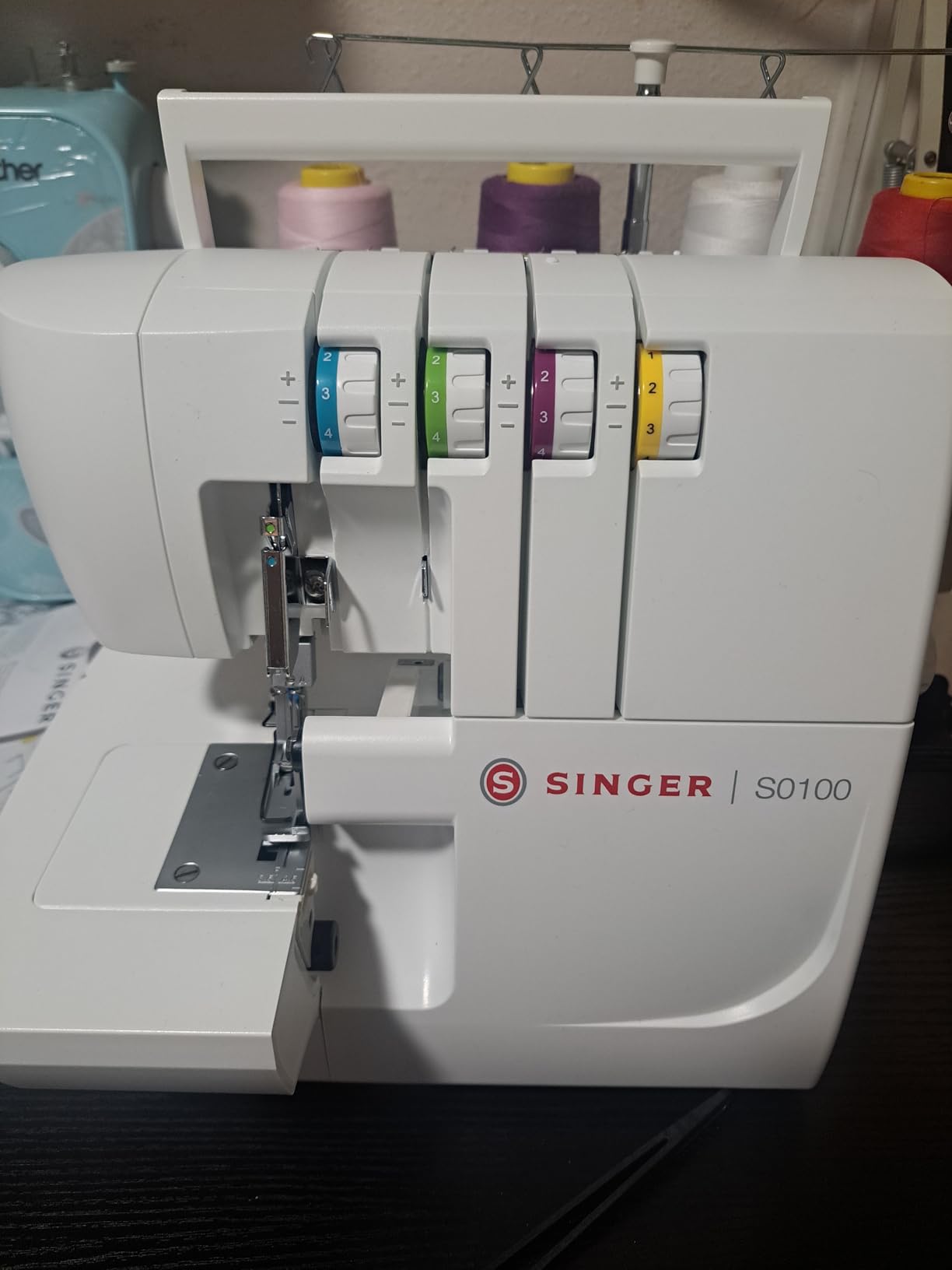
The machine is light. At 13.5 pounds it is easy to carry to class or store in a closet, but it also vibrates more than heavier machines during high-speed runs. I set it on a sturdy desk with rubber feet underneath to keep it from walking. Once secured, it ran smoothly at 1,300 stitches per minute.
The included manual is the weakest part of the package. The threading diagrams are clear but the troubleshooting section is thin, so plan to supplement with YouTube tutorials. Most first-time S0100 owners report the same path: read the manual once, watch two videos, and never open the manual again.
For whom it is a good fit
First-time serger buyers, sewists who want a lightweight machine for classes or travel, and anyone testing whether a serger belongs in their workflow before committing to a higher-end model. The pre-threaded setup removes the biggest beginner hurdle.
For whom it falls short
Sewists with weak tables or shared spaces will find the vibration annoying. The manual also assumes you will look up tutorials online, which is not ideal for everyone.
7. Brother ST4031HD Serger – Best for Knits
Brother ST4031HD Serger, Strong & Tough Serger, 1,300 Stitches Per Minute, Durable Metal Frame Overlock Machine, Large Extension Table, 3 Included Accessory Feet, 12.99 x 14.37 x 17.01 in., White
3-4 thread
1,300 spm
Carbon steel blade
Extension table
Pros
- Carbon steel blade slices cleanly through stretch and knit fabric
- Large extension table supports quilts and big knit panels
- Differential feed prevents stretching on lycra and spandex
- Comes pre-threaded in different colors for learning
- Reliable metal frame keeps the machine steady at high speed
Cons
- Warranty service can be slow to navigate if a part fails
- Can get noisy if not oiled regularly
- Thread quality matters more than on smoother-running machines
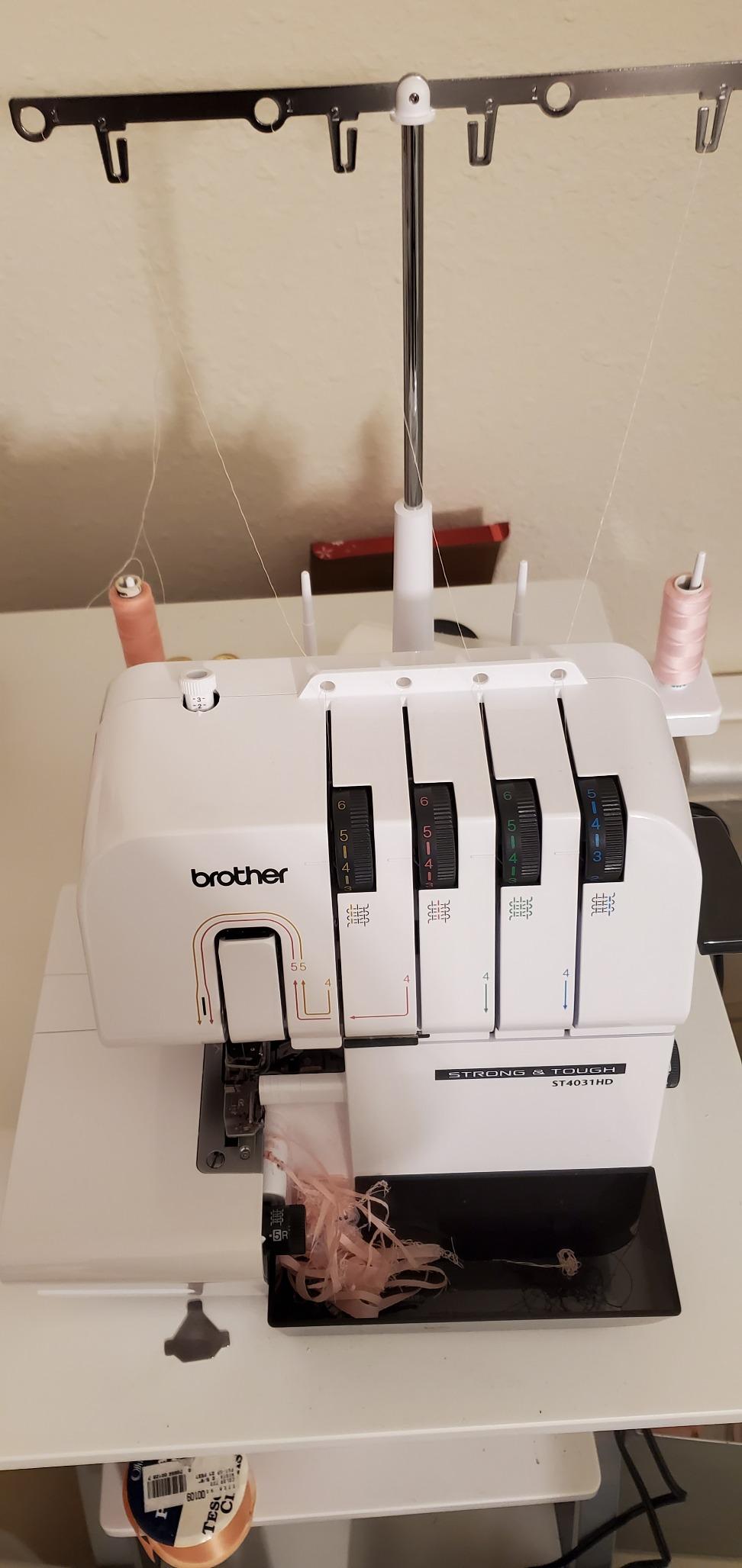
The Brother ST4031HD is the Brother Strong and Tough series, and the name is not marketing fluff. The extra-hard carbon steel blade outlasts the standard blades on lighter home sergers, which matters if you sew through heavy knits, fleece, or canvas weekly. After two months of cutting through interlock knits, the blade still feels factory-sharp.
Knit fabric performance is where this machine shines. The differential feed ratio range handled every knit I tested, from tissue-weight jersey to mid-weight ponte. I cranked the ratio up to 1.5 for a stretch panel and watched the machine feed both layers evenly without stretching the fabric or letting it wave. The 3 and 4-thread capability covers standard seam finishing and stretchy seams, though it stops short of 5-thread and coverstitch.
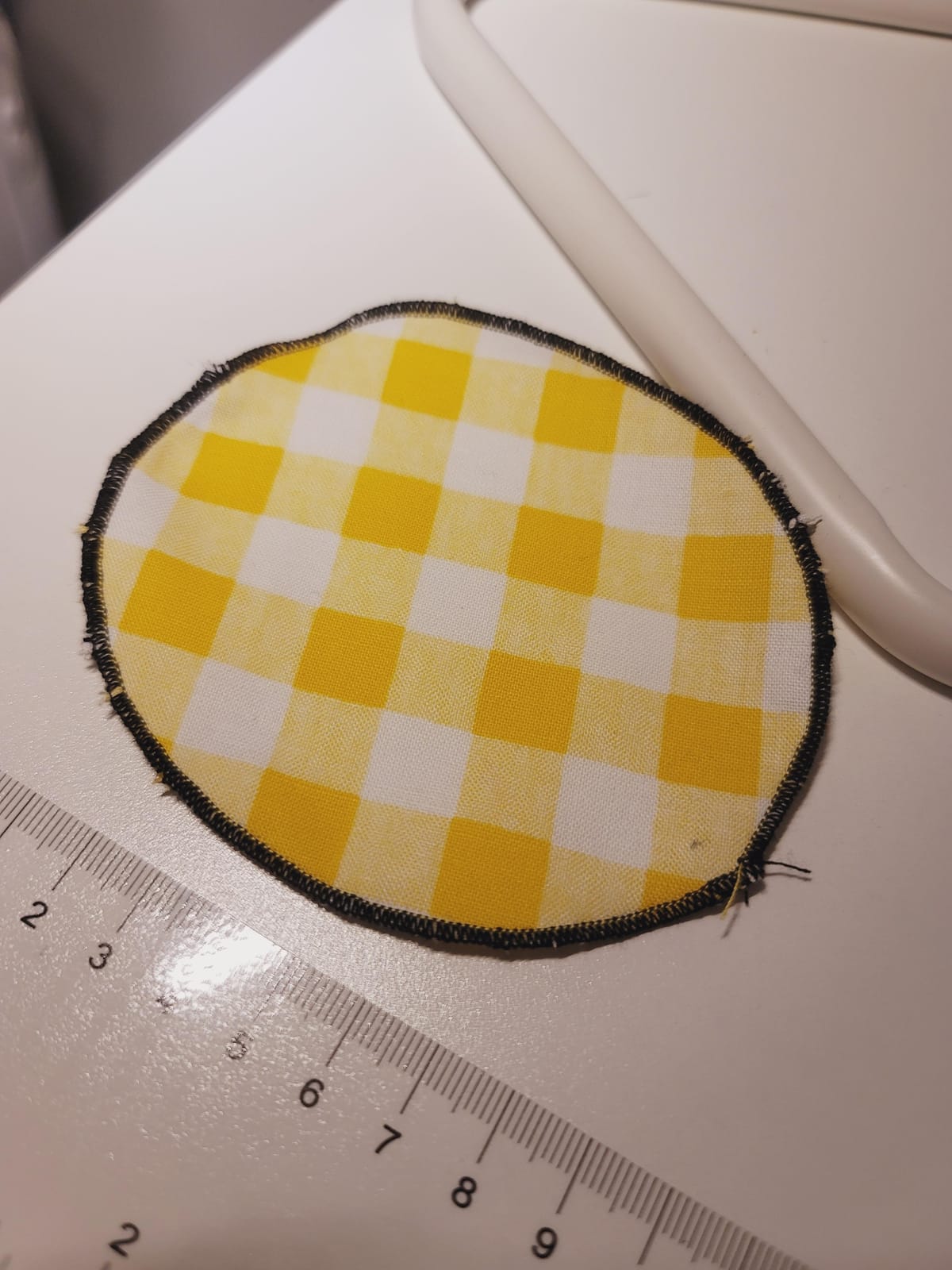
The included extension table is a feature I underestimated. It expands the work surface to handle quilts, large knit panels, and home decor projects. For sewists working on curtain panels or full-sized quilts, that support keeps the fabric flat and the stitch length consistent across the whole seam.
Regular oiling is part of the deal with this machine. Skipping it leads to a louder motor and more vibration. The threading is straightforward with the numbered upper and lower thread loopers, but you will want to keep a small bottle of serger oil nearby. The warranty service can also be slow, so I recommend registering the machine the day it arrives.
For whom it is a good fit
Sewists working primarily with knit fabric, quilters who want a serger to finish quilt edges, and home decor makers handling large panels. The carbon steel blade and extension table are the differentiators.
For whom it falls short
Sewists who forget to oil their machines will struggle with noise over time. If you want coverstitch functionality, look at the SINGER 14T968DC combo instead.
8. JUKI MO644D Serger – Best for Speed
JUKI MO644D Portable Serger, White
2/3/4 thread
1,500 spm
Auto rolled hem
Differential feed
Pros
- 1
- 500 stitches per minute is the fastest in this roundup
- Powerful knife system with dedicated drive mechanism
- Color-coded threading makes setup faster than expected
- Automatic rolled hem feature saves time on scarves and napkins
- 5-year limited warranty from a brand with industrial heritage
Cons
- Sews light to medium weight fabric only (not for heavy denim)
- Manual tension release takes practice to master
The JUKI MO644D is the speed demon of the roundup. At 1,500 stitches per minute, it outruns every other serger on this list by 200 spm. For sewists working on long production runs or big home decor projects, that extra speed adds up to real time savings across a weekend of sewing.
Juki built its reputation in industrial sewing, and the MO644D carries some of that DNA. The knife system has a dedicated drive mechanism separate from the needle drive, which means the cut edge stays clean even at top speed. On lighter fabrics, the difference is noticeable. The auto rolled hem feature also saves time on scarves, napkins, and ruffled projects.
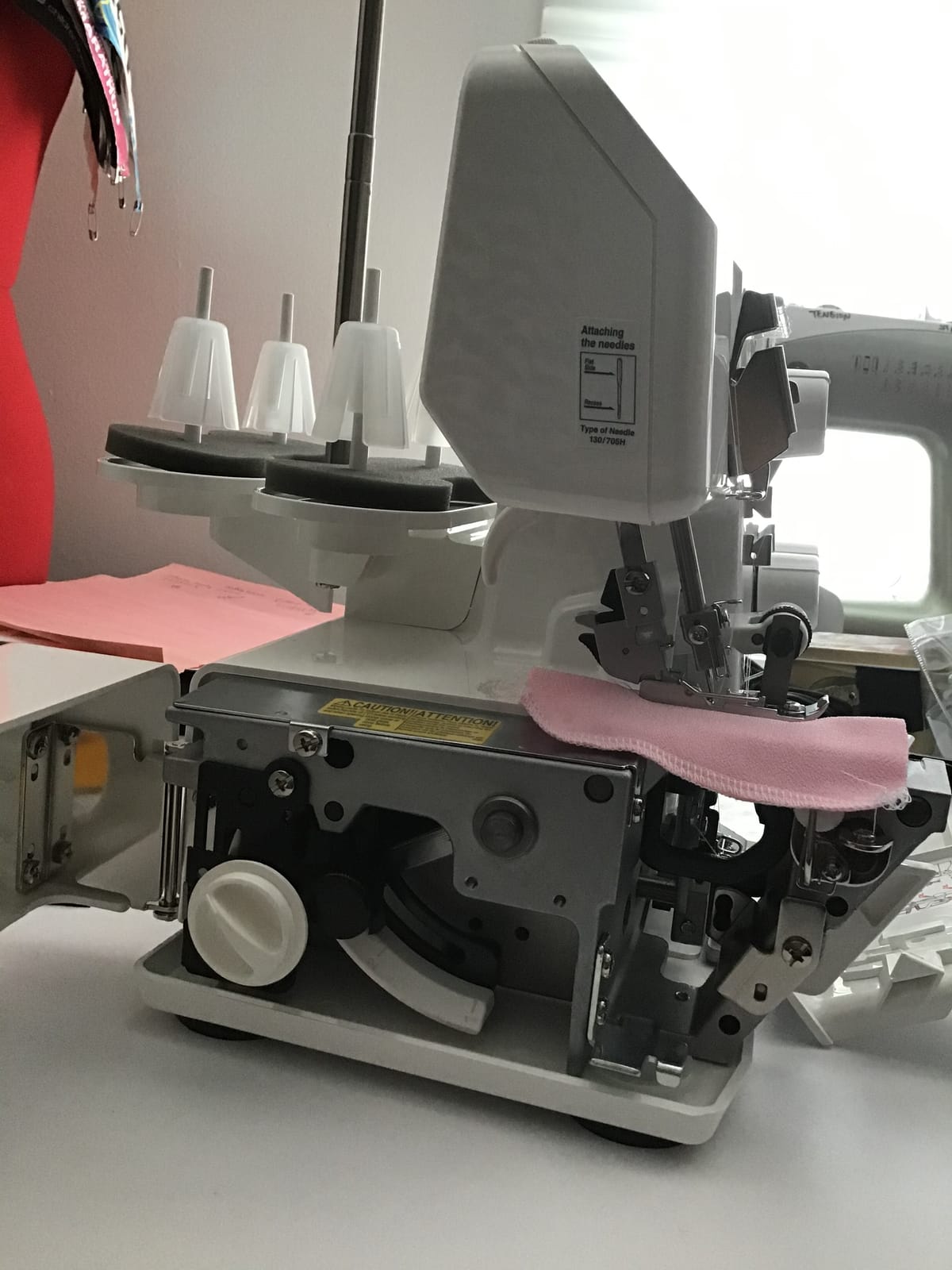
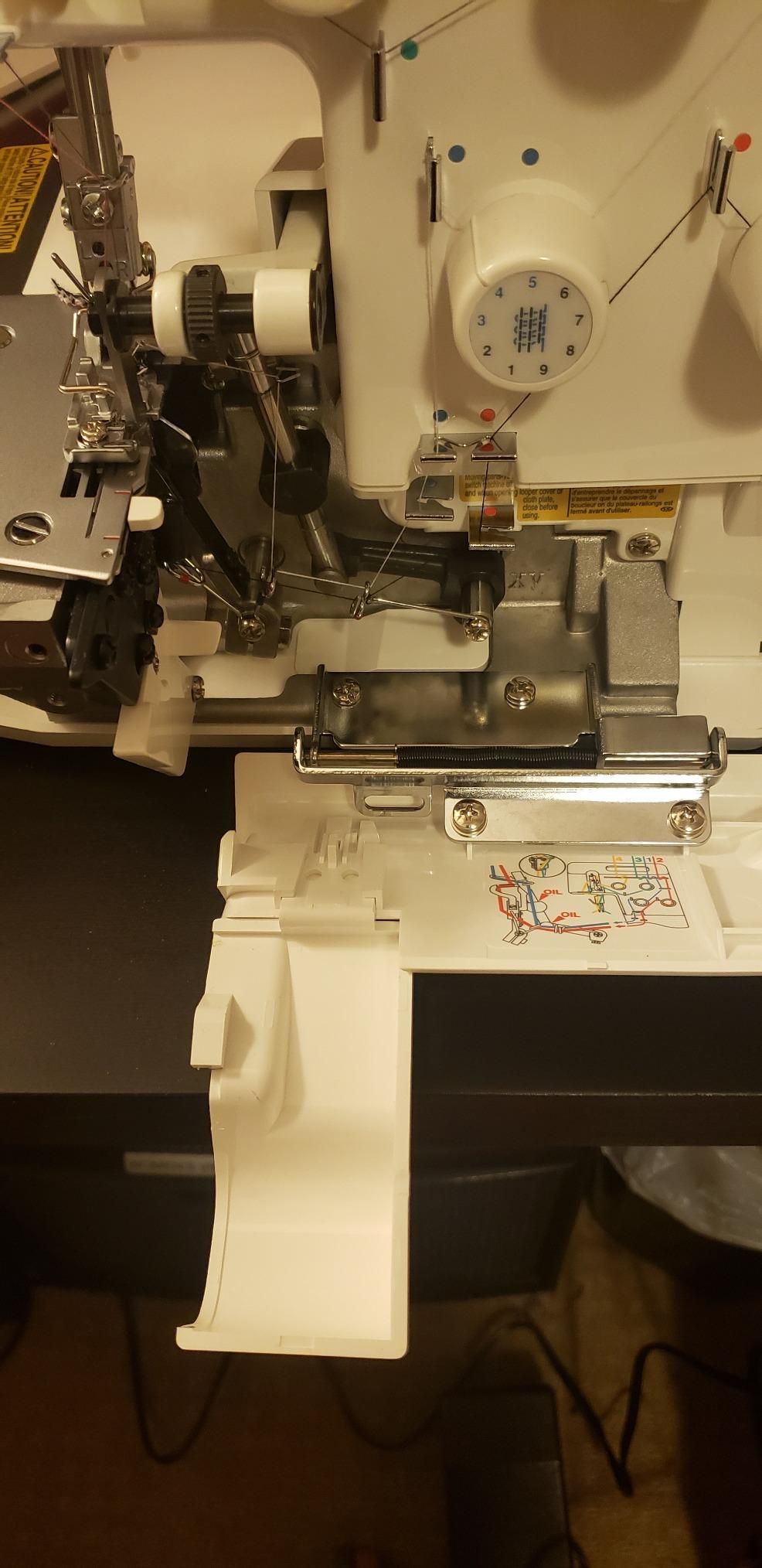
Threading the MO644D uses color-coded guides along the standard 2/3/4 thread paths. Setup took me about 12 minutes on the first attempt, faster than most machines with this many features. The differential feed adjusted smoothly across a range of knit and woven fabrics.
The main limitation is fabric weight. The MO644D is rated for light to medium weight fabric, so it is not the right pick for heavy denim or upholstery. The manual tension release process also takes practice, and you will want to watch a tutorial before your first threading.
For whom it is a good fit
Sewists prioritizing speed, home decor makers working on long seams, and anyone who values Juki’s industrial reputation. It is also a strong pick for sewists who want a 5-year limited warranty.
For whom it falls short
Heavy fabric sewists should look at the SINGER X5004-HD or Brother ST4031HD instead.
Buying Guide: How to Choose the Best Serger for Home Sewing
A serger is a specialized machine, and the right one for your sewing room depends on what you actually sew. This buying guide covers the features that matter, the thread-count types you will see in every product listing, and the questions I get most often from readers picking their first serger.
What Is a Serger and How Does It Differ From a Sewing Machine?
A serger is an overlock sewing machine that trims the fabric edge and finishes the seam with multiple threads in a single pass. Your regular sewing machine uses a single needle and bobbin to make a lockstitch, while a serger uses two needles and one or two loopers to wrap thread around the fabric edge. The result is a clean, professional seam that resists fraying and stretches with knit fabric, which is why the best sergers for home sewing are essential for garment makers.
The other key difference is speed. Most home sergers run at 1,300 stitches per minute, and the Juki MO644D in this roundup reaches 1,500. That is roughly twice the speed of a typical home sewing machine, which is why a serger pays for itself quickly on projects with long seams.
Types of Sergers by Thread Count
Thread count is the single most important spec to understand when comparing sergers. Each thread count has a specific use case, and most home sewists end up using 3 and 4 thread most of the time.
2-thread serger: A lightweight overlock stitch used for delicate edge finishing on sheers, scarves, and lightweight knits.
3-thread serger: The most common home serger stitch. Perfect for finishing seam allowances on wovens and lightweight decorative edges.
4-thread serger: The standard seam stitch for knit and stretchy fabric. Adds a second needle line for strength and flexibility.
5-thread serger: Combines a 4-thread safety stitch with a coverstitch. Found on combo machines like the SINGER 14T968DC.
Key Features to Look for in a Home Serger
Beyond thread count, three features make the biggest difference in everyday use. Differential feed controls how the front and back feed dogs move fabric, and it is critical for preventing stretch and puckering on knits. A color-coded threading system turns a 20-minute setup into a 10-minute setup, which matters when you sit down to sew after a long day.
Stitches per minute (spm) determines how fast you finish long seams. Most home sergers cluster around 1,300 spm. The Juki MO644D pushes that to 1,500, and the Brother 2340CV coverstitch runs at 1,100 because coverstitch stitches are more complex per pass.
Differential Feed Explained
Differential feed is a pair of feed dogs in front of the needles that move at slightly different speeds. A 1.0 ratio feeds both layers evenly, which is ideal for wovens. Above 1.0, the front feed dogs move faster than the back, which gathers the fabric. Below 1.0, the back feed dogs move faster, which stretches the fabric. For knits, you typically want a ratio above 1.0 to prevent the seam from stretching out as you sew.
Serger vs Coverstitch Machine
A coverstitch machine does one specific job: it creates the dual-needle topstitch hem you see on store-bought t-shirts, leggings, and activewear. A serger does edge finishing and seam construction but cannot do a coverstitch hem. Combo machines like the SINGER 14T968DC do both, while dedicated coverstitch machines like the Brother 2340CV do only the hem. If you sew mostly knits and want professional hems, you need either a combo or a dedicated coverstitch.
Is a Serger Worth It for Home Sewing?
For sewists who make garments regularly, the answer is yes. A serger cuts sewing time in half on seam finishing and produces stretchy seams that look like ready-to-wear. For quilters and crafters who rarely sew garments, a serger is a luxury. Most home sewists who sew weekly find a serger pays for itself within the first year.
Common Beginner Mistakes to Avoid
The most common beginner mistake is skipping the pre-oiling step on machines like the Brother 1034D. New sergers arrive dry, and running them without oil shortens motor life. The second mistake is forcing thread through the tension discs when threading. Sergers are tension-sensitive, and forcing the path can break tension calibration.
Finally, do not skip the differential feed adjustment when switching between wovens and knits. Running knit fabric at a 1.0 ratio causes stretching, and running woven fabric at a 1.5 ratio causes puckering. The setting takes two seconds to change and makes a visible difference in stitch quality.
Total Cost of Ownership
A serger is not a one-time purchase. Thread cones run out faster than standard spools because sergers use 3 to 5 threads at once. Serger oil, replacement blades, and snap-on presser feet are recurring costs. Budget around 50 to 100 dollars per year for consumables on a machine you use weekly. Heavy-duty blades on machines like the Brother ST4031HD last longer, which offsets some of that cost.
Frequently Asked Questions
What is the difference between a serger and a sewing machine?
A serger uses two needles and one or two loopers to trim the fabric edge and finish the seam with multiple threads in a single pass, producing a clean, stretchy, fray-resistant edge. A regular sewing machine uses a single needle and bobbin to make a lockstitch and cannot trim the seam allowance. Sergers run faster, handle knits better, and produce ready-to-wear seams, while sewing machines are better for topstitching, buttonholes, and detail work.
Are sergers worth it for home sewing?
For sewists who make garments, especially knit or activewear, a serger is worth the investment because it cuts seam finishing time roughly in half and produces professional stretchy seams. For quilters and casual crafters who rarely sew garments, a serger is a luxury that you may not use enough to justify. Most home sewists who use a serger weekly find the machine pays for itself within the first year.
How many threads should a beginner serger have?
A beginner serger should have at least 3-thread and 4-thread capability. The 3-thread overlock covers basic seam finishing on wovens and lightweight edge work. The 4-thread adds a second needle line for stronger and stretchier seams on knit fabric. Most home sergers, including every pick in this roundup, support both. You only need 5-thread or coverstitch if you specifically sew knit hems and want professional ready-to-wear results.
What is differential feed on a serger?
Differential feed is a pair of feed dogs in front of the needles that move at slightly different speeds to control how fabric feeds through the machine. A 1.0 ratio feeds both layers evenly, which is ideal for wovens. Above 1.0 gathers the fabric. Below 1.0 stretches it. For knit fabric, set the ratio above 1.0 to prevent stretching and puckering on stretchy seams.
Can a serger replace a regular sewing machine?
A serger cannot fully replace a regular sewing machine. Sergers excel at edge finishing, seaming, and hemming knits, but they cannot do buttonholes, topstitching, zippers, or detailed construction work the way a standard sewing machine can. Most sewists who own both use the serger for finishing seams and knit hems and the sewing machine for topstitching, buttonholes, and detail work.
Do sergers come with a coverstitch function?
Most home sergers do not include a coverstitch function. Only 5-thread combo machines like the SINGER Professional 14T968DC combine overlock and coverstitch in one machine. Dedicated coverstitch machines like the Brother 2340CV produce professional knit hems but cannot do overlock stitching. If you want both functions in one machine, look for a combo serger and coverstitch unit.
Final Verdict
The best serger for home sewing is the one that matches what you actually sew. For most home sewists, the Brother 1034D remains the right starting point, with 12k+ reviews backing its beginner-friendly threading and durable metal frame. If you sew mostly knits and want a wider work surface, the Brother ST4031HD brings a tougher blade and an extension table. For garment sewists chasing coverstitch hems, the SINGER Professional 14T968DC delivers a 5-thread combo that replaces two machines on your table.
Whatever you pick from this roundup, give yourself a week to learn the threading system before judging the machine. Most sergers feel intimidating on day one and become second nature by the third project. The best sergers for home sewing in 2026 all share one thing: they make your finished garments look like they came from a store, and that is a skill worth investing in.