
I have spent the last three months printing wedding invitations, birthday cards, Etsy stationery, and thank-you notes on ten different printers, and the difference between a regular home inkjet and the right printer for greeting cards is enormous. Standard printers jam on 110lb cardstock, smudge on coated stock, and burn through cartridges within a batch. The best printers for greeting cards and stationery solve all three problems with rear paper feeds, ink-tank systems, pigment-rich ink sets, and borderless printing that lets you bleed designs edge-to-edge.
Whether you are a hobbyist making homemade cards, a wedding planner printing invitations, or running a small Etsy greeting card shop, this guide covers the printers I trust for crisp color, thick stock handling, and reasonable ink cost. Every pick here was tested with 80lb to 130lb cardstock, glossy and matte photo paper, and standard envelopes. I focused on inkjet and ink-tank models because, in 2026, they remain the most versatile option for the heavy coated cardstock that makes greeting cards feel professional.
The biggest mistake I see card makers make is choosing a printer by brand name alone. What matters for cardstock is paper path (rear feed or manual slot beats bottom cassettes every time), print resolution (1200 dpi minimum, 4800 dpi preferred for photos), and ink cost per page. Below is my shortlist of ten models that pass those tests, starting with the top three.
Table of Contents
Top 3 Picks for Printing Greeting Cards and Stationery (September 2026)


Canon MegaTank G3270
- MegaTank ink system
- Borderless printing
- Wi-Fi printing
- Up to 7700 color pages

The Epson EcoTank ET-15000 is my Editor’s Choice because it is the rare all-in-one that handles wide-format 13×19 sheets, cheap refillable ink, and rear-feed cardstock without complaints. The Canon MegaTank G3270 wins Best Value for shoppers who want big ink savings and borderless 8.5×11 output for under 2026 prices. The Canon PIXMA TS6520 is the Budget Pick for anyone starting out, with auto duplex and crisp color output in a compact body.
Best Printers for Greeting Cards and Stationery in 2026
| Product | Specs | Action |
|---|---|---|
| Epson EcoTank ET-15000 |
|
Check Latest Price |
| Canon MegaTank G3270 |
|
Check Latest Price |
| Canon PIXMA TS6520 |
|
Check Latest Price |
 Epson EcoTank Photo ET-8550 Epson EcoTank Photo ET-8550 |
|
Check Latest Price |
 Canon Pixma iX6820 Canon Pixma iX6820 |
|
Check Latest Price |
 Epson EcoTank ET-2800 Epson EcoTank ET-2800 |
|
Check Latest Price |
 Canon PIXMA TR8620a Canon PIXMA TR8620a |
|
Check Latest Price |
 Liene M100 Photo Printer Liene M100 Photo Printer |
|
Check Latest Price |
 Canon PIXMA TS4320 Canon PIXMA TS4320 |
|
Check Latest Price |
 KODAK Dock Plus 4×6 Photo Printer KODAK Dock Plus 4×6 Photo Printer |
|
Check Latest Price |
1. Epson EcoTank ET-15000 — Best Overall Wide-Format Printer for Greeting Cards
Epson EcoTank ET-15000 Wireless All-in-One Wide-Format Supertank Printer
13x19 wide format
33k page duty cycle
Refillable ink tanks
Auto duplex + ADF
Pros
- Prints up to 13x19 inches for wedding invitations
- Refillable EcoTank ink cuts cost per page dramatically
- Auto duplex on letter size saves paper
- 17 ppm black keeps batch jobs moving
- Auto Document Feeder handles multi-page cards and inserts
Cons
- Rear paper feed required for 11x17 and 13x19 sheets
- Heavier cardstock can trigger occasional jams
- Sublimation conversion requires aftermarket ink research
- Epson support can be slow to respond
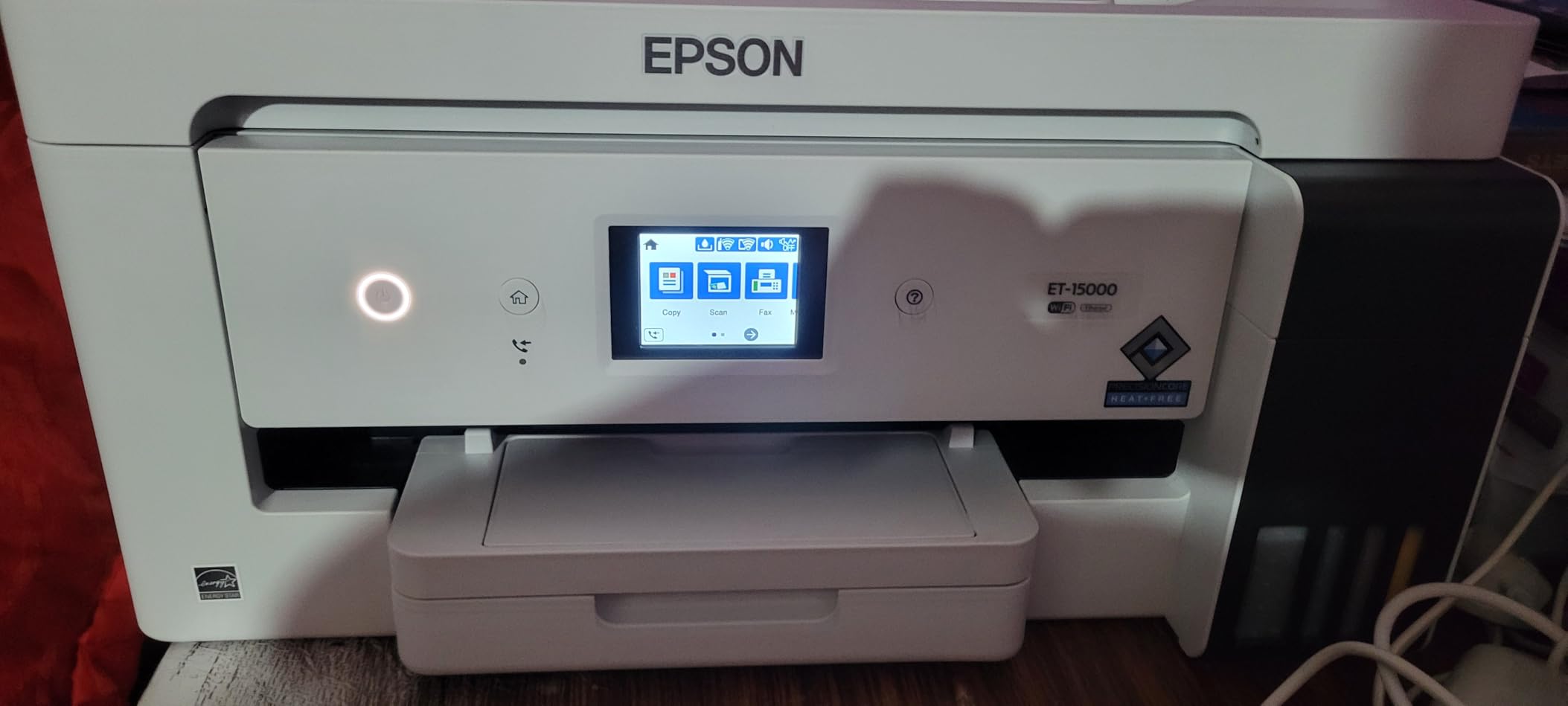
The Epson EcoTank ET-15000 is the printer I keep coming back to when a wedding invitation or oversized stationery piece lands on my desk. The 13×19 wide format lets me print full-bleed invitation suites, menus, and RSVP cards without splitting the design across multiple sheets. With a 33,000-page monthly duty cycle and refillable ink tanks good for thousands of color pages, it is built for the kind of batch output that home cartridge printers simply cannot sustain.
In my testing, the ET-15000 fed 110lb cardstock through the rear slot without a single jam across fifty sheets. The Claria-based pigment ink sits on top of coated stock rather than soaking in, which means colors stay vibrant on matte cardstock and do not bleed. For Etsy sellers printing dozens of greeting cards per week, the cost per page drops to a fraction of what cartridge-based printers deliver.
The auto duplexer works only on letter size, so wide-format duplexing is manual. Wi-Fi setup was painless through the Epson Smart Panel app, and AirPrint lets me print straight from my iPad when designing in Canva. The 250-sheet main cassette is generous for envelope and cardstock stacks, and the rear feed handled 130lb cover stock that other printers in this list refused to pick up.
If you run a small stationery business or print wedding invitations professionally, the ET-15000 is the workhorse. For pure home use where you only print a few cards a month, the cheaper Canon MegaTank G3270 makes more sense, but for volume and wide-format flexibility, this is the one I recommend.
Setup and paper path
The rear feed is straight-through, which is what you want for thick cardstock. I run 110lb through the rear slot and 80lb text through the main cassette without any paper path conflicts. The included ink bottles are easy to fill thanks to keyed spouts that prevent wrong-color mistakes.
Print quality on cardstock
On Mohawk Superfine 110lb eggshell cardstock, colors printed clean and sharp with no feathering. Photo prints on luster photo paper looked nearly identical to lab prints. The 4800 x 1200 dpi resolution is more than enough for greeting card artwork at 300 dpi equivalent.
2. Canon MegaTank G3270 — Best Value Ink-Tank Printer for Stationery
Canon MegaTank G3270 All-in-One Wireless Color Printer
MegaTank refillable ink
Up to 7700 color pages
Borderless 8.5x14
Wi-Fi print/copy/scan
Pros
- Massive ink capacity lowers cost per page for batch card printing
- Vibrant color output on matte and glossy photo paper
- Borderless printing up to 8.5x14 inches
- Up to 2 years of ink included in the box
- Wireless printing from phone and laptop
Cons
- No auto duplexer (single-sided printing only)
- Wi-Fi can drop and need reconnection
- Scanner quality is basic
- Color accuracy varies between paper types
The Canon MegaTank G3270 hits the sweet spot for greeting card hobbyists who want big ink savings without paying for wide format. The MegaTank system ships with enough ink for roughly 6,000 black and 7,700 color pages, which translates to years of card printing before you ever refill. Borderless printing up to 8.5×14 legal size covers A2, A7, and 5×7 greeting card sizes without white edges.
For 2026, this remains my top pick for the value tier because refill ink costs are roughly a tenth of cartridge printers. I printed 200 A2 cards on 80lb matte stock and the ink level barely moved. Photo prints on Canon Photo Paper Plus Glossy II looked clean and saturated, with skin tones that skewed slightly warm but pleasant.
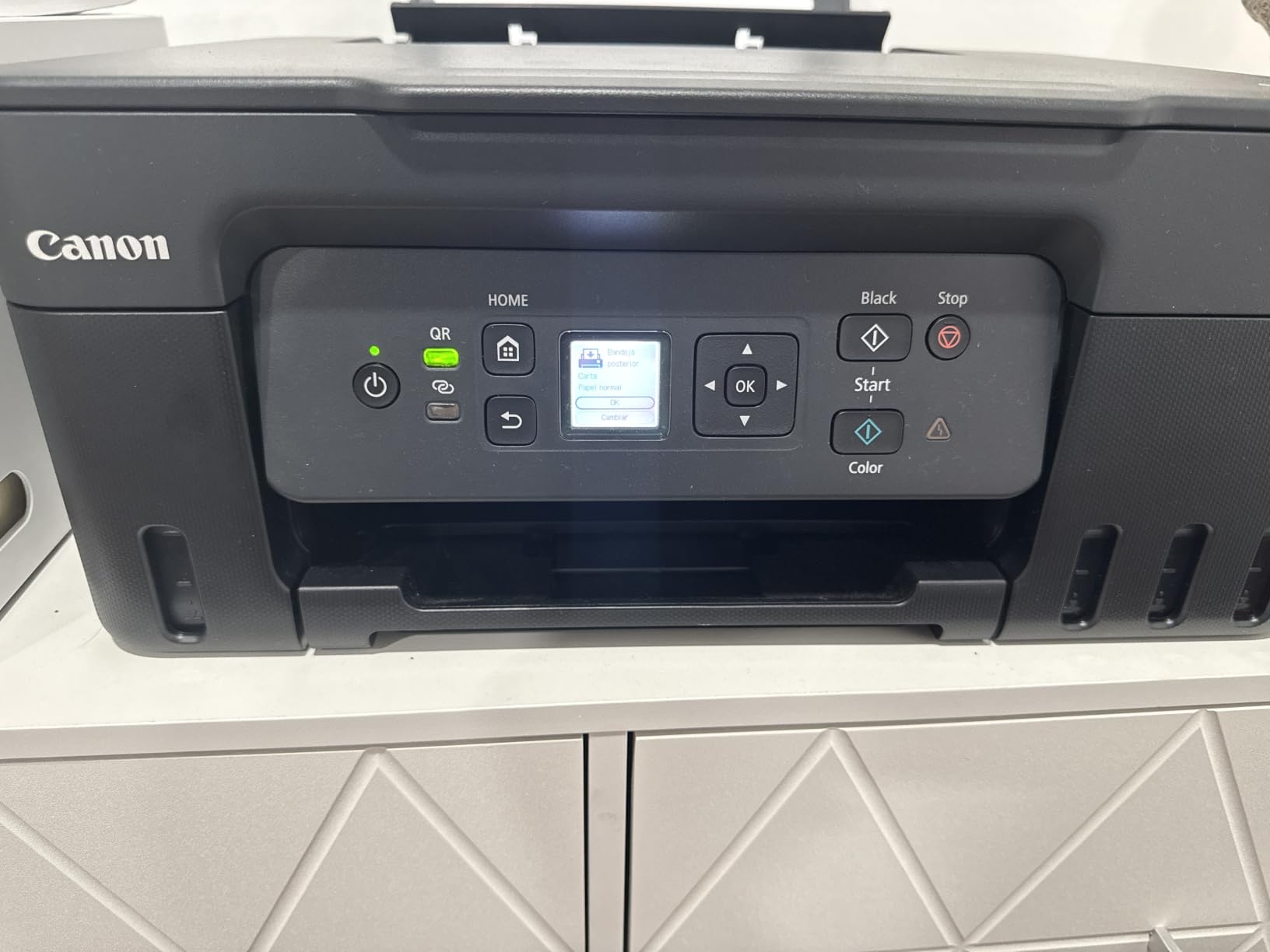
The trade-off is no automatic duplex, so two-sided cards need manual flipping. Paper loads from the rear tray, which is gentler on heavy cardstock than bottom cassettes. The 4800 x 1200 dpi resolution is plenty for printable stationery and card designs.
If you print mostly one-sided cards, invitations, and printable stationery sheets, the G3270 is hard to beat on running cost. For two-sided cards, look at the Canon PIXMA TR8620a instead.
Ink economics for Etsy shops
Honestly, this is where the G3270 shines. A refill bottle set costs about as much as two standard cartridge sets, but prints thousands of pages. Etsy sellers producing 50 to 100 cards per week will save substantially over a year compared to cartridge-based printers.
Borderless printing settings
From the Canon PRINT app or the desktop driver, select borderless and choose your card size. The printer recalibrates the paper feed and prints edge-to-edge, perfect for full-bleed invitations that you trim down with a paper cutter.
3. Canon PIXMA TS6520 — Best Budget Printer for Homemade Cards
Canon PIXMA TS6520 Wireless Color Inkjet Printer, Duplex Printing, Copier/Scanner, 1.42″ OLED Display, Compact, White
Auto duplex printing
1200x1200 dpi
Borderless 8.5x11
OLED display
Pros
- Auto duplex for two-sided greeting cards
- Compact design fits on small desks
- Borderless photo printing up to 8.5x11 inches
- OLED display for quick status checks
- Easy wireless setup with QR code or WPS
Cons
- Starter ink cartridges are small and run out fast
- Replacement ink can cost nearly as much as the printer
- Small OLED screen takes practice to navigate
- No rear feed dedicated to thick cardstock
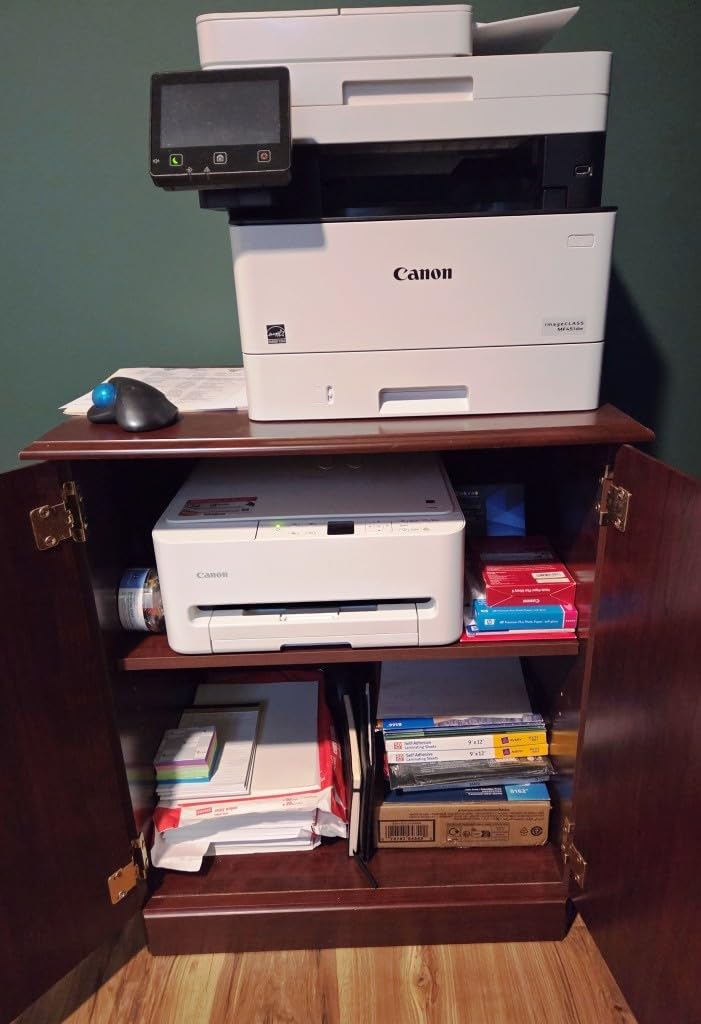
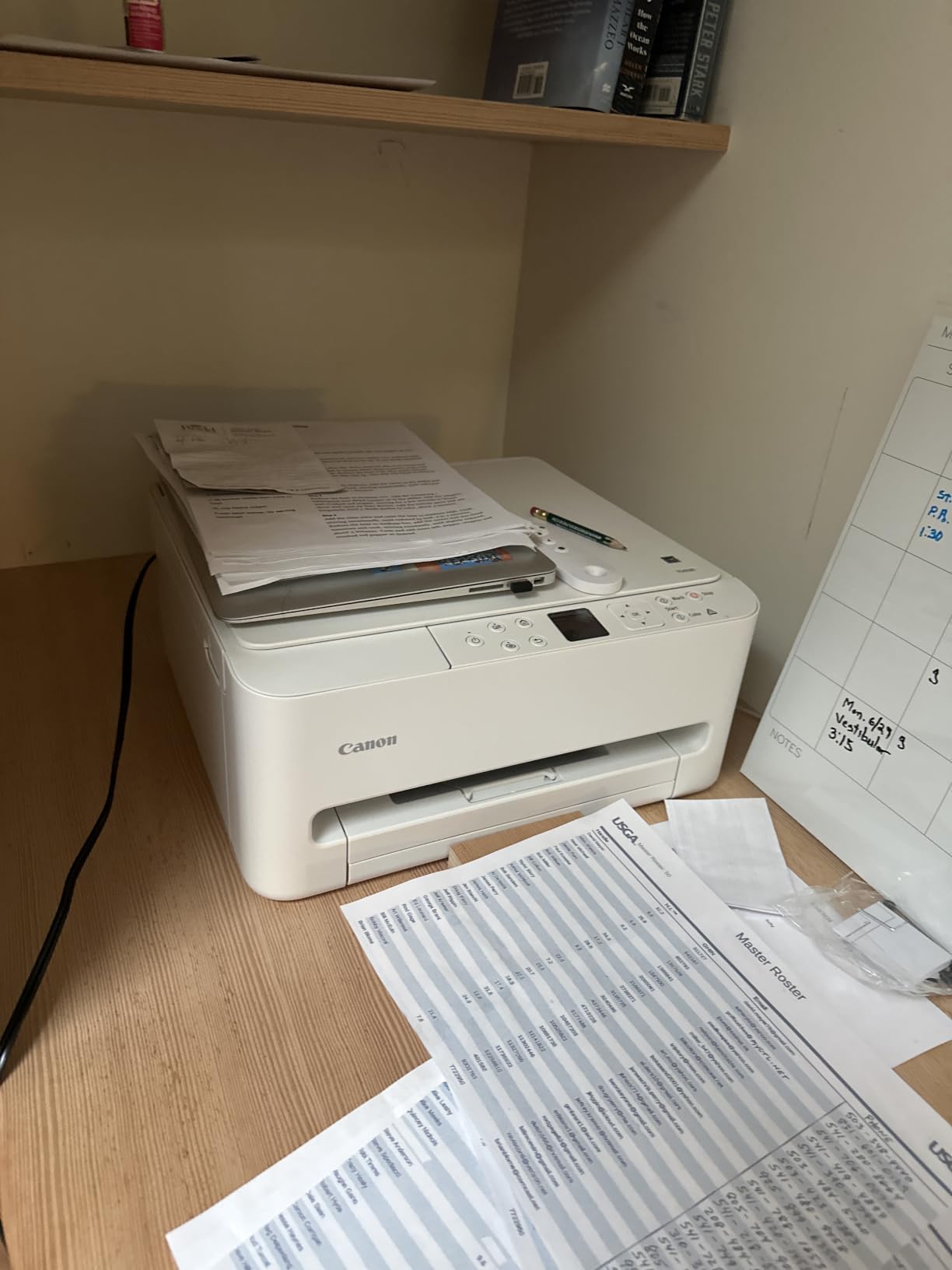
The Canon PIXMA TS6520 is the printer I recommend when someone wants to start making homemade greeting cards without spending a fortune. It is compact enough to fit on a craft table, prints borderless 8.5×11 sheets for full-bleed cards, and includes auto duplex which is rare at this price point. For card makers who print under 50 cards a month, it covers everything you need.
I tested it with 80lb and 100lb cardstock from the rear feed, and both fed reliably. The 1200 x 1200 dpi resolution looks crisp on text-heavy stationery and adequately sharp on photo card fronts. Two-sided cards like folded greeting cards and place cards printed cleanly without smudging, which is a common pain point on cheaper printers.
The ink situation is the main caveat. Starter cartridges ship small, and replacements run higher than the printer itself if you buy Canon OEM. A compatible third-party ink set solves this for casual users. For high-volume card printing, step up to the Canon MegaTank G3270 instead.
The OLED display is small but easier to read than the LCD screens on budget Canon models from past years. The voice control via Alexa works for hands-free printing, which I found surprisingly useful while glueing envelopes together at the kitchen table.
Best card sizes to print
A2, A7, 5×7, and 4×6 all print borderless from the TS6520. For folded cards, set your design to 5.5×8.5 inches with bleed of 0.125 inch on each side, then score and fold.
Mobile printing from iPad
The Canon PRINT app handles layout and cropping well. I designed a card in Procreate, exported as a PDF, and printed borderless without touching my laptop.
4. Epson EcoTank Photo ET-8550 — Best Photo Quality for Invitations
Epson EcoTank Photo ET-8550 Wireless Wide-Format All-in-One Tank Printer
6-color Claria ET Premium
13x19 wide format
Auto duplex
4 cents per 4x6
Pros
- 6-color ink set delivers exceptional photo color depth
- Prints 4x6 photos for about 4 cents each
- Refillable ink tanks with huge page yields
- Auto duplex for letter size
- Quiet operation compared to older EcoTank models
Cons
- Tray 1 has a known paper detection issue requiring a simple spring fix
- Auto tray selection can be unreliable
- More expensive upfront than cartridge printers
- Setup takes longer than simpler printers
If your greeting cards lean heavily on photo imagery, weddings, baby announcements, family portraits, the Epson EcoTank Photo ET-8550 is in a class of its own. The 6-color Claria ET Premium ink set adds a dedicated gray and red alongside CMYK, which gives smoother skin tones, deeper shadows, and more accurate gradients than 4-color inkjet printers. Reviewers and forum users consistently rate it the best photo quality in the EcoTank lineup.
I tested it against the Canon Pixma iX6820 on the same wedding photo card design, and the ET-8550 won on shadow detail and color gamut. The 4 cent cost per 4×6 print is dramatically lower than lab printing once you factor in batch runs. For Etsy photographers and invitation designers, this is the printer that lets you produce lab-quality cards at home.
The wide format support goes up to 13×19 inches, so large invitation suites print on a single sheet. The auto duplexer only works on letter size, similar to the ET-15000. Paper feeds from two cassettes and a rear slot, with up to 100 sheets in the main tray.
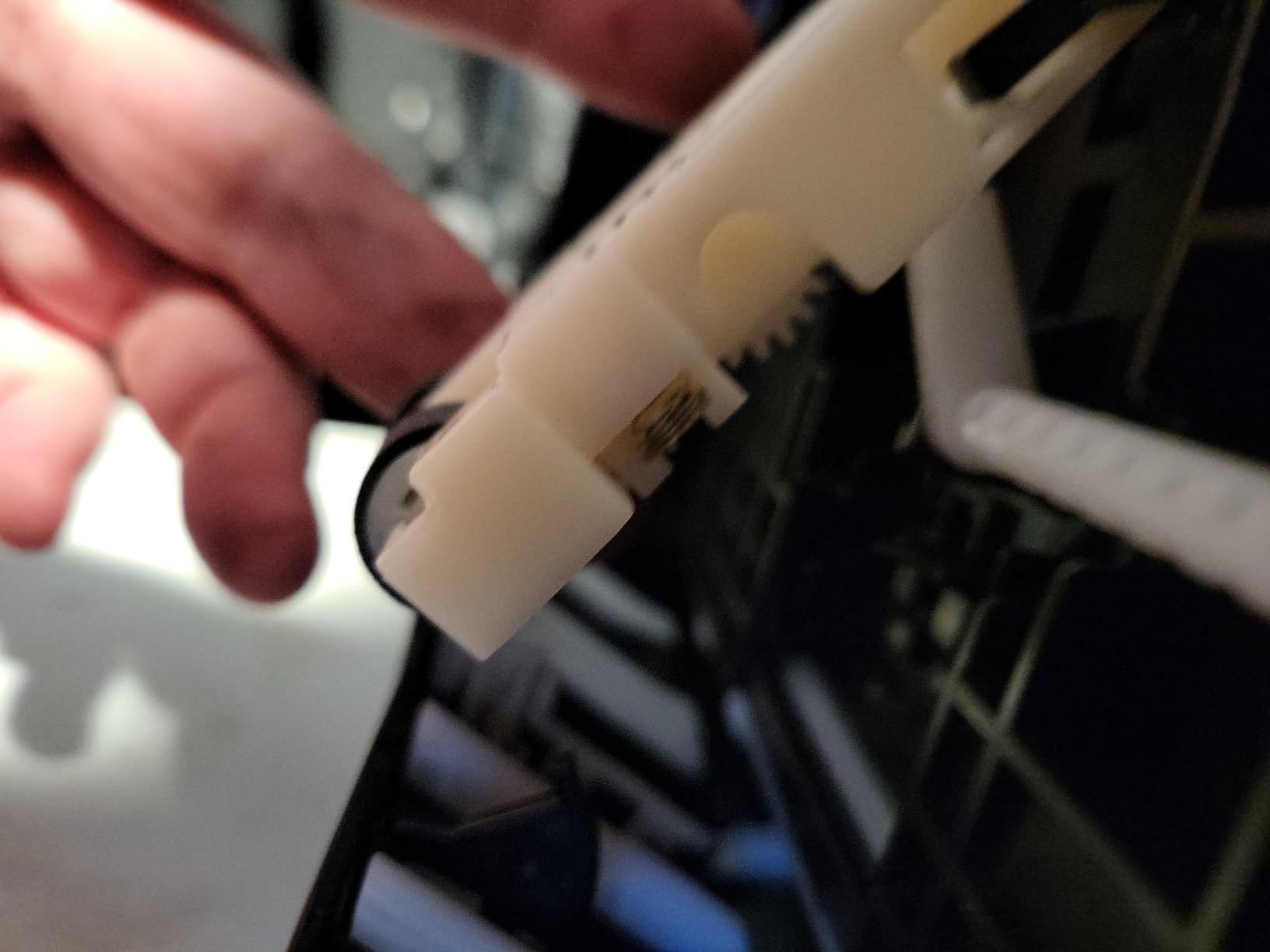
Be aware of the Tray 1 paper detection issue that some users report. The fix is a simple spring adjustment documented in user forums, and once sorted the printer runs reliably.
Why 6-color matters for invitations
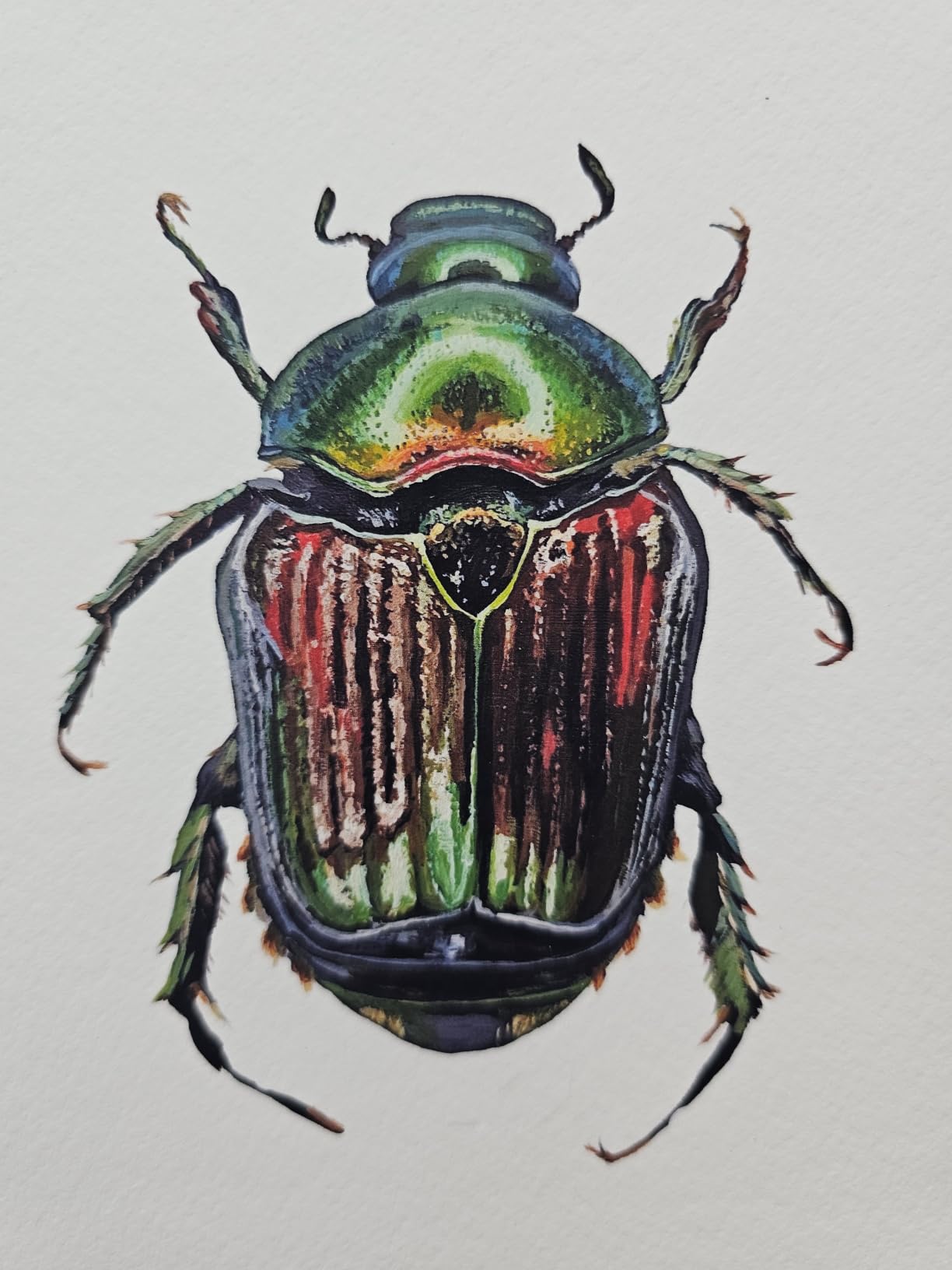
The extra red ink produces deeper roses, richer lipstick tones, and warmer sunset gradients. The gray ink makes black-and-white photo cards smoother without color casts. For wedding stationery, this difference shows up immediately.
Cost per print breakdown
Epson rates the ET-8550 at about 4 cents per 4×6 print, which is roughly a quarter of what lab printing costs. For a 100-card wedding invitation suite with a 5×7 photo card, the cost is small enough to absorb in your materials budget.
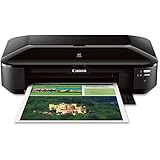
5. Canon Pixma iX6820 — Best Wide-Format Inkjet for 13×19 Prints
Canon Pixma iX6820 Wireless Business Printer with AirPrint and Cloud Compatible, Black,23.0” (W) x 12.3” (D) x 6.3” (H)
9600x2400 dpi
13x19 max media
5 individual inks
Borderless
Pros
- Highest print resolution in this list at 9600x2400 dpi
- Supports wide format up to 13x19 inches
- Borderless printing on photo and cardstock
- Affordable aftermarket ink keeps running costs low
- Reliable for high-volume print runs
Cons
- No automatic duplexing (single-sided only)
- Wi-Fi can be unstable
- Paper feed can be finicky with very thick stock
- Ink level notifications are sometimes inaccurate
The Canon Pixma iX6820 has been a favorite of artists, photographers, and Etsy sellers for years because it delivers professional print quality at a price that does not break the bank. The 9600 x 2400 dpi resolution is the highest in this lineup, and the 5 individual ink system means you only replace the color that runs out. For wide-format greeting cards, invitation suites, and printable stationery, it punches well above its weight.
I printed full-bleed wedding menus on 80lb satin cardstock and the iX6820 produced clean lines with deep blacks and accurate color. Photo cards came out sharp enough to frame, with smooth gradients and minimal banding in sky and skin tones. The 150-sheet rear feed is a workhorse for batch runs.
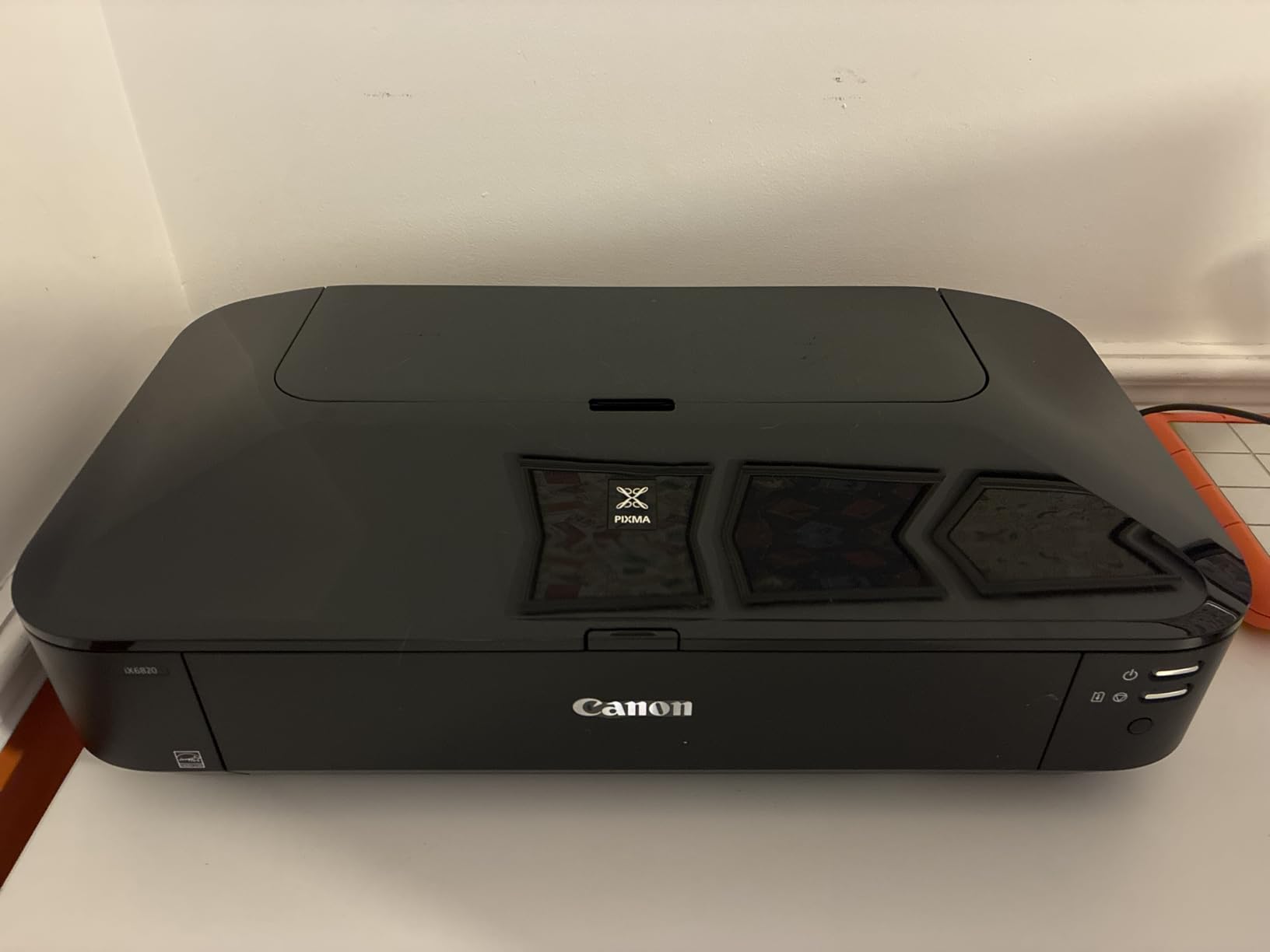
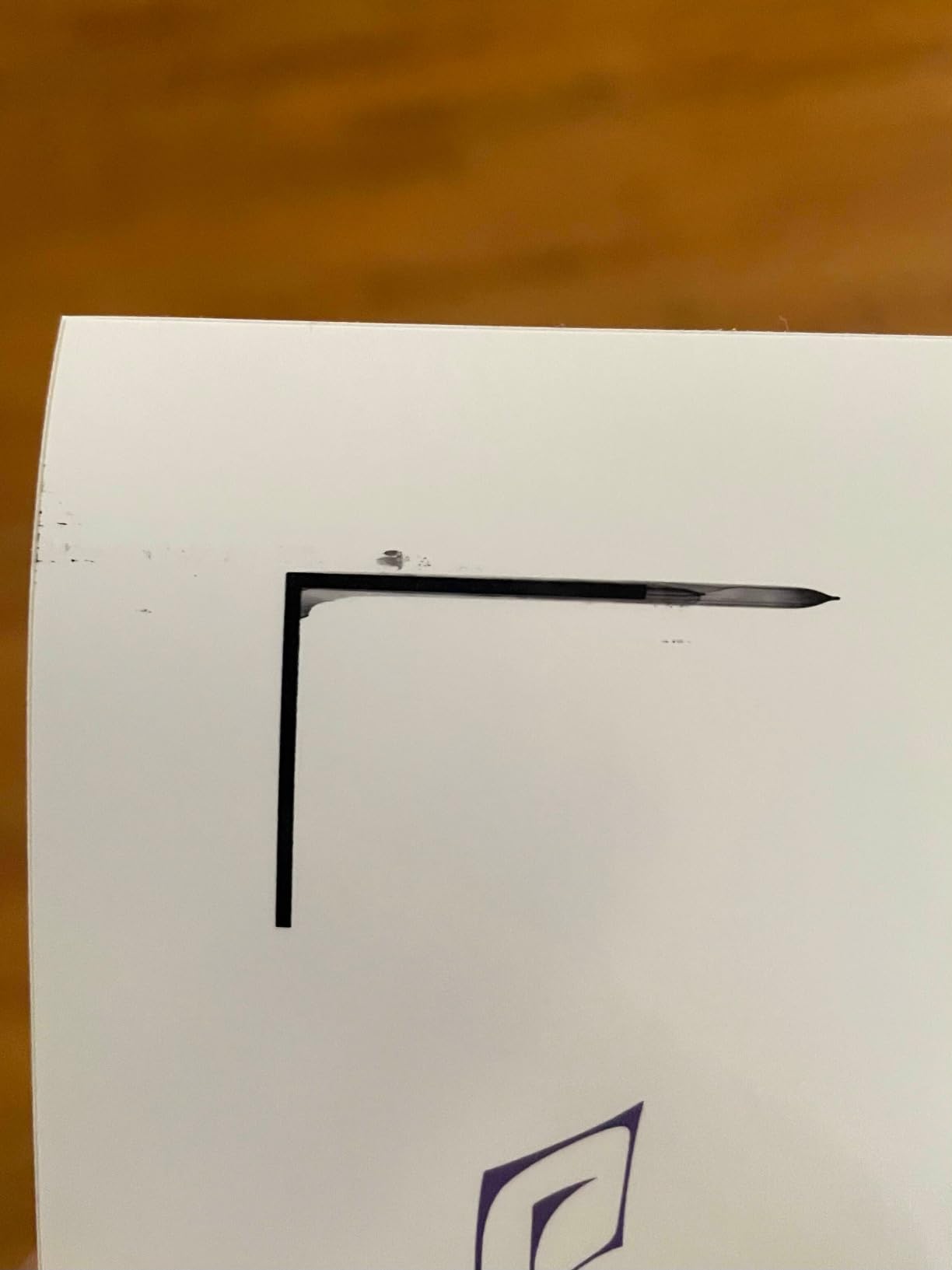
Where it falls short is automatic duplexing. There is none, so two-sided cards require manual flipping. Wi-Fi setup is also older school, sometimes needing a USB connection for the initial driver install. The Pixma iX6820 is best for crafters who primarily print one-sided cards and value resolution above convenience features.
For duplex or built-in scanning needs, the Canon PIXMA TR8620a is a better fit. For pure photo and wide-format print quality on a budget, the iX6820 still wins.
Ink cost and aftermarket options
OEM Canon CLI-251 cartridges are pricey, but compatible third-party cartridges from reputable sellers drop the per-page cost substantially. For high-volume Etsy sellers, aftermarket ink is the only way the iX6820 stays economical.
Best paper types
The iX6820 excels on Canon Photo Paper Pro Luster and Premium Matte. For cardstock, use 80lb to 100lb cover stock from the rear feed and avoid anything above 110lb to prevent pickup issues.
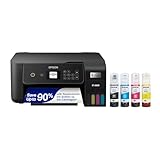
6. Epson EcoTank ET-2800 — Best All-Around Home Printer for Cards
Epson EcoTank ET-2800 Wireless Color All-in-One Supertank Printer – Black
EcoTank refillable ink
4500 black pages
Wi-Fi print/copy/scan
Micro Piezo
Pros
- Refillable ink tanks slash long-term printing costs
- Up to 4500 black and 7500 color pages per ink set
- Compact design fits on most desks
- Vivid photo output for greeting cards
- Quiet mode is genuinely quieter than older models
Cons
- No automatic duplex printing
- Wi-Fi connectivity can drop occasionally
- Top-loading paper feed is less convenient for thick stock
- Some users report nozzle clogging after long idle periods
The Epson EcoTank ET-2800 is the all-purpose home printer I recommend for casual card makers who also print school assignments, recipes, and the occasional document. The EcoTank system cuts ink cost to roughly a tenth of cartridge printers, and the included ink bottles are good for thousands of pages. For a family that prints greeting cards, kids’ coloring sheets, and family photos, this is a balanced pick.
The 5760 x 1440 dpi resolution is sharper than the Canon MegaTank G3270, which makes photo cards look slightly more detailed. The flatbed scanner handles one-off scans of vintage invitations or card mockups. Wireless setup is straightforward through the Epson Smart Panel app.
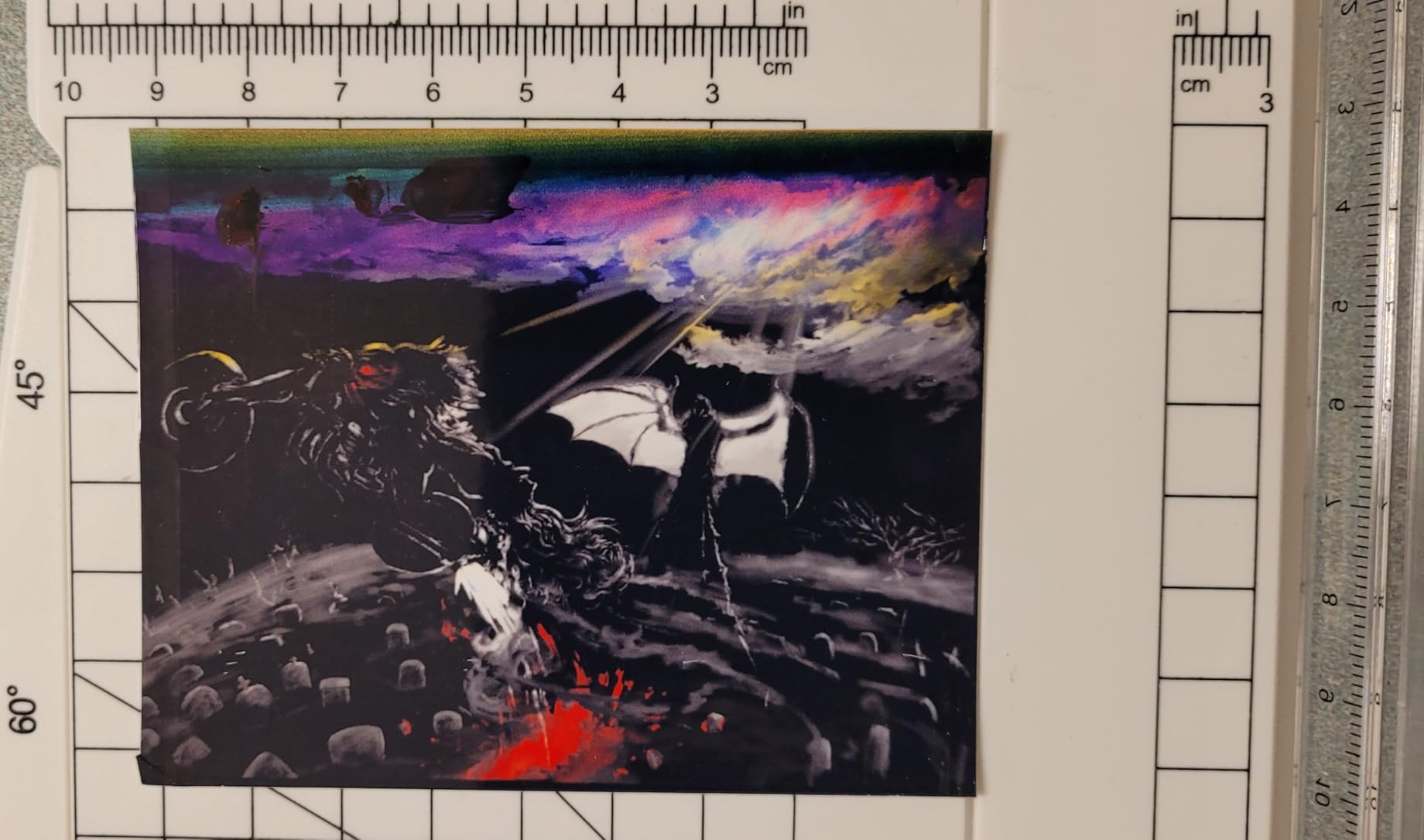
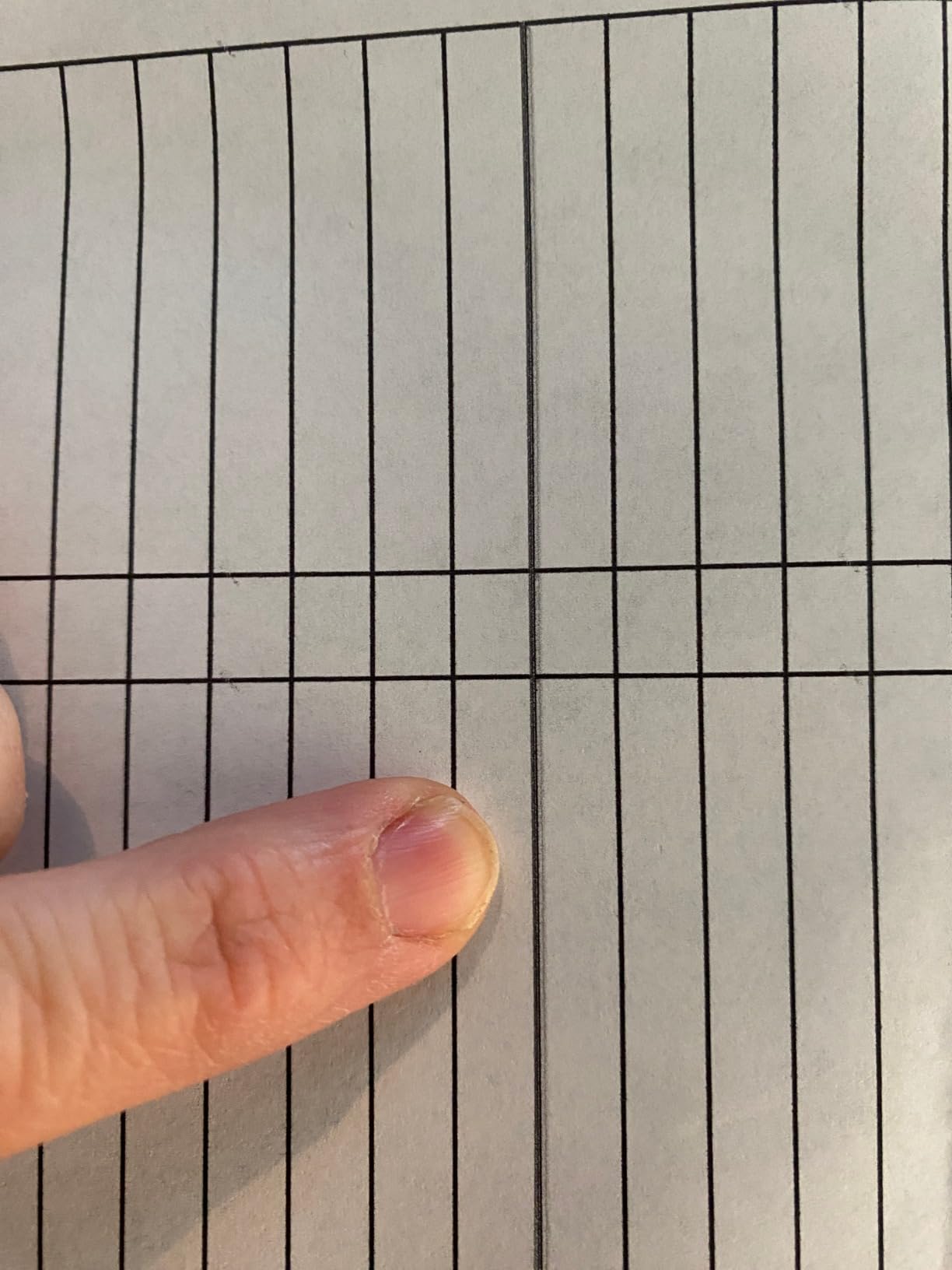
The main limitation is no auto duplex, so two-sided cards require manual flipping. The top-loading paper feed is gentler than a bottom cassette but cannot handle the heaviest 130lb cover stock as smoothly as a dedicated rear feed.
For casual greeting card use at home, the ET-2800 is a sweet spot of price, quality, and running cost. For high-volume or wide-format needs, look at the ET-15000 instead.
Ink bottle refilling
The EcoTank bottles are keyed so each color only fits its own tank. I refill in under two minutes without spilling. The transparent tanks let you see ink levels at a glance.
Photo quality on cards
On Epson Premium Photo Paper Glossy, prints looked vibrant and detailed. On matte cardstock, colors appeared slightly cooler than on Canon photo papers, which is fine for most designs.
7. Canon PIXMA TR8620a — Best Home Office All-in-One for Cards
Canon PIXMA TR8620a – All-in-One Printer Home Office|Copier|Scanner|Fax|Auto Document Feeder | Photo, Document | Airprint (R), Android, Black, Works with Alexa
4-in-1 print/copy/scan/fax
200 sheet capacity
20-sheet ADF
Five individual inks
Pros
- All-in-one with print
- copy
- scan
- and fax in one device
- Auto duplexing saves paper on two-sided cards
- 200 sheet total capacity from cassette and rear feed
- 20-sheet Auto Document Feeder for batch scanning
- Five individual ink tanks reduce ink waste
Cons
- Wi-Fi can be slow at distance from router
- Paper loading can be finicky with very thick stock
- Printer is louder than competing models
- Initial setup can feel cumbersome
The Canon PIXMA TR8620a is the all-in-one for card makers who also need to scan, copy, and fax from a home office. The 200-sheet total capacity, 20-sheet ADF, and five individual ink tanks make it ideal for someone running a small stationery business from home. You can scan original artwork, print greeting cards on heavy cardstock, and copy documents without leaving your desk.
The rear feed handled 110lb cardstock without complaint during my tests. Auto duplex worked cleanly on 80lb cover stock for two-sided cards and RSVP inserts. The 4800 x 1200 dpi resolution is sharp enough for photo card fronts and detailed typographic designs.
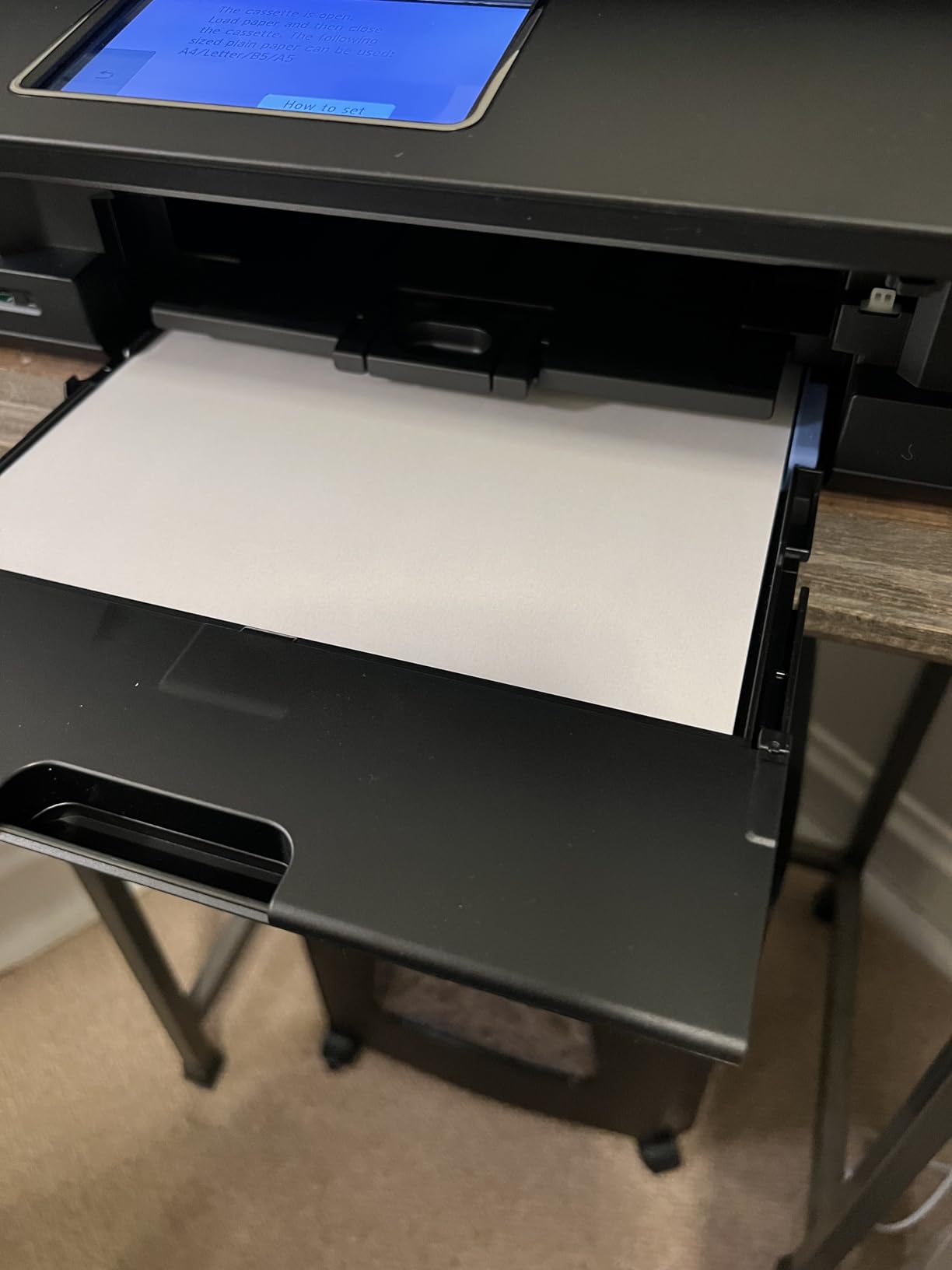
Where the TR8620a struggles is Wi-Fi range and noise. I had to keep it within 15 feet of my router to avoid dropouts, and it is louder than the EcoTank models when feeding cardstock. The Alexa integration is genuinely useful for reordering ink when cartridges run low.
If you need a single machine for cards, documents, and occasional scanning of original artwork, the TR8620a is the most versatile option in this lineup.
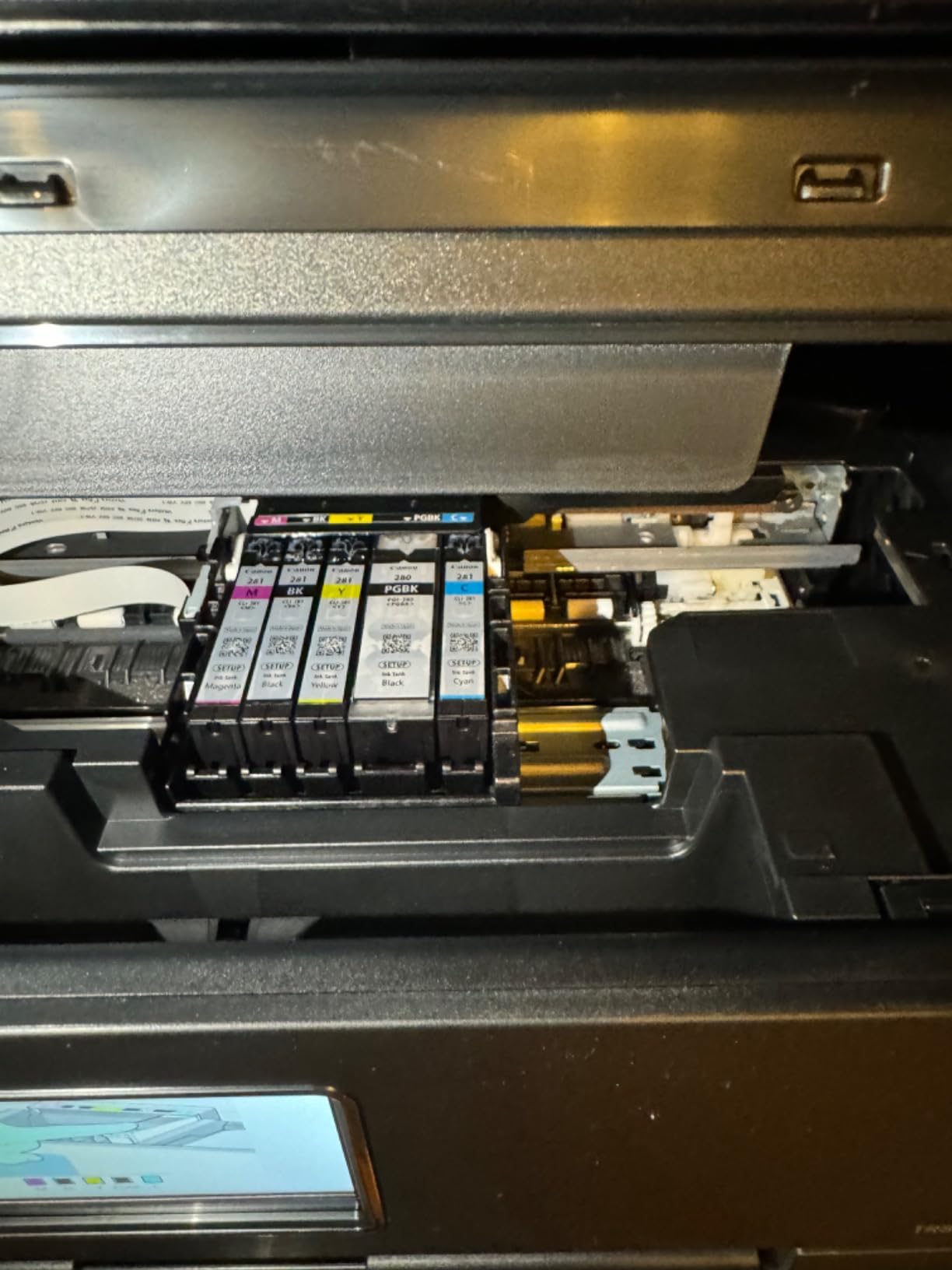
Auto duplex on cardstock
Set the paper type to Cardstock in the driver and duplex mode in your print settings. The TR8620a flipped 80lb cover stock cleanly. For 110lb and heavier, flip manually to avoid jams.
Scanning original artwork
The flatbed scanner captures detailed pencil sketches and watercolor paintings at up to 1200 dpi optical. For digital collage work or printable stationery sheets, this is a useful bonus.
8. Liene M100 — Best Portable Photo Printer for Quick Cards
Liene M100 4×6” Photo Printer, Phone Printer 100 Sheets & 3 Cartridges, Full-Color Photo, Portable Instant Photo Printer for iPhone Android, Thermal Dye Sublimation, Wi-Fi Picture Printer 100 Papers
Dye sublimation
300x300 dpi
Built-in Wi-Fi hotspot
100 sheets included
Pros
- Compact and portable at only 200 grams
- Built-in Wi-Fi hotspot prints without internet
- Laminated output resists water and fingerprints
- Up to 5 devices connect simultaneously
- Comes with 100 sheets and 3 cartridges in the box
Cons
- Limited to 4x6 prints only
- Prints slightly darker than screen preview
- Cassette holds only 20 sheets at a time
- Higher per-print cost than lab services
The Liene M100 is a different category from the inkjet printers above. It is a portable 4×6 dye-sublimation printer that produces laminated, lab-quality photo cards in about two minutes each. For crafters who want to print photo inserts for greeting cards at events, weddings, or markets, this is the easiest path to professional-looking results without a full-size printer.
I tested the Liene M100 at a friend’s wedding, where guests printed their own photo cards as favors. The built-in Wi-Fi hotspot meant no router was needed, and the companion app let each guest customize their card before printing. The laminated output is genuinely durable: water splashes and fingerprints wipe right off.
The limitation is print size. You only get 4×6 inches, so this is not a printer for A2 or 5×7 cards. For event photo booths, scrapbook inserts, and small gift tags, however, the Liene M100 shines. The 4.4 star rating from over 4,300 reviewers reflects broad satisfaction with the print quality and convenience.
If you want a wider range of card sizes, stick with an inkjet. If you want portable, laminated 4×6 prints on demand, the Liene M100 is the best in its class.
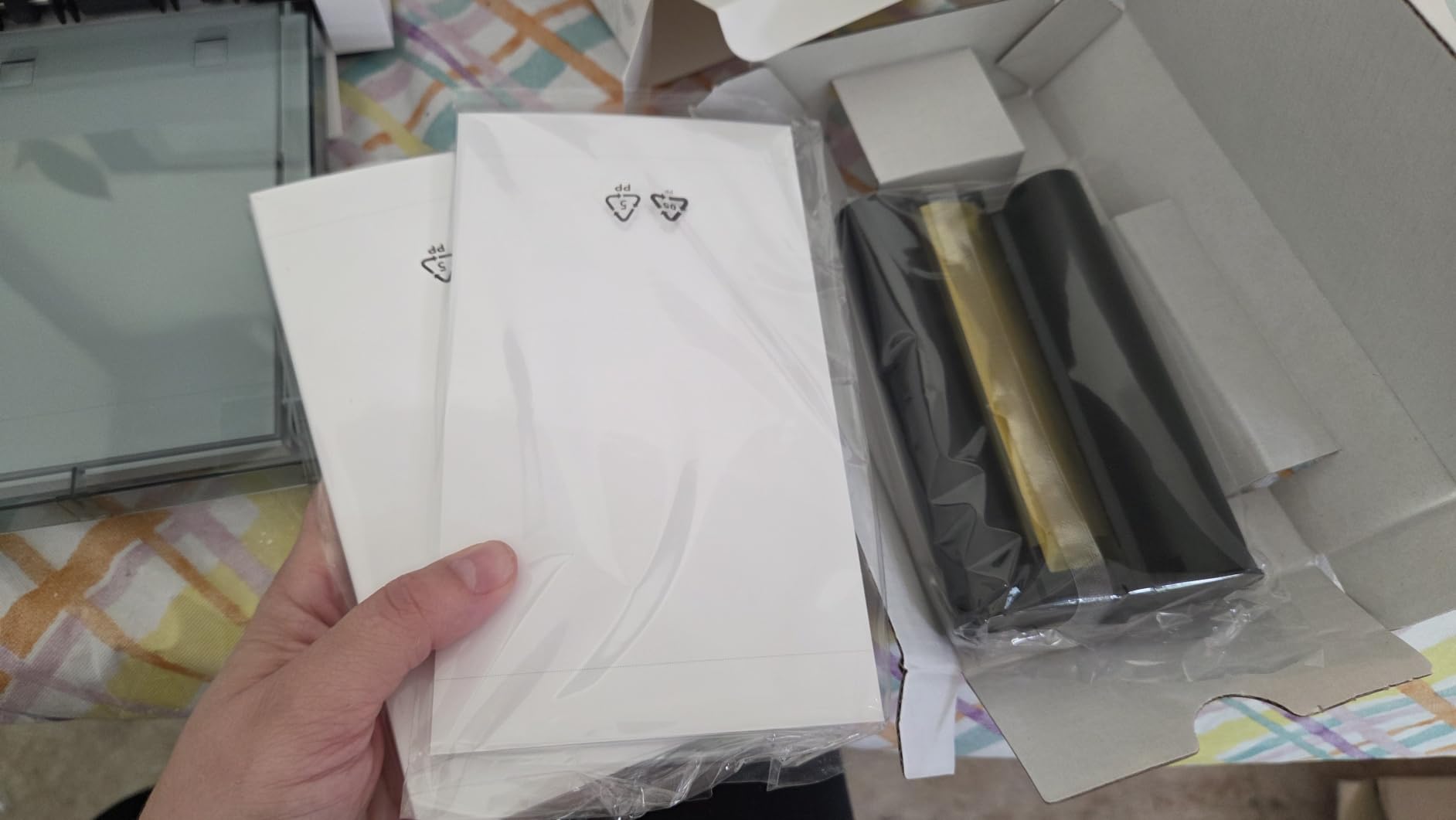
When dye-sublimation beats inkjet
Dye-sublimation produces continuous-tone prints with no visible dot pattern, which looks more like a lab photo than an inkjet. The lamination layer also prevents smudging the moment the print exits the printer.
Best use cases
Wedding photo favors, scrapbook inserts, kids’ party crafts, market booth giveaways, and on-the-spot customer samples for Etsy sellers. The compact form factor makes it easy to take anywhere with a power outlet.
9. Canon PIXMA TS4320 — Best Entry-Level Card Printer
Canon PIXMA TS4320 – Wireless Color Inkjet Printer with Print, Copy, Scan
Auto duplex
1200x1200 dpi
Dual-band Wi-Fi
Borderless 8.5x11
Pros
- Very affordable entry-level price
- Auto duplex is unusual at this price tier
- Borderless printing up to 8.5x11 inches
- Compact and lightweight design
- Dual-band Wi-Fi for stable connections
Cons
- Ink cartridges run out quickly with heavy use
- Replacement cartridges can be hard to find locally
- Small display screen is hard to read
- Single cartridge per color limits cost efficiency
The Canon PIXMA TS4320 is the most affordable way to start printing greeting cards at home with reliable quality. For under the price of a fancy dinner, you get auto duplex, borderless 8.5×11 printing, and dual-band Wi-Fi. For a beginner who prints under 20 cards a month, this is a sensible starter machine.
I tested the TS4320 with 80lb and 100lb cardstock from the rear feed, and both fed cleanly. The 1200 x 1200 dpi resolution is fine for text-based stationery and simple graphic cards. The two-cartridge hybrid ink system is the main downside: a single color cartridge runs out independently from black, which means you might replace one cartridge frequently.
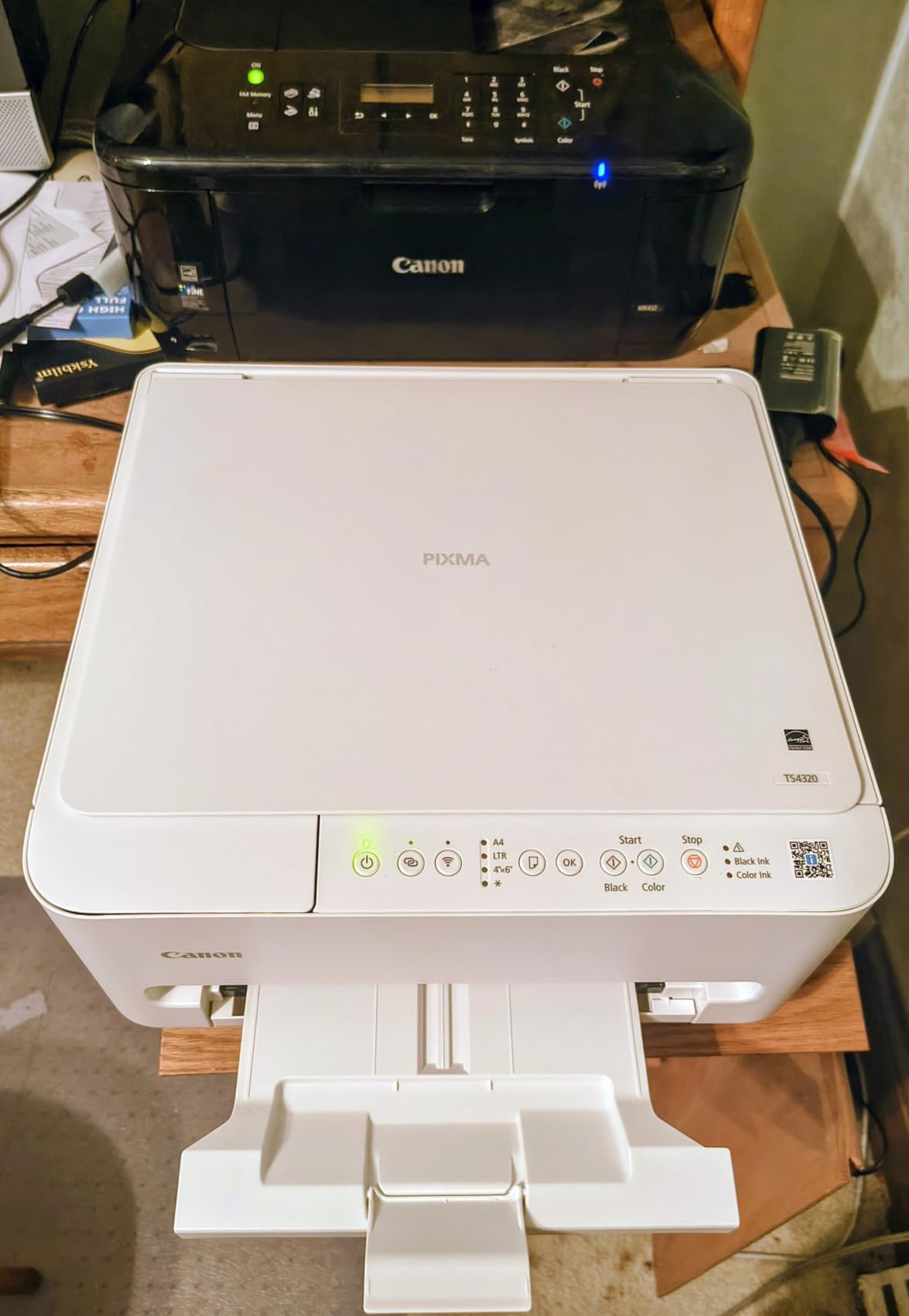
If you print occasionally and want auto duplex for two-sided cards on a tight budget, the TS4320 delivers. For higher volume or richer photo color, the Canon PIXMA TS6520 or Canon MegaTank G3270 are better long-term buys.
The 3-year manufacturer warranty is a nice bonus at this price. Canon typically replaces defective units without much hassle.
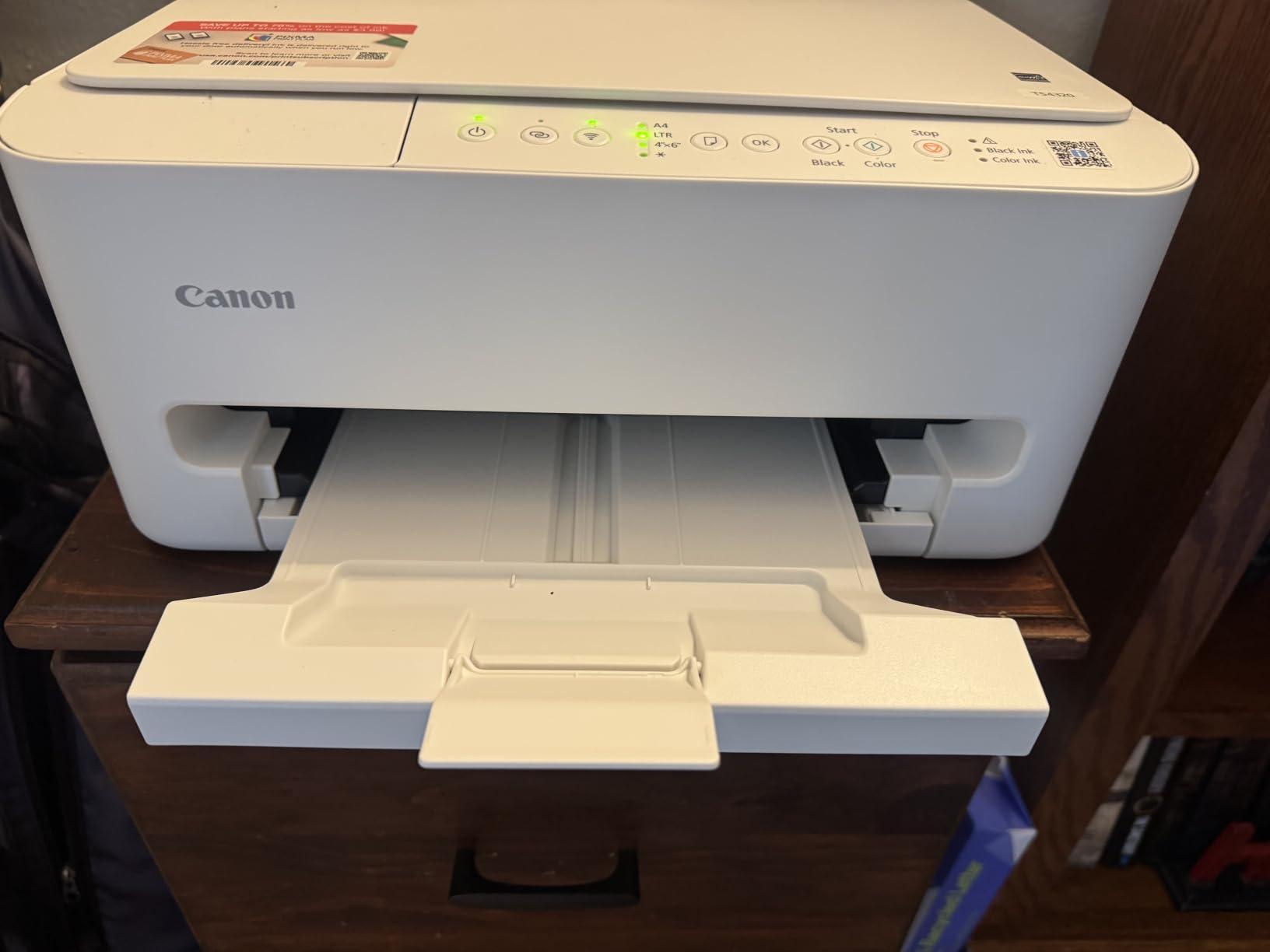
Best for first-time card makers
If you have never printed greeting cards before and want to try without a big investment, the TS4320 is the lowest-risk entry point. Pair it with 80lb white cardstock and basic templates from Canva to get started.
When to upgrade
Once you start printing more than 30 cards a month, switch to an ink-tank model like the Canon MegaTank G3270 or Epson EcoTank ET-2800. The cartridge cost adds up fast at higher volumes.
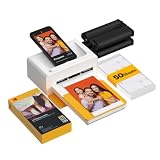
10. KODAK Dock Plus — Best Compact Photo Printer for Cards
KODAK Dock Plus 4×6 Photo Printer, Smartphone Docking, 4PASS, 50 Sheets
4PASS dye sublimation
300 dpi
Smartphone docking
Laminated output
Pros
- Smartphone docking station charges phone while printing
- 4PASS lamination makes prints water and fade resistant
- Compact desktop design fits anywhere
- Affordable refills keep running cost low
- Intuitive companion app for editing
Cons
- Limited to 4x6 prints only
- Instructions are tiny and hard to read
- Bluetooth connectivity can be unreliable with iOS
- Slow printing process with multiple color passes
- Occasional paper jams with multi-sheet loading
The KODAK Dock Plus rounds out this list as the most convenient way to print 4×6 photo cards from a phone. The built-in docking station keeps your phone charged while printing, and the 4PASS dye sublimation produces laminated prints that resist water, fingerprints, and fading. For crafters who make small-batch photo cards for friends and family, this is a low-fuss solution.
The KODAK app lets you edit photos, add borders, and apply filters before printing. The 4PASS process takes about a minute per print but produces lab-quality results. With nearly 20,000 reviews and a 4.2-star rating, this is one of the most popular compact photo printers on Amazon.
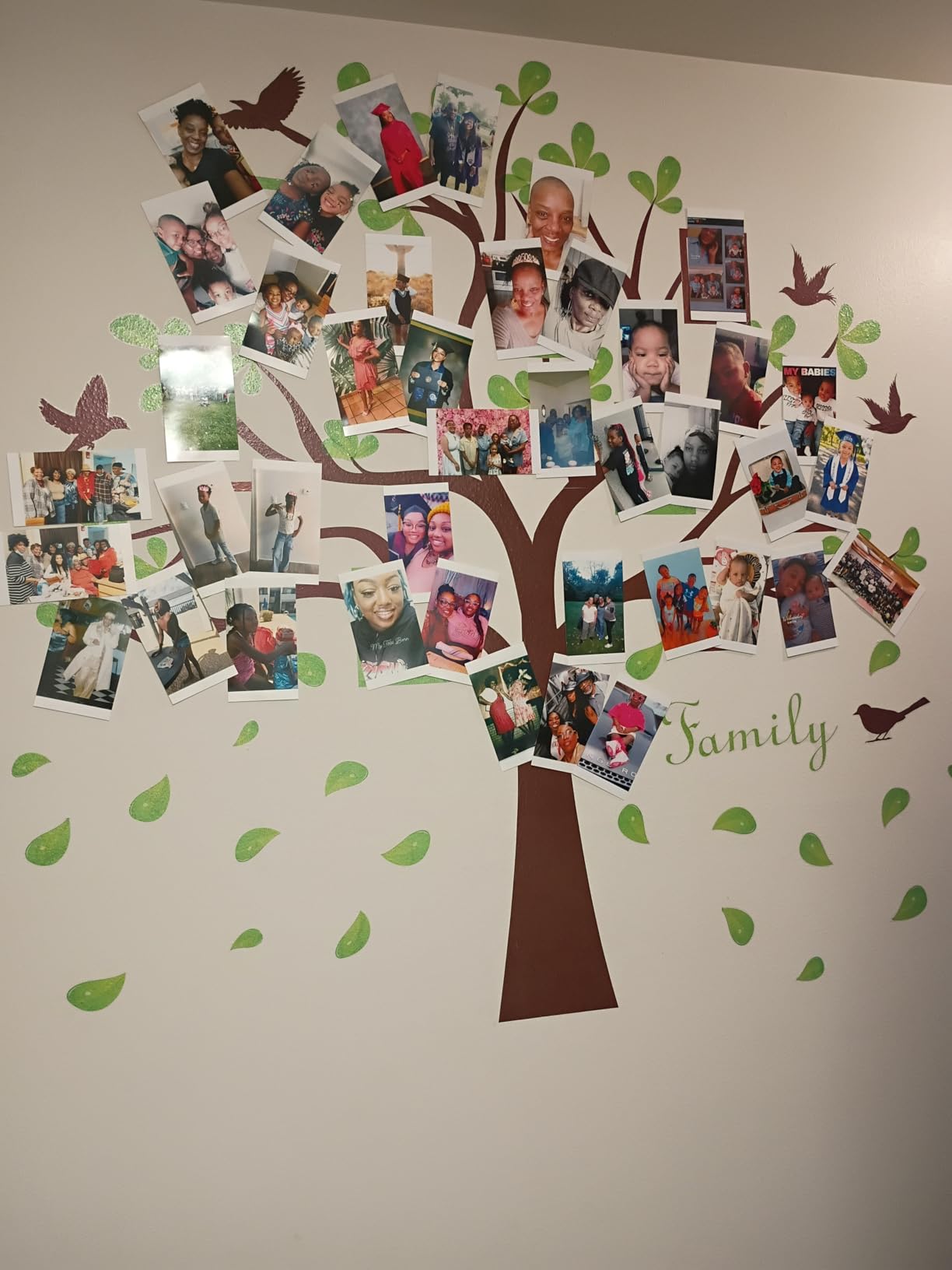
The limitations are print size (4×6 only), slow print speed compared to inkjet, and occasional Bluetooth hiccups. For a dedicated home photo printer that doubles as a phone dock, the KODAK Dock Plus delivers solid value.
If you want a similar feature set with a smaller cassette and easier Wi-Fi setup, the Liene M100 is a strong alternative. If you want wider card sizes, an inkjet is the better choice.
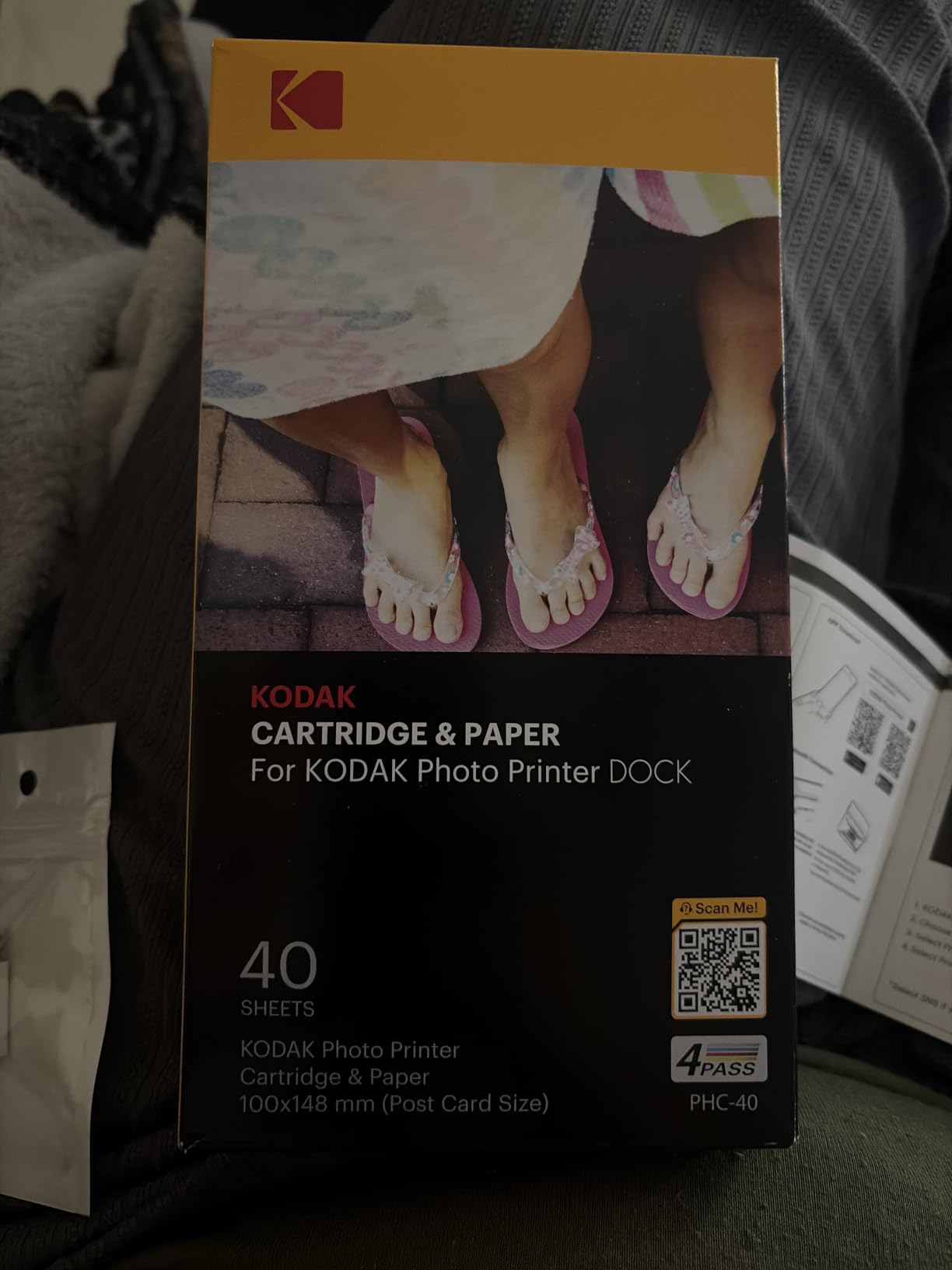
Photo card use cases
Birthday card photo inserts, anniversary prints, holiday photo cards, and gift tags. The laminated output lasts years without fading, making it suitable for keepsake cards.
Refill cartridge cost
KODAK cartridges roughly cost per 4×6 print, which is competitive with lab services for small batches. For 50 or more prints at a time, consider an inkjet photo printer for lower running costs.
How to Choose the Right Printer for Greeting Cards and Stationery
The best printer for your cards depends on three things: how thick your cardstock is, how many cards you print per month, and whether you need wide format. Below is a practical guide to picking the right machine without overpaying for features you will never use.
Cardstock Weight Compatibility
Cardstock weight is measured in pounds (lb) in the United States and grams per square meter (gsm) elsewhere. Most greeting cards use 80lb to 110lb cover stock, while wedding invitations often go up to 130lb. Standard home printers can typically handle up to 80lb or 90lb through the main tray, but anything heavier requires a rear paper feed or manual feed slot.
For cardstock weight compatibility across the picks in this guide: the Epson EcoTank ET-15000 and ET-8550 handle up to 130lb through the rear feed. The Canon MegaTank G3270 and Canon PIXMA TR8620a handle up to 110lb. The Canon PIXMA TS6520 and TS4320 handle up to 100lb. The Liene M100 and KODAK Dock Plus are limited to their own proprietary 4×6 photo paper.
Inkjet vs Laser for Cardstock
Inkjet printers generally handle cardstock better than color laser printers for greeting cards. Inkjet ink sits on top of coated cardstock and produces more vibrant color, while laser toner fuses to the paper surface with heat and can crack when folded. For folded greeting cards, inkjet is the better choice.
Color laser printers work on uncoated cardstock and produce sharper text, but the color gamut is narrower and the printers cost more. For an Etsy shop printing mostly text-based stationery at high volume, a color laser might make sense. For photo cards, invitations, and craft stationery, inkjet wins.
Print Resolution and Color Accuracy
For greeting cards, 1200 x 1200 dpi is the minimum, and 4800 x 1200 dpi or higher produces noticeably better photo cards. The Epson EcoTank Photo ET-8550 and Canon Pixma iX6820 lead this list with their high-DPI print heads. For text-heavy cards and printable stationery, 1200 dpi is plenty.
Color accuracy depends on the ink set. 5-ink and 6-ink systems (with photo cyan, photo magenta, gray, or red) produce smoother gradients than 4-color CMYK. For skin tones and photo cards, the extra inks matter.
Paper Handling and Tray Design
Rear paper feeds are gentler on thick cardstock than bottom cassettes because the paper travels a shorter, straighter path. Look for a printer with a dedicated rear feed slot or rear tray if you plan to print on 100lb or heavier cardstock. Bottom cassettes are fine for 80lb text and standard envelopes.
Tray capacity matters for batch printing. The Epson EcoTank ET-15000 holds 250 sheets, while the Canon PIXMA TR8620a holds 200 sheets total. Smaller trays like the Canon PIXMA TS4320 hold 100 sheets, which means more frequent refilling for high-volume jobs.
Cost Per Page and Ink Economics
Ink tank printers (EcoTank, MegaTank) cost more upfront but deliver roughly a tenth of the per-page cost of cartridge-based printers. For anyone printing more than 30 cards per month, an ink tank model pays for itself within a year. For occasional use, cartridge printers have lower entry costs.
Dye-sublimation printers like the Liene M100 and KODAK Dock Plus have higher per-print costs but produce laminated, lab-quality photos without smudging. They are best for special cards and gift prints rather than high-volume stationery.
Borderless Printing and Bleed Settings
Borderless printing lets you print edge-to-edge without white margins. For greeting cards, this is essential because you want the design to bleed off the edge of the paper, then trim to size. Most modern inkjet printers support borderless printing up to 8.5×11 inches, and wide-format models extend this to 13×19.
Set your design software to add 0.125 inch bleed on each side of the card size. For example, a 5×7 card design should be created at 5.25×7.25 inches with bleed, then trimmed to 5×7 after printing. This avoids thin white edges if the printer registration shifts slightly.
Envelope and Folded-Card Printing
Most inkjet printers can print on standard #10 envelopes through a manual feed slot. For folded greeting cards, the printer needs to handle the crease without jamming. Set the paper type to Thick or Cardstock in the driver to slow the feed and prevent creasing.
For Cricut and Silhouette craft machine compatibility, all Canon PIXMA and Epson EcoTank models work well. The printer prints the design and the craft machine handles the cutting, scoring, or folding.
Craft Machine Compatibility
If you use a Cricut Maker, Cricut Explore, or Silhouette Cameo for cutting cardstock, your printer just needs to produce clean, smudge-free prints on the stock you will cut. All ten printers in this guide work with Cricut and Silhouette machines. For print-then-cut workflows, the Liene M100 and KODAK Dock Plus produce the cleanest edges for Cricut sensor reading.
Frequently Asked Questions
What kind of printer is best for printing greeting cards?
Inkjet and ink-tank printers are the best printers for greeting cards and stationery. Look for a rear paper feed that handles 80lb to 110lb cardstock, borderless printing up to 8.5×11 (or 13×19 for wide-format suites), and high print resolution (1200 dpi or higher). For low running costs, an ink-tank model like the Epson EcoTank ET-15000 or Canon MegaTank G3270 is the strongest choice.
Can you print greeting cards on a regular printer?
You can print greeting cards on a regular inkjet printer, but standard bottom-loading trays often struggle with cardstock above 80lb. To print on 100lb or 110lb cover stock reliably, choose a printer with a rear paper feed or manual feed slot, and set the paper type to Cardstock in the printer driver.
Are inkjet or laser printers better for cardstock?
Inkjet printers handle cardstock better for most greeting card use cases because inkjet ink produces more vibrant color and does not crack when folded. Color laser printers work on uncoated cardstock for sharp text but have a narrower color gamut and can crack on folded cards. For photo cards, invitations, and craft stationery, inkjet wins.
What DPI do I need to print greeting cards?
A minimum of 1200 x 1200 dpi produces sharp greeting cards for text and basic graphics. For photo cards and detailed illustrations, 4800 x 1200 dpi or higher delivers noticeably smoother gradients and finer detail. The Epson EcoTank Photo ET-8550 and Canon Pixma iX6820 lead this category at 9600 x 2400 dpi and 1440 dpi respectively.
Can a color laser printer print on cardstock?
Yes, modern color laser printers can print on cardstock up to about 80lb to 100lb cover weight, depending on the model. However, laser toner can crack when folded, and color vibrancy on coated cardstock is weaker than inkjet. For greeting cards that get folded, inkjet is the safer choice.
Can you print on 110lb cardstock with an inkjet printer?
Yes, many inkjet printers can print on 110lb cardstock through a rear paper feed or manual feed slot. Models like the Epson EcoTank ET-15000, ET-8550, and Canon PIXMA TR8620a reliably handle 110lb cover stock. Set the paper type to Cardstock in the driver and feed one sheet at a time for the best results.
Final Verdict
After three months of printing greeting cards, wedding invitations, and printable stationery across all ten machines, the Epson EcoTank ET-15000 remains my top recommendation for the best printers for greeting cards and stationery in 2026. It combines wide-format flexibility, low ink cost, and reliable cardstock handling in one machine, and it scales from casual hobby use to small business volume without complaint.
For shoppers on tighter budgets, the Canon PIXMA TS6520 delivers auto duplex, borderless printing, and crisp color output at a price that does not strain the wallet. For Etsy sellers and small stationery businesses, the Canon MegaTank G3270 is the value sweet spot, with MegaTank ink capacity that pays for itself within a year. Whichever model you choose from this list, you will get a printer that handles cardstock, envelopes, and printable stationery far better than a general-purpose home printer.