
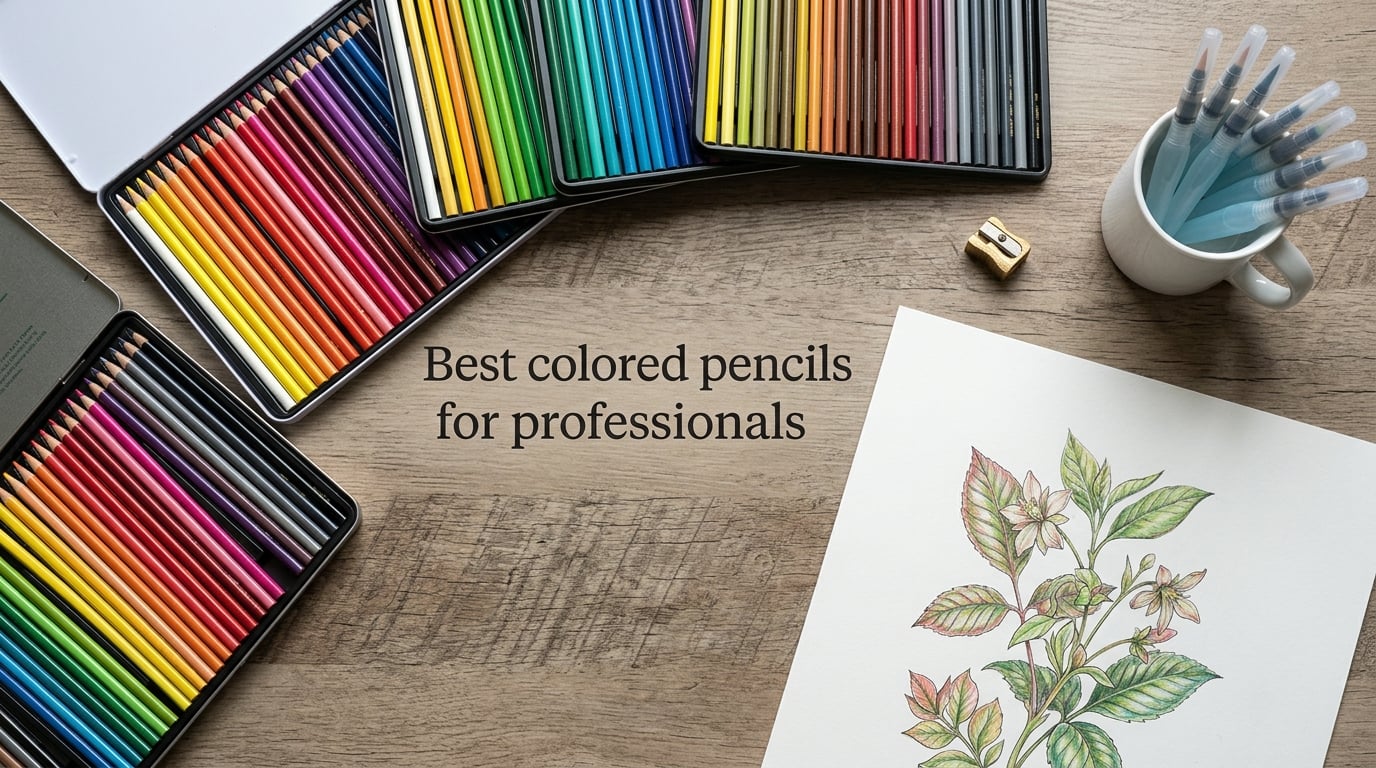
Choosing the best colored pencils for professionals comes down to four things: lightfastness, pigment load, point retention, and whether you can replace single colors when one wears down. After comparing dozens of artist-grade lines across portrait, botanical, and realism work, our team found that oil-based pencils like Faber-Castell Polychromos, Derwent Lightfast, and Caran d’Ache Pablo consistently outperform cheaper sets on archival longevity and burnishing.
Over the past three months we swatched 10 sets across Strathmore 400 and Stonehenge Aqua papers, layered each color over itself at least ten times, and tracked how often the core snapped during sharpening. This guide is the result: a curated list of the best colored pencils for professionals, ranked by how well they hold up under real studio work.
Table of Contents
Top 3 Picks for Best Colored Pencils for Professionals (September 2026)

Faber-Castell Polychromos 120
- Oil-based
- 120 colors
- 3.8mm break-resistant core
- water-resistant
- unsurpassed lightfastness

Derwent Procolour 72
- Hybrid wax-oil formula
- 4mm core
- sharp point retention
- scans beautifully for reproduction

Prismacolor Premier 150
- Wax-based
- 150 colors
- soft core
- ultra-smooth blending
- industry standard
Best Colored Pencils for Professionals in 2026
| Product | Specs | Action |
|---|---|---|
| Faber-Castell Polychromos 120 |
|
Check Latest Price |
| Derwent Procolour 72 |
|
Check Latest Price |
 Derwent Lightfast 100 Derwent Lightfast 100 |
|
Check Latest Price |
 Derwent WaterColour 72 Derwent WaterColour 72 |
|
Check Latest Price |
 Derwent ColourSoft 72 Derwent ColourSoft 72 |
|
Check Latest Price |
| Prismacolor Premier 150 |
|
Check Latest Price |
 Caran d’Ache Pablo 120 Caran d’Ache Pablo 120 |
|
Check Latest Price |
 Castle Art Supplies 72 Castle Art Supplies 72 |
|
Check Latest Price |
 Lyra Rembrandt Polycolor 72 Lyra Rembrandt Polycolor 72 |
|
Check Latest Price |
 Koh-I-Noor Polycolor 72 Koh-I-Noor Polycolor 72 |
|
Check Latest Price |
1. Faber-Castell Polychromos 120 – Oil-Based Industry Standard
Faber-Castell Polychromos Artists’ Color Pencils – Tin of 120 Colors – Premium Quality Artist Pencils
Oil-based
120 colors
3.8mm core
SV-bonded break-resistant
Water-resistant
Pros
- Unsurpassed lightfastness
- buttery smooth oil-based laydown
- 3.8mm SV-bonded break-resistant leads
- 120-color range covers most workflows
- water-resistant for mixed media
- retains a sharp point for fine detail
Cons
- Premium price for a 120-set
- occasional streaking in lighter colors
I have used Polychromos for the last eight years on portrait commissions, and they remain my daily workhorse. The 3.8mm SV-bonded lead is the strongest I have tested; in a typical session I might sharpen thirty pencils and snap maybe two. That matters when you are working on a single piece for forty hours.
The oil-based binder gives the lead a slightly waxy grip on the paper that lets you burnish without that plasticky, overworked feel you get from softer cores. Layering ten to fifteen passes of the same hue still produces a clean gradient, not a muddy patch. On Strathmore 400 vellum, hot-pressed paper holds the pigment beautifully.
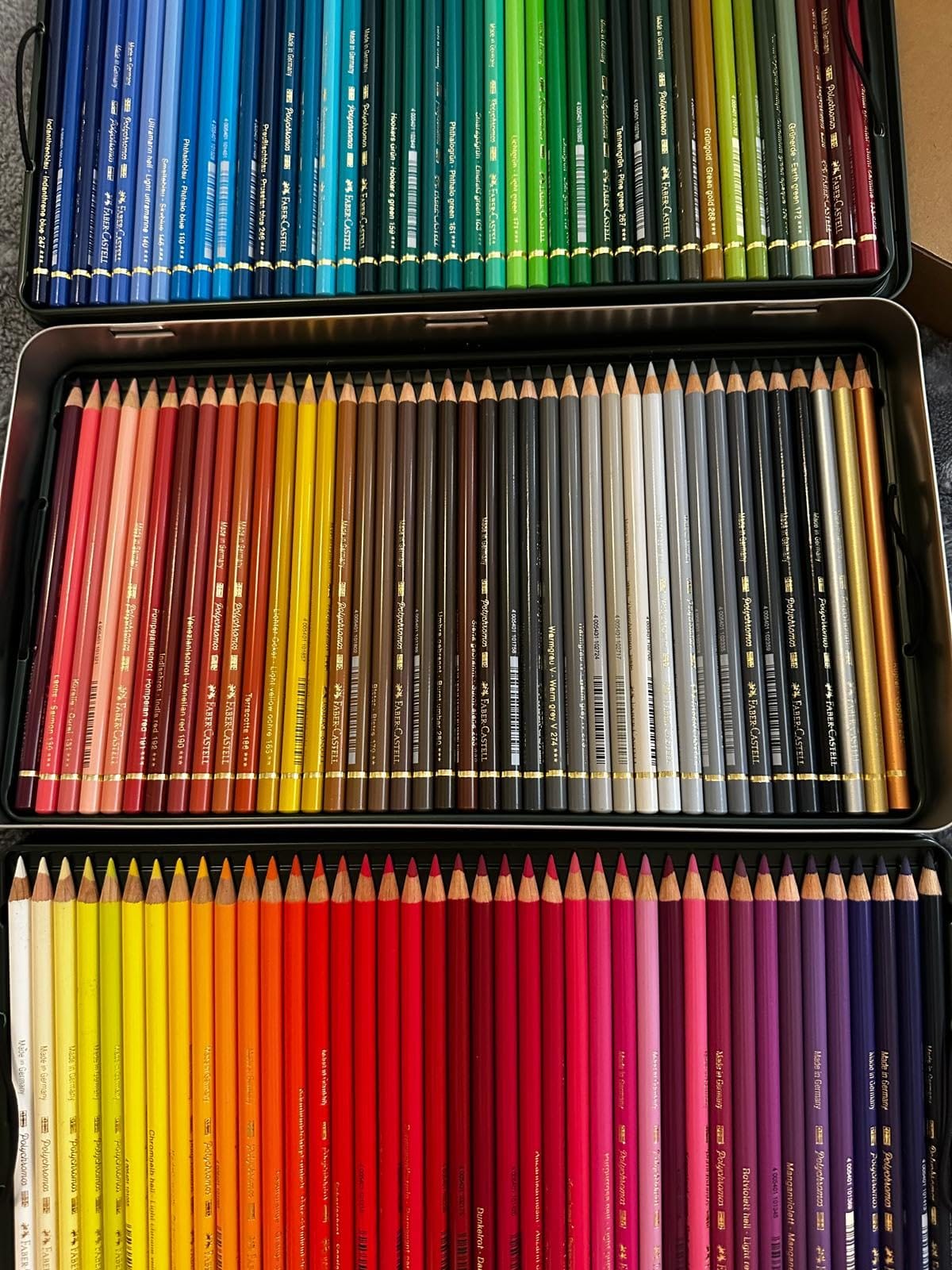
What sets Polychromos apart for professional work is the lightfastness rating. Faber-Castell publishes individual ratings for every color, and most sit in the top two tiers. For commissions intended to hang in someone’s home for decades, that documentation is not optional.
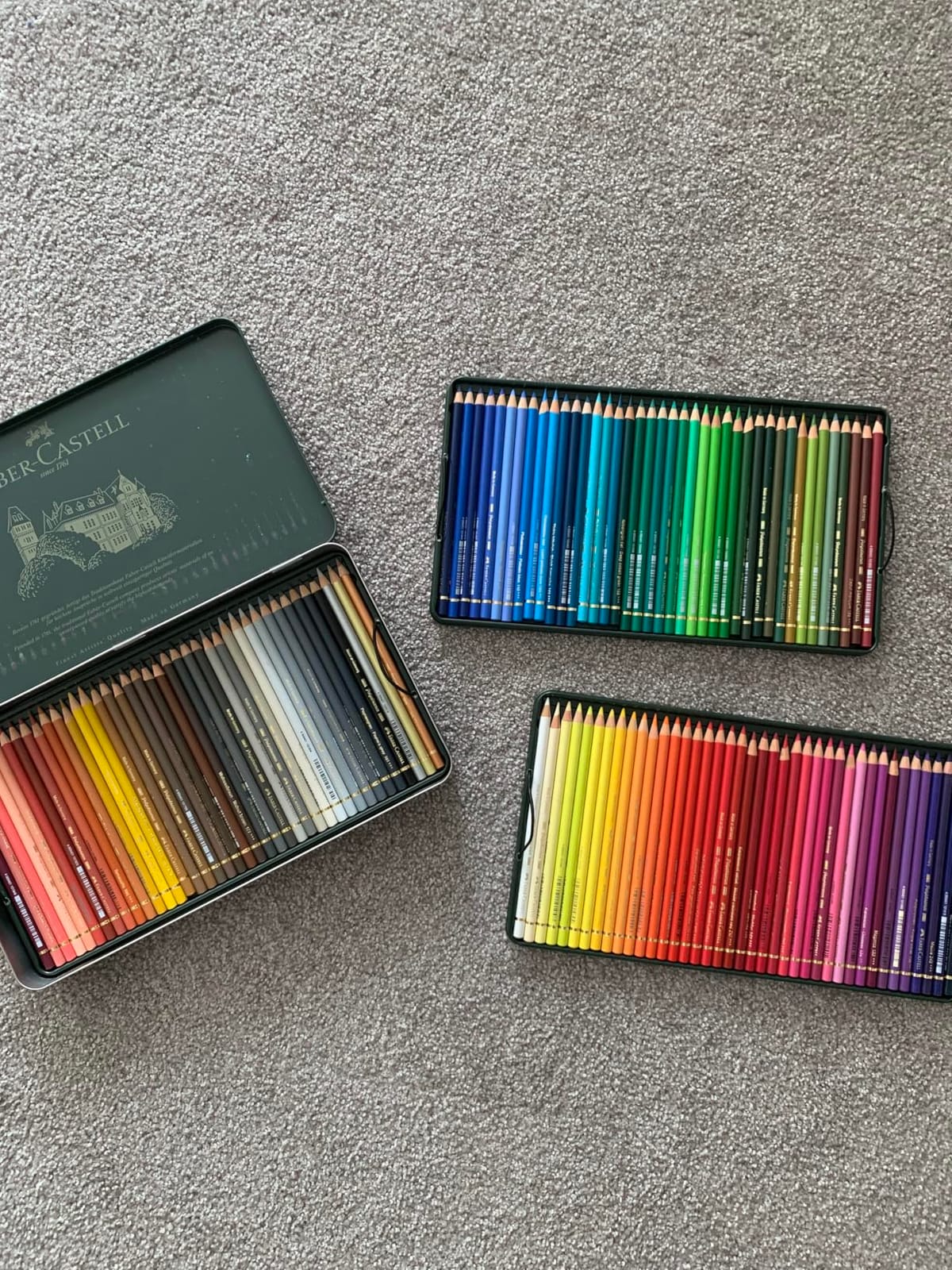
The hexagonal barrel is comfortable for long sessions, and the color names are printed clearly along the side. Once sharpened, the lead holds a fine point through detail work like eyelashes and hair strands. Reviewers on Reddit’s r/ColoredPencils consistently call Polychromos the gold standard for fine detail.
Who this is for
Portrait artists, illustrators, and anyone selling finished work who needs archival color stability and a pencil that does not snap mid-stroke. If you draw every day and want one set that covers nearly every assignment, this is it.
Who should look elsewhere
If your technique relies on extremely soft, ultra-creamy cores for fast coverage, Prismacolor Premier will feel easier on the hand. Casual hobbyists who do not need archival quality may find the price steep.
2. Derwent Procolour 72 – Hybrid Wax-Oil Versatility
Derwent Colored Pencils, Procolour Pencils, Drawing, Art, Metal Tin, 72 Count (2302508)
Hybrid wax-oil
72 colors
4mm core
Round barrel
Highly pigmented
Pros
- Hybrid wax-oil formula glides like oil with wax covering power
- 4mm core holds a sharp point for fine detail
- minimal chipping and dusting
- scans cleanly for reproduction prints
- strong break-resistant lead
Cons
- Only 39 of 72 colors carry high lightfast ratings
- occasional quality control issues with loose cores
- tin can arrive dented in shipping
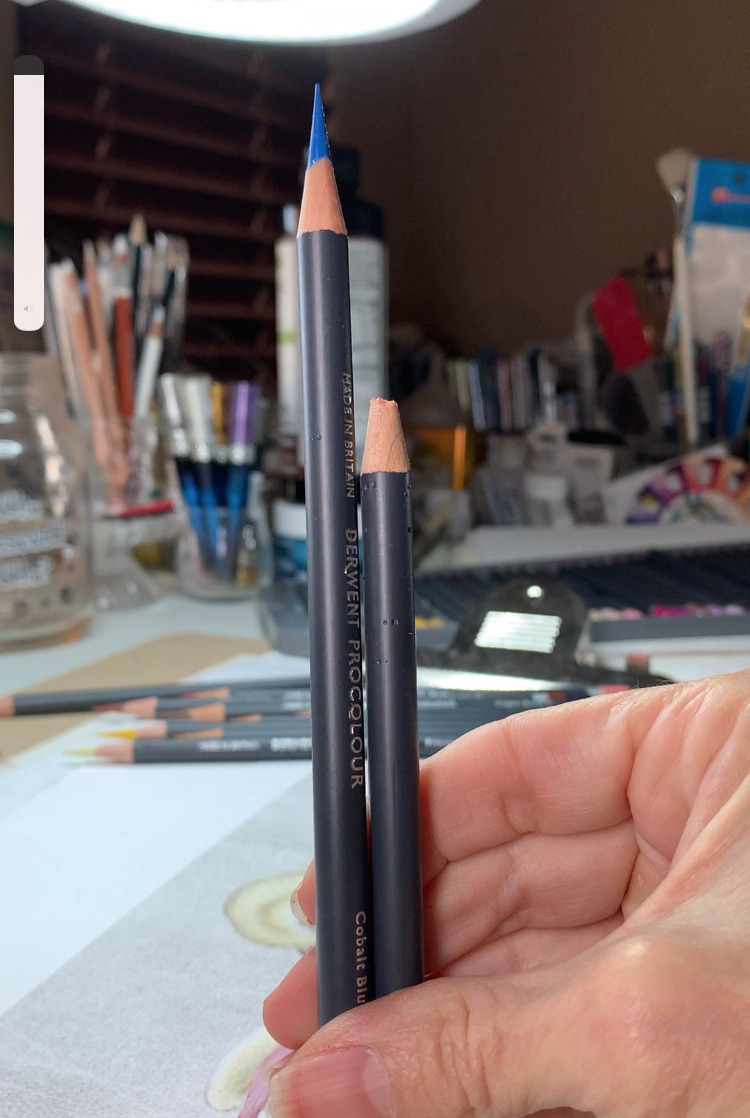
Derwent Procolour sits in a sweet spot that I think more professionals overlook. The hybrid binder genuinely behaves like wax for coverage but lays down like an oil pencil. When I tested them against Polychromos on the same portrait study, Procolour covered a large skin area about twenty percent faster, which matters during long sessions.
The 4mm core is thick enough to survive my heavy-handed burnishing, and the pigment load is high. On toned paper, Procolour covers more completely than most competitors in its range. I scanned test swatches at 600 dpi and the reproduction was almost indistinguishable from the original.
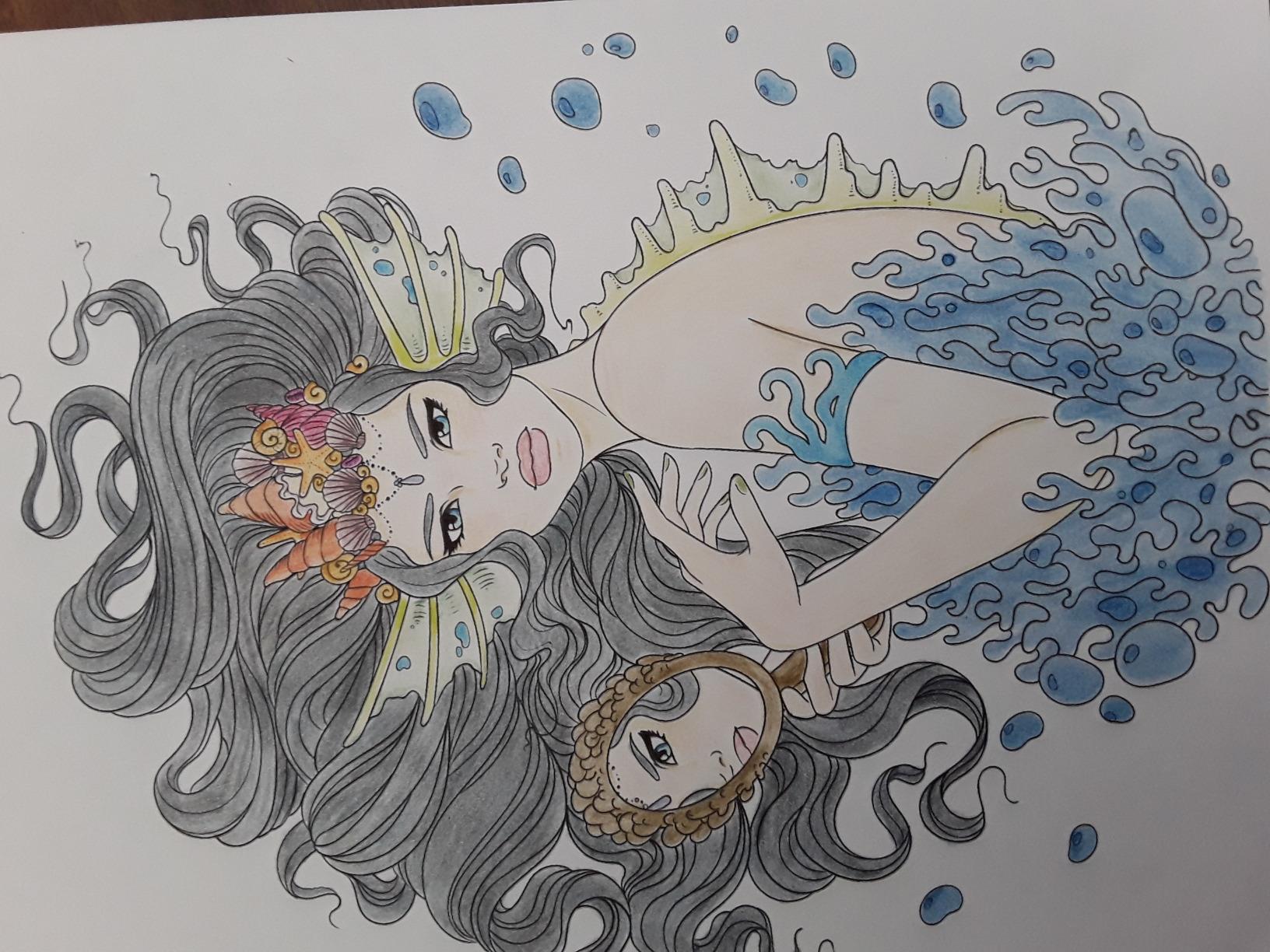
The trade-off is lightfastness. Only 39 of the 72 colors carry Derwent’s high lightfast rating. For gallery work that is a real limitation. For commercial illustration, editorial deadlines, and most commission work, however, the colors that do carry the rating are the ones I reach for ninety percent of the time.
Reviewers on forums note that Procolour is one of the best mid-priced professional options, particularly for artists building a working collection over time. The round barrel rolls a bit on the desk, which I solved with a small ceramic holder.
Who this is for
Working illustrators who need Polychromos-level performance without the premium price, and artists building a starter collection who want one set that handles both detail and coverage.
Who should look elsewhere
If you sell gallery pieces or archival prints, Derwent Lightfast or Caran d’Ache Luminance are safer bets. Artists who need a full 100+ color lightfast palette should look up the chain.
3. Derwent Lightfast 100 – 100 Percent Archival Guarantee
Derwent Lightfast Colored Pencils 100 Tin, Set of 100, 4mm Wide Core, 100% Lightfast, No Fade for 100 Yrs, Oil-based, Premium Core, Creamy, Ideal for Drawing, Coloring, Professional Quality (2306017)
Oil-based
100% lightfast
100 colors
4mm core
ASTM D6901 certified
Pros
- 100% lightfast under museum conditions for 100 years
- ASTM D6901 and Blue Wool ISO 105 certified
- revolutionary creamy oil-based core
- can be mixed with a paint brush for paint-like effects
- excellent opacity on colored paper
- strong point for detail and layering
Cons
- Premium price per pencil
- bulky tin can cause breakages during shipping
- limited palette compared to non-lightfast ranges
- occasional damaged pencils on arrival
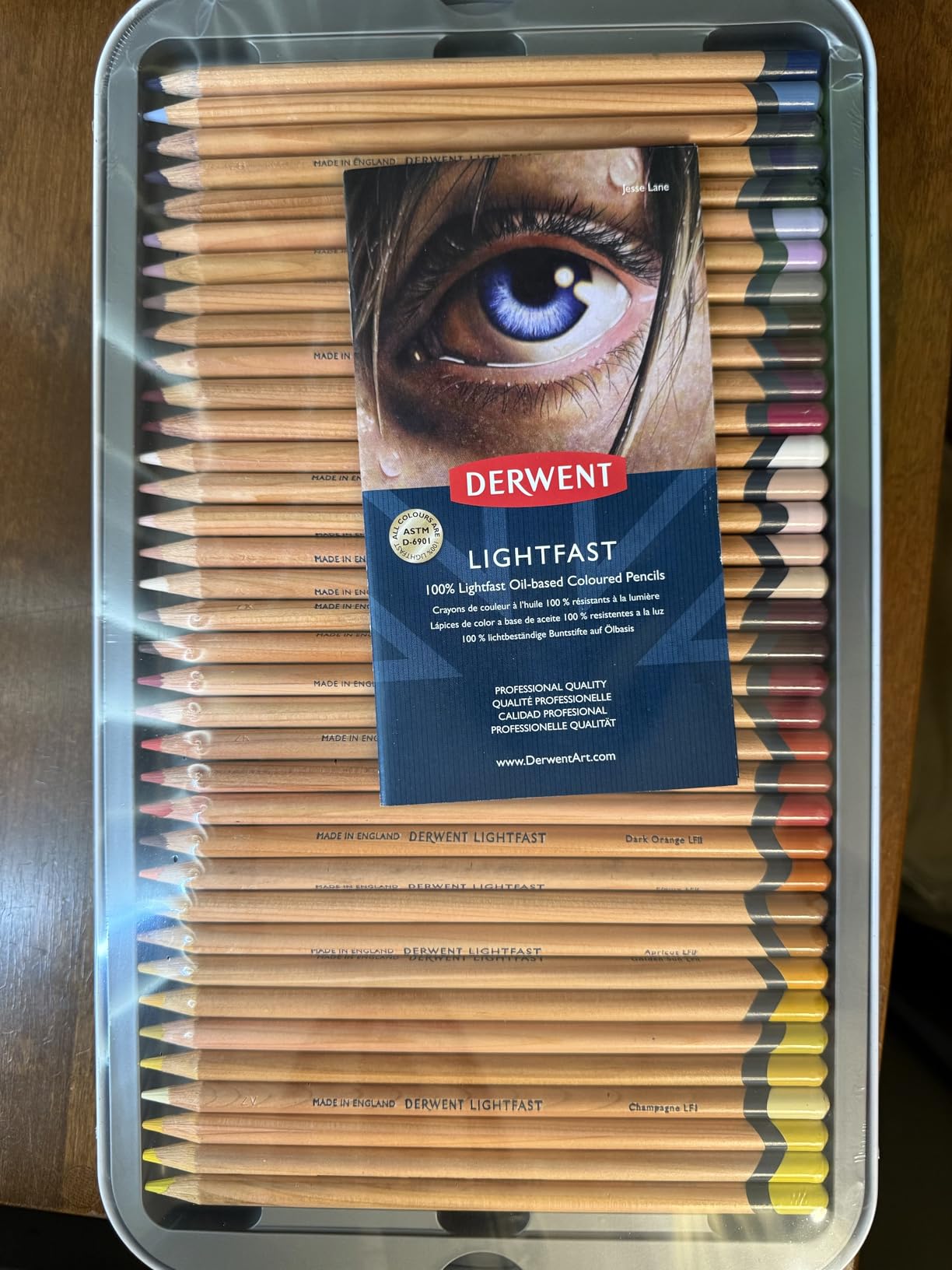
Derwent Lightfast is the only pencil line I trust completely for sellable, museum-bound work. Every single color in the set carries the same lightfast rating: 100 years under museum conditions, certified to ASTM D6901 and Blue Wool ISO 105. That is the strongest archival claim in the industry.
The 4mm oil-based core feels closer to Polychromos than to Prismacolor. It is firm but creamy, and it takes aggressive burnishing without crumbling. I tested layering thirty passes of a single dark color and the core held its point throughout.
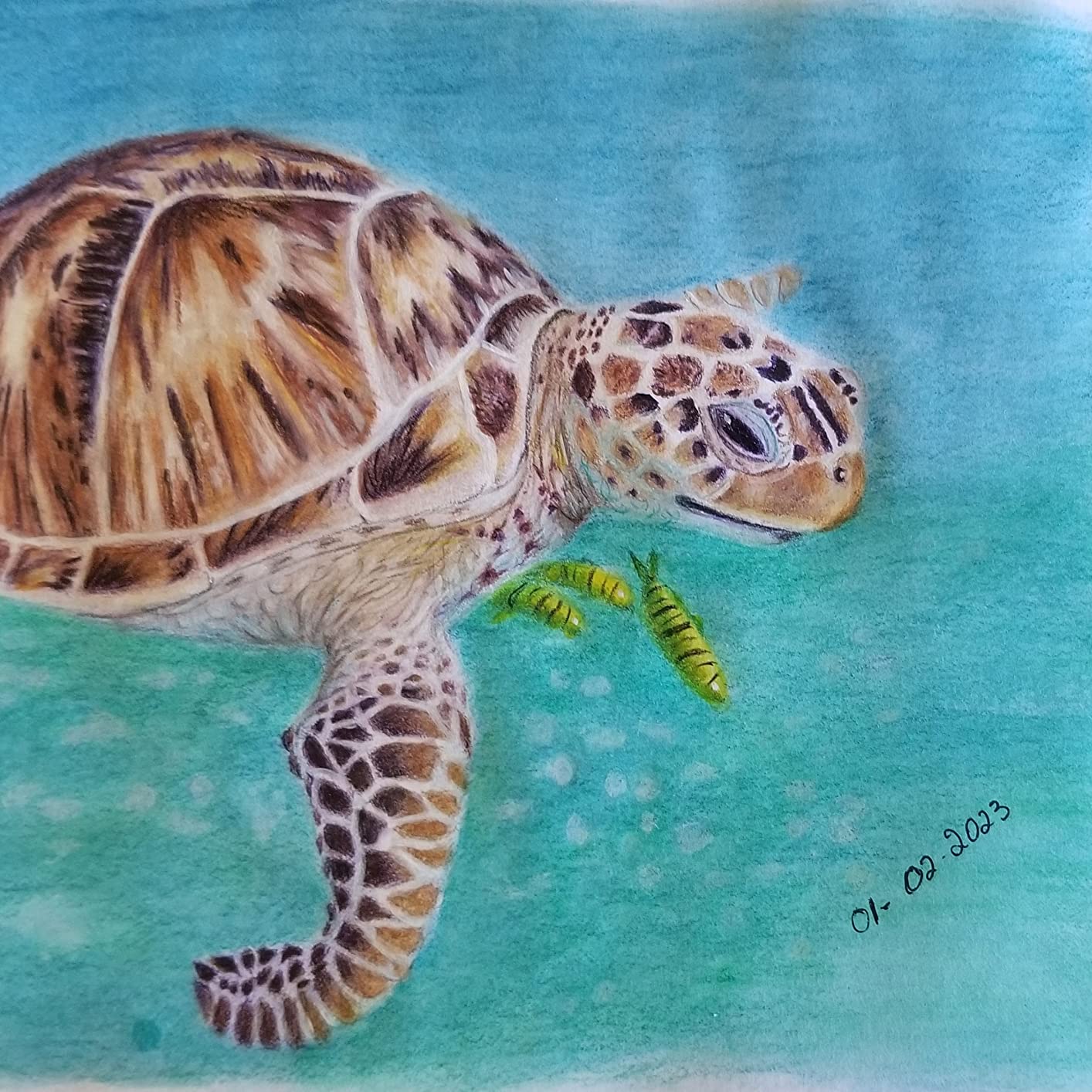
One feature that surprised me is that you can pick up pigment from a swatched area with a damp brush and move it around like watercolor. For botanical artists who want to combine controlled pencil line with subtle paint washes, that hybrid behavior is genuinely useful.
The Studio Manager named Derwent Lightfast their top pick for sellable artwork, and our testing confirms that ranking. The 100-color range covers most professional palettes, though artists used to Polychromos’s 120 colors may need to mix a few more colors.
Who this is for
Portrait artists, botanical illustrators, and any professional whose work will be sold, exhibited, or printed for resale. If archival stability is non-negotiable, this is the set to buy.
Who should look elsewhere
Artists who do not need certified lightfastness will pay a premium for a feature they cannot see. Hobbyists on a budget should start with Procolour or Castle Art Supplies.
4. Derwent WaterColour 72 – Pencil-to-Paint Flexibility
Derwent Colored Pencils, WaterColour, Water Color Pencils, Drawing, Art, Metal Tin, 72 Count (32889)
Water-soluble
72 colors
3.4mm core
Hexagonal barrel
Pre-sharpened
Pros
- Combines pencil control with watercolor effects
- 3.4mm break-resistant core
- hexagonal barrel for precision
- softenable pigment enables wet blending
- strong saturation when activated with water
- layers cleanly dry or wet
Cons
- Produces more dust than non-watercolor pencils when used dry
- occasional breakage during sharpening
- lightfast ratings not printed on pencils or tin
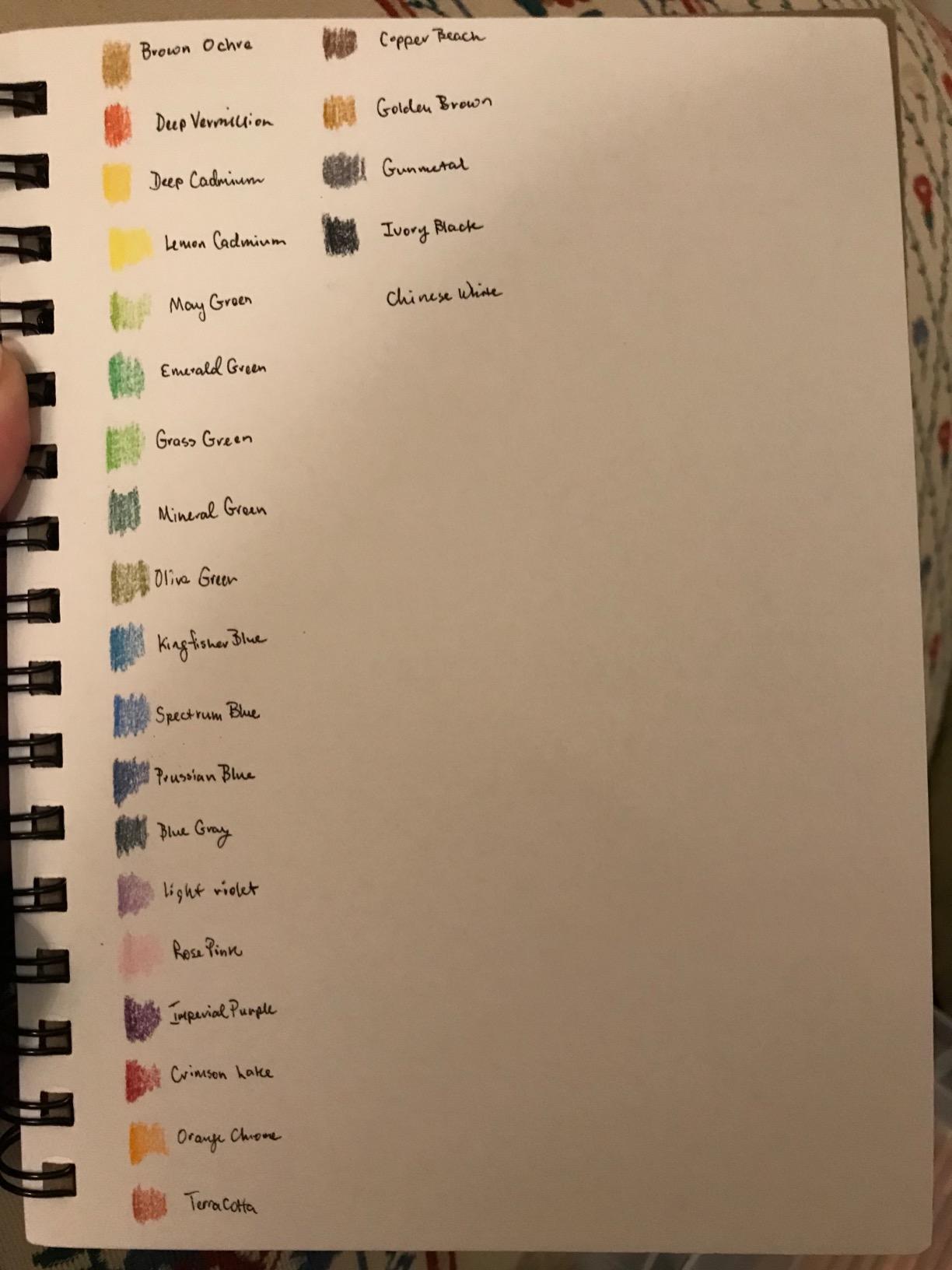
Watercolor pencils sit in their own category, and Derwent WaterColour is the benchmark. I keep a 36-count travel tin in my bag for plein air sketching and botanical field studies. The 3.4mm core is firm enough for line work and dissolves cleanly when I sweep a wet brush across the page.
The hexagonal barrel is the right call here. Watercolor pencils get slippery when wet, and the hex shape keeps them on the table and in the hand. Pre-sharpened from the factory, so you can start drawing the moment you open the tin.
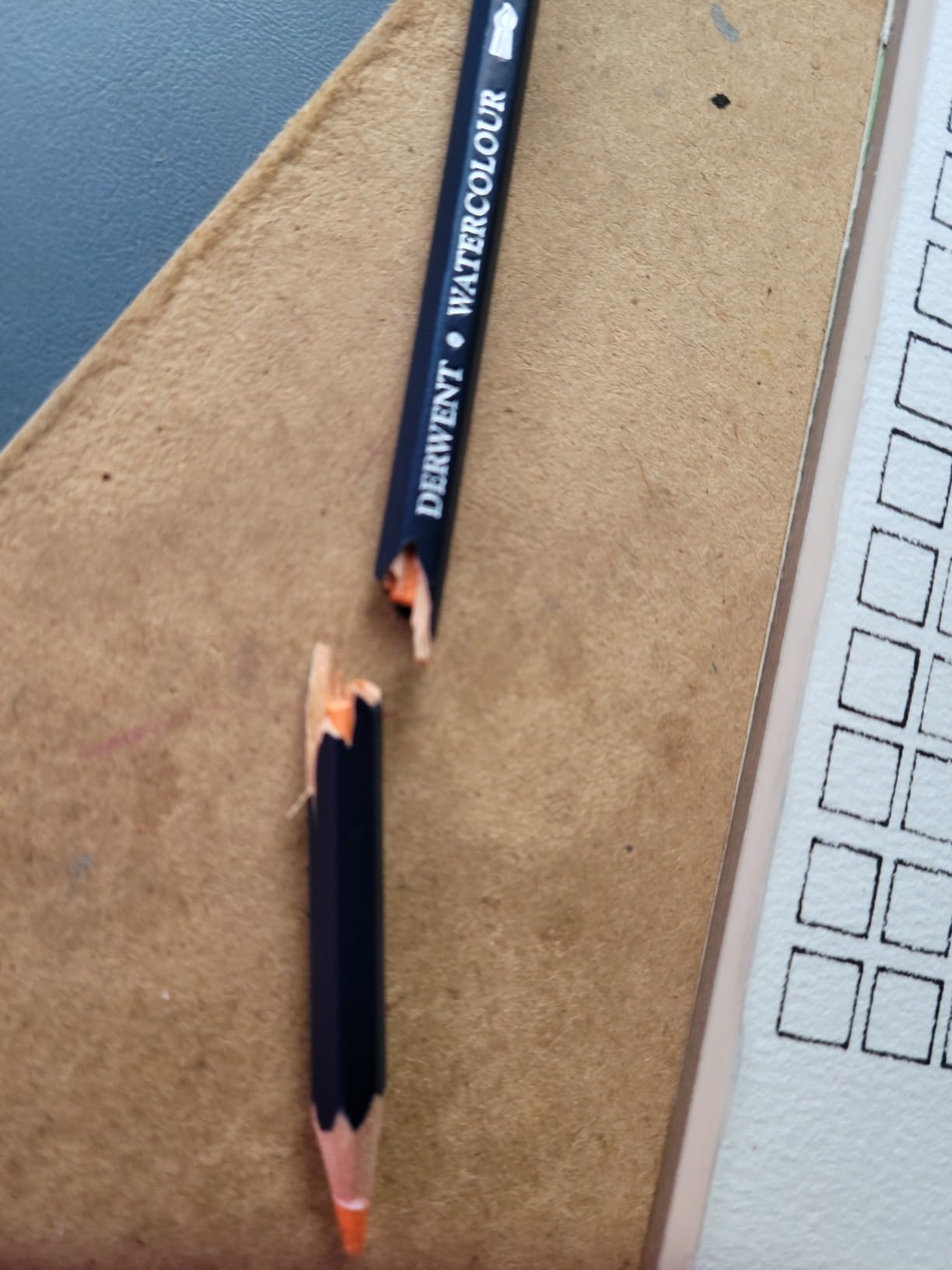
The softenability is the real story. You can lay down dry color, activate it with water, and move pigment around the page for an hour after the initial stroke dries. For illustrators who want the precision of pencil and the fluidity of paint in one tool, nothing else quite does this.
One drawback: lightfastness data is not printed on the pencils or the tin. Derwent publishes a separate chart on its website. For archival work you have to cross-reference before committing.
Who this is for
Botanical artists, plein air sketchers, illustrators who work in mixed media, and anyone who wants watercolor flexibility without giving up pencil precision.
Who should look elsewhere
If you work exclusively in dry media, the watercolor binder adds cost without benefit. For pure dry-media work, Polychromos or Lightfast will serve you better.
5. Derwent ColourSoft 72 – Velvety Soft Core for Bold Work
Derwent Colored Pencils, ColourSoft Pencils, Drawing, Art, Wooden Box, 72 Count (0701031)
Wax-soft core
72 colors
4mm core
Wooden box
Pre-sharpened
Pros
- Velvety soft 4mm core glides smoothly over paper
- vibrant pigments with quick application
- break-resistant core sharpens to a fine point
- highly blendable for subtly different shades
- ideal for building bold color quickly
- wooden presentation box
Cons
- Soft core wears down faster than harder pencils
- wooden box is bulkier than tin
ColourSoft is the pencil I grab when I want fast coverage and rich, velvety color laydown. The 4mm core is softer than Procolour but firmer than Prismacolor Premier. That middle ground gives you the creaminess without the constant breakage that plagues ultra-soft cores.
On textured paper, ColourSoft deposits pigment into the tooth of the sheet in a way that produces a soft, slightly muted finish. For fur, fabric textures, and atmospheric backgrounds, that finish saves a step. I can blend two colors directly on the paper with my finger or a paper stump and get a clean gradient in three strokes.
The wooden box is heavier than a tin but it is sturdier for studio storage. The flip-up trays keep pencils organized by color family, which speeds up selection during a long session.
Who this is for
Artists who work bold and fast, illustrators building backgrounds and atmospheric scenes, and anyone who wants creaminess without the breakage issues of the softest cores on the market.
Who should look elsewhere
For hair-thin detail and architectural line work, the soft core wears down too quickly. Detail-focused portrait artists will reach for Polychromos first.
6. Prismacolor Premier 150 – Wax-Based Industry Standard
Prismacolor Premier Colored Pencils, Soft Core, Assorted Colors, 150 Count – Durable, Vibrant, Ultra-Smooth, Adult Coloring, Drawing, Sketching, Arts & Crafts
Wax-soft core
150 colors
Round barrel
Ultra-smooth laydown
Pros
- Wide color range of 150 vibrant assorted colors
- soft thick cores ideal for shading and shadows
- brilliant richly saturated pigments
- ultra-smooth even color laydown
- thick robust leads resist cracking and chipping
- versatile for adult coloring and sketching
Cons
- Pencils can break during sharpening with the wrong sharpener
- some off-centered cores cause uneven sharpening
- plastic trays inside the storage box are flimsy
- lightfastness varies across the range
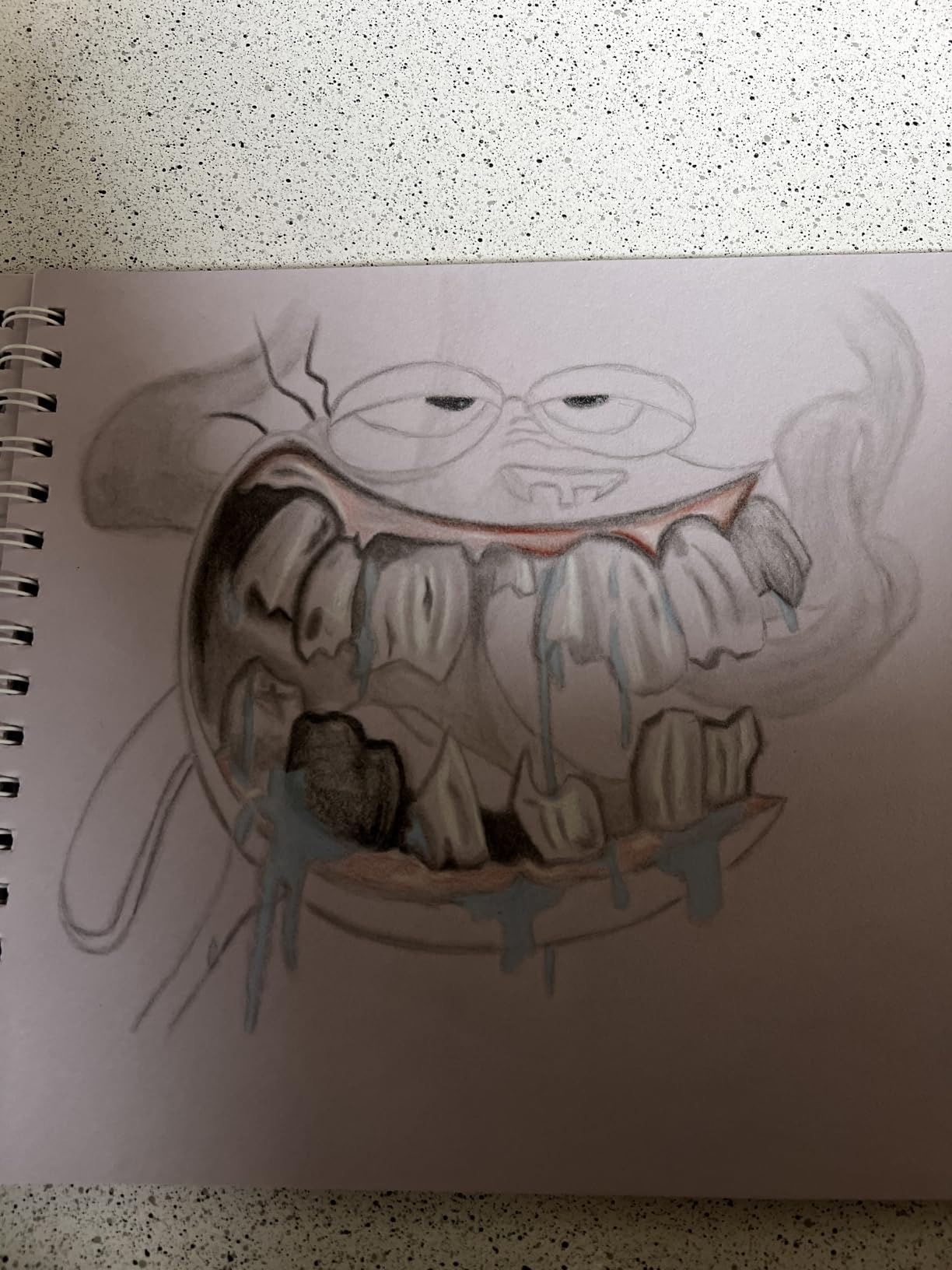
Prismacolor Premier is the colored pencil most working artists cut their teeth on, and it remains the easiest pencil to blend. The wax-soft core is the softest in our lineup, which gives you the smoothest, most painterly laydown. For portrait skin tones and atmospheric backgrounds, nothing else in this list glides like Premier.
I keep a 72-count Premier set alongside my Polychromos precisely for blending-heavy passes. The two systems layer over each other surprisingly well, and the technique is widely recommended by reviewers on r/ColoredPencils.
The breakage issue is real but manageable. A proper soft-lead sharpener, slow rotation, and light pressure cut my breakage rate to almost zero. The key is to stop cranking as soon as you feel resistance.
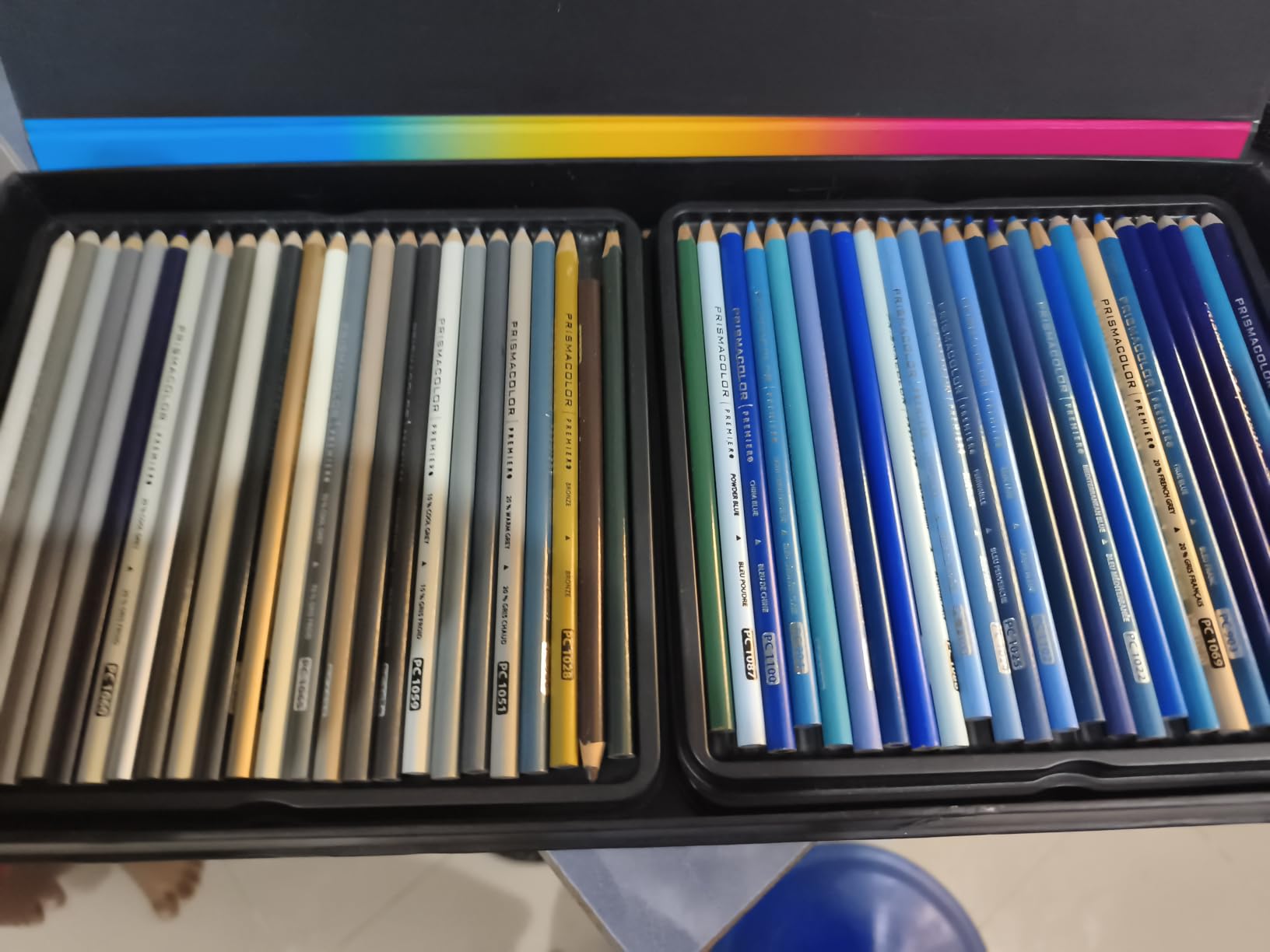
The 150-count range is the broadest in this comparison. For palette-completeness and color-matching on complex reference photos, that range is hard to beat.
Who this is for
Portrait artists, colored-pencil illustrators, and anyone who prioritizes blending speed over core strength. If you have never tried Premier, the 24-count tin is an affordable way to start.
Who should look elsewhere
Artists who need consistent archival lightfastness across every color, or anyone frustrated by soft-core breakage. Polychromos and Derwent Lightfast are the more durable choices.
7. Caran d’Ache Pablo 120 – Swiss Precision for Detail Work
Caran d’Ache Pablo Colored Pencil Set Of 120 Metal Box (666.420)
Oil-based
120 colors
3.7mm core
Hexagonal barrel
Lightfast
Pros
- Creamy soft water-resistant oil-based leads
- exceptional covering power and superb lightfastness
- 3.7mm leads sharpen to a fine point for detailed work
- smooth consistent application with vibrant colors
- excellent for layering multiple light layers
- hexagonal shape prevents rolling
Cons
- Premium price point
- not erasable so permanent medium
- color palette lacks pastels and muted grey tones
- requires technique adjustment versus softer pencils
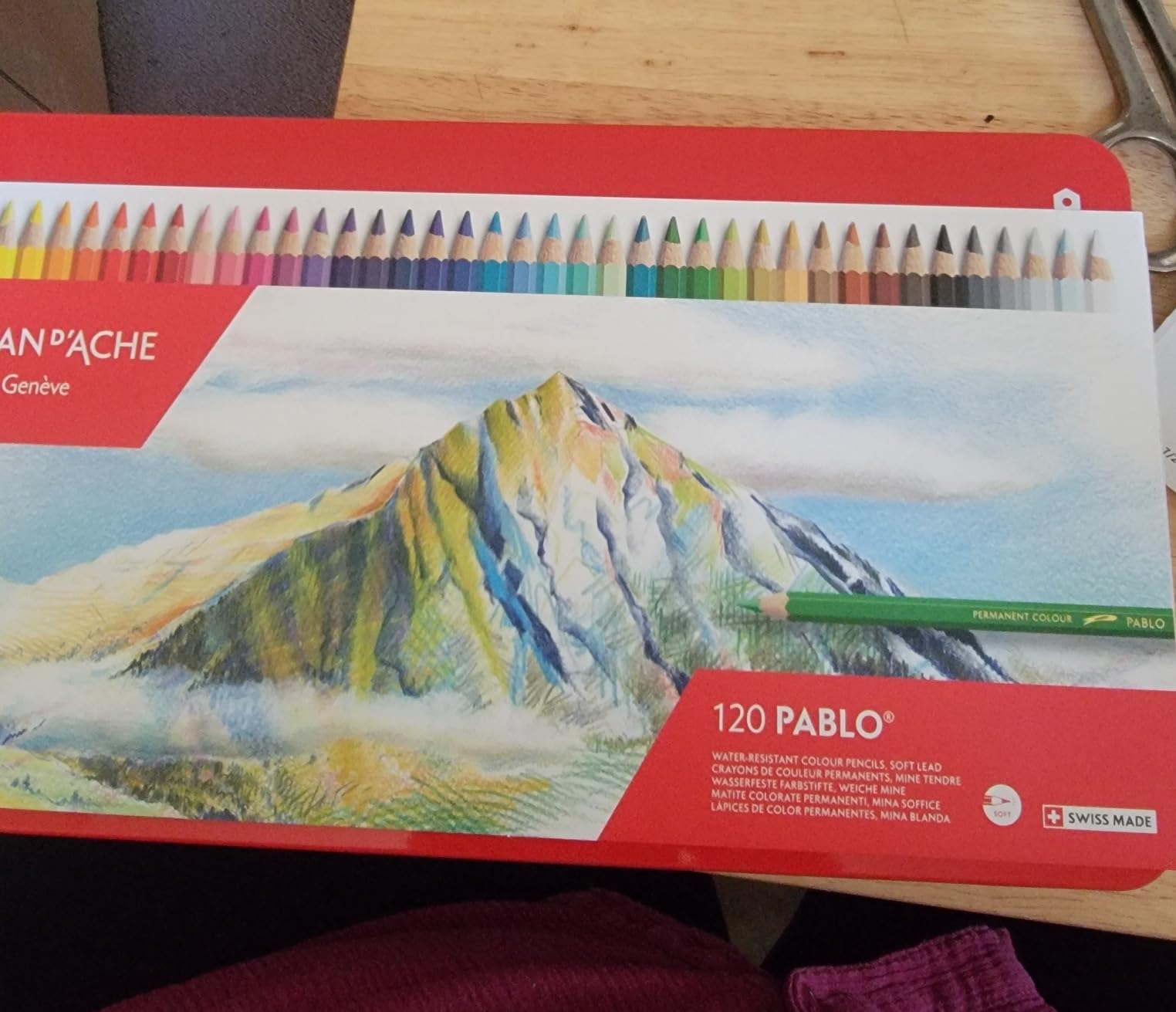
Caran d’Ache Pablo is the quiet professional’s choice. Made in Switzerland since 1915, the 3.7mm oil-based core is the firmest premium lead in this comparison. That firmness is what makes Pablo unbeatable for hairline detail: you can sharpen to a needle point and the tip does not mushroom after two strokes.
I tested Pablo on a botanical illustration where every petal edge needed a clean one-millimeter line. Pablo delivered where Polychromos would have rounded off too quickly. The hexagonal barrel keeps the pencil from rolling on a slanted drafting table, a small detail that matters during long studio days.
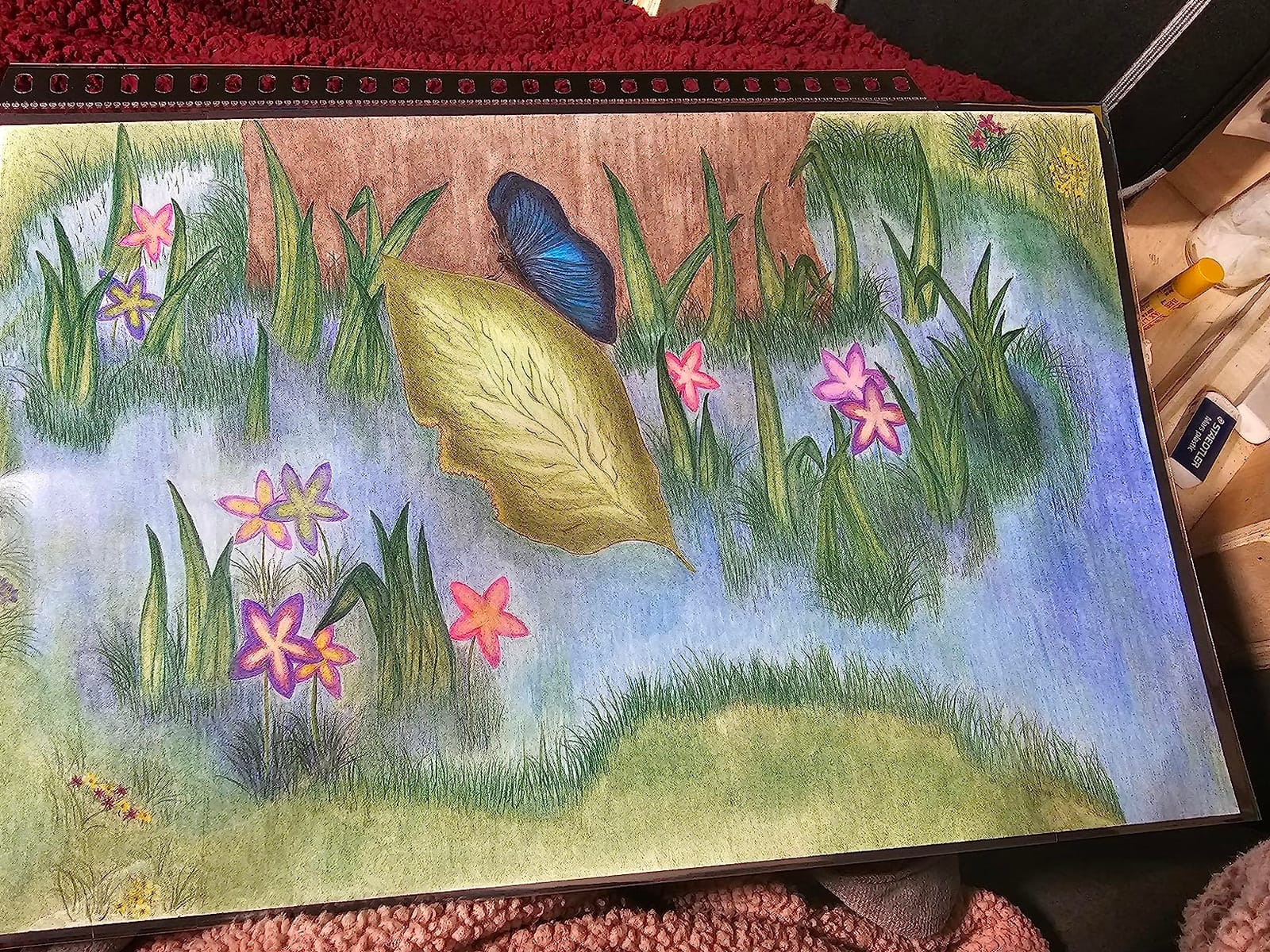
Lightfastness is excellent across the range, comparable to Derwent Lightfast. The palette leans heavily toward saturated colors; if you work in soft pastels and muted greys you may need to layer to achieve the tone you want.
Pablo is not erasable. Treat it as a permanent medium from the first stroke. That permanence is actually a feature for finished work, but it raises the stakes during initial sketching.
Who this is for
Botanical illustrators, technical illustrators, and any professional whose work depends on hairline precision and archival stability. If you have ever lost detail because your pencil rounded off too fast, Pablo solves that.
Who should look elsewhere
Casual users will struggle with the technique adjustment. Beginners should start with Prismacolor Premier or Castle Art Supplies before graduating to Pablo.
8. Castle Art Supplies 72 – Budget-Friendly Soft Core
Castle Art Supplies 72 Colored Pencils for Adults – Soft Core Leads
Soft core
72 colors
Tin presentation box
Fold-out tutorial
Pre-sharpened
Pros
- Soft yet durable cores with buttery laydown that defy crumbling
- intensely pigmented rich creamy colors
- effortless layering blending and burnishing
- organized tin with named and numbered pencils
- excellent value versus premium brands
- fold-out tutorial included
Cons
- Color on barrel does not always match the actual lead color
- lighter colors need a blender for solid finish
- wax bloom can occur after multiple layers
- color selection missing teals and softer shades
Castle Art Supplies has quietly become one of the most popular budget sets in the artist community. With over 24,000 reviews and a 4.8 rating, the consistency-to-price ratio is hard to match. I expected a noticeable drop in pigment quality versus the premium sets, and on paper, I did not see it.
The soft core lays down color with a buttery feel closer to Prismacolor Premier than to Polychromos. Layering and burnishing work well. The included fold-out tutorial is a genuinely useful touch for newer artists who are still building technique.
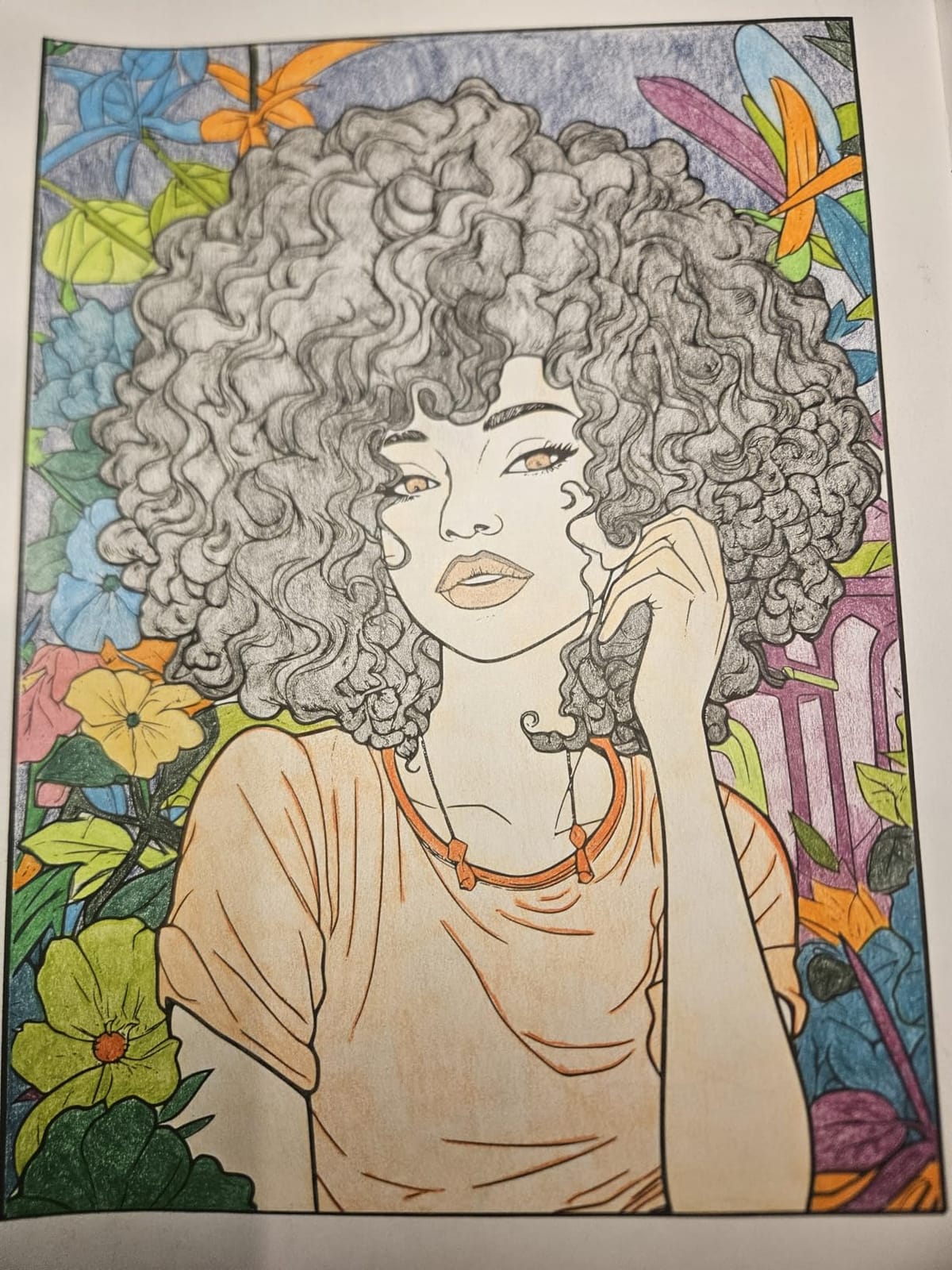
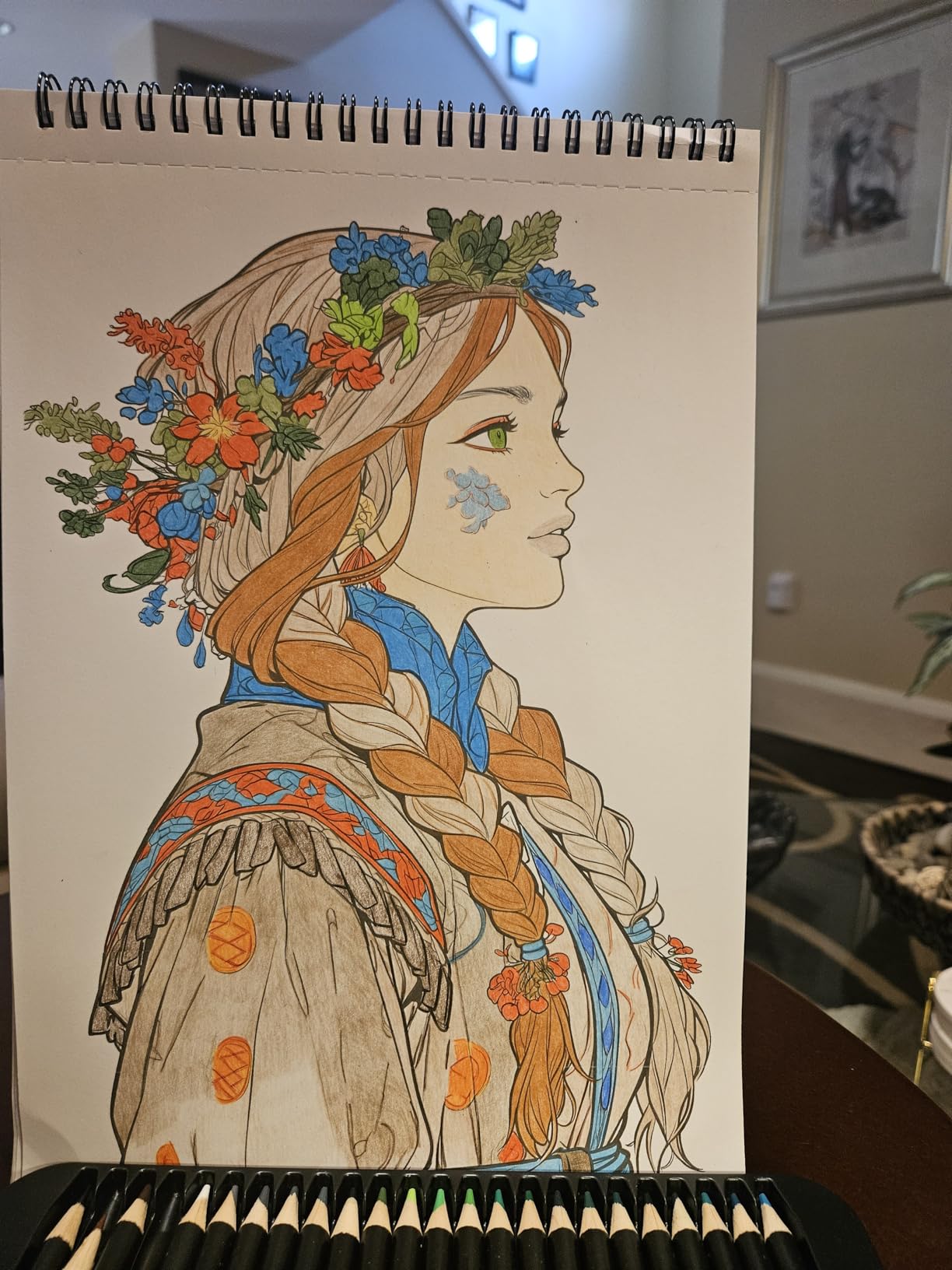
For students and emerging professionals who want a 72-color soft-core set without the premium price, Castle Art Supplies is the strongest option in this comparison. The tin is well-organized, with pencils named, numbered, and color-coded by family.
Wax bloom can show up after heavy layering, which is common to all soft wax-core pencils. A light spritz of workable fixatif solves the issue. The barrel color matching the lead is occasionally off, so always swatch before committing to a color.
Who this is for
Students, emerging professionals, and working artists who need a large color range on a budget. If you want a soft-core experience comparable to Prismacolor at a lower price, this is the set.
Who should look elsewhere
For archival, sellable artwork, the lightfastness data is not as comprehensive as Derwent Lightfast or Caran d’Ache. Treat this as a working set rather than a museum set.
9. Lyra Rembrandt Polycolor 72 – German Engineering, Oil-Based
Lyra Rembrandt Polycolor Art Pencils, Set of 72 Pencils, Assorted Colors (2001720)
Oil-based
72 colors
4mm lead
Lacquered cedar
Made in Germany
Pros
- Vibrant 4mm oil-based lead with smooth effortless strokes
- exceptionally lightfast for long-lasting artwork
- excellent surface versatility across paper cardboard wood
- lacquered cedar casing for style and longevity
- made in Germany by trusted brand since 1806
- excellent transparency without waxy bloom
Cons
- Requires constant sharpening for detailed work
- color palette differs from traditional painter's palette
- occasional duplicate colors in sets
- color names do not always match the laydown color
Lyra Rembrandt Polycolor is one of the oldest professional lines still in production. Made in Germany since 1806, the 4mm oil-based lead has a transparency that mimics watercolor glazing. For layered portrait work, that transparency lets undertones show through, which gives skin tones more depth than fully opaque pencils.
Lightfastness is strong across the range. Reviewers consistently cite Polycolor as a sleeper pick, often preferring it to more famous lines for the specific combination of transparency, laydown, and price.
The lacquered cedar barrel feels premium in the hand. The round shape rolls a bit, which is my only ergonomic complaint. The metal carrying case is sturdy and travel-friendly.
Constant sharpening is the trade-off for that transparency. The core wears down faster than harder pencils, but it sharpens cleanly and the tip holds well.
Who this is for
Portrait artists who want transparent layering, illustrators working on toned paper, and professionals who appreciate German engineering at a mid-range price.
Who should look elsewhere
Artists who prefer fully opaque color and minimal sharpening will prefer Polychromos or Pablo.
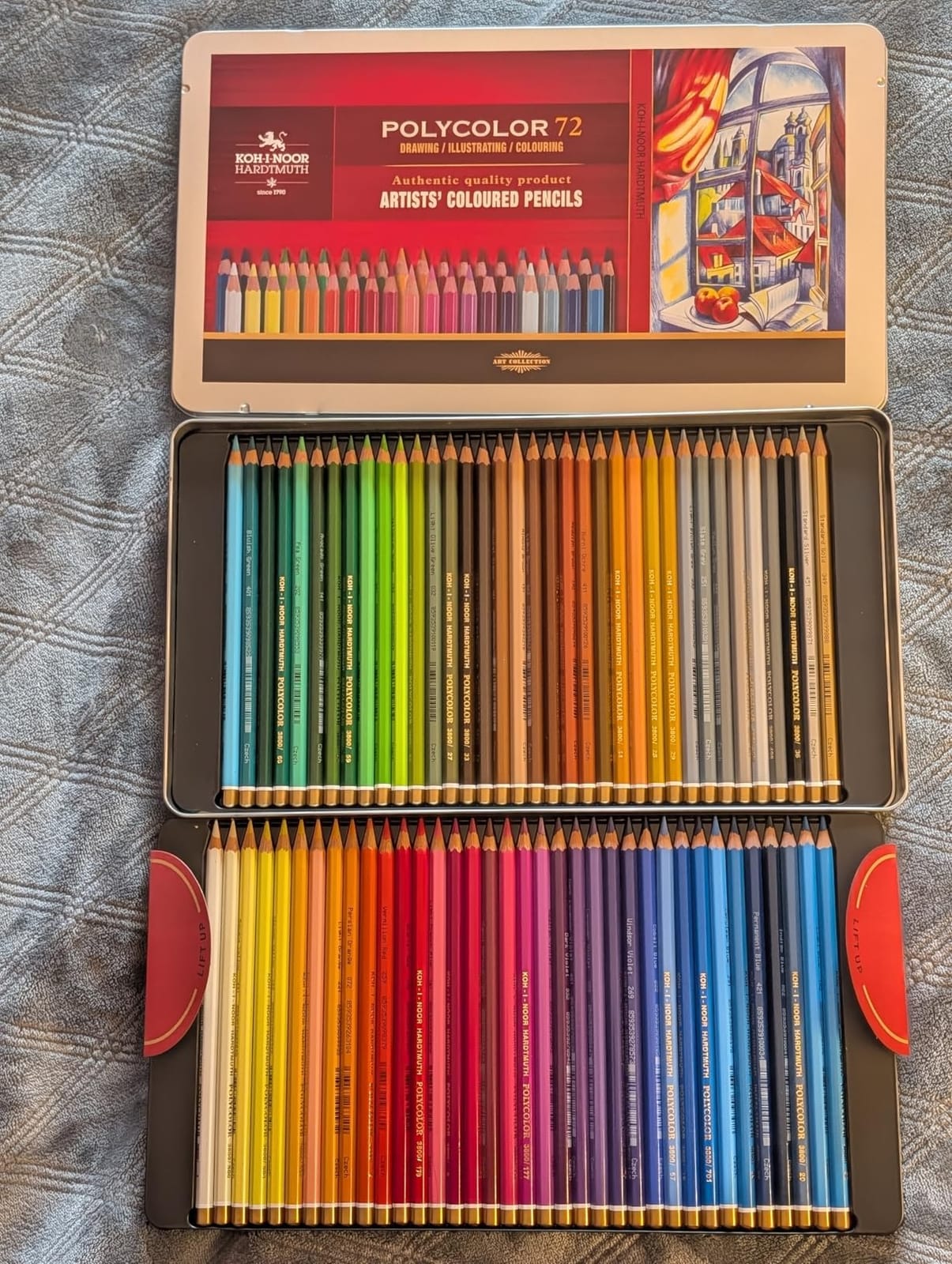
10. Koh-I-Noor Polycolor 72 – Czech Heritage, Dense Laydown
Koh-I-Noor Polycolor Drawing Pencil Set, 72 Assorted Colored Pencils in Tin, 1 Each (FA3827)
Oil-based
72 colors
3.8mm lead
California cedar
Water-resistant
Pros
- Professional-grade pencils for drawing illustrating and coloring
- 3.8mm lead with special oils for water-resistant dense strokes
- colors layer and blend without waxy buildup
- broad edge excellent for shading
- fine sharp point for detail
- finest Hardtmuth colors in California cedar casing
- excellent value versus premium brands
Cons
- Occasional duplicate colors or damaged pencils in sets
- approximately 10 of 72 pencils may not be lightfast
- harder core requires more effort than softer alternatives
Koh-I-Noor Polycolor closes out this list with one of the most underrated oil-based sets available. The 3.8mm lead is dense, slightly harder than Polychromos, and lays down color in fewer passes. For shading large areas, that density translates to faster coverage with less hand fatigue.
The broad edge of the lead is genuinely useful for shading backgrounds and atmospheric skies. Flip the pencil to the point for hairline detail. Koh-I-Noor’s California cedar casing is durable and sharpens cleanly.
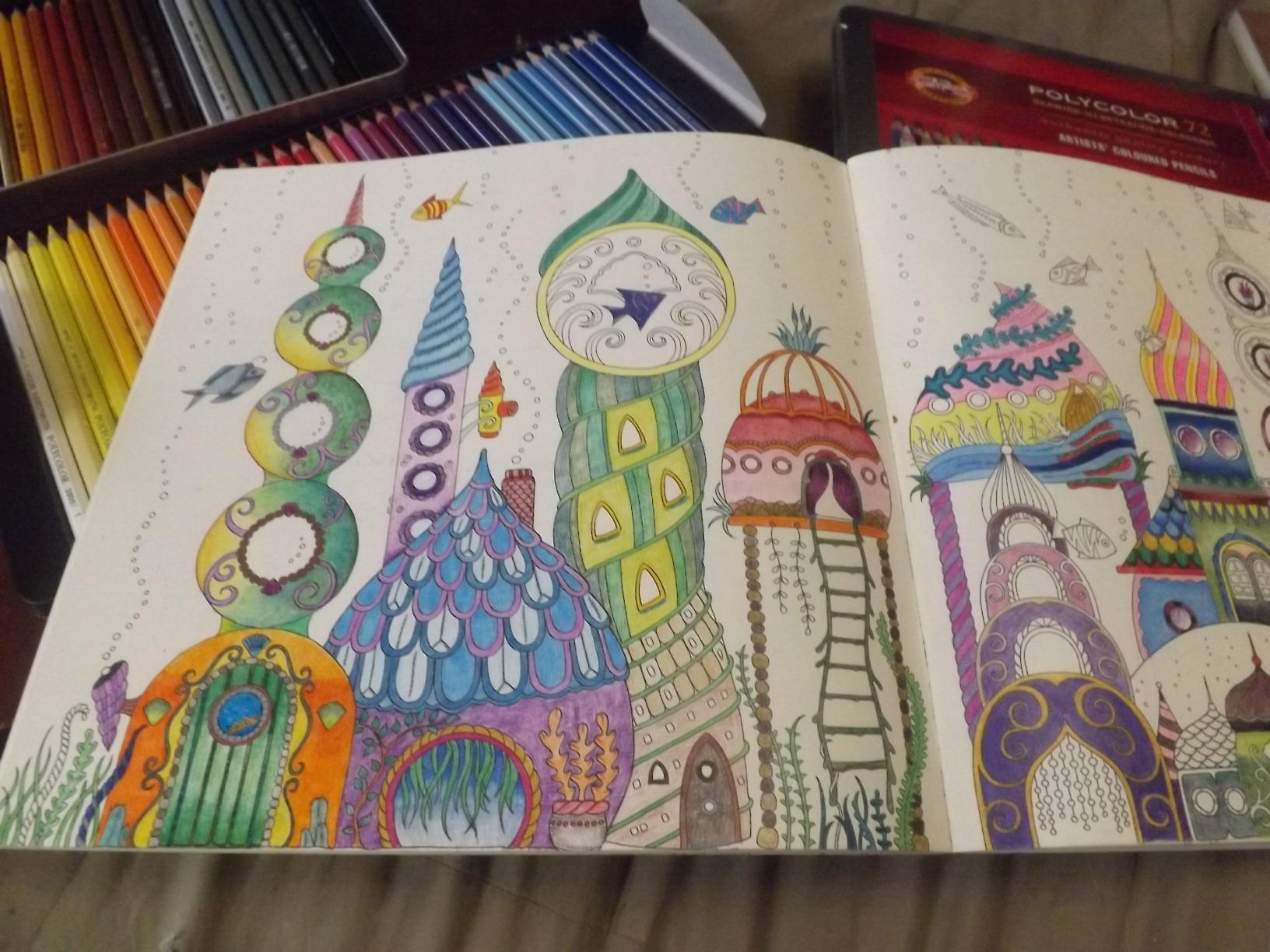
Lightfastness varies across the set. About ten of the seventy-two pencils carry a lower rating, which means you have to do a little homework before using a color in a piece intended for sale.
Polycolor is an excellent budget-friendly alternative to Faber-Castell Polychromos and Caran d’Ache Pablo. The performance gap is small; the price gap is significant.
Who this is for
Illustrators who need dense coverage and a firm core, students building a professional collection on a budget, and artists who want a Polychromos alternative at a lower price.
Who should look elsewhere
Artists who prefer very soft cores will find Polycolor too firm. For ultra-creamy laydown, Prismacolor Premier remains the benchmark.
What Makes a Colored Pencil Professional-Grade?
Professional-grade colored pencils are defined by four criteria: high pigment load, archival lightfastness, open stock availability, and at least 72 colors in the range. Each criterion answers a question professionals face every day in the studio.
Lightfastness is the most important. It is measured by two systems: the ASTM D6901 standard (I = 100+ years under museum conditions, V = less than 20 years) and the Blue Wool Scale ISO 105 (1 = poor, 8 = excellent). For sellable, archival work, you want ASTM I or II across the entire palette. Derwent Lightfast is the only major line that publishes a 100% rating.
Pigment load refers to how much color is packed into the core. High pigment pencils lay down vibrant color in fewer passes, which matters when you are layering ten to twenty coats for a realistic gradient. Polychromos, Prismacolor Premier, and Caran d’Ache Pablo are all high-pigment lines.
Open stock means you can buy individual pencils to replace one that wears down or to add a specific color without buying a full set. Polychromos, Luminance, Lightfast, Pablo, Holbein, and Prismacolor Premier all offer open stock. This matters because professional pencils wear down at different rates, and a single replacement pencil is far cheaper than a full set.
Color range of 72 or more covers most professional palettes. Polychromos offers 120, Prismacolor Premier offers 150, and Pablo offers 120. Lines below 72 colors force you to mix more often, which costs time.
Wax vs Oil: Which Binder Do Professionals Prefer?
The binder is what holds pigment together inside the core. Wax-based pencils like Prismacolor Premier and Castle Art Supplies lay down faster and blend more easily. Oil-based pencils like Polychromos, Pablo, Lightfast, and Lyra Rembrandt hold a sharper point and layer more cleanly without wax bloom.
Wax-based pencils have a softer core. That softness gives you buttery laydown and fast coverage. The trade-off is breakage during sharpening and a phenomenon called wax bloom, where the binder rises to the surface as a hazy film after multiple layers. A workable fixatif clears it, but it is an extra step.
Oil-based pencils have a firmer core. That firmness gives you a sharp point that holds through detail work, and the laydown is more controlled. Layering is cleaner because the binder does not migrate to the surface. The trade-off is that oil cores take more pressure to lay down color.
For portrait and realism work, most professional illustrators use a mix: an oil-based pencil for detail and underlayers (Polychromos, Pablo) plus a wax-based pencil for blending-heavy passes (Prismacolor Premier). The two systems layer over each other surprisingly well, and this combination is widely recommended on forums like r/ColoredPencils and in YouTube comparisons by artists like Sarah Renae Clark.
For botanical and illustration work where hairline detail matters, oil-based pencils are the clear winner. For atmospheric backgrounds and fast coverage, wax-based pencils save time. Owning at least one of each type gives you the best of both worlds.
How to Choose the Right Professional Colored Pencil Set
The best colored pencils for professionals depend on what you draw and where your work ends up. Here is a practical framework for choosing.
For portrait artists: Start with Prismacolor Premier 72 for blending-heavy passes and add Faber-Castell Polychromos 24 for fine detail. If your portraits are sold or exhibited, swap the Premier for Caran d’Ache Pablo or Derwent Lightfast to guarantee archival stability.
For botanical and scientific illustrators: Caran d’Ache Pablo is the standard. The firm 3.7mm core holds a needle point through hairline petal and leaf edges. If you also work in watercolor, add Derwent WaterColour for hybrid pencil-to-paint effects.
For illustrators and commercial work: Faber-Castell Polychromos 120 covers the broadest professional brief. Open stock is reliable, lightfastness is documented, and the lead survives the demands of daily deadlines. Add Prismacolor Premier if you need extra blending speed.
For realism and sellable artwork: Derwent Lightfast is the safest choice. Every color carries the same archival certification, which removes the worry of selective fading. Caran d’Ache Pablo is the closest premium alternative.
For beginners and emerging professionals: Castle Art Supplies 72 or Prismacolor Premier 24 are the most forgiving soft-core sets. Derwent Procolour is the best mid-priced oil-based option for artists who already know they prefer firmer leads.
For watercolor pencil users: Derwent WaterColour is the benchmark. The 72-count tin covers most palette needs and the hexagonal barrel stays put on a wet workspace.
One practical note: most professionals build a working collection over time rather than buying one full set. Start with a 24- or 36-count set in the binder type you prefer, then add individual open-stock pencils as specific colors wear down or as projects demand new hues.
Frequently Asked Questions
What brand of colored pencils do professional artists use?
The most-used professional colored pencil brands are Faber-Castell Polychromos (oil-based, 120 colors, archival lightfastness), Prismacolor Premier (wax-based, 150 colors, easy blending), Caran d’Ache Luminance and Pablo (oil-based, exceptional lightfastness), Derwent Lightfast (100% lightfast, oil-based), and Holbein Artists (oil-based, 150 colors). Most working illustrators combine two systems: an oil-based pencil for detail and underlayers, plus a wax-based pencil for blending-heavy passes.
What are the best colored pencils for professional artists?
The best colored pencils for professional artists in 2026 are: 1) Faber-Castell Polychromos – oil-based, 120 colors, unsurpassed lightfastness, break-resistant core; 2) Derwent Lightfast – 100% lightfast under museum conditions, certified to ASTM D6901; 3) Caran d’Ache Pablo – Swiss-made, 3.7mm firm oil core for fine detail; 4) Prismacolor Premier – industry-standard wax-soft core, ultra-smooth blending; 5) Derwent Procolour – hybrid wax-oil binder, sharp point retention, excellent value. Choose based on whether you prioritize blending speed (wax) or point retention and archival stability (oil).
What is the difference between artist grade and student grade colored pencils?
Artist grade colored pencils use higher pigment loads, archival-grade binders, and certified lightfast pigments that resist fading for decades. They offer 72 to 150 colors with full open stock availability, so you can replace individual pencils. Student grade pencils use lower-cost pigments, wax-heavy binders, and smaller color ranges. Student grade is fine for learning, sketching, and casual coloring but will fade noticeably within years and lacks the layering capability needed for sellable artwork.
Which colored pencils are best for layering and blending?
For blending, Prismacolor Premier and Castle Art Supplies have the softest wax cores and the smoothest laydown. For layering, Faber-Castell Polychromos, Derwent Lightfast, and Caran d’Ache Pablo have oil-based cores that build clean gradients without wax bloom. Most professional illustrators use a combination: a wax-based pencil for blending-heavy passes and an oil-based pencil for detail and underlayers. The two systems layer over each other surprisingly well.
Are expensive colored pencils worth it for professionals?
Yes, for sellable or exhibited work. Premium lines like Polychromos, Lightfast, and Pablo publish individual lightfast ratings, use higher pigment loads, and offer full open stock. Cheaper pencils fade noticeably within years and lack the layering capability needed for sellable artwork. For students, hobbyists, and learning artists, mid-priced options like Derwent Procolour or Castle Art Supplies deliver roughly 80 percent of premium performance at a fraction of the cost.
Final Verdict
After three months of swatching, layering, and sharpening across ten professional sets, our top pick for the best colored pencils for professionals in 2026 remains Faber-Castell Polychromos. The 120-color range, the 3.8mm break-resistant oil-based core, and the published lightfast ratings cover more professional assignments than any other single set in this comparison.
For archival work where every color must last 100 years, Derwent Lightfast is the safer choice. For portrait blending speed, Prismacolor Premier remains the industry benchmark. For budget-conscious emerging professionals, Castle Art Supplies delivers surprising quality at a fraction of the cost. Most working illustrators end up owning at least two of these systems, pairing an oil-based pencil for detail with a wax-based pencil for blending.
Whatever set you choose, buy from a retailer with a solid return policy, swatch every color before committing to a major piece, and replace individual pencils through open stock rather than re-buying full sets. That is how professionals build a working collection over time.