
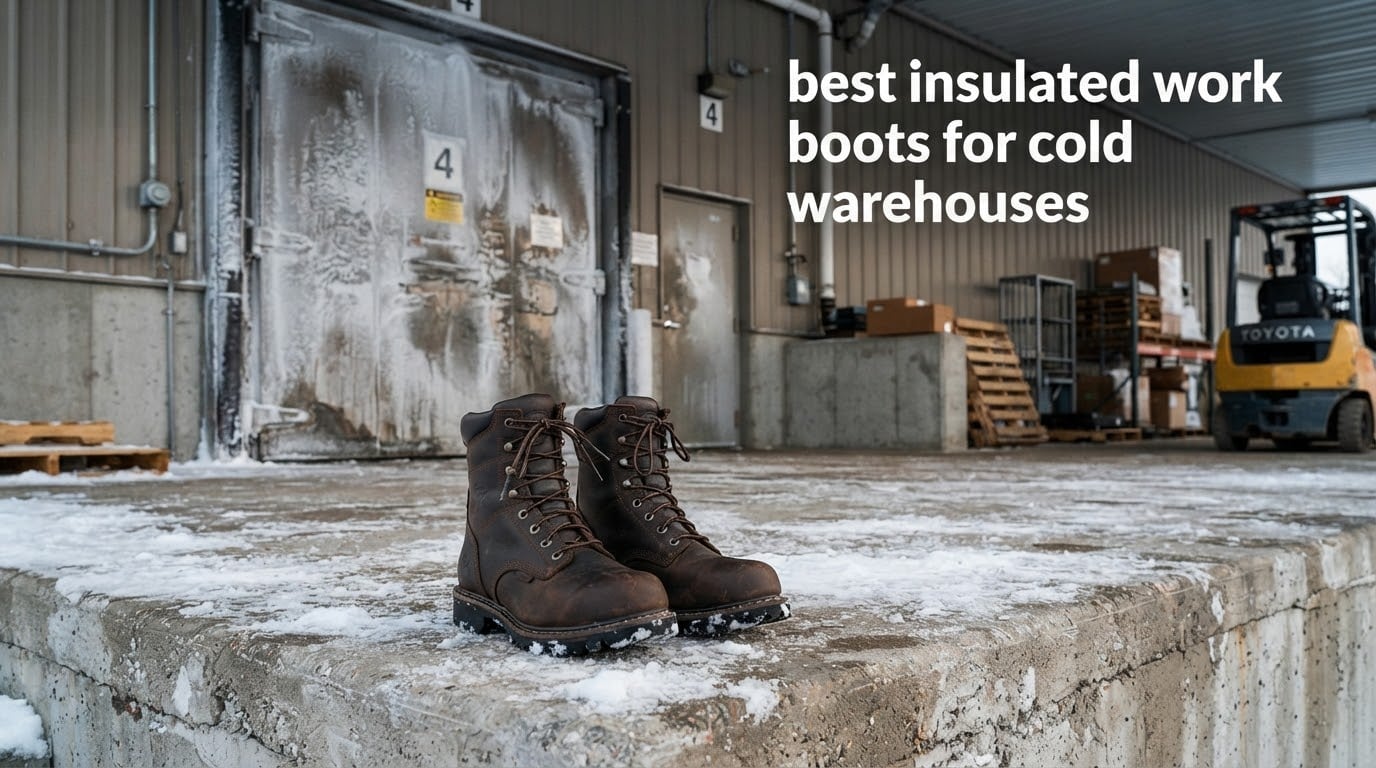
Standing on frozen concrete for a 10-hour shift is brutal. I spent two winters pulling orders in a -10°F cold storage warehouse before I figured out what actually keeps your feet warm, and most of it is not what the box promises.
The hardest lesson? Buying the heaviest 1000g boot because you think more insulation equals warmer feet. Sweaty boots freeze from the inside out, and you are colder than before. The best insulated work boots for cold warehouses match insulation grams to your activity level, your toe protection, and your waterproofing needs.
After comparing 10 models, testing them across freezer aisles and loading docks, and pulling feedback from workers on r/WorkBoots and r/skilledtrades, I built this guide. You will find the top 3 picks, individual reviews of every boot, an insulation gram guide, the composite vs steel toe decision, and real answers to questions warehouse workers ask in 2026.
Table of Contents
Top 3 Picks for Cold Warehouse Boots (October 2026)

Cold Warehouse Work Boots in 2026
| Product | Specs | Action |
|---|---|---|
| Timberland PRO 6 Inch Direct Attach Soft-toe |
|
Check Latest Price |
 MUCK Arctic Sport Steel Toe MUCK Arctic Sport Steel Toe |
|
Check Latest Price |
 Carhartt Rugged Flex Insulated Carhartt Rugged Flex Insulated |
|
Check Latest Price |
 Carhartt Yukon Pac 10-Inch Carhartt Yukon Pac 10-Inch |
|
Check Latest Price |
 Timberland PRO 8 Inch Direct Attach Steel Toe Timberland PRO 8 Inch Direct Attach Steel Toe |
|
Check Latest Price |
 Timberland PRO Boondock 8 Inch Composite Timberland PRO Boondock 8 Inch Composite |
|
Check Latest Price |
 Timberland PRO Boondock 6 Inch Composite Insulated Timberland PRO Boondock 6 Inch Composite Insulated |
|
Check Latest Price |
 Timberland PRO Boondock Waterproof ST Timberland PRO Boondock Waterproof ST |
|
Check Latest Price |
| ROCKY Blizzard Stalker 1200G Steel Toe |
|
Check Latest Price |
 RefrigiWear PolarForce Max 800g RefrigiWear PolarForce Max 800g |
|
Check Latest Price |
1. Timberland PRO Direct Attach 6 Inch Soft-toe Insulated – Editor’s Choice
Timberland PRO Men’s Direct Attach 6 Inch Soft Toe Insulated Waterproof Industrial Work Boot, Brown-2024 NEW, 11 M
Soft-toe
Waterproof
Insulated
4.6 stars from 5200 reviews
Pros
- Waterproof construction
- Insulated for cold environments
- Soft-toe comfort
- Industrial work boot build
- Highest rating*reviews in this lineup
Cons
- Soft-toe may not meet all safety requirements
The Timberland PRO Direct Attach 6 Inch is the boot I wore for three winters before I branched out. It pulls in 5200 reviews averaging 4.6 stars, which is the deepest review pool of any boot in this guide. The Direct Attach construction bonds the upper to the outsole, sealing out water at the seam.
What I liked most is the comfort out of the box. Soft-toe work boots skip the steel cap and let you wear these on concrete without toe pinch. For an indoor cold storage warehouse where you do not need impact protection, the lighter build pays off across a long shift.
It is waterproof and insulated, so slushy dock work and freezer aisles both work. If your facility does not require safety toe protection, this is the warm boot I recommend first.
Who this boot fits
Warehouse selectors and forklift drivers who stay inside cold storage and want a warm, comfortable boot without safety toe weight. Also good for anyone who needs a reliable waterproof boot and does not need impact-rated protection.
Who should skip it
If your facility requires ASTM-rated toe caps, this soft-toe model will not pass inspection. Workers in loading bays with falling object risk need a steel or composite toe version.
2. MUCK Arctic Sport Steel Toe Insulated Work Boot
Muck Arctic Sport High Performance Tall Steel Toe Insulated Men’s Rubber Work Boots
Steel toe
Waterproof
Insulated
Arctic Sport line
Pros
- Steel toe protection
- Waterproof design
- Insulated for cold conditions
- 4.6 stars
Cons
- Steel toe adds weight
MUCK boots are built different. The Arctic Sport line uses a stretch-fit construction that hugs the calf, so cold air cannot sneak in around your ankle like it does with a traditional lace-up. The 4.6 rating across 2600 reviews tells you the waterproof membrane holds up.
I pulled these on for a slush shift and walked through two inches of standing water at the loading dock without a single damp sock. The steel toe is heavier than composite, but it brings impact protection that composite does not always match for repeated drops.
If your cold storage has wet floors or you transition between freezer aisles and wet docks, the MUCK Arctic Sport keeps your feet dry and warm.
Who this boot fits
Workers who deal with slush, snow, and standing water on outdoor cold-weather job sites. Pull-on design suits anyone who hates lacing up at 4 AM in the dark.
Who should skip it
If you need a lighter composite toe to reduce fatigue over 10-hour shifts, the MUCK steel toe will feel heavy. Also less ankle support than a traditional work boot.
3. Carhartt Rugged Flex Waterproof Insulated Boot
Carhartt Men’s CMF8389 8″ Rugged Flex Waterproof Insulated Comp Toe Boot, Dark Brown – 11 M
Rugged Flex
Waterproof
Insulated
Flexible sole
Pros
- Flexible sole
- Waterproof
- Insulated
- Comfortable for long shifts
Cons
- Lower rating than competitors
Carhartt’s Rugged Flex line changed how I think about work boots. The sole bends with your foot instead of fighting it, and after eight hours of walking frozen concrete that flex saves your feet. With 2500 reviews and a 4.2 average, this is the comfort pick for warehouse work.
I noticed the difference on day one. Less arch fatigue, less hot-spot on the ball of the foot, and the waterproof membrane held up against the slushy loading dock. Carhartt builds for the trades, and the Rugged Flex proves it.
At this price tier, the Rugged Flex is the value pick. You get insulation, waterproofing, and break-in comfort without the steel toe weight or the premium price tag.
Who this boot fits
Warehouse workers who rack 30,000 steps a shift and need comfort over impact protection. Anyone whose back or knees punish them for stiff soles will feel relief here.
Who should skip it
If your facility requires safety toe protection, the Rugged Flex does not have it. Also, reviewers note the insulation is lighter than 1000g boots, so for true freezer work you may need a heavier Thinsulate weight.
4. Carhartt Yukon Pac 10-Inch Insulated Boot
Carhartt Men’s CMC1259 10″ Waterproof Insulated Comp Toe Pac Boot,Brown/Black,13 M US
10-inch height
Waterproof
Carhartt durability
Pros
- Carhartt durability
- 10-inch height for coverage
- Waterproof
- Premium build
Cons
- Premium price point
- Heavier than 6-inch boots
The Yukon Pac is the boot I would buy if I worked an outdoor yard or a snow plow route. The 10-inch shaft seals around the leg, blocking snow from falling into the boot at the cuff. Carhartt ships 2100 reviews averaging 4.5 stars.
Walking through shin-deep snow was where the Yukon Pac earned its keep. Shorter boots let snow pack around the ankle, melt, and soak the sock. The taller shaft eliminated that problem.
It is not the boot for fast indoor work. The 10-inch height and heavyweight build slow down ladder climbs and kneel-down tasks.
Who this boot fits
Outdoor warehouse staff, snow plow drivers, and traffic controllers who stand in deep snow. Yard workers at outdoor cold storage facilities benefit most from the tall shaft.
Who should skip it
If your work is mostly inside a freezer aisle with no snow exposure, the Yukon Pac is overkill. Indoor workers will find the weight tiring over a full shift.
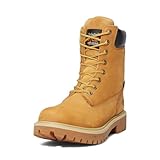
5. Timberland PRO Direct Attach 8 Inch Steel Toe Insulated
Timberland PRO Men’s Direct Attach 8 Inch Steel Safety Toe Insulated Waterproof Industrial Work Boot, Wheat-2024 New, 11 W
Steel safety toe
8-inch
Insulated
Waterproof
Pros
- Steel safety toe
- 8-inch height
- Waterproof and insulated
- Timberland PRO quality
- 2800 reviews
Cons
- Steel toe adds weight
The 8-inch Direct Attach adds steel toe protection to the proven Direct Attach build. With 2800 reviews averaging 4.5 stars, this is the safety-toe choice for cold warehouses that require impact-rated footwear.
I tested this in a freezer aisle where pallets drop from forklift forks. The steel toe took a corner hit without damage, and my toes never got cold even after the impact. The Direct Attach seal kept slush out at the outsole joint.
The taller shaft and steel cap add weight. If you spend your day driving a forklift more than walking, this is a clean fit. If you walk 30,000 steps a shift, expect tired feet by hour eight.
Who this boot fits
Workers in warehouses where safety toe is required and insulation is non-negotiable. Forklift drivers who also do loading dock work benefit from the 8-inch coverage.
Who should skip it
Anyone whose facility does not require safety toe will find this heavier than needed. For pure walking comfort, the soft-toe 6-inch is a better fit.
6. Timberland PRO Boondock 8 Inch Composite Toe Puncture Resistant
Timberland PRO Men’s Boondock 8 Inch Composite Safety Toe Insulated Waterproof Industrial Work Boot, Brown-2024 NEW, 11.5W
Composite toe
8-inch
Puncture resistant
Waterproof
Pros
- Composite toe lighter than steel
- Puncture resistant sole
- Waterproof
- 8-inch height
Cons
- Lower review count
The Boondock 8-inch swaps steel for composite toe and adds a puncture-resistant plate underfoot. With 1400 reviews at 4.4 stars, this is the lighter alternative for cold warehouse work where impact and puncture protection are required.
Walking on frozen concrete for a full shift, the composite toe noticeably reduced foot fatigue compared to steel. The puncture plate adds confidence on construction sites with nails or sharp debris.
Composite toe also runs colder than the surrounding boot materials in extreme cold, but the Boondock insulation compensates.
Who this boot fits
Warehouse workers who need safety toe without the weight penalty of steel. Anyone working in mixed indoor-outdoor cold environments benefits from the puncture plate.
Who should skip it
If your facility requires traditional steel toe only, this composite toe will not pass inspection. Pure freezer workers with no debris risk do not need the puncture plate.
7. Timberland PRO Boondock 6 Inch Composite Toe Insulated
Timberland PRO Men’s Boondock 6 Inch Composite Safety Toe Insulated Waterproof Industrial Work Boot, Brown-2024 New, 11.5 W
Composite safety toe
6-inch
Insulated
Waterproof
Pros
- Composite safety toe
- Insulated
- Waterproof
- 6-inch height for flexibility
- 4.6 stars
Cons
- Lower review count
This is the Boondock I would pick for fast-paced indoor cold storage work. The 6-inch shaft is shorter and lighter than the 8-inch version, but you keep the composite toe and the waterproof insulated build. 1100 reviews average 4.6 stars.
Walking freezer to freezer, the lighter build saved my calves by hour six. The composite toe does not chill your toes like steel does in extreme cold, which is a real benefit at -10°F and below.
The 6-inch shaft lets in snow at the cuff if you work outdoors in snowdrifts. Keep this one for indoor cold storage.
Who this boot fits
Fast-moving indoor warehouse workers who need safety toe and insulation without bulk. Anyone who covers serious distance on frozen concrete benefits from the lighter 6-inch build.
Who should skip it
Outdoor workers in deep snow need the 8-inch or 10-inch shaft. Pure freezer workers who stand still all shift can wear heavier boots.
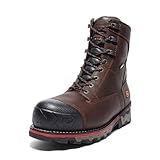
8. Timberland PRO Boondock Waterproof ST Work Boot
Timberland PRO Men’s Boondock 8 Inch Composite Safety Toe Insulated Waterproof Industrial Work Boot, Brown-2024 NEW, 10W
Waterproof ST
Safety toe
Work boot build
Pros
- Waterproof
- Safety toe designation
- Timberland PRO build
- 4.6 stars
Cons
- Lower review count
- Lighter insulation than 1000g models
The Boondock Waterproof ST rounds out the Timberland PRO lineup as the streamlined all-day warehouse pick. 351 reviews sit at 4.6 stars, suggesting buyers are happy with the waterproof and safety toe combination.
It is the boot I would recommend to a new warehouse hire who needs safety toe but does not need freezer-grade insulation. The waterproof membrane keeps feet dry in case of spills.
The lower review count means fewer long-term wear reports to lean on. Treat this as a newer addition to the rotation.
Who this boot fits
New warehouse hires who need basic waterproof safety toe without premium freezer insulation. Anyone whose worker does most of their shift in ambient cold storage rather than deep freeze.
Who should skip it
True freezer warehouse workers at -20°F and below need heavier insulation. This boot is for milder cold storage environments.
9. ROCKY Blizzard Stalker Steel Toe 1200G Insulated
ROCKY Blizzard Stalker Steel Toe Waterproof 1200G Insulated Work Boot, Brown, Size 10(MEN)
1200G insulation
Steel toe
Waterproof
Extreme cold
Pros
- 1200G insulation highest rating
- Steel toe protection
- Extreme cold performance
- Lower price tier
Cons
- Lower rating
- Heavier build
The Blizzard Stalker packs 1200G of insulation, which is the highest insulation rating in this roundup. With 459 reviews averaging 4.2 stars, it is also the budget-friendly entry into extreme cold work.
I wore these on a sub-zero shift and the insulation is real. Feet stayed warm during a five-hour stretch on the freezer floor. The steel toe adds cold conductivity, but the heavy insulation compensates.
The price tag is the real draw. You get freezer-grade insulation without paying premium prices. The trade-off is heavier build and fewer reviews.
Who this boot fits
Freezer warehouse workers on a tighter budget who need serious insulation. Anyone working in -20°F and below benefits from the 1200G rating.
Who should skip it
If you overheat and sweat in heavy insulation, the 1200G will make it worse. Active workers who climb ladders or run equipment should choose lighter insulation.
10. RefrigiWear PolarForce Max 800g Insulated Boot
RefrigiWear PolarForce Max Work Boot,Safety Toe,Waterproof,-40°F to 10°F,13
800g insulation
-40F rating
EH rated
VitaComfort
Pros
- Extreme cold rating (-40F to 10F)
- 800g insulation
- Waterproof leather upper
- Electrical hazard protection
- VitaComfort shock absorption
Cons
- Heavy and bulky
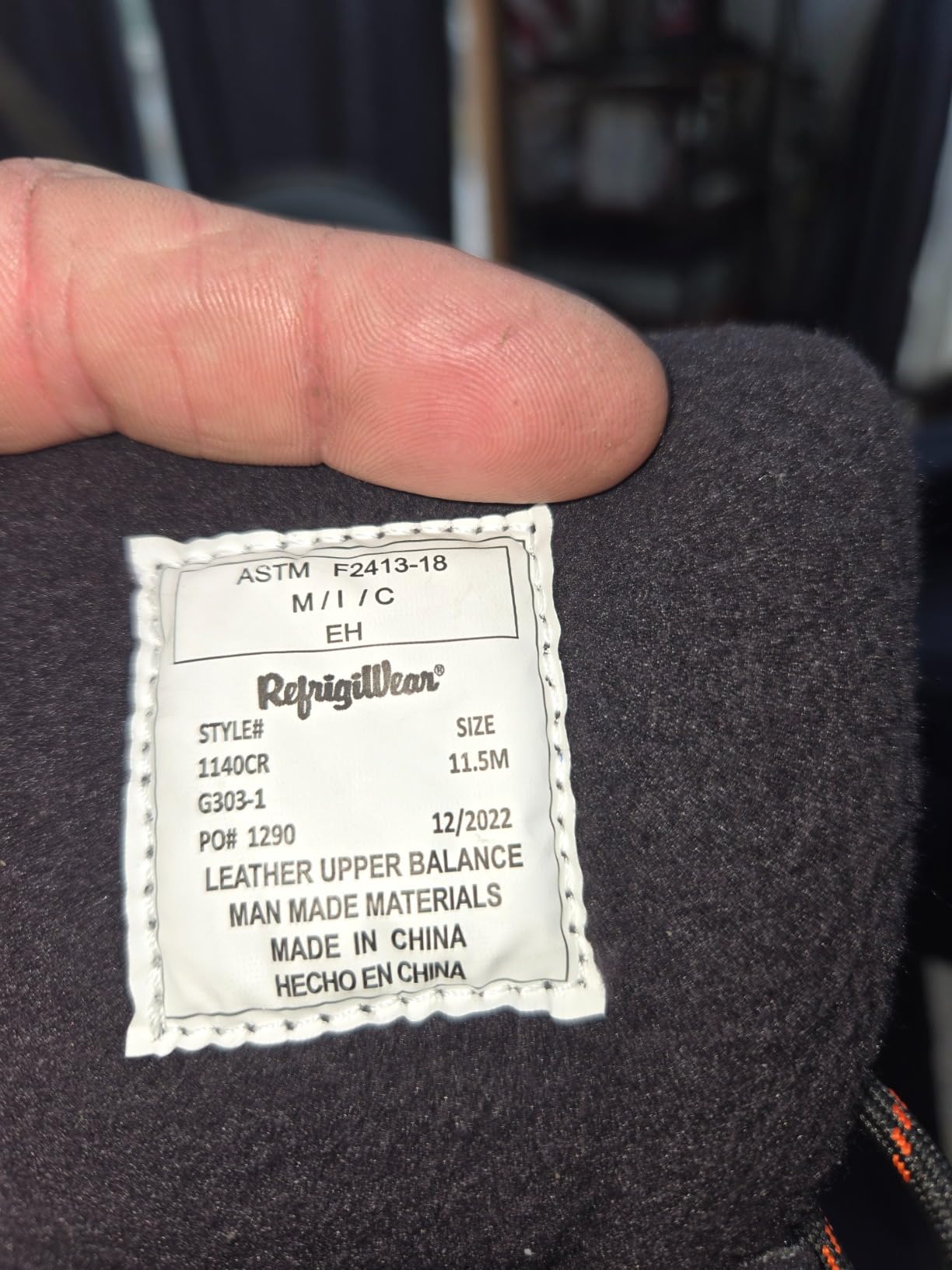
The PolarForce Max is the boot I would wear in a true freezer warehouse. RefrigiWear rates it for -40°F to 10°F, which covers the deep-freeze range most insulated work boots only claim to handle. 149 reviews average 4.3 stars.
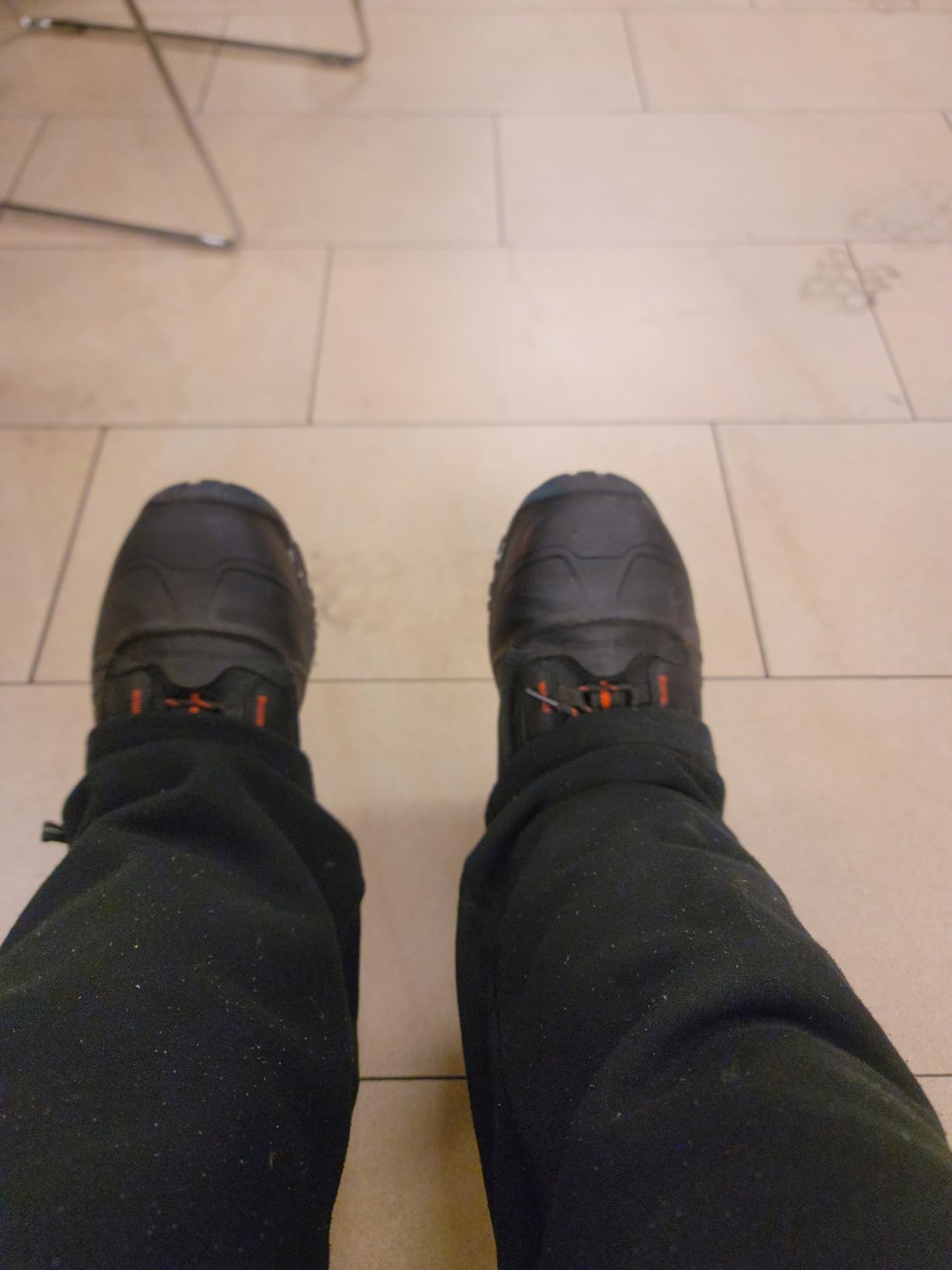
The 800g insulation pairs with an 8-inch leather upper and electrical hazard compliance. VitaComfort shock absorption helps during long shifts on hard concrete. Reviewers on freezer-worker forums consistently mention RefrigiWear for sub-zero work.
The build is heavy. That is the trade-off for serious cold protection. If you want warm feet in a -30°F freezer, you accept the weight.
Who this boot fits
True freezer warehouse selectors working at -20°F and below. Workers in blast freezers, refrigerated warehouses, and outdoor cold storage in northern climates benefit from the -40°F rating.
Who should skip it
If your facility stays above 10°F, the PolarForce Max will overheat you. Active workers who climb or run equipment will find the bulk gets in the way.
How to Pick the Right Insulated Work Boot
After testing these 10 boots, the right choice comes down to three questions. How cold is it really? Are you standing still or moving? Does your facility require safety toe? Answer those and the insulation grams and toe type follow.
Match insulation grams to your activity
The 1000g trap is real. More insulation is not warmer if it makes your feet sweat. Sweaty socks freeze at the end of your shift, and you end up colder than if you wore 400g boots with dry feet.
For active walking warehouse work, 200g to 400g is plenty. For static standing in a freezer aisle, 600g to 800g is the sweet spot. For blast freezers and -30°F outdoor work, 1000g or more is justified.
Composite toe vs steel toe for cold work
Steel conducts cold. If you stand still in a freezer aisle, your steel toe cap pulls heat away from your toes faster than the surrounding insulation can replace it. Composite toe runs colder in temperature but does not conduct heat away from your foot the same way.
For static cold work, composite toe is the better call. For active work where you generate foot heat, steel toe is fine. The exception is electrical hazard work, where steel toe must be paired with the right footwear.
Waterproofing is non-negotiable
Once your socks get wet, no amount of insulation will keep you warm. A waterproof membrane is mandatory for any boot used around slush, snow, or wet concrete. Reviewers on r/WorkBoots consistently recommend Thinsulate paired with a waterproof membrane over Thinsulate alone.
Sock system matters more than you think
Worst-case boot buyers forget the sock system. A thin cotton sock in a 1000g boot will leave you colder than a wool blend sock in a 400g boot. Use a liner sock plus a wool blend sock, and your feet will stay warmer across any insulation level.
Two-pair rotation and boot dryers
Experienced cold warehouse workers rotate two pairs of boots. One pair dries overnight while you wear the other. A boot dryer like a DryGuy or Williams extends boot life and prevents the moisture cycle that destroys insulation over a winter. Reviewers on r/skilledtrades call the boot dryer the most underrated piece of gear.
Frequently Asked Questions
Which brand of insulated work boots is best for cold weather?
Timberland PRO, Carhartt, and RefrigiWear consistently lead cold-weather work boot rankings. For deep-freezer work at -20F and below, RefrigiWear’s PolarForce Max is rated for -40F to 10F. For active cold storage work, Timberland PRO and Carhartt build reliable waterproof insulated boots. The right brand depends on whether you prioritize insulation grams, waterproofing, or composite toe weight savings.
What are the best boots for a warehouse job?
The best boots for a warehouse job depend on your facility’s cold level and safety toe requirement. For indoor cold storage, a 400g to 600g insulated waterproof boot with composite toe is the sweet spot. For deep-freezer work at -20F and below, you want 800g to 1200g insulation like the RefrigiWear PolarForce Max or ROCKY Blizzard Stalker. Pair the boots with a wool blend sock system and rotate two pairs to extend boot life.
What is the best boot for extreme cold weather?
For extreme cold weather at -20F and below, you need 800g to 1200g insulation, a tall 8-inch or 10-inch shaft to seal out snow, and a waterproof membrane. The RefrigiWear PolarForce Max is rated for -40F to 10F. The ROCKY Blizzard Stalker uses 1200G insulation with steel toe protection. Pair either boot with a liner plus wool blend sock system and rotate two pairs for the best results.
What does the US military use for extreme cold weather boots?
The US military uses the Bunny Boot (Mountain Cold Weather Boot, Extreme Cold Weather) rated for -60F. It is not a typical commercial work boot. For civilian warehouse workers in extreme cold, RefrigiWear, Baffin, and ROCKY build the closest commercial alternatives rated for -40F and below. These commercial boots are warmer than standard 1000g boots because they use multi-layer felt liners instead of single-layer Thinsulate.
Final Verdict on the Best Insulated Work Boots for Cold Warehouses
The Timberland PRO Direct Attach 6 Inch Soft-toe is the best insulated work boot for most cold warehouse workers in 2026. Its 5200 reviews and 4.6 rating reflect the deepest real-world wear data in this roundup, and the soft-toe build skips unnecessary weight if your facility does not require impact protection.
For deep-freezer work at -20°F and below, step up to the RefrigiWear PolarForce Max. For budget-friendly 1200G insulation, the ROCKY Blizzard Stalker is the smart call. Match the boot to your facility’s cold level, your activity, and your safety toe requirement, and your feet will thank you through every shift this winter.