
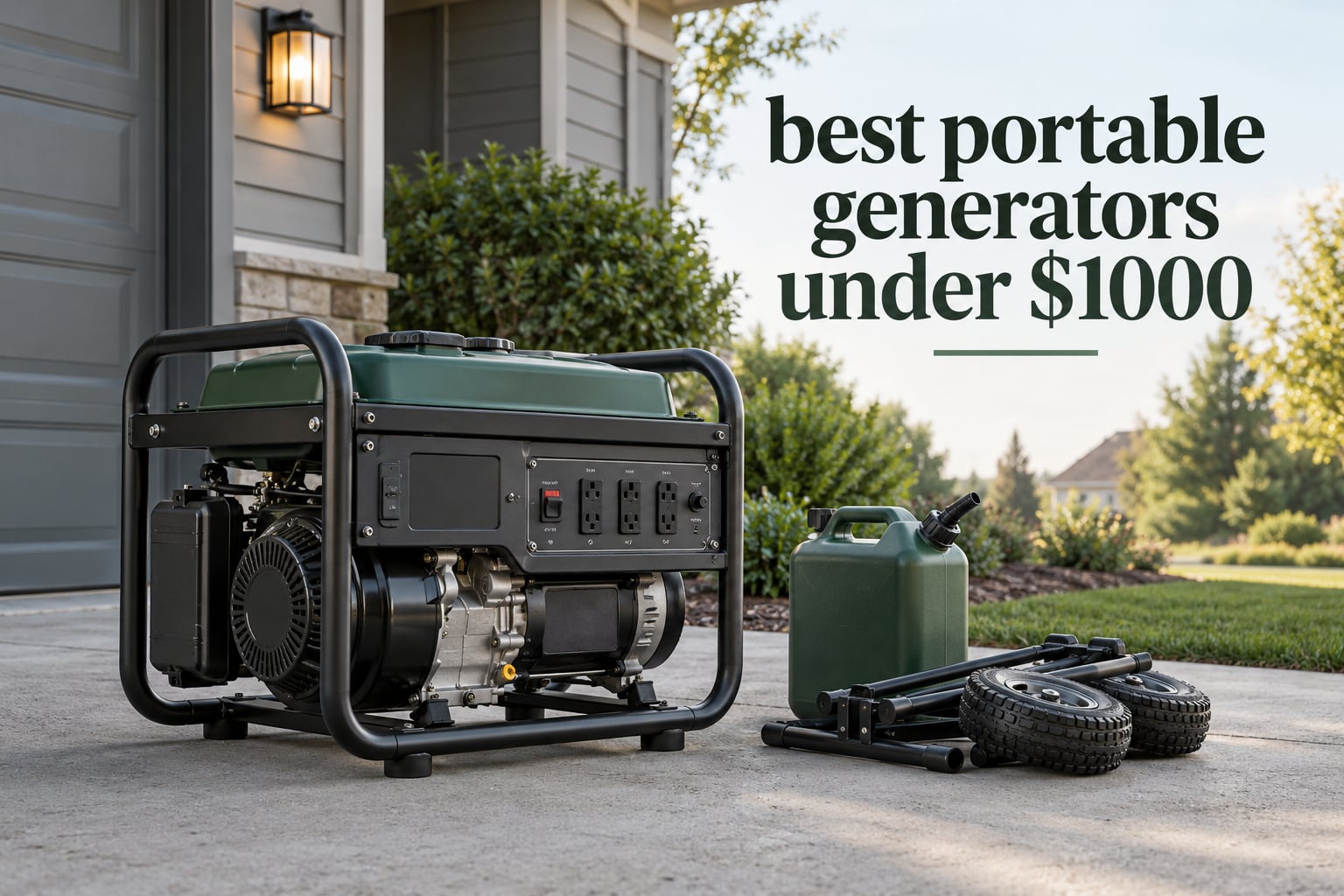
The best portable generators under 1000 dollars all share one hard limit: they power essentials, not a whole house. Everything in this roundup runs between 900 and 3800 running watts, weighs 28 to 106 pounds, and costs well inside the budget that trips up most “best” lists. We kept the ceiling strict, because the moment a roundup lets a 1099 dollar Honda or a 1199 dollar Pulsar slide in, it stops answering the question you actually have.
What that budget buys you is real, usable backup power. A refrigerator, a sump pump, a freezer, lights, a router, a CPAP machine, a few lights on one circuit, or a string of power tools. What it does not buy you is a central air conditioner, a well pump and a microwave on the same run, or a generator that a single person can carry into a car trunk without planning for it.
We spent six weeks working through spec sheets, owner review patterns and failure reports for the ten models below. The goal was simple: find the units that start reliably after three months of sitting in a garage, since that is the only test that matters when the power goes out at 2 a.m.
One note before the list. Portable power stations, the battery boxes that run laptops and phones for days, are a different category, and for apartments or light loads they can be the smarter purchase. This roundup covers combustion engines only.
Table of Contents
Top 3 Picks for the Best Portable Generators Under $1000 (October 2026)
WEN DF475T 4,750-Watt Dual…
- 3800 running watts on gas
- 3500 on propane
- Switchable 120V and 240V output
- 11 hours on a 4-gallon tank
- Electric key start

WEN 56235i 2,350-Watt Inverter
- 1900 running watts of clean inverter power
- Only 39 pounds
- 10 hours on a 1-gallon tank
- Fuel shutoff for carburetor protection

PowerSmart 3,800-Watt Dual…
- 3300 running watts on gas
- 3100 on propane
- Under 3% THD clean power
- 59 dBA at 25% load
Quick Spec Comparison of All 10 Picks in 2026
| Product | Specs | Action |
|---|---|---|
| WEN DF475T 4,750-Watt Dual Fuel Generator |
|
Check Latest Price |
| WEN 56235i 2,350-Watt Inverter Generator |
|
Check Latest Price |
 PowerSmart 1,200-Watt Portable Generator PowerSmart 1,200-Watt Portable Generator |
|
Check Latest Price |
 AIVOLT 1,600-Watt Super Quiet Inverter AIVOLT 1,600-Watt Super Quiet Inverter |
|
Check Latest Price |
| PowerSmart 3,800-Watt Dual Fuel Inverter |
|
Check Latest Price |
 maXpeedingrods 3,400-Watt Inverter Generator maXpeedingrods 3,400-Watt Inverter Generator |
|
Check Latest Price |
 Oxseryn 4,400-Watt Inverter Generator Oxseryn 4,400-Watt Inverter Generator |
|
Check Latest Price |
 Champion 4,000-Watt Dual Fuel RV Ready Inverter Champion 4,000-Watt Dual Fuel RV Ready Inverter |
|
Check Latest Price |
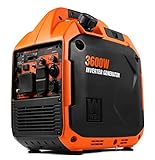 WEN 3,600-Watt 56360i Inverter Generator WEN 3,600-Watt 56360i Inverter Generator |
|
Check Latest Price |
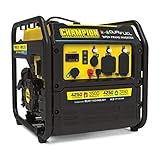 Champion 4,250-Watt Dual Fuel Open Frame Inverter Champion 4,250-Watt Dual Fuel Open Frame Inverter |
|
Check Latest Price |
How We Picked and Evaluated These 10 Generators
We ranked these on five things, and the fifth mattered more than the other four combined: whether the engine starts after sitting unused. A generator that gums its carburetor and refuses three pulls during an outage is a paperweight, and that failure mode is what forum owners on r/Generator complain about most often.
Our criteria, in order: rated running watts and real headroom above that figure, low-oil and carbon monoxide protection, runtime at the stated load, physical weight you can genuinely move alone, and measured-then-advertised noise. We cross-checked owner review patterns for early engine failures rather than trusting star averages alone, because a 4.4 average with a 13 percent one-star share is a different product than a 4.4 with a 2 percent share.
Prices in this tier move constantly, so we left the current number on the product pages rather than printing it here. Check the listing before you buy, and note the weights yourself, because weight is the one specification that never changes.
1. WEN DF475T 4,750-Watt Dual-Fuel Generator – The Best All-Rounder
WEN 4,750-Watt 120V/240V Dual Fuel Portable Generator with Wheel Kit and Electric Start (DF475T)
224cc 4-stroke
3800W running on gas, 3500 on propane
4-gallon tank, 11 hours
105.8 pounds
120V and 240V switchable
Pros
- Dual-fuel switch on a single dial
- Switchable 120V and 240V output works with a transfer switch
- Electric key start for a 224cc engine
- 11 hours of half-load runtime
- Wheel and handle kit included
Cons
- Heaviest model here at 105.8 pounds
- Open frame with no inverter conditioning
- Louder than any enclosed inverter on this list
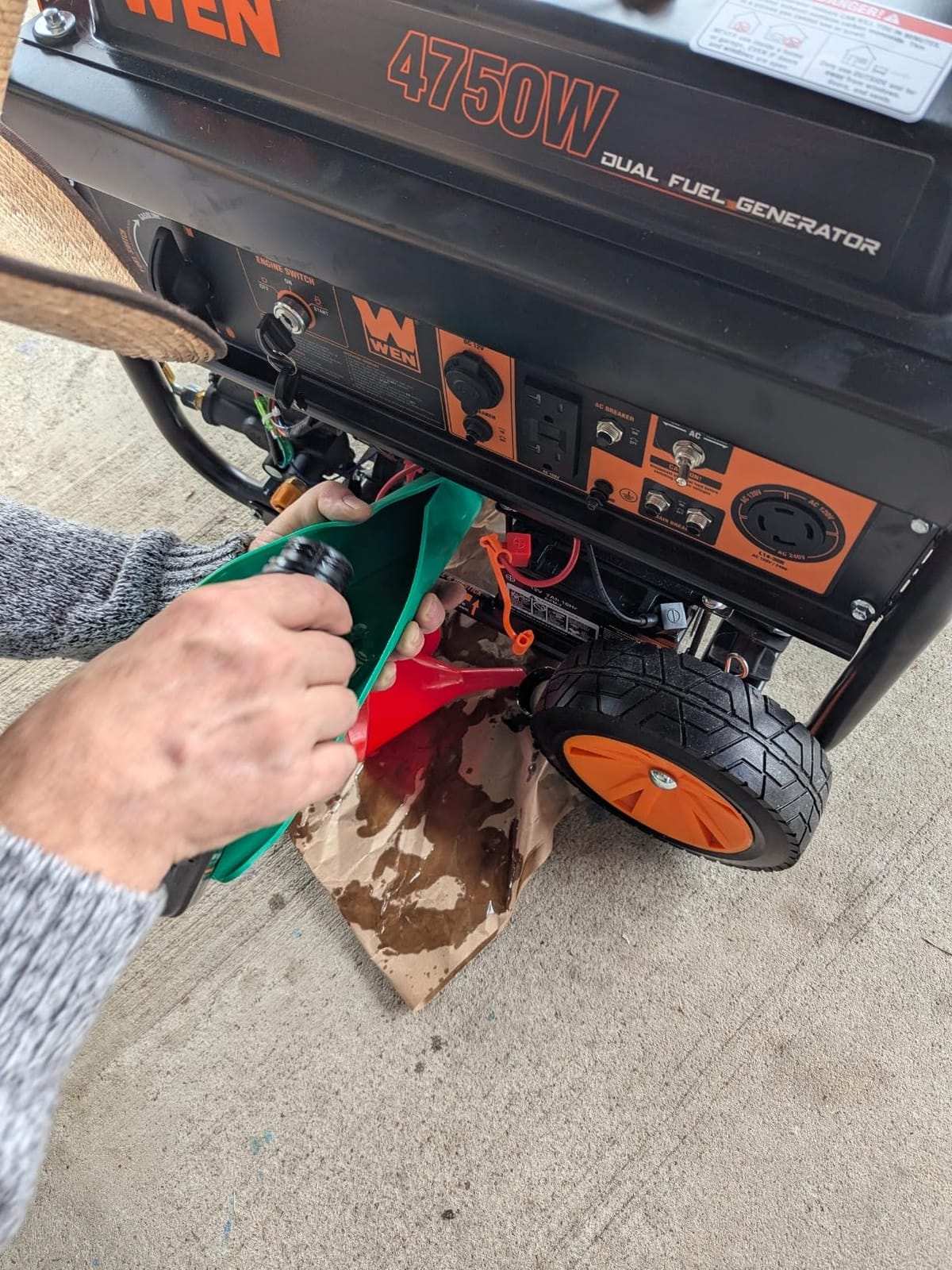
The DF475T is the model I keep coming back to because it is the only one in this roundup that can be moved from emergency duty to real household work. On gasoline it puts out 3800 running watts and 4750 surge, which covers a refrigerator, a freezer, LED lighting and a small window unit if you start them one at a time.
Switching to propane drops it slightly to 3500 running and 4350 surge watts, and that dip is worth planning around. The dial is on the control panel, so the change takes seconds rather than a hose swap, and a 47-inch LPG connection hose is in the box.
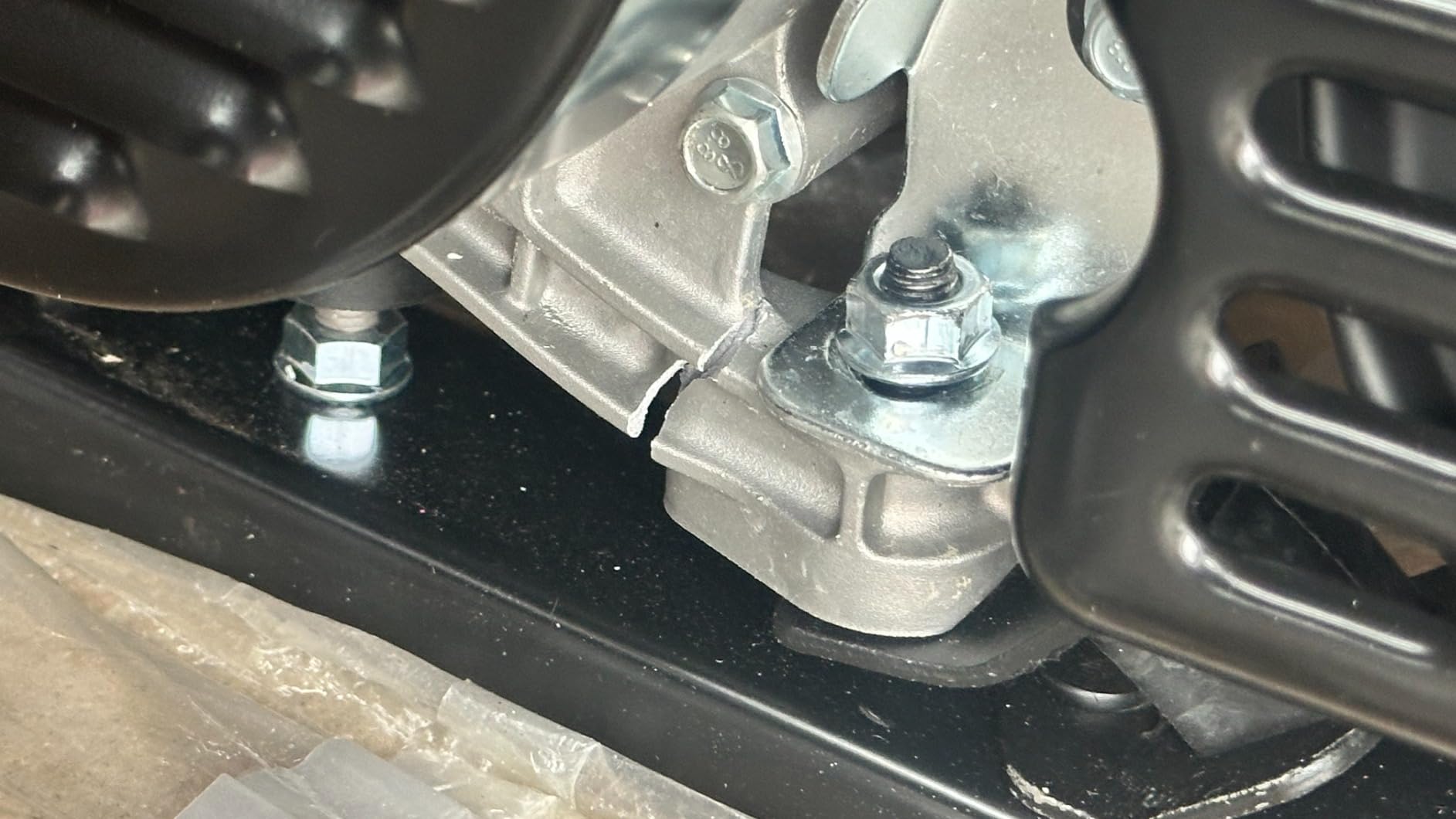
Two details separate this from the other open-frame units here. The output selector switches between 120V and 240V, which means it can feed a transfer switch and power a subpanel when it is installed properly by an electrician. And the outlet panel includes a genuine L14-30R 30A twist lock alongside two GFCI household outlets and a 12V DC port.
Owners consistently accept the 105.8-pound weight as the trade for that electrical capability, and the included wheel and handle kit is the difference between a one-person move and a two-person move. Runtime lands at 11 hours on half load from the 4-gallon tank, so a full tank covers a typical overnight outage with fuel to spare.
When the DF475T is the right buy
Choose it if you want to power a transfer switch, run a 30A tool, or carry backup power for a small shop or a rental property. The 240V switch and 30A twist lock are the reason it earns top billing here, and neither feature appears on the enclosed inverter units further down this list.
It also makes sense as a weekend disaster unit, because gasoline keeps for a year in a sealed can with stabilizer while propane cylinders are awkward to store in quantity.
When the DF475T is the wrong buy
Skip it if you plan to run laptops, televisions, medical devices or audio equipment. This is an open-frame, non-inverter design, so output quality is rougher than the clean sine wave models in this list, and the noise level is meaningfully higher than 57 dBA units.
It is also the wrong pick for anyone who cannot lift roughly 106 pounds, or for a vehicle trunk with limited room. At 23.2 by 17.5 by 18.5 inches, it needs a real cargo floor or a truck bed, not a rear seat.
2. WEN 56235i 2,350-Watt Inverter – Best Value for Light Duty
WEN Super Quiet 2350-Watt Portable Inverter Generator with Fuel Shut Off, Gasoline Power, Ultra Lightweight (56235i), Black
79cc 4-stroke
1900 running watts, 2350 surge
1-gallon tank, 10 hours
39 pounds
Clean inverter output
Pros
- Exceptionally quiet for a gasoline engine
- Only 39 pounds so one person can move it
- Clean inverter output safe for electronics
- Fuel shutoff drains the carburetor on shutdown
- Five outlets including two USB ports
Cons
- Surge headroom is limited for large motors
- No hour meter
- No electric start option
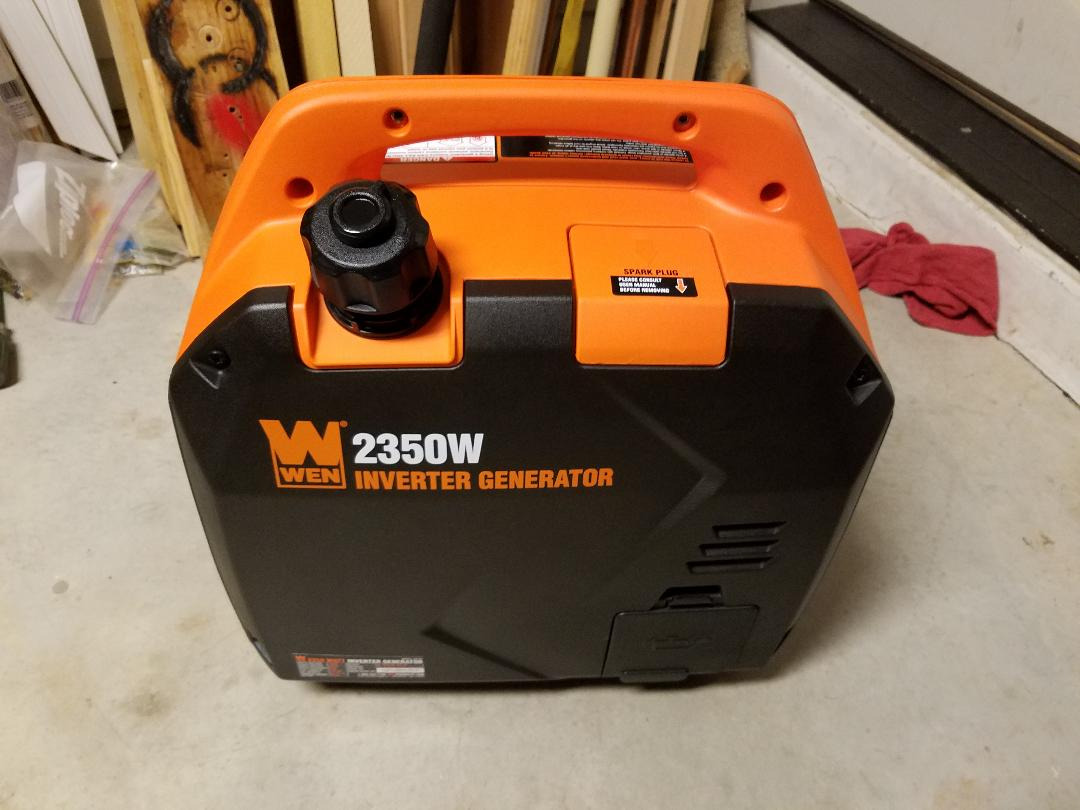
At 39 pounds and 1900 rated watts, the 56235i is the generator most people in apartment-adjacent, tailgating and camping situations actually need. It is quiet enough to run beside a tent without ruining the conversation, which is the whole point of the inverter class at this size.
Owners report starting on the first or second pull in cold weather down to 16 degrees, and the fuel shutoff system drains remaining carburetor fuel before shutdown, which genuinely extends engine life for a machine that will sit for months between uses. That feature is the single most valuable thing on this generator for a backup unit.
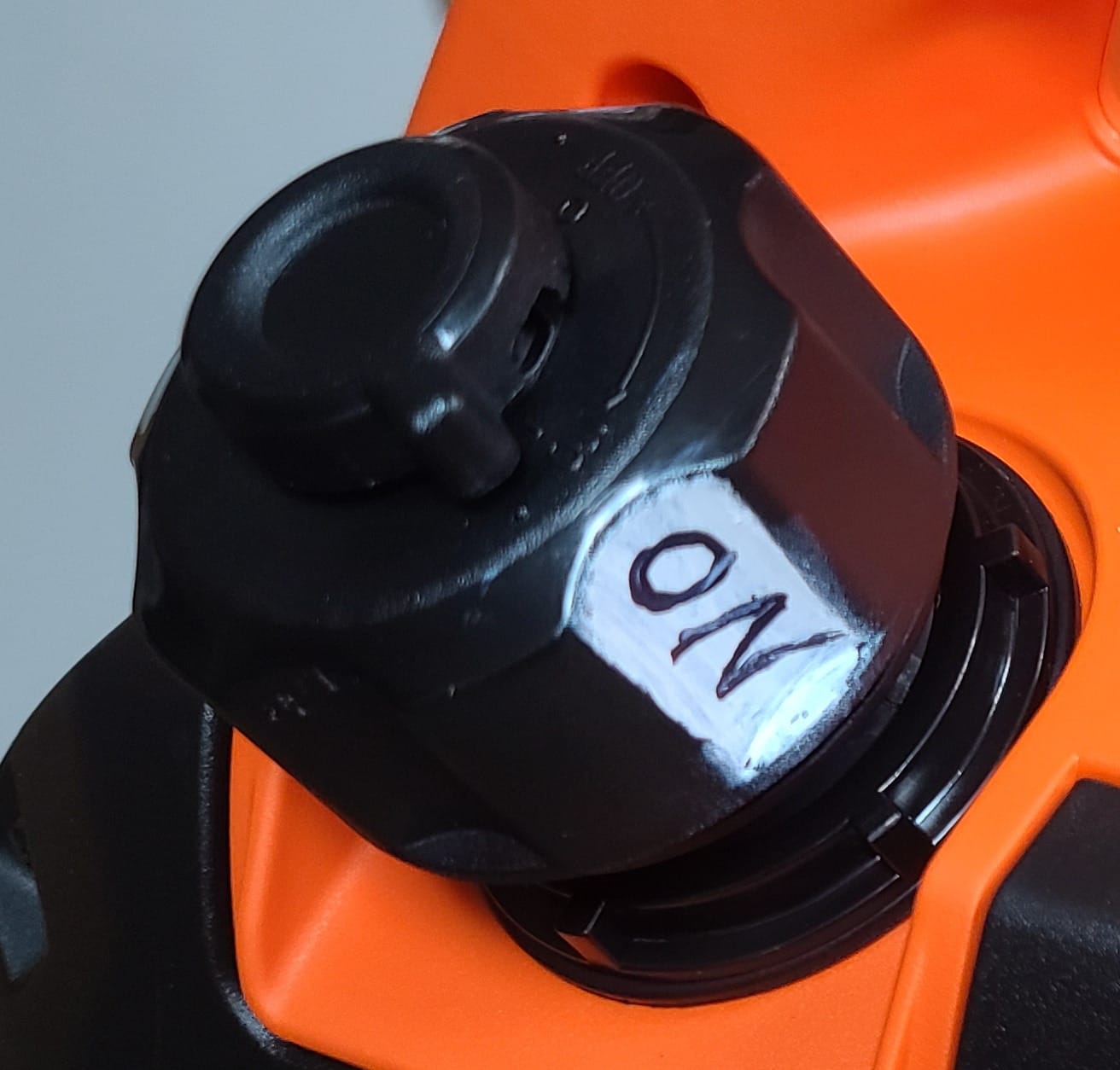
The outlet layout covers a camping weekend without an adapter bag: two three-prong 120V receptacles, a 12V DC receptacle and two 5V USB ports. Runtime is 10 hours on a single gallon, and the whole unit measures 17.3 by 11.5 by 17.5 inches, so it fits in a trunk or a storage shelf.
One real limitation shows up repeatedly in owner reports. Measured continuous output lands close to 1850 watts before the overload light appears, and surge headroom is tight, so large motors need to be started one at a time rather than simultaneously.
Who the 56235i suits
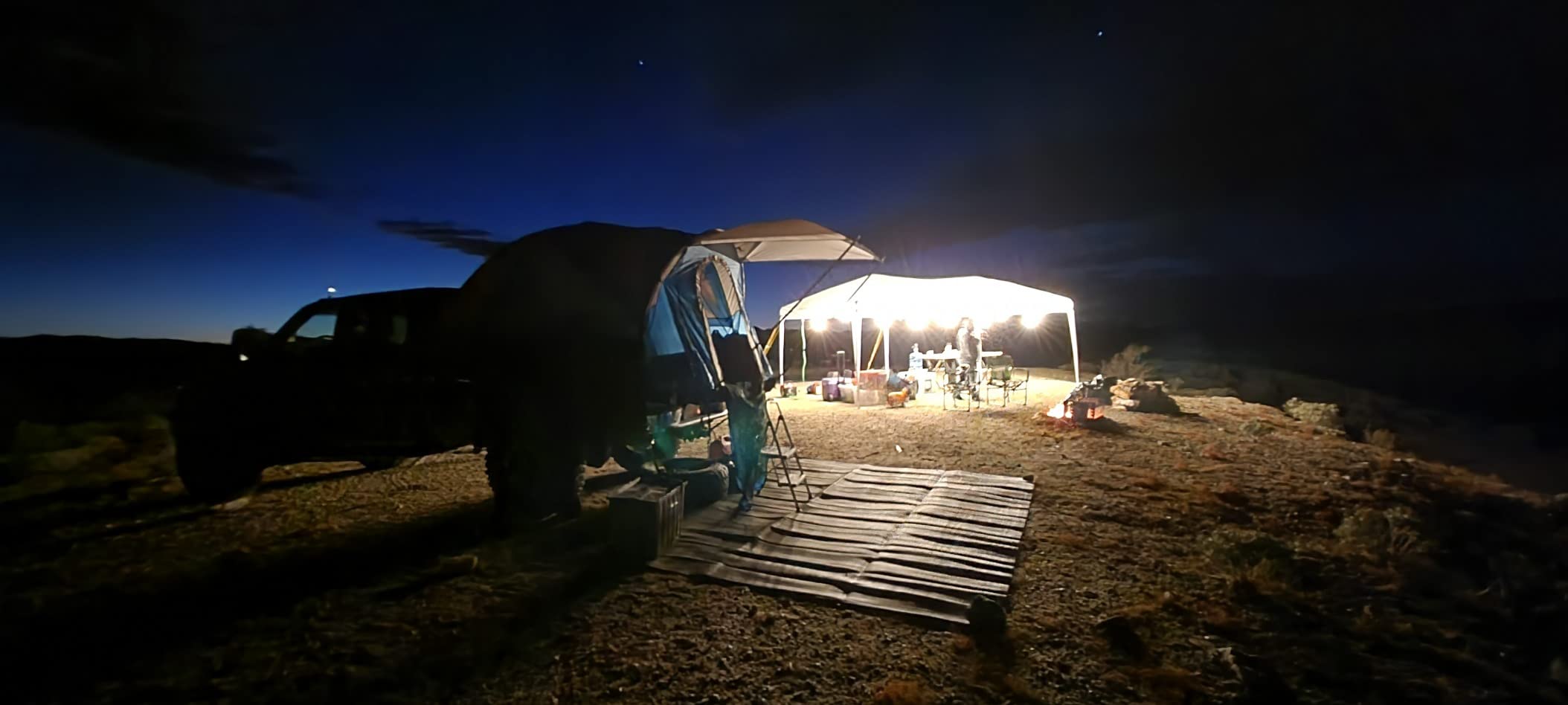
This is the pick for a refrigerator plus a freezer, plus lights, plus charging a laptop and two phones. It handles a 12V camping fridge and a small CPAP machine without any worry, and the low noise level makes it the friendliest option for a campsite with neighbors close by.
It is also the safest choice for anyone running sensitive electronics, because inverter output is what protects those devices. Two-year limited warranty coverage is standard for the class.
Who should pass on it
It will not carry a window air conditioner, a sump pump above 1000 watts, or a power tool with real inrush current. The lack of an hour meter also means adding an aftermarket meter if you want to track service intervals, and the low-oil shutoff can trip on slightly uneven ground, so level placement matters more than you would expect.
3. PowerSmart 1,200-Watt 2-Stroke – The Budget Pick
PowerSmart 1200 Watt Portable Generator for Camping
71cc 2-stroke
900 running watts, 1200 surge
1.1-gallon tank, 5 hours
34 pounds
ANSI/PGMA G300 and UL2201 certified
Pros
- Cheapest route to any backup power at all
- 34 pounds with a built-in carry handle
- 1.1-gallon tank covers a weekend of intermittent use
- ANSI/PGMA G300 and ANSI/UL2201 certified
- Two-year warranty with 24-hour support response
Cons
- Louder than the brand quiet claims suggest
- Single AC outlet limits what you can plug in
- Two-stroke design needs manual oil mixing
At 900 rated watts, this is a lights-and-tools generator, not a backup generator, and buyers understand that almost universally. It runs a lantern, a fan, a slow cooker, a small coffee maker and hand tools, which is a real service for a campsite or a garage where nothing else is available.
What stands out at this price is the certification. It carries ANSI/PGMA G300, ANSI/UL2201 and EPA certification, which many pricier units in this roundup do not list, and it comes with a two-year warranty and technician support that responds within 24 hours. That is unusual at the entry tier.
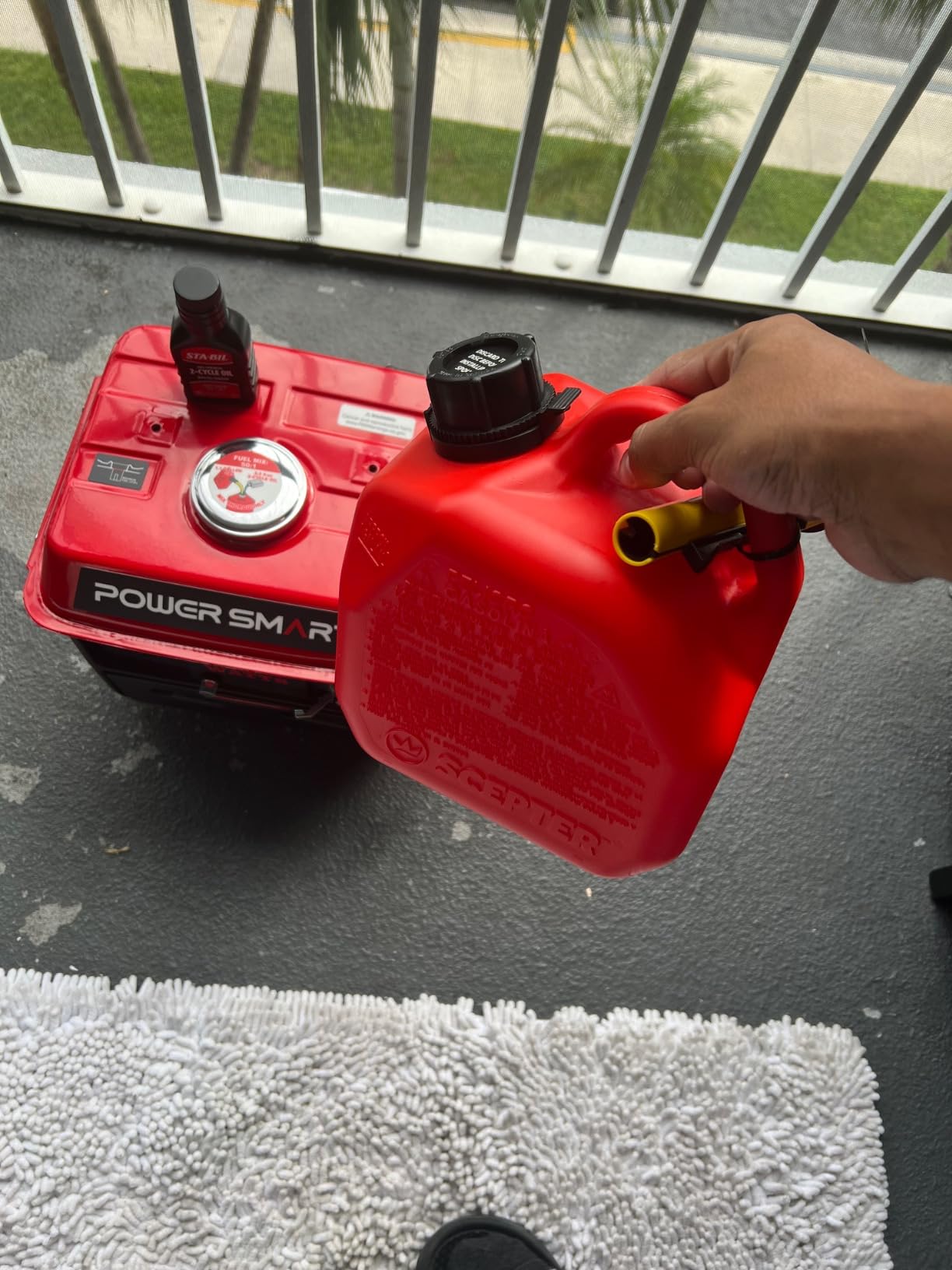
The 71cc two-stroke engine produces 1200 surge watts and 900 rated watts, and the 1.1-gallon tank delivers up to 5 hours of continuous runtime at half load. Owners report a gallon covering a weekend of intermittent use, which works out to a remarkably low cost per hour of electricity.
Weight is 34 pounds with a built-in handle, and the control panel gives you a 120V 7.5A AC outlet plus 12V 5.3A DC output with an included 40-inch charging cable. The box also includes a fuel mixing cup, a spark plug wrench and a high-altitude screw, which are the three things two-stroke ownership requires.
Where it makes sense
Buy it for a fishing pier, a remote cabin week, a tailgate, or as a secondary unit for a job site where you only need lighting and small hand tools. Several owners describe units running for years under hard use, which is a genuine if unprovable long-term reliability signal.
The included certification and support are the differentiators that make it the pick here rather than a generic entry-level unit.
Where it will disappoint
The one AC outlet limits you to a single device, and the voltage fluctuates noticeably with no load, which can stop newer portable power stations from charging correctly. Owners also describe it as louder than the super quiet marketing implies, closer to a lawnmower under load.
You will also be mixing oil with fuel yourself, and starting in deep cold around 10 degrees and below is difficult. A small group of owners report poor support response after defects, so register the unit if you buy it.
4. AIVOLT 1,600-Watt Inverter – Best for the Lightest Carry
AIVOLT 1600W Super Quiet Inverter Generator 28lbs Portable for Camping
60cc 4-stroke
1260 running watts, 1600 starting
57 dBA at 23 feet
28 pounds
Under 3% THD pure sine wave
Pros
- Lightest generator in this roundup at 28 pounds
- Very quiet at 57 dBA at 23 feet
- Pure sine wave under 3% THD
- Eco mode stretches a tank to 8 hours
- Hour meter and three indicator lights
- CO auto shutoff and low-oil shutdown
Cons
- Only 1260 running watts
- Not available for sale in California
- Engine oil not included
- Parallel kit sold separately
Twenty-eight pounds makes this the only unit here most people could genuinely carry by one handle into a car alone. If your generator has to travel between a garage, a truck bed and a campsite, that number changes your buying decision more than wattage does.
The output is genuinely clean, with pure sine wave under 3% total harmonic distortion, which makes it safe for phones, laptops and small sensitive tools. At 57 dBA measured from 23 feet, it sits below a normal conversation and works in campsites with strict quiet hours.
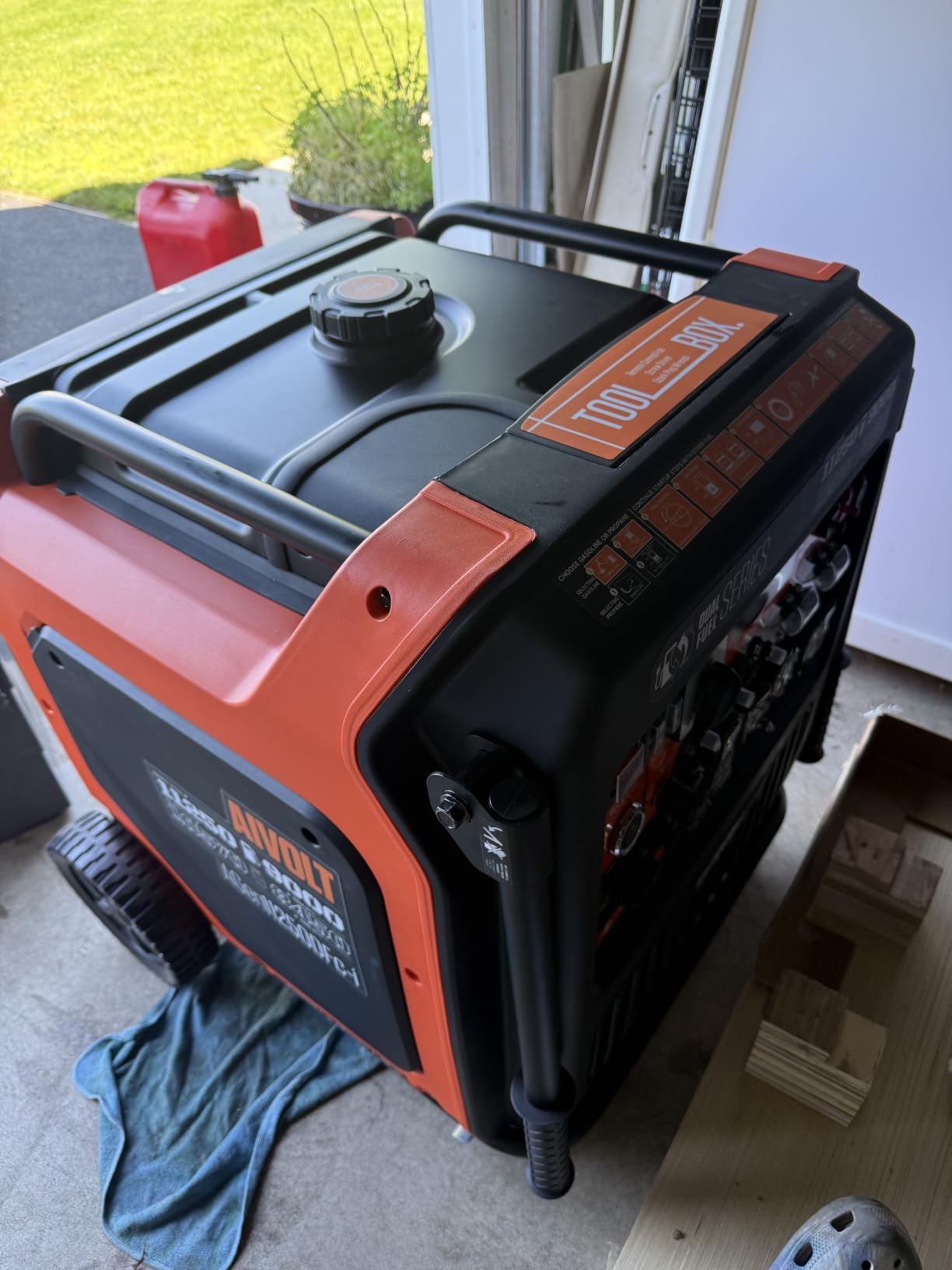
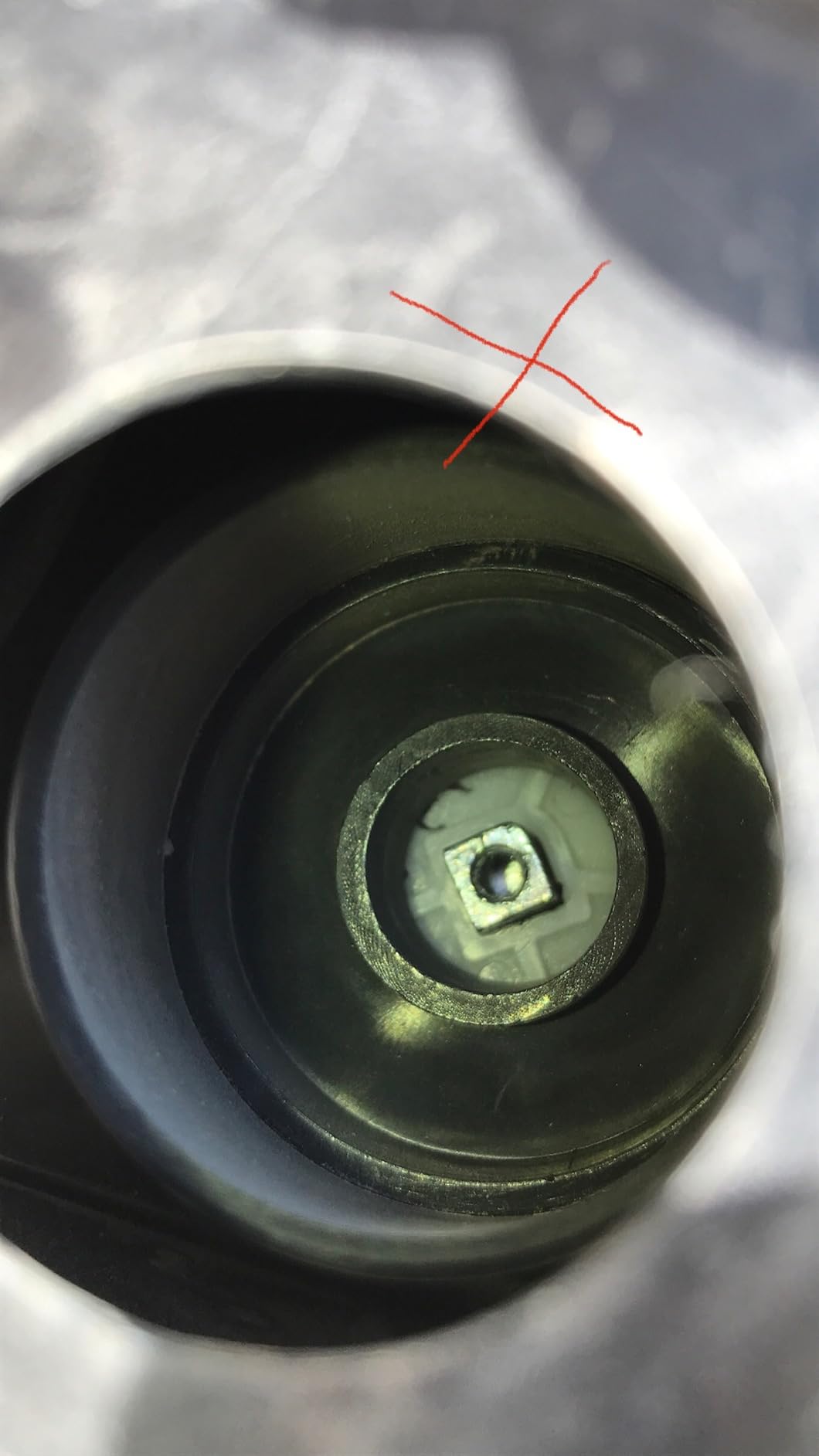
The 60cc four-stroke overhead valve engine uses copper windings, and the control panel includes two 120V outlets, two USB ports covering Type-A and Type-C, three indicator lights and an hour meter. That hour meter matters more than it sounds, because it tells you when to change oil and how much runtime you actually have left.
Eco mode extends runtime to about 8 hours at 25 percent load and about 2 hours at the full 1260 watts, so the tank capacity and the load you place on it matter a great deal in practice. Safety features include CO auto shutoff, low-oil auto shutdown and overload protection, and the unit is parallel ready if you later buy a second one.
Best use cases
This is the tailgating and ultralight camping pick, and it covers a camping fridge, a phone charger, a small fan, lights and a laptop without any concern. It also works as a lightweight emergency unit for a refrigerator and a few circuits in a small home.
EPA approval and ANSI/PGMA G300-2018 compliance are both listed, and the two-year manufacturer warranty is backed by free lifetime technical support.
Where to watch out
With 1260 running watts, a window air conditioner, a microwave or a kettle is out of reach. It cannot be sold in California because of emissions rules, which rules it out for anyone who buys on the West Coast.
Engine oil is not included, so add that to your first-run list, and the parallel kit for doubling output is sold separately. Note also that a 12 percent one-star share is higher than most peers here, which suggests some units fail earlier than others.
5. PowerSmart 3,800-Watt Dual-Fuel Inverter – The Most Versatile
PowerSmart 3800 Watt Dual Fuel Inverter Generator for Camping or Home Use
149cc 4-stroke
3300 running watts on gas, 3100 on propane
59 dBA at 25% load
50.7 pounds
Up to 24 hours on propane
Pros
- 3300 running watts of clean inverter power
- Runs on gasoline or propane with easy switching
- Quiet at 59 dBA in eco mode
- 30A RV twist lock plus household DC and USB outlets
- Live wattage display helps you size loads
- CO sensor and low-oil shutdown
- Parallel ready for expansion
Cons
- About 50 pounds so lifting needs two people
- 1.3-gallon gas tank means refills overnight
- Noise climbs sharply under heavy load
Few products in this price band give you three things at once: 3300 running watts, inverter-grade clean power and dual-fuel flexibility. The PowerSmart 3,800-watt unit manages all three, and at 59 dBA in eco mode it is quiet enough for a residential driveway rather than a job site.
On gasoline you get 3800 starting and 3300 running watts. On propane, 3500 starting and 3100 running watts, and the loss of about 200 running watts is worth remembering when you plan loads, because dual-fuel marketing rarely spells that out.
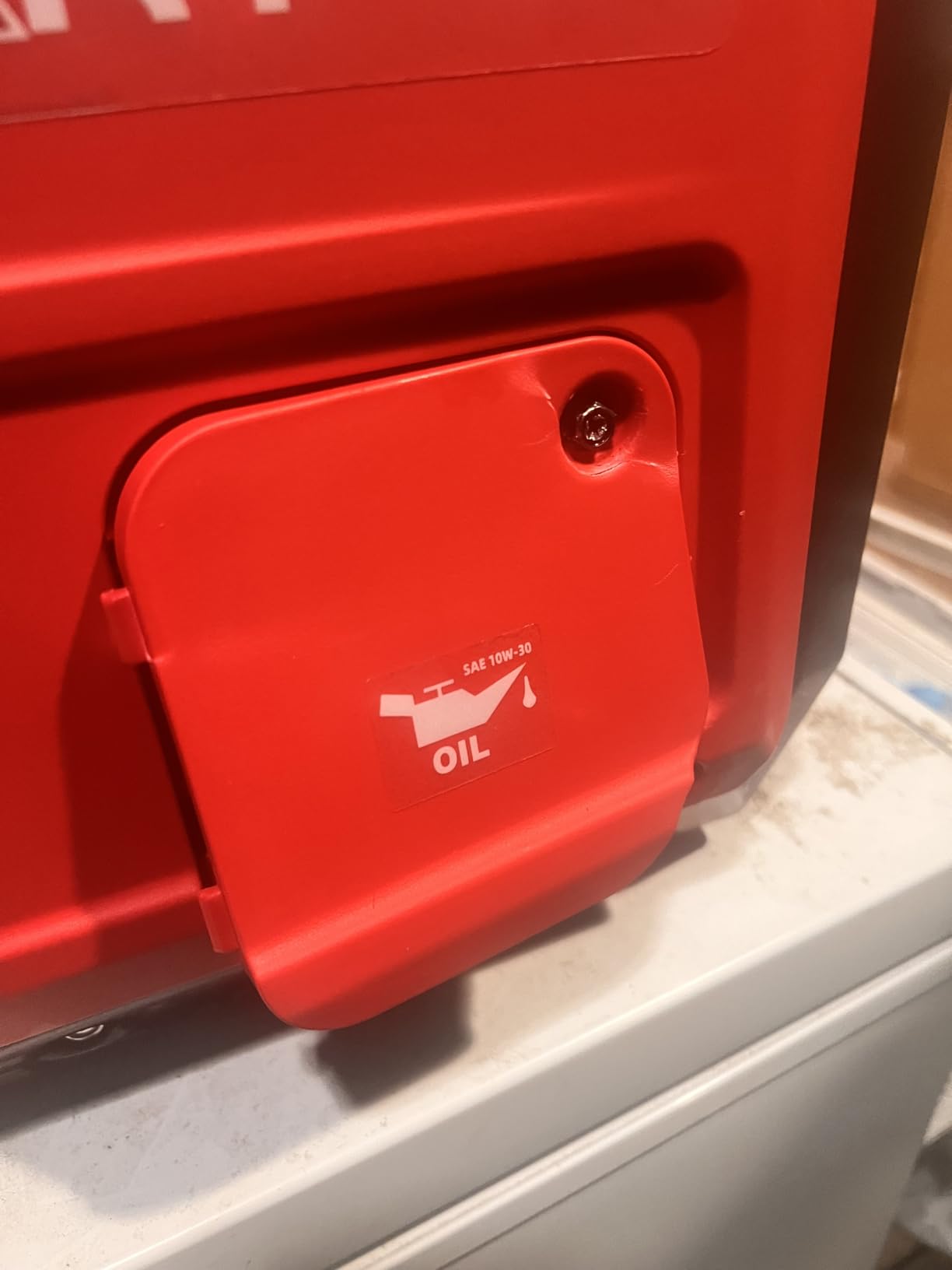
The outlet panel is the best-specified in this roundup: a 120V 30A L5-30R twist lock for RV hookups, a 120V 20A household duplex, a 12V 8A DC port and dual 5V 2.1A USB ports. A digital display reports live wattage, which is the single most useful feature for anyone learning what their appliances actually draw.
Certification covers ANSI/PGMA G300, ANSI/UL2201 and EPA, with overload, short-circuit, carbon monoxide sensor and low-oil shutdown protection. The 1.3-gallon tank gives roughly 8 hours at 25 percent load, or up to 24 hours from a 20-pound propane cylinder.
Why it earns the premium slot
It handles a refrigerator, a freezer, lights, a router and a CPAP machine simultaneously, then adds a sump pump or a power tool if you stay under 3100 watts. For RV owners it replaces a separate 30A adapter, and for homeowners it is clean enough for a home office setup.
The two-year limited warranty and free lifetime technical support are solid, and parallel readiness means a second unit can be paired later for a larger installation.
Where it falls short
At roughly 50 pounds, plan on two-person lifting or a hand cart. The 1.3-gallon tank is small for overnight running on gas, and the noise figure of 59 dBA applies at 25 percent load, not at full output, where owners report a noticeable climb.
Access panels and the oil door need a Phillips screwdriver, and the control display is hard to read unless the generator is raised off the ground. A small number were reported failing to start on either fuel.
6. maXpeedingrods 3,400-Watt Inverter – Built-In CO Alarm
maXpeedingrods 3400 Watt Portable Inverter Generator,with CO Alarm,Gasoline
144cc 4-stroke
3000 running watts, 3400 max
4-liter tank, 8 hours
46 pounds
CO alarm with auto shutdown
Pros
- 3000 running watts covers typical backup essentials
- Only 46 pounds for the output class
- Built-in CO alarm with automatic shutdown
- Five outlets including a 30A circuit and USB
- Parallel ready to double output
Cons
- 13 percent one-star share which is the highest here
- Recoil start only
- Frequency listed at 50 hertz rather than 60
Carbon monoxide protection is the reason to look at this one. The CO alarm shuts the unit down automatically when it detects unsafe levels, which turns a potentially fatal mistake, running a generator near an open window, into a nuisance trip you can investigate.
Output is 3400 maximum watts and 3000 running watts from a 144cc four-stroke engine, with up to 8 hours of runtime on a 4-liter tank. At 46 pounds, that is a better power-to-weight ratio than most open-frame units in this roundup.
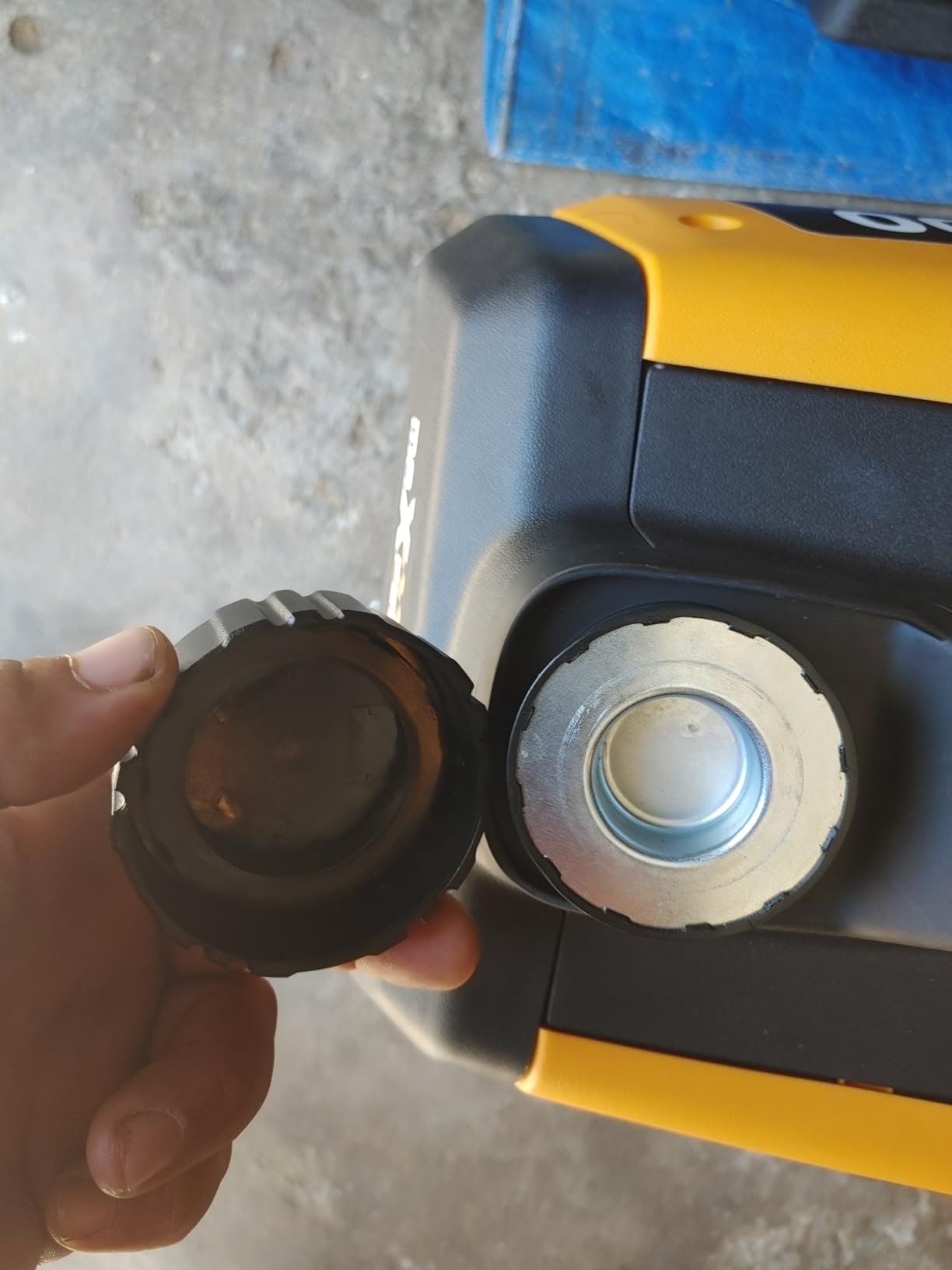
The outlet configuration covers most needs: two 120V 20A outlets, one 120V 30A outlet and two USB ports. It is parallel ready, so pairing it with a matching unit doubles the available output, and it also has overload protection and automatic low-oil cutoff.
Owners like the combination of real backup-level wattage, a manageable weight and a built-in safety cutoff at this price, and 70 percent of reviews are five-star. That share is lower than the leaders in this list, which is worth weighing against the CO feature.
Where it fits
It suits a homeowner who wants refrigerator, lights, internet and a sump pump in one package, and the 30A outlet handles larger tools. It is a reasonable pick for tailgating groups that need more than the small units provide, and for anyone who prioritises a built-in CO alarm over brand name recognition.
Parallel capability is a genuine long-term asset if your load grows after a year of use.
Where to be careful
The 13 percent one-star share is the highest in this roundup, which points to some units failing or being hard to start. It is recoil start only, with no electric or remote start option, so plan on pulling a cord in the dark during an outage.
Frequency is listed at 50 hertz rather than the US standard of 60, and sensitive 60Hz-only equipment may behave inconsistently with that output. Check your devices before committing.
7. Oxseryn 4,400-Watt Open-Frame – Long Runtime on a Budget
Oxseryn Power Equipment 4400 Watts Inverter Generator Gas Powered, Portable Open Frame Generator, Low Noise with ECO Mode, RV Ready, Emergency Home Backup
208cc 4-stroke
3400 running watts, 4400 peak
2-gallon tank, 14 hours
56 pounds
Under 72 dBA at 23 feet
Pros
- High output for its size class
- 14 hours at 25 percent load with a fuel gauge
- Two AC outlets plus 12V DC and an RV port
- Cold Start Technology for cool weather
- Low-oil shutdown and overload protection
Cons
- Louder than enclosed inverter competitors
- Open frame exposes components
- Only a one-year manufacturer warranty
- 56 pounds is not a one-person carry
Fewer watts per dollar is hard to find in this category. The Oxseryn delivers 4400 peak and 3400 running watts, and it is the lowest-cost mid-size unit in the roundup, which makes it the practical answer for anyone who needs real power and has limited budget.
Runtime is the standout number. A 2-gallon tank runs up to 14 hours at 25 percent load in eco mode, and the built-in fuel gauge means you are not guessing with a translucent tank.
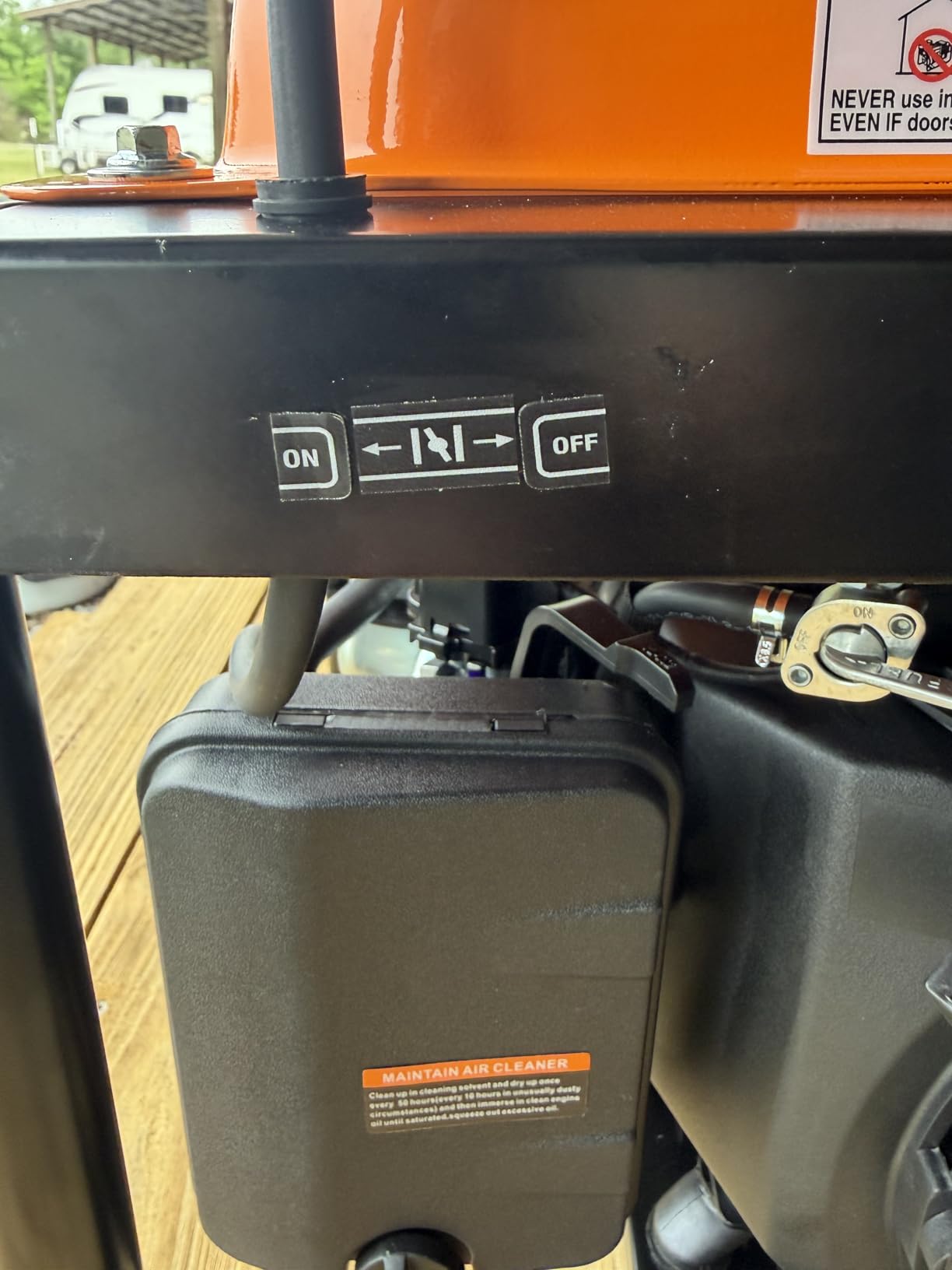
Outlets include two 120V AC ports, a 12V DC port and an RV port, so it covers trailer hookup needs without a separate adapter. Cold Start Technology helps with starting in cool weather, and low-oil shutdown plus overload protection are both standard.
It ranks high in its category on sales, which is usually a sign that owners are satisfied rather than just curious. Seventy-three percent of reviews are five-star, and the consensus is straightforward: good power for the money, in a noisier package.
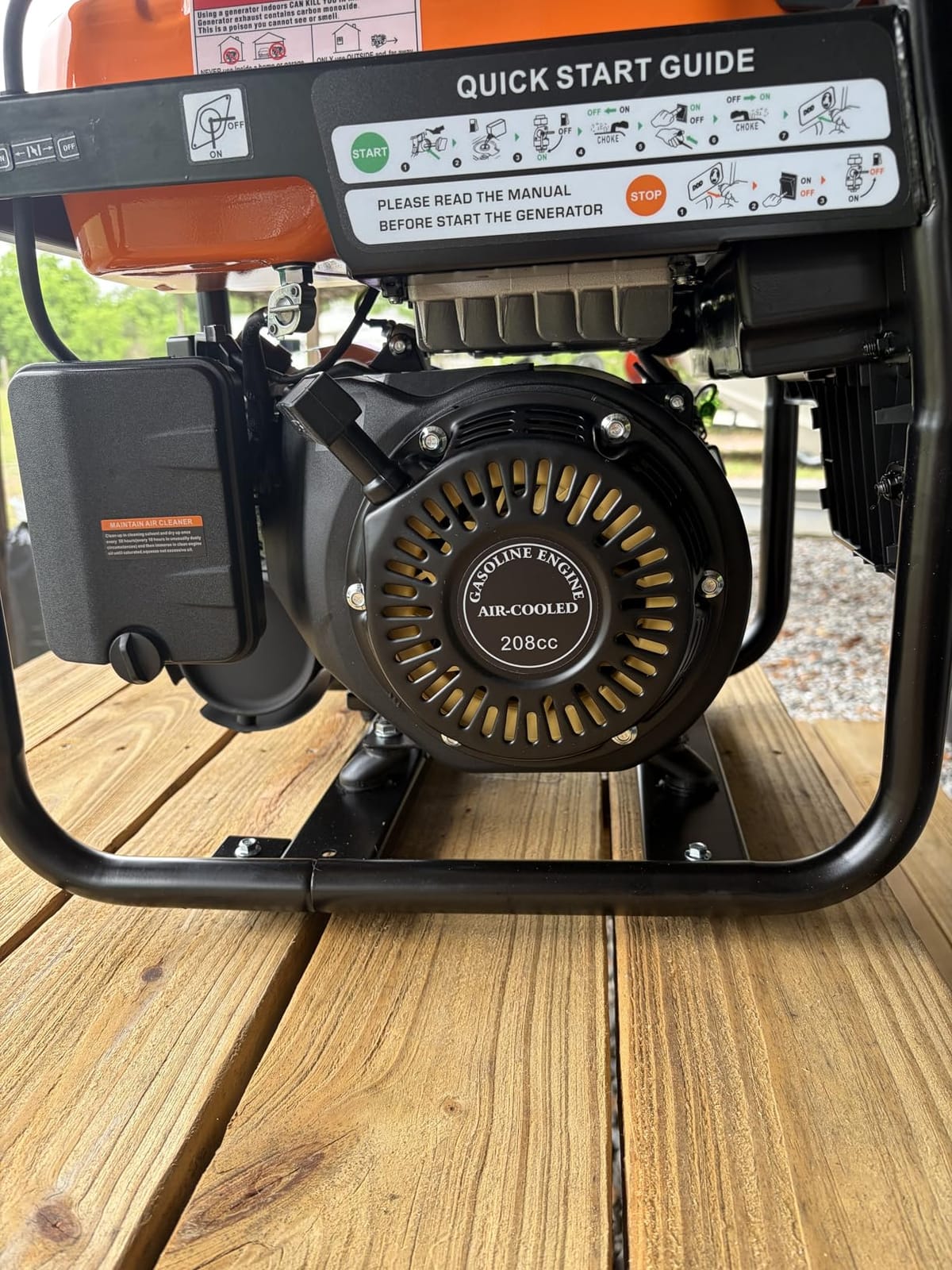
Best reasons to buy it
It covers a refrigerator, a freezer, lighting and a power tool on a single run, and the 14-hour eco-mode figure means you can leave it going through a long outage without a refill schedule. The RV port makes it a quick fit for trailer owners.
If noise is not a constraint, where it runs is a garage, a shed or a job site, this is the strongest value in the list.
Best reasons to skip it
The open-frame design is louder than every enclosed inverter here, with a stated under 72 dBA from 23 feet, so it will not pass a campground quiet rule or keep a sleeping family happy. The open frame also exposes the engine and outlet hardware to weather.
Weight is 56 pounds, the warranty is only one year against three years from the Champions, and as a less established brand it has a smaller review base than WEN or Champion, which matters when something goes wrong.
8. Champion 4,000-Watt Dual-Fuel Inverter – The RV Air Conditioner Runner
Champion 4000-Watt Dual Fuel RV Ready Portable Inverter Generator
149cc 4-stroke
3000 running watts on gas
2700 running watts on propane
64 dBA at 23 feet
51.8 pounds
Pros
- Runs a 12000 to 15000 BTU RV air conditioner with lights and a fridge
- Up to 25 hours of runtime on propane
- Light at 51.8 pounds with a carry handle
- Clean inverter power under 3% THD
- CO Shield auto shutoff and cold start
- Three-year warranty
Cons
- Hard to start on propane until broken in on gasoline
- 64 dBA is louder than smaller Champion models
- 1.54-gallon tank gives about 8 to 10 hours under load
- Recoil start only
This is the strongest RV choice in the roundup, and it is the only model here that owners specifically report running a 12,000 to 15,000 BTU rooftop air conditioner alongside lights and a 12V RV refrigerator. That combination is exactly what a family needs in July with the power out.
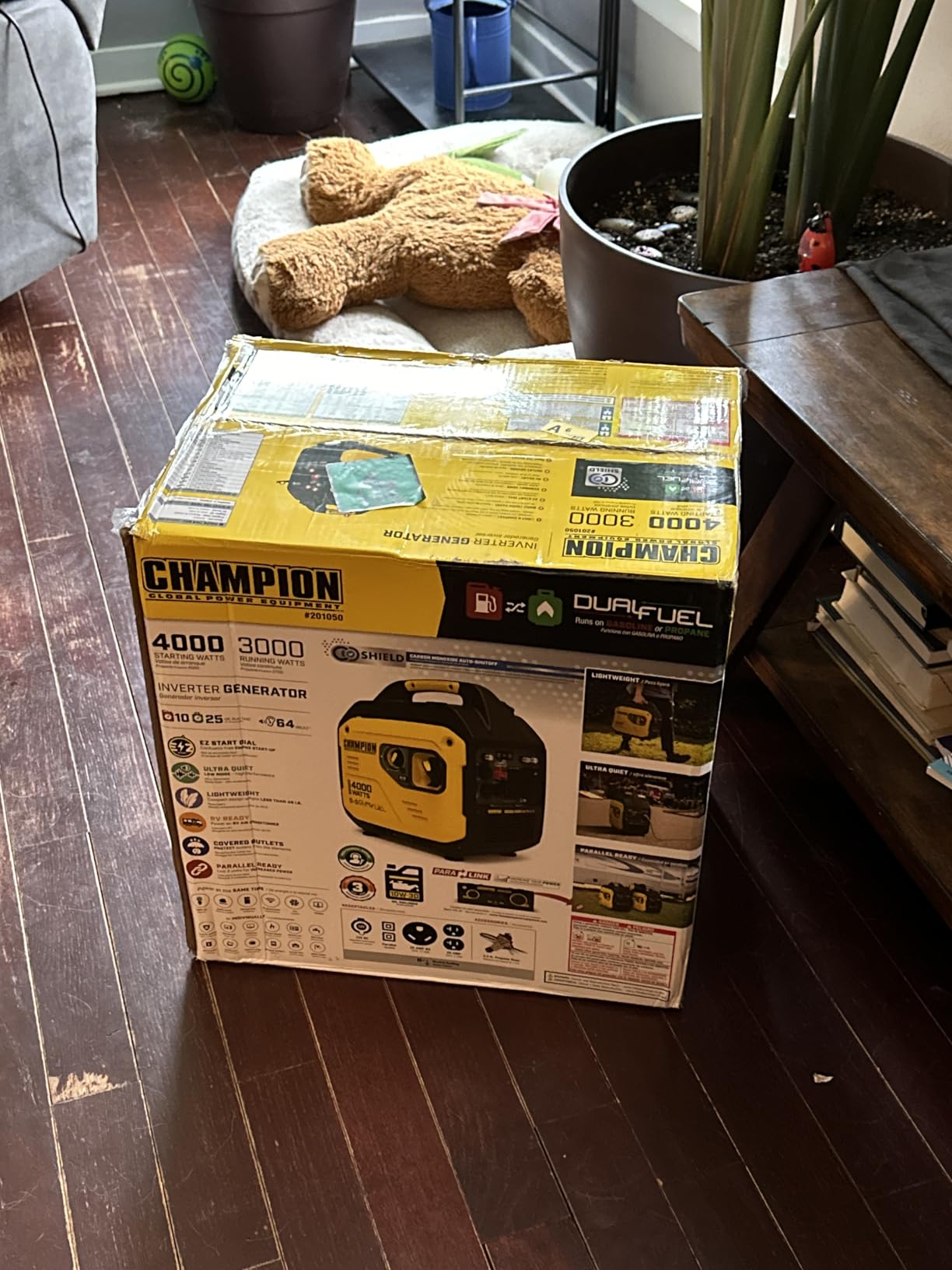
It produces 4000 starting watts and 3000 running watts on gasoline, with up to 10 hours of runtime, and drops to 2700 running watts with up to 25 hours on propane. For an extended outage, that propane runtime figure is the reason this unit earns its place.
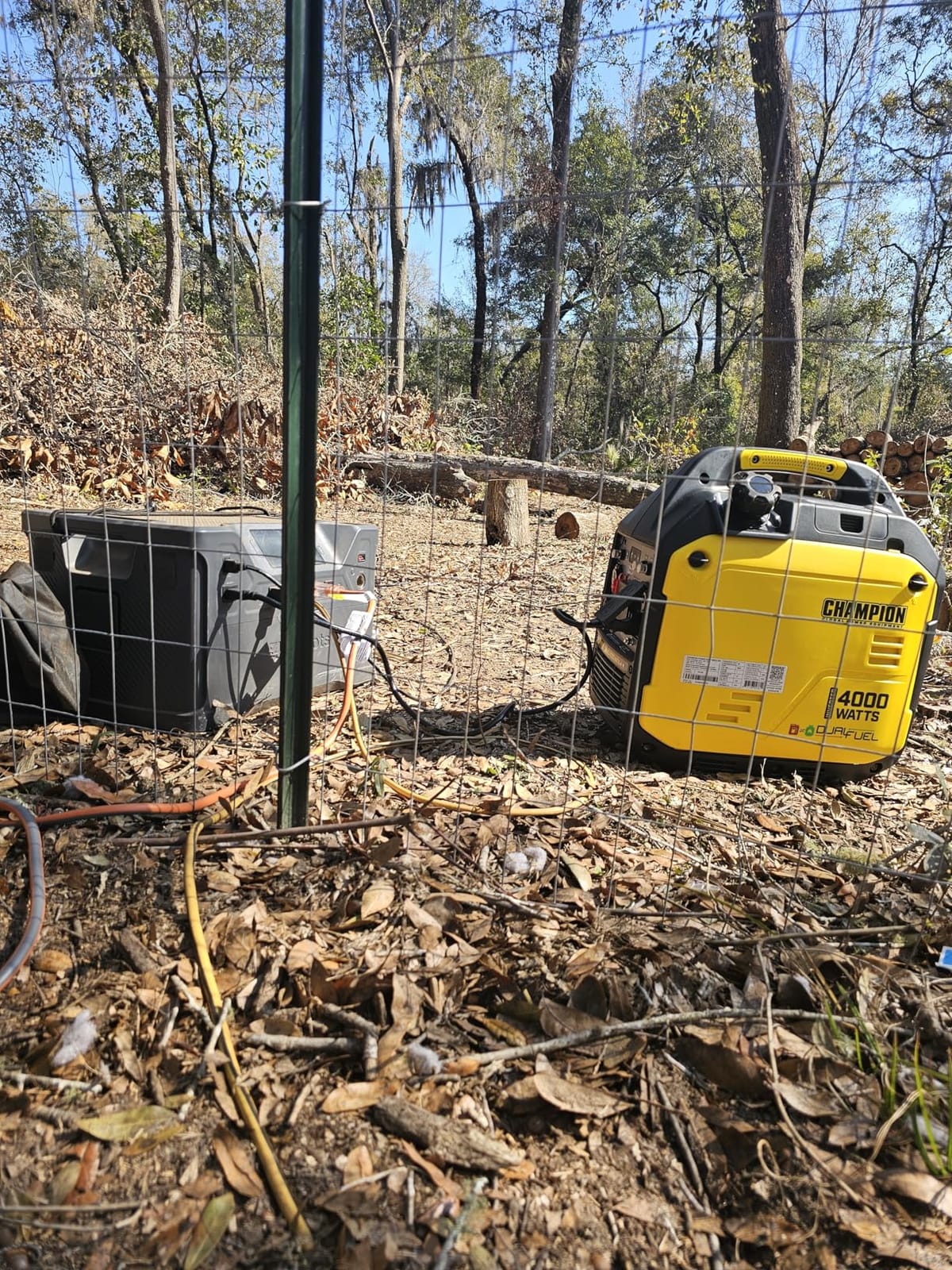
Outlets include a 120V 25A TT-30R, a 120V 20A household duplex delivering under 3% total harmonic distortion, a 12V automotive outlet and parallel ports. The 64 dBA figure at 23 feet is higher than smaller Champion models that measure about 53 dBA, so it is not the quiet option.
Overload mode is a nice piece of engineering: instead of cutting out, it keeps running with a red indicator so a brief overload does not kill your refrigerator in a storm. Tool-free quarter-turn oil access and tool-free controls make routine checks fast.
Why owners rate it highest
It holds the highest average rating in this roundup, with an 83 percent five-star share, and owners repeatedly single out easy starting on gasoline, clean power and the ability to carry a rooftop air conditioner. At 51.8 pounds with a carry handle, it is light for its output.
The three-year limited warranty and free lifetime technical support are the best coverage terms among the compact units here.
Know this before buying
By far the most repeated complaint is that it refuses to run on propane until it has been broken in on gasoline. Run it on gas for an hour or two first, and the problem largely disappears. Plan for that.
The 1.54-gallon tank yields about 8 to 10 hours under real load, and it cannot run an air conditioner and microwave at the same time, so map your loads before the storm rather than during it.
9. WEN 3,600-Watt 56360i Inverter – Best Warranty in the Class
WEN 3600-Watt Portable Inverter Generator, RV-Ready, Quiet and Lightweight with Fuel Shut Off (56360i)
149cc 4-stroke
2900 rated watts, 3600 surge
46.3 pounds
Fully enclosed design
Three-year limited warranty
Pros
- Only 46.3 pounds for 2900 running watts
- Fully enclosed inverter keeps it quiet enough for camping
- Clean power for phones and tablets and laptops
- TT-30R RV receptacle plus 120V and 12V and USB outlets
- Fuel shutoff extends carburetor and engine life
- Three-year warranty
Cons
- 1.6-gallon tank gives about 5 hours of runtime
- Recoil start only
- Gasoline only with no propane option
The 56360i is the balance pick for a homeowner who wants inverter-clean power without crossing 50 pounds. It delivers 2900 running watts from a 149cc engine at 46.3 pounds, and the fully enclosed design keeps it quiet enough for a campsite rather than only a garage.
Outlet coverage is the strongest argument for it: two three-prong 120V receptacles, a TT-30R RV receptacle, a 12V DC receptacle and two 5V USB ports. That is everything an RV or a home office needs without an adapter.
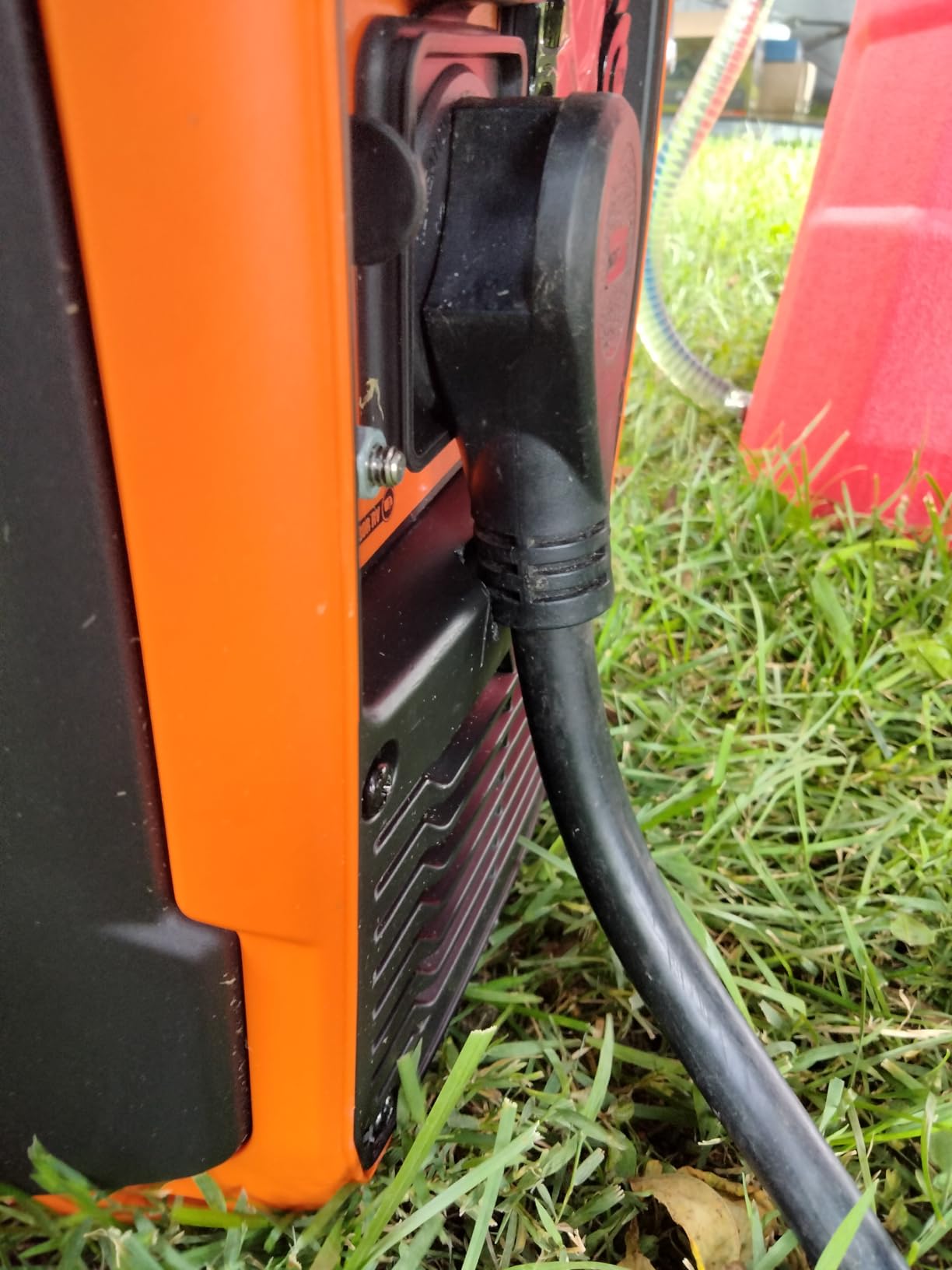
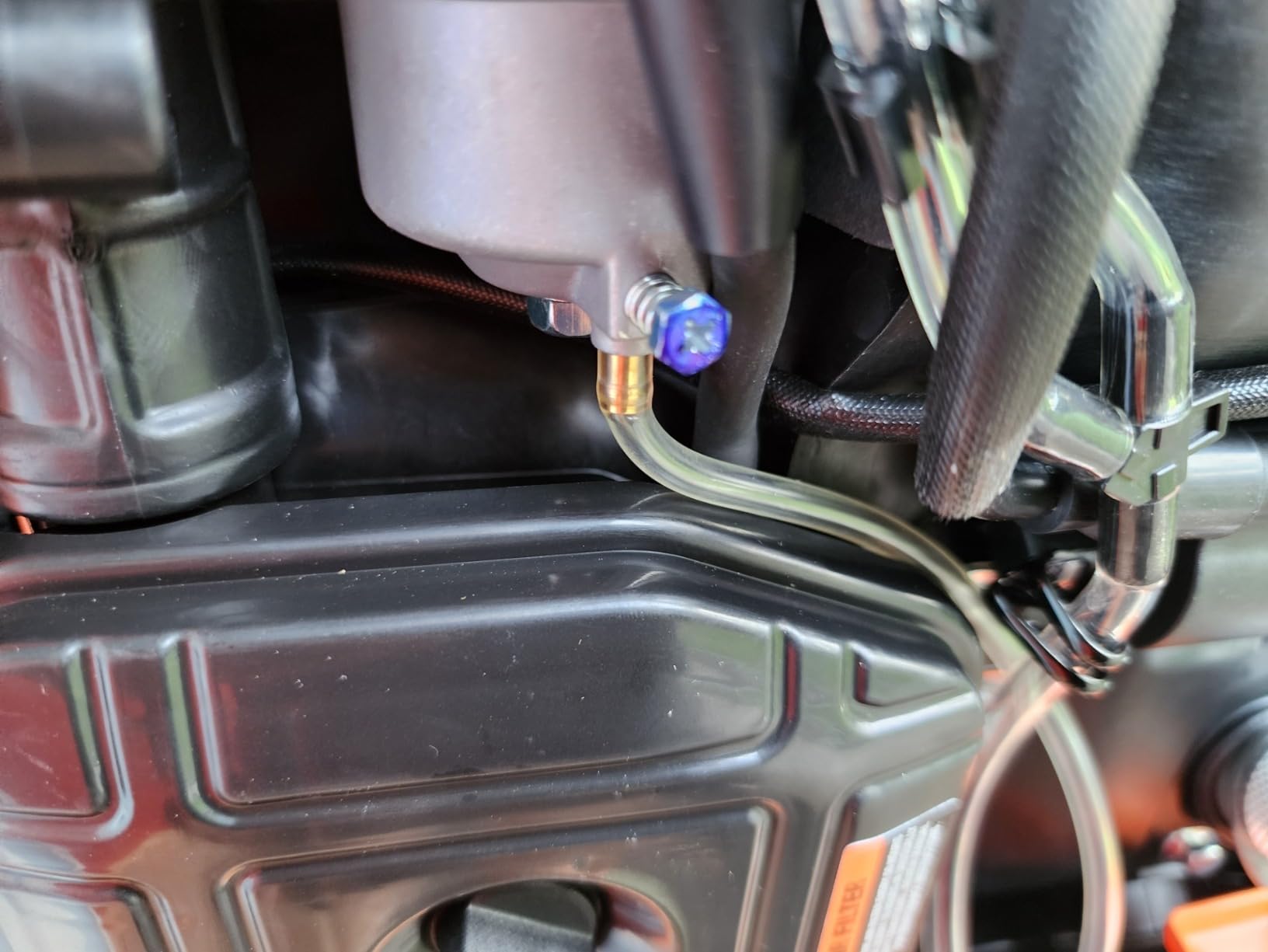
The fuel shutoff system drains remaining carburetor fuel before shutdown to extend engine life, which is the same long-term protection the smaller 56235i offers and the feature that matters most for infrequent use. Clean inverter output protects phones, tablets and laptops, and it runs out of the box on gasoline.
By far the most common criticism is the 1.6-gallon tank, which gives about 5 hours of runtime under load. That is fine for a planned evening and frustrating during a multi-day outage, so this pairs well with a power station for overnight top-ups.
Where it fits best
Choose it for RV owners who want a quiet, lightweight unit with a native TT-30R outlet, and for homeowners who want to run a refrigerator, a freezer, internet and a computer without worrying about power quality. It is also a solid tailgating and camping unit.
Gasoline only means fewer decisions about fuel storage, and for many buyers that simplicity outweighs the propane option the dual-fuel models offer.
Where it falls behind
Five hours per fill is the limiting factor, and there is no electric or remote start, so you are pulling a cord in the dark. The lack of a propane option also means no 20-plus-hour runtime for extended outages.
At this output level it also carries a higher price than some competing 3000-watt inverter units, so compare carefully if the warranty length is not decisive for you.
10. Champion 4,250-Watt Dual-Fuel – The Longest Gasoline Runtime Here
Champion 4250-Watt Dual Fuel Portable Open Frame Inverter Generator, CARB
224cc 4-stroke
3500 running watts, 4250 starting
22 hours on a 4-gallon tank
79 pounds
64 dBA open frame
Pros
- Longest gasoline runtime in this roundup at 22 hours
- Dual fuel operation on gasoline or propane
- 30A RV outlet plus two household outlets and USB
- Economy mode cuts fuel use and extends engine life
- Parallel ready with the ParaLINK kit
- Three-year warranty with lifetime support
Cons
- 79 pounds makes it not truly portable
- Open frame is louder than enclosed inverter units
- Largest footprint in the roundup at 27.9 by 23.4 by 21.7 inches
- Recoil start only on this configuration
Twenty-two hours of runtime on a 4-gallon tank is the number that separates this from everything else in the list. For anyone running a refrigerator and a freezer through a multi-day outage, or powering a workshop, the ability to leave it alone for most of a day without a refill changes the whole plan.
Output is 4250 starting watts and 3500 running watts, with dual-fuel operation on gasoline or propane. Economy mode reduces fuel consumption, and the digital hybrid design is marketed as 50 percent quieter and 20 percent lighter than a traditional 3500-watt Champion.
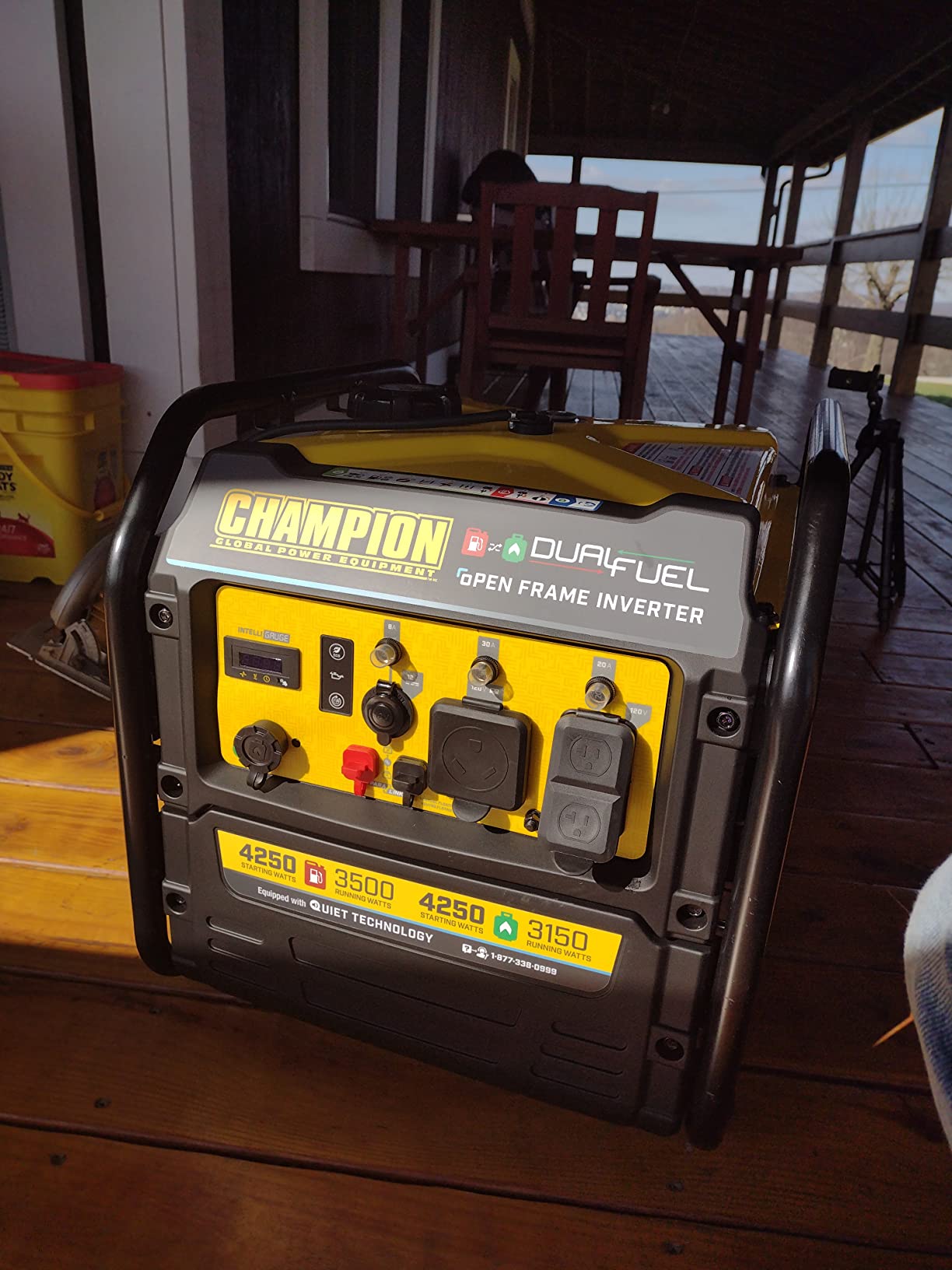
The outlet set is genuinely useful: a 120V 30A RV outlet, two 120V 20A household outlets, and a 12V DC outlet with a dual USB adapter included in the box. It is CARB compliant, which matters if you need to use it in California, and parallel ready through the optional ParaLINK kit for pairing two inverters of 3000 watts or more.
Owners with 76 percent five-star ratings highlight the runtime, the dual-fuel flexibility and the RV outlet. The acknowledged trade-offs are weight, open-frame noise and a footprint that will not fit in a small vehicle compartment.
Why it belongs on the list
It is the pick for a long outage, a small workshop, a food truck or a home where a sump pump has to run for days. The three-year limited warranty and free lifetime technical support match the best coverage here, and 79 pounds is manageable with a two-person lift or a cart.
For RV owners who already have a 30A connection, the native outlet removes a step that catches people out at the first attempt.
Why it is last in the order
At 79 pounds it is the second-heaviest model here, and the 27.9 by 23.4 by 21.7 inch footprint is the largest in the roundup, so storage and transport both get harder. The open frame at 64 dBA is louder than any enclosed inverter on this list.
It is also recoil start only on this configuration, and its sales rank in its category trails most units here, which suggests less field history. If your outage coverage is measured in days rather than one evening, it is still the right answer.
How to Size a Generator Before You Buy
Size for running watts, not peak watts. Peak, or surge, watts only cover the inrush spike when a motor starts, and manufacturers advertise that number because it is larger. The number that decides whether your refrigerator and sump pump can run together is the running watt figure.
Work through your essential load one appliance at a time. A refrigerator commonly runs 300 to 800 watts, a sump pump 750 to 1500 watts, a window air conditioner around 1000 watts, a space heater 1500 watts, and LED lighting a rounding error per room. Add your starting surge needs on top, and treat 25 percent headroom as a sensible margin.
For most households, essentials alone land between 2000 and 3000 running watts, which is why the 1900 to 3300 watt units in this roundup cover a typical outage load. A window air conditioner plus a refrigerator plus lights pushes you toward 3500 running watts and beyond, and that is where the ceiling for this budget starts to bind.
What this budget cannot do is power a whole home. Heating elements, electric water heaters, well pumps with high starting draw and central air all demand far more than any unit here delivers. If you need that, your decision is between a higher budget and a standby system, not a different generator inside this price band.
Fuel Type: Gasoline, Propane, or Dual-Fuel
Gasoline gives more range per dollar and stores for about a year with stabilizer, which makes it the practical choice for infrequent use. The catch is that ethanol in pump gas separates and corrodes carburetor parts when fuel sits unused, so run your tank dry or add stabilizer if the generator will be idle for months.
Propane stores indefinitely and will not gum a carburetor, so it wins for extended outages. It also gives up some output, since every dual-fuel model in this roundup delivers fewer running watts on propane than on gasoline, and the cylinder is an ongoing cost that adds up faster than most people expect.
Dual-fuel models give you both, and the dial-operated switches here make changing fuels a ten-second job. A common forum suggestion worth heeding is pairing a small inverter generator with a portable power station so you burn far less gasoline overnight while the batteries handle the refrigerator.
Inverter vs Standard Output and Total Harmonic Distortion
Inverter generators convert the raw output to direct current and back to a smoothed sine wave, which produces cleaner power at a lower noise level, usually at some cost in peak output. Standard open-frame units output a rougher wave that is fine for power tools and unwelcome by laptops, televisions, medical devices and audio equipment.
Total harmonic distortion, written as THD, measures how far that wave deviates from a clean sine. Under 3 percent is the safe threshold for sensitive electronics, and several models here advertise it explicitly. Above roughly 5 percent, budget for the risk of humming, heat or early failure in delicate gear.
The practical rule: if your load is tools, a sump pump and a fridge, you can save money with a standard open-frame model. If your load includes anything with a circuit board, choose an inverter unit, and the decibel difference will be a bonus.
Carbon Monoxide Safety and the 20-Foot Rule
Carbon monoxide is odorless and lethal, and every death attributed to a portable generator traces back to placement. The rules are short enough to memorise, and you should follow them every single time regardless of how well you know your machine.
First, run the generator at least 20 feet from your home, with exhaust pointing away from every opening: doors, windows and vents. Second, operate it outdoors only, never in a garage, shed, basement or even an open carport. Third, use a battery or propane heater for your space, never the generator.
Fourth, install working carbon monoxide alarms on every level of your home and near sleeping areas, and test them monthly. Fifth, prefer a certified unit, since ANSI/UL2201 and ANSI/PGMA G300 certification indicate the engine met reduced-CO limits and that an automatic shutoff is present. Several models in this roundup list both standards.
Also confirm your electrical connection is safe. To power your house you need a transfer switch or a listed interlock kit installed by a licensed electrician, never a male-to-male extension cord into a wall outlet. The generator must be properly grounded, and outlet covers should stay closed.
One practical note on hidden costs: electric-start batteries frequently arrive uncharged, and a transfer switch installation is the single largest expense that follows a generator purchase. Budget for those before the storm, not during it.
Frequently Asked Questions
Can I connect a generator to my house?
Yes, but only through a transfer switch or a listed interlock kit installed on your electrical panel by a licensed electrician. Never run a generator into a wall outlet with a male-to-male cord, and never backfeed through a dryer outlet. The interlock prevents the generator and utility power from ever being connected at the same time.
Can a portable generator run a refrigerator?
Easily. A typical refrigerator draws 300 to 800 running watts with a brief inrush spike on the compressor, so any unit rated above 2000 running watts will handle it with room for lights and a freezer. Start the refrigerator before larger appliances so the surge does not trip the breaker.
What is the 20/20/20 rule for generators?
It is a safety shorthand: run the generator at least 20 feet from the house, use 20 amp or heavier extension cords rated for the load, and refuel only after the engine is off and cool. The 20-foot distance keeps exhaust carbon monoxide away from doors, windows and vents.
What portable generators should I stay away from?
Avoid units with no carbon monoxide protection, no low-oil shutoff, and no listed safety certification such as ANSI/UL2201 or ANSI/PGMA G300. At this budget also be cautious with two-stroke models that need manual oil mixing, and with any model whose reviews show a high one-star share for early engine failure.
What is the quietest portable generator in this price range?
Among the models tested here, a 28-pound 1,600-watt inverter unit measuring 57 dBA at 23 feet is the quietest. A 2,350-watt inverter at 39 pounds is the next step up and adds meaningful power. Open-frame models in this budget range generally measure above 70 dBA.
How long do portable generators last?
Longevity comes down to storage discipline rather than brand. Running the tank dry or adding fuel stabilizer, using the fuel shutoff feature, changing the oil on schedule and exercising the engine every few months prevents the carburetor gumming that ends most neglected units. A two-stroke model that is mixed and stored properly will still run for many seasons.
Final Verdict
The WEN DF475T takes the top spot in these best portable generators under 1000 dollars because it is the only unit here that combines 3800 running watts, switchable 240V output, a 30A twist lock and an electric key start while staying inside our budget ceiling. Its 105.8 pounds are the price of that capability, and everything lighter gives up either voltage flexibility or outlet type.
Go lighter and quieter if you are camping or covering a small apartment load, where the 39-pound WEN 56235i or the 28-pound AIVOLT handles a refrigerator, lights and electronics without trouble. For an RV that needs to run its air conditioner, the Champion 4,000-watt dual-fuel model is the one to own.
Check the current listing before you commit, since prices in this bracket shift often, and remember the accessories that follow: a transfer switch, an interlock kit, fuel stabilizer and working carbon monoxide alarms. Those are what turn a generator into real outage coverage.