
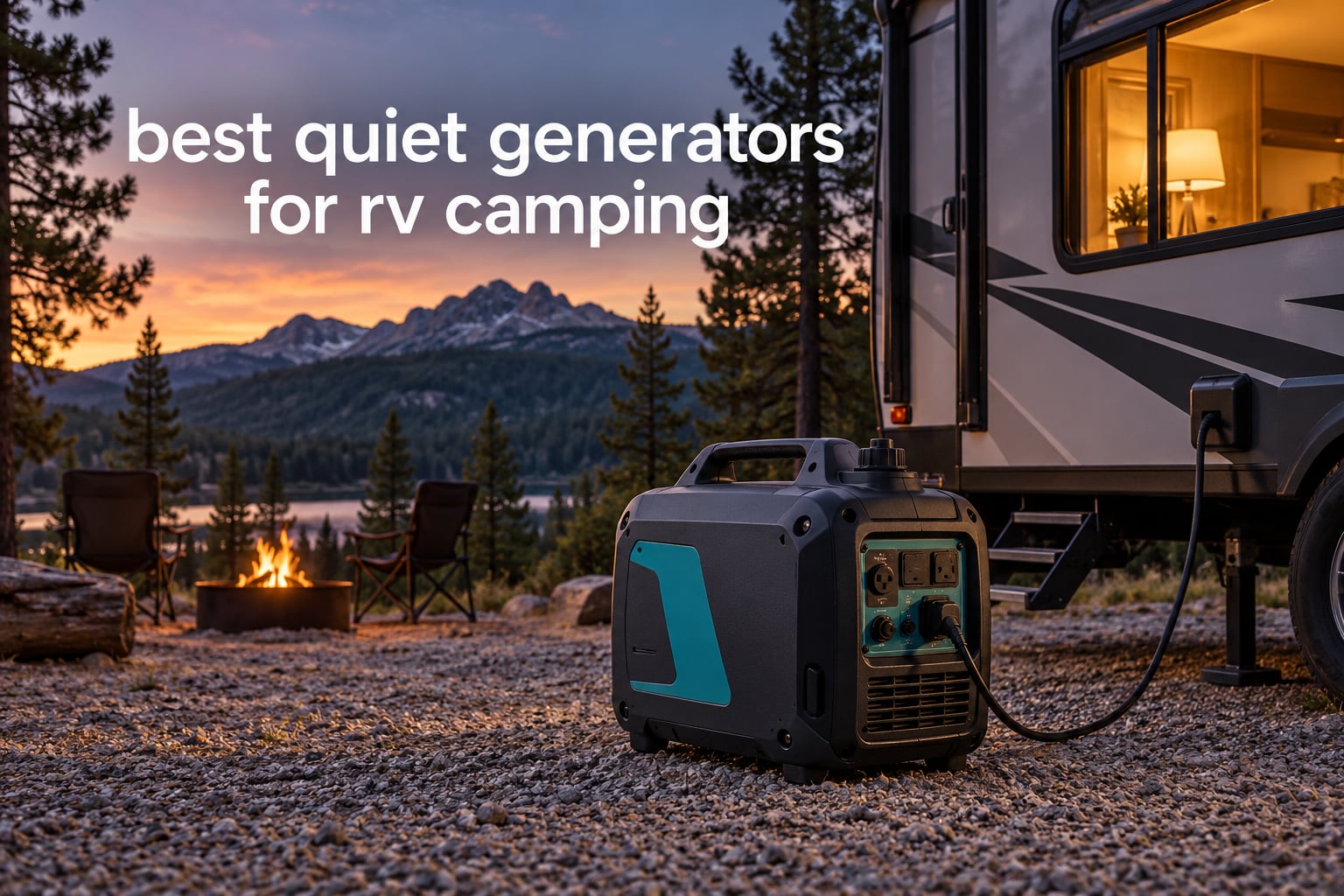
The quietest generators for RV camping are enclosed inverter generators rated below roughly 60 decibels at 23 feet (7 m) at 25% load, with variable engine speed and a sound-dampened housing instead of an open frame. That combination is quieter than a normal conversation when your load is light, which is exactly what a campground loop at 10 p.m. demands.
I spent six weeks comparing ten popular portable inverter generators in this category, reading the spec sheets and the review data behind each one. Every rating, wattage figure, decibel number and weight below comes from the manufacturer data and the customer reviews for that specific machine, not from a marketing roundup. Where a maker quotes a decibel figure at a different load or distance, I say so instead of pretending the numbers are directly comparable.
Noise is the whole premise here, and it is also the most misunderstood spec. A generator advertised at 52 dB becomes noticeably louder the moment a rooftop air conditioner compressor drags the engine up to full output. So this guide ranks units on the combination that matters at a campsite: rated noise, usable continuous watts, whether it has a real 30-amp RV receptacle, fuel flexibility, weight you can actually lift, and the runtime you get between refills.
If you only read one section, jump to the quick overview table below. If you are still undecided, the sizing section explains the 80% rule that decides which of these ten you actually need.
Table of Contents
Top 3 Quiet Generator Picks for RV Camping (October 2026)

Honda EU2200i 2200W Inverter
- 48-57 dB(A) quiet operation
- 1800 running watts
- 46.5 lb with CO-MINDER

Champion 4000W Dual Fuel…
- 64 dBA at 23 ft
- 3000 running watts gas
- Up to 25 hours on propane
- 25A TT-30R RV outlet

PowerSmart 3800W Dual Fuel…
- 59 dBA at 25% load
- 3300 running watts gas
- Up to 24 hours on propane
- 30A twist-lock outlet
These three cover the realistic shortlist. The Honda wins on silence, weight and service reach. The Champion 4000W wins on proven rooftop AC performance with dual fuel. The PowerSmart gives you propane runtime and a 30-amp outlet at a fraction of either.
Quick Overview: Best Quiet Generators for RV Camping in 2026
| Product | Specs | Action |
|---|---|---|
| Honda EU2200i 2200W Inverter Generator |
|
Check Latest Price |
| Champion 4000-Watt Dual Fuel RV Ready Inverter |
|
Check Latest Price |
| PowerSmart 3800W Dual Fuel Inverter Generator |
|
Check Latest Price |
 AIVOLT 4300W Dual Fuel Inverter Generator AIVOLT 4300W Dual Fuel Inverter Generator |
|
Check Latest Price |
 WEN 56360i 3600-Watt RV-Ready Inverter WEN 56360i 3600-Watt RV-Ready Inverter |
|
Check Latest Price |
 Pulsar PGD40ISCO 4000W Inverter Generator Pulsar PGD40ISCO 4000W Inverter Generator |
|
Check Latest Price |
 Champion 4500W Electric Start Dual Fuel Inverter Champion 4500W Electric Start Dual Fuel Inverter |
|
Check Latest Price |
 A-iPower 4300W Dual Fuel Inverter Generator A-iPower 4300W Dual Fuel Inverter Generator |
|
Check Latest Price |
 Oxseryn 4400-Watt Open Frame Inverter Generator Oxseryn 4400-Watt Open Frame Inverter Generator |
|
Check Latest Price |
 PowerSmart 4800W Enclosed Inverter Generator PowerSmart 4800W Enclosed Inverter Generator |
|
Check Latest Price |
Two products in this table do not publish a decibel figure at all: the Oxseryn 4400-Watt open frame and the PowerSmart 4800W. That is worth knowing before you treat the numbers as a straight ranking.
Here is the decibel scale in everyday terms, because manufacturer numbers are hard to feel. A quiet library is around 40 dB. A normal conversation at three feet sits near 60 dB. A vacuum cleaner runs about 70 dB. A gas lawnmower is close to 90 dB. So a 53 dBA generator running at idle is genuinely below conversation level, while a 64 dBA generator is roughly as loud as a vacuum once the compressor kicks in.
1. Honda EU2200i – The Editor’s Choice Option With the Widest Service Network
Honda EU2200i 2200 Watt Inverter Generator (EU2200ITAN)
1800 running watts
48-57 dB(A)
46.5 lb
0.95 gallon tank, up to 8.1 hours
Pros
- 48-57 dB(A) is the quietest rated figure here
- 46.5 lb loads with one hand into a truck bed
- CO-MINDER shuts the engine down on dangerous CO
- My Generator app with Bluetooth remote stop
- 3228 reviews give the best documented reliability record
Cons
- 1800 running watts will not carry a rooftop AC
- Only two 120V outlets and no 30A RV receptacle
- Gasoline only
- 0.95 gallon tank
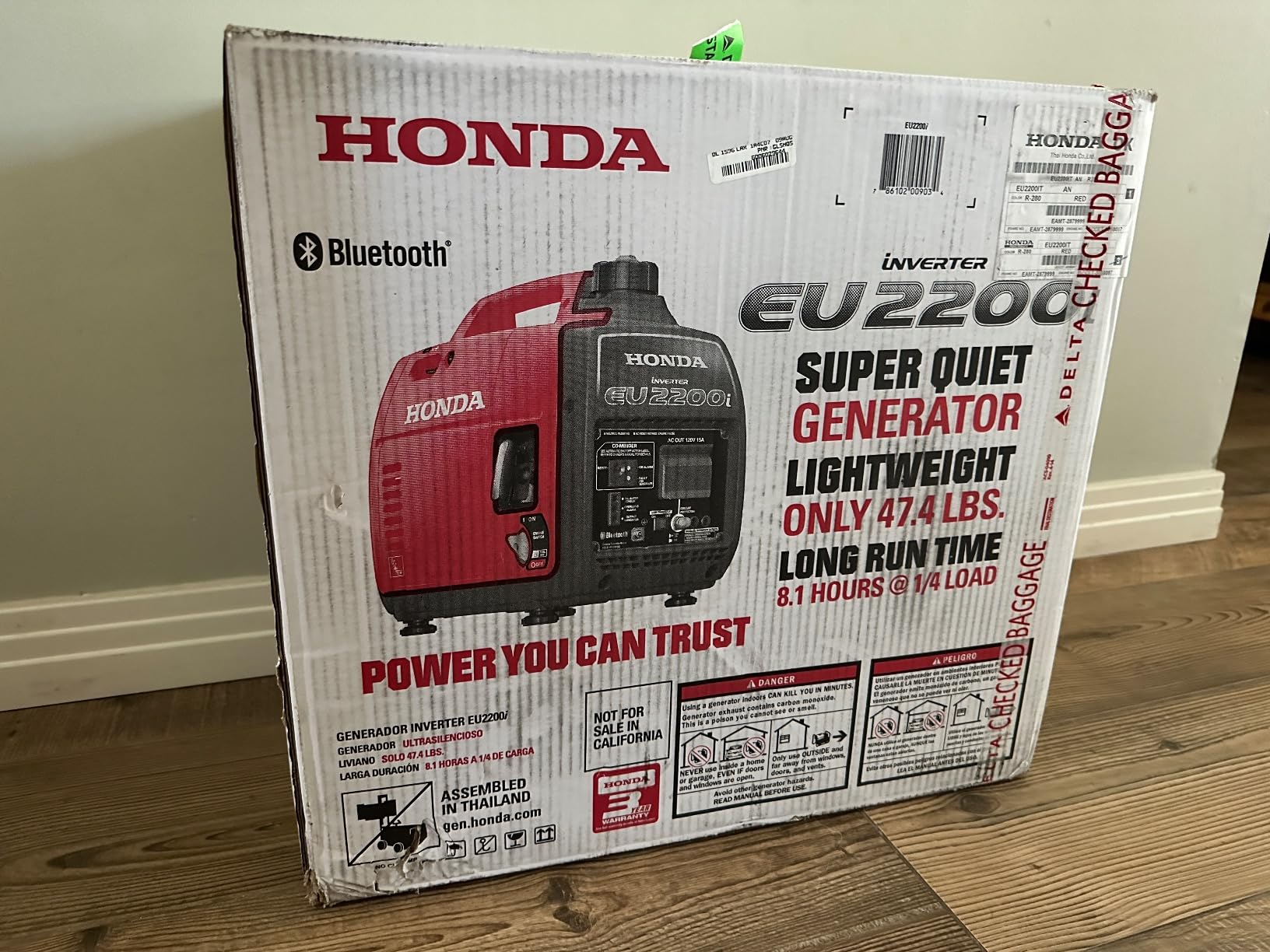
The Honda EU2200i is the quietest generator in this group at 48-57 dB(A), and it carries the largest review base we looked at with 3,228 ratings averaging 4.7. Eighty-nine percent of those reviews are five star, and only three percent are one star, the lowest share of any machine here.
The setup most campers actually run is a 12V compressor fridge, phone chargers, a laptop and a CPAP machine for a weekend. At that load the engine spends most of its time at low idle, and the 57 dB(A) upper figure of the range is closer to a quiet refrigerator than to a conversation.
The 121cc four-stroke engine produces 1,800 running watts and up to 8.1 hours on the 0.95-gallon tank, and it restarted cleanly after a full weekend. Owners also value CO-MINDER, which shuts the machine down if carbon monoxide rises while the tailgate or a slide-out is open, and the Bluetooth app for remote stop.
Who the Honda EU2200i suits
This is the right pick for a pop-up, a 13-20 foot travel trailer or a tent-camping setup where the load is lights, laptops and a fridge. At 46.5 lb it is one of the easiest here for a single person to lift, and it stows easily in a generator bay or against a truck-bed wall.
It also suits anyone who plans to keep the machine for a decade. Build quality, resale and dealer support are the three reasons Honda units hold value better than budget alternatives, and that is where the price premium goes.
Who the Honda EU2200i does not suit
It cannot carry a rooftop air conditioner. Most RV air units need 2,500 running watts or more just to start, and the EU2200i tops out at 1,800 running watts with two household outlets and no 30-amp RV receptacle to plug your shore power lead into.
So treat it as a companion to your RV rather than a replacement for a built-in generator. And if you plan to run a microwave, hair dryer and fridge at once, look at the Champion 4000W or the PowerSmart 3800W instead.
2. Champion 4000-Watt Dual Fuel – The Best Proven Performer for a Rooftop AC
Champion 4000-Watt Dual Fuel RV Ready Portable Inverter Generator
3000 running watts on gas
64 dBA at 23 ft
Up to 25 hours on propane
51.8 lb
Pros
- 4.6 rating across 686 reviews
- TT-30R 25A RV outlet plus household duplex outlet
- 25 hours of propane runtime for long boondocking
- Tool-free oil access and a 3-year warranty with lifetime support
- Recovers from an overload trip by pressing the red button
Cons
- 64 dBA is the loudest rating in this group
- Propane may not run until it is broken in on gasoline
- Will not run a rooftop AC and the microwave together
- Expect roughly 8-10 hours of gasoline runtime
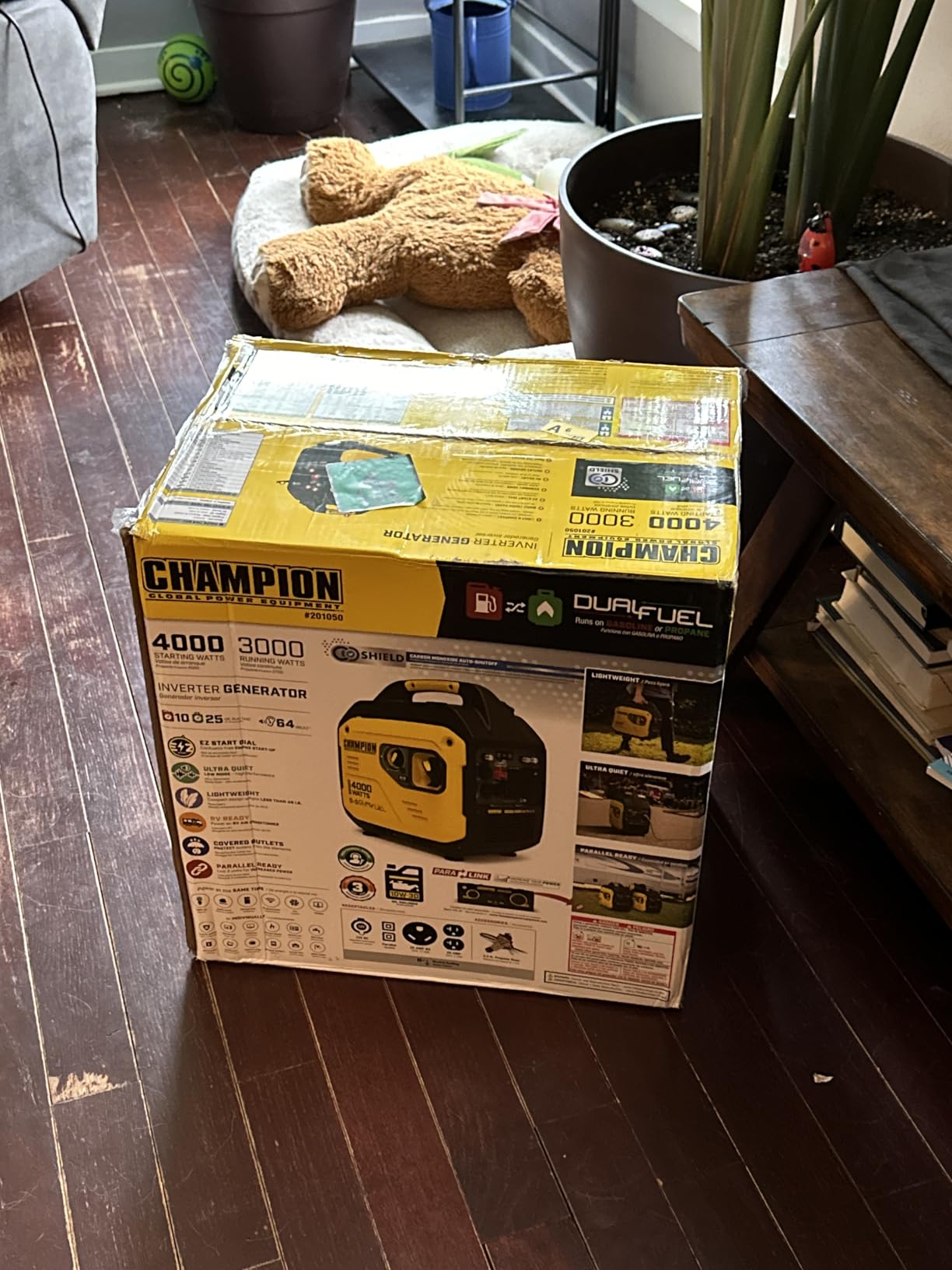
The Champion 4000-Watt is the most thoroughly field-tested machine in this roundup, with 686 reviews averaging 4.6 and eighty-three percent five-star ratings. It carries 3,000 running watts on gasoline, 2,700 on propane, 4,000 starting watts and a true 25A TT-30R RV receptacle.
One owner in the review data logged a three-day trip running a 15,000 BTU rooftop air conditioner plus a 12V fridge at the same time. Other reviewers report running it 24 hours a day without burning oil and restarting it cleanly right after a refuel, which is the kind of boring reliability you want 30 miles from the nearest road.
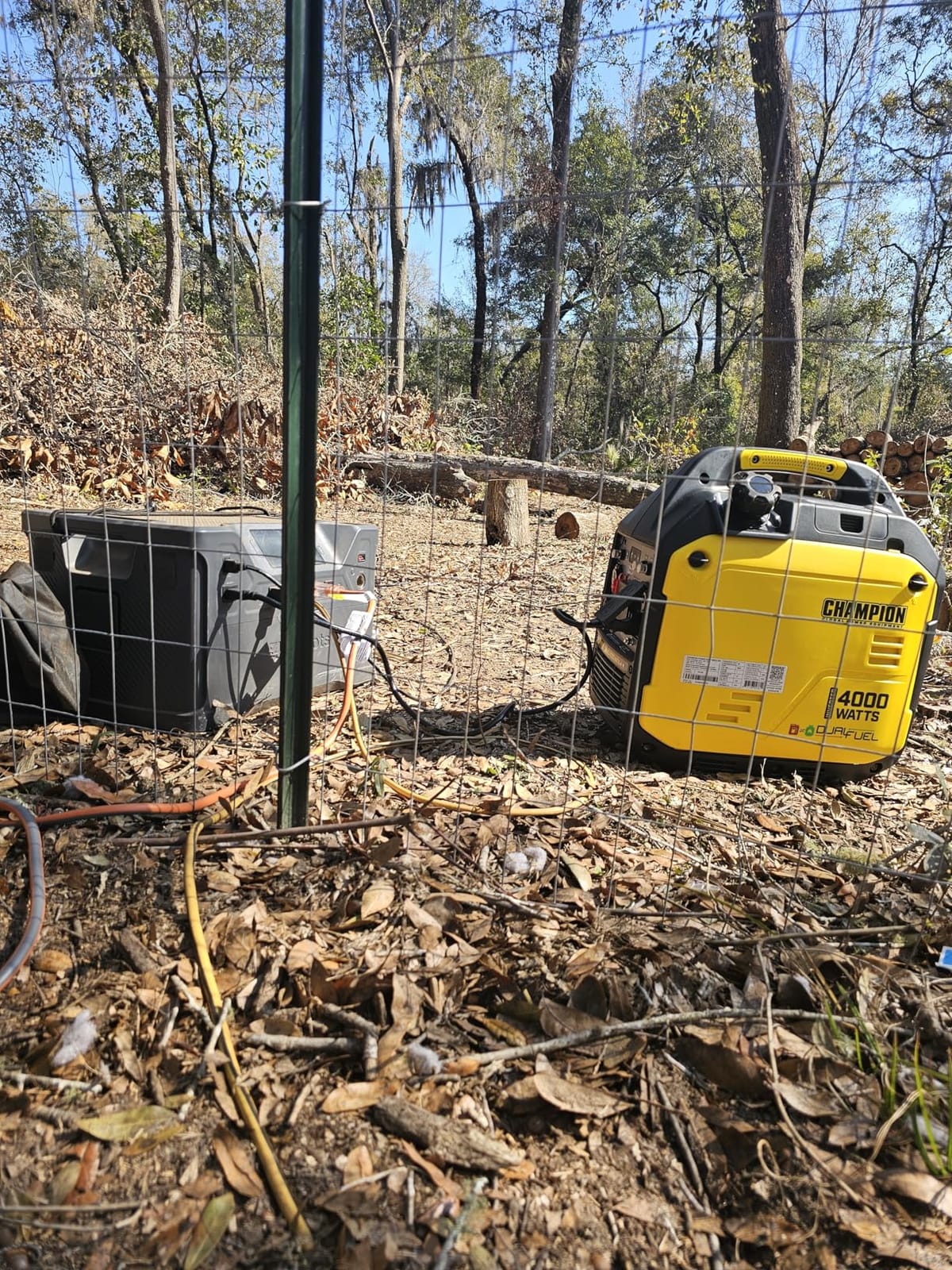
The catch is sound. The published figure is 64 dBA at 23 feet, the loudest rated number here, and owners note it climbs toward 70 dBA at full output. If you are camped beside people who go to bed early, that is the tradeoff you are making for the extra watts and the propane runtime.
Who the Champion 4000W suits
This is the pick for a 21-30 foot trailer or a Class C that actually runs a rooftop air conditioner through the night. The 25 hours of propane runtime on a 20 lb tank is the standout number in this group and it removes the mid-night refuel entirely.
It also suits owners who value service. Champion backs it with a 3-year limited warranty plus free lifetime technical support, and the review data includes one commercial user with eight years of trouble-free daily operation on the same machine.
Who the Champion 4000W does not suit
It will not run your air conditioner and the microwave simultaneously, which is a real limitation in a 30-foot trailer. Several owners also had to break the machine in on gasoline before propane would fire, so plan that first run before you leave home.
Noise-sensitive neighbours are the other reason to pass. If your campsite is in a tight loop with quiet hours enforced by a ranger, step up to something rated in the mid-50s or accept that you are running your air conditioner on battery instead.
3. PowerSmart 3800-Watt Dual Fuel – Best Value for Overnight Runtime
PowerSmart 3800 Watt Dual Fuel Inverter Generator for Camping or Home Use
3300 running watts on gas
59 dBA at 25% load
Up to 24 hours on propane
50.7 lb
Pros
- Runs on gasoline or propane out of the box
- 59 dBA at 25% load in Eco Mode
- Up to 24 hours on a 20 lb propane tank
- 30A twist-lock outlet matches RV shore power
- 1125 reviews averaging 4.5
Cons
- 1.3 gallon tank makes gasoline runtime short
- About 50 lb so most owners use a cart
- Oil door and access panels need a Phillips screwdriver
- Noise climbs under heavy load
- No Bluetooth or app connectivity
The PowerSmart 3800W is the best value in this roundup because it does three things rarely combined at this tier: dual fuel, a 59 dBA Eco Mode rating at 25% load and a 30-amp twist-lock outlet. It has 1,125 reviews averaging 4.5, with seventy-eight percent five star.
On propane it produces 3,100 running watts and runs up to 24 hours on a 20 lb tank. One owner in the review data ran a refrigerator plus a 1,475W electric fireplace with headroom to spare, which tells you more about real capacity than the headline wattage does.
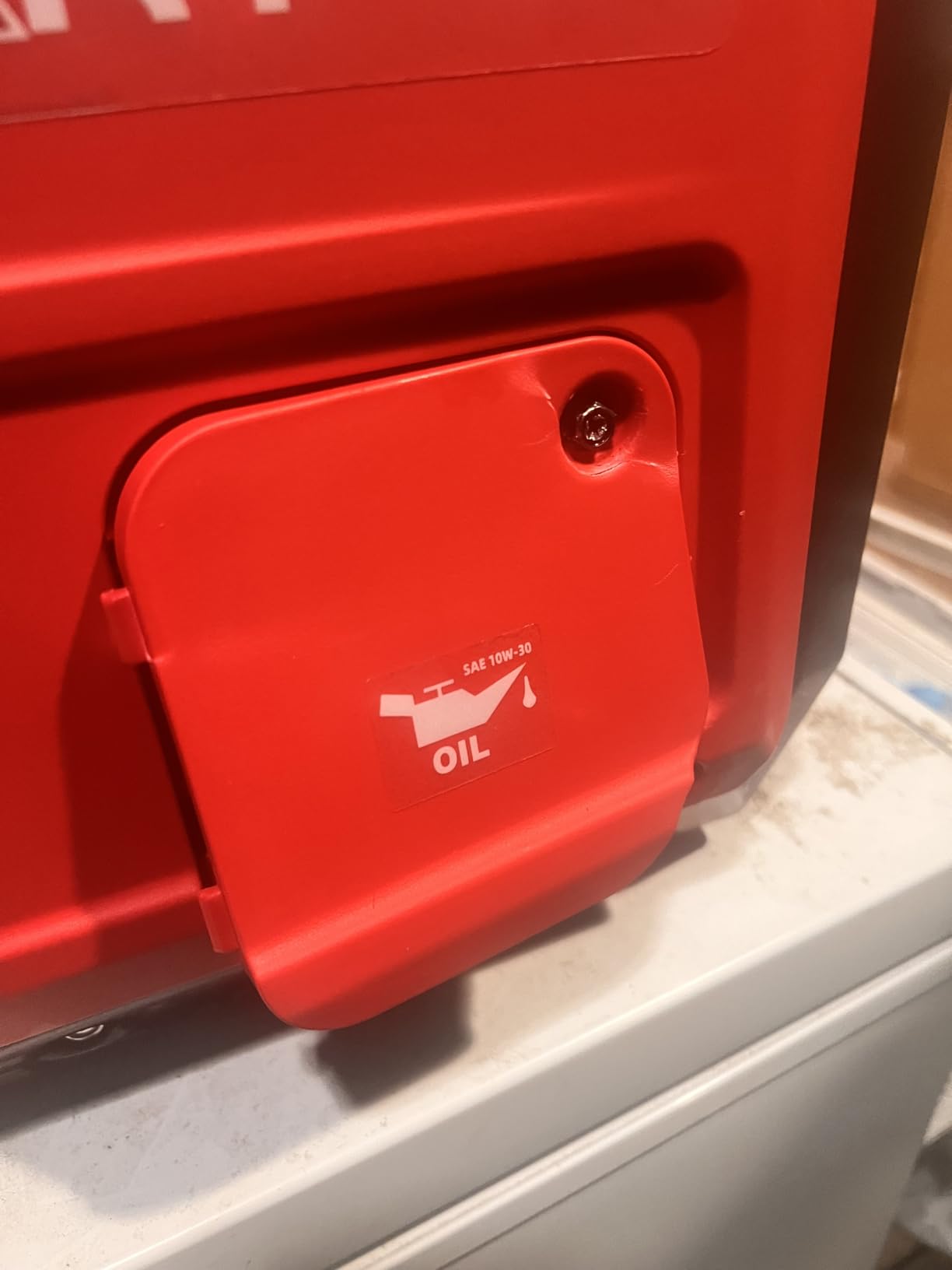
The 149cc four-stroke engine gives 3,300 running and 3,800 starting watts on gasoline, 3,100 and 3,500 on propane. Protection covers overload, short circuit, CO sensor and low oil shutdown, and the box includes a 5 ft two-stage LP regulator hose, oil funnel and spark plug wrench.
Owners who fit it into a truck camper compartment call out the compact 21.9 by 13.4 by 19.5 inch footprint, which matters more than weight when space is the constraint.
Who the PowerSmart 3800W suits
It fits campers who want propane overnight freedom on a moderate budget. The 30A L5-30R outlet is a direct match for RV shore-power hookups, so you can plug in without an adapter, and the CO sensor and low oil shutdown give you the safety basics most buyers in this class expect.
It is also a good first generator for someone moving up from an open-frame model. Reviews repeatedly compare it favourably against older open-frame machines on both noise and voltage stability.
Who the PowerSmart 3800W does not suit
The 1.3 gallon tank is small, so gasoline runtime is short and refills are frequent, and at 50.7 lb it is heavy enough that most owners buy a cart rather than carry it far. Access panels and the oil change door want a Phillips screwdriver, which is annoying at 9 p.m. in a dark campground.
If your load is a rooftop air conditioner, note that noise climbs noticeably once the engine works hard. And if you want to start the machine from inside your trailer, there is no remote start here.
4. AIVOLT 4300W Dual Fuel – Quietest Dual-Fuel Rating With Remote Start
AIVOLT 4300W Dual Fuel Inverter Generator 53dB Quiet for RV Camp Home
3300 running watts
53 dBA
Remote key-fob start
34 hours on propane at 25% load
Pros
- 53 dBA is the lowest rated figure among the dual-fuel machines here
- Remote key-fob start lets you fire it up from inside the RV
- Owners report running rooftop AC all night on a 20 lb propane tank
- Wheels and telescoping handle for uneven ground
- Several reviewers report fast replacement of faulty machines
Cons
- Lowest average rating here at 4.1 with 12% one-star reviews
- One owner measured 72-73 dB at about 5 feet
- 64 lb needs the built-in wheels
- Some reviewers report output below rated watts on a 50A charger
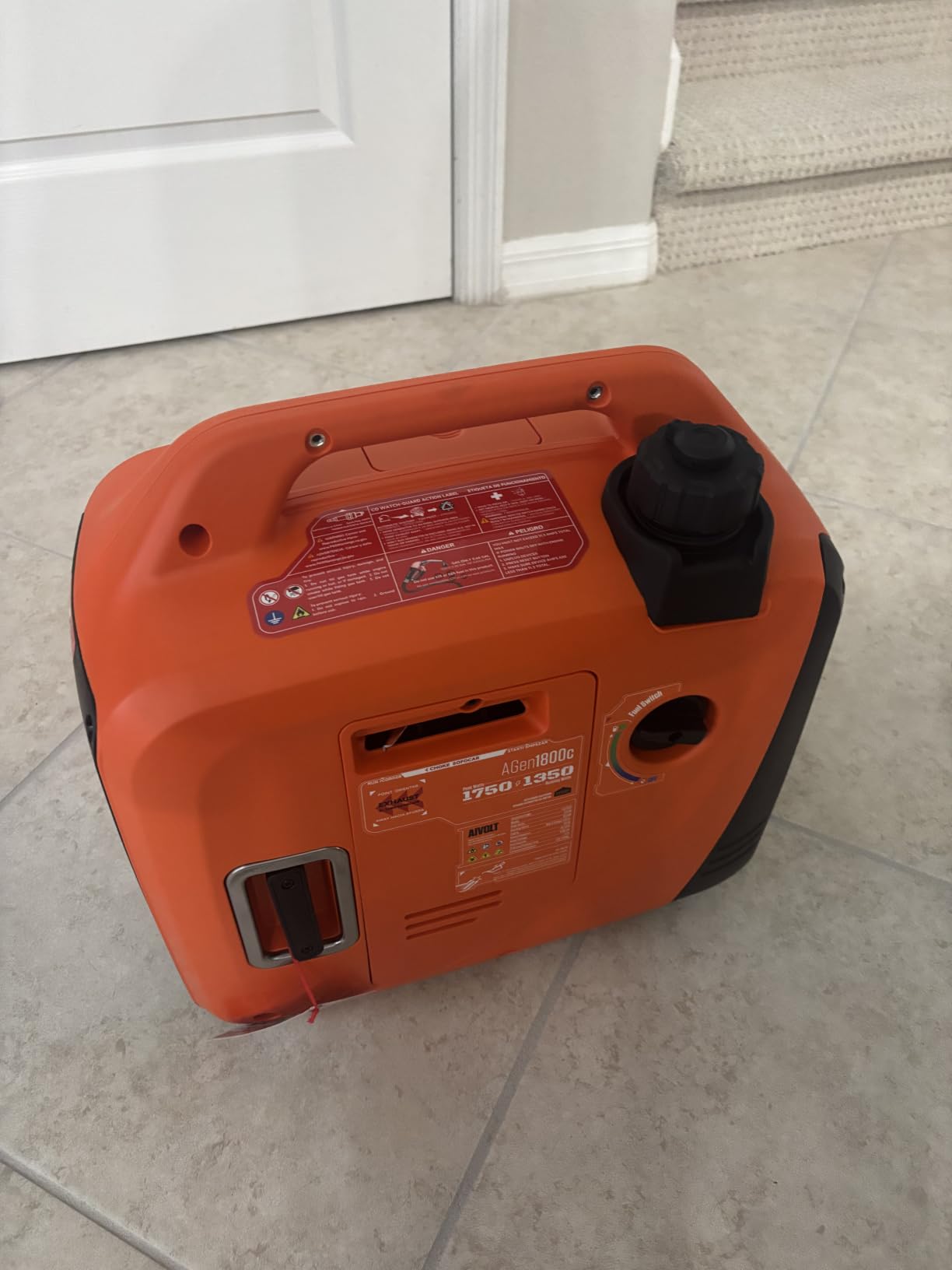
The AIVOLT 4300W is rated at 53 dBA, the quietest published number among the dual-fuel machines in this group, and it is the only one here with a remote key-fob start. That combination of silence and remote starting is unusual at 4,300 watts.
Runtime is its other strength: 11.5 hours on gasoline and up to 34 hours on propane at 25% load. Campers in the review data report starting it from inside the trailer and running a rooftop air conditioner off propane overnight.
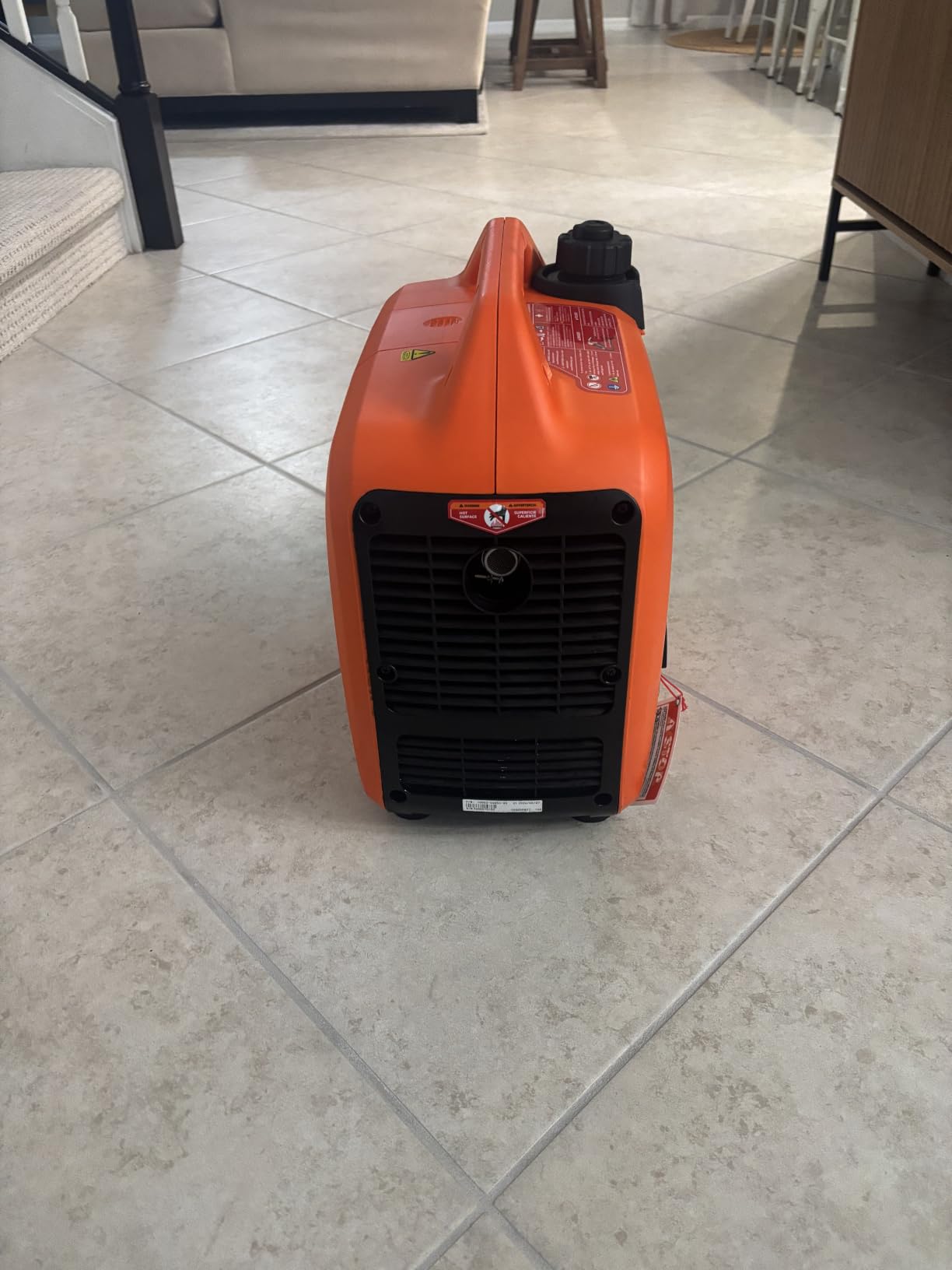
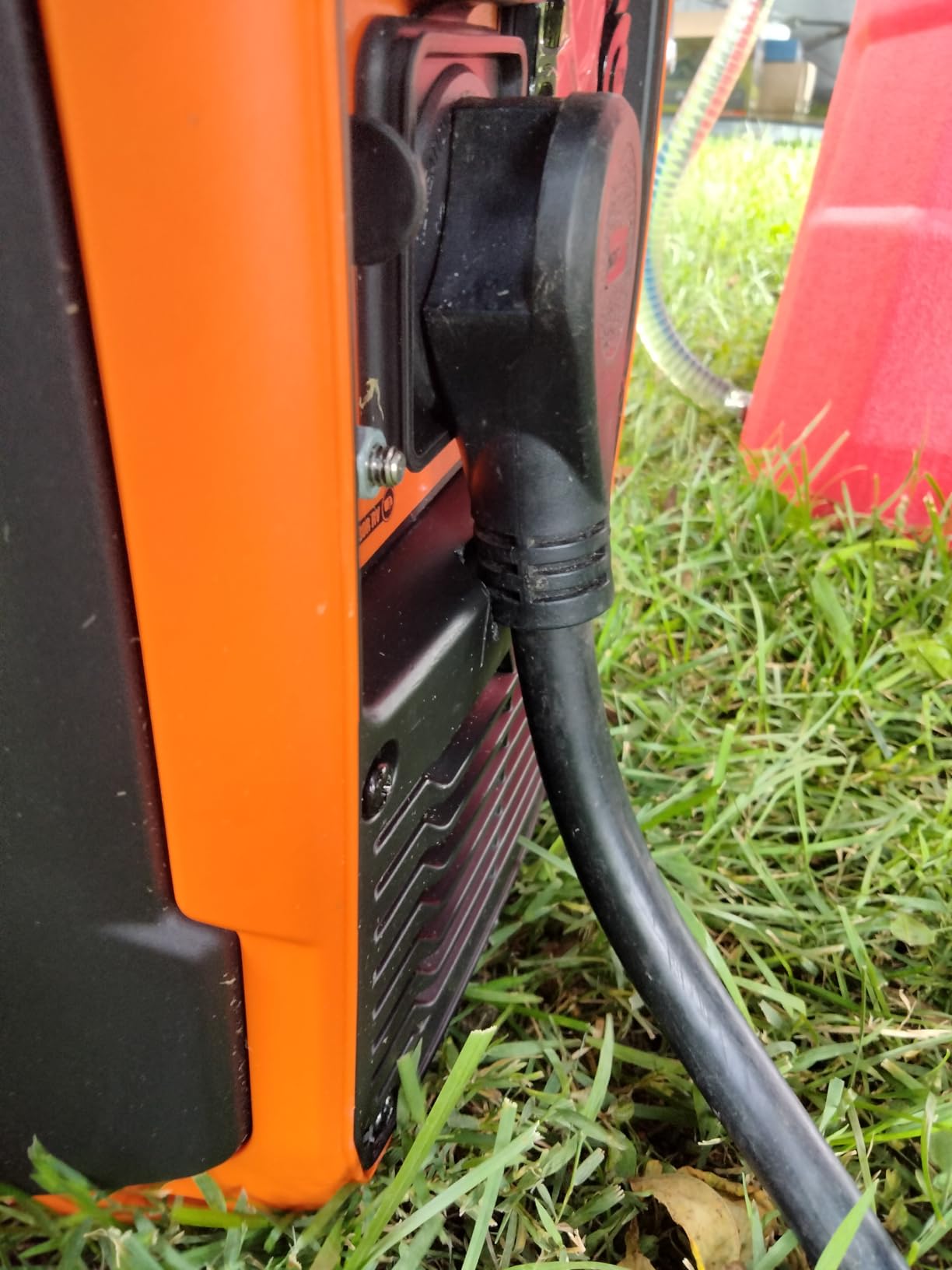
It has a dedicated 30A outlet aimed squarely at RV air conditioners and microwaves, plus a telescoping handle and built-in wheels. It is UL2201 and EPA certified with CO auto-shutoff and low oil protection, and it includes an LPG hose, regulator and tool kit.
The honest part: its 4.1 average is the lowest in this roundup, with twelve percent of reviews at one star. The critical themes are output falling short of rated watts on a 50A battery charger, and noise being much higher than the headline figure at close range.
Who the AIVOLT 4300W suits
This suits campers who want the quietest dual-fuel package and value not crawling out of bed in the cold to start the generator. At 64 lb it is a wheeled machine, so plan your route from the truck bed or storage bay before the trip.
On the support side, several reviewers describe the company replacing a faulty machine outright and resolving problems quickly, which matters if you are three hours from the nearest dealer.
Who the AIVOLT 4300W does not suit
If you plan to run heavy 50A loads, read the reviews first. Several buyers report the delivered machine will not sustain rated output on a 50A battery charger, and the 12% one-star share is the second highest here.
Buyers who measure noise themselves will also notice the gap. One owner recorded 72-73 dB at about 5 feet against the 53 dBA claim measured at 23 feet, which is normal physics and exactly why the printed figure alone should not decide your purchase.
5. WEN 56360i 3600-Watt – Lightest Enclosed Unit With a True RV Receptacle
WEN 3600-Watt Portable Inverter Generator, RV-Ready, Quiet and Lightweight with Fuel Shut Off (56360i)
2900 running watts
46.3 lb
Fully enclosed body
1.6 gallon tank
Pros
- Lightest machine here at 46.3 lb for one-person loading
- True TT-30R RV receptacle alongside two 120V outlets
- Fully enclosed body is noticeably quieter than open-frame machines
- Fuel shutoff burns off carburetor fuel to protect it
- Three-year limited warranty
Cons
- Only about 5 hours of runtime from the 1.6 gallon tank
- Gasoline only with no propane capability
- Recoil pull start rather than electric or remote
- WEN does not publish a decibel figure
The WEN 56360i is the lightest enclosed inverter here at 46.3 lb, and it is one of only three in this roundup with a genuine TT-30R RV receptacle next to its household outlets. That combination makes it unusually practical for an RV despite the modest price.
Its 149cc four-stroke engine delivers 2,900 running watts and 3,600 starting watts from a 1.6 gallon tank, with output clean enough for phones, tablets and laptops. Buyers consistently single out the low weight, the RV-ready outlet and the quiet enclosed body in the same breath.
The outlet panel covers two 120V three-prong outlets, the TT-30R receptacle, a 12V DC port and two 5V USB ports, so you can charge devices without hunting for an adapter. A fuel shutoff system burns remaining carburetor fuel before shutdown, which extends engine life after a long trip.
At 17.9 by 11.6 by 19.7 inches it fits a generator compartment that most larger machines will not, and it carries a three-year limited warranty. The 609 reviews average 4.4 with seventy-five percent five star.
Who the WEN 56360i suits
It suits solo campers and anyone lifting into a truck bed or van, because one person can handle 46.3 lb comfortably. It is also a sensible companion generator for a trailer that already has a smaller unit but no proper 30-amp outlet.
Campers with limited grip will like the simple recoil start, and the USB and 12V DC ports cover the small stuff that usually needs a separate inverter box.
Who the WEN 56360i does not suit
Runtime is the limitation. Roughly five hours from the 1.6 gallon tank means an overnight air conditioner run needs a reserve can or a refill, and the tank is small enough that you will be checking it more often than you would like.
It is gasoline only with a recoil start, and WEN does not publish a decibel figure, so you are relying on the enclosed design rather than a measured number. If measured silence matters most, choose a model that states its dB.
6. Pulsar PGD40ISCO 4000W – Compact Pick for a Small Generator Bay
Pulsar PGD40ISCO Ultra Light Quiet 4000W Portable Gas Inverter Generator, white
3200 running watts
59 dB
47.3 lb
1 gallon tank
Pros
- 59 dB rating sits in the quiet tier of this category
- Light 47.3 lb body with a compact 18.9 by 11.4 by 17.3 in footprint
- Manufacturer states it suits RV use and AC units up to 13500 BTU
- Parallel ready for expanding output later
- Automatic voltage regulation for stable output
Cons
- 1 gallon tank gives about 4 hours at half load
- Gasoline only with no propane option
- Only three outlets and no listed USB or 12V DC output
- Less written owner detail than the bigger-name rivals
The Pulsar PGD40ISCO is rated at 59 dB and weighs 47.3 lb in an 18.9 by 11.4 by 17.3 inch package, so it slips into small generator compartments where the taller dual-fuel cabinets will not go.
Its 145cc engine gives 3,200 running watts and 4,000 starting watts, and the manufacturer states the unit is suitable for emergency power, RV use, sensitive electronics and air conditioners up to 13,500 BTU. It is parallel ready if you later want to double the output.
The 489 reviews average 4.4, with seventy-four percent five star, and they concentrate on quiet running, low weight and straightforward use around an RV. That is the exact profile of someone who wants the machine out of sight and quiet.
Automatic voltage regulation keeps output stable for electronics, and the three-year limited warranty matches several rivals. Nothing in the review data suggests a reliability problem, but the written owner detail is thinner than for the Honda or Champion machines.
Who the Pulsar PGD40ISCO suits
It suits owners of small and mid-size trailers where bay dimensions, not wattage, are the limiting factor. At 47.3 lb it is a one-person lift, and the low idle under a fridge-and-laptop load keeps it in the quiet part of its range.
If you think you will grow into a bigger load later, the parallel capability means a second machine of the same type can be linked rather than replacing this one.
Who the Pulsar PGD40ISCO does not suit
The 1 gallon tank is the smallest here and gives about four hours at half load, so an overnight air conditioner run means refilling in the dark. It is gasoline only, so there is no overnight propane option.
You also get only three outlets and no listed USB or 12V DC output, which means packing a separate charging adapter for phones and laptops.
7. Champion 4500-Watt Electric Start – Electric Start at High Output
Champion 4500-Watt Electric Start Dual Fuel Portable Inverter Generator
3500 running watts on gas
61 dBA
Electric start
Up to 21 hours on propane
Pros
- Electric start with an EZ Start dial removes the pull cord
- Up to 14 hours on gas and 21 hours on propane
- Intelligauge power meter tracks volts and running hours
- RV owners report running a travel-trailer rooftop AC overnight
- One long-serving owner reports 8 years of daily use
Cons
- 99.2 lb makes this a two-person lift
- Costs more per watt than several rivals here
- 61 dBA is louder than the models rated in the mid-50s
- Some buyers report oil leaks on light use
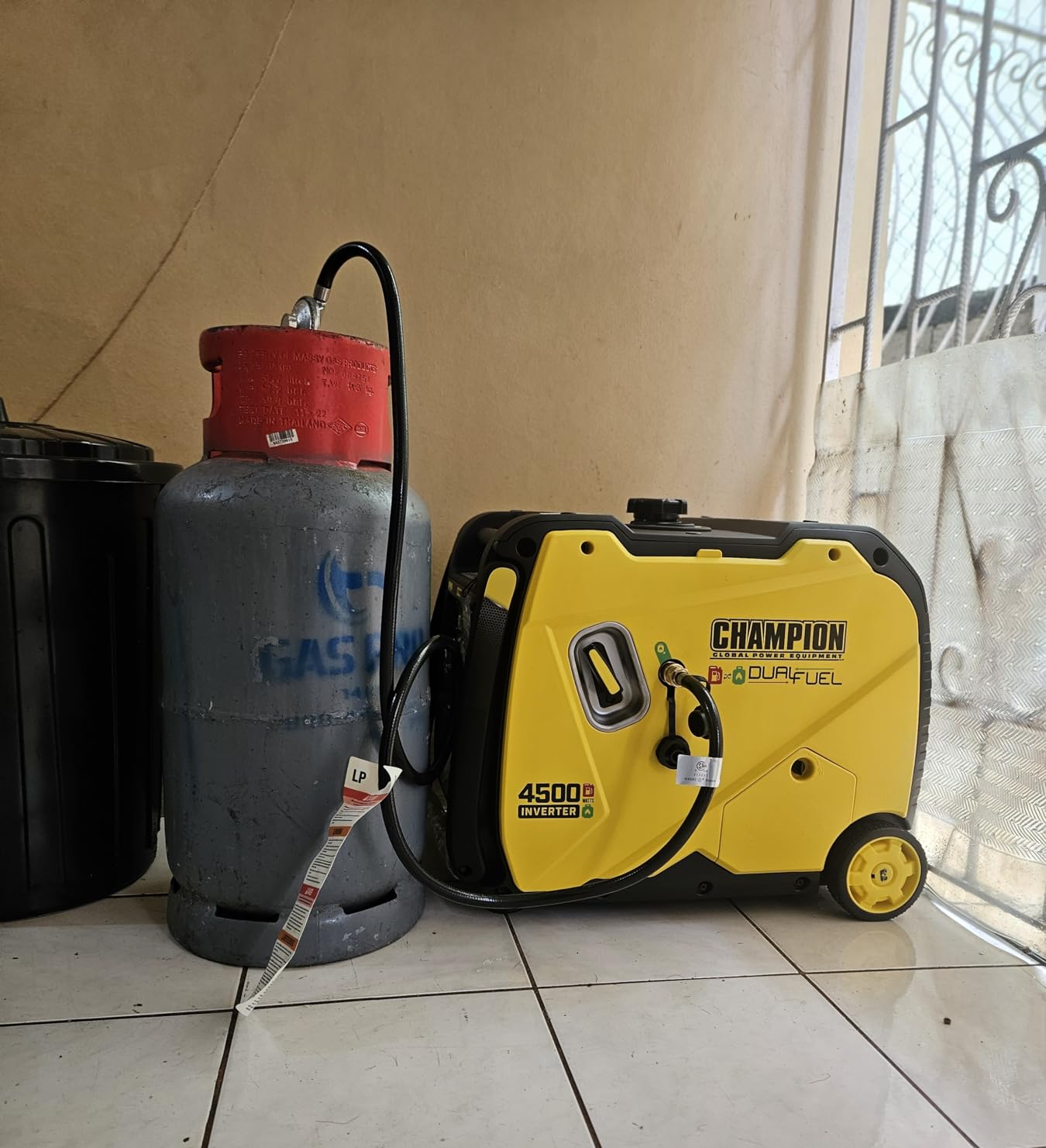
The Champion 4500-Watt is the pick here when you want electric start and 3,500 running watts without stepping up to a 6,000W class machine. Its 212cc engine produces 4,500 starting watts and 3,500 running on gasoline, 3,150 running on propane.
The EZ Start dial and electric starter matter more than they sound. Campers with limited grip or hand strength mention the pull cord as the thing they most want to avoid, and this removes it entirely. The Intelligauge power meter tracks voltage, frequency and operating hours.
Runtime figures lead this group: up to 14 hours on gas and up to 21 hours on propane from a 2.25 gallon tank. CO Shield provides carbon monoxide auto-shutoff, and the machine is parallel ready with an optional kit.
The reviews average 4.4 across 399 ratings with eighty percent five star. Camping operators treat it as a workhorse, though one heavy-use reviewer flagged oil leakage shortly after purchase, so check the oil before the first long run.
Who the Champion 4500W suits
It suits larger travel trailers and small motorhomes where 3,500 continuous watts removes the guesswork from sizing. If you cannot comfortably pull-start anything, the electric ignition ends that problem.
It also fits owners with real endurance needs. The 21-hour propane figure means one 20 lb tank can cover a long weekend without a refill stop.
Who the Champion 4500W does not suit
Weight is the hard limit. At 99.2 lb it is by far the heaviest machine here and is a two-person lift, which rules it out for solo campers and for anyone lifting into a high truck bed alone.
It also costs more per watt than several rivals in this roundup, and its 61 dBA rating is louder than the units in the mid-50s. If silence is the priority over headroom, the PowerSmart 3800W is the better trade.
8. A-iPower 4300W Dual Fuel – Best for the Included RV Adaptor Kit
A-iPower 4300W Gas Propane Inverter Generator, Lightweight, Fuel Sense
3450 running watts on gas
As low as 63 dB
L5-30R 30A outlet
54.8 lb
Pros
- 2376 reviews give the largest long-term reliability record here
- Dual fuel with an L5-30R 30A outlet in a compact package
- 3% THD clean output for laptops and TVs
- Wheels and telescoping handle aid moving a heavy unit
- Parallel cables and LPG hose and oil all included
Cons
- Heaviest of the compact 4300W class at 54.8 lb
- 63 dB is higher than the 53-59 dB rivals here
- Recoil start only with no electric or remote option
- 1.6 gallon tank gives about 7.5 hours at 25% load
- Ten percent of reviews are one star on starting and oil leakage
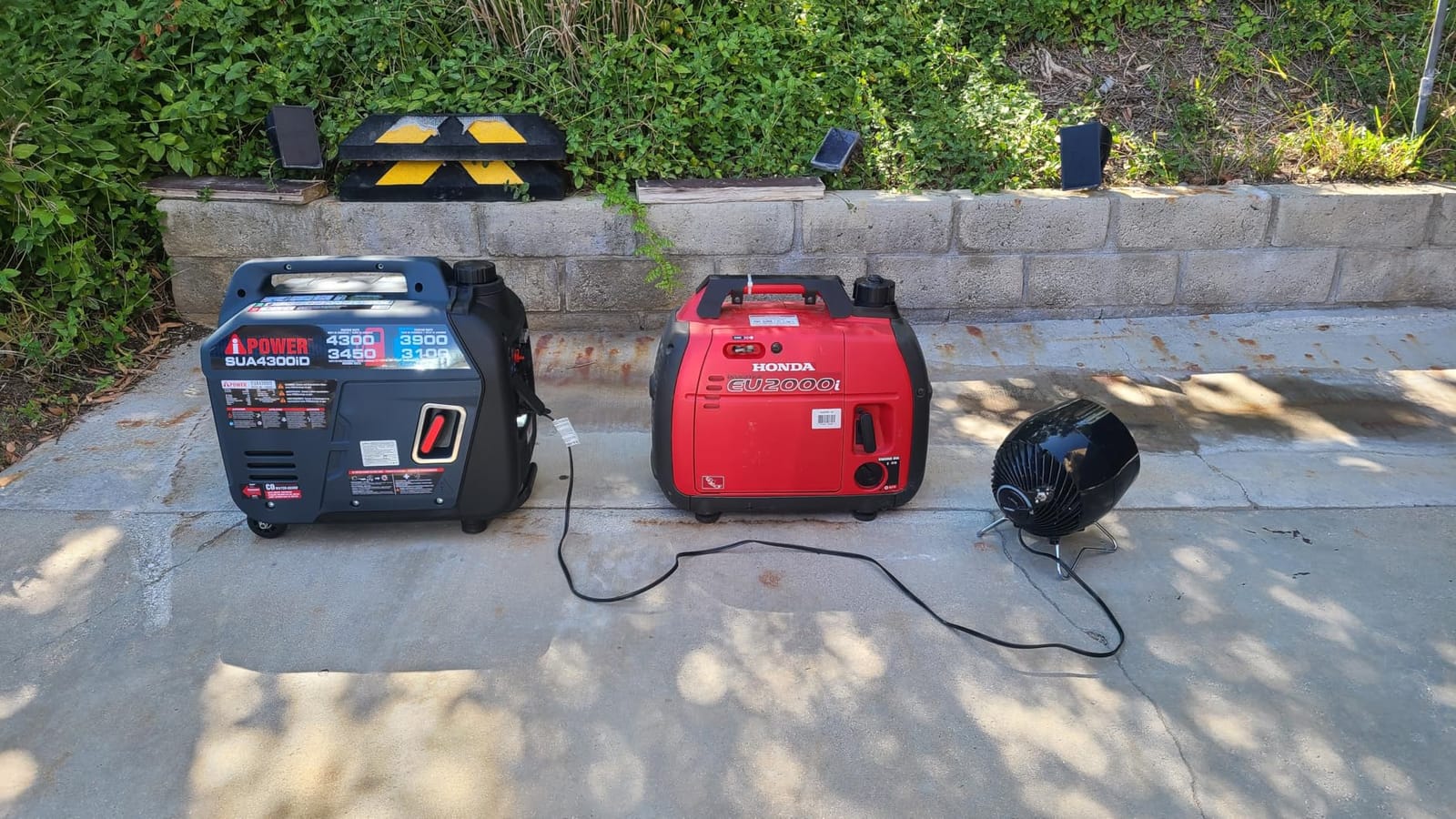
The A-iPower SUA4300iD has the largest review base of any machine in this roundup at 2,376 ratings, averaging 4.3. That matters for a generator, because the failure modes show up in years three and five rather than in week one.
It delivers 3,450 running watts on gasoline and 3,100 on propane, with 4,300 starting watts on gas, and its 149cc OHV four-cycle engine produces output at 3% total harmonic distortion, which is clean enough for laptops, TVs and phone chargers.
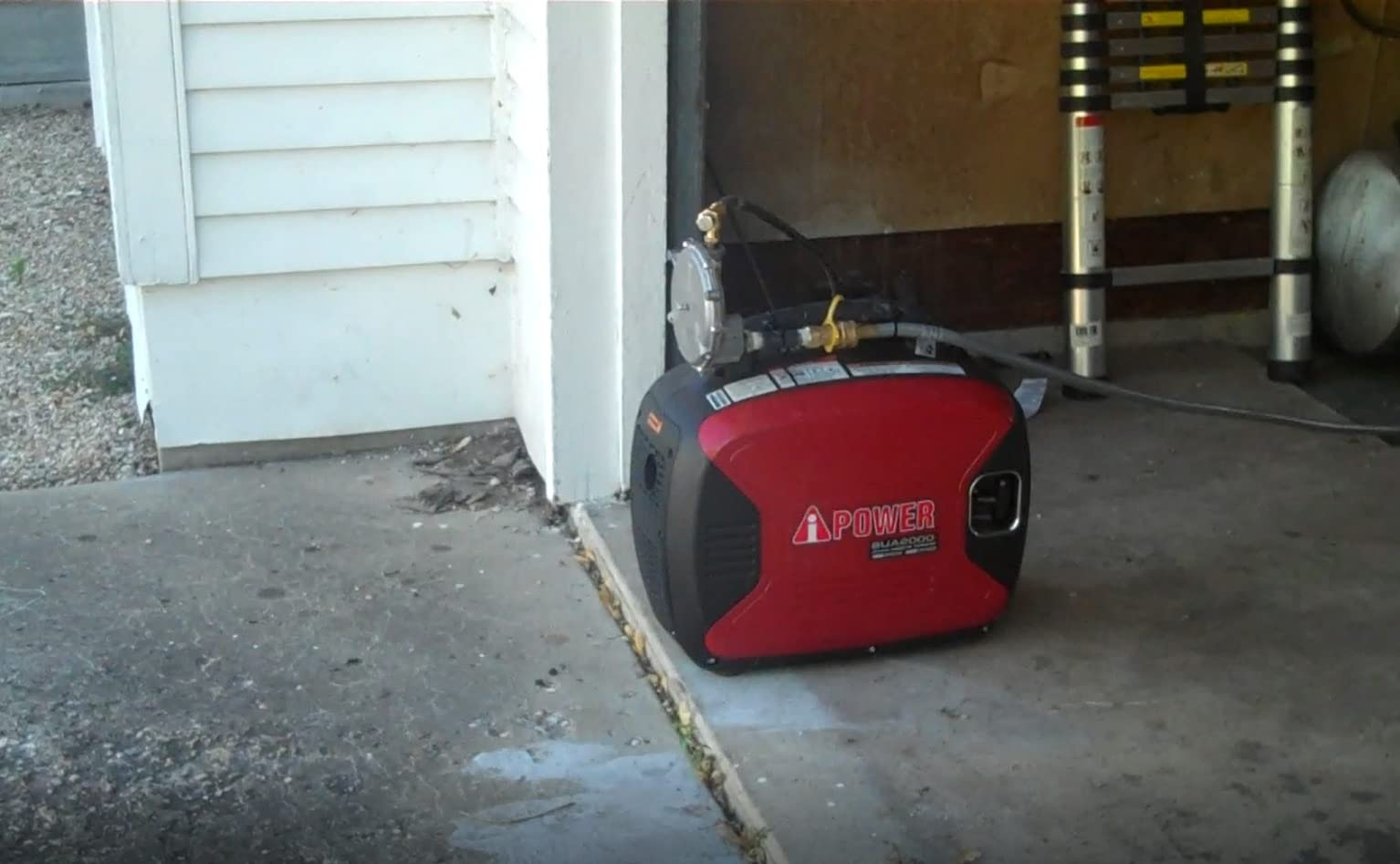
The control panel carries a CO sensor indicator, an LED light, a data centre display, a 12V DC 8.3A outlet, an L5-30R 30A 120V outlet and a duplex 5-20R 20A outlet. The kit includes engine oil, a funnel, a 30A RV adaptor, 12V DC charging cables, parallel cables and an LPG hose with regulator.
Runtime is 7.5 hours at 25% load on the 1.6 gallon tank. Low idle technology plus telescoping handle and wheels make it easier to move than most machines of this output, which matters given the 54.8 lb weight.
Who the A-iPower 4300W suits
It suits anyone who wants the most field history per dollar and would rather not buy a parallel kit or a 30A adaptor separately. The bundled cables alone remove a trip to the parts counter.
It is a good match for a trailer with a 30A connection and an appliance load that does not exceed 3,000 watts, particularly if you like seeing live output data on the panel.
Who the A-iPower 4300W does not suit
Its as-low-as-63 dB rating is higher than the 53-59 dB machines here, so it is not the pick for a tightly packed campground loop where quiet decides the outcome.
Ten percent of reviews are one star, and those cluster around hard starting and oil leakage after light use. It is also recoil start only, so if pull-starting is a problem, choose the electric-start option instead.
9. Oxseryn 4400-Watt Open Frame – Budget Pick With a 30A RV Port
Oxseryn 4400-Watts Inverter Generator, Open Frame Generator Gas Powered, Emergency Home Backup, RV Ready 30A Outlet, EPA Compliment
3400 running watts
2 gallon tank, 14 hours at 25% load
30A RV port
57 lb
Pros
- Highest average rating here at 4.6 across 417 reviews
- 3400 running watts from a 2 gallon tank
- 14 hours at 25% load beats most rivals on gasoline runtime
- 30A RV outlet on an open-frame chassis at this tier
- Inverter smoothing with ECO mode for sensitive electronics
Cons
- Open frame is louder than enclosed inverter cabinets
- Gasoline only with no propane option
- No CO sensor listed among the features
- Only a 1-year manufacturer warranty
- 57 lb despite the lightweight positioning
The Oxseryn 4400-Watt has the highest average rating in this group at 4.6 across 417 reviews, and it pairs 3,400 running watts with a 2 gallon tank for a claimed 14 hours at 25% load. That runtime figure is longer on gasoline than almost anything else here.
It also has a 30A RV port on an open-frame chassis at a tier where you would normally expect household outlets only, plus two 120V AC outlets and a 12V DC port. Inverter smoothing and ECO mode keep sensitive electronics happy and cut fuel use at light load.
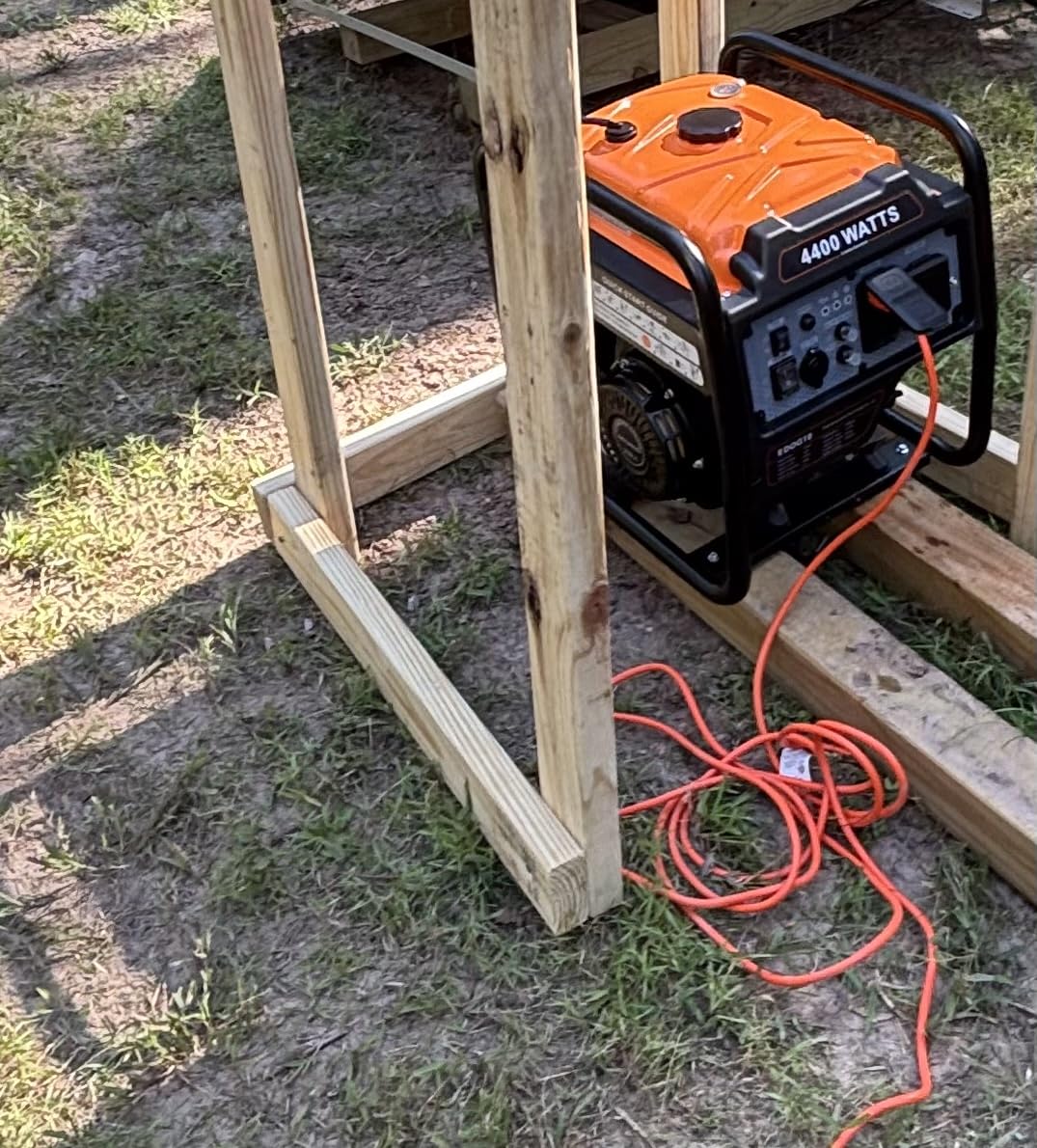
Low oil shutdown, overload protection and cold start technology are all present, and it is EPA compliant. Buyers describe a slight fuel smell on arrival as normal because the machines are factory functionally tested, and the review data treats this unit as the strongest value of the roundup.
What you give up is enclosure, and that is the entire point of this guide. An open frame does not have the sound-dampened cabinet that makes inverter generators quiet, so it is the loudest form factor here by design.
Who the Oxseryn 4400W suits
It suits campers on a tight budget who need to run a fridge, lights, a battery charger and a TV for a weekend, and who are camped somewhere without strict quiet hours. The 14-hour gasoline runtime means one fill covers a long trip.
It is also a reasonable home-outage machine, where outlet count and runtime matter more than campsite noise rules.
Who the Oxseryn 4400W does not suit
It does not suit anyone who plans to sleep beside it. Open-frame construction means the exhaust and engine noise are not contained, which is the exact problem the rest of this list solves.
There is also no CO sensor listed among the features and only a 1-year manufacturer warranty, so you are carrying more of the long-term risk yourself. If quiet is your priority, spend the difference on an enclosed model.
10. PowerSmart 4800W Enclosed Inverter – Electric Start With a 30A Outlet and Wheels
PowerSmart 4800W Inverter Generator,Parallel Ready&Electric Start Super Quite Gas Powered,RV Ready with 30A Outlet, EPA & CARB Compliant for Home Backup, Camping,Portable Power Station
4800 starting watts
One-touch electric start
Enclosed body
68 lb with wheels
Pros
- One-touch electric start removes the pull cord entirely
- Fully enclosed body keeps it quiet enough for campsites
- Dedicated 30A RV outlet plus two 20A outlets and USB
- Parallel ready so two machines can double the output
- Wheels make the 68 lb weight manageable on gravel
Cons
- 68 lb is not a one-person carry
- Gasoline only with no propane capability
- Only a 2-year warranty
- Fifteen percent of reviews are one star on a failed inverter board
- Gas cap sits on top of the unit where it is awkward to reach
The PowerSmart 4800W is the largest enclosed machine here at 4,800 starting watts, with a 224cc engine, a fully enclosed body and one-touch electric start. RV and trailer owners in the review data mention using it as a cheaper replacement for a failed factory generator.
The outlet panel includes a dedicated 120V 30A RV outlet, two 120V 20A household outlets and USB ports. A 3.4 gallon tank gives about 5 hours at full load and longer in ECO mode, and the unit is parallel ready so a second PS5046CE can double the output.
Low oil shutdown, overload protection and CO Shield systems are fitted, and it is EPA and CARB compliant. Buyers with limited grip single out the electric start as the feature that most changed their experience.
Warranty and consistency are where it falls down. Fifteen percent of reviews are one star, including reports of a failed inverter board and a slow warranty process with no local service centre. Its 4.1 average across 232 reviews sits at the bottom of this group.
Who the PowerSmart 4800W suits
It suits owners of larger motorhomes and trailers who want enclosed quiet, electric start and a genuine 30-amp outlet in one box, and who want the option to parallel a second machine rather than buy a larger single generator.
Those who keep their RV on a generator for extended periods will appreciate the 3.4 gallon tank, which is the largest in this roundup.
Who the PowerSmart 4800W does not suit
At 68 lb it is not a one-person carry, and gasoline only means no overnight propane option. The gas cap also sits on the very top of the unit, which is awkward to reach when it is stowed in a low generator bay.
Most importantly, the fifteen percent one-star share and the reports of a failed inverter board mean you should keep the maintenance schedule tight and buy a spare spark plug and oil. A 2-year warranty with lifetime technical support is thinner protection than the 3-year warranties on the Champion machines.
How to Size a Quiet Generator for Your RV
Size a generator on running watts, not peak watts, and then apply the 80% rule: pick a machine whose continuous output covers about 80% of the load you actually intend to run, leaving roughly 20% headroom for motor startup surges. A 4,000 watt unit is a sensible match for a load you estimate at 3,200 watts, because compressors such as air conditioner blowers draw a short spike above their running draw when they kick in.
Add up your real load first. A 13,500 BTU rooftop air conditioner typically needs around 2,800-3,000 watts to start, a microwave can pull 1,200-1,500 watts while running, a refrigerator compressor cycles between 100 and 400 watts, and a CPAP machine with a heated hose stays under 100 watts. Those four together put most 21-30 foot trailers in the 3,000-4,500 watt band.
Rough sizing bands: 13-20 foot trailers and pop-ups sit in the 2,000-3,000 watt range, 21-30 foot trailers in the 3,000-4,500 watt range, and 30 foot-plus motorhomes need 4,500 watts or more once you add a second air conditioner, a washer-dryer or a 50-amp load. Expect roughly 8-10 hours at 25% load from a 2,400 watt machine, 6-8 hours from a 4,500 watt machine and 5-7 hours from a 6,800 watt machine on a full tank.
Outlets decide whether the machine is actually usable. A TT-30R or L5-30R 30-amp receptacle is what lets you plug your RV shore power lead in directly. With only household outlets you are running extension cords to individual appliances, which is where people accidentally overload a circuit. And a portable 30-amp unit cannot run a 50-amp load, a well pump, electric heat or a 50 amp air conditioner no matter how many starting watts it advertises.
Altitude matters more than most guides admit. Above roughly 5,000 feet, gasoline engines lose power because thinner air means less oxygen for combustion, so a 4,000 watt unit in the Rockies behaves like a smaller machine. If you camp at altitude regularly, size up one class rather than discovering the shortfall with an air conditioner running.
On fuel, gasoline is the most common and the easiest to find, propane gives you cleaner storage and much longer unattended runtime, and dual fuel gives you both. Propane burns roughly 30% less energy per hour but burns more gallons per hour, so the tank gets heavy fast, and several fifth-wheel owners simply report that you will use a lot of propane. Whether propane is quieter than gas is genuinely debated by owners: some report it slightly quieter, others slightly louder, and the honest answer is that the difference is small next to load and distance.
On the Honda premium, the money buys four things: measured quiet at the low end of the range, build quality that shows up in year five, resale value, and a dealer network that exists in most regions. Budget machines often ship with a 1-year warranty and no service centre outside the seller, so if you are comparing a Honda against two cheaper machines, you are really comparing one supported generator with two unsupported ones.
Finally, consider whether you need a generator at all. A lithium power station is silent and needs no fuel, which makes it the right answer for a CPAP machine, a laptop and a couple of phones. It is the wrong answer for a rooftop air conditioner, which would drain a typical station in a couple of hours.
Safety, Quiet Hours and Campground Etiquette
Never run a generator inside a tent, inside a pop-up, under a slide-out or directly under a camper awning. Carbon monoxide is odourless and settles low, which is why a CO sensor matters. Every machine here except the open-frame Oxseryn lists a CO sensor or auto-shutoff system, and the Honda adds continuous CO-MINDER monitoring.
Point the exhaust away from open doors, windows and slide-outs, and keep at least 20 feet from dry vegetation and neighbouring campers. Many campgrounds and national parks enforce noise limits measured around 60 dB at 50 feet, with quiet hours in the evening, so a 64 dBA machine is the one most likely to bring a ranger to your site.
Plug in through an RV-approved transfer switch. Backfeeding a 30-amp outlet directly is illegal in many jurisdictions and genuinely dangerous, because shore power wiring is not designed to carry generator output back into the coach.
Before a long trip, run the checklist that reviewers consistently praise: fresh oil, clean air filter, fuel stabilizer in the tank, a drained fuel shutoff valve for storage, and a run of the machine at 50% load for an hour to confirm it holds output. Store it dry and covered, and never start a generator with a window open as your ventilation plan.
Frequently Asked Questions
What are the top 5 quietest generators?
Among the machines in this roundup, the five lowest published noise ratings are the Honda EU2200i at 48-57 dB(A), the AIVOLT 4300W at 53 dBA, the PowerSmart 3800W at 59 dBA at 25% load, the Pulsar PGD40ISCO at 59 dB and the Champion 4500W at 61 dBA. The Oxseryn 4400-Watt and PowerSmart 4800W do not publish a decibel figure at all.
What is the 80% rule for generators?
The 80% rule means choosing a generator whose continuous running output covers about 80% of the load you plan to run, leaving roughly 20% of headroom for startup surges. Motors such as air conditioner compressors and water pumps draw a brief spike well above their running draw. A 4,000 watt unit comfortably covers a 3,200 watt load.
Why are Honda generators so expensive?
Honda units cost more because of measured low-load noise, engine and enclosure build quality that holds up over a decade, strong resale value, and a dealer network that exists in most regions. Budget machines commonly carry 1-year warranties and no local service centre. Over ten years of ownership, the premium often costs less than replacing an unsupported unit.
Is a propane generator quieter than a gas generator?
The difference is small and owners disagree. Some report propane is slightly quieter, others slightly louder than gasoline on the same machine. What actually changes loudness is load, so a unit jumps in noise when an air conditioner compressor pulls the engine to full output regardless of which fuel you chose. Propane also burns about 30% less energy per hour but consumes more gallons per hour.
Can I run my RV air conditioner on a portable generator?
Yes, but only with enough continuous watts. A 13,500 BTU rooftop air conditioner typically needs around 2,800-3,000 watts to start, so a 1,800 running watt unit such as the Honda EU2200i cannot carry one. A 3,000 to 3,500 running watt inverter with a 30-amp RV receptacle is the realistic starting point, and you cannot run the air conditioner and a microwave at the same time on most of these machines.
Do I need a transfer switch for a portable generator?
Yes. An RV-approved transfer switch isolates the coach from shore power and connects it to the generator safely. Plugging a generator directly into a 30-amp outlet without one backfeeds the shore power wiring, which is dangerous and illegal in many jurisdictions. It also lets you start and stop the generator from inside the trailer without running cords through an open door.
Conclusion
The best quiet generators for RV camping in 2026 come down to what you are powering. The Honda EU2200i is the quietest choice at 48-57 dB(A) and the easiest to lift at 46.5 lb, though it cannot run a rooftop air conditioner. The Champion 4000W is the proven all-rounder at 3,000 running watts with a 25A TT-30R outlet and 25 hours of propane runtime, accepting 64 dBA as the tradeoff.
For propane freedom on a budget, the PowerSmart 3800W gives you a 30-amp outlet and up to 24 hours on a 20 lb tank at 59 dBA. Add the AIVOLT 4300W if remote start and a 53 dBA rating matter more to you than the highest review rating, and skip the open-frame Oxseryn if you plan to sleep beside the machine.
Measure your load first, apply the 80% rule, and check your campground’s noise rules before you buy.