
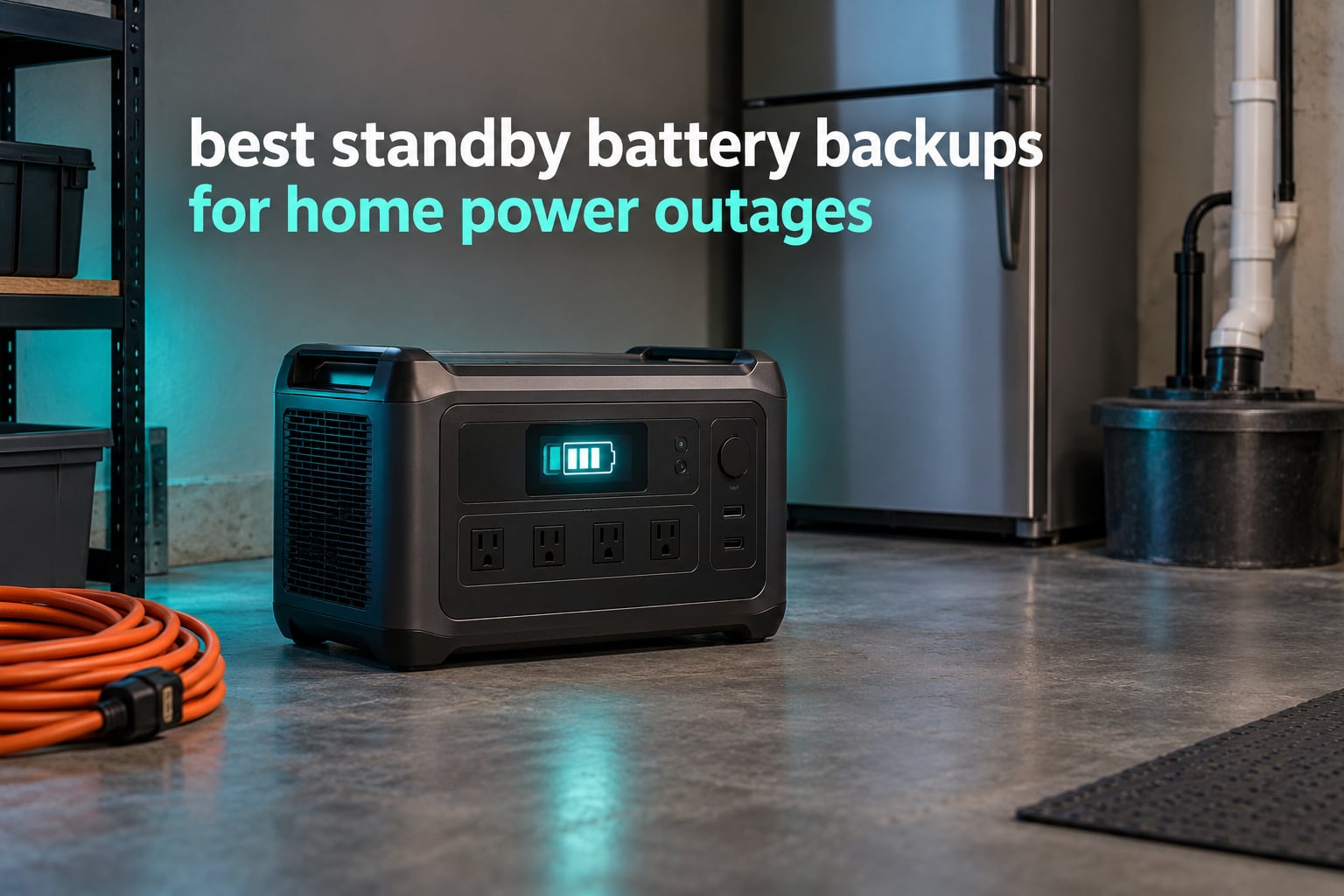
The lights go out, the refrigerator starts clicking off its compressor cycle, and the Wi-Fi router reboots for the eighth time that night. That is the moment a standby battery backup for home stops being a nice-to-have and becomes the thing you will judge yourself by when the grid comes back on. I spent the last few months working through every major battery backup class on the market, from a 1 kWh unit light enough to lift with one hand up to a 12 kWh system that outputs 7,200 watts of split-phase power. This guide covers all ten so you can match the hardware to your actual outage, not to a marketing claim.
A quick definition before we get into the picks. A standby battery backup is a home energy storage system that stores electricity in a lithium battery and converts it back to household AC power through an inverter, so selected appliances or circuits keep running silently and without fuel when the grid goes down. That covers everything from a small UPS for your desktop to a fixed, semi-permanent system carrying most of the house. This is a buyer guide, and we earn a commission if you buy through the links on this page, at no extra cost to you.
This guide is written for three groups of people. If you rent, you cannot run a gas generator outdoors without upsetting a lease or your neighbours, and a battery is often your only option. If you have medical equipment running through your house, or a freezer full of food, you care far more about switchover speed and outage duration than you do about price. If you simply want the internet and the lights to stay on for a twelve-hour outage, you can solve that for far less than a whole-home system costs.
Table of Contents
Top 3 Standby Battery Backups for Home Power Outages (October 2026)


The Jackery Explorer 1000 v2 wins this list because it combines the highest rating in the group with the largest review count of any modern power station here, and at 23.8 pounds you can move it between rooms without help. The Anker SOLIX C1000 Gen 2 is the one to buy if recharge speed matters most, since it fills itself in 49 minutes. The EcoFlow Delta 3 Classic takes the same 1 kWh class and adds under-10-millisecond switchover, which is what you want if a compressor load sits on the circuit.
All 10 Standby Battery Backups at a Glance in 2026
This is the shortlist in one place. Capacity is energy in watt-hours, output is power in watts, and the two numbers answer completely different questions. Sort by surge if you have pumps, by capacity if you have a refrigerator, and by weight if you plan to move it.
| Product | Specs | Action |
|---|---|---|
| Jackery Explorer 1000 v2 |
|
Check Latest Price |
 Anker SOLIX C1000 Gen 2 Anker SOLIX C1000 Gen 2 |
|
Check Latest Price |
| EcoFlow Delta 3 Classic |
|
Check Latest Price |
 BLUETTI AC180 BLUETTI AC180 |
|
Check Latest Price |
 CyberPower CP1500PFCLCD CyberPower CP1500PFCLCD |
|
Check Latest Price |
 Anker SOLIX S2000 Anker SOLIX S2000 |
|
Check Latest Price |
 Jackery HomePower 3000 Jackery HomePower 3000 |
|
Check Latest Price |
 Jackery HomePower 3600 Plus Jackery HomePower 3600 Plus |
|
Check Latest Price |
 EcoFlow DELTA Pro Ultra 12kWh EcoFlow DELTA Pro Ultra 12kWh |
|
Check Latest Price |
 ABOK Ark3600 ABOK Ark3600 |
|
Check Latest Price |
What Is a Standby Battery Backup and How Does It Work?
A standby battery backup is a home energy storage system that stores electricity in a lithium battery and converts it into regulated household AC power through an inverter, so chosen appliances or circuits keep running silently and without fuel when the grid goes down.
Every system in this guide, whether it weighs 25 pounds or 294, is built from the same five parts. The battery holds the energy. The battery management system watches cell voltage and temperature and cuts power before a cell is damaged. The charge controller pulls electricity in from the grid, from solar panels, or from a generator. The inverter converts stored DC power into the AC power your appliances expect. The transfer switch, sometimes built into the unit and sometimes a separate box beside your breaker panel, detects the outage and routes power to the backup circuits.
What separates a small portable station from an installed standby system is not the chemistry but the plumbing. A portable power station plugs into the wall outlets you care about, and some models pair with a manual transfer switch so you flip one lever when the power fails. An installed system ties into your panel permanently through an automatic transfer switch, picks up your critical circuits, and starts in under a second without anyone touching a switch. That difference in convenience is what you are really paying for at the top end.
One thing every buyer should understand early: capacity is measured in watt-hours and output is measured in watts. A 3,000 watt-hour battery that delivers only 1,800 watts will run a refrigerator for hours and refuse to start a sump pump at all. Buying for capacity alone is the single most common sizing mistake, and it is the one that shows up two nights into an outage.
1. Jackery Explorer 1000 v2 – The Lightest 1 kWh Pick for Fridges and Routers
Jackery Explorer 1000 v2 Portable Power Station,1070Wh,1500W
1070Wh LFP
1500W AC output
3000W surge
23.8 lbs
7 outputs
Pros
- Compact and light at 23.8 lbs with a foldable handle
- Full charge in about an hour with emergency charging enabled
- LFP battery rated for 4000 cycles
- USB-C PD 100W plus six other outputs
- App control for charging modes and quiet operation
Cons
- Solar charging requires Jackery-branded solar panels only
- 1070Wh is modest for large appliances over long periods
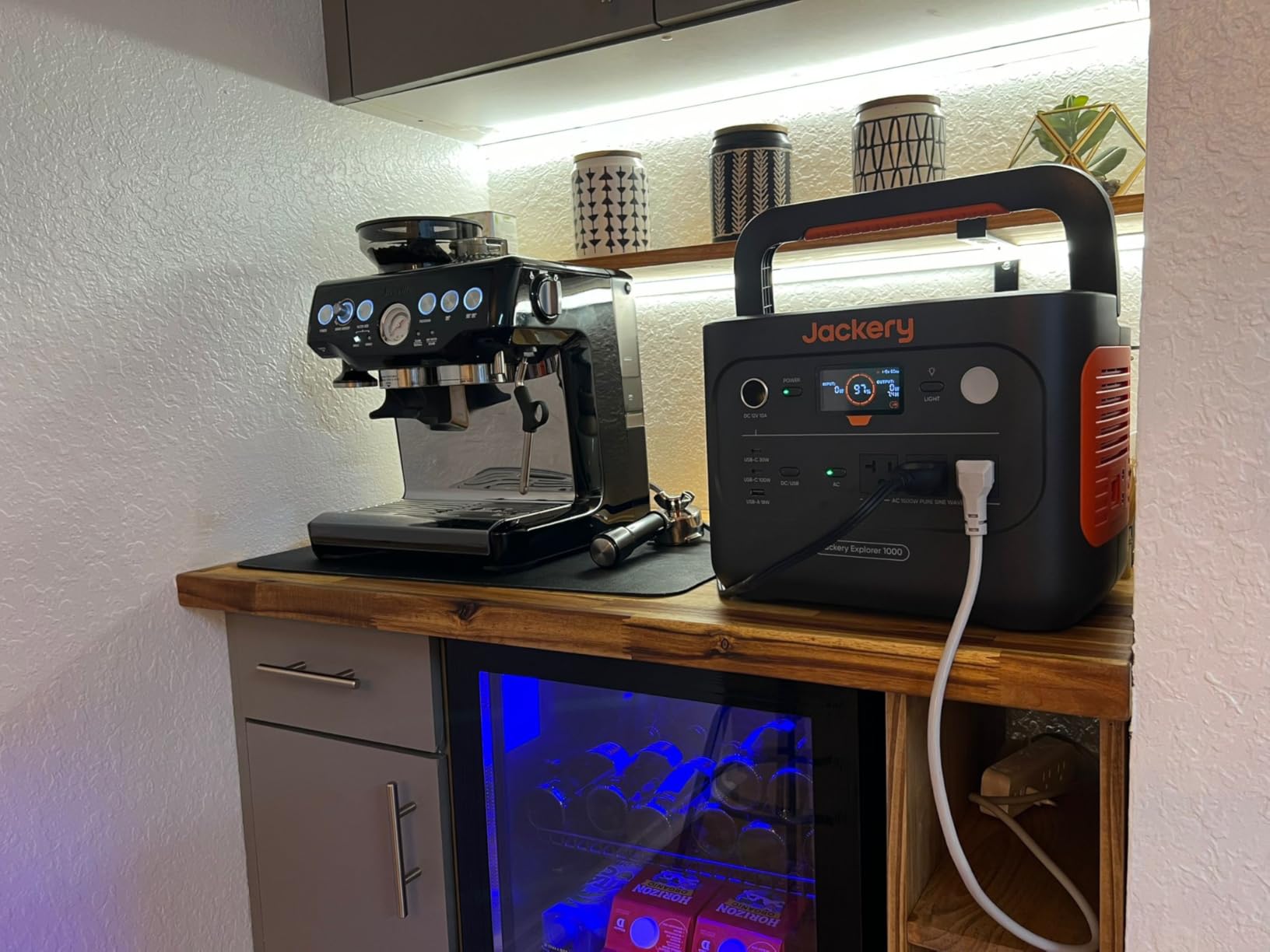
This is the one I recommend first for most households. The 1,070 watt-hour LFP battery sits at just 23.8 pounds, and I could genuinely carry it from the garage to the kitchen with one hand while a storm was still moving through. For a fridge, a router, a lamp and a couple of laptops, that is enough to get through a normal overnight outage and part of the next day.
Rated at 1,500 watts continuous with a 3,000 watt surge peak, it handles the startup spike of a refrigerator compressor without trouble. The battery is rated to retain over 70 percent capacity after 4,000 cycles, which is a decade of daily use in a family home. Owners report using it for fridges, lighting and small appliances during outages, and the most common praise is for the fast charge and the pure sine wave AC output.
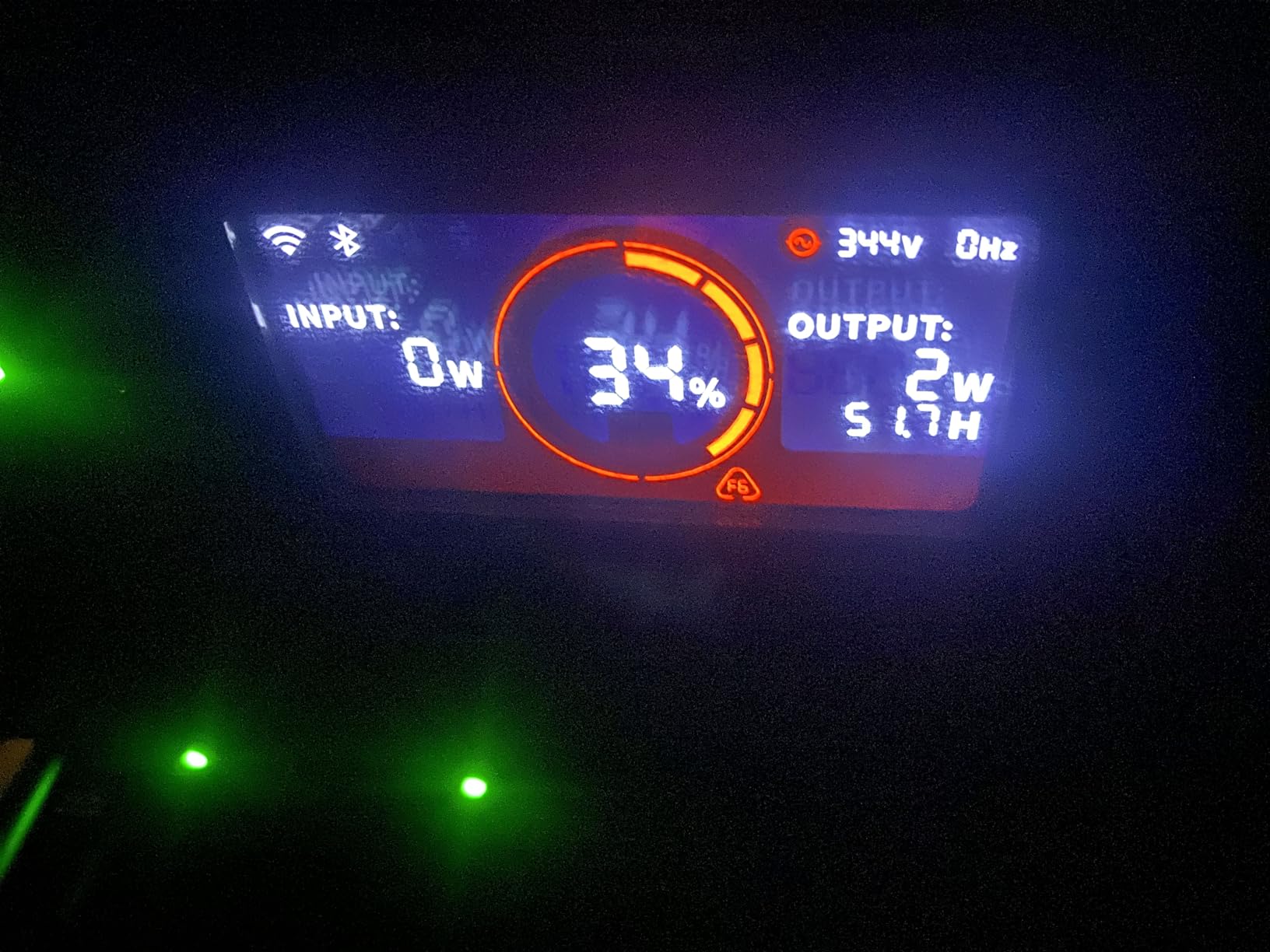
The charging story is what separates it from older units. Default recharge takes about 1.7 hours, but turning on emergency charging in the Jackery app takes it from zero to full in roughly one hour. That matters more than it sounds. A unit that refills during the first two hours of daylight is a unit you can run all night and all day, and a unit that takes eight hours to refill is not.
Seven outputs cover most needs, including 100 watt USB-C PD, two more USB-C ports, a USB-A port, a 12V car socket and three pure sine wave AC outlets. There is also a 30 decibel quiet charging mode in the app, which is quiet enough to sleep next to in a bedroom.
Who this standby battery backup suits
Households that want one box to move from room to room. Apartments and rentals where an outdoor generator is not an option. Anyone who needs roughly a day of fridge plus internet plus lighting and does not want to think about it.
Where it falls short
The solar input works only with Jackery-branded panels, which closes off a cheaper option if you already own third-party solar. And 1,070 watt-hours is simply not enough for a water heater, a space heater or a multi-day outage without a recharge.
2. Anker SOLIX C1000 Gen 2 – Fastest Recharge With a 10 ms UPS Handover
Anker SOLIX C1000 Gen 2 Portable Power Station
1024Wh LiFePO4
2000W continuous
3000W peak
49-minute recharge
5-year warranty
Pros
- Full recharge in 49 minutes at 1600W
- 2000W across 10 ports runs several devices at once
- 10 ms UPS switchover protects CPAP and router gear
- Compact enough to move room to room or load into a vehicle
- LiFePO4 holds 80% capacity after 4000 cycles
Cons
- Gen 2 removed battery expansion so capacity cannot scale
- Measured harmonic distortion of 15-20% when running a microwave
- No protective storage case included
If the single most important number for you is how fast the box refills, this is the one. The HyperFlash recharge system takes a full 1,024 watt-hour charge from empty in 49 minutes at 1,600 watts, provided you enable it through the Anker app. Owners describe topping up a full night’s consumption in around a quarter of an hour in the middle of an outage.
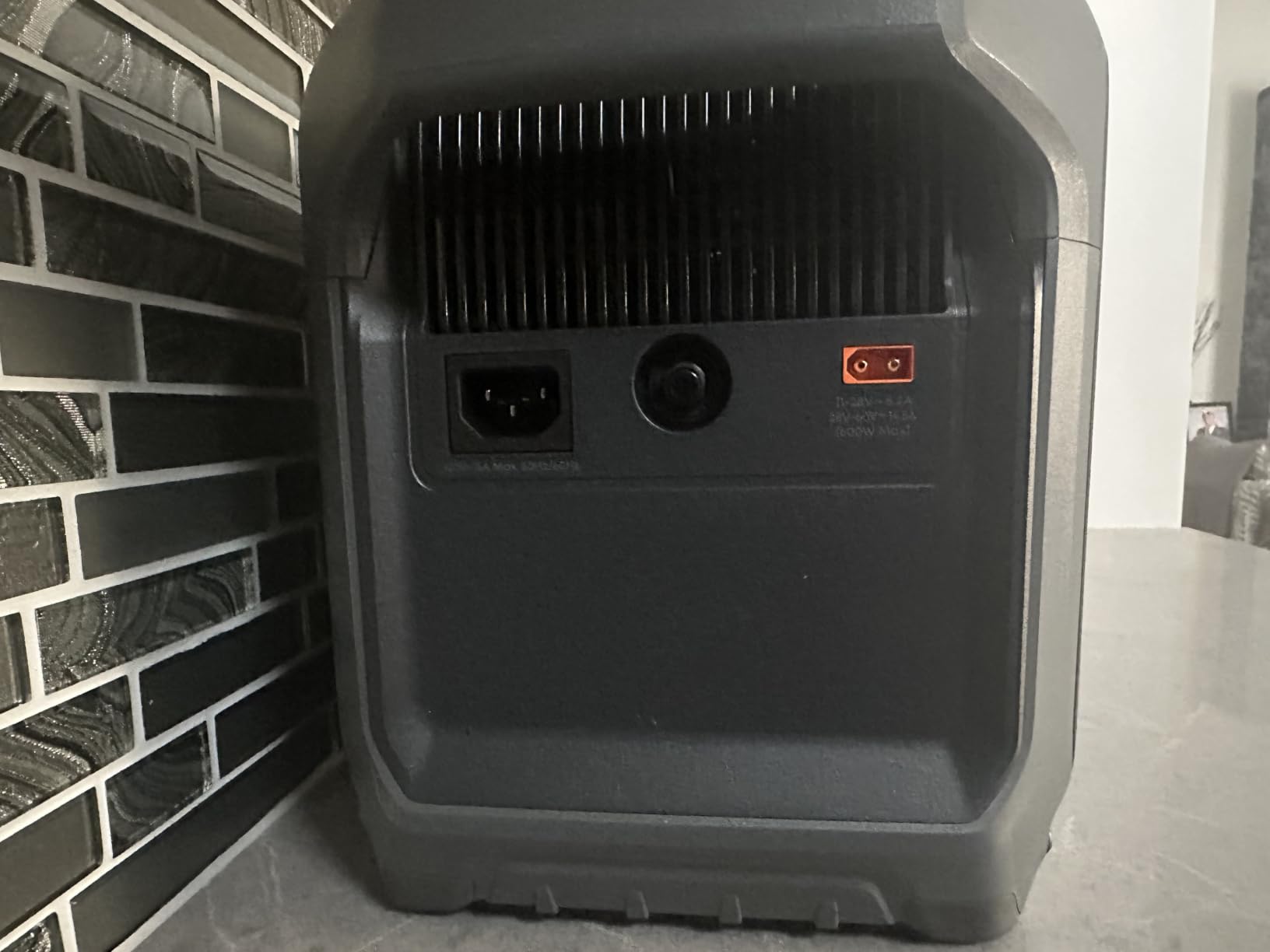
Output is 2,000 watts continuous with a 3,000 watt peak, which is unusual in a 1 kilowatt-hour chassis and gives you real headroom over the Jackery Explorer 1000 v2. Ten ports let you run a mini fridge, a fan, a laptop and a CPAP machine at once, which is exactly the combination most households end up needing.
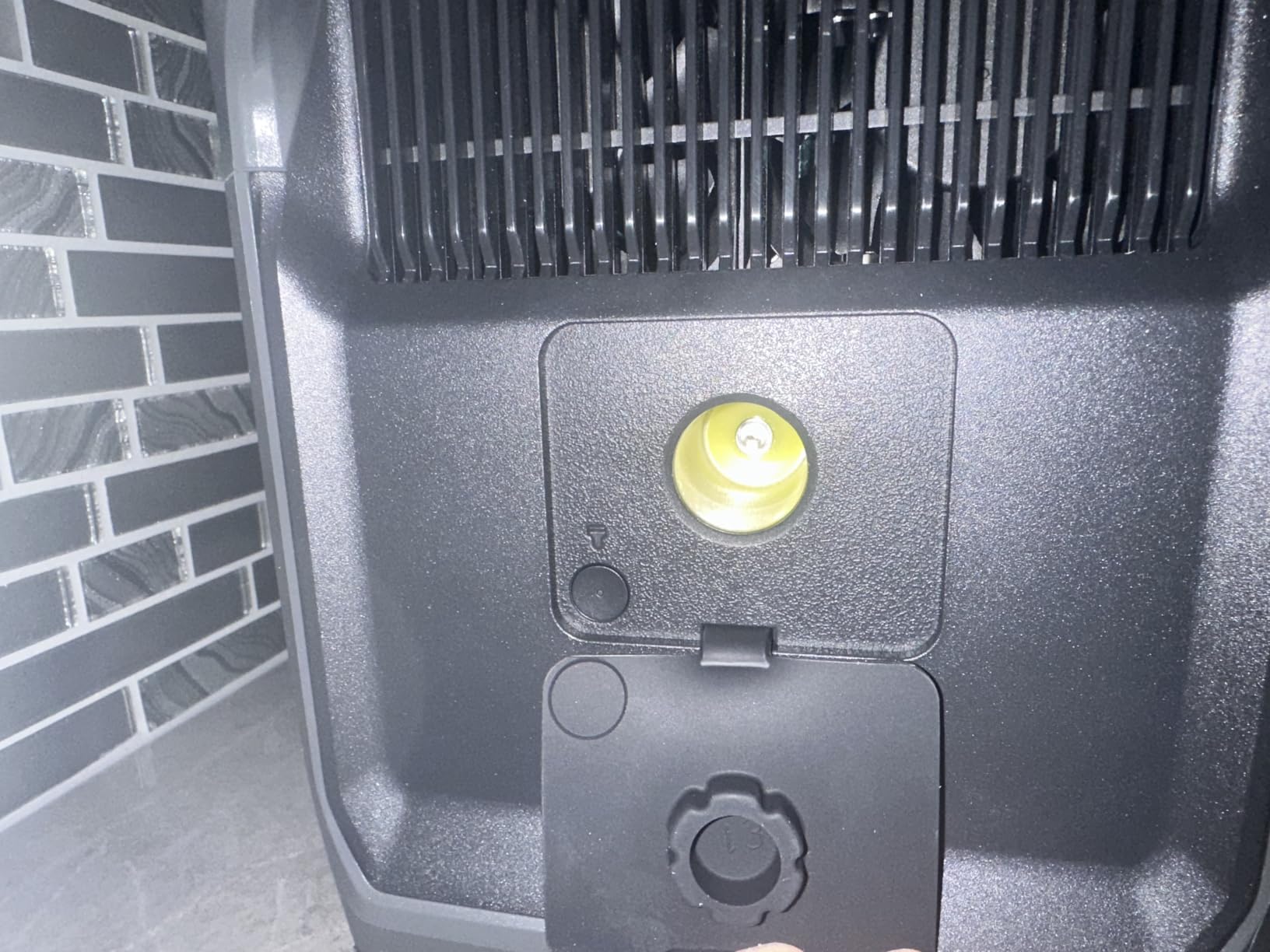
The 10 millisecond UPS handover is the detail that matters most for sensitive gear. Computers, network switches and CPAP machines generally need a transfer under about 20 milliseconds or they reboot. Owners describe running a CPAP and a router straight through a ten-day ice storm on this unit without a hiccup, and reported refrigerator runtime runs roughly six to twelve hours.
Solar input accepts up to 600 watts at 60 volts maximum, which refills the battery in about 1.8 hours of good sun. There is also a time-of-use power mode in the app, so if you are trying to shift usage to cheaper off-peak hours rather than survive a blackout, the same hardware does both jobs.
Who this standby battery backup suits
Anyone running medical equipment or network hardware that cannot tolerate a visible power break. People in areas where outages repeat every few days and quick recovery between events matters more than raw capacity.
Where it falls short
Removing expansion batteries was the right call for weight and it costs you scalability. Capacity is fixed at 1,024 watt-hours for the life of the unit. Reviewers also flag measurable harmonic distortion on microwave loads, so if induction cooking is part of your outage plan, look elsewhere.
3. EcoFlow Delta 3 Classic – Sub-10 Millisecond Switchover for Sump Pumps
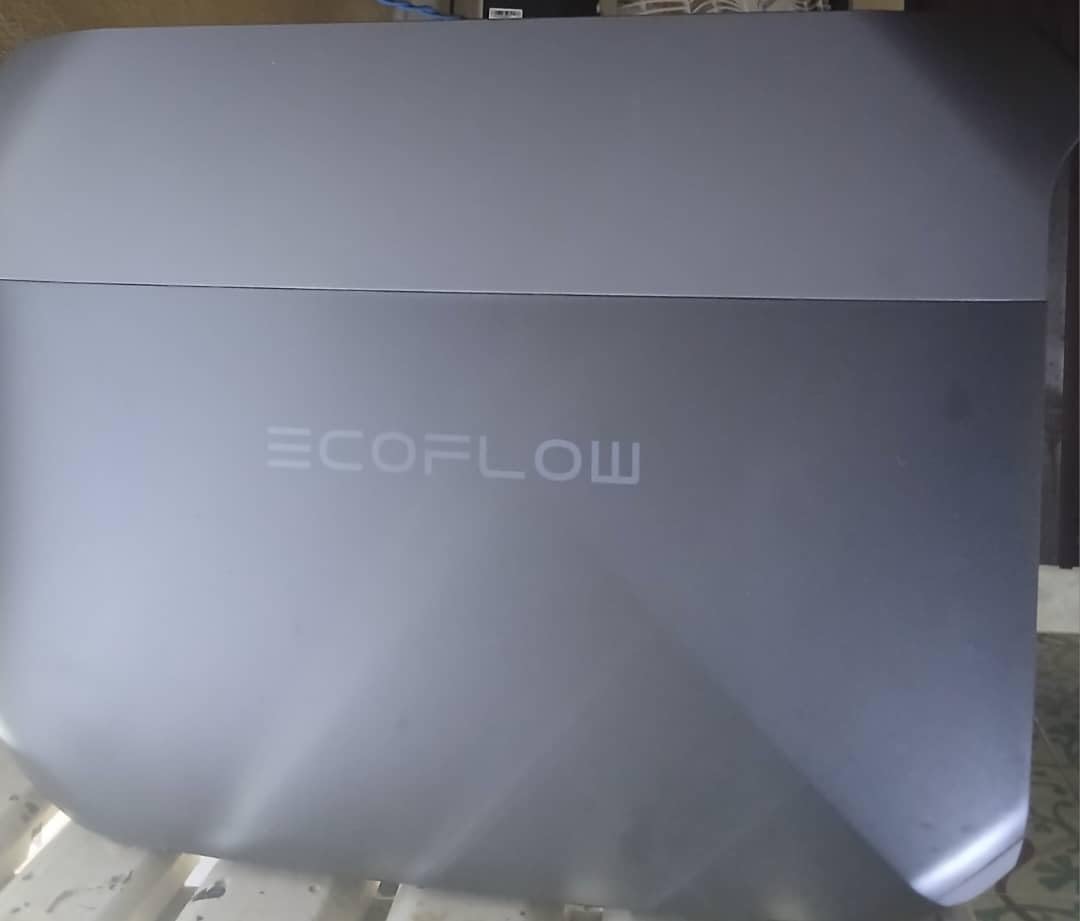
EF ECOFLOW Portable Power Station Delta 3 Classic, 1024Wh 1800W AC
1024Wh LiFePO4
1800W AC and 3600W surge
2600W with X-Boost
45-minute 0-80%
Pros
- 45-minute 0-80% AC recharge among the fastest in class
- Under 10 ms switchover makes it a practical UPS for a home circuit
- X-Boost lifts output to 2600W for heavier loads
- Clear display showing live wattage
- App with storm alerts and self-powered mode
Cons
- Not compatible with DELTA 2 or Smart Extra Batteries
- Heavier than competing 1 kWh units at 26.7 lbs
- Some units reported arriving non-functional from third-party sellers
This is the pick for anyone whose real fear is water. A sump pump or well pump is one of the hardest loads to back up because the motor draws a large startup spike the moment it kicks in, and many cheap inverters simply refuse. The Delta 3 Classic rates 1,800 watts continuous with 3,600 watts of surge, and X-Boost pushes the inverter to 2,600 watts when you need a little more headroom.
Owners report running sump pumps for two days on about half a charge. That is the sort of real-world result that tells you more than any specification line, because it is the exact scenario most people in flood-prone areas actually care about.
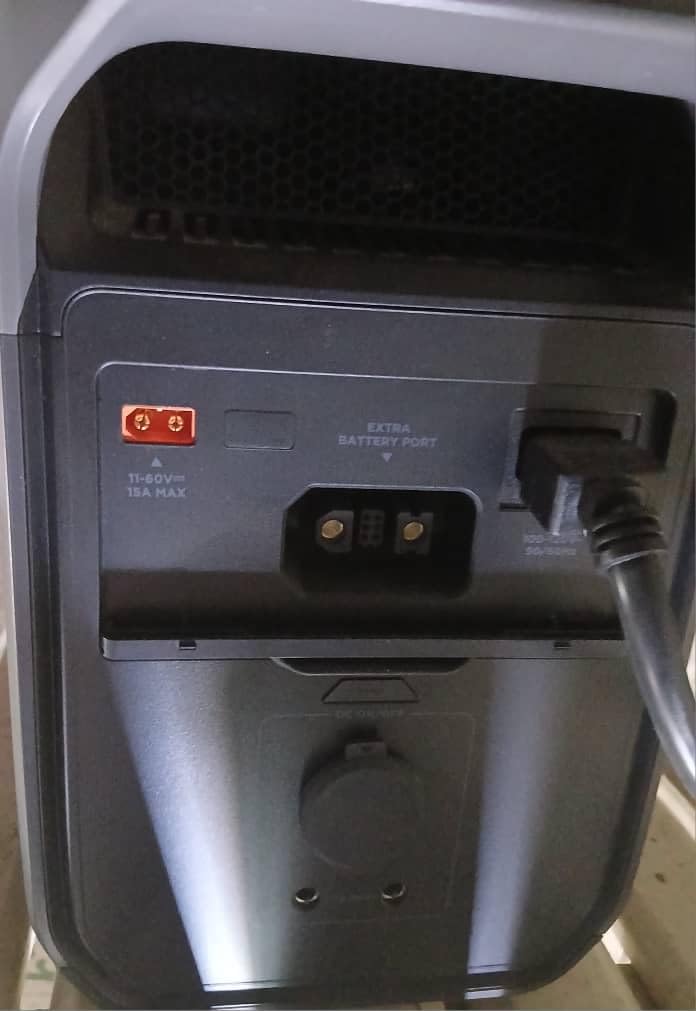
Recharge from a wall outlet reaches 80 percent in 45 minutes using X-Stream charging. Solar input is 500 watts, which refills the battery in about two and a half hours. The app adds storm alerts so you get a warning before the outage starts, a self-powered mode, and charge scheduling so the battery stays topped up between events instead of sitting at half charge.
One reviewer describes using the sub-10 millisecond handover to let a portable fridge ride through a van shutdown without manually swapping cables. It is a small detail that points at a bigger capability: with an automatic transfer switch, this unit can genuinely hold up a house circuit rather than just a couple of devices.
Who this standby battery backup suits
Homes with a sump pump, a well pump, or any motor-driven load that needs a strong surge rating. Anyone who wants a transfer fast enough to protect a desktop or network rack without thinking about it.
Where it falls short
The battery is not compatible with DELTA 2 or DELTA 3 Series Smart Extra Batteries, which effectively caps you at 1,024 watt-hours even though the brand sells expansion elsewhere in the range. It also weighs 26.7 pounds, which is more than you would expect from a 1 kWh unit.
4. BLUETTI AC180 – 11 Outlets and a True One-Hour Full Charge
BLUETTI Portable Power Station AC180, 1152Wh LiFePO4 Battery Backup w/ 2 1800W (2700W peak) AC Outlets, 0-80% in 45Min, Solar Generator for Camping, Off-grid, Power Outage
1152Wh LiFePO4
1800W continuous
2700W peak
1-hour AC charge
5-year warranty
Pros
- Genuine one-hour full charge on AC at 1440W
- Seamless UPS switchover keeps internet and TVs running
- 11 outlets covering AC USB and 12V
- Accepts AC solar car and alternator charging
- Five-year warranty and strong support
Cons
- Heavy at 37.4 lbs for a 1.15 kWh unit
- Inverter self-consumption and a 90% usable cap cut real runtime
- Top wireless charging pad frequently fails to charge phones
The AC180 packs the most outlets of any unit in the 1 kilowatt-hour class, and it is the one I recommend for people who want to stop negotiating over who gets to plug in. Eleven total outlets cover AC sockets, USB-C, USB-A, a 12V car port and a wireless charging pad, and none of that requires you to give up an AC socket for it.
It charges from empty to full in one hour at 1,440 watts of AC input, which puts it in the same class as the fastest units here despite being larger. Output is 1,800 watts continuous, boostable to 2,700 watts peak from the app when you need to start something demanding.
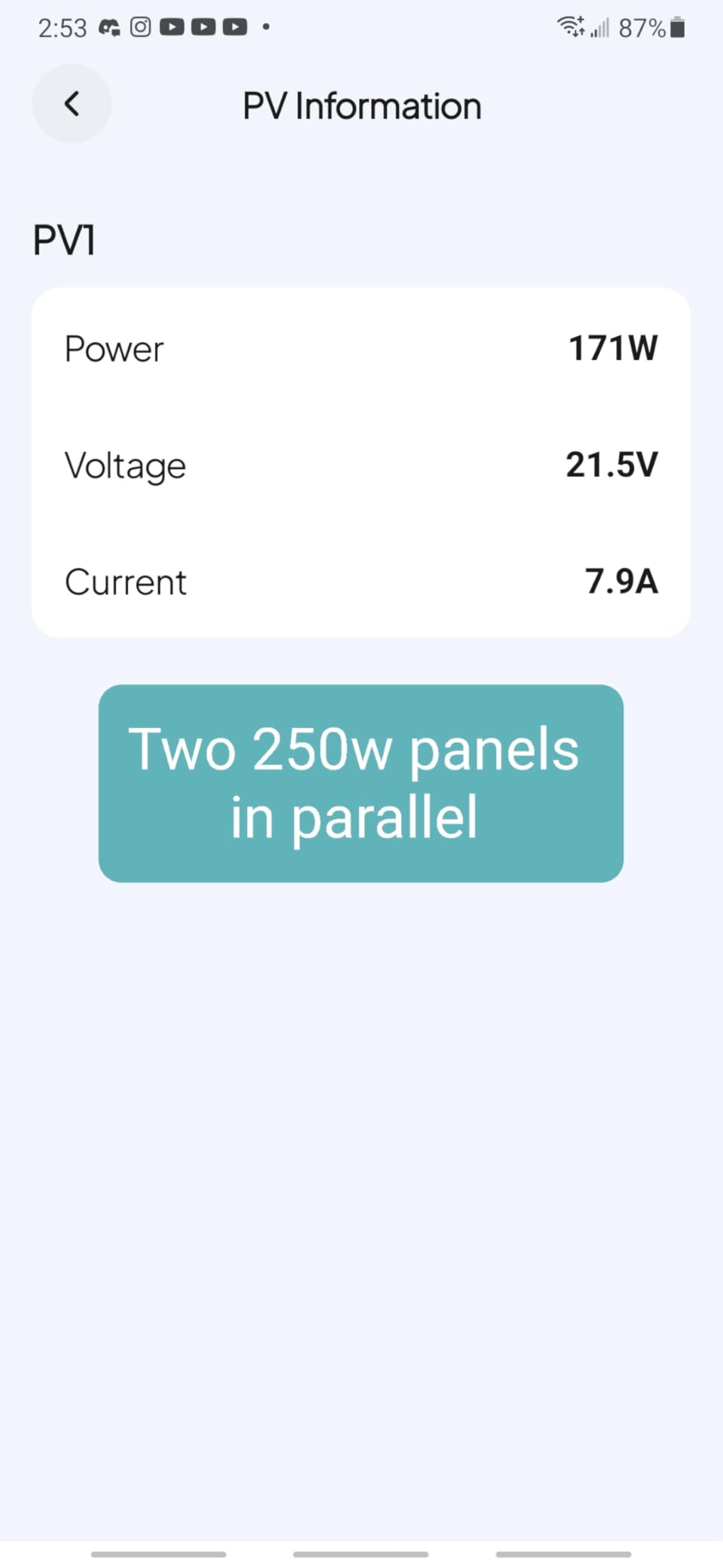
The honest part of this review is the overhead. One detailed buyer analysis notes the inverter itself draws roughly 20 watts per hour, and the manual states only 90 percent of rated capacity is usable to protect the cells. Combined, that means a 1,152 watt-hour unit delivers closer to 800 watt-hours on small loads rather than the headline figure. Plan your runtime with the lower number, not the upper one.
Set against that, owners widely praise the UPS switchover for running a basement circuit of lights, router, television and laptop outlets together. Another reviewer suspected a fault on a 55 watt fan load, then restored rated performance with a full discharge and recharge plus a firmware update, and singled out support as excellent. That is the kind of resolution you want to know about before buying.
Who this standby battery backup suits
Households running several low-draw devices simultaneously across multiple rooms. Anyone who wants one box to serve a home office, a network rack and some lighting at the same time without unplugging anything.
Where it falls short
At 37.4 pounds it is the heaviest unit in the 1 kilowatt-hour class and effectively stays where you put it. The self-consumption and 90 percent usable cap mean measured runtime runs below nameplate, and the wireless charging pad on top is the feature reviewers complain about most.
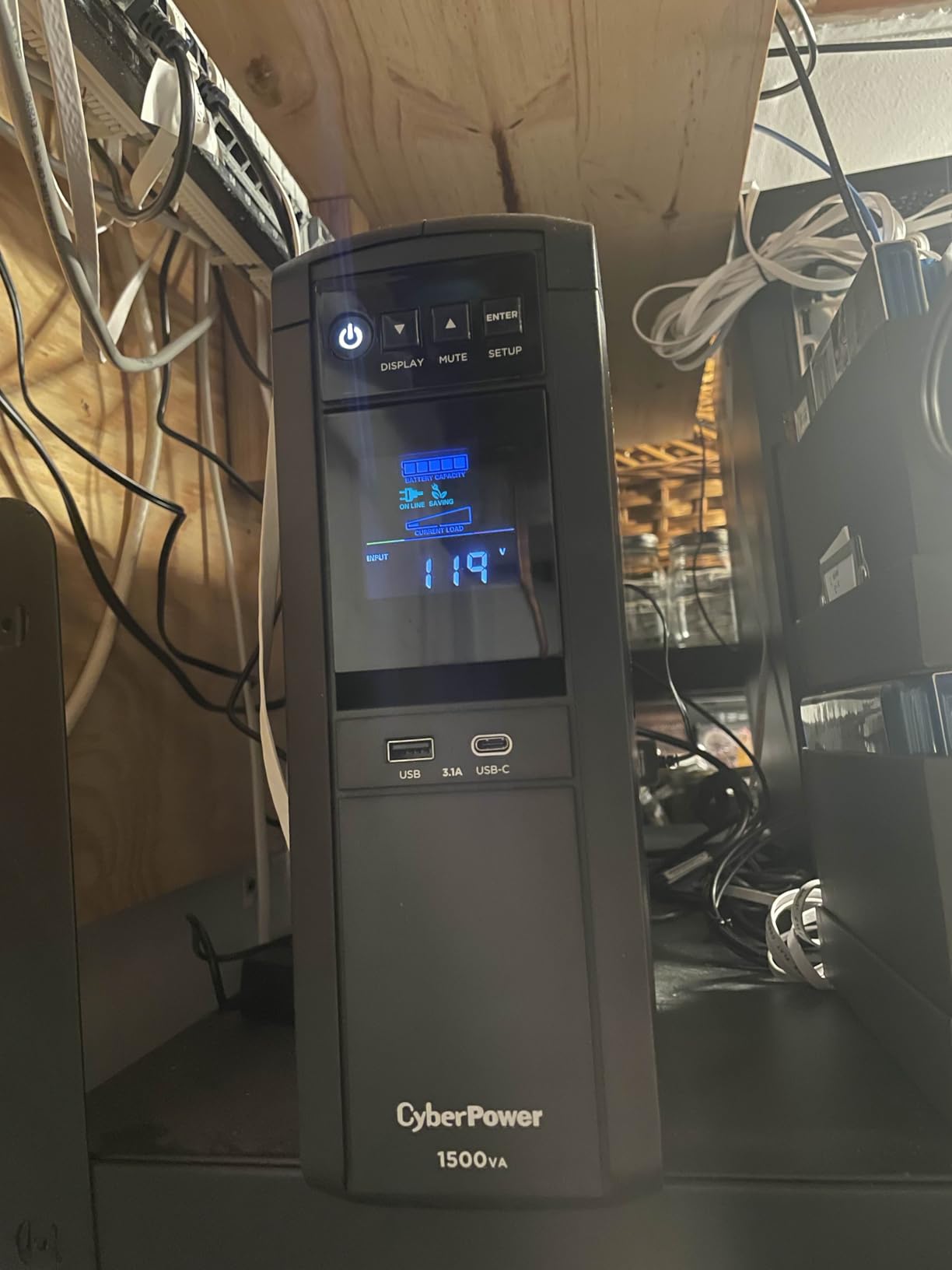
5. CyberPower CP1500PFCLCD – The Proven Desktop and Network UPS
CyberPower CP1500PFCLCD PFC Sinewave UPS Battery Backup and Surge Protector
1500VA and 1000W
PFC sine wave
12 NEMA outlets
24.9 lbs
3-year warranty
Pros
- Pure sine wave output supports modern active-PFC power supplies
- Works out of the box with no setup to test backup
- 12 total outlets with 6 on battery backup
- AVR smooths small voltage swings without dropping to battery
- Real-time load and wattage readout
Cons
- Runtime is only 20-40 minutes under moderate load
- Internal charging circuit is a known weak point
- Line-interactive design can trip on open-frame generator power
- No external terminals for adding a larger battery pack
This is the only product here designed for a different job, and it is included because that job is real. A desktop, a network-attached storage box, a router and an AV receiver do not need hours of runtime. They need clean, uninterrupted power for twenty minutes while your devices shut themselves down safely. This does exactly that, and it has been doing it for longer than anything else in this guide.
With over 11,000 reviews it is by far the most proven product in the group, and multiple long-term owners report five to seven years of service before the batteries or internal charging circuit need attention. The batteries are user-replaceable, which is rare in this category and a genuine advantage over sealed units.
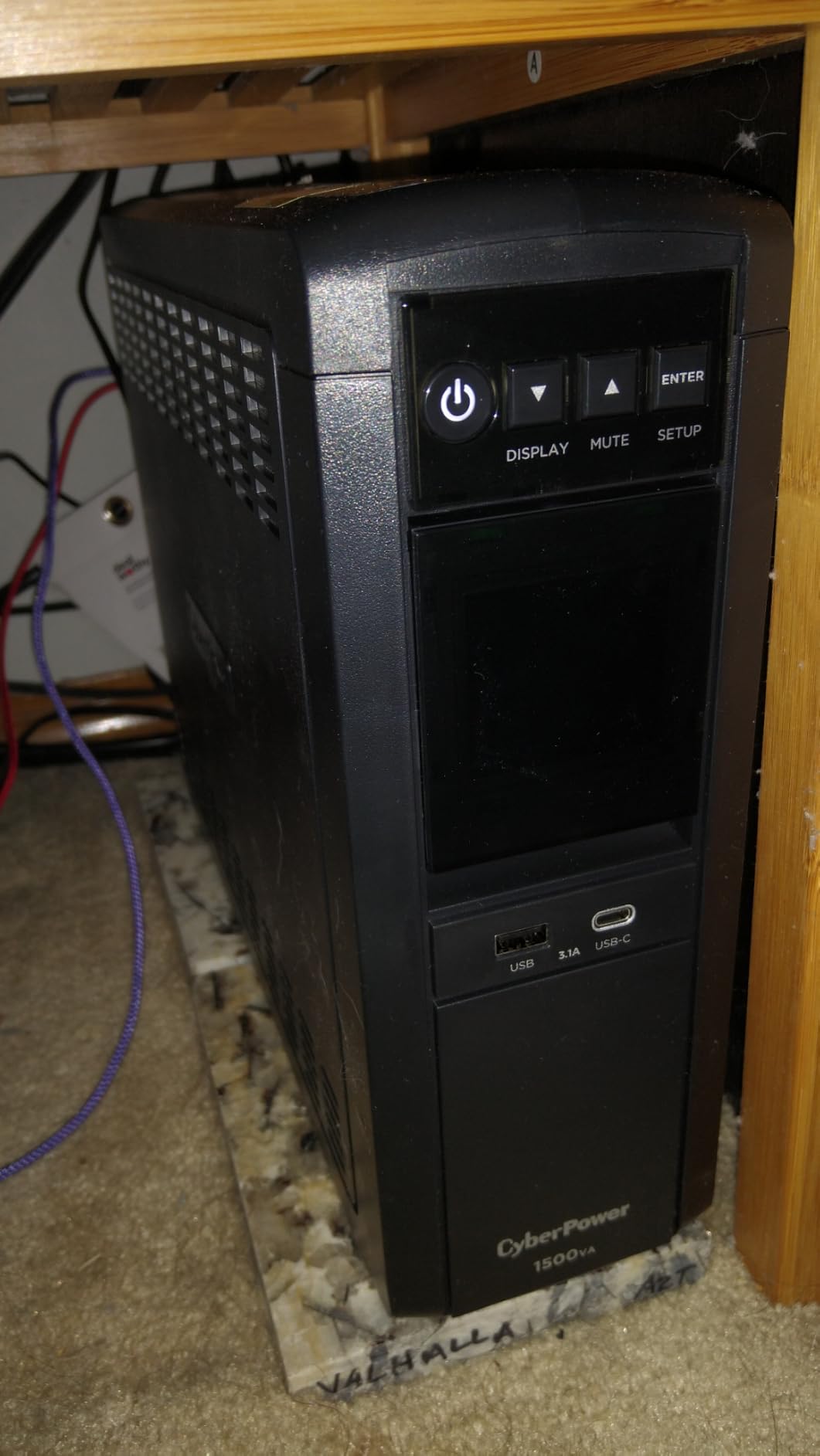
The PFC sine wave output is the technical reason to buy this over a cheaper stepped-wave unit. Modern desktop power supplies use active power factor correction, and cheaper UPS models produce the kind of irregular waveform that causes those supplies to shut down at random. One technical reviewer documented exactly that problem disappearing after switching to a sine wave model.
The multifunction colour LCD tilts up to 22 degrees and shows real-time load and wattage, which effectively turns it into a built-in power meter. Six outlets sit on battery backup and six more are surge-only, and USB communication lets macOS and Windows configure native safe shutdowns through the free PowerPanel software.
Who this standby battery backup suits
Home offices, game PCs, network-attached storage and any home lab where an orderly shutdown matters more than extended runtime. It is also the right choice for someone who wants proven reliability without researching battery chemistry.
Where it falls short
It will not run a refrigerator, a microwave or a pump, and attempting it wastes both the charge and your time. Line-interactive topology also trips on open-frame gas generator output, so pair it with an inverter generator if you plan to recharge from one.
6. Anker SOLIX S2000 – 2 kWh With 33-Hour Measured Fridge Runtime
Anker SOLIX S2000 Portable Power Station, 2,010Wh, 1,500W
2010Wh LiFePO4
1500W continuous
3000W peak
400W solar input
35.7 lbs
Pros
- Two independent fridge tests measured 33 and 35 hours of runtime
- Carried through 30-hour and 24-hour outages without failure
- Under 10 ms switchover replaces a desktop UPS
- 6W idle draw for roughly 20% longer runtime
- 10000-cycle LFP battery rated to 15 years
Cons
- Charging fan is loud and droning at the 1200W rate
- Strong chemical burn-off smell on the very first charge cycle
- Heavier than expected with no dedicated carrying handle
- No 12V DC port for legacy accessories
If your single priority is keeping food cold, this is the unit with the strongest evidence behind it. Three separate refrigerator tests measured roughly 33 to 35 hours of runtime, which matches the advertised claim rather than merely approaching it. Reviewers also report carrying it through a 30-hour outage with a top-up at the halfway mark and a 25-hour run protecting both fridge and freezer contents.
Two kilowatt-hours in a 35.7 pound chassis is a better density than most competitors manage, and the 6 watt idle draw is where that efficiency shows up. One technically detailed reviewer benchmarks it against a small lead-acid UPS and finds it drawing 3 watts in UPS mode while running a 200 watt load for about nine hours. Output is 1,500 watts continuous with a 3,000 watt peak.
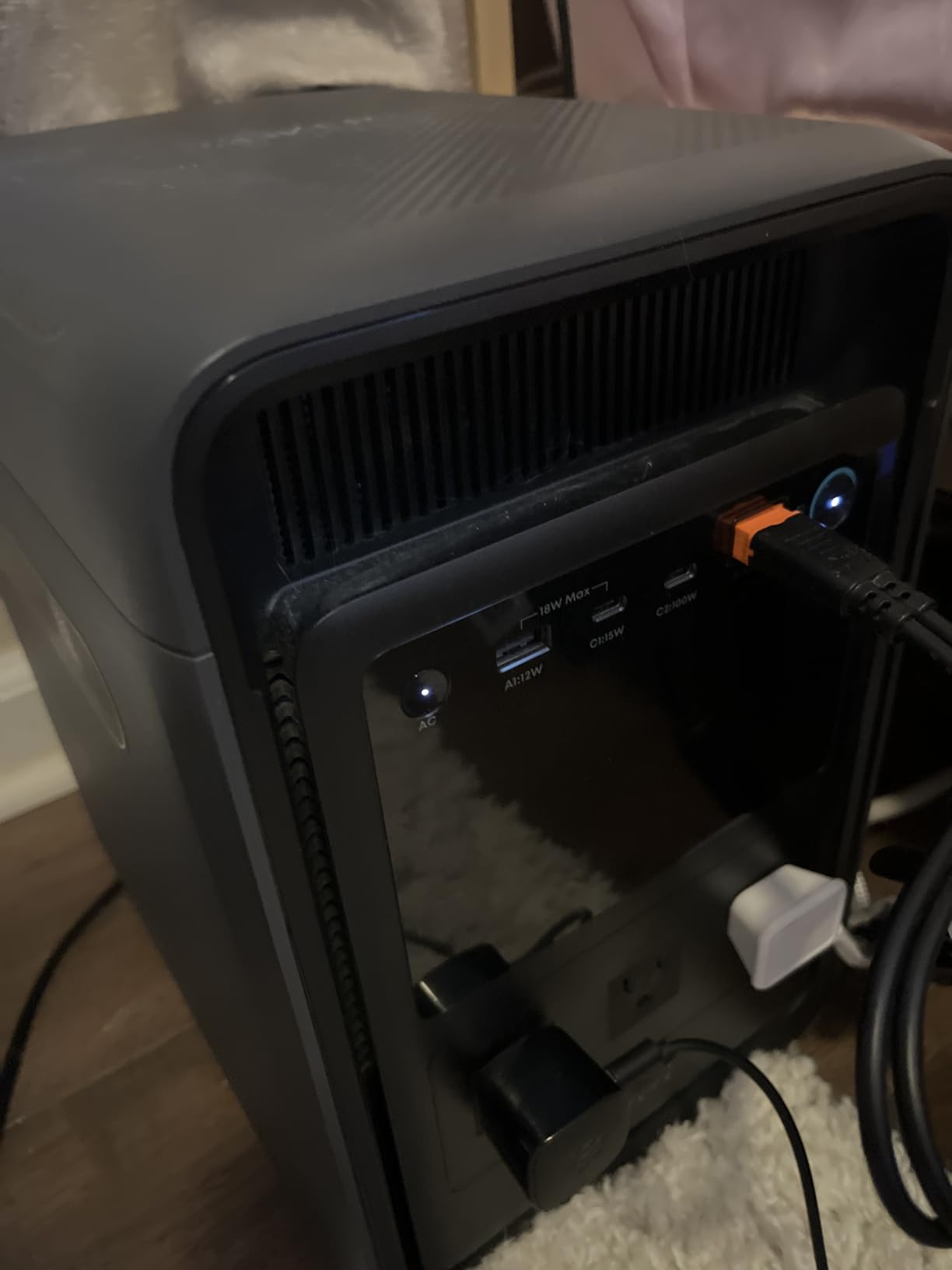
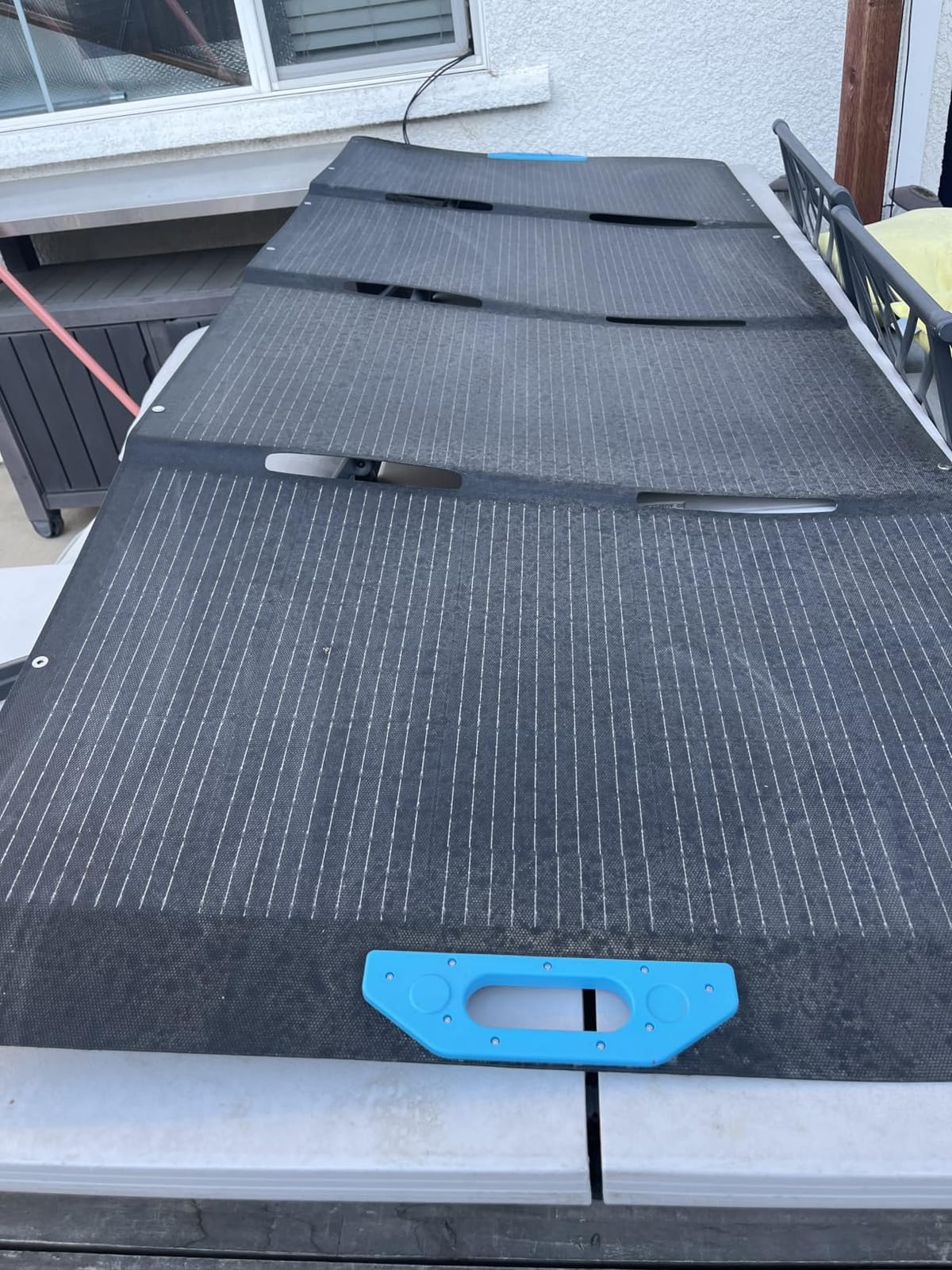
The battery is rated to 10,000 cycles with a 15-year lifespan, the longest claim in this group, and the app lets you set charge and discharge ceilings to preserve that rating over time. Solar input accepts up to 400 watts, and six charging paths are supported including a generator, an alternator and a car outlet.
Five AC outlets are split between the front and rear panels, so you can keep always-on appliances at the back and switchable loads at the front. It runs quietly or completely silent in normal use, which matters in a bedroom during a storm.
Who this standby battery backup suits
Families whose top priority is a refrigerator and freezer through a long outage. Households wanting a genuine desktop UPS replacement with enough capacity to also run networking gear for days afterwards.
Where it falls short
The charging fan is loud and droning at the 1,200 watt fast charge rate, and a number of owners report a strong chemical burn-off smell on the first charge cycle. There is also no dedicated carrying handle and no 12V DC port for legacy accessories.
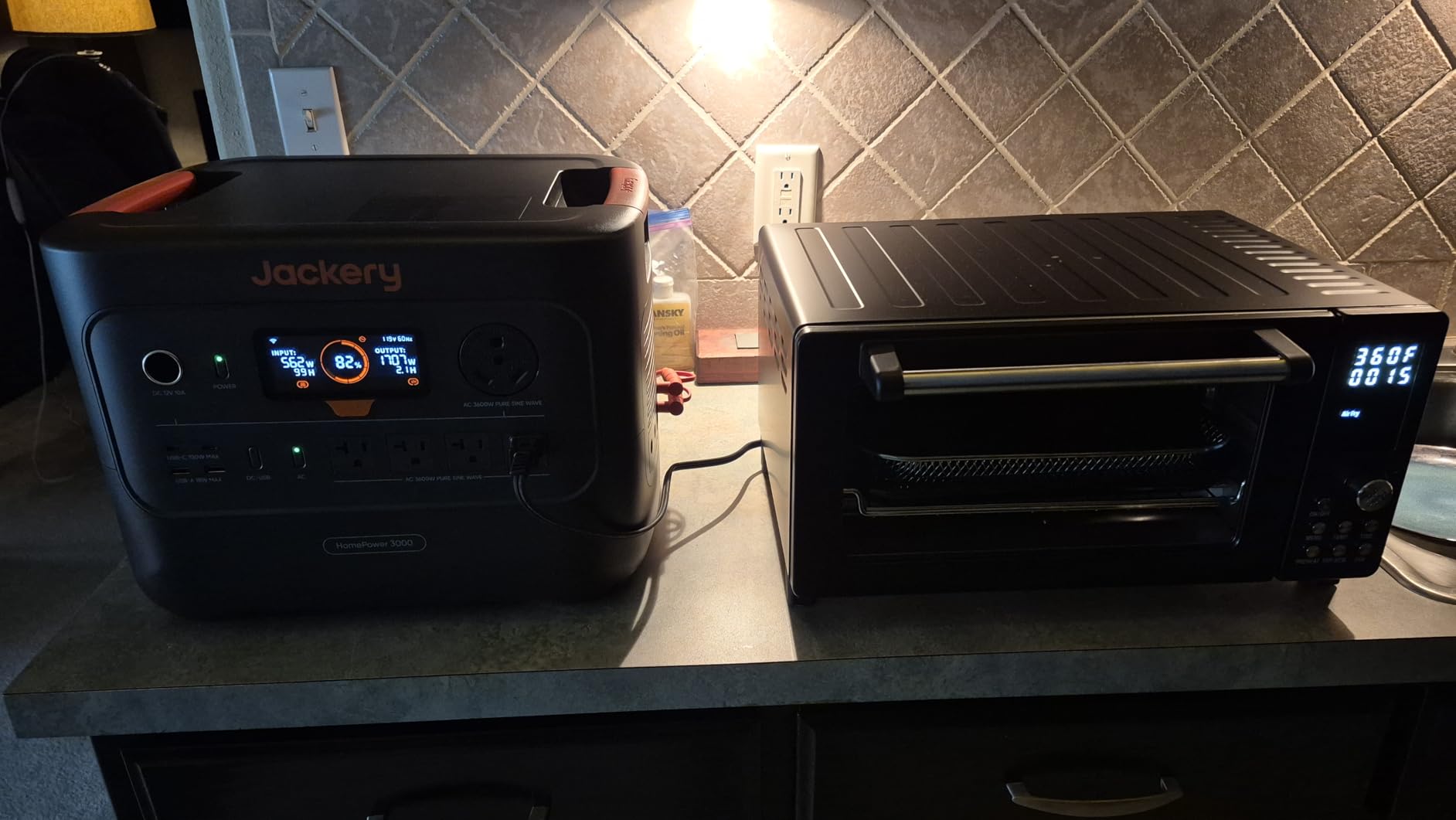
7. Jackery HomePower 3000 – A 3 kWh Step Up a Generator Can Refuel
Jackery HomePower 3000 Portable Power Station, 3072Wh, 3600W AC Output
3072Wh LiFePO4
3600W continuous
7200W surge
1.7-hour hybrid charge
20 ms UPS
Pros
- 3600W output and 3072Wh cover a household for a full day
- 1.7-hour hybrid recharge shortens the depleted window
- UL-certified UPS at 20 ms or less for medical loads
- Ten ports including dual 100W USB-C PD and an RV port
- Can be refuelled by a gas generator
Cons
- At 59.5 lbs it is hard to relocate without a hand truck
- 20 ms switchover is slower than sub-10 ms rivals
- Highest one-star share in this group at 10%
This is where you stop buying a gadget and start buying a system. At 3,072 watt-hours and 3,600 watts continuous, it is sized for a household rather than a device. Owners position it as the deliberate step between a portable power station and a fixed installation, and the deciding factors they cite are the advertised 15 hours of household runtime and one to two days of refrigerator support.
The charging options are what make multi-day events survivable. Hybrid AC and DC charging fills it in 1.7 hours, AC alone takes 2.2 hours, and it also accepts a 12V car charger or a gas generator. That last one is the hybrid strategy in miniature: run the generator during the day to refill the battery, then shut it off and run silent overnight.

It carries a UL-certified UPS with switchover of 20 milliseconds or less, which is the level that medical refrigerators, security cameras and pet feeders are specified for. Ten ports include two 100 watt USB-C PD ports, USB-A, DC and a TT-30 RV socket for motorhome use.
ChargeShield 2.0 manages the battery with AI-based algorithms, and the LFP cells are rated to 4,000 cycles at 70 percent capacity. CTB construction makes a 3 kilowatt-hour unit 47 percent smaller and 43 percent lighter than competing designs, which is meaningful at this size.
Who this standby battery backup suits
Homes with two to three outages a year lasting a full day or more, especially where solar is not an option. Anyone who wants to run a generator only when needed and keep the battery as the overnight reserve.
Where it falls short
Fifty-nine and a half pounds means it lives in one place, and moving it needs a hand truck. The 20 millisecond switchover is measurably slower than the sub-10 millisecond units here, and the 10 percent one-star share is the highest in this roundup, which points at fulfilment and early reliability rather than design.
8. Jackery HomePower 3600 Plus – 3,584Wh With Both 120V and 240V
Jackery HomePower 3600 Plus Power Station, 3584Wh, 3600W AC Output
3584Wh expandable to 21kWh
3600W output
7.2kW parallel
dual 120V and 240V
77.2 lbs
Pros
- Runs heavy loads including water heaters and dryers
- Quiet enough to sleep beside unlike a gas generator
- Recharges from a gas generator as fast as from a wall outlet
- Built-in wheels and telescoping handle
- 6000-cycle ceramic membrane cells rated for 10 years
Cons
- Very heavy at 77.2 lbs so it stays where it is parked
- Higher one-star share than smaller Jackery models
- Only two listed outlets on the base configuration
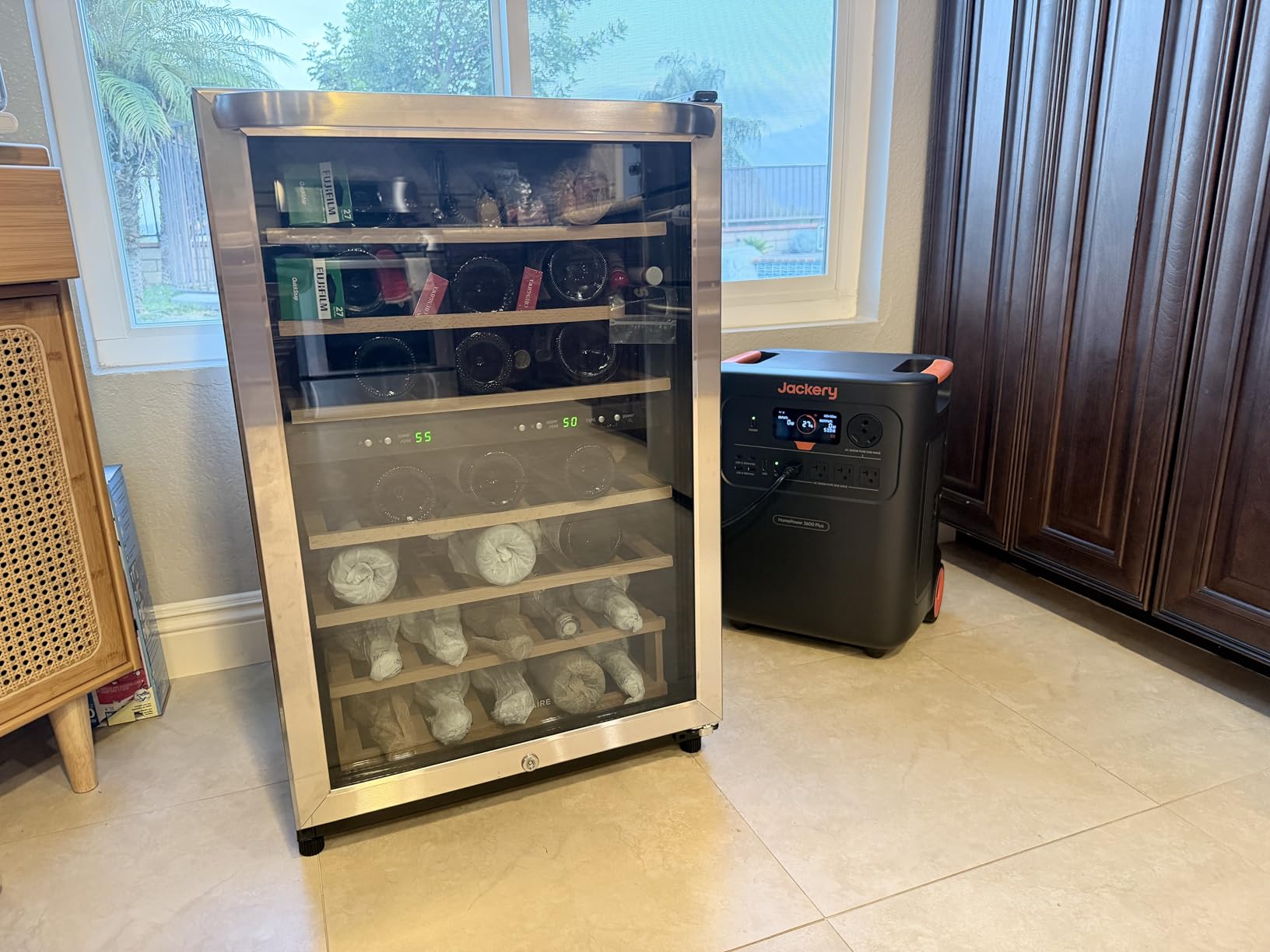
This is the first unit in the list that can run a water heater or a clothes dryer, which is the dividing line between keeping the house comfortable and keeping the house running. One owner ran a water heater and air conditioning together plus a 2,400 watt microwave without trouble. Dual 120V and 240V output in parallel is the spec that makes that possible, and almost nothing else at this capacity offers it.
Capacity starts at 3,584 watt-hours and expands to 21 kilowatt-hours on a single unit, or 43 kilowatt-hours with multiple units paired. Output is 3,600 watts, or 7,200 watts in parallel, which gives you headroom for a sump pump, a space heater and a refrigerator all at once.
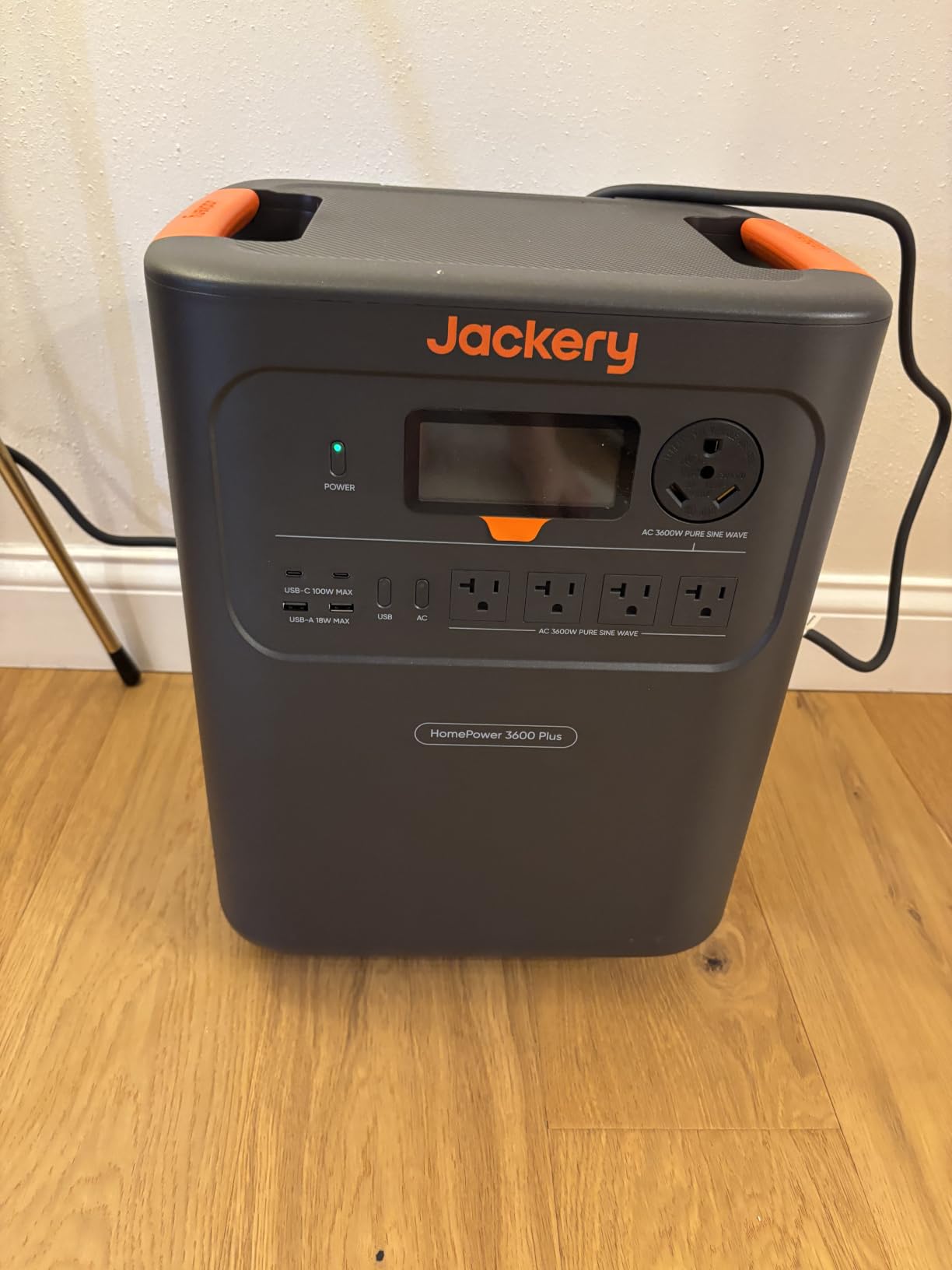
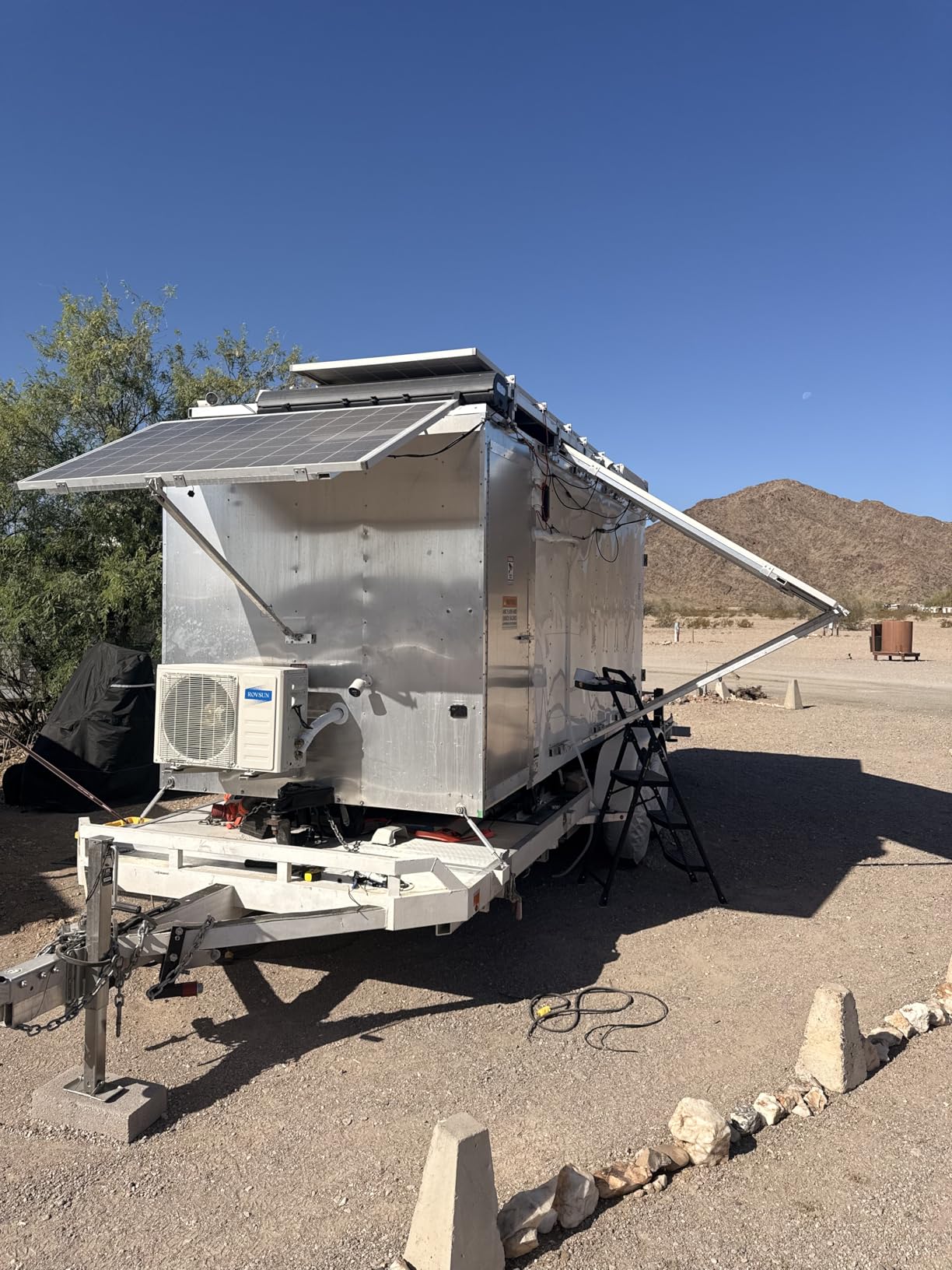
Four charging paths cover nearly every realistic scenario: hybrid AC and DC in two hours, AC alone in two and a half, solar in four, and a gas generator in two and a half. Plug-and-play pairing with the Jackery manual transfer switch means you can wire it into a circuit properly rather than swapping extension cords in the dark.
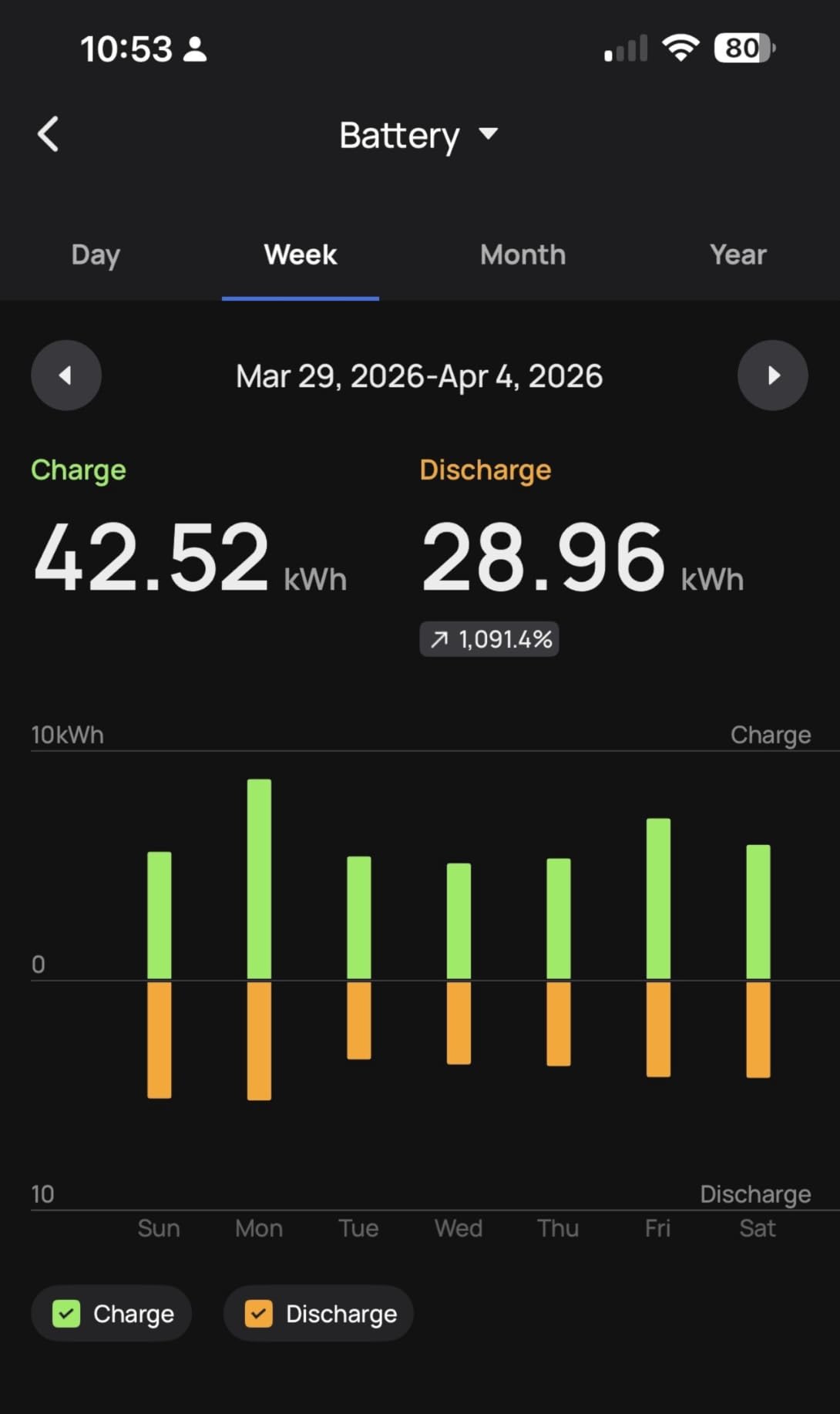
Long-time Jackery owners describe running these through monsoons, hurricanes and ice storms to power refrigerators, freezers, internet, televisions, oxygen concentrators and power wheelchairs. One hurricane-prepared reviewer measured roughly 19 percent capacity for an induction cooktop dinner, which is a useful reality check on how quickly a hot meal disappears from the tank.
Who this standby battery backup suits
Households that need 240V loads, including water heaters, dryers and larger heating elements. Anyone in hurricane or monsoon regions where outages run long and the fridge and freezer are non-negotiable.
Where it falls short
Seventy-seven pounds is the practical ceiling for one person, even with the built-in wheels and telescoping handle, so plan the placement before delivery. Measured fridge and freezer runtime is around 12 hours on the base capacity, and only two outlets are listed on the base configuration.
9. EcoFlow DELTA Pro Ultra 12kWh – Whole-Home Output on a Single Inverter
EF ECOFLOW 12kWh Power Station: DELTA Pro Ultra with Extra Battery
6144Wh per battery
7200W split-phase
up to 90kWh
0 ms online UPS
293.6 lbs
Pros
- Genuine whole-home capability with 120V and 240V split phase
- 0 ms online UPS transfer protects sensitive electronics
- Scales to 90kWh for 30-plus days of essentials
- Two-hour battery recharge from EV solar or generator
- Silent for the first 30 minutes at 2000W output
Cons
- Very heavy at 293.6 lbs requiring professional handling
- Inverter and battery arrive in separate packages
- Lowest rating in this group with a 12% one-star share
- Only six outlets listed in the base configuration
This is the only unit in the roundup that puts whole-home output behind a single inverter. A single inverter delivers 7,200 watts across 120V and 240V split phase, which is enough for a 3-ton central air conditioner, and three inverters scale that to 21.6 kilowatts while still holding 7,200 watts of output during charging. The battery ships at 6,144 watt-hours and scales to 15 batteries for 90 kilowatt-hours, which is more than 30 days of essential power.
The online UPS transfers in zero milliseconds, the strongest protection for electronics in this entire guide. The 6,144 watt-hour battery also fully recharges in two hours from EV charging piles, solar, wall outlets or an outdoor generator, and the fans stay off for the first 30 minutes at 2,000 watts of output so it is genuinely silent when you need it to be.
App-based circuit prioritisation lets you decide which loads get power first when the system is under pressure, which extends the backup window to the things that actually matter. Peak-rate offsetting can also shave your normal electricity usage rather than only helping during an outage.
Buyers running this system credit it with real whole-house capability including central air. The thread that keeps coming up on data storage and home lab forums is whether one unit like this can carry a home through a weekend grid-down event, and the answer from owners is that it can, if you manage your loads.
Who this standby battery backup suits
Households that want genuine whole-home coverage including central air, or anyone already prepared to treat a battery as semi-permanent furniture. People with EV charging who can refill the battery in two hours overnight.
Where it falls short
At 293.6 pounds, placement is a permanent decision and moving it is not realistic. It is also the lowest-rated product here at 4.2 with a 12 percent one-star share, and those complaints are structural: the inverter and battery ship separately, so a logistics problem hits much harder than it would with a single box.
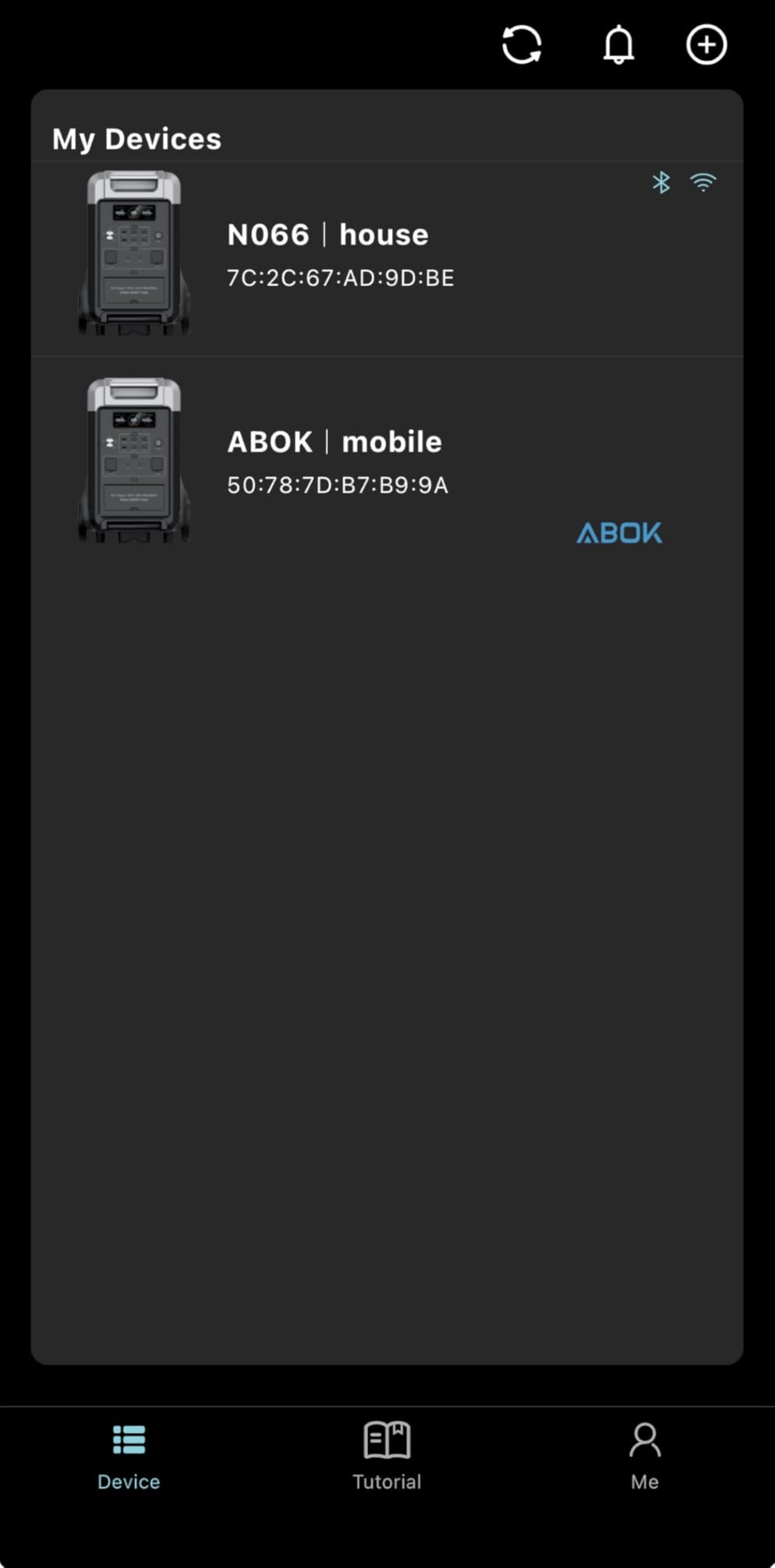
10. ABOK Ark3600 – 3,840Wh and 15 Ports for Jobsites and Heavy Tools
ABOK Ark3600 Portable Power Station 3600W, 3840Wh LiFePO4 Battery
3840Wh expandable to 11520Wh
3600W rated
7200W starting watts
15 ports
10 ms UPS
Pros
- Most ports in this group at 15 including two 20A AC circuits
- Ran a wet vac heat gun and SDS-Max drill simultaneously
- Silent with no fuel oil or pull-start needed
- Safely usable indoors with no exhaust fumes
- ABOK repaired two units under warranty after a solar input fault
Cons
- Heaviest unit here at 92 lbs
- 120V output only with no 240V split phase
- Solar input is easy to overload on voltage
- About one hour of runtime at the full 3600W output
This is the value pick at the 3 kilowatt-hour tier, and the most substantive review in the entire roundup comes from a professional contractor. He used the Ark3600 on a jobsite running a wet and dry vac, a heat gun and an SDS-Max hammer drill at the same time, ended the day at 22 percent remaining, and concluded it outperformed his 3,200 watt gas inverter generator at less than half the cost.
Output is 3,600 watts rated with a 4,500 watt peak and 7,200 watts of starting power, which is why the drill starts without complaint. Capacity of 3,840 watt-hours expands to 11,520 with add-on batteries. Fifteen output ports is the most in this group, including a 30 amp AC circuit, four 20 amp AC circuits, USB-C PD at 100 watts and an XT60 socket.
Charging is genuinely flexible at 1,500 watts AC, 2,000 watts PV and 120 watts car, which produces a 1.29-hour full charge on AC and solar combined, or three hours on AC alone. A Florida homeowner reports running a 58-quart portable fridge for roughly three days on the 12V port. A 10 millisecond UPS mode keeps networking gear alive during a cut.
Support is worth noting for a lesser-known brand. A buyer who owned two of these and exceeded the solar input voltage limit fried the DC solar input on both, and ABOK repaired and returned both under warranty. That is a meaningful signal in a category where smaller brands often disappear after a fault.
Who this standby battery backup suits
Contractors and anyone running power tools off-grid. Households that need lots of small 120V outlets for many devices at once, and anyone who cannot run a combustion engine indoors.
Where it falls short
Ninety-two pounds is the heaviest unit in the roundup and one buyer described having to tip and slide it out of the box. It is 120V only, so no dryer, no water heater and no central air, and the solar input voltage limit is easy to exceed if you are not careful with panel wiring.
How to Size a Standby Battery Backup for Home Use
Start with the formula, not the marketing. Estimated runtime equals usable capacity divided by average appliance wattage. A 2,010 watt-hour unit like the Anker SOLIX S2000 with about 90 percent usable capacity gives roughly 1,800 watt-hours. Divide that by a running refrigerator draw of about 150 watts and you land near 12 hours, which lines up closely with the 33 to 35 hour measurements owners report once you account for the fact that a fridge cycles rather than runs continuously.
Useful reference numbers: a Wi-Fi router draws about 15 watts, a laptop about 60, a CPAP machine about 40, and a refrigerator roughly 150 watts while running. Multiply your total load by the hours you need, divide by 0.9 for conversion losses, and you have your target capacity. If you also want the unit to start a motor load, check surge next, because a battery with no surge headroom is useless no matter how large the number on the box looks.
Chemistry is the second decision. Every product in this guide uses LiFePO4 cells, which tolerate more charge cycles, hold capacity better over a decade and are more stable thermally than older NMC lithium-ion packs. Cycle-life claims are not always comparable, since manufacturers test to different remaining-capacity thresholds and different depths of discharge. Compare at the same threshold or ignore the number entirely.
Expandability matters more than raw capacity for multi-day events. Models with no expansion path cap your outage length at whatever fits in the chassis, which is fine for a twelve-hour storm and useless for a three-day ice event. Also check compatibility before you buy: the EcoFlow Delta 3 Classic cannot use Smart Extra Batteries, and the Jackery Explorer 1000 v2 only accepts Jackery-branded solar panels. Proprietary locks are a common source of regret, because the expansion path you assume you have may not exist for the model you bought.
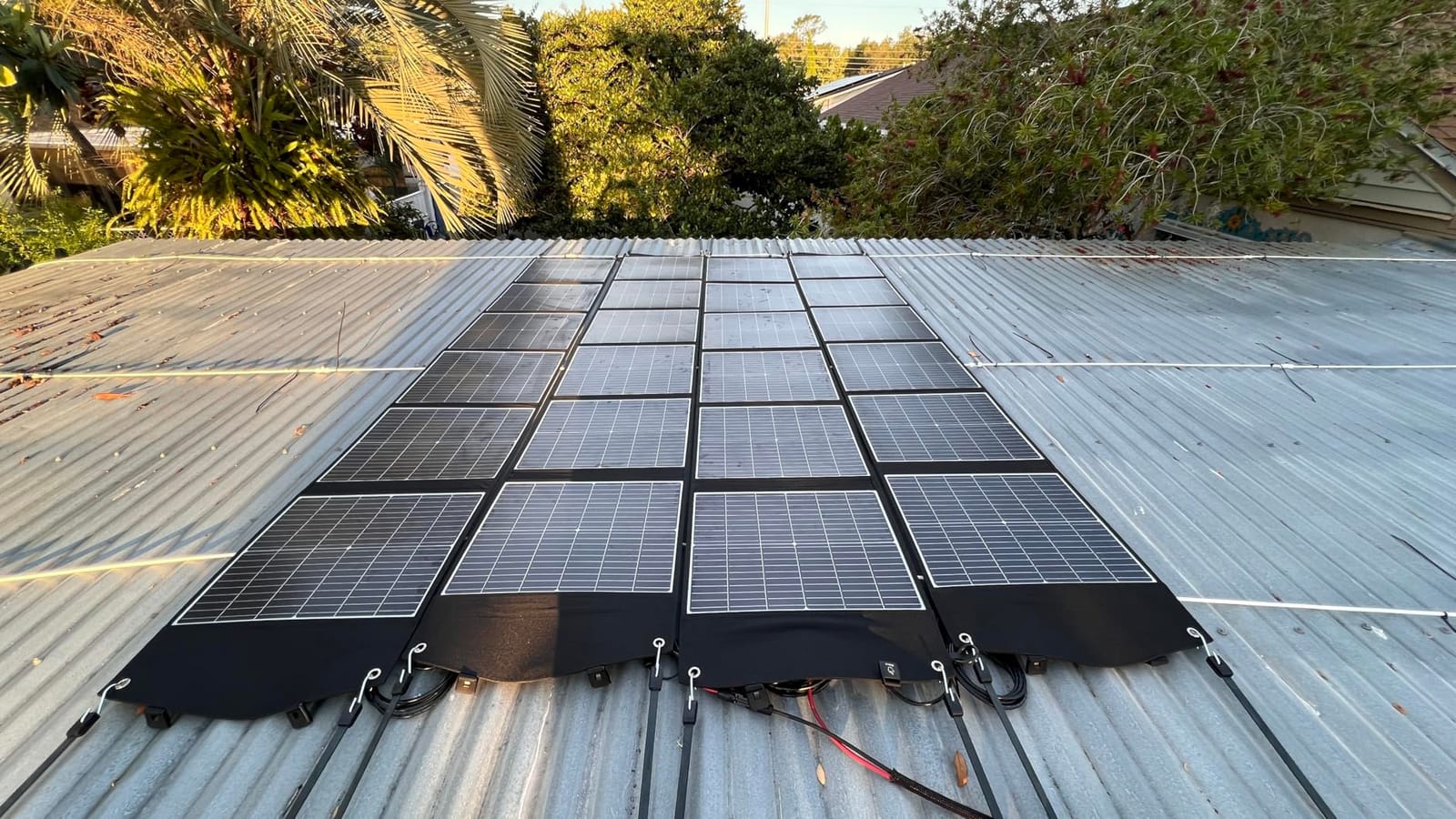
Recharging during a long outage is where most plans quietly fail. Solar alone will not keep up in winter, when a 400 watt panel produces a fraction of its rated output. The practical answer is a hybrid strategy: run a generator during daylight to refill the battery, then switch it off at night and run silent. Both Jackery HomePower models accept generator charging in 2.5 hours and 1.7 hours respectively, and the EcoFlow DELTA Pro Ultra takes a 6,144 watt-hour battery from empty in two hours from a generator or EV charger.
Finally, installation. A portable station needs nothing but an outlet. Anything wired into your panel needs a licensed electrician, a permit, and possibly a panel upgrade, and you should confirm your utility will interconnect it before you sign anything. Federal residential clean energy incentives and state utility rebates can materially change the net cost of an installed system, so check eligibility early rather than after the hardware is ordered. And never run a combustion generator indoors or in a garage; carbon monoxide is the reason generator placement rules exist, and a battery backup has no exhaust at all, which is a large part of its appeal for indoor use in a rental.
Battery Backup vs Gas Generator: Which One Fits Your Outage
A gas generator wins on runtime and refuelling. It runs for days as long as you keep fuel coming, and it can power a water heater or a dryer without hesitation. Its disadvantages are the ones that decide most purchases: it is loud, it produces exhaust, it needs oil changes and a pull start, and running one inside is dangerous.
A battery backup wins on silence, safety and simplicity. It starts automatically, requires no maintenance, has no fuel logistics during an emergency, and can sit in a hallway or a bedroom. It loses on capacity. Once the charge is gone it is gone, unless you have solar or a generator to refill it. That is exactly the failure mode people discover on the second night of a long outage.
The most reliable setups combine both. Run the generator during the day to charge the battery, then shut it off at bedtime and let the battery carry the house quietly overnight until morning. Homeowners in high-outage areas describe outages happening two or three times a week, and for them the right question is not battery versus generator but how quickly the battery can refill between events.
Frequently Asked Questions
What is the best home battery backup for power outages?
For most households the best standby battery backup for home use is the Jackery Explorer 1000 v2, because it pairs a 1,070Wh LiFePO4 battery with 1,500W of continuous output at only 23.8 lbs. If you need the fastest refill, the Anker SOLIX C1000 Gen 2 recharges in 49 minutes. For 240V loads and multi-day events, step up to the Jackery HomePower 3600 Plus or the EcoFlow DELTA Pro Ultra.
Can a battery backup run a refrigerator?
Yes, and a refrigerator is the easiest major load to back up. A running fridge draws roughly 150 watts, and because it cycles rather than runs continuously, a 1,000Wh unit typically delivers six to twelve hours while a 2,000Wh unit can reach 33 to 35 hours. Check surge capacity, since the compressor draws a startup spike when the compressor kicks in.
Can a battery backup run a sump pump?
Only if the surge rating is high enough, because a sump pump motor draws a large startup spike. The EcoFlow Delta 3 Classic is the pick here with 1,800W continuous, 3,600W of surge and an X-Boost mode lifting output to 2,600W. Owners report running sump pumps for two days on roughly half a charge of that unit.
Are whole home battery backups worth it?
They are worth it if you have frequent outages, need central air or 240V loads, or want backup without exhaust fumes indoors. They are harder to justify for a single annual storm. Semi-permanent systems such as the EcoFlow DELTA Pro Ultra reach 7,200W of split-phase output and scale to 90kWh, but they weigh about 294 lbs and normally need professional placement.
Which is better for home backup power, solar or a generator?
For outages under a day, a battery with wall charging is simpler, quieter and safer indoors. For outages lasting several days, a generator runs as long as you have fuel and can be used to recharge the battery. The most practical setup is a hybrid: run the generator during the day to refill the battery, then run silent overnight.
Do I need an electrician to install a home battery?
A portable power station needs nothing but a wall outlet, though pairing one with a manual transfer switch still favors a qualified electrician. Any system wired into your breaker panel needs a licensed electrician, a permit and possibly a panel upgrade. Confirm utility interconnection requirements before ordering, since that step delays most installations.
How big of a battery backup do I need?
Add up the wattage of everything you want running, multiply by the hours you need it, then divide by 0.9 for inverter losses. A router at 15W, a laptop at 60W, a CPAP at 40W and a refrigerator at 150W together come to 265W, so roughly 1,000Wh covers about four hours of that combined load.
The Standby Battery Backup I Would Buy
After working through all ten, my pick for most households in 2026 is the Jackery Explorer 1000 v2. It holds the highest rating in this group with the largest review count of any modern power station here, it moves with one hand at 23.8 pounds, and it covers a refrigerator, a router and lighting for a full overnight outage without any setup. Buy the Anker SOLIX C1000 Gen 2 instead if you need a 10 millisecond handover for medical equipment or a 49-minute refill between outages.
Step up in capacity only when your loads demand it. The EcoFlow Delta 3 Classic is the sump pump answer, the Anker SOLIX S2000 is the fridge runtime answer, the Jackery HomePower 3000 is the multi-day answer a generator can refill, and the EcoFlow DELTA Pro Ultra is the only unit here with genuine whole-home split-phase output. Whichever you choose, size it against your actual appliance list before you buy, and never run a combustion generator indoors.