
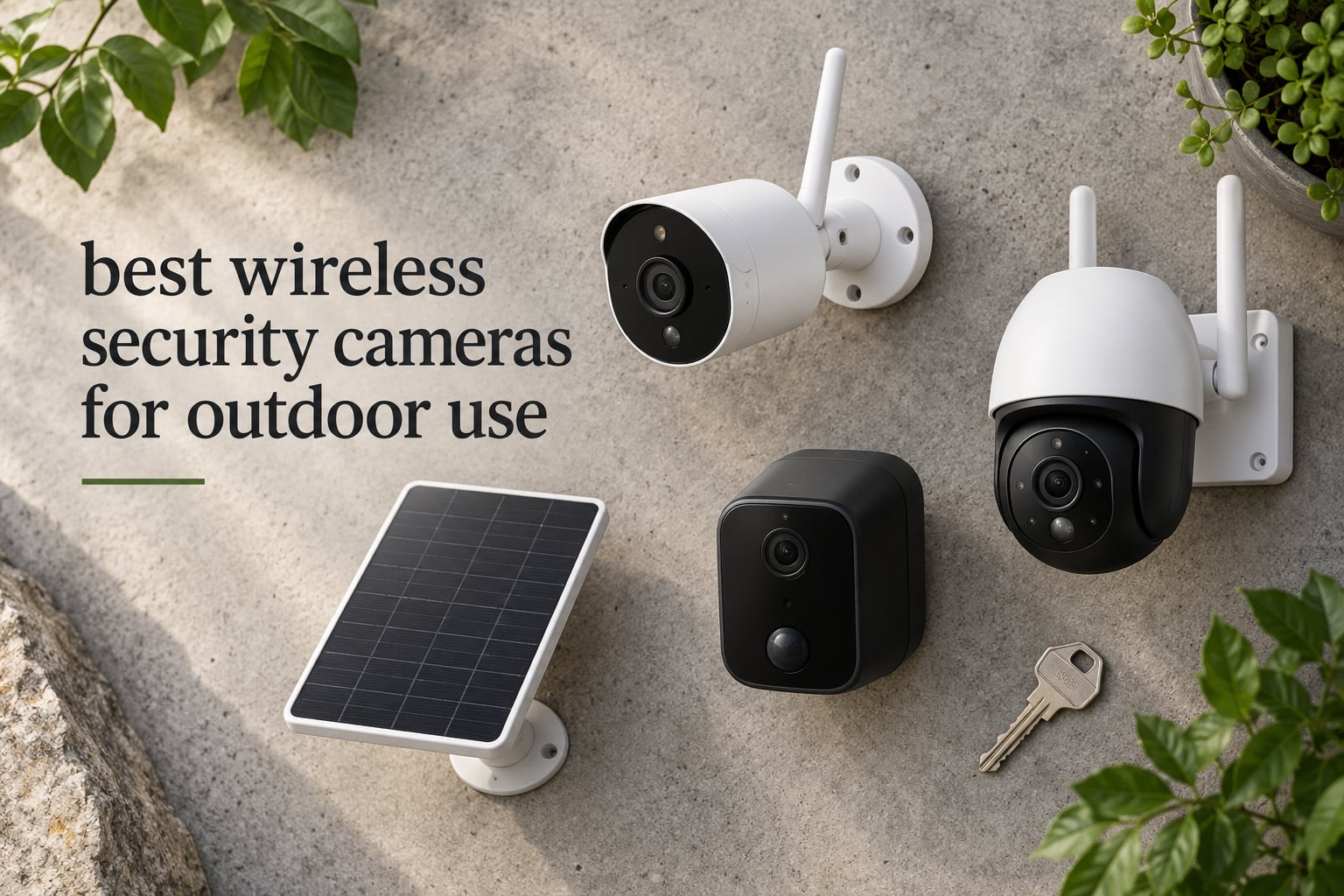
Choosing the best wireless security cameras for outdoor use comes down to three questions: does it survive rain and cold, how do you watch the footage without paying every month, and does it actually hold a Wi-Fi connection where you mounted it. Those three questions eliminate most of what is on the market.
The Ring Outdoor Cam (Stick Up Cam) is our pick for the best wireless security cameras for outdoor use overall. It carries a 4.5 rating across more than 65000 owner reviews, installs with two screws, and runs about six weeks to two months per charge. The catch is honest and worth naming: clip history lives behind a paid plan, so we also list the subscription-free options right beside it.
We spent the last few months working through ten of the most-reviewed outdoor cameras from Ring, Blink, REOLINK, eufy, Tapo, aosu and SEHMUA. The list spans a single stick-up cam, a three-camera kit, a four-camera hub system and a long-range 900MHz setup, so you can match the hardware to the property instead of the other way around. All ten are current for 2026.
One word first, because it causes more wasted purchases than anything else: wireless means no video cable to a recorder, not no power and no network. Battery cams, solar cams, cellular cams and even PoE cams all get sold under that label. The buying guide below separates them.
Table of Contents
How We Picked These Outdoor Cameras
Every camera below was judged on the same nine criteria, and each one was checked against owner reviews rather than the spec sheet alone. The criteria are weighted toward the problems that show up in real installations.
Works without a subscription. Recording to a microSD card or a local hub has to be a real option, not a feature that requires a paid plan to unlock.
Weather rating. A published IP65 or IP66 rating, plus a stated operating temperature range, because winter is where cheap cameras quit.
Actual battery life. We use the reported number from owners, not the marketing claim, and we call out where the two differ sharply.
Frame rate alongside resolution. 15 fps footage of a person walking is unusable for identification no matter how many pixels the sensor has.
Wi-Fi band support. 2.4GHz-only cameras work, but they fight a busy modern home network, so we note this for every pick.
Motion detection behaviour. Whether clips re-trigger mid-event and whether zones cover the full field of view.
Night vision range and type. Infrared gives you grey footage; a spotlight plus color sensor gives you a face and a colour of car.
Two-way talk that works outdoors. A microphone that picks up wind is a feature on paper and useless in practice.
Review volume. A large base of owner reviews means the failure modes are documented rather than hypothetical.
Anything that could not run outdoors, or that relied entirely on a cloud subscription for basic recording, was left out of the list no matter how good the sensor was.
Two criteria turned out to separate the field more than any others: whether a camera records without a plan, and what the owner reviews say about real battery life. Resolution is the number every brand leads with, and it was rarely the deciding factor.
Top 3 Picks for Wireless Security Cameras for Outdoor Use (October 2026)

Ring Outdoor Cam Stick Up Cam
- Battery powered
- Color Night Vision
- Two-Way Talk
- Motion zones
- Alexa

The Ring takes the top slot because it is the least fussy camera in the group: two screws, one battery, an app that most people already have installed, and an owner review base large enough that its weaknesses are well documented rather than a surprise. The eufy SoloCam S340 wins on image quality and 360-degree coverage from a single mount. The REOLINK Argus Eco Solar is the pick if a monthly fee is not something you want to think about again.
All 10 Cameras at a Glance in 2026
| Product | Specs | Action |
|---|---|---|
| Ring Outdoor Cam Stick Up Cam |
|
Check Latest Price |
 Ring Spotlight Cam Plus Ring Spotlight Cam Plus |
|
Check Latest Price |
 Blink Outdoor 4 three-camera system Blink Outdoor 4 three-camera system |
|
Check Latest Price |
| REOLINK Argus Eco Solar |
|
Check Latest Price |
| eufy SoloCam S340 |
|
Check Latest Price |
 SEHMUA Solar PTZ camera SEHMUA Solar PTZ camera |
|
Check Latest Price |
 HITELLARCAM 2K outdoor camera HITELLARCAM 2K outdoor camera |
|
Check Latest Price |
 Tapo SolarCam C402 KIT Tapo SolarCam C402 KIT |
|
Check Latest Price |
 aosu D1 Classic 4-Cam Kit aosu D1 Classic 4-Cam Kit |
|
Check Latest Price |
 Blink Outdoor 4 XR four-camera system Blink Outdoor 4 XR four-camera system |
|
Check Latest Price |
1. Ring Outdoor Cam (Stick Up Cam) – the easiest battery camera to trust
Ring Outdoor Cam (Stick Up Cam), Weather-Resistant Home or Business HD Security Camera, Live View, Color Night Vision, Two-Way Talk, Motion Alerts, Works with Alexa, White
HD 720p
Color Night Vision
Rechargeable battery
2.4GHz Wi-Fi
Weather resistant
Pros
- Two-screw install and quick app setup
- Battery life of 6 weeks to 2 months per charge
- Multiple cameras group into one app
- Color night vision at this tier
- Works with a Ring solar panel
Cons
- No local SD storage for clip history
- Motion zones cannot cover the full field of view
- Two-way talk audio is only average
The stick-up form factor is the reason this camera works almost anywhere. It mounts flat on a wall, under an eave, on a soffit or on the side of a post, and the included bracket is enough on its own, with a separate ceiling mount sold as an add-on. Setup is genuinely minutes: charge the pack, scan the code, name the camera.
Owners consistently report 6 weeks to 2 months per charge in ordinary use, which lines up well for a porch or a side passage. Adding a Ring solar panel removes the battery swap entirely on a mount that gets real sun.
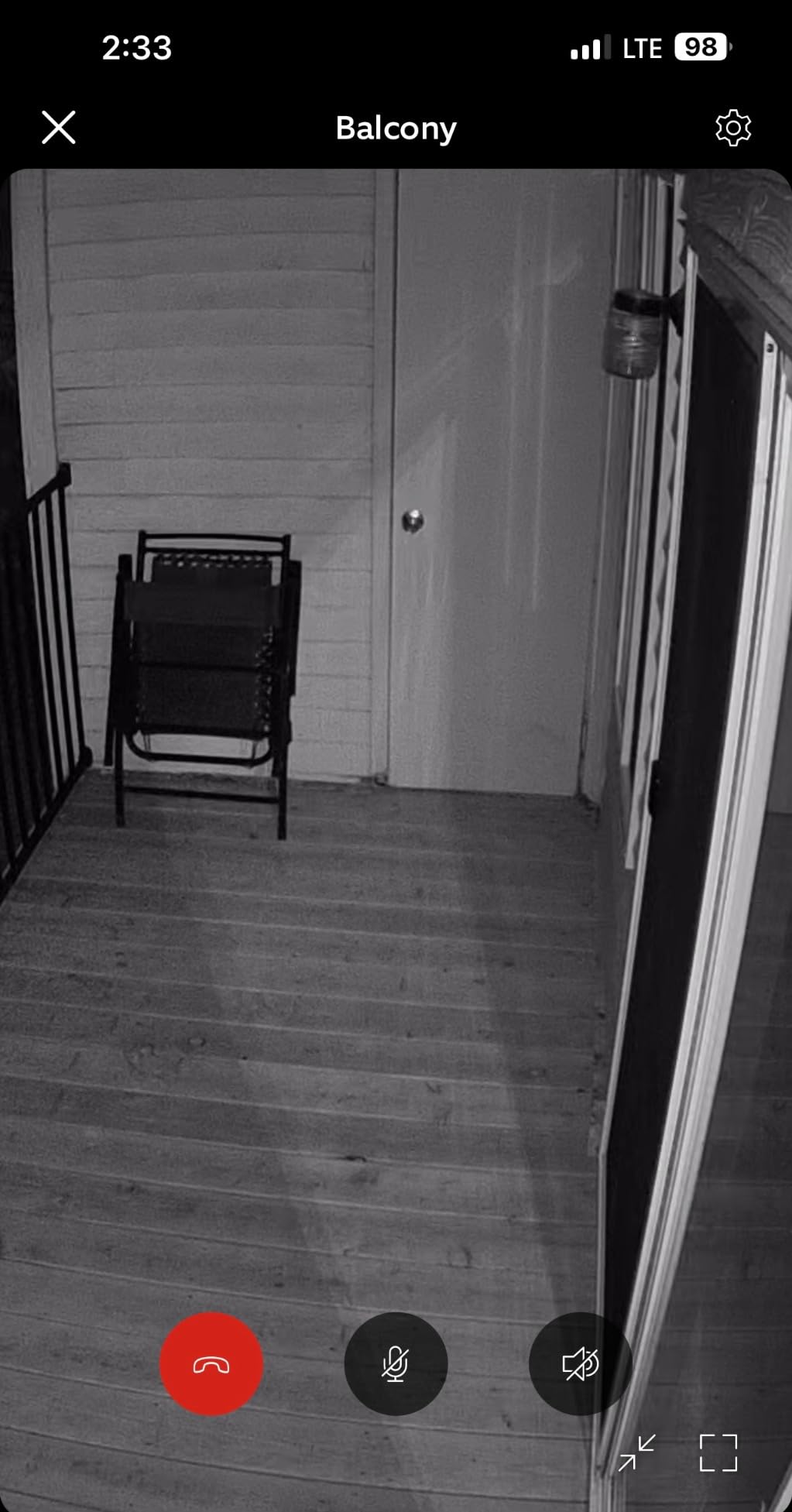
Two limits deserve a straight mention. First, there is no microSD slot, so reviewing recorded clips requires a paid plan. Live view and alerts still work without one. Second, motion detection is imprecise at distance, and the motion zone editor cannot extend to the full field of view, leaving roughly 10 to 20 percent of the frame outside any zone you draw.
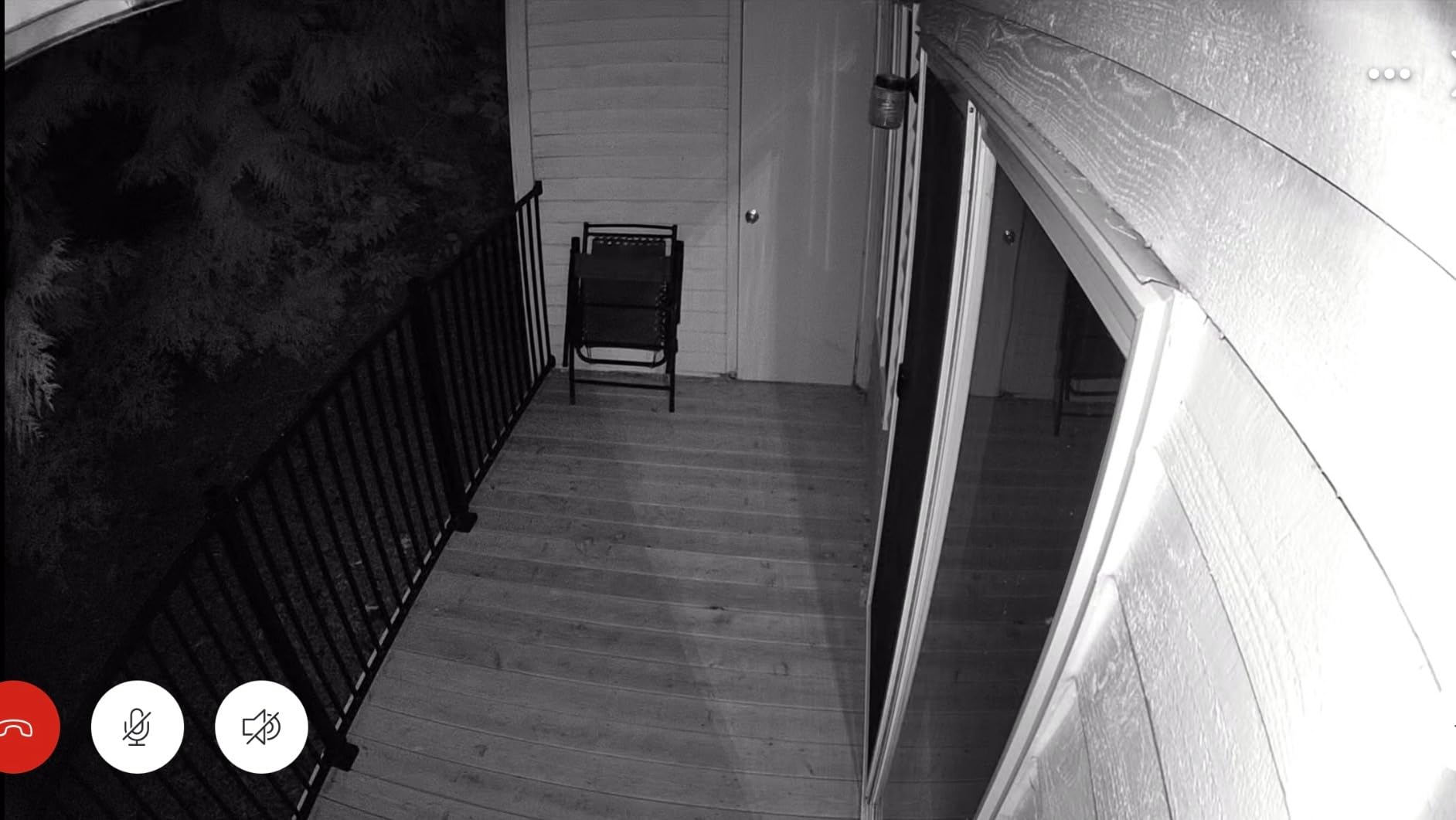
Video is HD 720p with Color Night Vision, which is honest for a camera at this level and enough to identify a person at a front door, but not enough to read a face across a wide yard. Two-way talk works, and the audio is serviceable rather than good, with wind noise on exposed mounts.
What to know before you mount it
Because motion zones cannot cover the entire frame, mount it where the interesting action sits inside the middle of the view rather than at the edge. Pointing down slightly at a path or entry point gives you far more usable footage than a level view across a street.
If you already run Ring devices, the ecosystem argument settles it. The app handles multiple cameras in one place, and Alexa can pull live view by voice.
Who should skip it
Skip this one if you refuse to pay a subscription, because clip history is the feature you lose. Also skip it if you need to identify someone at 30 feet or read a face from across a driveway.
Owners also note that weather exposure can make the battery pack stick in its slot, so a sheltered mount under an eave helps with more than just rain.
2. Ring Spotlight Cam Plus – spotlights and siren for a dark driveway
Ring Spotlight Cam Plus, Battery, Home or Business Security with HD video, Two-Way Talk, Color Night Vision, and Security Siren, White
1080p HD
2 motion-activated spotlights
Built-in siren
Quick Release battery pack
Pros
- Very wide field of view for the size
- Bright motion-activated spotlights and a loud siren
- Clear 1080p day and color night video
- Quick Release pack supports two batteries
- Solar panel compatible
Cons
- Spotlight is dimmer than floodlight-camera rivals
- No SD card slot and cloud history is paid
- A minority fail early with dead video processors
This is the same Ring ecosystem with a bigger sensor and light built in, and for a dark driveway or a back corner it is the more capable of the two. The two motion-activated LED spotlights switch on with movement, and the built-in siren is loud enough to matter as a deterrent.
Resolution steps up to 1080p with Color Night Vision, and the field of view is wide enough that one unit covers a substantial yard. The Quick Release Battery Pack supports a second pack, so you can swap in a charged cell rather than carrying the camera indoors.
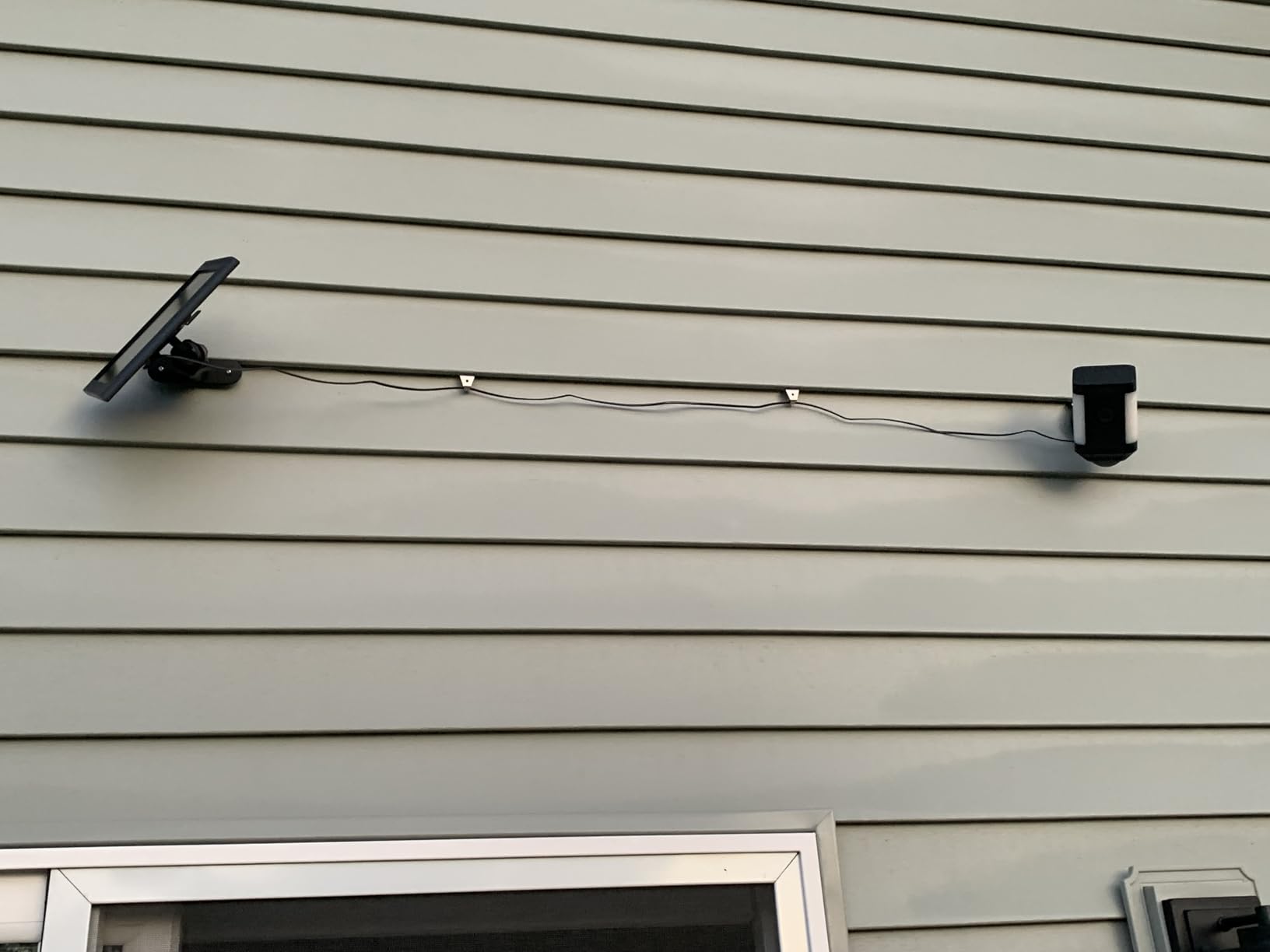
Reviewers are consistent about the downsides. The spotlight is dimmer and whiter than dedicated floodlight cameras, so it lights the near ground well and the far corner poorly. Cloud video history is a paid feature and there is no SD slot at all. A small number of owners also report early hardware failures, with dead video processors or setup failures, which is a minor but real reliability concern at this volume.
Also worth noting: the mounting bracket is easy to remove, which is convenient for renters and unfortunate if the camera is in reach of someone who should not have it.
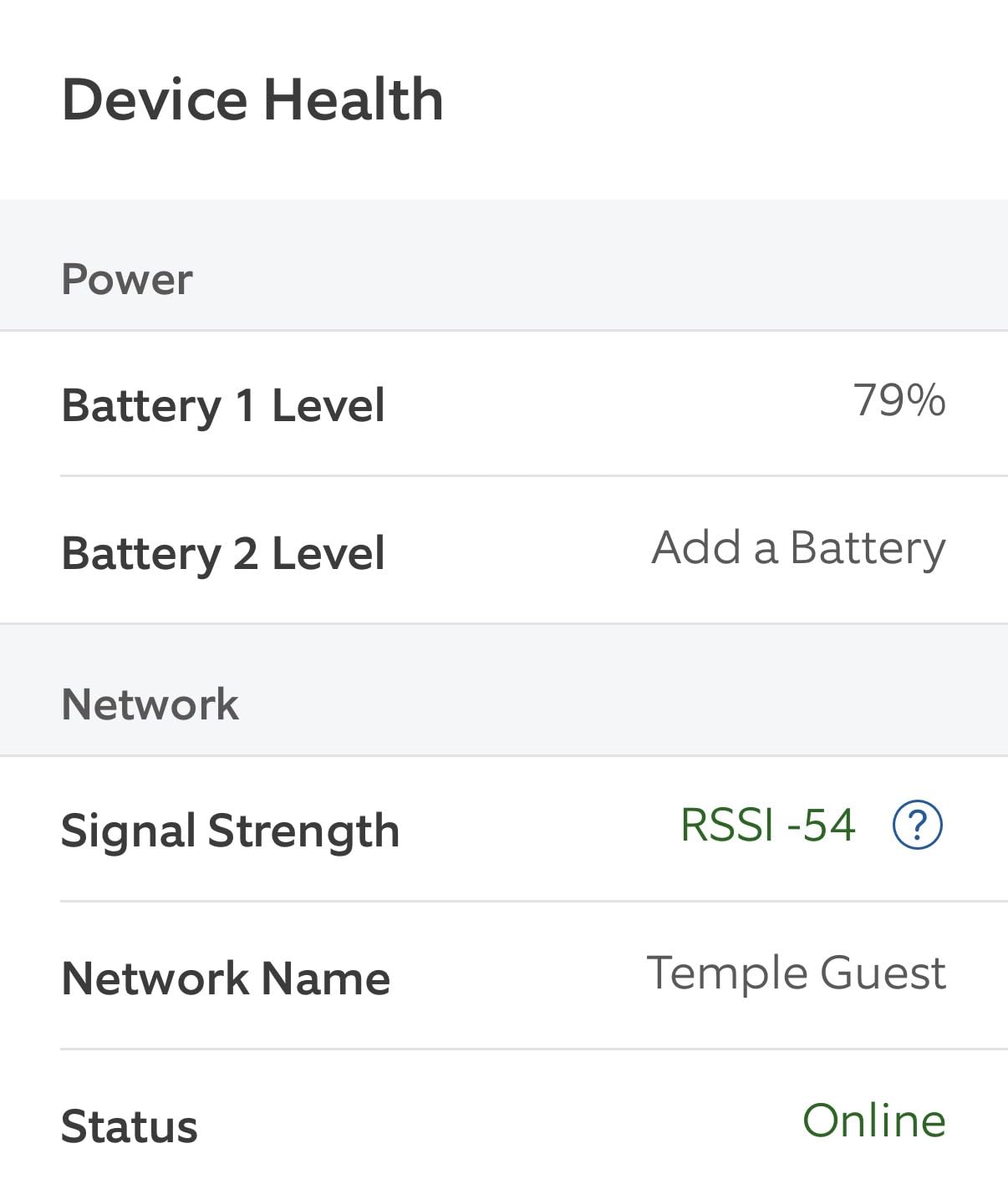
What to know before you mount it
Battery life shortens sharply with heavy motion activity or low sun exposure, so budget for the fast swap if the camera faces a busy walkway. Pairing it with a Ring solar panel is the fix for low-sun mounts.
Check the bracket security if the camera sits within easy reach of a footpath, since the quick-release style bracket lifts out with a gentle twist.
Who should skip it
Skip it if you need genuinely bright night illumination, because a floodlight camera serves that job better. Skip it if you want local recording, since there is no card slot, and skip it if a wired floodlight is possible, since mains power beats any battery here on reliability alone.
3. Blink Outdoor 4 three-camera system – AA batteries, no wiring
Blink Outdoor 4 – Wireless smart security camera, two-year battery life, 1080p HD day and infrared night live view, two-way talk. Sync Module Core included – 3 camera system
1080p HD
Infrared night vision
Lithium AA batteries
Sync Module Core included
Pros
- Very long battery life with lithium AA cells
- No wiring so cameras go anywhere
- Sync Module Core included in the box
- Simple app-based multi-camera management
Cons
- Sync Module Core has no local storage
- Motion re-triggering sometimes cuts clips short
- App shows one live camera at a time
The Blink Outdoor 4 is the simplest way to cover three points of a property at once. The box holds three cameras, a Sync Module Core, six lithium AA batteries, three mounting kits and the power cables, so there is nothing extra to order for a basic install.
Using lithium AA cells instead of a proprietary pack is the quiet advantage. Battery life is measured in months rather than weeks, and the batteries are cheap to keep spares for. Video is 1080p with infrared night vision, which gives you clear black-and-white footage rather than color.
Dual-zone enhanced motion detection lets you define a people zone and a general motion zone, which cuts down on notifications from things like moving branches. Person detection itself is available through the Blink Subscription Plan.
What to know before you mount it
The important detail is the module. The Sync Module Core included here has no local storage, so clip retention depends on the cloud subscription and its 30-day trial. Adding local storage means buying a Sync Module 2 or Sync Module XR plus a microSD card separately.
That is the single decision that changes the value of this kit. If you are already buying one of the upgraded modules, choose the XR system instead.
Who should skip it
Skip this kit if you want local storage out of the box, or if you need colour night footage, since it is infrared only. Reviewers also report live view lagging after a notification and motion re-triggering that cuts off clips mid-event, which matters if you plan to hand footage to police.
4. REOLINK Argus Eco Solar – 2K and no monthly fee
REOLINK Solar Camera Outdoor Wireless 2K 5MP Smart AI Detction Argus Eco
2K 5MP
3W solar panel
IP65
MicroSD to 512GB
2.4GHz Wi-Fi
Pros
- Integrated 3W solar panel for hard-to-wire mounts
- 2K 5MP is sharper than typical 1080p outdoor cameras
- No subscription required with a microSD card
- IP65 weatherproofing
- 100-degree field of view
Cons
- 2.4GHz Wi-Fi only
- 15 fps is low for moving subjects
- microSD card not included
- Night vision is infrared not color
This is the camera we recommend to anyone who is done paying monthly fees. Put in a microSD card and the camera records and plays back locally, with no account required for the core features. Smart detection for people, vehicles and pets runs on the camera itself, so the notifications keep working even when the internet connection is poor.
Video is 2K 5MP across a 100-degree field of view, with a 110-degree viewing angle. Six infrared LEDs cover night vision out to 33 ft, which is grey rather than color but more than enough for a fence line or a gate.
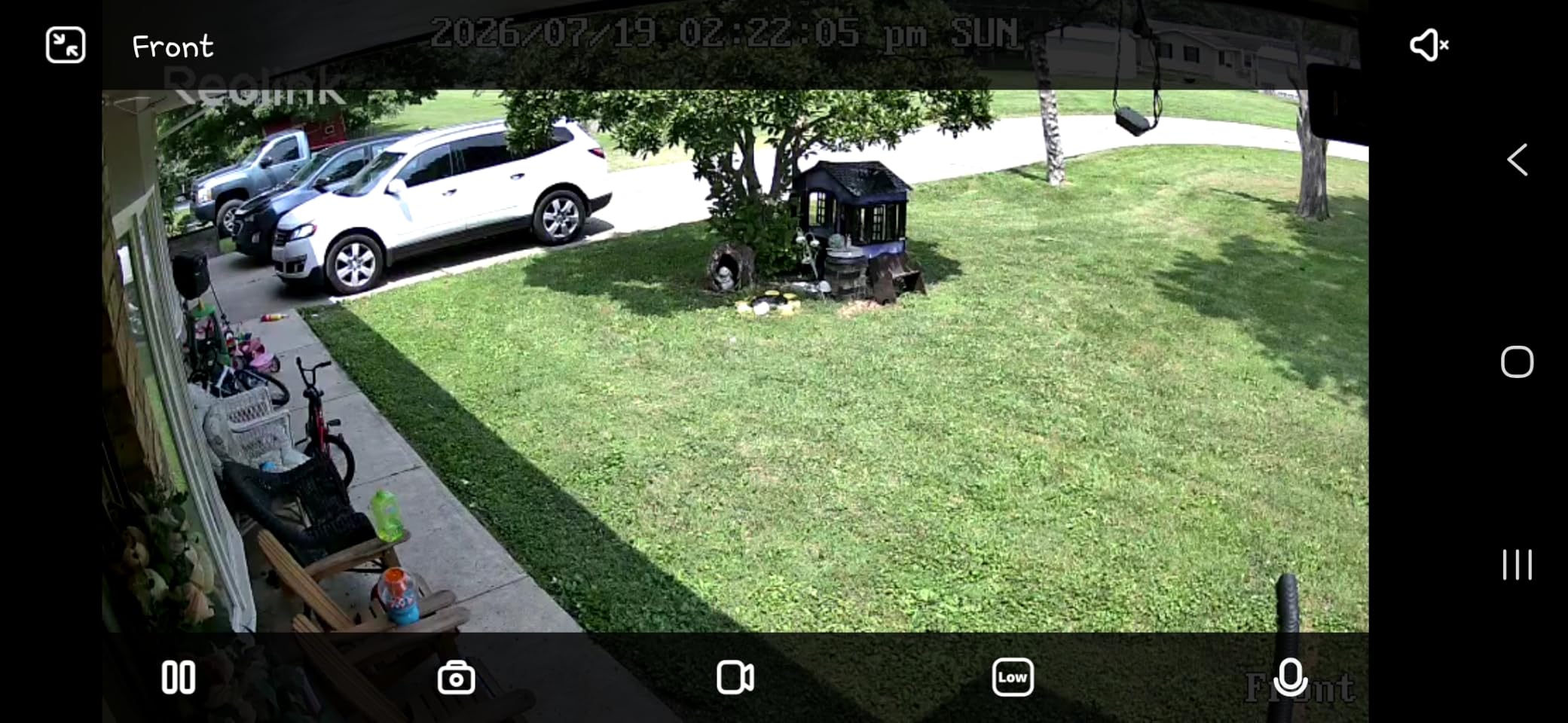
The compromises are specific and worth weighing. It is 2.4GHz only, so on a home network full of modern 5GHz devices you may need a 2.4GHz SSID. It records at 15 fps, which is the frame rate issue we come back to below: a person crossing the frame will look choppy. And the microSD card is not included, so budget for one separately.
The 3W solar panel and 16.69 Wh battery are the reason this model suits a gate, a pole or the back of a garage where running power is awkward. Operating range is 14F to 131F, which covers most climates with margin.
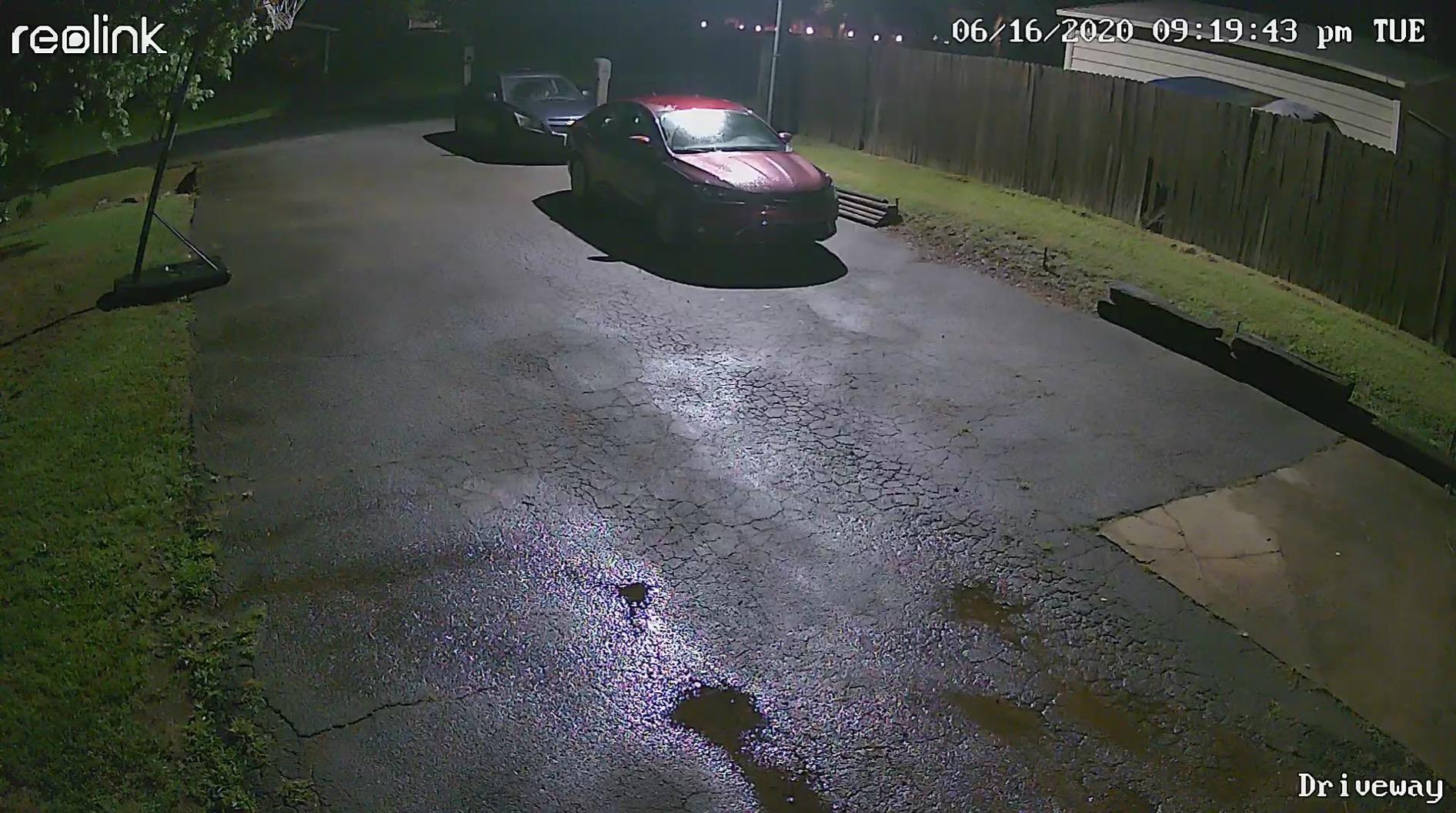
What to know before you mount it
Panel placement decides whether this camera stays alive. A 3W panel needs real, direct sun, and a north-facing or shaded wall will drain the battery faster than it charges. The camera weighs 1.3 lb and mounts with a single screw, so the panel can sit higher than the camera if that is where the sun is.
Cloud features, if you ever want them, still run through a Reolink account. Local recording does not.
Who should skip it
Skip it if the mount gets little direct sun, if your network is 5GHz-only, or if you need colour night video. The 15 fps rate also makes it a poor choice for identifying a face at the far end of a driveway.
5. eufy Security SoloCam S340 – 360 degrees and 8x zoom
eufy Security SoloCam S340, 3K Dual-Lens Solar Security Camera
3K dual-lens
8x zoom
360 pan and tilt
10000 mAh solar
8GB local storage
Pros
- 3K dual-lens quality with useful 8x zoom
- 360-degree pan and tilt removes blind spots
- Removable solar panel means no battery swaps
- 8GB built-in storage with no monthly fee
- Wire-free install in about 7 minutes
Cons
- Night vision range is only about 6 meters
- Storage is fixed at 8GB with no microSD expansion
- Zoom and tracking can lose a subject at long range
- Solar panel needs direct sun and awkward aiming
The SoloCam S340 is the camera we would pick for image quality in this group. The dual-lens 3K setup covers out to 40 ft and the 8x hybrid zoom is the highest zoom figure in this group, which means it recovers detail the wide view throws away.
The 360-degree pan and tilt is the practical headline. One mount on a corner post can cover the yard, the gate and two approaches, which is normally three cameras worth of coverage from a single unit. AI detection and automatic tracking follow a subject across the pan.
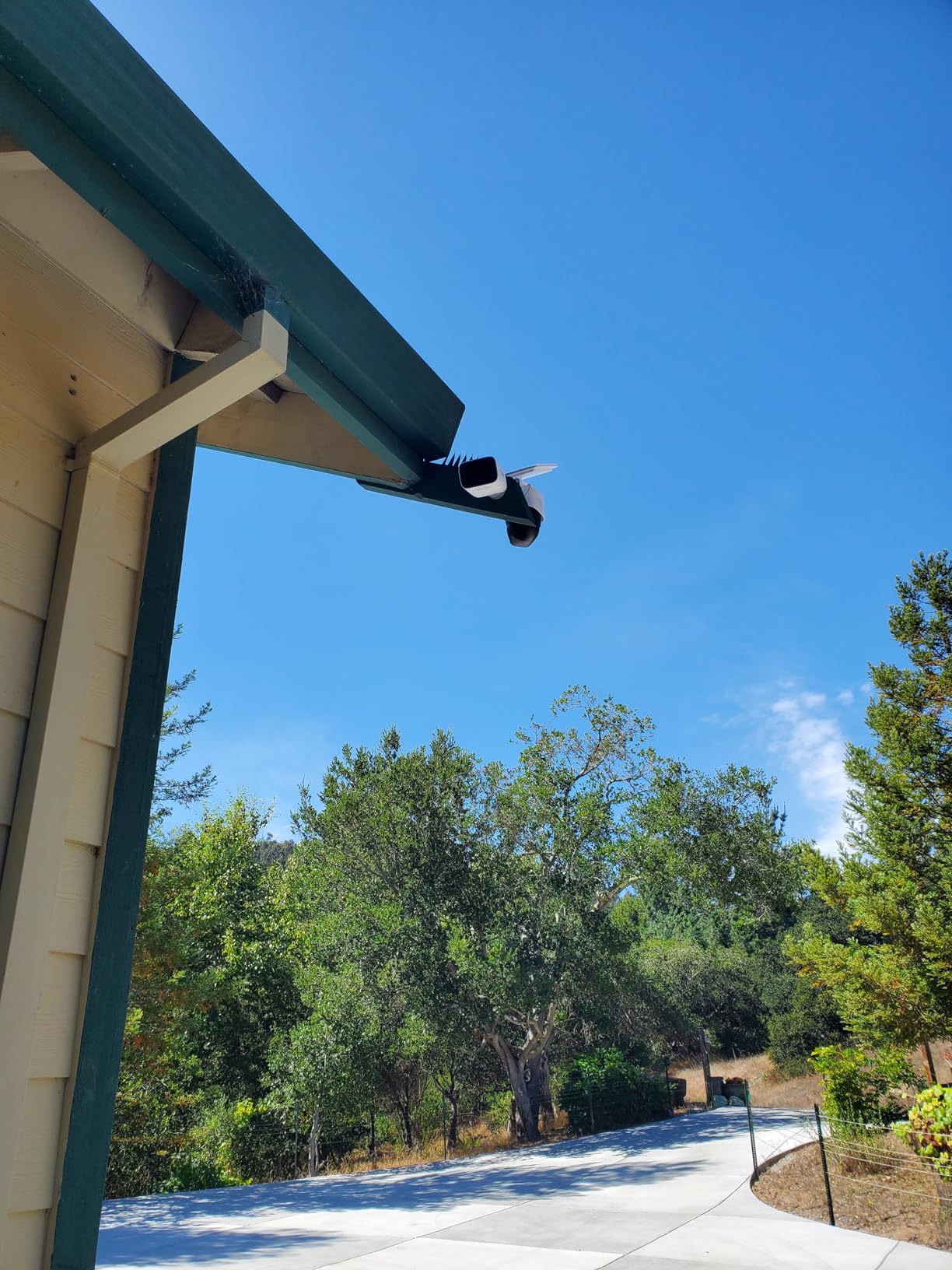
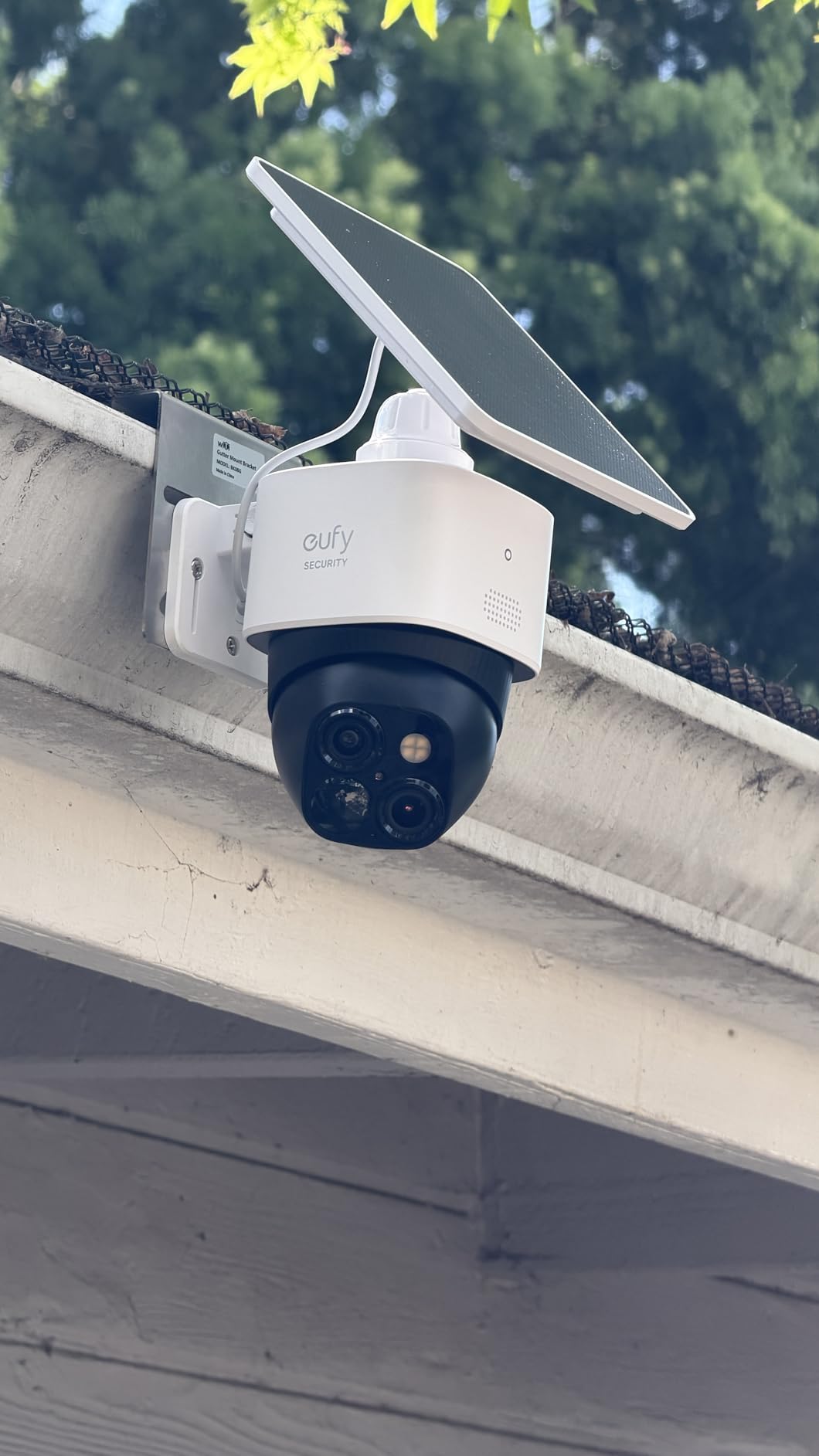
Power comes from a removable solar panel paired with a 10000 mAh battery, and because the panel detaches you can position it for sun independently of where the camera looks. The whole install is about 7 minutes with no wiring.
Storage is the catch here. It is 8GB built-in with no monthly fee and no microSD expansion, so the recording window is short. It suits a camera that is checked occasionally rather than one you expect to search through after an incident.
What to know before you mount it
Night vision is colour with a 6 m range, which is shorter than several rivals here. If the area you care about is deeper than about 20 ft in the dark, this is the wrong camera.
Also expect to tune the tracking. Reviewers report zoom and tracking losing a moving subject at long range, and the 2.4GHz-class networking in this line can struggle on a busy home network. Mount it where the sun actually falls, not where the view is best.
Who should skip it
Skip it if you need long-range night coverage or long retention, since 6 m of night reach and 8GB of fixed storage are the hard limits. Anyone planning to pull days of footage will be frustrated.
6. SEHMUA Solar PTZ camera – wide pan on a tight budget
SEHMUA Solar Security Cameras Wireless Outdoor, 2K 360° View Battery Powered Outdoor Camera, WiFi Home Security with Spotlight Color Night Vision, PIR Sensor
2K video
360-degree pan and tilt
IP65
Solar powered
Color night spotlight
Pros
- Strong 360-degree pan from a single mount
- Built-in solar panel with no wiring
- IP65 with -4F to 121F tolerance
- Color night vision via spotlight
- Pan and tilt on a single mount
Cons
- Color night vision needs the spotlight switched on manually
- 2.4GHz Wi-Fi only
- Cloud storage is paid and no card included
- App and PTZ controls less polished than major brands
The SEHMUA RBX-S40 does something the pricier units do not: it pairs a full 2K sensor with a 360-degree pan, 355 degrees horizontal and 100 degrees vertical, on solar power, at a modest outlay. For covering a wide yard from one post, the geometry is genuinely good.
Weather resistance is IP65 and the operating range runs from -4F to 121F, the widest low-temperature tolerance listed among the ten. The PIR motion sensor with human-like recognition is intended to cut false alerts from animals and moving vegetation, which is the complaint that drives most people to a different brand.
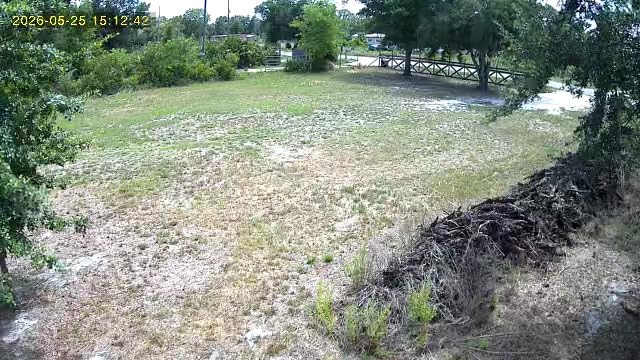
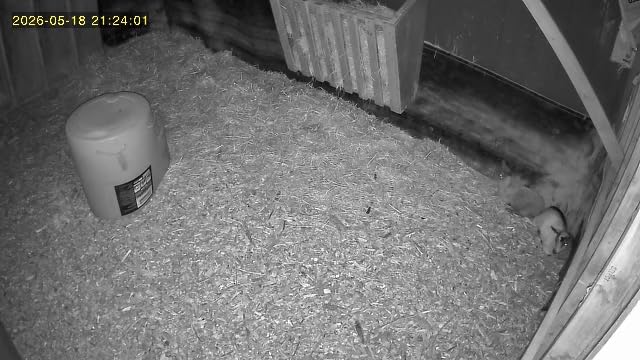
There is a built-in spotlight for colour night vision, and this is the one behaviour to plan around: you have to turn it on manually in the app. It does not switch on automatically with motion, so it will not wake up and light a driveway at 2 am by itself.
Storage runs through a local card or a paid cloud plan, and the card is not included. The PTZ mechanics and the app are noticeably less refined than the major-brand equivalents, which shows in slow pans and in the controls.
What to know before you mount it
It is 2.4GHz only, so a 5GHz-only router will not see it. The camera weighs 0.85 kg, so use all three mounting screws and pick a post that is rigid, since a PTZ head moves more mass than a fixed bullet camera does.
If colour night video matters to you, test the manual spotlight workflow before committing. If it is irritating, the same budget goes further on a fixed 2K camera with automatic colour night.
Who should skip it
Skip it if you need unattended night coverage, if your network is 5GHz-only, or if you want a polished app with dependable pan control. It is a good geometry-first camera, not a good automation-first camera, and it suits people who check the app deliberately rather than people who expect alerts to do the work.
7. HITELLARCAM 2K outdoor camera – dual-band Wi-Fi at the entry level
2026 Upgraded 2K Security Cameras Wireless Outdoor, Free Cloud Storage, 1-6 Months Battery Life, Waterproof, 2-Way Talk, AI Motion Detection Spotlight Siren Alarm Cameras for Home Security
2K at 30 fps
IP66
5200 mAh battery
Dual-band 2.4GHz and 5GHz
Free cloud tier
Pros
- 2K at 30 fps is a rare frame rate at this level
- Dual-band 2.4GHz and 5GHz Wi-Fi is unusual here
- IP66 rating and full-color night vision
- Free cloud tier works with no subscription
- Compact and quick to set up
Cons
- Free cloud tier stores SD-quality only
- HD recording needs a paid plan
- Battery claims of 1-6 months assume low motion
- No storage card included
The technical headline here is 2K at 30 fps in a compact bullet body, and that frame rate is a spec sheet few rivals at this resolution match. Cameras at this resolution often drop to 15 fps instead, and a person walking across the frame at 30 fps is dramatically easier to identify.
It is also one of the few outdoor cameras here with dual-band Wi-Fi, supporting both 2.4GHz and 5GHz. On a modern home network full of devices, that removes one of the most common outdoor installation problems.
Night vision is full colour out to 8 m using a built-in LED, and the IP66 rating means dust-tight and protected against heavy water jets, which is one step up from the IP65 units elsewhere in this list.
The battery is a 5200 mAh pack, and the published testing is more useful than most claims: around 60 days at 100 motion triggers a day, scaling to as much as 6 months at lower trigger rates. Plan for the 60-day figure if the camera faces a walkway.
Storage is the compromise. The free cloud tier stores SD-quality footage, and HD recording needs a paid plan. A microSD card up to 256GB is supported and not included.
What to know before you mount it
Recommended detection distance is 5 to 8 m, so this is a door, path and stoop camera rather than a driveway camera. Angling it down from about 2.5 m gives you a clean look at whoever is at the door.
If you plan to rely on cloud storage, decide early whether SD quality is acceptable for the footage you might need. If it is not, buy a card before you mount the camera.
Who should skip it
Skip it if you need to identify activity at the far end of a long driveway, or if you want to avoid a storage plan entirely without buying a card. A solar panel variant is also offered for this model, which extends it further.
8. Tapo SolarCam C402 KIT – solar with free person detection
Tapo SolarCam C402 KIT 1080p Outdoor Wireless Security Camera
1080p at 30 fps
125-degree view
Solar panel included
IP65
microSD to 512GB
Pros
- Solar panel and battery remove most manual charging
- Person and motion detection free with no subscription
- Colour night vision to 30 ft with spotlights
- 13 ft cable lets you place the panel away from the camera
Cons
- Solar charging stops below 32F
- 1080p is below the 2K and 3K norm
- Cloud storage needs Tapo Care and no card is included
The Tapo C402 KIT is the most honest solar kit in this group about how solar charging actually behaves. The manufacturer states that about 45 minutes of direct sunlight powers a full day of use, and that solar charging requires temperatures above 32F. Nobody else in this list puts the cold limit in writing.
That honesty helps at planning time. You are looking at a battery that carries the camera through a stretch of cold, cloudy days rather than a panel that recharges indefinitely.
Video is 1080p at 30 fps with a 125-degree viewing angle, and colour night vision reaches 30 ft using twin spotlights plus a built-in siren. The 30 fps rate is welcome, since several 1080p outdoor cameras here run at 15 fps.
Person detection and activity zones are free. That is the deciding feature for most people, because on subscription-based ecosystems the person alerts you actually want are often the ones moved behind a plan after install. Local microSD storage up to 512GB works with no subscription at all.
The 13 ft cable is the detail that makes the kit flexible: the panel and the camera can go on the same wall or on opposite sides of a corner. The siren and light alarms are modest compared with a floodlight camera, but they are there.
What to know before you mount it
Orient the panel south if you are in the northern hemisphere and north if you are in the southern one, with no shade across the day. Remember the 32F floor: in a northern winter the panel stops contributing, and coverage depends on what charge is stored.
Bring your own microSD card. The kit does not include one, and 1080p at 30 fps is efficient enough on a card that a moderate capacity holds a useful stretch of footage.
Who should skip it
Skip it if you want 2K or 3K detail, since 1080p is the limiting factor here, and skip it if you live somewhere the panel will sit in shade for most of the year.
9. aosu D1 Classic 4-Cam Kit – four cameras, one local hub
aosu D1 Classic 4-Cam Kit, Security Cameras Wireless Outdoor, Solar Powered
Four 2K/3MP solar PTZ cameras
32GB encrypted local hub
Up to 4 months loop recording
IP65
Pros
- Complete four-camera solar system with a local hub
- Footage stays on the hub if a camera is removed
- 32GB hub holds up to 4 months of loop recording
- Cross-camera tracking and four-way live view
- No subscription at any point
Cons
- Largest commitment here once four cameras and the hub are included
- Only 3MP per camera
- Hub-dependent setup needs the base online
- About three hours of direct sun per camera per day
This is the kit to consider if you want to cover a whole property and refuse to pay a subscription. Four solar PTZ cameras, a hub with 32GB of encrypted local storage and up to four months of loop recording, with no plan required at any stage.
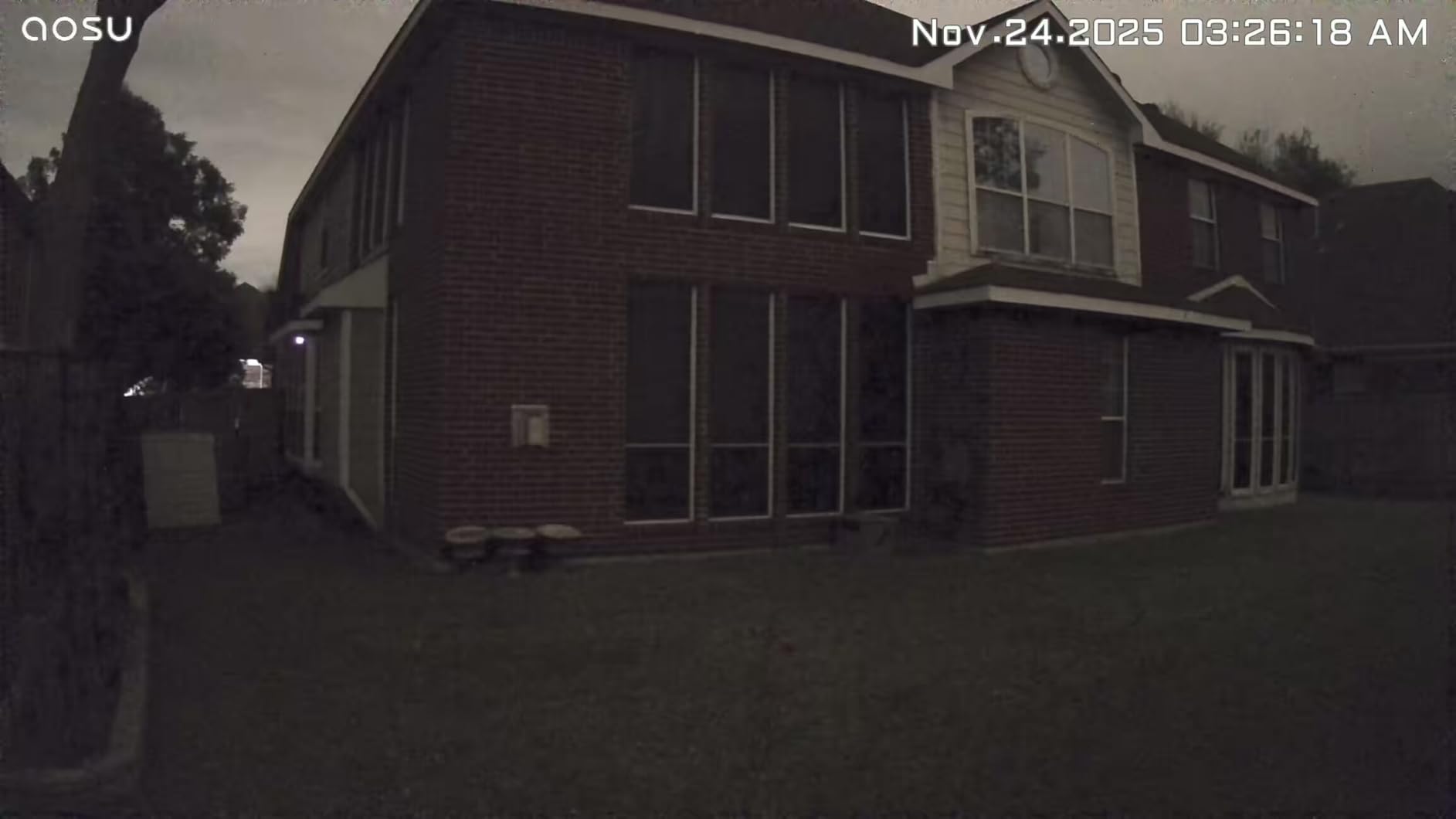
The hub is the argument. Recordings live on the aosuBase rather than on someone else’s server, and reviewers specifically note that footage stays available even if a camera is damaged or removed, which is the failure mode that makes cloud-only systems painful.
Each camera is a 2K/3MP PTZ dome with 360-degree pan, 105-degree viewing angle, automatic motion tracking and 6x digital zoom. Colour night vision reaches 33 ft on four LEDs. Cross-camera tracking correlates the same event across multiple views, and four simultaneous live streams fit on one screen.
The trade-offs are scale. Four cameras plus a hub is the largest commitment in this list, and each camera is 3MP rather than 4K, so a single unit covers less fine detail than the eufy S340. The system also depends on the hub being online and powered, which concentrates risk in one device.
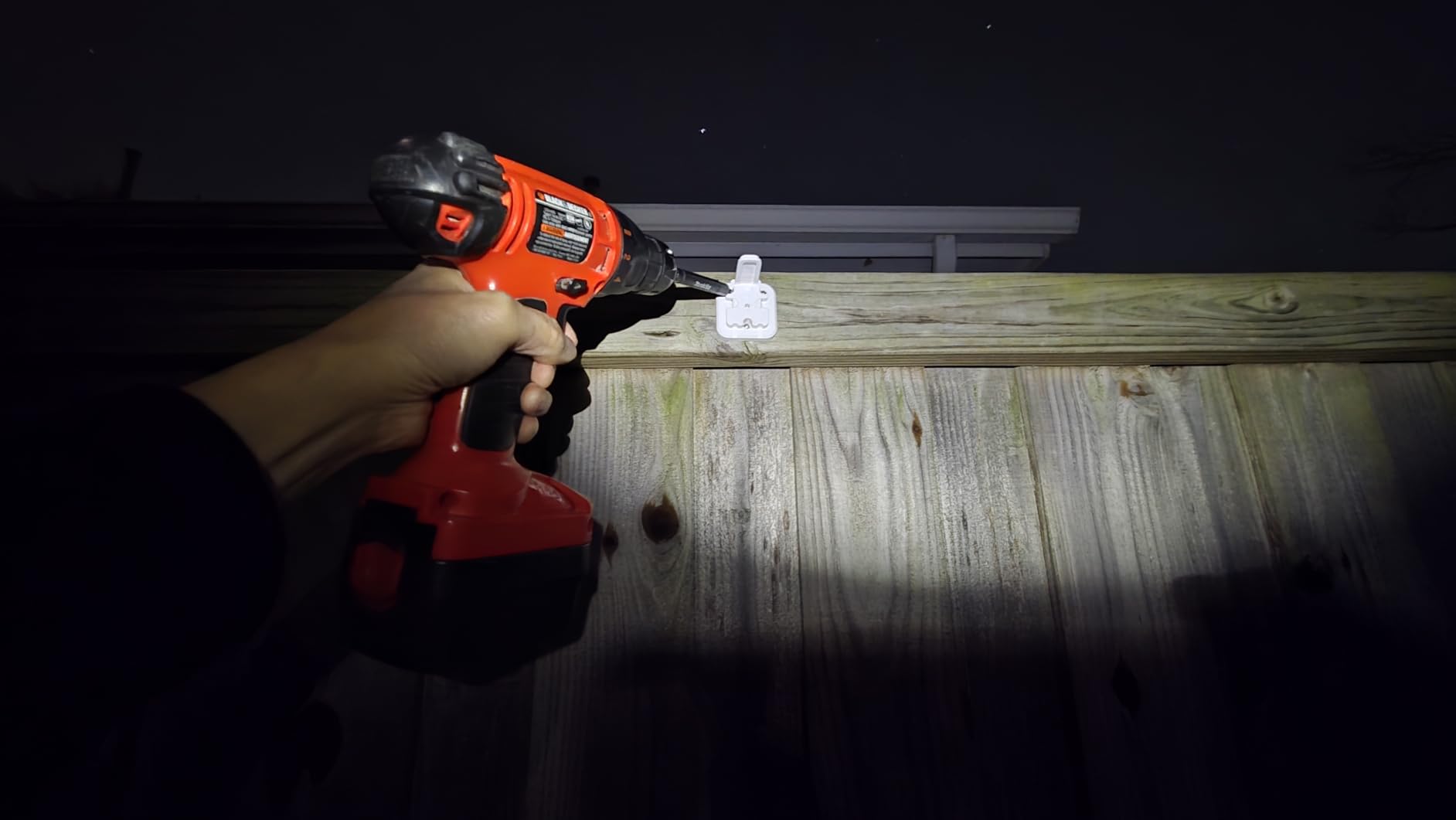
Solar needs about three hours of direct sunlight per camera per day. Installation is about 5 minutes per camera with three drilled holes each, so plan the layout before you start drilling.
What to know before you mount it
Work out the four positions on paper first, because each camera needs its own sun exposure and three drilled holes. Spacing them too closely wastes the 360-degree pan that justifies the design.
Test that the hub reaches your router before mounting anything, since a hub at the back of a house on a weak Wi-Fi signal undermines the whole system. It works with Alexa, Google Assistant and SmartThings.
Who should skip it
Skip it if you are covering a single front door, since four cameras is more coverage than you need. Skip it if you need 4K detail per camera or if drilling four locations is not an option. A renter is better served with a single-stick-up cam and an adhesive mount.
10. Blink Outdoor 4 XR system – long range for large properties
Blink Outdoor 4 XR – two-year battery wireless camera with 4x security coverage, 1000 ft open-air range or 400 ft with typical use — 4 camera system.
Four 1080p cameras
Sync Module XR hub
900MHz, 1000 ft open air
microSD to 256GB
Pros
- Cameras work up to 1000 ft in open air from the hub
- 900MHz link is more stable than congested Wi-Fi
- Up to 70 percent fewer disconnects and faster live view
- Local microSD storage through the XR hub
- Up to 10 devices per app
Cons
- Lithium batteries last about 4-6 months in practice
- Supplied mounting bracket lets cameras shift
- Recording is intermittent and can miss events
- App shows one live camera at a time
The XR system exists to solve one problem: Wi-Fi that will not reach. The hub communicates on the 900MHz band rather than the crowded 2.4GHz space, and the stated result is up to 70 percent fewer disconnects and up to 20 percent faster live view access than a Wi-Fi link, across up to 1000 ft in open air or 400 ft in typical use.
That makes it the natural choice for a long driveway, a detached garage, an outbuilding or a property with a large gap between the router and the camera. Four cameras and the Sync Module XR hub are included, along with eight lithium AA batteries and four mounting kits.
Critically, this hub accepts a microSD card up to 256GB for local recording, so unlike the Sync Module Core in the three-camera Blink kit you can keep footage without a subscription. The card is sold separately.
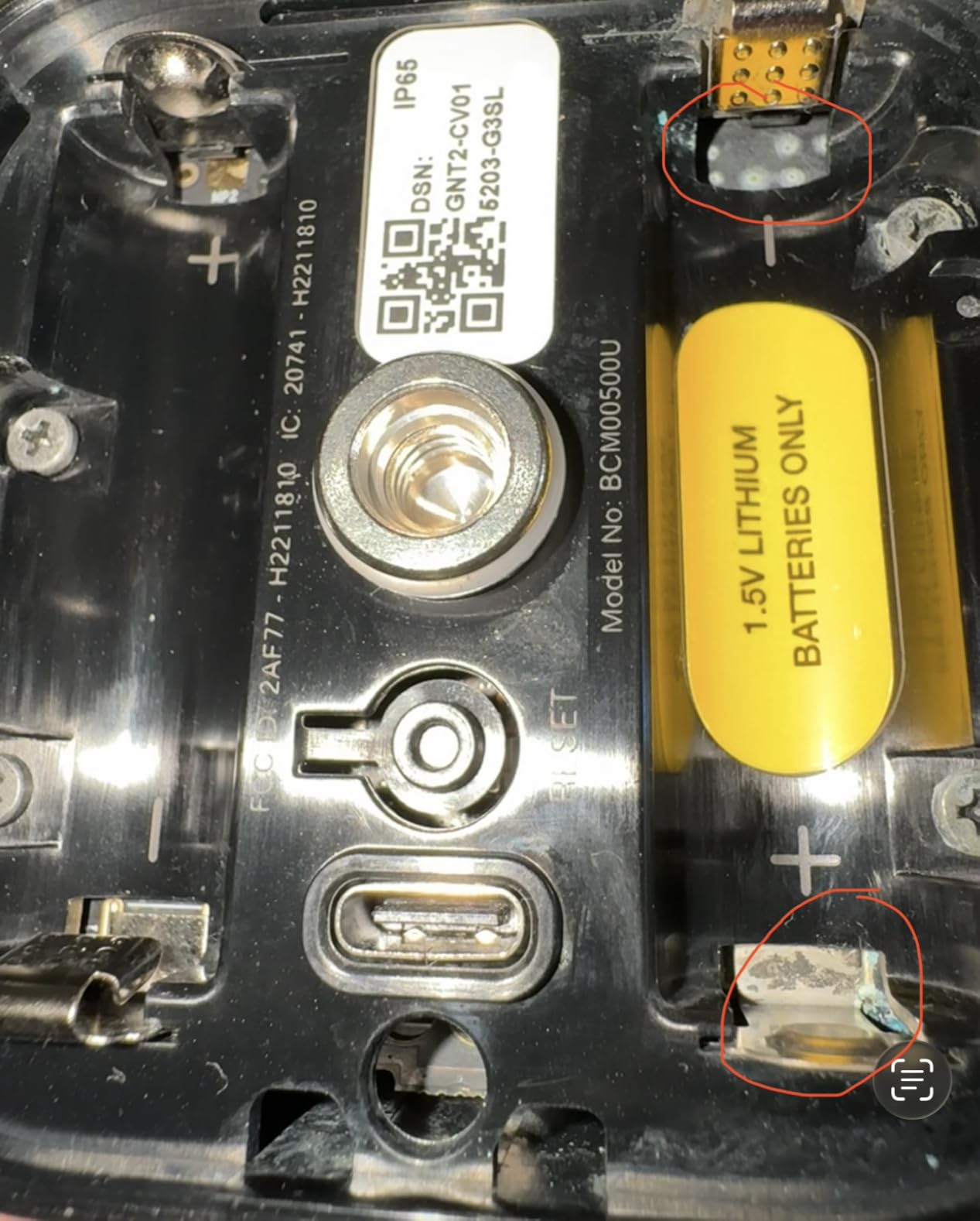
Now the honest part. Owners report lithium batteries lasting about 4 to 6 months in real use rather than the advertised two years, and that gap is large. The supplied bracket is also criticised for letting cameras shift out of position, which matters when a camera is 400 ft from the hub and nobody is watching it daily.
What to know before you mount it
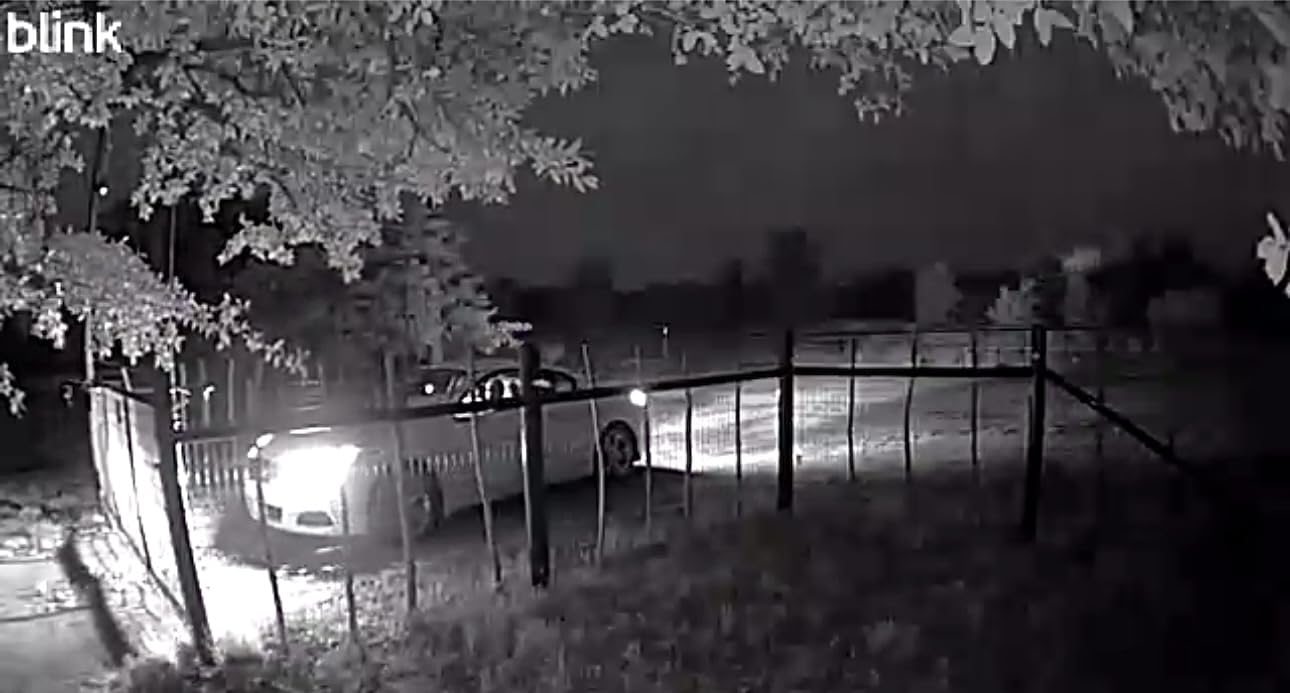
Recording behaviour is the biggest practical issue. Reviewers describe intermittent capture that runs a few seconds then waits, so events can be missed, and AI object descriptions that mislabel animals. Treat it as a deterrence and awareness tool rather than evidence capture.
The app shows one live camera at a time and can drop a feed during simultaneous motion, so plan to check clips rather than expect a control-room view. If you need continuous multi-camera recording, this is not the kit.
Who should skip it
Skip it if your cameras are close to the router, since the XR advantage disappears and you are paying for range you do not use. Skip it if you need continuous recording or coloured night footage, since this is 1080p infrared with event-based capture.
How to Choose a Wireless Outdoor Security Camera
Battery, solar, PoE or cellular: pick the right power path
Battery is the simplest install and the worst long-term reliability, because every camera eventually needs a ladder. Battery claims are also the least trustworthy number on any spec sheet: the Tapo C402 publishes a six-month figure, the Blink XR publishes two years, and owners of the XR report 4 to 6 months.
Solar fixes the ladder problem only if the panel sees real sun. Three watts on the REOLINK, a removable panel on the eufy, a panel plus a 13 ft cable on the Tapo, and a built-in panel on the aosu kit. Watch the cold limits: the Tapo panel stops charging below 32F, which is the number most manufacturers leave out.
PoE cameras need a cable run, so they fall outside the wireless category as shoppers usually use it, but they are the answer for anyone who can run ethernet. Continuous power, continuous recording and no battery anxiety. Cellular cameras are the fourth path and the right one for a cabin or a rural building with no network, at the cost of a data plan. None of the ten cameras here is cellular, so that search means looking outside this list.
2K at 30 fps beats 4K at 15 fps for identification
This is the single most useful piece of advice in this guide, and almost no roundup states it plainly. A camera capturing at 15 fps shows roughly 15 still frames each second, so a person walking shows up as a series of frozen poses. You may have the pixels and still be unable to say whether that figure wore a hat.
Look at what each camera here actually records. The HITELLARCAM does 2K at 30 fps. The Tapo does 1080p at 30 fps. The REOLINK Argus Eco does 2K 5MP at 15 fps. The eufy S340 pairs 3K with 8x zoom, which is a different way of buying detail, since the zoom recovers detail the wide view throws away.
If your priority is identifying who walked past, weight the frame rate and the zoom before the headline resolution.
Local microSD storage versus cloud subscriptions
Local recording is the deciding factor for most people buying outdoor cameras, and it is the one place where brands differ most. The REOLINK, Tapo, eufy and aosu all record to local storage with no plan. The Blink XR records to a microSD card in its hub. The Ring cams, the three-camera Blink kit and the HITELLARCAM all lean on cloud, with a free tier in some cases.
Watch three traps. Cards are almost never included. Free cloud tiers frequently store reduced SD quality rather than full HD. And features that feel essential, such as person detection, are often the ones moved behind a paid tier after the camera is already installed.
On capacity, a 128GB or 256GB card is the sensible starting point for one or two cameras, and a 4K camera fills a card considerably faster than a 1080p one, so match capacity to resolution if you keep clips for weeks.
What the IP rating lets you get away with
The first digit rates solids, the second rates water. IP65 is dust-tight and protected against water jets, which is fine under an eave, on a soffit or on a wall with some overhang. IP66 adds protection against heavy water jets, so a fully exposed wall, a pole or an eave-free mount is where you want it. IP67 adds temporary immersion and suits a location that gets sprayed directly.
Four of the ten cameras here carry an IP65 rating, the HITELLARCAM is IP66, and temperature range matters as much as the rating in a cold climate. The SEHMUA is rated to -4F, the Tapo solar charging stops at 32F, and the REOLINK operates from 14F to 131F.
2.4GHz versus 5GHz Wi-Fi at the mounting point
Most of these cameras are 2.4GHz only: the Ring Stick Up Cam, the REOLINK and the SEHMUA state it plainly, and the eufy SoloCam line sits in the 2.4GHz class. The HITELLARCAM supports both bands, and the Blink XR sidesteps the issue entirely with a 900MHz link to its hub.
2.4GHz reaches further through walls and foliage, which is why outdoor cameras lean on it, but it is also the band most congested by every other device in the house. If your router splits the bands, confirm the 2.4GHz network is enabled before you mount anything.
When signal at the mount is weak, an access point or mesh node placed indoors near the wall the camera mounts to usually fixes it more cheaply than a more expensive camera. A live view that loads in five seconds is a live view you will not check. We would test the signal before buying a second camera, because the simplest fix is usually a networking change rather than new hardware.
Where to mount an outdoor camera for useful footage
Mount high enough that the camera is not reachable, roughly 2.5 to 3 m, and angle it down. Looking down compresses the scene and catches shoulders, torsos and faces rather than the top of a head, which is what identification needs.
Avoid backlight. If the camera faces a lit doorway or a street with headlights, day footage will be a silhouette no matter how many megapixels the sensor has. Rotate the mount rather than lowering the exposure.
Check where the camera points before you drill. A wide 360-degree pan is easier to angle away from a neighbour’s window than a narrow bullet, and pointing into a neighbour’s garden is a good way to end up with a conversation you did not want. Finally, keep the mount sheltered where you can. Every one of these cameras lasts longer under an eave than on an exposed wall, and battery packs are easier to remove when water is not setting into the seal.
Frequently Asked Questions
What are the best security cameras without WiFi?
The best wireless security cameras for outdoor use without Wi-Fi are cellular models such as an Arlo Go 2 or an IMOU AOV PT, which run on 4G LTE with a SIM card instead of a home network. Of the ten cameras reviewed here, the Blink Outdoor 4 XR four-camera system comes closest, because its Sync Module XR hub talks to each camera on a 900MHz band rather than Wi-Fi and holds up to 1000 ft in open air. Every other model in this guide needs a 2.4GHz signal at the mounting point, so add an outdoor access point or mesh node if the signal is weak.
Are battery-powered security cameras any good?
Yes, for the last three years of mainstream models, and no if you need 24/7 recording. Battery cameras such as the Ring Outdoor Cam and Ring Spotlight Cam Plus install in minutes with no wiring, and owners of the Stick Up Cam report six weeks to two months per charge. The catch is coverage gaps while charging and real battery life running well under the marketing claim, as Blink XR owners report four to six months instead of two years. They also record in short event clips rather than continuously, so they suit deterrence and awareness more than evidence capture.
Does a wireless camera need internet?
A wireless camera needs internet for live view, push notifications and any cloud recording, but it does not need it for local recording. The REOLINK Argus Eco Solar, the Tapo SolarCam C402 and the aosu D1 Classic all record to a microSD card or a local hub and keep working when the connection drops, with the REOLINK running person and vehicle detection on the camera itself. The Ring Outdoor Cam and the three-camera Blink Outdoor 4 kit are the opposite case, since reviewing recorded clips depends on a cloud plan.
What is the best wireless CCTV camera for outdoor use?
The Ring Outdoor Cam (Stick Up Cam) is the best wireless CCTV camera for outdoor use overall, with a 4.5 rating from more than 65000 owner reviews, a two-screw install, Color Night Vision and battery life of six weeks to two months. The REOLINK Argus Eco Solar is the best choice if you refuse a subscription, and the eufy SoloCam S340 is the strongest for image quality with 3K dual-lens video, 8x zoom and 360-degree coverage from one mount.
What is the best brand for outdoor security cameras?
There is no single best brand, because the brands split by storage model rather than image quality. REOLINK, eufy, Tapo and aosu are the strongest choices for local storage with no subscription. Ring and Blink are the easiest to install and integrate with Alexa, but both push recorded clip history behind a paid plan. Blink leads on long range through its 900MHz XR hub, and eufy leads on zoom and 360-degree coverage. Judge the brand on your storage and power needs, not on its camera alone.
What’s the best outdoor security camera without a subscription?
The REOLINK Argus Eco Solar is the best outdoor security camera without a subscription: 2K 5MP video, a 3W solar panel, IP65 weatherproofing, smart detection for people, vehicles and pets, and microSD storage up to 512GB with no plan required. The Tapo SolarCam C402 KIT is the alternative, with free person detection, activity zones, 1080p at 30 fps and colour night vision to 30 ft. Both need you to supply a microSD card, since cards are rarely included. In this list, only the Ring Stick Up Cam, the Ring Spotlight Cam Plus and the three-camera Blink kit lock recorded clips behind a subscription.
What are the best outdoor security cameras for home?
For most homes, the Ring Outdoor Cam (Stick Up Cam) on the front path and the REOLINK Argus Eco Solar on a gate or back corner is a solid two-camera setup, because one covers the entry and the other keeps everything subscription-free. For full property coverage, the aosu D1 Classic 4-Cam Kit gives you four solar PTZ cameras and a 32GB local hub with up to four months of loop recording. Mount at 2.5 to 3 m, angle down, avoid backlight, and add an indoor access point if the signal at the mount is weak.
The Verdict for 2026
The best wireless security cameras for outdoor use in 2026 come down to what you need from the footage. If you want the least fuss, the Ring Outdoor Cam (Stick Up Cam) installs in minutes, runs for weeks per charge and is among the most thoroughly documented cameras in the group, at the cost of a subscription for clip history.
If you want to stop paying monthly fees entirely, the REOLINK Argus Eco Solar gives you 2K video, solar power and local microSD recording with smart detection that runs on the camera. If image quality and coverage are the priority, the eufy SoloCam S340 is the pick, with 3K dual-lens video, 8x zoom and 360-degree coverage from one mount. For a whole property, the aosu D1 Classic 4-Cam Kit is the only self-contained, subscription-free four-camera system here.
Before you mount anything, check the Wi-Fi signal at the exact spot, point the camera downward, and buy the memory card in advance. Those three steps prevent most of the disappointment that shows up in owner reviews of every camera on this list.