
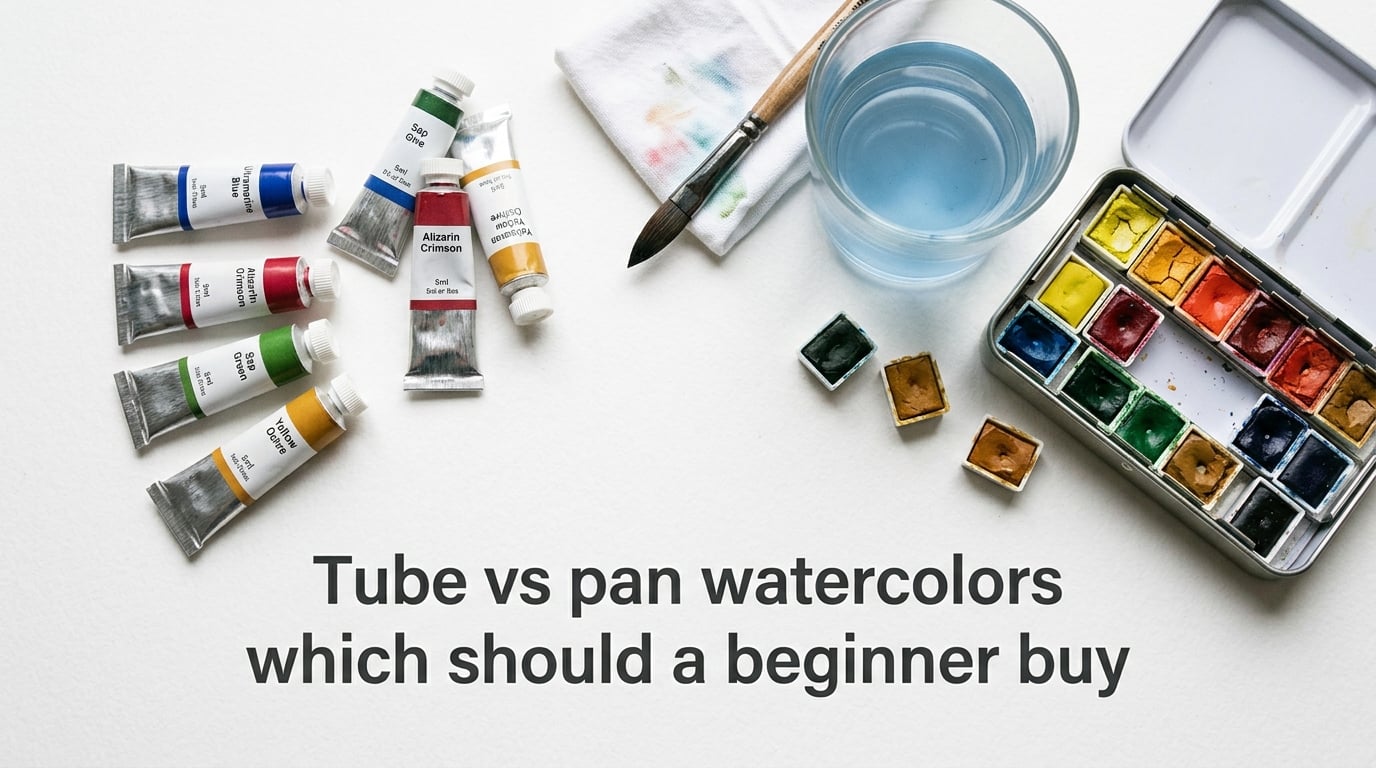
Choosing between tube and pan watercolors is one of the first decisions every beginner faces, and the answer is simpler than you might think. Pan watercolors are the better choice for most beginners because they’re portable, less messy, and easier to control when you’re just starting out. That said, understanding both formats helps you make smarter purchases as your skills grow.
In this guide, I’ll break down exactly what each format offers, when to choose one over the other, and how to avoid the mistakes that waste paint and frustrate new artists.
Table of Contents
What Are Tube Watercolors?
Tube watercolors come in small, collapsible metal or plastic tubes filled with moist, ready-to-use paint. The pigment is pre-mixed with gum arabic binder and enough water to create a smooth paste that squeezes directly onto your palette.
You then add water to the paint on your palette to reach your desired consistency. The paint stays wet on the palette for hours, sometimes days, depending on your climate and how much you squeezed out.
Tubes come in standard sizes of 5ml, 10ml, and 15ml, with 5ml being the most common for artist-grade paints. Professional brands like Winsor and Newton, Daniel Smith, and Schmincke Horadam all offer extensive tube ranges with single-pigment formulations.
What Are Pan Watercolors?
Pan watercolors are dried cakes of paint housed in small plastic or metal wells. The paint goes through an additional drying stage during manufacturing, creating a solid block that you reactivate with water by running a wet brush over the surface.
Pans come in two standard sizes: half pans and full pans. Half pans measure roughly 19mm x 16mm x 10mm, while full pans are 30mm x 16mm x 10mm. Most travel sets use half pans, while studio palettes often feature full pans.
You can also buy empty half pans and fill them yourself from tubes. This DIY approach lets you customize your palette and often saves money per milliliter of paint.
Tube vs Pan Watercolors: Key Differences at a Glance
Let’s break down the key differences between the two formats:
Form factor: Tubes contain moist paste; pans contain dried cakes.
Activation: Tube paint is immediately workable; pan paint needs water first.
Portability: Pans win easily with no risk of leaks or spills during travel.
Large washes: Tubes make it easier to mix large quantities quickly.
Cost per ml: Tubes are generally cheaper per milliliter than pre-filled pans.
Shelf life: Both last decades when stored properly, though tubes can dry out if left open.
Mess factor: Pans are cleaner; tubes can get messy on your palette and in your bag.
Reactivation: Pan paint reactivates easily with water; dried tube paint works but may not perform identically to fresh paint.
Advantages of Tube Watercolors
Tubes shine in specific situations that many artists encounter regularly.
Larger quantities of color. When you need a lot of one color for a big wash, tubes deliver. Squeeze out as much as you need directly onto your palette and dilute with water. This saves time compared to repeatedly scrubbing a pan.
Fresh, saturated color. The paint comes out at full pigment strength. You control the water-to-paint ratio completely, from thick impasto-like mixtures to delicate transparent washes.
Easier mixing. Many artists find it easier to mix colors when working with fresh paint from tubes. The consistency is predictable, and you can blend large batches without running dry mid-mix.
Better for studio work. If you paint primarily at a desk or easel with a dedicated palette, tubes make sense. You can load a palette with wells and keep paints moist for days using a spray bottle or palette lid.
Cost efficiency at higher volumes. Buying 15ml tubes and filling your own pans is almost always cheaper per milliliter than purchasing pre-filled pan sets.
Advantages of Pan Watercolors
Pans have distinct benefits that make them the go-to format for many watercolorists.
Superior portability. Pan sets close into compact cases that fit in a purse, backpack, or pocket. There’s zero risk of caps popping off and paint leaking into your bag. For plein air painting, travel sketching, or urban sketching, pans are the clear winner.
Instant setup. Open your palette, wet your brush, and start painting. No squeezing, no palette prep. This matters when inspiration strikes or when you’re painting outdoors with limited time.
Less paint waste. You activate only what you need by scrubbing the pan with a wet brush. Leftover paint dries right back into the pan and is ready for next time. With tubes, many beginners squeeze out too much and end up wasting paint.
Cleaner workflow. Your hands stay cleaner, your palette stays organized, and you spend less time cleaning up. For beginners still building habits, this simplicity reduces frustration.
Built-in color organization. A pan set arranges colors in a logical order inside a palette box. You can see all your options at once, which helps beginners learn color theory faster by visual reference.
Which Should a Beginner Buy?
For most beginners, I recommend starting with a pan set of at least 12 to 24 colors. Here’s why this approach works best for learning:
Pans match how beginners actually paint. When you’re learning, you tend to paint in shorter sessions, practice specific techniques, and work in smaller formats. Pans support this workflow perfectly without the overwhelm of managing a wet palette.
You’ll waste less paint. Beginners notoriously squeeze out too much paint from tubes. With pans, this problem simply doesn’t exist. You activate exactly what you need.
Portability encourages practice. A pan set goes anywhere. You can practice during lunch breaks, while waiting for appointments, or on vacation. The more accessible your supplies, the more you’ll paint.
Lower initial investment. A quality 12-pan set from a brand like Winsor and Newton Cotman or Sakura Koi costs less than buying 12 individual tubes.
When to consider tubes instead: If you plan to paint exclusively at home on large paper, or if you already have experience with other paint media, tubes might suit you better from the start.
How to Fill Your Own Pans from Tubes
One of the best tricks watercolor artists learn is filling empty pans from tubes. This gives you the portability of pans at the cost efficiency of tubes.
Step 1: Buy empty half or full pans. Most art supply stores sell them individually or in bulk. Standard half pans fit most palette boxes.
Step 2: Squeeze paint into the pan. Fill it about halfway to two-thirds full. Leave room for the paint to expand as it dries.
Step 3: Let it dry completely. This takes 24 to 48 hours depending on humidity and paint brand. Some honey-based paints like Daniel Smith take longer.
Step 4: Optional second layer. Once the first layer dries, add another squeeze to top it off. This creates a fuller pan that’s easier to activate.
Step 5: Label your pans. Use a fine-tip permanent marker or label maker. Paint color names on the pan itself or the lid of your palette.
Many experienced artists exclusively use this method. They buy large tubes, fill multiple pans, and have custom palettes ready for any project.
Common Beginner Mistakes to Avoid
Learning from others’ mistakes saves you time, money, and frustration.
Squeezing too much from tubes. A pea-sized amount is usually enough for a painting session. Start small and add more as needed. Excess paint on your palette dries out and gets wasted.
Not pre-wetting pans. Many beginners scrub a dry pan and get frustrated that no color comes off. Spray your pans with a fine mist of water 30 seconds before painting. This softens the surface and makes pigment release much easier.
Contaminating pan colors. Always rinse your brush thoroughly between colors. If you dip a brush loaded with blue into your yellow pan, you’ve created muddy green in the yellow well. Some artists dedicate separate brushes to dark colors.
Storing tubes improperly. Store tubes upright with caps tight. Tubes stored horizontally or upside down can develop air pockets that make squeezing inconsistent. Always recap immediately after use.
Assuming dried tube paint is ruined. If your tube paint dries out in the tube or on your palette, it can often be reactivated with water. Cut open a dried tube and use the paint like a pan. It may not be identical to fresh paint, but it’s still usable for many techniques.
Frequently Asked Questions
Which is better, watercolor tubes or cakes?
Neither is universally better. Tubes excel at mixing large quantities of paint and studio work, while pans (cakes) offer superior portability and convenience. For most beginners, pans are the better starting point because they’re cleaner, less wasteful, and encourage more frequent practice.
Can you put watercolor tubes into pans?
Yes, absolutely. Squeeze tube paint into empty half or full pans, let it dry for 24-48 hours, and it reactivates with water just like store-bought pan paint. Many professional artists do this to save money and customize their palettes.
What is the difference between tube and pan watercolors?
Tube watercolors contain moist paint in a collapsible tube that squeezes onto a palette. Pan watercolors contain dried paint cakes in small wells that reactivate with water. The pigment and binder are the same in both formats for most quality brands – the only difference is the water content and container form.
Are watercolor tubes or pans better for beginners?
Pans are better for most beginners. They’re portable, require no palette setup, minimize paint waste, and cost less to start with. Tubes become more useful once you develop preferences for specific brands and techniques.
How long do watercolor tubes last?
Unopened watercolor tubes can last 5 to 15 years or more when stored in a cool, dry place. Once opened, tubes last several years if kept capped and stored properly. Honey-based formulations tend to stay fresh longer than traditional gum arabic formulations.
Wrapping Up: Tube vs Pan Watercolors for Beginners
Both tube and pan watercolors use the same pigments and binders, so quality differences come down to brand, not format. The real question is which format matches your painting style and lifestyle.
For most beginners deciding between tube vs pan watercolors, I recommend starting with a quality pan set of 12 to 24 colors. Pans keep things simple, portable, and mess-free while you build foundational skills. Once you know which colors you reach for most often, invest in those specific colors as tubes and fill your own pans for the best of both worlds.