
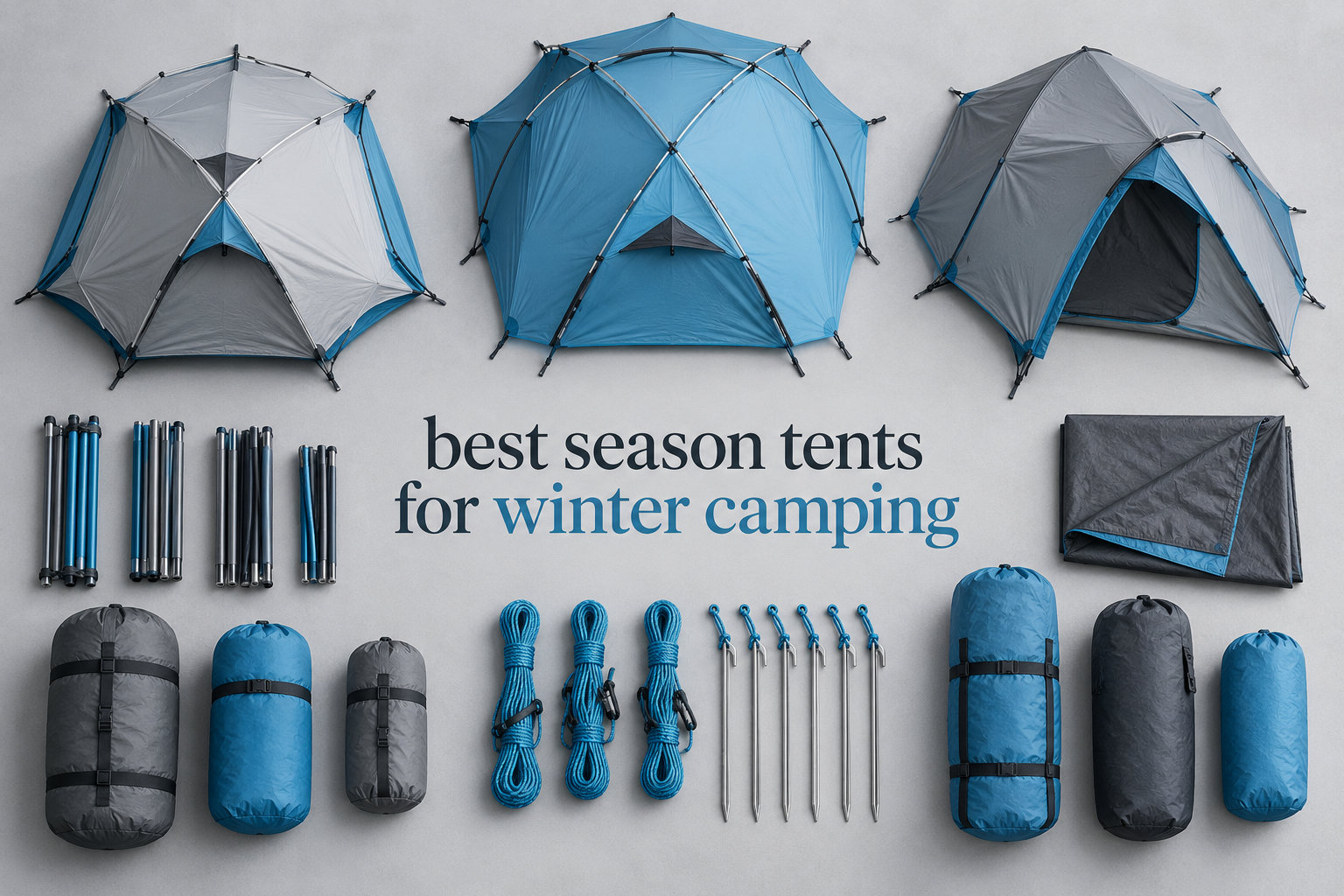
A 4 season tent is a shelter engineered for winter use: stronger poles, heavier waterproof fabric, minimal mesh, and a steep-walled shape that sheds snow and resists sustained wind. It does not create heat. It blocks drafts, sheds precipitation, and traps still air, while your sleeping bag and pad do the actual warming. That distinction matters more than any spec line, and it is the framing we use for every pick below.
Winter camping punishes a shelter in three ways at once: sustained wind loads the poles, overnight snowfall loads the roof, and the temperature swing turns any leak or condensation into a serious problem. A 3-season tent handles rain. A four-season tent handles weight and cold. We compared the ten 4 season tents below across waterproof rating, pole structure, snow skirts, guy-out point counts, packed weight, and real owner review volume to find the ones worth carrying or pitching in snow.
This list covers car camping, sled-side base camp, winter backpacking, mountaineering above treeline, and the hot tent category, and it was updated for 2026. Prices change constantly, so use the buttons below to check current listings rather than trusting any number you read in a review from last winter.
Table of Contents
Top 3 Winter Camping Tent Picks (October 2026)
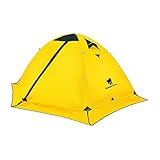
GEERTOP 2 Person Tent
- 210T ripstop fly with PU3000mm coating
- Fully taped seams and snow skirt
- Dual vestibules
- 6.9 lb packed
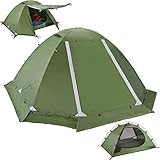
Clostnature 4 Season Tent
- PU5000mm coated bathtub floor
- Freestanding two-pole dome
- Two doors and two vestibules
- 6.28 lb total weight

Naturehike Massif Hot Tent
- Stove jack for wood or gas stove
- Snow skirt and 7001 alloy poles
- Room-and-hall layout with large vestibule
- Two ventilation windows
At a Glance: The Best 4 Season Tents for Winter Camping in 2026
Every tent listed here carries a winter rating from the manufacturer. Read the features column as the differentiators, not the marketing word season on the box.
| Product | Specs | Action |
|---|---|---|
| GEERTOP 2 Person Backpacking Tent |
|
Check Latest Price |
| Clostnature 4 Season Backpacking Tent |
|
Check Latest Price |
 1/2 Person 4 Season Backpacking Tent 1/2 Person 4 Season Backpacking Tent |
|
Check Latest Price |
 OneTigris Stella 4 Season Camping Tent OneTigris Stella 4 Season Camping Tent |
|
Check Latest Price |
 GEERTOP Waterproof 2 Person 4 Season Tent GEERTOP Waterproof 2 Person 4 Season Tent |
|
Check Latest Price |
| Naturehike Massif Hot Tent |
|
Check Latest Price |
 POMOLY Chalet 70 Series Hot Tent POMOLY Chalet 70 Series Hot Tent |
|
Check Latest Price |
 GEERTOP 4 Person 4 Season Camping Tent GEERTOP 4 Person 4 Season Camping Tent |
|
Check Latest Price |
 DANCHEL B5PRO Canvas Bell Tent DANCHEL B5PRO Canvas Bell Tent |
|
Check Latest Price |
 Ytaoeo Inflatable Hot Tent Ytaoeo Inflatable Hot Tent |
|
Check Latest Price |
How We Picked These Winter Camping Tents
We did not test ten tents in a blizzard, so we will not pretend otherwise. Instead we read the full owner review set for each product, cross-checked the listed specifications against the construction details, and ranked on the things that actually fail in winter.
Those criteria were waterproof coating and seam sealing, pole diameter and count, whether the tent carries a snow skirt or snow flaps, how many guy-out points you have to work with in wind, packed weight for the carry, and whether the interior is livable when you are stuck in it for four days. Review volume mattered too, because a tent with a hundred reviews tells you very little compared to one with two thousand.
One category gap shaped the list. Almost every ranking page we studied covered only two-person backpacking tents, while most reader questions were about 4-person and family setups. We included a family tent, two hot tents, and a canvas base camp shelter so the roundup answers the questions people actually search for. We also omitted anything without a verifiable winter construction spec, no matter how good the marketing looked.
1. GEERTOP 2 Person Backpacking Tent, Lightweight Waterproof 4-Season Tent
GEERTOP 2 Person Backpacking Tent, Lightweight Waterproof 4-Season Tent
Capacity: 2 person
Weight: 6.9 lb
Interior: 82.6 x 55 x 45 in
Fly: PU3000mm ripstop
Pros
- Largest owner review base of the ten
- Strong double-wall build
- Quick 5 to 8 minute setup
- Dual vestibules
- Dual doors
Cons
- Mesh-heavy build runs warm in summer
- Thin floor benefits from a footprint
This is the one we would hand almost anyone starting out. With more than 2500 owner reviews averaging 4.6 stars, it has a longer real-world record in winter conditions than anything else on this list, and that record is consistent rather than concentrated.
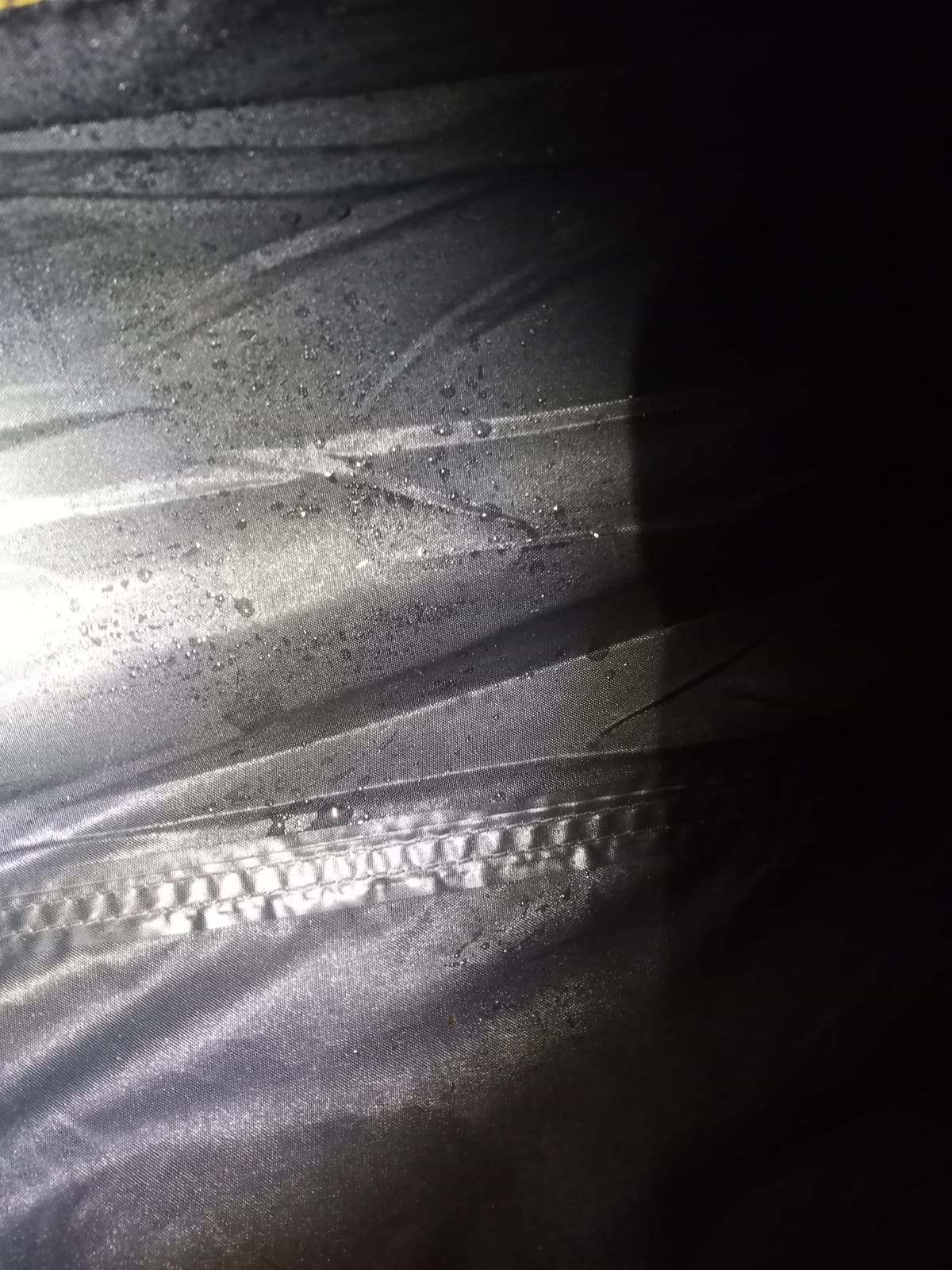
The construction is the reason. A 210T ripstop polyester rainfly with a PU3000mm coating sits over fully taped seams and an extended snow skirt, which is the combination that decides whether spindrift ends up on your sleeping bag at 3am. The two-pole aluminum frame is freestanding, which means you can pitch it on snow in wind without fighting a tent body that collapses the moment you look away.
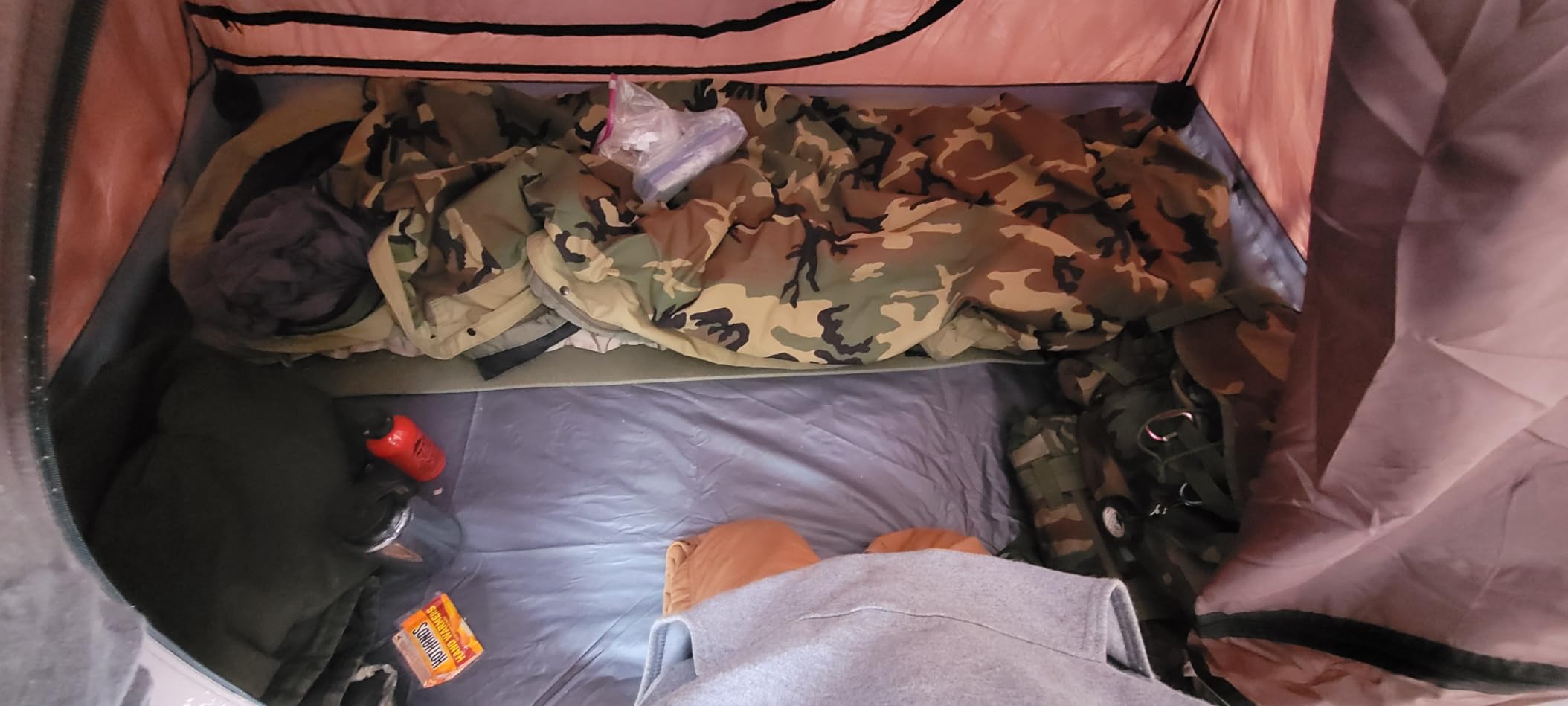
Owners consistently praise the space for a two-person tent. The interior measures 82.6 by 55 by 45 inches, and two adults can stretch out rather than sleeping in shifts. Two doors and two vestibules mean wet boots, a snow shovel, and a pack that did not stay dry all live outside the sleeping area.
The two complaints that show up repeatedly are both mild. The mesh panels that make it breathe in summer also make it stuffy on a hot night, which is the trade you accept for airflow. The floor is thin Oxford, so owners who camp on wet ground add a footprint or groundsheet. Neither complaint matters much when it is 20F outside.
What you get right in deep snow
The extended snow skirt runs the full perimeter of the floor, closing the gap between fabric and ground so wind-driven snow cannot crawl in underneath. Add the freestanding frame and you can drive stakes and guy lines at your own pace rather than fighting a pitched tent in a squall.
Reviewers also note that the 17 by 7 by 7 inch packed size fits into motorcycle luggage and side packs, which is rarer than it should be for a tent this sturdy. For a three-to-five-day winter trip that is the whole package: strong, quick, and small enough to carry.
Where it falls short
If your winter trips are long, this is a two-person tent that will feel small by day four. It has no stove jack, so you cannot run a heat source inside, and mesh panels mean your overnight condensation problem is a ventilation problem rather than a wind problem.
It also is not among the strongest storm shelters here. Owners testing it in serious wind report good results but not the kind of performance the expedition-grade designs below deliver. For above-treeline mountaineering, look further down this list.
2. Clostnature 4 Season Backpacking Tent, 1/2 Person Cold Weather Winter Tent
Clostnature 4 Season Backpacking Tent – 2 Person Cold Weather Winter Tent
Capacity: 1 to 2 person
Weight: 6.28 lb
Floor: 5133 sq in
PU5000mm coated bathtub
Pros
- Two doors and two vestibules
- Easy solo pitch in gloves
- PU5000mm bathtub floor
- Snow flaps block spindrift
Cons
- Thin rainfly tears easily
- Included stakes bend in firm soil
- Limited ventilation when fully closed
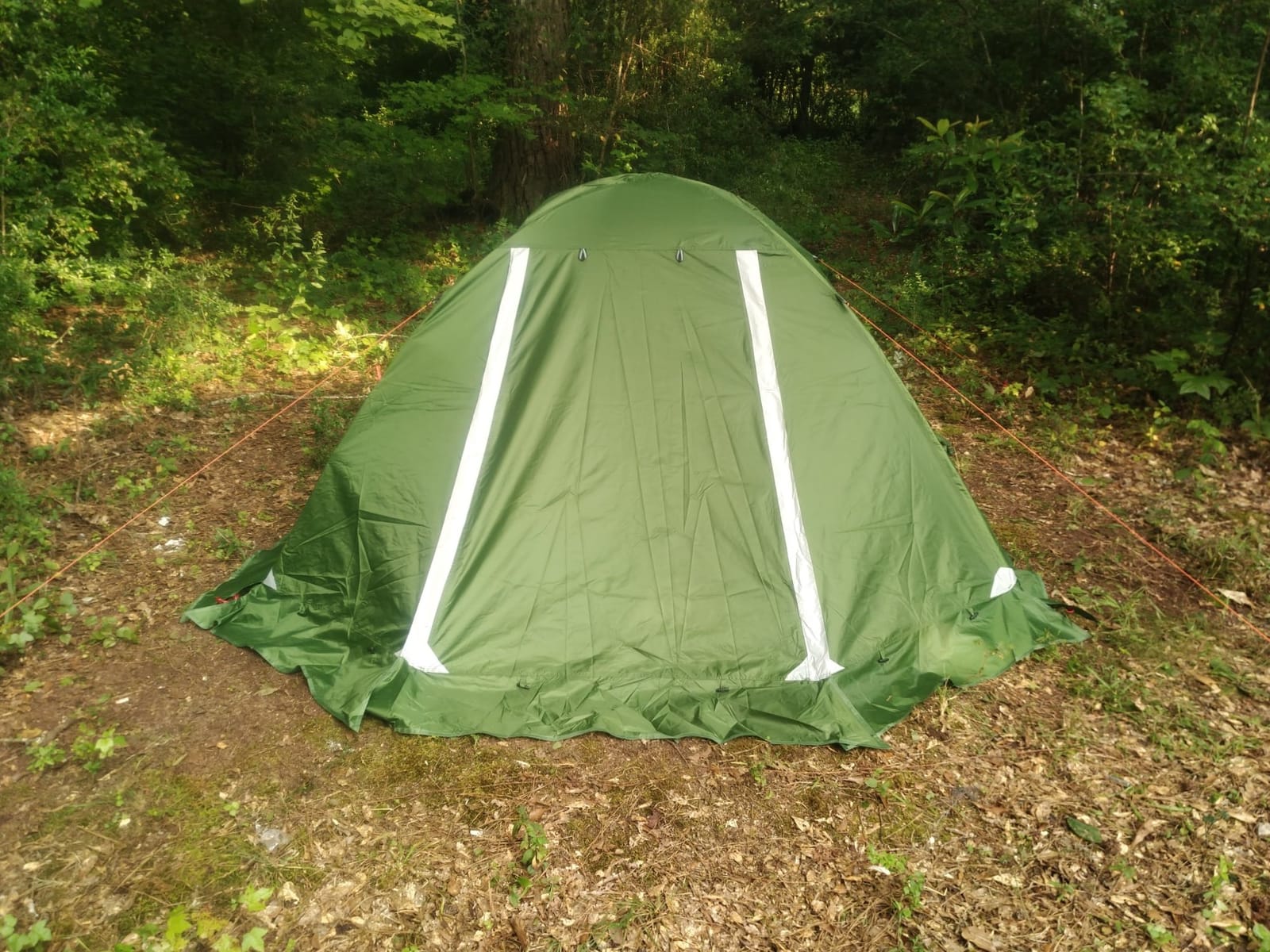
The Clostnature is the value pick, and the value is real: a PU5000mm coated bathtub floor and rainfly at a fraction of what expedition designs cost. Owners report it holding the interior dry through freezing rain and dense fog down near 41F.
What we like most is the pitch. It is a freestanding two-pole dome that one person can set up in the dark with gloves on, and that single fact changes winter trips more than any spec. When it is 15 degrees and the wind is up, nobody enjoys threading poles through sleeves.
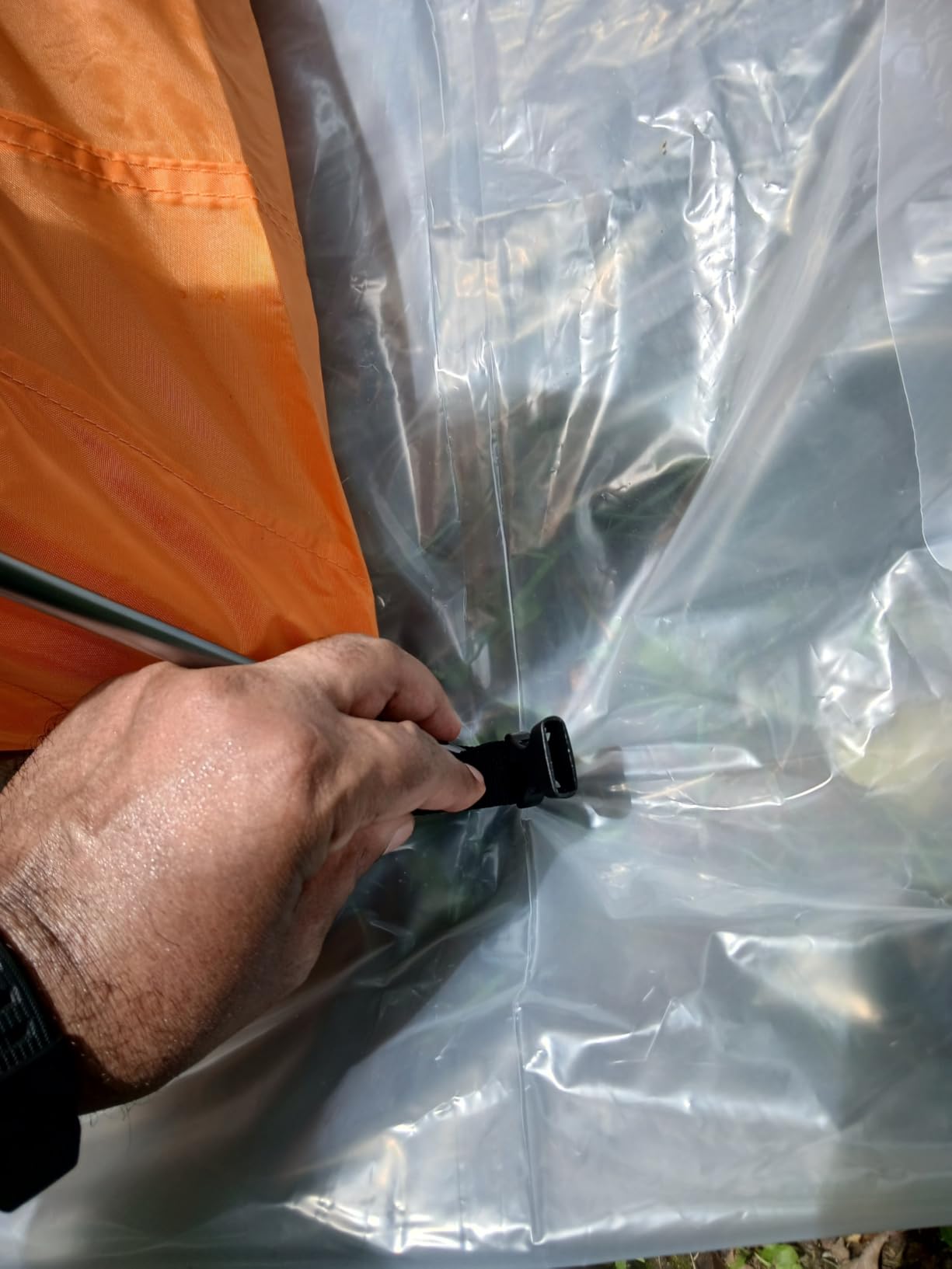
The interior runs 7 feet 3 inches by 4 feet 11 inches by 3 feet 10 inches, and the two D-shaped double-layer doors are a genuine advantage over single-door rivals. Two people can get in and out without waking each other, and two vestibules keep muddy boots out of the sleeping area.
Snow flaps are the detail that shows this was designed with winter in mind. They seal out spindrift at the shoulders of the tent where blowing snow works its way in through fabric seams, and owners credit them for keeping gear dry during storms.
What matters before you commit
The included stakes are the weak point. They are standard aluminum and owners report them bending in anything but very soft soil, which means you will be buying real snow stakes or deadman anchors regardless. Treat the supplied pegs as campsite conveniences, not winter anchors.
The rainfly fabric is also thin. Owners describe it tearing easily if snagged on branches while pitching in the dark, which is a fair trade for the weight saving if you pick sites carefully. The tub packs to 16.5 by 5.9 by 5.9 inches, small enough for a mountain bag or motorcycle saddlebags.
Who should skip it
If you plan to use a stove inside or expect sustained winds above treeline, this is not the tent. Condensation is the other watch item: with the fly fully closed and the doors shut, owners report limited airflow, so expect to vent with a vestibule open during the day.
Buy it for winter backpacking and shoulder-season trips in places with trees and moderate wind. It is not an expedition shelter and does not pretend to be.
3. 1/2 Person 4 Season Backpacking Tent, Lightweight Waterproof Winter Tent
2 Person 4 Season Backpacking Tent, Lightweight Waterproof Winter Tent
Capacity: 1 to 2 person
Weight: 5.73 lb
Peak: 45.3 in
Full-cover PU5000mm fly
Pros
- Roll-away snow skirt
- Low weight for a four-season build
- Solid pegs that survive rocky soil
- Fast pitch and pack-down
Cons
- Non-tarp floor needs a ground sheet
- Fly wets through on contact
- Tight for two adults with gear
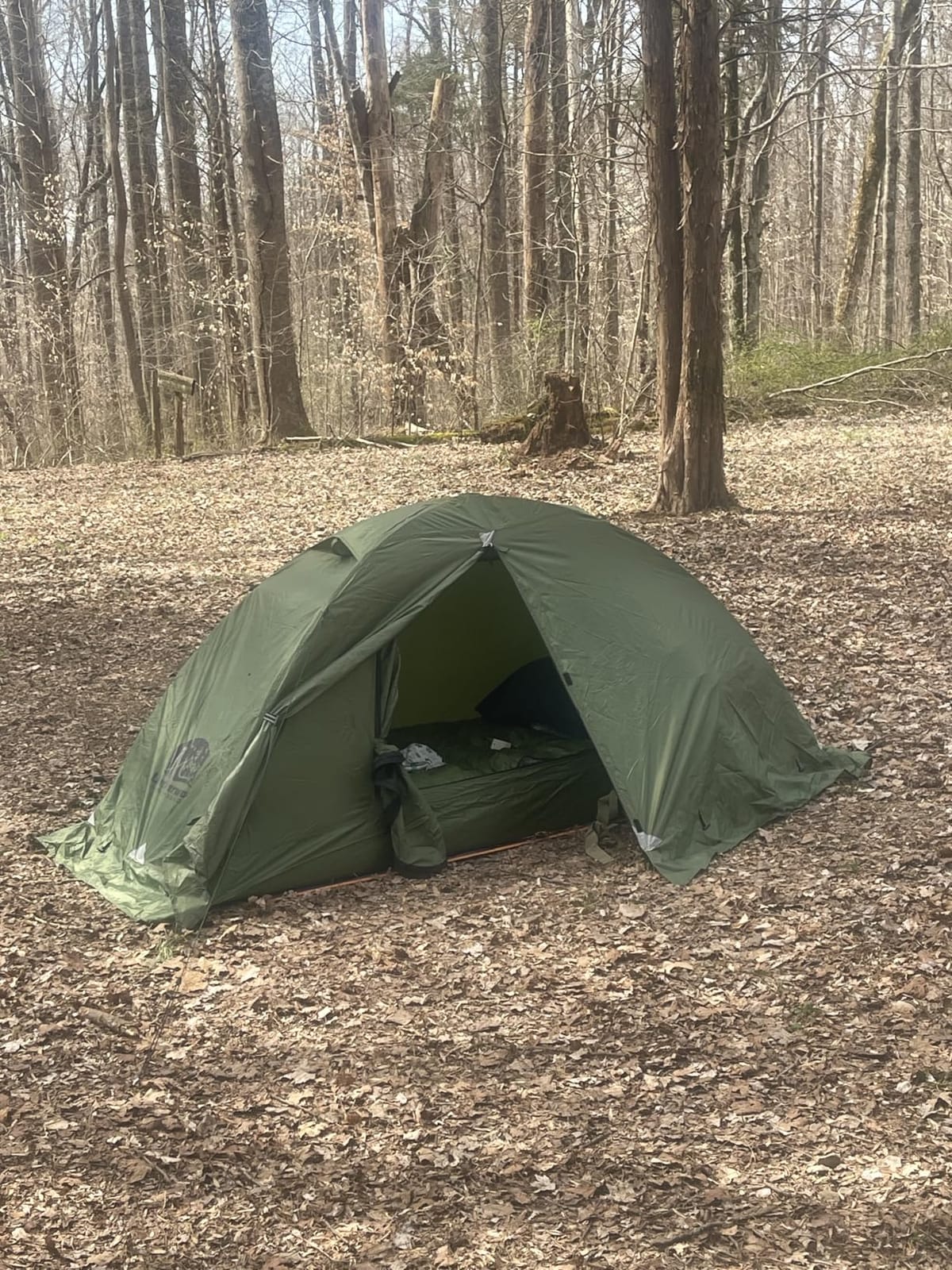
At 5.73 pounds with a full-cover rainfly rated at PU5000mm, this is one of the lightest winter-capable shelters in the group, and it carries a heavier fly than most tents at that weight. Owners use it for Patagonian treks, motorcycle tours, and sub-freezing nights, and they report no leaks.
The four aircraft-grade aluminum poles and double-layer door give it more structural backbone than the weight suggests. Double-layered corners are a detail that matters when a gust loads the fly and tries to peel the tent apart at the seams.
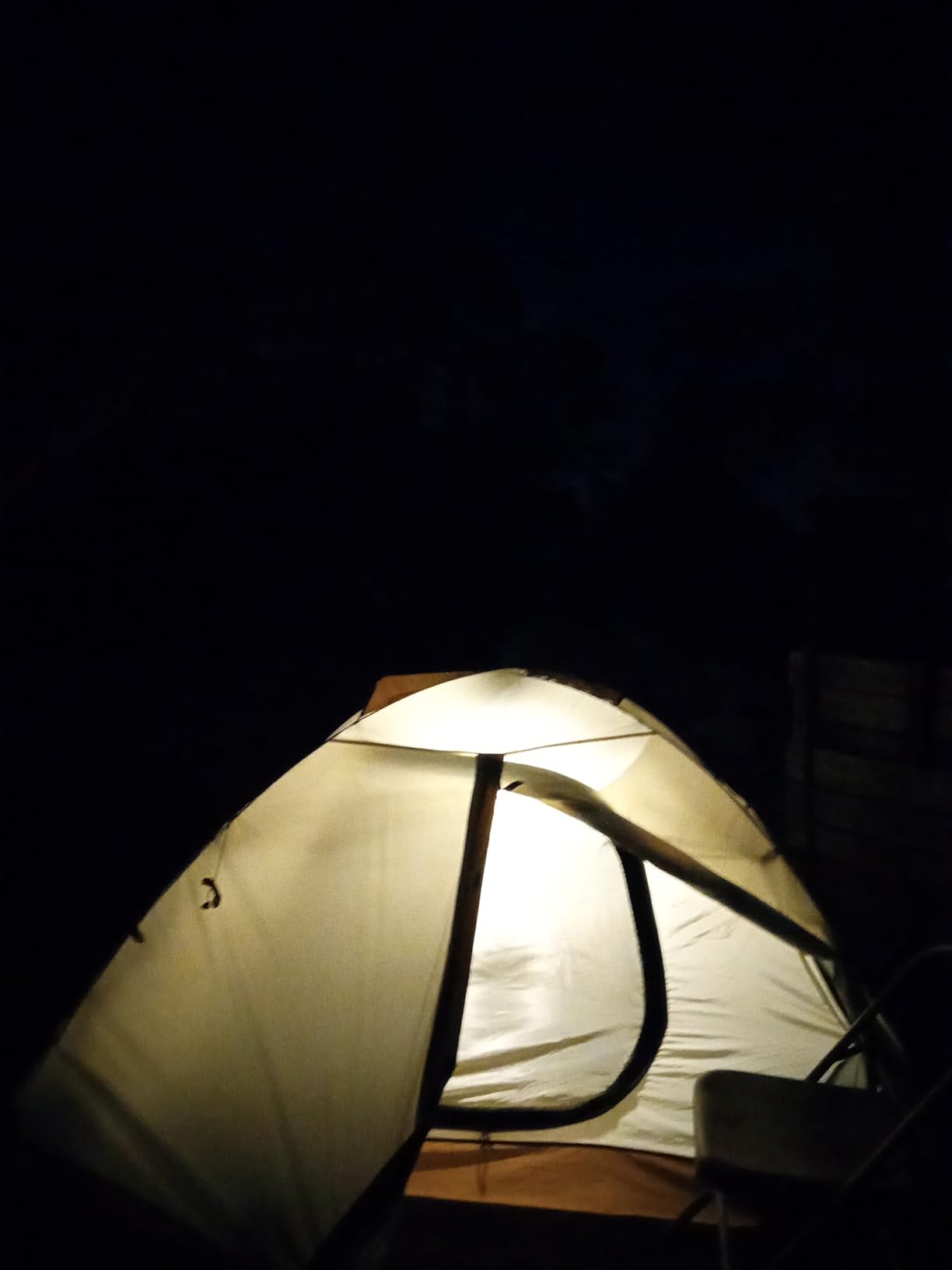
One reviewer category worth noting: buyers who liked it bought more than one. That usually means it is a solo-plus-gear tent or a family setup, not a snug two-sleeper. The 45.3 inch peak height is workable, and the roll-away snow skirt gives you the sealing coverage you want at the floor line.
Two-way zippers, a camping light hook, and a mesh storage pocket are small things that get used constantly on multi-day winter trips when everything lives in the tent.
Deciding between this and the Clostnature
Both sit in the same weight class, so the deciding factors are doors and floor material. The Clostnature gives you two doors and a coated bathtub floor; this one gives you a single door and a lighter floor that benefits from a groundsheet in wet conditions.
If you are pitching on snow with a synthetic or down pad, the bathtub floor difference matters. If you are moving fast and solo, the smaller pack and quicker pitch here win.
Known problems to plan around
The full-length fly wets through wherever it rests against the tent body, and it does not stretch evenly, leaving wrinkles that hold water. Owners report both issues consistently. Neither causes a leak, but both mean you should never lay the fly directly on a snow surface expecting it to stay dry.
Ventilation is limited, so it stuffies in hot weather. For winter that is a fair trade.
4. OneTigris Stella 4 Season Camping Tent, Waterproof Lightweight Easy Setup
OneTigris Stella 4 Season Camping Tent Backpacking 2 Person Waterproof Lightweight Easy Setup Instant 3000mm Waterproof Rating Outdoor Hiking Tent, Black
Capacity: 2 person
Weight: 4.4 lb listed
Footprint: 28.29 sq ft
Fly: 20D nylon, 3000mm
Pros
- Lowest listed weight among the ten
- 3 to 5 minute solo pitch
- Survived 30 to 40 mph gusts
- Removable blackout outer
Cons
- Cramped interior for two
- No side vents
- Tiny high vestibule admits rain
Reviewers describe the Stella as staying bone dry through three nights of heavy rain and sub-freezing cold, and holding up to 30 to 40 mph wind gusts while nearby tarps failed. That is a genuinely good result for a tent that weighs 4.4 pounds on the label.
The flexible poles cross at the top of the dome and anchor to all four corners, which is a stronger geometry than the two-pole budget tents it competes with. Owners rate it warmer than mesh-walled three-season tents, which tracks with the solid 20D nylon outer and single-layer silicone coating.
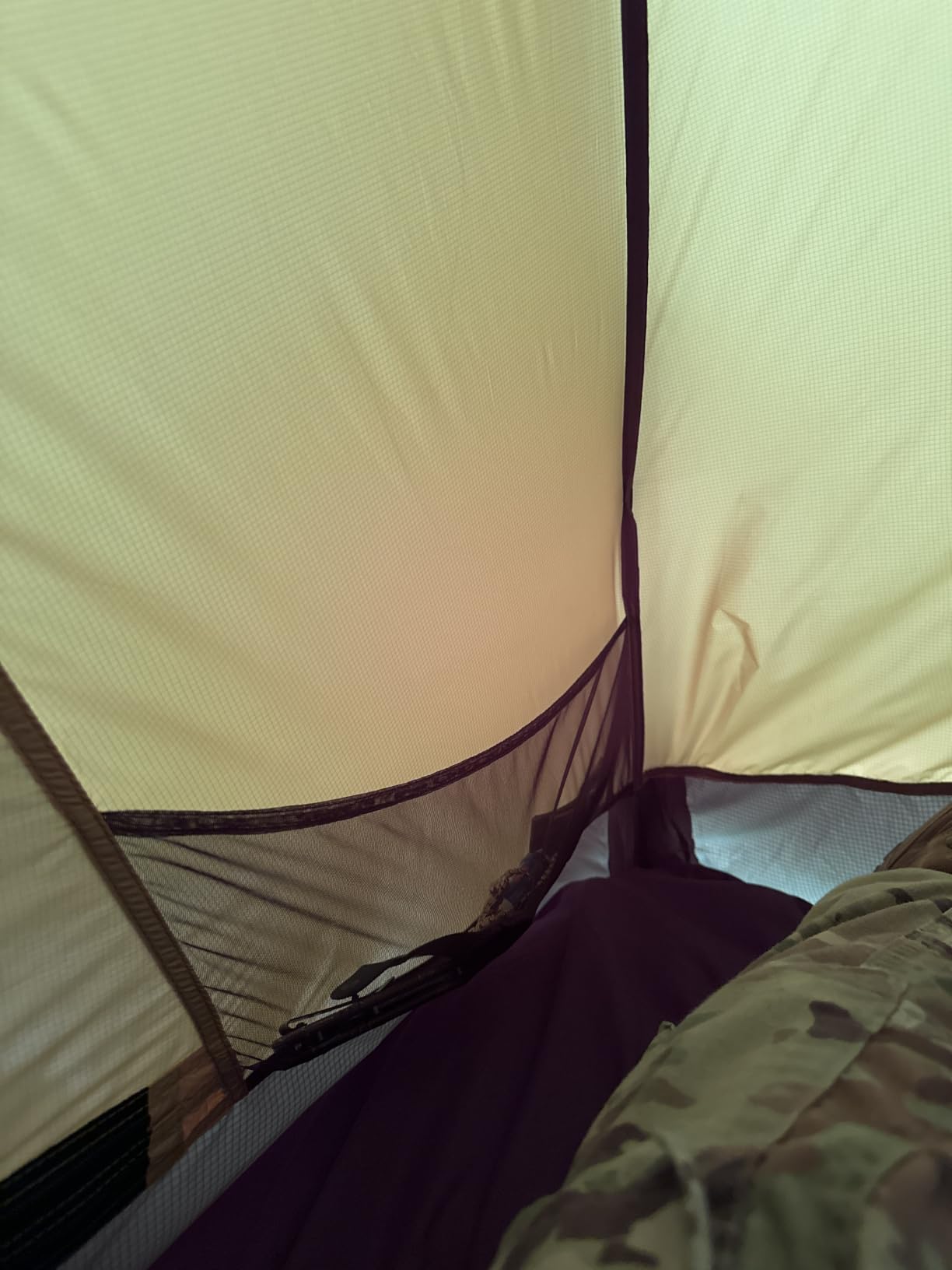
The removable blackout outer tent is the feature we did not expect to care about. Owners using it as a winter tent leave it in place for heat retention; owners in shoulder seasons strip it back. One shelter, two configurations, without buying a second tent.
Setup time is the other quiet advantage. Three to five minutes for one person means you can pitch at a snowfield camp without standing in the wind for twenty minutes.
Where the four pounds are hiding
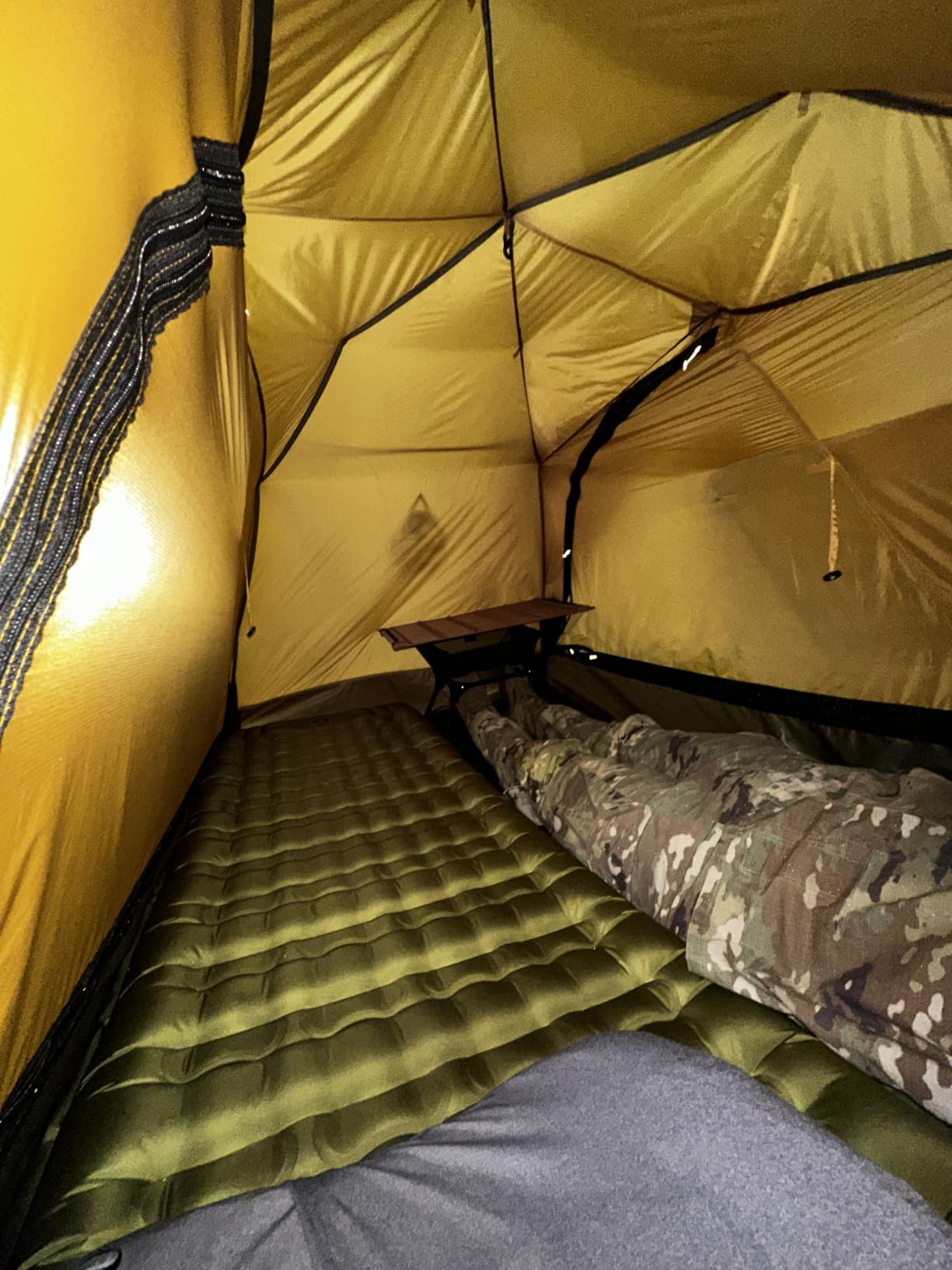
One reviewer complaint is worth weighing honestly: the listed 4 pound weight is closer to 5 pounds in practice. That is normal for a category where manufacturers quote the lightest component, but if you are counting every gram against a strict limit, assume the higher figure.
The interior is 6.9 by 4.1 by 3.7 feet, and some owners fit only a single person plus gear. Treat the two-person rating as a snug two-person rating, or a generous one-person-plus-dog rating.
Best use case
This is the pick for winter backpacking where every pound counts and storms are moderate rather than alpine. It is a solo or solo-plus-gear winter tent, not a two-person expedition shelter.
Owners do flag that there are no side vents, so summer ventilation means unzipping doors and vestibules. And the vestibule sits high off the ground and is small, which lets rain in on entry. Use the outer layer for gear that tolerates a splash.
5. GEERTOP Waterproof 2 Person 4 Season Freestanding Backpacking Tent
GEERTOP Waterproof 2 Person 4 Season Freestanding Backpacking Tent
Capacity: 2 person
Weight: 7.4 lb
Fly: 20D ripstop, PU8000mm
Floor: PU5000mm bathtub
Pros
- Rainfly rated at PU8000mm with a PU5000mm floor
- Poles outside the fly
- Suspended inner manages condensation
- Very large vestibule
- Standalone rainfly mode
Cons
- Sleeve assembly is cumbersome
- High ceiling slows warming
- Low cramped doors
- Included stakes useless in snow
This is the most technically interesting design here, with the highest listed waterproof rating of the ten. A PU8000mm fly over a PU5000mm bathtub floor is the highest waterproof pairing listed among these ten tents, and owners report bone-dry interiors in multi-day rain and sustained wind.
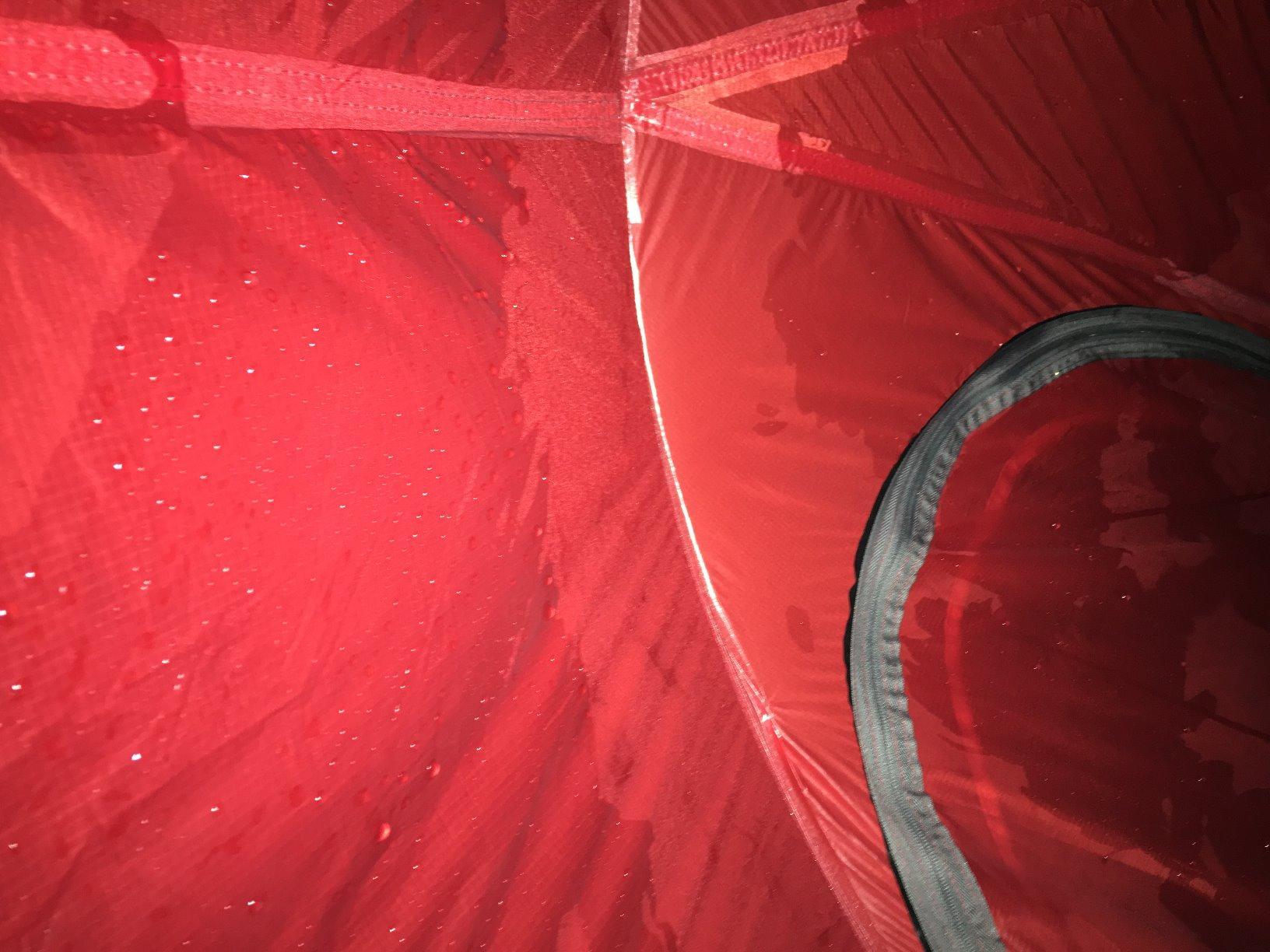
The unusual part is the pole layout. Poles run outside the fly and the inner tent hangs from tabs beneath it, creating a suspension cavity between the two. That gap is what channels condensation away from your sleeping surface instead of letting it drip onto you, which is the single biggest complaint owners report about other winter tents.
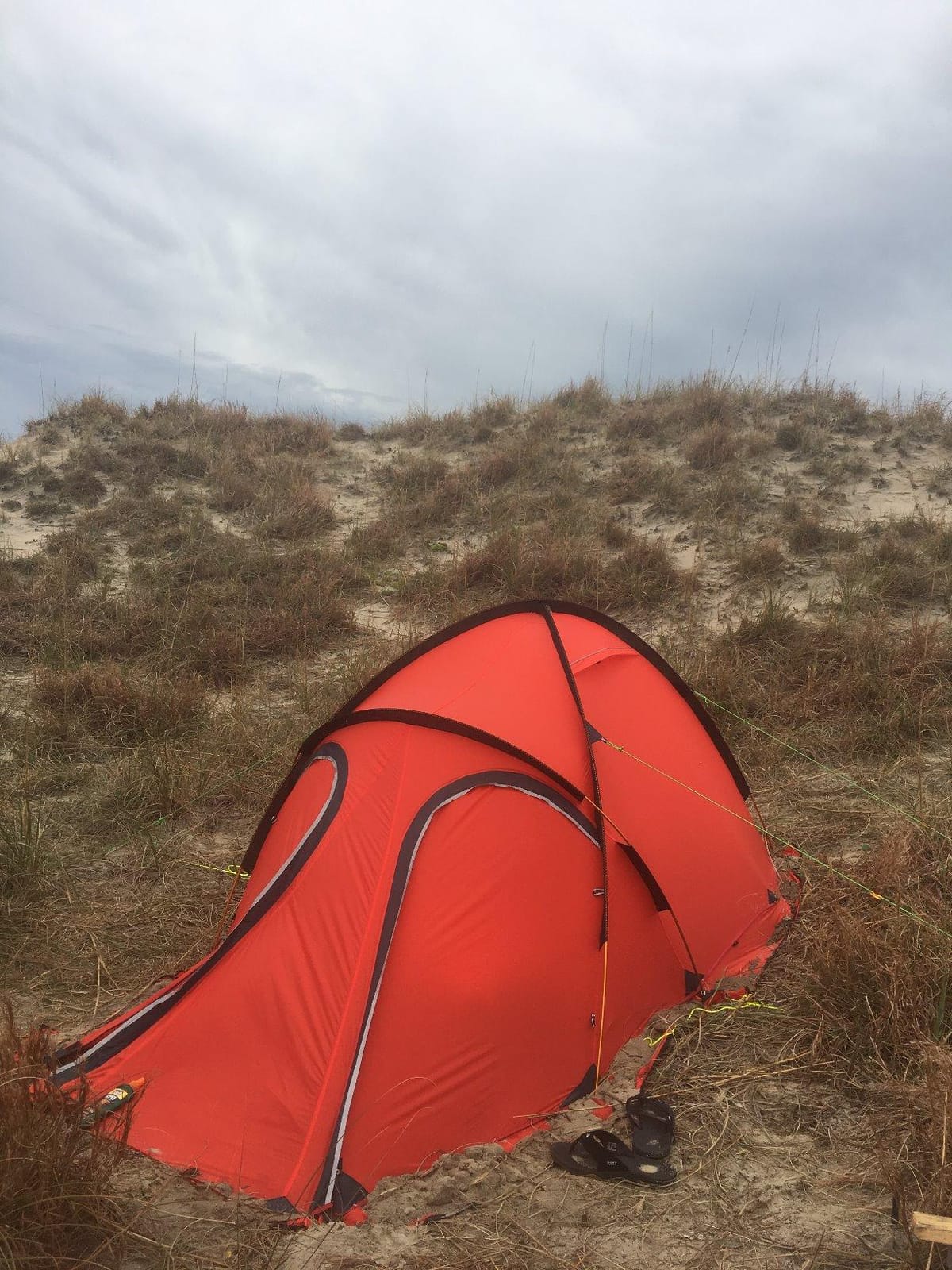
Pitch the fly first and you stay dry while you work, which is a genuine advantage when the rain is horizontal. There is also a large vestibule big enough to cook and store gear outside, and the fly alone works as a standalone shelter if you want a cheap secondary camp.
With 21 guylines and reflective guy lines, this is by far the most anchoring hardware in the group, and owners report holding up in 25 to 40 mph winds and 10F nights.
The trade you make for that performance
Pole sleeves make assembly and disassembly cumbersome, and that is a real cost on multi-day trips. One owner reported a mis-sized pole that bent permanently and tore a corner tab, so inspect the pole set before the first pitch rather than after it matters.
The interior is smaller than the exterior suggests, with low doors that feel cramped. And the high ceiling works against you thermally: warm air collects at the top, so the tent takes longer to warm up than a lower, tighter design.
Who it suits
If your priority is staying dry in genuinely wet, windy conditions and you can accept a heavier, fussier pitch, this is the most storm-capable shelter in the group. Extended snow skirts close the perimeter for blowing snow.
Do not carry the included stakes expecting them to work. Owners report them useless in snow or loose sand, so plan on real anchors regardless.
6. Naturehike Massif Hot Tent with Stove Jack, Waterproof Windproof 4 Season Tent
Naturehike Massif Hot Tent with Stove Jack, Waterproof Windproof 4 Season Tent, 2/4 Person Cold Weather Winter Tents for Camping
Capacity: 2 person, 89 sq ft
Weight: 10.5 lb
Fabric: 30D silicone polyester
Poles: 7001 aluminum
Pros
- Excellent heat retention with a stove
- Massive vestibule fits a chair and table
- Color-coded pole guides
- Withstood heavy rain turning to snow
Cons
- Heavy and bulky to carry
- Only 6 guylines and 13 pegs
- Thin inner tub lets ground moisture in
Most 4 season tents on this list are shelters you sit in. This one is a room you heat. The stove jack accepts a wood-burning or gas camp stove, and owners treat this as a car-camping or sled-based hot tent with a lot of interior room for the class.
Hold a stove running inside and the heat retention is the standout feature. The 30D silicone-coated polyester fly over a 70D nylon inner, plus a snow skirt that blocks wind and blowing snow, creates a space that stays comfortable when outside temperatures fall well below freezing.
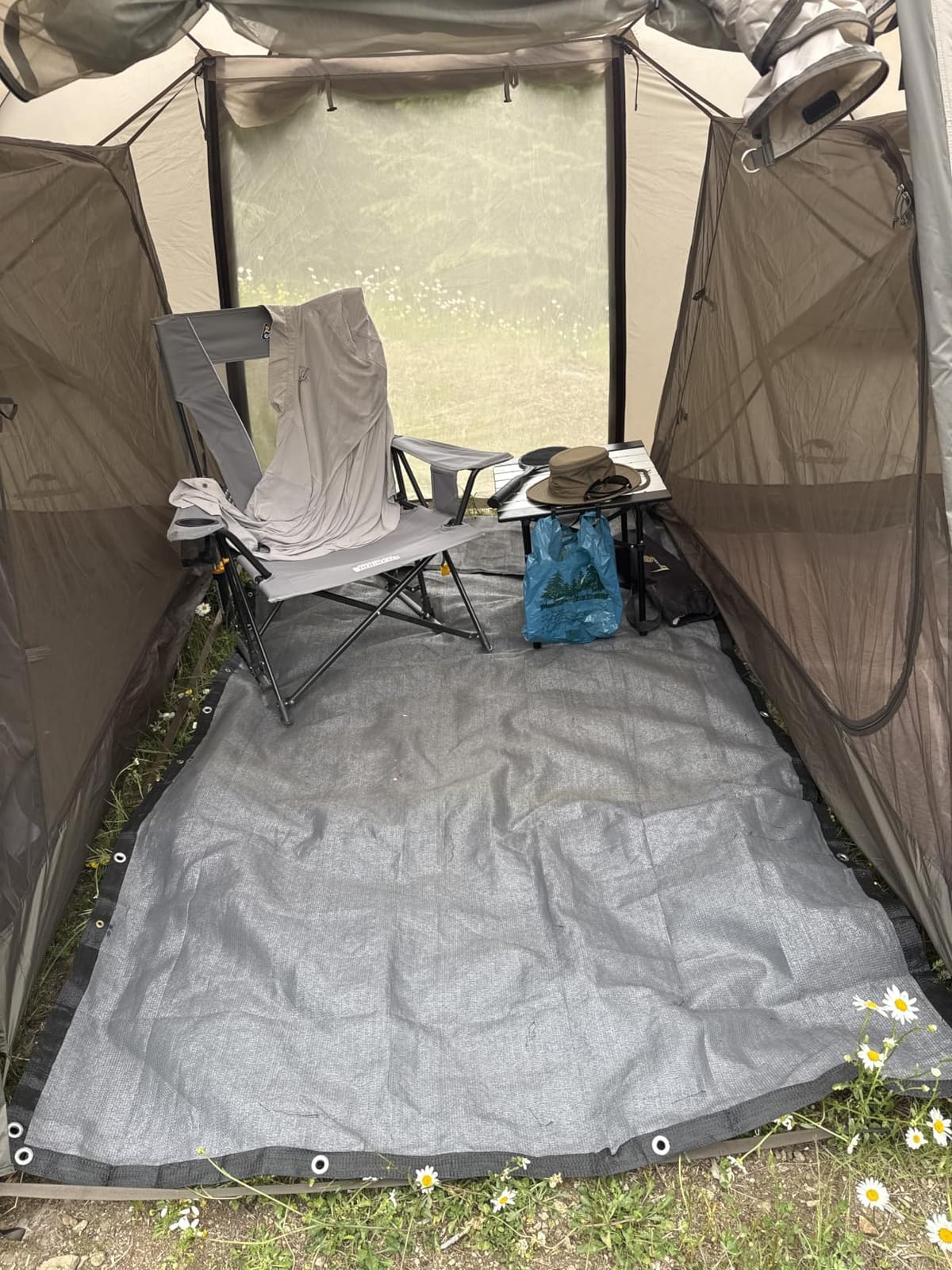
The layout is room-and-hall. The vestibule fits a chair and a table, doubles as a changing room, and two ventilation windows plus a breathable mesh inner give you the airflow you need once a stove is burning.
Build quality reads solid. Owners describe thick poles and reinforced stress points, color-coded pole guides that make a first pitch easy, and 7001 aluminum alloy across the frame. One review reported it withstanding hours of heavy rain that turned to two inches of snow.
Where the weight and the stakes become problems
Total weight is about 10.5 pounds, with a minimum trail weight of 7.3 pounds. That rules it out for backpacking and makes it a car-camping or sled-hauling shelter only. The packed size of 20.5 by 9 by 6.7 inches reflects that.
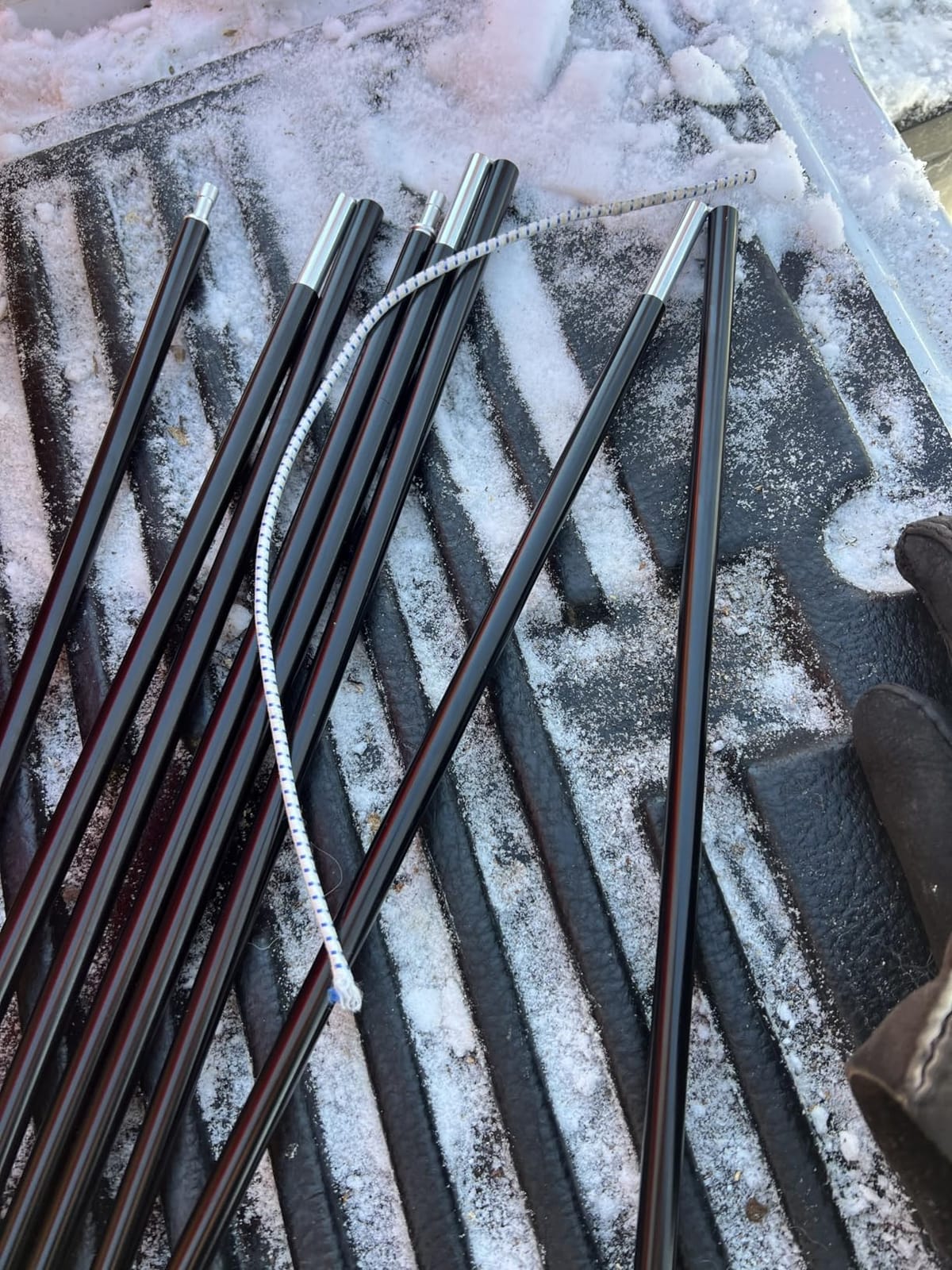
Owners are blunt about the guy-out points: six guylines and 13 pegs is thin hardware for a tent this size, and they report pole strength being limited in high winds. A stove adds interior heat but also adds load on the structure, so plan extra anchors in exposed sites.
Condensation is the price of a stove
Two moisture complaints recur. The 70D inner bathtub lets damp ground seep through on poor sites, and condensation drips from rain and snow pooling above the sleeping area. A footprint and a ground sheet solve the first; orienting the tent and pitching on a slope solves the second.
Used with the stove jack closed, it works as a standard 4-season tent, though the interior height of 57 inches is low for standing.
7. POMOLY Chalet 70 Series Portable Wall Tent with Stove Jack
POMOLY Camping Hot Tent Cabin Tent, Chalet 70 Pro Portable Wall Tents with Stove Jack and Two Poles for 2-3 Person Hiking, Backpacking (M)
Capacity: 2 person, 54 sq ft
Fabric: 70D plaid ripstop
Waterproof: 2500mm
Floor: fireproof fiberglass mat
Pros
- Fireproof fiberglass and silicone floor mat
- Solid seams with no pinholes
- Two opposing doors
- Good heat retention for the design
Cons
- Heavy with oversized supplied stakes
- No high vents so condensation is intense
- Fabric adds no insulation alone
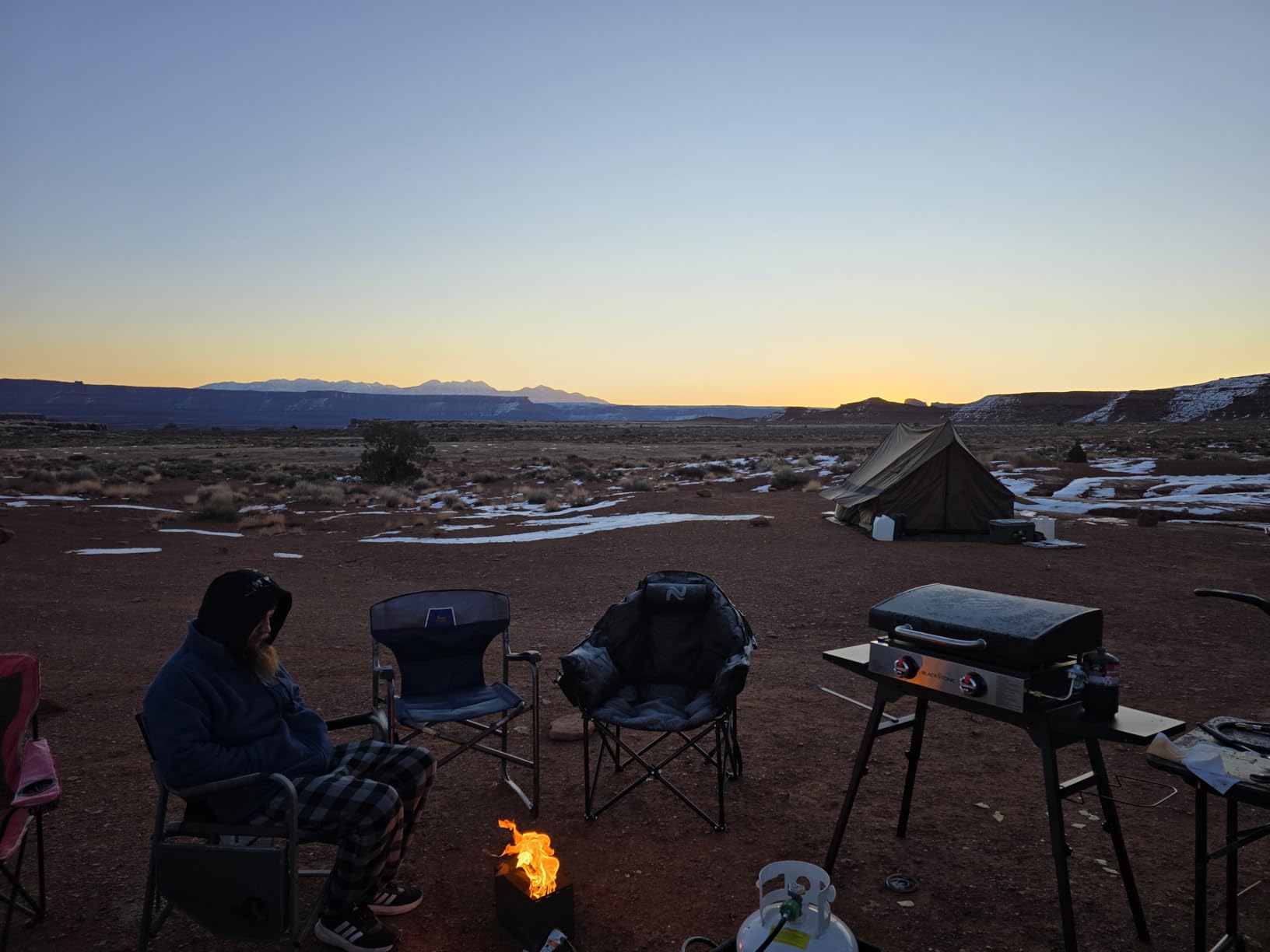
The POMOLY is the most considered starter hot tent here, mostly because of one detail: the integrated fireproof ground sheet in silicone and fiberglass cloth, plus an included ember mat. When you are running a wood stove inside a tent, that floor detail is the one that matters most and the one most manufacturers skip.
Owners also report solid seams with no pinholes and no faulty stitching, which in a tent category is genuinely notable. Two opposing doors make entry and exit easy, which matters more than it sounds once a stove is running and you want the door closed behind you.
The side rain curtains on both doors are a smart addition. They let you open a door for ventilation in rain without letting the weather in, which is the standard hot tent compromise solved properly.
Heat retention compares well against other hot tents at this level, and owners consider it strong value against similar designs.
Understanding what the fabric does not do
Owners are clear that the 70D plaid ripstop polyester does not insulate. It blocks wind and sheds precipitation, and that is all. In real winter use this tent requires a stove, and treating it as a standalone winter shelter will leave you cold.
The waterproof rating is 2500mm, the lowest of the group, so this is a shelter for sheltered sites and dry snow rather than driven rain.
Weak points to know about
There are no high vents, and owners report condensation building up intensely in cold weather. Open both doors and use the rain curtains, but plan on managing moisture deliberately.
Weight is the other issue: the supplied stakes are large and add considerable weight, and one reviewer reported a unit arriving with the main pole structure missing. Inspect the package on arrival. Entry is cramped because there is a single peak pole at each end.
8. GEERTOP 4 Person 4 Season Camping Tent for Family
GEERTOP Waterproof 4 Person 4 Season Family Camping Tent
Capacity: 4 person
Weight: 9.1 lb
Floor: 7797 sq in
Double-wall, PU5000mm floor
Pros
- Survived 60 mph wind and a thunderstorm
- Fast easy pitch
- Roomy interior
- Four vestibules
- Good ventilation with fly on
Cons
- Nominally four person but sleeps two adults well
- Flimsy poles
- Floor wore through on sandy ground
Nearly every roundup we studied skipped the family 4 season tent, and that is why this one is here. It is a genuine double-wall with a PU3000mm rainfly over a PU5000mm Oxford floor and fully taped seams, plus an integrated snow skirt that blocks wind and blowing snow.
Owners report it staying up and leak-free through a 60 mph wind with a thunderstorm overhead, and pitching quickly even in the dark. The interior measures 6.9 by 7.8 feet and fits a cot, a sleeping bag, a backpack, and a cooler.
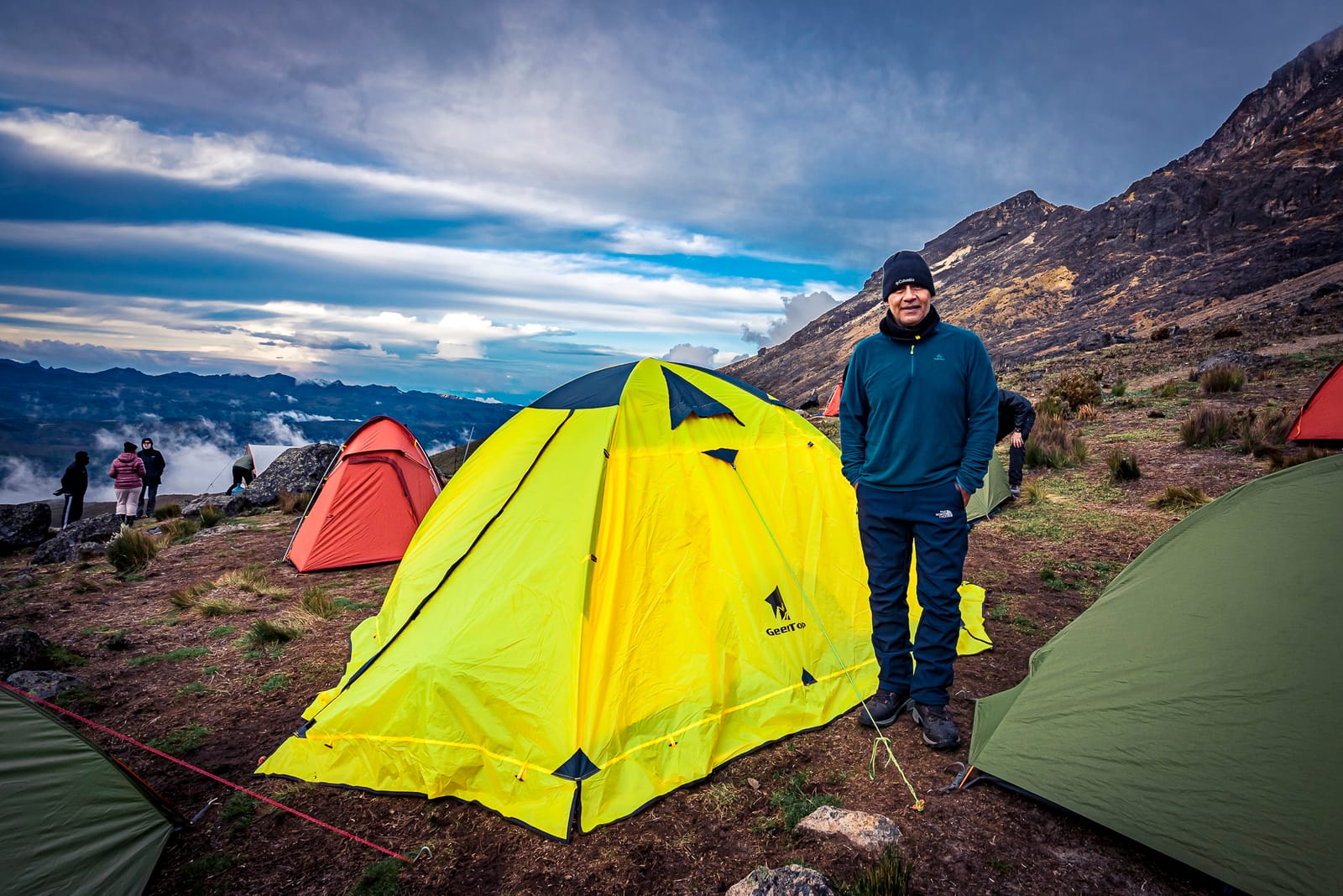
Ventilation is better than most in this category. Two large doors, dual ventilation windows, and breathable mesh panels mean it stays workable in heat, and owners still report the interior dry in heavy snow and rain.
Four vestibules is a lot of covered space for wet gear, and the vestibule can be pitched out with trekking poles to add a porch. At 9.1 pounds it packs down small enough to be car-friendly.
Reading the four-person rating honestly
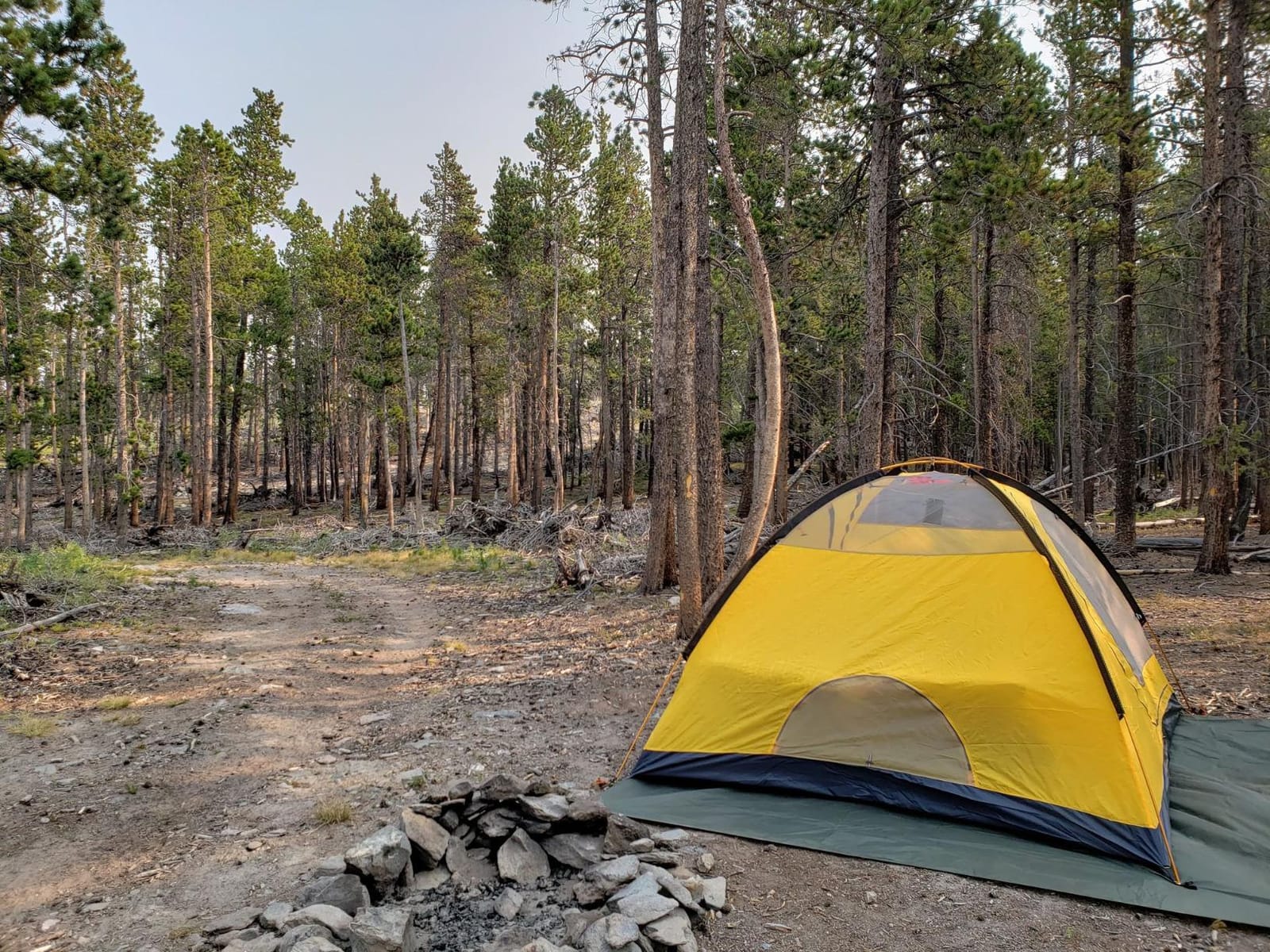
Owners are consistent on this: it is a four-person tent in the sense that four people fit, but two adults sleep comfortably. Families with small children, or two adults and a large dog, get a workable winter base. Two adults plus full gear will want more room.
If you need genuine four-person sleeping capacity, budget for a larger shelter and pack it by vehicle rather than by backpack.
What to reinforce before a storm
The poles are the recurring weakness. Owners report them buckling under wind and replacement sections being hard to source, so if you camp in exposed winter sites, confirm what replacement hardware is available before you need it.
Other complaints: the tent runs very hot when fully zipped up, the thin floor fabric wore through after two days on sandy ground, plastic rainfly clips feel cheap and break easily, and some water spray enters through the side vent panels in heavy rain. Leave the vents slightly open in downpours.
9. DANCHEL OUTDOOR B5PRO Canvas Bell Tent with Stove Jack
DANCHEL OUTDOOR B5PRO 4 Season Canvas Bell Tent with Stove Jack 13ft/4M
Capacity: 4 person
Floor: 135 sq ft
Peak: 8.2 ft
300GSM canvas, galvanized steel
Pros
- One person can erect it in under 30 minutes
- Holds heat well with a wood stove
- Sturdy stakes and tensioners
- 540GSM bathtub floor
- Roomy enough for beds and firewood
Cons
- Bulky and heavy to move
- Overheats in sun and cools at night
- Bottom perimeter leaks without a rain fly
- Stove jack flap is highly flammable
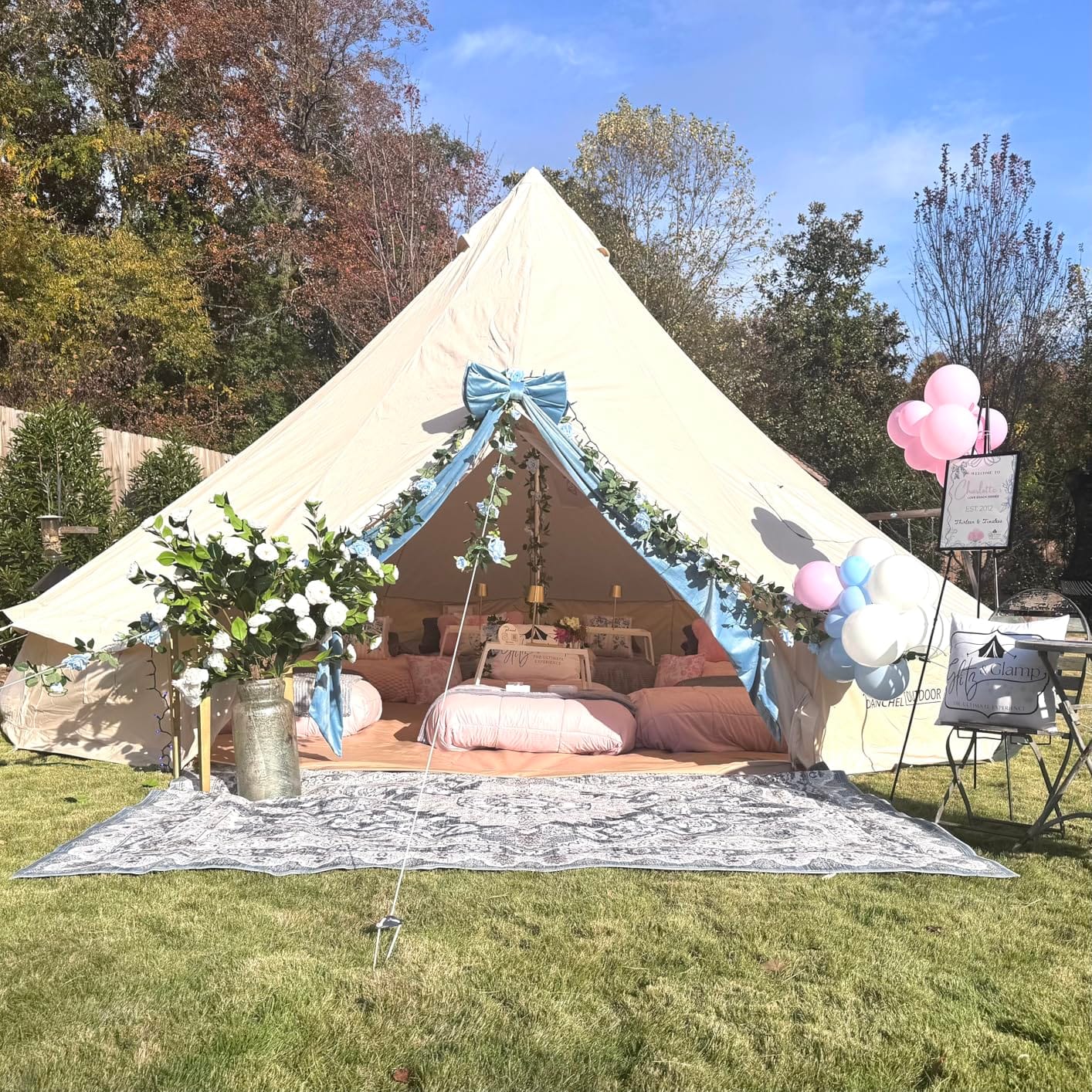
The B5PRO is not a backpacking tent and does not pretend to be. It is a 300GSM cotton canvas bell tent on a galvanized steel frame with a 135 square foot floor and an 8.2 foot center height, built for winter base camp where you drive up and stay put.
Owners value the setup speed most: one person can erect it in under 30 minutes. They also value the hardware, reporting sturdy stakes, guy lines, and tensioners that resist deformation in rock and gravel, which is exactly where you will pitch a base camp.
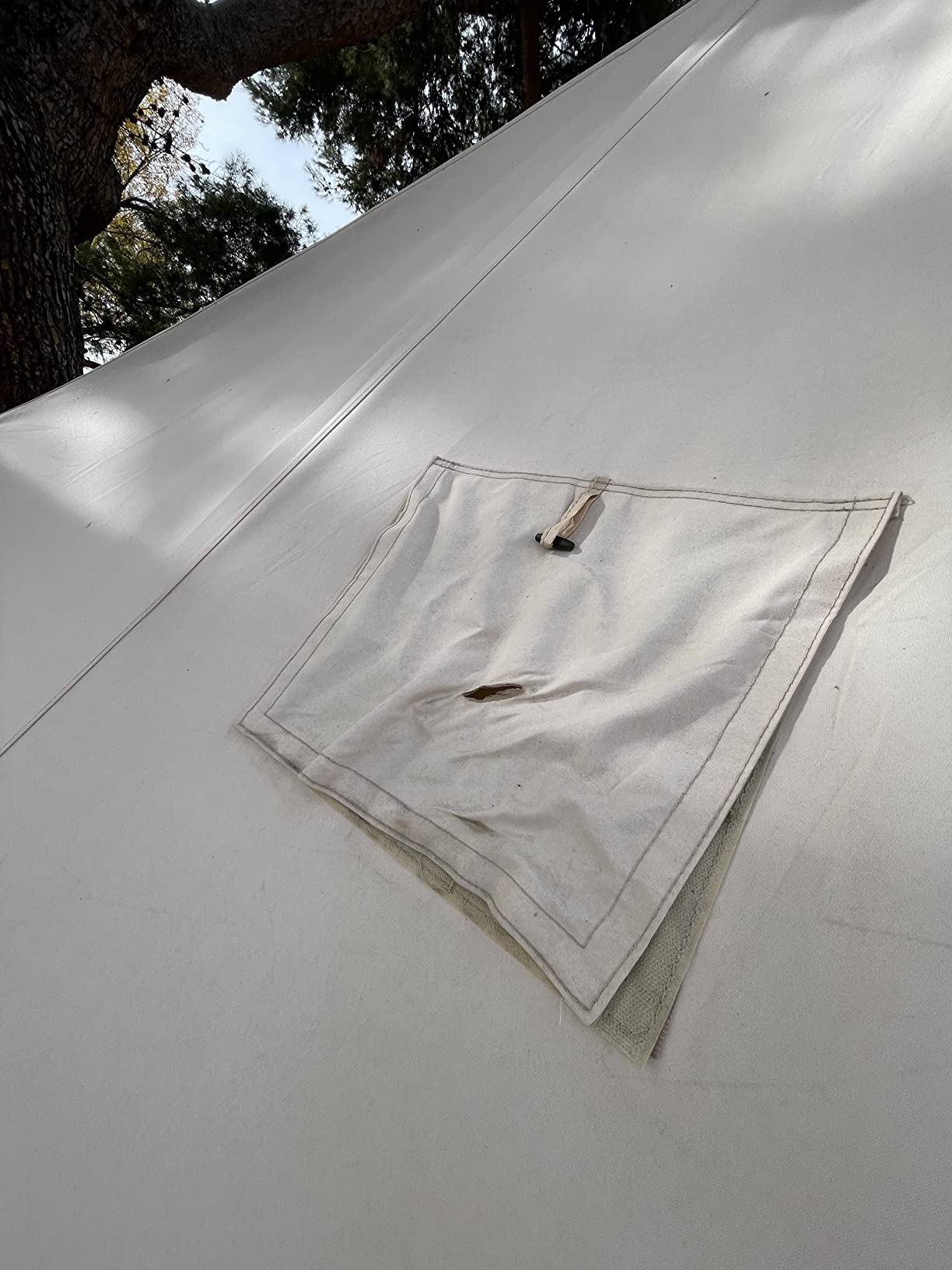
The pre-cut 5.9 inch stove jack with rain flap, the 540GSM bathtub-style PVC floor, and the 6 inch side vent port for air conditioning hoses or cables are the details that separate a canvas tent from a garden gazebo. Roll-up sidewalls convert it to an open-air canopy in summer.
Canvas holds heat well with a wood-burning stove inside, and owners report the roomy interior fitting two beds, a stove, and stacked firewood.
Read the safety notes before you light a stove
Owners raise one serious point that we want repeated: the stove jack flap material is highly flammable and cannot be held clear of a hot pipe. Treat the flap as a spark arrestor only if the manufacturer says so, and never improvise around it.
Note also that the tent leaks along the bottom perimeter edges without a separate rain fly. Owners who tightened guy lines reported keeping water out through heavy multi-day rain, but plan on a fly if you are camping somewhere genuinely wet.
Long-term trade-offs
Canvas moves more than synthetic fabric and responds hard to temperature. Owners report overheating in direct sun during the day and cooling sharply at night, which means a stove or extra insulation is part of the system, not an add-on.
The other negatives are durability and logistics: canvas can mildew and pick up dirt and sap over long-term outdoor use, the zippers are stiff especially on window panels, and the larger sizes are bulky enough to need two people to move.
10. Inflatable Tents for Camping, Blow Up Tent with Stove Jack
Inflatable Tents with Canopy, Blow Up Tent for Camping 2-4 People, Waterproof Glamping Camping Tents for Outdoors, Air Blow Up Tent for Adults – Easy Setup with Air Pump
Capacity: 2 to 4 adults
Floor: 67.85 sq ft
Stand height: 6.4 ft
420D Oxford, PU3000mm
Pros
- Pitches in about 5 minutes with included pump
- No pole assembly at all
- Nearly 6.4 ft stand-up height
- Good cross-ventilation
Cons
- Less rigid than pole frames in wind
- Air pump adds weight
- Inflates slowly in cold
- Large footprint rules out backpacking
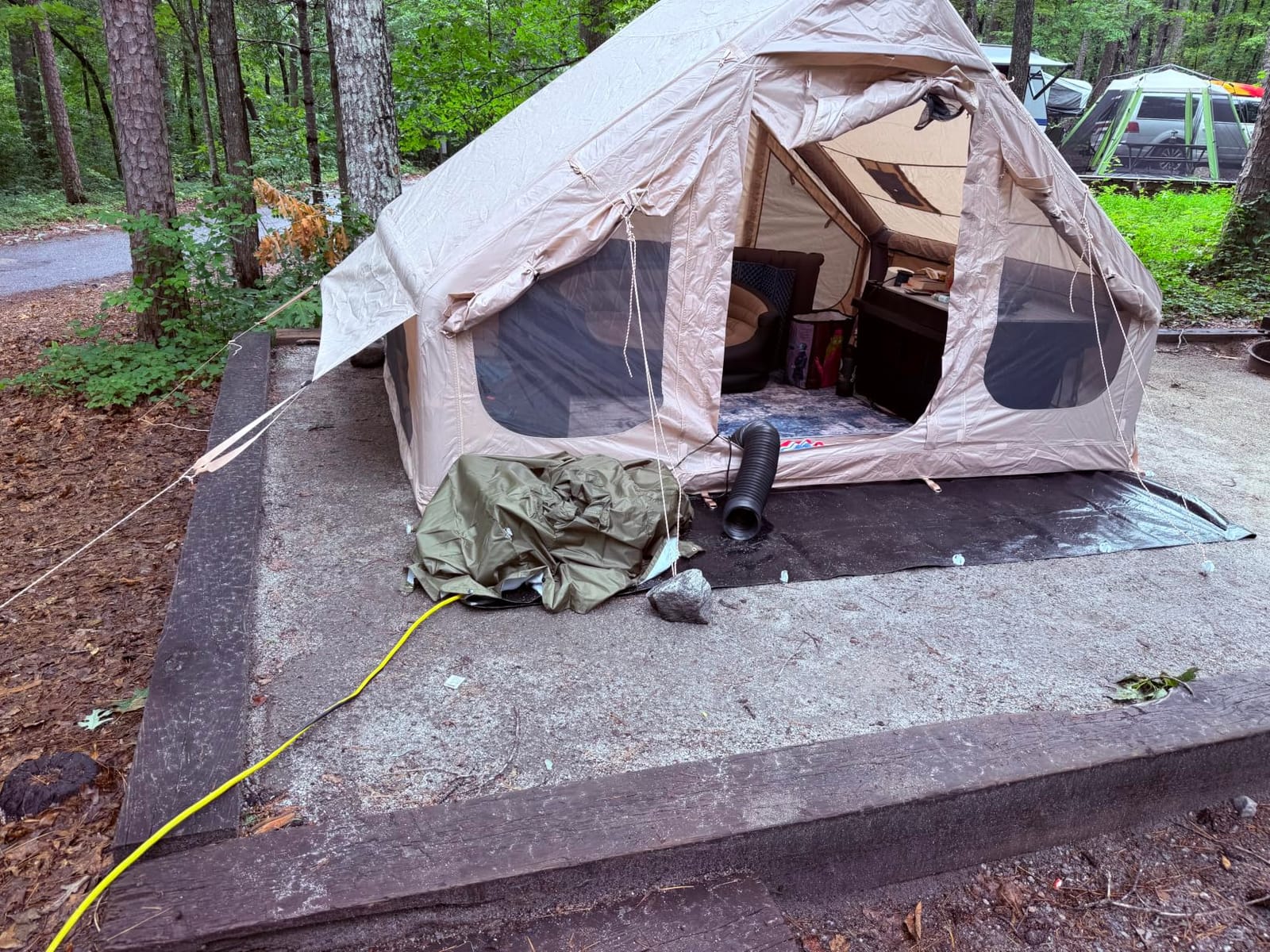
This is the odd one out and the reason we included it. Instead of poles, it uses an inflatable beam frame, so there is no pole assembly at all and the included high-pressure fast-inflation pump has it standing in about five minutes.
The payoff is interior volume. At 9.8 by 6.9 by 6.4 feet, roughly 67.85 square feet with close to 6.4 feet of stand-up height, you can stand upright inside. Very few tents in this list let you do that, and it changes what a winter base camp feels like.
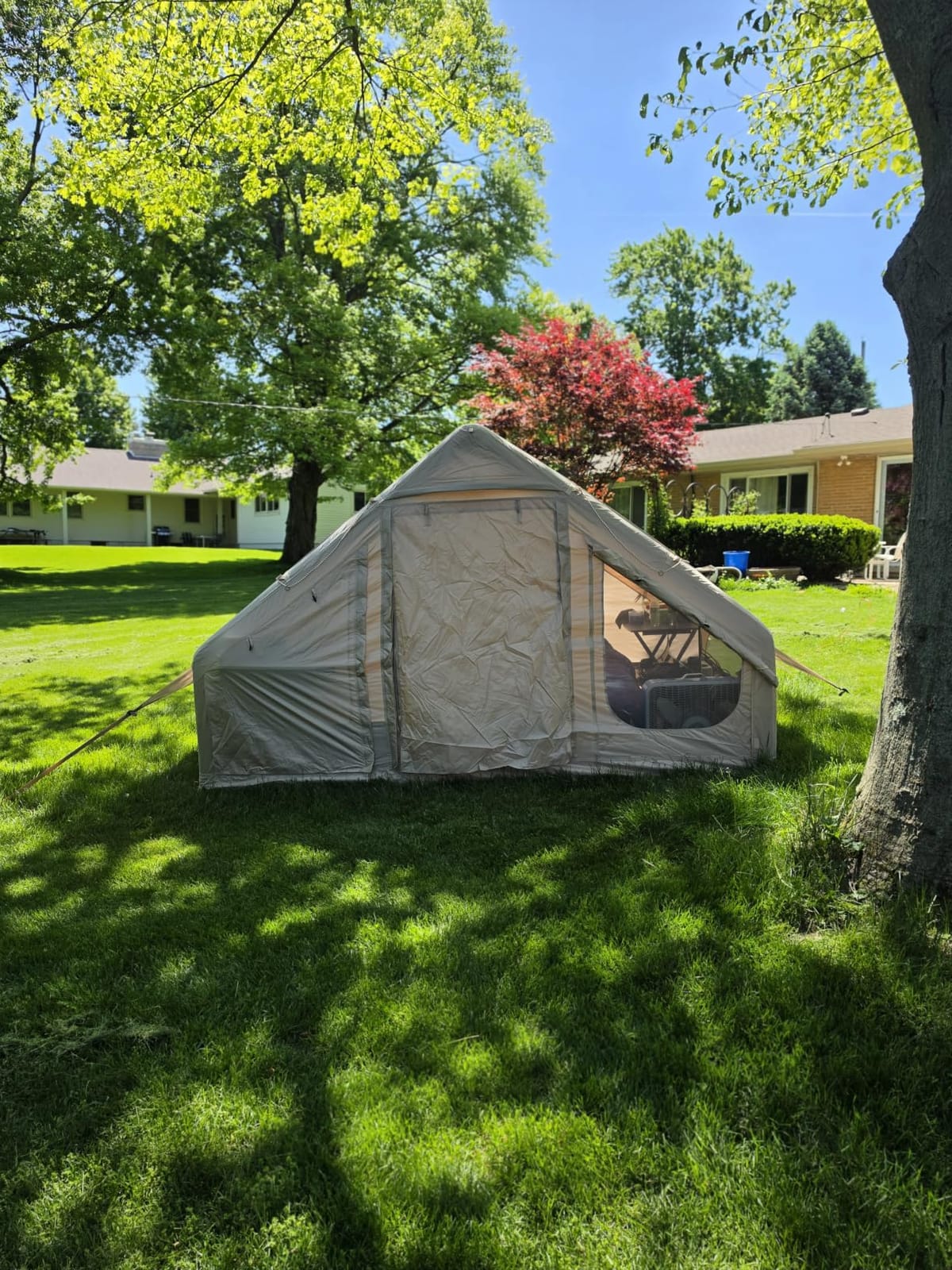
Large mesh screen doors and windows give real cross-ventilation, and the 420D Oxford fabric carries a PU3000mm coating with UPF50+ sun protection. Owners use it both as a family hot tent and as a spacious basecamp shelter.
It is rated for two to four adults sleeping, or two adults with two or three children. A stove jack for wood stove heating or cooking is included, along with a top hook for lights and an interior storage pocket.
Where an inflatable frame loses to poles
Rigidity is the honest limitation. Owners report the inflatable frame offering less resistance than a traditional pole structure in wind, and the 4.1 star average reflects mixed reports on long-term durability. If your winter site is exposed, pitch it sheltered.
Cold is the other issue. The pump has to be carried, and inflating can be slow when the air is cold, which is when you least want to be standing outside in a field.
Where it wins clearly
Setup speed, interior height, and the ability to sleep four people make this a strong winter car-camping or festival-winter shelter. The package includes two tie straps, six guy ropes, the air pump, stakes, and a storage bag, so nothing essential is missing on arrival.
It is simply not a backpacking tent. The large footprint rules that out entirely.
4 Season vs 3 Season Tents: When 3 Is Enough
A 3-season tent is enough when your winter nights stay above freezing and no snow accumulates on the roof. If you are car camping in a sheltered forest campsite, a good three-season shelter with an insulated pad will be lighter, cheaper, better ventilated, and completely adequate.
Move the trip to snow that piles up, or wind that keeps you awake, and the trade flips. Three-season tents have lighter poles, more mesh, and shallower pitches, which is the wrong combination for snow load and gust pressure. That is the whole argument.
A practical test: if you are buying one tent for all four seasons, choose a four-season design with a removable or mesh inner so you can trade heat retention for airflow in summer. That is the main reason we included the OneTigris Stella on this list.
Winter Camping Tent Buying Guide
Double-wall versus single-wall
Double-wall means an inner tent suspended inside an outer fly with a gap between them. That gap is what stops condensation forming on the inside face of your fly and dripping onto you, which is the most common winter complaint in owner reviews. Most of the tents here are double-wall.
Single-wall tents combine inner and fly into one layer. They are lighter and warmer, since there is no second surface losing heat, but they condense more and they wet through sooner. Almost every manufacturer we looked at has discontinued them, and buyers frequently report not realising they had bought one.
Snow shedding and snow load
Snow load is the weight of accumulated snow pressing down on the roof. Steep walls shed snow; shallow roofs hold it. The practical measures that reduce collapse risk are, in order: steeper pitch, fewer pole spans, more guy-out points, and snow stakes rather than pegs.
The GEERTOP Waterproof 2 Person Freestanding tent in slot 5, with 21 guylines, gives you the most anchoring hardware we found, which is why it earns its badge. Snow flaps and snow skirts seal the low perimeter where blowing snow works in under the fabric.
Weight versus storm strength
The honest rule: the shelters that survive serious wind and snow run 6 to 12 pounds, and most people do not want to carry that. This is the single most common regret owner reports describe. The tents under about 6 pounds handle forest winter trips and moderate storms. The ones above 8 pounds handle exposed camps, base camp, and car-side setups.
Peak height and livability
Peak height decides whether you can sit up to change clothes, which matters more over several days than buyers expect. The tents here range from about 45 inches up to the inflatable model’s 6.4 foot stand-up height. If you will be inside for a week, weight the number heavily.
Vestibule space is the second livability measure. The Naturehike Massif vestibule fits a chair and table, which is a different experience from the OneTigris Stella’s small high vestibule that lets rain in on entry.
Ventilation and condensation
This is the tradeoff nobody wants to make. All-mesh winter tents gain airflow but leak heat. Solid-fabric winter tents keep heat but trap moisture, and owners report frost building up on the inside of the fly. You cannot solve it with the tent alone; you solve it by venting a vestibule during the day and running dry gear.
The GEERTOP Waterproof 2 Person Freestanding tent’s suspended inner is the most direct attempt at managing this structurally, with the suspension cavity channelling condensation away from the sleeping surface.
Freestanding versus pitched
Freestanding domes stand on their own and can be pitched on snow in wind. Semi-freestanding and pitched designs need guying before they hold shape, which is slower and harder in a squall. Every tent on this list except the canvas bell tent is freestanding, and that is deliberate for winter conditions.
Hot Tent and Stove Jack Safety
Four picks above run a stove inside: the Naturehike Massif, the POMOLY Chalet, the DANCHEL B5PRO, and the Ytaoeo inflatable. A stove jack makes a tent genuinely warm in a way that gear never can, and it introduces risks that have nothing to do with wind or snow.
Carbon monoxide is the one that kills. A stove in an enclosed space produces it continuously, and the fabric itself is not a reliable warning. Never run a stove while you sleep, and never run one in a tent you cannot ventilate. A battery-operated carbon monoxide detector inside the tent is inexpensive and worth carrying.
Chimney height and clearance matter as much as ventilation. Run the stove pipe high enough that the stove does not sit at floor level, where heavier carbon monoxide collects, and keep the pipe from touching fabric. The DANCHEL owners specifically flagged that its stove jack flap is highly flammable and cannot be held clear of a hot pipe, so treat any flap as a spark guard rather than a heat shield.
The rest of the checklist is short: put the stove on the supplied fireproof mat or ember mat rather than on bare ground, keep a fire extinguisher and a bucket of water inside the door, and never leave a stove unattended while burning. Read the manual for your specific tent, because stove jack designs are not interchangeable.
Frequently Asked Questions
Do 4-season tents keep you warm?
No. A four-season tent blocks wind, sheds snow, and limits drafts and condensation. It traps still air rather than generating heat. Your sleeping bag, your insulated pad, and your clothing create the warmth. Spending on those before upgrading the tent is the more effective order of purchase.
Should I get a 3 or 4-season tent?
Choose a 3-season tent if your winter nights stay above freezing and no snow accumulates on the roof. Choose a four-season tent if you expect snow load, sustained wind, or sub-freezing nights. If you want one tent for all four seasons, pick a four-season design with a removable or mesh inner so you can trade heat retention for airflow in summer.
What is the best 4-person tent for cold weather camping?
For most groups the GEERTOP 4 Person 4 Season tent is the most practical fit: double-wall construction, a PU3000mm fly over a PU5000mm Oxford floor, taped seams, and four vestibules. Note that four is the packed rating, and owners report two adults sleeping comfortably. For genuine four-person sleeping room with a stove, the inflatable tent or the canvas bell tent give you more space.
What kind of tent is best in snow?
Look for three things: a steep pitch that sheds snow, enough guy-out points to anchor it, and a snow skirt or snow flaps that seal the perimeter. Steep-walled domes and pyramid-style designs shed snow better than shallow A-frames. Always anchor with snow stakes or deadman anchors rather than pegs, which pull straight out of frozen ground.
What is the best 3-person tent for cold weather?
There is no true 3-person four-season shelter in this group, and that is worth knowing before you buy. Most are rated 1 to 2 people, and owners report the geometry is tight for two adults plus gear. If you need three sleeping spaces, choose a hot tent such as the POMOLY Chalet or the Ytaoeo inflatable, both of which are rated for a wider group.
Conclusion
After reading through the owner feedback on all ten, the GEERTOP 2 Person Backpacking Tent is our pick for the best 4 season tents for winter camping. Its owner base is the largest in the group, its 210T ripstop fly with PU3000mm coating and fully taped seams holds up in real winter weather, and its freestanding pitch means you can put it up in wind without a fight.
Match the pick to the trip instead. Take the Clostnature for value, the OneTigris Stella if every pound counts, the GEERTOP Waterproof 2 Person Freestanding tent when storms are the main problem, and the GEERTOP 4 Person when you are camping as a group. If you want active heat, the Naturehike Massif holds heat best, but read the stove safety section first.
Whatever you choose, spend your remaining budget on an insulated pad with a real R-value, a winter-rated sleeping bag, snow stakes, and a footprint. The tent is the last line of defense, not the first. Check current listings for any of these tents before you head out, and test the pitch at home first.