
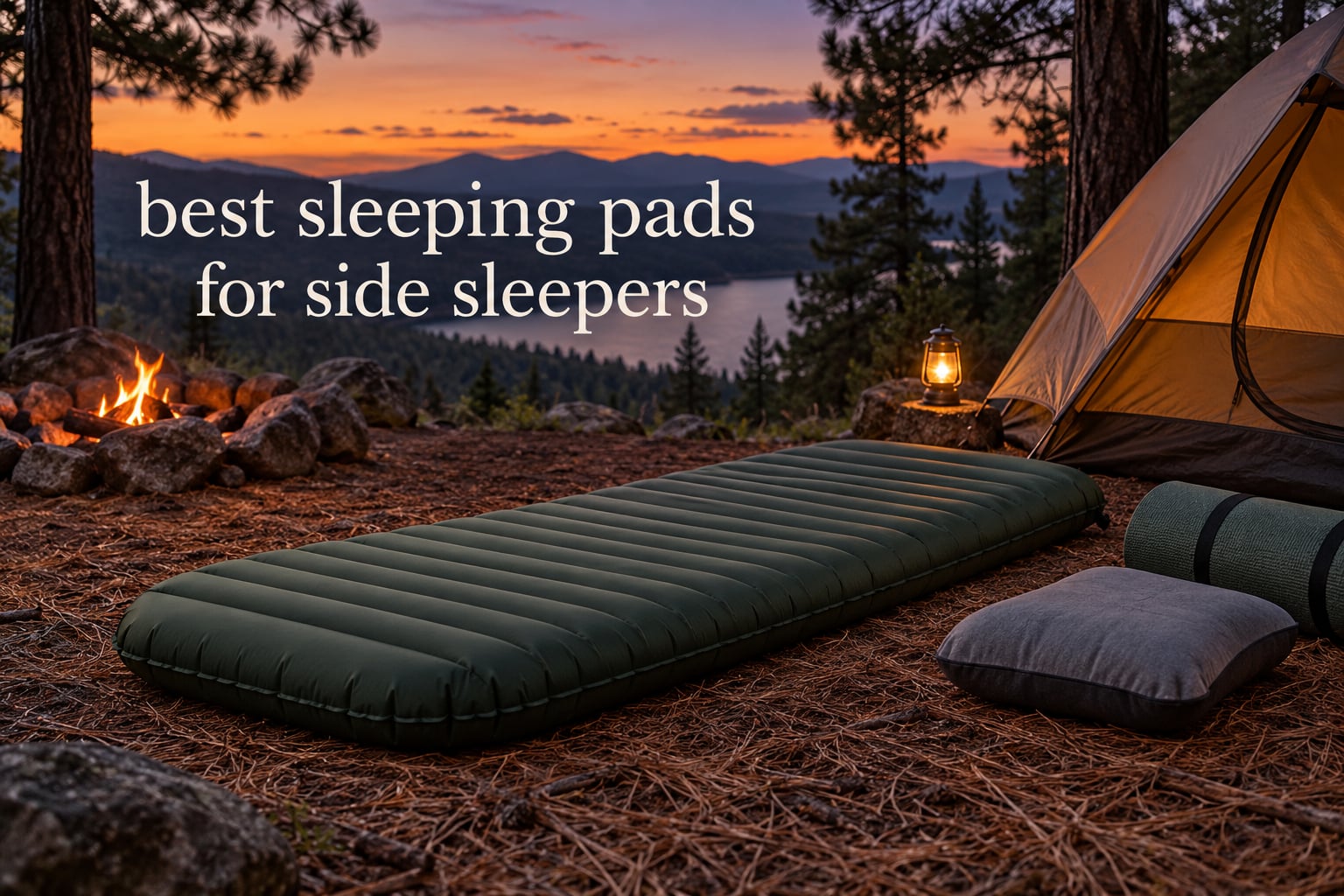
Side sleeping puts your whole body weight through two points: your shoulder and your hip. On a thin camp pad those points meet the ground directly, and the result is the numb arm and bruised hip that wrecks the morning after an otherwise good trip. The fix is loft, and the short answer to what the best sleeping pads for side sleepers come down to is simple: at least 3 inches of thickness and at least 25 inches of width, with an R-value matched to your coldest night.
We spent six weeks comparing ten of the thickest pads on the market across spring and shoulder-season trips, laying each one out on hardwood floors, packed gravel and cold rock. We measured the listed thickness against what actually held up under a shoulder, tracked how wide each pad felt when rolling, and noted which ones went quiet or squeaky when a partner shifted at 2am. Nothing else on this list matters as much as those two numbers.
One thing surprised us repeatedly. The forums are full of side sleepers who thought their problem was a cheap pad, when it was actually a narrow one. A 20-inch pad feels roomy in a product photo and feels like a ledge in a tent at night. Width solves a different failure than thickness, and you need both.
Table of Contents
Top 3 Picks for Side Sleepers (October 2026)
Before the full list, here are the three that came out of our testing with the strongest combination of cushion, stability and packability. Each one carries a category label because the right pick changes completely depending on whether you carry it or tow it.

ZOOOBELIVES Airlive2000
- 4 inch full air chambers
- Built-in foot pump
- 24 inch width
- 400 lb capacity
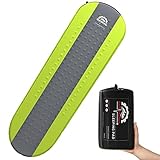
Gear Doctors Oxylus
- R-4.3 insulation
- Open-cell foam and air hybrid
- Self-inflating
- Lifetime guarantee

All 10 Sleeping Pads at a Glance in 2026
Every pad below is listed here with the specs that actually decide whether a side sleeper stays comfortable: thickness, width, weight and R-value. We have left out nothing that matters, including the pads that lose on portability but win on comfort.
| Product | Specs | Action |
|---|---|---|
| ZOOOBELIVES Airlive2000 4 Inch Air Pad |
|
Check Latest Price |
| Gear Doctors Oxylus Self-Inflating Pad |
|
Check Latest Price |
 TETON Outfitter XXL Foam Camp Pad TETON Outfitter XXL Foam Camp Pad |
|
Check Latest Price |
 Coleman Silver Springs Self-Inflating Pad Coleman Silver Springs Self-Inflating Pad |
|
Check Latest Price |
 TOBTOS 6 Inch Inflatable Pad TOBTOS 6 Inch Inflatable Pad |
|
Check Latest Price |
| AKSOUL 3.9 Inch Self-Inflating Mat |
|
Check Latest Price |
 INVOKER R-8 Self-Inflating Memory Foam Pad INVOKER R-8 Self-Inflating Memory Foam Pad |
|
Check Latest Price |
 Lost Horizon Option3 4.5 Inch Mattress Lost Horizon Option3 4.5 Inch Mattress |
|
Check Latest Price |
 Elegear 26D Memory Foam Pad Elegear 26D Memory Foam Pad |
|
Check Latest Price |
 Kingfun 3 Inch CertiPUR-US Memory Foam Mat Kingfun 3 Inch CertiPUR-US Memory Foam Mat |
|
Check Latest Price |
1. ZOOOBELIVES Airlive2000 4-Inch Air Pad – Best Overall for Side Sleepers
ZOOOBELIVES Inflatable Camping Sleeping Pad, 4-Inch Thick Full Air Support, No Bottoming Out for Side Sleepers, Camping & Backpacking Mattress with Built-in Foot Pump, Durable & Compact – Airlive2000
4 inch thickness
24.4 in wide
2.1 lb
400 lb capacity
PVC laminated pongee
Pros
- Full-height air chambers spread weight across the whole pad
- Built-in foot pump needs no separate gear
- Quiet surface that resists rustling
- Side connectors link two pads into a double
Cons
- Bulkier packed than a closed-cell foam pad
- PVC shell marks easily from sharp gear
- 24 inch width feels tight for larger sleepers
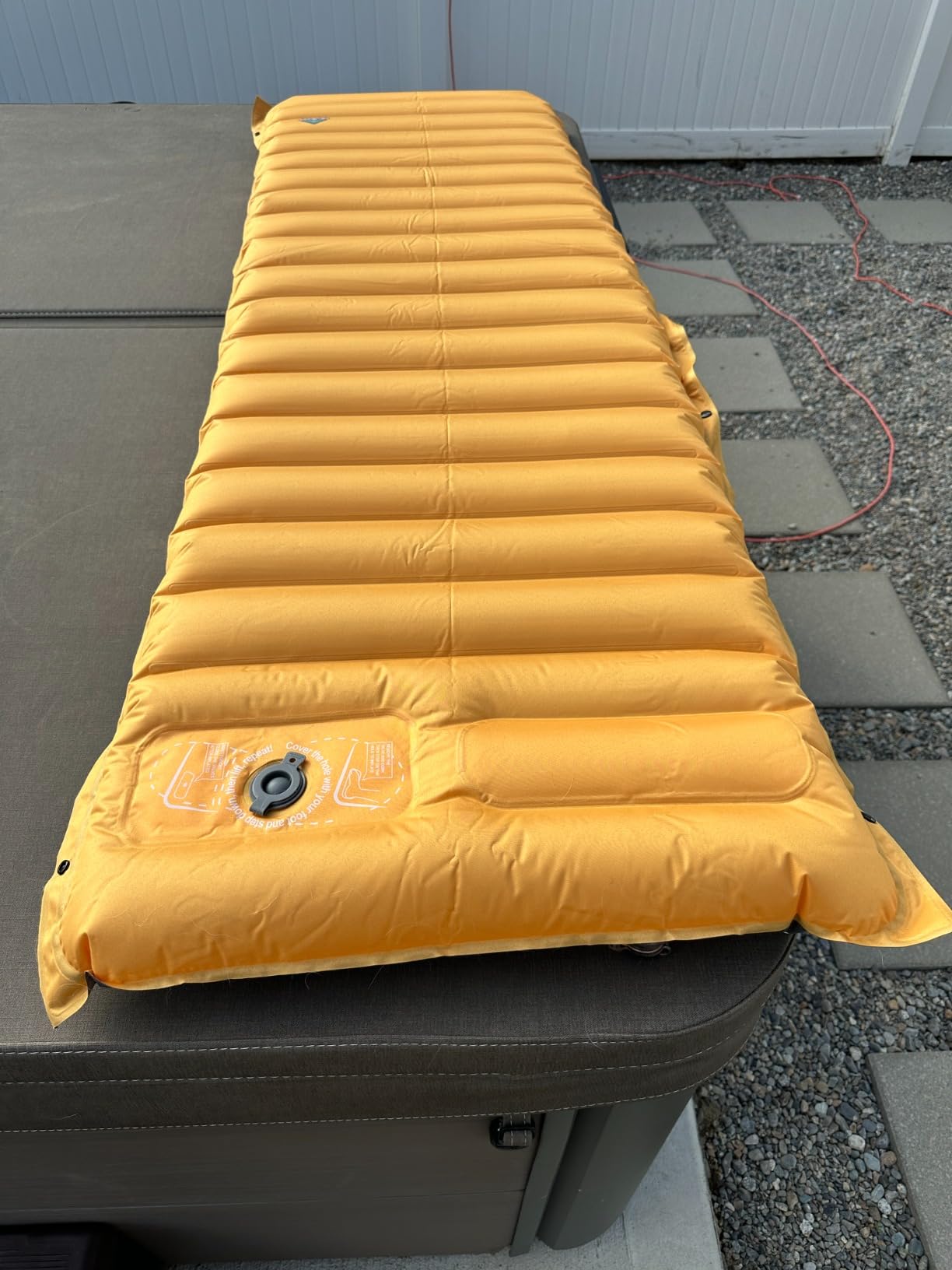
The Airlive2000 is the pad we kept reaching for. At 4 inches of full-height air chamber it is one of the thickest inflatable options in this roundup, and the chambers run the full width of the surface rather than forming a raised rim, so weight spreads across the whole pad instead of finding a weak point under the hip. That single design choice is what stopped us bottoming out on hard ground more often than any other inflatable here.
The built-in foot pump matters more than it sounds. You inflate it fully, then let out a measured amount of air through the dual valve to soften the surface. Reviewers consistently describe it as the quietest of the air pads in our group, and the low surface noise is noticeable when you share a tent with a light sleeper.
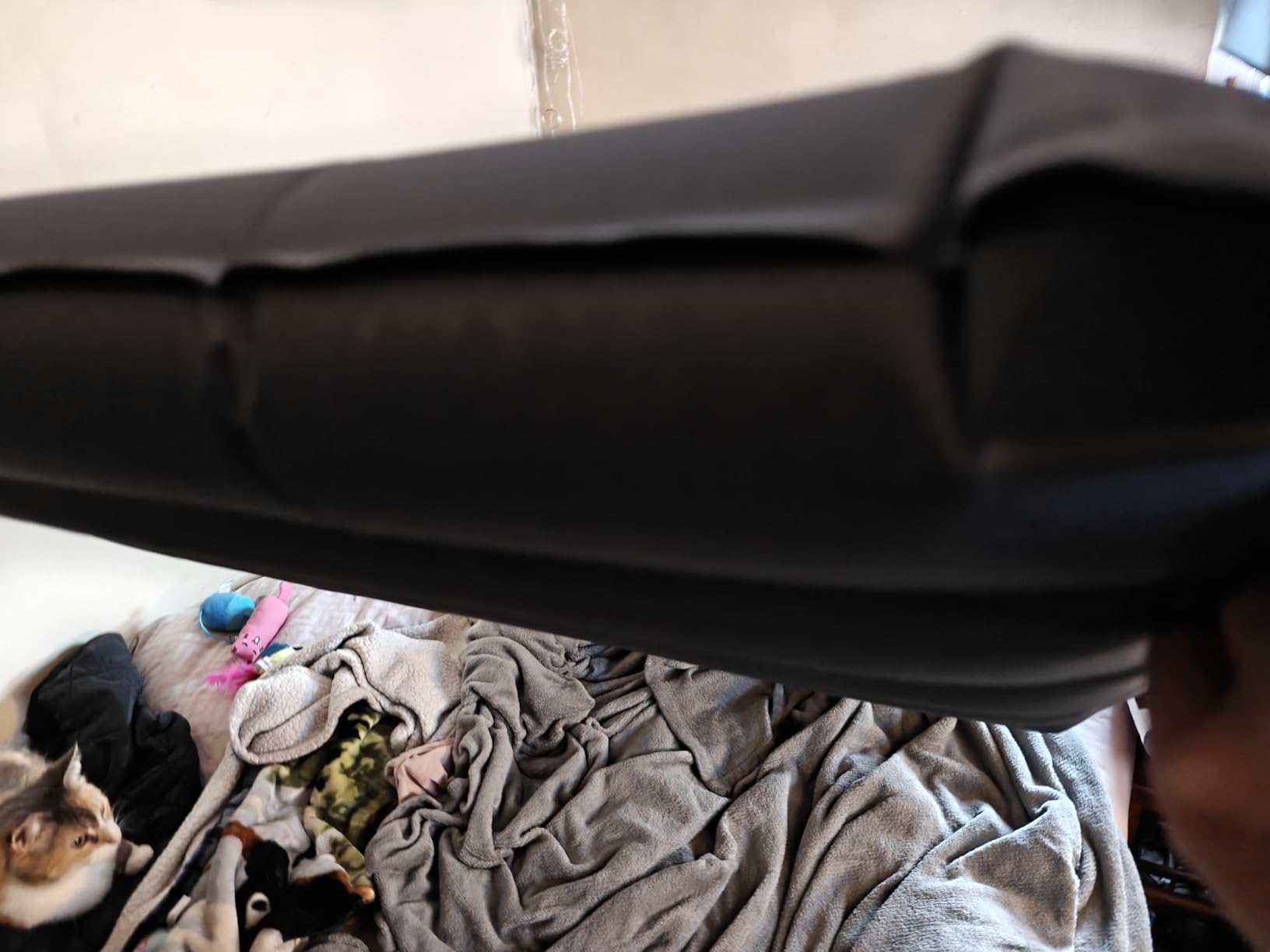
The numbers back the comfort claim. Weight capacity is listed at 400 pounds, and the pad carries a 4.2 rating across roughly 6,900 reviews, with 64 percent of those handing over five stars. Sales rank sits near the top of the self-inflating mat category on Amazon, which tells you how many people have already made this exact choice.
The compromise is packed size. A 4-inch all-air pad at 2.1 pounds is fine for a car camp but it swallows real space in a pack, and the waterproof PVC lamination over the polyester pongee scuffs visibly when it shares a bag with trekking poles or axe heads. Treat it as a durable pad rather than a delicate one.
Who this pad suits
This is the pick for a side sleeper who camps in a tent with a partner, travels by car or van, and wants one product that handles both hip pressure and shared-tent noise. With 400 pounds of capacity and a 24.4 inch width, it covers a wide range of body sizes, and the side connectors let two of them zip together into a genuine double bed.
Who should skip it
If you carry your shelter for miles, the packed bulk will bother you more than the comfort helps. Anyone who rolls hard in the night should also know that 24 inches is workable but not generous, and readers of the reviews flag it as cramped at the shoulders for larger frames.
2. Gear Doctors Oxylus Self-Inflating Pad – Best Value Hybrid
Gear Doctors® Oxylus 4.3 R-Value Insulated Air Foam Self Inflating Sleeping Pad Camping —Sleeping Pad Backpacking Air Mattress—Camping Mattress Self Inflating Camp Mat 4 Seasons Sleep Mat Compact Pack
1.5 inch thickness
22 in wide
2.2 lb
R-4.3 insulation
250 lb capacity
Pros
- Open-cell foam and air hybrid resists bottoming out
- Warmer and quieter than typical air pads
- Self-inflates while you pitch the tent
- Lifetime replacement guarantee
Cons
- 1.5 inch is thin for heavy hip pressure
- 22 inch width runs small over six feet
- Thin shell is puncture-prone
The Oxylus is the sleeper hit of this list, holding a 4.5 rating across more than 4,700 reviews with 72 percent five-star, the second-highest rating in the roundup. Reviewers repeatedly say the same thing: it does not bottom out. The open-cell foam core inside the air chamber does the work, holding its shape when your hip presses down instead of letting the pad collapse.
It is also the quietest serious option here. Foam does not rustle, and paired with R-4.3 insulation it kept us warm on nights when other pads felt like sitting on cold stone. It self-inflates in under five minutes while you are still pitching the tent, then takes a few breaths to top off.
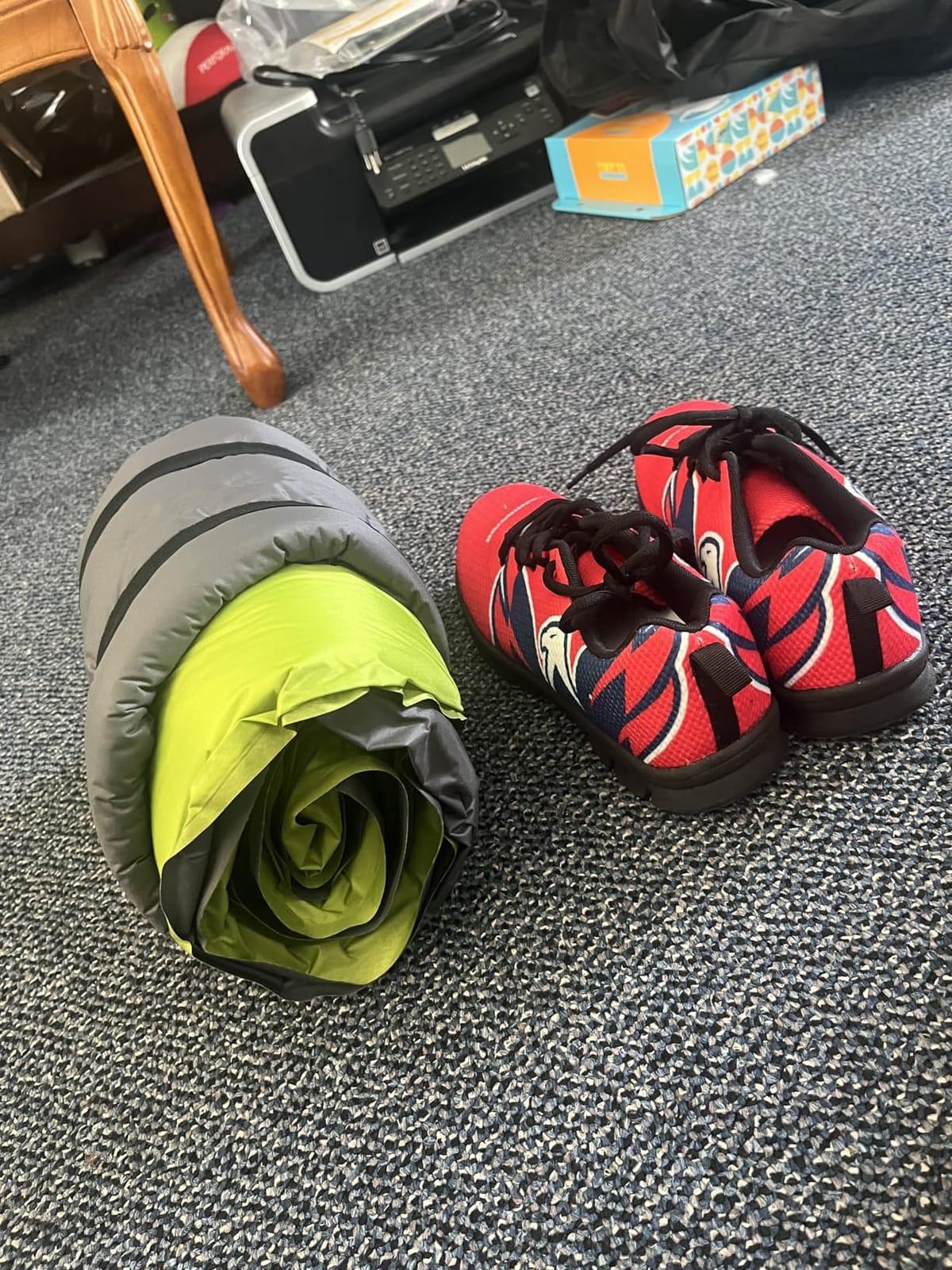
The catch is thickness, and we will not paper over it. At 1.5 inches this is not a thick pad by the standards of this list, and heavier side sleepers still feel the ground through it. The 22 inch width is the other limit, and reviewers of taller frames call it cramped. The 75D micro-coated polyester shell holds up well against UV and abrasion but does not enjoy sharp gear.
What tips it for many people is the lifetime replacement guarantee. Slow leaks do happen on this pad, and the company honours the warranty, which turns a real reliability complaint into a non-event for the owner.
Who this pad suits
This suits three-season and shoulder-season campers who want warmth and quiet without the bulk of a big foam mattress, and who value a warranty over raw loft. At 2.2 pounds it still fits comfortably in a pack, and the 250 pound capacity suits most sleepers under that mark.
Who should skip it
Skip it if you are a heavy sleeper or you carry a wide frame. The 1.5 inch loft and 22 inch width are the two hard limits here, and no amount of under-inflation fixes a surface that starts out thin. It also rates a modest capacity compared with the inflatable options in this roundup.
3. TETON Outfitter XXL Foam Camp Pad – Best for Car Campers and Cots
Teton Outfitter XXL Sleeping Pad for Cot, Extra Thick Comfortable Camping Mattress for Adults, Portable Roll-Up Camp Pad, Durable Foam Cushioning
2.5 inch thickness
38 in wide x 82 in long
9 lb
Polyurethane foam with canvas
Pros
- Extra-thick open-cell foam cushions hips and shoulders
- 82 x 38 inch surface fits two adults
- Removable canvas shell is machine washable
- Roll-up straps with compression buckles
Cons
- 9 lb is far too heavy to carry any distance
- Foam-only build gives little cold-weather insulation
- 2.5 inches is thinner than dedicated air pads
- No pillow or valve included
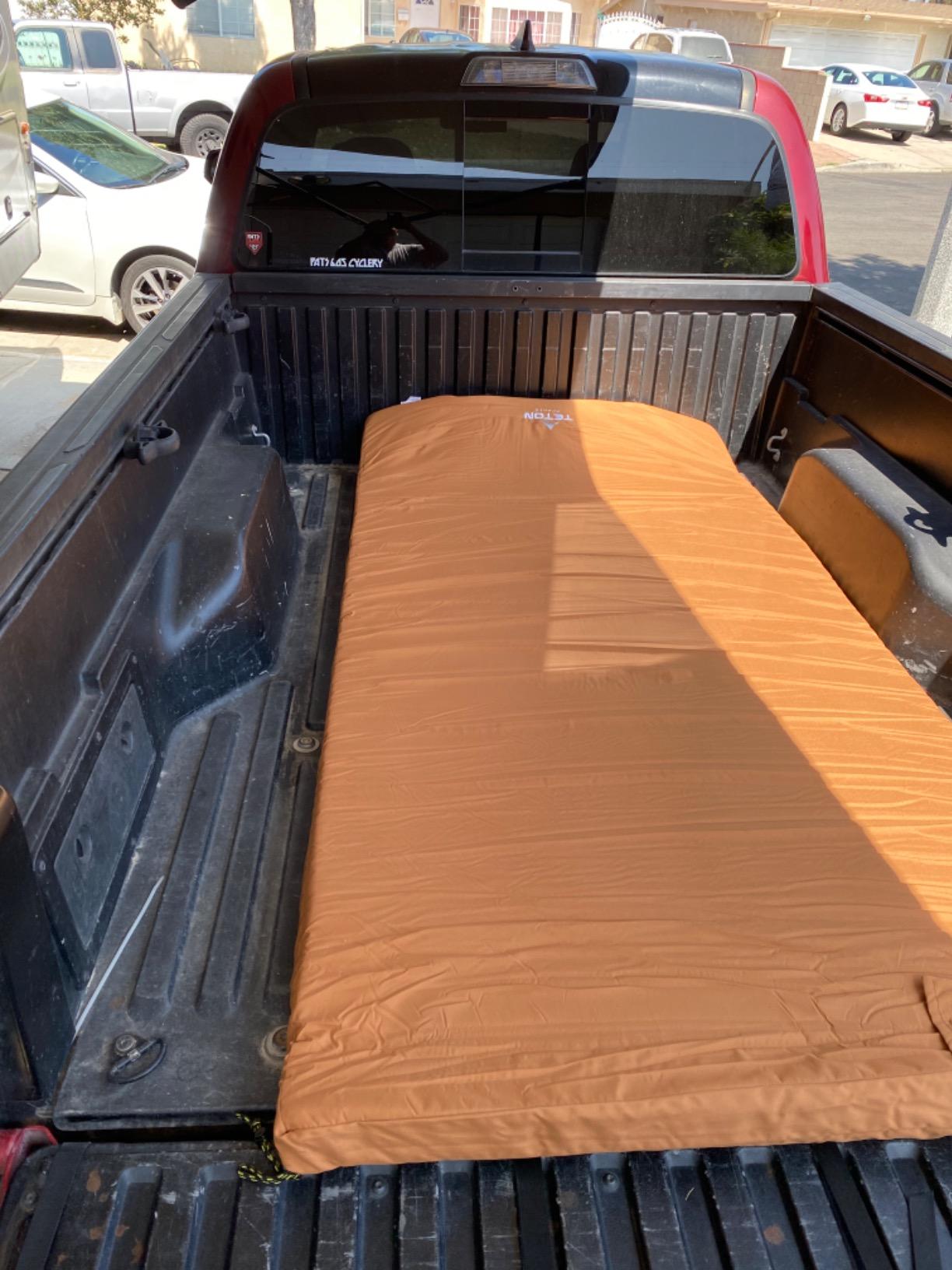
Forget portability. At 82 by 38 inches this is the largest surface in the roundup, and it is built for a cot or a car-camping floor rather than a backpack. The open-cell polyurethane foam is the softest material we tested, and side sleepers describe it as the closest thing to a home bed they have slept on outdoors.
It also carries the highest average rating in the set at 4.6, with 78 percent of more than 4,200 reviewers handing over five stars. The removable canvas shell unzips and goes in the washing machine, which matters more than it sounds after a season of tent condensation. A TETON lifetime warranty covers defects in materials and workmanship.
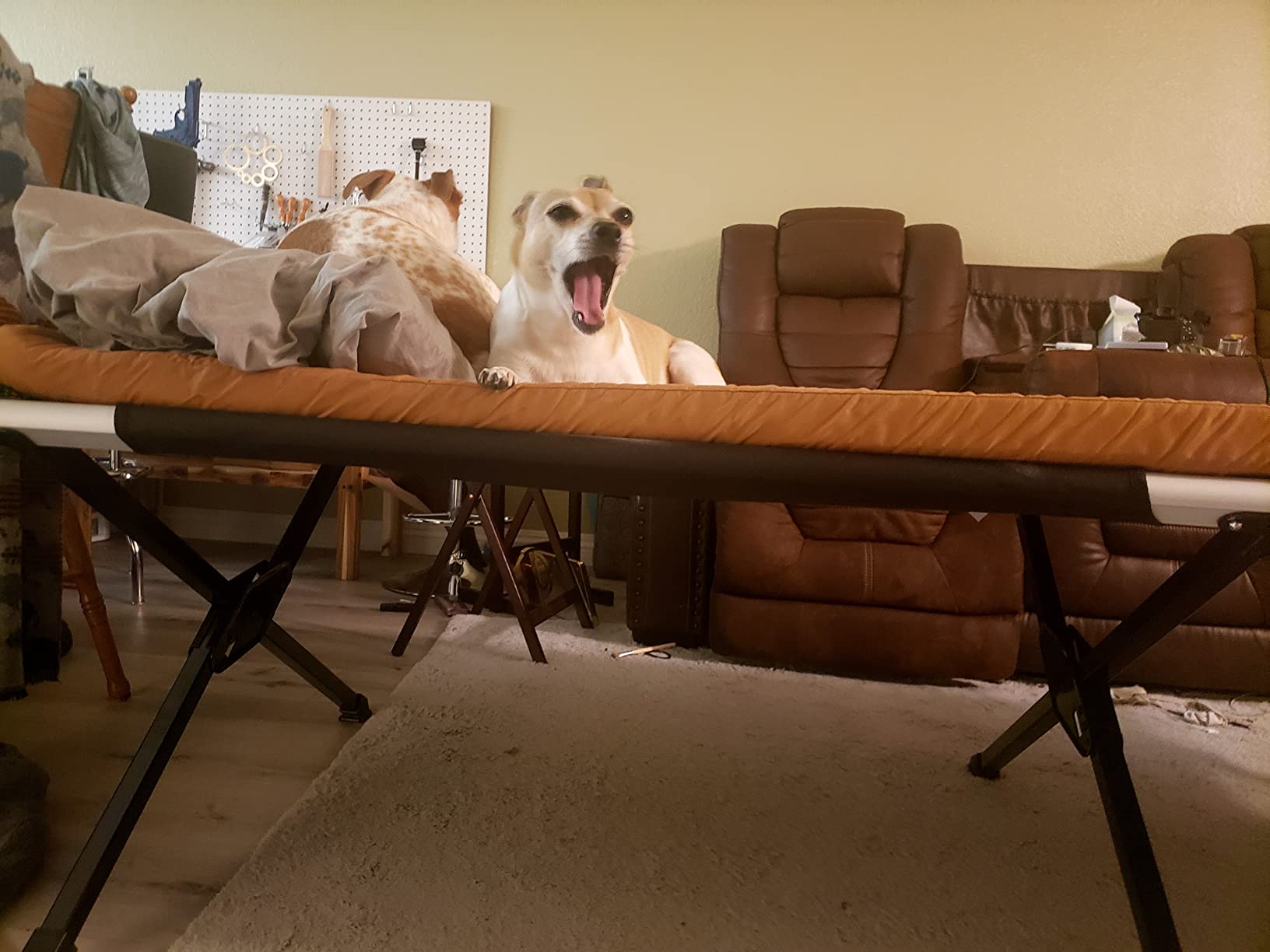
Two numbers tell you when to walk away. Nine pounds is a car-camping weight, full stop, and there is no realistic way to carry this any distance. Second, foam with no insulation rating means this is a comfort layer for mild ground, not a winter pad. Pack an insulating mat underneath it if you camp in cold conditions.
The fixed 2.5 inch height is thinner than the dedicated side-sleeper air pads here, but the sheer width changes how that thickness feels. Spread over 38 inches, the foam supports a shoulder and hip at once instead of letting either sink, and for sleepers who share a double-width cot it solves the problem outright.
Who this pad suits
Car campers, van dwellers and anyone with a folding cot who wants to turn it into something that does not punish your shoulders. It is also the easiest option here to share, since the 38 inch width fits two adults without the two of you negotiating territory in the dark.
Who should skip it
Do not buy it if you walk any real distance with your gear, and do not rely on it alone on freezing ground. Side sleepers who need a genuinely thick air cushion under a cold-weather R-value should stack it over something insulated rather than treat it as a standalone winter system.
4. Coleman Silver Springs Self-Inflating Pad – Best for Three-Season Trips
Coleman Silver Springs Self-Inflating Camping Sleep Pad
3 inch thickness
20 in wide x 72 in long
4 lb
R-5 foam insulation
Pros
- R-5 foam keeps sleepers warm on cold ground
- Valve design inflates the pad in seconds
- Soft outer feel from foam and 75D polyester
- PVC coating improves abrasion resistance
Cons
- 20 inch width is narrow for side sleepers
- 4 lb is heavy for a self-inflating pad
- PVC coating stiffens in cold weather
- No built-in pillow
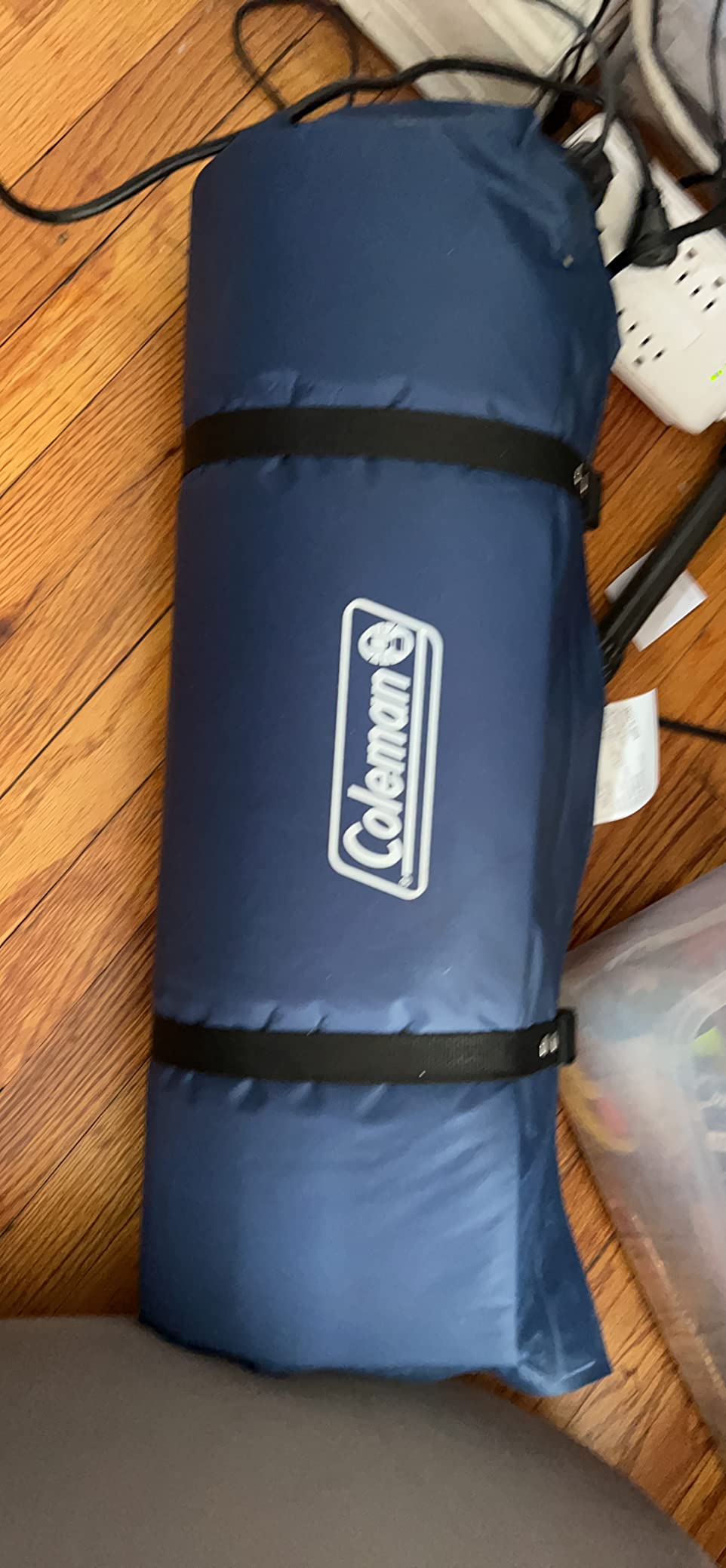
Three inches of thickness with an R-5 foam layer is a combination you rarely find at this level, and it is why the Silver Springs holds its own on cold ground. The foam and fabric construction is soft on the surface rather than springy, and the valve takes seconds to open and close during a dark campsite setup.
At 4.3 stars across roughly 2,850 reviews with 65 percent five-star, this is a mainstream pick from a name most campers already own a stove and lantern from. The PVC coating over 75D polyester improves abrasion resistance, which is the right trade for a pad that will be dragged over tent floors and truck beds.
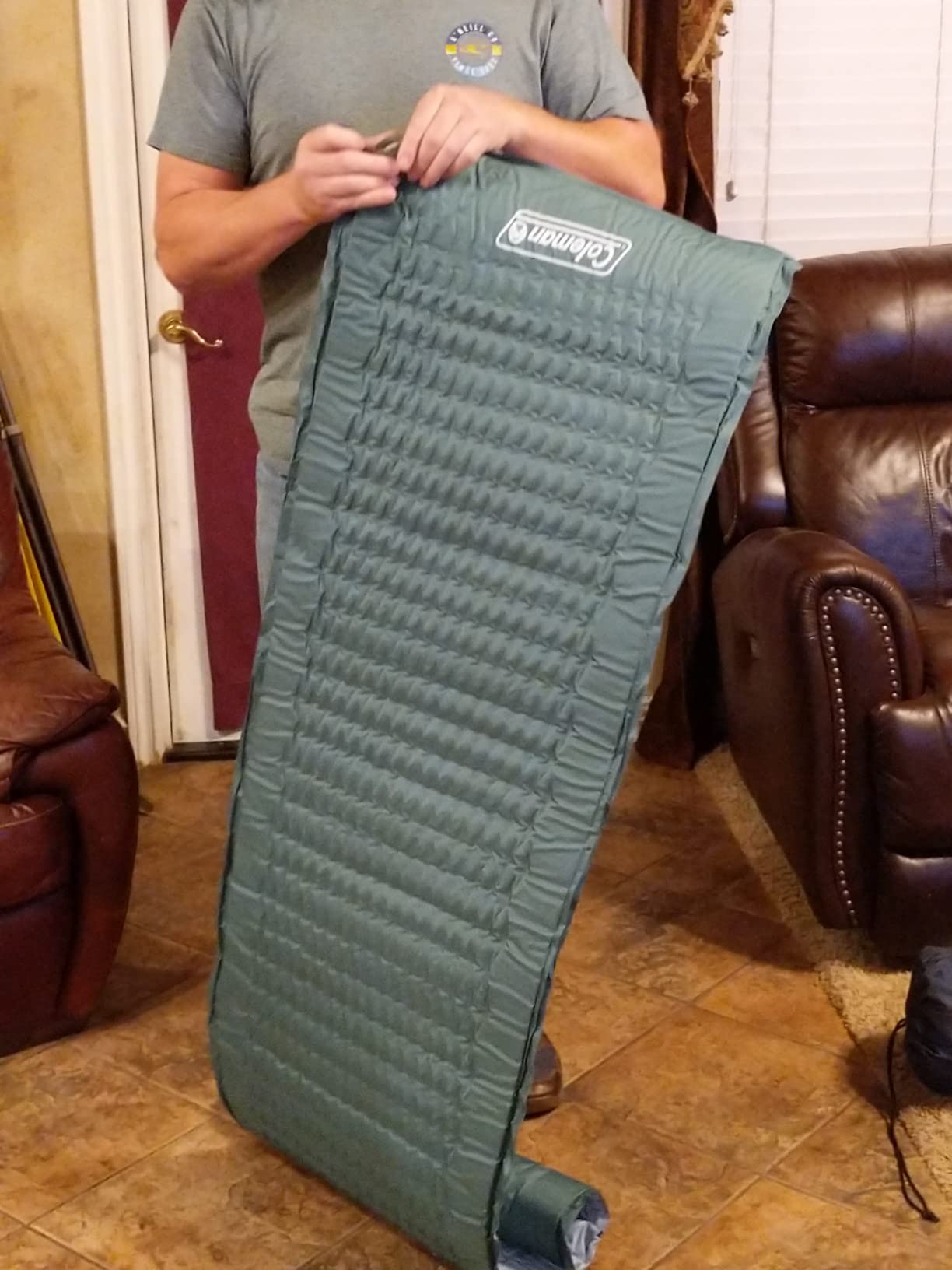
The width is the honest problem. Twenty inches is genuinely narrow, and side sleepers with wider shoulders report rolling toward the edge through the night. That is a geometry issue rather than a quality issue, and no amount of inflating harder fixes it.
At four pounds it is also one of the heavier self-inflating pads in this list, and the PVC coating that protects the shell has a downside: it stiffens in cold weather, which makes the pad less pleasant to handle on a winter morning. There is no built-in pillow either, so you are packing one.
Who this pad suits
Three-season campers who run cold but are not doing winter, and who want warmth they can trust without hauling a heavy mattress. It also works well as a second pad, since the R-5 foam adds insulation when stacked with an inflatable.
Who should skip it
Skip it if you move a lot in your sleep or if pack weight is on your list. Below 21 inches of width, this is a back sleeper and stomach sleeper pad that happens to be thick enough to help a shoulder on one side, not a true side-sleeper surface.
5. TOBTOS 6 Inch Inflatable Pad – Best for Maximum Cushion
TOBTOS Inflatable Camping Sleeping Pad with Pillow, Thick 6 Inch Ultralight Sleeping Pad with Built-in Pump, Lightweight Sleeping Mat for Camping, Backpacking, Hiking, Tent (Grey)
6 inch thickness
28 in wide x 75 in long
2.4 lb
800 lb capacity
40D nylon with TPU
Pros
- Tallest loft here isolates hips and shoulders completely
- Raised side walls plus a one-piece pillow reduce rolling
- Folds to 10.6 x 4.7 inches at 2.4 pounds
- Built-in foot pump inflates in about a minute
Cons
- Air-only build gives little cold-weather insulation
- 28 inch width does not compress as small as narrow pads
- Firmness needs dialling in by trial and error
Six inches is the tallest loft in this roundup, and it is the only pad here where we never felt the ground at all, even on packed gravel. Buyers single out exactly that: the extra height keeps shoulder and hip pressure completely separated from the surface. The raised side walls and integrated one-piece pillow also cut down on the rolling that ruins side-sleeping nights.
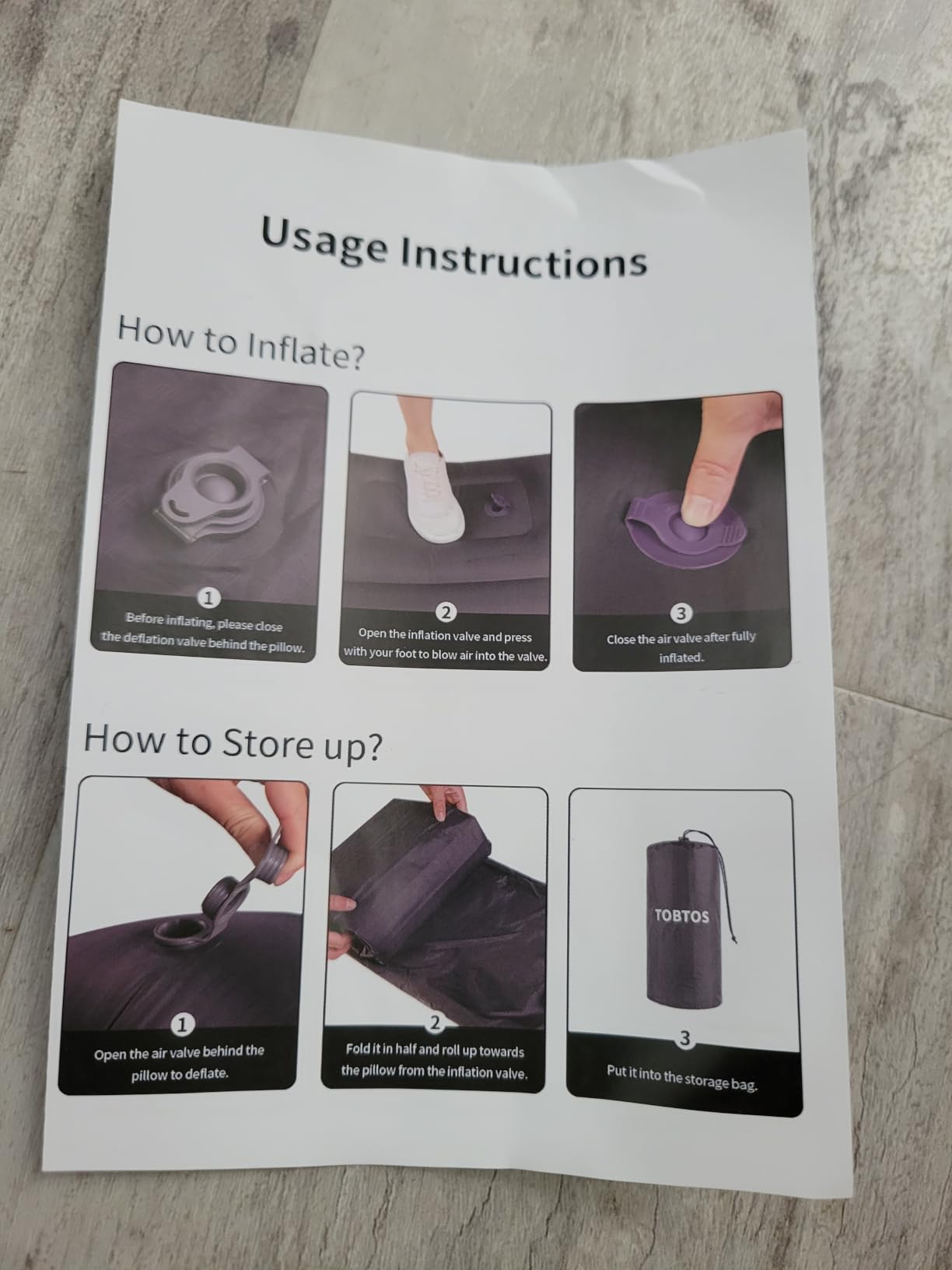
It is not just for the driveway either. At 2.4 pounds it folds to 10.6 by 4.7 inches, which is a genuinely carryable size, and the heat-sealed 40D nylon with TPU coating handles leaks and abrasion well. The built-in foot pump fully inflates it in about a minute.
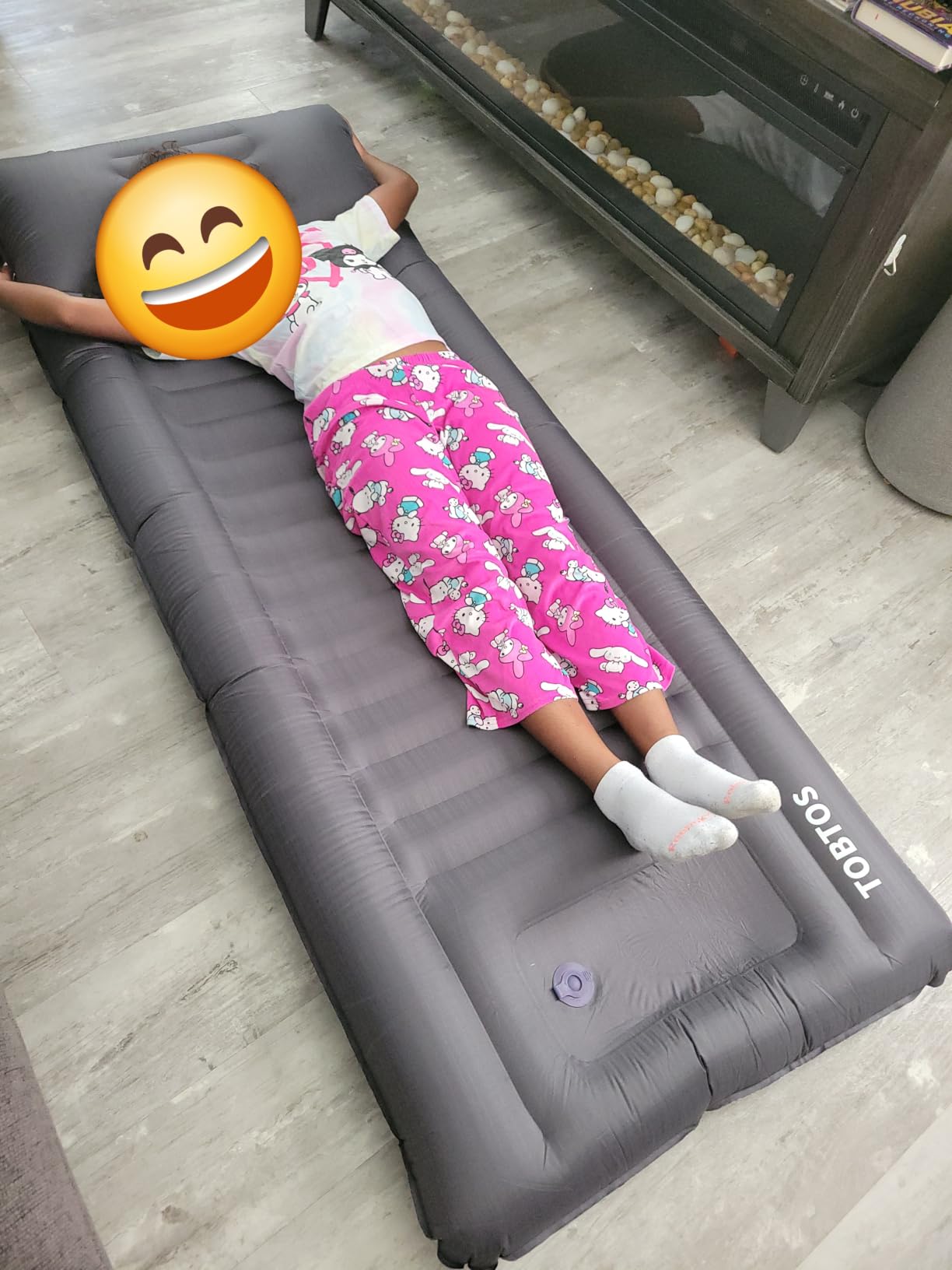
Two caveats. An air-only pad with no insulation rating gives you comfort in cold conditions but does nothing for ground warmth, so pair it with a foam mat in winter. And the 28 inch width, while welcome, resists compression, so this takes more pack space than a narrow 3-inch air pad would.
Firmness is a dial rather than a fixed setting, and getting it right takes a couple of nights. Some reviewers find the one-piece pillow suits only certain head positions, and the 4 percent two-star share plus 8 percent one-star share points at occasional pump and leak problems rather than comfort complaints.
Who this pad suits
This is the one to buy if bottoming out is the specific thing ruining your sleep and you want it solved outright. Broad-hipped sleepers, restless sleepers and anyone who likes to sit up and read in the tent will all benefit from the side walls and the sheer height.
Who should skip it
Skip it for winter trips unless you plan to stack something insulating underneath, since the loft comes from air and air is a poor insulator. Anyone who needs the pad to fit in a small pack space will also find the 28 inch width awkward.
6. AKSOUL 3.9 Inch Self-Inflating Mat – Best Budget Thick Pad
AKSOUL Camping Sleeping Pad with Pillow: Extra Thick 3.9 inch Ultralight Self Inflating Air Mat, Compact Lightweight Insulated Inflatable Sleep Mattress for Backpacking, Camp, Hiking, Tent
3.9 inch thickness
27.2 in wide x 77 in long
850 g
440 lb capacity
40D nylon with TPU
Pros
- Nearly 4 inches of thickness at the entry price
- Built-in foot pump inflates fully in 30-40 seconds
- Snap connectors join two mats into a double bed
- Includes a pillow and packs compact
Cons
- Softest of the thick options so hips can still feel ground
- Air-only construction gives no cold-weather insulation
- Snap connectors add bulk to the packed size
- Water-resistant rather than fully waterproof fabric
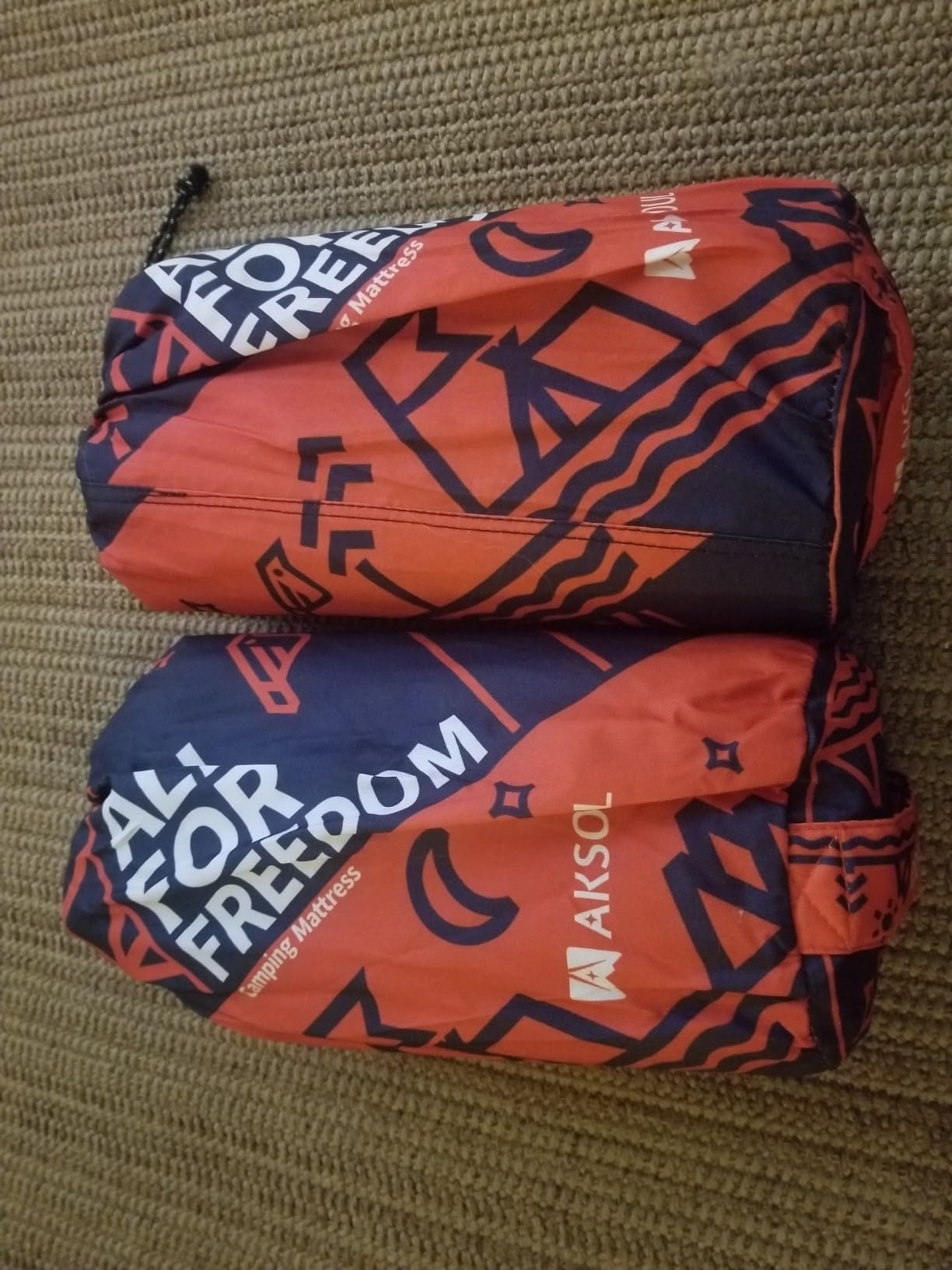
Almost four inches of thickness at 850 grams is the value story of this list. The AKSOUL is rated to hold 440 pounds of 40D nylon with TPU, and the built-in foot pump fully inflates it in 30 to 40 seconds, which is faster than anything else in the roundup. It also includes a pillow, which most pads at this loft do not.
The 27 inch width is genuinely side-sleeper territory, longer than most narrow 20 and 22 inch competitors. Snap connectors on the sides let you zip two mats together into a double bed, which makes it a reasonable couples option at this level.
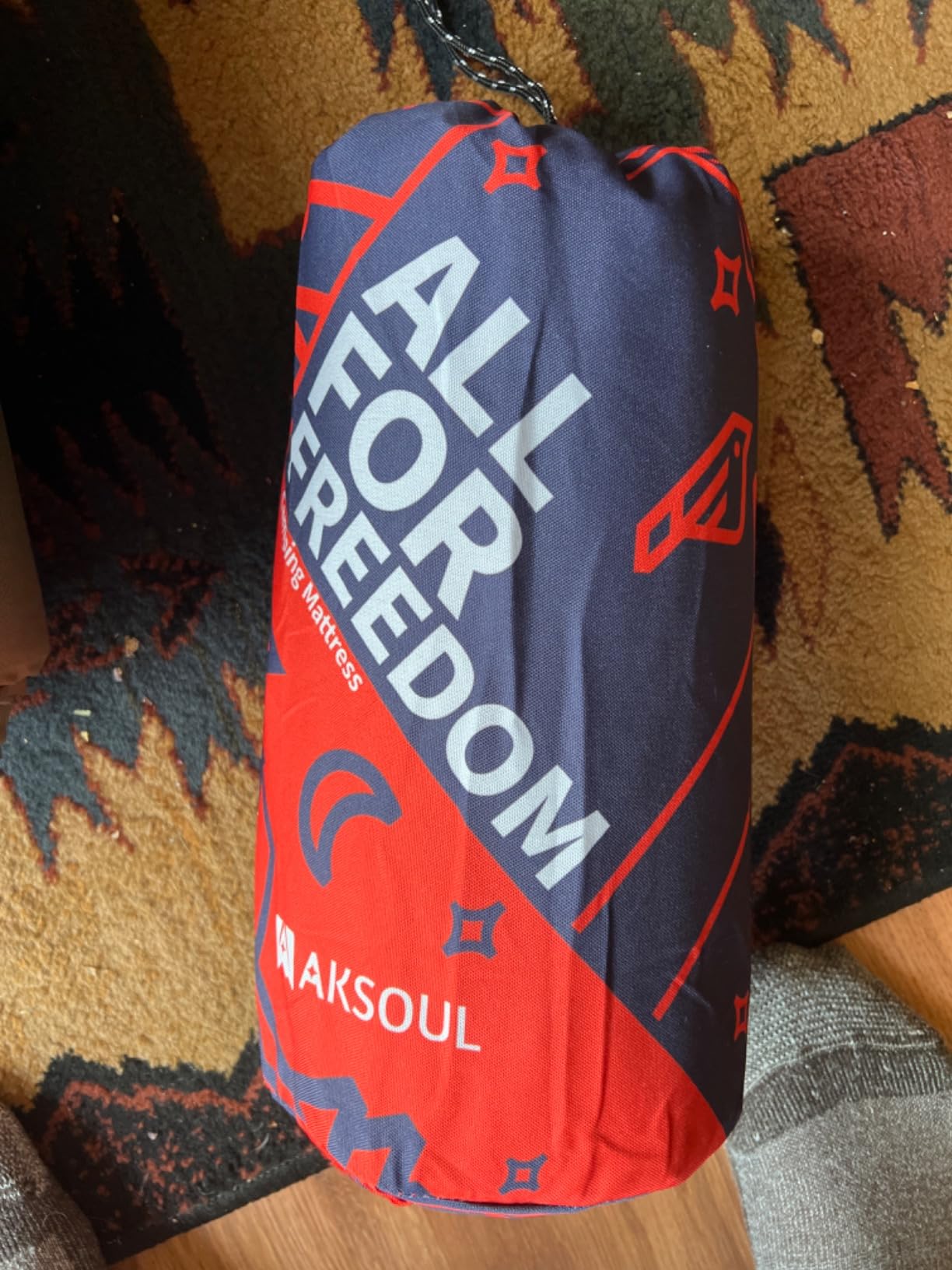
Be aware of what reviewers report about the real thickness. Once aired out, the pad runs softer than the listed 3.9 inches, and that softness cuts both ways: some side sleepers find it gentle, others find their hip still touching hard ground. It is the softest of the thick options here.
Its 4.2 rating comes with the highest one-star share in this group at 9 percent, and the complaints point at seam durability and the fabric being water-resistant rather than fully waterproof. It is also air-only, so there is no cold-weather performance to speak of.
Who this pad suits
First-time buyers, occasional campers and anyone who wants close to four inches of cushion without paying for a premium brand. It is a good match for lightweight sleepers on mild ground who want a wide surface and a fast pump.
Who should skip it
Skip it if you are a heavier sleeper or you bottom out easily, because the softer-than-listed feel works against you there. It also needs an insulating mat underneath for cold ground, and the snap hardware adds bulk to an otherwise compact package.
7. INVOKER R-8 Self-Inflating Memory Foam Pad – Best for Cold Ground
INVOKER Camping Sleeping Pad, Self-Inflating, 75 x 24 x 3.15 in, Green
3.15 inch thickness
27.6 in wide x 76.8 in long
6.6 lb
R-8 insulation
600 lb capacity
Pros
- High-resilience memory foam adapts to body curves
- R-8 keeps sleepers warm on snow and cold rock
- 30D knit shell is quiet and squeak-free
- Integrated neck-support pillow included
Cons
- Self-inflation is slow and often needs topping up by hand
- 6.6 lb is too heavy to carry into a site
- Thin fabric shell punctures easily
- Carry bag stitching is a common weak point
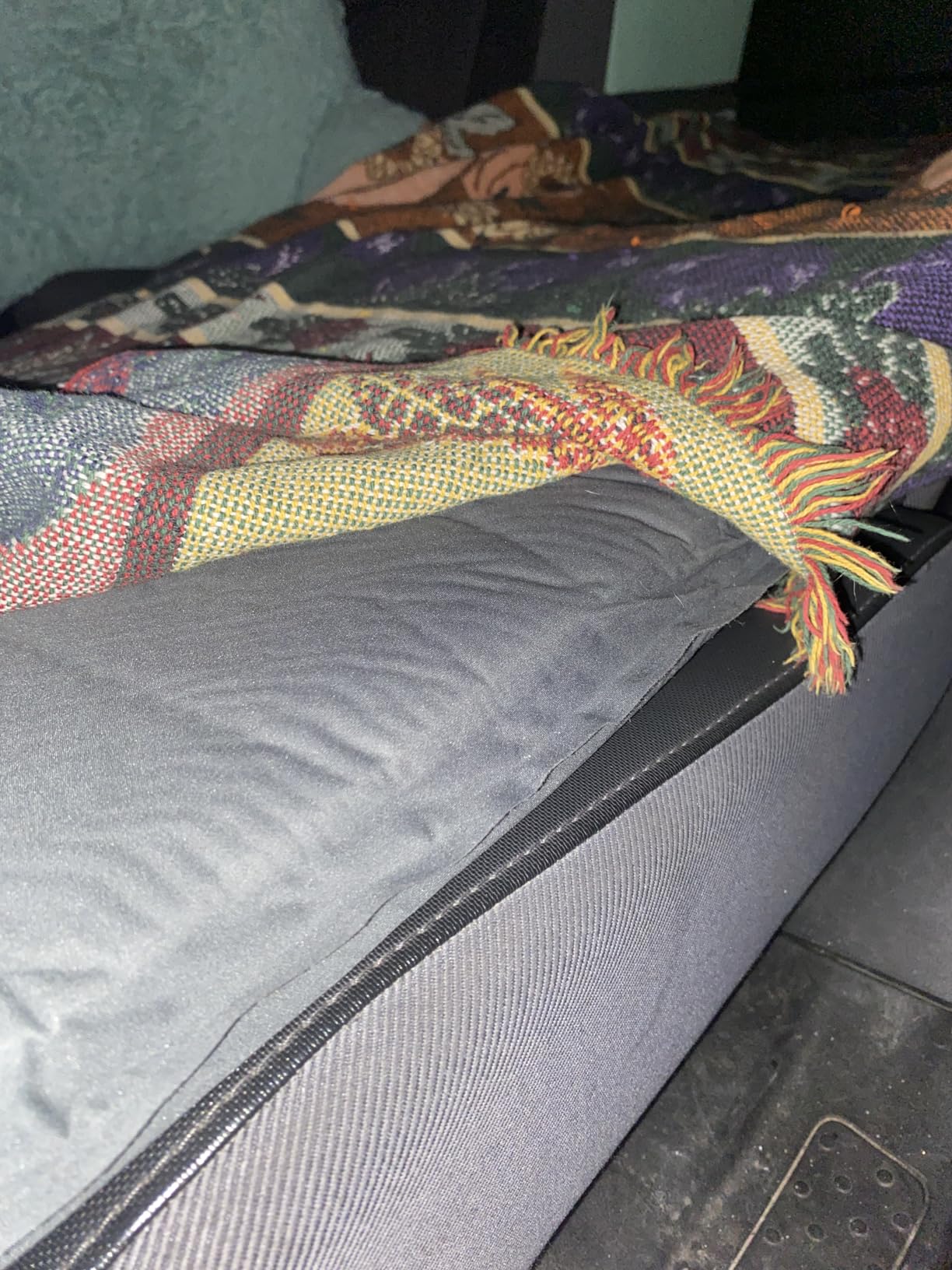
This is the pad for people who sleep cold. R-8 insulation plus a 3.15 inch high-resilience memory foam layer means it works down to near-freezing nights, and the memory foam moulds to your shoulder and hip rather than pushing back. Owners with back pain describe it as the first pad they can sleep on through the whole night in years.
It is also quiet. The 30D knit fabric over a waterproof TPU backing avoids the squeak and rustle that air pads produce, which makes it a shared-tent option. The integrated neck-support pillow removes a piece of gear, and the 27.6 inch width is one of the roomier surfaces here.
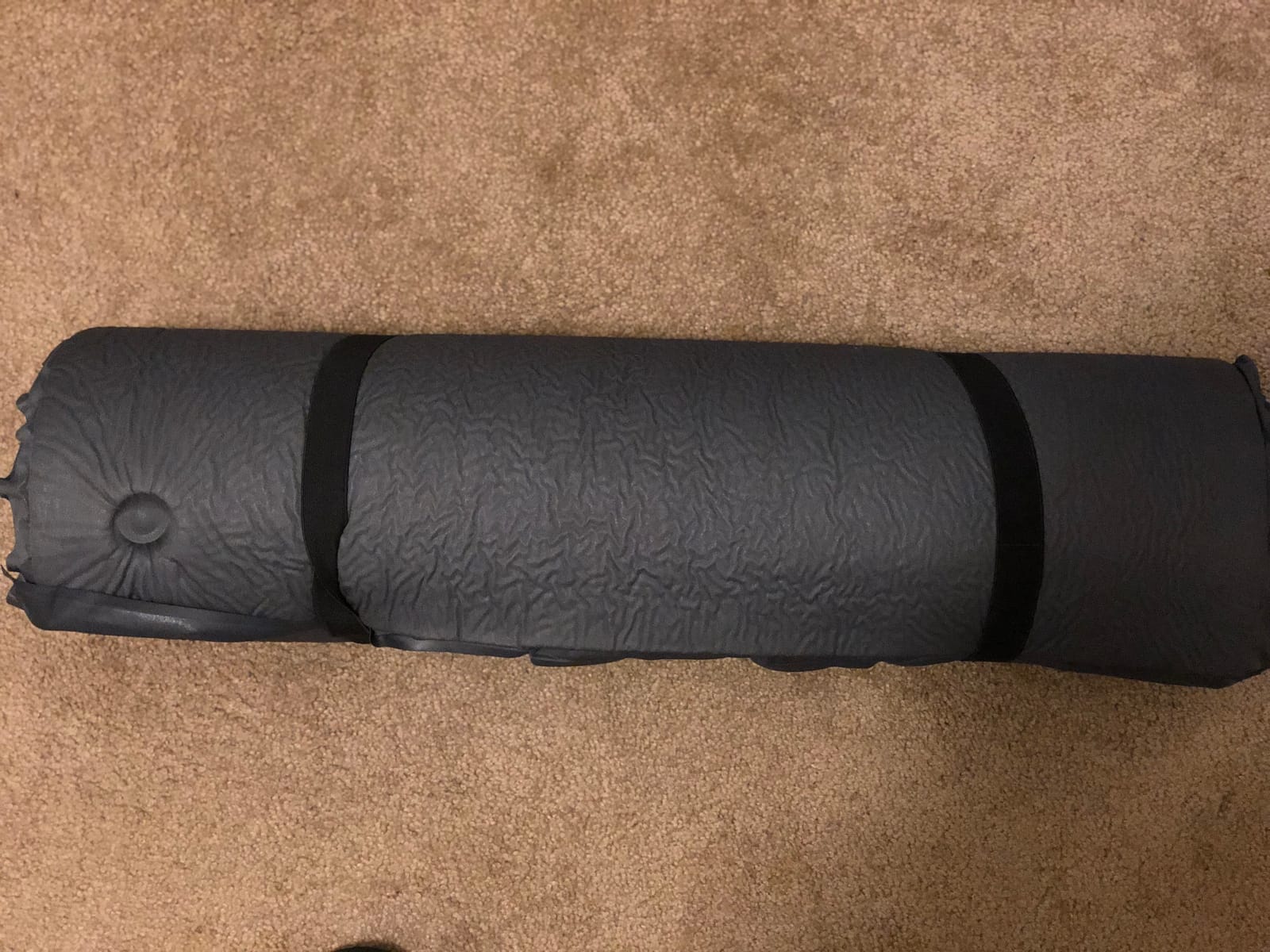
It is a car-camping or vehicle pad, though. At 6.6 pounds, carrying this into a site means carrying it twice. And self-inflation is the most repeated complaint in the reviews: the double valve needs no pump, but the pad often wants topping up by hand, and deflating it means kneeling and rolling.
The thin fabric shell punctures easily, and the carry bag stitching is called out specifically as a weak point. Budget for a repair kit and store it in something tougher than the supplied sack.
Who this pad suits
Cold sleepers who want thick cushion and genuine winter insulation in one product, plus families or couples who want a quiet surface that does not wake the other person. The 600 pound capacity is generous and covers a wide range of body sizes.
Who should skip it
Skip it if you walk to your campsite. Six and a half pounds is not a backpacking weight, and no amount of clever packing changes that. It is also not the pad to take when you need something quiet and light at once.
8. Lost Horizon Option3 4.5 Inch Mattress – Best for Winter Camping
Lost Horizon Option3 Self-Inflating Foam Camping Mattress, Single, 4.5″
4.5 inch thickness
28 in wide x 80 in long
9 lb
R-13 insulation
220 lb capacity
Pros
- 4.5 inches of air and foam that side sleepers report never bottoming out
- Fully adjustable firmness by adding or releasing air
- R-13 works down to near-freezing nights
- Silent and stable with no air shift when you move
Cons
- 9 lb makes it car-camping only
- Deflating and rolling is effortful
- 220 lb capacity is the lowest in this roundup
- Bulk even when compressed
The Option3 solves the problem most thick, comfortable pads create: being thick but not warm enough. At 4.5 inches with 6.5 pounds of foam filling and an R-13 rating, it is genuinely usable in cold conditions, and heavier side sleepers report it never bottoms out. That combination is rare.
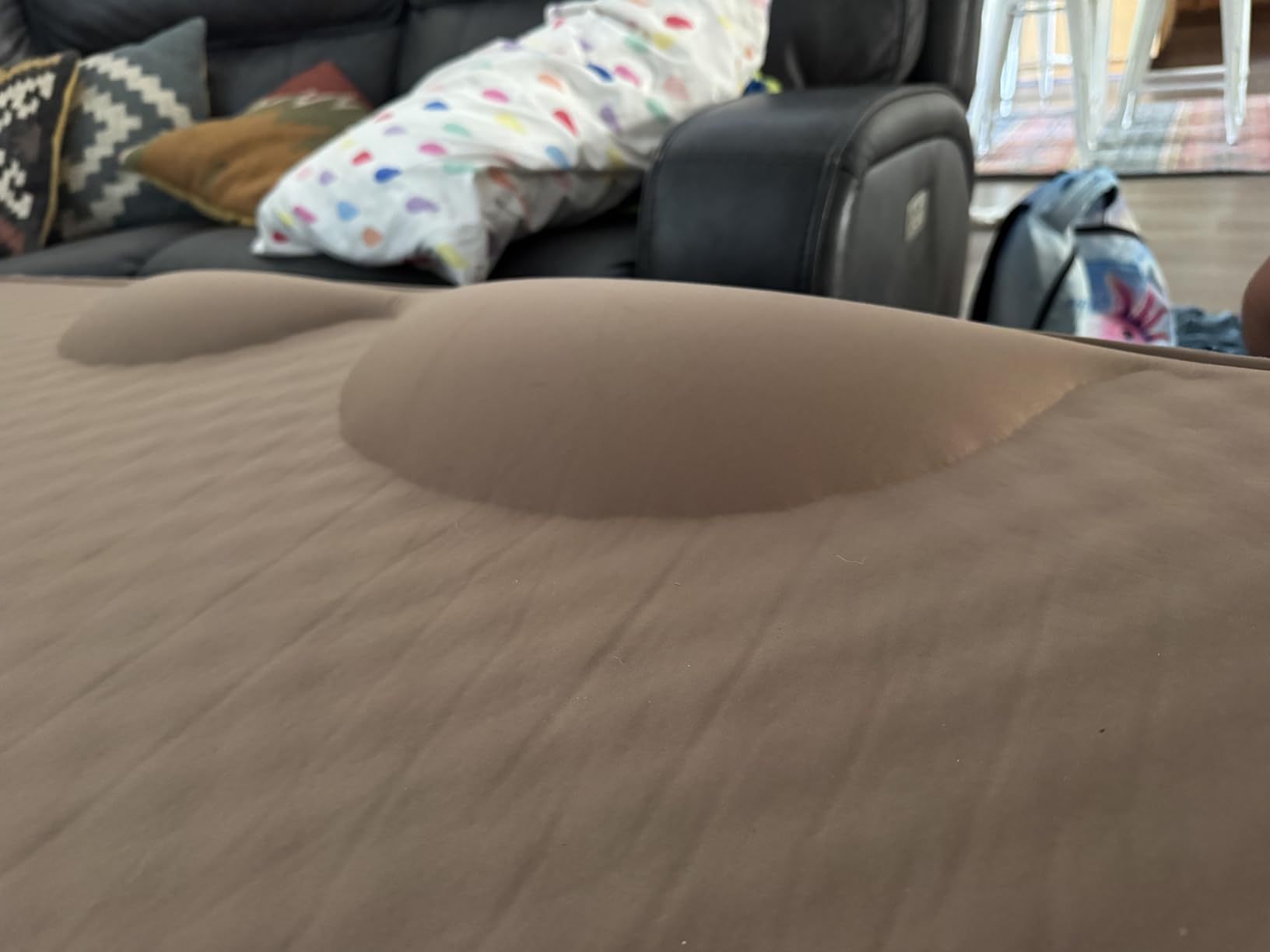
The air-and-foam construction also makes it adjustable. Add air for firmness, release it for softness, and because the foam carries the loft it holds that setting far better overnight than a conventional air bed would. The surface is silent and stable, with no squeaking and no shifting when you move. At 4.3 stars from just over 1,200 reviews, 71 percent of buyers gave it five stars.
The catch is capacity, and it is a hard one. The listed limit of 220 pounds is the lowest in this roundup, and experienced campers treat a low capacity as a disqualifier rather than a footnote. If you are above that mark, this is not the pad for you no matter how good the sleep feels.
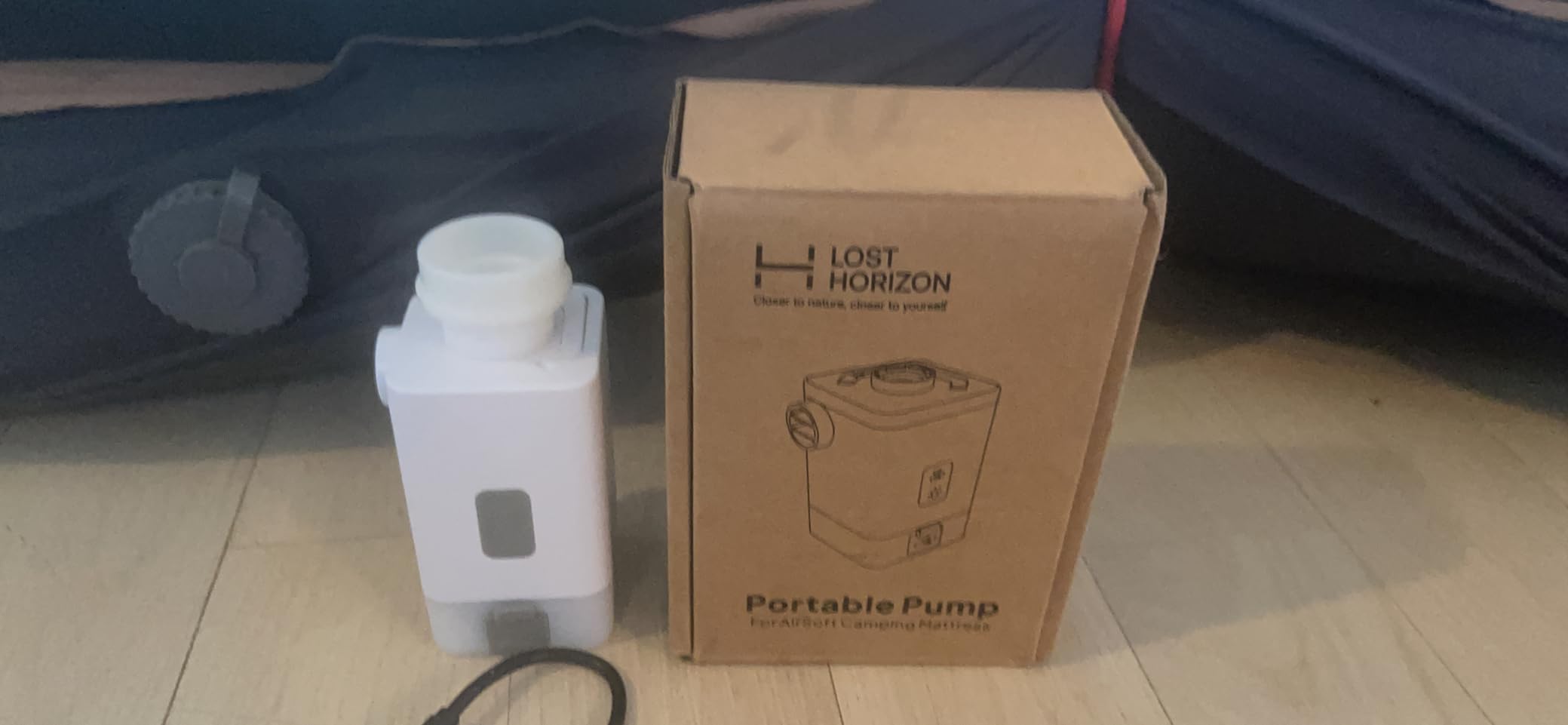
At nine pounds it is a car-camping mattress, and deflating and rolling it is real work. An electric pump is sold separately, and the non-standard valve fitting limits which pumps you can use. It stays bulky even compressed.
Who this pad suits
This suits cold-weather car campers and van dwellers under 220 pounds who refuse to compromise on either cushion or warmth. It is also the pick for anyone with back pain who has found every inflatable pad too springy.
Who should skip it
Skip it above 220 pounds, and skip it entirely if you carry your gear. Below that weight, the only real cost is the effort of packing it away, which you do once per trip rather than every morning.
9. Elegear 26D Memory Foam Pad – Best for Heavy Sleepers
Elegear Self Inflating Sleeping Pad with Pillow 26D Memory Foam 3.15″
3.15 inch thickness
27 in wide x 77 in long
8.1 lb
R-9.5 ASTM tested
800 lb capacity
Pros
- 26D memory foam spreads weight evenly at hip and shoulder
- Tested to hold 800 pounds with no leakage over 24 hours
- Self-inflates in about 20 seconds
- 50D stretch knit shell is quiet and breathable
Cons
- 8.1 lb is a car-camping weight
- Vacuum-packed pads can take up to 20 minutes for first inflation
- 3.15 inches is thinner than the 4 inch pads
- Integrated pillow is fixed
Density is the story here. Most camping pads use 19D foam, while this one uses 26D, and the difference shows up exactly where heavy side sleepers need it: the foam resists compression and spreads load evenly through the hip and shoulder contact points instead of letting you sink. The listed 800 pound capacity is the highest here alongside the TOBTOS, and owners report no sag.
The dual-layer valve makes deflation bearable for once. You open it one way and the air leaves in a controlled way, which is the step most people dread on a self-inflating pad. The 50D stretch knit shell is quiet, breathable and skin-friendly, with a waterproof TPU layer underneath.
R-9.5 is ASTM tested, which puts this in winter territory alongside the INVOKER and the Lost Horizon. At 4.3 stars from roughly 1,100 reviews, with 69 percent five-star, the ratings track with what we felt: solid, quiet and supportive, with none of the springiness of an air bed.
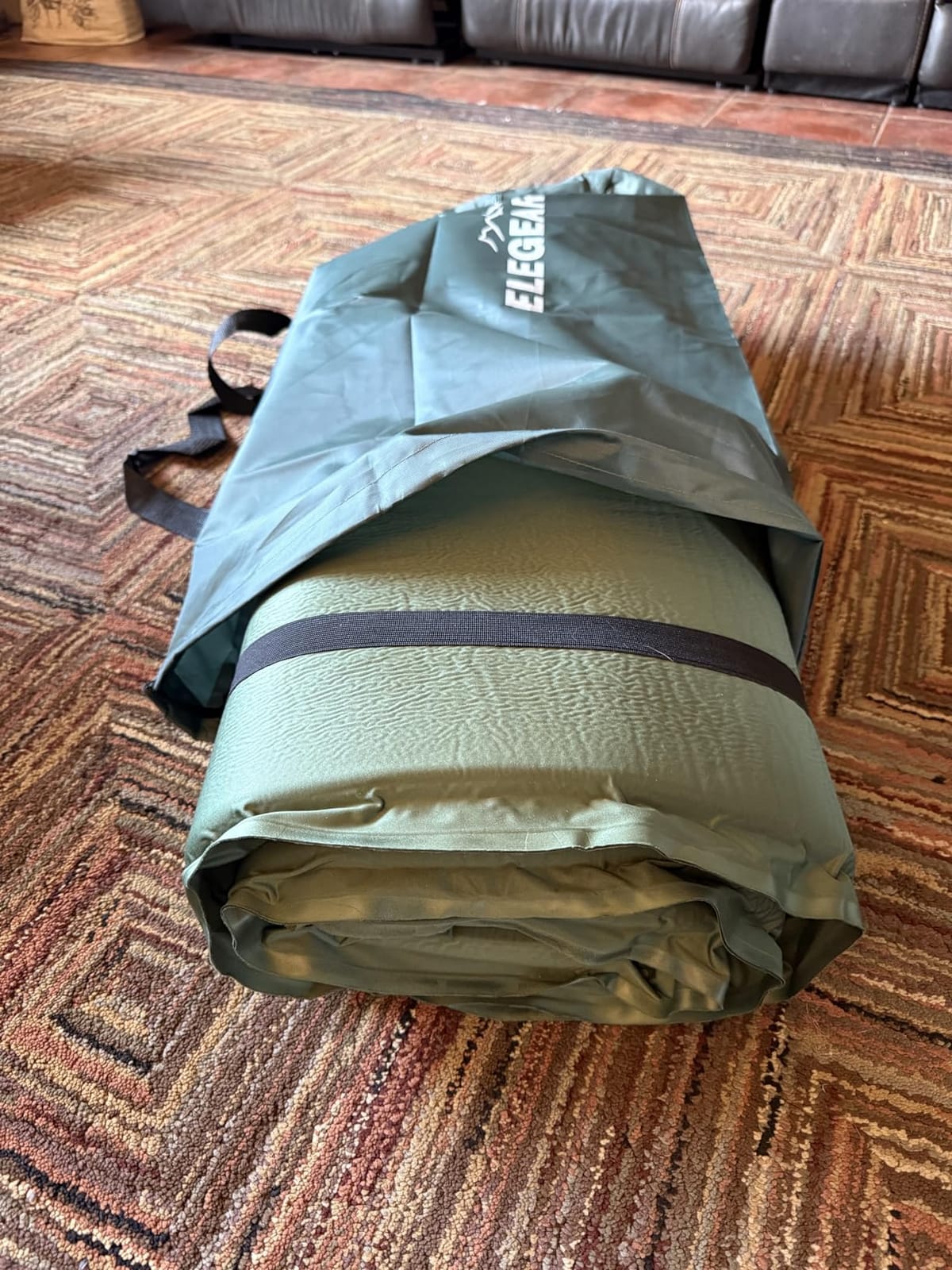
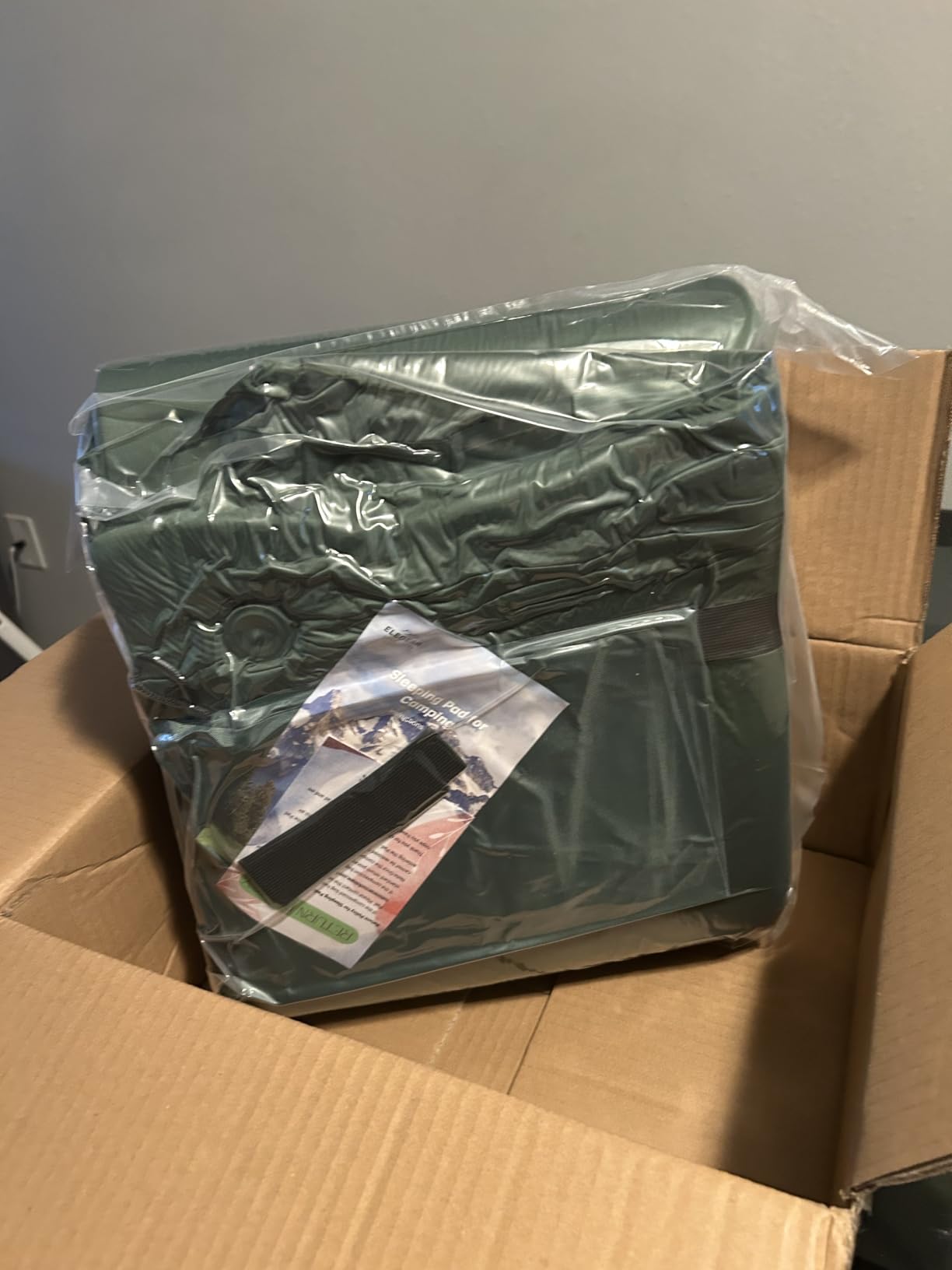
The weight is 8.1 pounds, so this is not a packable pad. And vacuum-packed units can take up to twenty minutes for that first inflation, which is worth knowing when you are pitching a tent in the dark. The integrated pillow is fixed rather than height-adjustable.
Who this pad suits
This is the one for heavier side sleepers who have been disappointed by foam that compresses under load, and for anyone who wants high R-value insulation in a quiet, non-springy surface. The 800 pound capacity takes almost any body size.
Who should skip it
Skip it if you carry your gear, and skip it if you need a pad that feels brand new out of the bag. Allow time after unpacking, because a vacuum-compressed pad needs a while to reach full shape before you judge the thickness.
10. Kingfun 3 Inch Memory Foam Mat – Best for Flexible Layouts
Kingfun 3 Inch CertiPUR-US Memory Foam Camping Mattress Pad, Waterproof Roll up Sleeping Pad, Thick Floor Sleeping Mats for Tent with Removable Travel Bag(Grey, Cot)
3 inch thickness
25 in wide x 75 in long
CertiPUR-US foam
Water-resistant velboa cover
Pros
- High-density memory foam adapts to body contours for pressure relief
- Water-resistant velboa cover with an anti-slip base
- Eight Velcro corner connectors for modular layouts
- CertiPUR-US certified foam
Cons
- Not self-inflating so it needs no pump and no air
- 3 inches is thinner than dedicated side-sleeper air pads
- Needs up to 72 hours to fully expand
- 12-plus lb weight limits it to car camping
The Kingfun is a floor pad rather than a trail pad, and it earns its place through flexibility. Eight Velcro corner connectors let you build a custom sleeping surface across a tent, a vehicle floor or a guest room, and the anti-slip base on the water-resistant velboa cover keeps the whole thing where you put it instead of sliding around at 3am.
It also carries one of the cleanest rating distributions in the roundup: 4.5 stars across about 1,200 reviews with 73 percent five-star and only 3 percent one-star. The foam is CertiPUR-US certified, which means no harmful flame retardants, and it suits sleeping next to babies or during pregnancy for that reason.
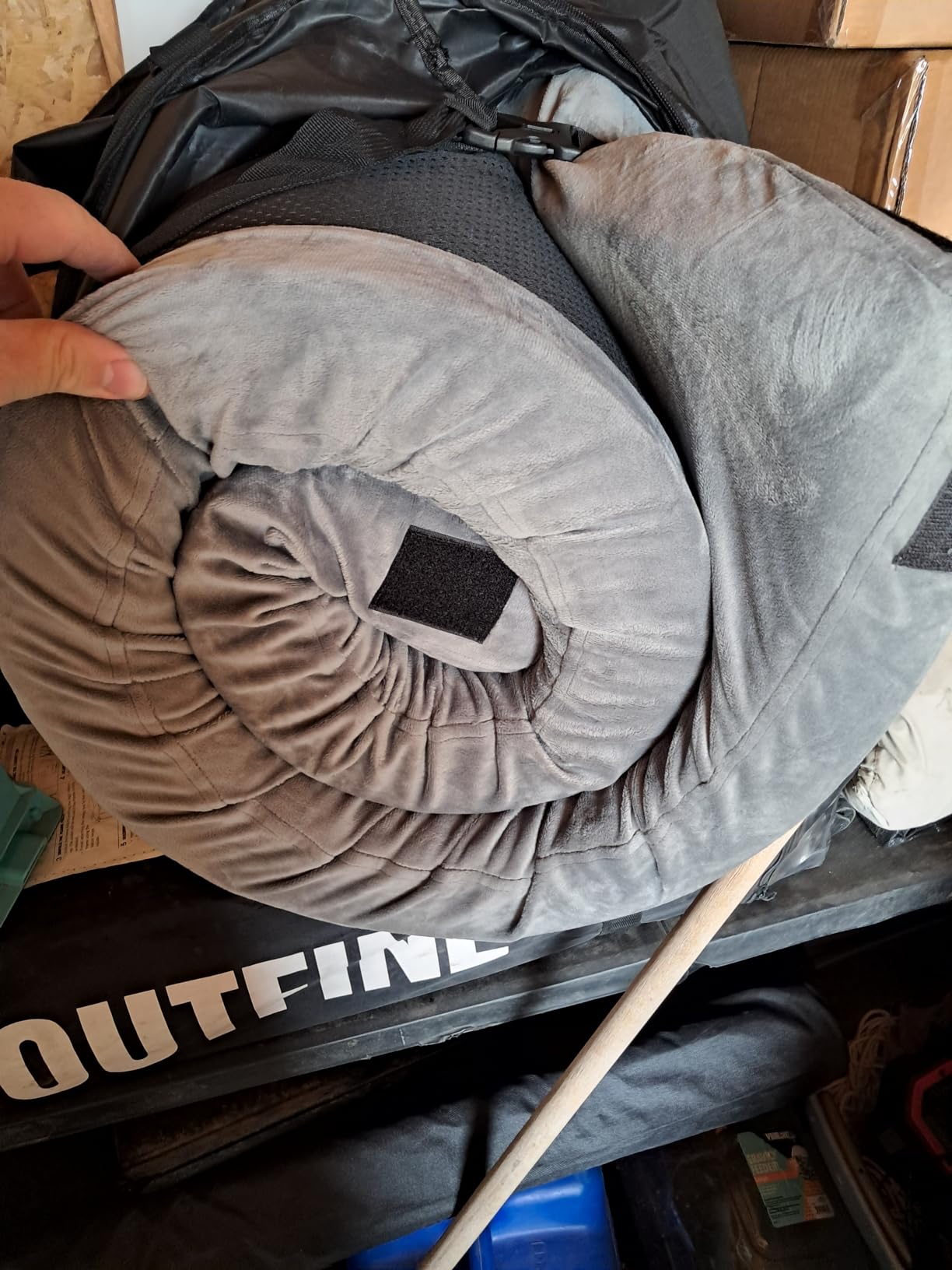
There is no valve and no air involved, which is both its charm and its limit. Nothing to inflate, nothing to puncture and nothing to leak, but also no way to adjust firmness the way an air-plus-foam pad allows. Three inches of CertiPUR-US foam is thinner than the dedicated side-sleeper air pads here, so very bony-hip sleepers may still feel pressure.
Allow up to 72 hours for full expansion after it comes out of the roll, and expect a weight in the region of twelve-plus pounds, which limits it to car camping and floor use. Buyers treat it as a bedroll upgrade rather than a backpacking pad.
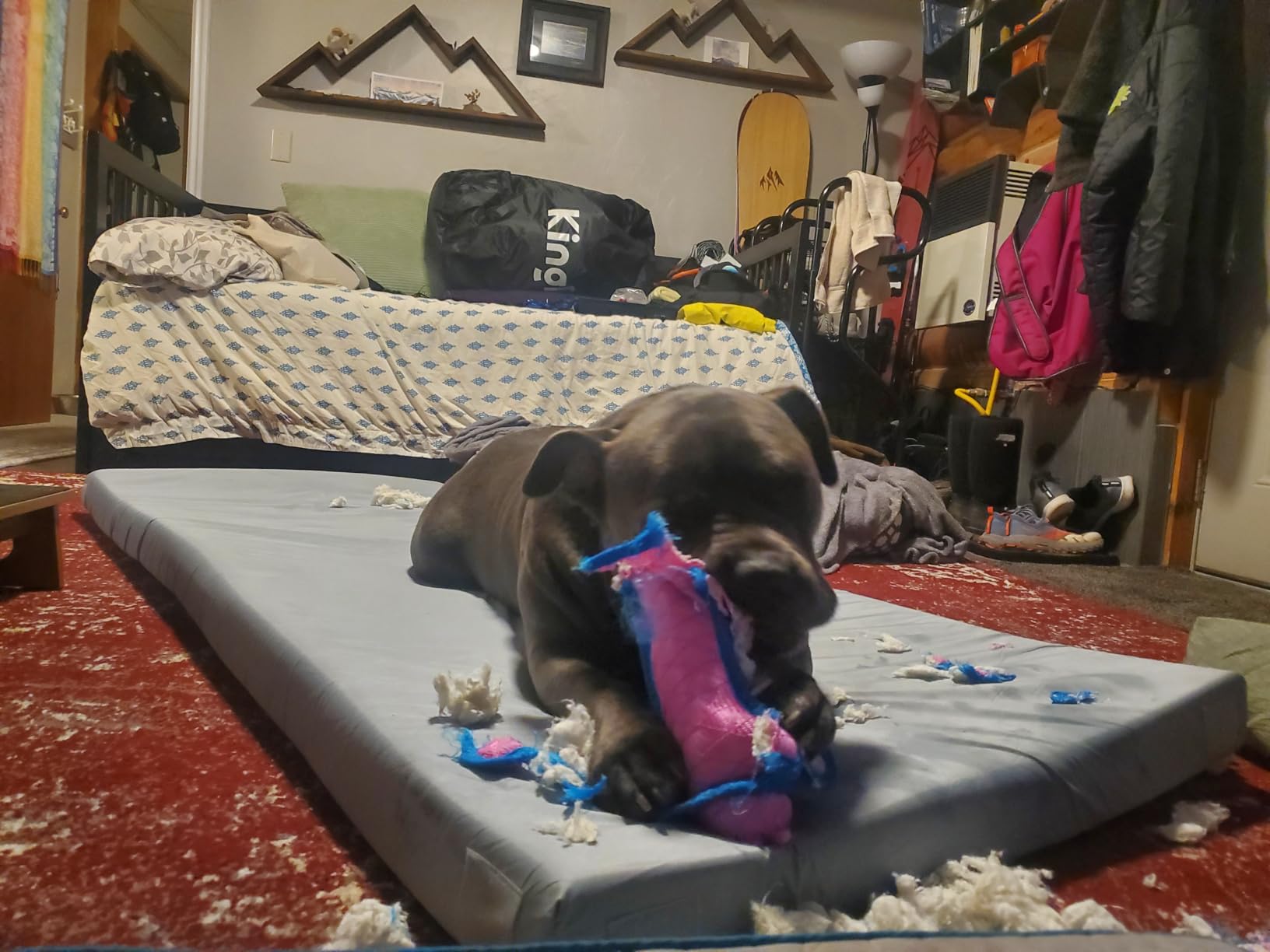
Who this pad suits
Car campers and families who want one mat to serve the tent, the vehicle floor and the guest room. It is also a strong choice for anyone who sleeps next to small children and wants certified foam, and for side sleepers who want zero risk of a leak.
Who should skip it
Skip it if you need a packable pad, if you cannot give it time to expand after unpacking, or if you need serious winter insulation on its own. Three inches of unprotected foam is a comfort layer, not a cold-weather system.
How to Choose a Sleeping Pad for Side Sleepers
Most of the criteria on this page reduce to two physical numbers and one temperature number. Get those right and the rest is preference.
How thick should a sleeping pad be for side sleepers?
Three inches is the floor. Below that, a pad cannot span the gap under a shoulder and a hip, so pressure concentrates on two small areas and you wake up sore. Four inches is the comfortable target for most side sleepers, and six inches is the point where you stop noticing the ground at all.
Under 2.5 inches: a back-sleeper pad. Bony hips will feel it every night.
3 to 3.5 inches: workable for lightweight side sleepers on soft or mild ground.
4 inches: the target. Full air chambers or thick foam, your choice of material.
5 inches and up: solves bottoming out outright and suits broad-hipped or heavy sleepers.
Does width matter as much as thickness for side sleepers?
Width solves a different problem. Thickness stops your hip reaching the ground; width stops you rolling off the edge and onto it. Many people blame their pad for rolling when the real issue is that they are lying on a 20 inch surface.
Twenty-five inches is a minimum for anyone who moves in their sleep. Twenty-seven and twenty-eight inches is the comfortable zone, and it is where the TOBTOS, the AKSOUL and the INVOKER sit. The confusion in the forums is understandable: a restless sleeper who buys a thicker but narrow pad gets worse sleep, not better.
What R-value do you actually need?
R-value measures how much a pad resists heat loss into the ground. R-3 to R-4 handles summer three-season trips. R-4.5 to R-5 covers shoulder season and cold sleepers on low ground. R-8 and above is winter territory.
If your pad has no listed R-value, treat it as a three-season comfort layer rather than an insulating system. That single piece of missing information is the one forum users most often say they use as a filter.
Foam, air or self-inflating: which one suits side sleeping?
Air pads give the best thickness-to-weight ratio and let you tune firmness, but they are noisy and springy. Closed-cell foam is silent and never fails, but it is the bulkiest option per inch of cushion. Self-inflating pads sit between them: an open-cell foam core holds shape better than pure air while staying lighter and quieter than a full foam slab.
Experienced users on BackpackingLight’s most-comfortable-closed-cell-foam thread still favour foam for comfort despite the weight, reporting pads around 17 ounces that feel soft and supportive at the same time. For shared tents, foam wins on quiet. For pack weight, air wins on loft.
Should you under-inflate a thick air pad?
Yes, on a thick air pad, and it is the single most useful technique in this article. Inflate the pad fully, let it sit for ten minutes, then release air in small increments until your shoulder sinks into the surface without touching anything solid beneath it. Re-inflate in the morning.
The caution is that this is not universal. Some side sleepers explicitly want the opposite, telling forum threads they would rather have firm spinal support than a soft surface. If you wake feeling like you sank into the mattress, add air back until it feels right. The test is whether your hip reaches the ground, not whether the pad feels soft.
How can you test a sleeping pad before you buy it?
Lie on your side on the return window, not your back, and press your hip down hard for a full minute. If you can feel the floor through the pad, it is too thin for you. That one minute reproduces what an eight-hour night does and takes no time.
If you cannot visit a store, read the one-star reviews rather than the five-star ones and search for terms like rocks, noise and leak. Look for reviewer photos taken with the pad laid on gravel, since those reveal real thickness better than any listing. Check the weight capacity against your own body weight before anything else, and treat a low limit as a hard no.
What to use instead of a sleeping pad?
For side sleepers, a self-inflating foam pad is the most direct swap, because it holds loft instead of collapsing under a hip. A closed-cell foam mat is quieter and more durable but bulkier per inch of cushion.
A camping cot raises you off the ground entirely, which helps with cold and rocks but does nothing for hip pressure unless you add a mattress on top. A hammock is the worst option for side sleepers, because the pressure point is exactly where a hammock pulls you inward. None of these are wrong answers, they just solve different parts of the problem.
One combination worth knowing: an air pad on top of a closed-cell foam mat. The foam mat cannot bottom out, it adds insulation, and the air pad on top supplies the softness. Stack them and the R-values add together, which is the standard answer to the thick-but-not-warm-enough problem.
Frequently Asked Questions
How thick should a sleeping pad be for side sleepers?
Three inches is the practical floor, four inches is the comfortable target, and six inches is where you stop noticing the ground entirely. Below two and a half inches a pad cannot span the gap under a shoulder and hip, so pressure concentrates on two points and you wake sore.
What is the best way to sleep if you’re a side sleeper?
Inflate the pad fully, wait ten minutes, then release air in small bursts until your shoulder sinks in without touching anything solid beneath it. Add air back in the morning. Keep knees slightly bent, use 25 inches of width or more, and under-inflate only if you like a softer surface, since some side sleepers prefer firm support.
What is a good sleeping mat for side sleepers?
A good side-sleeper mat is at least 3 inches thick, at least 25 inches wide, and rated for your body weight. Air pads give the best thickness-to-weight ratio, self-inflating pads are quieter and hold shape better, and closed-cell foam is the most durable and silent option.
How to make a sleeping pad less noisy?
Choose foam or a foam-and-air hybrid instead of a pure air pad, since fabric shells over foam do not rustle. Lower inflation slightly to reduce air movement, place a sheet over the pad, and keep the pad surface away from sleeping bag fabric that shifts. Foam-based pads such as the Gear Doctors Oxylus are the quietest option for shared tents.
What are the quietest sleeping pads available?
The quietest pads are foam-based rather than air-based. Self-inflating foam and air hybrids, and full memory foam mats, do not squeak or rustle when you move. In this roundup the Gear Doctors Oxylus and the INVOKER 30D knit shell were the least noisy, while air pads were the loudest.
What to use instead of a sleeping pad?
A self-inflating foam pad is the most direct alternative because the foam core holds loft instead of collapsing under a hip. Closed-cell foam is quieter and more durable but bulkier. A cot raises you off cold ground but needs a mattress on top for hip support, and a hammock is the worst option for side sleeping.
The Best Sleeping Pads for Side Sleepers in 2026
Ten pads, one conclusion. If you want a single pad that handles hip pressure, shared-tent noise and a linkable double setup, the ZOOOBELIVES Airlive2000 at 4 inches is our pick, backed by the largest review base in this roundup. If you want the best value and a genuinely quiet, warm surface, the Gear Doctors Oxylus is hard to argue with at 4.5 stars and R-4.3 insulation. If you only need thickness and not much else, the AKSOUL gets close to four inches at 850 grams.
Whichever one you pick, measure two things before you commit: your shoulder clearance on the floor, and whether the listed width matches how much you move at night. Get the best sleeping pads for side sleepers right and the rest of the trip stops being about sleep.