
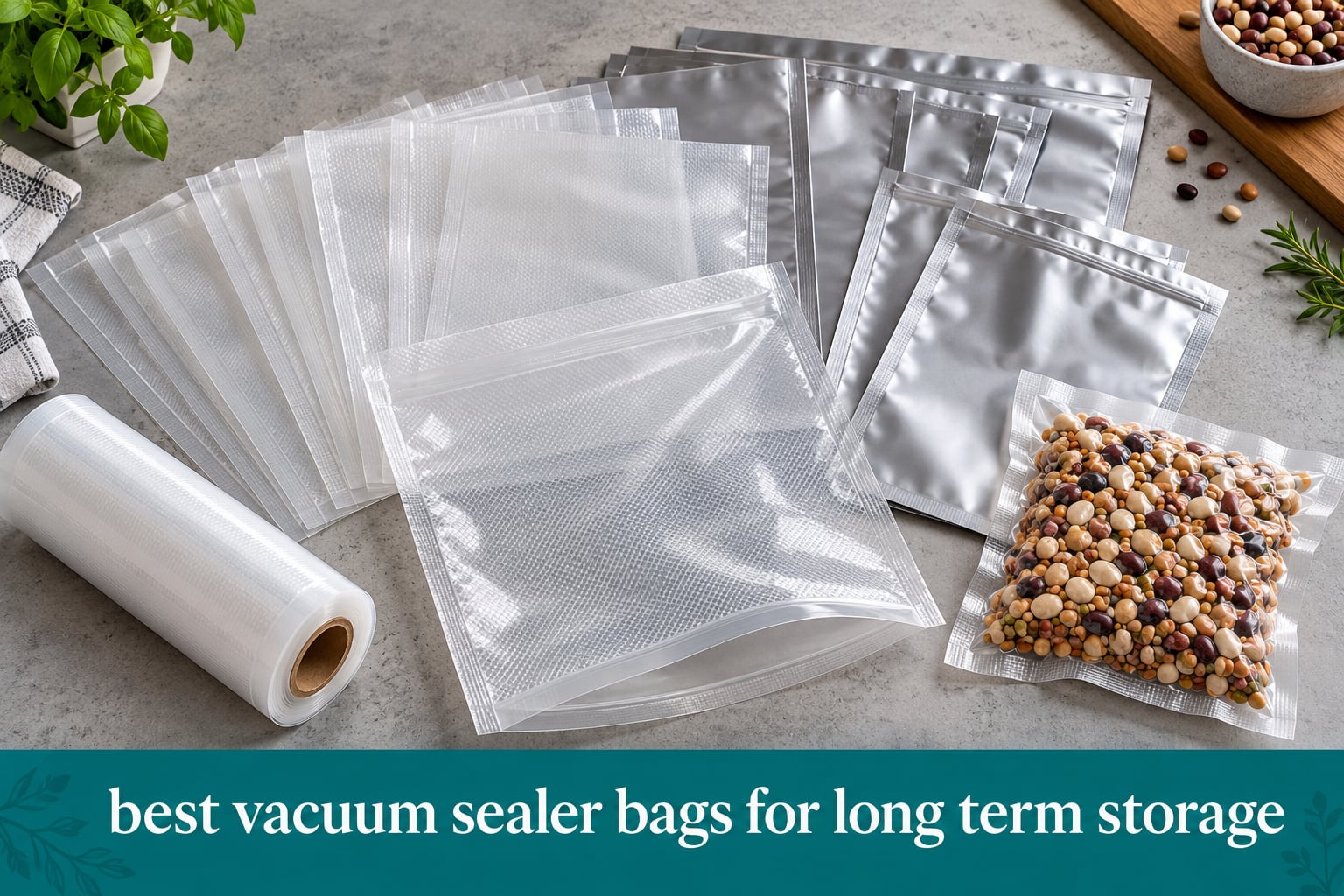
Most vacuum sealer bags are sold on compression, and that is the wrong number to shop on. A bag can squash a comforter to a fifth of its size and still lose its seal in a pantry in six weeks, and that failure is invisible until you open a bag of flour and find a freezer-burned block. The only spec that predicts long-term performance is how well the film and the seal channel hold air over months, which is why every pick below is judged on mil thickness, laminate structure and seal geometry first.
There is also a distinction that most guides blur. Flat, pre-cut, heat-seal bags that run through a clamp-style sealer are for food, while zip-closure bags with a one-way valve and a hand or electric pump are for clothing and bedding. They are different products with different failure modes, and buying the wrong family is the single most common regret we see in reader questions. Our best vacuum sealer bags for long term storage list covers both families, and it says plainly which is which.
Across the ten products here, the pattern is consistent: bags rated 4 mil or heavier with embossed air channels and reinforced seal strips hold a seal, and sub-3 mil thin film does not. What no bag does is stop spoilage on its own. Vacuum removes air, an oxygen absorber removes what is left, and only cool, dark, dry storage keeps both from reversing. This roundup, updated for 2026, ranks the bags, explains where each one breaks, and covers how long food realistically lasts inside them.
Table of Contents
Top 3 Vacuum Sealer Bags for Long-Term Storage (October 2026)

O2frepak Gallon 11×16 Bags
- 3.5 mil front and 4 mil embossed back panel
- Food grade PA+PE
- 100 pre-cut gallon bags
- Bone guards along the seal

Wevac 11×50 Rolls
- 11 inch wide embossed-channel PE
- Cut to any bag size
- 2 rolls of 50 feet
- BPA free

Bonsenkitchen 8×12 Quart Bags
- 4 mil commercial grade film
- 200 pre-cut bags
- Embossed air-removal channels
- Sous vide safe to 195 degrees F
Those three cover the three ways people actually store food: sealed gallon bags of dry goods and leftovers, custom-cut bags for odd shapes, and high-volume meal prep. Each one clears the 3.5 mil floor we set, which is the reason all three are here and the lighter options are not.
All 10 Bags Compared in 2026
| Product | Specs | Action |
|---|---|---|
| O2frepak Gallon 11×16 Bags 100ct |
|
Check Latest Price |
| Wevac 11×50 Rolls 2 Pack |
|
Check Latest Price |
| Bonsenkitchen 8×12 Quart Bags 200ct |
|
Check Latest Price |
 FoodSaver 1 Gallon Zipper Bags 12ct FoodSaver 1 Gallon Zipper Bags 12ct |
|
Check Latest Price |
 Home Sensei 5 Gallon Mylar 10 Mil 10ct Home Sensei 5 Gallon Mylar 10 Mil 10ct |
|
Check Latest Price |
 Amazon Basics Jumbo 40×30 6 Pack Amazon Basics Jumbo 40×30 6 Pack |
|
Check Latest Price |
 HIBAG Jumbo 12 Pack HIBAG Jumbo 12 Pack |
|
Check Latest Price |
 FYGRIP 20 Bag Combo FYGRIP 20 Bag Combo |
|
Check Latest Price |
 GONGSHI 24 Bag Combo with Electric Pump GONGSHI 24 Bag Combo with Electric Pump |
|
Check Latest Price |
 SpaceAid X-Large 3 Pack SpaceAid X-Large 3 Pack |
|
Check Latest Price |
Read the material column first. PA+PE laminate and nylon with PE layers are what you want for anything that has to sit for months. Plain polyethylene rolls work, but only if the film is thick enough and the embossed channels are deep enough to keep the seal bar clean.
How We Judged Durability
We ranked these bags against one question: will this seal still be holding a vacuum when you come back to it in six months? Everything else is secondary. To answer it we looked at three things, and we would encourage you to apply the same three when you read any other list.
First, stated thickness. Most listings bury it or leave it out entirely, and “heavy duty” in a product title is not a measurement. Where a mil figure is published, we used it; where it is not, we said so rather than guessing. Second, laminate structure, because PA+PE and nylon-PE composites resist puncture far better than single-layer polyethylene at the same thickness. Third, seal geometry, which means the width of the sealing channel and whether there are bone guards along the edge where a sharp object inside the bag would press against the film.
We also weighed the review record, because durability claims and long-term behavior are rarely the same thing. A bag with 17,000 reviews is a bag whose failures are already documented, and those failure modes are far more useful to you than the marketing copy. Where a product family has a documented weakness, such as a zipper that will not seat properly on the first pass, we put it in the cons rather than leaving it out.
1. O2frepak Gallon 11×16 Bags – Best Overall for Long-Term Food Storage
O2frepak Gallon 11″x16″ Vacuum Sealer Bags 100ct for Food Storage
Food grade PA+PE
3.5 mil front and 4 mil embossed back panel
100 pre-cut gallon bags
Bone guards
Pros
- Bone guards stop sharp contents piercing the seal
- Embossed channels pull a stronger vacuum
- Pre-cut gallon size needs no measuring
- Boilable microwaveable freezer and dishwasher safe
Cons
- Pre-cut sizes cannot be resized
- Gallon bags are bulky for small portions
This is the bag we reach for first, and the reason is written into the film spec rather than the product name. The front panel is 3.5 mil and the embossed back panel is 4 mil, which puts it above the 3 mil standard that most economy bags sit at, and the material is food grade PA+PE rather than plain polyethylene. Nearly 11,000 reviews average 4.7 stars, with 82% five-star ratings, and the repeated theme is that the seal keeps.
The bone guards are the part that separates it from ordinary gallon bags. They run along the seal channel, so when you seal a bag containing bone-in meat, a screwdriver or a length of filament, the sharp edge presses against reinforced plastic rather than the film that keeps the air out. Forum users chasing a bag that survives this exact test describe the same requirement, and these are the only bags in our list with a manufacturer-stated guard along the seal.
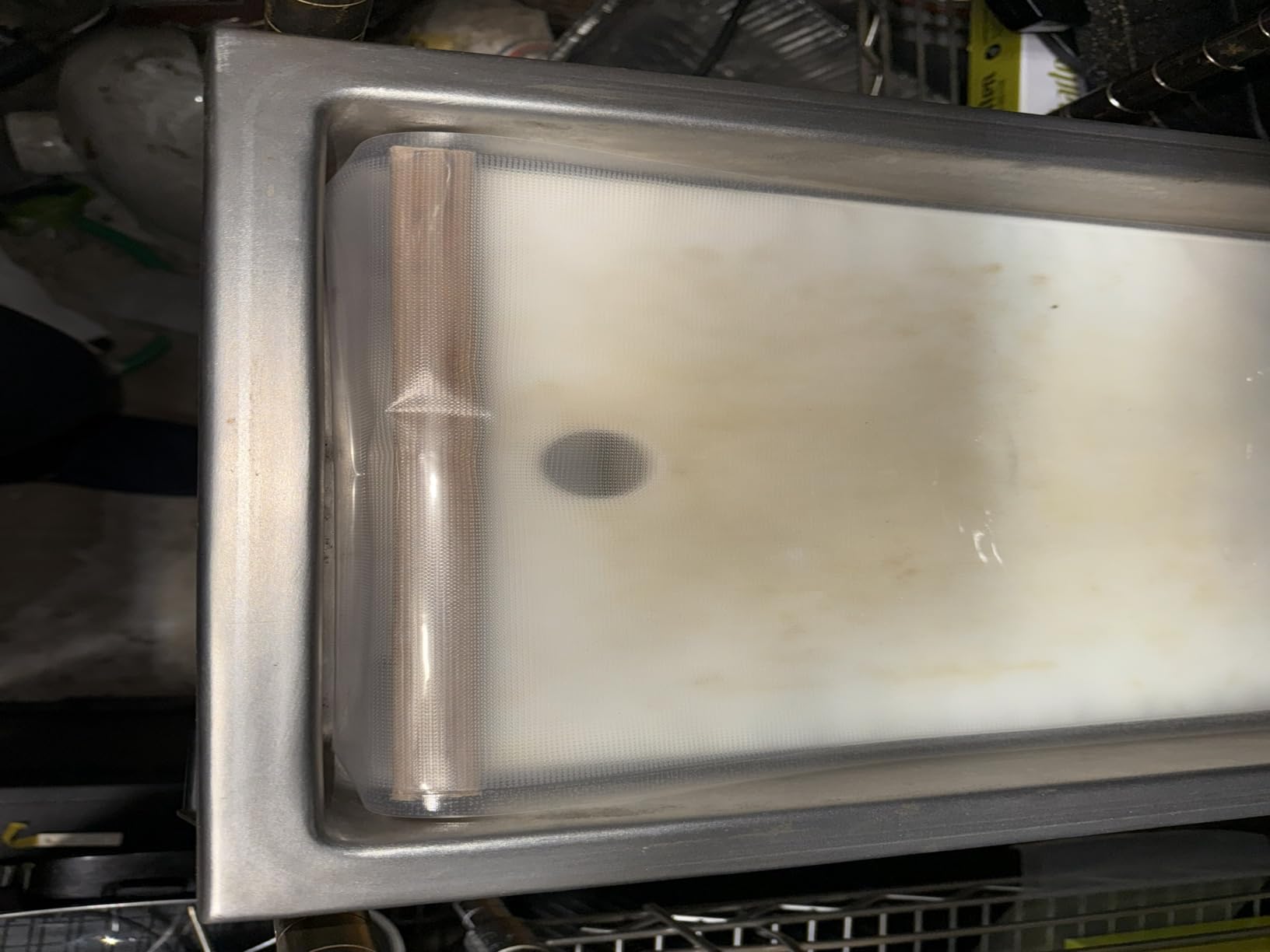
Embossed channels do the other half of the job. Air pulled through a textured channel leaves less residual volume in the bag, which means a tighter draw on a suction sealer and less channel for moisture to sit in. Owners of the Wevac rolls below make the same point about their own bags, and it is why both products outlast thinner flat film in side-by-side pantry storage.
Heat tolerance is unusually broad here. These bags are rated for cooking, freezing, microwaving, boiling and the dishwasher, so the same bag moves from sous vide prep to freezer to pantry without a swap. For long-term dry goods, pair the bag with an oxygen absorber, because the vacuum alone will not stop oxidation in something like oats or rice.
One thing to plan around is physical size. Gallon bags are 11 by 16 inches and a full box of 100 takes up real shelf space, and you cannot cut one down for a small portion the way you can with a roll. If you seal mostly single portions, the Bonsenkitchen quart bags below solve that better.
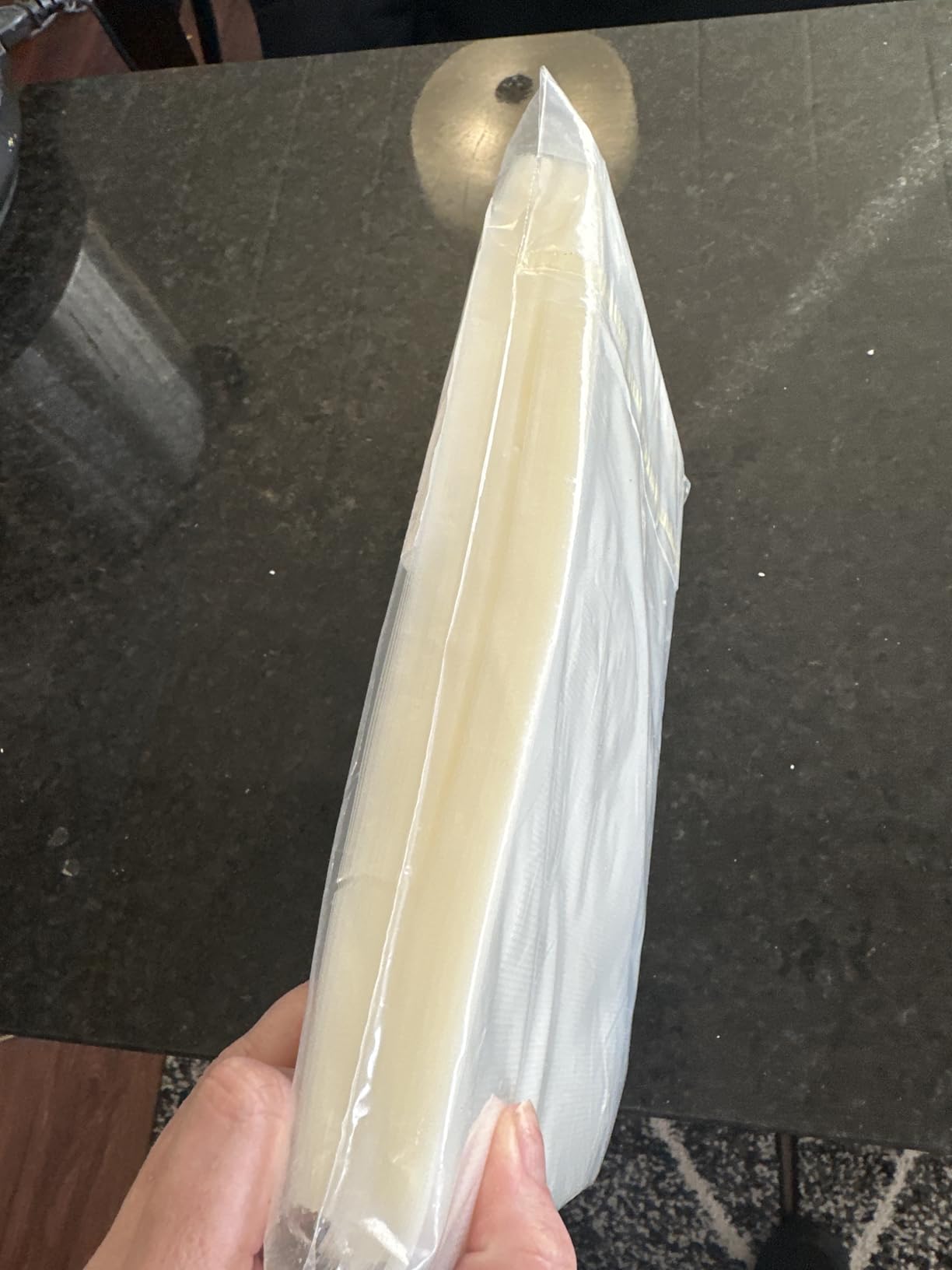
Why we picked it over the other food bags
It is the only bag here that publishes a two-layer thickness spec and adds bone guards, and those two details are the difference between a seal that survives a sharp edge and one that does not. At 4.7 stars across nearly 11,000 reviews, the consistency behind the spec is real rather than anecdotal.
For a family sealing meat, dry goods and meal prep in the same week, this is the most complete food bag in the group. You are not choosing between thickness and convenience, because the pre-cut gallon format gives you both at once.
Where it falls short
Pre-cut bags cannot be resized, so a wide but shallow item like a sheet pan portion or a long loaf of bread will not fit the profile well. Reviewers also note that gallon bags are bulkier than quart bags, which is fine for a pantry and annoying in a small fridge.
And it is a plastic food bag, not a foil barrier. It will not block light the way mylar does, so if you are storing something light-sensitive for years, pair it with an opaque container or choose the Home Sensei mylar option further down.
2. Wevac 11×50 Rolls – Best for Bags Cut to Any Size
Wevac Vacuum Sealer Bags for Food 11×50 2 Rolls, Fit Food Saver Machines
11 inch by 50 foot rolls, 2 pack
BPA free polyethylene
Embossed channels
Fits all suction heat sealers
Pros
- Largest review base of any food bag here
- Cut bags to any size for your sealer
- Embossed channels reduce freezer burn
- Works with FoodSaver Nesco Weston and Cabela's machines
Cons
- Requires cutting bags before use
- Polyethylene not PA+PE laminate
With 17,000 reviews at 4.6 stars, this is the most proven food bag on the list and the one most long-term kitchens have actually run out of. Two rolls of 11 inch wide, 50 foot polyethylene give you 100 feet of bag material, and the 11 inch width fits the seal bar on almost every countertop suction sealer sold under FoodSaver, Seal a Meal, Nesco, Weston or Cabela’s branding.
The embossed channels are the reason it performs. They give the vacuum path structure, so the bag pulls down harder and the film does not cling to itself in loose folds where air can hide. Owners consistently report that this is what keeps freezer burn off frozen items over months, and the manufacturer states that the channels help prevent both freezer burn and dehydration.
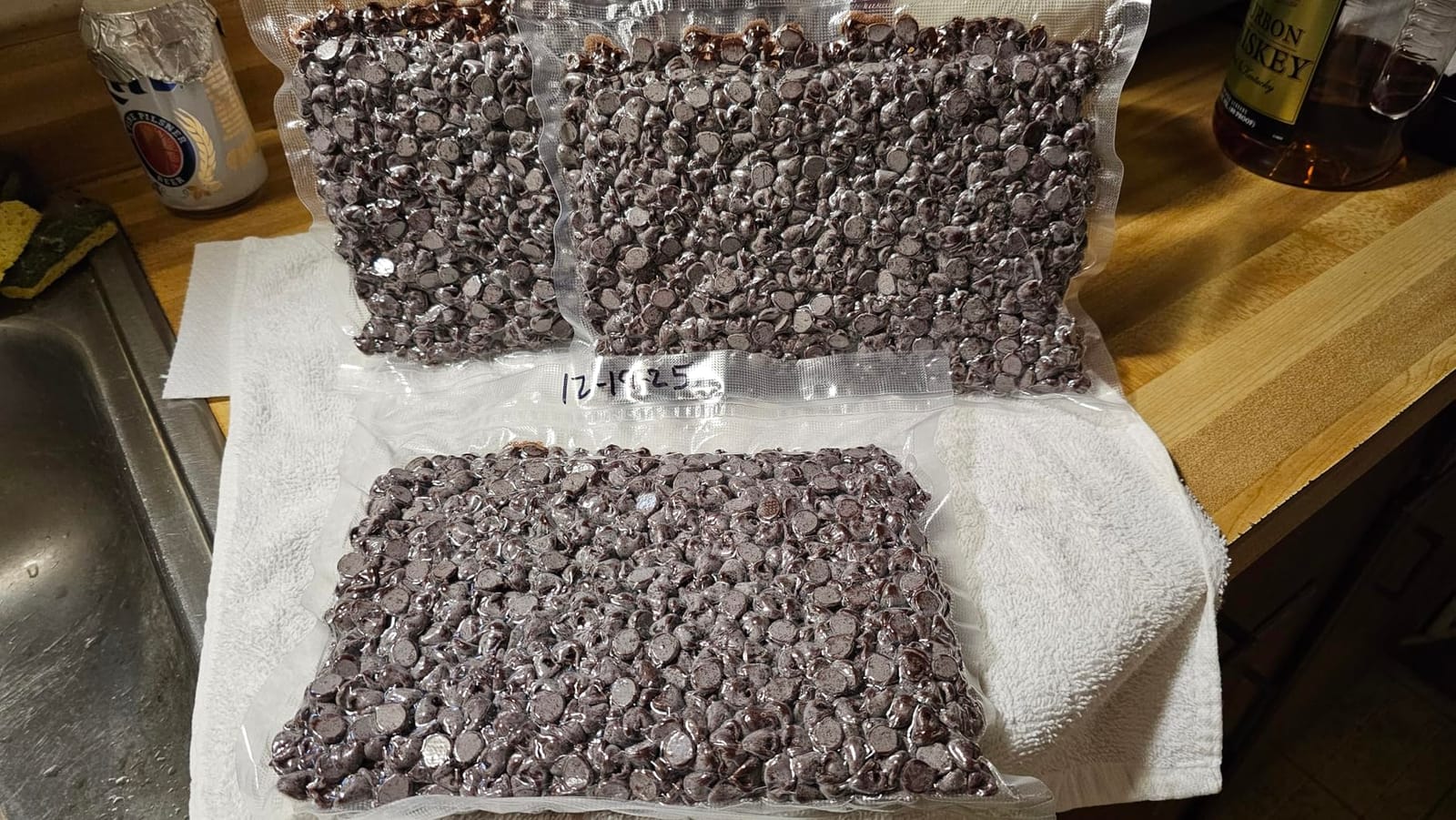
The trade-off for that flexibility is work. Every bag needs cutting to length before it goes in the machine, and reviewers who moved from pre-cut bags to rolls mention the extra step as the main adjustment. If you seal four bags a week it is negligible; if you seal forty, it adds up, and that is the case the pre-cut quart bags are built for.
Material is the other consideration. This is BPA free polyethylene, not a PA+PE laminate, which means the film is more prone to flex cracking and less resistant to puncture than the O2frepak bags. For dry goods, freeze-dried meals, sous vide portions, garden seed and electronics it is more than adequate. For bone-in meat, put a paper towel down first or use a bag with bone guards instead.
Be clear-eyed about one limitation that appears in the reviews. This bag is designed for shorter cycles, and the listing itself does not position it as a multi-year pantry solution without added protection. For long-term dry storage, add an oxygen absorber and store the sealed bags somewhere cool and dark.
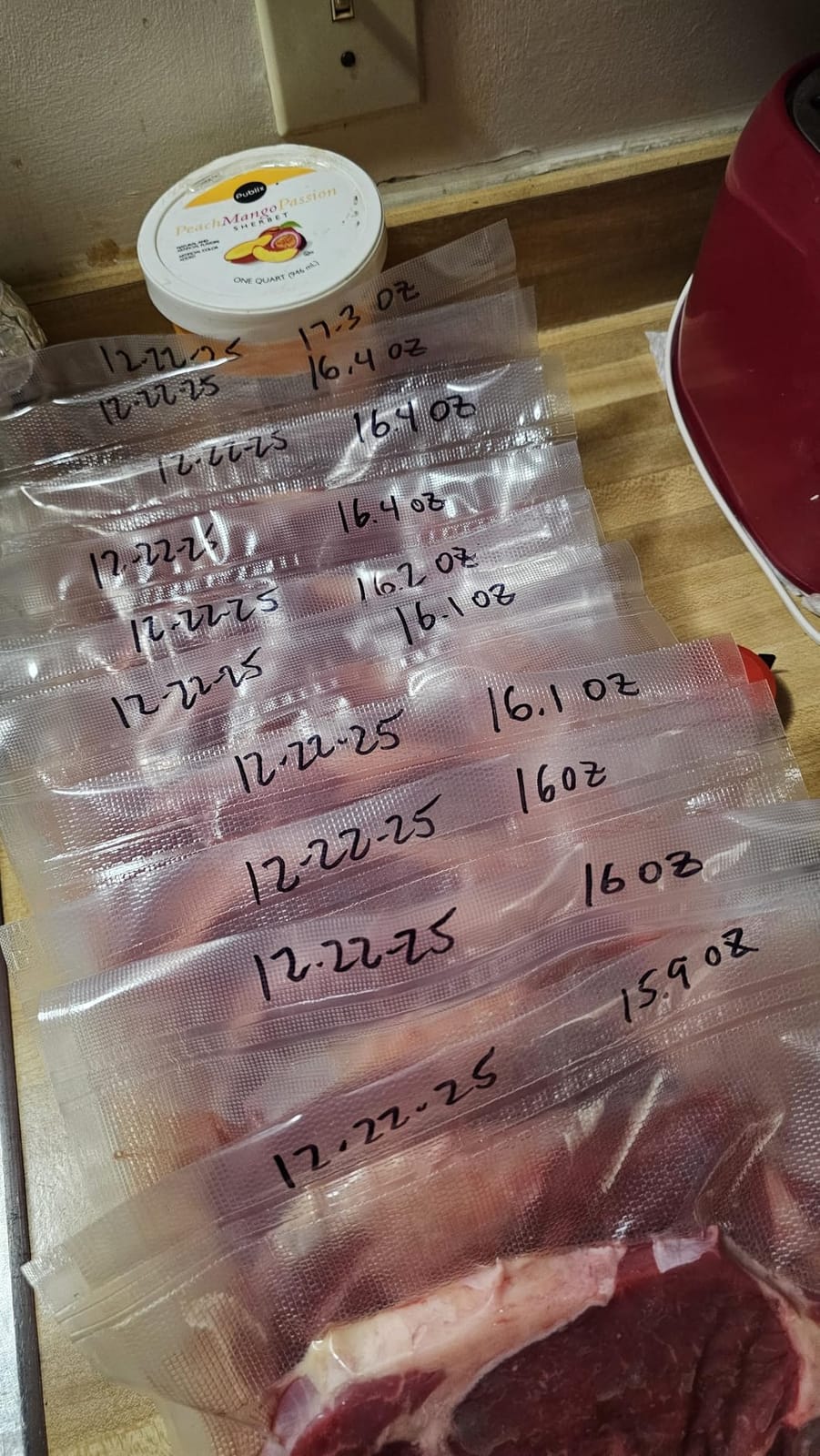
When a roll beats pre-cut bags
Rolls win on three things. You control the width, so an awkward item like a soup bone or a long zucchini fits without a second bag. You control the count, so there is no fixed size you are stuck with. And the per-bag cost over a long run works out well once you stop paying for unused plastic in a pre-cut box.
For someone who stores dry goods in bulk, cuts their own bags to fit odd containers, or runs a small food preservation operation, this is the most flexible option in the roundup. It is also the safest first purchase if you are not yet sure which sizes you use.
When it is the wrong choice
If your priority is multi-year pantry storage, plain polyethylene at this thickness is not the strongest barrier available, and the reviews reflect that it is used mostly for food storage, meal preparation and sous vide rather than years-long stockpiling. It is also the wrong bag for a wet, heavy load such as a marinated piece of meat, where a laminate with bone guards holds up better.
And there is the weight point that comes up on backpacking forums, where users note that vacuum bags are considerably heavier than zip-locs for the same volume. If you are counting grams for a camping trip, this is not the bag.
3. Bonsenkitchen 8×12 Quart Bags – Best for High-Volume Prep
Bonsenkitchen Precut Vacuum Sealer Bags 200 Quart 8″ x 12″, BPA Free
200 pre-cut 8x12 quart bags
4 mil commercial grade film
Embossed air channels
Recess groove on one side
Pros
- Largest count in the roundup at 200 bags
- 4 mil commercial grade film
- Recess groove and glossy side make sealing clean
- Sous vide safe to 195 degrees F
Cons
- Quart size only
- Pre-cut bags cannot be resized
Two hundred bags in a box makes this the volume pick, and the 4 mil commercial grade film is thicker than most of the food bags on this list. Reviewers single out the deeper air passages in the embossed channels as the reason it seals more reliably than cheaper quart bags, and 83% of more than 9,200 reviews are five-star.
The physical design is thoughtful in a way that is easy to miss. One side has a recessed groove and the other is glossy and transparent, so you can align the bag in the sealer without guessing where the channel starts, and you can still see the contents. For someone sealing a hundred portions in an evening, that alignment detail saves more time than any other feature on the box.
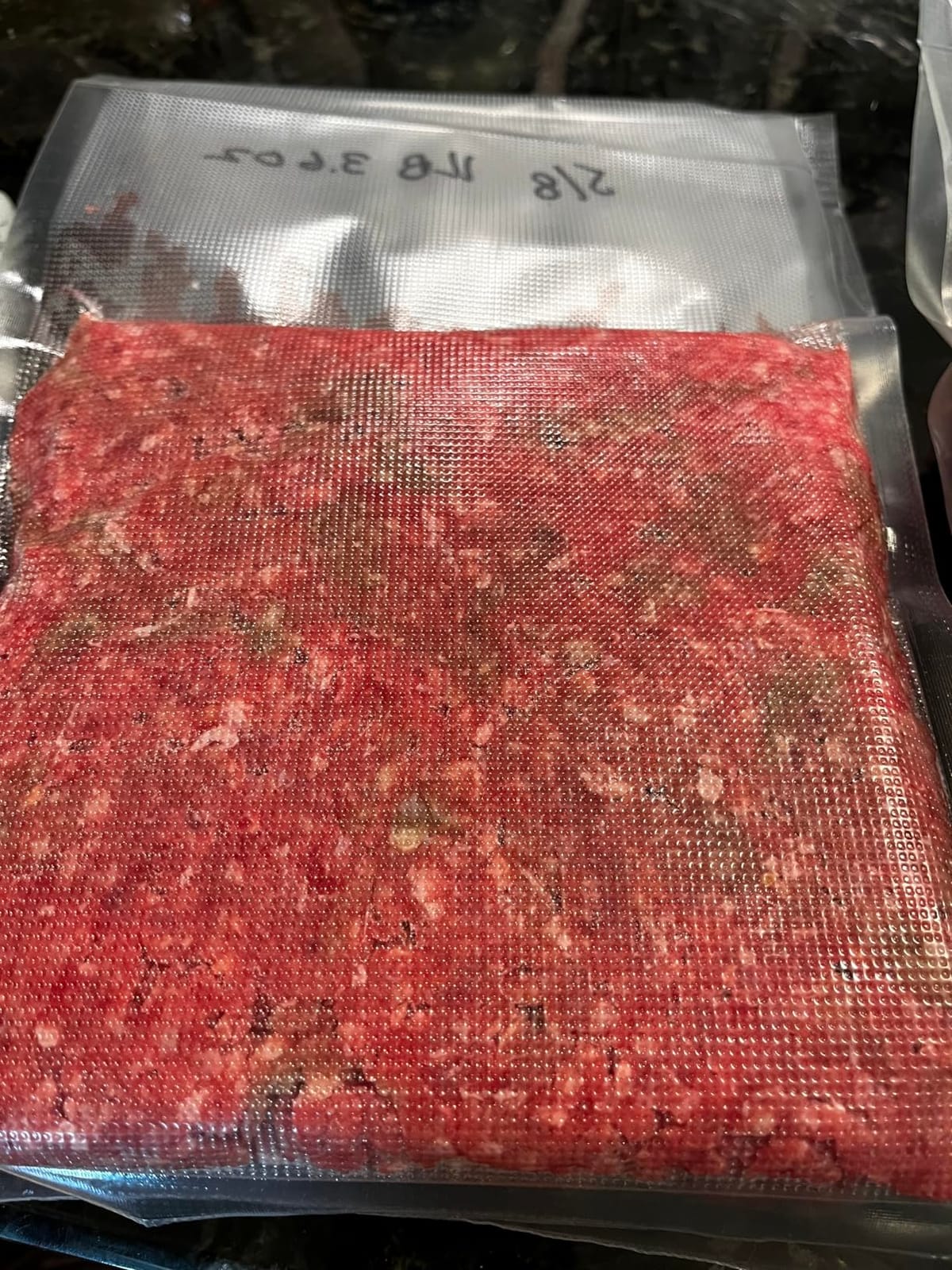
Temperature handling is broad. These bags are rated for microwaving, boiling, dishwashing and freezing, and for sous vide work up to 195 degrees F, which covers the temperatures most home cookers actually use. That makes them a genuinely dual-purpose bag rather than a freezer-only one.
Like the O2frepak gallon bags, these are pre-cut, so the size is fixed at 8 by 12 inches. That is the point for portioning, and it is the limitation for anything larger, since a full block of freezer meat or a long loaf needs a gallon bag or a roll.
The honest caveat is that 4 mil embossed polyethylene is a strong food bag, not a foil barrier. It will hold a vacuum and resist punctures well, but if you are building a two-year emergency food supply, you want mylar and an oxygen absorber rather than relying on the vacuum alone.
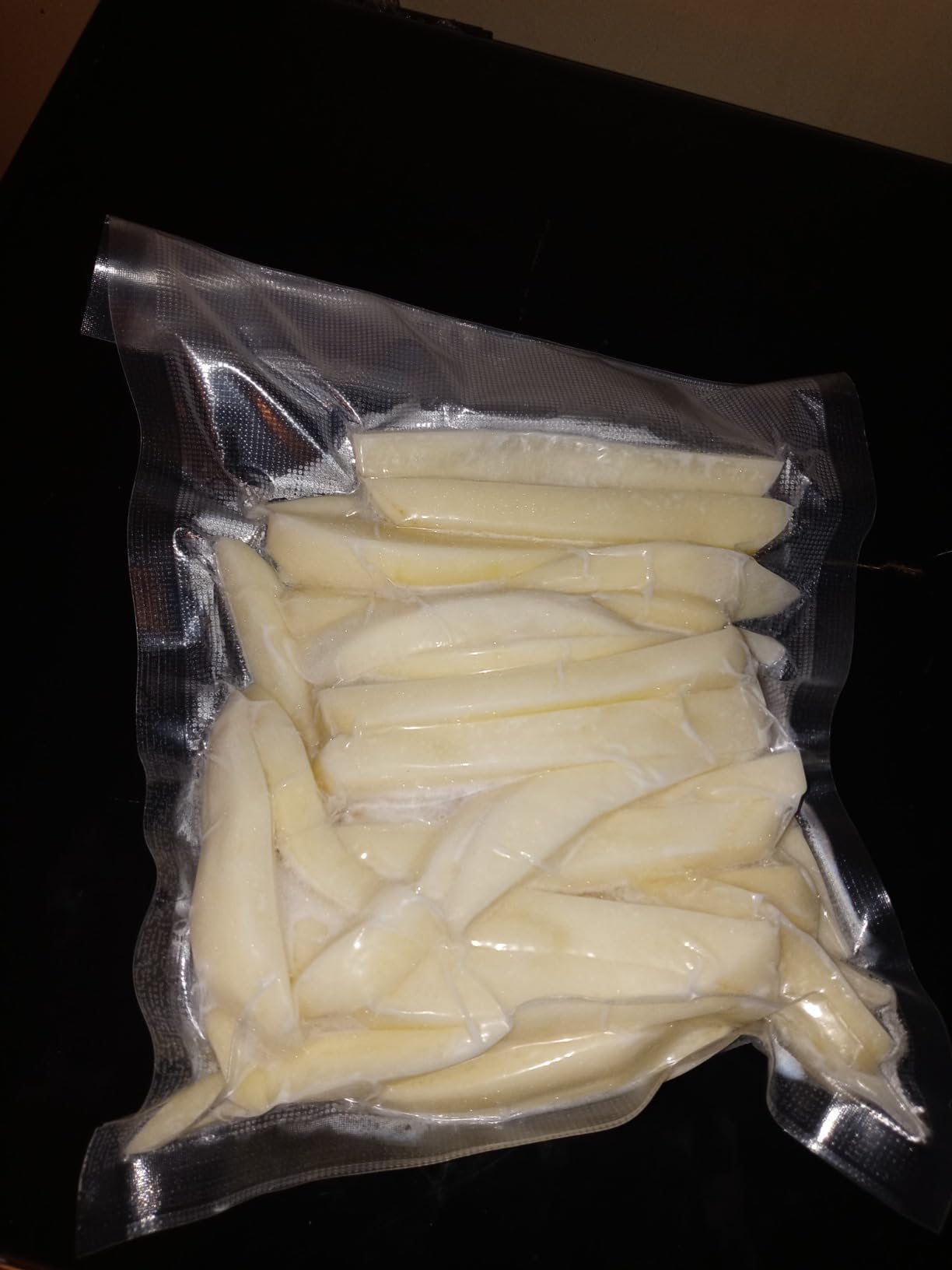
Who this box is built for
Anyone who batches. Weekly meal prep, a sous vide cook who portions ahead, a camper who freezes portions for a month-long trip, or a household sealing freezer bread and cooked rice in sessions. The count means you are not restocking monthly, and the 4 mil film means a drop of frozen meat does not split the side.
It is also the most economical per-bag option in the roundup purely on count. Two hundred bags in a single box is the only entry here that approaches the kind of volume a serious user buys for.
Where it will disappoint you
Size flexibility is the obvious one. If you seal a lot of irregular or oversized items, quart bags force you into awkward folded seams, and a folded seam is where leaks start. Reviewers also point out that gallon bags are a different variant, so you cannot mix within the same box.
Be realistic about long-term dry goods as well. Four mil is a good food bag and a mediocre multi-year oxygen barrier. Add an oxygen absorber and keep the bags out of a warm garage, or move genuinely long-term staples into the mylar option below.
4. FoodSaver 1-Gallon Zipper Bags – Best Reusable Pick
FoodSaver 1-Gallon Vacuum Zipper Bags
12 gallon-size zipper bags
Reinforced double zipper
Specially designed air channels
1 year limited warranty
Pros
- Reusable and resealable for frequent items
- Reinforced double zipper seals reliably
- Air channels block oxygen and moisture
- Backed by a 1 year limited warranty
Cons
- Only 12 bags per pack
- Zipper closure needs a sealer to remove air
This is the pick if you open and reseal the same food constantly. Unlike a single-use heat-seal bag, a zipper bag can be emptied, wiped and used again, which over a year of daily sandwich containers and snack bags is the feature that actually matters. Reviewers rate it 4.7 stars across nearly 9,700 ratings, with 83% five-star.
The reinforced double zipper is the durability story. Two parallel zipper tracks take more force to open and more force to fail than a single track, and the specially designed channels are shaped to maximize air removal so the bag goes down flatter against the contents. The film is described as strong multi-ply, and it carries a 1 year limited warranty from the manufacturer.
Because the bag is reusable, per-use cost drops to almost nothing once you have a set. That makes it a sensible pairing with a box of pre-cut heat-seal bags: zipper bags for the food you touch daily, disposable bags for the food you load once and forget.
Be clear that this is still a vacuum sealer bag, not a compression bag. You need a sealer with a vacuum port to pull the air out, and a plain handheld pump will not maintain a seal here. It also cannot be frozen indefinitely with liquid food inside without the same puncture risks as any other bag at this thickness.
Gallon size is genuinely large, which is a strength for stock pots of sauce and a nuisance for a single portion. Twelve bags is the smallest count among the food bags here, and for high-volume kitchens the quart option above is simply better suited.
Why reusability changes the economics
A disposable bag is a single-use object with a one-way end. A zipper bag is a container. Over twelve months of daily lunches, the reusable version stops being an expense and becomes a tool, and reviewers routinely describe them that way rather than as a consumable.
It is also easier to inspect. Because you can open a zipper bag without destroying it, you can check for condensation, discoloration or a failed corner without losing the food inside, which is exactly the check you should be making on any long-term bag.
When it is not enough
Reuse has limits. The film is not rated as boilable or microwaveable in the way the pre-cut food bags are, so it is not a sous vide or boiling bag. And the small count means a family that seals daily will replace this set far sooner than the 200-count quart box.
For multi-year storage, a resealable zipper is also the wrong mechanism. The zipper is a mechanical closure with a finite number of cycles, whereas a heat-sealed channel is permanent. Use it for the short cycle and choose mylar for the long one.
5. Home Sensei 5 Gallon Mylar Bags – Best for Dry Goods and Emergency Food
10pcs 5 Gallon Mylar Bags for Food Storage – 10 Mil Thick – Extra large bags 5 Gallon with Oxygen Absorbers 2500cc – Zipper Resealable Milar Bags – Bolsas Mylar 5 Galones
10 mil three-layer PET and aluminum
10 bags at 17x27 inches
10 oxygen absorbers at 2500 cc
Heat sealable and resealable
Pros
- True 10 mil build with aluminum reinforcement
- Oxygen absorbers individually vacuum packed
- Blocks air light odors and moisture
- Fits standard 5 gallon buckets
Cons
- Absorbers remove only about 21% of the air
- Not a heat sealer bag for wet or liquid food
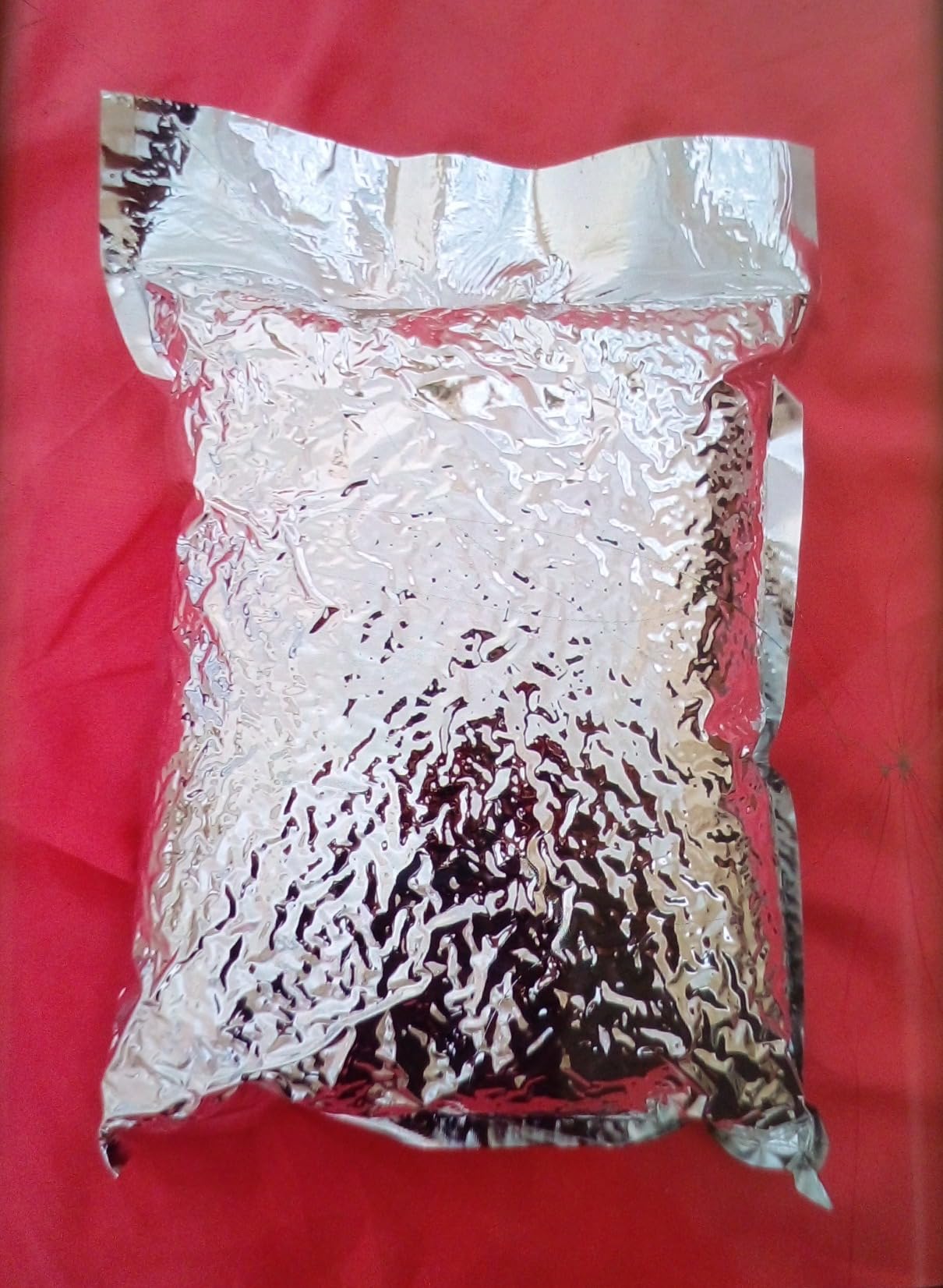
Everything above is a plastic film bag. This is the foil barrier, and it is the correct answer for dry goods you intend to keep for years rather than months. The construction is three layers of PET and aluminum foil at a stated 10 mil total, 5 mil per side, which blocks air, light, odors and moisture in a way no polyethylene bag in this roundup can approach.
Ten 2500 cc oxygen absorbers come in the box, each individually vacuum packed so they retain their effectiveness until you open them. This is the single most important part of long-term dry storage, and the fact that it is included is what separates this from a plain mylar bag. Buyers use them for pasta, wheat berries, flour and freeze-dried food, and the listing notes the absorbers are also offered in smaller gallon sizes.
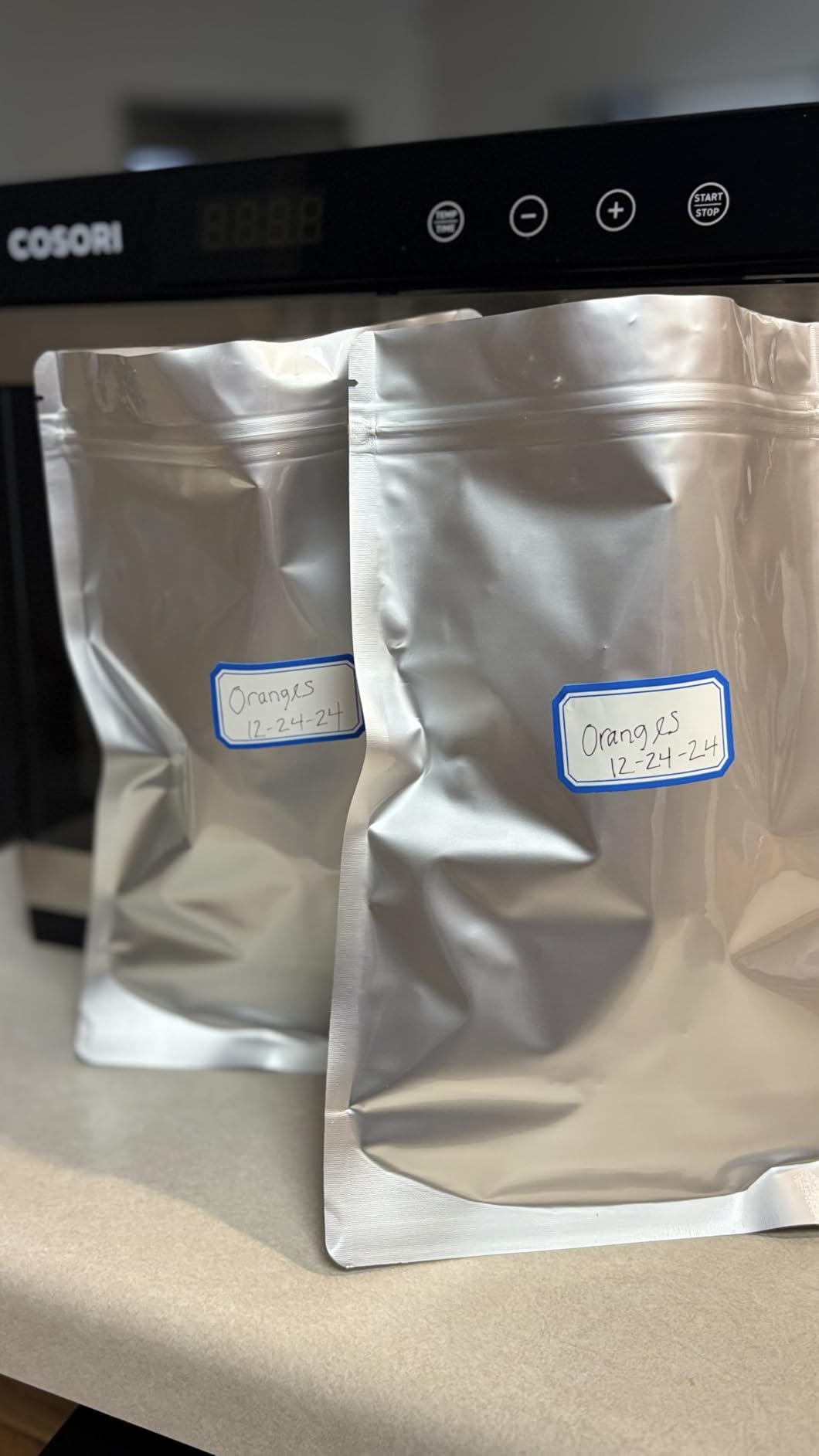
At 17 by 27 inches these fit a standard 5 gallon bucket, so you can line a bucket and have a genuinely self-contained dry storage container. There is a U-shaped tear notch for opening, a zipper that reseals after you scoop, and the option to run a hot iron or sealer along the top for a permanent closure once the bag is loaded for the long term.
Understand what the absorbers do, because it surprises people. They pull a portion of the remaining oxygen rather than creating a full vacuum, so the bag does not look collapsed afterward. That is expected, not a failure, and several reviewers mention being startled by it before the listing explained it.
These are dry goods bags. Aluminum laminate has no flex, so a bag of soup, a piece of raw meat or a wet jar will not go in one, and a standard countertop suction sealer often cannot bond to the foil at all. Chamber sealers are the right tool here, and if you only own a basic suction machine, use the pre-cut food bags above instead.
Where mylar genuinely wins
Time horizon. Polyethylene bags are a good answer for six months to a year in a cool cupboard. A foil laminate with an oxygen absorber is a reasonable answer for several years, because it does not depend on a mechanical closure and it blocks light-driven degradation as well as oxygen.
Light-sensitive and fat-rich foods are where the difference shows. Flour, rice, oats, coffee, nuts, powdered eggs and freeze-dried meals all degrade from oxygen and light exposure first, and those are the two things this film blocks that plastic does not.
Where it will disappoint you
It is not flexible and not resealable forever. Once you heat seal the top, opening it means cutting the bag, so it is a bulk-storage format rather than a portioning format. And some variant packs do not include a one-to-one ratio of bags to absorbers, so check the count before you plan a bucket.
Also remember that a suction sealer cannot make this bag airtight on its own. The closure is the zipper plus the absorber plus, ideally, a heat seal. If you already own a mylar bag and want to be sure, the forum technique of nesting a vacuum bag inside a mylar bag gives you two independent barriers, which is the closest thing to a tested double seal you can build at home.
6. Amazon Basics Jumbo Bags – Best for Queen and King Bedding
Amazon Basics Vacuum Storage Bags for Clothes, Space Saving Compression Storage Bags with Hand Pump, Heavy Duty, Stackable, Jumbo Size, Clear, 6-Pack
6 jumbo bags at 40x30 inches
Thick PA and PE film
Double-zip and triple-seal turbo valve
About 80% volume reduction
Pros
- Largest review base in the roundup
- 40x30 inch size fits a king comforter
- Valve accepts a vacuum cleaner hose
- Instructions printed on the bags
Cons
- Slider clips detach and can miss a track
- Hand pump is slow on jumbo bags
- 40x30 inches will not fit many shelves
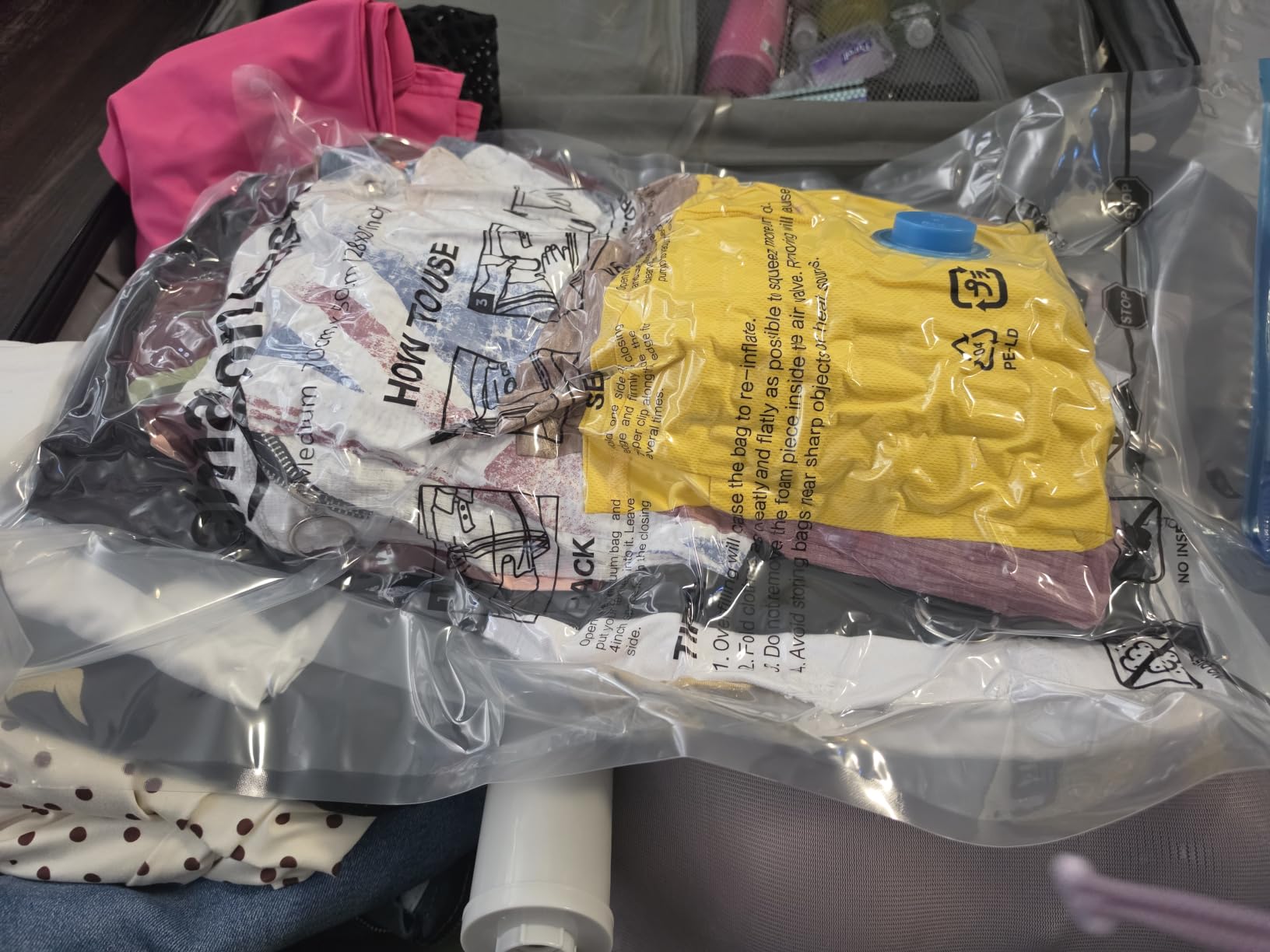
At 40 by 30 inches, these are the largest bags in the roundup, and that is exactly what you need for a king comforter or a full set of queen bedding. The double-zip seal combined with a triple-seal turbo valve holds a vacuum across a season, and the review base is the largest of any product here at nearly 103,000 ratings averaging 4.3 stars.
Compression is about 80% of the original volume, which is the number that matters in a small closet. The film is a thick PA and PE construction, which is the puncture-resistant laminate you want when you are compressing heavy bedding that contains loose fibers and stray mattress springs.
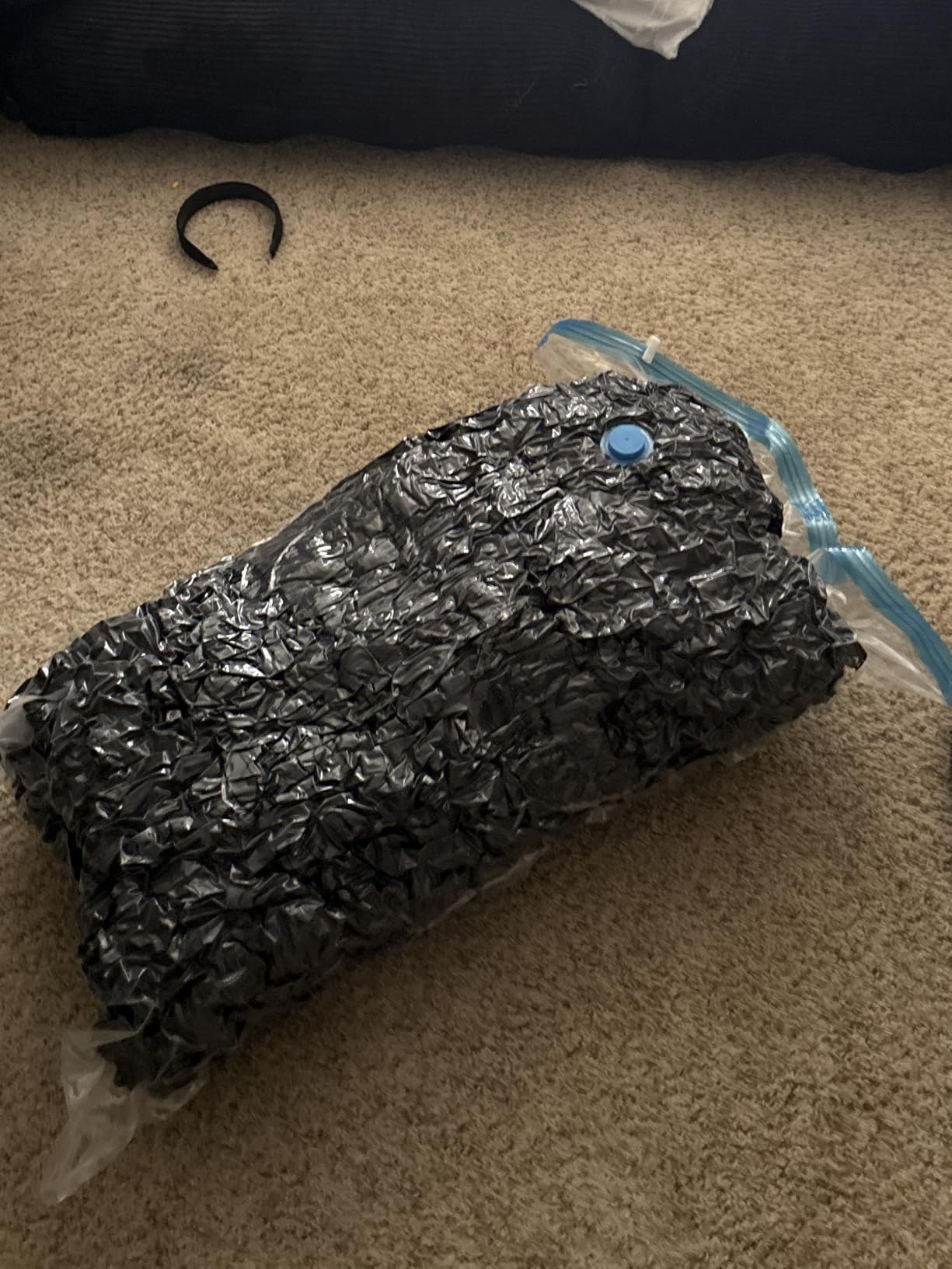
My practical advice is to skip the included hand pump. The valve accepts a standard vacuum cleaner hose for far faster and more even deflation, and reviewers consistently say the same. The hand pump is there for travel, and on a 40 by 30 inch bag it is genuinely tiring.
The most repeated complaint is the detachable slider clip. It falls off easily, and occasionally it does not engage both seal tracks on the first pass, which leaves a partial seal. Check the tracks with your fingers before you put the bag away, and keep the clip on the bag rather than in a drawer.
A second complaint worth taking seriously is the occasional small puncture on very large bags. A 40 by 30 inch sheet of film has more surface area to stress, so a sharp edge from a bed frame or a protruding staple can find a weakness. Line the bag with a sheet before compressing.
Why size beats compression ratio here
A bag that compresses 80% of a small load is less useful than a bag that holds 80% of a king mattress set. These bags take a full bedding set with room to spare, and the triple-seal valve is designed to hold that volume down for months without creeping back up.
They are also the most forgiving of the compression bags about fabric. Unlike thinner zip bags that can crease a down comforter permanently, the thicker film here distributes pressure more evenly, which reviewers who use them for seasonal bedding repeatedly mention.
Where it does not fit your life
Check your shelf before you buy. A 40 by 30 inch bag will not go on a typical closet shelf, on a high storage rack, or in a lot of rental storage units, so the volume you create may end up in the corner of a room rather than on a shelf.
Also remember that these are not food bags. There is no heat seal channel, so a sealer cannot process them, and the zipper and valve are not rated for liquids, soup or raw meat. This pick is for textiles only.
7. HIBAG Jumbo Bags – Best 12-Bag Set for Closets
12 Jumbo Vacuum Storage Bags for Bedding, Vacuum Seal Bags for Clothing
12 jumbo bags at 39x27 inches
Extra-thick rip-resistant PA+PE
Double zip and triple-seal valve
Stay-on sealing clip
Pros
- Twelve bags give more capacity than most sets
- Extra-thick PA+PE resists ripping
- Stay-on clip helps align the seal
- Works with any vacuum cleaner
Cons
- Hand pump only in this set
- Jumbo depth may not suit shallow closets
Where the Amazon Basics set gives you six very large bags, this gives you twelve jumbo bags at 39 by 27 inches, which is a better match for a normal closet rod. The construction is an extra-thick rip-resistant PA+PE, the same laminate family that holds up best against fibers and dust, and 69% of roughly 49,500 reviews are five-star.
The stay-on clip is the small feature that turns out to matter most. Because it stays attached to the bag, you can line the zipper up with both hands busy rather than fighting a loose slider that keeps sliding. The double zip seal and triple-seal turbo valve then do the actual holding, and the material is described as airtight and watertight.
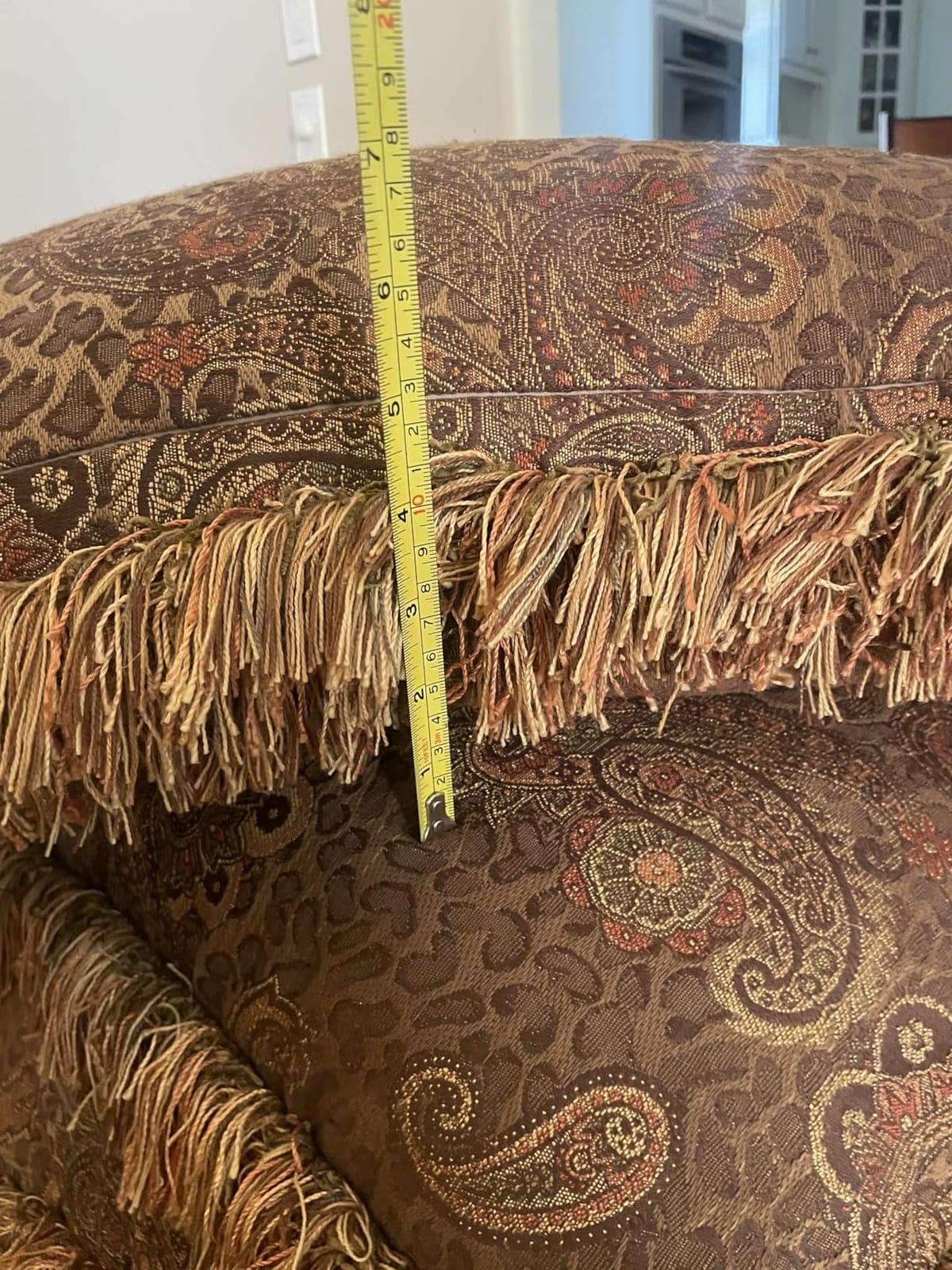
Volume reduction is about 80% of the original, which puts it in line with the other compression bags here rather than above them. The real difference is the bag count, and for a household with multiple people’s seasonal clothing, twelve bags means one bag per category rather than sharing and refitting.
Again, use a vacuum cleaner rather than the included hand pump whenever you can. The valve is compatible with any vacuum cleaner, and the hand pump is the backup for when you do not have one to hand.
The 7% one-star share in the reviews is mostly individual bags within a large set failing to hold, not a design flaw across the set. Expect a small number of duds in any pack this size, and test each bag when it arrives rather than discovering it in autumn when you need the space.
Who should buy twelve of them
Households storing a full winter wardrobe per person, anyone with a walk-in closet and no shelving, and people moving house who need to compress soft furnishings temporarily. Twelve bags at this size is a genuine volume of storage rather than a token set.
It is also the pick for storing soft items that shed, like fleece, wool and down, because the rip-resistant PA+PE film plus the watertight seal blocks both the fibers and the dust that normally gets into an uncovered bag.
Where it falls short
There is no electric pump option in this set, so on 39 by 27 inch bags you will be working hard if you do not own a vacuum cleaner. And the 27 inch depth can still exceed the depth of a shallow closet, so measure your shelf before committing to twelve.
Like the other compression bags here, it has no heat seal channel and no rating for liquids or food. Keep it in the textile lane.
8. FYGRIP 20 Bag Combo – Best for Mixed Sizes
Fygrip 80% Space Saver Vacuum Storage Bags with Hand Pump, 20 Combo
20 bags across four size grades
4 Jumbo, 4 Large, 4 Medium, 8 Small
Double-zip and triple-seal one-way valve
Hand pump included
Pros
- Four size grades cover bedding pillows and clothing
- Triple-seal valve holds compression for weeks
- Valve fits a standard vacuum cleaner
- Hand pump included for travel
Cons
- Some individual bags lose vacuum within days
- Size differences between grades are subtle
- Zipper is stiff to close by hand
This is the pick when the problem is that you do not know what you are storing. A single-size compression set means you either compress a duvet into a medium bag or waste a jumbo bag on socks. This pack splits across four grades, 4 Jumbo, 4 Large, 4 Medium and 8 Small, which covers everything from a king blanket down to individual garments.
Mechanically it is the same design as the other compression bags: a double zipper, a triple-seal one-way valve, and a valve that adapts to a vacuum cleaner for fast compression. Volume reduction is about 80% using a straightforward seal, vacuum and close process.
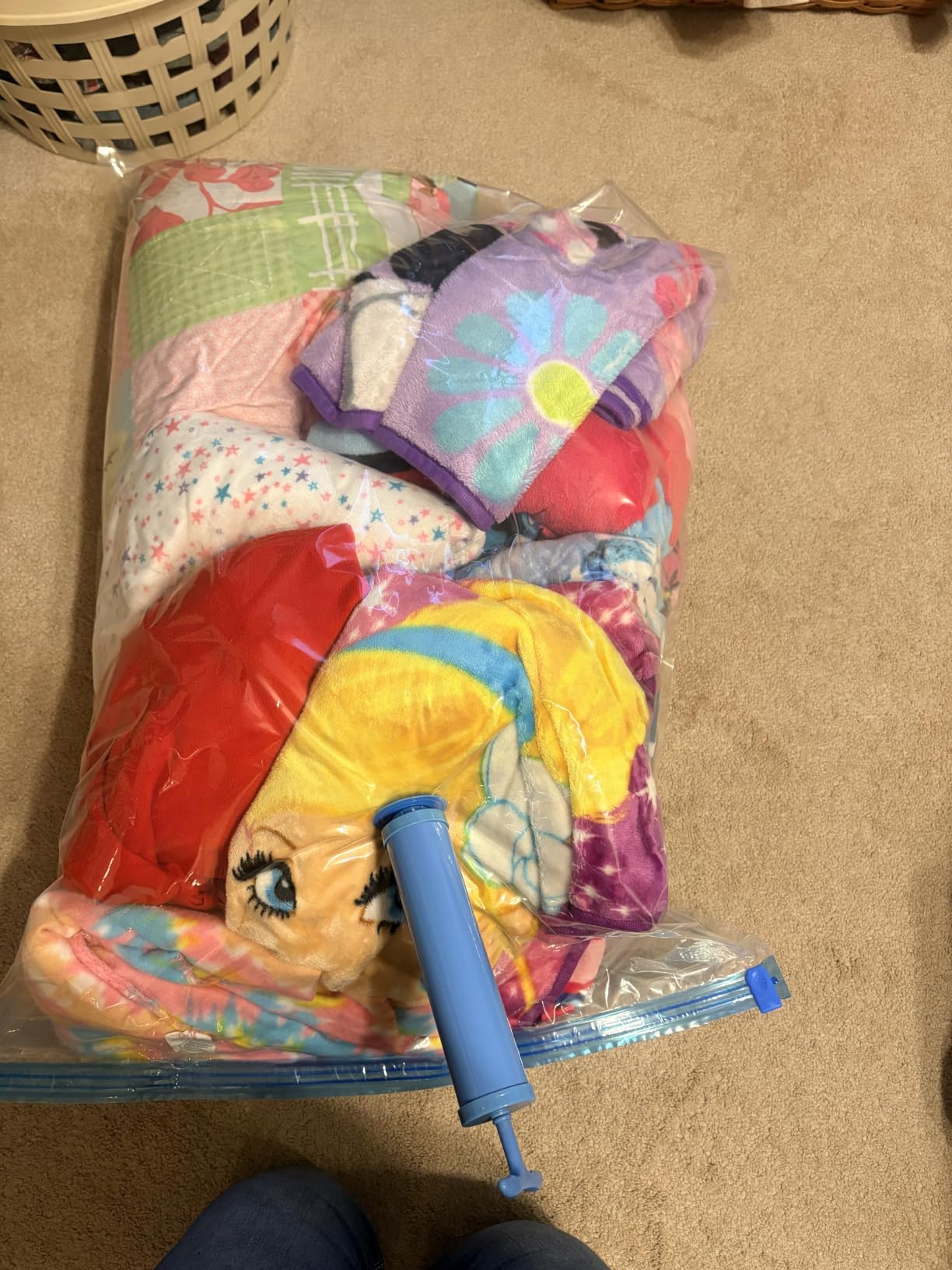
At 4.2 stars across more than 8,000 ratings, this is the second-lowest average in the group, and the 10% one-star share is the highest. Reviewers are specific about what goes wrong: individual bags inside a large set lose their vacuum within days rather than months, and the zipper is stiff enough to be difficult for anyone with limited hand strength.
That is worth taking seriously if you plan to store things seasonally. The defect is quantity, not quality, which means more of the set is fine and a minority is not. Test every bag when you open the pack, keep the failures for travel, and use the rest for low-risk items like seasonal clothes that you only need to be tidy.
The subtle size differences are also a genuine quirk. Reviewers note that the Large, Jumbo and Medium bags are closer together than the labels suggest, so do not plan a precise fit around them. Check the printed dimensions on the bag before you commit a bulky item.
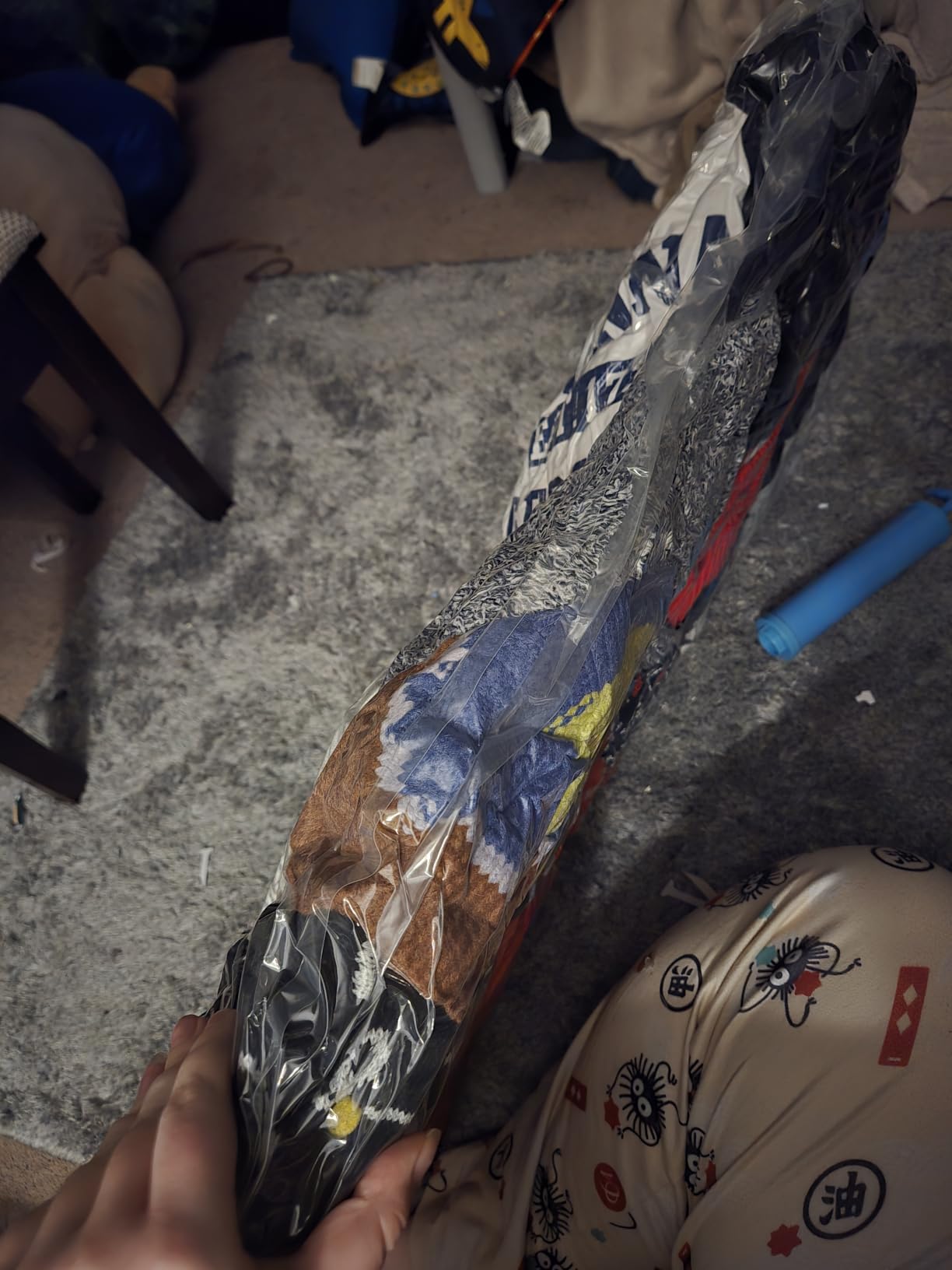
When a size range beats bag quality
A graded set wins when your storage needs are seasonal and varied. A single giant bag per category is fine if you own everything in that category, but almost nobody does, and mismatched sizes lead to overfilled small bags and underfilled large ones.
It also works as a travel set, because the hand pump is included and the smaller bags compress to a size that fits in a suitcase. The pack is listed for household storage, travel, packing and moving, which is a fair summary.
Where it will not hold up
For anything you need to keep for a full season, pick a set with a higher average rating and a stay-on clip. The seal failures in this pack are the kind that matter if you unpack once in October and then reach for the bag in February.
It is also a clothes-only format, with no heat seal channel and no liquid rating. Do not put it near wet gear, even though the film is described as space-saving, because a zipper closure holding a damp item is how mildew starts.
9. GONGSHI 24 Bag Set – Best When You Want an Electric Pump
GONGSHI Vacuum Seal Bags for Clothing Travel & Home Storage, Travel Vacuum Bags with Pump,Space Saver for Blankets, Comforters, Pillows, Clothes,24 Combo with Electric Pump
24 bags with electric pump
5 Jumbo, 5 Large, 5 Medium, 5 Small and 4 travel roll-ups
Double-zip hermetic seal
Reduces volume up to 80%
Pros
- Electric pump is fast and low effort
- Widest size spread in the group
- Roll-up travel bags need no pump
- Double-zip seal holds when fully closed
Cons
- Some bags burst or ripped in normal use
- Pump does not attach to the valve
- Some bags would not seal at all
This is the only set here with an electric pump, and for large bedding that is a real difference in effort. A hand pump on a jumbo bag takes minutes; an electric pump does the same job in seconds, and if you compress a lot of seasonal items, that time saving is the whole reason to buy this rather than a bag with a hand pump.
The size spread is the widest in the roundup at 24 bags, including four roll-up travel bags that require no pump at all. Compression is up to 80% of the original volume, and the double-zip seal is described as creating an airtight and waterproof environment that blocks moisture, dust and odors. Bags are clear and labeled by size with printed instructions.
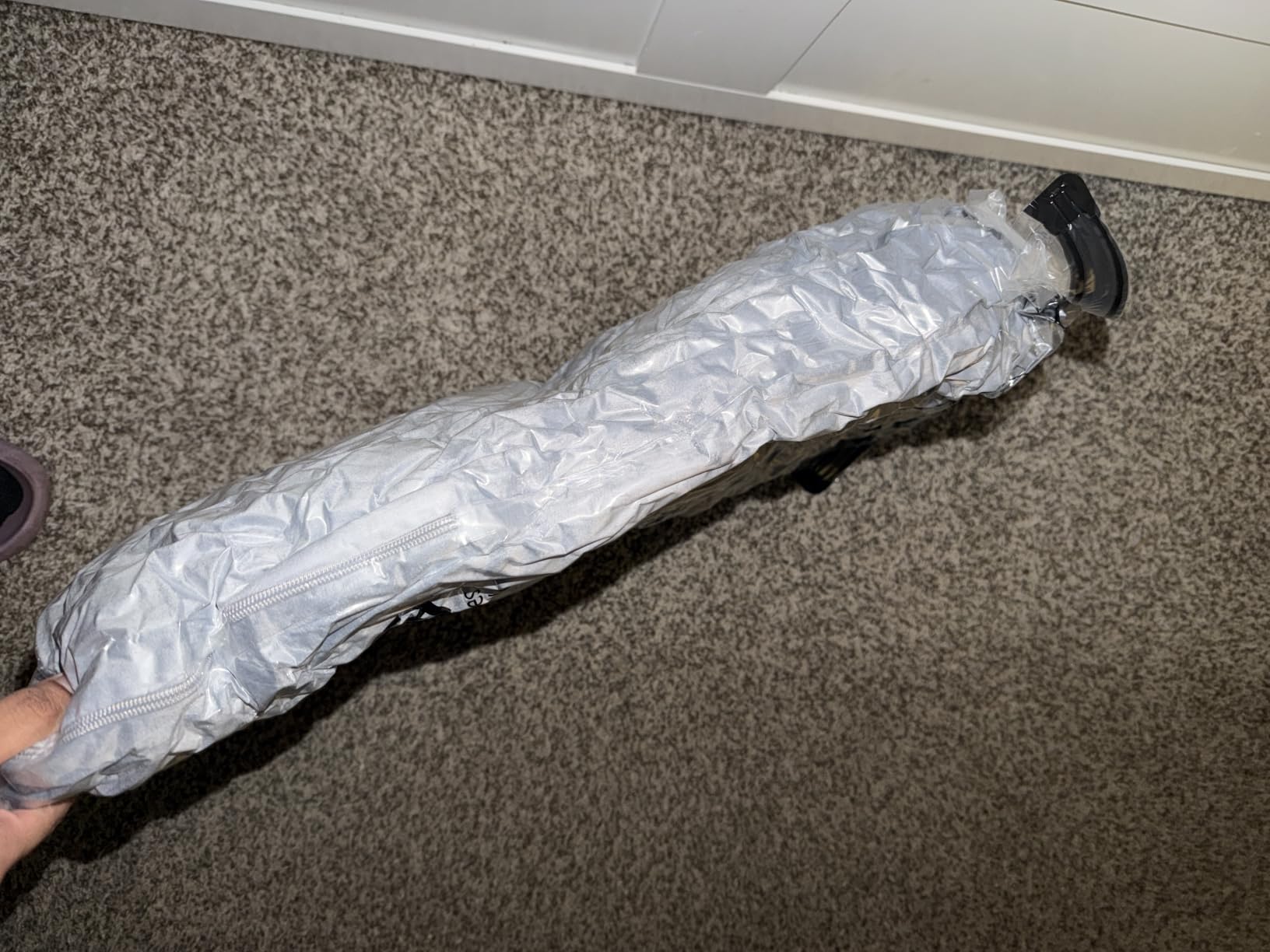
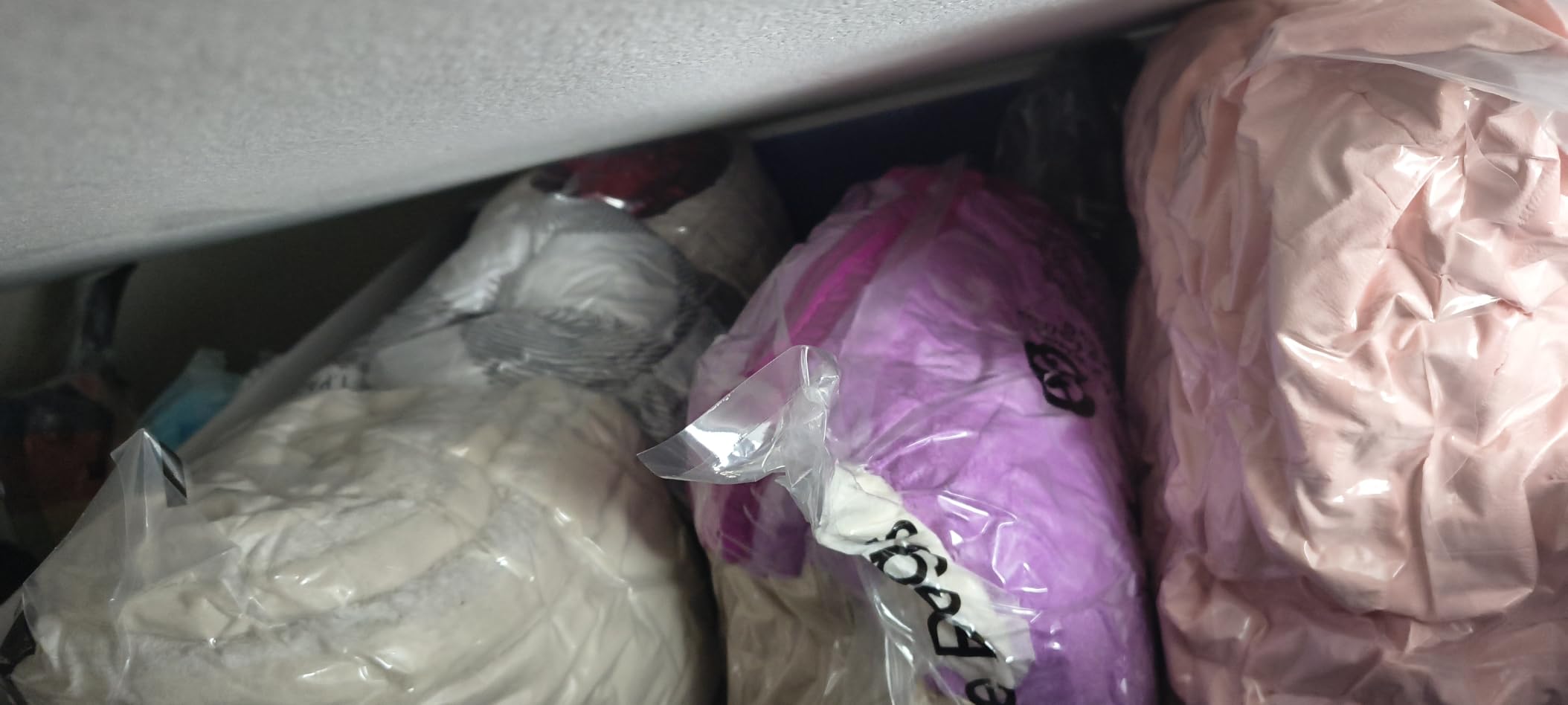
Now the part you need to know before buying. At 4.1 stars across more than 10,000 ratings, this is the lowest average in the group, with an 11% one-star share, the highest here. The dominant complaint is durability: bags bursting at the bottom or ripping during ordinary use, and a small number that would not seal or hold air at all.
The pump design is the second issue. It does not connect to the valve, so you have to hold it over the opening by hand, and that inconsistent connection is why extraction is less even than it should be. Pressing the pump seal against the valve firmly matters more with this pump than with one that clips on.
For moving and short-term travel compression, where a bag is opened once and the contents are fine if slightly loose, this set is hard to argue with. For a bag that will sit sealed in a closet for eight months, the durability reports give us pause.
When an electric pump earns its place
If you compress large volumes of bedding or coats, a pump that runs without effort changes how often you do it. The alternative is hand pumping a jumbo bag until your hands hurt, and most people end up not bothering, which defeats the purpose of owning the bags.
The no-pump roll-up travel bags are a nice touch for a different reason. For a suitcase or a duffel, a hand-rolled bag of clothes takes seconds and needs no equipment, and having four in the set means you are not hunting for a pump in a hotel room.
Where it falls short
Durability is the honest answer. Reviewers report bags bursting or tearing during normal use, and a bag that tears under a duvet will not be holding a vacuum by next season. Treat this as a set to replace periodically rather than a permanent closet solution.
Also expect some inconsistency from the zipper tracks, which reviewers describe as easy to pull apart and hard to start sealing. If you overfill a bag, the zipper will not seat cleanly, and a partially closed zipper is the most common cause of a bag that looks sealed and is not.
10. SpaceAid X-Large 3 Pack – Best Budget Starting Set
SpaceAid Jumbo Vacuum Storage Bags, Space Saver Sealer Compression Bags for Comforters, Blankets, Pillows, Bedding, Clothes (X-Large 3 Pack)
3 X-Large bags at 27.5 x 39.5 inches
Thick PA and PE material
Double-zip and triple-seal turbo valve
10 pound load rating
Pros
- Lowest cost per bag in the roundup
- Each bag fits four pillows or a full bedding set
- Thick PA and PE with turbo valve
- Works with any standard vacuum cleaner
Cons
- Only 3 bags in the set
- No pump included
- 10 pound load rating is lower than jumbo options
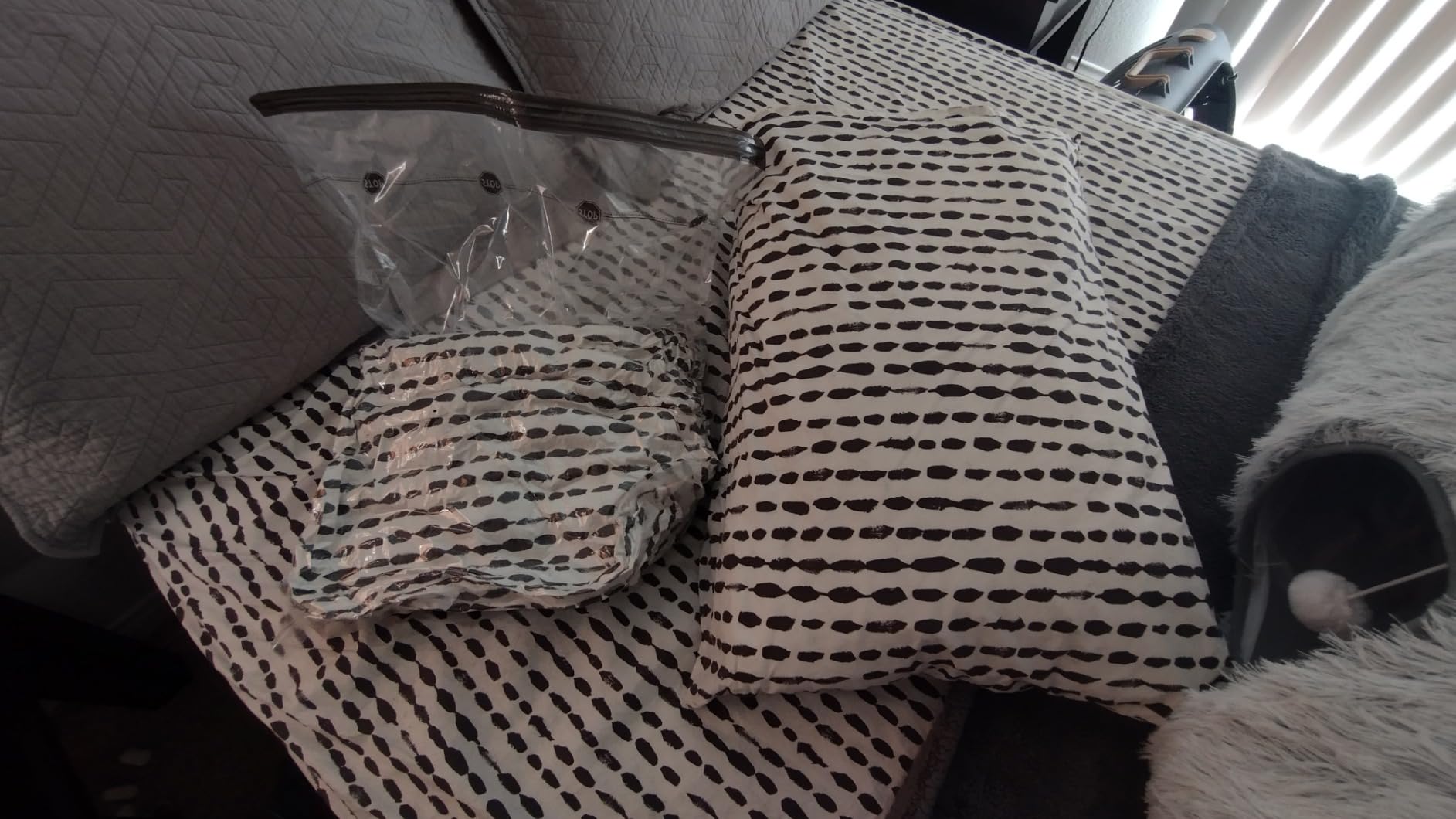
Three bags is a small set, and that is exactly why it works as a first purchase. At 27.5 by 39.5 inches, each bag is large enough for four standard pillows or a full twin or queen bedding set, so the first thing you compress gets a genuinely useful container rather than a token one.
The construction matches the better sets in the group: thick PA and PE material, a double-zip seal and a triple-seal turbo valve. It works with any standard vacuum cleaner, and 70% of about 5,100 reviews are five-star at a 4.3 average.
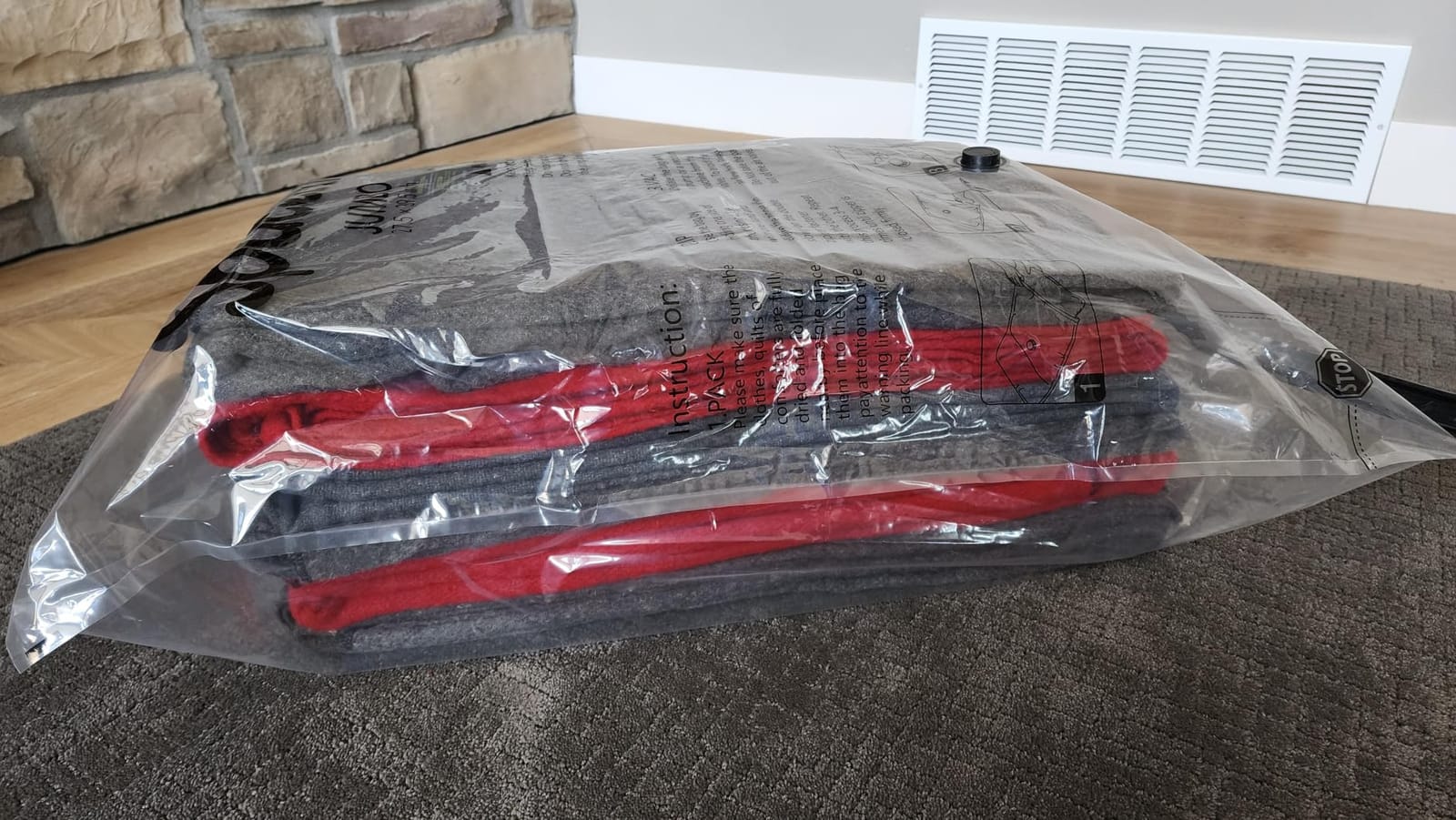
No pump is included, which reviewers treat as a non-issue because almost everyone uses a vacuum cleaner anyway. It is also reusable from season to season and protects against moisture, dirt and odors, so the three-bag count becomes less limiting over time than it first appears.
The 10 pound load rating is the number to respect. It is lower than the bulkier jumbo options, so this is a bag for pillows and bedding rather than for a pile of winter coats or a bag of hardware. Overloading it is the fastest way to split a seam.
Because the set is small, plan to expand rather than replace. Buy this to learn which sizes you actually use, then add a graded set or a jumbo set later. That is a cheaper path than buying 24 bags of the wrong grade on the first afternoon.
When three bags is the right answer
Moving apartments with a car full of bedding, storing one guest room’s linens, or testing whether you actually like compression storage before committing to a large set. Three generous bags cover all three, and the vacuum cleaner compatibility means you need no extra equipment.
It is also the pick for a household that compresses twice a year rather than weekly. Seasonal storage does not need twelve bags, and the reuse across seasons means you are not throwing money away each autumn.
Where it falls short
Three is genuinely small, and reviewers note that owners end up swapping bags more often than they expected. The 10 pound rating is the other limit, and the 27.5 inch width will not fit the narrowest shelving.
And again, this is a textile bag. There is no heat seal channel, so no sealer can process it, and it is not rated for liquids or food.
How to Choose Vacuum Sealer Bags for Long-Term Storage
Thickness in mils is the number that predicts survival
A mil is a thousandth of an inch, and it is the only durability figure worth comparing. Three mil is the common standard in economy food bags, 3.5 to 4 mil is where commercial-grade construction starts, and 5 mil and above is what you want for anything with a hard edge in it. Our food picks all sit at 3.5 mil or above, and the mylar option is 10 mil across three layers.
Thicker film resists two separate failure modes. It is less likely to split along a seam when you press air out, and it is less likely to be punctured by a bone, a screw or a bag of filament. The second one is the single most repeated complaint in long-term storage forums, and it is the one thickness actually fixes.
Where a listing does not state a mil figure, that is informative in itself. Brands that publish a thickness number are selling to people who store food for months, and brands that write “heavy duty” without a number are usually selling on appearance.
Mylar versus nylon and PE food bags
These are different answers to different questions, and buying one when you need the other is the most expensive mistake in this category.
PA+PE and nylon-PE laminate food bags are flexible, transparent, seal cleanly in a countertop suction sealer, and handle frozen, wet and hot contents. They are the right choice for meat, portions, sous vide, and short-to-medium-term freezer storage. They block oxygen and moisture well enough for months, and they puncture poorly.
Mylar is a rigid multi-layer foil laminate that blocks air, light, odors and moisture far more completely, and it does not depend on a mechanical seal. It is the right choice for dry goods stockpiled for years, and it needs a chamber sealer or a heat source, not a suction sealer. It cannot hold liquid or soft wet food.
The practical rule is simple. If the bag will be squeezed, folded, frozen or boiled, it is a plastic bag. If the bag will sit in a bucket in a cool cupboard for two years, it is a mylar bag with an oxygen absorber.
Sealer compatibility decides whether the bag works at all
A bag you cannot seal is a bag you cannot use, and incompatibility is a silent failure because the bag looks fine until you test it. Countertop suction and clamp sealers work with flat pre-cut bags and with rolls you cut to width. Chamber sealers pull a stronger vacuum by placing the bag inside a sealed chamber, and they are the correct tool for mylar and for liquids in bags. Impulse sealers apply heat with no vacuum, so they seal mylar but remove no air. Handheld sealers use a small battery pump and handle zipper valve bags, not heat-seal film.
Check the width too. An 11 inch wide bag needs a seal bar that takes 11 inches, and a bag wider than the bar will not seal across its full width no matter how long you hold the lid down. This is the most common reason a good bag gets a bad reputation from a bad machine.
Vacuum versus oxygen absorber versus desiccant
These three do different jobs and are not substitutes. The vacuum removes bulk air and reduces the oxygen that food and packaging degrade in. An oxygen absorber removes the small remaining percentage of oxygen and is the actual long-term lever for dry goods, because it keeps working as long as it is sealed. A desiccant pulls moisture, and it is what protects against condensation and mildew rather than oxidation.
In practice, dry goods in a mylar bag want an absorber, high-moisture items like dried fruit or anything that could sweat want a desiccant, and a plastic food bag wants the vacuum plus cool, dark storage. Forum users who store for years consistently use all three approaches together rather than picking one.
One caveat on absorbers: they are single-use once exposed to air, and they are individually vacuum packed for that reason. Do not open the packet until the bag is sealed.
Leak-test a bag before you trust it with a year of food
You can test any bag in about two minutes, and doing so removes the biggest unknown in long-term storage. Seal a bag as you normally would, with a small amount of contents in it. Fill a sink or basin with water, submerge the sealed bag, and press gently along the length of the seal and both side seams. Hold it under for a minute, then look for a stream of bubbles, which means a leak at that point. Repeat for each seam, and check the bag again the next day, because a slow leak often shows as an air pocket rather than bubbles.
The paper towel version works too. Seal a dry bag, write on it, and leave it on a counter overnight. If the ink looks embossed or the bag looks puffed in the morning, air moved through it, and you know the seal failed before a year of food is at risk.
Run the test once per box, not once per bag, and repeat it on any bag you seal for long-term storage. Five minutes now is cheaper than discovering a leak in month seven.
Where and how to store sealed bags
Even a 10 mil bag fails in a hot garage. Heat moves the film and softens the seal, humidity encourages condensation inside the bag, and sunlight drives the oxidation that an absorber is trying to stop. A cool, dark interior closet between about 40 and 60 degrees F is the target, and the bags do not need to be refrigerated unless the food requires it.
Stack bags flat rather than on their edges, keep them off concrete floors, and do not stack anything heavy on top of them, because a long-term stack is exactly the pressure that finds a weak seal. Label the front with the contents and the date, and check the collection every few months so a bag that has lost its vacuum is used before the next one.
Non-food storage: filament, hardware and seeds
Vacuum bags are not only a kitchen tool, and the non-food uses are where the thickest film earns its price. 3D printer filament is hygroscopic, and forum users driving bags to the thickest puncture-resistant option they can find are solving a real problem, since a spool is heavy, hard, dusty and full of sharp edges. Seal it dry with a desiccant and store it sealed.
Hardware is the case the bone guards on the gallon bags were designed for. Screws, drill bits, hinges and sheet metal all have edges that will find a weak point in thin film over time, and the same logic applies to camping gear, seed stock and seasonal tools. For very small parts, a compression bag with a one-way valve is a better fit than a heat-seal bag, because you can open it without destroying it.
Frequently Asked Questions
Which vacuum sealer bags are best for long-term storage?
For food, the best vacuum sealer bags for long term storage are thick PA+PE laminate bags at 3.5 mil or above with reinforced seal channels and bone guards, pre-cut to the size you use most. Add an oxygen absorber for dry goods stored beyond a few months, and store sealed bags in a cool, dark closet rather than a warm garage. For dry goods kept for years, a 10 mil mylar bag with an oxygen absorber outperforms any plastic bag.
What are the most durable vacuum storage bags?
Durability tracks stated mil thickness and laminate structure. Among the bags we reviewed, the O2frepak gallon bags at a 3.5 mil front panel and 4 mil embossed back panel in food grade PA+PE, and the Home Sensei mylar bags at 10 mil across three layers of PET and aluminum, are the most durable. Bags without a published thickness figure cannot be compared honestly, so treat heavy duty as a marketing word rather than a measurement.
How long can food actually last in a vacuum bag?
As a working guide, hard cheese and cured meat keep around 8 months, ground meat and whole fruit around 1 year, and cut meat, fish, blanched vegetables and dry goods can reach 2 years when frozen. Vacuum sealing alone does not stop spoilage, because bacteria such as staphylococcus aureus and molds do not need oxygen, so refrigeration or freezing is still required and an oxygen absorber is the real lever for shelf-stable dry goods.
What foods should never be vacuum sealed?
Mushrooms, garlic, bananas, and unpasteurized cheeses such as ricotta, camembert and brie should not be vacuum sealed. These foods can harbor anaerobic bacteria and spores that thrive in oxygen-free conditions, and sealing them can actually make the risk worse. Other cautions apply to soft or squashy foods that can block the suction port and puncture a bag, and to any liquid-heavy item sealed without a chamber sealer.
Do I need oxygen absorbers if I have a vacuum sealer?
Yes, for long-term dry goods. The vacuum removes bulk air, but an oxygen absorber removes the small remaining percentage of oxygen and keeps working while the bag stays sealed, which is what protects flour, rice, oats, coffee and freeze-dried food from oxidation. Absorbers are single-use once exposed to air, so keep them in their individual vacuum packets until the bag is closed, and keep them away from children and pets.
How do I know if my vacuum bag is leaking?
Seal the bag as usual, submerge it in a sink of water, press gently along the seal and both side seams, and look for a stream of bubbles. For a slow leak that does not bubble, seal a dry bag, write on it, and leave it overnight. If the writing looks embossed or the bag looks puffed the next morning, air moved through the seal. Test one bag per box when it arrives and any bag you are about to fill for long-term storage.
The Best Vacuum Sealer Bags for Long-Term Storage
The O2frepak gallon bags are our pick for most households because they are the only food bags here that publish a two-layer thickness spec and add bone guards along the seal. Pair them with an oxygen absorber and a cool cupboard and they will outlast bags twice as thick that lack both.
Pick the Wevac rolls when you want bags cut to your own sizes, the Bonsenkitchen quart bags when you batch in volume, and the Home Sensei mylar bags when the shelf life is measured in years rather than months. For clothing and bedding, the Amazon Basics jumbo bags and the HIBAG 12-pack are the safest buys, with the SpaceAid three-pack as a sensible first test.
Whatever you choose, run a leak test before you commit a year of food to a box, and remember that the bag is only one third of the system. Seal integrity, an oxygen absorber for dry goods, and cool dark storage are what actually keep food safe past season one.