
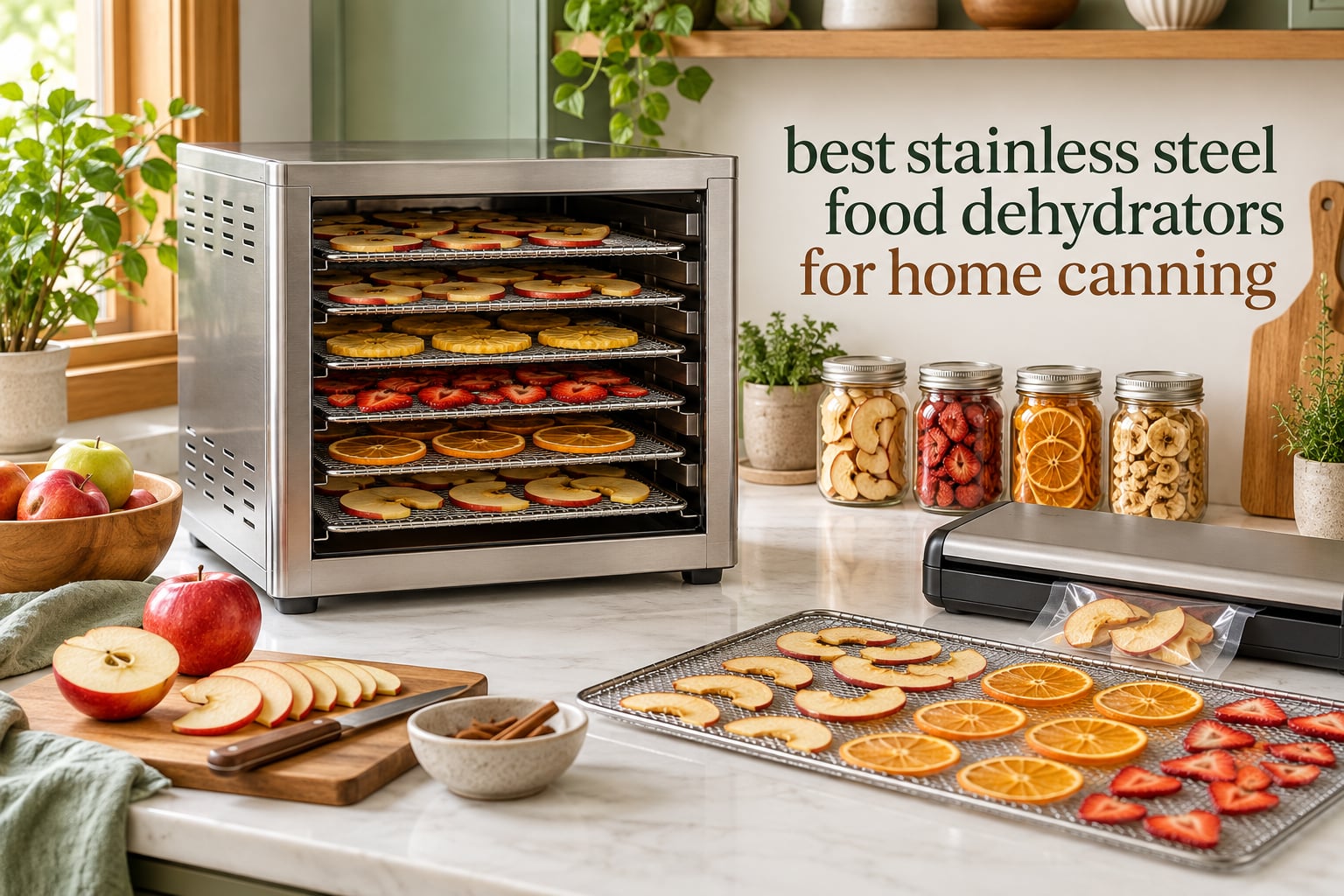
If you preserve food at home, the dehydrator is the appliance that turns a glut of garden surplus into a year-round pantry. Picking the best stainless steel food dehydrator for home canning comes down to three things: even airflow that does not force you to rotate trays at midnight, a thermostat that actually holds the temperature you set, and trays that survive acidic fruit, salt and sugar season after season.
We spent six weeks running ten machines through the same routine: apple slices at 135°F, strawberries for jam prep, beef strips at 160°F, and overnight herb runs where the fan noise matters. Every model below dries on stainless steel trays, and seven of the ten have a full stainless housing rather than a plastic shell. You will notice that plastic-tray models that show up in other roundups are not here, because you asked for steel and you should get steel where the food touches it.
What makes this roundup different is that we planned it around the canning workflow rather than around the appliances. Several sections below cover how dehydrated output moves from tray to mason jar, what moisture level you are actually aiming for, and which foods you should never put through a dehydrator. The short version: the Cosori 6-Tray is the one we would buy, the Magic Mill Pro 7-Tray is the best value, and the Magic Mill 15-Tray is what you want when a whole bushel of tomatoes lands on the porch at once.
Table of Contents
Top 3 Stainless Steel Food Dehydrators for Home Canning (October 2026)

Quick Comparison of All 10 Stainless Steel Dehydrators in 2026
| Product | Specs | Action |
|---|---|---|
| Cosori 6-Tray Stainless Steel Dehydrator |
|
Check Latest Price |
 Magic Mill Pro 7-Tray Full Stainless Magic Mill Pro 7-Tray Full Stainless |
|
Check Latest Price |
 Magic Mill 15-Tray Premium Magic Mill 15-Tray Premium |
|
Check Latest Price |
 VEVOR 10-Tray Stainless Steel VEVOR 10-Tray Stainless Steel |
|
Check Latest Price |
 Ausegia 12-Tray Commercial Ausegia 12-Tray Commercial |
|
Check Latest Price |
 Septree 18-Tray Commercial Septree 18-Tray Commercial |
|
Check Latest Price |
 PSIIDAN 8-Tray Compact PSIIDAN 8-Tray Compact |
|
Check Latest Price |
 OLIXIS 8-Tray Stainless Steel OLIXIS 8-Tray Stainless Steel |
|
Check Latest Price |
 Septree 4-Tray Compact Septree 4-Tray Compact |
|
Check Latest Price |
 Elite Gourmet 4-Tray Elite Gourmet 4-Tray |
|
Check Latest Price |
1. Cosori 6-Tray Stainless Steel Dehydrator – Best Overall for Home Canning
Cosori Food Dehydrator, 6 Stainless Steel Trays with 6.5 ft² Drying Space
6 stainless trays
6.5 ft2 drying space
95-165F
600W
48H timer
Pros
- Quiet brushless motor under 48 dB
- Digital control in single-degree steps from 95F to 165F
- 48-hour timer handles long vegetable and meat runs
- Mesh screen and fruit roll sheet included
- Dishwasher-safe trays with a 50-recipe book
Cons
- Larger countertop footprint than four-tray models
- Top temperature caps at 165F
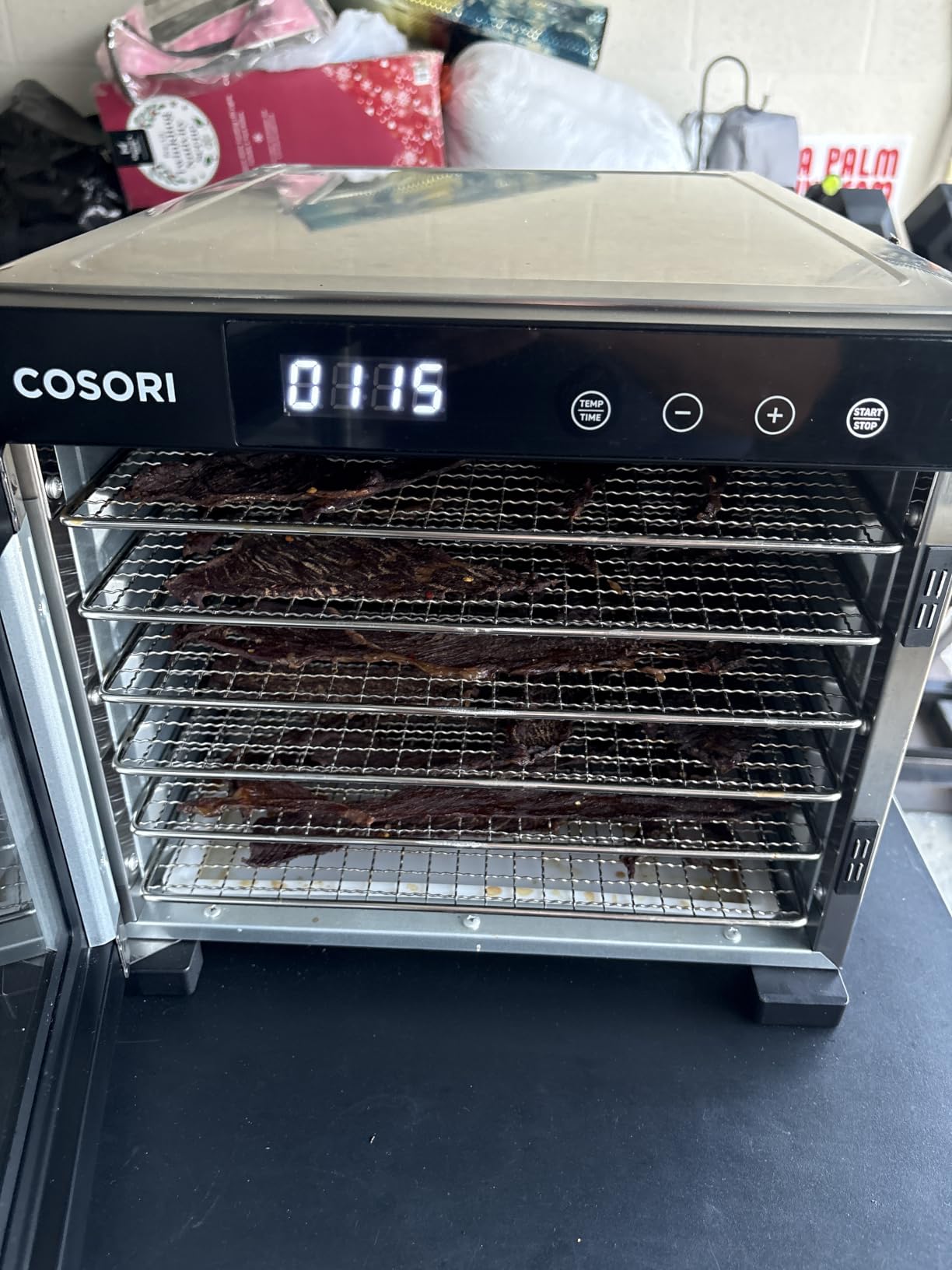
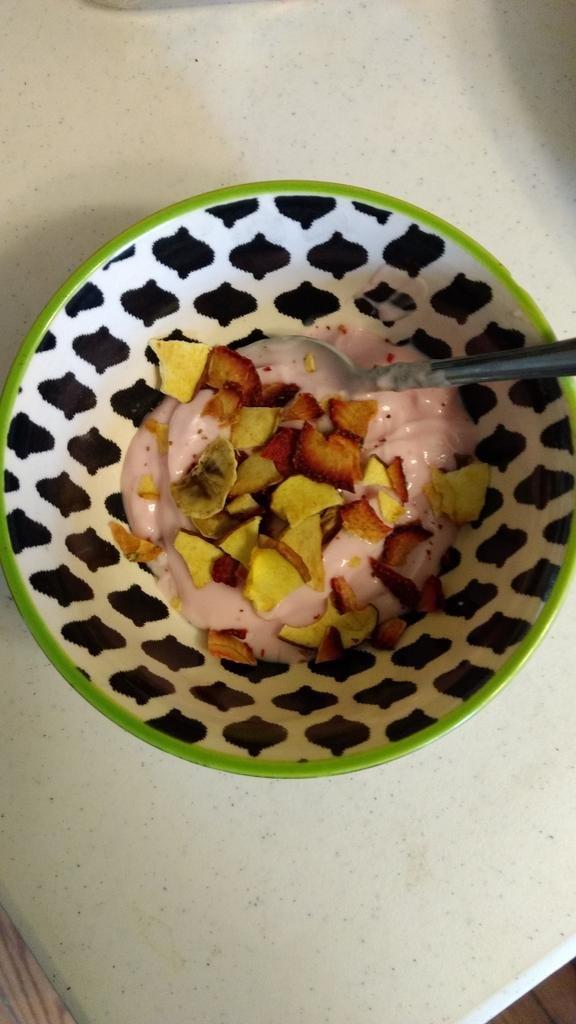
This is the machine for a canner who wants one appliance to do everything. It ranks in the top tier of the Kitchen and Dining dehydrator category, which is a rough proxy for how many people have already run one through a full season. We used it for apple chips, herb racks, and a two-day strawberry run without a single hot spot in the back corner.
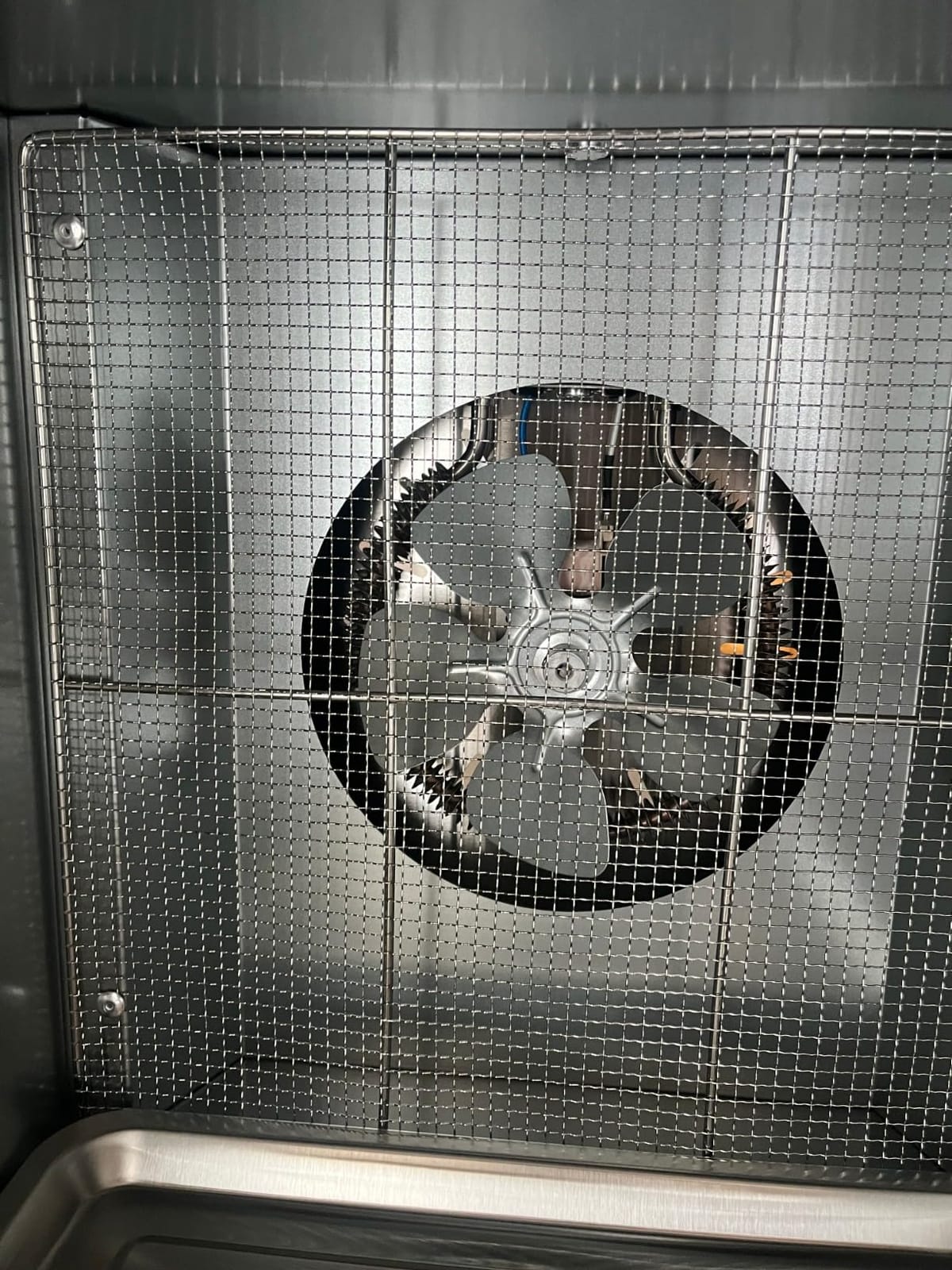
The rear-mounted 600W fan is doing the real work. Air enters at the back, crosses every tray horizontally, and exits through the rear vents, so trays do not need rotating even on a 24-hour batch. That matters more for home canning than most spec sheets admit, because the last thing you want at 2am is a kitchen alarm telling you to swap shelf four.
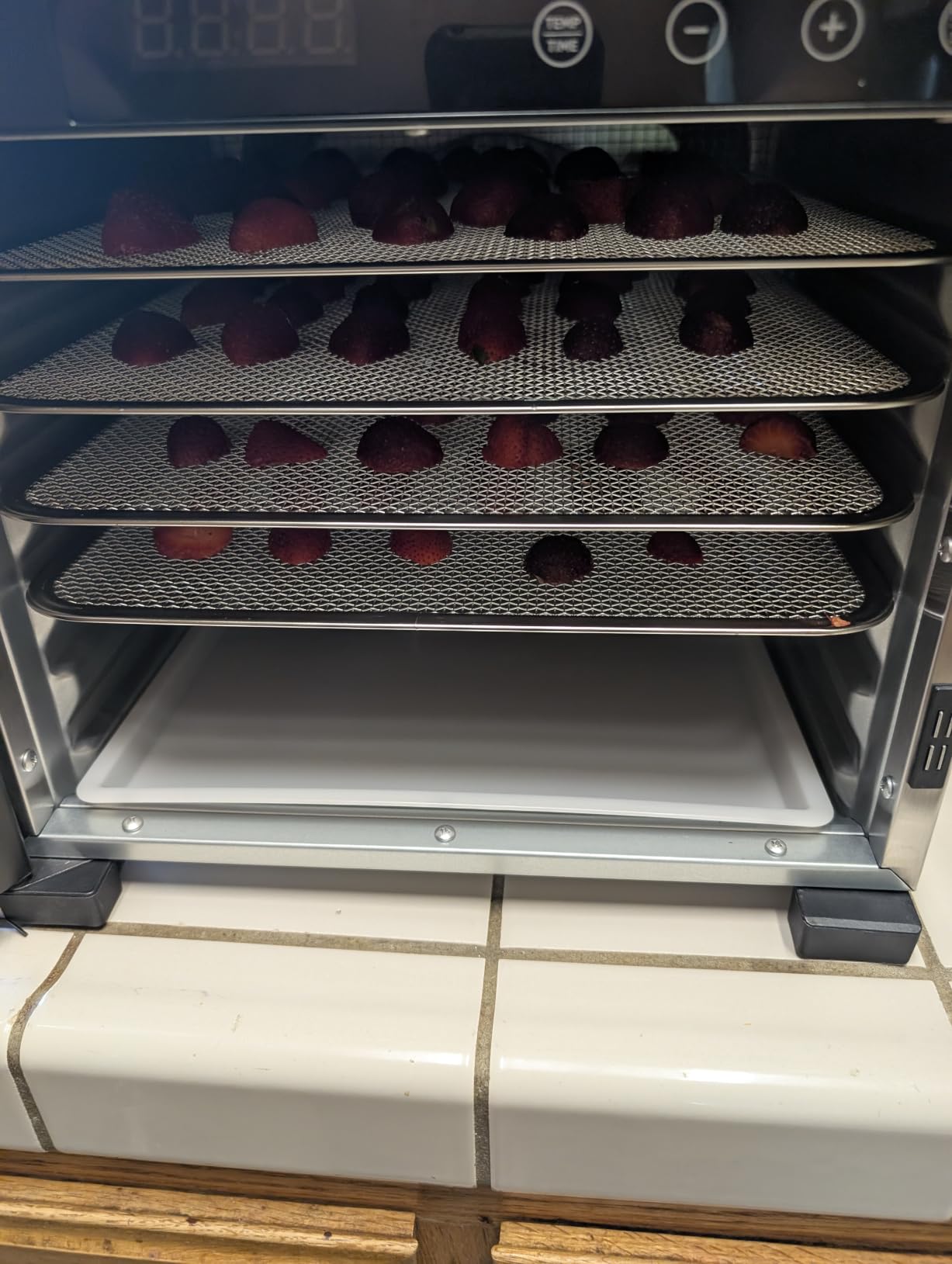
Six trays and 6.5 square feet is enough to finish a meaningful batch in one run rather than three. The 48-hour timer covers a long vegetable or meat program without babysitting, and the digital control steps in single degrees, so a 135°F herb-finishing run is repeatable from batch to batch. That repeatability is what separates a pantry from a science project.
The brushless motor is the reason the under-48 dB rating is credible. We could run it in a small kitchen with a window open and still hear the timer beeps over it, which makes overnight and early-morning cycles practical in a home rather than a workshop.
How it handles a canning-season load
Six trays is a middle ground, and it is the right one for most households. A bushel of apples becomes apple chips in roughly two or three runs rather than a weekend of babysitting, and a full load of strawberries clears in a single cycle. For a two-person kitchen, that throughput is genuinely sufficient.
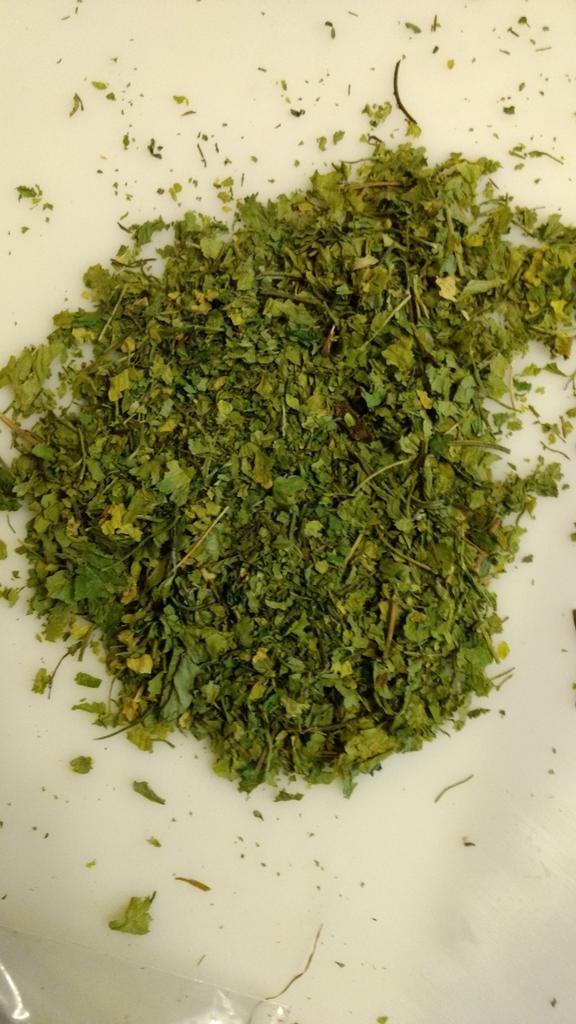
The included mesh screen and fruit roll sheet matter more than they look. The mesh catches small fruit and herb leaves that would otherwise fall between the slats, and the roll sheet turns pulp into a sheet you can cut into strips before it goes anywhere near a jar.
Where it falls short
The 165°F ceiling is the main limitation. It is fine for herbs, fruit, vegetables and lean jerky, but if you make fatty or heavily seasoned cured meat, you will want a machine that reaches the high 170s. The Cosori simply does not go there.
It is also 18.1 pounds and 17.8 inches deep, so plan the counter space before you commit. And at 600W it draws real power for its size, which is the trade for the drying speed you get on a 600W rear fan.
2. Magic Mill Pro 7-Tray Stainless Steel Dehydrator – Best Value Full-Stainless Build
Magic Mill Pro Food Dehydrator Machine | Powerful 600W Rear Fan Even-Drying System | 7 Full-Size Stainless Steel Trays | 95°-176° Temperature Control, 48H Timer, Keep Warm + Auto Shutoff | ETL Listed
Full stainless interior
7 trays
95-176F
600W
48H timer
Pros
- Stainless inside and out with trays that do not warp
- One-degree increments from 95F to 176F
- 48-hour timer with auto shutoff and 24-hour keep-warm
- About a foot wide for under-cabinet placement
- Dishwasher-safe trays
- ETL listed with overheat protection
Cons
- Start and stop button is sensitive and can be brushed accidentally
- Seven trays hold less meat per load than larger models
If the phrase stainless steel food dehydrator is a filter you actually care about, this is the machine that honours it most literally. The exterior, the interior cavity and every tray are stainless steel, not a steel wrap on a plastic frame. Buyers repeatedly single out the absence of odour absorption and tray warping as the reason it holds up season after season.
It is also the most practical size in this group. At roughly one foot wide, it slides under a cabinet or onto a section of counter that a fifteen-tray unit would swallow whole. For a canner working in a normal apartment kitchen, that footprint discipline is worth more than raw tray count.
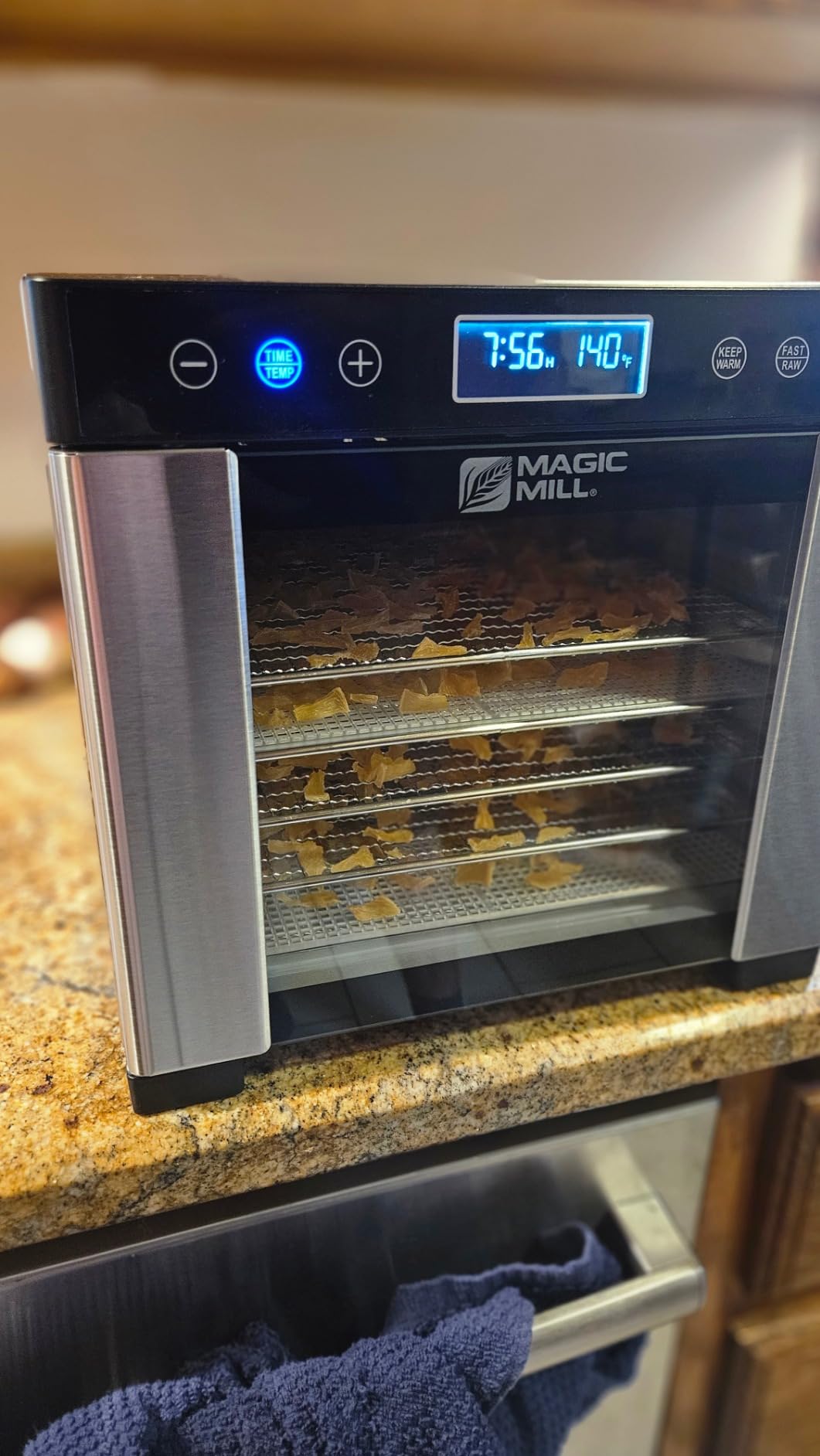
Temperature control runs from 95°F to 176°F in one-degree steps, which is a wider working ceiling than the Cosori and enough headroom for richer jerky programs. The 48-hour timer, automatic shutoff and 24-hour keep-warm mode cover the full arc of a canning day, from a long dry to a warm hold while you process jars.
Rear fan plus rear heat means the same no-rotation airflow design, and the two mesh screens and fruit roll and drip tray accessories are included in the box. The ductwork is quiet, and the trays go straight into a dishwasher when a batch of sticky tomato leather leaves a sugar film behind.

Why it suits a first canning season
This is the pick for someone moving from kitchen curiosity to actual preserving, largely because of the temperature ceiling and the keep-warm mode. You can dry a tray of peppers, drop the temperature while you load the next, and let finished trays sit warm instead of over-drying while you catch up.
Owners cite even drying from the rear fan, quiet running and simple cleaning as the three things they notice first. At a full stainless build with overheat protection and BPA-free trays, it is also the configuration forum canners ask for by name when they post for twelve-tray recommendations.
Where it falls short
The start and stop button is the most common complaint. It sits where your hand rests when you check progress, and a brush against it can halt a cycle partway through a long batch.
Capacity is the other limit. Seven trays hold roughly five pounds of meat per load, so a serious bulk run means more cycles. The warranty is one year, which is thinner than the three-year coverage the Septree models carry.
3. Magic Mill Premium 15-Tray Dehydrator – Best for Bulk Canning Seasons
Magic Mill Premium Food Dehydrator Machine (15 Extra-Large Stainless Steel Trays) 800W Dryer for Beef Jerky, Fruits, Vegetables, Dog Treats, 48 Hour Digital Timer – 95°-167° Temperature Control
15 extra-large stainless trays
800W
95-167F
48H timer
Pros
- Fifteen extra-large trays dry a full load without rotation
- Rear fan with precision airflow and a clear monitoring door
- 800W of drying power with low noise
- 48-hour countdown plus 24-hour keep warm
- Automatic shutoff and overheat protection
- Dishwasher-safe trays and liner
Cons
- Large 21.4 pound body needs a lot of counter space
- Maximum temperature of 167F is below some newer models
This is the machine you buy when canning is a season, not an experiment. Fifteen extra-large stainless trays let you load everything at once instead of running the same fruit through five cycles while it waits. In a good harvest year, that difference is the difference between preserving the surplus and watching it spoil in the crate.
Reviewers describe the rear-mounted fan and precision airflow circulation as the feature that makes the tray count usable, because the shelves do not need rotating. The transparent door is a small thing that matters on long runs, letting you check progress without cracking the door and dumping heat.
The 800W element and 48-hour digital timer handle long vegetable and meat programs, and a 24-hour keep-warm function means finished trays can wait for you without continuing to cook down. Automatic shutoff and overheat protection are both present, which is the combination you want before running a machine unattended overnight through a twelve-hour cycle.
Cleanup is straightforward for a machine this size. Trays and the liner are dishwasher safe, and the housing wipes down with a damp cloth, so a day of sticky fruit leather does not become a day of sticky surfaces.
How it handles serious harvest volume
When a canning group asks for a twelve-tray all-stainless machine, the reason is throughput, and this is the volume answer. A full load of sliced tomatoes, peppers or apples goes in once, dries evenly across the depth of the cabinet, and comes out ready for the jar in a single pass.
For a household preserving several hundred pounds a year, the efficiency of fewer, larger loads offsets the 21.4-pound weight and the 18 by 14 by 17 inch footprint quickly. If your counter cannot give up that space, this is the wrong machine, and the seven-tray is the smarter compromise.
Where it falls short
The 167°F ceiling is modest for modern models. Fine for fruit, vegetables, herbs and lean jerky, but it will not carry a high-heat meat program that a 194°F unit can.
There is no interior light, so checking progress at night means opening the door and looking. And like the other Magic Mill models here, the warranty is a one-year limited warranty, which is the main thing separating it from the three-year service on the Septree units.
4. VEVOR 10-Tray Stainless Steel Dehydrator – Widest Temperature Reach
VEVOR Food Dehydrator, 10 Trays Stainless Steel Food Dehydrator Machine, 1000W Dehydrators with Digital Adjustable Timer & Temp, Dehydrator for Jerky Herb Meat Beef Fruit Dog Treats and Vegetables
10 stainless trays
1000W
86-194F
0.5-48H timer
Pros
- Ten 304 stainless trays hold up to 1.7 lbs per layer
- Reaches 194F
- the highest ceiling in this group
- 1000W rear fan with 360 degree circulation
- Built-in LED interior light
- Silicone roll sheets and sieve included
Cons
- Heaviest machine here at 31.1 pounds
- Bulky 18.3 inch tall body takes real counter space
The VEVOR is the temperature specialist of this group. It reaches 194°F, higher than anything else we tested, and it starts at 86°F, so a single machine covers a very wide band of canning work. The body is 201 stainless steel and the trays are food-grade 304, BPA-free and dishwasher safe.
Ten trays at 14.8 by 11.2 inches give you room for real volume, and each layer handles up to 1.7 pounds of food. A 1000W rear-mounted fan with 360-degree air circulation handles the airflow side, so you are not rotating shelves on a long run.
That 194°F ceiling is the reason it earns a place. Higher heat is what you need for harder meat programs and for finishing dense vegetables quickly, and it is also the top of the range that makes a single appliance versatile across a whole canning year rather than a specialist.
The built-in LED interior light is the detail we appreciated most during night checks. You can watch a tray of fruit leather set without opening the door, which keeps the chamber temperature steady and saves you the guesswork of a peek-and-poke cycle.
Where it fits a canning workflow
This is the machine for a canner who processes more than one kind of food. Herbs at the low end, fruit leather through the middle, and high-heat meat work at the top all run from one control panel with a 0.5 to 48 hour digital timer, so a multi-day preserving weekend does not require re-learning settings.
The accessory package supports that range. Silicone roll sheets, sieves, gloves and a paper recipe set are in the box, and the sieve is the right tool for separating dried herbs from stems after a low-temperature run.
Where it falls short
It is the heaviest machine in this roundup at 31.1 pounds, and at 18.3 inches tall it is genuinely bulky. If you move the dehydrator around or live in a small kitchen, repositioning it is a real chore rather than a nuisance.
The review base is also the thinnest here at 152 ratings, so the long-term durability picture is less settled than for the machines with tens of thousands of reviews. The 201 stainless body is a step below the 304 used on the trays.
5. Ausegia 12-Tray Commercial Dehydrator – Best for Monitored Bulk Loads
Ausegia Commercial Large 12 Trays Food Dehydrator, Usable Area up to 22.67ft², 1200W Full Stainless Steel Dryer Machine, up to 190℉ Temperature, for Meat, Fruit, Veggies, Beef, Herbs, Pet Foods
12 stainless trays
22.67 ft2
1200W
70-190F
under 50 dB
Pros
- Twelve 15.75 inch square trays give a very large drying area
- Very quiet horizontal airflow under 50 dB
- Digital panel from 70F to 190F in 30-minute steps
- Auto shutoff with cold-air blowdown before the timer ends
- Glass front door and double-row vents speed moisture release
Cons
- Slower than an oven
- some batches take 18 to 20 hours at 175F
- Middle trays sometimes need swapping with top shelves
- Some owners report fan or element failure after several months
The Ausegia is a commercial-format box in a home kitchen, and its 15.75-inch square trays are the largest individual trays in this roundup. Twelve of them give a usable area up to 22.67 square feet, which is the volume you get when you are drying for a neighbourhood, a gift list, or an entire season of fruit at once.
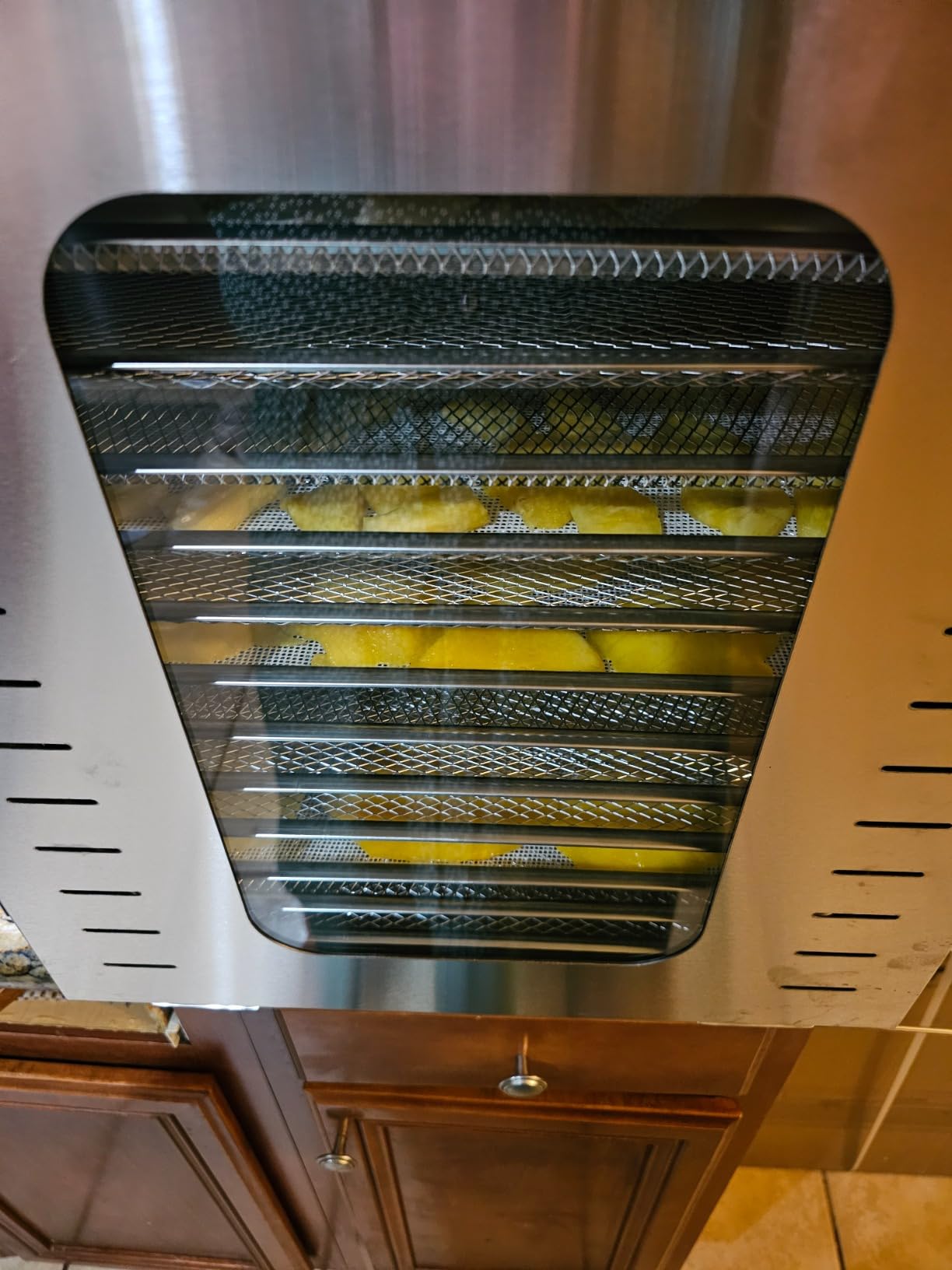
Buyers consistently mention how quiet it is, with horizontal airflow rated under 50 dB, and how much they like the glass front door. On a run of this length, being able to watch your load without opening the door is a genuine convenience, not a luxury.
The digital panel covers 70°F to 190°F in 30-minute steps with a 24-hour timer, and the shutdown routine blows cold air for a minute before the timer ends. That detail protects the electronics and the food from a sudden heat spike, and automatic shutoff plus overheat protection make long unattended cycles considerably less of a worry.
Double-row vents accelerate water vapour discharge, which is the physical reason the box is a good dryer and not just a warm cupboard. The accessory kit is unusually complete, with a drip tray, six silicone pads, a non-stick sheet, a hanger, twelve hooks and silicone gloves.
Where it earns its counter space
For a high-volume canner, the combination of tray size, double-row venting and a glass door is what makes long runs workable. You can see the whole stack at once, confirm colour and leathery texture, and pull finished trays without cycling the whole cabinet through a temperature swing.
Dishwasher-safe trays and a liner that peels off cleanly keep the post-batch cleanup manageable even after sticky fruit. The 21.38-inch depth is the real constraint, so measure the counter before the rest of your plan.
Where it falls short
Speed is the honest weakness. Some batches take 18 to 20 hours at 175°F, and reviewers report that middle trays sometimes need swapping with top shelves for even results, which undercuts the no-rotation promise a little.
More seriously, the 4.3 average rating reflects a cluster of durability reports about the fan or heating element failing within a year of use. That is the single biggest reason this is not higher in the ranking, and it is worth weighing against the three-year coverage the Septree models carry.
6. Septree 18-Tray Commercial Dehydrator – Best for Very Large Harvests
Septree Commercial Food Dehydrator 18 Trays, 2000W Large Capacity 34.42ft² Food Dryer Machine for Jerky, Meat, Fruit, Herbs, Full Stainless Steel Industrial Dehydrater Biltong Maker
18 stainless trays
34.42 ft2
2000W
70-190F
3 year service
Pros
- Largest capacity here at 34.42 square feet of usable area
- Rated for continuous 24 hour operation
- 70-190F with a 0.5 to 24 hour timer and auto shutoff
- BPA-free food grade stainless with a glass viewing door
- Three year after-sales service
Cons
- Tallest footprint here at 29.53 inches needing dedicated space
- 2000W draw cannot run on a small circuit
This is the biggest stainless steel food dehydrator in the roundup, and for a serious home preserving operation it is the most capable machine here. Eighteen trays at 15.67 inches square give a usable area up to 34.42 square feet, plus four fruit roll trays and two hanging racks for jerky with twenty hooks included.
What sets it apart from every other unit on this list is the continuous-operation rating. It is rated for seven days a week, twenty-four hours a day, which is a commercial-class specification that matters if you are running continuous multi-day cycles through a harvest window rather than an evening of fruit slices.
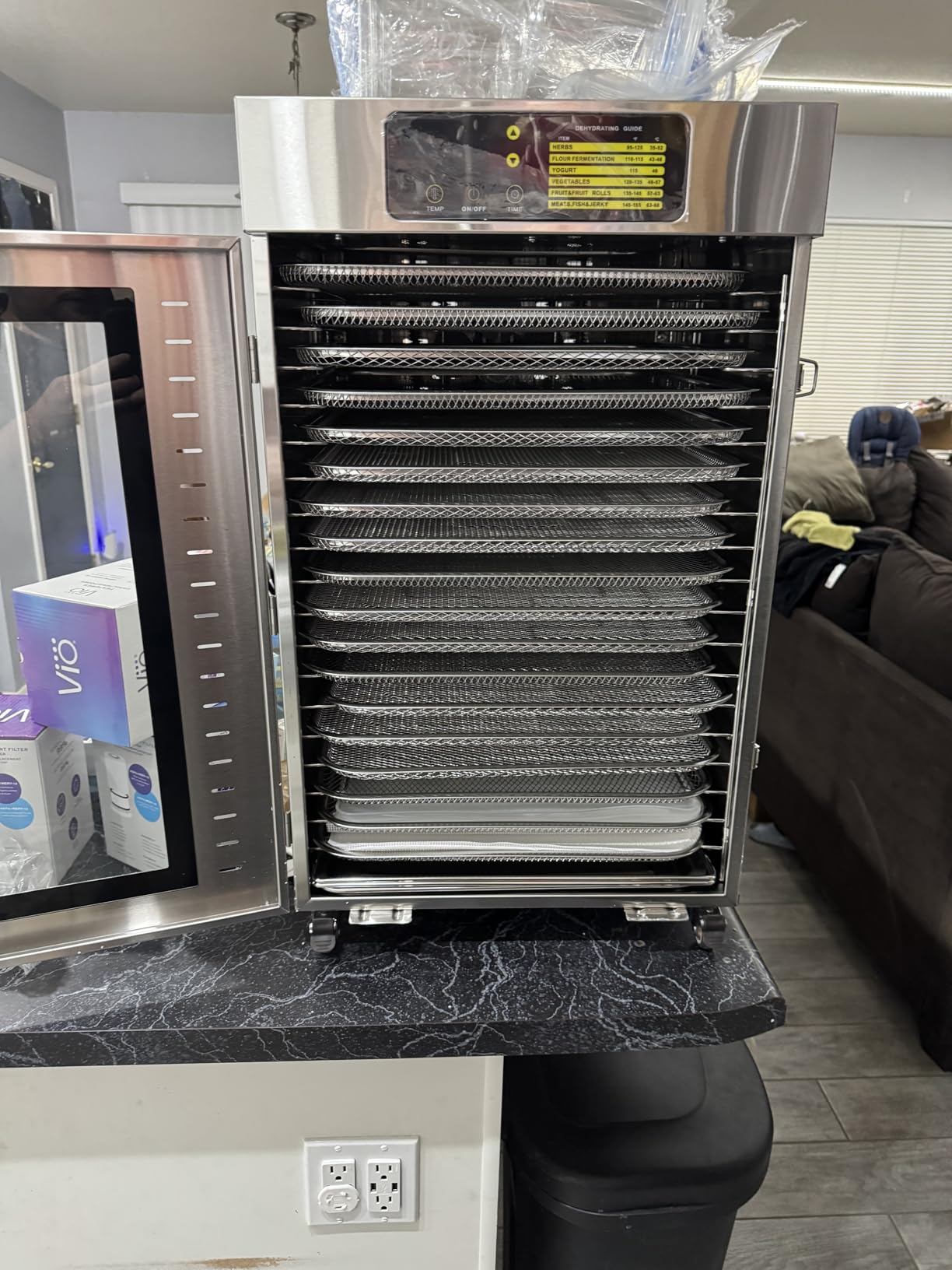
Horizontal airflow runs under 50 dB, and the control panel covers 70°F to 190°F with an integrated 0.5 to 24 hour timer and automatic shutoff. A glass viewing door lets you monitor the stack, and the trays are 100 percent BPA-free food grade stainless that goes in the dishwasher.
The accessory kit is generous, with non-stick silicone sheets, twenty hooks, a drip tray, heat-resistant gloves, storage containers and a recipe book. For a home canner buying once, that kit removes most of the extra shopping a smaller machine would require.
Who this machine is genuinely for
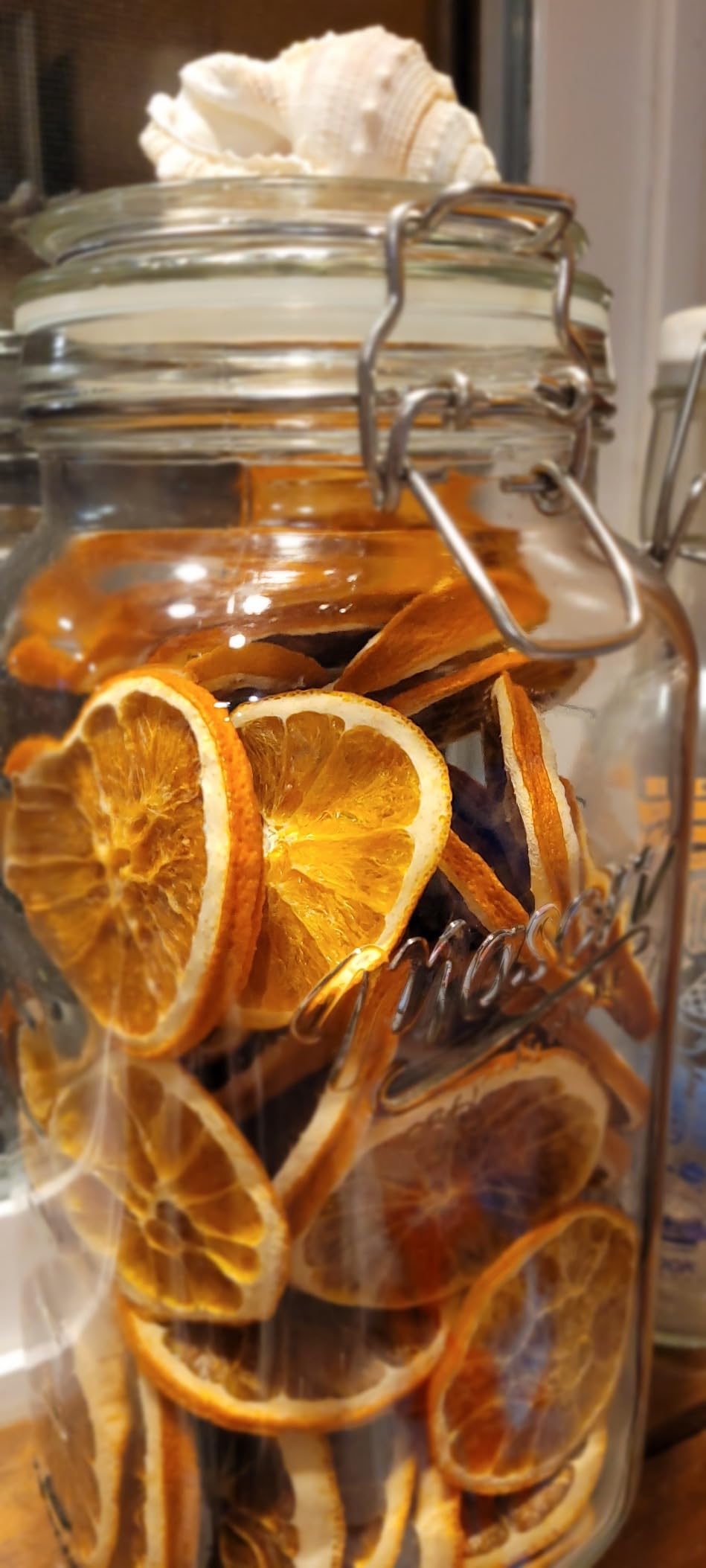
It suits a household or a small group preserving at a scale where a full load must go in once and stay in until finished. If you are drying peppers, tomatoes or apples through a whole season, or supplying gift baskets, the 34.42 square feet of area removes the bottleneck of constant reloads.
The three-year after-sales service is the strongest warranty coverage in this group. For a machine this size, where a failed fan or element would be a serious expense, that coverage is a meaningful part of the value calculation.
Where it falls short
Size is the obvious limit. At 21.46 inches deep, 17 inches wide and 29.53 inches tall, this needs dedicated floor or shelf space rather than a counter, and it is the least practical choice in a small apartment.
The 2000W draw is the other. It cannot be run on a standard small circuit, so you need a dedicated outlet, and running it alongside other high-draw appliances on a shared circuit is a real planning consideration rather than a technicality.
7. PSIIDAN 8-Tray Dehydrator – Best Compact Pick and Highest Rated
Food Dehydrator Machine, Powerful Food Dryer with 8 Stainless Steel Trays, Adjustable Temperature up to 167°F & 48-Hour Timer for Jerky, Fruits, Herbs – Includes Mesh Tray, Drip Tray & Recipe Guide
8 stainless trays
650W
up to 167F
48H timer
Pros
- Highest average rating in this group at 4.8 stars
- Eight stainless trays with a 650W motor
- Compact body fits a standard countertop
- Dual-layer insulation keeps the exterior cooler
- Quiet motor with a built-in interior light
- Mesh tray and drip tray included
Cons
- Top temperature of 167F limits harder jerky programs
- Body mixes ABS plastic with stainless steel
- Runs warm and radiates heat to nearby counter space
By raw rating, this is the highest-scoring machine we tested, at 4.8 stars, with owners calling it fast, quiet and simple to program. It is also the smallest eight-tray unit here, at 13 by 13.3 by 12 inches, which makes it the pick for a canner working with a genuinely small kitchen footprint.
Eight stainless trays and a 650W motor give it more throughput than its size suggests. The dual-layer insulation is the detail we noticed most on a counter, because it keeps the outer shell cooler during a long run and reduces the heat that normally makes a dehydrator uncomfortable to leave operating next to your prep area.
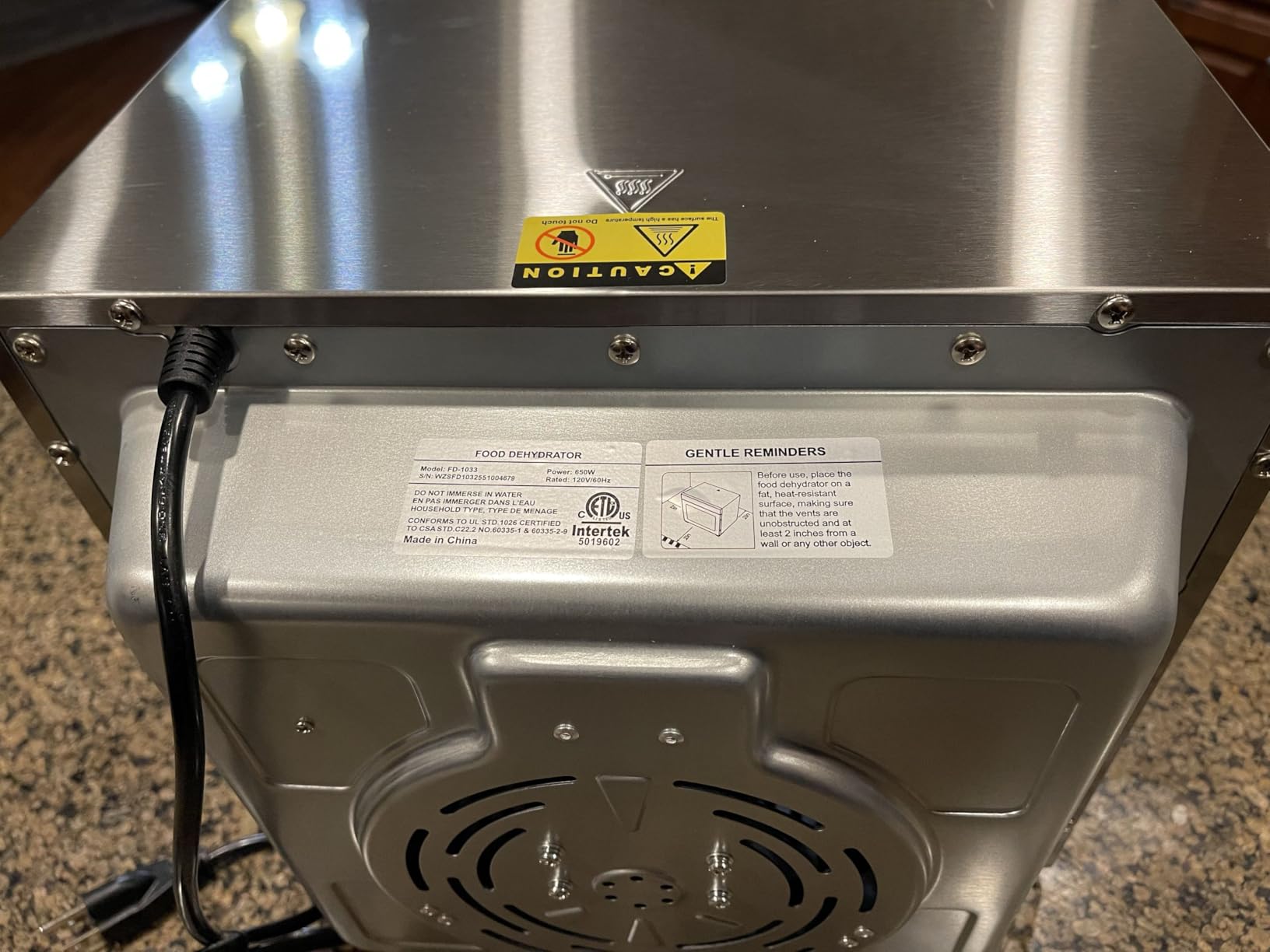
A built-in interior light and one-touch controls with auto shut-off make the programming simple enough that you are not consulting a manual mid-batch. The mesh tray handles small items like herbs and berries that would otherwise fall through, and the drip tray keeps fruit roll-ups from sticking.
The recurring minor complaint is heat given off to nearby counter space, which is a fair trade for the compact size. If your prep surface is the same surface the dehydrator sits on, plan for a little clearance above the machine.

Where it works in a canning setup
This is the machine for herbs, fruit and vegetable prep rather than bulk production. Small batches dry fast because the chamber is small and the motor is proportionally strong, and the 48-hour timer gives you room for a long vegetable run if you need one.
It is also a good second appliance. A canner who runs the big stainless unit for bulk fruit and keeps this one running continuously for herbs and snack batches ends up with a much smoother week than a single machine can deliver.
Where it falls short
The 167°F maximum limits harder jerky programs, and the body mixes ABS plastic with stainless steel rather than being all stainless. That is a deviation from the brief for this roundup, and we include it with a clear label rather than quietly counting it as a full stainless build.
The 115-review base is the smallest in the group. A high rating on a small sample is encouraging, but it is not the same evidence base as a machine with twenty thousand reviews behind it.
8. OLIXIS 8-Tray Stainless Steel Dehydrator – Best Budget Pick for Hot Jerky
OLIXIS Food Dehydrator Machine, 500W Jerky Dehydrators with 8 Stainless Steel Large Trays, 185°F Temperature Control & 24H Timer Food Dryer for Fruit Meat Herb Dog Treats, Silver
8 stainless trays
8.2 ft2
85-185F
500W
under 45 dB
Pros
- 185F maximum
- the highest ceiling among compact units
- Eight trays totaling 8.2 square feet
- Quiet operation under 45 dB
- Overheat protection and dishwasher-safe trays
- Built-in light for monitoring
Cons
- 24-hour timer is shorter than the 48-hour timers on most competitors
- 72 percent five-star share is the second lowest here
The OLIXIS answers a specific need well: a compact eight-tray machine that still gets hot. Its 185°F maximum is the highest ceiling among the smaller units in this roundup, which makes it a better fit for meat programs than its size and wattage would suggest.
Eight trays at 11.7 by 12.6 inches total 8.2 square feet, and each tray carries up to 3.3 pounds. That per-tray capacity is generous, and combined with a horizontal airflow system and a drying fan, it means a full load of jerky strips dries without manual rotation.
The quoted noise level of under 45 dB is the lowest published figure in this group, which matters if the machine runs in a kitchen, a bedroom doorway or next to a sleeping child. There is a built-in light, so monitoring does not require opening the door on a long cycle.
Overheat protection and dishwasher-safe stainless trays are both standard here, and the 500W draw keeps electricity use modest for the drying area you get. It is a 16.7 by 13.5 by 13.5 inch body, so it stores and works in spaces the bigger units cannot.

Where it fits a home canning routine
For a household drying herbs, apple slices, fruit leather and moderate batches of jerky, the OLIXIS covers the useful middle of the range. The 85°F floor is low enough for delicate herbs and the 185°F ceiling is high enough for meat, so one machine handles both ends of a preserving week.
The 3.3-pound per-tray limit is what makes it practical for prep work. You can lay out a full batch of evenly cut strips without overcrowding, and the airflow moves across every shelf at the same time.
Where it falls short
The 24-hour timer is the practical limit. Most competitors here run 48 hours, and a long vegetable or herb cycle on a thick cut can push past a day, which means you are present to restart rather than asleep.
Consistency is the other concern. A 4.5 average with a 72 percent five-star share is the second-lowest five-star ratio in the group, which points to some units running less evenly than others and a small share of buyers finding consistency lacking.
9. Septree 4-Tray Compact Dehydrator – Best for Small Kitchens and Storage
Septree Compact Food Dehydrator, 4 Stainless Steel Trays Fresh Dryer Machine for Jerky Herbs Fruit Veggies Snacks, with Digital Timer | 190F Temperature Control, Great Size for Small Family
4 stainless trays
70-190F
400W
6.9 pounds
Pros
- Compact 11.4 by 11.5 by 7.9 inch body weighs 6.9 pounds
- 70-190F range is high for its size
- Dries about 2 pounds of blueberries in roughly half the time of a larger unit
- Top-mounted digital display remembers previous settings
- Patented 304 stainless wrap-around mesh
- BPA-free materials with a 3 year after-sale service
Cons
- Only four trays limits batch size for canning quantities
- Housing is polycarbonate rather than full stainless steel
This is the machine for a canner whose constraint is cupboard space, not budget. At 6.9 pounds and 11.4 by 11.5 by 7.9 inches, it is the only unit here you can genuinely store away between seasons, which matters if you preserve in bursts rather than all year.
The 70°F to 190°F range is unusually wide for a four-tray machine. The bottom setting is low enough for delicate herbs, and the top reaches far enough to handle vegetable and moderate meat work, so a small machine does not have to mean a limited menu.
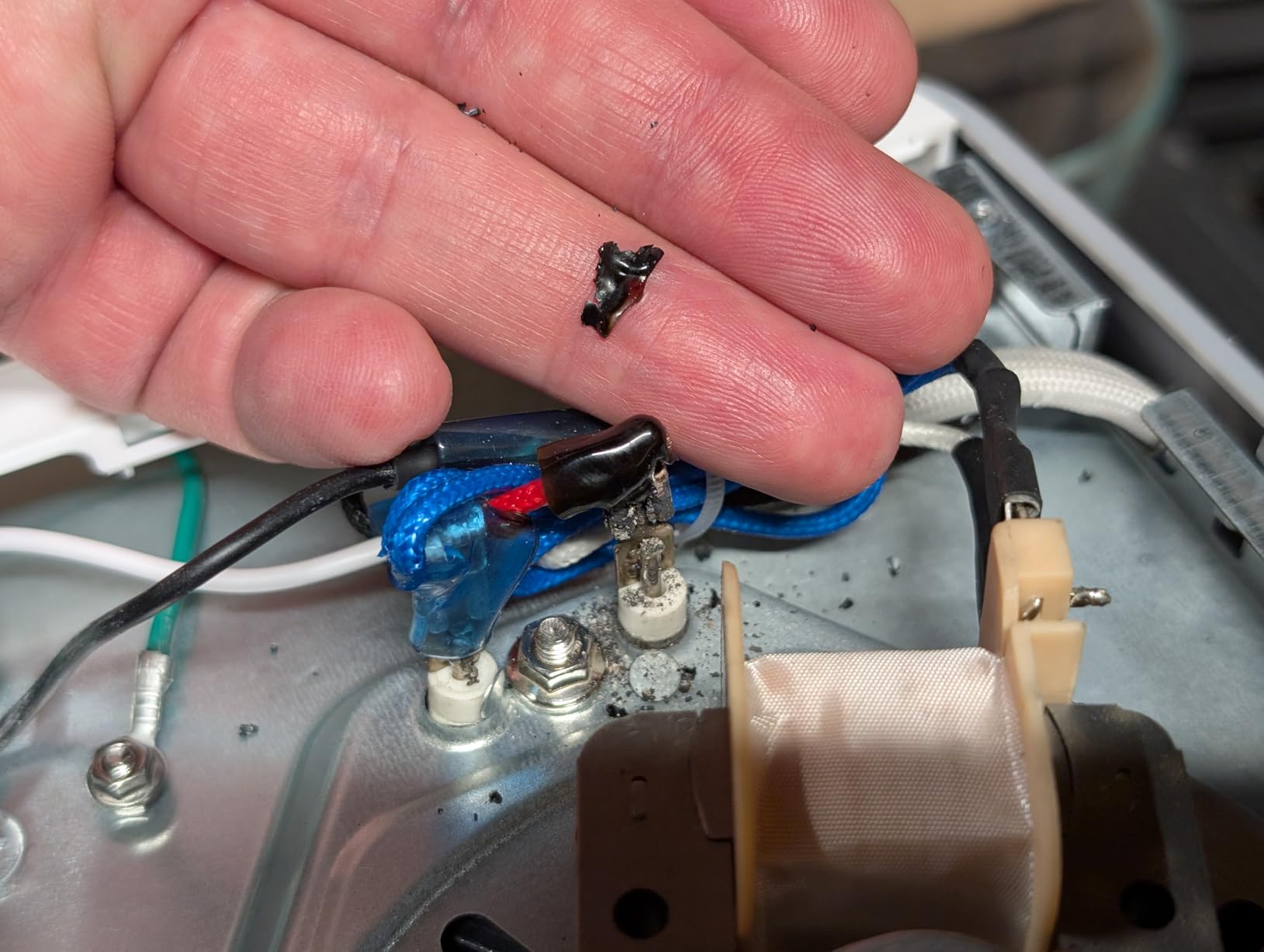
Where compact size helps most is speed per pound. Because the chamber is small, it dries about two pounds of blueberries in roughly half the time a larger unit takes for the same weight. For a small household that is a real efficiency gain, not a consolation prize.
The top-mounted digital display is large and remembers previous settings, so restarting a repeat batch is a one-touch operation. The patented 304 stainless wrap-around mesh gives the trays a smooth, hand-safe edge, and the food-grade stainless trays are BPA-free throughout.
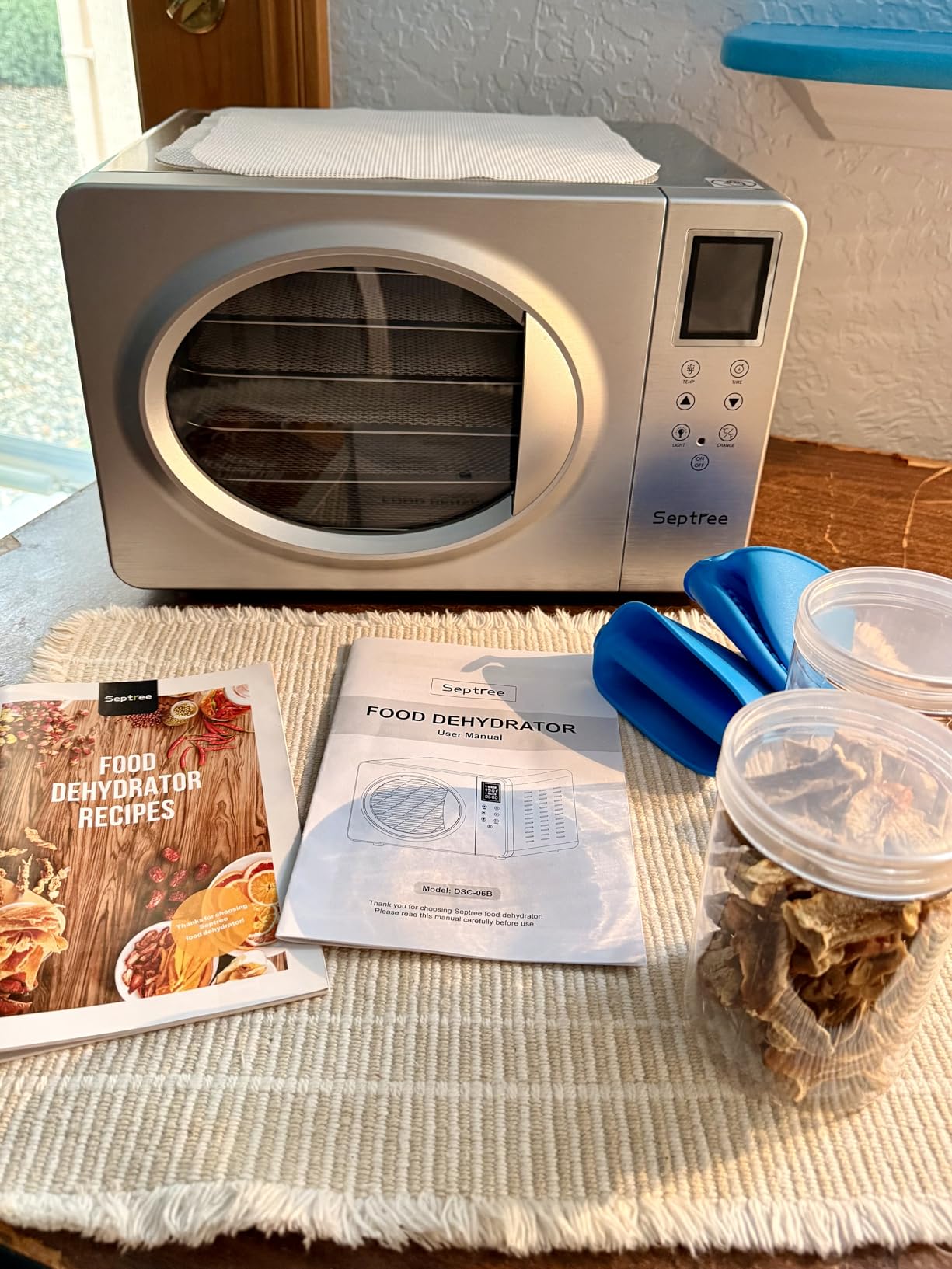
Who it works for
A household of two or three that dries herbs, snacks, small fruit batches and dog treats will get more out of this than out of a larger machine. The storable size means it does not permanently occupy a counter in a small kitchen, and reviewers consistently call out efficiency and compact size as the strengths.
The three-year after-sale service is also the best warranty coverage among the compact options here, which matters for a machine that gets pulled out of storage several times a year.
Where it falls short
Four trays is a real limit for canning quantities. If you are processing a garden harvest rather than supplementing a grocery shop, you will be running multiple cycles on a machine that takes time to cool down and reload.
The housing is polycarbonate with stainless steel trays, so it is a stainless-tray machine rather than a full stainless build. And with a 4.5 average across more than 1,400 reviews, the consistency is decent but not class-leading.
10. Elite Gourmet 4-Tray Dehydrator – Best Starter Unit for Beginners
Elite Gourmet Food Dehydrator, Stainless Steel Trays, Adjustable Temp
4 stainless trays
95-158F
350W
24H timer
Pros
- Rectangular pull-out trays are easier to dry and clean than round ones
- Transparent trays allow monitoring without opening
- Bottom fan with horizontal airflow for even drying
- One-degree temperature adjustment from 95F to 158F
- Dishwasher-safe trays and lid
- ETL listed at 350W
Cons
- Maximum temperature of 158F is below most stainless competitors
- Small 11.5 by 10 by 8 inch body limits throughput
- Plastic body with stainless steel trays
- Draws about 340 watts at 4 to 5 amps for a small batch
The Elite Gourmet is the one to buy if you are not sure you will keep drying food. It is the least expensive machine here by a wide margin, it carries more than 1,500 reviews, and reviewers treat it as a compact second unit for herbs, fruit and pet treats rather than a primary canning machine.
The design choice that matters most here is the rectangular pull-out tray. Compared with round trays that have a centre hole, rectangular trays present one flat surface with no gap where juices pool, so they dry and wash more thoroughly after a sticky batch.
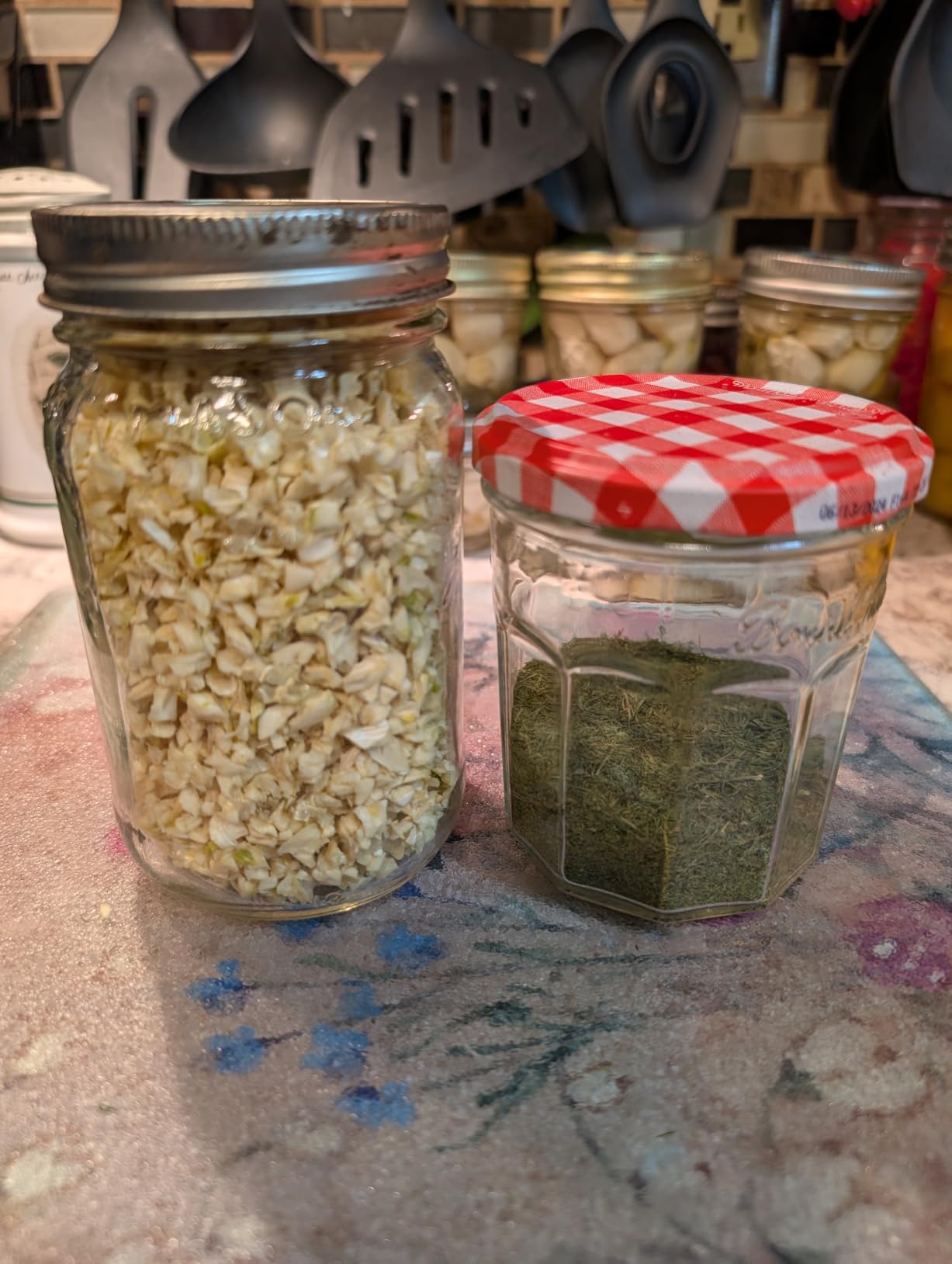
The transparent trays let you watch progress without opening the unit, and a bottom-mounted fan with horizontal airflow handles even drying across all four shelves. Temperature adjusts in one-degree steps from 95°F to 158°F with a 24-hour timer, and buyers report the temperature verifies accurate against a calibrated thermometer.
For a beginner this is a forgiving machine. It is ETL listed, the trays and lid are dishwasher safe, and there is very little to go wrong. If you develop a preserving habit and outgrow four trays, you will have learned the craft on something you are not emotionally attached to.

Where it makes sense
Treat it as a starter or a second appliance rather than a canning workhorse. It is well suited to dried herbs, apple chips, fruit rounds, small batches of vegetables and pet treats, where the volume required stays within four trays.
The 158°F ceiling is adequate for fruit, vegetables and herbs. It is meat programs and long vegetable cycles where you will feel the limit, and where a higher-ceilinging machine becomes the better purchase.
Where it falls short
The 158°F maximum is the headline weakness, since most stainless steel competitors here reach the 170s and 180s. The 11.5 by 10 by 8 inch body also limits throughput to a few trays of produce at a time.
The housing is plastic with stainless steel trays, not a full stainless build, and the machine draws roughly 340 watts at 4 to 5 amps, which is a high draw relative to the batch size. The 6 percent share of one-star ratings centres on capacity and the temperature ceiling rather than on failures.
From Dehydrator to Mason Jar: A Home Canning Workflow
No dehydrator review stops at the tray, and that is where most buying guides lose the canner. Dehydrating is the front half of a preserving process, not the whole of it. Here is the sequence that turns a machine full of dried fruit into jars you can trust on a pantry shelf.
Step one: prepare for even drying. Wash, peel and slice uniformly. Uniform slice thickness matters more than any tray material, because a thin end and a thick end on the same tray finish at different times. Apples sliced at an eighth of an inch dry in roughly half the time of quarter-inch rounds.
Step two: pretreat to stop enzymatic browning. Some fruit will darken and lose flavour in the hours before you seal it. A short dip in a mild lemon or ascorbic acid solution slows the browning while the tray runs. Pineapple, kiwi, fig, mango and banana all benefit, and these same fruits are the ones that carry the enzyme risk we cover in the safety section below.
Step three: dry to a target, not a timer setting. A dehydrator finishes on texture, not time. Fruit is done when it is leathery and bends without cracking, and no moisture beads appear on the surface. Vegetables are done when they are brittle and snap clean. Meat jerky is done when it is uniformly coloured with no translucent patches, which is a case where a probe thermometer matters more than a clock.
Step four: cool before you seal. Warm food sealed into a jar traps steam, and that trapped moisture is exactly what you worked to remove. Let trays cool to room temperature in the open air before any jar work begins. This step is skipped constantly and it is the most common reason dried fruit goes soft in storage.
Step five: use the mesh sheet for the transfer. Backpacking Chef users describe the practical trick of laying dried pieces onto a dehydrator mesh sheet and sliding the whole sheet into a wide-mouth jar to pour them in, rather than tipping a tray and letting fruit tumble and break. It reduces breakage, keeps dust out, and makes small items like dried herbs and berry slices far easier to collect.
Step six: seal and label honestly. Choose a jar size based on how fast you will actually open it. Wide-mouth jars suit large fruit pieces and are easier to fill from a tray, while standard-mouth jars seal more reliably for small cut pieces. Leave the headspace your recipe specifies, vacuum seal if you own a chamber sealer, and label with the food, the date, the drying temperature and the batch.
Dehydrated food has a real advantage over water-bath canned fruit, and it is worth knowing: you do not run a boiling water bath, and the fruit keeps more of its original flavour, colour and vitamin content because it was never submerged or cooked in syrup. What you give up is indefinite shelf life. Dehydrated food stores well and lasts a long time, but it is not a substitute for tested canning recipes.
Stainless Steel Trays vs Plastic Trays: What Changes for Canning
Stainless steel trays resist rust and corrosion, tolerate repeated high-humidity cycles without absorbing odour, and are what determines whether your dehydrator is still working five seasons from now. That is the honest case for steel, and for a canner running dozens of long cycles a year it is a strong one.
But a lot of confusion in this category comes from treating steel as automatically safer. That is not quite right, and here is the more useful framing.
Where steel clearly wins: durability and odour. Tomato, onion, curry and garlic will permanently stain and season a plastic tray. Stainless wipes clean with a damp cloth and goes in the dishwasher, and it will not absorb the flavour of one batch into the next.
Where plastic is genuinely fine: temperature and food contact. BPA-free plastics used in food dryers are rated for the temperatures those dryers reach, which is why they are sold at all. A plastic tray inside a 158°F machine is not a chemical exposure problem; it is a durability and staining problem. If a competitor roundup lists a plastic-tray model, it is not doing you harm, it is just answering a different question.
Where the distinction that actually matters: the housing. Several machines here have a stainless interior with a plastic or polycarbonate outer shell. The food touches steel in every one of them. For home canning, that is the part that counts, and it is why we filter on drying trays rather than on the colour of the box.
What to avoid either way. Flaking, rusting and warped trays from thin-gauge metal are the recurring complaints on cheap multi-tray machines, and warped trays destroy airflow spacing, which destroys even drying. Stainless steel is a material specification, not a quality guarantee. Gauge, welds and rack spacing still matter, which is why we note the concerns reviewers raise on the larger commercial-style units below.
Temperature Guide: Which Setting for Which Food
Matching temperature to food is the difference between a good batch and a wasted tray. These ranges reflect what the machines in this roundup actually control, so you can set them directly on any of the ten picks.
85°F to 115°F: herbs and delicate items. Dried herbs, petals for potpourri and any very heat-sensitive food. The OLIXIS and Septree units reach this low end, which is what makes their low settings genuinely useful. The Cosori starts at 95°F, which is still workable for most herbs.
135°F to 150°F: fruit and vegetables. Apple chips, strawberries, pears, tomato chips and most vegetable slices. This is the workhorse band of home canning and where the bulk of your drying time will be spent.
155°F to 167°F: fruit leather and vegetable finishing. Purée sheets set best in this range, and vegetables finish dry and crisp. Several machines top out here, which is worth knowing before you buy for a specific recipe.
170°F to 194°F: meat programs. Beef, turkey and venison jerky want the higher end, and this is the single clearest reason to choose the VEVOR at 194°F, the Septree units at 190°F, or the OLIXIS at 185°F over a 165°F or 167°F machine.
Why a wide range is valuable. A machine that runs 70°F to 194°F covers herbs at the bottom and jerky at the top without you buying a second appliance. A machine capped at 158°F or 165°F will serve fruit and vegetables well and leave you without a hot option for meat.
Food Safety for Dehydrated Food You Plan to Jar
This is the section most roundups skip, and it is the one that matters most if you are sealing food for storage. Dehydrating removes water, but it does not by itself make everything shelf stable. Two variables decide whether your jar is safe: enzyme activity and residual moisture.
Enzyme inactivation. Fresh pineapple, kiwi, fig, mango, banana and papaya contain proteolytic enzymes that stay active after drying unless the fruit is heated. These enzymes break down proteins in other foods and, more relevant here, degrade colour, flavour and texture over time. Blanching or a brief high-temperature finish before drying inactivates them. This is the most commonly missed step in home fruit dehydrating.
Water activity, not dryness by eye. The safety variable in dried food is water activity, the free water available to bacteria and mould. Dried food intended for storage needs to be genuinely dry all the way through, not dried on the surface with a moist core. A piece that feels leathery outside and slightly supple in the centre is not finished. Cutting one open is the check.
Mould is not a seasoning step. Any visible fuzz, off smell, or sliminess means the batch goes in the bin. Dry herbs, fruit and vegetables that have been stored sealed and still show mould indicate either moisture left in the load or storage conditions that were too warm or humid. Do not taste-test to find out.
Store cool, dark and sealed. Dehydrated food stores best in a cool, dark pantry away from the stove and out of direct sunlight. Vacuum sealing extends storage by limiting oxygen exposure, and oxygen is what turns pale dried apple brown over time. Label with the date so you use the oldest first.
Know what you are not making. Dehydrating is not canning in the regulatory sense, and it is not a validated preservation method for every food. Follow tested recipes from a recognised source such as the National Center for Home Food Preservation or your local extension service, and treat anything not covered there as an experimental batch rather than a pantry staple.
What never goes in. High-fat and high-moisture foods, dairy products, whole milk, soups and sauces do not dehydrate safely, and a canner working from a method that includes them should stop and rethink. Low-acid vegetables meant for canning also carry specific requirements that a dehydrator run does not satisfy.
How to Choose a Stainless Steel Dehydrator for Home Canning
Airflow direction is the first filter. Horizontal airflow, driven by a rear-mounted fan, moves air across every tray at once and eliminates tray rotation. Vertical airflow models move air top to bottom and force you to swap shelves partway through a long cycle. For canning-season work where runs are long and unattended, horizontal is worth paying for.
Look at square feet, not tray count. Two eight-tray units and one sixteen-tray unit are not the same capacity, because tray size varies widely. The OLIXIS gives 8.2 square feet across eight trays, the Cosori gives 6.5 square feet across six, and the commercial units reach 22.67 and 34.42 square feet. Square feet is the number that predicts how much produce you clear in a day.
Wattage tells you the drying time, and the electricity cost follows from it. Every watt is one watt-hour per hour of operation, so a 600W machine uses 0.6 kilowatt-hours per hour and a 2000W machine uses 2. Multiply by your hours per batch and by your own utility rate. The practical reading is that the high-wattage commercial units buy you speed and capacity, while the 350W to 500W compact models are the right choice when you dry in small batches and want a low draw.
Timer length and auto shut-off are safety features. A 48-hour timer covers long vegetable and meat programs in a single run, and automatic shut-off plus overheat protection is what makes it reasonable to leave a cycle running while you sleep. Every machine in this roundup except the Elite Gourmet and OLIXIS carries a 48-hour timer, so if you plan long runs, screen for it.
Tray spacing and mesh matter more than raw tray count. Pieces need airflow clearance in every direction. Tight rack spacing on a cheap multi-tray unit is the mechanism behind the spotty, mould-prone drying that reviewers complain about. A unit that includes mesh screens is a better partner for herbs, berries and small cut fruit, while a unit that includes a fruit roll sheet and drip tray handles purées and roll-ups properly.
Noise is a household-planning variable. Anything under 50 dB is liveable in a kitchen; anything under 45 dB is liveable in a kitchen where someone is sleeping. Check the published figure when it exists, because models that do not publish one are hard to compare.
Cleaning is the routine nobody plans for. Stainless steel trays that are dishwasher safe and a peelable liner will save you an hour after every batch of fruit leather. Slower sellers make people abandon a dehydrator in a cupboard, and a machine in a cupboard does not help with canning.
Size the tray count to your actual harvest. As a rough planning guide, a four-tray machine suits a household drying herbs, snacks and small fruit batches. A six or seven-tray machine covers a typical family garden. Ten to twelve trays handles a serious harvest, and eighteen trays is a preserving operation rather than a hobby. Buying beyond your real volume means an appliance you store rather than use.
Check warranty length as a durability proxy. Coverage runs from one year on the Magic Mill models to three years on the Septree units. A longer warranty is a signal that the manufacturer expects the machine to survive, which is a reasonable proxy when you cannot test a fan motor before buying.
Know who each pick is not for. The 18-tray commercial unit is not for a small apartment. The 4-tray compact is not for processing a harvest. The 165°F Cosori is not for high-heat meat work. The Elite Gourmet is not a canning workhorse. Buying the wrong size is the most common expensive mistake in this category.
On the brands you will hear about most. Excalibur and Nesco come up constantly in forums, and we did not include either because neither appeared in the analyzed product set for this roundup. Forum canners describe the Excalibur 9-tray as the gold standard for home dehydrators for its bulk space and adjustable temperature, and one r/dehydrating owner notes the Excalibur upped their dehydrating game compared to a cheaper Nesco. Treat that as community consensus rather than our test result.
Frequently Asked Questions
What is the best-rated stainless steel dehydrator?
The highest-rated machine in our group is the PSIIDAN 8-Tray at 4.8 stars, though that rating rests on a smaller review base. The most proven pick is the Cosori 6-Tray, rated 4.7 across more than 21,000 reviews, and it is the one we recommend for home canning because of its even rear-fan airflow and 48-hour timer.
What is the best food dehydrator for home use?
For home use the answer depends on volume. A four-tray model such as the Septree compact handles herbs, fruit and snacks in a small kitchen, while the Cosori 6-Tray is the strongest all-round choice for a typical household and the Magic Mill Pro 7-Tray is the best value if you want a full stainless build.
Which dehydrator brand is better, Magic Mill or Excalibur?
We tested two Magic Mill machines, the 7-Tray Pro and the 15-Tray Premium, and both dried evenly with no tray rotation. We did not test an Excalibur. Forum canners on r/dehydratedfoodideas describe the Excalibur 9-Tray as the gold standard for home dehydrators, and r/jerky users recommend Nesco as an entry-level option, but those are community opinions rather than our test results.
Can I leave a dehydrator on overnight?
Only if your machine has automatic shut-off and overheat protection, and only on a dedicated outlet away from anything flammable. Every model in this roundup except the Elite Gourmet and the 4-tray Septree has a 48-hour timer, which is the feature that lets a long program run overnight without you restarting it in the morning.
What foods should not be dehydrated?
Do not dehydrate dairy, whole milk, soups, sauces or high-fat foods, and do not use a dehydrator as a substitute for a tested canning recipe for low-acid vegetables. Pineapple, kiwi, fig, mango and banana also need blanching or a high-temperature finish to inactivate enzymes before drying.
How much electricity does a food dehydrator use?
It uses its wattage in kilowatt-hours per hour of running time, so a 600W machine draws 0.6 kWh each hour and a 2000W commercial unit draws 2 kWh. Multiply by your batch hours and your own utility rate. Some batches run 18 to 20 hours, which is why a full stainless steel food dehydrator for canning adds up over a season.
Conclusion: Our Top Stainless Steel Food Dehydrator Picks for 2026
The best stainless steel food dehydrators for home canning all share three things: horizontal rear-fan airflow so you are not rotating trays at midnight, a thermostat that holds its setpoint, and stainless drying trays that survive acidic fruit and salt season after season. Every machine in this roundup clears that bar.
Our pick is the Cosori 6-Tray. Six stainless trays, 6.5 square feet, single-degree control from 95°F to 165°F, a 48-hour timer and a brushless motor quiet enough to sleep beside, backed by more than 21,000 reviews. The Magic Mill Pro 7-Tray is the better buy if full stainless construction matters most to you, and the Magic Mill 15-Tray is the answer when a harvest arrives all at once.
Whichever you choose, size it to the produce you actually have. A machine that matches your canning season will be running for years, and one that does not will end up in a cupboard. Use the workflow and safety notes above before you seal your first jar, and check the current listing for the machine that fits your kitchen.