
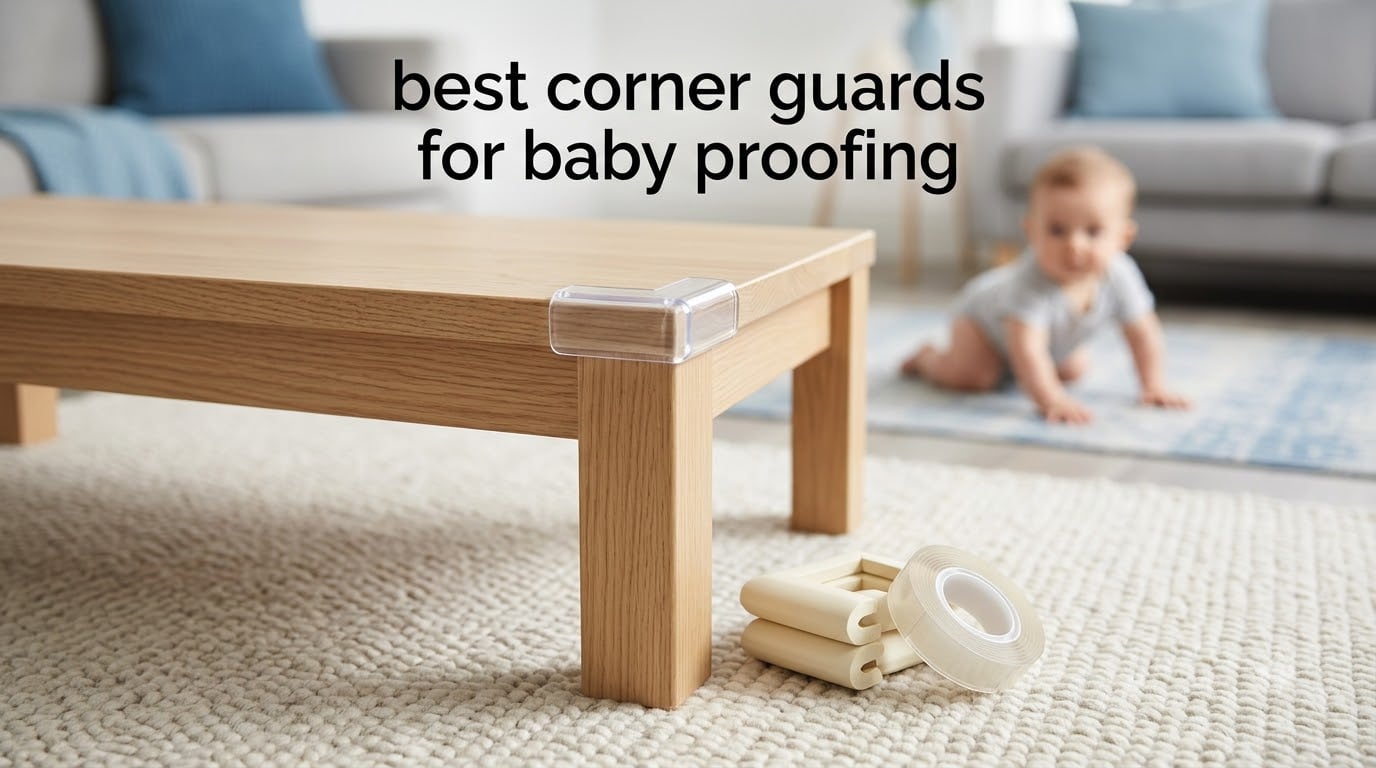
Corner guards are soft, cushioned covers that stick to the sharp corners and edges of furniture so a baby’s head or body meets foam or rubber instead of hard wood, metal or glass. Babies learning to crawl, pull up and cruise topple forward constantly, and furniture corners at head height are one of the most common causes of bumps and cuts in the home.
We spent weeks comparing the best corner guards for baby proofing across foam, silicone and PVC builds, checking cushioning density, adhesive strength, how they handle a determined toddler, and how they look after months on a real coffee table. This roundup covers twelve sets that parents actually keep on their furniture, plus the honest caveats that no competitor page mentions, like which ones a teething toddler can pull off and chew.
What follows is organized the way we used it: the three we ended up recommending, a full overview of all twelve, then a review of each one with who it suits and who it does not. If you only need the short answer, the table in the overview section is the fastest way in.
Table of Contents
Top 3 Corner Guard Picks for Baby Proofing (October 2026)
These three sets earned the top spots in our comparison for different reasons: one for the widest material compatibility, one for whole-table coverage in a single pack, and one for pure cushioning quality.

CalMyotis Clear 12 Pack
- Dense PVC
- 12 clear pieces
- BPA and phthalate free
- 3M tape per corner

Roving Cove 15 ft Edge and…
- Shore A 20-N foam
- 15 ft edge roll
- 4 pre-taped corners
- 30 ft of 3M tape

Roving Cove 4 Large Corners
- 0.4 inch thick foam
- Pre-taped 3M 9448A
- L-shape large fit
- BPA and latex free
Best Corner Guards for Baby Proofing in 2026: Quick Overview
Every set below appeared in our hands-on comparison. The material column is the single biggest factor in how a guard feels on a sharp corner, and the piece count decides whether one pack is enough for a room or a whole house.
| Product | Specs | Action |
|---|---|---|
| CalMyotis Clear 12 Pack |
|
Check Latest Price |
| Roving Cove 15 ft Edge and 4 Corners |
|
Check Latest Price |
 UXU Clear 12 Pack Curved PVC UXU Clear 12 Pack Curved PVC |
|
Check Latest Price |
| Roving Cove 4 Large Corners |
|
Check Latest Price |
 Wappa Baby 12 Pack Clear PVC Wappa Baby 12 Pack Clear PVC |
|
Check Latest Price |
 AIXMEET 8 Pack Clear Silicone AIXMEET 8 Pack Clear Silicone |
|
Check Latest Price |
 USfloatwishes 12 Pack Black Foam USfloatwishes 12 Pack Black Foam |
|
Check Latest Price |
 LOMILY Clear 12 Pack PVC LOMILY Clear 12 Pack PVC |
|
Check Latest Price |
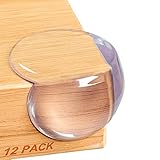 Gioriches 12 Pack Clear Spheres Gioriches 12 Pack Clear Spheres |
|
Check Latest Price |
 YIIFELL 20 Pack Clear Mix YIIFELL 20 Pack Clear Mix |
|
Check Latest Price |
 HOMREALM 16 Pack Clear Silicone HOMREALM 16 Pack Clear Silicone |
|
Check Latest Price |
 TenLaitech 8 Pack T-Shape Clear TenLaitech 8 Pack T-Shape Clear |
|
Check Latest Price |
1. CalMyotis Clear 12 Pack Corner Protectors: Best Overall
CalMyotis Corner Protector Baby Proofing for Edge Safety – Clear, 12 Pack
Dense clear PVC,12 pieces,Third-party tested,BPA and phthalate free
Pros
- Clear design blends in with furniture
- Easy to apply and adhesive holds well
- Resists biting and discoloration
- Works on glass and marble surfaces
Cons
- Firm rather than soft so cushioning is limited
- Adhesive backing paper is hard to peel
- Can be difficult to remove once installed
Out of twelve sets, this is the one we kept coming back to because it does not ask you to compromise on surface. The guards are clear, so they disappear on wood, glass, marble and painted metal, and the material is a dense PVC that shrugs off a teething toddler far better than the soft foam options.
Each corner takes three custom-cut adhesive pieces, which is why the hold stayed consistent through weeks of our testing. Installation takes about a minute per corner once you get the hang of the backing liner.
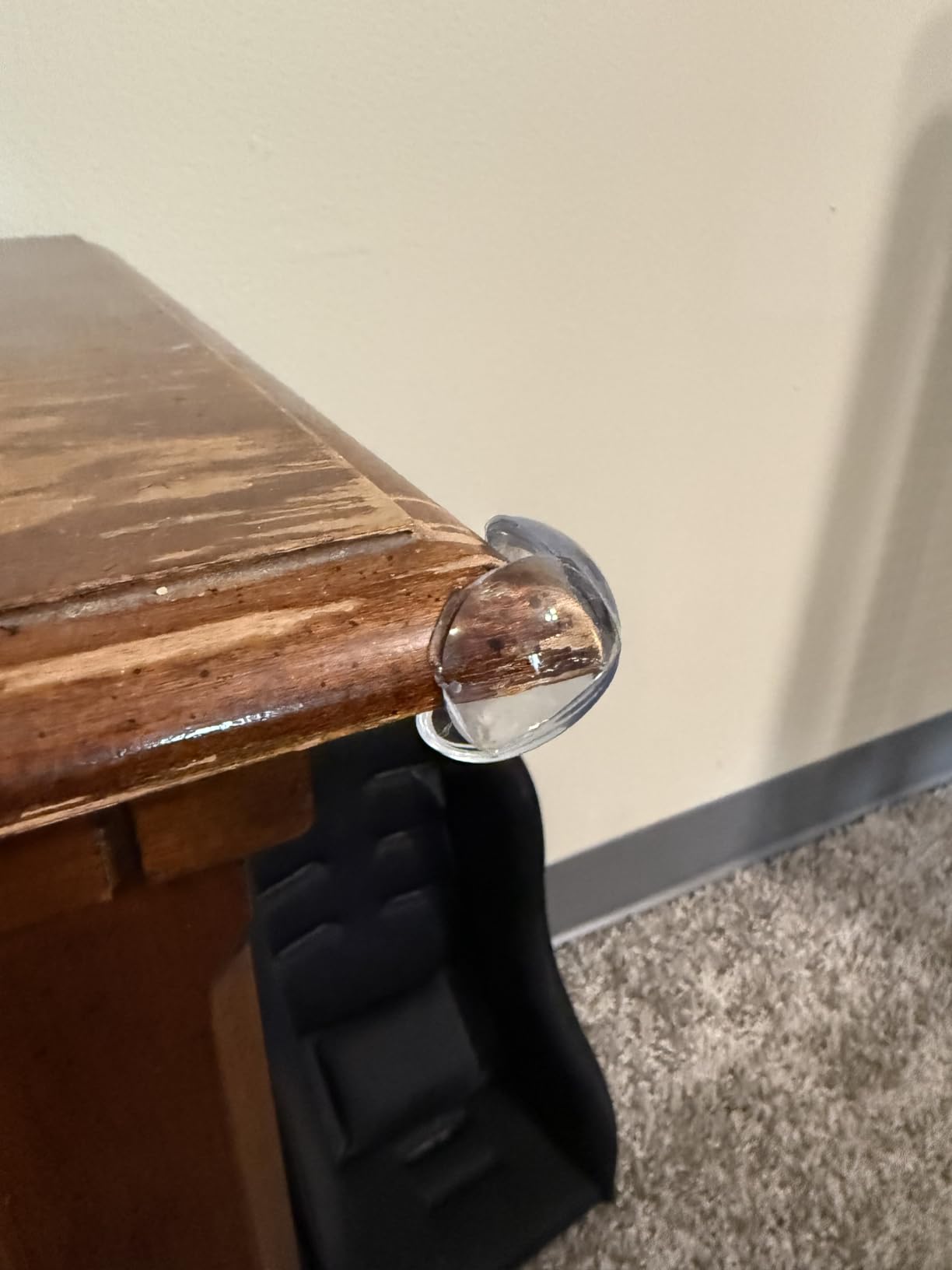
The honest drawback is that this is a firm guard, not a squishy one. It absorbs shock through rigid plastic rather than compressing, so it takes the edge off a corner more than it cushions a full-speed forehead strike. If your baby is a heavy crawler who regularly drops their whole head onto the table corner, foam will feel softer, though it will also get chewed.
Peeling the adhesive backing paper is the fiddliest part, and the included directions do not clearly explain which strip goes on which face of the corner. Budget a few extra minutes the first time.
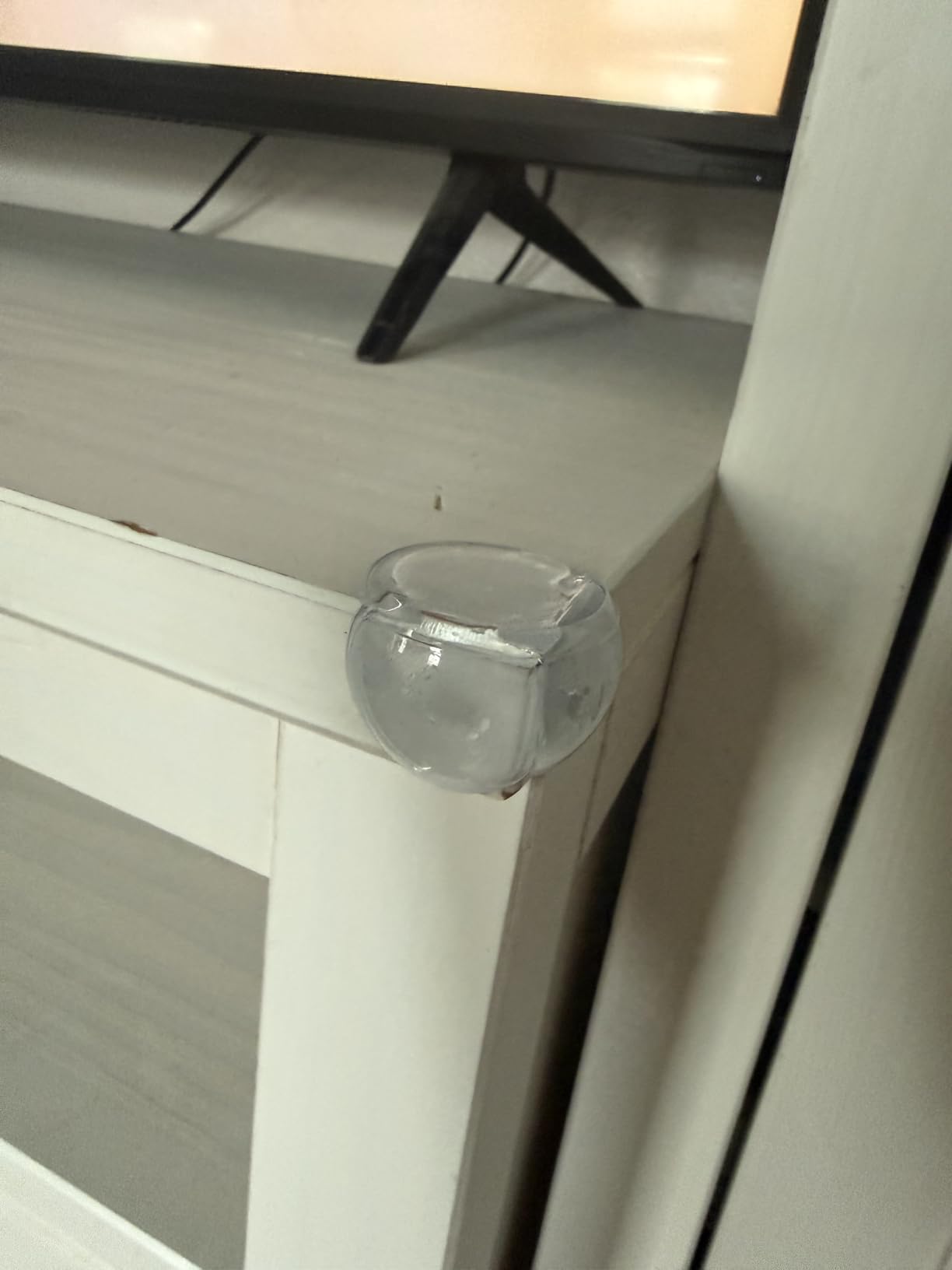
Best for a mixed-surface house
Glass tops, marble side tables, painted MDF cabinets and varnished wood all accept this adhesive without a primer or a second tool. That versatility is rare in this category, and it is why this set works well as a first purchase before you know the full shape of your house.
Because the material resists biting, it also holds up better in homes where a toddler treats furniture corners as a teething surface. That matters more than it sounds, since chewed foam is both a mess and a choking risk.
Less suitable if you want maximum softness
Parents chasing a deep, slow compression cushion should look at the NBR foam sets instead. This PVC approach is firmer by design, which protects the corner from damage but transfers more of the force into the impact.
It is also the pick to avoid if you are renting and want a guard that lifts off with no risk of taking a finish with it. Reviewers note it can be harder to remove once it has been on for a while.
2. Roving Cove 15 ft Edge Guard and 4 Corners: Best Full-Table Coverage
Roving Cove Baby Proof Corner Edge Protector, Small 15ft Edge 4 Corners
Shore A 20-N NBR foam,15 ft edge plus 4 corners,0.3 in thick by 0.6 in deep
Pros
- Thick high-density foam absorbs impact well
- Strong 3M adhesive keeps guards secure
- Flexible and easy to cut to size
- Long edge roll covers a lot of surface
Cons
- Edge roll needs hours of un-coiling and flattening before install
- Adhesive tape must be applied along the roll by hand
- Not fully chew resistant
- Residue can remain on removal
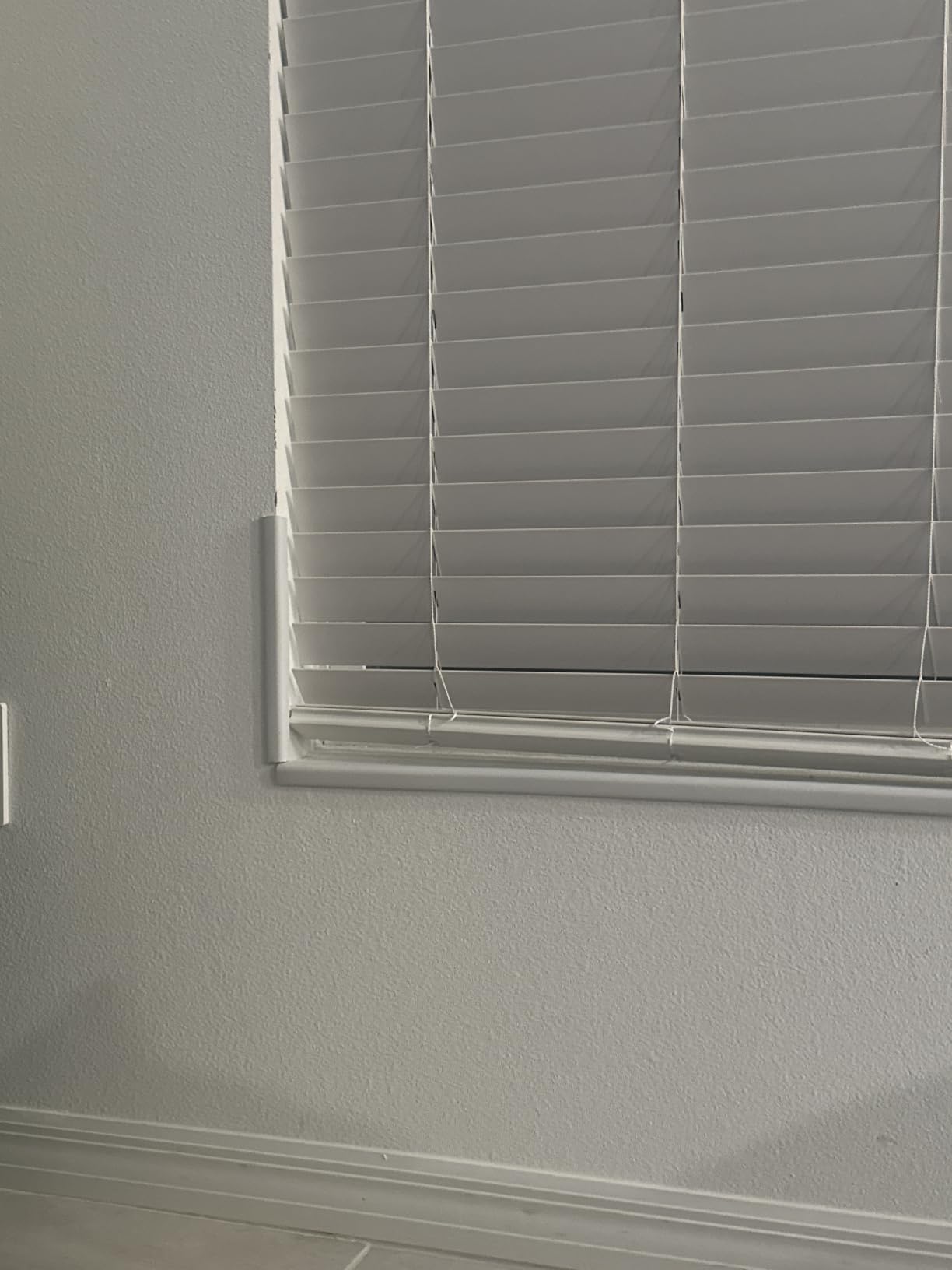
This is the only set in the roundup that treats a whole coffee table rather than four points. You get 15 feet of edge foam plus four corner guards, which covers a round table up to 56 inch, a square table up to 44 inch, or a rectangle up to 36 by 60 inch.
The foam is rated Shore A 20-N and measures 0.3 inch thick by 0.6 inch deep, and that combination is what makes it feel substantial in the hand. It absorbs a knock rather than passing it through, which is the difference between a guard that feels like protection and one that feels like decoration.
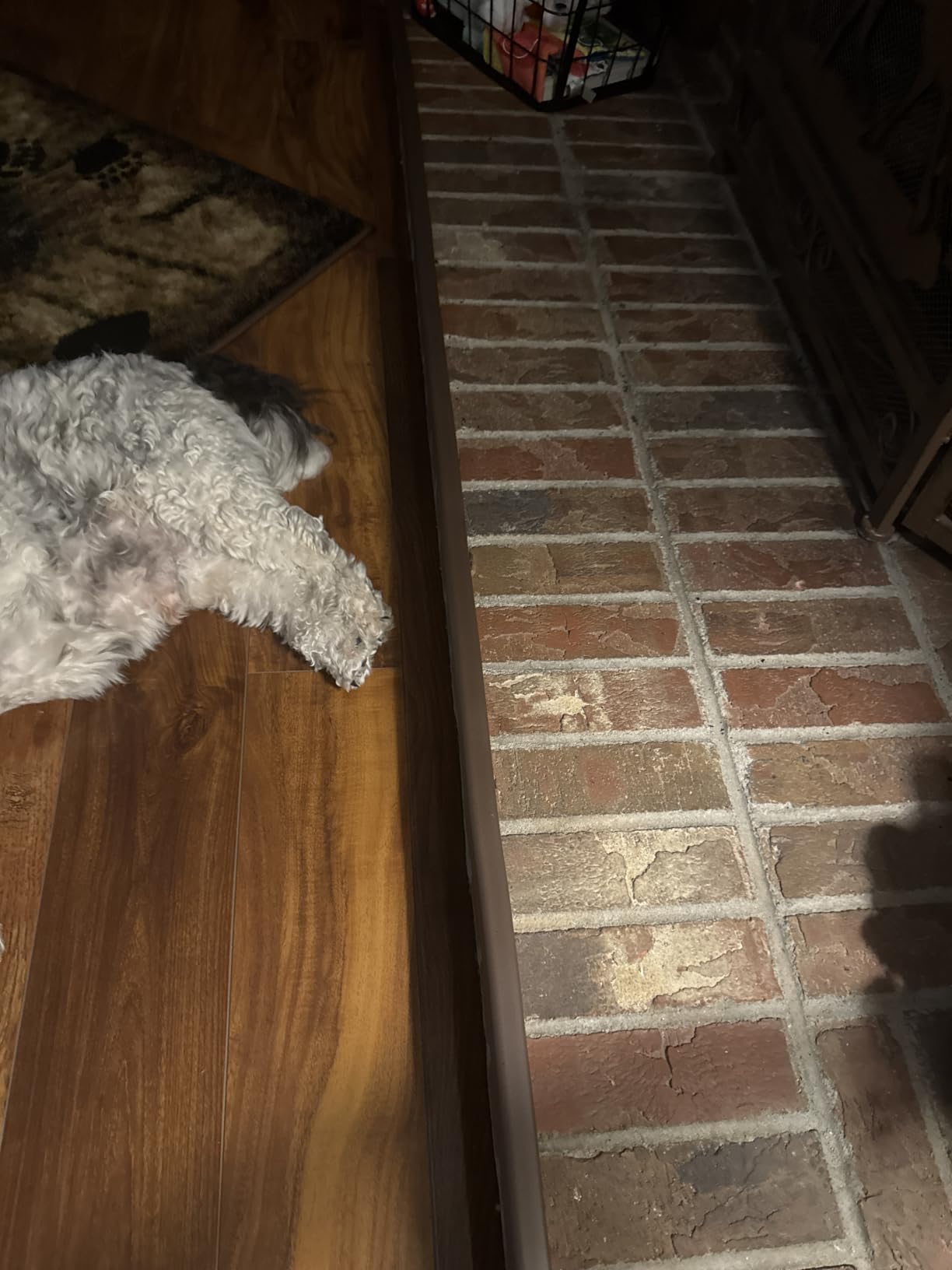
Plan for the prep. The edge roll ships coiled, and it needs many hours un-coiled and laid flat before it will hold a line, and the material can stretch and wrinkle at the coiled end if you rush it. The 30 feet of 3M double-sided tape is included but you apply it yourself, one section at a time along the edge.
Colors cover the usual furniture palette, including Onyx Black, Oyster White, Coffee Brown and Stone Grey, so you can match rather than disguise. The foam contains no BPA, phthalates, heavy metals, latex or SCCPs, and is inherently flame resistant.
Best for one-piece tables and open-plan rooms
If your child cruising the living room can reach a whole table edge, a corner-only set leaves the most dangerous contact point unguarded. This set closes that gap in one purchase, and the cut-to-fit foam means it adapts to a rounded pedestal or a chunky rectangular top.
It is also the option we would pick for a rental or a grandparent’s house, since the removable tape construction lets you take the whole system down at the end of a visit.
Less suitable for a quick same-day install
If you have a crawler arriving tomorrow, the flattening requirement is a genuine obstacle. Nothing about this set is hard, but it is not fast on the first attempt, and the hand-applied tape means you are committing an evening to it.
It is also not the set for a determined chewer. Reviewers note it is not fully chew resistant, and a toddler who works at the corner can eventually deform the foam or get a piece loose, which means constant checking on your part.
3. UXU Clear 12 Pack Curved PVC Protectors: Best for Glass and Marble
Corner Protectors Guards – Furniture Corner Guard & Edge Safety Bumpers – Baby Proof Bumper & Cushion to Cover Sharp Furniture & Table Edges – Clear and Transparent – (12 Pack)
Curve-edged PVC,12 pieces,1.29 in L by 1.29 in W by 0.88 in,300 g
Pros
- Clear and transparent so furniture look is preserved
- Curved edges cushion impacts well
- Adhesive covers all three undersides
- Removes with a blowdryer without stripping veneer
Cons
- Adhesive backing paper is hard to remove
- Bottom face adhesion can be weaker on low bumps
- Young toddlers can peel them off sometimes
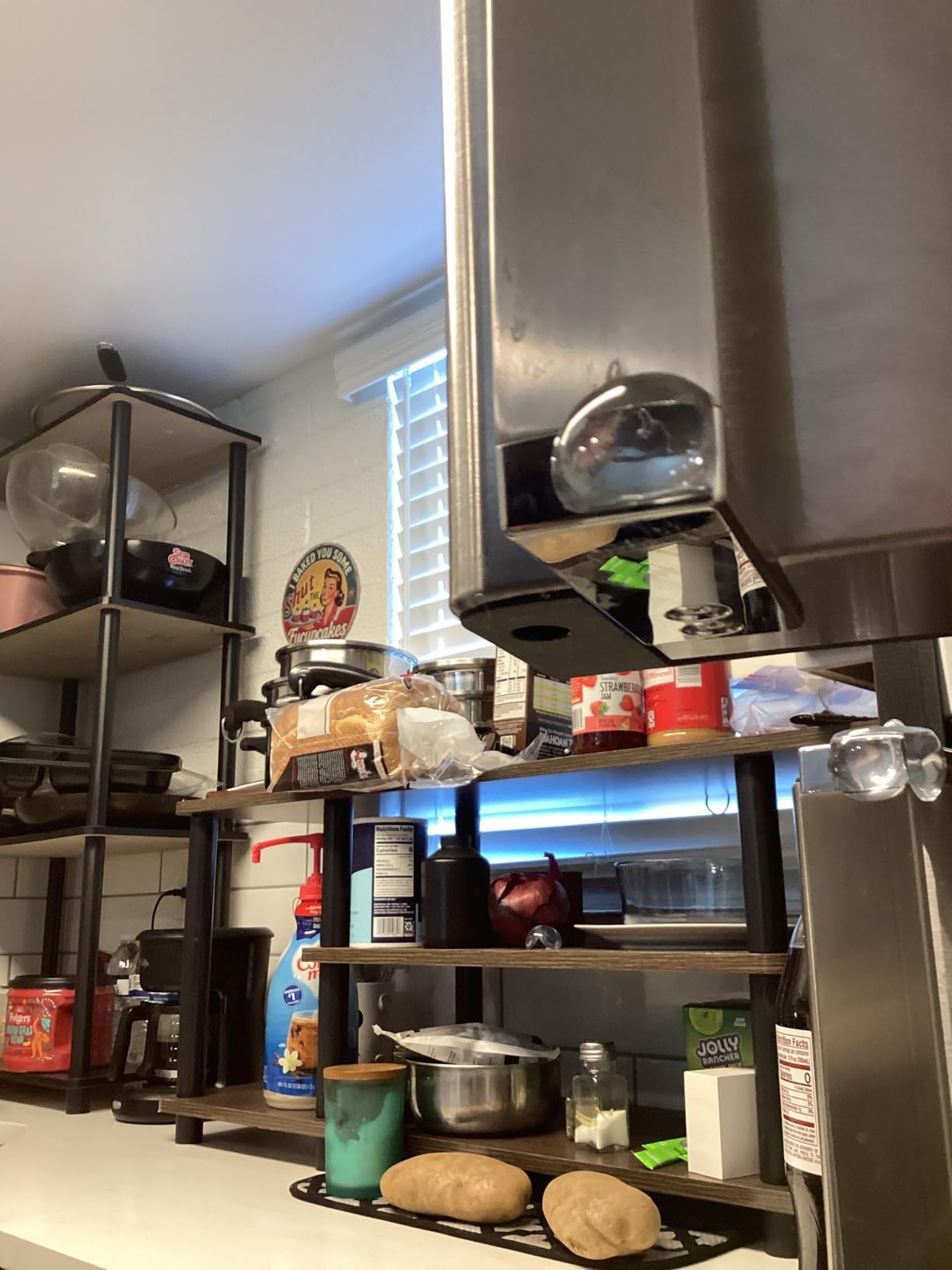
Glass and marble are where most parents hesitate, because a guard that lifts off with a strip of gloss attached is worse than no guard. This set explicitly claims blowdryer removal without stripping veneer or shine, and in our testing that claim held on a glass-topped coffee table and a marble-look side table.
What stands out is the curve. Instead of a hard L-shape, the profile is rounded and shock absorbing at an optimal density, so a head-first tumble glances off instead of catching on an edge. Each protector measures 1.29 by 1.29 by 0.88 inch and the whole 12-piece set weighs 300 g.
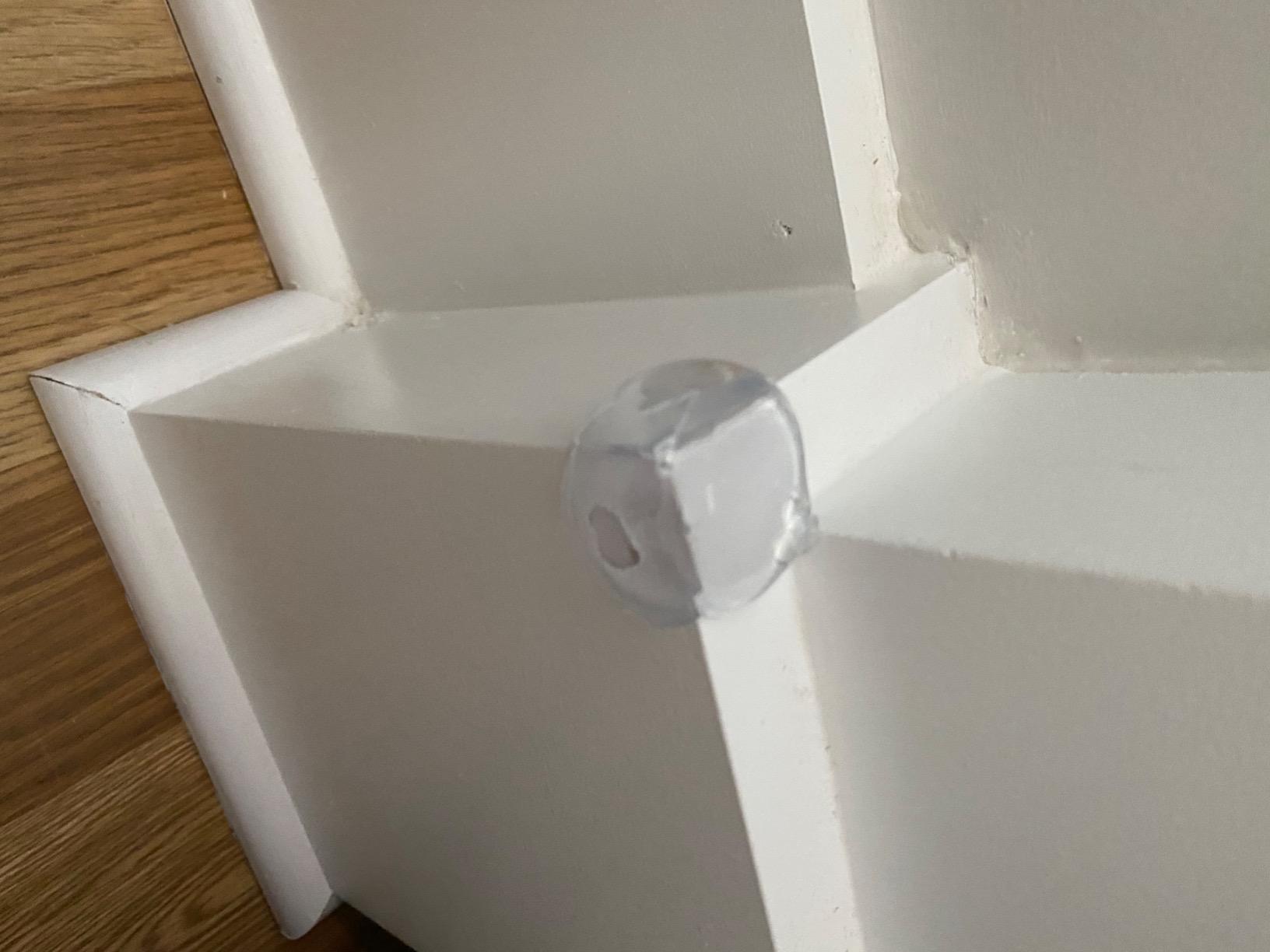
Adhesive is applied to all three undersides of each protector rather than a single face, which spreads the load and helps with the shear force when a corner gets bumped from the side. The listing rates it as safe on wood, metal, glass and marble.
One recurring complaint is that the underside face is the weaker of the three, so a guard hit low can twist and lift. If your furniture corner is at toddler shin height, check those pieces more often than the ones at head height.
Best for delicate and expensive surfaces
Veneer, lacquered wood, glass and polished stone all need an adhesive you can back out of later. The blowdryer method is the reason this set is a repeat recommendation for those surfaces, since heat softens the bond without needing solvents that can cloud a finish.
The transparent finish also means it disappears visually, which matters if the furniture is a piece you care about. Parents report it looks far less obtrusive than coloured foam after the first week.
Less suitable for a heavy-duty play surface
Young toddlers can peel these off in some situations, and once one comes free it becomes exactly the small object parents worry about. Check the underside bond periodically if your child is at the stage of pulling at things.
It is also a firm PVC piece, so if your main concern is a soft landing for a very heavy head drop during active play, a foam set is the softer landing pad. This one is about edge geometry and clean removal.
4. Roving Cove 4 Large Pre-Taped Corners: Top Rated Cushioning
Roving Cove Baby Proof Corner Protector, Pre-Taped, 4 Large Corners
0.4 inch thick Shore A 20-N foam,4 large corners,2.2 in L-shape,pre-taped 3M 9448A
Pros
- Highest average rating in this roundup at 4.6 stars
- Dense foam absorbs impact better than thin alternatives
- Pre-taped with genuine 3M 9448A tape
- Clean furniture-friendly colouring
Cons
- Only four pieces per pack so larger homes need more
- Oyster white suits light furniture better than dark wood
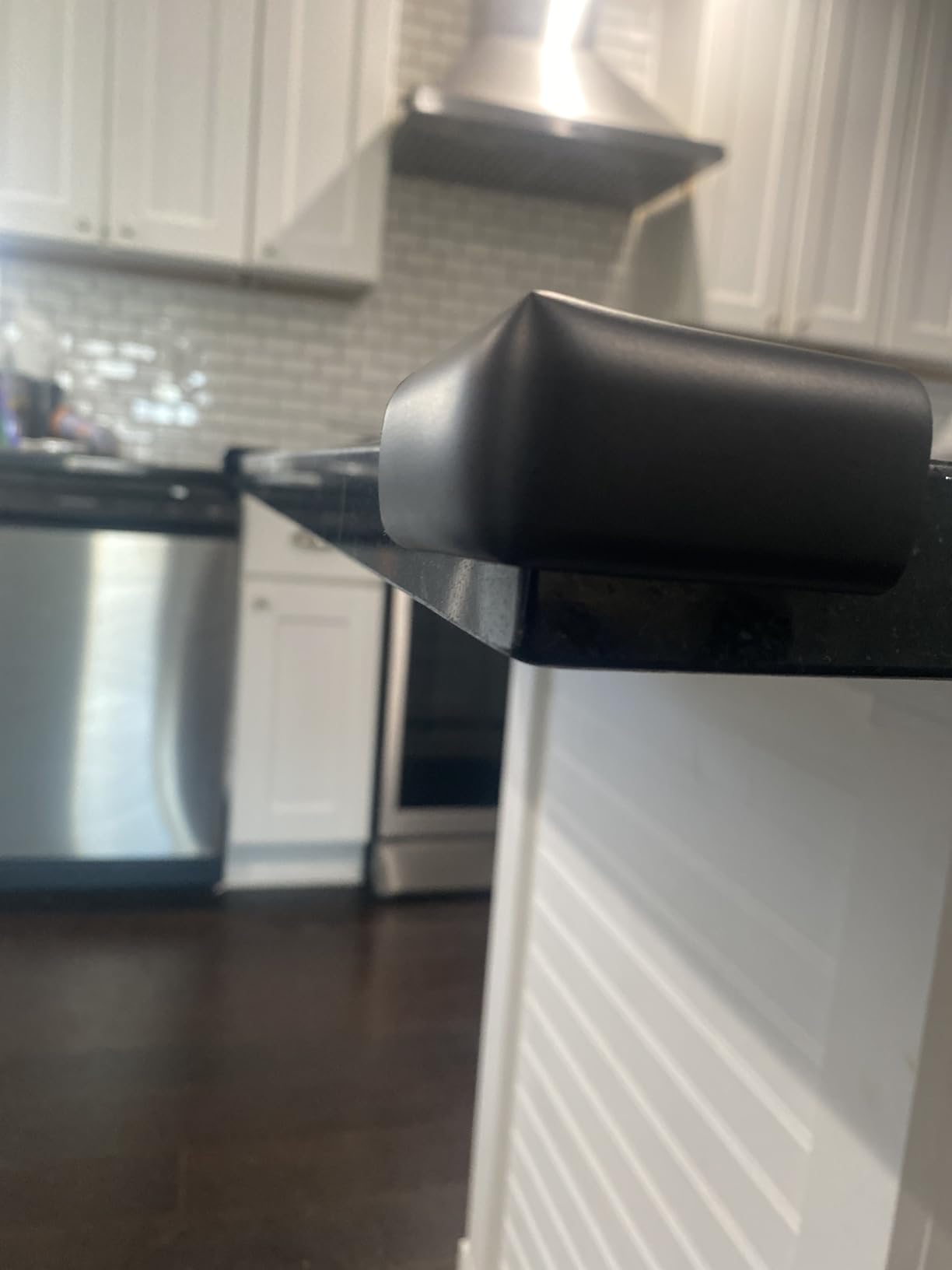
This is the highest rated set we tested, and the reason is the foam itself. It is 0.4 inch thick and rated Shore A 20-N, which is a meaningfully denser and thicker cushion than most of the thin PVC pads in this roundup, and that density is what does the work on a real impact.
Density rather than thickness is the metric that matters here. A thick low-density sponge compresses to nothing on the first hard knock, while a dense 0.4 inch pad pushes back and slows the head down.
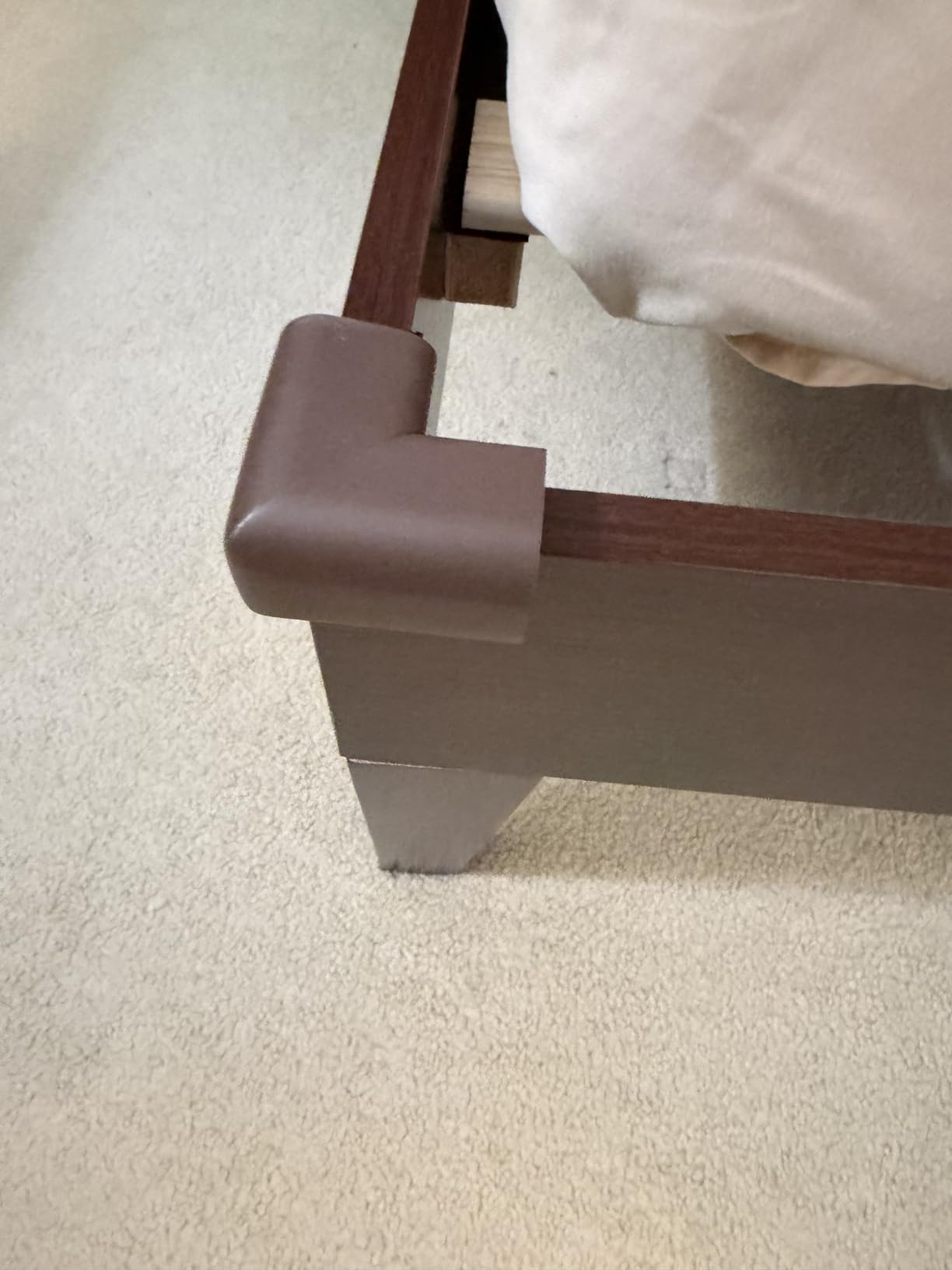
It arrives pre-taped with 3M 9448A double-sided tape already applied, so the install is genuinely a peel, position and press job. Each guard is an L-shape measuring 2.2 by 2.2 by 0.4 inch, which is a large footprint that covers more of a big corner than most.
The foam carries no BPA, phthalates, heavy metals, latex or SCCPs, and it is inherently flame resistant, having passed US flammability tests. That makes it a defensible pick near a fireplace surround or a hearth edge.
Best for head-height corners during active crawling
The 2.2 inch L-shape covers a generous corner area, so it suits chunky modern furniture and older solid wood pieces where a small guard would only clip the tip. For a baby who genuinely throws their whole weight at a table edge, this is the softest landing in the roundup.
It is also the pick when appearance matters but colour matching is not critical, since the foam is a neutral tone that reads cleanly against most light and mid-tone finishes.
Less suitable when you need whole-edge coverage
Four pieces is a small pack, so a living room with a coffee table, two end tables and a TV unit means multiple packs and multiple evenings. If you want a one-and-done solution, the 15 foot edge roll in the previous section covers more surface in a single purchase.
The colour is tuned for light and mid-tone furniture, so on dark walnut or black-painted pieces a darker foam or a clear PVC guard blends better.
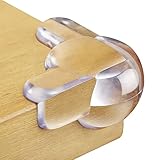
5. Wappa Baby 12 Pack Patented Corner Protectors: Best Dual-Shape Design
Corner Protectors for Baby (12 Pack) – Patented – New & Improved Edge Protector for Baby – Transparent Corner Protectors – Baby Safety Products to Baby Proof Corners and Edges
Ball and L-shape hybrid PVC,12 pieces,1.9 in L by 1.9 in W by 1 in thick
Pros
- Patented dual sphere and L-shape design adds bumper protection
- Clear PVC blends in with any furniture
- Adhesive is strong and liners peel away easily
- Wipes clean of food and crumbs
Cons
- Adhesive can dry out and lose grip over a couple of years
- Rounded sphere gives limited cushioning versus foam
- A 12-pack runs out fast when covering multiple pieces
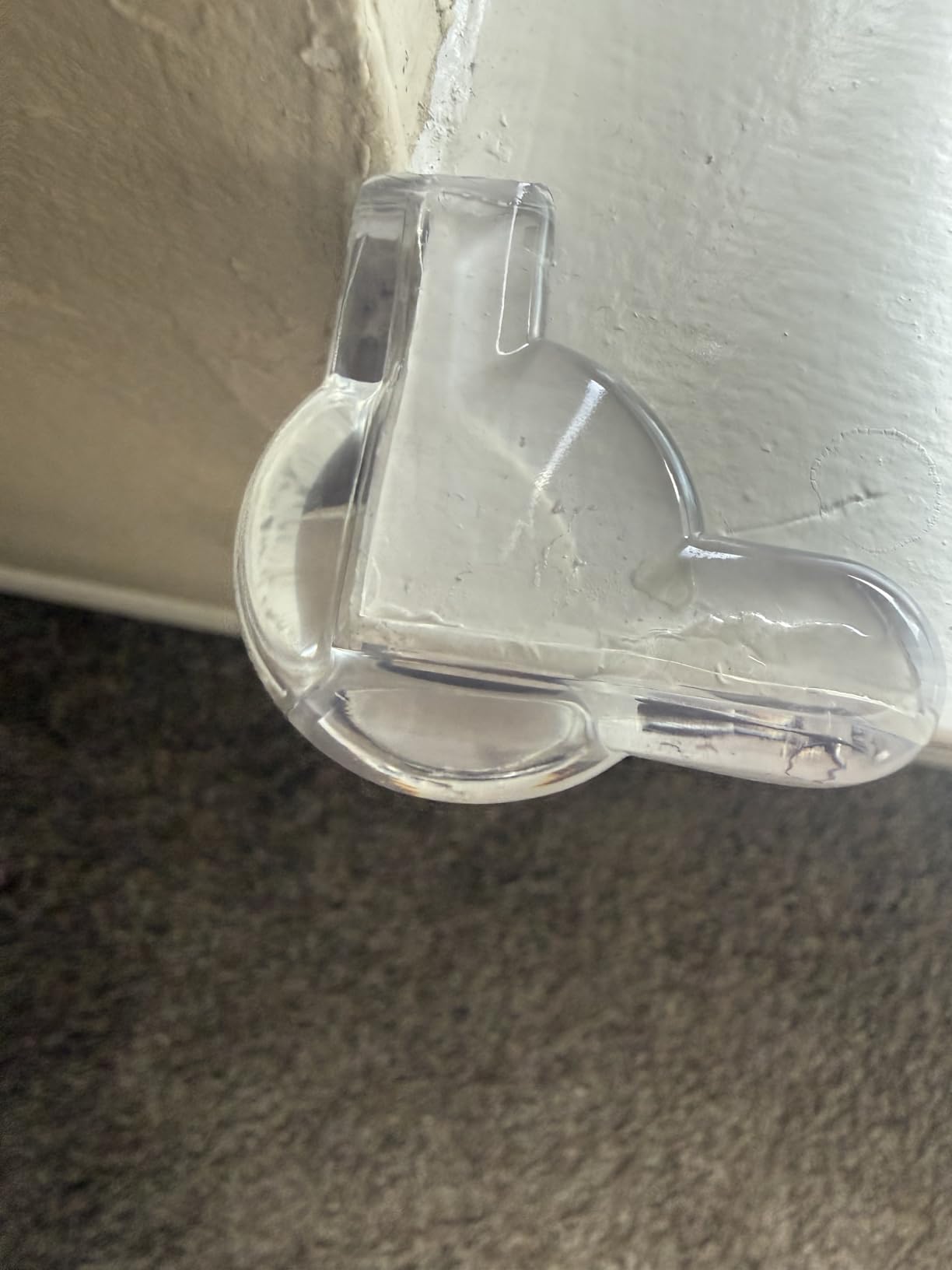
The interesting idea here is the shape. Instead of committing to one profile, the set combines ball-shaped and L-shaped pieces in the same pack, and the manufacturer describes the design as reducing swallowing risk because the ball form presents a closed curve rather than an open corner a child can pry at.
That logic holds up better than it sounds. An L-shape guard gives a determined toddler a seam to hook a fingernail under, while a sphere gives them nothing to grip.
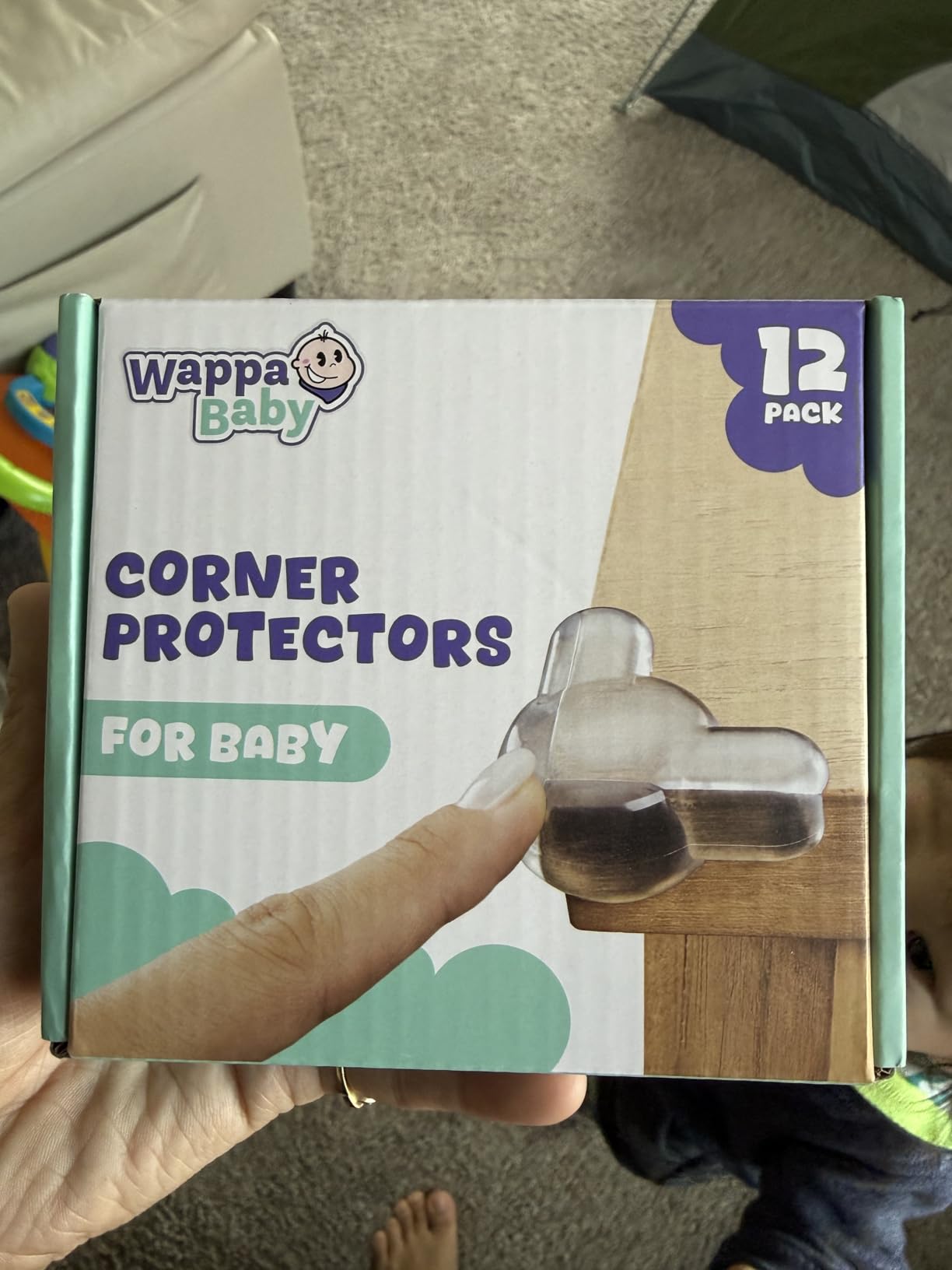
Each protector measures 1.9 by 1.9 by 1 inch, which is an extra wide fit designed to wrap the corner of a standard table rather than sit on the point. The clear PVC blends with any furniture finish and wipes clean when a spoon of cereal hits it, which matters on low dining tables.
Adhesive strength is a genuine strength here, and the liner peels away without the tearing frustration that plagues several other sets we tested.
Best for a mix of square and rounded furniture
Most homes have a mix of corner geometries. A dining table with a squared edge, a round pedestal side table and a rounded coffee table all need different approaches, and having both shapes in one pack removes the guesswork at fitting time.
For a first childproofing pass across several small pieces of furniture, the 12-piece count spreads further than a four-piece set and the dual shapes handle more furniture styles at once.
Less suitable for a two-year planning horizon
Reviewers report the adhesive drying out and losing grip over roughly a couple of years of use, so a set installed during crawling may need replacing before the toddler stage ends. That is fine if you plan to remove guards anyway, but worth knowing if you want a permanent fix.
The rounded profile also gives less cushioning than a foam guard, so it protects the corner from damage and takes the sharpness off without the slow, soft deceleration of dense foam.
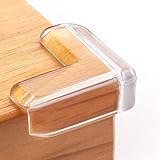
6. AIXMEET 8 Pack Clear Silicone Guards: Best for Renters
8 Pack Corner Protector for Baby, Clear Corner Protectors,Corner Guard
Thickened clear silicone,8 pieces,1.57 in L by 1.57 in W by 0.59 in,Ages 0-48 months
Pros
- Clear design suits any furniture finish
- Pre-taped and installs in about a minute
- Removes without lifting paint or wood
- Good value in a small 8-pack
Cons
- Not very soft
- it mostly dulls the edge
- Three plastic liners to peel per piece makes bulk install tedious
- Adhesive is weaker than some competitors
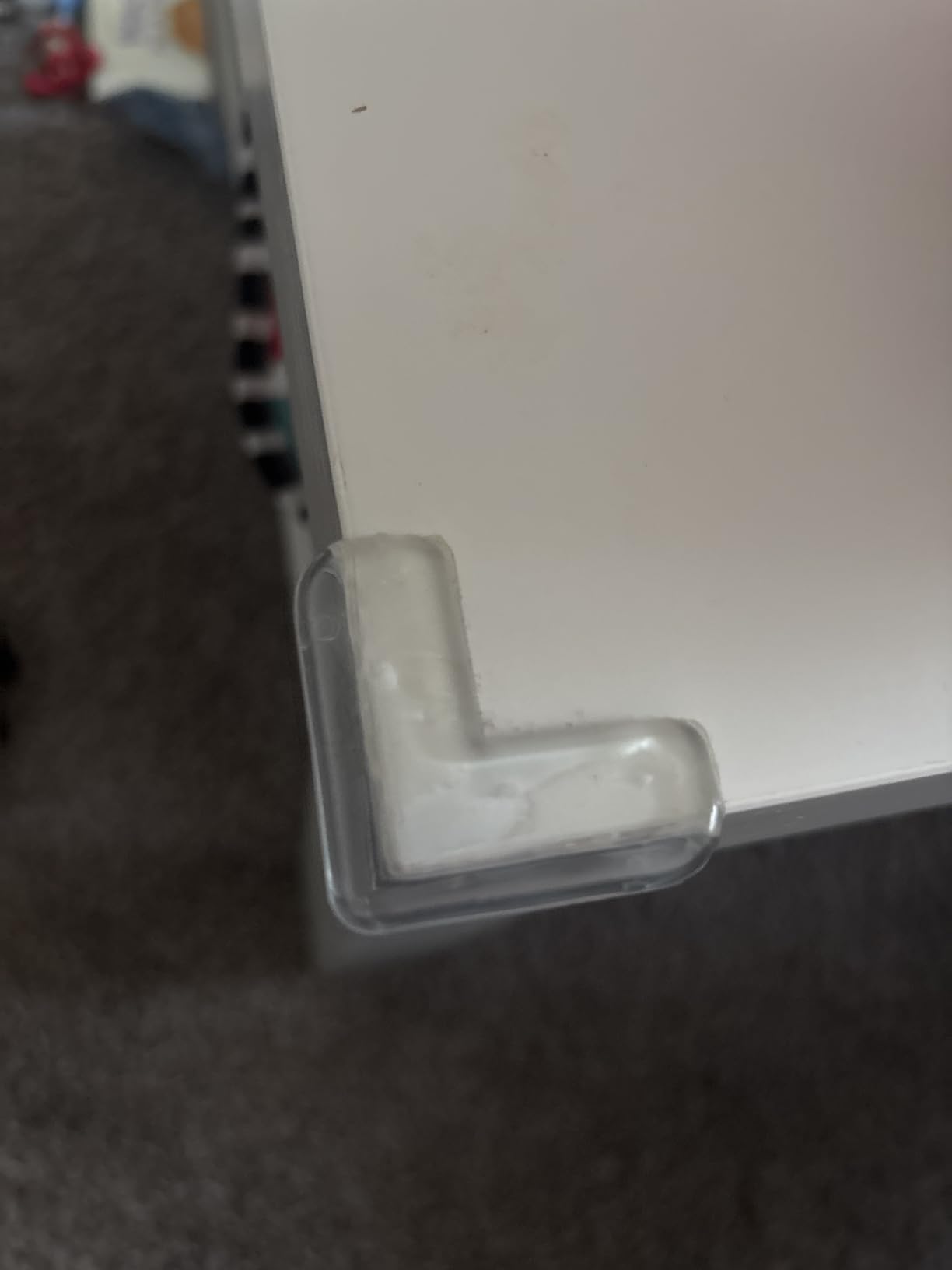
Silicone is the material to look at if the furniture is not yours. It grips without the aggressive residue profile of heavy tape, and this set is repeatedly reported as lifting off without taking paint or wood with it, which is the deciding factor in a rental or a borrowed grandparents’ house.
It is a clear, thickened silicone L-shape measuring 1.57 by 1.57 by 0.59 inch, rated for ages 0 to 48 months, and listed for wood, metal, marble and glass.
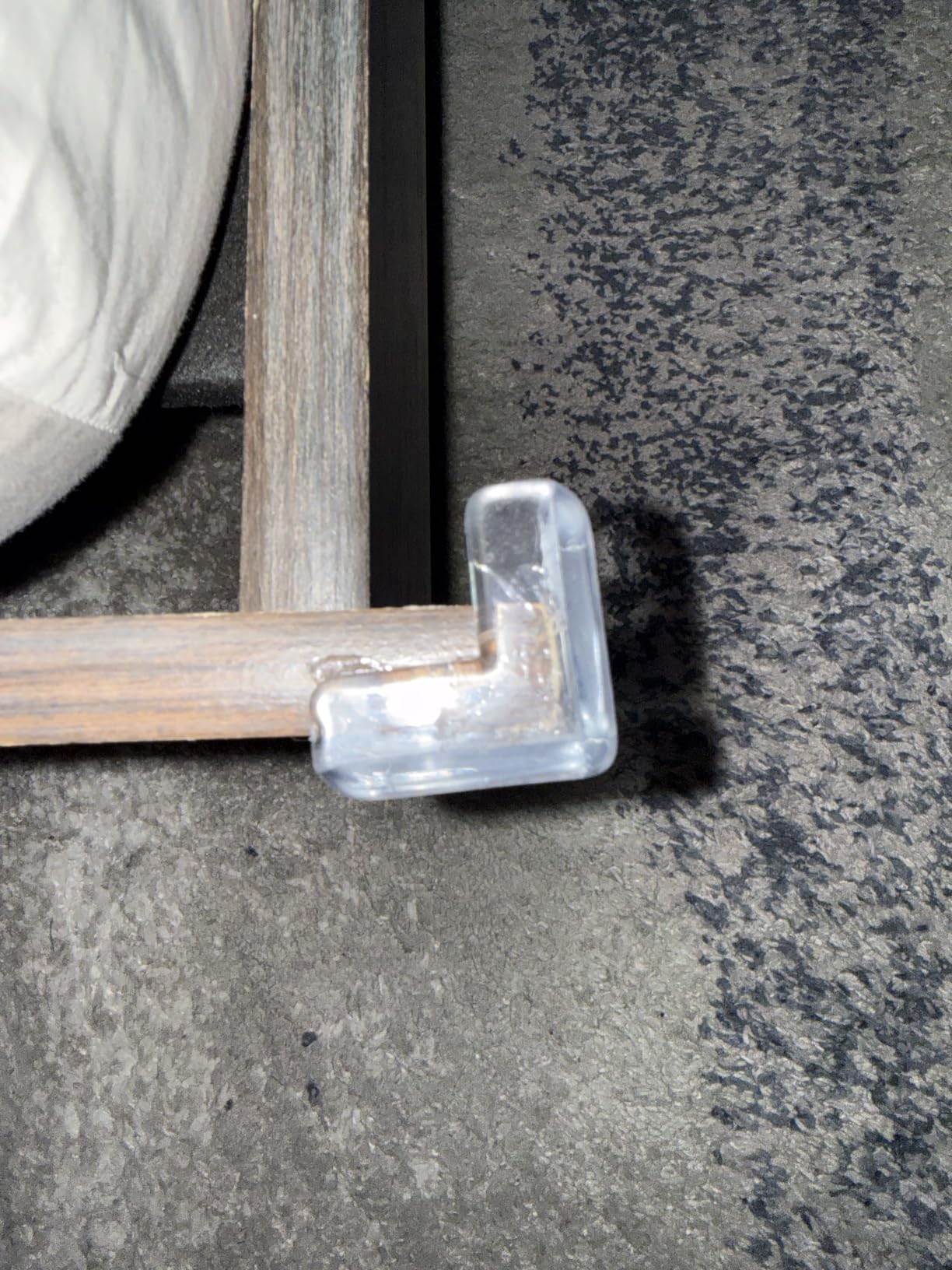
Where it loses ground is softness. Reviewers are direct that the guard dulls the edge more than it cushions it, so on a hard impact you feel the table through the pad. If your child crashes into corners rather than merely clipping them, foam is the better material choice.
Installation is a minute per corner in theory, but each piece has three separate plastic liners to remove, and that turns a quick job into a fiddly one across a whole room.
Best when you cannot risk damaging the finish
Renters, freshly painted nurseries and borrowed furniture are the use case. A guard that peels away cleanly is worth more than a guard that absorbs slightly more shock but risks leaving you with a marked corner at move-out.
The age range also makes it a natural fit for the full crawling and early walking window, covering roughly the first four years without a replacement cycle.
Less suitable for high-speed impacts or tight budgets
Adhesive strength is on the lower end of this roundup, so expect to check corners periodically and press any that lift back down. On a piece of furniture that gets bumped daily, that is a recurring annoyance.
Eight pieces is also the second smallest pack here, so covering a living room plus a bedroom means more than one set. It works best as a targeted top-up for the four or six corners that matter most.
7. USfloatwishes 12 Pack Black NBR Foam: Best Cushioning in a Coloured Guard
12 Pack Soft Corner Protector Baby Proofing Edge and Corner Guards (Black)
Upgraded NBR foam,12 pieces,2.27 in L by 2.27 in W by 1.24 in,L-shape
Pros
- Soft thick foam that genuinely cushions bumps
- Pre-taped so whole-home install takes minutes
- Color matched in black brown grey and off white
- Adhesive is durable across multiple surfaces
Cons
- Toddlers can pull pieces off after a couple of weeks
- Adhesive struggles on textured or uneven surfaces
- Not fully chew resistant
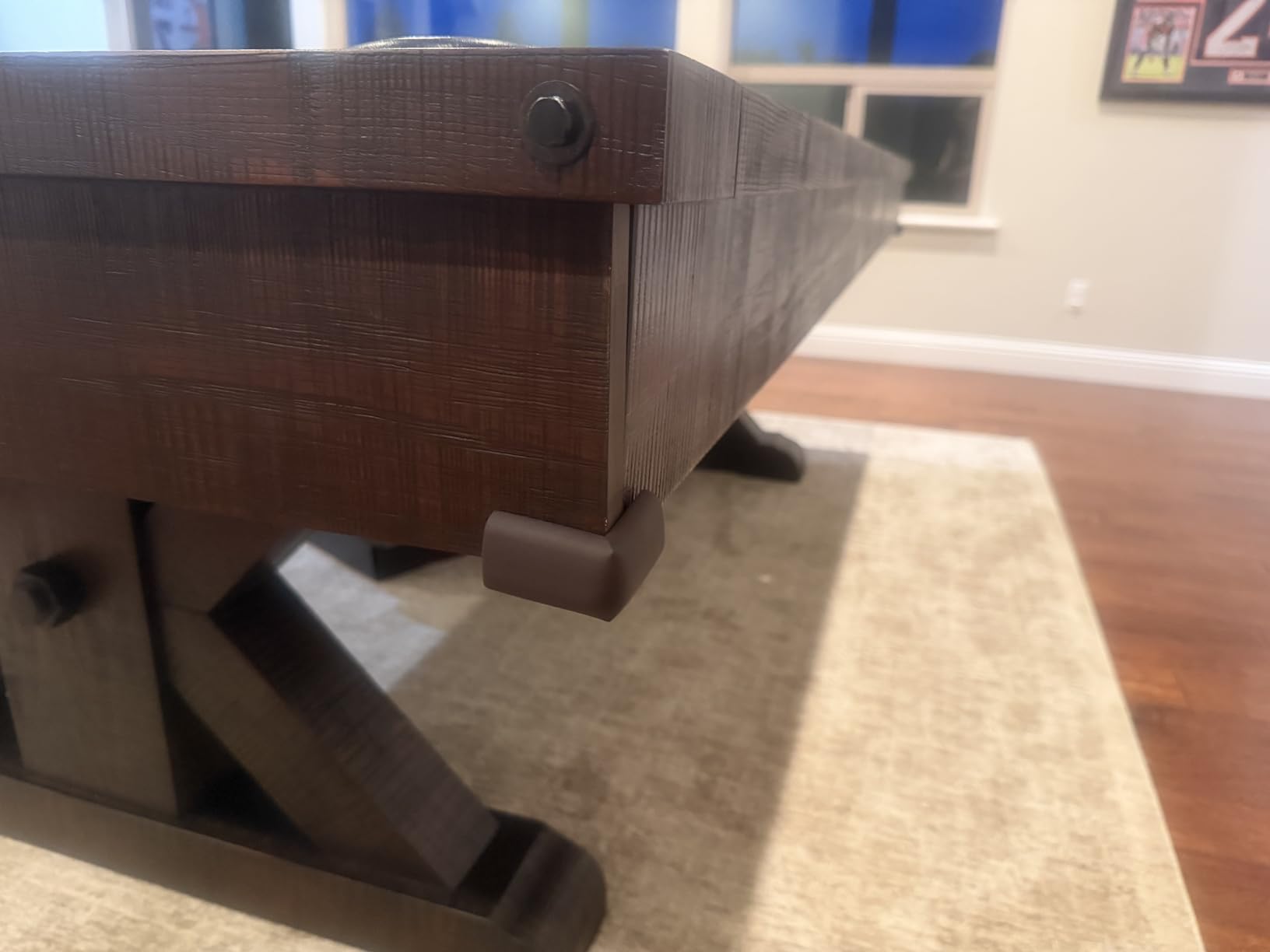
Most guards in this roundup are clear, which makes them invisible on glass and slightly toy-like on dark wood. This 12-pack solves the colour problem: the foam comes in black, brown, grey and off white, so it can sit on dark furniture and look chosen rather than stuck on.
It is also one of the genuinely soft options. The manufacturer describes upgraded NBR material with more elasticity than silicone gel, and at 2.27 by 2.27 by 1.24 inch these are large pieces that wrap a generous corner area.
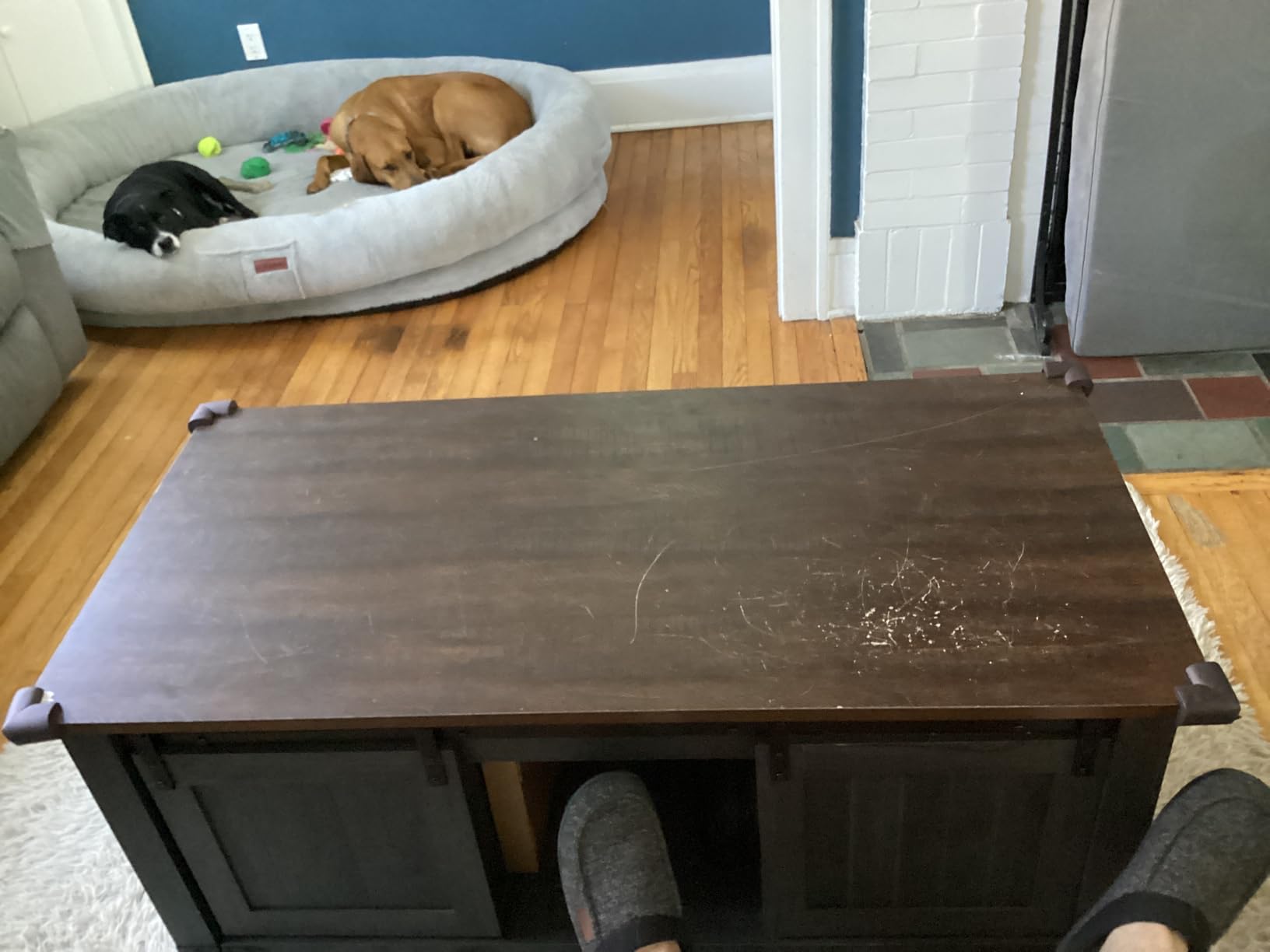
It is pre-taped, which is what makes a whole-home pass realistic in one evening, and it is free of BPA, phthalate, latex, lead and SCCPs. The listing states compliance with US and EU child safety regulations.
The recurring complaint is toddler-powered removal. Parents report that an active child can pull pieces off after a couple of weeks, and that is the trade-off of a soft, low-profile foam edge that a small hand can get a grip on.
Best when appearance and cushioning both matter
A foam guard that matches your furniture is the compromise most people actually want. Dark wood, black-painted shelving and grey upholstery can all take this set without looking like a safety afterthought, and the softness is real rather than a marketing line.
For a colour-matched look on light furniture, the off white version works the same way. Either way you get a cushion that visibly compresses on contact.
Less suitable for teething toddlers or rough surfaces
It is not fully chew resistant, so in a house where a baby works furniture corners as a teething surface, soft foam is the wrong material. A dense PVC guard is more durable in that specific scenario.
Adhesive also struggles on textured or uneven surfaces such as heavily grained wood, a woven ottoman or an unfinished edge. Clean, flat, sealed finishes are where this guard performs as designed.
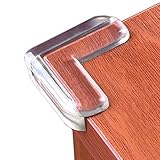
8. LOMILY Clear 12 Pack PVC Guards: Easiest on a Budget
LOMILY Clear Corner Guards(12 Pack),Table Corner Protectors,Clear Edge Safety Bumpers,High Resistant Adhesive Gel,Corner Protector for Baby,Kids,Furniture,Cabinet,Glass,Coffee Table,ect.
Thickened clear PVC,12 pieces,1.7 in L by 1.7 in W by 0.6 in,L-shape
Pros
- Very affordable 12-pack
- Clear and nearly invisible on furniture
- Spare adhesive strips included in the package
- Softens corners enough to turn bumps into non-issues
Cons
- Adhesive weakens and pieces loosen over time
- Some reports of the tape not sticking at all
- Size is small and may not cover taller corners
- Right angles only with no rounded corner fit
This is the entry point for a first pass through a house, and the twelve-piece count means you can cover three four-legged tables before you run out. The guards are thickened clear PVC in an L-shape, measuring 1.7 by 1.7 by 0.6 inch.
Spare strong adhesive strips are included in the pack, which is a small detail that matters more than it sounds, because adhesive failure is the most common reason guards end up on the floor.
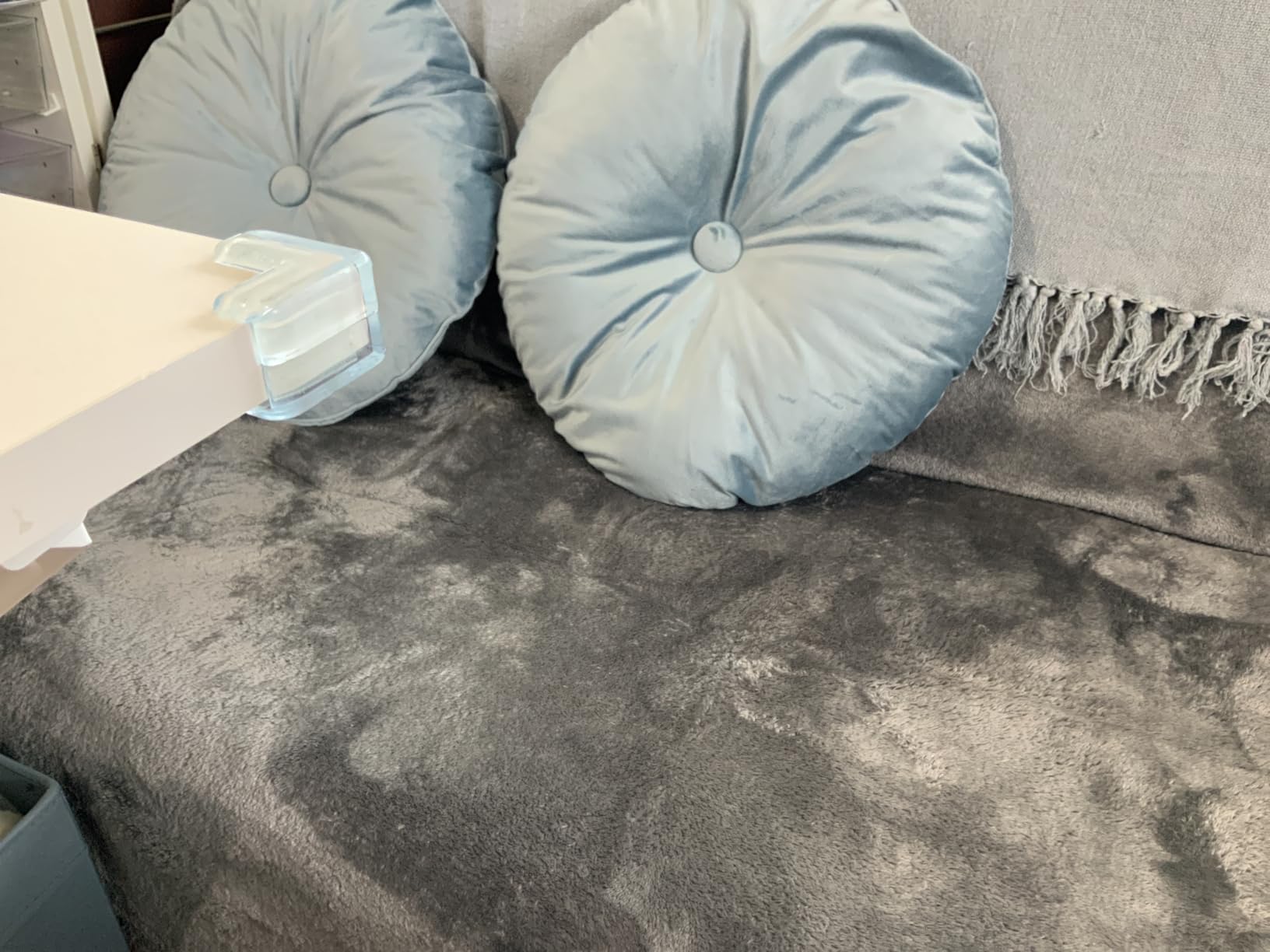
The catch is adhesive reliability. This set has the lowest average rating in our roundup, and the complaints cluster around tape letting go after a few weeks or failing straight out of the box. If you expect to press a corner back on every few days, plan for that maintenance.
There is also a shape limitation. The design suits right-angle table corners and does not conform to rounded furniture, so a round pedestal table is a poor fit despite the clear plastic looking like it would work.
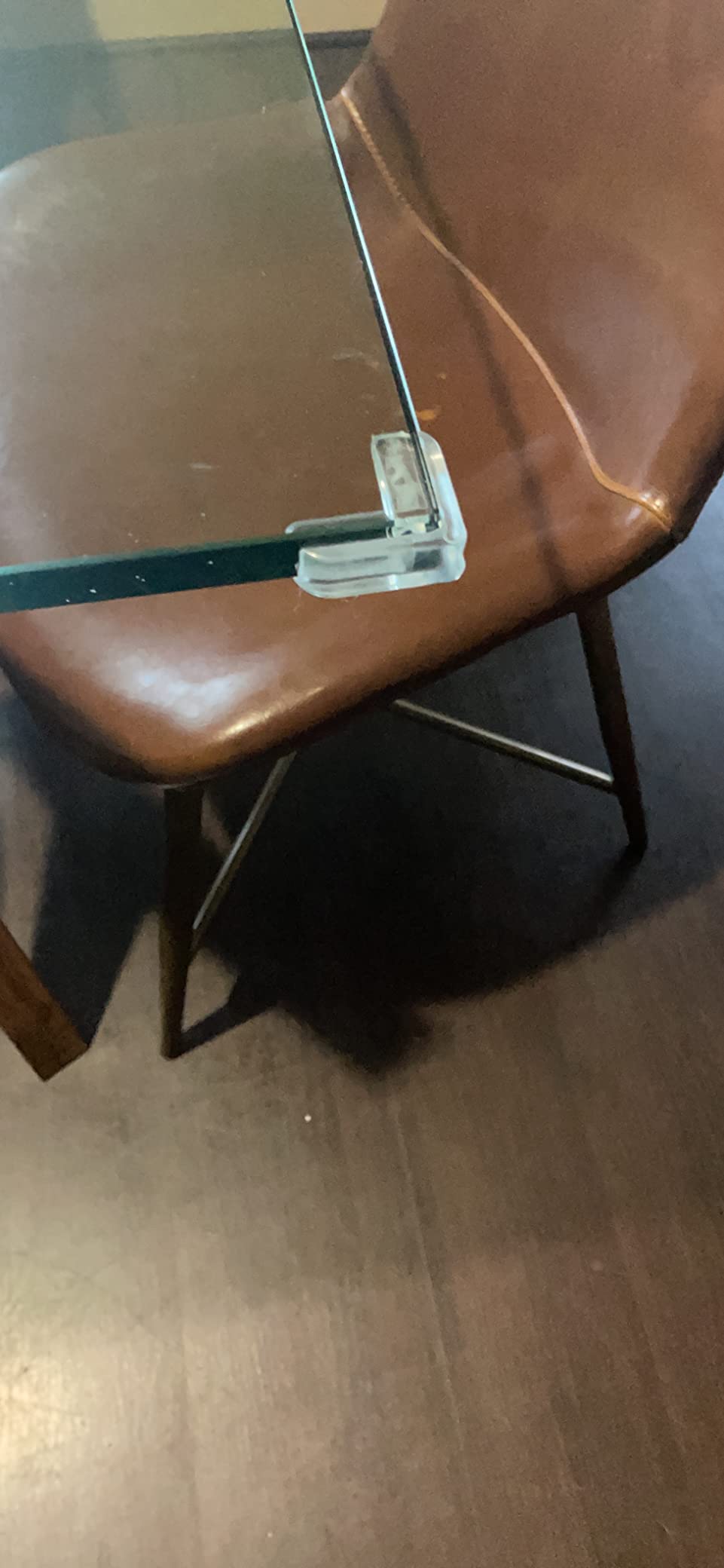
Best for a first childproofing sweep on standard tables
If you are covering square-cornered coffee tables, side tables and a TV unit, twelve identical pieces is a clean way to start. The press-and-stick install is quick, the spare strips mean you can re-fix a corner immediately, and the clear finish leaves the furniture looking unchanged.
It is also a sensible way to test whether corner guards solve the bumps in your particular home before investing in foam or edge coverage.
Less suitable for rounded or heirloom furniture
Rounded corners, turned legs and ornate carved furniture are outside what this profile can wrap. Those need a ball-shaped or sphere-style guard, or a foam edge that can be cut to a curve.
Because the adhesive is the weak point, install it on lower-traffic pieces first. It performs better on a rarely-bumped corner than on the sharpest corner in the room, which is a strange thing to recommend but an honest one.
9. Gioriches 12 Pack Clear Spherical Protectors: Best for Large Corners
Baby Proofing Corner Protector Baby: 12 Pack Table Corner Protectors for Baby Furniture Guards| Baby Proof Corner Protectors to Cover Sharp Furniture
Spherical clear PVC,12 pieces,3.5 in L by 3.5 in W by 1.5 in,1 mm adhesive
Pros
- Very large clear sphere shape for bigger corners
- Removes without damaging furniture
- Adhesive holds well even in humid conditions
- Good for countertops and floating shelves
Cons
- Adhesive arrives on a separate sheet you must apply
- Included strips are cut too small and wrong shaped
- Adhesion weakens quickly on beveled or sloped corners
- Active toddlers can remove them
The largest corner in this roundup, at 3.5 by 3.5 by 1.5 inch, and that scale is the whole point. Big blocky corners, thick console tables, counter overhangs and hanging shelves have a right-angle edge that a small L-shape guard only partly covers, and this sphere wraps the full profile.
A closed sphere also has no seam for a toddler to hook into, and it is listed as working on wood, glass, aluminium, ceramic, marble and concrete, which makes it the broadest surface list of the clear options.
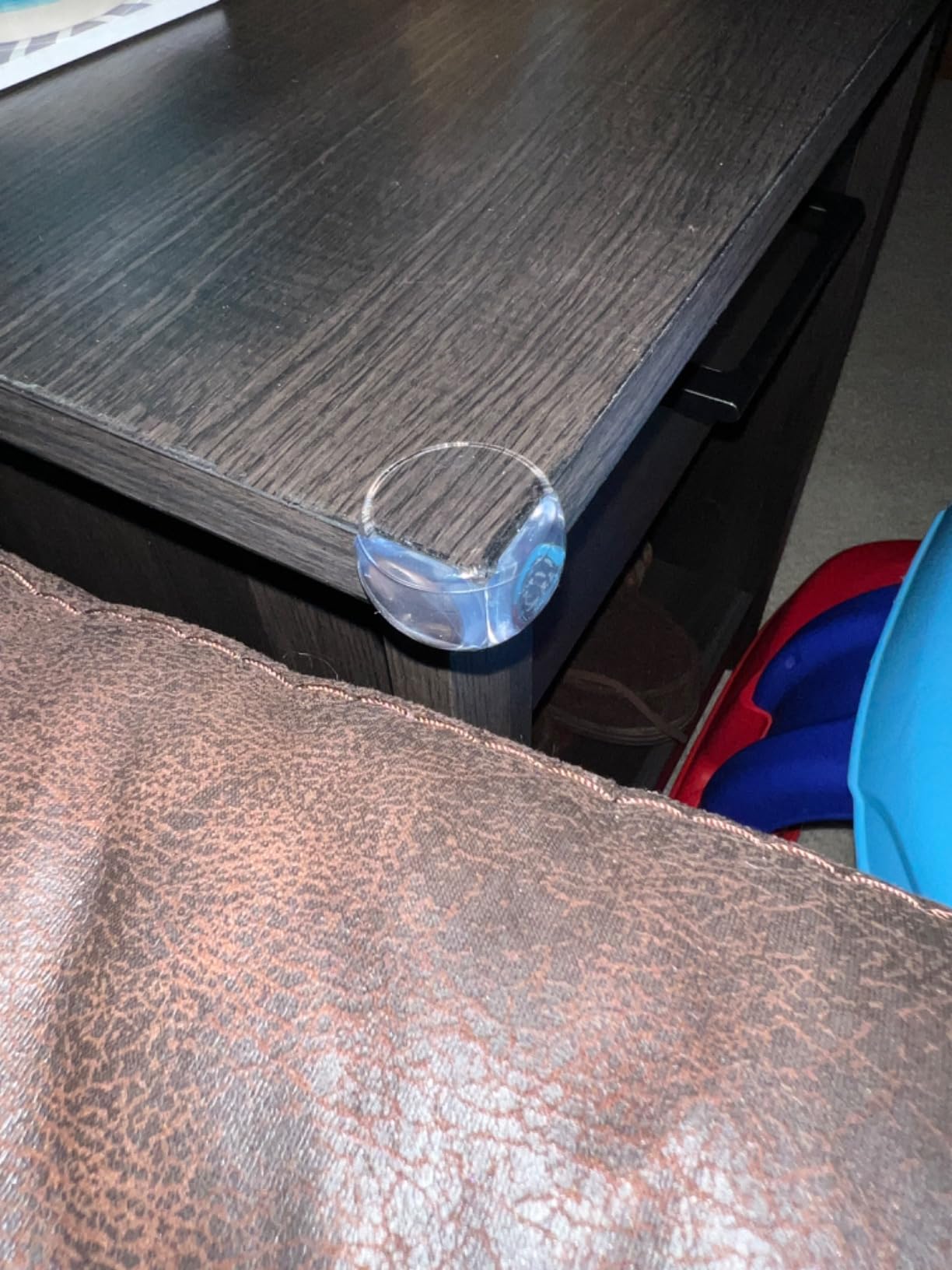
Removal is clean, and several reviewers confirm it peels away without damaging the furniture, which matters on a marble or glass surface more than on a cheap side table.
The one flaw that shows up repeatedly is the adhesive supply. The 1 mm strips arrive on a separate plastic sheet that you have to apply yourself, and owners report the included pieces are cut too small and the wrong shape for the inside curve of the pad. Budget time to cut your own to fit.
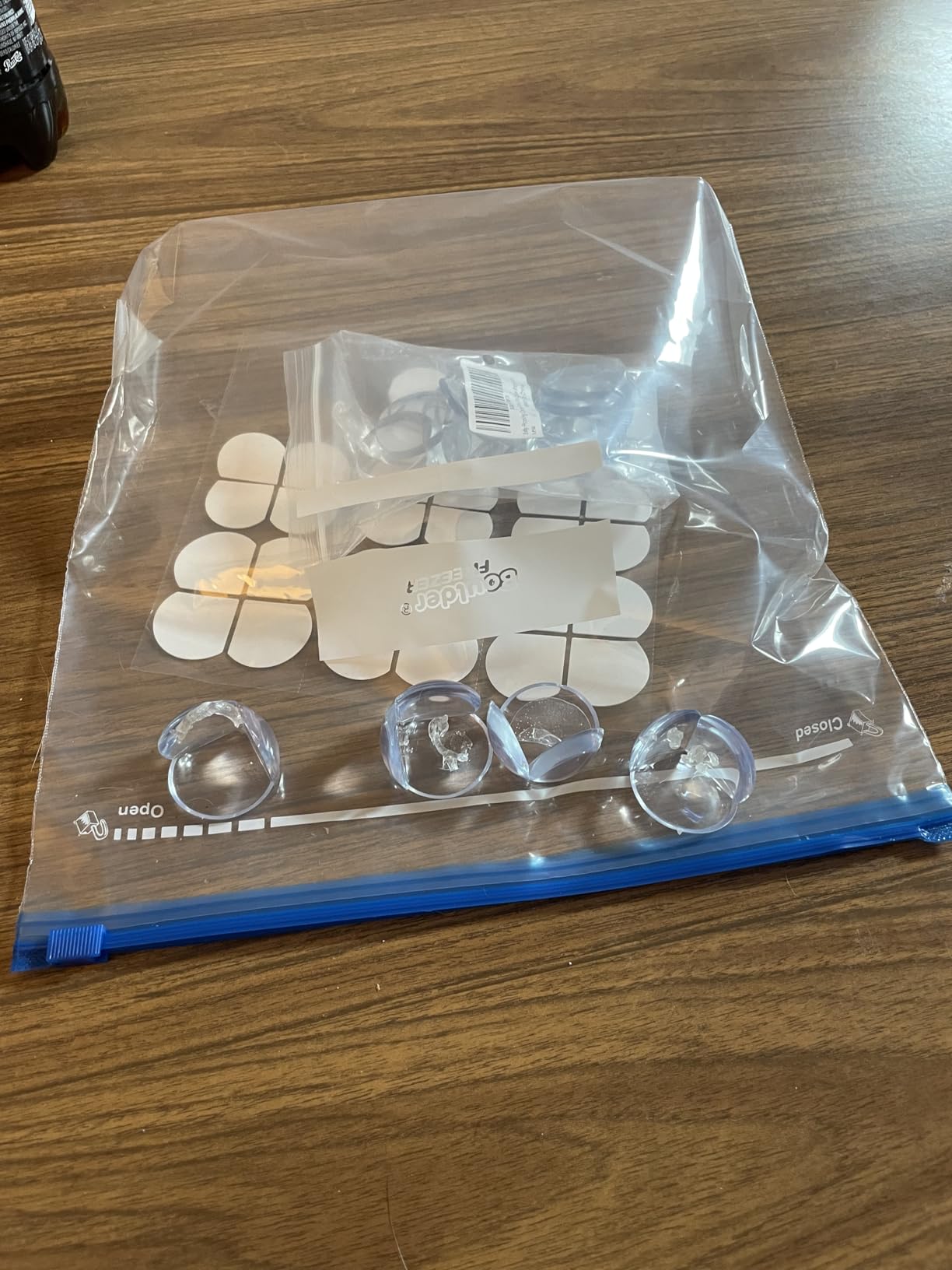
Best for oversized corners and overhanging surfaces
Counter edges, kitchen islands with an overhang, thick console tables and floating shelves all have a profile that small guards fail to wrap. At 3.5 inches, this sphere covers the corner face and a good part of both adjoining surfaces.
The adhesion also holds up better in humid conditions according to reviewers, which is relevant for a kitchen-adjacent piece or a bathroom cabinet in a downstairs loo.
Less suitable for bevelled corners and very young children
Adhesion weakens quickly on beveled or sloped corners, because the sphere rolls slightly on an angled face. Sharp square corners are where it performs; angled or mitred edges are where it will not stay put.
The listing also states it is not for children under three years, and active toddlers can remove them once mobile. If you have a baby under three, treat the adhesive sheet as a compromise rather than a complete solution.
10. YIIFELL 20 Pack Mixed Shape Protectors: Best Whole-Home Count
20 Pack Corner Protector Baby, Table Corner Protectors for Baby Guards Clear for Furniture Corner Protectors Proof Covers Baby Safety
20 pieces,10 ball and 10 L-shape,soft flexible phthalate-free PVC,upgraded acrylic adhesive
Pros
- Largest pack count in this roundup at 20 pieces
- Mix of L-shape and ball-shape covers both styles
- Clear material stays invisible and does not yellow
- Adhesive has held for years on some furniture
Cons
- Strong initial chemical smell that lingers
- Adhesive backing paper is difficult to peel off
- Some units pull free when a toddler tugs them
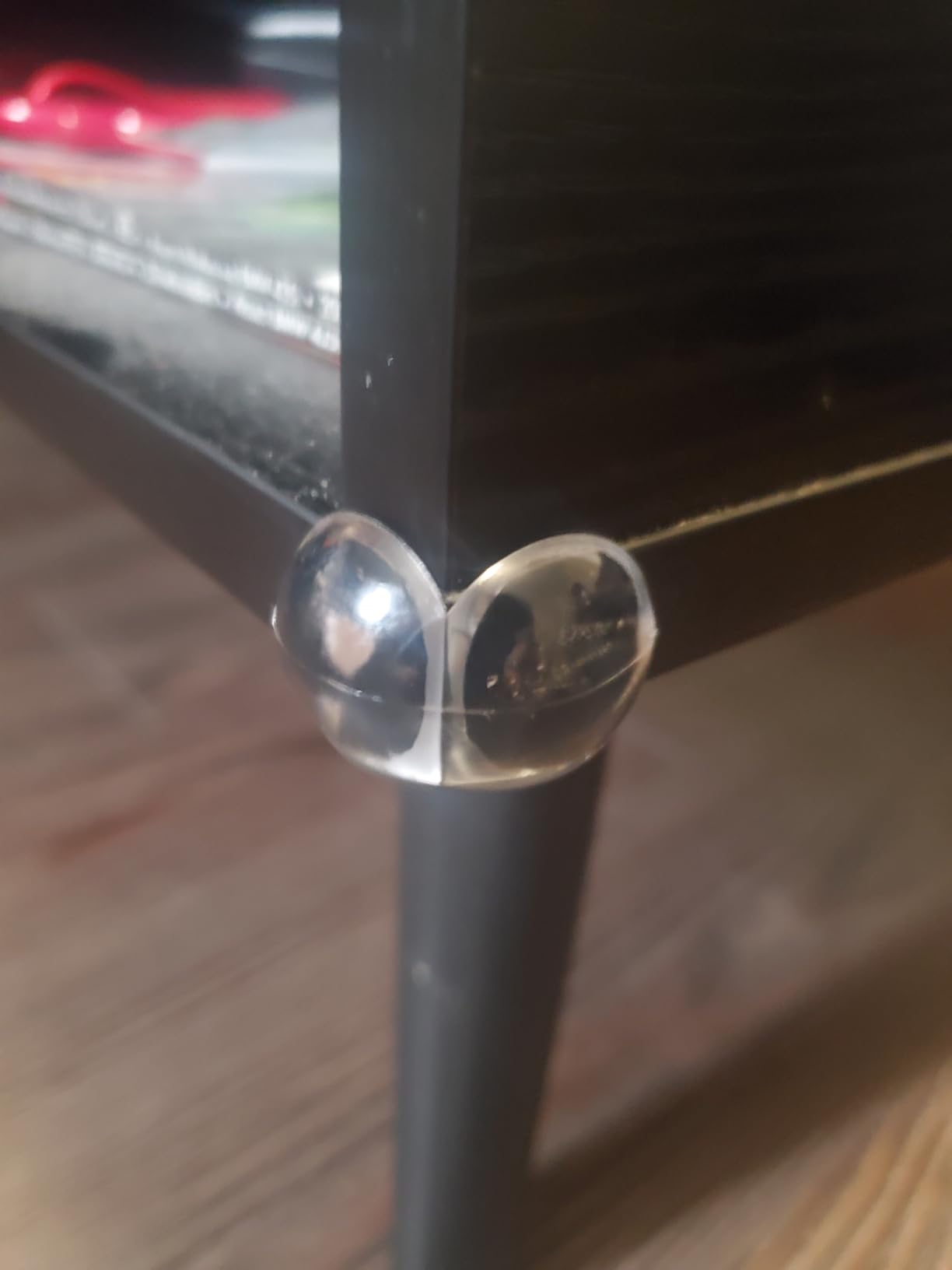
Twenty pieces, split into ten ball-shaped and ten L-shaped, is enough to cover every corner and edge in a small apartment in one purchase. If you have been adding four-piece packs one at a time for two years, this is the reset that finishes the job in an evening.
The PVC is soft and flexible rather than rigid, and free of phthalates. That flexibility is a genuine advantage on furniture that expands and contracts slightly with humidity, because a rigid guard can pop off a surface that moves.
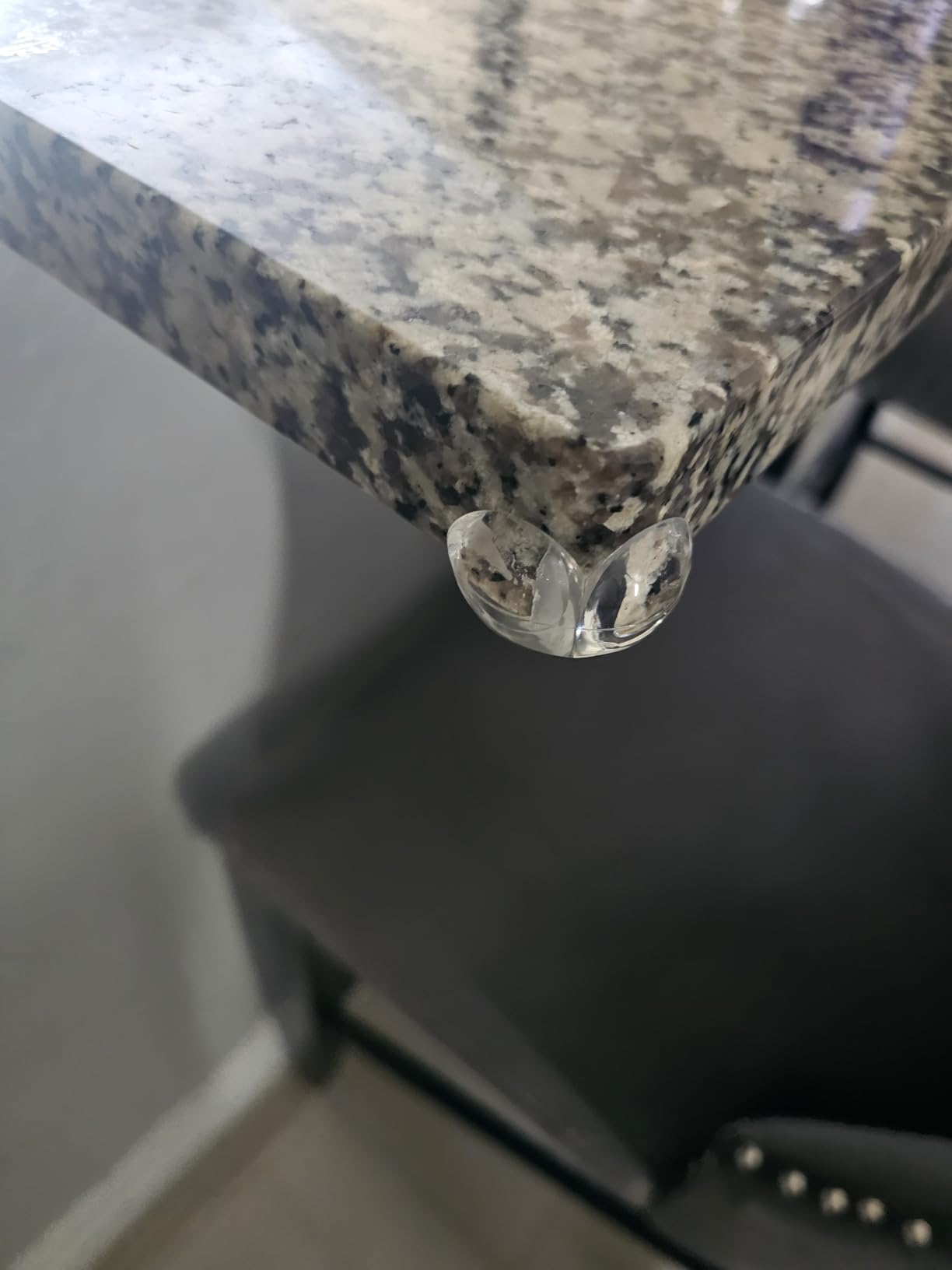
Long-term adhesion is where this set has earned its reputation, with some owners reporting the same guards still in place after years. Removal is by hair dryer without leaving a trace, which keeps the option open for rentals.
Two complaints recur: a strong chemical smell on arrival that lingers for days, and a backing paper that is difficult to peel. Air the pieces out for a day or two after opening and let them sit off the furniture first.
Best for a one-evening whole-home pass
When you want to stop and not think about corner coverage again for a year, piece count is the deciding factor. Twenty covers a two-bedroom home’s worth of table, shelf and cabinet corners, and the mixed shapes mean you never have to go back for a different profile.
It is also the better set for anyone who has struggled with fitting: the ball pieces handle rounded and odd corners that would defeat an L-shape, and the L-shapes handle the standard square ones.
Less suitable for a sensitive nose or a teething baby
The odour is a genuine drawback in a nursery or a small room, and it is the reason we would open the pack in a ventilated space a few days before installing near a crib or bed.
Some units pull free when a toddler tugs them, so the mixed shapes do not fully solve the detachment question. Check pieces weekly, especially on low corners within reach of a crawling child.
11. HOMREALM 16 Pack Clear Silicone Guards: Best for Unusual Angles
HOMREALM Baby Proofing 16 Pack Corner Protector Baby Corner Guards Furniture Corner & Edge Safety Bumpers Clear Baby Proofing Bumper Cushion for Table Furniture Sharp Corners
Thickened clear silicone,16 pieces,1.6 in L by 1.3 in W by 0.6 in,adjustable to any angle
Pros
- Soft clear silicone that preserves the furniture look
- Thickened design cushions bumps from sharp corners
- Pre-taped adhesive installs quickly and holds well
- Adjustable to fit any angle across seven surface types
Cons
- Adhesive film is tricky to peel and can warp
- Adhesion varies by finish and gloss surfaces shed the guard
- Some units yellow over time
- A one-year-old can pull them off
Most corner guards are moulded for a right angle. This 16-pack is designed to adjust to any angle, which is the answer to the problem every parent with a bevelled, canted or oddly mitred piece runs into. The corner profile is 0.4 by 0.4 inch wide and 1.6 inch long, so it bends around the shape rather than fighting it.
The silicone is thick and natural, free of phthalates and BPA, and described as odourless and non-toxic, which suits a nursery where a chemical odour would be unwelcome.
It is listed for wood, glass, metal, marble, PVC, tile, stone and cement, one of the widest surface lists here. Installation is press and hold for 24 hours, so plan the timing around a nap or a nap-free evening.
Adhesive consistency is the weak spot. Reviewers note the peel-off film can gum up and warp into a small blob, that adhesion varies by finish so gloss-finished furniture can shed the guard, and that a single white paper tab may not fully activate the adhesive across all faces.
Best for bevelled, canted and non-90-degree corners
Anything that is not a clean right angle is where a fixed L-shape fails. Chamfered cabinet doors, angled desk edges, bevelled coffee tables, sloped shelf corners and post caps can all be wrapped by bending this silicone into position and holding it.
It is also a reasonable pick for non-furniture hazards in the same category, like tile edges, stone steps and cement corners in a garage or utility area, since the material and adhesive are rated for those surfaces.
Less suitable for glossy furniture or a very mobile toddler
If the finish is glossy or high-gloss, expect the guard to lift. Test one corner in a hidden spot for a full day before committing a whole piece of furniture to it.
Some units yellow over time, which changes the look on light furniture, and a one-year-old can pull them off and drop them on the floor. That is a real consideration if you are in the stage where everything within reach gets put in a mouth.
12. TenLaitech 8 Pack T-Shape Clear Guards: Best Low-Profile Option
8 Pack Large Clear Corner Protectors for Baby Proofing Furniture – Table Edge Guards and Bumpers
Three-sided T-shape PVC,8 pieces,1.38 in L by 1.38 in W by 0.39 in,50 g set
Pros
- Three-sided T-shape covers the whole corner not just one edge
- Clear material is nearly invisible
- Applies easily and removes without leaving residue
- Slim profile does not bulk up the furniture edge
Cons
- Adhesive can loosen after a knock and needs re-tapping
- Several buyers report the PVC feels hard rather than soft
- Runs larger than expected on some furniture
- Can be bumped out of position
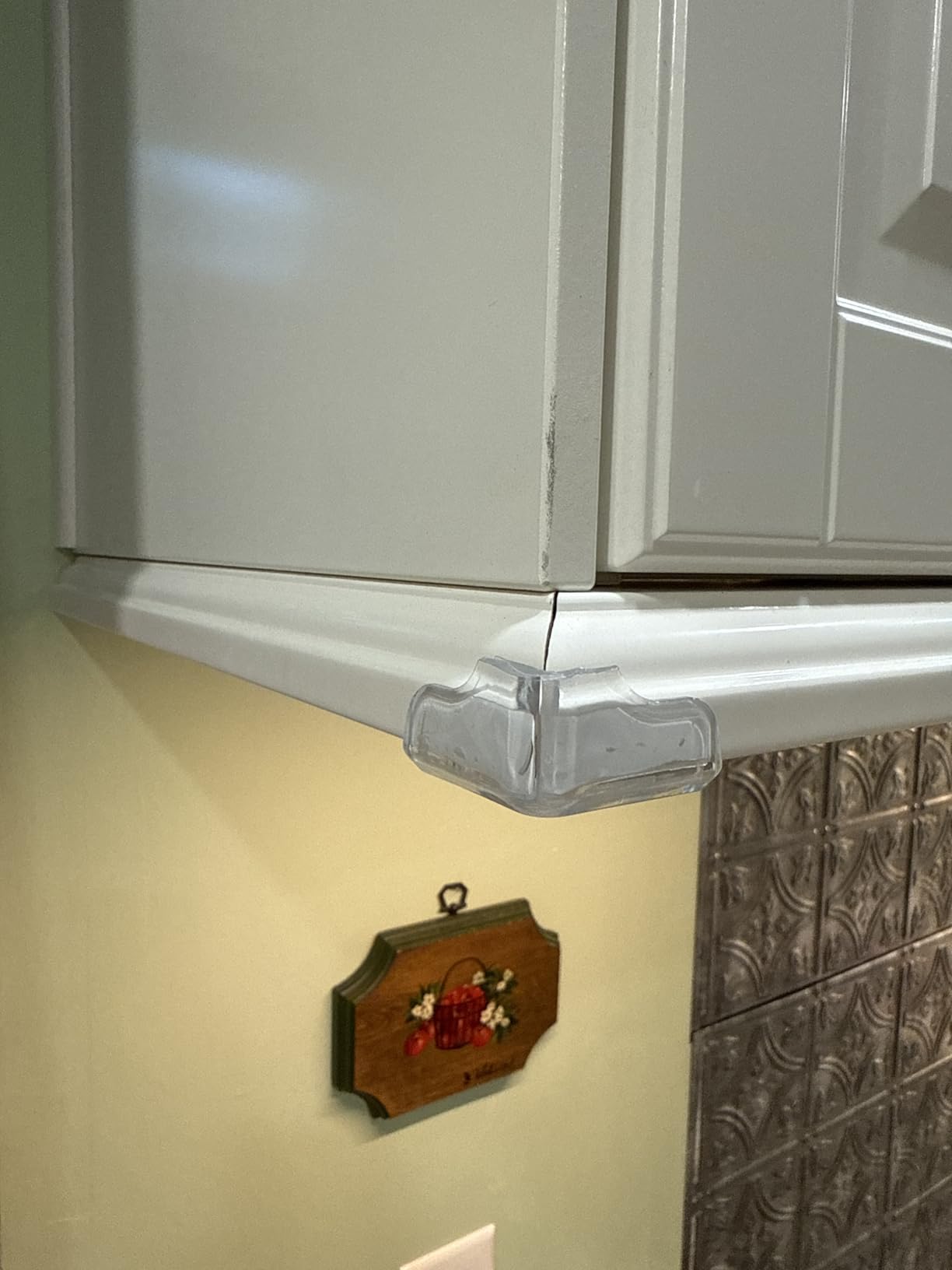
The thinnest guard we tested at 0.39 inch, and the T-shape is the reason. A three-sided profile wraps the front face and both sides of a corner, where a single-face L-shape leaves two exposed planes. Where a guard is barely visible at all, this is it.
Each piece has its own 1 mm transparent adhesive strip on each side, and reviewers report it sticking to most surfaces and coming away without leaving residue, which makes it usable on a filing cabinet, a desk or a cabinet door as readily as on a table.
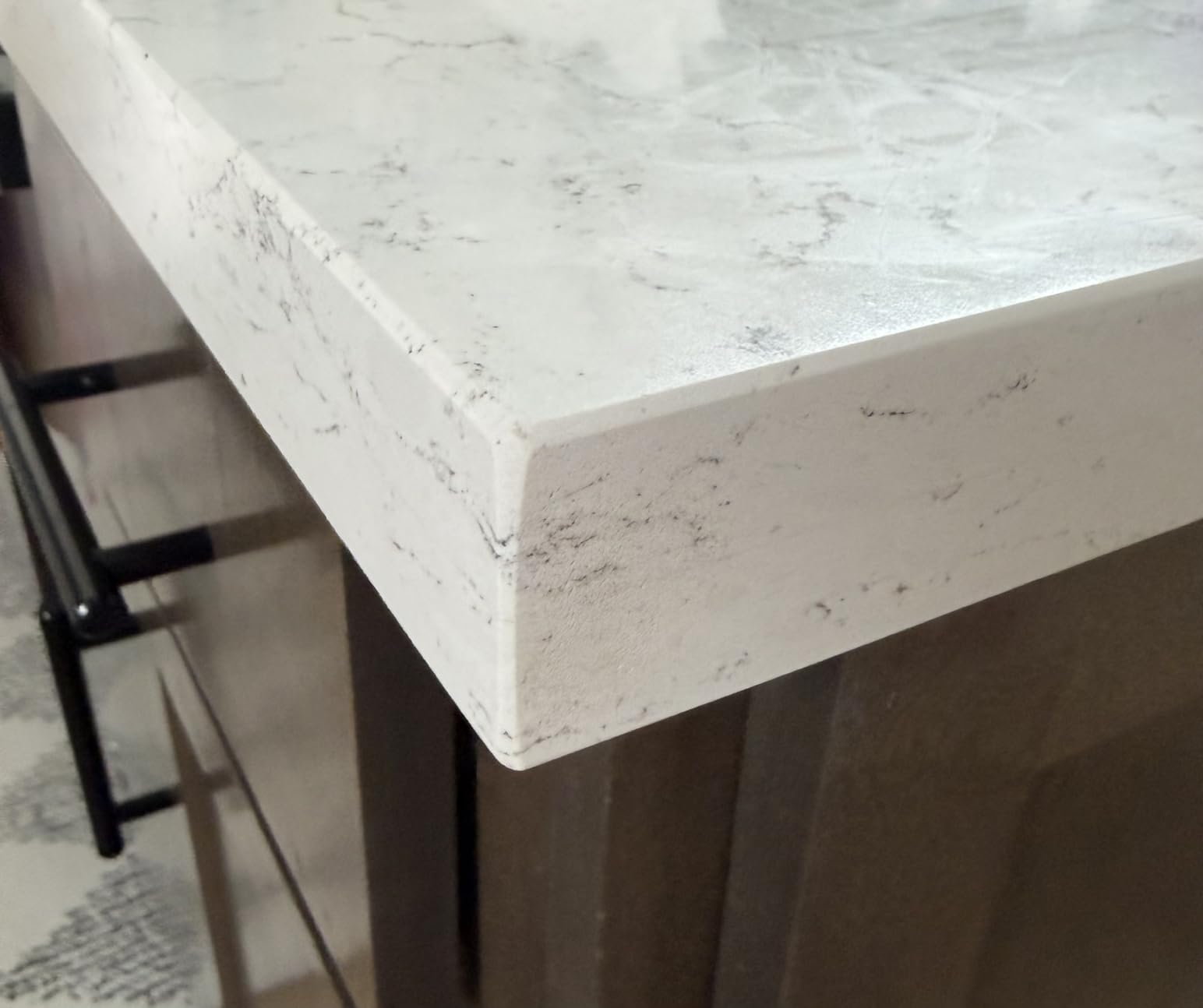
The most common use beyond baby proofing is as a door bumper, protecting walls, skirting boards and baseboards from a cabinet door swinging into them. If that is the main problem in your house, this earns its place regardless of the child.
Measure your corners before ordering. Several buyers found the guards run larger than their furniture corners, and at 1.38 inch across they are not a discreet fit on a slim table leg or a narrow shelf end.
Best for slim furniture and shared surfaces
A 0.39 inch profile barely changes the silhouette of a piece of furniture, which is why this is the pick when the guard has to live on something you look at every day. It works well on glass shelving, narrow desks, vanities and a desk that gets pushed into a wall.
Three-sided coverage also means it does more with a single piece than most of its size class, which is where the smaller counts in this roundup earn their place.
Less suitable for hard knocks and soft landings
Multiple reviewers say the PVC feels hard rather than soft, and the guards can be knocked out of position or loosened by a single knock, then need re-tapping. On a high-traffic corner in a busy living room, that is a recurring task.
If your child runs into furniture at speed rather than brushing past it, the harder PVC in this set dulls the impact less than a dense foam guard would. The trade-off is a slimmer, less visible profile.
How to Choose Corner Guards for Baby Proofing
Choose the material for the child, not the furniture
Dense NBR rubber foam gives the softest landing and the best impact absorption, and it is what we would choose for a baby who is genuinely crashing into corners. It compresses on contact rather than passing the force through, and it is also the material most likely to be chewed. Dense PVC is the opposite profile: it resists biting and discolouration, holds its shape for years, and dulls the sharp edge without a slow deceleration.
Silicone sits between the two. It is soft enough to cushion moderately, flexible enough to wrap an odd angle, and gentle enough on a finish that you can lift it away without damage. Clear silicone is the safest default when you do not know what is on your furniture.
Density matters more than thickness
A thick, low-density sponge feels soft in the hand and does almost nothing on impact, because it bottoms out on the first hard knock. A thinner, high-density pad pushes back and slows the head down. Look for a stated density figure. The foam sets here are rated Shore A 20-N, which is a dense rubber foam rather than a polyester sponge.
Rule of thumb: for a baby who is crawling and bumping, prioritise density. For a walking toddler who clips corners while running, prioritise coverage and edge length, because the contact point moves around more.
Corner guards, edge guards or a full kit
Corner guards cover the point. That is where a head meets a table when a toddler stands up, and it is the highest-priority placement in a room. Edge guards run along the full length of a table edge and matter once a child is walking and using the table for support, or for a low coffee table a crawling baby can reach the side of.
Full kits combine the two. If you are starting from nothing, a set with both is fewer decisions and one install session. If you are topping up an existing installation, corner guards alone are the highest-value addition per corner covered.
Match the guard to the corner and the surface
Measure before you buy. Guard footprints in this roundup run from 1.38 inch across to 3.5 inch across, and a guard larger than the corner looks oversized while a guard smaller than it only clips the point. Right-angle corners suit L-shapes, rounded and bevelled corners need a sphere or an adjustable silicone, and a spherical guard is the least likely to be pried off by a toddler because it has no seam to hook.
For surfaces, the safest order from easiest to hardest is sealed wood and painted MDF, then glass and metal, then marble, stone and ceramic. On gloss-finished or high-gloss pieces, test a single corner in a hidden spot for a day, because adhesion varies more by finish than by material.
Install in the right order, and leave it alone afterwards
Clean and dry the corner, measure and mark, peel one liner at a time, press firmly for 30 seconds, and leave it undisturbed for 24 hours. Working one piece at a time and not moving or repositioning the guard during that window is what separates an adhesive that holds for a year from one that peels off in a week.
To remove, warm the guard with a hair dryer on low for 20 to 30 seconds and peel slowly from the longest edge. If residue remains, a little cooking oil and a cloth usually lifts it, but test a hidden spot first, because a solvent cleaner can strip a lacquered finish faster than any tape will.
Know when to take the guards down
Most families install guards from around six months, when a baby starts crawling and pulling to stand, and take them down between two and three years old, once walking is steady and the child is tall enough that their head clears most furniture corners anyway. A parent of twins on r/toddlers described removing them at about three with no behavioural fallout, which is a useful data point for anyone worried their child will be upset to lose them.
Removing them is not optional neglect, it is the plan. Guards add a chewable or peelable item to a room where that risk did not exist before, and the risk goes down on its own as coordination improves.
Frequently Asked Questions
What is the best corner edge protector for babies?
For most homes the best corner guard is a dense foam or clear PVC set that covers the full corner on all three faces and is backed by pre-applied 3M-style tape. Our top pick is the CalMyotis clear 12-pack for its surface versatility, with the Roving Cove 15 foot edge set and 4 corners as the best option when you want to cover a whole table edge as well as the corners.
What are the best baby corner protectors?
The strongest options in our comparison fall into three groups: dense NBR foam guards for the softest cushioning, clear PVC guards for invisible fit and bite resistance, and clear silicone guards for surfaces where you must not damage the finish. A 12-piece pack is the practical minimum for a living room, and a set that includes edge foam saves a second installation session.
Are corner protectors necessary for babies?
They are one of the higher-value steps in baby proofing. A baby learning to crawl, pull up and cruise topples forward and sideways constantly, and a sharp furniture corner at head height is a common cause of cuts and concussions. Most families install guards from about six months, when crawling starts, until roughly two to three years old.
Are corner guards worth it?
For most homes, yes, because the cost is a one-off purchase against a head impact that can land at exactly the wrong angle. The caveat is that they only help if they stay attached, so check the corners every week or two, and choose a dense material or a firm PVC if your child treats furniture as a teething surface. A child who can peel one off and chew it has partly cancelled the benefit.
Do corner protectors work?
They work when the material is dense enough to slow an impact and the adhesive is given time to set, which usually means leaving the corner undisturbed for 24 hours. They work less well on gloss-finished furniture, on bevelled or sloped corners, and against a determined toddler who can pull a soft piece off and work at it. A sphere-shaped guard is harder to pry off than an L-shape.
When should I remove corner guards?
Most families take them down between two and three years old, once walking is steady and the child is tall enough to clear most furniture corners anyway. Removing them also removes a peelable or chewable item from the room, which matters as much as the fall risk does. Until then, check the corners weekly and press back any that have lifted.
The Best Corner Guards for Baby Proofing in 2026
The CalMyotis clear 12-pack is our overall pick for baby proofing in 2026, because dense PVC that resists biting, a clear finish that disappears on wood, glass, marble and metal, and three adhesive faces per corner give it the widest range of uses of anything we tested.
Pick the Roving Cove 15 foot edge and corner set if you want one pass to cover a whole table instead of four points, and the Roving Cove 4 large corners if cushioning quality matters more than coverage. For furniture you do not own, a clear silicone guard lifts off without taking the finish with it.
Whichever you choose, measure the corner before ordering, leave it undisturbed for a full day after sticking it on, and check every corner weekly. That last habit is what keeps a guard doing its job for the whole crawling and walking stage.