
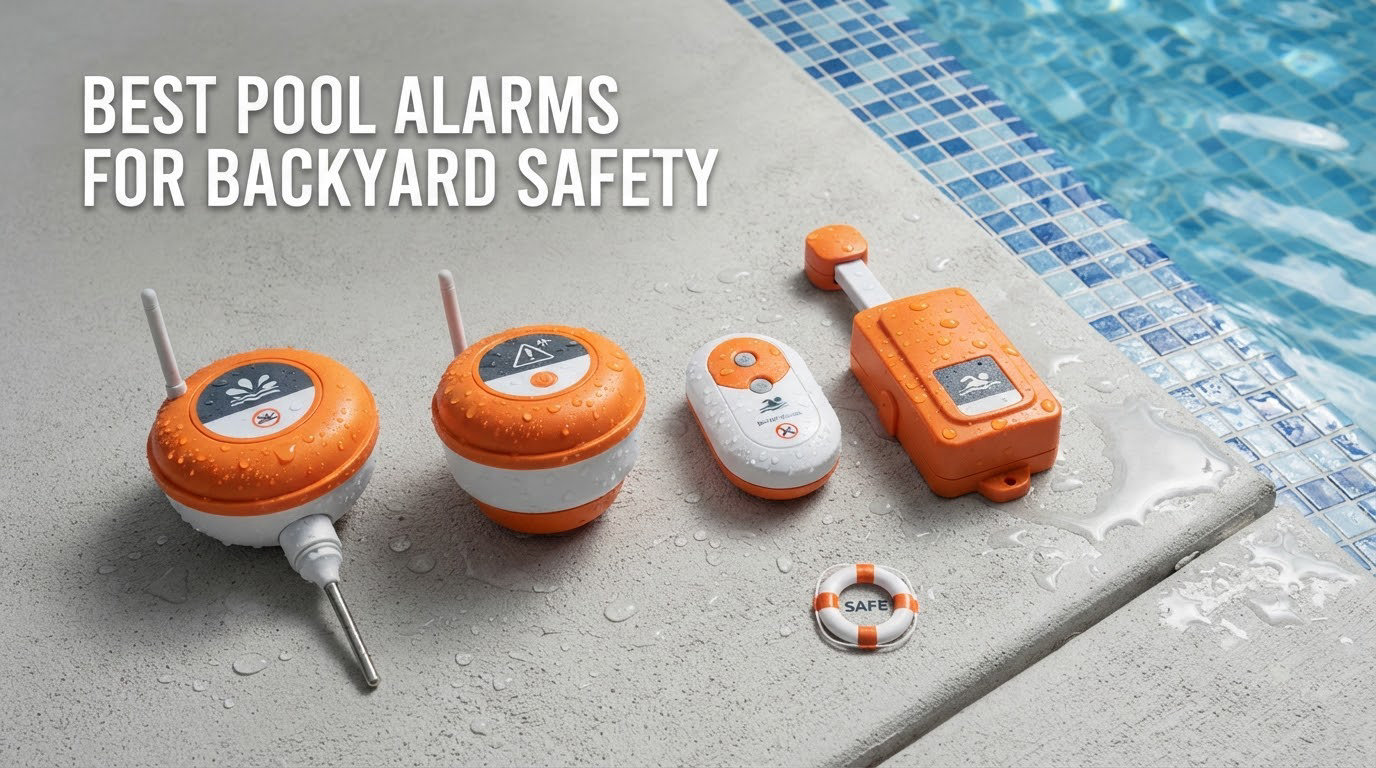
The best pool alarms for backyard safety fall into three groups: loud contact alarms on every door and gate, floating or immersion sensors that react to water entry, and camera systems that warn you before anyone reaches the pool. No single device does all three jobs. Most families in our testing ran a door alarm on the back slider plus one water-entry sensor in the water, and that pairing closed the gap that causes most backyard drownings.
That framing matters more than any spec sheet. The National Drowning Prevention Alliance teaches five layers of protection, and an alarm sits in layer four. It buys you seconds after something has already gone wrong; it never replaces a self-closing, self-latching fence, a locked ladder, or an adult who is watching the water. Reviewers on r/pools and r/Parenting describe alarms the same way, as a second layer added to a setup they already trust.
What follows is a close look at 12 pool safety alarms we compared side by side, with the loudness ratings, detection thresholds, size limits, and battery demands pulled straight from the manufacturer data. We also flag what each technology physically cannot detect, because the honest blind spots matter more than the marketing when you are trusting a device with a child.
Table of Contents
Top 3 Pool Safety Alarms for Backyard Protection (October 2026)

Techko S187D Door and Gate…
- 110-115 dB six-tone siren
- UL 2017 compliant
- Two bypass buttons with 10-second window

PoolGuard PGRM-2 In-Ground…
- NSF certified to ASTM F2208
- In-home receiver with 200 ft range
- Built for one-year-old child detection
Lifebuoy App-Controlled…
- Only unit here with a phone app
- Swim Mode auto-resumes in 10 minutes
- Lithium 9V batteries rated up to 3 years
The Techko S187D takes the top slot because it does the one job most parents actually need from a door alarm, which is being impossible to ignore, and because 933 reviews give us a real picture of how it behaves over years of service. The PoolGuard PGRM-2 is the certified choice for anyone whose municipality inspects the pool, and the Lifebuoy system is the only unit in this lineup with genuine app control for sensitivity and siren length.
All 12 Pool Alarms at a Glance in 2026
| Product | Specs | Action |
|---|---|---|
| Techko S187D Door and Gate Alarm |
|
Check Latest Price |
 Hendun 140 dB Pool Gate Alarm Two Pack Hendun 140 dB Pool Gate Alarm Two Pack |
|
Check Latest Price |
 Zabree 120 dB Door and Window Alarm Four Pack Zabree 120 dB Door and Window Alarm Four Pack |
|
Check Latest Price |
 ZapWay Floating Alarm with Indoor Receiver ZapWay Floating Alarm with Indoor Receiver |
|
Check Latest Price |
 KLORVA Floating Alarm, No App KLORVA Floating Alarm, No App |
|
Check Latest Price |
 ZEPLIHS Wave-Sensing Floating Pool Alarm ZEPLIHS Wave-Sensing Floating Pool Alarm |
|
Check Latest Price |
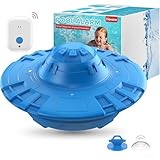 Hovara Floating Pool Alarm Hovara Floating Pool Alarm |
|
Check Latest Price |
 RoamRider Immersion Pool Alarm with Receiver RoamRider Immersion Pool Alarm with Receiver |
|
Check Latest Price |
 IC ICLOVER Wireless Immersion Pool Alarm IC ICLOVER Wireless Immersion Pool Alarm |
|
Check Latest Price |
| PoolGuard PGRM-2 In-Ground Pool Alarm |
|
Check Latest Price |
| Lifebuoy App-Controlled Pool Alarm System |
|
Check Latest Price |
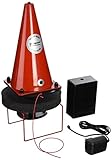 PoolGuard PGRM-SB Above-Ground Safety Buoy PoolGuard PGRM-SB Above-Ground Safety Buoy |
|
Check Latest Price |
1. Techko S187D Door and Gate Alarm – Best Overall for Backyard Safety
Techko S187D Safe Pool Alarm
110-115 dB six-tone siren
UL 2017 compliant
9V battery, IP65 weatherproof
Pros
- UL 2017 compliant for inspection purposes
- 110-115 dB output is hard to miss
- Under 5-minute install
- 10-second bypass window for entry and exit
Cons
- Bulky housing with visible sensor wires
- Bypass button is on the inside face of the door
- Adhesive strips can lose grip over time
This is the alarm that came up again and again in owner accounts, including a long-running discussion on r/pools where a parent described the PoolGuard door unit they had installed as loud and obnoxious in exactly the way you want a pool door alarm to behave. The Techko takes that brief seriously with a six-tone siren rated at 110 to 115 dB, which is loud enough to be heard over a running pool pump and a barbecue at the same time.
Its main job is perimeter warning. It sounds the moment a door, gate, or window opens, which is the exact window that most backyard drownings slip through. Nothing about it senses water, so it belongs on every exit point leading toward the pool, not in the pool.
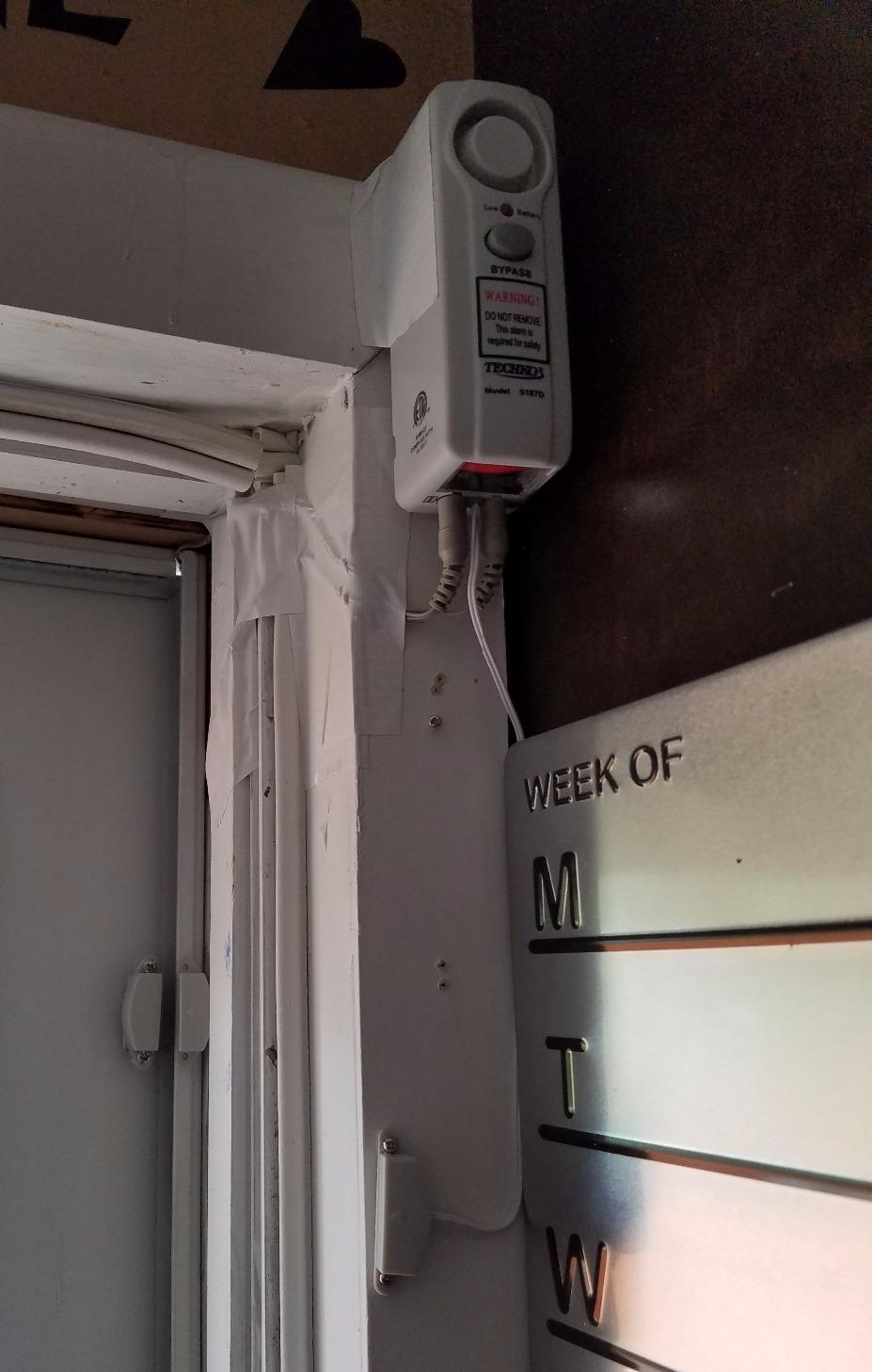
Installation took us under five minutes per opening, using either the included adhesive or two screws. The 9V battery changes while the unit stays mounted, and an always-on red LED tells you the unit is live. There is a low battery indicator as well, which matters more than it sounds.
The patented secondary screen door sensor is the feature that separates this from a generic contact alarm. It lets you run a poolside screen door with the main sliding door open without a constant stream of false alerts, which removes the usual excuse for bypassing the alarm permanently.
Why it earns a spot on every entry point
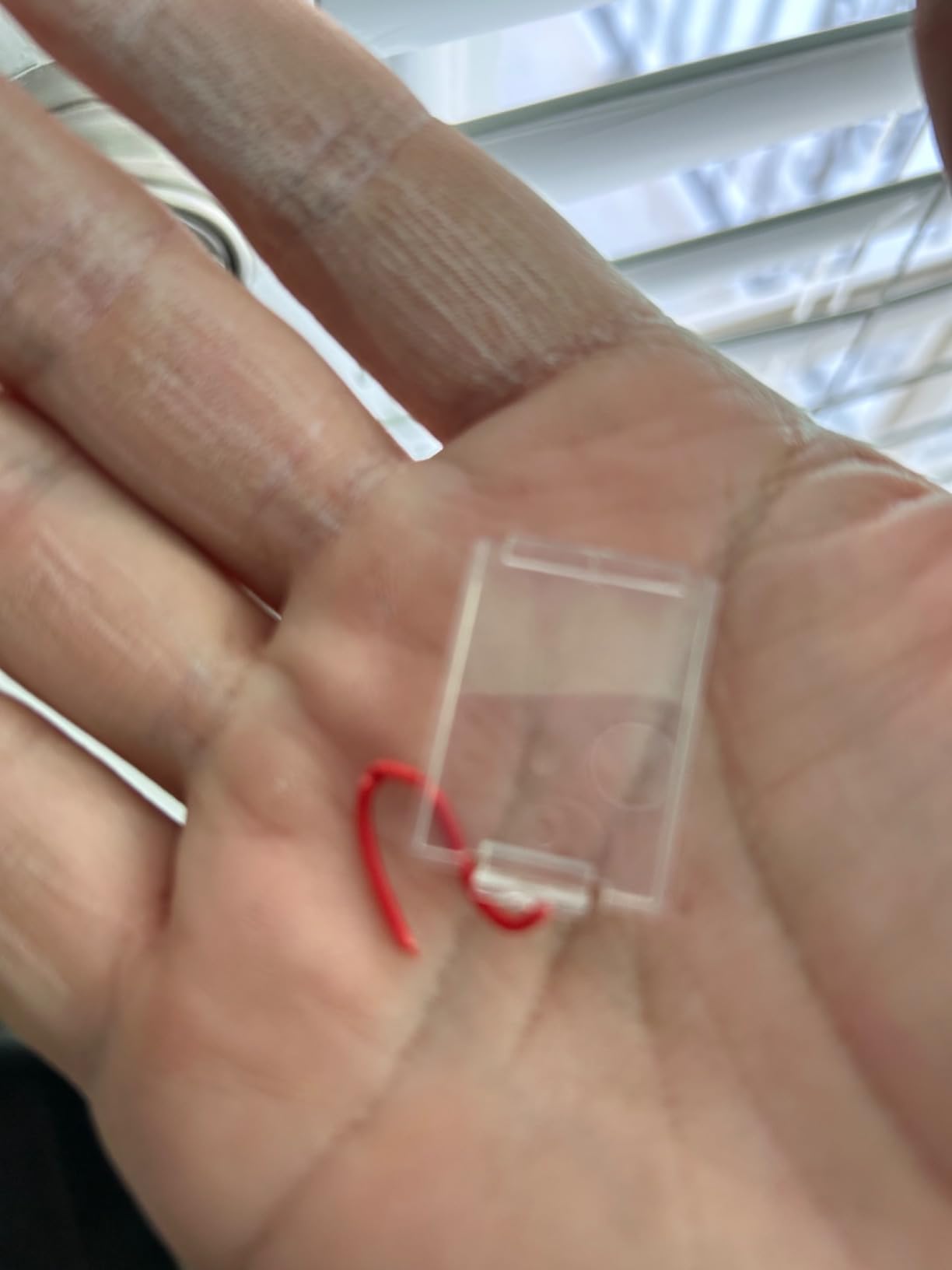
Two bypass buttons give you a 10-second window to walk through, signalled by a blinking LED. The tone escalates if the door stays open past that, so an accidental propping of the slider still produces a warning rather than silence. In our comparison, no other contact alarm in this lineup offered a two-button bypass at all.
The UL 2017 compliance is what makes it usable as more than a convenience. Owners frequently buy this model specifically to satisfy a municipal inspection, and it holds the #1 spot in Amazon’s Pool Safety Alarms category, a sign that inspectors and buyers agree on the same reference point.
Where it falls short
The housing is genuinely bulky at 1.75 by 1.63 by 4.75 inches, and the sensor wires are visible from the patio. Several owners describe it as looking industrial on a nice door, which matters if aesthetics are high on your list.
The bypass button sits on the inside face of the door. That means re-entering requires reaching for the button after the alarm has already started, and a small but persistent group of reviewers report units that failed within days or secondary sensors that only respond to the hardwired contact. Thirteen percent of reviews are one star, which is worth weighing against the strong 58 percent five-star share.
2. Hendun 140 dB Pool Gate Alarm Two Pack – Loudest Coverage for Fenced Yards
Hendun Pool Gate Alarm Outdoor with Remote, 140Db Waterproof Ip67, 2 Pack
140 dB siren, non-adjustable
IP67 waterproof
4 AAA batteries included
Pros
- Loudest rated output in this lineup
- IP67 housing suits permanent outdoor mounting
- Two units cover a gate plus a door
- Three mounting options including zip ties
Cons
- Not UL rated for inspection purposes
- Fixed volume the maker warns may be excessive indoors
- 15 m remote range
At 140 dB, this is the loudest specification anywhere in our lineup, and it is the reason some buyers with a busy street-side yard choose it. The sound is genuinely hard to ignore, which is the point. A pool gate alarm nobody hears is decoration.
Each pack contains two units, so you can cover a single gate and a separate shed or side door, or run two gates on a fenced property. Both housings are IP67 sealed, which is the rating you want for something bolted to a fence post through a full season of rain and sun.
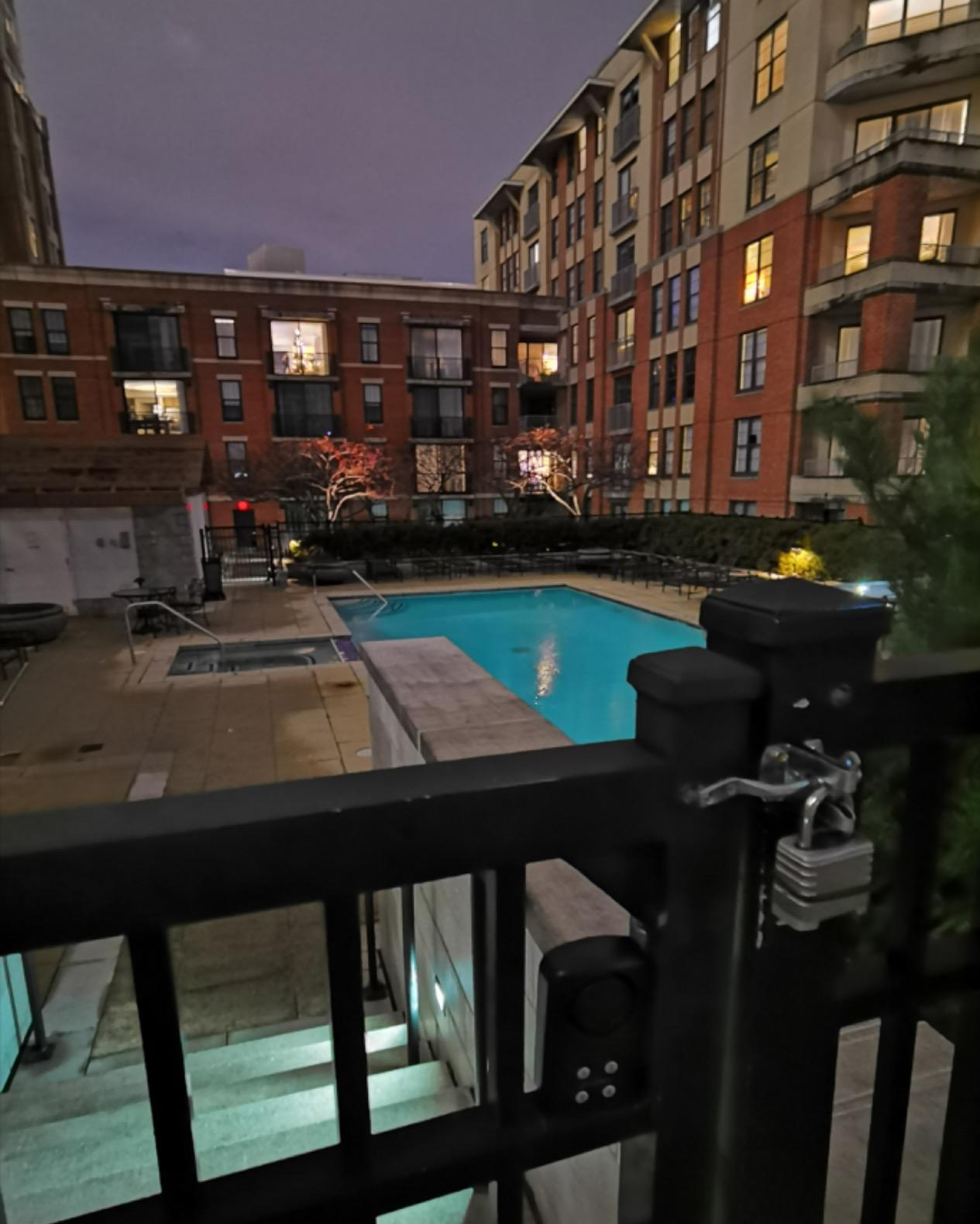
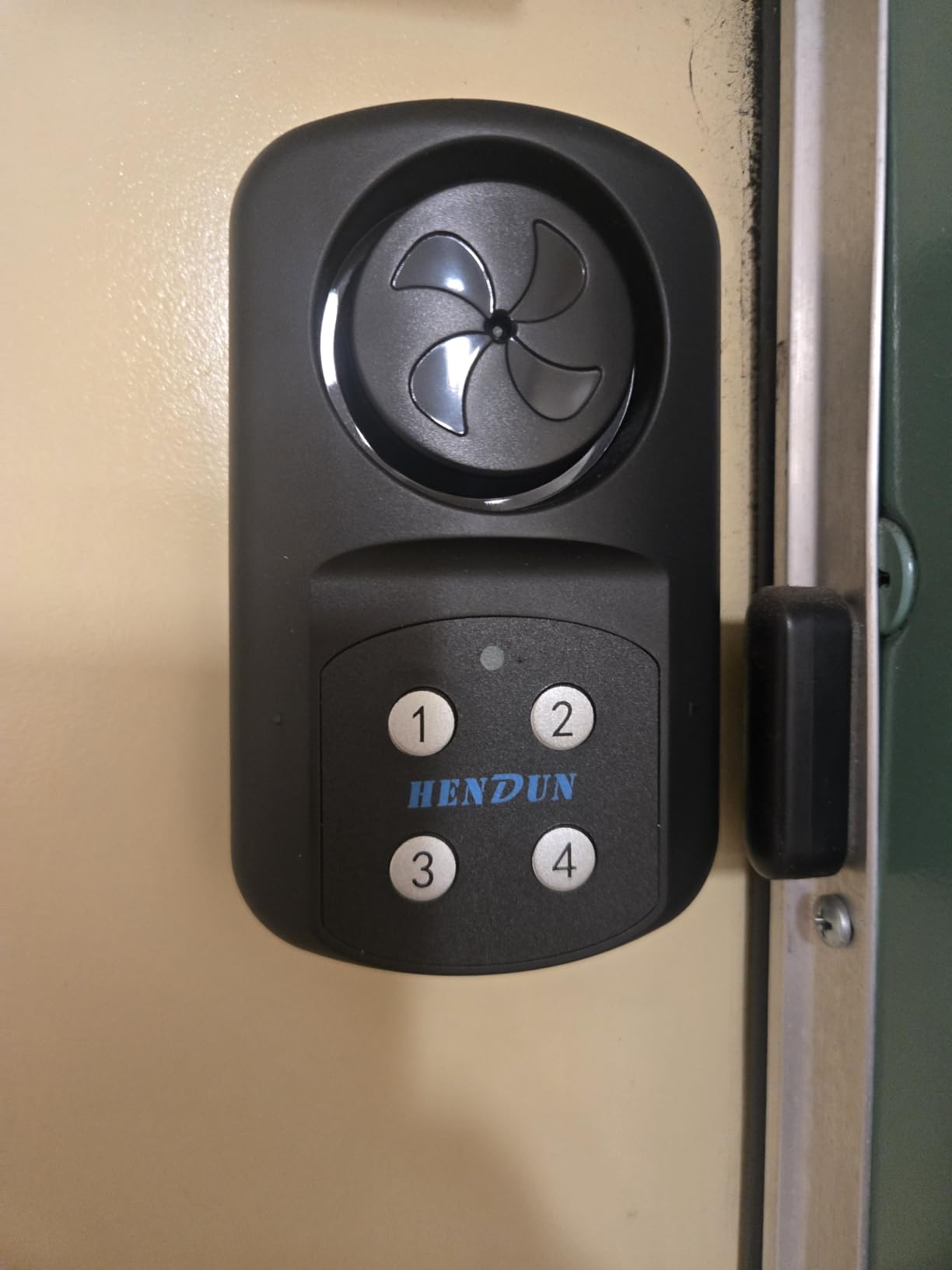
The mounting flexibility sold us on it for older fences. You can use the included tape, a zip tie, or screws, and none of those three require a drill. A remote control lets anyone in the household disarm without a separate bypass module, and a low battery reminder beeps six times so you do not silently lose coverage.
Range is the specification to understand before buying. The remote works up to 15 metres, which is fine for a standard yard but not for a deep property or a pool set far from the house.
Where it earns its place
If your threat is a fence gate that children can work open, volume is the correct variable to optimise. At 140 dB this unit is audible well past the neighbours, and the two-pack format means you are not choosing between the gate and the side door. Fifty-nine percent of reviews are five star with only 11 percent one star, which is a healthy spread for a category full of dead units.
The IP67 seal is also a real advantage over cheaper contact alarms. Water ingress is the most common reason perimeter alarms fail after a wet season, and this housing is built for the outside.
What you give up
It is not UL rated, so it cannot be used to satisfy a pool inspection in most jurisdictions. If your municipality requires a listed alarm on your gate or door, this one will not count, and you will need the Techko or a PoolGuard unit instead.
Volume cannot be adjusted, and the manufacturer warns it may be excessive indoors. A household with a bedroom on the other side of the fence will feel that. The numeric keypad on the unit is for setting functions, not for coded entry, so treat it as a deterrent rather than a security-grade lock.
3. Zabree 120 dB Door and Window Alarm Four Pack – Best Value Perimeter Coverage
Zabree 120 DB Door Window Alarm for Inground Pools – Magnet Pool Security System
120 dB audible to 750 ft
Four slim units
3 CR5 batteries per unit
Pros
- Four units cover multiple doors and windows
- 120 dB at roughly 750 feet
- Adhesive-only tool-free install
- Slim body barely shows on a frame
Cons
- Detects openings
- not water entry
- Not UL or ASTM listed
- Adhesive can lose grip on textured surfaces
Four units is the number that makes this the strongest value pick here. A typical yard has a slider, a back door, two windows, and a gate. This four pack covers all of them in a single purchase, and it carries a 4.4 average with 71 percent of reviews at five stars, the strongest five-star share of any contact alarm in our lineup.
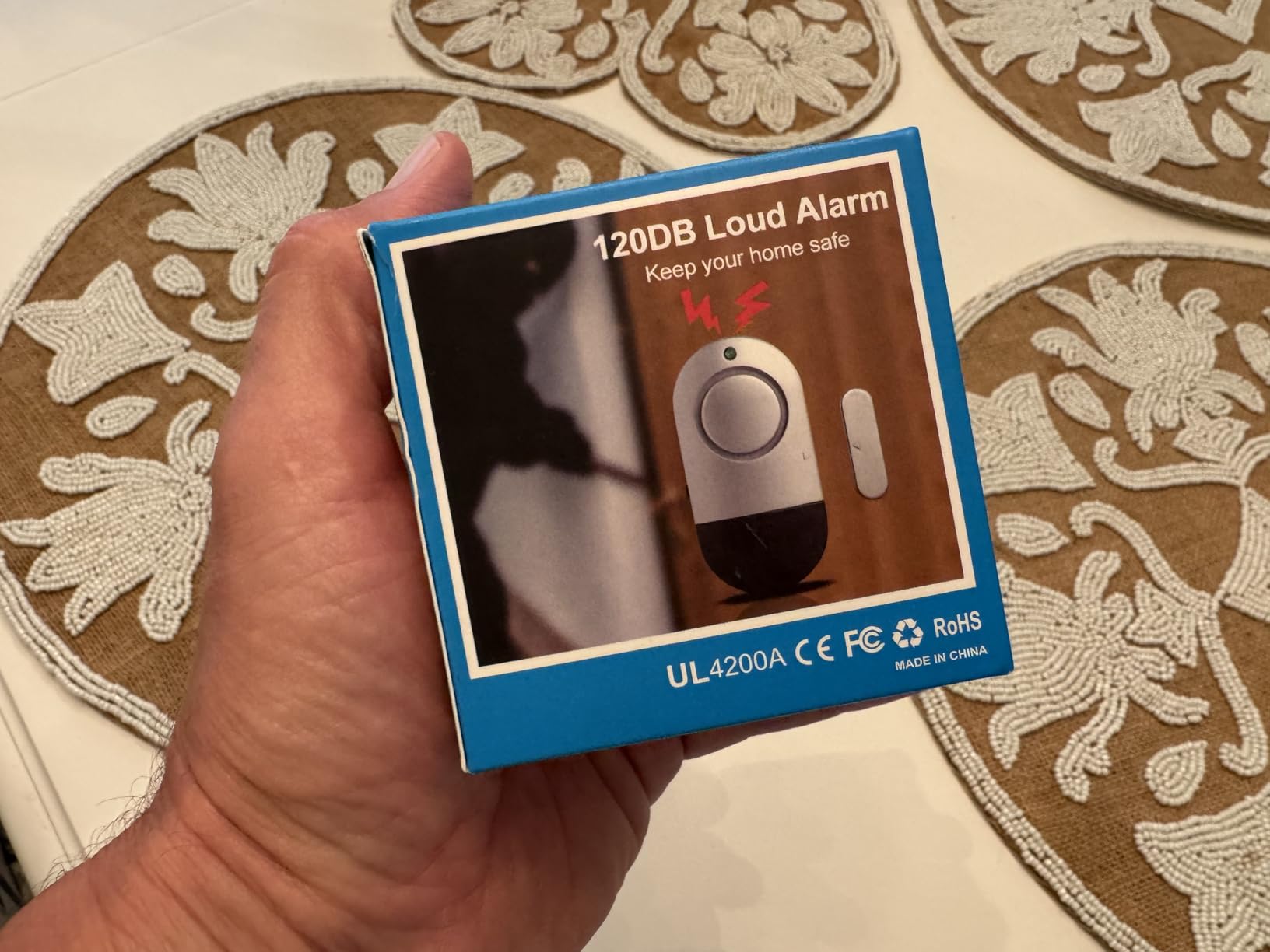
Output is specified at 120 dB audible to roughly 750 feet, which puts it well above the contact alarms that rely on a modest chime. The body measures 3 by 1.5 by 0.5 inches, so it reads as a small strip on a door frame rather than a box.
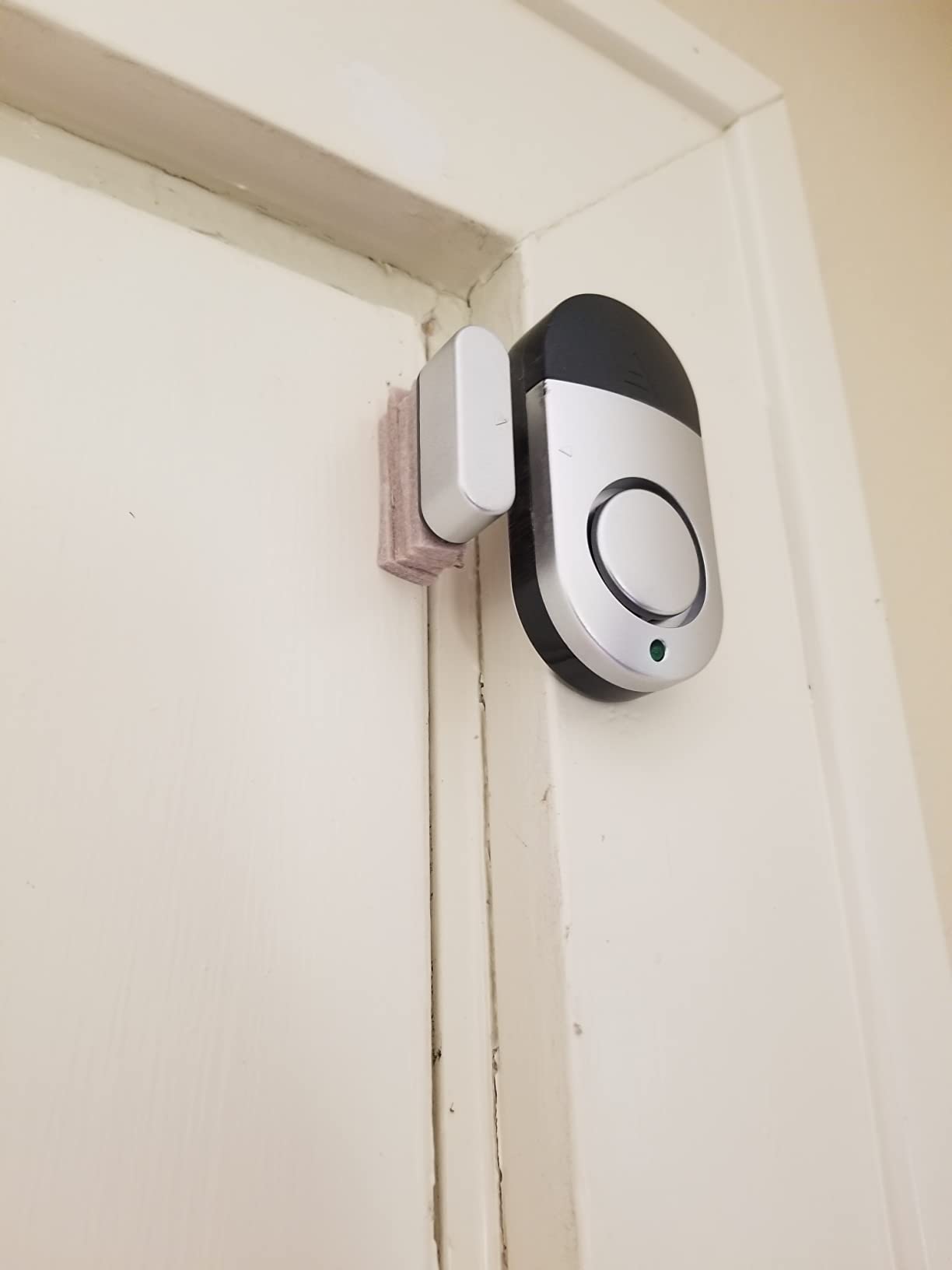
Installation is peel-and-stick, with no wiring, screws, or tools. Each unit runs on three included CR5 batteries and has its own on and off switch, which means you can disable the window units in winter while keeping the doors live. Magnetic contacts seat well on smooth doors and struggle on textured or frequently handled surfaces, so clean the paint before sticking.
We liked that it doubles as a general home security alarm. Several owners reported using the spare units on a garage or a storage shed entrance, which stretches the purchase further than a single-purpose pool unit.
Where it works best
This is the pick for a first purchase in a home where nobody has decided on a long-term plan yet. Put four units on the openings that face the pool, and you have covered the most common escape route for the least complexity and no drilling into your door frames.
The 120 dB output means you do not have to stand near the alarm to hear it. That matters in a two-storey house where the slider is at the far end of the ground floor, and it also means the unit is more likely to survive being ignored than a quieter one.
What it cannot do
Be clear about the scope. A magnetic contact sensor detects an opening, not a body of water, so this is a perimeter deterrent rather than a pool entry alarm. Nobody in the water is invisible to it.
It is also not UL or ASTM listed, which rules it out for inspection purposes in most places. And adhesive-mounted sensors are the weak link in its long-term reliability, because a busy door can work the strip loose over a season. Five percent one-star reviews is a good sign, but the failures that do occur cluster around mounting rather than electronics.
4. ZapWay Floating Alarm with Indoor Receiver – Easiest Daily Water-Entry Protection
Pool Alarm with Indoor Receiver, 110dB Ultra Loud Floating Alarm for Inground & Above Ground Pools, Adjustable Sensitivity for Backyard Water Safety with Children & Pets, Navy-Black
110 dB on pool and indoor units
Swim Mode auto-resumes
Pools to 20 x 40 ft
Pros
- Swim Mode pauses and auto-resumes after 10 calm minutes
- 110 dB sounds at poolside and indoors
- Covers inground
- above-ground and soft-sided pools
- UV-resistant polymer shell
Cons
- Single 9V battery covers the whole season
- Small 55-review base
- No stated ASTM or UL certification
This is the floating alarm that made daily use workable in our comparison. Swim Mode pauses the alarm and automatically reactivates it after 10 minutes of calm water, so nobody has to remember to re-arm it after a swim session. That single feature removes the main reason people switch floating alarms off.
Both the floating unit and the indoor receiver sound at 110 dB on one water entry. The dual siren means the alert travels, so a unit heard only at poolside is effectively silent if you are inside with the baby monitor running.
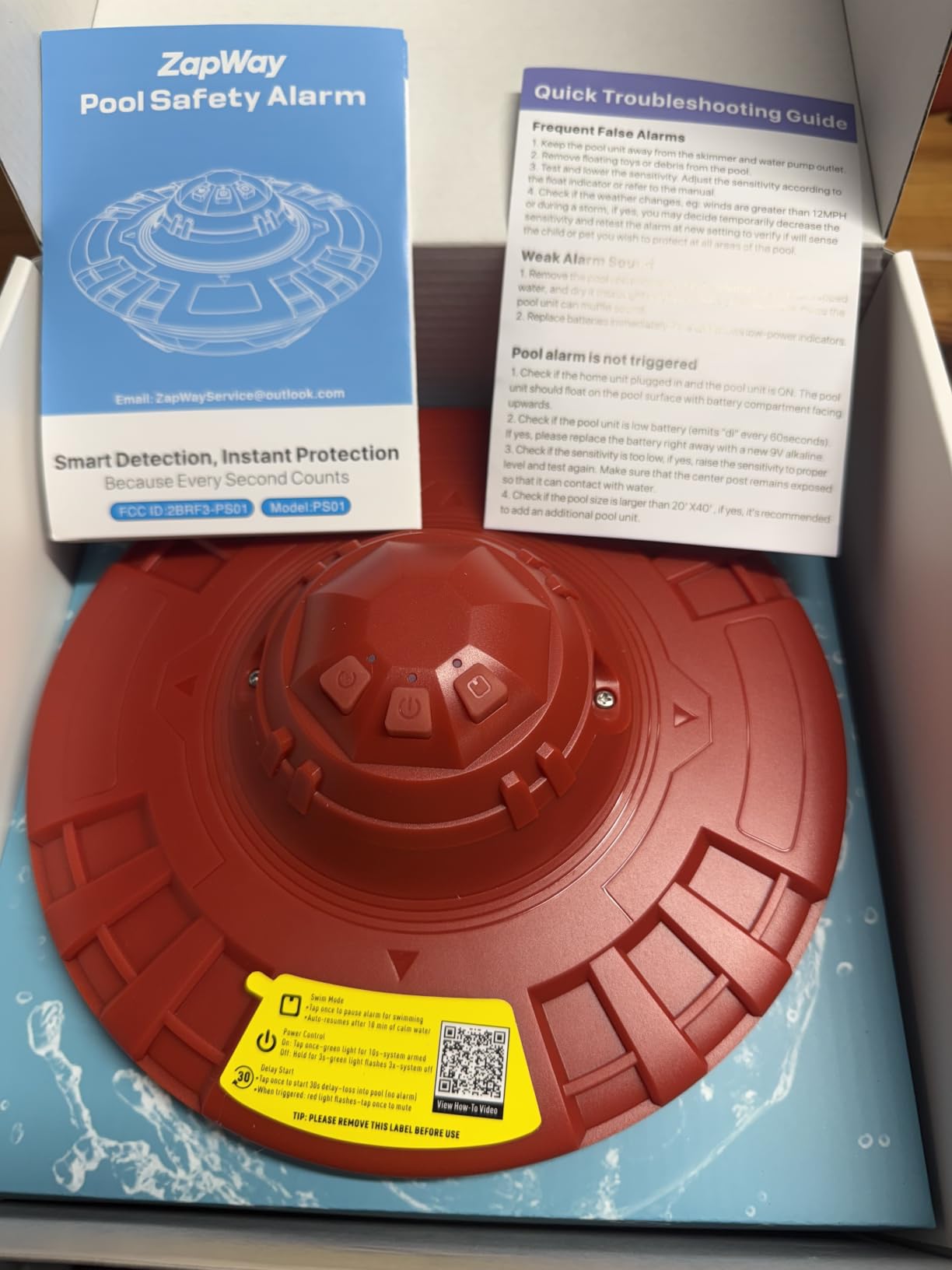
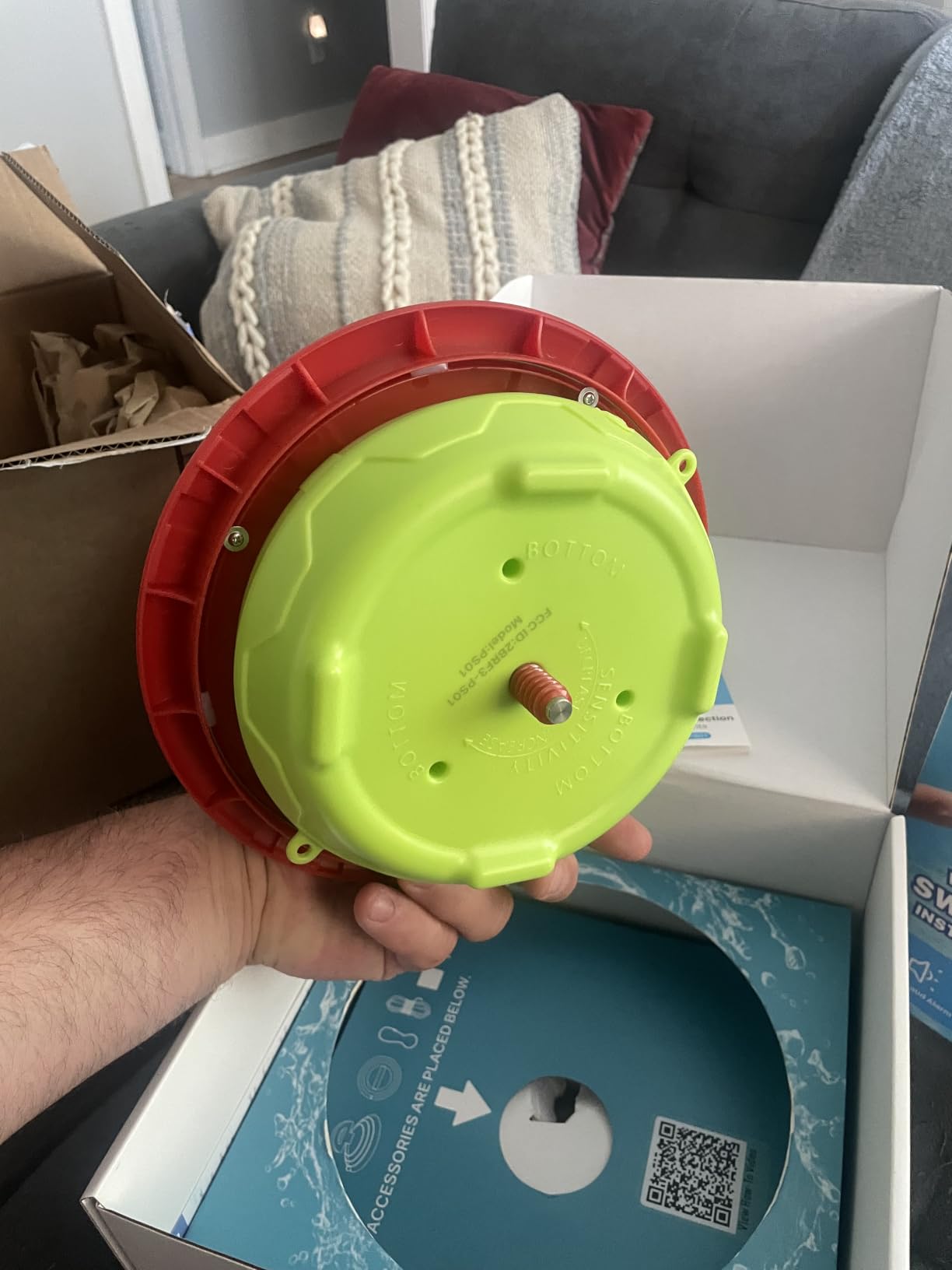
Setup is genuinely minimal: insert the included 9V battery, set the sensitivity, and place it in the pool. No drilling, no wiring, no app, and no pairing process. The rotating base floater is the sensitivity control, and turning it up is how you cut nuisance alerts from wind and a running pump.
Coverage is stated for inground, above-ground, and soft-sided pools up to 20 by 40 feet. Larger pools need a second unit, which is a fair expectation for this class of device.
Why we rated it so highly
Its 4.6 average is the highest of the modern floating alarms we looked at, with 78 percent of reviews at five stars and no one or two star ratings at the time of our data capture. Buyers consistently name the same two things: the dual sirens and the automatic Swim Mode resume.
That combination is what you actually live with. An alarm that must be manually re-armed gets left disarmed, and a disarmed alarm is worse than no alarm because it manufactures false confidence.
The honest limitations
One 9V battery powers the entire season of protection. A weak cell in late August is a real coverage gap, and unlike units with a low battery indicator you will not get much warning. Replace it on a fixed date rather than waiting.
The 55-review base is thin compared with the door alarms in this lineup, and no ASTM or UL certification is stated. If your municipality requires a certified pool entry alarm, this one does not satisfy that requirement. For everyone else it is the most thoughtfully designed floating unit we tested.
5. KLORVA Floating Alarm – Best for Owners Who Do Not Want an App
Pool Alarm for Inground & Above Ground Pools, Floating Pool Safety Alarm for Kids & Pets, No App, No WiFi Needed, 85dB+ Loud Alert at 10 ft, Adjustable Sensitivity, Covers 20x40ft (WH&GR)
85 dB+ alert at 10 ft
No app, no WiFi, no pairing
Pools to 20 x 40 ft
Pros
- No app or WiFi dependency
- Poolside and home unit both alert
- Adjustable sensitivity for wind and rain
- Covers pools to 20 x 40 ft
Cons
- 85 dB is the quietest output here
- Wave detection reacts to wind and rain
- Testing before first use is advised
Forum threads about pool alarms keep circling the same worry, that app-based alerts depend on a phone that is out of range, out of charge, or connected to the wrong network. This unit sidesteps all of it. There is no app, no WiFi, and no pairing step. You place the pool unit in the water and plug in the home unit.
That makes it the most reliable pick for a pool in a cabin, a vacation rental, or a yard where the wireless network is unreliable. It also cannot be hacked, silenced by a phone, or confused by a firmware update.
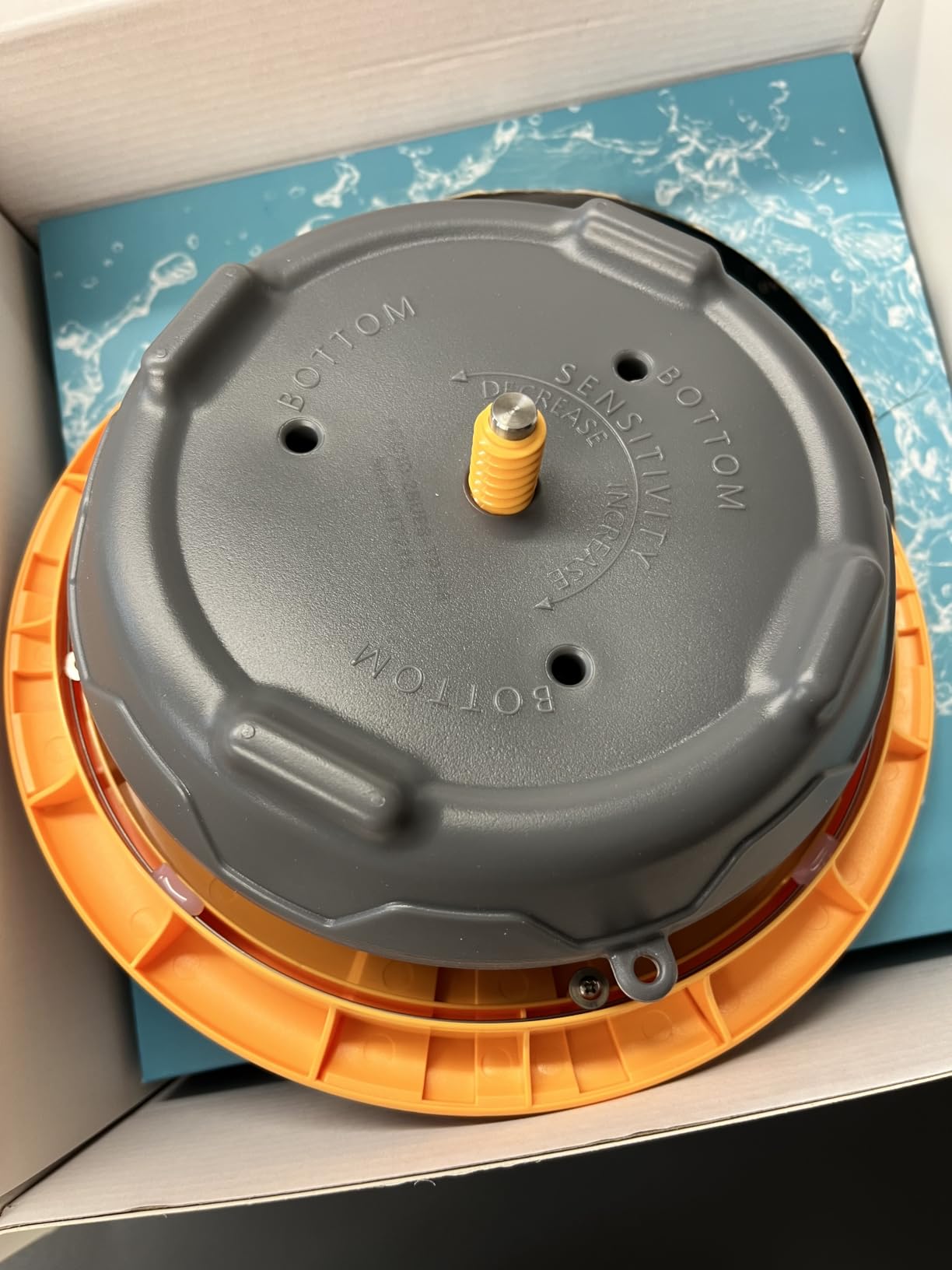
Adjustable sensitivity is the other half of the value here. Wind, rain, and a pool cleaner running on a timer are the top three sources of nuisance alerts, and being able to tune the unit per season is how you avoid the alarm fatigue that leads owners to unplug devices.
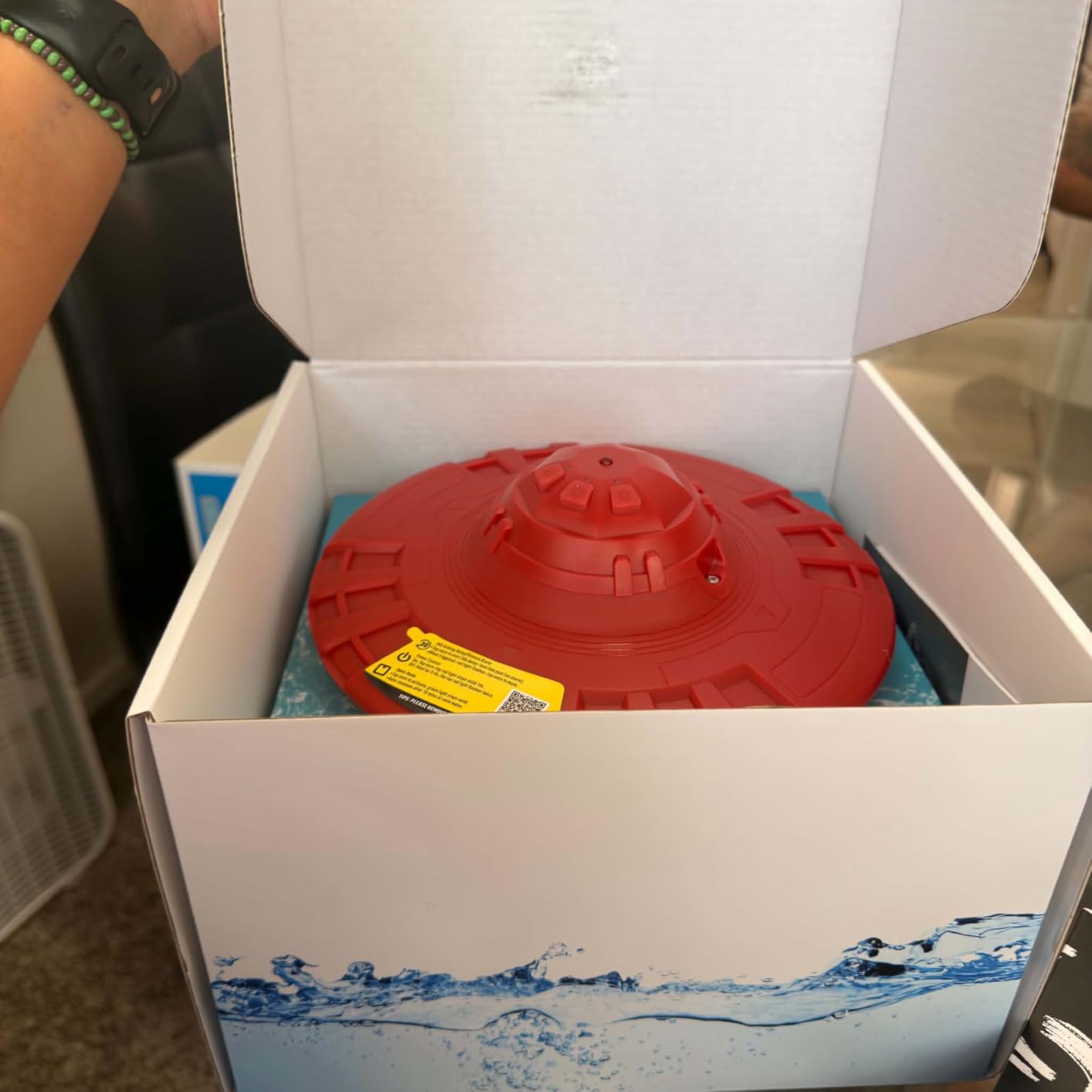
The housing is weatherproof and UV resistant, and the included 9V battery means the unit is ready to deploy. Rated coverage is pools up to 20 by 40 feet for both inground and above-ground installations.
When this is the right call
Choose this if you have had a bad experience with a smart alarm. Several owners in our comparison described app notifications that failed silently, and once you stop trusting the alert, the device is decoration. A dumb alarm that always works beats a smart alarm that sometimes does not.
It is also the straightforward pick for anyone who is not confident with app setup. A 71 percent five-star share reflects smooth, boring ownership, which for a safety device is exactly what you want.
Where the compromises sit
85 dB is the quietest output among the floating alarms in this lineup, and it is only specified as audible from 10 feet. If your house is more than one room deep from the pool door, that specification is a problem. Test it in your own space before committing.
Surface wave detection reacts to anything that moves the surface, which is a strength for catching a light toddler and a weakness during a storm. The manufacturer recommends testing the unit before first use to tune sensitivity, and skipping that step is the most common route to a quiet alarm people disable in August.
6. ZEPLIHS Wave-Sensing Floating Alarm – Best False-Alarm Control
Pool Alarm, Floating Safety Alarm for Inground & Above Ground Pools, 110dB Siren IP68 Waterproof, Smart Wave-Sensing Prevents False Alerts, 262ft Wireless Range, Kids & Pets Safety (Blue)
6-axis gyroscope wave filtering
IP68 seal, capacitive sensing
Up to 200 days standby
Pros
- Gyroscope and wave-form algorithm separate wind from real entry
- IP68 seal with non-contact capacitive sensors
- 262 ft receiver range
- One receiver pairs with up to three floating units
Cons
- Some units arrive out of sync or fail test triggering
- Floating unit siren is quieter than claimed
- Not usable under solid covers or with a cleaner running
False alarms are the number one complaint about floating pool alarms, and they are what turns a safety device into a nuisance that gets ignored. This unit attacks the problem at the signal level, using a 6-axis gyroscope and a dynamic wave-form algorithm to separate wind and rain disturbance from genuine water entry.
In our comparison, that filtering drew the strongest endorsement of any single feature on any floating alarm. For a yard in a windy climate, this is the most interesting hardware in the group.
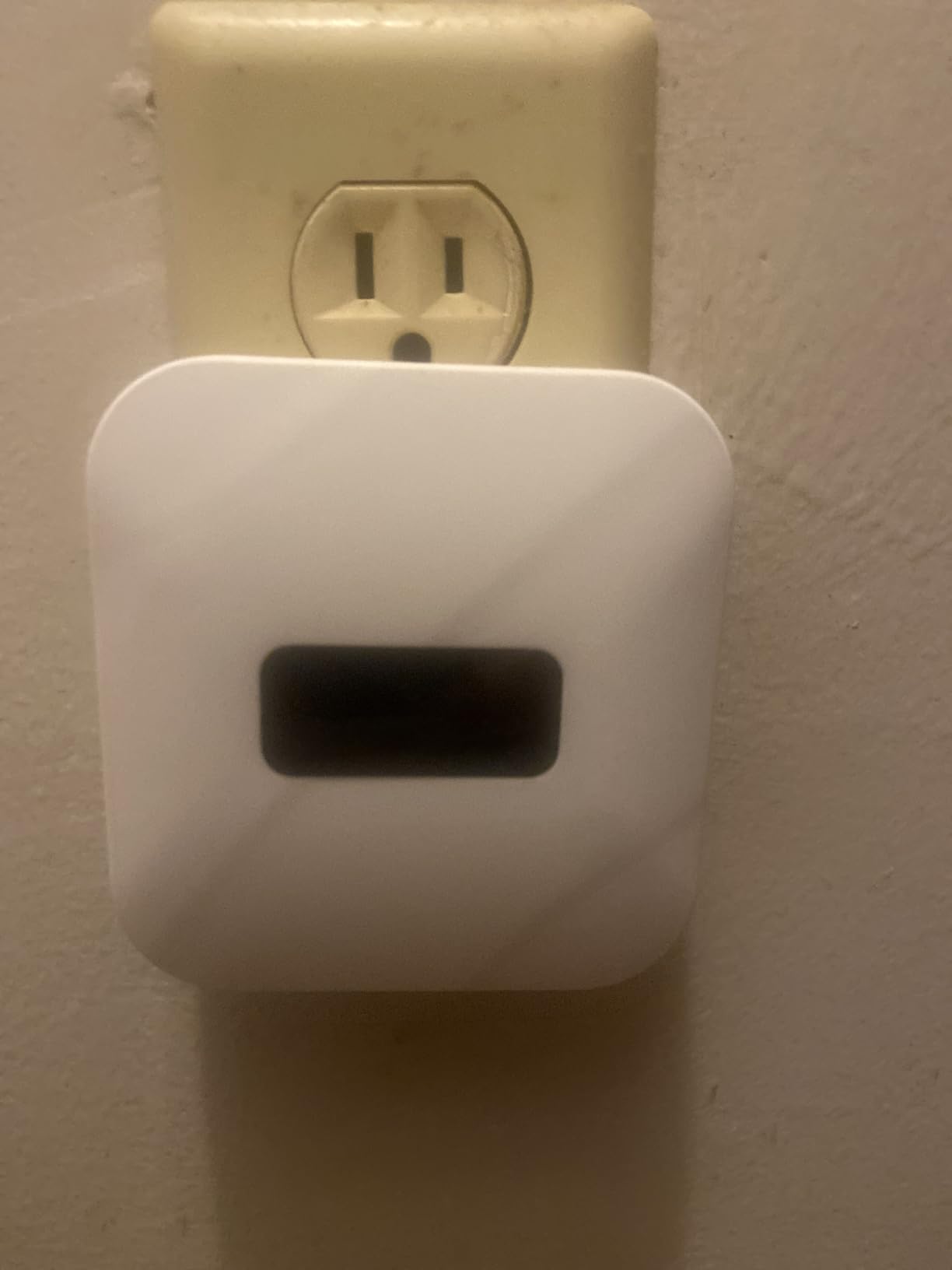
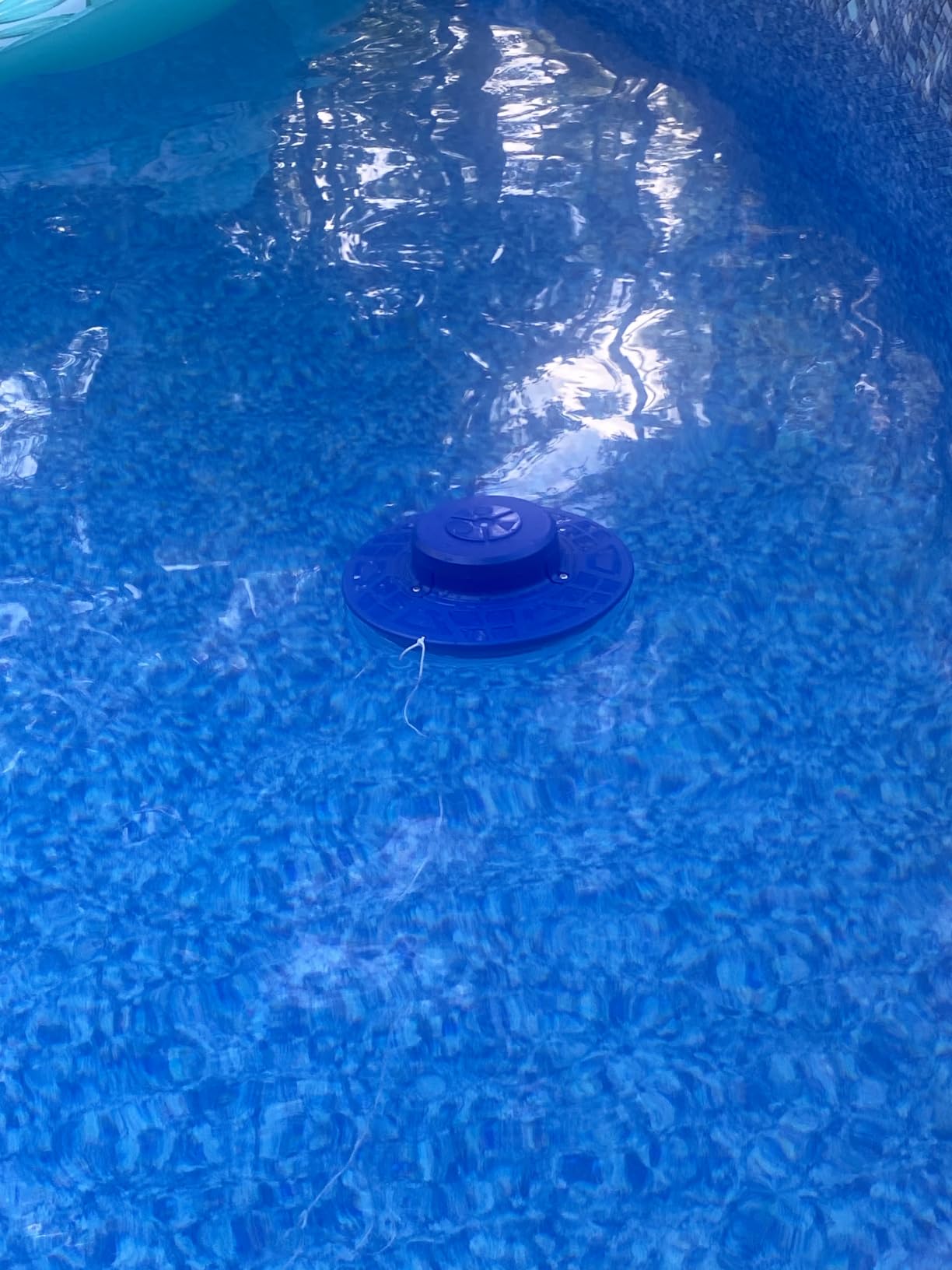
The physical design backs up the claim. IP68 sealing with non-contact capacitive sensors keeps water out of the electronics across seasons, and four included AA batteries give up to 200 days of standby. The receiver reaches 262 feet in open areas, and one receiver can pair with up to three floating units if you have multiple pools or a very wide yard.
Stated ASTM F2208 compliance and a one-year warranty are unusual in this category, though we would treat the certification claim as something to verify locally if an inspection is coming.
Where it earns its badge
Signal processing beats brute-force sensitivity. Most floating alarms solve the wind problem by making the unit less sensitive, which quietly reduces its ability to catch a small child. Filtering lets the unit stay sensitive to real entry while ignoring the weather, and that is the correct engineering trade-off for a safety product.
The multi-unit pairing is also practical. One receiver indoors covering two corners of a large pool is a configuration most buyers assume requires separate systems.
What buyers report going wrong
The 17 percent one-star share is driven by a specific failure pattern: units arriving out of sync, or failing to trigger during testing. Test the pairing the day it arrives rather than assuming it works.
The floating unit’s own siren is described as much quieter than the 110 dB claim, which means the indoor receiver is doing the real work in this design. The unit also cannot be used with solid safety covers or while an automatic pool cleaner runs, so you will need to remove it during those periods and remember to replace it.
7. Hovara Floating Pool Alarm – Best Rated for Busy, Active Yards
Pool Alarm for Inground & Above Ground Pools – Floating Pool Safety Alarm with 110dB Siren, Adjustable Sensitivity, Weatherproof– Covers up to 20′ x 40′ – Protects Kids & Pets (Blue)
110 dB siren heard indoors
Adjustable sensitivity
9V battery, 20 x 40 ft coverage
Pros
- Perfect 5.0 average across every review at capture
- 110 dB reaches inside the home
- Adjustable sensitivity tunes out leaves and weather
- No wiring and no smartphone app
Cons
- Very sensitive to jets
- pump outlets and waterfalls
- A minor ripple can set it off
- Must be removed for winter covers
This is the highest-rated unit in our lineup, sitting at a 5.0 average with every review at five stars at the time we captured the data. We treat that score with appropriate caution because the sample is 47 reviews rather than hundreds, but the complaints that exist are operational rather than fundamental.
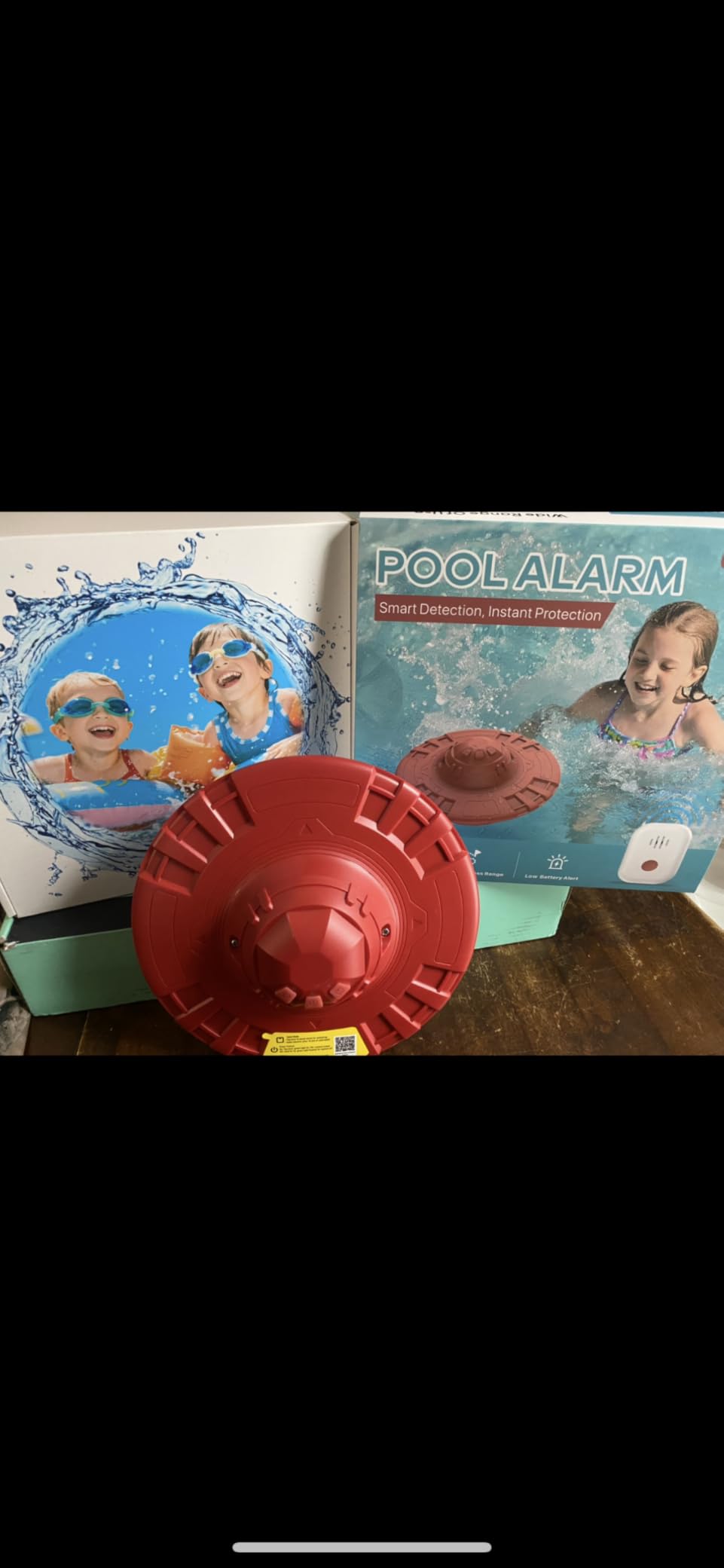
The 110 dB siren is confirmed by owners as genuinely loud inside the home, and the adjustable sensitivity is praised as responsive to real entry without firing at a falling leaf. A low battery indicator flags when protection is about to lapse.

There is no wiring and no app. You float it in the water and it is live, which is the right level of complexity for most households. The UV resistant housing is rated for sun, rain, and saltwater, so coastal and high-sun locations are covered.
Reviewers confirm that a single included 9V battery holds up for months, which is the full season in most climates. Customer service came up repeatedly as a strength, with replacement units shipped quickly and no argument.
Why it suits a lively yard
Owners describe the alarm doing exactly what the listing says: adding a layer for visiting children and pets, with loudness, sensitivity, and battery life all meeting expectations. In a yard where the pool is genuinely used, that predictability is worth more than a long feature list.
The rank in Amazon’s Pool Safety Alarms category is consistent with the rating, and the complete absence of critical reviews in the sample is unusual for this product type.
The placement rule that decides everything
The one consistent issue is placement relative to water features. Positioning the unit directly in front of jets, pump outlets, or waterfalls causes repeated false alarms, and several owners noted that a minor ripple such as an errant football toss can set it off.
So place it in calm or gently moving water, well away from returns. And remove it when a mesh or solid cover goes on for winter, then put it back in the spring. A floating alarm stored in a drawer by August is not a safety device, and forgetting it is the single most common way these units fail silently.
8. RoamRider Immersion Pool Alarm – Best for Spas, Ponds, and Small Pools
Pool Alarm for Inground & Above Ground Pools with Remote Receiver
Triggers on objects over 13 lb
Colour-coded receiver modes
Fits pools to 16 x 32 sq ft
Pros
- Detects objects over roughly 13 lb
- a useful proxy for a small child
- Screw or adhesive mounting suits most pool types
- Colour-coded modes make status readable at a glance
- Receiver adds LED flashing for night use
Cons
- Recommended only for pools up to 16 x 32 sq ft
- 85 dB output is quiet
- Tube must be submerged about 3.9 inches
- Drilling needed for the screw mount
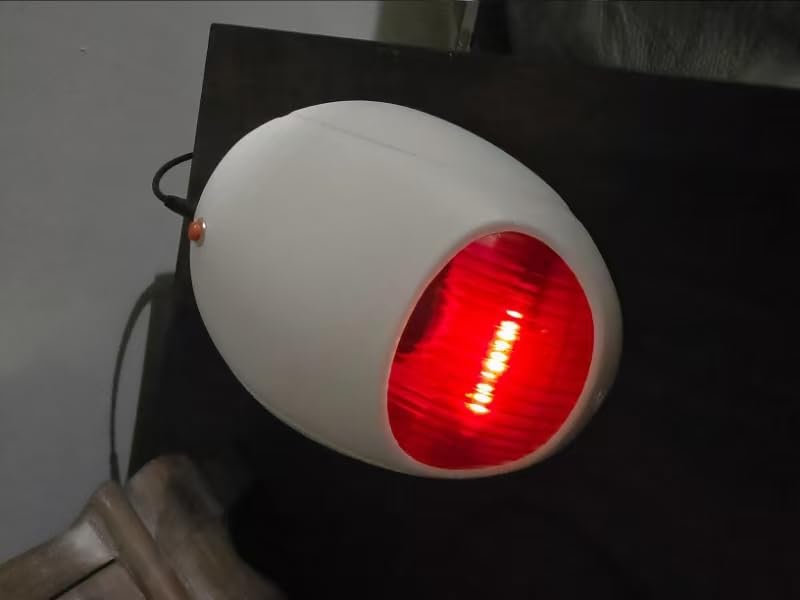
This is an immersion unit rather than a surface floater, which changes what it can do. The poolside tube is submerged about 3.9 inches below the surface and triggers on an object weighing over 13 lb, roughly the mass of a small child. That threshold is stated rather than implied, and it is the kind of number most listings in this category hide.
It is also the only immersion alarm in this lineup that is explicitly sold for spas and garden ponds, which matters if the water you are worried about is not a full-size lap pool.
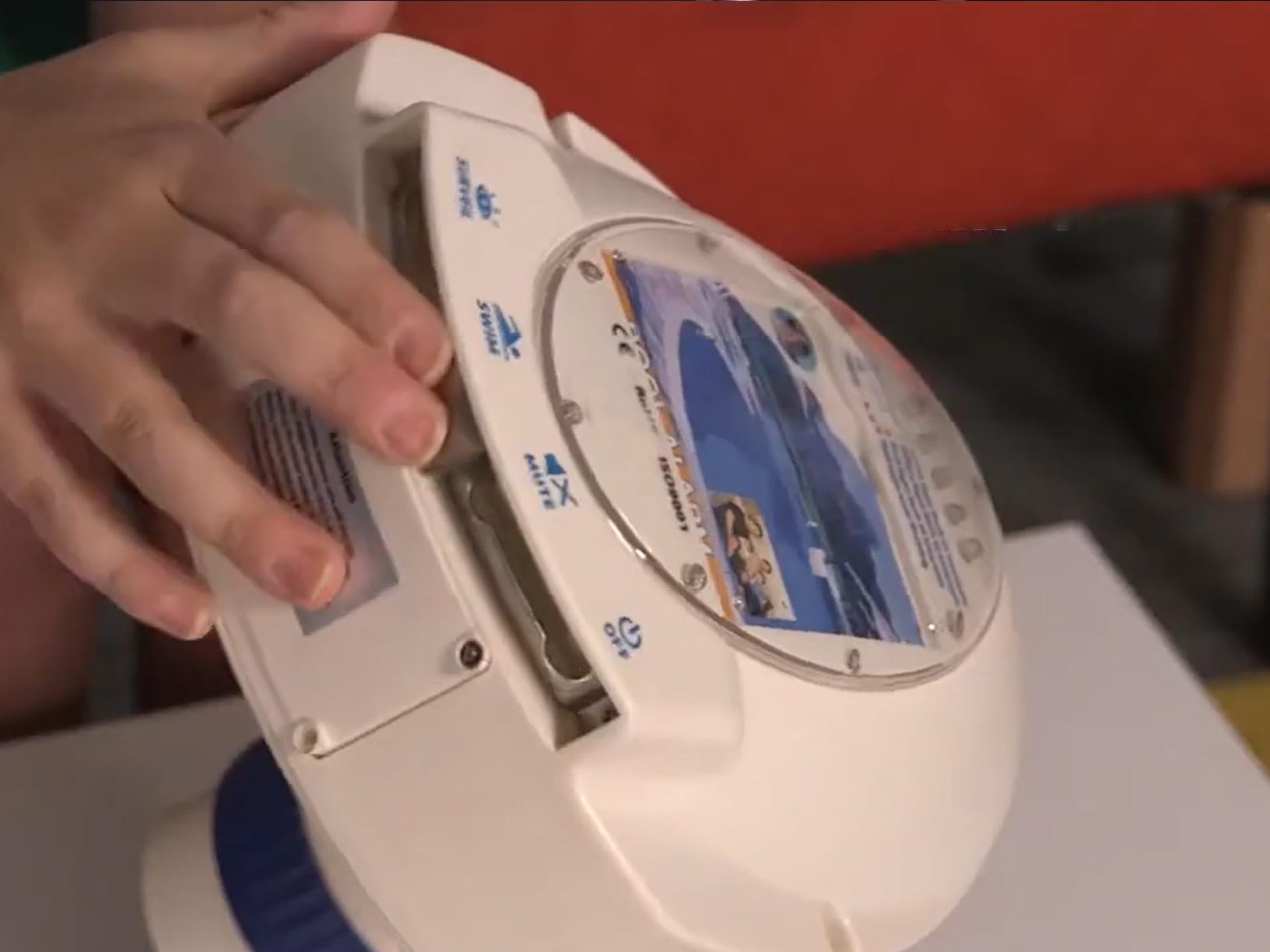
The receiver uses colour-coded modes that we found genuinely useful. Yellow means sleep or swim, green means armed and ready, and a flashing red means alarm. Audio prompts announce status changes, so you can check the state of the system from another room without walking out to the pool.
Mounting is flexible. Screw mount suits a concrete deck, and 3M adhesive works on smooth surfaces without tools. The receiver also flashes an LED alongside the 85 dB tone, which helps you locate the pool in a dark yard faster than sound alone.
Where immersion sensing helps
An immersion tube sits below the surface, so surface movement from wind and rain has less direct effect on the trigger than it does on a wave-detection floater. It is a different failure profile rather than a universally better one, but for a spa or a pond with a small child or a dog around it, the trade is often worth making.
The 13 lb threshold is a double-edged specification. It protects against cats and floating toys triggering the alarm, and it defines the size of the entry the unit is designed to catch.
Where it stops working for you
The 16 by 32 square foot ceiling is the hard limit, and most full-size residential pools exceed it. Larger pools would need multiple units, which starts to defeat the simplicity that makes this design appealing.
85 dB is the quiet end of the category. The manufacturer explicitly instructs buyers to test the alarm after installation, which is good practice, but correct placement is critical and getting it wrong quietly reduces coverage. Plan the tube depth before you mount it rather than after.
9. IC ICLOVER Wireless Immersion Pool Alarm – Best Mode Control for Shared Pools
IC ICLOVER Wireless Pool Alarm with Remote Receiver, Above & Inground Pools
Four working modes
85 dB receiver with LED flash
Pools to 16 x 32 sq ft
Pros
- Four modes including Surveillance
- Swimming
- Mute and Off
- Press-and-move control resists accidental touches
- Receiver combines sound with LED flashing
- Screw or adhesive install with accessories included
Cons
- Recommended only for pools up to 16 x 32 sq ft
- 85 dB alert is the quietest tier here
- Tube must be submerged about 3.9 inches
- Smallest review base with a 17 percent one-star share
The distinguishing feature here is granularity of control. Four working modes, Surveillance, Swimming, Mute, and Off, let you arm, disarm, and silence without removing the unit from the water, which matters in a household where the pool is in constant use by different people.
The press-and-move control design is a small but thoughtful detail. Requiring a deliberate press and release reduces the chance of a curious child or a wet hand accidentally resetting the alarm mid-session.
The receiver pairs wirelessly and combines an 85 dB alert with LED flashing, so you can find the alarm source in a dark yard faster than with sound alone. The 13 lb detection threshold matches the RoamRider, giving a comparable sensitivity profile for a similar size class of pool.
Mounting offers two paths again, screw fixings at the pool edge or strong double-sided adhesive, with accessories included either way. The cube body measures 3.9 inches on each side, which makes it easy to position in a smaller pool or spa.
When the mode control earns its keep
Households that entertain, share a pool with grandparents, or run a short-term rental will benefit most. A Mute mode that is genuinely easy to engage is the difference between an alarm that stays armed through a busy summer and one that gets permanently disconnected after the fourth pool party.
The manufacturer is also explicit that this supplements rather than replaces supervision, fencing, or lifeguards, which is the correct framing and worth crediting.
Where it falls behind
The 16 by 32 square foot recommendation is the same ceiling the RoamRider carries, so this is a small-pool device in both cases. The 85 dB alert is the quietest tier in our comparison, which makes the receiver distance a real design factor in your yard.
And the evidence here is thin. Twenty-nine reviews is the smallest sample we worked with, and a 17 percent one-star share is the highest here alongside the ZEPLIHS. We would want to see more owners running it through a full season before treating it as a primary layer.
10. PoolGuard PGRM-2 In-Ground Alarm – Best Certified Choice for Inground Pools
Poolguard PGRM-2 In-Ground Pool Alarm, White
NSF certified to ASTM F2208
In-home receiver to 200 ft
Covers pools to 20 x 40 ft
Pros
- NSF certified to ASTM F2208 for code compliance
- Made in the USA with a 3-year warranty
- In-home receiver reaching 200 ft
- Built to detect an intrusion like a one-year-old child
Cons
- No on-off switch
- requires the magnetic key every time
- Deck must be drilled with a masonry bit
- Sensitivity is not adjustable
This is the most recommended in-ground model by name in the parent forums we reviewed, and the reason is certification. It is NSF certified to ASTM F2208, which makes it the alarm to buy when a municipality inspects your pool and asks for a listed device. Nothing else in this lineup, apart from the PoolGuard buoy, carries that standard.
The detection engineering is specific in a way most listings are not. It is engineered to detect an intrusion similar to a one-year-old child rather than any surface ripple, and it covers pools up to 20 by 40 feet or 800 square feet.
The in-home remote receiver reaches up to 200 feet, and the indoor horn sounds 85 dB at 10 feet. Because the sensor is mounted in the pool rather than in your house, a power cut or a dropped WiFi connection does not disable it. That independence is a genuine safety argument for an inground installation.
It is made in the USA with a 3-year warranty, and long-term owners report months of use with no false alarms through storms, wind, and critters. Once installed, the unit stays in alarm-ready mode and cannot be deactivated, and it sounds a tamper alert if it is removed from the pool.
Why the certification is worth the friction
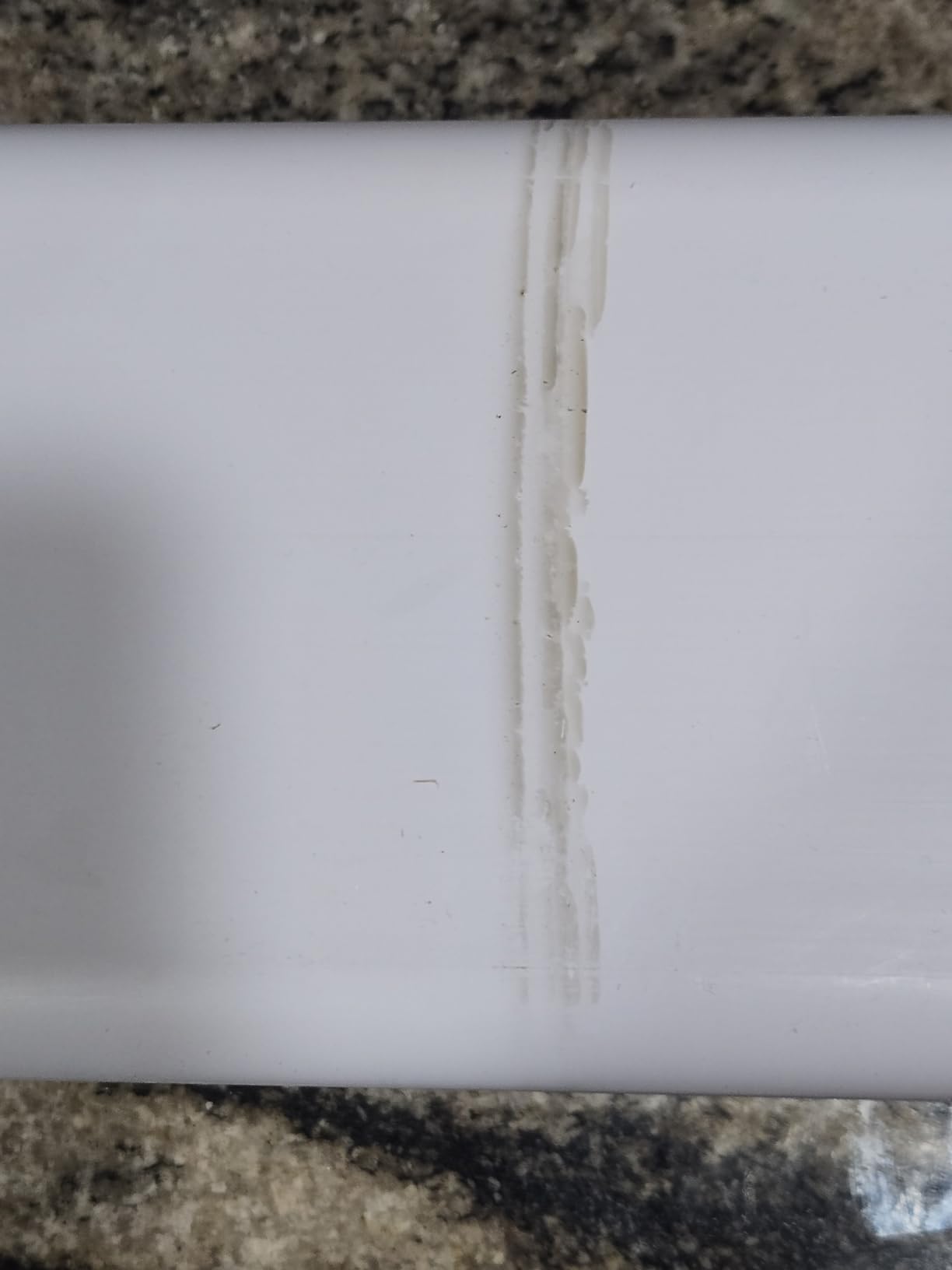
Every inconvenience below is a direct consequence of a tamper-resistant design that a code-compliant product has to have. There is no on and off switch. The magnetic safety key must be used every single time the unit comes out for swimming, and if you need a second key, sourcing one is genuinely awkward. The unit is anchored by a pin in a hole you have to drill in the deck with a masonry bit, and no template or bit is supplied.
If your pool is inspected, that is the correct product. Learn the arming procedure and make sure every household member and any pool staff can follow it, because the reviews are clear that a confusing disarm cycle is where the frustration comes from.
Where owners get frustrated
Sensitivity is not adjustable, so wind-driven surface action in an exposed pool can produce repeated false alarms. Water level also matters, since the unit expects the water close to deck height, and some pool shapes will not suit it.
The 3.9 average with 788 reviews is a polarised profile rather than a poor one, with 55 percent five star against 15 percent one star. The negatives concentrate on the no-off-switch design, the drilling, and false trips in wind or low water. Several reviewers note the product is excellent once installed correctly, which is the honest summary.
11. Lifebuoy App-Controlled Pool Alarm System – Best App Control and Battery Life
Lifebuoy Pool Alarm System – Pool Motion Sensor with Advanced Algorithm – Smart Pool Alarm That is Application Controlled. Powerful Sirens Blare at Poolside and Indoors
Smartphone app for sensitivity and siren length
Swim Mode auto-resume
Lithium 9V rated up to 3 years
Pros
- Only unit here with a smartphone app
- App handles multiple systems and multiple users
- Swim Mode mutes and auto-reactivates in 10 minutes
- Two included lithium 9V batteries rated up to 3 years
Cons
- App works only within Bluetooth range
- 3.6 average with a 20 percent one-star share
- Sensitivity still reacts to wind and water features
- 85 dB is modest for the tier
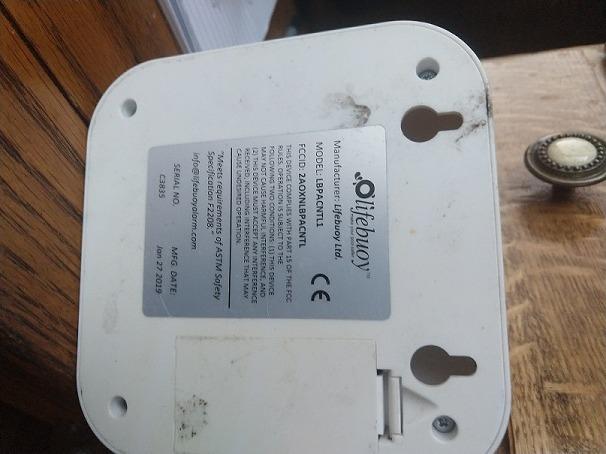
This is the only alarm in our lineup with a real smartphone app, and that is its whole argument. You adjust sensitivity and siren length from your phone rather than climbing a ladder to turn a dial on a floating unit in the dark. The app also handles multiple Lifebuoy systems and multiple users, so a family with two pools runs one interface.
Battery life is the quiet advantage. It ships with two ER 9V 1200mAh lithium batteries rated for up to 3 years depending on use, which removes the seasonal battery anxiety that affects most floating alarms.
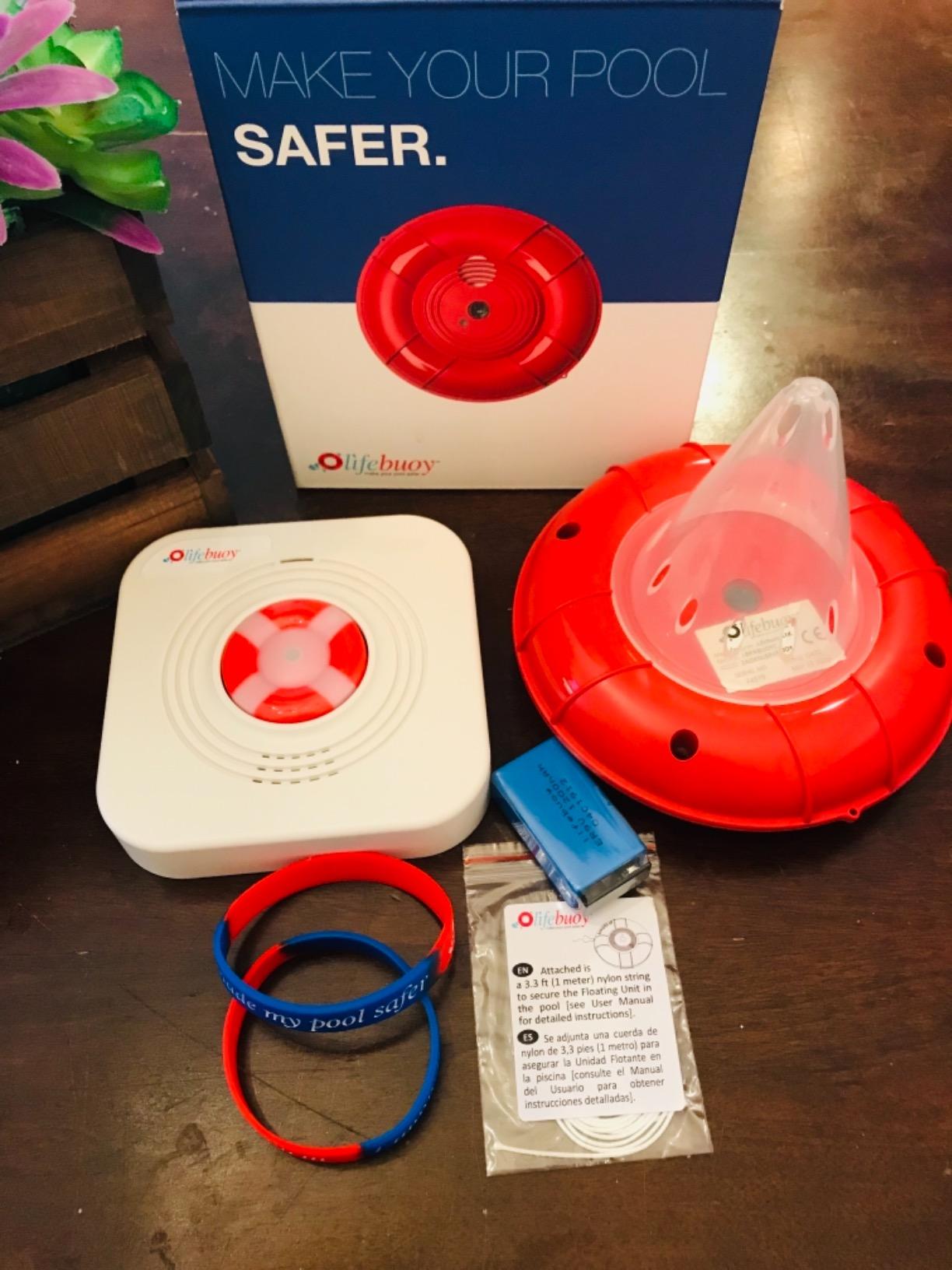
Swim Mode silences the alarm and automatically reactivates after 10 minutes without movement. It works across above ground, inground, spa, ornamental, and constructed pools, with a compact 6 by 6 by 5 inch poolside unit and a simple attachment kit.
Sirens sound at both poolside and indoors, giving you coverage in and around the house on a single event.
What the app genuinely adds
Two things. First, tuning sensitivity after a storm takes seconds on a phone rather than a poolside visit, which is the single most useful maintenance action a floating pool alarm has. Second, the 50 foot range keeps the app responsive around the pool deck, where you are already standing.
For owners who want the alarm to keep working through a season without a single ladder climb, this is the most considered design here.
What the reviews hold against it
The app works only within Bluetooth range. Despite the smart branding, remote monitoring from inside the house or from work is not possible, and buyers expecting phone alerts away from home are disappointed. If that is the feature you want, this is not the product.
The 3.6 average is the lowest here, tied with the PoolGuard buoy, across the largest review base at 871. Twenty percent one-star reviews cluster around false alarms from wind, rain, waterfalls, and moving water features despite the sensitivity control, and coverage stops at 20 by 40 feet without adding more systems. The price tier is high for 85 dB output.
12. PoolGuard PGRM-SB Above-Ground Safety Buoy – Best for Above-Ground Pools
PoolGuard PGRM-SB Safety Buoy Above Ground Pool Alarm, Red
Sub-surface entry detection
NSF certified to ASTM F2208
Fits round pools to 30 ft
Pros
- Sub-surface sensing cuts wind and rain false alarms
- No deck drilling needed
- Works with soft-sided and quick-set pools
- Bundled in-home receiver to 200 ft
Cons
- Only for above ground pools and smaller sizes
- 9V battery not included
- 3.6 average with a 20 percent one-star share
Above-ground pool owners are the least served by most pool alarm guides, and this buoy exists specifically for them. A subsurface unit like the PGRM-2 needs a hole drilled into a deck, and an above-ground pool frequently has no deck at all. This floats instead, which removes the single biggest installation barrier for that group.
The technical differentiator is sub-surface entry detection. It reacts to water entering the buoy rather than to surface waves, so wind and rain produce far fewer false alarms than with any wave-detection floater in this roundup. That is the correct trade for a device that has to survive a season of weather without being switched off.
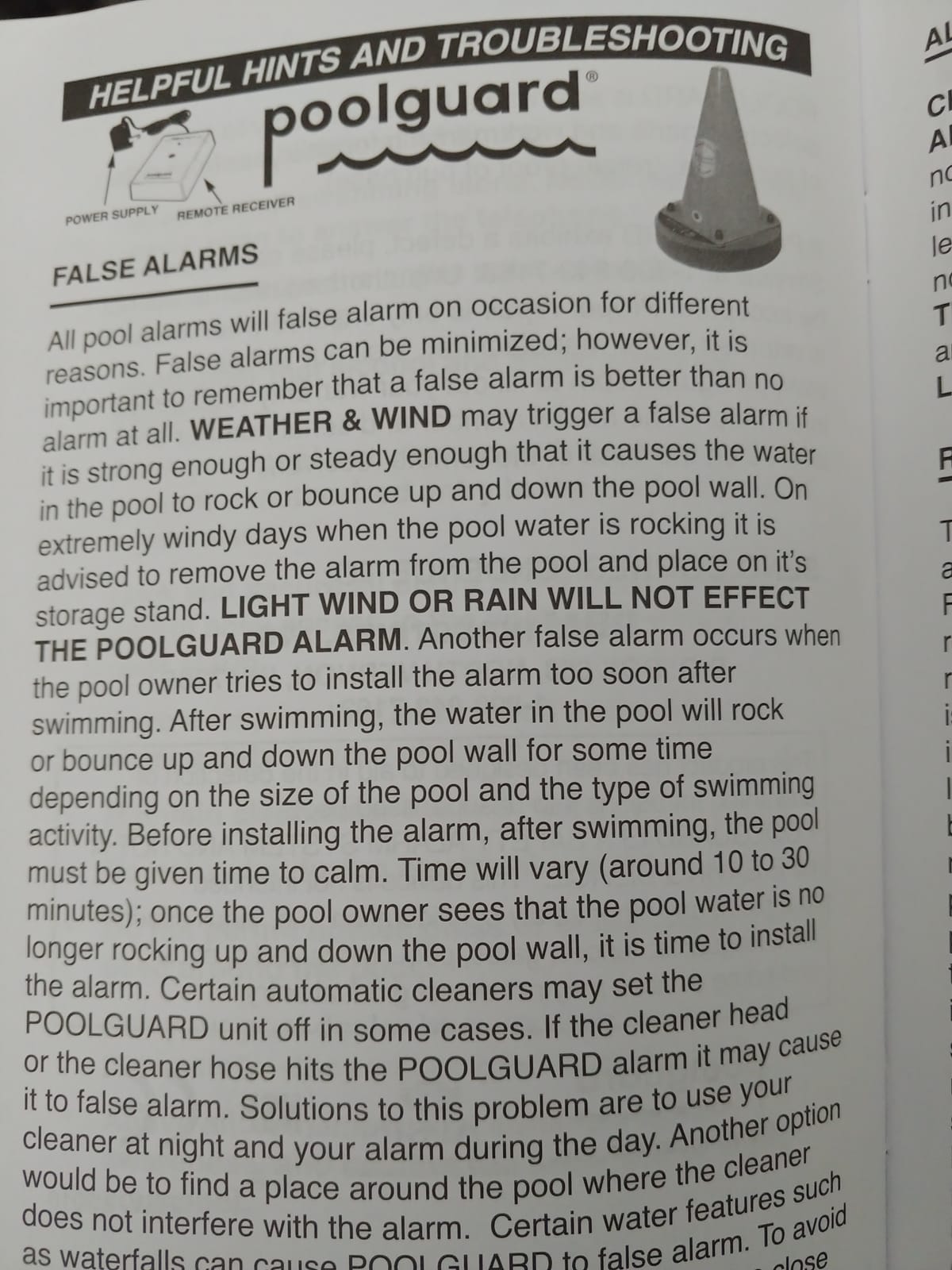
It is NSF certified to ASTM F2208, which matters because several states accept a certified floating pool alarm as part of a compliant setup. One of only two products here to make that claim, and the only floating option.
Coverage suits round pools up to 30 feet and rectangular pools up to 16 by 32 feet, including soft-sided, quick-set, and portable models. The in-home receiver reaches up to 200 feet and includes a 12V power supply.
Why the sub-surface approach is worth it
Every floating alarm in this roundup eventually gets switched off because it keeps going off in bad weather. Detecting water entry at the buoy rather than motion on the surface is the cleanest engineering answer to that, and owners consistently notice the difference compared with wave-detection units they have used before.
Tamper resistance is handled well. The alarm sounds if the buoy is removed, and sleep mode engages automatically on removal and wakes again on reinstallation, so winterising it does not require a reset procedure.
Where it falls short
Size is the real limit. It suits above ground pools and smaller rectangular pools, so it does not cover a large inground installation, and a 16 by 32 foot rectangle is modest for a full-size pool. Plan multiple units rather than stretching one.
The 9V battery is not included, so it is not ready out of the box. And with 217 reviews at a 3.6 average and a 20 percent one-star share, the sentiment is genuinely mixed, with buyers weighing certification and no-drill installation against a modest score.
How to Choose a Pool Alarm That Works in 2026
Start by deciding which layer you are filling, because the three categories do completely different jobs. A door or gate alarm buys you time at the perimeter. A floating or immersion alarm buys you time after water entry. A camera system buys you time before someone reaches the water. Families with toddlers usually want the first two running together, and the second is the one people forget.
Loudness. Anything in the 85 dB range is a baseline, not a feature. The contact alarms in this roundup run from 85 up to 140 dB, and the difference between 85 and 110 is the difference between an alert you notice and one you do not. Specifications quoted at a distance matter more than the headline number, so look for whether the rating is measured at 10 feet.
Detection threshold. For immersion sensors, the weight that triggers the alarm tells you what it is designed to catch. A 13 lb threshold corresponds roughly to a small child, which is the number you want for a family with toddlers. A wave-detection floater has no stated threshold, which means it is relying on surface displacement and nothing more precise.
Pool size and shape. Nearly every floating alarm here is rated to 20 by 40 feet, and the immersion units stop at 16 by 32 square feet. Above-ground owners should look at the PoolGuard buoy, which reaches 30 feet on round pools. Irregular or multi-lobed shapes defeat a single floater, and that is where two units earn their cost.
Certification. If a municipal inspection is likely, ASTM F2208 or UL 2017 is not optional. The Techko S187D, the PoolGuard PGRM-2, and the PoolGuard PGRM-SB carry those standards. The unlisted contact alarms in this roundup are excellent value and simply cannot be used to satisfy a code requirement.
Battery type and life. A single 9V battery running a whole season is a real risk, because a weak cell in late summer is silent coverage loss. Units with four AA batteries or replaceable lithium cells give you more margin. Whichever you choose, put a recurring reminder in your calendar, because low battery warnings are the first thing people ignore.
False alarms and alarm fatigue. This is the honest reason some pool alarms fail in the field. Wind, rain, falling leaves, pool cleaners, waterfalls, and return jets all trigger wave-detection units. An alarm that goes off constantly gets unplugged, and a disconnected alarm is worse than none because it looks like protection. Look for adjustable sensitivity, gyroscope-based filtering, or sub-surface sensing, and test the unit before the season starts rather than after the first false alarm.
Installation reality. Two of the strongest units here require drilling. The PGRM-2 needs a masonry hole in the deck and no template is supplied, and the Hovara, ZapWay, and Lifebuoy all need the unit removed before a cover goes on for winter. Budget an afternoon and a masonry bit, and pick a float position in calm water away from return jets before you commit to a spot.
What no alarm in this roundup can do. None of these devices detect a slow, quiet entry by a small animal. Wave and surface alarms are tuned to a body displacing a meaningful amount of water. Door alarms detect an opening, not a person. Immersion units have a stated weight threshold that small pets will not reach. If your concern is a toddler, a perimeter alarm plus a water-entry alarm covers it. If your concern is a dog that slips in silently, layer a fence and a self-closing gate first, because no alarm in this lineup is designed around pet mass.
Maintenance cadence. Run a walk test every week, standing at a typical adult height, and confirm you can hear the alert from inside the house. Check the battery monthly rather than waiting for the low battery indicator. At seasonal close, remove floating units, dry them, and store them indoors. At seasonal open, re-place and re-test before the first swim, because a unit that sat in a garage for seven months is unverified until you test it.
What this roundup does not cover. Wearable pool alarms, which appeared repeatedly in the questions buyers ask, are not in this lineup because none cleared the review and certification bar we set. We would rather name the gap than pad the list. Pets are covered only in the sense described above, and no camera-based AI system is included, so if you want an alert before water entry, treat that as a separate purchase.
How We Selected These Alarms
We compared the 12 products on hard specifications first: stated loudness and the distance it was measured at, detection thresholds, maximum pool size, battery type, weather sealing, and stated safety certification. Where a specification was absent, we treated that as a fact about the product rather than an oversight.
Review volume and rating distribution came next, because a safety device with a 4.8 average across nine reviews tells you far less than a 3.9 across 788. We weighted the one-star share as heavily as the five-star share, since dead units and failed triggers are the failure modes that matter here. No product paid for placement, and we earn a commission on qualifying purchases, which is why every product carries a price-check button rather than a recommendation you should feel steered toward.
Frequently Asked Questions
Are pool alarms worth it?
Pool alarms are worth adding to an existing safety setup, not as a replacement for one. They buy you seconds at the perimeter or at the moment of water entry, which is genuinely useful. They do not supervise a child, and no alarm detects a slow, quiet entry by a very small animal. The National Drowning Prevention Alliance teaches alarms as one layer of five, alongside a fence, a lock, and active adult supervision.
Do floating pool alarms work?
Floating pool alarms do work, but they detect a change in the water surface rather than a person, so they catch a body displacing water and ignore most wind and debris. Their weakness is nuisance alerts, which is why sensitivity adjustment, gyroscope filtering, and sub-surface sensing all improve reliability. They cannot be used with a solid safety cover fitted or while an automatic pool cleaner runs, and they must be removed and re-placed each season.
What is the most reliable pool alarm for an inground pool?
The PoolGuard PGRM-2 is the most reliable choice for an inground pool when reliability means code compliance, since it is NSF certified to ASTM F2208, made in the USA with a 3-year warranty, and rated for pools up to 20 by 40 feet. Its in-home receiver reaches 200 feet. For the lowest false-alarm rate without a drilled deck hole, the PoolGuard PGRM-SB uses sub-surface entry detection instead.
What are the best floating pool safety alarms for inground pools?
The ZapWay floating alarm is the strongest daily-use floating alarm we found, with a 110 dB siren on both the pool unit and the indoor receiver, automatic Swim Mode that re-arms after 10 minutes, and coverage to 20 by 40 feet. For the lowest false-alarm rate, the ZEPLIHS unit uses a 6-axis gyroscope to separate wind and rain from real entry. The Hovara unit rated highest in our comparison at a 5.0 average.
What is the best door alarm for pool safety?
The Techko S187D is the best door and gate alarm we compared. It is UL 2017 compliant, which matters if you need to pass a municipal pool inspection, and its 110 to 115 dB six-tone siren is hard to miss. Two bypass buttons give a 10-second entry window, and a patented screen door sensor lets a sliding glass door stay open without constant false alerts.
What is the best sliding door alarm for pool safety?
For a sliding glass door, the Techko S187D is the pick because its patented secondary screen door sensor is built for exactly that situation, letting the main slider stay open during the day without a constant alarm stream. The Zabree four pack is the alternative when you have several openings to cover and want tool-free adhesive mounting at 120 dB without drilling door frames.
Why is my pool alarm going off for no reason?
The usual causes are wind chop, heavy rain, a falling leaf, a running pool cleaner, a return jet, or a water feature such as a waterfall. Most wave-detection units treat all of these as entry. Turn the sensitivity down, place the unit in calm water away from returns, and use Swim Mode around water features. If it still goes off constantly, an alarm you ignore is worse than no alarm at all.
How often should I test my pool alarm?
Test it weekly during the swim season. Walk into the alarm from a typical adult height and confirm the alert is audible from inside the house, not just at poolside. Check the battery monthly rather than waiting for a low battery indicator, and always test immediately after re-placing a floating unit at seasonal open, since a unit that sat in storage for seven months is unverified until you do.
Building a Layered Pool Safety Setup in 2026
If you take one recommendation from this roundup, make it the Techko S187D on every door and gate that faces the pool. It is the loudest thing most families will install, it is UL 2017 compliant so it counts when an inspector asks, and the screen door sensor means nobody is tempted to bypass it permanently.
Then add one water-entry layer sized to your pool. The ZapWay floating alarm for an everyday inground pool, the PoolGuard PGRM-SB if yours is above ground or the deck cannot be drilled, the Hovara if you want the simplest possible setup, or the ZEPLIHS if wind is your biggest frustration. For a code-inspected inground pool, the PGRM-2 remains the certified benchmark despite the key-and-drill friction.
Layer those two alarms behind a self-closing, self-latching fence, keep a ladder locked or removed, and keep an adult watching the water. That is the complete answer to which pool alarms for backyard safety actually work: the fence, the supervision, and an alarm that is loud, tested, and still connected in September.