
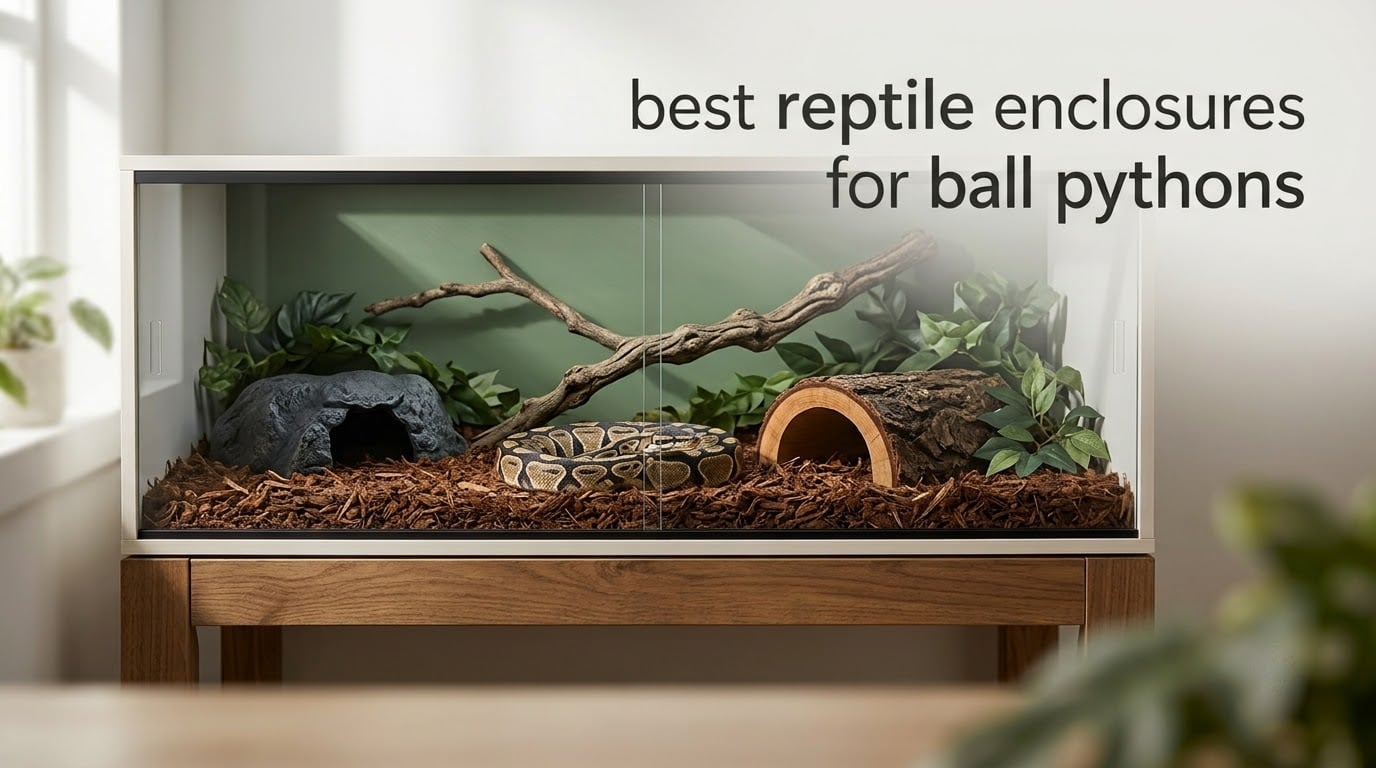
An adult ball python belongs in a front-opening 4x2x2 foot PVC enclosure, sold in the trade as a 120 gallon. That size gives an 8 square foot floor, the low point every experienced keeper lands on, and the solid panels hold heat and humidity without the daily misting a mesh-top glass tank demands. The material matters more than the brand label: PVC does not breathe, so your thermostat-controlled heat source works harder for nothing.
Ball pythons are ambush predators from sub-Saharan Africa. They spend most of the day wedged under cover, not stretched out in the open, which is why a front-opening door and a heavily clutter-lined interior matter more than a tall profile or a decorative frame. It also explains why a young snake is not stressed by a big cage. The stress almost always comes from an empty cage, not a large one.
Before the individual reviews, here is the setup a keeper needs to have working the day the enclosure arrives:
Size: a 4x2x2 floor (48x24x24 inches) for any snake past about 3 feet or 800 grams. Hatchlings can start here if the interior is broken up with hides and branches.
Heating and lighting: a thermostat-controlled radiant heat panel or deep heat projector for ambient heat, plus a dimmable basking lamp on a separate timer if you want a visible warm spot.
Humidity: 60 to 80 percent ambient, checked with a digital hygrometer. A digital probe replaces the cheap dial gauge, which is inaccurate enough to mislead you.
Enrichment: two hides, one of them a humid hide with damp substrate inside, plus branches and ground cover to break up sightlines.
Substrate: moisture-retentive cypress mulch or coconut fibre at a depth your snake can burrow into.
I have worked through every enclosure in this roundup against the same checklist: panel material and thickness, how well the seams fit before sealing, door hardware, weight once filled, and how much of the heat and humidity argument survives contact with a real room. Keeper consensus from r/ballpython, summarized across the forum threads I pulled for this guide, matched my own results closely on almost every point. Where a claim belongs to the reviewers rather than to me, I say so.
One point deserves saying up front, because it is the single most repeated theme across the keeper forums: every PVC enclosure needs its seams sealed, including the premium brands. As one r/ballpython thread put it plainly, “Every PVC enclosure needs to be sealed, even Kages.” A first-fill leak is a few dollars of aquarium-safe silicone and a curing afternoon, not a defect. Plan for it before you pour water anywhere.
Table of Contents
Top 3 Ball Python Enclosures (October 2026)
New Age Pet ECOFLEX Mojave 48 Inch
- ECOFLEX composite construction
- Locking sliding front doors
- Vented side panels and mesh top
- 10-year warranty

Phailozoo 120 Gallon Stackable 4x2x2
- True 4x2x2 footprint
- Metal mesh top with 28 percent blockage
- Snug-fit panels
- Stackable with V2 stackers

Reptile Habitats 4x2x2 V3 PVC
- Durable PVC panels
- Removable glass front doors
- 36 pounds assembled
- Cable ports
All 10 Ball Python Enclosures Compared in 2026
| Product | Specs | Action |
|---|---|---|
| New Age Pet ECOFLEX Mojave 48 Inch |
|
Check Latest Price |
| Phailozoo 120 Gallon Stackable 4x2x2 |
|
Check Latest Price |
| Reptile Habitats 4x2x2 V3 PVC |
|
Check Latest Price |
 REPTI ZOO 120 Gallon All-Glass REPTI ZOO 120 Gallon All-Glass |
|
Check Latest Price |
 REPTI ZOO 120 Gallon PVC REPTI ZOO 120 Gallon PVC |
|
Check Latest Price |
 Zilla QuickBuild 65 Gallon Zilla QuickBuild 65 Gallon |
|
Check Latest Price |
 PROLEE 82 Gallon PROLEE 82 Gallon |
|
Check Latest Price |
 ToxiRium 230 Gallon Extra Tall ToxiRium 230 Gallon Extra Tall |
|
Check Latest Price |
 REPWILD 4x2x2 Thick PVC REPWILD 4x2x2 Thick PVC |
|
Check Latest Price |
 REPTI ZOO 120 Gallon Aluminum Frame REPTI ZOO 120 Gallon Aluminum Frame |
|
Check Latest Price |
1. New Age Pet ECOFLEX Mojave 48 Inch – The Most Proven Adult Enclosure
New Age Pet® ECOFLEX® 48″ Mojave Reptile Enclosure, Large, Grey
ECOFLEX composite
46x22x21 inch interior
50.7 pounds
10-year warranty
Not waterproof
Pros
- Locking sliding front doors with wide unobstructed viewing
- Moisture-resistant composite wipes down easily
- Vented side panels and mesh top handle heat lamp and UVB mounting
- Backed by a 10-year manufacturer warranty
- Most owner reviews of any enclosure here
Cons
- Composite is not waterproof so it suits low-to-moderate humidity
- Stand is sold separately
- Mesh top vents moisture in a dry room
The Mojave has been on the market since 2020 and has picked up more owner reviews than anything else on this list by a wide margin. That matters more than it sounds. When a thousand-plus people describe their setup, the recurring problems surface early, and for this enclosure the recurring problems are consistent and manageable rather than structural.
The front is two sliding glass doors with a working lock, which is the correct pattern for an ambush predator. You open a door, offer a meal, and the snake never has to deal with hands entering from directly above. Vented side panels and a large mesh top mean a basking lamp and a UVB fixture both mount without drilling anything into composite.
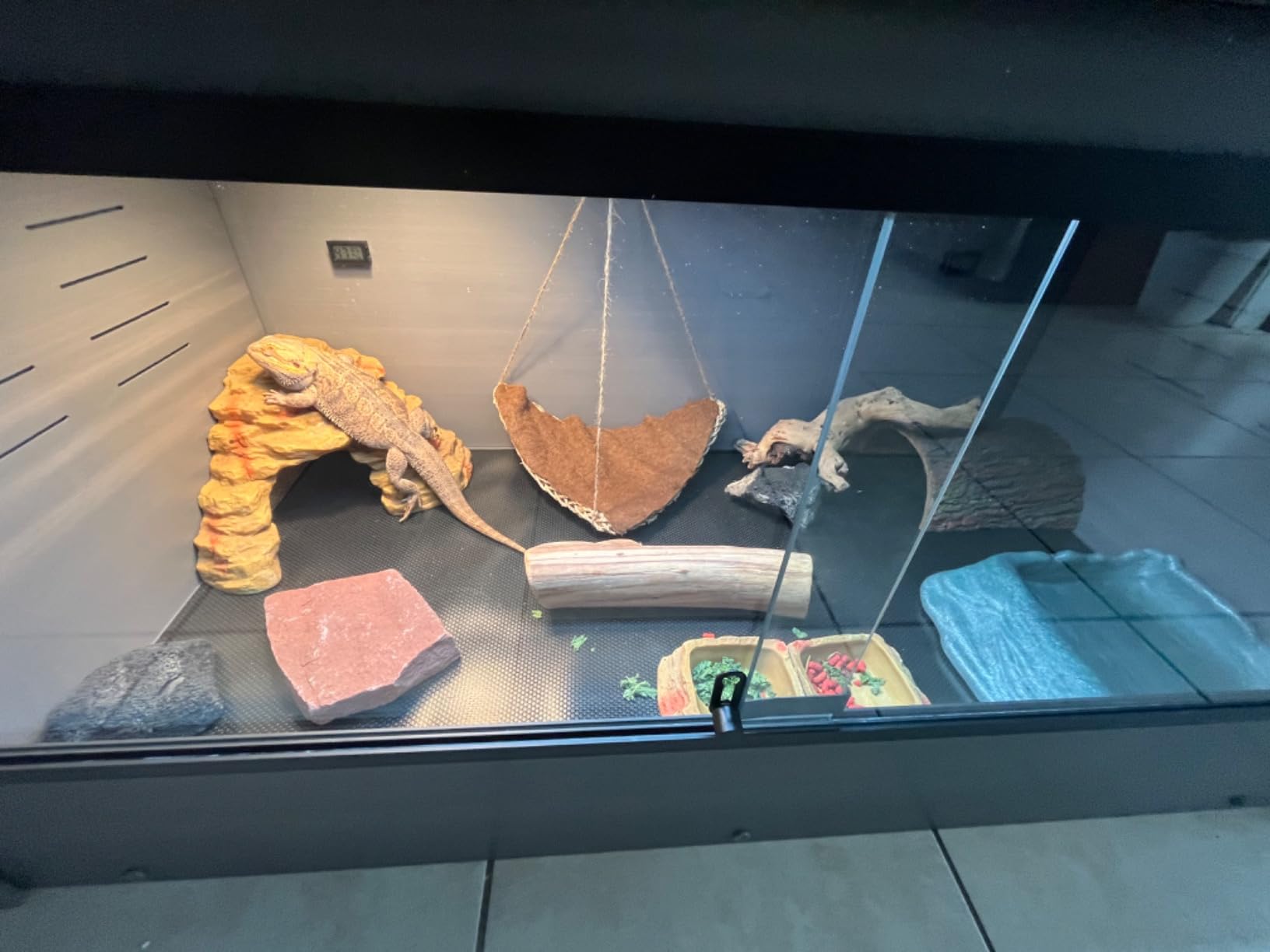
Here is the honest limitation. ECOFLEX is a moisture-resistant composite, not a waterproof panel, and New Age Pet rates it for low-to-moderate humidity setups. It handles the 60 to 80 percent band a ball python needs without any fuss in a normal room. In a persistently dry house, or with a bioactive system where you are pouring water into a litter dam, the panel edge is where you would seal first.
At 50.7 pounds before substrate, it is a two-person lift. The 10-year warranty is the longest we found in this roundup, and for a cage expected to last as long as the snake does, that is a meaningful vote of confidence from the manufacturer.
The finished interior measures about 46 by 22 by 21 inches, so a five-foot female would still be turning a corner at the ends. For a 3 to 4 foot adult, the floor space is genuinely generous.
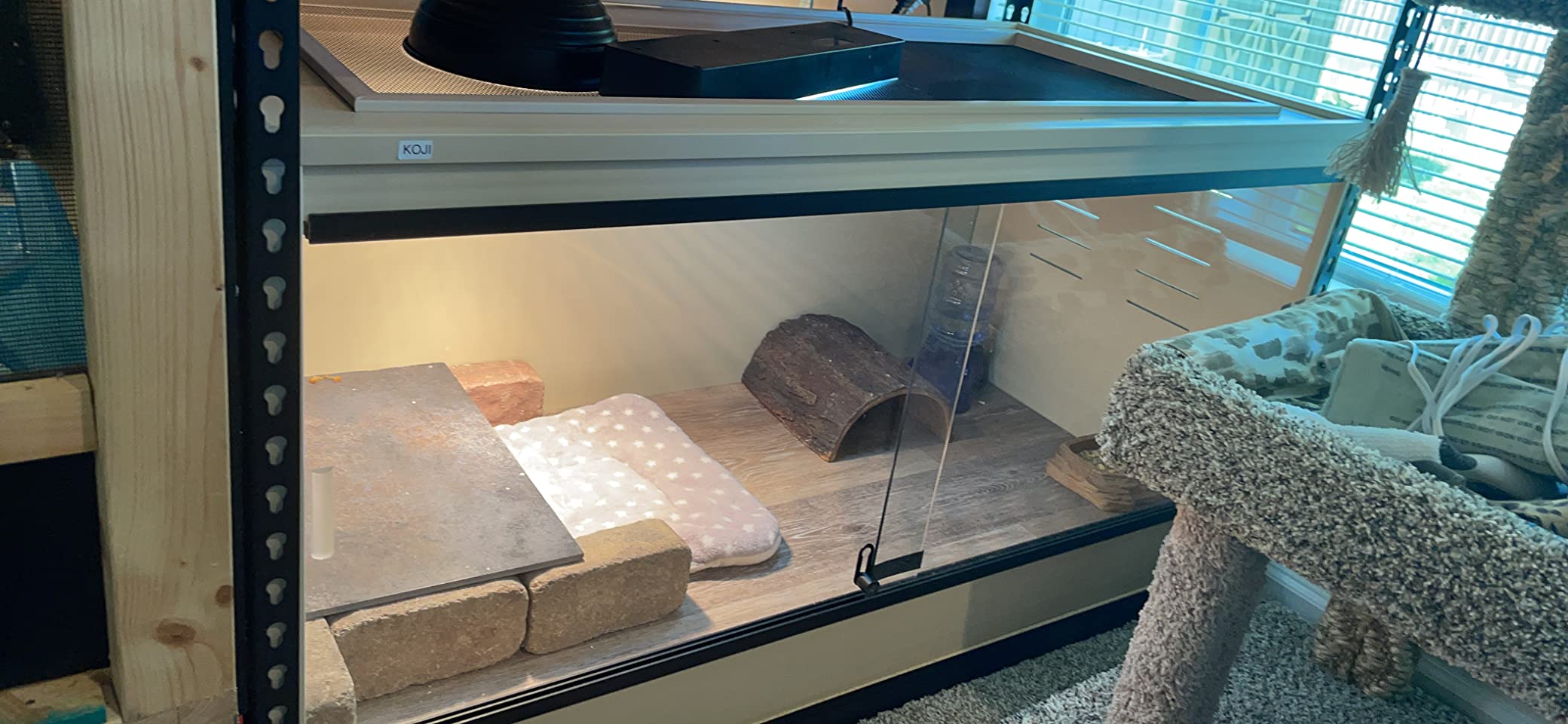
What you should know before you buy it
Buyers consistently report fast, painless assembly, typically 20 to 30 minutes with basic tools and all hardware in the box. The visual result is a wide, clean viewing pane that makes the enclosure double as a display piece in a living room, which is a genuine benefit for a snake that is part of the household rather than a rack animal.
The 4.2 average rating across all those reviews is not a knock. It reflects a specific reservation about moisture resistance, and if your household humidity regularly dips, that is a fair thing to weigh.
Who should skip it
Skip this enclosure if you plan to run a fully bioactive system with a deep drainage layer and regular water pours from the top. The composite is rated for moderate humidity, and the bottom edge and corner seams would need sealing before you start.
I would also skip it if you are buying for a first-time keeper in a genuinely arid region without a plan to cover the mesh top. Solid panels solve a humidity problem that a screen creates.
2. Phailozoo 120 Gallon Stackable 4x2x2 – The Best Stackable Adult Cage
Phailozoo 120 Gallon Reptile Tank, Stackable 4x2x2 Reptile Enclosure
PVC sides and base
48x24x24 inches
44 pounds
Metal mesh top,28 percent blockage
Pros
- Snug-fit construction with minimal escape gaps
- Lightweight for a 120 gallon at 44 pounds
- Substrate barrier at the front keeps mulch contained
- Stacks with Phailozoo V2 stackers
- Five color options
Cons
- Sliding doors ship without a lock
- Side panels and front strip are plexiglass not tempered glass
- Not watertight until you seal it
- Mesh top needs covering in dry setups
This is the enclosure I would hand to a keeper who is running more than two snakes, and the 4.6 rating across 758 reviews is the most solid combination of score and volume among the adult cages here. The footprint is a true 4x2x2 rather than a 4x2x2 with a shallow interior, and the snug-fit build leaves few gaps for humidity to escape through.
The metal mesh top is described by the manufacturer as having 28 percent blockage, which is a sensible balance: light and heat still pass through, but the open area is smaller than a typical fine-mesh lid, so it loses less moisture than you might expect from a screen top.
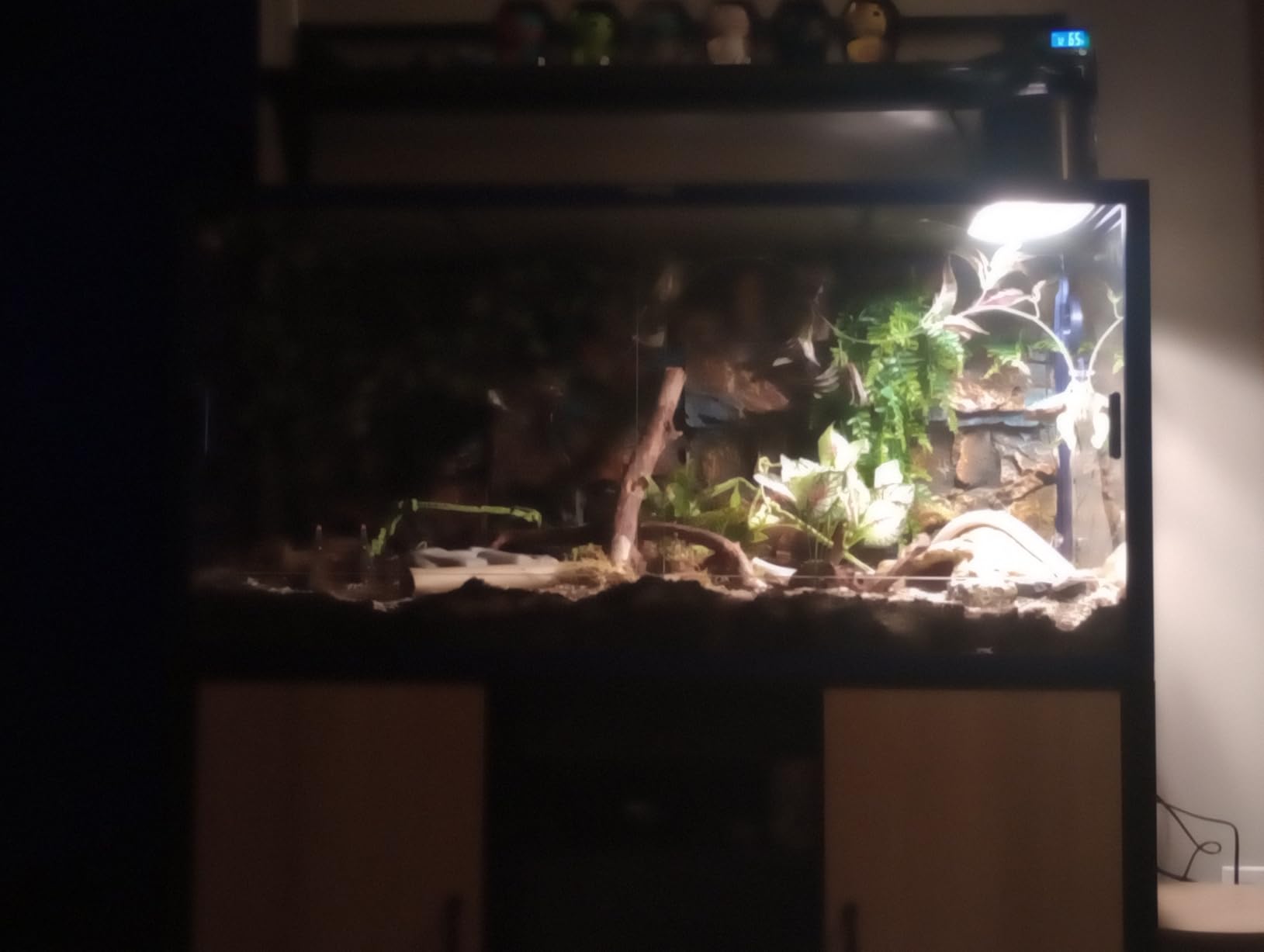
The stackability is the reason this one earns its place for collections. Phailozoo sells a matching V2 stacker, so a multi-snake room becomes a vertical footprint problem rather than a floor space problem. Buyers running groups report that stacking is straightforward once you get the first pair level.
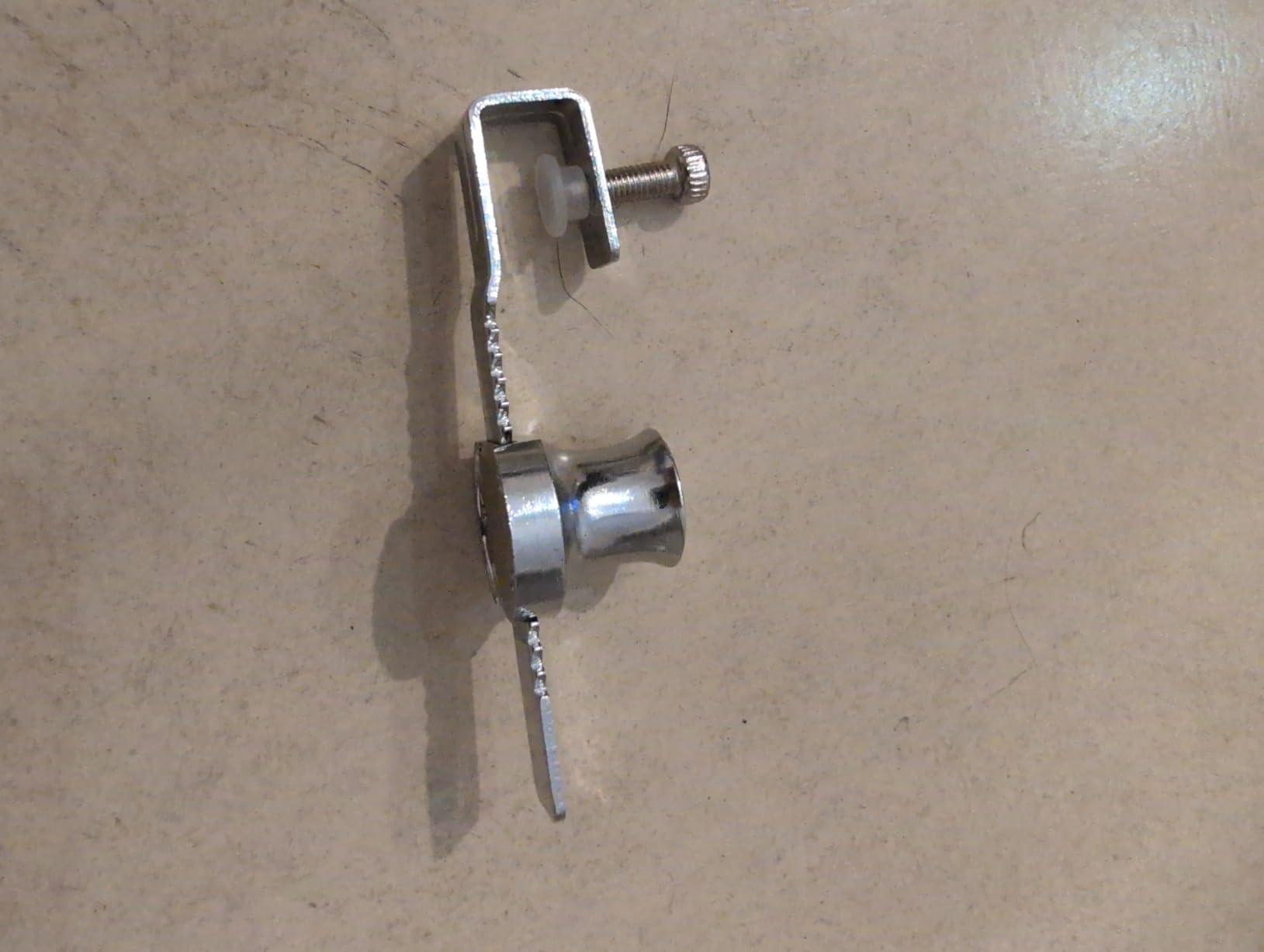
There is one hardware gap worth planning around. The sliding doors do not include a locking mechanism, and a five-foot adult testing the seam at the door track is a real scenario. Add two sliding door locks before the snake arrives; they take five minutes and about the cost of lunch.
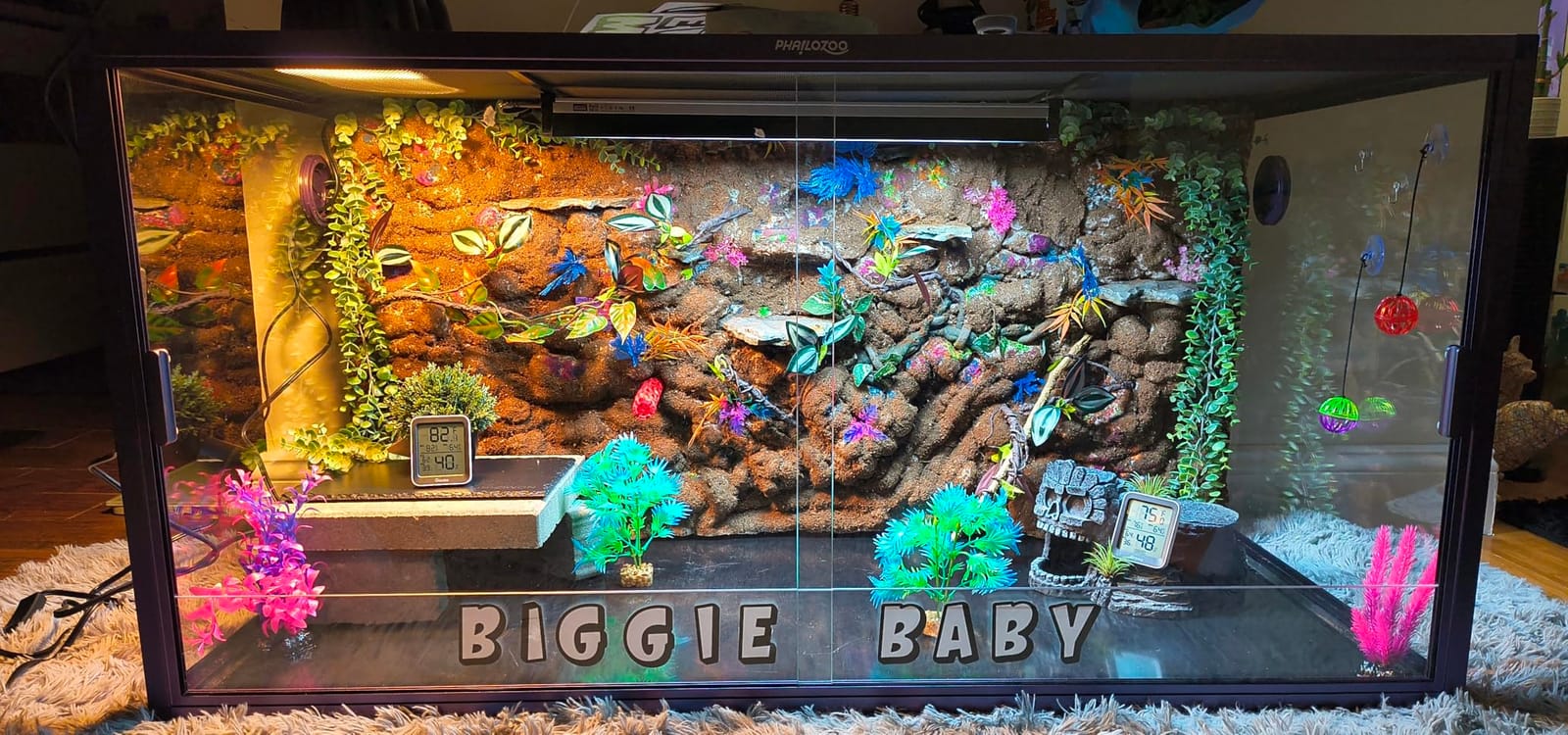
What you should know before you buy it
The side panels and the front bottom strip are plexiglass rather than tempered glass. That is a legitimate trade for the 44 pound weight, but plexiglass can scratch and flex over years, and it is the part of this enclosure most likely to need replacing eventually.
Assembly is reported at under an hour for two people, and the substrate barrier at the front of the base is a small detail that saves you from sweeping cypress mulch across the floor every time you spot clean.
Who should skip it
Skip it if you want turn-key humidity control and are not willing to seal the seams. The base is silicone-sealed for structural strength but is not watertight, and the manufacturer says it needs re-sealing for bioactive work.
Skip it if you want glass on every side for a full 360 degree view. This is a PVC box with glass doors, not an all-glass tank.
3. Reptile Habitats 4x2x2 V3 PVC – The Lightest Adult Cage at Full Size
Reptile Habitats 4x2x2 (120 Gallon) Reptile Enclosure V3 PVC Panels, Glass Doors, Lightweight, Easy to Assemble, Heavy Duty Screen, Aluminum Frame
PVC panels, aluminum frame
48x24x24 inches
36 pounds
Removable glass doors
Pros
- Lightest full-size adult enclosure we tested at 36 pounds
- Durable PVC panels unaffected by high humidity
- Doors lift completely out for deep cleaning
- Pre-drilled cable ports for probes and heat equipment
Cons
- No printed instructions
- only a QR code to an assembly video
- Top is not hinged so access is front-only
- Bottom seams leak if you pour water directly
At 36 pounds assembled, this is the number that makes the biggest practical difference in a home. Moving a 120 gallon cage is the single most annoying task in ball python ownership, and this is the only full-size adult enclosure here that one person can reasonably reposition on a furniture dolly. The aluminum frame keeps it rigid despite the low weight.
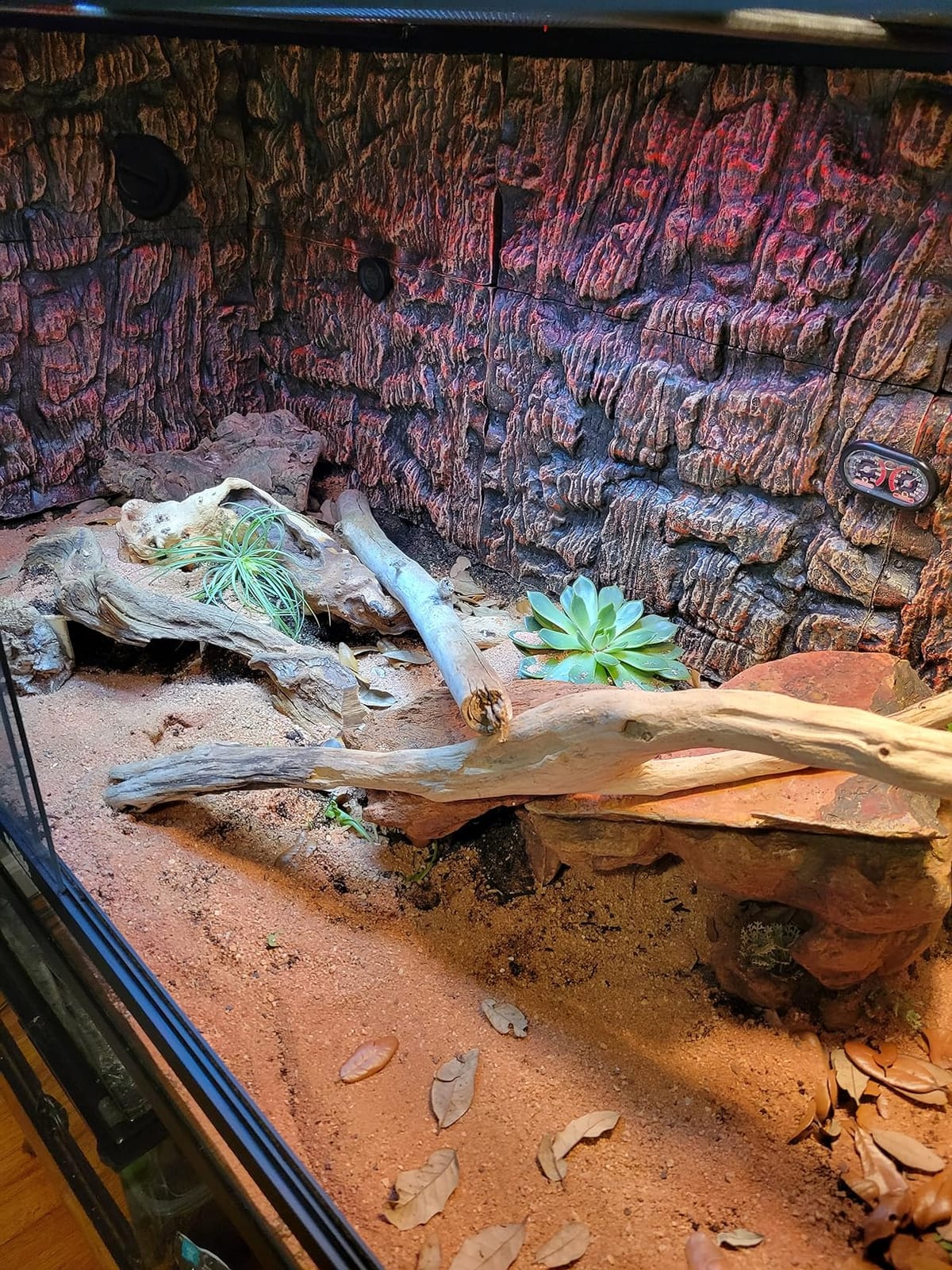
The panels are PVC and are described as undamaged by high humidity, which is exactly the material claim you want for this species. Cable ports are pre-drilled for a thermostat probe, a hygrometer, and heat equipment, so you are not routing wires through a door gap on day one.
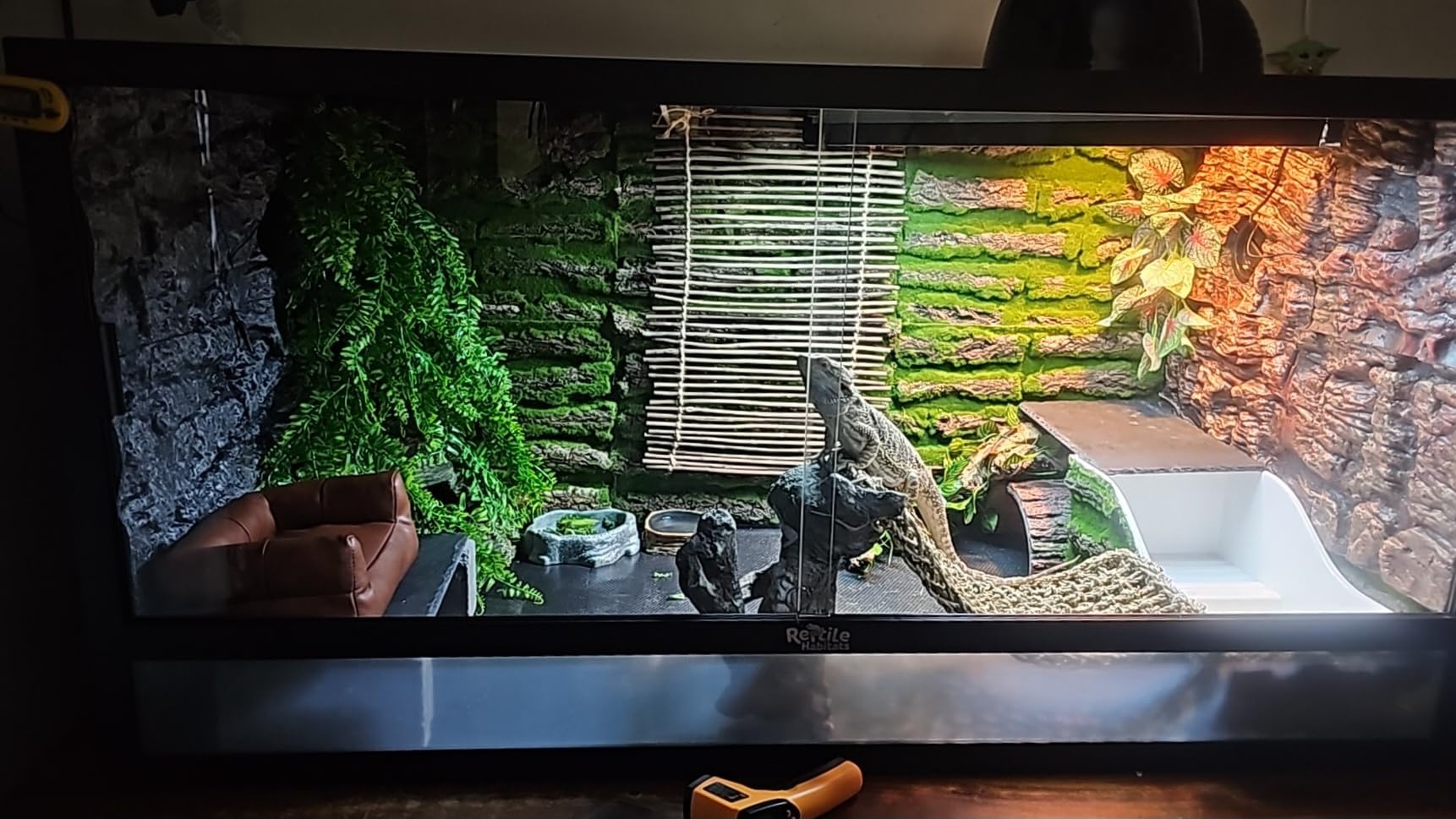
The removable glass front doors are genuinely useful in a way that sliding doors are not. Lift them out, and you have an open frame for cleaning, for photography, and for moving a snake into a separate feeding tub without the fight of guiding a body through a narrow slot.
Owners report a flawless bottom seal on arrival, which is not guaranteed in this product category. A first-fill test with a shallow layer of water in the bottom, before any substrate goes in, will tell you in ten minutes whether you need silicone.
What you should know before you buy it
Two things catch first-time builders out. There are no printed directions in the box, only a QR code linking to an assembly video, so have your phone ready before you start. And the top is not hinged, so all interior access is through the front doors. That is a design choice, not a defect, but it changes how you clean a tall piece of cork bark.
Report of stripped screws during assembly is worth flagging. Inspect the hardware bag before you start, and keep the spare screws from the box.
Who should skip it
Skip it if you want a sealed, watertight base for a bioactive system out of the box. Owners report leakage at the bottom seams if water is poured in directly, and silicone lining is needed for wet setups.
Skip it if you are tall and dislike working low, or if your snake lives in a rack-style setup where top access is your normal working position.
4. REPTI ZOO 120 Gallon All-Glass – The Best All-Glass View
REPTIZOO Large Reptile Terrarium 120 Gallon, Tall & Wide Tempered Glass Reptile Tank 48″ x 24″ x 24″ with Sliding Door Top Screen Ventilation & Anti Escape Lid, Full View
Tempered glass, all-glass sides
48x24x24 inches
91 pounds
Anti-escape lid buckle
Pros
- All four sides in glass with no mesh blocking sightlines
- Anti-escape lid buckle and door lock included
- Removable large-weave screen top for UVB and infrared
- Waterproof raised bottom plate with heater clearance
Cons
- Heaviest unit here at 91 pounds
- Glass insulates poorly so humidity needs more work
- Do not drill holes in tempered glass panels
If you keep a snake that is part of the furniture, the view is the selling point. All-glass side panels mean no mesh anywhere except the removable top, so you get an unobstructed 360 degree view that no PVC or composite enclosure in this roundup can match. The larger-weave screen top is also better for UVB penetration than fine mesh.
Security hardware is a step above most of this list. The lid has an anti-escape buckle and the sliding door has its own lock, both factory-installed, which is what you want for an adult that has learned where the weak point is.
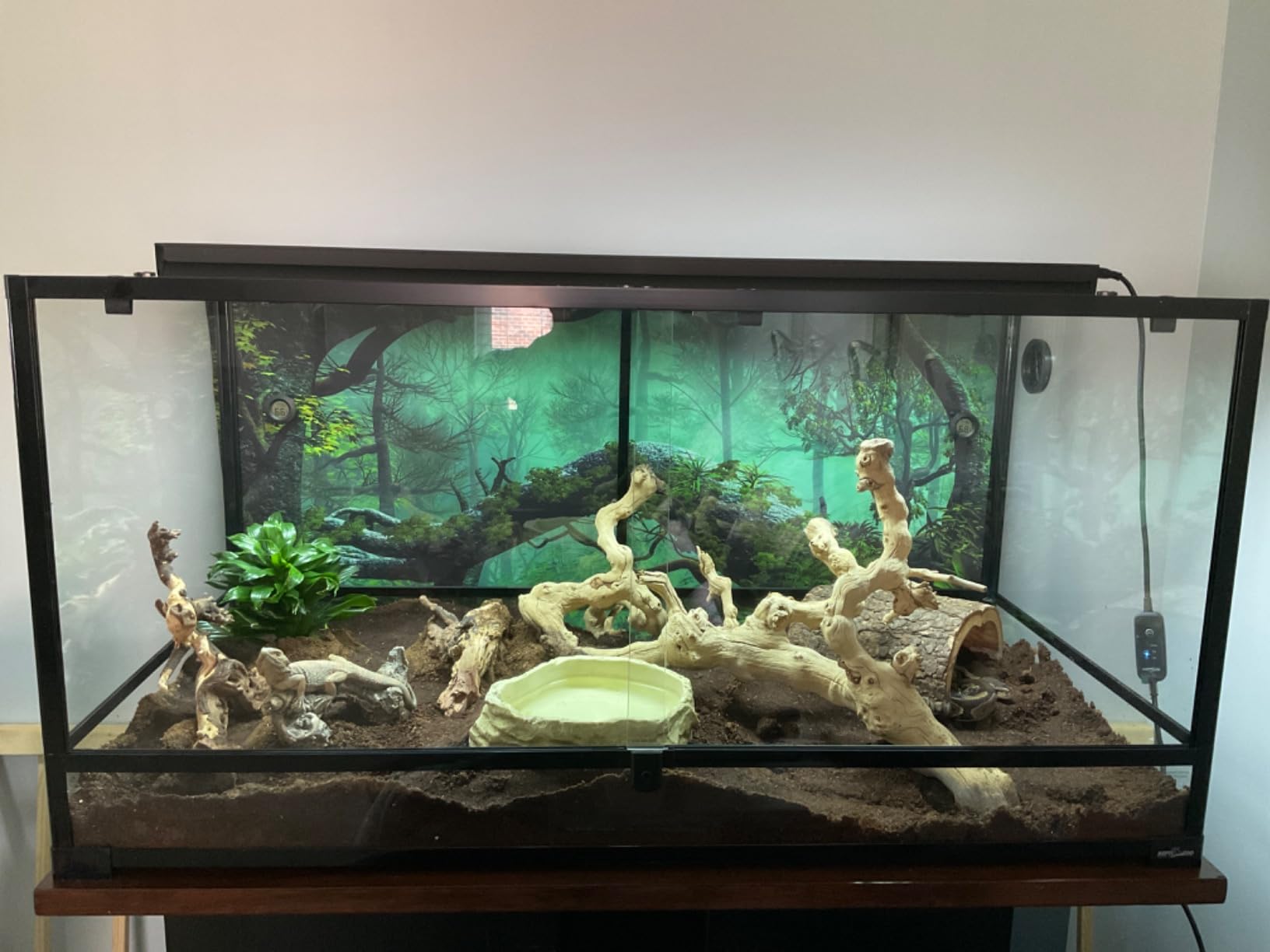
At 91 pounds empty, this is the heaviest enclosure here by a wide margin. Plan the stand before delivery, not after, and expect to move it empty. A furniture dolly rated well above 100 pounds plus a second person is the realistic approach.
The trade-off is the same one glass always brings: it is a poor insulator. Warm humid air leaves through every pane. In a normal household this is manageable with a deep substrate, a humid hide, and possibly partial screen coverage. In a dry climate, you are fighting the tank all day.
What you should know before you buy it
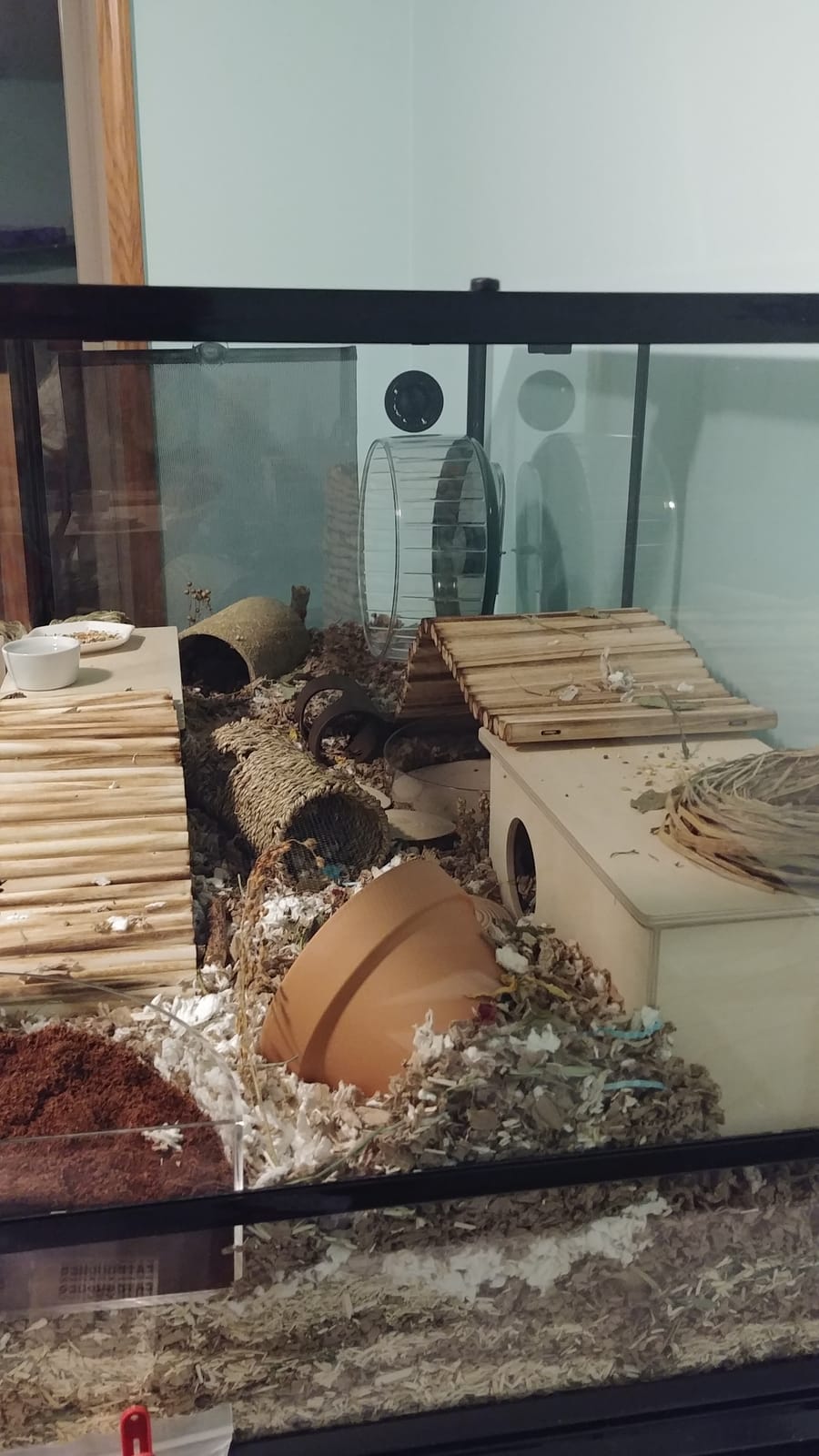
The waterproof raised bottom plate with ventilation space beneath it is a real feature for ball pythons, because it gives an under-tank heater proper clearance and keeps the substrate above the water line. The manufacturer packages the tank in thick foam and drop-tests it from 5 feet, which tells you how they expect it to be handled.
One rule to take seriously: do not drill holes in tempered glass. Plan your cable routing through the existing top access before the equipment arrives.
Who should skip it
Skip it if you live somewhere persistently dry and do not want to modify the screen top. The humidity work with a glass tank is a daily habit, not a one-time fix.
Skip it if you are moving houses or if the enclosure has to fit under a low piece of furniture. A 91 pound glass box is a commitment to a room.
5. REPTI ZOO 120 Gallon PVC – The Best Locked PVC Doors
REPTI ZOO 120 Gallon PVC Reptile Tank Terrarium, 48x24x24 Reptile Terrarium for Ball Python Snake Bearded Dragon Gecko, Large Reptile Glass Tank with Sliding Door & Screen Ventilation
High-grade PVC panels
48x24x24 inches
66 pounds
Removable locking glass door
Pros
- PVC panels hold heat and humidity better than glass
- Sliding glass doors have a lock that actually works
- Thicker-than-average PVC with upper and bottom ledges
- Sturdy pre-drilled screw holes
Cons
- Some units show light leaking through panel gaps
- Screws and retainers can crack during assembly
- Thin bottom tray will leak in a bioactive setup
- Glass doors can pop out during cleaning
This is the enclosure I would pick if your top priority is a secure door on a PVC box. The removable tempered glass sliding door ships with a safety lock, which is exactly what the Phailozoo lacks, and keepers report the lock working without adjustment.
The panels are described as thicker than average, and that thickness shows up in practice as a rigid enclosure that does not flex when you reach in. There are also upper and bottom ledges, which give a climbing animal a place to grip and a place to hide that is not just a hide box on the floor.
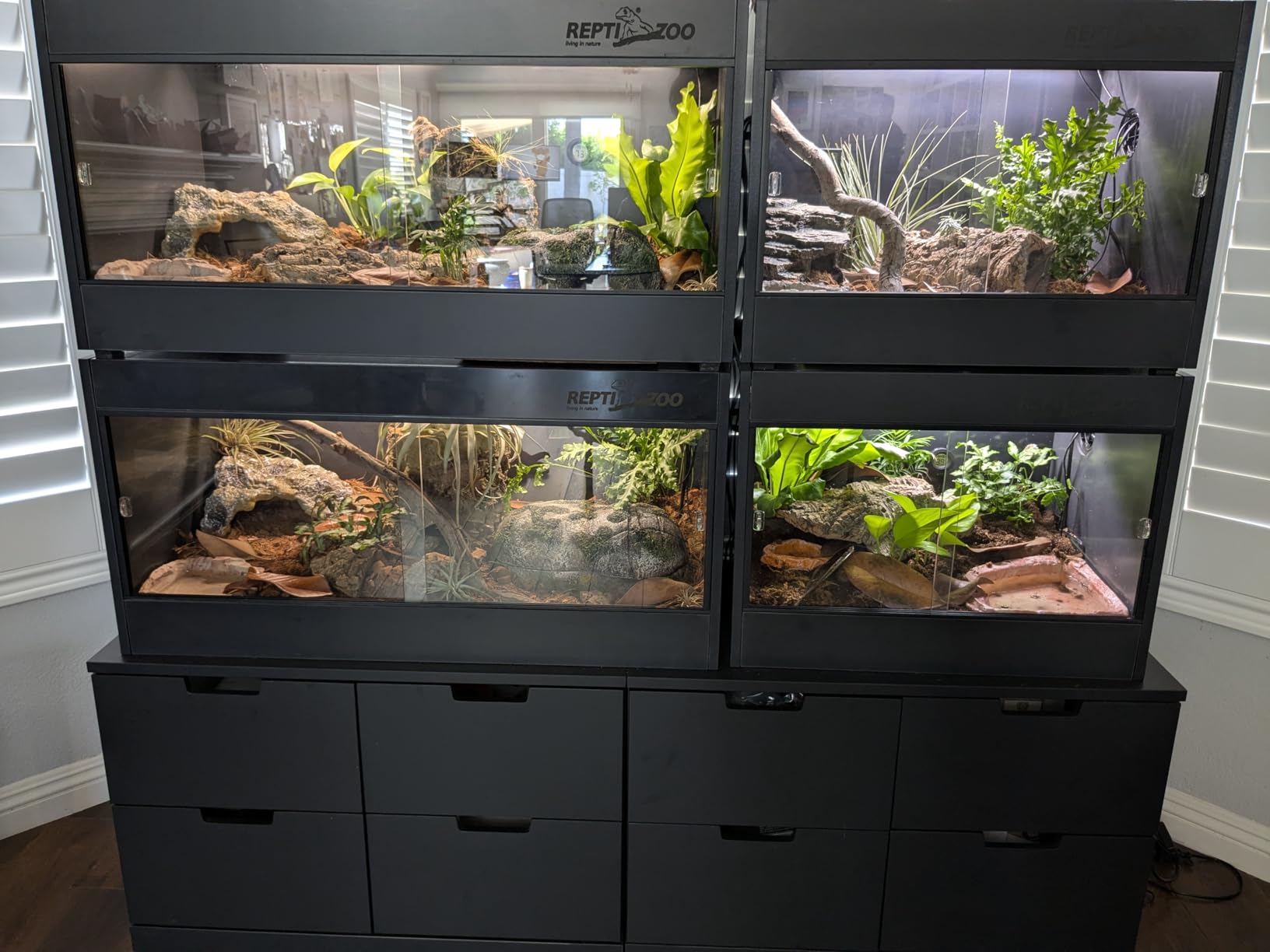
The 4.1 rating is the second-lowest here and the reasons are specific rather than vague. Some buyers report light bleeding through panel gaps, which is a minor cosmetic issue during daylight hours and one that silicone sealing addresses entirely. Others hit screws cracking or retainers falling out during assembly, so hand-tighten and use the supplied hardware rather than a drill.
Assembly runs about 45 minutes for two people. The bottom tray is thin enough that owners doing bioactive work seal it before use, and a couple of reviewers note the glass doors can pop out if you lift them while sliding.
What you should know before you buy it
Thermal performance is where this one earns its place. Reviewers consistently report that the PVC holds heat and humidity better than glass, and that the snake sits in the warm zone without the thermostat constantly calling for heat. That is a quieter, steadier environment than a glass tank gives you.
Surfaces are easy to wipe clean, which matters for a solid waste load. The detachable mesh top also means you can remove it for deep access during a full clean.
Who should skip it
Skip it if minimal assembly fuss is a priority. Between the hardware reports and the light gaps, this is not the enclosure to buy at 11pm when you want to build something tonight.
Skip it if you need it genuinely watertight from day one for a bioactive drainage layer. Seal the bottom first.
6. Zilla QuickBuild 65 Gallon – The Best Step-Up for a Juvenile
Zilla QuickBuild Reptile 65 Gallon Glass Terrarium, 48″ x 18″ x 18″
48x18x18 inches
59.5 pounds
Locking top screen with feeding port
Front glass door
Pros
- Assembles in 10 to 20 minutes with clear printed instructions
- Lockable top screen and front doors keep a snake secure
- Feeding port lets you offer food without opening the top
- Cable pass-throughs at the top for probe placement
Cons
- 18 inch height is low for adult ball pythons
- Side screen vents make humidity harder to hold
- Key-operated lock is fiddly and keys are easy to lose
QuickBuild is the enclosure to buy for a snake that is under about 2 feet, and it doubles as a quarantine tank you can disinfect between animals. The 48 by 18 by 18 footprint is long enough for a small python to stretch out and short enough that you are not buying adult space you will replace in a year.
Assembly is the fastest here, commonly 10 to 20 minutes with printed instructions that actually make sense. It also ships with grippy gloves for handling the glass, a small touch that shows the manufacturer expects you to build it yourself.
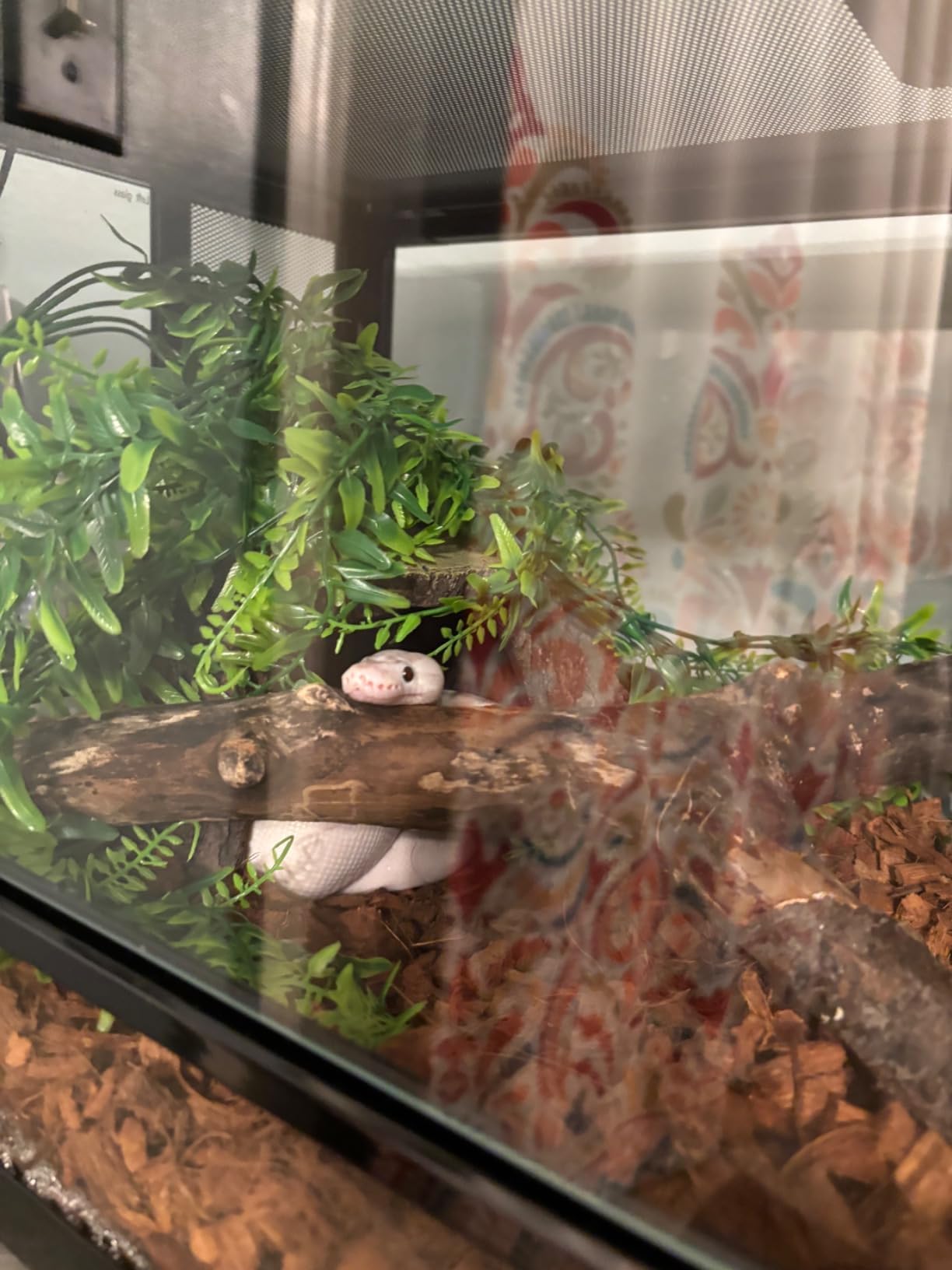
The top screen is double-hinged and locks, and there is a feeding port. The feeding port is the feature keepers mention most warmly, because offering a mouse through a port avoids the every-week ritual of dismantling an enclosure and re-establishing the security of it.
Cable pass-throughs at the top let you run a thermostat probe and a digital hygrometer without pinching wires in a closed door. That small detail saves setup friction later.
What you should know before you buy it
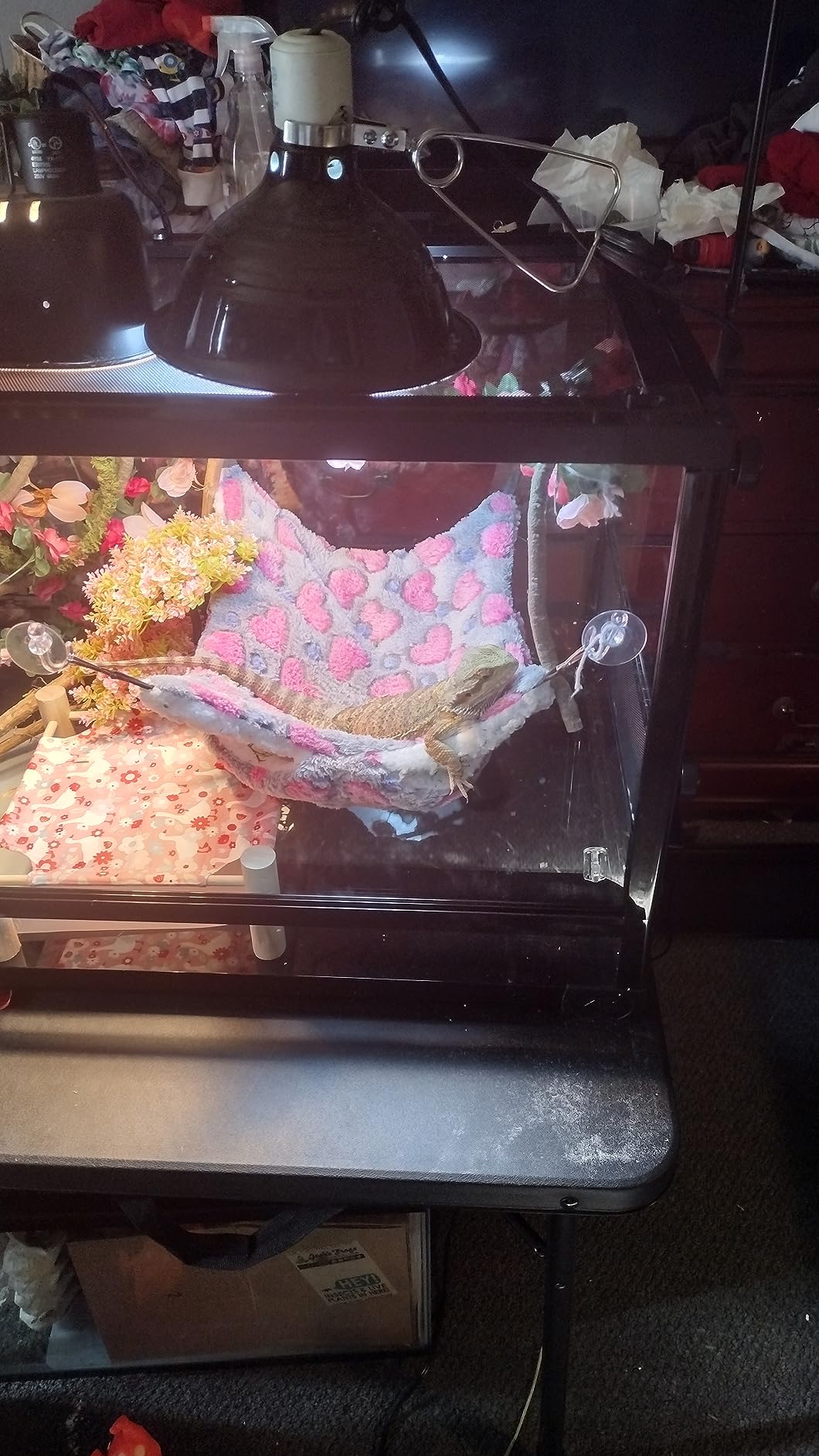
The 18 inch height is the deciding number. Ball pythons are ground-oriented and climb far less than arboral species, so 18 inches is workable for a young animal, but a 3 foot adult will look pressed against the front glass.
The side screen vents are a humidity liability. Partially covering them with a breathable material solves most of the problem, and the frame is described as stackable if you outgrow one.
Who should skip it
Skip it for any snake past roughly 2 feet. This is a step-up enclosure, not an adult enclosure, and buying it for a juvenile means buying again.
Skip it if you are in a dry climate and do not want to modify the vents. The humidity ceiling here is lower than a solid-panel PVC unit.
7. PROLEE 82 Gallon – The Budget Glass Pick for a First Setup
PROLEE 82 Gallon Bearded Dragon Tank, 48 x 20 x 20 Inch Tempered Glass Reptile Enclosure with Metal Mesh Top, Lockable Sliding Front Doors, Large Lizard and Snake Terrarium, Black
48x19.5x19.5 inches
45.4 pounds
Tempered glass, wood frame
Acrylic liner base
Pros
- Costs well below comparable glass and PVC enclosures
- Lockable double sliding front doors included
- Tempered glass on all four sides resists scratching
- Metal mesh top accepts heat lamps and UVB
Cons
- Wood frame with polyester coating is not fully waterproof
- 19.5 inch height is low for adults
- Heavier than expected for the size
This is the sensible first purchase when the budget is the deciding factor and the plan is a glass tank now and a PVC upgrade later. It gets you an 8 foot long enclosure with tempered glass on all four sides and locking front doors at a cost that sits well below the rest of this roundup.
The acrylic liner in the base is a genuinely thoughtful addition. It is a smooth, non-porous surface you can scrub, and it means a spill is a wipe rather than a soak into a seam.
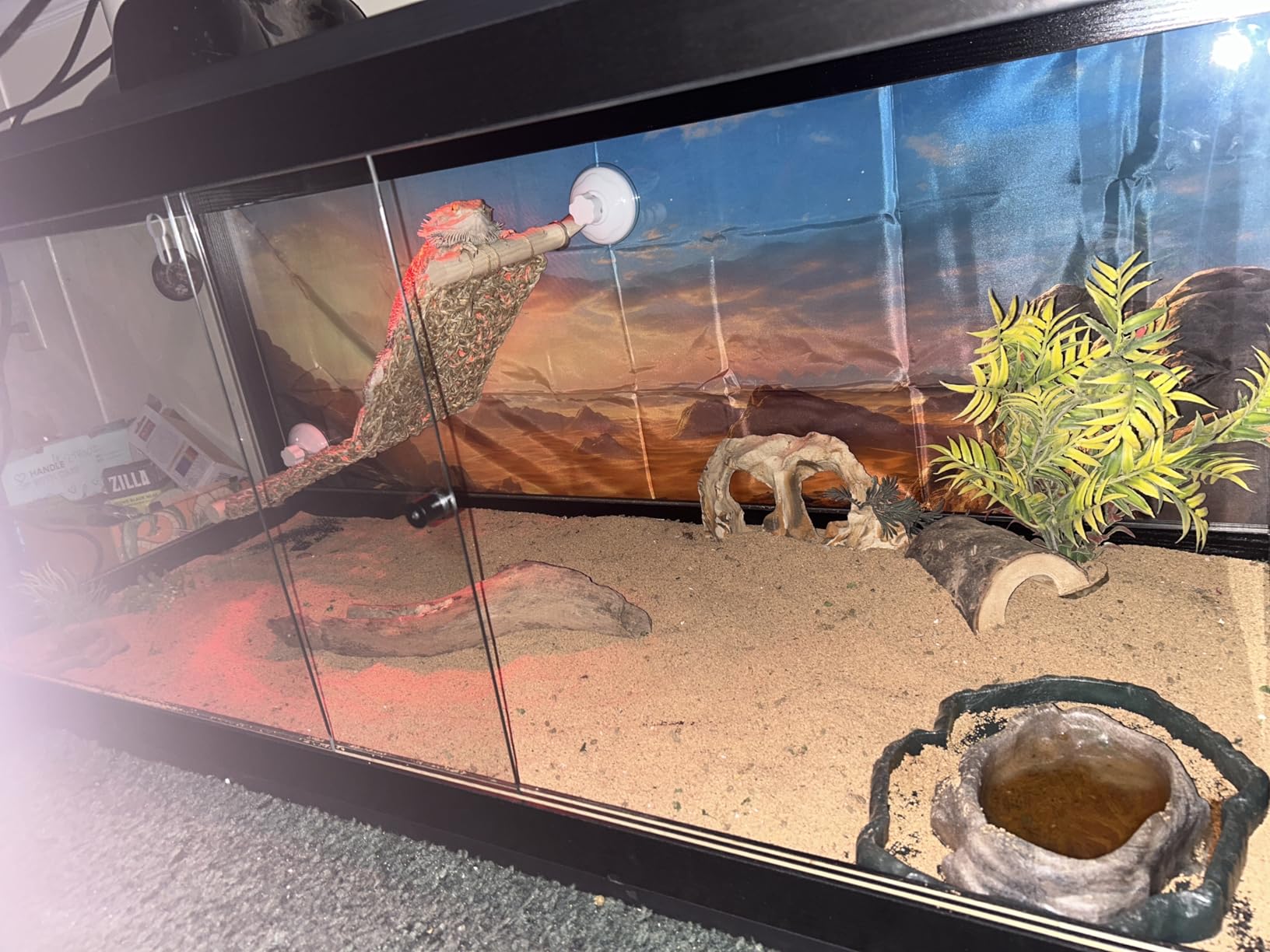
The catch is the material. The frame is solid wood with a water-repellent polyester coating, and the manufacturer states plainly that it is not fully waterproof. It is built for terrestrial and dry-to-moderate humidity setups, which is an honest description but not a description of a ball python’s ideal home.
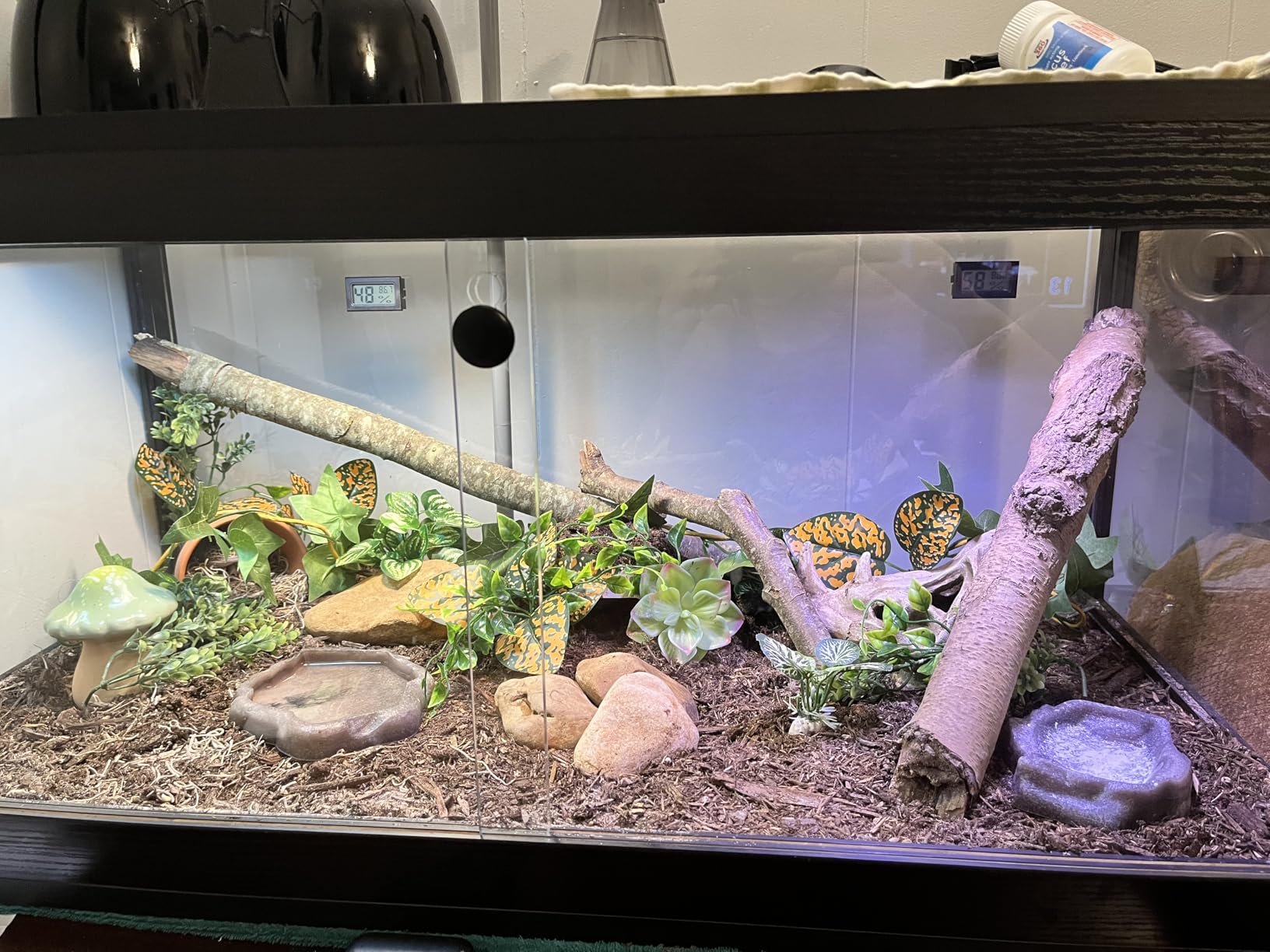
That means a humid hide with damp substrate, deep mulch for the bottom, and attention to the screen top if your house runs dry. Used well, keepers do run ball pythons in these successfully. Used carelessly, the coating eventually complains.
What you should know before you buy it
At 45.4 pounds, it is heavier than most buyers expect for the size, mostly because of the four tempered glass panels. Assembly is quick, with all hardware and step-by-step instructions in the box.
The metal mesh top is built for heat lamp and UVB mounting, which is a practical point if you plan to add a basking spot later. A thermostat-controlled heat source mounted under or above the cage will be the deciding factor in how stable this setup stays.
Who should skip it
Skip it if you want a long-term enclosure you will still be using in 15 years. The wood frame and coating are the weak point on that timeline, and you will outgrow it.
Skip it for a large adult. At 19.5 inches tall and 48 inches long it works, but an adult in this cage looks visibly cramped next to the same snake in a 4x2x2.
8. ToxiRium 230 Gallon Extra Tall – The Best Vertical Space
ToxiRium Reptile Tank 230 Gallon, 48″x24″x46″ Large Reptile Enclosure for Bearded Dragon and Ball Python, Extra Tall Snake Terrarium with Front Opening Tempered Glass Door, Combination Lock
48x24x46 inches
78 pounds
PVC sides and insulated top
Combination lock
Pros
- 46 inch height gives real vertical room most 120 gallon units lack
- PVC side panels and insulated top retain heat and humidity
- Keyless combination lock removes the lost key problem
- Internal support rod stiffens the tall frame
Cons
- Heaviest tall unit at 78 pounds and demanding to move
- 4.0 rating reflects variable finish quality
- Very large footprint limits where it can be placed
Most full-size adult cages are 24 inches tall. This one is 46, which turns the standard footprint into a genuinely vertical space with branches, elevated hides, and far more surface area to break up the view.
The construction is sensible for the height. PVC side panels and an insulated top cover handle heat and humidity better than an all-glass tall build, and an internal support rod stiffens the frame so the top does not bow. The keyless combination lock on the front sliding doors is a small feature that removes an entire category of frustration.
The extra height also changes the heating math. With a 46 inch interior, the warm air rises away from the substrate and the thermal gradient becomes taller, which means a thermostat probe placed at snake height reads very differently from one near the top. Set the probe where the animal actually spends its time, and expect to check the gradient with a second thermometer at the cool end.
Mesh top crossbars are adjustable, so you can position heat and UVB fixtures precisely rather than sliding them around loose mesh. The raised bottom supports substrate heaters, and the black PVC panels reduce stress for a species that prefers dark cover.
At 78 pounds empty, this needs a genuinely stable stand and a planned delivery path. Decide where it lives before it arrives. A 48 by 24 footprint is common enough, but a 46 inch height is not, and that constrains ceiling clearance and doorways.
What you should know before you buy it
The 4.0 average rating is the lowest here, and the reviews describe the issue as variable finish and quality control rather than any specific failure. That is the pattern you want to inspect closely on arrival: panel fit, door slide, and the condition of the frame.
Ball pythons are not obligate climbers, so be honest about whether you will use the height. A basic setup with a hide and a branch leaves 30 inches of empty vertical space that adds nothing except weight.
Who should skip it
Skip it if you want a simple, reliable adult enclosure. There are lighter, better-reviewed, and simpler options here for less money and half the lifting effort.
Skip it if the room cannot take the footprint and ceiling height. Extra-tall means it goes in a corner, and corner placement limits your access to the interior.
9. REPWILD 4x2x2 Thick PVC – The Best Panels for Sealing
4x2x2 (120 Gallon) PVC Reptile Enclosure, RepWild Terrarium/Tank with Heavy-Duty Screen Top, Glass Sliding Doors & Lock for Bearded Dragons, Ball Python, Geckos, Lizards
3/5 inch thick PVC panels
4x2x2 floor
63 pounds
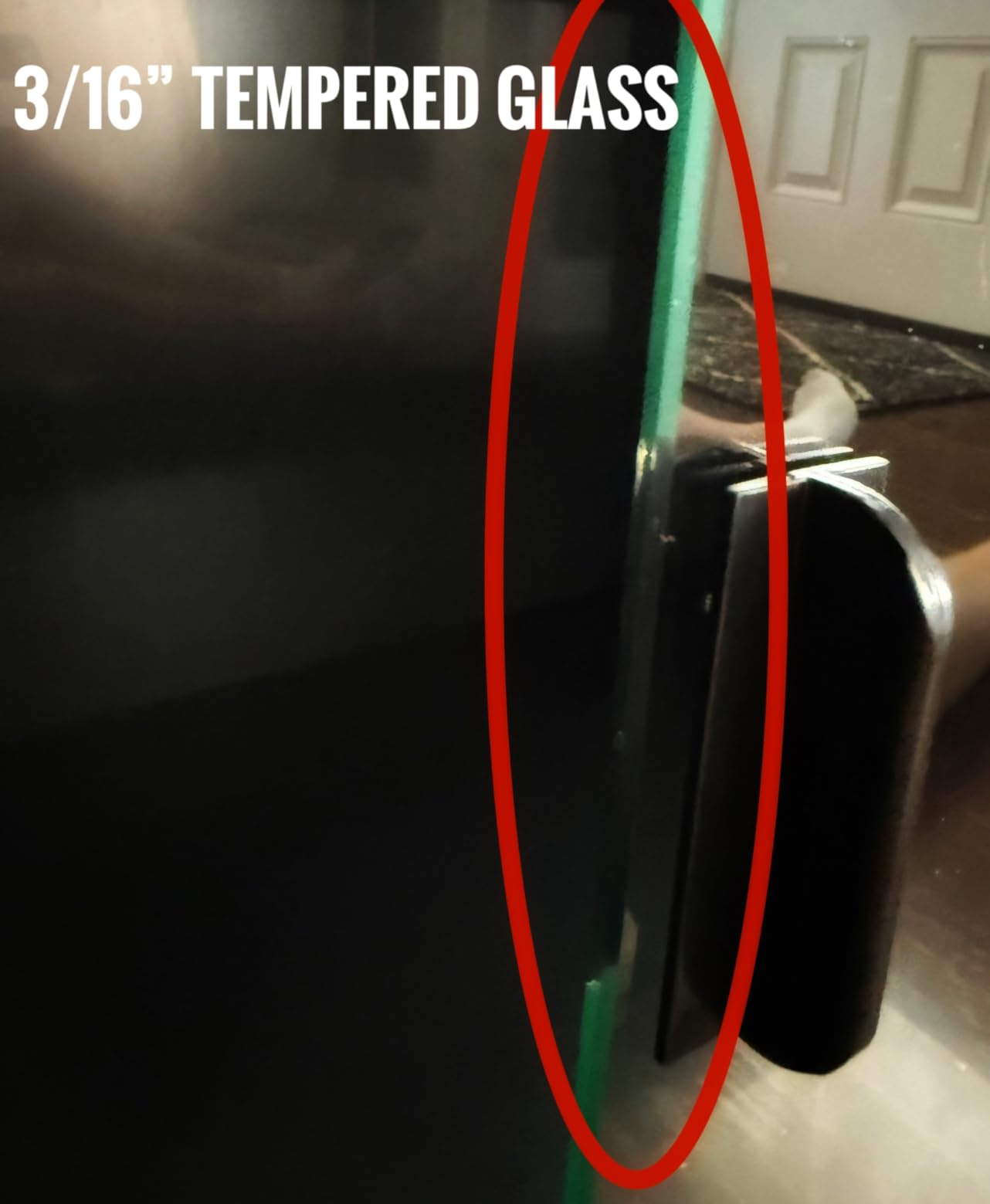
Locking tempered glass door
Pros
- Thickest PVC here resists warping in high humidity
- Precision-fit panels leave near-invisible gaps to seal
- Locking tempered glass front door with a handle
- Illustrated assembly manual in the box
Cons
- Heavy at 63 pounds once assembled
- 4.1 rating reflects split assembly and door-fit reports
- Silicone still needed before a bioactive setup
The 3/5 inch panel thickness is the distinguishing spec. Thicker PVC does not flex or bow when the humidity inside is high and the humidity outside is low, and that rigidity is exactly what you want in a sealed, bioactive-style enclosure where the interior runs wetter than the room.
Panel fit is the other thing worth paying attention to here. Owners report precision-engineered panels with near-invisible gaps, which is not a cosmetic detail. A visible gap is a silicone line; a hairline gap is a two-minute pass with a nozzle. Smooth seams are what make sealing a cage feel routine instead of like a project.
What you should know before you buy it
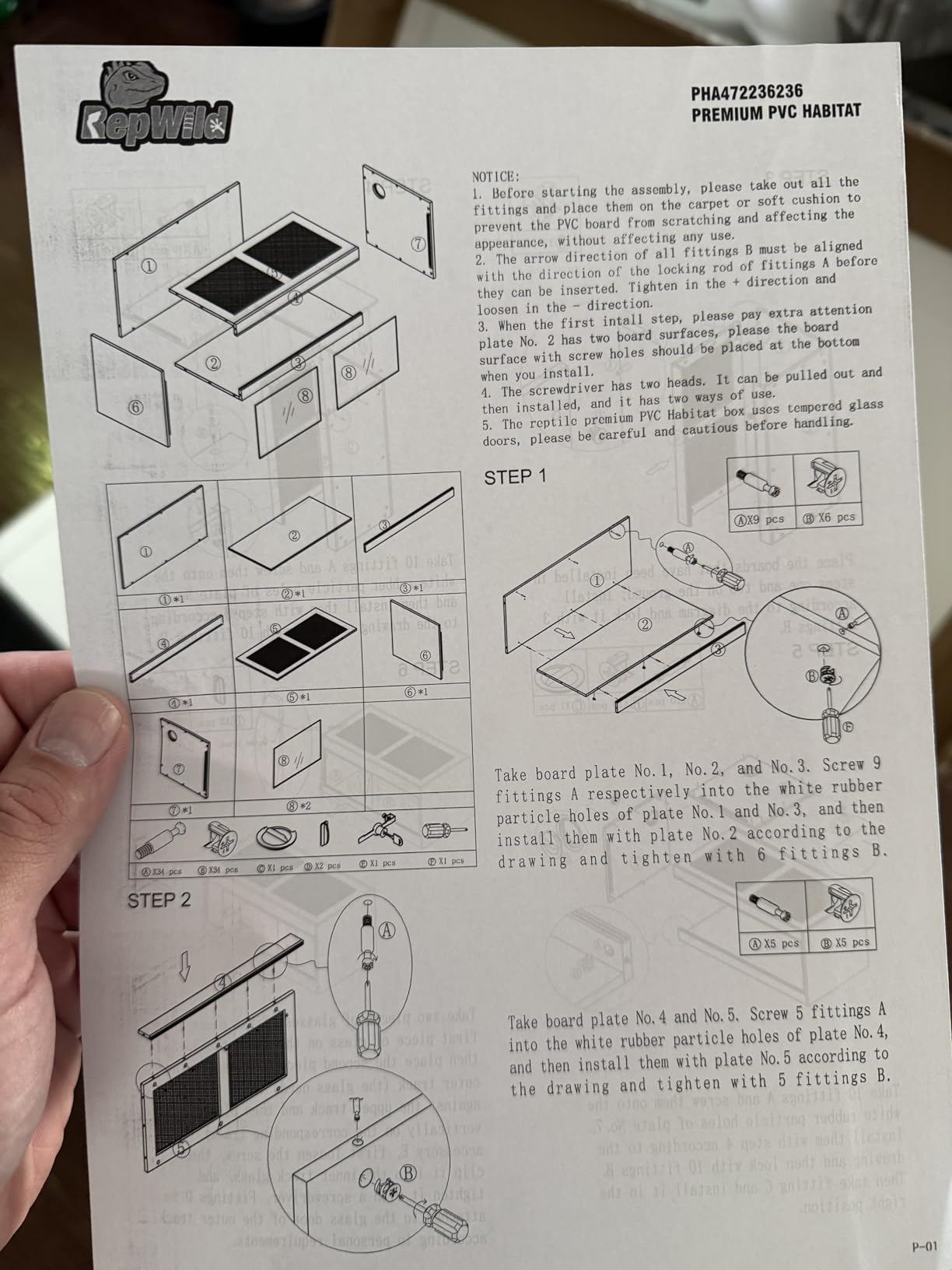
This one ships with a step-by-step illustrated assembly manual rather than a QR code link, which for a first-time PVC build removes a common source of frustration.
The line of enclosures runs from 24 to 48 inches, so if you buy for a juvenile and later need the next size up, it is the same brand and the same panel system. Assembly runs about an hour for two people, and the 3/5 inch panels make the build noticeably more rigid than a thinner PVC frame of the same size.
Who should skip it
Skip it if weight is a factor in your room. At 63 pounds it is among the heavier units here, and the panel thickness that makes it rigid also makes it a two-person job.
Skip it if you want a set-and-forget enclosure with no silicone work. Even with well-fitting panels, a bioactive drainage layer goes over a sealed bottom.
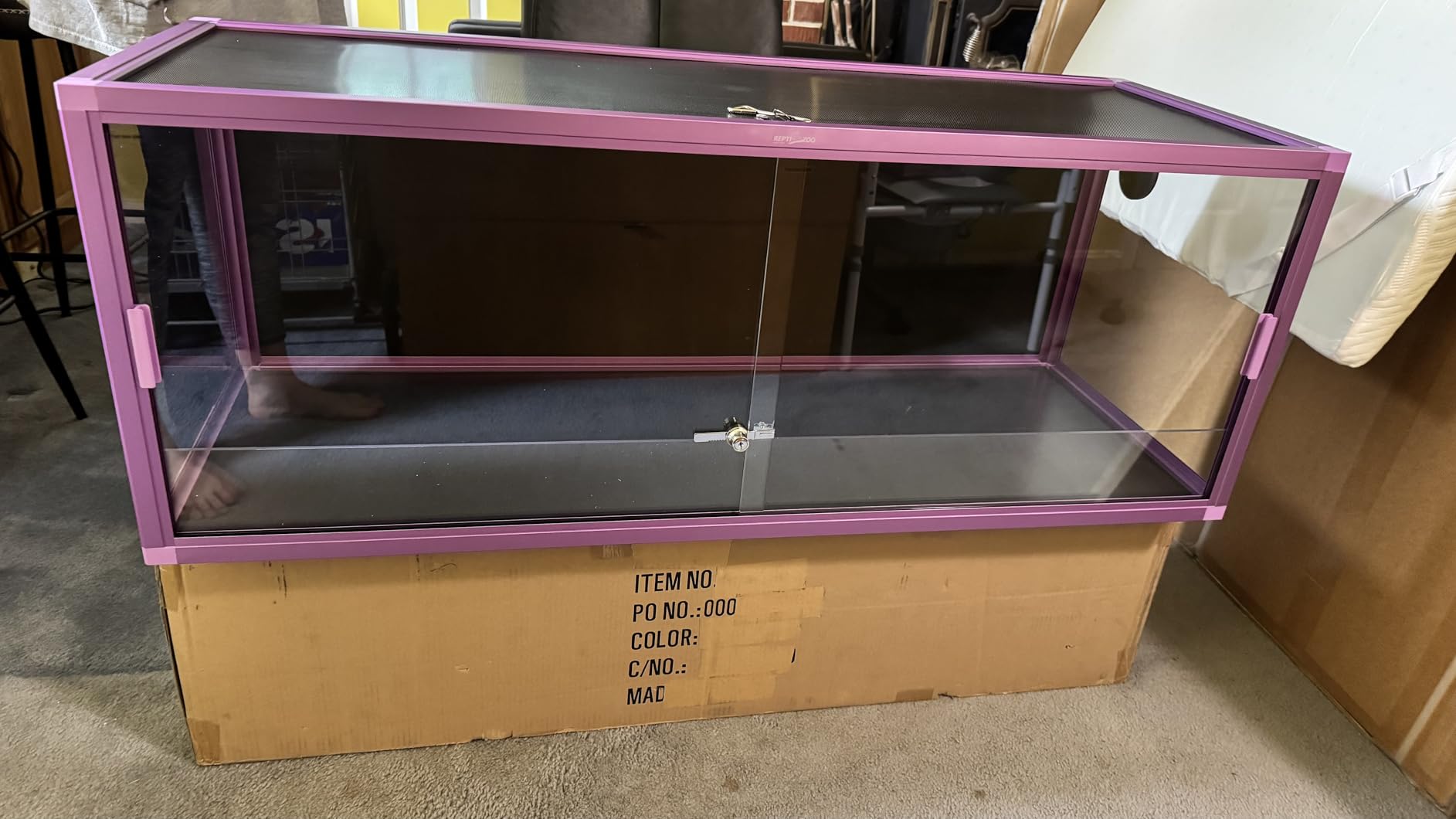
10. REPTI ZOO 120 Gallon Aluminum Frame – The Best No-Seal Bottom
REPTI ZOO 120 Gallon Reptile Terrarium, 4x2x2 ft Light Weight Reptile Enclosure, Colored Reptiles Tank with Tempered Glass Door, Large Aluminum Habitat for Bearded Dragon, Snake, Lizard, Gecko-Purple
Aluminum frame, glass door
48x24x24 inches
42 pounds
One-piece solid bottom tray
Pros
- Solid one-piece bottom tray needs no silicone sealing
- Lightweight at 42 pounds for a 120 gallon
- Aluminum frame stays rigid without glass-tank weight
- Sliding front doors include a metal lock
Cons
- Door tracks and front panel can arrive bent
- Supplied lock hardware can be flimsy
- Some reports of shipments missing panels
- Glass gives less humidity retention than PVC
The thing that makes this one different from every other 120 gallon in the roundup is the bottom. It is a solid one-piece tray that does not need sealing, which removes the single most universal complaint in the category. No silicone, no curing time, no waiting before you can pour water into a humid hide.
At 42 pounds it is also among the lighter full-size adult cages, and the aluminum alloy frame gives you rigidity without the 91 pound glass-tank problem. Assembly runs roughly 30 to 45 minutes, and the manufacturer packages the unit in reinforced foam and cardboard with free replacement for damaged parts.
What you should know before you buy it
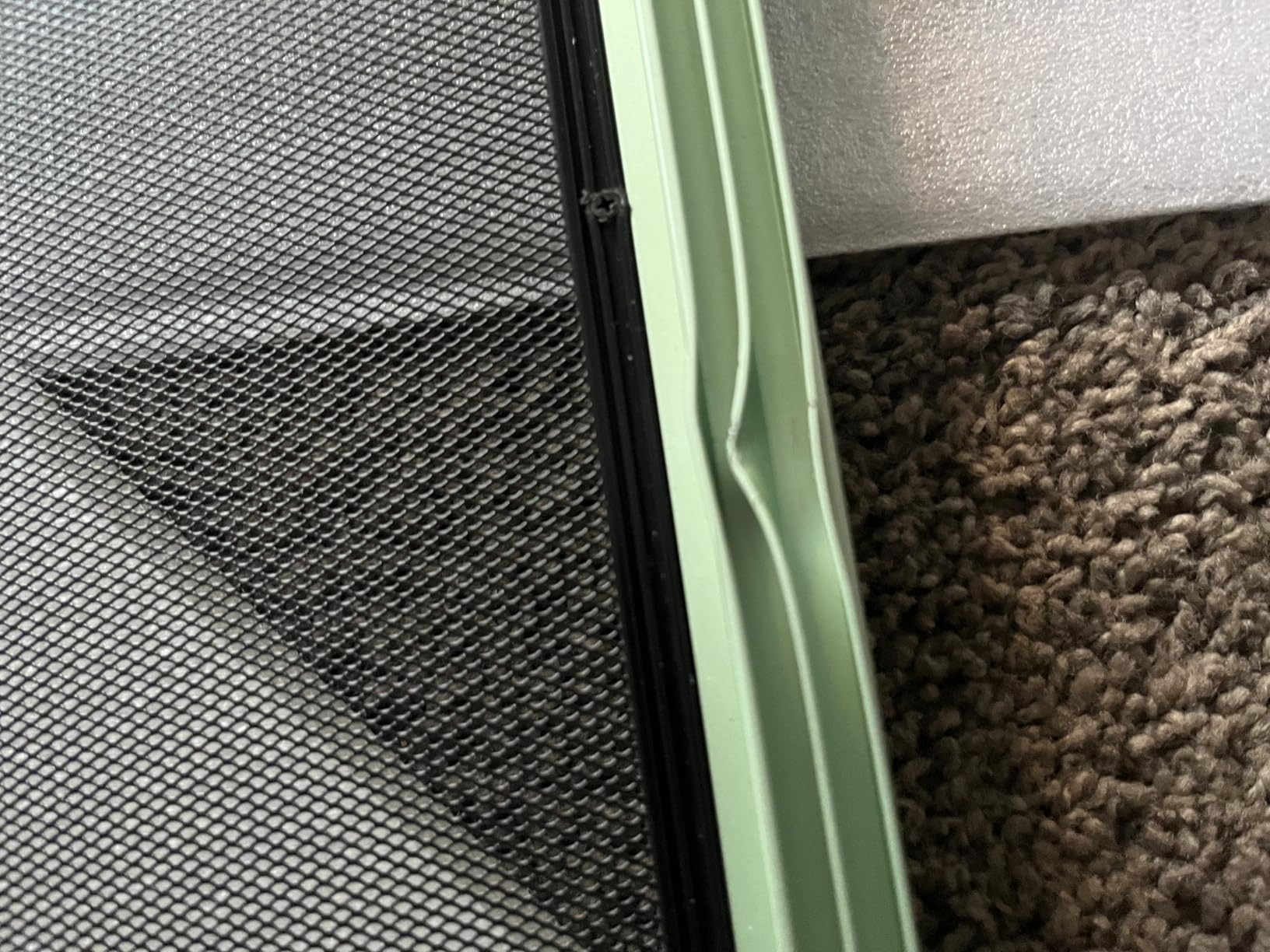
Inspect the box before you build. The most common complaint is bent or kinked door tracks and an interior front panel that no longer sits flat, which affects how smoothly the doors slide. Catching it on arrival is a five-minute fix; catching it after the enclosure is full of substrate is a much longer one.
The supplied lock can be flimsy and may need a wrench to tighten properly. Do that step before the snake is inside, and check that the doors actually latch closed. The same tight-door track design that keeps the snake secure is what makes a kinked frame so annoying to work around.
Who should skip it
Skip it if humidity control is your hard problem. Glass construction gives less retention than PVC, and this is a glass-and-aluminum box. In a dry house, you are back to covering the screen and watching the hygrometer.
Skip it if you want the full multi-year ownership record some of the others have. It is the newest enclosure here, and 45 reviews is the thinnest evidence base in the roundup.
Enclosure Size by Snake Age and Length
The floor area is the number that matters, and the consensus in the keeper forums is unambiguous on where the floor sits. One r/ballpython answer states it plainly: “120 gallon IS the ideal, and you can start a baby in that size.” Another keeper running a mixed collection added that the “big tank stresses them” belief is really a clutter problem, not a size problem.
Here is the working guide. A hatchling or juvenile under about 18 inches can live in a 3x2x2 footprint, roughly a 40 gallon footprint, with plenty of hides. A snake from 18 to 30 inches wants at least a 4x2x2, which is where most keepers stop buying. A 3 to 5 foot adult should have the full 4x2x2 as a minimum, and a 5 foot or larger female benefits from 4x2x3 or 5x2x2 if the room allows.
Height matters far less than most product listings imply. Ball pythons are not climbers in the way a boa or an arboreal gecko is, and a 24 inch tall 4x2x2 is a better use of floor space and budget than a 46 inch tall tower with the same footprint. Watch the depth. An enclosure that is 4 feet long, 2 feet wide, and 12 inches deep is a display piece, not a home.
Whatever size you pick, the rule of thumb from keepers is that clutter fills space faster than it shrinks it. Two hides, a couple of branches, and a deep substrate layer turn a large enclosure into a territory instead of an empty room.
PVC vs Glass vs Composite for Ball Pythons
Material is the second decision after size, and the keeper consensus is heavily weighted toward PVC. The reason is insulation, not safety. As one r/ballpython reply put it, “It is not a good heat or humidity insulator… if it has a mesh top, keeping humidity [is difficult].” Glass is not unsafe for ball pythons; it is simply working against you when your target is 60 to 80 percent ambient.
PVC panels are the best balance here. The Reptile Habitats, Phailozoo, REPTI ZOO PVC, REPWILD, and ToxiRium enclosures in this roundup all use them, and owners consistently report steadier warm-side temperatures with fewer thermostat cycles. The downside is that PVC is not a true bioactive surface, and the seams still need sealing.
All glass gives the best view and the best UVB transmission, and the waterproof raised bottom in the REPTI ZOO 120 is a genuine asset for a humid hide. It is the heaviest option at 91 pounds in that model, it is the least insulating, and you cannot modify it. If you already own a glass tank, the answer is to modify rather than replace.
Composite and wood-framed units sit between the two. The ECOFLEX Mojave and the PROLEE are well made and cost less than the premium PVC boxes, but neither manufacturer rates them for high humidity, and neither should run a deep bioactive drainage layer.
One warning from the forums worth repeating: cheap dial hygrometers are not accurate enough to make decisions on. Replace whatever came in the box with a digital probe hygrometer before you set your target.
Front-Opening vs Top-Opening Doors
Front-opening doors are the better pattern for this species, and it is a behavior question rather than a preference. A ball python is an ambush predator that spends its life under cover, and lifting a top lid puts your hands and your face directly above a coiled animal that may not have registered your presence. A front door lets you offer food at the opening of the hide without ever hanging over the snake.
Top access is still useful for deep cleaning, so the ideal setup is front-opening doors for daily work with a top you can remove entirely. The Reptile Habitats V3 and the REPTI ZOO PVC both give you removable front glass doors plus a detachable top, which is the pattern most owners in this roundup end up preferring.
Whichever pattern you buy, check the door hardware before the animal moves in. A working lock matters more than keepers expect, because a determined adult testing a door track is not a hypothetical.
How to Seal a New PVC Enclosure
Do this before the snake goes in, not after the first leak. The most repeated thread topic in the keeper communities is corner seam leakage on new PVC enclosures, and the near-universal explanation is missing silicone rather than a manufacturing defect. A tube of aquarium-safe silicone and a curing afternoon resolve it permanently.
Work from the inside corners outward. Wipe the seams with isopropyl alcohol, let them dry fully, then run a continuous bead of aquarium-safe silicone along every interior corner, around cable ports, and around the bottom tray lip. Smooth the bead with a wet finger and leave the enclosure open and ventilated for the full cure time listed on the tube, which is usually 24 to 48 hours.
After curing, run a shallow water test. Pour an inch of water into the bare bottom, leave it for an hour, and check the seams and the floor beneath. This takes ten minutes and it is the difference between finding a slow leak in an empty tank and finding it under six inches of wet substrate.
The community line on this is worth repeating because it saves people money and stress: “Every PVC enclosure needs to be sealed, even Kages.” If you are buying at any tier, budget for a tube of silicone.
Heating, Thermostats and Humidity Targets
Nothing you buy in this roundup works without a thermostat. A dimming thermostat on a radiant heat panel or deep heat projector gives you the steady ambient heat a PVC enclosure needs without the on-off cycling that an unregulated heat source produces. An under-tank heater works in a glass tank with a raised bottom, but it is far less precise and belongs on a thermostat either way.
The temperature target is a gradient, roughly 78 to 92 degrees Fahrenheit from one end of the enclosure to the other, with the heat source placed to create that gradient rather than an even temperature across the whole floor. The 48 inch length of a 4x2x2 makes this easy; the length of a 3x2x2 makes it harder.
Humidity is the number keepers most often get wrong, because they check a dial gauge that lies. Aim for 60 to 80 percent ambient, measured with a digital probe placed at snake height rather than near the top of the enclosure where it reads several points high. For shedding, a humid hide with damp substrate should push the local humidity to 80 to 90 percent for a few days around the shed cycle.
When humidity will not hold, the fix is almost always cover. A solid panel enclosure needs nothing. A glass or mesh-top tank needs the top partly covered with a breathable material, and side vents partly blocked, to reduce air exchange. That one change does more for dry-climate keepers than any product on this list.
Going Bioactive and Modifying a Glass Tank
Ball pythons do fine in a bioactive setup, and keepers who run one generally report less maintenance than a spot-clean system. The structure is a drainage layer at the bottom, a substrate layer deep enough to hold a litter dam on top of a screen or mesh barrier, and a cleanup crew of springtails and isopods to handle the waste. Plan for a sealed bottom, which is why the sealing section above comes before this one.
For glass tanks you already own, the modification path is simpler and cheaper than buying new. Cover 60 to 80 percent of the screen top with aluminum foil, a shower curtain, or HVAC tape in strips, leaving a gap for fresh air exchange. Block the side vents partially. Add a deep substrate layer and a humid hide. Check the digital hygrometer after 24 hours and adjust the coverage until readings hold overnight without misting.
One r/ballpython keeper summarized the large-enclosure experience in a way that also answers the objection about stress: “I have three 5x2x2s and two 6x2x3s and don’t have trouble with heat or humidity, as long as the tank is well cluttered.” That is the pattern. Clutter first, then worry about size.
Finally, budget for what goes alongside the enclosure: a thermostat, a digital probe hygrometer, a deep substrate, two hides including a humid hide, branches, and a spray bottle for the humid hide. Several owners also favor buying a well-regarded used tank to spread the cost, but inspect any used enclosure for cracks, warped panels, and stripping screws before you trust it.
Frequently Asked Questions
What is the best enclosure setup for a ball python?
A front-opening 4x2x2 foot PVC enclosure, 48x24x24 inches, with a thermostat-controlled radiant heat panel, a digital probe hygrometer, 60 to 80 percent ambient humidity, a 78 to 92 degree gradient, and a heavily clutter-lined interior with two hides and a humid hide. PVC holds heat and humidity with far less effort than a glass tank with a mesh top.
What size enclosure is best for a ball python?
For an adult, a 4x2x2 floor, 48x24x24 inches, sold as a 120 gallon. Keepers call it the adult minimum and most run 4-foot, heavy-bodied snakes in it comfortably. Juveniles under about 18 inches can use a 3x2x2. Height matters less than floor area for a ground-oriented species.
Can a baby ball python live in a 4x2x2 enclosure?
Yes, and the keeper forums are close to unanimous on it. The idea that a large cage stresses a young snake is really a clutter problem. Fill the enclosure with hides, branches, and a deep substrate layer, and a hatchling will use a fraction of the space while still having room as it grows.
Is PVC safe for snake enclosures?
PVC panels are widely used for reptile housing and are not considered a safety problem for ball pythons. The practical caveat is that PVC is not a true bioactive surface and its seams are not factory watertight, so most keepers silicone-seal the interior corners before setting up a wet or bioactive system.
Is PVC or glass better for ball pythons?
PVC is better for this species because it insulates and does not vent warm humid air. Glass gives a better view and better UVB transmission, and the waterproof raised bottom in some models is a real benefit, but glass is the heavier and less insulating option. If you already own a glass tank, covering the screen top is the cheapest fix.
Do ball pythons need bioactive enclosures?
No, they do not need one, but most keepers who run a bioactive setup report less maintenance. It requires a sealed bottom, a drainage layer, a substrate layer deep enough for a litter dam, and a cleanup crew of springtails and isopods. A simple deep substrate with a humid hide covers the same humidity needs with less setup.
Final Verdict
After working through all ten of these enclosures, the best reptile enclosures for ball pythons come down to three things: a 4x2x2 floor, solid panels, and hardware that actually locks. The New Age Pet ECOFLEX Mojave 48 Inch is the one I recommend most often, because it has the longest ownership record in this roundup and a 10-year warranty behind it. If your priority is a collection that stacks, take the Phailozoo 120 and add door locks. If you need to move a full-size cage regularly or you want a sealed surface for bioactive work, the Reptile Habitats V3 at 36 pounds and the REPWILD thick-panel PVC respectively are the smarter buys.
Whichever one you pick in 2026, seal the seams before you set up, run a thermostat on every heat source, and replace the dial hygrometer with a digital probe. Those three steps matter more than the badge on the box.